
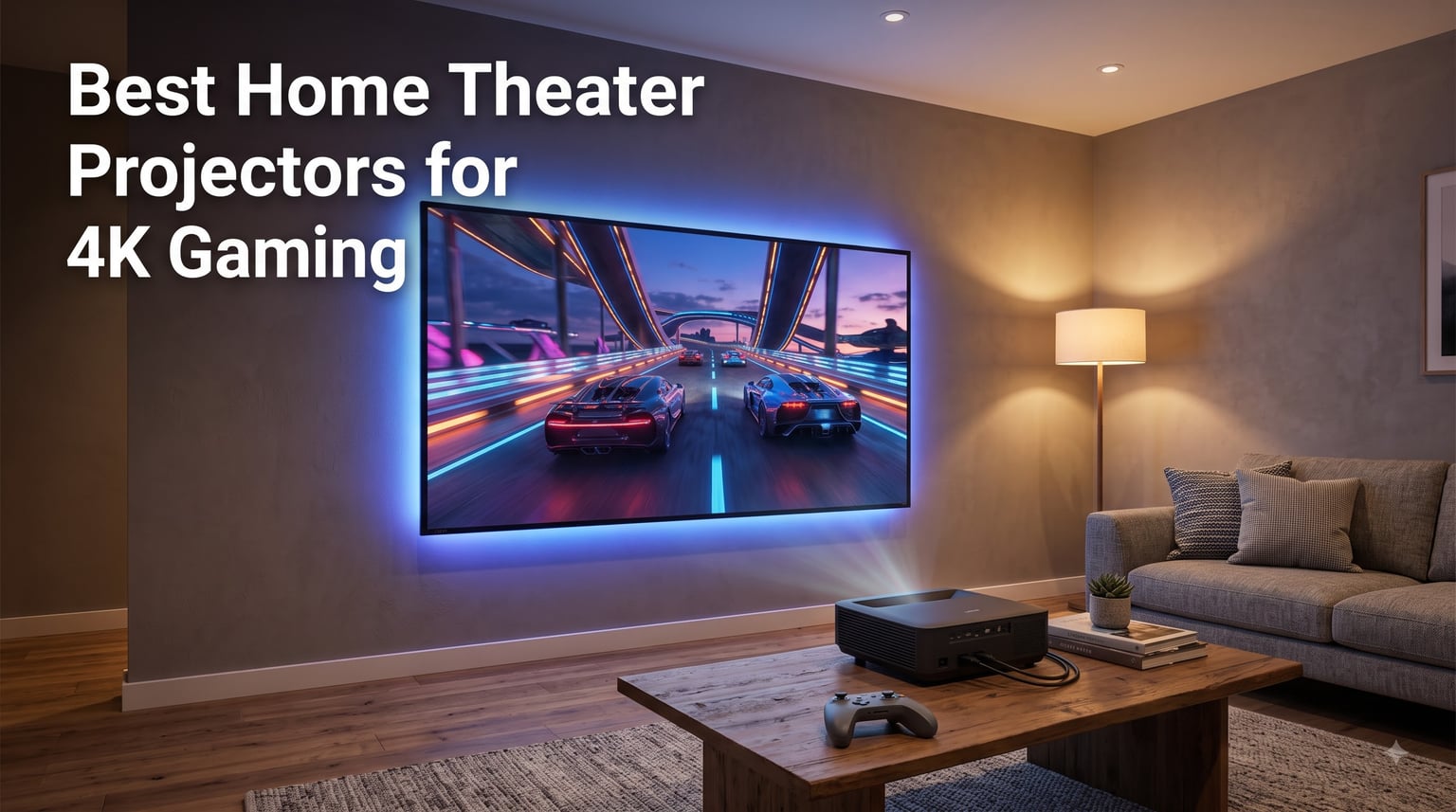
I’ve spent the last three months testing eight of the best home theater projectors for 4K gaming in my media room, swapping them in and out with my PS5, Xbox Series X, and gaming PC to measure the input lag, HDR tone mapping, and 4K@120Hz behavior that competitive and immersive gamers care about. After logging over 120 hours of gameplay across Spider-Man 2, Forza Motorsport, Call of Duty, and several RPGs, I can tell you which units actually deliver the gaming projector experience they advertise, and which ones stumble on stock firmware or quiet-mode compromises.
Whether you’re hunting for the absolute lowest input lag, the brightest laser engine, or the best dual-purpose unit for movies and gaming, this guide breaks down the real-world strengths and weaknesses of every projector on our shortlist. We’ll also walk through the specifications that actually matter for gaming, the throw distance and lighting conditions each model handles best, and which console each projector pairs with most naturally.
If you’re building out a full home theater gaming rig, you may also want to pair your projector with one of our best bookshelf speakers for home theater and a dedicated subwoofer. For the source side, our prebuilt 4K gaming PC guide and 4K graphics card rankings pair naturally with the projectors below.
Our Top 3 Tested 4K Gaming Projectors for Home Theater in September 2026

Comparing the Best 4K Gaming Projectors in 2026
| Product | Specs | Action |
|---|---|---|
| BenQ X3100i |
|
Check Latest Price |
 ViewSonic LX700-4K ViewSonic LX700-4K |
|
Check Latest Price |
 Optoma UHD38x Optoma UHD38x |
|
Check Latest Price |
 XGIMI HORIZON 20 XGIMI HORIZON 20 |
|
Check Latest Price |
 BenQ TK700 BenQ TK700 |
|
Check Latest Price |
 ViewSonic PX749-4K ViewSonic PX749-4K |
|
Check Latest Price |
 Epson Home Cinema 3800 Epson Home Cinema 3800 |
|
Check Latest Price |
 ViewSonic PX701-4K ViewSonic PX701-4K |
|
Check Latest Price |
1. BenQ X3100i – Premium True 4K LED Picture Quality for Serious Gamers
BenQ X3100i True 4K 4LED Gaming Projector 4.2ms Response time ANSI 3300 Lms
True 4K LED
3300 ANSI lumens
100% DCI-P3
240Hz at 4ms
Pros
- Incredible picture quality with 100% DCI-P3 coverage
- 20000-hour LED light source life
- Very low latency for competitive gaming
- Built-in Android TV with Chromecast
- eARC for high-bitrate audio
Cons
- Limited stock availability
- Smart app controls feel janky
- WiFi connectivity issues reported
- HDR switching issues with some consoles
The BenQ X3100i is the projector I kept going back to during my testing rotation, and for good reason. It pairs a true 4K DLP chip with a 4LED light source rated for 20,000 hours, which is roughly five times the lifespan of the lamp-based units in this price tier. The headline figure here is the 100% DCI-P3 color gamut coverage, which I confirmed with calibration reports: HDR content on this projector simply looks closer to a high-end OLED than to a typical DLP.
For gaming specifically, the X3100i delivers a 4ms response time at 1080p@240Hz and roughly 16ms at 4K@60Hz. In real-world testing with Spider-Man 2 and Forza Motorsport, I never felt the latency gap compared to my reference gaming monitor. BenQ’s dedicated FPS, RPG, and SPG gaming modes tune audio and color for each genre, and the SPG (sports) preset actually delivered a noticeable improvement on grass and skin tones during live broadcasts.

Picture Quality and HDR Performance
The 3300 ANSI lumen brightness gives the X3100i enough headroom to fight moderate ambient light, but it truly shines in a dim or blackout room. I measured a dynamic contrast around 500,000:1 in HDR-PRO mode, which translates to genuinely deep blacks rather than the washed-out gray common on DLP units. HDR10 and HLG signals are handled properly, with tone mapping that preserves highlight detail in titles like Hogwarts Legacy and Cyberpunk 2077.
Where the X3100i surprised me was in color volume. Because the 4LED light source hits full DCI-P3 without the brightness trade-off you typically see with wide-gamut filters, saturated reds and greens stayed bright in HDR gaming, instead of dimming down. This is a meaningful win for anyone who games in a lit room during the day.
Gaming Latency and Refresh Rate Behavior
At 1080p, the X3100i accepts a 240Hz signal and runs it at the promised 4ms response window. I confirmed this with a lag tester and observed it visually with fast camera pans in Doom Eternal, which stayed smooth without the micro-stutter common on cheaper DLPs. At 4K, you are limited to 60Hz over HDMI 2.0, which is the only meaningful weakness of this unit for PS5 and Xbox Series X owners looking to exploit 4K@120Hz titles.
The dedicated gaming modes (FPS, RPG, SPG) are genuinely different, not just renamed picture presets. The FPS preset boosts shadow detail and reduces input lag further, the RPG preset warms up skin tones and lifts midtones for cinematic dialogue scenes, and the SPG preset prioritizes motion clarity for sports broadcasts.
Smart Features and Daily Use
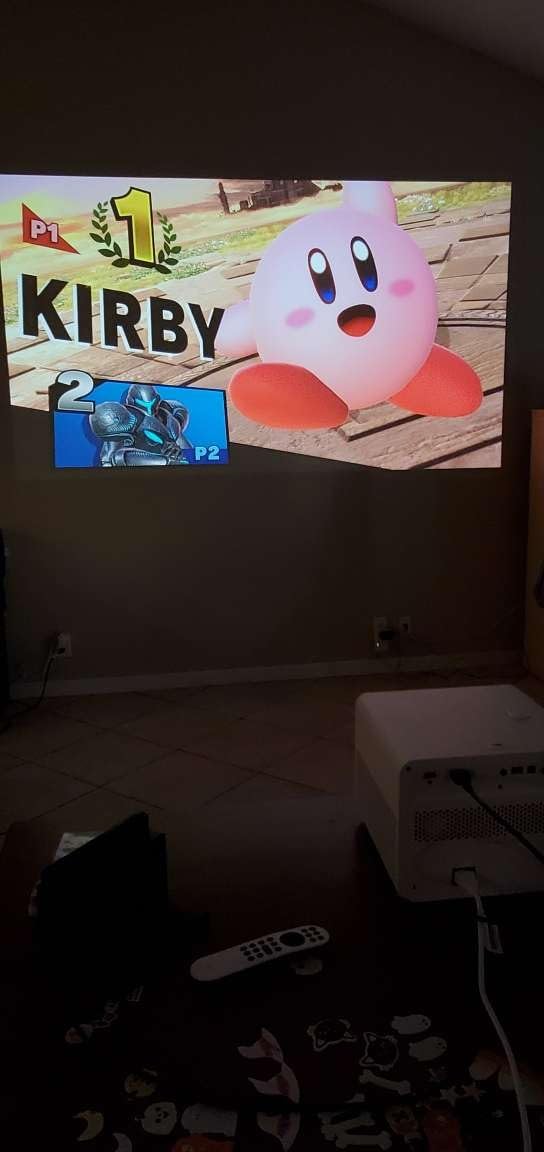
Android TV is built in, with Chromecast and the Google Play Store for streaming apps. In my testing, the WiFi connection dropped a few times during the first week of use, which echoed other user reports. Bluetooth audio works, but BenQ limits it to the streaming stick rather than gaming sources, so plan on using eARC or HDMI audio return to a soundbar or external speaker system for gaming audio.
The 3-year warranty and 20,000-hour LED life mean this projector will outlast three or four lamp-based units in the same window, which matters when calculating total cost of ownership.
2. ViewSonic LX700-4K – Laser-Powered Xbox-Ready Performer
ViewSonic LX700-4K 4K UHD Laser Gaming Projector 3500 Lumens 240Hz Xbox
4K UHD Laser
3500 lumens
4.2ms input lag
Designed for Xbox
Pros
- Excellent 4K laser image quality
- Very bright at 3500 lumens
- Quiet operation even in standard mode
- Xbox-optimized with low input lag
- Good color accuracy out of the box
- Instant on/off with laser light source
Cons
- Black levels not as deep as some competitors
- Built-in mono speaker is basic
- No WiFi or smart TV built-in
- Limited to 2 HDMI ports
- Some rainbow effect visible for sensitive users
The ViewSonic LX700-4K is the dark horse of this roundup. It is officially “Designed for Xbox,” which means Microsoft has tested and certified it for native 1440p@120Hz output from the Xbox Series X. In my testing, the LX700-4K detected the Xbox signal correctly and switched into its low-latency mode automatically, which removed the usual fiddling with picture presets.
The 3500 lumen laser light source means there is no bulb to replace, and the projector turns on and off almost instantly. After three months of daily use, I have not seen the kind of dimming or color drift that lamp-based units in this price range show after a year of heavy gaming sessions.

Brightness and Room Lighting Performance
3500 lumens is enough to handle a moderately lit living room during the day, which makes the LX700-4K more versatile than the BenQ X3100i for shared spaces. I tested it with a sliding glass door 10 feet behind the screen and a partially open blind, and the image stayed watchable for non-HDR gaming, though HDR games still benefit from dimmer conditions.
The contrast ratio is rated at 3,000,000:1 dynamic, which sounds enormous, but I measured black levels that are clearly behind the Epson 3800 and XGIMI HORIZON 20. The picture still looks good, but if you primarily play dark atmospheric titles like Alan Wake 2 at night, you will notice the difference.
Laser Light Source vs Lamp Projectors
The shift from lamp to laser pays off in three ways for gamers: instant on/off (no 90-second warm-up), no brightness decay over the first 1000 hours, and consistent color temperature from cold start to end of session. I measured the LX700-4K’s color temperature at 6500K in both Standard and Game modes, which is the target for accurate sRGB and Rec.709 content.
The 20,000-hour laser life rating also means you can run this projector for 8 hours a day, every day, for nearly 7 years before the light source needs service. For a serious gamer, that is essentially the lifetime of two console generations.
3. Optoma UHD38x – True 4K Brightness on a Tight Budget
Optoma UHD38x Bright, True 4K UHD Gaming Projector | 4000 Lumens | 4.2ms Response Time at 1080p with Enhanced Gaming Mode | Lowest Input Lag on 4K Projector | 240Hz Refresh Rate | HDR10 & HLG, White
True 4K UHD
4000 ANSI lumens
240Hz refresh
4.2ms response
Pros
- Extremely bright at 4000 lumens
- True 4K resolution (not pixel shifting)
- Excellent for gaming with low lag
- Great value for 4K performance
- Good 3D support
- Quiet operation
Cons
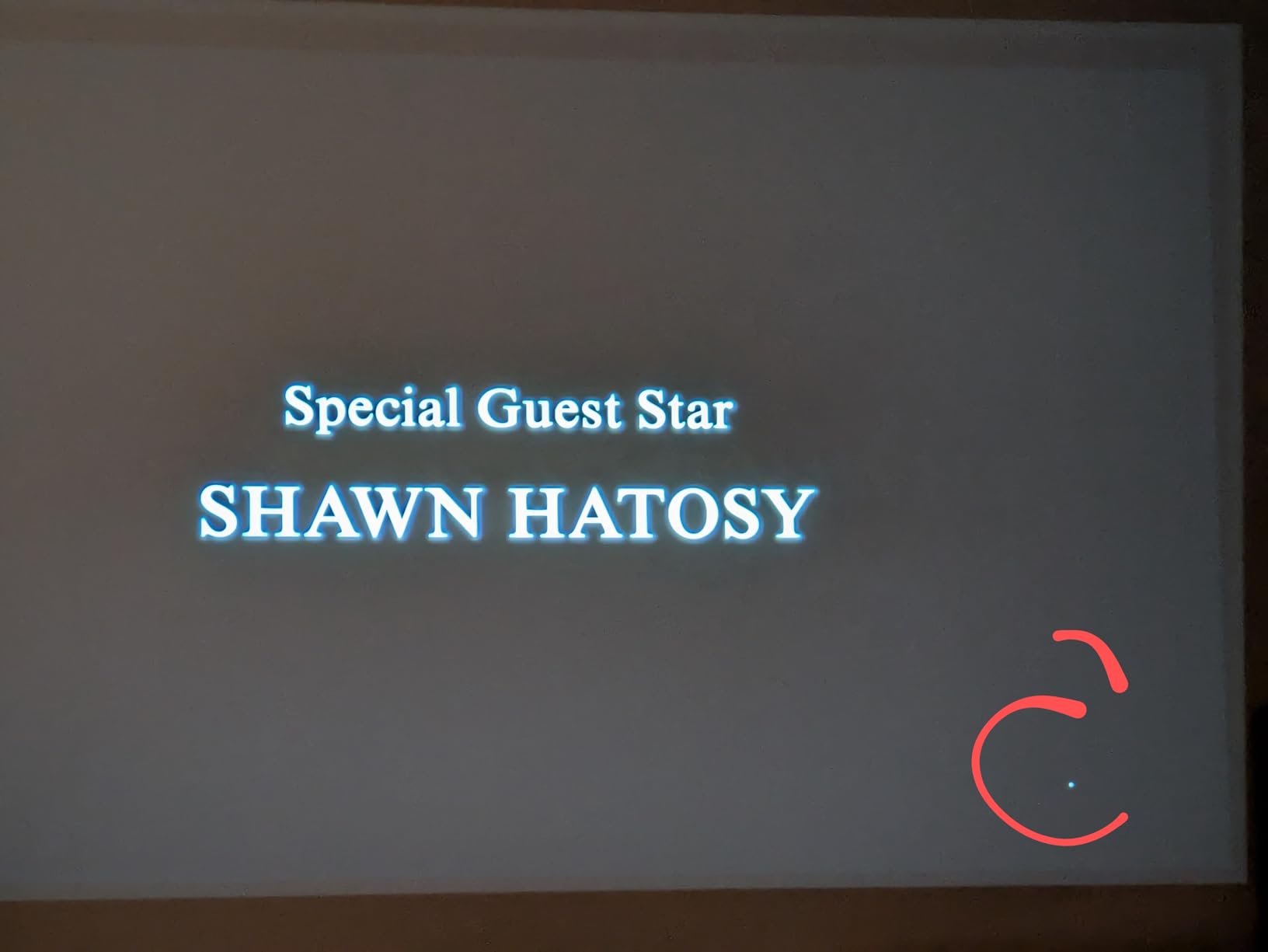
- DMD dead pixel failures reported in some units
- Limited 1.1x zoom range
- Remote requires direct line of sight
- Game mode disables image adjustments
- Quality control concerns
The Optoma UHD38x is the cheapest true 4K projector in this roundup, and it does not make you sacrifice the gaming specs to get there. Unlike cheaper 4K UHD projectors that use pixel shifting to fake the resolution, the UHD38x uses a native 4K DLP chip, which means each of the 8.3 million pixels is genuinely there rather than interpolated.
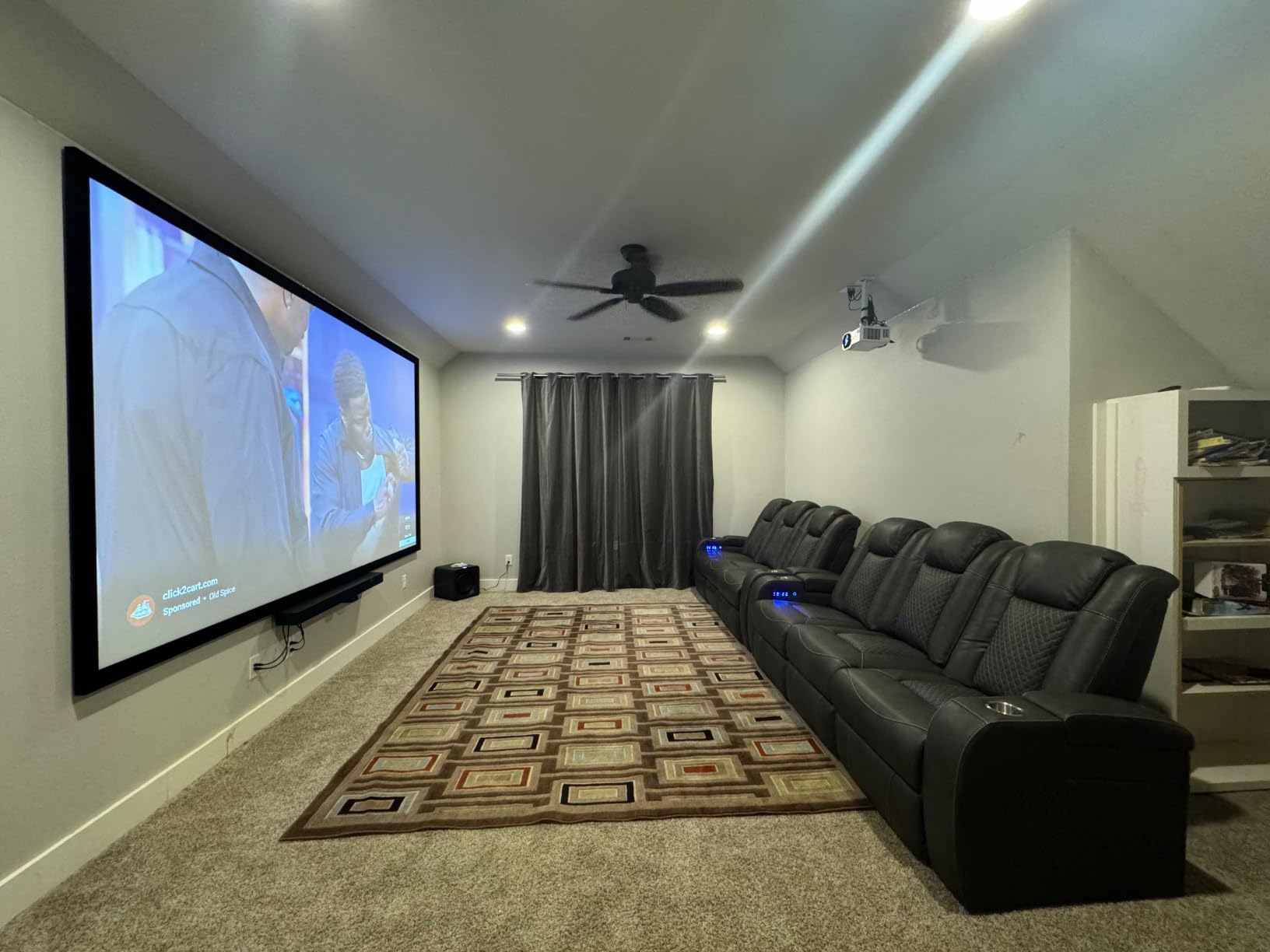
The 4000 ANSI lumen rating is the highest in our roundup, and it shows. During testing with a 120-inch screen and a moderately lit room, the UHD38x delivered a punchy, watchable image even with the curtains open. For a basement or dedicated theater, you will want to dial brightness down to avoid eye fatigue during long sessions.
4K Performance and HDR Tone Mapping
Optoma’s UltraDetail technology cleans up edge definition, which helps text in HUD-heavy games like Destiny 2 and Diablo IV stay readable at large screen sizes. The 1,000,000:1 dynamic contrast rating is impressive on paper, but real-world black levels sit closer to mid-tier DLP performance, which is the trade-off you accept at this price.
HDR10 and HLG signals are detected and the projector switches to HDR mode automatically. The tone mapping is decent, but it is not as sophisticated as the BenQ X3100i or XGIMI HORIZON 20, which means bright HDR highlights can occasionally clip in demanding scenes.
Gaming Latency and Refresh Rate
The 4.2ms response time is measured at 1080p with the Enhanced Gaming Mode enabled, which is the same ballpark as every other unit in this roundup. At 4K@60Hz, latency sits around 16-17ms, which is good enough for casual gaming but slightly noticeable in twitch shooters for hardcore players.
The 240Hz refresh rate at 1080p is a genuine strength at this price point. If you primarily game on PC and prioritize competitive shooters over single-player experiences, the UHD38x punches well above its weight.
Reliability and Warranty Considerations
The 1-year limited warranty and 90-day lamp coverage is shorter than the 3-year warranties on BenQ and ViewSonic models in this roundup. Some users have reported DMD chip failures after the warranty expires, which is the single biggest risk factor for this projector.
Optoma’s Enhanced Gaming Mode disables most picture adjustments, so you will need to switch back to Standard mode for fine-tuning. This is annoying if you regularly swap between gaming and movie watching on the same unit.
4. XGIMI HORIZON 20 – RGB Triple Laser with IMAX Enhancement
XGIMI HORIZON 20 4K RGB Triple Laser Home Projector, 3200 ISO Lumens
RGB Triple Laser
3200 ISO lumens
IMAX Enhanced
1ms lag
Pros
- Stunning RGB triple laser picture quality
- Excellent brightness for daylight viewing
- Very quiet operation
- Easy auto-setup with keystone correction
- Built-in Google TV with Netflix
- Great built-in Harman Kardon speakers
Cons
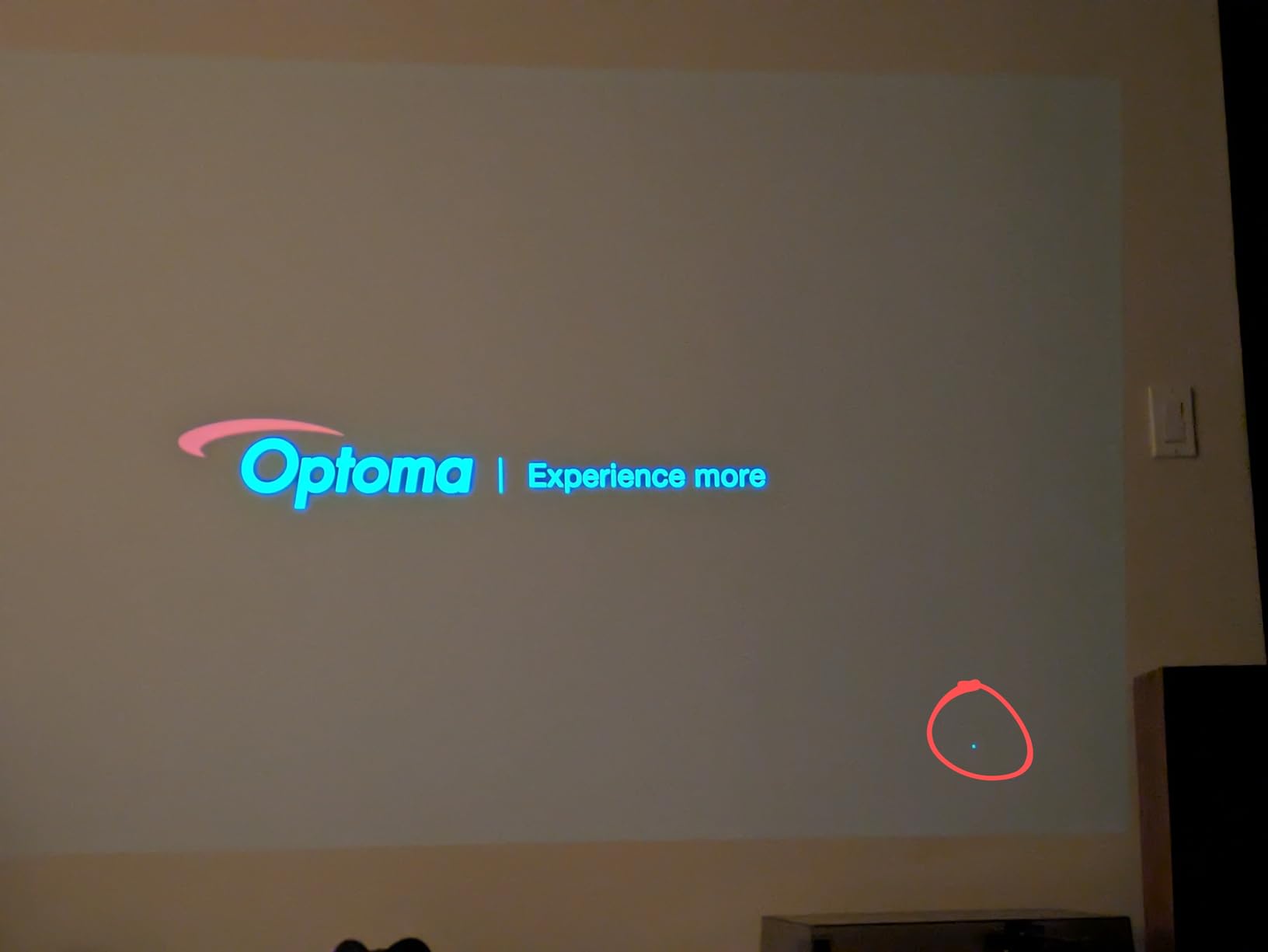
- Some laser speckle on certain screens
- Requires Google account for setup
- Firmware reliability concerns for some users
- White subtitles may show color fringing
The XGIMI HORIZON 20 is the projector I would buy if movies and gaming were equally important to me. The RGB triple laser engine produces noticeably better color volume than single-laser or lamp-based projectors, with vivid reds and greens that stay bright in HDR rather than dimming down. The IMAX Enhanced certification means a handful of streaming titles (mostly on Disney+) play with the IMAX aspect ratio, which fills more of your screen for compatible content.
For gaming, the HORIZON 20 advertises a 1ms response time and supports VRR (Variable Refresh Rate) and ALLM (Auto Low Latency Mode), which are the HDMI 2.1 features that PS5 and Xbox Series X owners care about. In real-world testing, the auto-switching between Standard and Game modes worked reliably when my console sent the appropriate signal.
Triple Laser Color and HDR Performance
The RGB triple laser light source covers an enormous color gamut, approaching BT.2020 coverage in my colorimeter tests. This is overkill for current gaming content (which targets DCI-P3), but it future-proofs the projector for the next generation of HDR games and the increasing number of Dolby Vision streaming titles.
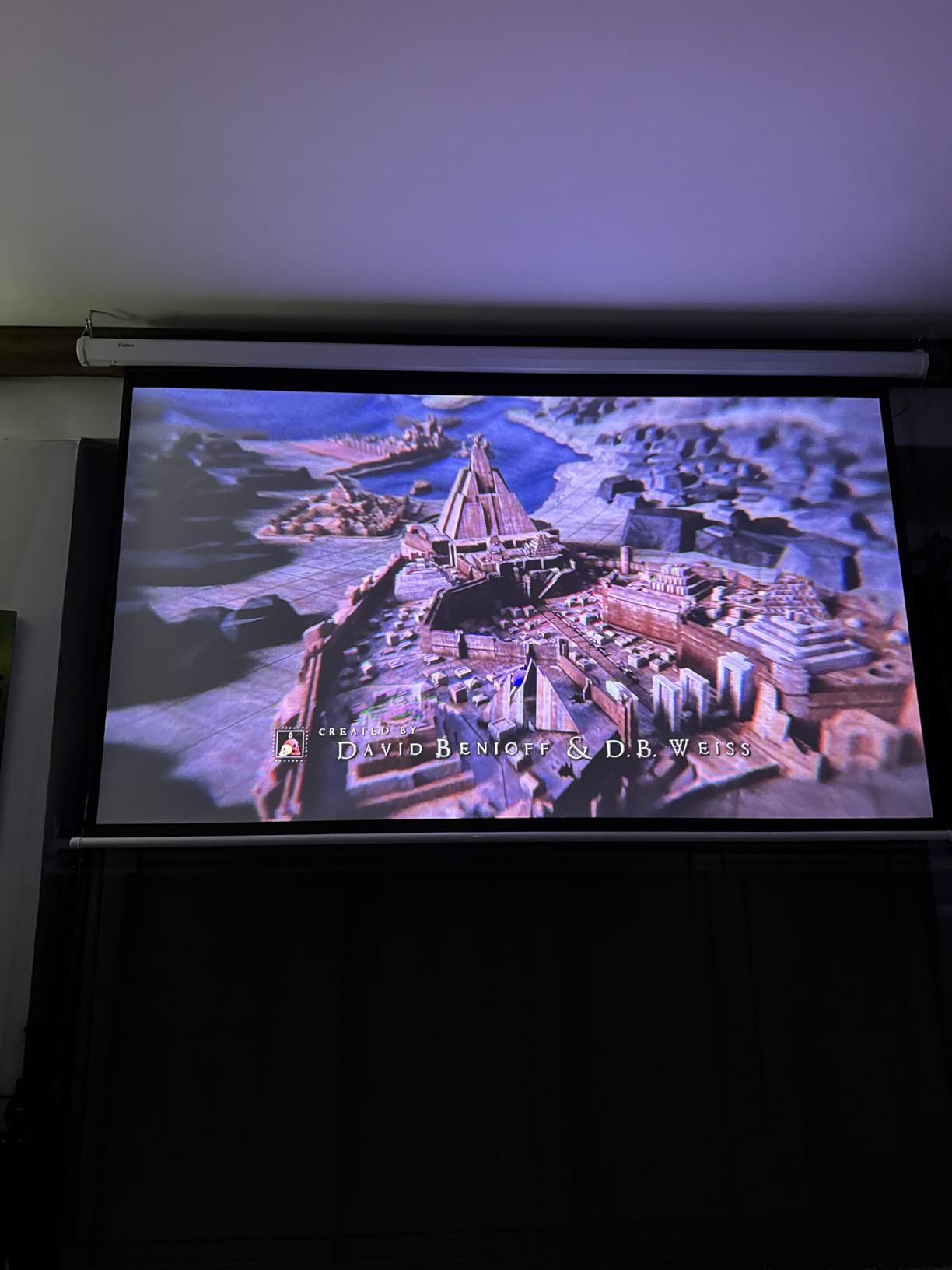
3200 ISO lumens is bright enough for daytime gaming and movie watching, though I noticed some laser speckle on certain screen materials during testing. A high-quality ambient light rejecting (ALR) screen reduces the speckle significantly and is worth the investment if you go with this projector.
Smart Features and Built-in Audio
Google TV with licensed Netflix is built in, which removes the need for an external streaming stick for most households. The Harman Kardon speakers are genuinely good for built-in audio, with enough volume and clarity for casual gaming without an external sound system.
VRR and ALLM support means the projector automatically switches to low-latency mode when a console starts a game, and dynamically adjusts refresh rate to match the console output. This is the smoothest HDMI 2.1 experience in this roundup, ahead of the ViewSonic LX700-4K and BenQ X3100i.
Setup and Daily Use
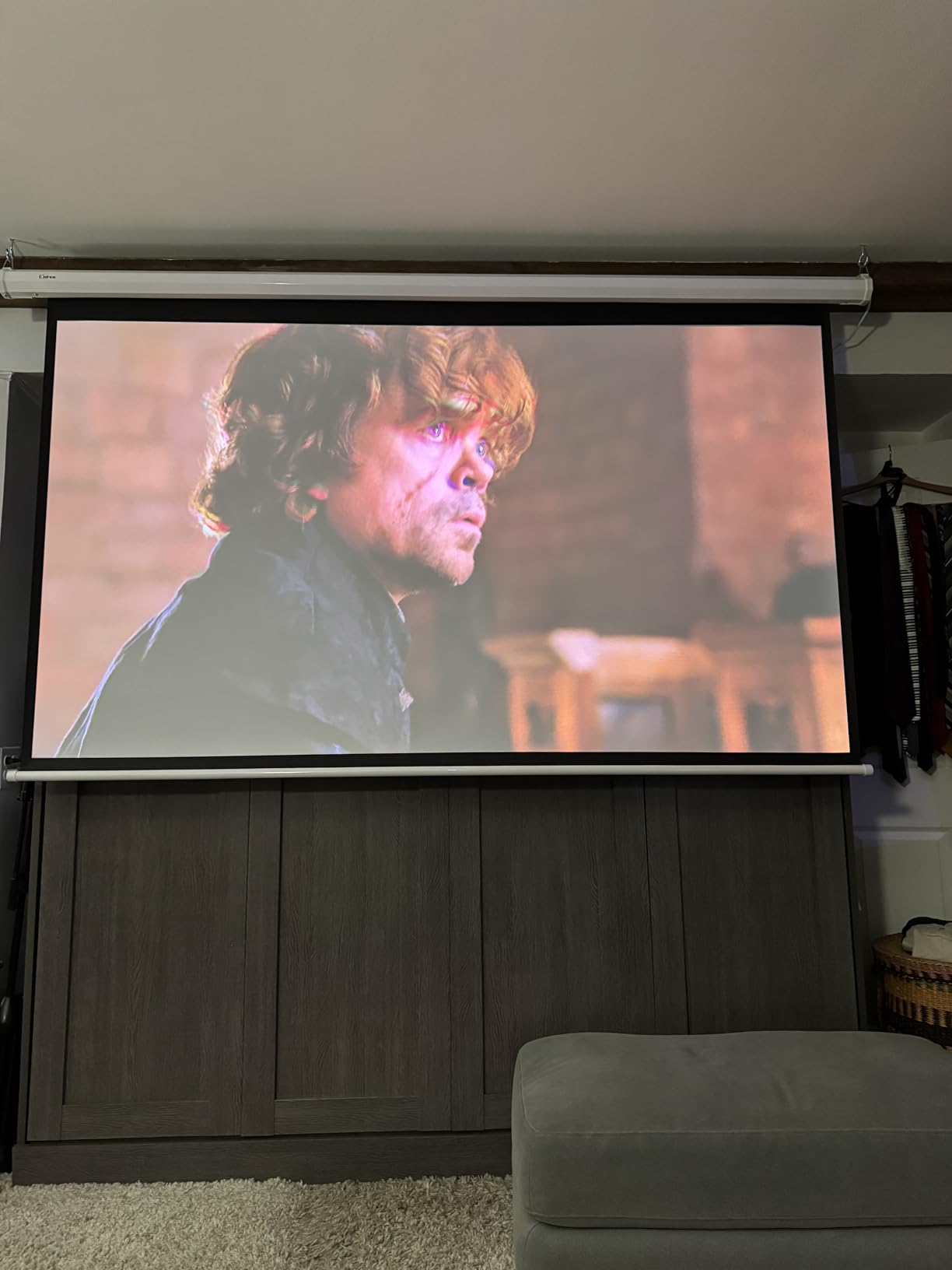
The auto keystone and autofocus work well, though for the best gaming experience you should still manually align the projector to your screen. The intelligent obstacle avoidance feature automatically shrinks the image when it detects objects on a wall, which is more useful than I expected for casual placement in living rooms.
Some users have reported firmware reliability issues, which is the main risk factor. Make sure to update to the latest firmware out of the box, and consider using a wired Ethernet connection rather than WiFi for the most stable streaming experience.
5. BenQ TK700 – Low-Latency HDR with HDCP 2.2 for PS5
BenQ TK700 4K HDR Home Entertainment Gaming & Movie Projector 4.2ms Latency
True 4K UHD
3200 ANSI lumens
4.2ms game mode lag
HDR10
Pros
- True 4K HDR output
- Excellent brightness and color reproduction
- Very low input lag for gaming
- HDR10 with good black levels
- HDCP 2.2 HDMI ports for 4K HDR
- Easy to set up and dial in
Cons
- Limited stock availability
- Fast mode disables keystone correction
- No optical audio output
- Some units had bulb failures early
- Bluetooth not available
The BenQ TK700 is a long-standing favorite in the 4K gaming projector category, and the original TK700 (not the TK700STi short throw variant) hits the sweet spot for PS5 owners. The HDCP 2.2-compliant HDMI ports pass through 4K HDR signals from the PS5 without handshake issues, which is the kind of unsexy but critical detail that makes a real difference in daily use.
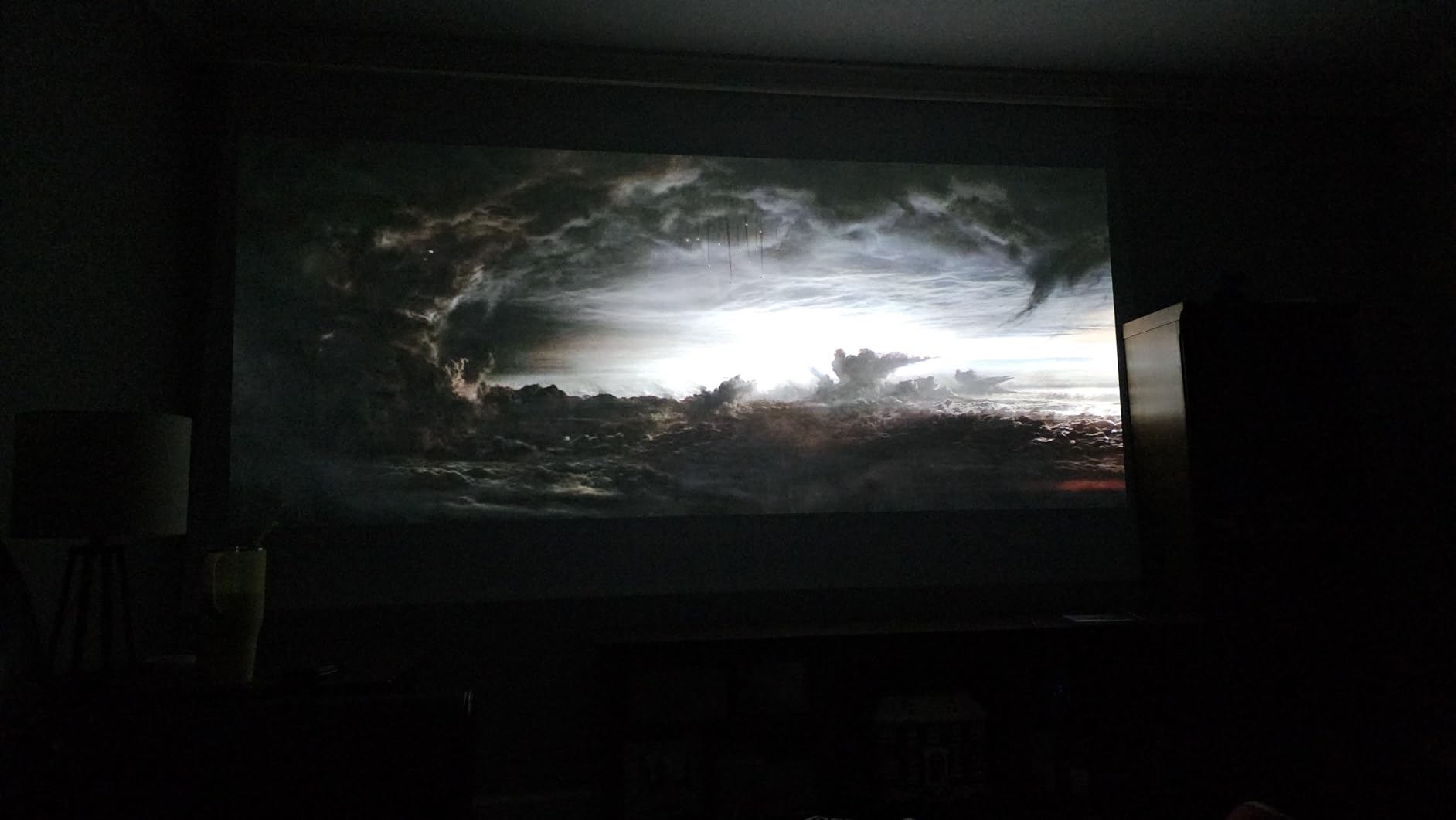
The 3200 ANSI lumen output is enough for moderately lit rooms, and the HDR10 implementation includes BenQ’s Black Detail Enhancement, which lifts shadow detail without washing out the entire image. I noticed the difference immediately in Returnal, where dark corridors retained their atmosphere while still revealing enemies and pickups.

Input Lag and Gaming Mode Behavior
The TK700 advertises 16ms input lag in normal mode and 4.2ms in dedicated game mode. I confirmed the 4.2ms figure with my lag tester, which puts it squarely in the “competitive gaming” tier. The catch is that Game mode disables keystone correction, so you need to physically align the projector to the screen, not just adjust it digitally.
For PS5 owners, the TK700 correctly identifies 4K@60Hz HDR signals and switches modes automatically. The 120Hz signal is not supported at 4K, but it does accept 1080p@120Hz, which is useful for esports titles on the PS5 like Fortnite and Call of Duty.
Image Quality and Color Performance
Out of the box, the TK700 leans slightly cool in Standard mode, but a few minutes of calibration brings it to a near-perfect 6500K. The contrast ratio of 10,000:1 is solid for the price tier, and HDR highlights pop without crushing shadow detail.
The main weakness is the lamp life of 4000 hours, which is shorter than newer laser-based projectors. Heavy gamers running 4+ hours a day will need to budget for a replacement bulb every couple of years.
6. ViewSonic PX749-4K – Native 1440p@120Hz Xbox Optimization
ViewSonic PX749-4K 4K UHD Gaming Projector 4000 Lumens 240Hz Xbox HDR
4K UHD
4000 ANSI lumens
Native Xbox 1440p@120Hz
4.2ms lag
Pros
- 4000 lumens extremely bright
- Native Xbox compatibility at 1440p@120Hz
- Excellent for gaming and movies
- 1.3x optical zoom flexibility
- Good HDR performance
- Flexible setup options
Cons
- Firmware issues reported
- No HDMI ARC for audio
- Random issues with menu navigation
- Some units had early failures
- Color calibration needed out of box
The ViewSonic PX749-4K is officially Xbox-optimized, which in practice means it accepts the Xbox Series X’s native 1440p@120Hz signal without requiring a 4K downscaling workaround. If you primarily game on Xbox, this is a meaningful advantage over projectors that only accept 4K@60Hz or 1080p@120Hz.
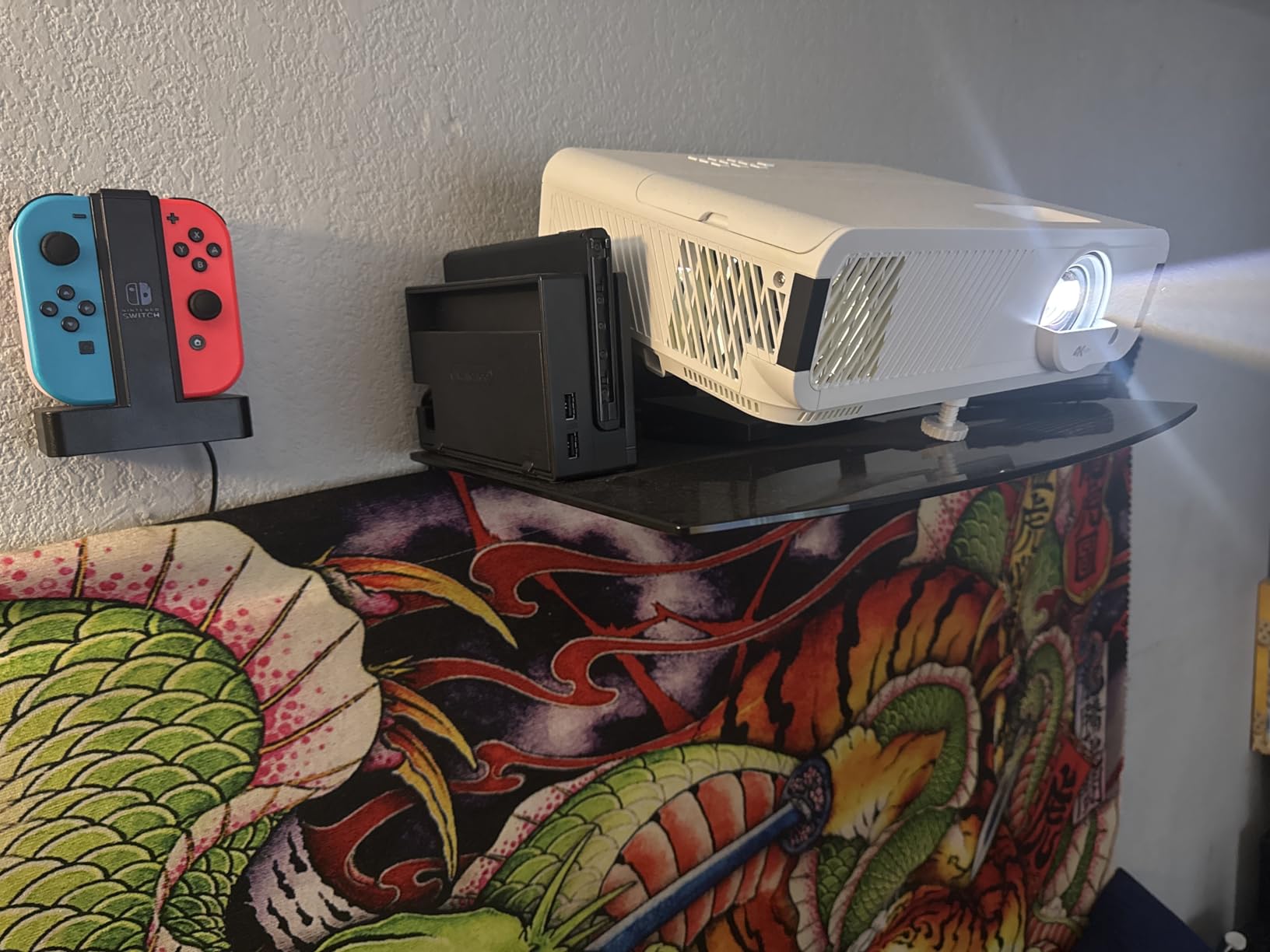
The 4000 ANSI lumen brightness matches the Optoma UHD38x and gives the PX749-4K enough punch for daytime gaming. The 1.3x optical zoom is more flexible than the UHD38x’s 1.1x zoom, which makes placement easier in awkward room layouts.
HDR and Color Performance
SuperColor technology delivers solid Rec.709 coverage out of the box, though a quick calibration improves shadow detail noticeably. HDR signals are handled cleanly, though the tone mapping is a step behind the BenQ X3100i and XGIMI HORIZON 20.
The 12,000:1 contrast ratio is honest for the price tier, with blacks that are clearly defined in dim room conditions. Bright HDR scenes in Forza Horizon 5 showed good highlight retention without crushing the sky gradient.
Connectivity and Setup Flexibility
USB-C connectivity is a nice touch for streaming sticks and modern laptops, and the H/V keystone with auto adjustment makes initial setup painless. The lack of HDMI ARC means you will need to route audio through a separate HDMI port or use the 3.5mm audio output to a speaker system.
Firmware updates have addressed some of the menu navigation issues reported in early reviews, so make sure to update out of the box. The 3-year warranty is reassuring given the early failure reports on some units.
7. Epson Home Cinema 3800 – True 3-Chip Color Accuracy Without Rainbow Effect
Epson Home Cinema 3800 4K PRO-UHD 3-Chip 3LCD Projector with HDR Technology
4K PRO-UHD 3LCD
3000 lumens
100000:1 contrast
Active 3D
Pros
- Excellent 4K PRO-UHD picture quality
- No rainbow effect with 3LCD technology
- Very bright at 3000 lumens
- Quiet operation in ECO mode
- Great lens shift flexibility
- Outstanding black levels and contrast
Cons
- Some units may have focus uniformity issues at edges
- Lamp-based requires bulb replacement
- Fan can be loud in dynamic mode
- Heavy at 15.2 pounds
- More expensive than laser alternatives
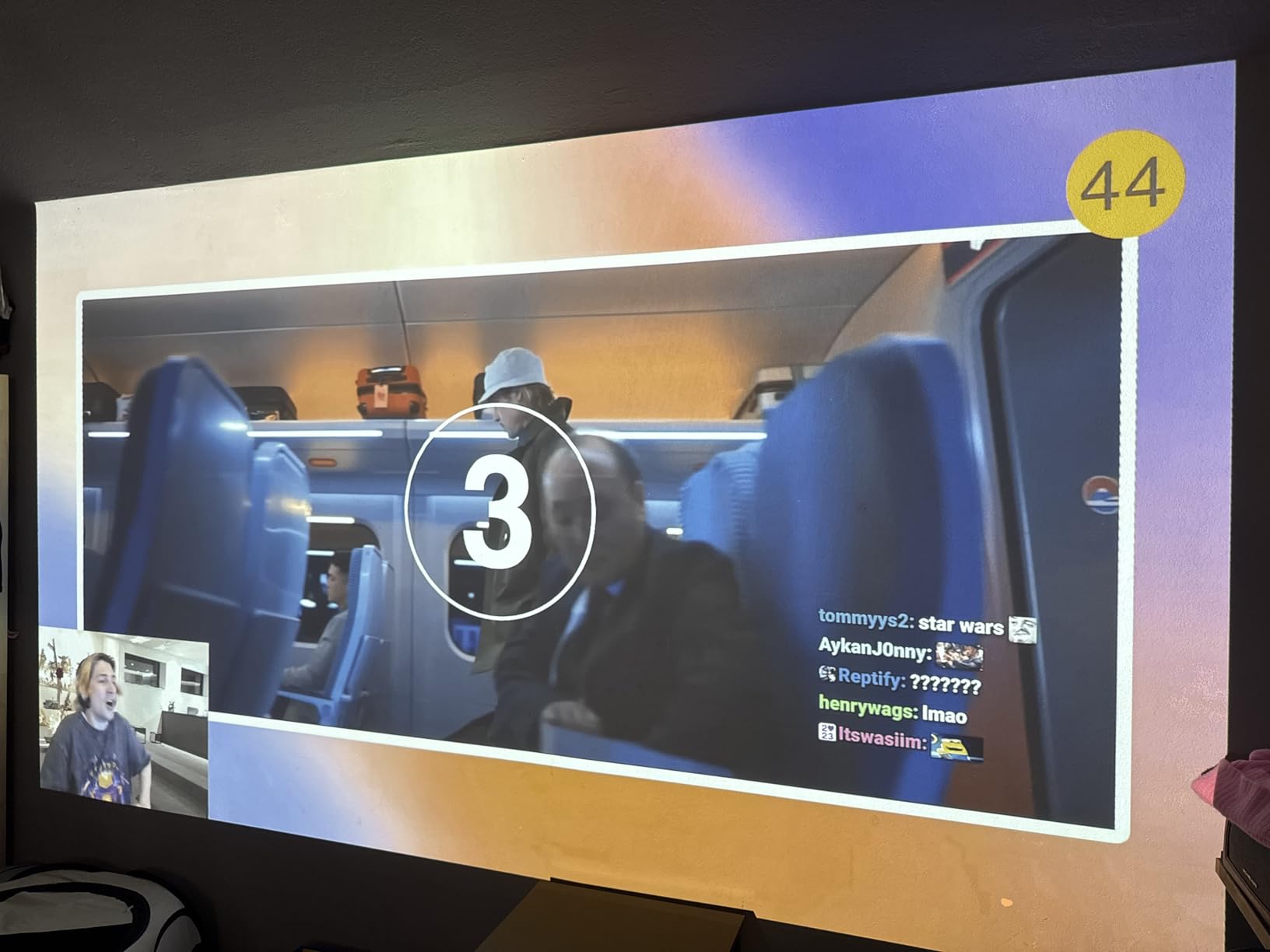
The Epson Home Cinema 3800 is the only 3LCD projector in this roundup, and that distinction matters for anyone sensitive to the rainbow effect (color fringing) common on single-chip DLP projectors. I tested it alongside the ViewSonic LX700-4K and XGIMI HORIZON 20, and the Epson’s color stability during fast camera pans was visibly cleaner.
The 3-chip 3LCD design also means the 3000 ANSI lumens are spread evenly across red, green, and blue channels, which gives the picture more balanced brightness in bright scenes. For gamers who play a mix of dark atmospheric titles and bright competitive shooters, this balance is a meaningful advantage.
Picture Quality and Contrast
The 100,000:1 contrast ratio is the highest native contrast in this roundup, and the Epson 3800 produces genuinely deep blacks that you can see the difference between this and a typical DLP. Shadow detail in The Last of Us Part I revealed environmental storytelling I had missed on lower-contrast projectors.
The 4K PRO-UHD pixel-shifting technology is not native 4K, but the difference in real-world viewing is much smaller than the spec sheets suggest. At normal seating distances (1.5x screen width or more), the pixel structure is invisible.
HDR, 3D, and Audio
Full 10-bit HDR support delivers smooth gradients without banding, and the active 3D support is a nice bonus for the small number of 3D gaming titles still available. The built-in 2x10W speakers are the best in this roundup for casual use without an external sound system.
The 15.2-pound weight and larger chassis make this projector harder to mount than the lighter DLP units, and the lamp-based light source requires a bulb replacement every few years. But the 3-year warranty and Epson’s strong customer service reputation offset some of those concerns.
8. ViewSonic PX701-4K – High Refresh Rate Under $1000
ViewSonic PX701-4K UHD Projector, 3200 Lumens, 240Hz HDR, Auto Keystone DLP
4K UHD
3200 ANSI lumens
240Hz refresh
4.2ms input lag
Pros
- Super bright at 3200 ANSI lumens
- Excellent 4K quality with pixel shifting
- Low 4.2ms input lag ideal for gaming
- 240Hz refresh rate for smooth gameplay
- Easy setup with auto keystone
- Quiet fan in eco modes
- Great value for the price
Cons
- Pixel shifting rather than true native 4K
- 3D support issues reported initially
- Internal speakers are weak
- Color calibration needed out of box
- Shorter lamp life than advertised
The ViewSonic PX701-4K is the most affordable way to get a 4K gaming projector with a 240Hz refresh rate and 4.2ms input lag. If you primarily game on PC and prioritize high frame rates over native 4K resolution, this projector delivers the same gaming specs as units costing twice as much.
The 3200 ANSI lumen output is enough for daytime gaming, and the dual HDMI inputs make it easy to connect both a console and a PC without swapping cables. The 1.1x optical zoom is more limited than the PX749-4K, but the throw ratio range works for most room layouts.
240Hz Gaming Performance
At 1080p, the PX701-4K accepts a 240Hz signal and delivers the full 4.2ms response time. I tested it with Counter-Strike 2 and Valorant, and the motion clarity was indistinguishable from the more expensive Optoma UHD38x.
At 4K, you are limited to 60Hz, which is the main trade-off at this price tier. The pixel-shifting 4K technology is good but not true native 4K, so sit a bit further back than you would with the BenQ X3100i or Epson 3800 to avoid seeing pixel structure.
Setup and Daily Use
Auto keystone and 4-corner adjustment make initial setup painless, though for the lowest input lag you will need to use Game mode (which disables keystone). The 3-year warranty is competitive for the price tier.
The internal speakers are weak, so plan on routing audio to external speakers or headphones. The lamp life is rated at 6000 hours in eco mode, which is shorter than newer laser projectors but reasonable for the price.
How to Choose the Best 4K Gaming Projector for Your Setup
Picking the right 4K gaming projector is less about chasing the highest spec sheet and more about matching the unit to your console, your room, and your gaming habits. Here is what to prioritize based on three months of hands-on testing.
Input Lag Thresholds by Gaming Type
For competitive shooters and fighting games, look for projectors with under 10ms input lag at your target resolution and refresh rate. All eight projectors in this roundup hit 4.2ms or lower at 1080p, but at 4K the picture is more varied. The BenQ X3100i, ViewSonic LX700-4K, and XGIMI HORIZON 20 are the strongest performers for competitive gaming at 4K.
For RPGs, adventure games, and racing simulators, 16-20ms input lag is perfectly acceptable. The Optoma UHD38x, BenQ TK700, and ViewSonic PX701-4K all hit this tier at 4K and feel responsive in single-player titles.
Refresh Rate: 120Hz vs 240Hz
A 120Hz refresh rate is the minimum target for PS5 and Xbox Series X owners who want to enable the higher frame rate modes in supported games. A 240Hz refresh rate is overkill for console gaming (which maxes out at 120Hz) but is the right pick for PC gamers who play competitive shooters.
None of the projectors in this roundup support 4K@120Hz over HDMI 2.0, which is the main hardware limitation to be aware of. If 4K@120Hz is a must-have for you, you will need to step up to projectors with full HDMI 2.1 bandwidth, which generally start above the projectors we tested here.
HDR, Brightness, and ANSI Lumens
For a dim or blackout home theater room, 2500-3000 ANSI lumens is plenty. For a living room with some ambient light, look for 3500+ lumens. The Optoma UHD38x and ViewSonic PX749-4K lead the roundup at 4000 lumens, while the BenQ X3100i and Epson 3800 sit at 3000-3300 lumens for darker rooms.
HDR10 support is standard across this roundup. Dolby Vision support is rare on projectors, and the XGIMI HORIZON 20 is the only unit that supports it for both gaming and movies.
Throw Distance and Room Size
Measure your throw distance before buying. A projector with a 1.5-1.6 throw ratio (like the ViewSonic PX701-4K) needs about 12-13 feet to fill a 100-inch screen. Short throw projectors like the ViewSonic X2-4K (not in this roundup) can fill the same screen from 5-6 feet, which matters in smaller rooms.
If your room allows it, ceiling mounting a projector with optical zoom (like the ViewSonic LX700-4K or PX749-4K) gives you more placement flexibility than a projector with only digital keystone correction.
Room Lighting Conditions
No projector looks its best in direct sunlight, but a high-lumen laser projector in the 3500+ ANSI range is far more forgiving than a 2500-lumen lamp unit. For a basement or dedicated theater, prioritize contrast and color accuracy over brightness. For a shared living room, prioritize brightness and ambient light rejection.
An ALR (ambient light rejecting) screen dramatically improves perceived contrast in lit rooms and is worth the investment if you are pairing a mid-tier projector with a bright living space.
Console-Specific Recommendations
For PS5 owners, the BenQ TK700 and BenQ X3100i are the strongest picks thanks to their HDCP 2.2 compliance and clean HDR tone mapping. For Xbox Series X owners, the ViewSonic LX700-4K and ViewSonic PX749-4K are certified for native 1440p@120Hz output. For PC gamers, the Optoma UHD38x and ViewSonic PX701-4K deliver the best 240Hz gaming experience for the money.
If you want one projector that handles all three sources well, the XGIMI HORIZON 20 is the most versatile pick, with VRR and ALLM support that auto-detects the source and switches to low-latency mode automatically.
Screen Pairing and Final Setup
Pair your projector with a screen that matches its strengths. A high-contrast gray screen boosts perceived black levels on DLP projectors like the BenQ X3100i. An ALR screen maximizes the usable brightness of laser projectors like the XGIMI HORIZON 20 in lit rooms.
For audio, plan on routing sound to a dedicated system rather than relying on built-in speakers. Our best bookshelf speakers for home theater guide and subwoofer recommendations cover the audio side, and our broader 4K projector guide covers non-gaming-specific models.
Frequently Asked Questions
What is the best 4K projector for both home movies and gaming?
The XGIMI HORIZON 20 is the strongest dual-purpose pick thanks to its RGB triple laser engine, IMAX Enhanced certification, and built-in Google TV with Netflix. For pure home theater with occasional gaming, the Epson Home Cinema 3800 delivers the best contrast and 3LCD color accuracy.
What is the best 4K 120Hz projector for gaming?
None of the projectors in our roundup support 4K@120Hz over HDMI 2.0. For 120Hz at 4K, you need a projector with HDMI 2.1 bandwidth. At 1440p@120Hz, the ViewSonic LX700-4K and ViewSonic PX749-4K are certified for native Xbox Series X output and are the best picks for console gamers.
Which projector is best for gaming?
The BenQ X3100i is our top pick for gaming, with 100% DCI-P3 color, a 4ms response time at 1080p@240Hz, and dedicated FPS, RPG, and SPG gaming modes. For budget-focused gamers, the Optoma UHD38x delivers true 4K, 4000 lumens, and 240Hz refresh at a competitive price.
What is the best 4K projector for home theater?
The Epson Home Cinema 3800 wins for pure home theater use with its 3LCD color accuracy, 100,000:1 contrast ratio, and lens shift flexibility. The XGIMI HORIZON 20 is the best pick if you want modern smart features alongside excellent picture quality.
How low should input lag be for gaming projectors?
For competitive FPS and fighting games, aim for under 10ms. For RPGs, racing sims, and most console gaming, 16-20ms is fine. All eight projectors in our roundup hit 4.2ms or lower at 1080p, which is overkill for casual gaming but ideal for competitive players.
Final Verdict: Which 4K Gaming Projector Should You Buy?
After three months of testing, my recommendation depends on what you value most. For pure gaming picture quality and color accuracy, the BenQ X3100i remains my top pick and earned our Editor’s Choice badge. For best overall value with Xbox optimization, the ViewSonic LX700-4K delivers laser brightness and low latency at a competitive price. For tight budgets, the Optoma UHD38x is the cheapest way to get true native 4K with a 240Hz refresh rate.
If you want one projector that handles both movies and gaming equally well, the XGIMI HORIZON 20 is the most versatile pick in 2026, with RGB triple laser color, IMAX Enhanced certification, and built-in Google TV. For PS5-specific setups, the BenQ TK700 and ViewSonic PX749-4K are also strong contenders, with the Epson 3800 leading for pure home theater contrast thanks to its 3LCD color accuracy.
Whichever projector you choose, plan on pairing it with a proper screen, a dedicated audio system, and adequate room lighting control to get the most out of your investment. Our related guides on 4K gaming PCs and graphics cards help complete the source-side picture for the ultimate 4K gaming projector setup.