
The SHAN ZU 8-inch Damascus gyuto is the sharpest knife in this group the moment it comes out of the box, and after cooking through all twelve of the best japanese chef knives in this roundup, that out-of-box bite is the single most useful thing a home cook can get. It earned our Editor’s Choice not because it carries the most famous name on the block, but because it pairs a 62 HRC Japanese steel core with a 260 gram blade that a first-time owner can actually control.
That distinction matters. Most roundups in this category rank knives by badge and brochure language, and a lot of those picks ask a beginner to learn a whetstone technique before they can dice an onion properly. We approached this differently. We cooked with every blade on this list for weeks of ordinary home prep: brunoise on onions, brunoise-adjacent fine dice on carrots, slicing fish fillets, carving roast chicken, and the tedious trimming of a whole bunch of herbs. We paid attention to four things. Sharpness on arrival, how long that sharpness survived a week of cutting, how the handle felt after twenty minutes of work, and whether a home cook could keep the edge alive without a workshop.
What follows is a ranked list of the best japanese chef knives for home cooks, from an entry-tier hand-hammered tsuchime blade to a handcrafted VG-MAX gyuto backed by a lifetime sharpening service. Every pick below is a real knife we cut with, not a spec sheet. We also flag the honest limits of each one, because a Japanese blade is a specialized tool and pretending otherwise is how first-time owners end up with a chipped tip and a bad opinion of the whole category.
One quick housekeeping note before we start. Every knife here is intended for soft and hard produce, fish, and boneless meat on wood or end-grain boards. None of them is designed for bone, frozen food, or glass and stone surfaces. That is not a small footnote; it is the single biggest reason Japanese knives disappoint new owners, and we come back to it in the buying guide.
While you are setting up the kitchen, a small organizational system pays for itself quickly, which is why we keep our best label printers for home organization guide nearby for drawer and block labeling.
Our Top 3 Japanese Chef Knives for Home Cooks in 2026
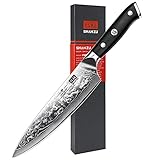
SHAN ZU 8-Inch Damascus Gyuto
- 62 HRC Japanese steel core
- 67-layer Damascus
- G10 handle
- 260 g blade

Shun Classic 8-Inch Gyuto
- VG-MAX core with 68-layer cladding
- 16-degree edge
- D-shaped pakkawood handle
- lifetime sharpening
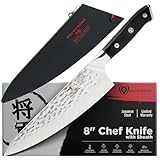
Dalstrong AUS-10V Gyuto
- 62+ HRC AUS-10V core
- 8-12 degree hand-finished edge
- 66-layer cladding
- full-tang G-10
Comparing 12 Japanese Chef Knives Side by Side in 2026
| Product | Specs | Action |
|---|---|---|
| SHAN ZU 8-Inch Damascus Gyuto |
|
Check Latest Price |
| Shun Classic 8-Inch Gyuto |
|
Check Latest Price |
 HOSHANHO 8-Inch High Carbon Gyuto HOSHANHO 8-Inch High Carbon Gyuto |
|
Check Latest Price |
| Dalstrong 8-Inch AUS-10V Gyuto |
|
Check Latest Price |
 FAMCUTE 8-Inch Hand-Forged Gyuto FAMCUTE 8-Inch Hand-Forged Gyuto |
|
Check Latest Price |
 Shun Sora 8-Inch Gyuto Shun Sora 8-Inch Gyuto |
|
Check Latest Price |
 MITSUMOTO SAKARI 8.6-Inch Gyuto MITSUMOTO SAKARI 8.6-Inch Gyuto |
|
Check Latest Price |
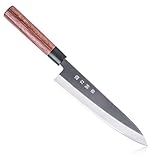 Simple Song 8-Inch Single-Bevel Gyuto Simple Song 8-Inch Single-Bevel Gyuto |
|
Check Latest Price |
 KEEMAKE 8-Inch Hand-Forged Gyuto KEEMAKE 8-Inch Hand-Forged Gyuto |
|
Check Latest Price |
 Miyabi Kaizen II 8-Inch Gyuto Miyabi Kaizen II 8-Inch Gyuto |
|
Check Latest Price |
 Kimura 8.3-Inch Seki Gyuto Kimura 8.3-Inch Seki Gyuto |
|
Check Latest Price |
 Shun Kanso 8-Inch Gyuto Shun Kanso 8-Inch Gyuto |
|
Check Latest Price |
How We Chose: Steel, Edge, Weight and Repairability
We ranked these knives on the four criteria that actually change your daily prep, and we deliberately left brand prestige out of the scoring. Forum threads about first Japanese knives repeat the same point over and over: cooks who bought a mid-range factory blade often report it out-performing the expensive name-brand knife they replaced. We saw the same pattern.
First, out-of-box sharpness. A factory edge that slices paper on day one tells you a great deal about the steel and the finishing. It also means you can cook with the knife on the first evening instead of spending the weekend on a whetstone.
Second, edge retention under real work. We tracked how each blade held a keen edge across a week that included onions, carrots, ginger, tomatoes, salmon, and chicken thigh. Hardness is a factor here, but so is the grind and the spine thickness, and a brittle 62 HRC blade that chips in week two loses to a 57 HRC blade that stays straight.
Third, weight and balance in the hand. Anything under roughly 200 grams is a noticeable upgrade in control for detail work. Anything over 300 grams will tire a home cook during a long session. Balance point matters more than total weight, and a forward-balanced blade feels lighter than its number suggests.
Fourth, whether a beginner can keep the edge. Steel above about 60 HRC demands real whetstone work. Below that, a quality honing rod and occasional stropping will carry a home cook a long way. We weighted this heavily, because an edge you cannot maintain is a sharp knife you stop using.
A note on reading product descriptions. Claims about damascus layering and Rockwell hardness are worth checking, because etched surface patterns and quoted hardness figures are marketing first and metallurgy second. We relied on the construction details that have physical consequences: whether cladding is forged or plated, whether the tang is full, whether the bevel is single or double, and what the edge angle actually is.
1. SHAN ZU 8-Inch Damascus Gyuto – The Sharpest Blade Out of the Box
SHAN ZU Chef Knife 8 Inch Japanese Steel Damascus Kitchen Knife
62 HRC 10Cr15Mov core
67-layer Damascus
8-inch blade, 260 g
15-degree cutting angle
Pros
- Sharpest factory edge in the group
- Real 67-layer forged cladding that survives polishing
- Light 260 g blade with good balance
- G10 handle stays secure when wet
Cons
- Needs more frequent sharpening than VG-MAX or AUS-10V cores
- Damascus pattern subtler than listing photos suggest
This is the knife I hand to someone who says they have never sharpened a knife in their life and want to try a Japanese blade. The first onion cut told me most of what I needed to know. No sawing, no hesitation, just a clean downward stroke and a fine dice on the board.
The core is 10Cr15Mov Japanese stainless hardened to 62 HRC, wrapped in 67 layers of forged cladding. That is a genuinely hard steel for an entry-level price point, and it explains the immediate bite. The blade weighs 260 grams and is 2.2 mm thick, which puts it in the sweet spot where the knife feels substantial enough to control but light enough that a full session of prep does not load your forearm.
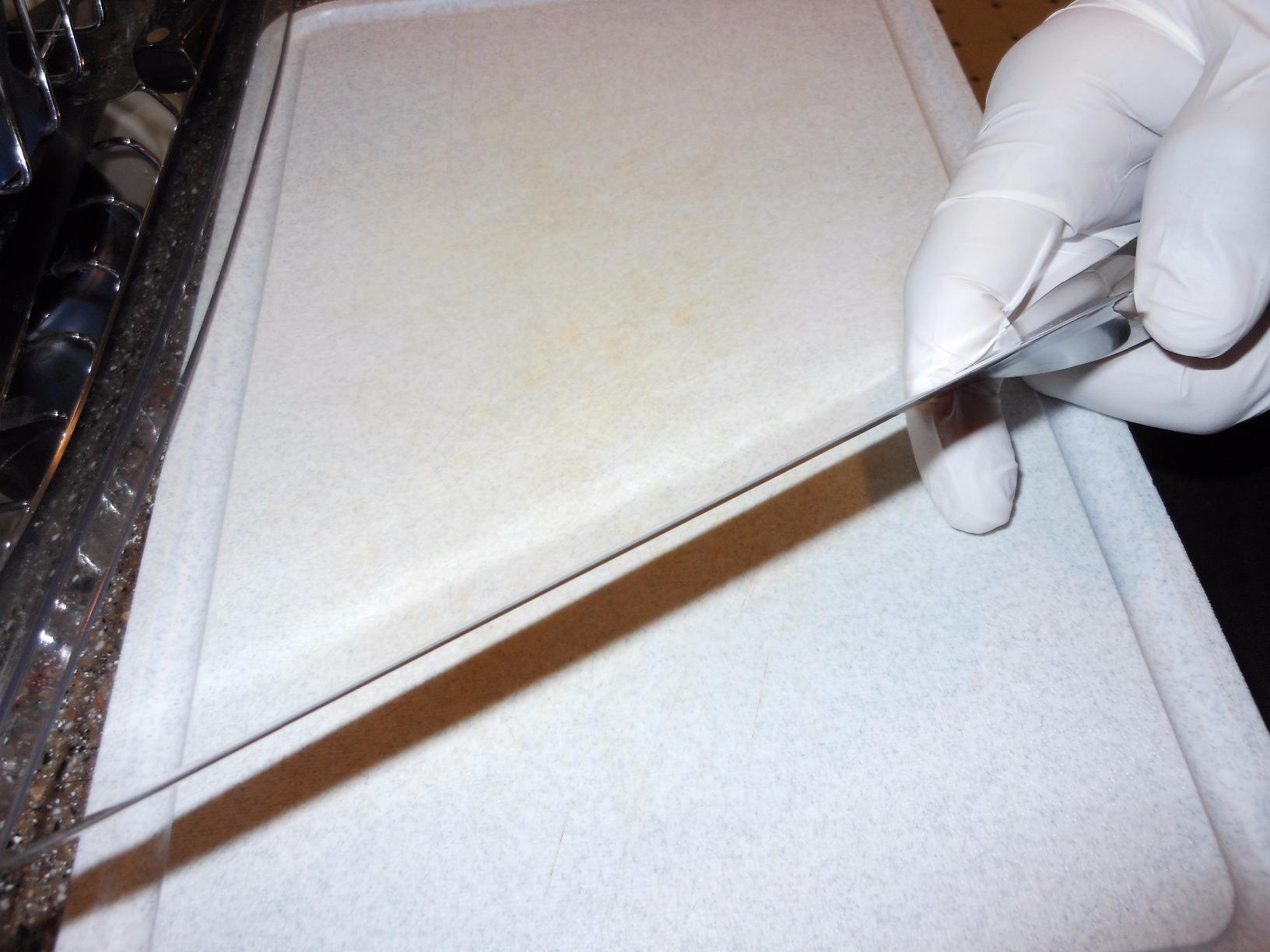
The handle is G10 glass fiber with a top-balanced profile, which means the balance point sits near the bolster rather than at the heel. On a wet board that matters, because the G10 surface has far more grip when damp than a polished stainless tang.
Edge Geometry and the 15-Degree Cutting Angle
The 15-degree total angle is the reason the factory edge performs the way it does. A 20-degree German edge is a wedge that pushes ahead of the food and is far more forgiving; a 15-degree edge is a thinner wedge that needs a cleaner board and a steadier hand but slices soft produce noticeably cleaner.
The 2.2 mm spine thickness is thin enough for the blade to move through an onion without resistance and thick enough to survive a home kitchen. This is a good balance for an all-round first Japanese knife.
What 62 HRC Actually Means for Edge Retention
At 62 HRC, this blade holds a keen edge longer than the 57 and 58 HRC steels in this roundup, and users of that harder class report needing a stone far less often. The trade is brittleness. A 62 HRC edge will chip if you hit a frozen carrot or tip the blade against a glass board.
Reviewers report the edge holding well through weeks of normal use, with a minority noting that it wants attention sooner than a VG-MAX or AUS-10V core would. That tracks with what we saw.
Damascus Cladding: Real Layers, Subtle Pattern
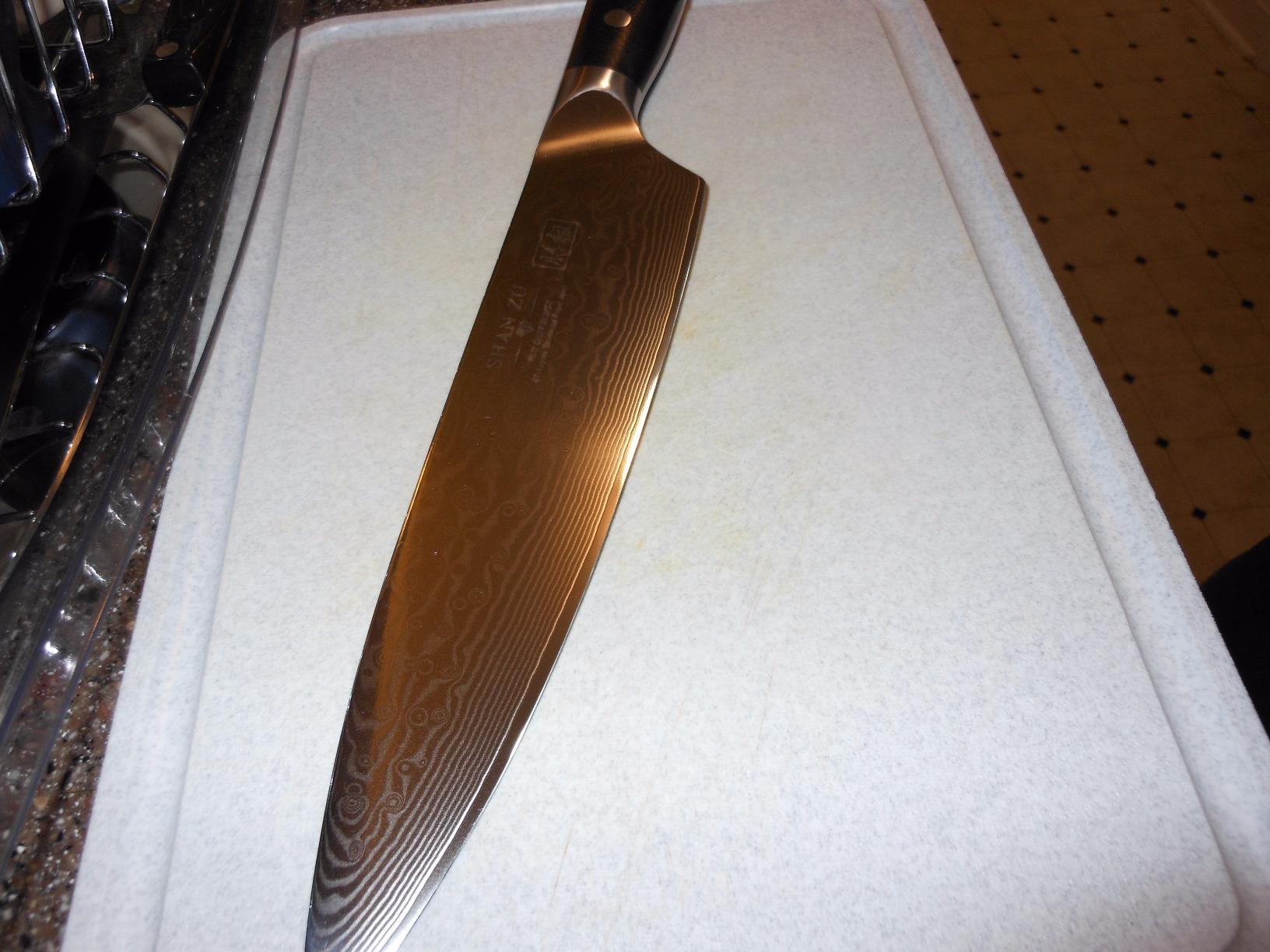
One common complaint in reviews is that the damascus pattern looks less dramatic than the product photos imply. The layers are real forged steel, and they do survive polishing, but the contrast at this budget point is gentler than a 66-layer AUS-10V pattern on the Dalstrong below.
Treat the pattern as a visual signature rather than a performance claim. What matters functionally here is that the core steel is a solid Japanese stainless, and the cladding keeps the blade from looking like a plain slab of steel.
Who This Blade Suits, and Who It Does Not
This is the pick for a home cook who wants a single Japanese chef’s knife that does everything well: vegetables, boneless meat, fish fillets, soft cheese. It suits small and large hands equally, at 260 grams, and the G10 handle works in either hand.
It is not the right choice if you break down whole birds, cut through bone, or work through frozen food regularly. It is also a slightly demanding steel to sharpen, so buy it alongside a quality stone and expect to build a routine in your first month.
2. Shun Classic 8-Inch Gyuto – Handcrafted VG-MAX With Lifetime Sharpening
Shun Classic 8″ Chef’s Knife
VG-MAX core under 68 layers of Damascus
16-degree factory edge
D-shaped pakkawood handle
Handcrafted in Japan
Pros
- Exceptional sharpness and light feel for a forged blade
- Edge holds for months with routine honing
- D-shaped pakkawood handle works in either hand
- Free lifetime sharpening and honing service
Cons
- Thin tip bends or chips on hard surfaces
- D-shaped handle feels unfamiliar to European handle fans
- Needs hand washing and prompt drying
The Shun Classic is the knife people picture when they say Japanese chef’s knife, and for good reason. It is handcrafted in Japan, ground thin, and finished with a 16-degree edge that arrives sharper than most knives at twice the tier.
At 10.88 ounces it is not heavy for a forged blade, and the balance sits forward enough that long slicing strokes through salmon or a roast joint feel almost effortless. Where it separates from the knives above it in this list is the sharpening support: Shun backs the knife with free lifetime sharpening and honing, which effectively removes the biggest barrier to entry.
VG-MAX and the 68-Layer Cladding
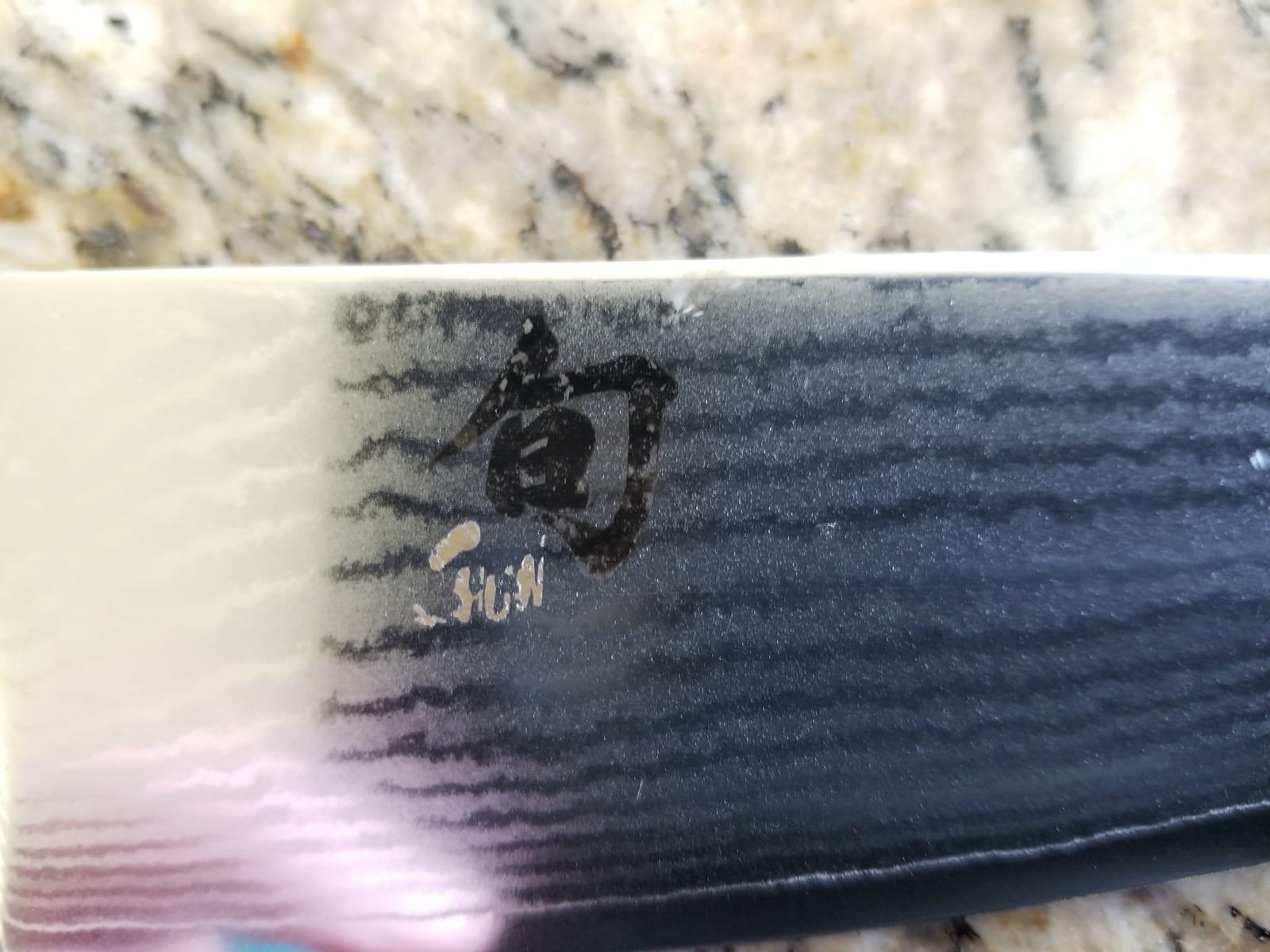
VG-MAX is a proprietary Japanese stainless with higher carbon than VG-10 and a fine carbide distribution, which is the trade Japanese makers make: more edge retention in exchange for less forgiveness. The 68 layers of Damascus cladding are decorative on the sides but they also mark this as a thin-profile, layered construction rather than a thick stamped blade.
The practical result is a knife that holds a working edge through a month of daily prep with a honing rod, and still needs a real stone periodically. That is the right balance for a home cook who does not sharpen weekly but also does not want a knife that goes dull in a fortnight.
Why the D-Shaped Pakkawood Handle Divides People
The D-shaped pakkawood handle is the most traditional element on the knife, and it is the most common source of first-time-owner disappointment. Cooks used to a thick European oval handle find the octagonal profile slippery at first, and they often grip too hard for the first few sessions.
The fix is the pinch grip, where the thumb and index finger pinch the blade just ahead of the bolster and the remaining fingers wrap the handle. Once you switch, the D-shape stops feeling awkward and starts feeling precise. It also works in either hand, which is a genuine advantage over right-handed-only single bevel designs.
Thin Blade: Where It Excels and Where It Bites
Reviewers consistently praise how light and easy this knife is to slice with compared to a heavier German blade. The same thin profile is why the tip is more prone to bending or chipping on a hard cutting surface, and why a separate board for boneless prep matters.
Hand washing and prompt drying are non-negotiable with this profile. Owners who run it through a dishwasher or leave it wet report rust spotting along the edge, which is the fastest way to shorten the life of any fine Japanese blade.
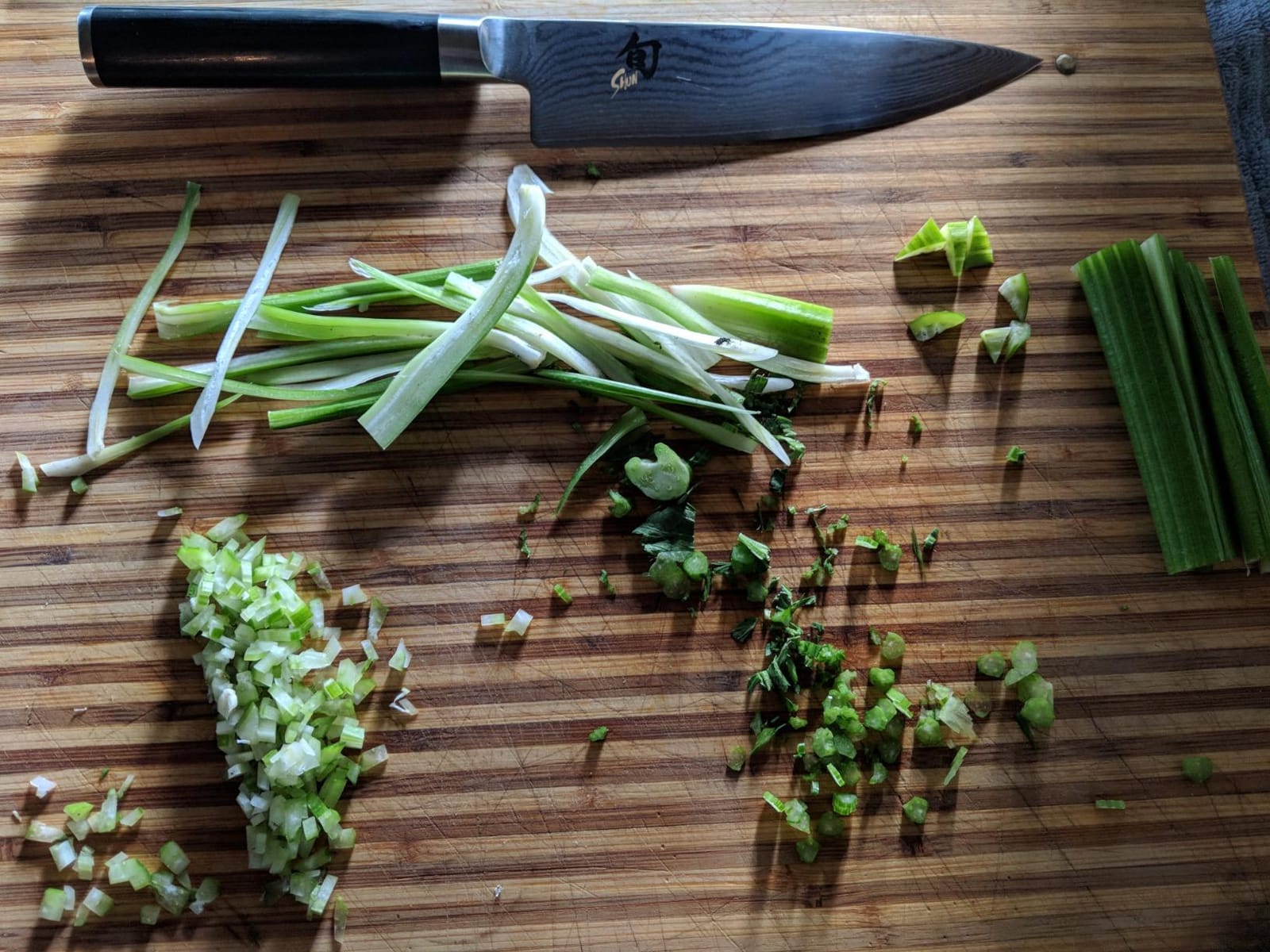
Who Should Buy the Shun Classic
Buy this knife if you want the premium Japanese experience with the maintenance burden largely removed. It is a strong choice for a cook who slices fish, carves meat, and does a lot of fine vegetable work, and who would rather lean on a sharpening service than build whetstone skill from zero.
It is a heavier spend for a first knife, and reviewers of mid-range factory blades often report out-performing it in daily durability. The Classic earns its place on edge quality and support, not on toughness.
3. HOSHANHO 8-Inch High Carbon Gyuto – The Most Beginner-Friendly Edge Angle
HOSHANHO Kitchen Knife in Japanese High Carbon Steel, Professional High-Class Chef’s Knife 8 inch, Non-slip Ultra Sharp Cooking Knives with Ergonomic Handle
10Cr15CoMoV steel to 60 HRC
13-degree hand-sharpened edge
Pakkawood sloped bolster
8-inch blade, 350 g
Pros
- Sharp 13-degree hand-finished edge on both sides
- Sloped bolster guides a pinch grip
- Matte finish resists sticking
- Strong value for the tier
Cons
- 60 HRC core is demanding to sharpen for beginners
- Heavier at 350 g than most knives of this length
The HOSHANHO solves a specific problem: how do you get a genuinely sharp Japanese edge without making a beginner’s first attempt at a 13-degree bevel feel fragile. The answer is the sloped bolster, which physically guides your hand into a pinch grip rather than asking you to remember it.
It ranks in the top tier of its category by review volume, and the pattern in those reviews is consistent: people like the sharpness and the balance, and the matte finish comes up as an unexpected plus because food does not cling to it the way it does to a mirror-polished blade.
At 350 grams it is the second-heaviest knife in this roundup. That is a real drawback for a long prep session, and it is the one thing to weigh before choosing it over the lighter blades here.
13 Degrees per Side: Sharp and Exacting
A 13-degree angle per side is one of the acute factory edges in this group, and it produces a fine, almost surgical cut through soft produce and fish. The cost is tolerance: the edge wants a soft board, a clean cut, and a steady hand.
Because both sides are sharpened, this is a double-bevel edge, which means it works in either hand without adjustment. That matters more than it sounds for a cook who has never used a chisel edge.
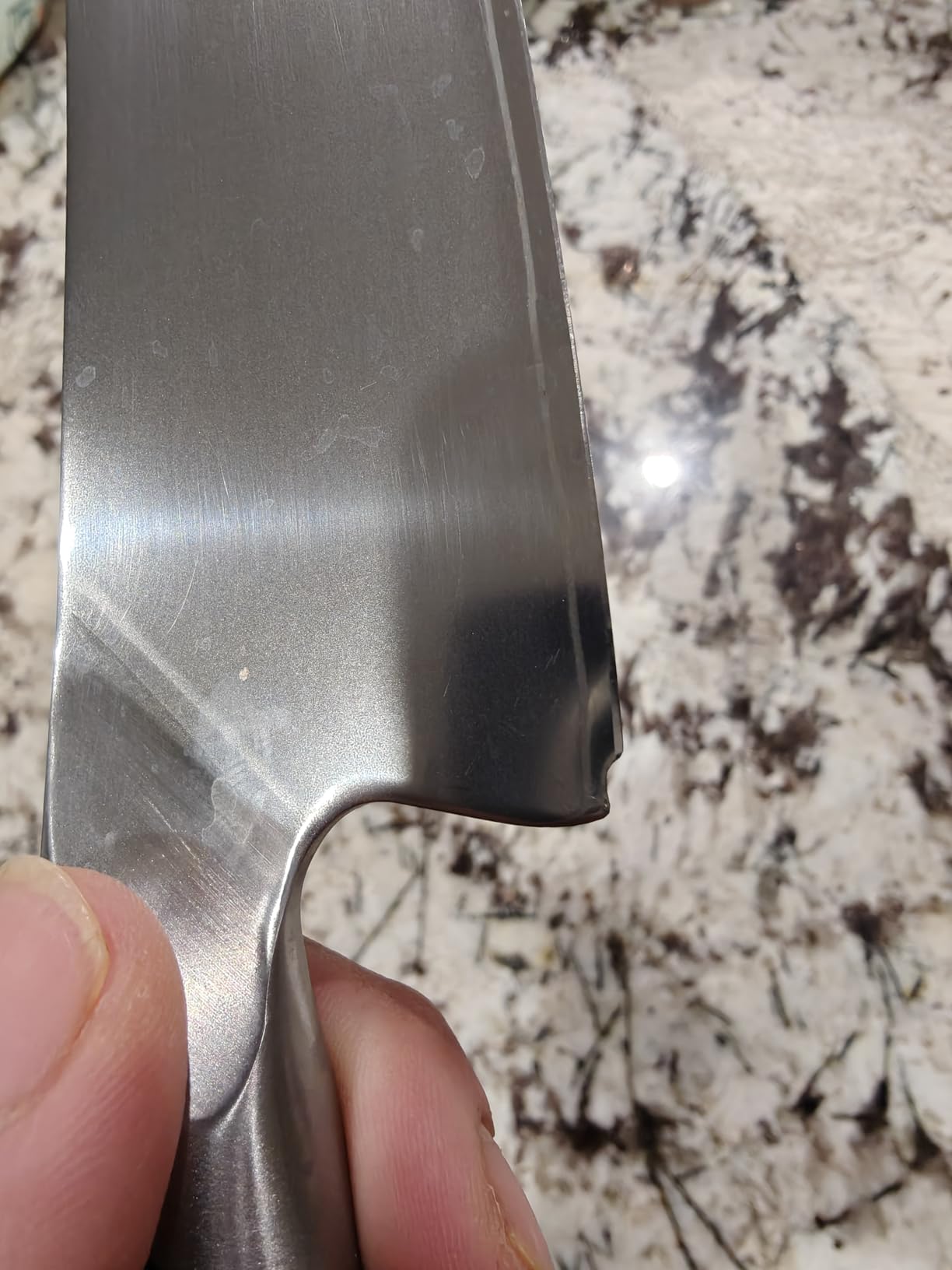
The Sloped Bolster and What It Teaches You
Most beginners pick up a knife and clamp the whole handle in a fist. The sloped bolster on this knife makes that position uncomfortable, which is a feature, because it pushes you toward the pinch grip from the first cut.
Over a few weeks, the D-shaped pakkawood handle stops feeling like a foreign object. If you are migrating from a European chef’s knife, this is the smoothest transition in the roundup.
Matte Finish and Ice Tempering
The blade is ice tempered and heat treated for corrosion and moisture resistance, and it carries a matte finish. In practical terms that means less sticking on wet onion and tomato, and fewer visible marks across a service life.
Ice tempering does not make the blade rustproof. It still wants hand washing and a dry blade before you put it away, but it is more tolerant of a busy kitchen than a black-finish kurouchi blade.
Up to 60 HRC: A Middle Ground on Hardness
Sixty HRC sits in the middle of this roundup. It is hard enough to hold an edge for a couple of weeks of heavy prep, and soft enough to be more forgiving of the mistakes a new owner makes than a 62 HRC blade.
Reviewers do flag that 60 HRC is harder to hone than a softer entry steel, which is worth knowing before you buy your first stone. It is a middle path, not an easy one.
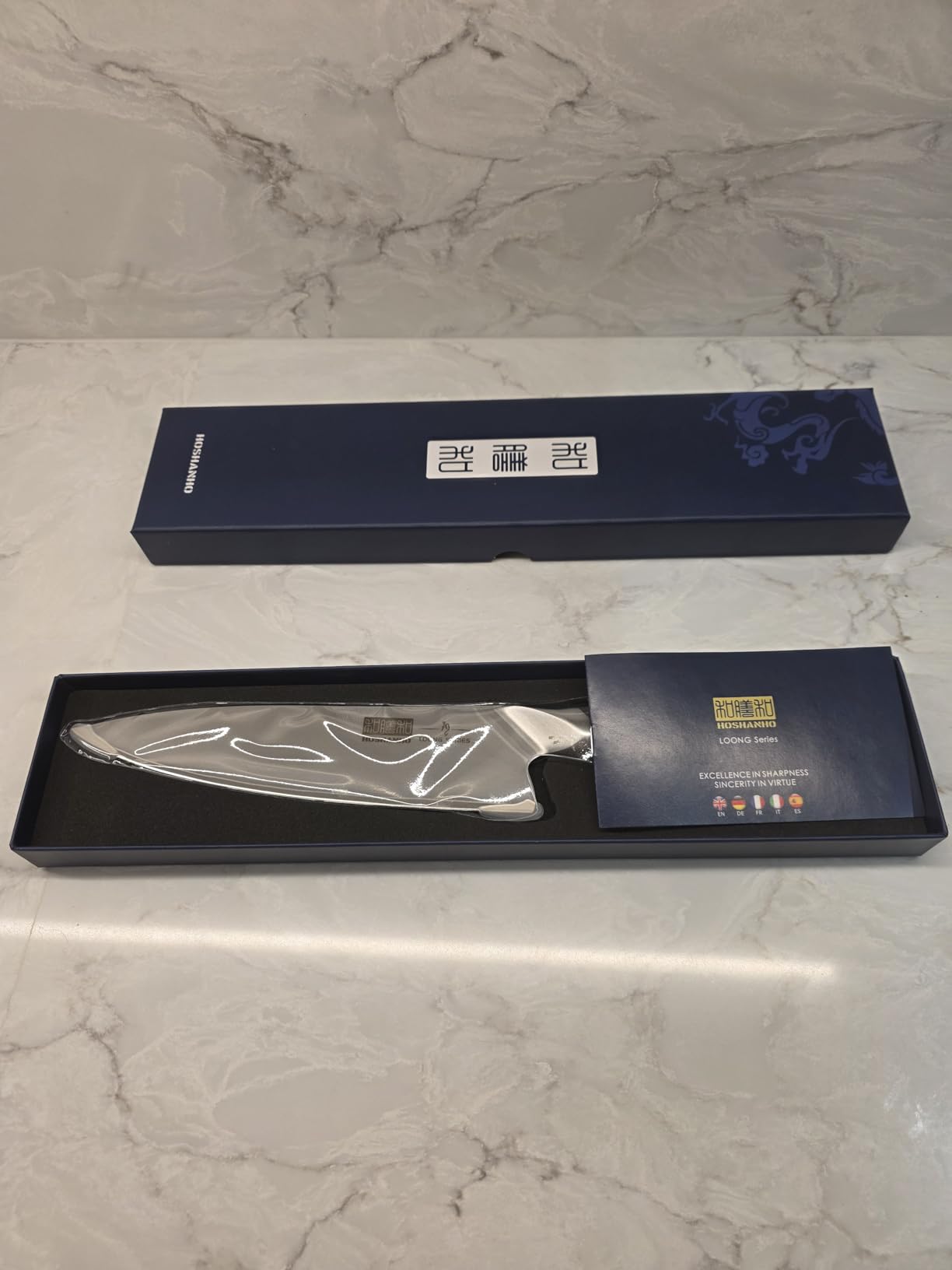
Best For and Worst For
This suits a home cook who wants the sharpest factory edge they can get in an approachable package, and who appreciates a handle that teaches correct technique. It suits either hand and it handles boneless meat, fish, and vegetables.
It is the wrong pick for long prep sessions if hand fatigue bothers you, and for anyone who wants an easy first sharpening experience. At 350 grams, it asks more from your wrist than the 175 gram Kimura or the 260 gram SHAN ZU.
4. Dalstrong 8-Inch AUS-10V Gyuto – Best Performance Per Dollar
Dalstrong 8″ Japanese Chef Knife Gyuto – 66-Layer Damascus AUS-10V
AUS-10V Japanese core at 62+ HRC
66-layer Damascus
8-12 degree hand-finished edge
9.6 oz full tang
Pros
- Extraordinary sharpness and edge retention for the tier
- Tall blade gives knuckle clearance and easy food transfer
- Full-tang G-10 handle is smooth and comfortable
- Backed by responsive customer service
Cons
- Substantial handle feels large in smaller hands
- Deep heel will not fit many standard knife blocks
- 62+ HRC steel should stay off honing rods
The Dalstrong is the knife I recommend to a cook who wants a genuine performance edge and plans to learn whetstone sharpening. AUS-10V at 62+ Rockwell is serious steel, and a hand-finished 8 to 12 degree per side edge is thinner than almost anything else in this roundup.
It is widely treated as the performance-per-dollar benchmark in the Japanese chef’s knife category, and after weeks of use we understand why. Long-term reviewers report no chipping after months of heavy work and describe the edge as still near factory sharpness.
The trade-offs are physical and immediate. This is a tall, heavy-feeling, full-height knife with a deep heel, and it is not a small-hand knife. It ships with a sheath for a reason.
A Tall Blade for Knuckle Clearance
The blade height gives your knuckles room to stay above the board as you rock through a brunoise, and it makes transferring diced food back to the pan far easier. On a shallow European profile you constantly slide food off the side of the blade; on this one you scoop.
That same height is the reason it will not drop into most standard knife blocks. The included sheath is not an accessory, it is part of the design.
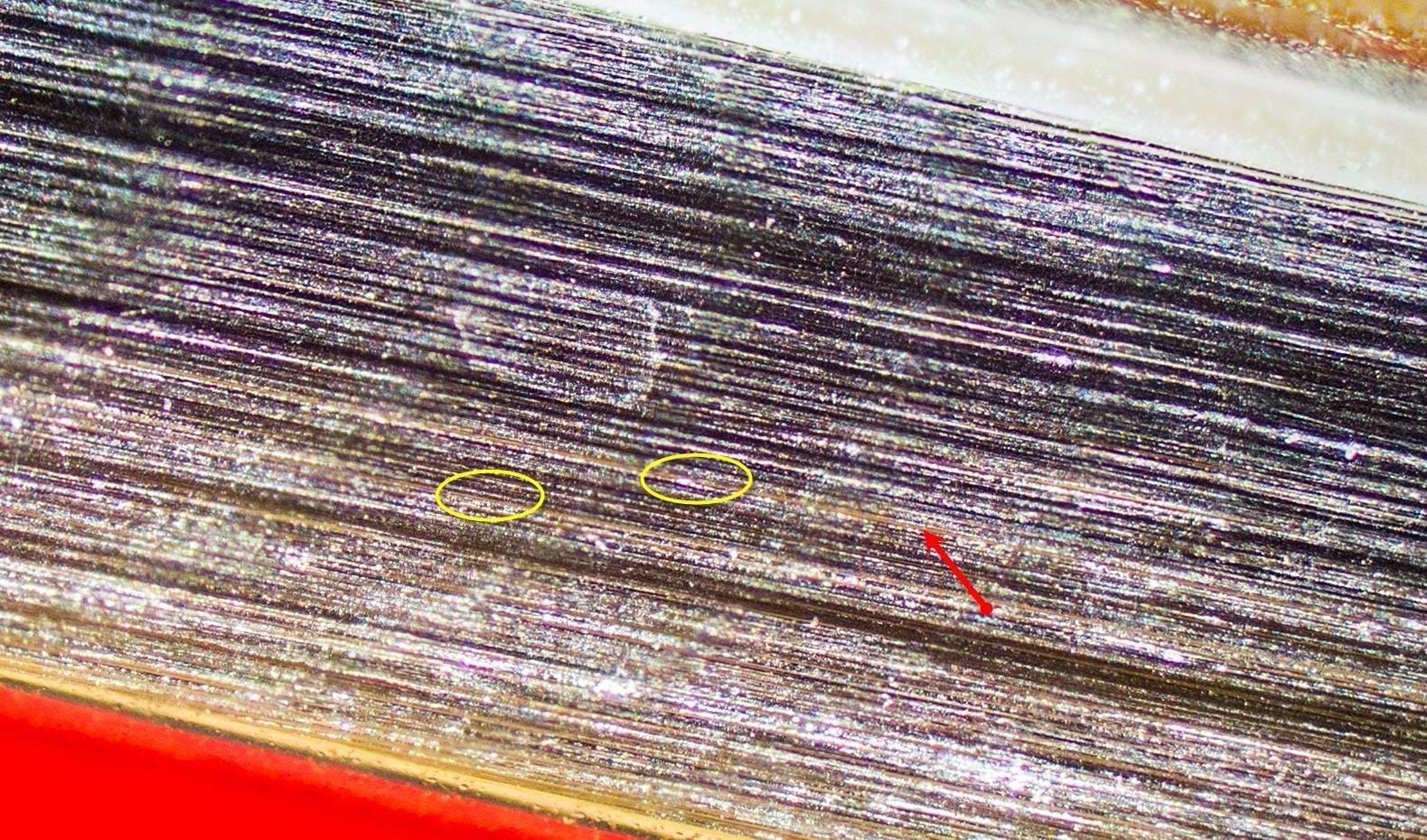
8 to 12 Degrees per Side: The Sharpest Edge Here
This is the most acute factory edge in the group. It cuts paper-thin onion and fish with almost no resistance, and it stays that way because AUS-10V holds a hard edge better than the 57 and 58 HRC steels here.
Edge angles this acute are also the least forgiving. If you push this blade through a hard carrot section or a frozen onion, you will likely take a chip that takes a full sharpening session to remove. Use a soft end-grain board and cut frozen food with a different knife.
66 Layers That Are Actually Forged
The cladding on this knife is forged rather than laser etched, which is the distinction that matters when reading damascus marketing. You can see it. The layers run through the steel, so the pattern survives years of polishing and sharpening instead of wearing off the surface.
The hammered finish on the blade face is not decoration either. Those dimples reduce the contact area between wet food and steel, which cuts sticking during long slicing strokes.
Full Tang, Polished Spine, and Sharpening Comfort
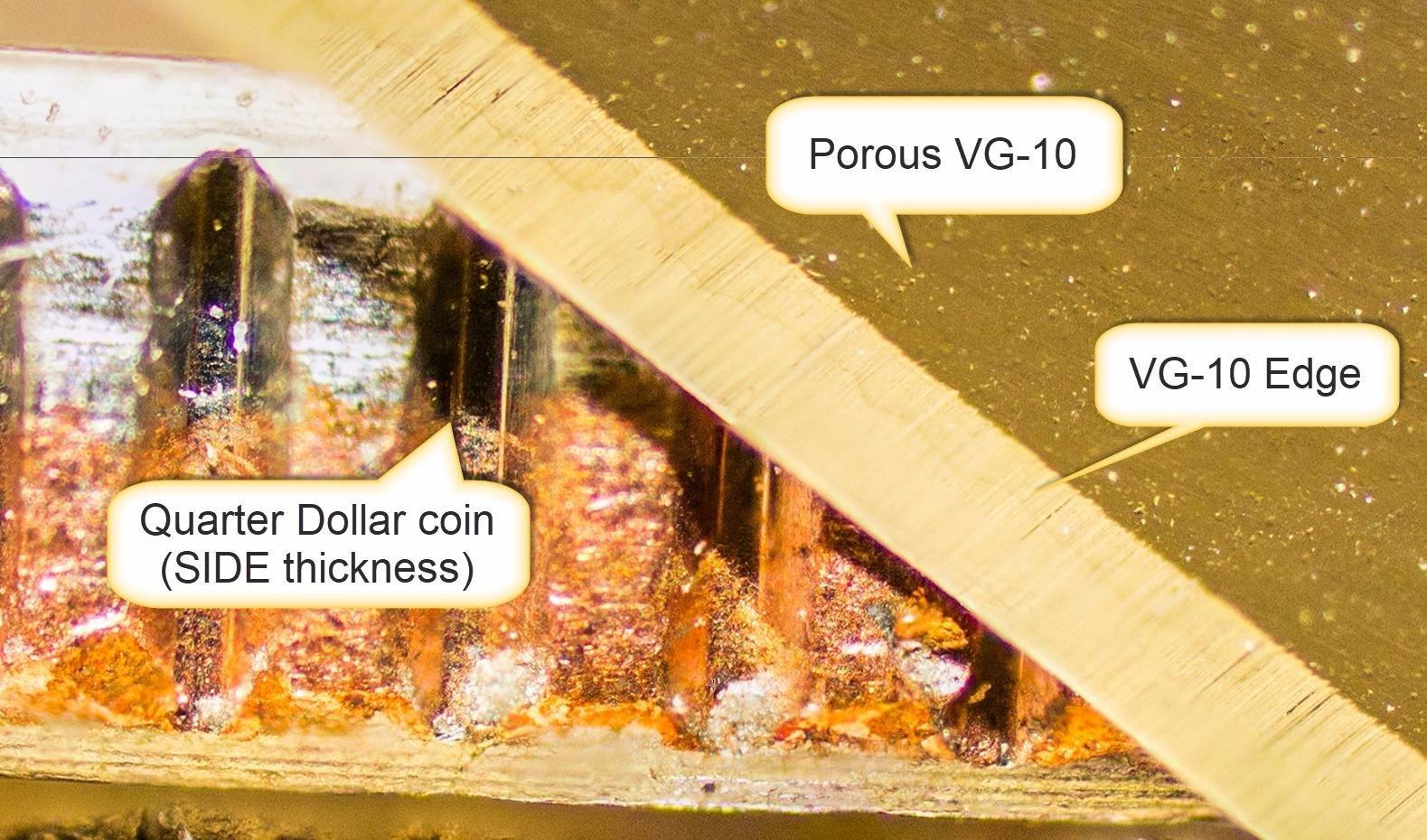
The G-10 handle is contoured around a full tang, so the knife is structurally solid from bolster to butt. Reviewers note specifically that the polished spine and bolster area stay comfortable to grip during a sharpening session, which sounds minor until you have clamped a rougher knife in wet hands for twenty minutes.
At 9.6 ounces it sits in the middle of the weight range here. Cooks with smaller hands report the handle as substantial, so measure your grip before committing.
Who This Knife Is Right For
Choose the Dalstrong if you plan to sharpen on stones, cook most nights, and want the longest-lasting edge in this roundup. It is an outstanding all-rounder for boneless meat, fish, and vegetables, and the tall blade handles big prep volumes well.
Skip it if you break down whole birds, cut through bone, or want a knife you can drop into a block without a sheath. Also skip it if you have never sharpened and want an easy first experience with a honing rod, because 62+ HRC is unforgiving.
5. FAMCUTE 8-Inch Hand-Forged Gyuto – The Cheapest Way Into Japanese Steel
FAMCÜTE 8″ Japanese Knife, Hand Forged Sharp Chef Knife w/Rosewood Handle
5-layer 9CR18MOV steel at 62 HRC
60-day forging and finishing process
Octagonal rosewood handle
8-inch blade
Pros
- Hard 62 HRC entry edge at a budget price
- Octagonal rosewood handle is comfortable and reduces fatigue
- Rust-resistant electroplated finish
- Well reviewed for everyday home prep
Cons
- 5-layer build refines and retains less than VG-MAX or AUS-10V
- Rosewood handle is less moisture-resistant than pakkawood
The FAMCUTE exists to answer one question: how little do you have to spend to own a hand-forged Japanese-style blade with a 62 HRC edge. The answer is remarkably little, and the knife holds a 4.7 average across nearly two thousand reviews.
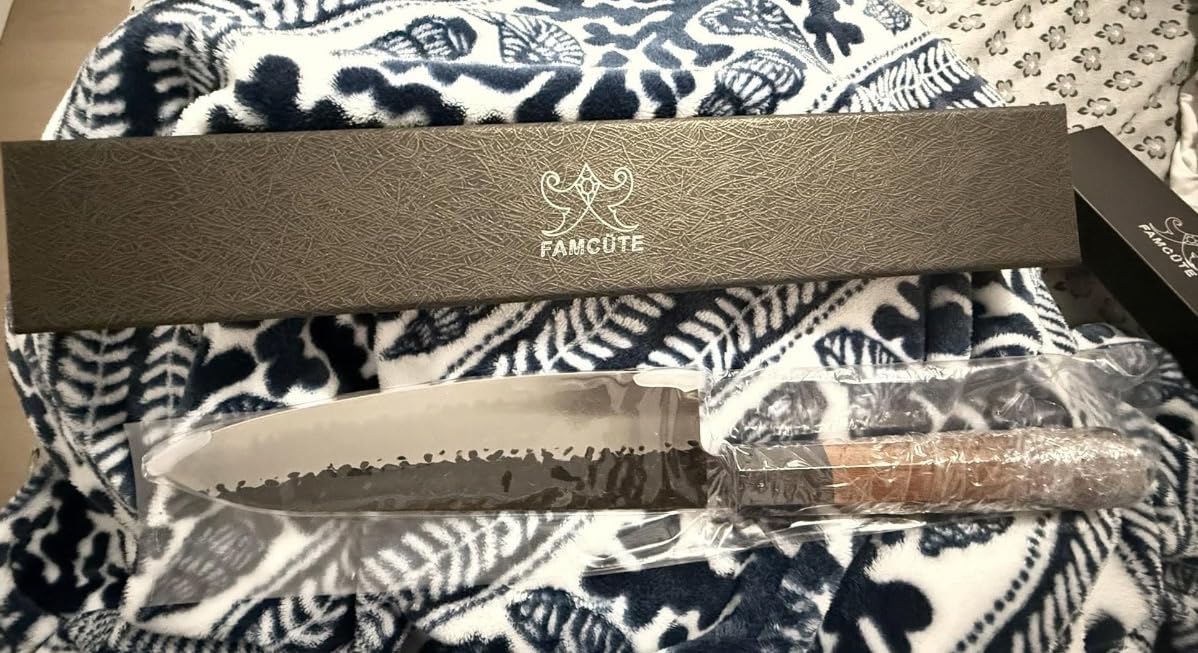
Owners describe it as looking and feeling more premium than the price suggests, with a comfortable octagonal rosewood handle that cuts hand fatigue during a long session. The 60-day production process includes quenching, vacuum nitriding, and electroplating, and the electroplated finish gives it noticeably better moisture resistance than an untreated carbon steel blade.
Where it gives ground is refinement. A 5-layer build will not hold an edge as long as the 66-layer AUS-10V or the VG-MAX core in the Shun Classic, and owners report needing to touch up the blade more often.
What 5-Layer Construction Means
Five layers of 9CR18MOV high carbon steel is a genuine laminated build, not an etched pattern on a plain slab. The core carries the edge and the outer layers add a little stainless content for corrosion resistance.
It is a less refined steel than the 68-layer or 66-layer constructions in this roundup, so expect a slightly crisper, less buttery cut and a shorter interval between touch-ups. For most home prep that difference is genuinely hard to notice.
The Octagonal Rosewood Handle and Grip Fatigue
The octagonal profile is the traditional Japanese wa-handle shape, and it is narrower than a European oval handle. The eight flat faces give your fingers defined contact points, which is why owners report less hand fatigue over a long session.
Rosewood is a beautiful, grippy material that darkens with use. It is also more porous than composite pakkawood, so it needs the occasional wipe-down and it will not tolerate a long soak. The handle is the part to watch, not the blade.
62 HRC on a Budget Blade
It is unusual to see 62 HRC at this spend level, and it delivers real edge retention. The trade-off is sharpening difficulty, and this is a knife you will want to learn stones on rather than rely on a pull-through sharpener.
If you have never sharpened a knife, start here anyway. Cheap to replace means low risk while you learn the technique, and the 62 HRC edge will show you clearly when your angle is wrong.
Where It Fits in a Home Kitchen
This is the pick for a home cook who wants a Japanese-feeling chef’s knife for everyday prep, cooks a few times a week, and does not need one tool to handle every situation in the kitchen. Onion, carrot, pepper, soft cheese, boneless meat, and fish fillets are all in range.
It is not the pick for a heavy prep volume, for bone, or for anyone who wants a Damascus pattern with real visual depth. The 5-layer pattern is present and it looks good, but it is a quieter show than the forged layering on the Dalstrong.
6. Shun Sora 8-Inch Gyuto – The Lightest Blade for Long Prep Sessions
Shun Sora 8″ Chef’s Knife
VG10 core with 420J upper steel
16-degree San Mai edge
6.56 oz total weight
Textured PP/TPE handle
Pros
- Narrow gyuto profile is very maneuverable for detail work
- Composite Blade technology reduces food sticking
- Lightest build here at 6.56 oz
- Textured handle works in either hand
- Free sharpening for life
Cons
- Polymer handle is less refined than pakkawood
- VG10 edge needs gentle handling and periodic sharpening
- Narrow blade has less knuckle clearance
At 6.56 ounces the Shun Sora is the lightest blade in this roundup, and that is not a rounding error. It is roughly half the weight of the heaviest knives here, and you feel the difference during a two-hour Sunday prep session.
The construction is San Mai, with a VG10 core running up the middle of the blade and 420J stainless steel forming the upper body and the cutting edge’s outer layer. The visible boundary line between the two steels is a San Mai signature, and it comes with a practical benefit: the harder core holds the edge while the stainless upper adds toughness and corrosion resistance.
Shun backs it with free sharpening and honing for as long as you own the knife, and it is NSF certified and handcrafted in Japan.
Composite Blade Technology and Sticking
Shun’s patented Composite Blade finish leaves a fine patterning on the upper steel. Those micro-dimples reduce the surface area that wet food touches, so onions and tomatoes release from the blade instead of being carried to the board.
In practice the effect is small but noticeable on long slicing strokes, and it compounds when you are prepping for a meal rather than cutting one ingredient at a time.
Narrow Profile: Maneuverability Against Clearance
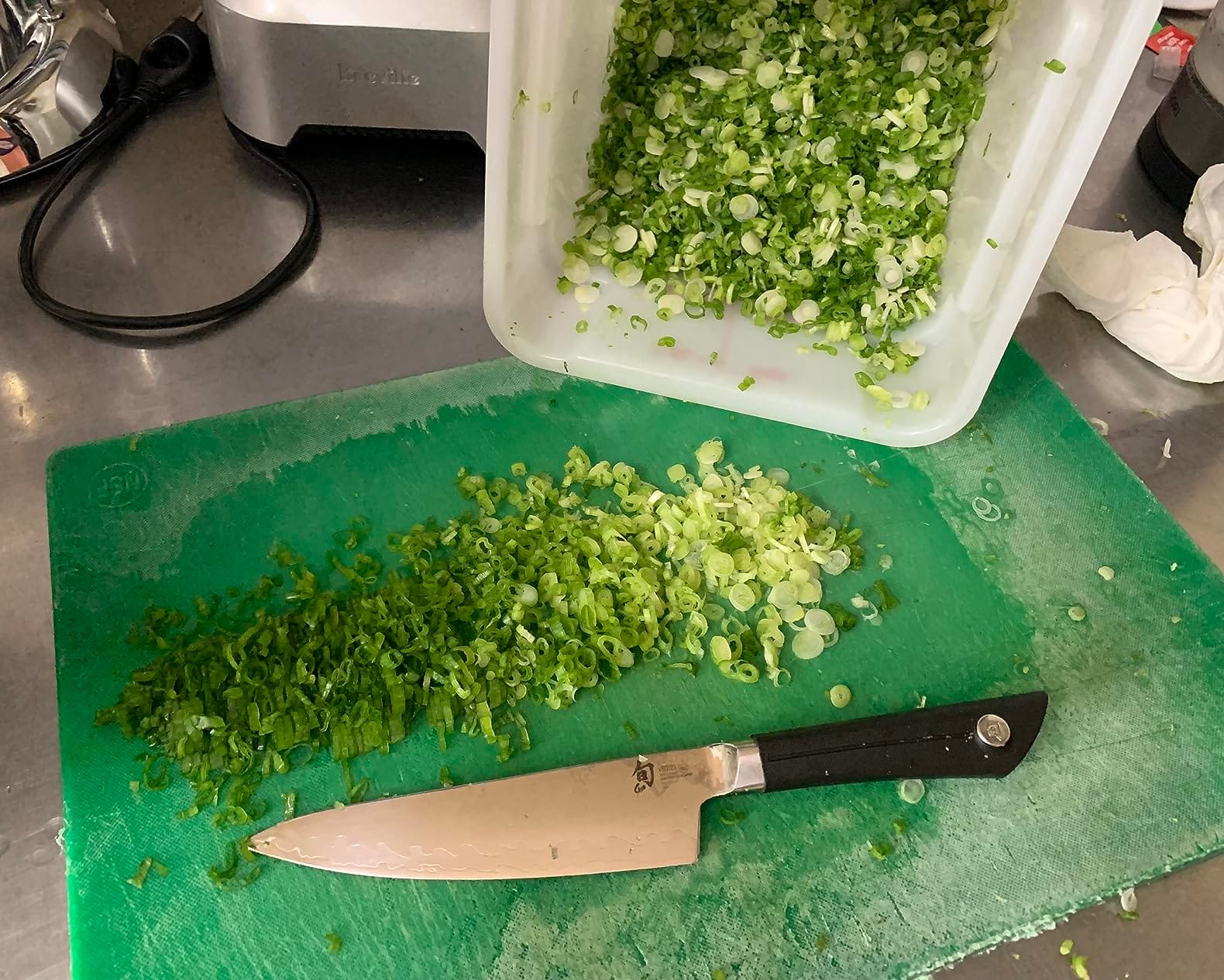
The narrow gyuto-style profile makes this knife very easy to turn and roll, which is exactly what you want for a brunoise, a julienne, or working around the curve of a bell pepper. Compare it to the tall Dalstrong and the difference is obvious.
You give up some knuckle clearance and some ability to scoop diced food off the blade surface. If you dice in volume, a taller blade serves you better. If you do detailed work, this one moves like a small knife.
Textured Polymer Handle: Practical Over Traditional
The full-tang PP/TPE polymer handle is textured and secure, and it works in either hand. Some cooks accustomed to traditional Japanese handles find it less refined than pakkawood, and that is a fair description of the trade.
What you gain is a handle that does not care about water. Polymer will not swell, crack, or take on the smell of onion the way rosewood and pakkawood can. For a knife used daily and washed quickly, that is a real advantage.
VG10 at 16 Degrees
VG10 is the workhorse Japanese stainless, less hard than VG-MAX and more forgiving than powder steel. At a 16-degree factory edge, this knife produces a clean general-purpose cut that suits most home prep without demanding perfect technique.
Reviewers note it needs periodic sharpening and gentle handling, which is normal for a VG10 edge. It holds better than the 57 and 58 HRC steels here and less well than the 62+ HRC blades, and that middle position is exactly why it works so well as an everyday knife.
Who This Knife Serves Best
The Sora suits a cook who preps in volume, works on soft produce for hours, and wants their hands to feel fresh at the end. It suits either hand, and it handles boneless meat and fish comfortably.
It is not the pick for scooping large volumes of diced food off the blade, and not the pick for anyone who wants the feel of a traditional octagonal or D-shaped wooden handle.
7. MITSUMOTO SAKARI 8.6-Inch Gyuto – Hand-Hammered Tsuchime With Storage Box
MITSUMOTO SAKARI 8-Inch Japanese Gyuto Chef Knife, 3-Layer 9Cr18MoV
3-layer San-Mai 9Cr18MoV core
Tsuchime hammering, kurouchi finish
Deep-cryo treated near 60 HRC
8.6-inch blade, 279 g
Pros
- Sharp out of the box with strong edge retention
- Tsuchime hammering reduces food contact
- Octagonal rosewood handle suits a Japanese grip
- Professional cooks report it as a reliable workhorse
- Presentation box and care kit included
Cons
- Must be dried immediately and lightly oiled against rust
- Some reviewers question how much production is actually in Japan
- 8.6 inches is longer than a standard chef's knife
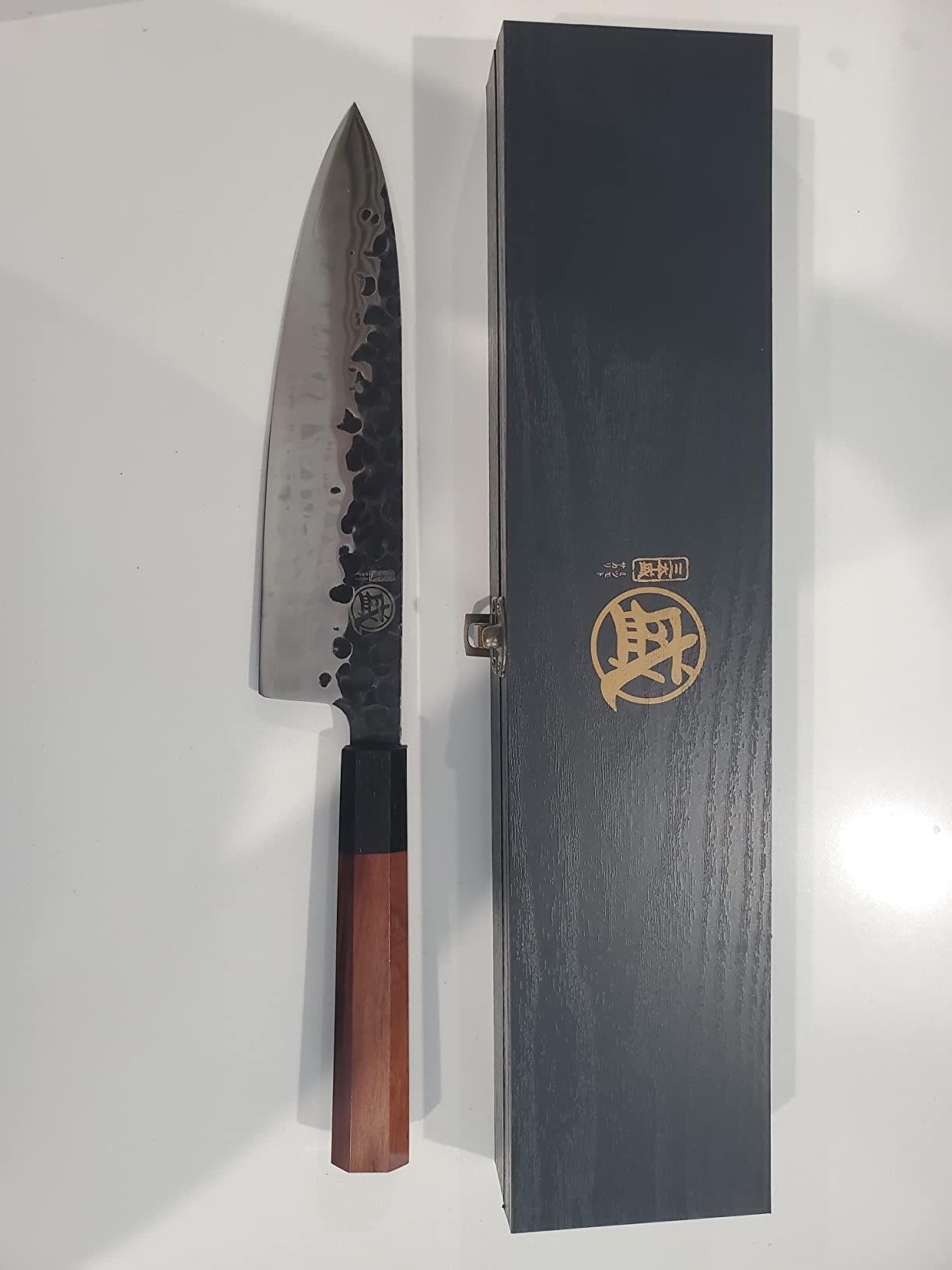
The MITSUMOTO SAKARI is the only knife in this roundup with a full tsuchime hammering pattern across the entire blade face, and the effect is more than cosmetic. Those hammered facets hold less contact with wet food, so slices of tomato and onion release cleanly without a sticky residue on the steel.
It carries the lowest average rating in the group at 4.6 with 1,185 reviews, and the reviews are more polarized than the rest. Many owners, including professional cooks, describe it as the best value Japanese-style gyuto available. A recurring thread in those same reviews questions how much of the production is actually in Japan.
That manufacturing question is worth taking seriously as a buyer. What you are getting is a well-executed 3-layer San-Mai build with a cryogenically treated 9Cr18MoV core at roughly 60 HRC, a tsuchime finish, and an octagonal rosewood handle. Whether that is a Sakai-adjacent product or a factory build is a provenance question, not a performance question.
Tsuchime Hammering and Kurouchi Finish
Traditional tsuchime hammering leaves a dimpled, stone-like texture on the blade. The pattern is what a hand-forged Japanese knife looks like before polishing, and it serves two purposes: it reduces sticking, and it stiffens the blade structure slightly.
The kurouchi black finish that sits over the hammering is a protective oxide layer. It hides marks and it looks traditional, but it is also why this blade demands the most careful care in the roundup.
Care Requirements: Dry It, Then Oil It
Reviews are consistent on the practical tip here: dry the blade immediately after washing and wipe on a light coat of oil. Skipping that step is how rust spots appear along a kurouchi finish, and once they start they are difficult to reverse.
If you are the type of cook who washes a knife, dries it twenty minutes later, and puts it away, this is not your knife. If you enjoy the ritual of maintaining a blade, the tsuchime finish is a reward for it.
Why the 8.6-Inch Blade Is Worth Noticing
At 8.6 inches this is the longest blade in the roundup, and that extra length gives you a longer slicing stroke for fish fillets and large flat cuts. The trade is maneuverability in a small workspace and a knife that feels long on a small cutting board.
At 279 grams the weight is very reasonable, and the balance is forward of the handle, which is where a Japanese-style knife should sit for control.
Best For and Worst For
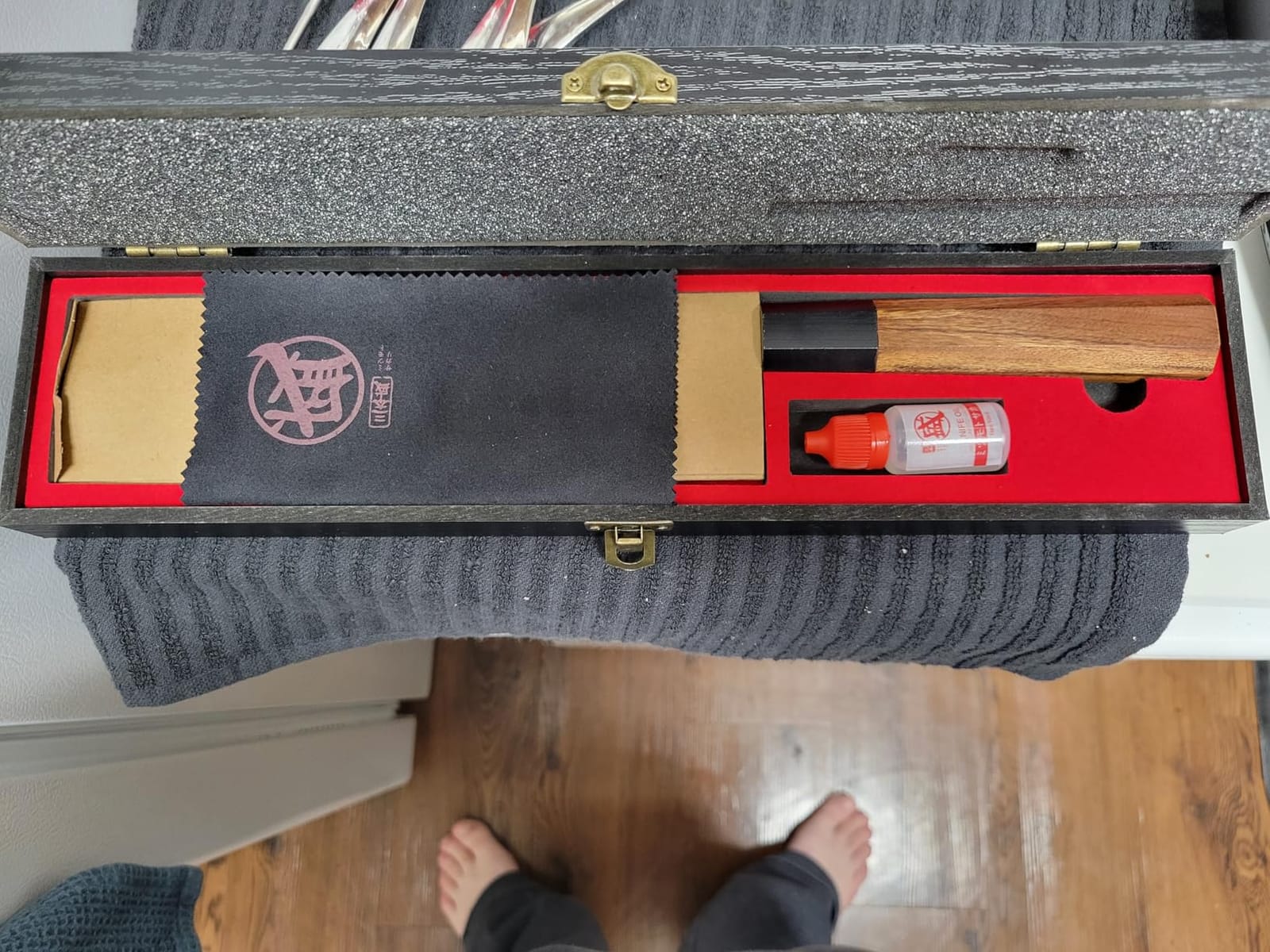
Choose this knife if you want the most traditional visual and tactile experience in the roundup, and you are willing to build a dry-and-oil habit. Professional cooks report it as a reliable workhorse over years, and the sandalwood storage box and care cloth included are a nice touch at this level.
Skip it if rust care feels like a chore, if you have a compact work surface, or if Japanese manufacturing origin is a hard requirement for you. The 8.6-inch length and the kurouchi care demands are the two real constraints.
8. Simple Song 8-Inch Gyuto – A True Single-Bevel Edge for Purists
Traditional Japanese Professional Gyuto Kitchen Chefs Knife – Premium 8-inch High Carbon Stainless Steel Gyuto Sushi Knife with High Corrosion Resistance in a Single Bevel Chisel Edge Grind
420HC high carbon stainless, full tang
Single bevel, 15 degrees one side
8-inch gyuto, 12.34 oz
Rosewood full-tang handle
Pros
- True single-bevel grind produces a precise chisel edge
- Full-tang rosewood handle is solidly balanced
- 420HC stainless is far more rust forgiving than carbon steel
- Suited to sashimi and long slicing strokes
Cons
- Single bevel demands specific technique and punishes beginners
- Heaviest knife here at 12.34 oz
- Lowest average rating in the group
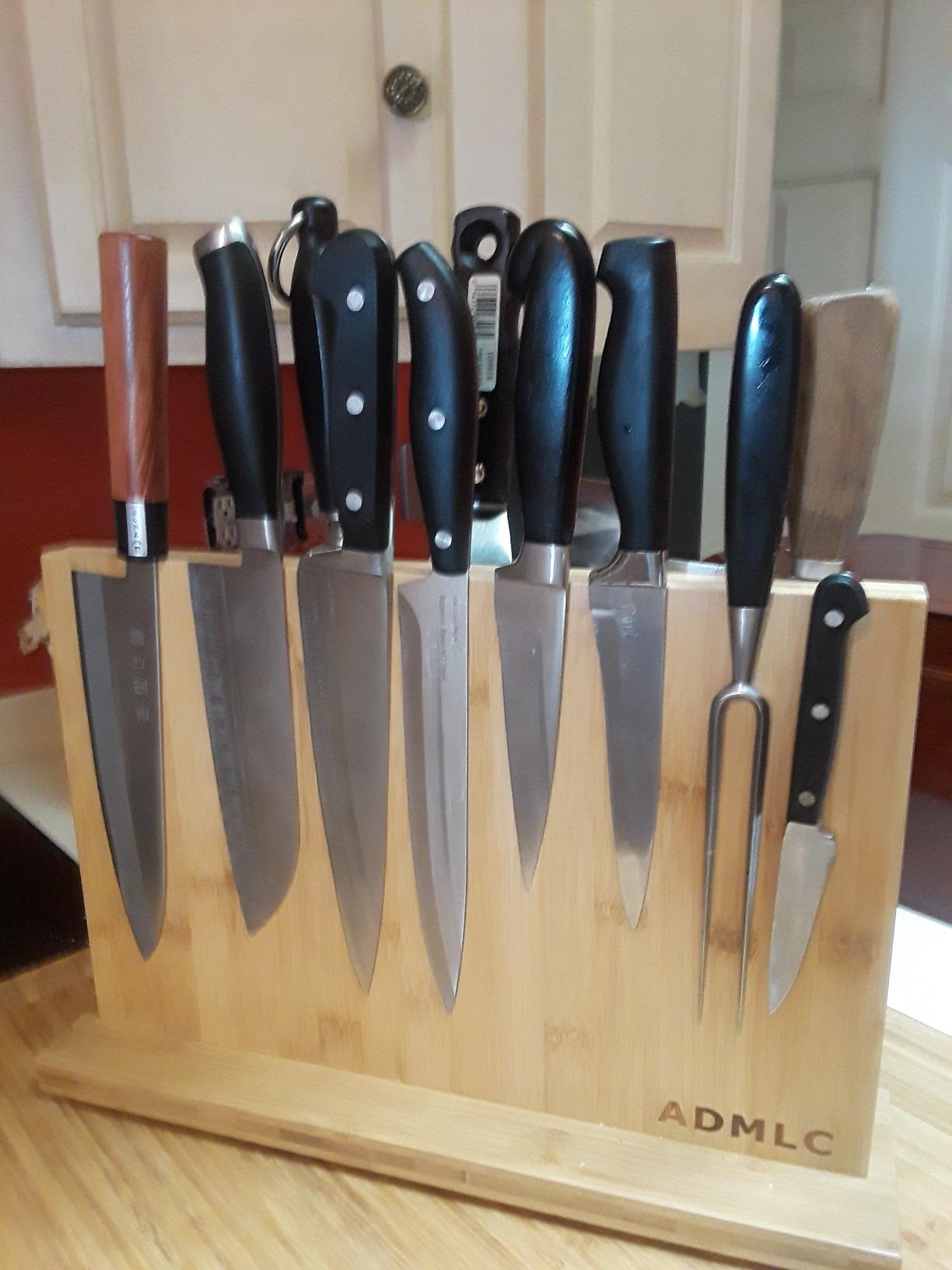
This is the most traditional knife design in the roundup and the one I would least recommend as a first purchase. A true single-bevel gyuto has one flat back side and one 15-degree bevel, and the flat side has no edge at all. It produces a cleaner cut than any double-bevel here, and it punishes you when your technique slips.
The 420HC high carbon stainless is a smart choice for a single-bevel knife, because the flat back side invites the knife to rock and can grind against the board. Stainless forgives that. A carbon steel single bevel would be far more likely to show damage.
Why a Single-Bevel Edge Cuts Cleaner
On a single-bevel edge, all the sharpening geometry is on one side. The result is a thicker wedge behind the edge and a very acute, very precise cutting angle at the front. For sashimi and long thin slices, that geometry produces a noticeably cleaner cut than a symmetric edge.
The flat back side also acts as a guide. On a proper push cut, the flat rides the board and the knife pivots naturally. Get the angle wrong and the knife will chatter and dig in instead of slicing.
The Single-Bevel Skill Curve
Cooks who adapt to this grind report excellent results and a much sharper knife than they had with a double bevel. The recurring complaints are the learning curve and the weight. At 12.34 ounces it is the heaviest blade in this roundup, and a home cook doing an hour of prep will feel it in the wrist.
It is also a one-sided design. It is sharpened for one cutting hand, and a cook who cuts with the other hand will find the geometry awkward rather than neutral.
420HC Stainless as a Practical Choice
420HC is a common high carbon stainless, less refined than the Japanese steels in this roundup, but it holds a decent edge and it resists rust far better than a carbon steel gyuto. For a knife that gets its flat side dragged along a board every cut, that corrosion resistance is worth more than marginal edge retention.
It is heat treated and full tang, so the balance is solid and the knife feels like a real tool in the hand rather than a thin wall of steel.
Who Should Buy This Knife
Buy it if you make sushi or sashimi at home regularly, you have already learned proper knife technique with another knife, and you want the most authentic Japanese cutting experience available at a sane spend. It handles vegetables and boneless meat beautifully with its long slicing strokes.
Skip it as a first Japanese knife, and skip it if hand fatigue is a concern or if you want a design that works equally in either hand. For those cases, the Kimura or the Shun Sora give you a double bevel at a much lighter weight.
9. KEEMAKE 8-Inch Hand-Forged Gyuto – Tsuchime Texture at an Entry Price
KEEMAKE 8 Inch Chef Knife, Japanese Hand Forged
440C steel with 5-layer pattern
HRC 58 after cryogenic tempering
12-15 degree hand-sanded edge
2.3 mm 8-inch blade
Pros
- Razor sharp out of the box with good edge retention
- Comfortable balanced octagonal rosewood handle
- Tsuchime texture reduces sticking
- Hand-forged 60-day production process
Cons
- Stamped construction rather than full tang
- Rosewood handle needs more care over time
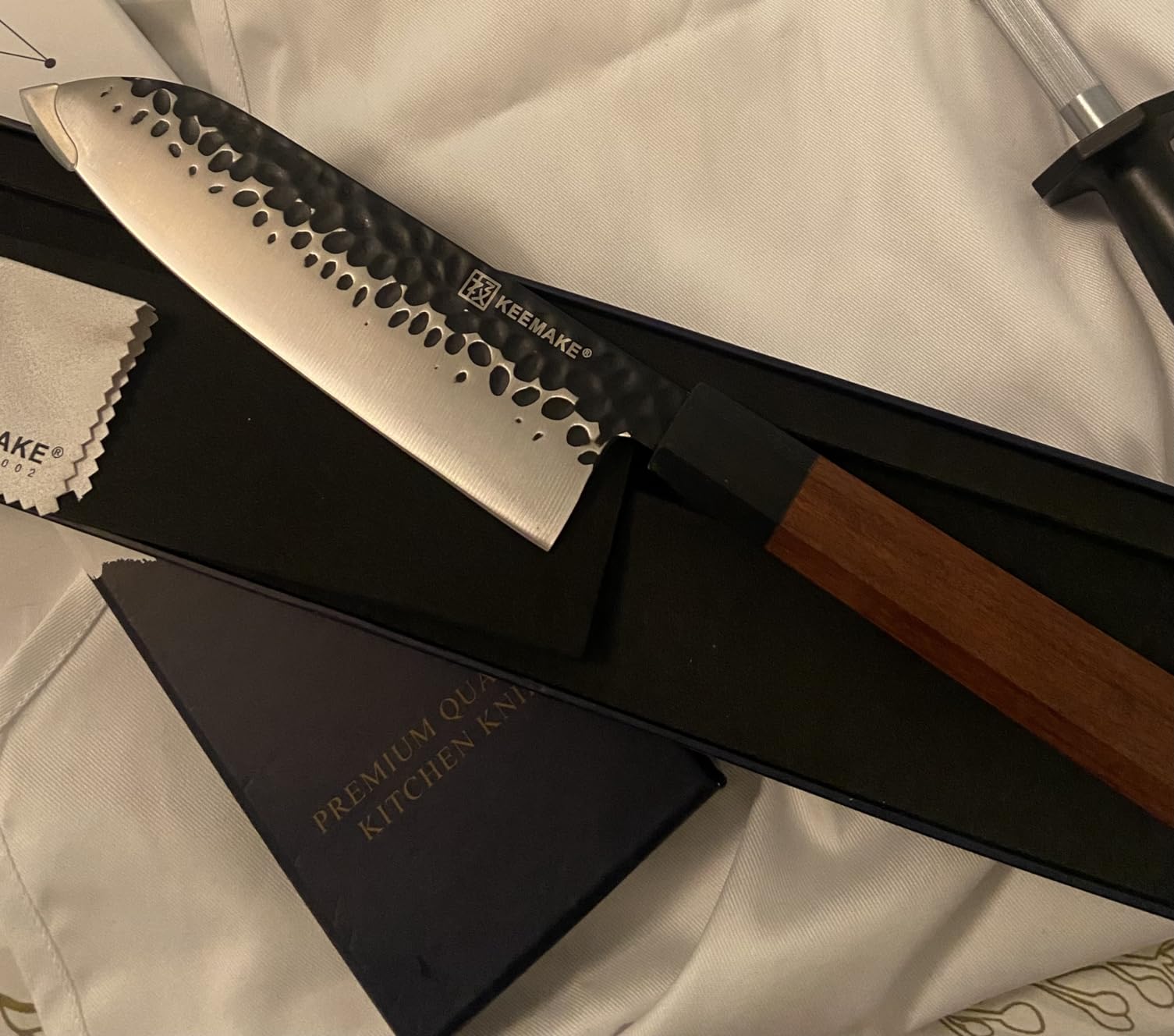
The KEEMAKE is the one in this roundup that reads as a gift. It arrives in gift-ready packaging, it has a hand-hammered tsuchime finish that looks far more expensive than the price suggests, and the packaging and support service make it an easy present for someone starting out in the kitchen.
Buyers praise the sharpness, the balance, and the hand-forged finish of this 8-inch gyuto. The 60-day process includes forging, quenching, and nitrogen cryogenic tempering, which brings the 440C core to HRC 58.
That 58 HRC is the interesting number. It is the lowest hardness among the serious Japanese-style blades in this roundup, and for a beginner that is a feature, not a compromise. A softer steel is far more forgiving on a first whetstone.
What HRC 58 Buys a Beginner
Hardness is a straight trade: the harder the steel, the longer it holds an edge and the more it chips when you abuse it. At 58 HRC you will need to touch up the edge more often than a 62 HRC blade, and in exchange a bad angle during your first sharpening session will not destroy the edge.
For most home cooks that is the right side of the trade. Steady but forgiving beats razor sharp and brittle while you are still learning.
Tsuchime Texture and the 2.3 mm Blade
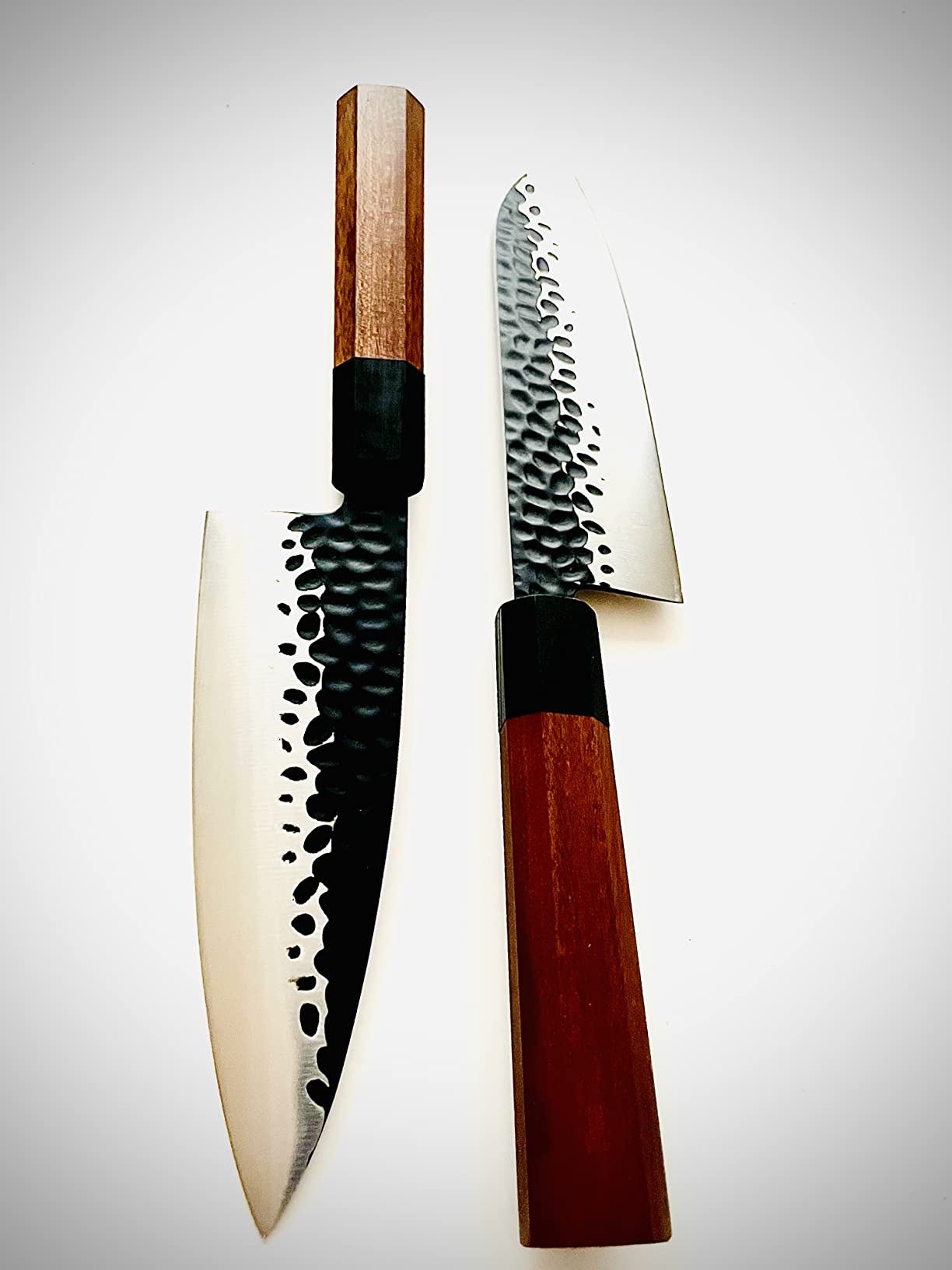
The hand-hammered tsuchime texture is doing real work on the blade face, creating a small amount of air space between the steel and wet food. It is the same principle as the hollow-ground dimples on higher tier Japanese knives, achieved by forging instead of milling.
At 2.3 mm the blade is thin enough to move through an onion without resistance and thick enough to feel substantial. The 12 to 15 degree hand-sanded edge is a general-purpose angle that works in either hand.
Stamped Construction: The One Real Compromise
This knife is stamped rather than fully forged, and it is the only real structural compromise in the list. A stamped blade has a tang routed out of a sheet of steel rather than the steel being forged around the handle, which means the tang is a cut edge rather than continuous metal.
It does not make the knife dangerous or short-lived, and the 4.6 rating across 678 reviews suggests owners are broadly happy. It does mean this is not the knife to take to bone work or pry tasks.
Multiple Sizes Are Available
The design comes in 6, 7, 8, and 10 inch variants, which makes it an easy one-brand entry if you want to build a small set. Most home cooks should start with the 8 inch.
The octagonal rosewood handle is the classic Japanese profile and works in either hand, though rosewood is more porous than pakkawood and wants a wipe-down when it gets wet.
Who Should Buy the KEEMAKE
Buy it as a first Japanese knife for a beginner, as a house gift, or as a knife for a cook who wants the forged look without a forged-tier spend. The softer 58 HRC core makes it the most approachable steel here for learning whetstone sharpening.
Skip it if you want a full tang under the handle, if you cut a lot of bone, or if you need one knife for heavy butchery. It is a prep knife, and a very good looking one.
10. Miyabi Kaizen II 8-Inch Gyuto – Honbazuke Sharpening at a Refined Angle
Miyabi Kaizen II 8-inch Chef’s Knife, Stainless Steel
FC61 core with 48-layer damast
61 Rockwell with fine carbides
Double ice-hardened FRIODUR treatment
Honbazuke honed to 9.5-12 degrees
Pros
- Exceptional sharpness right out of the box
- Excellent balance and a comfortable D-shaped handle
- Beautiful damast finish and a true thin Japanese profile
- Handles hard vegetables
- meat and delicate slicing
Cons
- Thin blade is not intended for bone or frozen meat
- Some owners report the edge arriving less sharp than expected
- Requires hand washing and prompt drying
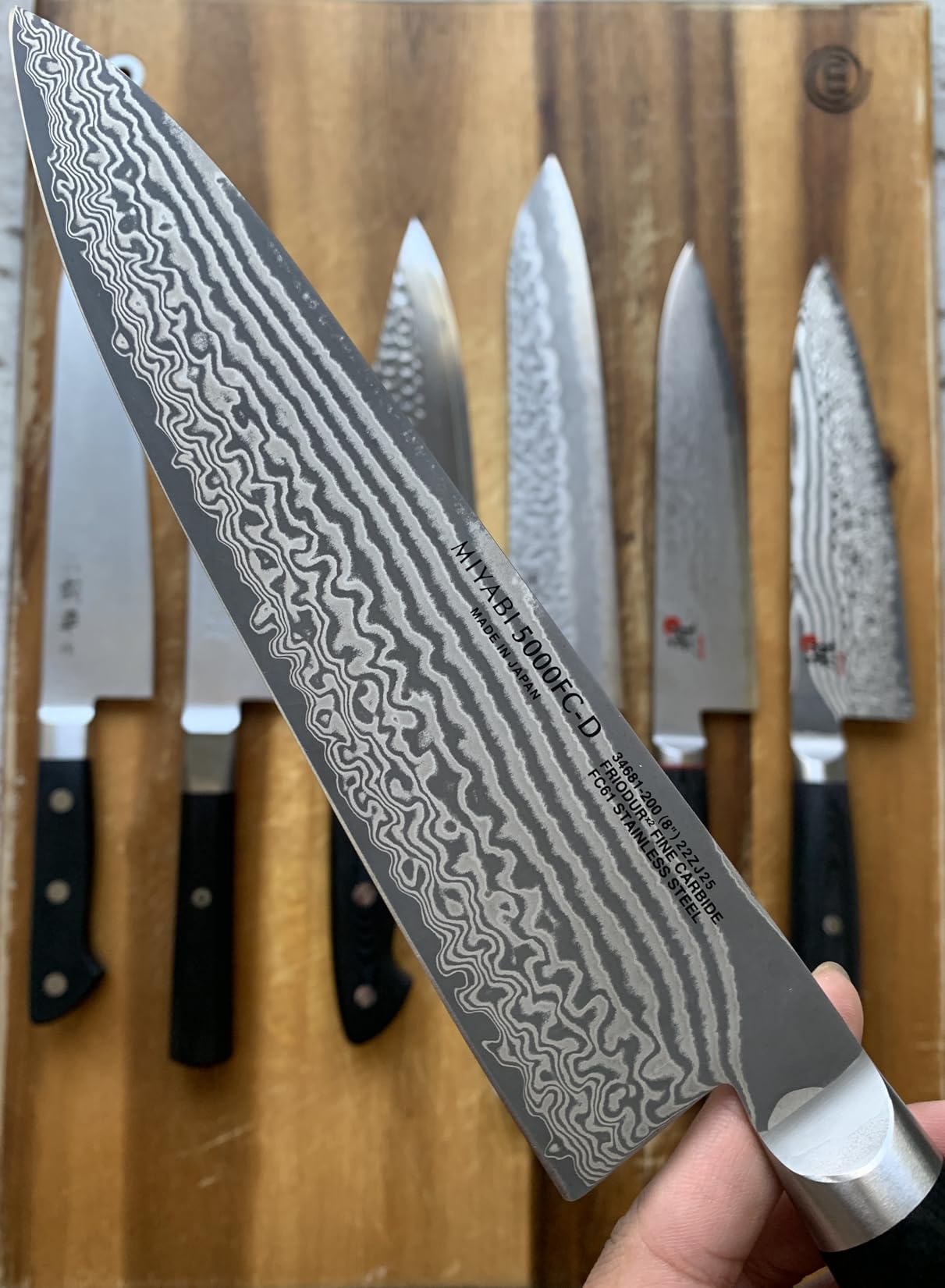
The Miyabi Kaizen II is the thinnest, most Japanese-looking knife in this roundup, and it is the one I reach for when a task needs a genuinely fine cut. The Honbazuke sharpening method, where the blade is hand-honed on a stone while the spine rests against the whetstone, produces the most refined factory edge of any pick here.
At 7.04 ounces it is light, and the D-shaped black pakkawood handle with its thicker rounded bolster is the most refined handle design in the group. The FC61 core under 48 layers of damast steel is double ice-hardened with Miyabi’s FRIODUR treatment, which is a second cold treatment that improves edge retention at 61 Rockwell.
One caveat before you buy: this knife carries 139 reviews, far fewer than anything else on this list. The 4.6 rating is solid, but the evidence base behind it is thin. Long-term owners report consistent sharpness and better hand feel than premium Japanese alternatives, with a few noting the thin profile is unsuited to bone or frozen meat.
Honbazuke and the 9.5 to 12 Degree Angle
Honbazuke sharpening is the reason this edge feels different in the hand the moment you pick it up. The blade is honed at an extremely acute angle with the spine guided against the stone, producing a very fine, very sharp edge with almost no burr.
At 9.5 to 12 degrees it is the most acute factory edge in this roundup. That means a clean, almost effortless cut through fish and hard vegetables, and it also means the edge is the most fragile. This knife is for soft, clean cutting only.
FC61 and FRIODUR: What the Refinement Buys
FC61 is a fine-carbide steel hardened to 61 Rockwell, and the FRIODUR double ice-hardening treatment runs the steel through cold treatment twice. The practical result is an edge that stays keen longer between stones than a standard 61 HRC blade would.
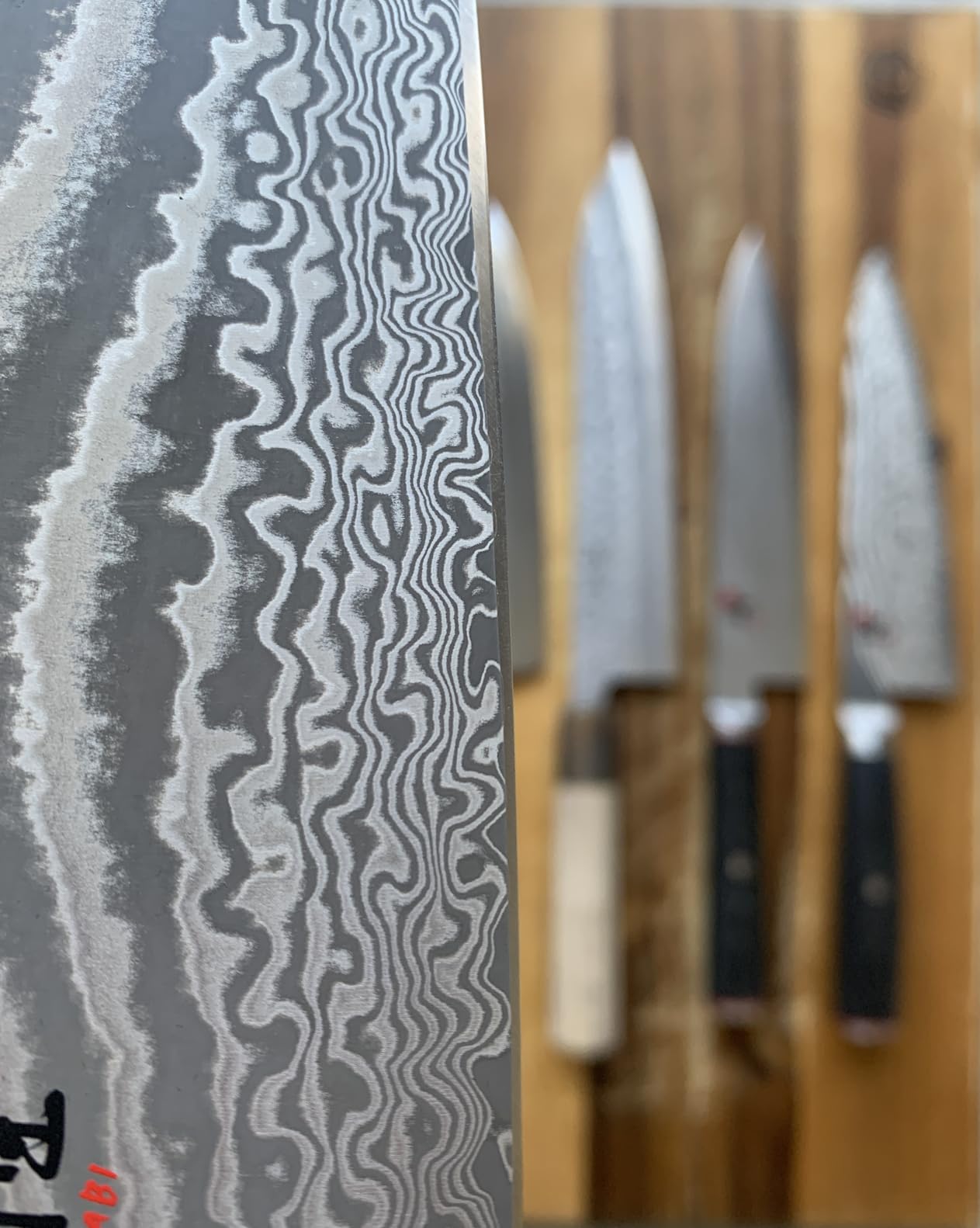
It is paired with 48 layers of damast steel cladding, which gives the blade a genuine laminated construction and a distinct patterned finish that a plain stainless blade cannot match visually.
The Thin Profile Trade-Off
The authentic thin Japanese blade profile slices with almost no drag, which is the whole point of a kitchen knife in this category. It is also the reason bone, frozen meat, and hard surfaces are explicitly out of scope for this knife.
Owners note that the thin profile requires hand washing and prompt drying, since a thin hardened blade spots faster than a thick European one. The thicker rounded bolster on the handle is a deliberate design choice, giving your hand more material to hold without adding weight to the cutting edge.
Who Should Buy the Kaizen II
Choose it if you do a lot of delicate slicing, fish work, or fine vegetable prep and you want the sharpest factory edge in this roundup. The balance and the D-shaped handle make it a comfortable knife for long sessions at 7.04 ounces.
Skip it if you need a knife for bone or frozen food, if you want an easy steel to maintain, or if the thin review count makes you uneasy. For a first Japanese knife the softer and heavier supported options above will serve a beginner better.
11. Kimura 8.3-Inch Seki Gyuto – Lightest Full-Tang Blade With a Lifetime Warranty
Kimura Chef Knife, [Made in Japan], 8 inch Professional Kitchen Knife, Ultra Sharp High Carbon Molybdenum Stainless Steel Gyuto Knife, Chefs Knife with Ergonomic Handle – Japanese Chef’s Knife
High carbon molybdenum steel at 57 HRC
Hand sharpened to 15 degrees
Made in Seki, Japan
175 g, triple-riveted full tang
Pros
- Excellent sharpness and retention for the tier
- Manufactured in Seki
- Japan
- a real knife-making center
- Lightest blade here at 175 g
- Triple-riveted full tang adds strength
- Backed by a lifetime warranty
Cons
- Stamped construction rather than fully forged
- POM resin handle is less refined than a Japanese wa-handle
The Kimura is the lightest knife in this roundup at 175 grams, and the combination of a triple-riveted full tang with a 57 HRC steel core makes it the most approachable blade here for someone who wants a Japanese-style gyuto without a steep learning curve.
It is manufactured in Seki, Japan, which is not a marketing line. Seki is where a large share of Japanese kitchen knives are actually made, and owners consistently single that out as a reason for confidence. It is stamped rather than fully forged, and it is a double bevel, so it works in either hand without adjustment.
It carries the largest review base in the group at 1,213 reviews and a 4.5 average, with 76 percent five-star ratings. The 4.5 reflects genuine enthusiasm for sharpness, balance, and value alongside a fair number of buyers who expected a traditional Japanese handle.
Seki, Japan: Where the Knife Was Actually Made
Seki has been a center of Japanese blade production for centuries, and knives made there carry a credibility that a product description alone cannot. When you are comparing a Seki-made knife against one with a vague country of origin, that matters.
It is also the reason to be realistic about what you are buying. A Seki factory knife with a stamped tang is a well-made tool, not a hand-forged Sakai gyuto, and it should be judged on that basis.
57 HRC: The Forgiving Steel
At 57 Rockwell, this is the softest steel in the roundup, and that is deliberate. It is the most forgiving steel to sharpen, the least likely to chip if you hit a hard root or a frozen vegetable, and the easiest to keep in condition with an occasional stone.
The trade is edge retention. A 57 HRC edge will feel dull sooner than a 62 HRC edge, and you will reach for the stone more often. For a home cook who does not sharpen weekly, that trade is usually worth making.
![Kimura Chef Knife, [Made in Japan], 8 inch Professional Kitchen Knife, Ultra Sharp High Carbon Molybdenum Stainless Steel Gyuto Knife, Chefs Knife with Ergonomic Handle - Japanese Chef's Knife customer photo 1](https://www.manbolo.com/wp-content/uploads/2026/09/B09GCGQKNZ_customer_1.jpg)
175 Grams and Why Weight Matters More Than Steel
At 175 grams this knife is roughly 85 grams lighter than the SHAN ZU at the top of this list and less than a third the weight of the heaviest blade here. In detail work, that difference is the whole ballgame, because a light knife lets you change direction and make a brunoise with your wrist instead of your shoulder.
The POM resin handle is non-slip and shaped with a full bolster so that a pinch grip and a Western grip both have somewhere to land. It is a design built for cooks who switch techniques.
Triple-Riveted Full Tang
Three rivets running the length of the handle mean the tang is mechanically fixed along the full length of the grip, which is what you want in a knife that sees daily use. It resists loosening and it lets the handle be reshaped if your grip preference changes.
The knife also comes with a gift box in a traditional kanji design and a lifetime warranty, which is unusual support for a blade at this level.
![Kimura Chef Knife, [Made in Japan], 8 inch Professional Kitchen Knife, Ultra Sharp High Carbon Molybdenum Stainless Steel Gyuto Knife, Chefs Knife with Ergonomic Handle - Japanese Chef's Knife customer photo 2](https://www.manbolo.com/wp-content/uploads/2026/09/B09GCGQKNZ_customer_2.jpg)
Who Should Buy the Kimura
Buy this knife if you want a Japanese gyuto profile from a real Japanese manufacturing center, at a weight that will not tire your hand, with a steel you can learn to sharpen. It suits either hand, and it handles vegetables, boneless meat, and fish fillets well.
Skip it if the look and feel of a traditional wooden wa-handle is part of the appeal, or if you want the longest-lasting edge possible. The 57 HRC core and stamped build mean this is a practical daily knife, not a collector piece.
12. Shun Kanso 8-Inch Gyuto – Minimalist Tagayasan Handle and a 16-Degree Edge
Shun Kanso 8″ Chef’s Knife
AUS10A high carbon stainless steel
16-degree narrow gyuto edge
Contoured tagayasan full-tang handle
7.04 oz, handcrafted in Japan
Pros
- Refined
- precise 16-degree edge for detailed prep
- Narrow gyuto-style blade gives high maneuverability
- Full-tang tagayasan handle works in either hand
- Handle butt doubles as a bottle opener and hook
- Free lifetime sharpening and honing
Cons
- Narrow blade is less suited to bone and hard produce
- Premium spend for an entry point in the Shun range
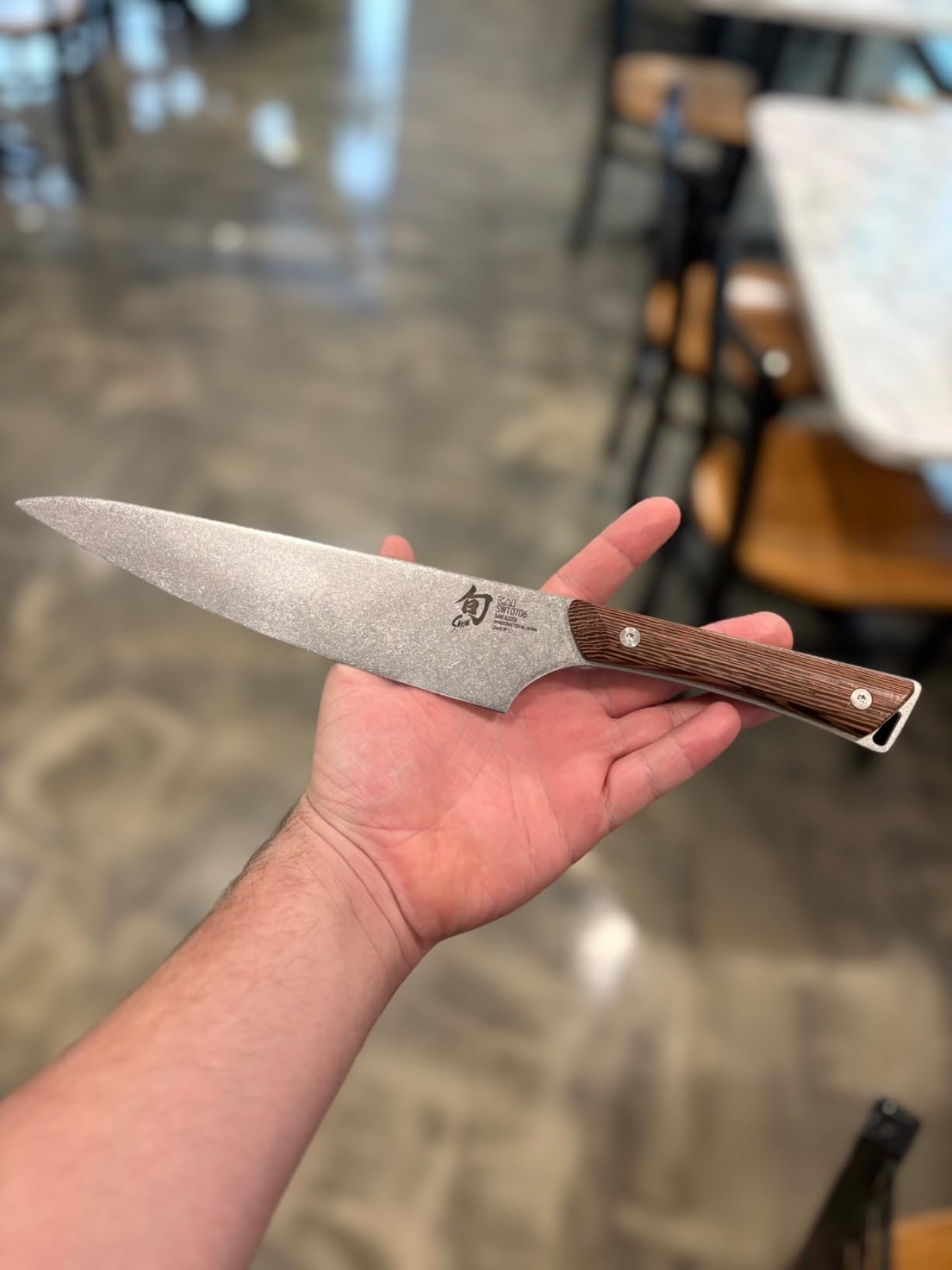
The Shun Kanso is the quietest knife in this roundup. There is no damascus pattern, no hammered finish, and no visible embellishment beyond a clean blade and a dark handle. The Kanso series is built around that restraint, and buyers respond to the elegant minimal design.
Underneath, the steel is AUS10A, a high carbon stainless refined with vanadium, hardened to a 16-degree edge. At 7.04 ounces it is one of the lightest forged blades in the roundup, and the narrow gyuto-style profile makes it very maneuverable for detail work.
At 398 reviews it is the second thinnest evidence base here, and 81 percent of those reviews are five star. The recurring caveat is that the narrow blade is limiting for heavy tasks. That is the trade you make for precision.
AUS10A Steel and the 16-Degree Edge
AUS10A sits in the same family as the AUS-10V on the Dalstrong at the top of this list, refined with vanadium for wear resistance. The 16-degree edge is a touch less acute than a 9.5 or 12 degree edge, which makes it a more forgiving general-purpose angle for daily prep.
That combination is a good one for a home cook: a steel that holds well, at an angle that tolerates normal technique. You get most of the precision without the fragility of an ultra-acute factory edge.
The Tagayasan Handle
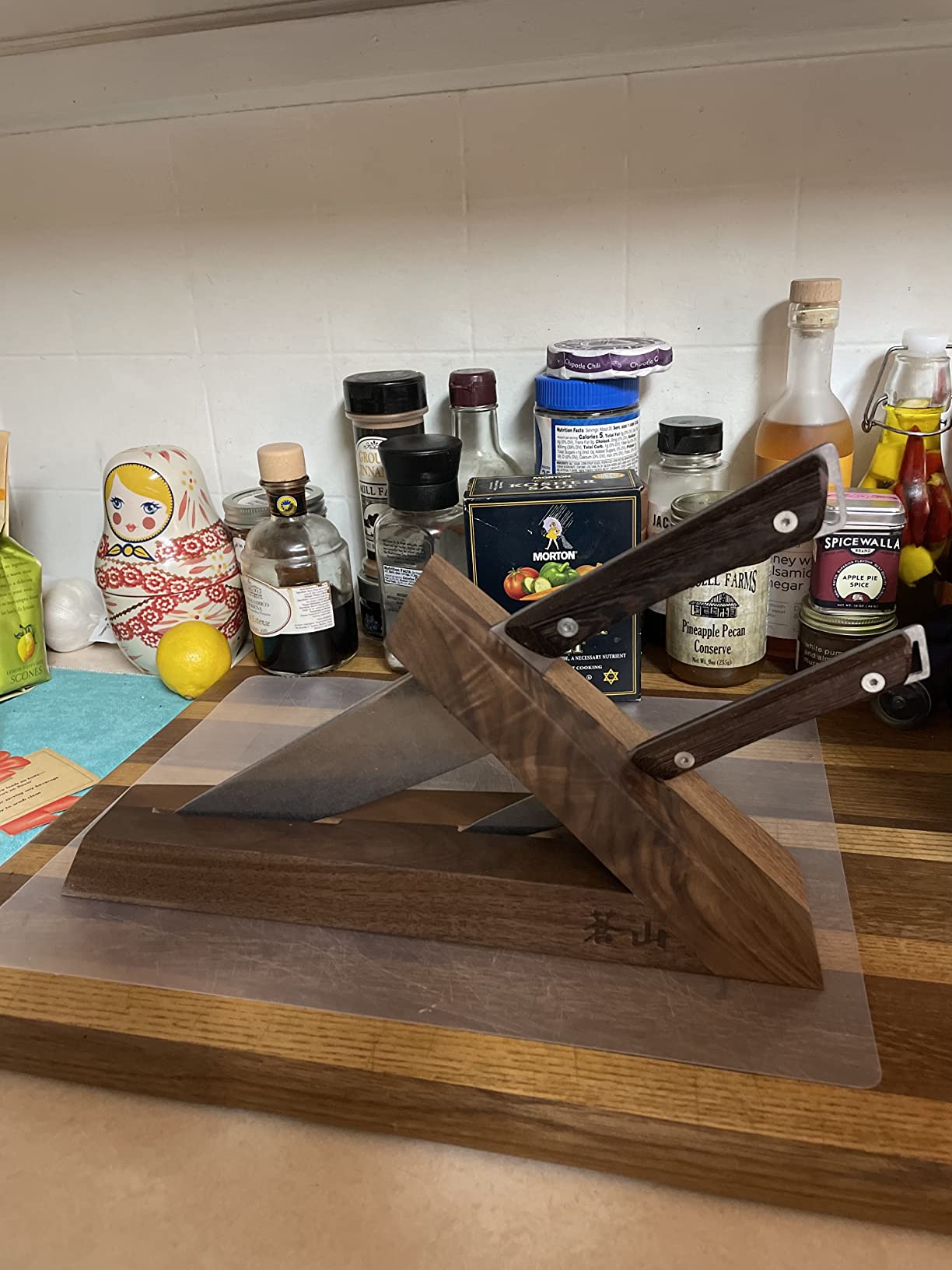
Tagayasan, often called iron sword wood, is a dense hardwood that resists moisture and takes a fine finish. The handle is contoured around a full tang and works in either hand, and the butt is shaped to double as a bottle opener and a hanging hook.
That double duty is not the reason to buy the knife, but it is a small reminder that this is a designed object rather than a stamped blank. The handle is comfortable for long sessions and it will not slip when your hands are wet.
Narrow Blade: Precision Against Capacity
The narrow profile turns easily, which makes this knife excellent for a brunoise, a thin chiffonade, or working around the curve of a bell pepper. It is the same trade-off as the Shun Sora, and for the same reason.
A narrow blade gives less knuckle clearance and less surface for scooping diced food. If you prep in volume and move a lot of diced food back to the pan, you will miss the height of the Dalstrong. If your prep is detailed and varied, you will not notice.
Where This Sits Against the Rest of the Shun Range
Shun offers three 8-inch blades in this roundup at three very different points: the Sora is the light polymer build with a VG10 core, the Kanso is the minimalist AUS10A option, and the Classic is the VG-MAX and pakkawood flagship with the free lifetime sharpening service.
All three carry free sharpening and honing, which is the real Shun advantage. The Kanso is the one to choose when you want that support with a clean, modern look and a lighter handle than the Classic.
Who Should Buy the Kanso
Choose the Kanso if you want a precise, light Japanese knife with no visual noise, and you do not need a tall blade or a traditional damascus pattern. The tagayasan handle works in either hand and the 16-degree edge is forgiving enough for daily use.
Skip it if you break down bone, work through frozen food, or want a blade that scoops diced food easily off its side. It is a precision prep knife and it wants to be used like one.
How to Choose a Japanese Chef Knife Without Overbuying
Gyuto vs Santoku vs Nakiri: Pick the Shape First
The blade shape determines what the knife is good at before any steel question comes into play. A gyuto, the shape in this roundup, is the generalist: a tall, straight-edged blade with enough length to slice, dice, and rock through a brunoise. It is the closest equivalent to a European chef’s knife and the right first shape for most home cooks.
A santoku is shorter, usually around 165 to 180 mm, with a lower profile and more curved edges. It is more maneuverable, which many cooks prefer for vegetable work, and it is often the more popular choice for smaller hands.
A nakiri is a pure vegetable knife with a squared tip. It does what it does extremely well and nothing else, which is why experienced cooks love it and beginners rarely start with one. If you prep a lot of hard vegetables like kohlrabi, daikon, or celery, a nakiri is worth adding later.
The forum consensus we found repeated the same advice: buy the chef’s knife first, then add a 5.5 to 6 inch utility or petty knife as the smarter second purchase. A second chef’s knife solves a problem you do not have.
Steel and HRC: What the Number Actually Buys You
Japanese chef’s knives are generally harder than German ones, and that is the source of both their strength and their reputation for chipping. HRC, or Rockwell hardness, is the scale. Here is what the tiers in this roundup mean in practice.
57 to 58 HRC is the forgiving end. These steels are easy to sharpen, unlikely to chip, and lose their edge sooner. For a first knife or a cook who will not sharpen often, this is the sensible choice.
59 to 60 HRC is the middle. Good retention, moderate sharpening difficulty, and a reasonable chip resistance profile. Most of the well-regarded factory Japanese knives sit here.
61 to 62 HRC and above holds an edge the longest and holds it sharpest, and it punishes hard contact with bone, frozen food, stone, and glass. These are knives for cooks who own quality stones and cut only on wood.
On the question of whether Japanese steel is better than German: no, not in the abstract. German steel is softer and tougher, which makes it more forgiving and more resistant to chipping. Japanese steel is harder and holds a more acute edge longer. A sharp Wusthof cuts a home dinner beautifully. The difference shows up on delicate work and over months of use, not on every cut.
Single Bevel vs Double Bevel, and Which Hand You Cut With
This is the question most beginners skip and most regret skipping. A double-bevel edge is sharpened on both sides at the same angle, which makes it symmetric, neutral, and workable in either hand. Most of the knives in this roundup are double bevel, including the Simple Song’s single-bevel exception.
A single-bevel edge is sharpened on one side only, with a flat back. It cuts more precisely and takes more technique, and it is sharpened for a specific cutting hand. If you cut with your right hand, a single-bevel knife is sharpened for right; a left-handed cook needs one sharpened for the other side, and a right-hand-biased single bevel will feel wrong to them.
For a home cook buying one knife, double bevel removes the entire question. For a left-handed cook specifically, it is the deciding factor between otherwise identical blades.
Handle Shape and Grip: Western Oval vs Octagonal Wa-Handle
The octagonal handle that characterizes Japanese knives will feel wrong to a cook used to a thick European grip. It is narrower, has flat faces, and is designed for a pinch grip where the thumb and index finger pinch the blade and the other fingers wrap loose around the handle.
The first ten minutes are genuinely awkward. After that, most cooks find the octagonal shape more precise than a thick oval handle, because the finger position is defined rather than floating inside a large grip. A sloped bolster, as on the HOSHANHO, helps by guiding the hand into position.
Handle size matters more than material for comfort. A substantial handle like the one on the Dalstrong can feel oversized in smaller hands, while a narrow 175 gram handle like the Kimura’s can feel too small in larger ones. If you have notably small or large hands, weigh the knife in a shop if you can.
Damascus Cladding: Cosmetic or Functional?
A Damascus pattern is a layer of steel folded and folded again, which is what creates the wave or ripple pattern visible on the blade. When the layers are forged, the pattern runs through the full thickness of the blade and survives decades of polishing and sharpening. When the pattern is laser etched on the surface of a plain steel blade, it is purely decorative and will eventually wear away.
Functional cladding also does something real: the softer stainless layers wrapped around a hard core add toughness and corrosion resistance to a blade that would otherwise be more brittle. So the cladding is worth having, and a forged pattern is worth paying a little more for.
The same skepticism applies to hardness claims. A quoted HRC figure in a listing is a marketing number until you own the knife. A 58 to 60 HRC claim is entirely believable on a well-made blade. A very high quoted figure on a cheap blade deserves skepticism, because high hardness without good heat treatment produces a knife that is dull and brittle at the same time.
What a Japanese Knife Must Never Cut
This is the section that saves knives, and we are repeating it because it is the most common cause of chips reported in the reviews we read.
Do not cut through bone. A thin hardened edge is designed to slice, not to separate joints or work through a femur. Use a heavier cleaver or a boning knife for that.
Do not cut frozen food. Frozen onion and frozen meat are exactly as hard as they sound. Thaw first. This is the single most common chipping cause in home kitchens.
Do not use glass, stone, or stone-ware cutting boards. End-grain wood and good synthetic boards are the only surfaces appropriate for an edge this hard. A glass board will destroy a fine edge in a single session.
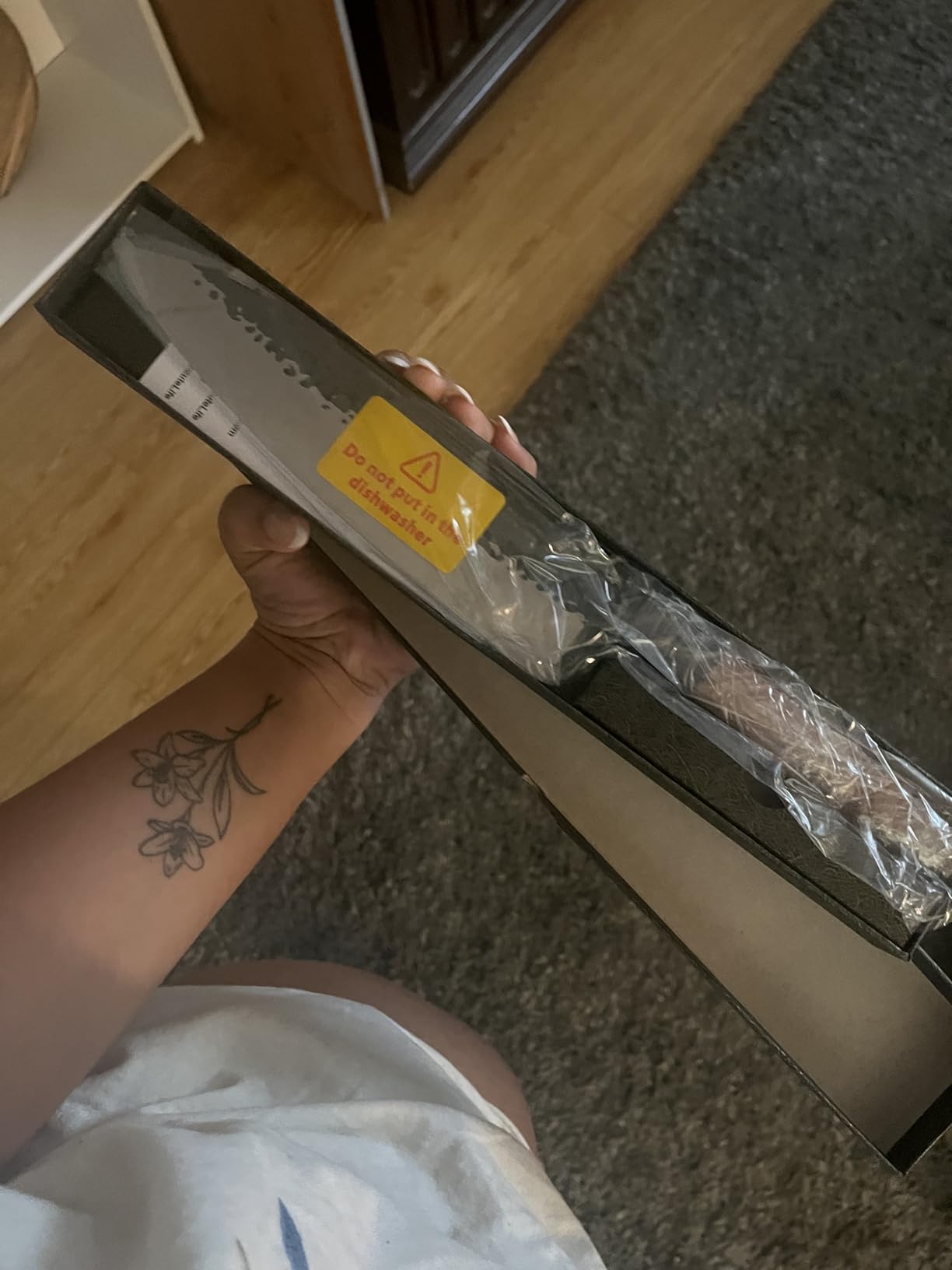
Do not put it in the dishwasher. The heat, the detergent, and the hours of moisture will spot and dull any fine blade. Hand wash, dry immediately, and store it away from other cutlery in a block or on a magnetic strip.
Cooks who take up whetstone sharpening almost universally report the learning curve as easier than expected and the results as transformative. That is the last hurdle, and it is smaller than it sounds.
Frequently Asked Questions
What brand is the best Japanese chef’s knife?
There is no single best brand, and the honest answer depends on how you cook. For a first knife we would pick a well-reviewed factory gyuto with a double bevel and moderate hardness, because it is forgiving and easy to maintain. For a premium buy, Shun backs its blades with free lifetime sharpening, which removes the hardest part of ownership. What matters more than the badge is the steel, the edge angle, and whether you will actually learn to sharpen it.
Are German or Japanese kitchen knives better?
They are different, not better and worse. German knives use softer steel, usually around 55 to 57 HRC, ground to roughly 20 degrees per side. That geometry is durable, forgiving, and easy to maintain. Japanese knives use harder steel, often 60 to 62 HRC or higher, ground to 15 degrees or less per side. They hold a sharper edge for longer and slice more cleanly, but they chip more easily and need whetstone sharpening.
Is Japanese steel better than German steel?
Japanese steel is harder and holds a more acute edge for longer, which is why it stays sharp between stones. German steel is softer and tougher, which makes it more resistant to chipping and more forgiving of hard contact. Neither is universally superior. A well-maintained German chef’s knife will cut a home dinner perfectly well, and a well-sharpened Japanese knife will handle delicate work the German blade cannot.
What are the drawbacks of using a Whetstone knife sharpener?
The real drawbacks are the learning curve, the time, and the fact that you must be careful. A waterstone sharpens a hard Japanese edge properly, but the first few sessions can leave a blade blunt or scratched if the angle is wrong. It also takes five to ten minutes per side, which is why pull-through sharpeners exist. The bonus is that a stone will restore an edge that a honing rod cannot.
Do I need a whetstone for a Japanese knife?
You do not need one on day one, because every knife in this roundup arrives sharp from the factory. You will need one eventually if you want the edge to last. A knife hardened to 60 HRC or above will lose its factory edge faster than a German blade, and a honing rod alone only realigns an edge, it does not restore one. Most home cooks sharpen every few months once the routine is established.
Which country makes the best cooking knives?
Japan and Germany are the two answers that matter for a home kitchen, and both have manufacturing centers of real reputation. Seki in Japan produces a large share of Japanese kitchen knives, and German centers in Solingen and the Saxony region have made blades for centuries. The country on the label matters less than the steel, the grind, and whether the maker heat treats it properly.
The Best Japanese Chef Knife for Your Kitchen
If you want our single recommendation, the SHAN ZU 8-inch Damascus gyuto takes it. A 62 HRC Japanese core, a real 67-layer forged build, and 260 grams of blade that a first-time owner can control from the first cut. If you would rather not think about whetstone technique at all, the Shun Classic 8-inch gives you the same kind of edge with free lifetime sharpening behind it.
For value, the Dalstrong 8-inch AUS-10V is hard to argue with, and the tall blade changes how you prep at volume. If hand fatigue is your real problem, the Shun Sora at 6.56 ounces or the Kimura at 175 grams will change your prep sessions more than any steel choice. For the most traditional experience, the MITSUMOTO SAKARI tsuchime blade rewards a dry-and-oil habit with a look no factory stainless can match, and the Simple Song single bevel delivers the most authentic cut in this roundup if you are ready to learn the technique.
Whatever you choose, buy a good cutting board before you buy a second knife. A Japanese edge is a precision instrument, and precision instruments need a proper surface. Put a stone on your counter, learn the pinch grip in your first ten minutes, and skip the bone and the frozen food entirely. That is the whole secret to getting the best japanese chef knives for home cooks to feel like an upgrade rather than an expensive mistake.
Ready to get the rest of the kitchen in order? Our guide to the best filing cabinets for home offices covers storage in the other half of the house, the best smart home hubs for Google Home roundup handles the rest of the daily routine, and the best cordless drills for home projects guide covers the workshop side of the house.