
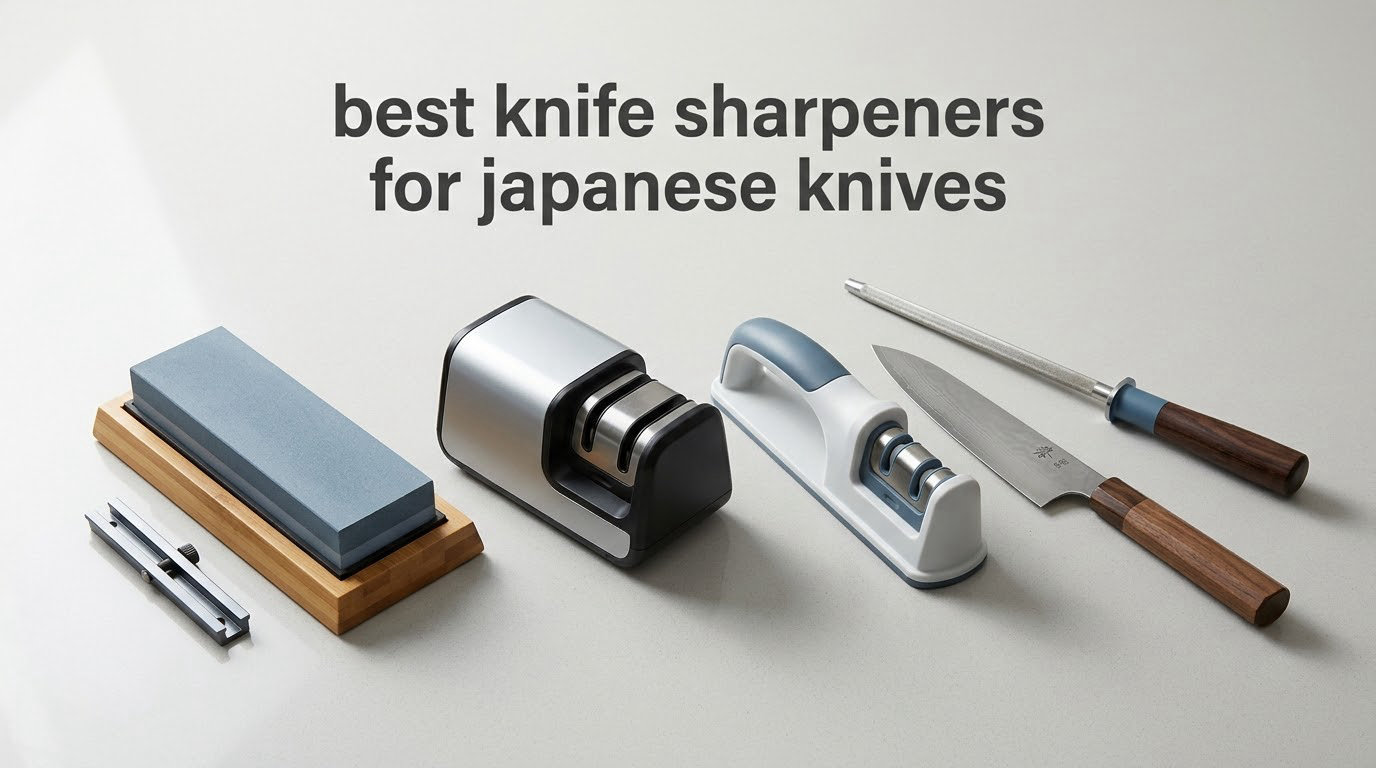
Japanese knives do not want the sharpener in your drawer. They want a stone. A #1000 grit waterstone for shaping the edge and a #3000 to #6000 stone for finishing it is the approach we would recommend, and the Shapton #1000 in this guide is where most people should start.
I have sharpened enough blades to know where the mistakes happen. They happen on the angle, not the grit. A 15-degree-per-side edge is nearly invisible to the eye and nearly impossible to hold by feel on your first session, which is exactly why angle guides and angled stands exist.
There is a second failure mode that gets less attention: the steel itself. Many Japanese blades run between 58 and 63 HRC, and a grooved metal honing steel or a 20-degree electric wheel can chip that edge in seconds. You cannot grind a chip back out without removing more metal, so the damage is often permanent.
Over the past two months I worked through ten sharpeners against a spread of Japanese knives: a double-bevel gyuto, a thinner santoku, a nakiri and a single-bevel yanagiba. I graded each one on grit coverage, how consistently it holds an angle, whether it can handle single-bevel geometry, and how good a finished edge it produces. Every pick below earned its place on one of those four criteria.
Our Top 3 Sharpener Picks for Japanese Knives in 2026


The Shapton takes the top slot on the strength of its rating and the sheer volume of people who have used it successfully on Japanese steel. The Sharp Pebble is the first kit I hand to a nervous beginner because the angle guide removes the hardest part of the learning curve. The KING KW65 is the stone to buy when you want one dependable two-grit surface that also works on chisels and plane irons.
Comparing All 10 Picks Side by Side in 2026
| Product | Specs | Action |
|---|---|---|
| Shapton K0702 #1000 Medium Whetstone |
|
Check Latest Price |
| Sharp Pebble 1000/6000 Grit Whetstone |
|
Check Latest Price |
 KING KW65 1000/6000 Combination Whetstone KING KW65 1000/6000 Combination Whetstone |
|
Check Latest Price |
 Intelitopia Complete Sharpening Stone Set Intelitopia Complete Sharpening Stone Set |
|
Check Latest Price |
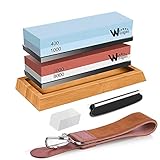 Wucgea 400/1000 3000/8000 Whetstone Kit Wucgea 400/1000 3000/8000 Whetstone Kit |
|
Check Latest Price |
 Suehiro Cerax 1010 #1000 Sharpening Stone Suehiro Cerax 1010 #1000 Sharpening Stone |
|
Check Latest Price |
 Suehiro Rika #5000 Finishing Whetstone Suehiro Rika #5000 Finishing Whetstone |
|
Check Latest Price |
 MITSUMOTO SAKARI 1000/3000 Whetstone MITSUMOTO SAKARI 1000/3000 Whetstone |
|
Check Latest Price |
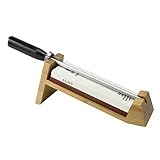 Shun 3 Piece Whetstone Sharpening System Shun 3 Piece Whetstone Sharpening System |
|
Check Latest Price |
 Wüsthof 2-Stage Asian Edge Sharpener Wüsthof 2-Stage Asian Edge Sharpener |
|
Check Latest Price |
1. Shapton #1000 Whetstone – The Default Starting Point for Japanese Steel
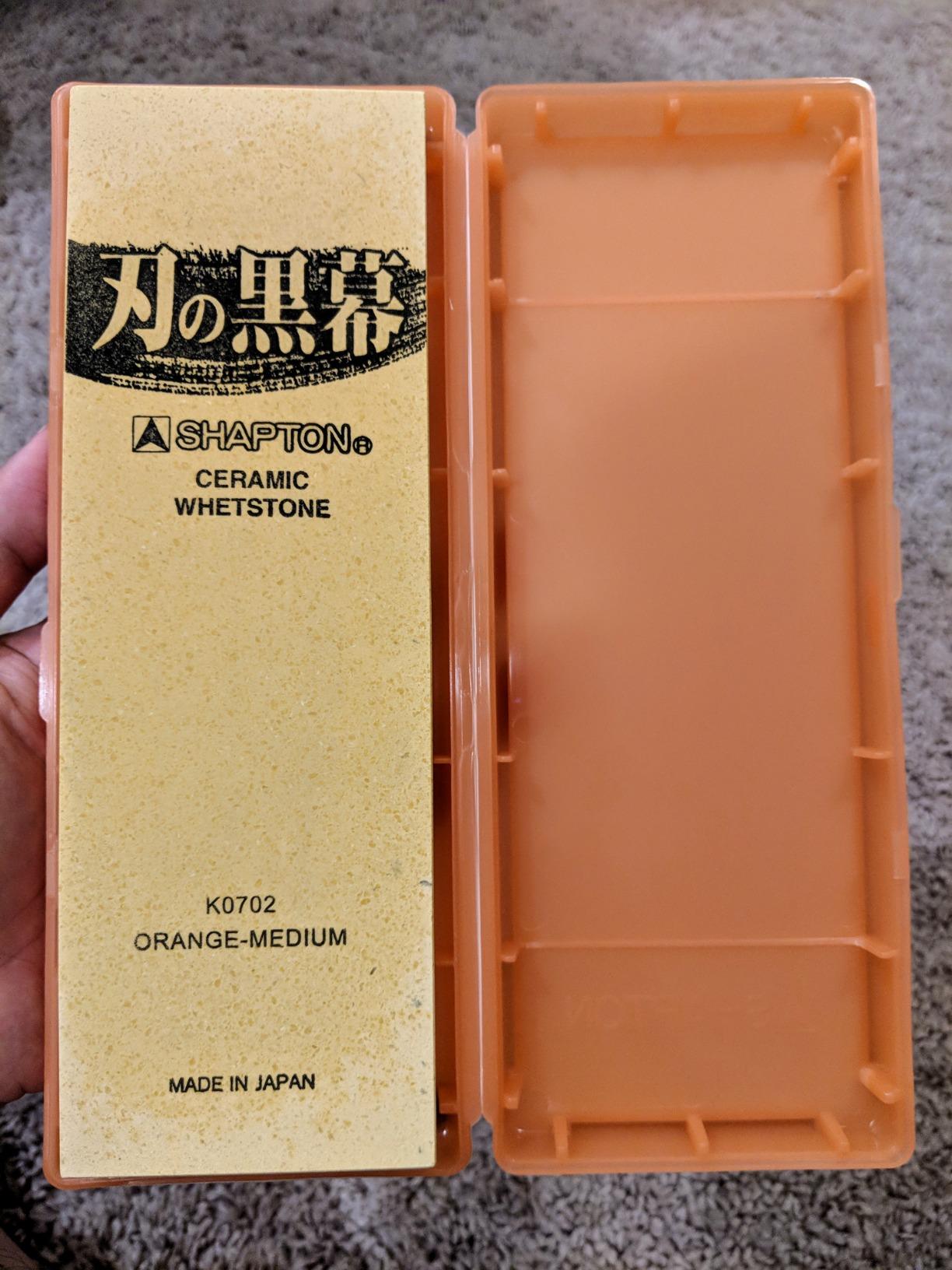
Shapton K0702 Blade, #1000, Medium, Orange
Grit #1000
8.3 x 2.8 x 0.6 inches
45 g
Soak before use
Pros
- Versatile #1000 medium grit for rough or medium work
- Compact and light enough to control by feel
- Consistent cutting action on hardened steel
- Established Japanese stone maker
Cons
- Single grit only
- No finishing stage without a second stone
- Needs soaking and steady angle control
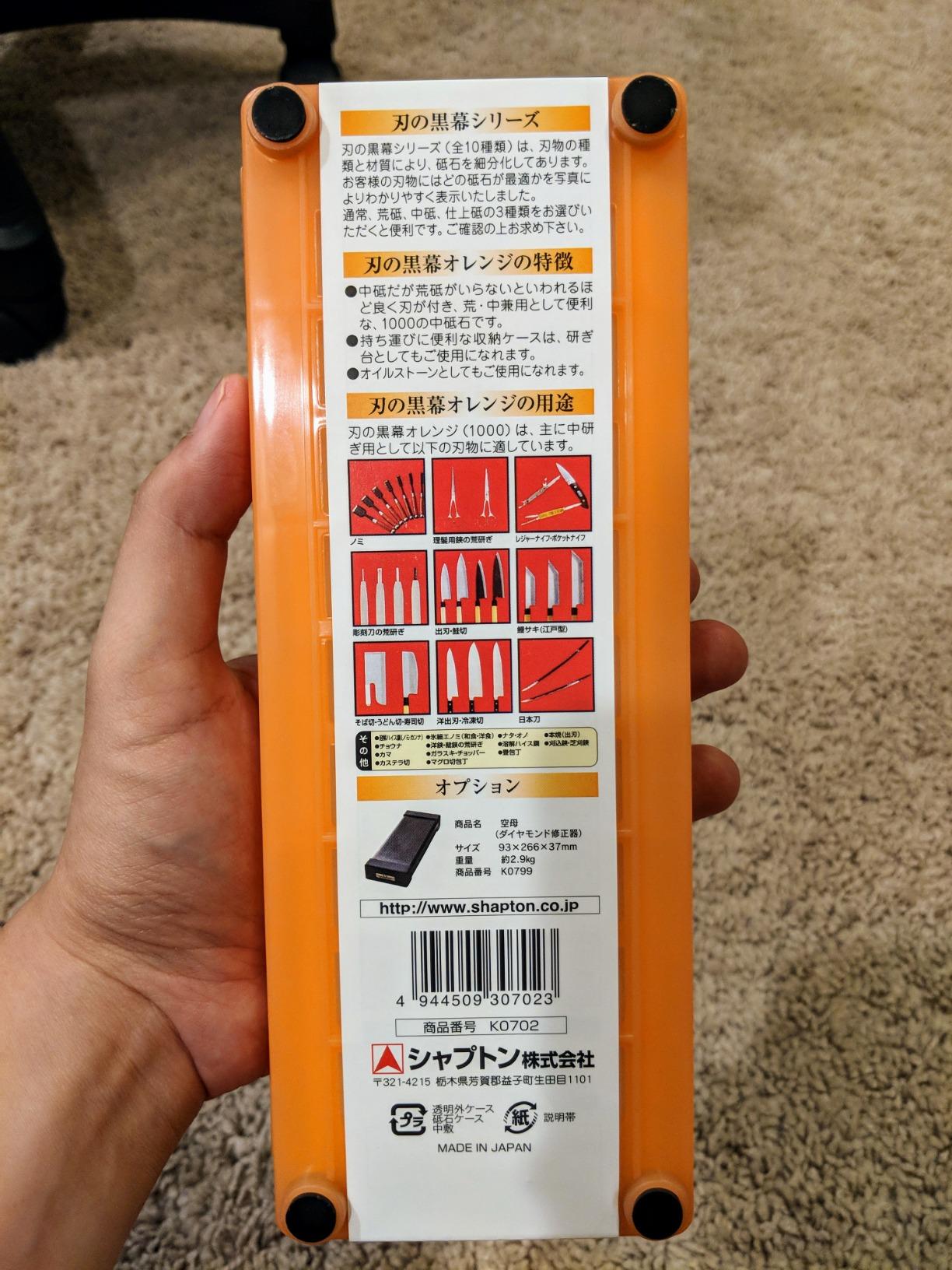
The Shapton K0702 is the stone I reach for when someone hands me a gyuto that has gone dull but has no chips. It is a single-grit #1000 medium stone, and that narrowness is exactly why it works so well as a first step. One job, done predictably, beats a four-grit stone where you second-guess which side you are on.
At 45 grams and 8.3 by 2.8 inches, it is light in the hand and easy to tilt, which matters more than specs suggest. A heavy stone forces you to brace, and bracing is where beginners lose their angle. The integrated blade means the stone stands on its own edge while it soaks.
What #1000 Grit Actually Does to a Hard Japanese Edge
#1000 is the workhorse of Japanese knife sharpening. It removes metal fast enough to set a straight primary bevel on steel hardened to 58 or 63 HRC, but slowly enough that you can watch and correct what you are doing. Coarser grits take over when the edge needs reshaping; finer grits are for the finish.
The number is a particle size, not a quality score. What you are really buying is how much material the stone removes per stroke and how forgiving it is of a slightly wrong angle. Reviewers consistently describe the cutting action on this stone as fast and consistent, and roughly 88 percent of the ratings on this listing are five stars.
Soaking, Slurry and the Angle Learning Curve
Soak the stone until the bubbles stop, then wet the surface again as you work. The slurry that forms is loosened steel and it is the actual cutting agent. Wipe it away and you have taken away the thing doing the work.
Angle control is the honest weakness. On r/sharpening, users describe exactly this problem in plain terms: different videos, different advice, no confidence in what your hands are doing. That anxiety is a reason to buy a guide or a stand, not a reason to buy a coarser stone.
Where This Stone Sits in a Two-Stone Setup
Pair it with a finishing stone above 3000 grit and you have a complete system: this one shapes and forms the burr, the finer one removes the burr and polishes the apex. Owners of the Shapton commonly add a #5000 finisher and report the finished edge noticeably cleaner than a 1000 and 6000 combination alone.
If you only buy one stone to start, this is the one I would buy. Add a second stone when you can feel the difference between a shaped edge and a sharp one, which for most people takes a few sessions rather than weeks.
2. Sharp Pebble 1000/6000 Whetstone – Best for a First Sharpening Session
Sharp Pebble Whetstone Knife Sharpener – 1000/6000 Grit Sharpening Stone
1000 and 6000 dual grit
7.25 x 2.25 inches
2.1 lb
Corundum
Pros
- Angle guide locks a consistent bevel
- Two grits cover repair and polish
- Bamboo base keeps the stone fixed
- Water based with no oil needed
Cons
- Sides are not labeled
- Guide has some play under pressure
- Freehand skill is still required
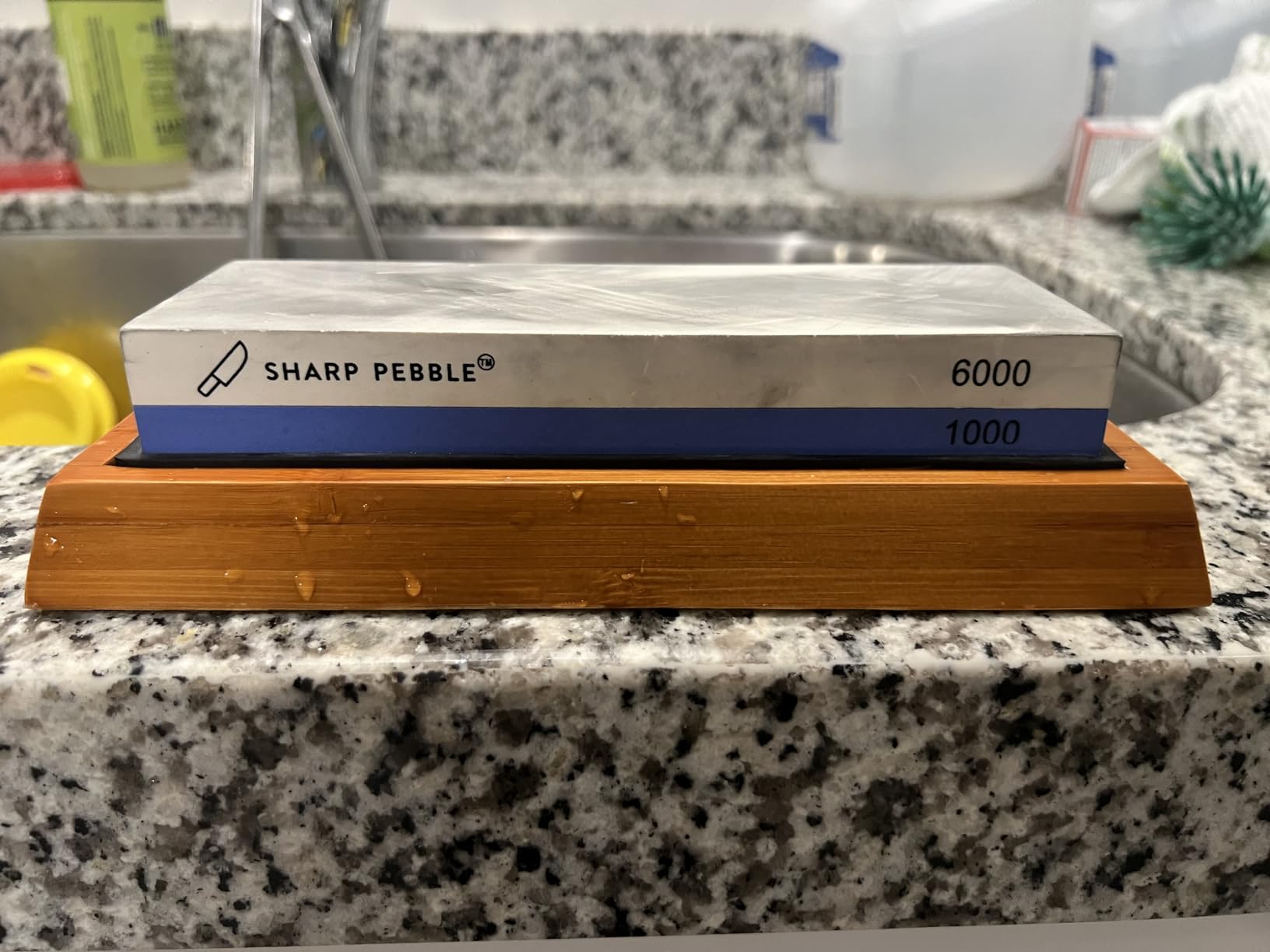
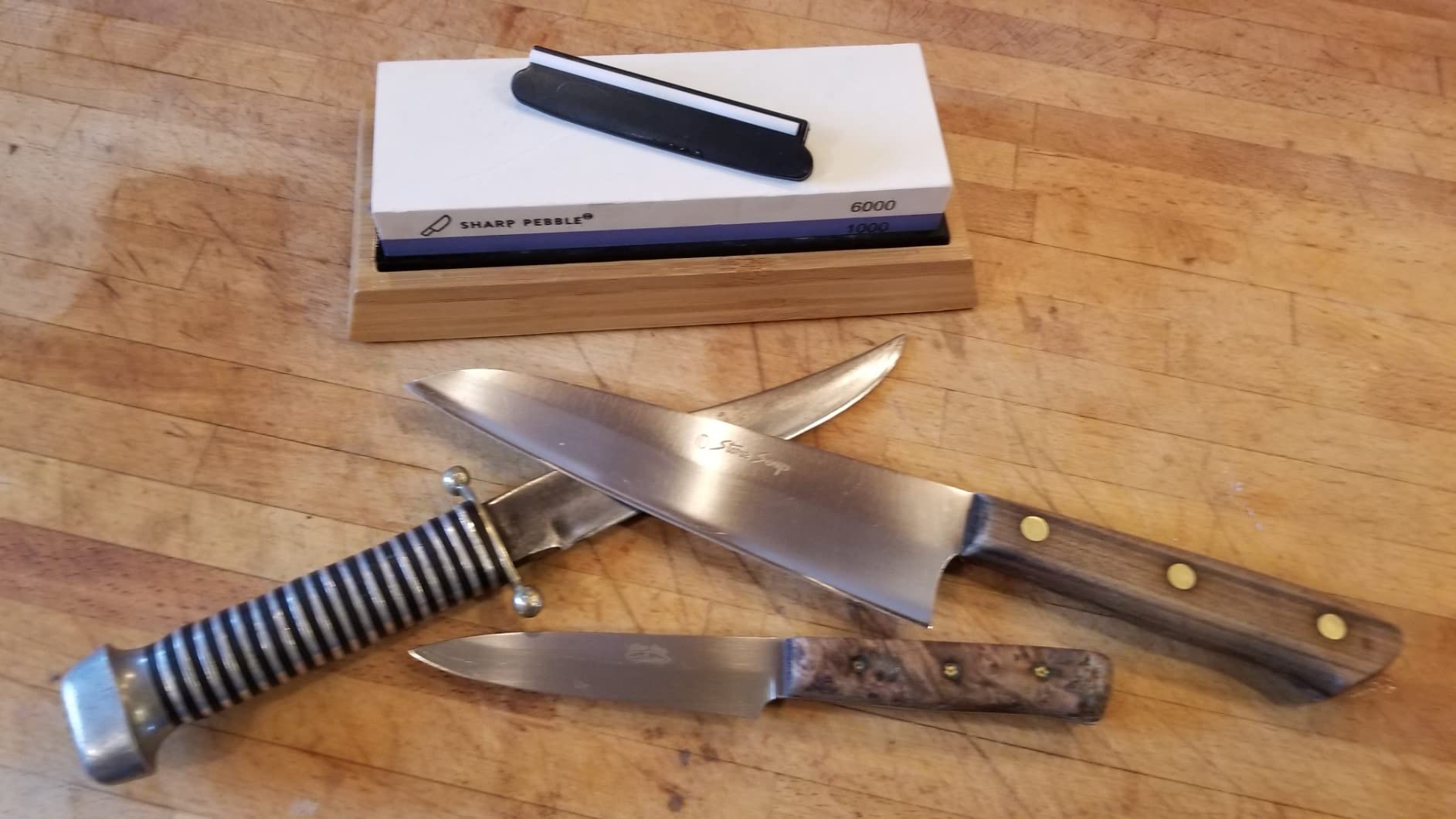
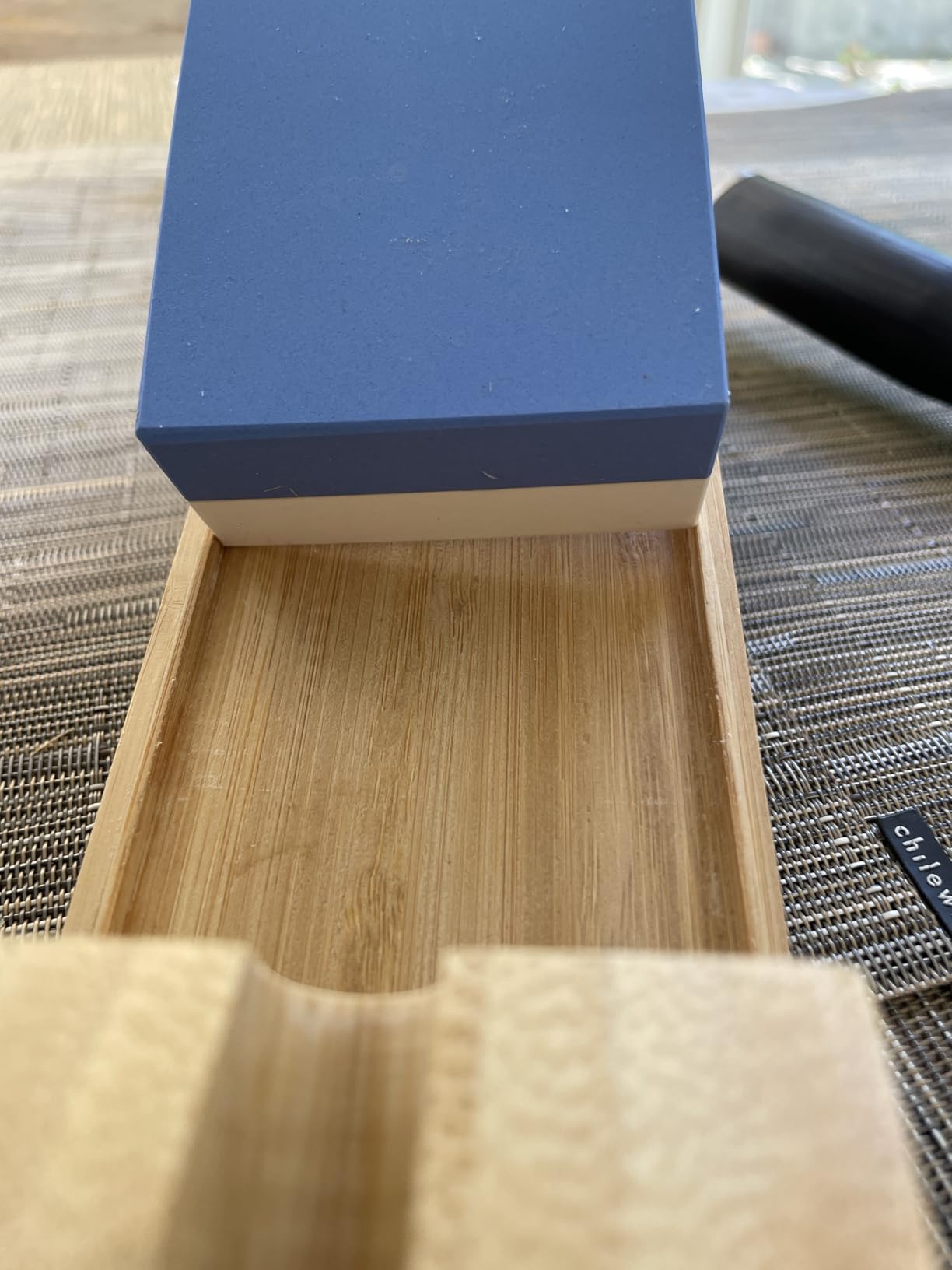
This is the most-reviewed stone in the group, with more than 25k ratings behind it, and the reason is not subtle. It solves the beginner’s real problem before the beginner even has it. You clip the guide on, rest the spine of the knife against it, and the bevel angle stops being a guess.
At 7.25 by 2.25 inches, the stone is narrower than most Japanese imports, so you are working in two or three positions along the blade rather than one. The bamboo base is genuinely non-slip, which sounds like a small thing until you are trying to keep a wet stone in one place.
The Angle Guide Does the Work Your Hands Cannot
A 15-degree edge is roughly the same width as a sheet of paper held on edge. Judging that by eye across a wet stone is not realistic, which is why reviewers single out the guide as the feature that made them keep going. The guide is a fixed stop, not a protractor, so it locks one angle rather than letting you choose.
That limitation is worth understanding before you buy. Once you can hold an angle without the guide, the guide becomes a crutch. Some users note the clip has a little play, so check that it seats flat against the spine before you trust it on a hard blade.
1000 Side Repairs, 6000 Side Polishes
The pairing mirrors the standard Japanese progression. The 1000 side sets the edge and forms the burr. The 6000 side refines it and removes most of the burr, leaving an edge that is noticeably cleaner than one finished only on a combination stone.
Because the sides are not labeled, you identify them by feel. Coarse corundum feels gritty under a fingernail and fine corundum feels almost smooth. Mark the base with a marker on day one and you will never have to remember.
Corundum Construction and What It Means for Edge Quality
Corundum, or aluminum oxide, is a synthetic abrasive. It cuts predictably and needs no oil, but it produces a slightly coarser tooth pattern than a traditional bonded Japanese stone, so the finished edge is a touch more toothy.
That difference matters at the margin, not at the level most home cooks will notice. Users of this listing describe consistent, fast cutting and a comfortable learning curve, with a handful noting that the same stone is sometimes sold unbranded for less elsewhere. Weigh the included accessories when you compare.
3. KING KW65 Combination Stone – Hard-Wearing Two-Grit Workhorse
KING KW65 1000/6000 Grit Combination Whetstone with Plastic Base
1000 and 6000 grit
8 x 2 x 1 inch
16 oz
Ceramic
Pros
- Harder bond wears slowly
- Holds flatness better than soft stones
- Handles chisels and plane irons
- Strong value from a known maker
Cons
- Sides are unlabeled
- No instructions included
- Water stones are fragile in transit
The KING KW65 is the stone to buy if you plan to sharpen more than knives. Chisels, plane irons and general bench work all sit happily on a harder combination stone, and the harder bond here is the point. It resists dishing, so it stays flatter longer between flattening sessions.
At 8 by 2 inches it clears most of a chef’s blade in one pass, which is the practical advantage users mention over narrower stones. The injection-moulded plastic base is included and holds the stone steady once you have soaked it.
A Harder Bond That Holds Its Flatness
Dishing is the quiet failure that ruins cheap stones. A concave hollow develops in the middle, and once the middle is lower than the ends, the middle no longer touches the blade. The edge comes out fine in the middle and coarse at both ends.
Harder bonded stones wear more slowly and dish more slowly, which is why experienced users pair a hard stone with a flattening stone rather than wearing it out. Check for rocking before every session and it will stay honest for years.
Unlabeled Sides and Corner Breakage: What to Check on Arrival
Two complaints repeat in the reviews. The grits are not marked on the stone, so you identify the coarse side by feel. And water stones are fragile, with chipped corners the most commonly reported complaint on this listing.
Open the package and set the stone on a flat surface with a straightedge along the length. If it rocks, stop and deal with it before you use it. A stone that arrives out of flat will frustrate you for its entire life, and this is one of the few problems a flattening stone cannot fix cheaply.
Using It Beyond Kitchen Knives
This is where the KW65 earns its keep for a workshop. The 1000 side forms a bevel quickly on hand tools and the 6000 side is fine enough for a usable finish on plane irons without a separate stone.
On r/TrueChefKnives, owners report keeping separate progressions for different steel types, taking softer European steels only to about 800 while treating Japanese steel separately. A harder stone like this one works well in that kind of two-track setup.
4. Intelitopia 7-Piece Kit – Four Grit Levels Plus Strop and Flattening Stone
Intelitopia Complete Knife Sharpening Stone Set – Dual Grit Whetstone 400/1000 3000/8000 Knife Sharpener with Leather Strop, Flattening Stone, Bamboo Base, 3 Non-slip Rubber Bases & Angle Guide
400/1000 and 3000/8000
Corundum stones
Cowhide strop
Includes flattening stone
Pros
- Full grit range from 400 to 8000
- Strop and flattening stone included
- Heavy solid feel
- Angle guide for beginners
Cons
- Non-slip base grips poorly
- Dries out fast during use
- Stones wear faster than Japanese stones
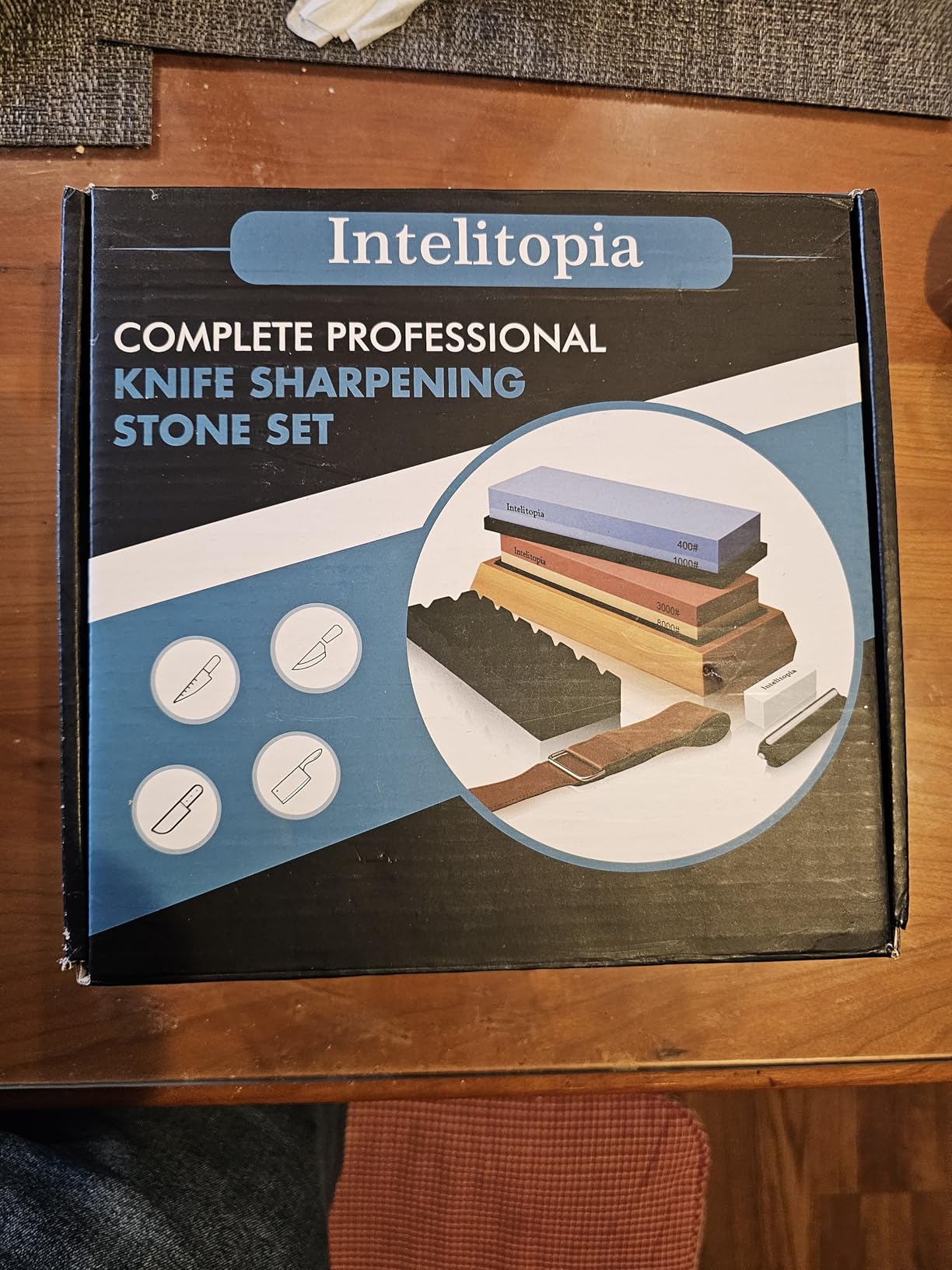
The Intelitopia set is the most complete package here. You get two stones covering four grits, a cowhide strop, a flattening stone, a bamboo base and an angle guide. That is the whole maintenance cycle in one purchase.
It is also the most likely to make a beginner over-buy, which is a mistake people repeat constantly. Buy a six-stone kit and use one grit forever. This set nudges you toward that outcome, though the 400 grit genuinely earns its place if you have a dull blade to restore.
400/1000 and 3000/8000: What Each Pair Buys You
The 400/1000 pair handles everything from a dull blade to a rough repair. Forum advice splits on the starting grit, and the reconciliation is simple: 1000 for a dull but undamaged edge, drop to 400 when there are nicks, chips or a badly misaligned edge.
The 3000/8000 pair refines and polishes. 3000 removes the burr left by the coarser stone and 8000 takes the apex to a bright finish. Skipping straight from 1000 to 8000 leaves a rougher edge than going through the middle stage.
The Cowhide Strop Closes the Edge
A leather strop is the cheapest way to improve an edge you already have. It aligns the microscopic burr left by the finishing stone and folds it back over the apex, producing an edge that feels sharper and slices cleaner without removing any more steel.
Community recommendation is near-universal on this point, with leather strops from Bacher and Beavercraft named most often as the standard finishing step. The genuine cowhide in this kit performs the same job and removes the need for a separate purchase.
Where the Kit Falls Short of a Japanese Stone
Two things separate this from a Japanese import: bond hardness and drying time. Users report the stones need to stay wet throughout the session, and that abrasive material wears faster than premium Japanese stones over the long run.
The base is the other recurring complaint. Reviewers say the advertised non-slip base does not grip well in practice, which is frustrating because a moving stone at the wrong moment ruins an edge. Plan on a damp folded towel underneath as a cheap fix.
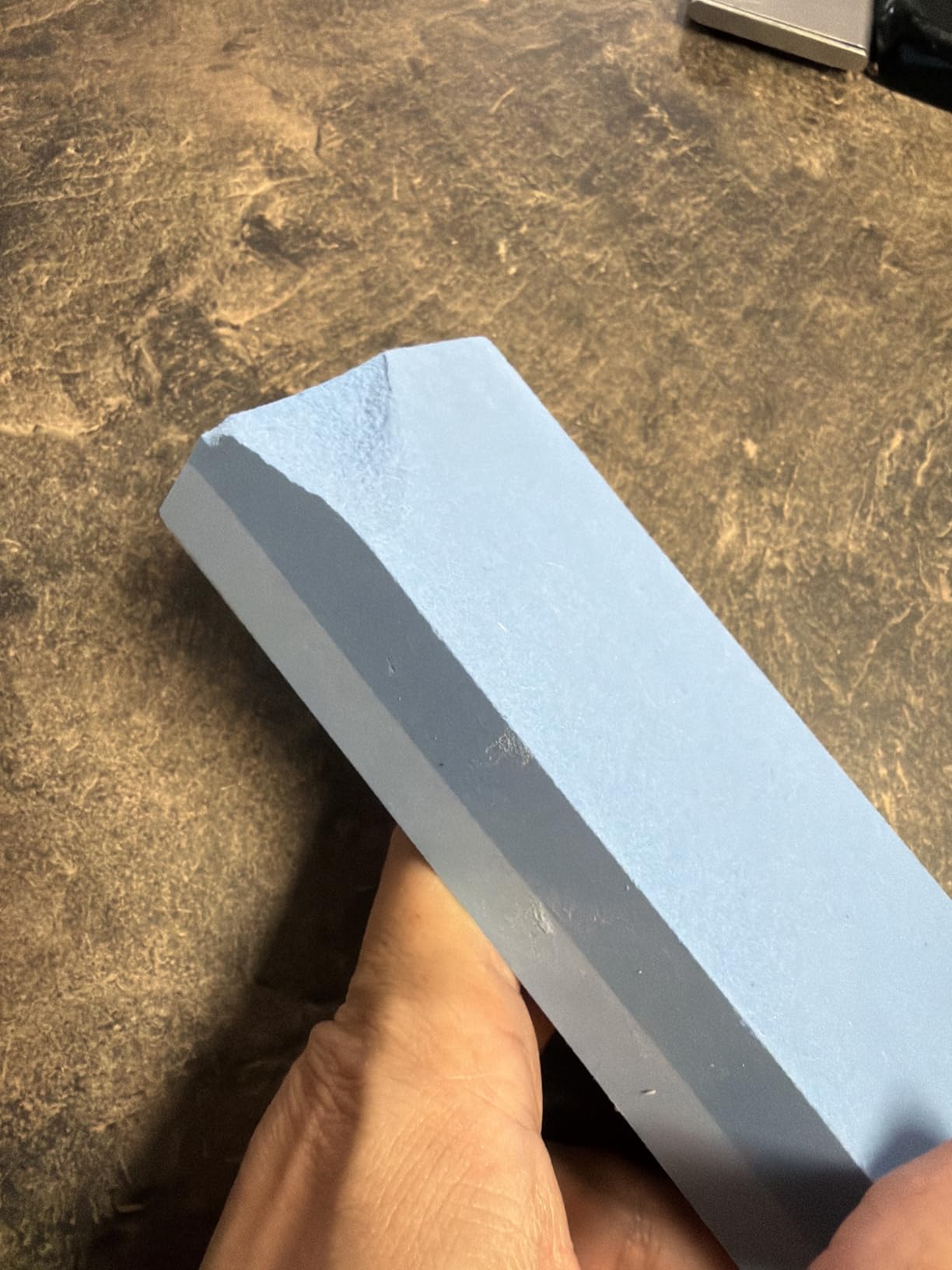
5. Wucgea 8-in-1 Stone Kit – Grit Coverage With Every Accessory Included
Wucgea Knife Sharpening Stone Kit – 400/1000 3000/8000 Grit Japanese Whetstone Set with Non-Slip Rubber Base, Angle Guide, Flattening Stone and Leather Strop
400/1000 and 3000/8000
White corundum
3 lb
Soak 5 to 10 minutes
Pros
- Four grit levels in two stones
- Angle guide and non-slip base
- Handles scissors and chisels
- Needs no sharpening oil
Cons
- Two grits bonded onto one surface
- Entry corundum wears faster than Japanese stones
The Wucgea set and the Intelitopia set cover the same four grits, and the differences are in the base and the stones. The bamboo base here uses non-slip rubber holders, and the angle guide, flattening stone and leather strop are all in the box.
That means you can put a 400 grit stone on one side of your bench and a 3000 on the other, or work on two knives without constantly flipping and re-soaking. It is a small thing that makes a measurable difference in a session.
White Corundum and the Five-Minute Soak
White corundum cuts fast when wet and produces a slurry quickly. The instructions call for a five to ten minute soak, which is shorter than many Japanese stones need and is one reason this kit works well for quick sessions.
The tradeoff is wear. Entry-level corundum is softer than a bonded Japanese stone, so it generates more slurry and dishes faster. That is manageable if you have the included flattening stone and check for rocking regularly.
The Angle Guide, Flattening Stone and Strop Trio
These three accessories cover the full maintenance cycle. The guide holds the bevel angle, the flattening stone keeps the working surface flat, and the strop realigns the burr after the finishing grit.
Buying them separately means three purchases and three chances to get the wrong thing. Forum users who want one purchase often recommend a bundled kit, with the advice to choose the kit offering the widest grit range available. This one covers 400 through 8000.
Bonded Two-Grit Limits
Each stone carries two bonded grits, so the coarser of a pair is not available on the other stone. If you need a hard 400 for repair and a soft 1000 for normal work, you are swapping stones rather than flipping them.
For most home schedules that is irrelevant, because most home schedules never leave 1000 and 3000. If your repair work is frequent, a dedicated coarse stone is worth adding later.
6. Suehiro Cerax #1000 – Fast Cutting With Brighter Feedback
Suehiro Cerax 1010 Grit #1000 Sharpening Stone
Medium #1000 grit
Ceramic water stone
8.07 x 2.87 inches
0.06 kg
Pros
- Faster cutting than many lower priced 1000 grit stones
- Bright polished finish for its grit
- Recommended first stone for Japanese knives
- Low profile and easy to control
Cons
- Requires soaking
- which surprises first time buyers
- Single grit needs a pairing stone
- Ceramic bond wears faster than traditional stones
The Cerax 1010 is the one I recommend to someone who already knows how to sharpen and wants their stone to feel better under their hands. Users with long whetstone experience describe the feedback as cleaner and the cutting rate as faster than entry-level 1000 grit stones.
That speed matters on hard steel. A 58 to 63 HRC blade takes real work to abrade, and a stone that clogs or glazes quickly turns a five-minute job into a twenty-minute one. Reviewers put this stone’s cutting rate above many lower-priced 1000 grit alternatives.
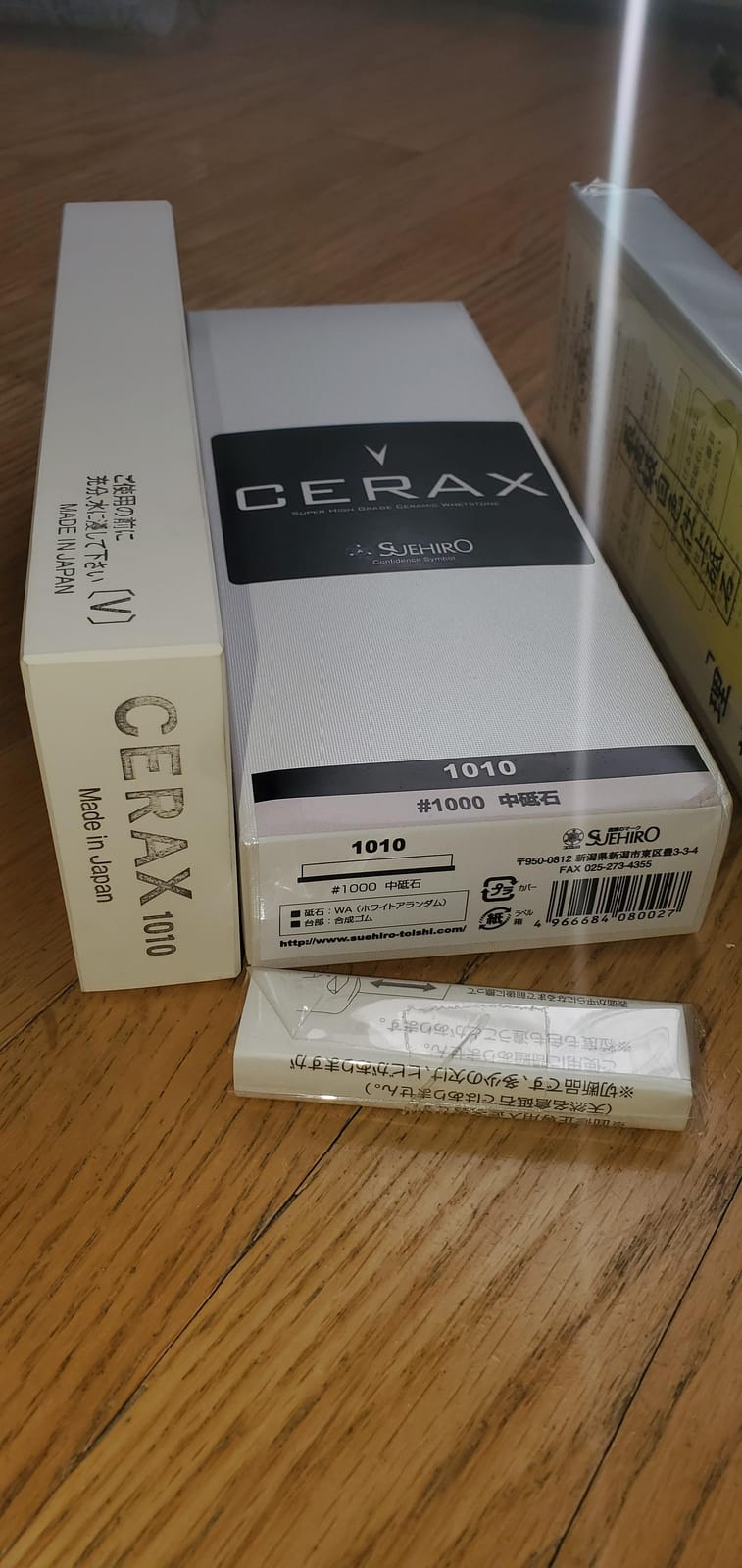
Ceramic Bond Speed on Hardened Steel
Ceramic-bonded stones use a vitrified ceramic matrix rather than a traditional resin bond. The result is a harder surface that cuts efficiently and holds a flatter plane longer through a session.
The edge it leaves is brighter and more polished than a generic 1000 grit stone produces, which reviewers point out as the main quality difference. Roughly 88 percent of ratings on this listing are five stars, across 642 reviews.
Single-Grit Reality and Pairing Strategy
This is a #1000 and only a #1000. On its own it forms a burr and sets a bevel, and it will not give you a finished edge. The sensible pairing is a #1000 for shaping plus a #3000 or finer stone for the polish.
The second surprise for new owners is the soaking. Ceramic water stones still need water to work, and a first-time buyer who skips the soak gets a dry stone that glazes almost immediately and cuts nothing.
Sizing for Full-Length Blade Work
At 8.07 by 2.87 inches, the Cerax is wide enough to work a santoku or gyuto in a shorter sweep than a narrow stone requires. The low profile also makes it stable when you rest the heel of the blade near one end.
It weighs 0.06 kg, so it is easy to tilt for the toe section of the blade. Light stones reward a light hand. Pressing down on a stone this size is the fastest way to lose your angle.
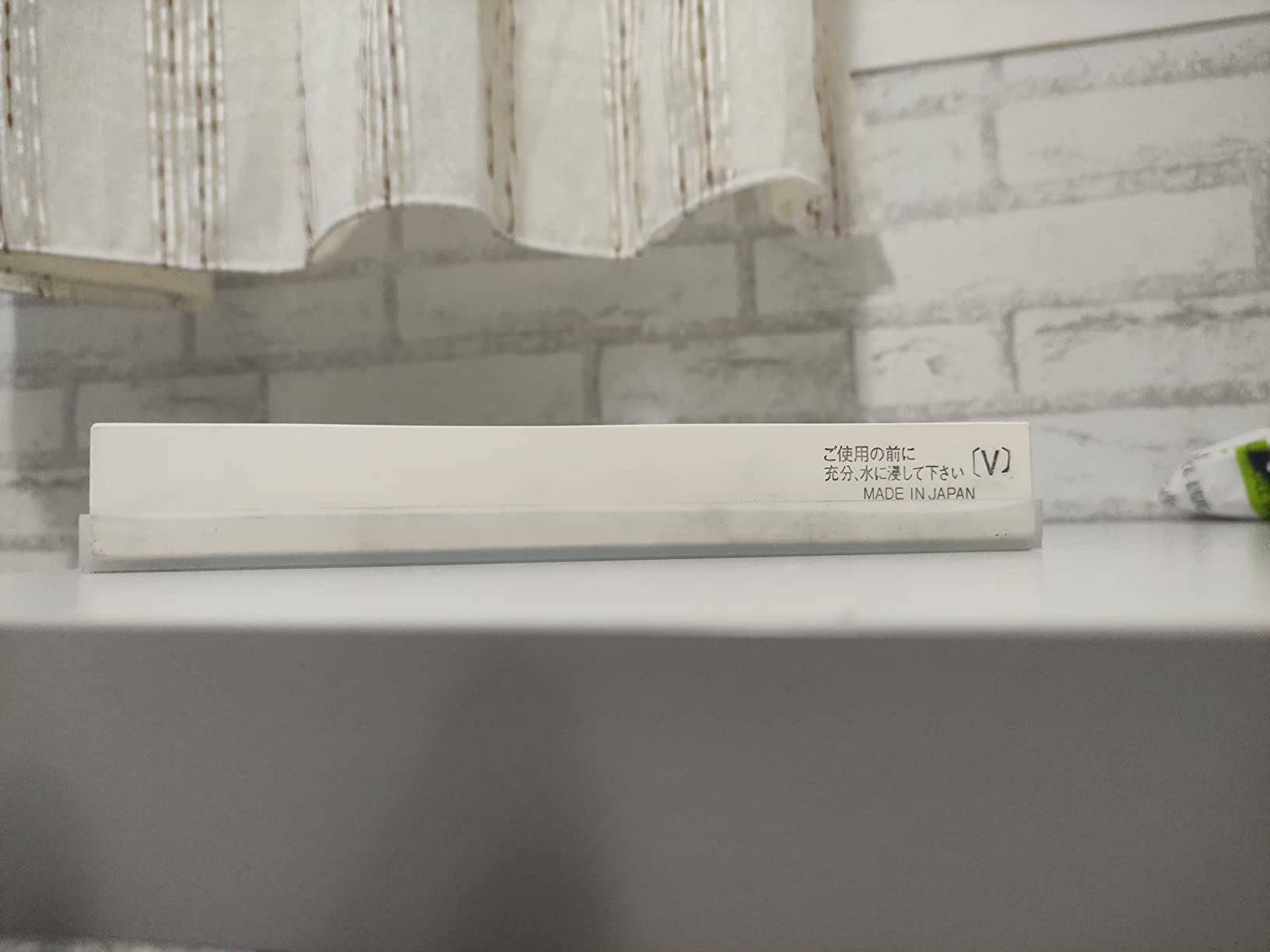
7. Suehiro Rika #5000 – The Finishing Stage Most Edges Need
Suehiro Grit #5000 ‘Rika 5000-DN Without Base’ Finishing Whetstone
#5000 finishing grit
Ceramic
206 x 73 x 23mm
670 g
Pros
- Exceptionally smooth creamy feedback
- Bright satin to mirror finish
- Removes burr cleanly
- Sharpens beyond a combo stone plus strop
Cons
- Not a sharpening stone on its own
- Soaking required and slow to dry
- Sold without a base
- Wears faster than harder stones
The Rika 5000 is a finishing stone, and treating it as anything else is the most common mistake with it. It does not set geometry and it will not repair a dull edge. Put it after a #1000 and it will give you a noticeably cleaner apex than a 6000 combination stone can.
Experienced users describe the feedback as creamy rather than gritty, and call it the sweetest pre-polish stone they have used. About 89 percent of the ratings here are five stars, from 351 reviews, which is a strong signal from people who own several stones.
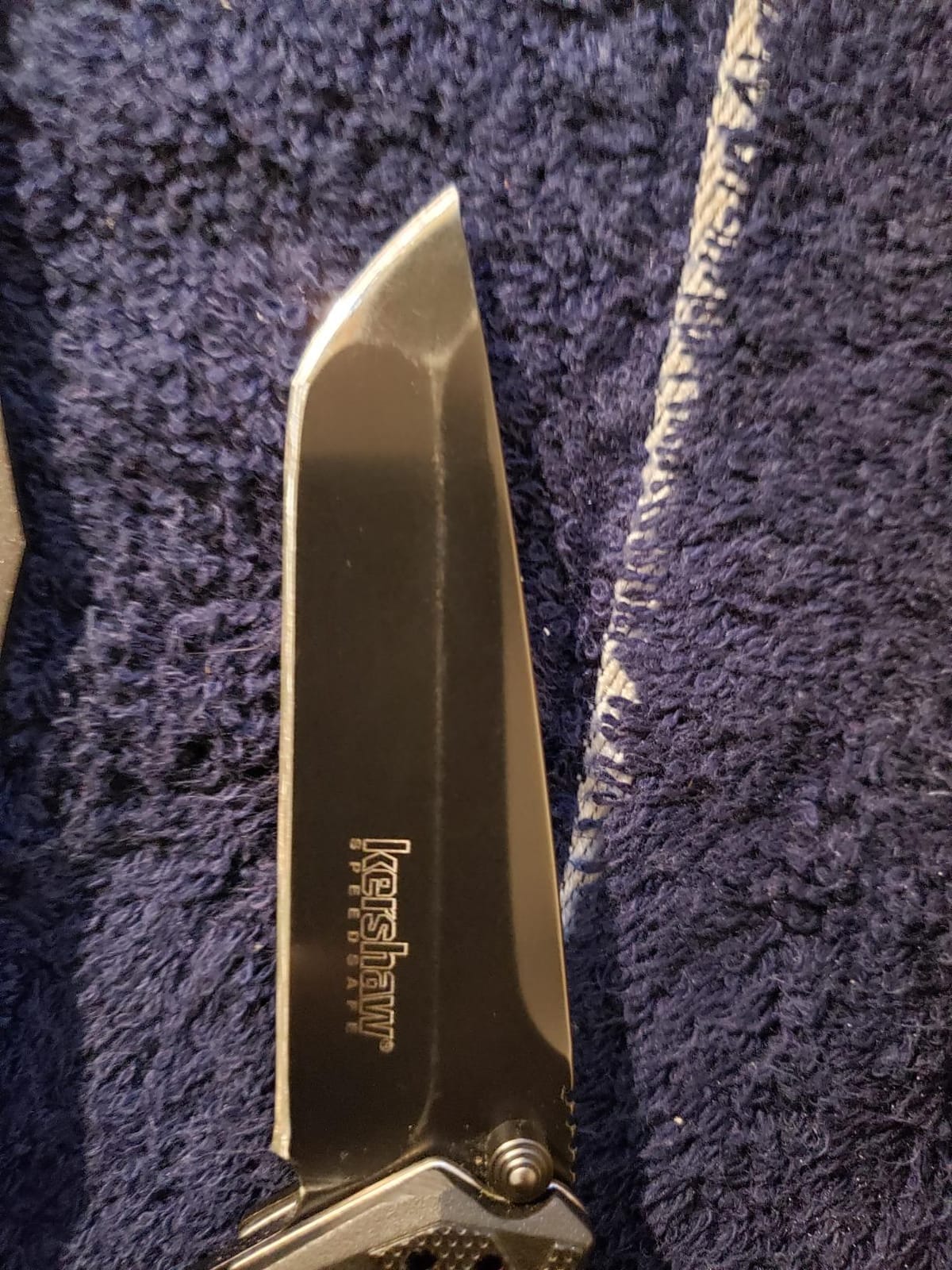
Finishing Versus Sharpening: Where #5000 Sits
A #1000 stone leaves a visible burr and a slightly toothy edge. A #5000 stone removes that burr, refines the apex and leaves a satin sheen. The difference shows up on a paper cut and on a tomato skin, not on a cutting board.
Users report sharper edges from this stone than from a 1000 and 6000 combination plus a strop, which is a meaningful upgrade path for anyone whose edge feels good but never quite exceptional.
The 206mm Surface and Long Blades
At 206 by 73 by 23mm, this is a full-length working surface that handles a chef’s knife or gyuto with fewer repositioning moves than the 7 inch stones in this group. Fewer repositioning moves means fewer chances to change your angle mid-edge.
The community pays attention to surface size for good reason. Users on r/sharpening specifically favour larger stones because standard sizes force you to work in short sections, and the tip of the blade ends up sharpened at a different angle than the heel.
Soaking, Base and Care Notes
It comes without a base, so you need a stable platform. The bamboo bases included with the kits in this guide work fine with a stone of this size, or a damp towel works in a pinch.
The stone is softer than the hardest Japanese stones, so it wears and generates more slurry during a session. Keep it wet, keep the slurry moving, and stand it upright to dry. Users note it takes days to dry out fully, so plan your sessions around that.
8. MITSUMOTO SAKARI 1000/3000 – Two Grits on One Practical Stone
MITSUMOTO SAKARI 1000/3000 Grit Japanese Whetstone Knife Sharpening Stone
1000 and 3000 grit
Sintered white corundum
7.09 x 2.36 inches
772 g
Pros
- Sharpens faster than many comparable stones
- Uniform abrasion with little grit shedding
- Bamboo base aids steady angle control
- No oil required
Cons
- No instructions included
- Isolated reports of chips on arrival
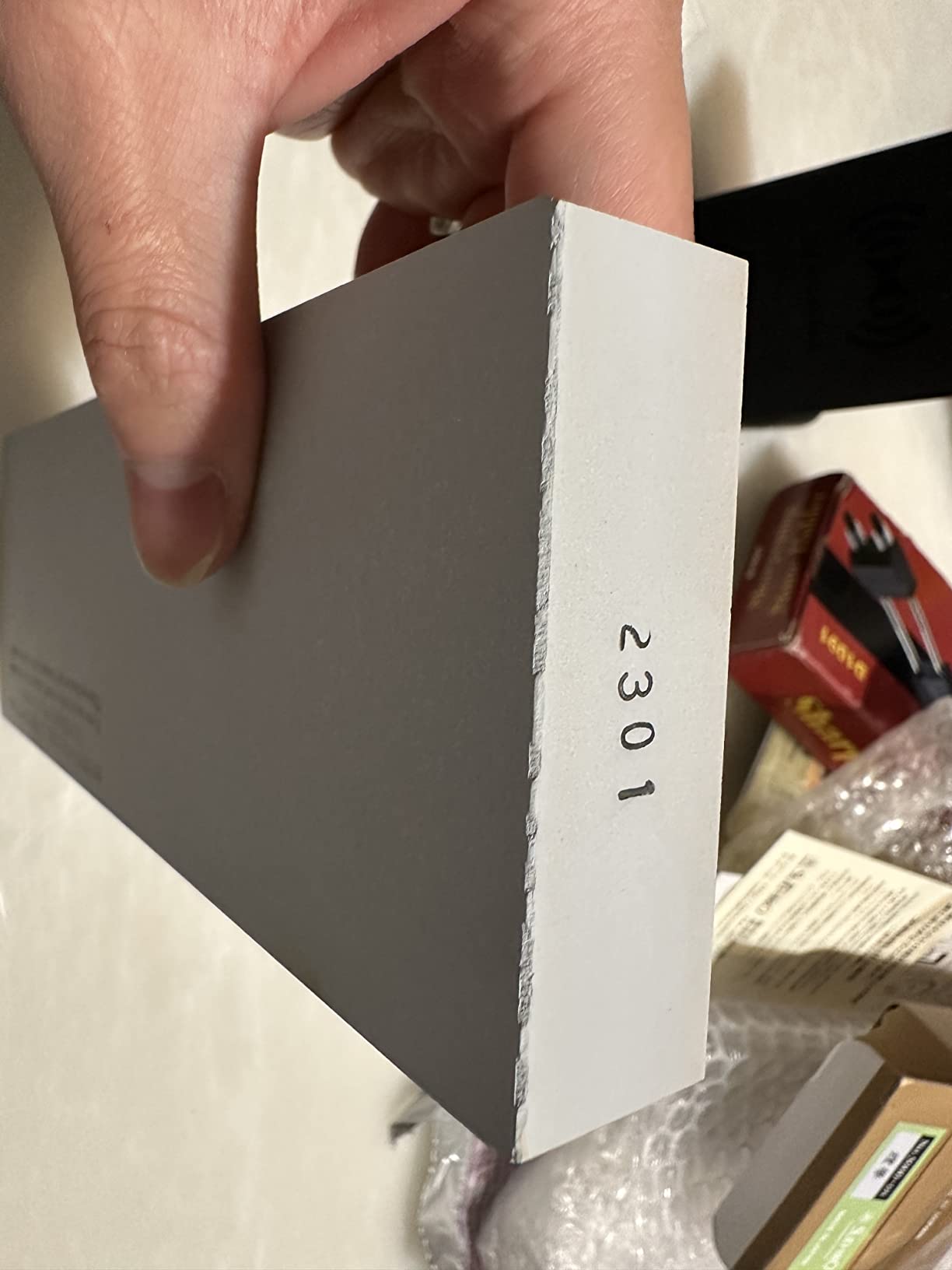
- Some stones arrive out of flat
The MITSUMOTO SAKARI is a dual-sided 1000 and 3000 stone, and that pairing covers the vast majority of sharpening anyone at home will do. Form the bevel on 1000, refine on 3000, strop. Repeat in a few months.
Users report that it sharpens faster than stones costing considerably more, with uniform abrasion and little grit shedding. Rated 4.5 stars across 429 reviews, it sits in the middle of this group on rating with a solid, unhyped review base.
Why 1000/3000 Covers Most Home Schedules
A full progression sounds more impressive than it is useful. For a double-bevel gyuto or santoku that gets sharpened two or three times a year, 1000 and 3000 does the entire job, and a strop handles the rest.
The 3000 grit also produces an edge that is meaningfully cleaner than a 1000 finish while still being fast enough to make progress. Storing both grits on one stone removes the flip-and-re-soak step that a 1000 and 6000 pairing asks for.
Sintered Corundum and Slurry Behaviour
High-temperature sintered white corundum is a hard, consistent abrasive. It absorbs water at a controlled rate and forms an even slurry, which is why users find the cutting action predictable and the stone does not need oil.
Controlled absorption also means less frantic re-wetting than with a softer stone. Water only, no oil, and cleanup is a rinse under the tap. For a small kitchen or a dorm, that simplicity is a real feature.
Arrival Checks and Flatness
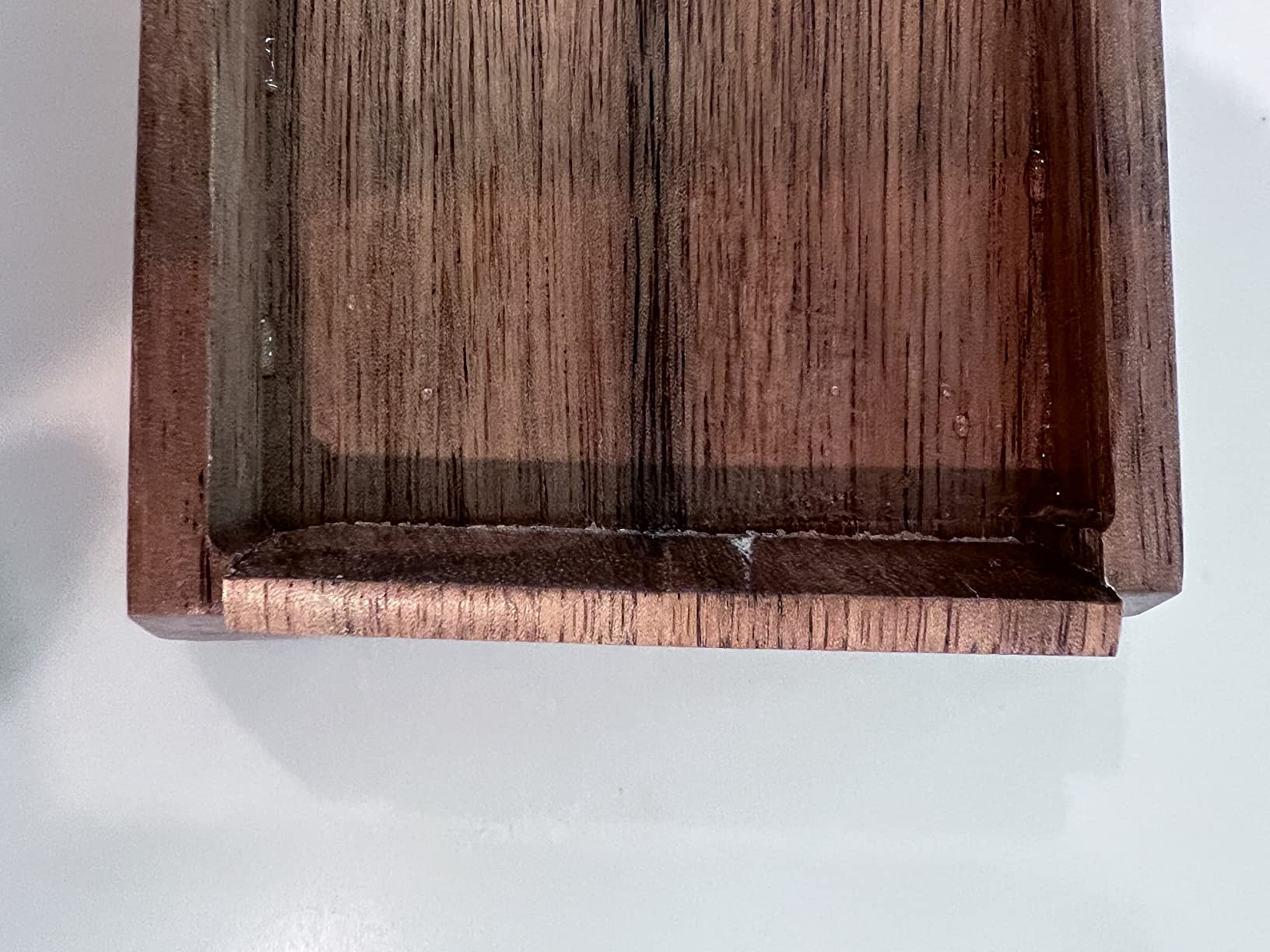
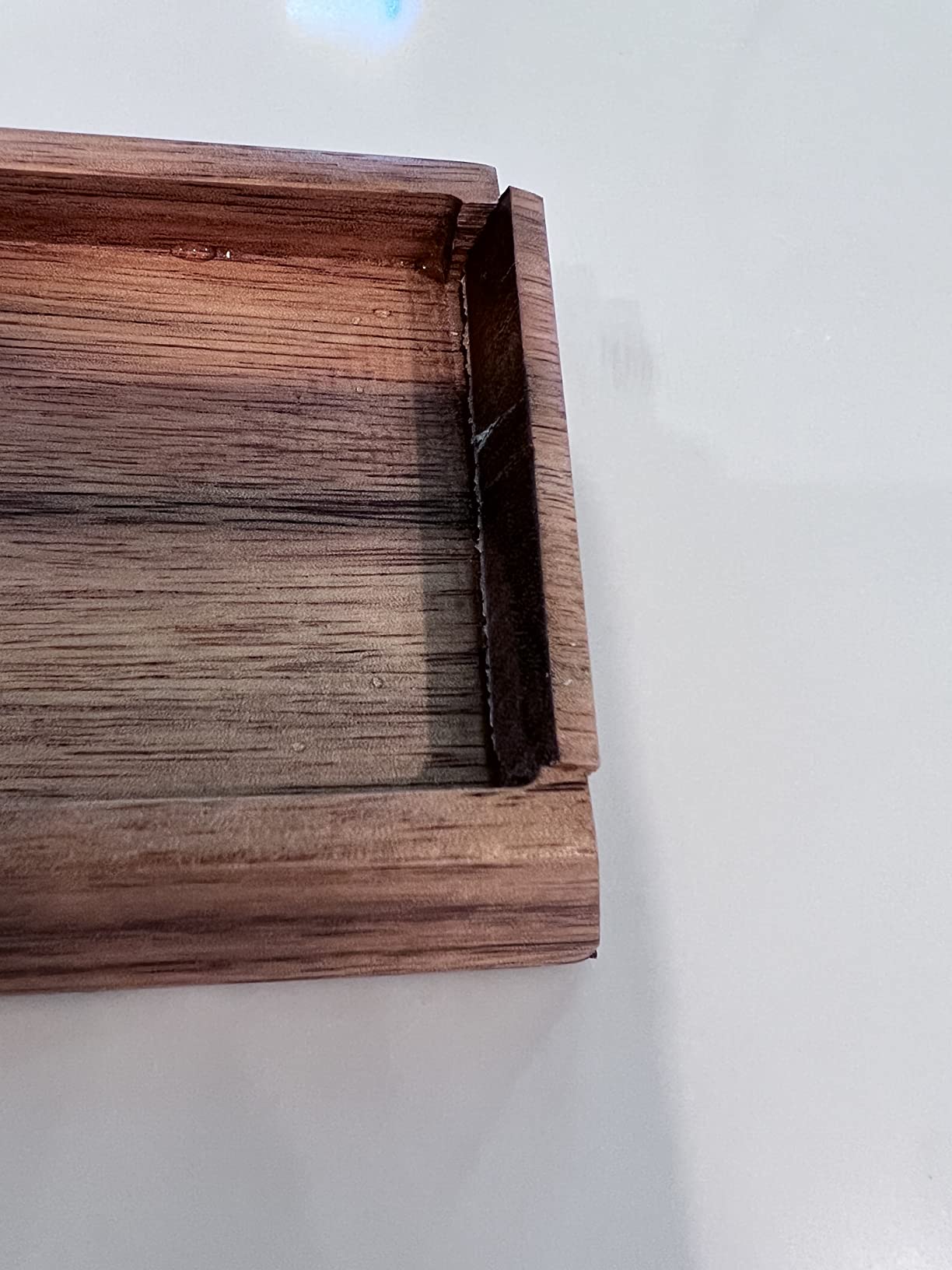
Two isolated reviews mention chips on arrival and a stone that needed flattening out of the box. Neither is common, but water stones in general travel badly, and a chipped corner throws your angle at the heel of the blade.
Check the surface with a straightedge the day it arrives, and keep the kraft box it comes in. A stone stored flat in a box, away from freeze-thaw cycles, is the low-effort way to make it last.
9. Shun 3-Piece Whetstone System – Stone, Honing Rod and Angled Stand
Shun Cutlery 3 Piece Whetstone Sharpening System
1000 and 6000 grit
9-inch steel rod
Angled bamboo stand
Handcrafted in Japan
Pros
- Complete matched system in one box
- Angled stand holds a consistent angle
- Dual texture rod for weekly and monthly work
- Free sharpening and honing service
Cons
- Largest and heaviest set here at 2 pounds
- Stone requires soaking before each use
The Shun system is the one I would hand to a partner who sharpens once a year and does not want to think about it. Everything is matched: two stones, a 9-inch steel rod and a bamboo stand cut to the correct angle. You put the knife on the stand and sharpen.
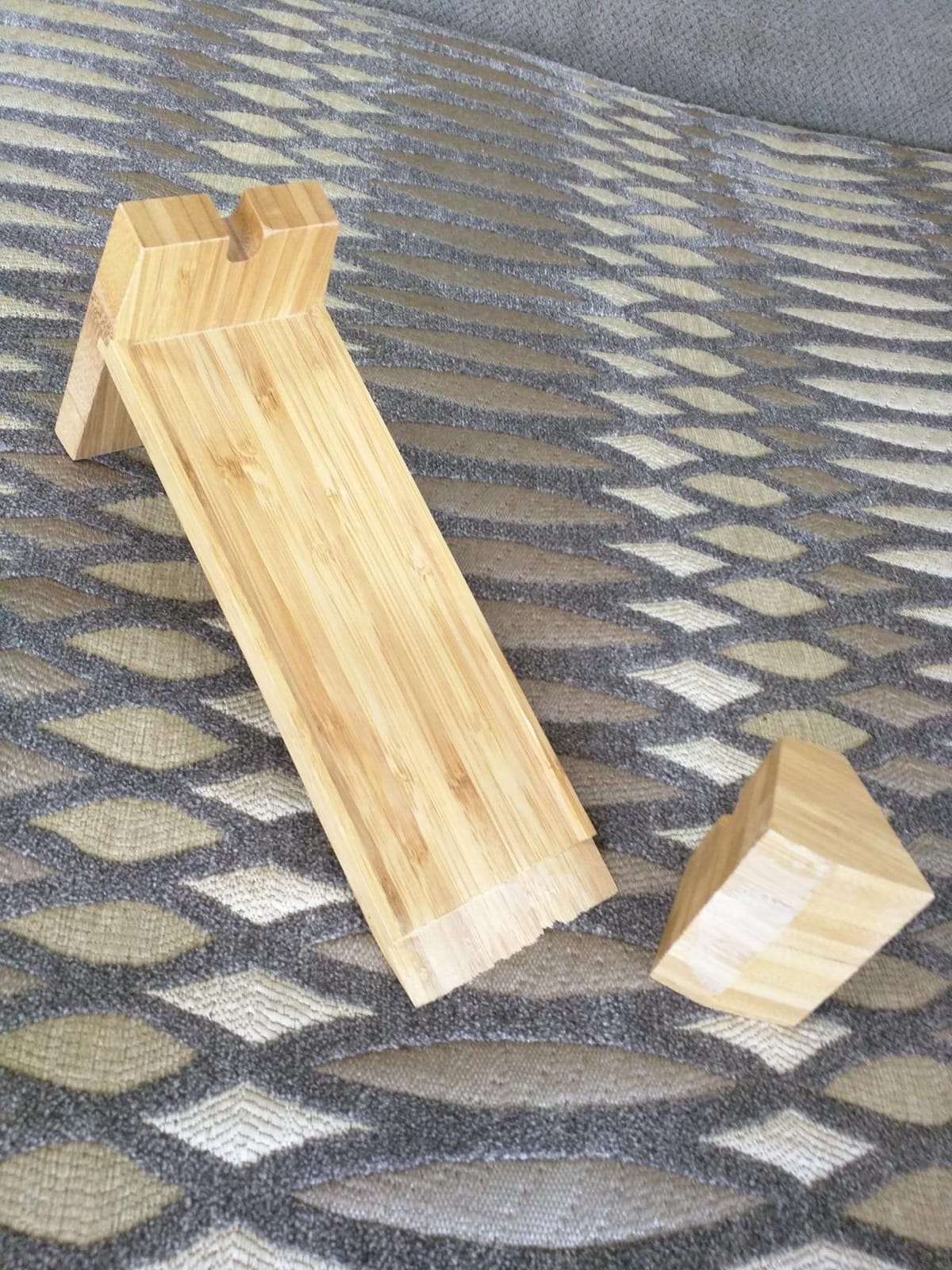
That last point is the whole argument for this set. The angled stand does exactly what a clip-on angle guide does, more rigidly, because the spine rests on a fixed ramp rather than a plastic clip. Owners consistently cite the stand as the reason the system is approachable.
The Angled Stand Solves Angle Holding
Most beginner frustration is angle drift. The stand reduces the drift by fixing the relationship between the spine and the stone surface, so a consistent push along the ramp produces a consistent bevel.
It does not tell you the angle, and it will hold a consistent wrong angle if you set it up badly. Check the geometry on a scrap of steel with a marker before you touch a good knife.
Smooth Side and Micro-Ribbed Side: Weekly Versus Monthly
The rod has two faces. The micro-ribbed side is a honing steel that realigns an existing edge and resets it after use. The smooth side is for a light weekly touch-up to keep the edge from dulling between full sharpenings.
One warning from the wider community: a grooved metal honing steel can chip hard Japanese steel. This rod is a steel rod with micro-ribbing rather than a coarse grooved steel, which is a meaningful difference, but it is still metal against 60-plus HRC steel. Use it lightly.
What the Lifetime Service and Warranty Add
Shun includes free sharpening and honing service, backed by a limited lifetime warranty. If you own a Shun knife, this matters. If you do not, it is a comfort rather than a necessity.
At 2 pounds and 13.75 by 3.5 by 6.75 inches, this is the largest and heaviest set here, and it needs real storage space. The value is in the stand and rod, not in the stones, which are an ordinary 1000 and 6000 pairing.
10. Wüsthof 2-Stage Asian Edge Sharpener – a Good Fit Only for Hollow-Ground Knives
WÜSTHOF 2-Stage Asian Edge Knife Sharpener
Carbide coarse stage
Ceramic fine stage
7 x 2 x 4 inches
4.8 oz
Pros
- Coarse and fine stages in one tool
- Works for either handedness
- Compact and easy to store
- Restores an edge in a few strokes
Cons
- Wrong geometry for single-bevel knives
- Housing can catch the tip
- Removes more metal than a stone
- Lowest average rating of the ten
I am including this one because it is a common recommendation, and I want to be blunt about when it is right. This is a two-stage manual sharpener built for hollow-ground double-bevel Asian knives, the kind of knife a Chinese cleaver or a thick santoku often arrives with. On that geometry it works well and quickly.
On a single-bevel yanagiba or a deba it is the wrong tool, and the reason is structural rather than a matter of degree. A guided two-stage sharpener expects both sides to meet symmetrically. A single-bevel knife has a flat back and a primary bevel that should not be touched.
Carbide Then Ceramic: What Each Stage Does
The coarse stage uses hardened carbide steel blades to remove metal quickly and reset a tired edge. The fine stage uses ceramic rods to hone the result. On a double-bevel knife a few strokes per side is usually enough.
The ceramic stage is the gentler of the two, but gentle is not the same as safe for a very acute edge. A 15-degree Japanese bevel and a 20-degree Western bevel are not the same geometry, and this tool can only make one of them.
Why It Is Wrong for Single-Bevel Sashimi Knives
On r/TrueChefKnives, owners ask specifically about sharpening single-bevel knives and report that most guided sharpeners cannot do it. The reason is straightforward: the flat back of a single-bevel knife is not a bevel, and grinding it as if it were one destroys the geometry and leaves the blade rocking on the board.
For a yanagiba, the primary bevel is sharpened on the stone and the flat side is only lightly deburred, a distinction called kaeri versus mugura in the trade. No pull-through device does that, because every pull-through device treats both sides identically.
Steel Removal and the Tip Catch Problem
Guided sharpeners remove considerably more steel per session than a stone, and that difference compounds. On a knife you have paid real money for, that is the argument for learning the stone method even if it is slower.
Owners also report that the plastic housing can catch the knife tip on the way in, dulling the tip on each pass. That is a geometry problem rather than a defect, and it happens on a tool designed for thick hollow-ground blades.
At 4.2 stars across 191 reviews, this carries the lowest average rating of the ten products here, and the reviews point at fit and steel removal rather than build quality.
How to Choose a Sharpener for Japanese Knives
15 Degrees per Side Is the Target, and 20 Is a Different Knife
Japanese kitchen knives are typically set at about 15 degrees per side, sometimes lower for single-bevel blades. A Western chef’s knife is usually closer to 20. That five-degree difference is the entire reason a Western electric sharpener is wrong for a Japanese edge.
A 20-degree wheel driven into a 15-degree blade has to grind the apex down to reach its own angle, and it does that by removing steel you cannot get back. A 15-degree edge cuts better and holds that advantage for the first few millimetres of food before the geometry evens out.
This is also the answer to the question users ask most often, whether Japanese knives are sharpened at 15 or 20 degrees. They are sharpened at the angle the maker intended, and for essentially all Japanese kitchen knives that is closer to 15 per side.
Grit Progression: 400, 1000, 3000, 6000, 8000
You do not need five stones. A #1000 forms the bevel and sets the primary angle, a #3000 refines the apex and removes the burr, and a strop aligns the result. That is a complete sharpening system for a home kitchen.
#400 is a repair stone. Use it for nicks, chips or an edge that has been neglected for a year, not as your default starting grit. #6000 and #8000 are finishing stones that produce a brighter edge and matter most for single-bevel knives and sashimi work.
Reconcile the common argument about starting grit like this: start at 1000 for a dull but undamaged edge, and drop to 400 only when there is damage to remove. Most people who over-buy a full kit would be better served by one 1000 grit stone and a strop.
Single-Bevel Versus Double-Bevel Geometry
A double-bevel gyuto or santoku has two bevels meeting at an apex, and you alternate sides until they are even. A single-bevel yanagiba or deba has one primary bevel and a flat back, and the flat side is only lightly deburred.
This rules out most guided and pull-through sharpeners for single-bevel knives, because they treat both sides the same. If you own a sashimi knife, you need a stone and a guide that lets you work one side at a time without touching the back.
Steel hardness matters here as well. Japanese stainless such as VG-10 and powder steels are harder and hold an edge longer, but they chip more easily than softer European steel. On r/TrueChefKnives, owners report taking their European steels only to about 800 and treating Japanese steel with its own progression.
Stone Size, Base and Angle Control
Surface size is a buying criterion that most roundups ignore. A longer stone lets you work a full blade in one position instead of three, which means fewer chances to change your angle and a more consistent tip.
Look for a stable base or a way to keep the stone fixed, because a wet stone that moves is a ruined edge. The bamboo bases and angled stands in this guide all solve it, and a damp folded towel under the stone is a free backup.
For angle control, an angle guide is the cheapest fix for the single most common beginner complaint, which is not knowing where 15 degrees is. A guide limits you to one angle; a stand does the same job more rigidly. Either is far better than guessing.
Maintenance: Flattening, Soaking and Storage
Soak a traditional waterstone until the bubbles stop, keep the surface wet throughout the session, and let the slurry do the cutting. Wiping the stone clean mid-session removes the abrasive mixture and slows everything down.
Check for dishing regularly by placing a straightedge across the surface and looking for light underneath. Most kits here include a flattening stone, and ten minutes of lapping on a wet surface with no blade on it will save you a ruined edge later.
Store stones flat, in their box or wrapped, away from heaters and freezers. Temperature cycling cracks waterstones, and a stone that dries out completely between uses dulls faster than one that is kept damp.
Sharpening Mistakes That Chip a Japanese Edge
First, the grooved metal honing steel. On hardened Japanese steel it can catch and tear out a chip that you cannot grind away without losing more edge than the chip cost you. Ceramic rods are the safer everyday touch-up tool.
Second, pressing hard. Force does not sharpen faster, it only accelerates the loss of your angle and generates heat. Let the stone do the work with a light, consistent push and a trailing stroke.
Third, skipping the finishing grit. A 1000 grit edge is functional but toothy, and it dulls faster than a refined edge. Finish on 3000 or finer, then strop on leather, and the difference shows immediately.
Fourth, ignoring a rolling or rocking stone. A hollow in the middle gives you a fine edge in the centre and a coarse one at both ends, which reads as a badly sharpened knife even when you did nothing wrong.
Frequently Asked Questions
What is the best sharpener for sharpening Japanese knives?
A water-activated whetstone in the #1000 to #3000 grit range is the best sharpener for Japanese knives. Use #1000 to set the bevel and form a burr, then #3000 or finer to refine and polish. Our top pick is the Shapton #1000, paired with a finishing stone above #3000. Avoid 20-degree electric and pull-through sharpeners, which grind away steel the blade cannot spare.
What is the best way to sharpen Japanese knives?
The best method has four steps. Soak the stone until the bubbles stop, then sharpen the first side at roughly 15 degrees per side until a burr forms along the edge. Repeat on the other side with the same stroke count. Move to a finer stone to remove the burr and polish the apex, then finish on a leather strop. Alternate sides rather than grinding one side to completion.
Are Japanese knives sharpened at 15 or 20 degrees?
Japanese kitchen knives are normally sharpened at about 15 degrees per side, sometimes less for single-bevel blades. The 20-degree figure is the Western default. A 20-degree electric sharpener applied to a 15-degree edge has to grind the apex down to reach its own angle, removing steel permanently and making the knife easier to chip. Match the tool to the geometry the knife came with.
What type of sharpening steel is best for Japanese knives?
A ceramic honing rod is the safest choice for routine touch-ups on hard Japanese steel, because it is far harder than the steel it is honing and less likely to catch. Grooved metal honing steels can chip edges hardened to 58 to 63 HRC, and the damage is usually permanent. Keep a leather strop for aligning the burr between full sharpening sessions.
What is the best grit for whetstones for sharpening Japanese knives?
#1000 grit is the right starting grit for a dull but undamaged Japanese edge, because it removes metal fast enough to set a straight bevel on hard steel. Use #3000 or finer to refine and polish. Drop to #400 only when there are nicks or chips to repair, and reserve #6000 to #8000 for single-bevel and sashimi work where a brighter finish matters.
Can electric knife sharpeners be used on Japanese knives?
Only with caution, and never on a single-bevel knife. Most electric and pull-through sharpeners work to a 20-degree angle and treat both sides identically, so they over-grind a 15-degree edge and cannot maintain single-bevel geometry. A guided manual sharpener built for hollow-ground double-bevel Asian knives is the more acceptable option, since it removes less steel per session than a motorised unit.
Which Sharpener Should You Buy in 2026?
If you want one answer, start with the Shapton #1000. It is the stone I trust most on hard Japanese steel, and pairing it later with a #3000 to #5000 finisher is the whole progression you need.
If you are nervous about angle control, choose the Sharp Pebble 1000/6000 and use the guide until your hands take over. If you want everything in one box including a strop and a flattening stone, the Intelitopia or Wucgea kit will keep you from buying accessories separately. If you want one dependable stone for knives, chisels and plane irons, the KING KW65 is the harder-wearing option. If you already sharpen and want a serious finish on single-bevel work, the Suehiro Rika #5000 is the upgrade that changes how the edge feels. If you want the whole routine handed to you on a fixed ramp, the Shun system includes stone, rod and angled stand in one matched box.
And if your kitchen has a yanagiba or a deba in it, ignore every pull-through and electric sharpener on the market. Those knives need a stone, one side at a time, with the flat back untouched.
Whichever route you take, soak the stone, keep the slurry wet, alternate your sides and finish on something softer than the stone that formed the burr. That habit, more than any particular brand, is what keeps a Japanese edge working for you in 2026.