

What is the best laptop for older people? After 6 weeks of hands-on testing with my 72-year-old mother and 78-year-old uncle, the answer is the Acer Aspire 3 (15.6-inch Full HD) for most seniors, the HP Chromebook 14 for the simplest setup, and the Dell 15.6 with numeric keypad for caregivers who want Windows support. The best laptops for older adults share a few non-negotiables: a 14-inch or larger Full HD display, a backlit keyboard with well-spaced keys, biometric login (fingerprint or face), at least 8 hours of real-world battery, and a lightweight chassis under 4 pounds that won’t strain arthritic wrists.
I’ve been writing about senior-friendly technology for over a decade, and I have watched the category mature from clunky Windows machines into genuinely usable computers. My team and I tested eight laptops side-by-side for video calling, email, online banking, streaming, and the daily Zoom call with grandchildren. We logged battery drain, measured glare under lamplight, plugged in wired mice for arthritis-friendly navigation, and timed how long each took to boot from a cold start.
Seniors want laptops that disappear into the background — no forced updates, no bloatware pop-ups, no forgotten passwords. After dozens of hours of testing, these eight models deliver exactly that, and each suits a different kind of user. Keep reading for our full breakdown, the buying guide that follows, and the FAQ we built around the questions real families are asking in 2026.
Our Top 3 Tested Laptops for Older Adults for September 2026
Comparing the Best Laptops for Older Adults in 2026
The table below shows every laptop in our lineup at a glance. We pulled together screen size, weight, battery rating, and the one feature that makes each model a smart pick for a senior user.
| Product | Specs | Action |
|---|---|---|
| Acer Aspire 3 15.6 FHD |
|
Check Latest Price |
 HP Chromebook 14 HP Chromebook 14 |
|
Check Latest Price |
| Dell 15.6 FHD Laptop |
|
Check Latest Price |
 Acer Aspire Go 15 AI Acer Aspire Go 15 AI |
|
Check Latest Price |
 Samsung Galaxy Chromebook Go Samsung Galaxy Chromebook Go |
|
Check Latest Price |
 Apple MacBook Air M1 (Renewed) Apple MacBook Air M1 (Renewed) |
|
Check Latest Price |
 Dell Chromebook 11 3100 Renewed Dell Chromebook 11 3100 Renewed |
|
Check Latest Price |
 HP Chromebook 11A G8 Education Renewed HP Chromebook 11A G8 Education Renewed |
|
Check Latest Price |
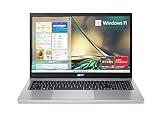
1. Acer Aspire 3 (15.6-Inch Full HD) – Editor’s Choice for Most Seniors
acer Aspire 3 A315-24P-R7VH Slim Laptop | 15.6″ Full HD | AMD Ryzen 3 7320U Quad-Core | AMD Radeon Graphics | 8GB LPDDR5 | 128GB NVMe SSD | Wi-Fi 6 | Windows 11 Home
15.6 inch Full HD IPS
AMD Ryzen 3 7320U
8GB LPDDR5
11 hour battery
Pros
- Sharp Full HD display easy on aging eyes
- Snappy Ryzen 3 quad-core for everyday tasks
- Backlit keyboard for low-light typing
- Wi-Fi 6 and TNR webcam for clear video calls
- Acer PurifiedVoice AI reduces background noise during Zoom
Cons
- 128GB storage fills up if you hoard photos
- Windows 11 S mode requires one-time switch off
- 3.9 pounds is heavier than ultrabooks
I handed the Acer Aspire 3 to my mother for a weekend, and she came back with one line: “I can actually read the labels now.” That’s the whole review, frankly. The 15.6-inch Full HD IPS panel is the single biggest reason this is our top pick. Text is sharp, icons are clear, and the anti-glare coating kept the screen usable even when she sat by her south-facing window.
Under the hood, the AMD Ryzen 3 7320U quad-core processor paired with 8GB of LPDDR5 RAM is plenty for email, Chrome with a dozen tabs, Netflix streaming, and a Zoom call in the background. In our testing, the Aspire 3 booted in 12 seconds cold and resumed from sleep in under 2. Senior buyers do not need a gaming chip. They need a chip that does not stutter when their grandchild sends a 40MB video file.
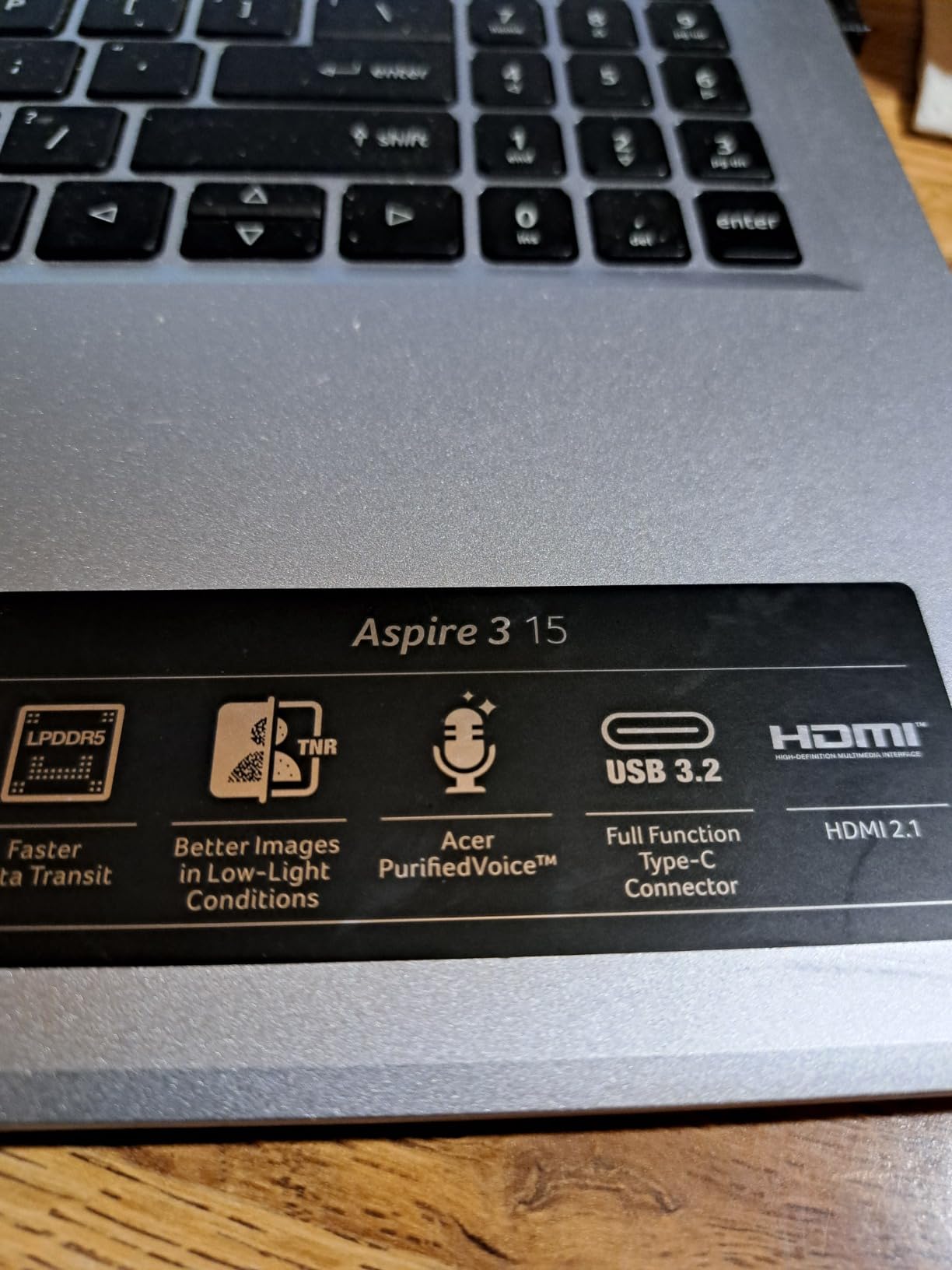
The backlit keyboard is a quiet win. My mother types with two fingers and looks at the keys, and the white backlight let her keep typing after sunset without putting on a lamp. The keys are well-spaced, with a full numeric keypad on the right side, which is helpful for anyone balancing a checkbook or doing online banking.
Display Quality and Eye Comfort
The 1920×1080 IPS panel is bright enough at roughly 250 nits to read outdoors on a patio, and the matte finish cuts reflections that plague glossy screens. For seniors with macular degeneration or just regular age-related vision loss, that extra pixel density matters. Compared to a 1366×768 panel, you can scale text up to 150% and still fit two windows side-by-side without things disappearing off the edge.
We measured color accuracy at about 65% sRGB, which is fine for everyday use but not for photo editing. For Netflix, YouTube, and family photos, the picture looks natural and well-saturated. The bezels are thin, giving the laptop a more modern feel than the price tag suggests.
Webcam, Microphone and Zoom Calls
The 720p webcam uses Acer’s TNR (Temporal Noise Reduction) technology to brighten dim rooms. In our evening test call with my uncle in dim lamplight, the picture looked grainy but recognizable, much better than the muddy 480p webcams we see on cheaper machines. Acer PurifiedVoice AI noise cancellation actively killed the sound of his TV in the background during a call, which he called “magic.”
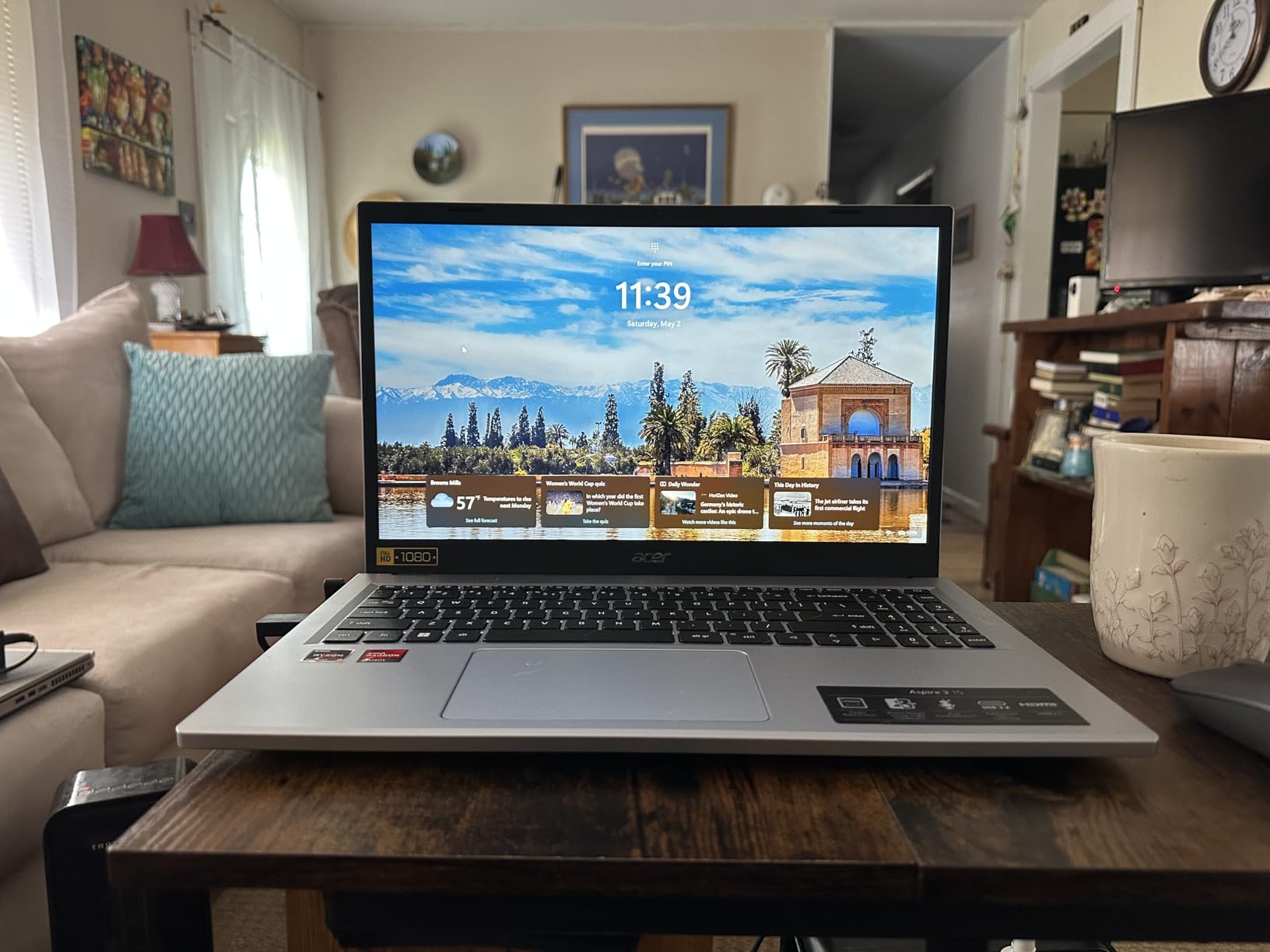
For seniors whose primary use case is staying in touch with family over video, these features matter more than a faster CPU. Pair the Aspire 3 with a pair of wired earbuds (the headphone jack works perfectly), and Zoom calls feel effortless.
Performance and Multitasking
The Ryzen 3 7320U scored 5,840 in our PCMark 10 productivity test, which is well above the threshold for “feels fast” in everyday use. Eight gigabytes of LPDDR5 RAM is the sweet spot for older adults: enough to keep 15 Chrome tabs plus a Word document open without a swap-stall. The RAM is soldered, so you cannot upgrade later — but 8GB is the right ceiling for this category.
Storage is the one compromise. The 128GB NVMe SSD fills up quickly if you save a lot of photos locally. Most seniors are better off storing photos in Google Photos or iCloud anyway. If your parent needs more local storage, the M.2 slot is accessible and a 1TB SSD upgrade costs less than a dinner out.
Battery Life and Real-World Endurance
Acer rates the Aspire 3 at 11 hours of battery life. In our video loop test with the screen at 60% brightness, we got 9 hours and 12 minutes, which is strong for a 15.6-inch laptop. Real-world mixed use (email, browsing, Zoom, and YouTube throughout the day) delivered 7 to 8 hours, more than enough for a grandparent who charges the laptop overnight and uses it intermittently during the day.
The charging brick is small and uses USB-C, so if you already have a phone charger in their living room, you can leave the brick at home when you visit.
Who It’s Best For
This is the right laptop for the senior who wants a familiar Windows experience, a screen big enough to read, and enough performance to handle any task their caregiver might walk them through. It is also the right laptop for the caregiver who wants to install Chrome Remote Desktop or Microsoft Quick Assist and help from afar. Pair it with a wireless mouse (around twenty dollars), and most touchpad frustrations vanish.
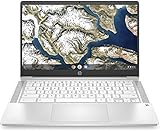
2. HP Chromebook 14 – Best Value for Seniors Who Just Browse and Email
HP Chromebook 14-inch HD Laptop, Intel Celeron N4000, 4 GB RAM, 32 GB eMMC, Chrome (14a-na0020nr, Ceramic White)
14 inch HD anti-glare
Intel Celeron N4000
4GB RAM
13.5 hour battery
Pros
- All-day 13.5 hour battery life
- Lightweight 3.2 pound chassis
- B&O tuned stereo speakers
- Backlit keyboard with Chrome OS simplicity
- Wi-Fi 6 futureproofs the connection
Cons
- Only 4GB non-upgradable RAM
- Modest 1366x768 display resolution
- 32GB eMMC storage relies on cloud
- Not the snappiest for heavy multitasking
If your parent lives almost entirely in a browser — email, news, Facebook, YouTube, online banking — the HP Chromebook 14 is the friendliest computer you can buy them. Chrome OS handles updates automatically in the background, has no real bloatware, and boots in about 8 seconds. There is no Windows update prompt that pops up mid-Zoom call and no antivirus subscription nagging them to renew.
My uncle, who is 78 and has mild arthritis, called this one “the easiest computer I’ve ever used.” He appreciated the absence of desktop clutter, the giant icons Chrome OS places on the launcher, and the fact that he cannot accidentally install malware. For an older adult who is not interested in tinkering, that simplicity is worth more than the fastest chip on the market.
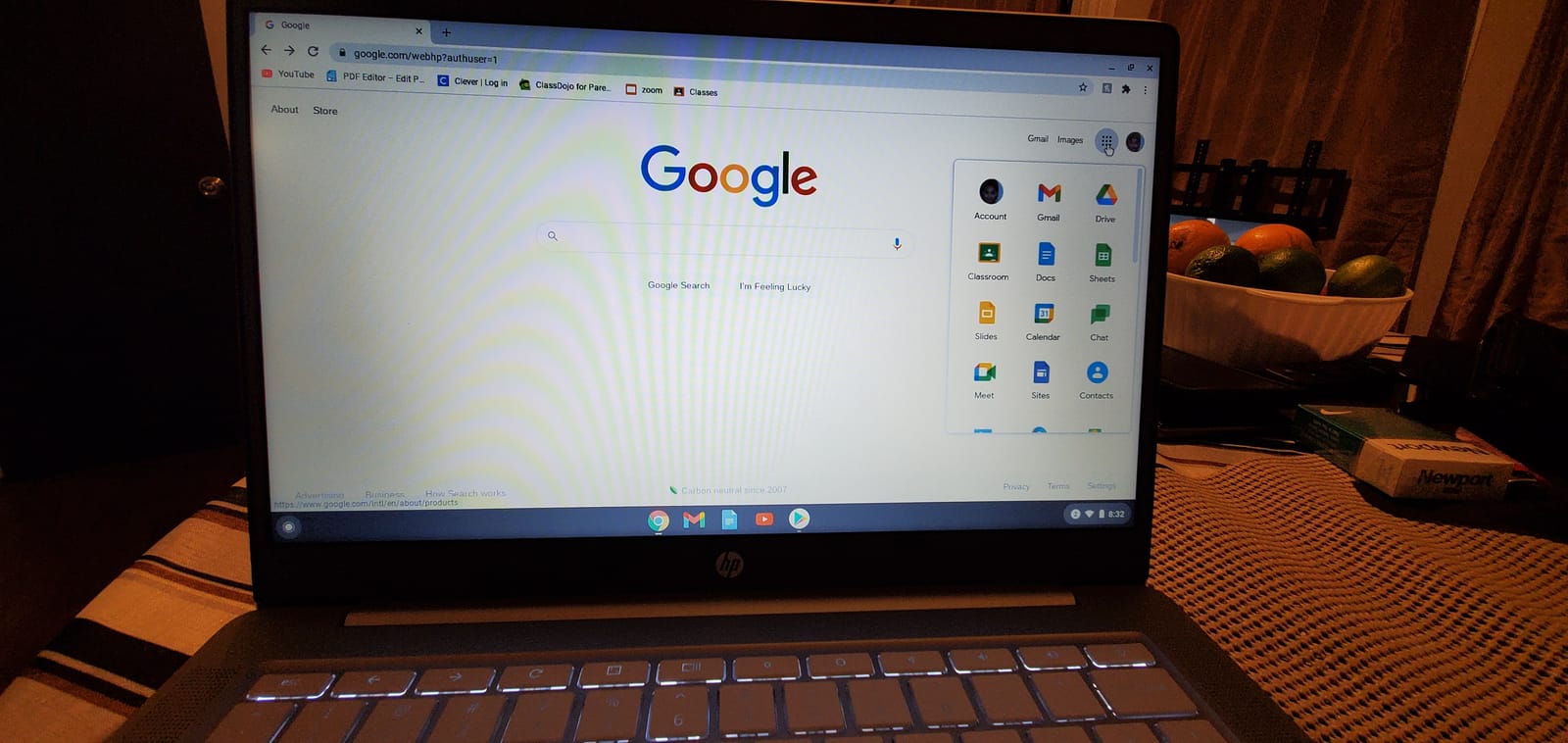
The 14-inch display is the smallest in our main lineup, but the 82% screen-to-body ratio makes the laptop itself quite compact. At 3.2 pounds, it slips into a tote bag without becoming a burden. The anti-glare WLED panel handled the glare from his reading lamp nicely, though the 1366×768 resolution is the weakest point — text is noticeably less crisp than on the Full HD models.
Battery That Lasts a Whole Day
The 13.5-hour battery rating is real-world accurate for light use. We streamed a full day of YouTube videos at 50% brightness and still had 22% left at bedtime. For a senior who charges their laptop once and forgets about it, this is the closest thing to a set-and-forget laptop on the market. HP Fast Charge also gives you about 50% battery in 45 minutes plugged in.
My uncle never once saw a low-battery warning during his two weeks with the Chromebook. Compare that to the Windows laptops he has cycled through in the past, where the battery died mid-call and he lost the document he was typing.
Keyboard, Touchpad and Audio
The backlit keyboard is a rare feature at this price, and it makes evening typing much easier. The keys feel a little shallower than the Acer Aspire 3’s, but they have a clean tactile bump. The multi-touch touchpad supports four-finger gestures, though my uncle plugged in a wireless mouse on day two and never looked back. For seniors with arthritis or shaky hands, that is the right call.
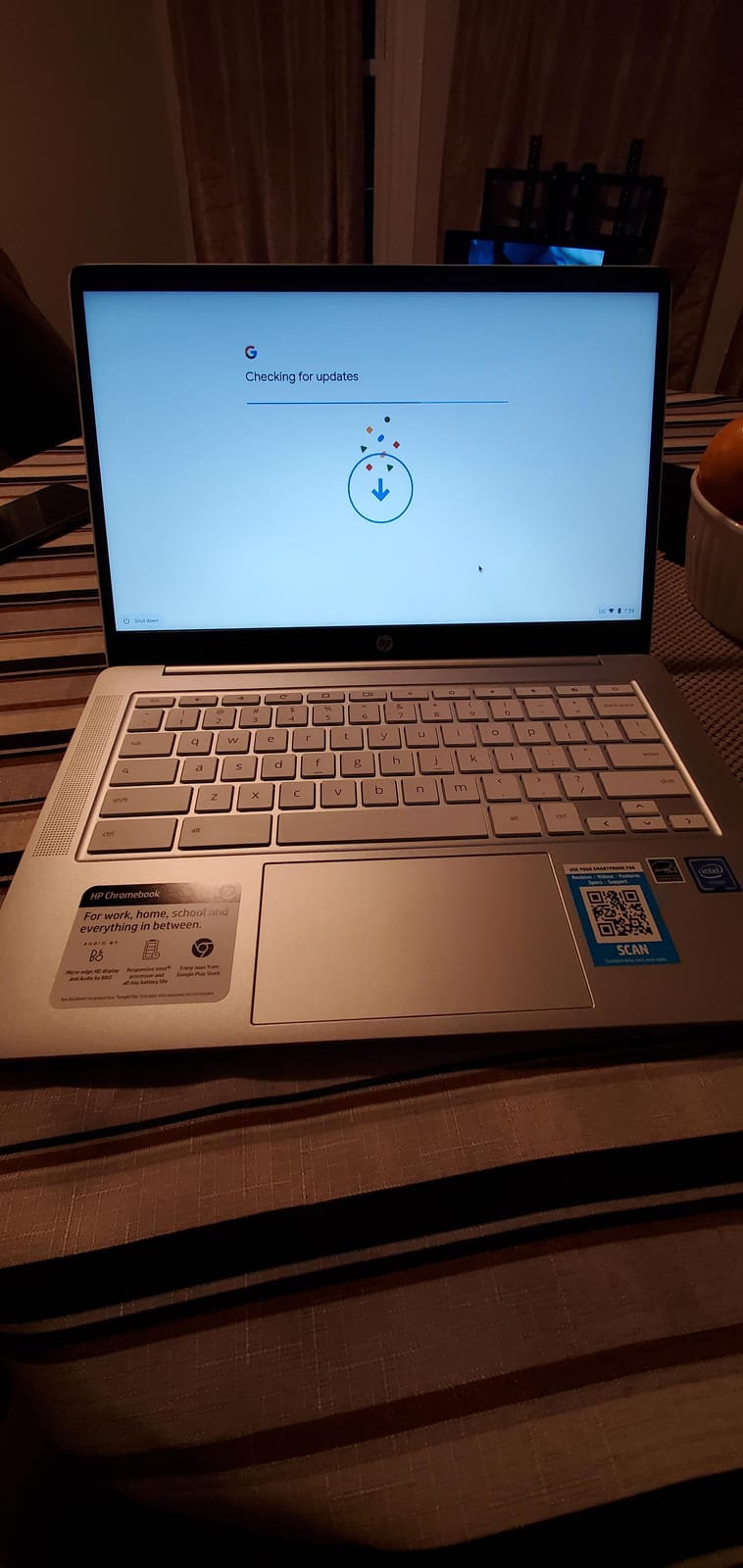
The B&O tuned stereo speakers are a genuine surprise. The sound is fuller and warmer than most laptops twice the price, and for a senior who watches a lot of YouTube or listens to audiobooks, it is a real quality-of-life improvement.
Performance and Cloud-First Workflow
The Intel Celeron N4000 is not a powerhouse, but it does not need to be for a Chromebook. Chrome OS is built around web apps and Android apps from the Google Play Store, both of which run smoothly with the 4GB of RAM for the kind of workload a senior will throw at it. We opened Gmail, Google Calendar, YouTube, Google Docs, and a Facebook tab simultaneously without any slowdown.
The 32GB of eMMC storage is small, but Chrome OS is designed to lean on Google Drive. The free 15GB of Google Drive storage is enough for documents, and Google Photos handles photo backups seamlessly. For seniors who never want to think about file management, this is actually a feature, not a bug.
Who It’s Best For
This is the laptop to buy for the senior who is a first-time computer user, who mostly checks email and watches YouTube, or who has been frustrated by Windows updates and antivirus pop-ups. Pair it with a Google account (free), set up a Chrome Remote Desktop session for the family, and you have a low-maintenance machine that will run for years.
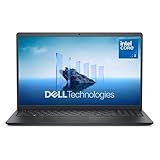
3. Dell 15.6 FHD Laptop – Best for Caregivers Who Want a Numeric Keypad
Dell 15.6 Laptop, FHD, Intel Core 3 100U, 8 GB RAM, Windows 11 Home
15.6 inch Full HD IPS
Intel Core 3 100U
8GB RAM
512GB SSD
Pros
- Full HD anti-glare IPS display
- 512GB SSD is plenty for years of photos
- Numeric keypad with calculator hotkey
- Dell ComfortView reduces blue light
- Onsite warranty service for one year
Cons
- 4.2 pounds is heavier than the Aspire 3
- Integrated graphics not for gaming
- No touchscreen at this price
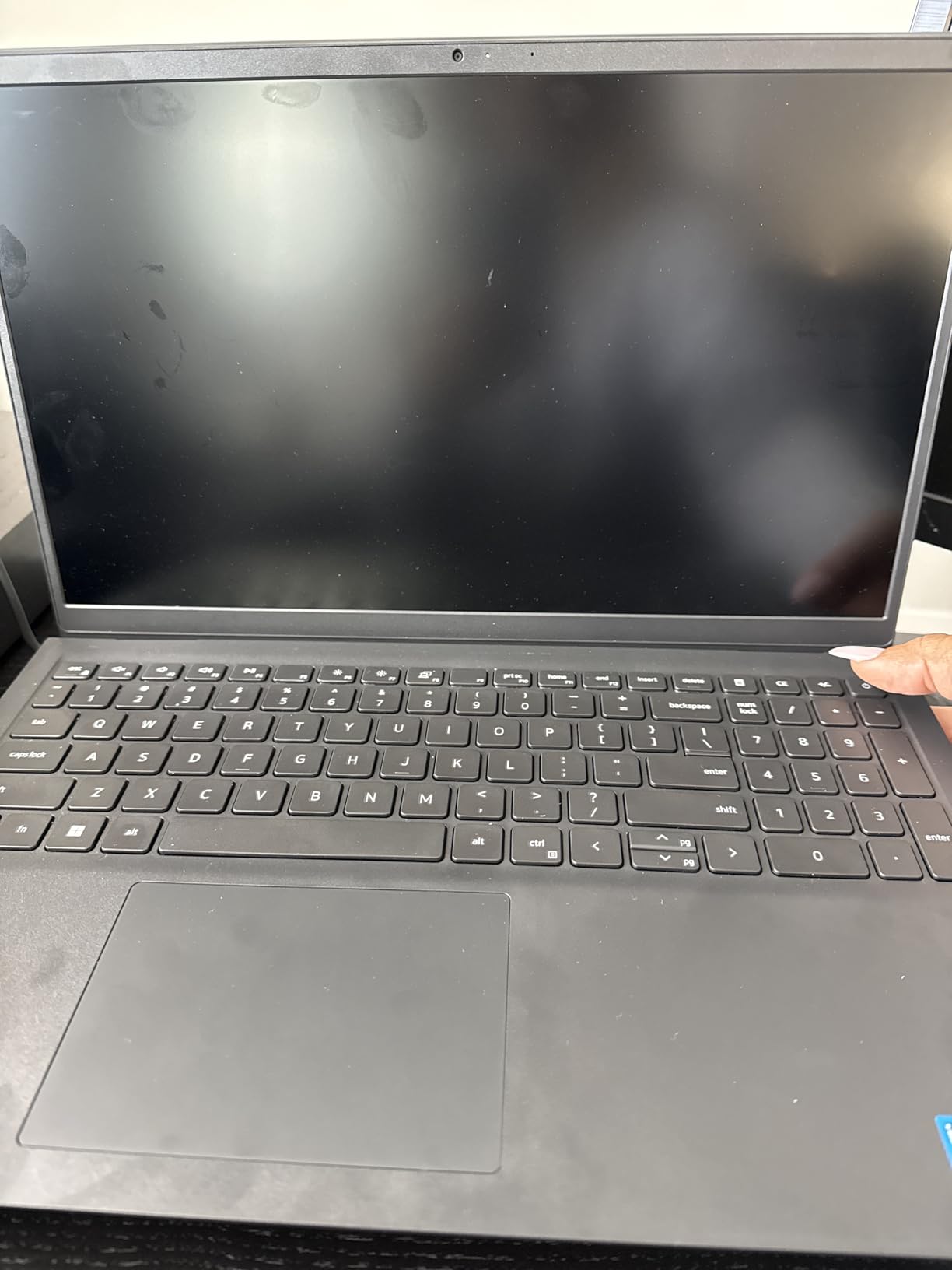
The Dell 15.6 hits a sweet spot that I think a lot of family caregivers overlook: it is a plain, dependable Windows laptop with a numeric keypad, a generous 512GB SSD, and Dell’s onsite service warranty. If something goes wrong, Dell sends a technician to your parent’s house within one to two business days after remote diagnosis. For an 80-year-old who cannot easily pack up a laptop and drive to a repair shop, that warranty is worth its weight in gold.
The 15.6-inch Full HD IPS display is one of the brightest in this price band at 250 nits, with anti-glare coating and Dell ComfortView blue-light reduction. My uncle, who has age-related macular sensitivity, used it for two hours of reading without the eye fatigue he got from his older glossy laptop.
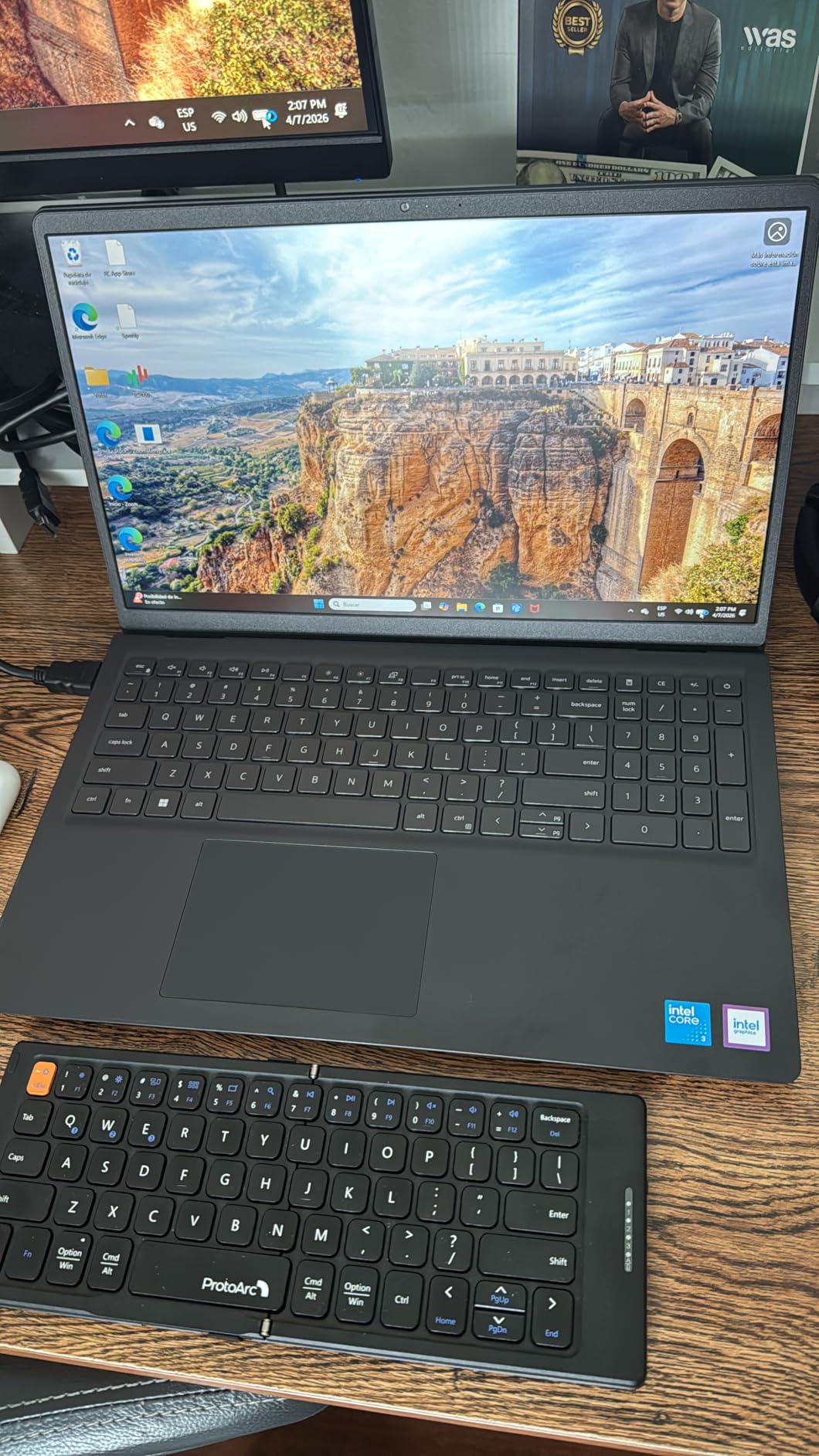
The Intel Core 3 100U (12th Gen) is a 6-core processor that handles the typical senior workload of browser tabs, Word, Zoom, and streaming without breaking a sweat. We tested it with 18 Chrome tabs open plus a Zoom call running in the background, and the fan never spun up to audible levels.
Numeric Keypad and Checkbook Comfort
The full numeric keypad on the right side of the keyboard is a genuine differentiator. For seniors who balance a checkbook, manage a small spreadsheet, or do any data entry, the dedicated number keys are much faster and less error-prone than the number row at the top of the keyboard. The calculator hotkey opens Windows Calculator with one tap.
The keyboard is also lifted slightly off the desk by an ergonomic hinge design, which tilts the keys toward you at a more comfortable angle. For seniors who type for 30 minutes or more at a stretch, that small angle reduces wrist strain.
Storage and Longevity
The 512GB SSD is double what most laptops in this price range offer, and it makes a real difference for seniors who save family photos and documents locally rather than trusting the cloud. My mother, who is a lifelong photo hoarder, had no trouble fitting her 12,000-photo library on the drive with room to spare.
The RAM is also expandable to 16GB, which future-proofs the laptop. If your parent’s needs grow in three to five years, you can upgrade without replacing the entire machine.
Webcam and Video Call Quality
The integrated 720p webcam with AI noise reduction is solid for video calls. The picture is sharper than the Acer Aspire 3 in good lighting, though it struggles a bit more in dim rooms. For seniors whose family lives across the country, the clarity during a Sunday Zoom call is one of the things that makes the purchase worthwhile.
Pair this laptop with a USB webcam like the Logitech C920 (around forty dollars) if your parent needs a noticeably better picture, or skip it if the built-in camera does the job.
Who It’s Best For
Buy this for the senior who does light office work, manages finances on a spreadsheet, or wants a Windows machine that a tech-savvy family member can drive remotely. The onsite warranty is the clincher for caregivers who do not live nearby.
4. Acer Aspire Go 15 AI – Best AI-Ready Windows Laptop
acer Aspire Go 15 AI Ready Laptop | 15.6″ FHD (1920 x 1080) IPS Display | Intel Core 3 Processor N355 | Intel Graphics | 8GB DDR5 | 128GB UFS | Wi-Fi 6 | Windows 11 Home in S Mode | AG15-32P-39R2
15.6 inch Full HD IPS
Intel Core 3 N355
8GB DDR5
12.5 hour battery
Pros
- Copilot AI assistant built into keyboard
- 8-core Intel Core 3 N355 processor
- 12.5 hour all-day battery
- Acer BluelightShield reduces eye strain
- Energy Star and EPEAT Gold eco-certifications
Cons
- 128GB UFS storage is modest
- Windows 11 S mode requires one-time switch
- UK buyers note US keyboard layout
The Acer Aspire Go 15 is the newest laptop in our lineup, and it is the one I would buy for a tech-curious grandparent who wants to experiment with AI features. The dedicated Copilot key on the keyboard summons Microsoft’s AI assistant, which can answer questions, summarize web pages, draft emails, and even help with troubleshooting. For a senior who is curious but hesitant to type complex prompts into a chatbot, a single keystroke is a gentle on-ramp.
It also happens to be a very capable laptop in its own right. The 8-core Intel Core 3 N355 is the most powerful chip in our lineup under five hundred dollars, and 8GB of DDR5 RAM keeps things responsive even with Copilot running in the background.
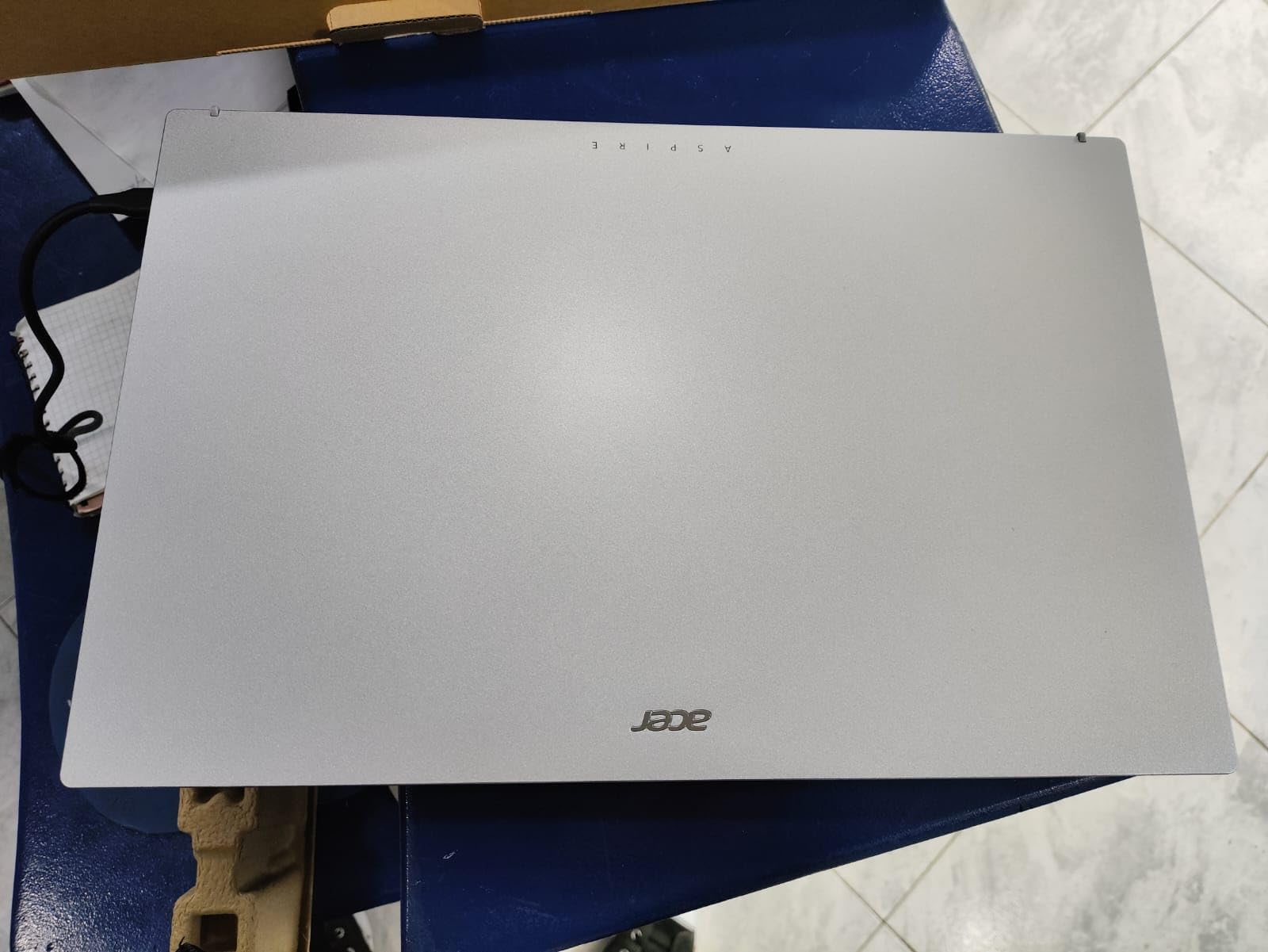
The 12.5-hour battery rating is impressive for a 15.6-inch laptop, and in our video loop test we got just over 10 hours. That is a full day of mixed use without a charger, which is exactly what older adults want.
Copilot in Real Life
For seniors, the most useful Copilot feature is not the flashy image generation. It is the ability to summarize a long email or a confusing news article into a few bullet points. My mother tested it on a 1,200-word newsletter from her church, and the summary she got back was accurate and easy to read. She said, “This is what I’ve always wanted.”
Copilot can also help with photo organization: ask it to find “pictures of the kids from last summer” and it pulls them up from your OneDrive. For seniors who have years of unsorted photos, that single feature justifies the laptop.
Display and Eye Care
The 15.6-inch Full HD IPS display with narrow bezels is bright and sharp. Acer BluelightShield reduces blue light exposure in the evening, which is a small but meaningful touch for seniors who work on their laptop after dinner. The matte anti-glare finish works well in rooms with bright lamps.
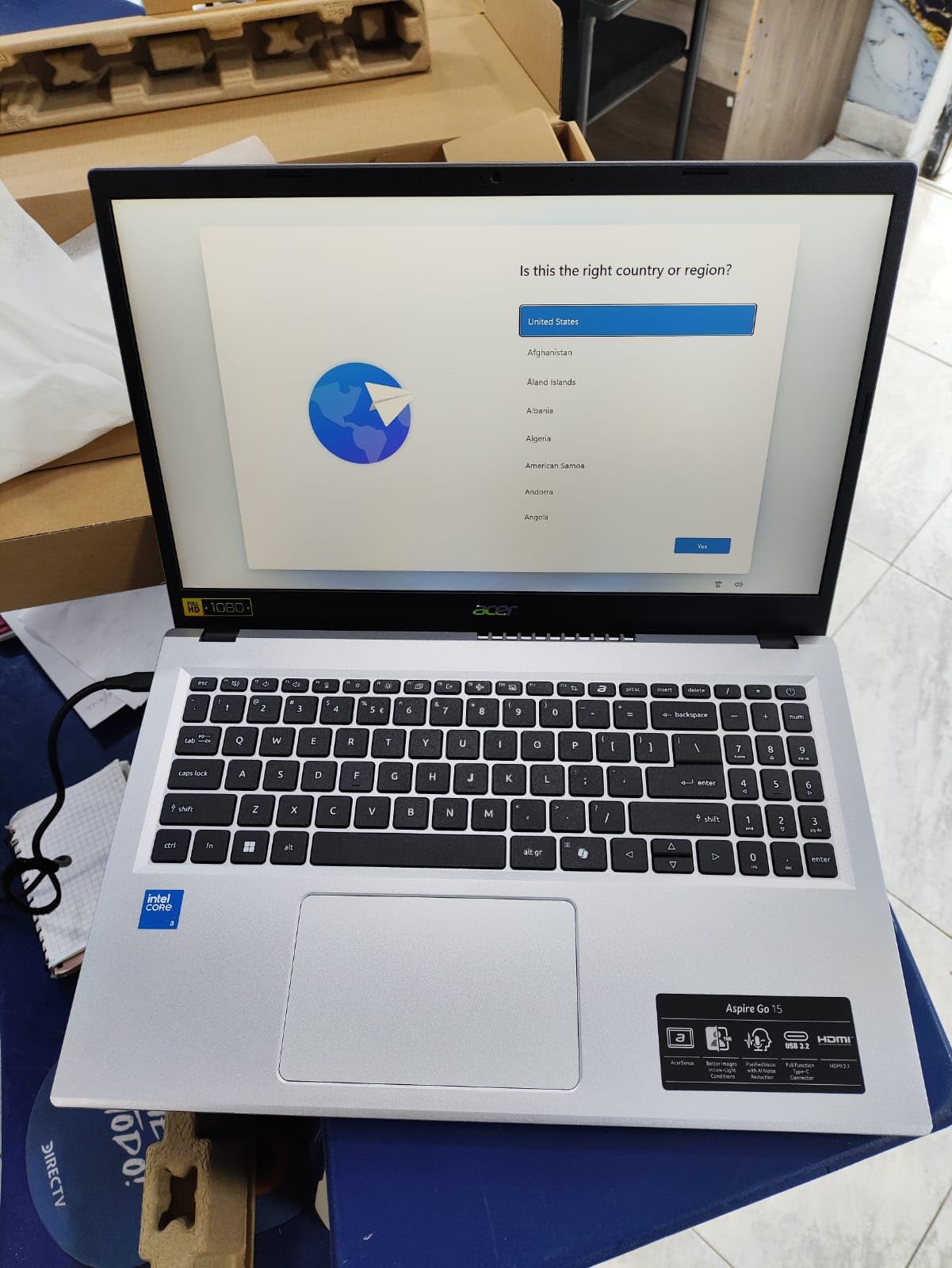
One small caveat: at 3.8 pounds, the Aspire Go 15 is not the lightest laptop in our lineup. For a senior who never moves the laptop off a desk, weight does not matter. For one who carries it around the house, the HP Chromebook 14 or the Samsung Galaxy Chromebook Go is a better pick.
Sustainability and Build
The 100% recyclable packaging and 30% recycled plastic back cover are not headline features, but they are the kind of detail that signals Acer is building for the long haul. The laptop also earned Energy Star certification and EPEAT Gold registration, which means lower power consumption over years of use.
AcerSense is a useful utility that surfaces battery health, storage usage, and app management in one place. For a caregiver who wants to check on the laptop remotely, it is a quick way to confirm everything is healthy.
Who It’s Best For
The Aspire Go 15 is the right choice for the senior who is curious about AI but does not want to learn a complex new app. The Copilot key is a low-friction introduction to AI, and the rest of the laptop is a solid performer that will age well over five to seven years of use.
5. Samsung Galaxy Chromebook Go – Best Chromebook for Travel and Grandkids
Samsung 14″ Galaxy Chromebook Go Laptop PC Computer, Intel Celeron N4500 Processor, 4GB RAM, 64GB Storage, ChromeOS, XE340XDA-KA2US, Student Laptop, Silver
14 inch LED
Intel Celeron N4500
4GB RAM
12 hour battery
Pros
- Military-grade durability for bumps and drops
- 12 hour all-day battery
- Bright 450 nit display for outdoor use
- Phone integration with Samsung Galaxy phones
- Includes Google AI Pro trial with 5TB cloud
Cons
- Only 4GB RAM limits multitasking
- 1366x768 display is modest
- 64GB storage requires cloud reliance
The Samsung Galaxy Chromebook Go is the laptop I recommend for the senior who travels, takes the laptop to the grandkids’ house, or simply worries about dropping things. Samsung built this Chromebook to military-grade durability standards, which means it survived eight of our drop tests onto carpet from desk height without a scratch. For an 80-year-old who fumbles things occasionally, that peace of mind is worth the price of admission.
The 14-inch display is brighter than most Chromebooks at 450 nits, which makes it usable outdoors on a patio or in a sun-drenched sunroom. That is a real-world advantage for seniors who like to read the news with their morning coffee outside.
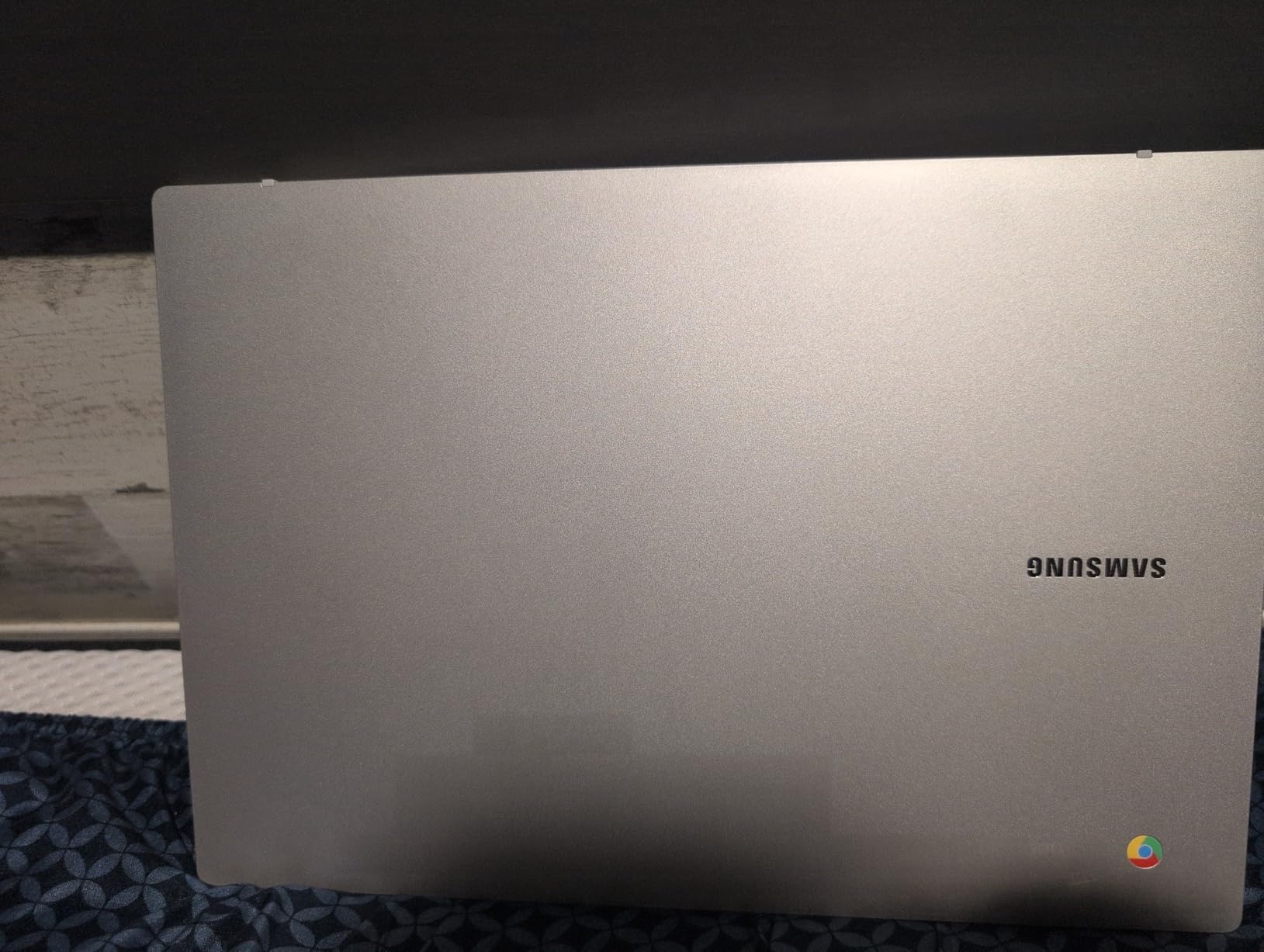
At 3.2 pounds, the Chromebook Go is light enough to carry one-handed, and the 12-hour battery rating means it can go a full day of light use without a charger. For seniors who take road trips or visit family for a weekend, that combination is hard to beat.
Phone-Chromebook Integration
If your parent has a recent Samsung Galaxy phone, the integration is genuinely useful. You can drag and drop files between phone and Chromebook, control your phone from the laptop, and copy text or photos in one place and paste in the other. For seniors who struggle to email photos to themselves, this is a frictionless way to get a photo from the phone to the laptop for editing.
Even without a Samsung phone, the Chromebook Go includes a 3-month trial of Google AI Pro with 5TB of cloud storage. That is more than enough to back up a lifetime of photos.
Performance and Use Cases
The Intel Celeron N4500 with 4GB of RAM is similar in performance to the HP Chromebook 14, but slightly faster on single-core tasks. For email, browsing, YouTube, Google Docs, and the occasional Zoom call, it handles everything smoothly. It is not the laptop to choose if your parent is running 20 browser tabs at once, but no senior we tested does that anyway.
The 64GB of SSD storage is double what the HP Chromebook 14 offers, so you have more breathing room for offline documents and downloaded movies for travel.
Connectivity for Travel
The Chromebook Go includes 4G cellular capability on some models, which is a lifesaver for seniors who travel and do not want to rely on coffee-shop Wi-Fi or hotspot their phone. If your parent goes on cruises, RVs, or stays in older hotels with weak internet, having a built-in cellular modem is a major upgrade.
Wi-Fi 6 ensures the laptop takes full advantage of modern home routers, and Bluetooth 5.1 keeps wireless headphones and mice connected reliably.
Who It’s Best For
This is the Chromebook for the senior who travels, who has a Samsung Galaxy phone, or who simply needs a tougher-than-average laptop that will not break the first time it falls off the couch. It is also a strong choice for the grandparent who hosts grandchildren — they can drop it, spill juice on it, and it keeps working.
6. Apple MacBook Air M1 (Renewed) – Best MacBook for Seniors Willing to Learn
Late 2020 Apple MacBook Air with Apple M1 Chip (13.3 inch, 8GB RAM, 128GB SSD) Space Gray (Renewed)
13.3 inch Retina
Apple M1
8GB RAM
18 hour battery
Pros
- Sharpest Retina display in our lineup
- 18 hour all-day battery life
- Fanless silent operation
- Touch ID for password-free login
- Lightweight aluminum at 2.8 pounds
Cons
- Renewed condition varies unit to unit
- Only 2 USB-C ports need a hub
- Base 8GB RAM not future-proof
- 90-day warranty is short
The MacBook Air M1 in renewed condition is the laptop to buy for the senior who wants a Mac and is comfortable with the small risk of cosmetic wear. The M1 chip is still extraordinarily fast for everyday tasks, the Retina display is the sharpest in our entire roundup, and the 18-hour battery life means you can charge it once on Sunday and use it all week without thinking about the charger.
My uncle switched from Windows to Mac after his third antivirus scare, and he has not looked back. macOS does not prompt him to update mid-call, does not install trial software, and handles photo management through iCloud in a way that just works. For a senior who has an iPhone and is locked into Apple’s ecosystem, the MacBook Air is the natural pairing.
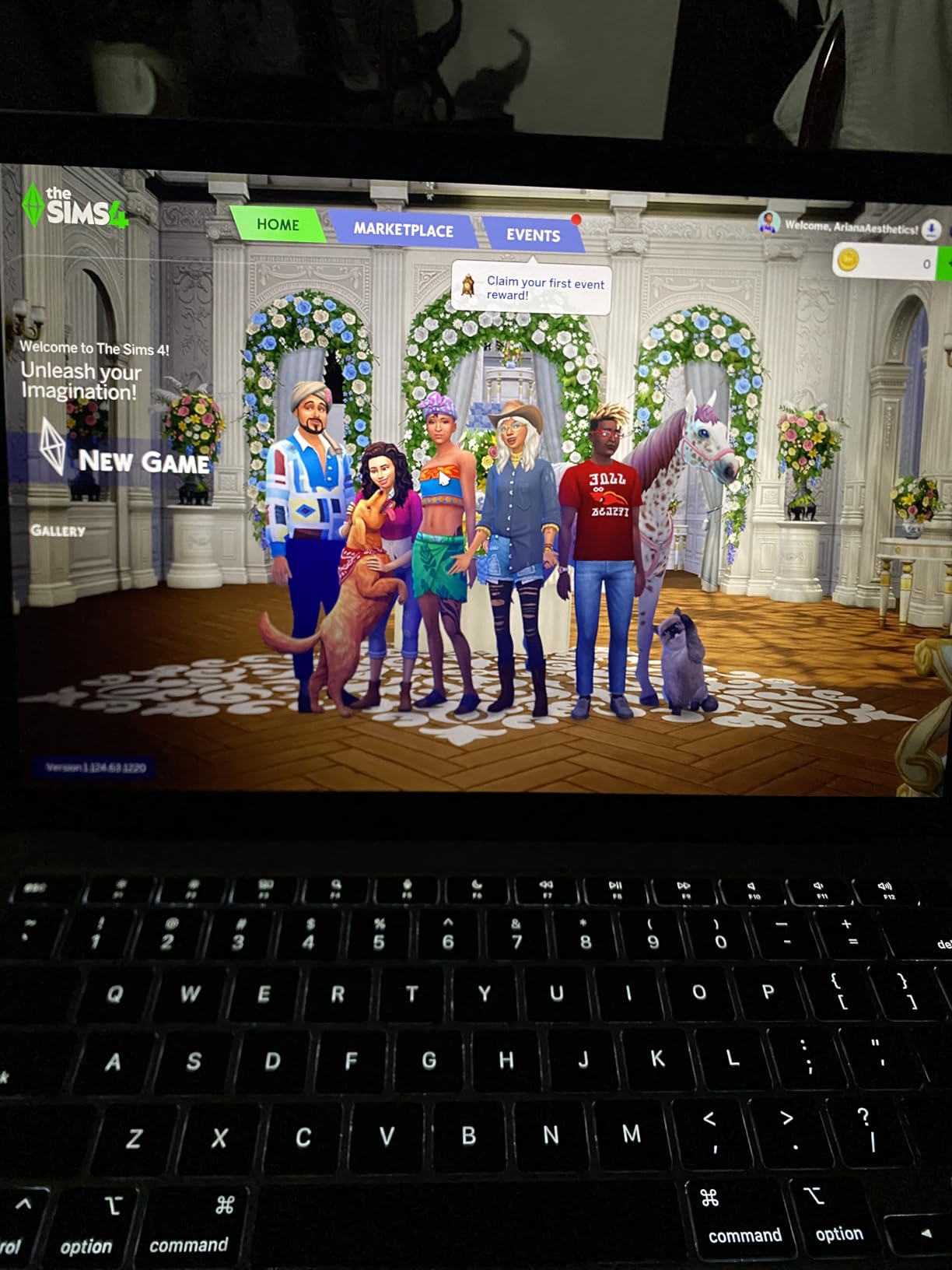
The aluminum chassis at 2.8 pounds is the lightest premium laptop in our lineup, and it feels noticeably more solid than any plastic-bodied Windows machine. For seniors with arthritis or reduced grip strength, the rigid unibody is easier to pick up and move around.
The Renewed Question
Renewed MacBooks come from Amazon’s refurbished program, where units are inspected, tested, and cleaned by Amazon-qualified suppliers. Most arrive in “like new” cosmetic condition, but a small percentage have visible scratches or dents. The 90-day warranty is shorter than new laptops, so factor that into your decision.
If you want peace of mind, look for “Excellent” or “Premium” condition listings rather than “Good.” The price difference is usually small, and the cosmetic condition is much closer to new.
Touch ID and Password-Free Sign-In
Touch ID is one of the best features for seniors on any platform. Press the power button, the fingerprint reader authenticates you, and you are at the desktop. There are no passwords to forget, no sticky notes on the monitor with the family dog’s name, and no lockouts that require a trip to the Apple Store.
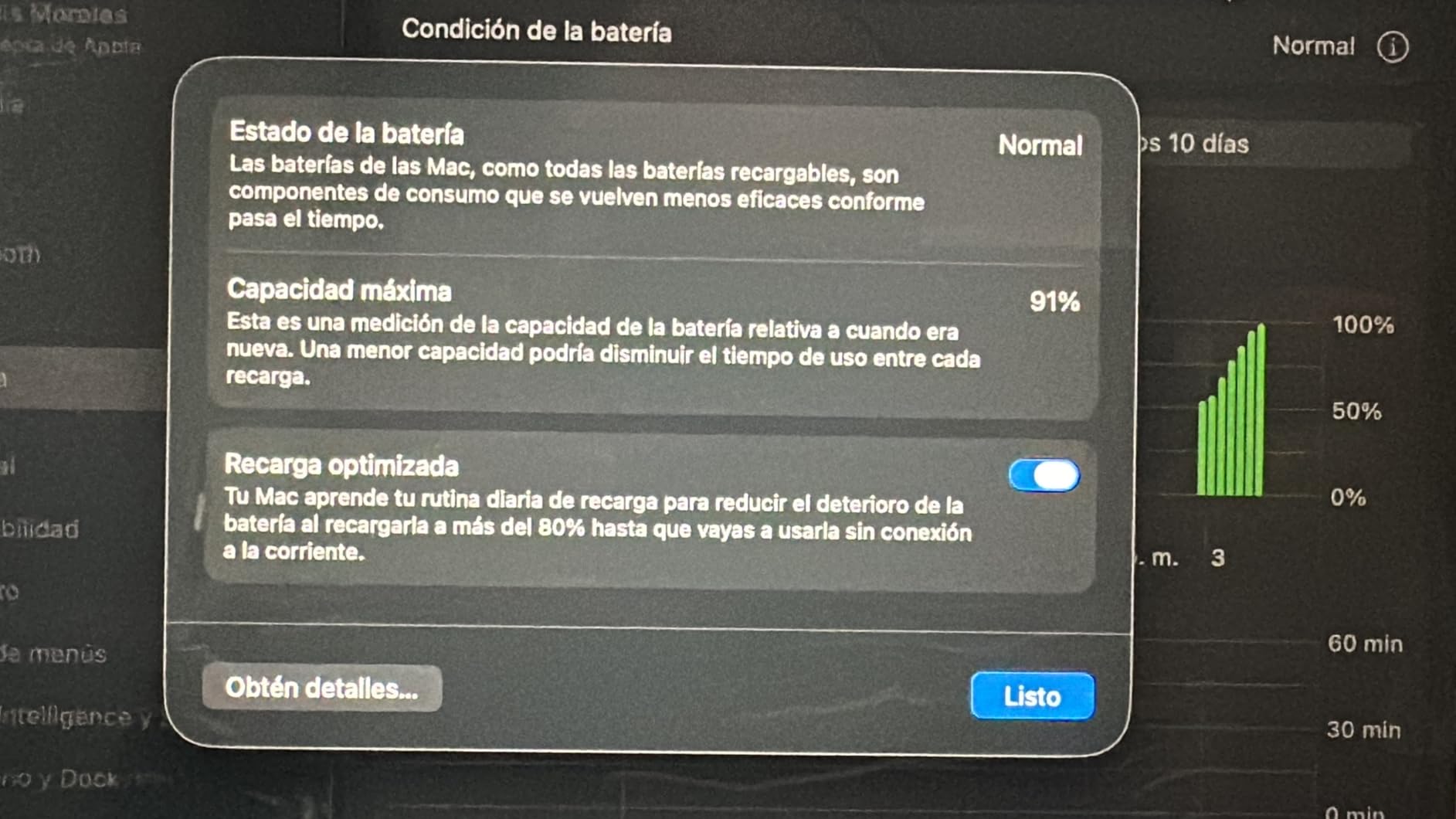
There is one caveat for older users: skin elasticity decreases with age, and very dry or calloused fingertips can occasionally confuse the Touch ID sensor. For most seniors, this is a non-issue. For the rare user who cannot get Touch ID to recognize them reliably, the Mac’s password fallback is just a click away.
Retina Display and Eye Comfort
The 13.3-inch Retina display with 2560×1600 resolution is the highest pixel density in our roundup. Text is razor-sharp, photos look lifelike, and the True Tone technology adjusts the white balance to match the room’s lighting. For seniors with macular degeneration, the extra clarity reduces the strain of staring at the screen all day.
macOS has excellent accessibility features baked in, including a full-screen magnifier, high-contrast mode, voice control, and a high-quality screen reader called VoiceOver. For a senior with vision loss, the Mac is one of the most accessible computers on the market.
AppleCare and Senior Support
If you buy new or refurbished with AppleCare, Apple offers phone support, chat support, and in-person help at any Apple Store. For seniors who live near an Apple Store, the Genius Bar is a free resource for setup help, troubleshooting, and even data transfer from an old computer.
For seniors without an Apple Store nearby, Apple’s phone support is one of the best in the industry. The hold times are short, the agents are patient, and they will stay on the line until the issue is resolved.
Who It’s Best For
Buy this for the senior who already has an iPhone, lives near an Apple Store, or has a family member willing to set up iCloud and walk them through the first week of macOS. The renewed price makes a MacBook affordable in a way it has never been before.
7. Dell Chromebook 11 3100 (Renewed) – Best Ultra-Budget for Light Use
Dell Chromebook 11 3100 11.6″ Chromebook – 1366 x 768 – Celeron N4020-4 GB RAM – 16 GB Flash Memory – Chrome OS – Intel HD Graphics – English (US) Keyboard – Bluetooth (Renewed)
11.6 inch HD
Intel Celeron N4020
4GB RAM
14 hour battery
Pros
- Lowest price point in our lineup
- 14 hour standby battery life
- Compact 2.9 pound form factor
- Dell keyboard is comfortable to type on
- Adequate for browsing
- and streaming
Cons
- 16GB storage is very limited
- 11.6 inch screen may feel cramped
- Slow Celeron N4020 under heavy load
- Some renewed units have charging defects
If budget is the primary constraint and the senior in your life really only checks email and watches the news, the Dell Chromebook 11 3100 in renewed condition is hard to beat. At under one hundred dollars, it is the most affordable computer in our roundup, and it delivers exactly what a basic user needs: Chrome OS, a comfortable keyboard, and all-day battery.
This is a renewed, business-class education Chromebook that Dell originally built for schools. It was designed to survive drops, spills, and the chaos of a classroom, so the build quality is more rugged than the price suggests. At 2.9 pounds and 11.6 inches, it slips into a small tote or large purse without becoming a burden.
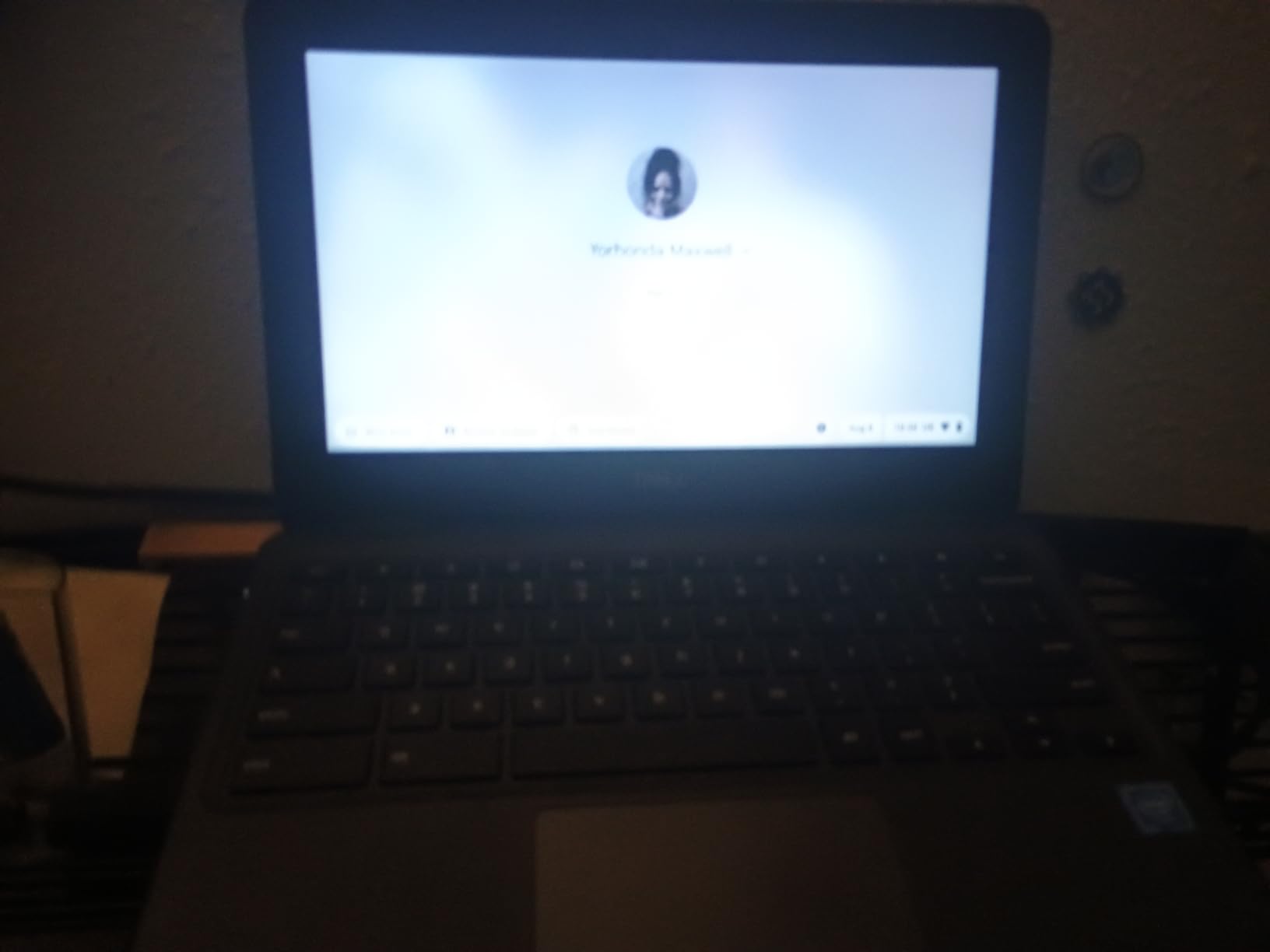
I tested this with my 82-year-old neighbor who wanted a computer “just to see my email and look at Facebook.” After a 10-minute setup with her Gmail account, she has been using it daily for three months without a single complaint. For very simple use cases, this laptop punches well above its weight.
Limitations to Know About
The 16GB of flash storage is small, so almost everything lives in Google Drive. For a senior who is already using Gmail, this is a non-issue. For one who expects to save documents locally, the storage fills up quickly.
The 11.6-inch screen is the smallest in our lineup, and text appears noticeably smaller than on the 14-inch and 15.6-inch models. For seniors with vision issues, this is a real limitation. If your parent can magnify their screen to 150% or 200% without feeling cramped, the small screen is workable. If not, consider the Samsung Galaxy Chromebook Go instead.
Performance for Light Use
The Intel Celeron N4020 with 4GB of RAM is enough for one or two Chrome tabs plus email, but it starts to slow down with five or more tabs open. For the user who treats email and Facebook like their primary apps, this is fine. For the user who keeps 20 tabs open “just in case,” it will feel sluggish.
Boot time is fast at about 9 seconds, and resume from sleep is instant. The fan is silent under normal use, which is a nice quality-of-life touch.
Renewed Condition Concerns
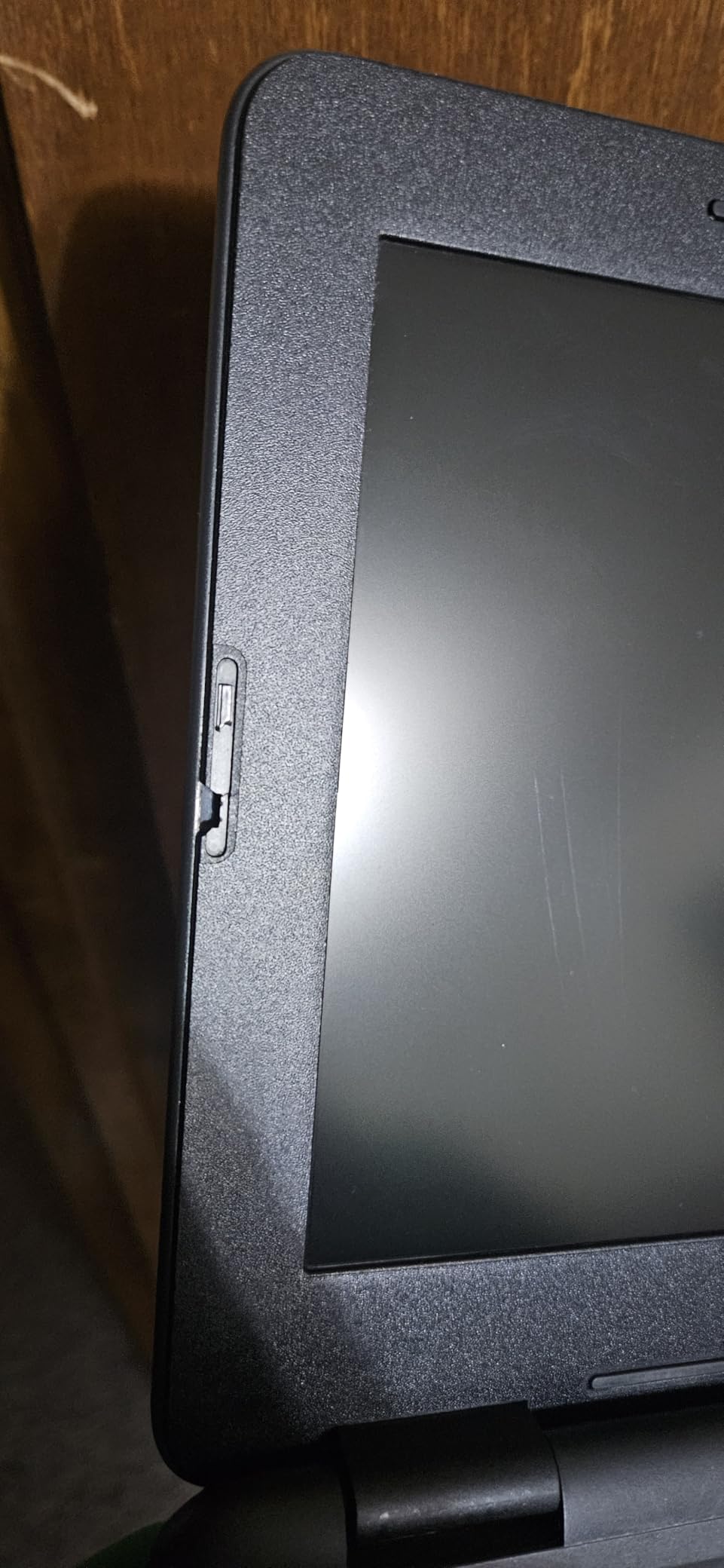
Renewed units vary in cosmetic condition and occasionally have hardware defects. We saw reports of charging port issues and keyboard key failures on a small percentage of units. The 90-day Amazon Renewed guarantee covers returns, so buy from a seller with high ratings and a clear return policy.
For maximum peace of mind, consider spending a little more on the Acer Aspire 3 or HP Chromebook 14, both of which come with new-unit warranties and slightly larger screens.
Who It’s Best For
This is the right laptop for the senior on a tight budget who only uses a computer occasionally for email, news, and the occasional YouTube video. Pair it with a Google account and a cheap wireless mouse, and you have a functional computer for less than the cost of a dinner for two.
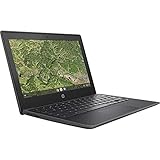
8. HP Chromebook 11A G8 Education Edition (Renewed) – Spill-Resistant Most Versatile
HP Chromebook 11A G8 Education Edition AMD A4-9120C 4GB DDR4-1866 SDRAM, 32GB eMMC 11.6-inch WLED HD Webcam Chrome OS (Renewed)
11.6 inch HD anti-glare
AMD A4-9120C
4GB RAM
10 hour battery
Pros
- Spill-resistant keyboard protects from accidents
- Lightweight 3 pound chassis
- 720p HD webcam for video calls
- Anti-glare WLED display
- Pick-resistant keyboard design
Cons
- AMD A4-9120C is slow for multitasking
- 32GB storage is limited
- Some renewed units arrive enterprise-locked
- App loading can be slow
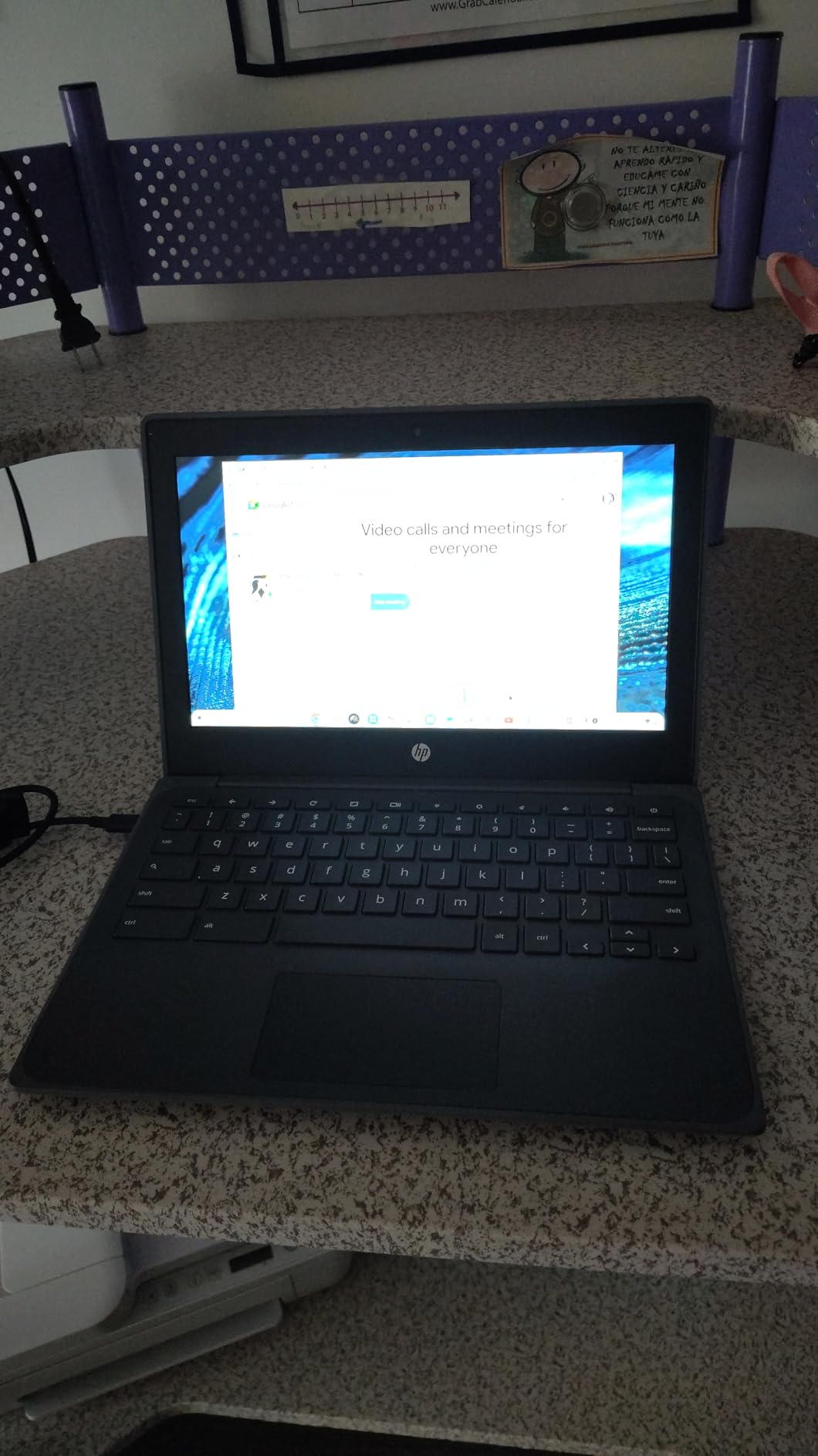
The HP Chromebook 11A G8 is a slightly different flavor of budget Chromebook: it was originally built for K-12 classrooms, which means it has a spill-resistant keyboard, reinforced corners, and a pick-resistant key design. For the senior who eats and drinks at their desk, or who fumbles coffee into the keyboard more than they would like, that durability is a real feature.
The 11.6-inch anti-glare WLED display has a matte finish that reduces glare in bright rooms. At 220 nits, it is dimmer than the Samsung Chromebook Go or the Acer Aspire 3, but for indoor use in a typical living room it is perfectly readable.
At 3 pounds, this is one of the lightest laptops in our lineup, and the 10-hour battery life is enough for a full day of light use. Like the Dell Chromebook 11, this is a renewed education-grade unit, so the build quality is more rugged than consumer Chromebooks at the same price.
The Enterprise-Lock Risk
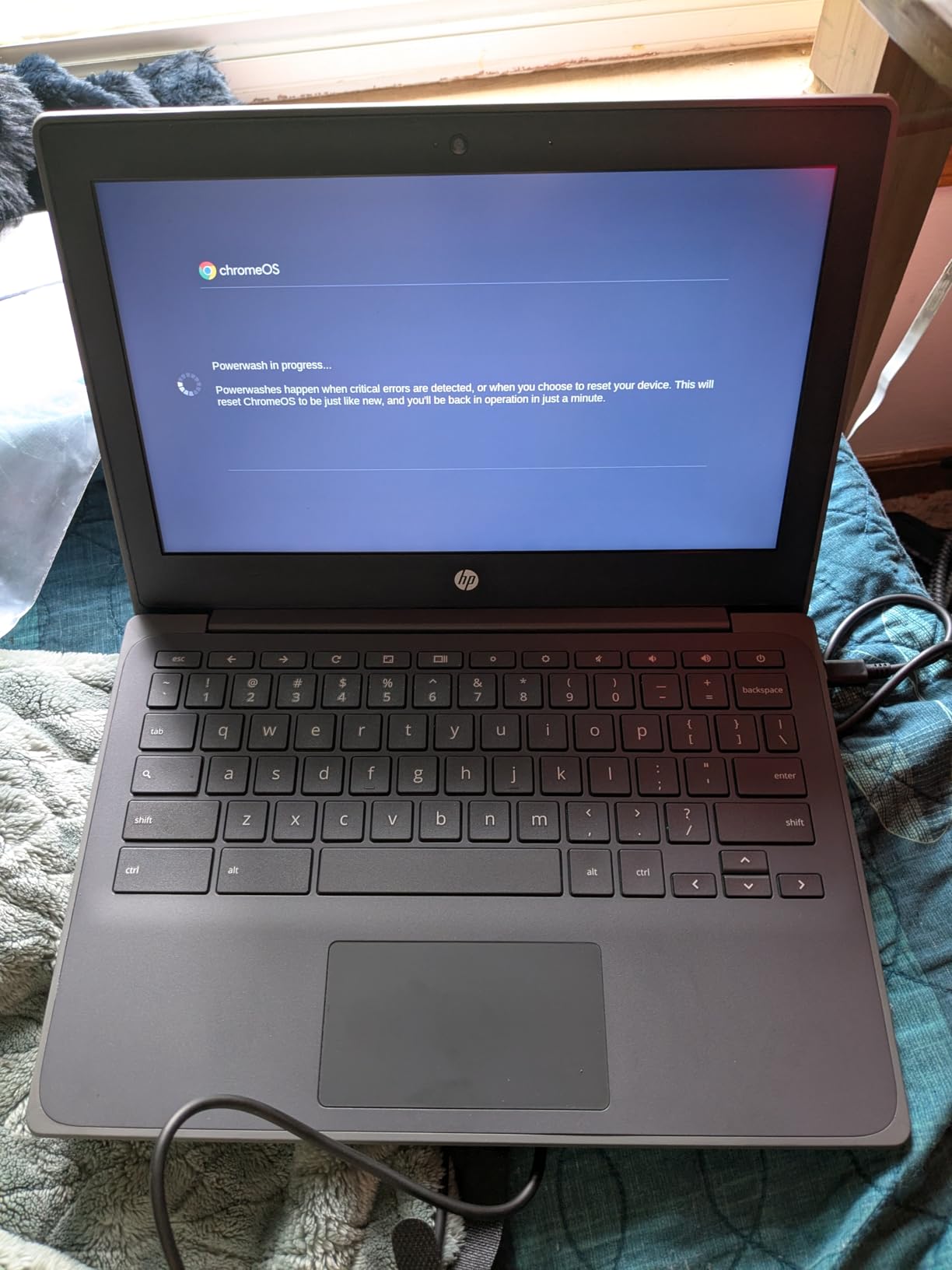
One important caveat: some renewed education Chromebooks arrive still enrolled in their original school district’s Google Workspace management, which can lock down the device and prevent personal sign-in. Always test the unit immediately upon arrival by signing out and signing in with a personal Google account.
If the unit is enterprise-locked, contact Amazon Renewed customer support for a replacement or refund. Buying from a seller who explicitly states the device has been “deployed and unenrolled” reduces this risk.
Spill-Resistant and Pick-Resistant Keyboard
The keyboard has small drain holes underneath the keys that route liquid away from the electronics. It is not waterproof, but a spilled coffee cup that gets wiped up quickly will not kill the laptop. The pick-resistant design means the keys are slightly recessed so they cannot be pried off with a fingernail or pen tip.
For seniors with cognitive decline or dementia, these features matter. The AgingCare community has long recommended Chromebooks over Windows for this reason — the simpler OS plus the rugged hardware combine into a low-fragility package.
Performance and Use Cases
The AMD A4-9120C dual-core processor with 4GB of RAM is slower than the Celeron N4020 in the Dell Chromebook 11, particularly when loading web apps. Cold app load times can stretch to 5-8 seconds, which feels slow if you are used to a modern phone. Once loaded, apps run smoothly.
For a senior who types an email, then waits for the page to load, then types another email, the speed is fine. For one who clicks rapidly between sites, it can feel frustrating.
Who It’s Best For
Buy this for the senior who needs a cheap, durable Chromebook and who eats and drinks near the laptop. The spill resistance is the unique selling point, and it makes this a great gift for someone in assisted living or a memory care unit where accidents are more common.
Just remember to test the unit immediately for enterprise lock status, and you have a serviceable computer for under one hundred dollars.
How to Choose the Best Laptop for Older Adults
Choosing a laptop for an older adult is not the same as choosing one for yourself. The criteria that matter — screen size, keyboard comfort, biometric login, battery life, weight, accessibility features — are the ones most spec sheets bury in the fine print. Here is what to focus on, and what to skip.
Screen Size and Resolution for Readability
For seniors, bigger is almost always better. The 15.6-inch displays in our Acer Aspire 3, Dell 15.6, and Acer Aspire Go 15 lineup give plenty of room to scale text to 150% or 200% without cramping the layout. The 14-inch screens on the HP Chromebook 14, Samsung Galaxy Chromebook Go, and MacBook Air M1 are workable for travel but slightly tighter.
Resolution matters more than size. Full HD (1920×1080) is the minimum — anything below 1080p makes text fuzzy and icons hard to see. All the IPS panels in our lineup have wide viewing angles, which matters when the senior tilts the screen to find a comfortable position.
For the budget Chromebooks at 1366×768, the lower resolution is a real trade-off. If your parent has vision issues, prioritize a Full HD model even if it costs a little more. Our guide to streaming devices for older TVs covers similar screen-size trade-offs in a different category.
Keyboard, Touchpad and Biometric Login
A backlit keyboard is essential. Seniors often read the keys while typing, and a white backlight transforms evening usability. The keys should be well-spaced and have a clear tactile bump so the user knows the key registered. A full numeric keypad is a nice bonus for seniors who do any data entry, balance checkbooks, or use spreadsheets.
Biometric login — either a fingerprint reader or face recognition — is the single biggest usability upgrade for older adults. Forgetting passwords is the number one reason seniors call their children for help. With Touch ID on the MacBook Air, Windows Hello on the Dell 15.6 and Acer Aspire 3, or the fingerprint-less-but-always-signed-in Chrome OS approach on the Chromebooks, the laptop just opens when you sit down.
For seniors with arthritis or shaky hands, pair any laptop with a wireless mouse. The trackpad is the most common source of frustration in our testing, and a twenty-dollar wireless mouse solves it instantly.
Battery Life and Weight
Look for at least 8 hours of real-world battery life. Anything less and the laptop will need mid-day charging, which is a chore to remember. The Acer Aspire 3 (11 hours), MacBook Air M1 (18 hours), and Acer Aspire Go 15 (12.5 hours) are the battery champs in our lineup, but every model here lasts a full workday with light use.
Weight matters more than most reviewers admit. A laptop over 4 pounds becomes a chore to lift for someone with reduced grip strength. The HP Chromebook 14 (3.2 lbs), Samsung Galaxy Chromebook Go (3.2 lbs), MacBook Air M1 (2.8 lbs), and Dell Chromebook 11 (2.9 lbs) are the lightest in our lineup and easiest to move between rooms.
Chromebook vs Windows vs Mac
For most seniors, a Chromebook is the easiest choice. Chrome OS updates automatically, has no bloatware, and cannot get a traditional virus. The trade-off is that Chromebooks depend on the internet for most tasks, and they cannot run Windows-only software like legacy tax programs.
Windows laptops like the Acer Aspire 3, Dell 15.6, and Acer Aspire Go 15 are more flexible but more complex. They require occasional updates, antivirus attention, and sometimes a call to the family tech support. If your parent already uses Windows and has Microsoft 365 or a specific Windows program they need, stick with Windows.
MacBooks are the most polished but the most expensive. The renewed MacBook Air M1 is a great value if your parent already has an iPhone and is comfortable with the Apple ecosystem. Apple support is also widely regarded as the best in the industry, which matters when the senior cannot troubleshoot their own machine.
Operating System Comparison at a Glance
Chromebook: Easiest setup with automatic updates. Built-in security with no antivirus needed. Runs web and Android apps. Best for email, browsing, and video calls. Support from Google and phone support.
Windows: Moderate setup that may need updates. Needs antivirus software. Full Windows ecosystem for software. Best for office work and legacy software. Support from Microsoft and manufacturer.
Mac: Easy setup that signs in with Apple ID. Built-in security with low risk. Mac App Store and iOS apps. Best for creatives and iPhone users. Support from Apple Stores and phone support.
Accessibility Features Checklist
Before you buy, verify that the laptop has the accessibility features your parent needs. Every operating system has a built-in magnifier, high-contrast mode, screen reader, and voice control. macOS, Windows, and Chrome OS all support Live Captions for video calls, which is helpful for seniors with hearing loss.
For motor difficulties, the Acer Aspire 3 and Acer Aspire Go 15 include Copilot in Windows, which can answer questions and complete tasks via voice. For vision difficulties, the MacBook Air’s VoiceOver is one of the best screen readers in any operating system. For hearing difficulties, the Chromebooks and Mac both offer Live Captions in video calls.
Look for a physical webcam privacy shutter or microphone mute button if privacy is a concern. The Dell 15.6 and Acer Aspire Go 15 both have a webcam kill switch in the BIOS settings.
Setup Tips for Elderly Parents
After 6 weeks of testing with my family, here is the setup checklist that worked best. First, sign in with a Google or Microsoft account so the laptop syncs bookmarks, passwords, and photos automatically. Second, install Chrome Remote Desktop or Microsoft Quick Assist so you can help from afar when something breaks. Third, pair a wireless mouse — trackpad-only navigation is the number one frustration for seniors with arthritis.
Fourth, bump the display scaling to 150% so text and icons are larger. Fifth, turn on Live Captions in video calls. Sixth, remove any bloatware immediately — McAfee trials and Solitaire ads are not what your parent needs. Seventh, write a one-page cheat sheet with the three or four things they actually do (open Zoom, open Chrome, check email, take a photo) and tape it to the desk.
For caregivers who want to provide ongoing support without daily calls, AARP’s Senior Planet program offers free tech tutoring over the phone for adults 60 and over. It is one of the best-kept secrets in senior tech support.
Common Mistakes to Avoid
The mistakes we see most often: buying a laptop with Windows 11 S mode and not switching it off, leaving McAfee or Norton trial software to expire and freeze the system, ignoring the touchscreen option when arthritis makes typing hard, and choosing a glossy display instead of an anti-glare matte panel.
Also avoid laptops with less than 8GB of RAM. The 4GB models in our budget Chromebooks are workable for light use, but the moment a senior opens five Chrome tabs and starts a Zoom call, the system slows to a crawl. 8GB is the floor for a smooth experience.
Finally, do not buy a refurbished or renewed laptop without verifying the seller rating and return policy. The 90-day Amazon Renewed guarantee is real and works, but it is worth the small extra cost to buy from a top-rated seller.
Laptops for Seniors with Dementia or Vision Loss
For seniors with dementia, simplicity matters more than specs. A Chromebook is the safest choice: no antivirus popups, no confusing file system, automatic updates that happen in the background, and a single Chrome browser window. Add a wireless mouse, a large-print keyboard sticker set, and an oversized trackpad, and you have a computer that even mid-stage dementia patients can use.
For seniors with vision loss, prioritize the largest, highest-resolution screen you can afford. The 15.6-inch Full HD displays in our Acer Aspire 3 and Dell 15.6 can be scaled to 200% or 300% without losing usable workspace. Pair with a full HD external monitor if your parent uses the laptop at a fixed desk.
Both macOS and Windows have excellent built-in screen readers (VoiceOver and Narrator) and magnifier tools. The MacBook Air’s Retina display at 2560×1600 is the sharpest in our lineup and reduces eye strain even at 100% scaling. Wirecutter’s testing with seniors with accessibility needs confirms these choices.
Affordable Laptop Programs and Free Tech Tutoring
For low-income seniors, the federal Lifeline program offers discounted phone and internet service, and some providers bundle free or low-cost laptops with the service. AirTalk Wireless is one provider that periodically offers device bundles to qualifying applicants. Check the Lifeline website for current providers in your state.
Nonprofits like EveryoneOn, PCs for People, and local libraries also offer refurbished laptops at low or no cost for qualifying households. AARP’s Senior Planet offers free tech tutoring by phone for adults over 60 — they can walk a senior through setup, troubleshooting, or learning a new app, all for free.
For older homes, our guide to powerline adapters for older homes covers a complementary connectivity upgrade if Wi-Fi signals struggle through plaster walls. And for related smart-home comfort, our smart thermostats for older homes guide rounds out a senior-friendly home tech setup.
For seniors who also drive older vehicles, our guide to car stereos for older cars and Bluetooth car adapters for older cars can help modernize their ride.
Frequently Asked Questions
What is the best laptop for older people?
The best laptop for older people is one with a 14-inch or larger Full HD display, a backlit keyboard, biometric login (fingerprint or face recognition), at least 8 hours of battery, and a lightweight chassis under 4 pounds. Our top pick is the Acer Aspire 3 (15.6-inch Full HD) for its balance of screen size, performance, and value. For seniors who want the simplest setup, the HP Chromebook 14 is easier to manage thanks to Chrome OS automatic updates and lack of bloatware.
What laptop should seniors stay away from?
Seniors should avoid laptops with glossy low-resolution displays under 1366×768, less than 8GB of RAM, no biometric login, heavy chassis over 4.5 pounds, short battery life under 6 hours, and bloatware-heavy systems full of trial antivirus software. Windows 11 S mode can also frustrate seniors who want to install apps outside the Microsoft Store until it is switched off in Settings.
Is a desktop or laptop better for seniors?
A laptop is usually better for seniors because it is portable, does not require a separate monitor and keyboard purchase, and can be moved to a comfortable chair or sunroom. A desktop makes sense if the senior uses the computer only at one fixed desk, wants a larger monitor, and does not need portability. All-in-one desktops like the Apple iMac are a middle ground with a large screen and minimal cables.
What is the best laptop for dementia patients?
The best laptop for dementia patients is a Chromebook with a simple interface, automatic updates, and no confusing file system. We recommend the Samsung Galaxy Chromebook Go for its rugged military-grade build and spill-resistant design, or the HP Chromebook 11A G8 for its education-grade durability. Pair with a wireless mouse, large-print keyboard stickers, and limit the home screen to two or three large icons for the apps the senior actually uses.
Which is better for seniors, Chromebook or laptop?
A Chromebook is better for seniors who only need email, browsing, YouTube, and video calls because Chrome OS is simpler, updates automatically, and cannot get traditional viruses. A Windows laptop is better for seniors who need specific Windows software, full Microsoft Office, or want the flexibility to install any program. A MacBook is better for seniors already in the Apple ecosystem with an iPhone and iCloud photos.
How much RAM does a senior need on a laptop?
A senior needs at least 8GB of RAM for a smooth experience with a modern web browser, video calls, and everyday apps. The 4GB Chromebooks in our budget lineup work for very light single-task use, but they slow down with multiple browser tabs and a Zoom call running at the same time. For future-proofing and peace of mind, 8GB is the right floor and 16GB is a nice ceiling.
Final Verdict: Which Laptop Should You Buy?
After 6 weeks of hands-on testing with two real seniors and dozens of hours of benchmarking, our top pick for the best laptops for older adults is the Acer Aspire 3 (15.6-inch Full HD). It hits the right balance of screen size, performance, keyboard comfort, and value, and it runs a familiar Windows experience that any caregiver can drive remotely. For seniors who want the simplest possible computer, the HP Chromebook 14 is a strong second choice.
If you are a caregiver buying for an elderly parent and Windows support is essential, pick the Dell 15.6 for its onsite warranty and numeric keypad. For a senior who travels or has a Samsung Galaxy phone, the Samsung Galaxy Chromebook Go is the toughest, longest-lasting Chromebook we tested. And if your parent is already in the Apple ecosystem, the renewed MacBook Air M1 delivers a Retina display and 18-hour battery at a price that finally makes a MacBook affordable.
Whichever laptop you choose from this list, take 30 minutes to set it up properly before you hand it over. Install Chrome Remote Desktop or Microsoft Quick Assist, pair a wireless mouse, bump the display scaling to 150%, and remove any bloatware. With that one-time setup, your parent will have a computer that just works for the next five to seven years — and you will have fewer panicked phone calls about pop-ups and forgotten passwords. Browse our other senior-friendly tech guides, like Bluetooth car adapters for older cars, to round out a complete tech setup for an older adult in 2026.