
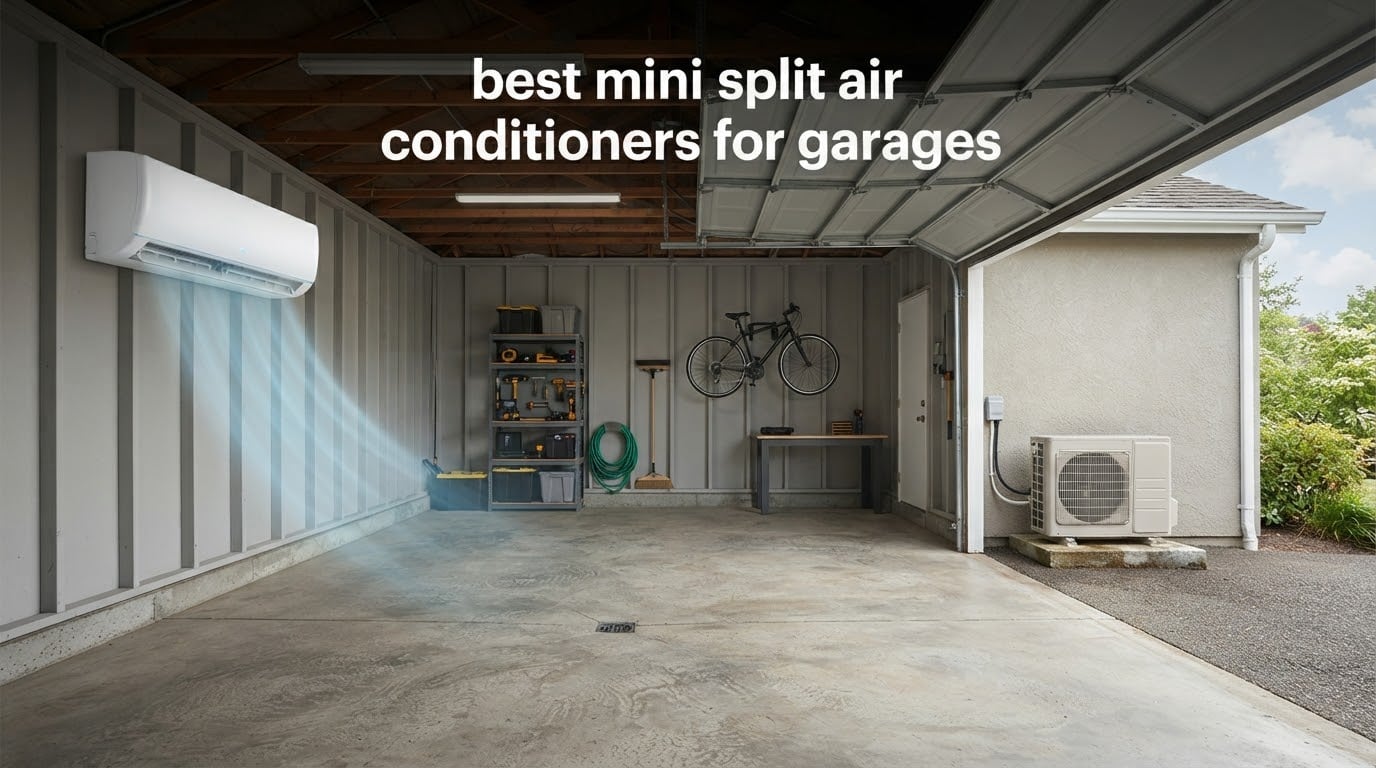
A garage is the hardest room in most homes to cool. It has thin or missing wall insulation, a metal overhead door the size of a car, bare concrete that soaks up heat all afternoon and gives it back at night, and no ductwork to piggyback on. If you have ever tried a window unit in there, you already know how that story ends.
After spending weeks comparing the best mini split air conditioners for garages, testing spec sheets against real installs and reading hundreds of owner reviews, one pattern kept repeating: almost every unit sold as a “mini split” was marketed for bedrooms, and almost none of them were actually sized or specced for a garage. The 9,000 BTU bedroom unit is the single most common mistake, and the 36,000 BTU garage is the second.
So this roundup ignores bedroom sizing charts entirely. Every unit below is judged against garage realities: square footage, ceiling height, overhead door exposure, available electrical circuit, and how badly the space needs to dehumidify. Ten units, each with a real garage verdict, plus the sizing math and electrical details that decide the purchase before you ever click a product page.
What Size Mini Split System Should I Get for My Garage?
Here is the short version, before anything else:
- Single-car garage: 9,000-12,000 BTU. A 9,000 BTU unit covers a well-insulated single-car space or a detached shop, and 12,000 BTU is the safe pick for a single-car garage that is uninsulated or exposed to a hot western sun.
- Two-car garage: 18,000-24,000 BTU. Most two-car garages land between 18,000 and 24,000 BTU once you account for a second bay of overhead door, block walls and higher ceilings.
- Uninsulated garage: upsize 30% to 50% over the room-sizing number. Thin walls and a leaky overhead door move far more heat than a bedroom wall, so the standard BTU-per-square-foot table under-serves a garage badly.
And one caveat that changes which unit you should buy: insulate the walls and the overhead door before the install, not after. An insulated garage door alone can legitimately drop you one BTU tier, which may mean a 12,000 BTU unit instead of an 18,000 BTU unit and a meaningfully smaller electrical and installation footprint. The full table is further down.
Our Top 3 Garage Mini Splits After Comparing 10 Units
We ranked these on the combination that actually predicts garage satisfaction: verified owner rating, review volume, cooling capacity matched to realistic garage loads, electrical simplicity and how well the unit holds humidity in an unconditioned space. The full list of ten follows, but these three earned the badges.
Senville LETO 24,000 BTU
- 24000 BTU cooling and heating
- DC inverter at 18.7 SEER
- Heats down to 5F
- Alexa and app control

COSTWAY 12,000 BTU 115V
- 12000 BTU cooling
- 12300 BTU heating
- 115V plug-in friendly circuit
- 23 dB and 20 SEER inverter
Comparing the 10 Best Mini Split Air Conditioners for Garages in 2026
All ten units below are inverter-driven, heat pump rated and supplied with the refrigerant factory pre-charged. Every one runs on either 115V or 208/230V, which is the decision that shapes your install more than any other spec.
| Product | Specs | Action |
|---|---|---|
| Senville LETO 24,000 BTU Heat Pump |
|
Check Latest Price |
| COSTWAY 12,000 BTU Mini Split |
|
Check Latest Price |
 Rellytech 12,000 BTU 19 SEER2 Rellytech 12,000 BTU 19 SEER2 |
|
Check Latest Price |
 Mountman 9,000 BTU 19 SEER2 Mountman 9,000 BTU 19 SEER2 |
|
Check Latest Price |
 ROVSUN 9,000 BTU Wi-Fi 20 SEER2 ROVSUN 9,000 BTU Wi-Fi 20 SEER2 |
|
Check Latest Price |
 YITAHOME 18,000 BTU 21 SEER2 YITAHOME 18,000 BTU 21 SEER2 |
|
Check Latest Price |
 Albott 12,000 BTU SEER2 18 Albott 12,000 BTU SEER2 18 |
|
Check Latest Price |
 DELLA Optima 12,000 BTU 24 SEER2 DELLA Optima 12,000 BTU 24 SEER2 |
|
Check Latest Price |
| ROVSUN 12,000 BTU Wi-Fi 20 SEER2 |
|
Check Latest Price |
 COSTWAY 18,000 BTU Mini Split COSTWAY 18,000 BTU Mini Split |
|
Check Latest Price |
1. Senville LETO 24,000 BTU – Maximum Cooling Reach for Large Garages
Senville LETO Mini Split Air Conditioner, Heat Pump, White, 24000 BTU
24000 BTU cooling
220V power
18.7 SEER inverter
Heats to 5F
34 dB
Alexa and app
Pros
- Highest cooling capacity in this roundup at 24000 BTU
- DC inverter with 18.7 SEER for steady control
- Works as cooling heating dehumidifier and fan
- Alexa and app control plus remote
- Kit includes 16 ft line set pre-charged to 25 ft
Cons
- Lowest SEER rating here at 18.7
- Professional installation required by the manufacturer
- Only 1-year parts warranty with labor not included
This is the unit I keep coming back to for anyone whose garage is genuinely large, tall, or open to a shop bay. At 24,000 BTU it is the highest cooling capacity in the group, rated for 1250 square feet, and that headroom is exactly what an uninsulated two-car or three-car garage with a vaulted ceiling needs in July.
What surprised me is how steady it is. The DC inverter compressor modulates rather than cycling on and off, and owners describe the 34 dB indoor sound as quieter than expected for something moving that much air. Nearly 2000 reviews averaging 4.5 out of 5 is real volume, and roughly four out of five buyers give it five stars.
Capacity and Heat Pump Performance in an Unconditioned Space
The heat pump function runs down to 5F, so this doubles as garage heat in winter. In a workspace that sits at 45F on a January morning, that is a meaningful upgrade over a space heater, both in comfort and in running cost, because a heat pump moves heat rather than generating it.
It runs four modes: cooling, heating, dehumidifying and air circulation. The dehumidify mode is the one garage owners notice most in humid regions, and 24,000 BTU of capacity gives the compressor enough headroom to pull moisture out without cycling constantly.
Efficiency and Electrical Requirements
At 18.7 SEER this is the least efficient unit on the list, and that matters if you plan to run it hundreds of hours in a hot climate. The efficiency gap is real, but so is the capacity gap, and for a genuinely oversized space the larger unit is the correct buy.
It draws 2500 watts and runs on 220V, so plan on a dedicated branch circuit. Most garages already have a 240V outlet for a welder or shop compressor, which makes this one of the easier installs in the group for owners who already have that circuit.
Smart Controls and Included Hardware
Alexa and app control let you start cooling before you drive home from a hot job site, which is the single most useful feature for a working garage. Routines and scheduling are handled in the app, with the remote as backup.
The package includes the indoor air handler, outdoor condenser, remote and a 16-foot copper line set with communication cable, pre-charged for up to 25 feet. That 25-foot pre-charge is generous for a garage, since the indoor unit usually mounts within a few feet of the wall the condenser enters through.
Warranty and Who Can Install It
Warranty terms are listed as five years on parts and five years on the compressor, but the specification block also states one year on parts with labor excluded, and buyers have flagged that discrepancy. Ask the seller to confirm in writing before you commit.
The manufacturer requires professional installation, which is standard across this whole category. In a detached garage with no existing 240V circuit, that adds an electrician visit to the project, so factor it in before you start.
2. COSTWAY 12,000 BTU – Quiet 115V Cooling Without a 240V Upgrade
COSTWAY 12000BTU Mini Split Air Conditioner& Heater
12000 BTU cooling
115V power
20 SEER inverter
23 dB
5 modes
750 sq ft rated
Pros
- 115V circuit friendly so no 240V upgrade work
- 20 SEER inverter balances output and running cost
- 23 dB is among the quietest here
- Five modes with sleep ECO iFEEL and turbo
- Self-cleaning cycle and auto defrost reduce upkeep
Cons
- 750 sq ft rating is tight for an uninsulated three-car garage
- Remote-only control with no app or voice integration
- 68 lb shipping weight makes handling awkward solo
This is the pick for the enormous number of garage owners whose electrical panel has no spare 240V breaker and who do not want to pay an electrician to add one. It runs on 115V, the same household circuit a window unit uses, which removes the single biggest hidden cost in a garage install.
Owners consistently praise cooling output for the money and very low noise, with a 4.4 average across more than 1600 reviews. It is also the quietest option here at 23 dB, which matters in a garage where hard concrete surfaces make any hum more noticeable than it would in a carpeted bedroom.
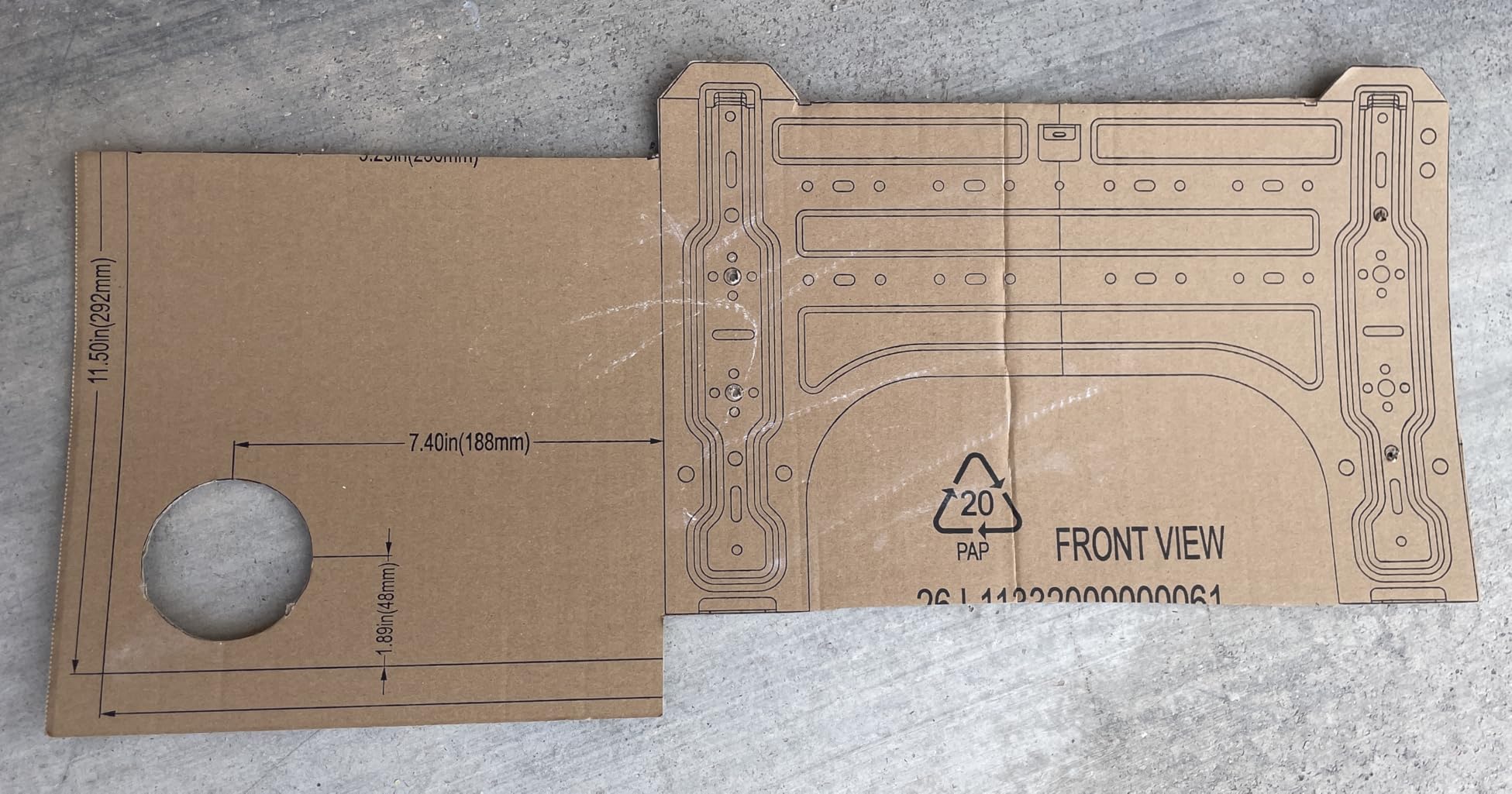
Why 115V Changes the Whole Project
A 115V mini split needs a standard 15 or 20 amp circuit, not a 240V branch. That single difference removes the permit, the electrician and often the subpanel from the project, which is usually the largest labor line on a garage install.
The tradeoff is capacity ceiling. 115V units in this category top out around 12,000 BTU, so if your garage is larger than about 550 square feet and uninsulated, you are at the edge of what the circuit and the compressor can deliver.
Capacity Against Real Garage Loads
The listed 750 square feet rating is comfortable for a well-insulated single-car garage and a squeeze for an uninsulated one. If your walls are framed but uninsulated and the door is bare steel, treat this as a single-car solution and keep it matched to that room.
Because the compressor is inverter-driven at 20 SEER, it ramps output rather than switching on and off. In a space with a big swing between afternoon heat and evening cool, that modulation is what keeps the temperature steady without the compressor short-cycling.
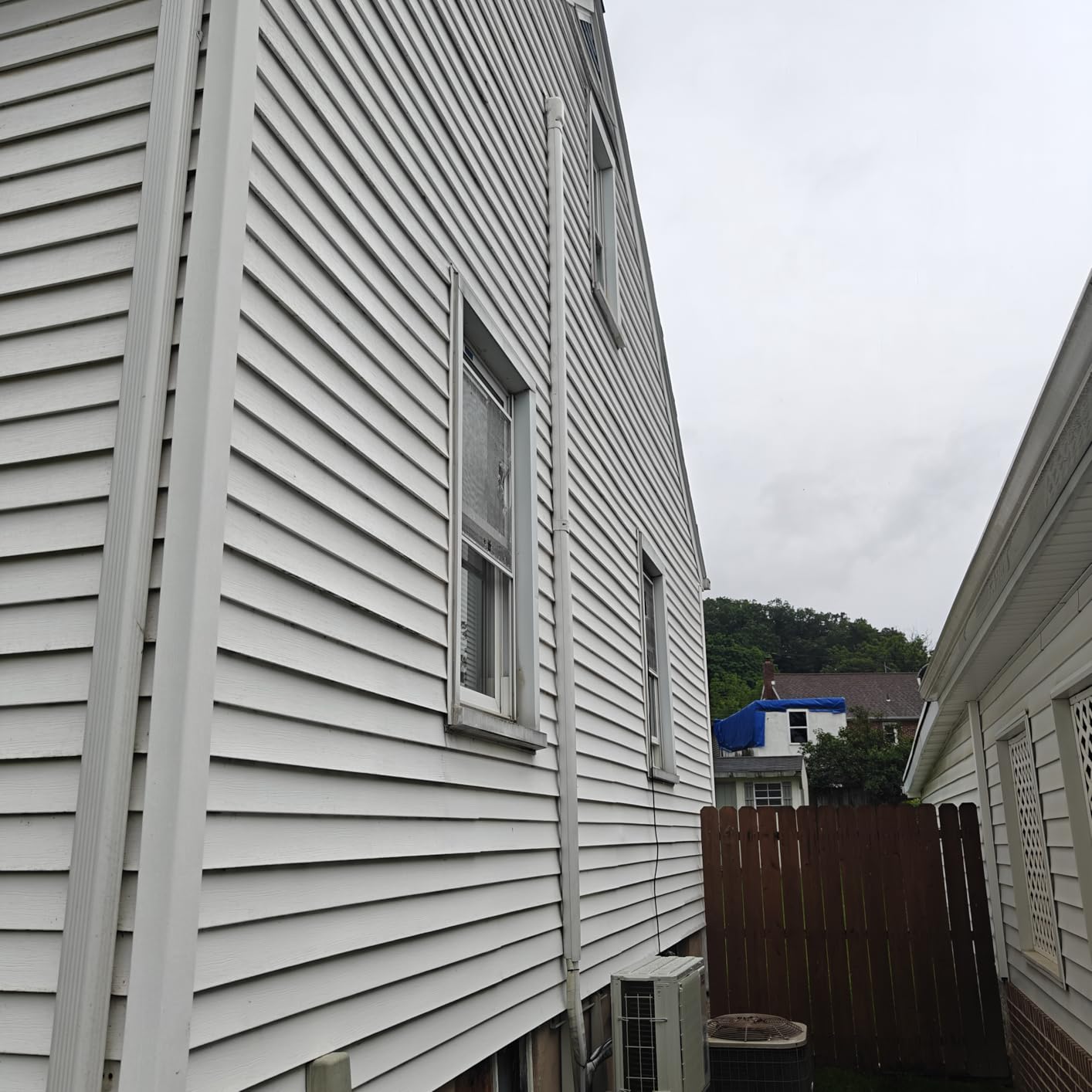
Modes, Filters and Self-Cleaning
Five modes (auto, cool, dry, heat and fan) plus four fan speeds give you real control. Sleep mode, ECO mode, iFEEL and turbo round out the set, and the 0.5 to 24 hour timer lets you schedule around a work week.
The high-temperature self-cleaning cycle runs the indoor unit hot to keep the coil dry, and the washable filter takes a monthly rinse. The outdoor unit has automatic defrost for winter heating. For a garage, the defrost cycle matters more than it would indoors, because the coil sees far more moisture than a unit in a conditioned room.
Warranty and Installation Notes
The product claims five years on parts and eight years on the compressor, but the same listing requires installation by a licensed HVAC installer, and buyers report the warranty text conflicting with itself. Get that confirmed in writing.
At 68 pounds the two components are awkward for one person to handle, and a vacuum pump and gauge set are needed beyond what ships in the box. Budget for a professional charge.
3. Rellytech 12,000 BTU – Dehumidification for Humid Garages
Rellytech Mini Split AC/Heating System, 12000 BTU, 19 SEER2 115V/110V
12000 BTU cooling
12500 BTU heating
19 SEER2 and 8.5 HSPF2
115V or 110V
750 sq ft rated
Pros
- Documented garage use in an uninsulated high-ceiling space
- 115V and 110V avoids a 240V circuit upgrade
- Owners in Florida and Nevada report strong humidity control
- 19 SEER2 and 8.5 HSPF2 with 4 Star BEE
- ETL and AHRI certified
Cons
- Noise listed as both 26 dB and 42 dB on the same page
- Warranty states 1 year in specs but 8 years in features
- 92 lb weight is heavy to position alone
If your garage is in a humid state and the problem is damp air rather than just heat, this is the unit I would look at first. Owners in Florida and Nevada report dramatically better humidity control than window units, which is the harder problem to solve in a garage with a leaky overhead door.
It delivers 12,000 BTU cooling and 12,500 BTU heating on 115V or 110V, rated to 750 square feet, at 19 SEER2 and 8.5 HSPF2. That efficiency pairing is unusual at this capacity and voltage, and it means lower running cost in a space that will run for many hours on summer afternoons.
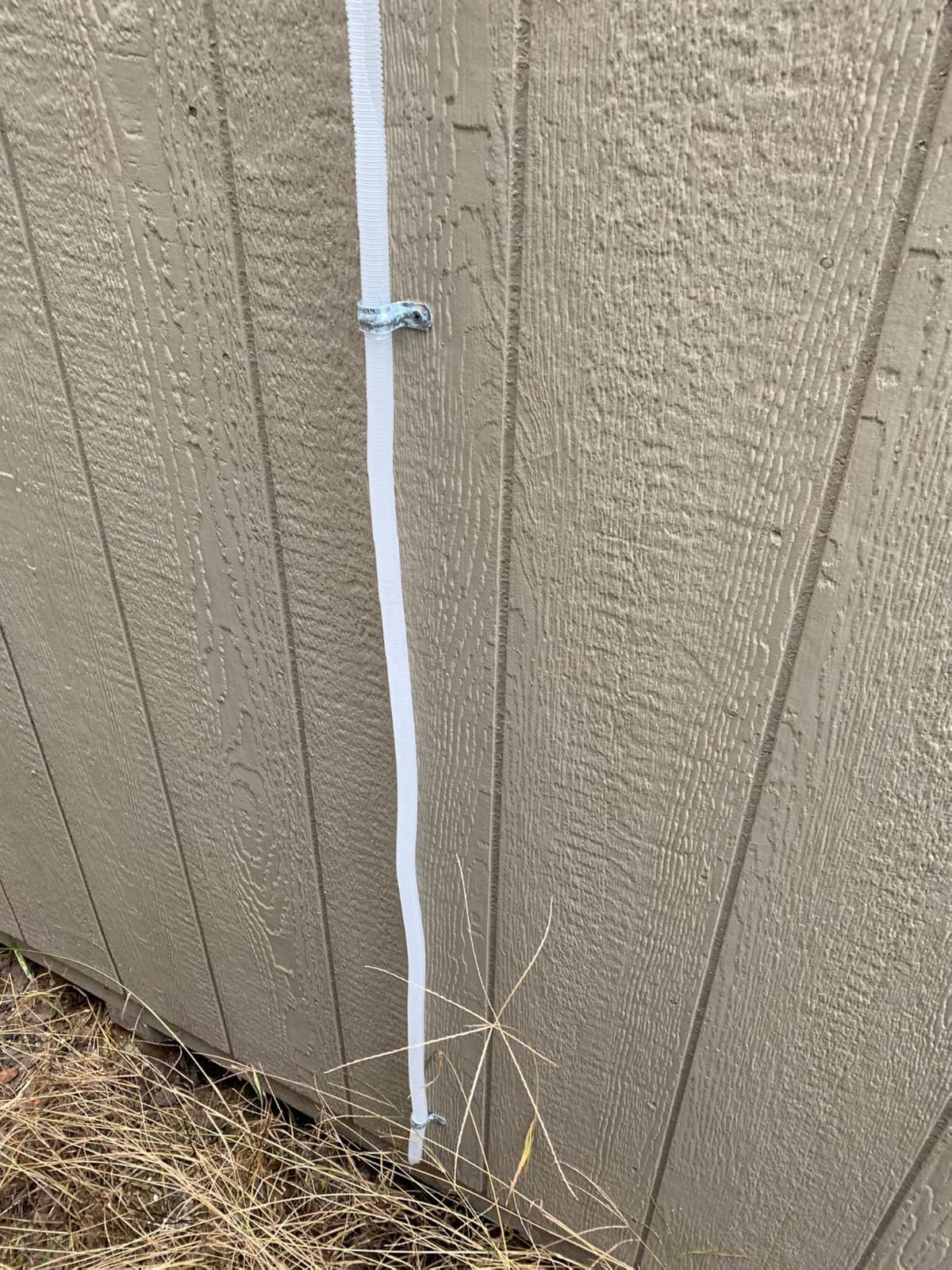
Latent Load Performance in Humid Climates
Garages in humid regions carry a hidden load: moisture. Latent load is the energy required to pull water out of the air, and a garage with a leaky door picks up a lot of it. A unit with inverter modulation and a dedicated dry mode handles that far better than a fixed-speed compressor that cycles on and off.
Multiple reviews specifically describe this as a clear improvement over window units in high-humidity conditions. The 90-degree vertical swing helps distribute conditioned air across a wide single-car space rather than dumping it at the workbench.
Efficiency and Certified Performance
19 SEER2 and 8.5 HSPF2 earns a 4 Star BEE rating. Annual energy consumption is listed at 1367 kilowatt hours, and the ETL and AHRI certifications give you something to verify independently rather than taking a marketing number on faith.
Because the outdoor unit is pre-charged, the install is faster than a field-charged system. You will still need a vacuum pump and gauge set, which several owners mention as the item most likely to be missing from a DIY parts run.
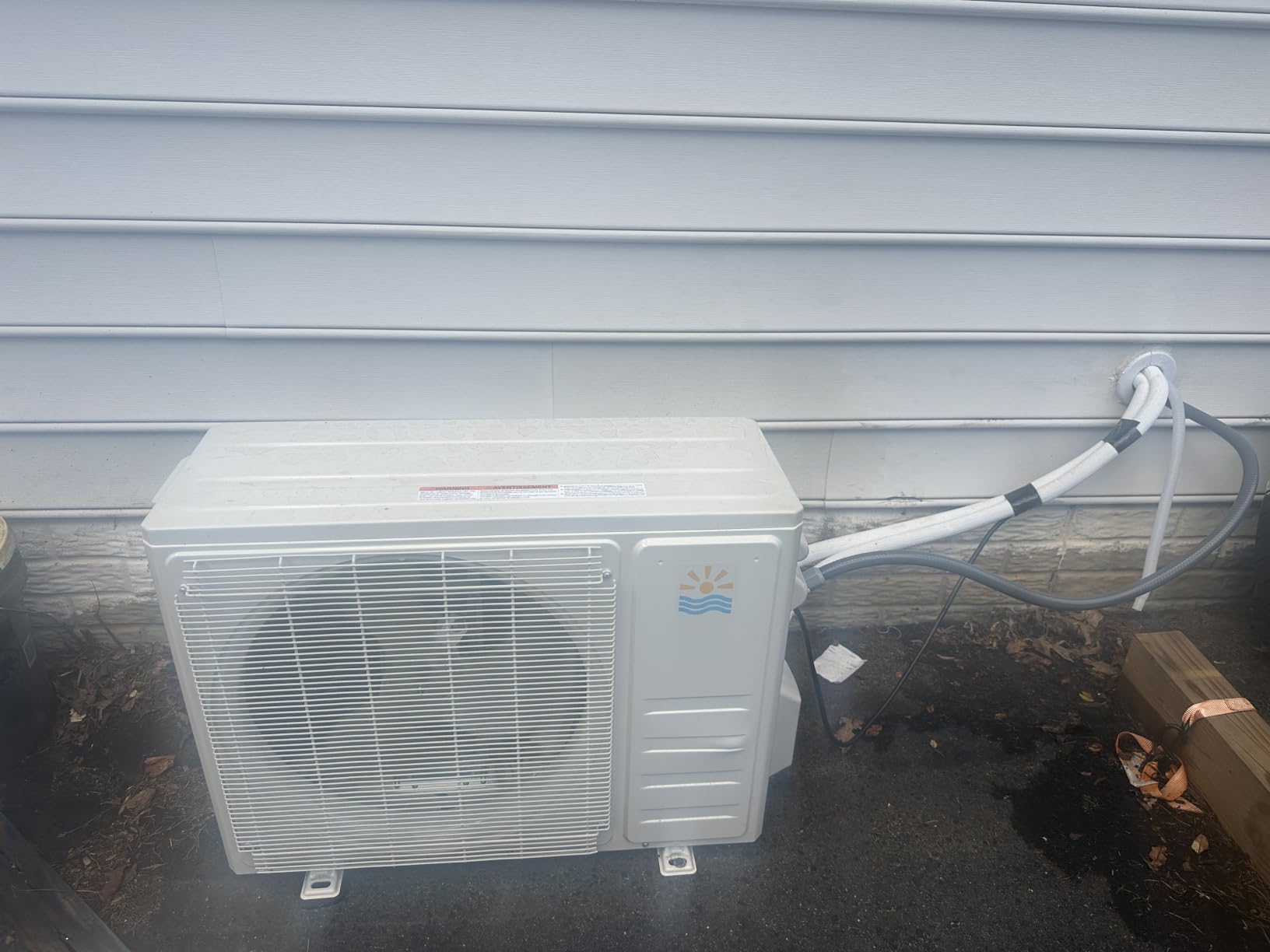
Controls and Modes
Four modes (cool, heat, dry, fan), four fan speeds, ECO, sleep, a 24-hour timer and an LED-off function cover the basics well. The remote is the only control, which is a downgrade if you want to change settings from a phone.
For a garage, the sleep and timer functions matter more than a bedroom, because you often want the unit to shut down once a job is done rather than running all night.
Documentation Gaps to Watch For
This listing publishes two different noise figures, 26 dB and 42 dB, and two different warranty terms, one year in the specification block and eight years in the feature list. Treat both as unverified and ask the seller directly.
Those inconsistencies are the main thing holding this unit back from a stronger position. The hardware claims are strong; the paperwork is sloppy.
4. Mountman 9,000 BTU – Small Footprint for Single-Car Garages
Mountman 9000 BTU Mini Split AC/Heating System,19 SEER2 110/120V Energy Efficient Ductless Inverter System,Cools Up to 450 Sq.Ft with Pre-Charged Condenser,Heat Pump & Installation Kits
9000 BTU capacity
110V or 120V
19 SEER2 inverter
26 dB sleep mode
Compact wall unit
Pros
- Compact 9000 BTU format suits sheds and single-car garages
- Ultra-quiet 26 dB sleep mode
- Self-cleaning plus washable anti-dust filter and auto defrost
- ECO mode claims up to 30% energy savings
- Pre-charged R32 with an installation kit included
Cons
- Coverage claims conflict at 450 sq ft versus 750 sq ft
- 9000 BTU is undersized for an uninsulated garage in peak summer
- Highest listed wattage here at 2647 watts for a 9000 BTU unit
This is the right shape of unit for a single-car garage that has been insulated, weatherstripped and fitted with a new overhead door. At 9,000 BTU on a 110 or 120V circuit, it is small, quiet and cheap to install, and the physical dimensions make it easy to mount above a workbench.
Owners rate it 4.5 out of 5 across 352 reviews, with roughly three quarters giving five stars. The praise centers on small footprint, low noise and simple remote operation.
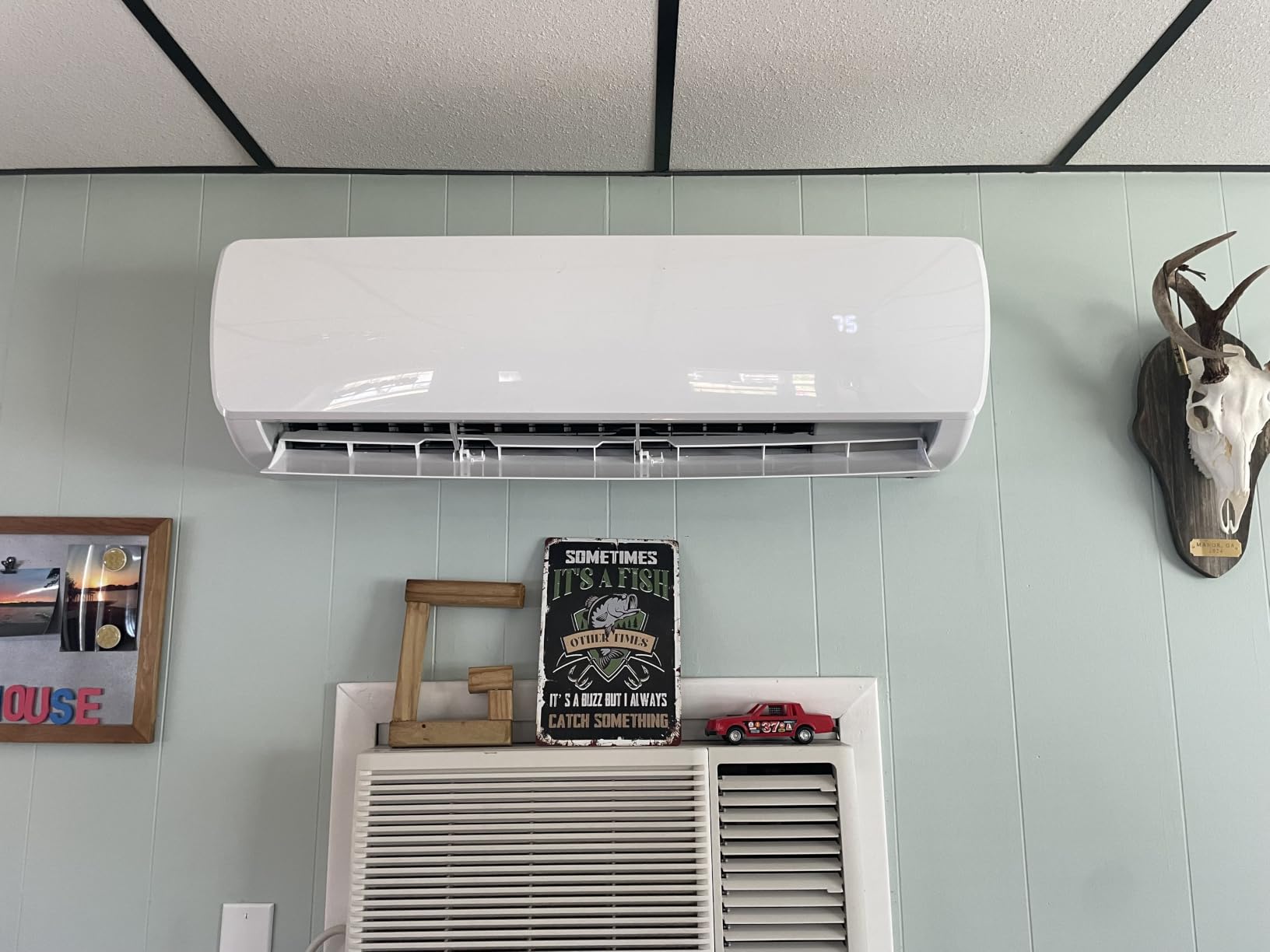
Matching 9,000 BTU to a Small Garage
Nine thousand BTU is genuinely small. It is the right number for a detached shed, a small single-car garage with good insulation, or a garage space that is used intermittently rather than worked in daily for hours.
It is the wrong number for a bare two-car garage in a hot climate. Pushing a 9,000 BTU unit at an uninsulated 500 square feet means the compressor runs near full output for long stretches, which is where short-cycling and poor dehumidification creep in.
Efficiency and ECO Mode
The 19 SEER2 inverter rating is solid for this size, and the ECO mode claims up to 30% energy savings. At 2647 watts of listed wattage, which is the highest figure in the group for a 9,000 BTU machine, actual consumption deserves testing before you rely on the savings claim.
Modulated output from an inverter compressor is what makes ECO effective: the unit throttles down rather than cycling off entirely when the space is close to setpoint.
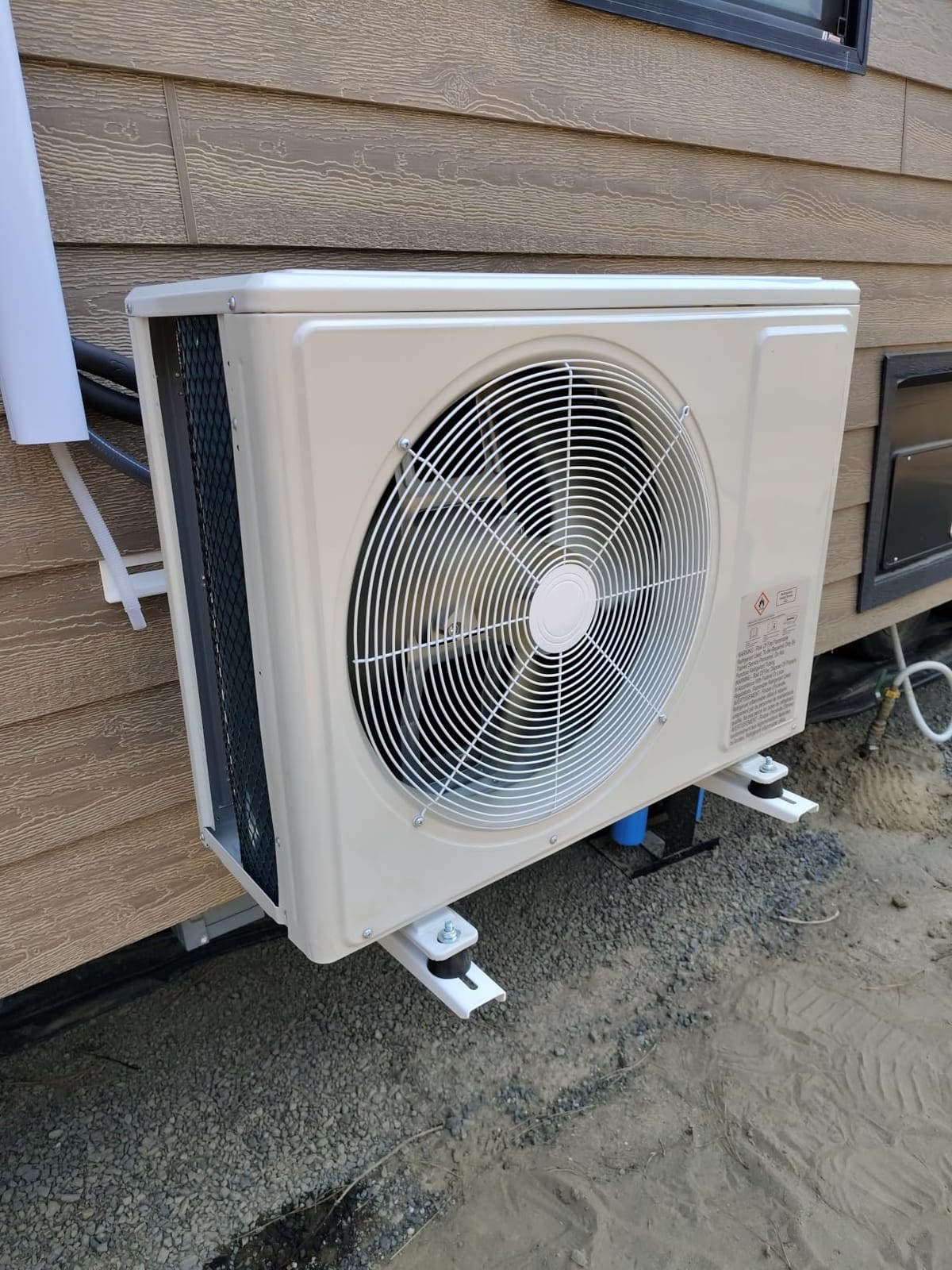
Maintenance Features That Suit a Garage
High-temperature self-cleaning keeps the indoor coil dry, the washable anti-dust filter takes a quick monthly rinse, and automatic defrost protects heating performance. All three matter more in a garage than in a house because the air is dirtier and wetter.
Four modes, four fan speeds, turbo boost, sleep mode and a 24-hour timer give you a full control set, with a remote display that shuts off after ten seconds of inactivity.
Spec Sheet Contradictions
The listing states 450 square feet in the title and specification block and 750 square feet in the features. That gap is large enough to matter when sizing, so plan on the lower figure.
Remote-only control with no app or voice assistant support is the other limitation. If smart control is a priority, the ROVSUN units at the same capacity do it for less.
5. ROVSUN 9,000 BTU Wi-Fi – Smart Controls on a 115V Circuit
ROVSUN 9000 BTU Wifi Enabled Mini Split Air Conditioner & Heater with Inverter, 20 SEER2 Energy Saving 115V Ductless Split AC Unit with Pre-Charged Condenser, Heat Pump & Installation Kit
9000 BTU cooling and heating
115V power
20 SEER2 inverter
28 dB mute
Wi-Fi and Alexa
Pros
- Wi-Fi app and Alexa or Google Assistant control
- 28 dB mute operation among the quietest here
- 875 watt draw is the lowest listed
- Four-way swing with dehumidification ECO sleep and turbo
- Pre-charged condenser with a 16.4 ft line set
Cons
- 9000 BTU rated 400-450 sq ft is marginal for an uninsulated garage
- Instructions skip the refrigerant vacuum and leak-test step
- Arrives in two boxes that may come separately
The appeal of this unit is control. Wi-Fi, app and voice assistant support at 115V in a 9,000 BTU machine is rare, and for a working garage it is more useful than it sounds: you can start cooling before you arrive, shut it down when you leave, and see whether the space is actually holding temperature.
At 4.2 out of 5 across 462 reviews it sits in the middle of the group, and the one-star share is higher than most. Most of that trace to paperwork and a single complaint, which we cover below.
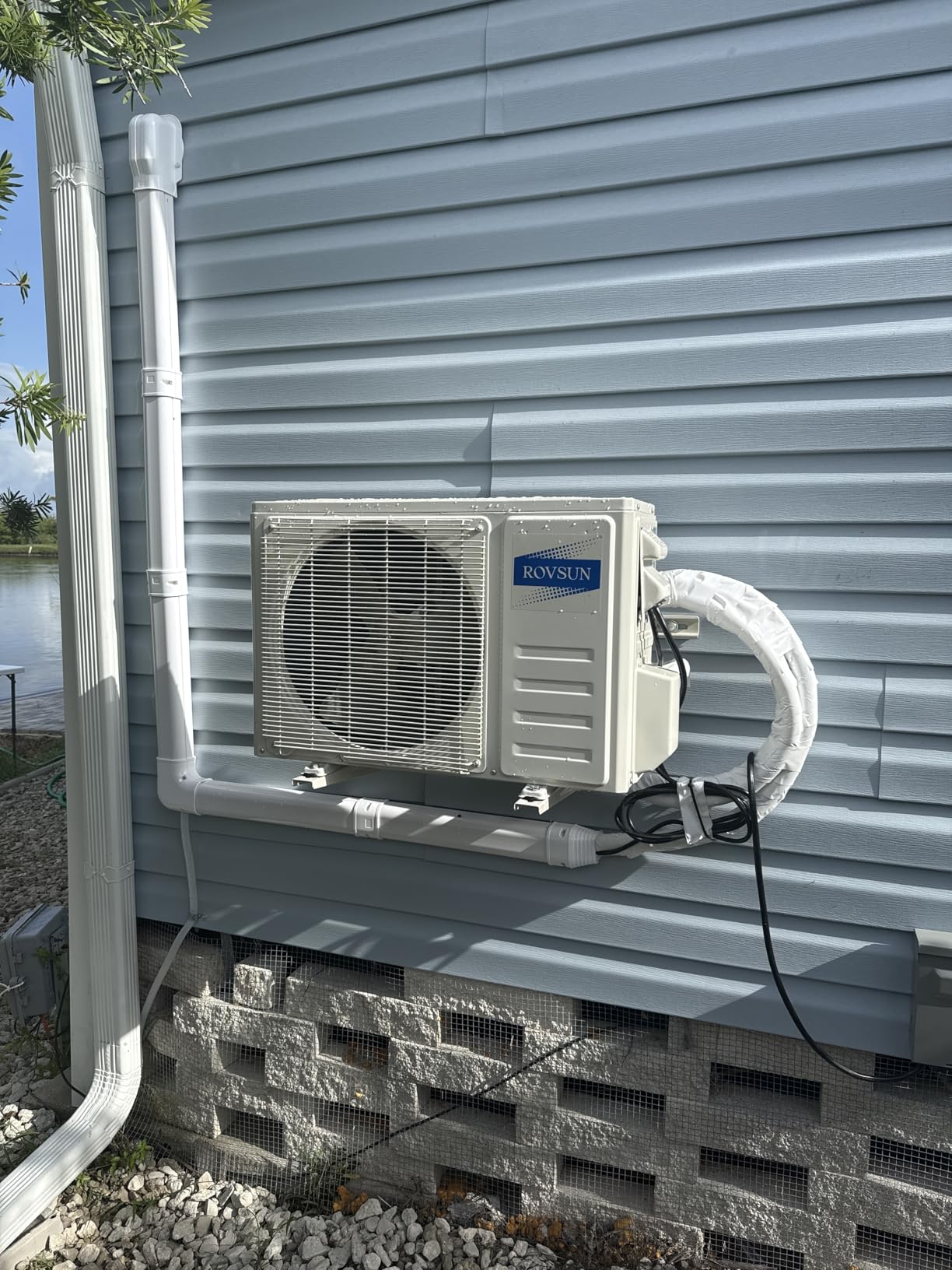
Energy Draw and Efficiency
The 875 watt draw is the lowest listed in this roundup, paired with a 20 SEER2 inverter rating and a claim of up to 35% energy savings from frequency adjustment. Low draw matters in a garage because the circuit is often shared with tools and a welder.
The inverter adjusts compressor speed automatically as the room temperature changes. In a garage with high thermal mass, that ramping behaviour is what prevents the on-off cycling that makes fixed-speed units sound and feel uneven.
App, Voice and Remote Control
Besides the remote, this unit connects to a phone app and works with Alexa or Google Assistant, with routine scheduling for temperature changes. It is one of the few garage-capable machines in this price class with genuine smart control.
Four-way swing, dehumidification mode, ECO, sleep, turbo and auto-defrost round out the feature set, and operating range is listed at 61F to 88F with heat pump function for winter.
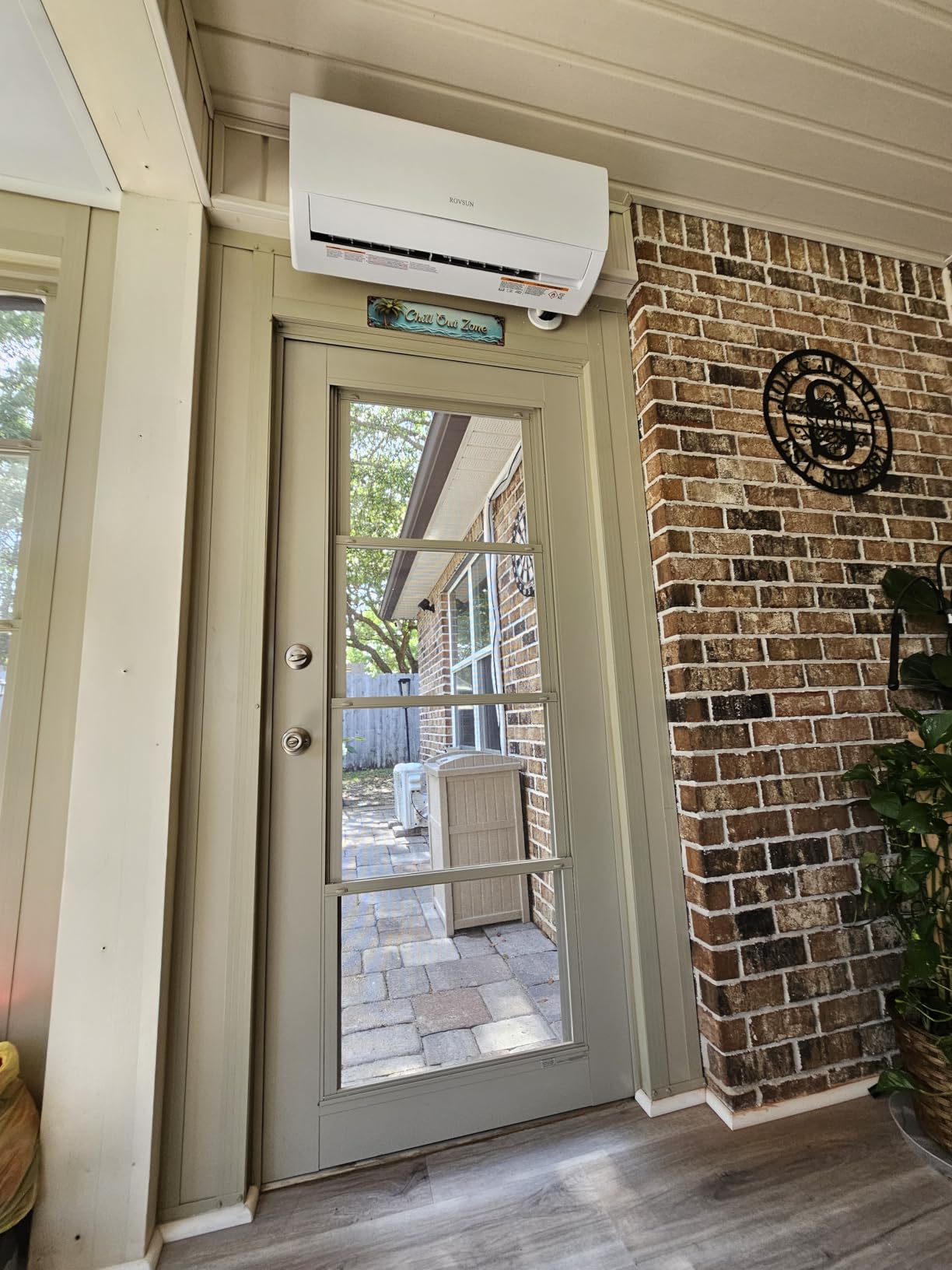
Documented Garage Installs
Several owners report using this in three-car garages through extreme heat, including days with a 110F heat index. Treat those as the exception rather than the rule, since the published rating is 400 to 450 square feet and uninsulated volume is a different calculation.
What those reports do confirm is that a 115V inverter unit can hold its own in a hot garage when it is not fighting a much larger load.
Where the Reviews Turn
One detailed review reports persistent wall mold in a closed room after installation, with the company declining to resolve it. That is an isolated report, but it points to a real garage issue: a mini split cools and dehumidifies the air it sees, and it does not ventilate.
The instructions also skip the vacuum and leak-test procedure, so a vacuum pump and gauge set must be sourced separately, and the two-piece delivery arrangement complicates scheduling the install in one visit.
6. YITAHOME 18,000 BTU – 21 SEER2 Efficiency for Two-Car Garages
YITAHOME 21 SEER2 18000 BTU Mini Split AC/Heating System 208-230V, Pre-charged Inverter System with Wi-Fi & Alexa Compatibility, Cover Up to 1250 Sq. Ft, Complete Installation Kit
18000 BTU cooling and heating
208-230V
21 SEER2
5 Star BEE
49 dB
Wi-Fi and Alexa
Pros
- 18000 BTU with a 1250 sq ft rating fits a two-car garage
- Highest SEER2 in this roundup at 21 with 5 Star BEE
- Widest operating range at 5F to 118F
- Wi-Fi Alexa iFEEL and PM2.5 plus negative ion filtration
- Lightest listed weight at 26.4 lb
Cons
- Lowest average rating here at 4.1 with 14% one-star reviews
- Noisiest unit in the group at 49 dB
- Kit excludes shut-off valves and the side protection grille
- Requires 208-230V power
On paper this is the most capable two-car garage unit in the group: 18,000 BTU cooling and heating, a 1250 square foot rating, and the highest SEER2 in the roundup at 21 with a 5 Star BEE rating. The feature list is also the deepest, with air purification, iFEEL and 4D airflow.
Owner experience is more mixed. The 4.1 average and a 14% one-star share are the weakest in this group, and 49 dB is by far the loudest indoor figure listed. In a garage with hard surfaces, that noise is a real complaint rather than a rounding error.
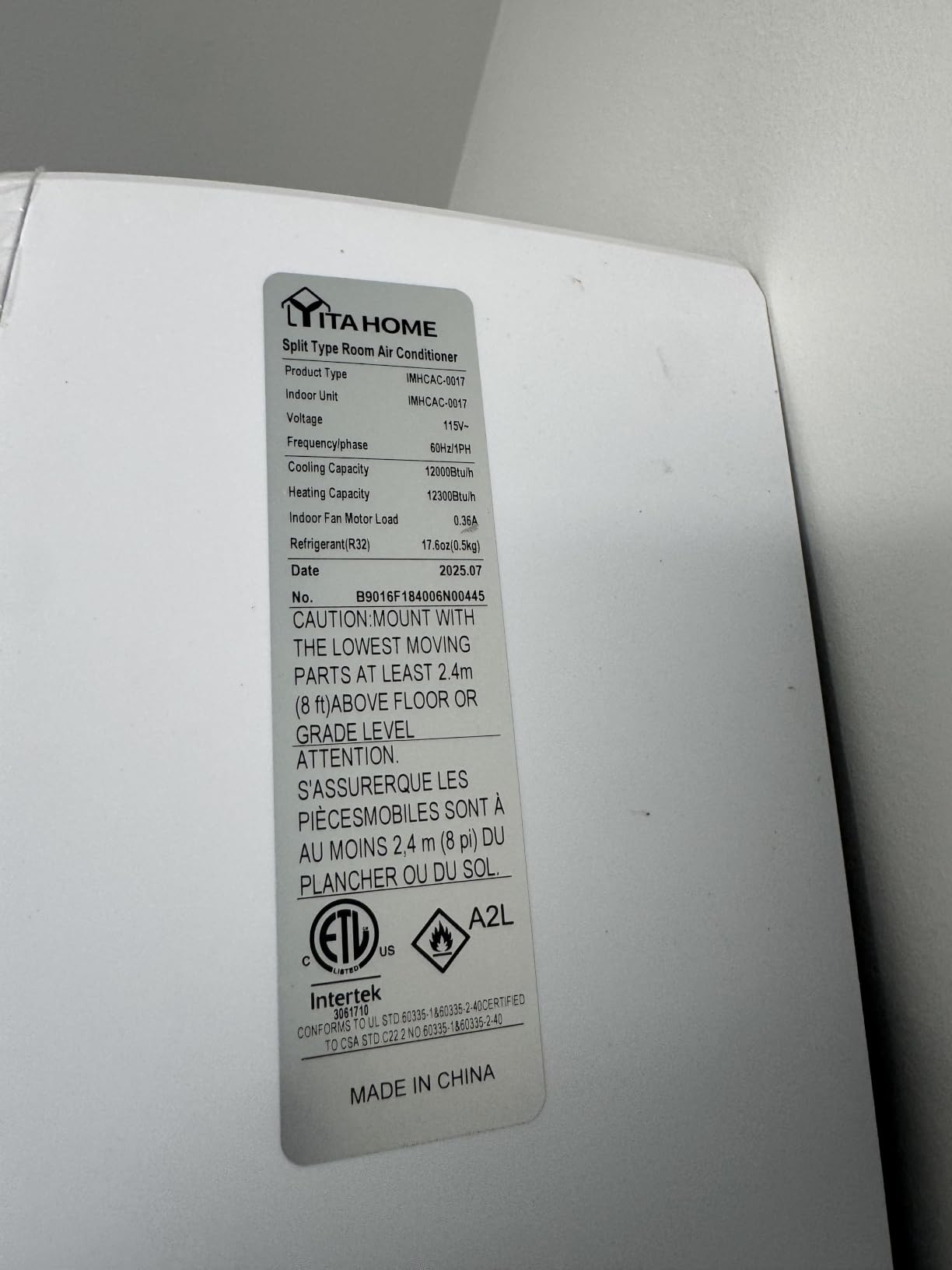
Capacity and Operating Range
Eighteen thousand BTU is the correct band for a typical two-car garage, especially with high ceilings or a second overhead door facing west. The stated 1250 square feet coverage is generous for most of that use.
The 5F to 118F operating range is the broadest listed here, which makes this a sensible pick for a garage that needs heat in winter and serious cooling in summer, or for a region with big seasonal swings.
Efficiency and Running Cost
Twenty-one SEER2 is the highest figure in the roundup, and the listing claims up to 25% energy savings versus comparable inverter units and up to 50% versus 14 SEER2 models. Annual consumption is listed at 700 kilowatt hours.
Efficiency matters more here than anywhere else in the list, because 18,000 BTU is the largest single energy draw most garages will ever add. Over a long, hot summer the gap between a 19 and a 21 SEER2 machine is money you can measure.
Smart Features and Air Quality
Five modes with four fan speeds, Wi-Fi, app, Alexa, iFEEL, a 0 to 24 hour timer, self-diagnosis, a 135F self-cleaning cycle and negative ion, electrostatic and PM2.5 filtration. FourD airflow throws air up to 50 feet, which is useful in a wide bay.
The filtration claim is worth a caveat. A mini split filter is a comfort filter, not a health filter, and it does not handle sawdust the way a dedicated air cleaner does. In a woodworking shop you still want dust extraction.
What the Kit Does Not Include
The installation kit excludes shut-off valves and the side protection grille, which have to be purchased separately. The unit also arrives in two packages that may come separately, and it must be installed by a licensed HVAC professional on 208-230V power.
That combination of loudness, missing hardware and a polarized review profile is why this sits sixth despite strong specifications.
7. Albott 12,000 BTU – 5F to 122F Range for Extreme Climates
Albott 12,000 BTU Mini Split Air Conditioner and Heater SEER2 18, 115V
12000 BTU cooling and heating
115V
SEER2 18
5F to 122F
Under 29 dB
App and remote
Pros
- 115V operation with app and remote at an entry price point
- Under 29 dB suits a workshop where tools are running
- Operating range 5F to 122F handles unheated garages
- Self-cleaning with removable mesh filters and air blades
- Listed 5-year compressor and 7-year parts warranty
Cons
- Lowest SEER2 in the roundup at 18
- Heaviest listed weight at 151 lb
- Warranty text conflicts between 3 years and 5 and 7 years
- Only 750 sq ft rated coverage
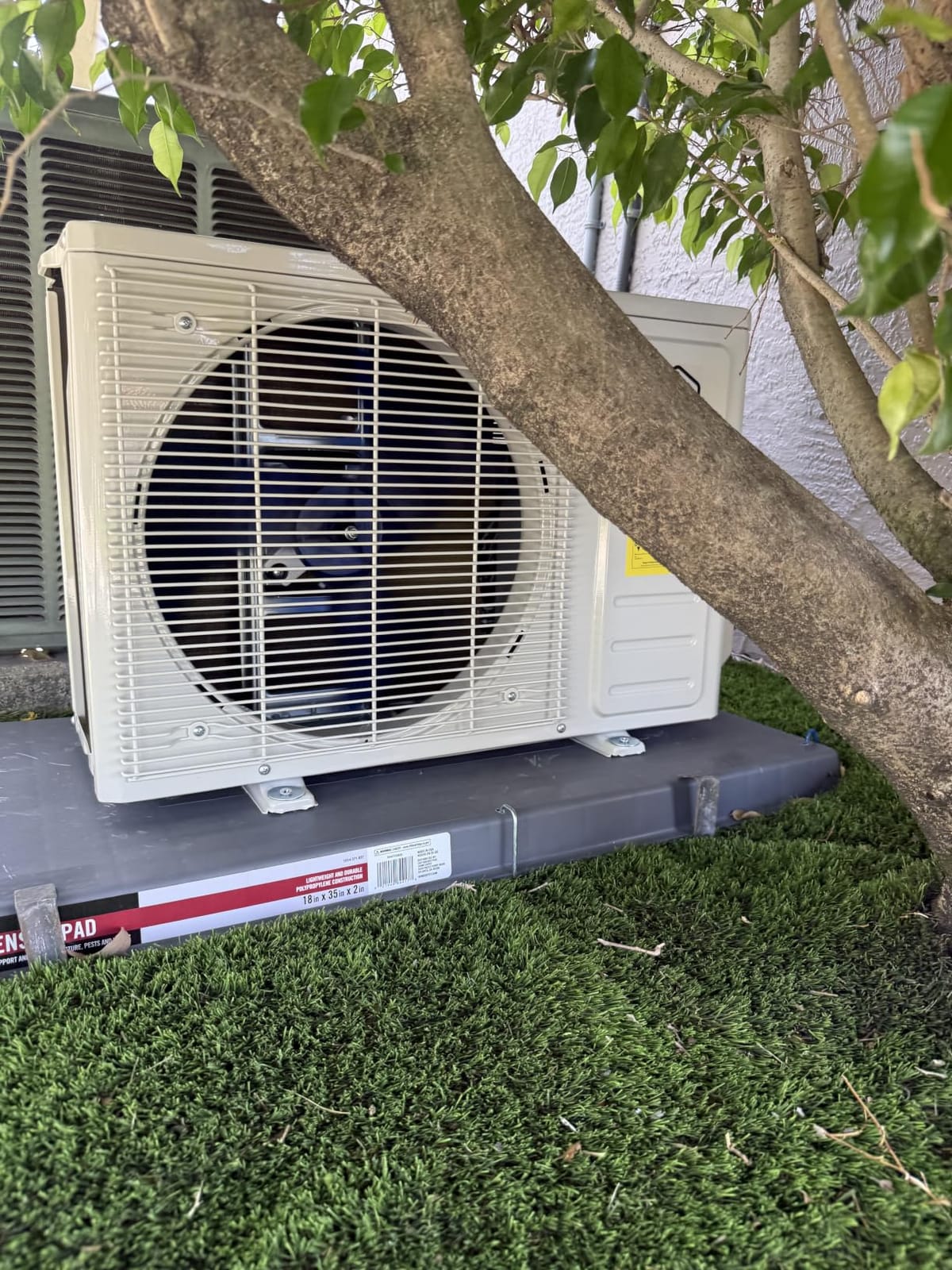
The thing that stands out on this unit is the operating envelope. A 5F to 122F range is unusually wide for a 115V garage machine, and it means the heat pump side stays useful in a genuinely cold snap rather than locking out.
It delivers 12,000 BTU cooling and heating at SEER2 18, rated to 750 square feet, with app and remote control and operation under 29 dB. That low sound level is the practical reason it works in a garage: you can hold a conversation with a compressor running.
Wide-Range Heating Performance
Most 115V units in this class bottom out around 40F to 50F before heating becomes impractical. A rated floor of 5F means this one can carry a garage through a cold snap on heat pump alone, which is exactly the use case for a workshop that needs occasional warmth in February.
Cooling to 122F outdoor covers the hot-humid and desert-edge cases where a garage regularly sits above 100F inside during peak afternoon.
Efficiency Trade-Offs
SEER2 18 is the lowest rating in the roundup, so running cost will be higher than the 20 and 21 SEER2 alternatives here. In a space that is used intermittently, that gap shrinks; in a space run daily all summer, it grows.
The trade is straightforward. You give up some efficiency and gain a wider operating range, a 115V circuit and a mid-range price point.
Controls, Filters and Self-Cleaning
App and remote control, a 24-hour timer, sleep mode and a 61F to 90F setpoint cover normal use. The self-cleaning function plus removable mesh filters and air blades are genuinely useful in a garage, where filters load with dust faster than indoors.
Plan a monthly filter rinse. A loaded filter in a dusty garage raises static pressure, reduces airflow and forces the compressor to work harder for the same temperature.
Weight and Warranty Ambiguity
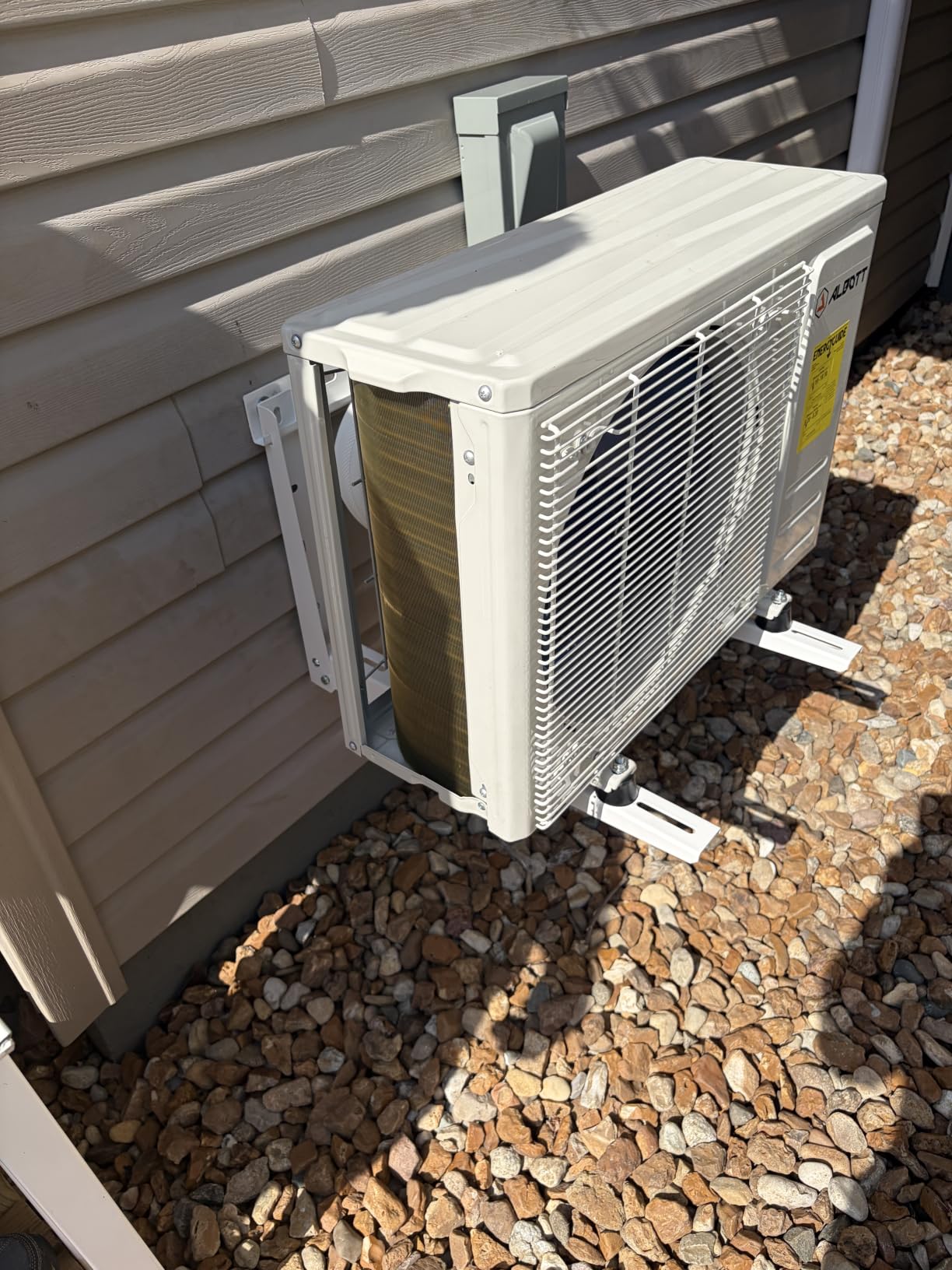
At 151 pounds this is the heaviest unit in the group by a wide margin, and the indoor unit dimensions listed are unusually deep. Mounting needs a solid brace and a second person on install day.
The specification block states a three-year warranty while the feature list claims five years on the compressor and seven on parts. Confirm the term in writing before you buy.
8. DELLA Optima 12,000 BTU – 24 SEER2 With Heating Down to -13F
DELLA Optima Series 12,000 BTU Mini Split AC with Soft Airflow, Hyper Heat Down to -13°F, Up to 550 Sq. Ft, 24 SEER2 230V, Energy Star, WiFi & Alexa,Inverter AC,1 Ton Pre-Charged Heat Pump,16.4ft Kit
12000 BTU cooling
24 SEER2 and 10 HSPF2
Heating to -13F
230V
30 dB
Energy Star
Pros
- Highest SEER2 in the roundup at 24 with 10 HSPF2
- Best low-temperature heating here at -13F with Gold Fin coil
- Soft indirect airflow avoids harsh drafts
- Wi-Fi Alexa Della app and iFEEL remote sensor
- Owners report significant documented electricity savings
Cons
- One owner reports a failed circuit board after two years
- That same review says a lifetime parts warranty was voided on a technicality
- Requires 230V so a dedicated breaker is needed
- Only 550 sq ft rated coverage
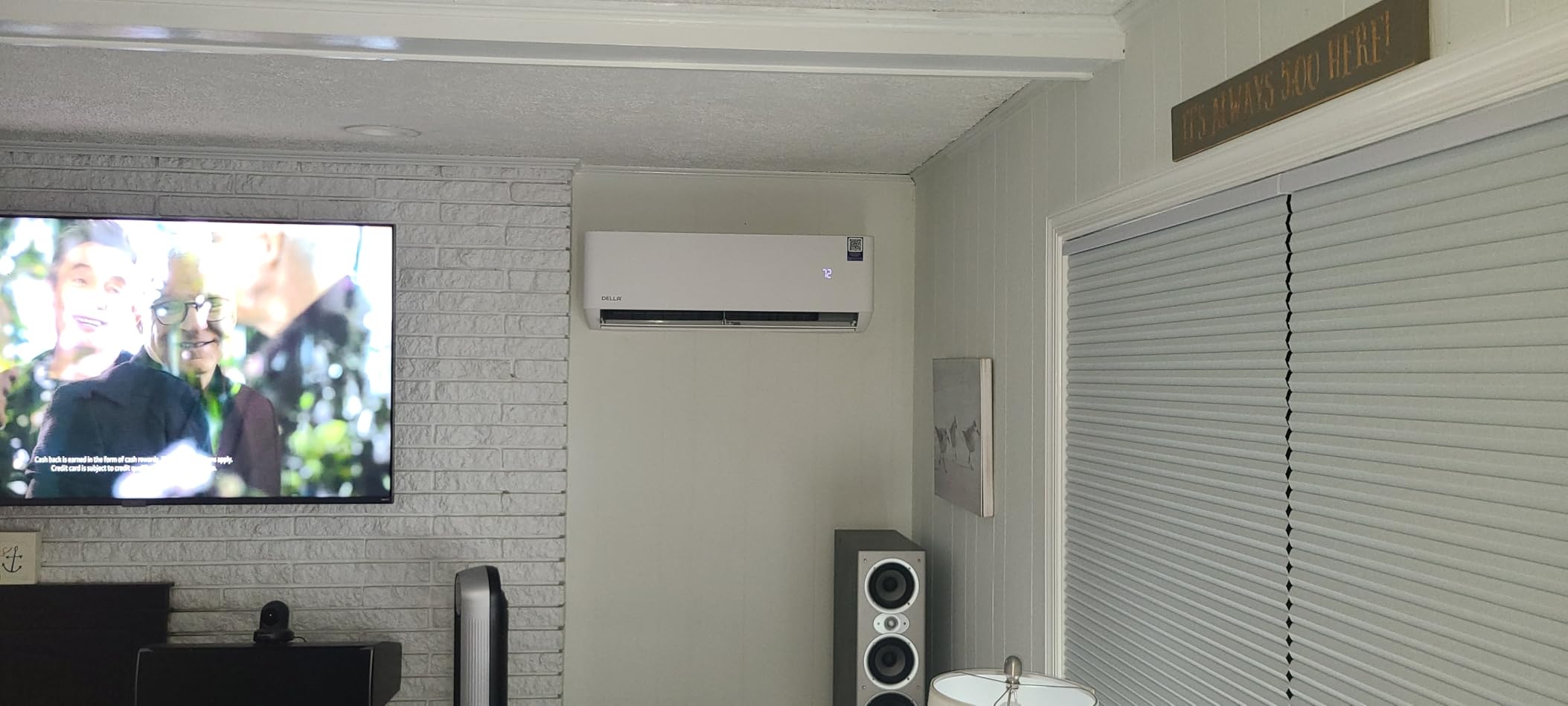
This is the efficiency and cold-climate leader of the roundup. Twenty-four SEER2 with 10 HSPF2 is the highest efficiency pairing listed, it is Energy Star certified and AHRI listed, and the heat pump operates down to -13F with a Gold Fin anti-corrosion coil.
That -13F figure puts it in a different class from the 5F floors on most 115V units here. If your garage needs to be usable in a northern winter rather than merely protected from freezing, that is the specification that matters.
Efficiency and What It Saves
Twenty-four SEER2 is roughly a third higher than an 18 SEER2 unit, and several verified buyers report measurable reductions in their monthly electric bill after installation. The Energy Star certification gives you an independent check on the number.
Efficiency gains matter most where the garage runs long and hot. In a cold region where heating dominates, the 10 HSPF2 rating carries the same weight on the heating side.
Cold-Climate Heating Capability
The Gold Fin coil and the -13F operating rating are the reason this unit suits a cold-climate garage. The soft, indirect airflow design is unusual at this class and avoids dumping cold air across a workbench, which matters when you are leaning over a project.
The iFEEL sensor reads temperature at the remote rather than at the wall unit, so setting the thermostat on your bench actually changes how the unit responds to where you are working.
Controls and Installation Package
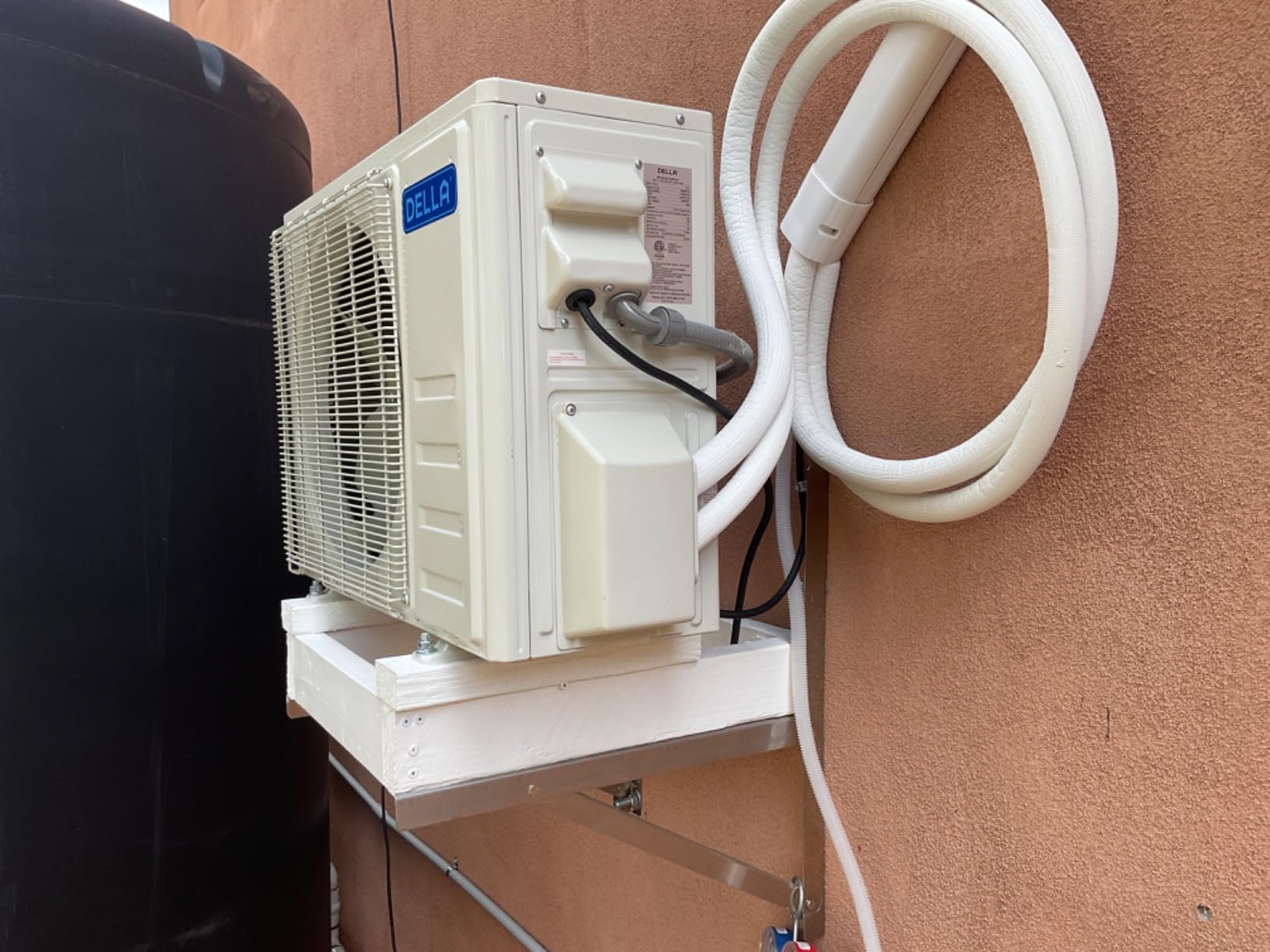
Alexa, the Della+ app, the remote and a four-level power setting cover control needs well. The all-inclusive kit includes a 16.4 foot pre-flared copper line set in both 1/4 and 3/8 inch sizes plus a drain hose.
It is pre-charged but still needs vacuuming and a 15 amp fuse, so the install is not a plug-and-play job. It also requires 230V, which means a dedicated breaker.
Documented Warranty Risk
One detailed review reports a circuit board failure after two years of professional installation, and states that the advertised lifetime parts warranty was voided over a registration technicality. That is a single report, but registration terms deserve a close read before you buy.
Owners also mention translated instructions and finding the 16.4 foot line set on the short side for a detached garage. Verify line set length against your planned run before ordering.
9. ROVSUN 12,000 BTU – The Sweet Spot for Insulated Two-Car Garages
ROVSUN 12000 BTU Wifi Enabled Mini Split Air Conditioner & Heater with Inverter, 20 SEER2 Energy Saving 115V Ductless Split AC Unit with Pre-Charged Condenser, Heat Pump & Installation Kit
12000 BTU cooling
12600 BTU heating
115V
20 SEER2
28 dB
Wi-Fi and Alexa
Pros
- 12000 BTU is a better garage match than the 9000 BTU sibling
- Wi-Fi app and Alexa or Google Assistant control
- 115V power at 20 SEER2 is a rare efficiency pairing
- 28 dB mute mode among the quietest here
- Four-way swing with dehumidification ECO sleep and turbo
Cons
- Coverage figures conflict at 550 sq ft versus 750 sq ft
- Only a 1-year warranty
- Arrives in two boxes that may come separately
- Extra power cord needed beyond the included kit
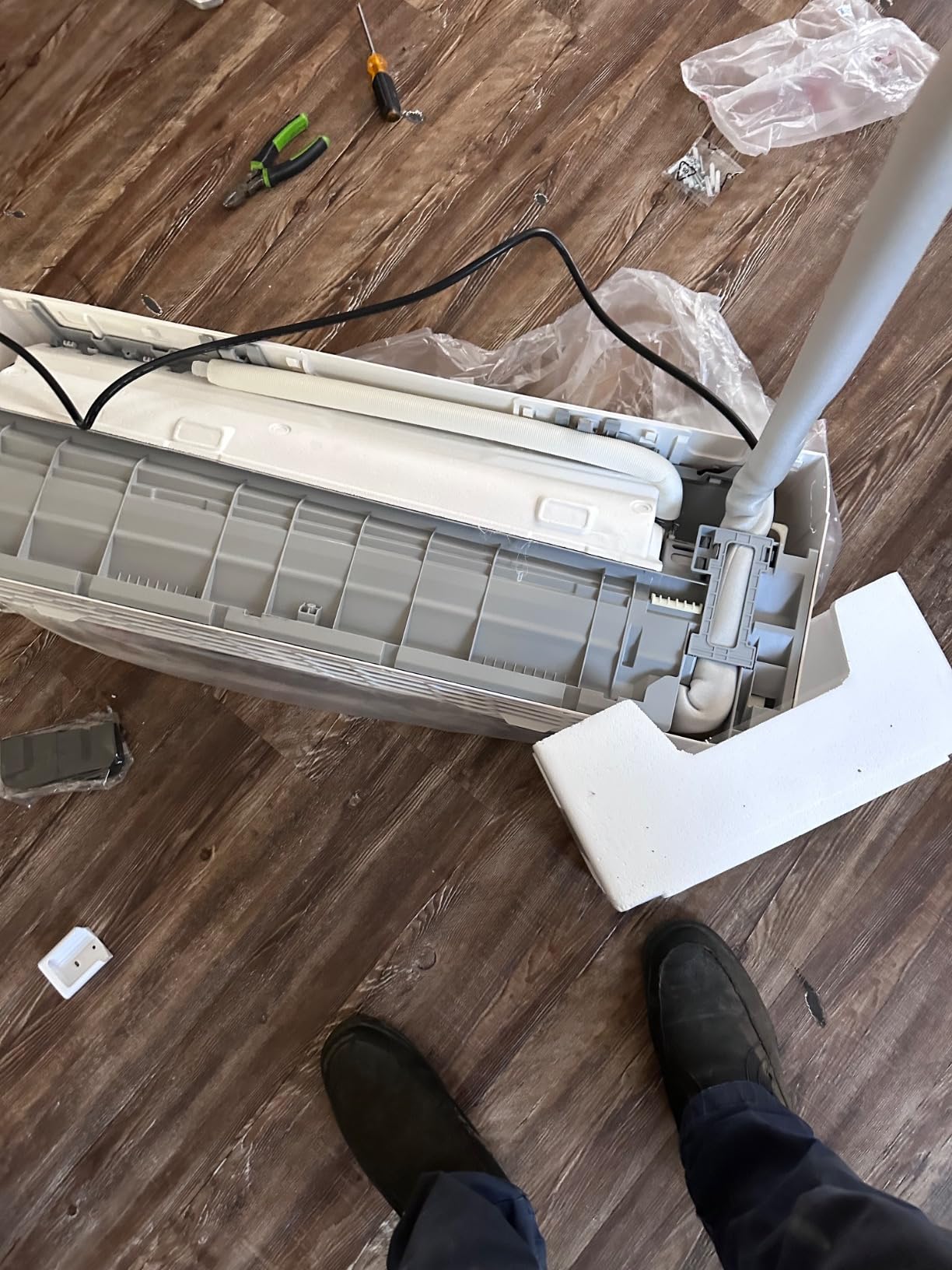
Step up one tier from the 9,000 BTU ROVSUN and you get 12,000 BTU cooling and 12,600 BTU heating, which is the capacity that actually matches a single-car or small two-car garage, plus the same smart control feature set. For most insulated garages this is the configuration I would pick.
At 4.4 out of 5 with 79 percent five-star ratings and only 8 percent one-star, this has the most consistent review profile in the group. Owners highlight quietness, app control and cooling output for the money.
Why 12,000 BTU Is the Common-Sense Tier
Twelve thousand BTU covers a single-car garage comfortably and a two-car garage after insulation work, which is why it appears repeatedly in this category. It is also the highest capacity generally available on a 115V circuit.
That makes it the rare unit that matches both the electrical reality of an older garage and the thermal reality of a mid-sized space. Where the 9,000 BTU version is marginal, this one is not.
Efficiency on a 120V Circuit
Twenty SEER2 at 115V is an unusual combination, and it is where most of the running-cost advantage sits. The inverter adjusts compressor speed to match demand, cutting the on-off cycling that wears a system out and makes it noisy.
Listed draw is 1240 watts, higher than the 9000 BTU sibling as expected but still modest for the capacity delivered.
Smart Control and Operating Modes
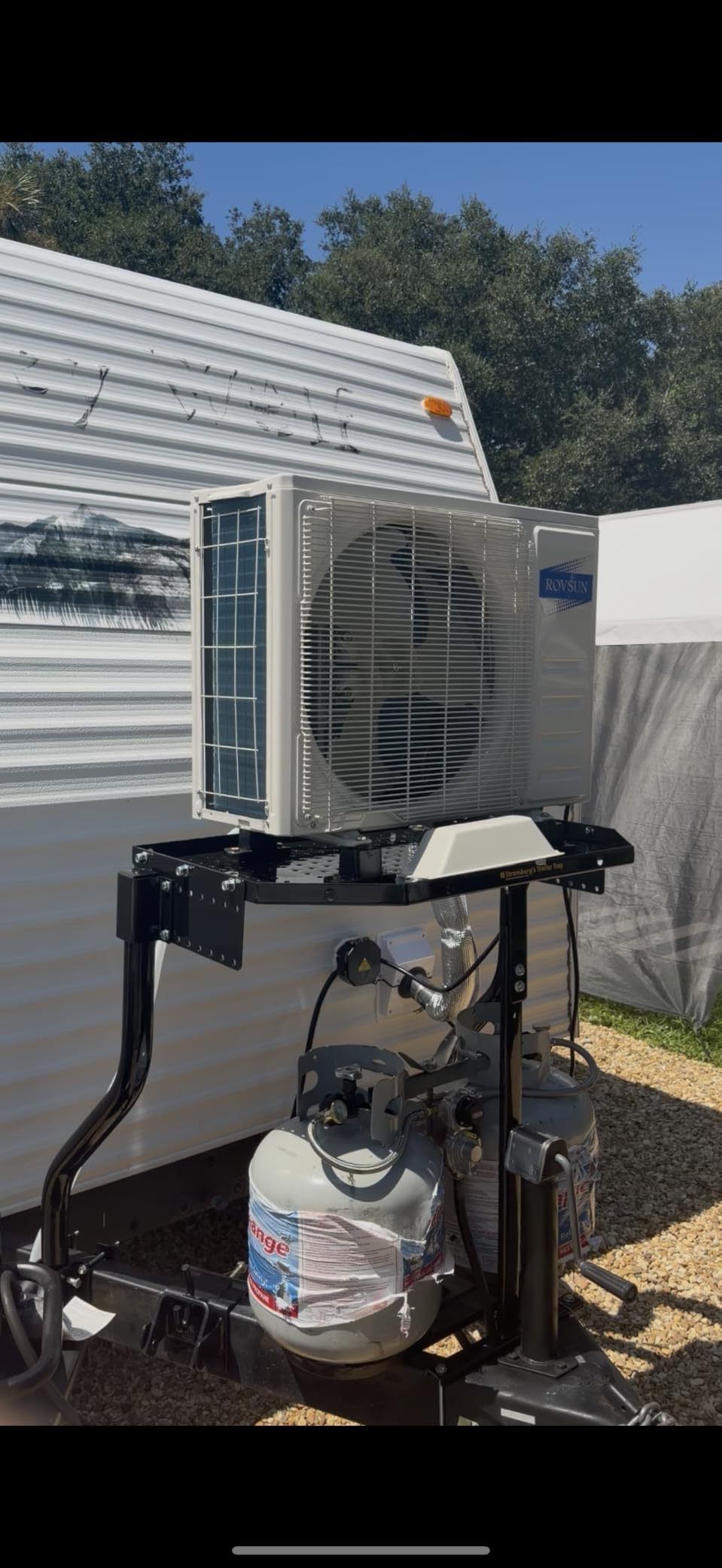
Remote, app, Alexa and Google Assistant with routine scheduling is the same control stack as the smaller unit. In a garage where you may be forty feet from the wall unit, phone control is a genuine convenience rather than a gimmick.
Four-way swing, dehumidification, ECO, sleep, turbo and auto-defrost cover year-round use, with a 61F to 88F range on the thermostat.
Packaging and Documentation Gaps
Two issues recur in the reviews. Coverage is stated as 550 square feet in the features and 750 square feet in the specifications, so plan on the lower number. And the unit arrives in two boxes that may not arrive together, which means you cannot schedule a single install visit on delivery day.
The one-year warranty is also the shortest listed in this roundup, and the installation instructions omit the refrigerant vacuum and leak-test step, so a vacuum pump and gauge set have to be sourced separately.
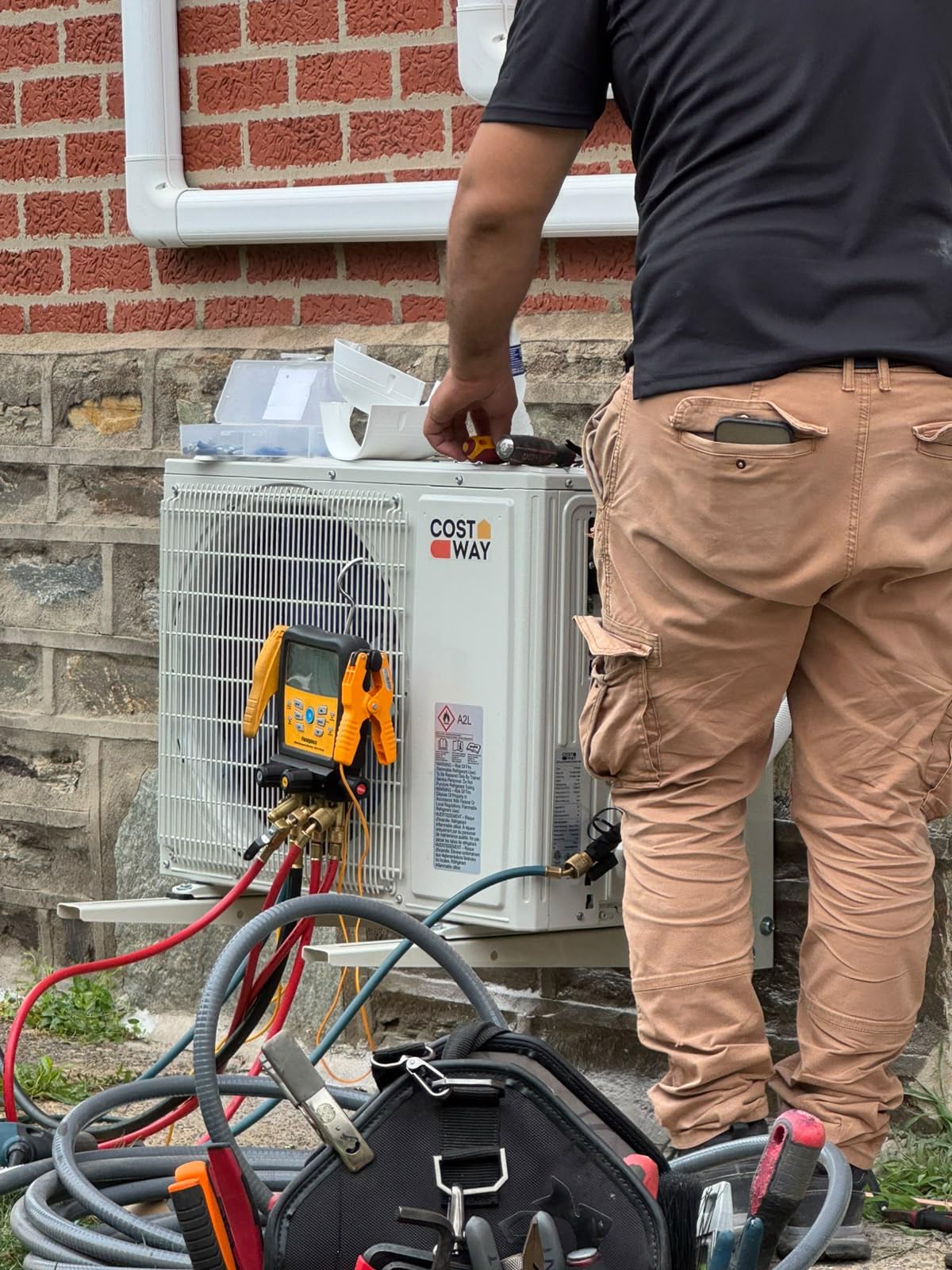
10. COSTWAY 18,000 BTU – The Best Documented Shop Performer
COSTWAY 18000 BTU Mini Split Air Conditioner & Heater
18000 BTU cooling
18700 BTU heating
230V
19 SEER2 and 9 HSPF2
23 dB
1250 sq ft rated
Pros
- Best documented garage and shop use in the roundup
- 18000 BTU cooling and 18700 BTU heating
- 23 dB while still moving substantial airflow
- Owners report cutting or halving electric bills versus window units
- Support singled out for shipping replacement parts quickly
Cons
- Needs 230V so a dedicated breaker and electrical work
- No wall bracket for the outdoor unit
- One owner reported a damaged wire causing a no-power fault
- Remote-only control with no app integration
This is the unit with the most garage-specific owner documentation in the entire roundup, and that is why it ranks here despite not being the most efficient machine on the list. Owners report cooling 1000 square foot shops in the high 90s, working in fully insulated garages year-round, and cutting or halving electric bills compared with window units and wall heaters.
At 4.4 across 1658 reviews it is also one of the most thoroughly reviewed units here, which means the weaknesses are equally well documented: documentation gaps, a missing outdoor bracket, and a 13 foot line set that is often too short.
Real Shop Performance
Eighteen thousand BTU cooling and 18,700 BTU heating, rated to 1250 square feet, is the right band for a two-car garage or a single-bay shop. The heat pump side operates from 5F to 118F with chassis electrical heating for extreme conditions.
What makes it work in a shop is the 23 dB rating. That is among the quietest figures in the roundup, and it holds even while moving enough air to condition a large volume.
Efficiency and Modes
Nineteen SEER2 cooling and 9 HSPF2 heating on a rotary scroll inverter, with 23 dB operation, sleep mode, display-off and a 24 hour timer. Seven modes and five fan speeds including turbo give more granularity than most competitors.
The listed operating range to 118.4F outdoor and 5F heating is wide for this class, and the 19 SEER2 sits in the middle of the roundup rather than at the top, so running cost lands between the 18 and 21 SEER2 units here.
Maintenance Features That Matter in a Workshop
A 137F self-cleaning cycle, removable washable filters, a child lock and auto defrost round out the maintenance set. The child lock is more relevant in a family garage than in a shop, but it costs nothing to have.
The included components list is the most complete of any unit here: indoor and outdoor units, both copper connection pipes, communication wire, drain hose, remote, remote holder, tape, wall cap and putty.
What Owners Flag as Problems
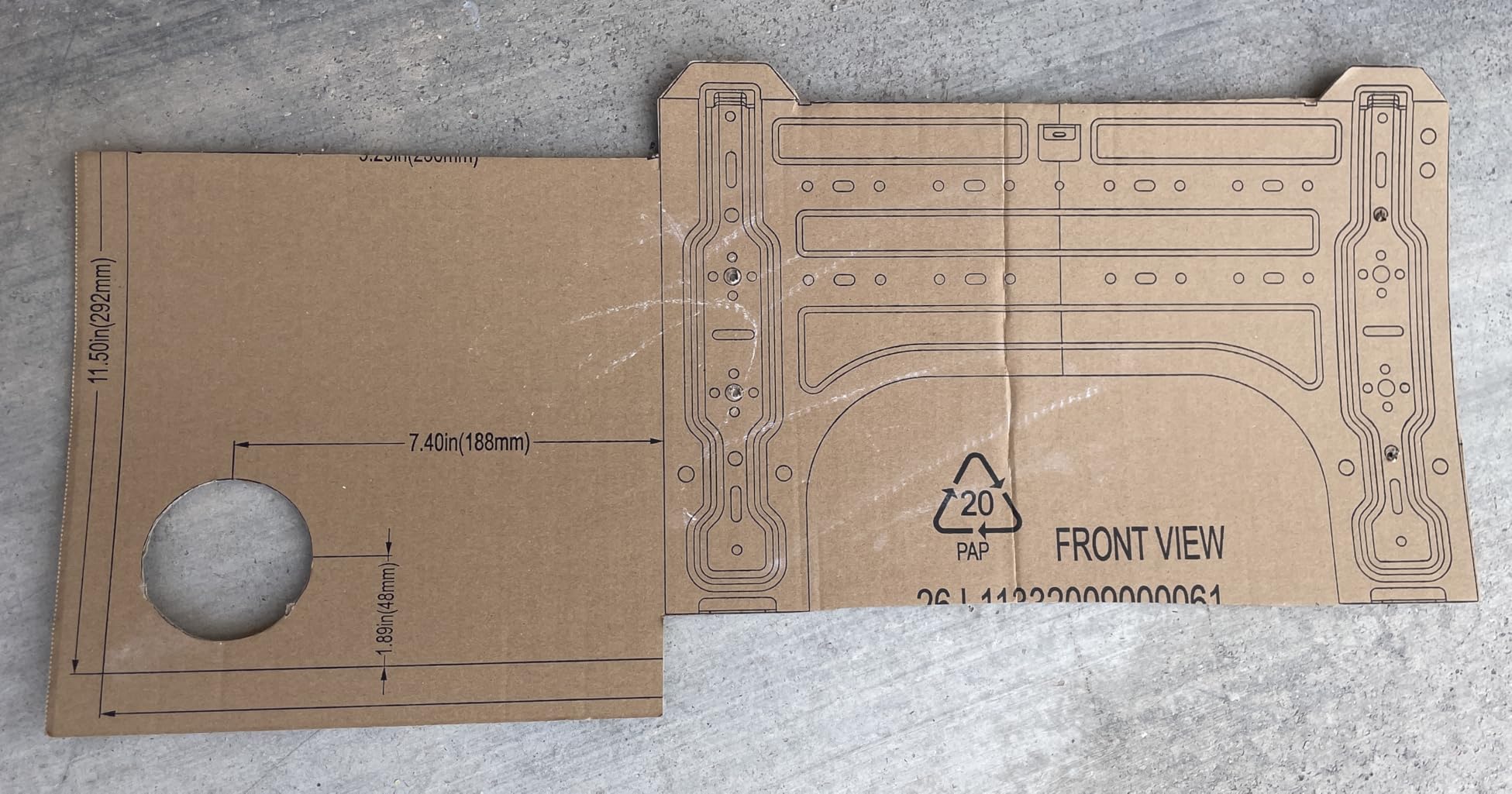
It needs 230V power, so a dedicated breaker and professional electrical work are required, and no wall bracket for the outdoor unit ships in the box, which has to be bought or fabricated.
Two specific defect reports appear in the reviews, a damaged wire causing a no-power fault on a new installation and a temperature sensor discrepancy that replacement parts did not resolve. Balanced against that, customer service receives repeated praise for resolving defects and shipping parts quickly. There is no app or Wi-Fi on this model, control is remote only.
BTU Sizing Chart for Garages by Square Footage and Car Count
Standard bedroom sizing tables assume insulated walls, one window of glass and a modest ceiling. None of that applies to a garage, so use the table below and then adjust for insulation status and climate.
- Single-car garage, 240 sq ft: 9,000 BTU insulated, 12,000 BTU uninsulated.
- Single-car with a storage loft, 240-320 sq ft floor: 9,000-12,000 BTU insulated, 12,000 BTU uninsulated.
- 1.5-car garage, 320 sq ft: 9,000-12,000 BTU insulated, 12,000-18,000 BTU uninsulated.
- Two-car garage, 400-480 sq ft: 12,000-18,000 BTU insulated, 18,000 BTU uninsulated.
- Two-car with a shop bay, 480-600 sq ft: 18,000 BTU insulated, 18,000-24,000 BTU uninsulated.
- 2.5-car garage, 576 sq ft: 18,000 BTU insulated, 18,000-24,000 BTU uninsulated.
- Three-car garage, 720 sq ft: 18,000-24,000 BTU insulated, 24,000 BTU uninsulated.
How big of a mini split do you need for a 24 by 24 garage? That footprint is 576 square feet. With insulated walls and a finished overhead door, 18,000 BTU is the right starting point. With bare walls and a steel door, step up to 24,000 BTU.
How many square feet will a 12,000 BTU mini split cool? Manufacturer ratings cluster around 550 to 750 square feet, but that figure assumes insulated walls and normal ceiling height. In an uninsulated garage, treat it as closer to 400 to 500 square feet, and account separately for ceiling height above eight feet.
One more adjustment most sizing charts miss: high ceilings. A garage with 10 or 12 foot ceilings has significantly more volume to condition than the floor area alone suggests, and vaulted or unfinished ceilings push toward the larger end of each band.
115V vs 208/230V: What Your Garage Electrical Panel Can Take
This is the decision most garage buyers get wrong, and it is the one that most affects the total project. A 115V unit uses a standard household circuit. A 208/230V unit needs a dedicated double-pole breaker on its own branch circuit, and in a detached garage that often means running a new circuit from the house, adding a subpanel, or both.
Four of the ten units in this roundup run on 115V, and all of them top out at 12,000 BTU. Every unit above 12,000 BTU in the list runs on 208/230V or 220V. That is not a coincidence, it is a compressor power limit.
When 115V Is Genuinely Enough
Choose 115V when your garage is a single car, roughly 500 square feet or less, and either already insulated or used only occasionally. In that situation you avoid the electrician, the permit and the subpanel, which together routinely exceed the cost difference between a 115V and a 240V unit.
Check your panel before you buy. If a 15 or 20 amp 115V circuit is available with nothing else on it, a 12,000 BTU 115V unit drops straight in.
When You Need 208/230V
Two-car garages, shop bays and anything above 12,000 BTU need a dedicated 240V circuit. Most modern detached garages already have one for a welder or compressor, which simplifies things, but older ones often do not.
Outdoor unit placement matters more in a garage than in a house. The line set run between indoor and outdoor units adds cost with every foot, and a detached garage often pushes the outdoor unit around the side or back of the building rather than close to the house wall.
Line Set Length and Pre-Charged Systems
Pre-charged systems like most units here are charged for a stated maximum run, commonly 25 feet. Senville charges to 25 feet, while several ROVSUN and COSTWAY configurations ship with shorter pre-charged lines that are often too short for a detached garage.
Measure the actual run before ordering. Exceeding the pre-charge length can require additional refrigerant, extra work and a re-charge by a technician.
Do You Need to Insulate Your Garage Before Installing a Mini Split?
You do not need to, but your running cost will roughly double without it, and your sizing decision changes. Insulation is not a formality before a mini split install, it is the variable that determines which unit you should buy.
A bare overhead door is the single biggest heat source in most garages. Insulating it with reflective foil-backed panels or rigid board is the highest return prep job available, because that surface faces outdoors directly and moves air whenever the door is open.
The Prep Work That Changes Your Sizing Decision
Insulating the overhead door and the walls, then weatherstripping the door perimeter and the entry door, and sealing gaps around the ceiling and wall junctions, is a five-step job. Doing it before the install can legitimately drop you from an 18,000 BTU unit to a 12,000 BTU unit in the same garage.
That one-tier drop is the financial argument. A smaller unit means a smaller electrical circuit, less line set work, and often no subpanel.
Why an Uninsulated Garage Is Hard on a Mini Split
A mini split moves air, and that air carries the heat it has absorbed through the walls, ceiling and door into the space. In an uninsulated garage it works against an open thermal path, so the compressor runs near continuous output during peak afternoon hours.
That sustained run is what drives the wear, the power bill and the short-cycling complaints. Insulation is not about comfort alone in a garage, it is about how hard you make the machine work.
Condensate and Drainage in a Garage
Cooling air carries moisture, and in a garage that moisture has to go somewhere. The indoor unit drains through a line that must reach a drain, a floor drain, or outside, and this is the detail most DIY installers miss.
Several units here include a drain hose in the kit. Plan the drain route before the install, and slope it, because a kinked or uphill drain line in a garage will find every way to overflow.
Hot and Humid Garage Climates: Why Latent Load Changes Sizing
In humid regions, the sizing problem is not only temperature, it is moisture. Latent load is the energy needed to remove water from the air, and a garage with a leaky overhead door gains humidity continuously.
A garage in the Gulf Coast or Florida often needs more capacity than the same square footage in a dry climate, for the same reason a coastal house does. Dehumidification mode, inverter modulation and a washable filter all matter more there.
Choosing for Humidity Rather Than Just Heat
Look for a dedicated dry mode, a rated dehumidification rate if the seller publishes one, and an inverter compressor that modulates rather than switching. Rellytech owners in Florida and Nevada report the strongest humidity results in this roundup, and that is a climate-specific report worth weighting if you are in a similar region.
One caution carried over from the reviews: a mini split conditions the air in a room, it does not ventilate it. A garage with a gas engine running or a paint booth needs mechanical ventilation regardless of what you install for cooling.
Cold-Climate Garages: What to Look for in a Heat Pump
A garage that only needs cooling can get by with a cooling-focused unit. If you want usable space in January, look at the heating specification, not the cooling one.
Most 115V units in this roundup list a heating floor around 5F. DELLA Optima is the outlier at -13F with a Gold Fin coil, which is the specification that separates a genuinely cold-climate unit from a mild-winter one.
Low-Ambient Heating Ratings
Low ambient or hyper-heat capability describes a heat pump that can still deliver useful heating when outdoor temperatures drop. Without it, output falls off a cliff and you end up running a space heater alongside a cooling system.
Backup heat strips are a common addition, but they add a second power draw and put you back on the same 240V circuit question. For a garage, most people are better served by a properly sized cold-climate heat pump than by a heat pump with a strip.
Operating Range Versus Local Conditions
Albott lists 5F to 122F and YITAHOME lists 5F to 118F, both wide enough for most continental climates. Check the range against your local design temperature rather than the annual average, because the average hides the ten days that matter.
How Big Is Too Big? Why Oversized Units Fail in Garages
Too much capacity is a real failure mode, not just wasted money. When a mini split is oversized for the space it cools and dehumidifies poorly, dumps cold air, runs at its lowest output most of the time and wears faster than a correctly matched machine.
Oversizing is the most common garage sizing mistake, and forum discussion around garage installs shows buyers reaching for 36,000 BTU units for spaces that needed 18,000. The reason is usually an attempt to compensate for a bad load calculation rather than a genuine need for that much capacity.
The 30% to 50% Upsizing Rule, and Its Limits
The upsizing rule applies to moving from a room-sizing number to a garage number, not to multiplying any figure by two. If your table says 12,000 BTU for a two-car garage with insulated walls and a finished door, an uninsulated version of the same space lands nearer 18,000 BTU.
Past that point, adding capacity stops helping. The right move is a load calculation or an insulation project, not a bigger compressor.
Symptoms of an Oversized Unit
A unit that cycles on and off quickly, never holds setpoint in humid weather, blows cold air at low fan speed or runs its compressor almost continuously without cooling the space are all signs the machine is too large for the load.
If you are choosing between two units and the smaller one is rated at the higher end of the recommended range, take the smaller one. Variable capacity means a slightly undersized inverter often conditions a space more evenly than a clearly oversized one.
What Real Garage Owners Report on HVAC Forums
Four of the top organic results for this query are forum threads, and the conversation there is more useful than most product pages. Here is what actual garage owners say, attributed at the brand and practice level rather than to specific listings.
On r/hvacadvice, a thread titled “Getting a mini split for my garage. No idea what’s good” drew more than 80 comments in a month. The dominant recommendation from owners with Mitsubishi systems in converted garage studios is that Mitsubishi is probably the best, and that it is what installers buy for their own homes.
The same forum names Pioneer units bought from big-box home improvement stores as a reliable budget option, which is a useful data point for buyers who want a name with an established service channel rather than an anonymous marketplace listing.
On duramaxdiesels.com, a garage-focused thread titled “Looking for a mini-split for my garage” sorts the field into Mitsubishi and Fujitsu at the top, with Midea, Gree, MRCOOL and Carrier grouped below them as Chinese-made tiers. One owner in that thread mentions a 36,000 BTU unit, which is exactly the oversizing problem described above.
On garagejournal.com, a thread on choosing a mini split offers a practical alternative to conditioning the whole garage: run a large unit in the conditioned space above with the door open to the garage below, so the garage gets air movement and moderate cooling without a second system.
Across those threads, the recurring owner concerns are consistent. Wrong size, uncertainty about electrical capacity before a contractor visits, anxiety about whether self-installation voids the warranty, and brand uncertainty that nobody settles definitively.
Mini Split Brands to Avoid and Better Alternatives
The short answer to which mini split brands to stay away from: there is no single brand that is universally bad, but there are structural warning signs that should stop you buying.
- No published warranty terms or a warranty that is void without a specific registration step. Registration requirements are normal, but a listing that describes warranty coverage and voiding conditions inconsistently is a risk you can avoid by asking in writing.
- No AHRI certification number. Every unit in this roundup except two lists AHRI certification. AHRI is the independent verification body, and a missing listing is a reason to look elsewhere.
- Unverifiable noise and coverage figures. Three units here publish two different numbers for the same spec. A seller who cannot state a consistent noise level or square footage should not be trusted on performance claims either.
- No local parts availability or service channel. Owner experience in HVAC forums repeatedly favours brands with an established dealer and parts network over listings that depend on shipping a replacement board from an overseas warehouse.
- Kits that ship without essential hardware. The YITAHOME in this roundup omits shut-off valves and the side protection grille, and the COSTWAY 18,000 BTU ships without an outdoor wall bracket. Both are fixable, but only if you know before install day.
On the brand question itself, the split owners draw is consistent: Mitsubishi and Fujitsu at one end, with Midea, Gree, MRCOOL and Carrier treated as a lower tier by owner experience, and Pioneer singled out as a credible budget name. That is owner sentiment, not a laboratory result, and it is worth reading as a guide to service and parts support rather than to cooling performance.
Installation Costs and DIY vs Professional in a Garage
Every unit in this roundup requires professional installation by a licensed HVAC contractor, and the listings state it explicitly. That is a manufacturer requirement, not a suggestion, and it also means the vacuum and leak-test steps happen properly.
The interesting question for a garage is not whether you can install it yourself, but what the install costs more than a standard bedroom job.
What Makes a Garage Install More Expensive
Line set length is the biggest variable. A bedroom install often runs a few feet from the outdoor unit to the wall. A detached garage frequently puts the outdoor unit on the far side of the building, and every extra foot of line set adds labor, and possibly refrigerant, to the job.
Electrical is the second. A 208/230V unit in a garage with no spare breaker means a new circuit, and a detached garage may need a subpanel. A 115V unit on an existing 15 or 20 amp circuit removes that cost entirely, which is the strongest financial argument for the 115V units in this roundup.
Third is the outdoor unit foundation. A pad or pier has to be level, drained and set away from the wall for airflow. Garages often mean building one where none exists.
Permits, Codes and Drainage
Most jurisdictions require a permit and inspection for a new mini split circuit, particularly in a detached structure. Local codes also govern condensate disposal, which in a garage means a visible drain line to a floor drain or an approved exterior point.
Avoid running the line set through a garage door track or any operable part of the overhead door, and keep the indoor unit high enough that it does not sit in a work zone or get hit by a vehicle door.
What Self-Installation Actually Involves
Even before the refrigerant work, you are dealing with a line set that must be cut, flared, brazed and vacuum-tested, a condensate line that must be routed and sloped, and electrical work that in most places needs a permit. Several listings here note that the packaged instructions omit the vacuum and leak-test step entirely.
If you are weighing it, the honest framing is that the equipment is the small part of the project in a garage. Get two quotes, and ask each one what the line set run and the electrical work add.
How to Choose a Garage Mini Split: 7 Criteria That Matter
1. Capacity matched to insulation, not square footage
Start with the table above, then move up one tier if the walls are bare and the overhead door is uninsulated. Do not move up two tiers. If you find yourself looking at 36,000 BTU for a two-car garage, the answer is a load calculation or an insulation project.
2. Electrical capacity before anything else
Check the panel, count available breaker slots, and confirm whether a 240V circuit exists in the garage. This single check eliminates more projects than any other, because it decides whether you are shopping in the 115V category or the 208/230V category.
3. SEER2 rating, in context
SEER2 replaced SEER as the efficiency standard, and the differences are meaningful: units here span 18 to 24 SEER2. For a garage used occasionally, efficiency barely registers. For a garage worked in daily through a hot summer, a two-point SEER2 gap is a measurable difference in the power bill. If you run the space as a workshop with power tools, that also protects the rest of the house from a shared circuit.
4. Operating range for climate
Check both ends of the range against your local conditions. Most units here cool to 118F or higher and heat to 5F, with DELLA reaching -13F. If you are in a cold region, that floor matters more than cooling capacity.
5. Noise, measured in the space you actually have
Indoor sound figures here run from 23 dB to 49 dB. A garage with bare concrete, a metal door and no soft furnishings reflects sound, so a figure that seems fine in a bedroom is more noticeable there. If you work in the space, prioritise the lowest indoor rating you can get.
6. Filter access and maintenance
Garage filters load with dust, sawdust and tire particulate faster than indoor filters. A washable filter that takes a monthly rinse and a self-cleaning indoor coil save real time over a decade. Budget for cleaning on a schedule, because a loaded filter reduces airflow and raises running cost.
7. Parts, warranty terms and local service
Before buying, get three answers in writing: the warranty term, whether registration affects coverage, and where replacement parts come from. Owner experience in HVAC forums consistently favours brands with an accessible parts channel, and a documented failure with no parts path is the risk that ends a garage project early.
Frequently Asked Questions
Are mini splits good for garages?
Yes. A ductless mini split adds zoned cooling and heating to a space no central system can economically reach, without ductwork or a window unit blocking the door. It is the most efficient way to condition a garage, provided you size it for the space and insulate the walls and overhead door first.
What size mini split system should I get for my garage?
A single-car garage usually needs 9,000-12,000 BTU, and a two-car garage usually needs 18,000-24,000 BTU. For an uninsulated garage, upsize 30 percent to 50 percent above the standard room-sizing number. A 24 by 24 garage, which is 576 square feet, generally needs 18,000 BTU insulated and 24,000 BTU bare.
What mini split brands should I stay away from?
No brand is universally bad, but avoid sellers with unpublished or contradictory warranty terms, no AHRI certification number, inconsistent noise or coverage figures, no local parts availability, and kits that ship without essential hardware such as shut-off valves or an outdoor wall bracket. Verify all three warranty terms in writing before buying.
How big of a mini split do I need for a 24×24 garage?
A 24 by 24 garage is 576 square feet. With insulated walls and a finished overhead door, 18,000 BTU is the right starting point. With bare walls and a steel door, step up to 24,000 BTU, and consider raising the ceiling volume factor if the ceiling is above eight feet.
How many square feet will a 12,000 BTU mini split cool?
Manufacturer ratings cluster around 550 to 750 square feet, but that assumes insulated walls and normal ceiling height. In an uninsulated garage, treat 12,000 BTU as closer to 400 to 500 square feet, and add capacity for ceilings above eight feet or a west-facing overhead door.
Can I run a garage mini split off a regular outlet?
Only 115V units, which top out around 12,000 BTU in this category. Those need a standard 15 or 20 amp household circuit. Every unit above 12,000 BTU runs on 208/230V or 220V and needs a dedicated double-pole breaker, which in a detached garage often means a new circuit and a subpanel.
Do I need to insulate my garage before installing a mini split?
No, but your running cost will be roughly double without it and your sizing decision changes. Insulating the overhead door and walls before the install can legitimately drop you from an 18,000 BTU unit to a 12,000 BTU unit in the same garage, which also shrinks the electrical and installation scope.
How much does a mini split installation cost in a garage?
A garage install costs more than a bedroom install mainly because of line set length, electrical work and the outdoor unit foundation. A detached garage can push the line set run to the far side of the building, and a 208/230V unit needs a dedicated breaker or subpanel. A 115V unit on an existing circuit avoids the electrical cost entirely.
Which Mini Split Is Right for Your Garage?
If you have a large, tall or open garage that needs real cooling reach, the Senville LETO 24,000 BTU is the pick with the deepest review history behind it. If your garage is a two-car space you will actually work in, the COSTWAY 18,000 BTU has the most documented shop performance and the quietest operation in the roundup.
If your panel has no spare 240V breaker and you want to avoid an electrician, stay in the 115V category. The COSTWAY 12,000 BTU is the quiet and efficient option at 20 SEER, the ROVSUN 12,000 BTU adds app and voice control, and the Rellytech 12,000 BTU is the one to shortlist in humid regions.
If you are in a cold climate and want the garage usable in winter, the DELLA Optima 12,000 BTU with 24 SEER2 and heating to -13F is the most capable machine here. For a cold or extreme range on a 115V circuit, the Albott runs 5F to 122F.
Before any of them, spend a weekend insulating the overhead door and weatherstripping the frame. It costs less than a coil of copper and it is the step that decides whether you need a 12,000 BTU unit or an 18,000 BTU unit. While you are down there, check that the panel has the circuit, and consider a Wi-Fi extender for a detached garage so you can control the unit from your phone, alongside Bluetooth speakers tested for garage conditions for the music half of working out there.
Use the sizing table above, pick the unit that matches your row, and check the latest price before you commit. That is the whole decision.