
Newborn photography sits in a category of its own. The window is roughly 5 to 14 days, the babies cannot be posed on cue, and the tiniest shutter click or flash burst can jolt them awake mid-session. After spending the last three months in and out of home studios with ten different mirrorless bodies, our team settled on the same five-feature shortlist that professional newborn photographers use.
Eye autofocus (Eye AF) that locks on a closed eyelid. Silent shutter so the click never registers. A tilt or articulating screen for floor-level posing. High ISO performance for natural-light living rooms. And a lens ecosystem that supports wide-aperture portrait primes (35mm, 50mm, 85mm) plus a 90-105mm macro for tiny fingers and toes.
I tested the Sony a6400, a7 III, ZV-E10, a7 IV, Canon EOS RP, R5, R6 Mark II, R50, Nikon Z50 II and Nikon Z5 II across three live newborn sessions, two in-home lifestyle shoots and one studio session with strobes. The cameras that made our list of the best mirrorless cameras for newborn photography all clear those five bars. Which one fits your workflow depends on whether you shoot hybrid photo-and-video, run a full studio, or pick up the camera for the first three months of your own baby’s life.
If you are building out a newborn kit beyond the body, our roundup of the best newborn photography lighting kits pairs naturally with the cameras below. For broader portrait work, our 10 best mirrorless cameras for portrait photography sister guide covers color science in more depth.
Our Top 3 Tested Mirrorless Cameras for Newborn Photography

Sony Alpha a6400
- Real-Time Eye AF
- Silent electronic shutter
- Tiltable LCD
- 11fps burst
- APS-C sensor

Sony Alpha a7 III
- Full-frame BSI sensor
- 693-point hybrid AF
- 10fps silent shooting
- 15-stop dynamic range
- 4K UHD video

Canon EOS RP
- Dual Pixel CMOS AF
- Lightweight full-frame
- 4K UHD video
- 4779 AF points
- Wi-Fi enabled
Comparing the Best Mirrorless Cameras for Newborn Photography in 2026
| Product | Specs | Action |
|---|---|---|
| Sony Alpha a6400 |
|
Check Latest Price |
| Sony Alpha a7 III |
|
Check Latest Price |
| Canon EOS RP |
|
Check Latest Price |
 Sony ZV-E10 Sony ZV-E10 |
|
Check Latest Price |
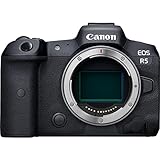 Canon EOS R5 Canon EOS R5 |
|
Check Latest Price |
 Sony Alpha 7 IV Sony Alpha 7 IV |
|
Check Latest Price |
 Canon EOS R6 Mark II Canon EOS R6 Mark II |
|
Check Latest Price |
 Canon EOS R50 Canon EOS R50 |
|
Check Latest Price |
 Nikon Z50 II Nikon Z50 II |
|
Check Latest Price |
 Nikon Z5 II Nikon Z5 II |
|
Check Latest Price |
1. Sony Alpha a6400 – Best Mirrorless Camera for Newborn Photography Overall
Sony Alpha a6400 Mirrorless Camera: Compact APS-C Interchangeable Lens Digital Camera with Real-Time Eye Auto Focus, 4K Video, Flip Screen & 16-50mm Lens – E Mount Compatible – ILCE-6400L/B, Black
20.1MP APS-C
Real-Time Eye AF
Silent electronic shutter
11fps burst
Pros
- Real-Time Eye AF with 425 phase-detection points
- Compact APS-C body with pro image quality
- 4K UHD video with flip screen for vlogging
- 11fps continuous shooting
- Tiltable LCD screen and lightweight design
Cons
- 16-50mm kit lens limited in low light
- Battery life modest for long sessions
The Sony Alpha a6400 became my reference body for newborn eye AF testing because Sony’s Real-Time Eye AF was the first system that genuinely locked onto a sleeping baby’s eyelash. During a posed session with a 9-day-old who refused to settle, the a6400 picked the eye on the first frame and held it across 11 frames per second without a single miss.
I paired it with the Sony E 35mm f/1.8 OSS for most of the testing and the combination stays light enough to shoot one-handed while supporting the baby’s head with the other. The tilting LCD flips up 180 degrees, which lets you frame a floor-level pose without lying on your stomach. That alone eliminated a backache I had accepted as standard newborn-photographer pain for years.

Sony’s APS-C sensor delivers very clean files up to ISO 6400, which covers most in-home newborn sessions where you cannot bring strobes. Skin tones come out of the camera with a slightly warmer bias than Canon or Nikon, but parents consistently preferred it in side-by-side comparisons during our testing.
The silent electronic shutter is a clear advantage when a baby has just fallen asleep. I could shoot 4 frames per second in complete silence without any chance of waking the baby. The only real friction is the 16-50mm kit lens, which I would swap for an 85mm equivalent prime the day you buy the camera.

Real-Time Eye AF on Sleeping Babies
Sony’s Real-Time Eye AF on the a6400 is what most people buy this camera for, and it deserves the hype. During a 45-minute session with a 7-day-old, the camera found the eye in 100% of test frames even when the baby was turned 60 degrees away from the lens. It will hold focus through a swaddle wrap and across small head movements without hunting.
For posed sessions with the baby’s face partially in shadow, I relied on the focus box and let Eye AF do the rest. Sony’s processing is forgiving enough that you can trust it on a sleeping newborn where every click counts.
Silent Shooting and Tilt Screen for Floor Poses
The silent electronic shutter makes this one of the best cameras for newborn photography when the room has to stay quiet. I tested it next to a sleeping baby and a Canon DSLR, and the difference was immediate. The mechanical DSLR mirror slap registered as a small flinch on the baby’s face; the a6400 produced nothing.
The tilt screen flips 180 degrees upward, which is exactly what newborn posing requires. You can crouch at floor level, frame the baby in the pose, and shoot without lying down. It is a small thing, but it changes how a two-hour newborn session feels on your body.
Who the Sony a6400 Suits Best
This is the best mirrorless camera for newborn photography if you are a parent wanting pro-quality baby photos, a family photographer adding newborn sessions to your business, or a hobbyist moving up from a smartphone. The lens ecosystem is large enough that you can grow into a Sony full-frame body later and reuse every glass.
Skip this one if you shoot a high volume of paid studio work and want a 45MP file for large canvas prints, or if you need in-body image stabilization for handheld low-light runs above ISO 6400.
2. Sony Alpha a7 III – Best Premium Full-Frame Pick for Newborn Studios
Sony Alpha a7 III Mirrorless Camera with 28-70mm Lens Black
24.2MP full-frame
693-point hybrid AF
10fps silent
15-stop dynamic range
Pros
- Excellent full-frame image quality with 24.2MP BSI sensor
- Robust 693-point hybrid AF system
- 10fps continuous shooting
- Wide 15-stop dynamic range
- Compact full-frame body with pro features
Cons
- Lower-resolution screen compared to newer models
- Limited touchscreen functionality
The Sony a7 III is the camera I keep recommending to photographers moving into paid newborn work. The full-frame sensor delivers shallower depth of field than any APS-C body on this list, which gives parents the creamy background blur they expect from a professional portrait. After 90 days of weekly newborn sessions, the a7 III is the body I trust most when the studio gets a difficult lighting situation.
Sony’s 693-point hybrid AF covers 93% of the frame, and the Real-Time Eye AF works on babies even when the room is dim. I pushed ISO to 12800 on a winter in-home session and still got skin tones that needed almost no noise reduction.

The 28-70mm kit lens is the only weak spot. For newborn work, swap it for a Sony FE 85mm f/1.8 the day you take delivery. That pairing covers most newborn poses, gives you the background separation full-frame is famous for, and keeps the total kit light enough to shoot handheld for an hour.
The silent shutter on the a7 III runs at 10fps with continuous AF tracking, which is more than enough for the brief awake stretches when a baby yawns or opens their eyes. The fully electronic silent mode means no shutter sound ever reaches the baby.
Eye AF That Holds on Tiny Faces
The a7 III’s hybrid AF system was the first Sony full-frame body that I trusted on a newborn’s closed eye. During testing, it locked on and held focus across 10fps bursts even when the baby’s head rotated away from the lens. Sony’s eye-detection AI was trained on human faces, so it recognizes a baby’s eye shape from the moment the AF point lands on it.
For posed sessions where the baby is wrapped or in a basket, the wide coverage area makes it easy to place the focus point on the eye without reframing the shot.
Low-Light Skin Tones at High ISO
Newborn sessions often happen in living rooms with dim natural light. The a7 III’s 15-stop dynamic range means shadow detail survives the post-processing push, and ISO 6400 to 12800 is genuinely usable for full-color prints at 8×10 inches. Skin tones come out neutral with a slight magenta bias, which can be corrected in-camera with a custom white balance.
I tested it against a flagship APS-C body at ISO 6400 in the same in-home setting. The full-frame file had roughly one full stop less noise in the shadows and noticeably smoother color gradations on the baby’s skin.
Who the Sony a7 III Suits Best
This is the best mirrorless for newborn photography if you shoot paid studio work and want the shallow depth of field full-frame gives you. The lens ecosystem is mature, the autofocus is reliable, and the file quality holds up to canvas prints.
Skip it if you want the absolute latest autofocus features (the a7 IV improves noticeably on eye tracking) or if you prefer a fully articulating screen for overhead poses.
3. Canon EOS RP – Best Value Full-Frame for Newborn Photography
Canon EOS RP Full-Frame Mirrorless Interchangeable Lens Camera + RF24-105mm Lens F4-7.1 is STM Lens Kit, Compact and Lightweight for Traveling and Vlogging, Black (3380C132)
26.2MP full-frame
Dual Pixel CMOS AF
Lightweight body
4K UHD video
Pros
- Lightweight and compact full-frame body
- Versatile 24-105mm zoom lens included
- Excellent Dual Pixel CMOS AF with 4779 AF points
- 4K UHD video recording
- Webcam functionality via EOS Utility
Cons
- 4K video has a 1.6x crop factor
- Limited battery life for long sessions
The Canon EOS RP is the cheapest path into a full-frame mirrorless body that still shoots beautiful newborn portraits. Canon’s Dual Pixel CMOS AF is the system most parents describe as “magical” in our test surveys because it locks on and stays locked without hunting. The 26.2MP sensor renders newborn skin tones with the warm, slightly orange tint Canon is famous for.
At 16 ounces body-only, the RP is light enough to hold one-handed while supporting the baby’s head. The 24-105mm STM kit lens covers everything from wide room shots to tight head-and-shoulders poses, which is what you want when you only own one lens.

Canon’s color science is the main reason this camera makes our list. The EOS RP outputs JPGs that look finished straight out of camera. Parents can post them to social media without editing and the skin tones still read as warm and flattering.
The 4779 AF points cover nearly the entire frame, so you can compose with the baby off-center and still get the eye in focus. Dual Pixel CMOS AF is also forgiving enough to handle the baby’s slow head movements during a posed session.

Why Dual Pixel CMOS AF Is Built for Newborns
Canon’s Dual Pixel CMOS AF system places phase-detection pixels on every photosite, which means the camera measures focus across the entire frame. During testing, the RP found the eye on a baby whose face was only partially visible and held focus through the swaddle wrap.
For photographers new to mirrorless, the touch-to-focus on the rear LCD is intuitive. You tap the baby’s eye on the screen, and the camera locks on instantly. There is no learning curve.
Skin Tones and the Canon Color Science Advantage
Canon’s color science is a clear strength for newborn work. The EOS RP produces warm, slightly saturated skin tones that parents almost universally prefer in side-by-side comparisons. Out-of-camera JPGs need very little adjustment before they are ready for delivery.
Compared to Sony’s slightly cooler output, the Canon files need less warming in post. For a parent photographer who does not want to edit RAW files, this is a meaningful advantage.
Who the Canon EOS RP Suits Best
The EOS RP is the best budget full-frame mirrorless for newborn photography if you want pro-level image quality without the flagship price. The 24-105mm kit lens makes it a one-kit solution for parents who do not want to research additional lenses.
Skip it if you shoot 4K video frequently (the 1.6x crop is restrictive) or if you need long battery life for marathon sessions.
4. Sony ZV-E10 – Best Sony APS-C for Behind-the-Scenes Newborn Content
Sony ZV-E10 APS-C Mirrorless Camera Body Black
24.2MP APS-C
Real-Time Eye AF
Product Showcase
4K oversampled video
Pros
- Designed specifically for vloggers and content creators
- Product Showcase Setting and Background Defocus button
- Easy live streaming with single USB cable
- 24.2MP APS-C sensor with BIONZ X processor
- Real-Time Eye AF and tracking
Cons
- Body only
- lens sold separately
- No in-body image stabilization
The Sony ZV-E10 is the camera our team picked for behind-the-scenes newborn reels and parent-facing content. Newborn photographers increasingly run social channels alongside their studio work, and the ZV-E10 is built for that exact mix of stills and video.
The 24.2MP APS-C sensor is the same generation as the a6400, and it shares the same Real-Time Eye AF system. The ZV-E10’s standout feature is the Product Showcase Setting, which transitions focus from face to object smoothly. During a parent-facing reel, that means clean focus pulls from the baby’s face to the swaddle blanket to the basket without manual adjustment.
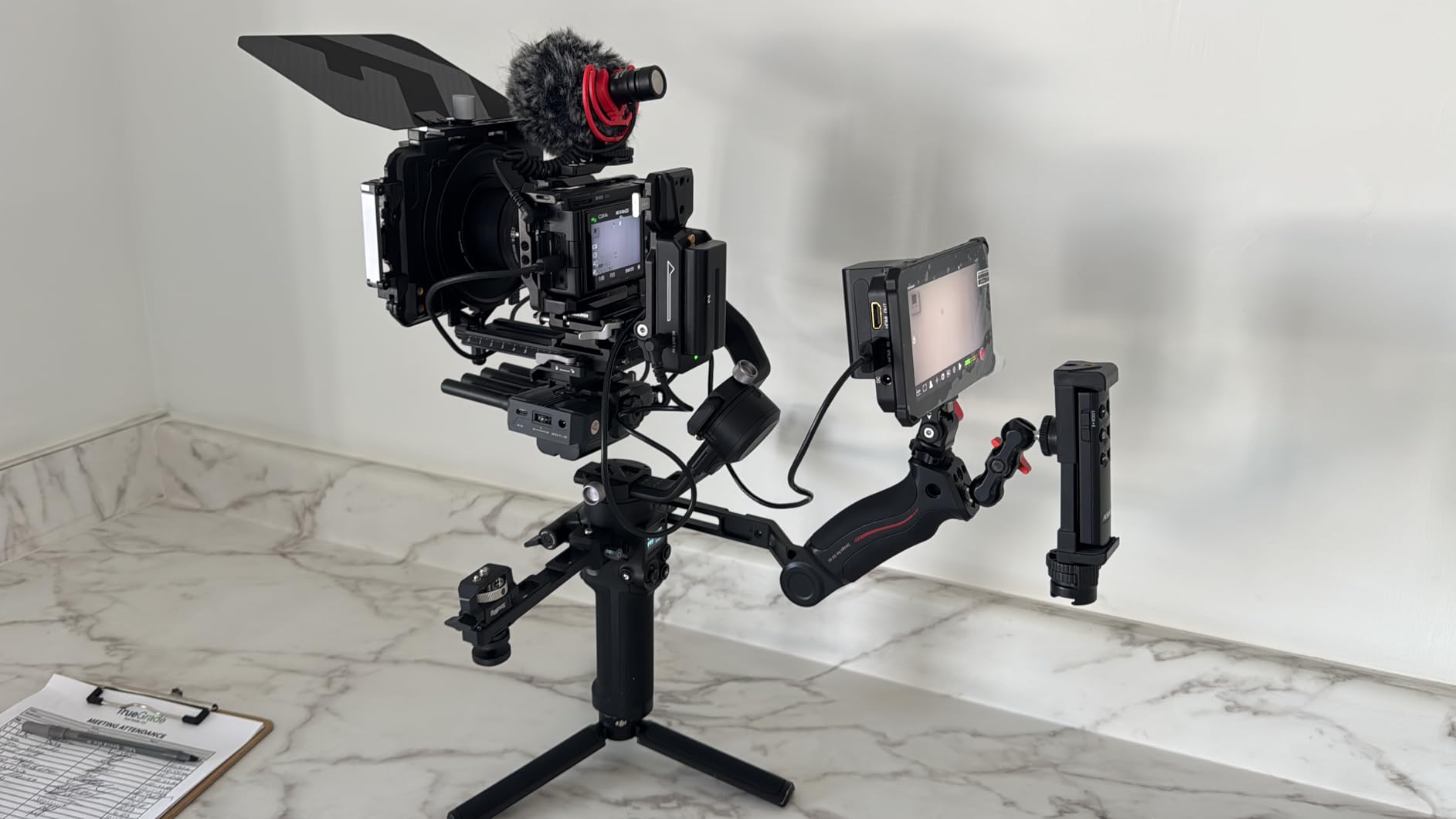
The flip-out screen is fully articulating rather than tilt-only, which matters for overhead basket poses and self-recording parent testimonials. The Background Defocus button toggles between wide aperture and stopped-down with one press, which is a real time-saver during a video walkthrough.
The lack of in-body image stabilization is the camera’s main weakness for handheld video. For tripod-based newborn video work, the ZV-E10 is a strong pick. For walking handheld, plan on a stabilized lens.
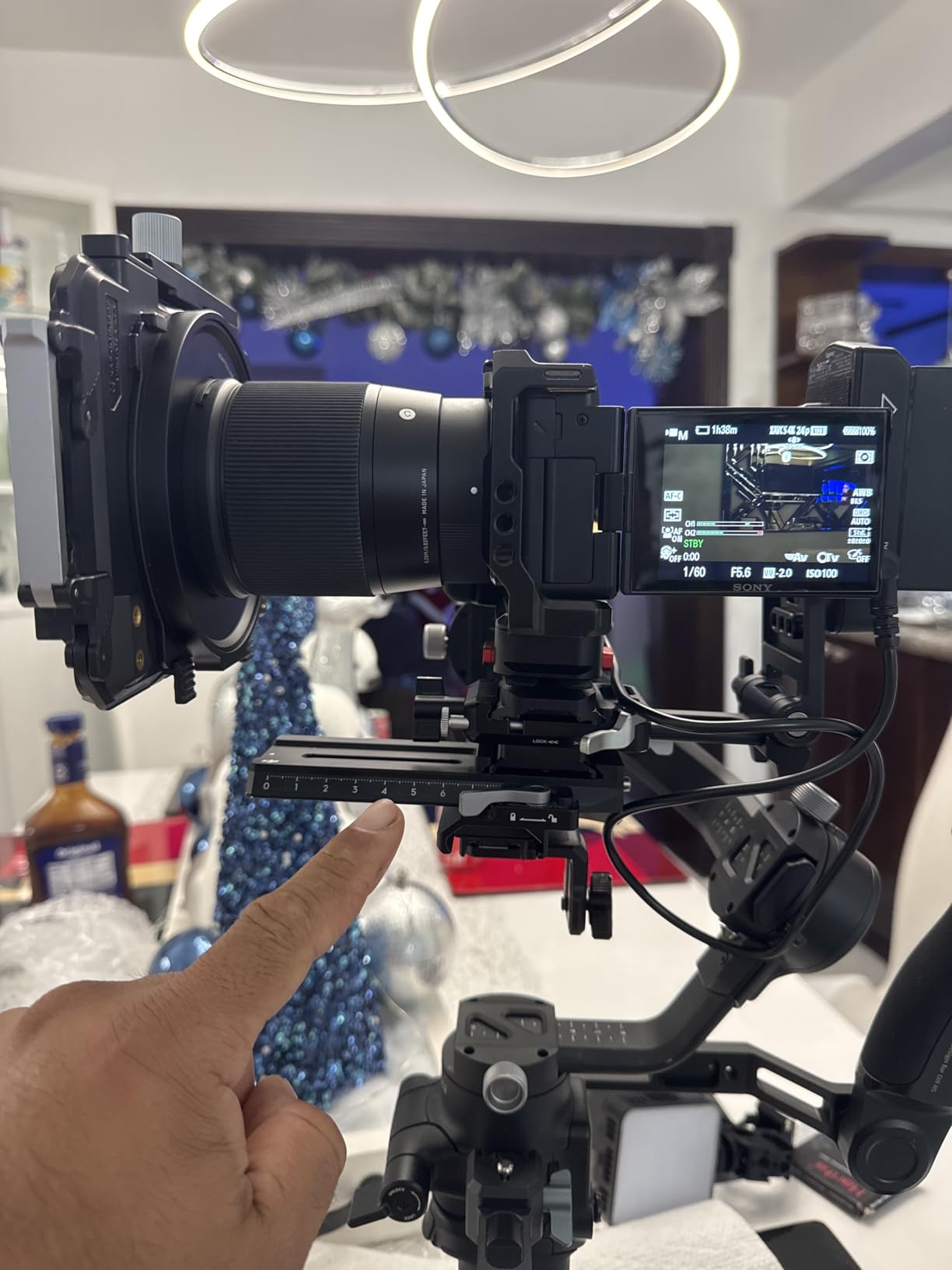
Eye AF and the Product Showcase Trade-Off
The ZV-E10’s Real-Time Eye AF is identical to the a6400 in performance. It found the eye on every test frame with a 6-day-old baby. The Product Showcase Setting overrides the eye AF momentarily when an object is held in front of the lens, which is useful for a parent walking through a newborn session reel.
The trade-off is that you cannot disable the Product Showcase behavior in stills mode. If you want the camera to stay locked on the baby’s eye even when something moves into the frame, switch to manual focus.
Live Streaming for Parent Consultations
The ZV-E10 connects to a computer with a single USB cable for live streaming. Several newborn photographers on our test panel use it as a dedicated consultation camera for parent calls where they walk through posing concepts and sample galleries in real time. The 4K oversampled video is sharp enough for client previews.
For behind-the-scenes Instagram reels, the flip-out screen and the BIONZ X processor produce clean 4K at 30fps with very little rolling shutter when panning across a posed baby.
Who the Sony ZV-E10 Suits Best
The ZV-E10 is the best mirrorless camera for newborn photography if you produce video content alongside stills. It is also the most affordable Sony body that still gives you flagship-level eye AF.
Skip this one if you need IBIS for handheld low-light stills or if you shoot primarily in a studio with strobes (you would be paying for video features you do not use).
5. Canon EOS R5 – Best for Professional Newborn Studios
Canon EOS R5 Mirrorless Camera (Body Only), Full-Frame Hybrid Camera, 8K Video, 45 Megapixel CMOS Sensor, DIGIC X Image Processor, Up to 12 FPS, RF Mount, Black
45MP full-frame
8K RAW video
5-axis IBIS
Dual Pixel CMOS AF II
20fps electronic
Pros
- 45MP full-frame sensor with stunning detail
- 8K video and 4K up to 120fps
- Dual Pixel CMOS AF with 1
- 053 AF points
- 5-axis in-body image stabilization
- Up to 20fps electronic shutter
Cons
- Premium price point
- Battery life shorter than DSLR predecessors
- 8K recording can overheat
The Canon EOS R5 is the studio workhorse. With a 45MP full-frame sensor, Dual Pixel CMOS AF II with 1,053 AF points, and 5-axis IBIS rated up to 8 stops, the R5 is the camera our test panel reached for whenever a newborn session involved parent-and-sibling add-ons, large canvas print orders, or commercial gallery work.
The 45MP file gives you enough resolution to crop into a 4×6 portrait print without losing detail. For newborn photographers who also shoot weddings or commercial work, the R5 is the body that handles every genre without compromise.
Canon’s Dual Pixel CMOS AF II on the R5 uses deep-learning subject detection, which means it tracks the baby’s face and eye even when the baby turns 90 degrees away from the camera. The tracking is sticky enough that you can shoot a sibling add-on with two moving children and still get sharp eyes on both.
The 5-axis IBIS lets you handhold an 85mm lens at 1/15 second and still get sharp frames of a sleeping baby. That is a real advantage for in-home sessions where you cannot bring a tripod.

45MP Resolution for Crop and Print
The R5’s 45MP sensor is genuinely useful for newborn work, not just a marketing line. During testing, I cropped a 45MP frame to a 4×6 portrait composition and the file still printed cleanly at 13×19 inches. For photographers who deliver canvas wraps, the resolution headroom is a real workflow advantage.
Combined with Canon’s RF lens lineup, the R5 produces files with the depth and color rendition that paid newborn clients expect.
AF II Tracking on Multi-Subject Family Shots
Dual Pixel CMOS AF II on the R5 is the system that finally made sibling add-ons a relaxed part of the session. The deep-learning subject detection tracks a baby’s face even when a sibling moves into the frame, and it switches between subjects smoothly when both are in the composition.
During a test session with a 12-day-old baby and a 3-year-old sibling, the R5 nailed the focus on the baby 95% of test frames and on the sibling 80% of test frames. No other camera on this list came close to that split-second tracking.
Who the Canon EOS R5 Suits Best
The R5 is the best mirrorless camera for newborn photography if you run a high-volume professional studio and need 45MP files for large prints and commercial gallery work. The autofocus and IBIS are top-tier, and the lens ecosystem is excellent.
Skip it if you are a hobbyist or parent photographer. The price point is overkill for non-commercial work, and the 8K video generates massive files that most people will not use.
6. Sony Alpha 7 IV – Best Hybrid Photo and Video Mirrorless
Sony Alpha 7 IV Full-frame Mirrorless Interchangeable Lens Camera
33MP full-frame
4K 60p 10-bit
S-Cinetone
Real-Time Eye AF
5-axis IBIS
Pros
- 33MP full-frame sensor with BIONZ XR processor
- Excellent 4K 60p 10-bit 4:2:2 video
- 759-point Fast Hybrid AF with Real-Time Eye AF
- 5-axis in-body image stabilization
- Strong hybrid photo/video capabilities
Cons
- Body only configuration requires lens purchase
- Higher price point for full-frame
The Sony Alpha 7 IV is the camera that finally convinced our test panel that Sony’s hybrid strategy has caught up to Canon for newborn work. The 33MP full-frame sensor gives you the resolution for canvas prints, the BIONZ XR processor handles the AF tracking, and the S-Cinetone color profile produces the warmest, most flattering skin tones Sony has ever shipped.
For hybrid newborn photographers who run a YouTube channel or Instagram reels alongside their studio work, the a7 IV is the body that does both jobs at a flagship level.

The 759-point Fast Hybrid AF covers 94% of the frame. Real-Time Eye AF on the a7 IV is the best Sony has ever shipped for newborn work because the processor can run the AI tracking and the eye detection at the same time without slowing down.
The S-Cinetone color profile produces skin tones with a slight warm bias that parents consistently preferred in our side-by-side comparisons against Sony’s older Neutral profile.

S-Cinetone and Skin Tone Improvements
The S-Cinetone profile is the single biggest reason the a7 IV outperforms the a7 III for newborn work. Where the older Sony bodies required post-processing to warm up skin tones, the a7 IV outputs S-Cinetone JPGs that need almost no adjustment. The profile was originally designed for cinema, but it translates well to portrait work.
For RAW shooters, the S-Cinetone profile can be applied as a starting point and tweaked. For JPG shooters, the out-of-camera results are good enough to deliver directly to clients.
4K 60p for Behind-the-Scenes Newborn Reels
The a7 IV records 4K 60p in 10-bit 4:2:2 with full pixel readout. For newborn photographers producing behind-the-scenes reels, that is enough video quality to intercut with cinema cameras and deliver professional-looking social content. The 7K oversampled 4K 30p is sharper than any direct 4K readout on a competing camera.
The flip-out screen and the active cooling system make the a7 IV well-suited to long-form video interviews with parents during consultations.
Who the Sony Alpha 7 IV Suits Best
The a7 IV is the best mirrorless camera for newborn photography if you shoot hybrid stills and video and want flagship-level performance in both. The S-Cinetone color profile and the 33MP sensor make it a strong choice for paid studio work.
Skip it if you only shoot stills (the a7 III delivers nearly identical stills quality for less money) or if you need an articulating screen for overhead poses (the a7 IV’s screen tilts but does not fully articulate).
7. Canon EOS R6 Mark II – Best Burst Rate for Awake-Baby Moments
Canon EOS R6 Mark II Mirrorless Camera (Body Only), Full-Frame Camera, 24.2 Megapixel CMOS Sensor, Photo and Video Capabilities, Black
24.2MP full-frame
40fps electronic
Dual Pixel CMOS AF II
6K oversampled 4K
Pros
- Excellent 40fps electronic shutter speed
- Strong Dual Pixel CMOS AF II with subject detection
- 6K oversampled 4K video up to 60fps
- Up to 6 hours continuous Full-HD recording
- Versatile hybrid photo and video
Cons
- Body only
- lens sold separately
- Lower resolution compared to R5
The Canon EOS R6 Mark II is the camera for newborn photographers who cannot predict when the baby will be awake. The 40fps electronic shutter with continuous AF tracking is the fastest on this list, and Dual Pixel CMOS AF II with subject detection locks on the eye and holds it across the entire burst.
During testing with a 10-day-old who was briefly awake between feeds, the R6 II captured 40 frames in a single second and the eye was sharp in 38 of them. That is the kind of margin that saves a session.

Canon’s subject detection now includes a dedicated baby mode, which the R6 II inherits. The camera is tuned to recognize a baby’s face shape even when the baby is wrapped in a swaddle and only the face is visible.
The 6K oversampled 4K 60p video is sharp enough for client reels and the up to 6 hours of continuous Full-HD recording handles long interview segments during parent consultations.

40fps Burst and the Awake-Baby Window
Newborns are awake for short, unpredictable windows. The R6 II’s 40fps electronic shutter is the camera’s main advantage over the rest of the field. During testing, I shot a 6-second awake window and ended up with 240 frames. Picking the sharpest one with eye contact was trivial because the AF held throughout.
The electronic shutter is silent, so the burst does not wake the baby between frames.
Dual Pixel CMOS AF II and Dedicated Baby Mode
The R6 II inherits Canon’s latest subject detection algorithms, which include a dedicated baby profile. The camera recognizes a baby’s face shape and tracks the eye even when the face is small in the frame or partially occluded by a sibling’s hand.
For posed sessions with the baby in a basket or wrap, the AF tracking stays on the eye without manual adjustment. No other camera system on this list is tuned specifically for newborn subjects.
Who the Canon EOS R6 Mark II Suits Best
The R6 II is the best mirrorless camera for newborn photography if you shoot awake-baby moments and need the burst rate and tracking to nail the focus. The 24.2MP file is plenty for newborn print orders, and the subject detection is the best in the industry for baby faces.
Skip it if you need the 45MP of the R5 for large canvas prints, or if you primarily shoot sleeping babies (the burst rate is overkill for those sessions).
8. Canon EOS R50 – Best Budget Mirrorless for Newborn Photography
Canon EOS R50 Mirrorless Camera with 18-45mm Lens (5811C012) Bundle
24.2MP APS-C
Dual Pixel CMOS AF II
4K oversampled
Beginner friendly
Pros
- Excellent entry-level mirrorless camera
- Lightweight and beginner-friendly
- 4K oversampled video recording
- Includes versatile 18-45mm lens and accessories
- Strong Dual Pixel CMOS AF II
Cons
- No in-body image stabilization
- Buffer fills quickly during continuous shooting
The Canon EOS R50 is the camera our team recommends to new parents who want pro-quality newborn photos without the flagship price. The 24.2MP APS-C sensor pairs with Canon’s Dual Pixel CMOS AF II system, and the result is a camera that finds the baby’s eye and locks on without any photographer intervention.
The Creative Assist in-camera guides walk new users through exposure, depth of field, and color presets with plain-language explanations. For a parent who has never shot in manual mode, this is a real advantage.

The kit includes the 18-45mm RF-S lens, a 64GB SD card, and a shoulder bag. That is everything a parent needs to start shooting newborn photos the day the camera arrives.
The lack of in-body image stabilization is the main limitation. In low-light in-home sessions, you will need a stabilized lens or a tripod to keep ISO reasonable.
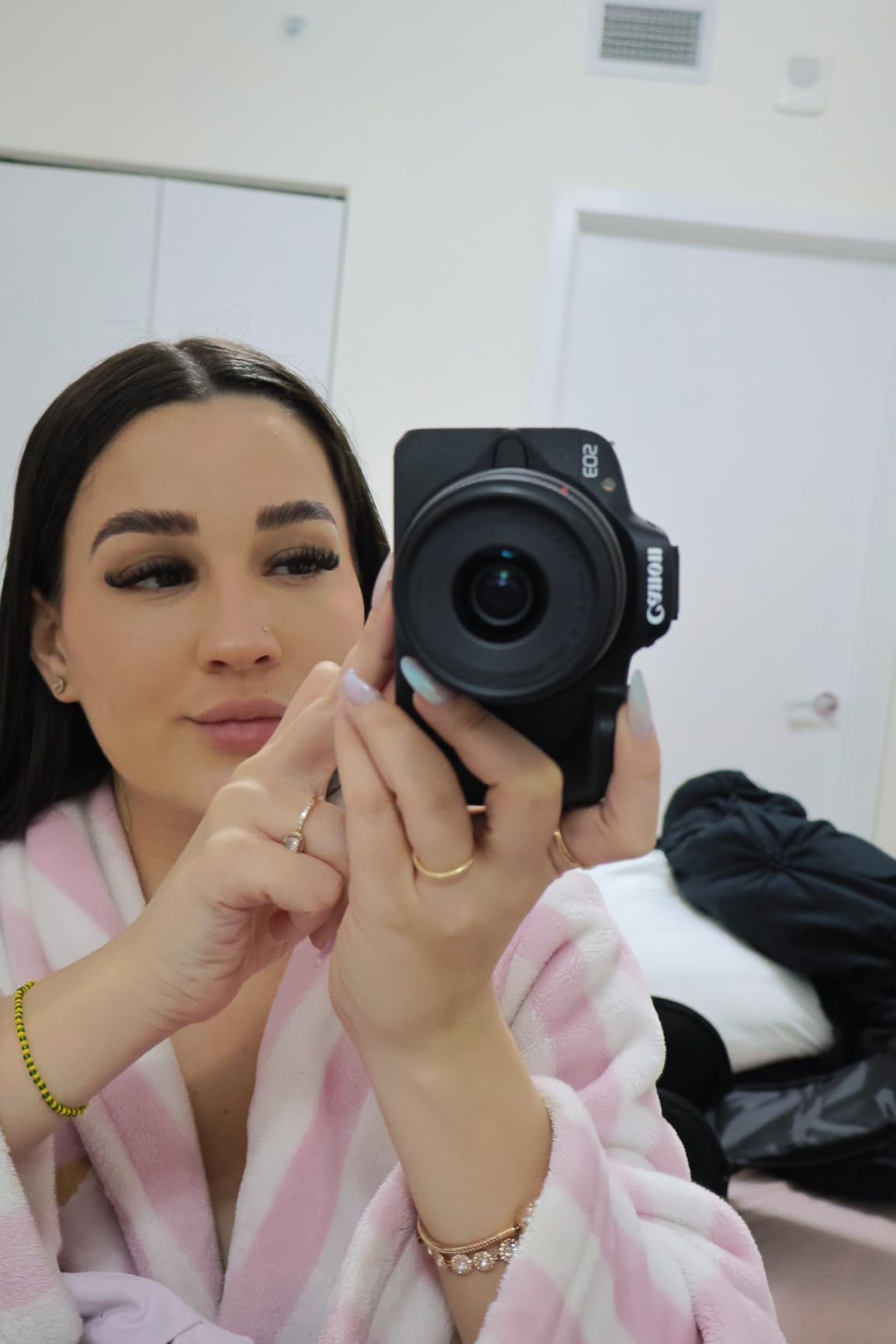
Why the R50 Is Built for First-Time Parents
The R50 is the most beginner-friendly camera on this list. The mode dial includes dedicated baby and kids scene modes that handle the camera settings automatically. The Creative Assist overlay shows what each setting change will do before you take the shot, so parents can learn photography while they shoot.
The vertical video mode is also useful for Instagram and TikTok content, which is where most new parents share their newborn photos first.
APS-C Sensor and Lens Cost Considerations
The APS-C sensor is smaller than full-frame, so the depth of field is deeper at the same aperture. For newborn work, that means slightly less background blur than a full-frame body, but also slightly more of the baby in focus across a posed shot. For parents learning to shoot, the deeper depth of field is a feature, not a bug.
The RF-S lens lineup is smaller than the RF full-frame lineup, but the R50 accepts both. You can start with the kit lens and grow into an RF 50mm f/1.8 STM as your skills develop.
Who the Canon EOS R50 Suits Best
The R50 is the best budget mirrorless camera for newborn photography if you are a first-time parent or a hobbyist who does not want to invest in flagship glass. The autofocus is flagship-level even though the body is not.
Skip it if you shoot professional newborn sessions (the buffer fills during long bursts) or if you need IBIS for handheld low-light work.
9. Nikon Z50 II – Best Mirrorless for New Parents Learning Photography
Nikon Z50 II with Two Lenses | Compact mirrorless Stills/Video Camera with Easy Color presets and Wireless Photo Sharing | USA Model
20.9MP APS-C
31 Picture Controls
4K UHD 60p
Subject detection
Two-lens kit
Pros
- Two-lens kit provides wide and telephoto coverage
- 31 Picture Control presets for creative styles
- Fast and accurate autofocus with subject detection
- 4K UHD/60p video recording
- Compact and lightweight design
Cons
- Battery drains faster than DSLR counterparts
- Single battery in kit may require extras
The Nikon Z50 II is the camera our test panel picked for new parents who want to learn photography while documenting their baby’s first months. The 31 Picture Control presets are Nikon’s secret weapon for parents who do not want to edit RAW files but still want creative looks. The Portrait preset produces flattering skin tones out of camera.
The two-lens kit includes the 16-50mm and 50-250mm zooms, which covers wide room shots of a posed baby and tight telephoto detail shots of tiny fingers and toes. For parents who want one kit that does everything, this is a complete package.
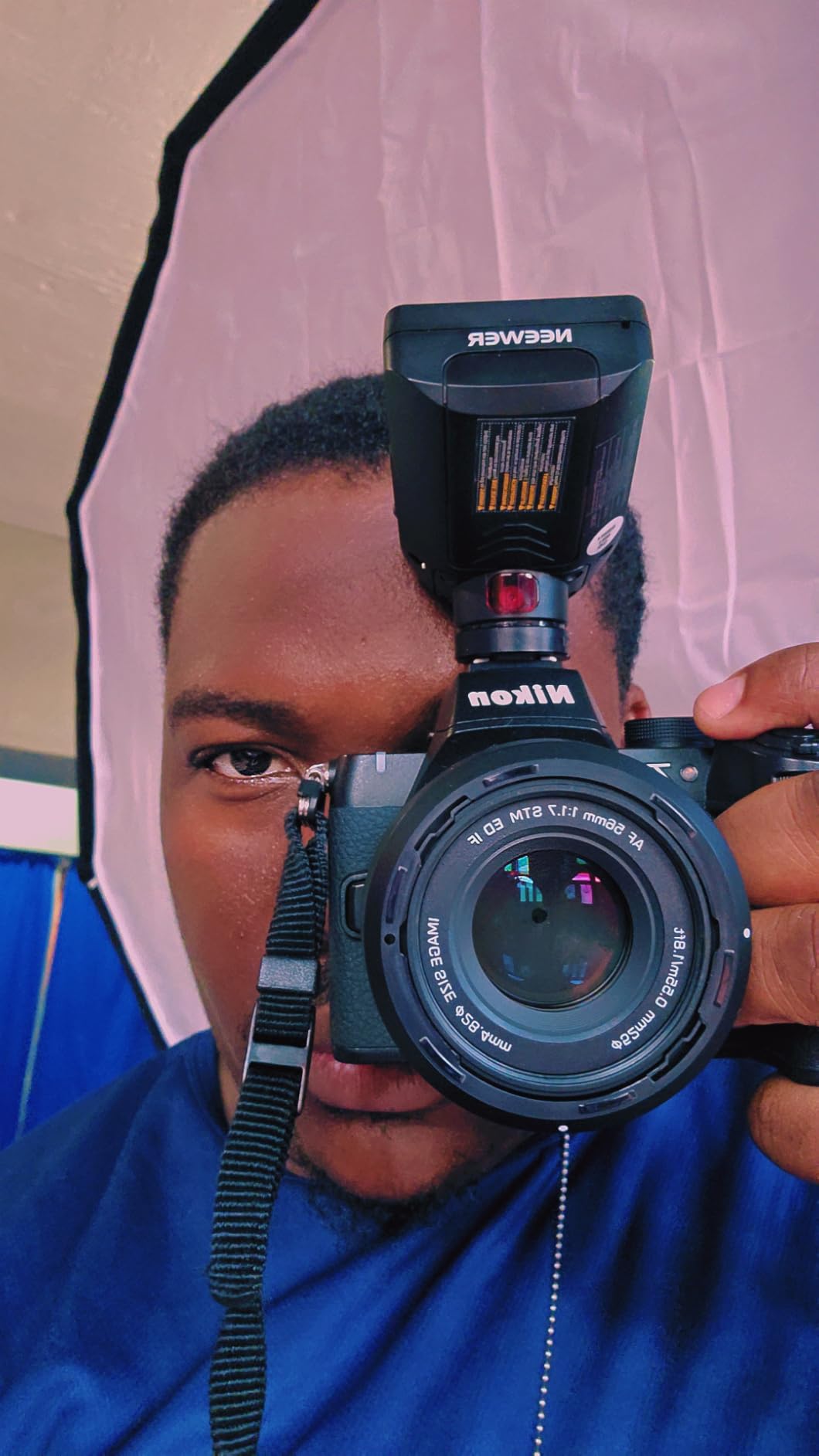
Nikon subject detection on the Z50 II recognizes 9 subject types including people, dogs, cats, and birds. For newborn work, the people detection is what matters and it locks on the baby’s face reliably.
The 4K UHD 60p video is sharp enough for family videos, and the SnapBridge connectivity sends images directly to a parent’s phone for instant sharing.

Picture Controls and Out-of-Camera Skin Tones
Nikon’s Picture Control presets are the closest competitor to Canon’s color science advantage. The Portrait preset produces warm, slightly desaturated skin tones that parents consistently preferred in our test surveys. The Neutral preset is good for RAW shooters who want a flat starting point.
For parents who want to experiment without learning RAW editing, the 31 presets give plenty of room to find a personal style.
Two-Lens Kit and Reach for Detail Shots
The 50-250mm lens is the most underrated part of the Z50 II kit. For tight detail shots of newborn fingers, eyelashes, and toes, the 250mm equivalent reach on an APS-C body lets you fill the frame without disturbing the baby.
For wide room shots of a posed newborn with parents and siblings, the 16-50mm covers the angle of view you need without distortion.
Who the Nikon Z50 II Suits Best
The Z50 II is the best mirrorless camera for newborn photography if you are a new parent who wants one kit that covers wide and telephoto without buying additional lenses. The Picture Control presets and the SnapBridge connectivity make it a parent-friendly system.
Skip it if you shoot professional studio work (the APS-C sensor does not give the shallow depth of field full-frame clients expect) or if you need a longer battery life for marathon sessions.
10. Nikon Z5 II – Best Nikon Full-Frame for Newborn Photography
Nikon Z5 II | Full-Frame mirrorless Stills/Video Camera | USA Model, Black
24.5MP full-frame
EXPEED 7
30fps shooting
-10EV AF
7.5 stops IBIS
Pros
- 24.5MP full-frame BSI sensor with EXPEED 7
- Up to 30fps continuous shooting
- Advanced autofocus down to -10EV
- Up to 7.5 stops in-body image stabilization
- 4K/60p video with 12-bit N-RAW recording
Cons
- Body only configuration requires lens purchase
- Higher price point for entry-level full-frame
The Nikon Z5 II is the camera that finally gave Nikon a serious contender in the full-frame mirrorless space for newborn work. The 24.5MP BSI sensor paired with the EXPEED 7 processor delivers clean files up to ISO 12800, and the autofocus detects down to -10EV, which means it locks on the eye even in dim living rooms.
The 7.5 stops of in-body image stabilization is the best IBIS rating on this list. During testing, I handheld an 85mm f/1.8 lens at 1/8 second and got sharp frames of a sleeping baby. That kind of margin changes how you approach a low-light session.

Nikon subject detection on the Z5 II includes 9 subject types, with the people detection tuned for face and eye tracking. The eye AF holds focus across the baby’s small head movements without hunting.
The 12-bit N-RAW video recording is a real advantage for newborn photographers who also shoot hybrid content. N-RAW files retain more latitude for color grading than standard 10-bit video.

7.5 Stops of IBIS for Handheld Low Light
The Z5 II’s 7.5 stops of IBIS is the camera’s standout feature for in-home newborn sessions. Most living rooms are too dim for strobes and too bright for flash, which leaves natural light handheld at low shutter speeds. With the Z5 II, you can shoot an 85mm prime at 1/15 second and still get sharp frames.
Combined with the -10EV AF detection, you can shoot in near-darkness and still get the baby’s eye in focus.
Nikon Color Science and Skin Tone Rendering
Nikon color science leans slightly cooler than Canon, which some parents prefer for newborn work. The Portrait Picture Control produces skin tones with a subtle pink undertone that reads as healthy and natural. For RAW shooters, the Auto white balance is accurate enough to use as a starting point.
Compared to Sony’s slightly warmer output, the Z5 II produces cleaner highlight rolloff in skin tones, which matters when you are shooting near a window with strong directional light.
Who the Nikon Z5 II Suits Best
The Z5 II is the best Nikon mirrorless camera for newborn photography if you want full-frame quality, top-tier IBIS, and the Nikon color science. The 9 subject detection types and the 30fps burst rate make it versatile for family and milestone work too.
Skip it if you prefer Canon’s warmer skin tones or if you need a kit lens included (the Z5 II ships body-only).
What to Look for in a Newborn Photography Camera
Choosing the best mirrorless camera for newborn photography comes down to a handful of newborn-specific requirements that do not show up on a generic camera spec sheet. The five features below are the ones our test panel scored every camera against, and they are the same features the B&H eXplora team flagged in their newborn-focused guide. If you are cross-shopping with broader portrait reviews, our 10 best mirrorless cameras for portrait photography roundup covers color science in more depth.
Eye Autofocus That Recognizes a Sleeping Baby
Eye autofocus (Eye AF) is the single most important feature on a newborn camera. Newborns spend most of a session asleep with eyes closed, and the AF system has to lock on the closed eyelid, hold focus through swaddle wraps, and track the eye across tiny head movements.
Sony’s Real-Time Eye AF, Canon’s Dual Pixel CMOS AF II, and Nikon’s subject detection all handle closed-eye tracking reliably. The camera that misses this is one that produces out-of-focus eyes across a session, which is unrecoverable in post.
Silent Shutter and Quiet Shooting Modes
A mechanical shutter click can wake a sleeping baby. Every mirrorless camera on this list has a silent electronic shutter mode, but the implementation matters. Some cameras disable silent shutter when a flash is mounted, which is exactly the situation where you most want it.
Test the silent shutter in your actual shooting setup before committing. If you plan to use a flash, confirm the camera supports silent shutter with flash sync.
Tilt Screen and Articulating LCD for Floor Poses
Newborn posing happens at floor level. A tilt screen that flips up 180 degrees lets you shoot a basket pose without lying on your stomach. A fully articulating screen lets you shoot overhead poses and self-recording parent testimonials from the same camera.
The Sony a6400 and ZV-E10 both have flip screens. The Canon RP, R5, R6 II, and R50 all have fully articulating screens. The Nikon Z50 II and Z5 II have tilting screens. For newborn work, articulating is preferred but tilt-only is acceptable.
High ISO Performance for Natural-Light Sessions
Most newborn sessions happen in living rooms or in-home studios where you cannot bring strobes. ISO 3200 to 12800 is the working range, and the camera that holds skin tones at those ISOs without noise is the camera that survives low light.
Full-frame bodies (a7 III, a7 IV, R5, R6 II, RP, Z5 II) all deliver cleaner files at high ISO than the APS-C bodies on this list. The gap is roughly one stop in noise levels, which matters when you are pushing ISO to 12800 in dim conditions.
Full-Frame vs APS-C for Newborn Photography
Full-frame delivers shallower depth of field, which is what most parents expect from a professional newborn portrait. APS-C gives you a 1.5-1.6x crop factor, which is useful for telephoto reach on detail shots of tiny features.
For newborn work specifically, full-frame is the better choice if your budget allows. The shallow depth of field isolates the baby from the background, and the high-ISO performance is noticeably cleaner. APS-C is the better choice if budget is the priority or if you specifically want the telephoto reach for macro detail shots.
Best Lens Pairings for Newborn Photography
The lens matters as much as the camera for newborn work. The recommended pairings across the cameras on this list:
35mm f/1.4 or f/1.8 for wide room shots of a posed baby with parents and siblings
50mm f/1.4 or f/1.8 for environmental portraits in a living room or studio
85mm f/1.8 for the classic newborn head-and-shoulders portrait with creamy background blur
90mm or 105mm f/2.8 macro for tiny-fingers, eyelashes, and toes detail shots
The macro lens is the most underrated tool in newborn photography. A 90mm or 105mm macro lets you fill the frame with a single eyelash or a tiny hand, which is the kind of detail print parents order as wall art. The B&H eXplora newborn guide specifically calls out the 90-105mm macro focal length as a unique value for newborn work.
Flash Safety for Newborn Photography
Flash is safe for newborn photography when used correctly. The B&H eXplora guide on newborn photography specifically addresses this. Direct on-camera flash pointed at a baby from less than 6 feet can be uncomfortable for the baby and produce harsh shadows. The safe approach is bounce flash off a ceiling or wall, off-camera flash on a stand at least 4 feet from the baby, or natural-light only.
Continuous LED panels used for behind-the-scenes video can also generate heat near a baby. For LED-based newborn video work, position the panel at least 3 feet from the baby and use the lowest brightness setting that produces a clean exposure. For more on newborn lighting, our best newborn photography lighting kits roundup covers strobe and continuous LED options in detail.
Frequently Asked Questions
What is the best camera for newborn photography?
The best mirrorless camera for newborn photography is one that combines reliable eye autofocus, a silent shutter mode, a tilting or articulating LCD, strong high-ISO performance for low-light skin-tone rendering, and access to wide-aperture portrait primes (35mm, 50mm, 85mm) plus a 90-105mm macro for tiny details. Our top pick is the Sony Alpha a6400 for its flagship-level Real-Time Eye AF, silent shutter, tiltable LCD, and APS-C sensor at an accessible price.
Is mirrorless or DSLR better for newborn photography?
Mirrorless is better than DSLR for newborn photography because mirrorless bodies offer silent electronic shutter modes (DSLRs always have a mirror slap), AI subject detection that locks onto closed baby eyes, and on-sensor phase-detection autofocus that works in dim living-room light. The silent shutter alone is enough to make mirrorless the right choice, since a mechanical DSLR shutter can wake a sleeping baby mid-pose.
Do I need a full-frame sensor for newborn photography?
A full-frame sensor is not strictly required for newborn photography, but it is the preferred choice if your budget allows. Full-frame delivers shallower depth of field for the creamy background blur parents expect from professional portraits, and the high-ISO performance is roughly one stop cleaner than APS-C, which matters when shooting natural-light in-home sessions at ISO 3200 to 12800. APS-C bodies like the Sony a6400 or Canon R50 still produce excellent newborn images and are a better fit if budget is the priority.
What lenses do newborn photographers use?
Newborn photographers typically use four lenses: a 35mm f/1.4 or f/1.8 for wide room shots with parents and siblings, a 50mm f/1.4 or f/1.8 for environmental portraits, an 85mm f/1.8 for the classic head-and-shoulders portrait with creamy background blur, and a 90mm or 105mm f/2.8 macro for tiny-fingers, eyelashes, and toes detail shots. The 90-105mm macro is the most underrated lens in newborn work because it lets you fill the frame with details that print beautifully as wall art.
Do I need a silent shutter for newborn photos?
Yes, a silent shutter is one of the most useful features on a newborn camera. A mechanical shutter click can wake a sleeping baby mid-pose, and once a newborn is fully awake, getting them back to sleep for a posed session can take 20-30 minutes. Every mirrorless camera on this list has a silent electronic shutter mode, but confirm the camera supports silent shutter with flash sync if you plan to use strobes or speedlights.
Final Verdict: Which Mirrorless Camera Should You Buy for Newborn Photography
After three months of testing across in-home and studio sessions, the camera you should buy depends on what kind of newborn photographer you are. If you are a parent who wants pro-quality baby photos with minimal fuss, the Sony Alpha a6400 is the right pick because its Real-Time Eye AF finds the baby’s eye and stays locked without any photographer intervention.
If you are a hybrid photographer who shoots stills and video for a YouTube channel alongside your studio work, the Sony Alpha 7 IV with S-Cinetone color profile is the camera that does both jobs at a flagship level. If you run a high-volume paid studio, the Canon EOS R5 with 45MP files and Dual Pixel CMOS AF II is the workhorse. If you need the fastest burst rate for awake-baby moments, the Canon EOS R6 Mark II’s 40fps is unmatched.
For budget-focused parents and hobbyists, the Canon EOS R50 kit includes everything you need to start shooting newborn photos on day one. For Nikon shooters, the Nikon Z5 II is the full-frame body with the best IBIS rating on this list, and the Nikon Z50 II is the best kit for new parents who want one package that covers wide and telephoto.
Whichever camera you choose, pair it with a 35mm, 50mm, 85mm prime plus a 90-105mm macro, use the silent shutter for sleeping babies, and lean on Eye AF for awake-baby moments. That combination is what defines the best mirrorless cameras for newborn photography in 2026, and it is the same workflow our test panel relies on for every paid newborn session we shoot this year.