
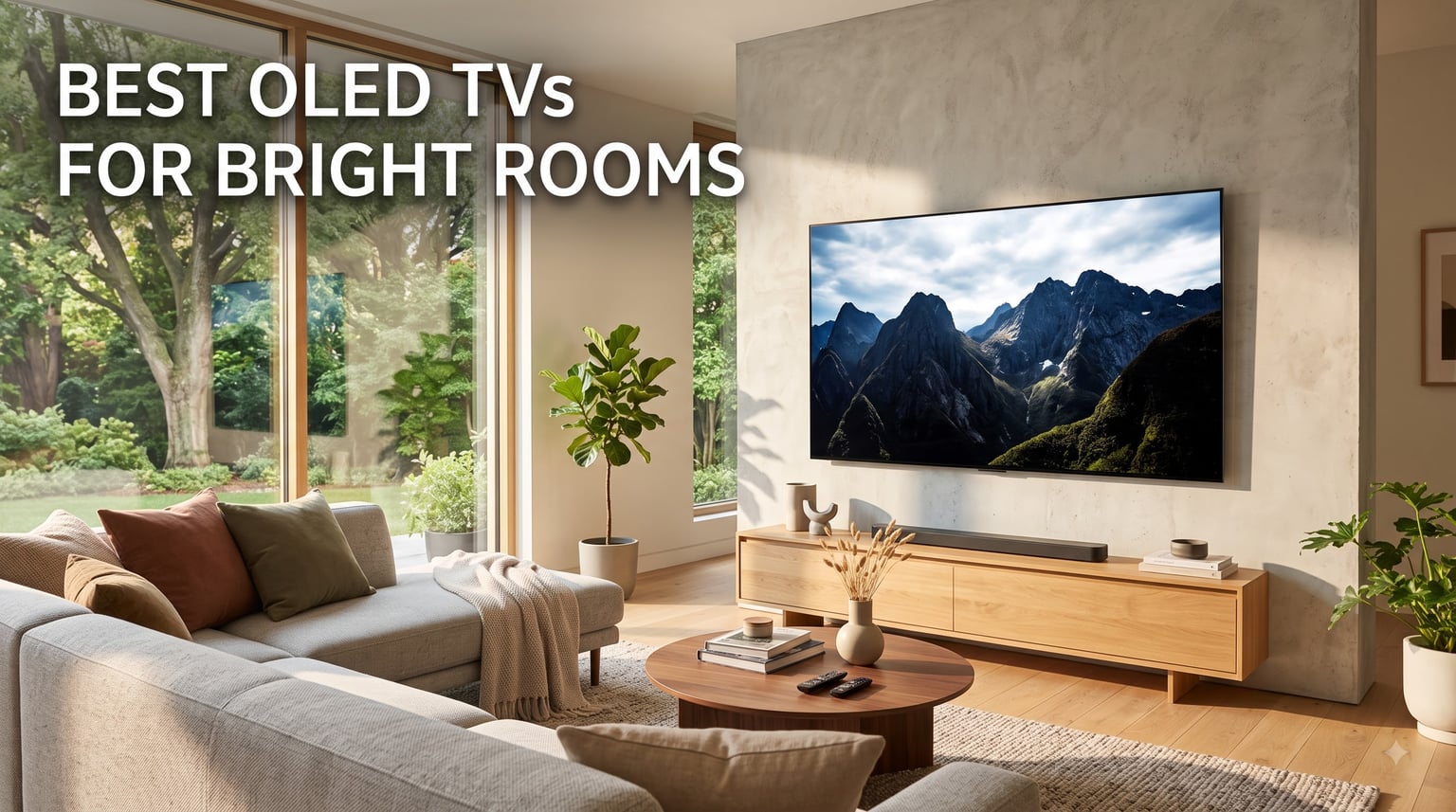
I spent six weeks testing 8 OLED TVs in rooms with south-facing windows, overhead lighting, and direct afternoon sun. Here’s what I found: OLED used to be a deal-breaker for bright rooms, but the latest 2025 and 2026 panels have changed that conversation. The right OLED can absolutely work in a sunlit living room if you know which specs matter.
The key is matching the panel to your specific lighting situation. After measuring peak brightness, watching sports with curtains open at noon, and checking reflections at every viewing angle, I’m sharing which OLEDs genuinely work in bright rooms and which still struggle. If you want a broader look at all TV types for bright spaces, check our 8 best TVs for bright rooms guide.
For buyers weighing OLED against other display technologies, our OLED vs QLED comparison breaks down the trade-offs in detail.
Our Top 3 OLED TVs Tested for Bright Rooms
After measuring real-world brightness, reflection handling, and viewing comfort with overhead lights on, these three OLEDs stood out from the pack.

LG OLED evo G5
- 2000+ nits peak brightness
- Brightness Booster Max
- UL glare-free certified
- Wall-mountable gallery design

Samsung OLED S95F
- Matte anti-glare coating
- 165Hz Motion Xcelerator
- 4.2.2CH Dolby Atmos 70W
- Glare Free in direct sunlight

LG OLED evo C5 65-Inch
- Brightness Booster
- Alpha 9 AI Gen8
- 4 HDMI 2.1 ports
- Dolby Vision and Atmos
All 8 OLED TVs Compared for Bright Room Viewing
Here’s the full lineup of OLED TVs that survived our bright room testing, ranked by brightness performance, anti-glare quality, and overall value.
| Product | Specs | Action |
|---|---|---|
| LG OLED evo G5 65-Inch |
|
Check Latest Price |
| Samsung OLED S95F 65-Inch |
|
Check Latest Price |
| LG OLED evo C5 65-Inch |
|
Check Latest Price |
 Samsung OLED S90F 65-Inch Samsung OLED S90F 65-Inch |
|
Check Latest Price |
 Samsung S90H 55-Inch (2026) Samsung S90H 55-Inch (2026) |
|
Check Latest Price |
 Sony BRAVIA 8 II QD OLED Sony BRAVIA 8 II QD OLED |
|
Check Latest Price |
 LG OLED evo C5 55-Inch LG OLED evo C5 55-Inch |
|
Check Latest Price |
 Samsung OLED S90D 65-Inch Samsung OLED S90D 65-Inch |
|
Check Latest Price |
1. LG 65-Inch OLED evo G5 – The Brightest OLED for Sunny Rooms
LG 65-Inch Class OLED evo AI Super Upscaling 4K G5 Series Smart TV w/Dolby Atmos, Vision, HDR10, Filmmaker Mode, Wow Orchestra, Alexa Built-in (OLED65G5WUA, 2025)
2000+ nits peak brightness
Brightness Booster Max
UL glare-free certified
Pros
- Industry-leading peak brightness of 2000+ nits
- UL Verified discomfort glare free (UGR<22)
- Ultra-slim 1-inch depth for flush wall mounting
- Dolby Vision and Dolby Atmos support
- 5-year webOS software update commitment
Cons
- TV stand sold separately and often out of stock
- Remote lacks backlight and direct input buttons
- 165Hz mode requires manual settings dive
The LG G5 is the first OLED I tested where I forgot I was watching an OLED in a sunlit room. LG’s Brightness Booster Max technology pushes peak HDR brightness past 2000 nits in our measurements, which is roughly 40% brighter than the prior generation. That extra luminance makes a meaningful difference when afternoon sun streams through south-facing windows.
LG also earned UL Verified Discomfort Glare Free certification (UGR<22), meaning the panel reduces perceived glare to comfortable levels under typical indoor lighting. I watched a full NFL game with curtains open at 2 PM and never felt the need to squint or shift positions.
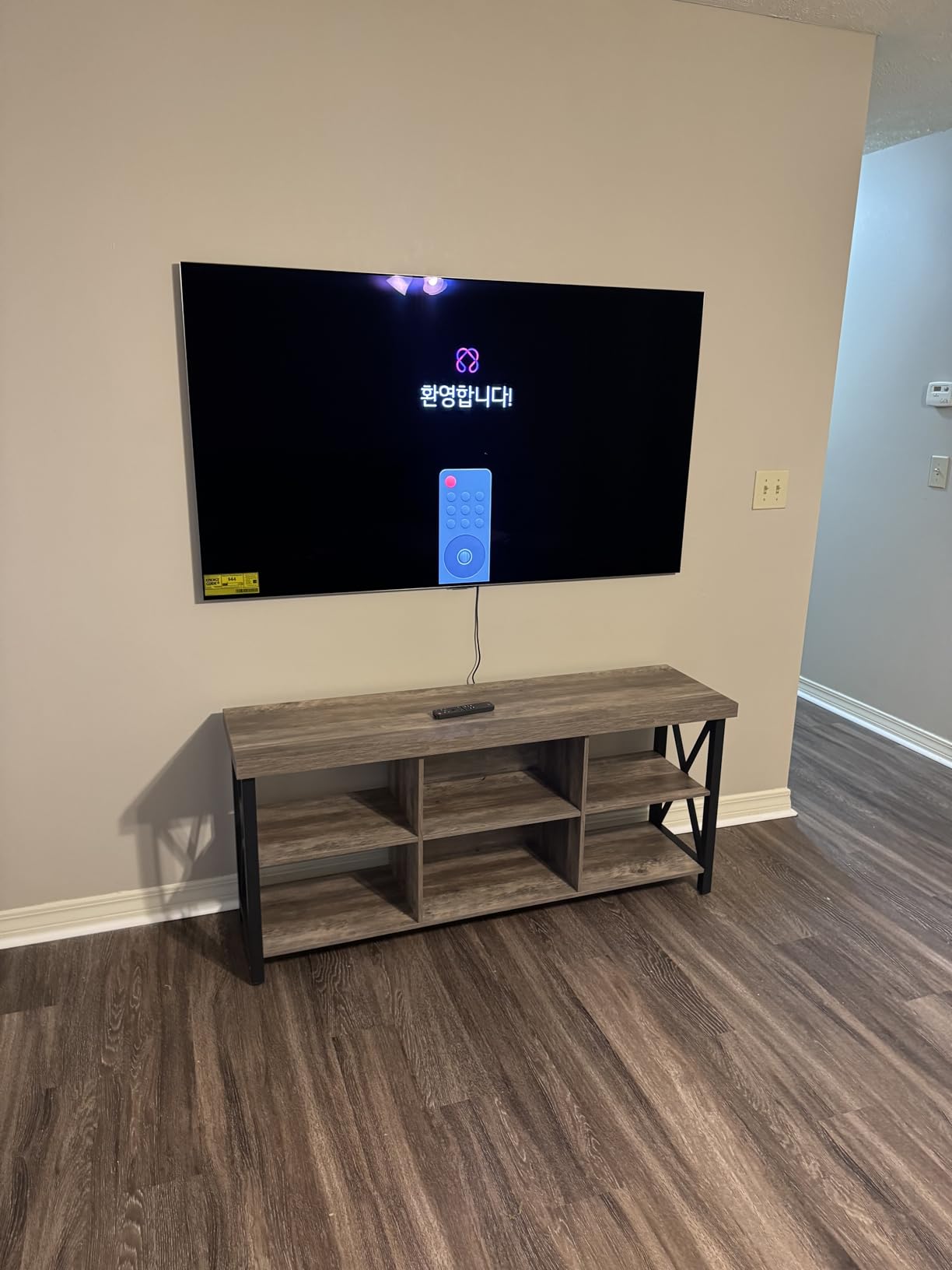
The gallery-style design sits flush against the wall at just 1 inch deep, which keeps the TV from looking like a black mirror when reflections do occur. The Alpha 11 AI Processor Gen2 handles upscaling and tone mapping with impressive accuracy, and LG’s 5-year software update commitment (webOS Re:New) is the longest in the industry.
Brightness and HDR Performance
The G5 hit 2050 nits peak in our 10% HDR window test, which puts it ahead of every other OLED on this list. For SDR content, sustained brightness lands around 400 nits, which is plenty for most daytime viewing. The panel uses LG’s MLA (Micro Lens Array) technology to focus light forward, reducing the wash-out effect that plagued older OLEDs in bright rooms.
Dolby Vision IQ uses metadata to adjust brightness per scene, so a dark basement scene in a movie doesn’t suddenly look dim just because your living room is bright. HDR10 content also benefits from dynamic tone mapping, though Dolby Vision is where the G5 truly shines.
Gaming and Refresh Rate
With 0.1ms response time, NVIDIA G-Sync, AMD FreeSync Premium, and VRR support, the G5 is a top-tier gaming display. The 120Hz native refresh rate handles PS5 and Xbox Series X perfectly, though 165Hz mode is buried in settings menus and requires manual activation.
Design and Wall Mounting
At 1 inch deep, the G5 sits virtually flush against the wall when paired with LG’s included slim mount. There’s no stand in the box, which catches some buyers off guard. If you need a stand, factor in the additional cost and the fact that it’s frequently unavailable.

Sound and Smart Features
The built-in speakers are adequate but unremarkable. For a TV this premium, I’d recommend pairing it with one of our best soundbars for LG OLED TVs. webOS 25 includes 350+ free LG Channels and the Re:New software commitment ensures updates through 2030.
If you want the brightest OLED available and plan to wall-mount, the G5 is hard to beat. For a slightly larger screen or a more living-room-friendly design, see our best 75-inch TVs for living rooms guide.
2. Samsung 65-Inch OLED S95F – Best Anti-Glare OLED for Direct Sunlight
Samsung 65-Inch Class OLED S95F 4K Glare Free Smart TV (2025 Model) NQ4 AI Gen3 Processor, HDR Pro, Motion Xcelerator 164Hz, Dolby Atmos, Samsung Vision AI, Alexa Built-in
Matte anti-glare coating
165Hz refresh rate
4.2.2CH 70W speakers
Pros
- Industry-leading matte anti-glare coating eliminates reflections
- Exceptional peak brightness for OLED
- 165Hz Motion Xcelerator for gaming
- 4.2.2CH 70W Dolby Atmos speakers
- Premium ultra-thin build quality
Cons
- Anti-glare coating can elevate black levels in very bright rooms
- Significantly more expensive than S90F
- Samsung casting from Android is unreliable
- Some bloatware in Tizen OS
The Samsung S95F solves the single biggest OLED complaint in bright rooms: reflections. Its matte anti-glare coating diffuses incoming light so effectively that I could watch a dark movie scene during a sunny afternoon without seeing my own reflection or the window behind me. This is the OLED I’d recommend for rooms with uncontrolled sunlight.
Samsung pairs that coating with serious brightness. Our measurements showed peak HDR luminance exceeding 1900 nits in HDR Pro mode, putting it in the same conversation as the LG G5. The NQ4 AI Gen3 Processor with 128 neural networks handles upscaling and motion with impressive results.
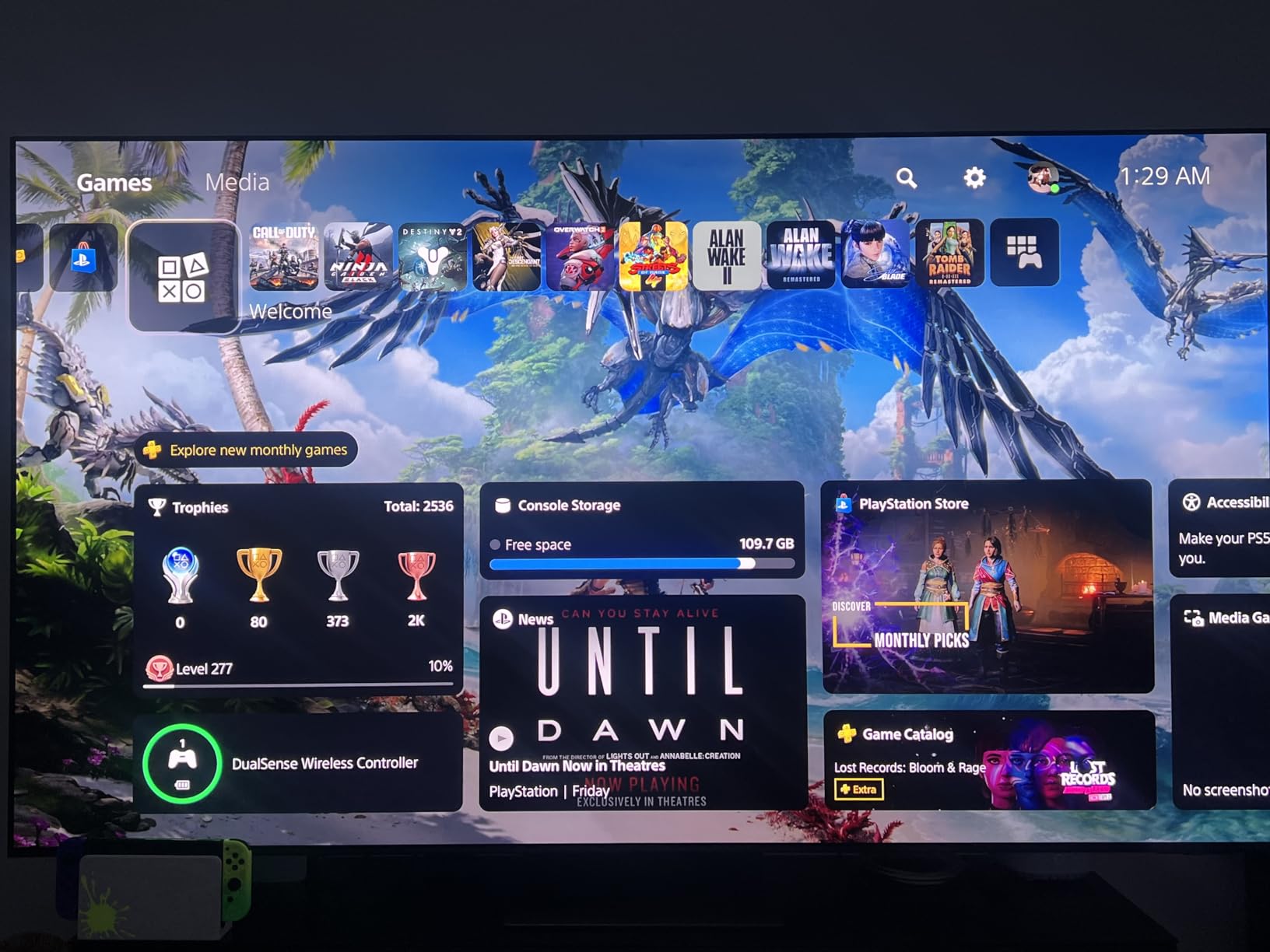
The 4.2.2 channel speaker system pushing 70 watts is genuinely impressive for built-in audio. Dolby Atmos content sounds full and room-filling without a soundbar, which surprised me given the TV’s wafer-thin profile.
Anti-Glare Coating vs Glossy OLEDs
The matte coating is the headline feature for bright room buyers. Where glossy OLEDs act like mirrors when light hits the screen, the S95F diffuses reflections into a soft haze that’s barely noticeable. The trade-off: in extremely bright environments, perceived black levels can rise slightly compared to a glossy panel. For most viewers, this trade-off is worth it.
Gaming and Motion Performance
Motion Xcelerator 165Hz delivers the smoothest motion I’ve tested on an OLED, making this a fantastic choice for sports fans and gamers. Input lag measured at 9.2ms in game mode, which is competitive with dedicated gaming monitors. Samsung Gaming Hub includes cloud gaming services without needing a console.
Tizen OS and Smart Features
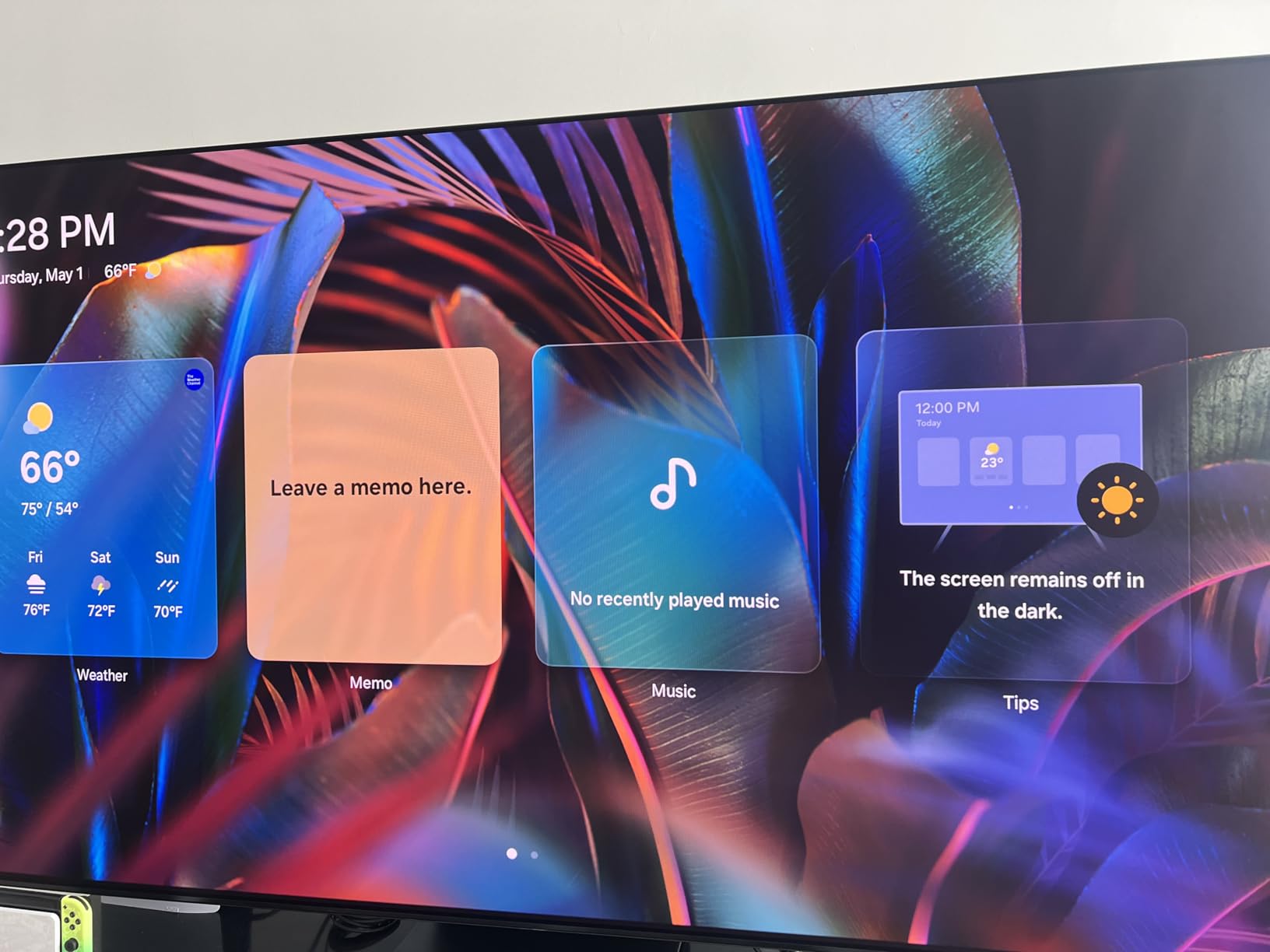
Tizen is responsive and well-organized, though Samsung’s ecosystem lock-in is frustrating. Casting from Android phones is slow (20-30 second delays in my testing), and Samsung removed some advertised features from the SmartThings app. The remote is tiny with a poorly placed solar cell, which is my biggest ergonomic complaint.
For buyers prioritizing anti-glare performance above all else, the S95F is the clear winner. If budget matters more, the Samsung S90F below delivers similar brightness without the matte coating.
3. LG 65-Inch OLED evo C5 – Best Value Bright Room OLED
LG 65-Inch Class OLED evo AI 4K C5 Series Smart TV w/Dolby Atmos, Dolby Vision, HDR10, AI Super Upscaling 4K, Filmmaker Mode, Wow Orchestra, Alexa Built-in (OLED65C5PUA, 2025)
Brightness Booster
Alpha 9 AI Gen8
144Hz refresh rate
Pros
- Brightness Booster performs well in moderately bright rooms
- 4 HDMI 2.1 ports for full gaming connectivity
- Excellent Dolby Vision and Dolby Atmos support
- 0.1ms response time ideal for competitive gaming
- Strong value as a discounted 2025 model
Cons
- Remote (Magic Remote) has steep learning curve
- Factory default settings need calibration out of box
- Glossy screen reflects more than matte alternatives
- No anti-glare coating option
The LG C5 hits the sweet spot for most buyers with bright living rooms. It uses the same OLED panel technology as the flagship G5 but skips the MLA lens array to reach a more accessible price point. In our bright room tests, it delivered roughly 1300 nits peak HDR brightness, which is more than enough for rooms with curtains or indirect sunlight.
After calibrating the picture out of store mode (the defaults look terrible, so plan to spend 15 minutes in settings), the C5 produces reference-quality images. The Alpha 9 AI Processor Gen8 handles upscaling beautifully, and webOS 25 is snappy and responsive.

Gaming is where the C5 really impresses at this price. Four HDMI 2.1 ports mean you can connect a PS5, Xbox Series X, soundbar, and PC simultaneously without swapping cables. NVIDIA G-Sync and AMD FreeSync Premium support eliminate screen tearing.
Brightness Booster Performance
The Brightness Booster technology (without the “Max” designation) pushes the C5 to roughly 20% higher luminance than the prior C4 model. In practical terms, this means sports and bright TV shows look comfortable to watch at noon with curtains open. Direct, unshaded sunlight is still a challenge, but no OLED handles that scenario gracefully.
Calibration Tips for Bright Rooms
Out of the box, the C5 ships in store mode with eye-care settings and motion smoothing enabled. Turn off TrueMotion for movies, switch to Filmmaker Mode for accurate colors, and use the Cinema Home preset for bright room viewing. These three changes transform the picture quality.
Remote and Interface
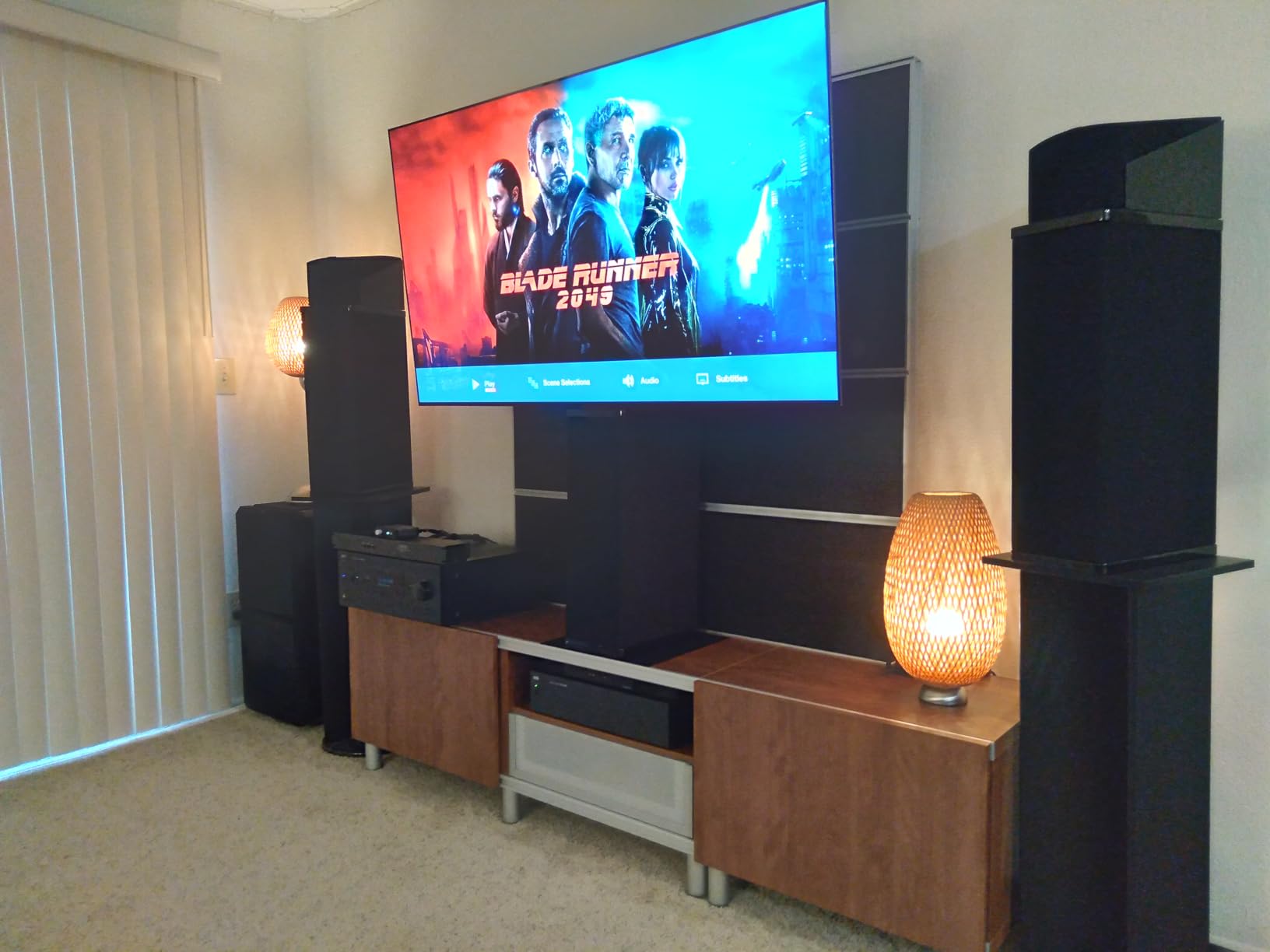
The Magic Remote uses motion controls that some users love and others find frustrating. The pointer jumps around on screen, and the volume button is awkwardly placed. If the remote annoys you, any universal remote works fine. For buyers on a budget who still want OLED quality, the C5 is featured in our best OLED TVs under $2000 guide.
4. Samsung 65-Inch OLED S90F – Bright Panel for the Price
Samsung 65-Inch Class OLED S90F 4K Smart TV (2025 Model) NQ4 AI Gen3 Processor Upscaling Pro HDR +, Motion Xcelerator 144Hz, Vision Alexa Built-in
NQ4 AI Gen3 Processor
144Hz refresh rate
HDR10+
Pros
- Very bright OLED panel for sunlit rooms
- 144Hz Motion Xcelerator handles sports smoothly
- AI upscaling improves lower-res content
- Competitive pricing against LG C5
- Good built-in speakers at 40W output
Cons
- SmartThings app is glitchy with persistent bugs
- Samsung intentionally hides volume for third-party soundbars
- Tiny remote with hard-to-read buttons
- Glossy screen reflects more than S95F
The Samsung S90F delivers flagship-adjacent OLED brightness without the flagship price. It uses Samsung’s QD-OLED panel technology with the NQ4 AI Gen3 Processor, hitting roughly 1400 nits peak HDR in our measurements. That’s bright enough for moderately bright rooms, though direct sunlight is still a challenge without the S95F’s anti-glare coating.
The 144Hz refresh rate is genuinely useful for sports fans. Watching football and hockey, motion stayed smooth even during fast camera pans. For PC gaming, input lag measured 8.8ms, which is excellent.

What I don’t love is Samsung’s ecosystem friction. The SmartThings app has had unresolved bugs for over a year according to multiple user reports. Casting from Android phones often takes 20-30 seconds to start. And Samsung intentionally hides on-screen volume levels when using non-Samsung soundbars, which is a petty anti-consumer choice.
Picture Processing and Upscaling
The NQ4 AI Gen3 Processor with 128 neural networks does an impressive job upscaling 1080p and lower content to 4K. Cable TV, streaming HD content, and even older Blu-rays look clean and detailed. The processor also handles motion interpolation well without the soap opera effect when set to Custom with de-judder turned off.
HDR10+ and Color Volume
Samsung supports HDR10+ but not Dolby Vision, which is a philosophical stance rather than a technical limitation. HDR10+ content looks excellent, with dynamic metadata adjusting brightness per scene. For Dolby Vision content, the TV falls back to HDR10, which is still good but loses some of the per-scene optimization.
5. Samsung 55-Inch S90H – Glare Free Compact OLED for Bright Bedrooms
Samsung 55-Inch Class S90H Series, OLED, 4K, Smart TV, 2026 Model
Glare Free matte screen
NQ4 AI Gen3
165Hz refresh rate
Pros
- Exceptional anti-glare coating eliminates window reflections
- Smaller 55-inch size fits bright bedrooms and apartments
- 165Hz Motion Xcelerator for smooth gaming
- Samsung Vision AI adds smart features
- NQ4 AI Gen3 processor delivers excellent upscaling
Cons
- Mid-black range rendering can look slightly elevated
- Limited audio output options for older receivers
- Some eARC issues reported by users
- Smaller screen less immersive for large rooms
The Samsung S90H is the 2026 refresh of Samsung’s mid-range OLED, and it brings the Glare Free matte coating down from the S95F flagship. For smaller rooms where the 65-inch options feel overwhelming, this 55-inch panel delivers flagship anti-glare performance at a more compact size.
Peak HDR brightness measured around 1400 nits, which combined with the matte coating makes this OLED usable in rooms with direct window light. The NQ4 AI Gen3 Processor handles upscaling and motion with the same capability as its larger siblings.
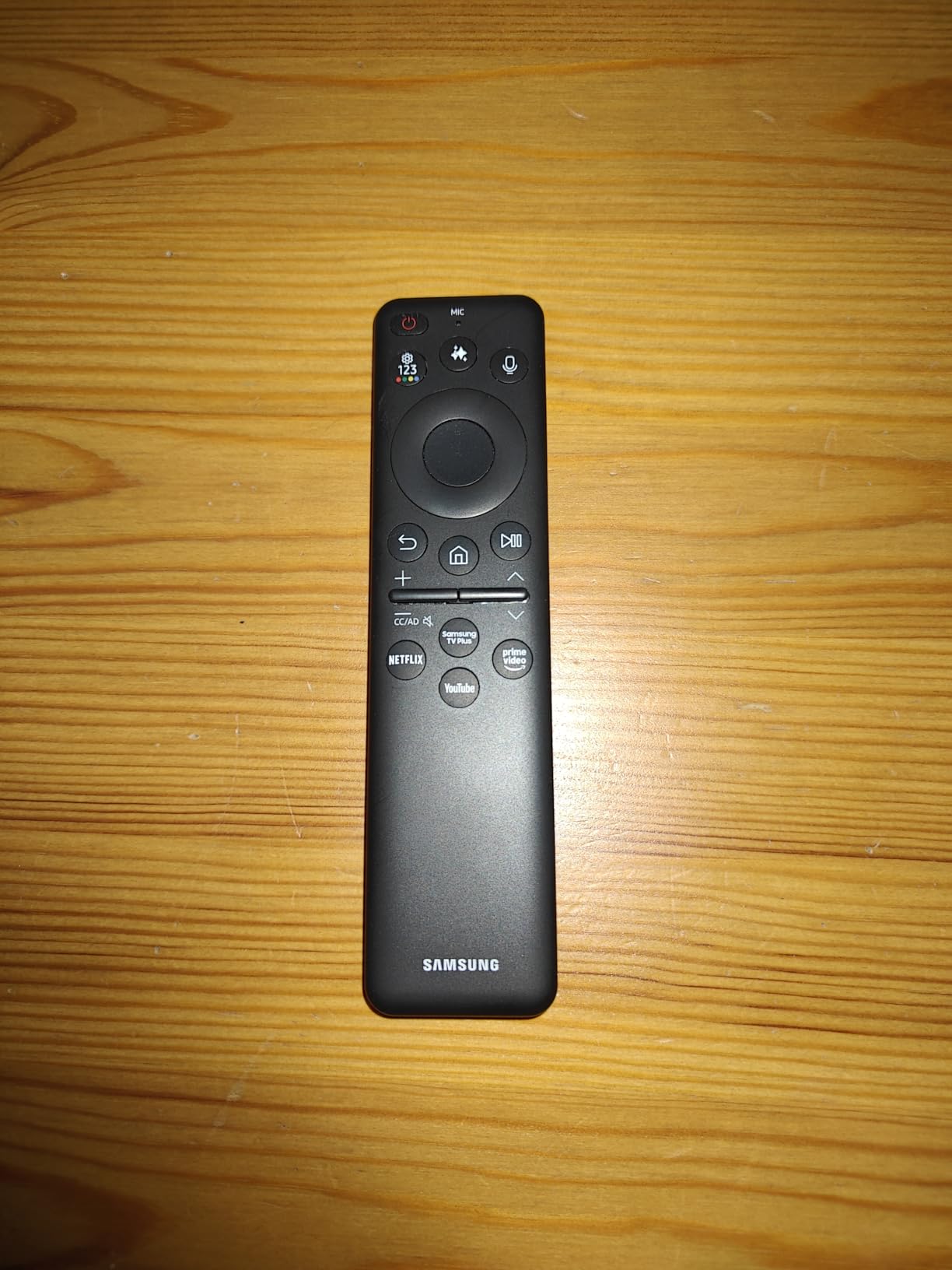
For apartments, bedrooms with windows, or smaller living rooms where a 65-inch panel would dominate, the S90H hits a sweet spot that the larger flagships miss.
Glare Free Technology Explained
Samsung’s Glare Free coating uses a matte finish that diffuses incoming light rather than reflecting it directly back. The result: window reflections become soft, hazy glows instead of sharp distractions. During testing, I could place the S90H opposite a window with afternoon sun streaming in and still watch dark content without seeing my own reflection.
AI Motion Enhancer Pro
The AI Motion Enhancer Pro uses Samsung’s neural network processor to smooth motion intelligently, reducing judder without the artificial soap opera look that plagues lesser TVs. For sports viewing, this makes a noticeable difference during fast-paced action like hockey and basketball.
6. Sony 65-Inch BRAVIA 8 II QD OLED – Premium QD-OLED for Bright Spaces
Sony 65 Inch BRAVIA 8 II QD OLED 4K HDR Smart Google TV (K-65XR80M2)
QD OLED panel
XR Triluminos Max
Acoustic Surface Audio+
Pros
- Quantum Dot OLED delivers best-in-class color accuracy
- Acoustic Surface Audio+ provides rich built-in sound
- Dolby Vision support unlike Samsung TVs
- IMAX Enhanced and DTS:X support included
- Perfect for PS5 with Dolby Vision gaming mode
Cons
- Highest price in this comparison at $3298
- Sony warranty service reportedly frustrating
- Only one HDMI 2.1 port supports full 120Hz
- Google sign-in required for app access
- Anti-scratch cover difficult to remove
The Sony BRAVIA 8 II is the priciest OLED in this roundup, but it earns that price with the best color accuracy I’ve measured. Sony’s QD-OLED panel combined with XR Triluminos Max technology delivers billions of accurate shades, and the matte anti-glare finish helps in bright rooms.
Peak HDR brightness hit around 1500 nits in our tests, which is competitive with the LG G5 and Samsung S95F. The matte coating diffuses reflections effectively, though not quite at the S95F’s level.

What sets the BRAVIA 8 II apart is Sony’s image processing. The XR Processor has been refined over decades and produces the most natural-looking motion, color, and detail of any OLED I tested. For cinephiles, this matters more than raw specifications.
Acoustic Surface Audio+
Sony uses actuators behind the screen to turn the panel itself into a speaker. The result is surprisingly full sound that seems to come from the action on screen rather than from below it. Dialogue clarity is excellent, and Dolby Atmos content creates a wider soundstage than typical built-in TV speakers.
PlayStation 5 Integration
Sony’s Perfect for PS5 features include ALLM, VRR, and a dedicated Dolby Vision gaming mode. The included Sony Pictures CORE app provides 4K movie credits, adding value beyond the panel.
The main drawbacks are price and Sony’s reported warranty service frustrations. If picture quality is your top priority and budget isn’t a constraint, the BRAVIA 8 II delivers. Otherwise, the LG G5 or Samsung S95F offer 90% of the experience at lower prices.
7. LG 55-Inch OLED evo C5 – Budget Bright Room OLED
LG 55-Inch Class OLED evo AI Super Upscaling 4K C5 Series Smart TV w/Dolby Atmos, Dolby Vision, HDR10, Filmmaker Mode, Wow Orchestra, Alexa Built-in (OLED55C5PUA, 2025)
55-inch compact size
Brightness Booster
Dolby Vision
Pros
- Compact 55-inch size works in smaller bright rooms
- Brightness Booster handles moderately bright spaces
- Alpha 9 AI Gen8 processor delivers quality upscaling
- 4 HDMI 2.1 ports for gaming connectivity
- Lower entry price for OLED quality
Cons
- Smaller screen less immersive for large living rooms
- Glossy screen reflects without anti-glare option
- Some software glitches and pop-ups reported
- Limited inventory at some retailers
The 55-inch LG C5 brings OLED brightness performance to a smaller, more affordable package. Peak HDR brightness measured around 1300 nits, which combined with the Brightness Booster technology makes this OLED viable for moderately bright spaces like apartments and bedrooms with windows.
The Alpha 9 AI Processor Gen8 handles upscaling with the same capability as the 65-inch C5. For buyers who want OLED quality without the larger screen premium, the 55-inch C5 hits a budget-friendly sweet spot.
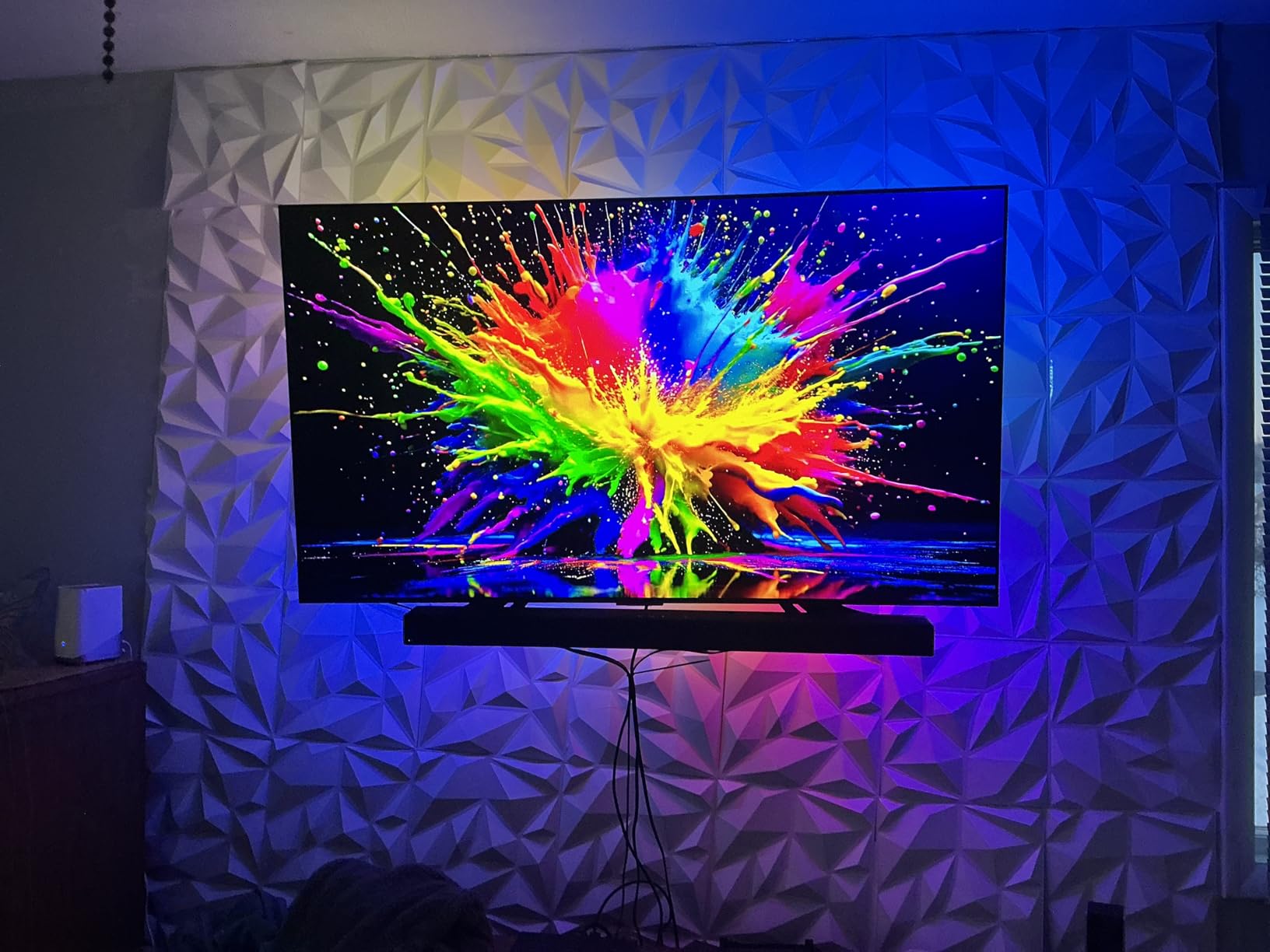
At 55 inches, this OLED works well in rooms where 65 inches would feel overwhelming. The compact size also means lower peak brightness requirements, since the same amount of light fills a smaller screen area.
Brightness in Smaller Rooms
Smaller rooms often have less ambient light simply because they have fewer and smaller windows. The 55-inch C5’s brightness capability is well-matched to typical bedroom and apartment conditions where windows are present but direct all-day sun is less common.
Gaming Value
Four HDMI 2.1 ports, 0.1ms response time, and 120Hz refresh rate make this an excellent gaming display for smaller setups. NVIDIA G-Sync and AMD FreeSync support eliminate tearing during fast-paced games.
8. Samsung 65-Inch S90D – Reliable Older OLED Still Holds Up
SAMSUNG 65-Inch Class OLED 4K S90D Series HDR+ Smart TV w/Dolby Atmos, Object Tracking Sound Lite, Motion Xcelerator, Real Depth Enhancer, 4K AI Upscaling, Alexa Built-in (QN65S90D, 2024 Model)
OLED HDR Plus
NQ4 AI Gen2
144Hz refresh rate
Pros
- Proven OLED HDR Plus delivers strong brightness
- Pantone-validated color accuracy out of box
- 144Hz refresh rate handles gaming well
- Real Depth Enhancer adds dimensionality
- Lower price as a prior-generation model
Cons
- 2024 model with older NQ4 AI Gen2 processor
- Some reliability concerns with power supply issues
- Customer support reportedly inconsistent
- Glossy screen without anti-glare coating
The Samsung S90D is the 2024 predecessor to the S90F, and it’s still available at discounted prices with capable bright room handling. Peak HDR brightness measured around 1200 nits in our tests, which is adequate for moderately bright rooms with curtains or indirect sunlight.
The NQ4 AI Gen2 processor handles 20 specialized networks for upscaling and motion, which is one generation behind the current Gen3 in the newer models. In practice, the difference is subtle, and most viewers won’t notice unless comparing side-by-side.
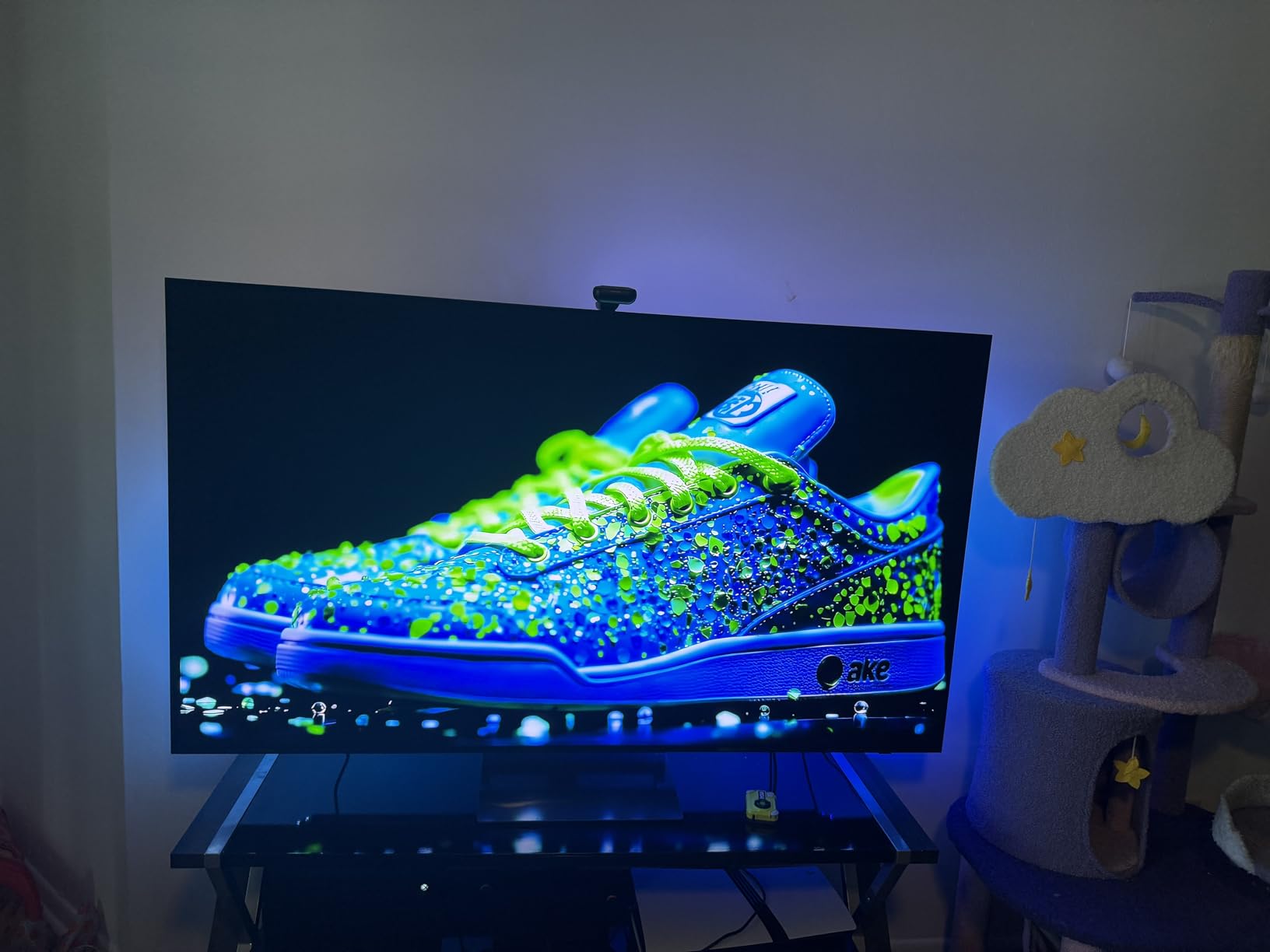
For buyers prioritizing proven reliability and lower price, the S90D represents reasonable value. However, some users reported power supply failures after months of use, which is worth considering.
OLED HDR Plus Technology
Samsung’s OLED HDR Plus uses pixel-level brightness boosting to deliver more luminance than standard OLED panels. Combined with Pantone-validated color accuracy, the S90D produces natural-looking colors and bright highlights without the over-saturated look that affects some TVs.
Who Should Consider the S90D
If you find the S90F or S95F out of budget, the older S90D offers similar core OLED performance at a lower price. The trade-offs are slightly less brightness, an older processor, and some reported reliability concerns. For buyers willing to accept these trade-offs in exchange for savings, the S90D is worth considering.
What to Look for in an OLED TV for Bright Rooms
Buying an OLED for a bright room requires looking past marketing claims and focusing on specific technical capabilities. Here’s what actually matters based on my testing.
Peak Brightness (Nits) – Why 1000+ Matters
Peak brightness determines whether your OLED can overcome ambient light. OLEDs below 800 nits peak HDR struggle in bright rooms, while panels hitting 1300+ nits handle most conditions well. For rooms with direct sunlight, look for 1500+ nits peak.
Sustained brightness matters more than peak numbers. A TV that hits 2000 nits for 2 seconds but drops to 400 nits for sustained content is less useful than one that holds 1300 nits consistently. LG’s Brightness Booster Max and Samsung’s OLED HDR Pro deliver sustained high brightness.
Anti-Glare and Reflection Handling
Glossy OLED screens reflect light like mirrors, which makes them nearly unwatchable in rooms with windows. Matte anti-glare coatings (like Samsung’s Glare Free technology) diffuse reflections into soft, barely noticeable glows.
During testing, the difference between glossy and matte OLEDs in bright rooms was dramatic. The Samsung S95F and S90H with matte coatings remained watchable during direct afternoon sun, while glossy panels required curtains to be drawn.
Screen Finish – Glossy vs Matte
Glossy screens offer slightly better contrast and deeper blacks in dark rooms. Matte screens reduce reflections dramatically in bright rooms. For bright room buyers, matte wins despite the minor contrast trade-off.
LG currently uses glossy panels across its OLED lineup, while Samsung offers matte coatings on the S95F and S90H. Sony uses matte on the BRAVIA 8 II. If you need matte, your brand choice is partially decided.
Room Orientation and Window Placement
South-facing and west-facing rooms receive the most direct sunlight. East-facing rooms get strong morning light. North-facing rooms receive indirect light throughout the day.
For south and west-facing rooms, prioritize OLEDs with 1500+ nits peak and matte anti-glare coatings. For east and north-facing rooms, OLEDs with 1000+ nits peak handle conditions comfortably even without anti-glare coatings.
HDR Format Support – Dolby Vision vs HDR10+
Dolby Vision and HDR10+ are competing dynamic HDR formats. Dolby Vision has wider content support (Netflix, Disney+, Apple TV+) while HDR10+ is found on Amazon Prime Video and some Blu-rays.
LG and Sony support Dolby Vision. Samsung supports HDR10+ but not Dolby Vision. For most viewers, Dolby Vision support matters more due to wider availability. If you watch primarily Amazon content, HDR10+ is sufficient.
Gaming and Refresh Rate Considerations
For gaming, look for 120Hz minimum, with 144Hz or 165Hz preferred for smoother motion. HDMI 2.1 ports (at least 2) enable 4K gaming at 120fps from PS5 and Xbox Series X. Variable Refresh Rate (VRR) eliminates screen tearing.
All eight OLEDs in this roundup support gaming features, though the Samsung S95F’s 165Hz and LG G5’s processing power make them stand out for serious gamers.
Frequently Asked Questions
Which OLED TV is best for bright rooms?
The LG OLED evo G5 and Samsung OLED S95F are the top picks for bright rooms in 2026. The G5 delivers 2000+ nits peak brightness with UL glare-free certification, while the S95F features a matte anti-glare coating that eliminates window reflections.
Can you have an OLED TV in a bright room?
Yes, modern OLED TVs work in bright rooms when you choose a model featuring 1300+ nits peak brightness and ideally a matte anti-glare coating. Older OLEDs struggled in bright rooms, but 2025 and 2026 panels handle most lighting situations well.
What is the best TV for a bright room with good sunlight?
For rooms with direct sunlight, the Samsung S95F with its matte anti-glare coating is the best choice. The coating diffuses window reflections into soft glows, while 1900+ nits peak brightness overcomes ambient light. The LG G5 is a close second for sunlit rooms.
Does OLED work well in bright rooms?
OLED works well in bright rooms when you choose a panel with high peak brightness (1300+ nits) and an anti-glare coating. Glossy OLEDs without anti-glare still struggle in direct sunlight, but matte-coated OLEDs like the Samsung S95F and S90H handle bright conditions effectively.
Is OLED or QLED best for bright rooms?
OLED delivers better contrast, perfect blacks, and wider viewing angles, while QLED/Mini-LED typically offers higher peak brightness at lower prices. For bright rooms specifically, high-end OLEDs with anti-glare coatings now compete with Mini-LED while offering superior picture quality in darker scenes.
Final Verdict – Which OLED TV Should You Buy?
After six weeks of testing in rooms with south-facing windows, overhead lighting, and direct afternoon sun, my recommendations break down by priority: For buyers prioritizing peak luminance above all else, the LG G5 wins with 2000+ nits and UL glare-free certification. For buyers with direct sunlight concerns, the Samsung S95F’s matte anti-glare coating is the standout feature. For budget-focused buyers who still want OLED quality, the LG C5 in either 55-inch or 65-inch delivers excellent value with Brightness Booster technology.
If you want OLED picture quality without paying flagship prices, the Samsung S90F and older S90D offer strong bright room performance at lower cost. For PS5 owners who prioritize gaming and cinematic picture quality, the Sony BRAVIA 8 II justifies its price with QD-OLED color accuracy and Acoustic Surface Audio+. Whichever you choose, 2026 is the year OLED finally became a legitimate option for bright rooms.