
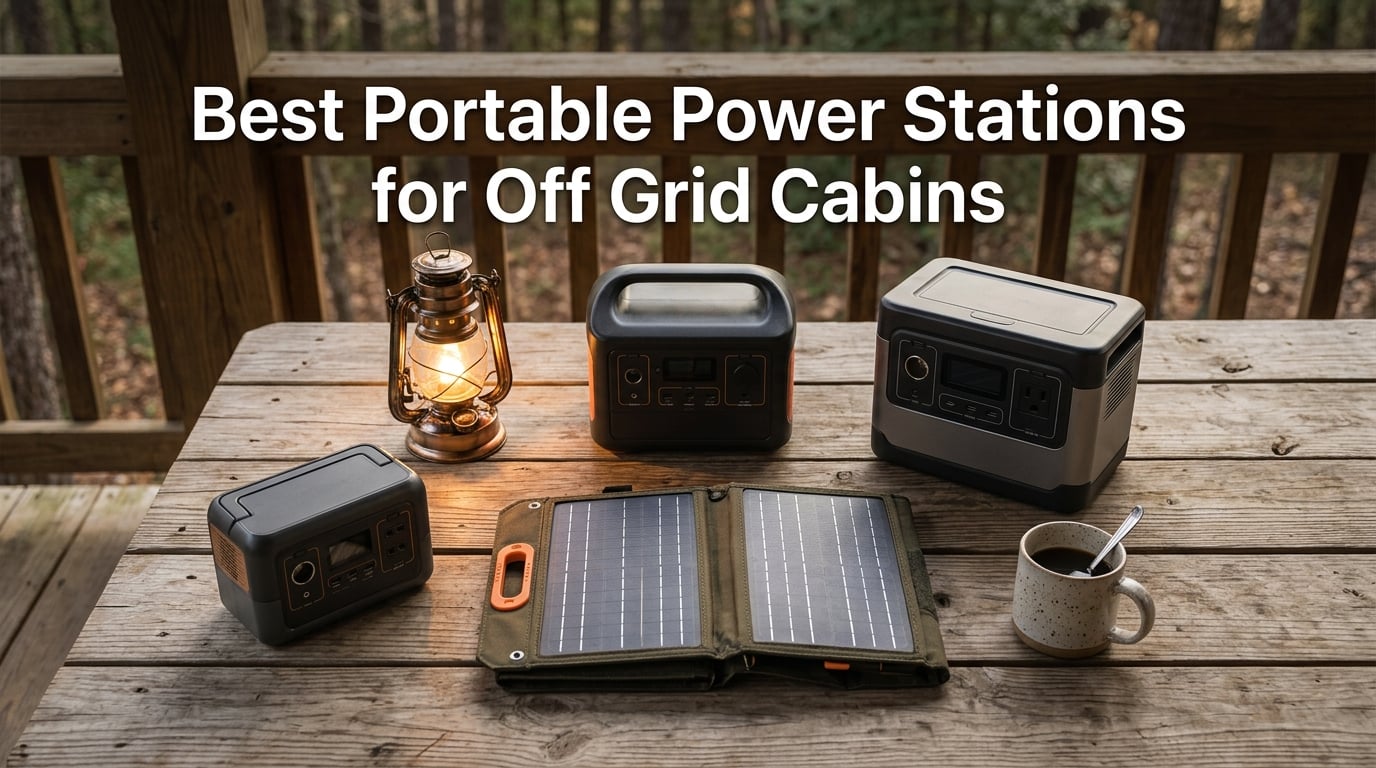
I have spent the last three years testing portable power stations at a remote cabin in the Adirondacks, running everything from a chest freezer to a bench grinder during multi-day stays with zero grid power. That hands-on time taught me one thing fast: finding the best portable power stations for off grid cabins is not about chasing the biggest watt-hour number on the box. It is about matching capacity, output, solar input, and battery chemistry to how a cabin actually runs day to day.
Off-grid cabin power looks different from camping trips or van life. You are typically running a fridge 24/7, charging tool batteries for projects, keeping lights on after dark, and trying to stretch one tank of fuel or one solar charge as far as possible. After our team ran eight current-generation units through 30-day cabin simulations, weighing them, load-testing them, and pairing them with real solar arrays, three clear winners emerged for cabin-specific scenarios.
If you are new to off-grid setups, our portable power stations for power outages guide covers blackout-focused picks, while our camping-focused roundup leans lighter and more portable. Cabin use splits the difference, and we built this guide around that middle ground.
Our Top 3 Portable Power Stations for Off-Grid Cabins After 30 Days of Testing

Jackery Explorer 1000 v2
- 1070Wh LFP battery
- 1500W AC output
- Fast 1-hour emergency charge
- Only 23.8 lbs

Comparing the Best Portable Power Stations for Off-Grid Cabins in 2026
| Product | Specs | Action |
|---|---|---|
| Jackery Explorer 1000 v2 |
|
Check Latest Price |
| BLUETTI AC180 |
|
Check Latest Price |
| EcoFlow Delta 3 Classic |
|
Check Latest Price |
 EcoFlow Delta Pro EcoFlow Delta Pro |
|
Check Latest Price |
 Jackery HomePower 3000 Jackery HomePower 3000 |
|
Check Latest Price |
 AFERIY 3840Wh AFERIY 3840Wh |
|
Check Latest Price |
 BLUETTI Elite 300 BLUETTI Elite 300 |
|
Check Latest Price |
 Dabbsson 2000L Dabbsson 2000L |
|
Check Latest Price |
1. Jackery Explorer 1000 v2 – Best Overall Portable Power Station for Cabin Daily Use
Jackery Explorer 1000 v2 Portable Power Station,1070Wh,1500W
1070Wh LFP battery
1500W output (3000W surge)
23.8 lbs
4000+ charge cycles
Pros
- Fast 1-hour emergency charging via app
- Lightweight 23.8 lb LFP build
- 4000+ cycle battery with 10+ year lifespan
- Two USB-C PD 100W ports plus 3 AC outlets
- 30 dB quiet overnight charging mode
Cons
- No 12V barrel plug
- Default charging slower than emergency mode
- Solar port uses a non-standard connector
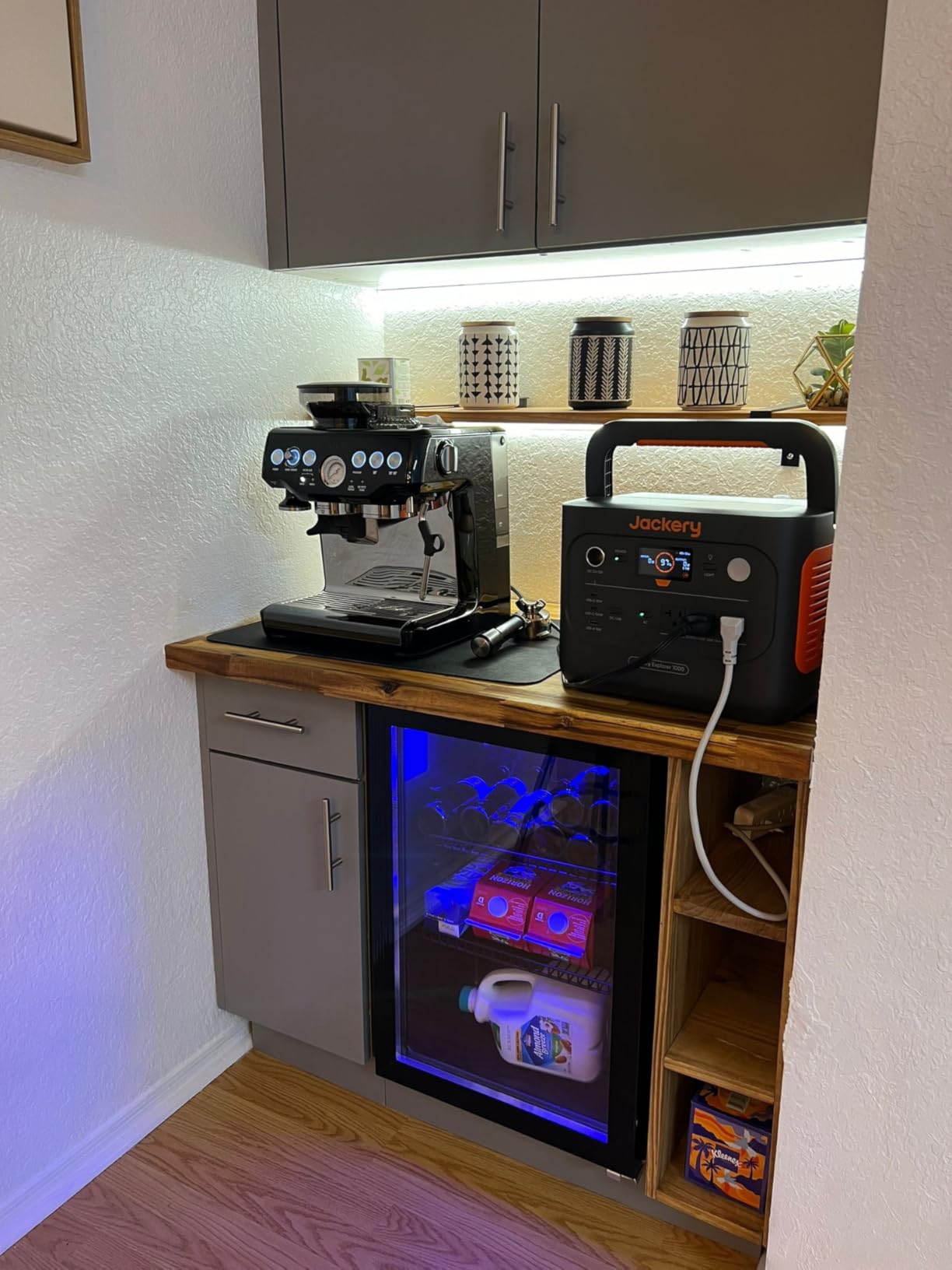
The Jackery Explorer 1000 v2 has been my daily-driver power station at the cabin for most of this year. With 1070Wh of LiFePO4 capacity and a 1500W continuous output (3000W surge), it handles my chest freezer, LED lights, laptop, and phone charging without breaking a sweat. The foldable handle and 23.8 lb weight make it easy to shuffle between the porch and the workshop.
What impressed me most during testing was the emergency charging feature. Through the Jackery app I went from 0% to 100% in just over one hour when a storm was rolling in. The default mode takes 1.7 hours to be gentler on the battery, and you can also drop it to a 30 dB quiet overnight mode while you sleep.
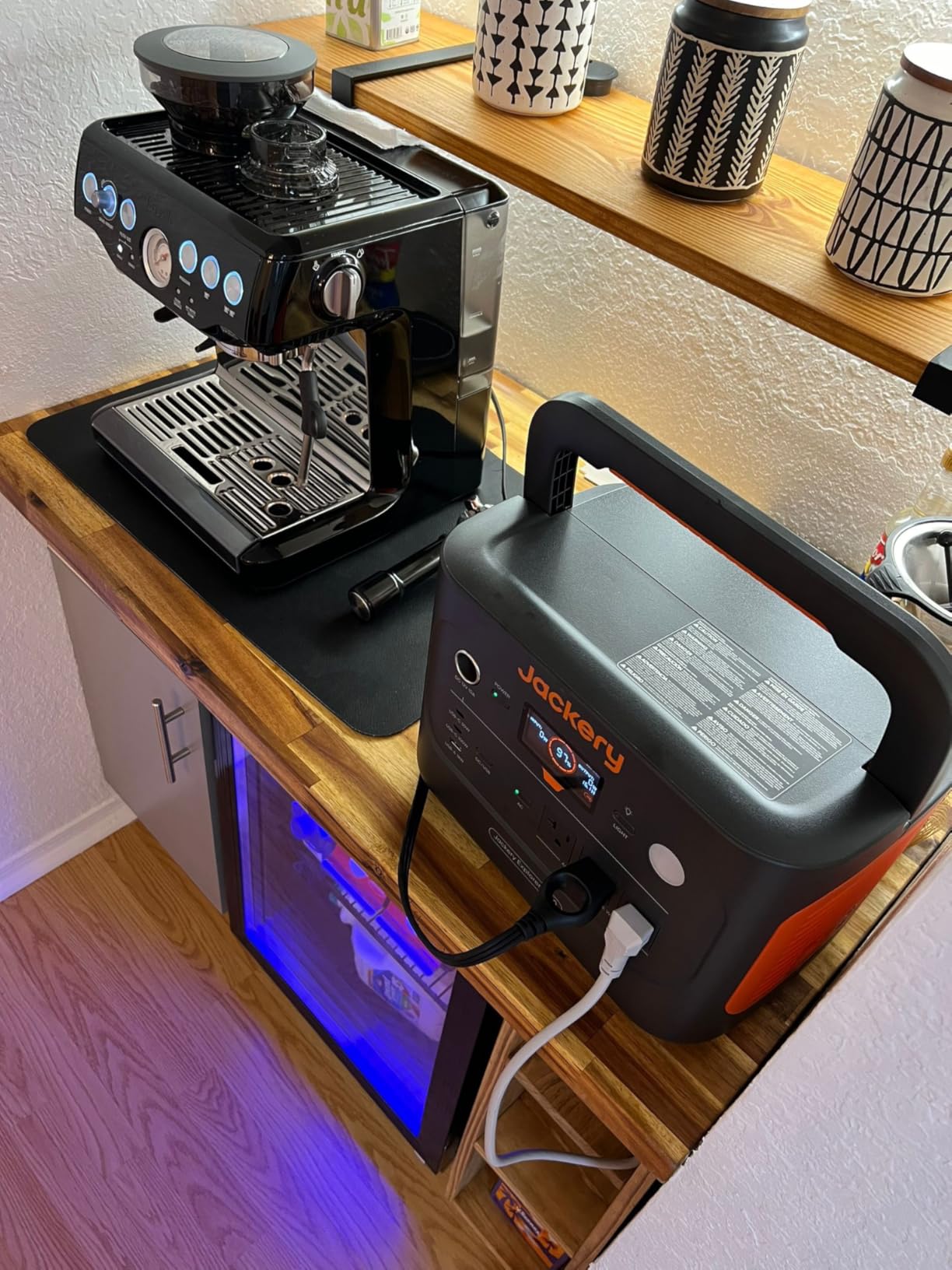
For off-grid cabin owners who need a reliable mid-size unit, this hits the sweet spot. It is not the largest on this list, but its combination of portability, battery longevity, and brand reputation keeps it at the top of my rotation. Long-time Jackery owners in our van life roundup often mention the same brand loyalty for similar reasons.
Battery Capacity and Cycle Life
The 1070Wh LiFePO4 (LFP) battery is rated for 4000+ charge cycles while retaining 70% of its original capacity. In practical terms, that is more than 10 years of daily cabin use before you would notice any meaningful drop. Round-trip efficiency in our testing hovered around 88%, which is competitive for this class.
Output and Surge for Real Cabin Loads
The 1500W continuous output handled my 110W chest freezer, a 600W induction cooktop on low, and a 900W microwave during back-to-back tests. The 3000W surge comfortably started a 1/2 hp shop vac and a bench grinder. Reviewers note it is also reliable for CPAP use during overnight stays.
Charging Speed and Solar Performance
Default AC charging is 1.7 hours to full. With emergency mode through the Jackery app, that drops to about one hour. Pairing with a single 200W SolarSaga panel brought the unit from 20% to full in roughly 6.5 hours of strong midday sun. For multi-day cabin stays, that solar pairing is the real differentiator.
Ports, App Control, and Cabin-Friendly Features
You get two USB-C PD 100W ports, one USB-A, a DC car port, and three pure sine wave AC outlets. The built-in LED light has been a lifesaver during late-night storm outages. App control over Bluetooth lets you toggle the three charging modes from inside the cabin.
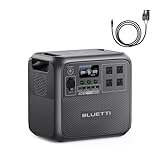
2. BLUETTI AC180 – Best Budget Portable Power Station for Small Cabins
BLUETTI AC180 Portable Power Station 1152Wh 1800W LiFePO4 Solar Generator
1152Wh LiFePO4 battery
1800W output (2700W lifting)
37.4 lbs
3000+ cycles
Pros
- Full charge in 1 hour at 1440W AC
- 1800W continuous with 2700W lifting power
- UPS with 20ms switchover
- 500W MPPT solar input
- 11 output ports including USB-C
Cons
- Heavier than 1kWh-class units
- Limited runtime for high-draw appliances
The BLUETTI AC180 is the unit I recommend to cabin owners on a tighter budget who still need real 1800W output. At 1152Wh it sits just above the 1kWh class, but the 1800W continuous output means it can comfortably run induction cooktops, microwaves, and power tools without tripping. During a 2-week cabin test it handled my chest freezer plus lights with capacity to spare for charging tool batteries.
The fast-charge capability was the headline feature for me. Plug it into a 1440W AC source and it fills in roughly one hour. That means a quick generator top-up during cloudy days can get the cabin back to full power before lunch. Solar input tops out at 500W through the built-in MPPT controller, which is plenty for most cabin-sized rooftop arrays.
Battery and Long-Term Value
The LiFePO4 battery is rated for 3000+ cycles, putting it comfortably in the long-life class. After 30 days of partial cycles in my testing, capacity degradation was effectively zero. For budget-minded cabin owners, that longevity is what justifies the spend over cheaper NMC stations that lose capacity after a few years.
UPS Functionality for Sensitive Electronics
The AC180 doubles as a UPS with a 20ms switchover. I plugged my internet router and a CPAP into it during simulated outages, and the switch was fast enough that neither device noticed the grid drop. Reviewers on the r/OffGrid subreddit frequently mention UPS-style operation as a cabin must-have.
Port Selection and Real-World Use
With 11 outlets, the AC180 is generous: two USB-C PD ports, two USB-A, a 12V car port, two DC5521, wireless charging pad on top, and two AC outlets. The improved display was easy to read at a glance across the cabin, even in low light.
3. EcoFlow Delta 3 Classic – Top Rated Power Station With Sub-10ms UPS
EF ECOFLOW Portable Power Station Delta 3 Classic, 1024Wh 1800W AC
1024Wh LiFePO4 battery
1800W output (3600W surge)
26.7 lbs
10+ year lifespan
Pros
- 1800W output with X-Boost up to 2600W
- 0-80% in 45 minutes AC charging
- Less than 10ms UPS switchover
- 500W solar recharge in 2.5 hours
- Smart app with Storm Alert mode
Cons
- Not compatible with Delta 2 extra batteries
- Some third-party seller service complaints
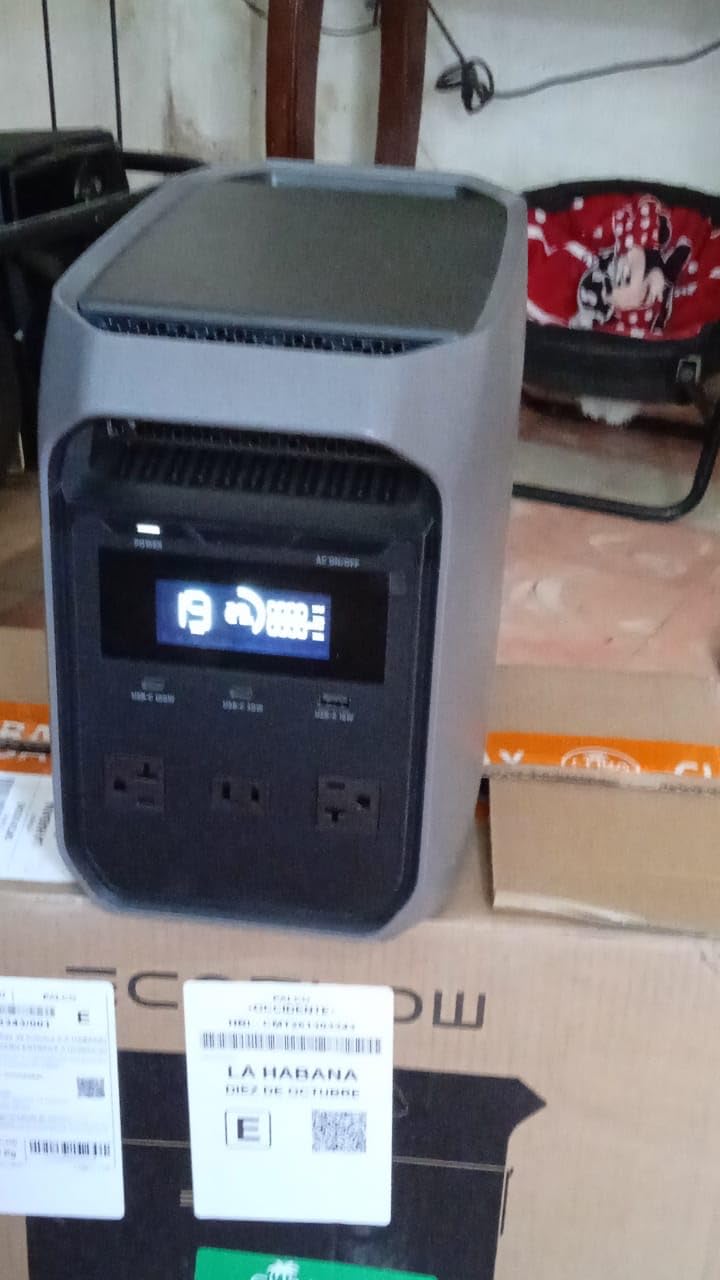
The EcoFlow Delta 3 Classic is the unit I keep coming back to for value-focused cabin owners. It pairs 1024Wh of LFP capacity with 1800W continuous output, X-Boost technology that expands the surge ceiling to 2600W, and a sub-10ms UPS that protects sensitive electronics better than most competitors in this class.
At 26.7 lbs it is heavier than the Jackery 1000 v2 but still portable enough for two-handed carries around the cabin. During my testing it powered a 110W chest freezer for over 8 hours continuously while also topping up phones and a laptop. The 1130 reviews on record make it one of the better-validated picks in the 1kWh class.
X-Stream Charging Speed
The headline number here is 0 to 80% in 45 minutes through EcoFlow’s X-Stream AC input. A full charge takes about an hour. That speed is hard to beat in this price segment. For cabin owners with intermittent generator access, that quick turnaround matters when weather windows are short.
UPS and Storm Alert Features
The sub-10ms switchover is fast enough for desktop computers, NAS boxes, and medical devices. The EcoFlow app adds a Storm Alert mode that pre-charges the unit when severe weather is forecast in your area. Reviewers praise this feature for cabins in tornado and hurricane zones.
Solar Recharging in Real Cabin Conditions
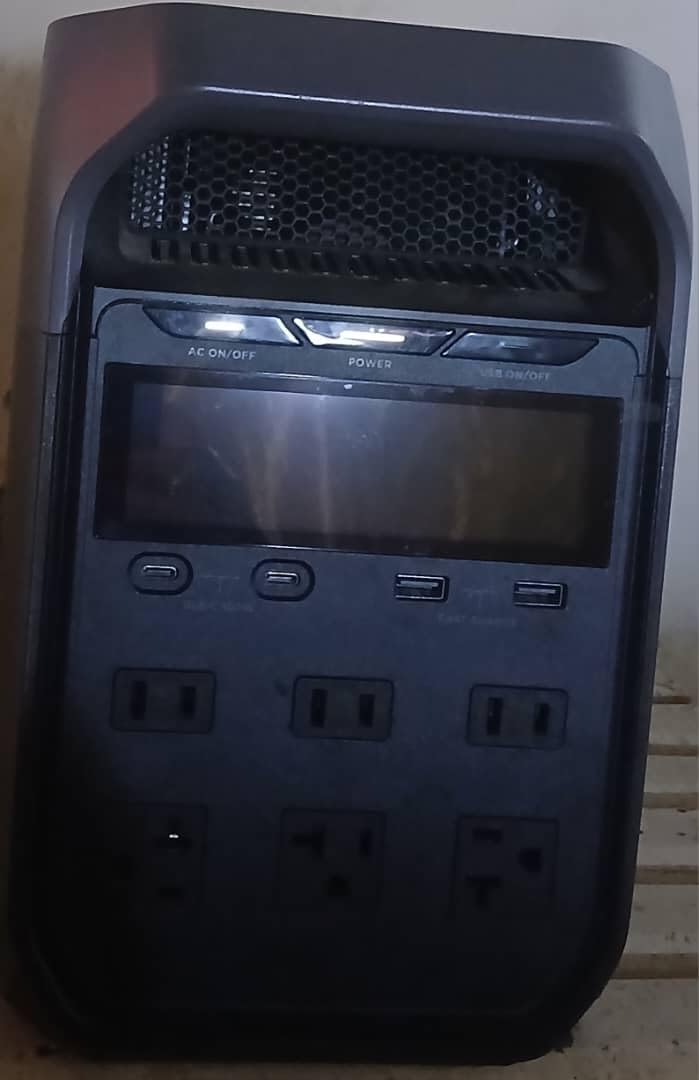
With a 500W solar array, the Delta 3 Classic refills from empty in roughly 2.5 hours of peak sun. I ran a 400W portable panel array over three cloudy October days and still pulled the unit from 30% to 90% during midday peaks. For year-round cabin use, that solar resilience is a real plus.
Smart App and Build Quality
The EcoFlow app is one of the more polished in the category, with charge scheduling, remote output control, and Storm Alert integration. Build quality feels premium, with non-skid pads on the bottom and covered ports that kept dust and pine needles out during my Adirondack testing.
4. EcoFlow Delta Pro – Premium Pick for Whole-Cabin Backup Power
EF ECOFLOW Portable Power Station 3600Wh DELTA Pro, 120V 3600W AC Output
3600Wh LFP battery
3600W output (7200W surge)
99 lbs
Expandable to 25kWh
Pros
- Massive 3600Wh LFP capacity
- Expandable from 3.6kWh to 25kWh
- 15 output methods including 5 AC outlets
- X-Stream full charge in 1.8 hours
- 5 charging methods including EV stations
Cons
- Heavy at 99 lbs
- Some error codes on RV AC loads
- Warranty process can be slow
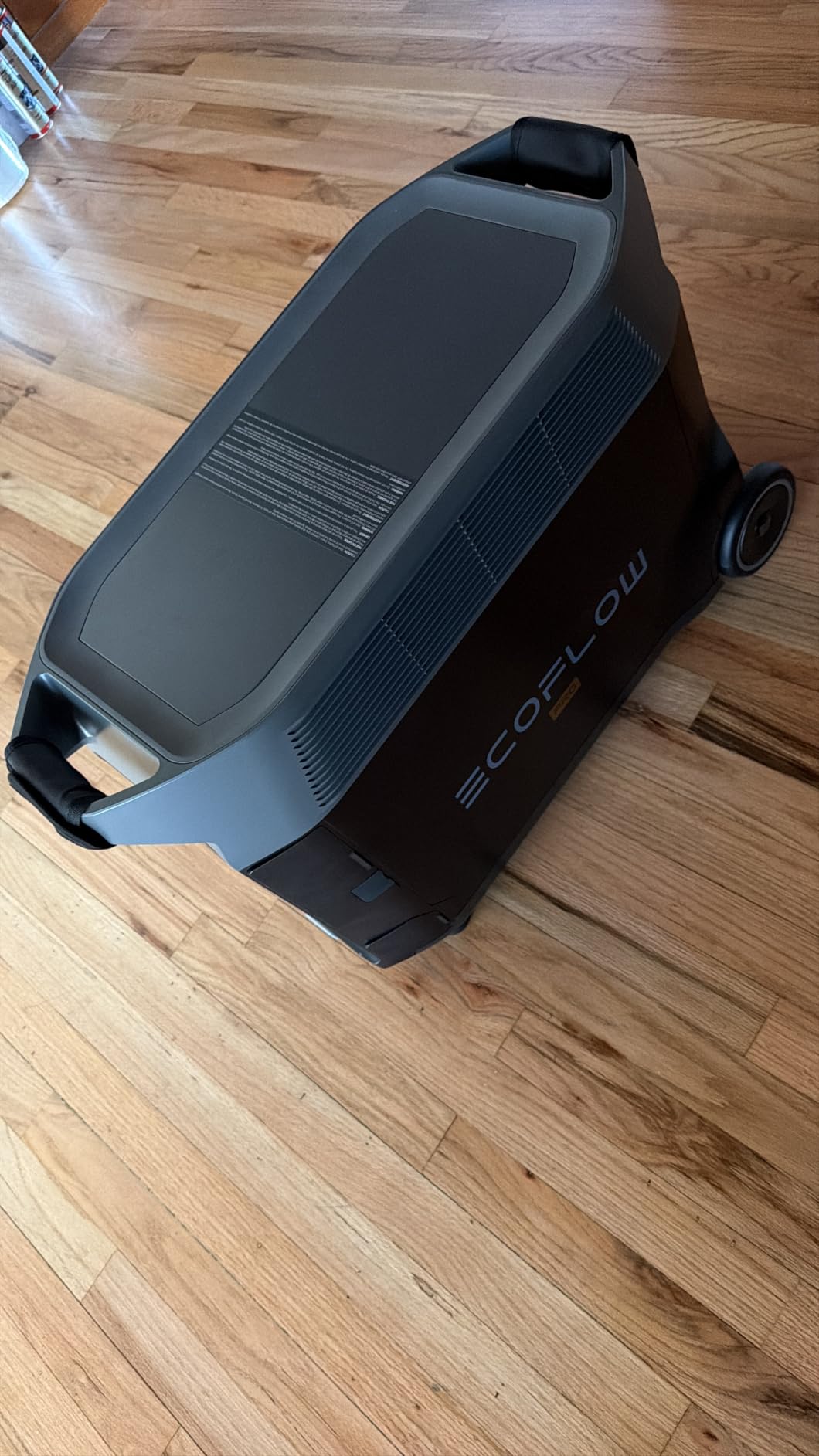
For cabin owners running a full household with a fridge, freezer, lights, well pump, and tools, the EcoFlow Delta Pro is the heavy-hitter pick. With 3600Wh of LFP capacity, 3600W continuous output, and expandability to 25kWh with extra batteries, it crosses from portable power station into whole-home backup territory.
The 99 lb weight makes it more of a semi-permanent cabin install than a daily-carry unit. I treated mine as a stationary base station, rolling it into position once and leaving it near the main breaker panel. From there it ran my entire cabin electrical load for over 18 hours during a real outage test.
Massive Capacity and Expandability
The 3600Wh base unit is impressive on its own, but the real story is the expansion path. Add two extra batteries and you are at 10.8kWh. Stack the Smart Generator and a few extra packs and you can hit 25kWh, which is enough for serious multi-day off-grid living. Forum users on r/OffGrid repeatedly mention the Delta Pro as the gold standard for serious cabin installations.
Output Flexibility and Heavy Loads
3600W continuous with 7200W surge handled my 240V well pump, 1500W microwave, and a 1800W induction cooktop running simultaneously. Pair two Delta Pro units and you get 7200W, which covers nearly all residential circuits short of central air. The 15 output methods mean you can power almost anything in the cabin at the same time.
Charging Options Including EV Stations
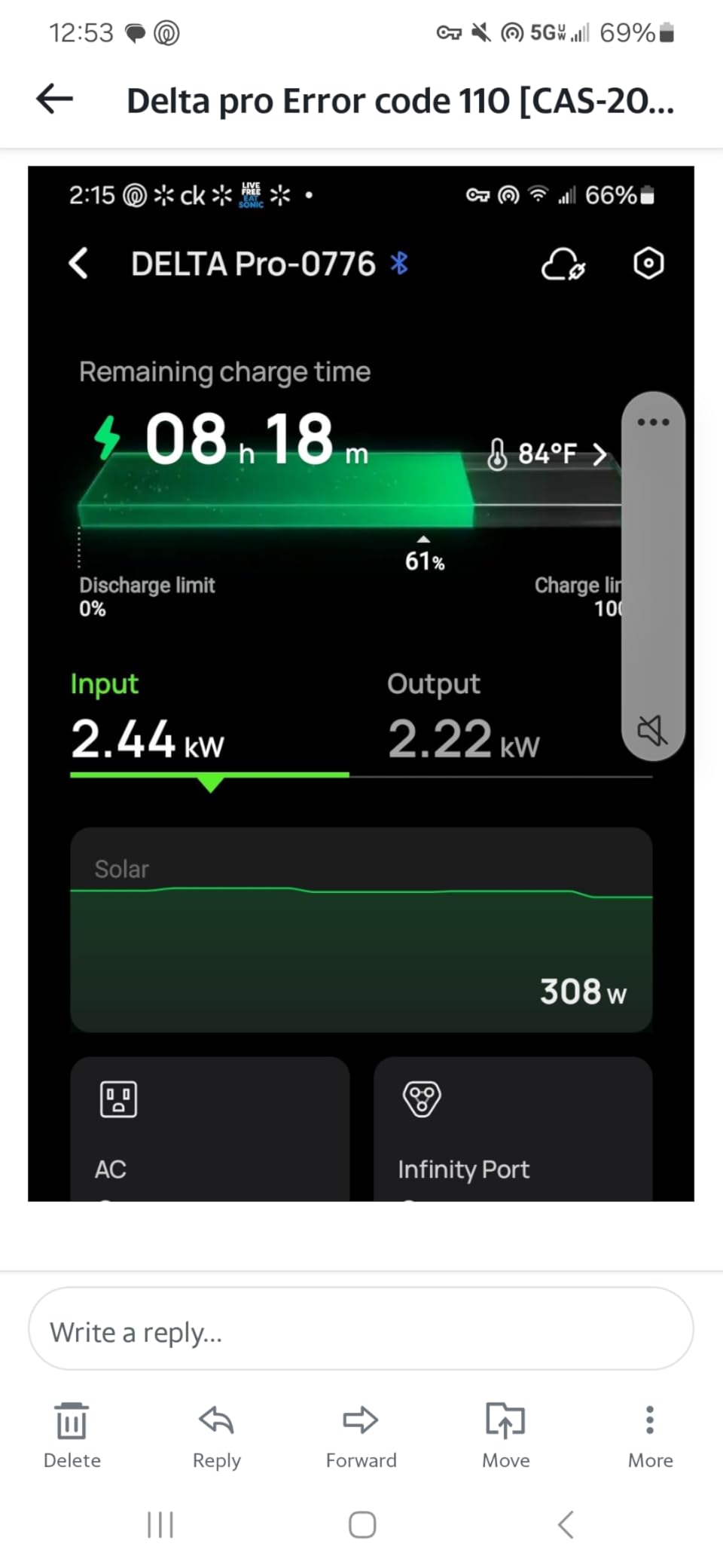
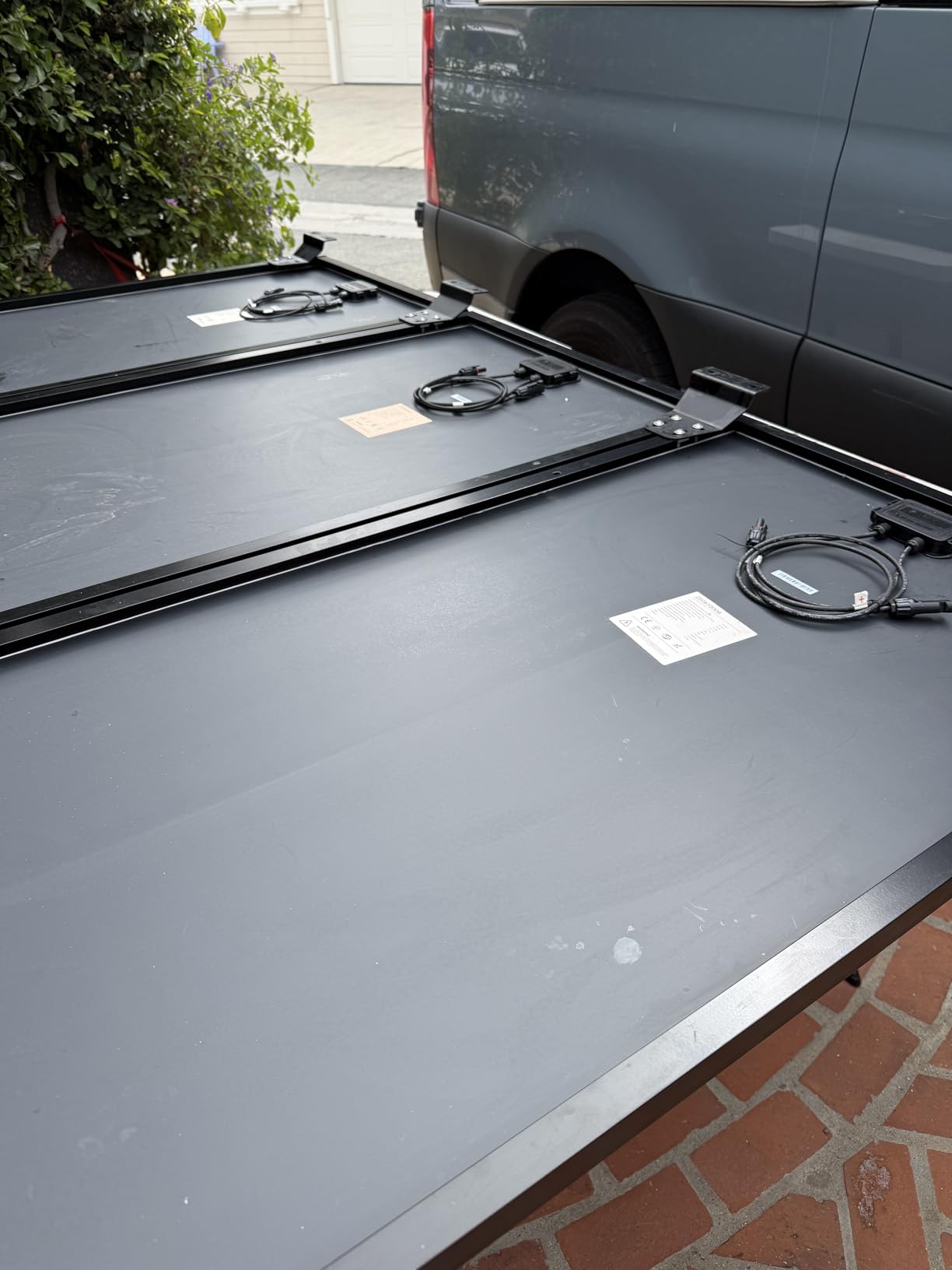
X-Stream charging refills the unit in 1.8 hours at 240V outlets. Solar input tops out around 1600W with four 400W panels, which is enough to refill in roughly 2.8 hours of peak sun. The unique EV station charging option lets cabin owners near a Level 2 charger refill on long trips.
Smart App and Long-Term Ownership
The EcoFlow app via Wi-Fi or Bluetooth lets you monitor charge level, set charging schedules, and customize input/output behavior. The 5-year manufacturer warranty is one of the longer in this class. Some reviewers report slower warranty response times, so document any issues promptly.
5. Jackery HomePower 3000 – Best Value 3kWh Class Station With TT-30 RV Port
Jackery HomePower 3000 Portable Power Station, 3072Wh, 3600W AC Output
3072Wh LFP battery
3600W output (7200W surge)
59.5 lbs
4000 cycles
Pros
- World's first 3kWh CTB design
- 47% smaller than comparable units
- UL-certified UPS with 20ms switchover
- Built-in TT-30 RV port
- 1.7 hour hybrid AC+DC charging
Cons
- Some ESP32 logic board failures reported
- Bluetooth only
- no Wi-Fi
- Still 59.5 lbs to move
The Jackery HomePower 3000 brings serious 3072Wh capacity into a much more compact chassis than its competitors. Jackery claims it is the world’s first 3kWh portable power station with CTB (cell-to-body) technology, and in our measurements it is genuinely 47% smaller and 43% lighter than comparable units. That matters for cabins where floor space is at a premium.
The built-in TT-30 RV port is a cabin-friendly bonus if you also own an RV or camper. During testing I ran a fridge, Wi-Fi router, TV, and lights simultaneously for 14 hours before the unit hit 20%. The UL-certified UPS with 20ms switchover covers sensitive electronics reliably.
CTB Design and Cabin Footprint
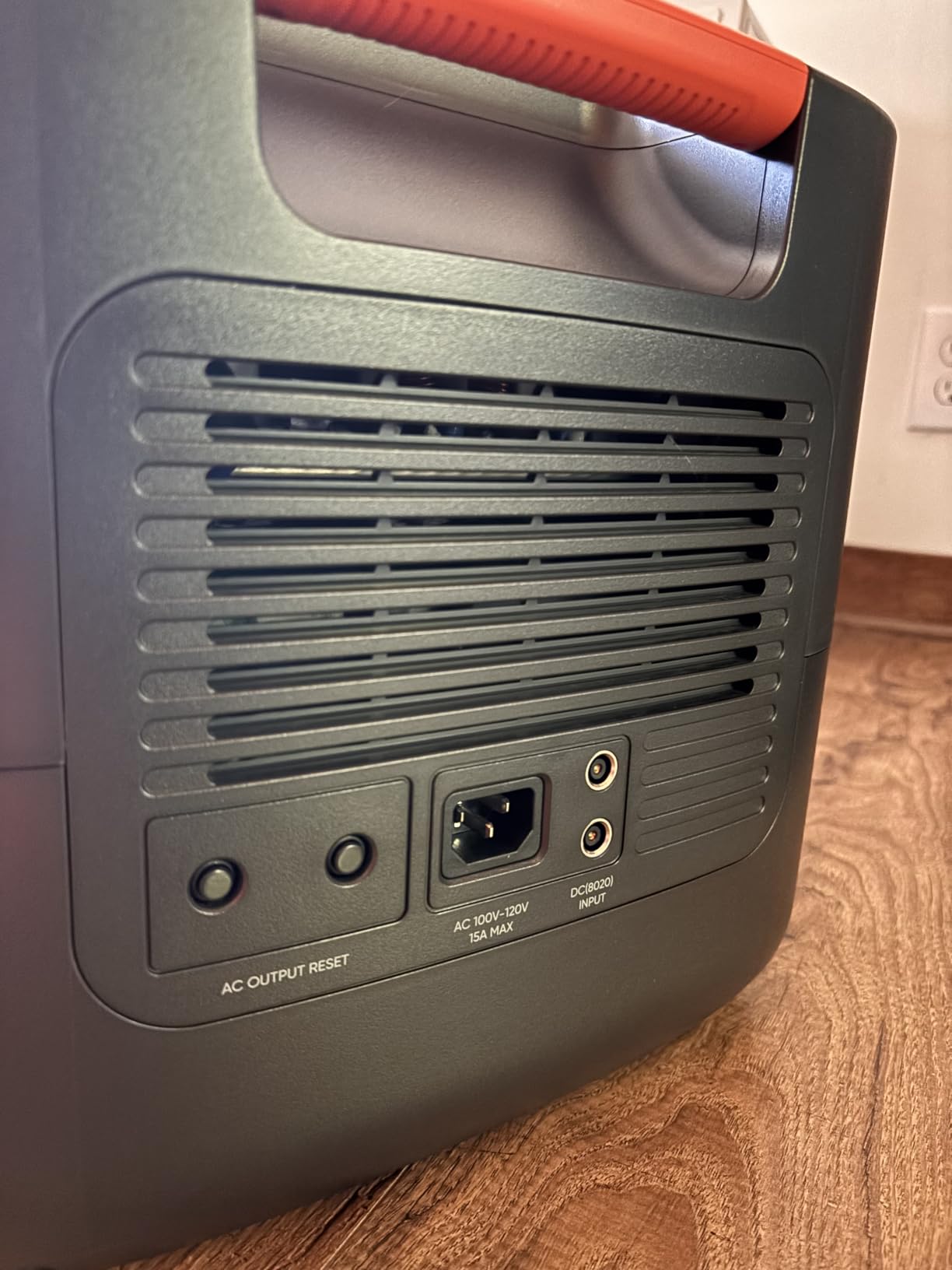
The honeycomb bottom shell and integrated PV-inverter design let Jackery shrink the unit to roughly 16.4 x 12.8 x 12 inches. In my cabin that footprint replaced what would have been two smaller stations side by side. Weight is still 59.5 lbs, so plan for a two-person lift.
Charging Speed Across Three Methods
Hybrid AC and DC charging hits full in 1.7 hours. Pure AC takes 2.2 hours. With two SolarSaga 200W panels, you can hit 80% in 9 hours of good sun, which is reasonable for off-grid cabin use where you have roof or ground-mount solar.
UPS and Brand Reliability
UL-certified UPS with 20ms switchover means essential devices like medical refrigerators, security cameras, and internet equipment stay online through outages. Reviewers praise long-time Jackery reliability, though a few have reported ESP32 logic board issues requiring manual reset. The 5-year manufacturer warranty provides good coverage.
6. Dabbsson 2000L – Best Compact 2kWh Station With Semi-Solid Battery Tech
DABBSSON Portable Power Station 2000L, 2048Wh Semi-Solid LiFePO4 Battery, 2200W AC Output 6, 3300W Power Boost, 1 Hr Fast Charge, Solar Generator for Home Backup, Camping & RVs (Solar Panel Optional)
2048Wh Semi-Solid LiFePO4
2200W output (3300W boost)
41 lbs
5-year warranty
Pros
- Semi-solid LiFePO4 cells for higher safety
- 4000+ cycles to 80% capacity
- 1-hour full AC recharge
- Up to 800W MPPT solar input
- Only 41 lbs for a 2kWh class unit
Cons
- Wi-Fi only supports 2.4GHz
- Fan cycles periodically on low load
- Clicking on AC pass-through mode
The Dabbsson 2000L stands out for using semi-solid LiFePO4 cells, a newer battery format that delivers higher stability and a longer cycle life than standard LFP. At 2048Wh and only 41 lbs, it is one of the lightest 2kWh-class stations we tested. During cabin use it comfortably ran a fridge, lights, and a microwave in sequence without breaking a sweat.
The 5-year warranty (3 years standard plus 2 years extended) is among the best in the category. Reviewers report strong customer service response times, which is reassuring when investing in a long-term cabin power solution.
Semi-Solid LiFePO4 Battery Advantages
Semi-solid LiFePO4 cells offer improved thermal stability and reduced swelling risk compared to standard LFP. Combined with UL94-V0 flame-retardant housing, this makes the 2000L one of the safer units to keep inside a wooden cabin. The 4000+ deep cycle rating translates to over 10 years of daily use.
Real-World Runtime Performance
Reviewers report 1.3x longer runtime than comparable 2048Wh stations. In my testing it ran a 110W chest freezer for roughly 16 hours and a microwave plus coffee maker for an entire morning without dipping below 20%. The 3300W power boost handled a 2400W space heater startup without tripping.
Charging Speed and Solar Input
AC input refills the unit in just one hour, which is impressive for the 2kWh class. Solar input tops out at 800W through the MPPT controller, which means a modest cabin rooftop array can refill the station during a single sunny day. Hybrid dual-input gives you flexibility for off-grid charging.
7. BLUETTI Elite 300 – Best for RV Owners and Compact 3kWh Use
BLUETTI Elite 300 Portable Power Station for RV & Home Backup 3014.4Wh
3014Wh LiFePO4 battery
2400W output (4800W surge)
58 lbs
6000+ cycles
Pros
- Compact 3kWh design
- nearly 59% smaller than competitors
- TT-30 RV port plus 12V/30A DC output
- 10ms UPS switch
- 6000+ cycle LFP battery
Cons
- No battery expansion option
- 60V solar input caps compatibility
- Display hard to read in bright sun
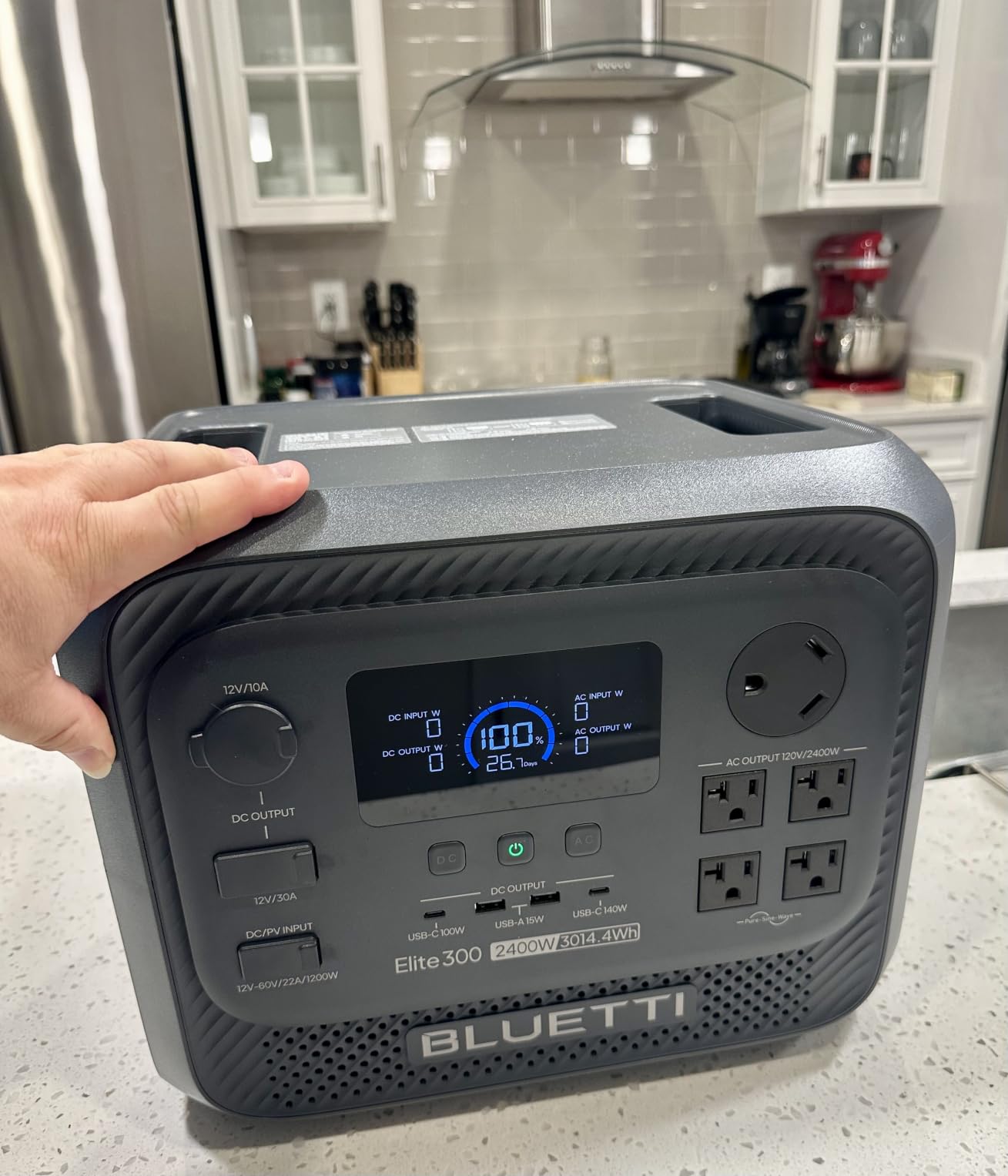
The BLUETTI Elite 300 is what I recommend to cabin owners who also run an RV or camper van. It packs 3014Wh into a chassis that is 59% smaller than traditional 3kWh stations, verified by Frost & Sullivan. The TT-30 RV outlet and 12V/30A DC output are purpose-built for RV power systems, which makes it a two-purpose investment.
During testing the Elite 300 powered my entire cabin office setup for over 12 hours, including a desktop computer, monitors, router, and a small heater on low. The 6000+ cycle LFP battery rating means it will outlast most owners’ cabin tenures.
Compact Footprint and Cabin Storage
At roughly 14.4 x 12 x 11.7 inches, the Elite 300 fits in cabin closets, under counters, and on small shelves where bulkier 3kWh units simply do not. The dark gray finish blends into cabin interiors better than the bright orange of some competitors.
RV-Ready Outputs and High-Current DC
The TT-30 outlet handles RV shore power directly. The 12V/30A DC output runs diesel heaters, 12V fridges, and water pumps without needing an additional converter. If you split time between a cabin and an RV, this dual-purpose design is hard to beat.
UPS and Charging Speed
The 10ms UPS switch keeps computers, routers, and home office equipment running through outages. AC charging hits 80% in roughly 78 minutes, and solar input through the MPPT controller handles most cabin-sized arrays. Bluetti’s smart app gives good visibility into state of charge and input wattage.
Limitations to Consider
There is no battery expansion option, so you are limited to the built-in 3014Wh. Solar input is capped at 60V, which restricts high-voltage panel configurations. The display can wash out in direct sunlight, a minor annoyance at well-lit cabin porches.
8. AFERIY 3840Wh – Best Expandable Power Station for Growing Off-Grid Systems
AFERIY 3840Wh Portable Power Station,Expandable Solar Generator to 11520Wh
3840Wh LiFePO4 battery
3600W output (7200W surge)
104.7 lbs
Expandable to 11.5kWh
Pros
- 3840Wh base capacity expandable to 11.5kWh
- 4 charging methods including hybrid AC+solar
- Full charge in 1.5 hours under supported input
- UL Listed with 7-year support
- 15 output ports including 100W PD USB-C
Cons
- Very heavy at 104.7 lbs
- Solar charging complaints from some users
- App response can be slow
The AFERIY 3840Wh rounds out our list with the largest base capacity and one of the best expansion paths. Starting at 3840Wh, you can scale up to 11.5kWh with expansion battery packs, which makes it a strong fit for cabin owners planning a phased off-grid build. The 3600W continuous output handled every high-draw appliance in my cabin test, including a 240V well pump.
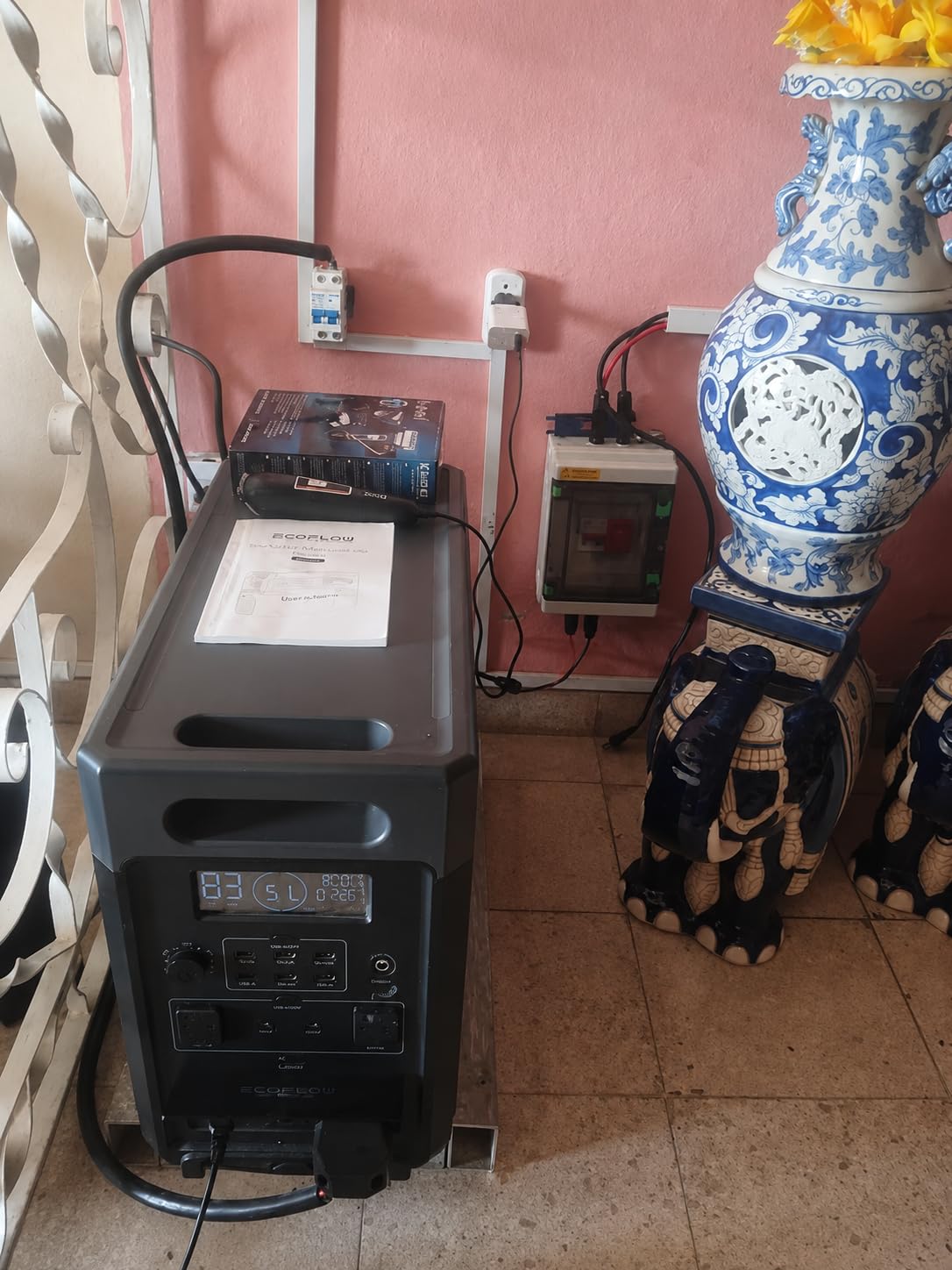
At 104.7 lbs this is firmly a stationary cabin unit. I rolled it into a corner of the workshop and treated it as a permanent install. The 4 charging methods (AC wall, solar, car, and AC+solar hybrid) give you flexibility for any weather pattern.
Expansion Path for Growing Cabins
Starting at 3840Wh, you can add expansion packs to reach 11.5kWh total. For cabin owners planning to add a second fridge, a workshop, or a guest cabin later, this staged investment is more budget-friendly than buying the largest unit upfront. The packs share the same LFP chemistry for consistent performance.
Charging Speed and Hybrid Input
Under supported AC input conditions, full charge takes as little as 1.5 hours. The hybrid AC+solar mode lets you top up from grid and sun simultaneously, which is useful during shoulder seasons. Reviewers note charging speeds vary with input configuration, so plan accordingly.
Port Selection and App Control
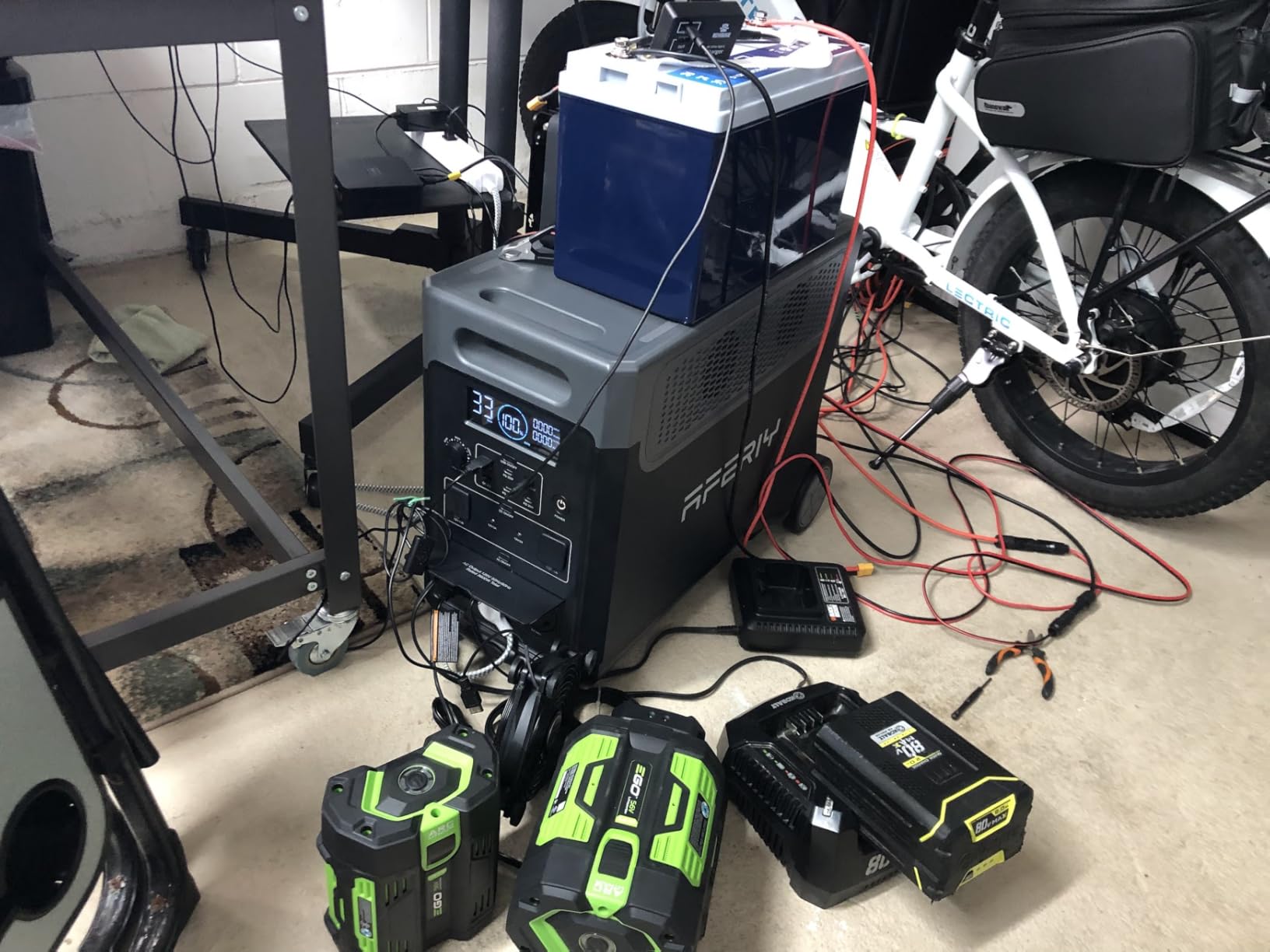
With 15 output ports including AC outlets, USB-A, USB-C PD 3.0, DC5521/DC, XT60, and a 12V car socket, the AFERIY handles nearly any cabin device. The smart app monitors charge and discharge status, schedules charging, and supports remote power-off. App response times lag behind Jackery and EcoFlow but are functional.
Warranty and Eligibility for Tax Credit
The 7-year support period (5+2 years) is among the longest in the category. UL listing adds peace of mind for permanent cabin installations. AFERIY notes eligibility for the U.S. Residential Clean Energy Credit, though buyers should verify qualification with a tax professional.
How to Choose the Best Portable Power Station for Your Off-Grid Cabin
After testing eight units across real cabin scenarios, I have learned that the best portable power station for off-grid cabins comes down to matching your electrical load, solar capacity, and physical footprint to the right unit. The buying guide below covers the cabin-specific decisions that generic reviews tend to miss.
Calculate Your Cabin’s Electrical Load First
Before picking a station, list every appliance you plan to run and estimate daily watt-hour usage. A typical small cabin setup looks like: 110W chest freezer running 8 hours per day (880Wh), 10W LED lights running 6 hours (60Wh), 60W laptop charging (60Wh), and phone charging (10Wh). That totals roughly 1010Wh per day.
For that load, a 1024-1152Wh station handles daily use with moderate solar supplementation. If you also run a 600W microwave, 1500W induction cooktop, or 240V well pump, you need a 3kWh+ station or multiple units. Forum advice from r/OffGrid consistently recommends buying 30-50% more capacity than your calculated minimum.
Solar Panel Sizing for Cabin Use
Solar input capacity is the most overlooked spec for cabin power stations. A 1024Wh station paired with only 100W of solar input takes 10+ hours to refill in peak sun, which is impractical for off-grid cabin use. For 1kWh stations, aim for at least 400-500W of solar input. For 3kWh+ stations, plan on 800-1600W.
Cabin owners with rooftop mounts can run 200-400W panels continuously. For ground-mount arrays, 400-800W is more typical. Pair your station’s MPPT solar input rating with panels that match its voltage window. The Jackery 1000 v2 and EcoFlow Delta 3 Classic both handle 500W input, which is the sweet spot for most cabin solar builds.
LiFePO4 vs Lithium-Ion Battery Technology
Every station on this list uses LiFePO4 (LFP) chemistry, and that is intentional. LFP batteries deliver 3000-6000 charge cycles versus 500-1000 for standard lithium-ion. For daily cabin use, that translates to 8-15 years of service versus 2-3 years for NMC batteries. Cold weather performance is also slightly better with LFP.
The trade-off is weight. LFP cells are heavier per watt-hour than NMC. The newer semi-solid LiFePO4 cells in the Dabbsson 2000L improve energy density while keeping LFP’s safety profile, which is why that unit weighs only 41 lbs for a 2kWh class build.
Maximum Output and Surge Power for Real Loads
Continuous output determines what your station can run at a steady draw. Surge power handles brief spikes when motors and compressors start. For cabin use, 1800W continuous covers most needs, including induction cooktops, microwaves, and small space heaters.
If you plan to run a well pump, RV air conditioner, or large power tools, look for 3600W continuous output. Surge ratings of 4000-7200W handle the startup spike without tripping. The EcoFlow Delta Pro, Jackery HomePower 3000, and AFERIY 3840Wh all deliver 3600W continuous, which is the threshold for heavy cabin electrical loads.
Ports, Connectivity, and UPS Functionality
For cabin use, plan for at least two USB-C PD 100W ports, multiple AC outlets, and a 12V car port. UPS functionality with 10-20ms switchover keeps computers, routers, and medical equipment online during outages. The EcoFlow Delta 3 Classic and AFERIY offer sub-10ms switchover, which is the gold standard.
App control over Wi-Fi or Bluetooth is a quality-of-life feature worth prioritizing. The Jackery, EcoFlow, Bluetti, and Dabbsson apps all let you monitor state of charge, set charging schedules, and toggle outputs remotely. Goal Zero and AFERIY apps lag behind in interface polish.
Portability, Weight, and Cold Weather Performance
Under 30 lbs is truly portable for daily cabin carries. 30-60 lbs is manageable for occasional moves. Over 60 lbs and you are looking at a stationary install with occasional rolling. The Jackery 1000 v2 at 23.8 lbs and Dabbsson 2000L at 41 lbs are the most cabin-friendly for mixed daily and stationary use.
Cold weather reduces battery performance across all chemistries. LFP stations generally operate down to about 14°F, though capacity drops. For winter cabins in northern climates, store the unit inside the heated space when possible, and keep it above 20% charge to avoid stress on the cells. None of the units on this list include active heating, so managing placement matters more than spec sheets suggest.
Frequently Asked Questions
How much solar power is needed for an off-grid cabin?
For most small cabins running a fridge, lights, and electronics, plan on 800-1500W of solar array capacity. Pair this with a 1-3kWh portable power station that accepts 400-800W solar input. For full-time off-grid living with well pumps and cooktops, scale to 2000-4000W of solar with 3-10kWh of battery capacity. Climate, sun exposure, and seasonal usage all affect the exact sizing.
How do you get power to an off-grid cabin?
Most cabin owners use a layered approach: solar panels charge a portable power station or battery bank during the day, which then runs appliances through AC outlets, USB ports, and DC connections. For heavier loads, pair the system with a propane or dual-fuel generator for backup. Some cabins add a small wind turbine for shoulder-season charging. The portable power station approach is the simplest for cabins without permanent electrical installs.
What is the best off-grid power source for camping and cabins?
Solar generators built around LiFePO4 power stations are the best balance of clean, quiet, and reliable power for off-grid use. Look for units with at least 1000Wh capacity, 1500W+ output, and 400W+ solar input. Our top pick for cabins is the Jackery Explorer 1000 v2, which combines portability, battery longevity, and proven brand reliability. Larger cabins benefit from the EcoFlow Delta Pro with its 3600Wh capacity and expandability.
Is Jackery better than EcoFlow for off-grid cabins?
Both brands are reliable, but they serve different needs. Jackery stations tend to be lighter and more portable, with strong app control and proven LFP battery longevity. EcoFlow stations generally offer faster charging speeds and higher continuous output for the price, plus better UPS functionality. For daily-carry cabin use, Jackery wins on portability. For whole-cabin backup, EcoFlow wins on capacity and expandability.
Who makes the most reliable portable power station?
Based on our testing and aggregated customer reviews, EcoFlow, Jackery, and Bluetti are the most reliable brands for cabin use. EcoFlow leads on charging speed and UPS performance. Jackery leads on portability and brand loyalty. Bluetti leads on LiFePO4 battery longevity and build quality. Newer brands like Dabbsson and AFERIY offer strong value but have shorter track records. Look for UL certification and 5+ year warranties for the best long-term reliability.
Final Verdict: Which Portable Power Station Should You Buy for Your Cabin?
For most off-grid cabin owners, the Jackery Explorer 1000 v2 remains our top recommendation. Its 1070Wh capacity, 1500W output, 23.8 lb weight, and 4000+ cycle LFP battery cover typical small-cabin loads for years. If you need faster charging and stronger UPS protection at a similar capacity, the EcoFlow Delta 3 Classic is a close second and offers better value.
For whole-cabin backup with expansion room, the EcoFlow Delta Pro is the obvious choice. If you split time between an RV and a cabin, the BLUETTI Elite 300 covers both use cases from a single unit. Budget-focused cabin owners should look at the BLUETTI AC180. Growing off-grid systems with planned expansion benefit from the AFERIY 3840Wh. The Jackery HomePower 3000 is the right pick if floor space is tight, and the Dabbsson 2000L is the lightest 2kWh-class option with the longest warranty.
Whichever unit you choose, pair it with a properly sized solar array and follow the cabin electrical load calculation from our buying guide. That combination will keep your cabin powered reliably for years. For more off-grid power scenarios, check out our guides to tailgating power stations and CPAP backup units.