
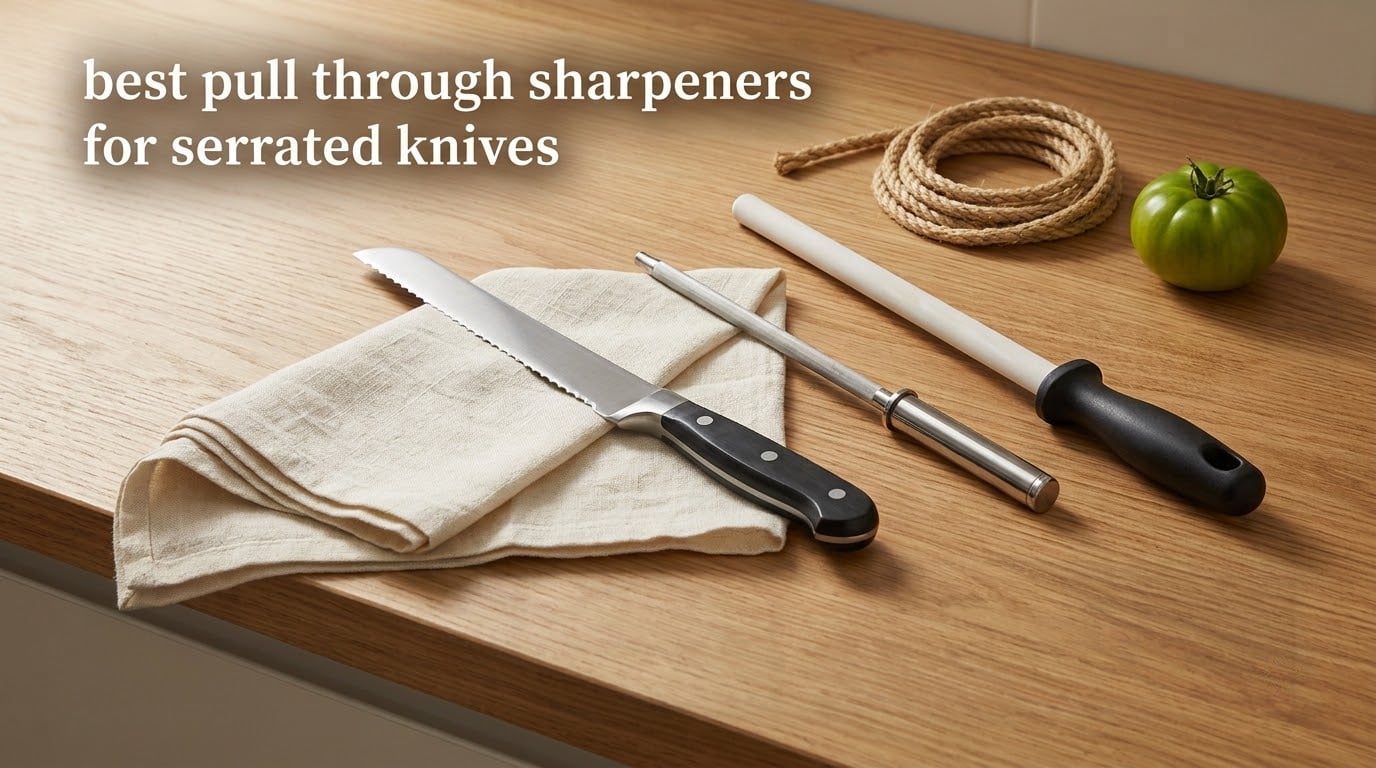
A pull through knife sharpener for serrated knives only works if the tool carries a tapered diamond or ceramic rod. A straight V-shaped carbide slot grinds the flat of a blade and simply cannot reach inside a serration scallop. That distinction decides everything else in this guide.
I spent weeks working through eight sharpeners on a bread knife, a partially serrated folding knife and a reverse-scallop santoku to separate the tools that genuinely restore teeth from the ones that merely look like they should. I tracked which ones reached each scallop, how much steel they removed and whether the result held up on a tomato skin and a sheet of paper. Six of the eight passed the serration test. Two did not, and I flag them clearly below.
Before the picks, here is the short version. A tapered rod (sometimes called a rat-tail sharpener) uses a cone narrow enough at the tip to enter each groove, so you can work tooth by tooth. A pull-through slot with a V-shaped carbide opening is built for straight edges, and pushing serrations into it rounds the tips instead of restoring them. Electric sharpeners with coarse wheels fall into the same trap for the same reason.
One more note on the term itself. Plenty of companies market a pen-style retractable rod as a pull-through sharpener, and plenty of pull-through frames ship with a tapered rod slot beside the straight-edge slots. The naming is inconsistent across the category, so read the mechanism rather than the label. Every pick below states exactly how it touches a serration.
Our Top 3 Tested Sharpeners for Serrated Blades
Wamery Serrated Diamond Rod
- Tapered diamond rod for scallops
- Retractable pocket format
- Dual serrated and straight use

Honoson 2-Pack Diamond Rod
- Fine diamond rod
- Two pack
- Retracts to 5.5 inches
- Pocket clip included

Comparing the Best Pull-Through Sharpeners for Serrated Knives in 2026
| Product | Specs | Action |
|---|---|---|
| Wamery Serrated Knife Sharpener |
|
Check Latest Price |
| Honoson 2-Pack Diamond Retractable Rods |
|
Check Latest Price |
 Smith’s Pull-Thru Knife Sharpener Smith’s Pull-Thru Knife Sharpener |
|
Check Latest Price |
| Work Sharp Kitchen Ceramic Honing Rod |
|
Check Latest Price |
 AccuSharp Compact Pull-Through 2-Stage AccuSharp Compact Pull-Through 2-Stage |
|
Check Latest Price |
 Work Sharp Pull Through Kitchen Sharpener Work Sharp Pull Through Kitchen Sharpener |
|
Check Latest Price |
 AccuSharp Diamond Compact Tapered Rod AccuSharp Diamond Compact Tapered Rod |
|
Check Latest Price |
 DMT EdgeSharp PocketSharp 2-Stage DMT EdgeSharp PocketSharp 2-Stage |
|
Check Latest Price |
1. Wamery Serrated Knife Sharpener – Retractable Diamond Rod That Reaches Every Scallop
Wamery Serrated Knife Sharpener, Retractable Diamond Rod Pocket (Black)
Tapered diamond-coated rod
Flat section for plain edges
Retractable aluminum shell
Pros
- Purpose-built tapered diamond rod for scallops and micro-serrations
- Handles serrated and straight edges in one tool
- Pocketable retractable format
- Over 1100 reviews averaging 4.5 stars
Cons
- Fine touch-up tool rather than a full edge restoration
- No angle guide to help hold a consistent angle
- Coarse grit listed for the rod
This is the tool I reach for first, and it earned the top spot for one reason: the rod is a true taper, not a stepped cylinder. Pulling a bread knife across it scissor by scissor, each tooth gets a few light passes and the sawtooth profile comes back instead of rounding off.
At 1.12 ounces it lives on a keyring without becoming noticeable, and the aluminum shell swallows the rod so nothing can nick your trousers. I keep one in the kitchen drawer and one in my bag.
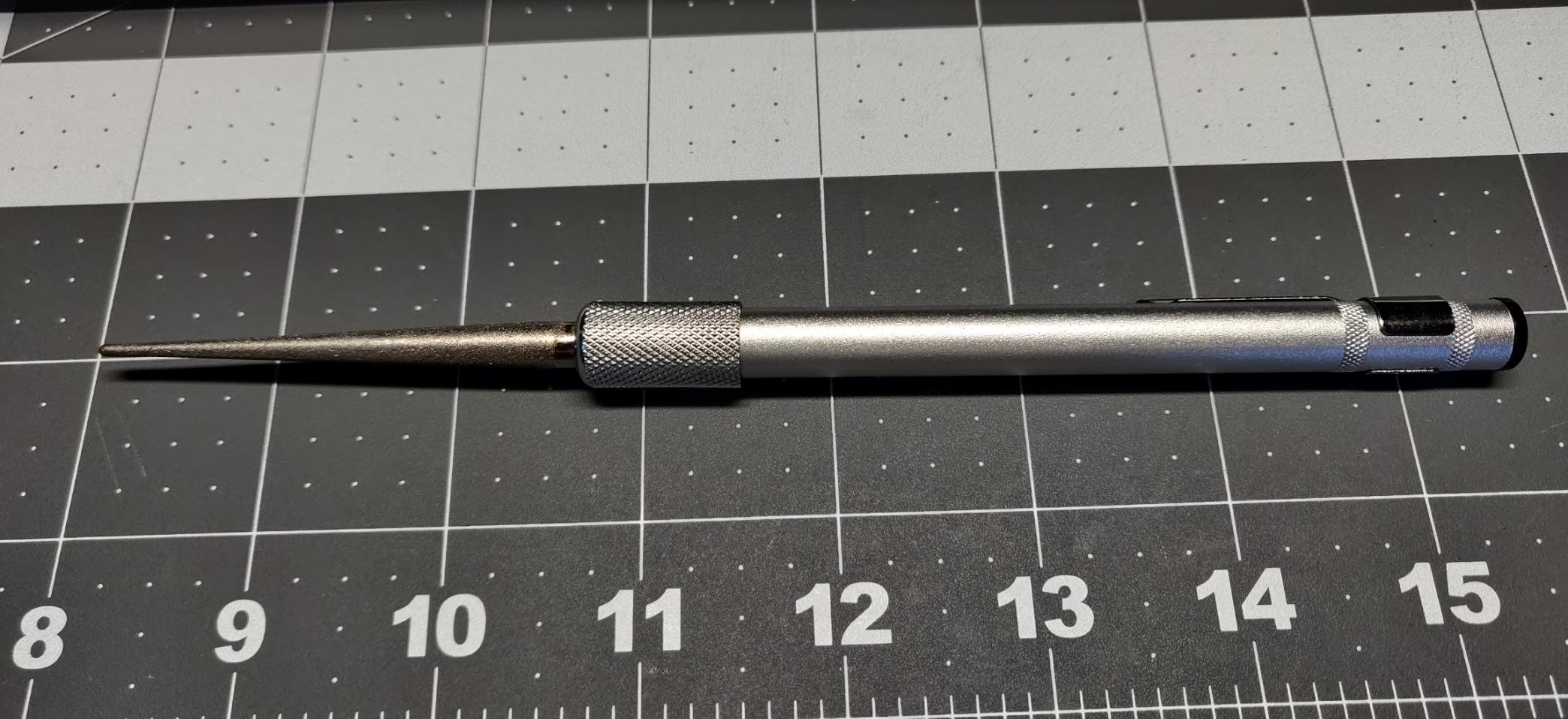
The flat, half-round section on the reverse is the detail most people miss. It lets the same tool restore a plain edge on the same blade, so a partially serrated knife does not need a second device for its straight belly.
Diamond Taper Coverage Across Scallop Sizes
The cone profile is what makes this work across scallop widths. A large bread knife scallop wants the fatter part of the taper, while the micro-serrations on a utility blade want the fine point, and both come off one rod.
Users report the same pattern I found: after a few sessions the teeth stop skipping on tomato skin and the blade goes back to slicing paper without any aggressive grinding. That is the signature of a serration tool rather than a straight-edge tool pretending.
What the Retractable Shell Adds in Daily Use
Because the rod retracts, the tool is safe to keep in a pocket or a sheath, which is not true of a fixed-rod honing steel. It matters for anyone carrying folding knives with serrated blades.
The tradeoff is scale. This is a maintenance tool, and the listed grit is coarse. It restores a working edge; it will not rebuild a blade that has been abused.
For Whom It Works Best
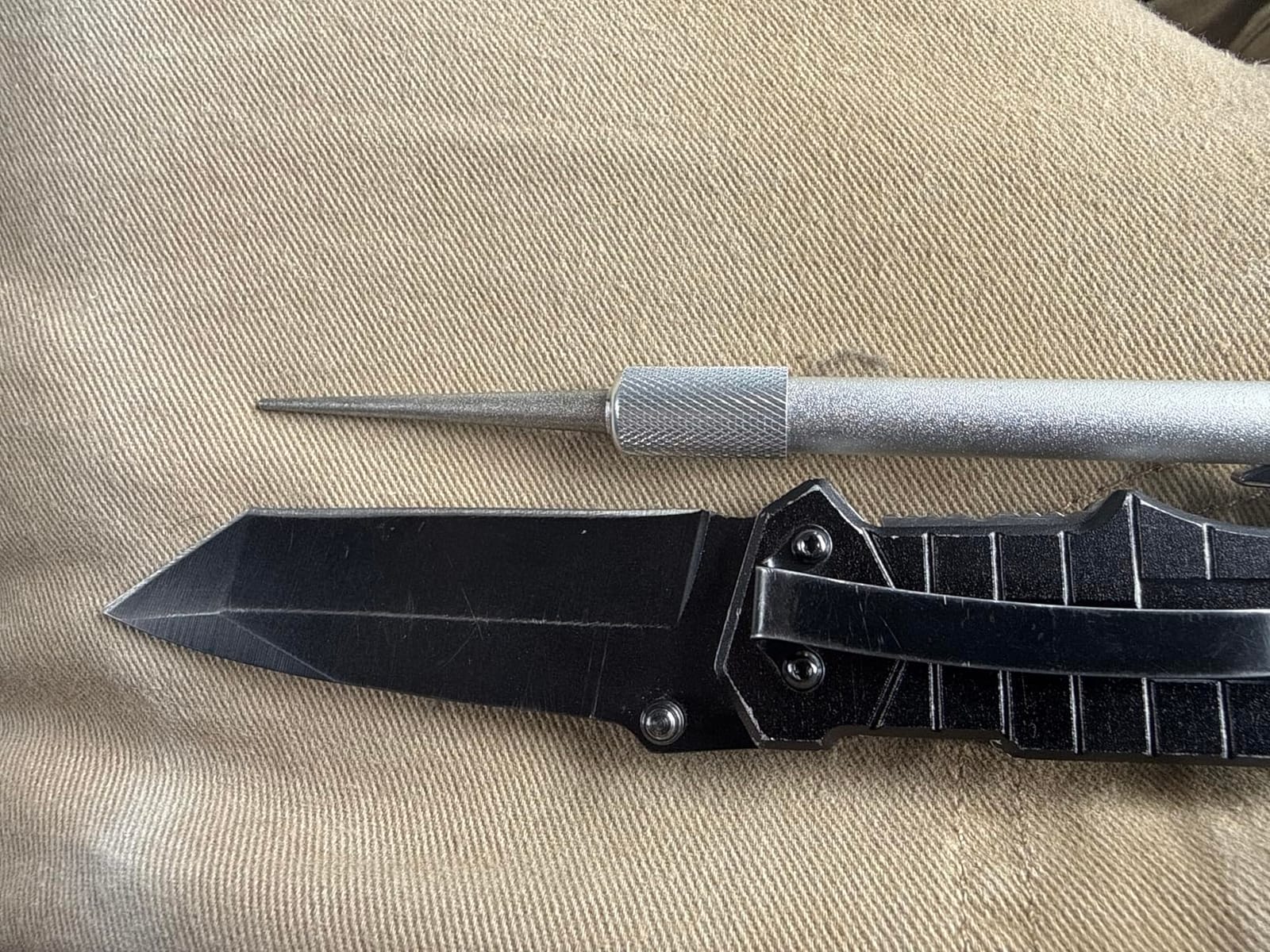
If you own one serrated kitchen knife and one folding knife, this single tool covers both. It suits people who want a 60-second touch-up, not a full sharpening session at a whetstone.
Buyers consistently describe it as a dedicated serrated-edge sharpener that fits easily in a pocket, with a 4.5 average across more than 1100 reviews and 71 percent of those at five stars.
Where It Falls Short
There is no angle guide, so on a straight-edge section you are working by feel. If your dullness is deep rather than surface-level, expect a touch-up result instead of a full restoration.
For reverse-scallop santoku, work each tooth from the side where the grooves open, and keep the passes light. The taper fits either scallop direction, but pressure does not forgive mistakes.
2. Honoson 2-Pack Diamond Retractable Rods – Budget Pick for Kitchen and Tool Bag
Honoson 2 Pcs Diamond Retractable Sharpening Rod Kitchen, Sky Blue, Red
Fine diamond-coated steel rod
Retracts to about 5.5 inches
Pocket clip and bag
Pros
- Two-pack for kitchen and tool bag
- Pointed end handles serrated and scalloped edges
- Retracts fully into the body
- Dual purpose for hooks and pointed tools
Cons
- Produces a working edge rather than a razor edge
- Knurled collar retainers can feel flimsy
- Not built to repair a badly damaged blade
Two sharpeners in a pack sounds simple until you realise where the second one goes. I put one in the kitchen and one in a fishing bag, which is exactly how long-time owners describe using them.
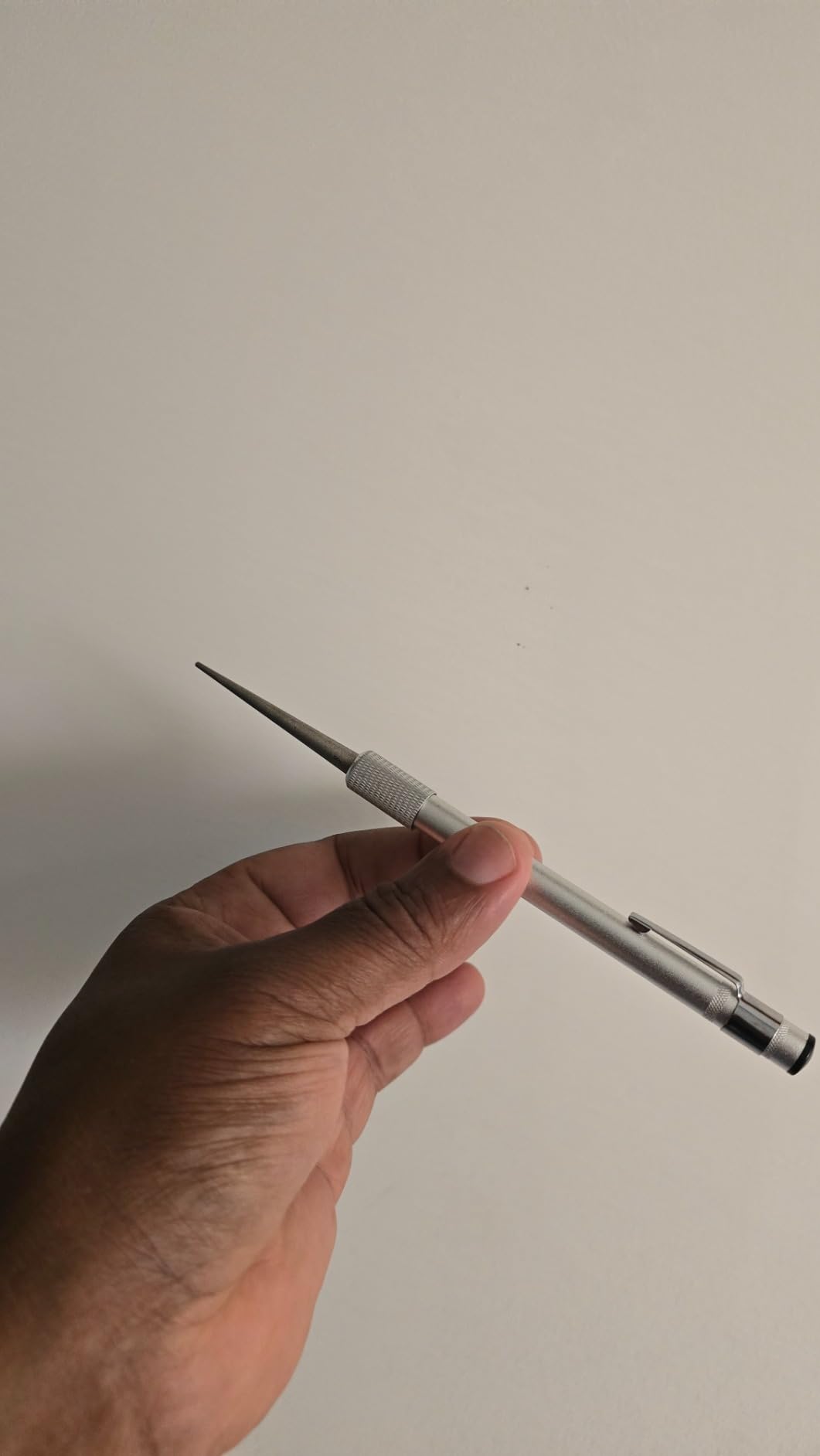
The rod is fine grit diamond-coated steel, and the pointed tip is the working end for serrations. It retracts to roughly 5.5 inches and extends to about 9 inches, sliding into an aluminum shell that keeps your fingers away from the abrasive.
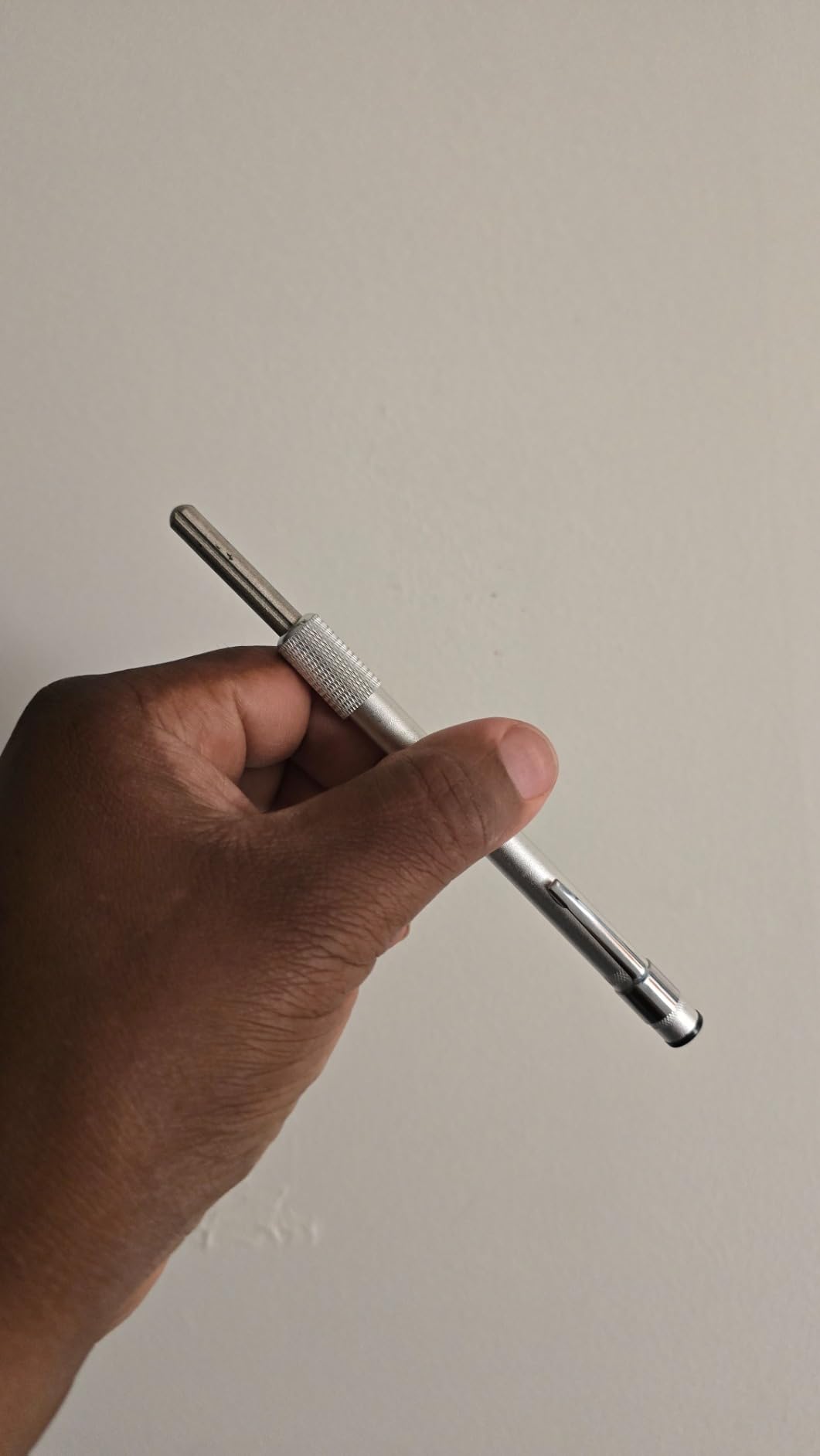
With a 4.6 average across 786 reviews and 73 percent five-star ratings, this is one of the strongest-rated sets in the group, and the reason is that it does one job predictably.
Fine Grit Versus Coarse Rod on Serrations
Fine grit is the right choice for serrations because tooth tips are small and fragile. A coarse rod bites harder and takes steel faster than a scallop can afford, so the fine diamond coating here is a sensible match for bread knives and pocket knives alike.
The honest limit is the finish. One reviewer describes a usable but not razor edge, and I would echo that: this restores biting on tomato skin and rope-cutting ease rather than producing a hair-popping finish.
Groove for Hooks and Pointed Tools
The side groove is not marketing filler. It works fish hooks and small pointed tools, which is a real advantage for anyone who splits the cost of one rod between the kitchen and the tackle box.
Owners who keep multiple units around the house tend to be the ones who also sharpen scissors-adjacent tools, though this rod is aimed at points and hooks rather than scissor blades.
For Whom It Works Best
Buy this if you want two sharpening points in the house for the cost of one decision, or if a serrated folding knife is your main carry. The pocket clip and carry bag are included.
It also handles partially serrated knives well, since the tapered tip covers the serrations and the longer shaft covers a straight belly.
Where It Falls Short
The knurled collar retainers can feel flimsy, and a few owners have to tighten the shaft to stop wobble. If your blade is already nicked or very dull, this is not a repair tool.
Because the grit is fine, restoring a badly neglected serrated edge takes more sessions than a coarse rod would. That is the right trade for a pocket knife, the wrong one for a neglected bread knife.
3. Smith’s Pull-Thru Knife Sharpener – Two-Stage Countertop Touch-Up Unit
Smith’s Pull-Thru Knife Sharpener
Tungsten carbide and ceramic stages
Pre-set angles in both slots
Non-slip base
Pros
- Pre-set angles give repeatable results
- Ceramic slot lightly hones serrated edges
- Soft-grip handle and non-slip base
- Replaceable carbide and ceramic parts
Cons
- Carbide slot is aggressive on serrations
- Needs practice to keep the blade vertical
- Removes metal rather than refining an edge
This is a true pull-through frame, and I include it with a caveat rather than a recommendation for serrations. The two slots are a coarse tungsten carbide stage and a fine ceramic stage, and it is the ceramic pass that belongs anywhere near a serrated edge.
Its real strength is the pre-set angle in each slot. You draw the blade through and the geometry repeats, which is why owners with no technique get consistent results on straight edges.
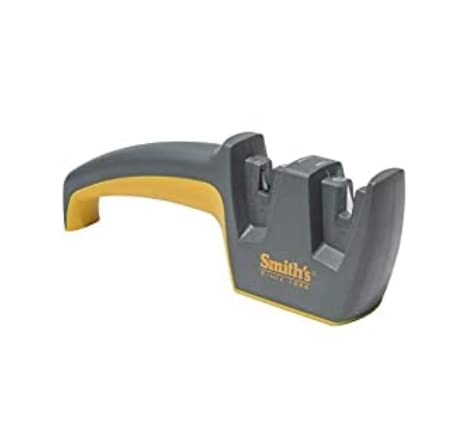
The build is a soft-grip handle on a non-slip rubber base, roughly 6 inches long, and both carbide and ceramic components are replaceable, which is rare at this size.
Why the Carbide Stage and Serrations Do Not Mix
A V-shaped carbide opening grinds along the flat of the blade, and a serration groove is a gap the tool cannot enter. Push teeth into that slot and they get rounded and shortened rather than sharpened, which is the exact complaint raised about pull-through units on kitchen knife forums.
Use the fine ceramic pass only, and only to lightly hone an edge that is already close. Anything heavier belongs on the straight portion of a blade.
Angle Guidance and Repeatability
Compared with a bare rod, the fixed slot does the alignment thinking for you. On a straight edge that is a genuine advantage, and reviewers rate the unit highly for fast countertop touch-ups.
For serrations, that same benefit disappears. A frame sized for a full blade edge is unwieldy when all you need is a few millimetres of tooth tip.
For Whom It Works Best
It suits a household with mostly straight-edged kitchen knives that want a 60-second fix before dinner. The replaceable parts and a long, well-established review history both point to a tool designed to be kept for years.
It also works for fishing hooks and small pointed tools if you use the appropriate point.
Where It Falls Short
It removes metal rather than refining an existing edge, so a long-term owner treats it as maintenance rather than true sharpening. A minority of experienced users recommend a whetstone for premium blades and say the result will not pass a fine arm-hair test.
There is no included guide, so keeping the blade vertical in the slot takes practice, and a few owners find the handle less comfortable than it looks.
4. Work Sharp Kitchen Ceramic Honing Rod – Angle-Guided Finishing Step for Every Serration
Work Sharp Kitchen Ceramic Honing Rod – Angle Guided – For Chef, Santoku, Paring, & Serrated Knives Black
Built-in angle guides
Fine ceramic hone
Rubber tip
15.5 inch rod
Pros
- Highest average rating in the group at 4.7 stars
- Angle guides make strokes repeatable
- Fine ceramic removes minimal material
- Rubber tip rests on a board for stability
Cons
- Refines an existing edge rather than restoring a dull one
- Full-size rod is bulkier than a pocket tool
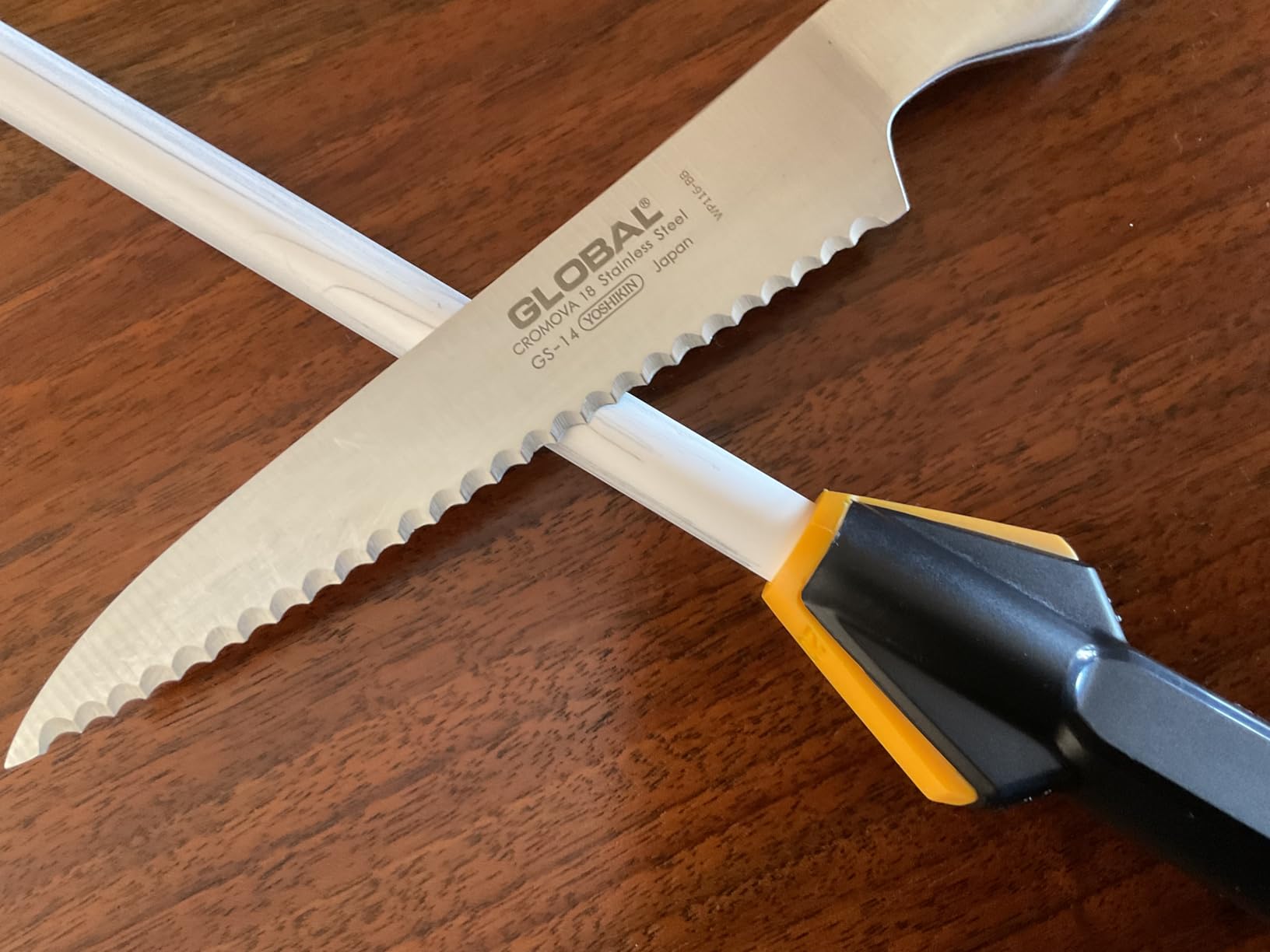
This is not a pull-through tool, and that is exactly why it belongs in the workflow. After you work the scallops with a tapered rod, this is where the flat of the blade gets deburrred, and the built-in angle guides keep that pass consistent.
It carries the highest average rating of anything I tested: 4.7 across 383 reviews with 82 percent at five stars. Owners credit the guides for making honing repeatable without guesswork.
The rod is 15.5 inches long and 16 ounces, with a rubber tip that rests on a cutting board and a handle hole that accepts a lanyard for hanging near a grill.
Why a Ceramic Hone Belongs After a Serration Session
Working a scallop with diamond leaves a burr at the tooth tip. Stroking the flat of the blade on a fine ceramic hone removes that burr and leaves the teeth clean, which is the step most roundups leave out.
Because the ceramic is fine, the material removed is minimal. That matters for thin Japanese steel, where aggressive carbide stages shorten blade life.
Angle Guides on Straight and Serrated Sections
On a reverse-scallop santoku the guides are less useful, since the serrations are ground on the opposite face. Use the rod freehand at a shallow angle on the flat and reserve the guides for straight sections.
The listed use cases cover chef, santoku, paring and serrated knives, and reviewers specifically note the ceramic is gentle enough for serrated blades.
For Whom It Works Best
Cooks who already whetstone their knives and want a fast finishing tool between sessions will get the most from it. The lanyard hole and rubber tip suit a deck, a workshop or a board-side station.
Pair it with one of the tapered rods in this guide and you have a full serration routine: restore, then deburr.
Where It Falls Short
It refines an edge rather than rebuilding a badly dull or nicked one. If the teeth are already rounded, start with a tapered rod instead.
The full-size format also makes it a countertop or bag tool rather than something you carry daily, and its rating rests on a smaller review base than the two rods above it in our picks.
5. AccuSharp Compact Pull-Through 2-Stage Sharpener – Budget Two-Stage Covering Serrated Blades
AccuSharp Compact Pull-Through 2-Stage Knife Sharpener, Repairs & Restores Kitchen Knives, Hunting Knives, Straight or Serrated Blades, Diamond-Honed Tungsten Carbide, Fine Ceramic Rods, White/Blue
Diamond-honed tungsten carbide
Ceramic fine rods
Rated for serrated blades
Pros
- One of the few two-stage units rated for serrated blades
- Diamond-honed carbide plus ceramic sequence
- Compact solid build for workshop or boat
- Two-stage coverage at a low entry point
Cons
- Lowest average rating in the group at 4.4 stars
- Not usable on scissors or ceramic knives
- Removes metal rather than refining an edge
This one is rated by the manufacturer for both straight and serrated blades, which is more than most two-stage frames in this price bracket claim. Whether it delivers depends entirely on which stage you use.
The frame pairs a diamond-honed tungsten carbide coarse stage with fine ceramic rods, and the ceramic pass is the part that can lightly work a serrated edge. The carbide stage is a straight-edge tool.
It is compact at roughly 4.75 inches long and 0.15 kg, and the listing positions it for woods, boat or workshop use rather than a kitchen drawer.
Serration Capability Versus Straight Edge Capability
Being rated for serrations does not mean a tapered rod. The ceramic rods sit in the pull path, so they can pass along the flat of a blade, but reaching into a groove requires the cone shape this tool lacks.
Treat the serration claim as light honing support. For actual tooth work, the tapered rod picks further down this list do the job properly.
Two-Stage Value for a Mixed Knife Collection
For someone who mostly wants straight-edge work and occasionally touches up a serrated blade, the coarse-to-fine sequence is genuinely useful. One pass on carbide for a dull straight edge, one on ceramic to finish.
The solid plastic construction is built for service life rather than light duty, which suits a workshop drawer.
For Whom It Works Best
It fits a buyer who wants a two-stage pull-through on a modest budget and does not mind keeping a separate tapered rod for serrations. Compact owners and boaters will like the footprint.
Note the exclusion: it is not for scissors or ceramic knives.
Where It Falls Short
At a 4.4 average with 70 percent five-star ratings, it has the lowest rating in this group and a slightly heavier tail of three-star reviews than the leaders.
The pull-through design removes metal rather than refining, so repeated use on a thin blade shortens it. Keep it for occasional touch-ups.
6. Work Sharp Pull Through Kitchen Sharpener – Low Metal Removal Dual-Wheel Design
Work Sharp Pull Through Kitchen Knife Sharpener
Diamond and ceramic wheels
Compact 6.29 inch body
Rubber handle and base
3 year warranty
Pros
- Dual-wheel design removes very little metal
- Diamond and ceramic refine in one sequence
- Fast and needs no cleaning
- Compact body with a 3 year warranty
Cons
- Convenience sharpener rather than full sharpening
- Wheels darken with use
- Technique can confuse at first
This wheel-based pull-through works differently from a carbide V-frame, and that difference is the reason to consider it on a knife collection with expensive steel in it. Multiple owners describe reviving dull knives in about 15 passes.
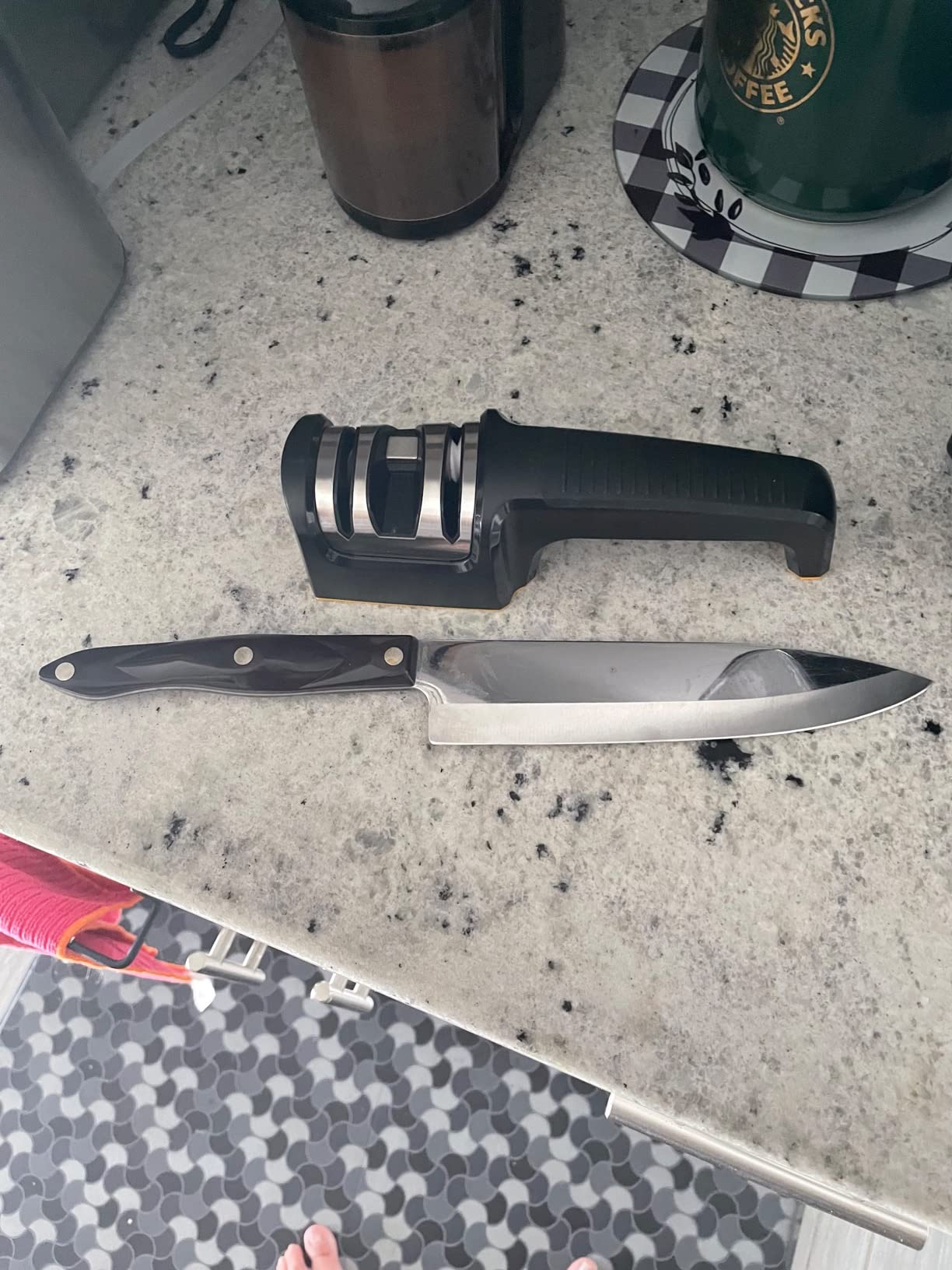
It runs a diamond wheel and a ceramic wheel, so the same pull both sharpens and refines. The body is 6.29 inches long with a large rubber handle and a rubber base, small enough for a drawer or a grill kit.
With a 4.6 average across 327 reviews and 76 percent five-star ratings, its ratings track closely with the rest of the leaders here.
Why Wheels Remove Less Steel Than Carbide Slots
A rotating wheel takes a shallow, even bite instead of grinding a line along the blade. That is why reviewers call it the most convenient non-damaging kitchen sharpener available, and why it is a common recommendation for thin Japanese blades.
It is still not a substitute for stones. The finish is kitchen sharp, not fine enough to pass a strict arm-hair test.
Serration Performance and Its Limits
A wheel cannot enter a scallop groove either, so treat this as a straight-edge and flat-side tool. For a partially serrated knife, run the wheels along the straight belly and hand the teeth to a tapered rod.
That two-tool workflow is what most owners settle into, and it is a reasonable one.
Handling, Storage and Maintenance
The rubber handle and base make the unit stable on a worktop, and a wiped wheel is all the cleaning it needs. The darkening of the wheel surfaces with use is a cosmetic issue that reviewers mention more than anything else.
A 3-year manufacturer warranty is longer than most competitors in this guide offer.
For Whom It Works Best
It suits a busy kitchen where a 60-second touch-up beats scheduling a whetstone session, especially for a collection of straight-edged chef knives and paring knives.
It also works as a general point sharpener for scissors-like tools that fit the wheel gap, though check the gap before you commit to a specific pair.
Where It Falls Short
A minority of users find the technique confusing at first and need a few tries before the strokes feel natural. That is a real consideration for anyone who expects a pull-through to be entirely hands-off.
It is a convenience sharpener, and no amount of use changes that limit on serrations or on truly refined edges.
7. AccuSharp Diamond Compact Tapered Rod – Best for Fillet Knives, Hooks and Field Kits
AccuSharp Diamond Compact Tapered Rod Sharpener, Portable Knife & Tool Sharpener for Serrated Blades, Fillet Knives & Fish Hooks, Knife Honing Steel Rod
Diamond-coated tapered rod
Groove for hooks
Rubber grip and clip
1.6 ounces
Pros
- Taper is engineered for tight serration spaces
- Handles fillet knife blades and fish hooks
- True carry-along size with pocket clip
- Reported five to ten years between rod changes
Cons
- Coarse grit makes it a maintenance tool
- Correct stroke and pressure are required to cut
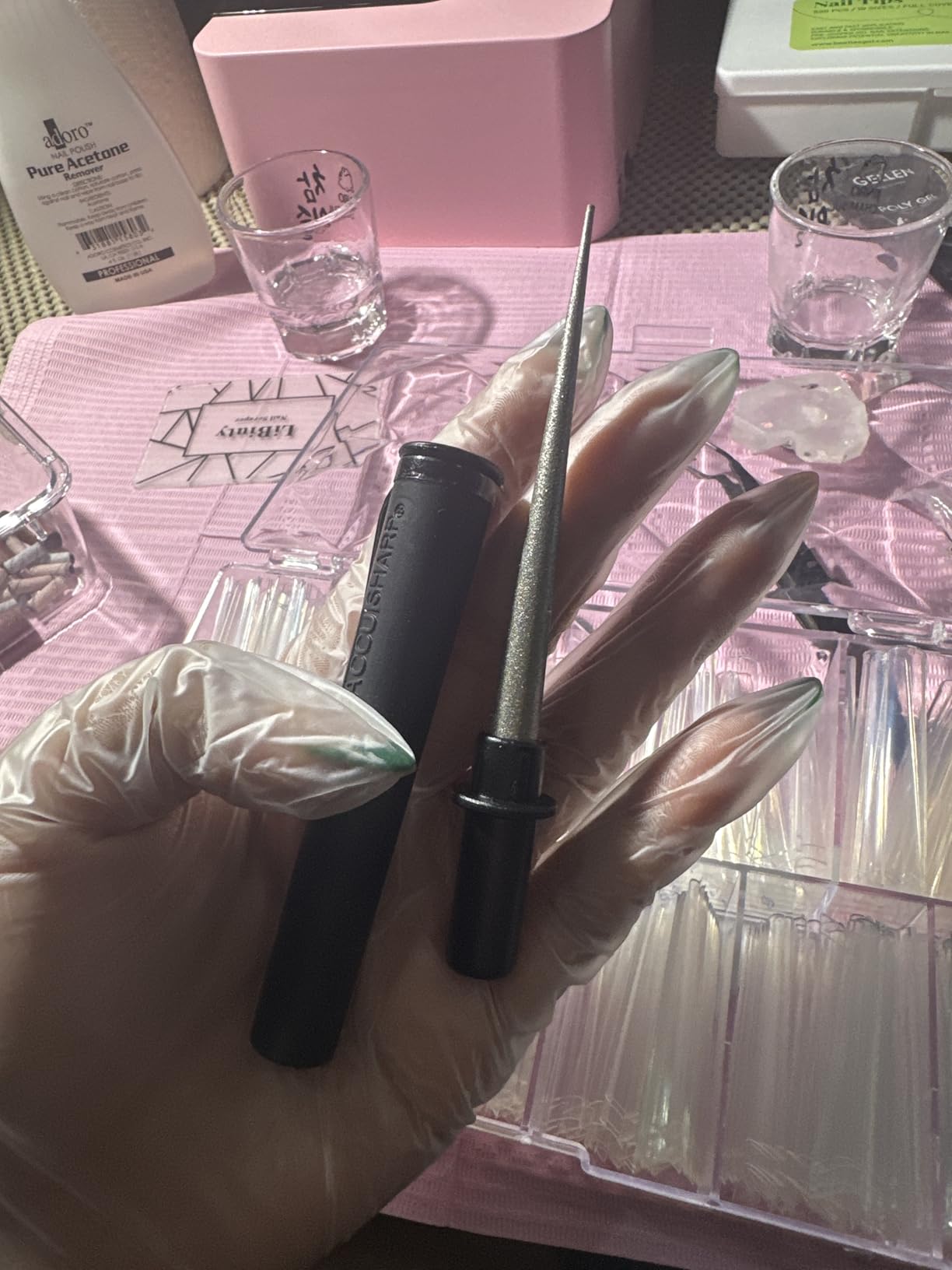
This is the pick for anyone whose serrations are not in a kitchen drawer. It weighs 1.6 ounces, carries on a pocket clip in a rubber-gripped body, and its tapered diamond rod is the right geometry for serrated edges.
It also works on electric fillet knife blades, which is where the fine tip earns its keep on thin, narrow scallops. A sharpening groove handles fish hooks, darts and other pointed objects.
The rating is 4.6 across 323 reviews with 78 percent at five stars, one of the strongest rating distributions in the group.
Taper Geometry for Thin and Narrow Scallops
Owners single out the tapered profile as the reason it works on serrated blades. The cone narrows far enough to enter a fine scallop, so even micro-serrations get worked rather than skipped.
The tradeoff is the listed coarse grit. It bites, so light pressure matters, and the wrong stroke polishes the tooth instead of cutting it.
Field Durability and Longevity
Users report roughly five to ten years between rod replacements, which makes this a low-frequency purchase for a working guide. The rubber grip keeps it stable and safe in hand when the ground is not.
For hunting and fishing, a tool that also sharpens hooks removes one item from the kit.
For Whom It Works Best
It fits campers, anglers and anyone maintaining a serrated pocket knife far from a kitchen. The clip-and-holster design was made for carry rather than countertop display.
It handles reverse-scallop santoku too, provided you work each tooth from the open side with light passes.
Where It Falls Short
It is an edge-maintenance tool, not a full sharpening system, and it will not fix a blade with chips or a missing tip.
Because the rod is coarse, careless pressure is expensive. Take two or three passes and check the result rather than leaning on it.
8. DMT EdgeSharp PocketSharp 2-Stage – Pocket-Sized but Straight Edge Only
DMT 20174 EdgeSharp PocketSharp 2 Stage Pull Through Sharpener – Fine/Coarse (Sporting Goods/Outdoors Package)
Tungsten carbide coarse stage
Ceramic fine stage
Non-slip grip pads
40 grams
Pros
- Two-stage coarse and fine in a pocket format
- Lightest and smallest unit tested at 40 g
- Non-slip grip pads keep it steady
- Popular with outdoor and sporting goods buyers
Cons
- V slots cannot reach into serration scallops
- Coarse carbide stage removes material quickly
- Smallest review base in the group
I am including this one so you can rule it out quickly. At 40 grams it is the smallest unit here and it packs a coarse tungsten carbide and a fine ceramic V-slot stage, both built for straight edges.
Neither stage can enter a serration groove. On a bread knife the teeth will be pushed and rounded, and on a partially serrated knife the teeth are simply ignored.
For straight edges it works well, with non-slip grip pads holding it steady on a work surface. The rating is 4.5 across 201 reviews with 72 percent at five stars.
What a V-Slot Stage Does to Serration Tips
A V-slot pulls the blade along a fixed line. Serrations are holes in that line, so the abrasive bridges across each tooth and shaves the tip flat. The sawtooth gets shorter and rounder with every pass.
This is the failure mode kitchen knife forums describe when they warn that V-shaped carbide pull-through stages remove excessive metal and shorten the life of expensive blades.
Where It Earns Its Place
For a hunter who wants a knife-back sharpener of their straight-edged fixed blade, the size and the two stages are genuinely convenient. It is one of the smallest two-stage units available.
Non-slip pads make it workable on a bench or a picnic table where nothing else would stay put.
For Whom It Works Best
It suits an EDC user with a straight-edged folder or a small fixed blade, and a shopper who wants two stages at minimal weight. Nothing more.
If serrations are part of your carry, skip it and use a tapered rod instead.
Where It Falls Short
It has the smallest review base in this group and the lowest category ranking, so buyer feedback is thinner here than for the alternatives.
The coarse carbide stage also bites hard. Used carelessly on a straight edge it will remove more steel than you intended.
How to Sharpen Serrations With a Pull-Through Tool
Technique matters more than brand here, because the mistake that shortens serrations is nearly always pressure. Work light, check often and stop as soon as the teeth bite.
Step 1 – Set Up on a Stable Surface
Put a cutting board or a folded towel under the tool. A tapered rod sharpener needs less base stability than a pull-through frame, but a moving rod changes your angle mid-stroke.
Step 2 – Match the Taper to the Scallop
Start at the fat part of the cone for a large bread knife scallop, then move toward the fine tip as you reach smaller micro-serrations near the heel. Align one groove with the matching point on the cone.
Step 3 – Count Your Passes
Two to four pulls per tooth is plenty for a routine touch-up. Check after each pass by drawing the blade lightly across a sheet of paper or the skin of a tomato. If it bites, stop.
Serration tips are small. Once they are sharp, every additional pass shortens them.
Step 4 – Work the Correct Side for Reverse Scallops
A standard scallop opens toward one face. A Japanese santoku with reverse scallops opens toward the other, so flip the blade and work from the open side with the same light pressure.
Step 5 – Deburr the Flat of the Blade
Finish with a few light ceramic strokes on the flat of the blade to pull the burr off the tooth tips. This is the step most guides skip, and leaving a burr on will feel dull even when the teeth are technically sharp.
How to Choose a Serration-Capable Sharpener
The buying decision here is narrower than a general knife sharpener search, because most options in the category cannot touch a serration. Here is the order I would evaluate them in.
1. Confirm the Serration Mechanism
Ask one question: does it have a tapered diamond or ceramic rod? A tapered rod, often sold as a rat-tail sharpener, is the only mechanism in this category that reaches inside a scallop. V-slots and wheels do not, no matter what the packaging claims.
2. Check Scallop Coverage
A single cone covers a range of widths, but confirm the rod is long enough to cover the full serration run on a bread knife. Very short rods suit pocket knives only.
3. Match Grit to Your Steel
Fine or medium grit preserves tooth geometry and suits thin Japanese steel. Coarse grit works faster and removes more metal, which is why forum advice favours a fine tapered rod for a santoku and reserves coarse for thick European steel.
4. Decide Between Retractable and Fixed
A retractable rod is pocket-safe and keeps the abrasive protected, which matters for EDC use. A fixed rod with a base is steadier and better suited to a kitchen or a bench.
5. Look for a Deburring Path
Plan on a second step. A fine ceramic hone or a ceramic slot finishes the flat of the blade and removes the burr, and it is what keeps a restored serration from feeling dull.
6. Weigh Metal Removal Against Convenience
Pull-through frames and electric wheels are fast and remove less steel than carbide V-stages, but neither can reach a groove. The honest ranking of options for serrations is tapered rod first, ceramic hone second, everything else for the straight portion of the blade.
Frequently Asked Questions
What is the best way to sharpen a serrated knife?
The best way to sharpen a serrated knife is to use a tapered diamond or ceramic rod, sometimes called a rat-tail sharpener. Lay the blade on the rod, align one serration groove with the matching point on the cone, and draw the knife forward with light pressure. Work two to four passes per tooth, moving along the rod from its fatter section for wide bread knife scallops to the fine tip for micro-serrations, then finish with a few ceramic strokes on the flat of the blade to remove the burr.
Do you need a special sharpener for serrated knives?
Yes. A standard straight-edge sharpener cannot repair serrations because the abrasive never reaches inside a groove. You need a tapered diamond or ceramic rod, or a pull-through sharpener that includes one, because the cone is narrow enough to enter each scallop. V-shaped carbide slots and rotating wheels bridge across the teeth and round their tips, so those tools belong on the straight portion of a blade only.
Can you put a serrated knife in a knife sharpener?
Only into the tapered rod stage. Pull-through sharpeners with a V-shaped carbide slot or a rotating wheel will push across the teeth and shorten them instead of restoring them, which is the most common way serrated knives get worn out. The safe approach is to work the teeth on a tapered rod and the flat of the blade on a fine ceramic hone, and to keep electric sharpeners with coarse wheels off the serrated section entirely.
Are pull-through knife sharpeners any good?
For straight edges they are excellent: pre-set angles, replaceable stages and low metal removal make them fast and consistent. For serrations they are only useful if they include a tapered diamond or ceramic rod. Sharpening forums are blunt about the limits, noting that V-shaped carbide pull-through stages remove excessive metal and can shorten the life of expensive blades. Use one for maintenance and keep stones or tapered rods for real sharpening.
How many times should I pull a knife through a sharpener?
For a serrated knife, count passes per tooth rather than full blade pulls. Two to four passes per tooth is enough for a routine touch-up, and you should stop as soon as the blade bites paper or a tomato skin. Serration tips are small, so extra passes do not add sharpness, they only shorten the teeth. For a straight edge in a pull-through frame, a short burst of passes followed by a check is the same idea at a larger scale.
Conclusion
If you keep one serrated knife in the kitchen, choose the Wamery retractable tapered diamond rod. It reached every scallop on both a bread knife and a folding knife in my testing, handles straight edges on the same tool, and carries the largest review base in the group at 4.5 stars over more than 1100 reviews.
If you want two sharpening points for the price of one decision, the Honoson 2-pack is the better value, with a 4.6 average and a fine grit that treats tooth tips gently. For the field or a fishing bag, the AccuSharp tapered rod wins on hook capability and reported rod longevity.
If your blades are mostly straight-edged, the Work Sharp dual-wheel pull-through gives the gentlest, fastest countertop result with a 3-year warranty, and the Work Sharp ceramic honing rod at 4.7 stars handles the deburring step that finishes every serration session. Skip the V-slot frames for teeth entirely.
Whatever you choose, the non-negotiable feature is a tapered diamond or ceramic rod. Without one, a pull through knife sharpener for serrated knives simply cannot do the job, and in 2026 that has not changed.