
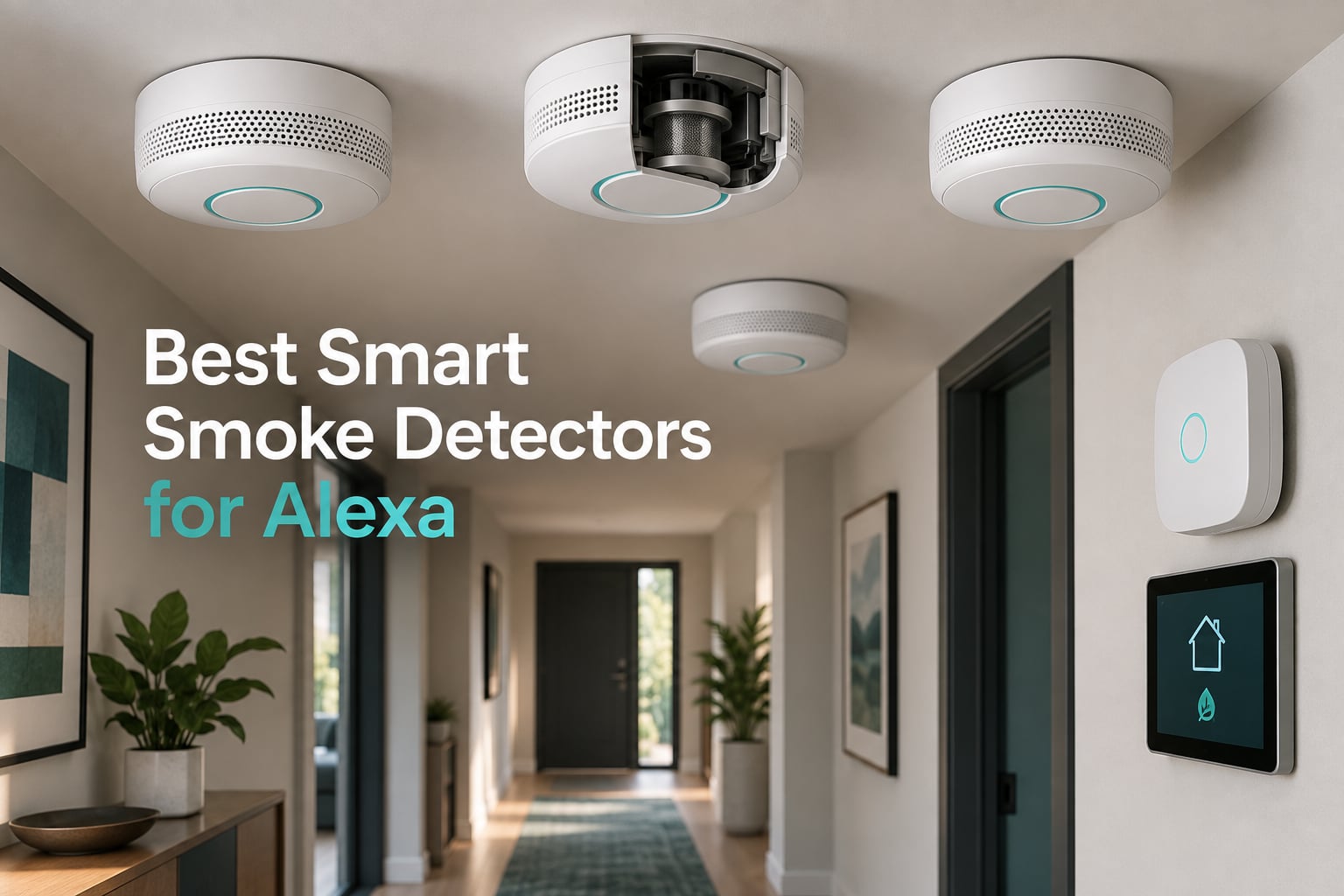
Amazon does not manufacture a smoke alarm. That single fact is where most searches for the best smart smoke detectors for Alexa go sideways, because Amazon sells an Echo that listens, a Ring listener that only hears sirens, and an Alexa app that displays other people’s hardware. We spent the last several weeks working through manufacturer spec sheets, published safety listings and owner feedback for every connected smoke alarm that pairs with Alexa in any meaningful way, and what came back is a short, honest list of six.
Before you read on, one thing to be clear about. These are life-safety devices, not smart home accessories. A connected detector supplements the alarms your local fire code requires, it never replaces them, and installation still follows the manufacturer’s instructions. If you want the broader picture of what an Echo can do in a home network, start with our smart home hub picks for Alexa.
We disclose that we earn a commission from qualifying purchases, and that never changes the order below. Every rating and review count in this round-up is copied straight from the product listing, and every specification comes from the manufacturer’s own detail page. Where owners report a problem, we say so plainly, including the units we would skip.
One more framing point that runs through everything: no smoke detector we found is built by Amazon, and only a few of them are genuinely Alexa-native. The rest talk to Alexa through an app, a hub, or an Echo listening to the siren. Understanding those four routes is the whole game, and we break them down before the product list.
Our Top 3 Smart Smoke Detectors for Alexa in 2026
We ranked these by the combination that matters most in a safety category: how well the unit detects, how much owner history exists, and how cleanly it reports to an Alexa household. The three below earned the strongest combination, and each one carries a different idea of what “works with Alexa” means.

Kidde Smart Smoke and CO Detector RGCUDR-RW
- Smoke and CO in one unit
- AA battery power
- No-subscription app alerts

eufy Security Smoke Alarm E10
- UL 217 photoelectric sensing
- 70 mm compact body
- 5-year sealed battery
Kidde Hardwired Smoke and CO Alarm 30CUAR-W
- Hardwired with AA backup
- Phone-based hush
- Real-time app alerts
Comparing Every Smart Smoke Detector in This Round-Up
All six alarms below reach Alexa somehow. Read the “how it reaches Alexa” column carefully, because a unit that only pushes notifications to your phone behaves very differently from one you can interrogate by voice.
| Product | Specs | Action |
|---|---|---|
| Kidde Smart Smoke and CO Detector RGCUDR-RW |
|
Check Latest Price |
| eufy Security Smoke Alarm E10 |
|
Check Latest Price |
 Kidde Smart Smoke and Indoor Air Quality Monitor P4010ACSAQ-WF Kidde Smart Smoke and Indoor Air Quality Monitor P4010ACSAQ-WF |
|
Check Latest Price |
| Kidde Hardwired Smart Smoke and CO Detector 30CUAR-W |
|
Check Latest Price |
 Heiman S1-R Six-Pack with Smart Gateway Heiman S1-R Six-Pack with Smart Gateway |
|
Check Latest Price |
 Heiman S1-TM Matter over Thread Smoke Detector Heiman S1-TM Matter over Thread Smoke Detector |
|
Check Latest Price |
How Alexa Actually Talks to Smoke Detectors
This is the section that ends the confusion, because “works with Alexa” covers four genuinely different things and they are not interchangeable. Buyers who assume a compatible badge means voice control end up disappointed, or worse, they assume a siren reached their phone when it never did.
Route 1: The Alexa app pairing most alarms use
This is what the majority of connected smoke alarms do, and it is the least glamorous route. The alarm holds its own Wi-Fi connection, joins the manufacturer’s cloud, and appears inside the Alexa app as a device. From there, Alexa can answer a status question like whether the alarm is healthy, and can announce a detected hazard as a spoken or on-screen alert.
What it usually does not do is accept commands. You are not asking the alarm to arm, test, or silence through Alexa in most cases; you are asking Alexa to relay what the alarm already decided. The Kidde RGCUDR-RW and the hardwired Kidde 30CUAR-W both sit here, and both send real-time smoke, CO and low battery notifications without requiring a paid plan.
Route 2: Voice control built on the manufacturer’s own skill
A small number of manufacturers publish a full Alexa skill, which is the app-layer integration that lets you actually command the device. Where a skill exists, you can ask for a self-test, check indoor air quality readings, or silence a nuisance alarm by voice. The Kidde P4010ACSAQ-WF is the clearest example in this group, since it pairs with Amazon Alexa and Google Home and reports a hazard type by voice.
The trade-off is dependency. A skill routes your life-safety information through a manufacturer’s cloud account and a third-party integration. If that service shuts down, or the company folds, your alarm keeps sounding locally but loses its remote reach. Buyers in smart home communities have watched that scenario play out with other safety brands, and it is a fair thing to weigh.
Route 3: Matter over Thread, where an Echo becomes the hub
This is the newest and cleanest route, and the Heiman S1-TM is the only unit in this round-up built for it. Matter over Thread lets the alarm join a local mesh network instead of depending on a vendor cloud, and a compatible Echo device acts as the Thread Border Router. The listed supported Echo models include the Echo 4th Gen, the Echo Show 8 3rd Gen and the Echo Show 10 3rd Gen.
The benefit is local control. Automations run on your own network, so a broadband outage does not silence the automation, and a broad ecosystem list means the same alarm shows up in Apple Home, Google Home, SmartThings, Homey and Home Assistant. The cost is a hardware requirement: older Echo devices are not Thread Border Routers, and a Home Assistant install needs IPv6 enabled and mDNS unblocked on the local network.
Route 4: The acoustic listener, including Alexa Guard
A listener has no smoke sensor of its own. It sits near existing alarms and hears the siren through an Echo speaker, then reports it to your phone. This is genuinely useful for renters who cannot rewire a home full of existing hardwired alarms, and it is the cheapest path to remote alerts in the category.
Alexa Guard is the version most people ask about, and its limits are widely misunderstood. It listens for a smoke or CO alarm through your Echo, and on a paid plan it can request emergency help on your behalf. It does not dispatch on its own, it depends on the Echo being powered and online, and the emergency response capability sits behind a subscription rather than being included free. Owners who expected a free tier to call for help found out otherwise.
What still works when Wi-Fi drops
Every detector in this round-up sounds its own local siren at 85 decibels or above, independent of any network. That is the non-negotiable baseline in a life-safety category, and all six clear it.
What you lose during an outage is the remote layer: phone pushes, voice alerts and the app status. The Kidde wireless interconnect is a partial exception, because linked alarms trigger each other locally across the home even when the hub or the internet is unreachable. The Heiman S1-R six-pack behaves the same way, since its local wireless interconnect does not require Wi-Fi at all.
1. Kidde Smart Smoke and CO Detector RGCUDR-RW – The Best Overall Pick for Alexa Homes
Kidde Smart Smoke & CO Detector with Ring, AA Battery, RGCUDR-RW
Smoke and CO in one unit
2 AA batteries included
UL 217 and FCC certified
Ring app alerts, no subscription
Pros
- Smoke and CO detection in a single unit
- App notifications work without a subscription
- AA battery install needs no wiring
- Wireless interconnect links every alarm
- Sensing tuned to reduce cooking nuisance alarms
Cons
- Alexa handles notifications rather than voice control
- A meaningful share of reviews report setup or reliability issues
- 24/7 professional monitoring needs the optional Ring plan
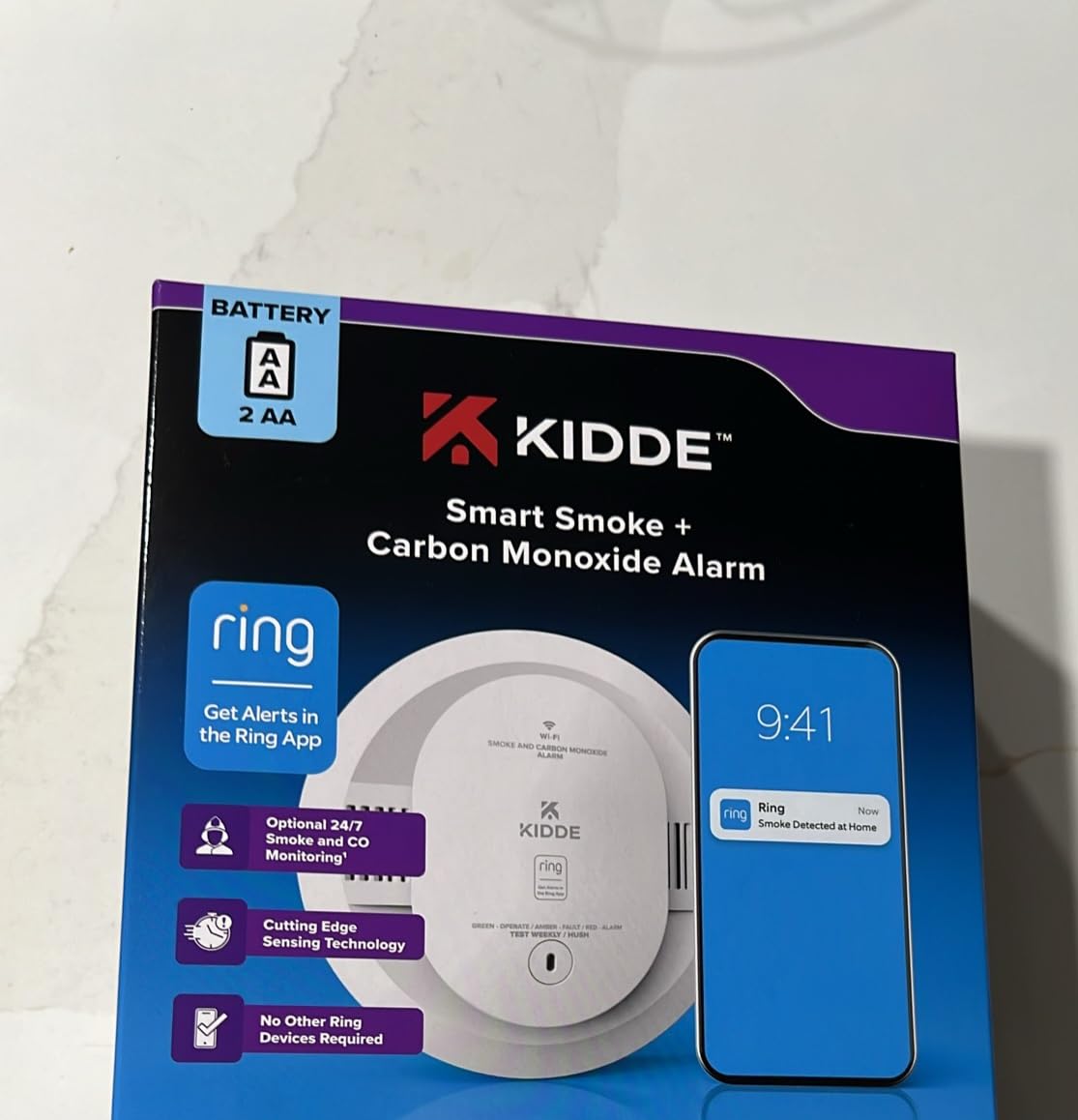
The RGCUDR-RW is the alarm we would put in our own hallway, and the reason is unglamorous: it does the boring things correctly. It detects smoke and carbon monoxide in one body, it runs on two AA batteries, and it reaches your phone without asking you to pay anything. For a category where the top complaint is a surprise subscription, that combination is worth more than a clever sensor.
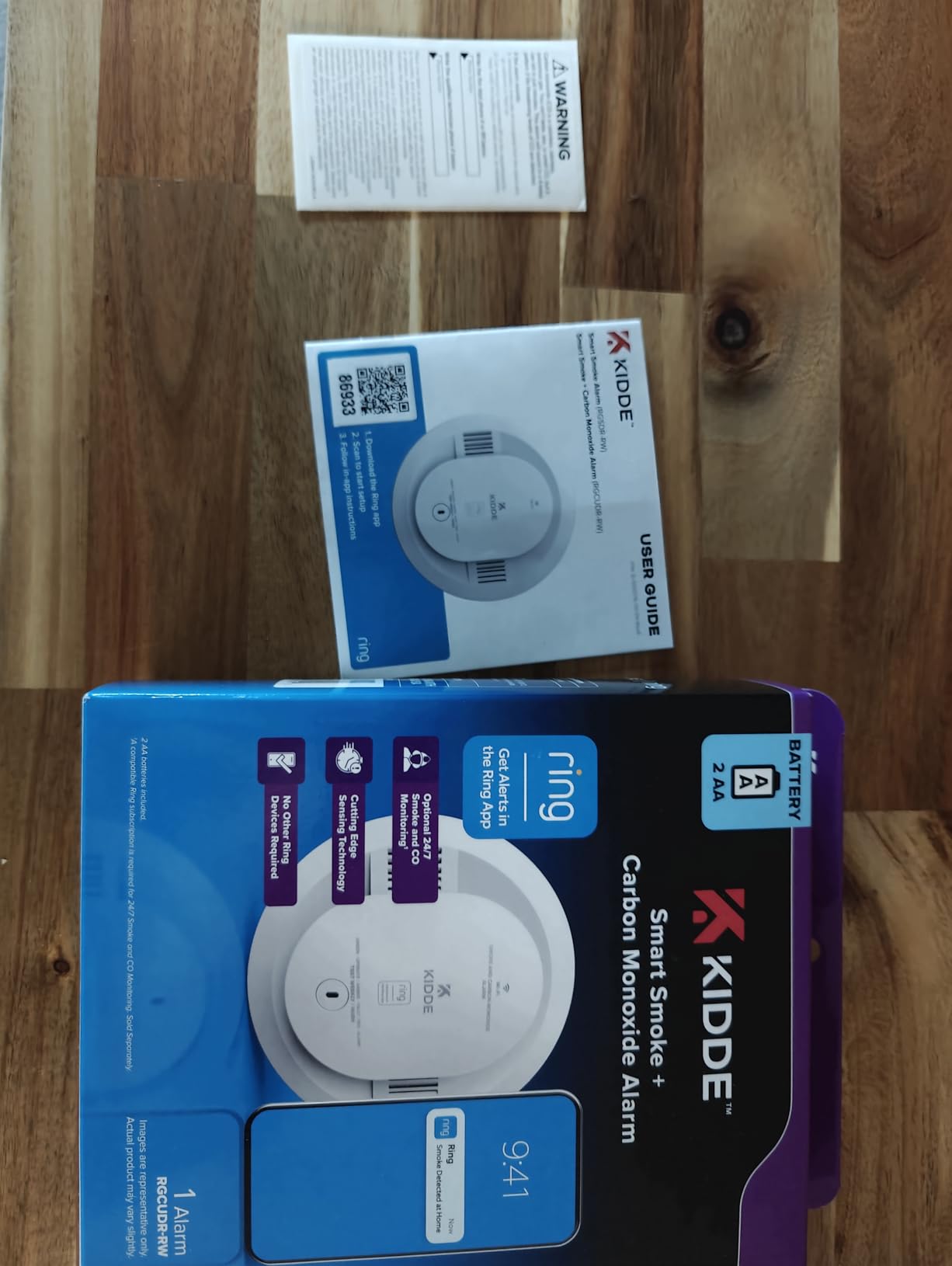
Setup is a ten-minute job. Mount the bracket, fit two AAs, and join it to the Ring app from your phone. Once it is in the Ring app it appears in the Alexa app, and Alexa will speak alerts when the unit reports a hazard. The listing states real-time smoke, CO and low-battery alerts, and those push notifications are included rather than gated behind a plan.
Kidde states that its enhanced sensing detects smoke more than 25 percent faster than the leading competitor in internal testing, and that the sensing is tuned to reduce cooking-related nuisance alarms. We take internal test claims for what they are, but owners do consistently single out the reduced false alarms as the difference between this unit and cheaper alarms, and that tracks with the 75 percent five-star share on the listing.
Dual smoke and CO detection in a single unit
Combining the two sensors saves a ceiling hole and a second battery to change. For anyone fitting out a bedroom, a basement or a rental where drilling is restricted, one unit that reports both hazards is the cleanest possible outcome, and the mobile alert distinguishes between a smoke event and a low-level CO event rather than lumping them together.
Certification matters more than usual in a combined unit, and this one is listed to UL 217 alongside an FCC certification. CO alarms are judged against a different standard than smoke alarms, so a dual unit has to satisfy both performance regimes rather than simply bolting two sensors into one case.
Wire-free install and whole-home wireless interconnect
Because it is battery powered, you can retrofit a rental or an older house without touching the wiring, and because the units interconnect wirelessly, adding a detector to the basement does not mean running a signal wire back to a first-floor panel. When one alarm sounds, every linked alarm sounds.
That interconnect is also the reason this unit keeps working through an internet outage. The alarms talk to each other locally, so a kitchen alarm still wakes the whole house even if the Wi-Fi is down. The remote alerts pause; the siren does not.
Alexa notifications, and what they cannot do
Here is the honest limit. Alexa speaks the alerts and can report the device status, but this unit is not a voice-commandable detector in the way a thermostat or a smart plug is. You are not asking Alexa to test or silence this alarm. Reviewers call this out as the main drawback, and it is the single most common misunderstanding in this category.
If you want professional monitoring rather than just notifications, the Ring platform offers an optional subscription that adds 24/7 smoke and CO monitoring. It is not required for the app alerts to work, and nothing in the base feature set is withheld, but know which tier you are buying before you start pointing it at a rental property you plan to monitor remotely.
Best for and skip this if
Best for households that want one reliable unit per floor, on a schedule, with no wiring and no subscription. It is also the better choice if you already run the Ring app, since the alarm lives there rather than in a second app you would have to learn.
Skip it if you want to talk to your detector. If voice control of the alarm itself is a requirement, look at the Matter unit further down this list instead, because that is the route where the alarm becomes a genuinely interactive smart home device.
2. eufy Security Smoke Alarm E10 – The Best Rated Detector for Small and Compact Spaces
eufy Security Smoke Alarm E10, Smoke Detector, Ultra-Compact 70 mm Design
UL 217 10th edition photoelectric
70 mm body, 3.52 oz
5-year sealed lithium battery
Up to 656 ft to HomeBase
Pros
- 70 mm body is roughly a third of a standard detector
- Five-year sealed lithium battery
- 656 ft open-air range to HomeBase
- UL 217 10th edition photoelectric sensing
- Strong 76 percent five-star share across reviews
Cons
- Will not operate without a separate eufy HomeBase hub
- HomeBase must be on a recent firmware version
- Not a standalone Wi-Fi or Alexa-native unit
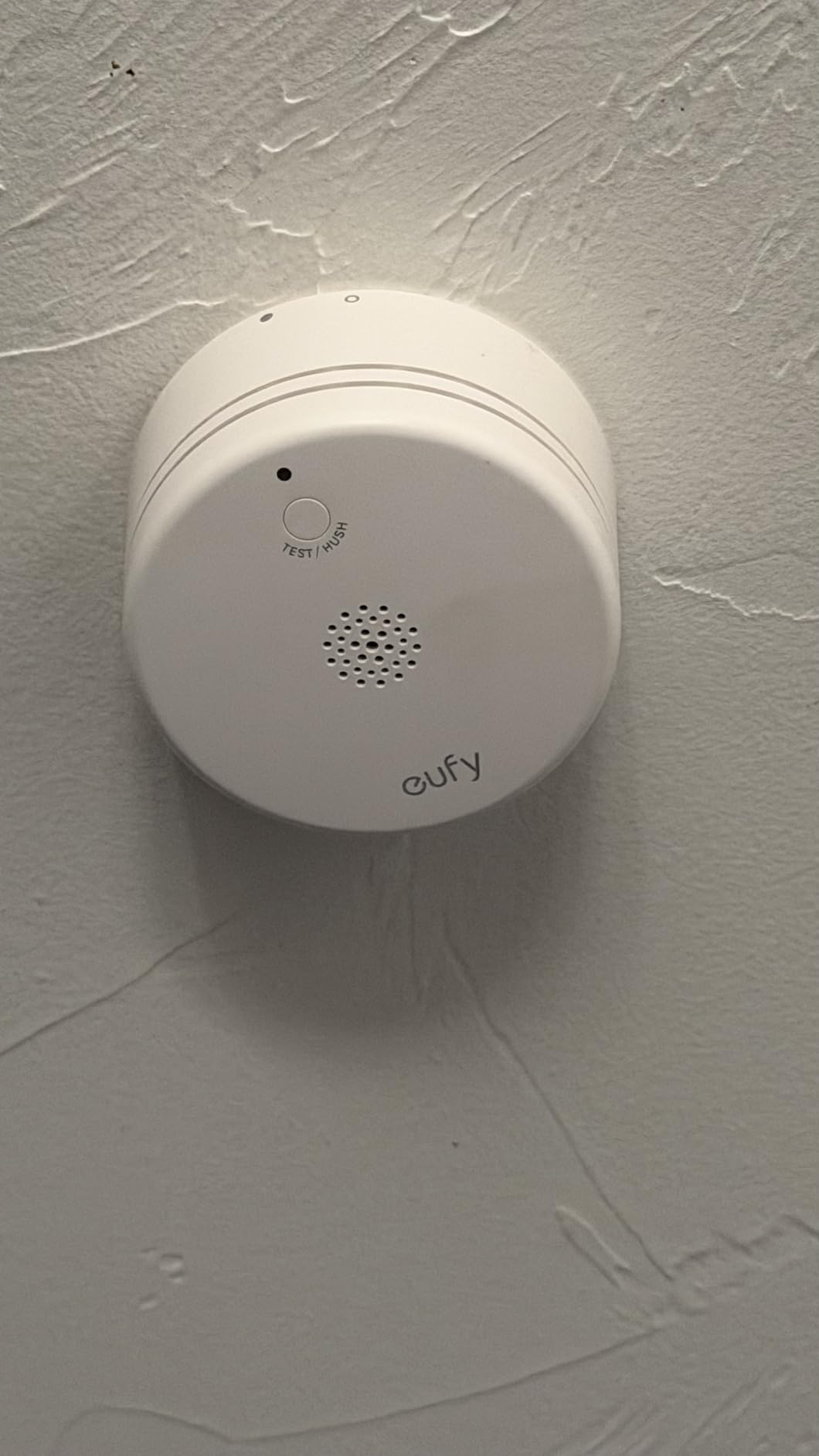
The E10 carries the highest average rating in this round-up at 4.4, and the reason is not a spec sheet trick. It is among the smallest detectors here, it runs on a five-year sealed battery, and it passes the latest edition of the CO standard. In a room where a chunky white puck on the ceiling is the first thing you notice, that combination lands.
The body measures 2.75 by 2.75 by 1.08 inches and weighs 3.52 ounces, using dual-beam photoelectric sensing certified to UL 217 10th edition. Owners repeatedly mention both the footprint and the accuracy, and the listing shows 76 percent of reviews at five stars.
What you are buying here is a detector plus an ecosystem. The E10 does not join Wi-Fi on its own and it does not speak to Alexa natively. It reports to a compatible eufy HomeBase hub, which is the bridge to everything else in your network. If you already own one, this is a strong pick. If you do not, the hub becomes the real decision.
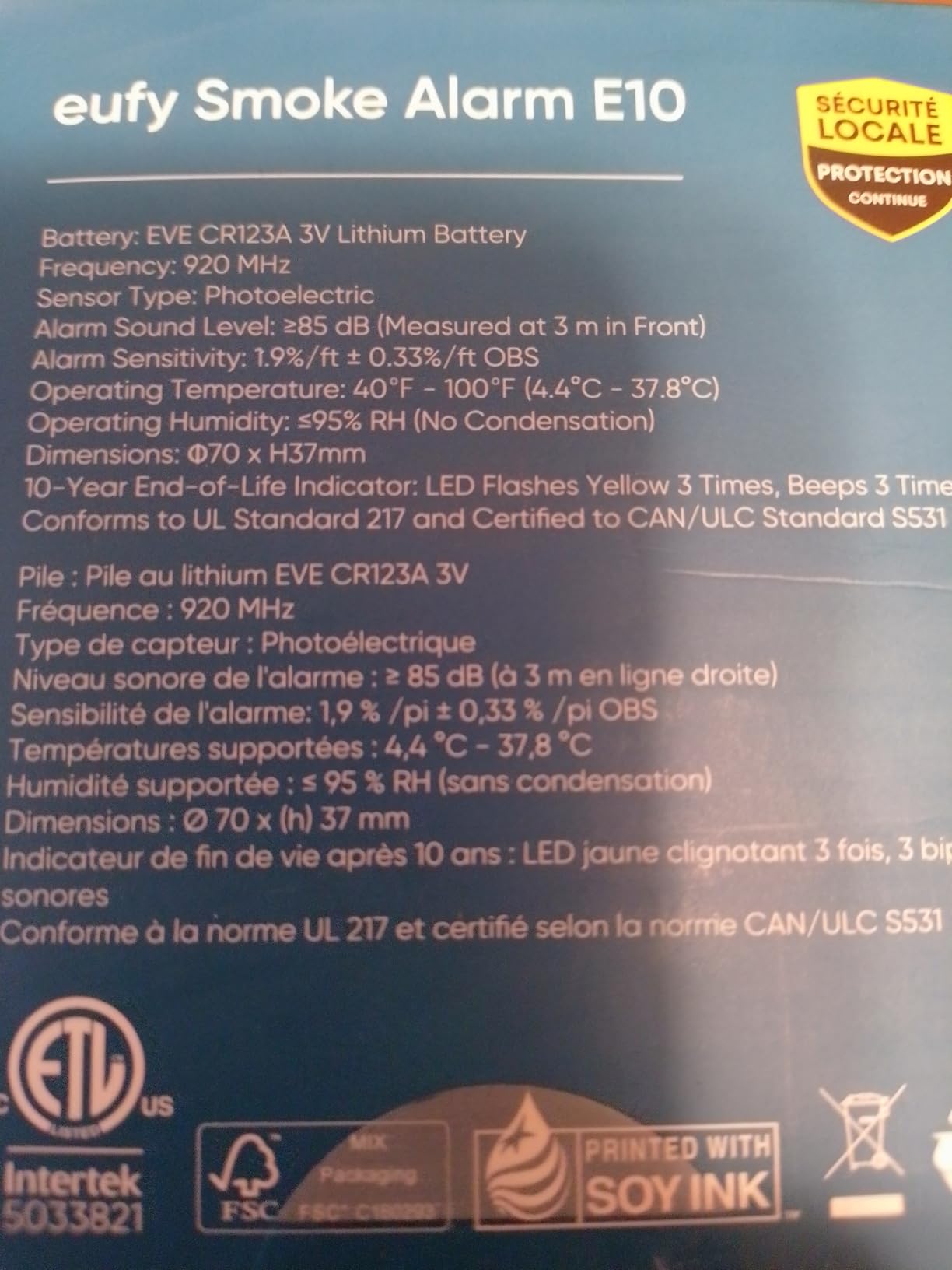
Size, detection standard and the sealed battery
At 70 millimetres across, the E10 is roughly one-third the diameter of a conventional alarm. That matters in a bedroom, a narrow hallway or a rental where the landlord wants minimal visual impact, and it also changes the ceiling feel of a room where you are stacking three or four detectors.
The battery is a sealed lithium cell rated for five years, so there is no low-battery chirp in the middle of the night and no annual ladder climb to swap cells. Sealed means sealed: once it expires, the unit is replaced rather than repaired, so put the end-of-life date in your calendar now rather than discovering it in a decade.
The HomeBase requirement and its firmware fine print
This is where budgets get surprised. The E10 will not operate without a compatible eufy HomeBase, and the listing names specific minimum firmware versions for each hub: HomeBase Mini at v4.0.5.2, HomeBase 2 at v3.4.1.2 for later hardware revisions, HomeBase 3 at v3.7.2.6, and HomeBase Pro at v4.1.4.3.
An older hub sitting on an old firmware version can simply refuse the pairing, and that failure looks like a broken alarm rather than a compatibility problem. Our advice is to check the hub firmware before ordering, and to treat any hub on the list as part of the purchase cost rather than an accessory.
Range and how the alarm reaches the rest of your home
The listed maximum range is 656 feet in open air, which is generous enough for a large single-floor home and more than enough for a multi-storey unit mounted near the hub. Open-air figures are optimistic in a home full of joists, plasterboard and brick, so place the hub centrally rather than in a utility cupboard.
Because the alarm talks to the hub first, everything downstream is a question about your eufy setup rather than the detector. A reviewer who wants to ask Alexa about the alarm is really asking Alexa about the hub, and the answer depends on which voice platforms your eufy configuration exposes. Plan the whole chain before you buy the first detector.
Best for and skip this if
Best for anyone already invested in the eufy HomeBase ecosystem, and for anyone who wants the most discreet ceiling hardware with a five-year battery behind it. It also suits short-term rentals where leaving a wired alarm behind is not an option.
Skip it if you do not own a HomeBase. Adding a hub purely for one alarm pushes the total system cost well above the detector’s price, and reviewers call that out as the recurring complaint. If you have no eufy hardware at all, the Kidde at number one or the Heiman at number five costs you fewer decisions.
3. Kidde Smart Smoke and Indoor Air Quality Monitor P4010ACSAQ-WF – Best for Tracking Indoor Air Quality
Kidde Smart Smoke Detector & Indoor Air, Quality Monitor, WiFi, Alexa Compatible Device, Hardwired w/Battery Backup, Voice & App Alerts, 2 Pack
Smoke plus TVOC and humidity
Hardwired with battery backup
85 dB alarm with status LEDs
10-year limited warranty
Pros
- Smoke detection and air quality monitoring in one device
- TVOC and humidity tracking in the app
- Testable from the phone on high ceilings
- Voice alarm names the hazard
- 10-year limited warranty on the alarm
Cons
- Some owners report nuisance alarms two to four times a month
- Air quality readings need days of calibration and can drift
- 18 percent of reviews are one star
No other detector in this round-up tracks indoor air quality. The P4010ACSAQ-WF combines a photoelectric smoke alarm with a monitor for total volatile organic compounds and humidity, so you can see the paint, cleaning spray and humidity spike in a room alongside a smoke event. The listing describes it as the first UL listed smoke and indoor air quality monitoring device, and for a family that reacts to a new paint smell, that is a real feature rather than a novelty.
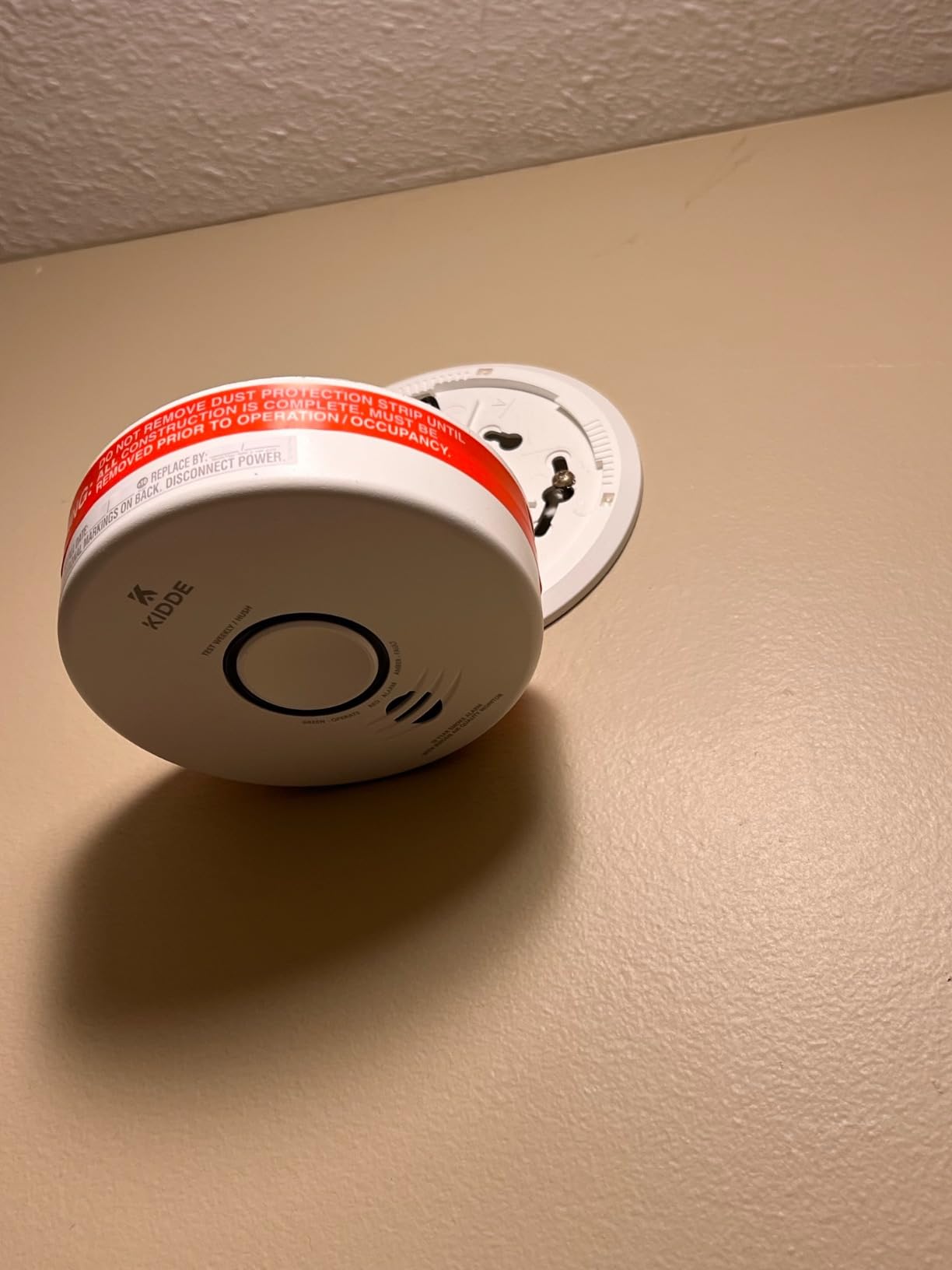
It is a hardwired unit with battery backup, and this two-pack includes an AC connector, a mounting trim plate and a user guide. The voice alarm announces the hazard type, telling you fire or telling you to replace the alarm at end of life, which is the difference between an ambiguous tone and something you can act on.
With 85 decibels of alarm and LEDs that read green for normal, amber for an error and red for a smoke, fire or CO event, the physical feedback is clear. The phone-based test button is the detail owners mention most warmly, because testing a hardwired alarm on a 10-foot ceiling is otherwise an exercise in ladder safety.
What the air quality sensor actually measures
The unit tracks total volatile organic compounds, which is the broad category that includes fumes from paint, solvents, adhesives and cleaning products, alongside relative humidity. That is genuinely useful intelligence in a freshly decorated room or a house with a wood stove, and the readings appear in the app over Wi-Fi.
Be patient with the numbers, though. The listing states that readings need up to four days of calibration before they are usable, and owners report the values fluctuating in ways that do not match what they see in the room. Several disabled the air quality alerts after a week. Treat the smoke detection as the product and the air quality data as a bonus you may end up ignoring.
Alexa, voice alerts and the notification chain
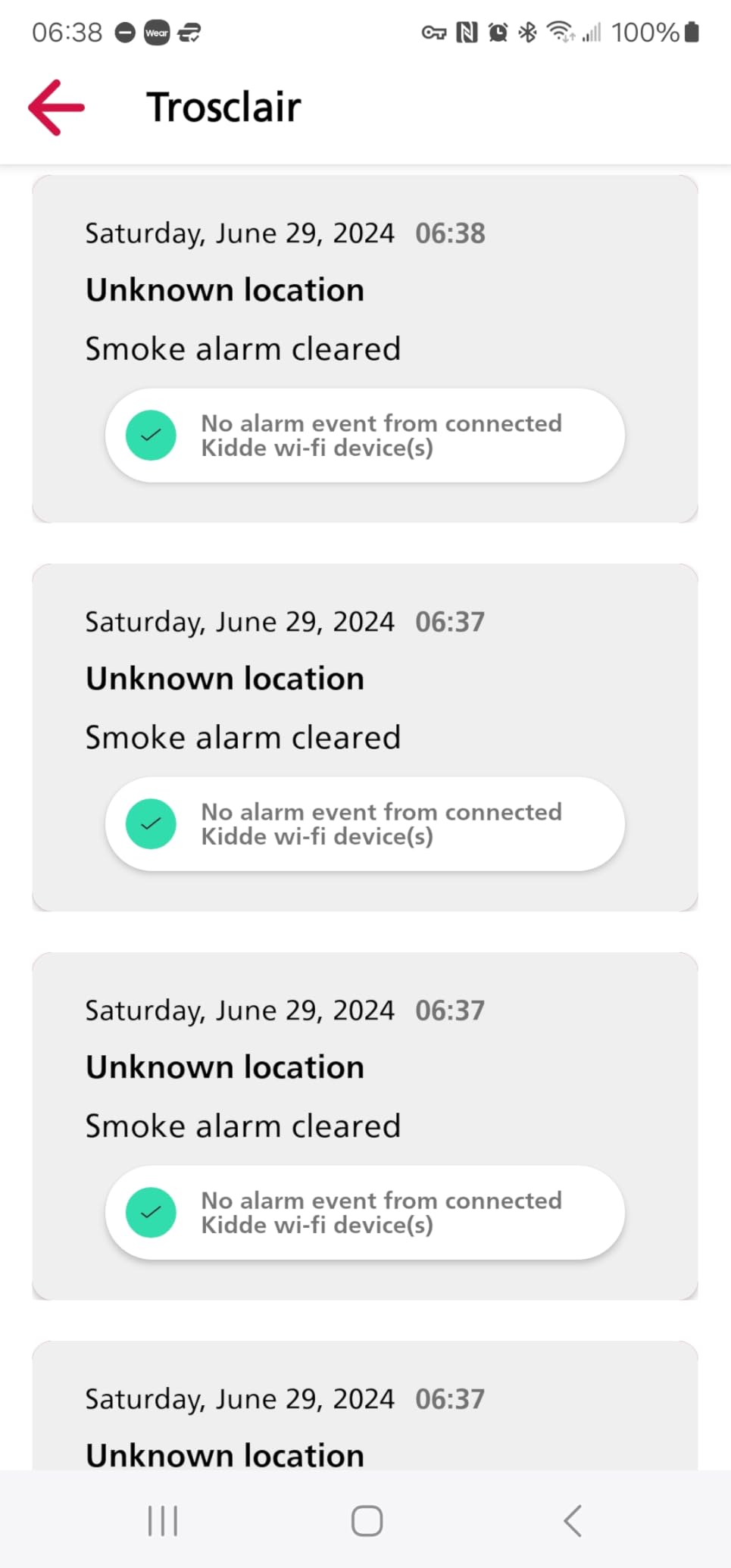
The compatible devices list names Amazon Alexa, Google Home, iPhone and Android, and Wi-Fi pushes hazard notifications to you and to friends or family. In practice that means a second person can be alerted if the alarm triggers while you are away, which is the scenario a smart detector is bought for in the first place.
Because this unit runs a fuller skill integration than most, it is one of the few in the list where voice carries more than a status readout. Still, confirm what your Alexa app exposes before relying on it, since the exact commands tracked follow the skill rather than the hardware.
False alarms and the calibration tax
This is the honest weakness and it is not small. Reviews report nuisance triggering two to four times a month for some owners, and the sensing is described as sensitive to steam and cooking smoke. With 18 percent of reviews at one star, close behind the highest negative share in this round-up, the split between satisfied owners and sceptics is real rather than statistical noise.
Placement is the mitigation. Keep it out of the kitchen and away from the bathroom door, and treat the air quality monitor as a reason not to hang it next to a stove. If your household already has a cooking-heavy kitchen, a steam-forgiving detector elsewhere in the house will serve you better than one perfect unit in the wrong room.
Best for and skip this if
Best for households decorating or renovating, families who want a second named person to receive alerts, and anyone with a high ceiling who dreads the test button. The 10-year limited warranty on the alarm also makes it a longer-horizon purchase.
Skip it if false alarms would push you to disable it. A detector you mute is worse than one you never installed, and the reviews here are clear enough that you should expect some. Also skip it if your wiring is not ready, because this is a hardwired unit and the install is not a weekend-free project.
4. Kidde Hardwired Smart Smoke and CO Detector 30CUAR-W – Best for Retrofitting a Wired Home
Kidde Hardwired Kidde App Enabled Smart Smoke and Carbon Monoxide Detector, AA Battery Backup, Voice Alerts, Interconnected Alarm
Hardwired smoke and CO with AA backup
Real-time app alerts
Phone-based alarm hush
UL 217, UL 2034 and FCC
Pros
- One smart alarm adds app alerts to a wired home
- Smoke and CO in a single hardwired body
- Phone hush beats reaching a high ceiling
- Real-time smoke
- CO and low battery alerts
Cons
- Setup requires 2.4 GHz Wi-Fi
- One in five reviews rates it one star
- Sensing is sensitive to steam and cooking vapour
Here is the retrofit idea that changes the economics of a whole wired house. You do not replace every hardwired alarm. You fit one smart unit, and the manufacturer states that adding one Kidde smart alarm gets mobile alerts for every hardwired alarm already in the home. For a three-storey house with nine existing units, that is the difference between one purchase and nine.
The unit itself is a photoelectric and electrochemical smoke and CO alarm, hardwired with two AA batteries as backup, certified to UL 217, UL 2034 and FCC. Everything needed is in the box, including the mounting bracket and the wiring harness, which keeps an electrician’s visit short.
At 3.7 stars this is the lowest-rated product here, and we would rather explain why than hide it. Twenty-two percent of reviews are one star, driven mostly by nuisance triggering and by setup problems on modern routers. Both are addressable, but only if you read the next section before buying.
How the retrofit bridge works
Hardwired alarms are normally linked by a signal wire that runs between them. The 30CUAR-W joins that existing interconnect and then adds a Wi-Fi link to the app, so the traditional wire-based network gains a reporting path to your phone. When the basement unit detects smoke, the local network sounds everything and the app tells you where.
The catch is that only one unit in the chain has to be the smart bridge. You are choosing a single head of the network, so place it somewhere with usable 2.4 GHz signal rather than in whatever corner is easiest to wire. A bridge in a metal-clad basement with no signal will frustrate you.
The 2.4 GHz requirement and router compatibility
The listing states plainly that 2.4 GHz Wi-Fi is required for setup. That is a real constraint in 2026, because many households now run dual-band or mesh routers with the 2.4 GHz band disabled, turned into a separate network name, or throttled for IoT devices.
Smart home community threads about offline devices repeatedly land on the same fix: split the IoT traffic onto its own 2.4 GHz SSID and pair again. Do that before you unbox the alarm, not after. If your router has no 2.4 GHz band available, this is the wrong unit regardless of how good the retrofit logic is.
Phone-based hush and everyday usability
The hush feature is the sleeper benefit. Instead of standing on a ladder to silence a cooking-related alarm at 2 am, you silence it from the phone. Owners who got past setup mention this more than anything else, because it is the daily friction that separates a smart alarm from a conventional one.
Real-time notifications cover smoke, CO and low battery, so the most common reason a hardwired alarm gets ignored, a dying backup battery nobody notices, now arrives as a push. The trade is that the app is a convenience layer on top of a system that is already reliable, which is exactly why the lower rating frustrates us less than it first appears.
Best for and skip this if
Best for owners of a home that is already hardwired, especially anyone with multiple floors who wants alerts from a full existing alarm network for the cost of one smart unit. It is also the right pick for a 2.4 GHz mesh setup you control.
Skip it if you rent, if you have no hardwired network to retrofit, or if your router cannot offer a 2.4 GHz band. Given the steam sensitivity reported by owners, we would also not place it in or beside a kitchen. The battery-powered pick at number one covers the same ground with fewer of these problems.
5. Heiman S1-R Six-Pack with Gateway – Best for Covering a Whole Home in One Purchase
Heiman Smart Wireless Interconnected Smoke Detector, 6-Pack + Gateway, S1-R
Six interconnected detectors plus gateway
10-year lithium per detector
UL 217, CSFM and FCC
85 dB siren with LEDs
Pros
- Six detectors and a gateway in one kit
- Local interconnect works with no Wi-Fi at all
- Ten-year battery life per detector
- Dual-beam sensing filters cooking vapour and dust
- Gateway accepts other Heiman sensors
Cons
- Alexa needs a hub such as Home Assistant or SmartThings
- Gateway setup is restricted to 2.4 GHz Wi-Fi
- Only 30 owner reviews to judge it by
Most people discover a two-alarm shortfall halfway through a Saturday with a drill on the floor. This kit exists to remove that problem: six wireless interconnected detectors, a smart gateway, six mounting kits and a manual in one box. For a three-bedroom, two-storey home, six covers the main sleeping areas and both floors, and the gateway expands to more detectors from there.
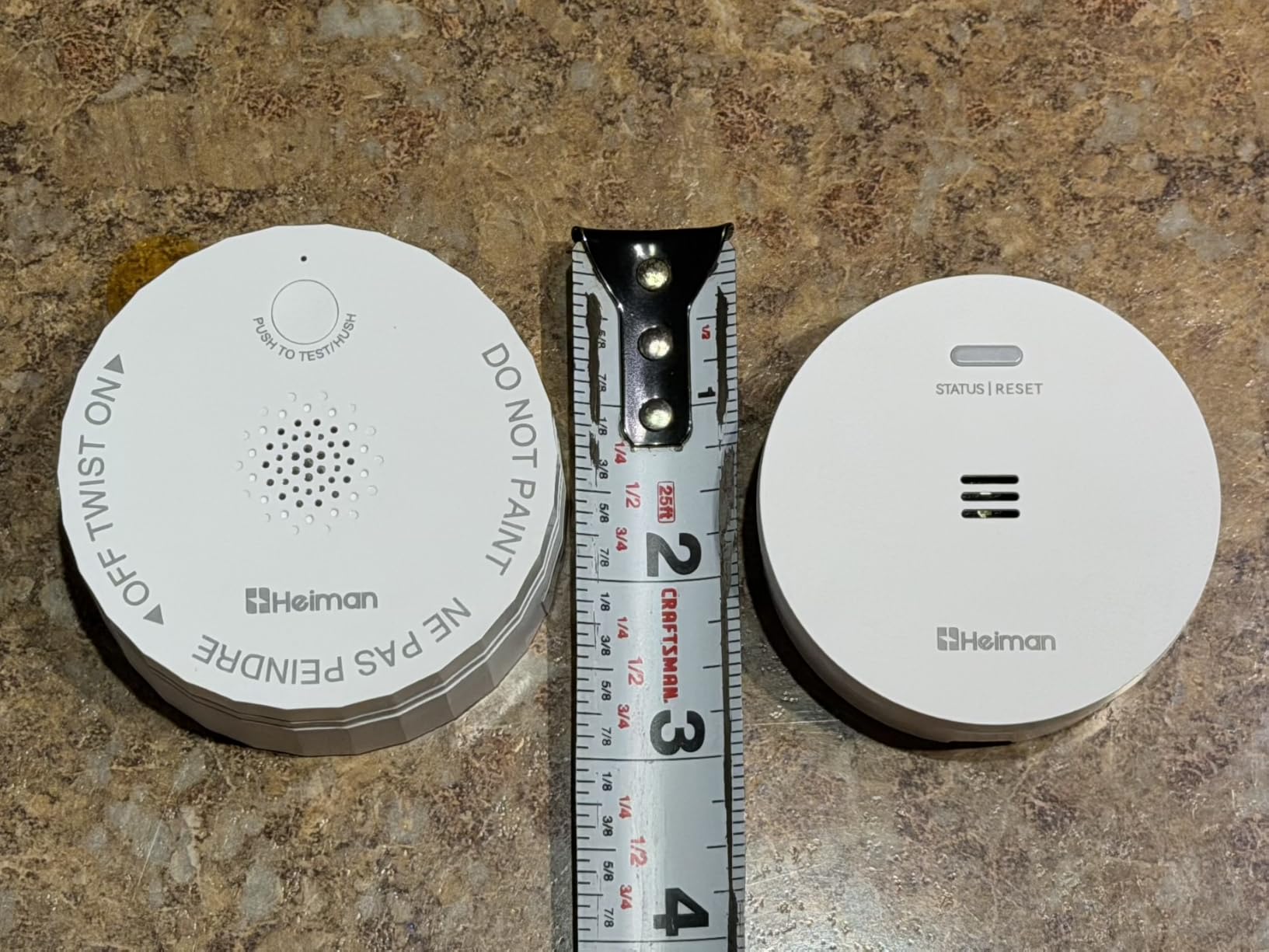
Each detector uses dual-beam photoelectric sensing aimed at slow-smouldering fires, with filtering for cooking vapour and dust, and carries a 10-year CR123A lithium battery. The units are 70 millimetres across and 37 millimetres high with an 85 dB siren, flashing LEDs and a one-touch test and silence control.
Two protection modes are the key design idea. Run the units as a local wireless interconnect and they work as a self-contained alarm system with no Wi-Fi at all, or connect the gateway for phone and email alerts through the Heiman Home app. We like that the fallback is a real product rather than an apology.
Whole-house coverage and group size
The gateway supports groups of up to 24 wirelessly interlinked detectors, so six is an entry point rather than a ceiling. The same gateway also accepts the Heiman C1-R CO alarm, the HS3HT-2R temperature and humidity sensor, the HS2DS-R door and window sensor and the HS2WL-R water leak sensor, which turns a smoke kit into the backbone of a broader house system.
That reuse is the real argument for this kit over a shelf of standalone alarms. One app, one gateway, one battery change routine. A decade of lithium per detector means the annual ladder climb disappears, and the units mount magnetically or with hardware depending on the surface.
Certification, sensing and the ten-year battery
The kit is listed to UL 217 10th edition alongside CSFM and FCC certification, and each unit carries a ten-year dedicated warranty. Dual-beam photoelectric sensing is a step up from single-beam photoelectric, and the listing specifically calls out reduced false alarms from cooking and dust, which is the failure mode owners complain about most across this category.
Low battery chirps, fault alerts and an end-of-life warning are all built in, so a detector that is drifting toward failure tells you rather than going quiet. Operating humidity is 95 percent or less non-condensing, with an upper temperature rating of 100 F, which covers normal living spaces without special placement.
What Alexa actually gets from this kit
Be straightforward about this one. The listed compatible devices are Google Home, the Heiman app, Home Assistant, IFTTT and SmartThings. Alexa is not listed as a natively supported voice platform, so an Alexa household reaches this system through a hub such as Home Assistant or SmartThings rather than pairing the detectors straight to an Echo.
If you already run one of those ecosystems, that is a reasonable architecture, especially since local control keeps working when the internet does not. If your smart home is Echo plus Alexa app and nothing else, this kit adds a hub decision you did not need. The Heiman at number six avoids that by speaking Matter directly.
Best for and skip this if
Best for a whole-home install where you want one order, one app and a decade of battery life, and for anyone already running Home Assistant or SmartThings who values local control. It is also the sensible pick if you would rather not depend on a vendor cloud at all.
Skip it if your smart home is purely Echo-based, because the voice path needs a hub you probably do not own. And weigh the 30-review pool carefully; the unit is well liked, but there is not yet a long public record of how these alarms behave in real homes.
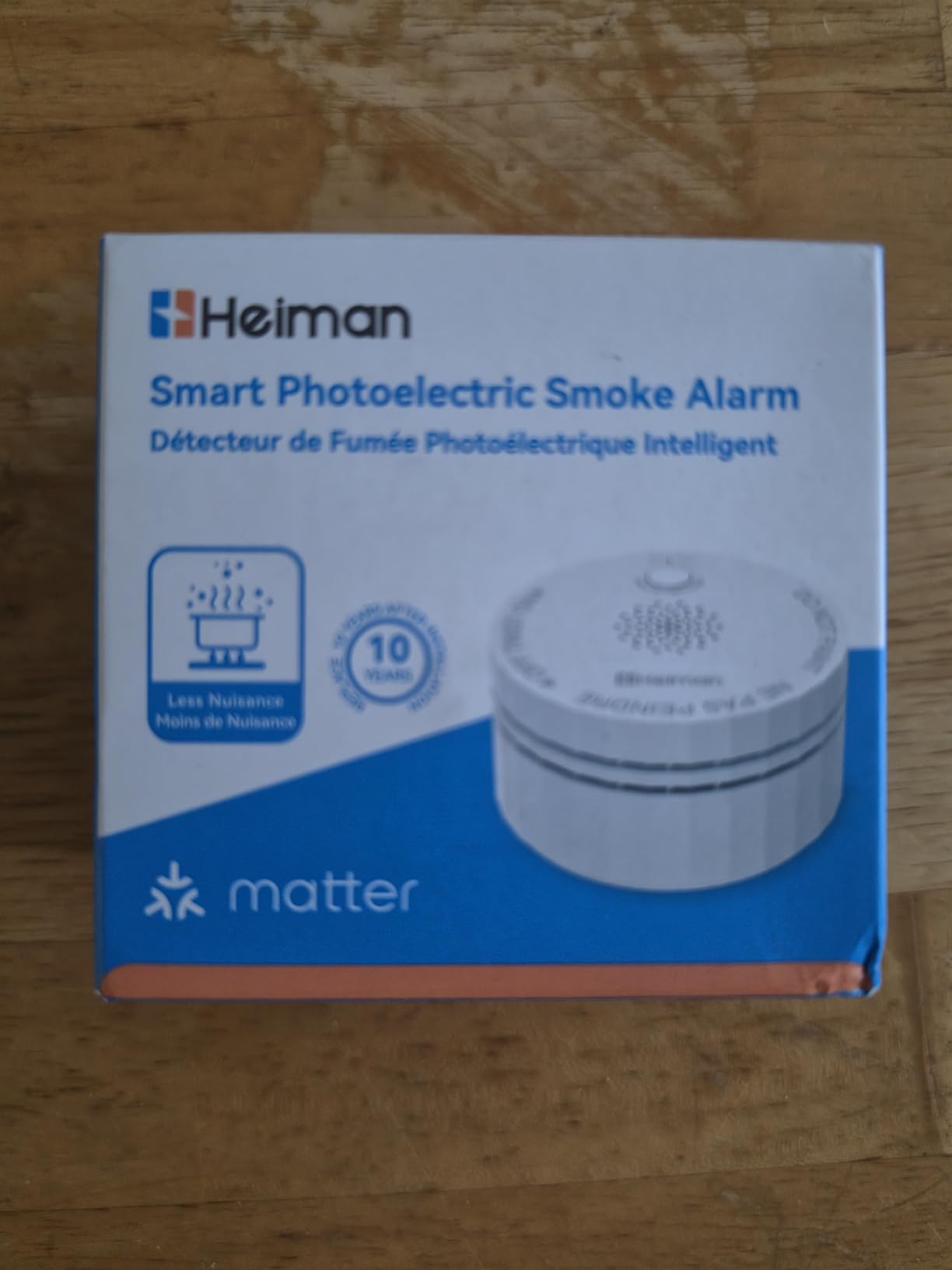
6. Heiman S1-TM Matter over Thread – The Only Unit Here That Talks to Alexa Directly
Heiman Smoke Detector, Matter Over Thread, with Temp&Humidity Sensor, S1-TM
Matter over Thread connectivity
UL 217 and CSFM certified
Temperature and humidity sensors
85 dB alarm with LEDs and test
Pros
- Pairs straight to Alexa through an Echo border router
- Works with Apple Home
- Google Home
- SmartThings
- Homey and Home Assistant
- Local automations run without Wi-Fi
- Temperature and humidity sensors built in
- Dual-beam sensing for smouldering fires
Cons
- No owner ratings on record yet
- Needs a Matter controller with a Thread Border Router
- Home Assistant installs need IPv6 enabled and mDNS unblocked
This is the only detector in our round-up that pairs with Alexa the way people assume smart home products do. It runs Matter over Thread, and a compatible Echo doubles as the Thread Border Router, so the alarm joins the local mesh and shows up in the Alexa app as a controllable device rather than a notification feed. No brand cloud sits in the middle of your fire alarm.
It also carries temperature and humidity sensors alongside dual-beam photoelectric detection, and it is certified to UL 217 10th edition and listed by CSFM, with a UL94 V-0 flame-retardant housing. It took a German Red Dot Design Award, which is a small signal that this is not a repackaged commodity unit.
We want to be straight with you about one thing: this listing carries no aggregated customer rating and no review count, so there is no owner feedback to draw on. Our assessment rests on the specification set and the certification listings, which is a weaker position than every other pick here. Treat it as an early-adopter choice.
What Matter over Thread changes in practice
Matter is a shared standard, so one alarm can appear in Apple Home, Google Home, SmartThings, Homey and Home Assistant without a separate skill for each. That is the portability argument, and it is the reason a growing number of homeowners are standardising on it rather than committing to one vendor’s cloud.
Thread runs on a low-power mesh and needs no Wi-Fi at all, so local automations, a light that flashes when the alarm triggers or a scene that runs on the mesh, keep working during a broadband outage. The listed supported Matter hubs include Google TV Streamer, Nest Hub 2nd Gen, Nest Hub Max, HomePod 2nd Gen, HomePod mini, Apple TV 4K, Aeotec Smart Home Hub, SmartThings Hub v3, SmartThings Station, Echo 4th Gen, Echo Show 8 3rd Gen and Echo Show 10 3rd Gen.
Echo requirements and the Home Assistant hurdle
Older Echo devices are not Thread Border Routers, so verify yours is a 4th Gen Echo or a supported Echo Show before you buy. If the model is not on that list, you need a separate Thread border router, which changes the calculation entirely.
For Home Assistant users the listing gives specific guidance: enable IPv6 on the HA box and make sure the local network is not blocking IPv6, router advertisements or mDNS. Internet IPv6 is not required, only the local stack. This is a real configuration task for a casual installer, and it is the single most likely reason an otherwise good setup refuses to pair.
Physical design, mounting and everyday controls
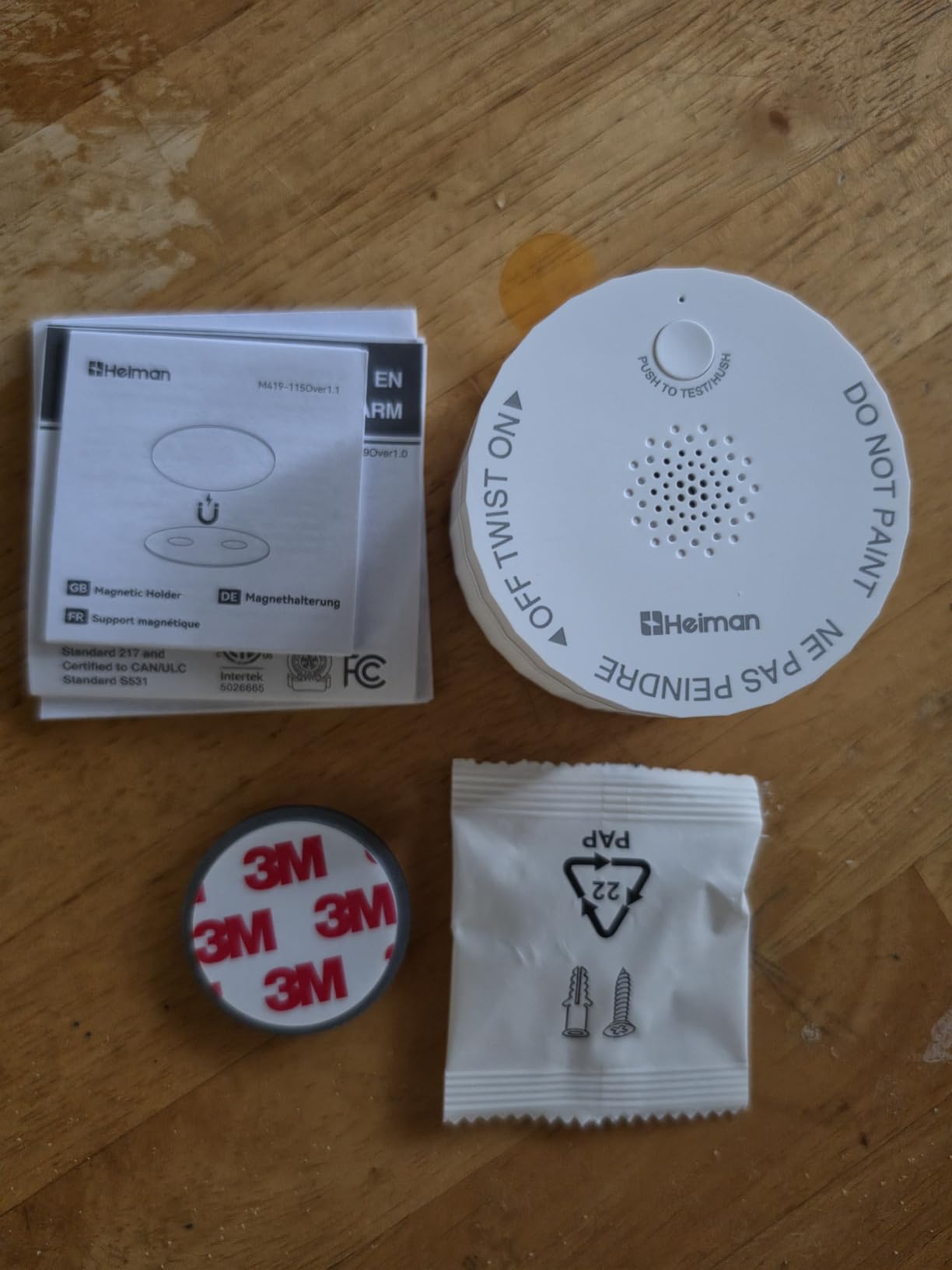
The unit measures 2.7 inches in diameter and 2.7 inches tall, weighs 0.22 kg and takes magnetic or screw mounting, so a landlord-friendly install without holes is possible. The alarm is 85 decibels with LED indicators and a one-touch test and silence control, and it is battery powered, so the same maintenance reasoning as the sealed-battery units applies.
Like the rest of this category, the local siren works independently of the network. The difference with a Matter unit is that the surrounding automations also keep working offline, which is the closest this category gets to a detector that behaves like genuine infrastructure rather than a connected gadget.
Best for and skip this if
Best for a household with a supported Echo or an existing Matter controller, for anyone who wants alarm data to stay on the local network, and for multi-ecosystem homes where one device needs to show up everywhere without five separate integrations.
Skip it if you have an older Echo, if you are not prepared to deal with Thread border routing and IPv6 configuration, or if buying a life-safety device with no public review history makes you uneasy. That is a reasonable position, and the picks at numbers one and two have years of owner feedback behind them.
How Many Smart Smoke Detectors Your Home Needs
No competitor on this search covers placement, and it is the highest-stakes decision in the category. A perfect detector in the wrong room is a poor outcome, and a cheap detector in the right room is a good one. Here is the count most homes need, by floor and room type.
The baseline list for a typical home
Start with one inside every bedroom, because sleeping is where people are least able to respond to an alarm elsewhere in the house. Add one outside each sleeping area, on the hallway or landing side, so the alarm sounds in the room where you wake up.
Then add one on every level of the home, including the basement and any finished attic space. A single-storey flat needs fewer, but the rule holds: one per level plus one per bedroom plus one per sleeping area is the floor, not the target. Add a second in any large open-plan living space where smoke would have to travel a long way before reaching a detector.
Where placement changes everything
Mount detectors on the ceiling or high on a wall, because smoke rises, and keep them clear of air vents, ceiling fans and kitchen appliances. A detector mounted near a supply register or directly above a stove will either miss a fire or sound constantly, and both outcomes train people to ignore alarms.
Kitchens get special treatment. Cooking produces steam and aerosolised grease that trip smoke sensors, so a kitchen detector needs a hush button and an interlock that silences the whole house when it goes off, or it needs to sit outside the cooking area entirely. Bathrooms are the other common mistake, because humidity and shower spray both reduce a photoelectric sensor’s reliability.
Two spaces deserve special attention: the garage, where a vehicle can idle and build up CO, and any space near a fireplace or wood stove. Check the local code before you finalise the layout, since required counts and placement rules vary by jurisdiction, and smart alarms supplement those requirements rather than satisfying them on their own.
Where listener devices fit instead
If you are a tenant, a listener is the realistic option. It sits near alarms you already own and relays the siren to your phone through an Echo, so you get remote alerts without drilling a single hole. The trade-off is obvious and worth stating: a listener has no sensor of its own, so it adds no detection capability, only notification.
Smart home forum threads on this question are consistent, with users confirming that a free tier detects smoke and CO alarms acoustically and works well as a first step. It is a legitimate renter solution and a sensible stopgap in a home you plan to rewire later.
How to Choose a Smart Smoke Detector for Alexa
The differences between these six units are mostly differences in architecture. Answer the following questions in order and the round-up above sorts itself quickly.
Which Alexa integration route do you actually need?
Decide this first, because it eliminates half the options instantly. If you want the alarm in the Alexa app with spoken notifications, any of the Wi-Fi detectors will do. If you want to command the alarm by voice, you need a fuller skill integration or a Matter controller. If you want no cloud dependency and local automations, you want Matter over Thread or a hub-based system such as Home Assistant.
Ignore the vague badge on the box and read the compatible device list. The forum posts that complain most loudly about Alexa are almost always people who bought a notification-only alarm expecting a controllable one. Our own smart thermostat picks for Alexa make the same point: a voice assistant can only control what a skill actually exposes.
Battery, sealed battery or hardwired
Sealed lithium batteries rated at five or ten years remove the annual replacement and the low-battery chirp entirely, at the cost of a full replacement at end of life. User-replaceable cells cost less over a decade but put you on a ladder every year. Hardwired models with battery backup are the most reliable in a power sense and the hardest to install.
Choose hardwired if you own the wiring, sealed lithium if you want the lowest maintenance, and AA cells if you want cheap consumables. For a rental, sealed battery is the only realistic answer. Our smart plug picks for Alexa follow a similar logic on hardware you must physically place rather than software you can revise.
Certification, and what fire departments look for
Look for UL 268 for smoke alarms and UL 217 for carbon monoxide alarms, and treat a missing listing as a reason to keep looking. Five of the six products here carry a UL 217 listing, and the sixth, the air quality monitor, is described on its listing as the first UL listed smoke and indoor air quality monitoring device. Dual units have to satisfy the CO standard as well as the smoke standard, so check both.
Fire departments generally recommend a mix rather than a specific brand: working smoke alarms inside and outside every sleeping area, on every level, tested monthly, with a CO alarm near sleeping spaces. What a department does not do is endorse a smart platform. The smart part is a convenience layer over a requirement.
Sensor type, siren output and false alarms
Photoelectric sensing is the standard in this category because it responds faster to the smouldering fires typical of residential fires than ionisation sensing does. Dual-beam photoelectric sensing, found in both Heiman units, filters cooking vapour and dust better still, which is the practical difference between a house that trusts its alarms and one that does not.
The units that publish a siren figure list 85 decibels, which is the standard threshold. What differs more than the number is the hush behaviour. A phone-based hush on a high ceiling, or an interconnect that silences the whole house when a kitchen unit is silenced, prevents the eight-minute stand in the hallway that makes people disconnect detectors.
Subscription and monitoring cost over five years
Every detector here works without a subscription for local detection, app alerts and Alexa notifications. The paid tiers add professional monitoring, and the Kidde RGCUDR-RW lists an optional Ring plan for 24/7 smoke and CO monitoring. You pay for a human response service, not for basic connectivity.
Work out the total before you commit: the cost per detector multiplied by the number your home needs, plus any hub, plus batteries at the end of the sealed-battery life, plus the monitoring plan if you want one. A six-pack with ten-year batteries and no subscription spreads the cost of a whole-home fit-out over a decade with no battery line items, which is worth weighing before you price single units against each other.
Network compatibility, 2.4 GHz and offline behaviour
Two of the detectors here state a 2.4 GHz requirement, which is the most common cause of failed setup reported in smart home forums. Confirm your router still offers that band, or that you can isolate IoT traffic onto a separate 2.4 GHz network name. This is a five-minute check that saves an afternoon.
Then test the failure mode honestly. Pull the Wi-Fi and confirm the local siren still sounds on every unit. That is the question that matters in this category, and the answer is yes for all six picks, because each is a real alarm first and a connected device second.
Brand longevity and support continuity
Smart home communities have been burned here, most visibly when Halos went out of business and left installed hardware stranded. Buyers should weight the standing of the parent company and the life of the app, not just the rating, because a life-safety product needs support in five years as much as today.
That is the strongest structural argument for Matter: a standard outlives any single company. An alarm that speaks Matter can be re-paired to a new hub, a new ecosystem or a new manufacturer without being thrown away, which is a meaningfully different risk profile from a unit tied to one app.
Frequently Asked Questions
Does Alexa make a smoke detector?
No. Amazon does not manufacture its own smoke alarm. Amazon makes the Echo speakers, the Alexa app and the Ring listener, and the Ring listener only hears existing alarms acoustically. Every smart smoke detector that works with Alexa is made by a third party such as Kidde, eufy, Heiman, First Alert or X-Sense, and connects through an app pairing, a skill, or a Matter controller.
Which smart smoke detectors are Alexa-compatible?
All six units in this round-up reach Alexa in some form. The Kidde RGCUDR-RW, the eufy Security E10, the Kidde P4010ACSAQ-WF and the Kidde 30CUAR-W pair to the Alexa app and push spoken notifications. The Heiman S1-R reaches Alexa through a hub such as Home Assistant or SmartThings. The Heiman S1-TM pairs directly through Matter over Thread on a supported Echo.
Can Alexa call emergency services if a smoke alarm goes off?
Not on its own and not for free. Alexa Guard listens for a smoke or CO alarm through your Echo, and emergency response is part of a paid Alexa plan rather than the free tier. A smart detector also still needs working local sirens, because a voice assistant cannot detect smoke physically. Never rely on a voice assistant as your only layer of protection.
Do smart smoke detectors require a monthly subscription?
No, not for the core function. Every detector here detects smoke, sounds its own local siren at 85 decibels or above, sends app notifications and links to Alexa at no recurring cost. Paid tiers exist for professional monitoring, such as the optional Ring plan listed for the Kidde RGCUDR-RW. You are paying for human monitoring, not for connectivity.
Do I need a smart hub for a smart smoke detector?
It depends on the model. Wi-Fi units such as the Kidde RGCUDR-RW and the 30CUAR-W talk to their own cloud and need no hub. The eufy E10 requires a compatible eufy HomeBase hub. The Heiman S1-R needs a hub such as Home Assistant or SmartThings for Alexa access. The Heiman S1-TM needs a Matter controller, and a supported Echo can act as the Thread Border Router.
The Best Smart Smoke Detector for Alexa: Final Verdict
If you want one alarm per floor with no wiring and no subscription, the Kidde Smart Smoke and CO Detector RGCUDR-RW is the pick. It is our Editor’s Choice because it combines the deepest review history in the group with a dual sensor, wireless interconnect and free notifications, and because the one thing people expect from Alexa, spoken alerts, it genuinely delivers.
If you already run eufy hardware, the E10 gives you the highest rating here, the smallest footprint and a five-year sealed battery. If your home is already hardwired, the Kidde 30CUAR-W brings a whole existing alarm network onto your phone for the price of one smart unit, provided your router offers a 2.4 GHz band. If you want a full-home kit in one order, the Heiman S1-R covers six rooms with ten-year batteries and no subscription.
If you want the alarm itself to be a controllable smart home device with local control and no vendor cloud in the middle, the Heiman S1-TM is the only unit in this round-up that does it, and it is worth the setup effort if you have a supported Echo. For anyone else, it is an early-adopter choice with no public review record behind it yet.
Whatever you choose, follow the placement rules, test every unit monthly, and treat your smart detectors as an addition to the alarms your local code requires, never a replacement. As always for our Alexa coverage, our smart light bulb picks for Alexa cover the rest of the setup, but nothing in a smart home replaces a working alarm in the hallway.