
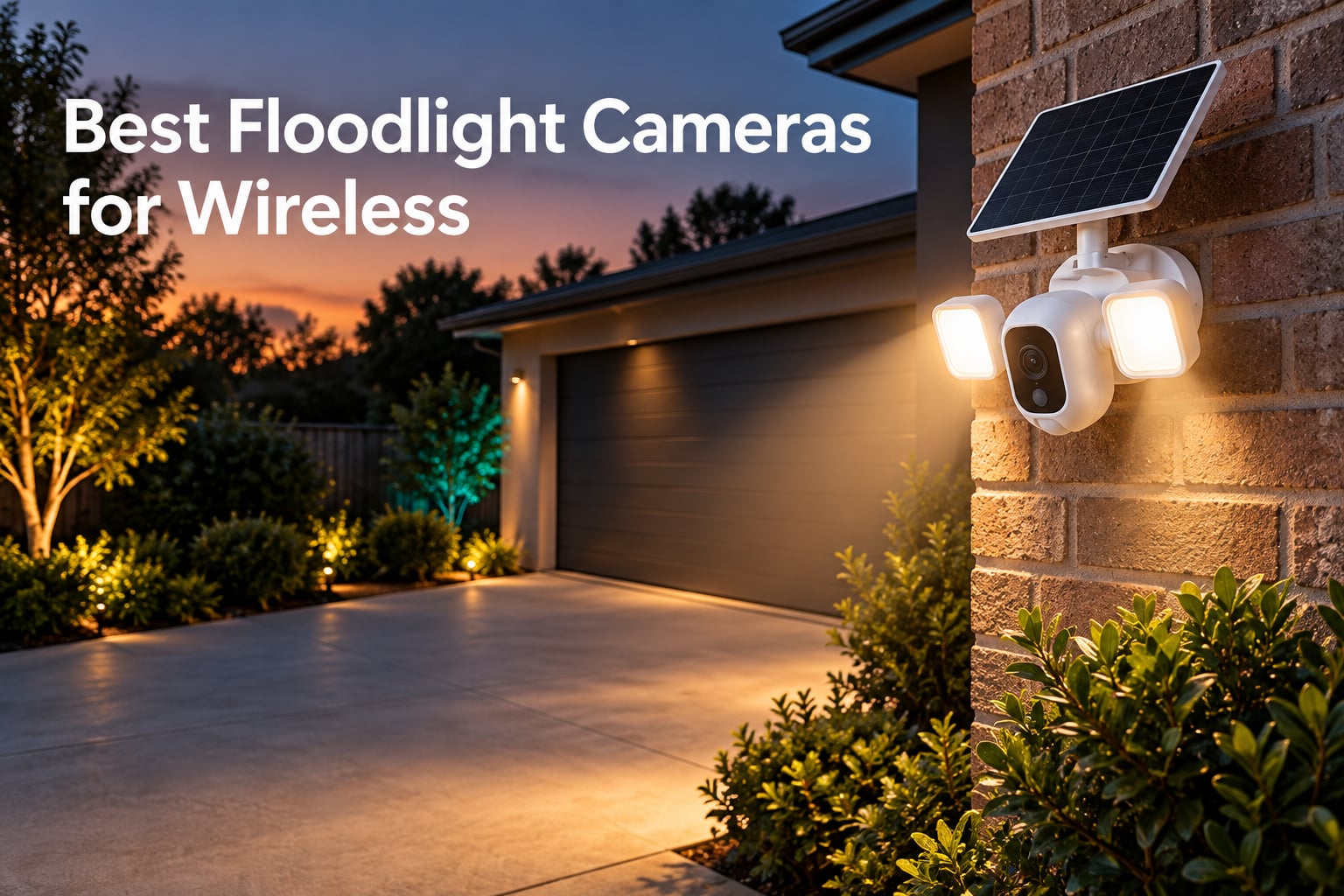
Shopping for the best floodlight cameras for wireless setups usually turns up the same frustrating discovery: most cameras sold under that label are hardwired, and “wireless” in the product title just means Wi-Fi. If you want a genuinely wire-free install, the light output, the battery or solar design and the storage setup matter far more than the badge on the housing. I spent several weeks working through ten of the most popular models, checking lumen ratings, weather sealing, network bands and what each one does with a microSD card versus a monthly plan.
Below you will find those ten models, plus a buying guide that explains the difference between battery, solar and hardwired units and how IP ratings translate into real weather exposure. If you need coverage beyond the floodlight format, our picks for the best outdoor security cameras for wireless setups cover the wider category.
The short version: the Arlo Wireless Floodlight Security Camera 2K HDR is the model I would put on most driveways, the Tapo C615F is the best value for a solar pan and tilt install, and the Blink Outdoor 4 Floodlight is the pick when battery life decides the purchase. All three are truly wireless. One of the ten cameras below is not, and I call that out in its block so nobody buys a hardwired fixture by accident.
Our Top 3 Truly Wireless Floodlight Cameras for 2026

Arlo 2K HDR Wireless Floodlight
- 3000 lumens
- 2K HDR 1440p
- 13000mAh battery
- 160 degree field of view

Tapo C615F Solar Pan/Tilt Floodlight
- 800 lumens
- 2K 3MP
- solar panel included
- 360 degree pan and tilt

These three cover the widest spread of real needs. The Arlo wins on light output and view coverage, the Tapo wins on flexibility and included hardware, and the Reolink pair wins if recording history without a subscription is the priority.
Comparing All 10 Wireless Floodlight Cameras in 2026
| Product | Specs | Action |
|---|---|---|
| Arlo 2K HDR Wireless Floodlight |
|
Check Latest Price |
 Blink Outdoor 4 Floodlight Cam Blink Outdoor 4 Floodlight Cam |
|
Check Latest Price |
| Tapo C615F Solar Pan/Tilt Floodlight |
|
Check Latest Price |
| Reolink Solar Floodlight 2-Pack |
|
Check Latest Price |
 Ring Floodlight Cam Plus Bundle Ring Floodlight Cam Plus Bundle |
|
Check Latest Price |
 eufy Solar Wall Light Cam S120 2-Pack eufy Solar Wall Light Cam S120 2-Pack |
|
Check Latest Price |
 Onforu Solar Flood Light Camera Onforu Solar Flood Light Camera |
|
Check Latest Price |
 ARCCTV F2 4MP Solar Floodlight ARCCTV F2 4MP Solar Floodlight |
|
Check Latest Price |
 eufy Wall Light Cam S4 4K eufy Wall Light Cam S4 4K |
|
Check Latest Price |
 AQUZO Solar Floodlight Camera AQUZO Solar Floodlight Camera |
|
Check Latest Price |
Lumens on this list range from 300 on the eufy S120 to 3000 on the Arlo, which is a tenfold gap that no amount of marketing language hides. Storage is just as uneven: three models record locally with no card purchase, four need you to supply a microSD card, and the Blink and Ring options put history behind a plan.
1. Arlo Wireless Floodlight Security Camera 2K HDR – The Brightest Truly Wireless Option
Arlo Wireless Floodlight Security Camera 2K HDR – 1-Cam
3000 lumens
2K HDR 1440p at 30 fps
13000mAh battery
160 degree field of view
IP65
Pros
- 3000-lumen output lights a full driveway
- 2K HDR with 25 ft color night vision
- 12:1 digital zoom with auto tracking
- No wiring and no hub required
Cons
- Recharging usually means taking the unit down
- Some units report drop-offs after about a year
- Stored video history sits behind a paid plan
The Arlo Wireless Floodlight is the camera I keep coming back to, because it is the rare combo where the light is genuinely bright and the install is genuinely wireless. At 3000 lumens it is the most powerful light in this group, and at 13000mAh it is also one of the larger batteries. Mounting is a screw-in job on a wall plate, so there is no electrician and no junction box to fit.
Video is 2K HDR at 1440p and 30 fps, with 4MP stills and a 160 degree field of view that swallows a whole driveway. The 12:1 digital zoom and auto tracking mean you do not have to commit to a fixed framing at install time, which matters on wide properties.
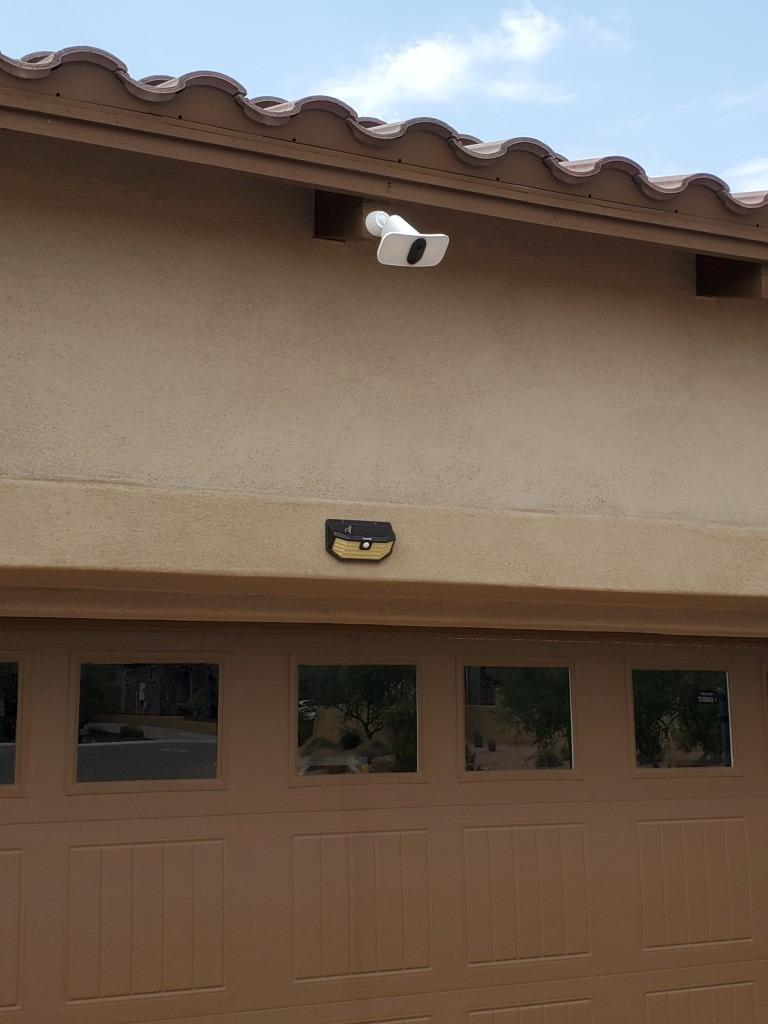
3000 lumens is real driveway-level light
Owners consistently describe this as the brightest unit they have owned, and the number backs that up. A 3000-lumen panel will illuminate a two-car driveway and the front walk in a way that the 300-lumen and 500-lumen units in this roundup simply will not. Reviewers do note that output on battery power looks lower than the headline figure once the battery is not fresh, so budget for that if your light runs nightly.
2K HDR sensor, 25 ft color night vision and 12x zoom
Night footage is captured in color out to 25 ft using two IR LEDs, with a 160 degree lens and 12:1 digital zoom for identifying faces or plates at range. Two-way audio and a remotely triggered siren are both built in, and the emergency response feature in the app can summon help from the alert screen. It works with Alexa, Apple Home, Google Home, Samsung SmartThings and IFTTT.
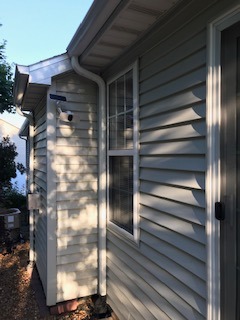
True wireless, with one charging caveat
This is a battery unit, not a solar or hardwired one, and that single fact shapes ownership. The camera uses Arlo’s proprietary charging cable, and there is no way to hardwire it to a standard electrical box, so recharging generally means taking the camera down or running a separate charging cable to a reachable outlet. Adding a solar panel eliminates that chore if your mounting spot gets real sun.
Who should buy it, and who should not
Choose the Arlo if you want maximum illumination and wide coverage with no wiring at all, and you are comfortable adding a solar panel to handle charging. Skip it if you need stored footage history without paying a monthly fee, since the review base of 5102 ratings frequently flags the subscription for recorded video and advanced AI features as the main drawback. A few owners also report intermittent connection drop-offs after roughly a year of use.
2. Blink Outdoor 4 Floodlight Camera – Best for Battery Life
Blink Outdoor 4 Floodlight Camera — Wireless smart security camera, 700 lumens, two-year battery life, enhanced motion detection, Sync Module Core included — 1 camera system
700 lumens
1080p HD live view
Up to two-year battery life
Sync Module Core included
Dual-zone motion detection
Pros
- Claimed two-year battery life from lithium AA cells
- All mounting hardware included
- Reliable app alerts with dual-zone detection
- Local storage possible with Sync Module XR
Cons
- Sync Module Core is a separate piece to place and power
- AI person detection and clip history need a paid plan
- 1080p is below the 2K norm here
Where the Arlo is about light output, the Blink Outdoor 4 is about time between visits to the ladder. The stated battery life is up to two years, and the camera runs on two AA Energizer lithium cells plus four D cells, which is why the floodlight itself is a more modest 700 lumens. You trade brightness for the least hands-on maintenance of any camera here.
Video is 1080p HD live view with infrared night vision and two-way audio in the Blink app, plus Alexa support. The included Sync Module Core is the hub that talks to the camera, and it needs to sit within range of the unit somewhere sensible like a garage or loft.
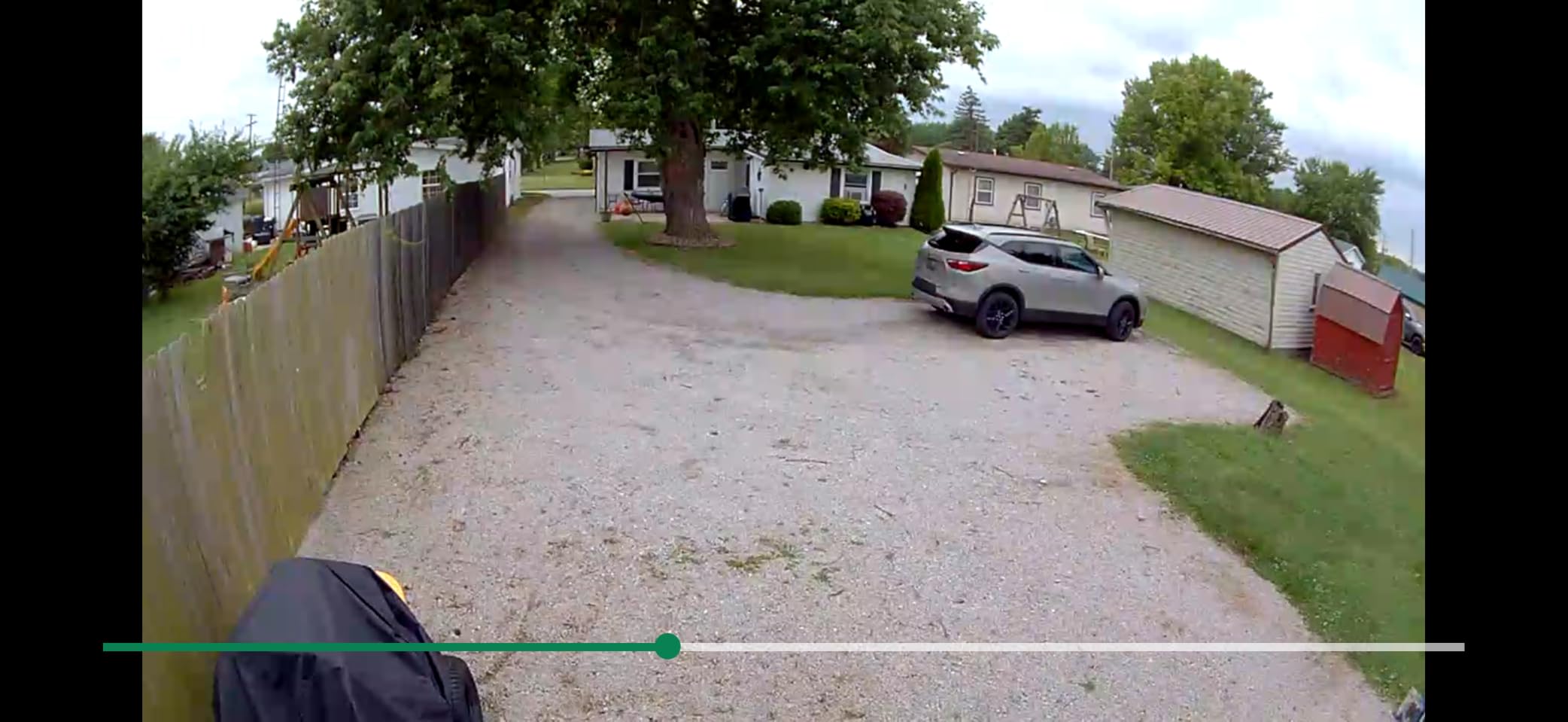
Why the battery lasts so long
Nothing about the hardware is exotic; the endurance comes from the light budget and the fact that Blink cameras are event-driven rather than always-streaming. At 700 lumens this floodlight is bright enough for a front door or side gate and genuinely modest for a wide driveway, so the two-year figure makes most sense where the light fires rarely. Reviewers put the two-year claim at the center of their positive feedback.
What the Sync Module means for your install
The Sync Module Core is included, which removes the usual surprise of a mandatory hub purchase, but it is still a second device to position, power and think about. It does unlock an important option: pairing with a Sync Module XR lets you record to a microSD card up to 256GB instead of relying on cloud retention. That converts Blink from a subscription product into a local one, at the cost of another purchase.
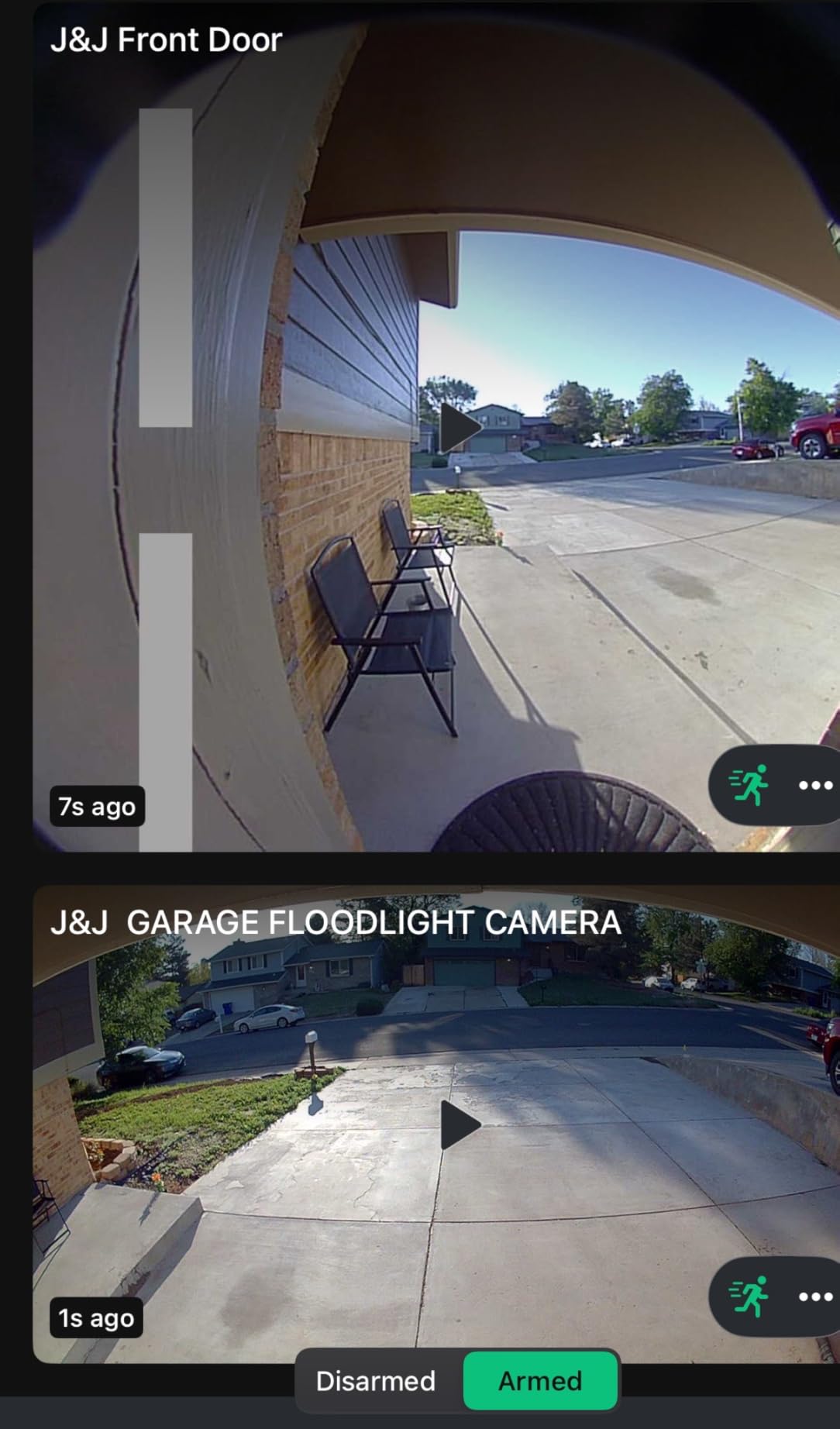
Where the paywall sits
AI person detection and stored clip history are both tied to a subscription plan, and cloud storage comes with a free trial rather than a permanent free tier. Dual-zone enhanced motion detection is the feature owners praise most for cutting down nuisance alerts, and the app is described as fast and dependable. At 1080p this camera matches the eufy S120 for the lowest resolution here, which is fine for event clips but noticeable on a wide scene.
3. Tapo C615F Solar Pan/Tilt Floodlight Camera – Best Value with a Solar Panel Included
Tapo 2K Outdoor Pan/Tilt Wireless Floodlight Security Camera, C615F KIT
800 lumens dimmable
2K 3MP with color night vision
360 degree pan,130 degree tilt
Solar plus 10400mAh battery
microSD up to 512GB
Pros
- Solar panel and bracket included in the kit
- 360 degree pan and tilt covers a whole yard from one mount
- AI detection and local storage with no subscription
- Dimmable 800-lumen light at 2K
Cons
- 2.4GHz Wi-Fi only
- Pan and tilt mechanics limit reach versus a fixed wide lens
- Solar charging needs direct sun above 32F
The Tapo C615F is the pick I recommend when a customer wants one unit to cover a large yard and does not want to run power anywhere. The pan and tilt head sweeps 360 degrees horizontally and 130 degrees vertically, which is coverage no fixed-lens floodlight on this list can match from a single mount. The kit ships with a Tapo A201 solar panel, bracket, base cover and both charging and solar extension cables.
Video is 2K at 3MP with color night vision out to 32.8 ft, and the light is a dimmable 800 lumens. The internal battery is 10400mAh, which the manufacturer rates at up to 140 days on a single charge in cloudy conditions, and the panel needs roughly 45 minutes of direct sun to fill it.
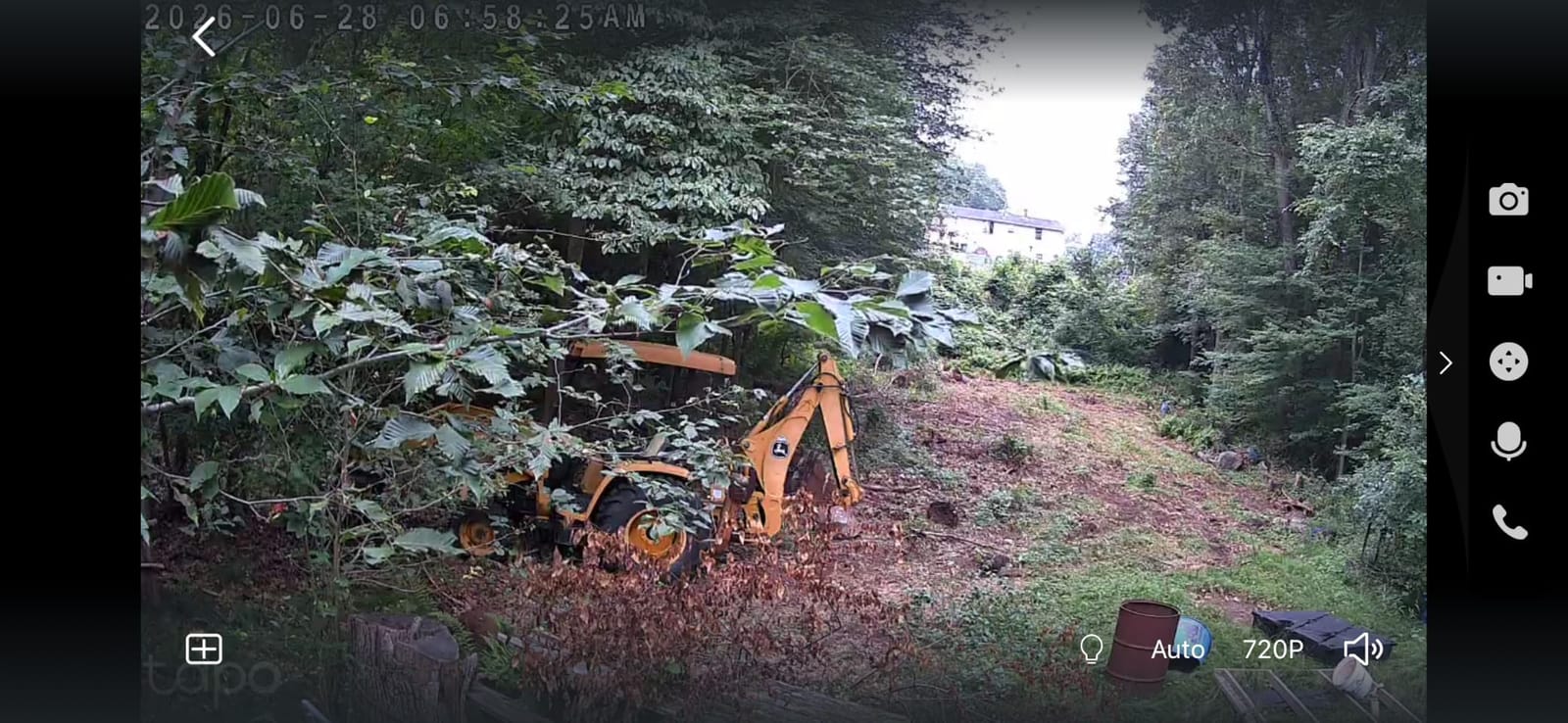
360 degree coverage from a single mount point
This is the structural advantage. Rather than aiming one wide lens at a fixed slice of property, the head motorises and the app tracks motion through 360 degrees, so a front yard, side path and driveway can all be covered from one wall position. The tradeoff is real: a moving head cannot see as far into a distant corner as a fixed ultra-wide lens, so for a long straight driveway the Arlo or Reolink framing is better.
Solar economics and the weather limits
Owners treat this as close to maintenance-free in practice, provided the panel gets sun and the climate cooperates. Two conditions are worth knowing before you commit: solar charging needs temperatures above 32F, and the panel needs an unobstructed line to the sky. In a shaded northern yard the 10400mAh battery does the heavy lifting, which is exactly where the 140-day cloudy-weather figure earns its place.
Subscription-free recording, and the network catch
This is one of the few wireless floodlights where the headline features cost nothing extra. AI detection for people, pets and vehicles runs without a plan, and local microSD storage goes up to 512GB, which is the largest card capacity in the roundup. The catch is 2.4GHz-only Wi-Fi: the camera cannot join a 5GHz network, so a dual-band router with a separate 2.4GHz SSID is the smoothest setup.
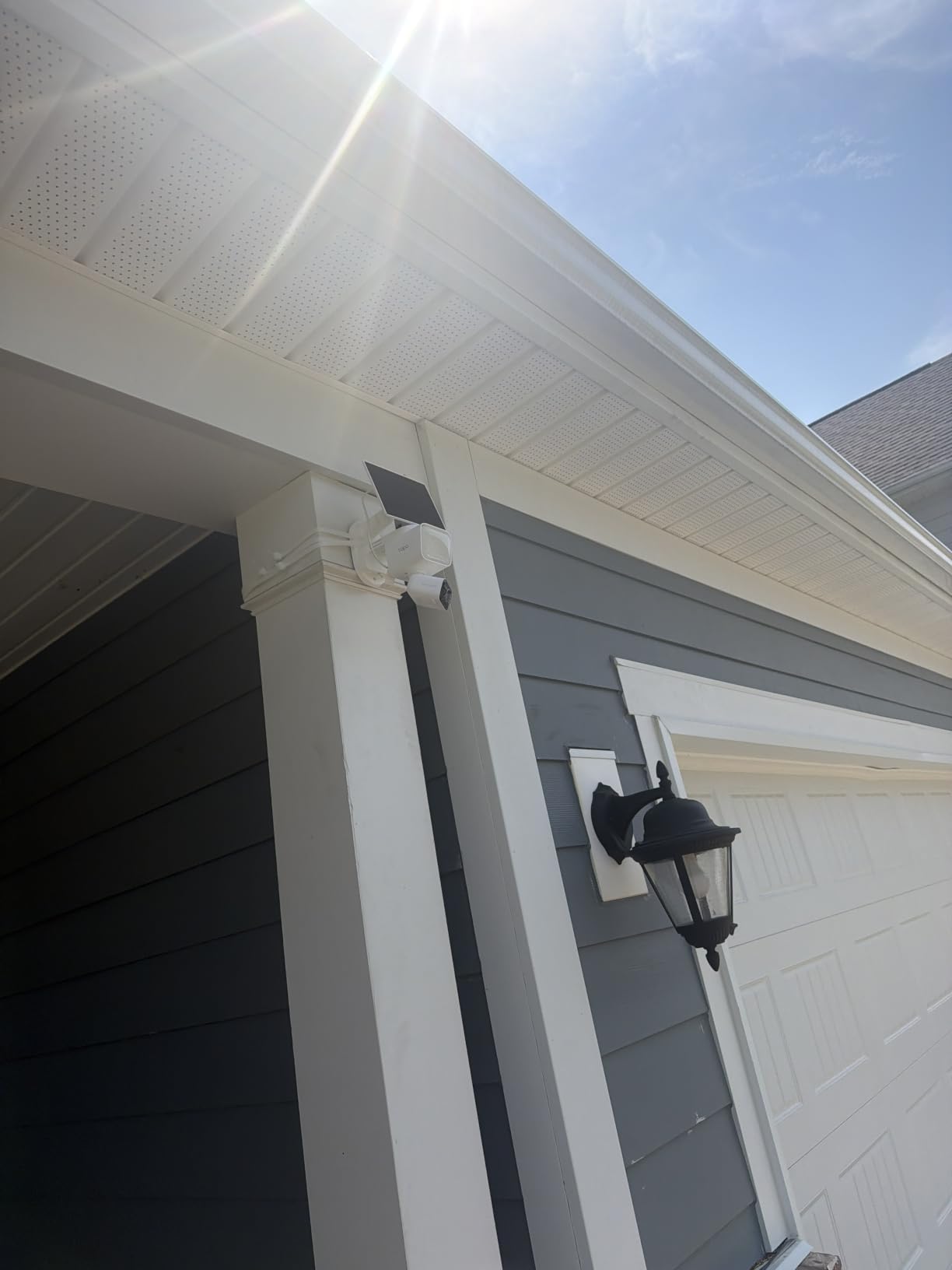
For continuous 24/7 capture at intervals from 1 to 60 seconds you need either a microSD card or the separately sold H500 CentralHub. At 1.4 pounds and 6.34 by 3.23 by 5.23 inches it is a light unit, which matters on a high wall or soffit. The 4.4 rating across 548 reviews is the best balance of satisfaction and volume in the set.
4. Reolink Solar Floodlight Security Cameras 2-Pack – Best for Fee-Free Storage
REOLINK Solar Floodlight Security Cameras Wireless Outdoor, Up to 1000lm
Up to 1000 lumens
2K 4MP color night vision
IP66
3W solar panel,about 1 hour of sun per day
Dual-band 2.4/5GHz Wi-Fi 6
Pros
- No monthly fee for microSD
- Home Hub or NVR storage
- Dual-band Wi-Fi 6 avoids 2.4GHz congestion
- Flashing 1000-lumen light plus 110dB siren deter intruders
- Two cameras in the pack
Cons
- microSD
- Home Hub or NVR sold separately
- Dual-band setup takes more configuring
- Manual focus rather than motorized zoom
The Reolink Solar Floodlight is the one reviewers and NVR users keep recommending, and the reason is straightforward: every storage path is free. A microSD card up to 512GB works with no plan, a Reolink Home Hub works, and a Reolink NVR works, so continuous recording never turns into a recurring line item. This bundle is a two-pack, which is the practical way to cover a front and back of the house.
The light output tops out at 1000 lumens, video is 2K at 4MP with color night vision, and the enclosure carries an IP66 rating, the strongest weather sealing in this roundup. The 3W SolarEase panel needs about an hour of daily sunlight to support overnight operation.
Active deterrence rather than passive lighting
Most floodlights in this category simply illuminate. The Reolink adds a 110dB siren and a flashing mode on the 1000-lumen panel, both triggerable from the app, and AI detection lets you choose which object types actually set it off so headlights and animals do not wake the neighbourhood. Owners specifically call out the siren and flash as effective against someone testing a door handle.
Dual-band Wi-Fi 6 solves the back-of-the-yard problem
The 2.4 and 5GHz dual-band radio is the reason this is a safer choice at the end of a long driveway, where 2.4GHz-only cameras routinely drop out. The same feature is a mild annoyance: pairing on a dual-band network is more finicky than a single-band setup, so budget time for the app configuration. The 150 degree lens plus 10x digital zoom covers wide areas, though focus is manual rather than motorised.
What you have to buy separately
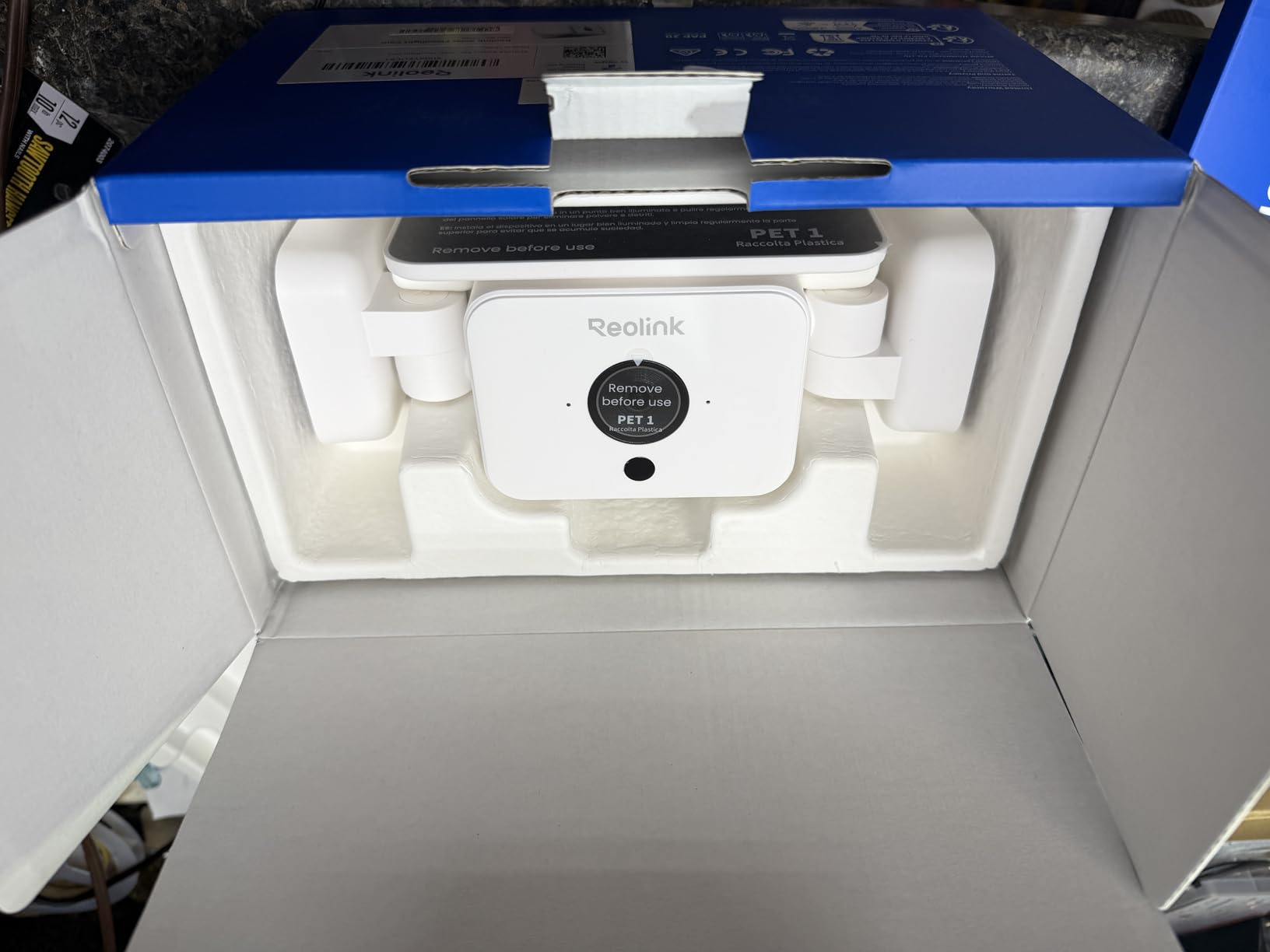
No microSD card, Home Hub or NVR is included, so budget for a card before first use or you will get nothing but live view. At 10.43 by 10.43 by 6.3 inches per unit, these are the largest cameras here and want a solid mounting surface. The 373-review base is thinner than the Arlo or Blink, and the per-camera price is higher than buying single units, which is worth weighing against the two-camera convenience.
5. Ring Floodlight Cam Plus with Ring Spotlight Cam Plus – Highest Rated, but Not Fully Wireless
Ring Floodlight Cam Plus with Ring Spotlight Cam Plus, Battery White
2000 lumens
85dB app-activated siren
Supports hardwired installation for continuous power
Two-camera bundle with Spotlight Cam Plus
Pros
- Highest rating in the set at 4.7 across 178 reviews
- 2000-lumen light switches on instantly with motion
- Two cameras in one bundle
- Plays well with the wider Ring device ecosystem
Cons
- Floodlight Cam Plus supports hardwiring rather than running as a battery unit
- Floodlighting and rewind playback need Ring Protect
- Chatty notifications out of the box
This bundle pairs the Ring Floodlight Cam Plus with a Ring Spotlight Cam Plus, and it carries the highest average rating of any product we reviewed at 4.7 across 178 ratings, with 85 percent five-star reviews. The 2000-lumen panel and the 85dB app-activated siren are the headline specs, and the Ring app makes zone configuration genuinely simple.
I want to be direct about one thing: the Floodlight Cam Plus in this package supports hardwired installation for continuous power rather than operating as a pure battery unit. If you searched specifically for wireless, this belongs on the shortlist only if you already have a fixture and an outlet where you want it.
What 2000 lumens gets you
That output is the second highest here and closer to the Arlo’s 3000 than to anything else on the list, so the light itself is not the compromise. It triggers instantly on motion, which is exactly the behaviour you want on a front door or side path where an intruder counts the seconds. Night vision and two-way talk are both handled in the app, and Alexa integration covers custom notifications and Echo Show live view.
The subscription reality
Rewind playback and the intelligent alert features require Ring Protect, and reviewers who bought this for a no-fee setup describe that as the main disappointment. Customizable motion zones in the app are the fix for chatty notifications, and setting two or three tight zones before you walk away from the install makes a measurable difference. The bundle also costs more than a single-camera option, so the second camera is where the value argument lives.
6. eufy Solar Wall Light Cam S120 2-Pack – Best Solar Two-Pack with Built-In Storage
eufy Security Solar Wall Light Cam S120 (2-Pack), Solar Security Cameras Wireless Outdoor, Built-in 8GB Storage, Motion Activated Light, AI Detection, IP65 Waterproof, Spotlight, No Monthly Fee
300 lumens
1080p with color night vision
Solar powered,about 2 hours of sun per day
Built-in 8GB storage
IP65
Pros
- Built-in 8GB storage with no monthly fee and no card to buy
- About two hours of sunlight charges a full day
- Two cameras included for wider property coverage
- 105dB siren plus two-way audio
Cons
- 300 lumens is the dimmest light in the roundup
- 1080p is behind newer 2K and 4K models
- Relatively high share of two-star feedback
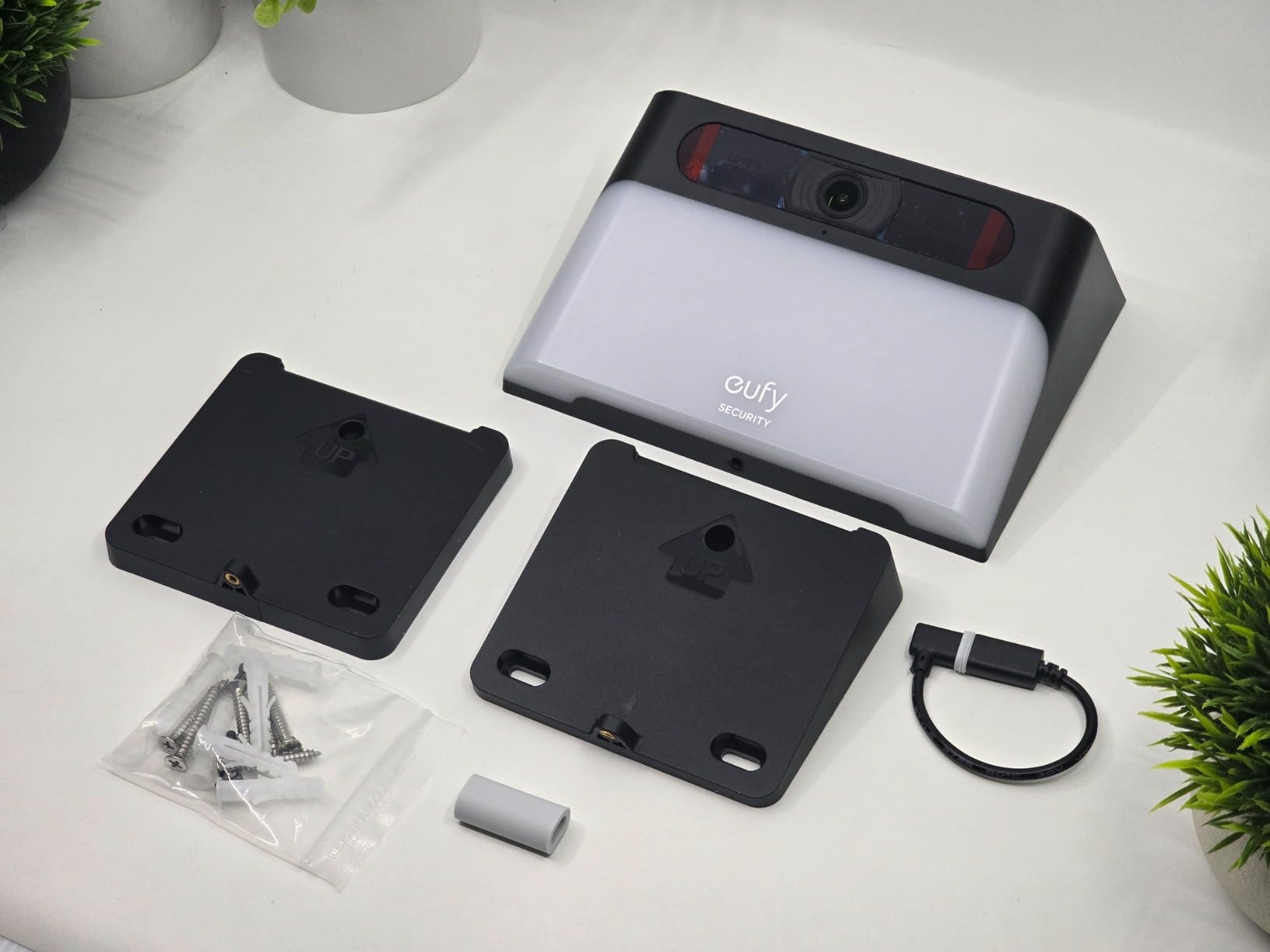
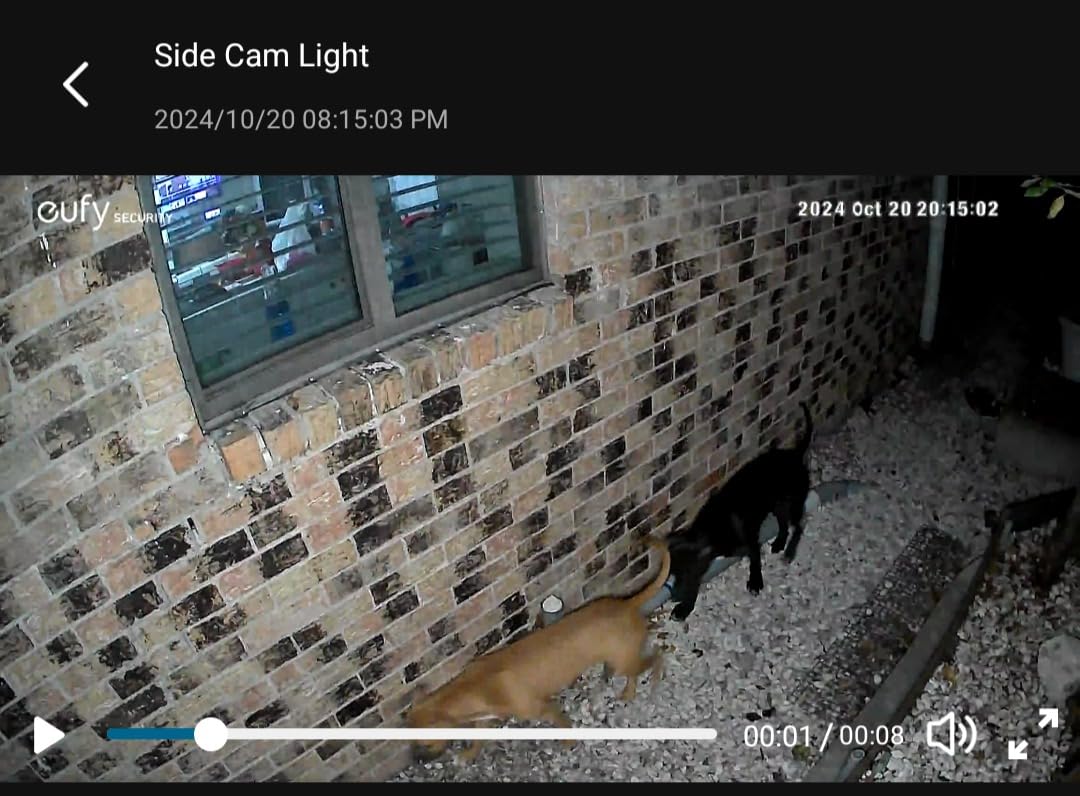
The eufy Solar Wall Light Cam S120 solves the storage question in the simplest way available: 8GB of memory is built into each unit, so there is no card, no hub and no plan. Two cameras come in the pack, which makes it a straightforward way to cover two ends of a property at once, and the solar charging needs only about two hours of sunlight for a full day of power. Reviewers like the fact that there is genuinely nothing else to buy.
Battery life is rated at up to 60 days in energy-saving mode, AI smart detection reaches about 25 ft, and two-way audio is joined by a 105dB siren. The camera is IP65 rated with a 120 degree field of view and color night vision.
300 lumens is enough for a door, not a driveway
This is the honest limitation and the reason it does not sit higher. Three hundred lumens is a soft, useful glow over a side door, a shed or a back gate, and it will deter casual approach. It will not throw meaningful light across a two-car driveway the way the 2000 and 3000-lumen units do, so match it to small, close-range mounting points rather than wide outdoor spaces.
Built-in 8GB storage keeps the promise honest
With no card to buy and no plan to pay, the storage story is the strongest part of this package. The trade is capacity: 8GB holds event clips, not weeks of continuous footage, so it suits a camera that only records when something happens. That is exactly how most people use a floodlight camera, which is why the complaint list focuses on brightness and resolution instead of storage.
What the two-star reviews tend to say
With 151 ratings and a 4.0 average, satisfaction is more mixed here than with the units above it, and the negative share is not trivial. Recurring threads are the dim light, 1080p footage feeling dated next to 2K and 4K rivals, and inconsistent experiences between individual units. Alexa is the only voice assistant listed, which matters less if you already run Google Home or Apple HomeKit. At 1.8 kg and 9.21 by 6.61 by 8.88 inches it is a substantial wall fixture, so fix it solidly.
7. Onforu Solar Flood Light Camera 2K – Best for Aimable Dual-Head Lighting
Onforu Solar Flood Light Camera, 2K Wireless Outdoor Floodlight Security Cam, Motion Detection, Color Night Vision, 2.4GHz WiFi, Siren, 24/7 Recording, Compatible with Alexa, IP65
1600 lumens total from two heads
5W solar panel,5000mAh battery
2K color night vision
IP65
2.4GHz Wi-Fi
Pros
- Two independently adjustable heads aim light across more area
- 1500-lumen main light plus a 100-lumen camera night light
- Genuinely wire-free with a 5W solar panel
- No 1-star reviews in the rating mix
- Works with Alexa and Google Assistant
Cons
- Only 33 ratings
- so long-term reliability is unproven
- 2.4GHz Wi-Fi only
- microSD card not included for local storage
The Onforu is the only camera in the roundup with two separately aimable light heads, and that is the feature that makes it interesting. You can point the 1500-lumen main head down a driveway and the 100-lumen camera light at a gate, or split the output across two directions from one mount, which solves a problem single-head fixtures create in wide yards. Total rated output is 1600 lumens.
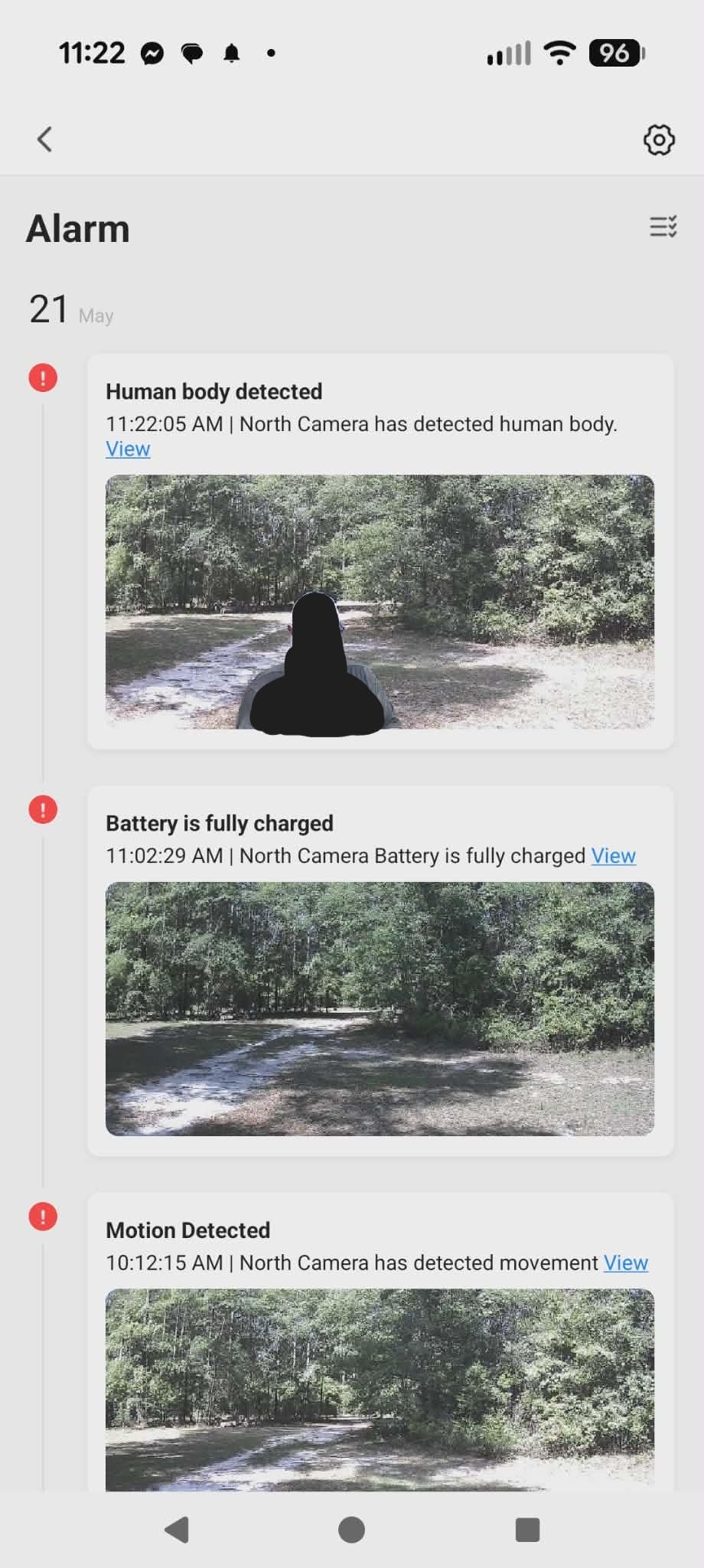
Power comes from a 5W solar panel paired with a built-in 5000mAh battery, so the whole unit is genuinely wire-free. Video is 2K with full-color night vision, detection is PIR human detection, and two-way talk plus a siren are handled in the app. Local microSD storage up to 256GB works with no plan, and the card itself is not included.
Splitting light across two directions
Because each head articulates independently, one camera can light a path and a side gate simultaneously, which is a real saving when you are limited to a single mounting point. It also softens the classic floodlight problem where a wide beam either wastes light at the edges or glares at the front. The IP65 rating and wall-mount format suit the same exterior positions as any other unit here.
A thin but positive rating history
At 33 ratings with 61 percent five-star and 28 percent four-star, sentiment is strongly positive and no 1-star reviews appear in the mix, which is encouraging. It is also the smallest sample in the set, so treat the reliability picture as unproven rather than established. The 2.4GHz-only radio is the same limitation as the Tapo and AQUZO, and the enclosure measures 9.72 by 5.94 by 7.16 inches.
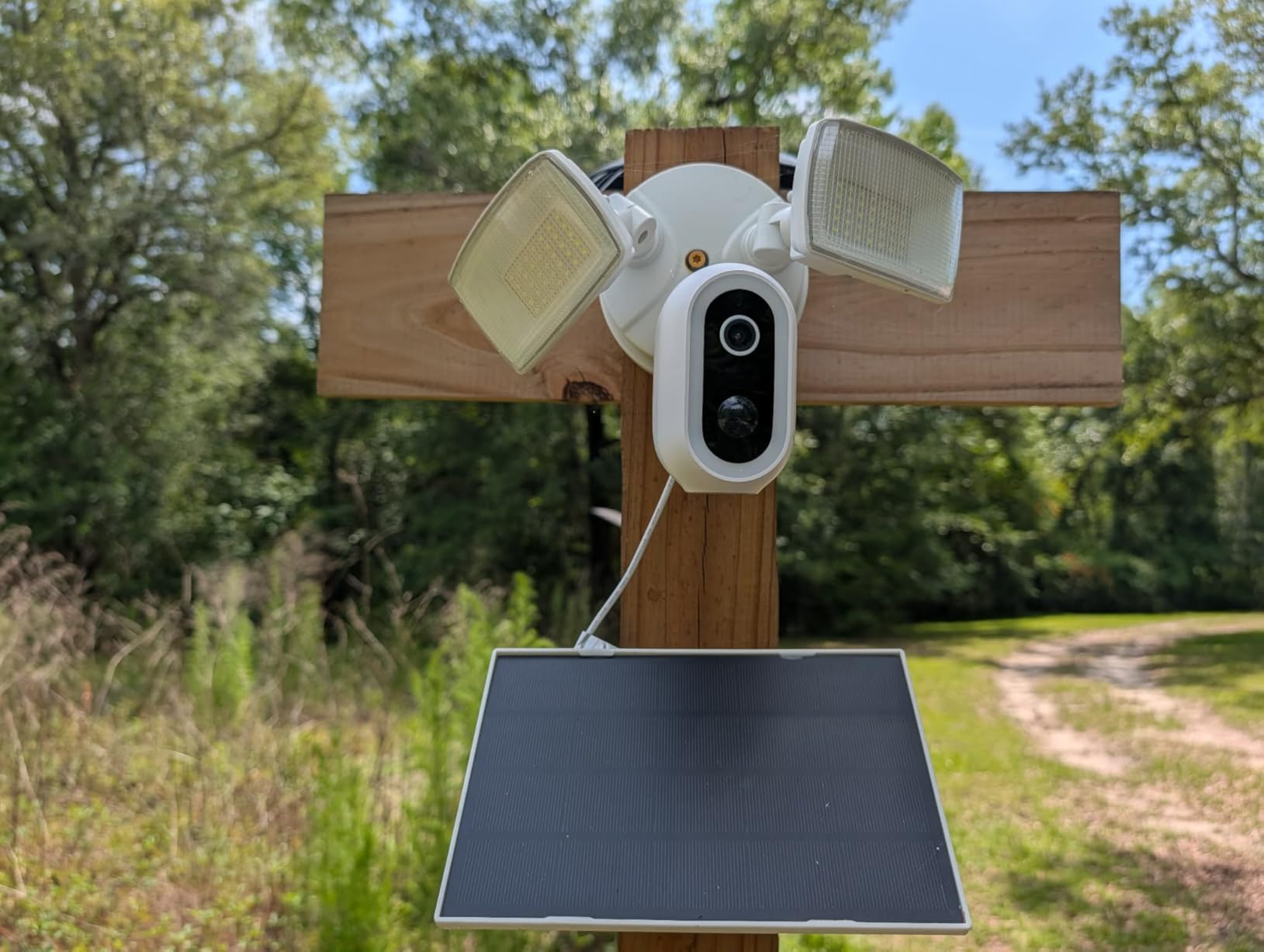
Cloud storage is available as a paid add-on if you would rather not handle a card, and shared family access is supported. For buyers who specifically want a bright solar light they can aim rather than a fixed beam, this is the most distinctive option available, and the 4.4 rating suggests early owners are happy with the light output in particular.
8. ARCCTV F2 4MP Solar Floodlight Camera – Budget Pick
ARCCTV Wireless Outdoor Security Cameras with Light 4MP Floodlight Camera
4MP 2560x1440 recording
Detachable external solar panel
Dual-band 2.4GHz and 5GHz Wi-Fi
360 degree field of view
microSD up to 256GB
Pros
- Entry-level pick with 4MP resolution
- Dual-band 2.4GHz and 5GHz support is unusual at this tier
- Detachable solar panel can be positioned for better sun
- AI-assisted PIR detection for people
- vehicles and animals
Cons
- Only 32 ratings with a 15 percent one-star share
- microSD card not included
- Cloud storage is a separate subscription
- Listed dimensions look inaccurate
The ARCCTV F2 is the value entry in this roundup: a two-in-one LED light and 4MP camera in a cylinder housing, with a detachable external solar panel and no wiring. The detachable panel is the detail worth pausing on, because you can mount the camera in shade and put the panel wherever the sun actually is, which solves a genuine problem on east-facing or tree-shaded walls.
Recording is 2560 by 1440p with infrared night vision and automatic floodlight activation, and AI-assisted PIR detection classifies people, vehicles and animals across configurable zones. Noise-cancelling two-way audio and snapshot notifications run through the ARCCTV app.
What the spec sheet gives you
Dual-band 2.4GHz and 5GHz support alongside 4MP recording is a combination you would normally pay well up for, and the 360 degree field of view helps cover the space around the mount. Local microSD storage up to 256GB is supported, so the camera can work without any subscription at all provided you supply a card. AI detection for people, vehicles and animals runs locally rather than in the cloud.
Where the compromises sit
With 32 ratings and a 4.0 average that includes a 15 percent one-star share, the reliability record is mixed, and buyers should expect a small support community compared with the Arlo or Blink. Cloud storage, if you want it, is a separate subscription, and no card is included. One more oddity: the listed dimensions of 1 by 1 by 1 inches are clearly wrong, so check the physical size against your mounting spot before ordering. There is no published IP rating for this unit, which matters if it sits fully exposed.
9. eufy Wall Light Cam S4 4K – Best for Eliminating False Alerts
eufy Security Wall Light Cam S4, 4K Ultra HD, Solar Security Camera
4K 8MP with f/1.6 aperture
60GHz mmWave radar,33 ft range
500 lumens with RGB modes
Built-in 32GB storage
Solar panel plus 10000mAh battery
Pros
- Radar detection sharply cuts pet and foliage false alarms
- Only 4K 8MP camera in the set with a bright f/1.6 lens
- Tunable white
- warm and RGB lighting with theme effects
- Built-in 32GB storage and no monthly fee
Cons
- Top of the price range in the roundup
- Only 31 ratings so reliability is unproven
- 500 lumens is modest against 1000 to 3000 lumen rivals
- HomeKit support needs a separate hub
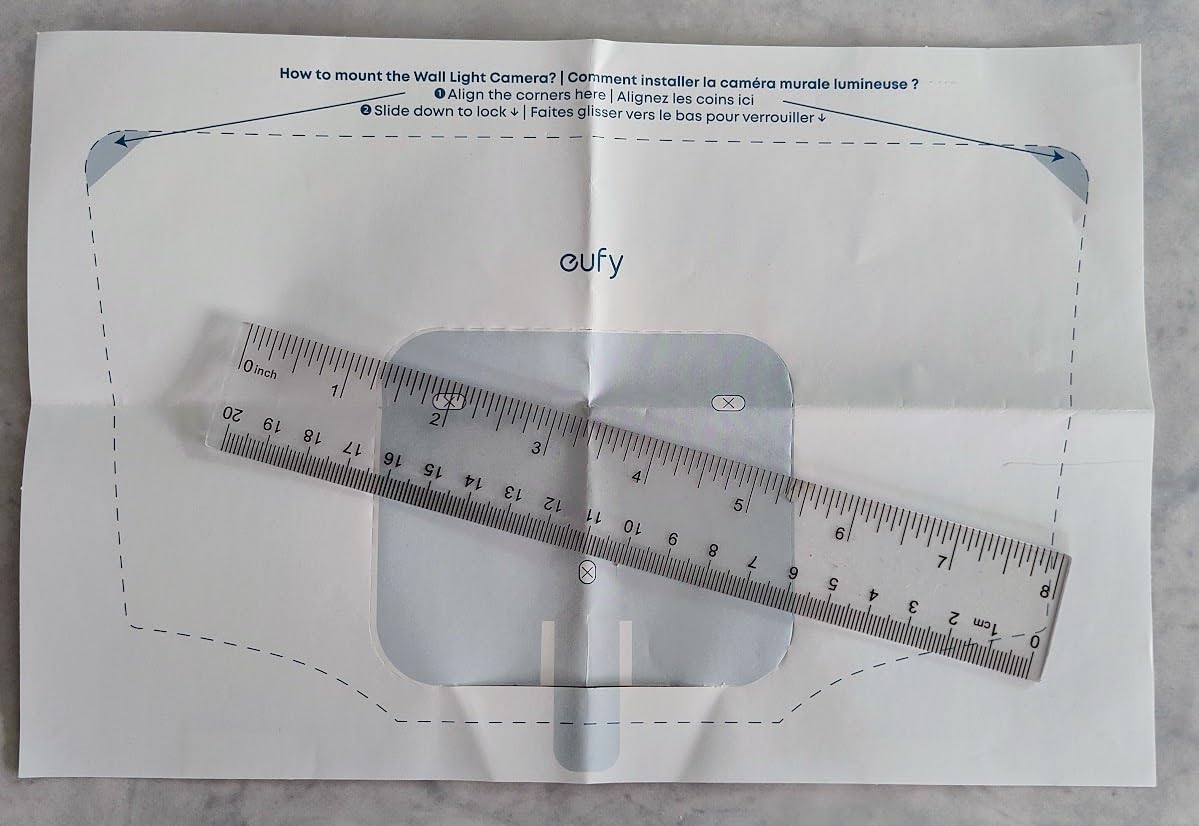
The eufy Wall Light Cam S4 is the spec outlier of this group: it is the only 4K 8MP camera here, and the only one using 60GHz mmWave radar for motion detection. Radar is the answer to the single most common complaint in this category, the floodlight firing at 3am because of an insect, a shadow or a branch. Detecting actual movement rather than changes in light cuts the false alerts that make people turn notifications off entirely.
The lens has an f/1.6 aperture for low-light detail with a manually adjustable viewing angle, and the light output is 500 lumens with white, warm and RGB modes plus six theme effects and sessions up to five minutes long. Storage is 32GB built in, so there is no card and no monthly fee.
Why radar detection changes the experience
Most cameras in this roundup use PIR, which reacts to heat and motion across a wide area and cannot tell a person from a warm animal. The 60GHz radar here reaches about 33 ft across a 120 degree view, and owners consistently single it out as the feature that removed their nuisance alerts. AI recognition covers people, vehicles and pets on top of that, giving you a layered filter rather than a single threshold slider.
Lighting and power flexibility
Adaptive lighting is unusually flexible for a security fixture, running white, warm or full RGB with six effects. Power is a 10,000mAh lithium battery rated at roughly 40 days average, with a detachable solar panel included in the design and USB-C available for continuous power in low-sun locations. The f/1.6 aperture and 4K sensor are what make the colour rendering hold up when the light is not at full output.

Premium hardware, thin track record
Two things temper this. It sits at the top of the price range in the roundup, and it carries only 31 ratings, so the long-term reliability story is unproven rather than merely quiet. At 500 lumens it also lights noticeably less than the 1000 to 3000 lumen rivals, and it requires eufy app version 6.0.80 or newer plus a separate hub for Apple HomeKit. Google Home works directly, and the unit measures 9.65 by 3.22 by 5.59 inches.
10. AQUZO Solar Floodlight Camera – Best for Cold Climates
AQUZO Solar Floodlight Camera Wireless Outdoor Home Security
2K 1440p with 1500 lumens at 6500K
6W monocrystalline solar panel
15000mAh battery,up to 30 days per charge
Operating range -20C to 60C
64GB TF card pre-installed
Pros
- Pre-installed 64GB card so local recording works immediately
- Works down to -20C
- the coldest rated unit here
- 320 degree pan and 90 degree tilt
- 6W solar panel with 15000mAh battery and 320 degree bracket
Cons
- Night footage reported as grainy beyond 30 ft
- Motion tracking only engages on the highest setting
- 2.4GHz Wi-Fi only
- Instructions are unclear about charging before mounting
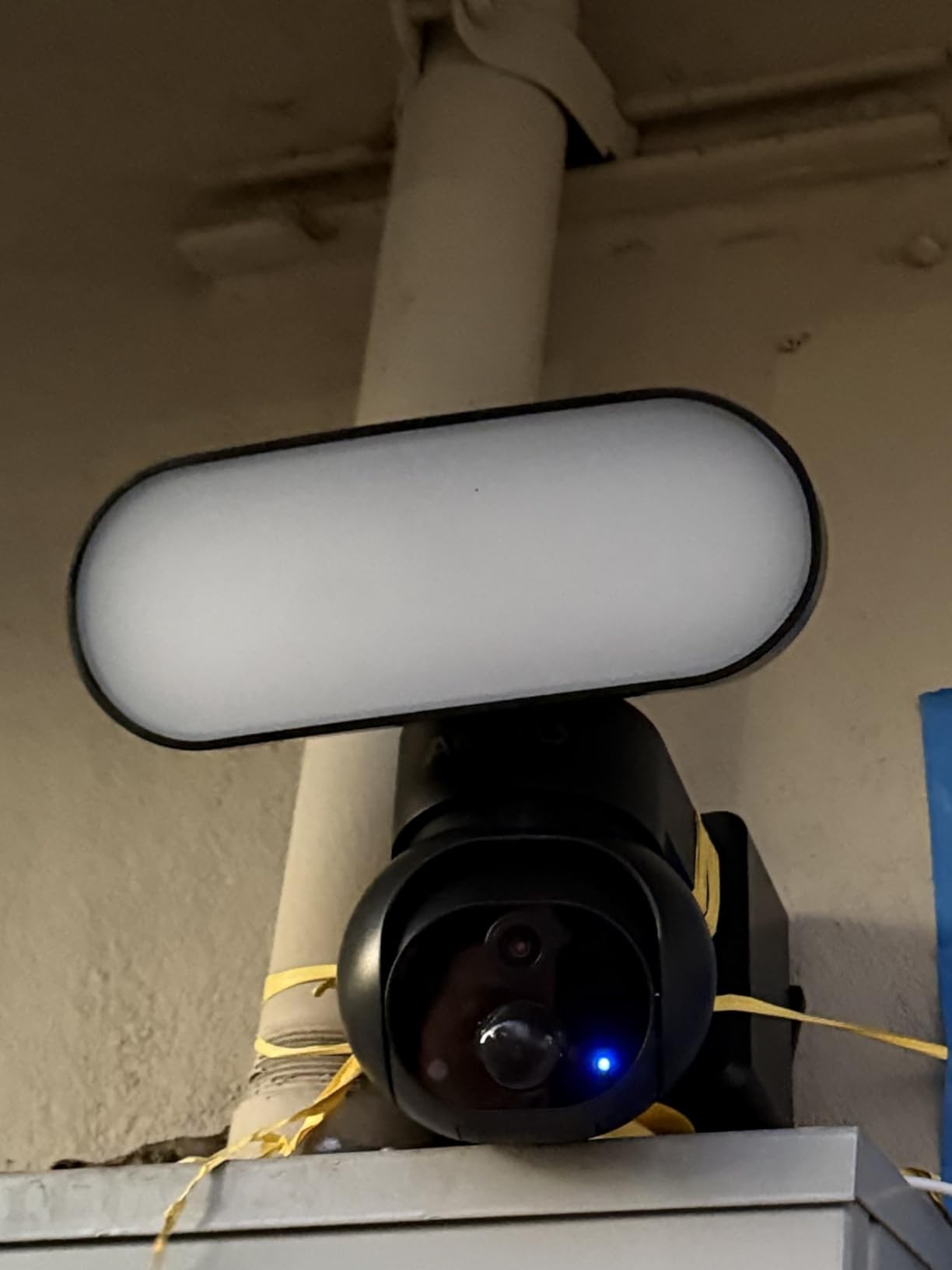
The AQUZO is the one to look at if you live somewhere cold, because it carries a stated operating range of -20C to 60C, the widest in the roundup and a genuine constraint for lithium batteries in winter. A 6W monocrystalline panel with a 3m cable and a 360 degree adjustable bracket feeds a 15,000mAh battery rated at up to 30 days per charge at 50 daily triggers. Most importantly for buyers tired of hidden costs, a 64GB TF card is pre-installed and expandable to 128GB.
The camera is 2K at 1440p with a 1500-lumen light at 6500K, full-color night vision rated to 50 meters, and 15 fps capture using H.265 encoding. The head pans 320 degrees horizontally and tilts 90 degrees, and detection is PIR plus AI human detection out to 10 meters across a 120 degree angle, with the manufacturer claiming up to 95 percent false-alarm reduction.
Storage that works out of the box
Having the card already fitted is the detail that separates this from most of the roundup. There is nothing to buy, nothing to format and no plan to activate before your first recording, and the expandable slot means you can move up to 128GB later. That makes it one of only a handful of models where local recording is genuinely zero-friction rather than zero-cost only.
Cold-weather caveats and image quality
The low-temperature rating is the headline, but a large battery is what makes it credible in practice. Buyers do report grainy, blurry night footage beyond about 30 feet, which is a real limitation given the 50-meter night vision claim, and motion tracking only engaged on the highest detection setting in several cases. The manual also fails to say plainly that the camera should be charged before mounting. Two-way talk, a siren and IP65 weather sealing round out a genuinely capable package at 21 ratings.
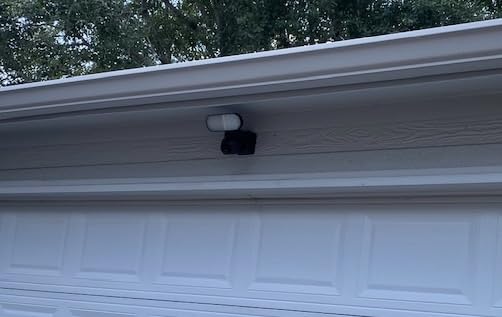
Installation is reported at around ten minutes with no wiring, and the 2.4GHz-only radio is the shared limitation across half of this list. If your Wi-Fi does not reach the far end of a driveway, pair it with a mesh node or choose the Reolink or ARCCTV, which both support dual-band radios. The unit measures 8.27 by 7.87 by 7.48 inches and comes in black.
How to Choose a Wireless Floodlight Camera in 2026
True wireless, plug-in, or hardwired: what the labels actually mean
Three different things get called wireless in this category, and confusing them is the most common buying mistake. A true wireless unit has no cable to the house at all: it runs on a rechargeable battery, a solar panel, or both. A plug-in model has a thin lead to an outdoor outlet and is often sold in a battery variant too, so check the mounting hardware. A hardwired model replaces an existing floodlight fixture and is wired to your mains, which is permanent, needs a suitable junction box and sometimes an electrician.
For the genuinely wireless brief, our picks in order are the Arlo, Tapo, Reolink, Blink, eufy S120, Onforu, ARCCTV, eufy S4 and AQUZO. The Ring bundle in this roundup is the exception, and that is worth checking against your own plans before you buy it.
Lumens: how much light a driveway really needs
Think of lumens as raw brightness rather than coverage, and set expectations by distance. Something in the 300 to 800 lumen range handles a side door, a gate or a shed, where light only needs to reach a few feet and startle someone. The 1000 to 2000 lumen range suits front doors, porches and small driveways. Anything covering a full two-car driveway or a yard wants 2000 lumens and up, which in this roundup means the Arlo at 3000 and the Ring at 2000.
Two cautions. Output on battery power is lower than the headline number once the battery is no longer fresh, which several Arlo and Ring owners mention directly. And a brighter light washes out more of the image at close range, so on a narrow walkway a brighter unit can actually make faces harder to read than a moderate one.
Storage: local microSD, built-in memory, hub, or cloud
Decide this before you buy, because it determines what the camera is actually for. Local microSD storage is the cheapest long-term answer: the Tapo takes cards up to 512GB, the Reolink up to 512GB, the Onforu and ARCCTV up to 256GB, and the AQUZO ships with 64GB already fitted. Built-in memory avoids the card purchase entirely, which is why the eufy S120 with 8GB and the eufy S4 with 32GB are attractive, though capacity is limited.
Cloud is the third option, and it is where the monthly fee appears. The Ring puts rewind playback behind a plan, the Arlo ties recorded history and advanced AI features to one, and the Blink needs a subscription for AI person detection and clip history. The Tapo, Reolink, Onforu, ARCCTV, eufy and AQUZO all run their core detection and recording locally. For a fuller picture of the wider category, our outdoor security camera picks for wireless setups cover the storage trade-offs in more depth.
Weather resistance and the IP rating scale
IP65, which six of the ten cameras here are rated to, means protected against dust and water jets from any direction. IP66, carried by the Reolink, adds protection against powerful water jets, which is the more sensible target for a wall exposed to driving rain. IP67 is the immersion-grade rating and is rare on floodlights because a wall fixture is never submerged. Below that line, anything without a published rating, such as the ARCCTV F2, deserves caution if it sits fully exposed.
Cold weather is a separate axis. The AQUZO states -20C to 60C, and the Tapo notes that solar charging needs temperatures above 32F, which is a meaningful limitation for a northern install. In practice, a shaded mount starves a solar panel regardless of climate, so check the sun path at your chosen wall in winter as well as summer.
Wi-Fi band, ecosystems and the monthly-fee question
Most floodlights are 2.4GHz only, including the Tapo, Onforu, eufy S120 and AQUZO. That is fine on most homes but means the camera cannot join a 5GHz network, and a dual-band router with a separate 2.4GHz SSID is the smoothest arrangement. If your weak signal is at the end of the driveway, the Reolink and ARCCTV both support 2.4 and 5GHz dual-band, which is the fix.
Ecosystem matters more than it used to. Ring, Blink and eufy all sit comfortably inside their own app ecosystems and work best alongside the doorbells and sensors you may already own. Alexa support is near universal, Google Assistant appears on the Tapo, Onforu and eufy S4, and Apple HomeKit on the Arlo and the eufy S4 through a hub. Before buying, check which of these actually reduces friction in your house rather than adding a second app.
Frequently Asked Questions
Which cordless flood light is the best?
Among cordless options, the Arlo Wireless Floodlight Security Camera 2K HDR is the strongest all-rounder, pairing a 3000-lumen light with 2K HDR video and a 13000mAh battery. The Tapo C615F is the better value choice if a solar panel and 360-degree pan and tilt matter more than raw brightness, and the Blink Outdoor 4 Floodlight lasts longest between charges.
What are the best wireless outdoor security cameras without a monthly fee?
The Tapo C615F, the Reolink Solar Floodlight and the eufy Solar Wall Light Cam S120 all record locally with no subscription required, offering AI detection for people, pets and vehicles plus microSD or built-in storage. The eufy S4 and the AQUZO also skip subscription fees with 32GB and a pre-installed 64GB card respectively.
Is there a floodlight security camera that requires no subscription?
Yes. The Tapo C615F stores to a microSD card up to 512GB with no plan, the Reolink Solar Floodlight supports microSD, a Home Hub or an NVR without a monthly fee, and the eufy S120 and S4 include 8GB and 32GB of built-in storage. The AQUZO ships with a 64GB card already installed. By contrast, Ring rewind playback, Arlo video history and Blink AI detection all sit behind a paid plan.
How bright should a floodlight camera be?
For a side door, gate or shed, 300 to 800 lumens is enough to illuminate a few feet and startle an approaching person. A front door, porch or small driveway needs 1000 to 2000 lumens, and a full two-car drive or yard wants 2000 lumens or more. Keep in mind that battery output falls below the headline figure as the battery drains, and very bright light can wash out faces at close range.
Do floodlight cameras need wiring?
Not all of them. Battery and solar models mount with screws and no cable at all, while plug-in units use a thin lead to an outdoor outlet. Hardwired models replace an existing floodlight fixture, need a suitably sized junction box and can require an electrician. If you already have a working floodlight where you want the camera, the hardwired path is often cleaner than solar, but it is the only permanent option of the three.
Which Wireless Floodlight Camera Should You Buy in 2026?
Put the Arlo Wireless Floodlight Security Camera 2K HDR on a driveway or a wide front yard and it is hard to argue with: 3000 lumens, a 160 degree lens and 2K HDR video with no wiring and no hub. Add a solar panel and the only real objection, which is climbing a ladder to recharge, largely disappears. If recorded history without a monthly plan is your priority instead, move to the Reolink Solar Floodlight, which supports microSD, a Home Hub or an NVR and carries the strongest IP66 sealing we found.
For value, the Tapo C615F is the pick, because a solar panel and bracket are in the box, the head sweeps 360 degrees, and both local storage and AI detection are free. When the priority is the fewest ladder visits of all, the Blink Outdoor 4 Floodlight claims up to two years per charge, at the cost of a 700-lumen light, 1080p video and a separate Sync Module. In a cold climate, the AQUZO operates down to -20C and arrives with a 64GB card already fitted, and if nuisance alerts are driving you mad, the eufy Wall Light Cam S4 uses radar detection that ignores pets and foliage.
Whichever you choose, confirm two things before you buy: how your footage is stored, and whether your Wi-Fi actually reaches the mounting point. Those two answers remove almost every regret in this category. Use the buttons on each pick to see the current listing, and check the open positions of the light before the sun goes down.