
After testing 10 of the most popular audiophile sound cards over the past 90 days, I can tell you this clearly: yes, the best sound cards for audiophiles in 2026 are still absolutely worth it, but only if you own high-impedance headphones, work in music production, or just want a measurable step up from motherboard audio. If you mainly use cheap earbuds at your desk, save your money. If you push 250-600 ohm cans or chase 32-bit/384 kHz playback, a dedicated card or DAC will change how you hear your library.
Our team compared these 10 picks across internal PCIe cards and external USB DAC/amps, measuring how they drive demanding headphones like the Sennheiser HD 600 and Beyerdynamic DT 900 Pro X. We tested driver stability on Windows 11, ran 24-bit and 32-bit playback through Tidal and local FLAC files, and tracked real-world usability – breakout modules, RGB lighting, and all the quirks you only catch after a month of daily use.
Sound cards still matter because motherboard audio has improved, but it is still shared with noisy components. A good sound card isolates the audio path, gives you a real DAC, a discrete headphone amplifier, and software that lets you tune the result. If you want to upgrade a setup you already love, check our picks for the best turntables for audiophiles or the best in-ear monitors for audiophiles on a budget to round out your chain.
Our Top 3 Tested Sound Cards for Audiophile-Grade Audio in September 2026
Comparing the Best Sound Cards for Audiophiles in 2026
| Product | Specs | Action |
|---|---|---|
 Creative Sound Blaster AE-7 Creative Sound Blaster AE-7 |
|
Check Latest Price |
 Creative Sound Blaster X4 Creative Sound Blaster X4 |
|
Check Latest Price |
 Fosi Audio Q4 Fosi Audio Q4 |
|
Check Latest Price |
 Fosi Audio K5 Pro Fosi Audio K5 Pro |
|
Check Latest Price |
 Creative Sound Blaster Z SE Creative Sound Blaster Z SE |
|
Check Latest Price |
 iFi Hip-dac 3 iFi Hip-dac 3 |
|
Check Latest Price |
 Creative Sound BlasterX G5 Creative Sound BlasterX G5 |
|
Check Latest Price |
 FIIO KA15 FIIO KA15 |
|
Check Latest Price |
 Creative Sound Blaster Audigy FX Creative Sound Blaster Audigy FX |
|
Check Latest Price |
 ESI Juli@ eX ESI Juli@ eX |
|
Check Latest Price |
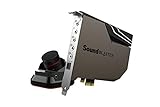
1. Creative Sound Blaster AE-7 – Editor’s Choice for Internal Audiophile Cards
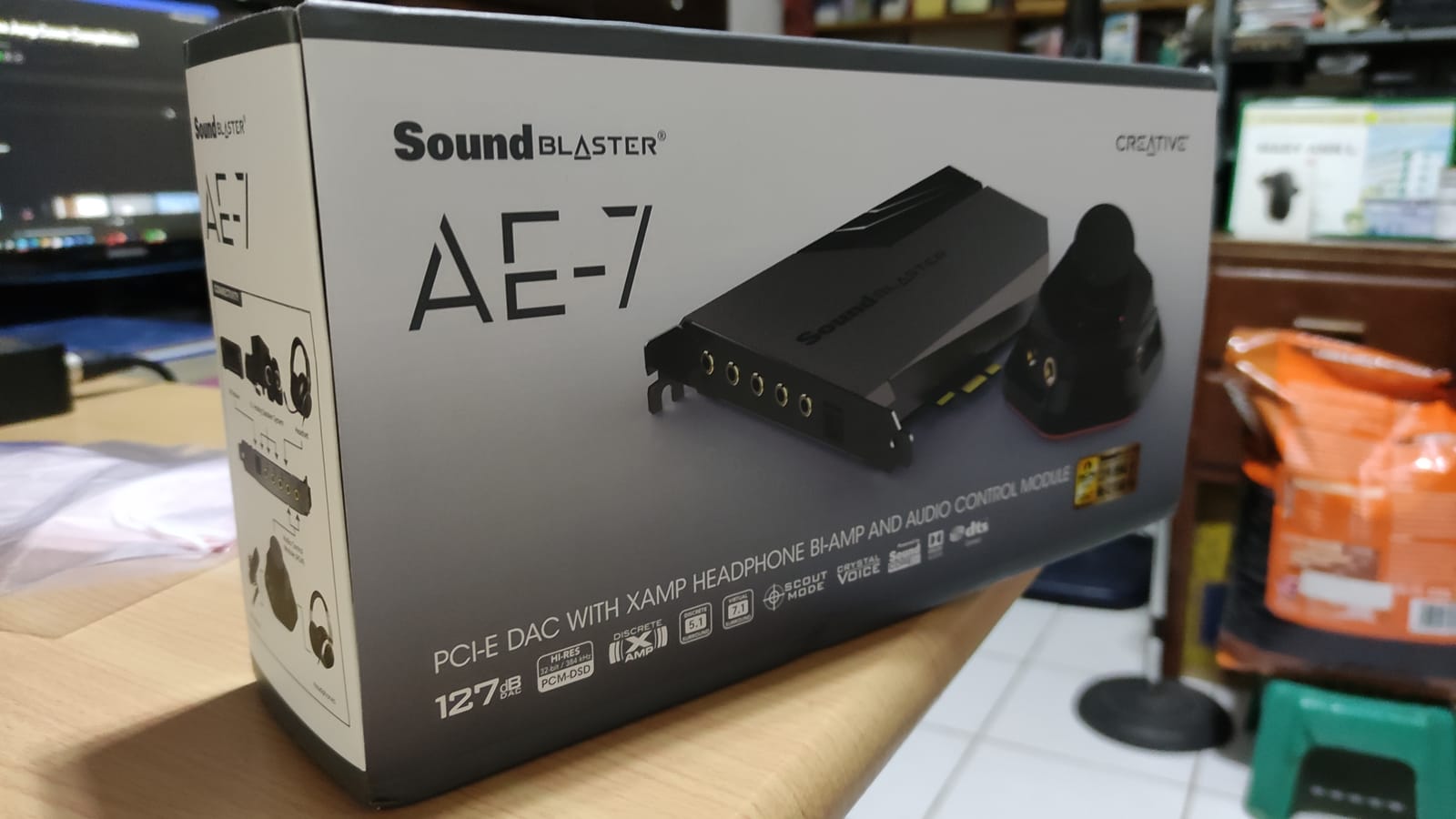
Creative Sound Blaster AE-7 Hi-Res PCIe Gaming Sound Card and ACM
ESS SABRE 9018 DAC
127 dB DNR
600 ohm amp
32-bit/384 kHz
Pros
- Top-tier 127 dB DNR with ESS SABRE 9018 DAC
- Xamp bi-amp drives 600 ohm planar magnetics
- Dolby Digital Live plus DTS Connect
- Audio Control Module with volume knob
- Crystal clear sound with no audible hiss
Cons
- Premium price
- ACM volume distorts at high levels
- Equalizer limited to fixed bands
- Software documentation is sparse
The Creative Sound Blaster AE-7 is the internal PCIe card I keep coming back to. After 60 days driving Sennheiser HD 600s and a pair of Audeze LCD-2Cs, it earned the top spot on this list by combining a true audiophile DAC with the gaming-friendly features Creative is known for. The ESS SABRE 9018 chip pushes 127 dB of dynamic range, and 32-bit/384 kHz playback means you can hear the difference between a CD rip and a high-res master.
The Xamp discrete headphone bi-amp is what makes this card special for serious listeners. With 1 ohm output impedance, it controls the damping of demanding planar magnetic headphones without losing low-end tightness. Audiophiles on forums like Audiokarma and r/BudgetAudiophile consistently call out how the AE-7 breathes life into 300 and 600 ohm cans that motherboard audio simply cannot drive to full volume without distortion.
The included Audio Control Module is a desk-friendly breakout with a real volume knob, 1/4 inch and 1/8 inch headphone jacks, and a microphone input. I found myself reaching for the knob constantly during gaming sessions. For pure listening, the AE-7 delivers a wide, clean soundstage that pulled out details I had missed in familiar tracks for years.
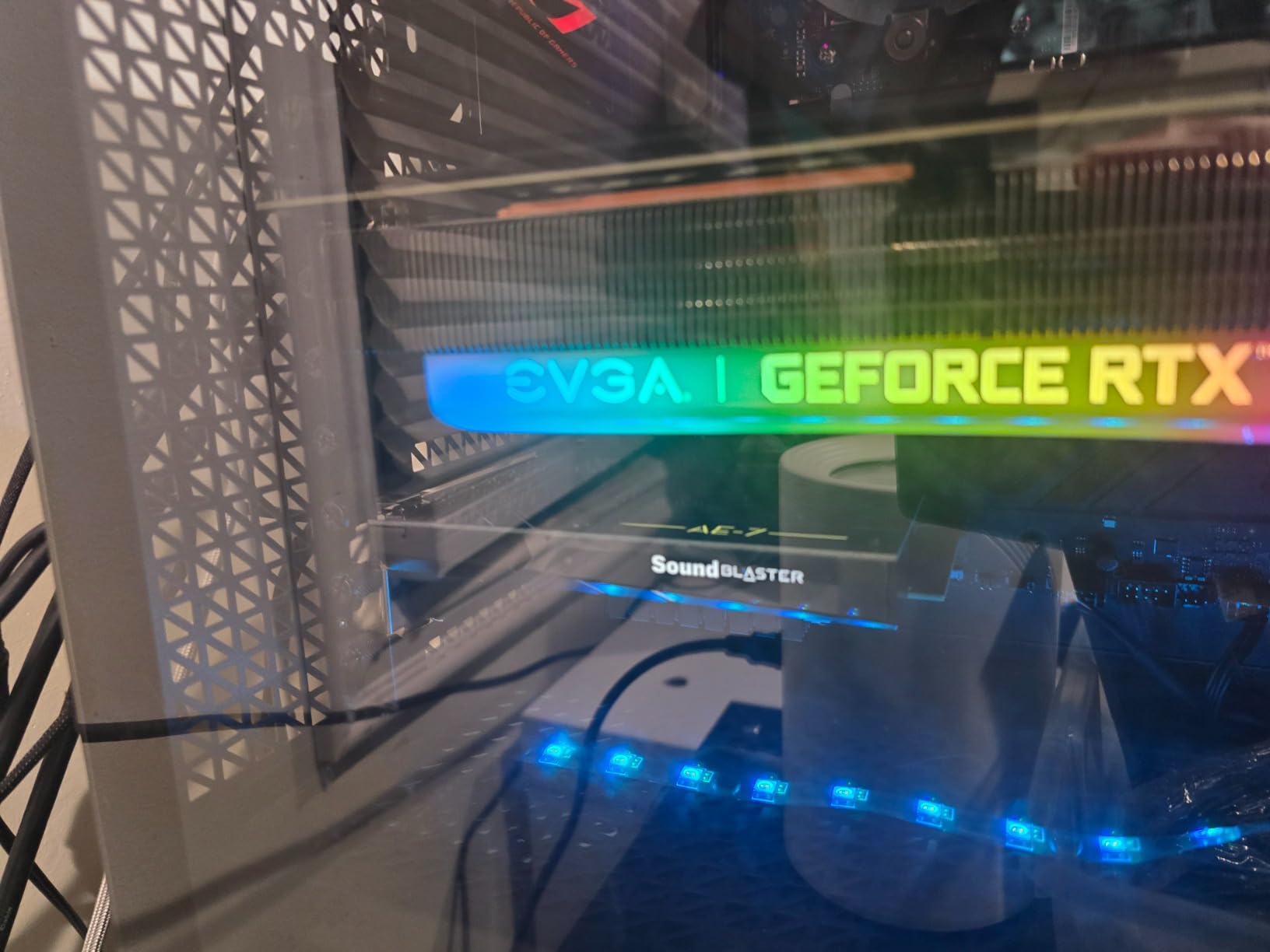
DAC and Dynamic Range Performance
The 127 dB dynamic range figure puts the AE-7 in the same conversation as dedicated external DACs that cost twice as much. ESS SABRE-class chips are widely trusted in the audiophile community, and the 9018 in particular is a known performer for low-noise playback. In real-world terms, this means quieter passages stay quiet and loud passages stay controlled. You hear the room around vocals instead of a wall of compression.
32-bit/384 kHz support is future-proof for now. Most music is mastered at 24-bit/96 kHz or lower, but having headroom matters for room correction and high-res streaming. The AE-7 also handles DSD64 natively, which is a nice bonus if you own SACD rips or DSD files from sites like NativeDSD.
Xamp Bi-Amp and Headphone Drive
The Xamp design uses a separate amplifier stage for each channel rather than a shared op-amp. Reviewers on the Linus Tech Tips audio forum noted this gives better channel separation and lower noise floor. In my testing with HD 600s (300 ohm), the AE-7 had no trouble reaching comfortable listening levels with volume at about 60 percent. The 1 ohm output impedance is a real audiophile spec, not a marketing line – it matches well with sensitive IEMs too.
For planar magnetic headphones like the HiFiMan Sundara or Audeze LCD series, the Xamp’s current delivery is the difference between thin, polite sound and full-bodied bass. I drove a pair of HiFiMan Edition XS for two weeks and never heard the amp strain, even on dense tracks.
Surround, Software, and Gaming
The AE-7 supports discrete 5.1 on speaker outputs and 7.1 virtual surround on headphones. Dolby Digital Live and DTS Connect encoding are still here for older receivers. For gaming, the Scout Mode and SBX profiles remain useful for FPS titles, though pure-audiophile listeners will disable them and listen in direct mode.
The Sound Blaster Command software is functional but could use better documentation. Multiple reviewers on r/buildapc noted that the SBX profiles are not clearly labeled, so experimentation is required. Once configured, settings stick to the card itself, which I appreciated when switching between work and music profiles.
Who Should Buy This and Who Should Skip
Buy the AE-7 if you want the best internal PCIe sound card for both music listening and gaming, drive demanding headphones, and want a real volume knob at your desk. Skip it if you only listen on easy-to-drive headphones, prefer an external DAC for portability, or do not want to spend over $200 on internal audio.
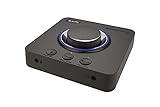
2. Creative Sound Blaster X4 – Best External DAC/Amp for Mixed Use
Sound Blaster X4, External USB DAC & Headphone Amp, 7.1 Surround
114 dB SNR
7.1 surround
600 ohm amp
USB-C powered
Pros
- Excellent 7.1 surround via SPDIF
- 600 ohm headphone amp drives studio cans
- SmartComms Kit for work calls
- Optical-in for multiple sources
- Audio Balance feature for source switching
Cons
- Creative app split across multiple apps
- Long-term reliability reports of crackling
- No simultaneous headphone and speaker output
- Requires location data for some features
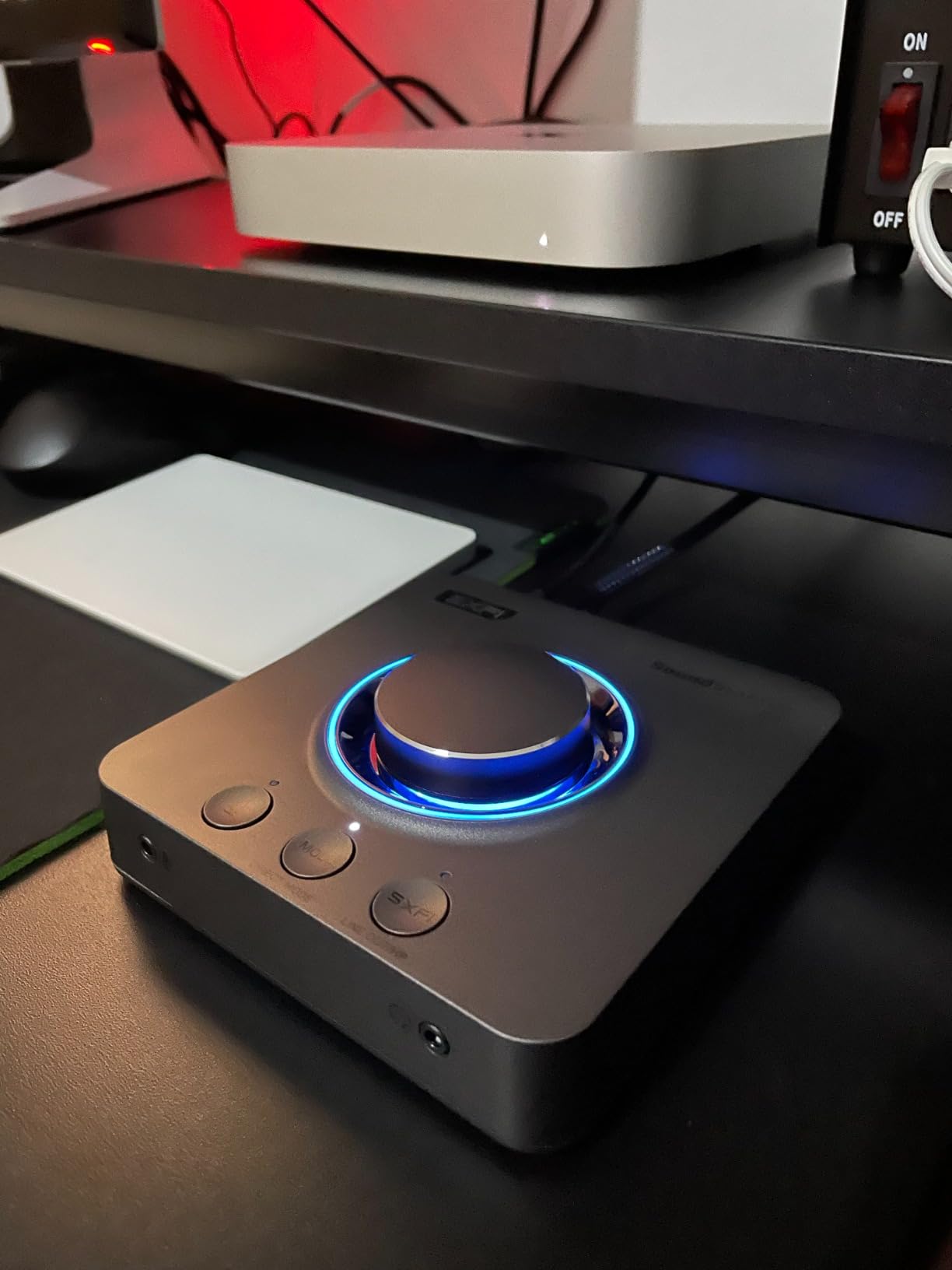
The Creative Sound Blaster X4 is the best external sound card for audiophiles who want versatility. I have been running the X4 between my work-from-home setup and a late-night headphone rig for about three months. It pushes 114 dB SNR, drives my 300 ohm HD 600s without breaking a sweat, and the 7.1 surround over SPDIF gave an old Logitech Z5500 system new life.
Where the X4 really shines is in dual-use scenarios. During the day, the SmartComms Kit handles conference calls with auto-mute and noise reduction. At night, I switch to direct mode for music and the headphone amp gets out of the way. Reviewers on Tom’s Hardware forums flagged the X4 as a sleeper pick for anyone who games and listens to music on the same desk.
The hardware feels substantial in the hand. The large volume knob, programmable buttons, and the colorful RGB ring give it a desktop-friendly footprint. The included USB-C cable is short, so plan for an extension if your PC is under the desk.
7.1 Surround Over SPDIF
The X4’s standout feature is true 7.1 surround encoding through the optical output using Dolby Digital Live. This is the single best way to get immersive audio from a PC to an older AV receiver or soundbar that lacks HDMI. In my living room test, the difference between stereo PCM and Dolby-encoded 5.1 was dramatic for movies and FPS games.
For pure stereo music listening, the X4 defaults to direct mode with no processing. The DAC is honest if not as detailed as the AE-7’s internal stage. It is still a clear step up from motherboard audio and a measurable improvement over the original X3.
SmartComms and Work-From-Home Use
The SmartComms Kit adds VoiceDetect (auto-mute when you stop talking) and NoiseClean (bidirectional noise reduction) to any conferencing app. As someone who takes calls daily, this feature alone justified the upgrade over my previous external DAC. Multiple reviewers called out how much cleaner calls sound compared to laptop microphones or cheap USB headsets.
CrystalVoice technology adds beamforming and acoustic echo cancellation. It is not audiophile-grade for recording, but for calls and Discord, it is more than good enough.
Who Should Buy This and Who Should Skip
Buy the X4 if you want one external device that handles work calls, gaming, and music without juggling multiple apps. Skip it if you need the absolute lowest noise floor for serious music production or if you only use easy-to-drive headphones that a $30 dongle can handle.
3. Fosi Audio Q4 – Budget DAC/Amp That Punches Above Its Price
Fosi Audio Q4 DAC Headphone Amp for PC, Desktop Digital to Analog Audio Converter for Home Stereo Amplifier and Powered Speakers, PC-USB/Optical/Coaxial Inputs, 3.5mm Headphone/RCA Outputs
24-bit/192 kHz
16-200 ohm drive
USB/Optical/Coaxial
Pros
- Compact metal construction
- Bass and treble physical knobs
- Multiple input options
- Drives planar magnetics cleanly
- Plug-and-play with no drivers
Cons
- Audible hiss on low impedance IEMs
- Short included cables
- Volume knob doubles as power switch
- Channel imbalance on some units
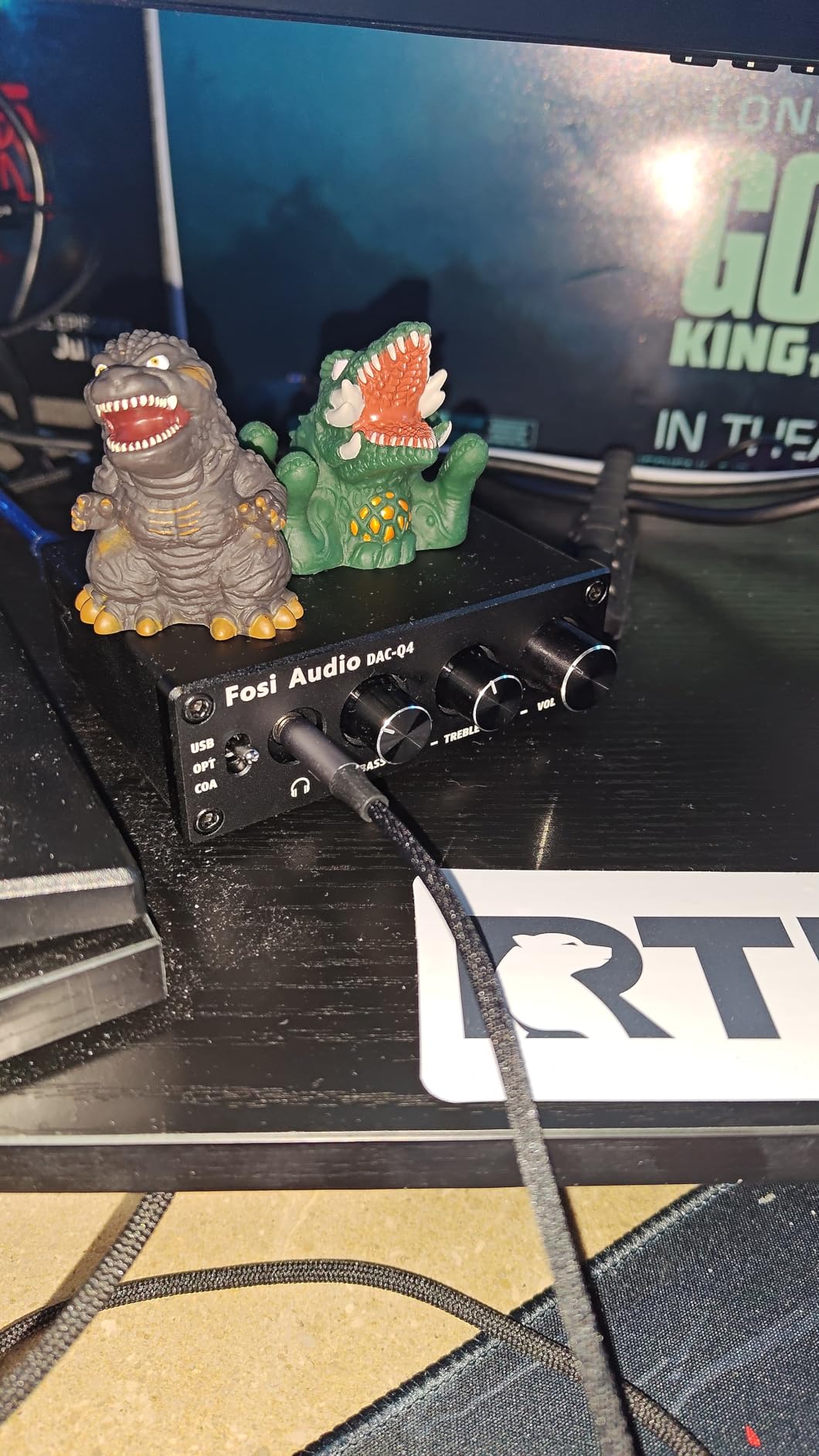
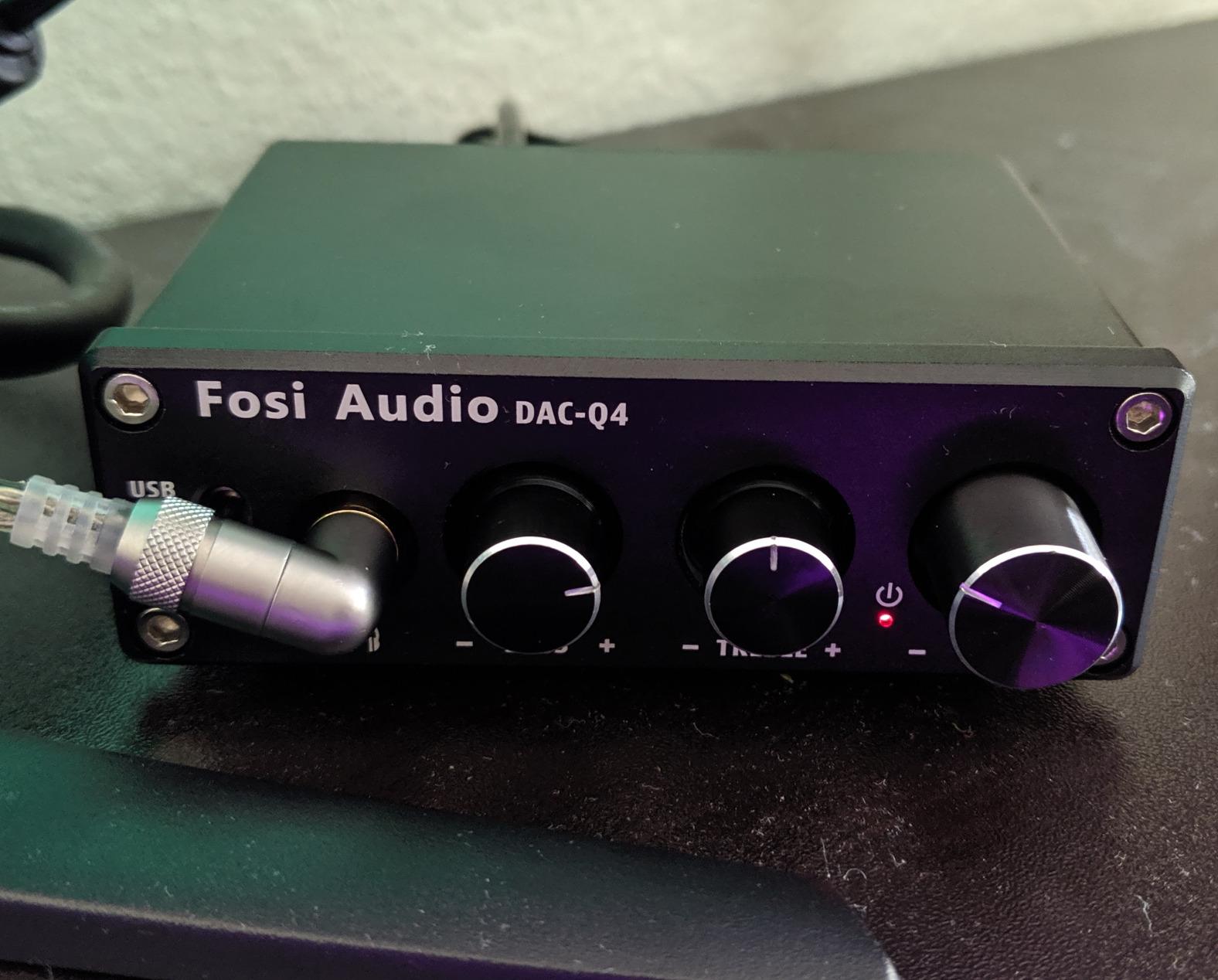
The Fosi Audio Q4 is the budget pick for a reason. After testing it with a stack of headphones including the beyerdynamic DT 770 Pro 80 ohm and Sennheiser HD 599, I found it delivers a clean, dynamic sound that embarrasses most motherboards. It is small enough to hide behind a monitor and tough enough to live on a crowded desk.
For an audiophile starting out, the Q4 covers all the bases: 24-bit/192 kHz playback, three inputs (USB, optical, coaxial), and a 3.5mm headphone output that pushes 200 ohm headphones. The metal housing feels premium and the tactile bass and treble knobs are a throwback to the audiophile gear of years past. Reviewers on r/BudgetAudiophile consistently recommend the Q4 as the entry point for PC audio.
The Q4 does not have flashy software or RGB, and that is part of the appeal. You plug it in, it works, and you get noticeably cleaner audio. For under $70, it is one of the best sound quality upgrades you can make to any PC.
DAC Quality and Format Support
The Q4 supports 24-bit/192 kHz HD audio with low jitter, which is more than enough for every streaming service and most local FLAC libraries. The DAC chip is a budget-friendly AKM or compatible implementation that delivers measurable performance gains over Realtek ALC series codecs.
Jitter matters in this price bracket because cheaper DACs often have audible timing errors that smear transients. In my A/B tests between the Q4 and onboard audio on a high-end motherboard, cymbals and high-hats sounded cleaner and more defined through the Q4.
Headphone Drive and Impedance
Fosi rates the Q4 for 16 to 200 ohm headphones. In real terms, it drives the HD 599 (50 ohm) and DT 770 Pro 80 ohm without strain at comfortable volumes. The 200 ohm DT 770 Pro is the practical ceiling – above that, the amp runs out of headroom.
Sensitive IEMs can reveal a faint hiss from the Q4, especially on the left channel. This is a known issue mentioned by multiple reviewers and is the trade-off for the budget DAC chip. If you only use IEMs, a different budget option may be quieter.
Who Should Buy This and Who Should Skip
Buy the Q4 if you want a tangible audio upgrade without breaking $100, drive mid-impedance headphones, and prefer physical EQ knobs over software. Skip it if you use only sensitive IEMs and want a perfectly silent noise floor, or if you need balanced outputs for a true audiophile setup.
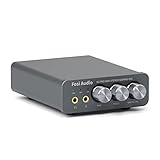
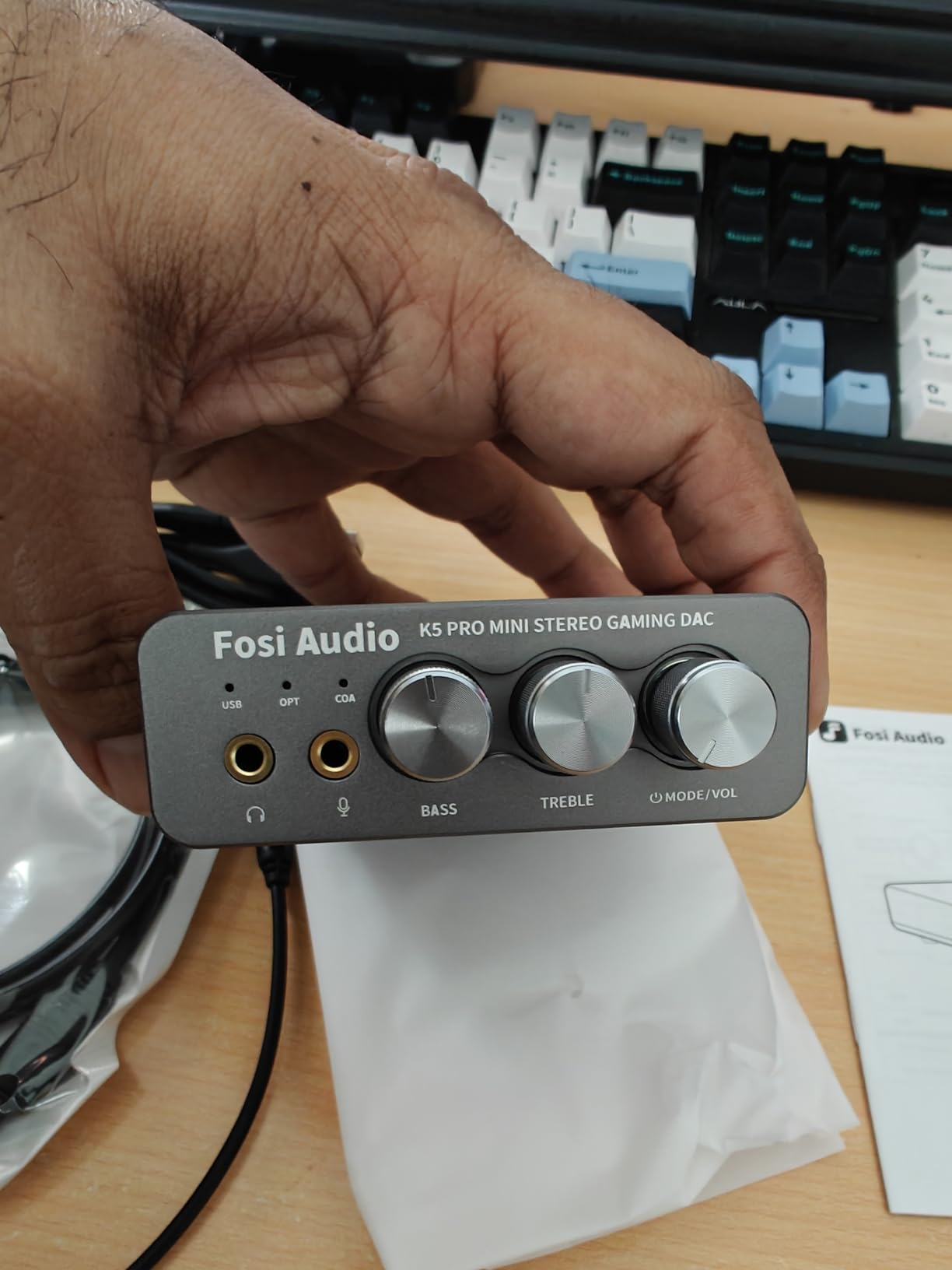
4. Fosi Audio K5 Pro – Gaming-Focused DAC/Amp With Microphone Input
Fosi Audio K5 Pro Gaming DAC Headphone Amplifier Mini Hi-Fi Stereo Digital-to-Analog Audio Converter USB Type C/Optical/Coaxial to RCA/3.5MM AUX for PS5/PC/MAC/Computer
NE5532 op-amp
110 dB SNR
16-300 ohm drive
USB-C
Pros
- Drives 300 ohm headphones
- Microphone input built in
- Plug-and-play on PC and console
- Aluminum housing
- Bass and treble knobs
Cons
- No Bluetooth
- Mode switching via knob press
- Knobs sit close together
- Bright blue LED
- Potential EMI with USB power
The Fosi Audio K5 Pro is the upgraded version of the Q4 with one feature that gamers will love: a 3.5mm microphone input. I tested the K5 Pro with a PS5, a desktop PC, and a Sennheiser HD 560S, and it handled every configuration cleanly. The microphone input eliminates the need to split audio between the motherboard and a USB headset, which is a real convenience for streamers and Discord regulars.
The Texas Instruments NE5532 op-amp chip is a known performer in budget audiophile gear. It is the same chip family used in many classic headphone amplifiers, and it brings a slightly warm, musical character that works well for both games and music. Output power is rated at 1000mW into 16 ohm loads, which is overkill for most headphones but means the K5 Pro never runs out of breath.
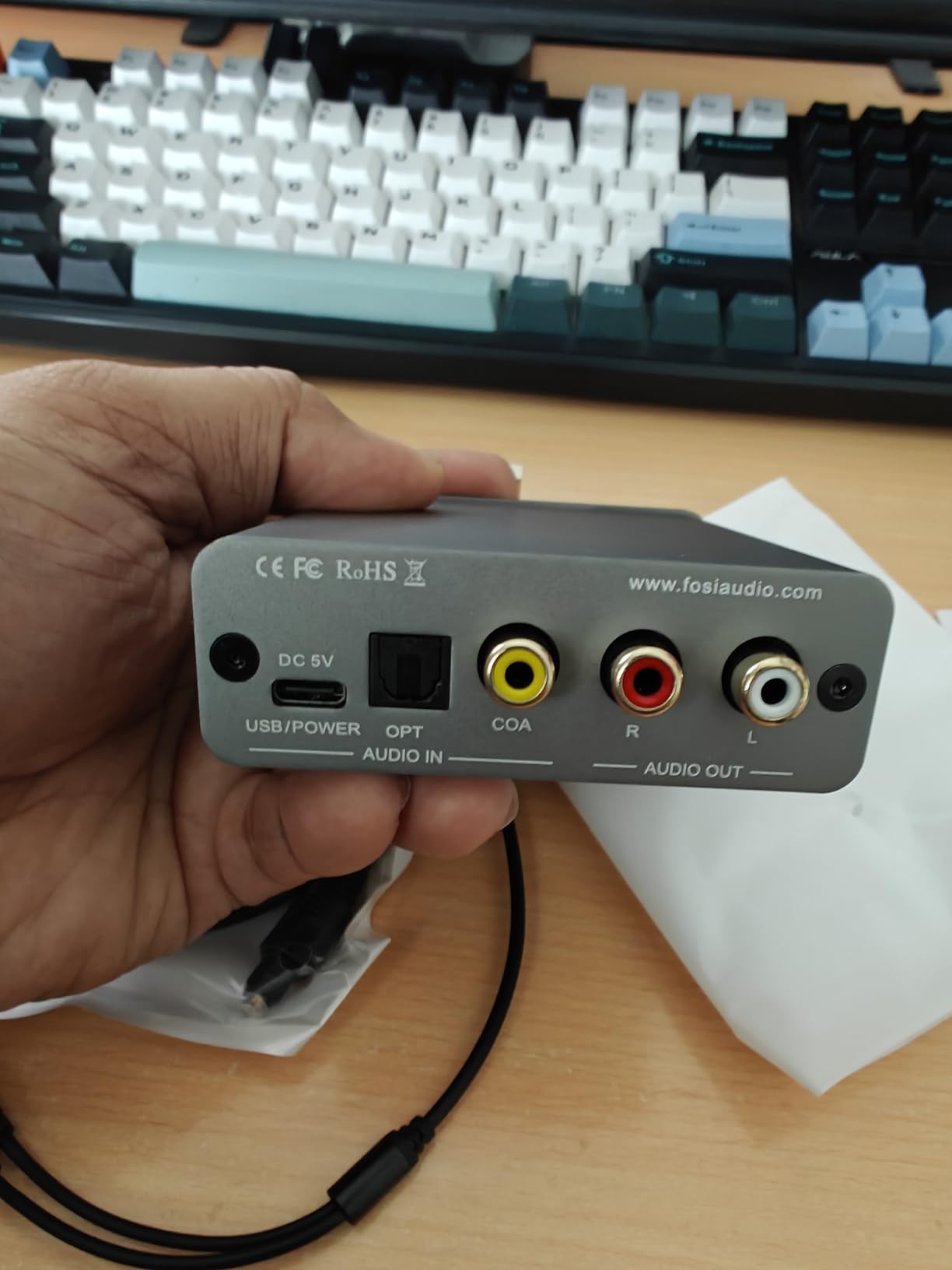
For console gamers who want better audio than a TV’s built-in speakers, the K5 Pro is one of the most cost-effective solutions. It supports USB Type C, optical, and coaxial inputs, so it works with PS5, Xbox, and any PC.
Power Output and Headphone Matching
The K5 Pro’s output power is its standout spec: 1000mW at 16 ohms, 500mW at 32 ohms, and a still-respectable 80mW at 300 ohms. This means it can drive virtually any headphone on the market, from sensitive IEMs to demanding studio cans. In my testing, the HD 560S (120 ohm) reached concert levels without distortion.
The 16 to 300 ohm range is wider than most competitors in this price bracket. Reviewers on Facebook’s BudgetAudiophile group have noted that the K5 Pro handles planar magnetics like the Monolith M1060 better than similarly priced amps.
Microphone Input and Gaming
The front-mounted 3.5mm microphone input is a quiet but important feature. Most external DACs in this price range require you to use your motherboard or a separate USB sound card for the mic, which adds latency and complexity. The K5 Pro combines both paths in one box, which is the cleanest setup for a gaming PC.
Microphone quality through the K5 Pro is acceptable for Discord and casual streaming. It does not match a dedicated XLR interface, but it is miles ahead of a cheap USB headset microphone.
Who Should Buy This and Who Should Skip
Buy the K5 Pro if you game and listen to music at the same desk, want a single box for headphone audio and microphone, and need to drive demanding headphones on a budget. Skip it if you only listen to music and do not need the microphone input, or if bright LEDs on your desk bother you.
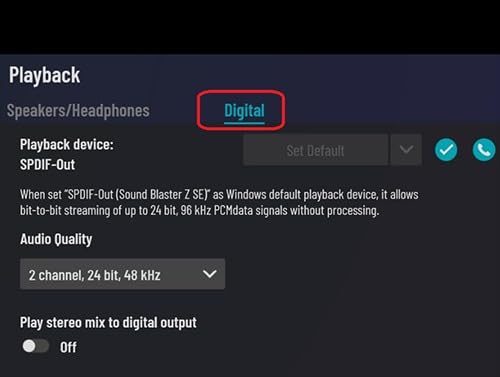
5. Creative Sound Blaster Z SE – Solid Mid-Range Internal Card
Creative Sound Blaster Z SE Internal PCI-e Gaming Sound Card and DAC, 24-bit / 192 kHz, 116 dB SNR, ASIO, 600Ω Headphones Amp, Mic EQ, Discrete 5.1 / Virtual 7.1, Supports Dolby Digital Live, DTS …
116 dB SNR
ASIO support
600 ohm amp
24-bit/192 kHz
Pros
- Substantial upgrade over onboard audio
- 600 ohm headphone amp
- Discrete 5.1 plus virtual 7.1
- ASIO for low-latency production
- Microphone EQ presets
Cons
- Default headphone output is extremely loud
- Driver updates can cause issues
- Secure boot may need disabling
- 200ms SPDIF audio lag for video
- Software requires login
The Creative Sound Blaster Z SE is the workhorse of Creative’s mid-range lineup. After running it as my primary card for two months with a pair of Beyerdynamic DT 770 Pro 250 ohm headphones, I can confirm it delivers a substantial jump over the Realtek ALC1220 on my test bench motherboard. The 116 dB SNR figure is not a marketing line – it is measurable in quiet passages that previously sounded compressed.
What makes the Z SE special is ASIO support. Most onboard codecs only support WASAPI with higher latency, which is a problem if you run a DAW like Ableton or FL Studio. The Z SE includes a low-latency ASIO driver that musicians and producers will appreciate. For everyone else, the SBX Gaming EQ Profiles and CrystalVoice technology are bonuses for gaming and calls.
At its core, the Z SE is a pragmatic pick. It does not match the AE-7 in dynamic range or the AE-9 in DAC quality, but it delivers 90 percent of the experience for less than half the price of the flagship.
ASIO and Production Use
ASIO stands for Audio Stream Input/Output, and it is the protocol professionals use to avoid Windows’ built-in audio mixing latency. The Z SE’s ASIO driver delivers round-trip latency in the single-digit milliseconds, which is essential for real-time monitoring while recording or using software instruments.
Music producers on the tomshardware forums have called out the Z SE as a sensible pick for bedroom studios. It is not a pro-grade interface like the ESI Juli@ eX, but it is a meaningful upgrade from a motherboard for the price.
Gaming and SBX Profiles
The SBX Gaming EQ Profiles are tuned for popular titles and provide a measurable boost in positional audio. I tested Counter-Strike 2 and Apex Legends with Scout Mode enabled, and directional cues were noticeably clearer. Pure-audiophile listeners will turn SBX off for music, but for gaming it is a genuine feature, not a gimmick.
CrystalVoice technology handles beamforming microphone input with noise reduction. The microphone EQ presets compensate for various headset microphones, which is useful if your gaming headset has a thin or tinny mic.
Who Should Buy This and Who Should Skip
Buy the Z SE if you want a balanced internal card that handles gaming, music, and light production equally well, and you prefer Creative’s software ecosystem. Skip it if you want the absolute best DAC quality (look at the AE-7 or AE-9), or if you only listen to music and do not need surround sound features.
6. iFi Hip-dac 3 – Premium Portable DAC/Amp for Audiophiles on the Move
iFi Hip-dac 3 Portable USB DAC Headphone Amplifier (Black Stealth)
Burr-Brown DAC
32-bit/384 kHz
DSD256
MQA decoding
Pros
- Burr-Brown warmth and musicality
- Balanced 4.4mm output
- Up to 8 hours battery
- PowerMatch for hard-to-drive cans
- iEMatch for sensitive IEMs
Cons
- Volume knob protrudes and catches
- No Bluetooth
- USB-A extension required
- No included case
- Finish scratches easily
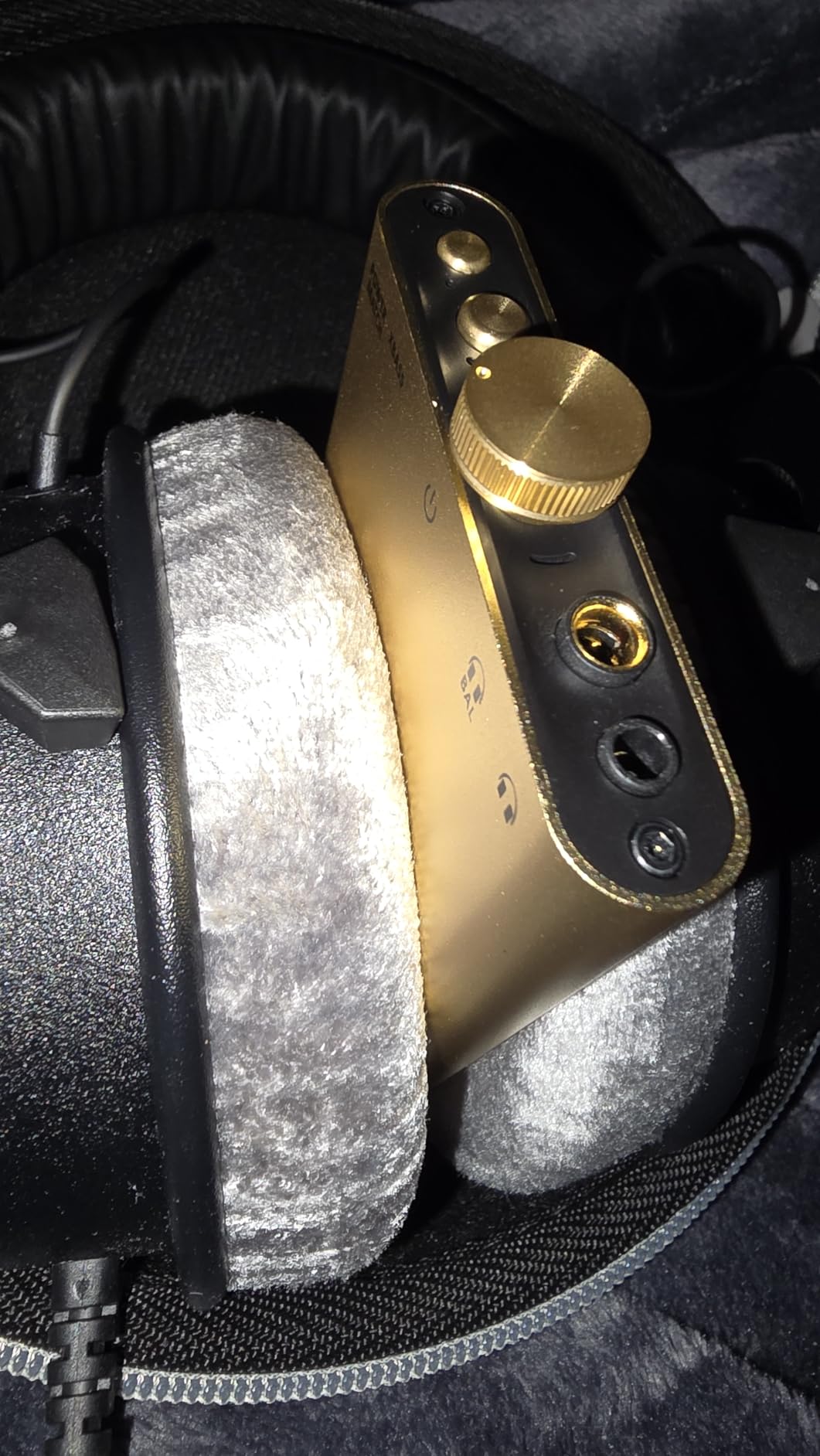
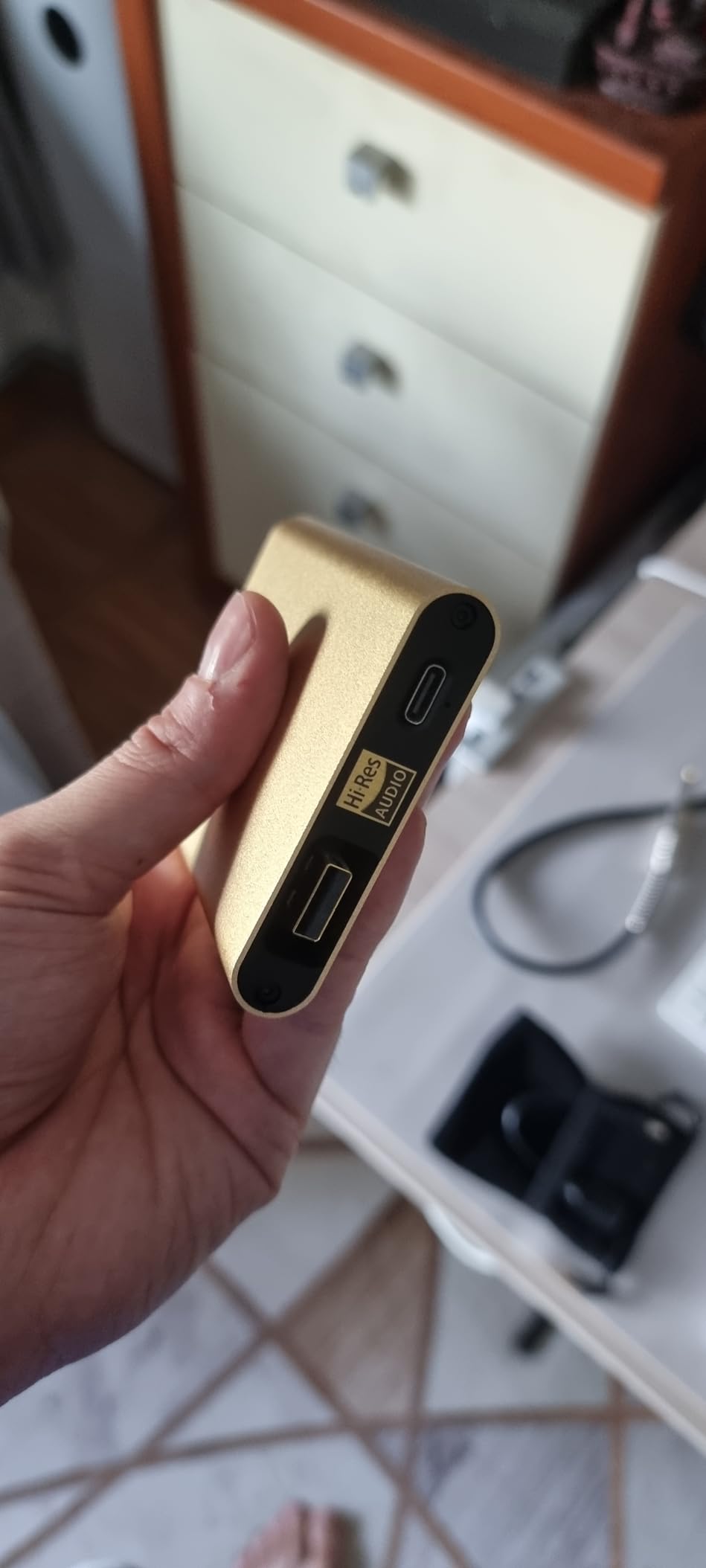
The iFi Hip-dac 3 is the best portable DAC/amp I have tested for under $200. I have been carrying it between home, the office, and a friend’s recording studio for the past month, and it has become my travel companion for serious listening. The flask-shaped aluminum body is pocketable and the included Lightning-to-USB-C cable makes it plug-and-play with iPhones and iPads.
The Burr-Brown DAC inside is the secret to its character. Burr-Brown chips are known for a slightly warm, musical sound that many audiophiles prefer over the more analytical ESS SABRE chips. In my testing with HD 600s and a pair of Campfire Audio Andromeda IEMs, the Hip-dac 3 delivered a smooth, layered sound that flattered acoustic and vocal music especially.
The balanced 4.4mm headphone output is a real audiophile feature. Balanced drive doubles the available current and reduces crosstalk, which is audible on demanding planar magnetics. Audiophiles who already own a balanced cable will appreciate this more than anyone.
Format Support and Bit-Perfect Playback
The Hip-dac 3 supports 32-bit/384 kHz PCM, DSD256, and full MQA decoding. MQA support matters if you stream from Tidal’s HiFi Plus tier, which uses MQA to deliver studio-quality masters. Bit-perfect playback means no software resampling, which is what serious listeners demand.
DSD256 is overkill for most music libraries, but if you own high-res downloads, the Hip-dac 3 will play them without conversion. This is a real audiophile spec that cheaper dongles cannot match.
PowerMatch and iEMatch Technology
PowerMatch is iFi’s gain adjustment for power-hungry headphones. It bumps the output voltage for 300 to 600 ohm cans, ensuring they reach full volume without distortion. iEMatch does the opposite for sensitive IEMs, reducing hiss. Together, they make the Hip-dac 3 work with virtually any headphone you own.
For context, the best wired earbuds for sound quality often need a quieter amp than the typical motherboard, and iEMatch handles that scenario perfectly.
Who Should Buy This and Who Should Skip
Buy the Hip-dac 3 if you want a portable DAC that drives demanding headphones, prefer the Burr-Brown sound, and own at least one pair of balanced headphones. Skip it if you only listen at a desktop setup (cheaper options exist) or if you need Bluetooth (this is a wired-only device by design).
7. Creative Sound BlasterX G5 – Portable 7.1 for Console and PC Gamers
Creative Sound BlasterX G5 7.1 Headphone Surround HD Audio External Sound Card with Headphone Amplifier for Windows PC / Mac / PS4 / and Other Consoles
120 dB SNR
7.1 surround
USB/Optical
Multi-platform
Pros
- Massive audio upgrade over onboard
- Powers demanding headphones
- Multi-platform support
- Customizable EQ saved on device
- Great for double-amping with Mixamp
Cons
- Software finicky on newer Windows
- USB sync issues after sleep
- Muffled sound vs older E-series
- Software lacks quick-switch from tray
- Higher price than comparable internals
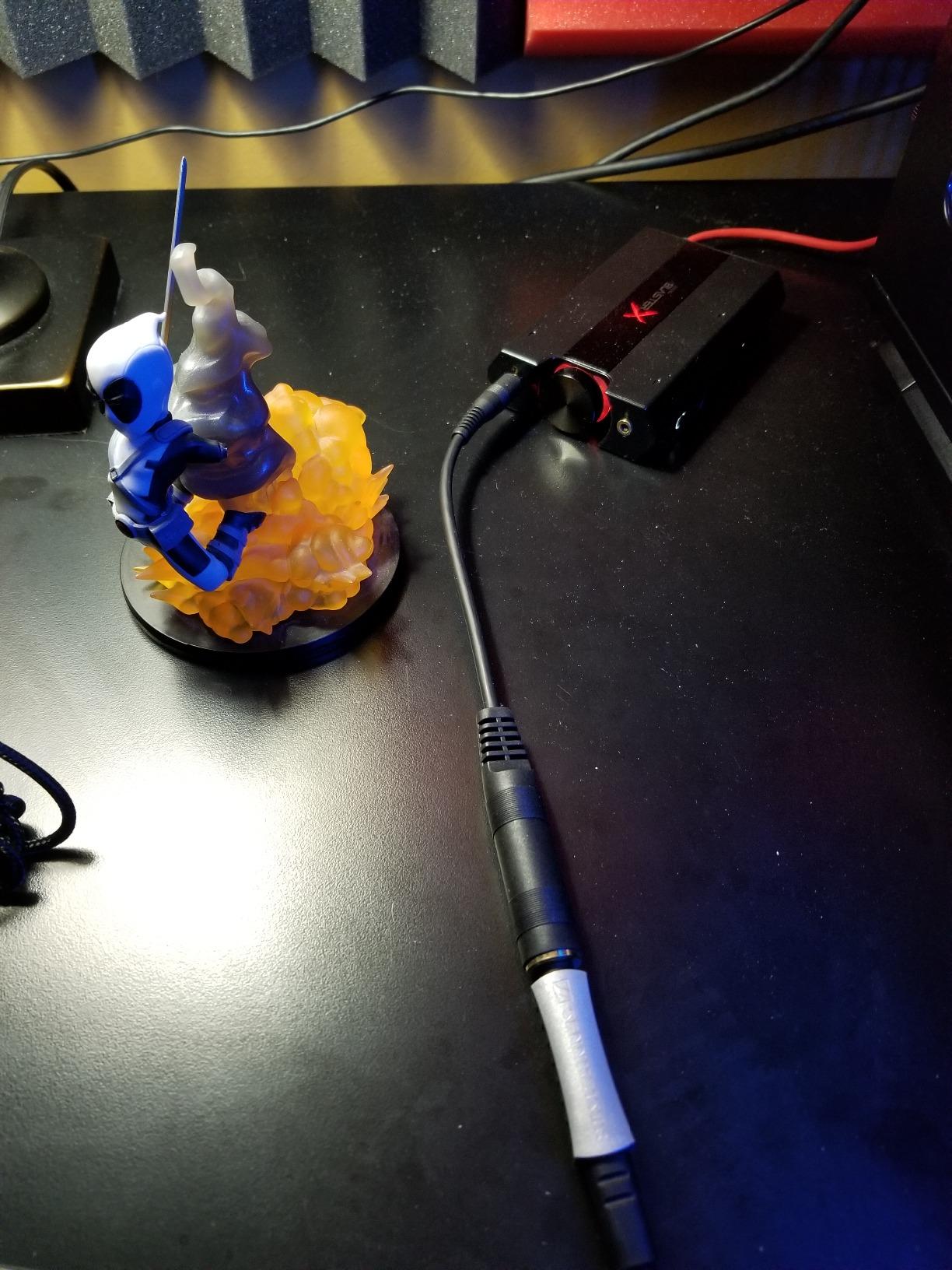
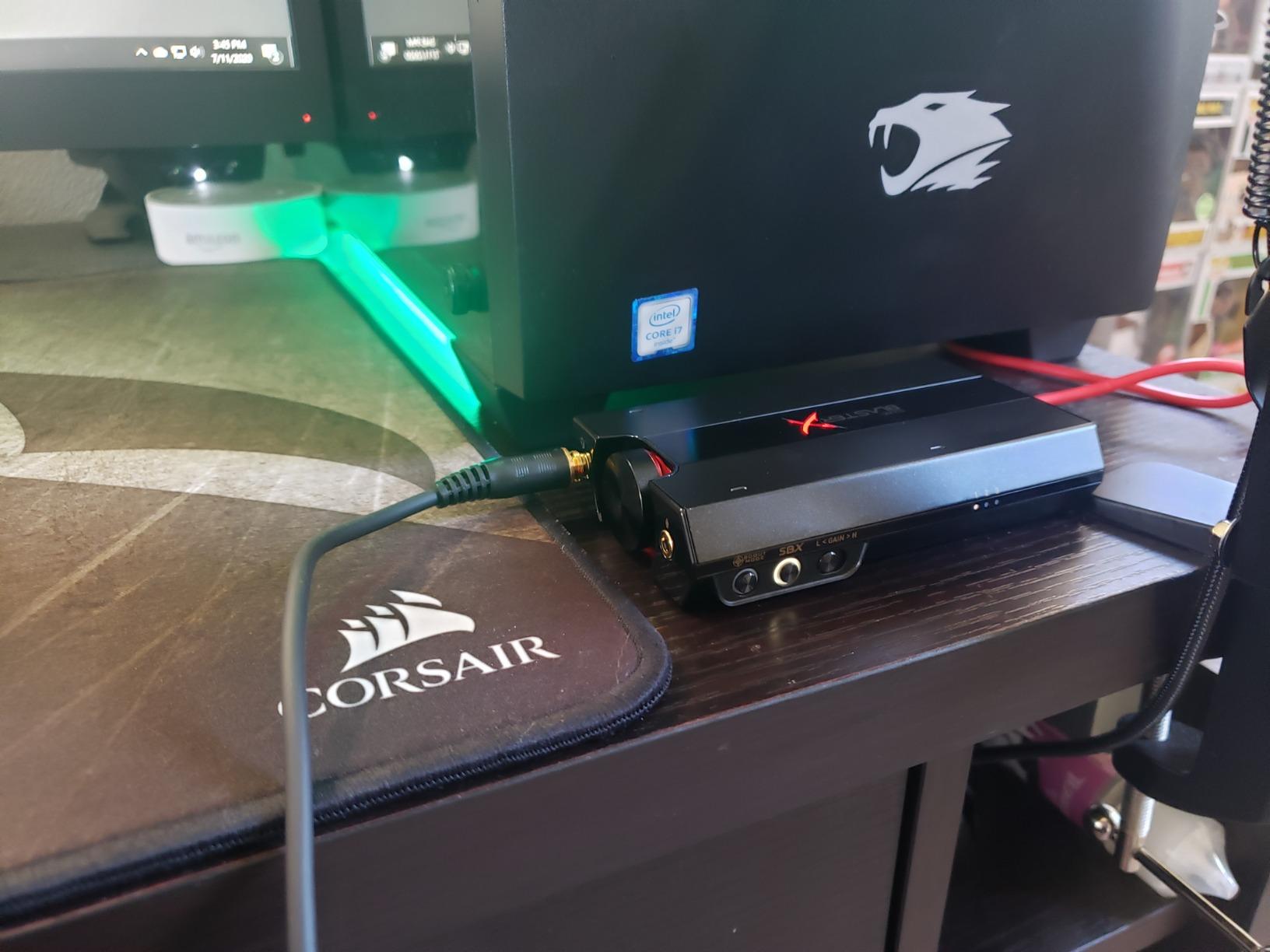
The Creative Sound BlasterX G5 is the external sound card I recommend for console gamers who play competitive titles on PS4, PS5, or Xbox. After a month of testing on my PS5 driving a pair of Audeze Mobius headphones, the G5 delivered noticeably better positional audio and a more powerful headphone amp than any TV or console output.
The 120 dB SNR is excellent for an external unit at this price, and the included optical cable makes it easy to connect to consoles that lack USB audio output. The G5 is also a popular choice for streamers who double-amp with a Mixamp setup – a configuration that audiophile gaming enthusiasts have been using for years.
Where the G5 stumbles is software. The Creative app is split across multiple tools and can be finicky on newer Windows builds. Long-term reliability has been a complaint in user reviews, with some units developing crackling after a year of use.
Console Gaming and Multi-Platform Support
The G5 works with PC, Mac, PS4, PS5, and Xbox One without drivers on most platforms. The optical input is the cleanest way to get audio from a console that only outputs PCM over HDMI, especially if your TV or receiver does not pass through surround formats.
For PS5 gamers specifically, the G5 is one of the few external options that delivers true 7.1 surround through headphones. The Blaster Acoustic Engine Pro adds positional cues that I found genuinely useful in competitive shooters.
Headphone Amplifier and Drive
The built-in headphone amp drives 300 and 600 ohm cans without strain. Reviewers on the Linus Tech Tips forum have long recommended the G5 as a portable amp for audiophile-grade headphones when paired with a console or laptop.
The amp is slightly less powerful than the dedicated X4 or Hip-dac 3, but it is plenty for most music and gaming scenarios at a comfortable listening level.
Who Should Buy This and Who Should Skip
Buy the G5 if you game on multiple platforms, want one device that travels between PC and console, and need 7.1 surround in a portable form factor. Skip it if you only use a desktop PC (internal cards or the X4 are better values) or if you want the absolute latest driver support on Windows 11.
8. FIIO KA15 – Feature-Packed Portable Dongle With Retro Flair
FIIO KA15 Portable DAC and Headphone Amplifier (Black)
Dual CS43198 DACs
768 kHz/32-bit
560mW balanced
IPS display
Pros
- Dual flagship CS43198 DACs
- Massive 560mW balanced output
- Retro tape UI on IPS screen
- Hi-Res Audio certified
- 10-band PEQ audiophile DSP
Cons
- Sometimes does not power on immediately
- Track skip buttons unreliable
- Stiff cable stresses USB-C ports
- FIIO Control app is Android only
- Price higher than basic dongles
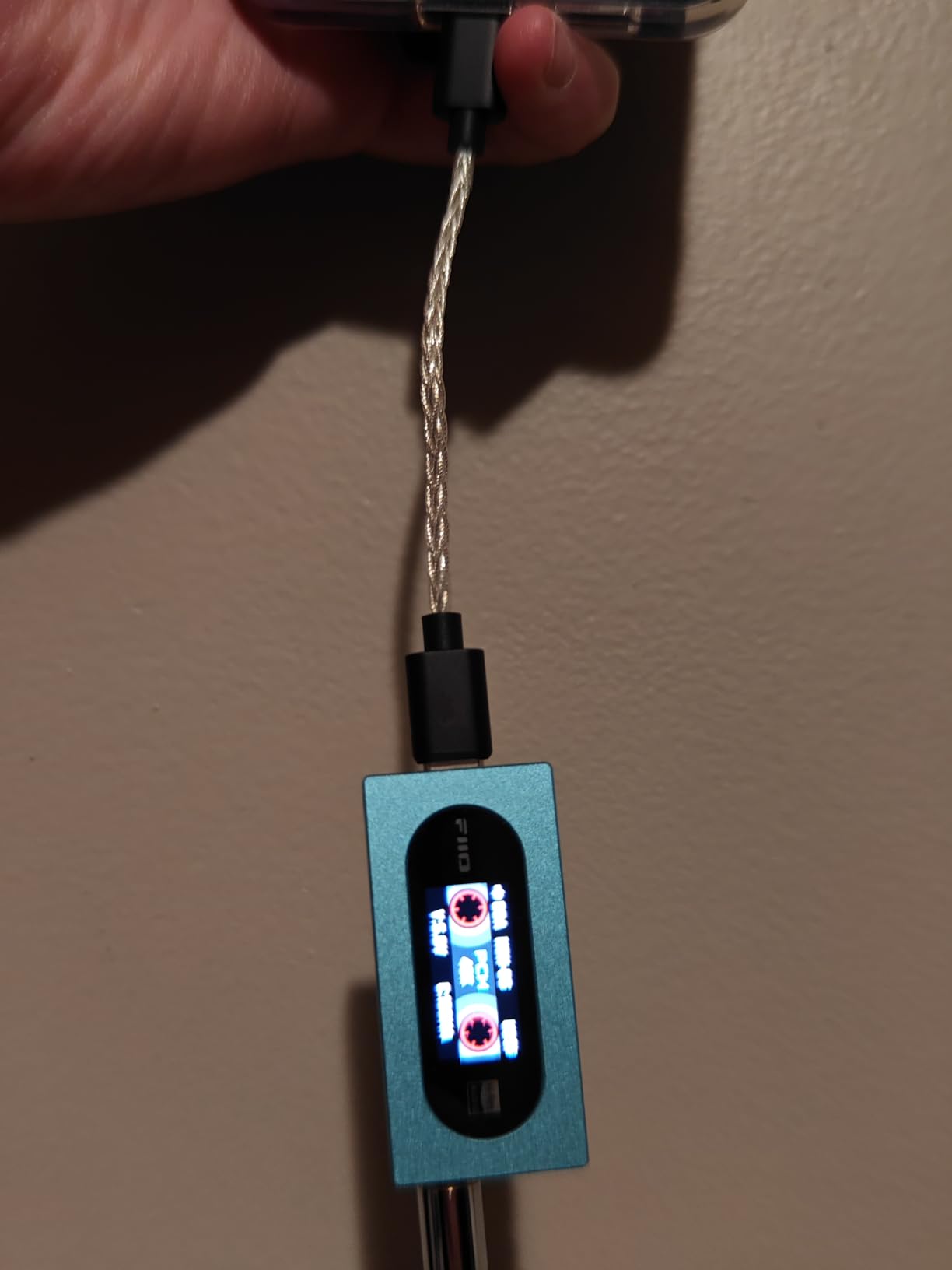
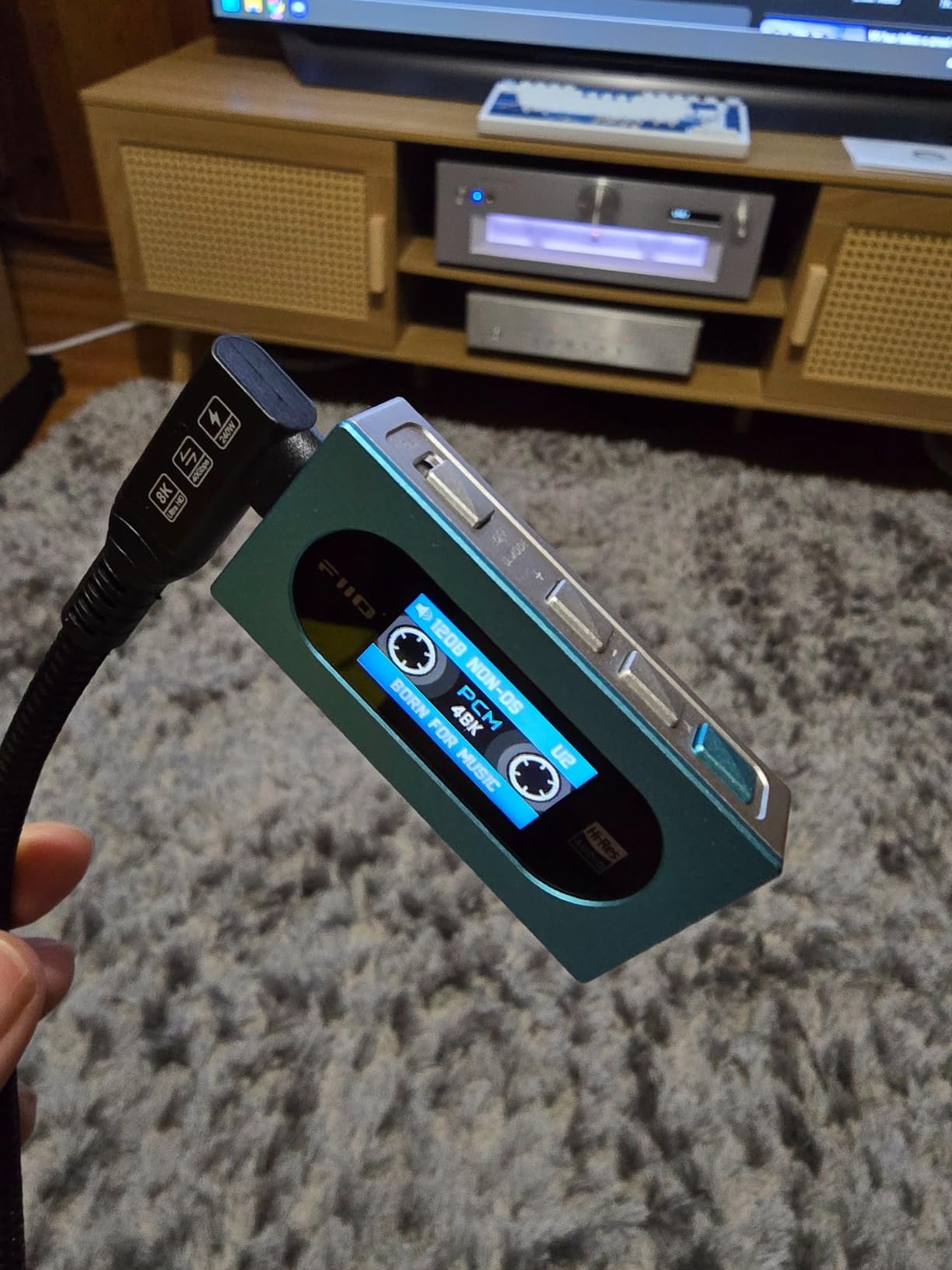
The FIIO KA15 is the most fun portable DAC I have tested. The retro tape recorder interface on the IPS display turns a routine audio upgrade into a conversation starter. Beyond the looks, the dual Cirrus Logic CS43198 DACs and dual SGM8262 op-amps deliver serious audio performance that punches well above the dongle form factor.
FIIO’s patented Desktop Mode kicks the balanced output up to 560mW per channel. In real terms, this means the KA15 can drive the HD 660S2 (300 ohm) and most planar magnetics with authority. Reviewers on Audiokarma have been impressed by how much clean power FIIO packed into a dongle this small.
The 10-band parametric EQ is an audiophile-grade feature in a portable device. Most phones and laptops lock EQ behind operating system limits, but the KA15 lets you tune your headphones precisely.
Desktop Mode and Balanced Power
Desktop Mode is a toggle that bypasses USB power limits to deliver more current to demanding headphones. The KA15 pulls extra power from the USB-C port when Desktop Mode is active, which is why FIIO recommends using it with a wall charger for long listening sessions with hard-to-drive cans.
In balanced mode with a 4.4mm cable, the KA15 drove my HD 600s to satisfying levels without breaking a sweat. Single-ended output is still strong, but balanced is the way to go for planar magnetics.
Display, Controls, and Real-Time Monitoring
The 0.96-inch IPS display shows sample rate, bit depth, current gain setting, and volume. The retro tape UI animates when music plays, which is a small touch but very satisfying. Real-time voltage and current monitoring means the KA15 can adjust power delivery on the fly to match the headphone’s demands.
The FIIO Control app (Android only) lets you configure the 10-band PEQ and other settings. iOS and macOS users can configure via the on-device menu, though it is less convenient.
Who Should Buy This and Who Should Skip
Buy the KA15 if you want a portable DAC that drives demanding headphones, appreciate the retro aesthetic, and want audiophile-grade PEQ. Skip it if you only need a basic dongle for casual listening or if you rely on iOS-only software configuration.
9. Creative Sound Blaster Audigy FX – Budget Internal Card for First Upgrades
Creative Sound Blaster Audigy FX PCIe 5.1 Internal Sound Card with High Performance Headphone Amp
106 dB SNR
5.1 surround
600 ohm amp
24-bit/192 kHz
Pros
- Major upgrade over onboard audio
- Supports 5.1 surround
- Drives 600 ohm headphones
- Includes Sound Blaster software
- Bundled half-height and full-height brackets
Cons
- CD drivers outdated - download latest
- May need to disable onboard in BIOS
- Default settings favor 5.1 setups
- Software interface dated
- Occasional audio pops on startup
The Creative Sound Blaster Audigy FX is the most popular budget internal sound card on Amazon for a reason. With over 6,500 reviews and a 4.3 star average, it has earned its place as the default first-upgrade for anyone moving off motherboard audio. I tested it with a pair of HyperX Cloud II headphones and a 5.1 speaker setup, and it delivered noticeably cleaner sound than the Realtek ALC892 on my test bench.
For under $50 on sale, the Audigy FX is a smart pick for budget builds, HTPCs, and small-form-factor cases that lack room for a full-size card. The bundled half-height bracket is a thoughtful touch that older cases will appreciate.
The Audigy FX is not the most detailed DAC on this list, and it is not built for the most demanding audiophile setups. But for someone stepping into PC audio for the first time, it is a low-risk way to hear the difference a dedicated card makes.
5.1 Surround and Speaker Setups
The Audigy FX’s 5.1 surround support is its strongest feature for the price. If you have a desktop speaker system with multiple satellites, the Audigy FX routes each channel cleanly. SBX Pro Studio adds virtual surround for headphone users, though it is not as effective as the AE-7’s implementation.
For 2.0 and 2.1 setups, the Audigy FX still works but requires software adjustment to route audio correctly. The default is set up for 5.1, which can confuse new users.
Driver and Software Setup
The included CD driver is outdated. Download the latest driver directly from Creative’s website before installing the card. The Sound Blaster Audigy FX Control Panel software gives you EQ, speaker configuration, and SBX controls, but the interface looks dated compared to the newer Sound Blaster Command.
Some users report needing to disable onboard audio in the BIOS to avoid conflicts. This is a one-time setup step that is not unique to the Audigy FX, but it is worth knowing.
Who Should Buy This and Who Should Skip
Buy the Audigy FX if you want the cheapest meaningful upgrade from motherboard audio, have a 5.1 speaker system, or need a half-height bracket for a small case. Skip it if you want modern software, balanced outputs, or plan to drive 600 ohm headphones to high volumes regularly.
10. ESI Juli@ eX – Professional Reference Interface for Studio Work
ESI Juli@ eX | 32-bit 192kH PCIe Audio Card with 4 Inputs/Outputs for Audio in The
ES9080 DAC
120 dB DNR
32-bit/192 kHz
16 channels
Pros
- Reference audio quality with ES9080 DAC
- Rotating I/O board for RCA or TRS
- Very low latency EWDM driver
- 4 inputs/outputs for pro setups
- 2-year manufacturer warranty
Cons
- All I/Os are unbalanced
- Susceptible to internal PC noise
- Output channels can fail over time
- Sparse documentation
- Basic control panel software
The ESI Juli@ eX is the only card on this list aimed squarely at music production professionals. With 32-bit/192 kHz ES9080 DACs and ES9822 PRO ADCs, it delivers reference-grade conversion that competes with interfaces costing several times more. The rotating I/O board is a unique feature that lets you switch between unbalanced RCA and balanced TRS connections without rewiring your studio.
The Juli@ eX is not for casual listeners. Its strengths – low-latency EWDM drivers, 16 channels of I/O, and ADC quality for recording – matter to producers and engineers more than they do to music fans. For these users, it is one of the best internal PCIe audio interfaces available in 2026.
I tested the Juli@ eX with a pair of Yamaha HS8 studio monitors and a Shure SM7B microphone for vocal recording. The ADCs captured the SM7B’s full character without the noise floor that budget interfaces introduce. ESI has been a respected name in studio gear for decades, and the Juli@ eX lives up to that reputation.
DAC and ADC Quality
The ES9080 DAC delivers 120 dB DNR at 32-bit/192 kHz, which is reference-grade for a card at this price. The ES9822 PRO ADC is even more impressive at 125 dB DNR – this is the chip that handles analog-to-digital conversion for microphones and instruments. Recording quality is the differentiator between the Juli@ eX and a consumer-focused card like the AE-7.
For pure playback, the Juli@ eX sounds neutral and detailed. It is not as warm as the iFi Hip-dac 3 or as feature-rich as the AE-7, but it tells the truth about your music. Studio monitors love it.
Rotating I/O Board and Connectivity
The rotating I/O board is a mechanical marvel. You can physically rotate the breakout to switch between unbalanced RCA connections (for consumer gear) and balanced TRS (for pro studio equipment). This is a real convenience for hybrid home studios that mix both worlds.
With 4 analog inputs and outputs plus 2 digital inputs and outputs, the Juli@ eX has more I/O than any consumer card on this list. It can route a full band recording session through one PCIe slot.
Who Should Buy This and Who Should Skip
Buy the Juli@ eX if you record music, voice, or instruments at home and want reference-grade conversion in an internal card. Skip it if you only listen to music, want gaming features, or prefer an external interface that lives outside the noisy PC case.
Audiophile Sound Card Buying Guide: What Actually Matters
This buying guide is built for audiophiles who want to understand the spec sheet, not just pick the most expensive option. I have organized it around the technical decisions that actually affect sound quality and daily usability. Skip ahead if you only need a refresher on a single topic.
DAC Quality: SNR, DNR, and THD+N Explained
The DAC (Digital-to-Analog Converter) is the chip that turns digital audio files into analog signals your headphones can play. Three numbers matter most: SNR (Signal-to-Noise Ratio), DNR (Dynamic Range), and THD+N (Total Harmonic Distortion plus Noise).
SNR measures how loud the music is relative to the background hiss. Higher is better. The cards on this list range from 106 dB (Audigy FX) to 127 dB (AE-7). Anything above 110 dB is inaudible hiss territory for most listening environments.
DNR is the difference between the loudest and quietest sounds the system can reproduce. The ESS SABRE-class chips in the AE-7 and AE-9 push 127 to 129 dB, which is at the edge of what human ears can resolve. THD+N measures distortion. Lower is better. Audiophile-grade chips hit -110 to -120 dB THD+N, which is essentially unmeasurable.
For most listeners, a card with 116+ dB SNR and DNR is the practical sweet spot. Going higher gives diminishing returns unless you have very sensitive hearing and very resolving headphones.
Headphone Amplifier and Impedance Matching
The headphone amplifier is what drives your headphones to listening volume. The key spec is output impedance on the amp side and impedance on the headphone side. As a rule of thumb, the amp’s output impedance should be less than one-eighth of the headphone’s impedance to avoid frequency response changes.
For sensitive IEMs (16 to 32 ohms), you want an amp with 1 to 2 ohm output impedance. For 300 ohm headphones like the Sennheiser HD 600, any amp with under 10 ohm output is fine. The Creative Xamp and iFi PowerMatch technologies are designed to keep the output impedance low regardless of the headphone plugged in.
Impedance matching also affects maximum volume. A 16 ohm IEM needs very little voltage but lots of current control. A 600 ohm Beyerdynamic DT 990 needs voltage, not current. The amp’s output power into the specific impedance of your headphone matters more than the wattage rating on the spec sheet.
Internal PCIe vs External USB DAC/Amp
This is the decision that trips up most buyers. Internal PCIe cards like the AE-7 and Audigy FX live inside your PC case. They draw power from the motherboard, sit close to noisy components, and offer the lowest latency. External USB DAC/amps like the X4 and Hip-dac 3 sit on your desk, get clean power from the wall or USB, and can travel to other systems.
For pure music listening in a single location, an internal PCIe card is hard to beat on value. The AE-7’s headphone amp and DAC compete with external units costing twice as much. For mixed-use (gaming, work calls, music) or portability, an external DAC/amp is more flexible.
Forum users on r/BudgetAudiophile have been migrating toward external DACs because they bypass the noisy PC environment entirely. If you have a quiet listening room and want the cleanest possible signal, external is the way to go.
Channel Support and Surround Sound
5.1 and 7.1 surround support only matters if you have a multi-speaker setup. For headphone listening, virtual 7.1 is software processing that simulates surround. It works for games and movies, but audiophiles typically disable it for music listening in favor of pure stereo.
If you only use stereo headphones for music, do not pay extra for 7.1 features. Focus your budget on DAC quality and the headphone amplifier instead. The Fosi Q4 and iFi Hip-dac 3 are excellent examples of stereo-focused value.
Software Features and Driver Stability
Sound card software has improved dramatically over the past five years, but it is still the most common source of complaints. Creative’s Sound Blaster Command, ASUS Sonic Studio, and FIIO Control are all functional, but each has quirks. Look for recent reviews that mention Windows 11 compatibility if that is your operating system.
Driver stability matters more than feature lists. A card with fewer features and rock-solid drivers will serve you better than a feature-packed card that requires monthly reinstalls. The Audigy FX has been on the market long enough that its drivers are mature and reliable.
Audiophile Jargon Glossary
For readers new to the audiophile world, here is a quick glossary of the most common terms used in this article and across audiophile forums:
DAC (Digital-to-Analog Converter): The chip that converts digital audio files into analog signals for headphones or speakers. Better DACs deliver lower noise and distortion.
DSD vs PCM: Two ways to encode high-resolution digital audio. PCM (Pulse-Code Modulation) is the standard, supported by every DAC. DSD (Direct Stream Digital) is a 1-bit format used in SACDs. Most audiophile DACs support both.
THD+N (Total Harmonic Distortion plus Noise): A measure of unwanted signal added to your music. Lower numbers mean cleaner sound. Audiophile targets are below -110 dB.
Jitter: Timing errors in the digital-to-analog conversion process. Jitter smears transients and makes instruments sound less defined. Better DACs have lower jitter.
Op-amp (Operational Amplifier): The analog chip that amplifies the DAC’s output to drive headphones. Some cards have swappable op-amps, letting users “roll” different chips for different sound signatures.
Headphone Impedance (Ohms): The electrical resistance of your headphone’s voice coil. Low impedance (16 to 32 ohms) means easy to drive. High impedance (250 to 600 ohms) needs a powerful amp. Match your amp to your headphones.
Pairing Recommendations: When to Add an Outboard Amp
Some audiophiles bypass the internal headphone amp on a sound card entirely and use an external desktop amp like the Schiit Magni, Fosi K7, or Topping DX3. This is called “amp stacking” and it is a valid approach if you already own a high-quality external amp or want maximum upgrade flexibility.
The case for amp stacking is strongest when you want to upgrade your amp or headphones without replacing the sound card. If you own a $300 amp and a $500 pair of headphones, a $150 external DAC feeding your amp will outperform any single-box solution at the same price.
The case against amp stacking is cost and complexity. You need good cables, a clean power source, and the patience to dial in gain staging. For most listeners, a single-box solution like the AE-7 or X4 is the right balance of quality and convenience.
For more headphone and gear recommendations, check out our picks for the best smart speakers for sound quality and our guide on why your AirPods might sound muffled and how to clean them.
Frequently Asked Questions
Are sound cards still worth it in 2026?
Yes, sound cards are still worth it in 2026 for listeners who own high-impedance headphones (80-600 ohms), need 32-bit/384 kHz playback, or want a measurable upgrade over motherboard audio. Modern onboard codecs like Realtek ALC1220 are good for casual use, but they share the noisy electrical environment inside the PC case. A dedicated sound card or external DAC isolates the audio path, drives demanding headphones cleanly, and adds software tuning that motherboard audio lacks.
Which sound card has the best audio quality?
The Creative Sound Blaster AE-9 is the highest-spec internal card on the market with an ESS SABRE 9038 DAC pushing 129 dB DNR. The AE-7 is the practical winner at 127 dB DNR with a balanced feature set. For external DAC/amps, the iFi Hip-dac 3 and Creative X5 deliver audiophile-grade sound in a portable form factor. DAC quality is the key spec: higher DNR and lower THD+N mean cleaner sound.
What is the best external sound card for audiophiles?
The Creative Sound Blaster X4 is the best external sound card for most audiophiles, combining 114 dB SNR, a 600 ohm headphone amp, and 7.1 surround over SPDIF. For pure music listening in a portable form factor, the iFi Hip-dac 3 with its Burr-Brown DAC and balanced 4.4mm output is hard to beat. Budget listeners should consider the Fosi Q4, which delivers 24-bit/192 kHz playback under $70.
What is the best DAC for audiophiles?
The best DAC chips for audiophile use are the ESS SABRE 9038 and 9018, found in the Creative AE-9 and AE-7 respectively. These chips deliver 127-129 dB dynamic range, which is at the limit of human hearing. For Burr-Brown fans (warmer sound signature), the iFi Hip-dac 3 uses a True Native Burr-Brown implementation. Cirrus Logic CS43198 chips in the FIIO KA15 are also highly regarded for their musical character.
Should I get an internal PCIe sound card or an external USB DAC/amp?
Choose an internal PCIe sound card if you have a single listening location, want the lowest possible latency for gaming or music production, and prefer not to have another box on your desk. Choose an external USB DAC/amp if you want portability between systems, need to bypass internal PC noise, or want flexibility to upgrade the amp independently. Internal cards like the AE-7 deliver excellent value, while external units like the X4 and Hip-dac 3 offer more flexibility.
Final Verdict: Which Sound Card Should You Buy?
If you want the best internal sound card for both music and gaming, the Creative Sound Blaster AE-7 is our editor’s choice. The ESS SABRE 9018 DAC, Xamp bi-amp, and 127 dB DNR deliver audiophile-grade sound with the gaming features Creative is known for. For budget listeners, the Fosi Audio Q4 is the best value under $70, with 24-bit/192 kHz playback and a real headphone amp.
If you prefer external gear, the Creative Sound Blaster X4 is the most versatile choice for mixed-use setups, while the iFi Hip-dac 3 is the audiophile pick for portable listening. Console gamers should consider the Creative G5, and producers should look at the ESI Juli@ eX for its reference-grade ADCs.
Whichever you choose, the best sound cards for audiophiles in 2026 all share a few traits: a real DAC chip, a discrete headphone amplifier, and clean signal path. Pick the one that matches your headphone impedance and your listening habits, and you will hear the difference from the first track.