
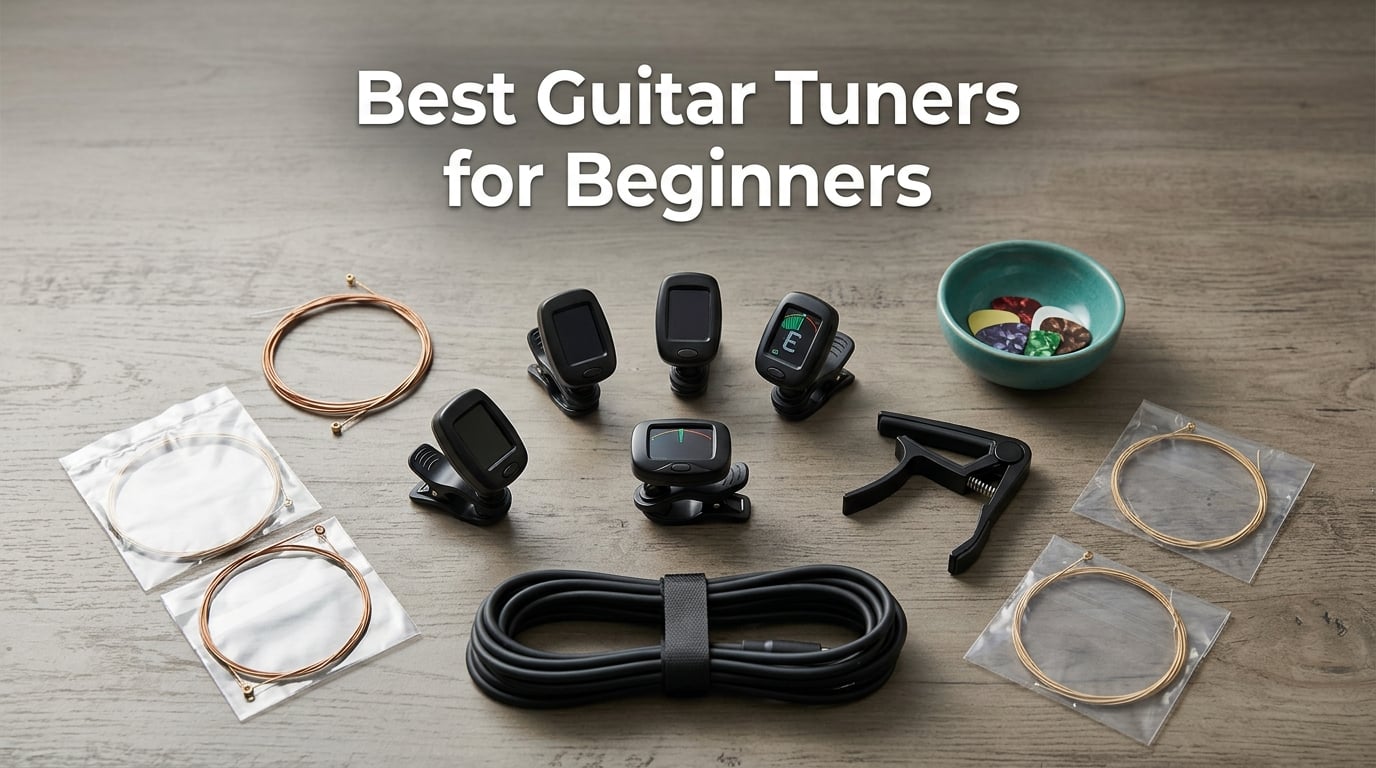
The best guitar tuner for beginners is the Snark SN5X Clip-On Chromatic Tuner, or the Fender FCT-2 if your household also has a ukulele, violin or bass lying around. Both read string vibration through a piezo sensor rather than your phone microphone, which is exactly why they stay accurate when the television is on.
You do not need anything more elaborate than that in your first year. We compared ten of the best guitar tuners for beginners, weighing clip hinge strength, display readability in low light, battery logistics and how forgiving each one is to a shaky first-time hand. Every tuner below mounts to a headstock, needs no cable, and works in a room where a band is rehearsing next door.
One thing we settled early: a phone app is a fine second opinion and a poor primary tool. Apps listen through the microphone, so a fan, a talking roommate or an amp switched on will pull the reading around. Clip-on tuners listen to the string itself, so room noise never enters the picture. Use an app in a genuinely silent bedroom if you like. Do not plan your practice sessions around it.
Our Top 3 Guitar Tuners for Beginners, Tested Side by Side

Snark SN5X Clip-On Tuner
- Full color display
- Vibration-based chromatic sensing
- Rechargeable lithium polymer
- Works on front or back of headstock

Fender FCT-2 Professional…
- Color LCD needle display
- Guitar/Bass/Ukulele/Violin/Chromatic modes
- Dual-hinge clip
- A440 calibration
D’Addario Micro Headstock…
- Stealth profile
- Tri-color backlit display
- 410-480Hz calibration
- 360-degree swivel
Comparing the Best Guitar Tuners for Beginners in 2026
All ten tuners below come from established music-gear makers, and all ten have thousands of owner reviews behind them. Scroll the table to see the short version, then read the full reviews for the reasoning.
| Product | Specs | Action |
|---|---|---|
| Snark SN5X Clip-On Chromatic Tuner |
|
Check Latest Price |
| D’Addario Micro Headstock Tuner |
|
Check Latest Price |
| Fender FCT-2 Professional Multi-Instrument Clip-On |
|
Check Latest Price |
 D’Addario Eclipse Headstock Clip-On Tuner D’Addario Eclipse Headstock Clip-On Tuner |
|
Check Latest Price |
 KLIQ UberTuner Clip-On Tuner KLIQ UberTuner Clip-On Tuner |
|
Check Latest Price |
 Fender FT-1 Professional Clip-On Tuner Fender FT-1 Professional Clip-On Tuner |
|
Check Latest Price |
 Snark ST-2 Chromatic Multi-Instrument Tuner Snark ST-2 Chromatic Multi-Instrument Tuner |
|
Check Latest Price |
 Ranch Chromatic Clip-On Tuner Ranch Chromatic Clip-On Tuner |
|
Check Latest Price |
 Donner DT-2 Clip-On Tuner Donner DT-2 Clip-On Tuner |
|
Check Latest Price |
 Donner DT-1 Chromatic Tuner Pedal Donner DT-1 Chromatic Tuner Pedal |
|
Check Latest Price |
Not sure where to start? If you have one guitar and practise in a shared house, read the SN5X review first. The beginner guitar amp guide explains how the rest of a first setup fits together around a tuner.
1. Snark SN5X Clip-On Tuner – The Easiest First Tuner to Live With
Snark SN5X Clip-On Chromatic Tuner for Guitar Bass and Violin
Full color display
Rechargeable lithium polymer
1.58 ounces
Battery included
Pros
- Secure clip with quick clear readings
- Accurate enough to finish in one pass
- Full color screen readable in low light
- Range reaches low bass strings
- Rechargeable so no batteries to buy
Cons
- Light plastic body is easy to drop-damage
- Included charging cable is short and thin
- Some units arrive as the battery version
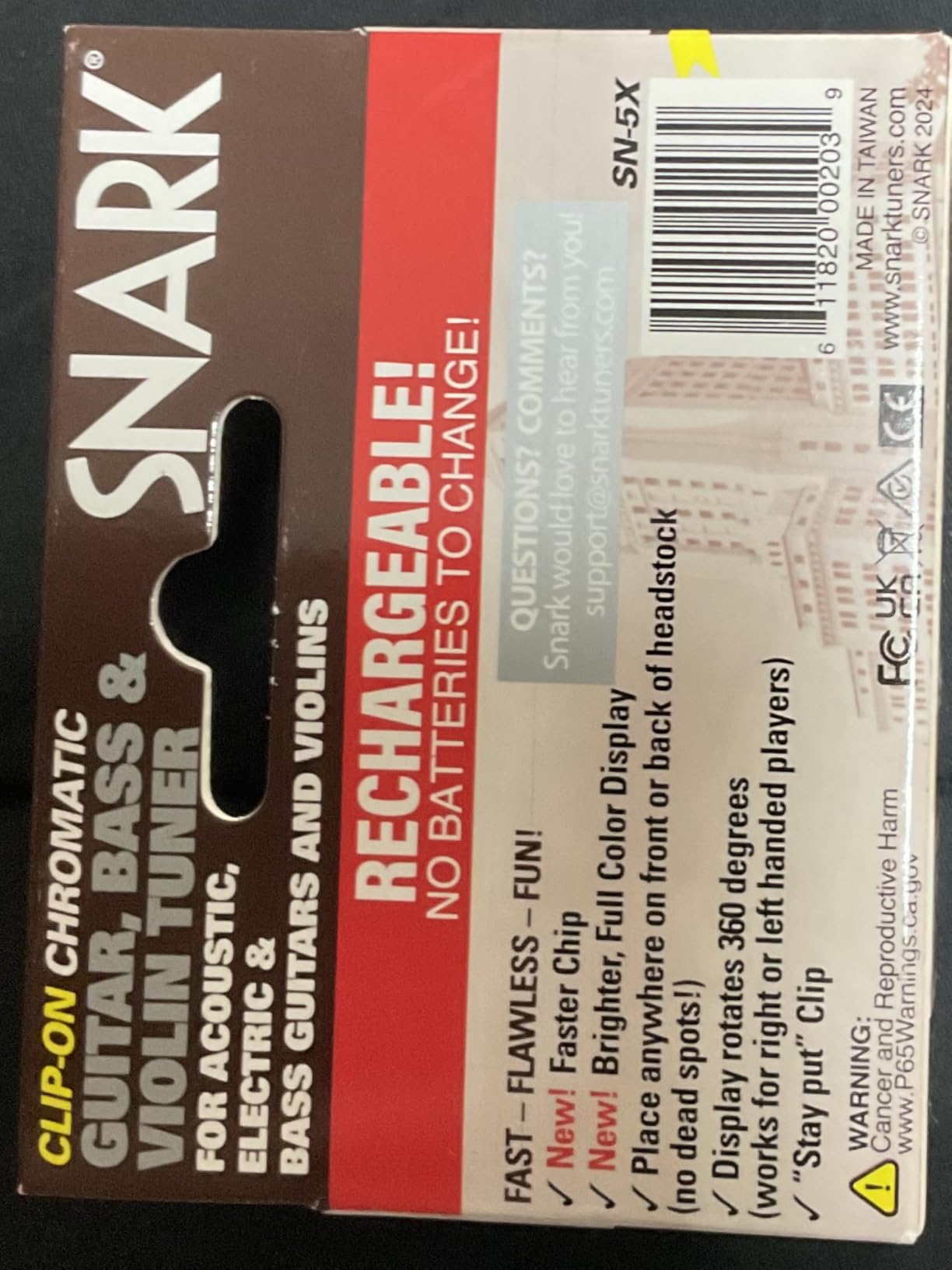
Out of more than 38000 owner reviews, the Snark SN5X keeps coming back as the simplest dependable choice for a first guitar. It clips onto the headstock, the full color screen lights up with the note name, and you turn the tuning peg until the needle settles. There is no menu to learn and no button sequence to remember.
What makes it our top pick is the combination of things that rarely arrive together. The vibration sensor tracks pitch fast enough that a beginner gets one clean pass on most strings, the sensing range is wide enough to cover a low bass B, and the rechargeable cell means you are never hunting for a coin battery the week you decide to actually practise.
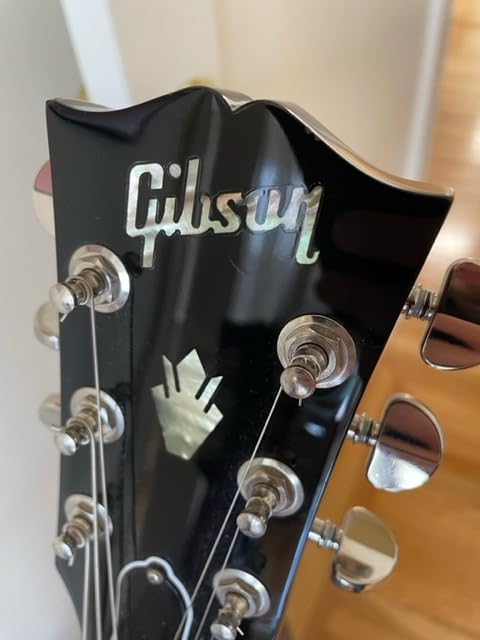
The screen deserves specific praise. Owners consistently mention that the color display is legible at a glance in a dim bedroom, which matters because most new players tune on a sofa after dinner rather than at a music stand. It also mounts on the front or the back of the headstock, so the angle works whatever the string spacing on your particular guitar.
Display readability and one-handed operation
The screen measures 1.5 inches and shows the note, a needle, and a clear indication of flat or sharp. That is exactly the information a beginner needs, and it is arranged so that a glance rather than a study is enough to tell which way to turn the peg.
At 1.58 ounces, the unit is light enough that leaving it clipped to the headstock between sessions does not bother the instrument. The one genuine weakness we keep hearing about is construction: the plastic body feels delicate, and the supplied charging lead is short and thin. Both are nuisances rather than deal-breakers.
Power, range and multi-instrument reach
The lithium polymer cell is included and charges over USB, so the first purchase is also the last one for the tuner battery. The frequency range is tuned for guitar and bass rather than full orchestral coverage, which is precisely what you want on a first instrument.
It also handles ukulele, mandolin and violin, so it stays useful if the household later acquires a second instrument. One recurring confusion in listings is whether the unit supplied is the rechargeable model or the battery-powered variant, so check the product detail carefully when your order arrives.
Who it suits and who should skip it
Buy the SN5X if you want one tuner that works for everything, never runs flat, and reads clearly in a dark room. It is our pick for a child learning on a small guitar, for a player sharing a room with a band, and for anyone who will leave the tuner clipped on permanently.
Skip it if you drop instruments. The plastic housing will not survive repeated falls onto a carpet, and if you need something that can live on a stage without a second thought, a pedal tuner is a better shape of tool.
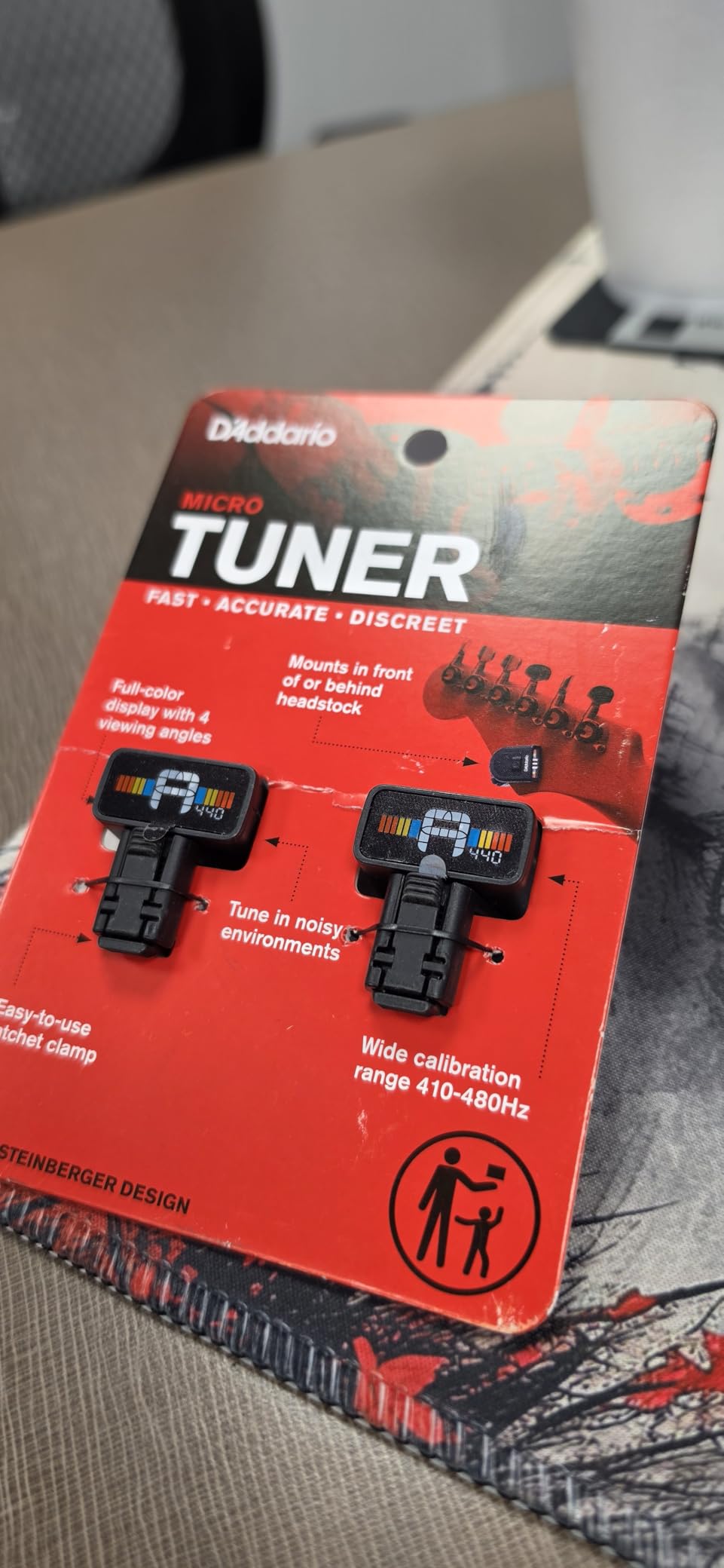
2. D’Addario Micro Headstock Tuner – Discreet Enough to Leave Mounted
D’Addario Micro Headstock Tuner, 1 Pack
0.32 ounces
Piezo sensor, 410-480Hz
Tri-color backlit screen
CR123A battery included
Pros
- Barely visible when mounted
- Stable non-jumpy readings
- Rotatable screen readable from many angles
- Works on guitar bass ukulele banjo and mandolin
- Light enough to live in a gig bag
Cons
- Ratchet clamp can loosen with heavy daily use
- Display toggles between F# and B on the B string
The D’Addario Micro solves a mounting problem the rest of this list does not: it disappears. At 0.32 ounces and roughly an inch across, once it is clipped to a headstock behind the tuners you will forget it is there, which means you can leave it on the guitar rather than taking it out at the end of every session.
That habit matters more than it sounds. The most common failure we see among new players is not tuning badly, it is not tuning at all because the tuner lives in a drawer and grabbing it feels like a chore. A tuner you leave mounted removes the first excuse.
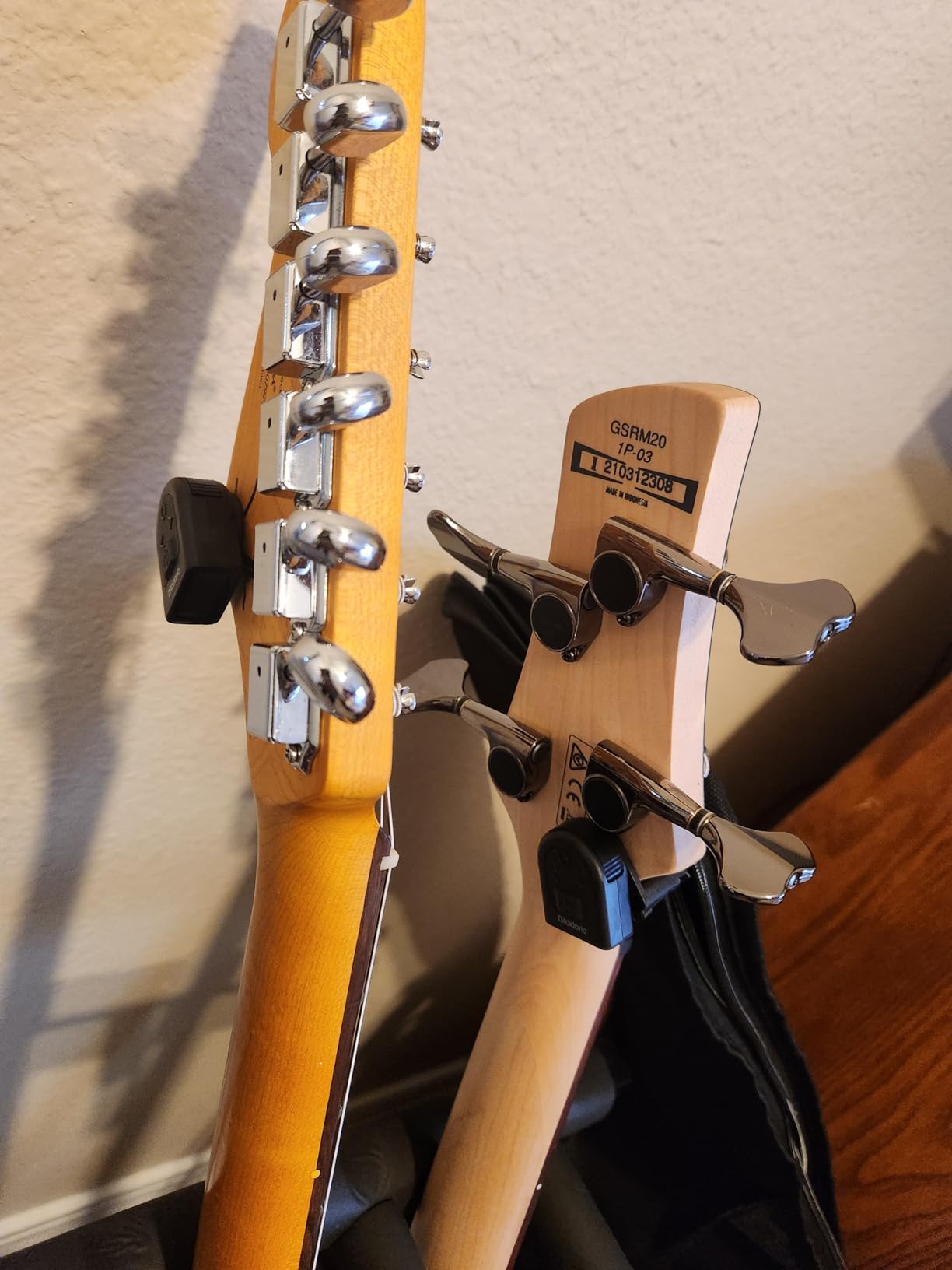
Owners rate the readings as unusually stable for a tuner this small, with far fewer of the jumpy needle movements that make beginners think they have broken something. The piezo transducer reads vibration rather than sound, and the 410 to 480Hz calibration range covers standard tuning plus a little room either side.
Why the tri-color screen works for beginners
The screen changes color with the reading: red when you are out of tune, yellow when you are close, green when you are there. That single design decision is the most beginner-friendly thing on this tuner, because it removes the need to interpret an arrow at all. Let the bar go green and move on.
The display also swivels through 360 degrees on an adjustable padded clamp, so you can set the angle once for your headstock and forget it. For players whose guitar hangs on the opposite side from the default, that rotation is what makes the unit usable at all.
Where the micro tuner shows its age
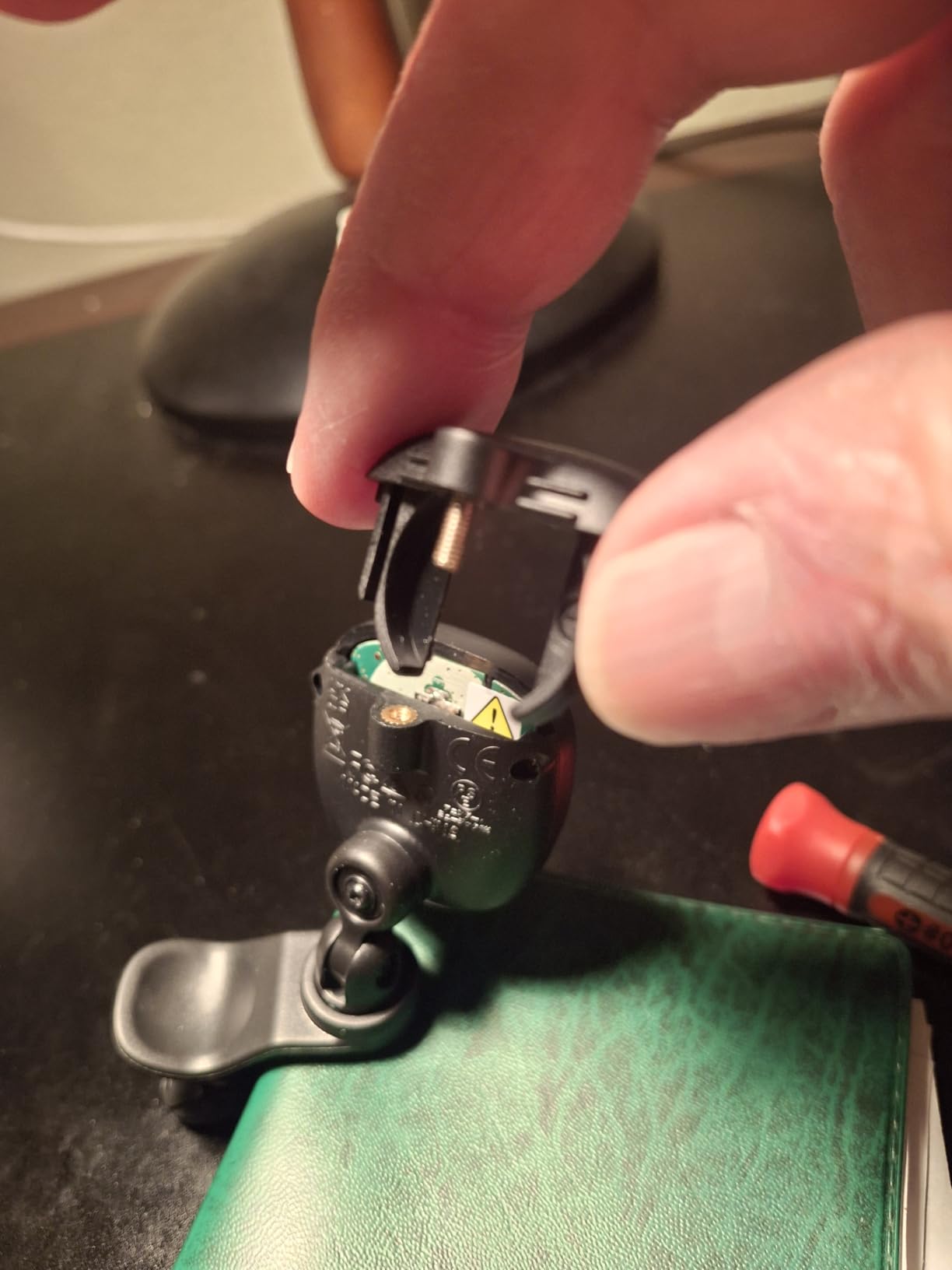
Two weaknesses recur in reviews. The ratchet-style clamp loosens after months of daily attaching and detaching, and on the B string the display flickers between F sharp and B before it settles. Both are tolerable, and neither is a reason to avoid the unit, but you should know about them.
Owners also point out that it is accurate enough to check intonation at the 12th fret, which is far beyond what a first-year player needs and quietly reassuring about the sensor’s quality.
Who it suits and who should skip it
This is the tuner for anyone who wants their instrument to look untouched. If you teach, play a classical guitar, or simply dislike gear hanging off the headstock, the D’Addario Micro is a discreet option here.
Skip it if you plan to tune frequently in a very dark room. A small screen is a small screen, and the Fender FT-1 or the Snark ST-2 give you a noticeably larger read at a glance.
3. Fender FCT-2 Professional Clip-On Tuner – One Tuner for the Whole Instrument Shelf
Fender FCT-2 Professional Multi-Instrument Clip-On Tuner for Guitar, Bass, Ukulele, and Violin
Color LCD needle
Guitars, bass, ukulele, violin, chromatic
B0 to B7 range
1 year limited warranty
Pros
- Vibration sensing holds up in loud rooms
- Color LCD needle gives intuitive feedback
- Covers five instrument modes in one unit
- Dual-hinge clip mounts on either side
- Wide B0 to B7 tuning range
Cons
- Clamp is tight on thick classical headstocks
- On-off button is small and easy to press by accident
If your household owns more than one stringed instrument, the Fender FCT-2 is the pragmatic choice. It carries dedicated modes for guitar, bass, ukulele, violin and full chromatic, so a parent buying one tuner for a child who is moving between a uke and a full-size guitar buys once rather than twice.
Detection is vibration-based, so it keeps reading true in a rehearsal room or a classroom where a microphone tuner would be chasing voices.
Reviewers describe the color LCD needle as easy to read, and the needle moving toward center pitch gives a clear visual target for a beginner.
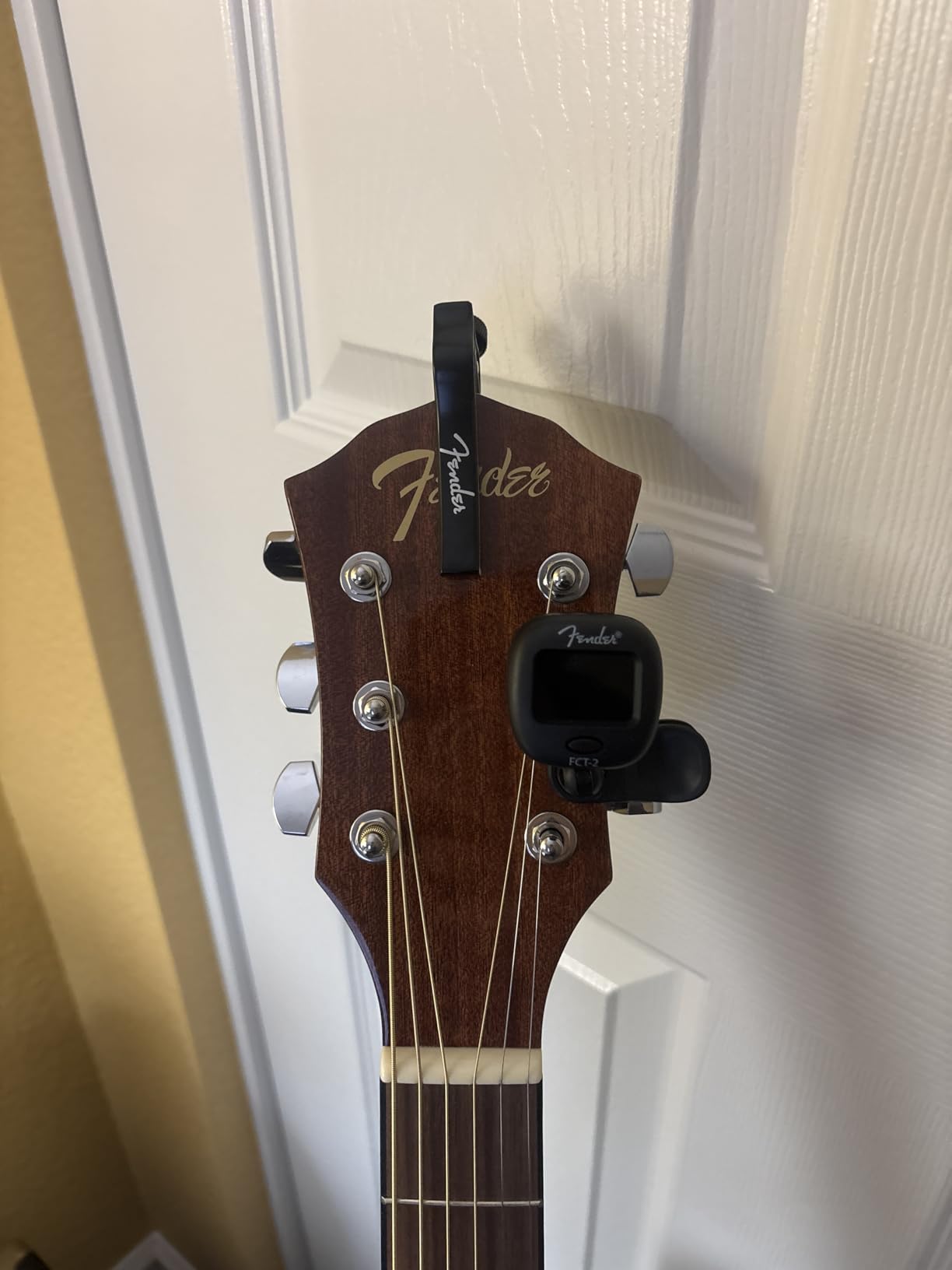
At 1.44 ounces it is light enough to move between instruments without thinking about it, and a CR2032 battery is included in the box. The B0 to B7 range with standard A440 calibration covers bass notes up through high fretted notes on any stringed instrument you are likely to own.
Dual-hinge mounting and headstock fit
The dual-hinge clip adjusts to mount on either side of the headstock, which is what makes it work across a mixed collection. A single-slot clip that only fits one style of headstock forces you to reposition it every time, and repositioning is where clipped pads get damaged.
The reported limitation is tightness on thick headstocks, particularly classical guitars with wide, flat nut ends. If nylon-string is your primary instrument, test the fit on that neck first or choose a tuner explicitly sold for classical, and check our home setup guide for the rest of a quiet-room practice rig.
When to choose this over the cheaper Fender
The FT-1 covers the same basic ground, and the FCT-2’s advantage is the color screen and the wider instrument mode list. If you are buying for yourself and one guitar, those extras are not worth chasing.
If you are buying for a family, a classroom, or anyone who will pick up a bass or a ukulele within a year, those modes are the reason to step up. The display also stays readable at a glance without the squinting that a monochrome LCD asks of tired eyes.
Who it suits and who should skip it
Buy the FCT-2 for a shared household, a teaching setup, or a player who keeps adding instruments. The warranty is one year limited, and the vibration sensing means it works in whatever room practice actually happens in.
Skip it if you play a wide-necked classical as your main instrument and nothing else. The clamp is the weak point, and a tuner marketed for nylon strings will fit it more comfortably.
4. D’Addario Eclipse Headstock Clip-On Tuner – A Large Screen and an Adjustable Pitch Reference
D’Addario Eclipse Headstock Clip-On Guitar Tuner, Black
Large full color vertical display
435-450Hz calibration
Dual swivel mount
CR2 battery included
Pros
- Large bright display easy to read at arm's length
- Fast and accurate with no jumpy needle
- Strong clamp stays put on any headstock
- Dual swivel suits either handedness
- Calibration setting survives power cycles
Cons
- Some units power off mid-tuning
- Occasional display flicker reported after months
- Needs a button press rather than flip-and-play
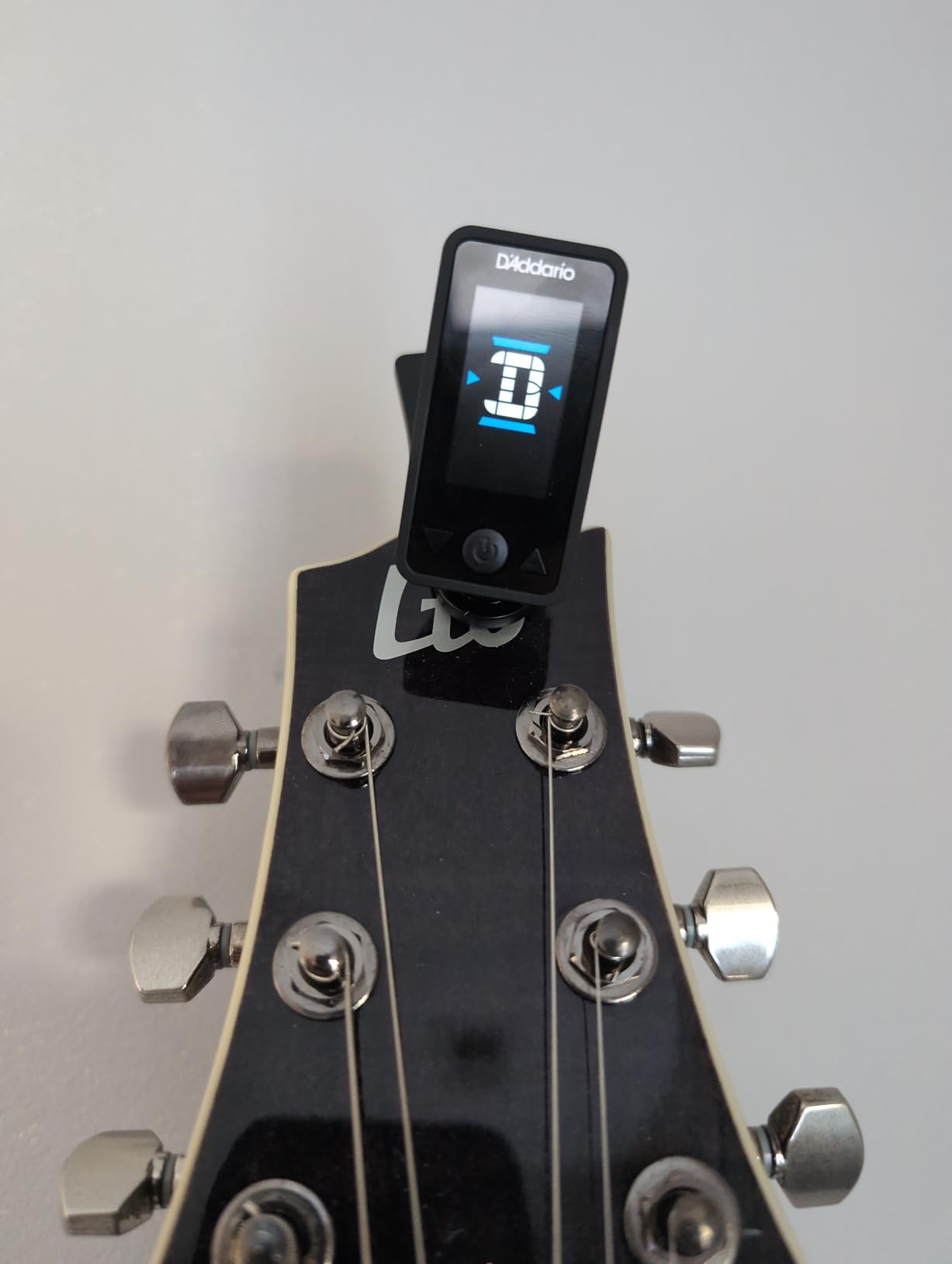
The Eclipse is the step up for a player who found the small clip-ons fiddly. Its 3-inch vertical color screen is the largest on the clip-on tuners we reviewed, and owners say the reading stays legible from further away than the small-screen models require.
That matters more than it sounds. Beginners tune by looking at the headstock while their other hand is on the neck, and a small screen forces you to lean in and hold an awkward posture. A big screen removes the physical awkwardness of reading, which removes the excuse not to.
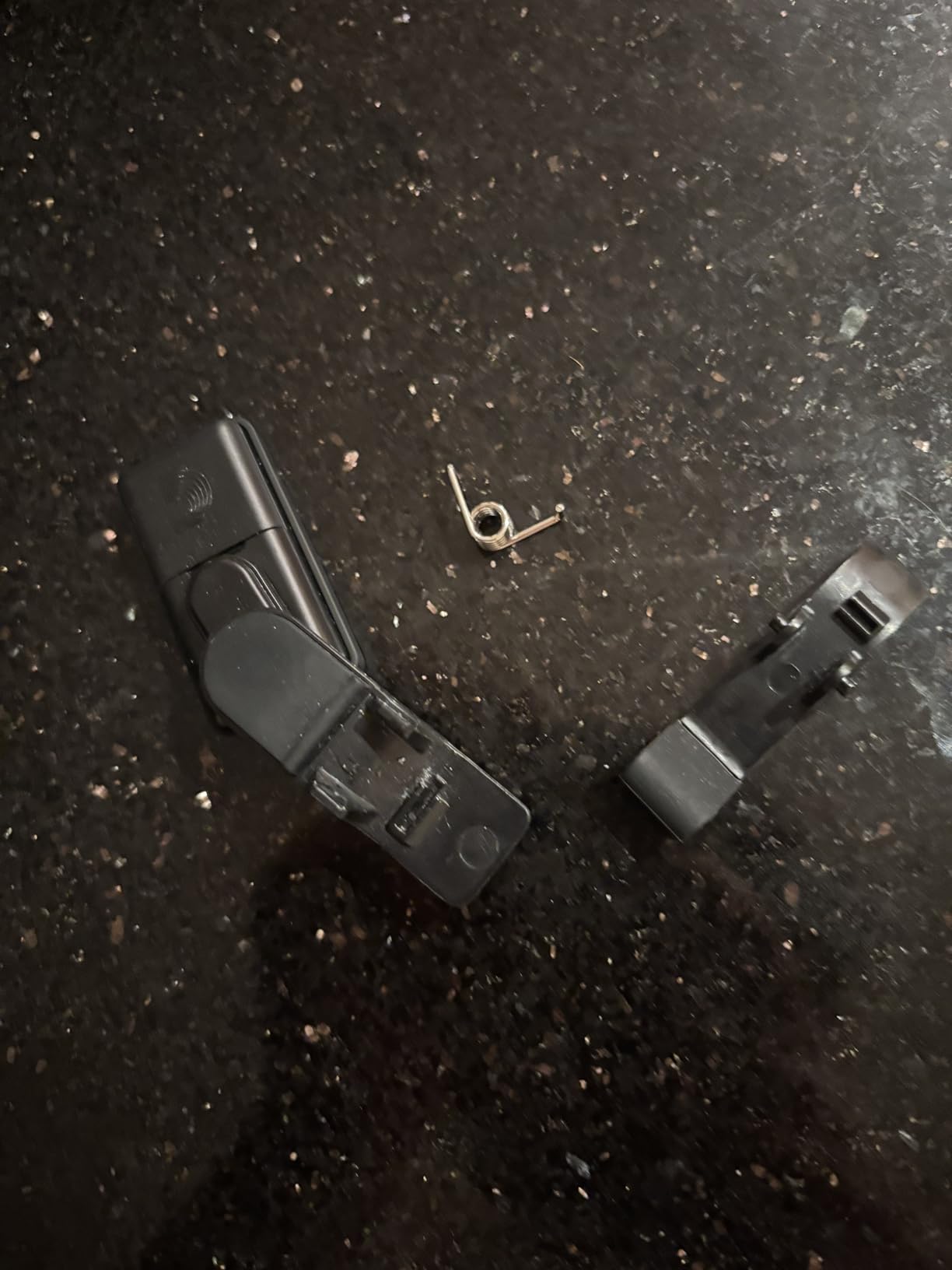
Calibration is adjustable across 435 to 450Hz and the setting persists between power cycles, so you set it once. A dual swivel mount handles the angle on either side of the headstock, and the clamp is genuinely strong enough that the unit does not creep while you turn a peg.
Reading speed and the calibration advantage
Reviewers describe the response as fast and stable, with none of the flickering needle that makes a beginner wonder whether they are tightening or loosening. That stability comes from a solid sensor path rather than from a complicated processor, which is the right engineering choice for this tier.
Being able to shift reference pitch matters for two specific cases. A player who rehearses with a band tuned a little flat can match them without fighting their own ears, and anyone who wants to understand pitch as a number rather than a feeling gets a direct readout.
The failures we found in reviews
A minority of owners report the unit powering off unexpectedly during a tuning pass, sometimes cycling through several notes first, and a smaller number describe display flicker developing after months of use. There is also no flip-and-play mechanism, so you press a button rather than just clipping it on.
None of this is a pattern across the whole review base, but it is the kind of thing that makes a first impression worse than it needs to be. If your last tuner did something strange and you are particular about reliability, read a few of the most recent reviews before committing.
Who it suits and who should skip it
Choose the Eclipse if you struggle to read small screens, play in low light, or have any reason to want an adjustable reference pitch. It suits acoustic, electric, bass and ukulele equally well.
Skip it if you want a tuner you can attach without thinking. The power button step is friction the SN5X and FT-1 simply do not have, and that friction matters most for the least committed practice habits.
5. KLIQ UberTuner – Built for Practice in a Dark or Noisy Room
KLIQ UberTuner Clip On Guitar Tuner -Black
Vibration sensing to about 1 cent
360-degree color display
430-450Hz calibration
3 year warranty
Pros
- Fast chromatic detection within about a cent
- Rotating color screen readable from any angle
- Vibration sensing ignores background noise
- Padded clip grips without scratching finish
- Wide instrument and transposition key coverage
Cons
- Rotating hinge and mount are the usual first failure points
- CR2032 battery needs replacing eventually
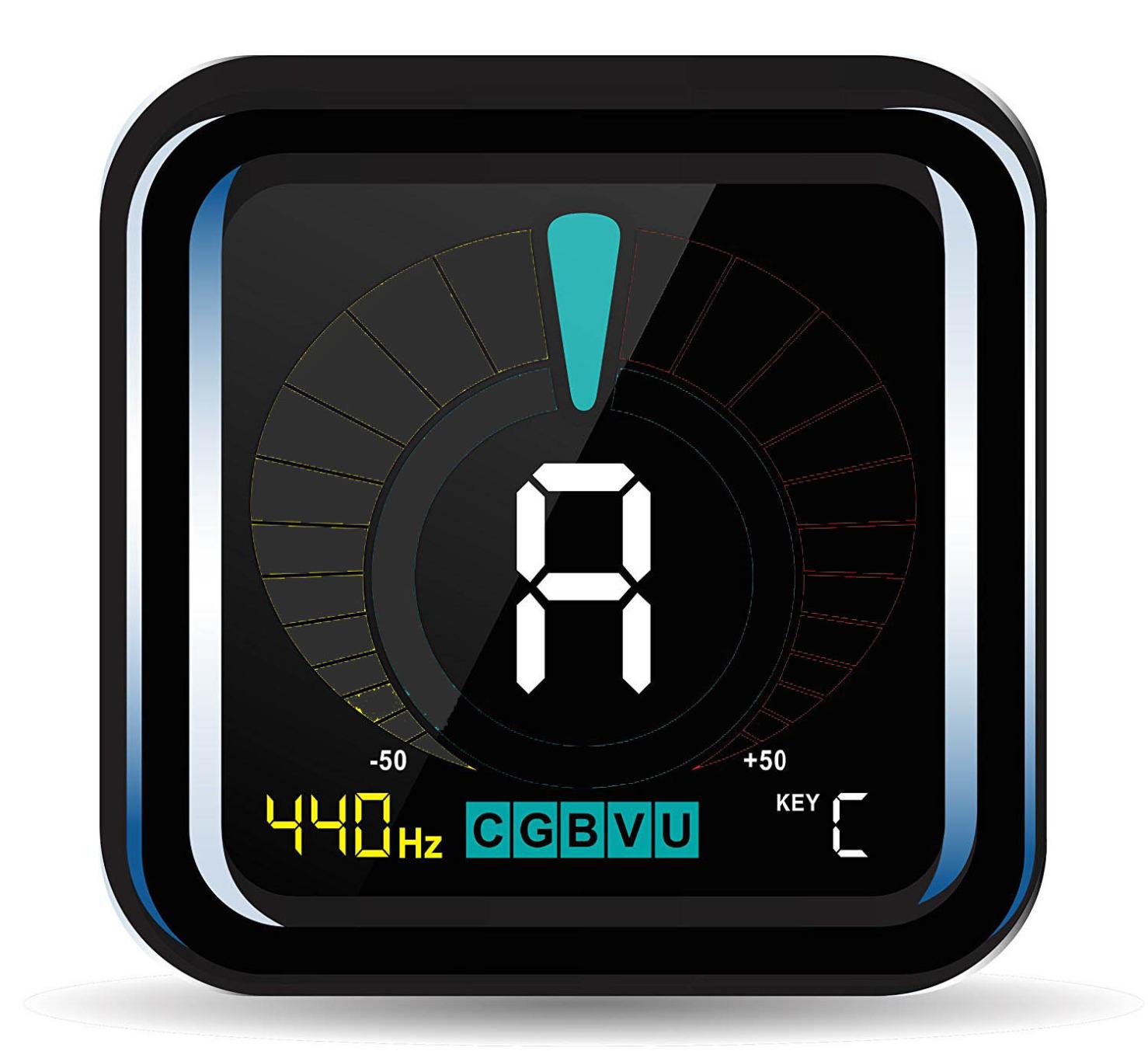
The KLIQ UberTuner is built around a simple idea: a bright rotating screen that you can read from wherever you happen to be standing. Owners single out the 360-degree full color LED as the reason the unit is easy to use, and the fact that the display faces you whether the guitar is on your lap or up on a stand.
Its professional-grade piezo sensor is quoted as accurate to within one cent, and it detects by vibration rather than sound, so background noise never enters the reading. If you practise in a room where other people are talking, that is the difference between a tuner you trust and one you argue with.
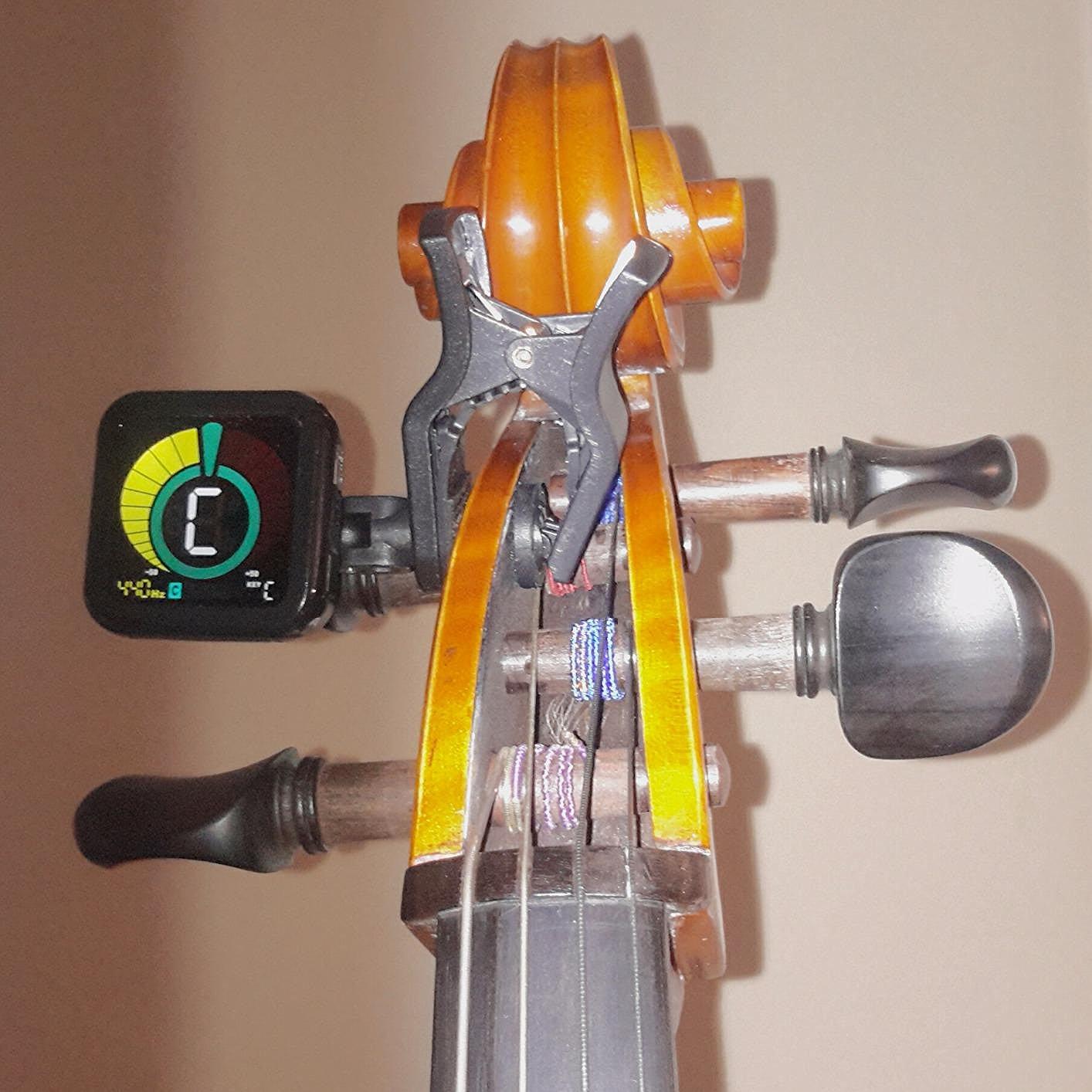
The padded clip is a real quality touch. It grips firmly enough not to slip mid-tune and is soft enough not to mark the finish, which is the specific worry that keeps new players from clipping anything to a guitar they care about. A 3 year warranty also outlasts most of the clip-ons we looked at.
Transposition keys and the wider family of instruments
Calibration runs 430 to 450Hz and the unit includes transposition keys for B flat, E flat, F and D. Those matter far more than a beginner needs today, but they mean the tuner stays relevant if you ever move toward playing in a band with a horn player or start backing vocals on an alternate set of strings.
Modes cover guitar, bass, violin, ukulele, mandolin and banjo alongside full chromatic. A single CR2032 cell powers it, which is a simple supply chain with almost no failure risk.
The hinge problem nobody escapes
The criticism that appears in reviews is not about accuracy or readability, it is about the rotating mount itself. On any clip-on tuner with a swivel joint, the hinge is the component that carries the most repeated load and the least reinforcement, and it is usually the first thing to go.
That is worth knowing before you buy rather than after. Treat the swivel as consumable-feeling, and do not force it past the angles you actually need.
Who it suits and who should skip it
The UberTuner fits players who practise in dim conditions, in shared rooms, or on a stand rather than a lap. The padded clip also makes it a safe first choice for an expensive acoustic or a guitar belonging to someone fussy about their finish.
Skip it if you want a tuner that vanishes when you are not using it. At 1.4 ounces in a housing built around a rotating display, it is more visible on the headstock than the D’Addario Micro and the Snark SN5X.
6. Fender FT-1 Professional Clip-On Tuner – The Best Value in the Test
Fender FT-1 Professional Guitar Tuner Clip On, Guitar Accessories, with 1-Year Warranty, Full-Range Chromatic Guitar Tuner with Dual-Rotating Hinges, A4 Calibration
Full-range chromatic
Backlit needle display
CR2032 battery included
1 year warranty
Pros
- Entries often in tune on one pass
- Backlight turns green when the string is in tune
- Spring clip with concave finger grips
- Small enough to live in a case pocket
- CR2032 lasts a couple of years
- Handles alternate and lowered tunings
Cons
- Clip opens narrowly on thick classical headstocks
- Mode button and on-screen letter are tiny
- Backlight is dim in direct sunlight
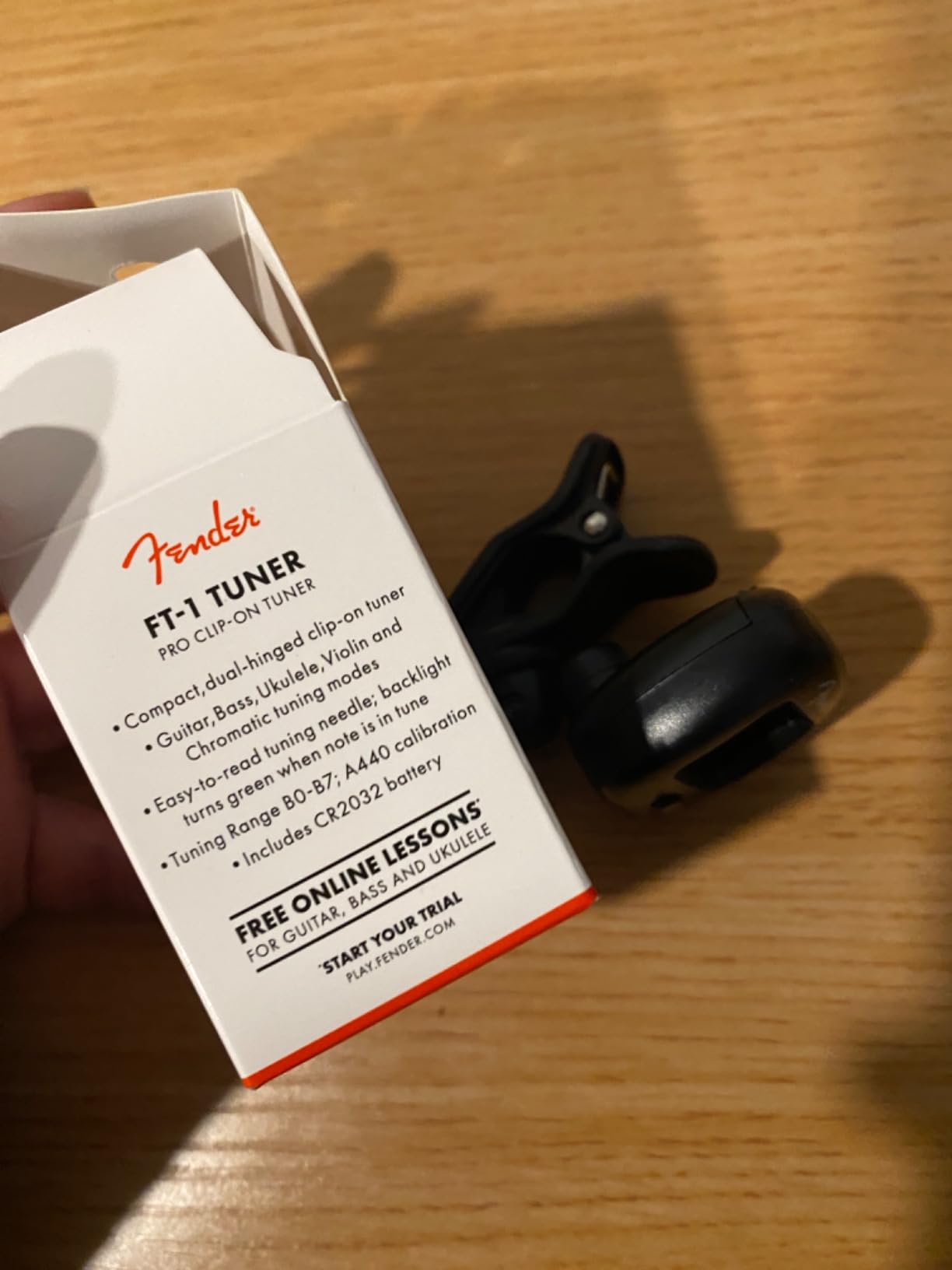
The FT-1 is the tuner to buy when you want the shortest possible route to playing in tune. Owners describe it as accurate, simple and dependable, and frequently note that the FT-1 holds up next to the more expensive FCT-2, with the main difference being display color rather than capability.
It is a full-range chromatic clip-on for electric, acoustic and bass, which is more than enough. A dual-rotating hinge lets you set the angle, and the backlit LCD needle turns green the moment the string is in tune, so you get a color confirmation without needing a color screen.
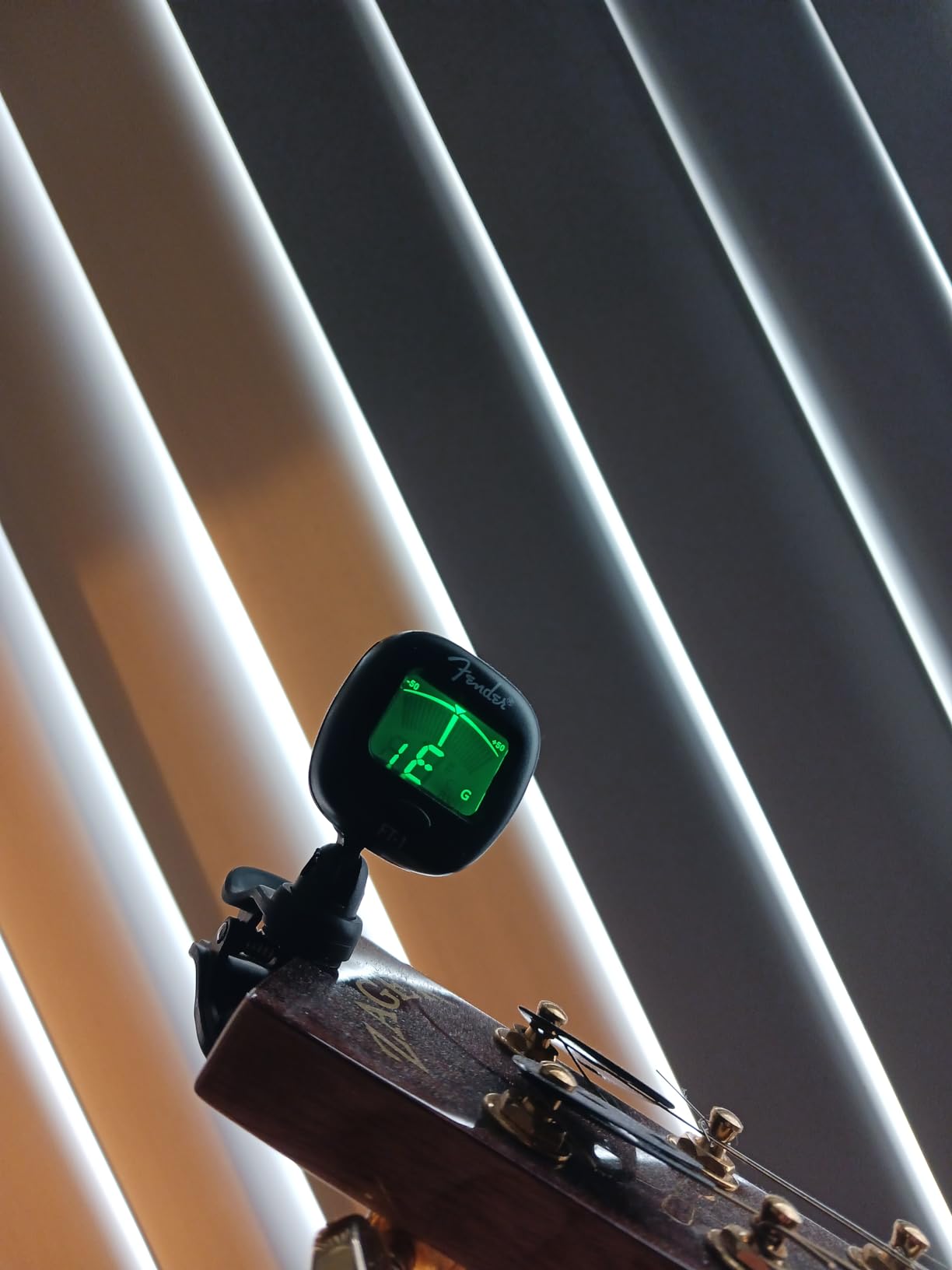
The clip is a strong spring type with concave finger grips, which is a small but real quality detail. You can open it one-handed without pinching, and the tension holds the unit against a headstock without creeping while you turn a peg.
Battery life that disappears into the background
A CR2032 coin cell is included and owners frequently report a swap every couple of years. That is an underrated advantage in this whole category: a tuner you never think about is a tuner you keep using, and the rechargeable alternatives trade this certainty for a charging cable you have to find.
The same reviewers also value that the unit is small and light enough to live permanently in a case pocket, so it travels with the instrument rather than living in a drawer at home.
Small buttons, small letters, dim sunlight
The reported annoyances are all about ergonomics rather than function. The mode-selection button is small, the on-screen letter indicating which instrument mode is active is very small, and the backlight is not strong enough to fight direct sunlight.
Practically, that means set your instrument mode once and leave it there. If you are going to be tuning outdoors or in a bright room for long stretches, pay for a brighter screen, because this one is built for indoor practice.
Who it suits and who should skip it
Buy the FT-1 for a first guitar, a first-year player, and anyone who wants a dependable tuner without paying for a colour screen. Reviewers also use it for alternate and lowered tunings without complaint, which is more headroom than a beginner needs and welcome later.
Skip it if your only instrument is a classical guitar with a wide headstock, because the clip opens narrowly. Also skip it if you plan to read the tuner outdoors on a bright day; the backlight will not carry you.
7. Snark ST-2 Chromatic Multi-Instrument Tuner – Rechargeable With a Microphone Fallback
Snark ST-2 Chromatic Multi-Instrument Tuner
Rechargeable lithium polymer
415-466Hz calibration
Mic or vibration mode
Pros
- Rechargeable so nothing to buy or change
- Bright high-resolution color screen from any angle
- Fast chip with wide 415-466Hz calibration
- Switchable mic or vibration for loud rooms
- Stay-put clip that does not slip
Cons
- Needs periodic recharging to stay usable
- Rechargeable cell ages over a few years
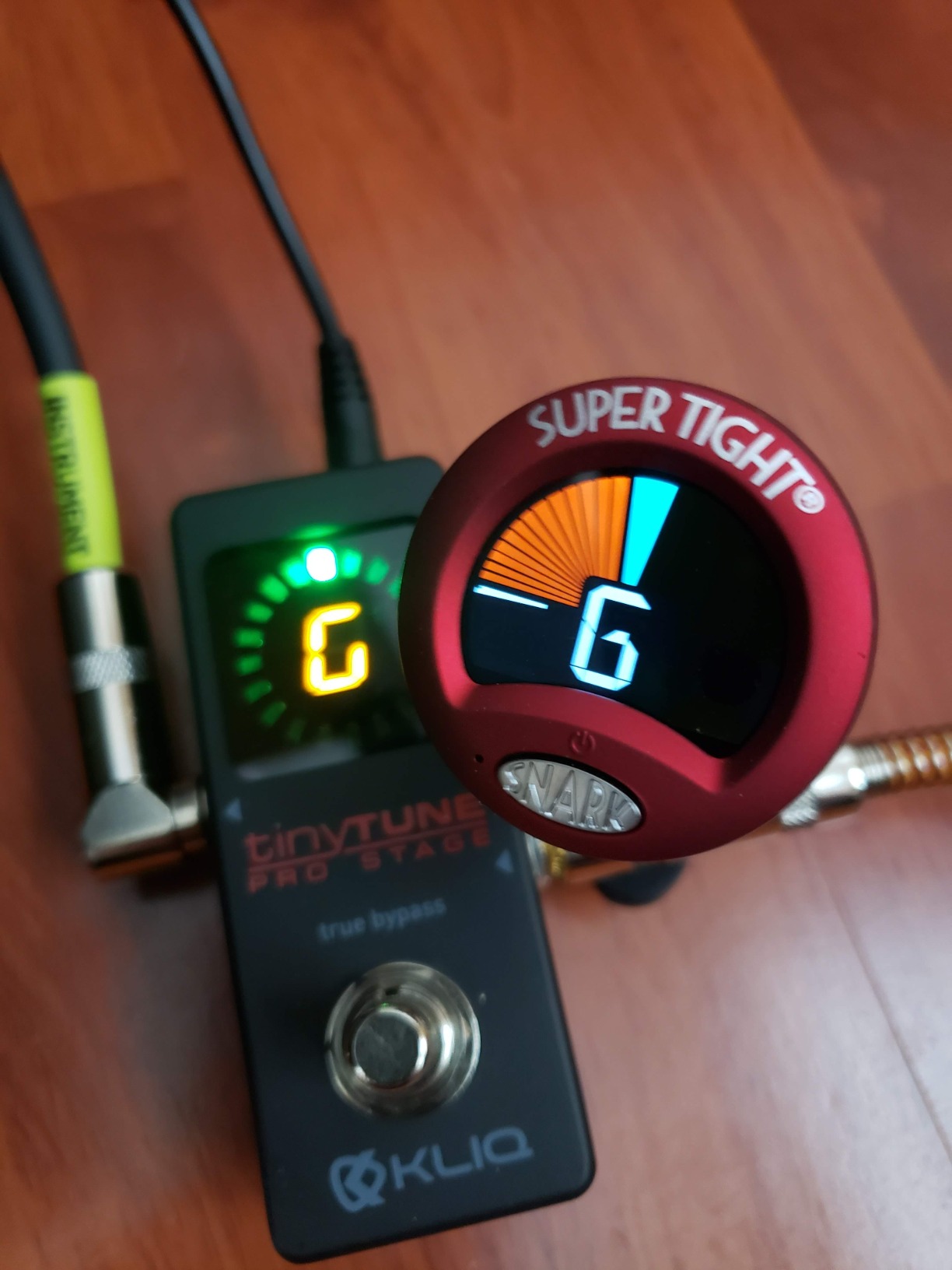
The Snark ST-2 is the pick if you want a rechargeable tuner and want the option of falling back to microphone detection. Most clip-ons pick one method; this one switches between a built-in microphone and an advanced vibration sensor, so you can choose depending on the room.
In practice that means you can tune to a reference player in a room where the vibration sensor struggles, or stay on vibration when a room gets loud. Owners who travel or play in varied spaces treat that flexibility as the main reason to pick it.
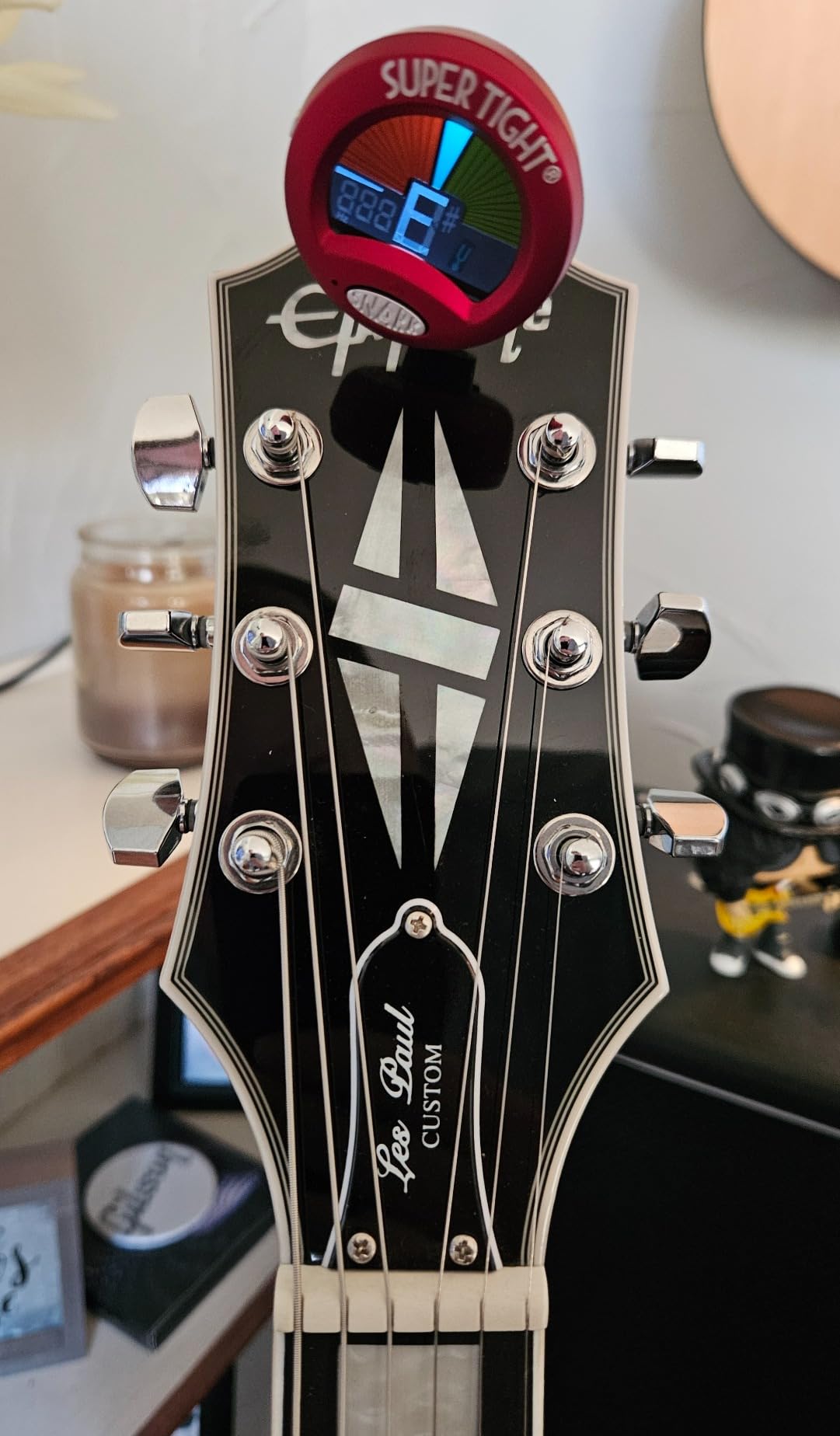
The 415 to 466Hz calibration range is wider than the other rechargeable units in this roundup, covering the reference pitch extremes that orchestral and classical players encounter.
Rechargeable convenience and its trade-off
The rechargeable lithium polymer design removes disposable batteries entirely, and the stay-put clip is rated and described by owners as more secure than the clamps on smaller clip-on units. For a player who forgets to check battery levels, never having a dead tuner is a real benefit.
The trade-off is a single recurring complaint: the unit needs periodic recharging to remain usable. Once the cell ages after a few years, you are dependent on a working charging cable, and the supplied leads on this category of product are frequently the weak link.
Where the wide calibration range pays off
A wide reference pitch range sounds like a specification nobody needs until you meet someone who plays at 415Hz. It is genuinely relevant for classical players working from period repertoire, and useful for anyone rehearsing with an ensemble that tunes to a different standard.
Beyond that, the extended frequency range means the ST-2 covers every stringed instrument in the house, so a single rechargeable unit can serve a whole family of instruments.
Who it suits and who should skip it
Choose the ST-2 if you hate replacing batteries, play in rooms that change, or need a wide reference pitch range. The microphone fallback is a genuine advantage in rehearsal rooms where a vibration sensor is not the whole story.
Skip it if your practice spot is a quiet room and you would rather never think about power at all. A CR2032 cell that lasts a couple of years is less engaging, but it is also less to fail.
8. Ranch Chromatic Clip-On Tuner – The Budget Starting Point
Ranch Clip-On Tuner for Guitar Bass Ukulele Violin Banjo – Chromatic
Piezo vibration sensing
Green backlit LCD
A440 calibration
CR2032 included
Pros
- Quick and generally accurate readings
- Bright backlit screen readable in low light
- Padded clip holds without marking the instrument
- Spring clip does not slip mid-tune
- Several instrument modes at this tier
Cons
- One button does everything including power and modes
- No dedicated off switch so it times out on its own
- Less sensitive in alternate tunings
- Build will not survive rough handling
The Ranch tuner is a low-cost way to get vibration-based tuning, and at this tier the important thing is simply that it is vibration-based at all. Many of the cheapest devices listen through a microphone, and a microphone-based tuner in a shared house is a daily annoyance.
Owners treat it as a strong budget option that handles standard tuning well and reads clearly. The piezo sensor locks onto pitch in under a second, the green backlit LCD shows a note name and a needle, and the display rotates 360 degrees for either side of the headstock.
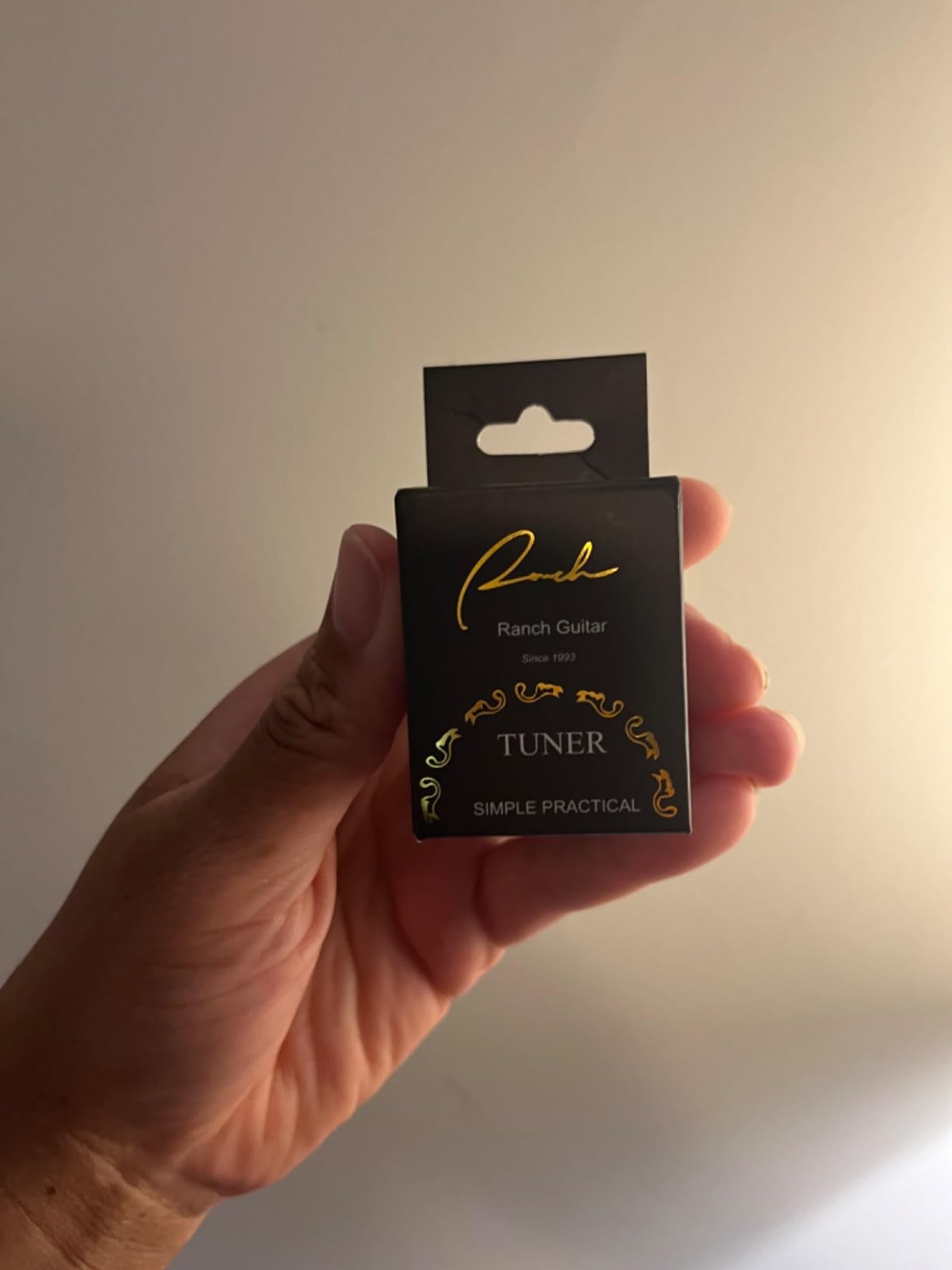
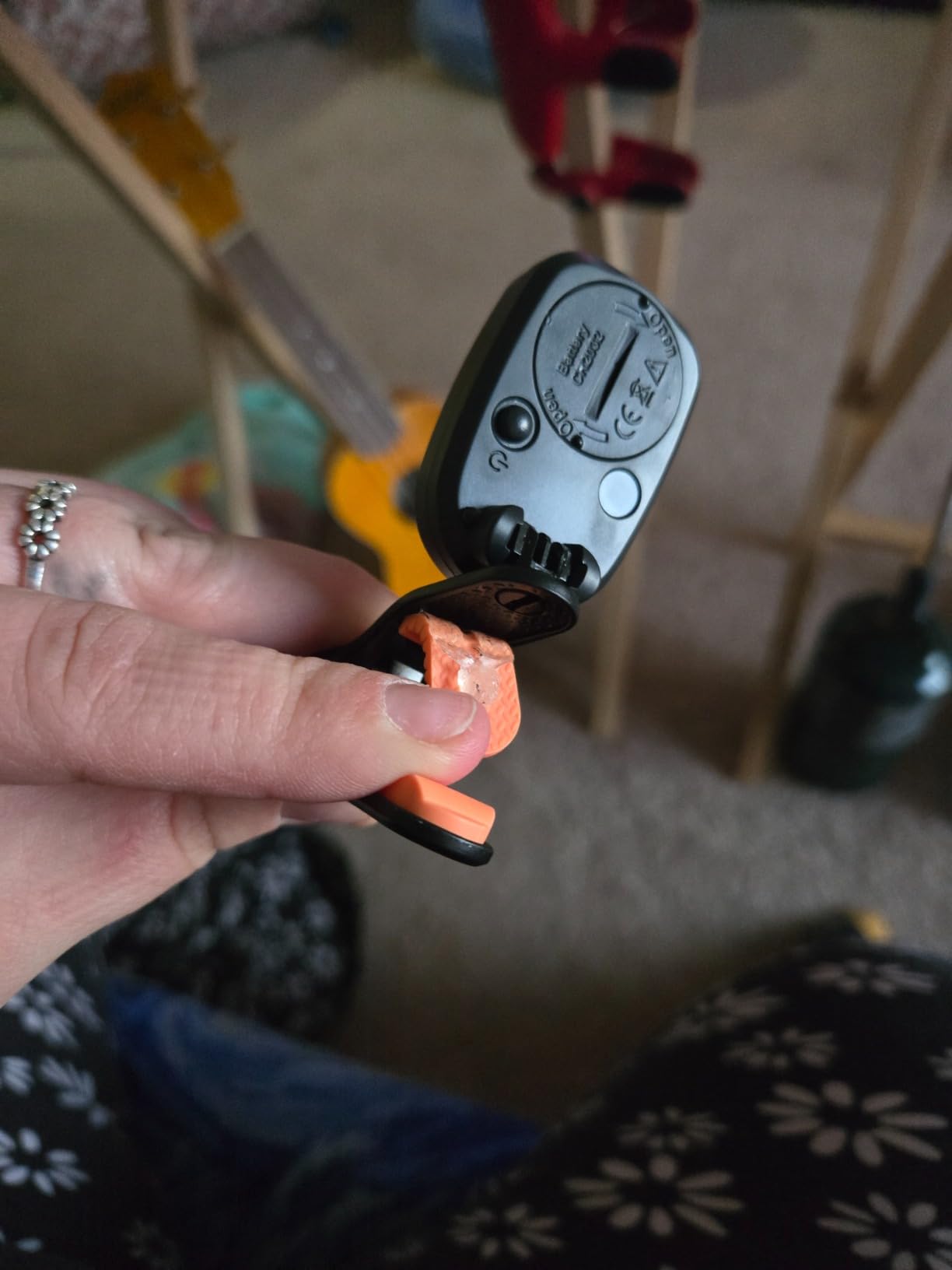
The spring-loaded clip has orange silicone padding, which is a nice touch at this tier. It grips without marking the instrument and does not slide off mid-tune, both of which are the specific complaints that make entry-level clip-ons annoying rather than merely inexpensive.
The control scheme is the real limitation
There is no dedicated power button. The same control turns the unit on and cycles through guitar, bass, ukulele, violin and chromatic modes, so pressing it in the wrong order leaves you tuning in the wrong mode and wondering why a string reads oddly.
Because there is no quick off switch, the tuner stays on until it senses no vibration and times out. That is convenient until the coin cell runs down while the tuner is sitting in a case doing nothing.
Where sensitivity falls away
Owners report the tuner is less sensitive at the edges of the in-tune range, particularly in alternate tunings. If you later move to drop D or DADGAD, this is the unit you will replace first.
Build quality is the other limit. It will not survive knocks, and if you throw gear into a bag without care, step up a tier here.
Who it suits and who should skip it
The Ranch tuner is for a first instrument, a strict budget, and a household that will treat it gently. A backlit screen and five instrument modes make it a sensible purchase for a child who might abandon the guitar in a month.
Skip it if you expect to be rough with it, if you want separate controls, or if you already know you will be exploring alternate tunings within the year.
9. Donner DT-2 Clip-On Tuner – The Fewest Possible Steps
Donner Guitar Tuner Clip on-Accurate Chromatic,Acoustic Guitar Bass Violin Ukulele Tuner DT-2
One-button operation
Rotational display
Chromatic mode
6-month guarantee
Pros
- Clip on
- press once
- tune
- Vibration clip detects the note quickly
- Rotational display angles for easy reading
- Covers acoustic guitar bass violin and ukulele
Cons
- Entry-level accuracy compared with the tier above
- CR2032 battery not included
- Small screen relative to newer models
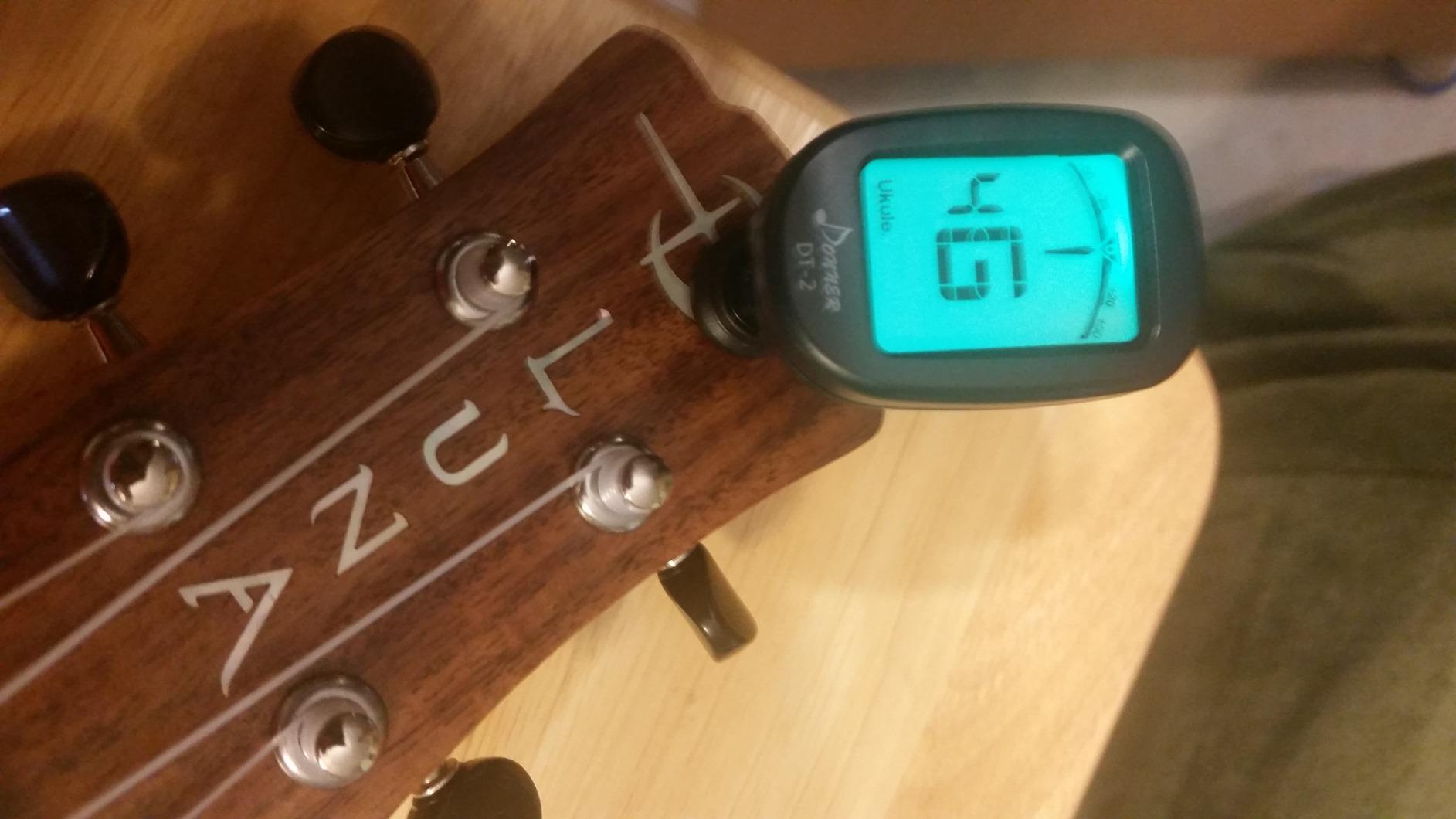
The Donner DT-2 reduces tuning to the shortest possible sequence: clip it on, press once, turn the peg. There is a single control and no mode cycling to think about, which makes it a short hand-off to someone who has never tuned a guitar and does not want to be taught a menu.
Detection is vibration-based through the clip itself, and owners report it picks the note up quickly. The rotational clip design means the screen can be angled toward you rather than fixed at one orientation, which matters on headstocks with unusual angles.
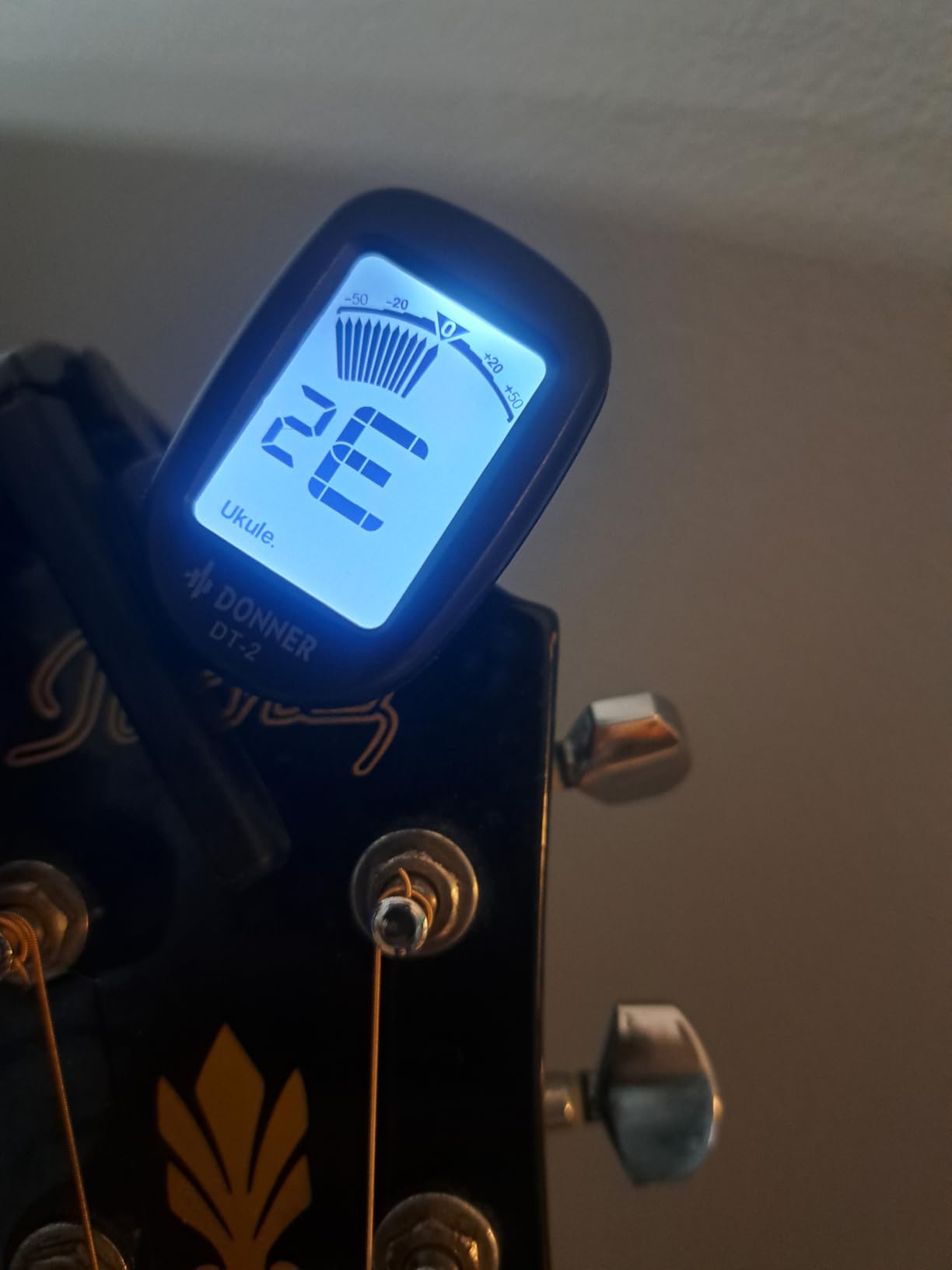
Chromatic mode covers acoustic guitar, bass, violin and ukulele. At 1.06 ounces it is light enough to move around, and the rotational clip is simple rather than complicated, which is part of why the mechanism has no reported failure pattern.
Where accuracy stops being enough
Owners describe the accuracy as serviceable rather than exceptional, and that is the right word. In standard tuning, a beginner cannot hear the difference, and the tuner gets you there on the first pass most of the time.
The trade shows up when you start noticing. If a string is 10 cents off and the display does not clearly tell you, you have no way to know, and that is the limit worth understanding before you buy rather than after.
The battery you need to supply yourself
Unlike most of the tuners on this list, the CR2032 cell is not included. It is a small step that catches people out on day one, because a tuner that will not power up on the first attempt is the fastest way to abandon the habit.
The 6 month guarantee is shorter than the one-year coverage offered by Fender and the three year warranty offered by KLIQ, which is worth factoring in if you are buying for a child who may keep it for years.
Who it suits and who should skip it
The DT-2 suits absolute beginners, gift buyers who want zero setup instructions, and anyone who values one button above everything else. The rotational clip is a simple mechanism with no reported weak point, which makes it durable for its class.
Skip it if you want the most accurate reading available or the longest battery life per purchase. Both are meaningful upgrades, and neither is needed to learn to play.
10. Donner DT-1 Chromatic Tuner Pedal – Not for Your First Year
Donner Tuner Pedal, Dt-1 Chromatic Guitar Tuner Pedal with Pitch Indicator for Electric Guitar and Bass True Bypass
A0 to C8 tuning range
Silent tuning mode
True bypass
9V power, adapter sold separately
Pros
- Wide A0 to C8 range covers very low tunings
- Strobe mode accurate to about one cent
- True bypass passes signal with no pop or hum
- LEDs stay visible on a large stage
- Footswitch control is straightforward
Cons
- Needs footswitch or board space so not portable
- Power adapter sold separately
- Buzzer mode is basic versus dedicated tuner pedals
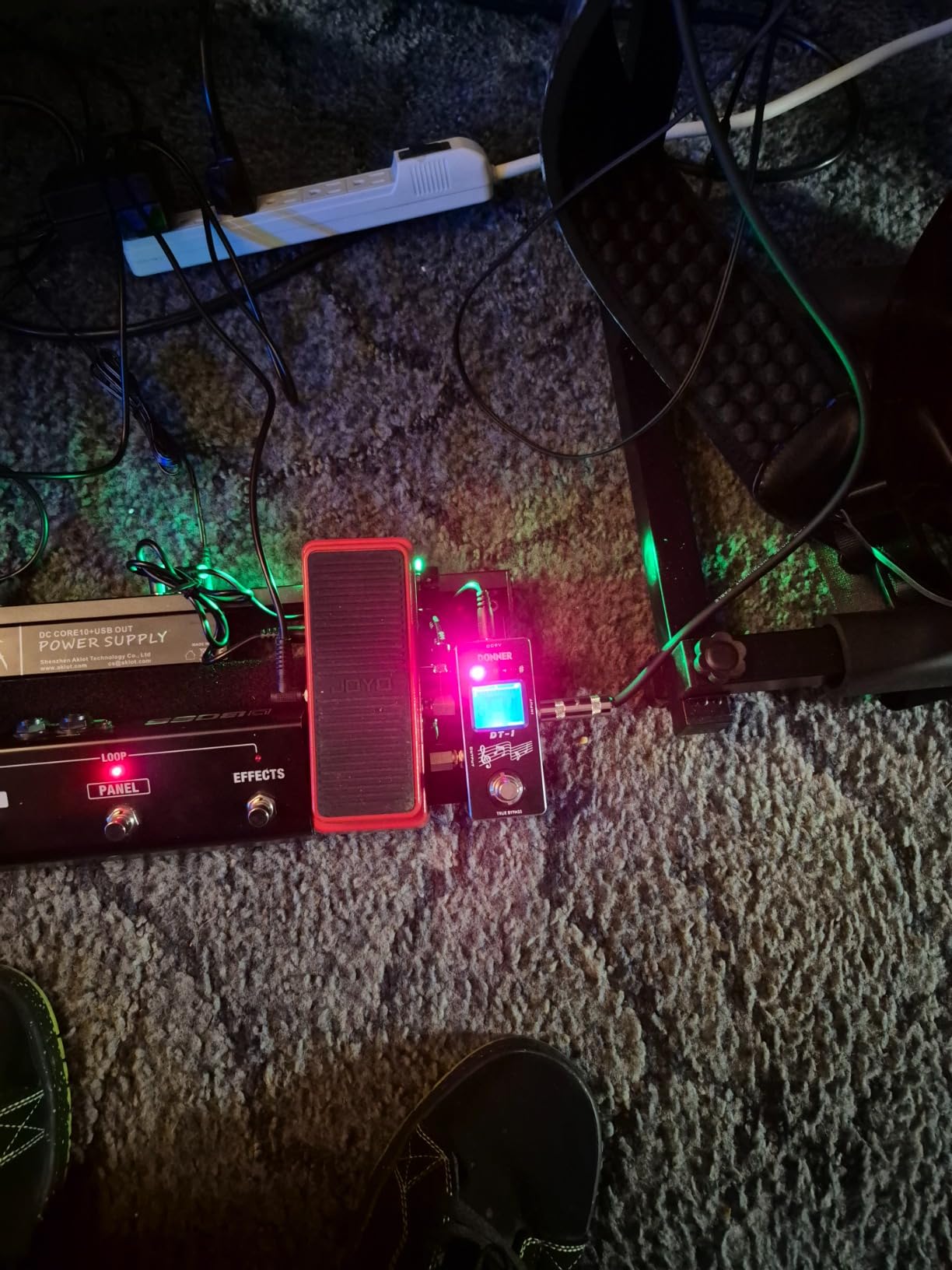
We are including the DT-1 for completeness and to make one point clearly: this is not a beginner purchase. A tuner pedal reads the signal coming out of your pickups, so it only works on an electric guitar, through an amplifier, into a pedal board. A new player has none of those things yet.
Owners who do use it rate the specification sheet highly. The A0 to C8 range covers everything down to the lowest bass notes, the strobe mode is accurate to about one cent, and true bypass restores your signal with no pop or hum. The LED beads sit alongside the mini LCD so the display is readable on a large stage.
The tuning mode mutes signal output entirely, so you can adjust a string mid-song and nobody hears the turning. That is a genuinely useful stage feature and one no clip-on can replicate, since a clip-on never touches your signal in the first place.
Why it makes no sense yet
At 0.22 kg and roughly a stompbox in size, it occupies pedal board real estate that a beginner does not have. It is also tied to a 9V barrel connector with the adapter sold separately, and it carries the lowest average owner rating in this roundup, which fits: it solves a problem you do not have yet.
Forum consensus is consistent on this point. Players starting out are routinely advised away from pedals precisely because the board space should be saved for the day they actually get an amp.
When it becomes the right answer
It is the right tool the day you own an electric guitar, an amp and a board, and the day you start playing live where a foot-operated tuner saves you from putting the instrument down mid-set. The strobe accuracy and the silent tuning mode are why players who own one tend to keep it permanently.
Until then, a clip-on in your case does the same job for your first year at a fraction of the commitment. If you want an amp to eventually plug into, our practice amp guide covers choosing one that suits a bedroom.
Who it suits and who should skip it
Buy the DT-1 if you already play electric through an amp and a board, or if you are a guitarist with a spare foot who wants a stage tuner. The range and strobe precision justify it in that context.
Skip it as a first tuner under any circumstances. Every other tuner on this list works on any guitar in any room with no signal chain at all, and a pedal does none of that.
How to Choose a Guitar Tuner as a Beginner
Clip-on, handheld or app: pick the form factor first
Almost every decision in this category follows from one question: where does the tuner get its information. A clip-on tuner reads string vibration through a piezo sensor, a pedal tuner reads the electrical signal from your pickups, and a phone app listens through the microphone. The first works anywhere on any guitar, the second needs a full electric rig, the third needs a quiet room.
There is a fourth option, the handheld tuner, which you hold against the strings. It is still made and still accurate, yet it occupies a hand you need for something more important, so we did not include one here. For a beginner holding their first guitar, a clip-on wins on every practical measure.
What a cent actually means
A cent is one hundredth of a semitone, and differences of under about 5 cents sit below what most listeners can reliably hear. Most of the tuners on this list report their pitch reading in cents, and that number becomes far more useful once you know the bands.
- Within 5 cents: effectively in tune. No listener, including an instructor, will hear a difference.
- 5 to 15 cents: a trained ear may notice it. Fine for practice, worth fixing.
- 15 to 30 cents: audible to most people. It will sound out when played with other strings.
- Over 30 cents: clearly wrong. This is a string that needs turning, not a judgement call.
So the accuracy differences between these tuners, most of which sit between one and a few cents, matter far less than beginners assume. A tuner that reliably gets you within 5 cents is doing its job perfectly.
The clip hinge is the part that fails first
Across review after review of clip-on tuners, the component that breaks is almost never the sensor, the chip or the screen. It is the hinge, and specifically the pivot joint where the swivel display meets the body. It carries the most repeated load in the design: attaching, detaching and twisting to find the right angle, every time.
Two practical habits extend clip-on life. Do not force the swivel past the angles you actually need, because the joint is rated for a range and resists past it. And do not clip the tuner onto a headstock, tune, and then yank it off, because that is the load case the hinge was never designed for.
Two other recurrent failures worth knowing: clamp pads cracking after months of daily use, and cheap units slipping off mid-tune because the spring tension is low. A tuner that slips is worse than no tuner, because you tune to a reading taken from a moving sensor.
App vs hardware: the honest answer for your practice room
An app is free, instant and genuinely accurate in a silent room, and a widely repeated forum claim is that a modern smartphone’s processing power exceeds what any tuner app needs. That is true. The accuracy problem is not the chip, it is the microphone.
Microphone-based tuning fails in exactly the situations a beginner actually practises in: a room with a fan, a television on, other people talking, or an amplifier running. The app hears all of it and averages it into a reading you cannot trust, and you have no way to tell that is what happened.
Our verdict is simple. Use an app when you are alone in a quiet room and just want a quick check. Buy a clip-on the day someone else is making noise, because the piezo sensor reads the string itself and room noise never enters the calculation. If you also want to avoid draining your phone battery before practice, that settles it too.
When not to buy a pedal tuner
Do not buy a pedal tuner as a beginner purchase. It requires an electric guitar, an amplifier and a pedal board to function at all, and none of those are prerequisites for playing guitar. Board space is the resource people most often wish they had back.
Buy one the day you have a signal chain and are playing in front of people. The foot operation, the silent tuning mode and the stage-bright display all exist to solve problems that only appear on a stage.
Chromatic mode and why it matters later
A chromatic tuner reads any note in its range rather than only the six strings in standard tuning. As a beginner you tune to E A D G B E and never think about it again, so chromatic mode is not urgent. But it costs nothing on any of these tuners, and it is the feature that lets you tune a dropped D, an open G or a whole alternate tuning without a separate device.
Guitar-only modes are the ones to know about, because they are the reason a tuner can read your open A string as an A when you have just plucked a D. Correct instrument selection prevents that confusion, and the multi-instrument tuners here cover guitar, bass, ukulele, violin, mandolin and banjo.
Rechargeable or coin cell
CR2032 coin cells last a long time and cost almost nothing to replace, and they cannot be left flat in a drawer without consequence. Rechargeable lithium units remove batteries entirely but introduce a charging cable, a charging routine and a cell that ages after a few years.
For a first tuner, either is a defensible choice. Pick rechargeable if you already charge devices habitually and hate running out. Pick a coin cell if you want the thing in your case to work forever without thinking about it.
Headstock width, handedness and finish
Check the fit before you commit. Wide classical headstocks and bulky headstocks report tighter clips on several models here, and a tuner that has to be forced on is a tuner that damages finish and eventually falls off. Left-handed players should confirm the display can rotate to a readable angle, which is why a 360-degree swivel matters more than most specs suggest.
For left-handed players specifically, the D’Addario Micro and the D’Addario Eclipse both offer a swivel that handles the flipped orientation, and the Fender FCT-2 mounts on either side of the headstock. For glossier finishes, the KLIQ UberTuner’s padded clip is the most protective.
Why your new guitar goes out of tune in week one
Fresh strings stretch, and a stretched string goes flat. This is normal, it is not a fault, and it is the single most common reason a beginner decides their tuner or their guitar is broken. Retune, play, and expect to do it again for a week or two until the strings settle.
Hand-stretching each string helps. After restringing, pull each string gently away from the neck for several seconds, working from the lowest to the highest, and the stretch happens under controlled tension rather than during your practice session. Also keep the guitar away from heaters and air conditioning, since temperature swings move the neck and the strings together.
The rest of your first-year kit
A tuner solves one problem. Most new players also need a spare pack of strings in the right gauge, a capo for changing key without retuning, a strap so the guitar sits at the right height, and a gig bag so the instrument survives being moved around a house.
Tune before every session, not once a week. An instrument that is in tune when you open the case is the habit that does the most for a beginner’s sound, and it costs nothing once the habit exists.
Frequently Asked Questions
Should I buy a guitar tuner or use an app?
Buy a clip-on tuner for regular practice and keep an app as a backup for quiet rooms. Apps listen through the phone microphone, so a fan, television, conversation or running amplifier corrupts the reading, whereas a clip-on tuner reads string vibration through a piezo sensor and ignores room noise entirely. If you practise alone in a silent room, an app is genuinely accurate; the moment noise appears, only hardware is reliable.
Which guitar tuner is the most accurate?
Accuracy differences between good clip-on tuners are small and do not matter for a beginner. The KLIQ UberTuner is quoted as accurate to within about 1 cent, the Donner DT-1 pedal strobe mode to about 1 cent, and the rest resolve reliably within a few cents. Since listeners cannot reliably hear less than 5 cents of difference, any tuner that reliably lands inside 5 cents is doing its job perfectly.
What is the difference between a clip-on tuner and a tuner pedal?
A clip-on tuner attaches to the headstock and detects string vibration through a piezo sensor, so it works on acoustic, electric, classical, bass and ukulele in any room with no cables. A tuner pedal sits on your pedal board and reads the electrical signal from your pickups, so it only works on an electric guitar through an amplifier. Pedals also mute your signal for silent tuning and use a footswitch, which matters on stage and nowhere else.
Is a pedal tuner worth it?
Not for a beginner. A tuner pedal requires an electric guitar, an amplifier and a pedal board to function, and none of those are prerequisites for playing. It also occupies board space you may want later and usually needs a power adapter bought separately. Buy one the day you have a full electric rig and start playing in front of an audience.
What is the easiest guitar tuning for beginners?
Standard tuning, which is the easiest and the one you should start on: E A D G B E, from the thickest low string to the thinnest high string. Alternate tunings like drop D or DADGAD sound good but make it harder to read chord shapes, so learn standard tuning first and treat a chromatic tuner as the upgrade that lets you explore them later.
Why does my guitar keep going out of tune?
New strings stretch, and a stretched string goes flat, so a guitar will often not hold tune for the first week or two after a restring. That is normal rather than a fault in the guitar or the tuner. Retune each session, hand-stretch each string gently after changing them, and keep the instrument away from heaters and air conditioning, since temperature changes move the neck and the strings together.
Which Guitar Tuner Should You Actually Buy?
If you want one decision and nothing else, buy the Snark SN5X. It is the tuner we would hand to a beginner with no other context: a full color screen that reads in a dim room, vibration sensing that survives a noisy house, a wide range that reaches a low bass string, and rechargeable power that ends the coin battery conversation for good.
If you want the tuner to disappear from your headstock, the D’Addario Micro is the answer, and it is light enough to leave mounted permanently in a case. If your household owns a ukulele or a violin as well as a guitar, the Fender FCT-2 covers all of them in one unit. If you practise in the dark, the KLIQ UberTuner has the brightest rotating screen in this roundup.
The Ranch and the Donner DT-2 cover the basics at the low end of the market, and the Fender FT-1 is the sturdiest of that tier. For a child just starting out, any of those three is a sensible first purchase.
Save the Donner DT-1 pedal until you own an electric guitar, an amplifier and a board. Your first year of practice does not need it, and a clip-on in your case does the same job for none of the commitment.
Whatever you choose, tune before you play. That habit is worth more than any specification on any of these pages.