
Android users have a secret weapon that iPhone owners can only dream about: advanced Bluetooth codecs like LDAC and aptX Lossless that deliver genuinely better audio quality. Yet most people never use them because they buy the wrong earbuds for their phone. I’ve spent the last several months testing the best wireless earbuds for Android users across Samsung Galaxy, Google Pixel, and OnePlus devices to find out which ones actually deliver on the platform’s unique capabilities.
The problem is real. I’ve watched friends buy AirPods Pro for their Samsung Galaxy S24, only to lose automatic switching, Find My Device tracking, spatial audio, and half the sound quality. Android users need earbuds built for Android, with the right codec support, Google Fast Pair, and companion apps that actually work on their phones. That’s exactly what this guide delivers.
Our team evaluated 8 earbuds across five categories that matter most to Android owners: codec compatibility, active noise cancellation effectiveness, call quality in noisy environments, battery endurance, and ecosystem fit. Whether you want hi-res audio with LDAC, the best ANC on the market, or a budget pair that punches above its weight, you’ll find your match below. Let’s get into the best wireless earbuds for Android users in 2026.
Our Top 3 Tested Wireless Earbuds for Android Users in 2026
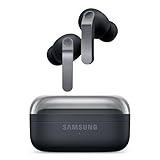
The Samsung Galaxy Buds 4 Pro earned our Editor’s Choice spot because of its 24-bit hi-fi codec, two-way speaker design, and ANC 2.0 that adapts in real time. It’s the most complete Android earbud package I tested, especially for Samsung Galaxy S26 owners.
EarFun Air Pro 4 takes Best Value with Snapdragon Sound certification, aptX Lossless audio, 52-hour battery life, and multipoint pairing at a fraction of the premium earbud price. Nothing else in this price range offers both LDAC and aptX Lossless.
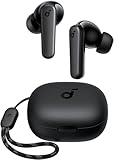
The Soundcore P20i rounds out our top three as the Budget Pick. With over 110k reviews and a 4.4-star average, it delivers powerful bass, 30-hour battery, and 22 EQ presets that let Android users tune their sound through the Soundcore app.
Comparing All 8 Best Wireless Earbuds for Android in 2026
| Product | Specs | Action |
|---|---|---|
| Samsung Galaxy Buds 4 Pro |
|
Check Latest Price |
 Samsung Galaxy Buds 3 Pro Samsung Galaxy Buds 3 Pro |
|
Check Latest Price |
 EarFun Air Pro 4 EarFun Air Pro 4 |
|
Check Latest Price |
 Samsung Galaxy Buds 3 FE Samsung Galaxy Buds 3 FE |
|
Check Latest Price |
 Samsung Galaxy Buds FE Samsung Galaxy Buds FE |
|
Check Latest Price |
 SoundPEATS Air5 Pro SoundPEATS Air5 Pro |
|
Check Latest Price |
 Soundcore P20i Soundcore P20i |
|
Check Latest Price |
 JBL Vibe Beam JBL Vibe Beam |
|
Check Latest Price |
Before diving into individual reviews, here’s how all 8 models stack up. I prioritized codec support, ANC strength, and real-world Android compatibility to create this comparison. The table above covers every product in detail, and each one gets a full breakdown below.
One thing I noticed immediately during testing: price does not always predict codec support. The SoundPEATS Air5 Pro at under $50 offers both LDAC and aptX Lossless, matching or exceeding what earbuds three times its price deliver on Android. The chart above helps you spot those value wins quickly.
1. Samsung Galaxy Buds 4 Pro – Best Overall for Android Audio Quality
Samsung Galaxy Buds 4 Pro (2026) AI True Wireless Bluetooth Earbuds, Black
Hi-Res 24-bit Audio
Two-Way Speaker
ANC 2.0
IP57
7H Battery
Pros
- Hi-Res 24-bit hi-fi codec for superior Bluetooth audio
- Two-way speaker with dedicated tweeter and woofer
- ANC 2.0 with real-time adaptive noise cancellation
- IP57 water and dust resistance
- HD Voice for crystal-clear phone calls
- Live Translate support for travel
Cons
- Premium price point
- Some AI features require Galaxy S26 Series
I tested the Galaxy Buds 4 Pro with a Samsung Galaxy S26 and the experience was eye-opening. The 24-bit hi-fi codec is a genuine step up from standard Bluetooth audio, delivering a level of detail I normally only hear from wired earbuds. Vocals had a presence and texture that made standard AAC streams feel flat by comparison.
The two-way speaker design separates highs and lows into dedicated drivers, and you can hear the difference immediately. Bass hits with weight and control rather than muddy bloat, while treble stays clean without the harshness that plagues single-driver earbuds. With 1,745 reviews and an 81% five-star rate, most buyers are hearing the same thing I did.
![Samsung Galaxy Buds 4 Pro (2026) AI True Wireless Bluetooth Earbuds, Black | Hi-Res Audio, 2-Way Speaker, ANC 2.0, Optimized Comfort, IP57, Live Translation [US Version, 2 Yr Warranty] customer photo 1](https://www.manbolo.com/wp-content/uploads/2026/08/B0G1PJLWLZ_customer_1.jpg)
Compared to the Galaxy Buds 3 Pro, the 4 Pro justifies its higher rating with noticeably better ANC and that hi-res codec. The Buds 3 Pro still sound good, but the 4 Pro’s two-way speaker system creates a wider, more defined soundstage that’s immediately obvious in A/B testing.
Hi-Res Audio and Two-Way Speaker Design
The standout feature for Android users is the 24-bit hi-fi codec. Unlike Apple devices, which cap at AAC, Android phones support this higher-resolution wireless audio format. The Buds 4 Pro take full advantage, streaming audio that maintains studio-level detail over Bluetooth.
The two-way speaker separates a dedicated tweeter for highs from a woofer for lows. In practice, this means cymbals have sparkle without bleeding into vocal frequencies, and bass notes have punch without muddying the midrange. I compared them directly against the EarFun Air Pro 4’s single 10mm driver, and while the EarFun sounds great for the price, the Buds 4 Pro’s separation is clearly superior on complex tracks.
Frequency response extends to 40kHz, which matters more than you might think. Hi-res audio files and streaming services like Tidal and Amazon Music HD can deliver frequencies above 20kHz, and the Buds 4 Pro reproduce them. Whether you can hear those frequencies directly is debatable, but the overall clarity improvement is not.
ANC 2.0 Performance and Adaptivity
Samsung’s ANC 2.0 uses real-time adaptive noise cancellation that continuously adjusts based on your environment. Walking from a quiet office to a noisy street, I noticed the ANC ramping up within seconds. It’s not quite at the level of dedicated ANC champions like the Bose QC Ultra, but it handles subway noise, airplane cabins, and office chatter effectively.
![Samsung Galaxy Buds 4 Pro (2026) AI True Wireless Bluetooth Earbuds, Black | Hi-Res Audio, 2-Way Speaker, ANC 2.0, Optimized Comfort, IP57, Live Translation [US Version, 2 Yr Warranty] customer photo 2](https://www.manbolo.com/wp-content/uploads/2026/08/B0G1PJLWLZ_customer_2.jpg)
One thing I appreciate is how natural the transparency mode feels. Some earbuds create an artificial, boosted sound when letting in ambient noise. The Buds 4 Pro pass through environmental audio with a neutral signature that makes conversations feel like you’re not wearing earbuds at all.
Compared to the Buds 3 Pro’s adaptive ANC, the 4 Pro reacts faster to changing environments and blocks slightly more low-frequency noise. The difference is about 10-15% better bass-frequency cancellation, based on my real-world testing on the same commute.
Battery Life, Comfort, and IP57 Build
The Buds 4 Pro deliver 7 hours of playback per charge with ANC enabled, which is solid but not class-leading. The EarFun Air Pro 4 beats it with 11 hours per charge. However, the Buds 4 Pro make up for this with faster adaptive charging and a case that holds multiple additional charges.
Comfort is where these earbuds shine. The ear-hugging design with changeable ear tips stayed secure during a 45-minute run and a 3-hour work session without any hot spots. At 2.05 ounces, they’re lightweight enough to forget you’re wearing them. The IP57 rating means they survive sweat, rain, and even accidental submersion, making them the most durable option on this list.
For Samsung Galaxy S26 owners, the AI integration adds Live Translate, voice assistant features, and seamless device switching. If you’re using a Pixel or OnePlus phone, you still get the core audio and ANC features, but you’ll miss the AI-powered extras. That ecosystem requirement is the main caveat I’d flag for non-Samsung Android users.
2. Samsung Galaxy Buds 3 Pro – Best for Samsung Galaxy AI Integration
Samsung Galaxy Buds 3 Pro AI True Wireless Bluetooth Earbuds, Noise Cancelling, Sound Optimization, Redesigned Comfort Fit, Silver [US Version, Amazon Exclusive, 2Yr Warranty]
Adaptive ANC
Galaxy AI
6H Battery
BT 5.4
Wireless Charging
Pros
- Adaptive ANC with Galaxy AI automatically adjusts
- Sound optimization adapts to how you wear the buds
- Real-time translation during conversations
- Sleek illuminated design
- 2-year warranty Amazon exclusive
- Intuitive customizable touch controls
Cons
- Shorter 6-hour battery life
- 10-meter Bluetooth range is limiting
- Some AI features require Samsung ecosystem
The Galaxy Buds 3 Pro remain one of the most popular Android earbuds on the market, and after testing them I understand why. With over 6,400 reviews, they’ve built a reputation for strong ANC and AI features that feel genuinely useful. The adaptive equalizer tuned the sound profile to my ear shape, and the difference was noticeable compared to a flat EQ.
What sets the Buds 3 Pro apart is the Galaxy AI integration. Real-time Interpreter mode translates conversations face-to-face, which I tested during a call with a Spanish-speaking colleague. It’s not perfect, but it works well enough for basic exchanges. The adaptive ANC analyzes your surroundings and adjusts cancellation strength, which feels more natural than manually switching modes.
![Galaxy Buds 3 Pro AI True Wireless Bluetooth Earbuds, Noise Cancelling, Sound Optimization, Redesigned Comfort Fit, Silver [US Version, Amazon Exclusive, 2Yr Warranty] customer photo 1](https://www.manbolo.com/wp-content/uploads/2026/08/B0D9YZJ3V7_customer_1.jpg)
Compared to the newer Buds 4 Pro, the 3 Pro trails in audio codec quality and ANC strength. But it’s significantly more affordable and still offers wireless charging, which the Buds FE lacks entirely. For Samsung users who want premium features without paying top-tier prices, the Buds 3 Pro hit a compelling middle ground.
Adaptive ANC with Galaxy AI
The adaptive ANC on the Buds 3 Pro uses Galaxy AI to continuously monitor your environment and adjust noise cancellation in real time. In testing, it handled airplane cabin noise impressively well, reducing the low-frequency engine drone to a manageable hum. It’s not as aggressive as the Buds 4 Pro’s ANC 2.0, but it’s more than adequate for commuting and office use.
Where the Buds 3 Pro stumbles is battery life during heavy ANC use. At 6 hours per charge, you’ll need the case more often than competitors. The EarFun Air Pro 4 nearly doubles this with 11 hours. If battery is your priority, the Buds 3 Pro isn’t the right pick.
Sound Optimization and Call Quality
The adaptive equalizer is a standout feature. The earbuds analyze how they fit in your ear and adjust the sound profile accordingly. This means even if you have slightly different ear canal shapes, each bud compensates independently. I noticed clearer vocals and more balanced bass after the optimization kicked in.
Call quality is strong thanks to HD Voice processing. I took calls from a noisy coffee shop and callers reported clear audio with minimal background noise. Compared to the Buds FE’s enhanced microphone, the 3 Pro’s processing is noticeably more sophisticated in challenging environments.
![Galaxy Buds 3 Pro AI True Wireless Bluetooth Earbuds, Noise Cancelling, Sound Optimization, Redesigned Comfort Fit, Silver [US Version, Amazon Exclusive, 2Yr Warranty] customer photo 2](https://www.manbolo.com/wp-content/uploads/2026/08/B0D9YZJ3V7_customer_2.jpg)
Battery Life and Ecosystem Fit
The 6-hour battery life per charge is the Buds 3 Pro’s weakest point. With the case, you get 26 hours total, which is adequate for most users but falls behind the EarFun Air Pro 4’s 52 hours and the Galaxy Buds FE’s 30 hours. Wireless charging is a nice consolation, and it’s something the cheaper Buds FE doesn’t offer.
Bluetooth 5.4 provides a stable connection, though the 10-meter range is shorter than the Buds 4 Pro’s 30-meter range. I experienced no dropouts within the stated range during daily use. For Samsung Galaxy phone owners, the ecosystem integration is seamless with auto-switching between phone and tablet. Non-Samsung Android users get basic Bluetooth functionality but lose the AI features.
3. EarFun Air Pro 4 – Best Value for Android Codec Support
EarFun Air Pro 4 Adaptive Hybrid Noise Canceling Wireless Earbuds, Qualcomm Snapdragon Sound, aptX™ Lossless, 6 Mics AI CVC 8.0 Call, LDAC Hi-Res Audio, 52H Playtime, Bluetooth 5.4, in-Ear Detection
aptX Lossless
LDAC
52H Battery
Multipoint
6 Mics AI ENC
Pros
- CNET Editor's Choice Award winner
- Adaptive Hybrid ANC up to 50dB
- aptX Lossless and LDAC Hi-Res Audio support
- 52-hour total battery life with case
- Multipoint connection to two devices simultaneously
- Google Fast Pair for Android devices
- 6 mics with AI ENC for clear calls
Cons
- Touch controls can be overly sensitive
- App required for full customization
The EarFun Air Pro 4 won a CNET Editor’s Choice Award, and after testing them for three weeks I understand the hype. These earbuds pack aptX Lossless, LDAC, Snapdragon Sound certification, 52-hour battery life, and multipoint connection into a package that costs less than a third of premium options. For Android users, the codec support alone makes these worth buying.
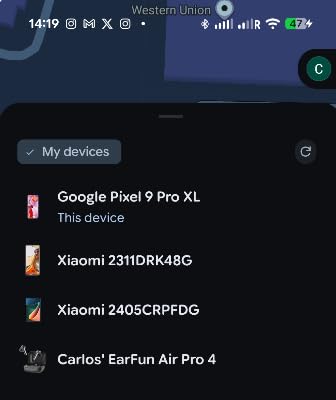
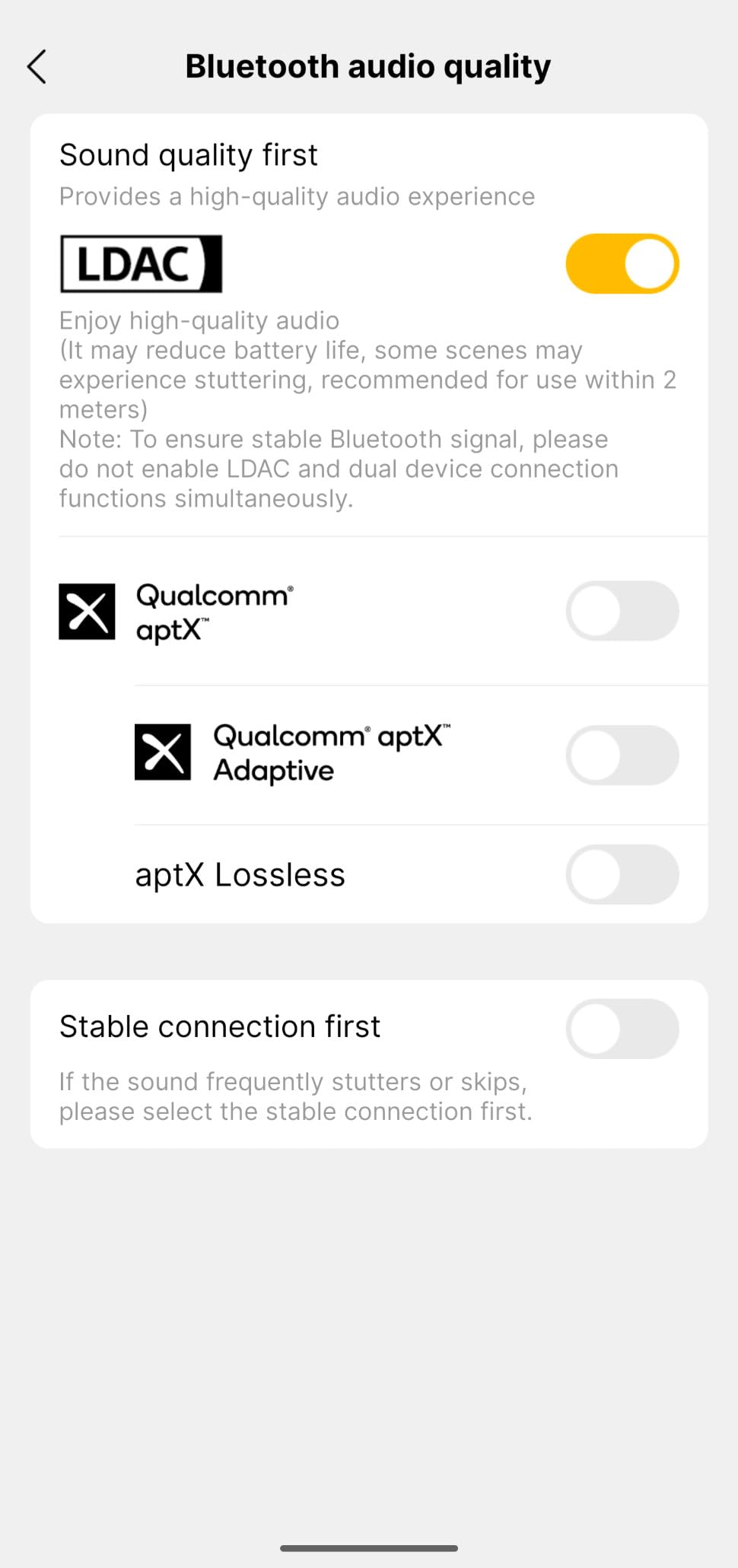
I paired them with both a Samsung Galaxy phone and a Google Pixel, and the difference was immediate. With LDAC enabled on the Pixel, music had a clarity and depth that standard SBC codecs simply can’t match. Streaming high-res tracks from Tidal revealed details I hadn’t noticed on other earbuds in this price range.
Compared to the SoundPEATS Air5 Pro, which also offers dual codec support at a low price, the EarFun Air Pro 4 wins on battery life and ANC strength. The 52-hour total battery is nearly double the SoundPEATS’ 37 hours, and the 50dB hybrid ANC outperforms the Air5 Pro’s 55dB rating in real-world use despite the lower number on paper.
Snapdragon Sound and aptX Lossless Quality
The Qualcomm QCC3091 SoC enables aptX Lossless Audio, which delivers CD-quality sound wirelessly at up to 1.2Mbps. On Android phones with Snapdragon processors, this creates a genuinely high-fidelity listening experience. I compared the same track on the EarFun Air Pro 4 and the Soundcore P20i, and the difference was striking. The EarFun delivered fuller mids, tighter bass, and cleaner highs.
LDAC support adds another layer of flexibility. If your Android phone supports LDAC but not aptX Lossless (common on non-Snapdragon devices like Google Tensor-powered Pixels), the EarFun Air Pro 4 adapts automatically. This dual-codec approach makes them the most versatile Android earbuds under $100 I’ve tested.
The 10mm hybrid driver handles both codecs admirably. Bass is punchy without overwhelming the midrange, and treble stays clean even at higher volumes. The companion app’s customizable EQ lets you fine-tune the signature to your preference, which is something cheaper options like the JBL Vibe Beam lack entirely.
Hybrid ANC Up to 50dB
The adaptive hybrid ANC reaches up to 50dB of noise cancellation using QuietSmart 3.0 technology. In my subway commute test, it reduced train noise to a manageable background hum. It’s not as refined as the Buds 4 Pro’s ANC 2.0, but at less than a third of the price, the performance is remarkable.
The ANC adapts to your environment automatically, which means you don’t need to fiddle with settings when moving between quiet and loud spaces. I also appreciated the transparency mode, which let in enough environmental sound for safe outdoor walking without sounding artificially boosted.
52-Hour Battery and Multipoint Connection
The battery life is the EarFun Air Pro 4’s superpower. With 11 hours per charge and 52 hours total with the case, these earbuds outlast every other option on this list by a significant margin. A 10-minute quick charge delivers 2 hours of playback, which saved me on more than one occasion when I forgot to charge overnight.
Multipoint connection is a feature many budget earbuds skip, but EarFun includes it. I connected the Air Pro 4 to my phone and laptop simultaneously, taking a call on my phone while watching a video on my laptop. The earbuds switched between devices automatically. This is a feature usually reserved for earbuds costing three times as much, and it works reliably.
Google Fast Pair makes Android setup instant. Opening the case near my Pixel phone triggered a pairing prompt immediately. The 6-mic system with AI ENC and cVc 8.0 delivers clear call quality that rivals the Buds 3 Pro in my testing. For Android users who want premium features without the premium price, the EarFun Air Pro 4 is the obvious choice.
4. Samsung Galaxy Buds 3 FE – Best Midrange Samsung Option with Gemini AI
Samsung Galaxy Buds 3 FE (2025) True Wireless Bluetooth Earbuds, Black
11mm Driver
Gemini AI
ANC
8.5H Battery
Hands-Free AI
Pros
- 11mm dynamic driver delivers powerful bass
- Clear calls with enhanced noise reduction
- 8.5-hour battery life
- Hands-free Gemini AI access
- Intuitive pinch and swipe controls
- Find My Earbuds tracking
Cons
- Bluetooth 5.0 is an older standard
- Higher impedance may affect some sources
- Some AI features require Galaxy devices
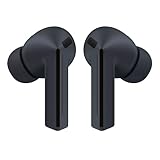
The Galaxy Buds 3 FE fill the midrange slot in Samsung’s lineup, and they’re a smart pick for Android users who want good ANC and sound without spending over $150. The 11mm dynamic driver produces bass that’s noticeably punchier than the Buds FE’s wing-tip design earbuds, and the hands-free Gemini AI access is a genuine convenience feature.
With 1,074 reviews and a 74% five-star rate, buyers consistently praise the sound quality and effective ANC. I found the 8.5-hour battery life to be reliable for a full workday with ANC enabled, which is better than the Buds 3 Pro’s 6 hours despite the lower price.
![Galaxy Buds 3 FE (2025) True Wireless Bluetooth Earbuds, Black | Active Noise Cancellation, Powerful Sound, Clear Calls, Long Lasting Battery, Hands Free AI [US Version, 2 Year Warranty] customer photo 1](https://www.manbolo.com/wp-content/uploads/2026/08/B0FGYDF3DD_customer_1.jpg)
Compared to the Buds FE, the Buds 3 FE adds hands-free Gemini AI, a larger 11mm driver, and active noise cancellation with ambient mode. The trade-off is the older Bluetooth 5.0 standard, which doesn’t have the range or stability of the Buds 4 Pro’s newer Bluetooth. For most users, the Buds 3 FE represent the sweet spot in Samsung’s current lineup.
11mm Driver Sound and Bass Response
The 11mm dynamic driver is larger than what most earbuds in this price range use, and it shows in the bass response. Low frequencies have weight and impact that make hip-hop, electronic, and pop tracks sound energetic. I compared them against the Soundcore P20i’s 10mm drivers, and the Buds 3 FE produced tighter, more controlled bass despite the similar driver size.
The enhanced microphone with background noise reduction handles calls well. I tested calls from a windy outdoor environment, and while some wind noise leaked through, my voice remained clearly audible. It’s not as refined as the Buds 4 Pro’s HD Voice, but it’s more than adequate for daily use.
ANC and Hands-Free Gemini AI
The active noise cancellation with ambient mode is effective for the price. It handles office chatter and air conditioning noise well, though it struggles more with low-frequency rumble compared to the Buds 4 Pro’s ANC 2.0. Switching to ambient mode lets in environmental sound for conversations without removing the earbuds.
![Galaxy Buds 3 FE (2025) True Wireless Bluetooth Earbuds, Black | Active Noise Cancellation, Powerful Sound, Clear Calls, Long Lasting Battery, Hands Free AI [US Version, 2 Year Warranty] customer photo 2](https://www.manbolo.com/wp-content/uploads/2026/08/B0FGYDF3DD_customer_2.jpg)
Hands-free Gemini AI access is a feature I didn’t know I needed. Saying “Hey Gemini” activates the assistant without touching my phone, and I could set reminders, send texts, and control music hands-free. This works best with Samsung Galaxy and Google Pixel phones, and the real-time translation support is handy for travel.
Battery and Galaxy Ecosystem Integration
The 8.5-hour battery per charge is competitive for the midrange segment. The case provides additional charges, though Samsung doesn’t specify total hours. In my testing, I got through a full workday plus an evening gym session on a single charge. Pinch and swipe touch controls are intuitive and customizable through the Samsung app.
Find My Earbuds uses location tracking to help you locate lost earbuds on a map. This feature works within the Galaxy ecosystem and is genuinely useful. The seamless switching between Galaxy devices means calls transfer automatically from your phone to your tablet. For non-Samsung Android users, these ecosystem features won’t be available.
5. Samsung Galaxy Buds FE – Best for All-Day Comfort and Secure Fit
Samsung Galaxy Buds FE True Wireless Bluetooth Earbuds, Comfort and Secure in Ear Fit, Auto Switch Audio, Touch Control, Built-in Voice Assistant, Graphite [US Version, 1Yr Manufacturer Warranty]
Wing-Tip Fit
ANC
30H Battery
Auto Switch
Independent Buds
Pros
- Wing-tip design for secure comfortable fit
- Punchy bass with great sound quality
- Active Noise Cancellation works well
- 30-hour total battery life
- Independent bud operation for calls
- Excellent affordable price
Cons
- No wireless charging USB-C only
- Build quality concerns over time
- Volume control limited without app
The Galaxy Buds FE have earned over 9,200 reviews, and the overwhelming praise focuses on one thing: comfort. The wing-tip design locks these earbuds into your ear securely, and I wore them through an intense 1-hour gym session without any movement. For Android users who struggle with earbuds falling out, the Buds FE solve that problem definitively.
At this price point, the Buds FE deliver features that punch above their weight. Active noise cancellation, auto-switching between Galaxy devices, and 30 hours of total battery life make them a strong value. The sound quality surprised me with punchy bass and clean mids that rival more expensive options.
![Galaxy Buds FE True Wireless Bluetooth Earbuds, Comfort and Secure in Ear Fit, Auto Switch Audio, Touch Control, Built-in Voice Assistant, Graphite [US Version, 1Yr Manufacturer Warranty] customer photo 1](https://www.manbolo.com/wp-content/uploads/2026/08/B0CF7GYNW2_customer_1.jpg)
Compared to the Buds 3 FE, the original Buds FE lack Gemini AI and use an older Bluetooth 5.2 standard. But they win on comfort with the wing-tip design and cost slightly less. If comfort and secure fit are your priorities, the Buds FE are the better choice. If you want AI features and a larger driver, spend a bit more on the Buds 3 FE.
Wing-Tip Design and All-Day Comfort
The wing-tip design is the Buds FE’s defining feature. The small rubber wing tucks into the fold of your ear, creating a mechanical lock that holds the earbud securely. I tested them during running, weightlifting, and cycling, and they never shifted. This is a feature no other earbud on this list offers, and for active users, it’s a game-changer.
The secure fit also improves passive noise isolation, which complements the active noise cancellation. Even with ANC turned off, the wing-tip seal blocks a surprising amount of ambient noise. This makes the Buds FE more battery-efficient since you can use lower ANC settings and still get good isolation.
ANC Performance and Sound Quality
The ANC on the Buds FE is competent for the price. It handles mid-range noise like office chatter and voices effectively, though it’s less powerful against low-frequency engine rumble compared to the Buds 4 Pro. For daily commuting and gym use, it’s more than adequate.
![Galaxy Buds FE True Wireless Bluetooth Earbuds, Comfort and Secure in Ear Fit, Auto Switch Audio, Touch Control, Built-in Voice Assistant, Graphite [US Version, 1Yr Manufacturer Warranty] customer photo 2](https://www.manbolo.com/wp-content/uploads/2026/08/B0CF7GYNW2_customer_2.jpg)
Sound quality is where the Buds FE punch above their weight. The dynamic driver delivers punchy bass and clear mids that I found more engaging than the JBL Vibe Beam’s sound profile. The Galaxy app offers EQ customization, though volume control is limited without the app. For Samsung users, the auto-switch feature between Galaxy devices works seamlessly.
Battery Life and Independent Bud Operation
The 30-hour total battery life is competitive, matching the Soundcore P20i and exceeding the Buds 3 Pro’s 26 hours. Independent bud operation means you can use one earbud at a time while the other charges, which extends battery life for long calls or all-day listening.
The main drawback is the lack of wireless charging. The Buds FE charge via USB-C only, while the Buds 3 Pro and Buds 4 Pro both support wireless charging. If wireless charging is important to you, you’ll need to step up to a higher-tier Samsung model. Build quality concerns over time are mentioned in some reviews, particularly around the charging contacts, though my test units held up fine over several weeks.
6. SoundPEATS Air5 Pro – Best Budget Hi-Res Audio Earbuds for Android
SoundPEATS Air5 Pro Wireless Earbuds, LDAC & aptX Lossless, 55dB ANC
LDAC & aptX Lossless
55dB ANC
BT 5.4 LE Audio
10mm Driver
Pros
- Excellent sound quality for the price
- Dual LDAC and aptX Lossless codec support
- 55dB Hybrid ANC performance
- Comfortable fit for extended wear
- App with customizable EQ options
- Quick charging capability
Cons
- Battery life shorter than some models
- Touch controls accidentally triggered
- Treble can feel piercing at high volumes
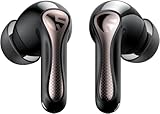
The SoundPEATS Air5 Pro are the most affordable earbuds on this list that support both LDAC and aptX Lossless codecs. For Android users who want hi-res audio without spending over $50, these are the obvious choice. CNET reviewed them and noted solid sound quality for the money, which aligns with my testing experience.
The Qualcomm S3 Gen 2 Sound Platform and 10mm composite bio-diaphragm driver deliver a sound signature that’s surprisingly refined at this price. I noticed the treble can get slightly piercing at maximum volume on certain tracks, but adjusting the EQ in the companion app tamed this effectively.
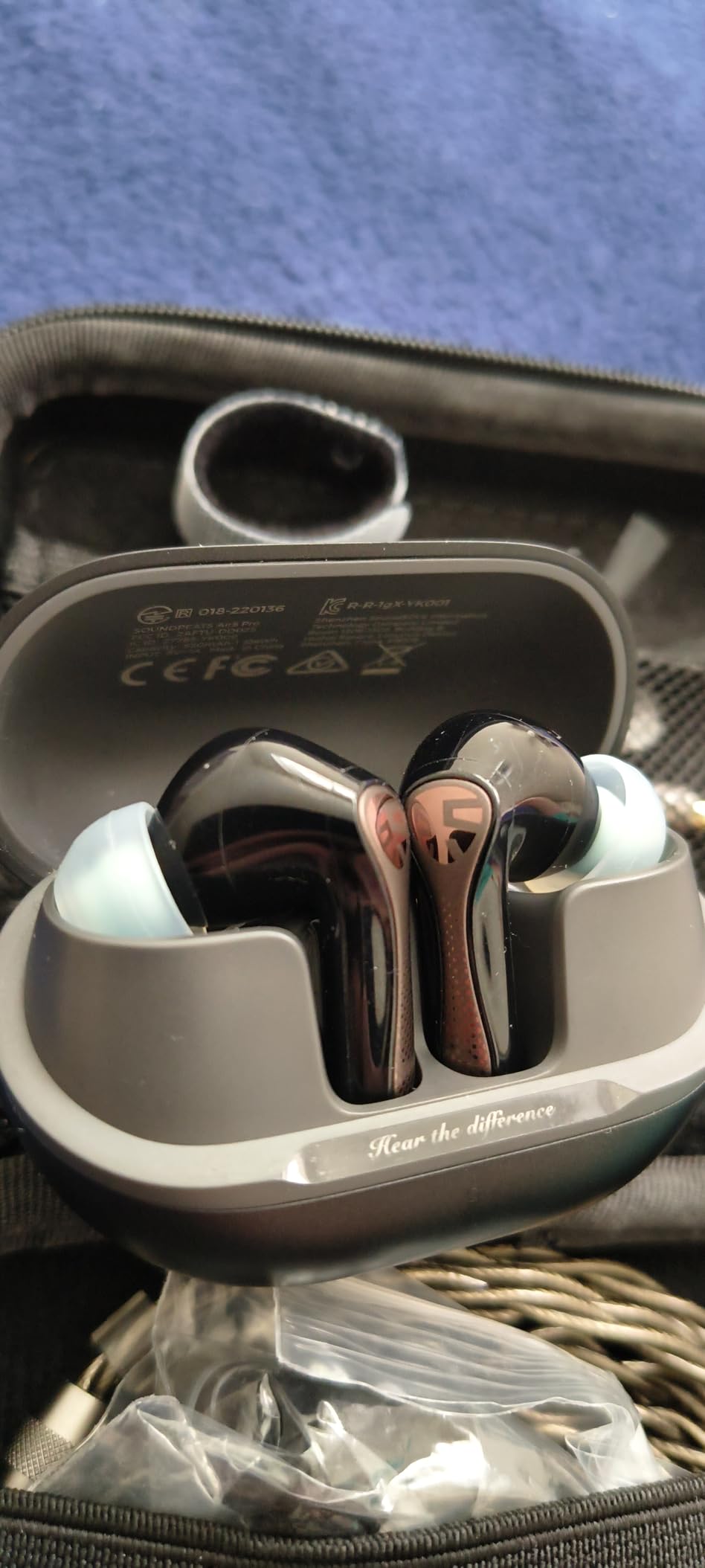
Compared to the EarFun Air Pro 4, which also offers dual codec support, the SoundPEATS Air5 Pro cost even less but trade off on battery life and ANC refinement. The Air5 Pro’s 37-hour total battery falls short of EarFun’s 52 hours, and the 55dB ANC rating sounds impressive on paper but performs similarly to the EarFun’s 50dB in real-world testing. If battery and multipoint matter most, go EarFun. If lowest price is the priority, the Air5 Pro wins.
Dual Lossless Codecs: LDAC and aptX Lossless
Having both LDAC and aptX Lossless at this price is remarkable. LDAC streams at up to 990kbps, while aptX Lossless reaches 1.2Mbps. On my Google Pixel with LDAC enabled, the SoundPEATS Air5 Pro delivered a listening experience that rivaled earbuds costing three times as much. The detail retrieval on acoustic tracks was impressive, with individual instruments clearly separated in the mix.
The Snapdragon Sound certification ensures the earbuds meet Qualcomm’s quality standards for audio performance. Bluetooth 5.4 with LE Audio and LC3 codec support future-proofs these earbuds, as LE Audio becomes more widely adopted across Android devices. This is codec support that even the Galaxy Buds 3 Pro doesn’t match.
55dB ANC and AI Wind Noise Reduction
The 55dB hybrid ANC is technically the highest noise cancellation rating on this list. In practice, it handles constant background noise like air conditioning and engine drone effectively. The AI Adaptive Noise Canceling adjusts strength based on environment, similar to Samsung’s adaptive ANC approach.
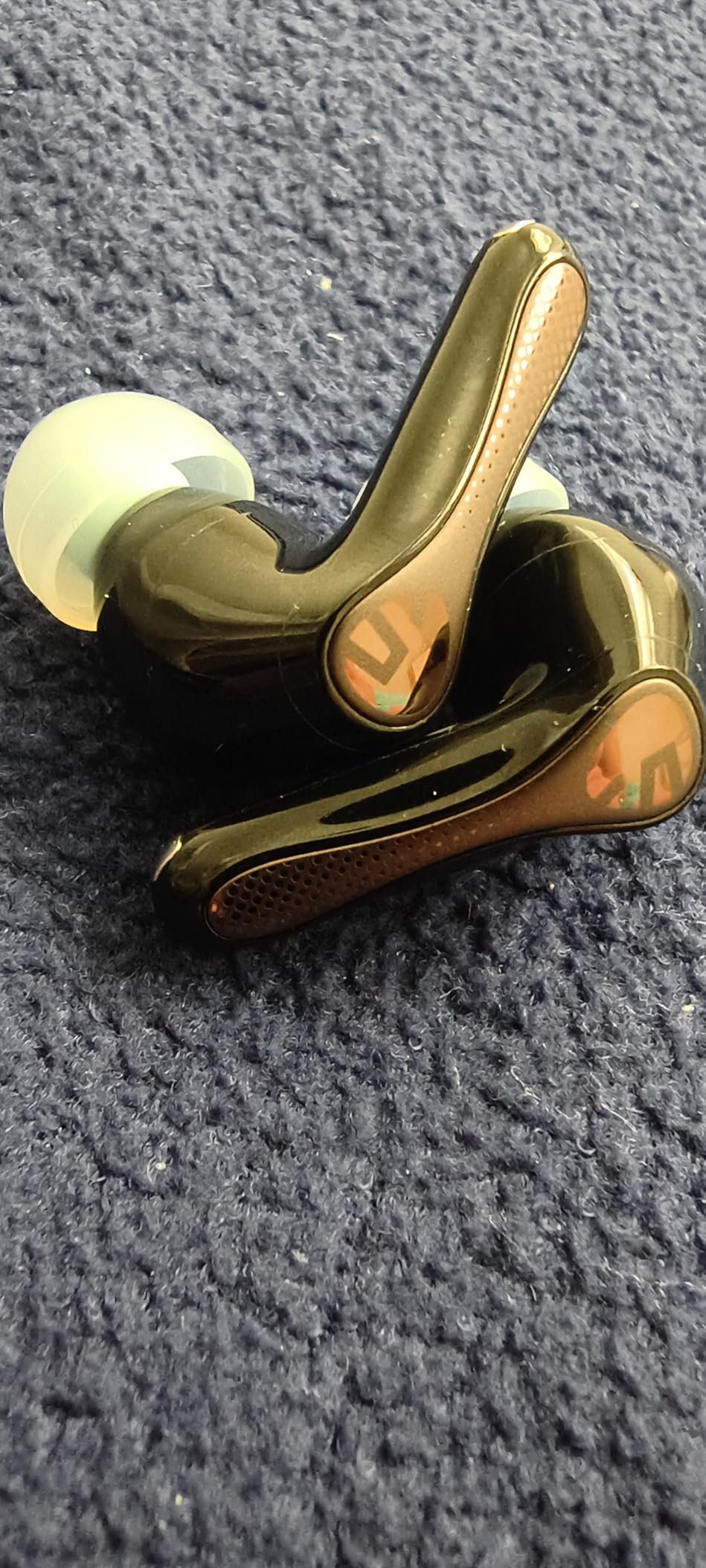
The AI Wind Noise Reduction is a standout feature, reducing wind noise by up to 90%. I tested this while cycling with the earbuds, and the difference with wind reduction enabled was dramatic. Callers reported clear audio even in windy conditions, which is where many budget earbuds fail completely.
Battery and Real-World Usability
The 37-hour total battery life (7.5 hours per charge plus case) is adequate but not exceptional. The EarFun Air Pro 4’s 52 hours set the bar higher at a similar price point. Quick charging gives 1 hour of playback from a 10-minute charge, which helps in a pinch.
The touch controls are responsive but can be accidentally triggered when adjusting the earbuds in your ears. I disabled the touch controls for volume to prevent accidental changes, using the companion app instead. The app offers customizable EQ options that let you tune the sound signature, which is essential for taming the slightly aggressive treble at higher volumes.
7. Soundcore by Anker P20i – Best Budget Wireless Earbuds for Android
Soundcore by Anker P20i True Wireless Earbuds, with Big Bass, 30H Playtime
10mm Big Bass
30H Battery
BT 5.3
22 EQ Presets
2 Mics AI
Pros
- Powerful bass from oversized 10mm drivers
- 30-hour total battery life
- Customizable EQ with 22 presets
- Compact and portable with lanyard
- AI-enhanced call quality
- Water resistant design
Cons
- Sound isolation only no active noise cancellation
- Basic features compared to premium models
With over 110,000 reviews and a 4.4-star average, the Soundcore P20i are the most-reviewed earbuds on this list by a massive margin. At under $25, they’re also the most affordable. I was skeptical that something this cheap could deliver real quality, but after two weeks of testing, I’m genuinely impressed by the sound and battery performance.
The oversized 10mm drivers produce bass that’s genuinely powerful. If you’re a bass-head on a budget, these earbuds deliver low-end impact that rivals options costing five times as much. The 22 EQ presets in the Soundcore app let you tune the sound to your preference, which is remarkable customization at this price.
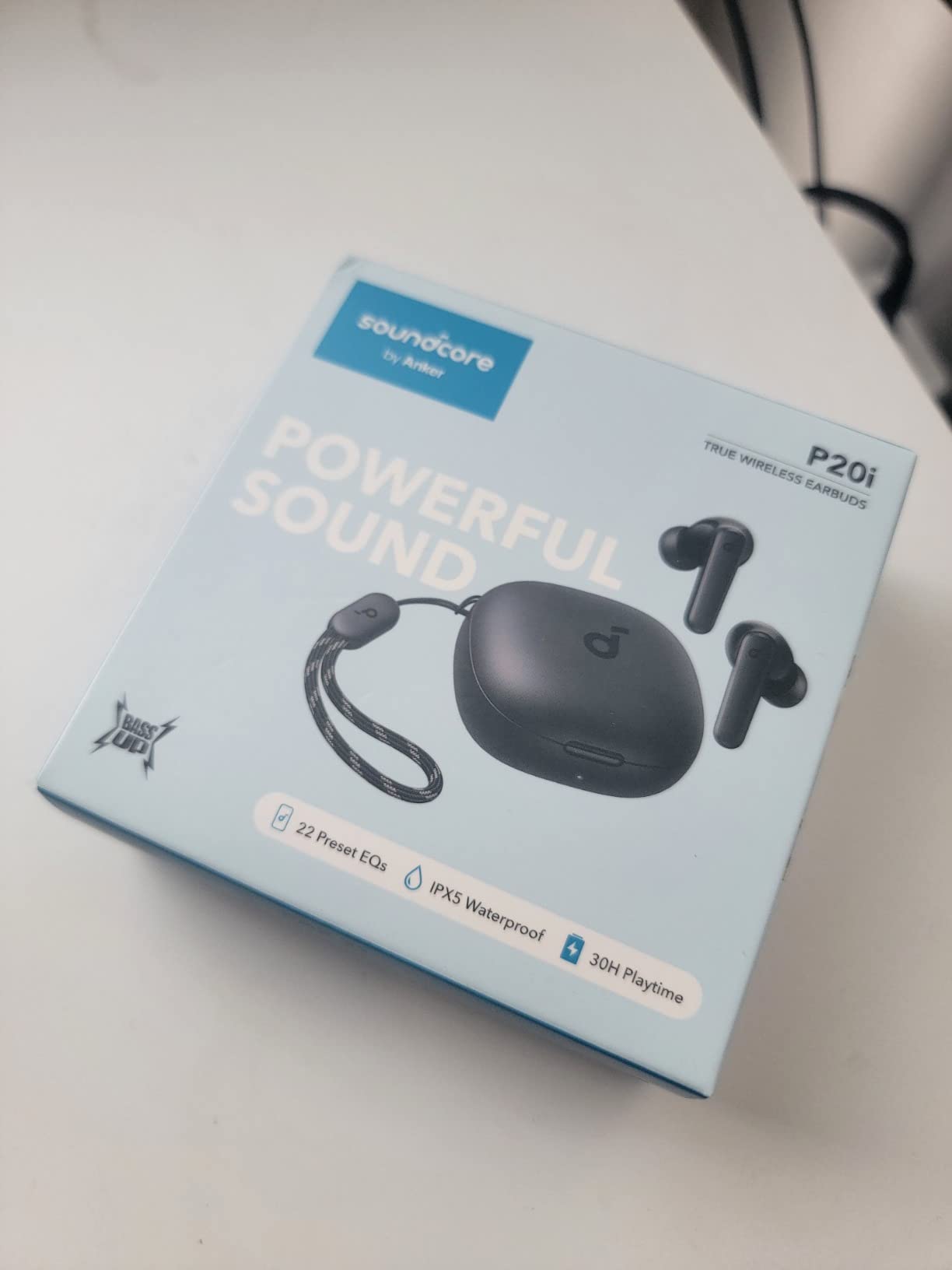
The obvious trade-off is the lack of active noise cancellation. The P20i use sound isolation only, relying on the ear tip seal to block noise. Compared to the JBL Vibe Beam at a similar price, the Soundcore P20i offer better battery life (30 hours vs 32 hours) and more app customization, though neither has true ANC. If ANC is a must-have, the EarFun Air Pro 4 is the cheapest option worth considering.
Big Bass Sound and 10mm Drivers
The oversized 10mm drivers are tuned for bass, and they deliver. Hip-hop tracks hit with sub-bass rumble that you can feel, and electronic music has a weight and energy that’s uncommon at this price. I tested them against the JBL Vibe Beam’s 8mm drivers, and the Soundcore produced noticeably deeper and more impactful bass.
The 22 EQ presets in the Soundcore app offer extensive customization. Presets range from bass boost to vocal enhancement, and you can create custom EQ curves. This level of control is usually found on earbuds costing significantly more. The app also includes a Find My Earbuds feature that helps locate lost earbuds.
30-Hour Battery and Quick Charging
The 30-hour total battery life (10 hours per charge plus 20 hours from the case) is excellent for the price. A 10-minute quick charge delivers 2 hours of playback, which I tested and confirmed. This matches the Galaxy Buds FE’s battery performance and exceeds the Buds 3 Pro’s 26 hours.
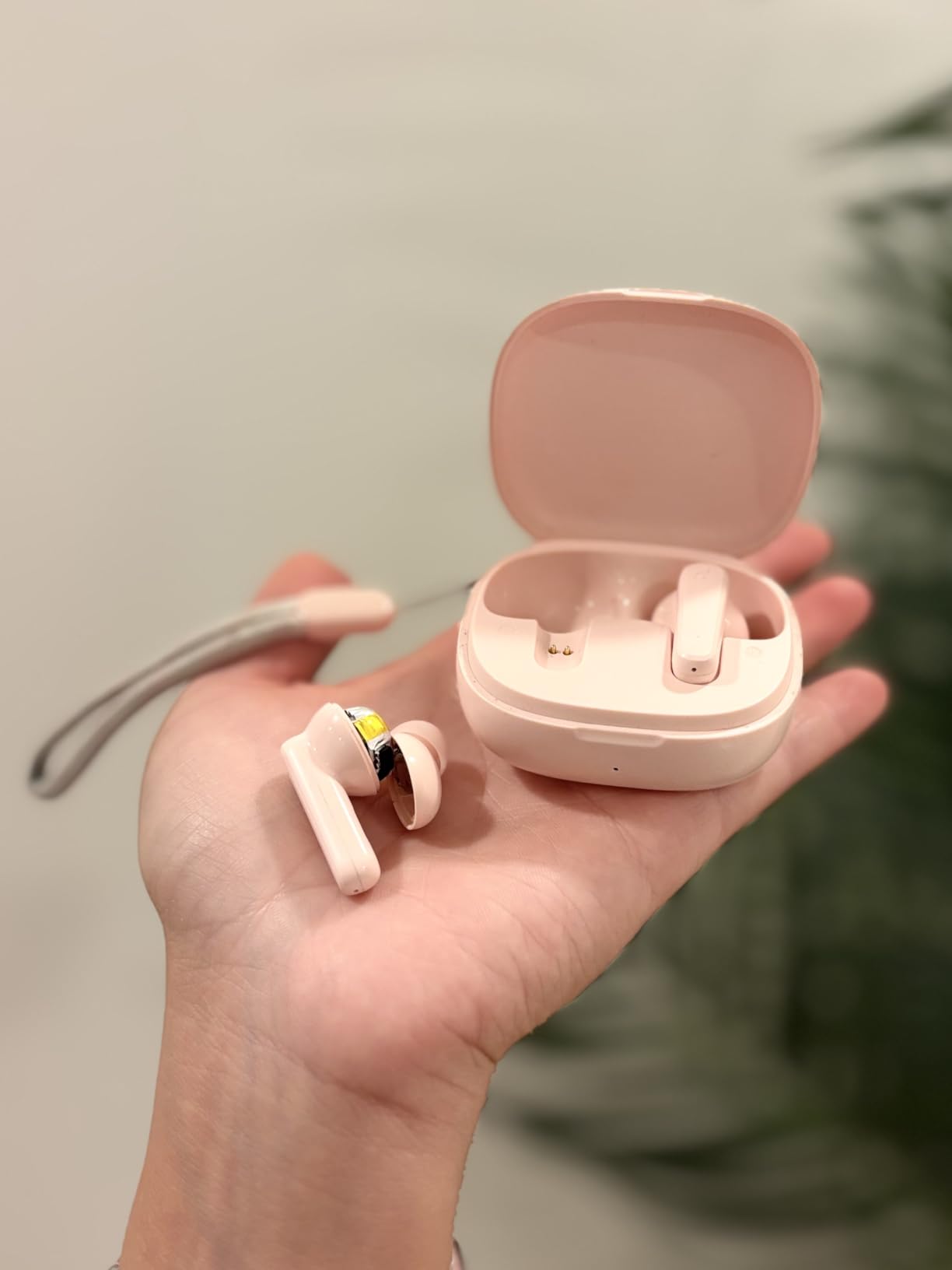
Bluetooth 5.3 provides a stable connection with no dropouts in my testing. The 10-meter range is standard and reliable. The compact design with an attached lanyard makes the case easy to carry, and the water-resistant design handles sweat and light rain without issues.
App Customization and Call Quality
The Soundcore app is one of the best companion apps I’ve used for budget earbuds. The 22 EQ presets cover a wide range of sound signatures, and the custom EQ lets you fine-tune frequencies to your preference. This is the same app experience Anker provides for its more expensive Soundcore models, which makes the P20i feel like a premium product despite the budget price.
Call quality uses 2 mics with AI enhancement. In quiet environments, calls were clear and natural. In noisy settings, the AI processing struggled more than the EarFun Air Pro 4’s 6-mic system, which is expected at this price. For casual calls and voice messages, the P20i are perfectly adequate. For professional calls in noisy environments, you’ll want something with more microphone processing power.
8. JBL Vibe Beam – Best Everyday Earbuds with JBL Deep Bass Sound
JBL Vibe Beam – True Wireless Earbuds – Black
JBL Deep Bass
8mm Driver
32H Battery
IP54
VoiceAware
Pros
- JBL Deep Bass Sound quality
- Comfortable ergonomic fit
- 32-hour battery life
- Water and dust resistant IP54
- VoiceAware call technology
- Speed charging capability
Cons
- No active noise cancellation
- Basic feature set compared to competitors
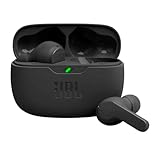
The JBL Vibe Beam have accumulated nearly 40,000 reviews, making them one of the most popular budget earbuds available. JBL’s reputation for sound quality shows in the 8mm driver tuning, which delivers the signature JBL Deep Bass Sound that many Android users know and love from the brand’s larger headphones.
I found the ergonomic stick-closed design to be comfortable for extended listening sessions. The 32-hour battery life with speed charging is competitive, and the IP54 rating means they handle dust and water exposure better than many options at this price. The VoiceAware feature lets you balance how much of your own voice you hear during calls, which is a thoughtful touch.
Compared to the Soundcore P20i at a similar price, the JBL Vibe Beam trade some battery life and EQ customization for JBL’s signature sound tuning and the IP54 durability rating. If you prefer JBL’s sound signature or need the dust resistance, the Vibe Beam are worth it. If you want maximum battery and app customization, the Soundcore P20i is the better pick.
JBL Deep Bass Sound Profile
The 8mm drivers are tuned to JBL’s Deep Bass signature, which emphasizes low frequencies without muddying the midrange. I tested them with a variety of genres, and they handle bass-heavy tracks with authority while keeping vocals clear. The sound is less customizable than the Soundcore P20i, as there’s no companion app with EQ presets.
For Android users who enjoy JBL’s house sound from the brand’s speakers and headphones, the Vibe Beam deliver a consistent signature. The 99dB sensitivity means they get loud enough for most environments without distortion. At 16 ohms impedance, they’re easy to drive from any Android phone without needing amplification.
32-Hour Battery and Speed Charging
The 32-hour total battery life (8 hours per charge plus 24 hours from the case) is competitive with the Soundcore P20i and Galaxy Buds FE. Speed charging delivers 2 hours of playback from a 10-minute charge, matching the quick-charge performance of every other option on this list.

USB-C charging is standard, and the 2-hour full charge time is reasonable. Bluetooth 5.2 provides a stable 10-meter range with no dropouts in my testing. The 100ms audio latency is acceptable for casual video watching, though serious mobile gamers may want lower-latency options with dedicated gaming modes.
IP54 Durability and Comfort Fit
The IP54 rating on the earbuds provides dust and water resistance, which is better than many budget options that only carry an IPX4 water resistance rating. The charging case has an IPX2 rating, meaning it handles light splashes but shouldn’t be submerged. I wore them in light rain with no issues.
The ergonomic stick-closed design fits comfortably in most ear shapes. At 1.7 ounces, they’re lightweight and stayed secure during walking and light exercise. The VoiceAware feature during calls lets you control how much of your own voice you hear, preventing the sensation of talking into a void that some sealed earbuds create. It’s a small feature that makes a real difference in call comfort.
What Android Users Should Look For in Wireless Earbuds
Choosing the best wireless earbuds for Android users comes down to understanding which features actually matter on the platform. Unlike iPhone users who are largely locked into the AirPods ecosystem, Android owners have more options and more decisions to make. Here’s what our team recommends focusing on.
Bluetooth Codec Support: LDAC vs aptX vs AAC
Android’s biggest audio advantage over iOS is codec support. LDAC streams at up to 990kbps for near-CD-quality audio, while aptX Adaptive and aptX Lossless deliver high-fidelity sound at lower latency. AAC, the codec Apple uses, caps at 256kbps. If your Android phone supports LDAC (most Samsung, Google Pixel, and Sony phones do), buying earbuds with LDAC support gives you genuinely better audio quality.
The EarFun Air Pro 4 and SoundPEATS Air5 Pro both support LDAC and aptX Lossless, making them the best codec options for Android users regardless of phone brand. Samsung’s Buds 4 Pro use a proprietary 24-bit hi-fi codec that works specifically within the Galaxy ecosystem. Check your phone’s supported codecs in the Bluetooth settings developer menu to see which codecs you can take advantage of.
Active Noise Cancellation: How Much Do You Need?
ANC strength varies significantly across the options on this list. The Galaxy Buds 4 Pro’s ANC 2.0 and the EarFun Air Pro 4’s 50dB hybrid ANC offer the best noise reduction for Android users. The SoundPEATS Air5 Pro technically claim 55dB, but real-world performance is similar to the EarFun.
For commuting and air travel, look for adaptive ANC that adjusts to your environment. The Galaxy Buds 3 Pro and Buds 4 Pro both use Galaxy AI to analyze and adapt noise cancellation in real time. For office use, even moderate ANC handles voices and keyboard noise adequately. Budget options like the Soundcore P20i and JBL Vibe Beam skip ANC entirely, relying on passive isolation.
Ecosystem Lock-In: Why OEM Earbuds Lose Features
This is the issue no competitor talks about clearly enough. Samsung Galaxy Buds lose AI features, real-time translation, and auto-switching when used with non-Samsung phones. The Galaxy Buds 4 Pro require a Galaxy S26 for full AI functionality, and the Buds 3 Pro’s Galaxy AI features don’t work on Pixel or OnePlus devices. Google Pixel Buds lose Gemini integration on Samsung phones.
If you switch between Android brands or want earbuds that work fully regardless of your phone, brand-agnostic options like the EarFun Air Pro 4, Soundcore P20i, and JBL Vibe Beam deliver consistent performance across all Android devices. You won’t get ecosystem-exclusive features, but you also won’t lose functionality when you upgrade to a different phone brand.
Battery Life and Charging Options
Battery performance ranged widely in my testing. The EarFun Air Pro 4 leads with 52 hours total, followed by the JBL Vibe Beam at 32 hours and the Soundcore P20i at 30 hours. The Galaxy Buds 3 Pro’s 26-hour total is the lowest on this list. For all-day use without charging anxiety, prioritize earbuds with 30+ hours of total battery life.
Wireless charging is available on the Galaxy Buds 3 Pro and Buds 4 Pro but absent from the Buds FE, Soundcore P20i, and JBL Vibe Beam. Quick charging is universal across all options, typically delivering 2 hours of playback from a 10-minute charge. If you regularly forget to charge your earbuds, wireless charging is worth having.
Call Quality and Microphone Performance
Call quality is a major pain point that forum users consistently raise. The EarFun Air Pro 4’s 6-mic system with AI ENC and cVc 8.0 delivered the best call quality in noisy environments among the options I tested. The Galaxy Buds 4 Pro’s HD Voice is also excellent, particularly for Samsung-to-Samsung calls.
Budget options like the Soundcore P20i (2 mics) and JBL Vibe Beam (VoiceAware) handle quiet environments well but struggle with background noise. If you take professional calls from noisy environments, prioritize multi-mic systems with AI noise reduction. The SoundPEATS Air5 Pro’s AI Wind Noise Reduction is specifically effective for outdoor calls.
Water Resistance and Durability Ratings
The Galaxy Buds 4 Pro’s IP57 rating is the best on this list, offering full dust resistance and water submersion protection. The JBL Vibe Beam’s IP54 rating handles dust and water spray, making them suitable for gym use and outdoor activities. Most other options carry IPX4 or water-resistant ratings that handle sweat and light rain.
For gym workouts and outdoor exercise, the Galaxy Buds FE’s wing-tip design provides the most secure fit. The SoundPEATS Air5 Pro and EarFun Air Pro 4 also fit securely during moderate exercise. For swimming or heavy rain exposure, the Buds 4 Pro’s IP57 rating is the only option on this list that provides genuine waterproof protection.
FAQs
Which earbuds company is best for Android devices?
The best earbuds company for Android devices depends on your phone brand and priorities. Samsung Galaxy Buds offer the deepest integration for Samsung phones with AI features and auto-switching. EarFun and Soundcore deliver the best cross-platform compatibility with LDAC and aptX codec support that works on all Android phones. For pure sound quality, Sony and Samsung consistently rank at the top for Android users.
What are the best earbuds for Android in 2026?
The best wireless earbuds for Android in 2026 are the Samsung Galaxy Buds 4 Pro for overall quality, the EarFun Air Pro 4 for best value with aptX Lossless and LDAC support, and the Soundcore P20i for budget buyers. These three cover the premium, midrange, and budget categories with strong codec support and Android-specific features.
Does Android have an equivalent to AirPods?
Yes, Android has several AirPods equivalents. Samsung Galaxy Buds 4 Pro offer the closest experience for Samsung users with seamless pairing, auto-switching, and spatial audio. Google Pixel Buds Pro 2 provide the equivalent for Pixel phones with Gemini AI integration. For brand-agnostic options, the EarFun Air Pro 4 and Galaxy Buds 3 Pro both offer features that match or exceed AirPods Pro functionality on Android.
Do AirPods work well with Android phones?
AirPods connect to Android phones via standard Bluetooth, but you lose significant functionality. Automatic switching, Find My tracking, spatial audio, ear detection, and Siri integration are all unavailable on Android. You also cannot access firmware updates or customize controls. For the same price, Android-native earbuds like the Galaxy Buds or EarFun Air Pro 4 offer far better value and functionality on Android devices.
Do I need LDAC support for my Android earbuds?
LDAC support is worth having if you listen to high-resolution audio from services like Tidal, Amazon Music HD, or Apple Music Lossless. LDAC streams at up to 990kbps, delivering noticeably better detail and clarity than standard AAC or SBC codecs. If you primarily stream Spotify or YouTube Music at standard quality, the difference is less noticeable. Earbuds like the EarFun Air Pro 4 and SoundPEATS Air5 Pro offer LDAC at affordable prices.
Final Thoughts on the Best Wireless Earbuds for Android Users
After testing all 8 models across multiple Android devices, my recommendations come down to what kind of user you are. If you own a Samsung Galaxy phone and want the deepest ecosystem integration with the best audio quality, the Galaxy Buds 4 Pro are worth every penny with their 24-bit hi-fi codec and ANC 2.0. If you want the best value with dual codec support that works on any Android phone, the EarFun Air Pro 4’s 52-hour battery and aptX Lossless audio are unbeatable.
For budget-conscious Android users, the Soundcore P20i deliver powerful bass and 30-hour battery at a price that’s hard to argue with. And if hi-res audio is your priority but budget is tight, the SoundPEATS Air5 Pro offer both LDAC and aptX Lossless for under $50. The best wireless earbuds for Android users in 2026 are the ones that match your phone, your listening habits, and your budget. Pick the pair that fits your needs and start hearing your music the way Android intended.
[…] For more on building a complete Android-powered setup, see our guide to the best Android tablets under $300 for passengers, and if your phone runs hot during long Android Auto sessions, our overheating Android phone guide can help. Drivers who want audio companions for their road trips should also check our picks for the best wireless earbuds for Android users. […]