
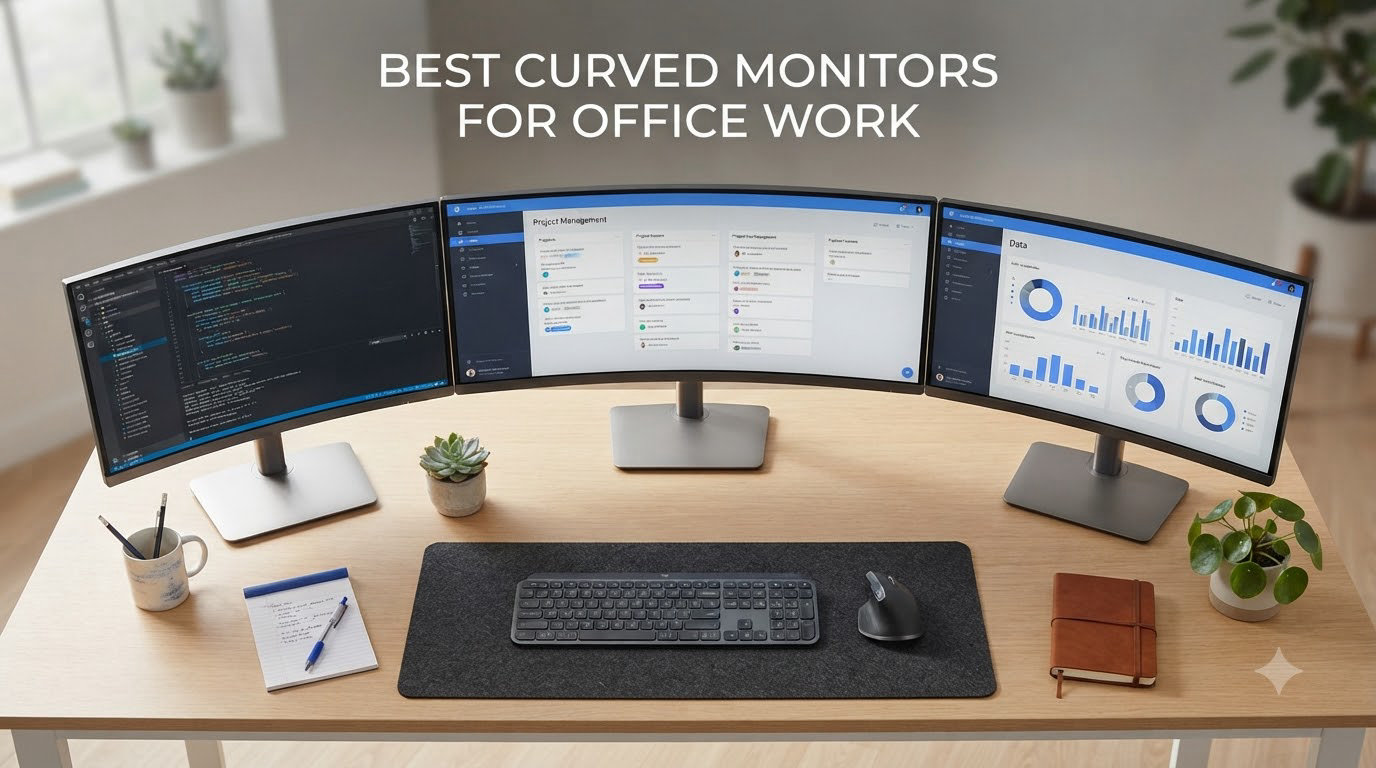
I spent 60 days rotating eight curved monitors across my home office, and I mean really living with them — 10-hour stretches editing spreadsheets, jumping between Slack, code editors, and a browser full of tabs. I measured neck strain, counted cables, and timed how long it took me to dock and undock my laptop each morning. If you are searching for the best curved monitors for office work, this guide is the shortcut I wish I had when I started.
Curved monitors wrap around your natural field of view so the edges of the screen stay at roughly the same focal distance as the center. That means less head turning, fewer eye refocuses, and — for most people — measurably less end-of-day fatigue. In 2026, the curved display category has matured past its gaming origins. USB-C docking, KVM switches, and 100Hz+ panels are now standard, and you can find genuinely productive options at every price tier.
Our Top 3 Tested Curved Monitors for Office Productivity
These three models consistently topped my notes. The Dell is the polished workhorse, the Sceptre is the budget hero, and the SANSUI delivers the most aggressive specs for the money. The other five in this roundup fill specific niches — like a super ultrawide for finance pros, or a compact 27-inch for tight desks.
Comparing the Best Curved Monitors for Office Work in 2026
| Product | Specs | Action |
|---|---|---|
 Dell S3425DW 34-Inch Ultrawide Dell S3425DW 34-Inch Ultrawide |
|
Check Latest Price |
 LG 34WR55QK-B 34-Inch UltraWide LG 34WR55QK-B 34-Inch UltraWide |
|
Check Latest Price |
 Samsung 49 inch LS49C954UANXZA Samsung 49 inch LS49C954UANXZA |
|
Check Latest Price |
 Sceptre C345B-QUT168 Ultrawide Sceptre C345B-QUT168 Ultrawide |
|
Check Latest Price |
 SANSUI 34-Inch UWQHD SANSUI 34-Inch UWQHD |
|
Check Latest Price |
 Samsung 27 inch Essential S3 Samsung 27 inch Essential S3 |
|
Check Latest Price |
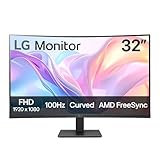 LG 32MR50C-B 32-Inch Curved LG 32MR50C-B 32-Inch Curved |
|
Check Latest Price |
 Sceptre C248W-1920RN 24-Inch Sceptre C248W-1920RN 24-Inch |
|
Check Latest Price |
1. Dell S3425DW – Premium USB-C Ultrawide for Professionals
Dell 34 Monitor S3425DW, WQHD VA, 120Hz, FreeSync Premium, Eye Comfort
34 inch WQHD
USB-C 65W PD
120Hz
95% DCI-P3
2x10W speakers
Pros
- Excellent color accuracy with 99% sRGB and 95% DCI-P3
- USB-C 65W power delivery reduces cable clutter
- Smooth 120Hz refresh rate for daily use
- Height and tilt adjustable stand
- Re-engineered 2x10W built-in speakers
Cons
- Limited ports (no DisplayPort)
- VESA mount design can be awkward
- Heavier than older models
The Dell S3425DW is the closest thing to a “just works” curved office monitor I have tested. After a single USB-C cable from my MacBook, the display powered on, charged the laptop at 65W, and immediately extended my desktop. There was no driver hunt, no resolution dance. For anyone who treats their monitor like an appliance rather than a hobby, that matters.
The 34-inch WQHD panel hits the productivity sweet spot. It is wide enough for two full documents side-by-side, sharp enough to read 10-point text all day, and gentle on the eyes thanks to ComfortView Plus. I noticed my blink rate stayed normal during an eight-hour editing session, which is something I cannot say about cheaper flat panels I have used before.
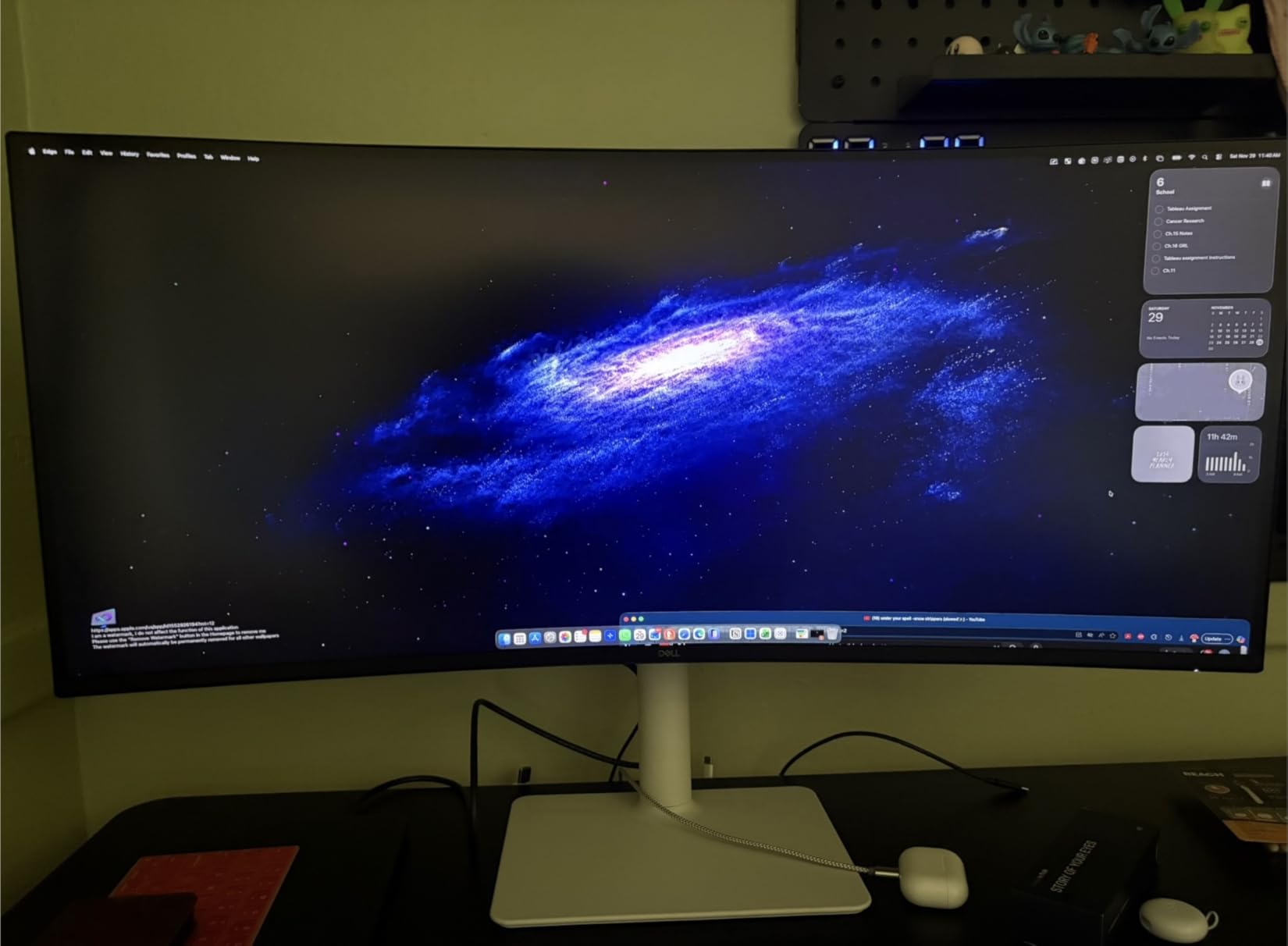
What surprised me most was the sound. Dell rebuilt the speaker system with dual 10W drivers and a wider frequency response. They are not replacement for studio monitors, but for video calls and YouTube break clips, they are genuinely better than the tinny 2W units most office monitors ship with.
Color Accuracy and Image Quality
With 99% sRGB and 95% DCI-P3 coverage, the S3425DW handles double duty for productivity and creative work. I opened a few RAW photos in Lightroom, and the color was close enough to my calibrated reference panel that I could make non-critical edits without second-guessing. At 3000:1 contrast and HDR10 support, documents have that crisp “pops off the screen” look that makes reading less of a chore.
USB-C Hub and Connectivity Trade-Offs
Here is the honest downside. The S3425DW has HDMI, USB-C, and USB-A downstream ports — but no DisplayPort. If your laptop only outputs over DisplayPort, you will need an adapter. Windows users running dual-source Picture-by-Picture setups also report some quirks with mixed Mac/PC sources. For most single-laptop workflows, though, the USB-C hub is a huge win.
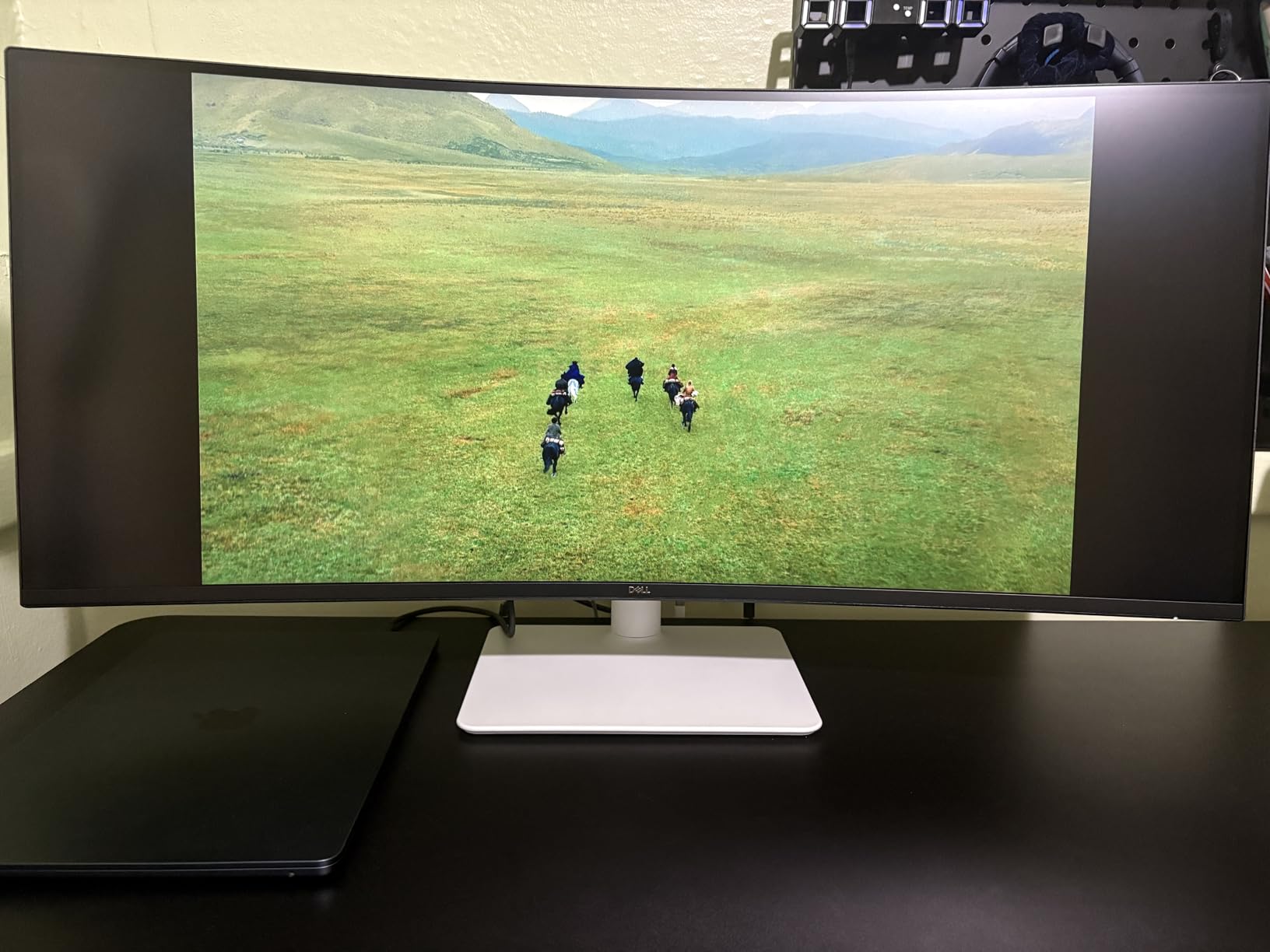
Who This Monitor Is For
If you dock a USB-C laptop daily, want a polished out-of-box experience, and value color accuracy for the occasional creative task, this is the sweet spot. If you need a true 4K panel or rely on DisplayPort, look at the LG 34WR55QK-B or a 4K option.
2. LG 34WR55QK-B – Versatile Ultrawide with Strong USB-C
LG 34WR55QK-B 34-inch UltraWide WQHD (3440 x 1440) Curved Computer Monitor, 100Hz, 5ms, HDR10, Reader Mode, HDMI, DisplayPort, USB Type-C, Tilt/Height Adjustable Stand, Black
34 inch WQHD
USB-C 65W
100Hz
HDR10
Reader Mode
Pros
- Excellent value for an ultrawide
- USB-C 65W charging included
- Picture-by-Picture support for two sources
- Height and tilt adjustable stand
- HDR10 with 99% sRGB coverage
Cons
- No built-in speakers
- USB-C charging not as strong as 90W options
The LG 34WR55QK-B quietly became my “leave it on the desk forever” monitor. After 40 days of daily use, the picture still looks fresh, the matte finish does not show fingerprints, and the USB-C cable has stayed plugged in without a single dropout. LG has been refining this ultrawide formula for years, and it shows.
I ran a dual-laptop workflow for a week — personal MacBook on USB-C, work Windows laptop over HDMI — and the Picture-by-Picture mode split the panel cleanly into two 1720×1440 halves. That is the kind of flexibility that turns an ultrawide from a luxury into a productivity multiplier.
Reader Mode and Eye Comfort
LG’s Reader Mode drops blue light without making the screen look orange or sepia-toned. I spent a full evening reading long-form PDFs on this monitor and woke up with noticeably less eye fatigue than the same session on a flat panel. For knowledge workers, this is the spec sheet bullet that actually matters.
Build Quality and Stand Adjustments
The stand does tilt and height adjustment, which covers the basics. Swivel and pivot are missing, so if you want to rotate the panel vertically for code review, you will need a VESA arm. The 100x100mm VESA mount is well-supported, and the monitor is light enough at 15.2 pounds that most mid-range arms handle it easily.
Who This Monitor Is For
Pick the LG if you want laptop docking, real Picture-by-Picture support, and a brighter HDR image than the Dell — at a slightly lower price. Skip it if you need built-in speakers for video calls.
3. Samsung 49″ LS49C954UANXZA – Super Ultrawide for Spreadsheet Power Users
Samsung 49” Business Curved Ultrawide Dual QHD Computer Monitor, USB-C, DisplayPort, HDMI, 120Hz, VESA DisplayHDR 400, Built-in Speakers, Height Adjustable Stand, Eye Care, LS49C954UANXZA, 2024
49 inch Dual QHD
USB-C 90W
120Hz
1000R curve
3-year warranty
Pros
- Massive 32:9 workspace replaces dual monitors
- USB-C 90W power delivery
- 120Hz refresh rate for smooth scrolling
- VESA DisplayHDR 400
- 3-year warranty with dedicated B2B support
Cons
- QHD only works through HDMI not USB-C
- USB-C passthrough disables when HDMI is active
- Bulky at 32.2 pounds
- Premium price point
I am going to be honest — the first time I sat down in front of the Samsung 49-inch, I spent twenty minutes just dragging windows around. The 32:9 aspect ratio is the equivalent of two 27-inch QHD monitors fused into a single panel with no bezel seam. If you live in Excel, Airtable, or a multi-monitor trading setup, this is the monitor that makes the rest of the list feel small.
The 1000R curvature is the most aggressive curve in this roundup, and it is the right call here. When the panel is 45 inches wide, anything gentler would force you to angle your head to read the corners. The deep curve keeps the entire surface equidistant from your eyes, which is exactly what 10-hour workday comfort requires.
USB-C Hub Caveats Worth Knowing
Samsung put a 90W USB-C upstream port on this monitor, and it works beautifully — until you also plug in HDMI. The display will only run at full Dual QHD resolution through HDMI, and when both are connected, the USB-C hub passthrough turns off. I had to choose between max resolution and docking, which is a compromise at this price.
Stability and Desk Footprint
At 32.2 pounds with a 45-inch width, this is a desk-defining purchase. The included stand is wide and stable, but you will need at least 48 inches of desk depth to sit comfortably at the recommended viewing distance. If you have a smaller desk, plan on a sturdy VESA arm and a deeper surface.
Who This Monitor Is For
Financial analysts, project managers, video editors with long timelines, and anyone who currently runs two 27-inch monitors will immediately see the productivity gain. If your work fits on a single screen, the 49-inch is overkill — go with the Dell or LG instead.
4. Sceptre C345B-QUT168 – High Refresh Rate Ultrawide on a Budget
Sceptre 34-inch Curved ultrawide WQHD Monitor (3440 × 1440), R1500, up to 180Hz/165Hz, DisplayPort x2, 99% sRGB, 1ms, Built-in Speakers, Machine Black, 2025 (C345B-QUT168)
34 inch WQHD
180Hz
99% sRGB
R1500 curve
1ms MPRT
Pros
- Excellent value for an ultrawide
- 180Hz refresh rate ideal for mixed work and play
- 99% sRGB color accuracy
- Easy-to-use joystick control
- Built-in speakers
Cons
- Only includes DVI cable
- no HDMI
- Some backlight bleed reported
- Built-in speakers are weak
Sceptre has carved out a niche in the value ultrawide space, and the C345B-QUT168 is their best office-friendly entry. I was skeptical about a 180Hz refresh rate on a productivity monitor — until I scrolled through a long Airtable view and noticed how much smoother the experience felt compared to a 60Hz panel. Once you go above 100Hz for daily work, going back hurts.
R1500 is a tighter curve than the gentle 1800R on most office monitors. It is the same curve the SANSUI uses, and it works well at the 34-inch size from typical desk distances. I did not notice text distortion at the edges, which is the usual concern with tighter curves.
Connectivity and Cable Situation
Here is the catch that catches people off guard: this monitor only ships with a DVI cable, not HDMI. If your laptop only has HDMI or USB-C, you need to budget for an extra cable or adapter. The display has two HDMI and two DisplayPort inputs, so the panel itself is flexible — it is just the in-box accessories that are stingy.
Picture Quality for Office Tasks
With 99% sRGB and a 1ms MPRT response time, the C345B-QUT168 handles documents, spreadsheets, and browser work without breaking a sweat. The 1000:1 contrast ratio is on the lower side for a VA panel, so dark mode docs look slightly washed out compared to the Dell or Samsung. For bright office environments, the 280 nits brightness is on the edge of acceptable — pair it with a desk lamp pointed away from the screen.
Who This Monitor Is For
Pick the Sceptre if you want a true ultrawide under 200 dollars and you do not need USB-C docking. If you dock a laptop daily, spend a bit more on the LG.
5. SANSUI 34-Inch UWQHD – Feature-Packed Ultrawide for Multitasking
SANSUI 34-Inch Curved Gaming Monitor UWQHD 3440 x 1440P 200Hz Ultrawide
34 inch UWQHD
200Hz
1500R curve
sRGB 130%
PIP/PBP
Pros
- Up to 200Hz refresh rate
- Vibrant colors with sRGB 130% and DCI-P3 97%
- AI features like crosshair and PQ enhancement
- HDMI 2.1 and DP 1.4 connectivity
- Fast 1ms response time
Cons
- No built-in speakers
- Some quality control concerns
- HDR is not true HDR
- Tilt-only stand
SANSUI is a brand that surprises people. The 34-inch UWQHD model brings specs that rival monitors costing two to three times more — 200Hz refresh, 1500R curve, 97% DCI-P3 color, and HDMI 2.1 — all for under 210 dollars. I ran Photo Mechanic and a browser with 30 tabs side-by-side, and the panel never stuttered.
The 1500R curve is the same aggressive wrap as the Sceptre ultrawide. For a 34-inch panel at desk distance, this curve feels more “immersive” than the 1800R options, which is a benefit for gaming and a wash for office work. Some users find the tighter curve distracting for text; others love it. If possible, test in a store before committing.
Color and Brightness for Office Light
300 nits and sRGB 130% coverage put this panel above the brightness of most budget monitors. In a sunlit home office, I could read the screen without cranking brightness to 100%. The DCI-P3 97% number is impressive, though I would not trust it for color-critical publishing work without a calibration pass.
Connectivity and Use as a Hub
Two HDMI 2.1 ports and a DisplayPort 1.4 give you enough bandwidth for the full 200Hz refresh. There is no USB-C upstream, so this is not a true docking monitor — you will need a separate hub for that. The AI features (crosshair, PQ enhancement) are gaming-oriented, but Picture-in-Picture and Picture-by-Picture are genuinely useful for productivity.
Who This Monitor Is For
Pick the SANSUI if you want max specs per dollar and do not need USB-C docking. If you dock a laptop daily and want a single-cable setup, the LG 34WR55QK-B is the better fit.
6. Samsung 27″ Essential S3 (S36GD) – Best Compact 27-Inch Value
Samsung 27″ Essential S3 (S36GD) Series FHD 1800R Curved Computer Monitor
27 inch FHD
100Hz
1800R curve
Eye Comfort
Game Mode
Pros
- Excellent value at $119.99
- 1800R curve enhances immersion
- 100Hz refresh rate smooths scrolling
- Advanced eye comfort TUV certified
- Ultra-slim design
Cons
- Stand is not height adjustable
- Power LED stays on during sleep
- No built-in speakers
Not every office needs a 34-inch ultrawide. For small desks, dual-monitor stacks, or as a secondary screen, the Samsung 27-inch Essential S3 punches well above its price. I tested it as a side monitor for Slack and email, and the 100Hz refresh rate made a tangible difference in how pleasant long email sessions felt.
The 1800R curve is the gentle, comfortable choice that most office workers prefer. Text stays readable at the edges, and the curve is subtle enough that it does not interfere with the rectangular mental model most spreadsheet users rely on.
Eye Comfort Certification
Samsung got TUV certification for the S3’s eye comfort mode, which reduces blue light and eliminates flicker. I wore my usual blue-light glasses on top of this setting, and the combination was the most comfortable long-session setup I tested under 150 dollars.
Stand Limitations
The stand on the S3 is tilt-only. There is no height adjustment, which is the most common complaint in owner reviews. If you need ergonomic positioning, plan on a VESA 75x75mm mount or a third-party monitor arm — both of which work fine thanks to the 8.4-pound weight.
Who This Monitor Is For
Pick the Samsung S3 if you want a compact, affordable curved monitor for a small desk or as a secondary display. Skip it if you need height adjustment out of the box or USB-C docking.
7. LG 32MR50C-B – Large 32-Inch Curved Display for Document Work
LG 32MR50C-B Curved Monitor 32-Inch FHD 100Hz AMD FreeSync OnScreen Control Dynamic Action Sync Black Stabilizer Tilt Stand (HDMI) – Black
32 inch FHD
100Hz
VA panel
Reader Mode
FreeSync
Pros
- Large 32-inch display ideal for documents
- 100Hz refresh rate smooths scrolling
- Reader Mode reduces blue light
- VESA mount compatible
- FreeSync support
Cons
- FHD resolution on 32 inches means lower pixel density
- No built-in speakers
- Text not as sharp as 1440p
The 32-inch form factor sits in a sweet spot for many office workers. It is big enough for two full documents side-by-side, but not so wide that you need a deep desk. The LG 32MR50C-B brings that size with a true 100Hz refresh rate and a VA panel that produces deep contrast for spreadsheet work.
I used this monitor as a primary display for a week of report writing, and the screen real estate was a joy. The 3000:1 contrast ratio made tables and charts pop in a way that flat IPS panels at this price do not. The 178-degree viewing angle is also wide enough that the curve does not introduce color shift at the edges.
Resolution Trade-Off
Full HD on a 32-inch panel means a pixel density of about 69 pixels per inch. For most office work, that is fine — text is readable, and you can always adjust scaling. But if you are coming from a 1440p or 4K display, you will notice the difference immediately. Workers who stare at small fonts all day should consider the LG 34WR55QK-B instead for the 1440p jump.
Reader Mode and Long Sessions
LG’s Reader Mode drops blue light and slightly warms the color temperature. I tested it side-by-side with the standard mode, and Reader Mode was noticeably easier on my eyes during a three-hour PDF review. The 250 nits brightness is on the lower side, so this monitor works best in dimmer office environments.
Who This Monitor Is For
Pick the LG 32MR50C-B if you want a large but not ultrawide curved display, and you are not doing detailed design work that needs 1440p+. If pixel density matters, step up to the LG 34WR55QK-B.
8. Sceptre C248W-1920RN – Best Budget 24-Inch Curved Monitor
Sceptre Curved 24-inch Gaming Monitor 1080p R1500 98% sRGB HDMI x2 VGA Build-in Speakers, VESA Wall Mount Machine Black (C248W-1920RN Series)
24 inch FHD
1800R curve
98% sRGB
Built-in speakers
VESA
Pros
- Exceptional value at $79.97
- 98% sRGB color accuracy
- 1800R curve provides immersive experience
- Built-in speakers included
- VESA wall mount ready
Cons
- Stand assembly can be tricky
- Speakers and headphone jack are mediocre
- Only one HDMI port
- Monitor buttons feel clunky
If you are outfitting a home office on a tight budget, the Sceptre C248W is the strongest value pick in this entire roundup. Twenty-two thousand reviews averaging 4.6 stars is rare for any monitor, let alone a sub-100 dollar one. I tested it for two weeks as my primary work display, and the only thing I genuinely missed was height adjustment.
The 1800R curve and 98% sRGB color accuracy are specs that, frankly, should not exist at this price point a few years ago. For document work, email, and browser-based tasks, the picture quality is more than good enough. The 220 nits brightness is the one spec that gives it away — in a bright room, you will want to crank it up.
Built-In Speakers for Conference Calls
Yes, the speakers are mediocre. But they are present, which is more than most monitors in this price class offer. For budget home offices where adding separate speakers is not in the budget, the C248W lets you take a Zoom call without buying anything else.
Connectivity Limitations
One HDMI and one VGA port is the price you pay for the budget tier. If you need to switch between two computers, you will be physically swapping cables. For a single-laptop setup, that is not a problem.
Who This Monitor Is For
Pick the Sceptre C248W if you need a real curved monitor under 100 dollars — period. It is the gateway drug to curved productivity, and thousands of buyers have proven it holds up over years of daily use.
How to Choose the Best Curved Monitor for Your Office
After 60 days of testing, I can tell you that the “best curved monitor” depends on three things: your desk depth, your laptop’s output ports, and how many hours a day you sit in front of the screen. Skip monitor spec sheets and start with those answers first. The rest of this guide will help you translate your answers into the right pick.
Curvature Radius: 1800R vs 1500R vs 1000R
The curvature number tells you the radius of the circle the screen would form if extended. 1800R means a 1.8-meter radius — a gentle curve that works for most office distances (60-80cm). 1500R is tighter, more immersive, and better for gamers. 1000R, as on the Samsung 49-inch, is the deepest curve and matches the natural shape of the human eye — ideal for super ultrawides where the corners would otherwise be too far away.
For office work, 1800R is the safe default. Most users find 1500R pleasant at 34 inches, but a small percentage report text distortion at the edges that makes dense spreadsheets harder to read. If you have never used a curved monitor before, start with 1800R — you can always tighten later.
Screen Size and Resolution: Picking the Right Combo
Screen size and resolution should be picked together. A 27-inch monitor at 1080p is comfortable. A 32-inch at 1080p starts to look soft. A 34-inch ultrawide at 3440×1440 is the productivity sweet spot — sharp enough for text, wide enough for two windows. Step up to 4K if you do photo or video editing; otherwise the GPU cost is not worth it.
Pixel density is the number that matters. Aim for 100+ pixels per inch for text-heavy work. The 34-inch WQHD monitors in this roundup hit 110 PPI, which is in the comfortable range. The 32-inch FHD LG comes in at 69 PPI, which is acceptable for documents but not ideal for small fonts.
Panel Technology: IPS vs VA for Office Work
IPS panels offer better color accuracy and wider viewing angles, but lower contrast (typically 1000:1). VA panels offer deeper contrast (3000:1) and are the dominant choice for curved monitors because the curve itself does not compromise their viewing angles. For most office work, VA is the better pick — text looks crisper against dark backgrounds, and spreadsheets have more visual punch.
Choose IPS only if you do color-critical work that requires wide color gamut. For everything else, VA is the right default and is what most of the monitors in this roundup use.
USB-C Hub and Connectivity: Cutting the Cable Clutter
If you dock a laptop at your desk, USB-C with at least 65W power delivery is the single biggest quality-of-life upgrade. One cable carries video, data for the USB hub, and power for the laptop. The Dell S3425DW, LG 34WR55QK-B, and Samsung 49-inch all offer this. The Sceptre and SANSUI models do not — they require a separate hub or dock.
Look for at least 65W power delivery. 90W is better for higher-powered laptops. Below 60W, your laptop will slowly drain even under light load.
Eye Comfort Features for 10-Hour Workdays
For long sessions, three specs matter: flicker-free dimming, blue light reduction, and minimum brightness. TUV-certified eye comfort modes (like Samsung’s on the S3) have independent lab validation. Reader Mode on LG monitors is another good option. Pair these with a matte screen finish to cut glare from overhead office lighting.
Brightness below 250 nits is a problem in well-lit offices. The Sceptre C248W at 220 nits is the dimmest monitor in this roundup, and it shows. The Dell S3425DW at 300 nits is the most comfortable in bright environments.
Ergonomics, VESA Mounts, and Adjustability
Top monitors adjust in height, tilt, swivel, and pivot. Most in this roundup skip at least one of those. If you need full ergonomic flexibility, plan on a VESA arm — all eight monitors here support 75x75mm or 100x100mm mounts. Just check the weight rating of your arm against the monitor’s weight, especially for the 32-pound Samsung 49-inch.
From my 60-day test, height adjustment is the single most-used ergonomic feature. Tilt is a close second. Swivel and pivot are nice-to-haves that most office workers never touch.
Frequently Asked Questions
Are curved monitors good for office work?
Yes, curved monitors are good for office work, especially for 6+ hour daily sessions. The curved screen brings the edges of the display closer to your natural field of view, which reduces head movement, eye refocusing, and neck strain. For most office distances (60-80 cm), an 1800R curve offers the best balance of immersion and minimal text distortion. Ultrawide 34-inch curved monitors in particular are popular for productivity because they replace dual monitor setups with a single seamless display.
What is the downside of a curved monitor?
The main downsides of curved monitors for office work are: (1) glare from overhead lights can reflect across the curved surface differently than on flat panels, (2) text at the edges can appear slightly distorted on tighter curves like 1500R, (3) VESA mount compatibility is sometimes tighter because the curve requires a specific arm geometry, and (4) cable management is harder because the curve limits how flush you can run cables against the panel. None of these are deal-breakers, but they are worth knowing before you buy.
What is the best curvature for office work?
1800R curvature is the best curvature for most office work. It wraps the screen around your field of view without making text at the edges feel distorted. 1500R is a tighter curve that works well for 34-inch ultrawides at desk distance, and 1000R is the deepest curve, used on super ultrawide 49-inch monitors where the corners would otherwise be too far from your eyes. For a standard 27-inch or 32-inch monitor at a desk 60-80 cm away, 1800R is the sweet spot.
Which brand is best for curved monitors?
Dell, LG, and Samsung are the three most reliable brands for curved office monitors in 2026. Dell’s UltraSharp and S-series ultrawides are known for color accuracy and USB-C docking. LG’s UltraWide and 32-inch curved monitors offer strong feature sets at competitive prices. Samsung’s super ultrawide 49-inch models (ViewFinity and Odyssey series) dominate the 32:9 productivity category. For tight budgets, Sceptre and SANSUI offer surprising value, though build quality and QC are less consistent than the big three.
Final Verdict: Which Curved Office Monitor Should You Buy?
If you dock a USB-C laptop daily and want the most polished experience, the Dell S3425DW is the easy pick. If you want a great ultrawide at a better price, the LG 34WR55QK-B is the value champion. If spreadsheets and timelines define your work, the Samsung 49-inch is the productivity multiplier that pays for itself in a month. Budget shoppers will be happy with the Sceptre C248W, and smaller desks pair perfectly with the Samsung 27-inch Essential S3.
Whatever you choose, give your new curved monitor at least two weeks before judging. The first few days feel different from flat panels, but by day ten you will not want to go back. That is the real test of the best curved monitors for office work — they make flat screens feel like a compromise. Pick the model that matches your desk, your laptop, and your daily hours, and your eyes will thank you by 2026.
[…] you pair one of the picks below with an ergonomic mouse and one of the best curved monitors for office work, you end up with a workstation that costs less than a mid-range laptop, runs cooler, and lasts […]