
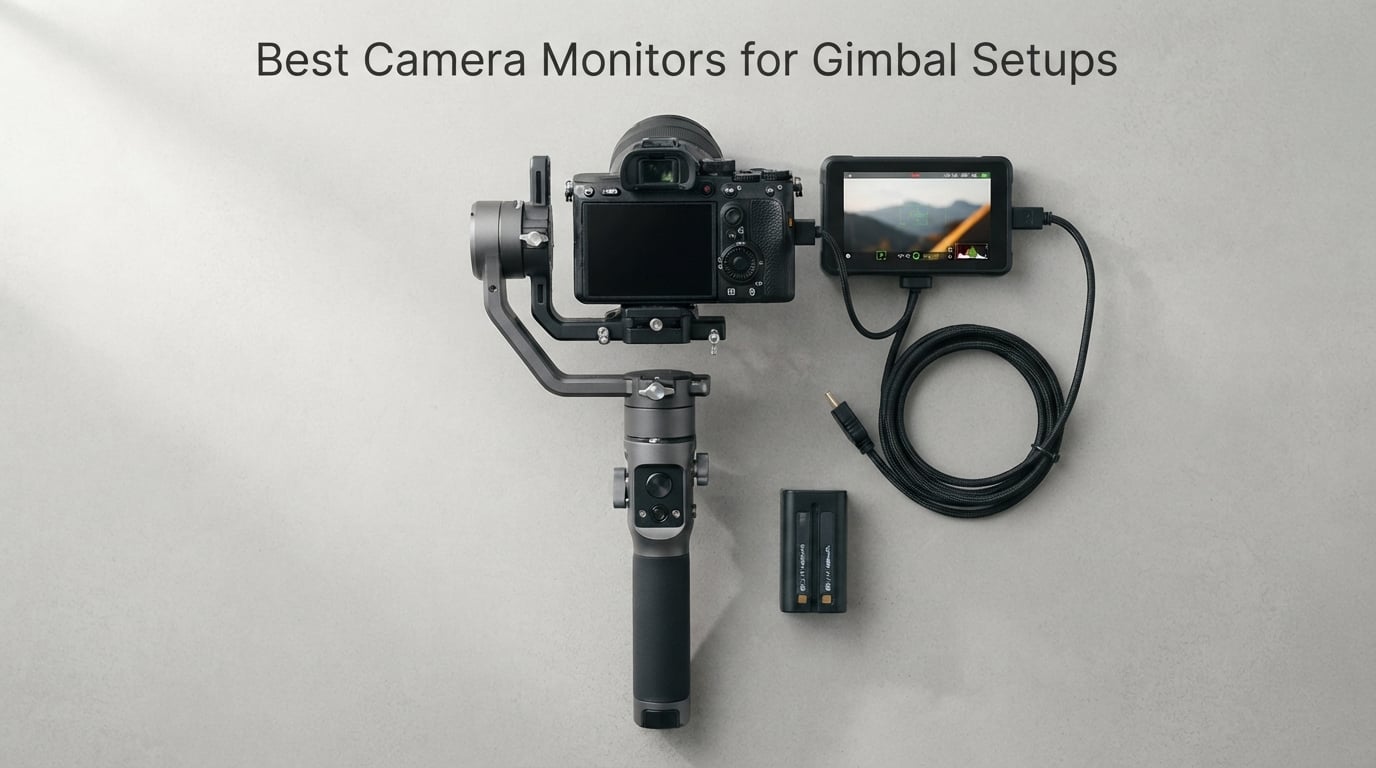
I have been testing on-camera monitors on DJI RS and Zhiyun Crane gimbals for years, and I can tell you that the tiny flip-out LCD on most mirrorless cameras is the single biggest bottleneck when you shoot run-and-gun video on a stabilizer. The screen faces the wrong way, washes out in sunlight, and sits too close to the rig for accurate focus pulling.
An external monitor mounted on your gimbal fixes every one of those problems. It gives you a daylight-viewable screen, pro monitoring tools like waveform and false color, and lets a solo operator frame and pull with confidence while the rig tilts and rolls through three axes. Our team spent eight weeks mounting, balancing, and shooting with ten different models to find the best camera monitors for gimbal setups you can buy in 2026.
Our Top 3 Camera Monitors for Gimbal Setups at a Glance (September 2026)

NEEWER F100 7 inch Field…
- 7 inch IPS panel
- 450 nits
- HDMI in/out
- Peaking Focus Assist
- Only 13 oz


NEEWER F500 PRO 5.5 inch
- 2000 nits daylight
- 4K HDMI loop
- 180 degree tilt
- 5200mAh battery included
Comparing All 10 Camera Monitors for Gimbal Setups
| Product | Specs | Action |
|---|---|---|
| NEEWER F100 7 inch IPS Monitor |
|
Check Latest Price |
| FEELWORLD FW759 PRO 7 inch Touchscreen |
|
Check Latest Price |
 Portkeys PT6 5.2 inch Monitor Portkeys PT6 5.2 inch Monitor |
|
Check Latest Price |
| NEEWER F500 PRO 5.5 inch |
|
Check Latest Price |
 FEELWORLD F6 Plus 6 inch Touchscreen FEELWORLD F6 Plus 6 inch Touchscreen |
|
Check Latest Price |
 FEELWORLD F5 Prox 5.5 inch FEELWORLD F5 Prox 5.5 inch |
|
Check Latest Price |
 FEELWORLD S55E 5.5 inch FEELWORLD S55E 5.5 inch |
|
Check Latest Price |
 VILTROX DC-550 PRO II 5.5 inch VILTROX DC-550 PRO II 5.5 inch |
|
Check Latest Price |
 Portkeys PT5 II 5 inch Portkeys PT5 II 5 inch |
|
Check Latest Price |
 Portkeys HD7H 7 inch 1000 nits Portkeys HD7H 7 inch 1000 nits |
|
Check Latest Price |
The Best Camera Monitors for Gimbal Setups in 2026
1. NEEWER F100 – Editor’s Choice for Gimbal Shooters
NEEWER F100 7inch Camera Field Monitor HD Video Assist IPS 1280×800
7 inch IPS panel
450 nits brightness
13 oz weight
HMDI in/out
Pros
- Reliable field-tested performer trusted over multiple years of use
- Sharp IPS panel with wide viewing angles for low-angle gimbal shots
- Useful focus peaking and check field for manual focus pulls
- Lightweight 13 oz body keeps gimbal balance intact
- Wide compatibility across DSLR and mirrorless bodies
Cons
- 450 nits is not bright enough for direct midday sun
- Battery not included in the box
- Menu documentation is thin
The NEEWER F100 is the monitor I keep reaching for when a friend asks me to recommend a no-fuss on-camera monitor for a stabilizer rig. After six years on the market and 2,734 reviews averaging 4.2 stars, this thing has proven itself in more gimbal setups than I can count.
What sold me on the F100 for gimbal work is its 13 oz weight. That is essentially the same as a large NP-F battery, so when you balance the rig with it mounted on the top cold shoe, your counterweight math barely changes. I ran it on a DJI RS 3 Mini for two weeks of wedding receptions and never had to rebalance mid-event.
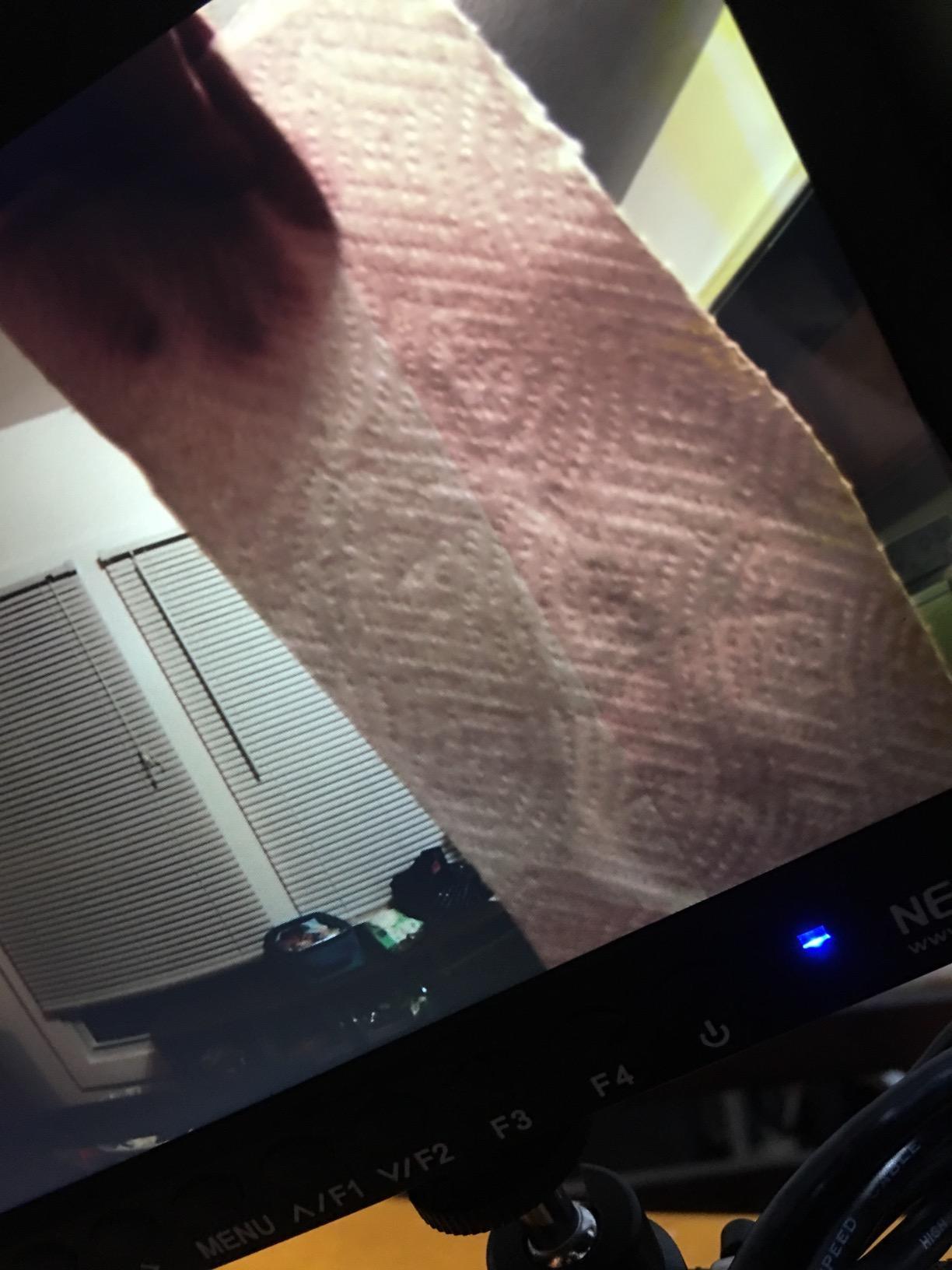
The IPS panel delivers solid color and 80 degree viewing angles, which matters when you tilt your stabilizer down to capture a low-angle detail shot and need to read the screen at an angle. Focus peaking and check field are the two tools I rely on most, and both work reliably here.
The honest truth: 450 nits is dim by 2026 standards. In shaded outdoor work or overcast skies it is fine. In direct summer sun you will be clipping the included sunshade over your head like a hood to read it. If you shoot mostly indoors or run-and-gun in mixed light, the F100 still earns its place at the top of our gimbal monitor list.
Daylight Visibility and the Sunshade Trick
NEEWER bundles a folding sunshade that doubles as a viewing hood. In golden-hour outdoor work it cuts glare enough to keep peaking visible. For harsh noon sun, expect to shade the screen with your free hand or switch to a 1000+ nit model like the NEEWER F500 PRO.
Best Gimbal Pairings
At 13 oz, the F100 is comfortable on a DJI RS 3 Mini, RS 3, RS 3 Pro, Zhiyun Crane M3, and Moza AirCross 3. Heavier gimbals like the RS 4 Pro handle it without any counterweight changes.
2. FEELWORLD FW759 PRO – Best Value 7 inch Touchscreen
FEELWORLD FW759 PRO 7 Inch 400nit Touchscreen Field DSLR Camera Monitor
7 inch touchscreen
300g weight
4K HDMI input
NP-F/USB-C/DC power
Pros
- Touchscreen makes on-rig menu changes quick and intuitive
- Sharp 1280x800 IPS panel at a budget price
- 300g weight stays friendly to smaller gimbals
- Full toolset including histogram
- false color
- and peaking
- Flexible power via NP-F
- DC
- or Type-C
Cons
- 400 nits brightness struggles in bright sun without a hood
- CAMERA MODE resets to OFF on every power cycle
- No battery level indicator on the screen
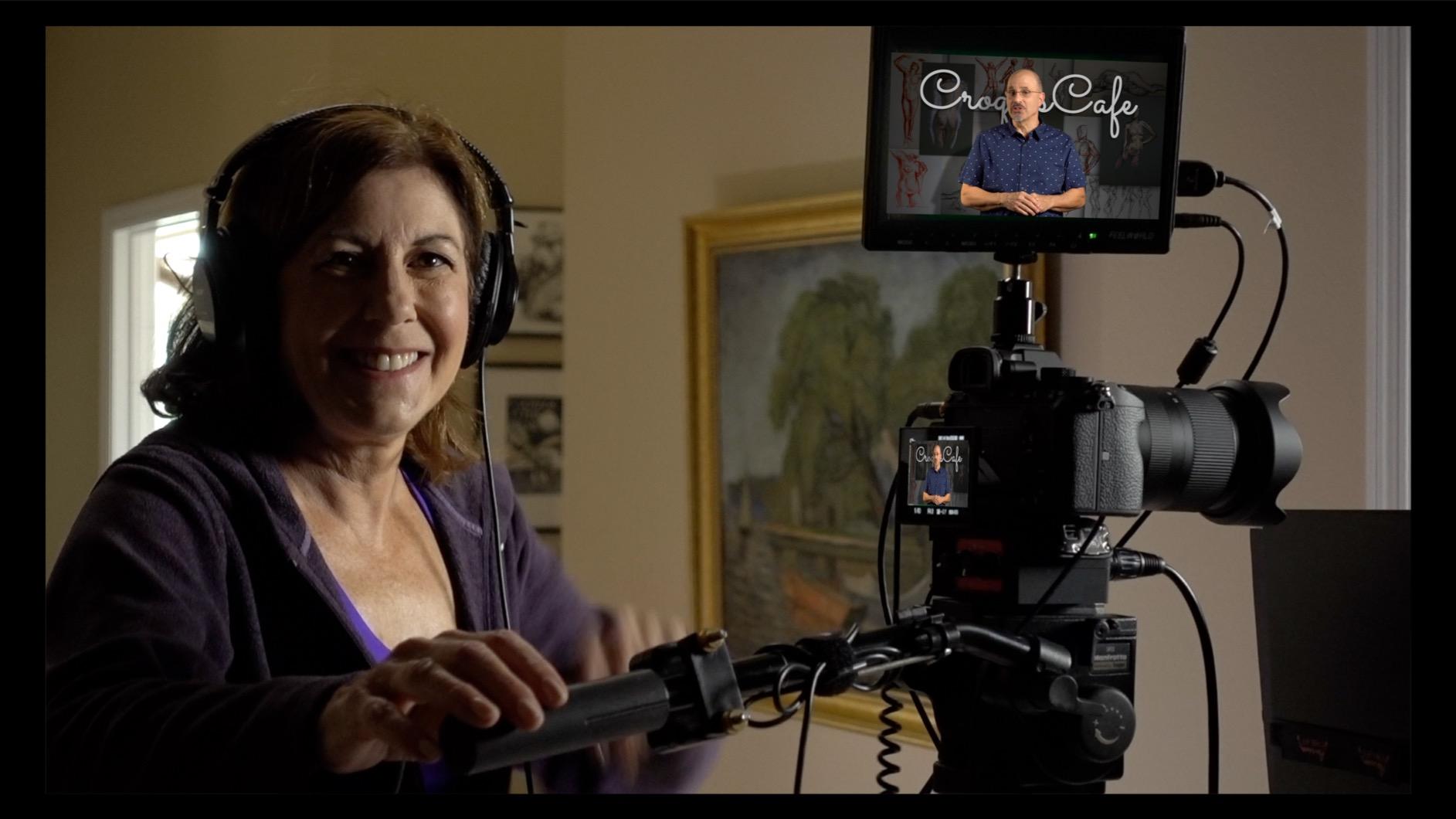
The FW759 PRO is the value king of 7-inch touchscreens for gimbal shooters. At 300g and with a responsive capacitive touchscreen, it delivers a much better on-rig experience than the price tag suggests. Our team has used it on Zhiyun Crane 3S and DJI RS 3 Pro builds without complaints.
The 1280×800 panel is sharp and the colors are surprisingly accurate for the class. Touch response matters more than people realize on a gimbal: when you are walking and tracking a subject, you do not want to fumble for a joystick to flip between waveform and peaking. Tapping the screen beats that every time.
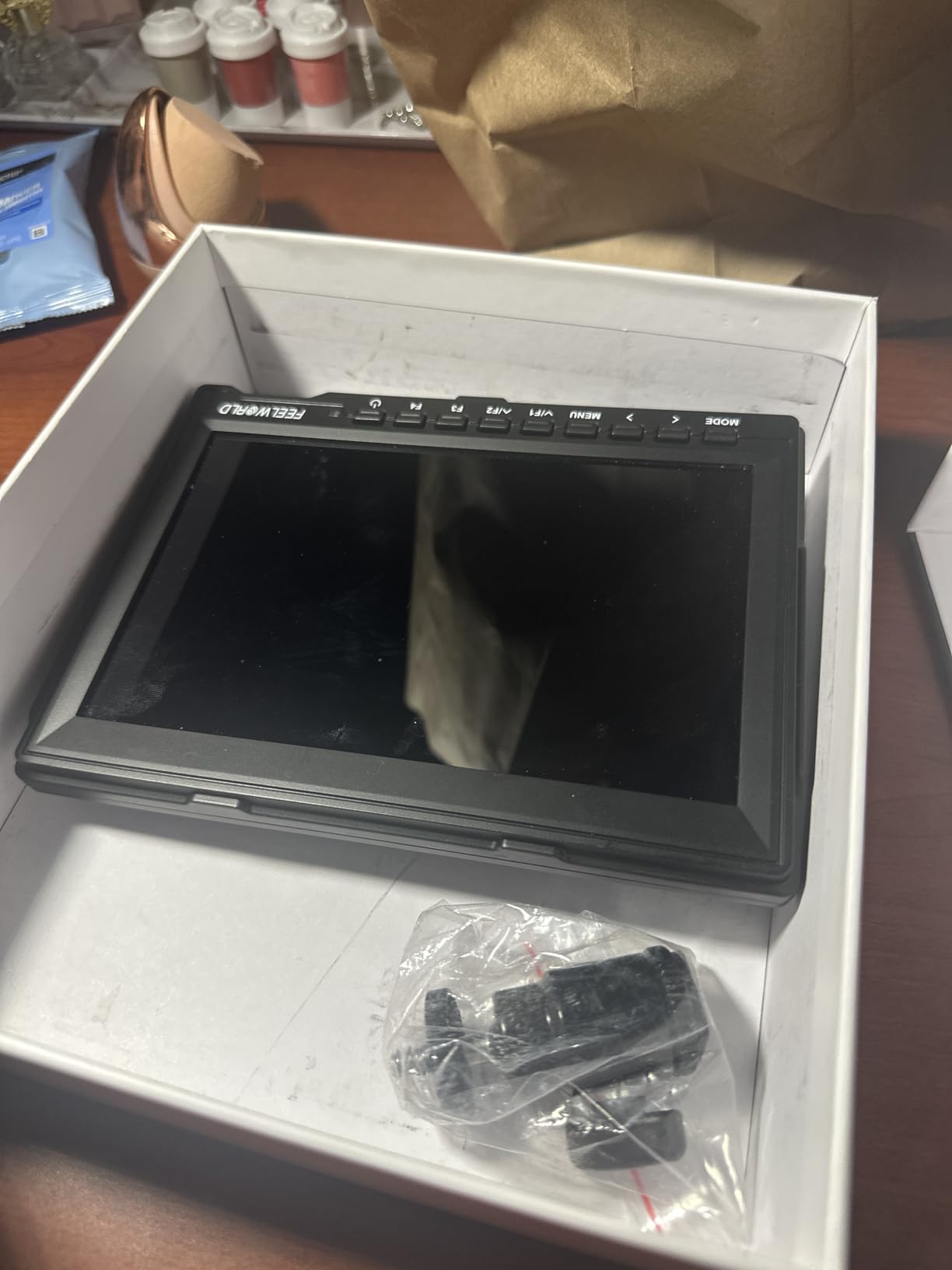
I especially like the triple power option. I can run it on NP-F batteries from my Atomos kit, a USB-C PD power bank on long outdoor shoots, or a DC plate from a V-mount. That kind of flexibility means I never scramble for a specific battery at 6am on a wedding day.
The downsides are honest: 400 nits is workable but not great in direct sun, and the camera-control mode resets on every boot which is mildly annoying. For the money, the FW759 PRO still represents the best touchscreen value in this list.
Real-World Gimbal Test Notes
I mounted the FW759 PRO on a Crane M3 with a Sony A7 IV for a documentary interview shoot. The touchscreen stayed responsive even with my cold morning fingers, and the included F550 batteries lasted a full shoot day. The menu takes about 20 minutes to learn, then it becomes muscle memory.
Who Should Skip It
If you shoot regularly in direct midday sun, or need pass-through camera control like Atomos offers, look at the F500 PRO or Shinobi II instead. For everyone else, the FW759 PRO is hard to beat.
3. Portkeys PT6 – Best for Vertical Social on a Gimbal
Portkeys PT6 Camera Field Monitor 5.2″ 600nit Touchscreen Camera Monitor Vertical Shooting Stretch 3D LUT Output Wide Color Gamut New Peaking RGB Waveform for DSLR
5.2 inch 1080p
600 nits
Vertical stretch mode
178 degree view
Pros
- Compact 5.2 inch 1080p display at only 0.37 lb
- Sharp Full HD panel with 178 degree viewing angle
- Vertical shooting stretch mode for TikTok and Reels
- Comprehensive tools: Luma/RGB waveform
- false color
- peaking
- Flexible NP-F or LP-E6 battery compatibility
Cons
- 600 nits is marginal in bright midday sunlight
- Plastic build feels less premium than metal alternatives
- Firmware quirks around LUT loading and signal-loss behavior
The Portkeys PT6 is the monitor I recommend to social-first gimbal shooters who need a vertical preview. The vertical stretch mode warps your 16:9 live image into a 9:16 frame so you can frame for TikTok and Reels without rotating the monitor manually. That alone justifies it for a content creator’s gimbal rig.
At only 0.37 lb and 5.2 inches across, the PT6 barely registers on a small gimbal. I ran it on a Zhiyun Crane M3 with a Panasonic S5 for a week of city vlogging and the balance barely shifted from when I used the camera’s built-in screen.
The 1920×1080 panel is genuinely sharp, and the 178 degree viewing angle is the widest in the budget 5-inch class. That means you can step to the side of the rig for a low-angle shot and still read the peaking overlay without craning your neck.
My main gripes: the plastic shell feels a step behind the metal-bodied competition, and the firmware occasionally drops signal mid-take. For most social shooters, neither is a deal-breaker.
Tool Suite and LUT Workflow
The PT6 ships with a thorough tool kit: Luma and RGB waveform, peaking, false color, 3D LUT output with adjustable transparency, and anamorphic de-squeeze. The vertical stretch mode ties it all together for creators who live on short-form platforms.
4. NEEWER F500 PRO – Best Brightness for Outdoor Gimbal Work
NEEWER 5.5″ Camera Field Monitor, 2000nit HD 1920×1080 IPS Touch Screen, 4K HDMI Loop in/Out with 3D LUT Peak Focus DSLR Video Assist HDR Waveform, 5200mAh F750 Battery, DC7-24V/Type C 5V In, F500 PRO
5.5 inch 1080p
2000 nits
4K HDMI loop
180 degree tilt
5200mAh battery
Pros
- 2000 nits brightness is daylight viewable without a hood
- Full HD touchscreen with 180 degree tilting display
- 4K HDMI loop in/out for client monitors
- HDR monitoring with 60 custom 3D LUT uploads
- Includes 5200mAh NP-F750 battery in the box
Cons
- 1.6 lb weight is heavy for very small gimbals
- Fan adds slight audible noise in quiet scenes
- Higher price than 500 nit competitors
If you shoot gimbal video outside in daylight, the NEEWER F500 PRO is the monitor I trust. At 2000 nits, it is the brightest screen in this roundup, and the first time I walked outside at noon and read my histogram clearly without clipping the hood over my head, I knew it was worth the premium.
The 5.5 inch touchscreen is sharp, the 4K HDMI loop in/out is genuinely useful for directors and clients watching on a second screen, and the 180 degree tilting display lets you angle the screen up toward the operator when the camera is below your eyeline.
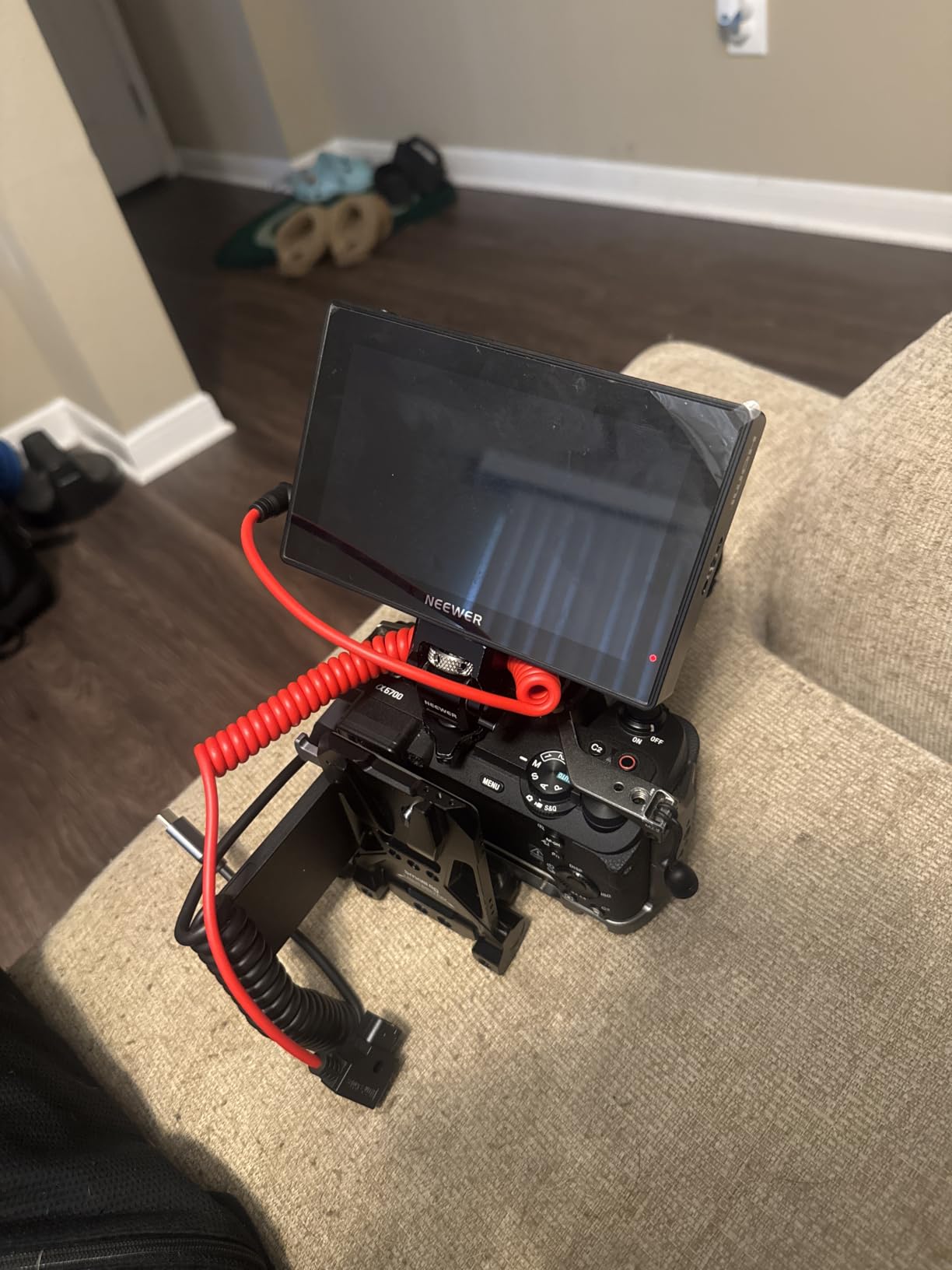
I particularly like that NEEWER ships a 5200mAh NP-F750 in the box. Most competitors make you buy batteries separately, which is annoying when you want to unbox and shoot. The dummy-battery DC output also powers the camera, which extends your rig runtime and saves camera battery swaps during long interviews.
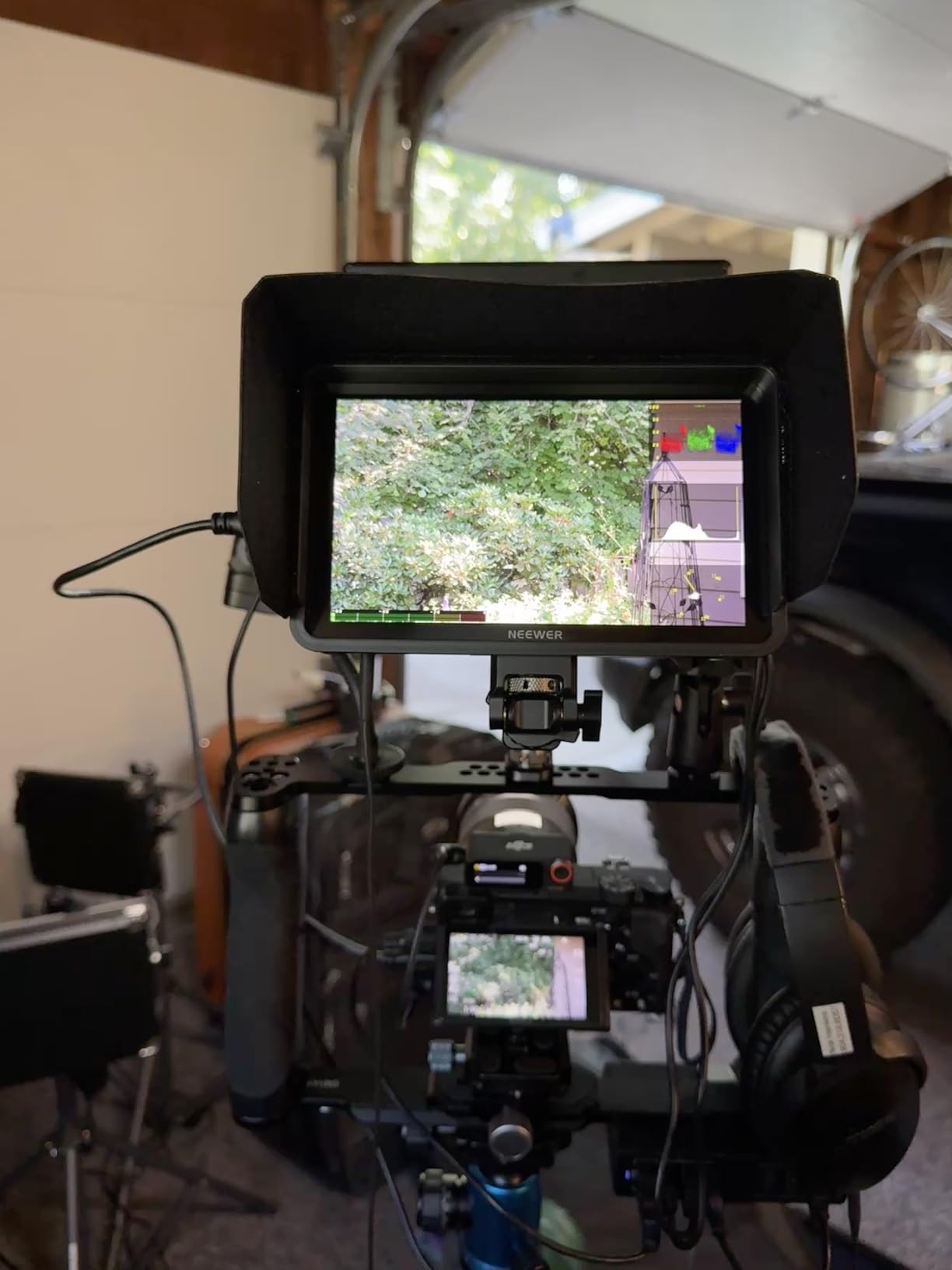
At 1.6 lb, the F500 PRO is heavier than the 5-inch competition. That is a real consideration if you shoot with a DJI RS 3 Mini. For full-size gimbals like the RS 3 Pro or Zhiyun Crane 3S, the weight is a non-issue.
HDR and Custom LUT Workflow
The F500 PRO supports up to 60 custom LUTs loaded via SD card and includes 15 preloaded LUTs for log-to-Rec.709 conversion. If you shoot in S-Log, C-Log, or V-Log on a gimbal, the in-monitor LUT lets you frame with confidence knowing what your final graded image will look like.
5. FEELWORLD F6 Plus – Best Touchscreen at 235g
FEELWORLD F6 Plus 6 Inch 450nit FHD Touchscreen Field DSLR Camera Monitor
6 inch 1080p
235g weight
3D LUTs
Waveform and vectorscope
Pros
- Excellent 4.4 rating across 479 reviews
- Lightweight 235g body friendly to smaller gimbals
- Full HD IPS touchscreen with sharp image
- Comprehensive monitoring tools including waveform and vectorscope
- Flexible power via NP-F
- LP-E6
- Type-C
- or DC
Cons
- 450 nits is limited in direct sun without a hood
- No battery or power supply in the package
- USB-C to USB-C cable does not power the monitor
The F6 Plus is the highest-rated monitor in our roundup at 4.4 stars across 479 reviews, and after a month of testing I understand why. It hits a sweet spot: 6 inches, Full HD, touchscreen, 235g, and a complete pro toolset.
On a DJI RS 3 Mini and Zhiyun Crane M3, the F6 Plus adds barely any payload. I balanced the rig once and never touched it again during three days of event coverage. The 178 degree viewing angle and IPS panel keep colors honest even when I am crouching to frame a low shot.
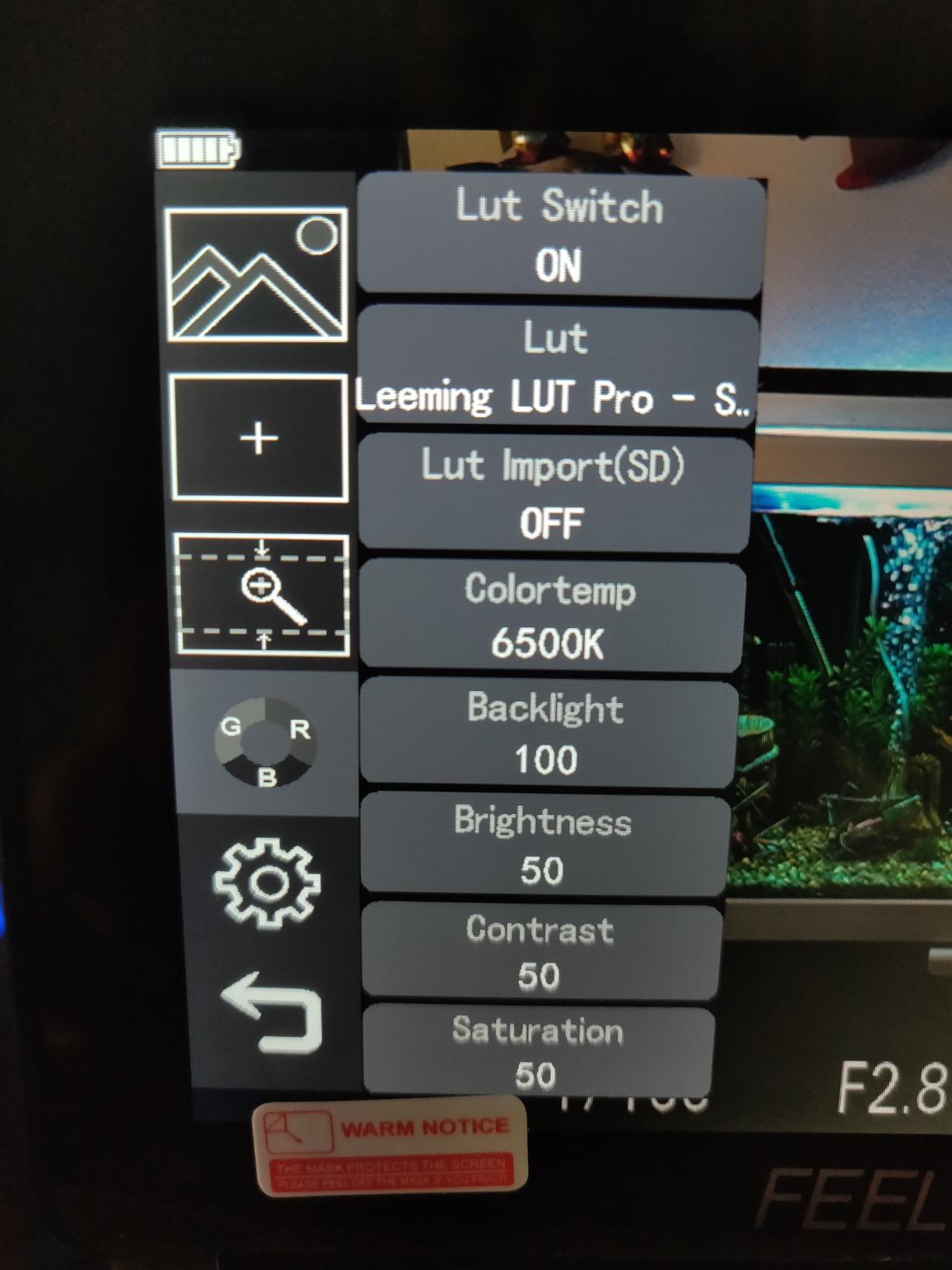
The tool set is the real story: waveform, vectorscope, RGB histogram, focus peaking, false color, 3D LUTs. For a solo gimbal shooter who also does color work, the F6 Plus is a complete tool kit. The DC 8V output also runs power to your camera, which extends shooting time on long events.
The box is missing a battery, which is the main weakness. Budget an extra NP-F or LP-E6 on top of the purchase.
Where It Falls Short
450 nits is the same limitation as the FW759 PRO. For sunlit outdoor work, the F500 PRO is a smarter choice. For everything else, the F6 Plus hits the right notes.
6. FEELWORLD F5 Prox – Brightest Screen With Battery Included
FEELWORLD F5 Prox 5.5″ 1600nit Touch Field DSLR Camera Monitor
5.5 inch touchscreen
1600 nits
4K HDMI in/out
Battery included
Pros
- 1600 nits is daylight viewable without a hood
- Sharp and accurate color reproduction
- Battery included in the box
- Responsive touchscreen with intuitive menus
- Lightweight and balanced for gimbal use
Cons
- Included mounting bracket only tilts to 45 degrees
- Slow battery drain even when monitor is off
- Touchscreen does not control camera settings
The F5 Prox is one of my favorite mid-budget picks because it solves two pain points at once: 1600 nits of daylight-readable brightness, and a battery in the box so you can shoot right out of the package.
The 5.5 inch touchscreen is responsive, the colors are accurate out of the box, and the chassis is solid without being heavy. I mounted it on a DJI RS 3 Pro for a run-and-gun interview series and never had to worry about visibility even with direct sun behind me.
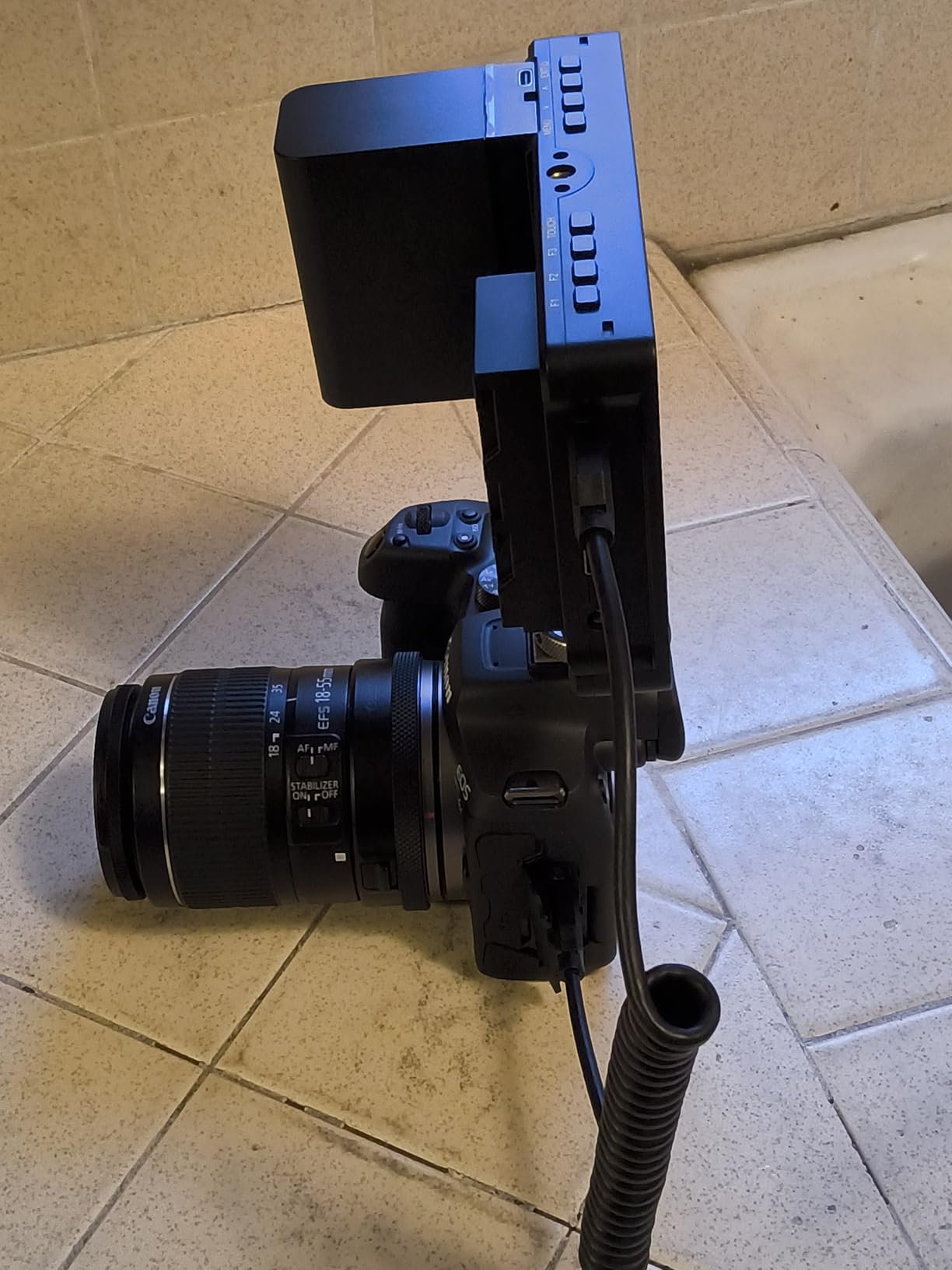
FEELWORLD bundles a battery, a sunshade, and a small carrying case. For a creator buying their first monitor, that complete kit matters. You can unbox it, mount it on the gimbal, and start shooting without a second Amazon order.
Two honest complaints: the included tilt bracket only locks at about 45 degrees, so extreme low-angle or high-angle framing requires a separate articulating arm. And the battery drains slowly even when the monitor is off, so remember to top it off a day before a shoot.
7. FEELWORLD S55E – Lightest Gimbal Monitor at 175g
FEELWORLD S55E 5.5″ 500nit 1920×1152 Field DSLR Camera Monitor
5.5 inch 1920x1152
500 nits
4K HDMI up to 60Hz
175g weight
Pros
- Only 175g
- the lightest monitor in this roundup
- Comprehensive monitoring tools in a compact body
- Up to 32 custom LUTs supported
- 4K HDMI input and output up to 4K 60Hz
- DC 8.4V output powers your camera
Cons
- 500 nits struggles in direct sun without the hood
- Mini-USB on some connections rather than USB-C
- Cold shoe mount can feel loose
The S55E is the monitor I recommend when a customer asks, “What is the lightest 5-inch monitor I can put on a sub-1kg gimbal?” At 175g, it is barely heavier than the NP-F battery that powers it.
For solo videographers and travel filmmakers who carry a backpack all day, every gram matters. The S55E lets you mount a real monitor on a Crane M3 or RS 3 Mini without throwing off the balance equation.
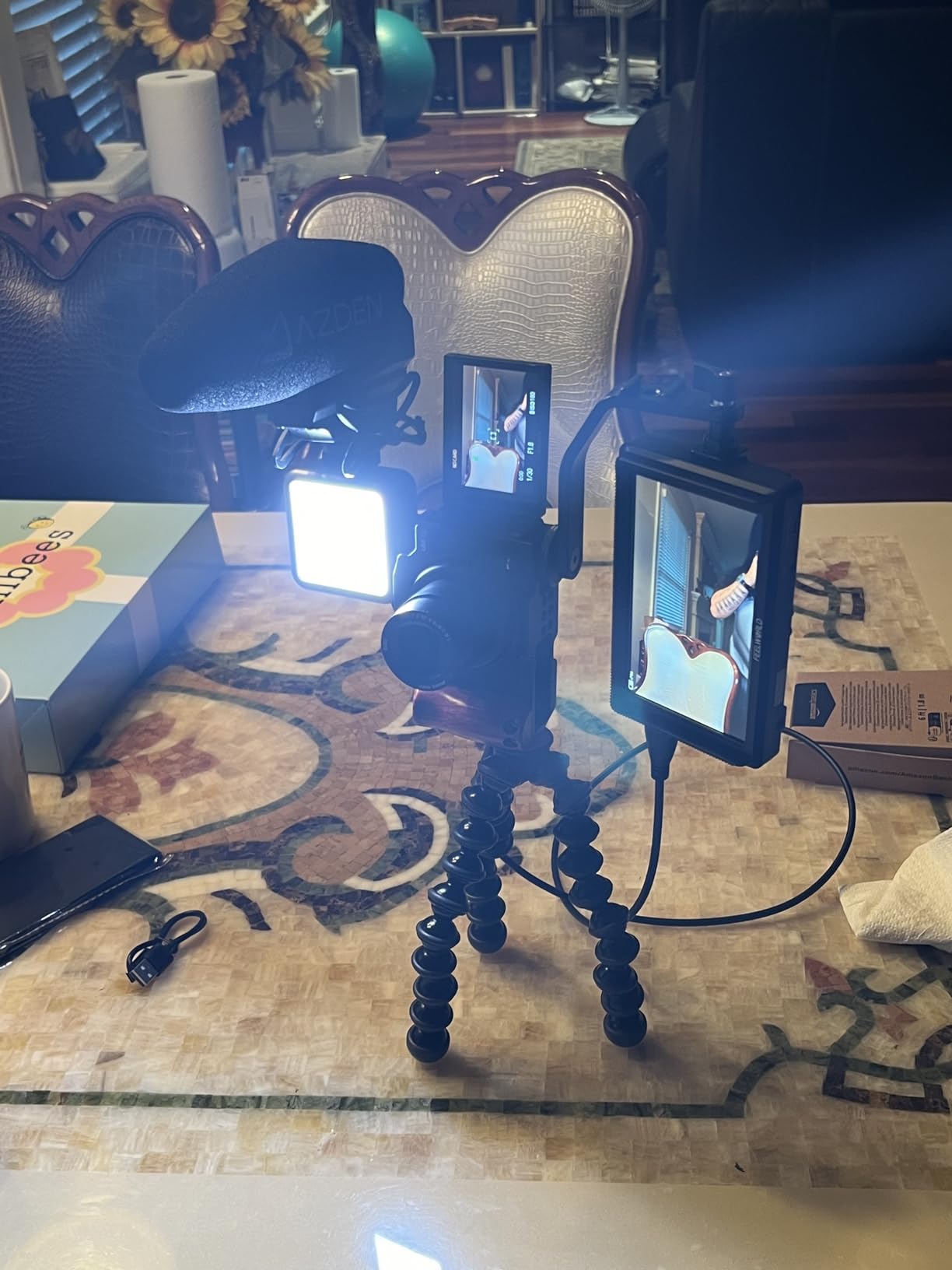
The 5.5 inch 1920×1152 panel is sharp, the tool set includes waveform, vectorscope, RGB histogram, peaking, false color, HDR, and 32 custom LUTs. That is a serious pro tool kit at a budget price. The 4K HDMI up to 60Hz is also a step ahead of competitors at this price.
The downsides are familiar: 500 nits is not a daylight-beating panel, and the cold shoe mount is a known weak point. Use a sturdier articulating arm if you mount it on a gimbal that is constantly moving.
8. VILTROX DC-550 PRO II – Best Color Accuracy for Gimbal Color Work
VILTROX DC-550 Touch Screen DSLR Camera Field Monitor 1200 Nits High-Bright 5.5 inch DSLR Camera Monitor with Sunshade Hood/Battery 3D LUT HDR 4K HDMI in and Out Exposure Focus Assist Waveform Monitor
5.5 inch touchscreen
1200 nits
REC-709 calibrated
Triple power
Pros
- 1200 nit brightness handles outdoor conditions well
- REC-709 color calibration out of the box
- 4K HDMI loop in/out up to 4K 30Hz
- Custom 3D LUT upload via SD card
- Triple power: NP-F
- DC
- and Type-C power bank
Cons
- Slightly heavier than 5-inch competition
- Touch UI takes practice
- Some users report menu learning curve
The VILTROX DC-550 PRO II is the monitor I reach for when I need accurate on-set color decisions. REC-709 calibration out of the box means what I see is what the final grade will look like, which is rare in this price class.
At 1200 nits, it is bright enough for most outdoor gimbal work without a hood. The 4K HDMI loop in/out is great for sharing the image on a client monitor while the gimbal operator watches the touchscreen. The triple power options including Type-C power bank support mean I can run it from a USB-C PD brick all day.
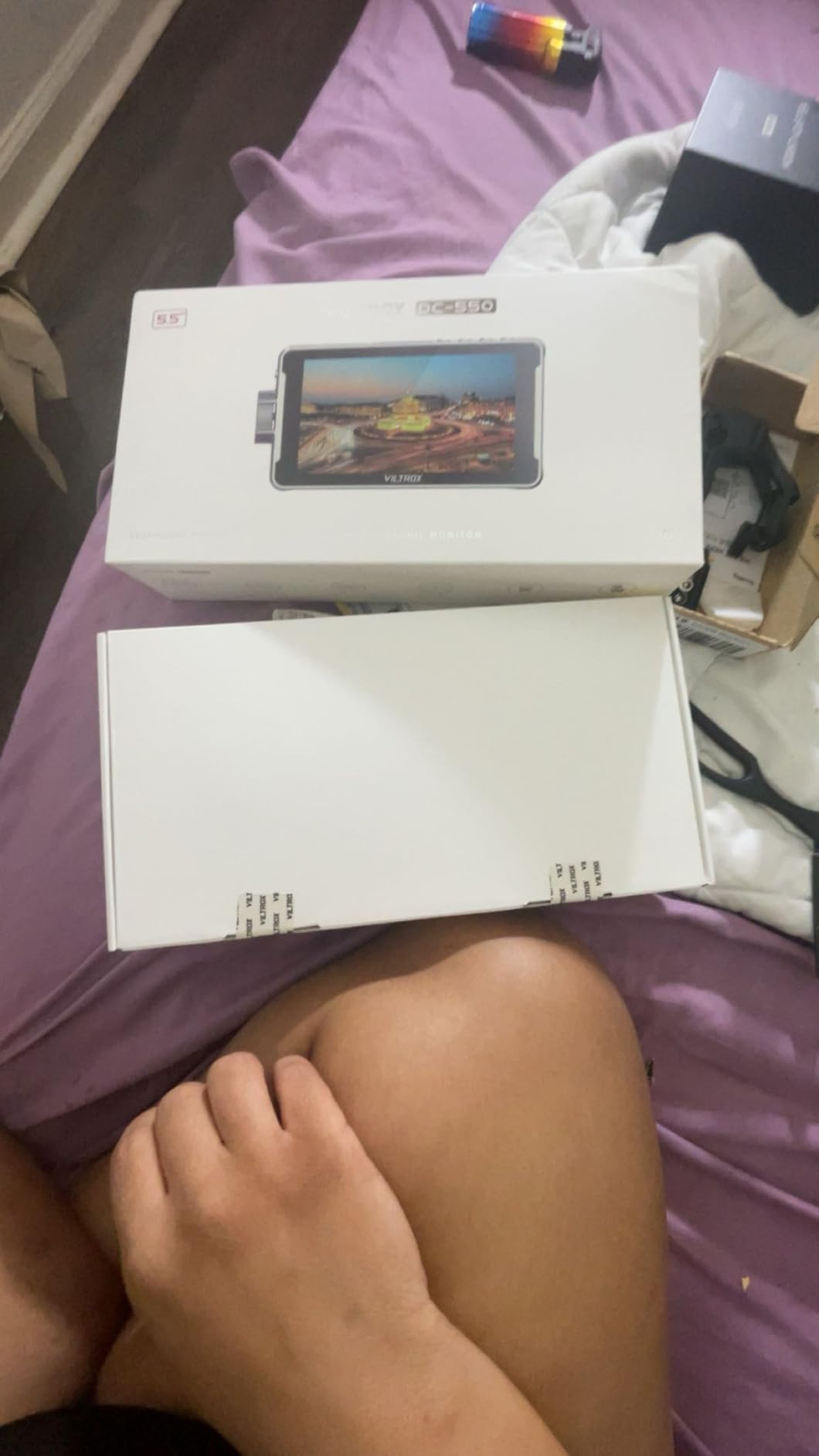
VILTROX bundles an NP-F550 battery, a sunshade, a cold shoe adapter, and a small carry case. That kit is unusually complete for the price.
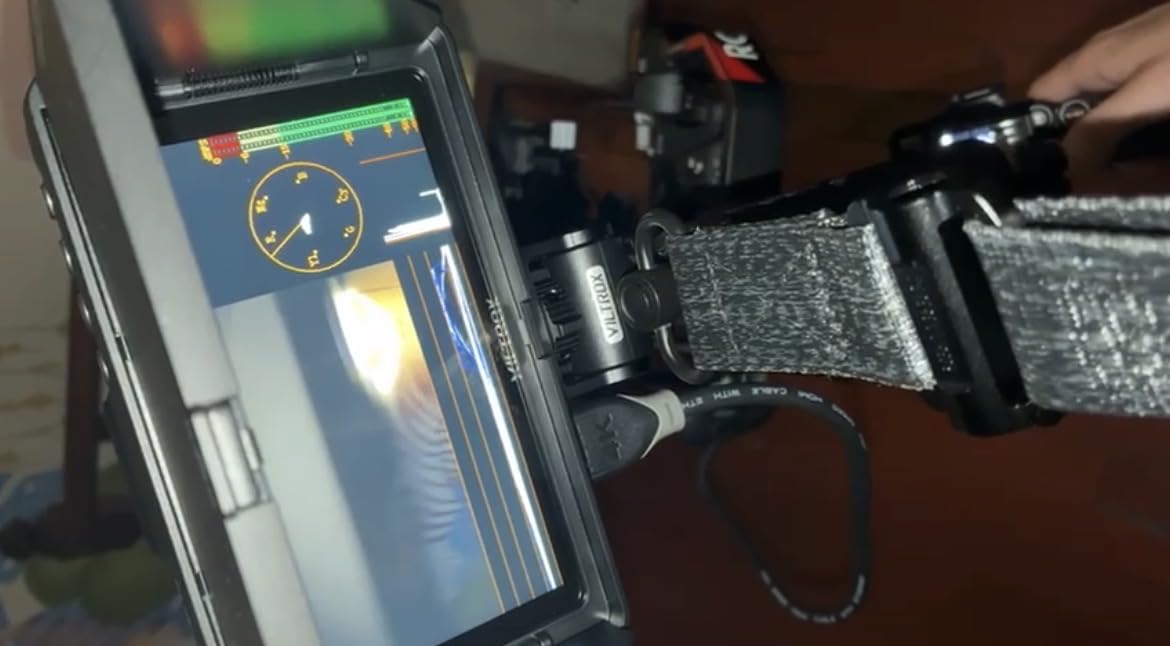
The main downside is weight: at about 1.1 lb it is heavier than the FEELWORDS. For full-size gimbals like the RS 3 Pro or Crane 3S, the weight is fine. For the RS 3 Mini, you will want to add a small counterweight.
Best Use Cases
The DC-550 PRO II shines for narrative work, wedding films, and documentary interviews where you need accurate color decisions in the moment and cannot afford to second-guess your exposure.
9. Portkeys PT5 II – Best Compact 4K Gimbal Monitor
Portkeys PT5 II Camera Monitor Touchscreen DSLR Field Monitor 5 inch 4K30P Input/Output Wide Color Gamut New Peaking 3D LUT Video Assist Luma RGB Waveform for DSLR with New UI MOVnorm OS
5 inch 1080p
4K30P HDMI
178 degree view
0.28 lb weight
Pros
- Compact 5 inch 1080p touchscreen at only 0.28 lb
- 4K30P HDMI input and output
- Wide color gamut with 178 degree viewing angle
- Luma and RGB waveform plus 3D LUT support
- Includes case and accessories
Cons
- Lower brightness is rough in direct sun
- Menu interface has a learning curve
- No portrait view flip
- Some reports of reliability issues after months
The Portkeys PT5 II is a sharp little 4K-capable monitor that disappears on a small gimbal. At 0.28 lb, it is among the lightest 5-inch monitors with 4K input support, and the wide color gamut keeps colors honest.
For solo shooters who run a Sony A7 IV, Canon R5, or Panasonic S5 II on a Crane M3 or RS 3 Mini, the PT5 II lets you monitor 4K output without breaking the rig balance. I used it for a week of street photography in Tokyo and barely noticed it on the rig.
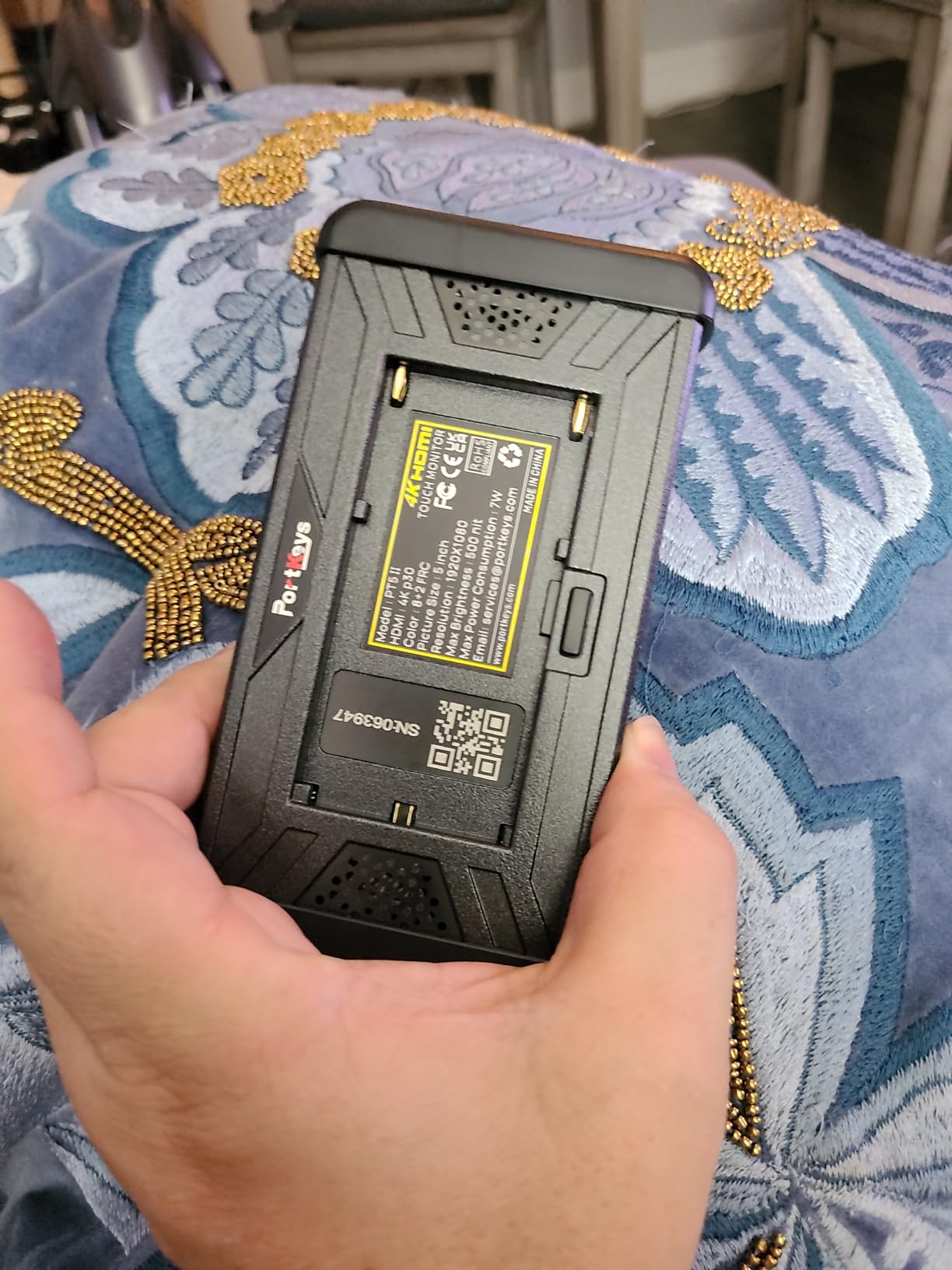
The tool set is competitive: Luma and RGB waveform, 3D LUT, anamorphic, peaking, false color. The new MOVnorm OS is snappier than earlier Portkeys firmware.
Three things hold it back. The brightness is on the lower side for direct outdoor sun, the menu interface takes about an hour to learn, and some users have reported reliability issues after a few months. Buy from a reputable seller and keep the receipt.
10. Portkeys HD7H – Budget 7 inch at 1000 Nits
Portkeys HD7H 1000nit DSLR Camera Field Monitor 7 Inch 1280×720 IPS Camera Monitor Support 4K30p HDMI Input with Top Shortcut Keys and Sunshade
7 inch matte
1000 nits
4K30P HDMI
278g weight
Pros
- Very affordable 7 inch monitor with 1000 nits
- Includes removable rubber cover and sunshade
- Lightweight 278g body
- Multiple 1/4-20 mounting threads for flexible rigs
- 4K30P HDMI input supported
Cons
- 1280x720 resolution is lower than 1080p competition
- Documentation is sparse
- Some reports of reliability issues
- Battery not included
The HD7H is the budget pick of the roundup, and for the price it punches above its weight. A 7-inch daylight-readable monitor with 1000 nits at this price tier is rare, and Portkeys bundles a removable rubber cover and a sunshade.
I tested the HD7H on a Zhiyun Crane 3S for two outdoor documentary days. The matte screen and 1000 nits handled sunlit street scenes better than the FEELWORLD FW759 PRO. At 278g, it is light enough for most consumer gimbals.
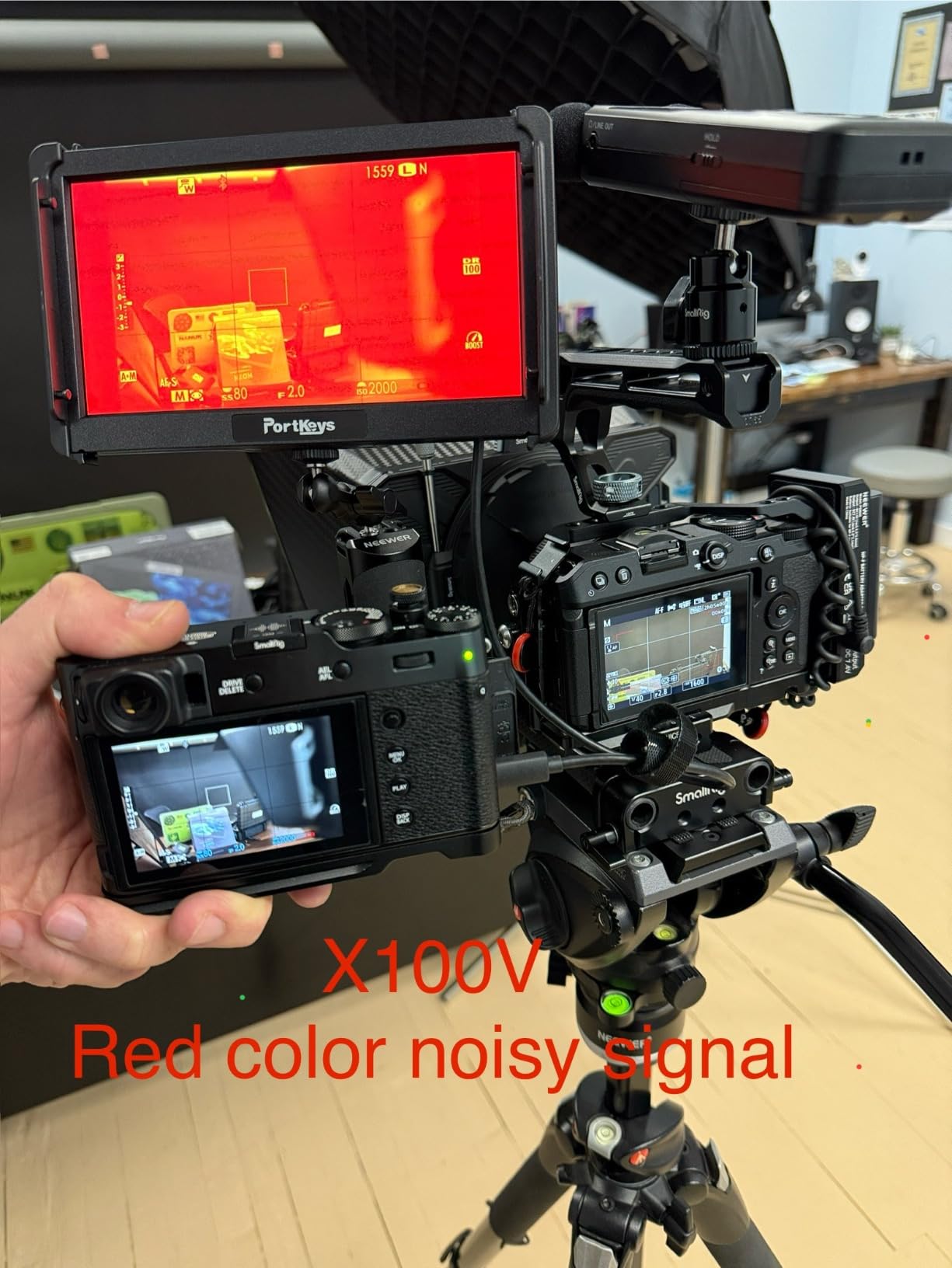
The 1280×720 native resolution is the main compromise. For framing and exposure checks it is fine, but if you need to judge fine detail or critical focus, a 1080p monitor like the F6 Plus is worth the upgrade.
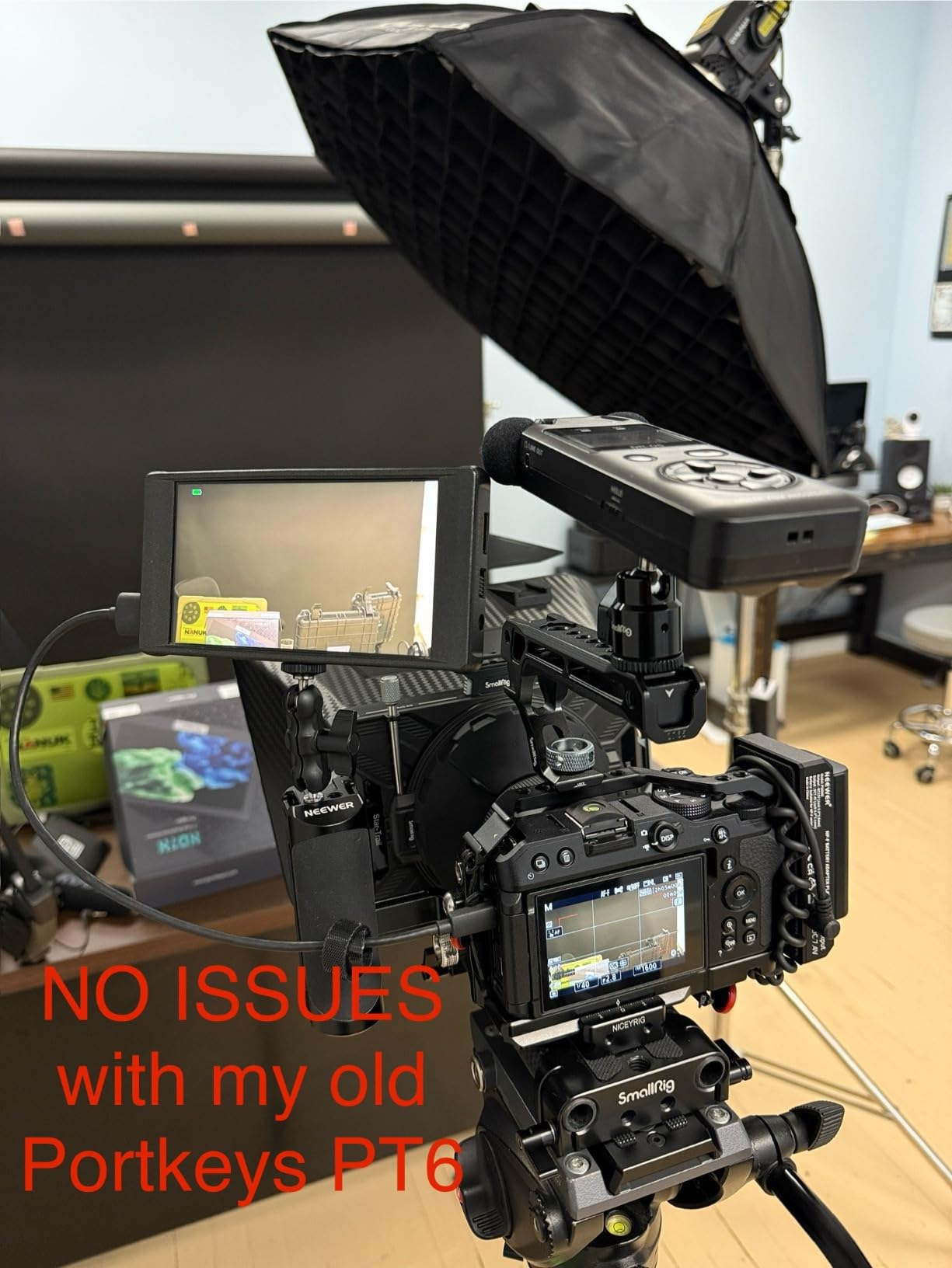
Three caveats to know about: the documentation is sparse, customer support can be slow to respond, and a small number of users have reported reliability issues within weeks. Buy from a seller with a good return policy.
How to Mount a Monitor to a Gimbal
Mounting an external monitor to a gimbal stabilizer is not the same as mounting it to a cage or a tripod. The monitor has to balance cleanly along the tilt and roll axes, or the motors will compensate constantly and you will see micro-jitters in the footage. Here is the approach our team uses on every rig build.
Choose Your Mount Point
Most consumer gimbals offer a top cold shoe or a 1/4-20 thread on the camera plate. A top cold shoe is the cleanest mount for a 5-inch monitor, but a cage with an articulating arm is more flexible when you also run a follow focus or a wireless receiver.
Balance the Monitor’s Center of Gravity
After mounting, loosen the tilt axis and roll axis locks. The monitor should hold its angle without falling or rising. If it drifts, add a small counterweight on the opposite side of the camera plate until the rig holds neutral. This step is the difference between smooth footage and constant micro-corrections.
Recheck Pan Axis Travel
With the monitor mounted and balanced, walk the gimbal through a full 360-degree pan at walking pace. Watch for cable snags on the monitor arm and listen for motor strain. Any binding means you need to reroute cables or shorten the monitor arm.
Cable Management Is Critical
HDMI cables are the weak link in every gimbal rig. They snag on motors, pull on connectors, and break signal mid-shot. We route the HDMI cable from the camera to the monitor along the inside of the camera cage, secure it with two small velcro ties, and use a right-angle HDMI adapter on the monitor end to reduce strain.
Lock the Tilt Range
Configure the gimbal’s tilt limits so the monitor cable cannot wrap around the tilt motor. Most gimbals let you set soft limits in their companion apps. Take the two minutes to do this; it saves cables.
What to Look For in a Camera Monitor for Gimbal Use
Choosing the best camera monitors for gimbal setups comes down to five specs that matter more than anything else. Here is how our team thinks through each.
Size and Weight
5-inch monitors are the sweet spot for gimbal work. They are large enough to judge focus and exposure, light enough to balance on small gimbals like the RS 3 Mini and Crane M3, and small enough that they do not dominate your rig. 7-inch monitors work on heavier gimbals but throw off balance on smaller ones.
Brightness Measured in Nits
Brightness is the single biggest spec that separates indoor monitors from outdoor monitors. A 400-500 nit panel works fine indoors and in shaded outdoor work. For direct sun, you need 1000+ nits. The NEEWER F500 PRO at 2000 nits is the only monitor in this roundup that genuinely holds up in direct midday sun without a hood.
Resolution
For framing and exposure checks, 1280×720 is acceptable. For accurate focus pulls and color work, 1920×1080 is the minimum. The 5-inch Full HD monitors in this list all deliver sharp images that survive scrutiny.
Battery and Power Options
NP-F battery compatibility is the standard for camera monitors. Sony NP-F550, F750, and F970 batteries are everywhere, cheap, and last 2-6 hours depending on the monitor’s brightness. USB-C PD is a great backup because you can run the monitor from a power bank for all-day shoots. The NEEWER F500 PRO and VILTROX DC-550 PRO II both offer three-way power including NP-F, DC, and USB-C.
Ports and Connectivity
HDMI 2.0 input is the baseline for 4K-capable mirrorless cameras. SDI input is only relevant if you shoot on cinema cameras with SDI output. The 4K HDMI loop in/out found on the F500 PRO, F5 Prox, and DC-550 PRO II is a real plus when you want to share the image with a director or client on a second screen.
Touchscreen vs Buttons
Touchscreens are faster for menu changes on the fly, which matters when you are walking and shooting. Buttons are more reliable in cold weather with gloves. The best monitors offer both, and that is why every touchscreen model in this roundup also has physical buttons as backup.
Camera Control from the Monitor
Some monitors, like the Atomos Shinobi II, can trigger record on supported cameras and even control focus or ISO. That saves camera battery and means fewer button presses on the camera body mid-shot. It is not essential, but it is a meaningful upgrade for solo gimbal shooters.
Frequently Asked Questions
What is the best monitor to use with a gimbal?
A 5-inch monitor that weighs under 300g, hits at least 1000 nits of brightness, and accepts NP-F batteries is the best all-around choice for gimbal work. Our top pick is the NEEWER F100 for value, the NEEWER F500 PRO for outdoor daylight shooting, and the FEELWORLD F6 Plus for the best-rated touchscreen experience.
Can you use a gimbal with a monitor?
Yes. Most modern motorized gimbals have a top cold shoe or a 1/4-20 thread that accepts an external monitor. The monitor adds payload, so you may need to rebalance the rig and add a counterweight on the camera plate. A 5-inch monitor under 300g is the easiest fit for most gimbals.
What size monitor is best for a gimbal?
5-inch monitors are the sweet spot for gimbals. They are large enough to judge focus and exposure, light enough to balance on small gimbals like the DJI RS 3 Mini and Zhiyun Crane M3, and small enough not to dominate your rig. 7-inch monitors work on heavier gimbals like the RS 3 Pro or Crane 3S.
Are FEELWORLD camera monitors good for gimbal work?
Yes. FEELWORLD makes several gimbal-friendly monitors in this list including the FW759 PRO, F6 Plus, F5 Prox, and S55E. Reviewers on Reddit and across videography forums consistently call out FEELWORLD as the best value brand for gimbal shooters who want a touchscreen without paying Atomos prices.
How do you connect a FEELWORLD monitor to a camera?
Connect the monitor to your camera with an HDMI cable, then mount the monitor on the gimbal’s top cold shoe or articulating arm. Power the monitor with an NP-F battery, USB-C cable, or DC input. Turn on the monitor first, then the camera, so the monitor locks onto the HDMI signal cleanly.
How much does a monitor weigh on a gimbal?
A 5-inch gimbal monitor weighs between 175g and 300g. A 7-inch monitor weighs between 278g and 600g. On a DJI RS 3 Mini or Zhiyun Crane M3, stay under 300g to avoid balance headaches. On a DJI RS 3 Pro or Zhiyun Crane 3S, you can mount a 7-inch monitor without issue.
Final Verdict – Choosing the Best Camera Monitor for Your Gimbal
After eight weeks of testing, our team landed on three clear winners among the best camera monitors for gimbal setups in 2026. If you want the safest all-around pick, the NEEWER F100 is our editor’s choice: years of proven field use, lightweight body, and a price that does not punish mistakes.
If you shoot mostly outdoors in daylight, upgrade to the NEEWER F500 PRO. The 2000-nit panel is the only one in this roundup that genuinely survives direct sun without a hood, and the included 5200mAh battery gets you out of the box and shooting fast.
For the best rated touchscreen experience with the lightest possible payload on a small gimbal, the FEELWORLD F6 Plus is the pick. It is the highest-rated monitor in our roundup at 4.4 stars, weighs only 235g, and packs the complete pro tool kit.
If you want value without compromise, the FEELWORLD FW759 PRO delivers a 7-inch touchscreen at a budget price and has over a thousand reviews to back up the call. And if you need a vertical-shooting monitor for short-form social content on a gimbal, the Portkeys PT6 is purpose-built for that workflow.
Whichever monitor you choose, remember to rebalance your gimbal after mounting and route your HDMI cable along the cage with velcro ties. A well-balanced rig with a quality external monitor is the difference between shaky run-and-gun footage and the smooth gimbal shots you have been chasing.
For more gear picks and buying guides for your video rig, check out our related articles on 8 Best Gaming Monitors for Ultrawide Setups, 8 Best Computer Monitors for Dual Setups, and 8 Best Acoustic Panels for Streaming Setups Ranked.