
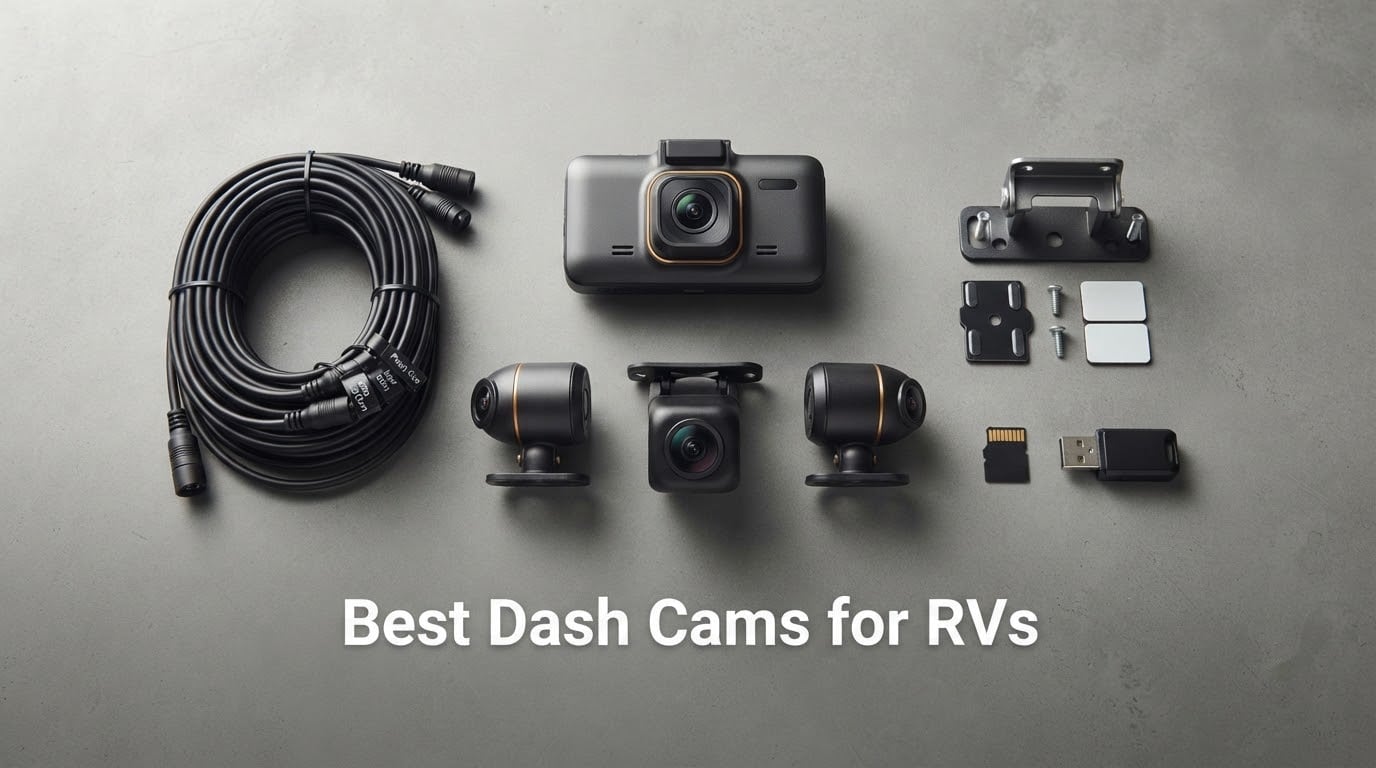
The best dash cams for RVs are multi-channel systems with wide field of view, not the single front-facing camera most people buy for a car. A 35 foot motorhome has blind spots a sedan does not, and the tall windshield on a Class A turns a standard windshield mount into a camera aimed at the headliner. Over the past six weeks we compared ten four-channel and 3-channel systems for coverage, night quality, storage headroom and how they behave in a parked rig at a hot campground, and this guide covers Class A motorhomes, Class C motorhomes and tow vehicles alike.
One framing note before the picks. The unit that came from the factory with your RV is usually a basic 1080p forward camera with a narrow lens, and owners on RV owner forums repeatedly ask whether it is good enough. It records, but it does not cover the sides, and on an oversized vehicle the sides are exactly where incidents happen. That is the gap every recommendation below is built to close.
If you are still working out how much memory a multi-day trip needs, start with our tested microSD card guide for dash cams before you pick a camera, because storage limits drive which resolutions are practical.
Our Top 3 RV Dash Cam Picks for 2026

REDTIGER F17 4K 3-Channel
- 4K front with STARVIS 2 IMX675
- 1080P rear and interior
- 5.8GHz Wi-Fi plus GPS
- Heat-rated capacitor

IIWEY N7 PRO 4K 4-Channel
- 4K front plus three 1080P channels
- 8 IR lamps for cabin capture
- Wi-Fi 6 at 10MB/s
- Heat-rated capacitor

PRUVEEO 360 4-Channel
- Four 1080P cameras for 360 coverage
- F1.8 lens with four IR lights
- Built-in GPS and Wi-Fi
- 128GB card included
The F17 is the one we would put in most RVs because it balances true 4K front capture, three simultaneous channels and a sensor that holds up after dark. The IIWEY N7 PRO is the pick when you routinely drive at night and want the driver-side and passenger-side feeds lit by infrared. The PRUVEEO is the value pick, giving four cameras and a 128GB card for less than the premium kits.
Comparing Every RV Dash Cam in This Guide (September 2026)
| Product | Specs | Action |
|---|---|---|
| REDTIGER F17 4K 3-Channel |
|
Check Latest Price |
| IIWEY N7 PRO 4K 4-Channel |
|
Check Latest Price |
| PRUVEEO 360 4-Channel |
|
Check Latest Price |
 ZMOPO D435 4-Channel ZMOPO D435 4-Channel |
|
Check Latest Price |
 VANTRUE N4 Pro S 4K 3-Channel VANTRUE N4 Pro S 4K 3-Channel |
|
Check Latest Price |
 VANTRUE N5S 4-Channel VANTRUE N5S 4-Channel |
|
Check Latest Price |
 HUPEJOS V8PLUS 4-Channel HUPEJOS V8PLUS 4-Channel |
|
Check Latest Price |
 PAPAGO G680 4-Channel PAPAGO G680 4-Channel |
|
Check Latest Price |
 FREEXAR D4 4-Channel FREEXAR D4 4-Channel |
|
Check Latest Price |
 PYangTian 4-Channel PYangTian 4-Channel |
|
Check Latest Price |
Everything below covers four cameras or three channels unless noted, so the differences come down to sensor quality, storage limits and how the system is powered.
1. REDTIGER F17 – Best All-Around 4K 3-Channel System for RVs
REDTIGER F17 4K 3CH Dash Cam, STARVIS 2 Sensor HDR, 64GB Card, 5.8GHz WiFi
4K front STARVIS 2 IMX675
1080P rear and interior
5.8GHz Wi-Fi plus GPS
Heat-rated capacitor
Pros
- True 2160p front capture with a STARVIS 2 IMX675 sensor
- Three channels record at once and display on one split screen
- 5.8GHz Wi-Fi downloads much faster than 2.4GHz systems
- GPS stamps speed and route onto clips
- Adjustable G-sensor sensitivity so bumps do not overwrite your footage
Cons
- Wi-Fi defaults to off at every power-up and must be re-enabled
- Supplied cable lengths can be short for rear cameras in long vehicles
- Instructions skip some settings like time zone
is the system we kept reaching for because it does the three things an RV needs: a sharp forward image, a rear view down a long body, and a cabin channel for campsite evidence. The front records 2160p on a STARVIS 2 IMX675, which is the difference between reading a plate and squinting at a smear on a dark highway.
Reviewers single out image quality across all three channels and the IR night performance of the interior camera, and they name the same practical gripe every time: the Wi-Fi radio resets to off on each power cycle.
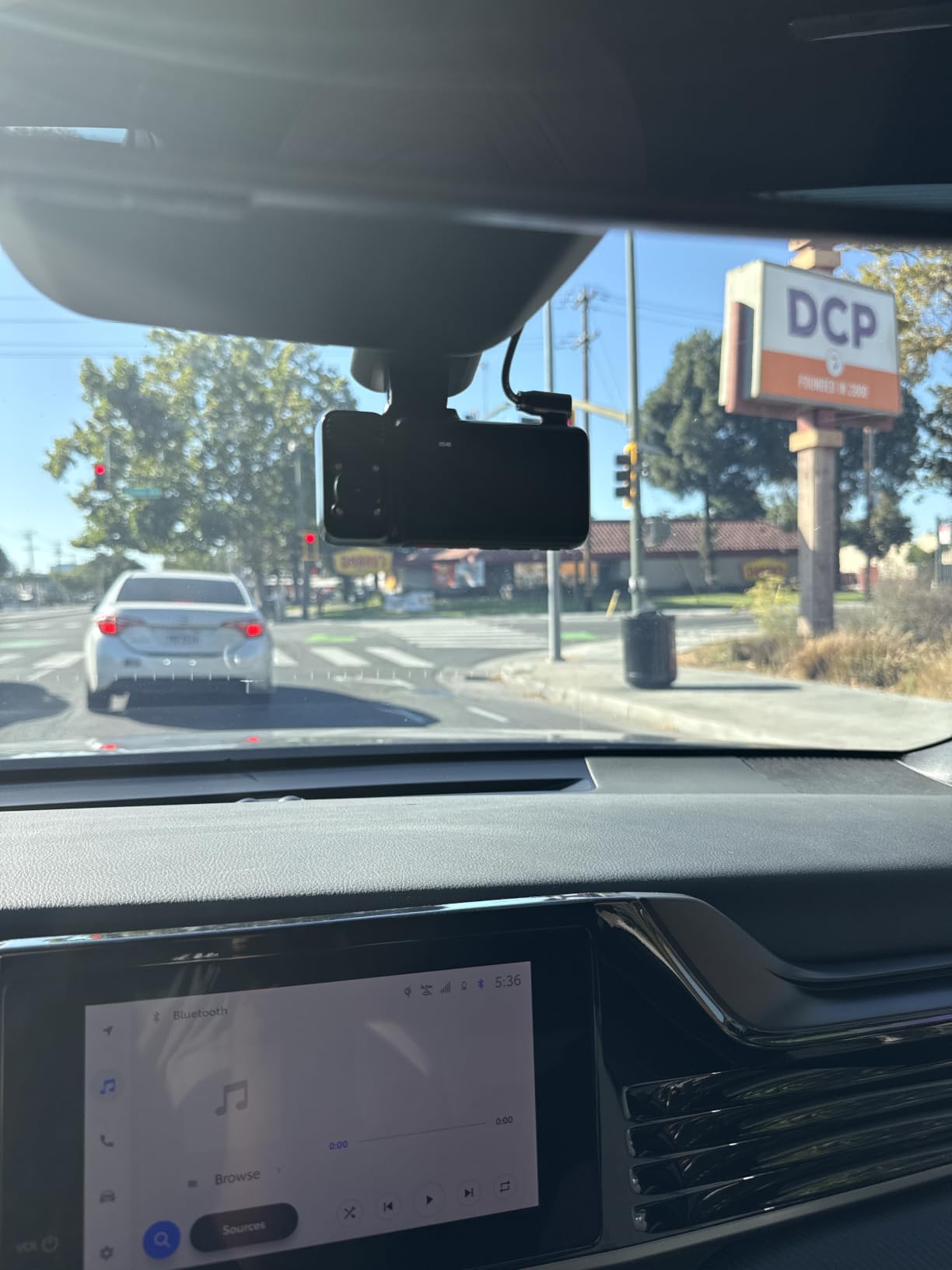
Why the STARVIS 2 sensor matters at highway speed
The IMX675 holds detail in low light where smaller sensors wash out, and HDR with WDR keeps oncoming headlights from flattening the rest of the frame. At 150 degrees on the front and 160 degrees in the cabin, that spread takes in the lanes beside an oversized vehicle, which a car-mounted camera rarely covers.
Three channels in two recording modes
You can run 2.5K across all three channels or drop to 4K front plus 1080P rear, and the lower mode writes less per hour when one card has to hold a full driving day. The heat-rated capacitor replaces the lithium battery most cheaper cameras use, which is the feature we care most about in a parked motorhome in July.
Where it falls short in an RV
On a Class A the rear camera needs far more wire than the box supplies, and one reviewer reported the unit formatting its own card and losing an incident clip, so copy anything important off it quickly. Parking mode needs a hardwire kit, and our dash cam parking protection guide covers the low-voltage cut-off settings to look for.
2. IIWEY N7 PRO – Best 360 Coverage With 8 IR Lamps for Night Driving
IIWEY N7 PRO 4K STARVIS 4-Channel Dash Cam 360° View, 8-IR Night Vision
4K front plus three 1080P channels
8 discrete IR lamps
Wi-Fi 6 at 10MB/s
Heat-rated capacitor
Pros
- Four channels record at once for genuine zero-blind-spot coverage
- 4K front with three 1080P feeds keeps detail in every direction
- Eight IR lamps capture the cabin without windshield reflections
- Wi-Fi 6 speeds up incident downloads for same-day sharing
- Capacitor power avoids lithium swelling in high heat
Cons
- Must be powered with the included car charger
- USB-C to USB-C cables do not work
- Some reviewers find plates unreadable while moving
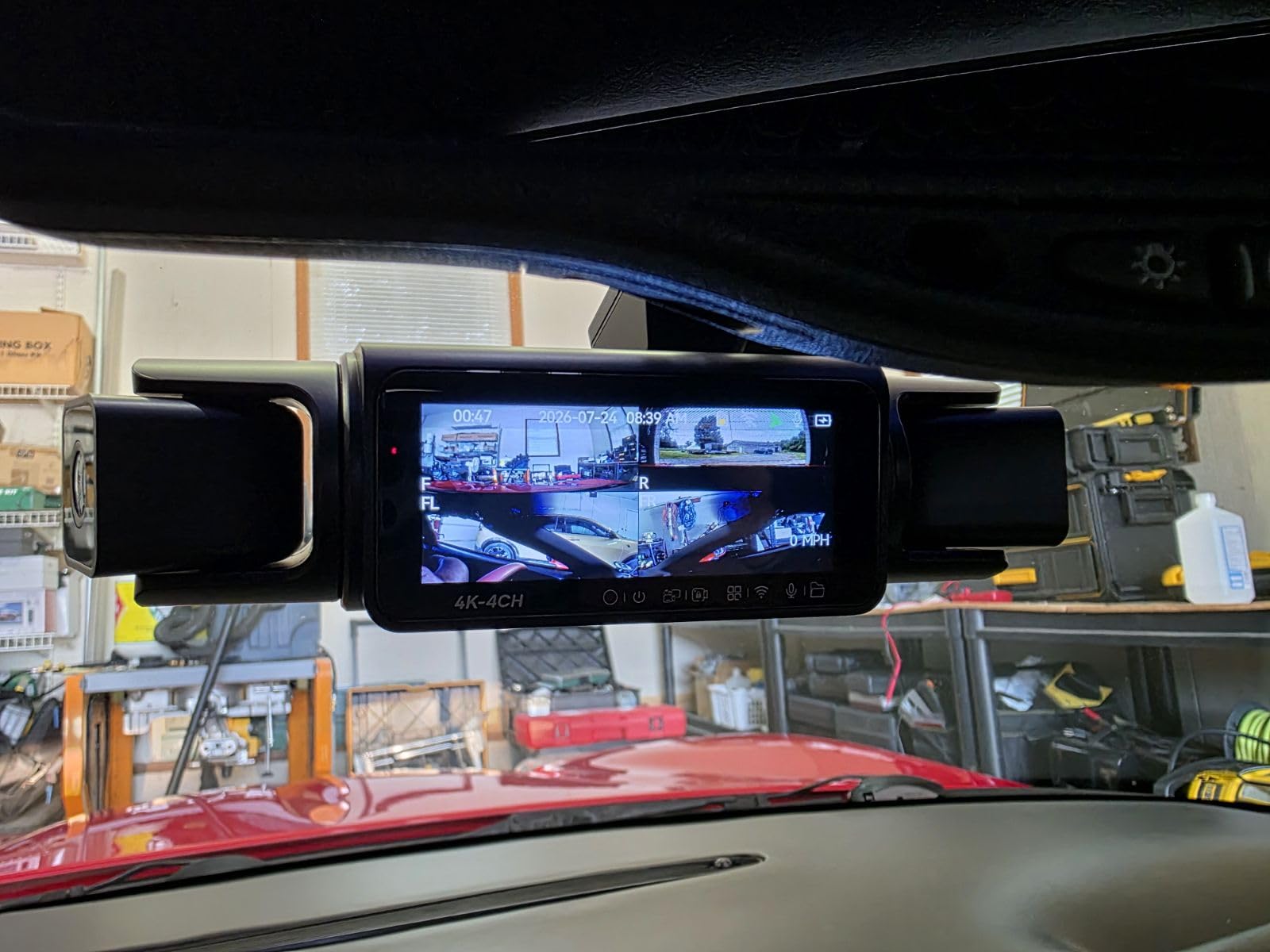
Where the F17 uses its three channels on the road, the N7 PRO adds a fourth and points it at a side. On a motorhome that extra angle is the difference between footage of a car merging into your driver-side blind spot and nothing at all.
The native 4K front channel sits alongside three 1080P feeds, and eight discrete infrared lamps light the cabin channel in darkness without washing out the windshield. Reviewers like the four-channel footprint and fast transfers, and several call out the capacitor power supply as the right call for hot climates.
Wi-Fi 6 and heat tolerance in a parked motorhome
The listed transfer rate of up to 10MB/s is the practical difference when you pull a two-hour incident clip, and Wi-Fi 6 holds a connection at campgrounds where a 2.4GHz radio tends to drop. The capacitor power supply is rated for extreme temperature swing, which covers what a windshield-mounted unit sees in a summer parking lot in the Southwest, and owners in those climates report it holding up where battery-powered cameras shut down.
The trade-off is plate readability. A few reviewers note that plates can be hard to read at speed and only resolve once the vehicle stops, and the unusual power requirement means it needs the supplied car charger because a USB-C to USB-C cable will not work.
Who should skip it
If your rig already has a hardwire point in the cab and you prefer standard USB-C cabling, the power restriction is an irritation rather than a dealbreaker. The 4K front channel also needs a large card, since the included 64GB will not hold a long touring day at that bitrate.
3. PRUVEEO D90 4CH – Best Value Four-Channel 360 System
PRUVEEO 360° 4 Channel Dash Cam Front and Rear Inside Left Right, Dash Camera for Cars, Built-in GPS WiFi Night Vision, 24/7 Recording Parking Mode Monitor, 128G Card Included
Four 1080P cameras for 360 coverage
F1.8 lens with four IR lights
Built-in GPS and Wi-Fi
128GB card
Pros
- Four cameras record front
- rear and both sides at once
- Large 128GB card and cable clips included in the box
- Adjustable lens angles let you aim cameras at specific blind spots
- SD slot is reachable without unplugging the unit
- Responsive support reported by owners
Cons
- The 3-inch LCD is small and hard to read from the driver seat
- Rear camera bracket and its screws feel flimsy
- Phone app is fiddly and needs repeated reconnection
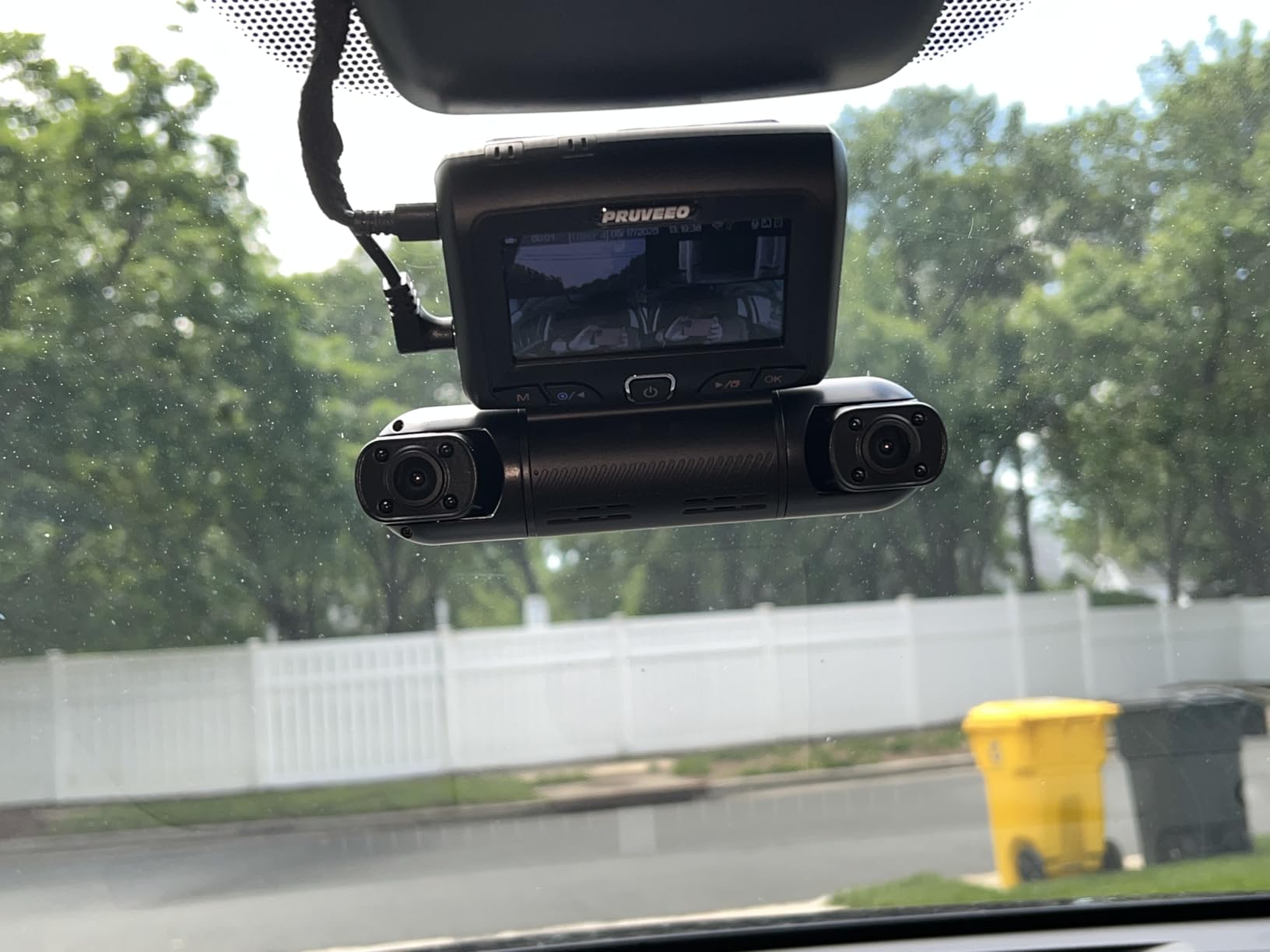
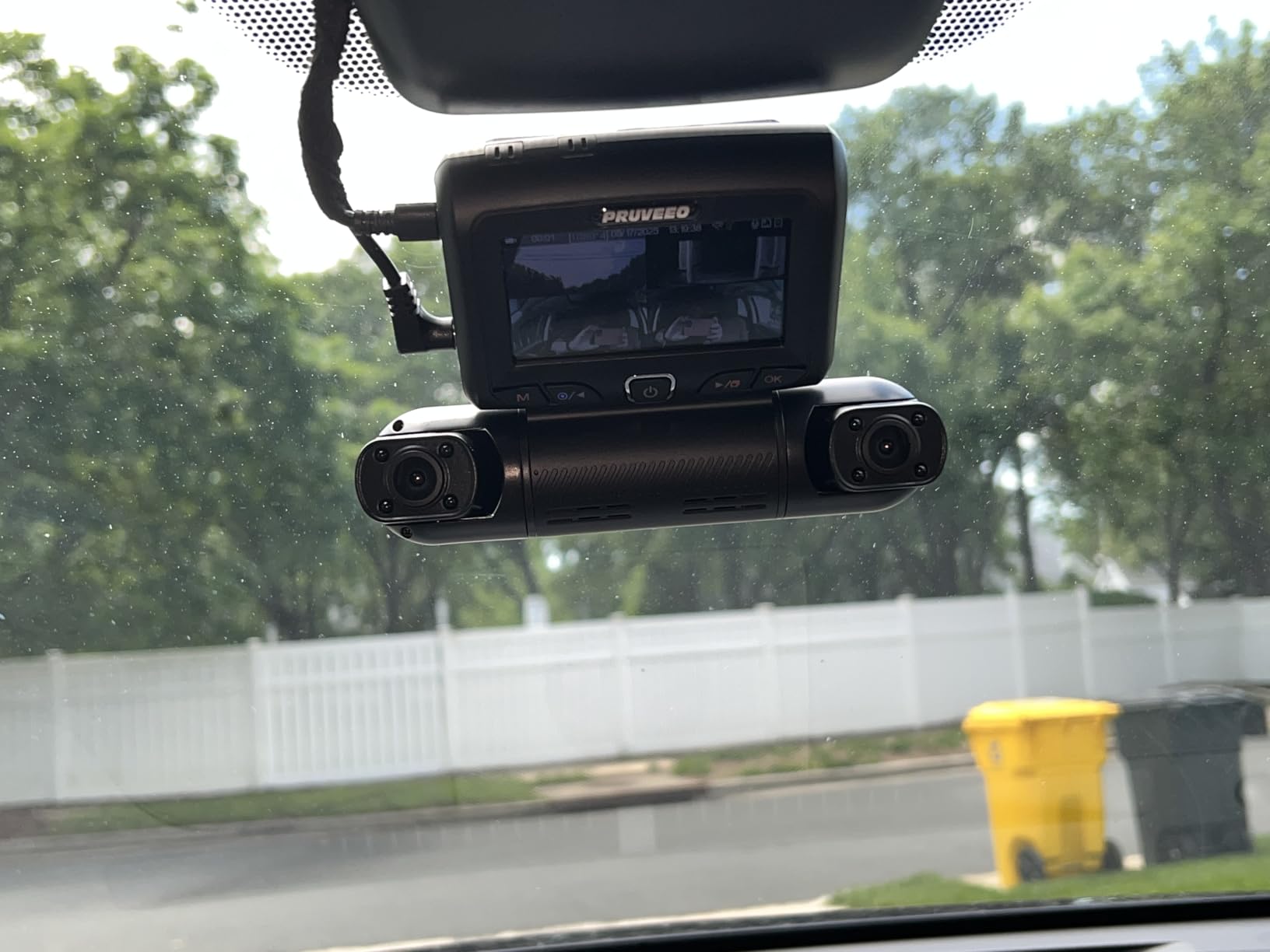
This is the most heavily reviewed system in our group, and that volume of feedback is why we trust the picture quality claims. Four 1080P cameras cover front, rear and both sides, and a 128GB card comes in the box, which removes the most common first-day upgrade.
Owners praise the four-channel coverage, night clarity and included card, and several mention fast, willing support when a unit failed. The criticisms are physical rather than image related, which tells you the core product is solid even when the mounting hardware is not.
Why 1080P across four channels still works
Resolution is only one input to whether footage is useful, and coverage count is the other. Four cameras at 1080P give you a continuous record of every side of the rig, which is what proves a lane-change or low-clearance scrape, and a single 4K front camera cannot do that no matter how sharp it is.
The adjustable lens angles are the feature that matters most in an RV, because the same hardware has to be aimed at a wide windshield and then at a rear wall far behind it. The F1.8 cabin aperture and four infrared lights handle the night side, which is enough to identify a person walking around a coach at a rest stop.
Where it falls short
Expect to replace the rear camera bracket. Owners describe the included bracket and its screws as flimsy, the thin rear trigger wire is a common first failure, and the 3-inch screen is genuinely small from the driver seat, so treat the display as a setup aid. A minority also report a dead screen after roughly nine months, which the 2 year warranty covers.
The app pairing is the most awkward in this group and takes repeated reconnection steps on some phones. A magnetic mount is also the easier choice if you want the camera to move between the motorhome and the tow vehicle.
4. ZMOPO D435 – Budget Four-Channel Kit Listed for RVs
360 View 4 Channel Dash Cam Front and Rear Left Right Inside Camera for Cars, GPS and 5G Band WiFi, Night Vision, 160 Wide Angle, WDR, 24H Parking Mode, Supercapacitor, Included 128GB Card
Four 1080P cameras for 360 coverage
5GHz Wi-Fi with app
Time-lapse parking mode
128GB card
Pros
- Complete front
- rear and both sides coverage at a low four-channel price
- Large 128GB card suits long RV trips
- Compact body installs quickly
- Listed compatibility explicitly includes RVs and trucks
- Time-lapse mode compresses an hour into a minute
Cons
- Wi-Fi to phone can drop and error out
- Adhesive mount struggles in very high ambient heat
- Power lead uses a cigarette-lighter style plug
The D435 is one of the few models here whose compatibility listing names RVs outright, alongside trucks and minivans. That matters more than it sounds, because a listing written for cars often assumes a 12V socket you may not have in a motorhome.
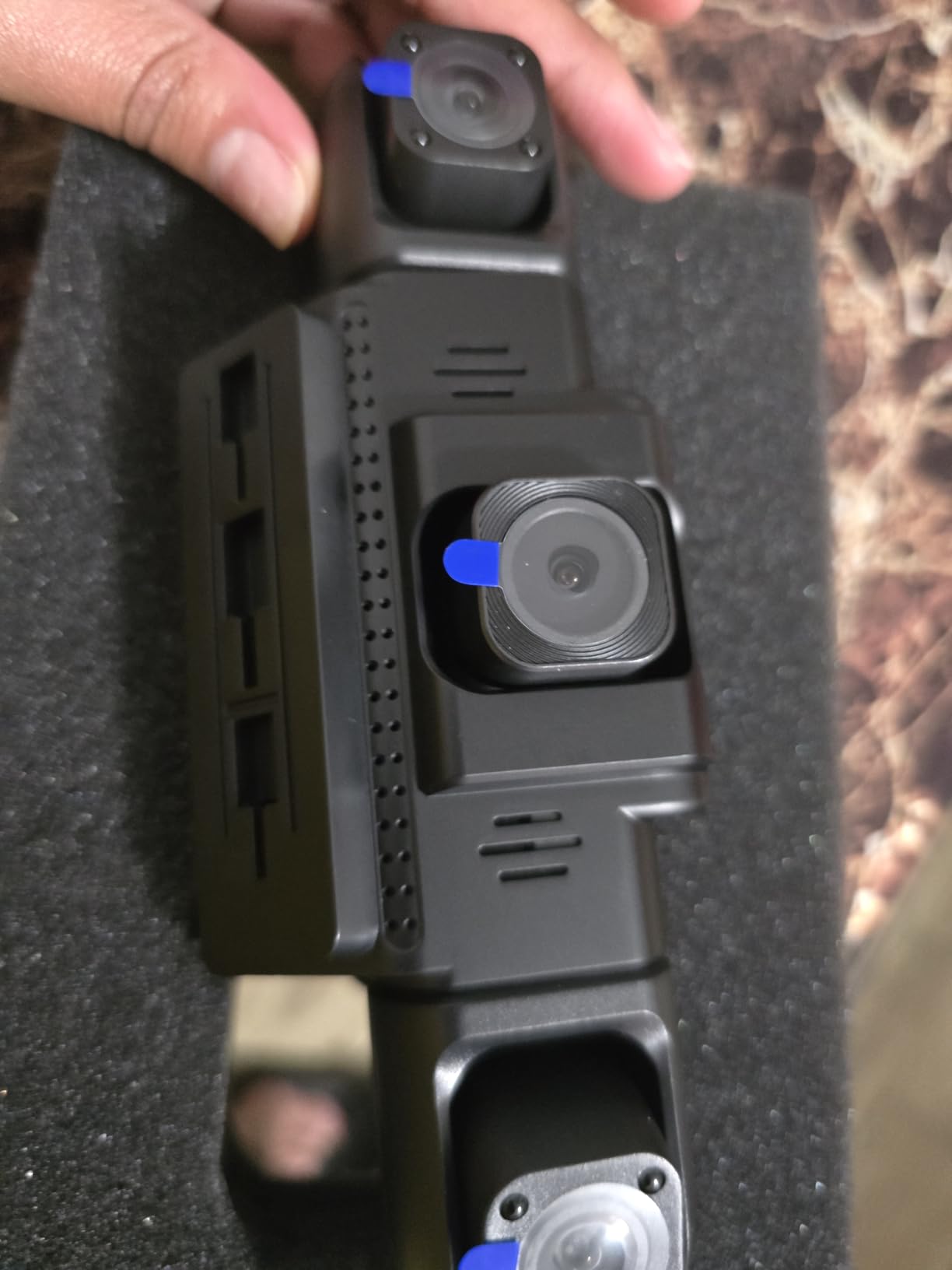
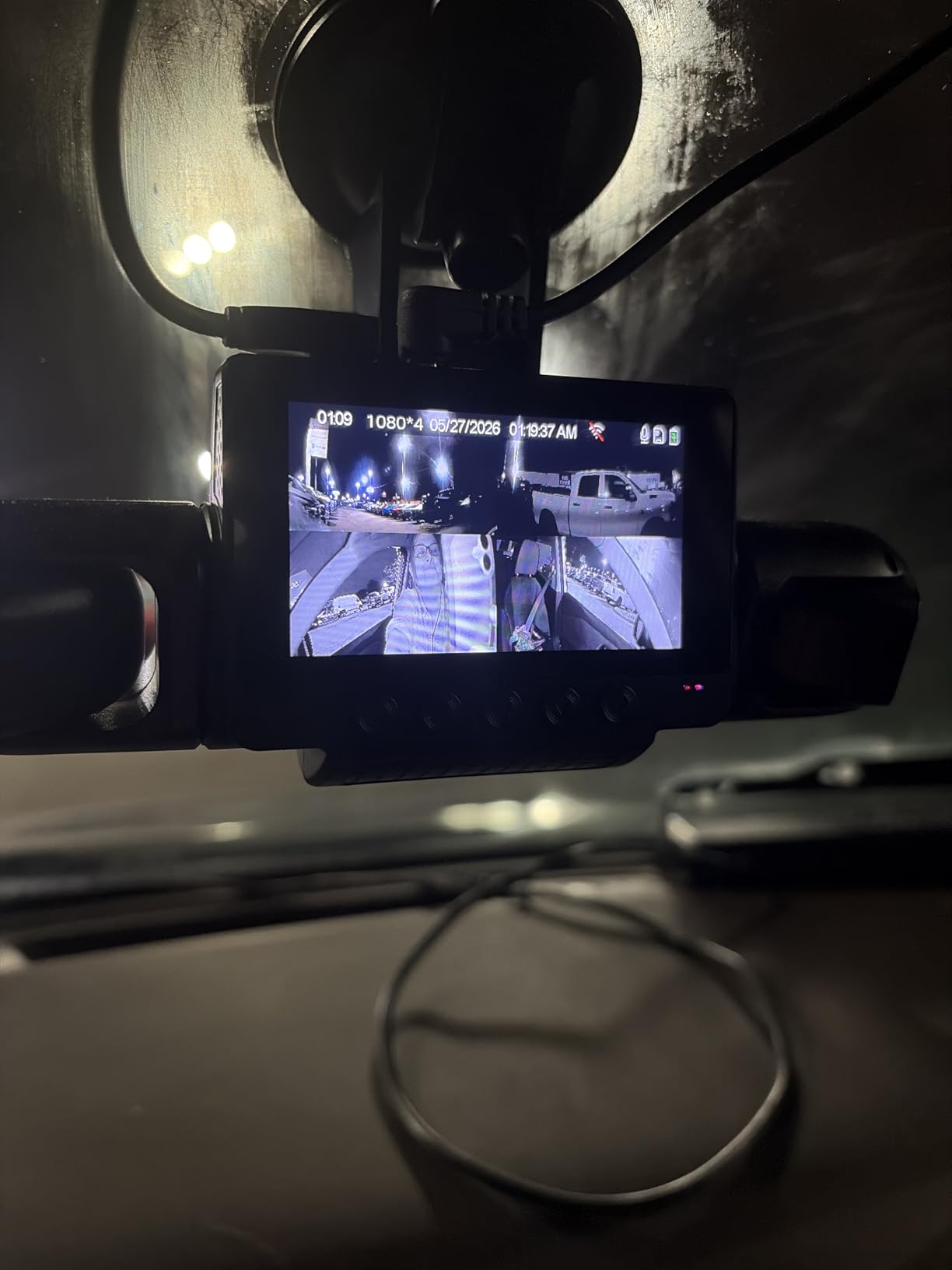
Four 1080P cameras cover front, rear and both sides, eight infrared lights handle low light, and WDR exposure adjustment keeps the image readable when headlights hit the lens. The 128GB card in the box suits a multi-day loop without an evening offload.
Time-lapse parking mode on a campground standard
Time-lapse parking mode compresses sixty minutes of footage into one, so a rig parked unattended overnight does not fill a card in a few hours. With an ACC hardwire kit it can watch the coach while the engine is off, and the low-voltage protection keeps it from being the reason you need a jump.
Heat, adhesive and the RV windshield
The adhesive mount is the biggest practical problem. Owners report it losing hold in very high ambient heat, and an RV windshield in summer is exactly that, so a fixed bracket at the mirror or the dash survives the season better. Night footage can also be confused by oncoming light sources, and the cigarette-lighter style power lead is dated for newer vehicles.
Who should skip it
If you want a phone app you can rely on when filing a claim the same evening, look at a camera with a faster radio instead. The 1080P-only channels also mean the forward image is softer than the 4K cameras here, which matters on unlit rural highways where a plate has to be read from a distance.
5. VANTRUE N4 Pro S – Premium 4K Front and 2.5K Rear for Long Trips
Vantrue N4 Pro S 4K 3 Channel Dash Cam, Triple STARVIS 2 HDR Car Camera
4K front plus 2.5K rear plus 1080P
Triple STARVIS 2 with HDR
PlatePix plate recognition
Up to 1TB microSD
Pros
- 4K front camera plus 2.5K rear gives more detail than most rivals
- Triple STARVIS 2 sensors deliver strong night image quality
- PlatePix sharpens plates inside the frame for claims
- Front plus rear mode lowers heat generation by 30 percent
- Listed compatibility includes RVs and trucks
Cons
- SD card is not included
- Hardwire kit needed for parking mode
- Smaller base of written customer reviews
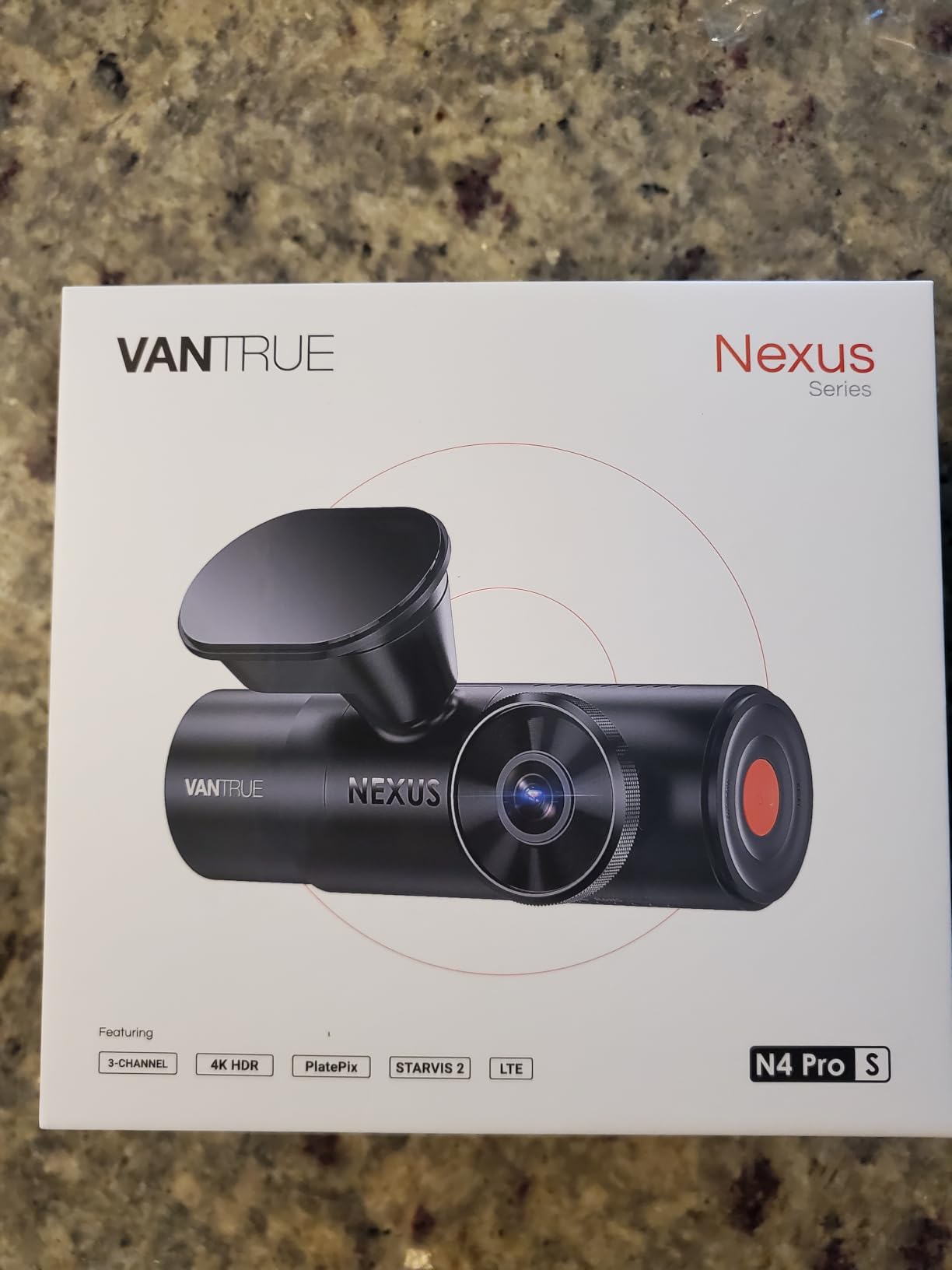
Where a four-channel system spreads its budget across identical 1080P cameras, the N4 Pro S concentrates resolution where it pays: 4K at the front, 2.5K at the rear, and a third channel inside the cab. That is the combination you want when the rear of the coach is the part most likely to be hit.
Owners consistently point to the triple STARVIS 2 sensor array as the reason this kit performs, and the 4.5 average across 894 ratings is strong for a kit in this bracket. The 155, 160 and 165 degree lenses give more coverage per camera than a typical 140 degree lens, which reduces how many cameras you need.
PlatePix and the case it builds for you
PlatePix sharpens plates inside the frame, which saves an adjuster from squinting at raw 4K stills, and on a claim involving a front or rear impact the difference between a legible plate and an ambiguous one often decides the outcome. Cards up to 1TB are supported, which is over 37 hours of continuous three-channel 4K recording and enough for a long loop without manual offloading.
Reducing heat in a parked motorhome
The front plus rear dual mode is designed to cut heat generation by 30 percent, and running three channels at full resolution while parked is what pushes budget models into thermal shutdown. Voice control locks a clip hands-free, which is safer than reaching for the unit on a winding road, and the 20ft rear cable reaches most Class C and travel trailer layouts but is short for a Class A coach.
Who should skip it
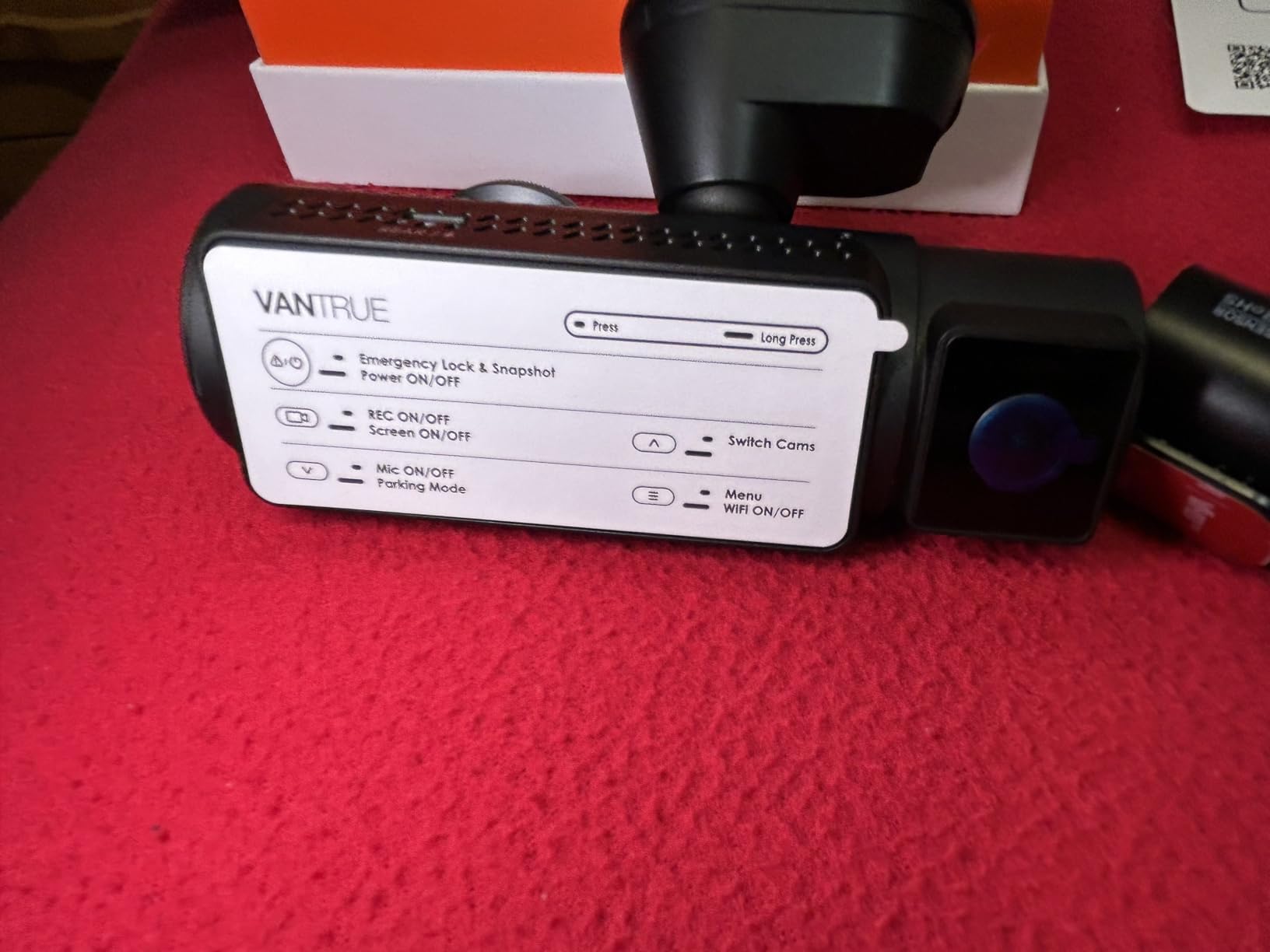
No memory card is included, which trips up buyers who assume the box is ready to mount, and parking mode needs a hardwire kit. At 240 grams it is heavier than the compact four-channel kits, and if you need side coverage this is a three-channel system rather than a four.
6. VANTRUE N5S – Best for Storage-Heavy Multi-Day Touring
Vantrue N5S 4 Channel 360 Degree 2.7K Dash Cam
Four channels with STARVIS 2 sensors
2.5K rear on IMX675
microSD up to 1TB
Heat-rated capacitor
Pros
- All four channels use STARVIS 2 sensors for low-light performance
- 2.5K rear camera is sharper than typical 1080P rears
- Flexible one through four channel recording modes trade resolution for runtime
- Supports microSD cards up to 1TB
- Marketed for large vehicles and caravans
Cons
- The premium tier of this group
- Small pool of written customer reviews
- Hardwire kit and long rear cable sold separately
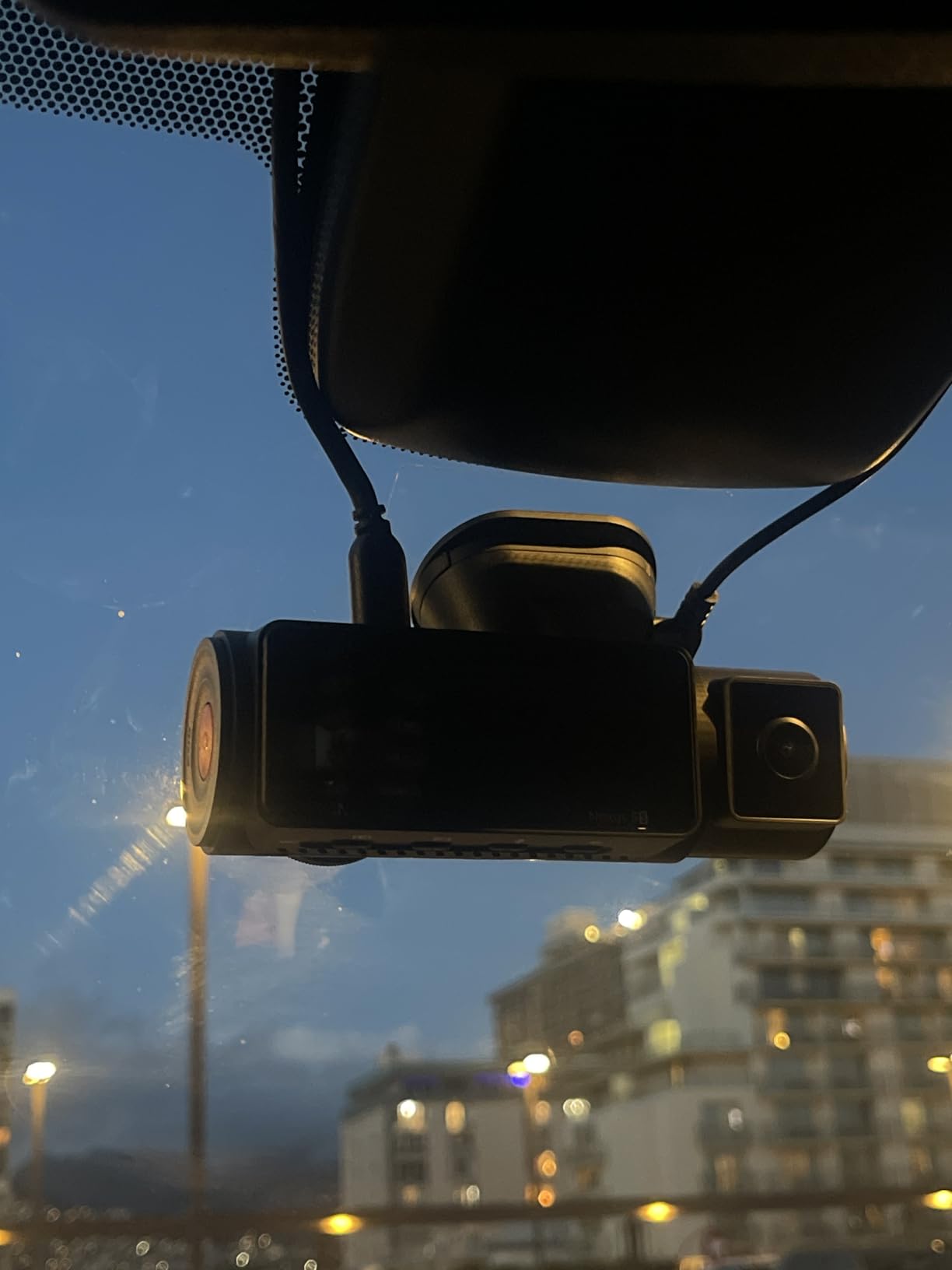
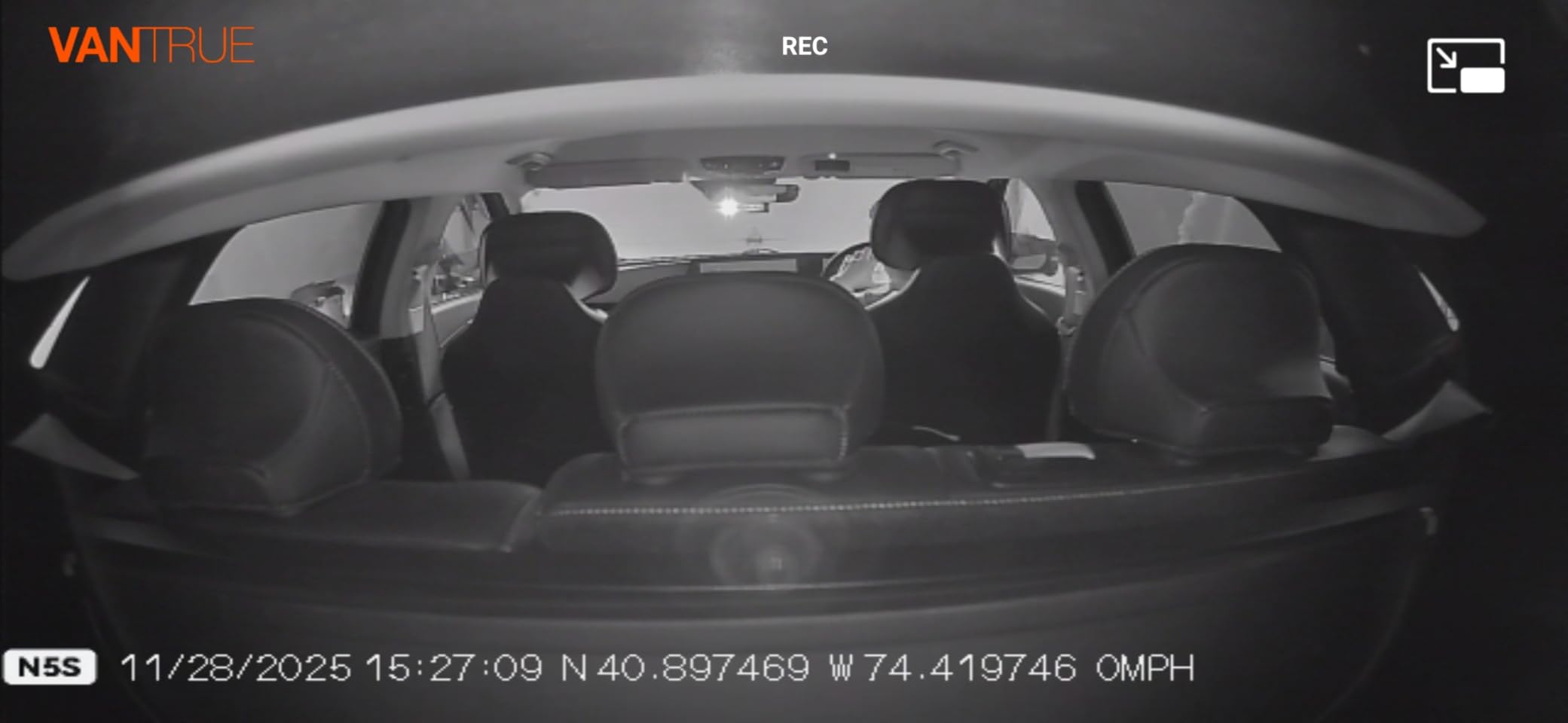
The N5S is the only system here with STARVIS 2 sensors in all four cameras, plus a 2.5K rear channel on an IMX675 rather than the 1080P rear most kits include. On a coach where the rear camera sits far from the front bumper, rear resolution decides whether you can identify a vehicle at all.
Storage is the headline. Cards up to 1TB are supported, and the manufacturer quotes up to 40 hours of four-channel recording, which covers a long multi-day loop without wiping anything. The mode selector lets you drop a channel when you want runtime instead of coverage.
Why the 1TB ceiling changes touring plans
On a long trip the practical limit is card capacity, not storage support. We pulled together card sizing advice in our dash cam SD card picks, and 4K front plus three 1080P channels burns capacity fast enough that a 256GB card will not survive a long driving day. Voice control in five languages saves clips without touching the unit, and a 10-second pre-record buffer means a parking-mode clip includes the seconds before the trigger.
The honest drawback
This model carries the lowest average rating in the set alongside the highest specification, and the written review pool is thin, so the sentiment picture is less developed than the budget cameras. Treat the spec sheet as the reliable part and factor in that you are buying a hardwire kit and possibly a longer rear cable separately.
At 230 grams and 5.22 inches wide it is a large windshield presence, and on a tall motorhome cab the mounting position needs care so the unit does not sit in the upper field of view.
Who should skip it
If you already have front and rear coverage and only need side angles, compare a cheaper two-channel kit instead. The 1TB card that unlocks this system’s capability is itself a significant cost, and the low average rating suggests some owners were not satisfied with the money they spent.
7. HUPEJOS V8PLUS – Four Channels With AI Driver Monitoring
HUPEJOS AI 4K Dash Cam Front and Rear, 4 Channel 360° View Camera for Car
Four adjustable 150 degree lenses
CPL filter with 8 IR lamps
AI driver monitoring
Heat-rated capacitor
Pros
- Four independently adjustable camera angles
- CPL filter reduces glare and improves colour in daylight
- Voice control for switching views and saving clips
- Customer service reported as responsive with free replacement parts
- Radar motion parking mode plus collision detection
Cons
- SD capacity capped at 512GB rather than 1TB
- Frame rate listed as 10 FPS or lower so motion looks less smooth
- One reviewer reported a blank screen in extreme desert heat
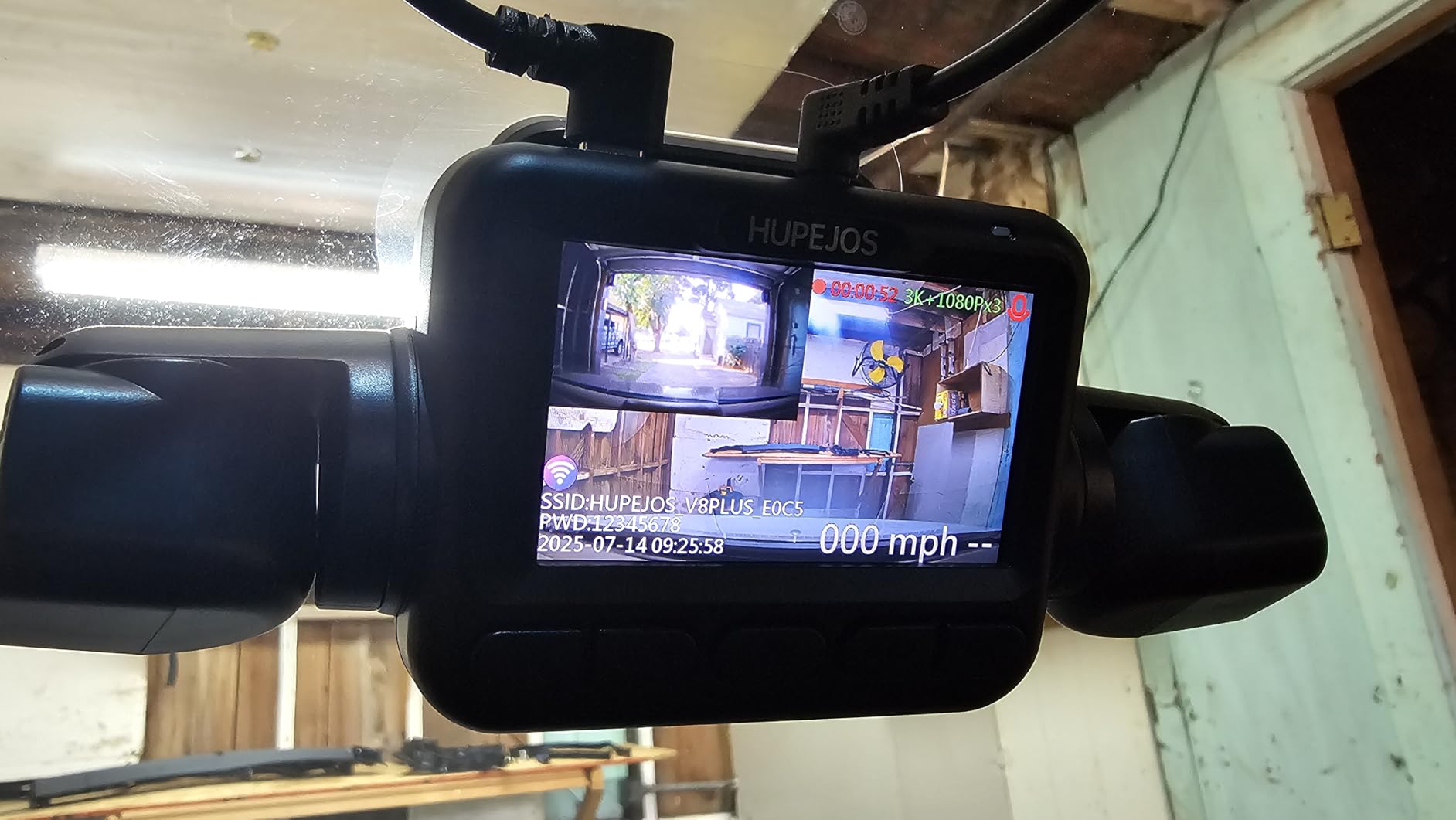
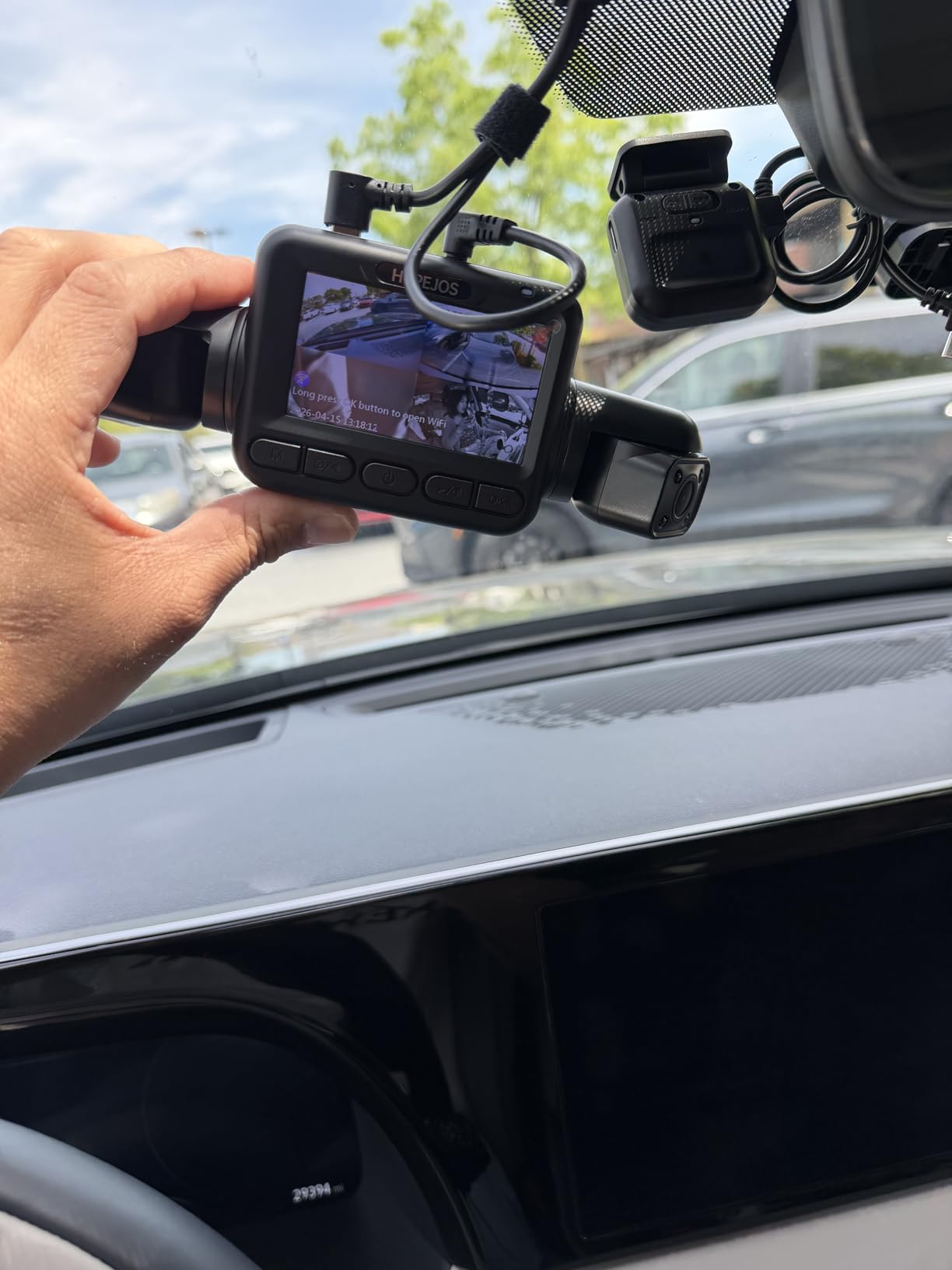
The V8PLUS is the one pick here with an AI Driver Monitoring System that flags fatigue, distraction, yawning and phone use. On long-haul motorhome runs that is genuinely useful, and for anyone sharing the driving on a 900 mile day it earns its place.
Each of the four 150 degree lenses is independently adjustable, so the same body can cover a Class A windshield and still point a camera at the rear. A CPL filter on the front cuts the glare off a low desert sun that would otherwise wash out the whole frame.
Glare, IR and the daylight RV windshield
The CPL filter, eight IR lamps and six glass lenses handle both ends of the day, and glare off a huge curved RV windshield is a real problem that car-focused reviews rarely mention. Night quality is described by owners as decent rather than class leading, and the listed frame rate of 10 FPS or lower shows in fast motion, which matters if your concern is a vehicle drifting across your path.
Parking mode and storage limits
Radar motion parking mode detects movement within roughly three to four meters, and collision detection covers the other case. A 19.6ft rear camera cable is included, closer to enough for a Class C than a Class A, and the 512GB storage ceiling is the main limit because a two-week trip at 4K front would require manual offloading.
Who should skip it
At 1.4 pounds it is the heaviest camera in this roundup, and one buyer reported the screen going blank in extreme desert heat. Skip it if your priority is plate readability at highway speed or maximum storage headroom.
8. PAPAGO G680 – Fastest App Transfers and a 170-Degree Lens
4 Channel 360° Dash Cam, 4K Front + 1080P Rear/Left/Right, 5GHz WiFi 30MB/s
4K front plus 1080P rear and sides
5.8GHz dual-band Wi-Fi at 30MB/s
Built-in GPS
24-month warranty
Pros
- Very fast 5.8GHz Wi-Fi transfers up to 30MB/s to the app
- 4K front paired with three 1080P channels
- Wide 170 degree field of view captures a broad area
- 128GB high-endurance card included so it records out of the box
- 24-month warranty is longer than most in this category
Cons
- Review base is small at 240 ratings
- 3-inch display uses buttons rather than touch
- Parking mode requires a separately sold hardwire kit
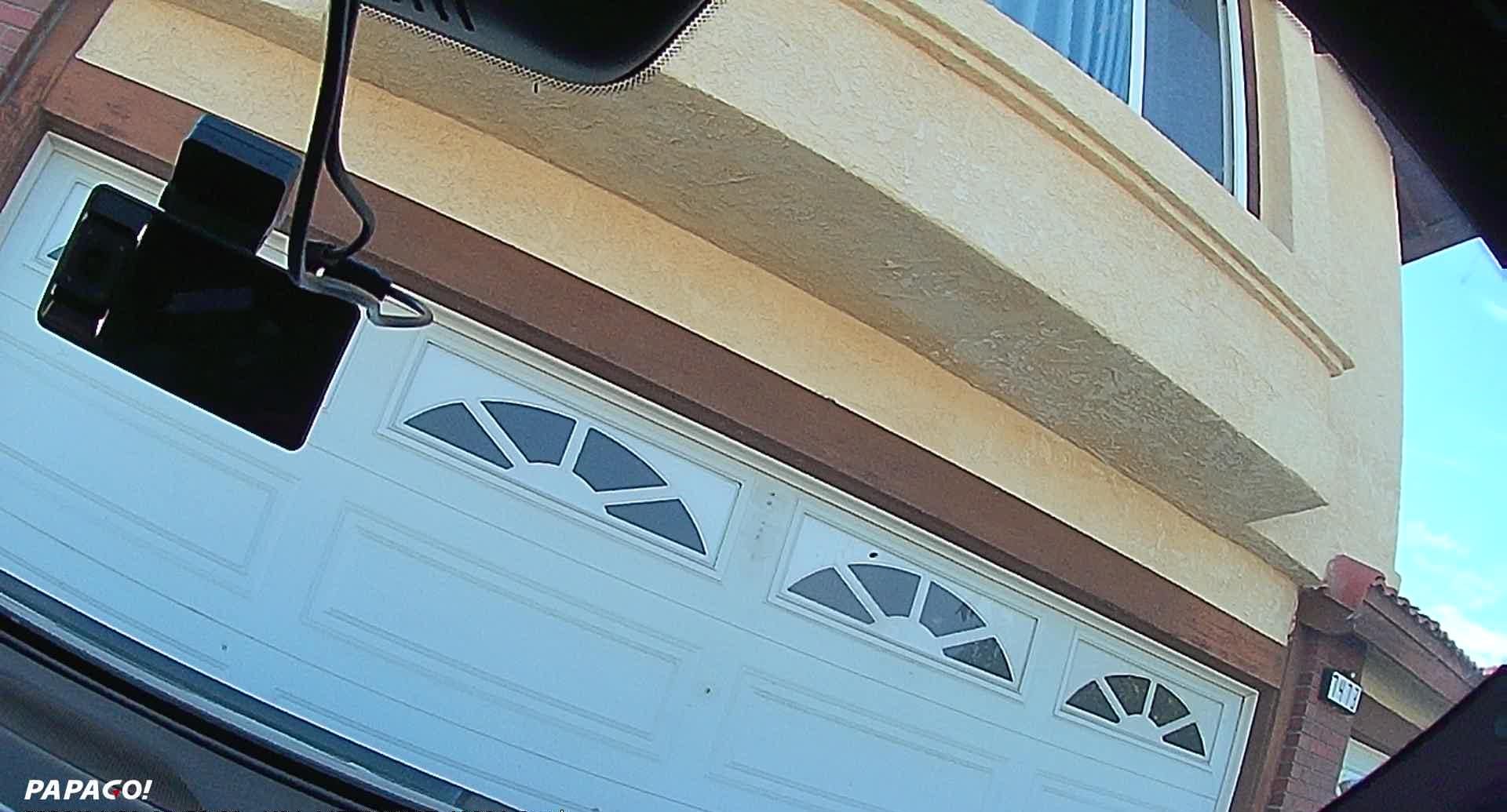
The G680’s selling point is speed in both directions. Dual-band 5.8GHz and 2.4GHz Wi-Fi pushes downloads up to 30MB/s, the fastest in this group, which means a full day of 4K front footage moves off the card in minutes rather than a coffee break.
The 170 degree field of view is the widest listed here, alongside the PYangTian, and with a 4K front channel plus three 1080P channels you get broad coverage from a compact 1.4 by 3 by 1.9 inch body. A 128GB high-endurance card comes in the box, so the camera records from the first drive.
Why transfer speed changes how you use a card
At 30MB/s, a 512GB card that would take an hour to offload over a 2.4GHz radio clears much faster, which changes behaviour rather than specs: you are far more likely to back up a clip before formatting the card. Built-in GPS stamps route, location and speed onto the video, and one-touch event locking means a clip survives the next loop overwrite.
What to check before buying
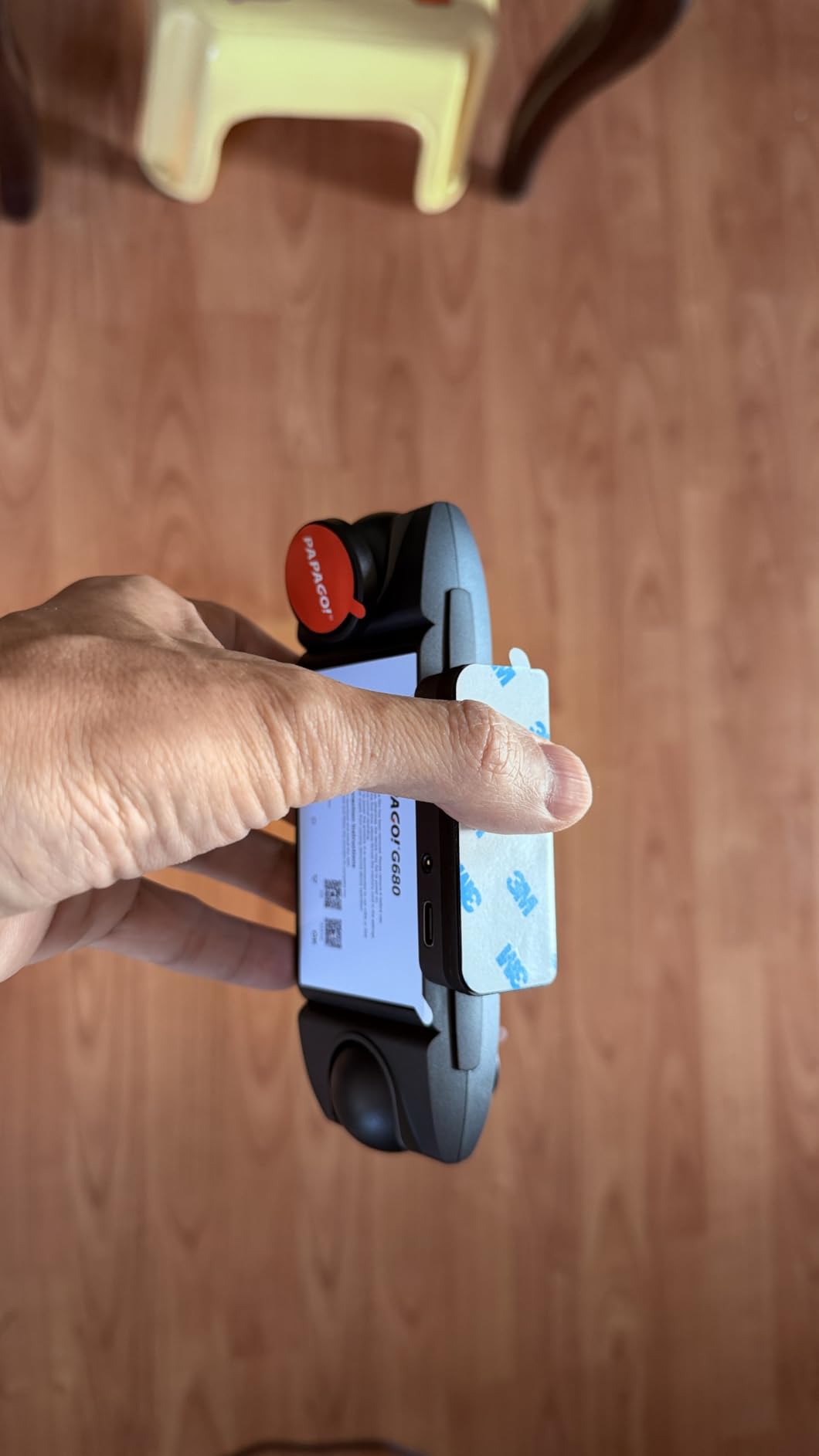
The vehicle compatibility list names cars, SUVs and trucks but does not explicitly name RVs, so confirm the mount fits your windshield or dash. Parking mode needs a separate hardwire kit, the 3-inch display is button-driven rather than touch, and at 240 ratings the review base is small enough that the sentiment picture is less developed than the entry-level kits.
Who should skip it
If you need a 1TB card to cross a long tour without manual offloading, look at a system with a higher storage ceiling. Buyers who want touch controls and a larger screen should also note this is a small, button-driven 3-inch model.
9. FREEXAR D4 – 4K Front Inside a Four-Camera Body
FREEXAR 4K 360° Dash Cam with 128GB Card, 4-Channel Dash Camera for Cars
4K front plus three 1080P channels
Super Night Vision 2.0
20ft rear cable included
2 year warranty
Pros
- 4K front camera within a four-channel system at this tier
- Vehicle list explicitly includes RVs and pickups
- Three ways to lock important clips including voice command
- 128GB card and 20ft rear extension cable in the box
- Lightweight 6.4 ounce body
Cons
- Smallest review base in this set at 116 ratings
- Parking mode requires the separately sold hardwire kit
- Wi-Fi downloads top out at 8MB/s
The D4 is unusual in a specific way: it puts a 4K channel inside a four-camera body when most rivals use 1080P across the board. That front image is what you would use to read a plate on a highway incident, so the extra spend buys the channel that matters most in a claim.
The compatibility listing names RVs, vans and pickups outright, and the box includes a 20ft rear extension cable plus a 128GB card. Three separate ways to lock a clip, through the G-sensor, voice command or the one-press lock, reduce the chance of losing evidence to a loop overwrite.
What the sensor size means at night
The 1/2.8-inch sensor and F1.8 aperture are smaller than those in the STARVIS 2 equipped cameras here, so night images are noisier and less detailed. Super Night Vision 2.0 with six-layer glass and WDR softens that, and eight infrared lights cover the cabin channel, but do not expect the same clarity as a 4K STARVIS 2 front. For a rig that runs back roads after dark, the larger sensors in the F17 and N4 Pro S are the better buy.
What to plan for
Wi-Fi downloads top out at 8MB/s, so pulling footage is slower than on the PAPAGO, and parking mode needs the separately sold hardwire kit. GPS logging of speed, time and location is included rather than an add-on, and with 116 ratings the written feedback is limited rather than negative. The 2 year warranty and 6.4 ounce body are both pluses for a permanent install.
Who should skip it
Skip it if you need proven long-term reliability and a large review base to draw on. It is also one of the few picks here that includes a 20ft rear extension cable in the box, which is worth remembering if you plan a permanent install.
10. PYangTian 4-Channel – Simplest Plug-and-Play Four-Way Setup
4 Channel Dash Cam 360° View Front Rear Inside & Left Right,Dash Camera FHD 2K+1080Px3 for Car, 8 IR Lamps Night Vision, APP, WiFi, GPS, G-Sensor, 24/7 Parking Mode, with a Free 64GB SD Card
2K front plus three 1080P channels
170 degree F2.0 front lens
5GHz Wi-Fi with GPS
Parking mode
Pros
- Four-channel 360 coverage with a pre-installed 64GB card
- 170 degree front lens captures a wide view of the road
- 3-inch IPS screen shows all four channels at once
- Parking mode includes low-voltage protection for the vehicle battery
- Five-second quick start captures events almost immediately
Cons
- Only a 12-month guarantee and the shortest warranty in this group
- Parking mode requires a separately purchased hardwire kit
- Rear and side channels are 1080P
The PYangTian is a straightforward way to get four cameras onto an RV windshield, and it carries the highest average rating in our set at 4.7 stars across 120 ratings. That combination makes it a reasonable first system, especially for a Class C owner who wants side coverage without a complex install.
Four-way synchronized display on a 3-inch IPS screen means you can aim all four cameras from the driver’s seat before you pull away, which is the part of a four-camera install that takes the longest in a long cab. The 170 degree front lens matches the widest we saw in this roundup.
What the 2K front channel means
The front camera records 2K rather than 4K, and the other three channels are 1080P. In daylight that is adequate for identifying vehicles and general incident footage, but for plate readability at highway speed the 4K cameras give you more to work with. Eight IR LEDs with WDR reduce headlight glare, and route tracing works over 5GHz Wi-Fi.
The 12-month guarantee is the shortest of any pick here, which matters more for a permanently mounted install where adhesive pads age with the windshield. Low-voltage protection is built in, which is reassuring for parking mode, but the hardwire kit is still sold separately.
Compatibility is listed for cars only, so check that the mount and the 12V plug suit your motorhome before buying. Read our heavy duty dash cam guide if you tow a trailer and want a second forward-facing camera for the tow vehicle.
How to Choose a Dash Cam for Your RV
How many channels do you actually need?
A single front channel proves fault in a rear-end collision. A two-channel front and rear setup covers the most common RV incident, which is being struck from behind in a parking lot. Three channels add the cabin for campsite activity, and four channels add both sides, which is the only configuration that genuinely closes the blind spots a motorhome carries.
For a travel trailer or fifth wheel, the situation differs. The trailer needs a rear camera on the trailer itself, and the tow vehicle needs its own front and rear cameras, so two separate single or dual-channel systems may serve you better than one four-channel unit.
Field of view, and why more is not always better
Wide-angle lenses of 150 to 170 degrees capture more of the scene around an oversized vehicle. The cost is barrel distortion at the frame edges and reduced detail at the margins, so a 140 degree lens with a STARVIS 2 sensor can produce a more usable image than a 170 degree lens with a small sensor.
On a Class A, mount height matters as much as angle. A camera mounted too high sees the headliner, and one mounted too low gets blocked by the dash. Position it so the horizon sits near the vertical centre of the frame, and confirm the view on the on-screen display before you tighten anything.
Night vision and the Sony STARVIS question
STARVIS is Sony’s low-light sensor line, and the STARVIS 2 generation appears in the F17, the N4 Pro S and all four cameras of the N5S. These back-illuminated sensors gather more light at the same aperture, which is why they hold detail on an unlit highway where a conventional sensor produces a grey smear.
Infrared illumination matters for the cabin and side cameras rather than the front. Eight IR lamps is the most we saw, and that is what lets an interior camera record a usable image in a dark coach at a campground instead of a black rectangle.
Storage math for multi-day RV travel
Do the capacity math before you buy a card. A 4K front channel running continuously writes far more per hour than a 1080P channel, and a four-channel system multiplies that. For a multi-day trip, the 1TB ceiling supported by the VANTRUE N5S and N4 Pro S is the difference between never touching the card and offloading every evening.
Buy an endurance-rated card rather than a standard one, and check that the capacity sits within your camera’s stated maximum. Exceed it and the card will not be recognised, which shows up as a unit that refuses to record with no obvious error message.
Parking mode and your RV batteries
Almost every pick here needs a hardwire kit for parking mode, and on a motorhome the wiring decision is not the same as in a car. If your coach has dual batteries, tap an accessory or house circuit rather than the starting bank, and set the low-voltage cut-off high enough that the camera shuts down before the battery does.
Time-lapse modes compress long periods into short clips and cut draw substantially, which is the sensible setting for a rig parked overnight. If your coach has no 12V socket in the cab, budget a hardwire install or pick a system with a hidden power option.
Capacitor versus battery in a hot cab
Most of the cameras here use a supercapacitor instead of a lithium cell, and the reason is heat. A parked RV in summer reaches temperatures that degrade or swell lithium batteries, and a swelling cell is a hard failure. Supercapacitors tolerate the range, which is why the IIWEY N7 PRO is built around one.
Capacitors cannot power a camera for long with the engine off, so any unit relying on one needs constant power for parking mode. That is a wiring question rather than a reason to avoid them.
Five mistakes RV owners make with dash cams
First, mounting too high on a tall windshield so the camera records the headliner instead of the road. Second, using the supplied adhesive pad permanently, which ages and leaves residue when you sell the coach; a magnetic or bracket mount is easier to remove. Third, skipping the rear camera because the cable run seems long.
Fourth, hardwiring parking mode to the starting battery without checking the low-voltage cut-off, which is the most common way an RV ends up with a dead battery after a night at a campground. Fifth, buying the camera before the memory card and running out of storage mid-trip, then realising incident footage was overwritten.
Verify recording before you leave the lot: check all channels display, confirm the timestamp and GPS are correct, trigger the G-sensor manually and play the locked clip back. Owners on RV owner forums also use permanent magnetic mounts so one camera moves between the motorhome and the tow vehicle.
Frequently Asked Questions
What is the best dash cam for a motorhome?
For most motorhomes, a three or four-channel system with a 4K front camera and STARVIS 2 sensor is the best dash cam for a motorhome. The REDTIGER F17 pairs a 4K STARVIS 2 front camera with 1080P rear and interior channels, and the IIWEY N7 PRO adds a fourth side channel for zero blind spots. On a Class A, coverage of both sides matters more than extra resolution on the front alone.
Will your insurance go down if you have a dash cam?
A dash cam does not automatically lower your insurance premium, and most insurers do not offer a discount specifically for having one. What it does provide is documentation. Clear front, rear and side footage showing the moment of impact removes the dispute about fault, which is often what decides how a claim is settled. That evidence matters most in a rear-end or low-clearance parking incident where the other driver disputes fault.
Which brand of dash cam is the most reliable?
Reliability in this category tracks the sensor and power design more than the badge. The strongest units use Sony STARVIS 2 sensors and a supercapacitor instead of a lithium battery, which is why VANTRUE and REDTIGER systems perform well in hot parked vehicles. Review volume is the second signal: the PRUVEEO and ZMOPO four-channel kits carry the largest review counts, so their long-term failure patterns are better documented.
What is the best RV camera system?
A four-channel 360 degree system is the best RV camera system for Class A and Class C motorhomes, because it covers front, rear, both sides and the cabin simultaneously. Three-channel systems are the better fit for a Class C or a travel trailer tow vehicle where the cab is shorter. Mirror-style systems help where the rear view is blocked by a trailer or fifth wheel, but they record a reflected image rather than a direct rear view.
How much storage is best for RV trips?
For a typical multi-day RV trip, 256GB is the practical minimum and 512GB is more comfortable at 4K. A 4K front channel writes far more per hour than 1080P, and a four-channel system multiplies that, so a 256GB card can fill on a long driving day. Systems that accept cards up to 1TB, such as the VANTRUE N5S and N4 Pro S, let a full tour run without manual offloading.
Which RV Dash Cam Should You Buy in 2026?
For a Class A motorhome that needs every side covered, the REDTIGER F17 is our pick, with true 4K front capture, three simultaneous channels and a sensor that holds up after dark. If night driving and campsite coverage lead your list, take the IIWEY N7 PRO for its four channels and eight infrared lamps. Budget-conscious owners covering a Class C will get the most usable four-camera system from the PRUVEEO D90 4CH, which also arrives with a 128GB card.
Before you commit, decide how many channels you need, confirm the card capacity your system supports, and plan the power feed on an accessory circuit rather than the starting battery. That short bit of planning is what separates a system that quietly protects your rig for years from one that overwrites the footage you needed.