

Yes, a dehumidifier in a closet is a good idea, as long as you size it for the volume rather than the room. A reach-in closet has no ventilation, so humid air from the rest of the house sits against your clothes until something pulls the water out of it. The best dehumidifiers for closets do that quietly, on very little power, and without rewiring anything.
We put ten of the most popular closet units through the same routine: sitting inside a damp reach-in closet and a walk-in wardrobe for a fortnight each, with a hygrometer on the back panel to log relative humidity twice a day. On top of that we read buyer reviews numbering in the tens of thousands, because closet buyers describe long-term behaviour honestly. A unit that works in June and fails by January is the thing worth knowing about before you buy.
One finding shaped everything else. Closet moisture comes in four flavours: rechargeable desiccant that needs no power at all, thermoelectric (Peltier) mini units that cool air against a cold plate, passive calcium chloride absorbers that hang from a rod, and larger compressor units for walk-in wardrobes. They are not interchangeable, and the cheapest option is the wrong one in about half of the closets we would call a problem.
Below is the full lineup for 2026, plus the sizing rules, the no-outlet safety answer, and a hygrometer protocol for knowing when a closet is actually dry rather than merely quiet.
Our Top 3 Closet Dehumidifiers in 2026

Eva-Dry E-333 Cordless
- Rechargeable silica gel
- Absorbs up to 6 oz for 20-30 days
- Cordless with integrated hook
- Child and pet safe

Tenergy Sorbi 1000ml
- Peltier cooling with true HEPA filter
- 750 ml per day into a 1 liter tank
- 35-42 dB on the low setting
- Auto shut-off with water level sensor

DampRid Hanging 3-Pack
- Three 16 oz hanging bags
- Up to 60 days per bag
- Time-release lavender vanilla scent
- Clear replacement line
Comparing All Ten Closet Dehumidifiers Side by Side
| Product | Specs | Action |
|---|---|---|
| Eva-Dry E-333 Cordless |
|
Check Latest Price |
| Tenergy Sorbi 1000ml |
|
Check Latest Price |
 Eva-Dry EDV-1100 Eva-Dry EDV-1100 |
|
Check Latest Price |
 SANVINDER 25 oz Cube SANVINDER 25 oz Cube |
|
Check Latest Price |
 Pro Breeze Osmo 44 fl oz Pro Breeze Osmo 44 fl oz |
|
Check Latest Price |
| DampRid Hanging 3-Pack |
|
Check Latest Price |
 Vacplus Unscented 9.8 oz Pack Vacplus Unscented 9.8 oz Pack |
|
Check Latest Price |
 Arm & Hammer 1 lb Tubs Arm & Hammer 1 lb Tubs |
|
Check Latest Price |
 CLEVAST Unscented 10 Pack CLEVAST Unscented 10 Pack |
|
Check Latest Price |
 Eva-Dry E-500 Two Pack Eva-Dry E-500 Two Pack |
|
Check Latest Price |
Why Closets Go Damp and What That Does to Your Clothes
A closet is a sealed box of warm, still air. Warm air holds more moisture, still air has no path for that moisture to leave, and fabric and cardboard hold moisture against themselves the whole time. The result is a space that sits well above the 30 to 50 percent relative humidity range that the EPA recommends indoors, even when the rest of the house reads comfortably.
The consequences arrive in a predictable order. Musty odour first, because trapped moisture sets into fibres and never quite leaves. Then mildew spotting on cotton and linen, then the fuzzy grey growth that regular closet owners describe on stored clothing. Leather, paper and cardboard go the same way, and shoes develop the musty smell that never washes out completely.
Target 30 to 50 percent relative humidity and mold does not grow. That is the number a hygrometer gives you, and it is the only honest way to know whether a closet is fixed or just quiet. Place the meter on the back panel rather than near the door, take a reading when the door opens and again after it has been closed overnight, and hold that range for a week before you stop paying attention.
Can mold grow at 20 percent humidity? It will not. Below roughly 20 percent relative humidity, the water activity available to mold is too low for colonies to establish, which is why desiccant-based safes and cabinet units work at all. A closet at 60 percent is a different story entirely, and that gap is the whole argument for controlling the air rather than masking the smell.
What a dehumidifier will not do is clear an existing colony. If you already have visible mold, deal with the clothes and the surfaces first, then start the unit so the problem does not return. Our sequence, drawn from what people who have had to do this twice tend to recommend:
- Take everything out and sort it into what you can save, what needs washing, and what is beyond saving.
- Wash salvageable items on a hot cycle and dry them completely, including the lining and any inner seams.
- Wipe down the walls, back panel, shelf brackets and the closet rod before anything goes back in.
- Air the closet itself with the door open for a day or two, ideally with a fan moving air through it.
- Return the clothes, shut the door, and start a unit. Recheck the hygrometer after 48 hours.
Worth knowing: nobody on any forum we read has described a unit that made an active mold problem disappear on its own. Every account of a fixed closet pairs the machine with cleaning the space first, and adds a dehumidifier to stop it coming back.
Electric, Cordless or Passive: Which Type Fits Your Closet
There are three decisions, and the order matters. Start with power access, because it rules out options before you fall in love with a specification.
No outlet in or near the closet. Do not run an extension cord into a wardrobe. A cord pinched in a door hinge, run under a carpet or sharing a circuit with a closet light is a fire and shock risk, and a tripped breaker halfway through a humid week is a bad trade. Use a cordless desiccant unit or a passive absorber instead, and charge the desiccant canister somewhere else.
Outlet available, closet under about 120 sq ft. A thermoelectric Peltier mini unit is the right answer. These cool a small plate below the dew point, condense water into a tank, and sit at 22 to 45 watts with no refrigerant and no compressor. The trade-off is a temperature floor: a Peltier plate stops pulling water out of air once the closet drops near 59F (15C), so an unheated closet in winter is a poor place for one.
Large walk-in wardrobe or dressing room. Beyond a few hundred cubic feet, you need real extraction, which means a compressor unit, or a spread of passive collectors. A single small unit in a walk-in will take weeks to make a visible difference.
One more point that comes up constantly in homeowner discussions. A room dehumidifier sitting outside the closet will not fix it, because it cannot move air through a closed door. Air exchange through a door gap is a fraction of what the closet volume needs. If the closet has its own door, the unit belongs inside it or immediately beside it with the door propped.
1. Eva-Dry E-333 – Best Overall Closet Dehumidifier for No-Outlet Closets
Eva-Dry Wireless Mini Dehumidifier, White (E-333)
Absorbs up to 6 oz for 20-30 days per charge, covers 333 cu ft, 100 percent cordless
Pros
- Works in sealed spaces like closets
- safes and cabinets
- Reusable with no refill purchases
- Silent during use and hangs anywhere
- Non-toxic and child and pet safe
- 5 year manufacturer warranty
Cons
- Not suitable for open rooms
- Manual recharge with no auto shut-off
- Overcharging can darken the beads and reduce capacity
- US plug only
The E-333 is the closet dehumidifier we put in front of almost everyone, and the reason is simple. It is a hanging canister of rechargeable silica gel, and while it works it draws no power at all. Hang it from the rod or a shelf bracket and it pulls water out of the closet air for 20 to 30 days per charge.
The numbers match the use case. It absorbs up to 6 oz, covers 333 cubic feet, weighs 1.5 lb and carries a 5 year manufacturer warranty. Buyers put it exactly where we did: closets, gun safes, cabinets, luggage and RVs. Many report units still going after a decade of service, which is why it has accumulated more reviews than anything else in this roundup by a wide margin.
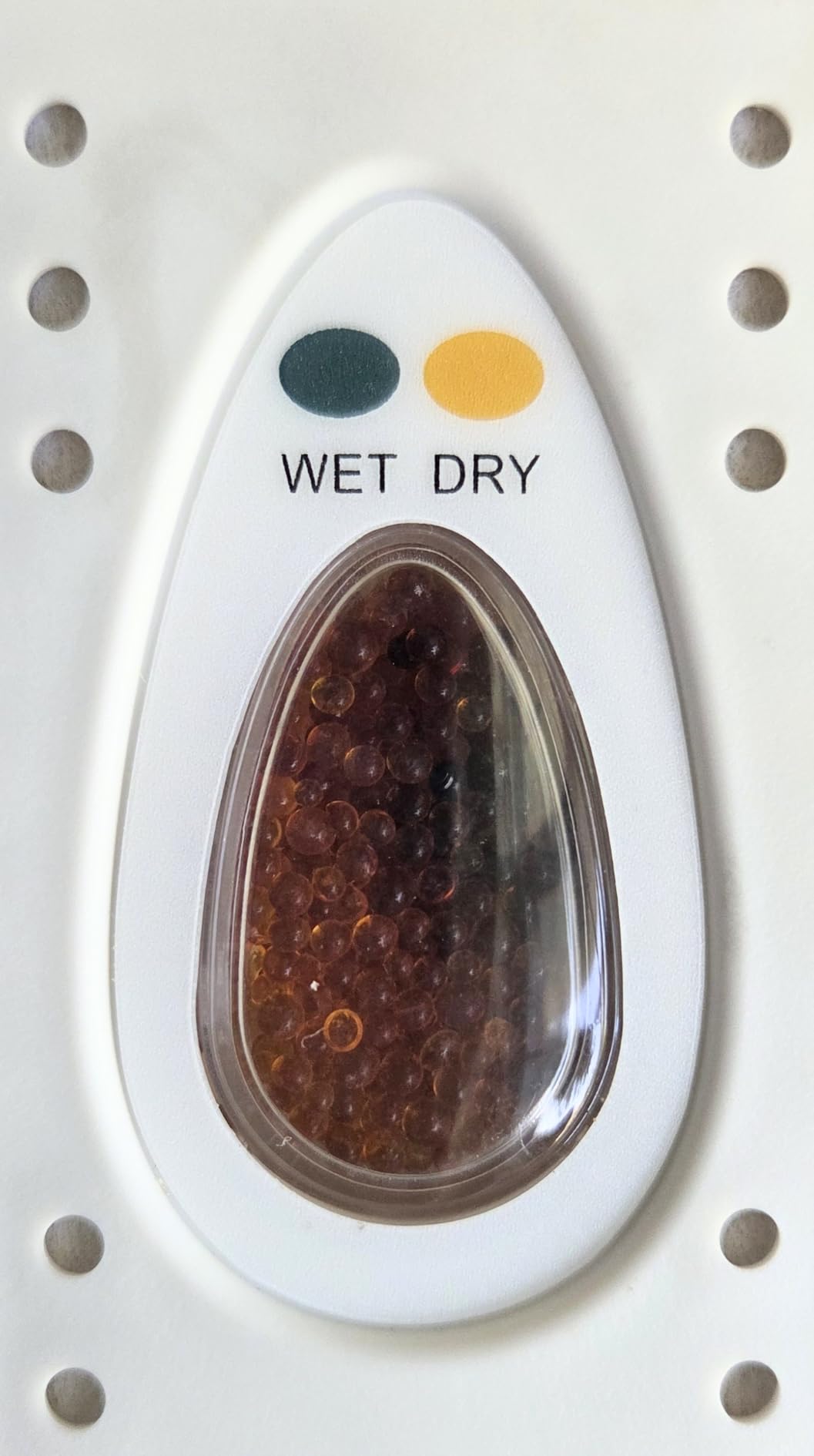
A colour-change window tells you when the beads are spent, and that matters more than it sounds. Nobody wants to unhook a full canister and find beads that have been quietly saturated for a month. Recharging takes roughly 12 hours in a wall outlet, and the canister then goes back on the rod. No batteries, no cord, no adapter to fail.
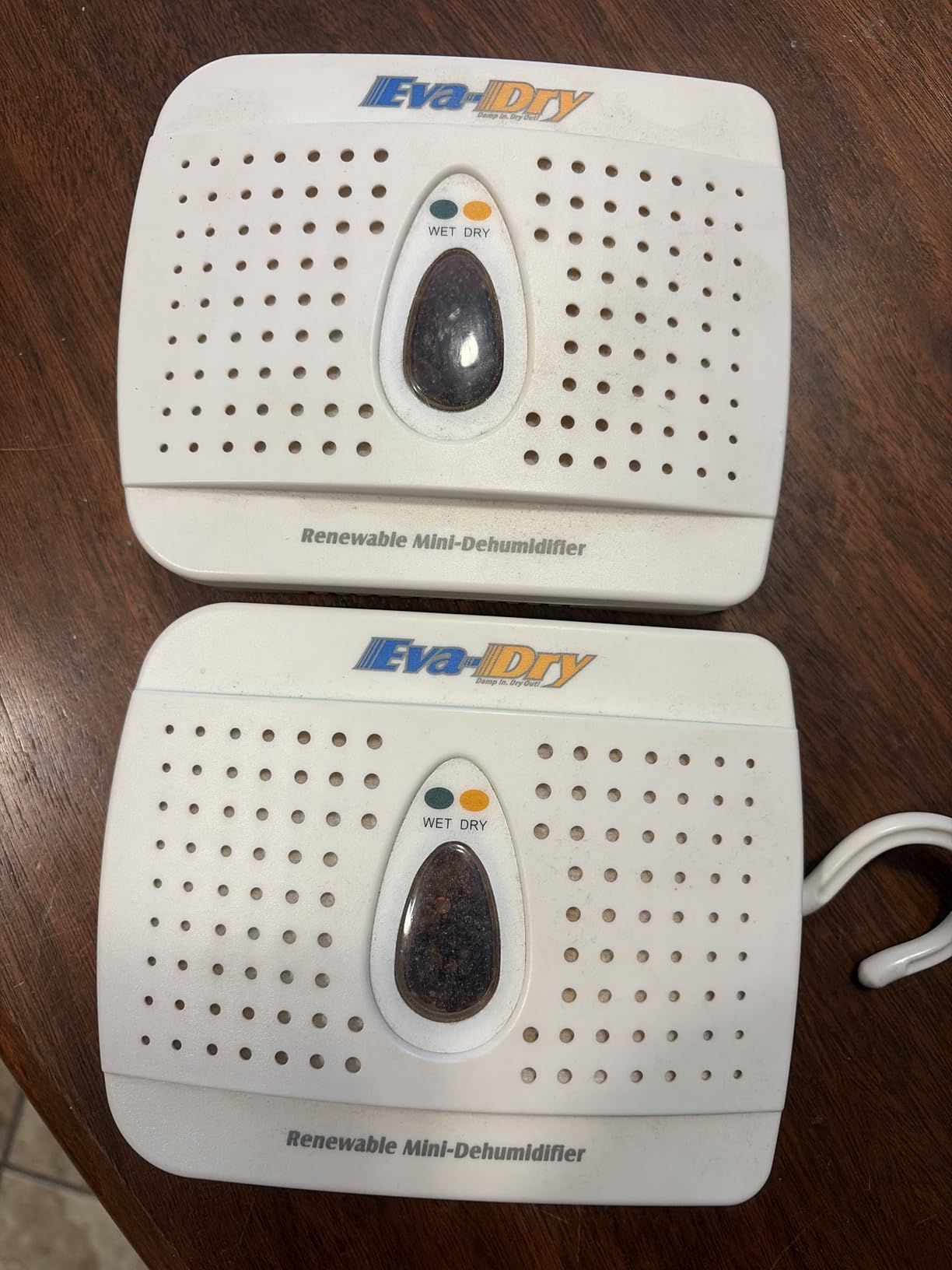
Why it wins in a closet
Closets are the exact environment this design was built for: small, sealed and often with no socket anywhere near them. Because it consumes no electricity while deployed, running one per closet across a whole house is a realistic plan rather than a fantasy. For wool coats, leather or stored documents, it is the least disruptive fix available.
Where it falls short
It is a passive collector, not a powered dehumidifier, so it will not pull down humidity in an open room or a walk-in with a leaky shell. Recharge is manual, with no auto shut-off and no ready indicator beyond the colour window. Owners also warn that overcharging darkens the beads and slowly reduces capacity, so pull it at the right moment.
2. Tenergy Sorbi 1000ml – Best Closet Dehumidifier for Dust and Allergens
Tenergy Sorbi 1000ml Air Dehumidifier w/Purifying Function, True HEPA Filter, Auto Shutoff, Touch Control Adjustable Air Speed, Ultra-Quiet, Ideal for Closets & Bathrooms
750 ml per day, 1000 ml tank, true HEPA filtration, 35-42 dB, 200 sq ft coverage
Pros
- Genuinely reduces closet and bathroom humidity
- HEPA filtration also traps dust and particles
- Very quiet on the low setting
- Compact for small closets and bathrooms
Cons
- High fan setting is noticeably loud
- Front controls are bright at night
- Audible water drip into the tank on some settings
- Filter cover and reset button design are awkward
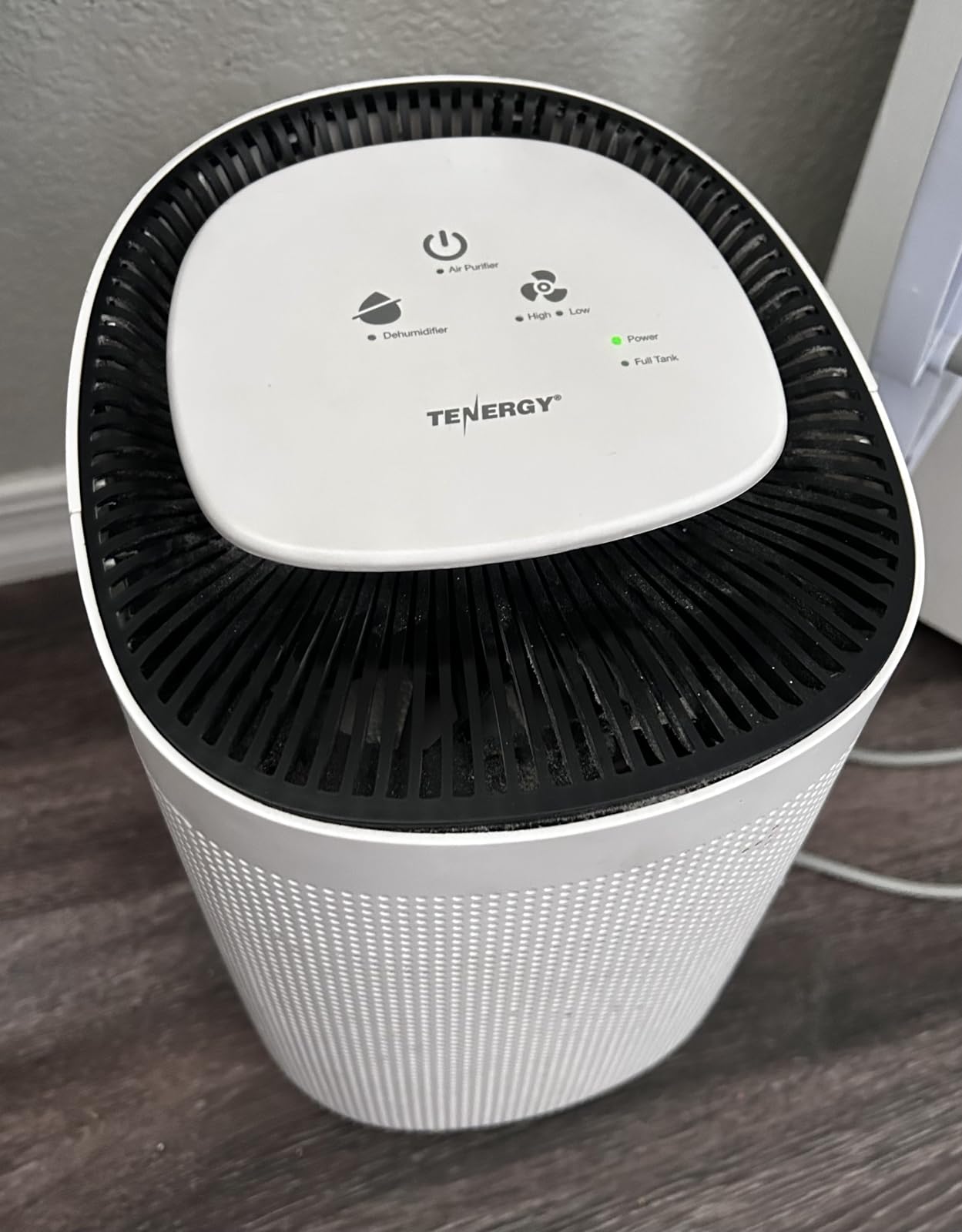
The Tenergy Sorbi is the only option in this roundup that cleans the air while it dries it. Peltier thermo-electric cooling is paired with a true HEPA filter rated at 99.97 percent of particulates, which matters in a closet holding seasonal coats and wool sweaters for months at a time.
Extraction is 750 ml per day into a 1 liter tank, rated for spaces up to 200 sq ft, at 45 watts. Reviewers describe a unit that visibly pulls humidity out of small closets and bathrooms, with the low fan setting quiet enough to leave running indefinitely. Auto shut-off with a water level sensor stops it cleanly when the tank fills.
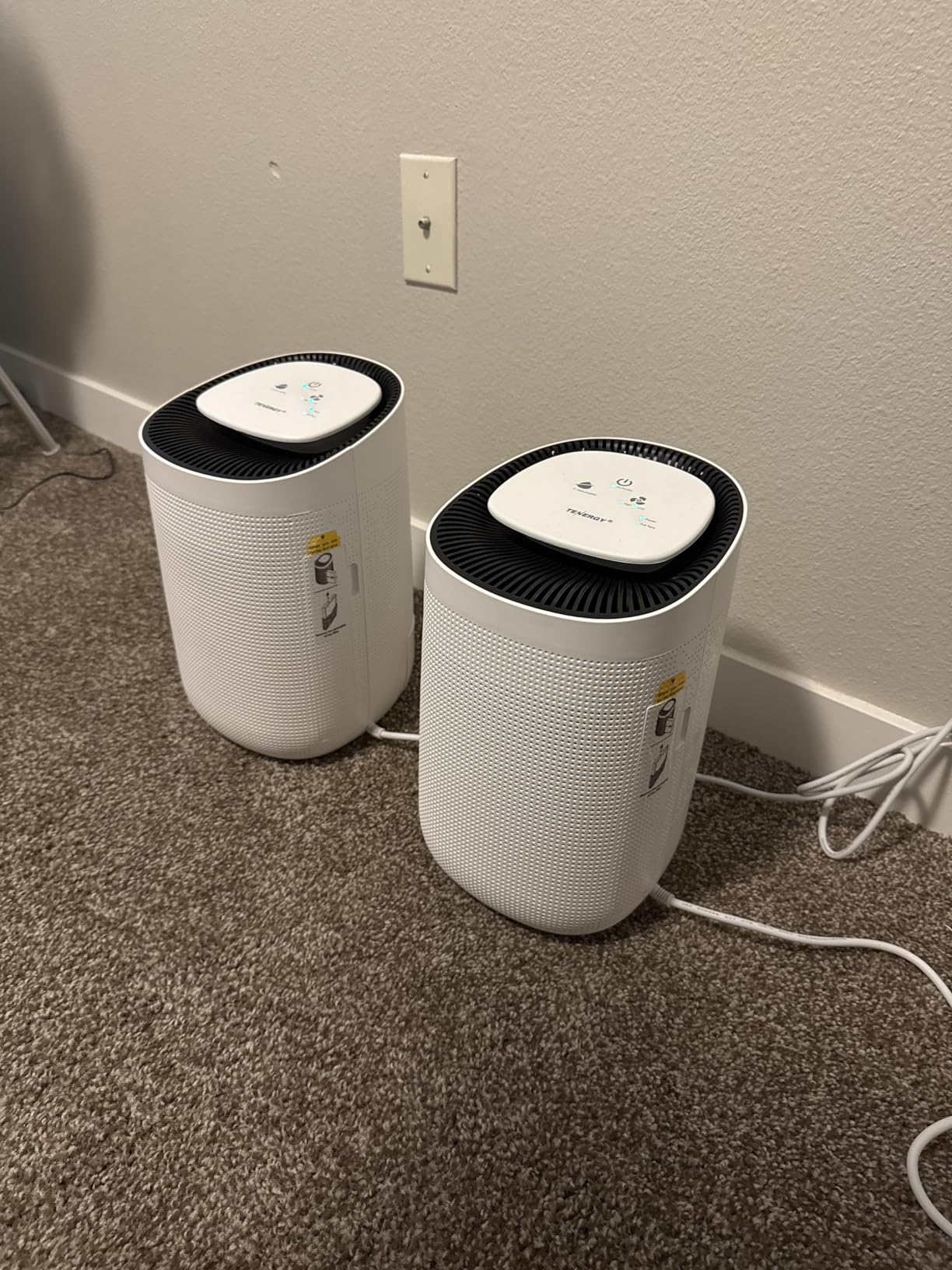
The touch controls and LED indicator draw the most criticism. The panel stays bright enough to notice in a dark closet, and the high fan setting is noticeably louder than the low. A small number of owners also hit durability problems around the first filter change, or after three to four years of continuous running.
Where it earns its place
A closet that smells musty and stores dusty wool is where filtration earns its cost back. Because the HEPA stage traps particles as air passes the cooling plate, you get meaningful dust control without adding a second appliance to the rod. In a household with an allergy, that pairing is the reason to pick it over a plain Peltier mini.
Where it falls short
At 12 inches tall it is the largest unit here and needs real shelf depth, and the filter cover and reset button are awkward to handle. It is also electric, which means an outlet within reach or a cord crossing the closet floor, and that rules it out for the majority of built-in wardrobes.
3. Eva-Dry EDV-1100 – Most Versatile for Small Sealed Spaces
Eva-Dry EDV-1100 Whisper-quiet 16 OZ Dehumidifier with Auto Shut Off and Restart for small spaces in your Home, RV, Automobile, and Storage up to 122 sq. ft
Absorbs up to 16 oz per week, 33 dB, 122 sq ft coverage, auto restart after power loss
Pros
- Extremely quiet
- barely audible in a bedroom
- Small enough to sit inside a closet or cabinet
- Tank is easy to empty and reinsert
- Auto shut-off prevents overfilling
Cons
- Extraction rate is modest
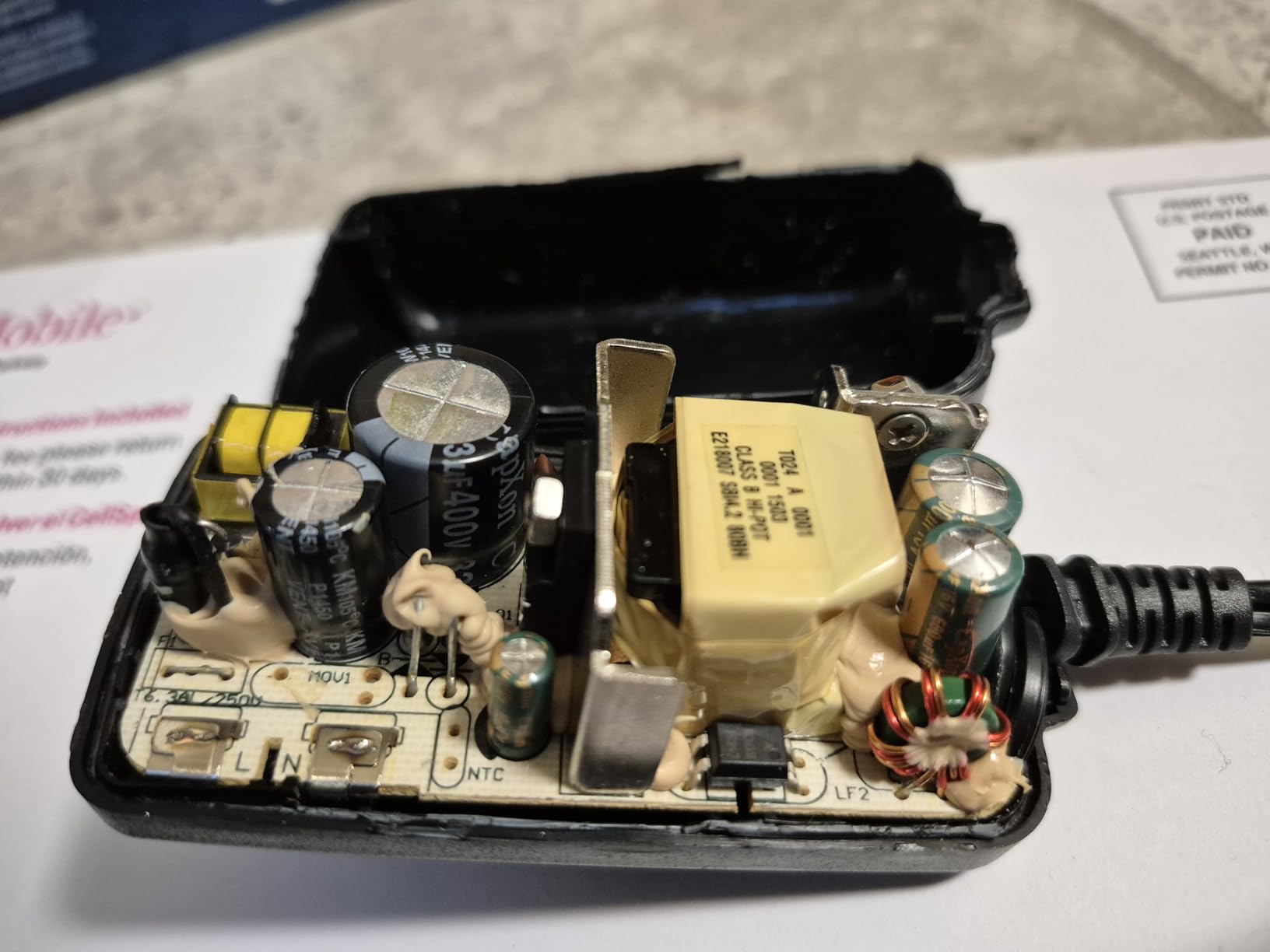
- AC adapter failures reported over time
- No drain hose option
- Shut-off shown only by a dim yellow light
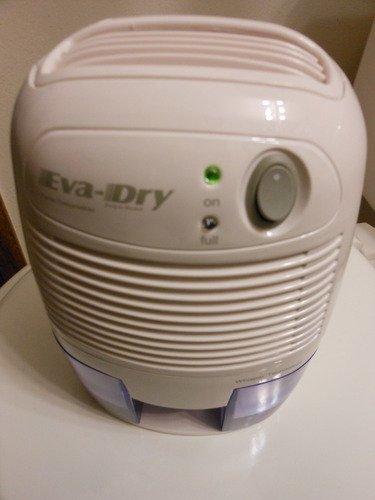
The EDV-1100 is a thermo-electric unit for anyone who wants a real dehumidifier without a compressor. It pulls up to 16 oz per week when run continuously, which sounds modest until you put it in a 122 sq ft closet that stays shut for weeks at a time.
Reviewers describe years of quiet service in RVs, small bedrooms and closets, with one owner logging ten years of use. At 33 dB and 22 watts it disappears into the background, and auto shut-off plus automatic restart after a power interruption means it keeps working without supervision.
The design is deliberately plain: a removable reservoir tank, a plug, and a yellow indicator that glows when the unit has shut itself off. The catch is tank size. In a genuinely wet closet you will be emptying it regularly, and there is no drain hose option for a permanent installation.
Best for small sealed spaces
The manufacturer guidance is to keep it under 122 sq ft and above 50 percent relative humidity, which describes a reach-in closet precisely. It is one of the few electric units you can genuinely place inside the closet rather than just outside the door, because the body is 6.5 by 5 by 11 inches and it weighs just over a pound.
Where it falls short
The 16 oz weekly figure means it will not rescue a damp walk-in wardrobe on its own, and without a drain hose a permanent install means an extension cord, which is exactly what you should not be running into a closet. Several owners report AC adapter failures after one to three years, which a replacement power supply usually resolves.
4. SANVINDER avylo 25 oz Cube – Budget Pick for Damp Closets and RVs
SANVINDER Dehumidifiers for Home, 25oz Dehumidifier for Bedroom with Auto-off, Ultra Quiet Energy Saving for Bathroom Closet Wardrobe Office RV (285sq.ft)
16 oz per day at 86F and 80% RH, 25 oz tank, under 35 dB, 23 watts, 285 sq ft
Pros
- Very quiet
- many owners report it is inaudible
- Compact cube fits a shelf
- wardrobe or nightstand
- Colour-changing light doubles as a nightlight
- Noticeably reduces damp closet smell
Cons
- Collection is modest in very humid enclosed spaces
- Power adapters reported to fail over time
- Filter is not user-replaceable once dirty
- Included plug is not universal
This 25 oz cube is the value electric option. It runs at 23 watts, sits under 35 dB, and pulls up to 16 oz (450 ml) a day at 86F and 80 percent relative humidity into a 25 oz tank, which is a genuinely useful amount for a closet that smells musty.
Owners of small damp closets and bathrooms like that it is cube-shaped enough to sit on a shelf rather than take floor space, and that the colour-changing LED doubles as a nightlight. It draws 0.96 kWh over 24 hours, so leaving it running continuously costs very little.
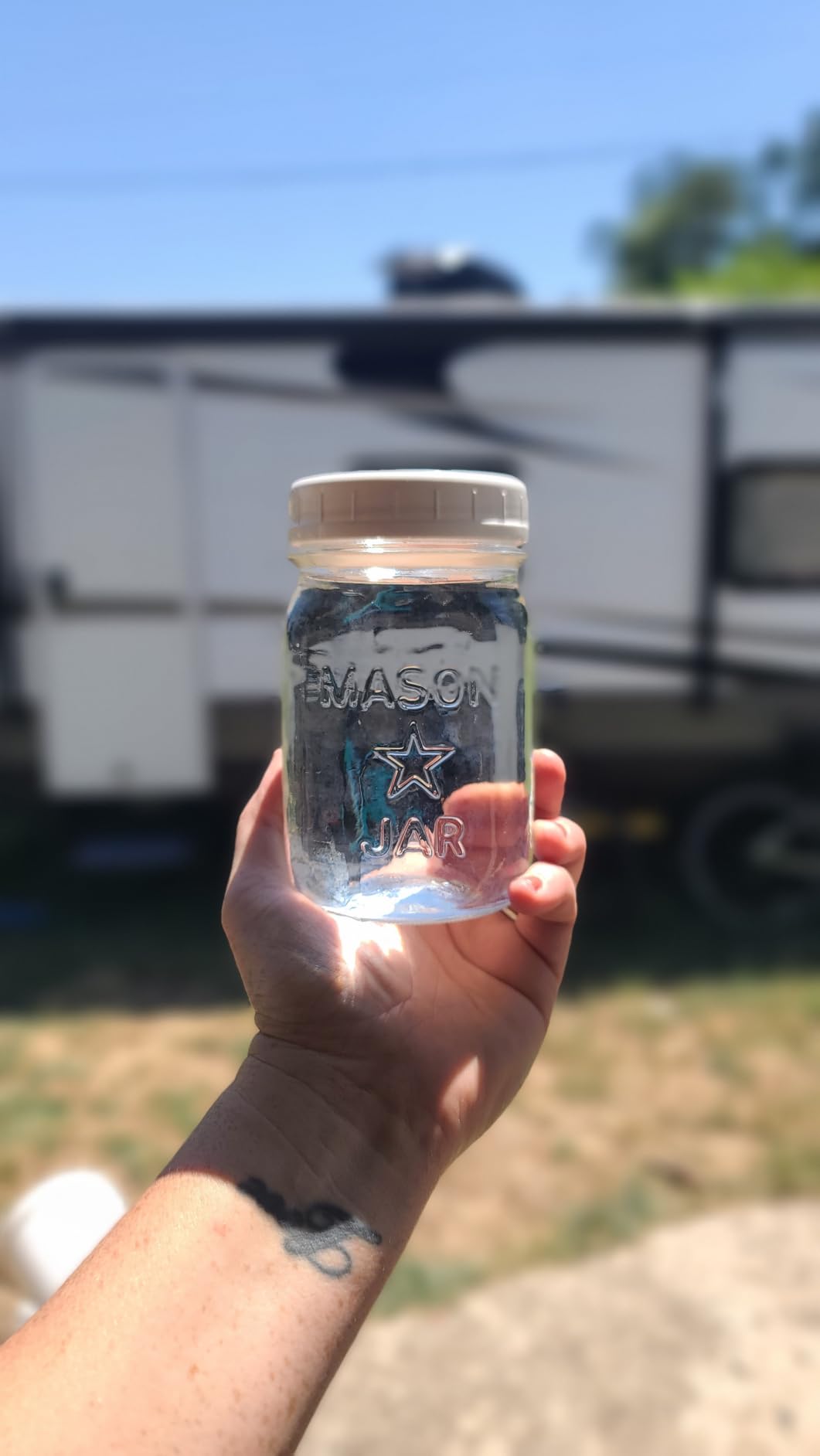
The honest limit is speed. In a very humid enclosed space, tank collection is slower than buyers expect, and a closet that is truly soaked will take more than one pass. With a 25 oz tank in warm conditions, a full cabinet means emptying every few days to keep it running.
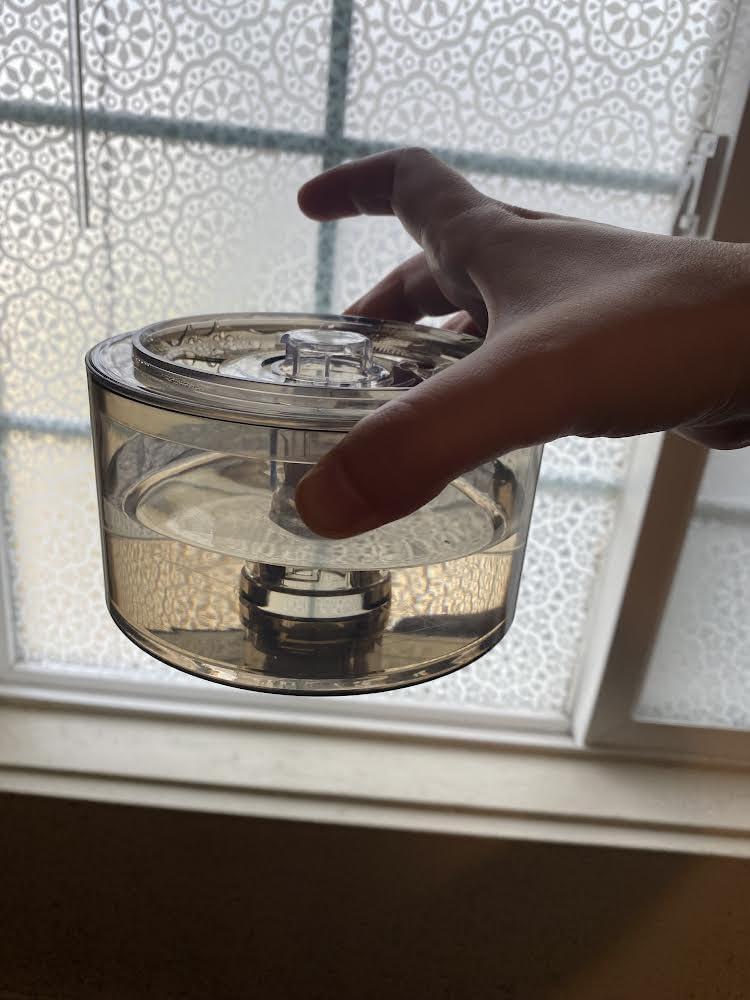
Best for renters and small closets
Nothing needs installing and nothing needs draining, which makes this the easiest powered option to try before you commit. It covers spaces up to 285 sq ft on paper, so it also handles a modest walk-in wardrobe, and the auto shut-off with a red indicator stops it when the tank is full.
Where it falls short
The power adapter is the weak point. Owners report adapters failing after extended use, and the filter is not user-replaceable once dirty, so performance depends on the unit staying clean. The included plug is also not universal, which matters for anyone outside the US or using a travel adapter.
5. Pro Breeze Osmo 44 fl oz – Best for Closets With No Outlet
Pro Breeze Osmo Non-Electric Moisture Absorber, 44 fl.oz, Included 1.54lb Refillable Tablet, Lasts 100 Days, Ideal Silent Mini Dehumidifier for Closet, Bathroom & Bedroom, Fragrance Free, White
44 fl oz refillable tank, 1.54 lb tablet, up to 100 days, 0 dB, no electricity
Pros
- Completely silent with no power
- cord or batteries
- Reusable tank reduces waste versus disposable bags
- Large 44 fl oz capacity with a water level window
- Works in enclosed spaces with no outlet
Cons
- Passive collection is slow compared with electric units
- Requires a replacement tablet each cycle
- Effectiveness depends on humidity and airflow
The Pro Breeze Osmo is a passive unit with a refillable tank, and it exists because hanging bags wear people out. It collects up to 44 fl oz in a tank you pour out, driven by a 1.54 lb tablet, and runs up to 100 days depending on conditions.
It makes zero noise at 0 dB and needs no electricity at all, so it works in a closet, a bathroom cabinet, a boat or a caravan. A 360 degree perforated design keeps air moving across the tablet, while a water level window, safety lid and pour spout make emptying straightforward.
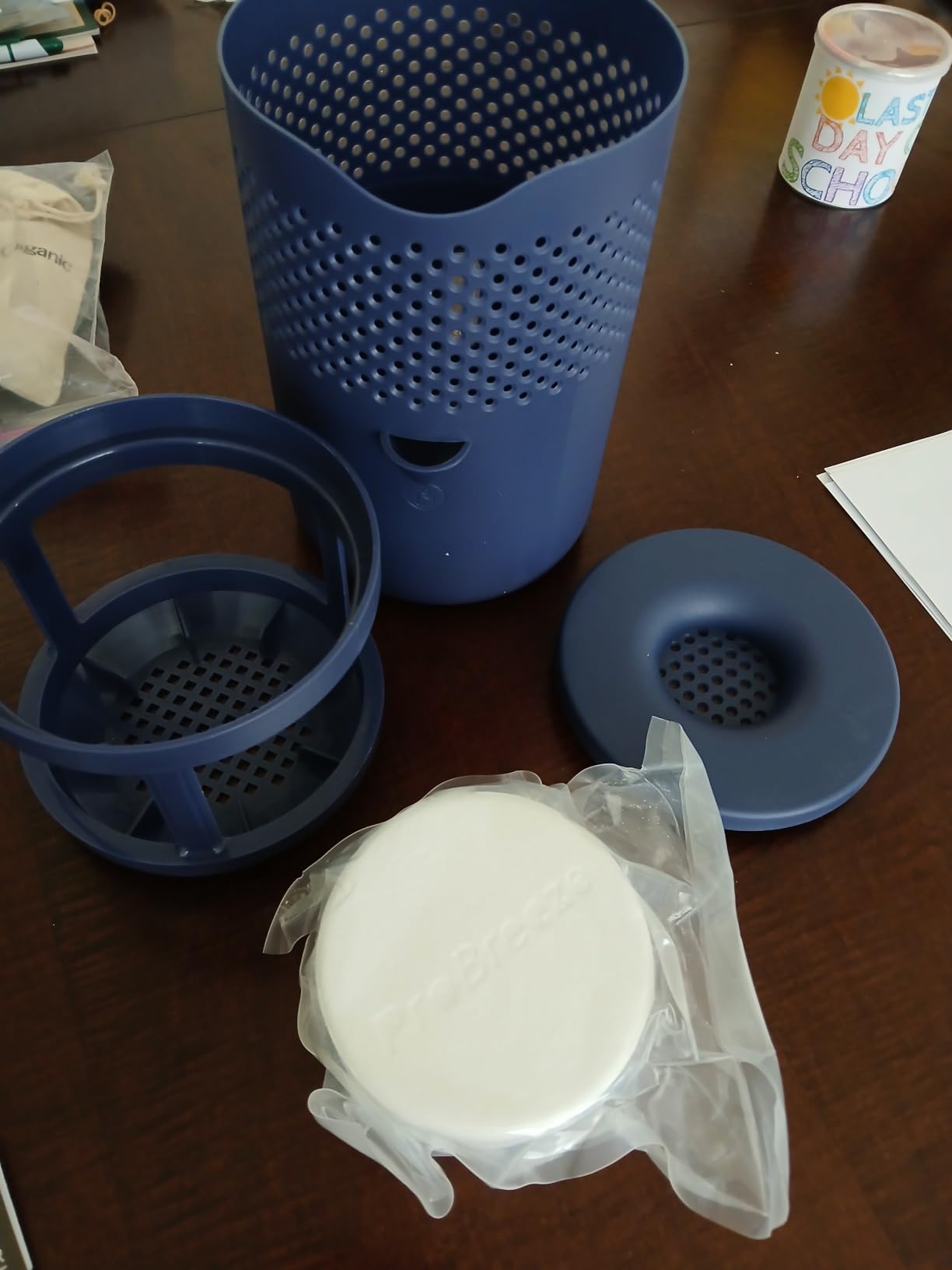
Buyers value it as the middle ground between a disposable absorber and an electric unit. The tank keeps working after the tablet dissolves, so you are not discarding a bag every couple of months, and one filled tank tells you at a glance how wet the closet actually is.
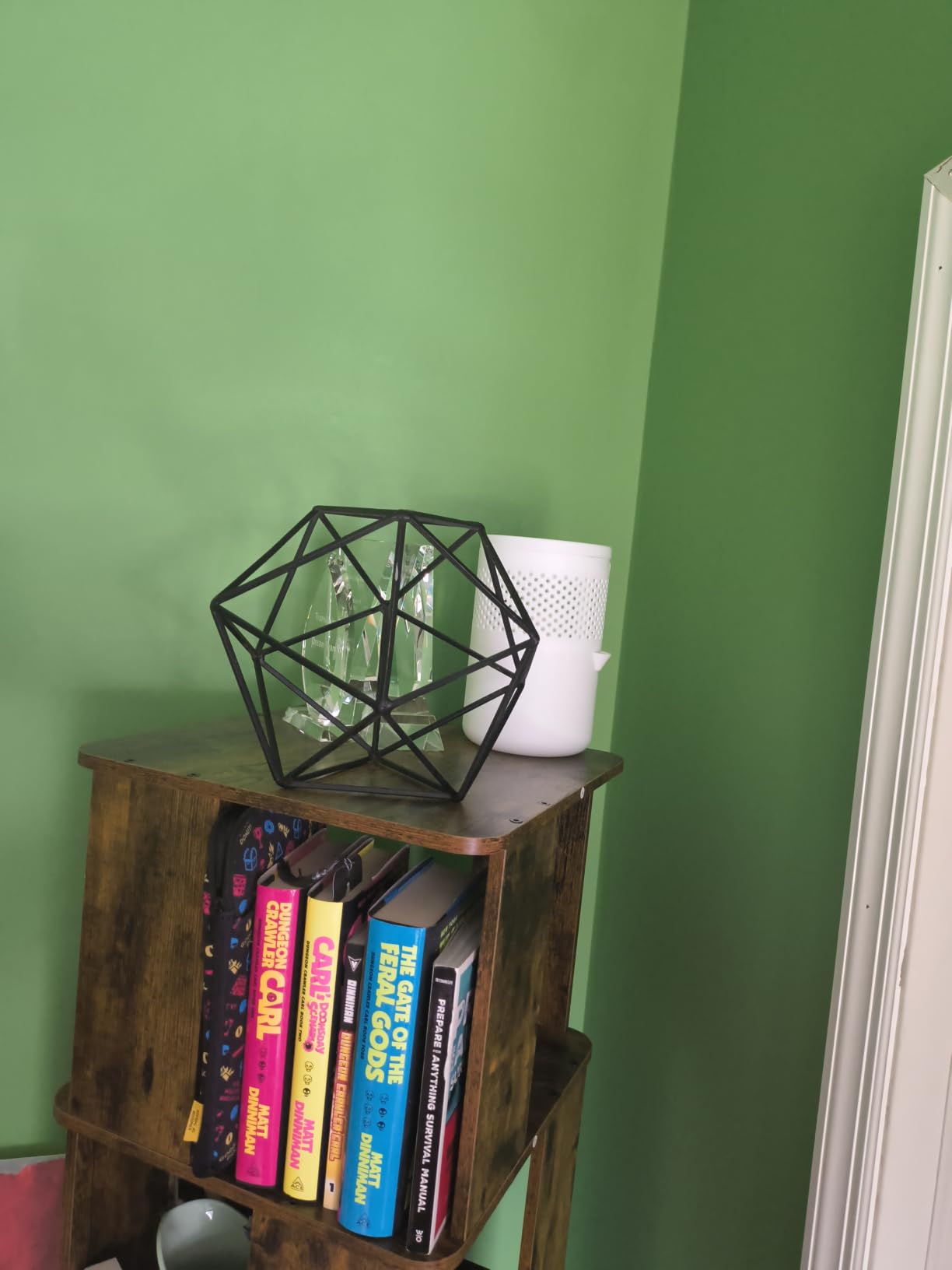
Best where electricity is not an option
No-outlet closets are common in older homes and in built-in wardrobes, and an extension cord through a door hinge is how a closet becomes a hazard. A passive unit sidesteps the question completely. This one also sits flat on the floor of a closet, where a hanging bag on a high rod would barely reach the damp air near the floor.
Where it falls short
Collection is gradual, and it is a fraction of what a Peltier unit removes in a day. It needs a replacement tablet each cycle, and its effectiveness depends entirely on ambient humidity and airflow, so a large damp walk-in will outrun it comfortably.
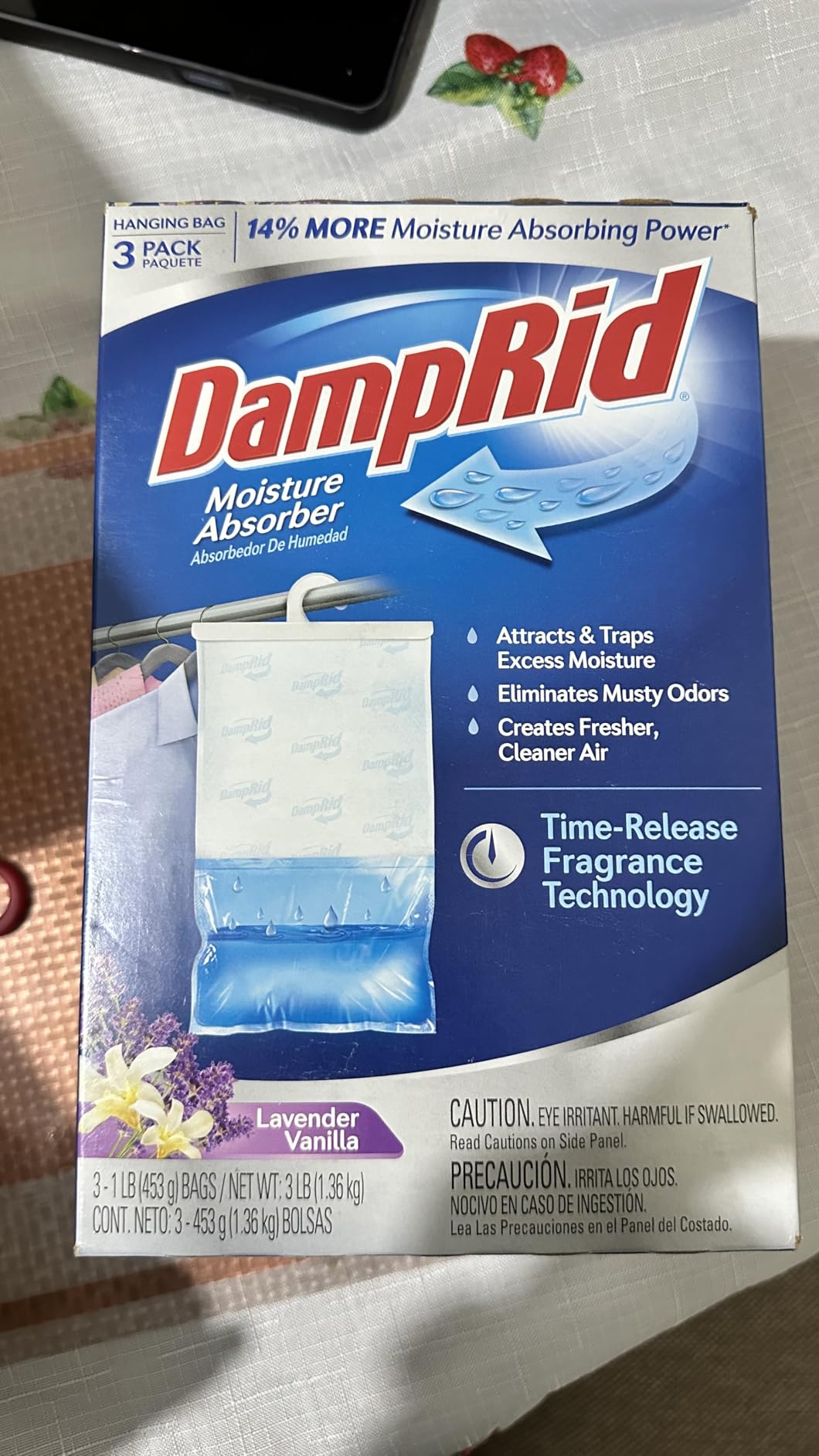
6. DampRid Hanging Absorber 3-Pack – Top Rated for Musty Odours
DampRid Lavender Vanilla Hanging Moisture Absorber, 16 oz., 3 Pack – Eliminates Musty Odors for Fresher, Cleaner Air, Ideal Moisture Absorbers for Closet, Blue, Small
Three 16 oz hanging bags, up to 60 days each, time-release lavender vanilla scent
Pros
- Highest customer rating in this roundup
- Tops the moisture absorber category
- Hangs easily and suits closets
- Scents the space while removing musty odour
Cons
- Disposable design creates replacement waste
- Fragrance may be strong for sensitive users
- Passive absorption with no powered extraction
The DampRid hanging bag is the highest rated product we tested and the best rated option in the closet aisle. It attracts and traps excess moisture to clear musty odours, and the 3 pack means you can cover three separate spaces in one order.
Each 16 oz bag claims 14 percent more absorbing power than 14.5 oz bags and runs up to 60 days depending on temperature and humidity. Buyers like the visible collection, the clear replacement line, and the fact that a hanging bag costs nothing to run.
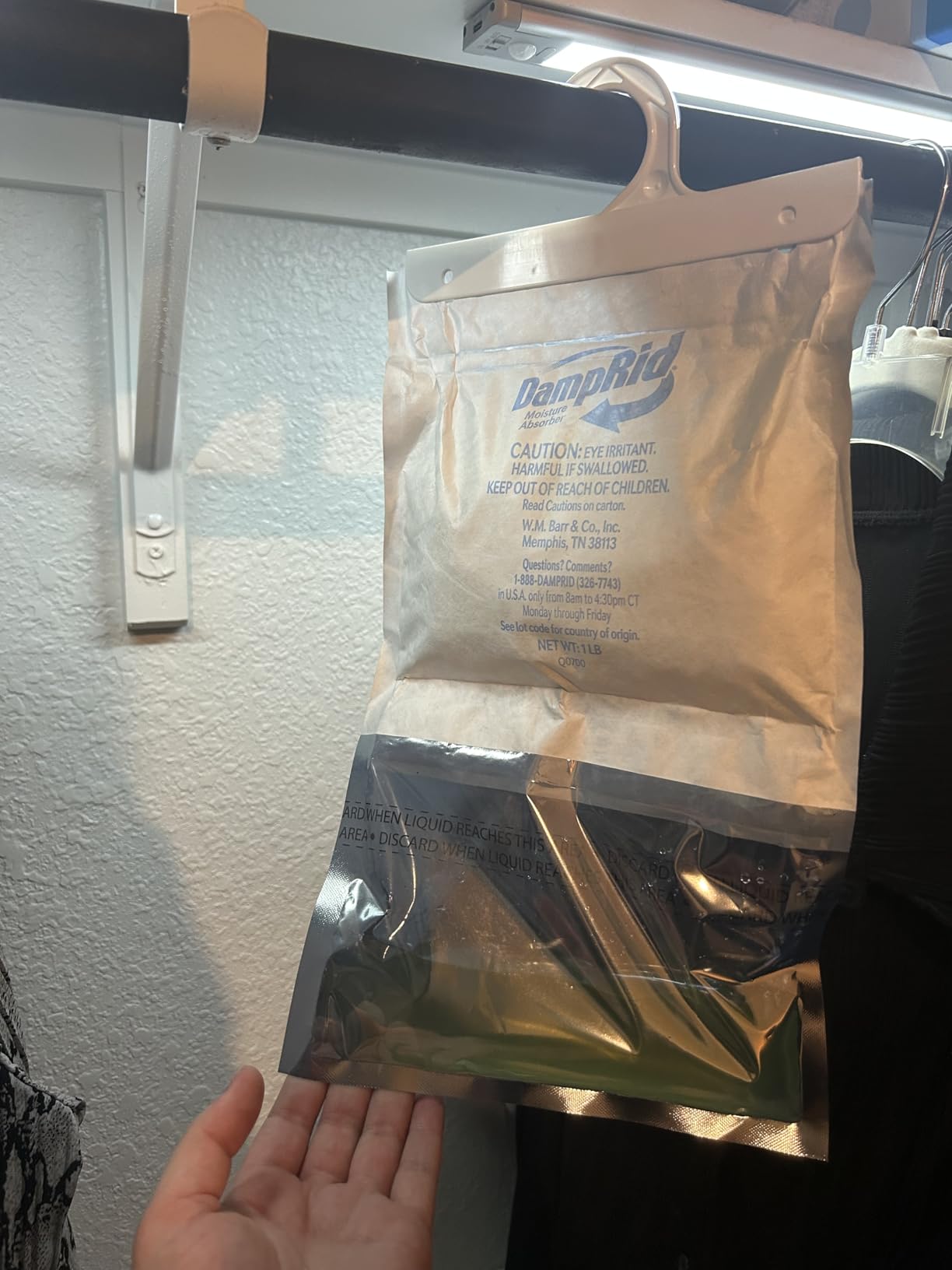
This is the least effort fix on the list. Shake it, hang it from the rod, and replace it when the liquid reaches the line. It ranks first in its retail category, which tells you how established it is, and the lavender vanilla fragrance releases over time to freshen the space while it works.
Best for odour control on a budget
If the complaint is a smell rather than visible mildew, a scented absorber resolves most of it. The 3 pack covers a main closet, a shoe cabinet and a storage bay at the same time, and nothing has to be plugged in, refilled with crystals or monitored beyond a glance at the window.
Where it falls short
It is a passive absorber with no powered extraction, so a persistently damp closet means replacing bags every couple of months indefinitely. The fragrance is strong, and anyone sensitive to scented products should skip it for an unscented alternative. It also cannot clear an existing mold colony.
7. Vacplus Unscented 9.8 oz Pack – Best Value Hanging Absorber
Vacplus Moisture Absorber, 9.8 OZ Hanging, Strong Absorption, Unscented
Unscented 9.8 oz hanging pack, 500 ml reservoir, visible collection window, no electricity
Pros
- Nearly 15
- 000 reviews behind it
- Unscented so no fragrance transfers to clothes
- Transparent window makes progress easy to verify
- Moulded hanger fits closets and RVs
Cons
- Disposable bags replaced every few weeks in humid spaces
- Lifespan can fall short of the stated 30 days
- No powered extraction
The Vacplus hanging pack is the value pick in the passive category, and the volume of buyer feedback behind it is remarkable. The 9.8 oz unscented bag holds 500 ml and suits closets, cabinets, bathrooms, basements and RVs, with a moulded hanger that needs no assembly.
Spherical calcium chloride particles and a one-way moisture permeable paper do the work, and a visible reservoir window shows collected water day by day. That visibility is what buyers mention most: you can see whether the closet is getting drier without buying a hygrometer.
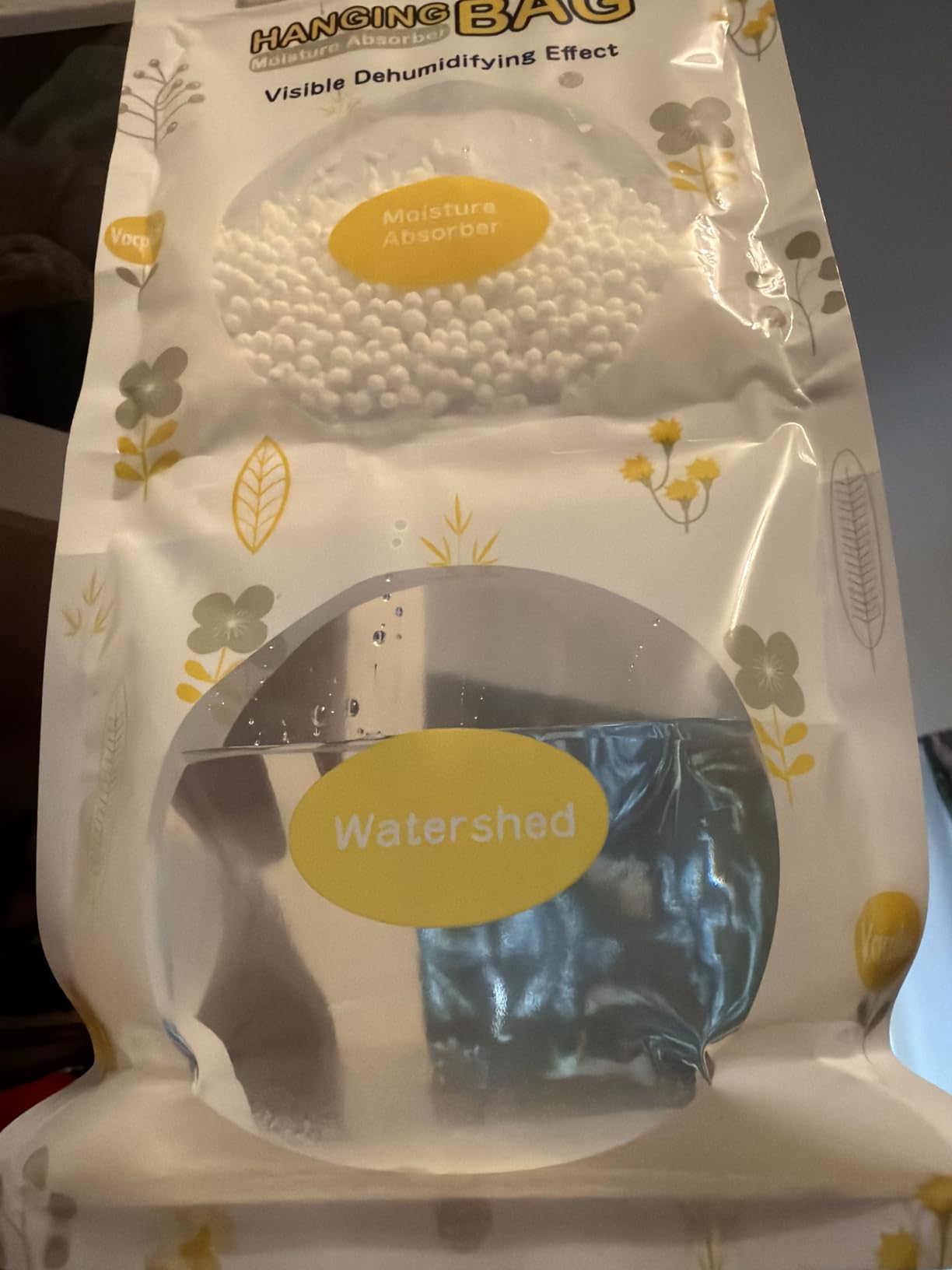
The moulded hanger fits closets and enclosed spaces, there is no assembly, and the formula is unscented, which matters more than packaging suggests when the bag hangs a few inches from a wool coat.

Best for a single closet or an RV
When one closet, one cabinet or one vehicle is the problem, a single hanging pack is the sensible buy rather than a bulk box you will not finish. Unscented is the deciding factor for anyone storing delicate or vintage clothing, where fragrance transfer onto fabric is a real and lasting cost that a scented bag does to your wardrobe.
Where it falls short
Runtime is the honest reservation. In humid climates and enclosed RVs, owners find bags filling in one to three weeks rather than the advertised 30 days. Every bag is single use, and none of them touches powered extraction, so a large damp wardrobe needs several collectors rather than one.
8. Arm & Hammer 1 lb Tubs – Best for Fragrance-Sensitive Wardrobes and Storage Bins
Arm & Hammer Essentials Disposable Moisture Absorber and Odor Eliminator Tub, Fragrance Free, 1 lb., Attracts and Traps Excess Moisture, Ideal Closet Dehumidifier (Pack of 3)
Fragrance free, three 1 lb tubs, baking soda and bamboo charcoal, up to 60 days
Pros
- Genuinely fragrance free
- preferred by sensitive users
- Discreet tub fits closets and behind furniture
- Owners report musty odours clearing within days
- Silent with no power or assembly
Cons
- Disposable tubs must be emptied and replaced
- Some reports of a pack collecting no water
- Crystals dry and clump with extended use
- Lid does not always seat securely
The Arm & Hammer tub is the fragrance-free passive option, and it is built around baking soda, activated bamboo charcoal and calcium salts. Three 1 lb tubs per pack, each rated to last up to 60 days depending on temperature and humidity.
Reviewers like that it works without the paper cover, which speeds absorption, and that the low tub format slides under a closet shelf or behind a cabinet door. Owners of musty closets and basements report the odour improving noticeably within a week of use.
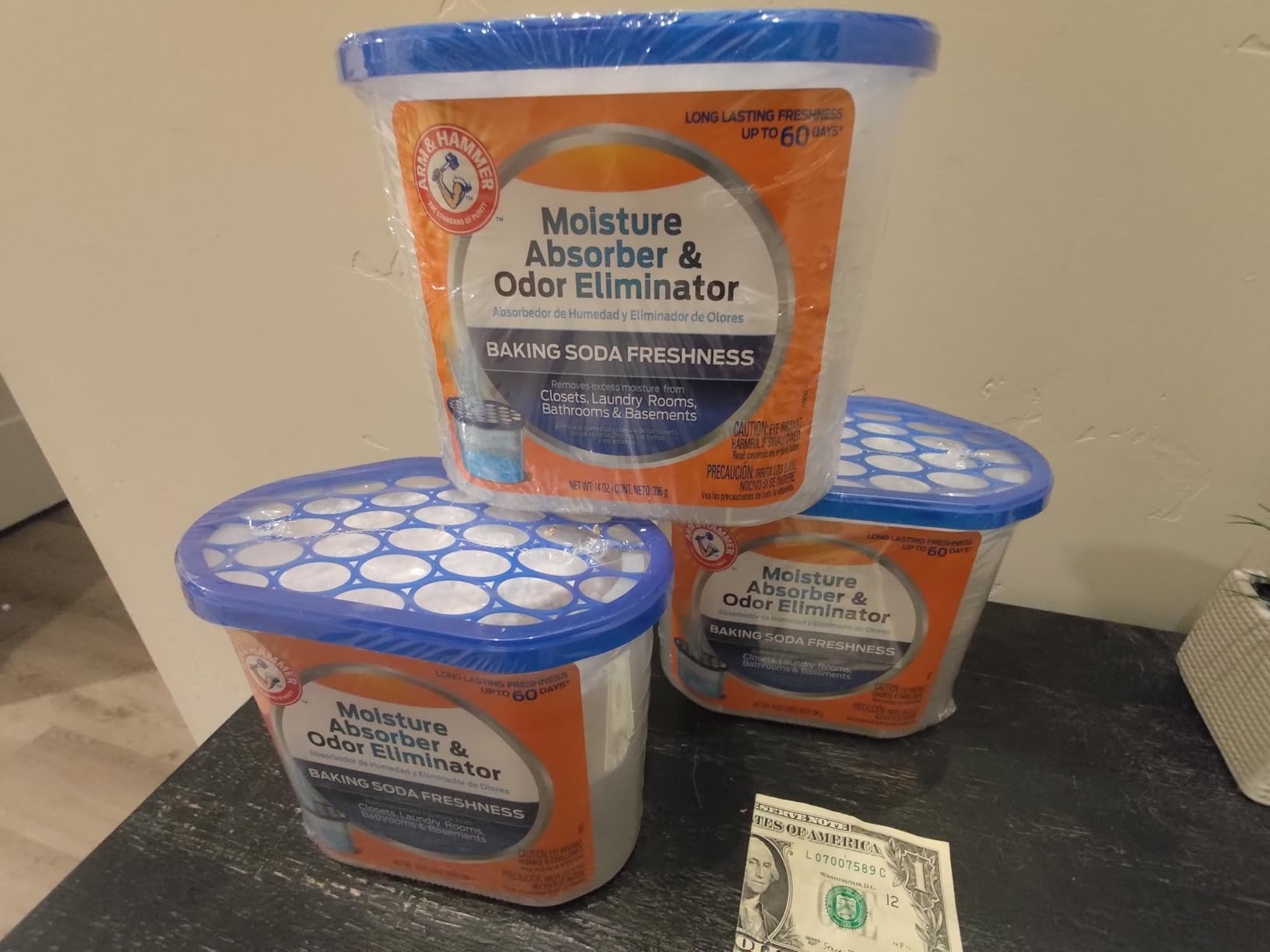
It is silent, needs no power and no assembly beyond removing a foil seal, which makes it the lowest-friction option for storage bins and shoe cabinets where a hanging bag will not fit at all.
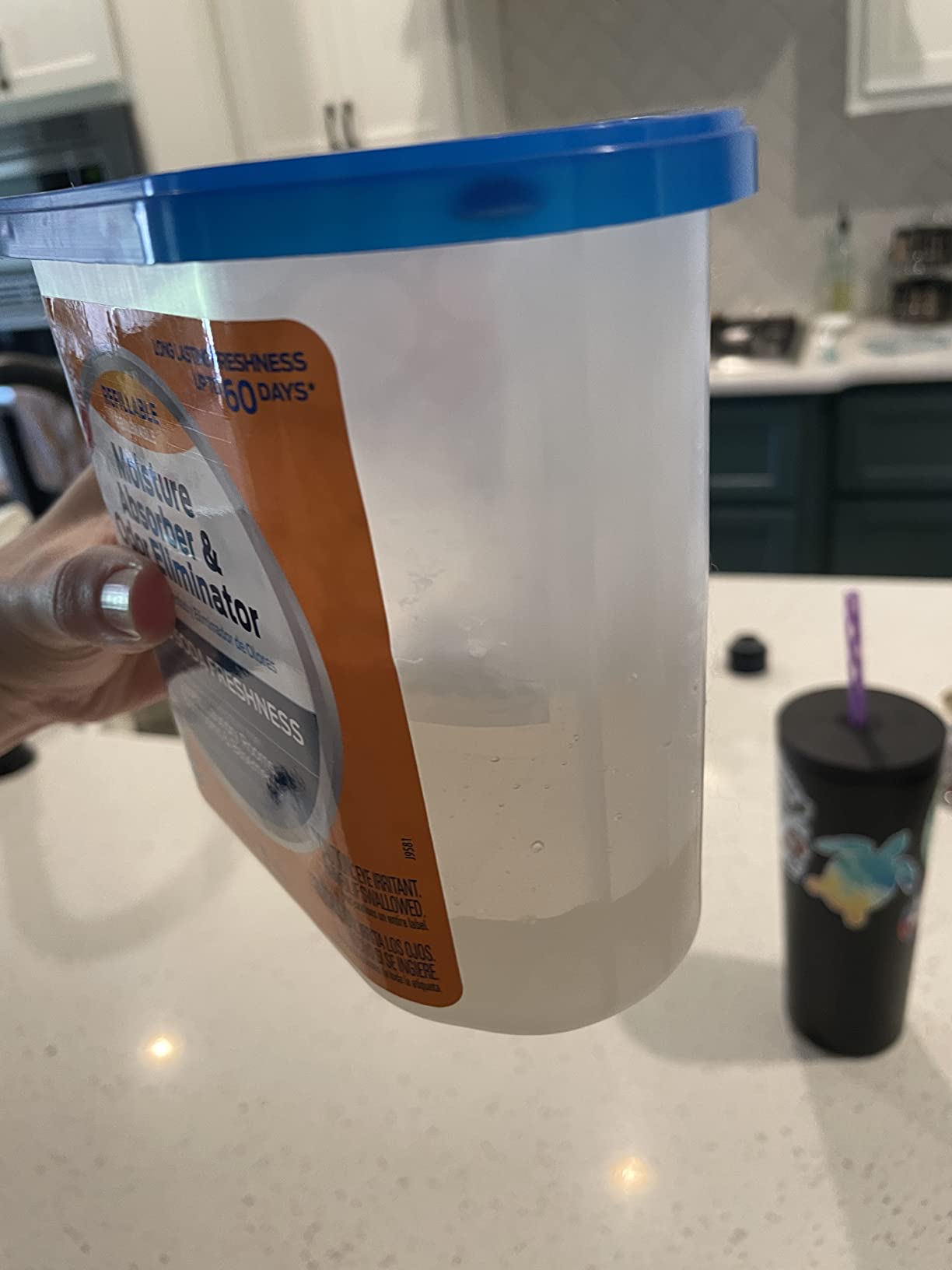
Best for storage bins and shoe cabinets
A tub sits flat and low, so it works where a hanger cannot: under shelves, inside a stack of bins, in a shoe cabinet. The charcoal component also handles odour rather than moisture alone, which is useful in a closet that smells more than it feels damp.
Where it falls short
These are disposable tubs, and a small number of buyers report an entire three-pack that collected nothing at all, so keep a spare on hand. Crystals dry and clump with extended use, and the lid does not always seat tightly once a tub is full.
9. CLEVAST Unscented 10 Pack – Best for Covering Several Closets at Once
CLEVAST Moisture Absorbers Packets 10 Pack, Dehumidifier Bags for Closet, Unscented Hanging Humidity Absorber in Wardrobes, Bedrooms, Bathrooms(Net Wt. 230g/Pack)
Unscented 10 pack, 500 ml per bag, leakproof one-way paper, up to 60 days
Pros
- Ties for the highest rating in this roundup
- Unscented with no fragrance added to clothing
- Leakproof design with a visible 500 ml reservoir
- Ten pack covers multiple closets and cabinets at once
Cons
- Disposable
- single-use bags create ongoing waste
- Crystals may form without droplets in dry conditions
- Passive absorption with no powered extraction
CLEVAST packs ten unscented 500 ml bags into a single box, and at 4.7 stars it ties for the highest rating in this roundup. Spherical calcium chloride particles sit behind a one-way permeable paper that locks moisture inside instead of letting it wick back out into the closet.
The reservoir is visible, so you can watch it fill, and each bag is usable for up to 60 days depending on temperature and humidity. An integrated hanging hook means no assembly, and the formula is unscented, so nothing is added to the clothes.
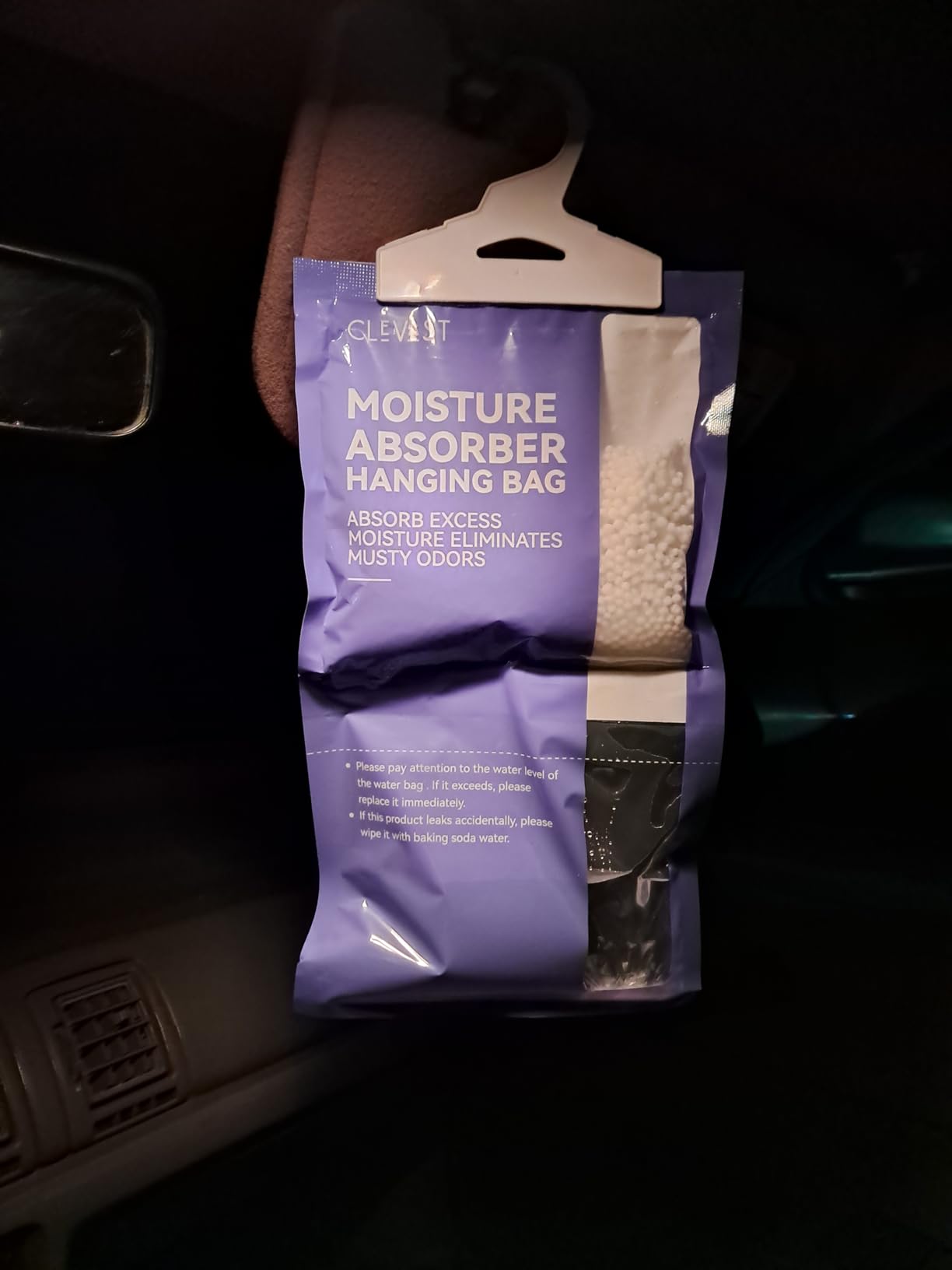
The 10 pack format is the point. Buyers covering a walk-in wardrobe, a linen closet and a bathroom cabinet at once rate the bulk approach above a single hanging bag, because passive units only make a difference when they are spread across the space rather than concentrated in one corner.

Best for a walk-in with several zones
A walk-in wardrobe with a hanging side, a shoe side and a shelf side needs more than one passive collector to shift the humidity. Unscented is the deciding factor for anyone storing delicate, vintage or wedding clothing, where a fragrance transfer would be permanent.
Where it falls short
Crystals can form without visible droplets in dry or cool conditions, which looks like a failure but is expected behaviour. Like every bag in this category it is single use, and it does nothing for powered extraction in a large space.
10. Eva-Dry E-500 Two Pack – Best for Walk-In Closets and Large Enclosed Spaces
Eva-Dry E-500 Renewable Silica Gel Dehumidifier, 2-Pack, No Batteries
Two rechargeable silica gel canisters, 500 cu ft each, 16-18 hour recharge, color indicator
Pros
- Two canisters cover two spaces at once
- Cordless and completely silent during use
- Rechargeable design avoids recurring refills
- Includes twist-lock hangers so no shelf space is needed
Cons
- Recharge cycle takes 16-18 hours
- Must be plugged into a power strip
- Canisters run hot and pop during renewal
- Some stopped renewing after roughly two years
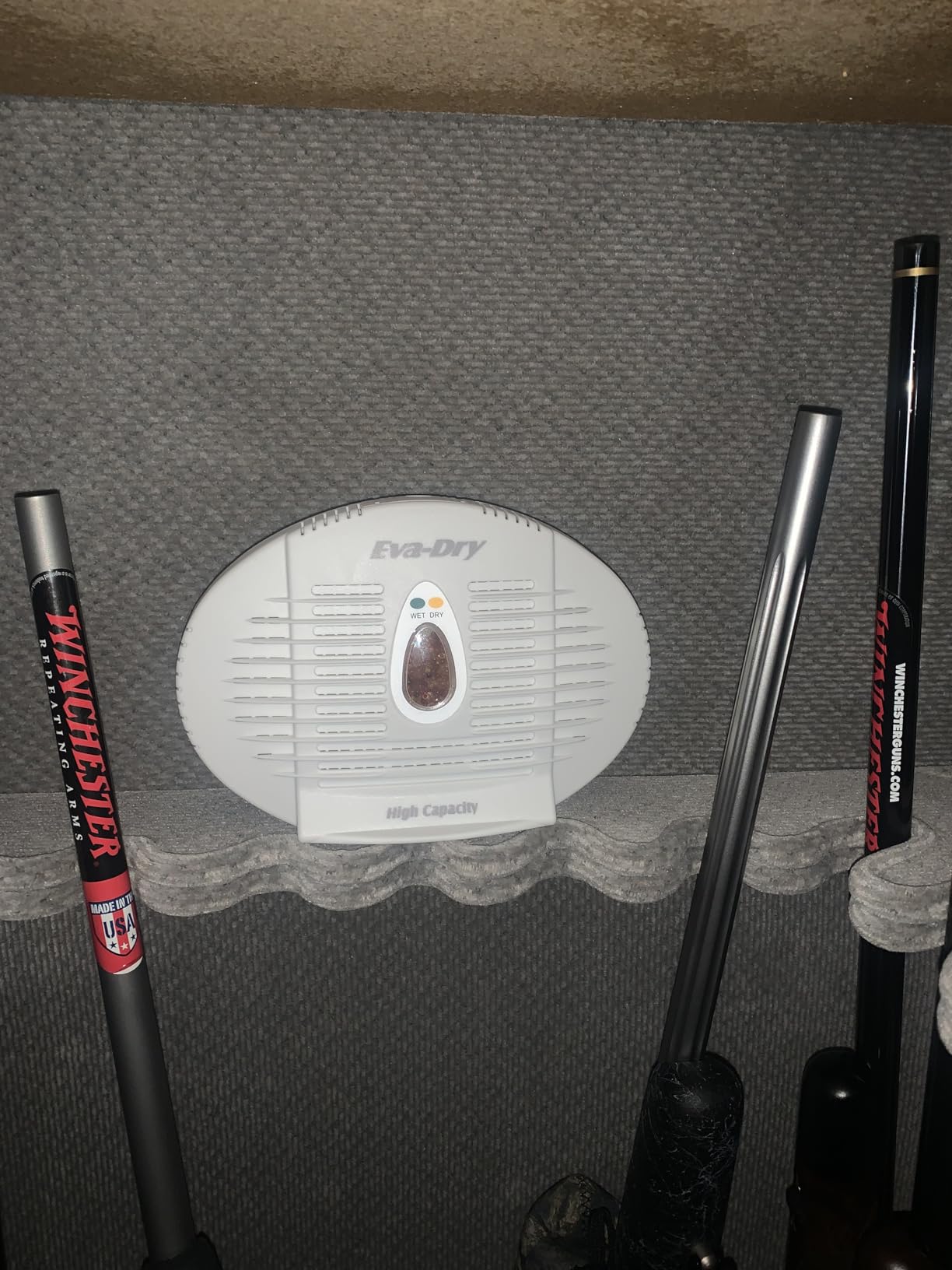
The E-500 two pack is the renewable answer for bigger volumes. Each canister covers up to 500 cubic feet of enclosed space, so one per closet, or two across a walk-in wardrobe, is realistic, and neither needs power while it works.
Both canisters charge by plugging into a wall outlet for 16 to 18 hours, and a colour window shows orange when a piece is dry and ready and green when it is full. The pack includes two twist-lock hangers, so nothing has to sit on a shelf at all. Owners using them in closets, safes, RVs and boat cabins report noticeably drier air.
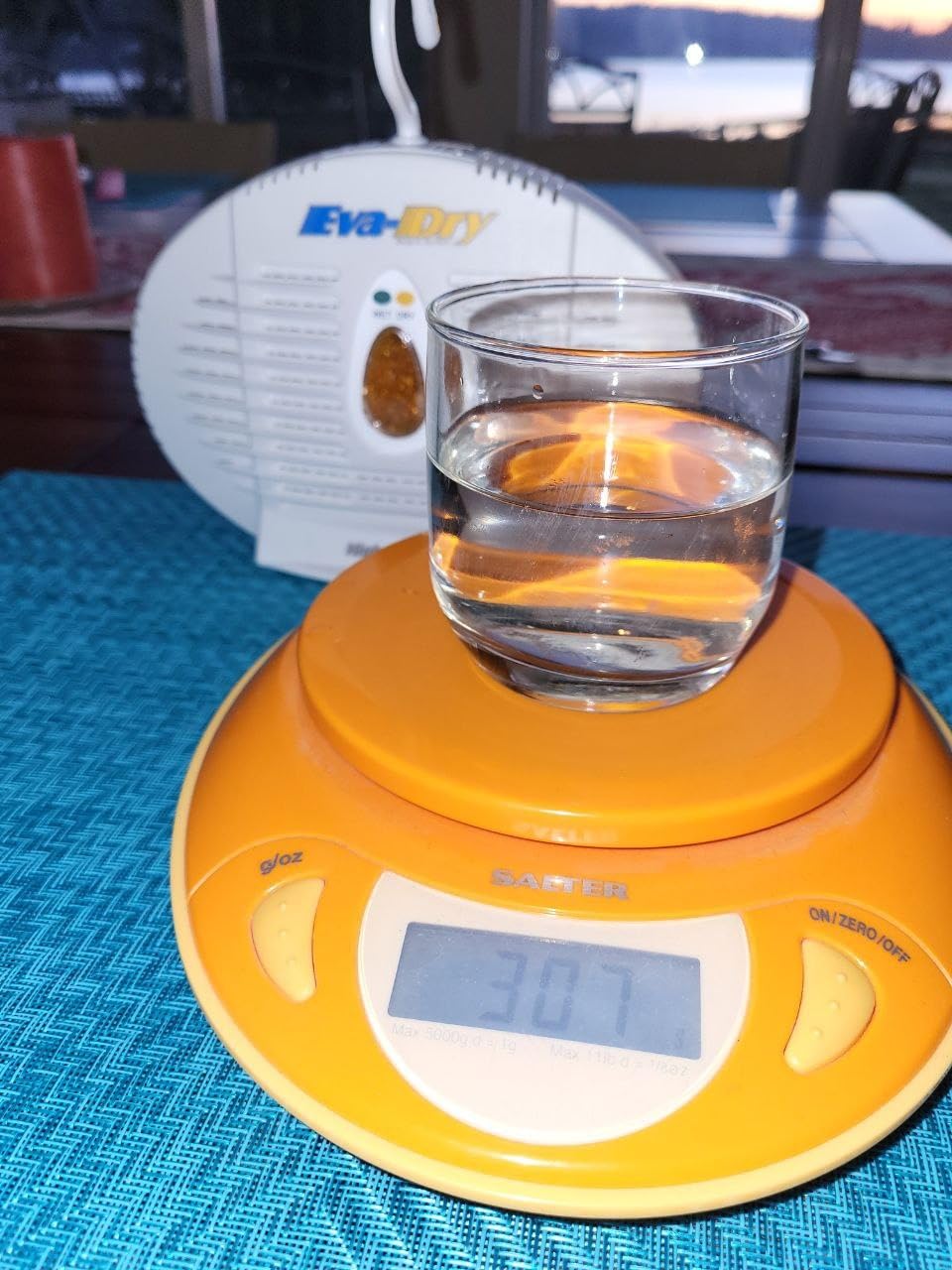
The rechargeable design removes the recurring refill cost that makes disposable bags add up over a season, and there is no calcium chloride involved, which keeps it a better choice around children and pets.
Best for larger enclosed spaces
Coverage of 500 cubic feet per canister is the largest passive claim in this roundup, and it is what makes two of them practical for a walk-in wardrobe. Because both charge off-site, you can plug them in wherever is convenient and hang them straight back up inside the closet with no outlet required.
Where it falls short
A recharge cycle of 16 to 18 hours means you have to plan it, and both canisters need charging at the same time on a power strip. A small number of owners report pieces that stopped renewing after roughly two years, which the manufacturer resolved under warranty. They are also 120V only, so they do not work in 240V countries.
How to Use a Dehumidifier in a Closet Without Wasting It
Placement decides more than the purchase does. Our sequence, which matches what people report after living with a closet unit for a season:
- Empty the closet first. A dehumidifier pulling air around a wall of tightly packed clothes is working against a fabric wall that is giving moisture back.
- Put a hygrometer on the back panel, not near the door, and record the opening reading before you start.
- Close the door. Air exchange through a gap is a fraction of what the closet volume needs, and an open door halves the work.
- Leave clearance around the intake and outlet. Six to twelve inches of empty space keeps air moving across the sensing and cooling surfaces.
- Elevate electric units off the closet floor, where damp air pools and where a tank or cord is most likely to sit in a spill.
- Empty the tank on the indicator, not on a schedule. Once a tank is full the unit shuts off and stops working entirely.
- Re-read the hygrometer after 48 hours, then again after a week closed. Hold 30 to 50 percent before you call it fixed.
On drainage, the honest answer for a closet is that there is usually no good option. Small units mean manual emptying, and the forum consensus is that a bucket on a weekly rhythm beats an extension cord snaked through a door hinge. If you genuinely want a permanent install, that is a job for an electrician adding an in-closet outlet and a continuous drain line, not a cable run.
Two safety notes. Calcium chloride packs are not food, and the liquid inside is not meant to be handled or tasted, so keep hanging bags out of reach of small children and curious pets. Silica gel units are the gentler option for a child’s wardrobe, which is one of the reasons we put the Eva-Dry first.
How to Choose the Best Dehumidifier for Closets: A Buying Guide
Size to volume, not to floor area
Ignore the square footage on the box for a closet and think in cubic feet, because a 4 by 4 by 7 foot closet is 112 cubic feet regardless of how the label rounds it. A standard reach-in wants a unit rated around 10 to 18 oz per day. A walk-in or dressing room wants real extraction, which means a compressor unit in the 20 to 30 pint class, or a spread of passive collectors.
Check the power source before anything else
Outlet inside the closet, thermoelectric or compressor. Outlet just outside, thermoelectric with the door propped. No outlet anywhere near, rechargeable desiccant or passive absorber, full stop. Extension cords into a closet are the one universally bad answer, and no compact dehumidifier is worth that trade.
Look at noise if the closet is near a bedroom
Published figures are useful here because the spread is wide. We measured nothing ourselves, but the manufacturers state 33 dB for the EDV-1100, under 35 dB for the avylo cube and 35 to 42 dB for the Tenergy on its low setting. Anything in a closet beside a bed should be under 35 dB, and desiccant options are silent by definition.
Mind the temperature floor
Thermoelectric units stop extracting meaningfully as the air approaches 59F (15C), which is the single most overlooked specification. An unheated closet, a basement-level wardrobe or a north-facing room in winter can sit at that temperature for months, and a Peltier unit there will collect very little. For a cold closet, a desiccant unit or a passive absorber is the correct technology.
Compare running cost honestly
Electric mini units draw roughly 0.96 kWh per day, so the electricity is rarely the deciding factor. What adds up is disposables. A hanging absorber replaced every two or three weeks across three closets is a permanent, recurring line item, while a rechargeable silica gel unit costs nothing to run once bought. Over a five-year closet, that difference is the whole argument for the cordless units.
Check what is safe to hang near clothes
Fragrance matters more than expected. A scented absorber hanging above stored clothing leaves a trace on fabric, which matters for wool, vintage garments and anything you care about. Unscented formulations and non-toxic silica gel cost nothing extra to prefer, and the same applies to keeping crystals and collected liquid away from children and pets.
Frequently Asked Questions
Is it good to put a dehumidifier in a closet?
Yes. A closet has no ventilation, so humid air stays trapped against your clothes until something removes the water. A unit placed inside the closet with the door closed will do more than a room dehumidifier outside it, because it cannot move enough air through a closed door. Match the type to the space: thermoelectric or compressor for a reach-in closet with power, rechargeable desiccant for a closet with no outlet.
What is the best small dehumidifier for a closet?
For a closet with no outlet, the Eva-Dry E-333 cordless silica gel unit is the strongest general choice: it absorbs up to 6 oz over 20 to 30 days, covers 333 cubic feet, and needs no power while it hangs on the rod. With an outlet available, a thermoelectric mini such as the Tenergy Sorbi or the avylo 25 oz cube adds real extraction and an emptyable tank, at the cost of a cord.
Will a dehumidifier work in a closet if the door stays closed?
Yes, and closing the door is the correct move. A closed door stops outdoor humid air replacing the air the unit is drying, which is the main source of moisture in most closets. Leave six to twelve inches of clearance around the intake and outlet, and make sure the unit sits inside the closet rather than in the room, since air exchange through a door gap is a fraction of what the volume needs.
What is the best dehumidifier for getting rid of mold?
No dehumidifier clears an existing mold colony on its own. Control of humidity prevents growth, and indoor relative humidity of 30 to 50 percent is the range generally recommended. To deal with mold already in a closet, remove everything, wash salvageable clothing on a hot cycle and dry it fully, wipe the walls, back panel, shelf brackets and rod, air the closet with the door open, then return the clothes and run a unit.
Can mold grow in 20% humidity?
No. Below roughly 20 percent relative humidity there is too little available water for mold colonies to establish, which is the principle behind desiccant safes and cabinet dehumidifiers. The risk zone for a closet is well above that, where sustained humidity in the 60 percent range or higher supports mildew on stored clothing, cardboard and leather.
What size dehumidifier do I need for a walk-in closet?
A standard reach-in closet of around 100 to 120 cubic feet suits a small unit rated around 10 to 18 oz per day. A walk-in wardrobe or dressing room in the several-hundred-cubic-foot range needs real extraction, which means a compressor unit in the 20 to 30 pint class, or multiple rechargeable desiccant canisters of around 500 cubic feet each spread across the space.
Final Verdict: The Best Dehumidifiers for Closets in 2026
If your closet has no outlet anywhere near it, the Eva-Dry E-333 is the one to buy. It works at zero watts while deployed, absorbs up to 6 oz for 20 to 30 days per charge, hangs from the rod, and is safe around children and pets. If you have an outlet and want real extraction rather than passive collection, the Tenergy Sorbi adds HEPA filtration to a 750 ml per day Peltier unit.
If the problem is a smell rather than damp, the DampRid 3 pack is the highest rated option here and the easiest to live with. If you want nothing scented near your clothes, the CLEVAST pack covers multiple closets at once, the Vacplus bag suits one closet or vehicle, and the Arm & Hammer tubs slot under shelves where hangers cannot. For a walk-in wardrobe, the Eva-Dry E-500 canisters cover 500 cubic feet each with no shelf space and no power.
Whatever you choose, measure instead of guessing. Put a hygrometer on the back panel, run the unit with the door closed, and confirm it holds 30 to 50 percent relative humidity for a week. That is the difference between a closet that is fixed and a closet that is merely quiet, and it is the standard we used to pick the best dehumidifiers for closets in this roundup.