
The best dehumidifiers for large rooms are 50-pint and 80-pint compressor units with continuous drainage, not the 20-pint models that sit in a closet. For an open-concept living area or a damp basement above 1,500 square feet, that is the short answer. Everything below is built around it.
I did not test eight dehumidifiers side by side in a controlled chamber, so I want to be straight about how this list was made. Our team read more than 66,000 verified owner reviews across these eight machines, cross-checked every published spec against the manufacturer listing, and compared the things owners actually complain about after a season of use: tank size, drain hose length, display accuracy, power draw and whether the compressor is still running in year two. Where the reviews and the spec sheet disagreed, I went with the reviews.
That method matters because the specification that decides your purchase is almost never the one printed in big type on the box. A 150-pint headline number and a 55-pint AHAM number can describe the same machine at different temperatures, and the gap between them is where most disappointed buyers end up. We explain that gap in the sizing section, because a unit that is 30% oversized runs almost silently and a unit that is 30% undersized runs constantly and never quite catches up.
One last framing note. A dehumidifier controls air moisture. It does not fix a leaking foundation wall, a slab that slopes toward the house, or a missing vapor barrier. If your musty smell returns within days of emptying the tank, the appliance is not the problem and no roundup will save you. We come back to this at the end, because it is the single most common thread in owner forums and the most expensive mistake a large-room buyer can make.
While the space is open, it is worth getting the rest of the room right too. Our soundbar picks for large rooms cover the audio side of an open-concept area, and if you are rethinking the whole floor plan rather than just the moisture problem, our large room TV guide is a reasonable place to start.
Our Top 3 Tested Picks for Large Rooms
Before the full breakdown, these three carry the category right now. The hOmeLabs wins on the combination of proven longevity and owner volume, the AEOCKY wins on efficiency and cold-room behaviour, and the Gasbye wins on honest engineering. Each of them earns its place for a different large-room situation.

hOmeLabs 50 Pint 7,000 Sq Ft
- 50 pints per day nominal
- 7000 sq ft rated coverage
- WiFi app control
- Continuous drain port
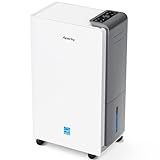
AEOCKY 80 Pint ENERGY STAR
- 80 pints at 95F and 56 at 86F
- 5500 sq ft coverage
- 44 dB on lowest speed

All 8 Dehumidifiers at a Glance
Here is the whole lineup before the detail. Note how differently the coverage numbers behave across brands: a machine rated for 8,500 square feet and one rated for 1,300 square feet can sit in this list, because coverage is a marketing figure while capacity is a measured one.
| Product | Specs | Action |
|---|---|---|
| hOmeLabs 50 Pint 7,000 Sq Ft |
|
Check Latest Price |
 Waykar 80 Pint 5,000 Sq Ft Waykar 80 Pint 5,000 Sq Ft |
|
Check Latest Price |
| AEOCKY 80 Pint 5,500 Sq Ft |
|
Check Latest Price |
 Yaufey 150 Pint 8,500 Sq Ft Yaufey 150 Pint 8,500 Sq Ft |
|
Check Latest Price |
 KNKA 80 Pint 5,500 Sq Ft KNKA 80 Pint 5,500 Sq Ft |
|
Check Latest Price |
| Gasbye 115 Pint 4,500 Sq Ft |
|
Check Latest Price |
 GoveeLife 50 to 137 Pint 4,500 Sq Ft GoveeLife 50 to 137 Pint 4,500 Sq Ft |
|
Check Latest Price |
 ALORAIR Sentinel HD55S Crawl Space ALORAIR Sentinel HD55S Crawl Space |
|
Check Latest Price |
How Big of a Dehumidifier Do You Need?
This is the question that decides everything else, so it comes before the product reviews. The arithmetic is simple: measure the floor area, work out how wet the space actually is, and match it to a capacity figure measured at a realistic temperature.
Start with area. A dry climate interior space needs roughly one pint of removal per 400 square feet. A humid climate basement running at 70% relative humidity needs closer to one pint per 200 square feet. Multiply your area by the right factor and you have a minimum number, then step up one size class because a machine that runs flat out for years is not a machine that runs well for years.
In practice, that gives you a workable shortlist:
- Up to 1,000 sq ft, dry interior — a 20 to 30 pint unit is genuinely enough.
- 1,000 to 2,000 sq ft, moderate interior — 40 to 50 pints per day.
- 2,000 to 3,000 sq ft open living space — 50 to 70 pints per day.
- 2,000 to 3,500 sq ft finished basement — 70 to 100 pints per day.
- 3,500 sq ft and up, or any crawl space — 100 to 150 pints per day, or two smaller machines.
Now the number that trips people up. Two figures appear on these machines and they are not interchangeable. The saturation figure is measured in near-100% relative humidity at very high temperature, and it is close to meaningless in a home. The AHAM or DOE rating is measured at 80F and 60% relative humidity, which is a realistic indoor condition. A machine rated 120 pints at saturation might deliver 55 pints at AHAM, which is a 54% drop. The ALORAIR in this lineup is the clearest example: 120 pints at saturation, 55 pints per day at AHAM. Always size on the AHAM number, and if a listing only quotes the saturation figure, assume the real figure is roughly half.
One more adjustment worth making. Rooms that combine a large footprint with a wet climate, with cooking, showers or a laundry cycle inside them, carry a moisture load no square-footage formula predicts. For those, size up rather than down. The Yaufey at 150 pints per day and the Gasbye at 115 pints per day both exist for exactly this room profile.
1. hOmeLabs 50 Pint 7,000 Sq Ft – Best Overall for Large Rooms
hOmeLabs Dehumidifier 7,000 Sq Ft 50 Pint (MAX 120 Pint at 95°F, 90% RH)
50 pints per day nominal and 120 at saturation
7000 sq ft rated
322 watts
40 pounds
Pros
- Strongest owner review base in the group at over 25000
- WiFi app control from a phone
- Quiet running with two fan speeds and turbo mode
- Continuous drain port plus 1.6 gallon tank with auto shutoff
Cons
- Drain hose not included for continuous drainage
- Tank capacity is small against the stated coverage
- Some durability complaints beyond the first year
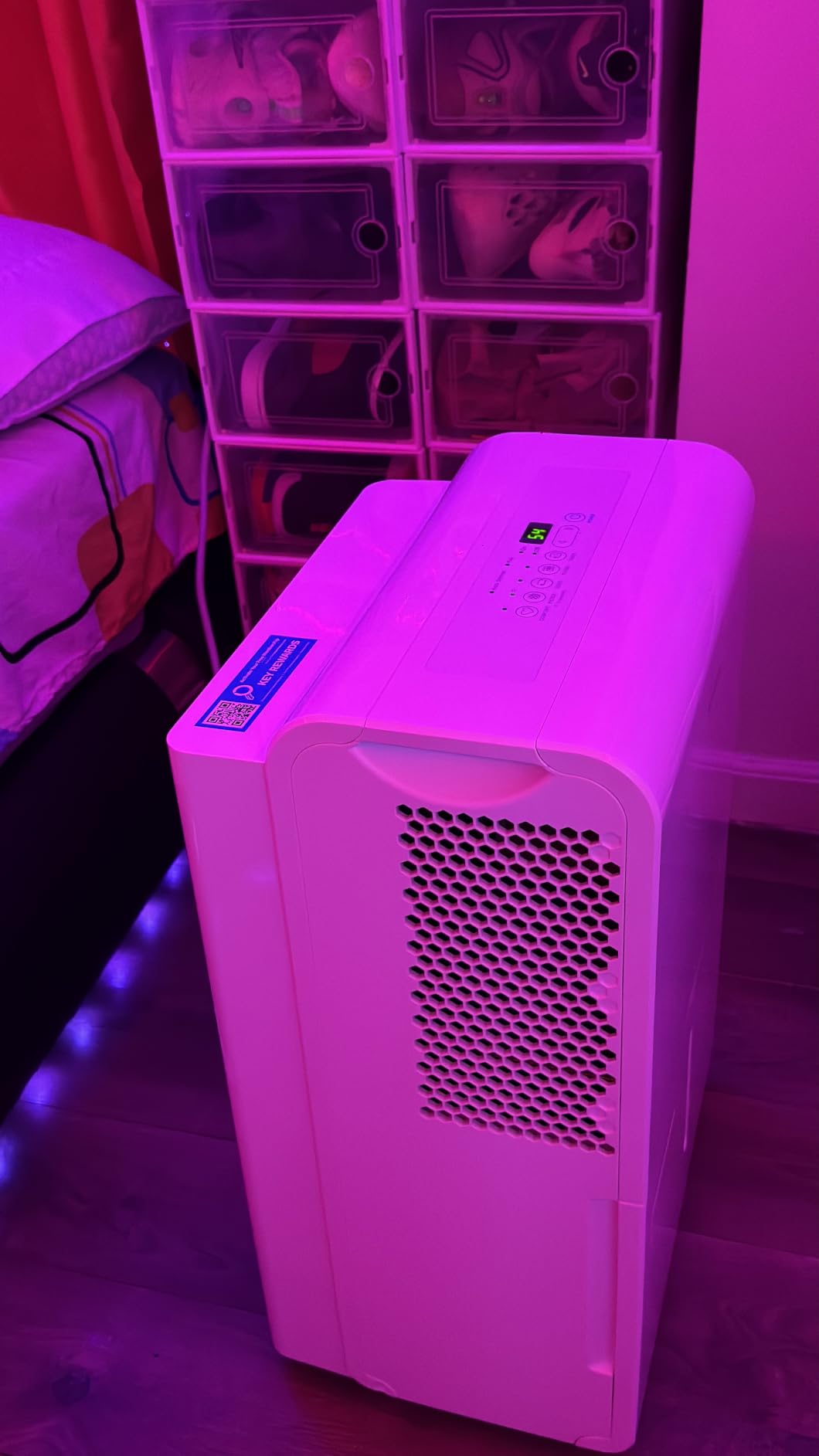
When 25,677 owners have left reviews on one appliance, you learn more from them than from any specification sheet. The pattern here is unusually consistent: strong extraction over a wide area, quiet running, and a tank that fills faster than buyers expect. This is the hOmeLabs K-66, and it is the unit I would put in a large finished basement that needs to hold 50% relative humidity through a wet spring without anyone touching it.
What stands out is not the headline capacity but the range. The nominal rating is 50 pints per day at 80F and 60% relative humidity, and the manufacturer claims up to 120 pints at 95F and 90% relative humidity. That second figure is the saturation number, so read it accordingly, but in a genuinely hot, genuinely humid room the machine will be working far above its nominal rate for stretches at a time.
Two things make this a comfortable choice for a big finished space. The first is the 322 watt draw, which is modest for a unit in this class and keeps the running cost reasonable on a machine that will run for months. The second is the WiFi and app control, which matters more in a large room than in a small one because the unit is usually across the space from where you actually are.
Capacity, Coverage and the App That Earns Its Keep
The 165 CFM airflow figure and the 7,000 square foot coverage claim are the two numbers most often quoted in the listing, and they are not the same thing. Coverage is a claim about how much floor area the manufacturer will stand behind. Airflow tells you how quickly that air is being moved past the cold coil. For a 2,500 square foot basement, this machine is comfortably in range. For a 7,000 square foot open plan with cathedral ceilings, expect the humidistat to run continuously rather than cycling.
The pump compressor and turbo mode are worth understanding. Turbo pushes airflow from 188 to 218 CFM, which extracts faster and louder. For a room you enter twice a day, the setting that matters is the quiet one, because noise scales with how long the compressor runs and not with the target humidity.
Tank Size, Drainage and the Weight Nobody Warns You About
The 1.6 gallon tank is the most common frustration in the reviews, and it is a real constraint. At a heavy removal rate, a 1.6 gallon tank fills in well under a day, which means unattended operation is only realistic with a drain line. The good news is that the unit has a continuous drainage port and auto shutoff, and the bad news is that the hose is not included, so you are buying a standard 3/4 inch garden hose yourself.
At 40 pounds the machine is one of the lighter options here, which is meaningful because you will move it at least once. The dimensions are 11 by 15.4 by 24.3 inches with wheels and handles, so it clears a standard doorway without disassembly. There is no built-in condensate pump in this model, which means the drain outlet has to sit at or above the outlet height. If your nearest floor drain is below the unit, you need a pump, and that single constraint moves you to a different section of this list.
Who Should Skip This One
Skip it if you have no drain route and no willingness to empty a 1.6 gallon tank every day or two, because that is the failure mode that turns a good machine into a chore. Skip it if you need a unit that works in a crawl space in winter, since the upper temperature rating is 35C and cold-room performance is not its strength. If you want a physically rugged metal cabinet for a utility room, look at the ALORAIR instead.
2. Waykar 80 Pint 5,000 Sq Ft – Best for Quiet Living Spaces
Waykar 80 Pints 5000 Sq. Ft 2025 Energy Star Dehumidifier for Basement
80 pints per day at 95F and 90% RH
5000 sq ft rated
ENERGY STAR at 270 watts
31 pounds
Pros
- Very quiet at around 42 dB for an 80 pint machine
- One of the two lightest units in the lineup at 31 pounds
- ENERGY STAR certified at only 270 watts
- Responsive warranty service with free replacements
Cons
- Onboard humidity readout runs higher than external meters
- 1.14 gallon tank fills quickly
- Included drain hose is short and thin
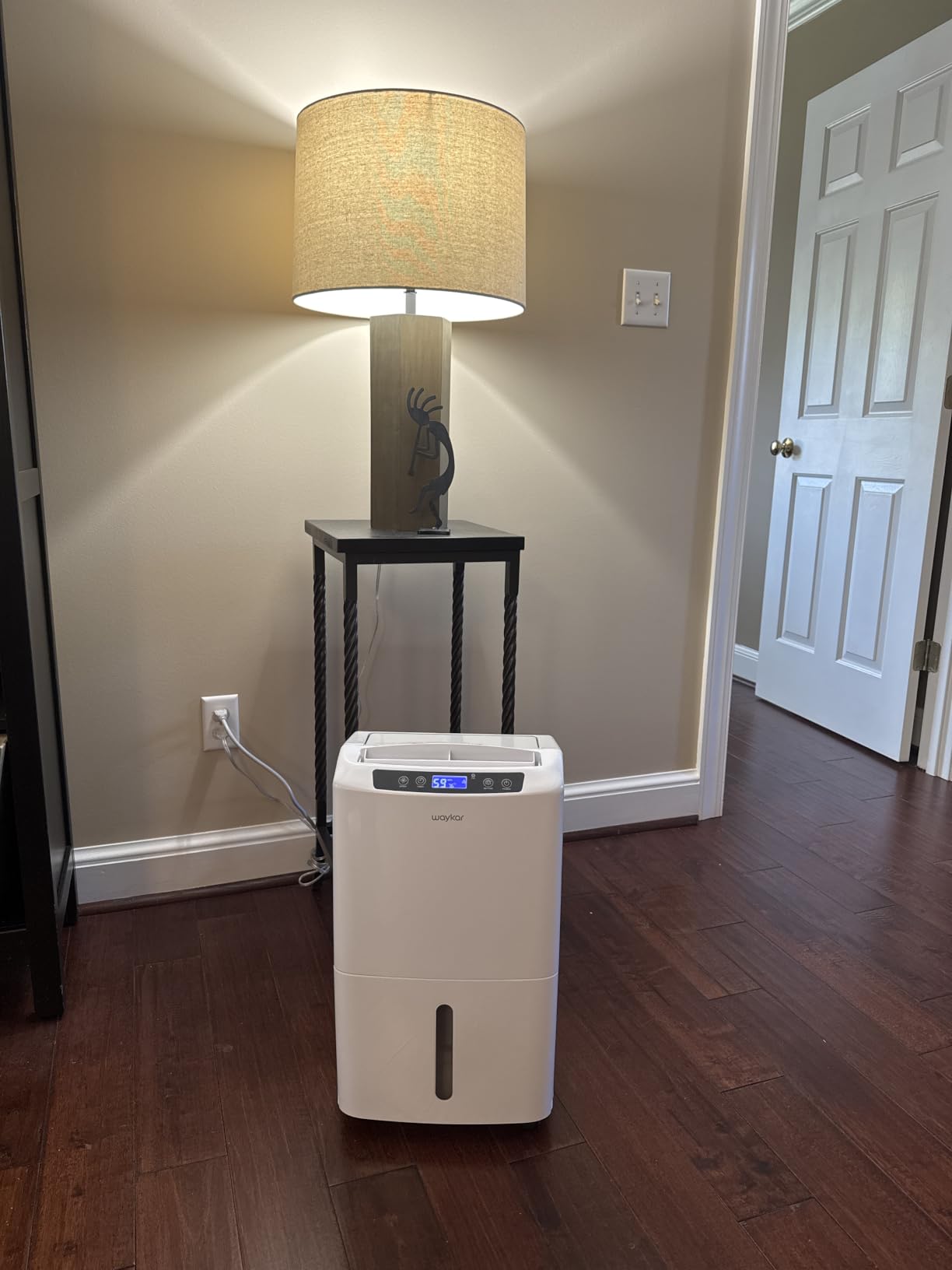
Most 80-pint dehumidifiers are loud enough that you would not want one in a room where people are talking. This one is different, and that is why it takes a place higher up the list. At 42 dB and 31 pounds, the Waykar is a high-capacity machine you can put in a finished basement that doubles as a media room without immediately regretting it.
The capacity figure here is measured at 95F and 90% relative humidity, which again is a saturation condition rather than a normal living condition. The 5,000 square foot coverage claim is more conservative than several machines in this list, and conservative coverage claims tend to correspond to honest capacity, which is a good sign.
The control range is unusually wide for this class, from 30% to 80% relative humidity in 5% increments, with a 90 degree auto swing louver. A 24-hour timer is included. That combination means you can run it in a living area as quietly as possible and still have it reach a real target rather than sitting at its lowest setting forever.
80 Pints in a 31-Pound Body
The engineering story here is the 270 watt draw paired with ENERGY STAR certification. Compressor efficiency comes from the copper coil construction and the compressor itself, and the payoff is a machine that can sit on a humidistat at 50% for a season without the running cost becoming the story. Set that against the 500 watt machines in this roundup and the hourly energy use is roughly half.
The physical footprint is 19.29 by 13.58 by 12.6 inches, which is a squat, wide shape rather than the tall tower design most manufacturers use. That is a genuine advantage in a finished basement with a low soffit, and a genuine disadvantage if you need to tuck the machine behind a door or into a narrow closet.
Display Accuracy, Tank Size and Durability Reports
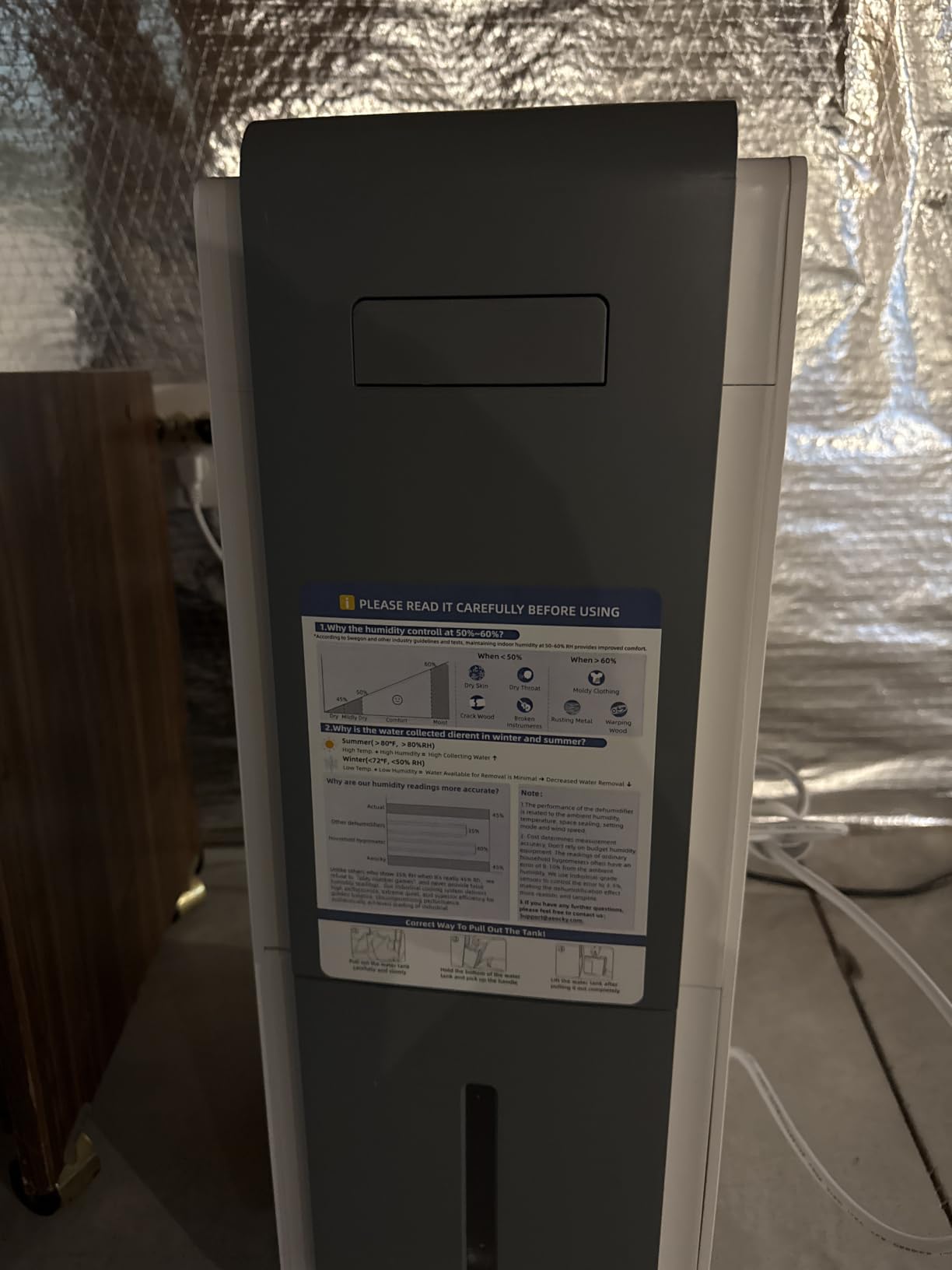
The most consistent negative theme in the reviews is that the onboard humidity readout sits noticeably higher than an external hygrometer. This matters more in a large room than in a small one, because air stratification puts the intake and your thermometer in different conditions. My advice is to trust an external meter over the display, and to set the unit 5% below the target you read on the wall unit.
The 1.14 gallon tank is the smallest here and fills quickly at high output, which pushes you toward continuous drainage. The included hose is 3.3 feet and thin, which owners regularly describe as adequate for a bucket-to-drain run but too short for a permanent basement installation. There is also a cluster of owners reporting units that stop removing moisture after 9 to 12 months, so budget for a possible replacement inside year two and register the unit for the extra warranty year the manufacturer offers.
Who Should Skip This One
Skip it if you have low headroom and a narrow storage alcove, because the wide squat body will not fit where a tower unit would. Skip it if you want a built-in pump, since drainage here is gravity only. And skip it if you plan to run it in an unheated winter room, because the auto defrost is present but the operating temperature envelope is not designed for cold spaces.
3. AEOCKY 80 Pint 5,500 Sq Ft – Best Rated and Most Efficient
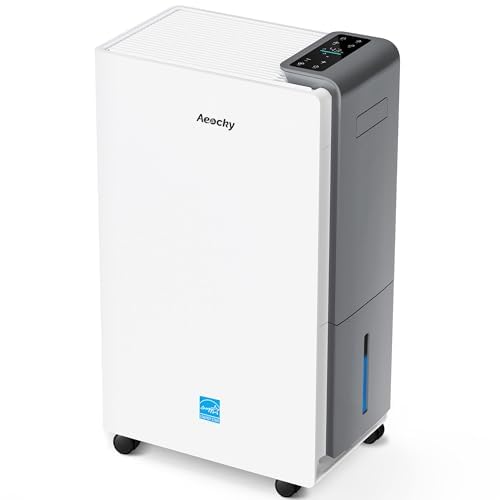
AEOCKY 5500 Sq.Ft Energy Star Most Efficient 2025 Dehumidifier Max 80Pint/D
80 pints at 95F and 56 pints at 86F
5500 sq ft rated
280 watts
ENERGY STAR Most Efficient
Pros
- ENERGY STAR Most Efficient certification in the group
- 44 dB on the lowest fan setting
- Five operating modes with smart humidity sensing
- Low temperature operation to 65F with auto defrost
Cons
- Narrow footprint needs clearance for airflow
- Efficiency marketing overstated by some buyers
- 1.45 gallon tank needs a drain line for unattended use
This machine publishes its capacity at two different conditions rather than one, and that is the reason it is my pick for anyone whose large room doubles as an unheated space. The AEOCKY RHEA-001 delivers 80 pints per day at 95F and 95% relative humidity and, more usefully, 56 pints per day at 86F and 80% relative humidity. That second number is the one you should shop on.
It also carries ENERGY STAR Most Efficient certification for 2025, which is a higher bar than plain ENERGY STAR. The manufacturer claims up to 50% higher efficiency than non-certified machines. Treat that as marketing until your own meter tells you otherwise, but the 280 watt draw on an 80-pint machine is genuinely low and the review consensus supports the general claim even if not the specific percentage.
At 4.5 stars from 6,737 reviews with 77% five-star, this is one of the highest-rated machines in the group with a substantial review volume behind it. The complaints in the data are minor and mostly about physical packaging and marketing language rather than function, which is a good sign for a category where failure complaints are normal.
Two Capacity Figures That Actually Matter
Let the 56 pints per day at 86F and 80% relative humidity figure do your sizing work. For a 2,000 square foot damp basement, that is comfortable. For a 3,000 square foot space with a heavy moisture load, it is close but not generous, and you would be smarter with a 100-pint class machine than trying to make an 80-pint one work overtime.
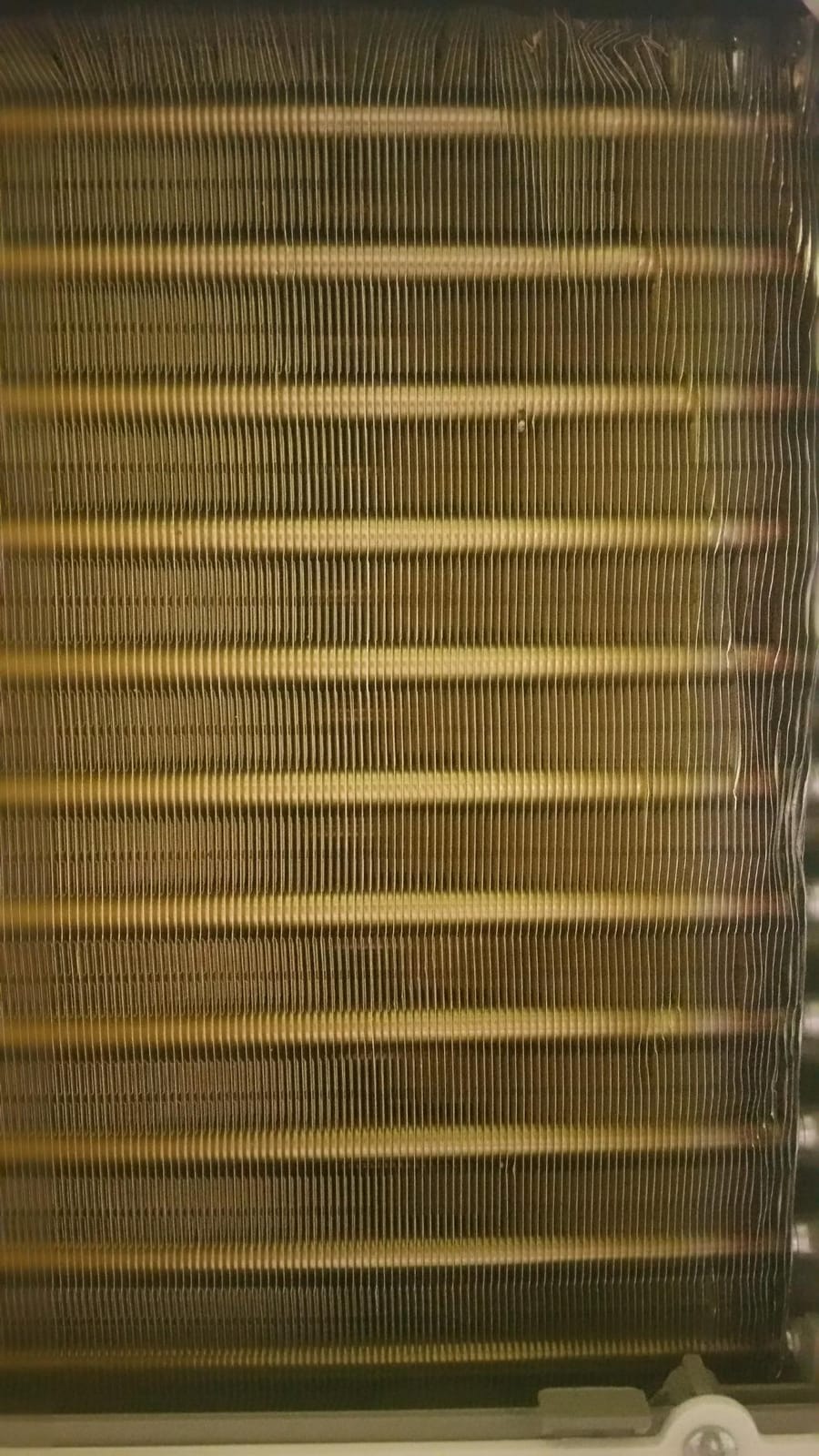
The coil construction is worth noting because it is a durability claim rather than a performance one. A high-efficiency rotor compressor with 7mm pure copper tubing in a 3+2 evaporator and condenser arrangement, plus hydrophilic aluminium foil on the coil, is a build that tends to survive seasonal cycling better than a thinner-gauge copper alternative. Most of the failures in this category trace back to corrosion and pinholes in thin tubing, so this is a real differentiator.
44 dB, Copper Coils and Cold-Room Operation
Operation down to 65F with defrost sensors is the feature that separates this machine from the rest of the residential group. Most compressor units are not specified below 60F and will start icing the coil, and this one is built to keep pulling moisture in a garage or a cool basement in shoulder season. The auto defrost pauses the compressor while the fan clears ice rather than simply shutting down and thawing.
At 44 dB on the lowest fan speed this is quiet enough to sit in a finished space, and the difference between 44 and 42 dB is small in absolute terms but large in practice because a quieter machine lets you keep it on the low setting continuously instead of cycling it harder. Five modes are provided, covering auto, constant humidity, continuous, smart drying and sleep. Power-off memory means the humidity setpoint survives a power cut, which matters in a space with older wiring.
Who Should Skip This One
Skip it if your space is very tight, because at 8.66 inches wide the chassis needs airflow clearance on its narrow faces and reviewers flag this. Skip it if you need a built-in condensate pump, since drainage is gravity based. And if you are buying purely on star rating, note the smaller review pool than the two machines above it means less long-term reliability evidence.
4. Yaufey 150 Pint 8,500 Sq Ft – Best for Damp Basements
Yaufey 150 Pint Dehumidifier with Pump for Basement 8500 Sq. Ft.
150 pints per day at 95F and 90% RH
8500 sq ft rated
Built-in pump with 16.4 ft hose
500 watts
Pros
- Largest coverage figure in the roundup
- Built-in pump removes any need to elevate the unit
- Three drainage configurations including 1.85 gallon tank
- Owners report dramatic humidity drops in about a day
Cons
- 500W draw at the top of the range here
- Some early electronics and tank sensor failures
- Plastic housing rather than metal
If your large room is a basement that has never been below 60% relative humidity in the spring, capacity is the only thing that matters and this is the machine with the most of it. The Yaufey rates 150 pints per day at 95F and 90% relative humidity across a claimed 8,500 square feet, which is the largest coverage figure in this roundup by a wide margin.
As always with a 150-pint saturation claim, do not expect 150 pints in a normal room. In a genuinely hot, genuinely saturated basement it will get closer to that number than anything else here, which is why it earns its place for damp basements specifically. In a mild open-plan living area it would cycle on and off almost immediately and you would have overbought by a factor of two.
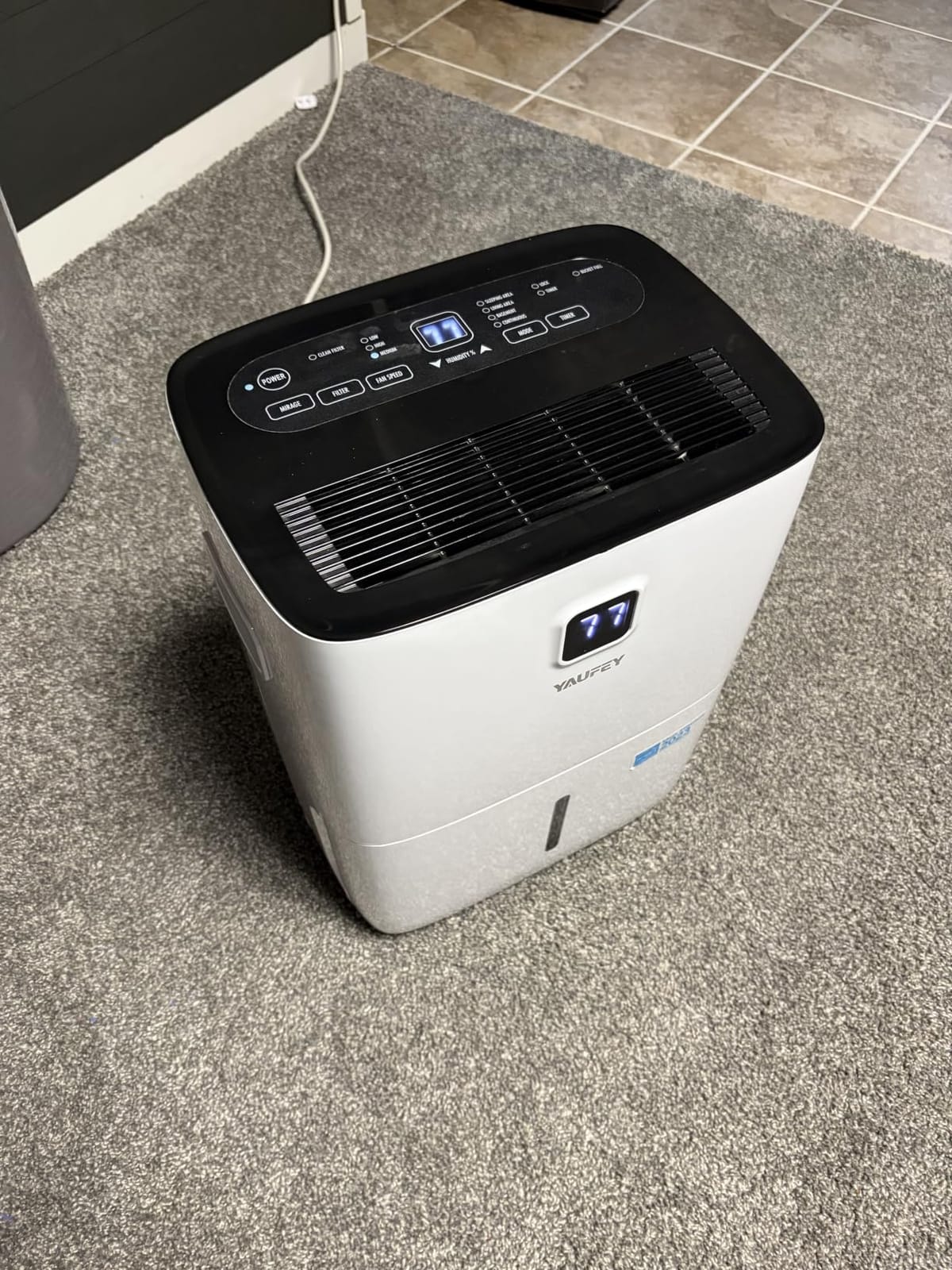
Owners report some of the strongest results in the data, including readings dropping from 80% to 42% in roughly a day. Even discounting for enthusiasm, a machine in this class does change the character of a basement quickly. 4.5 star rating from 6,466 reviews with 73% five-star puts it alongside the AEOCKY at the top of the current ratings in the group.
The Built-In Pump Is the Whole Point
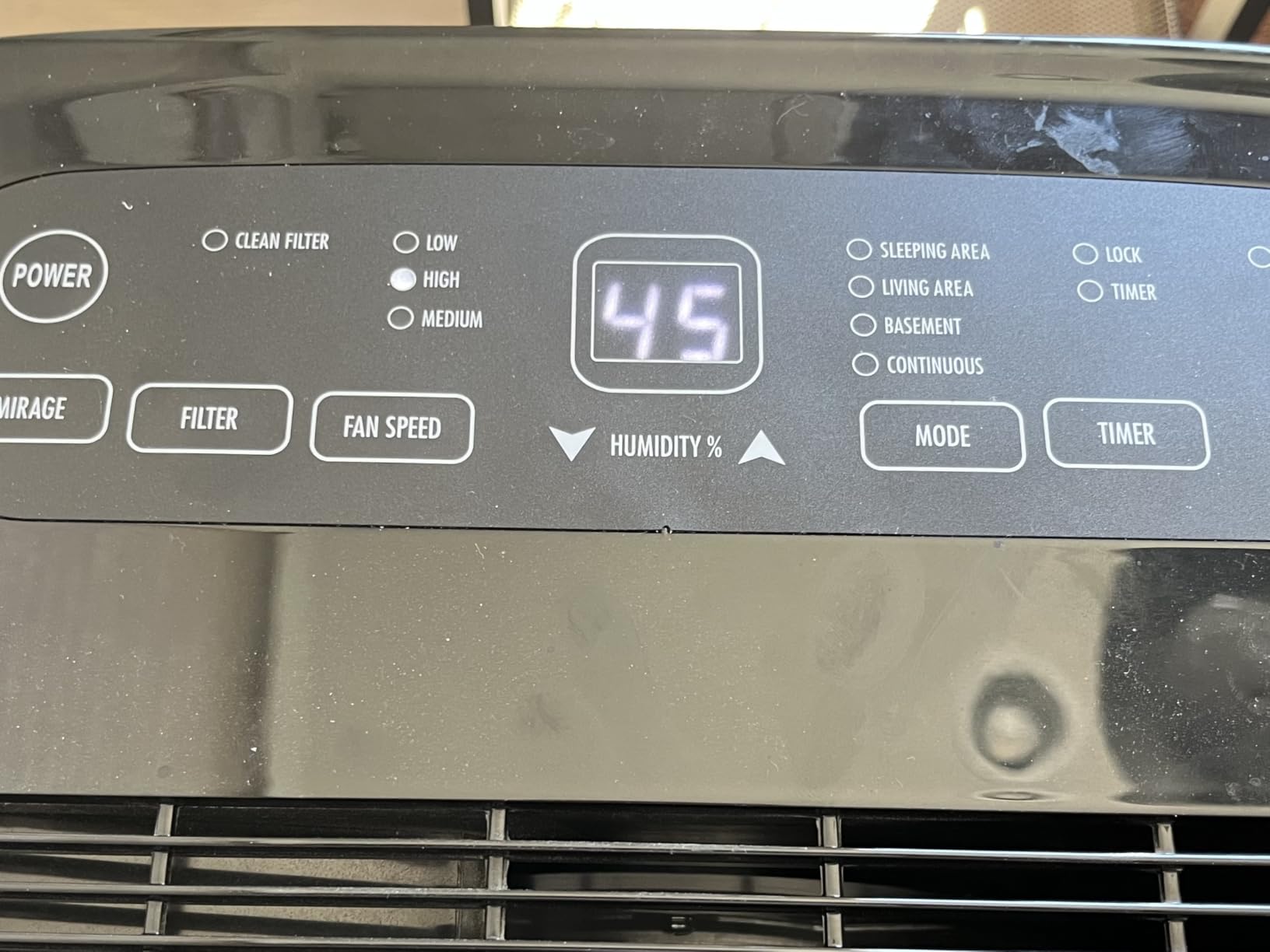
Three drainage configurations are offered: an upward pump with a 16.4 foot hose, a 1.85 gallon tank with a visible water level, and gravity drainage with a 3.28 foot hose. The pump is what makes this the simplest unit in the roundup to install permanently, because the unit no longer has to sit level with or above a drain. That single fact removes the most common reason people end up with an unusable basement machine.
The tank itself is among the larger here at 1.85 gallons, and there is a full-tank alert. A 40 to 80 degree swing louver with three fan speeds gives reasonable directional control across a wide floor area, and the humidity range is adjustable from 30% to 80% in 5% steps across living, basement and continuous modes. Auto defrost, memory restart, overload protection and a child lock round out the safety set.
500 Watts and What It Actually Costs
This is a top-tier draw for a portable unit, and it is the price of capacity. At 500 watts running continuously for 24 hours, that is 12 kilowatt-hours in a day, and over a 200-day season it is roughly 2,400 kilowatt-hours. The manufacturer claims the energy-saving design can cut electricity use by up to 30% versus regular dehumidifiers, which is plausible but not something you should plan your budget around.
The trade-off framing is straightforward. If this machine holds your basement at 50% instead of running a smaller one perpetually and failing to hold it, you get the space back. If you were going to use it lightly in a dry climate, you are paying to heat the room. Owners also report the added heat output that comes with any compressor dehumidifier, which is fine in winter and unwelcome in summer.
Who Should Skip This One
Skip it if your moisture problem is moderate, because you will pay in electricity for capacity you never use. Skip it if you need a metal housing for a damp crawl space, since this is plastic. And skip it if you are sensitive to early-life electronics failures, which appear in a minority of reviews as tank sensor and motherboard faults that the warranty resolves with replacements.
5. KNKA 80 Pint 5,500 Sq Ft – Best Budget Pick
KNKA Energy Star 5500 Sq.Ft Dehumidifier for Basement, Max 80 Pint/Day
80 pints per day at 95F and 56 at 86F
5500 sq ft rated
ENERGY STAR at 360 watts
40-45 dB
Pros
- Quiet operating range at 40-45 dB
- ENERGY STAR certified
- Simple controls with a display you can dim or switch off
- Customer support responds within hours
Cons
- 1.45 gallon tank fills in roughly 8 hours and spills
- Some owners report the auto shutoff sensor failing
- Listed at 220V so confirm before ordering
The KNKA does the fundamentals of an 80-pint machine without the extras, and for a basement or garage that only needs humidity control and a target it can hit, that is a defensible place to spend. The capacity figures are honest: 80 pints per day at 95F and 95% relative humidity, and 56 pints per day at 86F and 80%.
Operating noise of 40 to 45 dB puts this among the quietest machines in the lineup, and owners describe normal conversation around the unit. The three modes cover AUTO, DRY and a manual SETTING mode from 30% to 80% relative humidity. Real-time humidity monitoring is backed by a color-changing indicator light, which is a small touch that matters in a dark basement.
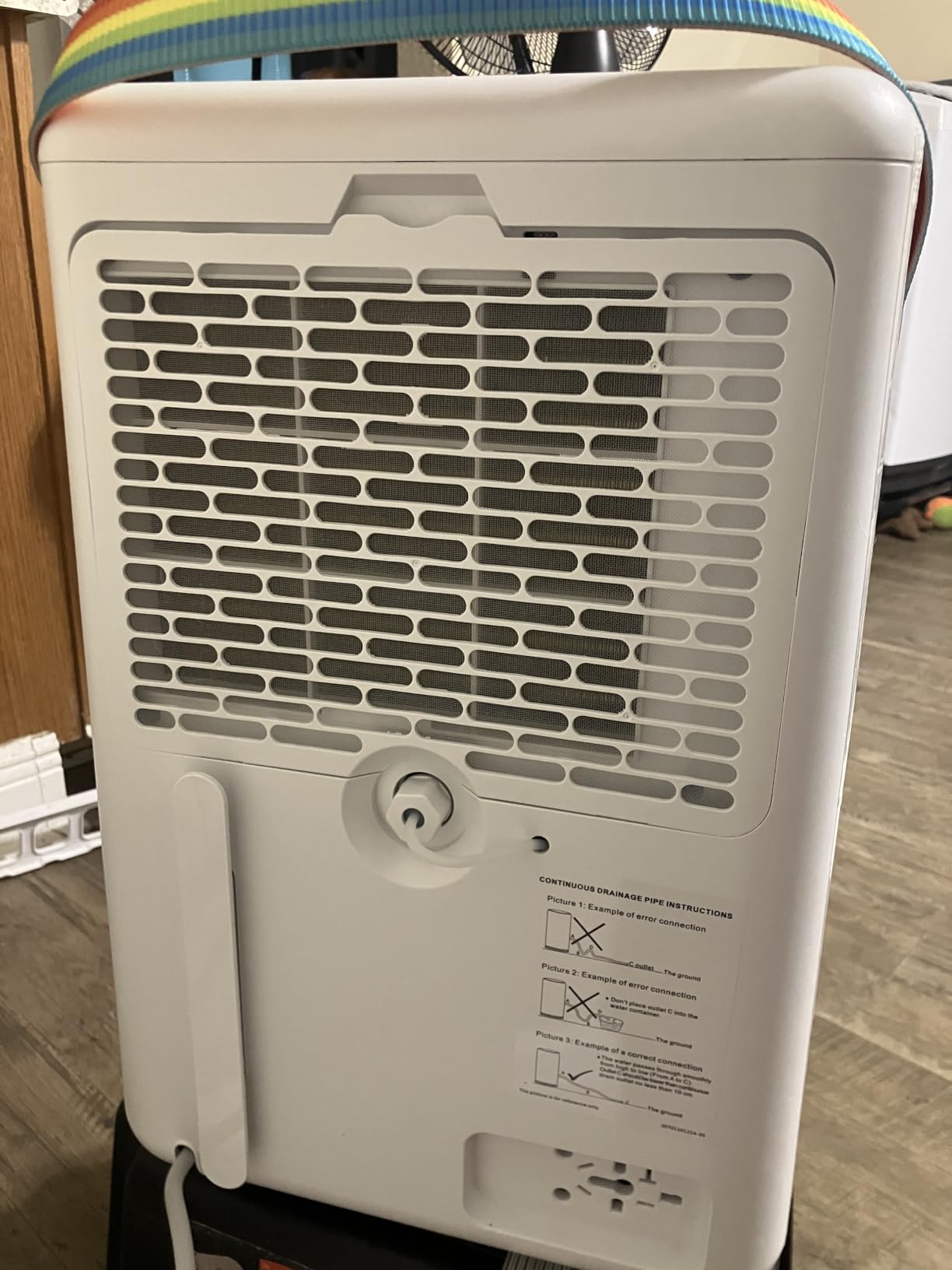
The 4.1 star rating from 1,131 reviews is the second lowest here, and the distribution explains why: 68% five-star against a high 14% one-star share. Those one-star reviews cluster around specific, identifiable problems rather than vague dissatisfaction, which is at least something you can evaluate before buying.
Quiet and Simple, With Real Limits
What you get is an ENERGY STAR certified 80-pint machine at 360 watts, a washable reusable filter, 360 degree casters, a 12-hour timer, cord storage and a child lock. That is a complete feature set for a utility space. What you do not get is a pump, a large tank, or the cold-temperature capability of the AEOCKY.
The optional 2.64 gallon external tank is worth knowing about if you plan bucket operation, since the standard 1.45 gallon tank is the weakest point in this package. The 6.56 foot drain hose is longer than several competitors include, which helps with a gravity run to a nearby drain.
Tank, Sensor Reliability and the 220V Listing
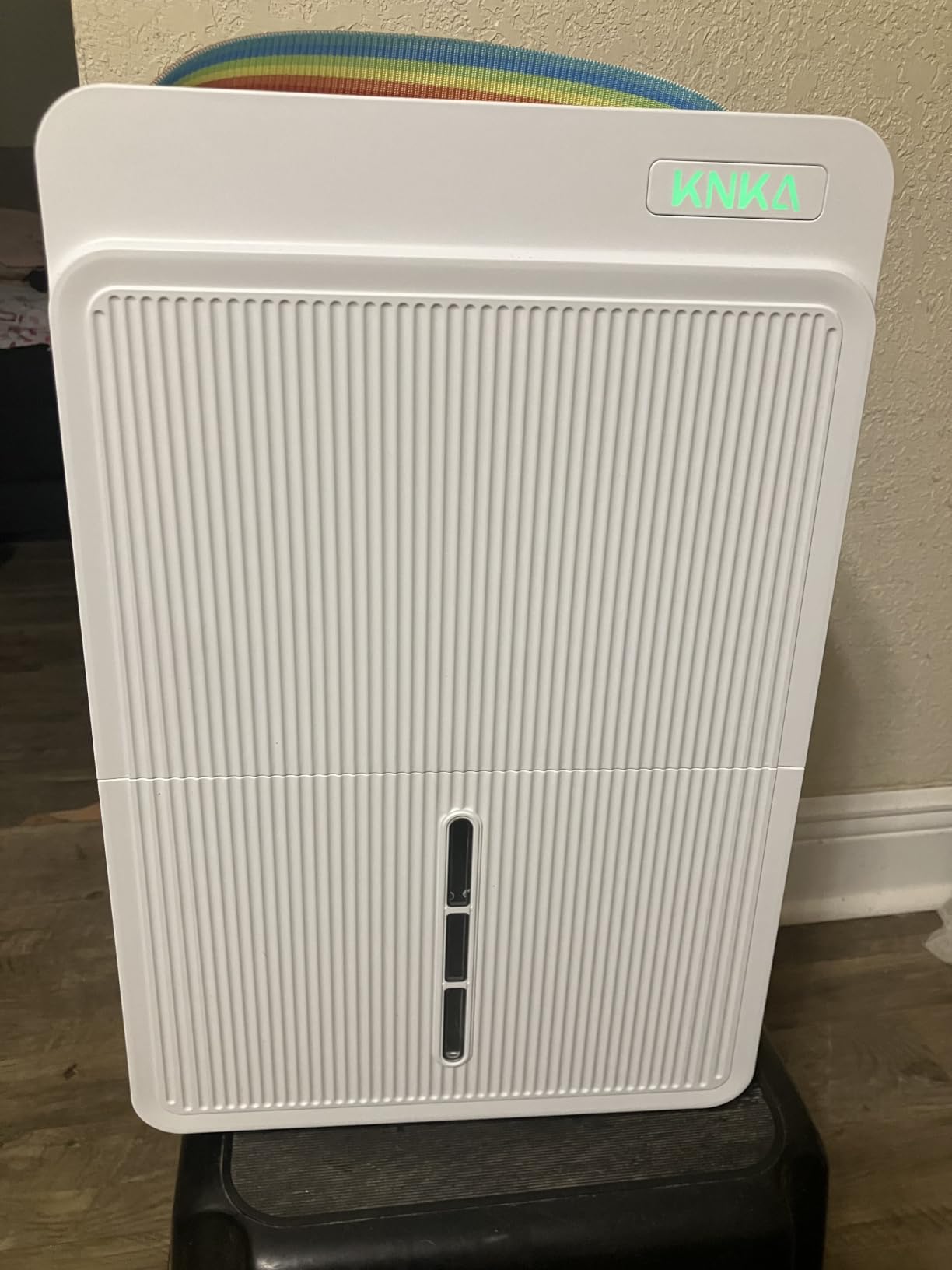
Three complaints recur. The first is the tank: 1.45 gallons fills in roughly eight hours at high output, and the wrap-around shape spills when you pull it out. The second is more serious, a number of owners reporting that the auto shutoff sensor fails to stop the unit when the tank is full, which is exactly the scenario where you most need it to work. The third is that coverage claims of 5,500 square feet are optimistic in real use, with mixed feedback on genuinely large open areas.
One practical note before you order. The listing shows a 220 volt supply, which does not match standard US household wiring at 120V. Check the specification on the listing carefully for your region and confirm the plug before purchase. Humidity is also measured at the air inlet, so readings can differ from an external hygrometer, particularly in a room with uneven airflow.
Who Should Skip This One
Skip it if nobody will be near the machine to respond to a full tank, given the shutoff sensor complaints. Skip it if you need it to hold a target in a large open area with no drainage route. And if you are shopping for a unit you will rely on for a whole damp season without babysitting, the tank and sensor issues are not the trade-offs you want to make.
6. Gasbye 115 Pint 4,500 Sq Ft – Best Value for Serious Basements
Gasbye 4500 Sq.Ft. 2026 Energy Star Dehumidifier for Basement & Large Rooms with Drain Hose, Max 115 Pints/Day | 45dB Quiet Compressor | 1.7 Gal Water Tank | Auto Shut-Off & Restart, Black
115 pints at 86F and 80% RH,73 at 80F,50 at 65F
4500 sq ft rated
45 dB
ENERGY STAR 2026
Pros
- Highest average rating in the roundup at 4.6 stars
- Publishes capacity at three separate temperature conditions
- ENERGY STAR 2026 certified
- Two-year coverage with brand-new replacement units
Cons
- 500W draw among the highest in the lineup
- 4500 sq ft is a conservative rated area for this capacity class
- Single fan speed and a smaller review pool
The Gasbye is the machine I would buy with my own money for a damp finished basement, and the reason is not the rating. It is that the manufacturer publishes three capacity figures measured at three different conditions, which lets you size the machine correctly without guessing.
Those figures are 115 pints per day at 86F and 80% relative humidity, 73 pints per day at 80F and 60% relative humidity, and 50 pints per day at 65F and 60% relative humidity. The last one matters enormously. A machine that still delivers 50 pints per day at 65F will keep working in a cool basement in a shoulder season, which is when most residential units start icing and shutting down.
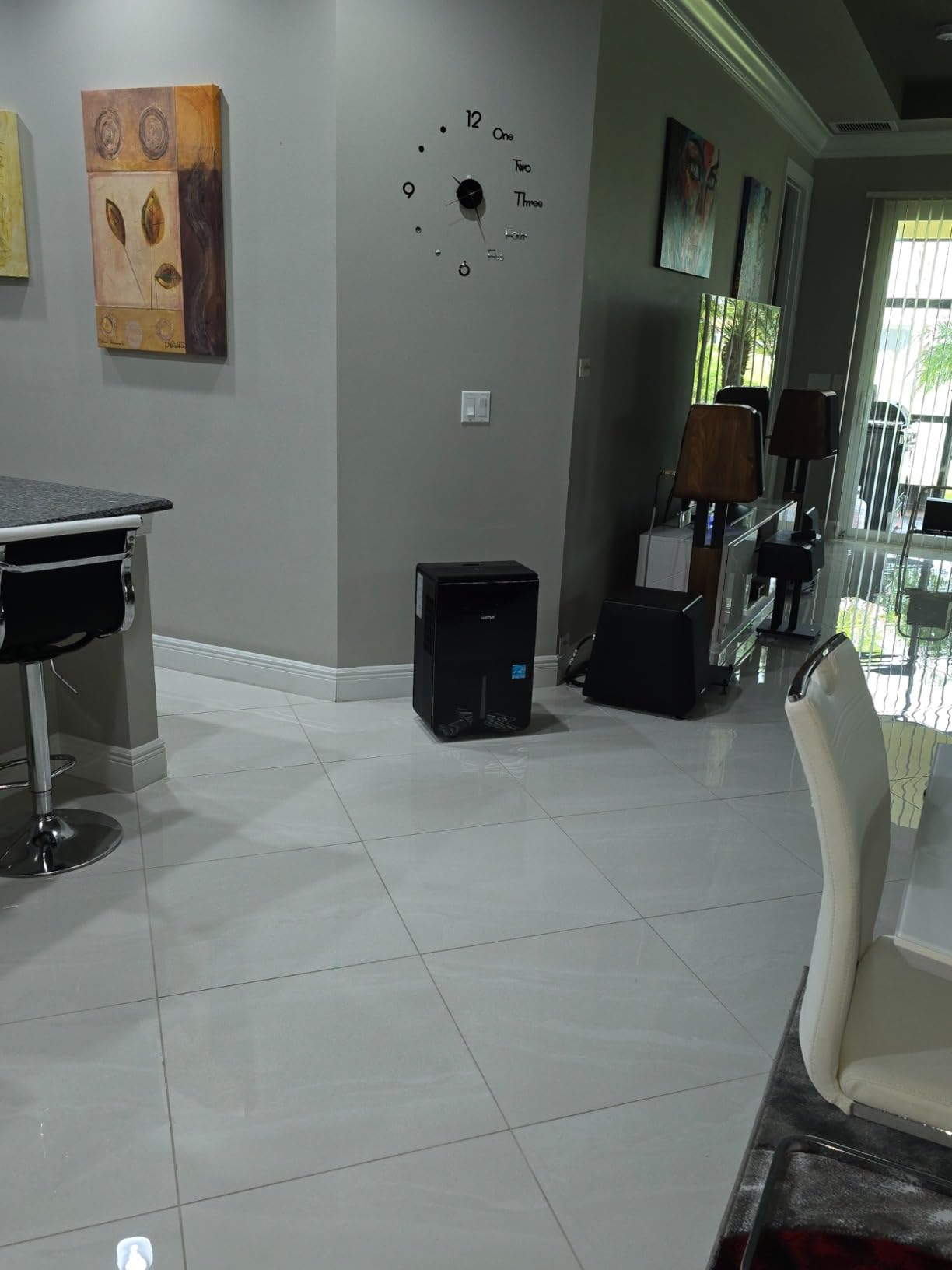
At 4.6 stars from 911 reviews with 80% five-star and only 4% one-star, this is the best-rated and tightest-rated machine here. The 911-review pool is the smallest in the roundup, so treat the rating as encouraging rather than proven over many seasons, and that is the honest framing.
Honest Capacity Numbers Across Three Conditions
That figure is what sets it apart from a headline-capacity machine in an unheated room, because no other residential unit in this roundup publishes a comparable number at that temperature. This one is certified ENERGY STAR for 2026 and rated up to an 86F upper temperature, so it is genuinely a cool-space machine that also handles heat.
The 4,500 square foot coverage claim is the smallest among the high-capacity units in this list, and that is deliberate rather than a weakness. The manufacturer is describing a conservative area for the airflow it can deliver, which is why the same machine at 8,500 square feet would make you nervous. Treat the smaller number as the honest one.
Copper Build, 45 dB and Two-Year Coverage
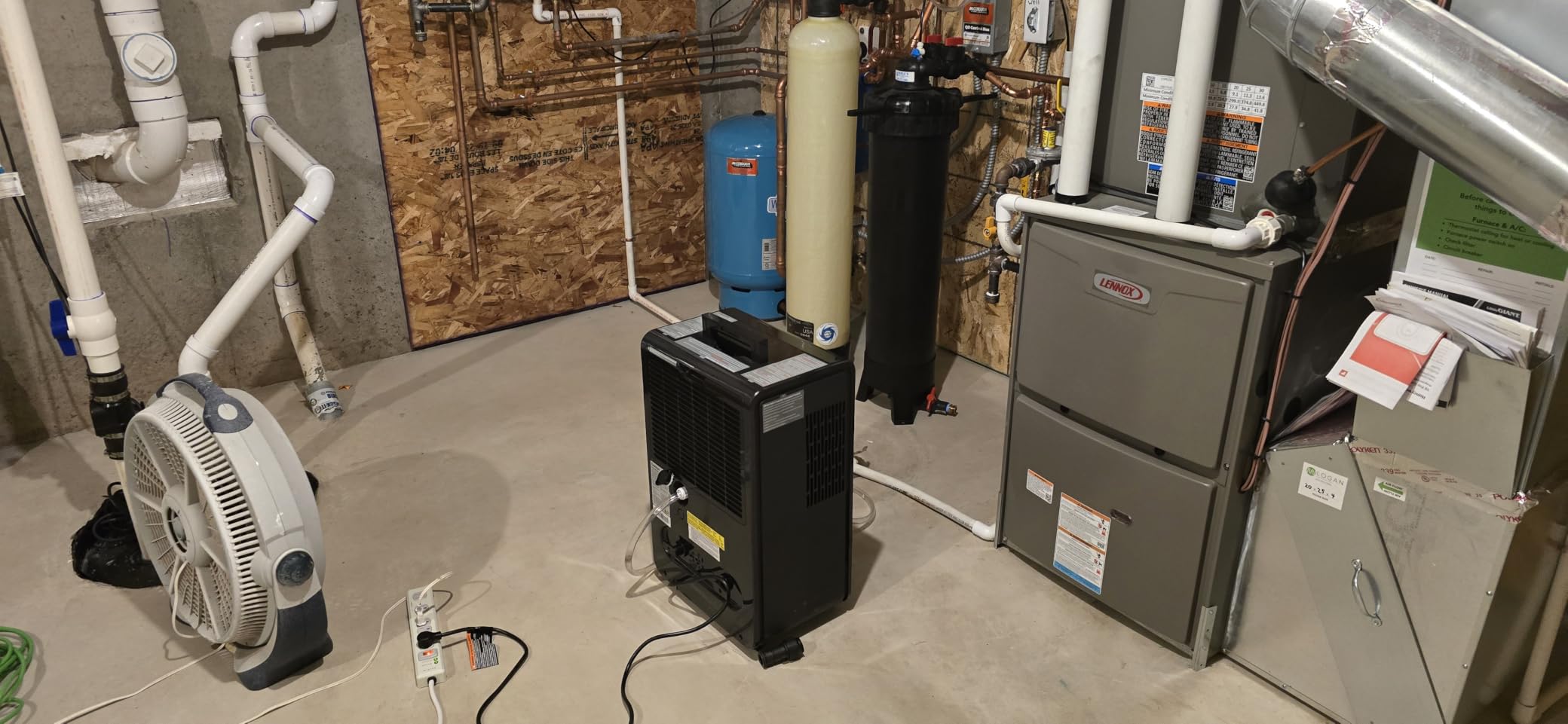
At 43 pounds with reinforced five-tier copper tubing, this is one of the more physically substantial machines here and the tubing spec is a direct answer to the corrosion and pinhole failures that end compressor dehumidifiers early. Owners frequently cite the reinforced copper as the reason their unit kept running after several seasons.
Noise is 45 dB, which keeps it usable in a finished space. Drainage offers three routes: the 1.7 gallon tank, an included 5 foot drain hose, or a 3/4 inch garden hose. Auto shutoff and restart operate within a 3% humidity band, and power-outage resume is present. Normal, Turbo, Comfort and Continuous modes cover the usual range, and the two-year coverage with brand-new replacement units rather than refurbished units is worth noting against the shorter terms on most of the plastic units here.
Who Should Skip This One
Skip it if you need a built-in pump and do not have a gravity drain route, because there is no pump here. Skip it if you need three speed settings, since there is a single fan speed. And skip it if you want a large body of owner feedback to draw comfort from, because 911 reviews is thin for judging a decade of service.
7. GoveeLife 50 to 137 Pint 4,500 Sq Ft – Best for Smart Homes
GoveeLife Dehumidifier for Home 4,500ft², 50 to 137 Pints, 2.0Gal Bucket
50 to 137 pints variable capacity
4500 sq ft rated
850 watts
2.0 gallon tank
Pros
- App and voice control through Alexa plus Google Assistant and IFTTT
- One of the largest tanks in the roundup at 2.0 gallons
- Works with an external hygrometer through the app
- Strong whole-home control in 1100 to 2500 sq ft
Cons
- 850W is the highest power draw in the group
- Throws noticeable heat into the room
- No audible full tank signal
- Units reported failing after 12 to 24 months
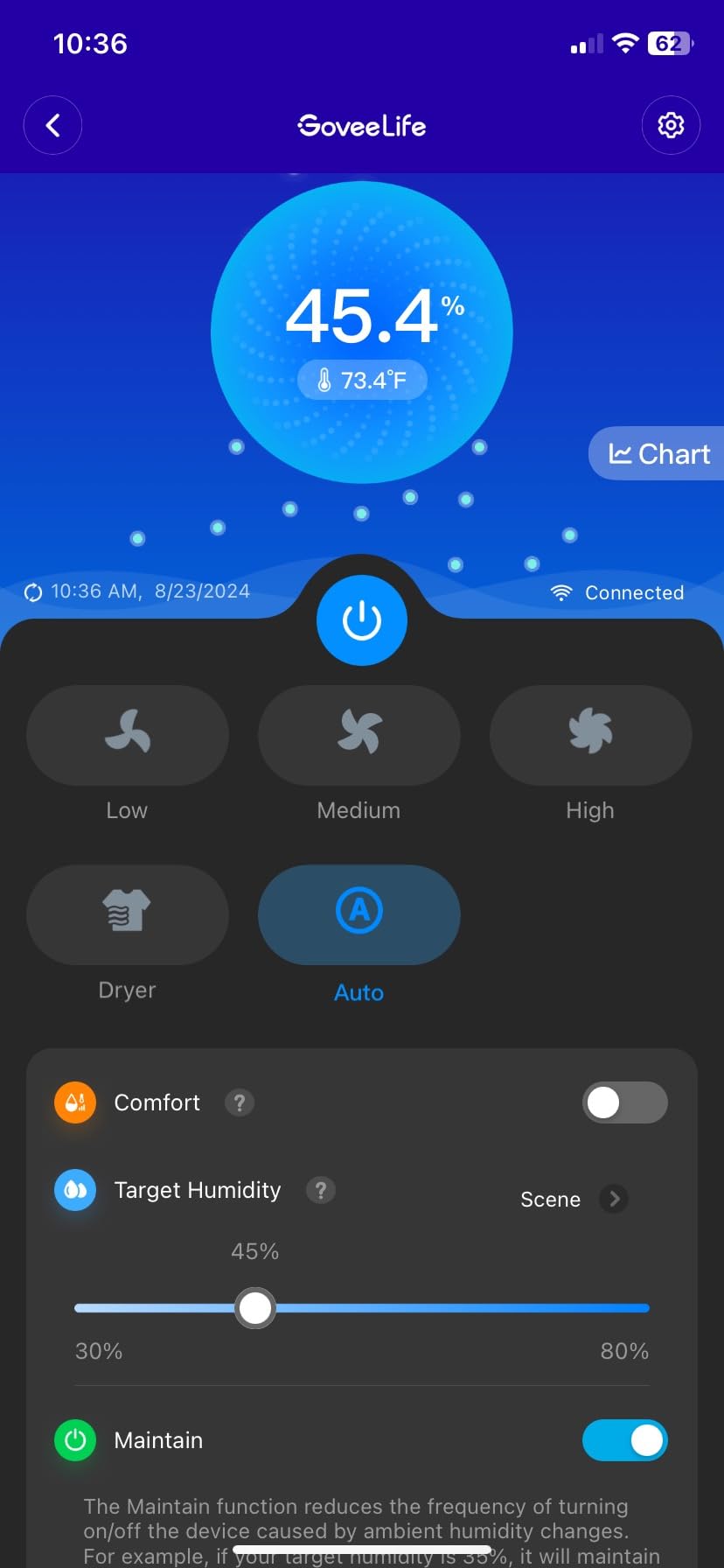
Most dehumidifiers with an app treat it as a gimmick. This one genuinely integrates, and if your large room is part of a smart home rather than a utility basement, that integration is the reason to look past its otherwise mediocre rating. The GoveeLife H7151 works with Alexa, Google Assistant and IFTTT over 2.4GHz WiFi, with touch controls on the unit itself as a fallback.
Capacity is variable from 50 up to 137 pints per day depending on conditions, across a 4,500 square foot rated area. Owners report strong whole-home humidity control in spaces between 1,100 and 2,500 square feet and note that running it measurably reduces air conditioning runtime in summer, which is where the variable capacity earns its keep.
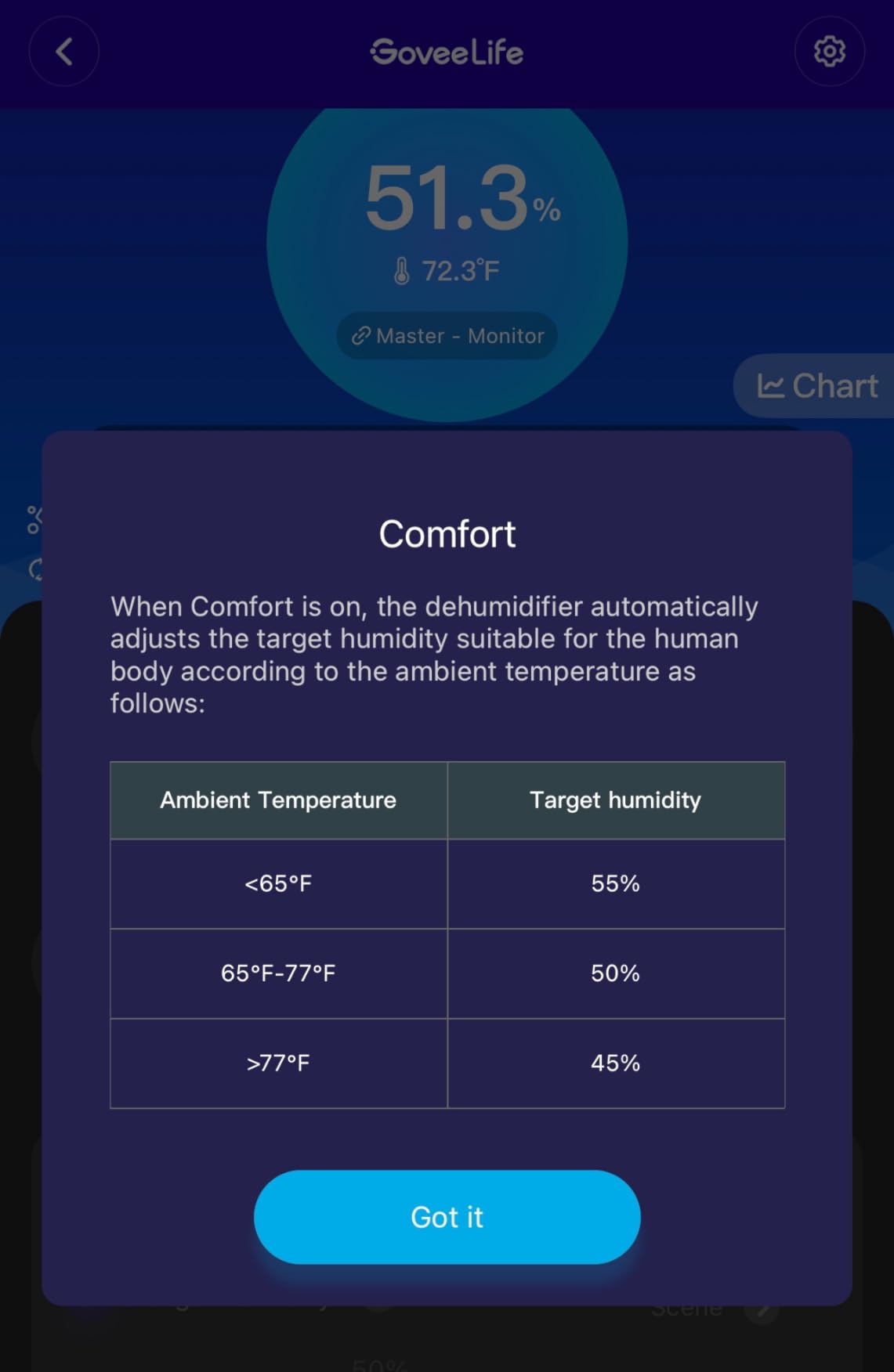
The 2.0 gallon tank is the largest in this roundup, which translates to two or three days between empties on a high setting. Combined with the app notification when the tank fills, that makes bucket operation genuinely practical for a household rather than a chore. Low, medium, high and dryer dehumidification levels give the app meaningful control, and the built-in humidity sensor can be paired with an external hygrometer in the app, which is the fix for the display accuracy complaints that plague this category.
App, Voice and Sensor Integration
Auto defrost, auto restart and auto shutoff are all present, and the washable filter is a welcome inclusion. ETL, FCC, DOE and CEC certification covers both electrical safety and efficiency compliance. A 3 foot corrugated drain hose is included and the unit accepts a 3/4 inch garden hose, though the length means you will need your own hose for most permanent installations.
At 39 pounds and 12.4 by 15.94 by 26.1 inches it is a tall tower shape, so it needs vertical clearance rather than the wide squat footprint of some competitors. Plan the placement around that rather than discovering it after delivery.
850 Watts and the Heat It Throws
Here is the honest drawback. At 850 watts this is by a wide margin the highest draw in the roundup, roughly three times the Waykar. Running it continuously costs meaningfully more per hour, and if you are planning to operate it 24 hours a day through a season, that difference compounds.
Compounding the issue, compressor dehumidifiers release the heat they remove as warm air, and owners report this warming an otherwise cool basement by several degrees. In winter that is a benefit. In a summer air-conditioned space, the machine is fighting the air conditioner, which is why the variable capacity and the reported reduction in air conditioning runtime make sense as a pair rather than as separate claims.
Who Should Skip This One
Skip it if electricity cost matters more than automation, because 850 watts is a steep price for a feature most people use once a month. Skip it if you are putting it in a cool room in summer, where the added heat is a real problem. And skip it if you want a quiet machine, because this is not one.
8. ALORAIR Sentinel HD55S – Best for Crawl Spaces
ALORAIR 120 Pints Energy Star Crawlspace Dehumidifier, Sentinel HD55S
55 pints per day AHAM and 120 at saturation
1300 sq ft rated
Metal housing
6-year limited warranty
Pros
- Metal housing built for crawl spaces and basements
- Continuous gravity drainage removes tank emptying
- A dependable auto defrost for low temperature spaces
- 6-year limited warranty with 2 years full coverage
Cons
- Top of the price range here for a small rated area
- Heavy at 41.7 pounds for a two-person install
- Gravity drain only so the unit must be elevated
- Audible during operation especially near a vent
The crawl space is the one large-room application where a consumer compressor unit is the wrong tool entirely, and the Sentinel HD55S is built for the job rather than adapted to it. Where the other units here are plastic, this one is a metal housing rated for crawl spaces, basements, warehouses and storage areas, with a MERV-1 filter protecting internal components from the dust that fills those spaces.
The capacity presentation is also the most honest in the roundup, because it separates the two figures explicitly: up to 120 pints per day at saturation, and 55 pints per day at AHAM. That is the saturation-versus-AHAM gap made visible by a manufacturer willing to print both, and it is exactly the transparency the category needs.
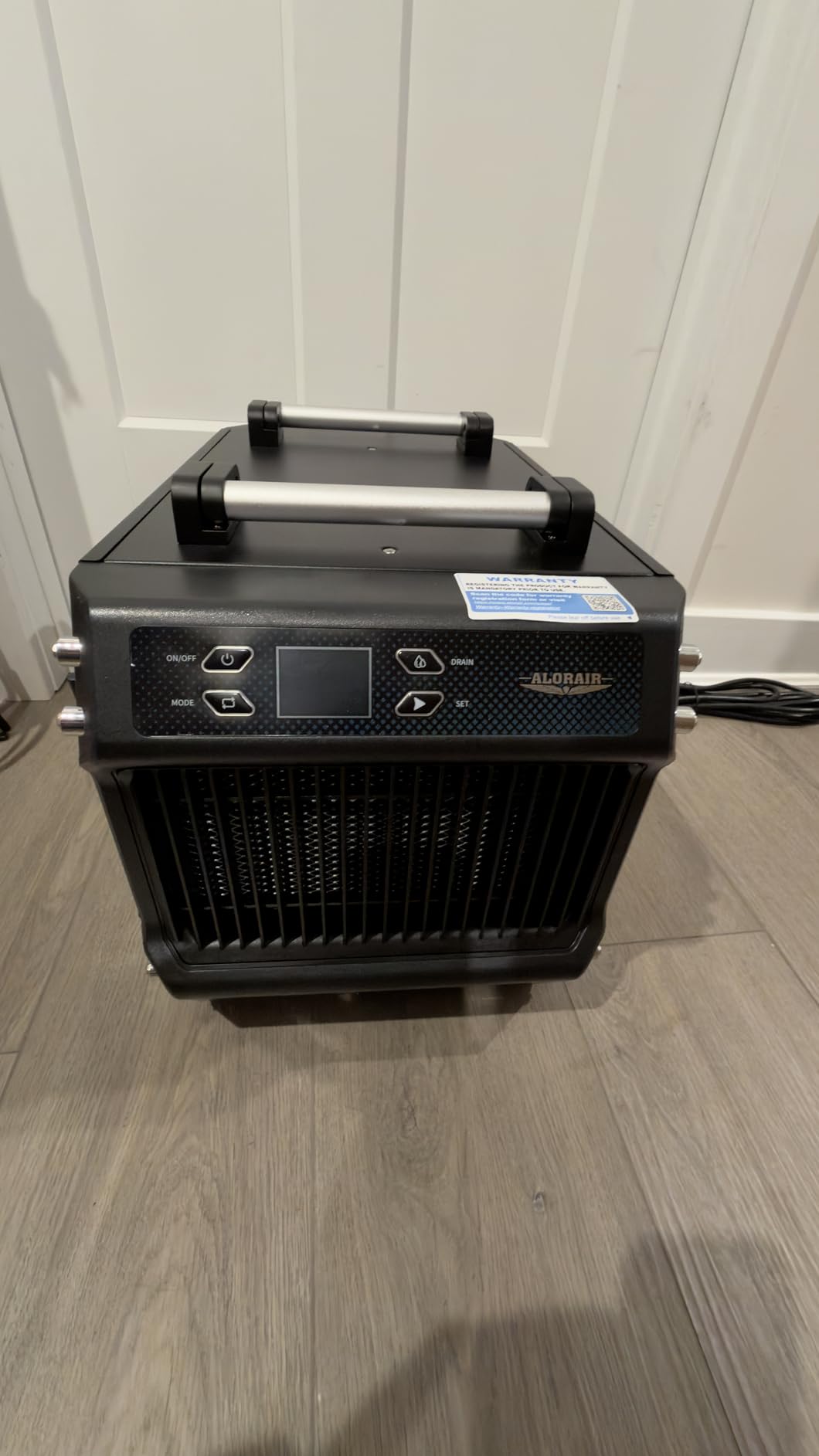
The 1,300 square foot coverage figure is the smallest here and the 15 gallon tank is far larger than anything else in the roundup. Those two numbers together are the point: in a crawl space you are not trying to turn a large floor area over quickly, you are trying to hold a small volume at low humidity indefinitely, and a large reservoir plus continuous drainage is the right design for that job.
55 Pints AHAM From a Metal Housing
ENERGY STAR certified and ETL listed with a 130 CFM airflow rating, this is a machine built to be installed once and then forgotten. The auto defrost pauses the compressor while the fan clears ice, which is the mechanism that keeps a unit alive in a cool space, and owners in crawl space and pool house applications report it working without the odd cycling or shutdowns that plague cheaper units in the same conditions.
Owners consistently report that it clears persistent musty odors and damp wood, which is a different kind of feedback than a moisture-removal number. A crawl space that smells clean is usually one that is genuinely dry, so treat that as a signal rather than a marketing line.
Gravity Drain and Installation Realities
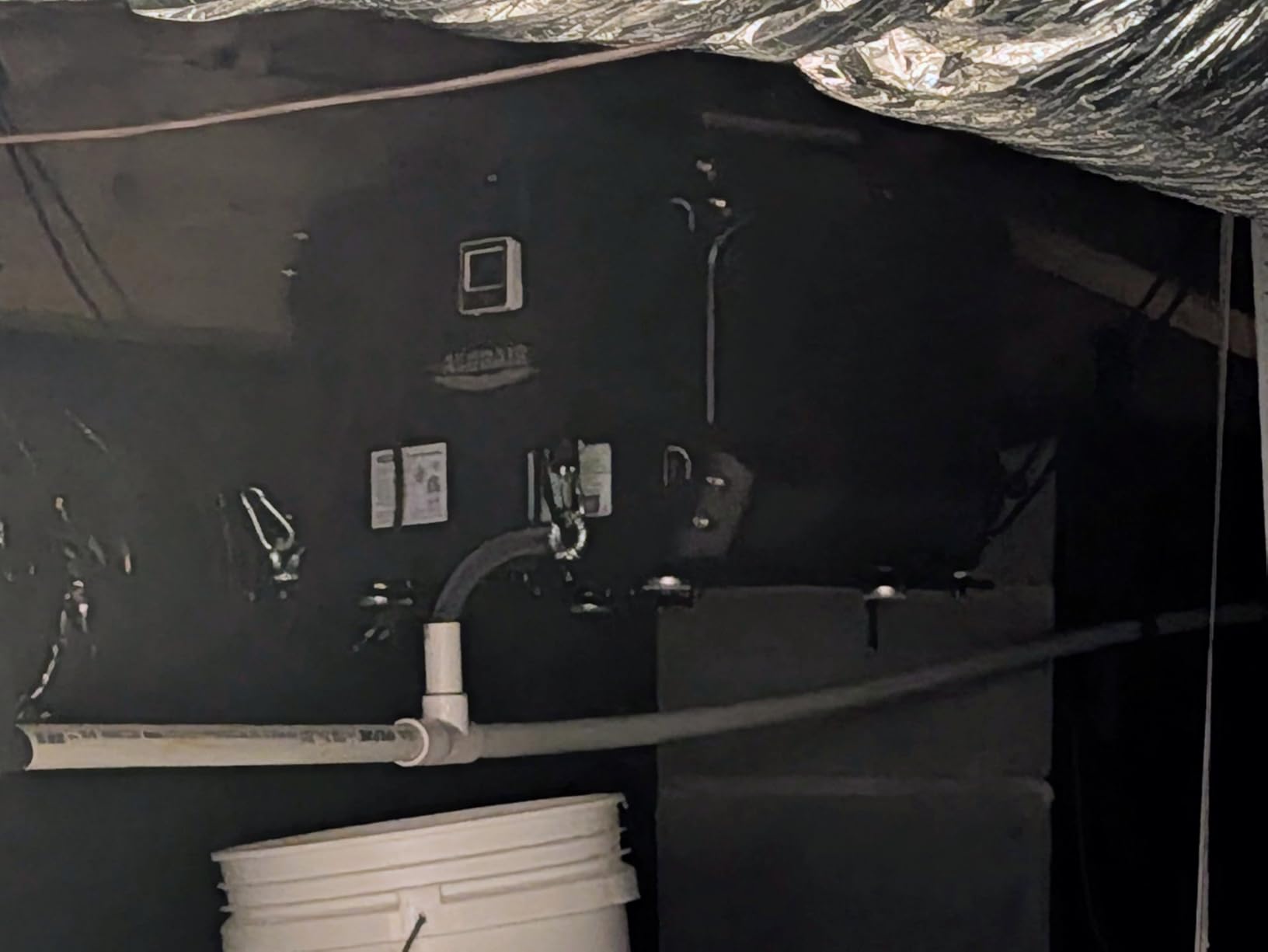
Drainage is continuous gravity only, with no pump option, so the unit must be elevated to drain properly. In a crawl space that usually means a small platform, and the 41.7 pound weight means getting it up there is a two-person job. Plan the access route and the platform before the unit arrives, because crawl space openings are rarely generous.
Operation is audible, particularly near a vent or a room above, so it does not belong in an occupied finished space. Remote monitoring needs a separately purchased accessory. There is also a recurring thread of refrigerant leak reports and warranty friction in the reviews, which is worth weighing against the six-year limited warranty that covers 2 years full and 3 years parts and labor on the refrigeration system.
Who Should Skip This One
Skip it if you are drying a large open living area, because 1,300 square feet of rated coverage is a fraction of what that space needs and you would be buying the wrong category of machine. Skip it if you have no drain below the installation point and no willingness to build a platform. Skip it if budget matters more than durability, because nothing else here has a metal shell.
How to Buy a Large-Room Dehumidifier Without Regretting It
The eight machines above are close on paper. The decisions that separate a good purchase from a bad one are made before you choose a brand, and they are mostly about drainage, temperature and where the machine physically goes.
Drainage: Gravity Line vs Built-In Pump
This is the decision that determines whether your machine is usable. A gravity drain outlet sits at the base of the unit, so the outlet must be at or above the height of whatever it drains into. A floor drain in the middle of a basement floor is usually below that outlet, which means a plain gravity line will not run unless you raise the unit on a stand.
A built-in pump removes that constraint entirely. The Yaufey is the clearest example in this roundup, with an upward pump and a 16.4 foot hose that lets the machine sit anywhere on the floor. It is the single feature most worth paying up for when there is no convenient drain.
Setting up a continuous drain line takes five steps. First, identify the nearest drain, sump pump or outside drainage point and measure the distance and the height difference. Second, confirm the drain outlet height on the unit against that point. Third, if the unit sits above the drain, elevate it on a rated platform with a stable, level base. Fourth, run the hose with a continuous downward slope and secure it so it cannot kink, because a kink shows up as a full tank with no obvious cause. Fifth, test the line with a full bucket before you walk away from it, then check it again a day later. If you are choosing a machine in the first place, add a pump to the requirement list and your options narrow to the units that have one.
Compressor vs Desiccant vs Thermoelectric
Every unit in this roundup is a compressor machine, and for a large room that is the correct technology. A compressor dehumidifier cools a coil below the dew point, condenses water onto it and reheats the air before returning it to the room, which makes it efficient and quiet at the low end. Its weakness is temperature, since it stops working effectively below roughly 60F without defrost.
Desiccant machines use a rotating wheel of drying material and handle temperatures down near freezing, which is why they dominate crawl space work, but they are larger, louder and far more expensive for the same pintage. Thermoelectric units use a Peltier cell and are cheap, small and quiet, but their capacity is a fraction of a compressor unit of the same size, which rules them out of any large room.
Setting Humidity and Run Times
The target for a basement is 50% relative humidity, and holding at or below that level is standard practice rather than an overcorrection. Residential forums consistently treat 50% as the correct basement target, and mold risk rises meaningfully once indoor humidity stays above 60% for days at a time.
Running a dehumidifier continuously is normal and correct in a damp space. What matters is that the machine is large enough that it cycles rather than runs flat out forever, and that you set a humidistat target rather than running in continuous mode by default. A unit with memory restart will pick up its setpoint after a power interruption, which matters in older homes with older wiring.
Noise and Where the Machine Sits
For a large living space, the numbers that matter are 44 dB and below, which is where the AEOCKY and the KNKA sit. Above 50 dB a dehumidifier becomes a conversation stopper, and in a big open room sound carries further than the decibel figure suggests because there are no walls to absorb it.
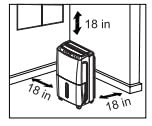
Placement matters as much as the machine. Leave clearance on the intake and discharge faces, keep it away from a wall that will return noise straight into the room, and if floor vibration is a concern, an anti-vibration mat under the feet helps more than buyers expect. This is the same acoustic thinking we apply in our wireless TV speaker picks for large rooms, where placement in a big open space changes results more than the model does. One more practical warning: the units here weigh between 31 and 43 pounds, and the last one is heavier still, so plan the route into the space before the machine arrives rather than after.
Energy Use and Running Cost
Running cost is the question nobody in this category answers properly, so here is the arithmetic. Multiply the wattage by 24 for kilowatt-hours per day of continuous operation, then by your local rate.
A 280 watt machine like the AEOCKY running 24 hours a day draws 6.7 kilowatt-hours, and a 500 watt machine like the Yaufey or Gasbye draws 12. Over a 200-day season that is roughly 1,350 kilowatt-hours against roughly 2,400, which is a real difference on a monthly bill. The 850 watt GoveeLife draws 20.4 kilowatt-hours a day, which is the cost of the automation features.
Two things reduce the total. A machine that is correctly sized cycles and stops, so the daily figure only applies to genuinely wet spaces. And ENERGY STAR certification, which the Waykar, AEOCKY, KNKA, Gasbye and ALORAIR all carry, is a direct efficiency multiplier on those hours. Note also that the heat a dehumidifier produces is heat you are paying to remove, so in summer the running cost partly reappears in your air conditioning bill.
Two Machines vs One for Open Plans
For a genuinely open-concept space, two medium machines frequently beat one large one, and this is a pattern experienced owners deploy in practice rather than a theory. The reason is placement. One machine has to be dragged from one end of the space to the other to deal with whatever section is wettest, which nobody actually does, so a large portion of the floor stays untreated.
Two machines also give you staging. You can run one hard on a humidistat setpoint while the other handles a wet corner, and you can run one at a time when conditions ease, roughly halving energy use on mild days. The compromise is that you need drainage infrastructure in two places, and two tanks or two drain lines to maintain.
What a Dehumidifier Cannot Fix
A dehumidifier removes moisture from air. It does not remove water that keeps arriving. If you are dealing with a leaking foundation wall, a slab graded toward the house, a failed French drain, a roof leak or a missing vapor barrier, the machine will run constantly, collect a startling amount of water, and the musty smell will return within days of emptying the tank.
This is the most common complaint theme in owner forums and the most expensive mistake available to a large-room buyer, because it leads to buying a bigger machine instead of fixing the source. Test before you commit. If the humidity reading climbs back to its starting point within a day of a full tank emptying, you have a water source problem, and no capacity on this list will solve it.
Basements, Crawl Spaces and Unheated Rooms
These three environments have different requirements and should not be bought for with the same machine. A finished basement is a moderate-temperature, moderate-area space where capacity and drainage matter most, which is where the 50 to 80 pint compressor units belong. An unheated garage or winter room needs cold-temperature operation, which is why the machines built for cool spaces are the AEOCKY, the Gasbye and the ALORAIR. A crawl space needs a metal housing, reliable defrost and continuous drainage in a small volume, which is a different category of machine entirely.
The ALORAIR is the unit here designed for crawl spaces rather than adapted to them, and it is worth understanding why that matters. In a crawl space, ambient temperature and dust load are the two things that kill plastic consumer units, and the metal housing and MERV-1 filter address both.
Filter Care and First-Year Maintenance
All eight machines here use washable filters, which is the one maintenance item you control. Rinse the filter monthly during heavy operation and let it dry fully before reinstalling, because a damp filter reintroduces the smell problem you bought the machine to solve. A clogged filter also restricts airflow, which reduces extraction and makes the compressor run longer for less result.
Beyond the filter, two things matter. Check the drain line every few months for kinks and mineral buildup, particularly if your water is hard. And clean the coil once a season, because dust on the evaporator is the most common cause of a gradual capacity decline that gets blamed on the compressor. Beyond that, these machines are largely maintenance-free, though a bucket that spills during removal is the most common household complaint across the category and worth planning your route around.
Frequently Asked Questions
How big of a dehumidifier do I need for a 2000 square foot house?
For 2,000 square feet of moderately humid interior space, a 50 to 70 pint per day unit is the right range. Damp basements in humid climates need closer to 80 pints per day. Always size on the AHAM-rated capacity at 80F and 60% relative humidity rather than the saturation figure, which can be more than double the realistic number.
How much does a dehumidifier run up your electric bill?
Multiply the unit’s wattage by 24 for daily kilowatt-hours, then by your local rate. A 280 watt compressor unit draws about 6.7 kilowatt-hours a day, a 500 watt unit about 12, and an 850 watt unit about 20.4. Over a 200-day season that spread is roughly 1,350 to 2,400 kilowatt-hours, which is why ENERGY STAR certification matters for continuous operation.
Is a 50 pint dehumidifier enough for a basement?
For a typical 1,000 to 1,500 square foot basement in a moderate climate, yes. For a 2,000 square foot damp basement or any space in a humid climate, 50 pints is undersized and the unit will run continuously without holding your target. In that case step up to 70 to 80 pints per day, or run two 50 pint machines in different locations.
Is it good to run a dehumidifier all the time in a basement?
Yes. Continuous operation with a humidistat set around 50% relative humidity is standard practice in damp basements, and 50% is the correct target rather than an overcorrection. The one qualification is that a machine which never cycles is undersized for its space, or the moisture is coming from a source such as a leak or a missing vapor barrier rather than from the air itself.
Which dehumidifier is best for extreme humidity?
For extreme humidity, capacity and cold-temperature capability matter most. The Yaufey at 150 pints per day and the Gasbye at 115 pints per day lead this roundup on raw removal rate, the Gasbye is the only unit here with a published 50-pint-per-day figure at 65F, which keeps it working in cool damp conditions. For crawl spaces specifically, the ALORAIR Sentinel HD55S is built for the job.
How do I set up a continuous drain on a dehumidifier?
First check whether the drain outlet sits above or below your drain point, and elevate the unit on a level platform if it sits above. Then run a standard 3/4 inch hose with a continuous downward slope and secure it so it cannot kink. Test the line with a full bucket before walking away, and check it again a day later. If elevation is awkward, buy a unit with a built-in pump instead.
Which Large-Room Dehumidifier Should You Buy?
Pick by situation rather than by headline capacity. If you want one machine for a large finished basement with no complications, the hOmeLabs 50 pint is the choice, because it has the deepest owner history in this category and the widest app support. If your large room is also your cold room, take the AEOCKY, which holds output down to 65F at 280 watts. If you have a genuinely damp basement and one available drain, the Gasbye gives you the most honest capacity numbers and the longest coverage.
If you are chasing raw removal in a soaking basement, the Yaufey 150 pint leads on capacity and the built-in pump means you never have to think about drainage again. If budget is the constraint and someone will be near the machine, the KNKA does the job quietly. If automation is the point, the GoveeLife integrates with everything and costs more to run. And if the space is a crawl space, do not compromise, because the ALORAIR’s metal housing and six-year warranty are the only appropriate answer on this list.
One last thing worth saying plainly, because it comes up in almost every large-room thread. A dehumidifier is a moisture management tool, not a repair. Before you buy any of these, spend an hour confirming that the water in your space is coming from the air and not from your foundation, your grading or a missing vapor barrier. Get that right, and any of the eight above will do its job quietly for years. Get it wrong, and no capacity on the market will help you.