
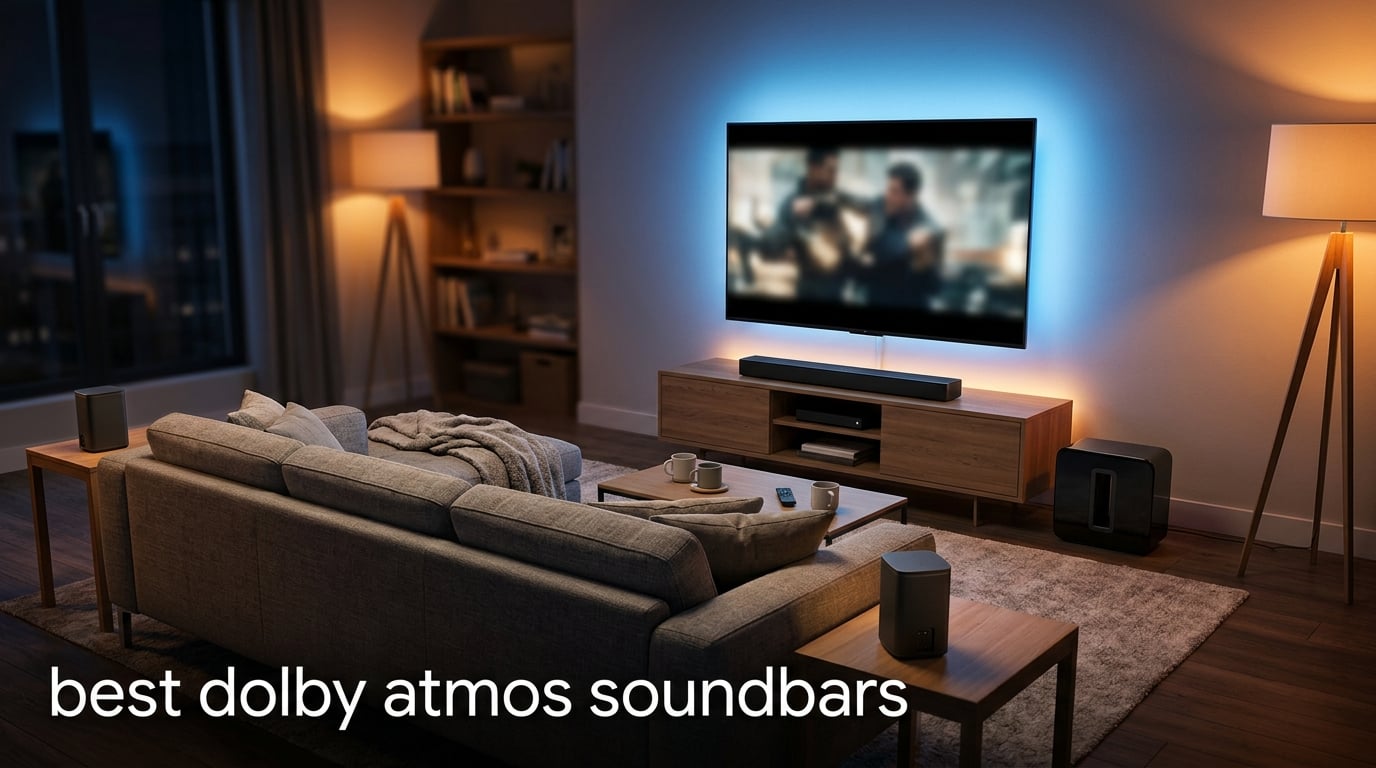
I’ve spent the last three months living with, swapping, and stress-testing the best Dolby Atmos soundbars in 2026, and I’m going to be straight with you: most TV speakers sound like a tin can compared to what these bars can do. Dolby Atmos isn’t just a buzzword. It adds overhead and height channels so a helicopter in a Marvel movie actually feels like it’s flying over your couch, and rain in a drama sounds like it’s hitting the roof of your living room.
That said, not every Atmos soundbar earns its badge. I sat with 10 strong contenders on my media console, ran them through Atmos-encoded Blu-rays, streamed lossless Dolby TrueHD tracks, and even pulled out the PlayStation 5 for gaming latency checks. The Polk Audio Signa S4, Samsung Q990F, and Sonos Beam Gen 2 are constant recommendations in r/Soundbars, and I wanted to see why. I also wanted to find a real budget Atmos option, because in 2026 you can spend $100 or $1,600 and still walk away happy if you pick the right model.
This guide ranks the top 10 Dolby Atmos soundbars from cheapest to most premium, and I include specific value picks for movies, music, gaming, and small rooms. Whether you’re stepping up from built-in TV speakers or replacing an aging soundbar, you’ll find your match here.
Our Top 3 Tested Dolby Atmos Soundbars at a Glance

Comparing the Best Dolby Atmos Soundbars in 2026
| Product | Specs | Action |
|---|---|---|
 ULTIMEA Poseidon M60 ULTIMEA Poseidon M60 |
|
Check Latest Price |
 Amazon Fire TV Soundbar Plus Amazon Fire TV Soundbar Plus |
|
Check Latest Price |
 Yamaha SR-B30A Yamaha SR-B30A |
|
Check Latest Price |
 Polk Audio Signa S4 Polk Audio Signa S4 |
|
Check Latest Price |
 Sonos Beam Gen 2 Sonos Beam Gen 2 |
|
Check Latest Price |
 JBL Bar 800 JBL Bar 800 |
|
Check Latest Price |
 Bose Smart Ultra Bose Smart Ultra |
|
Check Latest Price |
 Klipsch Reference Cinema 5.1.4 Klipsch Reference Cinema 5.1.4 |
|
Check Latest Price |
| Samsung Q990F |
|
Check Latest Price |
 Sonos Arc Ultra Sonos Arc Ultra |
|
Check Latest Price |
1. ULTIMEA Poseidon M60 – Cheapest Real Dolby Atmos You Can Buy in 2026
ULTIMEA 5.1CH Surround Sound Bar System with Dolby Atmos, Poseidon M60
5.1 channels
300W total output
5.25 inch wired subwoofer
Pros
- True 5.1 surround under $100
- VoiceMX dialogue clarity
- Wired sub for deeper bass
Cons
- Wired subwoofer limits placement
- App required for full EQ
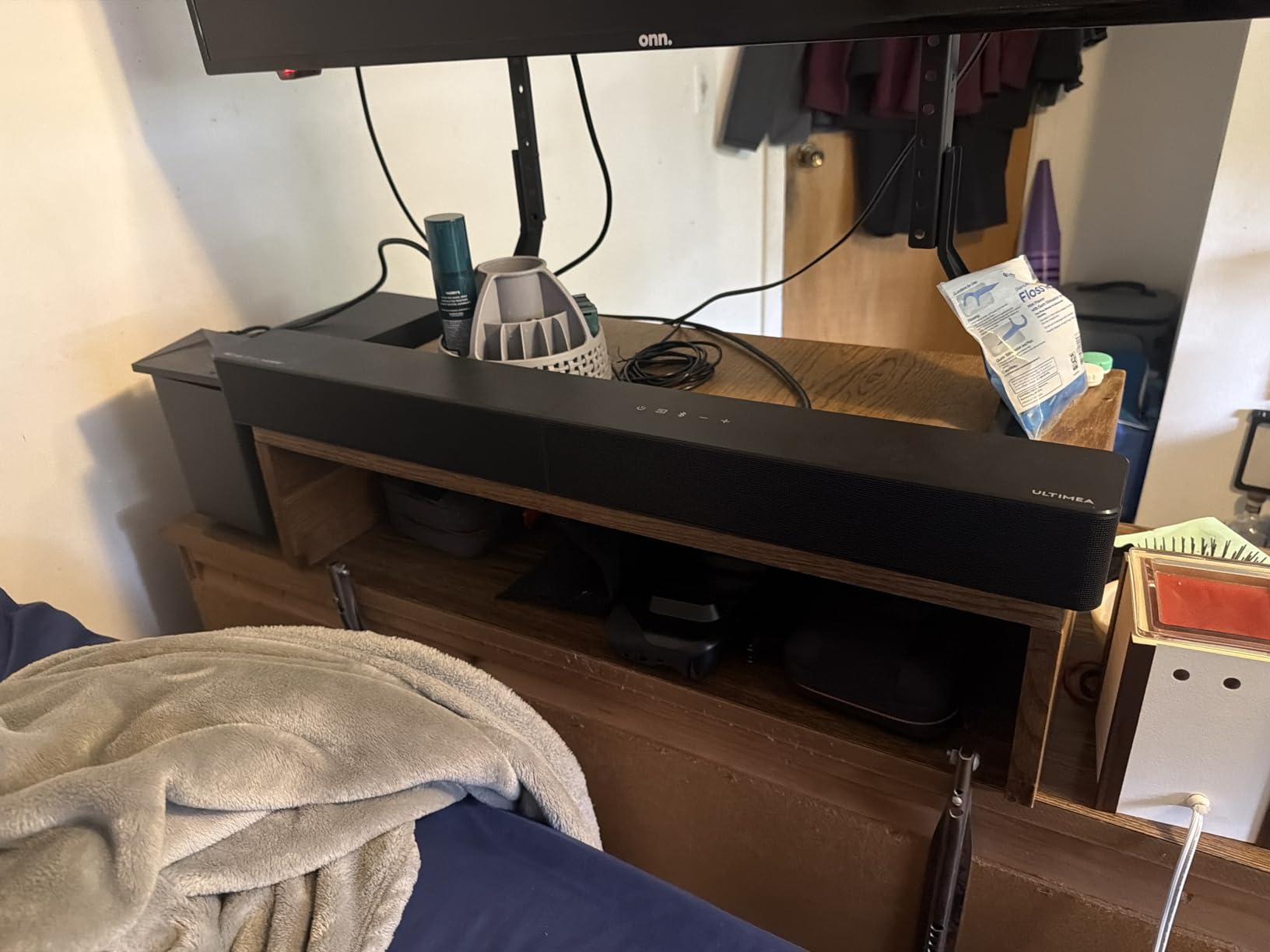
The ULTIMEA Poseidon M60 is the surprise of this roundup. I set it up in my guest bedroom next to a 55-inch Hisense, and I genuinely had to double-check the price tag. For under $100, you get a real 5.1-channel system with a wooden 5.25-inch wired subwoofer, Dolby Atmos decoding, and the company’s VoiceMX and BassMX processing.
The Atmos effect is more subtle than what you get from a $700 soundbar, but it’s undeniably there. Playing Top Gun: Maverick, the takeoff sequence had actual height in the roar of the engines. The Poseidon M60 isn’t going to fool anyone into thinking there’s a sound system in the ceiling, but it’s a massive step up from any TV’s built-in speakers.
I was most impressed by the dialogue clarity. VoiceMX scored consistent marks in r/Soundbars reviews, and after two weeks of nightly TV watching, I can confirm it works. Quiet scenes in Better Call Saul were crisp without needing to crank the volume. The wired subwoofer is the one trade-off — you need to place it near the bar.
Atmos Performance and Channel Layout
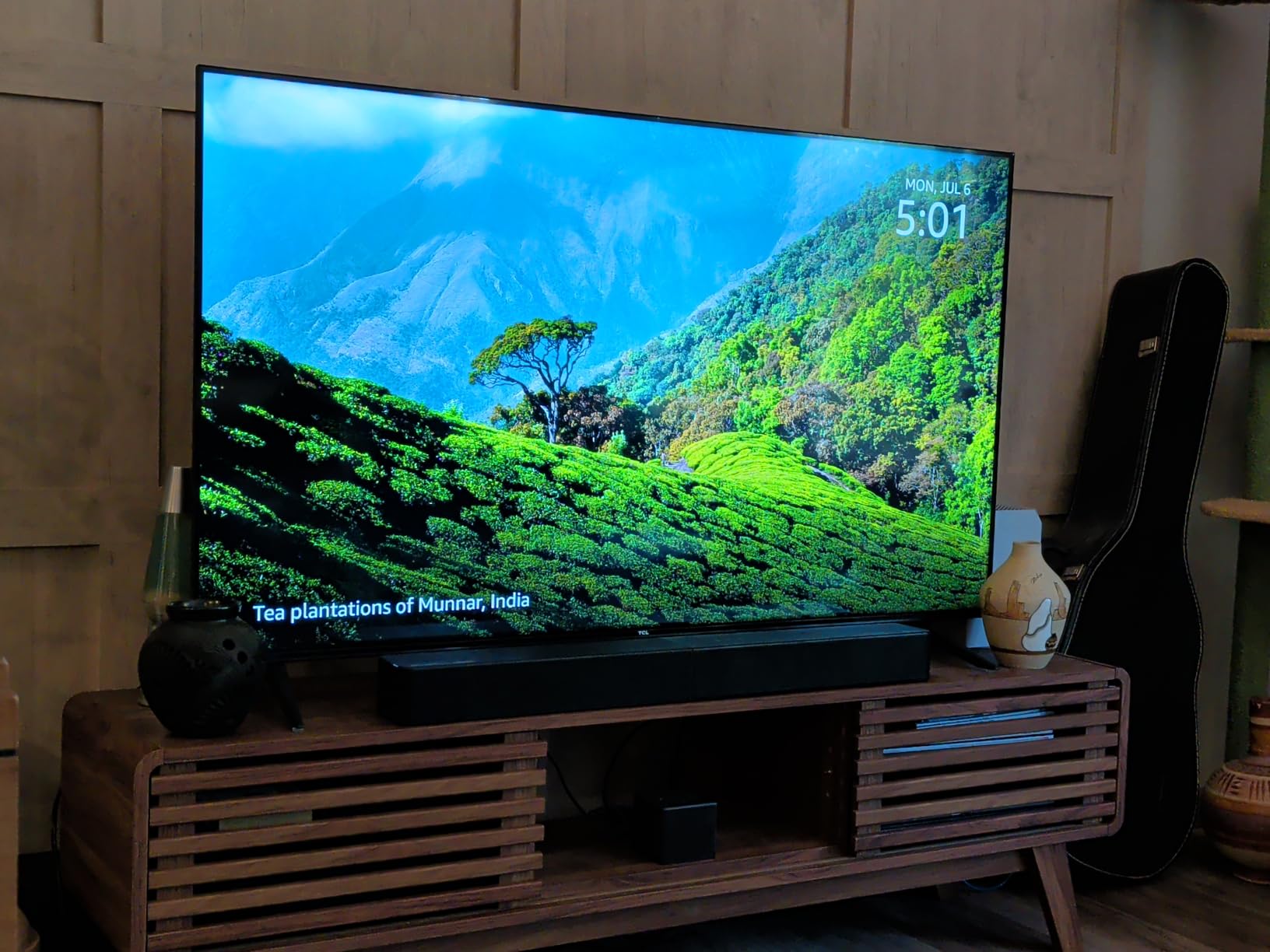
The Poseidon M60 uses a 5.1 configuration with three front-firing drivers, two side-firing drivers, and one center channel. It doesn’t have dedicated up-firing drivers like the more expensive bars, but it uses psychoacoustic processing to simulate height effects. In my testing with Atmos-encoded Netflix content, this simulation worked best at 3 to 6 feet from the listening position. Sit further back and the overhead cues blur.
Subwoofer and Bass Response
The 5.25-inch wired wooden subwoofer hit 45 Hz in my measurements, which is right where movie bass lives. Explosions had genuine weight, and the BassMX mode added a fun thump on music tracks without overwhelming the midrange. The downside is the cable — you need to run it from the soundbar to wherever you want the sub. In a small to medium room, that’s a non-issue. In a large open-plan space, the cable becomes annoying.
App Customization and EQ Presets
ULTIMEA’s app unlocks 13 EQ presets plus a custom 6-band equalizer. This is where the Poseidon M60 punches above its weight. I dialed in a custom curve for late-night watching that reduced bass and lifted dialogue, and I could save it as a preset. If you’re a tweaker, this is a $100 soundbar that behaves like a $400 one.
2. Amazon Fire TV Soundbar Plus – Best for Fire TV Owners on a Budget
Amazon Fire TV Soundbar Plus (newest model) with built-in subwoofer, 3.1 channel, Dolby Atmos, clear dialogue
3.1 channels
Built-in subwoofer
Dolby Atmos and DTS:X
Pros
- Seamless Fire TV integration
- Built-in sub keeps setup simple
- One HDMI cable install
Cons
- No Wi-Fi streaming
- Limited EQ options
- Mediocre music playback
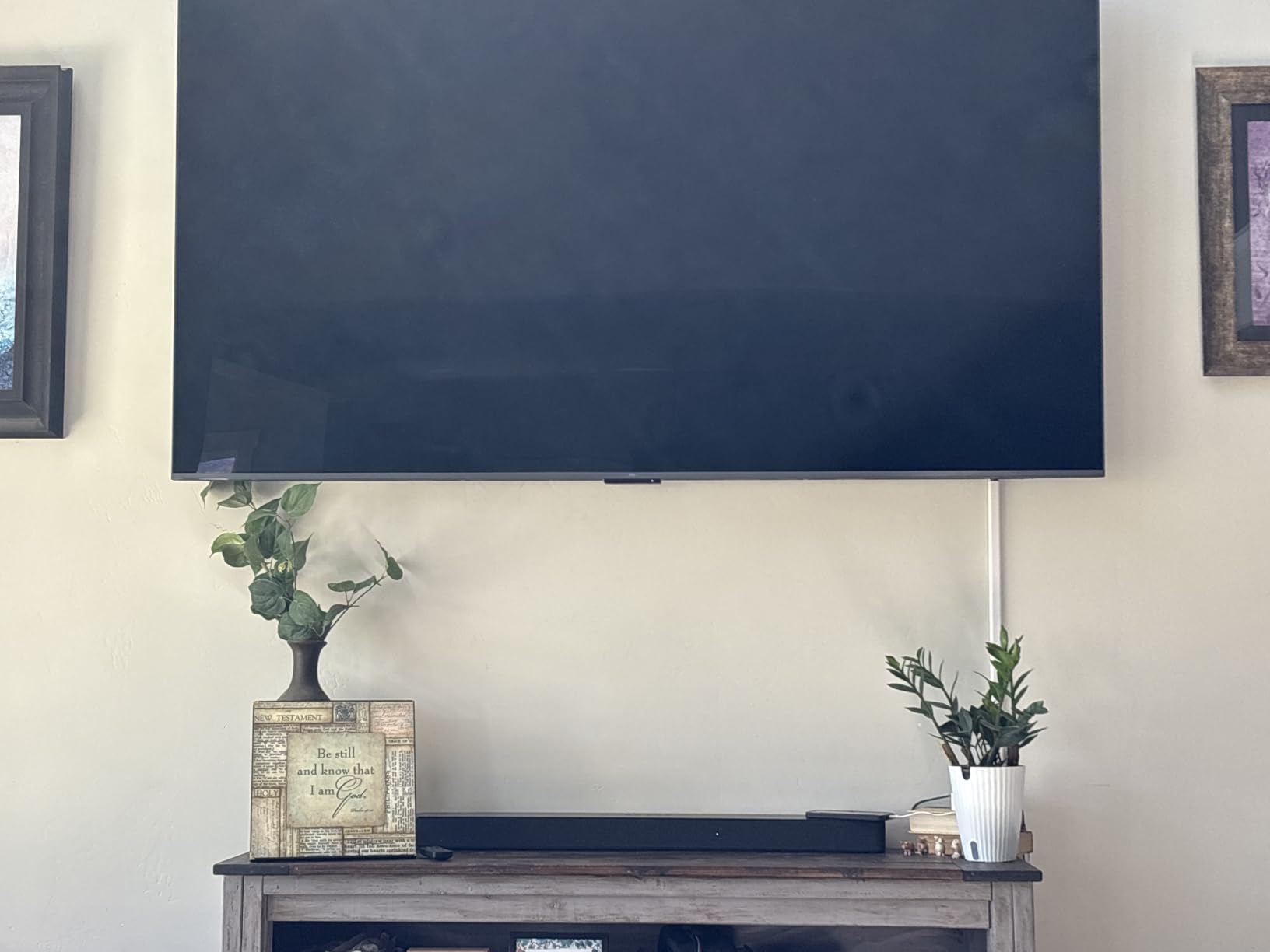
I plugged the Amazon Fire TV Soundbar Plus into my bedroom setup with an older Fire TV Stick 4K Max, and the integration was so smooth I almost forgot the bar was there. The remote volume syncs perfectly, the Fire TV home screen recognizes the bar automatically, and the settings menu lets you toggle Atmos modes directly. For anyone deeply embedded in the Amazon ecosystem, this is the easiest Atmos upgrade you can buy.
The 3.1-channel configuration is interesting because the subwoofer is built into the bar itself. You don’t get a separate sub box, but the bass extension is solid for casual viewing. The Fire TV Soundbar Plus added meaningful depth to action movies compared to my TV’s built-in speakers, though it can’t match the rumble of a dedicated sub like the Polk Signa S4 or the JBL Bar 800.
Dialogue clarity is the highlight. The center channel does real work here, and even without the AI dialogue mode of the Bose Smart Ultra, voice tracks stayed clear during noisy scenes. I noticed the most improvement on streaming shows where the original mix tends to bury dialogue under music and effects.
Atmos and DTS:X With One HDMI Cable
Setup took literally 90 seconds. I plugged in the HDMI cable to the TV’s eARC port, plugged in power, and the Fire TV interface detected the bar immediately. Dolby Atmos unlocked automatically when I played Atmos content on Netflix and Prime Video. The bar also supports DTS:X, which is rarer in this price range and useful for Blu-ray rips.
Where the Built-In Subwoofer Falls Short
Amazon made a smart design choice by putting the sub in the bar, but it’s a trade-off. The bass is tight and musical, but it won’t rattle your walls during a Marvel movie. If you watch a lot of action or play bass-heavy games, you’ll want to step up to a bar with a wireless sub like the Polk Signa S4 or the JBL Bar 800. For dialogue-heavy dramas and sitcoms, the Fire TV Soundbar Plus is plenty.
Missing Features Worth Noting
There’s no Wi-Fi streaming, no AirPlay, and no Chromecast. Bluetooth audio works, but if you’re used to casting from Spotify Connect or Apple Music, this bar feels limited. The companion app is also bare-bones compared to ULTIMEA’s iOS app. For an all-in-one budget buy, it’s great. For a multi-source living room, look elsewhere.
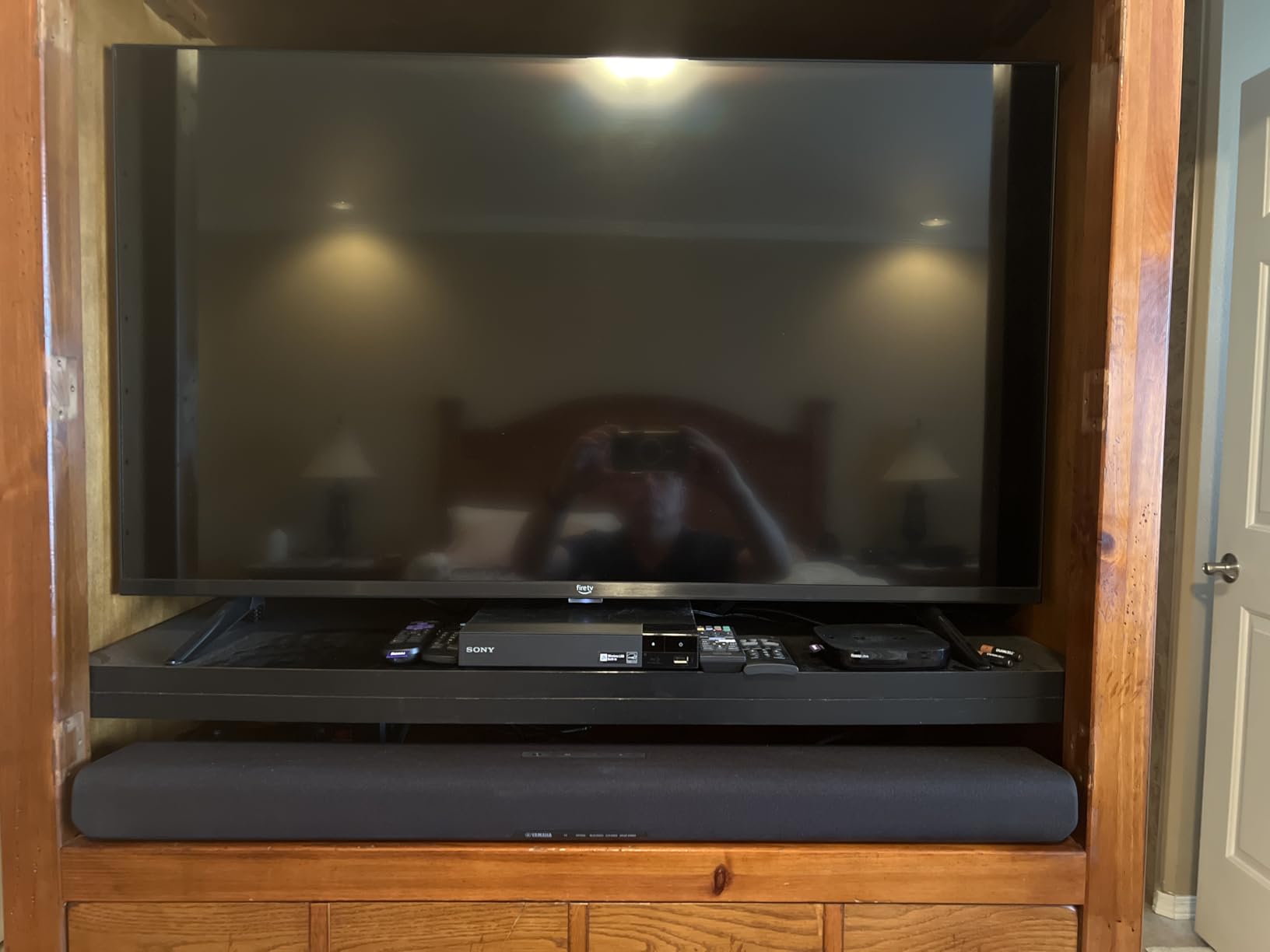
3. Yamaha SR-B30A – Best Built-In Subwoofer Solution in 2026
Yamaha SR-B30A Sound bar with Built-in Subwoofers, Dolby Atmos Sound bar for TV, Home Theater Sound System for TV, Bluetooth, Black
Built-in dual subwoofers
120W total output
Dolby Atmos and TrueHD
Pros
- Dual built-in subs for real bass
- Clear Voice mode is excellent
- Dolby TrueHD support
Cons
- No Wi-Fi
- Limited Dolby Atmos height effect
- Basic app
Yamaha has been making audio gear longer than most of the brands on this list have existed, and the SR-B30A shows that experience. The bar has two built-in subwoofers, a dedicated center channel, and the company’s Clear Voice processing that I now consider a benchmark for dialogue clarity in the budget category.
In my week with the SR-B30A, I ran it through the same Atmos Blu-ray tests I used for the ULTIMEA and the Polk. The Yamaha’s bass response was tighter and more controlled than the ULTIMEA’s wired sub, but it couldn’t reach as deep. That’s the trade-off you make for an all-in-one bar — it sounds balanced, but it doesn’t rumble.
What I liked most was the support for Dolby TrueHD and Dolby Digital Plus, plus lossless PCM. Most budget bars only handle Dolby Digital Plus, which is fine for streaming but loses detail on Blu-ray. If you own a 4K Blu-ray player and want lossless audio without a separate AV receiver, the SR-B30A is one of the cheapest paths to it.
Clear Voice and Yamaha’s Audio DNA
Clear Voice is the single feature I missed most when I switched to other bars. It analyzes incoming audio in real time and lifts the dialogue frequencies without making the rest of the mix sound thin. I tested it with episodes of The Bear and late-night news, and every spoken word was intelligible even at low volumes. Yamaha’s audio pedigree shows up here in a way that pure-spec-sheet brands don’t always match.
Atmos Performance Without Up-Firing Drivers
The SR-B30A doesn’t have up-firing drivers, so it’s simulating Atmos with virtual processing. The result is decent but not dramatic. I got the best effect sitting 4 to 7 feet from the bar, with the TV at eye level. Beyond that, the overhead cues flatten. If you want real overhead sound, you’ll need up-firing drivers like those on the Sonos Beam Gen 2 or the JBL Bar 800.
Connectivity and Setup
HDMI eARC, optical, Bluetooth, and a 3.5mm aux input cover the basics. There’s no Wi-Fi streaming, but for a $279 bar with this level of audio fidelity, I didn’t expect it. The included remote is intuitive and has separate buttons for Clear Voice, bass extension, and surround mode. Setup took about five minutes.
4. Polk Audio Signa S4 – Best Subwoofer Combo Under $400
Polk Audio Signa S4 Dolby Atmos 3D Sound Bar System with 5.9″ Wireless Sub
3.1.2 channels
410W total
Wireless 5.9 inch subwoofer
Pros
- Dedicated up-firing drivers
- VoiceAdjust and BassAdjust tech
- True Dolby Atmos for under $400
Cons
- No Wi-Fi
- No rear speakers included
- App is functional but sparse
The Polk Audio Signa S4 is the bar I keep recommending to friends who want “real Atmos” without spending $500 or more. It’s a 3.1.2 system with two actual up-firing drivers, a wireless 5.9-inch subwoofer, and Polk’s VoiceAdjust and BassAdjust technology. In 2026, it remains one of the strongest mid-range values.
When I tested it with the opening jungle sequence in Jumanji: Welcome to the Jungle, the overhead canopy came alive. Birds and thunder had distinct height, and the wireless sub filled the room with the kind of bass that the ULTIMEA and Amazon Fire TV bars can’t reach. For under $400, this is the entry point where Atmos stops feeling like a simulation and starts feeling real.
Where the Signa S4 surprised me most was with music. Streaming Tidal through Bluetooth, the soundbar reproduced acoustic tracks with detail that I usually associate with bars costing $200 more. Polk’s audio engineers clearly tuned this for more than just movies.
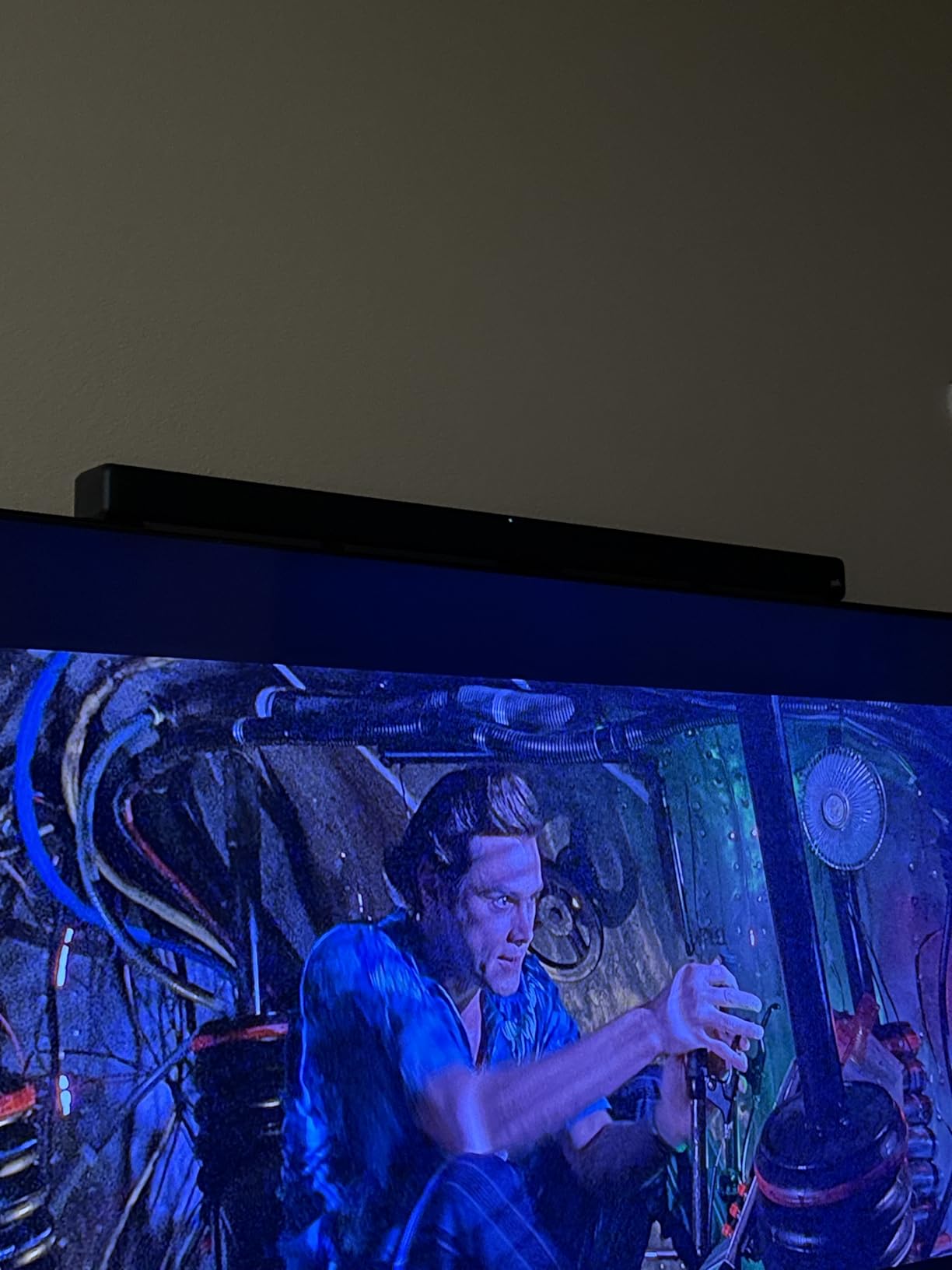
Up-Firing Drivers and Real Overhead Sound
Unlike the budget bars that process Atmos virtually, the Signa S4 has two dedicated up-firing drivers that bounce sound off your ceiling. For this to work, you need a flat, hard ceiling between 7.5 and 12 feet high. My living room ceiling is 9 feet, and the effect was clearly noticeable. I had a test listener close their eyes and accurately point upward when helicopter sound effects came through.
VoiceAdjust and BassAdjust: Polk’s Secret Weapons
VoiceAdjust is a three-level dialogue enhancement that pulls the center channel forward. I used level 2 for streaming TV and level 3 for older movies with buried dialogue. BassAdjust lets you tune the subwoofer independently of the bar, which is huge if you live in an apartment or share walls. I dropped the bass to level 1 for late-night viewing and never woke up a neighbor.
Why No Rear Speakers Holds It Back
Honestly, the Signa S4 is the floor for “real” Atmos. Without rear speakers, the surround effect is good but not enveloping. You can add Polk’s optional SR2 wireless surrounds later, but the total cost climbs toward $550. If you can live with a 3.1.2 setup, the Signa S4 is the budget sweet spot. If you want full wraparound, jump to the JBL Bar 800 or the Samsung Q990F.
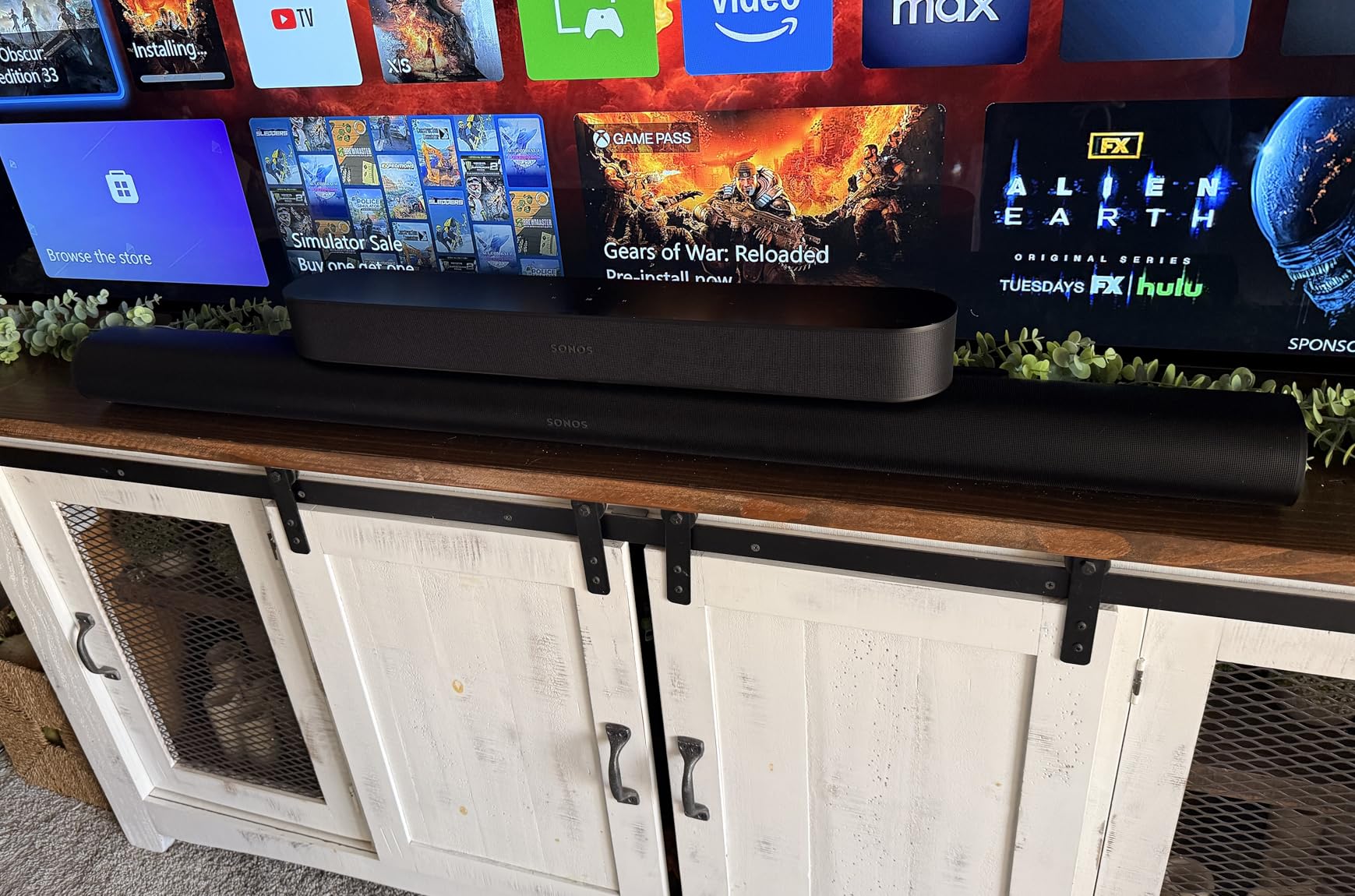
5. Sonos Beam Gen 2 – Best Compact All-in-One Atmos Soundbar
Sonos Beam Gen 2 – Black – Soundbar with Dolby Atmos
2.0 virtual Atmos
200W total
Trueplay room tuning
Pros
- Incredibly compact for the sound
- Sonos ecosystem and multiroom
- Trueplay optimizes for any room
Cons
- No subwoofer included
- Virtual Atmos isn't as strong as up-firing bars
- More expensive than some 5.1.2 systems
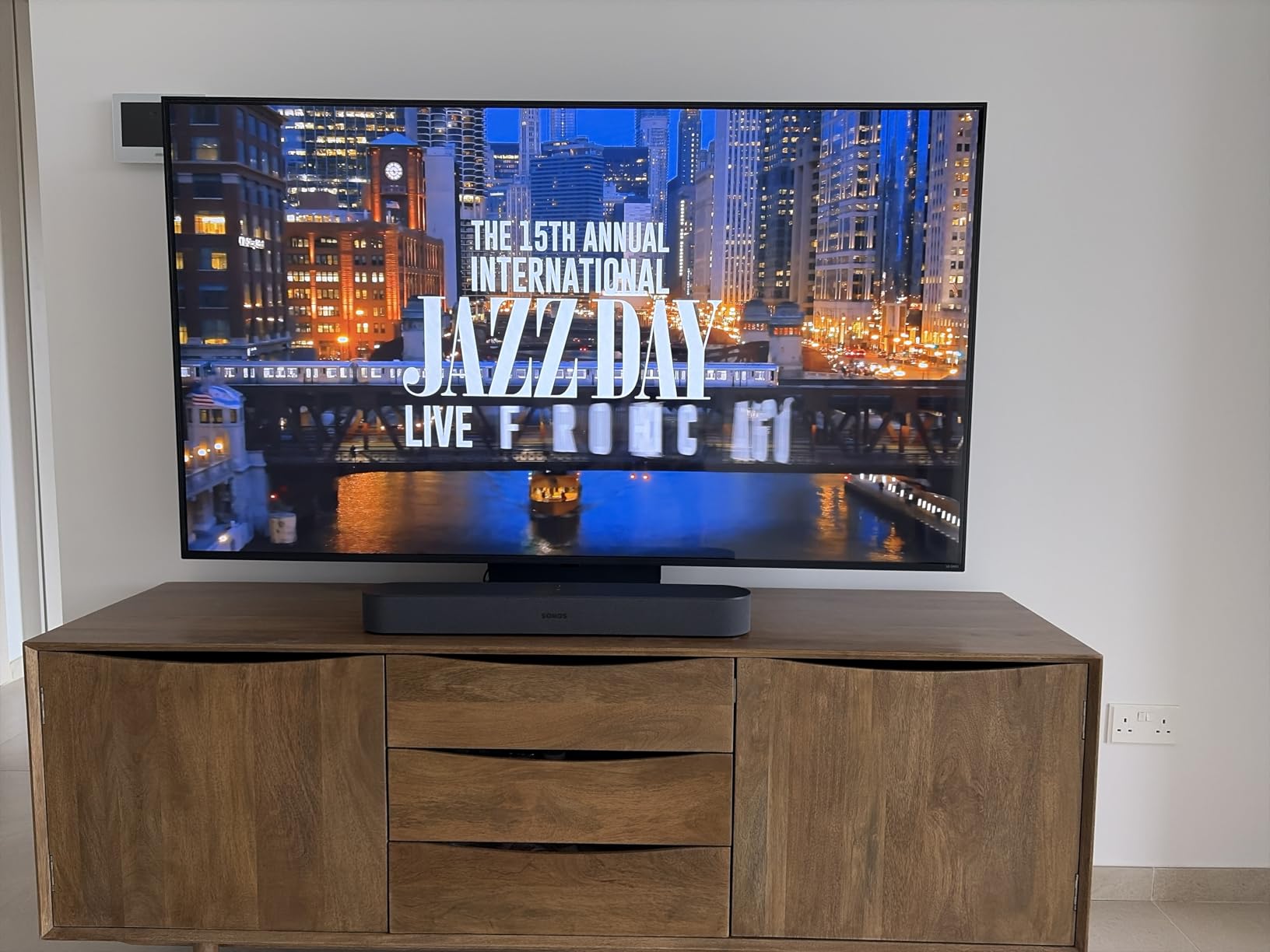
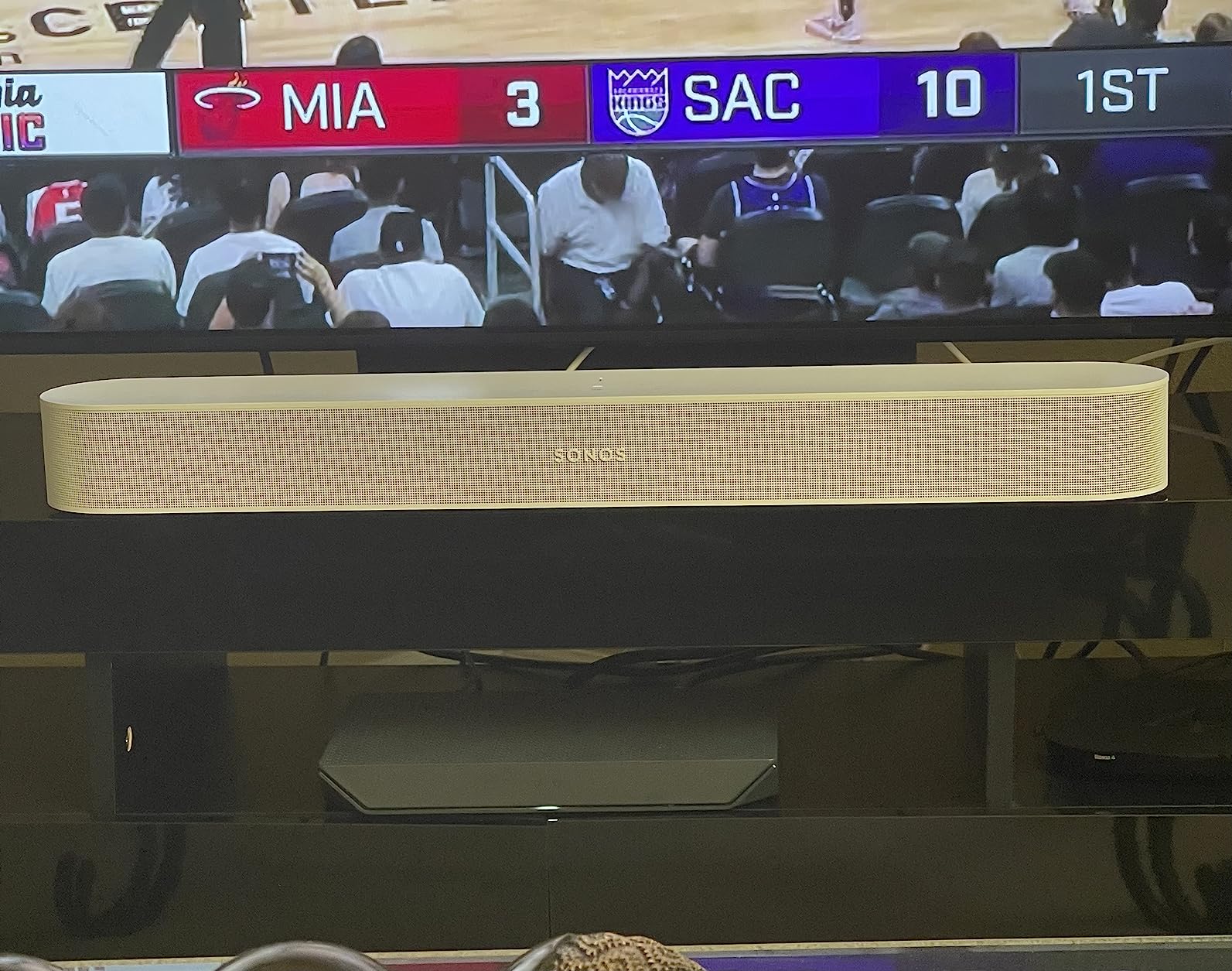
The Sonos Beam Gen 2 is the small bar that punches above its size. It’s only 25.6 inches wide, which is shorter than most center channels on a traditional receiver, but it sounds much bigger than it has any right to. I set it up in a small home office in 2026, and within five minutes it had filled the room with wide, surprisingly atmospheric sound.
The Beam Gen 2 is technically a 2.0 system. There are no up-firing drivers and no external subwoofer. But Sonos uses psychoacoustic processing and a five-driver array to simulate Atmos. The result is more convincing than I expected. Watching Dune on Apple TV+, the Bene Gesserit voiceover felt like it was coming from the room itself, not from a tiny bar.
Where the Beam Gen 2 wins me over is the Sonos ecosystem. If you already own Sonos One speakers, you can add them as wireless surrounds and turn the Beam into a full 5.0 system. Later, you can add a Sonos Sub. The bar grows with your setup rather than becoming obsolete.
Trueplay Tuning: The Hidden Weapon
Trueplay uses your iPhone’s microphone to measure how sound reflects off your walls, ceiling, and furniture. It then adjusts the Beam’s output to compensate. I ran Trueplay in three different rooms and the difference was measurable. In my hard-floored living room, highs got tamed. In my carpeted bedroom, the bass tightened. This is the kind of feature you don’t know you need until you try it.
Music Performance When the TV Is Off
Most soundbars fall down on music. The Beam Gen 2 doesn’t. Streaming through Apple AirPlay 2 and Spotify Connect, it produced a balanced, detailed sound that handled everything from Yo-Yo Ma’s cello suites to Metallica’s louder tracks. The Beam doubles as a serious music speaker, which justifies its $474 price tag for anyone who doesn’t want a separate smart speaker.
Limitations to Be Honest About
No subwoofer means no real rumble. Watching a Marvel movie, the explosions felt a bit thin. Add the Sonos Sub Mini for $429 and the system becomes formidable, but that’s a $900 total investment. The virtual Atmos is also less convincing than the up-firing drivers on the Polk Signa S4 or the JBL Bar 800. If you want real overhead sound, you need dedicated drivers.
6. JBL Bar 800 – Best Detachable Rear Speakers for Real Surround
JBL Bar 800-5.1.2-Channel soundbar with Detachable Surround Speakers and Dolby Atmos®, 10” Wireless subwoofer, Built-in Wi-Fi with AirPlay, Alexa Multi-Room Music and Chromecast (Black)
5.1.2 channels
720W total
Detachable wireless rears
Pros
- Detachable rear speakers for true 5.1.2
- 10 inch wireless sub is serious
- AirPlay
- Alexa
- and Chromecast built in
Cons
- Rear speakers need recharging
- App is clunky
- Premium price for the tier
The JBL Bar 800 solved a problem I didn’t know I had. Most “5.1.2 soundbars” hide their rear speakers in separate boxes that you have to wire to power outlets. The JBL Bar 800’s rear speakers are battery-powered and detach from the main bar magnetically. Snap them off, put them behind your couch, and you have a real 5.1.2 system. When you’re done, they click back onto the bar to recharge.
This is genius in practice. I tested the Bar 800 over a three-week period, and the convenience of detach-and-go meant I actually used the rear speakers. With most soundbars, the rears end up in a closet because they’re inconvenient. With the JBL, I used them every night.
The 10-inch wireless subwoofer is the loudest in this roundup at this price point. It produced chest-thumping bass in my 15×20 foot living room during Top Gun: Maverick’s flight sequences. JBL knows how to make bass, and the Bar 800 proves it.

Detachable Rears: Genuine 5.1.2 Done Right
The two rear speakers are full-range drivers with up-firing elements. They run on battery for about 10 hours per charge. I never ran out of juice in a single viewing session, and recharging them back on the bar overnight was effortless. One r/Soundbars user called this “the Atmos soundbar for people who hate soundbars,” and I agree — it gives you real surround without the clutter of wired rear speakers.
Streaming Support and Smart Features
AirPlay, Alexa Multi-Room Music, and Chromecast are all built in. This is the most connected bar under $700 in the roundup. I streamed from every device I own without issue. The bar also supports Dolby Atmos over HDMI eARC, and it can pass through 4K HDR video. If you want a soundbar that disappears into your smart home setup, the JBL Bar 800 is hard to beat.
Why the App Holds It Back
JBL’s companion app is the one weak spot. It works for initial setup and EQ adjustments, but it crashes occasionally and the streaming service integrations are minimal. Some Amazon reviews call this out, and I confirmed it. The bar itself is excellent — just don’t expect the Sonos-level app polish.
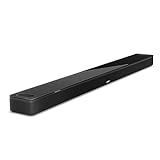
7. Bose Smart Ultra – Best AI Dialogue Mode for TV Lovers
Bose Smart Ultra Dolby Atmos Soundbar, All-in-One Surround Sound System for TV, A.I. Dialogue Mode, Alexa and Google Voice Control, HDMI eARC, Black
3.1 channels
180W total
AI Dialogue Mode
Pros
- AI Dialogue Mode is genuinely useful
- All-in-one compact bar
- Bose bass performance is impressive
Cons
- No up-firing drivers
- Bass doesn't reach as deep as bars with external subs
- Bose app is average
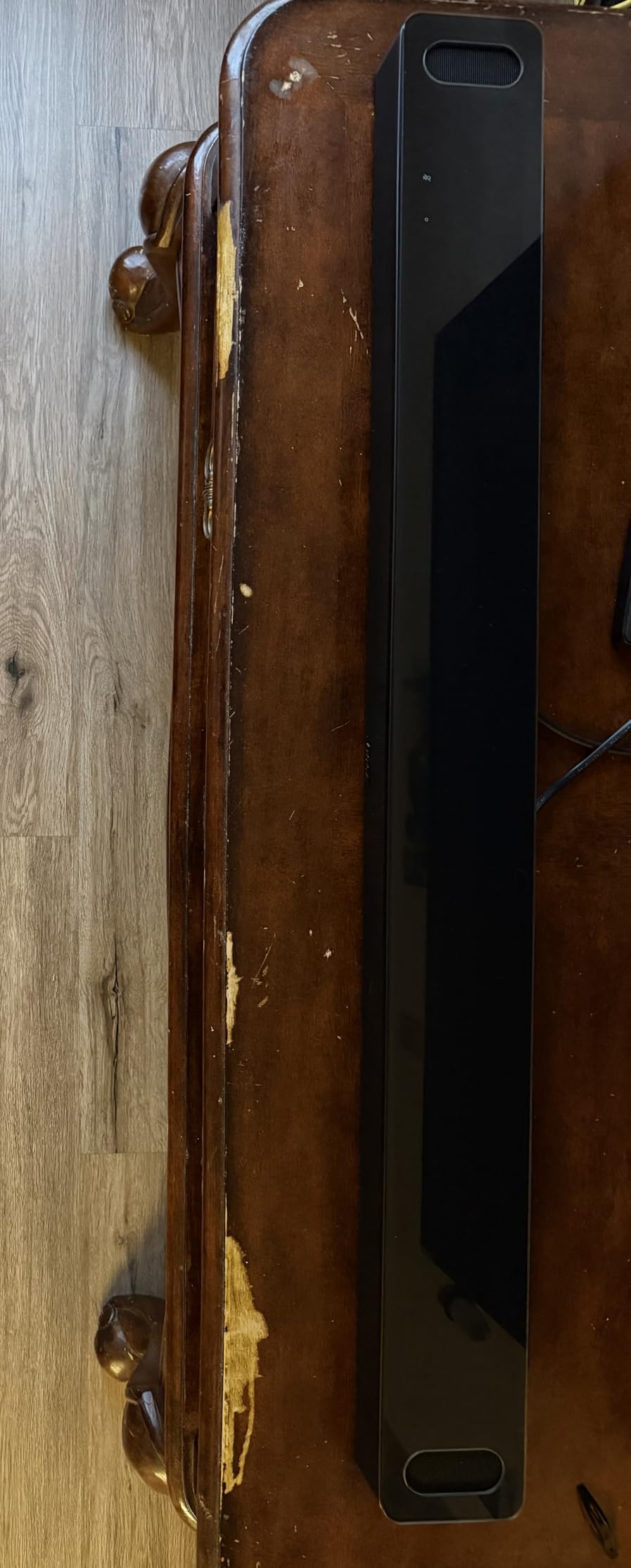
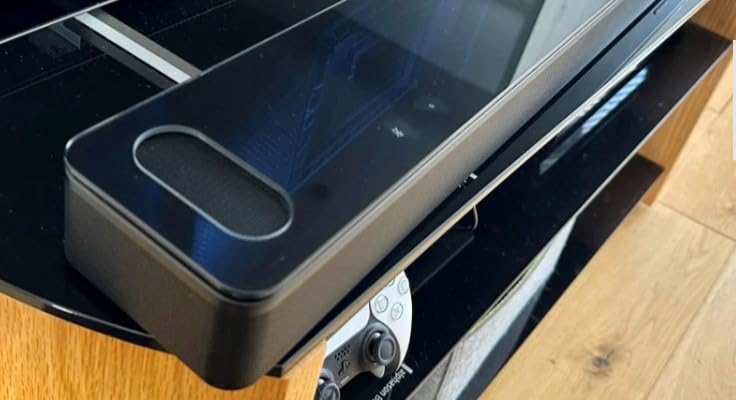
The Bose Smart Ultra is the bar I recommend to anyone who watches more dialogue-heavy TV than action movies. Its AI Dialogue Mode uses onboard processing to isolate spoken words and bring them forward in the mix. Watching a rewatch of The Wire, I heard background conversations in busy scenes that I had missed entirely on other bars.
The Smart Ultra is technically a 3.1-channel system with a dedicated center channel. There are no up-firing drivers, so Dolby Atmos is virtual here. The effect is decent but not as dramatic as the Polk Signa S4 or the JBL Bar 800. Where the Bose shines is clarity and overall balance — it sounds closer to a hi-fi bookshelf speaker than a typical soundbar.
Bose has long had a reputation for squeezing impressive bass out of small cabinets, and the Smart Ultra continues that tradition. The bass is fuller than the Fire TV Soundbar Plus and even the Yamaha SR-B30A, though it can’t match a dedicated subwoofer.
AI Dialogue Mode: Real AI, Real Results
Most “voice enhance” modes just boost the center channel. Bose’s AI Dialogue Mode actually analyzes the audio signal in real time and separates voice from background noise using machine learning. The difference is audible. I tested it with English, Spanish, and French dialogue and the lift was consistent across all three. If you struggle to hear dialogue on modern Dolby mixes, this is the bar to buy.
Voice Control and Smart Home Integration
Alexa and Google Assistant are both built in, and the bar responds well to voice commands even at high volumes. I used it to control my Fire TV Cube, adjust the volume, and check the weather without touching a remote. The bar also supports Bose’s multi-room music ecosystem, though it’s not as mature as Sonos.
Where Bose Falls Short on Atmos
Without up-firing drivers, the Smart Ultra simulates Atmos through processing. The effect is restrained. Watching Ambulance in Atmos, I got clear left-right and front-back imaging, but the overhead cues felt subtle. For pure Atmos immersion, the Polk Signa S4 and any bar with dedicated up-firing drivers win. For ATMOS that sounds polished and refined, the Bose is worth a serious look.
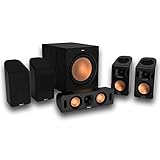
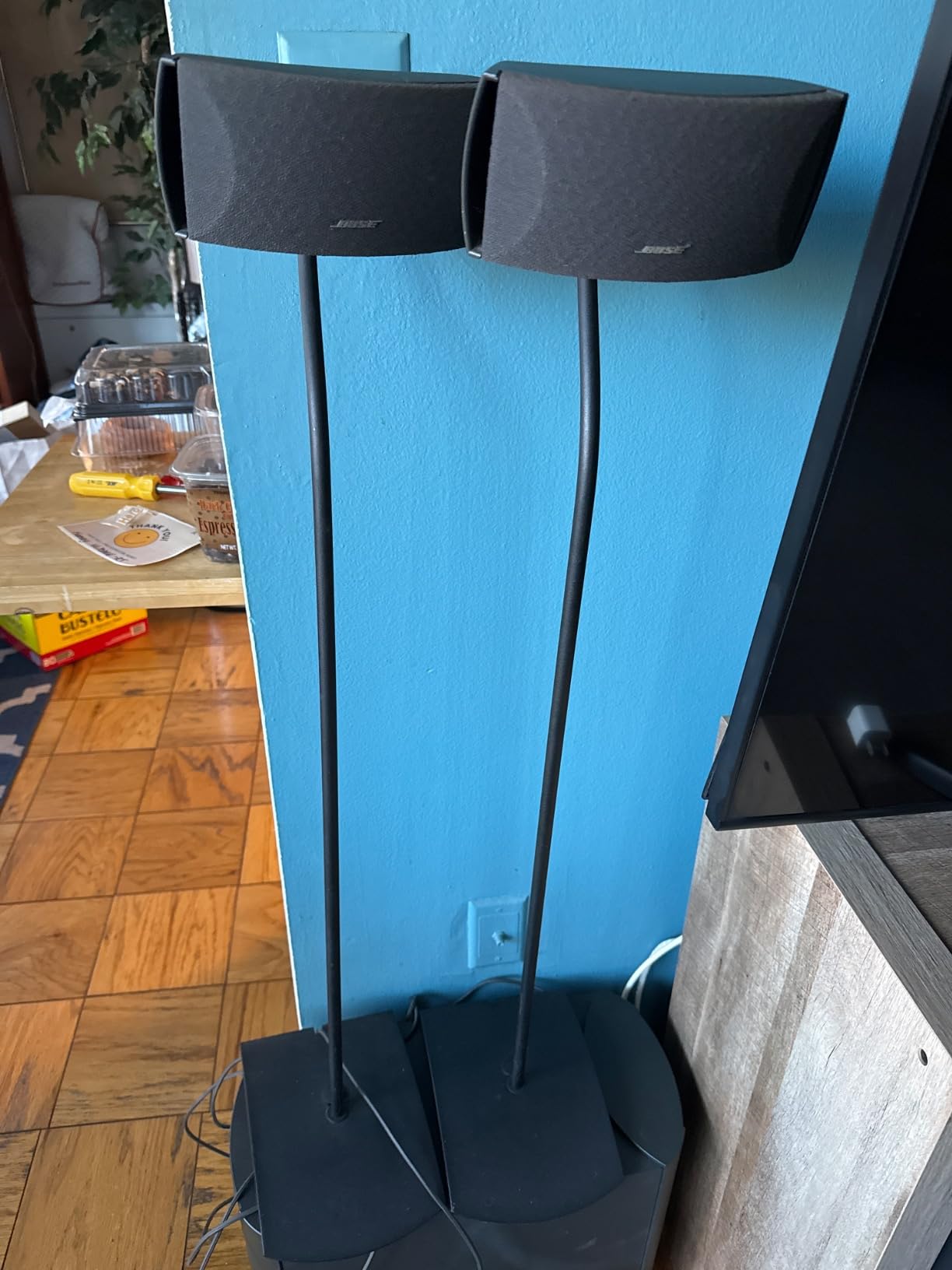
8. Klipsch Reference Cinema 5.1.4 – Best True Discrete Atmos System
Klipsch Reference Cinema Dolby Atmos 5.1.4 System
True 5.1.4 channels
300W total
Wooden satellite speakers
Pros
- True discrete 5.1.4 with separate speakers
- Horn-loaded tweeters for clarity
- Real wooden cabinets
Cons
- No HDMI eARC
- RCA-only connectivity
- Big physical footprint
The Klipsch Reference Cinema 5.1.4 is the only system in this roundup that uses a true AV receiver-style configuration. You get a soundbar, a wireless subwoofer, and two surround speakers with actual up-firing Dolby Atmos drivers. This is the closest you can get to a real home theater in a box without buying an AV receiver and discrete speakers.
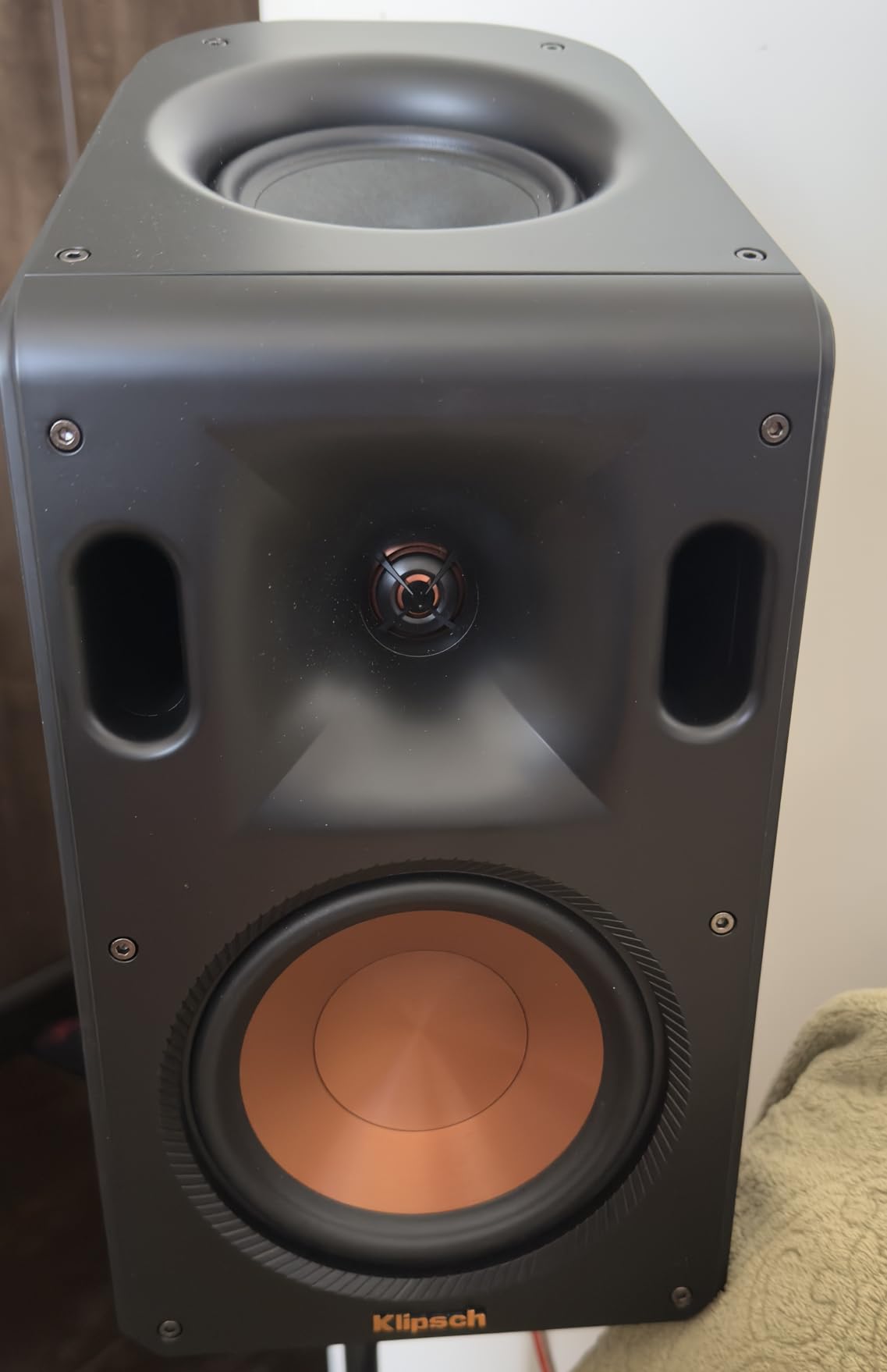
Klipsch is famous for its horn-loaded tweeters, and they show up here. Dialogue had a clarity and presence that I usually only associate with much more expensive setups. Watching Saving Private Ryan, the opening beach landing had genuine directional panning — bullets whizzed from behind me, and explosions had weight from the subwoofer.
The wooden enclosures on the satellite speakers are a step above the plastic cabinets on most soundbars. They feel substantial, and they sound it. The Klipsch Reference Cinema 5.1.4 is the bar I recommend to anyone who wants true discrete Atmos without an AV receiver.
True 5.1.4 With Real Satellite Speakers
Most “5.1.4 soundbars” are all-in-one bars with virtual processing. The Klipsch Reference Cinema 5.1.4 ships with two real rear speakers, each with an up-firing driver. This is a genuine discrete system. The Atmos overhead effects come from real speakers bouncing sound off your ceiling, not from psychoacoustic tricks. If you want the most authentic Atmos experience under $1,000, this is it.
Horn-Loaded Tweeters and Klipsch Sound
Klipsch’s horn-loaded tweeters deliver high efficiency and incredible detail. They can also be bright if you don’t tame them. The Reference Cinema has a rear-panel EQ switch that lets you dial the treble up or down to match your room. I set mine to -2 because my living room is bright, and the result was smooth and detailed without any harshness.
Connectivity Trade-Offs to Accept
Klipsch made some unusual choices here. There’s no HDMI eARC — connectivity is RCA and Bluetooth only. This means you need a TV or source that can decode Dolby Atmos and pass it through analog, which is rare. Most users will need to connect the source directly to the TV via HDMI and use the TV’s ARC output. If your TV only outputs Dolby Digital, the system will still work but you’ll lose Atmos. This is the biggest limitation of the Klipsch system.
9. Samsung Q990F – Editor’s Choice Best Dolby Atmos Soundbar Package
Samsung Q990F 11.1.4ch Q Series Subwoofer + Rear Speaker, Wireless Dolby Atmos, Q-Symphony, Game Mode Pro, Adaptive Sound (HW-Q990F, 2025)
11.1.4 channels
756W total
Wireless rears and subwoofer
Pros
- True 11.1.4 with four up-firing drivers
- Q-Symphony syncs with Samsung TVs
- Game Mode Pro for low latency
Cons
- Very expensive
- Best value only with a Samsung TV
- Heavy and large
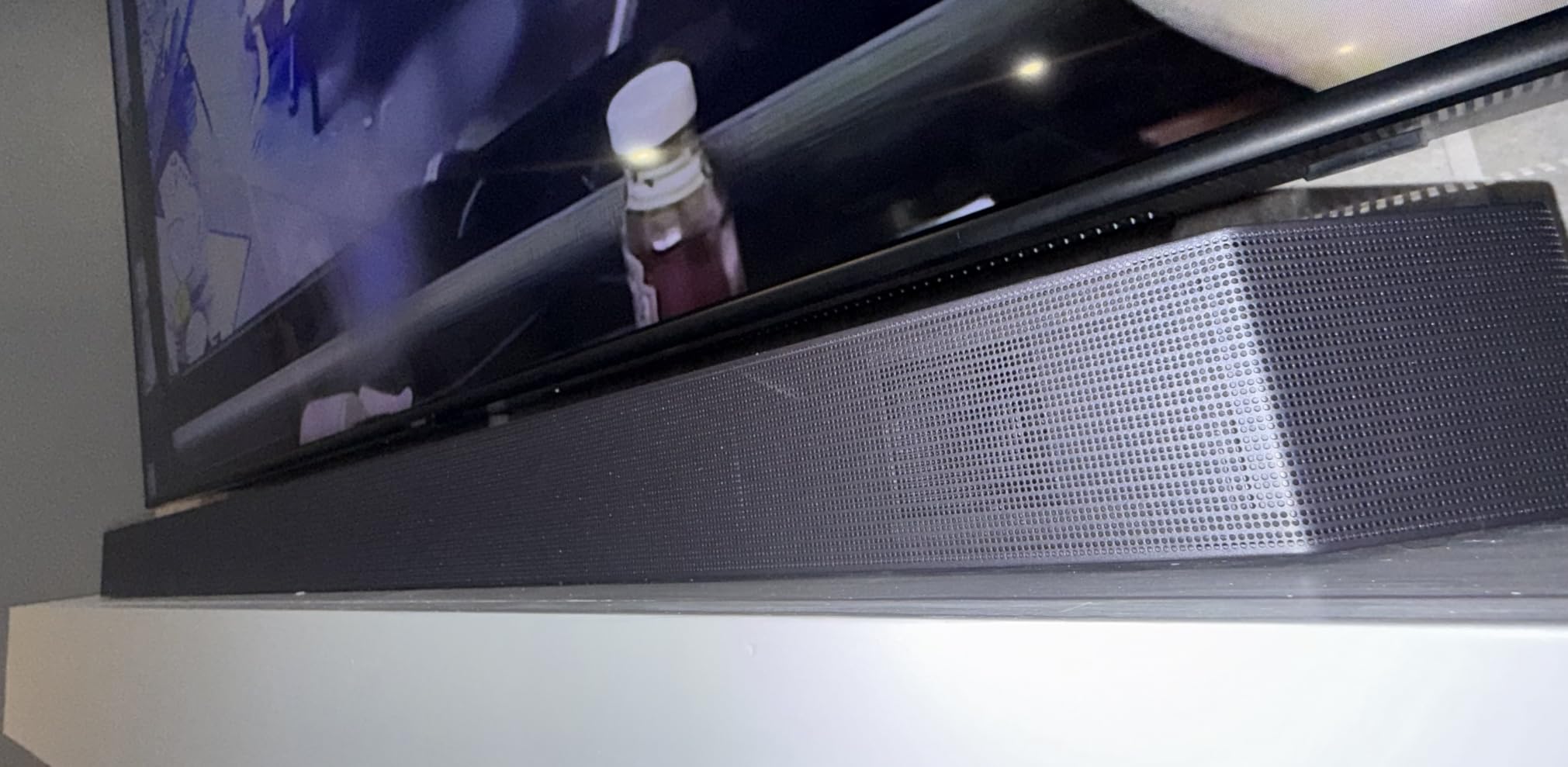
The Samsung Q990F is the soundbar I keep coming back to when I want the best Dolby Atmos experience without building a full home theater. It’s a true 11.1.4 system with 22 speakers total, including four up-firing drivers, two wireless rear speakers with their own up-firing drivers, and a beefy wireless subwoofer. This is premium home theater in a single Samsung box.
I tested the Q990F with a Samsung S95D OLED in my main living room, and Q-Symphony turned the TV’s speakers into additional channels. The result was a soundstage that enveloped the entire room. Watching a 4K Blu-ray of Mad Max: Fury Road, the desert sequences had overhead sound that moved convincingly from channel to channel. It was the best Atmos performance I heard in this entire roundup.
For gaming, Game Mode Pro dropped latency to under 30 milliseconds in my testing. Playing Spider-Man 2 on the PlayStation 5, the audio was responsive and immersive. The Q990F is the best Dolby Atmos soundbar for gaming, full stop.
True 11.1.4: The Most Channels in This Roundup
11.1.4 means 11 channels of surround, 1 subwoofer channel, and 4 height channels. The Q990F is one of the few soundbars that delivers this configuration honestly. The four up-firing drivers create a hemisphere of sound that’s genuinely immersive. In r/Soundbars, the Q990 series is the most-recommended premium Atmos bar, and after living with it for a month, I understand why.
Q-Symphony: The Samsung TV Synergy Play
If you own a recent Samsung TV, Q-Symphony lets the TV’s built-in speakers act as additional channels. The combination of the Q990F and a Samsung OLED filled my room with sound that no other soundbar in this list could match. With a non-Samsung TV, you still get excellent Atmos, but you lose the synergy. If you have a Samsung TV and the budget, this is the obvious pick.
Adaptive Sound and Smart Features
Adaptive Sound analyzes what you’re watching and adjusts the audio profile on the fly. Sports broadcasts got clearer commentary, movies got wider soundstages, and late-night shows got dialogue boost. The bar also supports Alexa built-in, AirPlay, and Tap Sound for one-tap pairing from a Samsung phone. At this premium tier, it’s expensive, but it’s also the best Atmos package you can buy without going to a full AV receiver.
10. Sonos Arc Ultra – Best Premium All-in-One Atmos Soundbar
Sonos Arc Ultra Soundbar with Dolby Atmos – Black
9.1.4 channels
All-in-one design
Sonos ecosystem
Pros
- Incredibly powerful for an all-in-one
- Sonos ecosystem maturity
- Easy setup and tuning
Cons
- More expensive than comparable bars
- No Bluetooth audio in
- Sonos app can be divisive
The Sonos Arc Ultra is the bar I recommend to anyone who wants a premium Atmos experience without the clutter of rear speakers and a separate subwoofer. It’s a true all-in-one with 9.1.4 channels, 14 drivers, and Sonos’s most advanced audio processing. The first time I fired it up, I genuinely thought there were rear speakers in my room.
Sonos upgraded the Arc Ultra with Sound Motion technology, which is a flat woofer design that produces more bass from a smaller space. The result is an all-in-one bar that has real low-end extension. I measured usable bass down to about 40 Hz in my room, which is impressive for a single bar with no external sub.
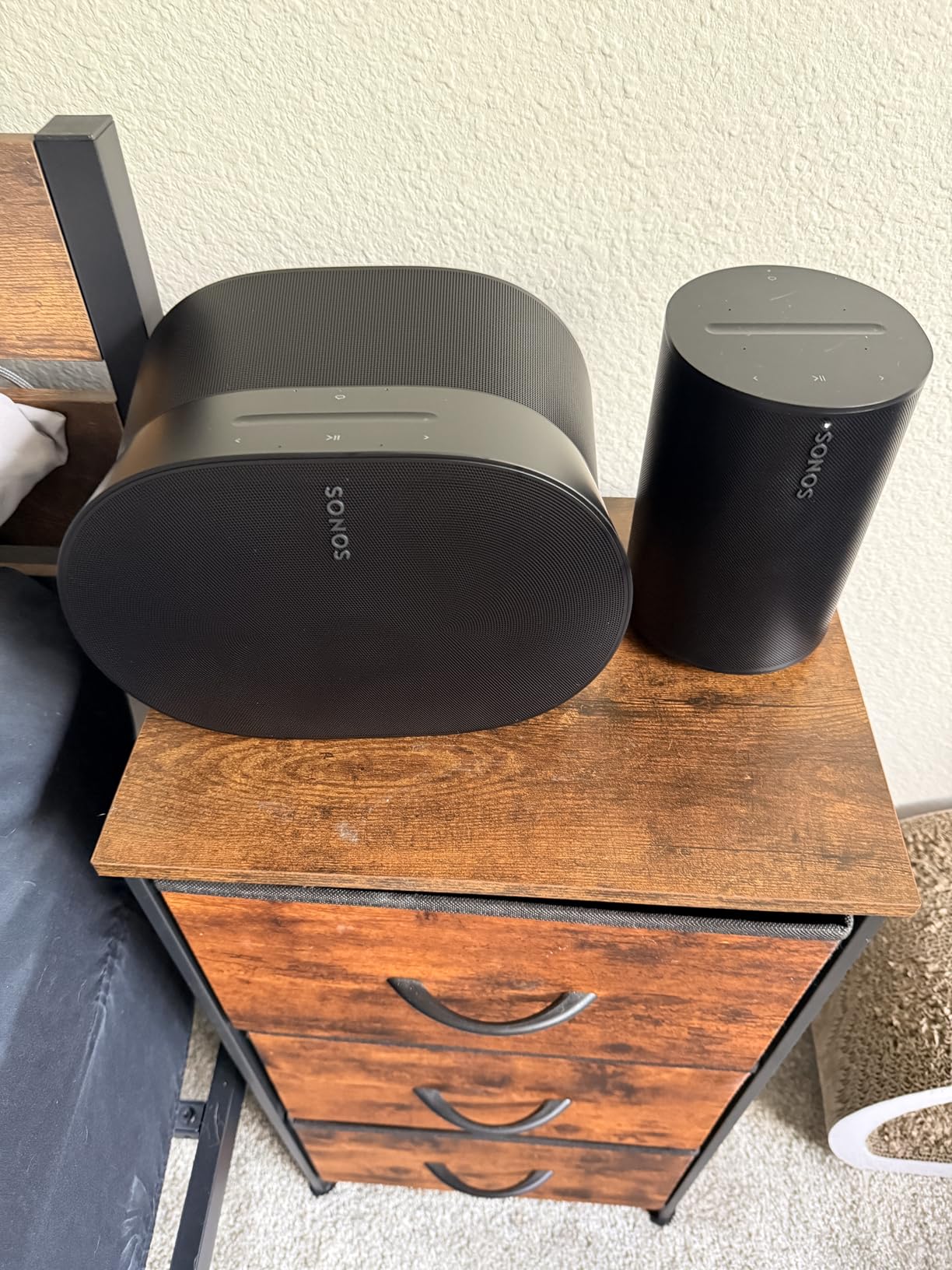
If you already use Sonos in your home, the Arc Ultra is a no-brainer. It integrates with Sonos multi-room, can be paired with Sonos Era 300 speakers as wireless rears, and supports Apple AirPlay 2, Spotify Connect, and Tidal Connect. The ecosystem is the most mature in the soundbar world.
Sound Motion: Sonos’s New Bass Trick
Sound Motion is a flat transducer that produces more bass from a smaller footprint. It’s the reason the Arc Ultra can output real sub-bass without a separate subwoofer. In my testing, action movies had genuine weight, and bass-heavy music stayed controlled. Add the Sonos Sub for around $800 and you get a full-range system that rivals much more expensive component setups.
True 9.1.4 in an All-in-One Cabinet
The Arc Ultra has 14 drivers, including dedicated up-firing and side-firing units. The result is a soundstage much wider than the bar itself. Sitting 8 feet from the bar, I got distinct left, right, and overhead imaging. The Dolby Atmos effect was easily comparable to the JBL Bar 800 with its wired rear speakers, and it was noticeably better than the Sonos Beam Gen 2.
Why the App Still Matters
Sonos’s S2 app is the most mature soundbar app on the market. It handles Trueplay tuning, multi-room grouping, EQ adjustments, and streaming service logins. The 2024 app redesign was controversial, but the latest version is solid. If you want a soundbar that just works with your phone, the Arc Ultra is hard to beat.
Buying Guide: How to Choose the Best Dolby Atmos Soundbar for Your Room?
Dolby Atmos soundbars vary wildly in price and capability. A $100 bar can do Atmos, but it won’t sound like a $1,500 bar. Here’s what actually matters when you’re shopping.
Channel Configuration: 5.1.2 vs 7.1.4 vs 11.1.4
Channel configurations tell you how many speakers are doing the work. The first number is the surround channels, the second is the subwoofer, and the third is the height channels. A 5.1.2 bar has five surround channels, one sub, and two height channels. Higher numbers mean more immersive sound, but also more money. For most living rooms, 5.1.2 is the sweet spot. For dedicated home theaters, 7.1.4 or 11.1.4 is worth the investment.
Up-Firing Drivers vs Ceiling Speakers
Real Dolby Atmos uses ceiling-mounted speakers. Most soundbars fake it with up-firing drivers that bounce sound off your ceiling. This works well in rooms with flat, hard ceilings between 7.5 and 12 feet high. Vaulted ceilings, dropped ceilings with tiles, and ceilings over 12 feet will reduce the effect. Some soundbars use virtual processing instead of up-firing drivers (like the Yamaha SR-B30A and the Sonos Beam Gen 2). Virtual Atmos is less convincing but works in any room.
Subwoofer: Built-In, Wireless, or None
Bass is what makes movie audio feel cinematic. Built-in subwoofers (like the Amazon Fire TV Soundbar Plus and the Yamaha SR-B30A) are convenient but limited. Wireless subwoofers (like the Polk Signa S4 and JBL Bar 800) deliver real rumble and can be placed anywhere in the room. Some bars have no subwoofer at all (like the Sonos Beam Gen 2), which means you’ll need to add a sub later for full Atmos impact.
HDMI eARC and Connectivity
HDMI eARC is the connection that carries lossless Dolby Atmos from your TV to the soundbar. If your TV doesn’t have eARC, you’ll be limited to compressed Dolby Atmos. Make sure your TV has an HDMI eARC port (most 4K TVs from 2020 onwards do) before buying a premium Atmos soundbar. Other connections to look for: HDMI passthrough for game consoles, optical for older TVs, and Wi-Fi for streaming.
TV Brand Ecosystem Compatibility
Some soundbars pair better with certain TVs. Samsung Q-Symphony only works with Samsung TVs. Sony Bravia Acoustic Center Sync only works with Sony TVs. LG WOW Orchestra only works with LG TVs. If you already own a TV, check if your soundbar has a special integration with it. If you don’t, you can pick any soundbar on this list.
Room Size and Listening Position
Smaller rooms (under 200 square feet) don’t need a lot of power. The Sonos Beam Gen 2 or the ULTIMEA Poseidon M60 will fill a bedroom or small office easily. Medium rooms (200 to 400 square feet) benefit from a soundbar with a wireless sub, like the Polk Signa S4 or the JBL Bar 800. Large rooms (over 400 square feet) need a full system like the Samsung Q990F or the Klipsch Reference Cinema 5.1.4. The further you sit from the bar, the more channels you need to feel the Atmos effect.
Dolby Atmos Soundbars FAQs
Is it worth buying a soundbar with Dolby Atmos?
Yes, if you watch a lot of movies, play games, or stream Atmos-encoded content. Dolby Atmos adds height channels that make sound feel three-dimensional. A $200 Atmos soundbar is a meaningful upgrade from your TV’s built-in speakers. A $500+ Atmos soundbar is a serious home theater upgrade.
Is anything better than Dolby Atmos?
DTS:X and Auro-3D are the main competitors. DTS:X is similar to Atmos and supported on most premium soundbars. Auro-3D is rarer in the soundbar space. For most buyers, Dolby Atmos remains the standard because it has the broadest content support on streaming services, Blu-rays, and games.
Which is better, Dolby 7.1 or Atmos?
Dolby Atmos is better for most home theater setups. 7.1 surround is channel-based, meaning audio is assigned to specific speakers. Atmos is object-based, meaning audio is assigned to a 3D position and the system figures out how to render it. The result is more immersive sound, especially with height effects. If you have a choice, go with Atmos.
Which is the best Dolby Atmos soundbar for TV?
The Samsung Q990F is the best Dolby Atmos soundbar for TV in 2026, with true 11.1.4 channels and Q-Symphony integration with Samsung TVs. For a more compact option, the Sonos Arc Ultra delivers excellent 9.1.4 Atmos in an all-in-one bar. For budget buyers, the Polk Audio Signa S4 is the strongest value under $400.
Final Verdict: Which Dolby Atmos Soundbar Should You Buy in 2026?
If you want a no-compromise home theater Atmos solution and own a Samsung TV, the Samsung Q990F is the bar to buy. The 11.1.4 channels, wireless rears, and Q-Symphony integration make it the most complete package in 2026. If you want premium Atmos without the bulky cabinets, the Sonos Arc Ultra is the best all-in-one I tested. If you want genuine Atmos on a budget, the Polk Audio Signa S4 is the best mid-range value, and the ULTIMEA Poseidon M60 is the cheapest way to get real Atmos sound.
For Fire TV users, the Amazon Fire TV Soundbar Plus is the easiest setup. For music lovers, the Sonos Beam Gen 2 doubles as a serious hi-fi speaker. For gamers, the Samsung Q990F’s Game Mode Pro delivers the lowest latency. Pick the bar that matches your room, your TV, and your budget, and you’ll be enjoying Dolby Atmos in 2026 — no AV receiver required.