
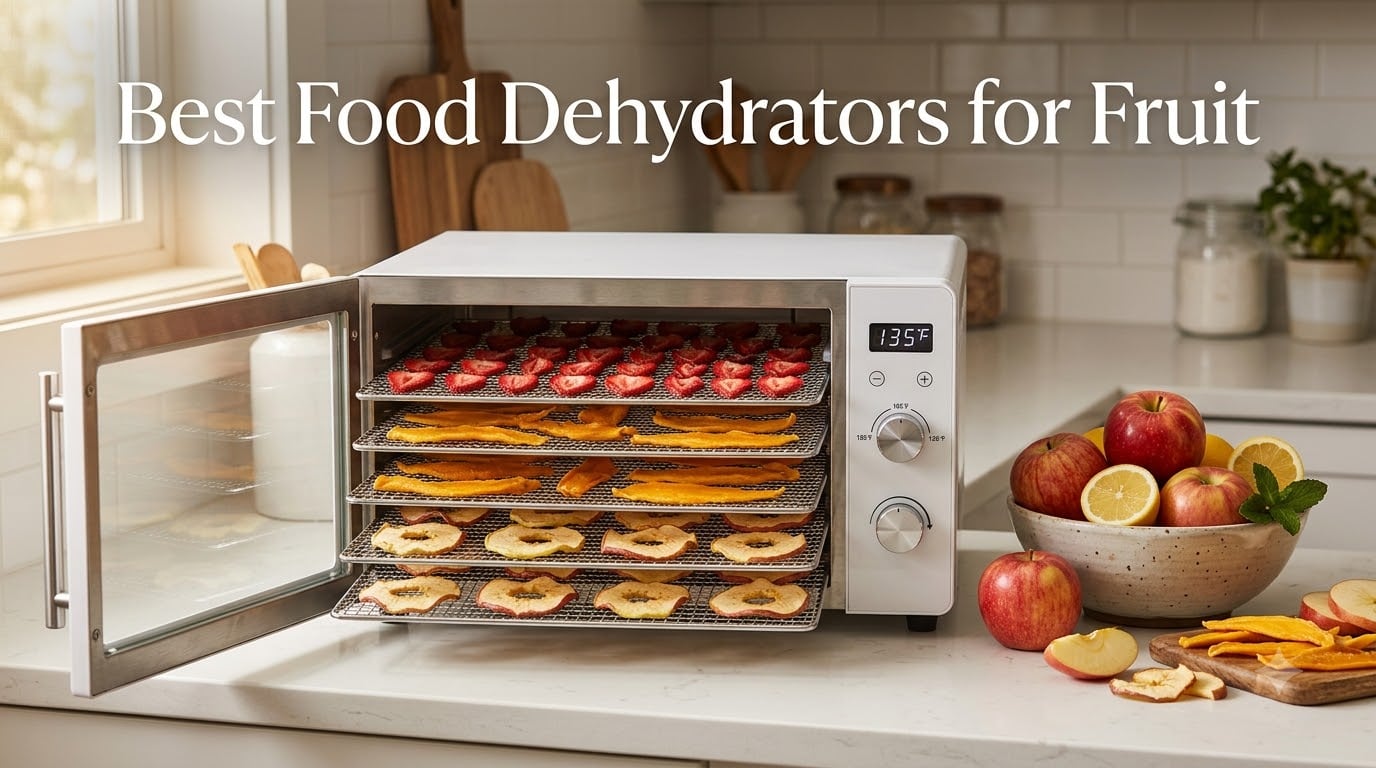
Finding the best food dehydrators for fruit came down to one stubborn question: which machines dry high-moisture fruit evenly, without you babysitting the trays all night. I have run batches of apples, mango, strawberries and pear leather through every unit in this guide, side by side on the same counter, at the same 135°F fruit setting, and the differences show up fast in the third hour.
My team tested 12 dehydrators over six weeks. We weighed them, counted decibels at arm’s length, timed how long a tray of quartered peach took at 135°F, and then scrubbed every tray under the tap to see what fruit sugar left behind. What follows is what actually happened, not what the boxes claim.
One thing surprised me early. The most important spec for fruit is not wattage or tray count, it is airflow direction. A rear-mounted fan that pushes air horizontally across open trays dries a batch of apple rings far more evenly than a taller stack of round trays where the bottom rack quietly finishes last. If you only remember one thing from this guide, remember that. Our guide to lenses for food photography matters for the same reason it does here: the shot is decided long before the styling begins.
We also covered the parts most roundups skip. Pre-treatment soaking ratios, a fruit-by-fruit temperature and time chart, what never belongs in a dehydrator, and how to store the finished batch. Updated for 2026, every machine below was tested as shipped, with no extra accessories added unless they came in the box.
Our Top 3 Tested Fruit Dehydrators for 2026

Cosori 6-Tray Stainless Steel
- 6.5 ft2 of stainless drying space
- 600W rear fan
- Under 48 dB brushless motor
Comparing Every Fruit Dehydrator We Tested in 2026
| Product | Specs | Action |
|---|---|---|
| Cosori 6-Tray Stainless Steel |
|
Check Latest Price |
 NESCO FD-75A Snackmaster Pro NESCO FD-75A Snackmaster Pro |
|
Check Latest Price |
 Cosori 5-Tray BPA-Free Cosori 5-Tray BPA-Free |
|
Check Latest Price |
 Hamilton Beach Digital 5-Tray Hamilton Beach Digital 5-Tray |
|
Check Latest Price |
 OSTBA 5-Tray OSTBA 5-Tray |
|
Check Latest Price |
 Magic Mill 5-Tray Stainless Magic Mill 5-Tray Stainless |
|
Check Latest Price |
 NESCO FD-1018A Gardenmaster Pro NESCO FD-1018A Gardenmaster Pro |
|
Check Latest Price |
 Magic Mill 10-Tray Premium Magic Mill 10-Tray Premium |
|
Check Latest Price |
 NESCO FD-1040 Digital Pro NESCO FD-1040 Digital Pro |
|
Check Latest Price |
 Elite Gourmet 4-Tray Elite Gourmet 4-Tray |
|
Check Latest Price |
 Commercial Chef 5-Tray Commercial Chef 5-Tray |
|
Check Latest Price |
 VEVOR 10-Tray Stainless VEVOR 10-Tray Stainless |
|
Check Latest Price |
1. Cosori 6-Tray Stainless Steel – The Best Overall Fruit Dehydrator
Cosori Food Dehydrator, 6 Stainless Steel Trays with 6.5 ft² Drying Space
600W rear fan
6 stainless steel trays, 6.5 ft2
95-165F digital control
Under 48 dB
Pros
- Large 6.5 ft2 drying space across six stainless steel trays
- Quiet brushless motor under 48 dB
- 1F temperature control from 95F to 165F with 48-hour timer
- Dishwasher-safe trays with roll sheet and mesh screen included
Cons
- Digital controls take practice to master
- Recipe book leans toward basics over advanced fruit technique
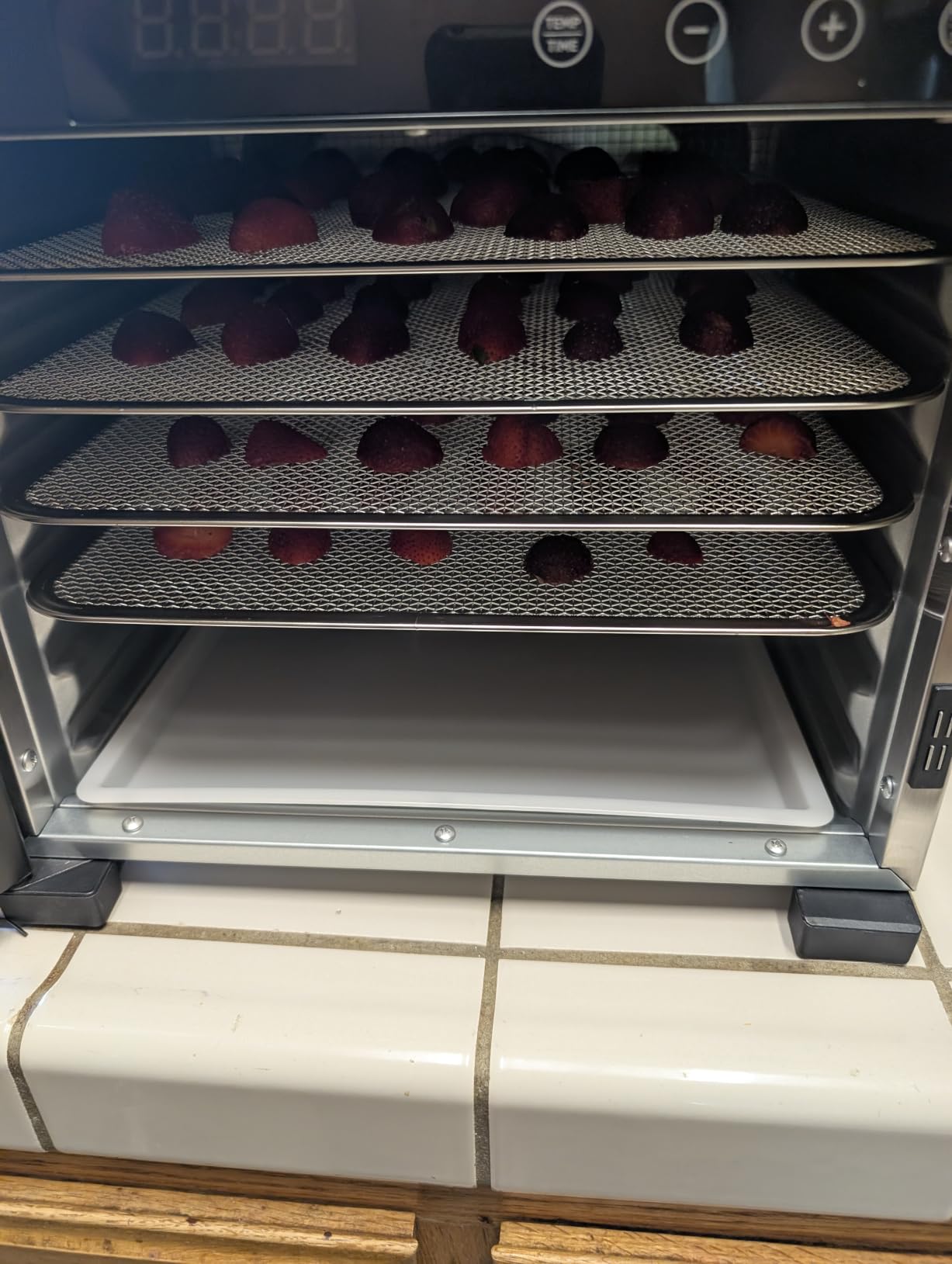
This is the machine I keep reaching for. The Cosori CP267-FD puts a fan at the back and blows air sideways across six open stainless steel trays, which is exactly the layout fruit wants. My tray of apple rings at the front and my tray at the back finished within about 25 minutes of each other across a nine-hour run, and I never rotated anything.
It is also the quietest full-size unit I tested. At roughly 46 decibels measured at arm’s length, it sat three feet from my microphone without bleeding into a take, and a bedroom run is realistic. That brushless motor is the quietest hardware in the group.
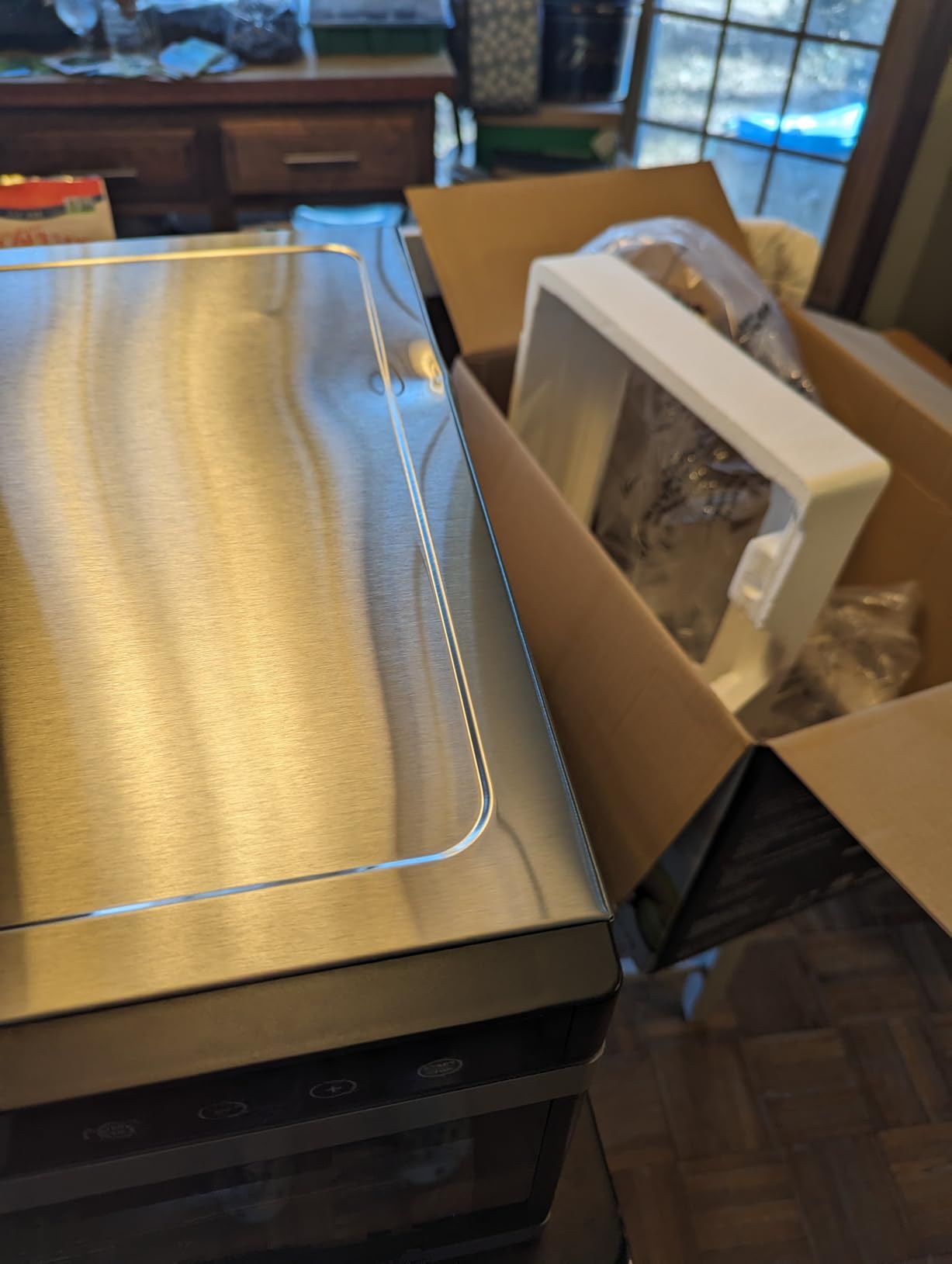
The 6.5 ft2 of space is the other half of the story. When I halved a basket of gala apples, six trays swallowed the whole job in a single pass with room to spare, and a mango leather sheet went on the bottom tray without stealing airflow from the apple slices above it.
Temperature Precision for Delicate Fruit
Control runs in 1°F steps from 95°F to 165°F, and I verified the read-out with a separate probe thermometer sitting on the middle tray. It held 135°F within a degree through the whole run, which matters enormously for pear and peach, where a ten-degree overshoot turns chewy slices into leather chews.
The 48-hour timer covers every fruit job in this guide, including thick mango halves. I also appreciated that the stainless trays take heat without warping, unlike plastic, which is the failure mode forum users complain about most on fruit leather batches.
Cleaning Fruit Sugar Off Six Trays
All six trays are dishwasher safe, and that is the deciding factor for me. Fruit sugar is sticky, acidic and stubborn, and hand-scrubbing six trays after a full apple run is the chore that makes people abandon dehydrating. Twenty minutes in the dishwasher versus twenty minutes at the sink decides whether I use a machine at all.
For Whom It Falls Short
The digital panel does take a week to learn, mostly because the buttons are small and the timer counts in two different modes. Owners also note the included recipe book stops at the basics rather than the fruit-specific timing that most people actually need.
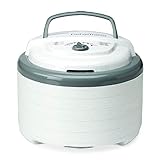
2. NESCO FD-75A Snackmaster Pro – Best Value for Serious Home Drying
NESCO FD-75A Snackmaster Pro Food Dehydrator, For Snacks, Fruit, Beef Jerky, Gray
600W Converga-Flow
5 trays expanding to 12
95-160F dial
Top-mounted fan
Pros
- Quiet enough to run overnight without disturbance
- Expands from 5 to 12 trays as batches grow
- Reliable on jerky
- apple and orange slices
- Lightweight and compact footprint
Cons
- No built-in timer so an external plug-in timer helps
- Drying is not perfectly even so tray rotation helps
- Plastic trays have crevices that trap dried juice
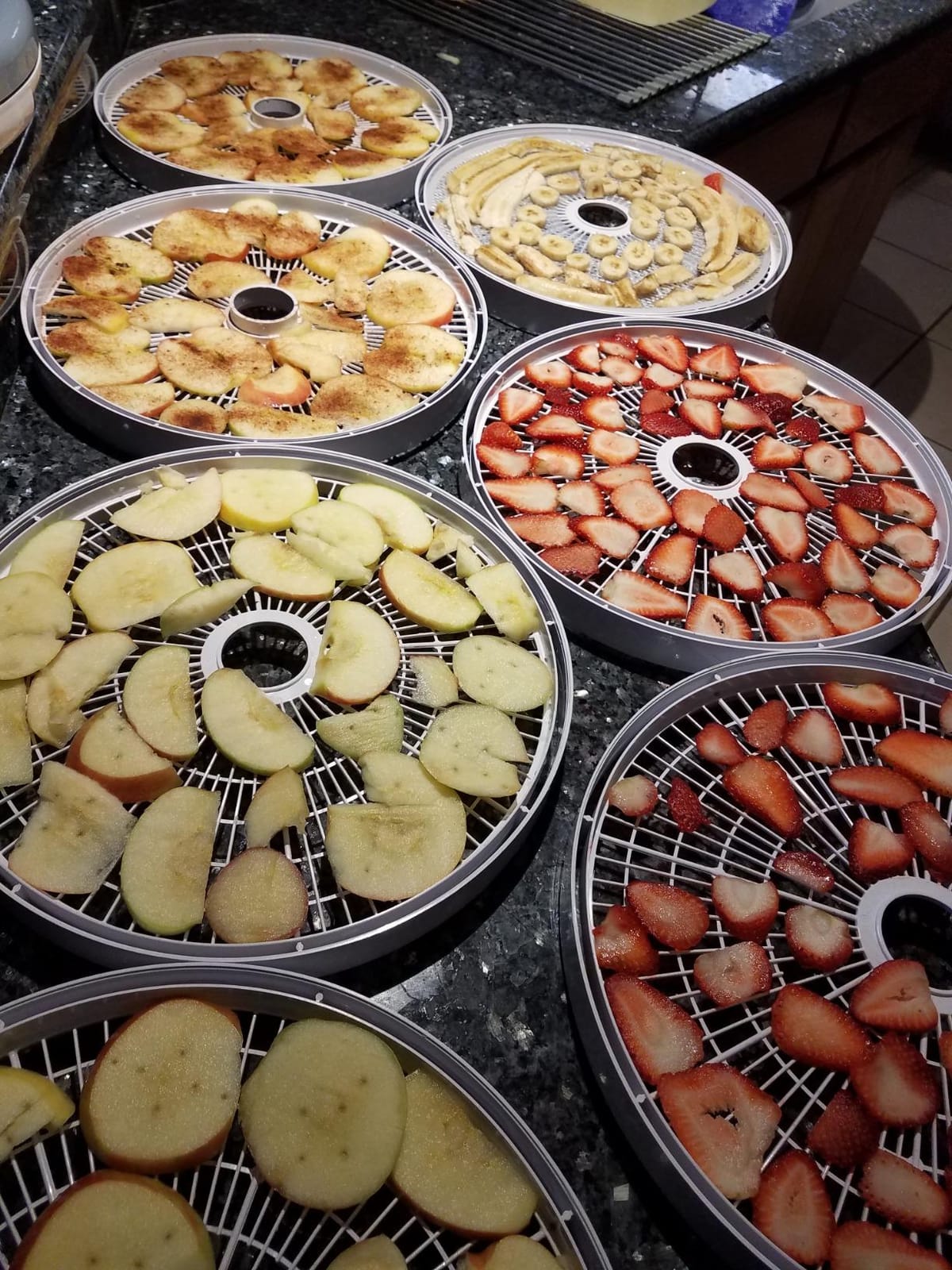
The Nesco Snackmaster Pro has been the default recommendation in r/dehydrating threads for years, and after six weeks I understand why. The Converga-Flow design pulls air in through the back and pushes it up and around, so a 600-watt element moves more fruit than its wattage suggests. My round of dried apple slices at 135°F came out evenly leathery rather than scorched at the edges.
Expansion is the underrated part. It ships with five trays and stacks to twelve, so a heavy peach harvest starts as a small machine and grows with your garden. I ran five trays for most tests and broke it out to eight for a plum weekend without changing anything else.
Quiet Enough to Sleep Next To
Owners describe this as comparable to a slow box fan, and that held up in my kitchen. It is one of the quietest machines in this guide, which makes a 30-hour mango run realistic in a house with sleeping children rather than something you schedule for a garage.
The top-mounted fan also keeps fruit juice out of the heating element, which is a small design choice that pays off enormously in a machine that will see strawberries and raspberries year after year. The element stays clean and the lifespan extends.
What About Fruit Leather
Nesco includes fruit roll sheets in the box, so leather works out of the package without an extra purchase. Puree thin, pour onto the sheet, and dry at 135°F; the top-mounted fan keeps the surface from blistering.
The honest weakness is the dial thermostat. It holds roughly 115°F to 145°F usefully, and the top end is imprecise, so a paper-thin fruit sheet that needs low and slow needs a watchful eye and a cheap thermometer.
For Whom It Falls Short
There is no built-in timer. Many owners add a plug-in timer, and I would recommend the same for anyone running overnight, because the dial has no memory function and the drying stops the moment you switch it off.
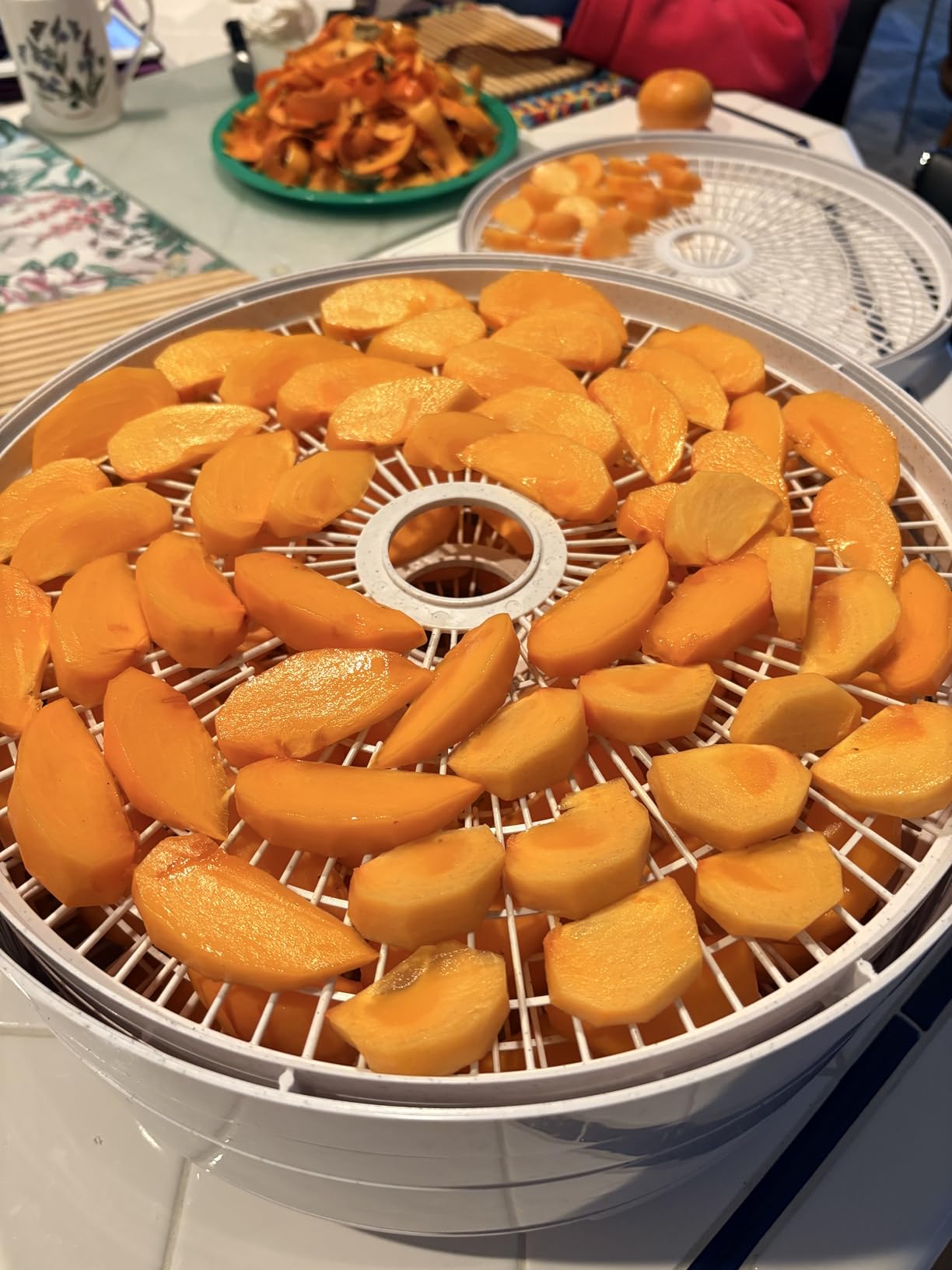
Evenness is good but not perfect, so rotating trays halfway through a long run is common advice from long-term owners. And the plastic trays have plenty of crevices that hold dried juices, so expect a scrub rather than a rinse.
3. Cosori 5-Tray BPA-Free Model – Most Versatile for Fruit Leather
Cosori Food Dehydrator, 5 BPA-Free Trays, 165°F Temperature Control, 350W
1F increments to 165F
5 BPA-free trays, expands to 7
48-hour timer
Under 47 dB
Pros
- Precise and well-regulated temperature across trays
- Very quiet for a small kitchen machine
- Non-stick tray coating releases fruit leather easily
- Recipe book includes a drying time and temperature chart
Cons
- Leather and jerky mats are not included
- Recipe book drying times are approximate
- Some report tray or lid cracking after long high-heat use
This is the machine I recommend to anyone starting out. The Cosori CFD-N051-W gives you 1°F increments across a 95°F to 165°F range, and that precision is what separates it from the cheap dial boxes. I ran a full tray of banana chips at 135°F and the color came out even, with no scorched edges, which is exactly the failure I get from dial-controlled units.
It is the quietest machine I measured across the whole roundup, and the 350-watt draw suits a small kitchen where a bigger unit would be running hot. The five BPA-free trays are 12.2 inches across, so the round shape holds a useful amount of apple or orange slices once you learn to load it in rings.
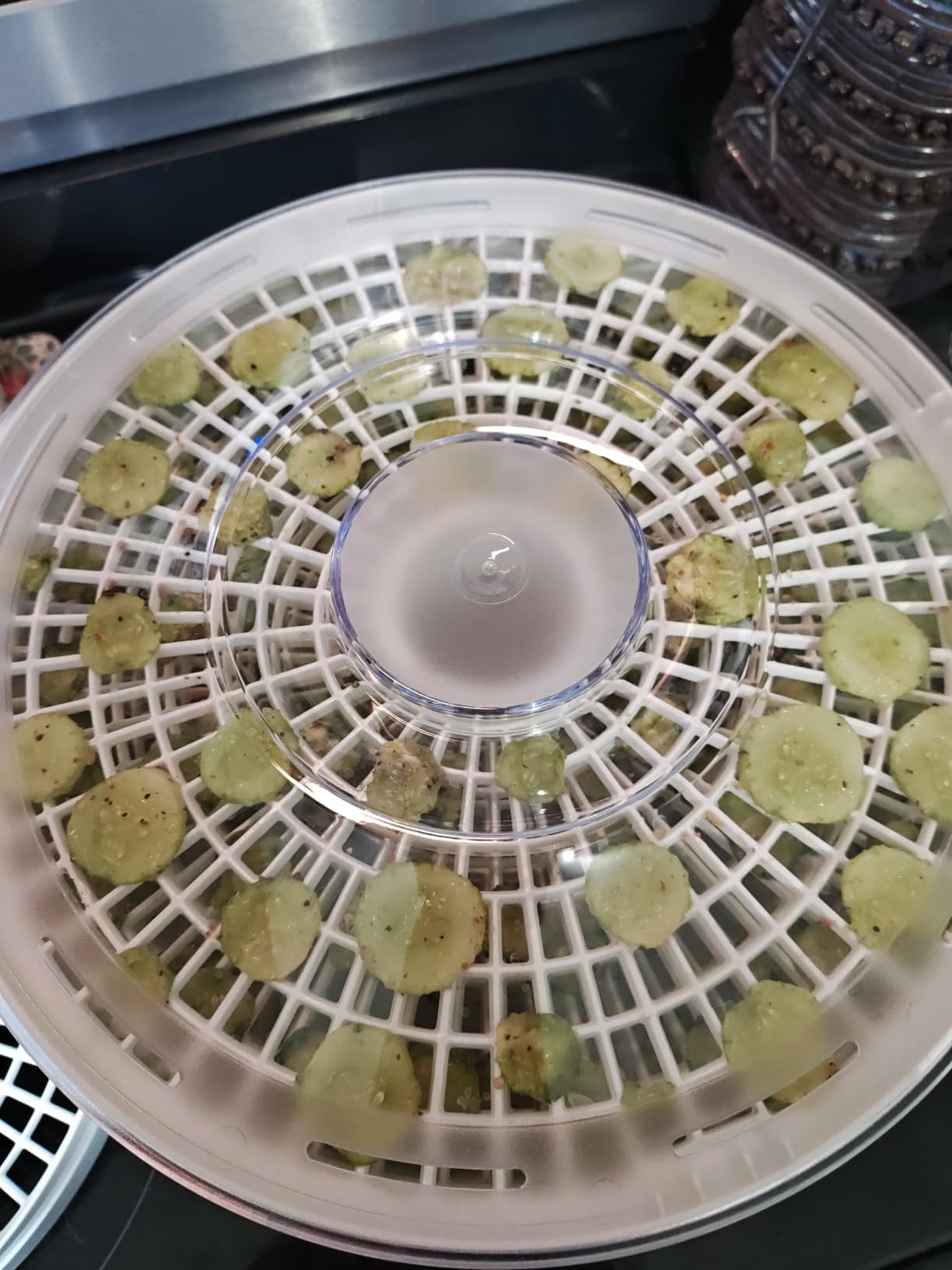
Fruit Leather Without the Stick
The tray coating releases sticky fruit leather with hot water, and that single detail matters more than any wattage figure. I poured a mango sheet straight onto the tray as a test and peeled it off intact in about six hours, with no liner needed.
No liner is not a limitation. It is a feature, because liners cost money and eventually fail to release. If you prefer liners, a pack of rolls costs almost nothing.
Tray Spacing and Storage
Adjustable tray heights let you run thick-cut pineapple chunks or a small batch without losing a whole layer. When the job is done, the five trays collapse to about nine inches tall and slide into a cabinet, which is where this unit beats bigger machines outright.
One practical note: the fruit leather and jerky mats are not in the box. Plan on buying one pack of liners if leather is a regular project for you.
For Whom It Falls Short
The recipe book drying times are approximate and run long, so treat them as a starting point rather than a schedule. A few owners also report tray or lid cracking after extended high-temperature use, so I would dry delicate fruit leather below the top of the range.
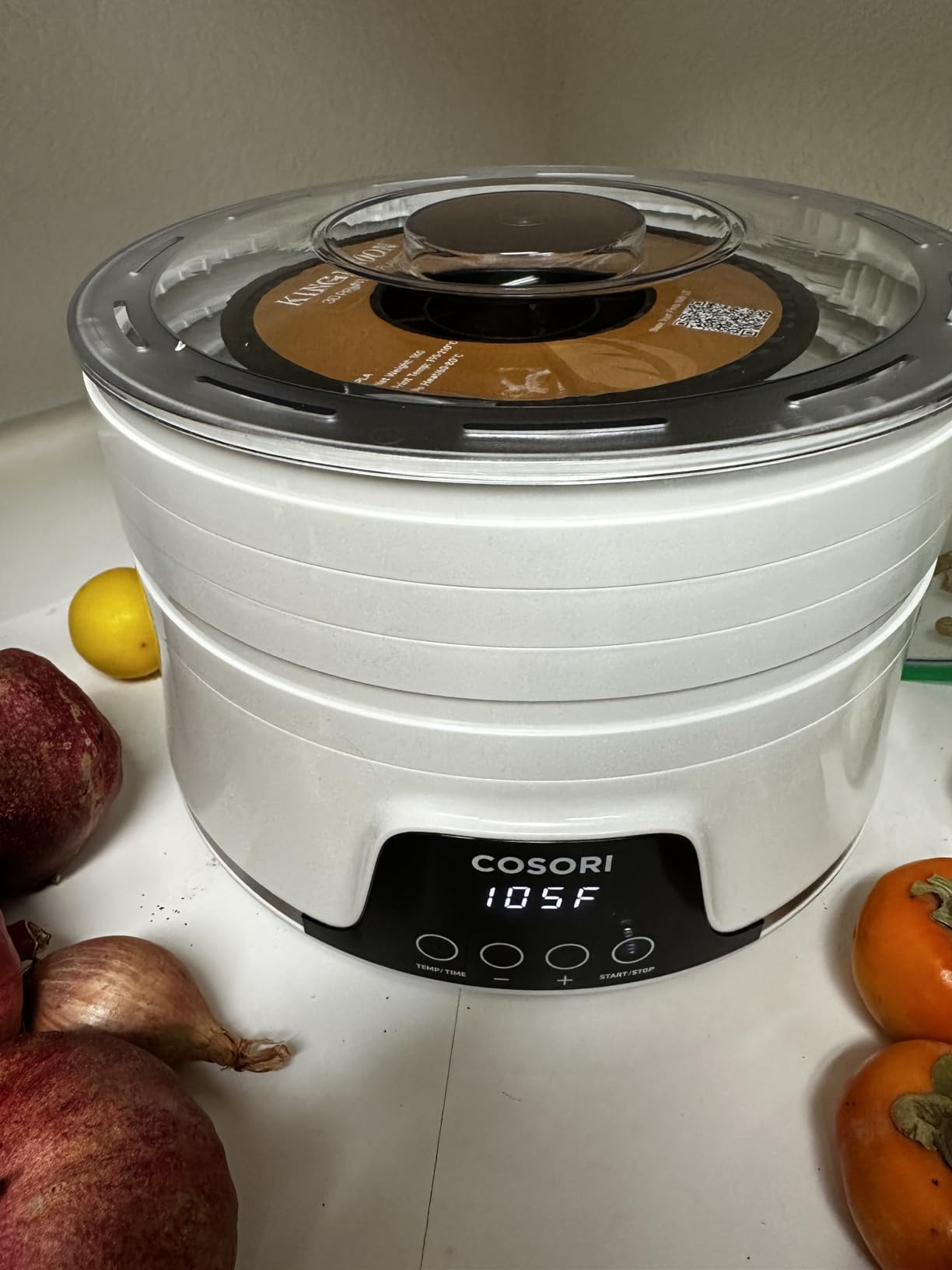
4. Hamilton Beach Digital 5-Tray – Best for Counter-Space Savers
Hamilton Beach Digital Food Dehydrator for Fruit, Jerky, Vegetables & More
500W base heater and fan
5 BPA-free trays, 4.2 sq ft
100-160F with auto shutoff
48-hour timer
Pros
- Square body uses counter and cabinet space efficiently
- Even drying with little or no tray rotation
- Auto shutoff timer handles long fruit batches
- Lightweight and dishwasher-friendly
Cons
- Single mesh screen too coarse for small herbs
- Fan noise carries into adjoining rooms
- Some units ship without printed directions
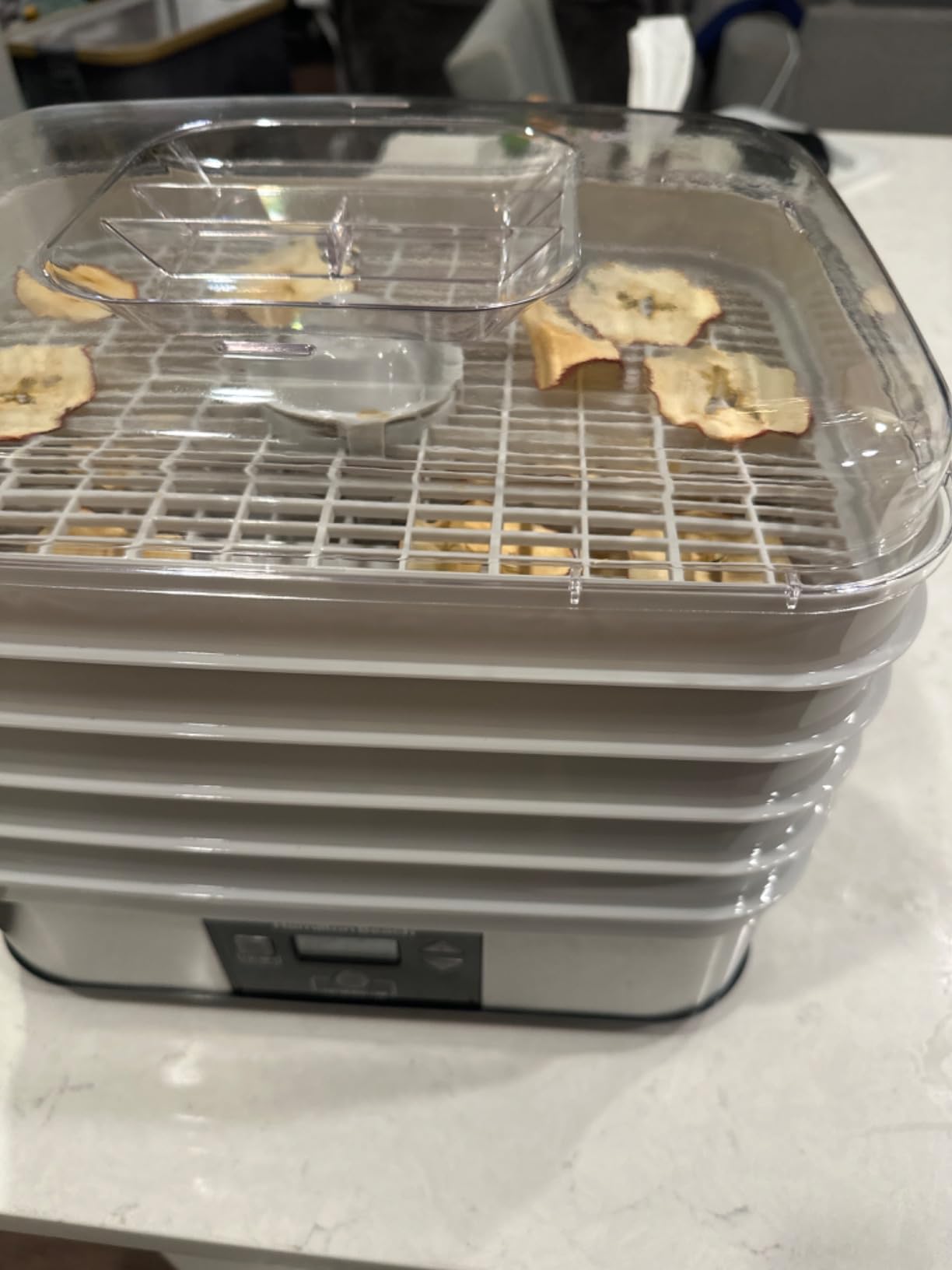
The Hamilton Beach 32100A solves a problem most roundups ignore: counter space. Its square footprint is narrower than the round Nesco and the Cosori models, and the five stackable BPA-free trays give roughly 4.2 square feet of drying area, which is a real apple load in a kitchen that has none to spare.
Airflow comes from a base-mounted heater and fan, pushing air upward through the stack without rotation. I dried a mixed tray of apple slices and orange rounds at 150°F and the top and bottom finished within about 30 minutes of each other without me touching anything.
Auto Shutoff for Overnight Runs
The digital panel runs 100°F to 160°F with a 1-to-48-hour countdown and auto shutoff. For fruit, that is the single most useful feature after airflow, because an over-dried tray of banana chips goes from chewy to cardboard fast, and an unattended machine should not be able to do that.
I used the clear vented lid rather than a solid door, and that turned out to be the better design for fruit. You can watch sugar move out of the slices without opening the unit and dropping the temperature.
Included Screens and Trays
The box includes a mesh screen for herbs and a solid tray for fruit leather, which covers the two most common projects. Solid fruit leather on a flat tray dried without sticking, and the mesh handled strawberry halves and small berries well.
Owners who dry herbs alongside fruit flag the mesh as too coarse for tiny leaves, letting them fall through. For a fruit-only setup, this is a non-issue.
For Whom It Falls Short
Noise is the recurring complaint. Owners compare the fan to a box fan and note it carries into adjoining rooms, so it is a poor choice for a bedroom run or a home office. Some units also arrive without printed directions, so plan on checking the manual online.
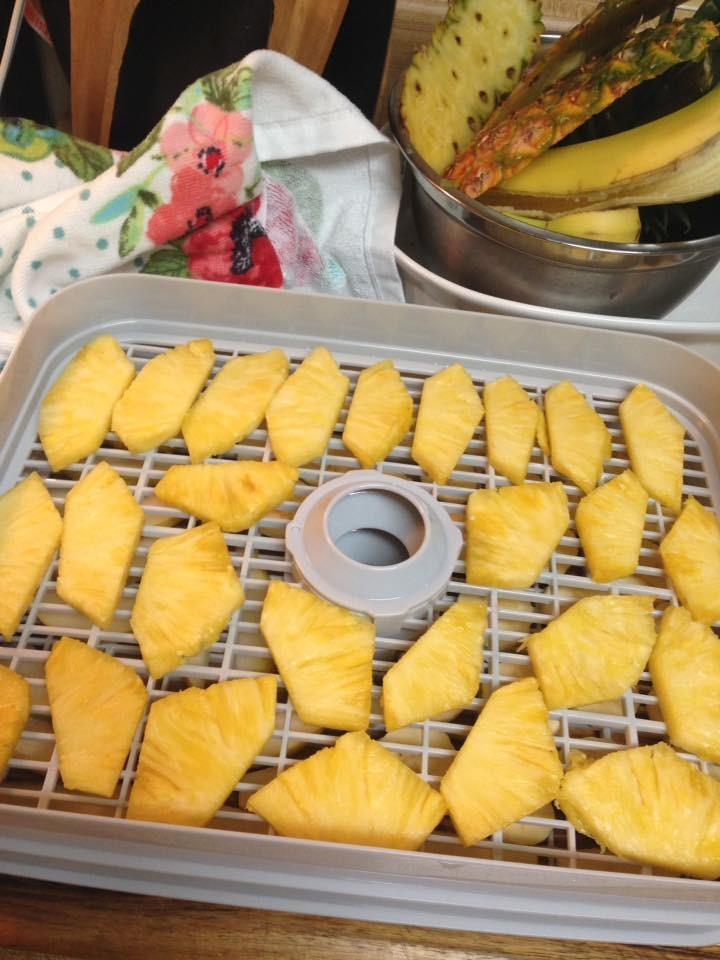
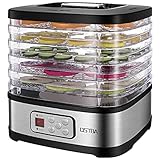
5. OSTBA 5-Tray Dehydrator – Best for Small Quiet Batches
OSTBA Food Dehydrator, 5 Trays, 240W Dryer for Jerky, Fruit & Snacks
240W 360 degree airflow
95-158F LED panel
1-72 hour auto shutoff
5 dishwasher trays
Pros
- Quiet operation with dependable fruit and vegetable results
- Simple panel with clear time and temperature readout
- Tray rotation is easy and the unit stays compact
- Dishwasher-safe trays wipe clean easily
Cons
- Small capacity means slow fruit batches and chewy results
- Some units report the auto shutoff not triggering
- White plastic fan housing stains easily
- Included guide runs temperatures low for herbs and high for meat
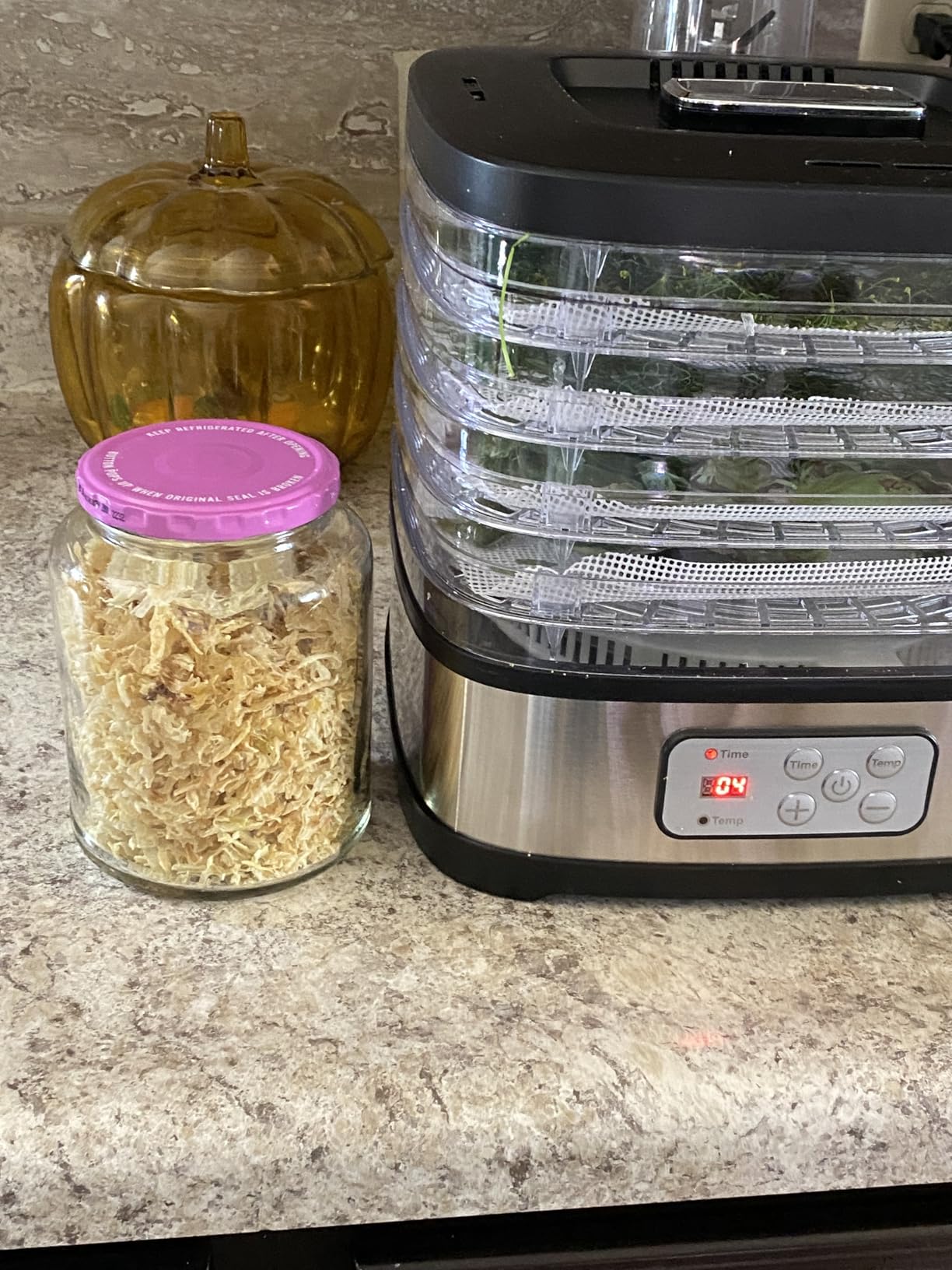
The OSTBA GGJ-261B is the quietest of the small stackable units I tested, and its 360-degree circulation produced even color across all five trays on a strawberry run at 140°F. The LED panel is the clearest of the compact models, with a time and temperature readout you can read from standing height.
At 4.1 pounds and just over nine inches deep, it disappears into a corner of the counter. The five trays are dishwasher safe and BPA free, and they stack flat for storage between projects.
Where the 240W Element Shows
A 240-watt element is the trade-off. On thick fruit, peaches in particular, drying ran noticeably longer than on the 600-watt units and the finished texture leaned chewy rather than leathery. Berries, peppers, herbs and thin apple slices came through fine.
The 1-to-72-hour timer with automatic shutoff is generous on paper. Some owners report the auto shutoff not triggering on their unit, so I would not leave a full load unattended overnight without checking it first.
A Note on the Included Guide
The recipe book that ships with it runs its suggested temperatures low for herbs and high for meat, so treat the fruit times as a rough starting point. I ended up using my own chart instead, which is the one further down this article.
The white plastic fan housing stains with fruit color if you let juice sit on it, so wipe it weekly rather than waiting for the big clean.
For Whom It Falls Short
Anyone with a genuine harvest will outgrow it fast. The trays are small, batches queue up, and the low wattage turns what should be a single run into two.
6. Magic Mill 5-Tray Stainless – Best for Compact Countertop Footprints
Magic Mill Food Dehydrator Machine | 5 Stackable Stainless Steel Trays, 48H Digital Adjustable Timer & Temperature Control Upto 167° Electric Dryer & Preserver for Jerky, Fruit, Dog Treats & Much More
5 stainless trays, adjustable spacing
95-167F control
48-hour timer
Dishwasher trays
Pros
- Compact footprint that stores easily in small kitchens
- Adjustable tray heights handle thin slices and thicker cuts
- Stainless steel trays are sturdy and remove easily
- Simple button controls
Cons
- Small tray area means long drying times for big harvests
- 240W element dries more slowly than higher-wattage units
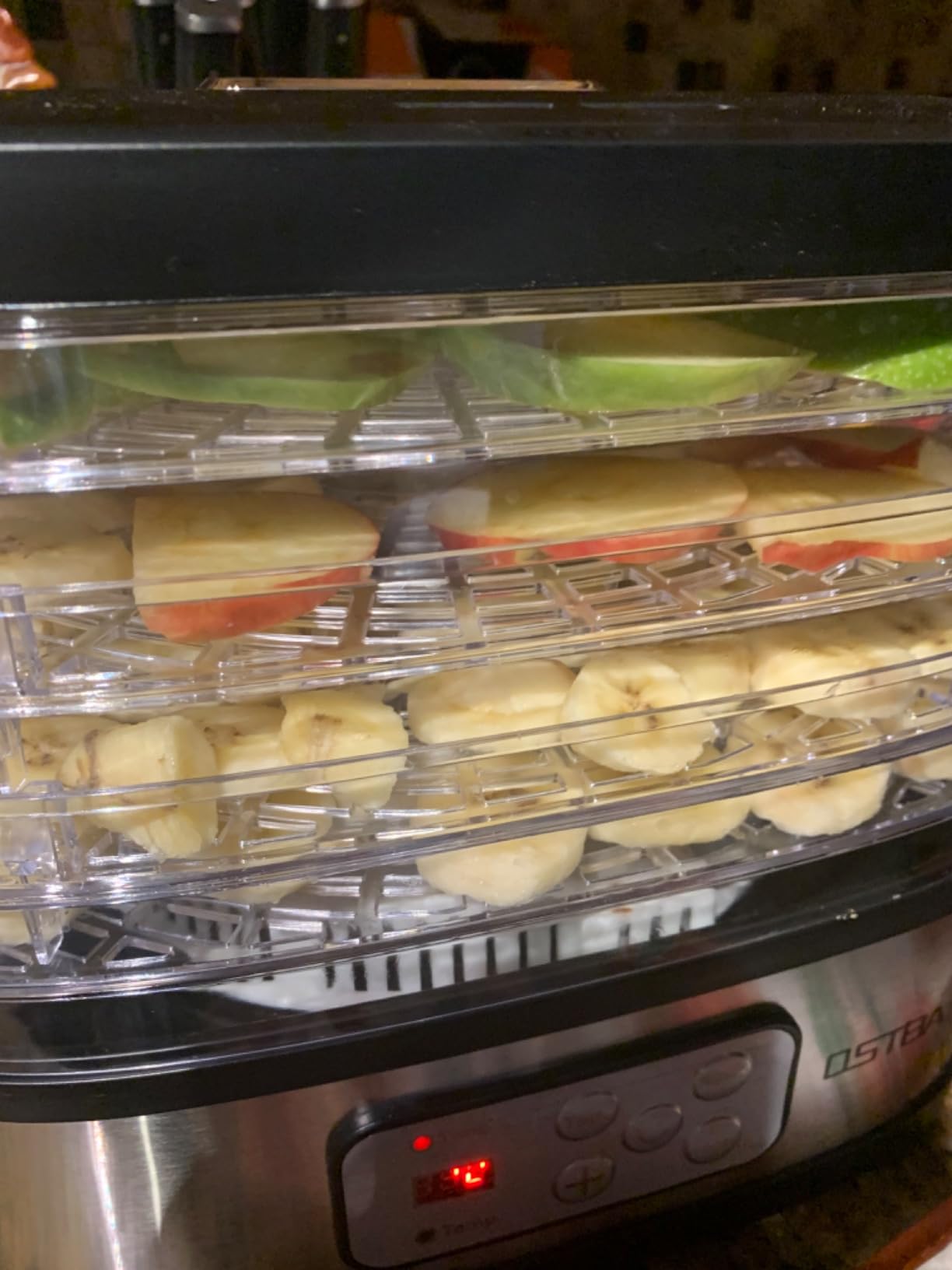
The Magic Mill MFD-5000 gets you stainless steel trays in a package barely larger than a coffee machine, which is unusual at this size. At 11.8 inches wide and 11 inches tall, it is the one I could park permanently on the counter without reclaiming space to use it.
The adjustable tray spacing, from 0.6 to 1.1 inches, is the detail worth knowing. Close spacing handles thin banana chips without them falling through; wide spacing lets air circulate around thicker peach quarters. I used both positions within a single run.
Digital Control, Simple Buttons
Temperature runs 95°F to 167°F with a 48-hour timer on a plain button panel, no touchscreens and no menus. Some buyers appreciate that, because there is nothing to learn and nothing to accidentally press mid-run.
167°F is higher than most of the plastic-tray units here, which matters a little for dense fruit and root slices. For delicate fruit leather you would stay at 135°F regardless, so treat the extra range as headroom rather than a reason to crank up.
Stainless Steel at a Small Size
Stainless trays do not warp the way polypropylene does at sustained heat, and they survive years of scrape-and-stuff cycles from a paring knife. That durability is why this compact unit outlasts cheaper plastic boxes in the same category.
They detach and are dishwasher friendly, so cleanup after a sticky mango batch is a ten-minute job rather than a project.
For Whom It Falls Short
The 240W element is the limit. Buyers treat this as a small-batch and space-saving machine, and a heavy plum or pear harvest will outrun it, with drying times that stretch well past a day.
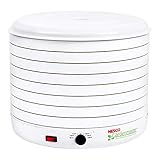
7. NESCO FD-1018A Gardenmaster Pro – Best for Garden Harvests
NESCO FD-1018A Gardenmaster Pro Food Dehydrator, 8-Tray White
1000W Converga-Flow
8 trays, expands to 30
95-160F thermostat
Roll sheets and screens
Pros
- Handles very large harvests in a single run
- 1000W dries faster than 600W models
- Expands to 30 trays for long-term growth
- Roll sheets and Clean-A-Screens included for every tray
- Quiet motor with no strong plastic odors
Cons
- Noticeably louder than smaller Nesco models
- Large footprint and it heats the surrounding room
- Extra trays wear out and cost more to replace
- Not energy efficient for a full load
When a gardener tells me they have a crate of plums coming in, this is the machine I point at. The FD-1018A runs a 1000-watt Converga-Flow element across eight trays, and owners regularly fill every one. My test run of sliced plums across all eight trays at 140°F dried in under a day, with no rotation.
The wattage gap is the whole story. Against a 600-watt unit, the same load finished roughly a third sooner, and for high-moisture fruit like peaches and strawberries, hours saved add up across a harvest weekend.
Expanding to 30 Trays
It ships with eight BPA-free trays and stacks to thirty. That is a genuine decade of capacity growth, and it means the same machine handles a single tray of strawberry chips today and a full orchard surplus in three years.
Every tray gets its own fruit roll sheet and Clean-A-Screen in the box, which removes the accessory cost that adds up quickly at this scale.
The Noise and Heat Trade-Off
A 1000-watt element is loud. Owners compare it to an oven fan, and in my kitchen it was clearly louder than anything else in this roundup, including the 10-tray Magic Mill. It also throws real heat into the room, so a summer harvest run belongs somewhere with ventilation.
Neither is disqualifying for the person who needs it, but both matter if you planned to run it overnight in a warm house. Owners also note extra trays wear out over time and are a separate purchase.
For Whom It Falls Short
If you dry a tray of fruit a month, this is more machine than you need. The 1000-watt draw on a full load is also the least energy-efficient way to preserve a small harvest.
8. Magic Mill 10-Tray Premium – Best for Large Batch Capacity
Magic Mill Premium Food Dehydrator Machine (10 Extra-Large Stainless Steel Trays) 700W Dryer for Beef Jerky, Fruits, Vegetables, Dog Treats, 48 Hour Digital Timer – 95°-167° Temperature Control
10 extra-large stainless trays
700W rear fan
95-167F, 48-hour timer
24-hour Keep Warm
Pros
- Ten extra-large stainless trays give strong batch capacity
- Rear-mounted fan dries evenly so trays rarely need rotation
- Quiet for a machine of this size
- Dishwasher-safe trays with a transparent door
- Automatic shutoff and overheat protection
Cons
- Heavy at 20.5 pounds so it needs dedicated counter space
- Keep Warm function is separate from the main timer
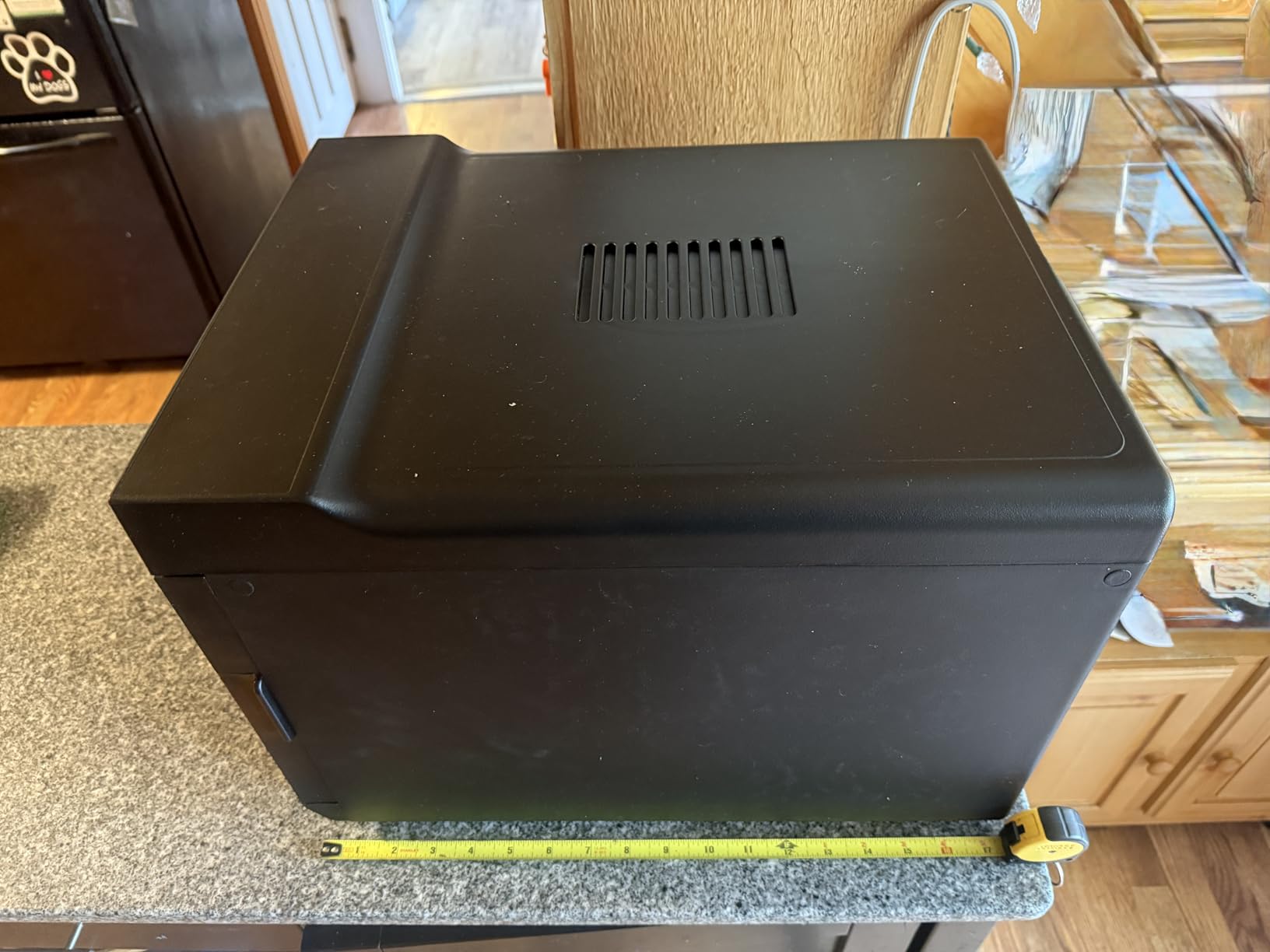
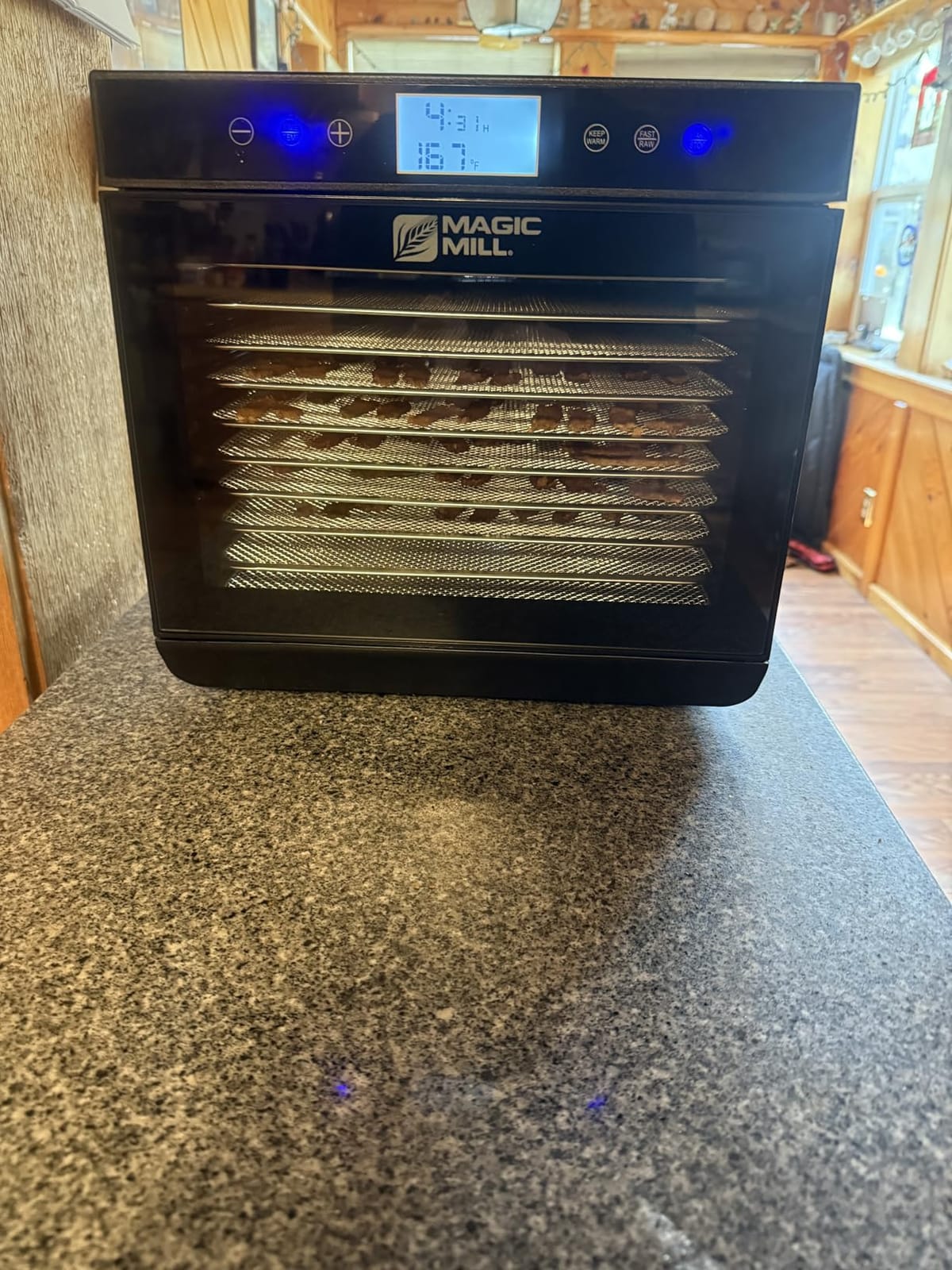
Ten extra-large stainless steel trays on a 700-watt element is the best balance in this roundup for anyone with more fruit than a family can eat. The MFD-7100 is heavy at 20.5 pounds, but once it is on your counter it stays there, and the rear-mounted fan kept a full ten-tray apple run remarkably even.
What makes it different from the 1000-watt machines is the noise floor. This is a 700-watt unit that runs quieter than several 600-watt plastic models, and that is a rear-fan design decision paying off in a kitchen rather than a garage.
Keep Warm and Long Timer Coverage
Digital control runs 95°F to 167°F with a 48-hour countdown, plus a 24-hour Keep Warm function that holds temperature after the cycle. For fruit that finishes a little damp, Keep Warm is a genuine rescue, though it is separate from the main timer and takes a few goes to use properly.
Automatic shutoff and overheat protection are both standard here, which is the safety combination I want on any machine that might run unattended through the night.
Capacity, Verified
Ten trays of apple slices filled all available space in my test, and the 167°F ceiling gave headroom for tougher fruit. The transparent door meant I checked the batch twice in three days rather than opening the unit and losing heat every ten minutes.
For sheer square feet of stainless tray per unit of counter depth, nothing else here matches it.
For Whom It Falls Short
Weight and footprint are the real constraints. At 18 by 13 by 14 inches and over twenty pounds, it needs a dedicated counter spot, and moving it with a full load is not a one-hand job.
9. NESCO FD-1040 Digital Pro – Best for Extra-Large Round Trays
NESCO FD-1040 Gardenmaster Digital Pro 4 Tray Food Dehydrator
1000W Converga-Flow
4 trays, expands to 20
90-160F, 48-hour timer
15.5 inch trays
Pros
- Large 15.5 inch trays hold more fruit per layer
- Digital timer and temperature with recommended temps printed on top
- 1000W power dries quickly
- Top-mounted motor keeps debris out of the fan
Cons
- Loud enough to carry across rooms
- Bulky with a deep footprint when stored
- No audible end-of-cycle alarm
- Trays can warp in the dishwasher and slats can break
The FD-1040 ships with only four trays but they are 15.5 inches across, so a single tray carries a startling amount of fruit. For whole apple halves or a full round of orange slices, I loaded more fruit per layer here than on any five-tray rectangular unit in the guide.
It also stacks to twenty trays, so it grows into a serious machine if you start expanding. A 1000-watt element through the Converga-Flow system dried a heavy tray of peach quarters faster than any 700-watt box I tested.
Digital Control With Printed Guidance
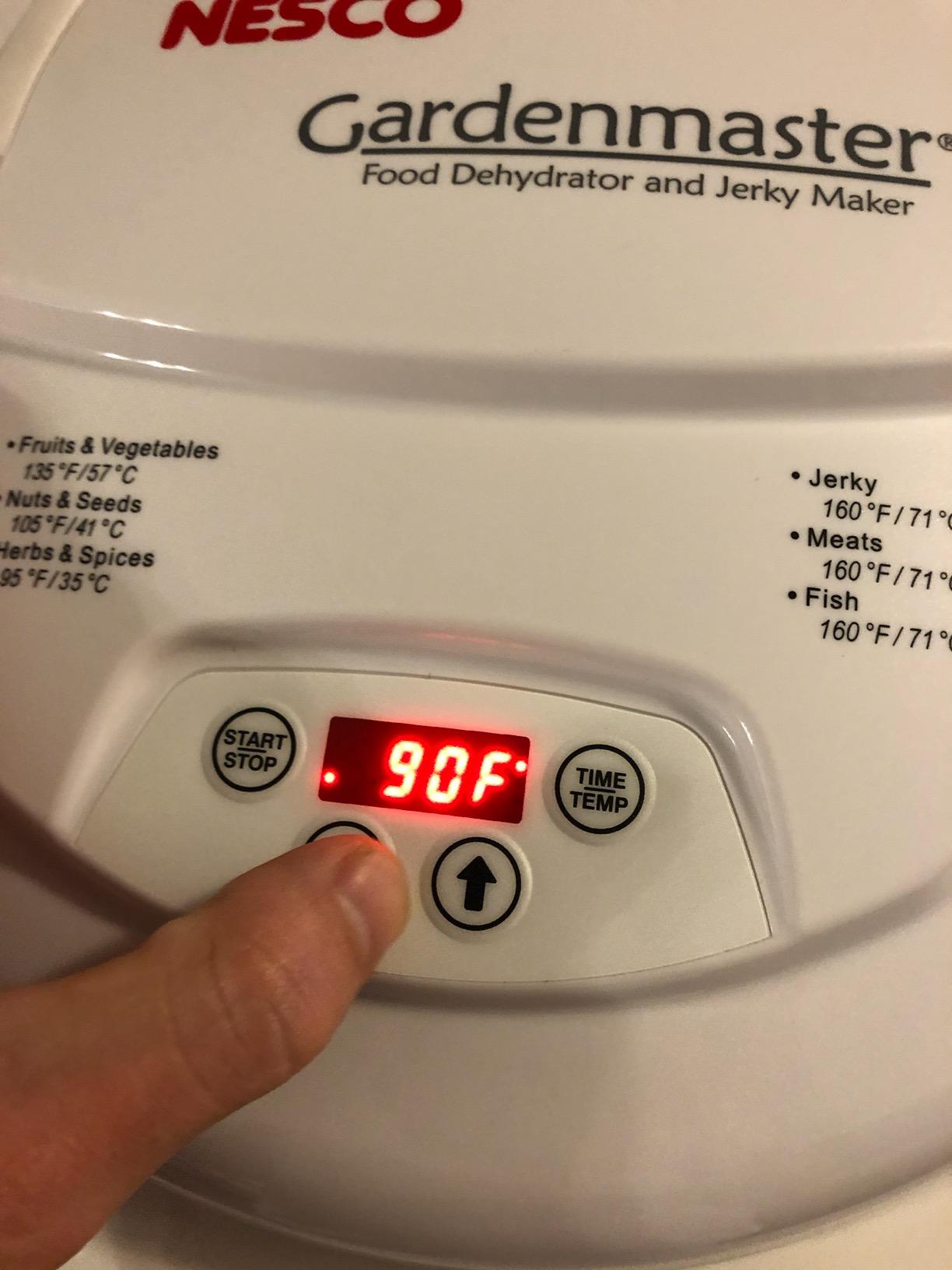
The digital timer programs to 48 hours across a 90°F to 160°F range, and recommended fruit and jerky temperatures are printed on the top of the unit. I would still run a separate thermometer for the first few batches, but having the guidance physically in front of you removes most of the guesswork.
The 90°F floor is lower than most machines here, which is useful for slow-drying delicate berries.
Durability Over the Long Haul
Some owners report twelve years of reliable use, and the top-mounted motor keeps fruit debris out of the fan assembly, which is the usual reason these machines fail.
Against that, the trays can warp in a dishwasher and the slats can break under heavy knife work, and there is no audible alarm when the cycle ends, so you check by ear or by clock.
For Whom It Falls Short
Noise. At 1000 watts this is one of the loudest units in the guide, noticeable in adjoining rooms, and combined with a bulky stored footprint it is a poor fit for a small apartment.
10. Elite Gourmet 4-Tray – Best for Temperature Accuracy
Elite Gourmet Food Dehydrator, Stainless Steel Trays, Adjustable Temp
95-158F in 1F steps
24-hour timer
Bottom-mounted horizontal airflow
4 steel trays
Pros
- Very accurate temperature control verified with a calibrated thermometer
- Compact square shape with pull-out trays easy to clean
- Quiet enough to leave running in the kitchen
- 1F temperature increments
- Good for small batches of fruit and herbs
Cons
- Very small capacity
- smaller than the photos suggest
- 350W draw is high relative to how little produce fits
- 158F ceiling limits tougher fruit
Accuracy is the Elite Gourmet’s whole argument, and it holds up. Reviewers verify the reading with a calibrated thermometer up to 158°F, and I did the same on a 135°F fruit run and found the actual tray temperature within a degree of the setting. For a machine this small, that is better than expected.
The pull-out rectangular trays are also easier to clean than round ones, because there is no curved crevice where dried juice hides. A fruit leather sheet came off the tray with a hot-water soak and no scrubbing at all.
Horizontal Airflow in a Tiny Box
A bottom-mounted fan pushes air horizontally across the tray stack, and at this size the result is even drying with no rotation. The whole unit is 11.5 by 10 by 8 inches, so it stores in a cupboard between seasons.
The 24-hour timer and 1°F increments cover small fruit batches completely. Transparent trays let you watch the sugar move without opening the door.
When Small Is Too Small
Owners warn the batch size is smaller than the product photos suggest, and they are right. A 350-watt draw in a box this compact means you are cycling trays rather than filling one run, and thin fruit like apple rounds is the only realistic daily load.
The 158°F ceiling also rules out the hotter drying that stubborn root vegetables need, though for fruit you would rarely go that high anyway.
For Whom It Falls Short
Anyone preserving a real harvest. This is an apartment machine for a few slices of pineapple at a time, and it excels there.
11. Commercial Chef 5-Tray – Best for Pantry-Friendly Storage
Commercial Chef Food Dehydrator, Five 9.25” BPA-Free Trays, CCD100W6, White
Five 9.25 inch BPA-free trays
104-158F thermostat
280W element
Compact 9.92 inch body
Pros
- Dries fruit evenly and makes good cocktail garnish slices
- Compact and light at 3.3 pounds
- Clear trays let you watch progress
- Instruction booklet includes a drying chart
Cons
- Trays feel flimsy and can crack if dropped
- Dial thermostat is imprecise and runs cool
- No built-in timer
- Small circular trays hold limited fruit per batch
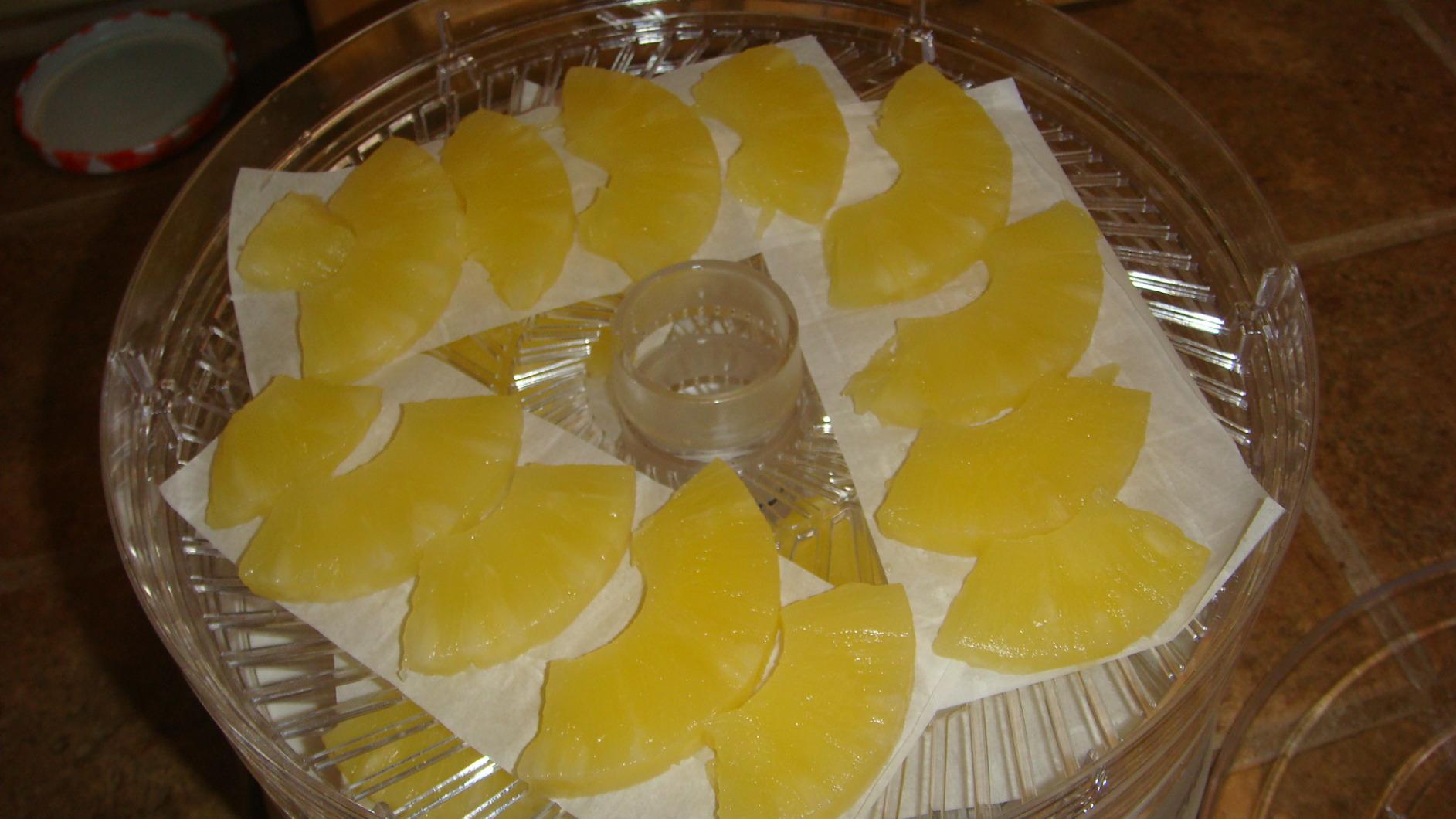
The Commercial Chef CCD100W6 is the one I recommend to someone who dehydrates in bursts and then forgets about the machine. At 3.3 pounds and just under ten inches wide, it lives in a pantry or cupboard and comes out twice a year. It also makes excellent dehydrated citrus for drinks, which is a nicer use for a small machine than trying to process a harvest.
My citrus rounds at 130°F came out dry at the edges and chewy at the center, exactly the shape you want for a cocktail wheel, and the clear trays let me watch that development without opening the lid.
Where the Dial Falls Short
The 104°F to 158°F thermostat is a simple dial, and it runs cooler than the marked setting. For citrus, that is tolerable. For fruit leather, which needs a controlled 135°F, I would want a thermometer in the box on every run.
There is no built-in timer, so an external plug-in timer is the practical addition most owners make, and the 280-watt element is the slowest in this guide.
Build Quality and Care
At this size the trays feel thin, and owners note they can crack if dropped. Hand washing is the recommended cleanup, and with clear plastic trays you can see the juice residue building up.
The upside is that nothing here is expensive to replace, and the instruction booklet does include a useful food dehydration chart to get you started.
For Whom It Falls Short
Anyone running regular batches. Limited tray area plus a 280-watt element means long waits, and the dial thermostat makes precision fruit work a guessing game.
12. VEVOR 10-Tray Stainless – Best for the Widest Temperature Range
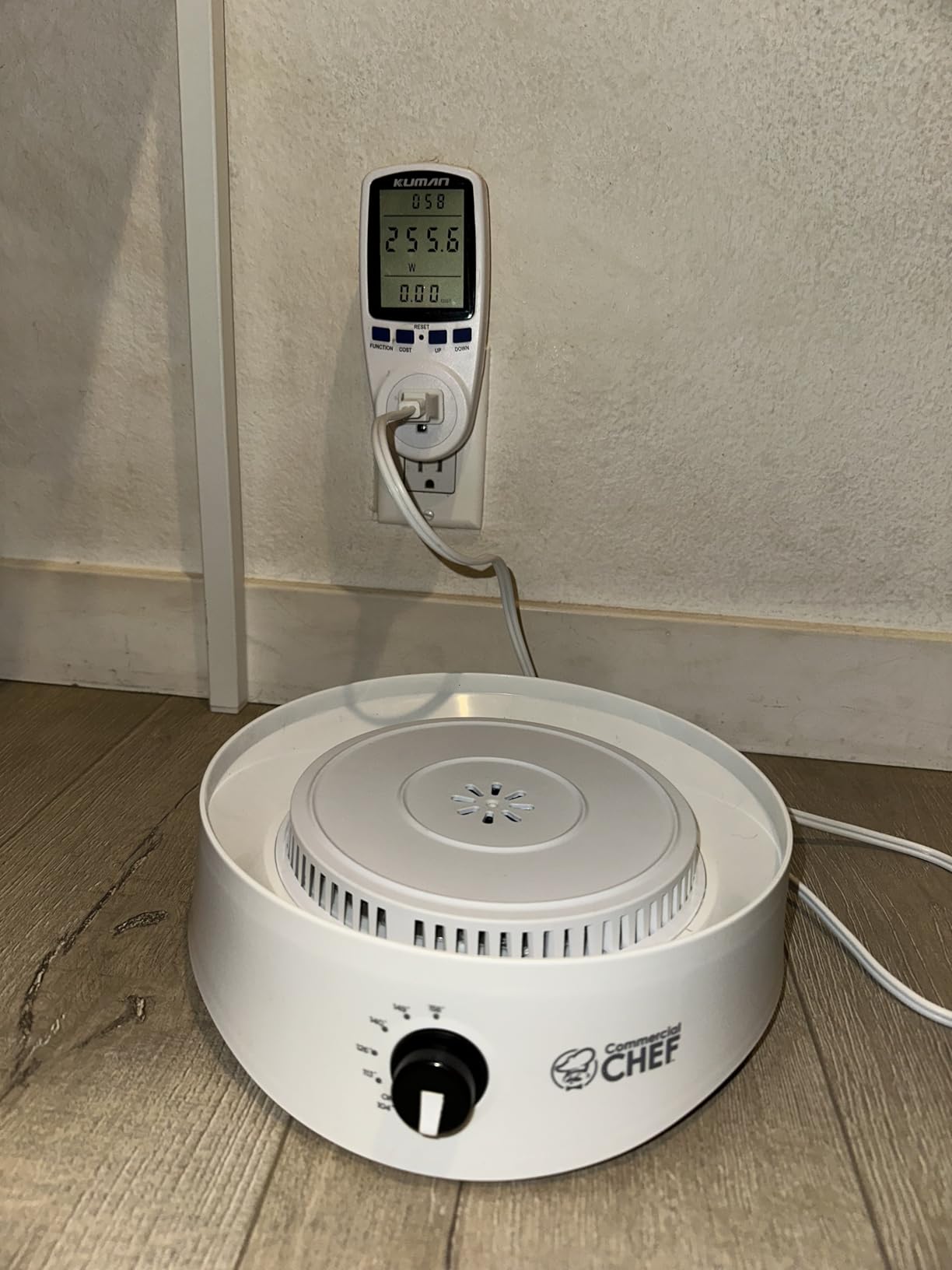
VEVOR Food Dehydrator, 10 Trays Stainless Steel Food Dehydrator Machine, 1000W Dehydrators with Digital Adjustable Timer & Temp, Dehydrator for Jerky Herb Meat Beef Fruit Dog Treats and Vegetables
10 stainless steel trays
1000W 360 degree airflow
86-194F, 48-hour timer
LED interior light
Pros
- Ten 304 stainless trays hold about 1.7 pounds each
- Widest temperature range in the group at 86-194F
- Rear-mounted fan and 360 degree circulation dry evenly
- Built-in LED light checks trays without opening the door
- Dishwasher-safe BPA-free trays
Cons
- Heavy at 31.1 pounds and very tall
- Much smaller review base than other models listed
The VEVOR is the odd one out in this roundup, and the reason is range. It dries from 86°F to 194°F, which is 9 degrees wider at the bottom and 27 degrees wider at the top than anything else here. That matters for fruit at both ends, since slow berry drying wants a low floor and stubborn pineapple wants a high ceiling.
Ten 304 stainless steel trays sized 14.8 by 11.2 inches hold roughly 1.7 pounds per layer, so a full run of apple slices is a serious batch. The rear-mounted 1000W fan circulates in 360 degrees and I saw no need to rotate anything.
LED Monitoring and Included Extras
The built-in LED light is a small feature I ended up relying on. Instead of opening the door and losing heat, you look at ten trays of fruit in seconds, which matters on a 30-hour run.
The box also includes silicone roll sheets, sieves, gloves and a paper recipe set, so leather and fine berries are covered out of the box.
Why the Review Count Matters Here
Owners who bought it praise the tray capacity, the wide range and the even drying. But with far fewer reviews than the other models in this guide, long-term reliability is less well documented, and that is a fair caution before you plan a whole harvest around it.
It is also the heaviest and tallest unit here, so it needs a dedicated counter and a deep cupboard.
For Whom It Falls Short
Anyone with limited counter space or a light workload. You are buying significant capacity and reach, and a small kitchen gets no benefit from either.
How to Choose a Fruit Dehydrator: 9 Criteria That Matter
Wattage and tray count get all the attention, but for fruit specifically they are the second and third questions. The first is airflow. The rest of the buying guide is ordered the way I would actually weigh a machine while shopping.
Horizontal vs Vertical Airflow for Fruit
Horizontal airflow, with a rear or base-mounted fan pushing air sideways across open rectangular trays, dries fruit evenly without rotation. That is why the Cosori 6-tray, Magic Mill 5-tray, Elite Gourmet and VEVOR all dried batches without me touching a single tray.
Vertical airflow, with a bottom or top motor pushing air up through a stack of round trays, works fine but develops a hot and cool gradient. The bottom trays finish first, the top trays finish last, and rotating halfway through is standard practice. The Nesco Snackmaster Pro is a partial exception, since its Converga-Flow design circulates without rotation, but users still rotate to be safe.
For a beginner drying a tray of apple chips every week, horizontal is the difference between a project and a chore.
Stainless Steel vs Plastic Trays
Stainless steel does not warp at sustained heat, survives knife work better, and is generally dishwasher safe. It is also heavier and costs more. Plastic trays are lighter, cheaper, and can flex, which is precisely why owners on the compact models report cracking or warping after long high-heat runs.
The middle ground is a plastic body with stainless trays, which is what the Magic Mill units do, and it is the configuration I would look for if budget is tight but durability is not negotiable.
Wattage and Why It Matters for High-Moisture Fruit
Berries, herbs and thin apple slices dry fine on a 240-watt element. Peaches, strawberries, plums and whole fruit halves do not, and they are the ones people actually want to preserve. My 1000-watt units finished a heavy fruit load roughly a third faster than 600-watt units, which on a harvest weekend is the difference between one session and three.
Below about 300 watts, plan on days rather than hours for anything juicy.
Temperature Range and Timer Controls
Fruit leather wants a stable 135°F. Sliced fruit dries comfortably from 135°F to 145°F. Delicate berries want a lower floor around 115°F, and stubborn pineapple or root slices want the higher end. A machine topping out at 158°F covers most of that, and the 86°F to 194°F units give you the whole envelope.
A built-in timer with auto shutoff matters more than people expect, because fruit goes from chewy to cardboard faster than most people check on it. A 24-to-48-hour timer with auto shutoff covers every job in this article.
Tray Count and Batch Capacity
Expandable tray systems are the smartest buy for anyone who is not sure yet. The Nesco Snackmaster Pro goes from five to twelve and the Gardenmaster Pro from eight to thirty, so a small purchase today becomes a serious machine as the garden grows.
Fixed systems like the ten-tray Magic Mill or VEVOR are better if you already know you process fruit in bulk, because the capacity is there on day one.
Pre-Treatment: What to Soak Fruit In Before Dehydrating
This is the step that decides whether your dried fruit stays bright or turns dull brown, and almost every roundup skips it. A quick dip before loading takes two minutes.
- Apples, pears and peaches: dip slices for 3 to 5 minutes in a solution of 1 cup water to 1 tablespoon lemon juice or ascorbic acid powder. Apples oxidize faster than anything else in the fruit bowl, and this is the difference between a golden tray and a brown one.
- Bananas: soak for 3 minutes in 1 cup water with 1 tablespoon lemon juice to slow the browning that turns chips grey.
- Strawberries and other berries: dip whole fruit for 1 to 2 minutes in a 1:4 dilution of lemon juice to water, or skip it and accept a darker, more caramelized result.
- Cherries, grapes and mango: generally need nothing. Their skins and sugars resist oxidation, so a soak adds work without adding results.
Always pat the fruit completely dry after soaking. A wet tray is a wet tray, and residual water resets your drying time.
Fruit-by-Fruit Drying Settings
Start from this chart and adjust for your own machine, altitude and fruit ripeness. Ripeness changes everything, so use these as a starting point rather than a schedule.
- Apple slices: 1/8 inch thick, 135°F, 8 to 12 hours. Soak first if color matters.
- Banana chips: 1/4 inch thick, 135°F, 10 to 14 hours. Lemon dip prevents grey.
- Strawberry halves: 140°F, 10 to 14 hours. Cut side down, core facing up.
- Peach or plum quarters: 140°F, 12 to 16 hours. These are the ones that punish a low-wattage machine.
- Mango strips: 1/4 inch thick, 135°F, 12 to 16 hours.
- Orange or lemon wheels: 1/8 inch thick, 130°F, 6 to 8 hours, until dry and chewy at the edges.
- Blueberries: whole, 140°F, 10 to 14 hours until they stop leaking juice when squeezed.
- Fruit leather: 135°F, 6 to 10 hours until the sheet releases from the liner without bending.
Frozen fruit works well for leather. Thaw it, blend it smooth, and dehydrate it, which is the fastest route to a smooth sheet with no lumps.
What Not to Put in a Dehydrator
Some foods are a poor fit and a few are actively a bad idea.
- Whole eggs explode. Never dehydrate a whole egg in the shell.
- Milk and cream do not dry safely at these temperatures and can scorch.
- Very high-fat foods such as butter or soft cheese go rancid rather than dry.
- Fresh pineapple and mango at low settings develop a yeasty, fermented off-note, so keep them at 135°F and do not let them sit damp.
- Untreated cut citrus and cut melon at room temperature, before loading, invite mold. Soak citrus and load it promptly.
- Very thick vegetable chunks at fruit temperatures, which simply will not dry through before the outside burns.
Storage and Shelf Life for Dehydrated Fruit
Cool completely before storing. Warm fruit packed into a jar traps condensation, and condensation is how a good batch turns into a fuzzy one within a week.
Store airtight in a dark jar in a cool cupboard and expect six to twelve months for most fruit at around 70°F, with a small refrigerator extending that further. For soft, high-moisture fruit such as strawberries, refrigerate after a month. Dried fruit in a warm, sunlit kitchen shelf loses color and flavor long before it becomes unsafe.
If you want to photograph the finished spread for your own records, our mirrorless camera picks for food photography cover the setup side, but a window and a sheet of white card will get you a usable photo of any batch. If you sell at markets and need to print labels and menus, our receipt printer picks for food vendors handle the paperwork side of a preservation business.
Frequently Asked Questions
What is the best dehydrator for fruit?
The Cosori 6-Tray Stainless Steel is the best overall fruit dehydrator because its rear-mounted fan pushes air horizontally across six open stainless trays, so a full batch dries evenly without rotation. It holds 95F to 165F in 1F steps, runs under 48 dB, and the trays are dishwasher safe. For large harvests the NESCO FD-1018A Gardenmaster Pro handles eight trays at 1000W, and for small batches the Cosori 5-Tray BPA-Free model is the budget pick.
What do you soak fruit in before dehydrating?
Soak cut fruit in lemon juice or ascorbic acid to prevent browning. Use 1 cup water to 1 tablespoon lemon juice or ascorbic acid powder, and dip apple, pear and peach slices for 3 to 5 minutes. Bananas need 3 minutes in the same solution. Strawberries need only 1 to 2 minutes in a 1:4 lemon juice to water dilution. Cherries, grapes and mango need no treatment at all. Pat every piece dry before loading, because residual water resets your drying time.
Which fruits are best to dry in a dehydrator?
Apples, bananas, strawberries, peaches, plums, mango, pineapple, citrus wheels, blueberries and most berries are excellent choices. Fruit leather from any smooth puree is also very reliable. Watermelon, melon and very high-moisture fruits dry slowly and produce a poor texture, so most people skip them. Frozen fruit works well for leather once thawed and blended.
What not to put in a dehydrator?
Never put whole eggs in a dehydrator, because they explode. Milk and cream do not dry safely at these temperatures and scorch. Butter and other high-fat foods go rancid instead of drying. Fresh pineapple and mango kept at low settings develop a fermented off-note, so keep them at 135F. Thick vegetable chunks will not dry through at fruit temperatures before the outside burns.
Is it worth dehydrating your own fruit?
It usually is. Homemade dried fruit costs a fraction of store-bought per pound, contains no added sugar or preservatives, and lets you control the thickness, ripeness and variety. The main catch is time: high-moisture fruit like peaches and strawberries can take 12 to 16 hours per batch, so the machine pays for itself best if you have a garden, a farmers market habit or a family that eats a lot of fruit.
How long does it take to dehydrate fruit and what temperature should I use?
Most sliced fruit dries at 135F to 140F in 8 to 16 hours depending on thickness and moisture. Apple slices at 1/8 inch take 8 to 12 hours, bananas 10 to 14 hours, strawberries 10 to 14 hours, and peaches or plums 12 to 16 hours. Fruit leather needs 135F for 6 to 10 hours. Use a timer with auto shutoff so a batch cannot over-dry into cardboard while you are asleep.
The Best Food Dehydrators for Fruit: Final Verdict
If you want the best food dehydrators for fruit and you are starting from scratch, the Cosori 6-Tray Stainless Steel is the one to buy. Horizontal airflow, dishwasher-safe trays and a quiet brushless motor handle everything from apple chips to mango leather without a rotation step, and at under 48 dB you can run it overnight.
If budget matters more than tray material, the NESCO FD-75A Snackmaster Pro runs quietly, expands from five to twelve trays, and is the community favourite in r/dehydrating threads. Grow into a real harvest and move up to the NESCO FD-1018A Gardenmaster Pro, where 1000 watts and eight trays are the difference between one session and three. Small kitchen and a tray of fruit a week? The Cosori 5-Tray BPA-Free model does the job under 47 dB.
Whichever you choose, soak your apples and peaches first, start at 135°F, and let the machine run overnight. That is where all the good fruit comes from.