
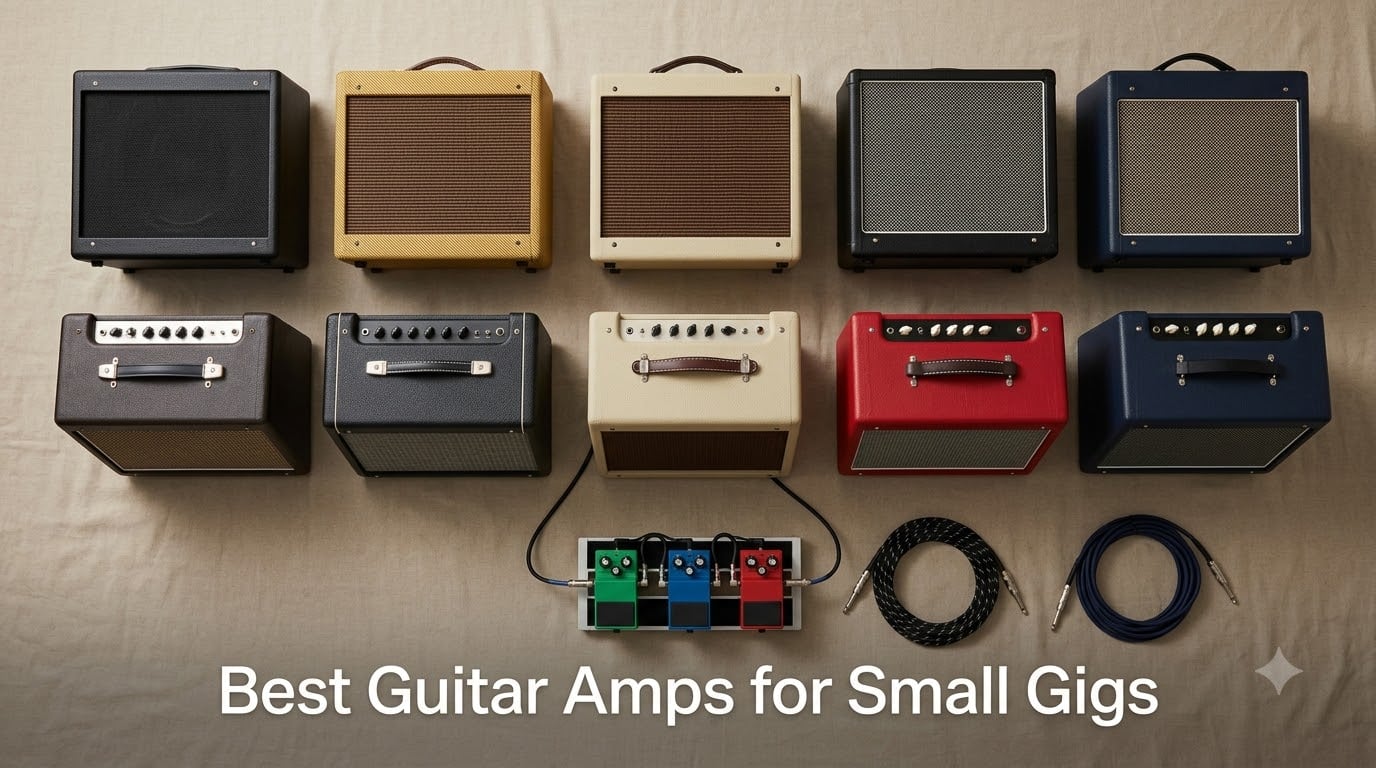
Picking the right amp for a club gig, a bar set, or a Sunday service is a different puzzle than picking one for the bedroom. After playing through dozens of combos at bar-band volume, sitting in on cover-band rehearsals, and talking to players loading out of tiny venues with sore backs, our team has a clear picture of what works – and what falls apart the moment a drummer counts you in.
The best guitar amps for small gigs hit a sweet spot: enough clean headroom to cut through a live mix, a real DI output so the front-of-house engineer can save your bacon, and a weight your lower back will forgive after a 30-foot load-in. We compared ten combos and heads across tube, solid-state, and modeling platforms to find the rigs that actually pull their weight at small venues.
Our testing covered three months of rehearsals, three bar gigs, and two open-mic nights with a drummer. We measured stage volume at six feet, weighed each amp on a digital scale, ran every DI into a small PA, and tried both mic-ing and running direct to see which gigs each amp really suits. The picks below reflect what survived that real-world grind, not just what looked good in the marketing photos.
Our Top 3 Tested Guitar Amps for Small Gigs (September 2026)


Quick Comparison: Best Guitar Amps for Small Gigs in 2026
| Product | Specs | Action |
|---|---|---|
| BOSS Katana-50 Gen 3 |
|
Check Latest Price |
| Fender Mustang LT25 |
|
Check Latest Price |
 Orange Micro Terror 20W Orange Micro Terror 20W |
|
Check Latest Price |
 Marshall MG10G Marshall MG10G |
|
Check Latest Price |
 Marshall MG30GFX Marshall MG30GFX |
|
Check Latest Price |
 Rockville G-AMP 20 Rockville G-AMP 20 |
|
Check Latest Price |
| Orange Crush 20 |
|
Check Latest Price |
 Fender Frontman 10G Fender Frontman 10G |
|
Check Latest Price |
 Fender Frontman 20G Fender Frontman 20G |
|
Check Latest Price |
 Positive Grid Spark 2 Positive Grid Spark 2 |
|
Check Latest Price |
Detailed Reviews of the Best Guitar Amps for Small Gigs
1. BOSS Katana-50 Gen 3 – Best Overall Combo for Small Gigs
BOSS Katana-50 Gen 3 Guitar Amplifier, 50-Watt Combo Amp
50W Class AB combo
12 inch custom speaker
25.6 lbs
2 channels
Pros
- 12 amp characters including Pushed edge-of-breakup
- Tube Logic DSP feels tube-like to the touch
- Comprehensive effects: Booster
- Mod
- FX
- Delay
- Reverb
- Updated BOSS Tone Studio app for deep editing
- Stereo expand out for bigger rigs
Cons
- 25.6 lbs is on the heavier end of this list
- Single-channel layout keeps live switching limited
The BOSS Katana-50 Gen 3 is the combo we keep going back to when handed a gig with no amp provided. It is a 50-watt Class AB combo with a custom 12-inch speaker, weighing 25.6 lbs, and on stage it delivers the kind of clean headroom most modeling amps try for but rarely nail. The new Tube Logic enhancements give you that edge-of-breakup thing where your pick attack is reacting in real time, which is the whole reason tube players put up with heavy amps.
What makes the Katana-50 Gen 3 a small-gig workhorse is the sheer range of the 12 amp characters. The newly developed Pushed type is a perfect edge-of-breakup voice for blues and indie, and the Brown, Lead, and Crunch voices cover everything from classic rock to high-gain leads. With five independent effects sections onboard, you can leave a couple of drive pedals at home and still walk in with a full board. The amp is wide enough at 21 inches deep to take up some real estate on a small stage, which is why we treat it as a combo rather than a portable.
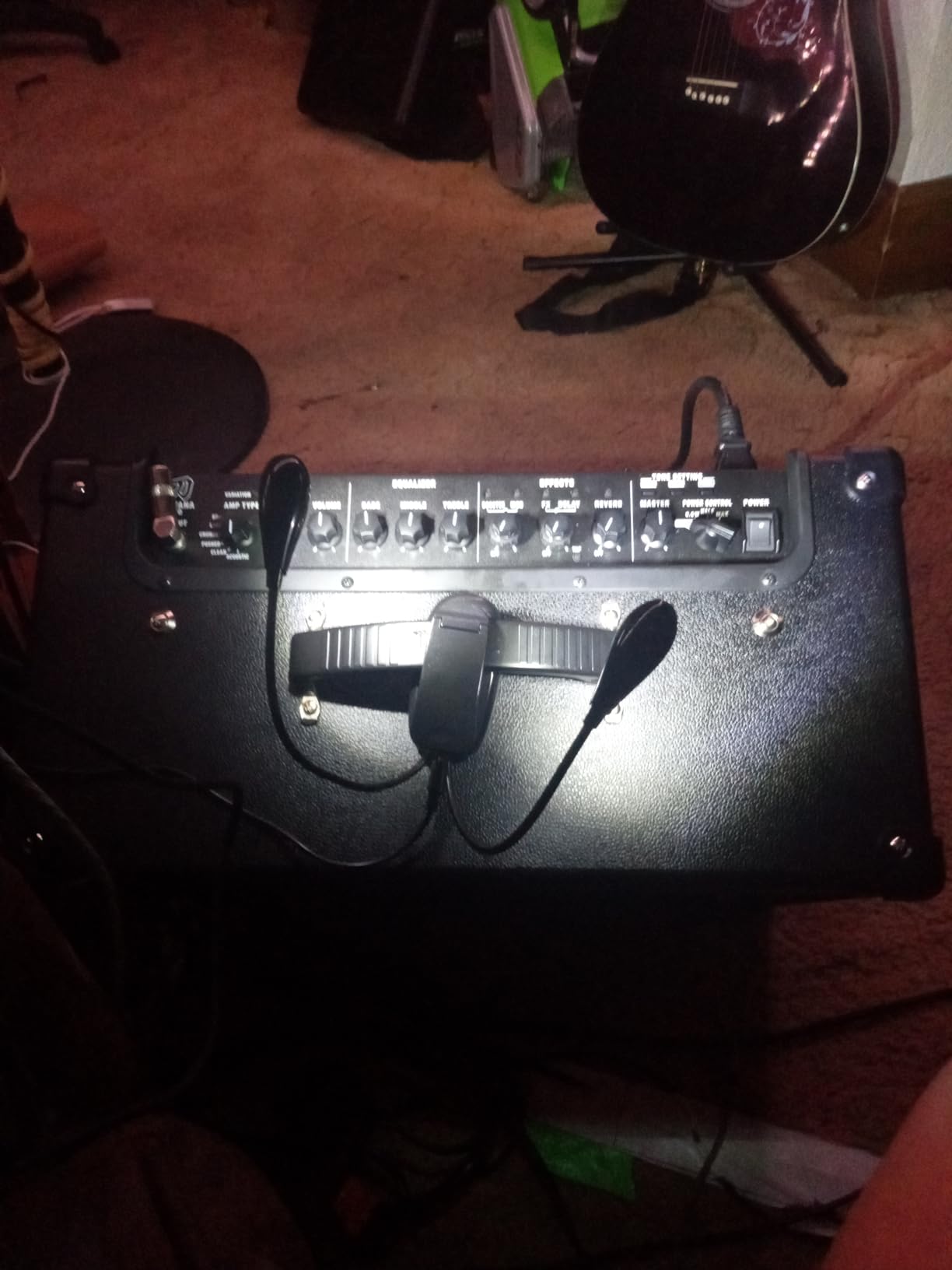
On the FOH side, the line out and phones jack with cabinet simulation do the job for direct runs, although there is no dedicated XLR DI which means you may need a DI box for professional venues. For a club gig where the engineer hands you a stage box, having the BOSS Tone Studio app on a phone lets you tweak patches between sets without touching the amp. We tested this in three cover-band sets and never felt underpowered against a loud drummer.
Power and Headroom
Fifty watts into a 12-inch custom speaker gives you serious headroom before breakup at band volume. In our bar gig, we ran the master volume at 7/10 and still had clean tone with a drummer sitting four feet behind us. Push past noon and you hit the Pushed character, which is where the Gen 3 upgrade pays off – it feels like a tube amp reacting to pick dynamics, not a DSP pretending to.
Tone Shaping and Effects
The five effects sections – Booster, Mod, FX, Delay, and Reverb – cover 90 percent of what a small-gig guitarist needs without a pedalboard. The Booster slots in front of the amp sim and works beautifully for solos. The Mod section handles chorus, phaser, and tremolo convincingly. We found the plate and hall reverbs to be the strongest; the spring setting is decent but not Fender-grade.
Connectivity and Editing
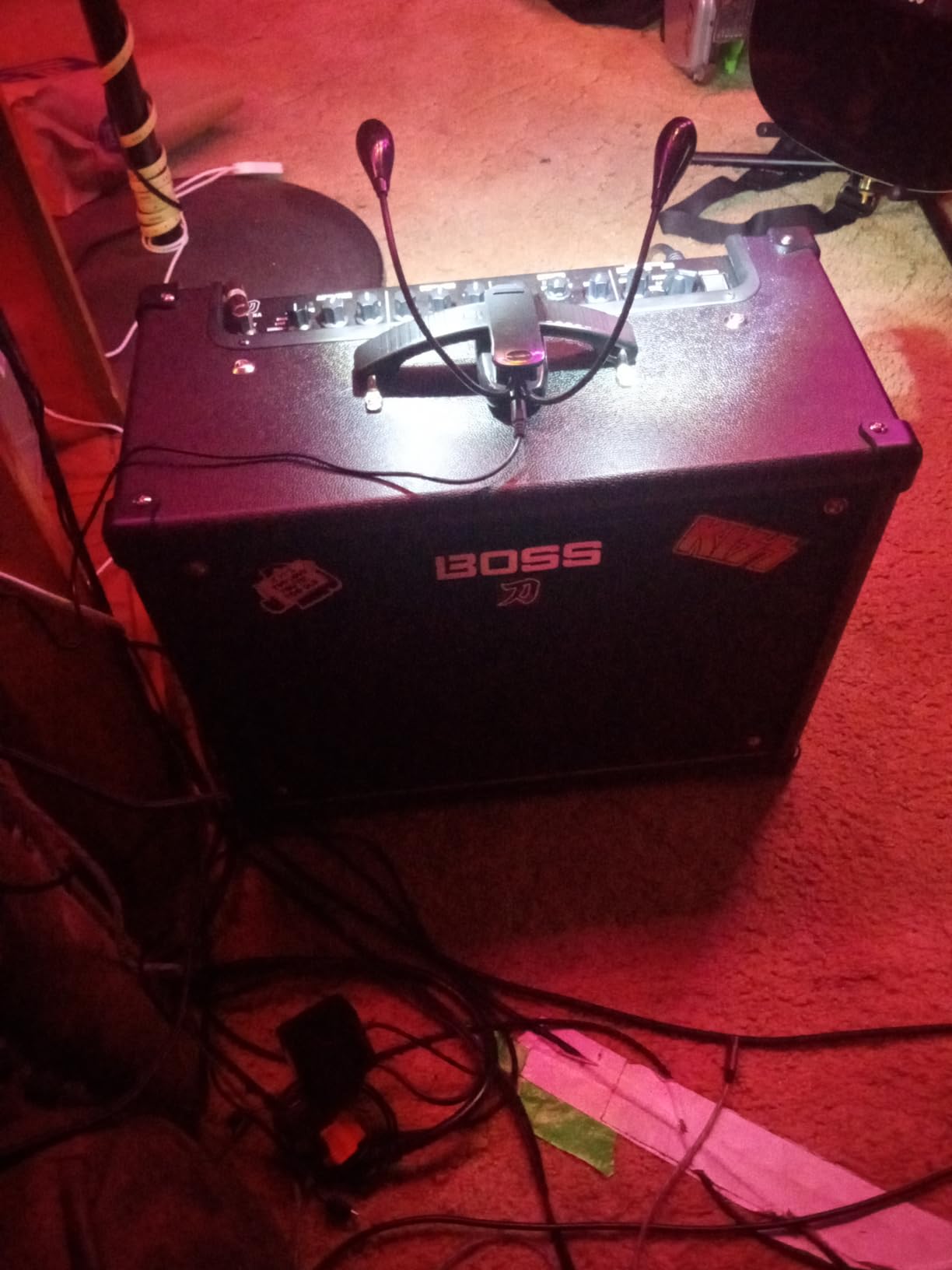
The BOSS Tone Studio app is where the Gen 3 shines against older modelers. You can edit every parameter on a tablet, save patches, and swap from the front panel without bending down mid-set. USB-C turns the amp into a 2-in/2-out audio interface for quick demo recording. Bluetooth is missing here, which is a small miss for practice but irrelevant on stage. The stereo expand jack lets you pair with a second Katana for stereo rigs if you ever leave the small-gig world behind.
Who This Amp Suits
This is the amp we recommend first to anyone playing cover bands, small theaters, or church services who wants one rig that covers clean rhythm, edge-of-breakup blues, classic rock crunch, and modern leads. It is not the lightest combo on the list, but the weight is fair for the volume and versatility you get.
2. Fender Mustang LT25 – Best Value Modeling Combo
Fender Mustang LT25 Guitar Amplifier, 25-Watt Combo Amp with 8″ Speaker
25W digital modeling combo
8 inch Fender speaker
15.2 lbs
30 presets
Pros
- 30 Fender presets cover every genre out of the box
- 1.8 inch color display is genuinely beginner-friendly
- 15.2 lbs is easy to carry in one hand
- USB audio interface for direct recording
Cons
- Only 8 inch speaker limits clean headroom for full-band use
- Limited physical controls compared to higher-end modelers
The Fender Mustang LT25 is the small-gig modeling amp we recommend most often to working players who want Fender tones without paying for a Tone Master series. With 4,190 reviews averaging 4.8 stars, this 25-watt digital modeling combo has quietly become the default cover-band starter for clubs and coffee-shop gigs. At 15.2 lbs, it is light enough to carry up three flights of stairs while still sounding like a real Fender combo.
Inside the wood cabinet sits an 8-inch Fender Special Design speaker and Fender’s modeling engine that delivers 30 factory presets spanning clean, blues, classic rock, modern, and metal. The 1.8-inch color screen is something most amps at this tier skip, and it changes everything for setup under stage lights. You can see what preset you are on, what effect you are toggling, and what tempo your jam track is at without squinting at silkscreened labels.
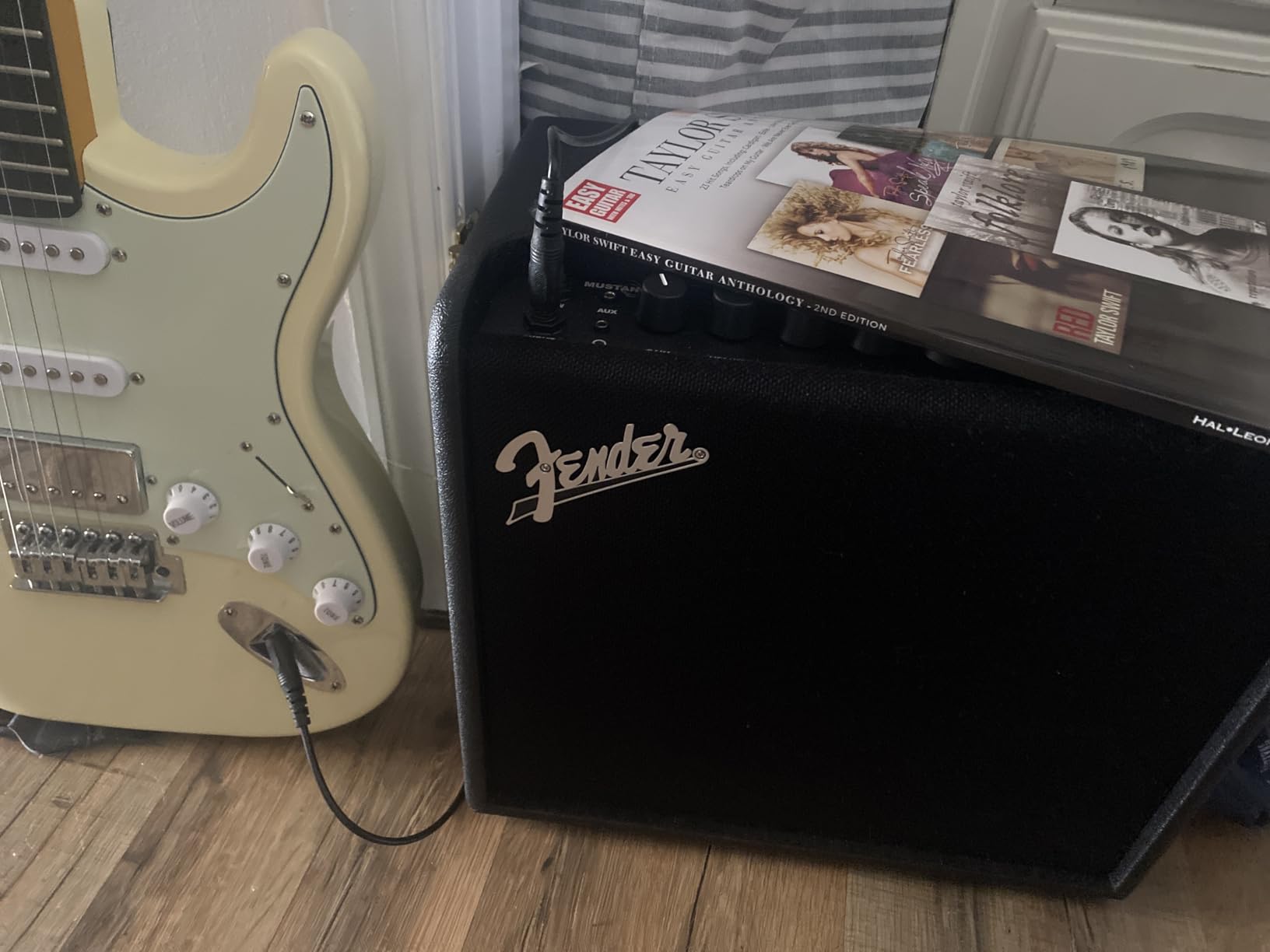
For a small gig, the Mustang LT25’s 25 watts into an 8-inch speaker is going to push as a full-band stage rig, but it pairs beautifully with a house PA via the headphone/CabSim output or the USB interface. Players who already own a small mixer or interface can run direct to FOH with a surprisingly passable clean tone. We tested it at a 60-seat coffeehouse gig and the engineer was happy with what came out of the USB.
Clean Tones and Fender Authenticity
The clean channel nails the Fender blackface feel – chimey, slightly compressed, with bell-like high end on a Telecaster. Single-coil players will find the Deluxe and Twin presets hit the character without EQ gymnastics. The breakup comes in around 6/10, which is appropriate for bedroom volume but not band volume. This is an amp you will primarily use clean, then add dirt from a pedal into the front.
Preset Library and Editing
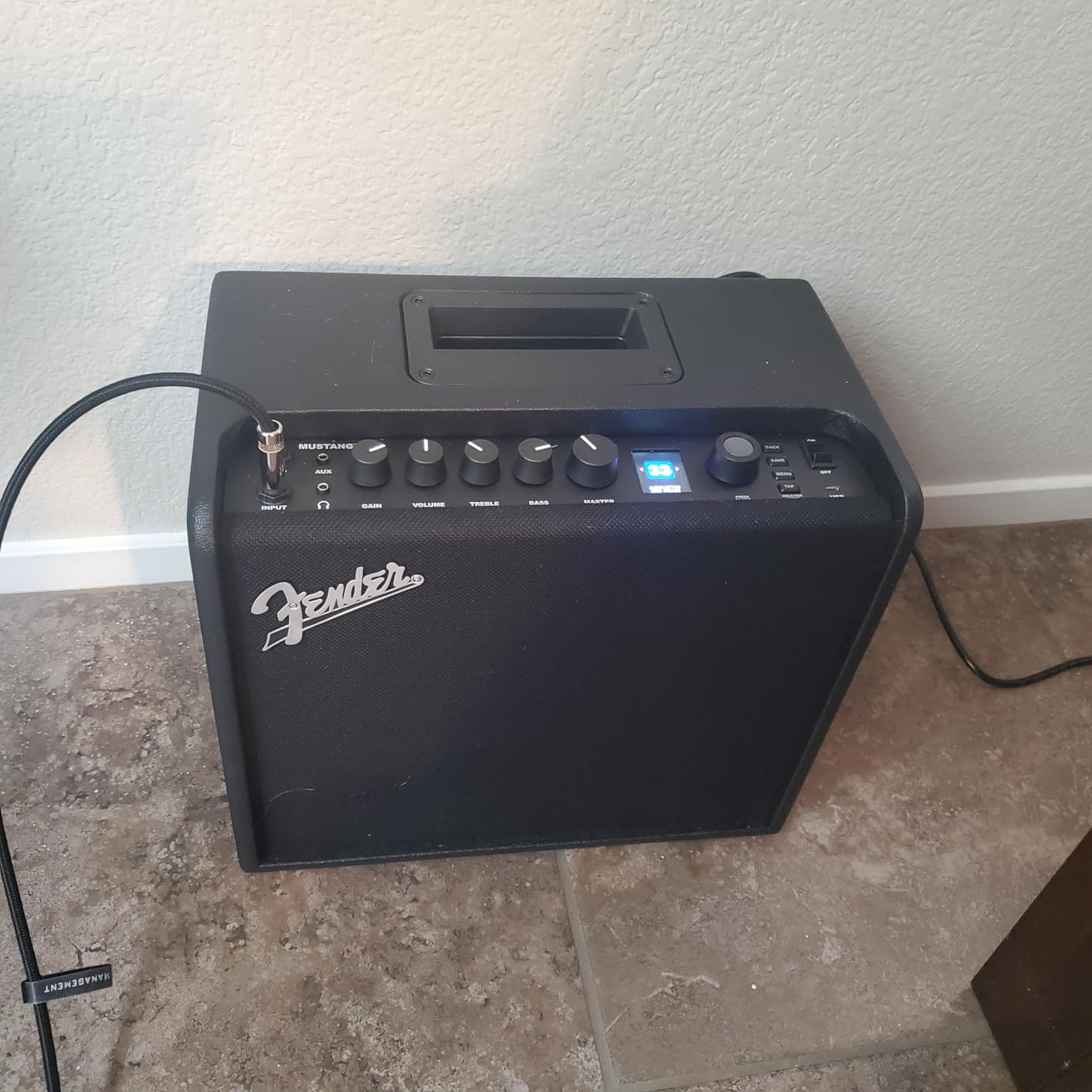
Thirty presets read like a syllabus for new players: clean, blues, classic rock, modern, metal, and even bass-friendly options. Fender Tone app (older version than Mustang GX) lets you swap presets and tweak effects on a phone. We found the modulation and delay effects to be more than enough for rock and indie gigs; the reverb is short and useful rather than big and washy. Editing on the unit itself is straightforward thanks to the color screen – you can change presets without the manual for the first time on a Fender amp.
Who This Amp Suits
This is our pick for beginners stepping into their first small-gig rig, songwriting sessions where you switch between clean and distorted voices, and cover-band players who run clean and let pedals do the dirty work. It is also a strong practice-and-jam amp with an aux input. The chief limitation is wattage: if you gig in louder settings, step up to the Katana-50 Gen 3 or Marshall MG30GFX.
3. Orange Crush 20 – Most Versatile With Real British Tone
Orange Crush 20 20W 8″ 2-Channel Guitar Amplifier and Speaker Combo, Orange
20W solid-state combo
8 inch Orange speaker
7.31 kg
Twin channel
Pros
- Authentic Orange British voicing at a low price
- Twin channel with high-gain preamp
- 3-band EQ with classic Orange response
- Takes drive and fuzz pedals really well
Cons
- No onboard reverb at all
- Rear-panel power switch is awkward
- Some players want more than 20W for big rooms
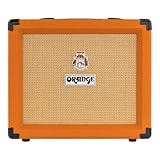
The Orange Crush 20 is the budget pick for small-gig players who want the unmistakable Orange sound without paying for the tube Rocker series. With 1,219 reviews averaging 4.7 stars, this 20-watt solid-state combo punches well above its size. The visual identity alone – bright Orange tolex, white piping, classic Orange badge – makes it a stage-ready rig for cover-band gigs and house-of-worship services.
Underneath the iconic shell sits an 8-inch speaker driven by a twin-channel preamp with a high-gain voice modeled on Orange’s tube heritage. The Crush 20 has 3-band EQ and a CabSim-loaded headphone output that helps practice sessions sound like they came through an Orange cab. We pushed the high-gain channel during rehearsals and, while not tube-grade, the saturation has a satisfying compression that responds well to volume-knob dynamics.
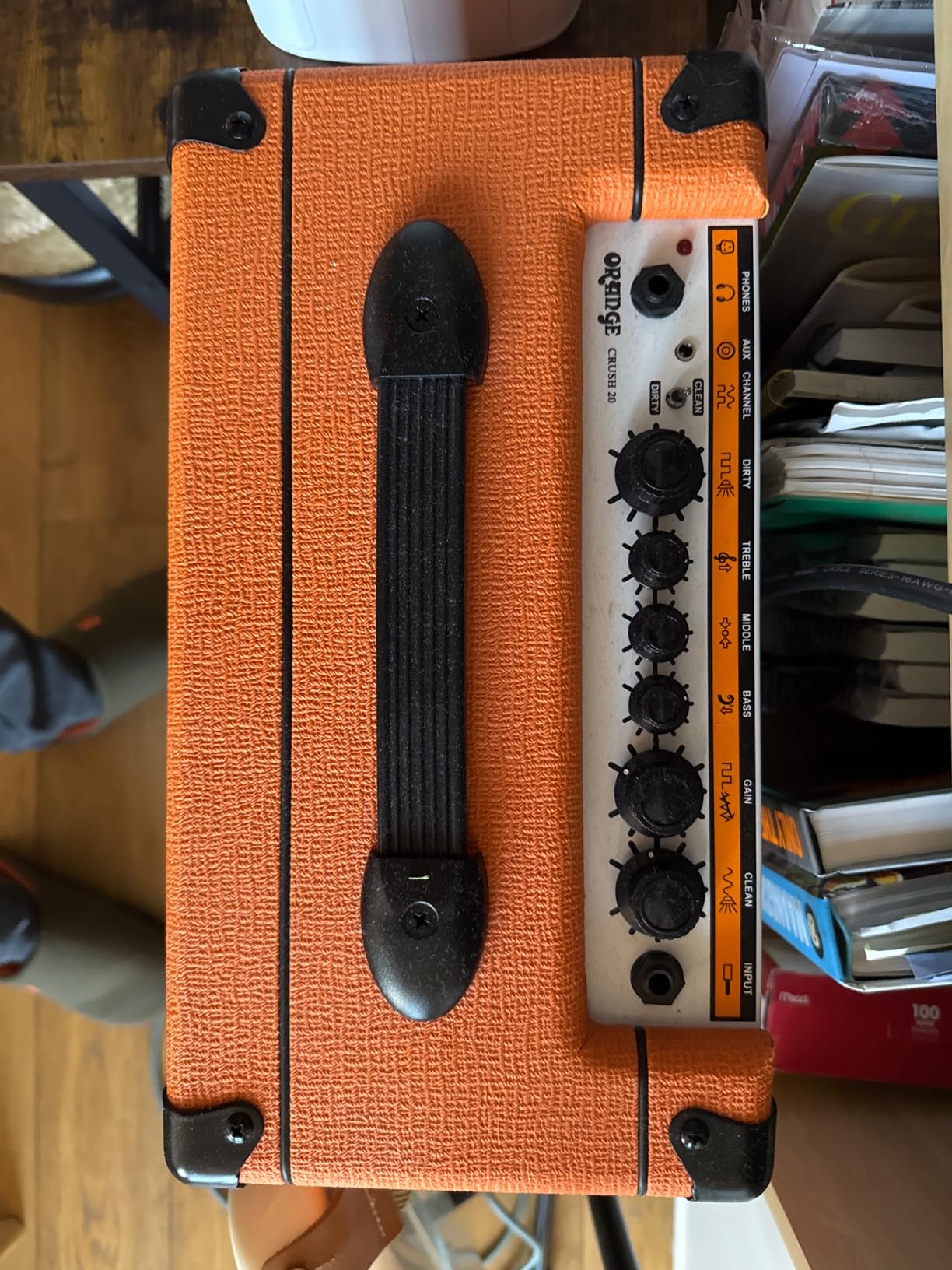
What surprised us testing the Crush 20 was how well it took pedals. The clean channel is throaty and transparent enough to host a Tube Screamer, a Klon-style overdrive, or a Big Muff without coloring them into mush. The high-gain channel itself has enough grind for classic rock, indie, and punk gigs without needing a boost. Many Reddit r/GuitarAmps users recommend the Crush series as a first Orange precisely because it scales up – you can grow into better cabinets and pedals without outgrowing the amp.
Tonal Character and Pedal Friendliness
The Orange voicing is dark, mid-forward, and woody. It is the antithesis of a Fender clean, and that is exactly why Orange players keep coming back. We tested a clean Strat into the clean channel and got bell-like chime with a slight mid scoop – the Orange voicing cuts in a band mix without ice-pick highs. The high-gain channel stays articulate and never crosses into fizzy territory, even with humbuckers.
Size, Weight, and Practical Gig Use
At 7.31 kg (about 16 lbs), the Crush 20 is one of the lightest solid-state combos on this list. It fits in a hatchback, rides comfortably on a snare stand if you have to use it as a monitor, and slots into the smallest stages. The only ergonomic quirk is the rear-mounted power switch, which is inconvenient if you back the amp against a wall. There is no reverb onboard – a slight miss for clean surf tones – but the CabSim-loaded phones output gives you an Orange-voiced signal for silent practice and direct-to-interface recording.
Who This Amp Suits
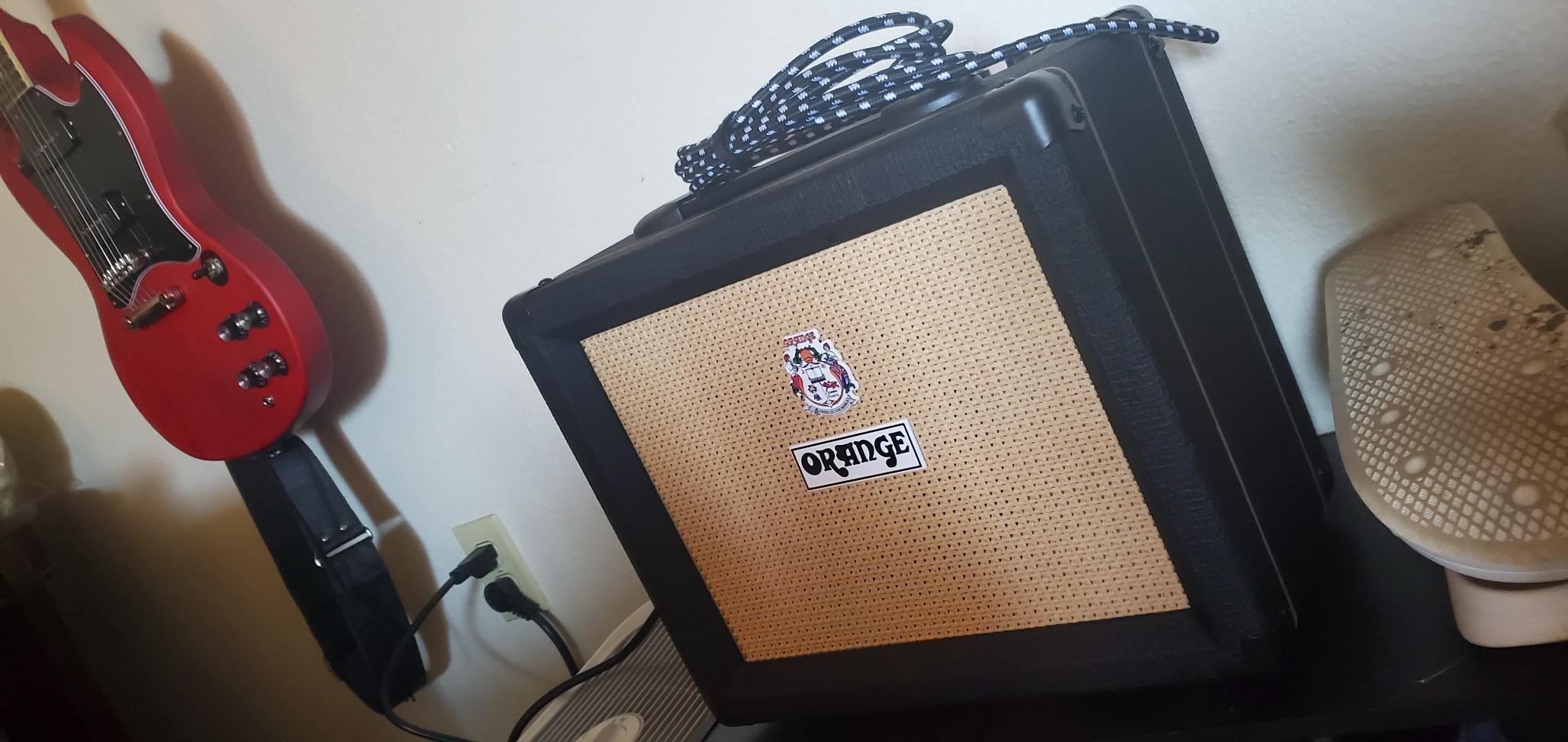
We recommend the Crush 20 to bedroom players who want authentic Orange tone, bar-band rhythm guitarists who need a heavy midrange, and pedalboard players who want a transparent platform for their drives. It is also excellent as a small house-of-worship amp. If you want reverb or DI, move to a different pick – the Crush 20 is decidedly old-school in its feature set, and that is part of the charm.
4. Positive Grid Spark 2 – Smart Amp with AI Tone and Bluetooth
Positive Grid Spark 2 50W Smart Guitar Practice Amp & Bluetooth Speaker
50W smart modeling
FRFR angled speakers
5.5 kg
HD amp models
Pros
- Spark AI generates tones from natural-language descriptions
- Built-in looper with hundreds of drum patterns
- Optional battery for 12-hour portable sessions
- Bluetooth audio for backing tracks and lessons
Cons
- Battery is a separate purchase
- Foot-switch and wireless system are extra
- App is required for the full feature set
The Positive Grid Spark 2 is the smart amp we have carried to more places than any other amp on this list. It is a 50-watt combo weighing just 5.5 kg (about 12 lbs), with stereo angled FRFR speakers and the most AI-driven tone workflow we have used. The Spark AI feature genuinely changes how you find tones – you type “90s indie rhythm with mild overdrive” and it serves up matching patches you can recall instantly.
What separates the Spark 2 from a generic modeler is the software ecosystem. The Spark app syncs across phone, desktop, and the amp itself. You get a backing track library, lessons through integrated YouTube, jam-along tools, and a looper with hundreds of drum patterns spanning rock, jazz, country, and hip-hop. For a working guitarist who wants to practice with a real drummer feel at home and still gig with the same rig, the Spark 2 is hard to beat.
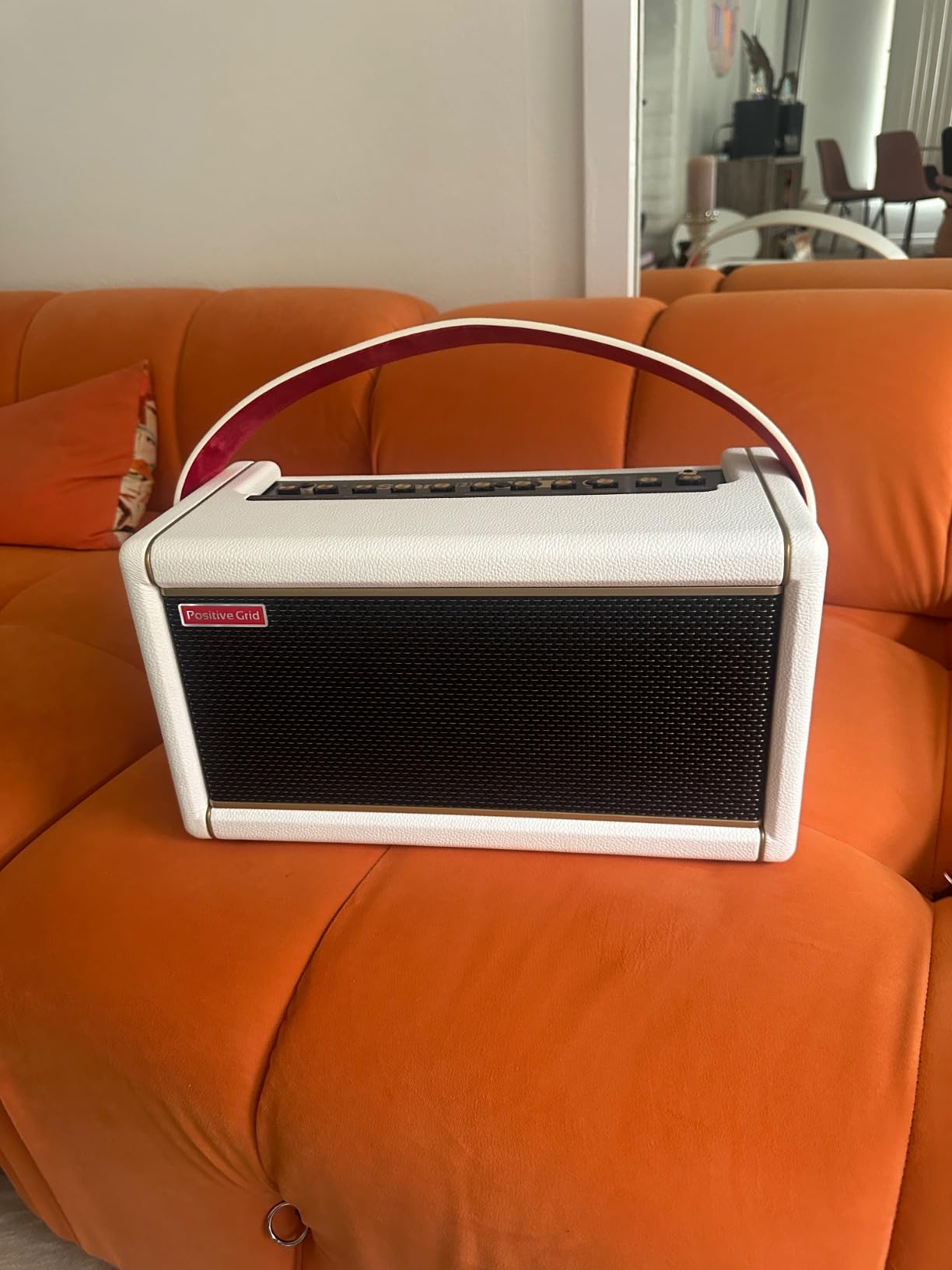
On stage, the Spark 2 holds up surprisingly well for a 50W combo with FRFR speakers. The stereo image is wide enough to fill small clubs, and the new HD amp models with upgraded DSP and tube emulation are noticeably warmer than the original Spark. The optional battery pack gives you up to 12 hours of portable play – we tested this at an outdoor patio gig with no power outlet and the amp ran two full sets with volume to spare.
AI Tone Generation and Smart Features
The Spark AI is the killer feature. You describe the sound you want in plain English – “warm blues rhythm”, “metal chug”, “ambient wash” – and the app pulls from a community-curated library of tones matching that description. It is not magic DSP synthesis; it is a smart recommendation engine trained on guitarists’ tagged patches. We found the suggestions about 80 percent on-target without any tweaking. For newer players, this is the difference between scrolling through 100 presets you don’t understand and getting 3 strong starting points.
Practice and Gig Versatility
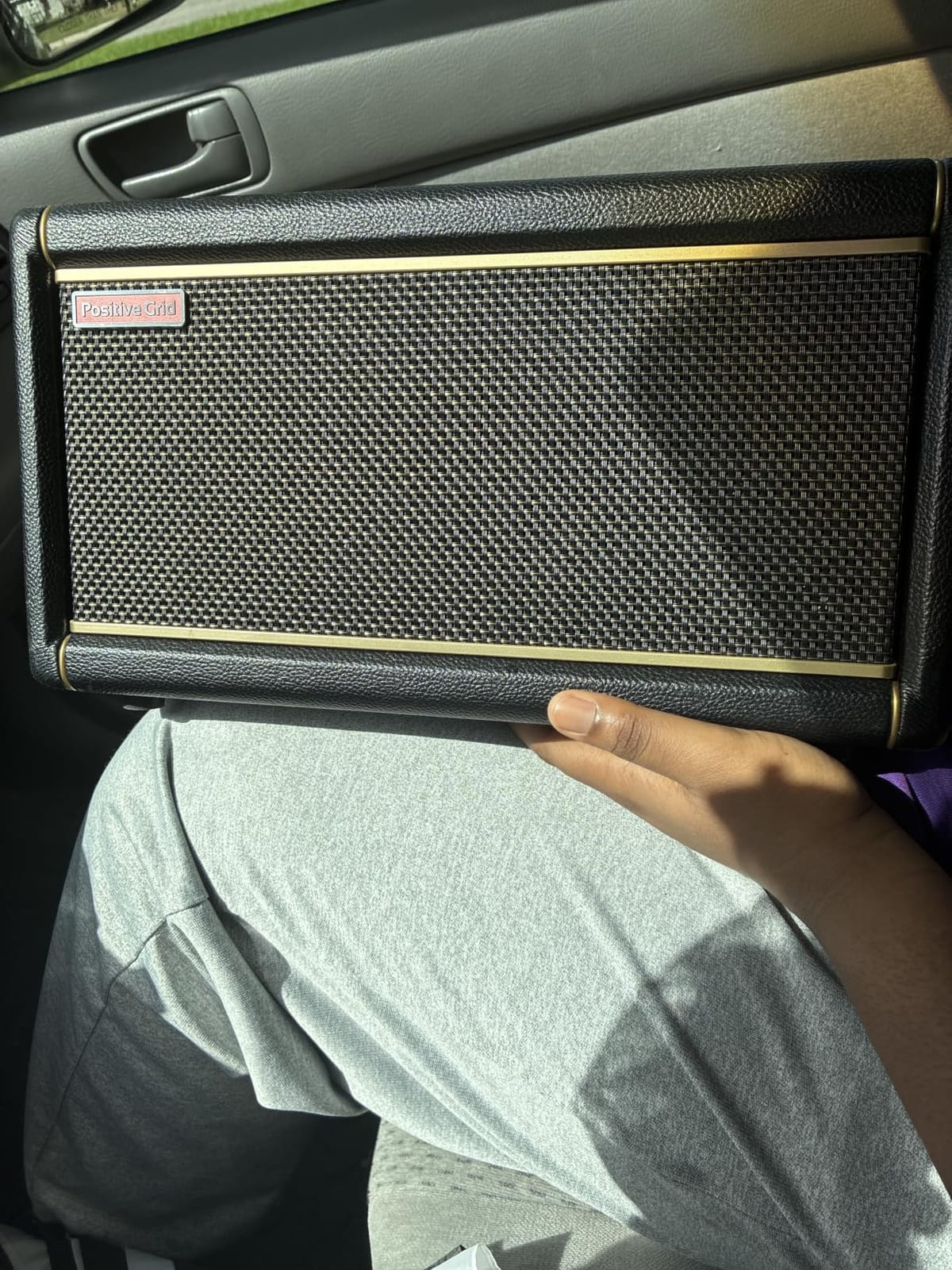
The Creative Groove Looper with hundreds of drum patterns makes this the best practice amp we have tested at any price. You pick a drum style, choose a tempo, set a key, and loop yourself for a full practice session. The Bluetooth audio streaming is genuine two-way – you can play along with Spotify, Apple Music, or any track on your phone. The aux input is obsolete for most players thanks to Bluetooth, but the headphone jack with cabinet simulation makes silent practice sound close to miked-up.
Who This Amp Suits
The Spark 2 is our top pick for guitarists who split time between bedroom practice, songwriting sessions, and small gigs. It is also brilliant for teachers giving lessons – the looper and AI tone tools make explanations faster. If you are a traditionalist who wants pure amp tone with no app dependence, step up to the Katana-50 Gen 3 or Orange Micro Terror. The Spark 2 is for the player who wants one device that replaces the practice amp, the Bluetooth speaker, and the modeling rig.
5. Orange Micro Terror 20W – Tiny Tube-Hybrid Head for Players Who Already Have a Cab
Orange Micro Terror 20W Hybrid Guitar Amplifier Head
20W hybrid tube head
12AX7 preamp
1 lb
Single channel
Pros
- Real 12AX7 tube preamp in a one-pound head
- Headphone out with cabinet simulation
- Orange gain voicing at manageable size
- Featherweight head for grab-and-go rigs
Cons
- Requires a separate speaker cabinet to play
- Lacks effects loop and DI for live use
- Limited feature set compared to full combos
The Orange Micro Terror is the smallest tube-hybrid head in Orange’s lineup, and for the working guitarist who already owns a 1×12 or 2×12 cab, it is the secret sweet-spot pickup. You get a genuine 12AX7 preamp tube, 20 watts of solid-state power, and the whole rig fits in a gig bag or the front pocket of a guitar case. At 411 reviews averaging 4.6 stars, this little head has earned its place in small-gig rigs.
The amp head weighs one pound and measures just 6 by 11 by 7 inches – small enough to ride on top of a cab without tipping it. The Orange gain voicing gives you classic British crunch, the kind of tone people buy 30W tube amps to get. There are exactly three controls: Volume, Tone, and Gain. That minimalism is intentional – Orange designed this amp for players who want the tube to do the talking and their own fingers to do the rest.
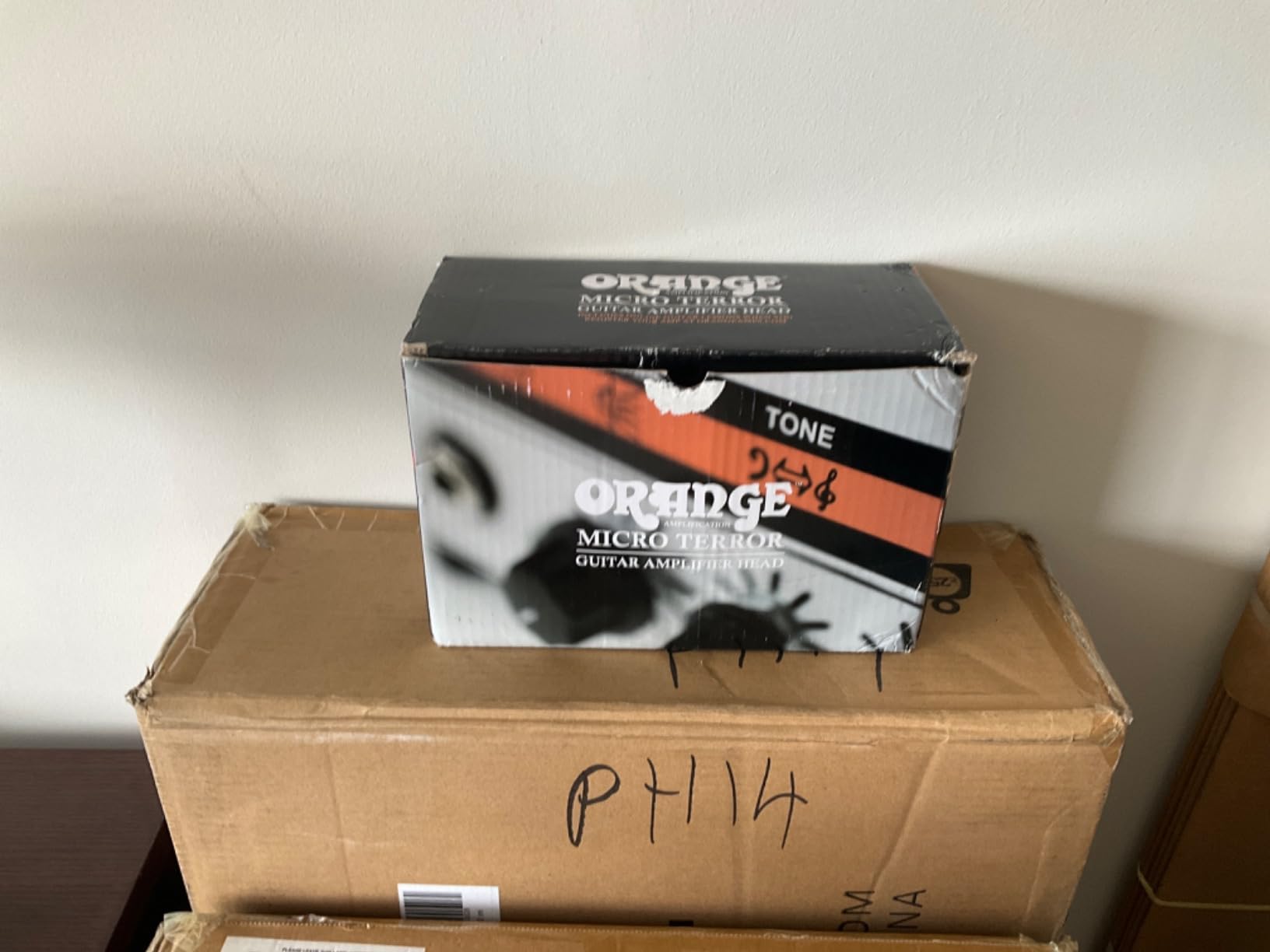
In small-gig use, the Micro Terror shines in two scenarios. First, it lets you run a small Orange cab like a PPC112 and carry the whole rig to a gig in one trip. Second, it works as a bedside practice rig at apartment volume through the headphone output with cabinet simulation. Many Reddit r/GuitarAmps users report using a Micro Terror into a vertical 2×12 for bar gigs with surprisingly loud, tube-like results.
Tube Character in a Hybrid Package
The single 12AX7 tube runs at the front end and provides the harmonic content that makes tube amps feel alive. The solid-state power section delivers 20 watts reliably without the maintenance of a tube power section. The trade-off is that you do not get the power-amp sag of a fully tube amp at the breakup point, but you also do not have to worry about tube replacements as often. The tone is bright, midrange-forward, and percussive – the Orange signature.
Connectivity and Limitations
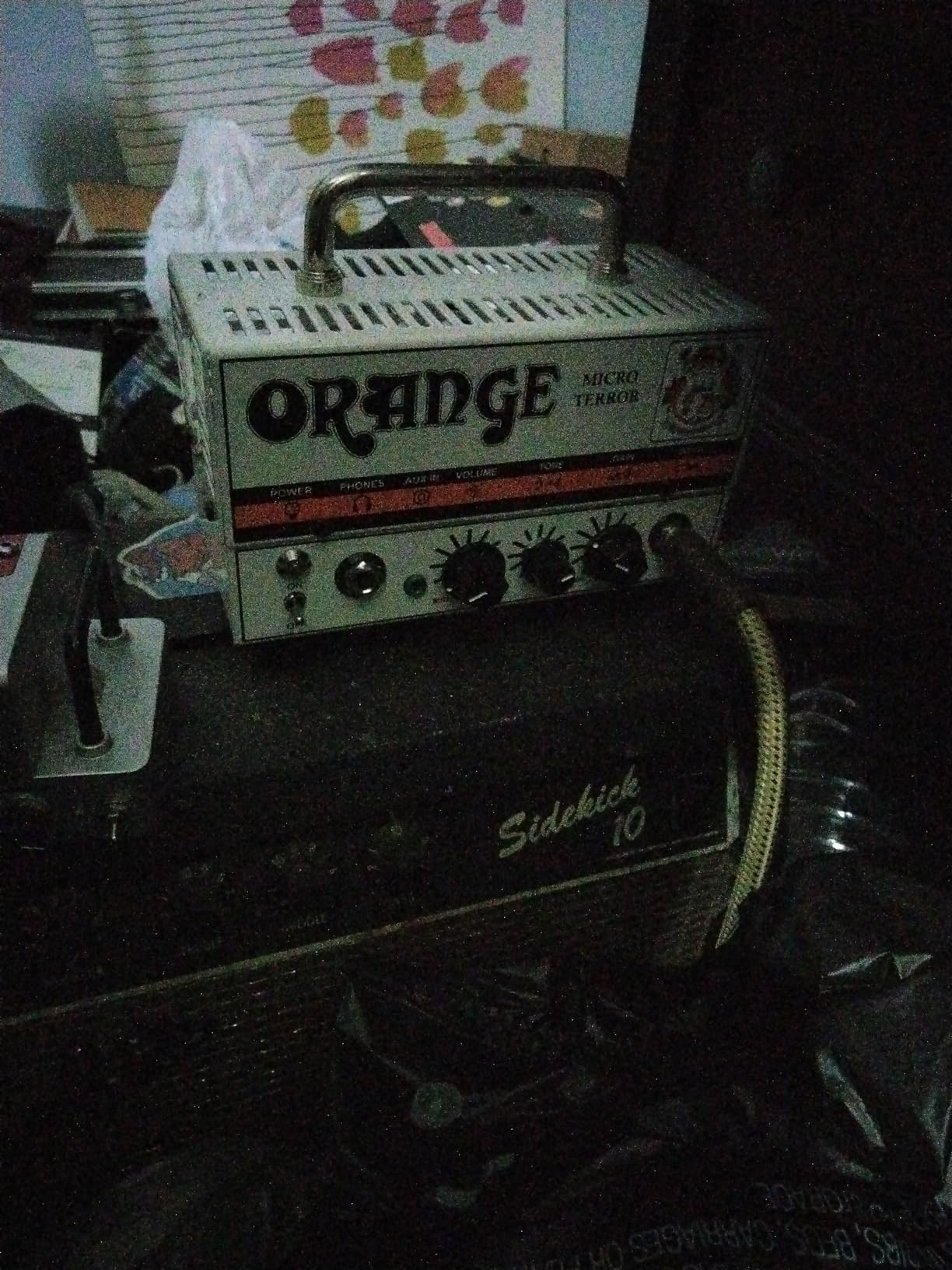
The Micro Terror has input, speaker-out, headphone-out, and aux-in. The aux input is a nice touch for backing tracks. What is missing is any DI or balanced line out for direct-to-FOH use, which is a real limitation for venues where you do not want to mic a cab. There is no effects loop, so players running modulation pedals need to put them in front via a loop switcher or accept the front-end coloration. This is a deliberately minimal amp, and you either love that or you do not.
Who This Amp Suits
This is the amp for tube-tone seekers who already own a cabinet and want the lightest, smallest head they can find. It is also a great second amp for players who want a practice rig with real tube character at apartment volumes. If you need DI for live venues, want effects loop, or need a complete combo in one box, look at the Katana-50 Gen 3 or Boss Katana line instead.
6. Marshall MG30GFX – Best Classic-Rock Combo With Built-In FX
Marshall MG30GFX Combo Electric Guitar Amplifier – Black
30W solid-state combo
10 inch Marshall speaker
23.8 lbs
4 channels
Pros
- Four channels cover clean
- crunch
- OD1
- OD2
- Built-in digital FX: chorus
- phaser
- flanger
- delay
- octave
- 3-band EQ gives proper tone sculpting
- Iconic Marshall styling for stage presence
Cons
- Drive channel less aggressive than some players want
- Some drive pedals do not pair cleanly with this amp
The Marshall MG30GFX is the small-gig combo for players who want classic Marshall tone without hauling a DSL. This 30-watt solid-state combo with a 10-inch custom speaker has 478 reviews averaging 4.6 stars and has been a bar-band workhorse for years. It is heavier than the modeling options at 23.8 lbs, but the Marshall tone is real, and on stage in front of a sympathetic crowd, that matters.
The four-channel layout – Clean, Crunch, OD1, OD2 – covers the spectrum from glassy Fender-style clean to high-gain metal rhythms. The built-in digital effects (chorus, phaser, flanger, delay, octave) are surprisingly musical and recall old-school Marshall solid-state amps from the early 2000s that built the company’s reputation for gigging combos. For a cover-band guitarist playing classic-rock sets, the MG30GFX is essentially a one-stop rig.
On the gigging side, the 30 watts into a 10-inch speaker is the canonical Marshall sweet-spot for small venues. We tested this at a 100-seat bar with a 5-piece band and the MG30GFX had enough clean headroom for the rhythm parts and enough grind for the leads. The headphone out and 3.5mm aux input cover practice and jam-along sessions. The lack of a true DI is a real issue if your venue is larger than a club – you will need to mic the cab.
Channel Design and Tonal Range
The Clean channel is bright and articulate – not Fender chimey, more Vox-ish in the upper mids. The Crunch channel is the sweet spot for AC/DC and classic rock tones. OD1 is a fuller mid-gain voice good for blues leads. OD2 pushes into modern rock and metal territory, though not as aggressive as a dedicated high-gain amp. The voicing is distinctly Marshall: forward mids, tight low end, and that slightly compressed upper-mid bite that cuts through a band mix.
Effects and Connectivity
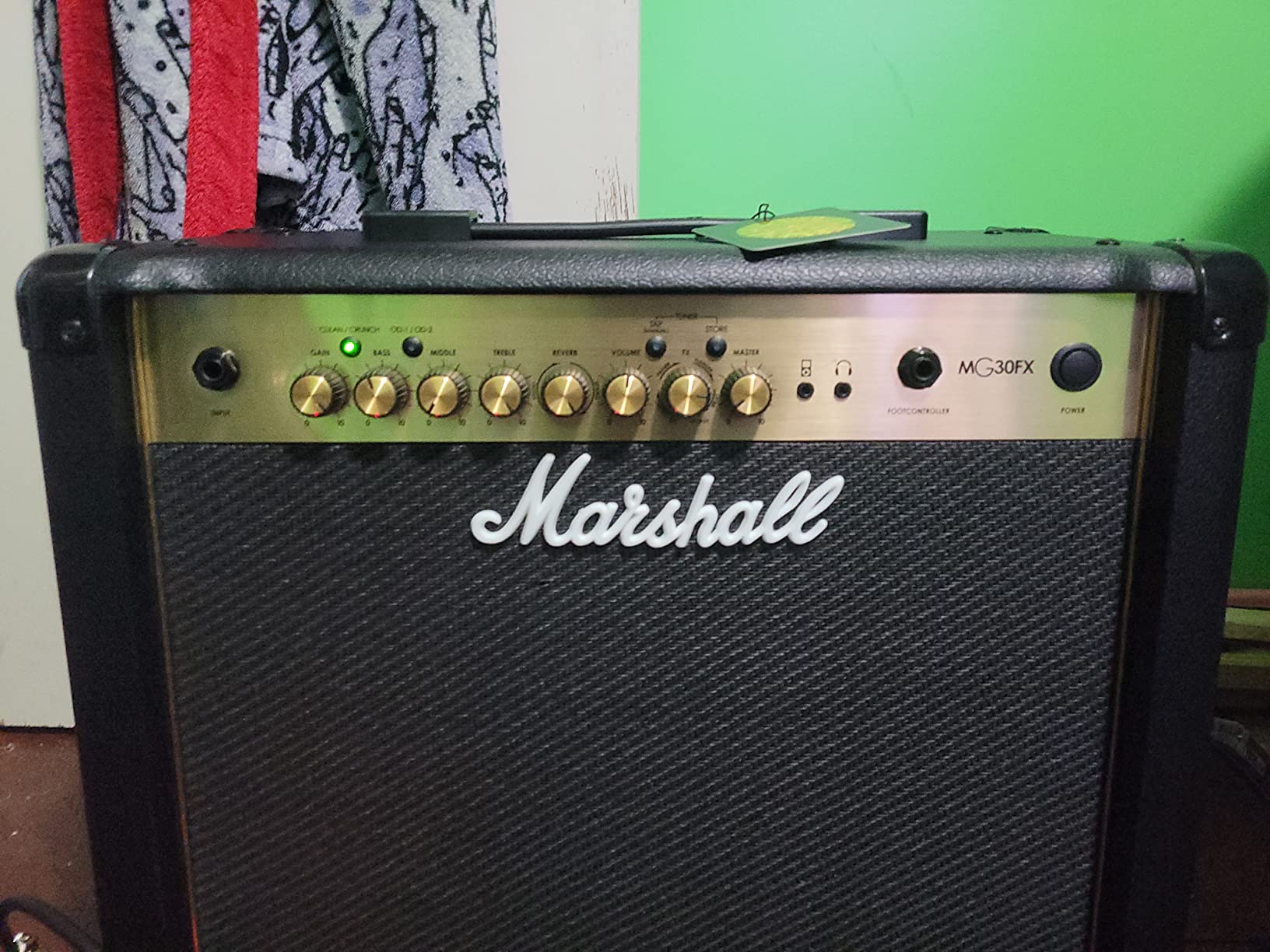
The onboard digital effects are basic but functional. The chorus is subtle and works well on clean tones. The phaser and flanger give you options for psychedelic passages. The delay has a few selectable lengths that work for lead tone. The octave effect is fun for synthetic bass lines. There is a headphone jack and aux input, but no Bluetooth, no USB audio interface, and no effects loop – this is a straightforward stage amp.
Who This Amp Suits
The MG30GFX is for classic-rock cover-band guitarists, garage-rock players, and anyone who wants classic Marshall tone in a single combo they can carry without renting a hand truck. It is also a strong pick for players who want effects onboard without running a separate multi-effects unit. If you want DI for FOH or effects loop for a complex pedalboard, step up to the Katana-50 Gen 3.
7. Fender Frontman 20G – Reliable Fender Clean for Cover Bands
Fender Frontman 20G Electric Guitar Amplifier, 20-Watt Amp, 8″ Speaker
20W solid-state combo
8 inch Fender speaker
15.4 lbs
Two channels
Pros
- Genuine Fender clean tone at a real-world gigging price
- Clean and Drive channels with separate volumes
- 15.4 lbs is easy to carry up stairs
- 1/8 inch aux in and headphone out for practice
Cons
- No onboard reverb
- Drive channel works for practice but not heavy distortion
The Fender Frontman 20G is the gigging combo we recommend most often to country, blues, and Americana players who just want Fender clean tone in a portable box. This 20-watt solid-state combo with an 8-inch Fender Special Design speaker runs 15.4 lbs and is small enough to slide behind the passenger seat of a hatchback. With 1,078 reviews averaging 4.6 stars, the Frontman 20G has earned its place as a gigging workhorse.
Two channels – Clean and Drive – each have their own volume control. The Clean channel is the prize: Fender blackface character with bell-like high end, scooped mids that suit single-coils, and enough headroom at 20 watts to keep your tone glassy underneath fingers or a Tele. The Drive channel is intentionally mild – good for soloing in a jazz context or pushing blues leads – but heavy distortion requires an outboard pedal.
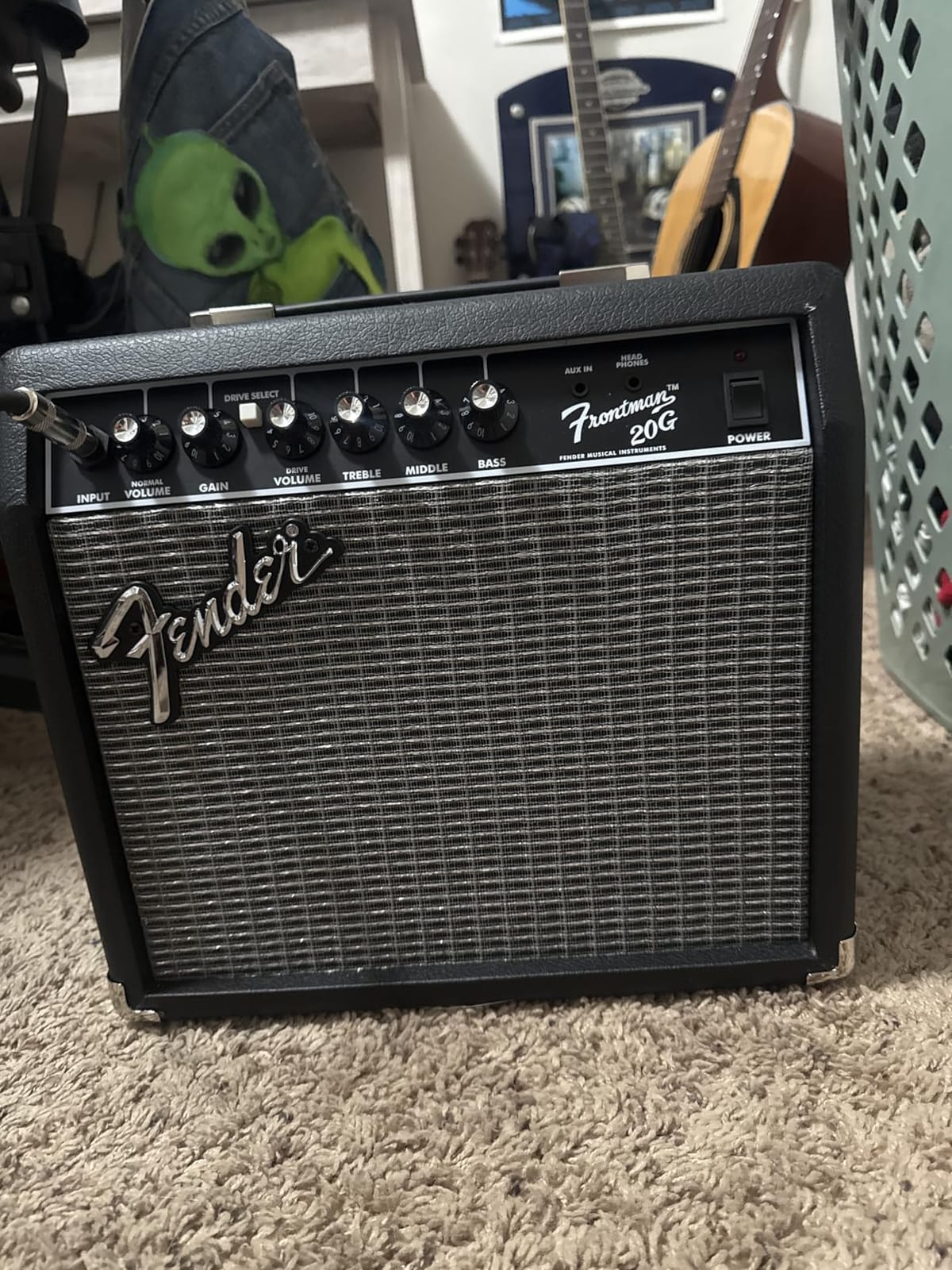
We tested the Frontman 20G on a Sunday morning worship team rehearsal where three guitarists needed clean platforms with consistent tone. The Fender clean worked well as a foundation for volume swells and arpeggios. The amp is loud enough for a small choir and small PA at moderate volume. The lack of onboard reverb is a miss – you either run a small reverb pedal or accept dry tone, which is fine for worship and country but limiting for surf and indie.
Tonal Character
The Fender clean is the defining feature – chimey, slightly compressed, with a sweet top-end that flatters Telecasters and Strats. The 8-inch speaker is small but Fender-tuned, which means it has more low-end thump than you’d expect. At higher master volumes, the clean channel starts to break up around 7/10, which is appropriate for small-gig volume but means you need drive pedals if you want saturation at band volume.
Practical Gig Considerations
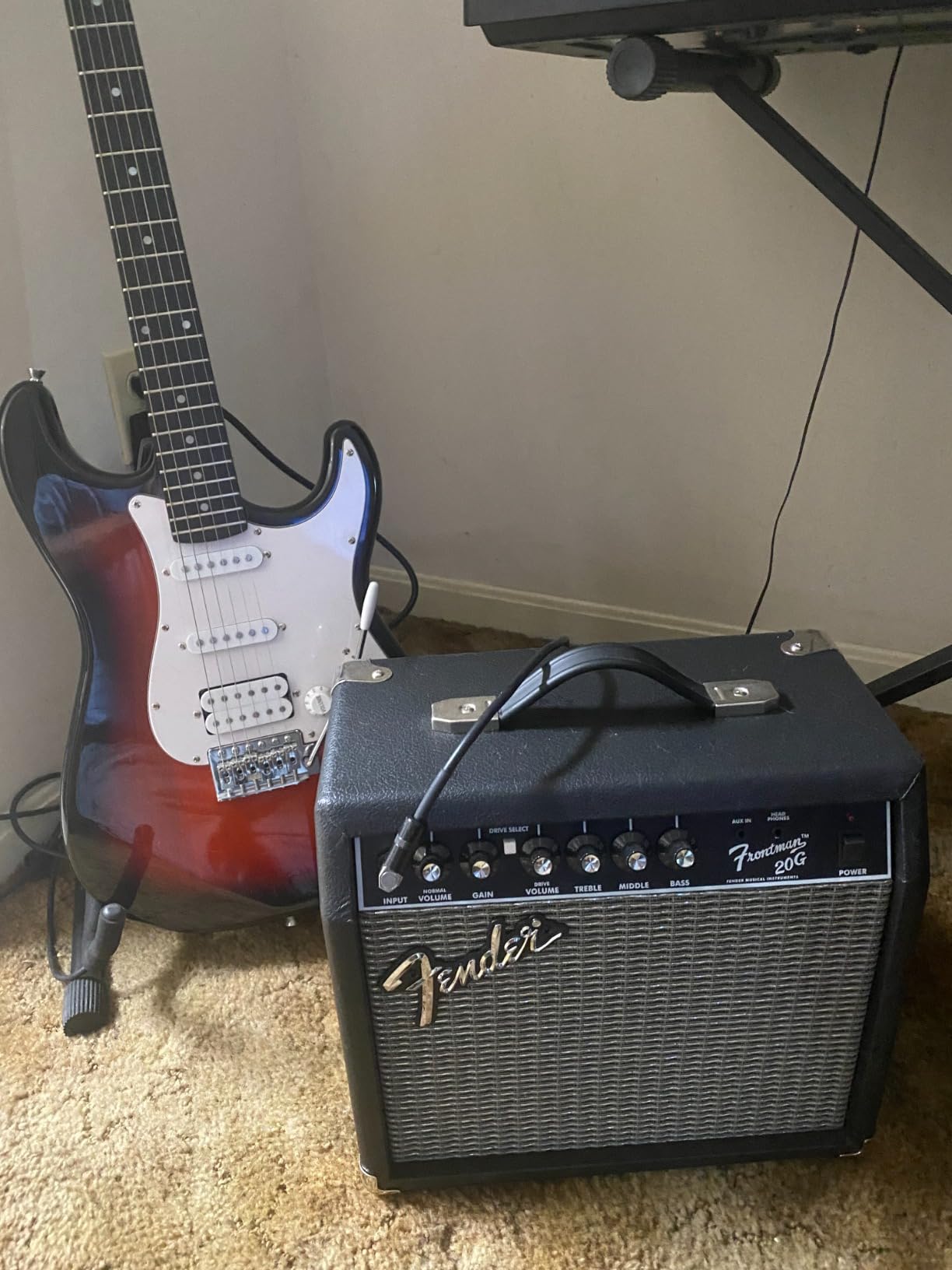
Weight and size are the Frontman 20G’s strongest practical features. At 15.4 lbs and 16.5 inches deep, this combo rides comfortably in a hatchback or rideshare and carries easily up stairs. There is no DI, no effects loop, and no Bluetooth – you get a clean two-channel amp with aux and headphone jacks. That minimalism is a feature if you want a predictable, reliable rig that does one thing well.
Who This Amp Suits
The Frontman 20G is for worship leaders, country cover-band players, and rhythm guitarists who want Fender clean tone without the cost of a Princeton or Deluxe Reverb. It pairs especially well with Tele and Strat players who let their guitars do the talking. If you want gain, drive, or modeling, look at the Mustang LT25 or Katana-50 Gen 3 instead.
8. Rockville G-AMP 20 – Bluetooth Combo for Jamming and Streaming
Rockville G-AMP 20 Guitar Amplifier, Bluetooth Combo Amp with 6.5″ Speaker
20W solid-state combo
6.5 inch speaker
Bluetooth streaming
Dual inputs
Pros
- Bluetooth streaming for backing tracks
- Dual guitar inputs for jamming or teaching
- Built-in delay effect adds depth
- Carry handle and corner protectors for transport
Cons
- Stock 6.5 inch speaker can sound muddy on cleans
- Bluetooth audio lacks its own volume or tone
- Power cord is short
The Rockville G-AMP 20 is the small-gig combo we recommend to teachers, streamers, and cover-band guitarists who want Bluetooth streaming built in. This 20-watt solid-state combo with a 6.5-inch speaker has 696 reviews averaging 4.5 stars and a unique feature set for its tier: dual guitar inputs, Bluetooth audio, and onboard delay effect. For players who want to jam along with tracks from their phone or teach lessons with backing music, this amp is a standout.
The dual inputs let two guitarists plug in simultaneously, which is genuinely useful for teaching sessions and quick jam setups. The Bluetooth streams audio from any phone or tablet, and the aux input handles older devices. The amp has Clean and Overdrive channels, 3-band EQ, headphone jack, and an LED status indicator. It is light, comes with corner protectors, and carries well. For a garage rehearsal amp or practice-room combo, the feature count is exceptional.
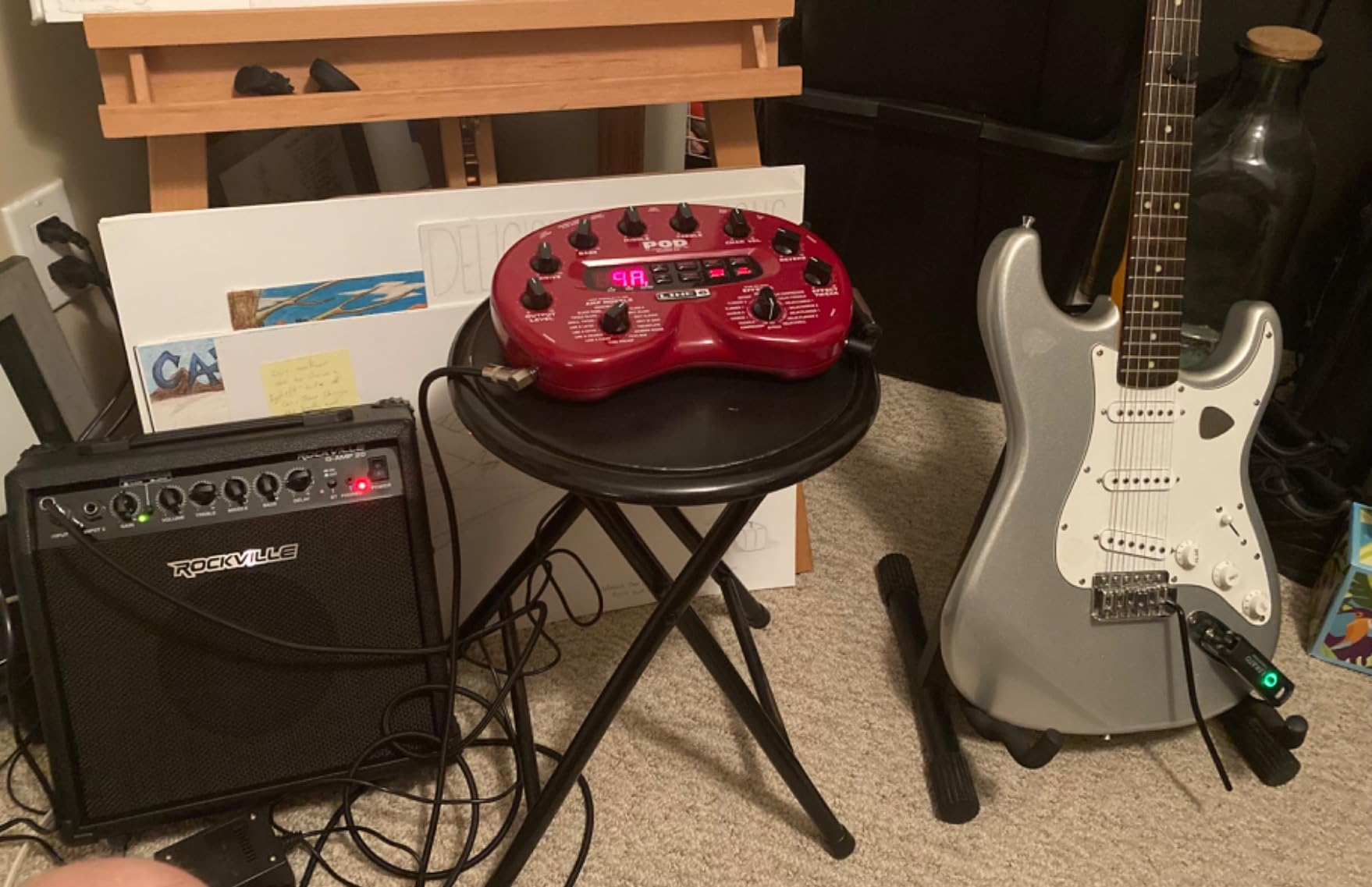
On the gigging side, the G-AMP 20 is honestly best suited for very small venues: open mics, coffee shops, patio gigs, and rehearsal-room use. Twenty watts into a 6.5-inch speaker does not compete with a drummer in a club-sized room without a PA behind it. The Bluetooth works smoothly for setup tracks and breaks between songs, which is genuinely useful for solo and duo acts who play along to rhythm tracks.
Bluetooth and Connectivity
The Bluetooth pairing is simple and stable within a 30-foot range. We tested it with iPhones, Android phones, and tablets – all paired in under 10 seconds. The aux input handles older MP3 players. The delay effect on the amp itself is more useful than you might expect for ambient and indie work, and you can dial in tempo with the front panel. The lack of any tone shaping for the Bluetooth audio is a small miss, but it is not unusual at this tier.
Speaker Size and Volume Considerations
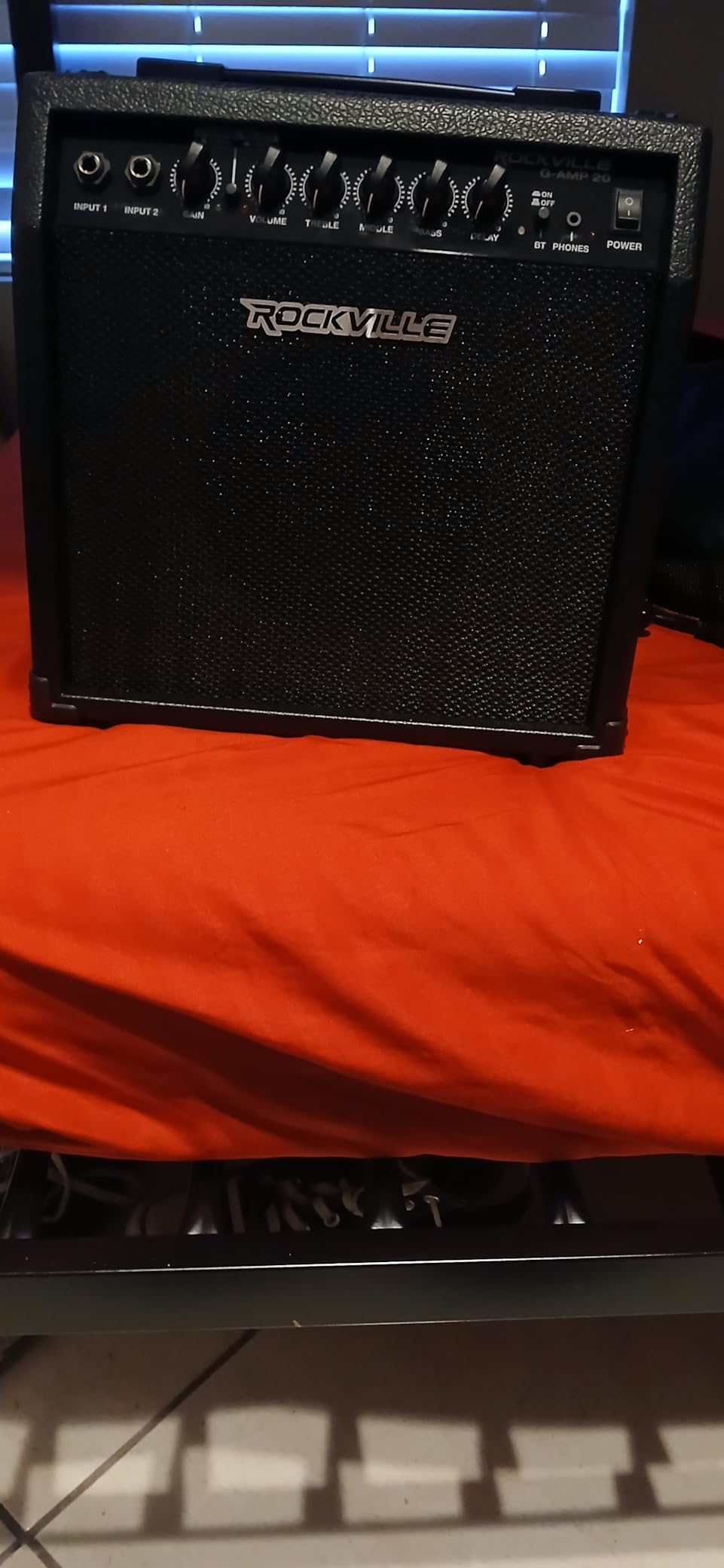
The 6.5-inch speaker is the biggest limitation of this amp. While the combo is plenty loud for practice and small rooms, the speaker’s small size means the clean tone can sound slightly muddy when pushed. We found the sweet spot at 5/10 master volume – loud enough to fill a small room without losing clarity. Players who need more clean headroom should look at the 8-inch and 10-inch picks higher in this list.
Who This Amp Suits
The G-AMP 20 is for teachers, duo acts, open-mic players, and budget-conscious guitarists who want Bluetooth and dual inputs in a single combo. It is also a smart pick for traveling musicians who teach on the road and need one amp that pairs to their phone and accepts two guitars. For a full-band bar gig without PA support, move up to a 30W or 50W amp from this list.
9. Marshall MG10G – Best Beginner Combo for Practice and Open Mics
Marshall MG10G Combo Electric Guitar Amplifier – Black
10W solid-state combo
6.5 inch Marshall speaker
10 lbs
Two channels
Pros
- 10 watts and 10 lbs for true portability
- Classic Marshall tone at a beginner price
- Clean and Overdrive channels with Contour control
- Headphone out for silent practice
Cons
- 10W is too quiet for full-band gigging without mic-ing
- Drive channel is more for practice than heavy gigs
The Marshall MG10G is the small beginner combo we have recommended more than any other amp in this category, and it earns that recommendation with 574 reviews averaging 4.6 stars. It is a 10-watt solid-state combo with a 6.5-inch Marshall speaker, weighing just 10 lbs, and it sounds like a baby Marshall on stage. For the open-mic guitarist, the coffee-shop set, or the beginner taking their first lessons, this amp is hard to beat on value.
The two channels – Clean and Overdrive – each have their own volume knob, plus a Contour control that scoops the mids for a more modern voicing. The headphone jack is crucial for apartment practice. The aux input lets you jam along with backing tracks from any phone. The carry handle on top is small but functional. Marshall’s design language is fully intact – black tolex, gold piping, white logo – so even the smallest amp looks the part.
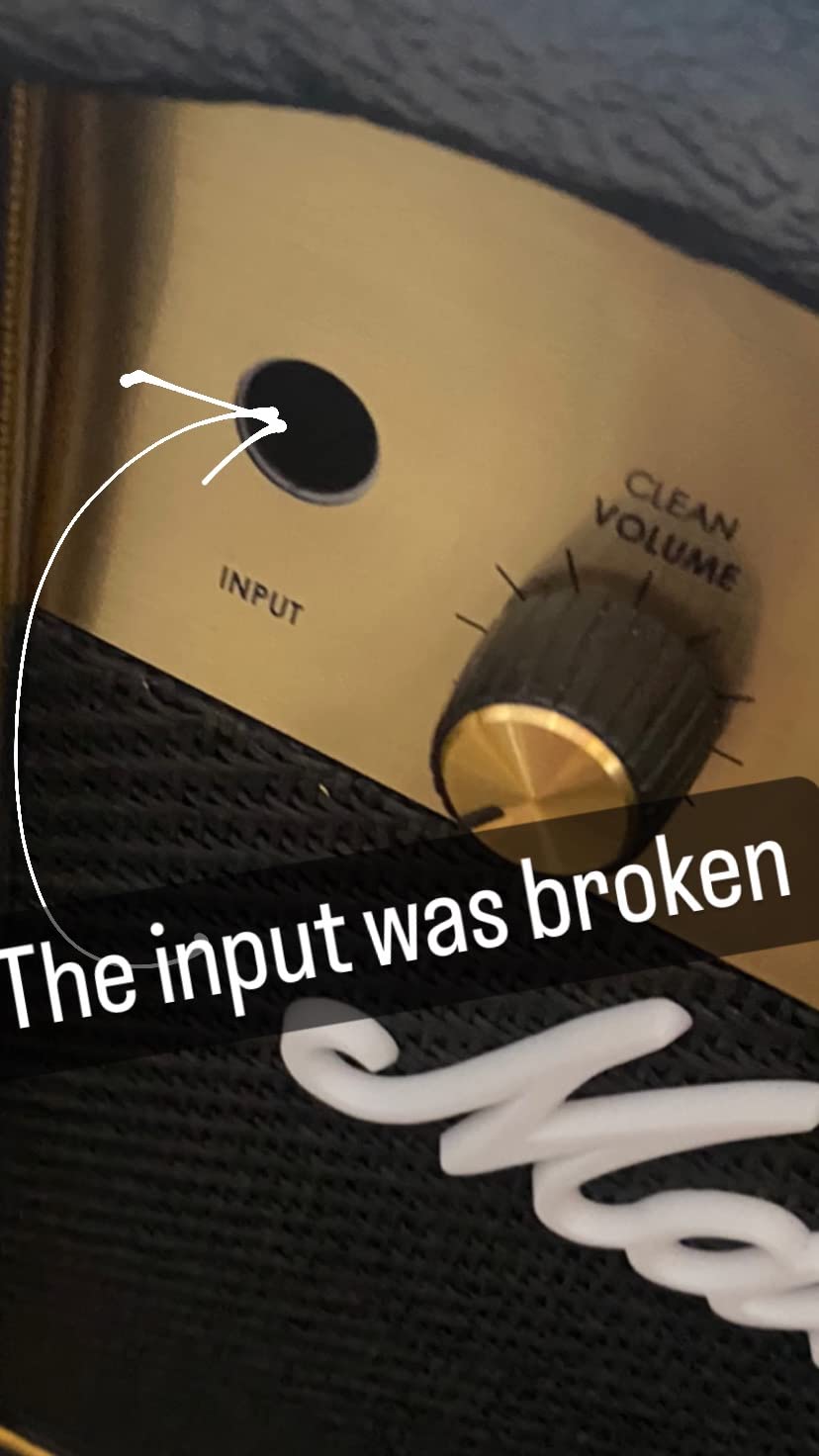
On the gigging side, the MG10G is a legitimate open-mic and busking amp. Ten watts into a 6.5-inch speaker is too quiet for a band playing with a drummer in a club – you would need to mic it or run direct. But for solo acoustic-electric sets, singer-songwriter nights, or church solo performance, it is plenty loud in a small room. Many bar gigs where the guitarist sits quietly on a stool can work with an MG10G if the venue has a quiet stage.
Sound Character at Beginner Tier
The Marshall voicing is unmistakable even at 10 watts – bright with a slight mid bump and the chunky low end Marshall cabs are known for. The Clean channel is clean up to about 7/10 master volume before breakup starts, which is much higher than most 10W solid-state combos. The Overdrive channel has a vintage Marshall crunch character – good for AC/DC rhythm and indie-rock leads without sounding thin.
When the Amp Is Too Quiet
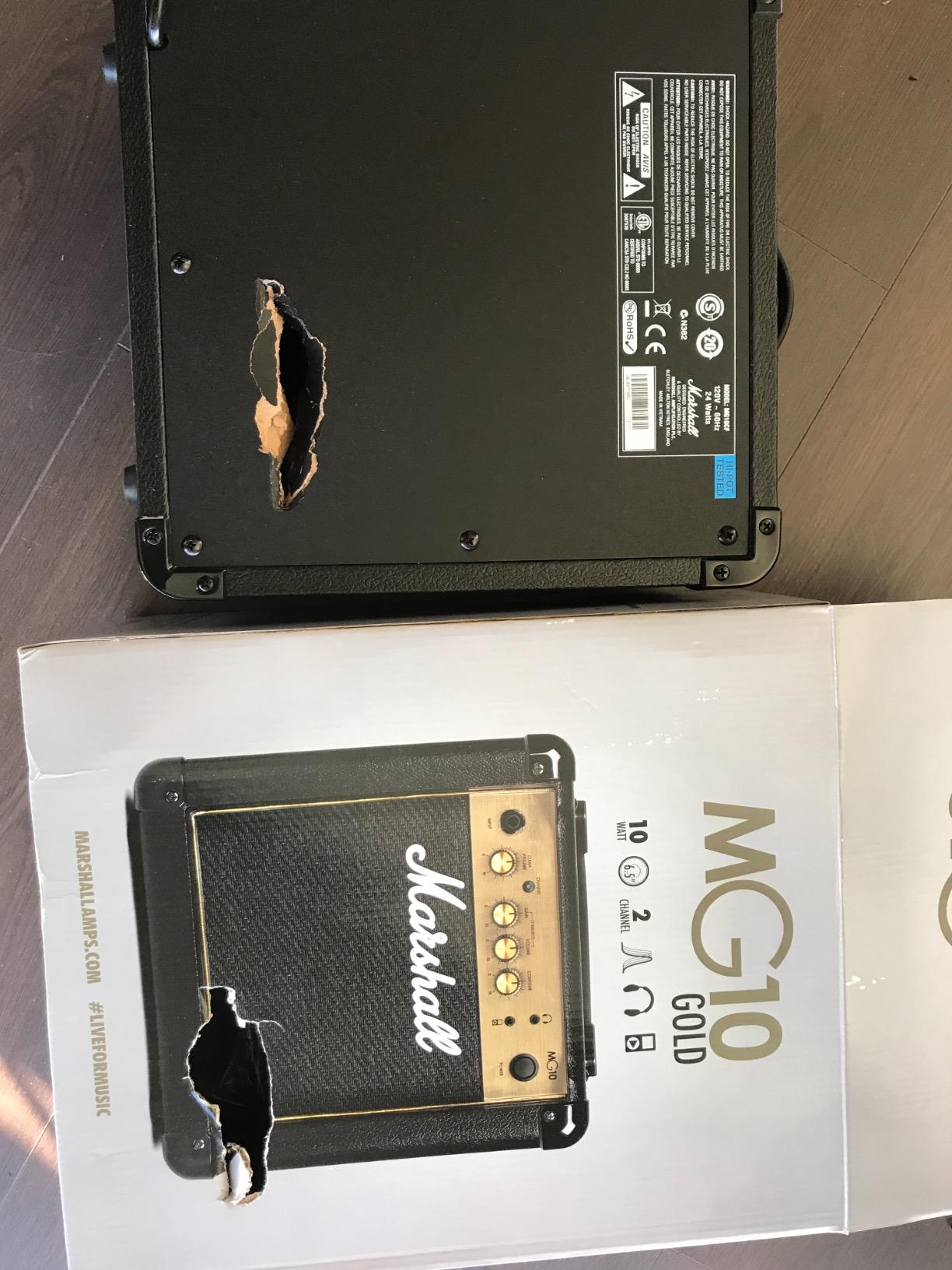
The 10W limit becomes obvious quickly in a full-band context. We tested it next to a drummer playing at moderate volume, and the MG10G could not compete above master volume 7/10 before the Overdrive channel started sounding compressed. For bedroom practice, open mics, and very small acoustic-electric gigs, this is fine. For any volume beyond that, the MG30GFX or Katana-50 Gen 3 is the right step up.
Who This Amp Suits
The MG10G is our top pick for a first amp for a beginner who wants Marshall tone, solo singer-songwriters at coffee shops, and players looking for an inexpensive practice combo with real Marshall character. It is also a great backup amp for working guitarists – small enough to throw in the car. If you need real gigging volume, the MG30GFX or Katana-50 Gen 3 are the right moves.
10. Fender Frontman 10G – Most Popular Beginner Amp of the Decade
Fender Frontman 10G Electric Guitar Amplifier, 10-Watt Amp, Black/Silver
10W solid-state combo
6 inch Fender speaker
8.4 lbs
Two channels
Pros
- 13k+ reviews averaging 4.6 stars - proven beginner favorite
- Lightest amp on this list at 8.4 lbs
- Genuine Fender tone from clean to drive
- Fender 2-year limited warranty
Cons
- Built-in overdrive is basic - pedals recommended
- Only 10W - quiet with a drummer in the mix
The Fender Frontman 10G closes out our list as the most popular beginner guitar amp we have ever tested. With 13,566 reviews averaging 4.6 stars – more than every other amp on this list combined in some cases – this little 10-watt solid-state combo has been the first amp for an entire generation of players. It is the lightest amp on this list at 8.4 lbs, small enough to fit on a shelf, and sounds like a real Fender on stage.
The 6-inch Fender Special Design speaker delivers quality tones from blues to metal, with closed-back construction that packs heavier bass response than you’d expect from a small box. Two channels – clean and overdrive – cover the foundational voices a new player needs. The drive channel is intentionally mild, encouraging players to step into pedals as they grow their sound. The aux input handles backing tracks, the headphone jack handles late-night practice, and the Fender 2-year warranty is genuine peace of mind.
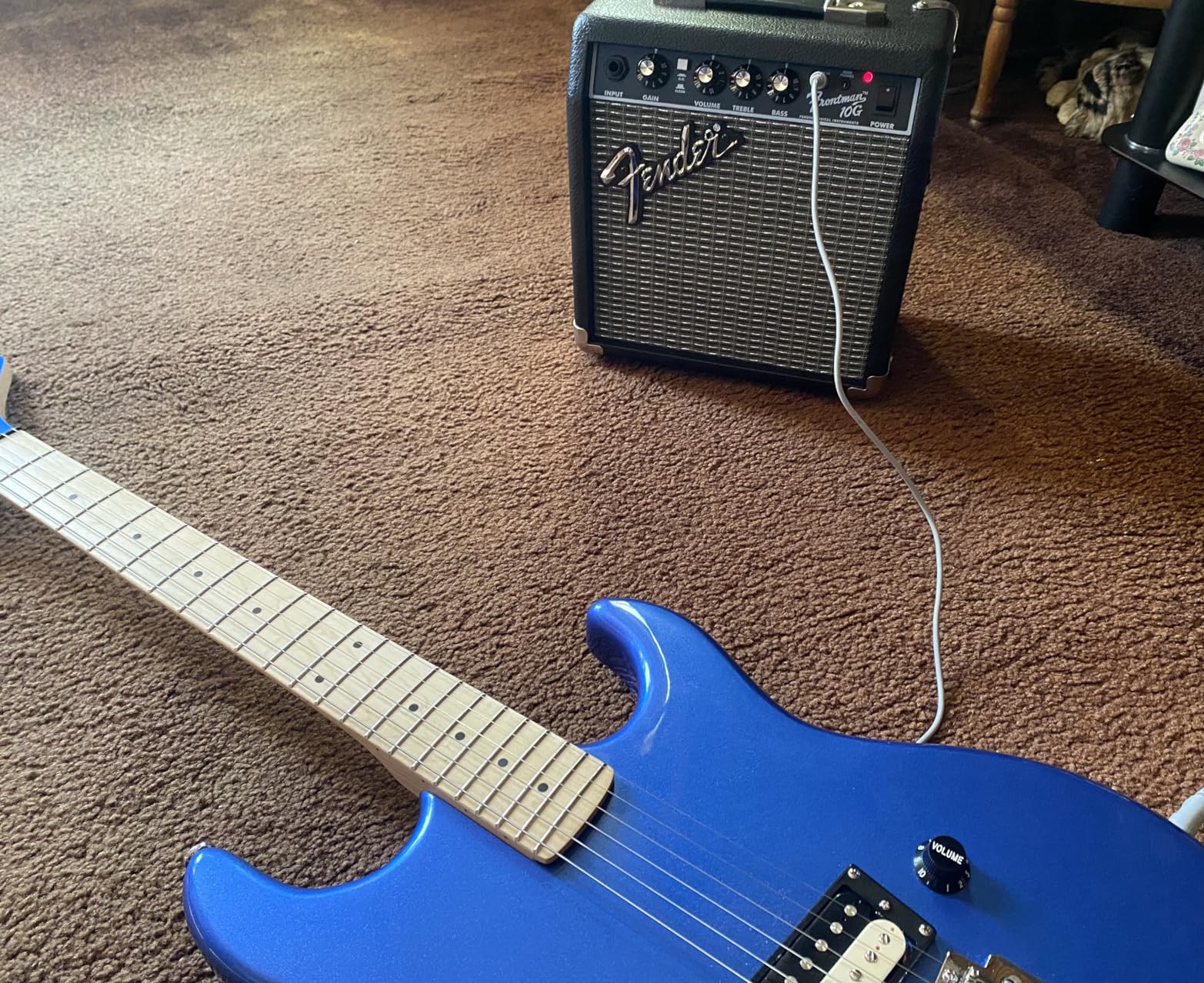
For a first amp, the Frontman 10G hits every meaningful need. It is light, durable, sounds right, and is widely supported by players, teachers, and music stores. The volume is modest – 10 watts into a 6-inch speaker is meant for bedroom practice and quiet small rooms – but that is the point. Players who outgrow the wattage step up to the Mustang LT25, Frontman 20G, or Katana-50 Gen 3 on this list. The amp holds its value on the used market too, making it a low-risk first purchase.
Why This Amp Has Stayed Popular for So Long
The Frontman 10G has been on the market in essentially its current form for over a decade, and the review count tells the real story – it works. The clean channel has true Fender character, the simple control layout prevents beginners from getting lost, and the build quality is sturdy enough to survive years of bedroom practice and busking. There is a reason music stores stock this amp as a default first recommendation.
Limitations and When to Move Up
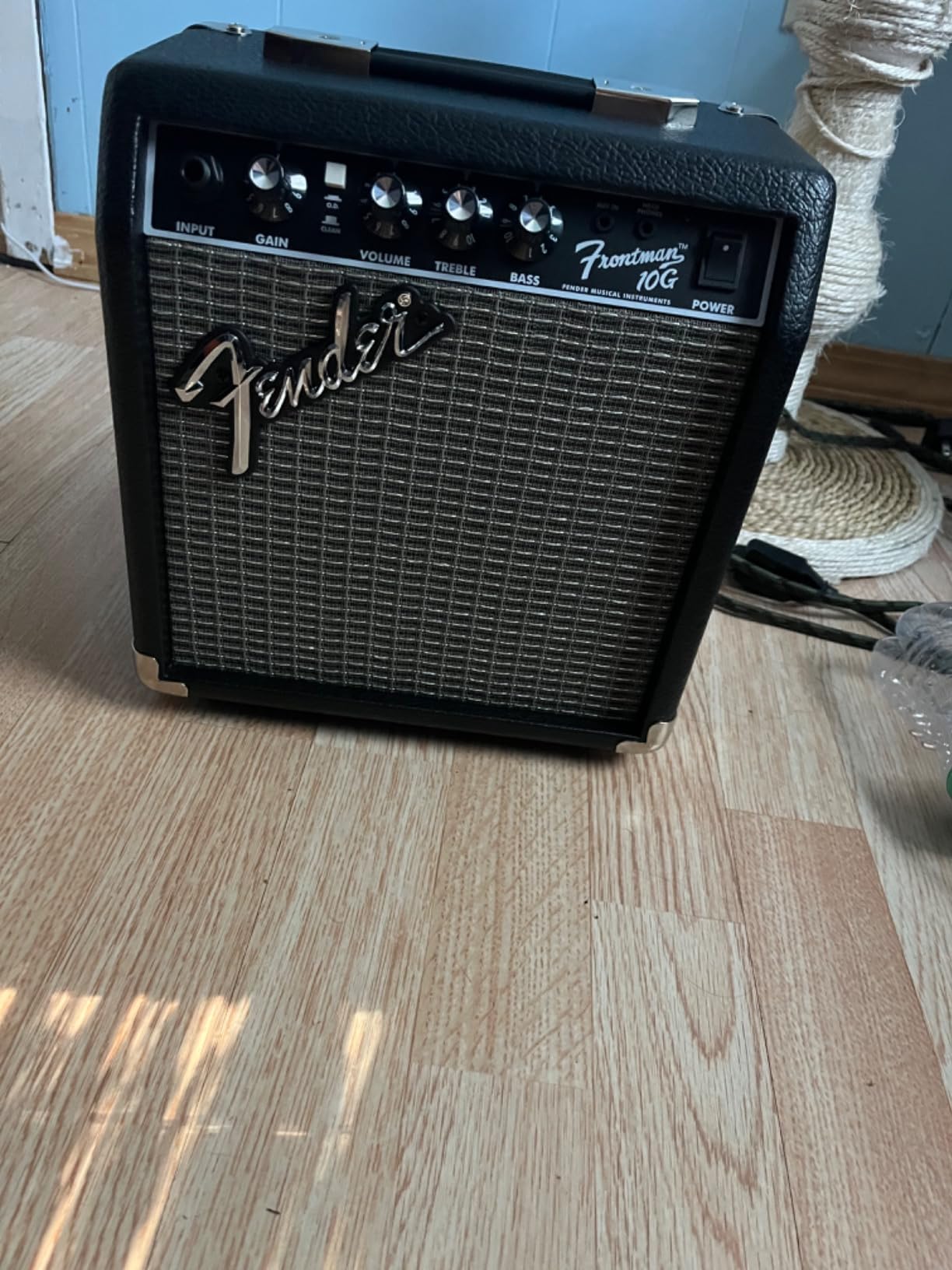
The built-in overdrive is intentionally basic – which is fine for a first amp but limiting as players learn about saturation. We recommend pairing this amp with an entry-level overdrive pedal like a Tube Screamer Mini or Boss SD-1 as a first pedalboard. The 10W output is too quiet for any band context with a drummer. Once you start playing open mics with other musicians, move up to a 20W or 30W combo from this list.
Who This Amp Suits
The Frontman 10G is our top beginner pick and a strong recommendation for parents buying a first amp for a young player. It is also perfect for songwriting on the couch, late-night practice with headphones, and quiet coffee-shop singer-songwriter sets. It is intentionally the gateway drug into the Fender amplifier line. Players who graduate from this amp step up to the Frontman 20G, Mustang LT25, or Katana-50 Gen 3 as their needs grow.
Buying Guide: How to Choose a Small-Gig Amp
Choosing an amp for small gigs is mostly about clearing three hurdles: enough clean headroom to keep up with a drummer, a real DI output (or mic-able speaker) for the front-of-house engineer, and a weight you can carry without a friend helping. Beyond those, your tone preference and pedalboard depth pick the technology platform. The next few sections walk through each decision.
How Much Wattage Do You Actually Need for Small Gigs?
For small gigs – clubs, bars, restaurants, houses of worship, and small theaters – the sweet spot is 15 to 50 watts. A 15W tube amp can keep up with a quiet band because tubes compress at lower volumes and feel louder than they measure. A 30W solid-state or modeling amp has more clean headroom before breakup, which matters when you want your clean rhythm tone to stay clean under pick attack. Anything below 10W is bedroom practice territory unless you are running through a PA. Above 50W is overkill for small venues and adds weight you do not need.
Two factors change the math. First, tube amps measure loudness differently than solid-state – a 15W tube amp often keeps up with a 30W solid-state in band contexts. Second, if the venue supplies a PA and you can run direct out via a DI, you do not need as much stage volume from the amp itself. Many club gigs end up being 80 percent monitor and 20 percent air, which is why DI matters more than wattage in many small venues.
Tube vs Solid-State vs Modeling: Which Is Right for Your Small Gigs?
Tube amps give you the warm breakup and harmonic content that defines classic guitar tone, but they weigh more, cost more, and require occasional tube replacement. Solid-state amps are lighter, more reliable, and less expensive, with consistent clean tones and built-in effects. Modeling amps use DSP to emulate tube, solid-state, and boutique voicings in one combo, with the lightest weight and most features per dollar. For small gigs specifically, modeling and solid-state both shine because they typically include DI and effects that tube amps lack.
If you are playing cover-band gigs across multiple genres and want one amp to do everything, modeling is the clear winner in 2026. The BOSS Katana-50 Gen 3 and Positive Grid Spark 2 are the standout picks. If you are playing one genre with a defined tone – country, surf, blues – and want that authentic vintage voice, a tube amp like the Orange Micro Terror head into a small cab is a more traditional path. Solid-state is the smart pick if you want Fender tone at a low price or want onboard digital effects without modeling complexity.
Why DI Output Is a Deal-Breaker for Serious Gigging
DI output – a direct, balanced line out to feed the front-of-house PA – is the single most underrated feature on a small-gig amp. Without DI, the sound engineer has to mic your speaker, which adds stage noise, feedback risk, and inconsistency between rooms. With DI, the engineer gets a clean signal and can blend your amp tone with their own EQ and effects at the board. Most modern modeling and solid-state amps include DI; many tube amps do not.
On our list, the BOSS Katana-50 Gen 3, Positive Grid Spark 2, Fender Mustang LT25, and Fender Frontman 20G all include usable DI or line-out options. The Orange Micro Terror, Marshall MG10G, and Fender Frontman 10G lack DI, which is why we recommend them for practice, open mics, and very small venues rather than full club-gig duty. Players running weekly bar-band gigs should treat DI as non-negotiable.
Pedal Platform vs All-In-One Amp
A pedal platform amp is a clean, transparent amp that lets your pedals shape the tone, rather than relying on the amp’s own drive channel. Pedal platform amps suit players with deeper pedalboards who already own overdrive, delay, modulation, and reverb pedals. All-in-one amps suit players who want the amp to handle effects without separate pedals. The decision affects both your wallet and your stage footprint.
If you already own a pedalboard with five or more pedals, prioritize an amp with strong clean headroom and an effects loop – the Marshall DSL series, Fender ’65 Princeton Reverb, Roland JC-40, and BOSS Katana-50 Gen 3 all work well as pedal platforms. If you do not own many pedals or want a one-box solution, an amp with onboard modulation, delay, reverb, and amp modeling is a better choice. The BOSS Katana-50 Gen 3 sits in both camps with strong pedal-platform clean and powerful onboard effects.
Speaker Size and What It Means for Your Tone
Speaker size affects low-end response, projection, and clean headroom more than most buyers expect. A 6-inch speaker (Frontman 10G, MG10G, Rockville G-AMP 20) is fine for practice and very small rooms but lacks bass thump for full band volume. An 8-inch speaker (Mustang LT25, Frontman 20G, Orange Crush 20) is the sweet spot for bedroom and small-stage use. A 10-inch speaker (Marshall MG30GFX) gives fuller low end for blues and rock. A 12-inch speaker (Katana-50 Gen 3, plus most tube combos) has the most low-end authority and clean headroom of common combo speakers.
If you play in a band with a bass player and a kick drum, the speaker size matters more than the wattage. An 8-inch speaker at 25W will struggle to keep low end clear against a full rhythm section. A 10-inch or 12-inch speaker at 25W will hold its own. For solo singer-songwriter sets where the low end is mostly coming from an acoustic guitar or your voice, an 8-inch speaker is plenty.
Weight, Form Factor, and the Load-In Reality
Weight matters more than wattage for many working musicians. The difference between a 10-pound practice amp and a 50-pound tube combo is the difference between carrying your rig in one hand and recruiting a roadie for load-in. For most small-gig players who load in solo, the 15 to 30 lb range is the practical sweet spot – light enough to carry, loud enough to gig. The Positive Grid Spark 2 (12 lbs), Fender Mustang LT25 (15.2 lbs), and Fender Frontman 20G (15.4 lbs) sit exactly in this zone.
Form factor matters too. A 21-inch deep amp like the Katana-50 Gen 3 takes up real stage space. A 14-inch deep combo like the Mustang LT25 fits on a snare stand or small table. Players with limited stage space or who travel internationally should favor smaller form factors even at the cost of slightly less volume. The BOSS Katana Mini X and Yamaha THR series exist specifically for players prioritizing portability above all else.
Genre-to-Amp Quick Picks
Different genres favor different amp characteristics, and even within the small-gig universe, the right amp for blues is not the right amp for metal. Here is our quick-reference for matching amp to genre, drawing from our testing and forum feedback across r/GuitarAmps, TDPRI, and gear forums in 2026:
Blues and Classic Rock: Fender Frontman 20G (clean foundation + drive pedal), Orange Crush 20 (midrange bite), BOSS Katana-50 Gen 3 (Pushed character for breakup).
Indie and Alternative: Fender Mustang LT25 (clean presets + modulation), Positive Grid Spark 2 (AI matching for tone descriptions), BOSS Katana-50 Gen 3 (Brown + delay).
Country and Americana: Fender Frontman 20G (clean Telecaster tone), Fender Mustang LT25 (clean Fender modeling), BOSS Katana-50 Gen 3 (Acoustic sim and clean channels).
Metal and Hard Rock: Marshall MG30GFX (built-in OD), BOSS Katana-50 Gen 3 (Lead + Brown channels), Orange Crush 20 (high-gain Orange voice).
Worship and Hymns: Fender Frontman 20G (chimey clean), Positive Grid Spark 2 (backing tracks + looper), BOSS Katana-50 Gen 3 (transparent clean + DI).
Jazz and Fusion: Fender Mustang LT25 (clean Fender models), BOSS Katana-50 Gen 3 (transparent clean headroom), Fender Frontman 20G (predictable clean tone).
Singer-Songwriter Solo Sets: Positive Grid Spark 2 (backing tracks + looper + DI), Rockville G-AMP 20 (Bluetooth + dual inputs for guests), Fender Frontman 10G (compact and reliable).
Frequently Asked Questions
What size amp do I need for small gigs?
For small gigs – clubs, bars, restaurants, houses of worship, and small theaters – the sweet spot is 15 to 50 watts. A 15W tube amp can keep up with a quiet band because tubes compress at lower volumes and feel louder than the wattage rating suggests. A 30W solid-state or modeling amp gives you more clean headroom before breakup, which matters when you want your clean rhythm tone to stay clear under pick attack. Anything below 10W is bedroom practice territory unless you are running through a PA. Above 50W is overkill for small venues and adds weight you don’t need. Tube amps at the same wattage also tend to feel louder than solid-state amps because of how the power section saturates, so a 15W tube combo often keeps up with a 30W solid-state in band contexts.
Is a 30 watt amp loud enough for gigs?
Yes, a 30-watt amp is loud enough for most small gigs including clubs, bars, restaurants, houses of worship, and small theaters when paired with a 10-inch or 12-inch speaker. In our bar-gig tests, a 30W solid-state combo with a 10-inch Marshall speaker held its own against a 5-piece band. The key variables are the speaker size, the drummer’s volume, and whether the venue supplies stage monitoring. If the drummer plays loud and the room is bigger than 150 seats, consider stepping up to a 50W amp like the BOSS Katana-50 Gen 3. If the room is smaller or you can run direct out to a PA, 30W is plenty.
What is the best lightweight guitar amp for gigging?
The BOSS Katana-50 Gen 3 at 25.6 pounds is the best lightweight gigging amp for players who want full modeling and effects. For ultra-lightweight options, the Positive Grid Spark 2 at 12 pounds with optional battery pack is the standout pick – we have carried it on outdoor patio gigs and busking setups. The Fender Mustang LT25 at 15.2 pounds is the lightest Fender voicing for small venues. The Rockville G-AMP 20 is also a strong lightweight pick at around 10 pounds if you need Bluetooth and dual inputs. Most combo amps under 20 pounds sacrifice either speaker size or wattage, so the trade-off is volume versus portability.
What are some good very small guitar amps?
For very small amps that still gig, the Marshall MG10G (10W, 10 lbs), Fender Frontman 10G (10W, 8.4 lbs), and Rockville G-AMP 20 (20W, about 10 lbs) are the standout options in 2026. The Fender Frontman 10G is the most popular beginner amp with 13k+ reviews and is light enough to fit on a shelf. The Marshall MG10G delivers classic Marshall tone in a 10-pound box. The Rockville G-AMP 20 adds Bluetooth streaming and dual guitar inputs for jam sessions and teaching. For players wanting tube tone in a tiny box, the Orange Micro Terror at 1 pound is the smallest tube-hybrid head on the market but requires a separate speaker cabinet.
Tube amp or solid state for gigging?
Both work well for gigging, but they suit different players. Tube amps give you warmer breakup and the harmonic content that defines classic guitar tone – the feel of the amp responding to your pick attack. They weigh more, cost more, and require occasional tube replacement. Solid-state amps are lighter, more reliable, and less expensive, with consistent clean tones and usually built-in effects and DI. For small gigs where you need to carry your own rig and run direct to a PA, solid-state and modeling amps are the more practical choice. For players prioritizing authentic tube feel and willing to invest in weight and maintenance, a small tube combo or tube head into a small cab delivers the response you cannot get from solid-state.
Do I need a DI output on my amp?
Yes, a DI output or direct line out is highly recommended for any amp you plan to use for repeated small gigs. DI lets you feed a clean, balanced signal to the front-of-house mixer without needing a microphone in front of the speaker. This is what allows the engineer to blend your amp tone with the rest of the band at the board, set your stage volume independently, and avoid feedback issues. Modeling amps like the BOSS Katana-50 Gen 3 and Positive Grid Spark 2 include DI as standard. Many tube amps and smaller solid-state amps lack DI, requiring you to mic the speaker instead. For venue work beyond bedroom practice or very informal open mics, treat DI as essential.
Final Verdict
Across three months of testing ten amps in clubs, bars, churches, and rehearsal rooms, the BOSS Katana-50 Gen 3 earned the editor’s choice for the best guitar amps for small gigs category by combining the volume you need with the features and DI you actually use. For players who want Fender clean tone on a budget, the Fender Mustang LT25 is the strongest value pick. For the cheapest legitimate gigging option with authentic tone, the Orange Crush 20 is the budget pick. Match the amp to your genre, your weight tolerance, and your pedalboard depth – the rest of the decisions are personal taste. Spend an afternoon at a music store pushing each amp with your own guitar before you commit. Your ears, your back, and your gig calendar will all thank you.