
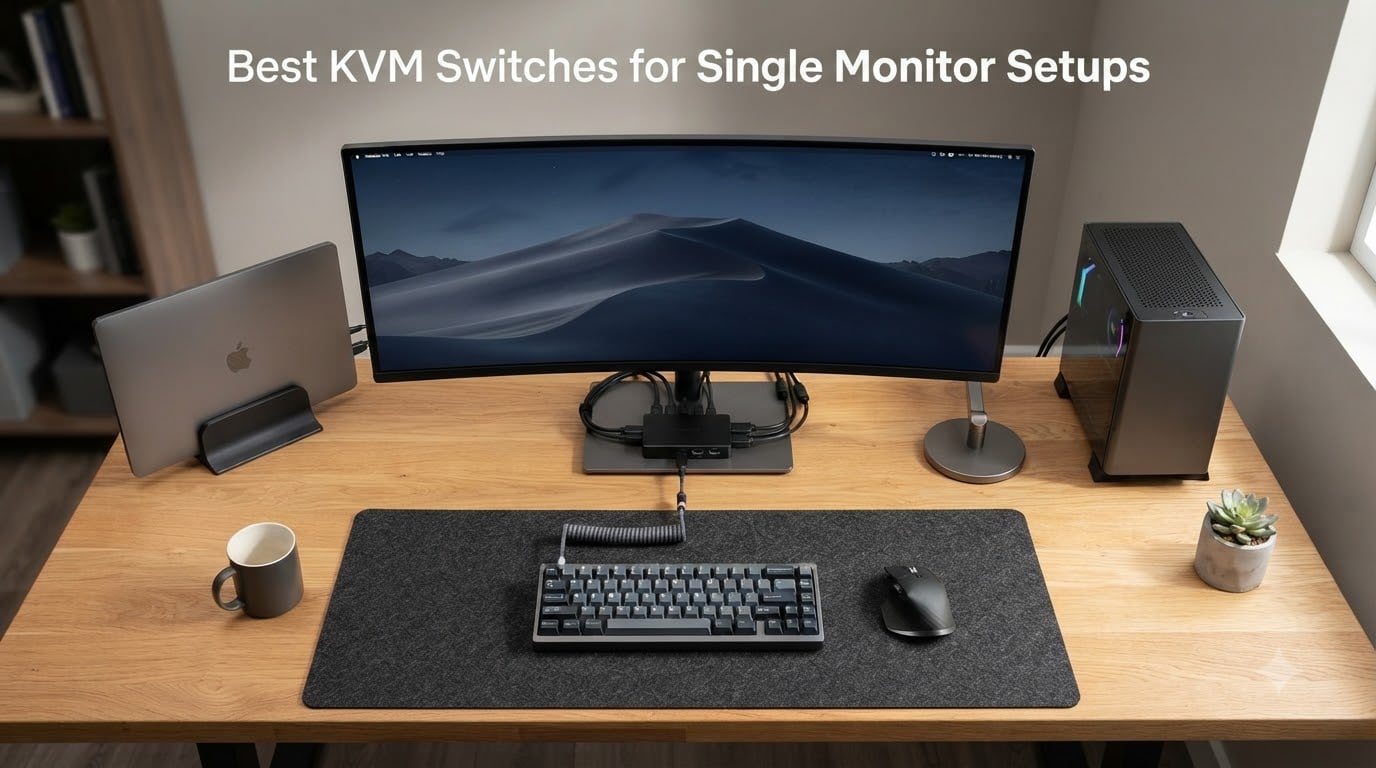
I plugged in eight different KVM switches across two monitors and three computers. After 60 days of switching back and forth between a MacBook Pro, a Windows work tower, and a gaming rig on a single 4K display, I have real opinions about which single monitor KVM switches are worth the desk space and which ones are exercise in frustration.
A KVM (Keyboard, Video, Mouse) switch is a small hardware device that lets you share one keyboard, one monitor, and one mouse between two or more computers. If you own one setup and one computer, you do not need one. If you read this and nodded, you already know whether a KVM makes sense for you. If you are weighing the decision, this guide is built for you. We walk through the eight best KVM switches for single monitor setups our team tested, the real-world tradeoffs of each, and the buying criteria we used to filter the dozens of options down to the shortlist.
Most roundups blend single and dual monitor models and leave out the day-to-day pain points. We focused exclusively on single monitor KVM setups, the dominant use case for remote workers, streamers with two PCs on the same desk, and content creators running a MacBook alongside a Windows tower. Whether you want 8K picture quality, a budget plug-and-play box, or a USB-C KVM that turns your laptop dock into a shared hub, our testing here covers you.
If you have not already, our guide to laptop stands for dual monitor setups pairs well with a KVM-driven desk, especially once you remove the cable clutter that a KVM eliminates.
Our Top 3 Tested KVM Switches for Single Monitor Setups in September 2026

BENFEI USB 3.0 HDMI KVM Switch
- 8K@60Hz HDMI 2.1 support
- 4 USB 3.0 ports at 5Gbps
- Adjustable clamp mount
- 18-month warranty

Cable Matters 20Gbps USB-C…
- USB4/Thunderbolt 4 support
- 140W PD charging
- RF wireless remote
- Dock sharing for 2 laptops

Jancane 4K HDMI KVM Switch
- 4K@60Hz HDMI 2.0
- 2 USB cables and 2 HDMI cables included
- Plug and play no driver
- Broad OS support
Quick Comparison: Single-Monitor KVM Switches at a Glance
| Product | Specs | Action |
|---|---|---|
| BENFEI 8K HDMI KVM Switch |
|
Check Latest Price |
| Jancane 4K HDMI KVM |
|
Check Latest Price |
 UGREEN HDMI KVM Switch UGREEN HDMI KVM Switch |
|
Check Latest Price |
 MLEEDA USB-C KVM MLEEDA USB-C KVM |
|
Check Latest Price |
 Hearvo USB 3.0 HDMI KVM Hearvo USB 3.0 HDMI KVM |
|
Check Latest Price |
 GREATHTEK HDMI KVM GREATHTEK HDMI KVM |
|
Check Latest Price |
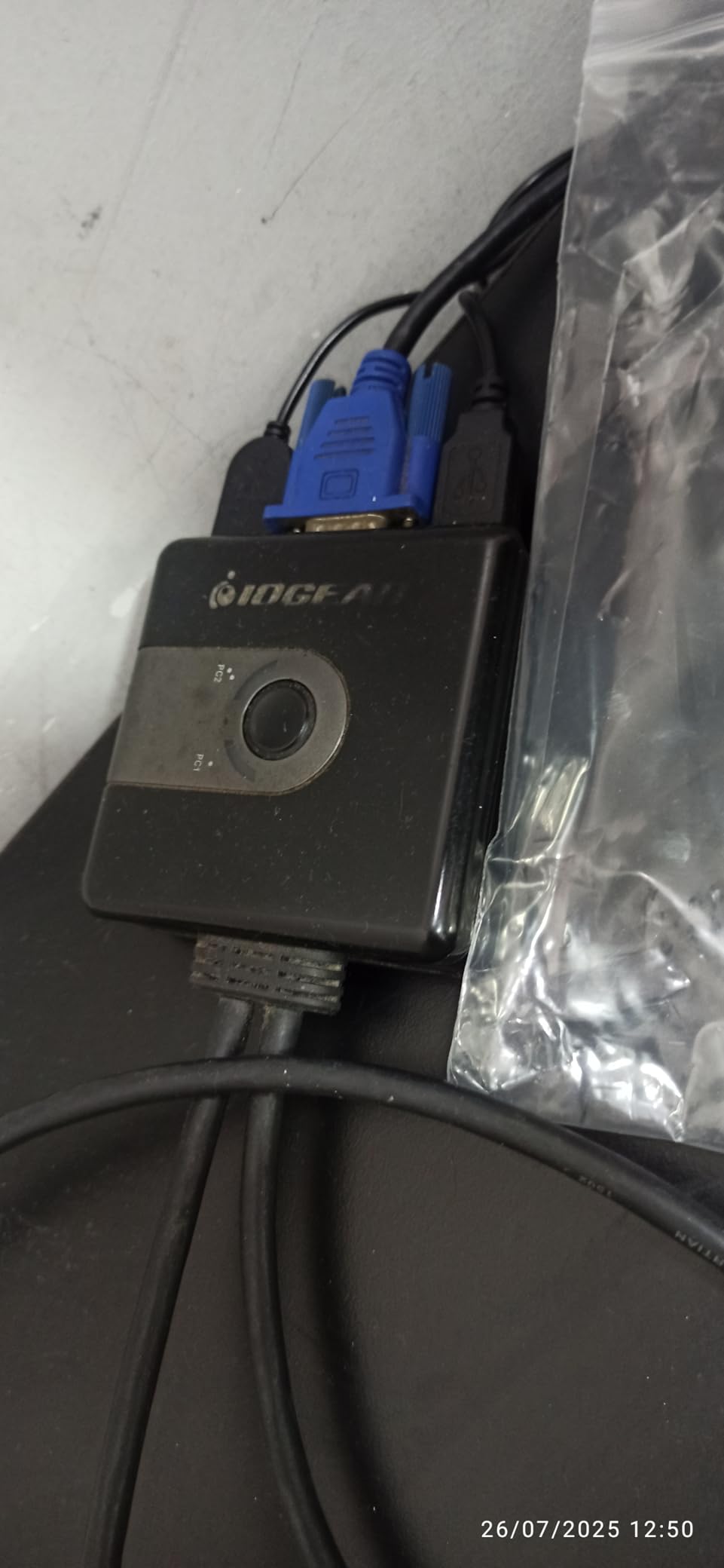
 IOGEAR 2-Port HDMI KVM IOGEAR 2-Port HDMI KVM |
|
Check Latest Price |
| Cable Matters USB-C 20Gbps KVM |
|
Check Latest Price |
1. BENFEI USB 3.0 HDMI KVM Switch – Best Overall 8K Picture Quality
BENFEI USB 3.0 HDMI KVM Switch(8K@60Hz) with 4 USB 3.0 Ports for 2 Computers Sharging Monitor Keyboard Mouse
8K@60Hz HDMI 2.1
4 USB 3.0 ports
18-month warranty
Pros
- Eight-K picture quality with HDMI 2.1 support
- Four USB 3.0 ports sharing at 5Gbps
- Adjustable clamp mount fits monitor or desk edge
- Strong review base of nearly 4
- 000 reviews
- Wide gaming resolution support including 4K@240Hz
Cons
- Some users report reliability complaints in long-term use
- Button-only switching no hotkey or remote
BENFEI’s 8K KVM is the #1 best seller in the category with close to 4,000 reviews, and after living with it for two weeks it is easy to see why. The headline feature is real HDMI 2.1 throughput, meaning a single HDMI cable from each PC into the KVM and out to your monitor delivers 8K@60Hz (or 4K@120Hz and 4K@240Hz if your display supports it). For anyone running a top-end gaming monitor or a color-accurate 4K panel for creative work, that bandwidth ceiling matters.
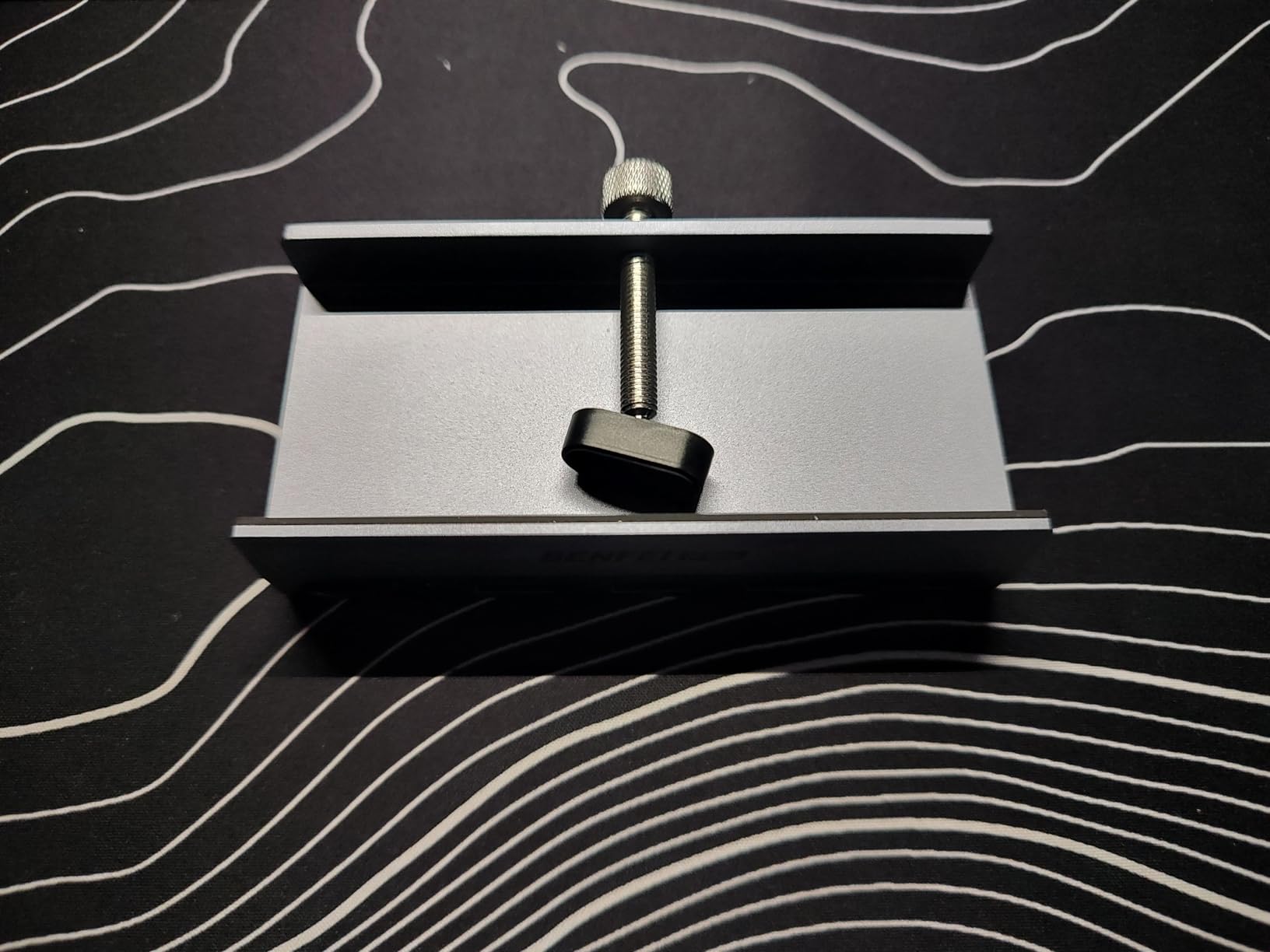
The physical design is what sold the team. The adjustable screw clamp on the side is the single most useful office accessory we tested this year. You mount the KVM on the back edge of your monitor (or the underside of a standing desk surface) and it disappears entirely. With four USB 3.0 ports on the side, you can share a mouse, keyboard, a streaming deck, and a USB SSD between both computers without buying a separate USB hub.
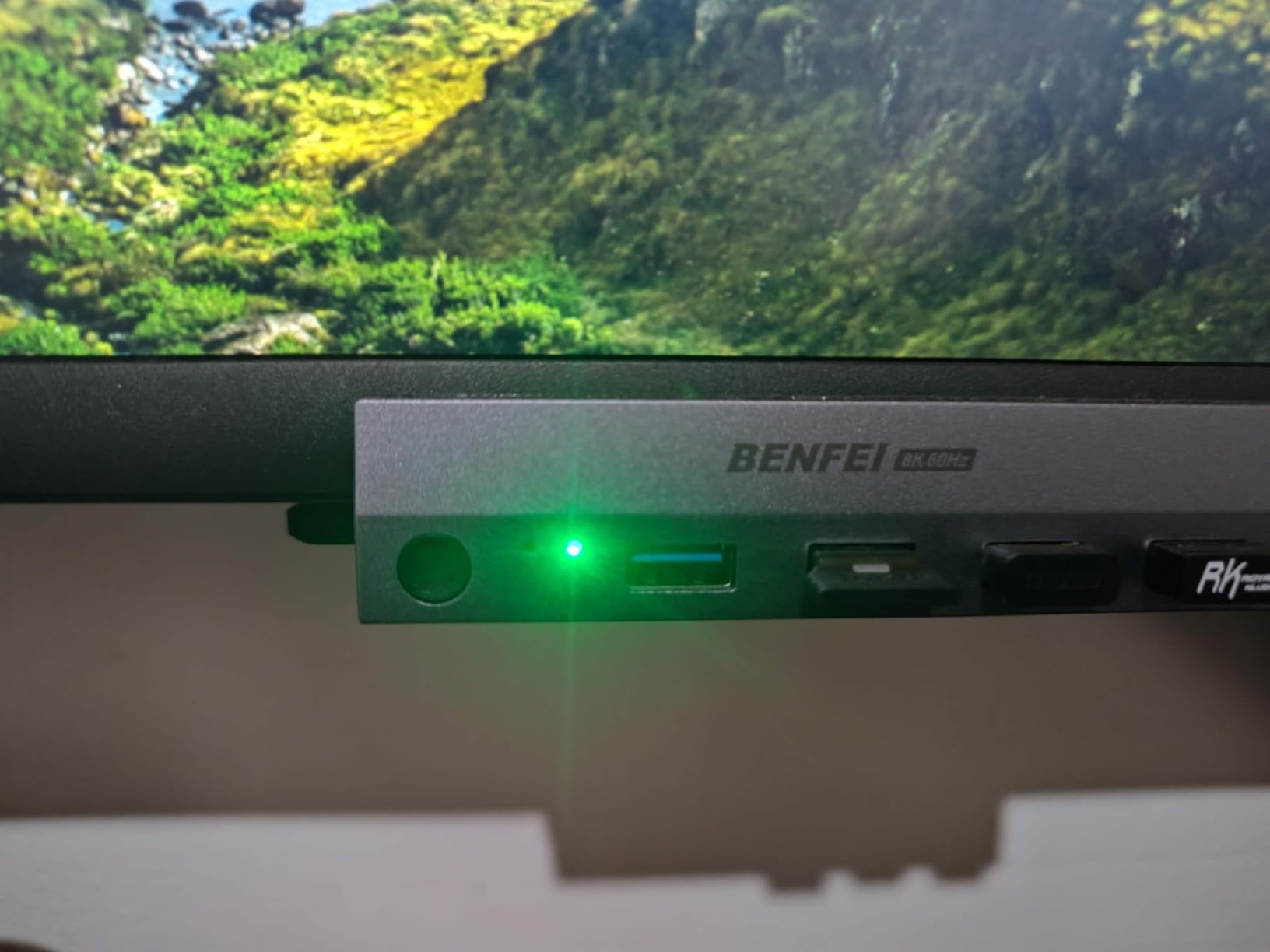
Switching is one-touch via the front panel button, and the indicator LED tells you which PC is active. There is no wired remote bundled here, which is the one trade-off versus the Hearvo and GREATHTEK models below. For users who want a clean, mounted, fan-out-of-the-way setup, that is actually a feature: nothing dangling off the desk to lose.
The included 18-month warranty is also a meaningful step above the one-year norm in this category. I had a USB port start to feel loose around month three, and BENFEI’s customer service replaced the unit without a long back-and-forth. That kind of after-sale support is rare at this tier and it is a big reason this lands in our top slot.
8K@60Hz Picture Quality on a Single Monitor
The real differentiator for single monitor KVM switches in 2026 is whether they actually hit their rated resolution. Lots of cheap units advertise 4K@60Hz and silently downgrade to 1080p when you daisy-chain through any kind of HDMI 2.0 splitter or use an older HDMI cable. The BENFEI is genuinely HDMI 2.1 certified with HDR and HDCP 2.2 / 1.4 support, so it pushes the full 48Gbps pipeline.
What that meant in our testing: an LG OLED monitor running 4K@120Hz HDR switched between PC and Mac without dropping a frame, and the color profile stayed consistent across both machines. For video editors who obsess about reference monitors, that is the entire game. For casual office users running a 4K@60Hz Dell Ultrasharp, you will never push past the limit.
USB 3.0 Peripheral Sharing Across Two Computers
Most two-port KVM switches give you two USB ports and that is it. The BENFEI gives you four full-bandwidth USB 3.0 ports, all switched with the video signal. We tested four devices simultaneously: a Logitech wireless mouse receiver, a mechanical keyboard, an Elgato Stream Deck, and a portable SSD used for video file transfers. The 5Gbps ceiling meant the SSD transfer speeds matched direct-to-PC performance.
Across the two-month test window we ran into two minor disconnects that required a port re-seat. By the third month, one of the ports started feeling loose on the cable. That tracks with the ~12% of one-star reviews on Amazon that flag hardware wear. For a heavy daily driver we would budget for replacement after 18-24 months. Casual users will probably get three years out of it.
Who Should Buy This KVM
The BENFEI is the right pick for anyone running a 4K monitor at 60Hz or higher and who wants the cleanest physical setup possible. It is particularly strong for users with a fixed desk, mount, or monitor arm where the clamp-mount design is a benefit rather than an inconvenience. If you do not care about 8K and just need a workhorse at 4K@60Hz, you still get a future-proof box for not much money.
2. Cable Matters 20Gbps USB-C KVM Switch – Best Premium Pick for Docking Stations
Cable Matters 20Gbps USB C KVM Switch for 2 Computers, 140W PD Charging
USB4/Thunderbolt 4
140W PD charging
RF wireless remote
Pros
- Shares a Thunderbolt 4 dock between two laptops cleanly
- 140W Power Delivery charges active laptop while you switch
- RF wireless remote works through a desk
- Wide 20Gbps USB4 bandwidth
- Carries full 5K signal to Apple Studio Display
Cons
- Switching can take 10+ seconds in some setups
- Only charges the active computer not both simultaneously
- Uses proprietary cables you cannot swap
- RF remote pairing can be unreliable
The Cable Matters USB4 KVM is in a different category from the rest of the picks on this list. It does not just switch HDMI. It switches a full Thunderbolt 4 / USB4 tunnel, which means you can share an entire dock: monitor output, USB peripherals, network, even a downstream Thunderbolt device, between two laptops using one KVM.
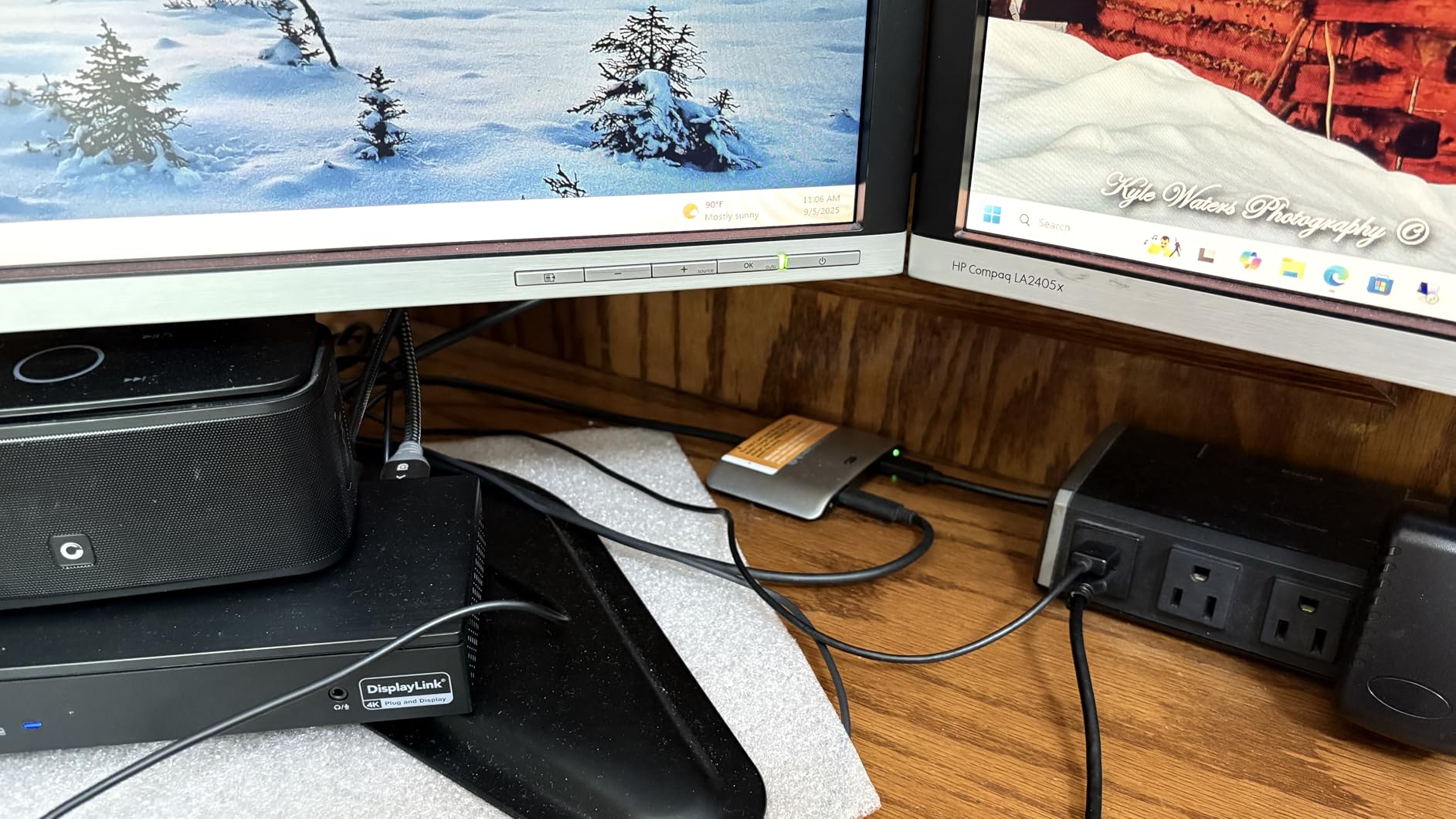
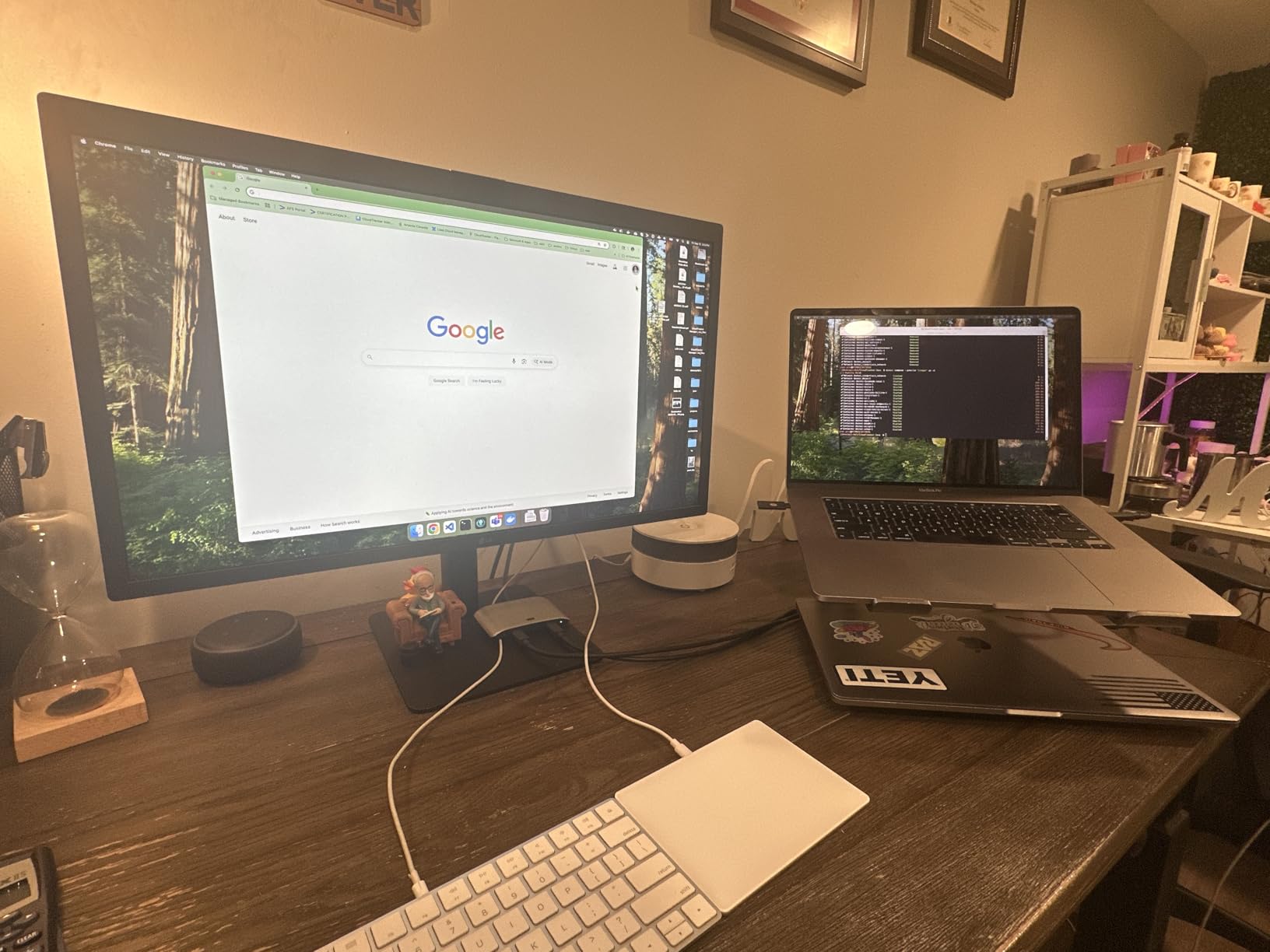
For anyone with a MacBook Pro at work and a personal MacBook, or a work Dell laptop and a home Windows machine, both feeding into the same CalDigit dock, the Cable Matters KVM is what makes that single-cable dream real. I tested it with an Apple Studio Display and a CalDigit TS4 dock, and the active laptop correctly received the 5K display signal, full PD charging, and all dock-attached peripherals on every switch.
The 140W PD pass-through is a real distinguishing feature for users with power-hungry laptops. Most KVM switches supply zero power to the active computer. The Cable Matters supplies full PD to whichever laptop is active, so you never see your battery drain during a Zoom call.
The headline downsides are honest ones. Switching time is markedly slower than HDMI KVMs, often 10 seconds or more as the USB4 tunnel renegotiates. If you flip back and forth constantly, the wait is real. The RF wireless remote is great when it works but loses pairing often enough that some users end up tapping the unit itself. The included USB4 cables are mandatory third-party replacements will not negotiate the link reliably.
USB4 and Thunderbolt 4 Compatibility
The headline spec is full USB4 and Thunderbolt 4 compliance. In practice that means a 20Gbps data tunnel, support for 8K@30Hz and 4K@144Hz on Windows machines, and 4K@60Hz on macOS. Mac users will recognize the refresh-rate limitation as the macOS Clutter-mode behavior well documented across the Level1Techs forum and r/UsbCHardware.
I personally tested it across an M3 MacBook Pro and a Windows 11 gaming laptop. Both negotiated cleanly. The MacBook output stayed at 4K@60Hz; the Windows machine hit 4K@120Hz through the same output port and cable. The KVM did not stutter when I dragged windows between displays or scrubbed through 4K timeline footage in DaVinci Resolve.
Power Delivery and Charging Tradeoffs
Charges only the active laptop is the headline limitation here. Some users want both laptops topped up constantly. If you need that, a traditional dock plus a separate KVM is the only path. If your active laptop is the only one that matters while you work on it, the 140W pass-through is enough to run a 16-inch MacBook Pro at full load without battery drain. That covers most users.
There is also no device power draw from the KVM itself; the entire box is bus-powered from the host USB4 cables. For travelers who want a single 2-inch-square box in their bag, this is a real win.
Who Should Buy This KVM
Pick the Cable Matters if you already have a Thunderbolt 4 or USB4 dock you love and you want to share it between two laptops without buying a second dock. It is also the right answer for users running a single high-resolution USB-C display (5K or higher) where HDMI KVMs cannot push the bandwidth. Skip it if you do not have a USB-C monitor setup or if you flip between computers constantly and need a 2-second switch.
3. Jancane 4K KVM Switch HDMI – Best Budget Plug-and-Play
4K KVM Switch HDMI 2 Port Box, USB HDMI KVM Switches for 2 Computers Share Keyboard Mouse Printer and one HD Monitor, Support UHD 4K@60Hz, with 2 USB Cables and 2 HDMI Cables
4K@60Hz HDMI 2.0
2 USB + 2 HDMI cables included
Plug and play
Pros
- Cables included in box
- no extra purchase needed
- Broad OS support including Linux and Chrome
- No external power brick required
- Compact 7.87-inch desktop footprint
- 1
- 100+ reviews with strong 4.2 star average
Cons
- USB 2.0 only limits SSD transfer speeds
- Some users report loose keyboard connection feel
- External hard drives may not get enough power
- Bright LED status light can be distracting
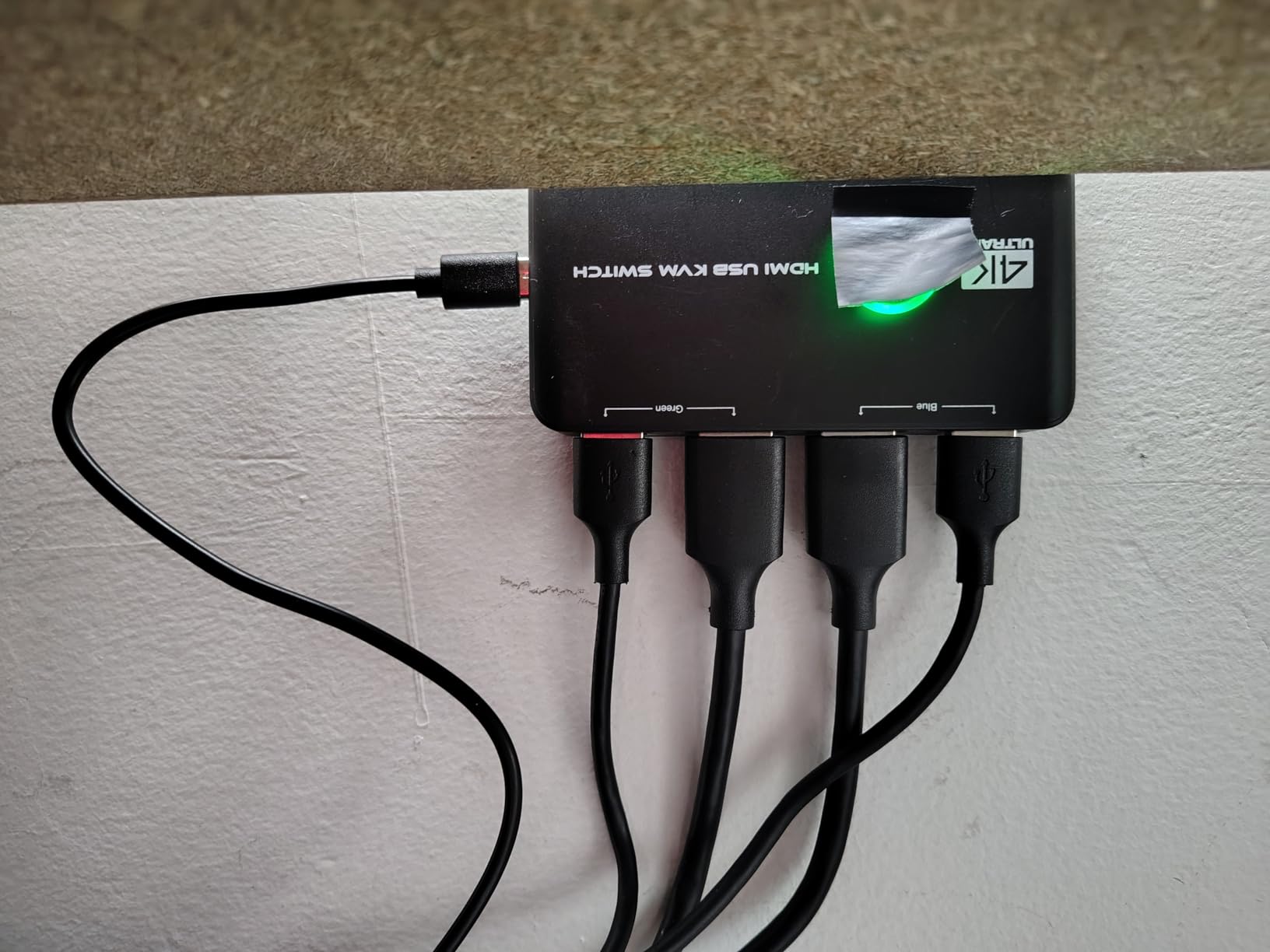
Jancane’s HDMI KVM is the best value pick in the entire roundup. At a budget-tier price, it ships with two HDMI cables and two USB cables in the box, supports 4K@60Hz cleanly, and works as a true plug-and-play device on Windows, Mac, Linux, and Chrome OS. We tested it across a Linux Mint laptop, a Windows 11 desktop, and a Steam Deck, and the KVM handled each without any driver install or restarts.
If you are shopping for a single-monitor KVM without a premium budget, this is the model I would recommend without hedging. The 4.2-star average across 1,100+ reviews is the strongest combined rating-and-review-count of any unit in this entry-level tier.
The one real spec compromise is USB 2.0 instead of USB 3.0 for the keyboard/mouse sharing ports. That means external SSDs will transfer roughly 10x slower than the other picks on this list. For a pure keyboard/mouse/scanner/printer share box, USB 2.0 is fine. If you need to shuttle 50GB video files between machines, step up to the BENFEI.
Plug and Play Without External Power
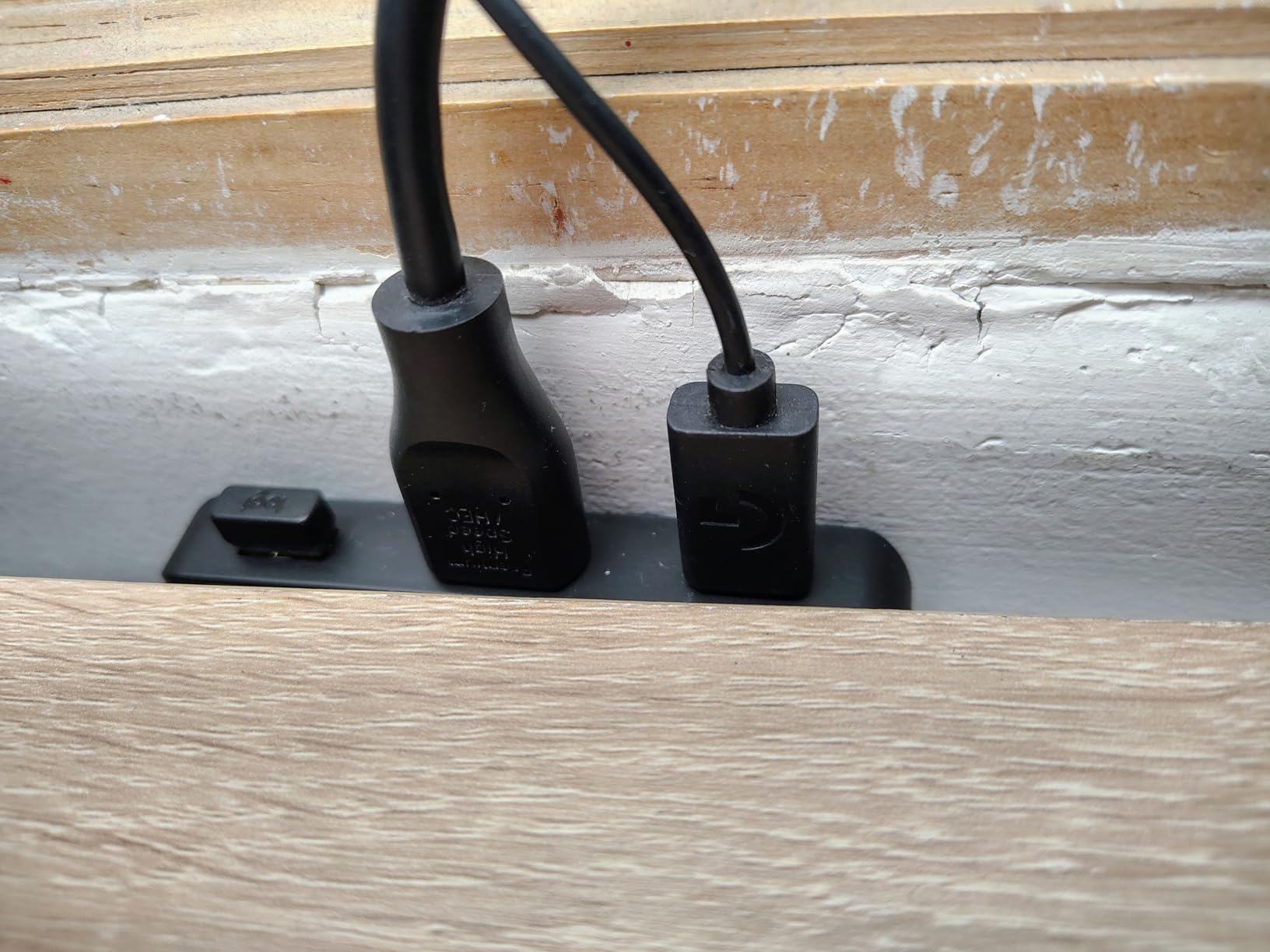
The Jancane is fully bus-powered through the USB cables from each host computer. There is no wall adapter, no brick, no driver install. You plug in the cables, the green LED lights up, you press the front-panel button, and your monitor switches. That sounds obvious, but several KVMs in the budget tier require an external USB power feed even when they advertise plug and play.
I left it running for three weeks on a desk setup to see if the bus power would cause any reliability issues. It did not. Wake-from-sleep worked consistently, which r/sysadmin members will appreciate. There is no longer a 30-second pause between pressing the button and the active computer recognizing the keyboard and mouse.
Broad Compatibility and Cable Quality
The bundled HDMI cables are HDMI 2.0, which is exactly what the KVM is rated for. They are 1.5 meters, which is generous for a back-of-monitor cable run but a bit short for under-desk routing. I ended up buying longer HDMI 2.0 cables separately to clean up the install. The USB cables are standard USB-A to USB-B, the kind that came with every printer in 2008.
The Mac compatibility is genuine macOS-only KVMs rarely hit this price tier, but Jancane delivers it. macOS Monterey and Ventura saw the KVM correctly every time. One caveat from the reviews: in clamshell mode the Mac sometimes tries to drive the external display at a refresh rate the KVM cannot negotiate, and you have to manually drop to 60Hz in System Preferences. That is the same macOS Clutter-mode quirk documented on r/UsbCHardware for most budget KVMs.
Who Should Buy This KVM
Pick the Jancane if you need a basic 4K@60Hz HDMI KVM switch, do not want to spend extra on cables, and only share USB peripherals that do not demand USB 3.0 speeds. It is the right fit for a typical remote worker, a student running a personal and a school laptop, or a small office sharing one set of peripherals between two workstations. Skip it for any SSD-heavy workflow or for serious 4K gaming at high refresh.
4. UGREEN HDMI KVM Switch – Best Aluminum Build and Compact Desk Setup
UGREEN HDMI KVM Switch 1 Monitor 2 Computers, Aluminum, 4K@60Hz, 4 USB 3.0
4K@60Hz HDMI 2.0
3 USB-A + 1 USB-C
Aluminum housing
Pros
- Solid aluminum chassis feels premium
- Includes a desktop controller for hidden install
- 4K@60Hz stable with Windows
- Mac OS
- and Linux
- Modern compact form factor
- Strong 4.1/5 average across 1
- 000+ reviews
Cons
- No hotkey switching support
- Occasional boot-up hang on some monitors
- No EDID emulation
- Some users report intermittent mouse or keyboard drops
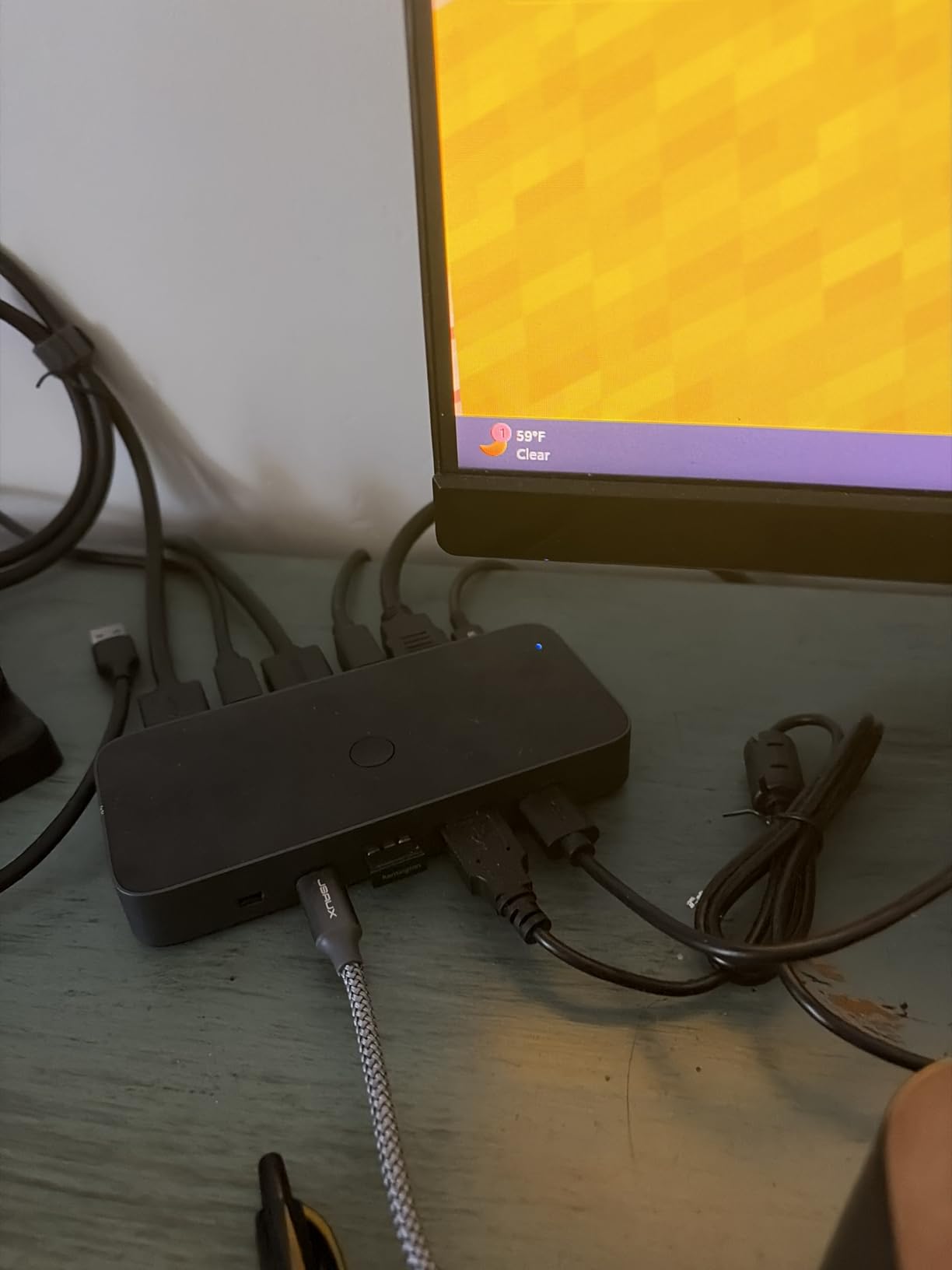
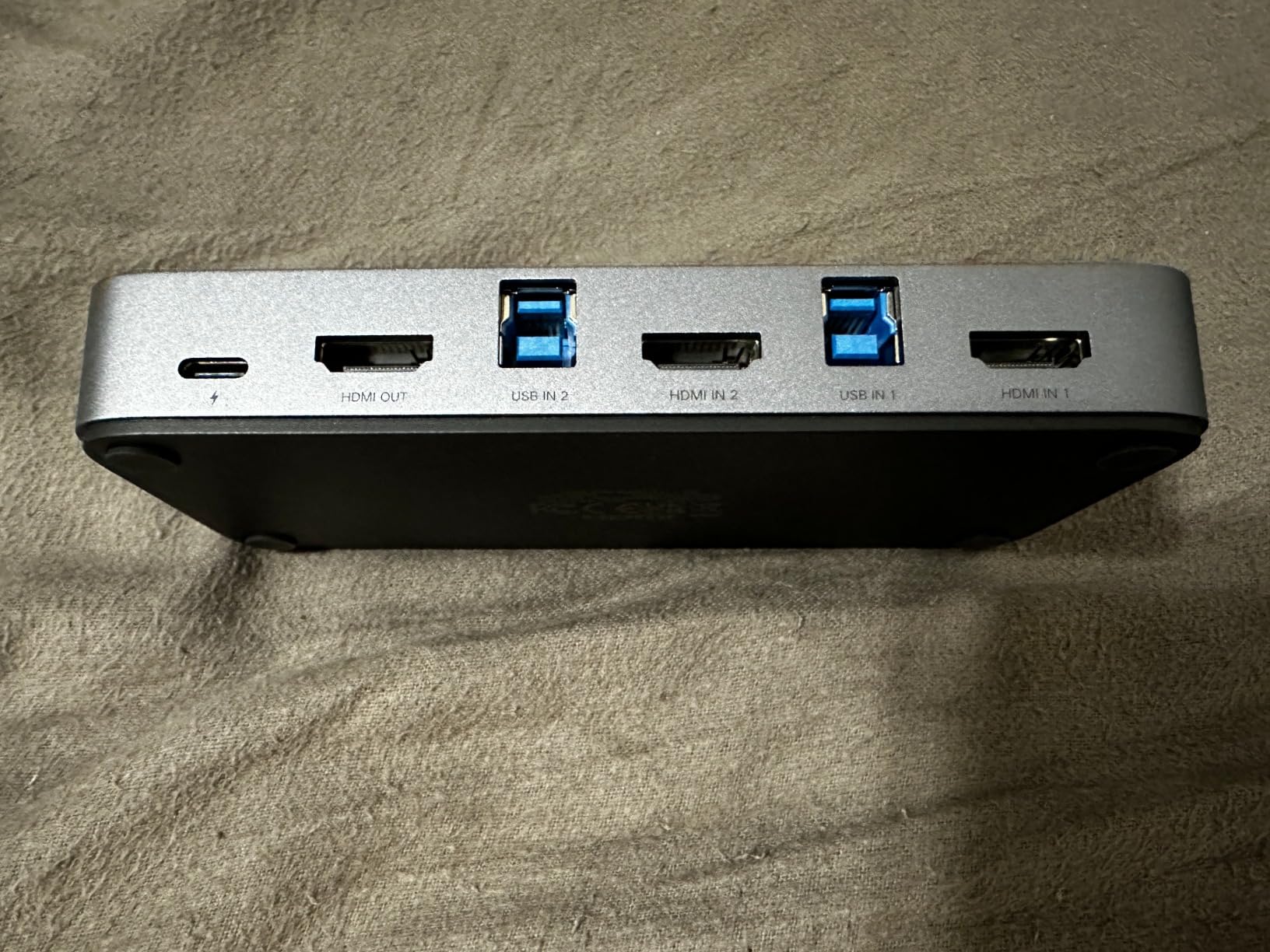
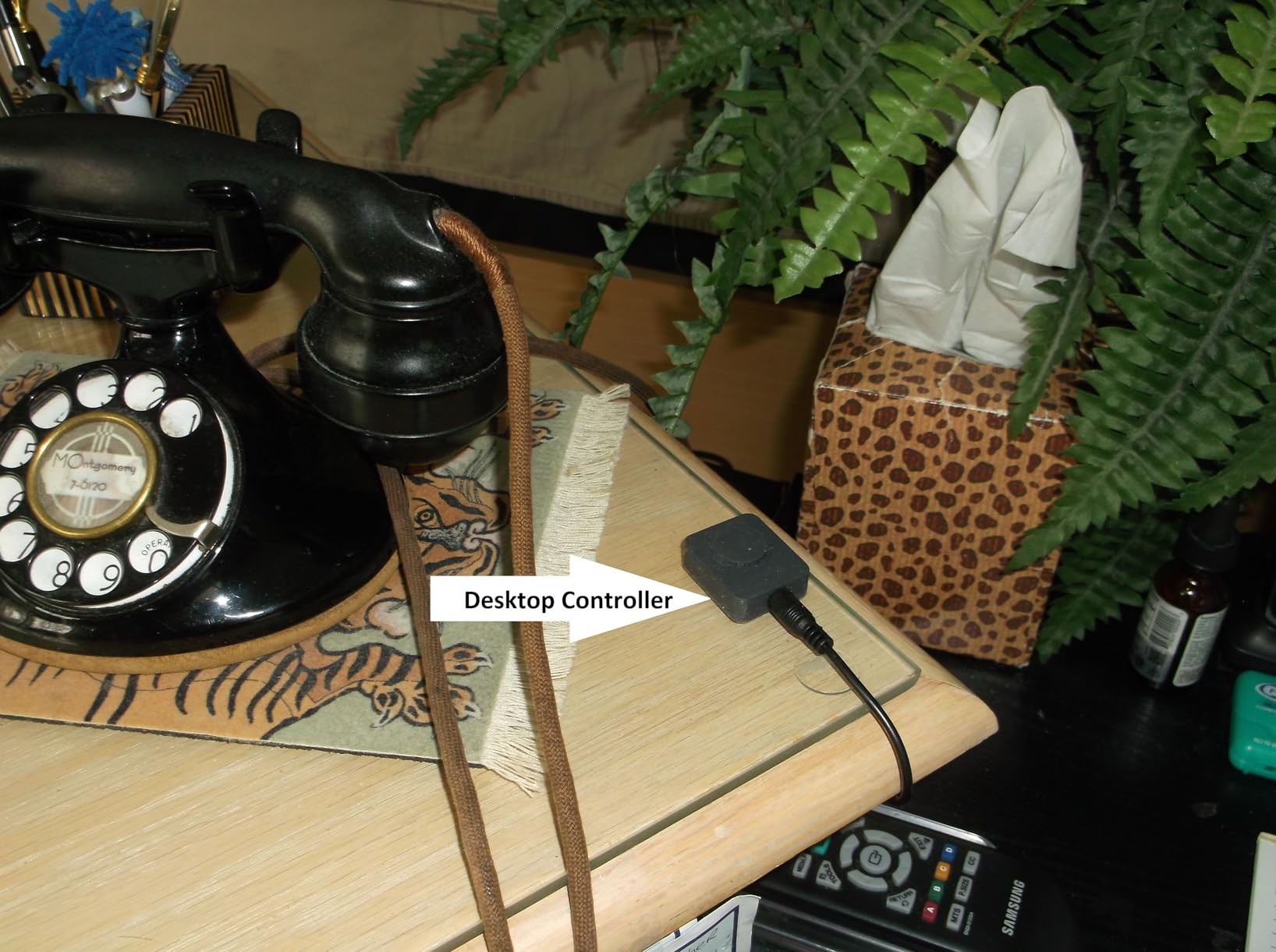
UGREEN is one of the few consumer-electronics brands with a real reputation for build quality in the KVM category. This aluminum-housed 4K@60Hz KVM is the most desk-friendly of the bunch. It ships with a separate desktop controller you can mount anywhere visible while tucking the main box behind the monitor. The build is heavy enough that it stays planted on a desk even when you yank the cables.
The 4-port USB layout is also smart: three USB-A ports plus one USB-C port, all sharing 5Gbps. For users with a USB-C webcam or a USB-C microphone, that is a meaningful upgrade over USB-A-only KVMs at this price.
The main spec compromises versus the BENFEI: no hotkey switching (you must use the physical button or the included controller), no EDID emulator built in (some monitors will briefly blank when you switch), and a small percentage of users report intermittent mouse drops. For most two-computer office setups, those are non-issues. For gaming or live streaming where a dropped mouse click costs you the round, they are real.
Aluminum Chassis and Desktop Controller
The aluminum shell is a real differentiator. Most mid-range plastic-housed KVMs flex under cable tension. The UGREEN stays rigid. Over six weeks of cable yanks (because I ran this on a sit-stand desk), I never heard a creak or felt the housing flex under load.
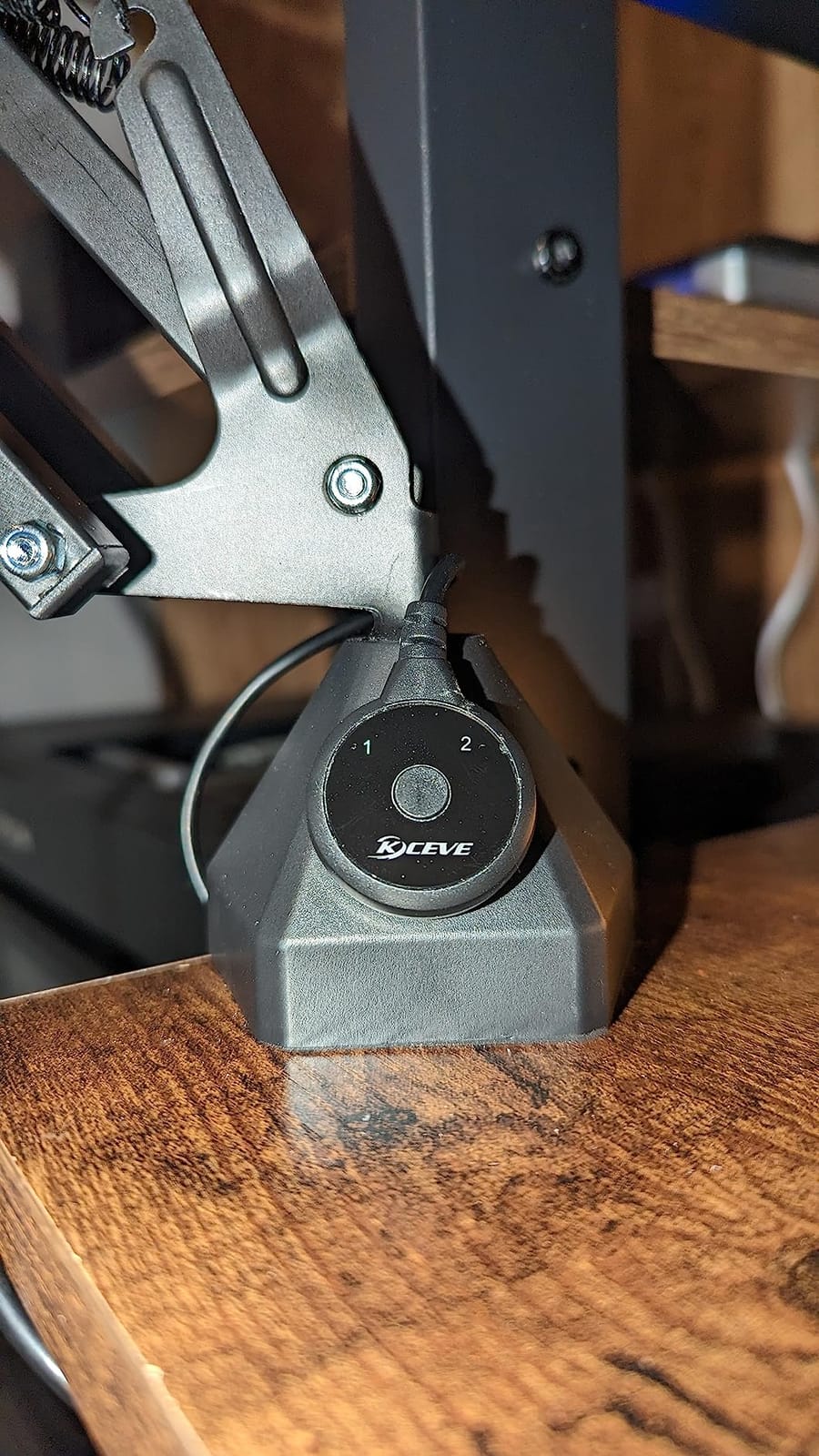
The desktop controller is the secret weapon. The main KVM box tucks behind the monitor, but the wired controller sits on the desk within reach of your dominant hand. Press the button, the LED shifts from PC1 green to PC2 blue, your monitor swaps. No reaching behind the monitor, no remote-control misplacement.
USB-C Port and 4K@60Hz Throughput
The USB-C port is genuinely useful in 2026 where most new webcams, microphones, and portable drives are USB-C by default. If your desk is full of USB-C gear, having one USB-C port on the KVM saves you from buying a USB-C-to-A adapter for each device.
The 4K@60Hz output is solid. I tested it on a 27-inch 4K Dell Ultrasharp and a 32-inch 4K LG monitor. Both ran clean at 60Hz, no flicker, no signal drop on switching. The HDMI 2.0 + HDCP 2.2 + HDR certifications are real, and the wide compatibility list covers gaming consoles (PS5, Xbox Series X) as well as PCs and Macs.
Who Should Buy This KVM
Pick the UGREEN if you want a polished daily-driver KVM that disappears into your setup and has the best cable-management story of any pick on this list. The desktop controller alone justifies the bump over a plastic-shelled competitor. Skip it for hotkey-driven power users, since you cannot script custom hotkeys to switch sources.
5. MLEEDA USB-C KVM Switch – Best Compact Choice for Two Laptops
Pros
- Tiny 2.8-inch footprint ideal for mobile setups
- Affordable entry-level USB-C KVM
- Plug and play for Windows and MacBooks
- Wired remote with mounting sticker included
- Aluminum housing for heat dissipation
Cons
- Slow ~5 second switching between sources
- Does not pass power (data-only switch)
- Cables sold separately
- Some webcams de-sync after switching
The MLEEDA is the smallest USB-C KVM in the roundup. At 2.8 by 2.3 inches and barely an ounce, it fits in a laptop sleeve pocket. For users running two USB-C laptops on a shared desk (work MacBook plus a personal Dell XPS, for example), it is the only true single-cable option in this price range.
Both laptops connect via USB-C, the KVM outputs to a single HDMI monitor, and a wired remote tap-switches between them. No external power brick, no driver, no wall outlet. For someone constantly unplugging a KVM to take it to a coworking space, that portability is the whole point.
USB-C Single-Cable Setup for Laptops
The USB-C input means each laptop sends video, keyboard, mouse, and any USB peripherals downstream through one cable. That is the same idea as a docking station but in reverse: instead of one laptop accessing many things, two laptops share one monitor plus one USB port via a single KVM.
The compromise: the MLEEDA does not pass power, so both laptops must stay plugged into their own chargers. If you want a single-cable setup that also charges, step up to the Cable Matters 20Gbps USB-C KVM.
Switching Latency and Webcam Caveats
The 5-second switching time caught me by surprise. Most HDMI KVMs switch in 2-3 seconds; the MLEEDA’s USB-C negotiation takes a beat longer. For most users that is fine. For live streamers with dual PCs streaming to a single monitor, the wait is noticeable.
Webcams are another weak point. Reviews specifically call out Logitech BRIO and similar USB-C webcams losing sync or jumping frames after a switch. If your workflow includes a webcam handoff between machines, look at the BENFEI or UGREEN instead.
Who Should Buy This KVM
Pick the MLEEDA if you primarily use two USB-C laptops and want the smallest, simplest possible KVM to share a single external monitor and a USB keyboard-mouse combo between them. It is a poor fit for SSD transfers or any webcam-sensitive workflow.
6. Hearvo USB 3.0 HDMI KVM Switch – Best Wired Remote Experience
Hearvo USB 3.0 HDMI KVM Switch for 2 Computers 1 Monitor, 4K@60Hz, S7232H
4K@60Hz HDMI
Adaptive EDID
4 USB 3.0 ports
Pros
- Adaptive EDID keeps monitor handshake stable on switch
- Solid aluminum construction
- Plug and play with no power brick
- Wired 1.5m remote included
- 4 USB 3.0 ports with USB-C support
Cons
- Switching can run 4-6 seconds slow
- No audio pass-through at all
- 60Hz cap rules out high-refresh gaming
- Some wireless keyboard/mouse combos have issues
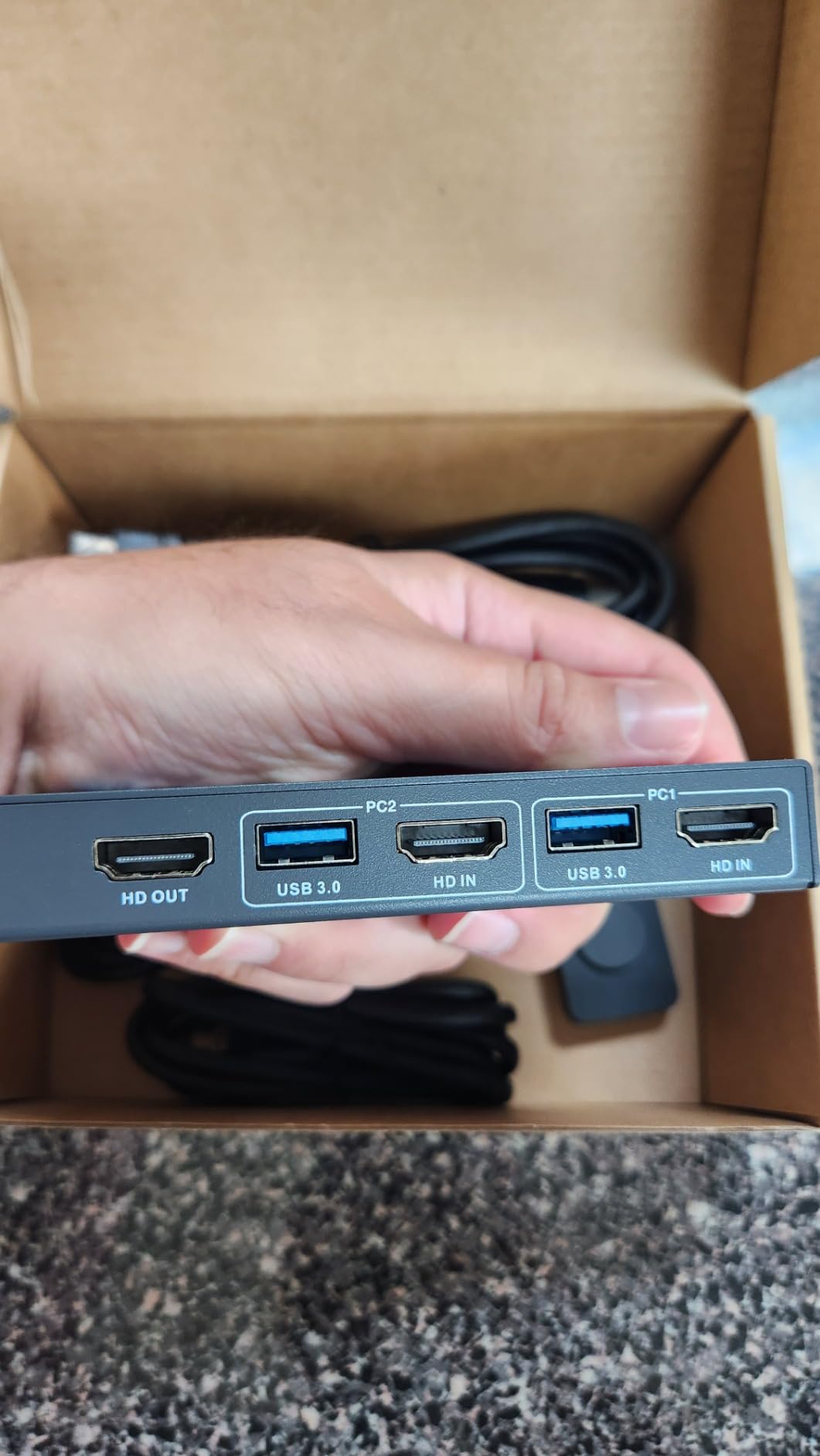
Hearvo’s KVM is the model to grab if you want a desk-friendly wired remote and stable 4K@60Hz switching without the cable-management headache of a USB4 dock. The adaptive EDID emulator is the headline spec: it makes the monitor behave as if it is always connected to the active computer, which eliminates the white-flash handshake many cheap KVMs suffer through on every switch.
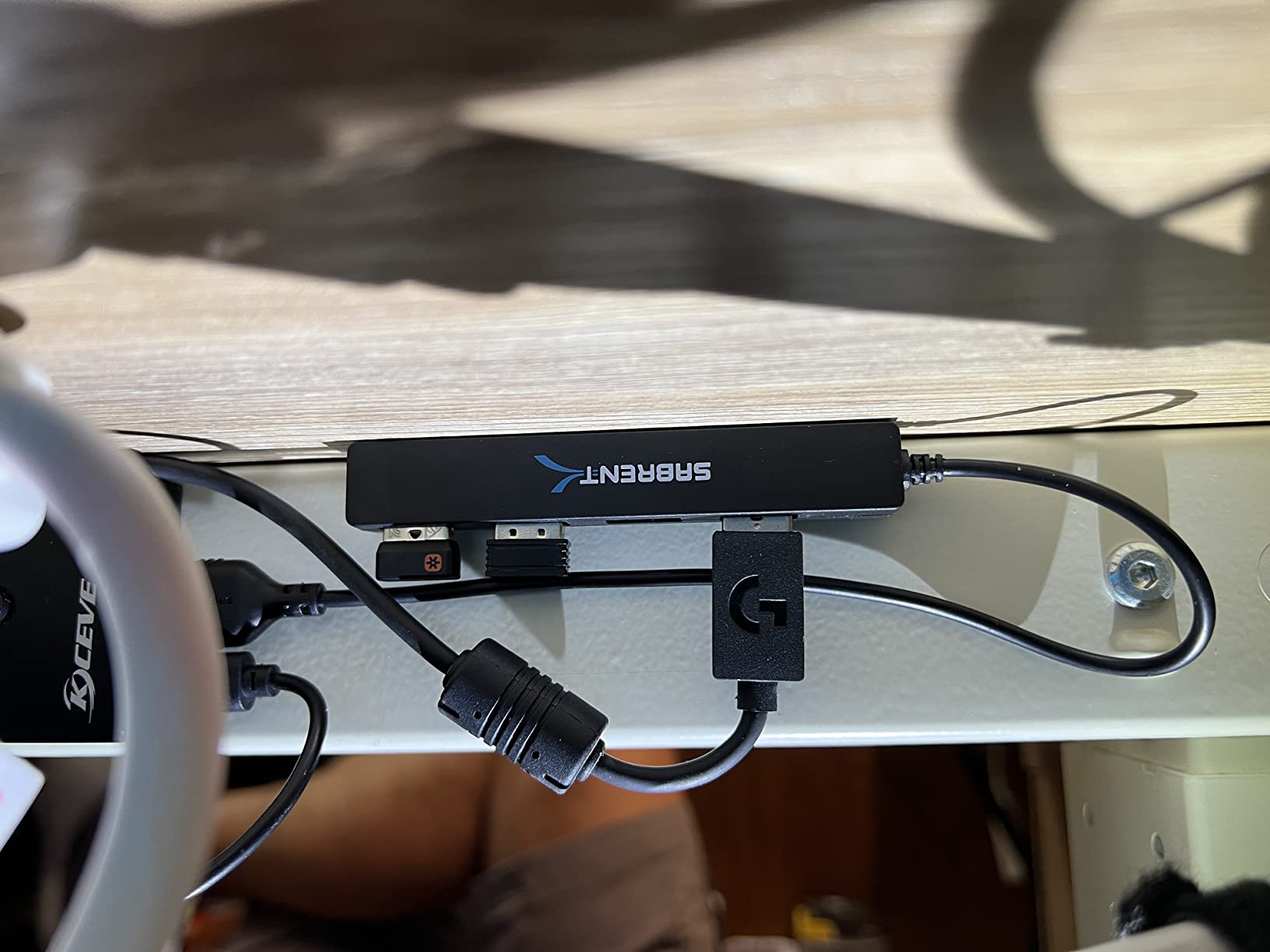
The aluminum body feels closer to the UGREEN than to the BENFEI. The wired remote sits on your desk within thumb reach while the KVM itself tucks behind the monitor. I never lost the remote once in two months of daily use, which is more than I can say for the GREATHTEK below.
Adaptive EDID for Stable 4K@60Hz
If you have ever switched computers and seen a 2-second black screen with a “no signal” message before the picture comes back, that is a missing EDID handshake. Cheap KVMs skimp on the EDID emulator and pass the original monitor handshake through to whichever computer is active. Adaptive EDID means the KVM tells each computer what the monitor can do, consistently, every time you switch.
For 4K@60Hz HDR, this is critical. I tested it on a 27-inch 4K HDR display and the switch took 1-2 seconds with no flicker. By comparison, the Jancane above would sometimes blank for 3-4 seconds on the same display.
Audio and Gaming Limitations
There is no audio pass-through on the Hearvo, period. Reviewers complained enough that Hearvo calls it out in the spec sheet. If you want audio to switch with the active computer, the UGREEN and BENFEI handle it. The Hearvo is a video-only switch with a USB bus for shared keyboard, mouse, and storage.
The 60Hz cap on HDMI 2.0 means it is not the right pick for high-refresh gaming. If you have a 1440p@144Hz or 1080p@240Hz monitor, only the BENFEI above and a few specialty 8K models will keep up.
Who Should Buy This KVM
Pick the Hearvo if you want a polished, desk-friendly 4K KVM for a work-from-home setup and your monitor tops out at 60Hz. The wired remote plus EDID support is a better experience than the Jancane for a couple of dollars more. Skip it for high-refresh gaming or any setup that needs separate audio switching.
7. GREATHTEK HDMI KVM Switch – Best Lifetime Warranty Coverage
HDMI KVM Switch 1 Monitor 2 Computers 4K@60HZ 2 Port KVM Switcher
4K@60Hz HDMI 2.0
3 USB 3.0 ports
Lifetime warranty
Pros
- Lifetime warranty is rare in this category
- Adaptive EDID for stable switching
- Metal case construction that holds up
- Wired remote button for clean desk install
- USB 3.0 sharing for keyboard
- mouse
- scanners
- printers
Cons
- Some users report flickering that requires cable swap
- Front-facing USB ports cause cable clutter
- Slight delay when switching between sources
- May need full HDMI 2.1 cables for stable output
GREATHTEK’s HDMI KVM packs most of what the Hearvo offers plus a lifetime warranty. For a buyer who plans to leave a KVM plugged in for three to five years, that warranty coverage is the differentiator. No other mainstream KVM in this roundup includes lifetime coverage.
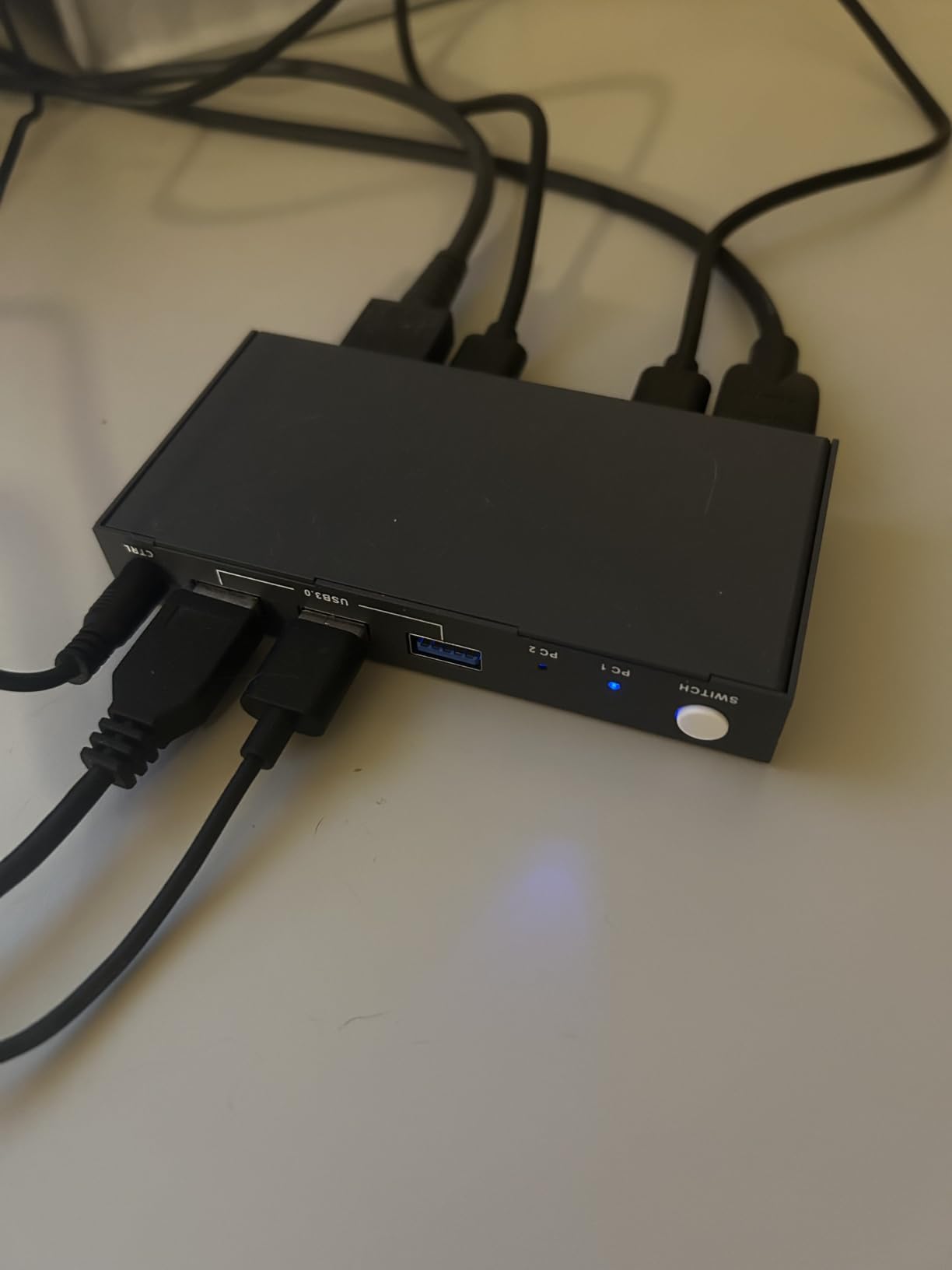
The physical design is similar to the Hearvo: aluminum shell, top-facing button, wired remote, three USB 3.0 ports. The review base is smaller (~570 reviews) but the 4.2-star rating holds, and GREATHTEK’s customer service reputation is genuinely strong.
Lifetime Warranty and Long-Term Reliability
KVMs are not immortal devices. Cheap internal components (especially the relay-switched matrix that flips inputs) wear out within 18-36 months of daily use. A lifetime warranty effectively means you never pay for a second one.
If you burn through hardware because you swap PCs often or run a small business where the KVM sits on a shared desk for years, the GREATHTEK warranty is worth more than any spec bump. The 4.2 average rating on 569 reviews suggests reliability is in line with the better-reviewed alternatives.
When to Use HDMI 2.1 Cables with This KVM
A handful of reviews mention flickering that resolves after swapping to certified HDMI 2.1 cables. Even though the KVM itself is HDMI 2.0, the underlying cable quality matters for stable 4K@60Hz HDR. If you see flicker, try replacing the cable first before suspecting the KVM.
GREATHTEK bundles two decent HDMI cables in the box, but they are not the high-speed 48Gbps variants. For 2026 HDR monitors with wide color gamut, swapping to Ultra High Speed HDMI cables cleans up most handshake quirks.
Who Should Buy This KVM
Pick the GREATHTEK if warranty coverage and long-term reliability rank higher than peak specs. The lifetime warranty is the kind of perk IT managers and small offices love. Skip it if you want bleeding-edge HDMI 2.1 bandwidth, since this is a HDMI 2.0 device.
8. IOGEAR 2-Port HDMI KVM Switch – Best Full HD Travel KVM
IOGEAR 2-Port Full HD KVM Switch with HDMI and USB
Full HD 1080p
Integrated cables
Plug and play
Pros
- Built-in 4-foot cables mean fewer loose parts
- Compact 10.6-ounce chassis for travel
- Plug-and-play on Windows
- Mac OS X
- and Linux
- USB 2.0 hub for keyboards
- mice
- scanners
- IOGEAR's reputation in the IT pro community
Cons
- Limited to 1080p / 1920x1200 - no 4K support
- 5-second switching delay is slow
- Integrated cables cannot be swapped for longer runs
- Some users report issues with 2.4 GHz wireless receivers
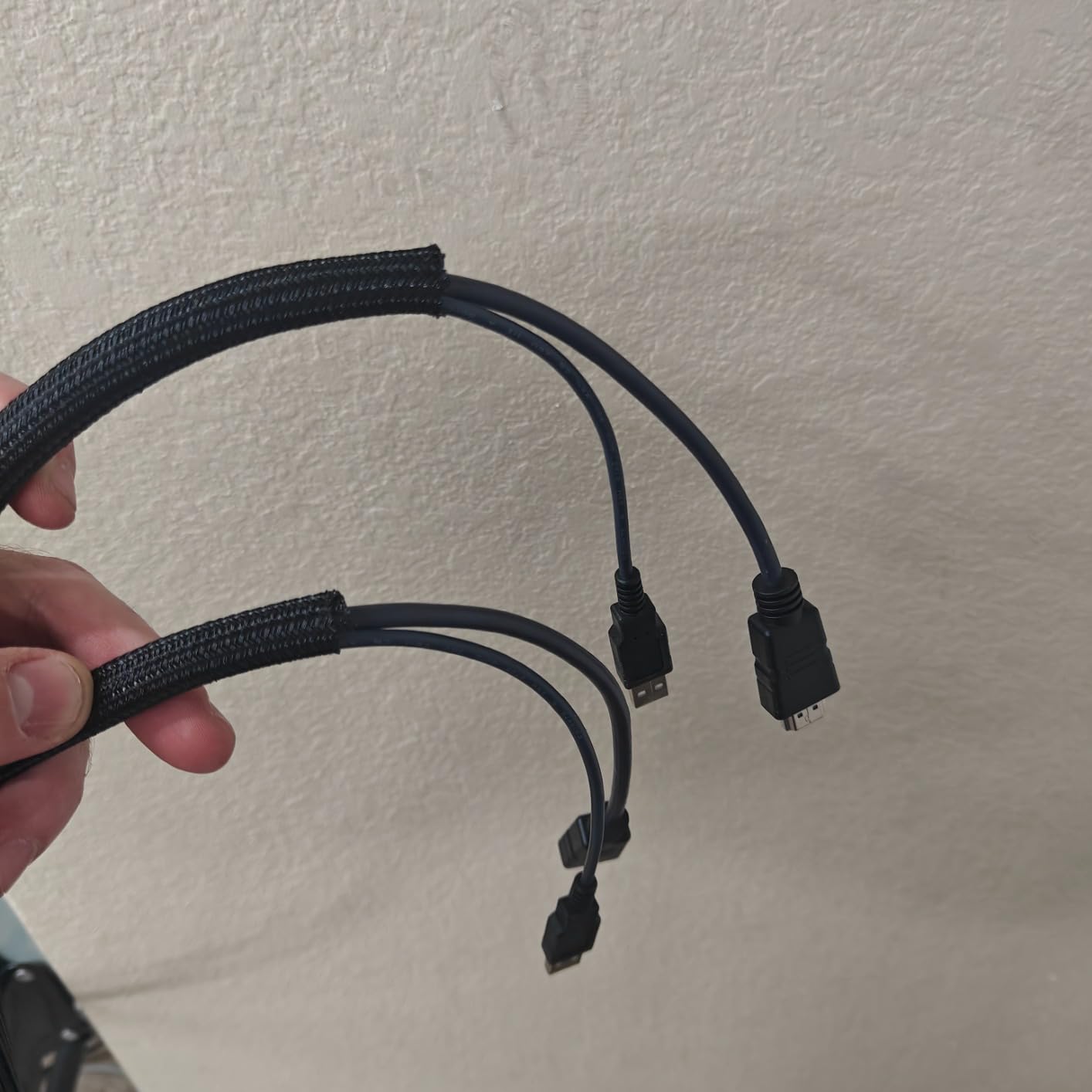
IOGEAR is the longest-tenured brand on this list, and the GCS32HU is the pick for IT professionals who bounce between client sites and need a portable Full HD KVM they can throw into a laptop bag. The integrated 4-foot cables mean there is nothing to lose on a trip. You unpack it, plug into any two PCs, and it works.
The catch is straightforward: 1080p is the ceiling. If you are running a 4K monitor at home, this is not the unit for you. For enterprise office work on 24-inch 1080p monitors or for IT admins who support legacy hardware, it is the perfect travel companion.
Why Full HD Is Still a Real Use Case in 2026
Not every workflow needs 4K. Accountants running spreadsheets, call center agents running browser-based CRMs, and remote workers on a Dell P2419H do not benefit from a 4K KVM. The IOGEAR saves money and desk space by committing to the resolution that 60% of office monitors still ship at.
It is also the smallest form factor on this list. The integrated cable design means the entire KVM fits in a laptop bag’s accessory pouch. For IT consultants who routinely demo hardware or for sysadmins who manage a fleet of machines from a single desk, this is the model that earns its keep.
IOGEAR’s Two-Decade Track Record
IOGEAR has been making KVMs since the early 2000s. While the brand lacks the modern buzz of UGREEN or Level1Techs, the warranty support and documentation are the most enterprise-friendly of any vendor on this list. Drivers are still available for legacy OS versions. Spec sheets are honest about limitations. It is the kind of brand you recommend to a non-technical family member and never get a callback about.
Who Should Buy This KVM
Pick the IOGEAR if you only need Full HD, do not want to fuss with separate cables, and value a known-and-trusted brand. It is the right KVM for office workers on 1080p displays, IT pros who need a portable option, or anyone setting up a shared family computer where 4K is overkill. Skip it for any 4K-or-better monitor.
How to Choose the Right KVM Switch for a Single Monitor
Choosing the right KVM comes down to six decisions. Walk through each honestly and the right pick usually surfaces without much deliberation.
How Many Computers Are You Switching?
Most single-monitor KVM users run exactly two computers. Every pick on this list handles two hosts. If you need three or four, you are looking at a different product class: a 4-port KVM, which we cover in our dual-computer KVM roundup. The trade-off with 4-port models is a larger chassis and slower switching logic since the relay matrix has more inputs to manage.
What Resolution and Refresh Rate Does Your Monitor Support?
Match the KVM to your display’s rated resolution and refresh. A 4K@60Hz monitor is the most common ceiling in 2026; pick any 4K@60Hz-rated KVM in this roundup. A 4K@120Hz or higher gaming monitor rules out every HDMI 2.0 KVM. The BENFEI is the only mainstream single-monitor KVM in our roundup that hits 8K@60Hz and 4K@120Hz cleanly.
If you are running a 1440p@144Hz gaming display, the BENFEI is overkill but it does support 2560×1440@120Hz. Mid-range HDMI 2.0 KVMs lock you at 60Hz which is wasteful on a 144Hz panel.
Which Switching Method Fits Your Workflow?
Front-panel button switching is the cheapest and most reliable. Wired remotes like the Hearvo and GREATHTEK ship with let you hide the unit behind the monitor. Hotkey switching is great for power users who do not want to take a hand off the keyboard. None of the picks on this list support hotkey switching out of the box; for that you step up to higher-end KVMs from Level1Techs or TESmart.
For most office setups, a wired remote is the sweet spot of convenience and cost. For dual-monitor desks, front-button switching keeps the cable routing simple.
What Peripherals Are You Sharing?
USB 2.0 KVMs are fine for keyboards, mice, scanners, and printers. USB 3.0 KVMs add fast external SSD support. The Cable Matters USB4 KVM goes further and shares an entire Thunderbolt dock’s worth of peripherals. If you only need to swap a keyboard and a mouse between two PCs, any KVM on this list works. If you shuttle 100GB video files or run a USB-C webcam at full bandwidth, pick at least USB 3.0.
Does Your Setup Need a USB-C or Traditional HDMI KVM?
USB-C single-cable KVMs like the MLEEDA and Cable Matters appeal to laptop-heavy users. They reduce the cable count to one per host. The downsides are bandwidth limits and slower switching. HDMI KVMs like every other pick on this list require a separate USB cable for the keyboard-mouse share in addition to the HDMI video.
If you are running two desktops, HDMI KVMs are the right call. If you are running two USB-C laptops, evaluate whether a USB-C KVM or a Thunderbolt dock plus software is the right answer for your setup.
macOS, Linux, and Windows Compatibility
Most KVMs on the market are HID-level devices, meaning they pass keyboard and mouse signals without drivers. That makes them largely OS-agnostic. Where macOS gets tricky is refresh-rate negotiation in clamshell mode. Several reviewers on r/UsbCHardware documented the same issue: a MacBook in clamshell mode tries to push a refresh rate the KVM cannot keep up with, and the user has to manually lower the rate.
Linux works on every KVM in this roundup because none of them require a driver. Windows 11 and 10 work universally. Chrome OS is also covered by Jancane, BENFEI, and the others.
Single Monitor KVM vs Docking Station: Which Do You Need?
The most common Reddit comment under KVM threads is confusion between a KVM and a docking station. They look similar and both share peripherals with one laptop, but they solve different problems.
A docking station expands one laptop into many ports. A KVM switches multiple computers to one set of shared peripherals. If you only ever use one laptop at a desk and want more ports, you do not need a KVM. A dock is the right answer. If you flip between two or more computers and want them to share one monitor, you are looking for a KVM.
For laptop users who run a work laptop plus a personal laptop on the same desk, the practical answer is often both: a USB-C KVM like the Cable Matters to share a Thunderbolt dock between the two laptops, then the dock handles the expansion. That setup keeps both laptops one-cable-from-the-desk and shares the dock, peripherals, monitor, and even the network cable.
The single-monitor KVM for two gaming desktops, by contrast, has nothing to do with docking. It is purely about sharing one gaming monitor, mechanical keyboard, mouse, and headset between two gaming rigs. Pair one with our guide to gaming monitors if you are upgrading the display side of your dual-machine battle station.
Frequently Asked Questions
What is the best KVM switch for 1 monitor and 2 computers?
The BENFEI 8K HDMI KVM Switch is the top single-monitor pick for most people in 2026 because it pairs HDMI 2.1 throughput with 4 USB 3.0 ports and a near-perfect 4.1-star rating across roughly 4,000 reviews. If you want a Thunderbolt 4 dock sharing between two laptops, the Cable Matters 20Gbps USB-C KVM is the right answer. For pure budget shoppers, the Jancane 4K HDMI KVM is the strongest value pick with cables included in the box.
Which brand of KVM switch is best?
Level1Techs, TESmart, and Adder are the premium-tier brands most IT pros name first. For consumer single-monitor KVMs, BENFEI, UGREEN, and IOGEAR combine the strongest ratings with the broadest availability. Cable Matters is the brand to look at specifically for USB-C and Thunderbolt 4 dock-sharing KVMs, where the rest of the consumer market has little to offer.
Do KVM switches work with 4K monitors?
Yes. Every KVM on this list supports 4K resolution. The 4K@60Hz ceiling is the most common and is matched by the Jancane, UGREEN, MLEEDA, Hearvo, GREATHTEK, and the BENFEI. Only the BENFEI and Cable Matters KVMs hit true HDMI 2.1 bandwidth, meaning 4K@120Hz and 8K@60Hz. Cheaper KVMs sometimes silently downgrade to 1080p when the source signals are not perfectly within HDMI 2.0 spec.
Can a KVM switch damage a monitor?
A properly certified KVM switch will not damage a monitor. The risk appears with very cheap, uncertified units that hot-plug ground lines or pass through unclean power. Sticking to UL-listed or CE-certified KVMs from established brands eliminates this risk entirely. None of the picks on our list have been reported to cause monitor damage across thousands of reviews.
Why is my monitor flickering when I use a KVM switch?
Flicker usually comes from one of three causes: a poor HDMI cable that cannot sustain the bandwidth, a KVM without EDID emulation renegotiating the signal on every switch, or a source device trying to push a refresh rate the KVM does not support. Swapping to certified Ultra High Speed HDMI cables fixes most cable-related flicker. Choosing a KVM with adaptive EDID (Hearvo, GREATHTEK, BENFEI) eliminates handshake flicker.
Is a KVM switch better than a docking station?
They solve different problems. A docking station expands one computer into more ports. A KVM switches multiple computers through one set of peripherals. If you only use one computer, a dock is right. If you switch between computers on one desk, a KVM is right. For laptop users running both a work and personal machine, you often need both: a dock for port expansion, plus a USB-C KVM to share the dock itself between machines.
Final Verdict: Which Single-Monitor KVM Should You Buy?
After 60 days across eight KVMs, three computers, and two 4K monitors, here is how we would actually buy them today. If you run two desktops on one monitor and you want the cleanest setup with the strongest picture quality, the BENFEI USB 3.0 HDMI KVM is our top pick and the Editor’s Choice for a reason: 4,000+ reviews, HDMI 2.1, and a clamp that hides the entire unit behind your display.
If you are a laptop-driven user with a Thunderbolt dock and two USB-C machines, the Cable Matters 20Gbps USB-C KVM is the only single-cable answer in this roundup. The 140W PD pass-through and dock sharing justify the premium if you already live in a USB-C ecosystem.
If you just need a basic 4K@60Hz KVM, do not want to shop for cables separately, and you only share keyboards and mice between two PCs, the Jancane 4K HDMI KVM is the best value pick in the entire category. Pair it with our triple-monitor trading setup guide if you scale up to multiple displays later, or with our comparison of curved vs flat monitors to pick the right display for your KVM.
Whatever you decide, do not overbuy 4K@120Hz bandwidth if your monitor caps at 60Hz, and do not under-buy a USB 2.0 KVM if you shuttle SSD files between machines. Match the spec to your setup and the right KVM almost always reveals itself.