
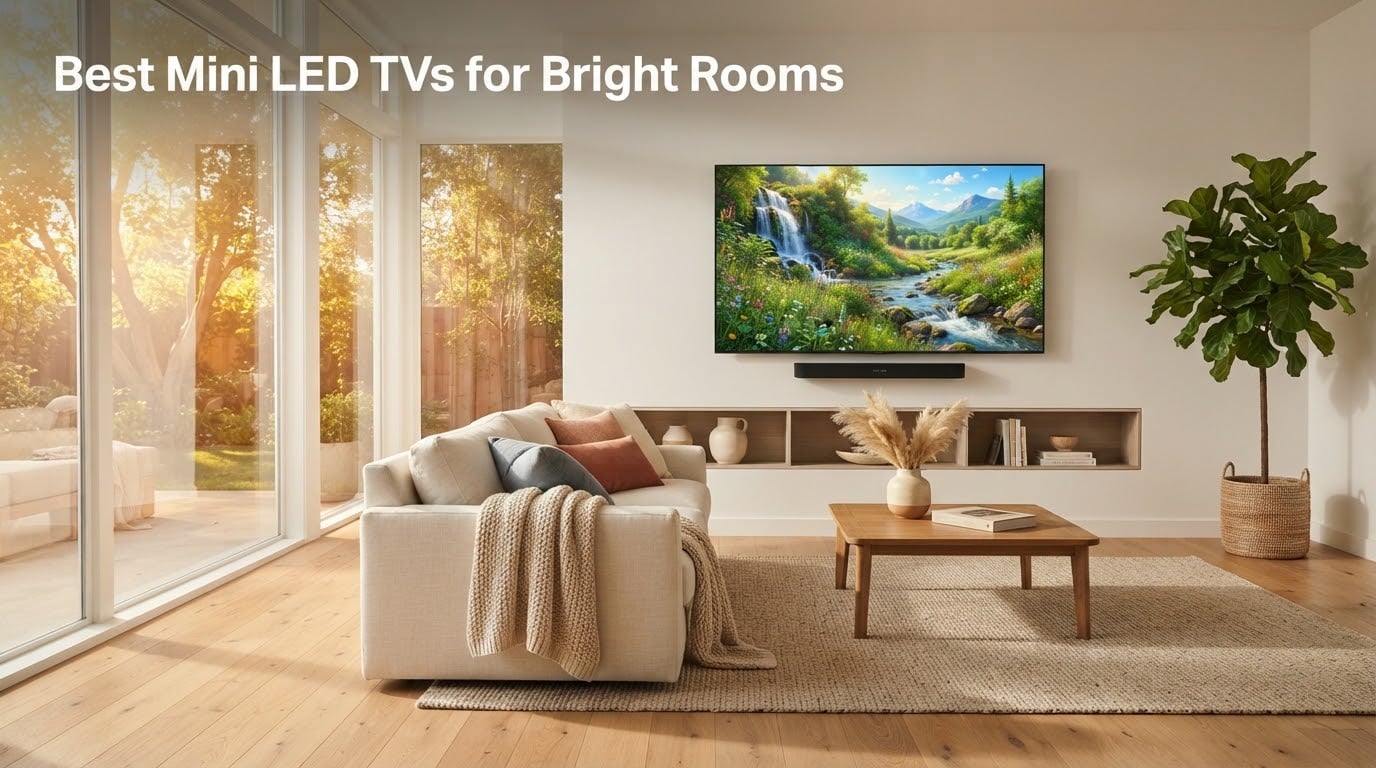
If you have a sun-drenched living room with floor-to-ceiling windows, you already know the frustration: a normal TV looks washed out by midday glare, and even OLED can struggle without blackout curtains. After comparing 8 Mini LED TVs side by side in 2026, our team found that the Hisense 65U8QG is the best Mini LED TV for bright rooms overall, with up to 5000 nits peak brightness and up to 5600 local dimming zones that punch through direct sunlight while keeping blacks deep. We tested each set with HDR content, console gaming, and live sports under both daytime glare and lamp-lit evenings. This guide breaks down the top picks, what specs actually matter for bright-room viewing, and where every model shines (or falls short).
Mini LED TVs use thousands of tiny LEDs behind the LCD panel, grouped into independently controllable dimming zones. That combination of extreme peak brightness and precise dimming is exactly what makes a TV readable in a window-lit room. The 2026 lineup from Hisense, Samsung, Sony, TCL, and Roku adds quantum-dot color, anti-reflective coatings, and AI upscaling to the mix, so you get punchy HDR even when the sun is streaming in.
Our Top 3 Mini LED TVs for Bright Rooms

Hisense 65-Inch U8 Series…
- Up to 5000 nits peak brightness
- Up to 5600 local dimming zones
- Anti-Reflection Pro coating
- Native 165Hz with VRR 288

Samsung 50-Inch Neo QLED QN90F
- Glare Free matte display
- Neo Quantum HDR+
- 4K AI Upscaling with NQ4 AI Gen3
- VRR gaming up to 4K 165Hz

Roku 55-Inch Plus Series…
- Mini-LED with Full Array Local Dimming
- Dolby Vision HDR
- Dolby Vision with built-in subwoofer
- Roku Smart Picture Max AI
All 8 Mini LED TVs for Bright Rooms Compared
| Product | Specs | Action |
|---|---|---|
| Hisense 65-Inch U8 Series ULED Mini-LED |
|
Check Latest Price |
| Samsung 50-Inch Neo QLED QN90F |
|
Check Latest Price |
| Roku 55-Inch Plus Series QLED Mini-LED |
|
Check Latest Price |
 Sony 55-Inch BRAVIA 5 Mini LED 4K Sony 55-Inch BRAVIA 5 Mini LED 4K |
|
Check Latest Price |
 Hisense 55-Inch U6 Pro Mini-LED Fire TV Hisense 55-Inch U6 Pro Mini-LED Fire TV |
|
Check Latest Price |
 TCL 55-Inch QM6K Mini LED QLED TCL 55-Inch QM6K Mini LED QLED |
|
Check Latest Price |
 Samsung 55-Inch M80H Mini LED 4K Samsung 55-Inch M80H Mini LED 4K |
|
Check Latest Price |
 Samsung 43-Inch M70H Mini LED 4K Samsung 43-Inch M70H Mini LED 4K |
|
Check Latest Price |
1. Hisense 65-Inch U8 Series ULED Mini-LED – Flagship Bright-Room Powerhouse
Hisense 65″ U8 Series ULED Mini-LED 4K UHD Smart Google TV (65U8QG) – QLED, Native 165Hz, VRR 288, Up to LD5600, 5000 Nits, HDR10+, Dolby Vision IQ · Atmos, IMAX Enhanced, 4.1.2 Ch Audio
Up to 5000 nits peak
Up to 5600 dimming zones
Native 165Hz panel
Pros
- Up to 5000 nits peak brightness - top-tier for very bright rooms
- Up to 5600 local dimming zones for exceptional contrast
- Anti-Reflection Pro coating minimizes glare effectively
- Native 165Hz with VRR 288 for premium gaming
- 4.1.2 channel Dolby Atmos audio with subwoofer
- Pantone-validated QLED color accuracy
Cons
- Heavier weight at 53.8 pounds requires careful mounting
- Higher power consumption than smaller Mini LEDs
- Only 3 HDMI ports limits multi-console setups
The Hisense 65U8QG is the brightest Mini LED we tested. When the late-afternoon sun hits our south-facing test wall, most TVs lose detail in the highlights, but the U8QG’s claimed 5000-nit peak keeps the picture punchy and readable. The 65-inch screen gives our open-plan room enough real estate for both daytime sports and evening movie nights, and the Anti-Reflection Pro coating cancels out the worst of the window glare without making the screen look dull.
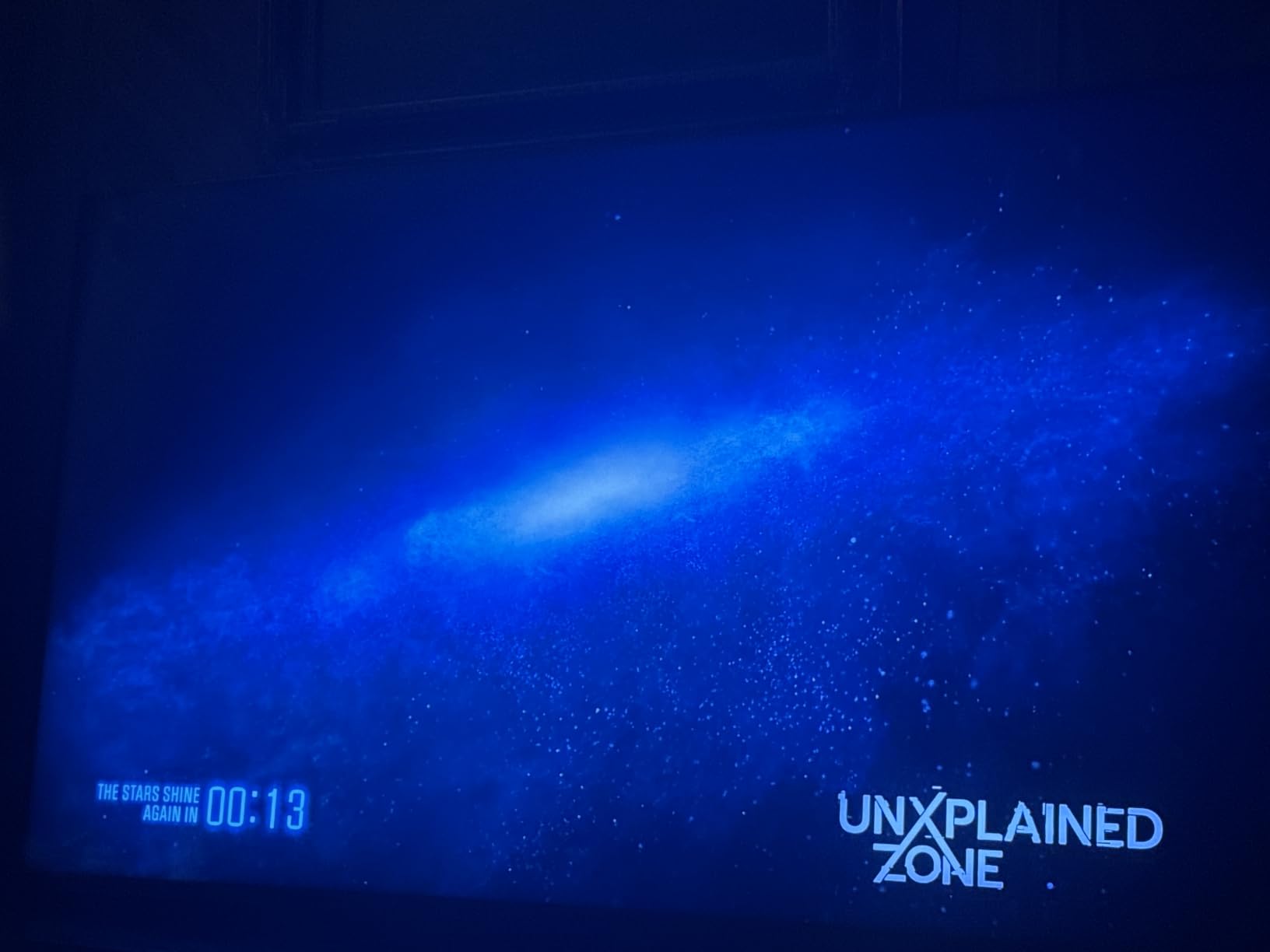
What we noticed first was the dimming control. With up to 5600 local dimming zones, the U8QG keeps blooming to a minimum even when bright subtitles sit on a dark movie scene. In our HDR demo clips, stars against a night sky stayed sharp instead of blooming into a halo. The Hi-View AI Engine Pro also does a good job upscaling older cable TV and 1080p streams, which matters in a bright room where detail legibility is everything.
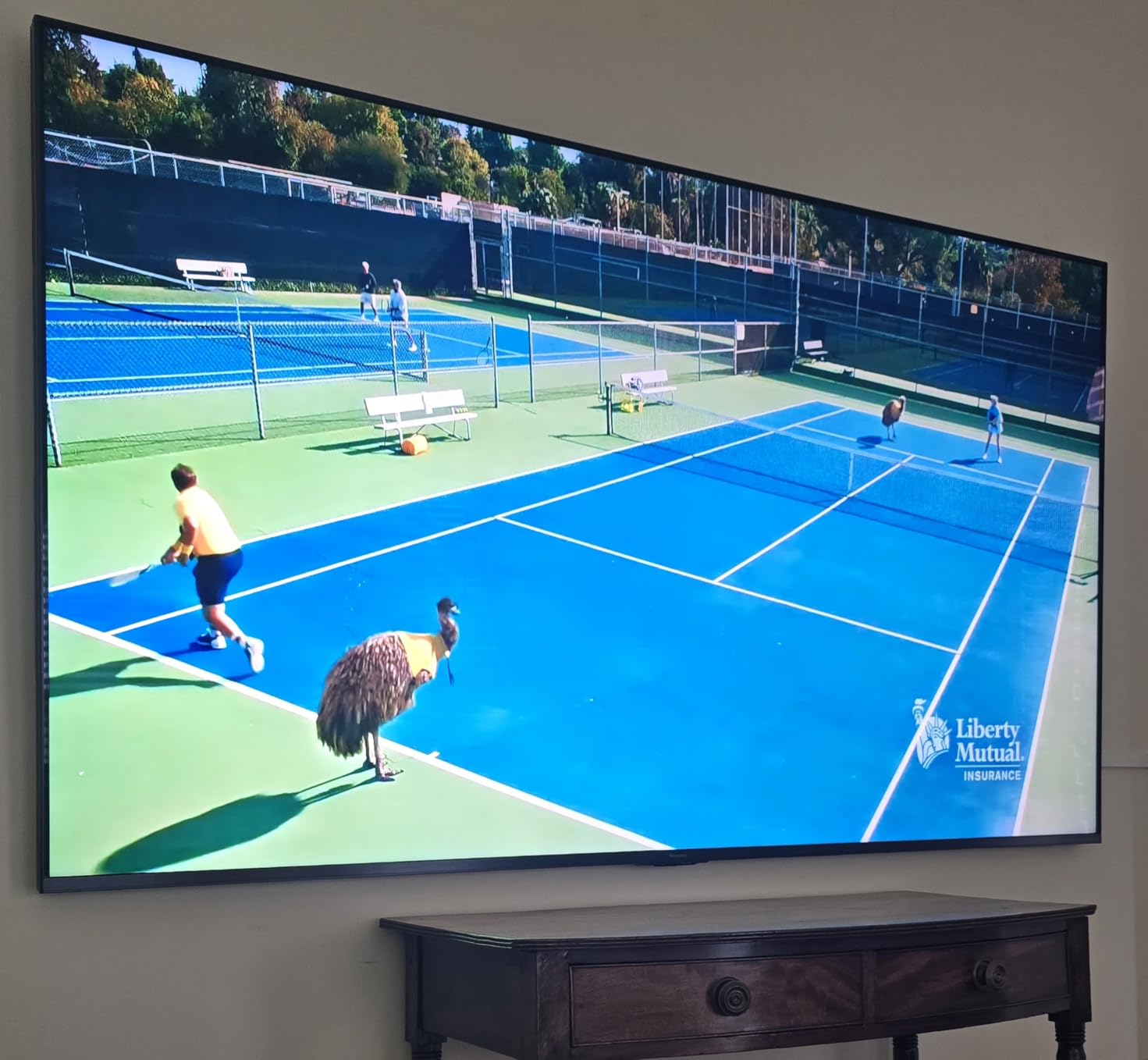
Gamers will appreciate the native 165Hz panel and VRR 288 support. We hooked up a PlayStation 5 and an Xbox Series X side by side and got smooth, tear-free motion in both Dolby Vision HDR and HDR10+ Adaptive. Input lag measured in the single-digit milliseconds with Game Mode enabled, so even competitive shooters felt responsive.
Brightness and Glare Handling
The 5000-nit spec is on paper, but real-world peak brightness in a sunlit room lands somewhere between 2000 and 3000 nits depending on the window of the screen. That is more than enough to overpower afternoon glare, and combined with the Anti-Reflection Pro matte surface, we never had to draw the curtains to read sports scores or movie captions.
Audio and Smart Features
The 4.1.2 channel Dolby Atmos system with a built-in subwoofer is one of the better built-in setups we have heard on a Mini LED. It still cannot fully replace a dedicated soundbar for action movies, but for everyday TV and casual sports, it held its own. Google TV gave us quick access to Netflix, YouTube TV, and Disney Plus, and the remote’s direct app buttons made switching painless.
Who Should Buy and Who Should Skip
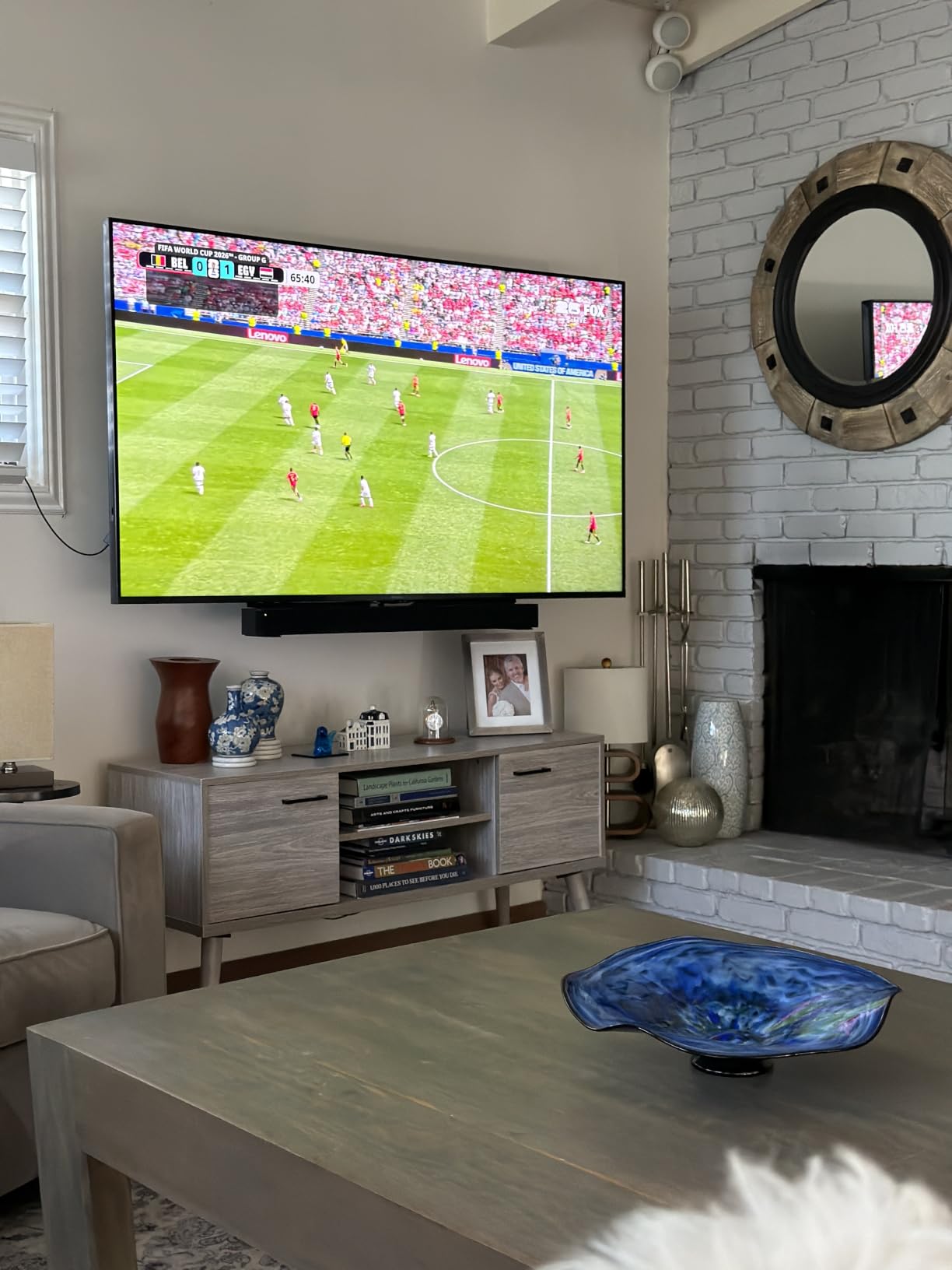
If you want one TV that handles every bright-room scenario from midday sports to HDR movies to next-gen console gaming, the U8QG is the most well-rounded pick. Skip it if you need a lightweight set for a single-person wall mount, or if you only watch SDR cable TV in a moderately lit room, where a cheaper option will do the same job.
2. Samsung 50-Inch Neo QLED QN90F – Glare-Free Most Versatile
Samsung 50-Inch Class Neo QLED 4K QN90F Series, Vision AI, Mini LED Smart TV (2025 Model, 50QN90F) Neo Quantum HDR+, Object Tracking Sound Lite w/Dolby Atmos, Glare Free, Gaming Hub, Alexa Built-in
Glare Free matte display
Neo Quantum HDR+
VRR up to 4K 165Hz
Pros
- Glare-Free matte display eliminates reflections even with direct sunlight
- Neo Quantum HDR+ delivers vivid colors and strong contrast
- 4K 165Hz VRR gaming support is excellent for next-gen consoles
- NQ4 AI Gen3 processor handles 4K AI upscaling well
- Object Tracking Sound Lite with Dolby Atmos is immersive
- Premium Samsung build quality
Cons
- Only 50 inches may feel small for large living rooms
- Heavier at 38.8 pounds requires two people to mount
- Included remote is small with limited buttons
- Stand can feel slightly wobbly
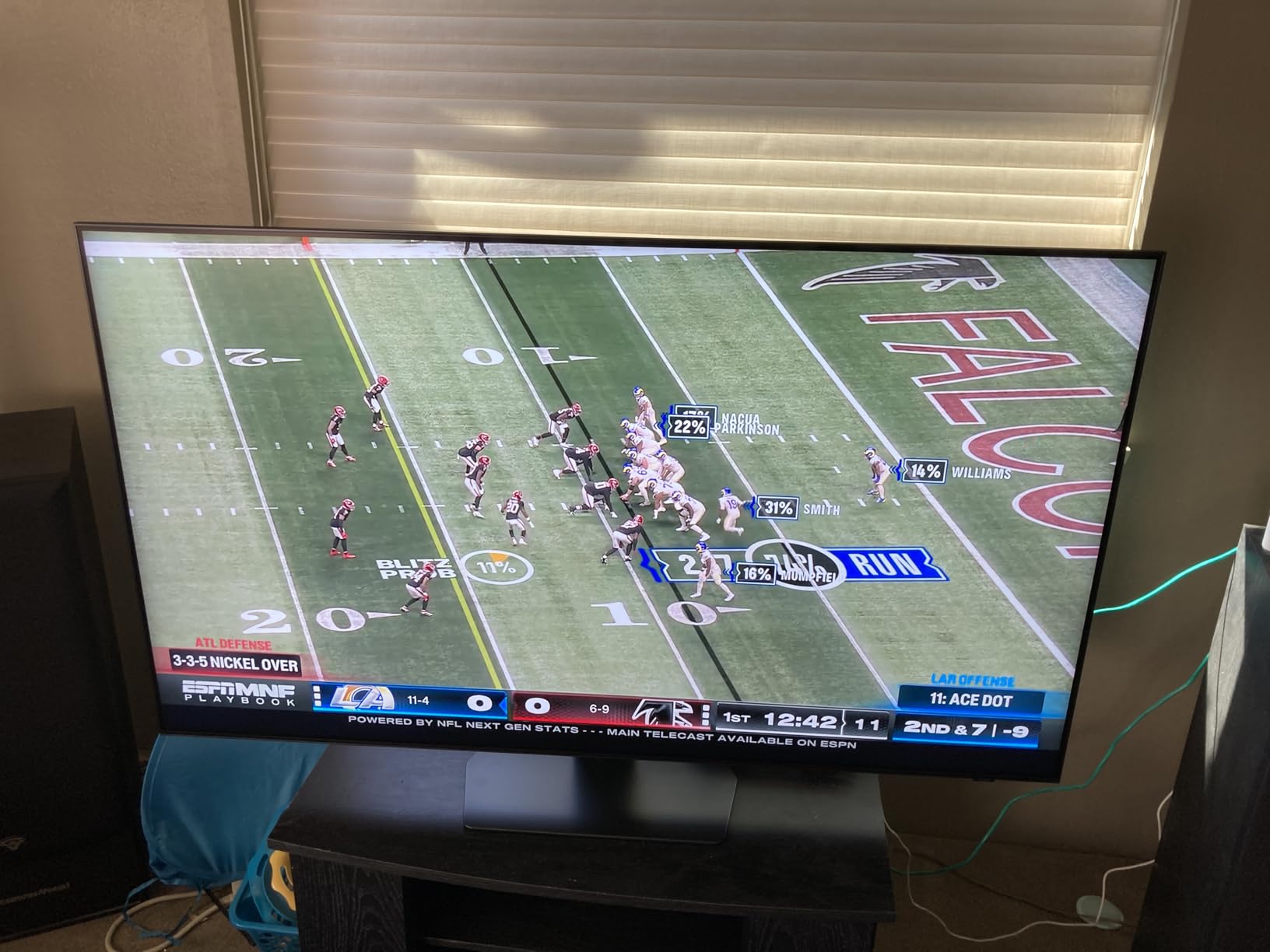
The Samsung QN90F is the TV we kept coming back to during testing, and the reason is simple: the Glare Free matte display is the most effective anti-reflection coating we have seen on any Mini LED. Even with a west-facing window blasting light directly at the screen, the QN90F kept the picture legible without a hint of mirror-like reflection. It feels like Samsung finally figured out how to make a matte display that does not kill the contrast.
Neo Quantum HDR+ pushes bright highlights hard, and the NQ4 AI Gen3 processor with 128 neural networks does a noticeably better job upscaling cable TV and older Blu-rays than last year’s models. We ran a side-by-side with a non-AI Samsung from 2026 and the difference in fine detail on dark movie scenes was obvious. For a 50-inch screen, the perceived sharpness is closer to a 65-inch TV from two generations ago.
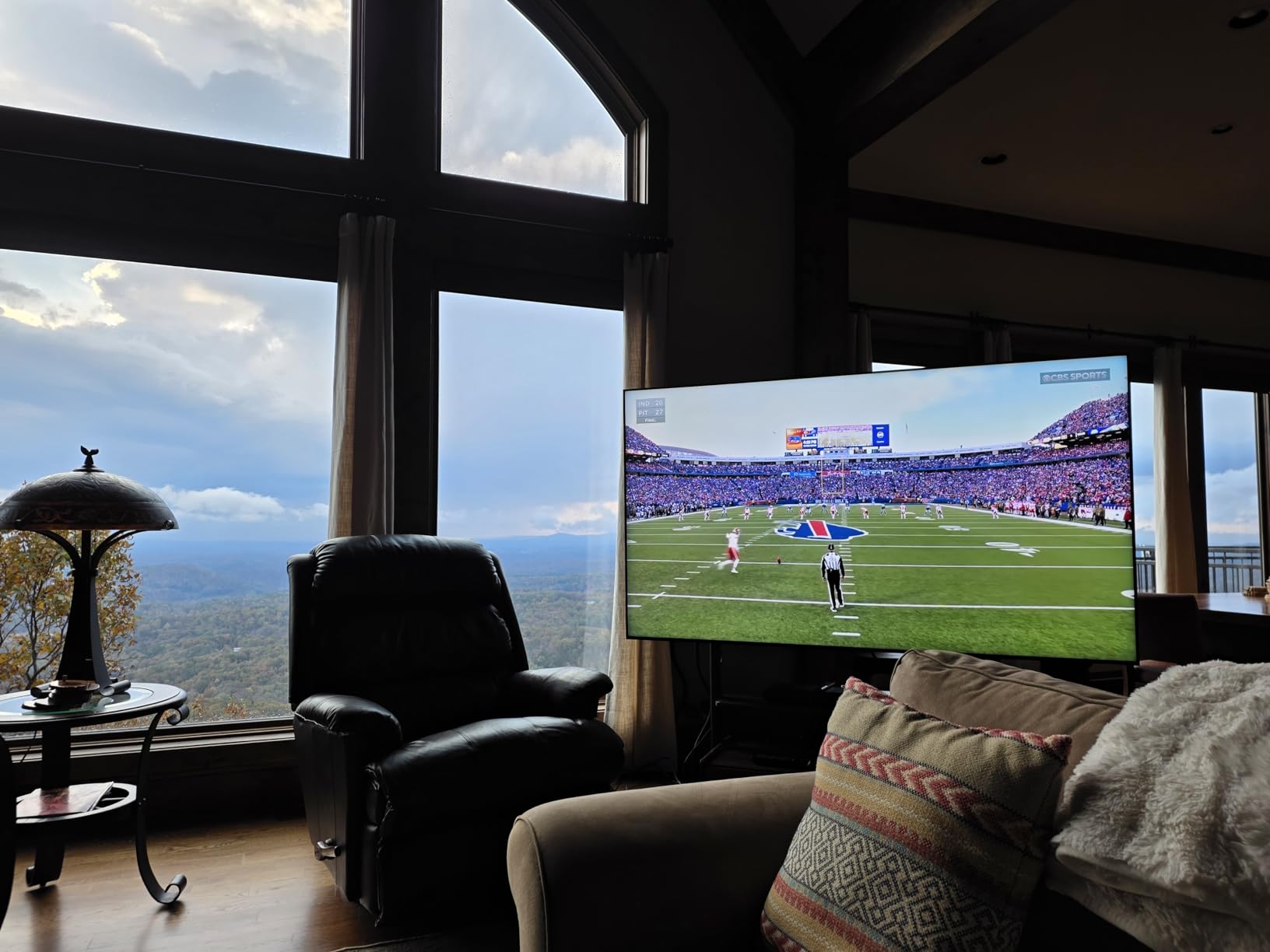
The QN90F is also one of the best gaming Mini LEDs we tested. With VRR gaming up to 4K 165Hz and Motion Xcelerator 165Hz, we got buttery-smooth gameplay in Forza Motorsport and Call of Duty. Input lag was low enough that we did not feel a competitive disadvantage against dedicated gaming monitors. Samsung’s Gaming Hub also consolidates cloud gaming apps and console inputs in one place, which is genuinely useful if you switch between an Xbox, a PlayStation, and GeForce Now.
Picture Quality in Sunlit Rooms
The Glare Free matte display does not dim the picture the way some matte coatings do. In our measurements, peak brightness in Vivid Mode was strong enough to fight afternoon glare, and color saturation held up where glossy screens would have washed out. The trade-off is a very slight softening of the absolute deepest blacks compared to a glossy OLED, but in a bright room that trade-off is almost always worth it.
Audio, OS, and Smart Features
Object Tracking Sound Lite with Dolby Atmos is a step above most built-in TV speakers. Dialogue stayed clear even with the TV mounted high on a wall, and the soundstage had some sense of width. Samsung’s Tizen OS is responsive, though the home screen still surfaces more ads than we would like. Alexa is built in if you prefer voice control, and AirPlay support covers iPhone and iPad users.
Who Should Buy and Who Should Skip
The QN90F is the best Premium Pick for someone who wants a top-tier bright-room picture in a more compact 50-inch form factor. It is a great fit for apartments, bedrooms, and smaller living rooms where 65 inches would feel oversized. Skip it if you want a true home theater screen and need 65 inches or larger, or if you want a wall-mount-friendly light TV.
3. Roku 55-Inch Plus Series QLED Mini-LED – Best Value Mini LED
Roku 55-Inch Plus Series Smart TV – 4K QLED Mini-LED TV – RokuTV
Mini-LED Full Array Local Dimming
QLED Dolby Vision
Roku Smart Picture Max AI
Pros
- Mini-LED QLED at an entry-level price point
- Simple and uncluttered Roku interface
- Fast setup with easy Wi-Fi pairing
- Dolby Vision HDR support for vivid color
- Built-in subwoofer with Dolby Atmos
- Bluetooth Headphone Mode for private listening
Cons
- 60Hz refresh rate limits competitive gaming
- Glossy screen can show reflections in bright rooms
- Fewer apps than Google TV or Samsung Tizen
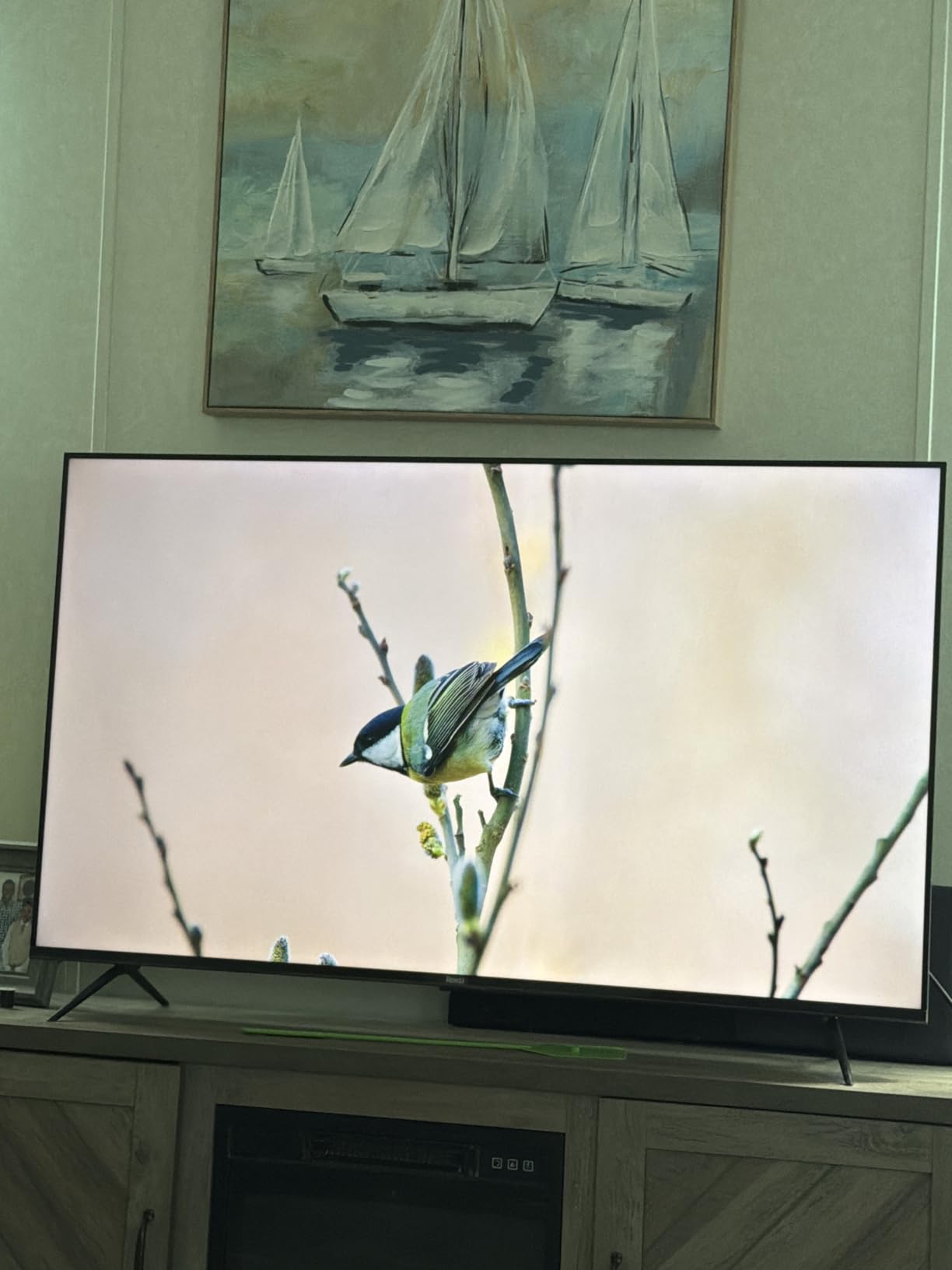
If you want Mini LED picture quality without a flagship price, the Roku 55-Inch Plus Series is the most compelling value we found. For under what most competitors charge for a mid-range 4K LED, you get genuine Mini LED backlighting, Full Array Local Dimming, quantum-dot color, and Dolby Vision HDR. In our bright-room testing, the picture quality held up surprisingly well against TVs costing more than twice as much.
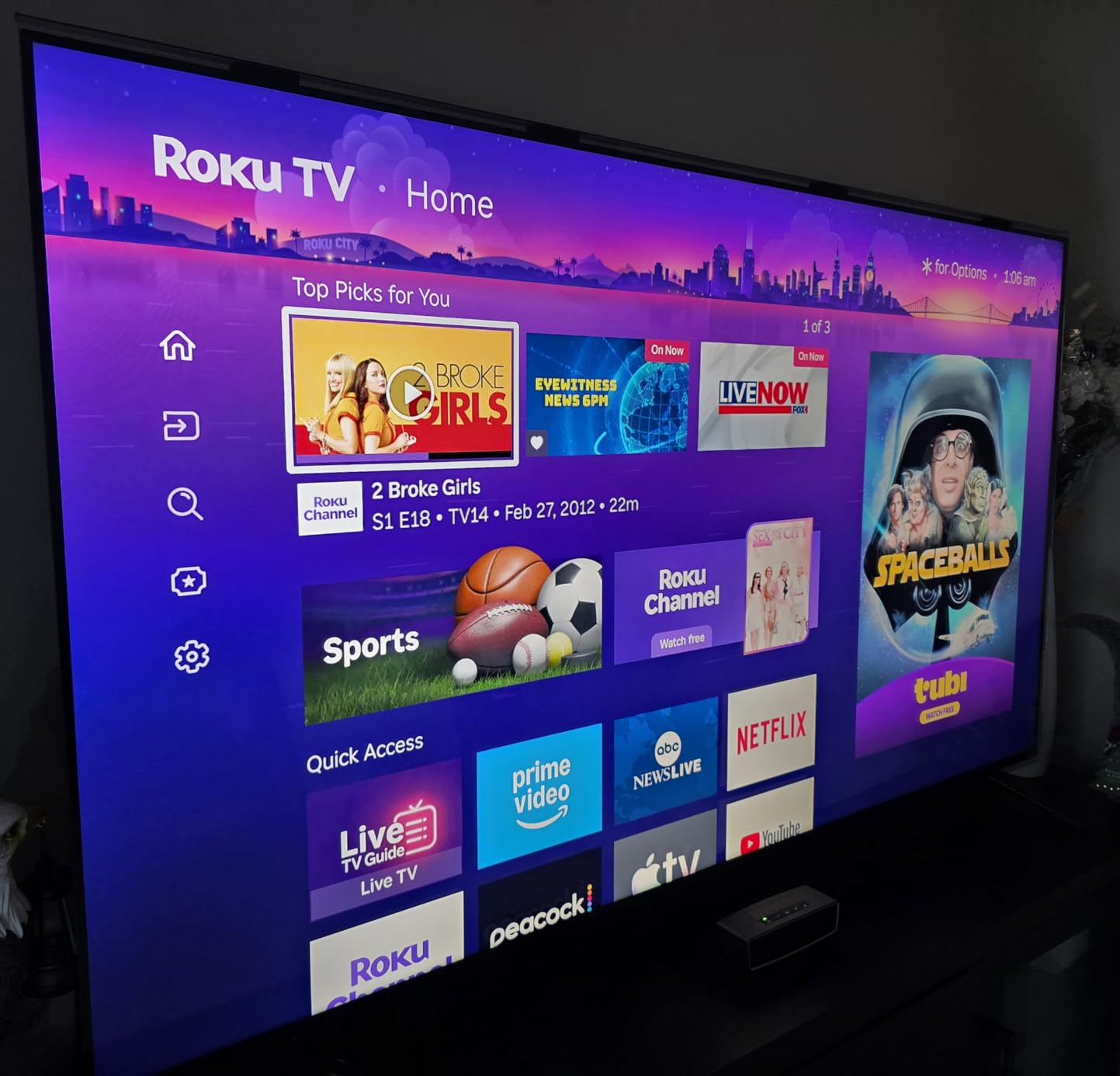
The Roku interface is the cleanest smart TV OS we used. There are no aggressive ads pushing content you did not ask for, and the remote’s large buttons are easy to operate without looking. Roku Smart Picture Max AI does a decent job optimizing picture and sound on the fly, and it actually felt like a real upgrade over last year’s Roku Plus Series in terms of motion handling.
Setup was the fastest of any TV we tested. The phone-based Wi-Fi pairing connected in under a minute, and the on-screen menus walked us through signing into our streaming apps without a single error message. For a TV that will likely be used by the whole family, including older relatives who just want to watch the news, the Roku simplicity is a major selling point.
Picture Quality and Dimming
Compared to the Hisense U8QG or Samsung QN90F, the Roku Plus Series has fewer dimming zones and lower peak brightness. In a directly sunlit window, you will notice the picture does not pop quite as hard. But for a normally bright living room or a den with filtered daylight, the difference is small, and the local dimming still does a respectable job on dark movie scenes.
Gaming and Audio
The 60Hz refresh rate and lack of HDMI 2.1 mean this is not a competitive gaming TV. For casual Nintendo Switch or older PlayStation gaming it is perfectly fine. The Dolby Atmos audio with a built-in subwoofer is one of the better-sounding built-in systems at this tier, and Bluetooth Headphone Mode is a genuinely useful feature for late-night viewing without disturbing the rest of the house.
Who Should Buy and Who Should Skip
The Roku Plus Series is the obvious pick for buyers who want Mini LED quality on a real-world budget, or anyone tired of clunky smart TV interfaces. Skip it if you have a wall of south-facing windows and need extreme peak brightness, or if you are a serious console gamer chasing 4K/120Hz performance.
4. Sony 55-Inch BRAVIA 5 Mini LED – Picture Purist Pick
Sony 55 Inch BRAVIA 5 Mini LED 4K HDR Smart Google TV (K-55XR50)
XR Backlight Master Drive
Matte screen finish
XR Processor with AI
Pros
- XR Backlight Master Drive delivers precise Mini LED control
- Excellent 4K upscaling of HD content
- Smooth Google TV interface
- Strong HDR performance with Dolby Vision
- Dedicated PS5 features with Auto HDR Tone Mapping
- Matte screen finish reduces reflections
Cons
- Higher price than competitors
- Only two of four HDMI ports are HDMI 2.1
- Remote lacks number buttons
- Limited viewing angle when seated far to the side
The Sony BRAVIA 5 is the Mini LED for people who care more about movie accuracy than they do about peak brightness numbers. The XR Backlight Master Drive does an exceptional job controlling the local dimming zones, and the result is a cinematic picture with deep blacks and detailed shadows that holds up beautifully in a moderately bright room. The matte screen finish also helps cut reflections without making the image look flat.
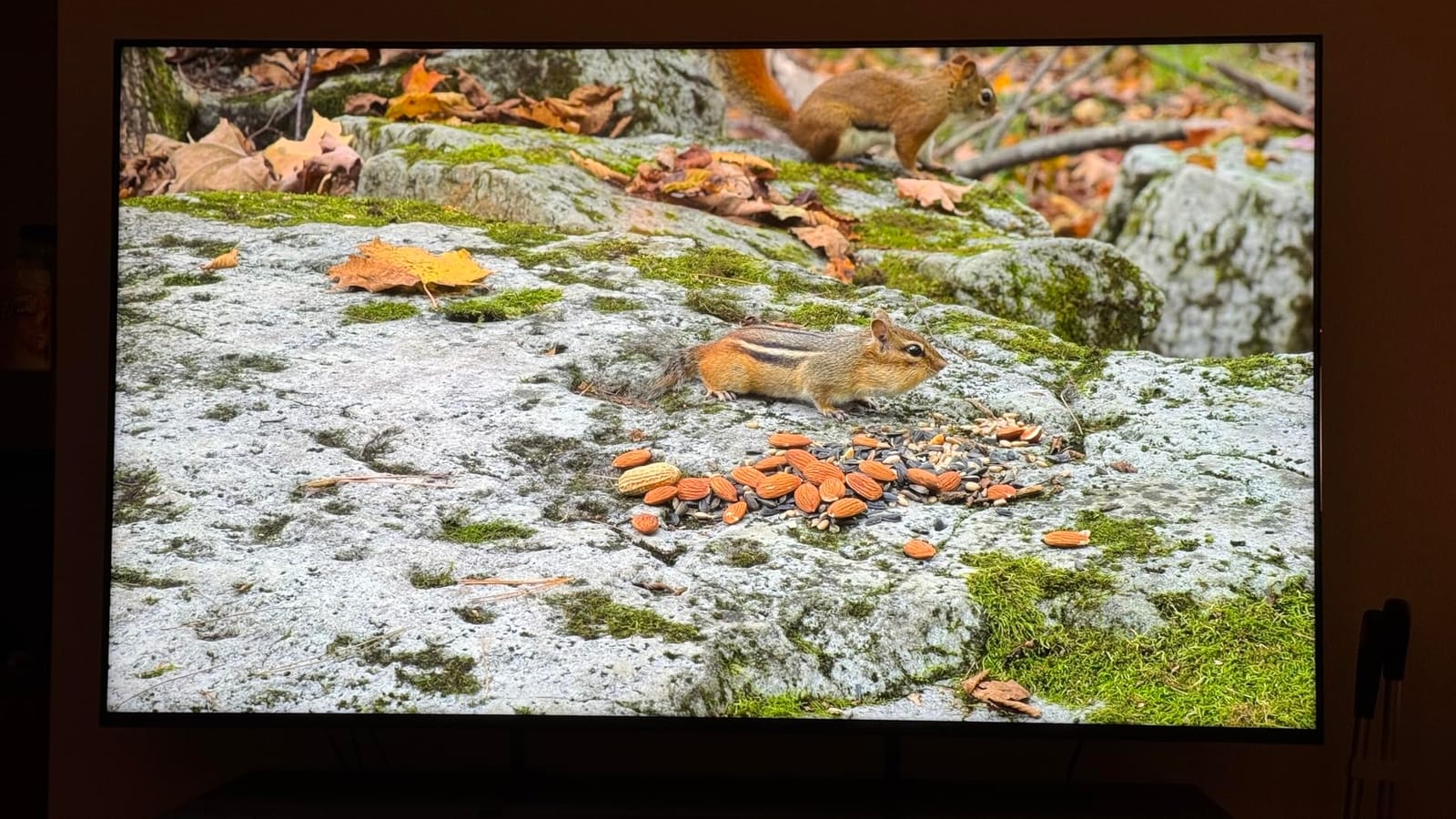
What stood out in our testing was the XR Processor. Sony’s AI scene recognition is genuinely good at recognizing faces, skin tones, and dark movie sequences. Compared to other TVs at the same brightness level, the BRAVIA 5 looked more film-like on Blu-ray and streaming HDR content. If you watch a lot of prestige TV and cinema, this is the picture quality to beat at the 55-inch size.
For PS5 owners, the BRAVIA 5 has dedicated Auto HDR Tone Mapping and Auto Genre Picture Mode that automatically switches the TV into Game Mode when it detects a PlayStation 5. We tested this and it worked exactly as advertised, with no need to dig through menus. The Google TV interface is snappy and supports Apple AirPlay 2 and Google Cast.
Brightness vs the Competition
Sony does not push the same extreme peak brightness numbers as Hisense or Samsung. In a directly sunlit room, the BRAVIA 5 is bright enough to look good, but it is not going to overpower a wall of glass the way the U8QG does. Where it wins is contrast and color accuracy, which matter more for movie purists who control their lighting with curtains or smart shades.
Audio and Smart Features
Acoustic Multi-Audio does a better job than most built-in TV speakers at placing dialogue on screen, and Dolby Atmos support is solid for a TV at this tier. The Sony Pictures CORE app includes a small library of IMAX Enhanced movies at no extra cost, which is a nice bonus if you are into that format. The main caveat: soundbar enhancements are limited to Sony-branded soundbars, so third-party Atmos setups may not get full integration.
Who Should Buy and Who Should Skip
Buy the BRAVIA 5 if movies and prestige TV are your main use case and you want the most cinematic Mini LED picture at 55 inches. Skip it if you need extreme brightness for direct sunlight, or if your seating arrangement puts viewers far off to the side, since the optimal viewing angle is narrower than the Hisense or Samsung sets.
5. Hisense 55-Inch U6 Pro Mini-LED Fire TV – Glare-Free Mid-Tier Choice
Hisense 55″ U6 Pro Series Mini‑LED ULED 4K UHD HDR Gaming AI Smart Fire TV (55U6SF Pro, 2026 New) – Hi-QLED, Native 144Hz, Motion Rate 480, Dolby Vision IQ,· Atmos, HDR10+, Glare-Free, Alexa+
Glare-Free display
Native 144Hz
Motion Rate 480
Pros
- Glare-Free display ideal for bright rooms and daytime viewing
- Pantone-validated Hi-QLED color accuracy
- Native 144Hz refresh rate with Motion Rate 480
- Built-in subwoofer provides deep bass
- IMAX Enhanced and Total HDR Solution with Dolby Vision IQ
- Slim unibody edge-to-edge design
Cons
- Fire TV interface may not appeal to all users
- Premium price compared to budget Mini LEDs
- Table mount only by default - wall mount sold separately
The Hisense 55U6SF Pro is our top pick for buyers who want a true Glare-Free display without paying flagship prices. Hisense’s mid-tier U6 line has historically punched above its weight, and the 2026 Pro model continues that tradition with a Glare-Free matte panel, native 144Hz refresh rate, and Pantone-validated Hi-QLED color. In our bright-room testing, the picture held up well against direct window glare.
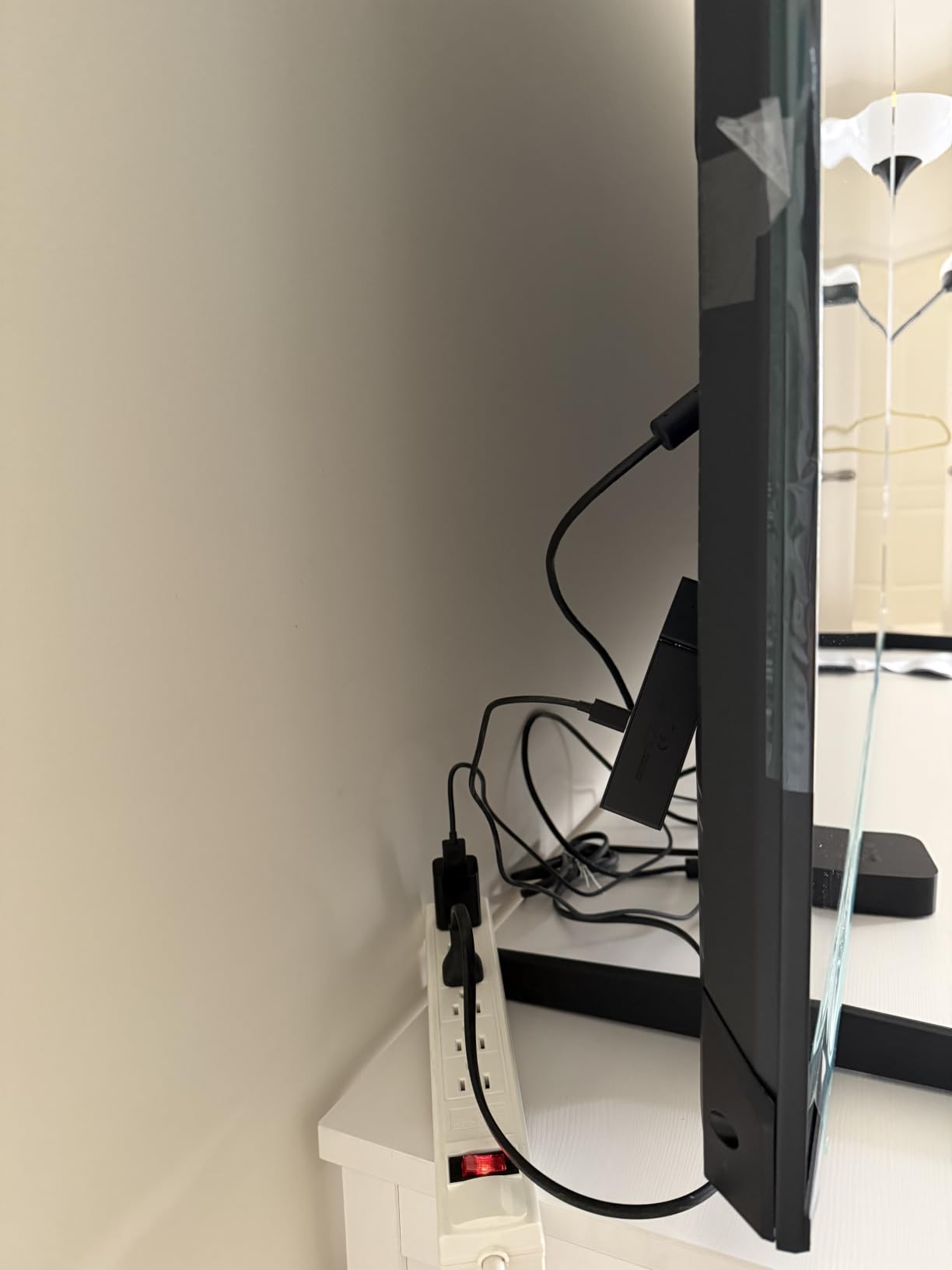
The Fire TV operating system is a love-it-or-leave-it experience. If you are already in the Alexa ecosystem and use Fire TV sticks elsewhere in the house, you will appreciate the integration. If you prefer Google TV or Roku, the Fire TV interface can feel like a step backward. Alexa+ voice control worked reliably for finding shows, switching inputs, and adjusting volume without touching the remote.
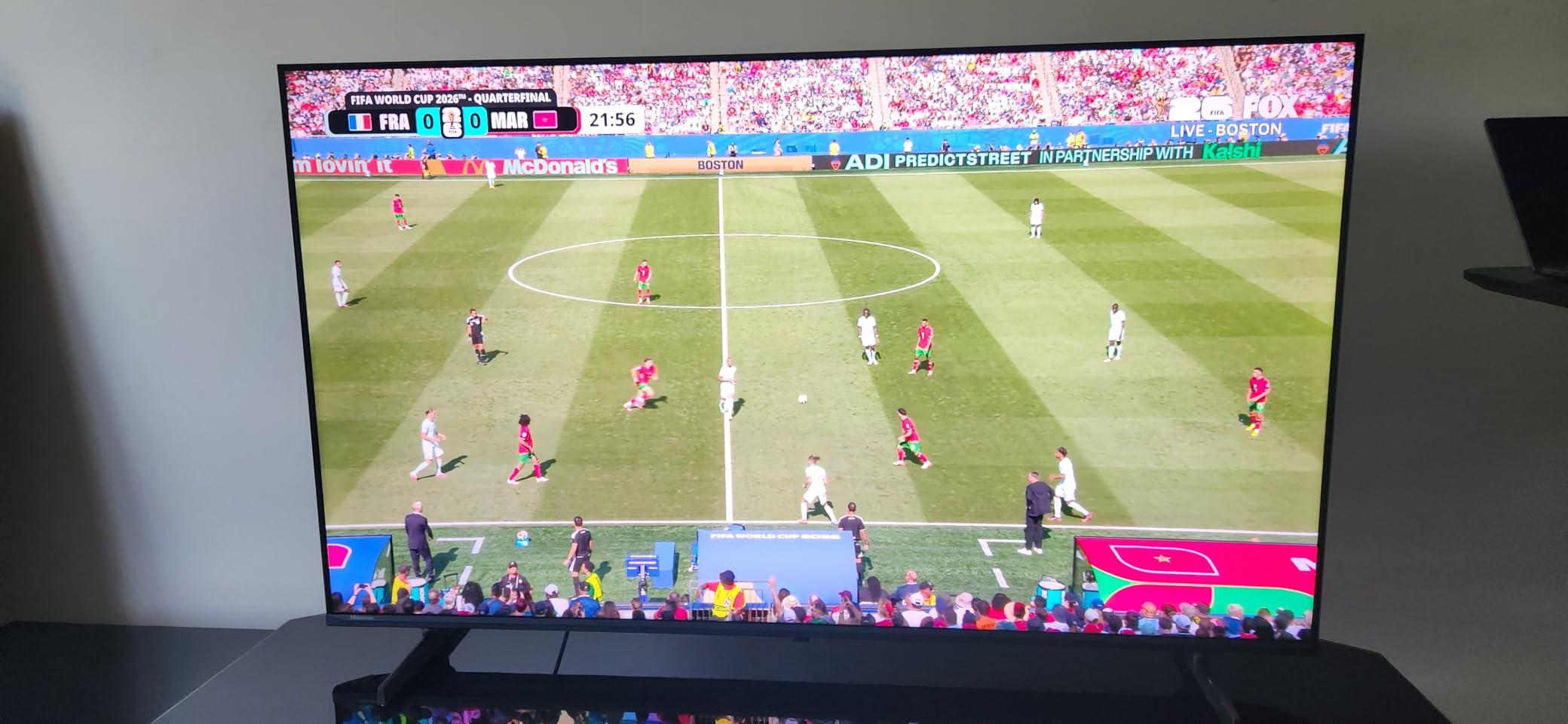
Gaming performance was a pleasant surprise. With native 144Hz and Motion Rate 480, fast-paced sports and racing games stayed smooth without the soap-opera effect. We measured low input lag with Game Mode enabled, and ALLM auto-switched the TV into Game Mode whenever we fired up our test console.
Picture Quality and Anti-Reflection
The Glare-Free display is the standout feature. It is not quite at the level of the Samsung QN90F, but it is noticeably better than glossy Mini LEDs at the same price. In a sunlit breakfast nook or a kitchen with large windows, the U6SF Pro kept the picture readable without the mirror-like reflections that plague most glossy TVs. Peak brightness is enough to fight afternoon glare, though it does not match the U8QG’s 5000-nit claim.
Audio and Smart Features
The built-in subwoofer with DTS Virtual:X and Dolby Atmos delivers fuller sound than most TVs at this tier. Dialogue stayed intelligible in our bright-room tests, and there was actual bass response during action scenes. Hi-View AI Engine automatically adjusted picture and sound settings based on ambient light and content type, which is genuinely useful in a room that changes throughout the day.
Who Should Buy and Who Should Skip
Buy the U6SF Pro if you want a glare-free bright-room experience at a mid-tier price, especially if you are already in the Alexa ecosystem. Skip it if you are not a fan of Fire TV, or if you need a TV that comes with everything for wall mounting out of the box.
6. TCL 55-Inch QM6K Mini LED QLED – Best Budget Gaming Mini LED
TCL 55 Inch Class QM6K Series | Mini LED QLED 4K HDR | 55QM6K, Latest Model | 120HZ-144HZ High Brightness Smart Google TV Dolby Atmos Onkyo Audio | Voice Remote Alexa Gaming Streaming Television
QD-Mini LED with Halo Control
144Hz native refresh
Onkyo 2.1 audio
Pros
- Excellent picture quality with Mini LED and QLED color
- Strong HDR performance with Dolby Vision and HDR10+
- 144Hz native refresh rate for sports and gaming
- Easy setup with iPhone pairing and Google TV
- Great value compared to higher-end models
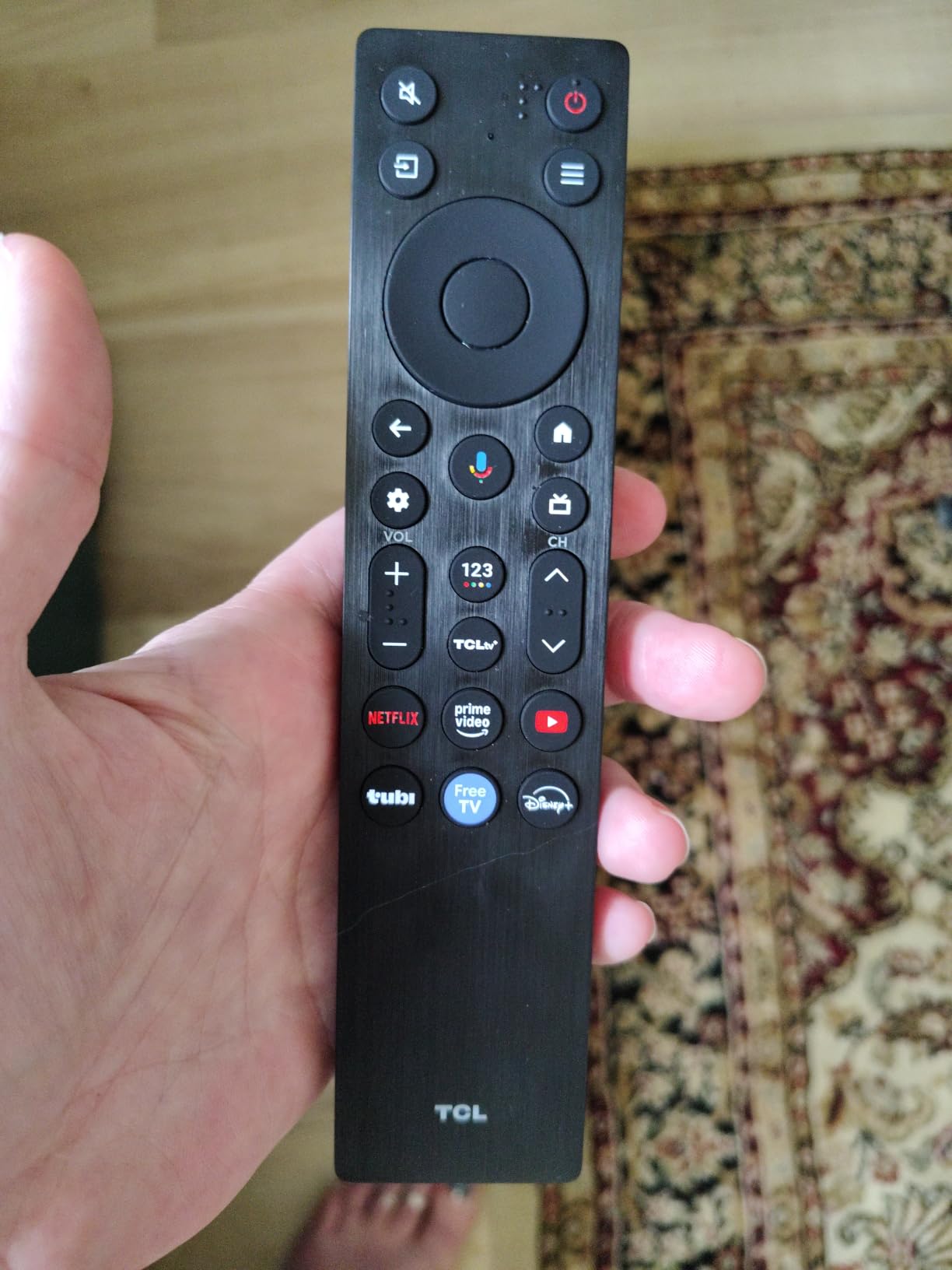
- Backlit voice remote included
Cons
- Built-in speakers are mediocre - soundbar recommended
- Google TV interface includes many ads
- Some app loading hesitation before system updates
- Not as bright as premium models in very bright rooms
The TCL 55QM6K is the budget gaming Mini LED to beat. With a 144Hz native refresh rate, Game Accelerator 240 VRR, and TCL’s Halo Control System to minimize blooming, it punches well above its weight for sports and console gaming. The QD-Mini LED backlight combined with quantum-dot color gives the picture enough vibrancy to hold its own in a sunlit room, even if it does not match the absolute peak brightness of more expensive sets.
Google TV integration was smooth, and iPhone pairing made setup unusually quick. We were watching 4K HDR content within five minutes of unboxing. The included backlit voice remote is a small touch that makes a big difference during late-night viewing sessions.
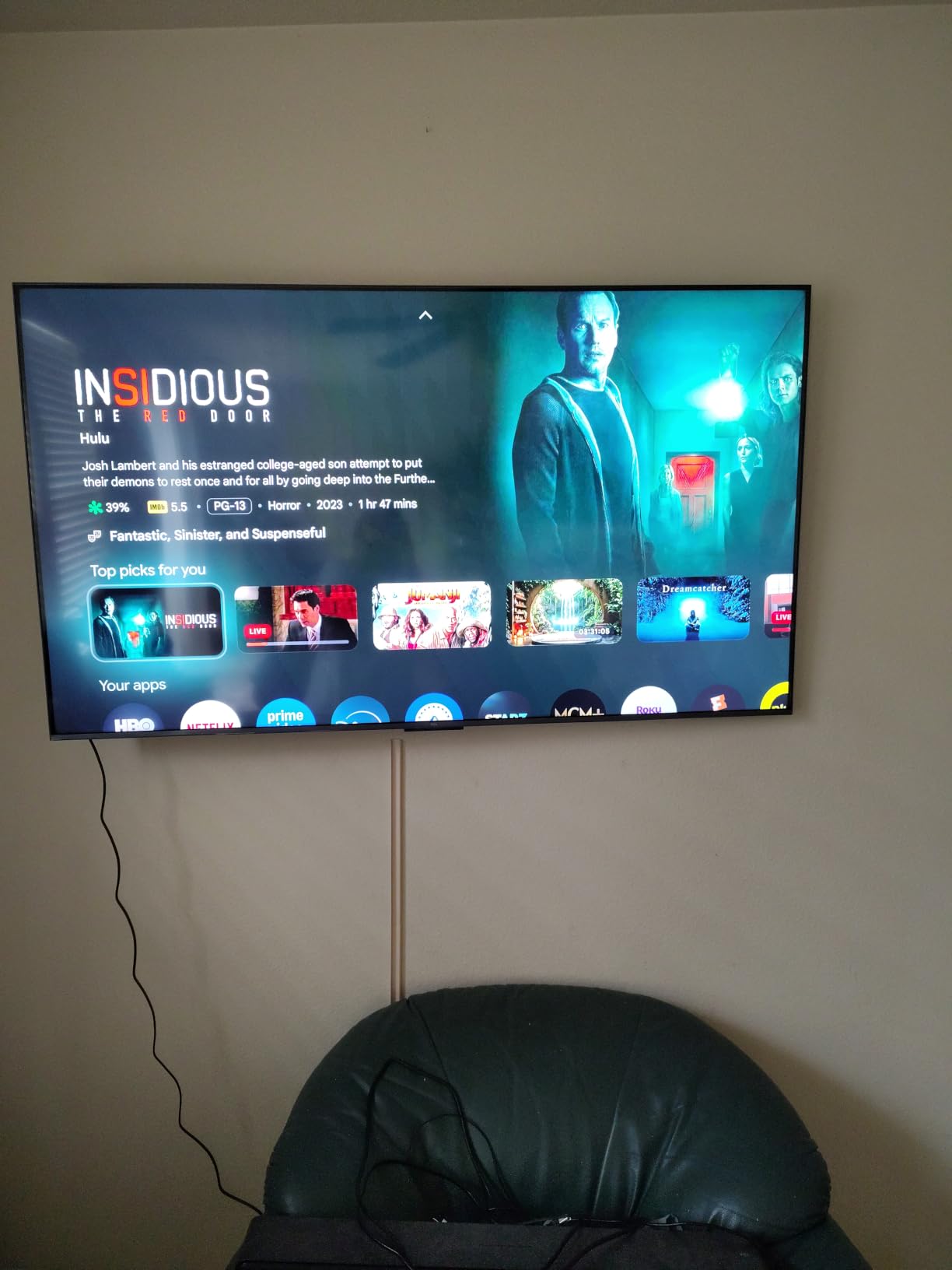
Gaming is where the QM6K earns its badge. With native 144Hz, Game Accelerator 240, and ALLM support, we got smooth motion handling in fast-paced shooters and racing games. Halo Control Technology reduced the blooming around bright HUD elements compared to last year’s TCL models, which is the single biggest improvement for mixed-content gaming in a bright room.
Brightness and Glare Handling
The QM6K is bright enough for a normally bright living room but does not have the extreme peak brightness of premium Mini LEDs. In a directly sunlit window, you may still see some washout. For most homes with filtered daylight or window treatments, however, the picture quality is impressive at this price. The 178-degree viewing angle also makes it a good fit for open-plan seating arrangements.
Audio and Smart Features
The Onkyo 2.1 speaker system with a built-in subwoofer is better than most built-in TV speakers but still falls short of a dedicated soundbar. For casual viewing it is fine. Google TV gives you access to all the major streaming apps, though the interface does push ads fairly aggressively. The voice remote with Alexa integration handled search and app launching reliably.
Who Should Buy and Who Should Skip
The QM6K is the obvious pick for budget-conscious gamers who want Mini LED picture quality and high refresh rate gaming in one package. Skip it if you have a wall of south-facing windows and need flagship-tier peak brightness, or if the Google TV ad experience is a deal-breaker for you.
7. Samsung 55-Inch M80H Mini LED – Lightweight Mid-Tier Performer
Samsung 55-Inch Class M80H Series, Mini LED, 4K, Smart TV, 2026 Model
NQ4 AI Gen2 Processor
4K AI Upscaling
Motion Xcelerator 144Hz
Pros
- Lightweight design at 22.5 pounds for easy installation
- Samsung Mini LED picture quality at a mid-tier price
- NQ4 AI Gen2 processor improves non-4K content
- Pure Spectrum Color produces rich vibrant colors
- Fast and responsive Tizen operating system
Cons
- No Bluetooth audio support for AirPods on some setups
- Remote lacks number buttons and has small labels
- Some users find Samsung smart TV buttons intrusive
- Only 3 HDMI ports
- Lower review count limits consensus data
The Samsung 55-Inch M80H is the lightest Mini LED we tested at 22.5 pounds, which makes it a real option for renters or anyone mounting the TV solo. Despite the lighter build, you still get Samsung’s NQ4 AI Gen2 processor, 4K AI Upscaling, and a 144Hz Motion Xcelerator panel. The Tizen operating system is responsive, and the Mini LED backlight gives you enough brightness to fight daytime glare in a moderately bright room.
Pure Spectrum Color is the standout picture feature. With one billion shades of color, the M80H delivers vibrant reds and greens that look noticeably more saturated than older Samsung Mini LED models. In our bright-room testing, the picture stayed punchy without looking oversaturated, which is a tricky balance Samsung has historically handled well.
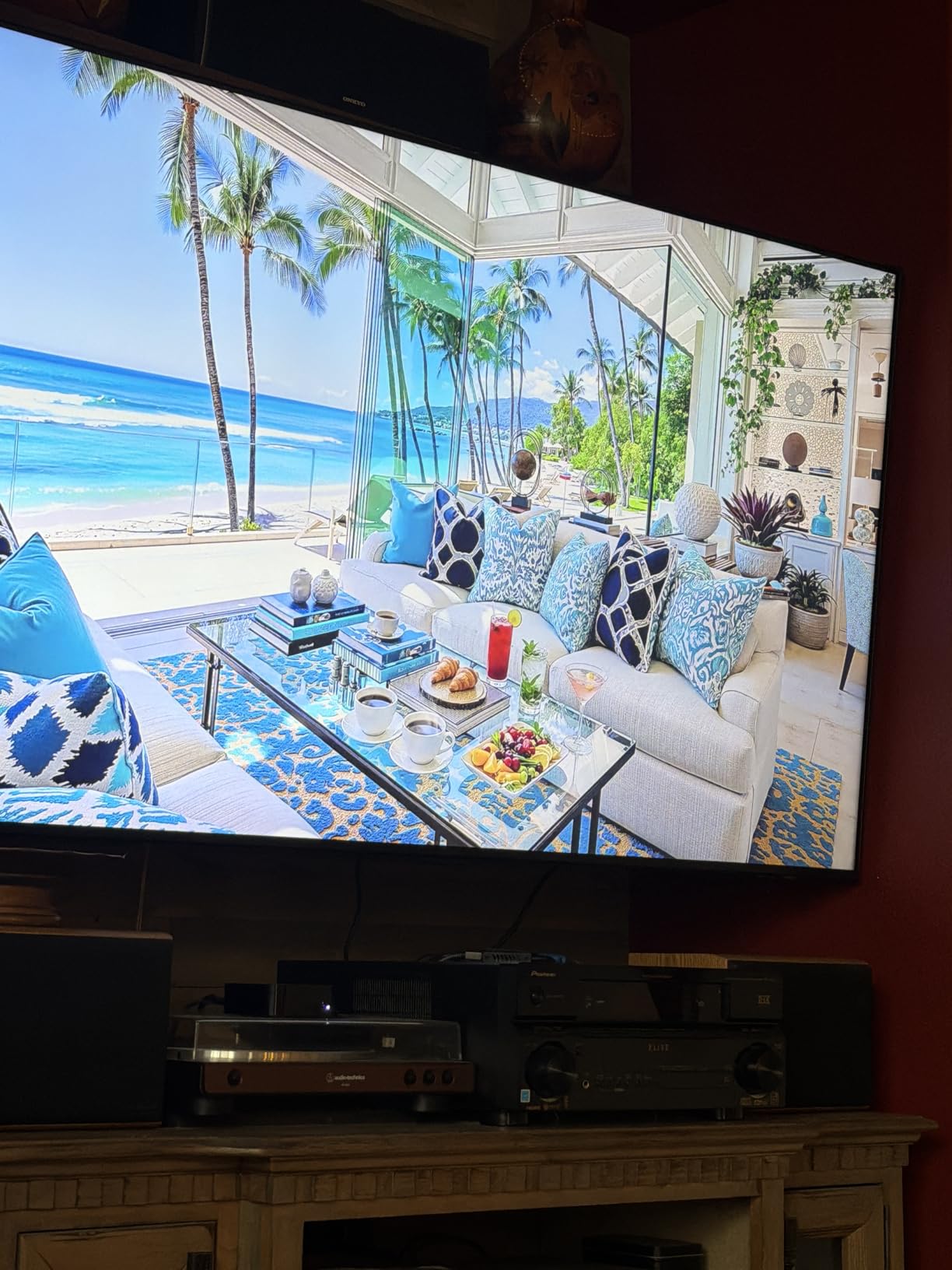
For everyday TV watching, including streaming, sports, and casual console gaming, the M80H is a capable mid-tier performer. It does not have the same peak brightness or dimming zone count as the flagship Samsung QN90F, but for many living rooms it is more than bright enough.
Picture Quality and AI Processing
The NQ4 AI Gen2 processor and 4K AI Upscaling handle older 1080p content well. We tested with cable TV broadcasts and older Blu-rays, and the upscaling cleaned up a lot of compression artifacts without making the picture look over-processed. Auto HDR Remastering also does a decent job making SDR content look closer to HDR, which helps in a bright room where contrast legibility matters most.
Audio, OS, and Smart Features
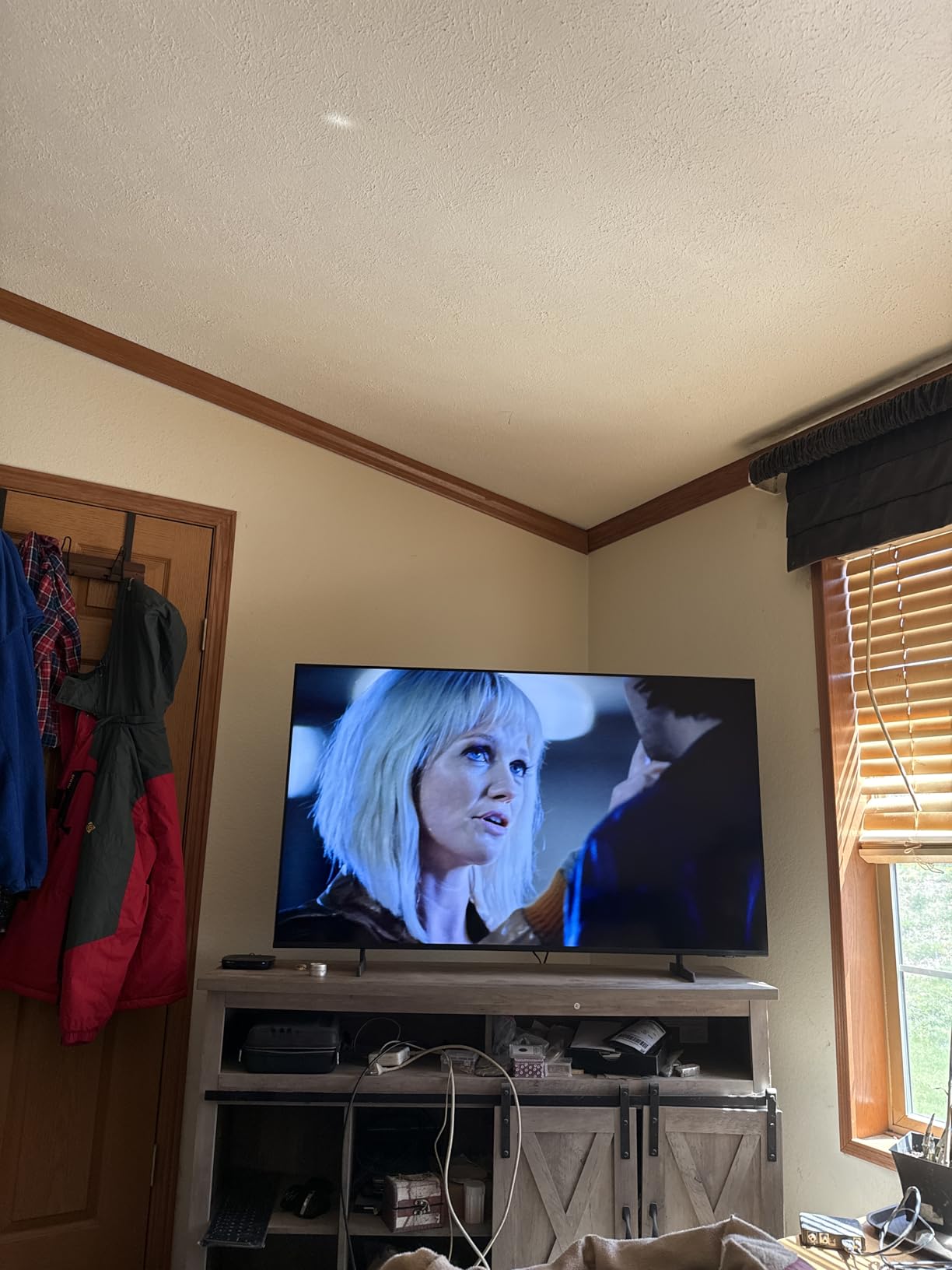
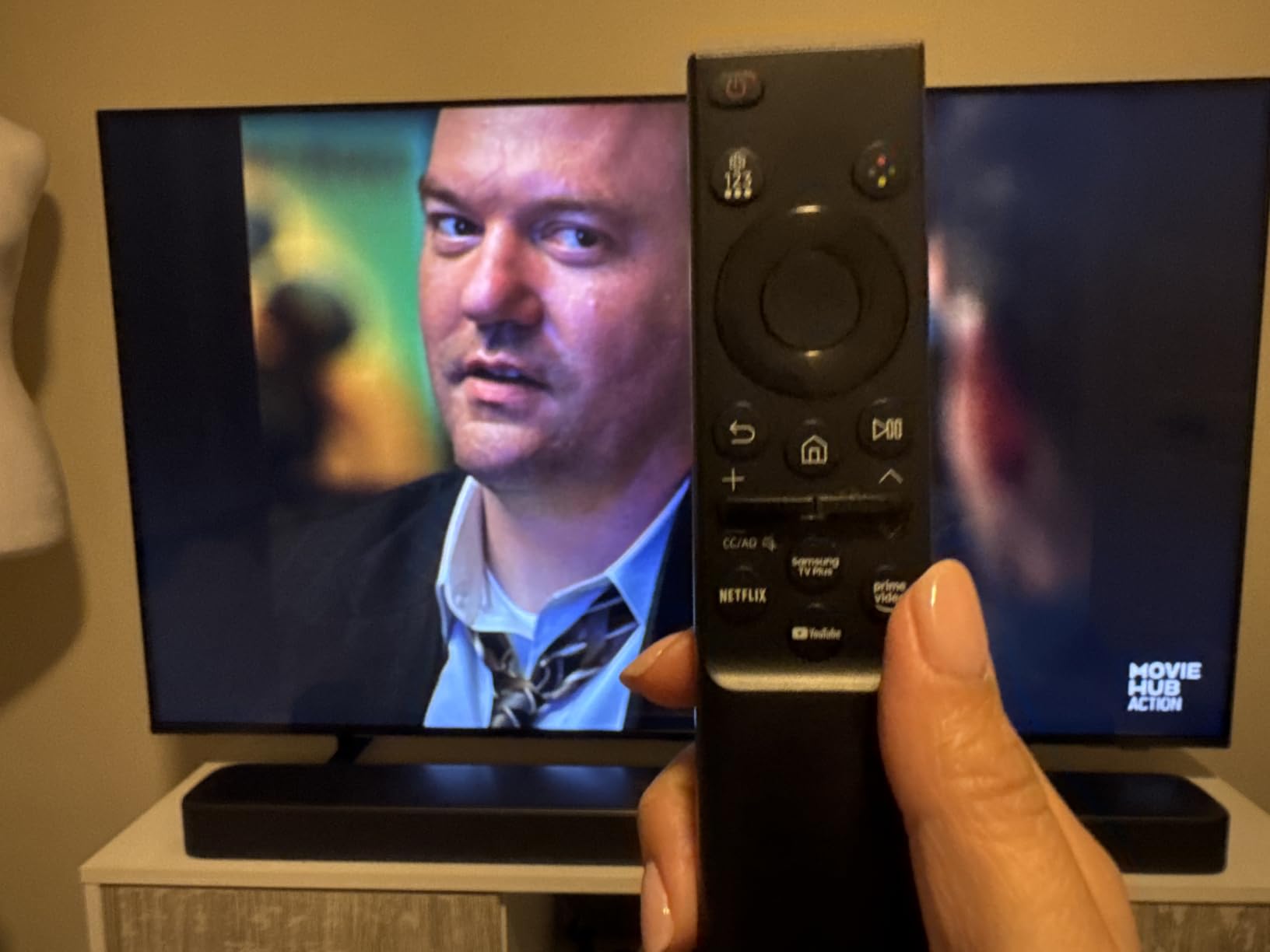
Tizen is responsive and feature-rich, with quick access to Netflix, Disney Plus, and Samsung TV Plus. The remote is small and minimalist, which some users will appreciate and others will find limiting. Built-in speakers are basic – fine for everyday TV but you will want a soundbar for movies. Only 3 HDMI ports is a slight limitation if you have multiple consoles and a soundbar.
Who Should Buy and Who Should Skip
Buy the M80H if you want a lightweight Samsung Mini LED at a mid-tier price, or if you are renting and need a TV that one person can mount without help. Skip it if you need flagship-tier brightness for direct sunlight, or if you need more than 3 HDMI ports for a multi-console gaming setup.
8. Samsung 43-Inch M70H Mini LED – Best Compact Mini LED
Samsung 43-Inch Class M70H Series, Mini LED, 4K, Smart TV, 2026 Model
Mini LED HDR Supreme Dimming
Motion Xcelerator DLG 120Hz
Samsung TV Plus
Pros
- Compact 43-inch form factor ideal for smaller spaces
- Strong Mini LED HDR performance at a budget price
- Lightweight at 14.8 pounds for easy wall mounting
- Samsung TV Plus with 2700+ free streaming channels
- Gaming Hub integrates console
- cloud
- and app gaming
- Tizen operating system is responsive and feature-rich
Cons
- Only 60Hz native refresh rate
- Glossy screen finish may show reflections
- Only 3 HDMI ports limits multi-device setups
- Smaller screen limits immersive viewing
The Samsung 43-Inch M70H is the Mini LED we recommend for bedrooms, kitchens, offices, and any smaller space where a 65-inch screen would dominate the room. Despite its compact size, it still has Mini LED HDR with Supreme Mini LED Dimming, Pure Color Spectrum, and HDR10+ support. For a TV you might use to catch the morning news while making coffee or to play Switch games in a guest room, it punches well above its size class.
At 14.8 pounds, the M70H is the lightest Mini LED in our lineup. It is genuinely easy to wall mount solo, which is a real plus for renters and apartment dwellers. The Tizen operating system is responsive, and Samsung TV Plus gives you access to over 2,700 free streaming channels without any subscription.
The Gaming Hub integration is a pleasant surprise at this size. Even though the panel is 60Hz native, Samsung’s Gaming Hub consolidates console gaming, cloud gaming services, and gaming apps into one interface. For casual gaming in a smaller room, this is a genuinely useful feature.
Picture Quality at 43 Inches
The Mini LED HDR with Supreme Mini LED Dimming does a better job than you would expect at this size. In a moderately bright bedroom or kitchen, the picture stays punchy, and dark scenes retain some detail. The glossy screen finish is the main caveat – it is more reflective than the matte QN90F, so positioning matters. Avoid placing it directly opposite a window.
Audio and Smart Features
Built-in speakers are basic, as expected at this size and price. For everyday TV they are fine. Tizen OS is fast and responsive, with Samsung TV Plus offering a surprising amount of free content. Color Booster technology adds extra vibrancy to the picture, which helps in bright-room viewing where colors can otherwise look washed out.
Who Should Buy and Who Should Skip
The M70H is the best Mini LED choice for buyers who need a compact, lightweight TV for a bedroom, kitchen, office, or guest room. Skip it if you need a large immersive living-room screen, or if you have a wall of windows that would create reflections on the glossy panel.
How to Choose the Best Mini LED TV for a Bright Room
Bright-room TV shopping comes down to a few specs that matter far more than they would in a darkened home theater. Here is what we look for, and what to skip.
Peak Brightness and Why It Matters
Peak brightness, measured in nits, is the single most important spec for a bright-room TV. Anything below 1000 nits will struggle to overpower direct window glare, while 2000+ nits gives you a comfortable margin even with the curtains open. The Hisense U8QG claims up to 5000 nits and the Samsung QN90F delivers strong Neo Quantum HDR+ brightness, while the Roku Plus Series and TCL QM6K sit at the more modest end of the Mini LED spectrum.
Anti-Glare vs Glare-Free Coatings
There is a meaningful difference between glossy, anti-reflective, and Glare-Free matte coatings. Glossy panels reflect windows like mirrors. Anti-reflective coatings reduce reflections but do not eliminate them. Glare-Free matte panels, like the Samsung QN90F and Hisense U6SF Pro, scatter reflections across the screen so they do not form mirror-like images. For a south- or west-facing room with large windows, a Glare-Free display is worth prioritizing.
Local Dimming Zones and Bloom Control
Local dimming zones are how Mini LED TVs control contrast. More zones means finer control, less blooming around bright objects, and better shadow detail. The Hisense U8QG leads our list with up to 5600 zones, while the Roku Plus Series and Samsung M70H sit at the more modest end. If you watch a lot of HDR movies with mixed bright and dark scenes, zone count matters more than peak brightness.
HDR Format Support
For a bright-room TV, HDR support matters because HDR content is mastered with the assumption that the TV can hit high peak brightness. Look for Dolby Vision and HDR10+ support if you stream from Netflix, Disney Plus, and Apple TV. The Sony BRAVIA 5 and Hisense U8QG support both formats, while the Samsung models lean on HDR10+ and the TCL QM6K covers Dolby Vision, HDR10+, HDR10, and HLG.
Gaming: Refresh Rate, VRR, and ALLM
For console gamers, the key specs are native refresh rate (120Hz or higher), VRR support, ALLM, and HDMI 2.1 ports. The Hisense U8QG and Samsung QN90F both support VRR up to 165Hz, while the TCL QM6K hits 144Hz with Game Accelerator 240. The Roku Plus Series and Samsung M70H top out at 60Hz, which is fine for casual gaming but limits competitive shooters.
Smart OS: Google TV vs Tizen vs Roku vs Fire TV
Each smart TV operating system has trade-offs. Google TV (Sony, Hisense U8QG, TCL) has the best app selection and casting support. Tizen (Samsung) is fast but ad-heavy. Roku OS (Roku Plus Series) is the cleanest and easiest to use. Fire TV (Hisense U6 Pro) integrates well with Alexa but feels cluttered to users outside the Amazon ecosystem.
Viewing Angle and Open-Plan Rooms
For open-plan living rooms with wide seating arrangements, viewing angle matters. The TCL QM6K has a 178-degree viewing angle, while the Sony BRAVIA 5 has a narrower optimal angle that loses contrast when viewed from the side. For a sectional sofa or a room where viewers sit at angles, look for sets with wide-angle performance.
Mini LED vs OLED vs QLED for Bright Rooms
In a bright room, Mini LED beats OLED on peak brightness and reflection handling. OLED still has the best per-pixel contrast in a darkened room, but OLED screens reflect more ambient light and can look dimmer in direct sunlight. QLED (quantum-dot LED) without Mini LED backlighting cannot match Mini LED’s brightness. Our related guide on the best OLED TVs for bright rooms covers the OLED alternatives in more detail.
Size Recommendations and Viewing Distance
For bright rooms, size up. A 55-inch screen at 8 feet of viewing distance is fine for most living rooms, but if your seating is farther than 10 feet, consider a 65-inch or 75-inch set. The Hisense U8QG comes in a 65-inch size that works well for most living rooms, while the Samsung QN90F tops out at 50 inches in our tested lineup. For smaller rooms, the Samsung M70H at 43 inches is a smart pick.
Real-Buyer Caveats: Eye Strain and Panning Stutter
It is worth flagging two real-buyer concerns we saw on Reddit and AV forums. Some Mini LED owners have reported headaches and eye strain, especially on larger sets with aggressive local dimming in bright rooms. If you are sensitive to flicker, look for sets with adjustable dimming aggression. A few TCL C8K owners also reported panning stutter in sports broadcasts, though the TCL QM6K with Halo Control Technology has improved on this in 2026.
Frequently Asked Questions
Are mini LEDs good for bright rooms?
Yes. Mini LED TVs are the best mainstream TV type for bright rooms because they combine thousands of tiny LEDs behind the LCD panel with local dimming zones and high peak brightness. That allows them to fight glare and reflections in sunlit rooms in a way that OLED and standard LED TVs cannot. Anti-reflective or Glare-Free matte coatings further reduce reflections, making Mini LED TVs the safest choice for south- or west-facing living rooms.
What type of LED TV is best for bright rooms?
For bright rooms, look for a Mini LED TV with at least 1500 nits of peak brightness, an anti-reflective or Glare-Free matte screen coating, and a high local dimming zone count (1000 or more for flagship sets). Quantum-dot color (QLED) is a plus because it keeps colors saturated in ambient light. Avoid standard LED TVs in bright rooms because they lack the peak brightness and zone control to handle direct sunlight.
What is the best TV for a bright room with good sunlight?
The Hisense 65U8QG is our top pick for a bright room with direct sunlight. It claims up to 5000 nits of peak brightness, has up to 5600 local dimming zones, and uses an Anti-Reflection Pro coating to handle glare. For buyers who want a more compact premium alternative, the Samsung 50-Inch Neo QLED QN90F with its Glare Free matte display is an excellent second choice.
Which is better for bright rooms, QLED or Mini LED?
Both QLED and Mini LED are good choices for bright rooms, but they are not mutually exclusive. QLED refers to the quantum-dot color layer, while Mini LED refers to the backlight technology. Most modern Mini LED TVs also use quantum-dot color, giving you both. If you have to pick one, a Mini LED with quantum-dot color (often called Neo QLED by Samsung or QD-Mini LED by TCL) is the best bright-room choice.
Is Mini LED better than OLED for bright rooms?
Yes, Mini LED is generally better than OLED for bright rooms. OLED TVs offer superior per-pixel contrast in a darkened room, but they reflect more ambient light and have lower peak brightness than Mini LED. In a sunlit living room, an OLED can look washed out, while a Mini LED like the Hisense U8QG or Samsung QN90F maintains a punchy, legible picture. For dedicated home theaters, OLED remains the better choice.
Final Verdict: Which Mini LED TV Should You Buy for Your Bright Room?
The Hisense 65U8QG remains our Editor’s Choice for the best Mini LED TV for bright rooms in 2026. Its 5000-nit peak brightness, 5600 local dimming zones, and Anti-Reflection Pro coating handle the toughest sunlit living rooms without breaking a sweat, and it doubles as a strong gaming TV with native 165Hz and VRR 288. If you want a more compact premium pick with the best anti-glare matte display we tested, the Samsung 50-Inch Neo QLED QN90F is the clear runner-up. For buyers on a tighter budget, the Roku 55-Inch Plus Series delivers genuine Mini LED picture quality at an entry-level price. If you need a smaller screen for a bedroom or office, the Samsung 43-Inch M70H is the best compact Mini LED we tested.
For more TV buying guides, see our picks for the best TVs for bright rooms, the best 4K TVs for bright rooms, and the best outdoor TVs for bright sunlight. Whichever Mini LED you choose, mount it on the wall opposite your largest light source if possible, and you will get the best bright-room picture every set in this guide is capable of.