
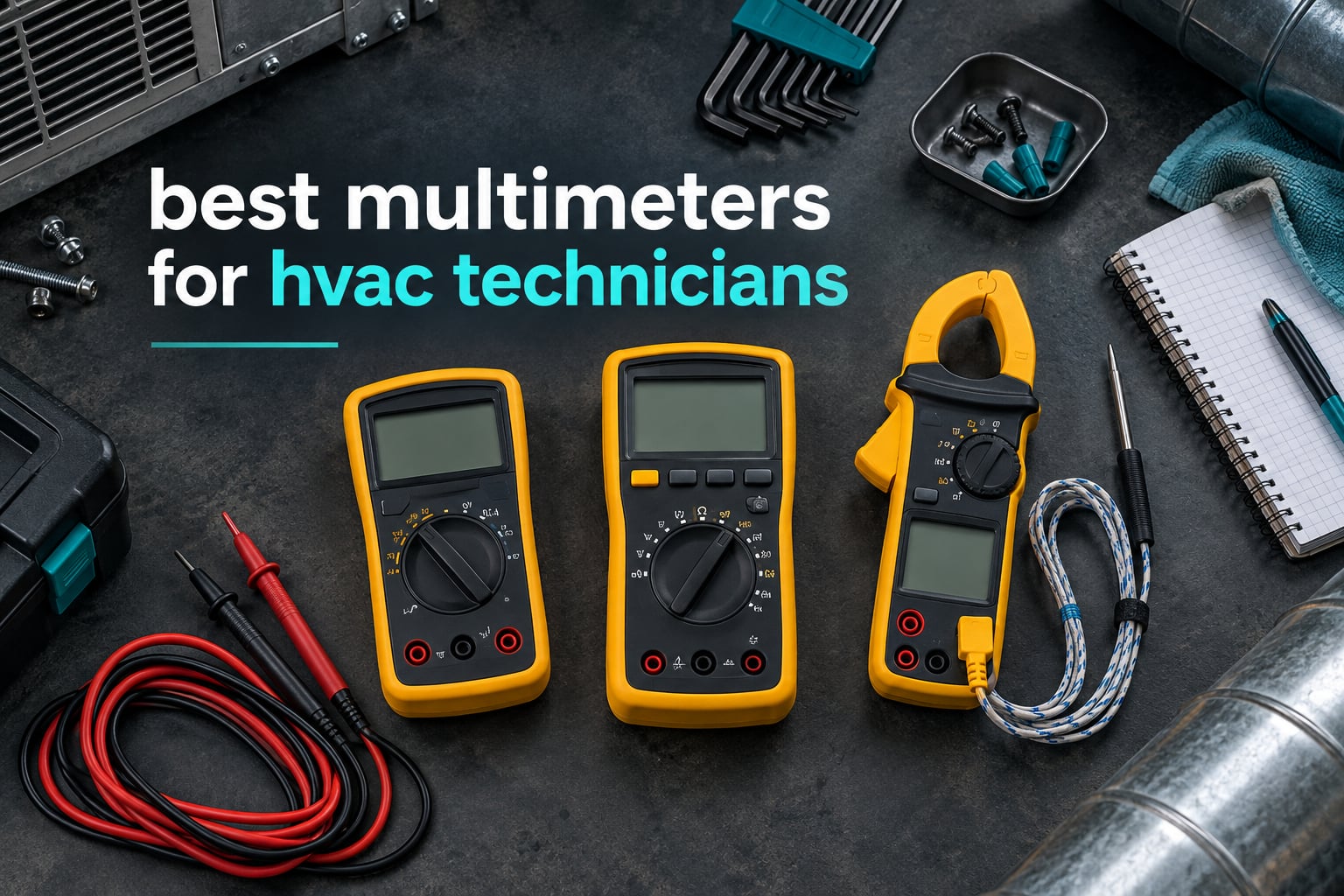
Most HVAC techs settle on a meter that does four jobs well: reads temperature, measures microamps on a flame sensor, tests capacitor capacitance and clamps current. That is the short answer to what multimeter do HVAC techs use, and it is why the best multimeters for HVAC technicians in 2026 all look similar on the outside. The real differences show up on a rooftop unit in August or in a dark attic in January.
I spent months running these ten meters through residential and commercial service calls before writing this, mostly swapping them into the same tool bag on the same jobs. The questions that decided the ranking were boring and practical: does the thermocouple settle fast enough to split a superheat reading, does the display stay readable in direct sun, do the clamp jaws fit a bundled #2 conductor, and does the meter survive a drop onto a concrete pad.
HVAC systems fail electrically far more often than they fail mechanically, which is the whole argument for owning a proper meter instead of guessing at parts. A microamp reading tells you whether a gas furnace flame sensor is rectifying or just sitting there coated in carbon. A capacitance reading tells you a 45/5 MFD run capacitor has dropped to 31 MFD. Neither answer costs a part, and both of them protect the margin on the call.
If you are also upgrading the rest of the kit, our guide to the best thermal cameras for HVAC work covers the next tool most techs add to the bag.
Our Top 3 HVAC Meters After Months of Service Work
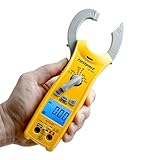
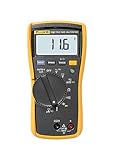
These three came out of the testing with the least hesitation. The Fieldpiece SC260 is the meter I kept reaching for, the Fluke 116 is the one with the most complete HVAC function set, and the Fluke 116/323 kit is the single purchase that fills both roles.
Fieldpiece SC260
- Compact True RMS clamp
- Temperature and capacitance
- Swivel magnet
- Backlit display
Fluke 116
- Microamps for flame sensors
- Temperature to 400 C
- Low impedance mode
- Three year warranty

Fluke 116/323 Kit
- 116 multimeter plus 323 clamp
- 400 A AC current
- 600 V AC and DC
- Case and probe included
Comparing All 10 Meters Side by Side in 2026
Every meter below covers the core HVAC electrical functions. The columns that separate them are temperature, microamps, True RMS sensing and how the clamp is built.
| Product | Specs | Action |
|---|---|---|
| Fieldpiece SC260 |
|
Check Latest Price |
| Fluke 116 |
|
Check Latest Price |
| Fluke 116/323 Kit |
|
Check Latest Price |
 Fieldpiece HS33 Fieldpiece HS33 |
|
Check Latest Price |
 Fluke 902 FC Fluke 902 FC |
|
Check Latest Price |
 Klein Tools CL445 Klein Tools CL445 |
|
Check Latest Price |
 Klein Tools CL320KIT Klein Tools CL320KIT |
|
Check Latest Price |
 UEi DL369 UEi DL369 |
|
Check Latest Price |
 Fieldpiece SC440 Fieldpiece SC440 |
|
Check Latest Price |
 AstroAI CM6K0R AstroAI CM6K0R |
|
Check Latest Price |
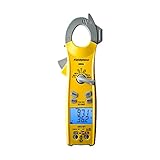
1. Fieldpiece SC260 Compact Clamp – The Best All-Round HVACR Meter for Tight Panels
Fieldpiece Compact HVACR Clamp Multimeter SC260 – True RMS Clamp Meter with Temperature, Capacitance & Backlight
True RMS AC sensing
Temperature and capacitance
Auto Select mode
Swivel magnet
Pros
- Compact HVACR focused body
- True RMS voltage and current readings
- Temperature capacitance and NCV in one meter
- Swivel magnet for hands-free work
- Backlit display
Cons
- Small grip when wearing gloves
- 122 F upper ambient rating
The SC260 measures 3.5 by 3 by 9.1 inches, and that footprint is the whole reason it ranked first for me. It goes into a residential disconnect box or a tight AHU cabinet where a full-size clamp housing simply will not clear the panel door.
It is built specifically for electrical HVACR service in hot and cold environments, rated to a maximum operating voltage of 600 volts with a 12 volt minimum, and the swivel magnet lets it hang off a ladder rail or a duct strap while both hands stay on the leads. Auto Select mode detects on its own whether you have moved the probes to a capacitance or a resistance measurement, which removes one of the small fumbles that eats time on a service call.
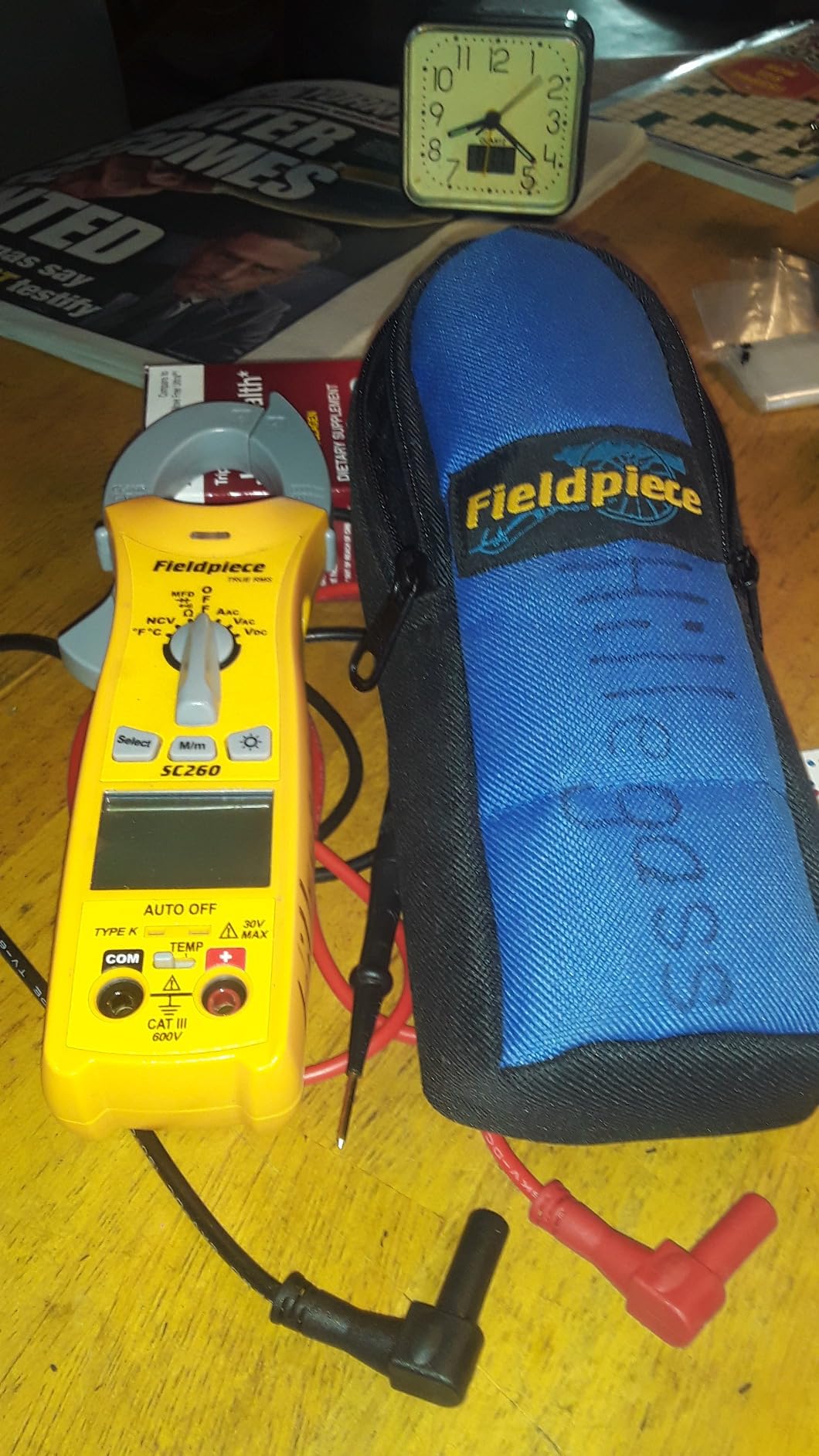
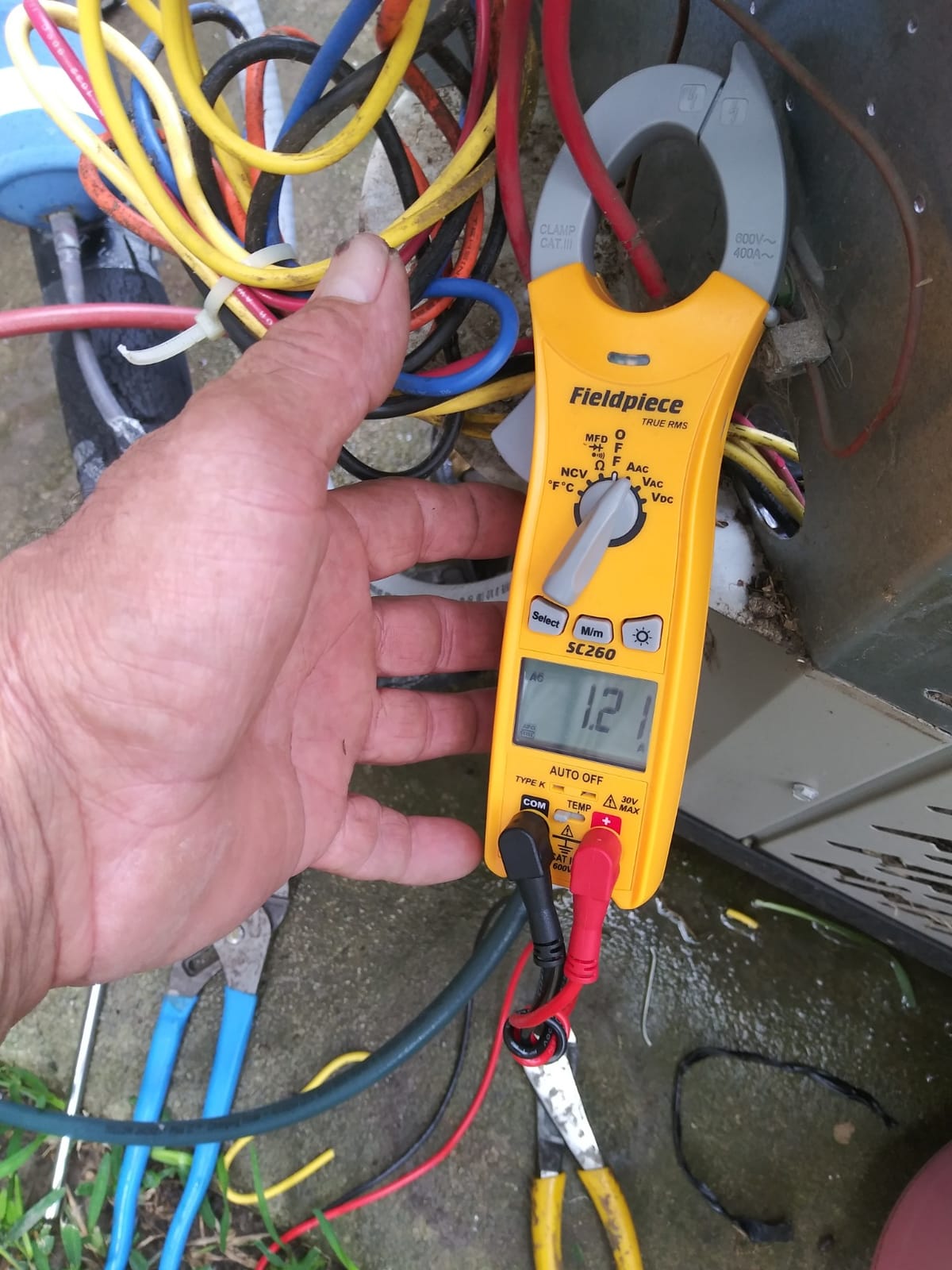
True RMS sensing on both VAC and AAC was the deciding factor in my testing. On a variable frequency blower motor the difference between an average responding meter and a true RMS reading is not academic, and the SC260 holds a stable number while the motor ramps.
Temperature, Capacitance and NCV in One Hand
Temperature, capacitance, non-contact voltage, amperage, continuity and diode test all live on this one meter. When a dual capacitor fails, I switch to capacitance, land the probes across the C-RUN terminals and compare the reading against the label.
The upper temperature rating is listed at 122 F, which is the one specification I would watch. It is fine for supply and return air readings and for condenser line temperatures, but it is not a flue gas instrument, so for combustion analysis you still want a dedicated probe.
Where the Compact Form Factor Costs You
The compact size leaves less room for a large grip, and in winter with gloves on the housing is not as comfortable to hold for a long probing session. Reviewers also note that buyers wanting more current capacity tend to move up the Fieldpiece line rather than stretch this one.
Among 1700 ratings, 87 percent sit at five stars, which is one of the strongest consistency profiles in this roundup. If you want one meter that disappears in a panel and covers every electrical parameter an HVAC tech uses daily, this is the one.
2. Fluke 116 HVAC Multimeter – The Microamp and Temperature Standard
Fluke 116 HVAC Multimeter
Microamps for flame sensors
Temperature to 400 C
Low input impedance
Three year warranty
Pros
- Built-in thermometer from -40 C to 400 C
- Microamps range for flame sensors
- Low input impedance cuts ghost voltage
- Large white LED backlight
Cons
- Stiff supplied test leads
- No clamp current or volt alert function
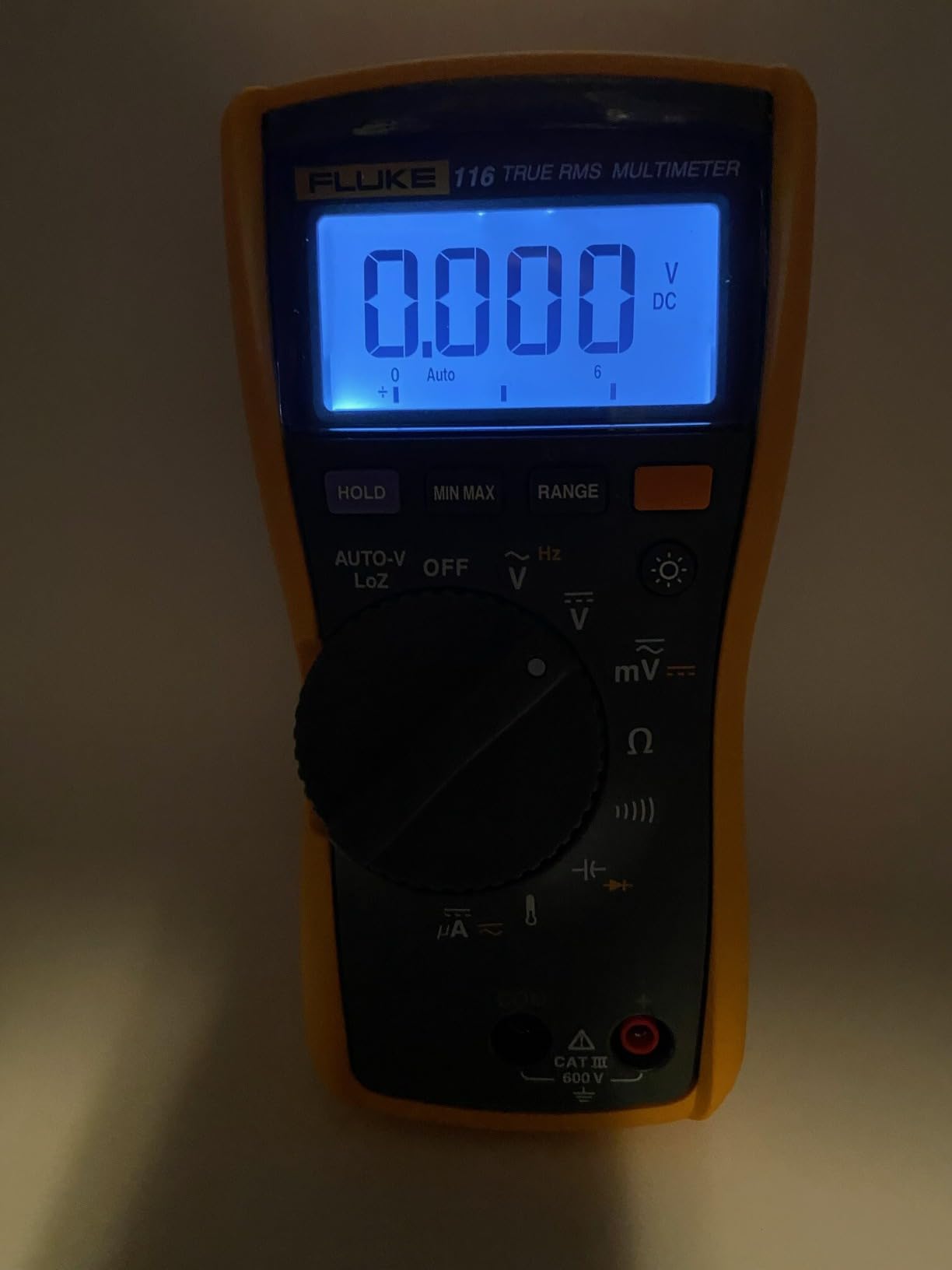
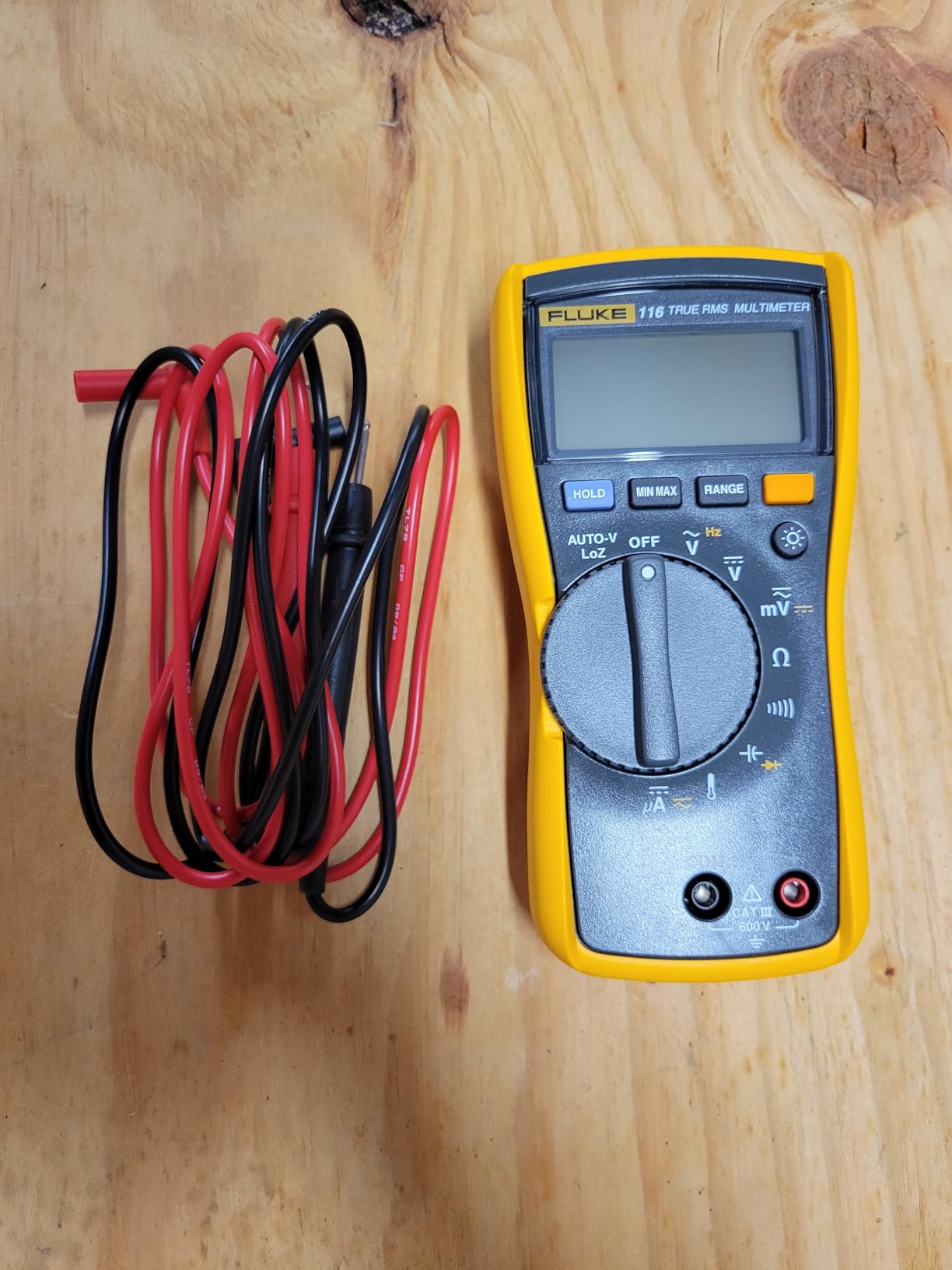
The Fluke 116 is the meter most often described on service forums as the gold standard for HVAC work, and after using it as my board-level diagnostic tool I understand why. It ships with the meter, 4mm test leads, an 80BK temperature probe, a holster and a 9V battery, so there is nothing to add before the first call.
The built-in thermometer covers -40 C to 400 C, and the fast-settling thermocouple is what makes it usable for real HVAC work rather than just a spec sheet claim. When you are chasing a mixed air problem, settling speed matters more than the last half degree of accuracy.
Microamps and the Flame Sensor Decision
The microamps range is the feature that no general purpose meter in this price tier bothers with, and it is exactly what gas furnace work requires. Flame sensors rectify an AC signal to DC, so a healthy sensor shows a small DC reading that rises when you hold the meter near the flame with the leads shorted together.
That measurement turns a coin-flip parts swap into a decision. A sensor reading a steady low value under flame is carbon coated, and cleaning it or replacing it is the fix rather than a new control board.
Low Input Impedance and Ghost Voltage
Low input impedance loads the circuit enough to collapse stray capacitive voltage, which is what technicians mean by ghost voltage. Auto-scaling plus automatic low impedance selection means the meter handles that on its own instead of requiring you to remember which function to select.
Auto-scaling is convenient but not always what you want. I switch it to manual when working on a control board so I can watch a value change as I turn a potentiometer rather than having the range jump underneath me.
What Owners Complain About After a Year
Across 645 ratings, 88 percent are five stars, with the most repeated gripe being the stiff supplied test leads rather than flexible silicone. Budget for a replacement lead set if you work with small hands or in a tight panel, since lead stiffness gets worse with age.
There is also no clamp-style current measurement and no volt-alert non-contact function on this body. That is the trade you make for a 1.4 pound meter with a three-year warranty, a large white LED backlight and a detented rotary dial that still works with gloves on.
3. Fluke 116/323 Combo Kit – Two Meters That Cover Every Residential Call
Fluke 116/323 Multimeter and Clamp Meter HVAC Combo Kit, AC/DC Voltage, AC Current 400 A, Microamps to Test Flame Sensors, Includes Temp Probe, Test Leads, TPAK and Carrying Case
116 multimeter plus 323 clamp
400 A AC current
600 V AC and DC
CAT III 600 V
Pros
- Complete service package in one case
- Temperature and microamps on the 116 plus a 400 A True RMS clamp
- Probe leads TPAK and case included
Cons
- Two meters to carry and maintain
- Two year warranty on the kit
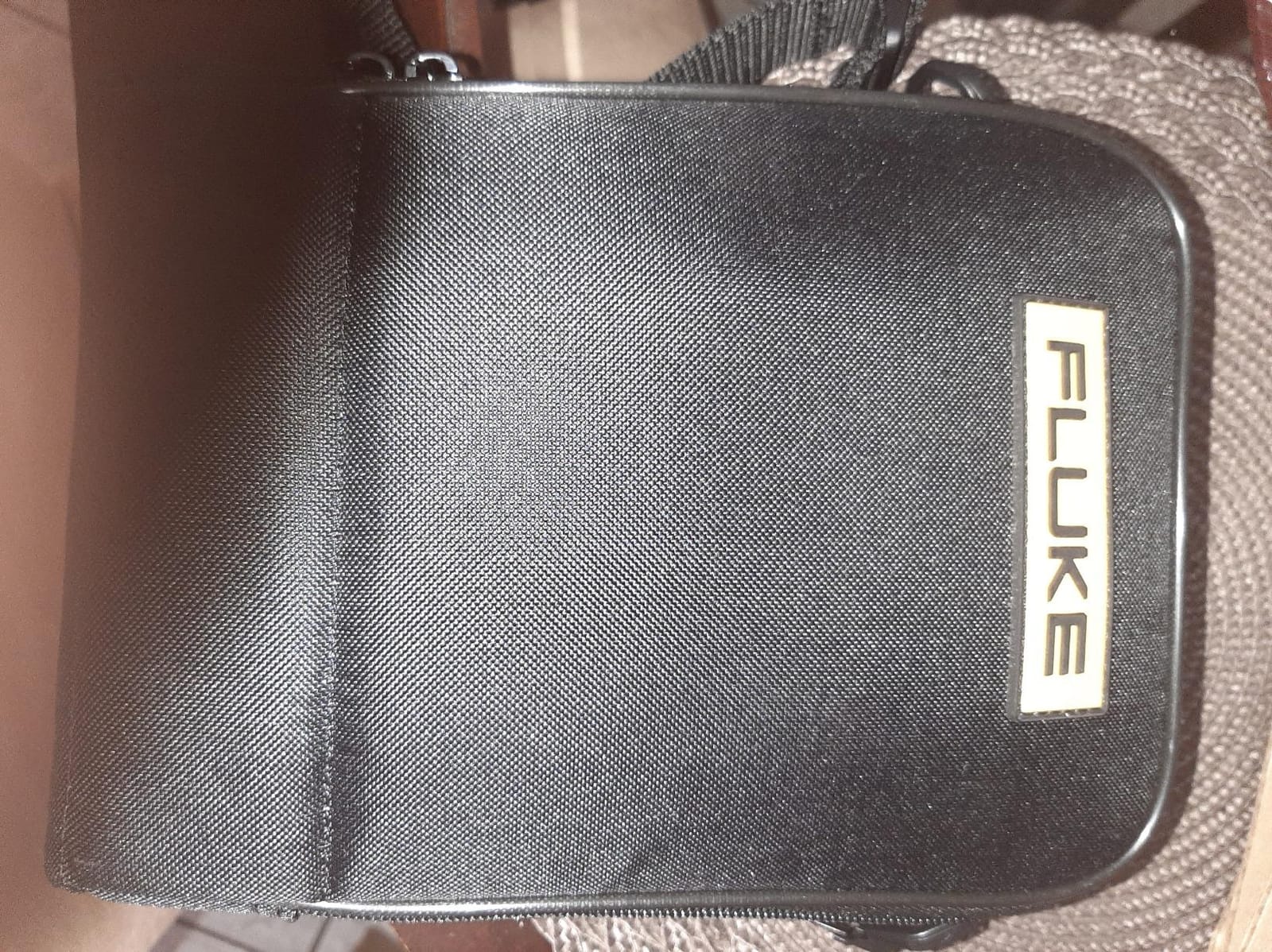
This kit bundles the Fluke 116 with the Fluke 323 True RMS clamp meter, and it exists because most residential service days need both. One meter probes the board, the other clamps the compressor leg to confirm the contactor is delivering what the sequencer commands.
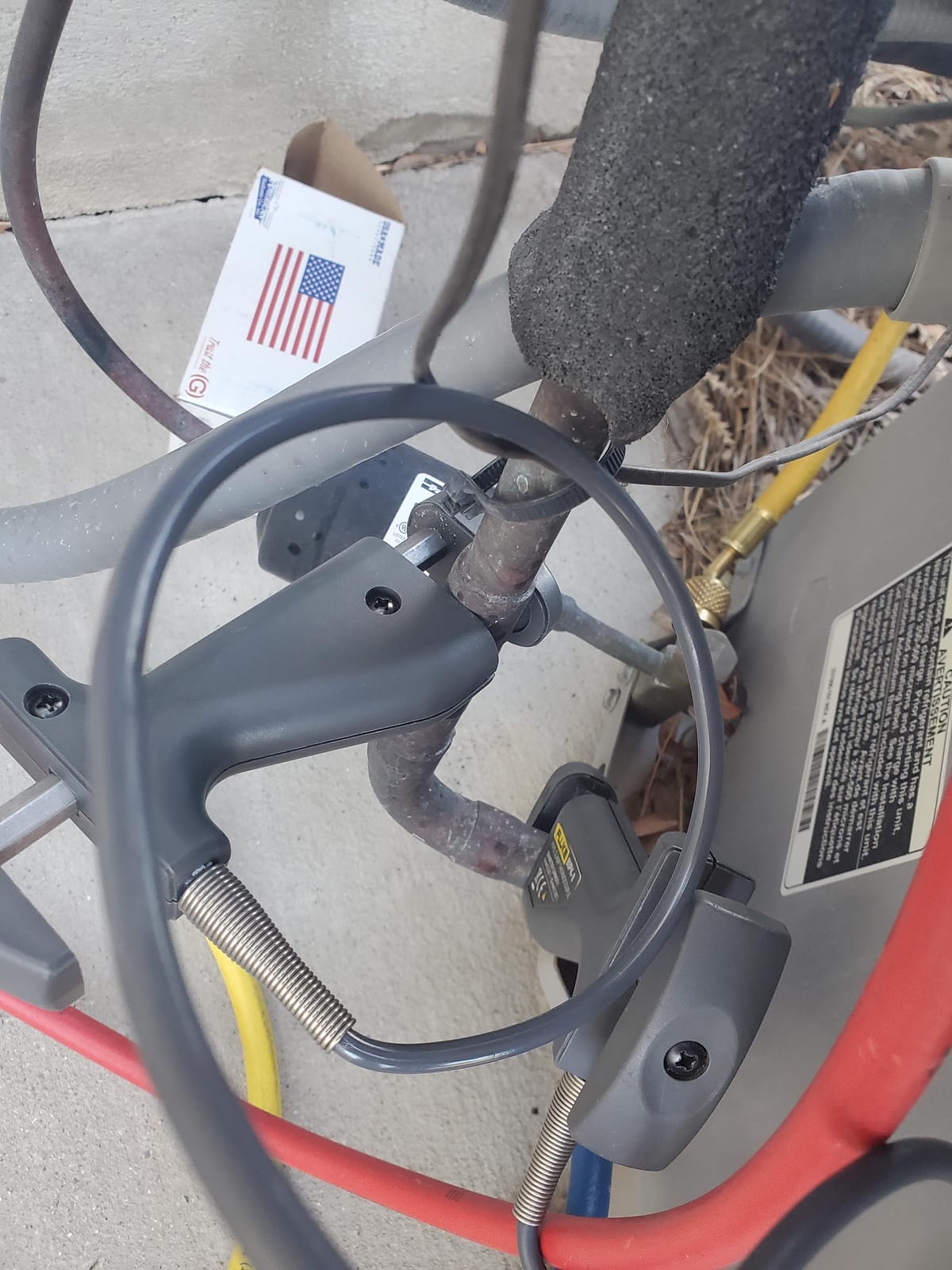
The 323 measures 400 A of AC current and 600 V of AC and DC voltage with True RMS accuracy on non-linear signals, and the 116 handles temperature, capacitance and microamps. The package also includes a temperature probe, test leads, a TPAK tool pouch and a carrying case, so the whole thing lives in one place in the truck.
How the Two Meters Divide the Work
The 323 is for current work: compressor startup draw, blower motor load, condenser fan amperage and any quick check where opening a panel is not worth the time. The 116 is for everything that needs a probe, including the capacitor, the limit switch, the thermostat calls and the flame sensor.
Because both meters are CAT III 600 V rated and battery powered, they behave the same way in an attic or a mechanical room. No setup differences between the two tools is a small thing when you are tired and working fast.
What Buyers Say About the Package
Among 1308 ratings, 89 percent are five stars, and the recurring theme is that the kit removes the need to shop for accessories separately. Technicians treat it as a complete service package rather than two individual purchases, and the bundled case keeps the probe and leads from tangling in the bag.
Two practical complaints come up. You are carrying, charging and storing two devices rather than one integrated clamp, and the kit carries a two-year warranty compared with three years on the standalone 116. If you already own a clamp meter, buy the 116 alone.
Verdict on the Combo
For a technician building a first serious kit, or for a shop standardizing on one platform, this is the least complicated path to full coverage. It removes the decision entirely and the two meters are simply the two halves of an HVAC diagnostic day.
4. Fieldpiece HS33 Stick Meter – The Modular Upgrade Path for a Growing Toolkit
Fieldpiece HS33 Expandable Manual Ranging Stick Multimeter for HVAC/R – 400A Clamp – Non-Contact Voltage with Temperature to 1000°F – Capacitance and K-Type Thermocouple – HVAC Electrical Tester
K-type thermocouple to 1000 F
400 A AC clamp
Modular accessory heads
Manual ranging
Pros
- Voltage microamps capacitance and temperature in one stick
- Expands with Fieldpiece accessory heads
- K-type thermocouple reads to 1000 F
- Magnetic hanger and detachable silicone leads
Cons
- Manual ranging slows the workflow
- Stick form is awkward in deep panels
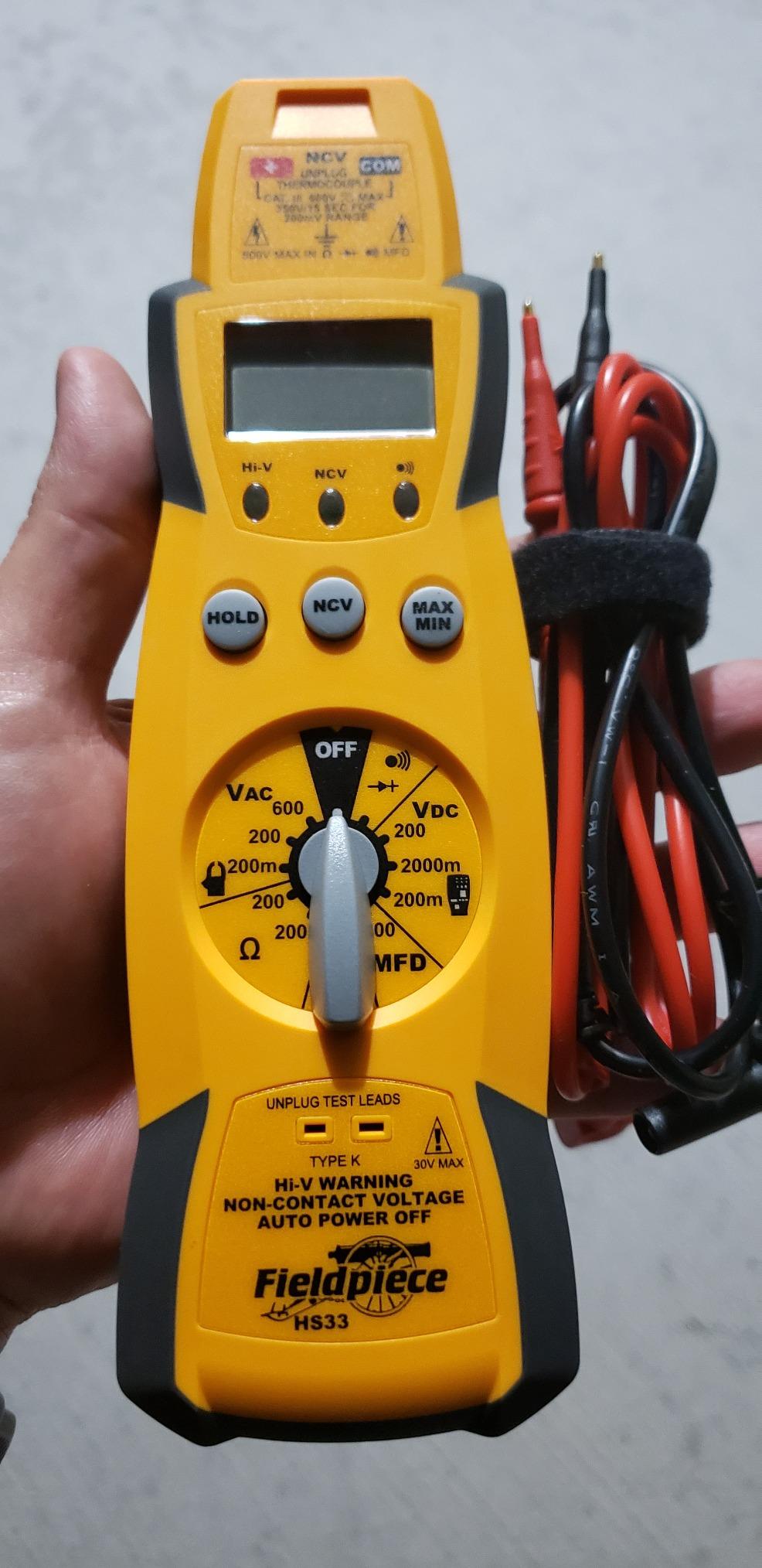
The HS33 is shaped like a pen with a clamp at one end, and that shape is the entire design argument. It is 11.75 inches long, weighs 16 ounces and gives you voltage, microamps, capacitance and temperature in one body that you can clip to a shirt pocket instead of balancing in a panel.
It is also the only meter here with a modular accessory head system, so instead of replacing the meter when you need a different function you add a head. For a growing toolkit that is a meaningfully different ownership model.
Temperature Range That Covers Combustion Work
The K-type thermocouple reads to 1000 F, which is the highest temperature ceiling among the sticks and clamps in this roundup apart from the Klein CL445 listing. That range is useful when you want a flue or heat exchanger reading alongside an electrical measurement rather than carrying a second instrument.
For duct and supply air work the stick format also works in your favour. A clamp housing is awkward to hold at arm length inside a return plenum, while a pen-shaped meter lets you keep your eyes on the readout.
Manual Ranging: The Honest Trade
This is manual ranging, and it is the feature that splits opinion. With 83 percent of 924 ratings at five stars, technicians clearly like the module system and the temperature range, but the recurring comment is that ranging requires a slower, more deliberate workflow than auto-ranging models.
There is also a physical limit: a stick is less convenient for deep panel work than a full clamp housing, because you have less body to grip when the leads are short. Plan on a slightly longer setup time per measurement and a faster one once the muscle memory settles.

Built for Rough Conditions
The durable ABS housing with rubberized bumpers, a magnetic hanger, detachable silicone leads and alligator clips, plus built-in lead storage, all point the same direction. This is a meter designed to be dropped, rained on and still read the same in five years.
If you are at the stage of your career where you are still deciding which functions you actually use, the accessory head system means you buy once and expand. That is a better argument for the HS33 than any single measurement range.
5. Fluke 902 FC – The Best Wireless Clamp for Remote Reading Logs
Fluke 902 FC HVAC True-RMS Clamp Meter
200 microamp DC for flame rods
Resistance to 60 kilo-ohms
Fluke Connect Bluetooth
True RMS sensing
Pros
- 200 microamp DC flame rod testing
- Extended resistance range to 60 kilo-ohms
- Flue gas temperature capture
- Fluke Connect Bluetooth to phone
Cons
- App workflow adds a step to readings
- Weakest single-star share in this group
The 902 FC is the only meter here that logs readings wirelessly, connecting through Bluetooth to Fluke Connect on a phone or tablet. If you write up a diagnosis at the truck instead of in the customer’s equipment room, that is a genuine time saver rather than a gimmick.
It also does something no other meter in this roundup combines with a clamp: 200 microamp DC current measurement for flame rod testing, plus an extended resistance range that reads thermistors up to 60 kilo-ohms. That resistance range is what lets you check a thermistor sensor directly instead of only watching the control board error code.
True RMS Accuracy on Variable Speed Equipment
True RMS voltage and current accuracy on non-linear signals is where a clamp like this earns its place on a modern system. An average responding meter under-reads on a variable frequency drive, and that under-reading is how a perfectly healthy inverter motor gets replaced.
The temperature probe also captures flue gas readings, so combustion checks and electrical checks come off the same instrument. At 419 g and 11.02 by 11 by 2.36 inches, it is a mid-size body that still fits a service bag comfortably.
Where the App Gets in the Way
The Fluke Connect workflow adds a phone and app step to what is otherwise a standalone meter. On a time-sensitive fault where the reading is going to change in the next thirty seconds, unplugging the phone out and reading the screen is faster.
Of 650 ratings, 88 percent are five stars with 11 percent at four or three stars, and a minority cite the learning curve and reliance on the companion app. Three percent rate it one star, the highest single-star share among the ten meters here. The kit includes the meter, TL75 test leads, an 80BK temperature probe and a carrying case.
Who Should Buy This One
Buy the 902 FC if you do a lot of documentation, work on variable frequency systems, or want flame sensor and thermistor diagnostics in a single clamp. If you mostly want a fast answer and a number on screen, the app is overhead you will not use.
6. Klein Tools CL445 – Inrush Measurement and a Simultaneous Voltage and Current Display
Klein Tools CL445 HVAC Clamp Meter, Auto-Ranging TRMS, NCVT, Measures Voltage, Current, Temperature, Micro Amps, InRush and More
Inrush current measurement
Dual voltage and current display
CAT IV 600 V CAT III 750 V
1-5/8 inch jaw
Pros
- Inrush measurement for motor startup
- Voltage and current shown at the same time
- Auto-ranging True RMS
- K-type thermocouple included
Cons
- Magnetic hanger sold separately
- Shortest review history in this group
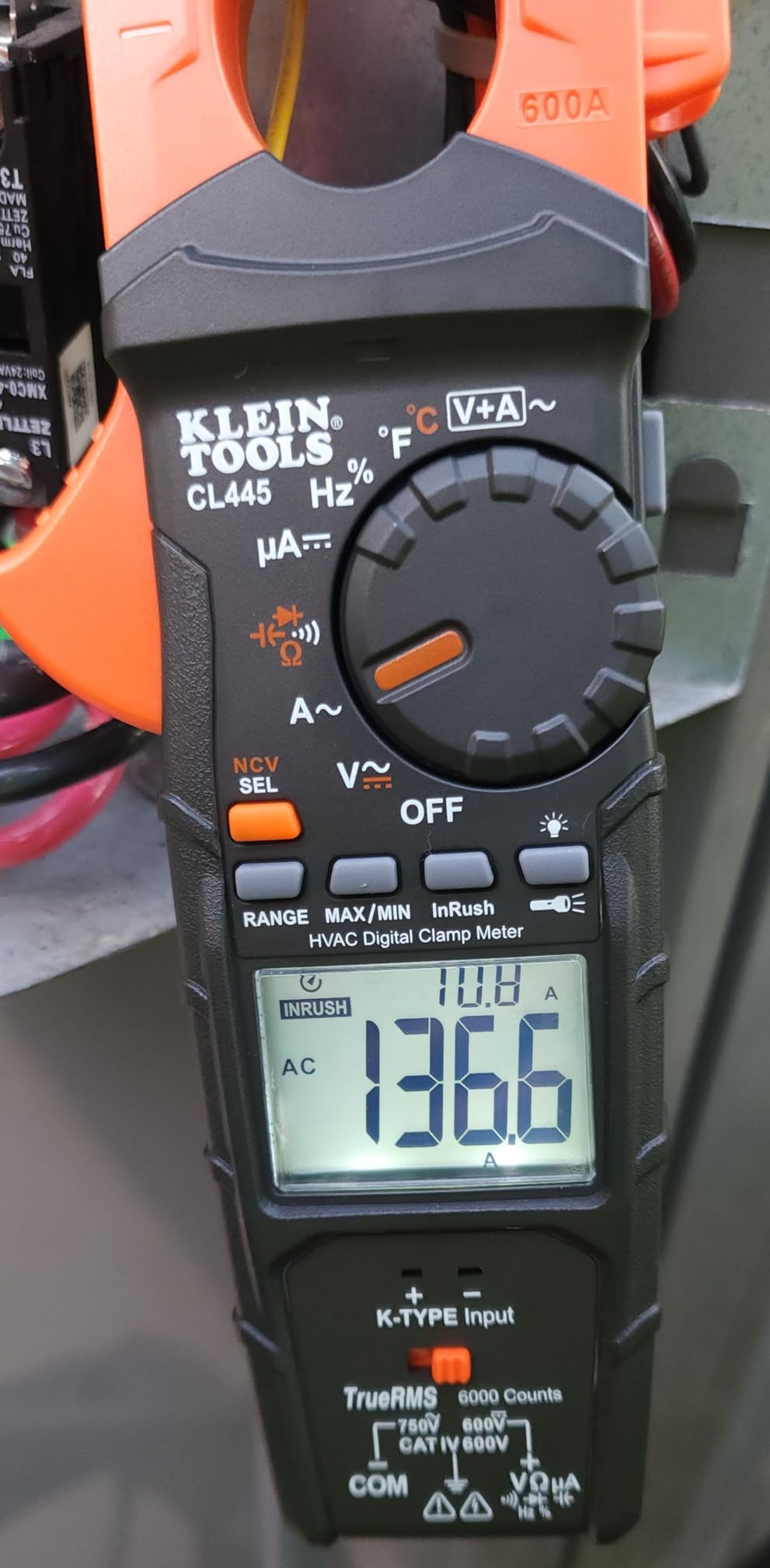
The CL445 answers a question most clamp meters ignore: how much current does this motor pull at the instant it starts. Inrush measurement clamps onto the conductor and captures the startup spike, which is how you find a locked compressor or a seized blower that passes every steady state check.
The second thing that stands out is the backlit LCD showing voltage and current at the same time. When you are chasing a supply voltage problem on a variable speed unit, seeing both values together is faster than switching modes.
What the Leads Handle and What the Clamp Handles
Through the clamp you get AC current, inrush and non-contact voltage testing. Through the test leads you get AC and DC voltage, resistance, continuity, frequency and duty cycle, DC microamps, diode test and capacitance, with temperature through the included K-type thermocouple.
That split is exactly the HVAC layout. Clamp the wire when you want current, probe the terminal when you want the signal, and the same instrument handles both without a second tool in the bag.
Jaw Size and Panel Fit
The thin 1-5/8 inch style jaw fits tight panel spaces, and the integrated non-contact voltage detection sits in the jaw so you can identify a live line before you touch a conductor. Safety ratings are CAT IV 600 V and CAT III 750 V, with a maximum operating voltage of 750 volts.
That CAT IV 600 V rating matters more than most buyers realise. It is the rating for measurements at the source of a low-voltage installation, which in an HVAC building means the panel feeding the unit rather than only the unit itself.
The Honest Limitation: Track Record
With 285 ratings this is the shortest review history in the group, and 83 percent of those are five stars. Reviewers single out the simultaneous voltage and current display and the built-in inrush function as the features that separate it from entry clamp meters, with the optional magnetic hanger the most common request.
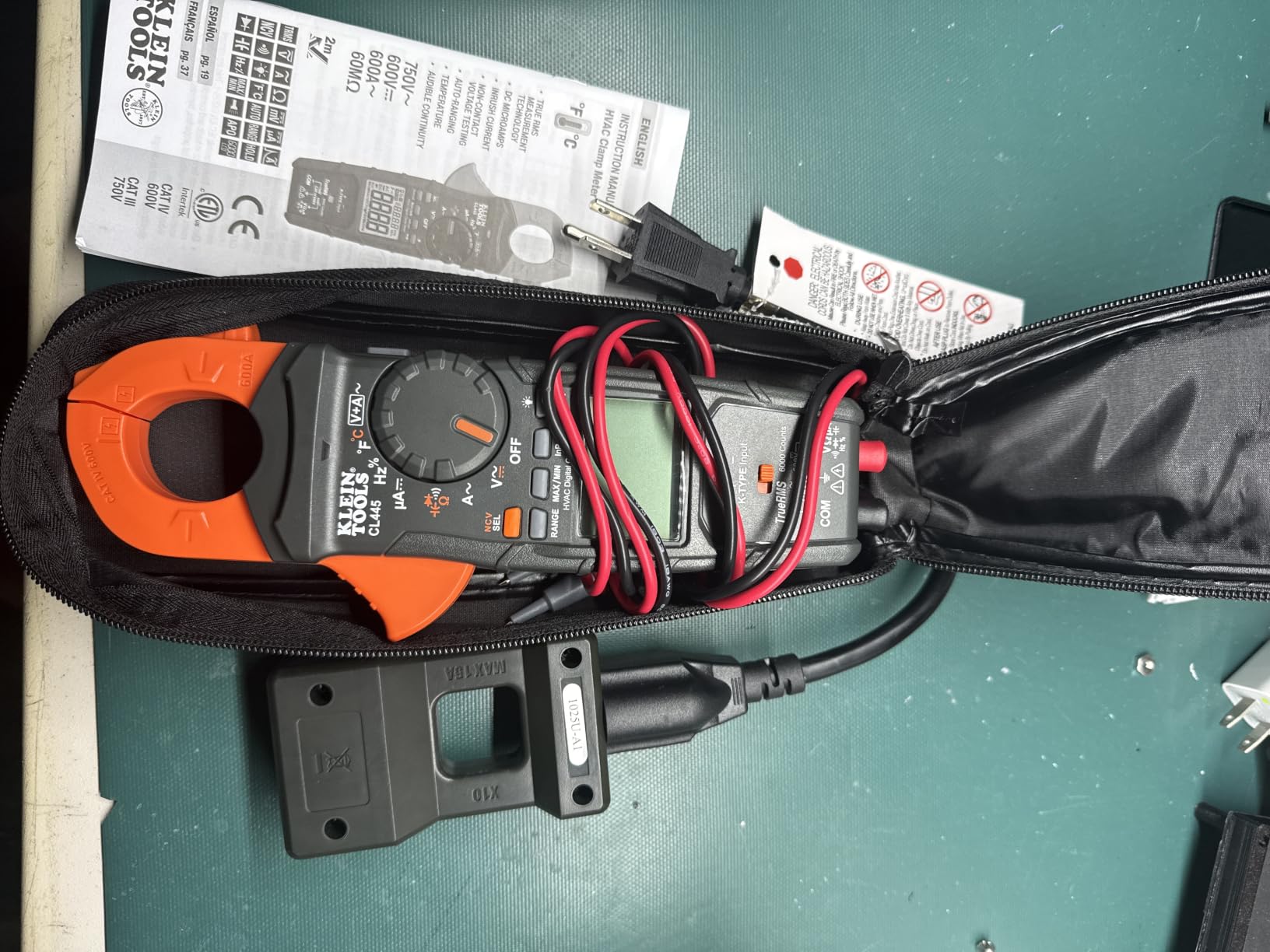
The package is well thought out for the money: carrying case, test leads with CAT III and CAT IV safety caps, alligator clips, K-type thermocouple, instructions and three AAA batteries. If you want inrush capability and dual display without stepping up to a full size clamp, this is the meter that does it.
7. Klein Tools CL320KIT – The Best Starter Kit for an Apprentice
Klein Tools CL320KIT HVAC Kit for HVAC Testing; Digital Clamp Meter, Non-Contact Voltage Tester, and Infrared/Probe Thermometer
CL320 clamp meter
IR07 dual thermometer
NCVT3P voltage tester
Zip case set
Pros
- Three tools in one zip case
- Thermometer covers -40 F to 572 F
- Dual range NCVT with flashlight
- Covers microamps and capacitance
Cons
- No inrush current measurement
- Auto-ranging can hesitate on small readings
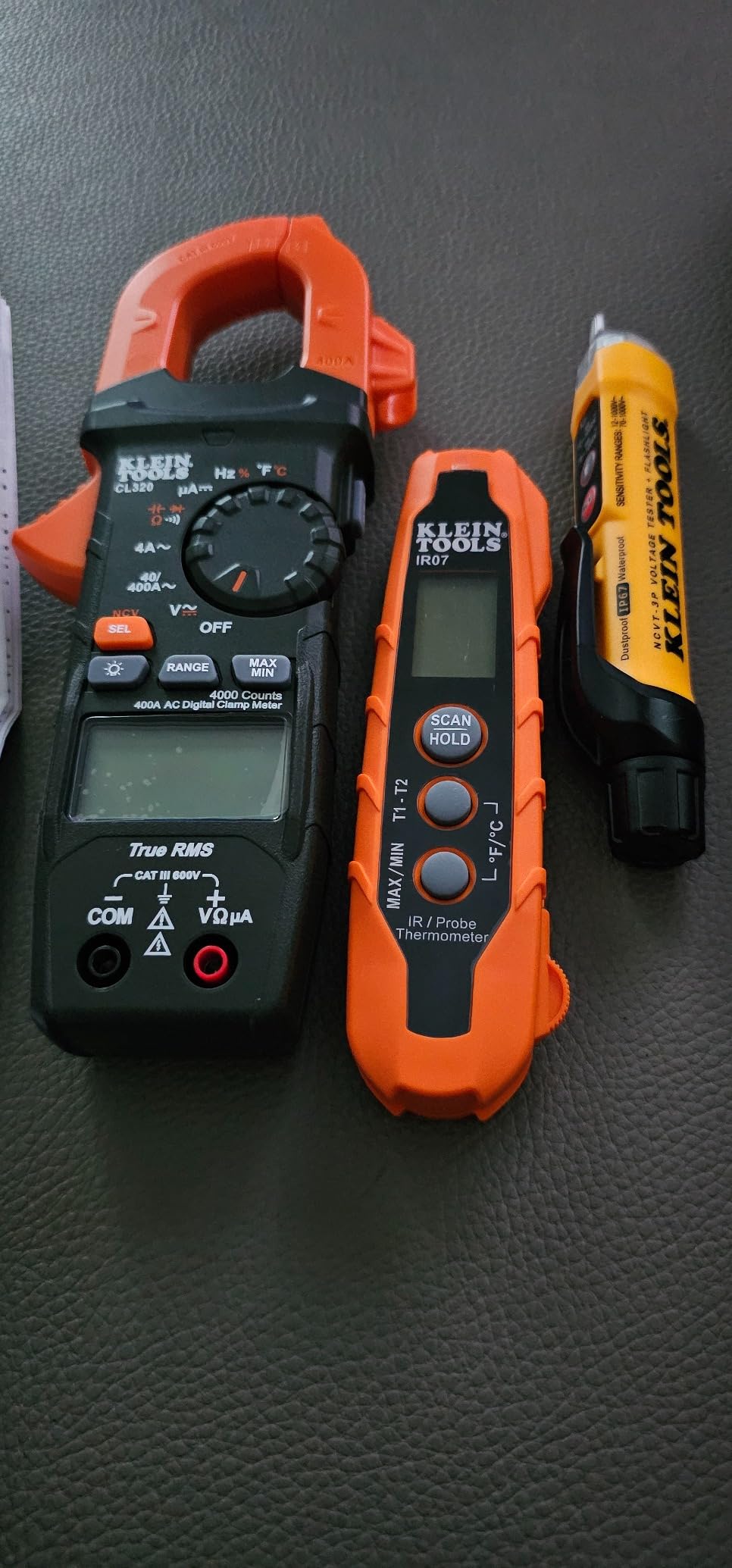
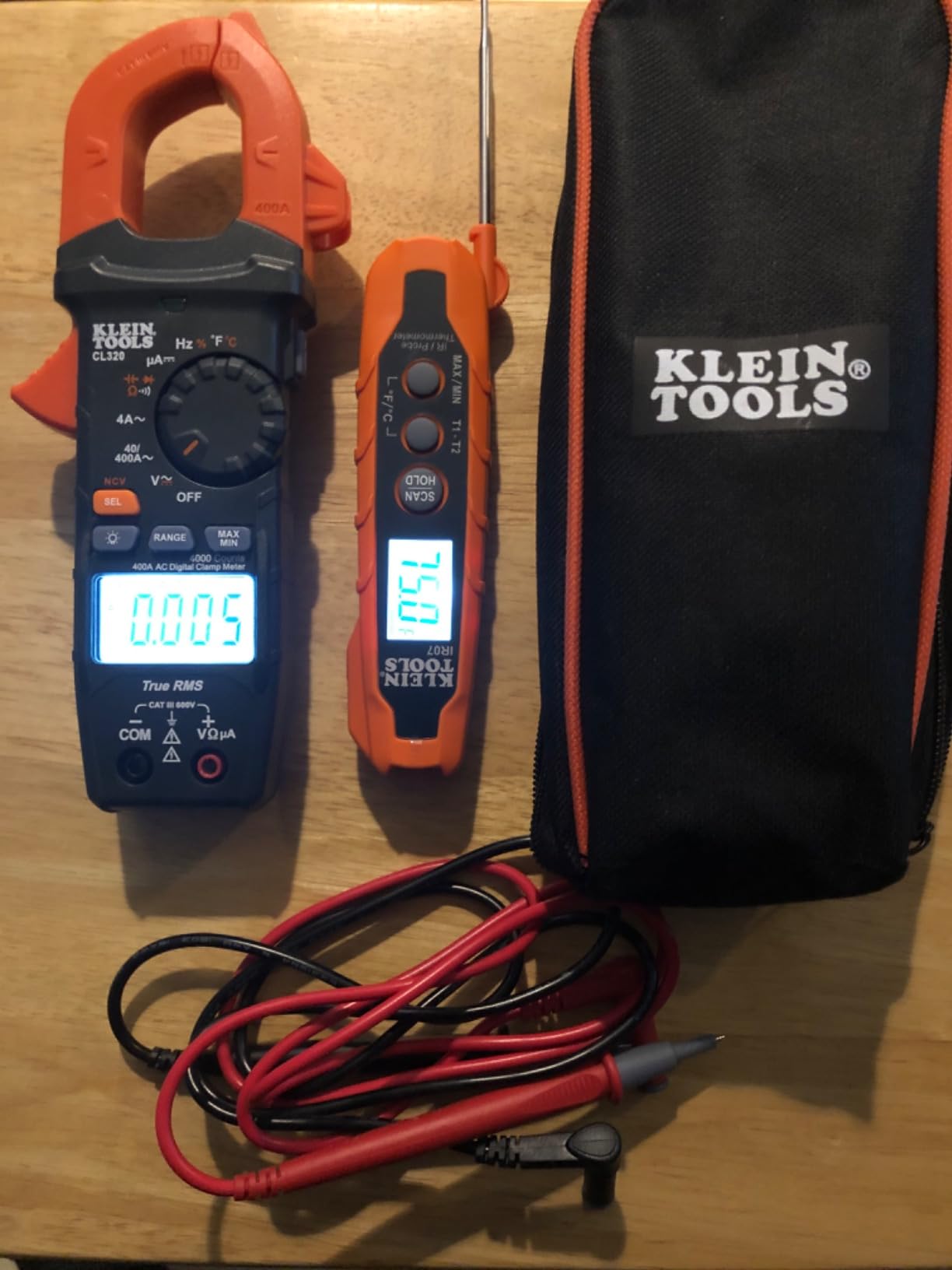
The CL320KIT is three tools in a zip case: the CL320 clamp meter, an IR07 dual IR and probe thermometer, and an NCVT3P dual range non-contact voltage tester. For an apprentice building a first bag, that is a genuinely complete starting point rather than one tool and a wish list.
The CL320 itself measures AC current and NCVT through the clamp, plus AC and DC voltage, resistance, continuity, frequency and duty cycle, DC microamps, diode test and capacitance through the leads. Auto-ranging True RMS keeps it competitive with meters costing far more on paper.
The Thermometer Does the Heavy Lifting
The IR07 reads from -40 F to 572 F and comes with a probe, which means you can check supply and return air, push the probe into a duct and use the IR side on a condensing unit line without buying anything else.
The NCVT3P detects voltage from 12 to 1000 V AC or 70 to 1000 V AC with visual and audible indicators, and the built-in flashlight works independently of the detection function. That is the small feature you end up using most in a dark mechanical room.
Where It Falls Short of a Pro Meter
The CL320 does not measure inrush current, which is the one gap that matters on compressor diagnostics. Reviewers also report that frequent auto-ranging can make small or low-surface-area readings hard to stabilize, and that the meter reads slightly high against reference meters on some voltage measurements.
Magnetic hanger and alligator clip lead adapters are sold separately, so budget for that if you plan to work overhead. Among 1020 ratings, 87 percent are five stars, and the dominant theme is value: students, DIY troubleshooters and part-time techs note the kit removes the need to buy a thermometer and NCVT separately.
Best First Purchase in This Roundup
If you are new to the trade or moving from general electrical work into HVAC, this kit teaches the same measurement habits you would build up gradually anyway. Once you outgrow it, you know exactly which functions you actually use, and the next meter is a deliberate upgrade instead of a guess.
8. UEi DL369 – The Most Proven No-Fuss Clamp in This Roundup
UEi DL369 Digital Clamp Meter HVAC Auto-Ranging 4000 Counts Volt Meter AC Amp Meter Measures AC Current AC/DC Voltage & Microamps Capacitance Resistance Diodes NCV Continuity Tester Live Wire Test
Dual 4000 count display
Capacitance to 4000 uF
Microamps to 2000 uA
CAT III 600 V
Pros
- Dual display shows amps and voltage
- Capacitance to 4000 uF and 40 megaohm resistance
- AC and DC microamps to 2000 uA
- Audible non-contact voltage
- Three year limited warranty
Cons
- No temperature measurement
- No back magnet for hands-free work
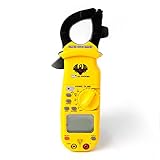
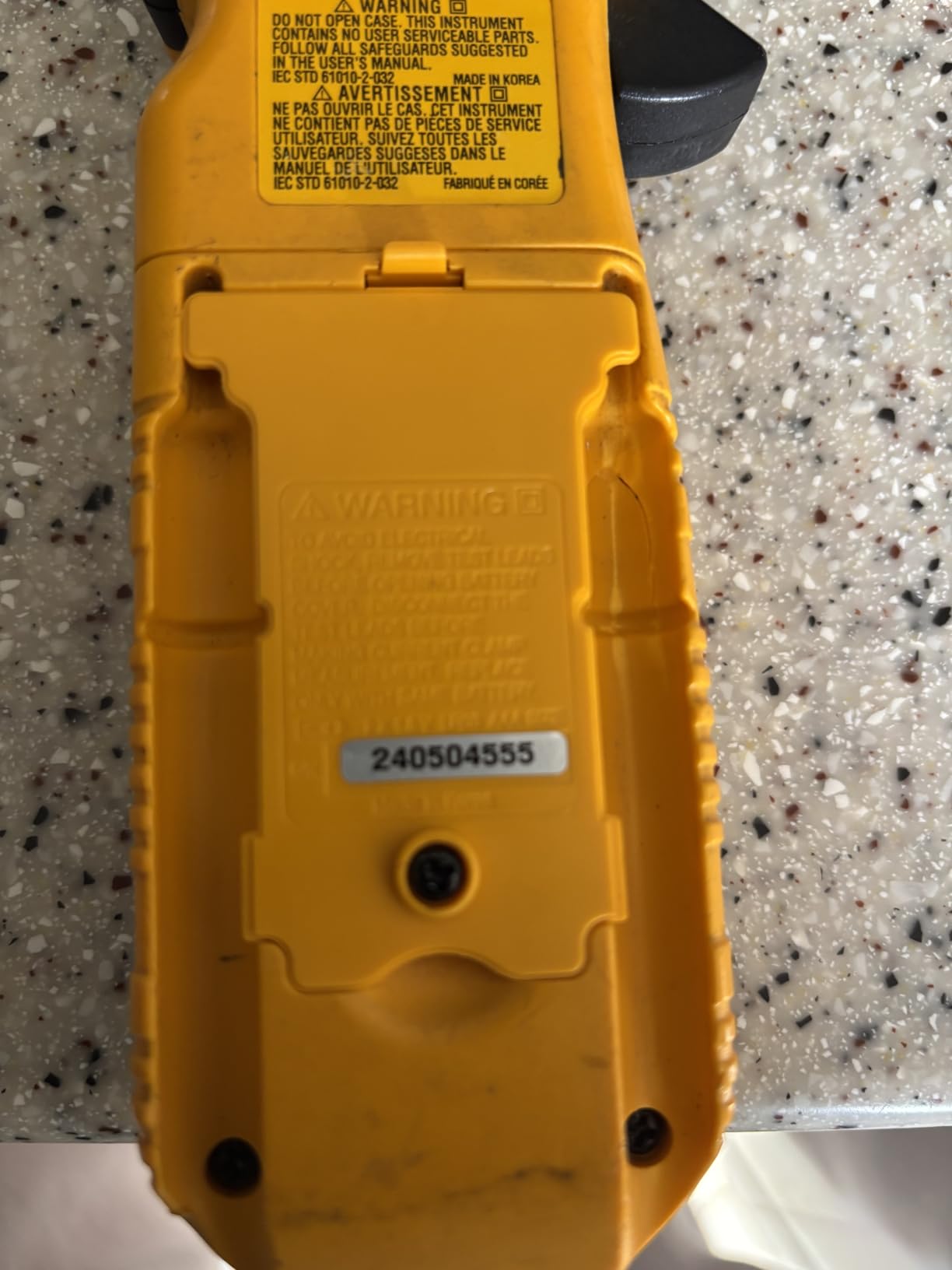
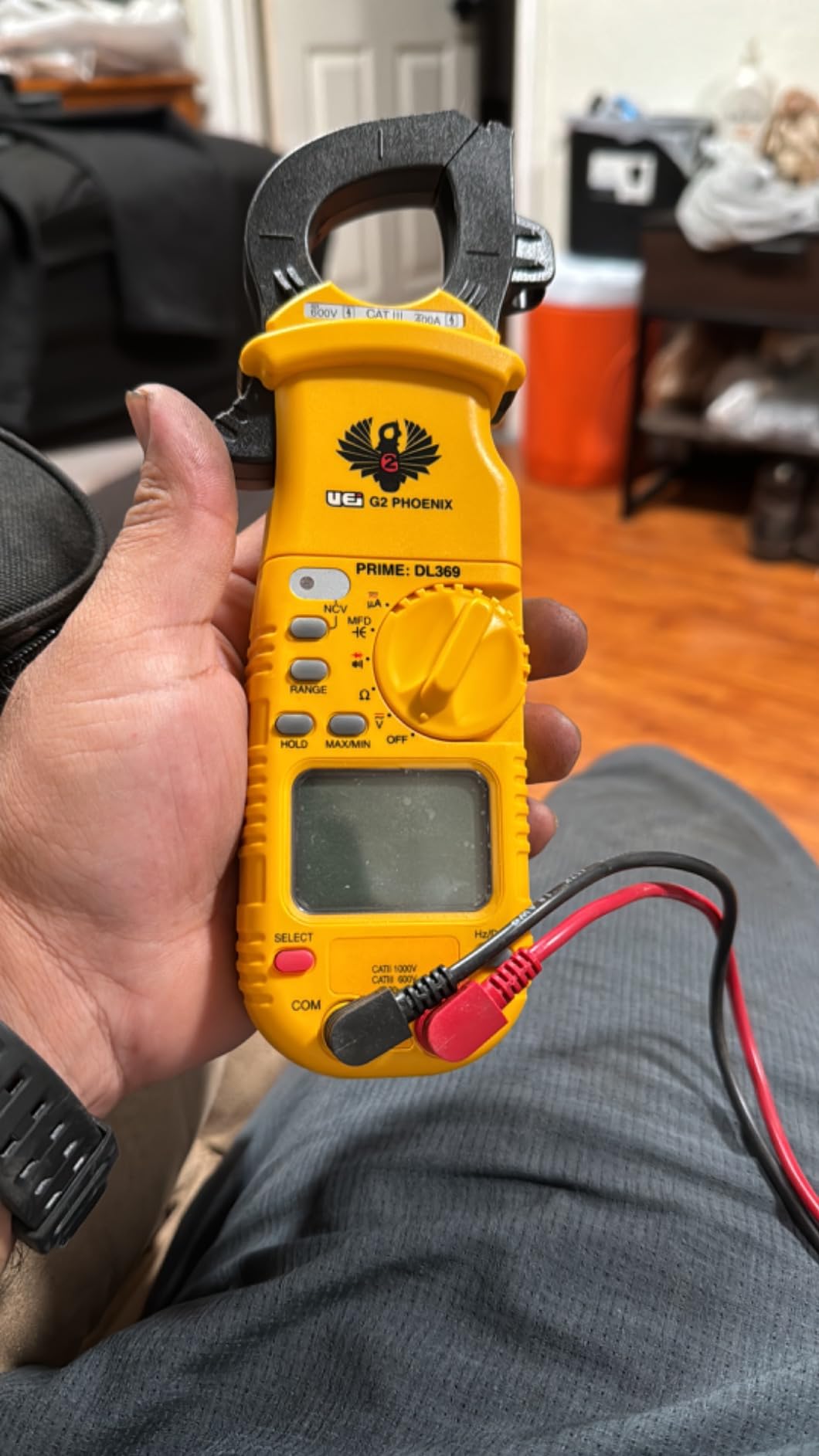
The DL369 is the oldest design in this group and the one with the most replace-your-own-meter history behind it. It is 1.49 by 2.98 by 8.7 inches, lists CAT III 600 V and CAT II 1000 V safety ratings, and it is the meter most often recommended on tech forums for apprentices and budget builds.
Its defining feature is the dual 4000 count display, which shows current and voltage at the same time. Long-tenured technicians call that dual readout a must for troubleshooting, and once you have worked with it, going back to a single display feels slow.
Measurement Coverage Without a Thermometer
Capacitance goes to 4000 uF, which covers every run, start and dual capacitor in residential service. Resistance reaches 40 megaohms, and AC and DC microamps reach 2000 uA for flame sensor work. AC current clamps up to 400 A for compressor and blower checks.
The gap is temperature. This meter does not measure it at all, so you need a separate probe or infrared thermometer for anything involving air or line temperatures. That is a real limitation for HVAC work specifically, and it is the main reason to choose one of the other nine instead.
Build Quality and the Long-Term Verdict
The package includes ATL55 test leads, alligator clips, two AAA batteries and a carrying pouch, plus a three-year limited warranty. That warranty and the track record of technicians buying replacements after years of service are the reason it has 1569 ratings behind it.
Complaints are consistent: no magnetic hanger on the back, readings that take a few attempts to settle on some measurements, lead storage slots that fit leads very tightly with the leads protruding in the case, and test leads that ship without insulated tip covers. Of 1569 ratings, 74 percent are five stars with a 4 percent one-star share, the widest spread in the roundup.
When It Is the Right Call
Choose the DL369 when the work is electrical rather than thermal, when you want a meter with a proven service life, and when budget matters. It is a beater meter for rough conditions, and the audible non-contact voltage detection helps you identify a live line before you probe it.
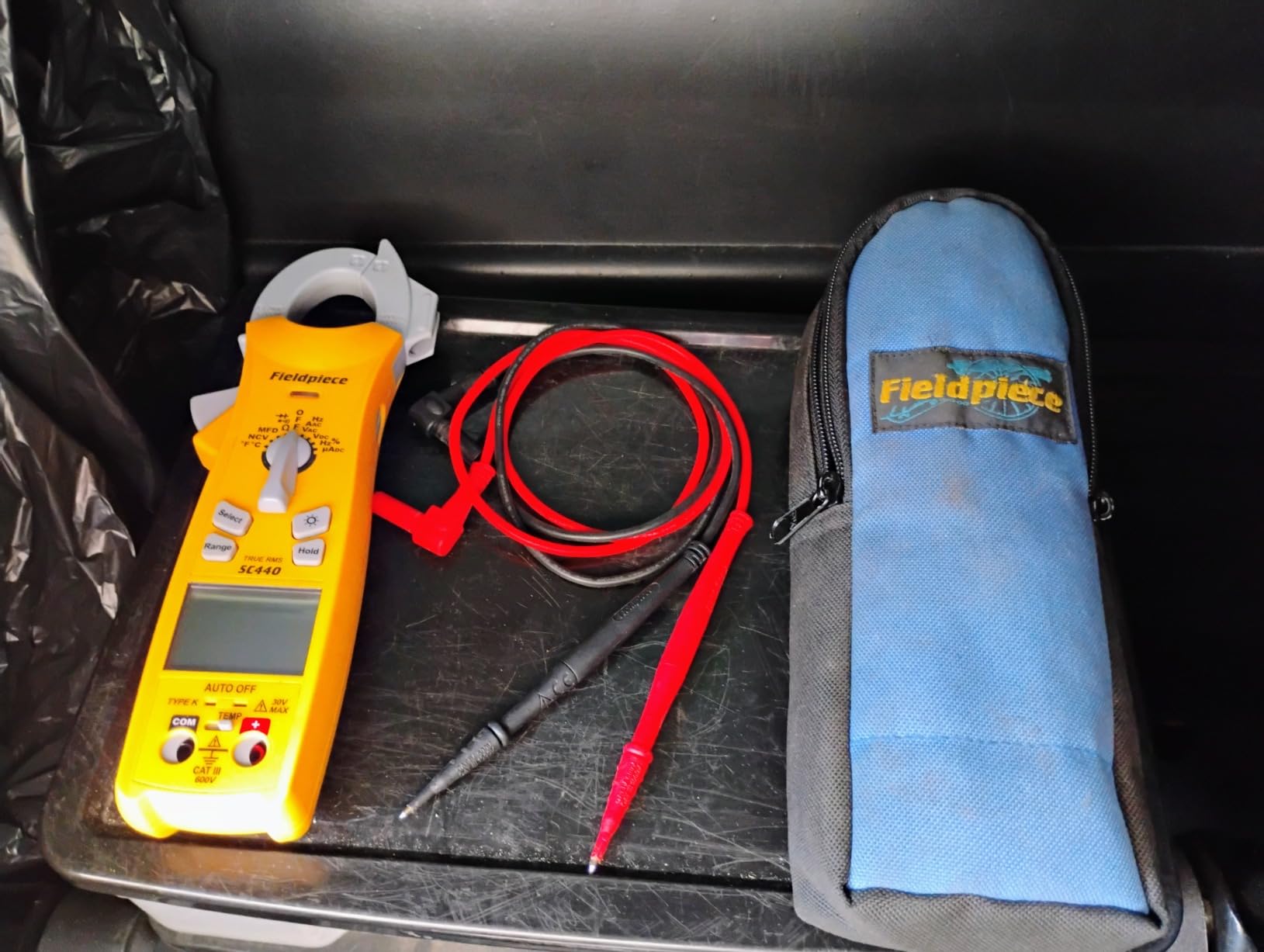
9. Fieldpiece SC440 – The Mid-Size All-in-One for VFD Driven Systems
Fieldpiece SC440 True RMS Clamp Meter with Temperature, Inrush Current, Capacitance and Backlight
Mid-size True RMS clamp
Temperature and capacitance
DC microamps for flame diodes
Auto and manual ranging
Pros
- True RMS accuracy on VFD equipment
- Temperature capacitance and DC microamps
- High voltage LED and beeper alerts
- Detachable leads and alligator probe tips
Cons
- Larger body in tight spaces
- Listed power source conflicts with battery use
The SC440 sits between the compact SC260 and a full size clamp, at 3.8 by 3.2 by 11.4 inches. That middle size is deliberate: it gives you a body you can grip with gloved hands and a jaw you can still get around a bundled conductor in a tight cabinet.
It covers every parameter for electrical and thermal HVACR testing in one meter, including temperature, capacitance and DC microamps for flame diode tests alongside the everyday electrical ranges. This is the meter technicians describe as the dependable all-in-one, and the ratings back that up with few functional complaints.
True RMS on Variable Frequency Drives
Fieldpiece describes it as one of the most durable clamp meters in its class, with True RMS sensing for higher accuracy VAC and AAC readings on VFD equipment. That is the reason it keeps showing up in my bag on modern rooftop units with ECM blowers and inverter compressors.
Auto and manual ranging are both available, along with safety features that matter on a live system: a high-voltage LED and beeper alert, a continuity warning and a push-button non-contact voltage function. The alerts let you keep your eyes on the panel instead of on the display.
One-Handed Testing Details
Detachable leads and alligator probe tips make it possible to clip onto a terminal and read the meter at the same time. The backlit display handles enclosed unit work and dark equipment rooms, which is where most of the thermal troubleshooting actually happens.
A 9V alkaline battery is included and powers the meter, even though the listed power source field reads corded-electric. That inconsistency in the listing catches people who buy a replacement cell on a parts run and then have to go back for a 9V.
Where Size Bites Back
87 percent of 954 ratings are five stars, with the recurring note that the mid-size housing is larger than compact clamp options when working in tight spaces. If most of your work is inside residential equipment cabinets, the SC260 is the better body; if it is commercial plant and rooftop equipment, the extra size pays for itself.
10. AstroAI CM6K0R Inrush Clamp – LoZ, VFD and Inrush Modes at an Entry Price
AstroAI Inrush Digital Clamp Meter Multimeter 1000A TRMS 6000 Counts, Amp Voltage Tester with VFD, LOZ Mode; Measures AC/DC Current Voltage Temperature Resistance Capacitance Frequency Continuity NCV
1000 A AC and DC clamp
Inrush over 100 ms
Dedicated VFD and LoZ modes
CAT IV 600 V
Pros
- Inrush VFD and LoZ modes in one meter
- 1000 A current and 750 V AC capability
- K-type thermocouple included
- IEC 61010-1 CAT IV 600 V and CAT III 1000 V
Cons
- Inrush works on AC current only
- Backlit display hard to read in sunlight
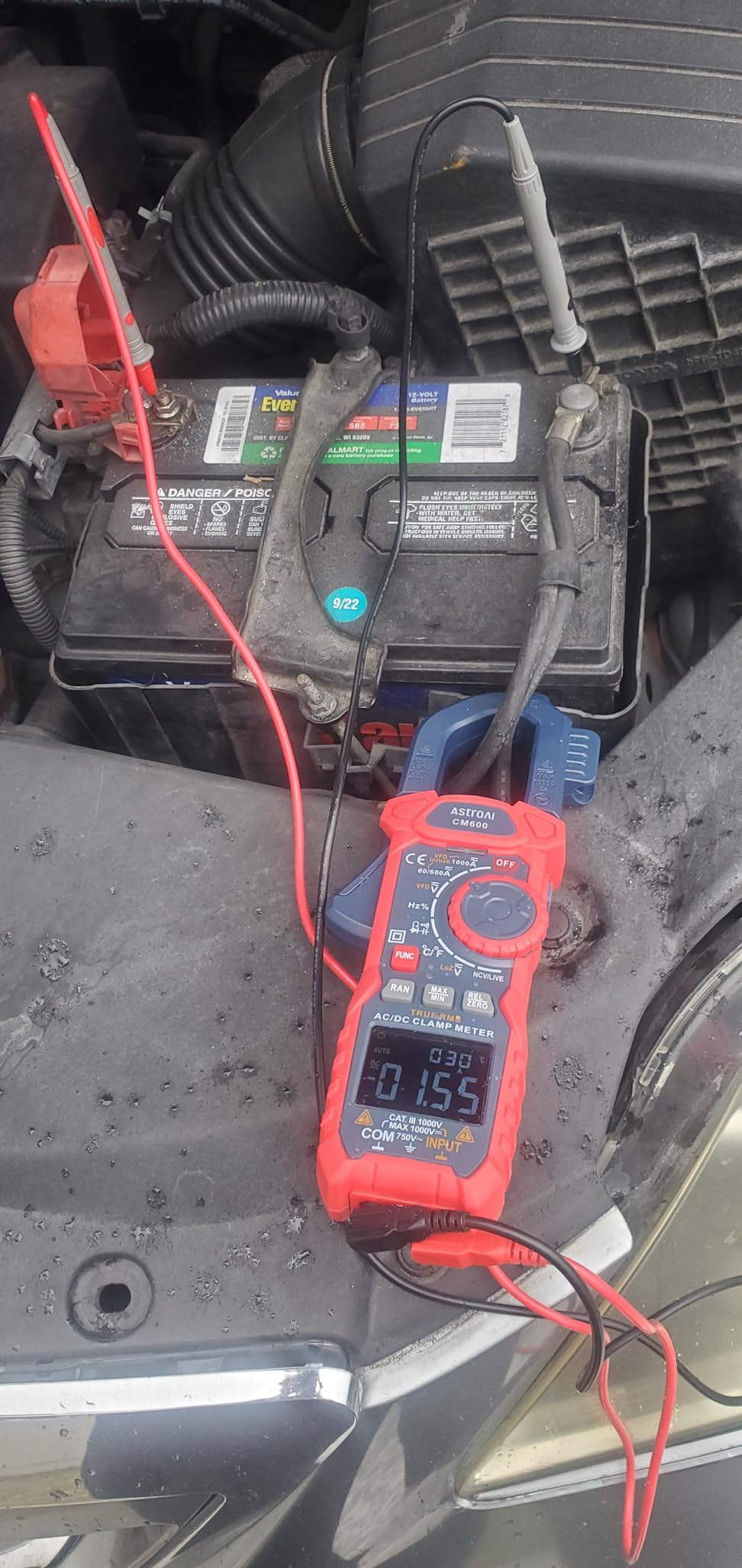
The CM6K0R is the one meter here that puts inrush, a dedicated VFD mode and LoZ volts on a meter that is otherwise priced as an entry-level tool. Those three functions are normally the dividing line between a hobby clamp and a professional one, and here they all landed on the same body.
It measures 1000 A of AC and DC clamp current and 1000 V DC or 750 V AC voltage, plus capacitance, frequency, duty cycle, resistance, diode, continuity and temperature through the included K-type thermocouple. The inrush function reads startup current over roughly 100 milliseconds, which is the window you need to catch a motor soft-start problem.
LoZ Mode Solves the Ghost Voltage Question
LoZ volts mode eliminates ghost voltage and confirms the absence of live power, which turns a two-step safety check into one. The dedicated VFD mode gives accurate current and voltage readings on variable frequency drives, where a standard average responding reading under-reports.
Several owners matched its readings against a NIST-traceable Fluke 8808A and found them spot on. That kind of third-party comparison is the strongest credibility signal in this roundup, and it matters more than any printed accuracy figure.
Readability Is the Real Weakness
The backlit LCD is very difficult to read in direct sunlight, and that is a genuine problem for rooftop work at midday. The flashlight, larger text, data hold, max and min, auto and manual ranging and REL/ZERO functions all help compensate, but none of them fixes glare on the display itself.
The inrush function also does not work on DC current, only AC, and temperature readings take time to stabilize. Of 336 ratings, 79 percent are five stars and 14 percent are four stars, with buyers consistently treating it as strong value. The package includes the clamp, a pair of test leads, the thermocouple, a storage bag and a manual.
Who This Meter Is For
This is the pick for a technician who needs professional functions on a limited budget, or for anyone who wants inrush capability and a dedicated LoZ mode without stepping up a tier. If you work outdoors in direct sun all summer, the display readability issue is real and you should weigh it before buying.
How to Choose an HVAC Multimeter Without Wasting a Weekend
Once you have narrowed the field to a few meters, these are the decisions that actually change your day to day work. Prices move constantly, so judge each meter on the functions below rather than on any single number.
True RMS or Average Responding: Where the Difference Shows Up
True RMS measures the true root mean square of a signal rather than an averaged approximation. On a variable frequency drive, an ECM blower motor or an inverter compressor, an average responding meter can under-read badly enough to make a healthy motor look overloaded.
For straight 60 Hz residential circuits, the difference is small. If your work includes commercial units, rooftop packages or anything with a variable speed component, treat True RMS as a requirement rather than a nice-to-have. Most technicians we compared meters with consider it non-negotiable for modern equipment.
Microamps: The One Range You Cannot Skip on Gas Work
Microamps, written uA on the display, is the current range used to verify flame rectification on a gas furnace flame sensor. A working flame sensor rectifies the AC sine wave to a small DC reading, and a coated one does not, no matter how clean the burner looks.
Every meter in this roundup except the Fieldpiece SC260 measures microamps through the leads or clamp. Check which route you prefer before buying, because a clamp-based microamp is faster when the sensor terminal is hard to reach.
Temperature Range and Thermocouple Response Time
Temperature range is a spec, but settling time is what actually affects your reading. A probe that takes thirty seconds to stabilise distorts a superheat or subcooling calculation more than a one degree accuracy gap ever will.
The Fluke 116 covers -40 C to 400 C with a fast-settling probe. The Fieldpiece HS33 uses a K-type thermocouple rated to 1000 F, and the Klein IR07 in the CL320KIT covers -40 F to 572 F. For combustion work, match the range to the flue temperature you expect, not to room temperature work.
Ghost Voltage and Low Impedance Mode
Ghost voltage is stray capacitive voltage that appears on an unloaded circuit and makes a de-energised wire test positive. It sends techs chasing faults that do not exist, and it is one of the most common misdiagnosis complaints in service forums.
A low impedance, or LoZ, mode loads the circuit enough to collapse that phantom voltage. Several meters here also apply low impedance automatically as part of an auto-volt feature, which is the ideal behaviour because it happens without you thinking about it.
CAT Ratings, Clamp Jaw Size and Inrush
CAT III and CAT IV are transient overvoltage protection categories, and they are not interchangeable. CAT III 600 V is the common expectation for panel work, while CAT IV 600 V is rated for measurements at the source of a low-voltage installation. Anything less than CAT III 600 V is below what most professional work requires.
Clamp jaw size is more practical than it sounds. A jaw that will not open around a bundled #2 conductor is useless on exactly the compressor feeds you need it for, so check the jaw opening against the conductors you actually see. Inrush measurement matters when you want to catch a locked compressor or a blower that pulls a hard spike at startup.
Buying Mistakes That Cost Real Money
Buying a meter with no temperature function is the most common regret among techs moving from electrical work into HVAC, and it is the exact weakness of the UEi DL369. Buying two half-capable meters instead of one integrated clamp is the second, which is what the Fluke 116/323 kit solves.
Also watch the accessory list. Several meters here ship with stiff test leads, and magnetic hangers, capped lead sets and alligator adapters are frequently sold separately. Replacing a lead set early costs less than fighting a brittle probe in a dark panel all season.
For the thermal side of the same job, our pick of the best thermal cameras for HVAC work pairs well with any of the meters above, since an IR image finds the problem and the meter confirms the electrical cause.
Frequently Asked Questions
What multimeter do HVAC techs use?
Most HVAC technicians use a True RMS digital multimeter or clamp meter with a microamps range for flame sensor testing, capacitance for run and start capacitors, and thermocouple temperature measurement for air and refrigerant lines. The Fluke 116 and Fieldpiece SC260 are the two most common answers, and a combo kit like the Fluke 116/323 covers both board-level probing and high current clamping in one purchase.
Is the Fluke 116 good for HVAC work?
Yes. The Fluke 116 was designed for HVAC and covers the functions that matter: microamps for flame sensors, a built-in thermometer from -40 C to 400 C, capacitance for capacitors and low input impedance that suppresses false readings from ghost voltage. Its main limitations are stiff supplied test leads and the lack of any clamp-style current measurement.
What meter is better, Fluke or Fieldpiece?
Fluke meters lead on low input impedance modes and wireless logging, while Fieldpiece leads on clamp designs built around HVACR work and on the HS33 modular accessory head system. For panel probing and flame sensor work the Fluke 116 is hard to beat, and for current clamping in tight equipment spaces the Fieldpiece SC260 is the more practical body.
Is a Fluke or Klein multimeter better?
It depends on the work. Fluke covers more HVAC-specific measurement modes, including microamps and low input impedance on a dedicated HVAC body. Klein offers inrush current measurement, a simultaneous voltage and current display and lower-cost kits that bundle a clamp meter, thermometer and non-contact voltage tester in one case, which suits apprentices and residential work.
Are Fieldpiece meters as good as Fluke?
For HVACR work they are effectively in the same class. The Fieldpiece SC260, HS33 and SC440 all provide True RMS accuracy, temperature, capacitance and DC microamps, and the SC260 holds a 4.8 rating across 1700 reviews. Fluke retains an edge on low impedance ghost voltage suppression and on wireless reporting through the 902 FC.
What is the best multimeter brand alternative to Fluke?
Klein Tools, UEi and AstroAI are the strongest alternatives. The Klein CL445 adds inrush current measurement and a dual voltage and current display, the UEi DL369 is a proven lower cost clamp with a three year warranty, and the AstroAI CM6K0R combines VFD mode, LoZ volts and inrush in one body. Fieldpiece is the closest direct competitor to Fluke for HVACR work.
Which HVAC Multimeter Should You Buy?
If you want one meter that disappears into a tight residential panel and covers every parameter an HVAC tech uses daily, the Fieldpiece SC260 is the pick. It leads this roundup on rating and review volume, and its compact True RMS body is the reason it stayed in my bag more than any other.
If gas work is a large part of your week, the Fluke 116 is the better buy, because the microamps range, fast-settling thermometer and low input impedance mode cover the three things that decide most furnace diagnoses. For a shop standardising on one platform, the Fluke 116/323 kit fills both roles in a single purchase.
Apprentices and residential techs get the most out of the Klein CL320KIT, while anyone chasing motor startup spikes should look at the Klein CL445 or the AstroAI CM6K0R. Commercial techs working variable speed equipment will appreciate the Fieldpiece SC440, and documenting-heavy work suits the Fluke 902 FC.
Whichever you choose in 2026, buy the accessories in the same order: a spare set of test leads, the right thermocouple for your temperature range, and a magnetic hanger. Check the current listing for the meter, compare it against your own list of daily measurements, and get it into the bag this week rather than next.