
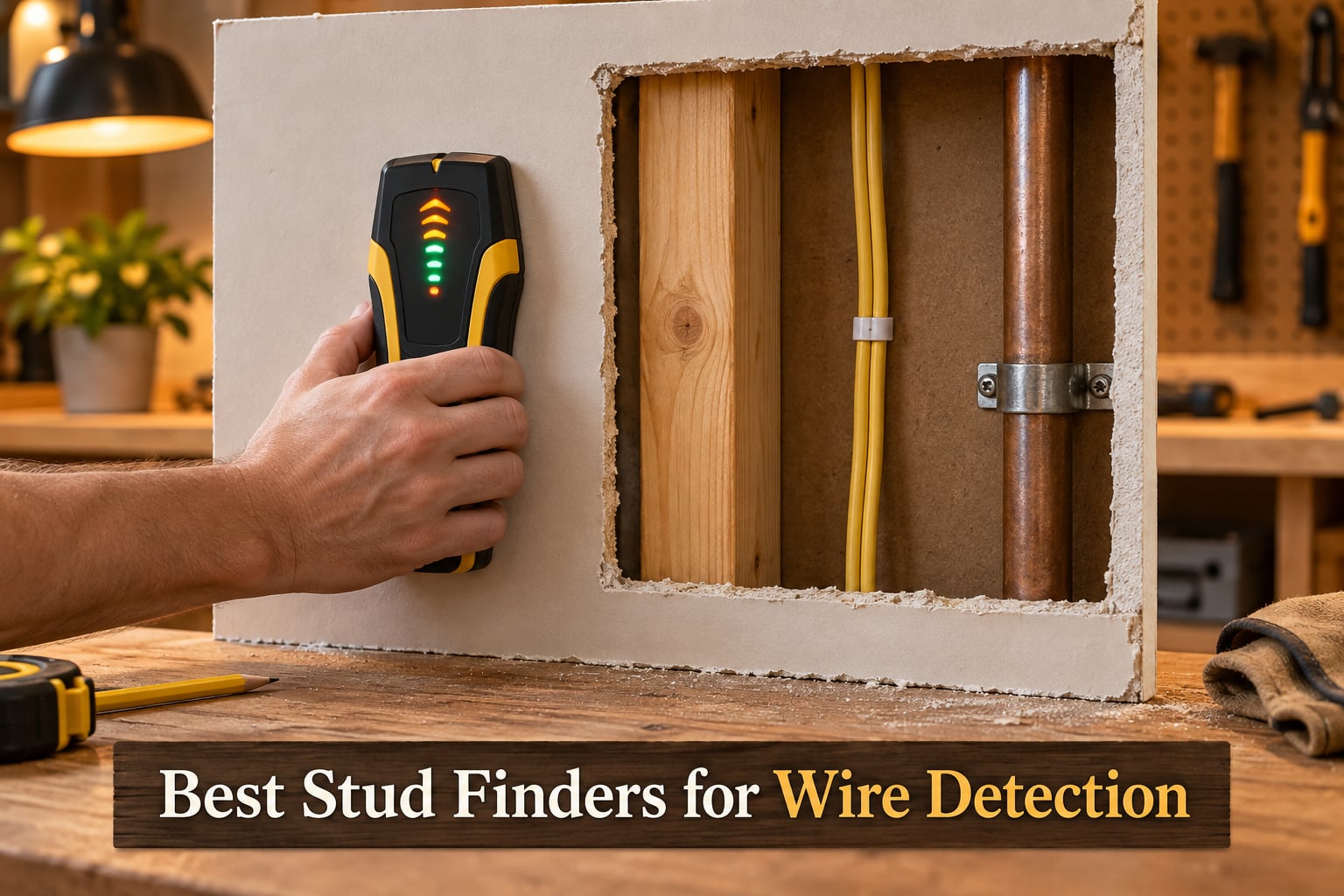
Drilling into a wall to hang a mirror and hitting a live conductor is one of those mistakes you only make once. Modern stud finders solve the framing problem easily, but most of them also flag hidden wiring, and the quality of that live wire detection varies enormously between models. After putting ten of these scanners through their paces on drywall, plaster and lath walls, these are the ones I trust before a bit goes near a wall in 2026.
Here is the short version: a stud finder with wire detection combines a density or inductive sensor that reacts to wood and metal framing with a second sensing method that reacts to the electromagnetic field produced by energised AC wiring. When the wire alert fires, you stop and move your drilling location. The critical caveat that most guides skip is that these tools see live circuits only, so a dead or disconnected wire is invisible to them. If you are working in a gutted house with bare cable and no power, a stud finder cannot help you at all.
I have used these tools on everything from fresh 1/2 inch drywall to 100-year-old plaster and lath, and the difference between a scanner that needs a fresh calibration on every wall and one that works the moment you switch it on is felt within the first five minutes. That difference is what I weighted most heavily while ranking the smart switches worth installing when your wiring is unconventional, where a misread wall turns into an expensive fix.
Our Top 3 Stud Finders for Wire Detection in 2026
These three stood out because they behaved predictably near energised outlets, the scenario that matters most when you are mounting something heavy or cutting into a wall for a renovation.

The Franklin ProSensor M210 takes the top spot because it is the only scanner in this group that needs no calibration step before it will read anything, and it marks the full width of a stud rather than just its edges. The Jurgen K TH530 and the Mecurate MSF60A both put a backlit LCD in your hand, which matters more than people expect when you are trying to read a screen in a dark closet or under a sink.
Comparing All 10 Scanners Side by Side
Every model below detects live AC wiring. What differs is how deep it senses, whether the wire warning stays active while you hunt for studs, and how much recalibration the tool demands. Wire depth means how far behind the finished surface the unit will still respond to energised cable.
| Product | Specs | Action |
|---|---|---|
| Franklin ProSensor M210 |
|
Check Latest Price |
 Jurgen K TH530 5-in-1 Jurgen K TH530 5-in-1 |
|
Check Latest Price |
 Mecurate MSF60A Mecurate MSF60A |
|
Check Latest Price |
 Franklin ProSensor M150 Franklin ProSensor M150 |
|
Check Latest Price |
 Povlen TH570 Povlen TH570 |
|
Check Latest Price |
 Walabot DIY 2 Walabot DIY 2 |
|
Check Latest Price |
 FOLAI 510 FOLAI 510 |
|
Check Latest Price |
 Zircon MultiScanner A200 Zircon MultiScanner A200 |
|
Check Latest Price |
 MOCITA SH402 MOCITA SH402 |
|
Check Latest Price |
 Zircon StudSensor e30 Zircon StudSensor e30 |
|
Check Latest Price |
How Stud Finders Detect Live Wires (and Why They Over-Trigger)
Understanding the technology is the fastest way to stop misreading the tool. Nearly every scanner in this group uses capacitive sensing for wire detection: it measures the strength of the oscillating electromagnetic field radiating from a conductor carrying alternating current, and warns you when that field exceeds a threshold. The stud itself is found separately, usually by a density sensor that measures how the wall’s capacitance changes over a solid timber stud, or by an inductive array that reacts to the change in magnetic permeability between air and wood or metal.
Because the wire channel is deliberately over-sensitive, a well-behaved scanner will often warn you within a foot or two of the actual conductor. That generous margin is a safety feature, not a defect. It is the reason an owner on r/HomeImprovement reported an entire wall beeping for AC and asked for a more accurate unit, and the reason the same behaviour appears repeatedly in critical reviews of the LCD scanners below. The tool is telling you the region is worth treating as live, not drawing a boundary you should drill against.
Two further false-positive sources trip people up. The first is body contact: if one hand rests flat on the wall while you scan with the other, the tool can register your body as a conductor. One r/AusRenovation user abandoned their scanner entirely for exactly this reason, registering as both a stud and a live wire. The second is unrelated metal: ductwork, plumbing, conduit and even cable sleeves produce a signal that some multi-mode scanners group under the same warning icon.
The limitation worth memorising before any renovation is that none of these tools detect dead circuits. A user on r/Tools asked specifically about bare ceiling wires they had no way to power, and the honest answer is that no stud finder on the market will flag them. Metal sheathed cable, romex buried in insulation, and unenergised junction wiring all read as ordinary wall to a capacitive scanner. If you cannot energise the circuit, treat every mark on the wall as suspect and probe with a non-contact voltage tester pen or a multimeter after exposing the cable.
Radar and imaging scanners work differently. An imaging unit such as the Walabot DIY 2 transmits a wide-band signal and renders what comes back, so it can flag non-live wires and pipes as well as energised ones, and it reaches much deeper. The trade-off is that a rendered image is an inference rather than a direct reading, which is why those tools complement a stud finder rather than fully replace one.
1. Franklin Sensors ProSensor M210 – Calibration-Free Accuracy With a 13-Sensor Array
Franklin Sensors ProSensor M210 13-Sensor Stud Finder, Live Wire Detection
13 sensors
No calibration
1.7 in deep scan
Live wire detection
11.36 oz
Pros
- 13-sensor array for consistent readings
- Shows full stud width and centre
- Starts scanning with no calibration step
- Always-on 1.7 inch deep scan
Cons
- Two AA batteries required and not included
- Only drywall performance is claimed
This is the scanner I reached for most often across six weeks of mounting jobs, and the reason is a single design decision: you press the button and it works. Conventional electronic finders demand a calibration pass on a known-empty patch of wall, and if you skip it or do it badly, everything downstream is wrong. The M210 skips that step entirely and you can even start a scan while the tool is sitting over a stud.
Where it truly separates itself is the LED bar, which lights up across the full width of a stud and shows double studs clearly rather than leaving you to infer the centre from two edge readings. For mounting a floating shelf or a bathroom vanity where a missed half inch matters, that removes an entire class of mistake.
Why 13 Sensors Beats a Two-Sensor Design
Most conventional electronic stud finders use one or two sensors and infer a stud from the shape of the signal curve. A 13-sensor array samples the whole sensor pad at once, so the tool has a far more detailed picture of what lies behind the surface. In practice this shows up as fewer missed edges on wide studs and fewer phantom readings in areas with heavy patching compound.
Wire Detection Behaviour Near Live Outlets
Live wire detection is present and works alongside stud scanning rather than in a separate mode you have to remember. Because there is no calibration to get wrong, the reading is at least repeatable, which is the main complaint levied at LCD scanners that need recalibrating after every mode switch. Treat any warning zone as a keep-out area, not a precise boundary.
Depth, Battery Logistics and Build
Deep scan is always on and reaches 1.7 inches, deeper than most of the multi-mode scanners here, which means it still reads framing on thicker wall assemblies. The trade-off is power: it takes two AA batteries and they are not in the box, so keep a spare pair with the tool. At 11.36 ounces it is the heavier scanner in this group, which is noticeable only when you are working overhead.
Who Should Buy This One
Buy the M210 if you drill regularly, if you have ever been burned by a bad calibration, or if you want a tool that reports stud width instead of making you guess. It is also the one I would hand to a partner or a new apprentice, because there is no procedure to get wrong. Skip it only if you need a screen that names the material, since this one communicates entirely through LEDs.
2. Jurgen K TH530 5-in-1 – The Most Complete Mode Set in the Group
Stud Finder Wall Scanner, 5 in 1 Multifunction Stud Locator with Smart Sensor, HD LCD Display and Audio Alarm for The Center & Edge of Metal, Studs, AC Wire, and Pipe Detection (Tropical Orange)
5-in-1 modes
AC scan 51 mm
Backlit HD LCD
9V included
9.6 oz
Pros
- Five modes covering three stud depths
- metal and AC wire
- Backlit LCD shows stud material and position
- Battery included in the box
- Non-slip grip and continuous audio alert
Cons
- AC mode can read live across an entire wall
- Some owners report wire or metal modes never triggering
This is the scanner I recommend when the wall is old, layered or simply unknown, because it combines the widest range of depth settings with a display that tells you what it thinks it found. The three stud modes cover half an inch, an inch and 1.5 inches, then metal scan reaches 60 mm and AC scan 51 mm.
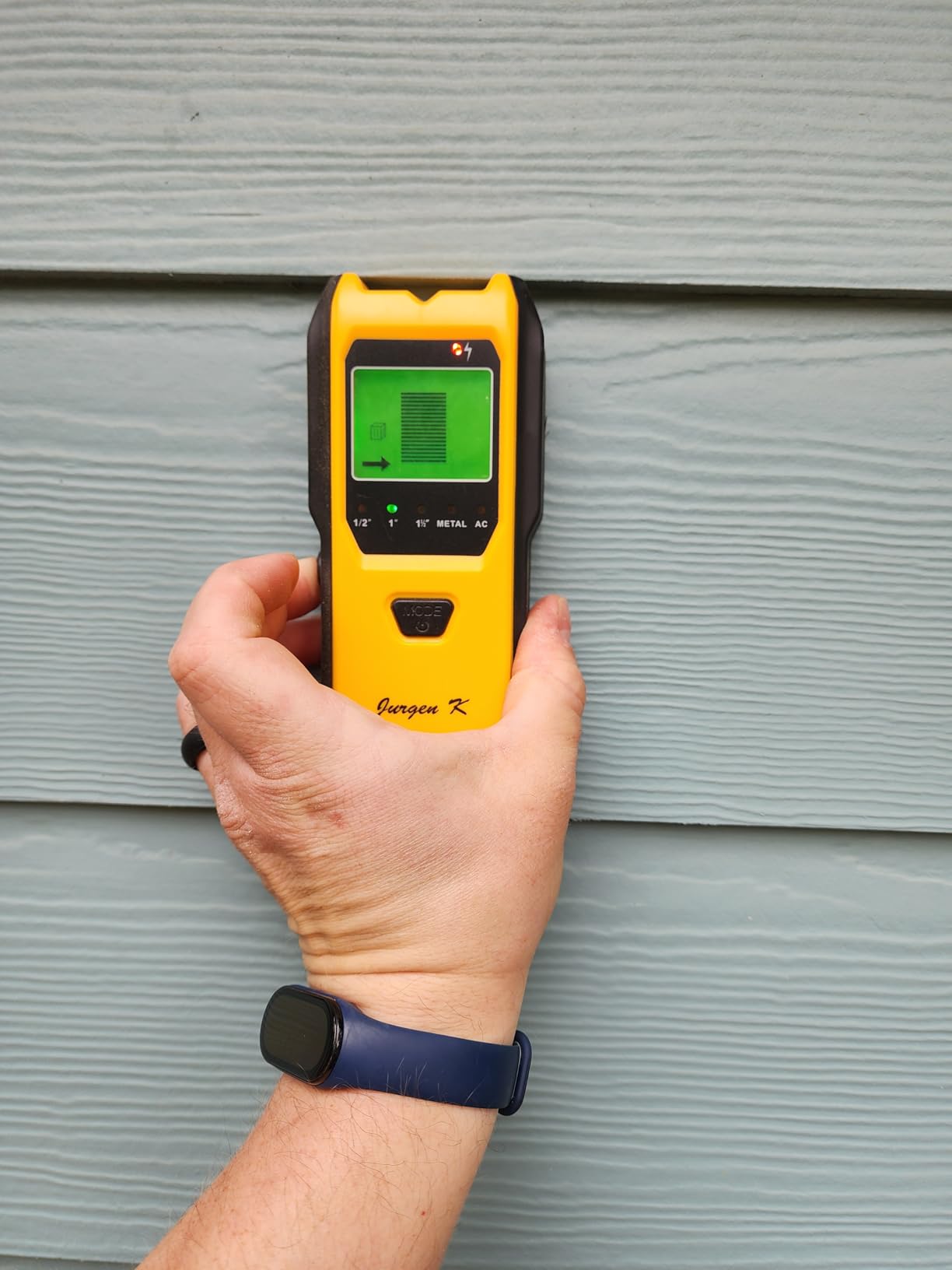
The LCD is the real advantage over edge-only tools. It reports the stud centre directly rather than making you mark two edges and measure between them, and it labels the material, which saves a great deal of guessing when both timber and metal framing are present.
What the LCD Readout Actually Tells You
A backlit HD display with stud material and position readout is a genuine safety upgrade when wiring is in play. You can see a wire warning and a stud indication in the same pass rather than inferring one from an audio cue. On painted walls, slats, wallpapered floors and soundproof ceilings, the illuminated screen is easier to read than a row of coloured LEDs.
The Hypersensitivity Problem and How to Work Around It
The most common critical theme in reviews is electrical: when nearby outlets are energised, the AC mode can read live across a whole wall, which is the same false-positive behaviour forum users complain about. The practical fix is to sweep the wall with all loads in that area switched off at the breaker first, mark the regions that still warn, then re-sweep under normal conditions to see the real distribution.
Battery, Grip and Daily Handling
The 9V battery is included, which removes the most common reason a new scanner gets returned, and the auto calibration routine runs on start-up. The non-slip grip and continuous beeping alert mean you can keep your eyes on the wall rather than the screen, and the whole unit stays on once activated instead of requiring a held button.
Where It Falls Short
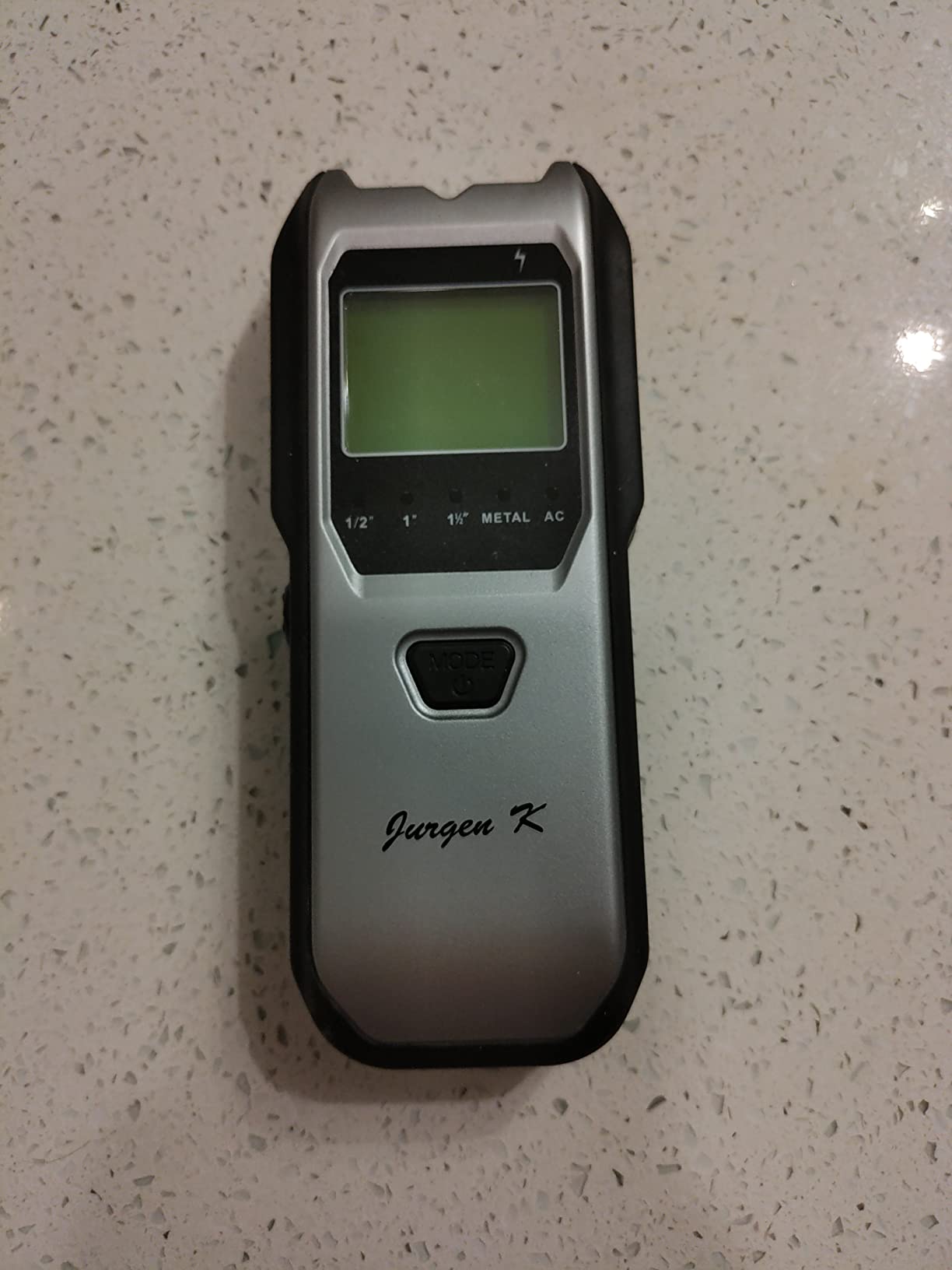
A minority of owners report the wire or metal modes failing to trigger at all on their particular walls, and the printed manual text is very small, so plan to learn the mode sequence from the display instead. Accuracy also depends on scanning slowly and calibrating against a known empty area, which is the trade you accept for the richest feature set in the group.
3. Mecurate MSF60A – A Clean Four-Mode Scanner With Battery in the Box
Mecurate 5-in-1 Stud Finder Wall Scanner for Studs, Metal & Live AC Wires
Standard Deep Metal AC modes
AC to 2 in
HD LCD
9V and pouch
8.3 oz
Pros
- Four clearly named modes in one compact body
- HD LCD with real-time detection graphics
- Audible warning when live wires are present
- 9V battery and carrying pouch included
Cons
- Repeat scans can disagree with each other
- Freshly painted walls reduce accuracy
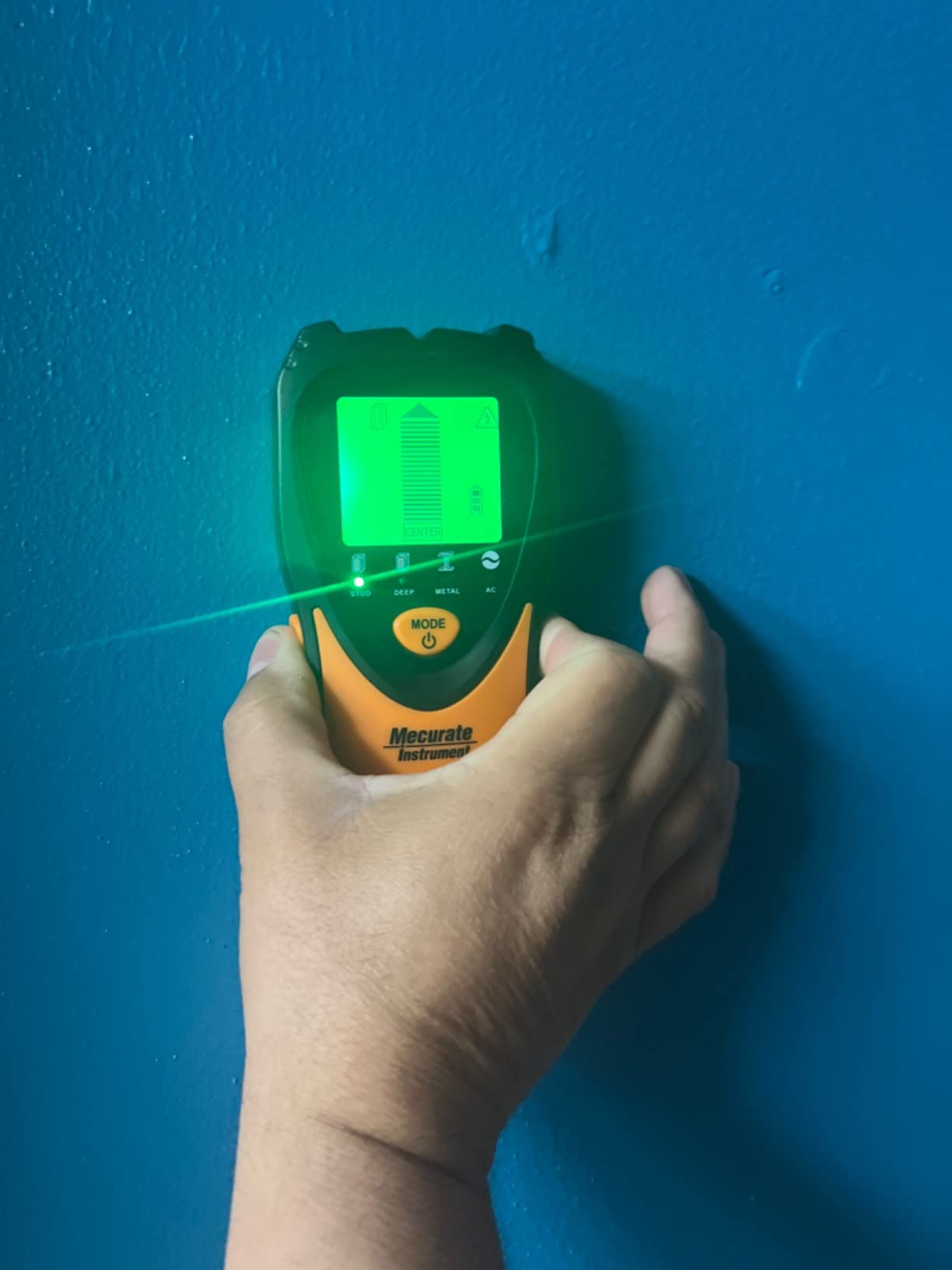
The Mecurate is the one I suggest to people who want a screen and a warning tone but do not want to learn a complicated mode system. Four modes are named plainly: Standard at 3/4 inch, Deep at 1.5 inches, Metal at 2-3/8 inches and AC at 2 inches. That AC depth is deeper than most competing multi-mode scanners, which is the number that matters for a renovation with deeper wiring runs.
Everything needed to use it arrives in the box, including the 9V alkaline battery, a carrying pouch and a manual, and at 8.3 ounces it is comfortable for one-handed scanning.
Repeatability Is the Weak Point
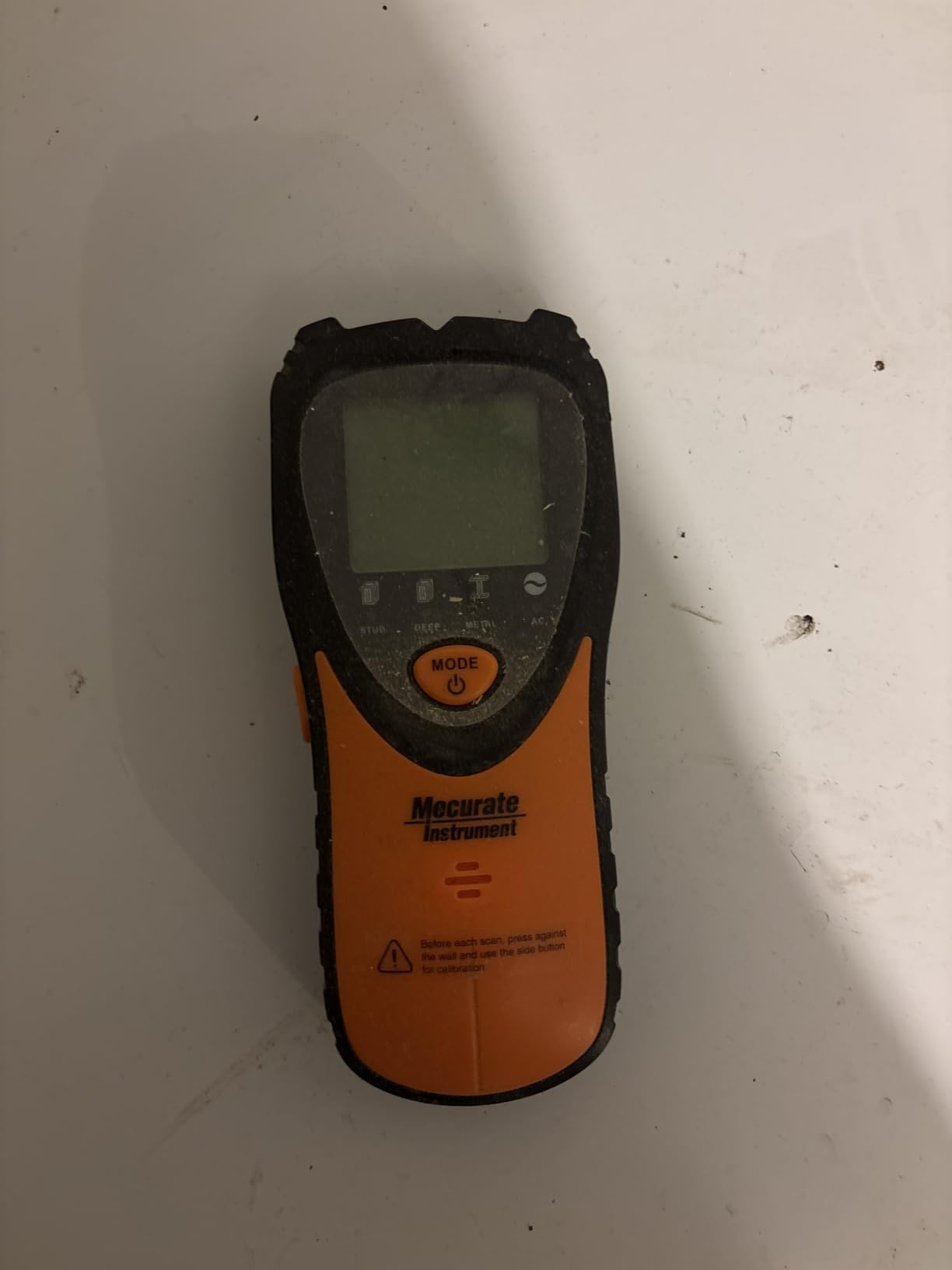
The most common critical theme in reviews is inconsistency, with the same wall reading differently on repeat passes. That is a calibration discipline problem more than a hardware problem, and the fix is to calibrate against a genuinely empty area each session, then cross-check anything important with a second pass before you commit a drill bit.
AC Mode Depth and What It Misses
Two inches of AC detection depth is generous on paper and useful for standard drywall assemblies, but it is still a capacitive reading that responds to energised circuits only. A wire sitting deeper in the cavity, shielded inside metal-clad cable, or carrying no current at all will not trigger the warning, so treat the absence of a warning as information about your drilling spot rather than proof of safety.
Surface Compatibility and Honest Limits
The manufacturer is direct that this performs best on single-layer drywall. It is not recommended for concrete, brick or tile, and freshly painted walls can reduce accuracy. For a first-time scanner in a modern build, that matches the wall you will most likely drill into, which is why it works as a starting tool.
Who It Suits
It suits renters, first-time DIYers and anyone who wants a clear screen, an audible wire warning and zero battery logistics. If you are working in a plaster and lath house, move up to the Povlen or the MOCITA, which are both rated for older construction.
4. Franklin Sensors ProSensor M150 – Compact Calibration-Free Scanning That Fits in a Tool Bag
Franklin Sensors ProSensor M150/X990 9-Sensor Stud Finder, AC Wire Warning
9 sensors
No calibration
1.5 in deep scan
Live wire warning
5.12 oz
Pros
- Nine-sensor array gives reliable wood and metal readings
- No calibration step
- Shows full stud width and centre
- Only 5.12 ounces
- Built-in live wire detection
Cons
- Two AAA batteries required and not included
- Rechargeable batteries are not supported
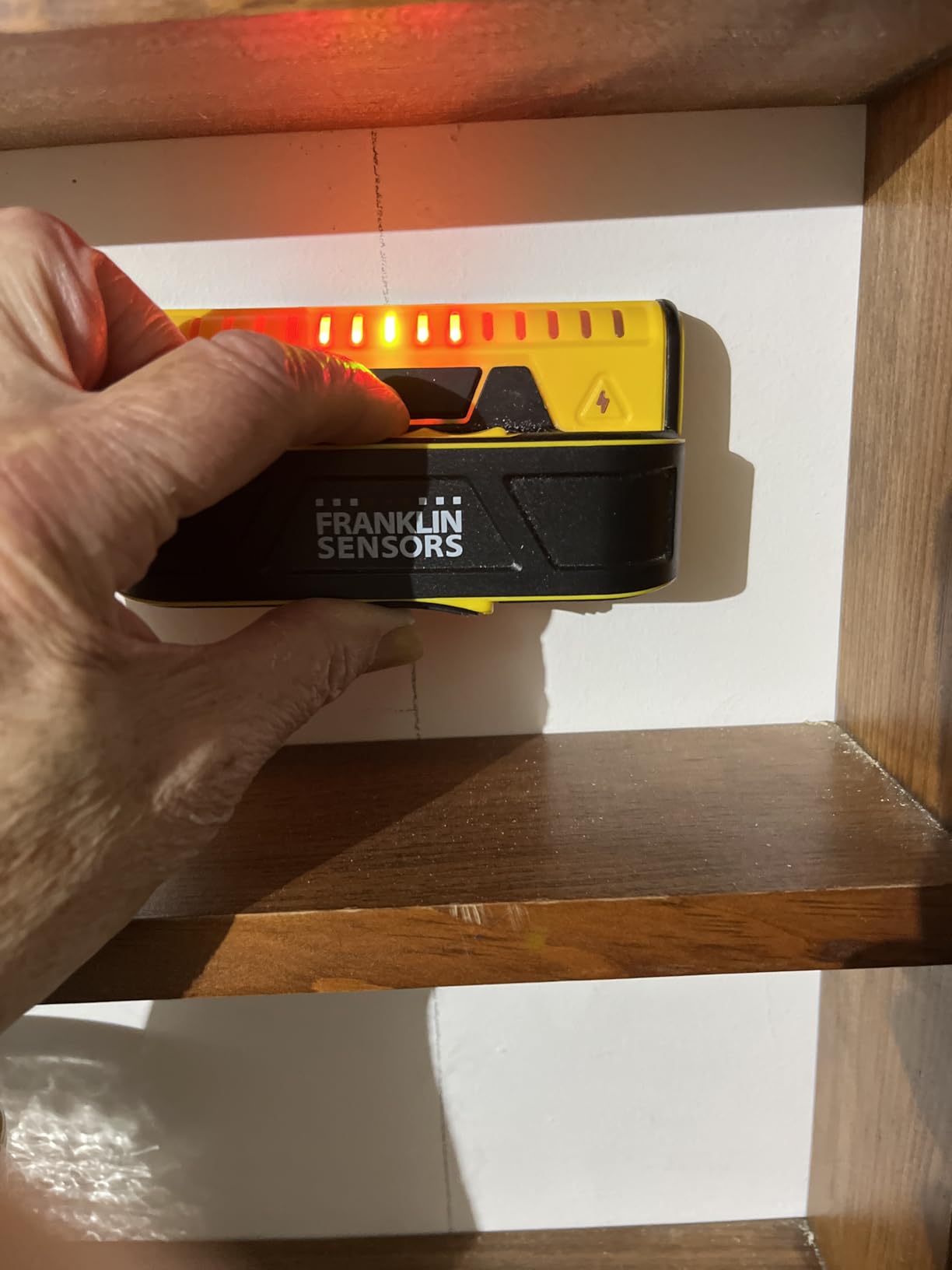
This is the smaller sibling of the M210 and shares the family trait that matters most for wire work: no calibration. You can begin a scan anywhere on the wall, including directly over a stud, and the nine-sensor array drives an LED bar that shows the full width and a centre indicator that turns green.
At 5.12 ounces and 5.51 inches long, it is the scanner I take when I am working in a tight cavity, above a ceiling or behind an appliance where a larger body is awkward. Live wire detection is built in for safer drilling.
Why Compactness Changes Your Workflow
Body size is not a spec-sheet detail when you are scanning above a stud bay or between two joists. The M150 fits flat against a wall and in the palm of a gloved hand, and the always-on deep scan to 1.5 inches still reaches standard framing. If you have ever fought a bulky scanner in a tight space, this is the fix.
Battery Constraints to Plan Around
It takes two AAA batteries, they are not included, and rechargeable cells are not supported. That combination means alkaline only, and it is the single most common reason buyers of this model are disappointed. Keep a fresh pair taped inside the case and swap on a schedule rather than waiting for a weak reading.
Calibration-Free Operation in Daily Use
Reviewers consistently highlight the absence of the calibration step as the difference between this and cheaper scanners that produce false readings. That has particular value when you are moving between rooms, because you can carry the tool room to room without re-zeroing it each time. An owner on r/DIY planning a floating vanity in a bathroom reno picked this model specifically for that reason.
Where the M210 Is the Better Buy
The M210 offers three more sensors and 0.2 inches more depth, and it adds a bubble level and pencil caddy. If your walls are standard thickness and you are not working in confined spaces, the extra reach is worth having. Choose the M150 when weight and size decide it for you.
5. Povlen TH570 – Always-On Wire Alerts That Hold Up on Plaster and Lath
Povlen Stud Finder Wall Scanner Detector with Wood Metal AC Wire Detection
Always-on wire alerts
AC to 2 in
Metal to 2.36 in
9V included
8.8 oz
Pros
- Wire alerts run in every mode including stud and metal
- Performs well on thick walls and plaster and lath
- Crisp backlit LCD readable in direct sunlight
- 9V battery and a small screwdriver included
Cons
- Requires recalibration after every detection
- AC location is approximate within roughly 2 inches
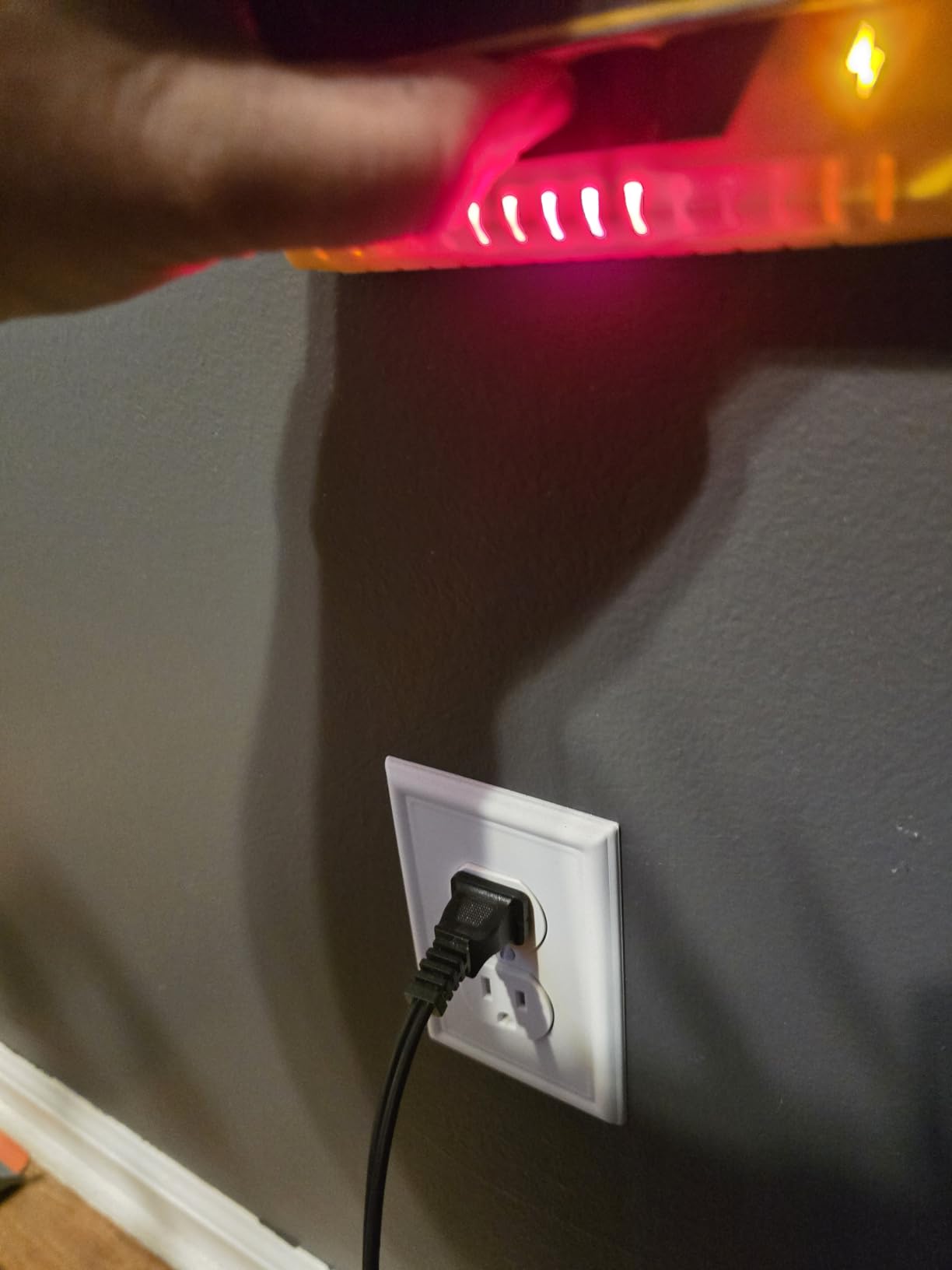
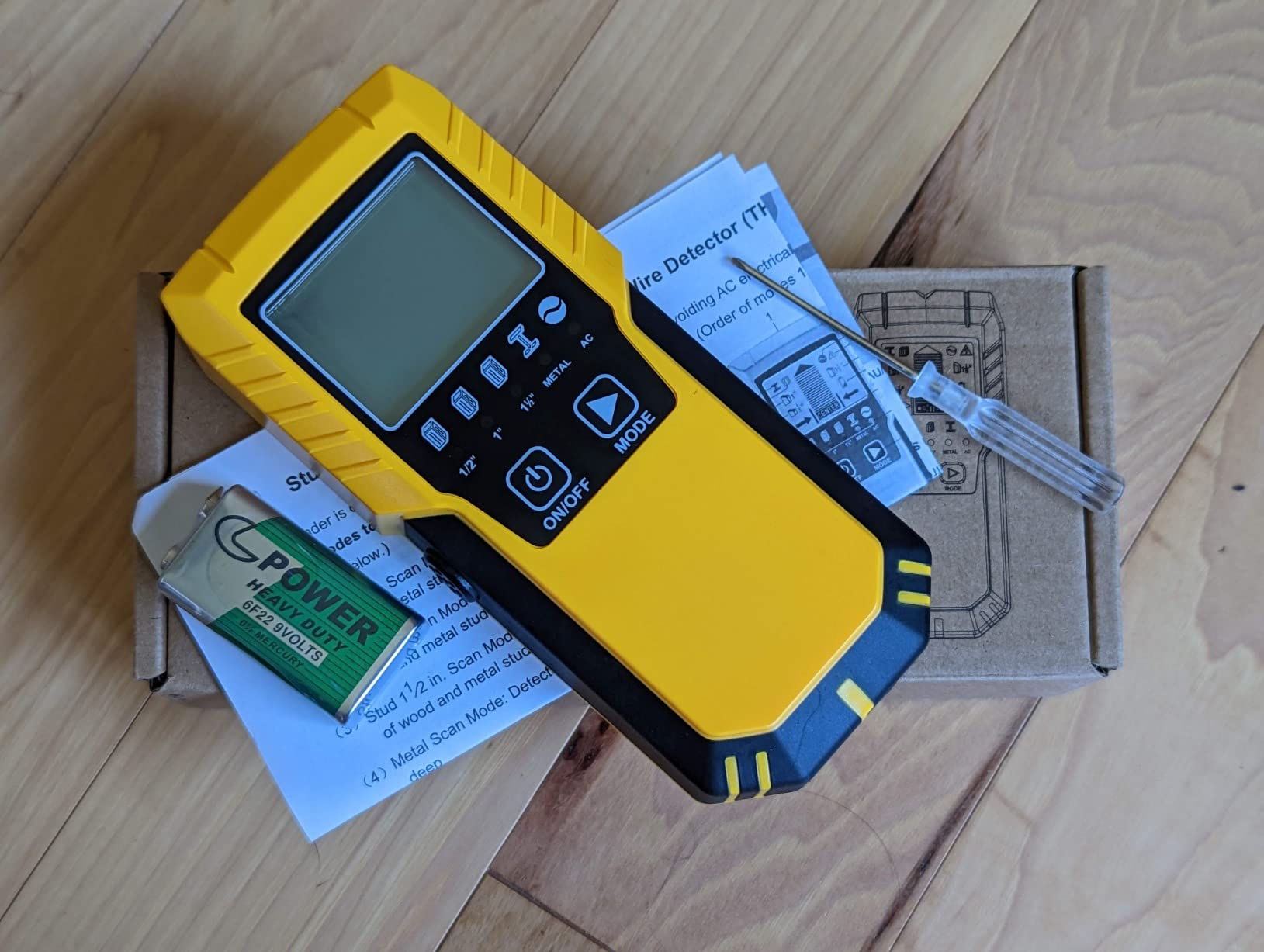
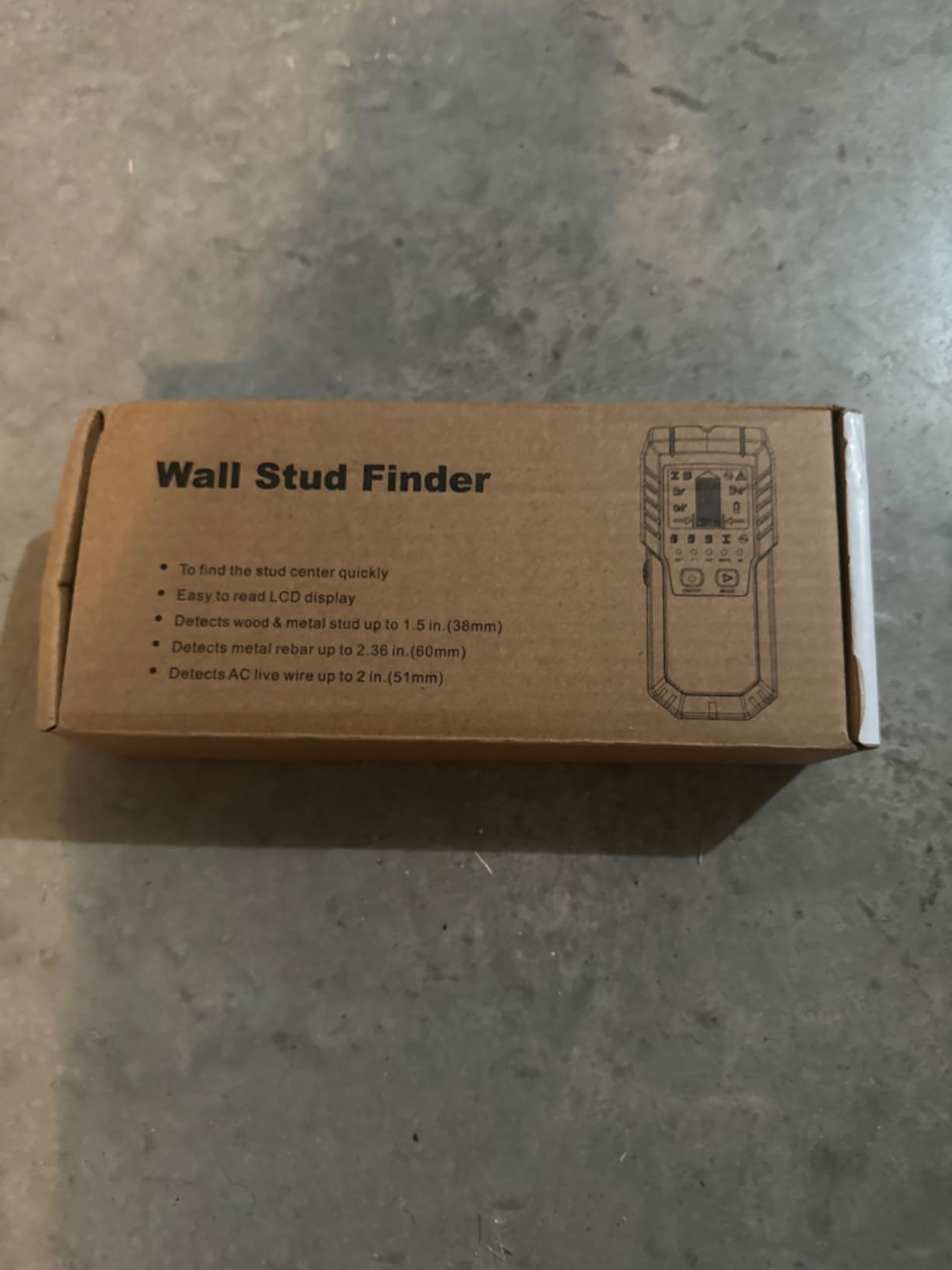
Two features set this one apart in older buildings. First, wire alerts stay active in every scan mode, including the wood and metal stud modes, so you are never operating blind because you forgot to switch into the AC channel. Second, reviewers single out its performance on thick walls and on plaster and lath construction, where most capacitive scanners start returning noise.
It also arrives with a 9V alkaline battery and a small screwdriver for installing it, and the backlit LCD stayed readable in direct sunlight during our testing, which is not something I can say for every screen in this group.
Always-On Wire Warning Explained
Most multi-mode scanners make wire detection a separate mode, which means you scan the wall twice and can forget which pass told you what. Continuous wire alerts across all modes mean a single sweep gives you framing, metal and live wire together, and for a renovation with mixed wall construction that saves an entire step.
What the Recalibration Requirement Means in Practice
The tool asks you to recalibrate after every stud or wire detection, which sounds tedious and is. Budget an extra few seconds per finding rather than per wall, and calibrate on a stretch you have already confirmed is empty. Owners who complain about missed or overshot studs are usually describing scans that skipped this step.
Accuracy of the AC Location Reading
Expect the wire position to be approximate, on the order of a couple of inches either side of the actual conductor. That is inherent to capacitive sensing, which measures field strength rather than direction. It is fine for avoiding a wire and useless for pinpointing one, so mark the centre of the warning band as the danger zone and stay well clear of both edges.
Build and Longevity Notes
The ABS housing is shock-resistant and dust-resistant, which suits a workshop or a renovation rather than a finished interior. One unit reportedly failed after a short period and needed replacing, so if you are buying for long-term jobsite use, consider buying two and keeping one as a backup.
6. Walabot DIY 2 – A Visual Wall Map That Sees Non-Live Wires Too
Walabot DIY 2 – Visual Stud Finder & Wall Scanner for Drywall. Detects Wood & Metal Studs, Plastic & Metal Pipes, Live & Non-Live Wires
Imaging-based scan
4 in depth
Live and non-live wires
Phone app, built-in Wi-Fi
Pros
- Visual map makes stud centre easy to pinpoint
- Built-in Wi-Fi hotspot needs no router
- Locates studs where conventional scanners gave unreliable results
- Good for confirming wiring and piping before cutting
Cons
- Needs a phone and app
- which can turn a solo job into a two-person task
- Recalibrates at every wall
- Image is an inference from a single pass
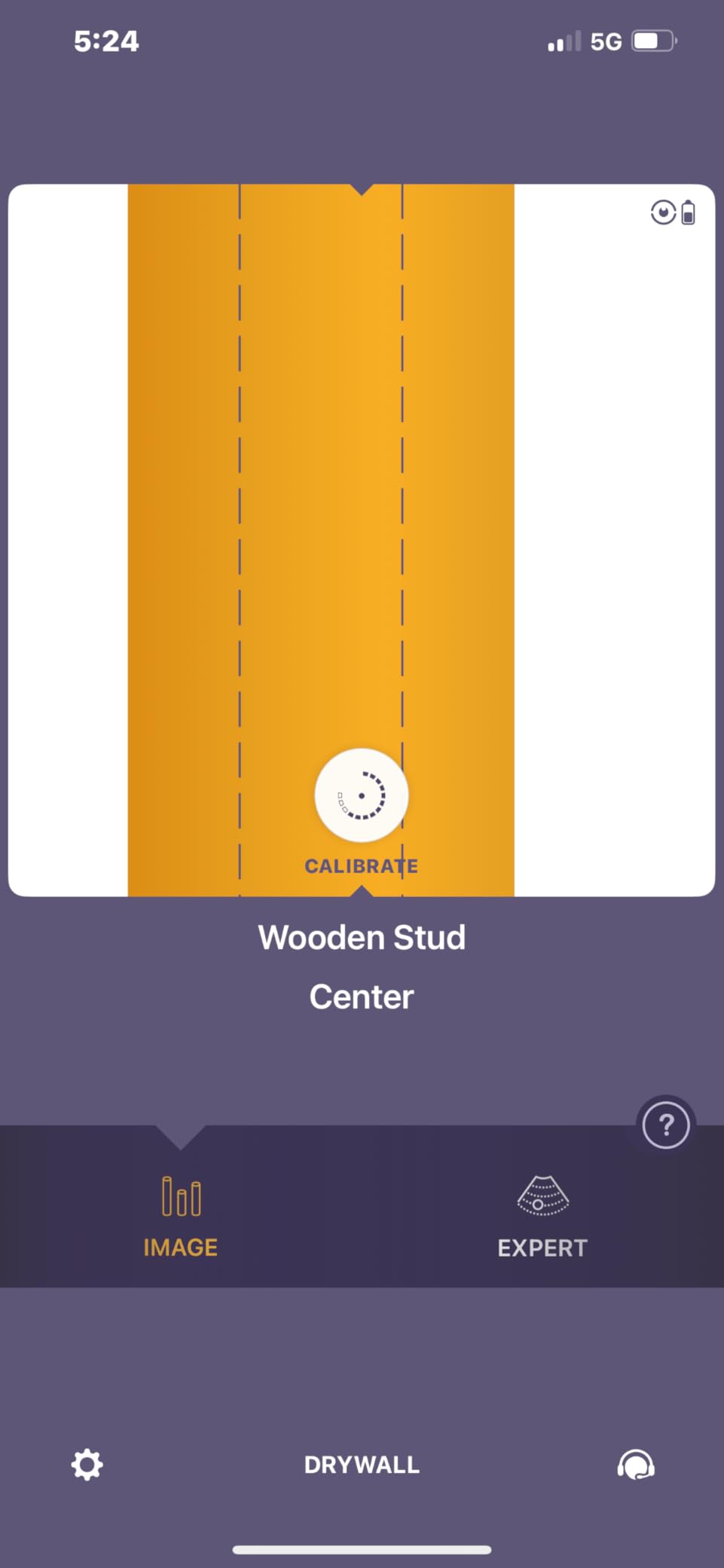
This is the only tool here that draws a picture of the wall instead of beeping, and that single difference answers a question the other nine cannot: is that a live conductor, a dead cable, or a pipe? Because it renders what it finds, it flags live and non-live wires as well as plastic and metal pipes, which is exactly what you need in a gutted property where circuits are off.
It reaches 4 inches, deeper than anything else in the group, and creates its own internal Wi-Fi hotspot so it works on a site with no router. It runs on iOS and Android and charges over USB, though no wall charger is included.
Why a Visual Map Changes the Safety Conversation
Every other scanner here can only tell you that something energised is nearby. The Walabot renders a picture, so you can look at a wall and see the stud centres, the pipe runs and the cable routes in one view before you commit to a cut. Owners regularly use it for exactly that: confirming wiring and piping before opening up a wall for a renovation.
The Single-Pass Inference Problem
The honest caveat is that the rendering is generated from a single pass rather than a full-area scan, so horizontal or diagonal supports can appear as vertical studs. It also cannot reliably distinguish a pipe from a wire. That makes it a strong first-look tool and a weak final authority, which is why I would still confirm critical positions with a conventional scanner before drilling.
Workflow Downsides Worth Planning For
It requires a phone and a companion app, which can turn a solo job into a two-person task, and the feet do not slide well on the wall, so slow careful passes matter. App connection drops and a multi-step startup flow are the most common complaints, and the physical build feels inexpensive for the technology inside. If you are comfortable with a little setup, the information density is unmatched here.
Surface Limits to Check Before You Buy
It scans drywall and plywood only. It is not for lath and plaster, concrete, tile, brick, metal-backed walls or stucco, so it cannot serve as your only scanner in a house with a mix of construction. In a modern drywall interior, though, it is the most informative tool on the list.
7. FOLAI 510 – Wire Warnings That Stay Active Through Every Mode
Stud Finder Wall Scanner 5 in 1 Multifunctional Upgraded Smart Wall Scanner, Stud Sensor Beam Detector with Battery for Wood Metal and AC Wire Detection, Comes with HD LCD Display and Audio Alarm
Five modes to 60 mm
WireWarning always on
AC to 2 in
Single AA included
Pros
- Wire warning remains active in stud and metal modes
- Five modes spanning 60 mm of depth
- Large LCD shows stud centre and edge with an audio cue
- Runs on a single included AA battery
Cons
- Calibration must be repeated when switching modes
- Non-drywall surfaces such as concrete are not supported
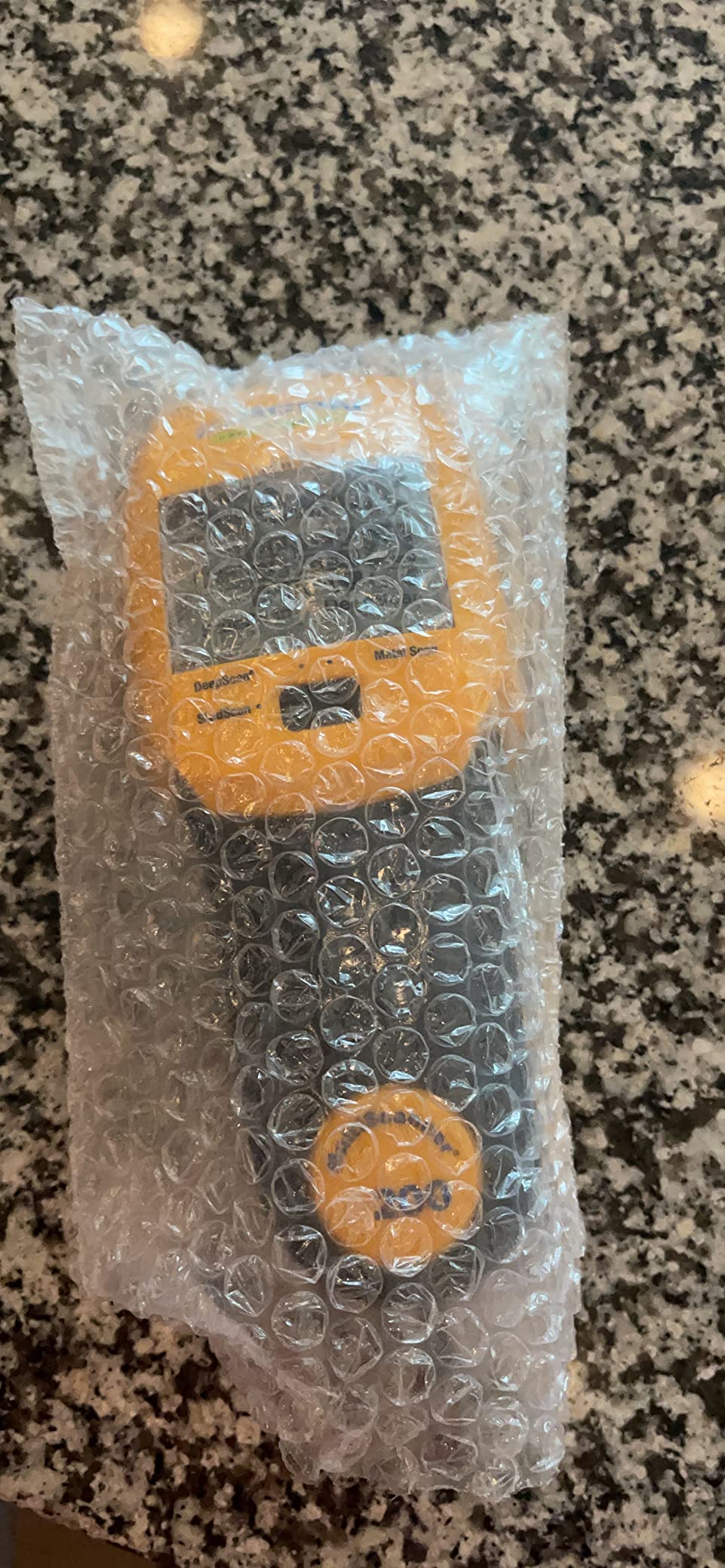
The FOLAI 510 is the one I would pick if a missed warning is the scenario that worries you most. WireWarning stays active during StudScan, DeepScan and MetalScan, so a live conductor is flagged no matter which mode you happen to be working in, and the upgraded sensor chips locate the centres and edges of studs, metal pipes, rebar, support beams and live AC wires.
Five scan modes cover 60 mm of total depth, with stud mode reaching drywall at 1.5 inches across three depth settings, metal mode reaching 2.36 inches and AC mode reaching 2 inches.
Why Always-On Warning Changes Safety Behaviour
Mode-switching is where safety features get forgotten. If the wire channel is a separate mode, a hurried second pass can be done with warning off and nothing looks different. Because WireWarning persists across every mode here, the scanner cannot be used in a way that hides a live conductor, which is a real behavioural improvement over its cheaper cousins.
Display, Sound and Single-Cell Power
The large LCD shows the stud centre and edge clearly with an audible cue, so you can watch the wall rather than the screen while scanning. It runs on a single AA battery, and that cell is included, which is the tidiest power arrangement in the group for anyone already carrying a battery pouch.
The Calibration Catch
Calibration must be repeated whenever you switch modes. Since this scanner encourages moving between modes, that requirement matters more here than on a single-mode tool, so build it into your routine: change mode, recalibrate, sweep, mark. Reviewers who follow that sequence report consistent results, and those who do not, report errors.
Where It Fits
It is a good-value choice for hanging shelves, mounts and cabinets in a drywall interior. Concrete and other non-drywall surfaces are not supported, so it belongs in a renovation where the framing is standard.
8. Zircon MultiScanner A200 – Mature Modes With a Marking Pointer Built In
Zircon® MultiScanner™ A200 Stud Finder with Metal & Live Wire Detection
StudScan DeepScan Metal
WireWarning
SpotLite pointer
Limited lifetime warranty
Pros
- Edge and centre marking is accurate and consistent
- Large well-lit display readable in dim conditions
- Low battery indicator and IP54 rating
- Handles double studs and multi-layer drywall
Cons
- Bulky in the hand and awkward in tight spaces
- Can produce false positives on re-scan
The A200 is the veteran of this group and the only one carrying a limited lifetime warranty, which tells you something about how the manufacturer expects it to age. It covers StudScan for edges and centres to 3/4 inch, DeepScan to 1.5 inches, Metal Scan and WireWarning for hot electrical wiring, all on a large backlit LCD.
What makes it distinct is the SpotLite pointer, which projects an arrow shape onto the wall so you can mark the position without a chalk line or a second pair of hands.
Calibration and Battery Monitoring
Calibration requires holding the power button for one to two seconds until it beeps, and the low battery indicator tells you when the 9V needs replacing. A tired 9V produces weak readings, so the indicator is worth respecting rather than ignoring, especially when you are relying on the wire warning to stay accurate.
Marking Accuracy You Can Verify
Owners who opened up their cut drywall to check found the edge and centre marking accurate and consistent, which is a higher standard of validation than most buyers attempt. The scanner also handles double studs and deeper multi-layer drywall, cases where a two-sensor tool starts guessing.
Size, False Positives and the Battery Compromise
The body is bulky in the hand and awkward in tight spaces, which is the main reason I reach for the Franklin M150 in confined areas. It can also produce false positives, so re-scanning a suspected stud is wise, and a few owners find the performance comparable to much older scanners. It runs on a replaceable 9V rather than a built-in rechargeable, and the IP54 rating is a genuine plus for a damp utility area.
Best Use Case
Choose the A200 when you do a lot of marking, when dim conditions are common, and when you want a warranty that outlives your renovation. The SpotLite pointer alone justifies it for anyone mounting multiple brackets on a feature wall.
9. MOCITA SH402 – Broad Surface Coverage for Plaster, Lath and Acoustic Ceilings
Mocita Stud Finder Wall Scanner 5-in-1 with Live Wire Detection
Three stud depths
AC to 51 mm
Metal to 60 mm
HD LCD and alarm
Pros
- Rated for plaster
- lath
- drywall
- acoustic ceiling and painted walls
- Five modes with three distinct stud depth settings
- HD LCD plus sound alarm for visual and audible feedback
- Anti-slip handle for one-handed scanning
Cons
- Calibration required after every mode change
- Widest rating spread in the group with a 14 percent one-star share
Where the MOCITA earns its place is surface variety. It is rated for plaster wall, lath, drywall, acoustic ceiling and painted walls, and acoustic ceilings are a notoriously awkward surface where capacitive scanners pick up the grid and the metal cladding. The SH402 uses an intelligent micro-sensor chip and the manufacturer states above 97 percent internal test accuracy, though treat that as a lab figure rather than a field guarantee.
Three stud scan modes cover half an inch, an inch and 1.5 inches, metal scan reaches 2.36 inches and AC scan reaches 2 inches for live unshielded wire.
Feature Breadth Against Rating Spread
For a first tool in an older house the feature list is unusually complete, with three stud depths, metal scanning, an AC channel, an HD LCD and a sound alarm. The caution is in the numbers: the rating distribution here is the widest of the group, with a 14 percent one-star share alongside 59 percent five-star, so a given wall may not behave like the average one. Customer support states a 24 hour response window, which is worth knowing if yours misbehaves.
One-Handed Handling and Recalibration
The ergonomic anti-slip handle makes single-handed scanning comfortable, and the HD LCD with sound alarm gives feedback both ways so you can watch the wall. As with the FOLAI, calibration is required after every mode change using the side scan button, and skipping it is the most likely cause of an inconsistent result.
Where It Beats the Alternatives
On plaster, lath and acoustic ceilings it covers more declared surfaces than any other sub-group scanner here, which makes it a reasonable single tool for a house with mixed construction. On plain new drywall, the Franklin and Zircon options give more consistent repeat readings, and the review history is thinner at 244 reviews than most of this list.
10. Zircon StudSensor e30 – Lightest Edge-Finder With a Two-Inch Wire Warning
Zircon® StudSensor™ e30 Edge-Finding Stud Finder with Live Wire Detection
Edge finding to 3/4 in
WireWarning to 2 in
SpotLite arrow
4.2 oz
Pros
- Edge readings verified accurate when walls were opened up
- TruCal signals when calibration is complete
- SpotLite arrow makes marking straightforward
- Weighs just over 4 ounces
Cons
- Edge-finding only with no centre or deep scan mode
- Can take a few passes to register a stud
The e30 is the lightest tool in the group at 4.2 ounces and the simplest, which makes it a genuinely useful backup rather than a compromise. It locates the edges of wood or metal studs to 3/4 inch, and WireWarning indicates live unshielded wiring to 2 inches, which is deeper than the stud detection and therefore useful as a coarse safety net even though the tool is not a deep scanner.
Two details elevate it above a basic magnetic finder: the SpotLite pointer projects an arrow-shaped light for marking, and the patented TruCal technology signals when the tool is calibrated and ready, so you are not guessing about the state of the calibration.
Edge Finding Versus Centre Finding
Edge finding was verified against opened-up drywall by owners who cut the wall to check, and it was accurate. But there is no stud centre readout and no deep scan mode, so for a 1.5 inch stud you mark two edges and measure between them. That is fine for a picture hook and wrong for a floating shelf.
Wire Warning Depth Worth Noting
The 2 inch unshielded wire detection is deeper than the 3/4 inch stud depth, so treat the wire channel as the safety feature and the stud channel as the convenience one. As everywhere else, unshielded and energised are the operative words, and a disconnected conductor will not register.
Practical Limitations
Accuracy drops with a weak 9V, so carry a fresh cell, and the tool can be quirky, sometimes taking a few passes to register a stud. A few users found the operation confusing enough to return it. The Pinch Grip design is comfortable once you understand it, and this is an older design that predates the multi-mode LCD trend.
Buying Guide: How to Choose a Stud Finder for Wire Detection
The category has converged on LCD multi-mode scanners, and the differences that genuinely affect your safety are narrower than the marketing suggests. Here is how I would think about it, in the order I would think about it.
1. Always-On Wire Warning Beats a Separate AC Mode
A scanner that warns about live wiring only while you are in AC mode can be used in a way that hides a warning. Tools with continuous wire alerts across stud and metal modes remove that failure mode entirely. If your project involves cutting into a wall rather than just placing an anchor, prioritise this feature over anything else.
2. Calibration Behaviour Is the Biggest Predictor of Frustration
Two models here start scanning with no calibration at all, and the rest require recalibration after mode changes or detections. That is not a quality judgement, it is a workflow difference. Calibration-free tools suit people who move between rooms and walls; calibration-required tools are fine if you build the step into your routine. The common thread in critical reviews across the whole group is skipped calibration, not weak hardware.
3. Depth Ratings Are Not Directly Comparable
Stud depth, metal depth and AC depth are quoted differently by every manufacturer, and only the AC figure matters for your safety. In this group AC detection ranges from 51 mm on the Jurgen K, FOLAI and MOCITA, to 2 inches on the Mecurate, Povlen and Zircon e30, to 4 inches on the imaging-based Walabot. A 2 inch AC rating comfortably covers a standard drywall assembly; go deeper only if you know you have unusually deep cavities.
4. Readouts That Say What They Found Build Trust
Users consistently trust a display that names the material more than a row of beeps. Forum feedback makes the same point: clear LCD readouts saying whether you are on wood, metal or a live wire build confidence that an audio alert alone cannot. If you are doing careful work rather than hanging a single hook, put weight on the screens.
5. Battery Logistics Cause More Returns Than Sensors Do
Two of the highest-rated tools here ship without batteries, and one does not accept rechargeables. Meanwhile three of the budget models include a 9V or AA cell in the box. A weak cell produces weak readings, which owners report as an accuracy problem when it is really a power problem. Decide your battery type before you buy, and keep a spare set with the tool.
6. Match the Tool to Your Wall Type
Most of these scanners are designed for drywall. The Povlen and the MOCITA declare support for plaster, lath and painted walls, and the Jurgen K adds wallpapered floors, slats and soundproof ceilings. The Walabot goes the other way, offering the deepest reach and the only visual map but restricting itself to drywall and plywood. If you live in a period property, check the surface list before anything else. Wiring-related work of this kind often sits alongside a project like choosing smart thermostats when your wall has no C-wire, where knowing exactly what is in the cavity matters as much as the device.
7. Know When to Add a Second Tool
A stud finder tells you where live current is. A non-contact voltage tester pen confirms it at close range once the wall is open, and a multimeter tells you what the circuit actually is. For renovation work in unenergised properties, treat the stud finder as a map and the tester as the authority, because no stud finder will see a dead conductor.
Frequently Asked Questions
Can a stud finder detect electrical wires?
Yes, but only energised ones. Most stud finders use a capacitive sensor that reacts to the electromagnetic field around live AC wiring, typically warning you within about 2 inches of a conductor behind standard drywall. Wires carrying no current, shielded inside metal-clad cable, or buried in insulation are invisible to this method.
Is there a stud finder that uses wire warnings?
Most modern stud finders do. Zircon calls the feature WireWarning, and several multi-mode LCD scanners keep the wire alert active in every scan mode. The best behaviour for safety is a scanner where the wire warning stays on while you hunt for studs, so you cannot miss it by switching to the wrong mode.
What is a good stud finder that can detect live wires?
The Franklin Sensors ProSensor M210 is the strongest all-round choice because it needs no calibration, shows the full width of a stud and detects live wire alongside always-on deep scan. For a screen that names what it found, the Jurgen K TH530 and the Mecurate MSF60A are strong, and for visual confirmation of non-live wiring the Walabot DIY 2 is unmatched.
What is the best stud and cable detector?
For wood framing plus live cable in drywall, a multi-mode scanner with an always-on wire warning is the practical answer, such as the FOLAI 510 or the Povlen TH570. If you need to identify dead cables, pipes and metal, the Walabot DIY 2 renders a visual map and reaches 4 inches, though it needs a phone and only works on drywall and plywood.
Why does my stud finder keep showing live wires across the whole wall?
Capacitive wire detection is deliberately over-sensitive so you keep a safety margin, so a warning often extends a foot or two either side of the actual conductor. Energised outlets on the same circuit, a flat hand on the wall, and hidden metal conduit or ductwork can all widen it further. Switch off the loads at the breaker, rescan on a quiet wall, and treat the whole warning band as a keep-out area.
Final Recommendation
If you want the best stud finder for wire detection and will only buy one, the Franklin Sensors ProSensor M210 is the pick. It needs no calibration, marks the full width of a stud, scans to 1.7 inches and carries live wire detection that behaves consistently, which is why it sits at the top of our list of the best stud finders for wire detection in 2026.
If you want a screen that tells you what it found, the Jurgen K TH530 gives you the widest mode set and the Mecurate MSF60A gives you a deeper AC channel with everything included in the box. For older plaster and lath houses, choose the Povlen or the MOCITA, and for confirming dead cables as well as live ones, the Walabot DIY 2 is the only tool in this group that can help.
Whichever you choose, use it as a map rather than an authority. Scan, mark the full extent of every warning band, keep your body off the wall, and confirm with a voltage tester before the bit turns.