
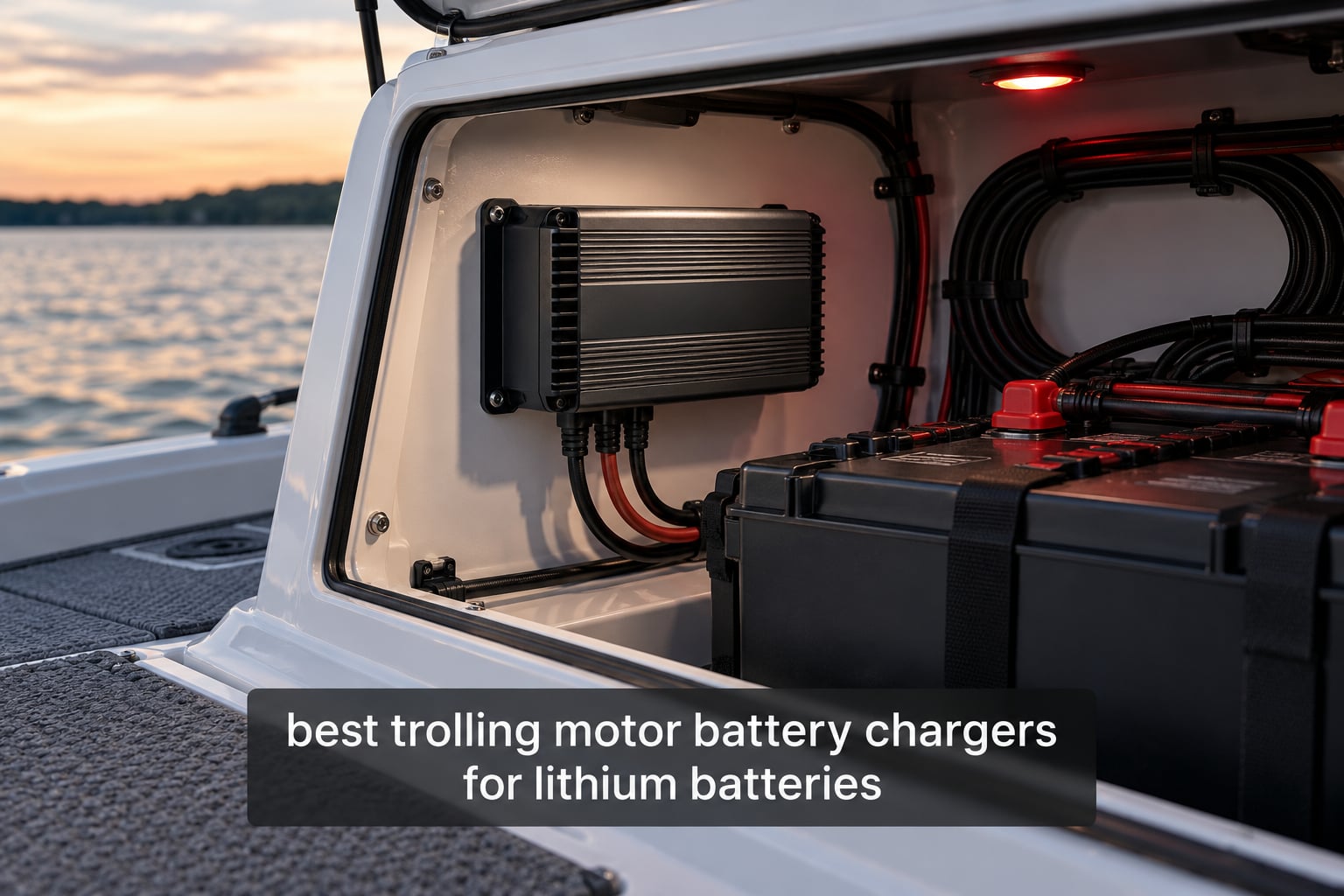
If you have already made the switch to LiFePO4 on your boat, the charger becomes the most overlooked piece of the whole conversion. A lead-acid charger that never pushes past 14.2V will leave a lithium pack sitting at maybe 70% charge forever, and angler after angler describes that same confusing symptom on the fishing boards. Our team spent weeks working through the chargers below against 12V lithium banks, and this is the honest shortlist for the best trolling motor battery chargers for lithium batteries in 2026.
The category is messier than it looks. Only a handful of units on the market are actually sealed for a wet console, several cheap chargers advertise lithium support but have no real LiFePO4 absorption stage, and the useful difference between a 2A maintainer and a 20A dual-bank onboard charger is bigger than most spec sheets suggest. Everything in this roundup has a dedicated lithium charge profile, a stated warranty, and enough documentation for us to tell you exactly what it will and will not do.
We also pulled in what owners report on r/Fishing_Gear and the bbcboards lithium charger thread, because the failure patterns show up there long before they appear in manuals. The most repeated community sizing rule is a good starting point for anyone with a 50Ah pack or larger: at least 10 amps of charger output, and 20 amps if you want it back overnight. More on that in the buying guide below.
Before the individual write-ups, two quick reads if you want a different angle. Our guide to battery chargers for rechargeable batteries covers the chemistry basics, and battery chargers for fast charging goes deeper on output sizing. Angler-specific models like the ones here are a different animal from camera battery chargers, since marine units care about water, corrosion and 24-hour duty cycles rather than a small hidden battery bay.
What Makes a Charger Compatible With a Lithium Trolling Motor Battery?
A lithium-compatible trolling motor charger needs a real LiFePO4 charge profile that reaches roughly 14.4V to 14.6V in the absorption stage, independent per-bank control if you run more than one battery, and a housing that survives a saltwater environment. Anything less and the battery management system will throttle, cycle, or simply refuse to finish the charge.
That 14.4V to 14.6V figure is the single most important number on the whole unit. Lead-acid chemistry tops out lower, so a charger without a lithium mode will sit in a long tail stage forever and never fill the pack. The reverse problem shows up too: a charger with no adjustable lithium voltage can push above what a particular BMS is set to accept, which is why bassresource forum regulars keep repeating that lithium needs a charger designed for it or at least a unit with a true AGM and lithium profile rather than a generic trickle box.
Two more things separate a boat charger from an automotive one. Waterproofing matters more than almost any other feature, because a charger mounted in a console lives in a wet compartment that floods occasionally. And a thermal sensor that compensates for ambient temperature is what keeps a pack from cooking in a July console or stalling in a January unheated garage.
Our Top 3 Picks for Lithium Trolling Motor Charging in 2026
These three cover the realistic range of setups: a sealed dual-bank onboard unit, a selectable maintainer for storage, and a direct-mount lead-acid maintainer for mixed fleets.

NOCO GENPRO10X2 2-Bank 20A
- 20A total
- 10A per bank
- IP68 sealed onboard housing
- Dedicated 12V lithium and repair modes
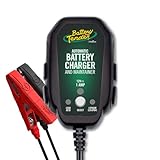
Battery Tender Junior 800mA
- Selectable lead-acid or LiFePO4 profile
- ISM microcontroller charge sequencing
- 5-year warranty
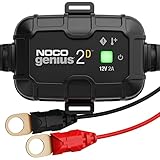
NOCO GENIUS2D 2A Maintainer
- Direct-mount bracket
- Force mode down to zero volts
- Lead-acid only profile
Comparing the Best Trolling Motor Battery Chargers for Lithium in 2026
Every charger below has a dedicated lithium or LiFePO4 mode except the GENIUS2D, which we include deliberately as a lead-acid-only maintainer for boats that still carry an AGM starter bank. Output is stated as total amps across all banks.
| Product | Specs | Action |
|---|---|---|
| NOCO GENPRO10X2 12V 20A 2-Bank Onboard Charger |
|
Check Latest Price |
 LiTime 12V 20A Lithium Battery Charger with 0V Activation LiTime 12V 20A Lithium Battery Charger with 0V Activation |
|
Check Latest Price |
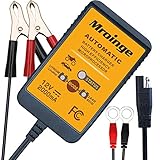 Mroinge MBC022 12V 2A Smart Trickle Charger Mroinge MBC022 12V 2A Smart Trickle Charger |
|
Check Latest Price |
| Battery Tender Junior 12V 800mA Selectable Maintainer |
|
Check Latest Price |
 Haisito 20A Smart Charger with Temperature Compensation Haisito 20A Smart Charger with Temperature Compensation |
|
Check Latest Price |
 PZ.P 15A 12V/24V Nine-Stage Smart Charger PZ.P 15A 12V/24V Nine-Stage Smart Charger |
|
Check Latest Price |
 ECO-WORTHY 12V 10A Charger for Lead-Acid and LiFePO4 ECO-WORTHY 12V 10A Charger for Lead-Acid and LiFePO4 |
|
Check Latest Price |
 RCGCBC 0-25A 12V/24V Nine-Stage Charger RCGCBC 0-25A 12V/24V Nine-Stage Charger |
|
Check Latest Price |
 SOARFLY 3-Bank 12V 30A Waterproof Onboard Charger SOARFLY 3-Bank 12V 30A Waterproof Onboard Charger |
|
Check Latest Price |
| NOCO GENIUS2D 12V 2A Onboard Maintainer |
|
Check Latest Price |
1. NOCO GENPRO10X2 – The Sealed Two-Bank Onboard Charger for Lithium Trolling Banks
NOCO GENPRO10X2 12V 20A 2-Bank OnBoard Marine Battery Charger & Maintainer
20A total, 10A per bank
IP68 sealed onboard housing
12V lithium, AGM, flood and repair modes
3-year warranty
Pros
- Charges two independent 12V banks at 10A each
- IP68 fully sealed waterproof onboard design
- Integrated thermal sensor adjusts charging to ambient temperature
- Recovers batteries from 1V or zero volts with Force Mode
- Selectable 12V
- 12V AGM
- 12V lithium and repair modes per bank
Cons
- Two-bank design cannot expand to a third bank later
- Higher amperage calls for a longer DC lead run to distant banks
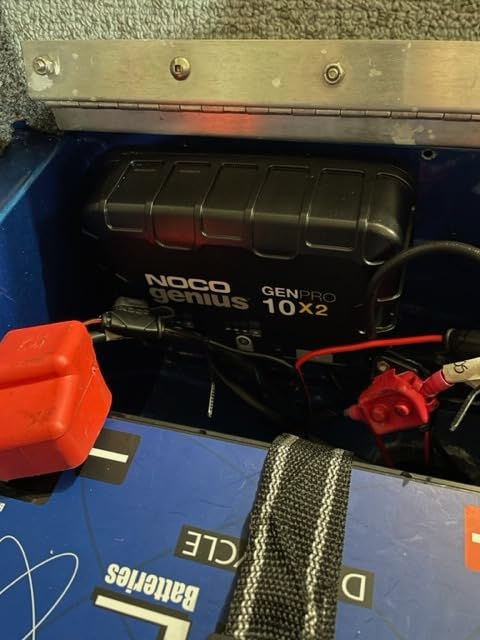
Most lithium conversions fail quietly at the charger, and the GENPRO10X2 is the unit we trust to avoid that. The headline figure is 20 amps of total output split into two independent banks at 10 amps each, which matters on a boat because the starter bank and the trolling bank almost never deplete together. Each bank gets its own chemistry selection, so you can run a lithium trolling pack and a flooded start battery on the same box.
Owners of boats, campers, vans and golf carts consistently point to the same three things: the compact footprint, the plug-and-play installation, and output that actually holds at 10 amps per bank. Several have revived fully dead AGM packs with the recovery function, and lithium setups are reported as charging quickly. It sits at number 4 in Boat Battery Chargers, and more than 1600 owner reviews make it one of the better-documented onboard units in the category.
Two Independent Banks With Per-Bank Chemistry Selection
The 2-bank, 10A-per-bank layout is the feature that separates this from a portable smart charger with a bigger number printed on the box. Each bank has selectable 12V, 12V AGM, 12V lithium and 12V repair modes, and the banks are managed independently rather than as a single string.
That independence is what tournament anglers ask for. When you run a house bank, a start bank and a trolling bank, per-bank profiles stop being a nicety and become the difference between a full battery at launch and a half-charged one at the ramp.
IP68 Sealing and Console Installation
This is a fully sealed onboard unit rated IP68, and the manufacturer describes thousands of hours of underwater lifecycle testing. The simplified mounting system installs in any orientation, including upside down, and an integrated anti-vibration backing isolates shock and noise on a running hull.
Given the owner reports of installed lithium chargers failing inside wet consoles, the sealing on this unit is the single most important thing to weigh. A cheaper indoor-rated box mounted in the same cavity is the most common marine failure mode we heard about.
Recovery Modes and Temperature Handling
The charger works down to 1V and Force Mode handles batteries at zero volts, which saves a neglected pack from the scrap pile. An integrated thermal sensor adjusts the charge curve to ambient temperature, limiting overcharge in a hot console and undercharge on a cold morning.
Cable length is generous at 72 inches for both the DC run and the AC input, and the box ships with 3/8-inch eyelets and mounting hardware. Buyers running banks in a separate compartment should still measure first, since long DC runs at 20 amps benefit from heavier gauge wire.
Who Should Look Elsewhere
If you plan to add a third battery bank later, the two-bank layout will not grow with you, and the SOARFLY three-bank unit in this roundup handles that case. If your battery sits in a dry garage or on a trailer tongue rather than in a boat, a portable 20A unit will do the same job for less money.
2. LiTime 12V 20A Lithium Charger – The Fast Single-Bank Charge for Garage Use
LiTime 12V 20A Lithium Battery Charger, 14.6V Output AC-DC, 0V Activation
20A at 14.6V output
0V activation for sleeping BMS
Anderson 50A and M8 terminals
Not waterproof
Pros
- Delivers a true 20A output verified by users with a clamp meter
- 0V activation wakes BMS-protected lithium batteries
- Aluminum alloy housing with cooling fan for heat dissipation
- Full CC/CV then float transition with multi-level protection
- Anderson 50A and M8 terminal connectors
Cons
- Not waterproof and explicitly unsuitable for marine or trolling motor environments
- Fixed 14.6V charge voltage cannot be lowered
- Audible cooling fan
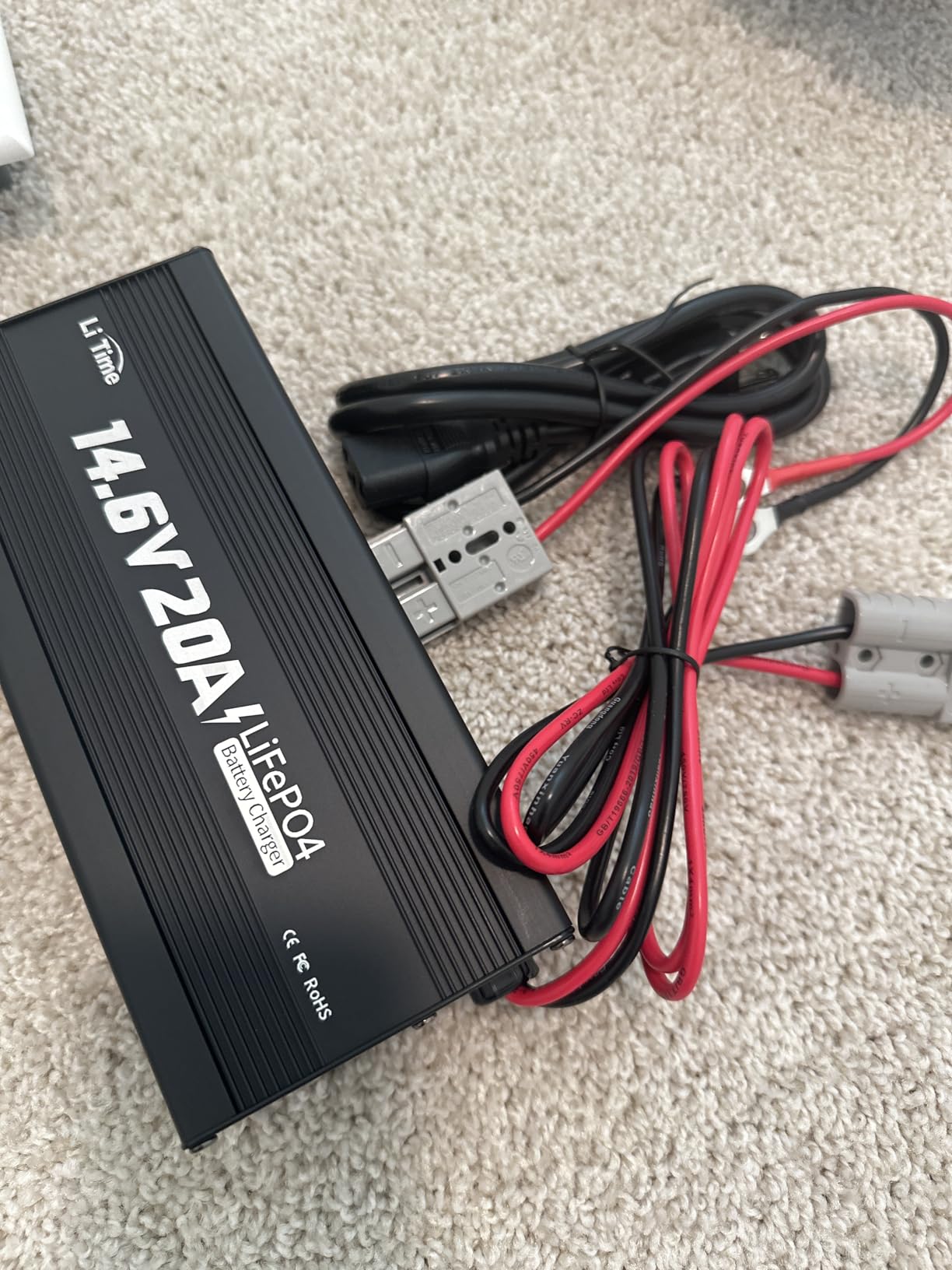
This is the fastest single-bank charge in the group, and the caveat is printed right in the feature list: it is not waterproof and not intended for marine environments. That rules it out of a console, and it means you should think of it as a garage or home charger for the same LiFePO4 pack before you put the boat in the water.
Owners of 100Ah and 135Ah LiFePO4 packs report full charges in roughly 5 and 7 hours, and several run multiple units in off-grid solar builds. The output is real, too. Users have verified the 20 amp rating with a clamp meter rather than taking the label at face value, which is not something you can say for most chargers in this price bracket.
Why the Fixed 14.6V Output Matters
The unit charges to 14.6V, which is the correct absorption setpoint for a 12.8V LiFePO4 pack and the reason it fills faster than lead-acid-profile chargers. The trade-off is that the voltage is not adjustable, so it will not suit a battery whose BMS caps the ceiling below 14.6V.
Reviewers running mixed packs report that LiTime’s support team handled exactly that situation well, arranging a return when the voltage ceiling was too low for their battery. That kind of response matters when a spec sheet cannot tell you your BMS limit in advance.
0V Activation for BMS-Protected Packs
The 0V activation function sends an initial pulse to wake a lithium battery that has dropped into BMS-protected sleep, which is the common state for a pack that has sat unused through a winter. Once awake, the normal constant current to constant voltage curve takes over.
Protection covers over-temperature, over-voltage, short circuit, over-current, low voltage and reverse polarity, and the unit is tested to FCC, CE and RoHS standards. The charger carries a 2-year warranty and is covered by AIG product liability insurance.
Connections and Physical Design
Connections use Anderson 50A plugs and M8 terminals, which is a meaningful upgrade over clip leads at 20 amps. Clamps throttle current through corrosion, and in a damp environment that is exactly the connection you do not want to be the weak link.
Where It Falls Short
The housing is an aluminum alloy shell with a cooling fan, and the fan is audible in a quiet room. If you plan to charge overnight in a bedroom-adjacent garage, that is worth knowing before you buy. The unit weighs 2.9 pounds and measures 8.13 by 3.56 by 2.5 inches, so it is portable rather than permanently mounted.
Owners also note it is not a marine charger by design, not by accident. The manufacturer states this explicitly, and that honesty is worth more than a vague compatibility claim when you are deciding what goes in a boat.
3. Mroinge MBC022 – The Low-Cost Trickle Maintainer for Small Lithium Banks
Mroinge MBC022, 12V 2A Lead Acid & Lithium(LiFePO4) Automatic Trickle Battery Charger Smart Battery Maintainer for Car Motorcycle Lawn Mower Boat ATV SLA AGM Gel Lithium(LiFePO4) and More Batteries
2A trickle output
Lead-acid and LiFePO4 switch
5-stage charge program
12ft cord, 2-year warranty
Pros
- Very low cost entry point for lithium-compatible maintainers
- Switchable 12V lead-acid and 12V LiFePO4 modes
- Five-stage charging avoids overcharging and extends battery life
- Multi-level protection including reverse polarity and short-circuit detection
- Includes 12ft output cord with clips and O-ring terminals
Cons
- 2A output is maintenance and trickle only
- not a recovery charger
- Battery must be disconnected before switching charge modes
Trolling batteries spend a lot of their lives not being used. Between trips the pack sits in a garage or a livewell losing a trickle of current, and that is exactly the job a maintainer is built for. The MBC022 handles 12V lead-acid and 12V LiFePO4 packs up to 85Ah with a 2A output, which is a sensible match for a single small lithium bank in a skiff or a jon boat.
Buyers typically use it as a storage maintainer for cars, motorcycles, lawn mowers and small marine batteries. What draws the most praise is the mode switch between chemistries and the long cord, while the common complaint is simply that 2 amps tops a battery off rather than charging it quickly.
Five-Stage Charging and Mode Selection
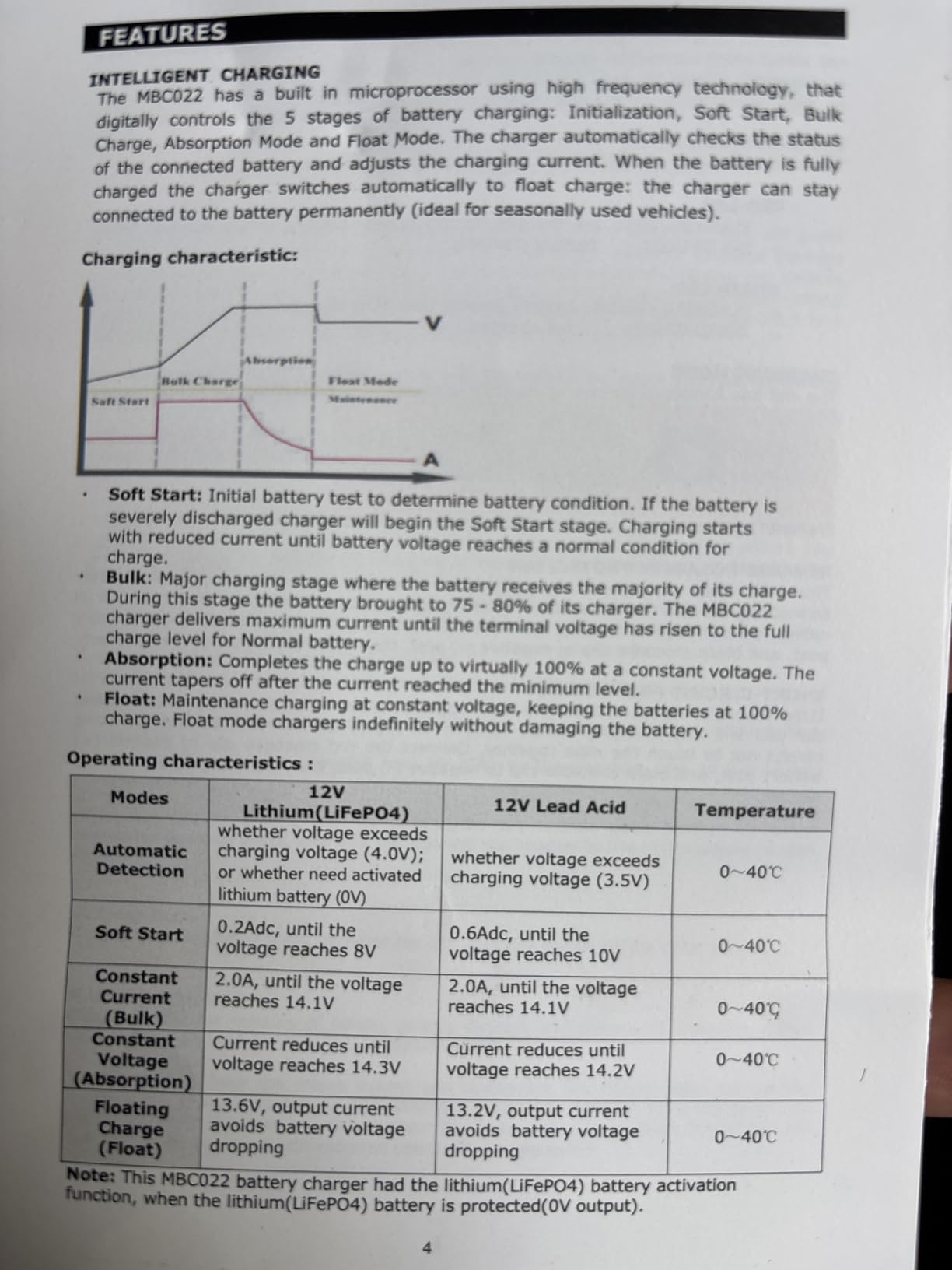
The charge program runs through initialization, trickle current, bulk charge, absorption and float, which is a reasonable structure for keeping a battery topped up over months without cooking it. The lead-acid and LiFePO4 modes are selected with a physical switch, so there is no menu to navigate at the dock.
One instruction is worth repeating: disconnect the battery before changing the charge mode. Getting that wrong is how maintainers end up cycling a BMS on and off, which is one of the liability concerns anglers raise when they try to use an automotive charger on a lithium pack.
Protection and Physical Details
Protection covers spark-proof connection, reverse polarity, overcharging, short circuit, over-temperature and dust resistance, plus a bad-battery indicator and a low-voltage activation function for lithium packs. LED indicators give visual charging state feedback without needing an app.
The package includes a 12ft output cord with alligator clips and O-ring terminals, and the charger carries a 2-year warranty. It weighs 0.35 kg and measures 2.32 by 3.78 by 1.42 inches, so it stows in a tackle box without thinking about it.
When 2 Amps Is Enough and When It Is Not
Charge time scales directly with capacity. A small 20Ah pack on a 2A charger is a few hours of work, while a 100Ah bank at the same output runs for the better part of two days. Owners who expected a fast charge are the ones leaving the most disappointed reviews.
So match it honestly: this is a maintainer, not a recovery tool. If your bank regularly goes deeply depleted on a long trip, a 10A or 20A unit is the correct answer and the price gap is small.
4. Battery Tender Junior – The Best-Rated Maintainer for Long-Term Lithium Storage
Battery Tender Junior 12V, 800mA Battery Charger and Maintainer for Lead Acid and Lithium Batteries – Switchable Battery Charger for Powersports – 022-0199-DL-WH
800mA selectable output
Lead-acid or LiFePO4 profile
ISM microcontroller
5-year warranty
Pros
- Push-button switch between lead-acid and LiFePO4 charging profiles
- ISM microcontroller continuously adapts the charge sequence
- Automatic maintenance mode prevents overcharging once full
- Compact and lightweight
- easy to store in small spaces
- Spark-proof connection with automatic reverse polarity detection
- Five-year warranty and ETL
- CSA
- FCC
- ICES and BC certified
Cons
- Very few status lights
- so charge progress is hard to read at a glance
- 800mA is trickle only and will not recover a dead battery
- Lithium mode is a profile rather than a high-voltage LiFePO4 cycle
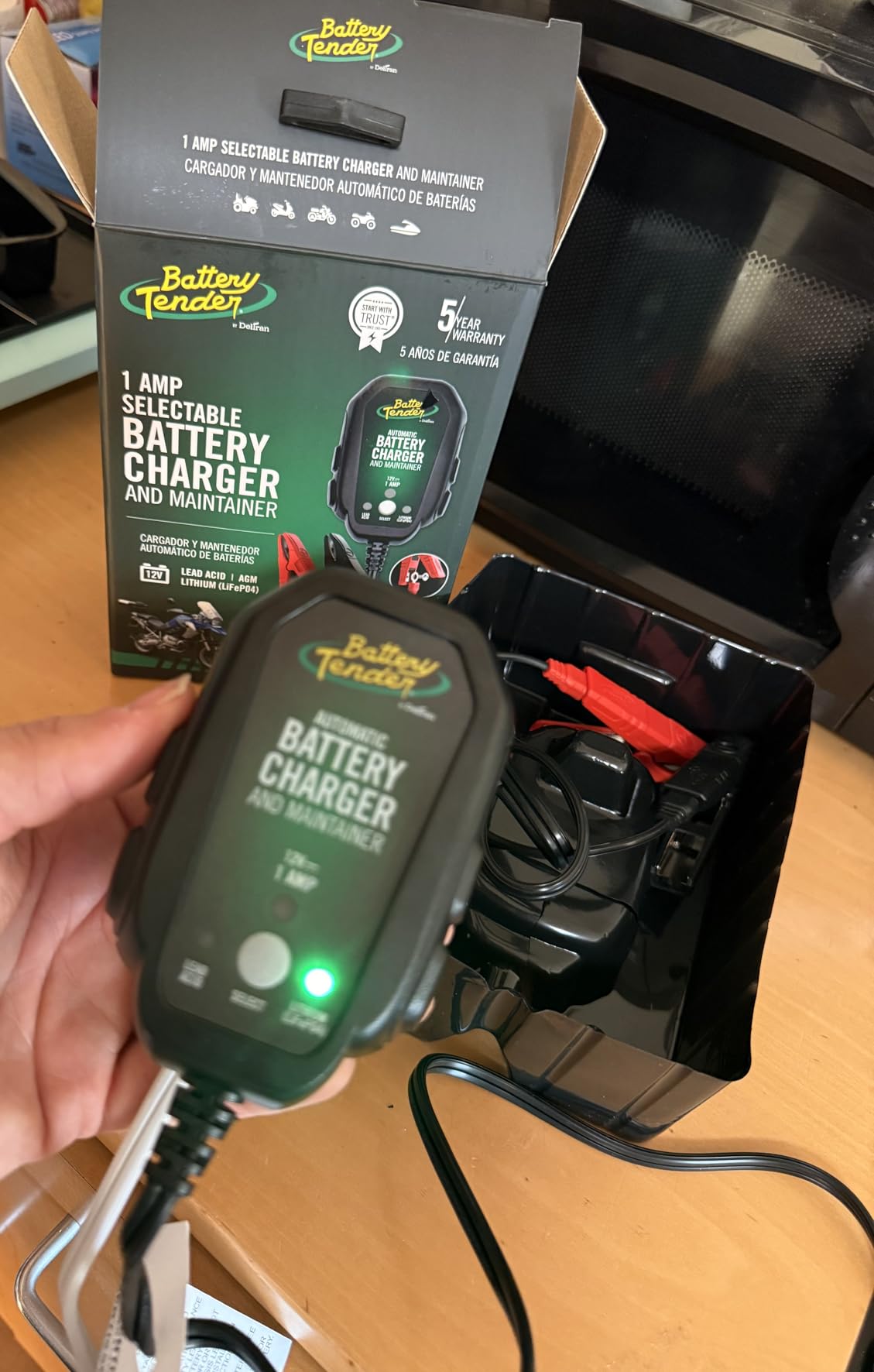
This is the highest-rated unit in the roundup, and the reason is durability rather than speed. Long-time owners describe decades of reliable storage maintenance across motorcycles, cars and powersports, including batteries that sat through sub-zero winters in unheated sheds. For a trolling battery that spends the offseason in a garage, that track record is the point.
The lithium setting is a push-button switch between lead-acid and LiFePO4 profiles, and an ISM microcontroller constantly updates the charge sequence to send the right level at all times. It is a maintainer, not a charger, and treating it that way is how you get the most out of it.
What the Selectable Lithium Profile Does and Does Not Do
The switch changes the charge program so the unit behaves correctly with a LiFePO4 pack rather than pushing lead-acid setpoints at it. That is the right behavior for a maintenance duty cycle, where the goal is topping off and holding a full charge indefinitely.
What it is not doing is a full high-voltage absorption recovery on a deeply discharged lithium bank. If you need to bring a pack up from near empty overnight, this is the wrong tool, and no maintainer in this roundup is.
Size, Safety and Certification
At 4.4 by 2.9 by 2.15 inches and under two ounces, it fits in small storage spaces that larger chargers cannot. The spark-proof connection and automatic reverse polarity detection give you a second layer of protection if the clips are attached backwards in the dark.
The unit is ETL US/CSA, FCC, ICES and BC certified and backed by a 5-year warranty, which is the longest coverage in this group. Leads include alligator clips and fused ring terminals, so it can be permanently wired to a battery for unattended storage.
Readability and Limitations
The most common complaint is the indicator light. There are very few of them, so you cannot tell at a glance whether the pack is bulk charging, absorbing or floating, and you end up testing with a meter to know for sure.
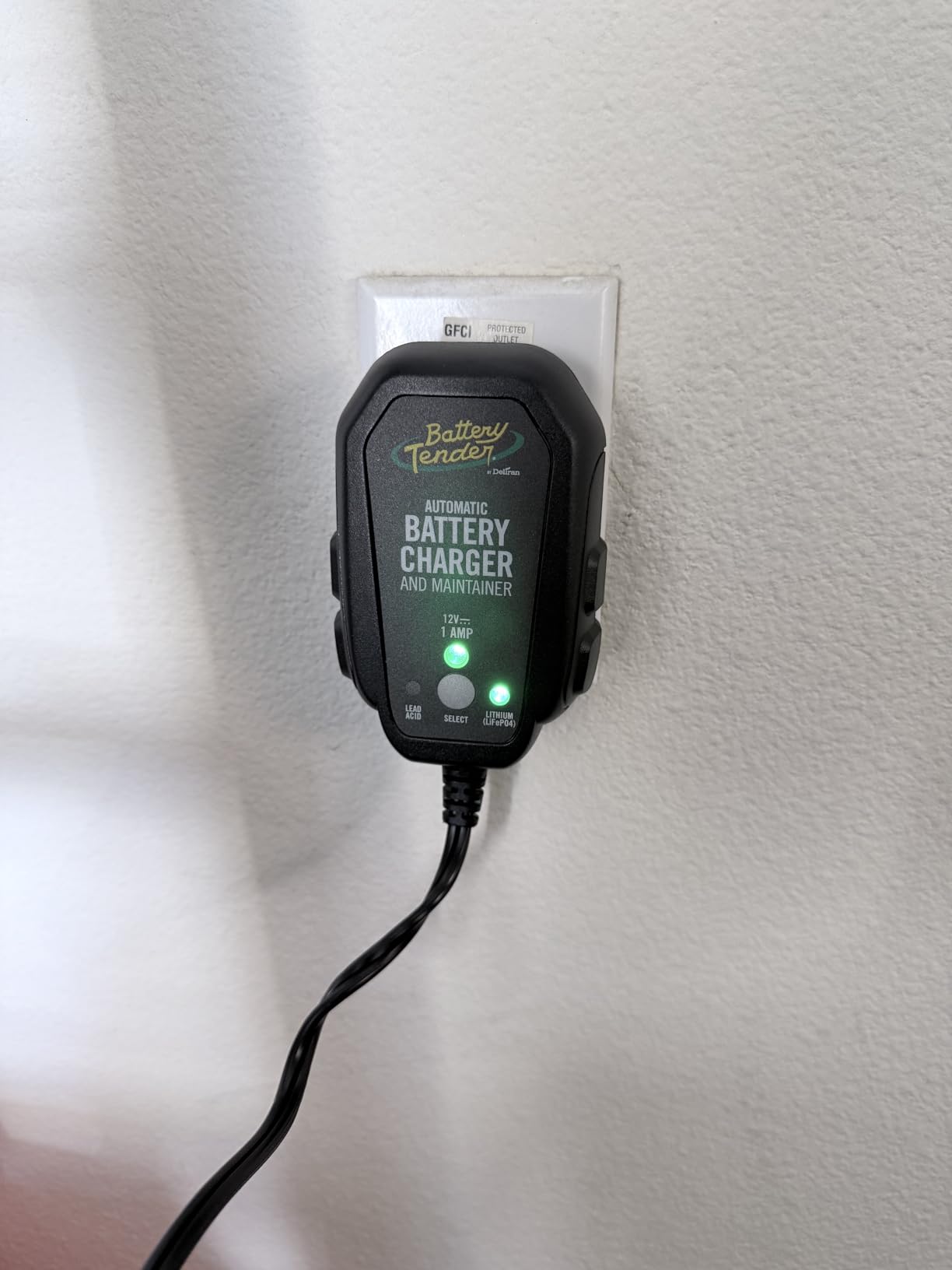
At 800mA, this is trickle-only output. It will hold a trolling bank topped up between trips beautifully and it will not rescue a battery that has sat flat for a season. Used as designed, it is the most dependable maintenance option here.
5. Haisito H-20 – One Charger Covering Both 12V and 24V Systems
Haisito 20-Amp Smart Battery Charger (Lithium LiFePO4 & Lead-Acid), 12V/24V Rapid Automotive Car Charger with Temperature Compensation – Trickle Maintainer for Boat, Truck, RV, Lawn Mower, Marine
20A at 12V, 10A at 24V
LCD shows amps, volts, temperature and charge level
Three independent charge modes
Pros
- 20A continuous on 12V and 10A on 24V from a single unit
- Dedicated LiFePO4 charge algorithm that locks voltage to protect the BMS
- Large LCD displays live current
- voltage
- temperature and state of charge
- Automatic 12V/24V detection plus a forced-charging mode for under-detected 24V packs
- Pulse repair mode helps recover idle or stratified batteries
Cons
- Cannot activate a completely dead 0V battery
- Some 3-star reviews concentrate around inaccurate state-of-charge readings
- No published dimensions or weight in the listing spec block
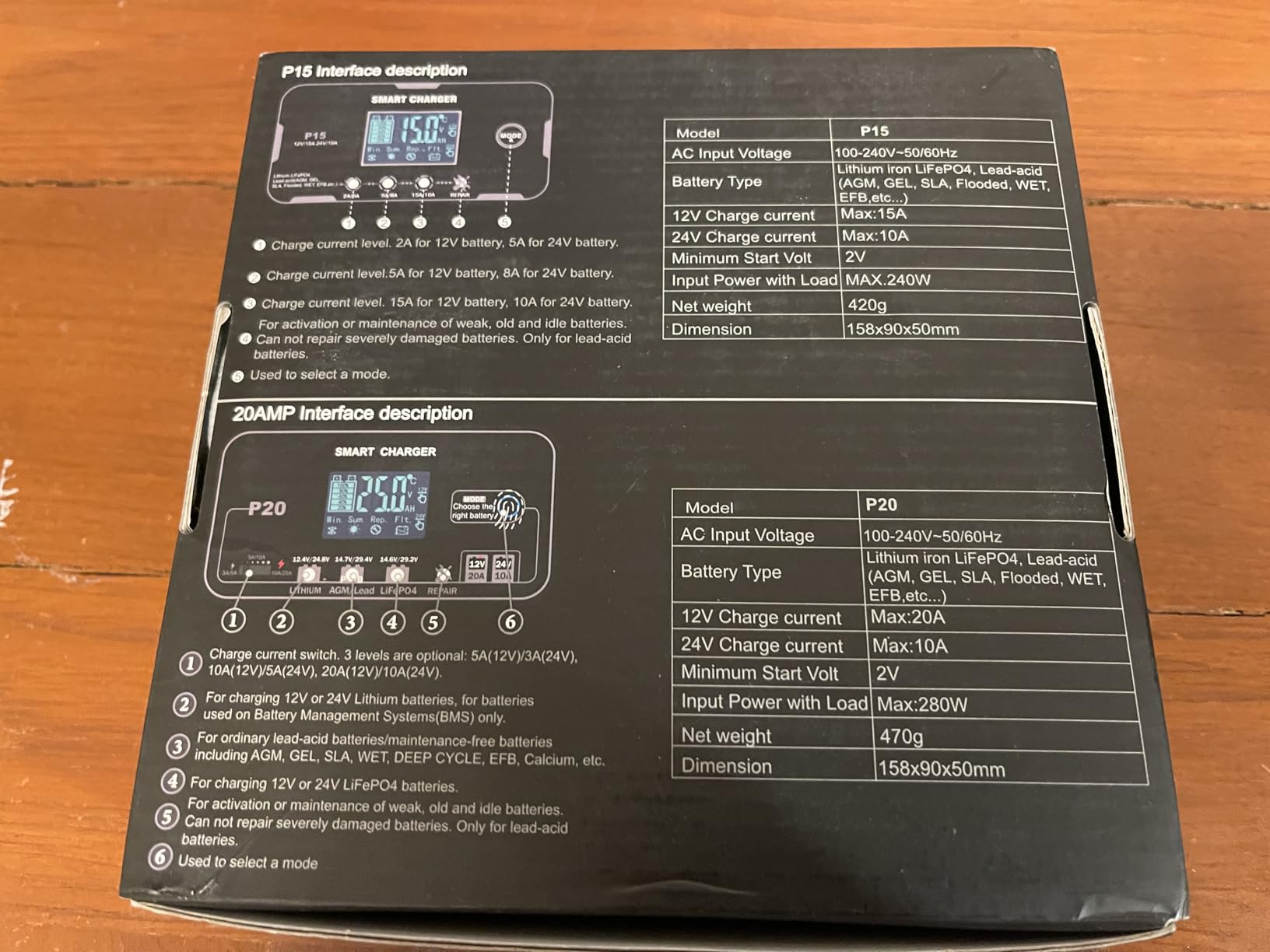
If your boat moves between a 12V and a 24V setup, or you tow a rig and charge at home, carrying two chargers is a nuisance. The H-20 handles both from one box, delivering 20 amps on a 12V pack and 10 amps on a 24V pack, and it is one of the few units here with a display detailed enough to actually watch the charge happen.
Owners cite the large display and the dual-voltage capability as the main draws, with the LiFePO4-specific mode appreciated by people running lithium trolling and RV packs. The rating spread reflects a few reports of the display disagreeing with a separate meter.
A Dedicated Lithium Algorithm Rather Than a Generic Claim
The charger offers three independent modes covering lithium LiFePO4 and lead-acid chemistries, with the smart chip locking the voltage to protect the BMS from overcharging. Compatibility extends across LiFePO4, AGM, gel, SLA and conventional lead-acid packs.
For trolling batteries, that locked voltage is the difference between a pack that reaches full charge and one that hovers in a long tail. It is also a defensible answer to the question anglers keep asking about whether an automotive charger is safe on lithium.
The Display and Forced Charging Mode
The LCD shows live charging current, voltage, temperature and battery percentage, which makes it easy to catch a bad connection or a mis-set mode in seconds. The unit also auto-detects 12V or 24V and includes a forced charging mode for a 24V pack whose voltage is too low and gets misread as 12V.
That is a real-world fix rather than a spec-sheet feature. A deeply discharged 24V lithium pack sitting near the detection threshold is exactly the case that otherwise leaves owners convinced the charger is faulty.
Where It Falls Down
The one hard limitation is 0V batteries. The manufacturer states plainly that it cannot activate a totally dead battery, so a pack that has hit its BMS cutoff needs a charger with a wake-up or force mode, like the NOCO GENPRO10X2 or the SOARFLY three-bank unit.
The lithium packs it does handle charge well. Note the listing does not publish dimensions or weight, so measure your mounting or storage space before committing.
6. PZ.P 15A – High Output With a Readable Screen on a Small Budget
PZ.P 15-Amp 12V/24V Smart Battery Charger, Maintainer & Trickle Charger for LiFePO4, Lead Acid Batteries – Fully Automatic 9-Stage Charging w/Temp Compensation for Motorcycle Car Truck Lawnmower Boat
15A at 12V, 8A at 24V
Nine-stage program with automatic float
Color screen with temperature readout
6.7ft cable, 18-month warranty
Pros
- 15A on 12V and 8A on 24V covers two system voltages in one unit
- Large color screen shows voltage
- current
- internal temperature and state of charge
- Five selectable modes including a dedicated LiFePO4/AGM profile and a repair mode
- 6.7ft charging cable reaches hard-to-access batteries
- Temperature compensation plus reverse polarity
- overcurrent
- overvoltage and short-circuit protection
Cons
- Must be manually switched to LiFePO4 mode on first use or it starts in lead-acid recovery mode
- Charge mode is not remembered reliably without re-selection in some setups
- Not weatherproof
- so not suitable for exposed outdoor or marine use
- Thin metal contact points on the alligator clips and thin lead wire
The PZ.P sits at the interesting middle of the market: real high-current output, a display most people in this bracket do not get, and a nine-stage program. At 15 amps on 12V it will refill a typical 100Ah lithium bank in a long evening, and at 8 amps it still covers a 24V pack.
Buyers running DIY LiFePO4 packs and RV lithium banks report full overnight charges and like the readable display and the mode flexibility across chemistries. The most detailed review we found measured a real 15 amps at 180 watts through a BMS and cautioned against running the unit on a pack with no BMS at all.
Nine Stages and a Mode You Must Choose Correctly
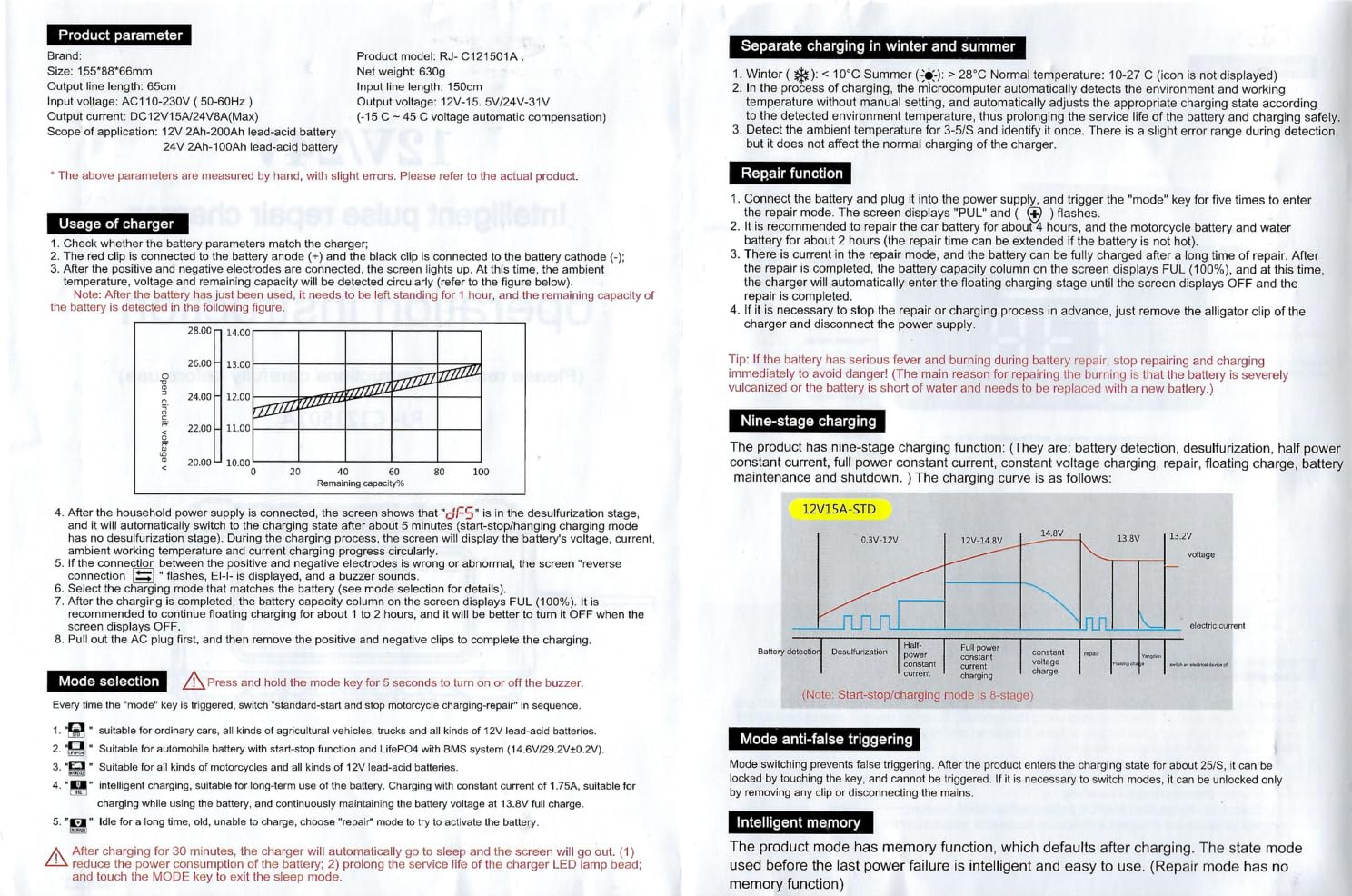
The program ends in an automatic trickle and float stage, so a pack can sit connected through winter and holiday periods without overcharging. Five selectable modes cover the common chemistries including a dedicated LiFePO4 and AGM profile plus a repair mode.
The critical detail is that this charger does not default to lithium. It needs to be manually switched to LiFePO4 mode on first use, or it starts in a lead-acid recovery mode that is wrong for a lithium bank. Some setups also fail to remember the selection, so verify the mode each time you connect.
Display, Cable and Temperature Range
The color screen reports charging voltage, current, internal temperature in both scales, charge percentage, and summer and winter modes, and it stays readable in direct sunlight. The 6.7ft cable reaches batteries tucked deep in a boat layout where a short lead would be annoying.
Operating range is 14F to 82F with temperature compensation in the charge algorithm, alongside reverse polarity, overcurrent, overvoltage and short-circuit protection plus a cooling system.
Honest Limitations
This is not a weatherproof unit, which rules it out of an exposed marine compartment. The alligator clips also have thin metal contact points on a thin lead wire, a detail that matters more at 15 amps than at 5. The warranty is 18 months, the shortest among the better-supported units in this roundup.
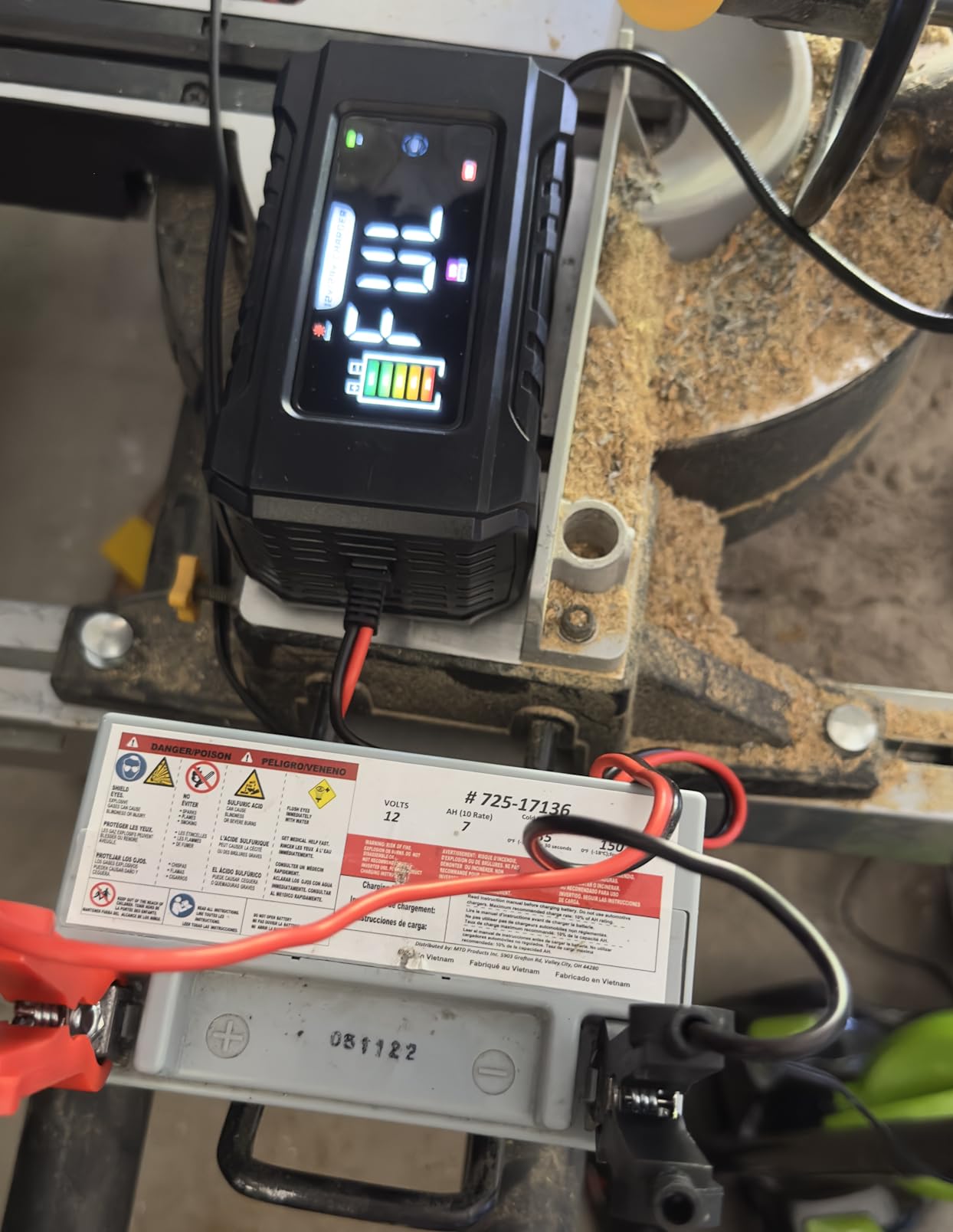
There is also a real accuracy concern on badly depleted packs. One detailed review reports the charger declaring a battery full when tester measurements showed it empty, with a report of one battery boiling water out, so treat the full indication with a meter on a pack that has sat unused for months. A pack that has dropped to BMS-protected sleep is out of reach for this unit entirely, since it cannot activate a totally dead battery.
7. ECO-WORTHY 12V 10A – A Dual-Chemistry Maintainer for Mixed Fleets
ECO-WORTHY 12V 10A Battery Charger for Lead-Acid, LiFePO4 Battery
10A at 12V
Lead-acid and LiFePO4 switch
Maintainer and desulfator functions
Fused SAE and clip leads
Pros
- Switchable 12V lead-acid and 12V LiFePO4 modes
- 10A output charges a typical bank in roughly 3 hours
- Functions as a maintainer and desulfator
- not just a trickle charger
- SAE plug-and-play connector plus clip and O-ring cable with a 10A fuse
- Wide vehicle coverage from cars and motorcycles to boats and PWCs
Cons
- No numeric voltage or current readout detail beyond a basic LCD
- Only a 1-year spare-parts availability commitment
This charger appeals to people who own more batteries than boats. It covers cars, motorcycles, lawn mowers, ATVs, trucks, boats, personal watercraft and classic cars, and the chemistry switch means you can move between an AGM start battery and a LiFePO4 trolling pack without owning two chargers.
Reviewers use it mainly for maintaining batteries on infrequently driven vehicles and for mixed lead-acid and LiFePO4 fleets. The dual chemistry switch, the fuse-protected lead and the quick 10A charge cycle draw the most praise, with few complaints beyond wanting more granular display data.
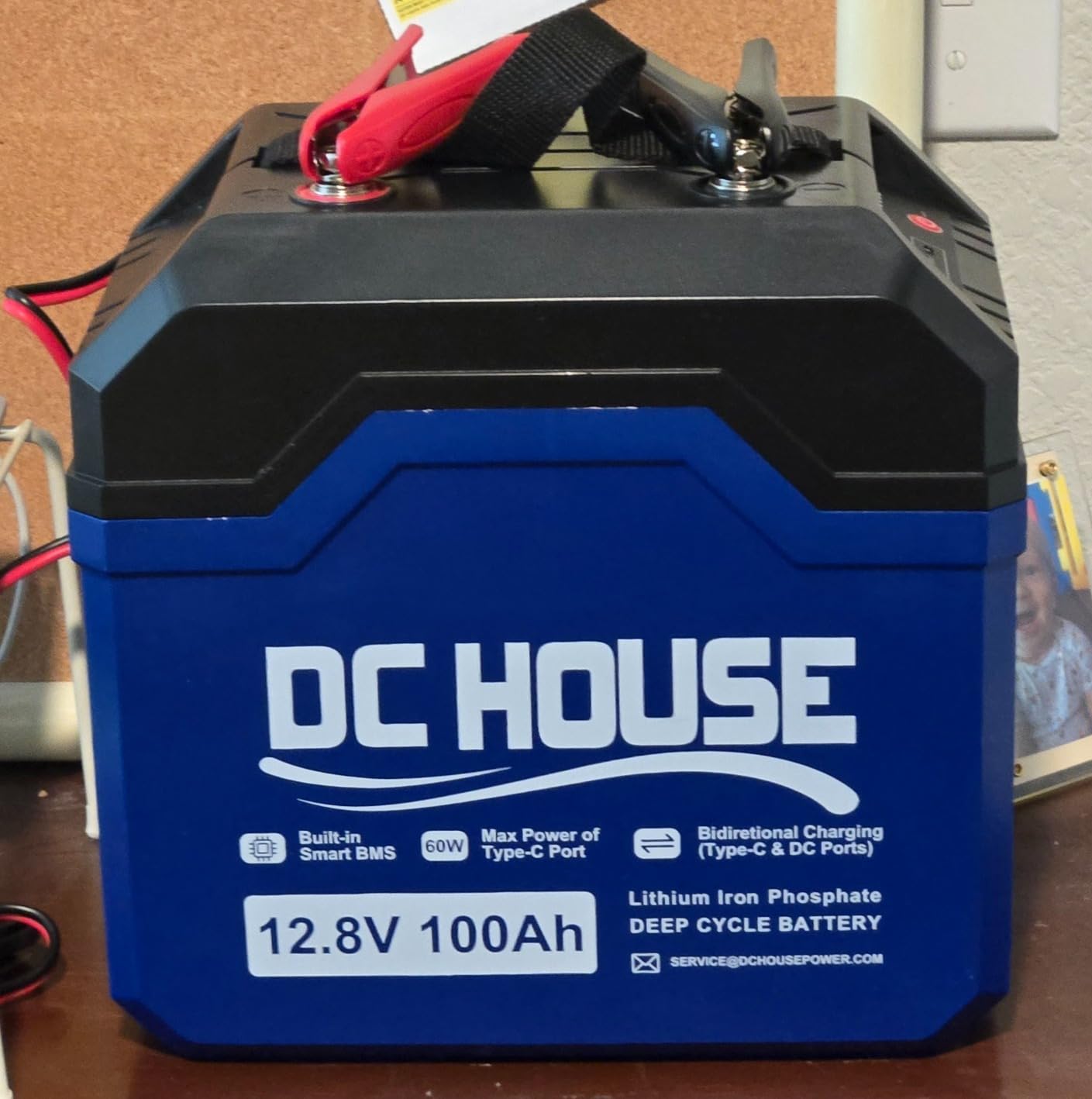
Maintainer Plus Desulfator in One Box
Beyond charging, the unit watches for low voltage, sulfation and capacity loss and prompts the user to run a repair cycle. On lead-acid banks that is a genuine benefit, since a sulfated starter battery is a common reason a boat will not crank after sitting.
On lithium the desulfate function matters less because sulfation is a lead-acid failure mode, not a LiFePO4 one. The useful part for a trolling battery is the maintainer behavior that keeps a pack from dropping into a deep-discharge state between trips.
Connections and Fuse Protection
The lead is a battery clip and O-ring cable with an inline 10A fuse, and the SAE connector makes it plug and play if your boat already has a maintainer port. That fuse is a real safety feature on a charger that will sit connected to a battery for months.
Output is 10 amps at 12 volts, which is the community-recommended minimum for a 50Ah lithium bank or larger, and the listing cites roughly a 3-hour charge for a typical bank. At 1.7 pounds and 3.94 by 8.86 by 2.17 inches it is portable but not pocket-sized.
What You Give Up in the Display
The LCD gives you charging state without granular voltage and current numbers, so you cannot verify output with the unit itself. If you like watching real numbers move, the Haisito or PZ.P displays are a step up.
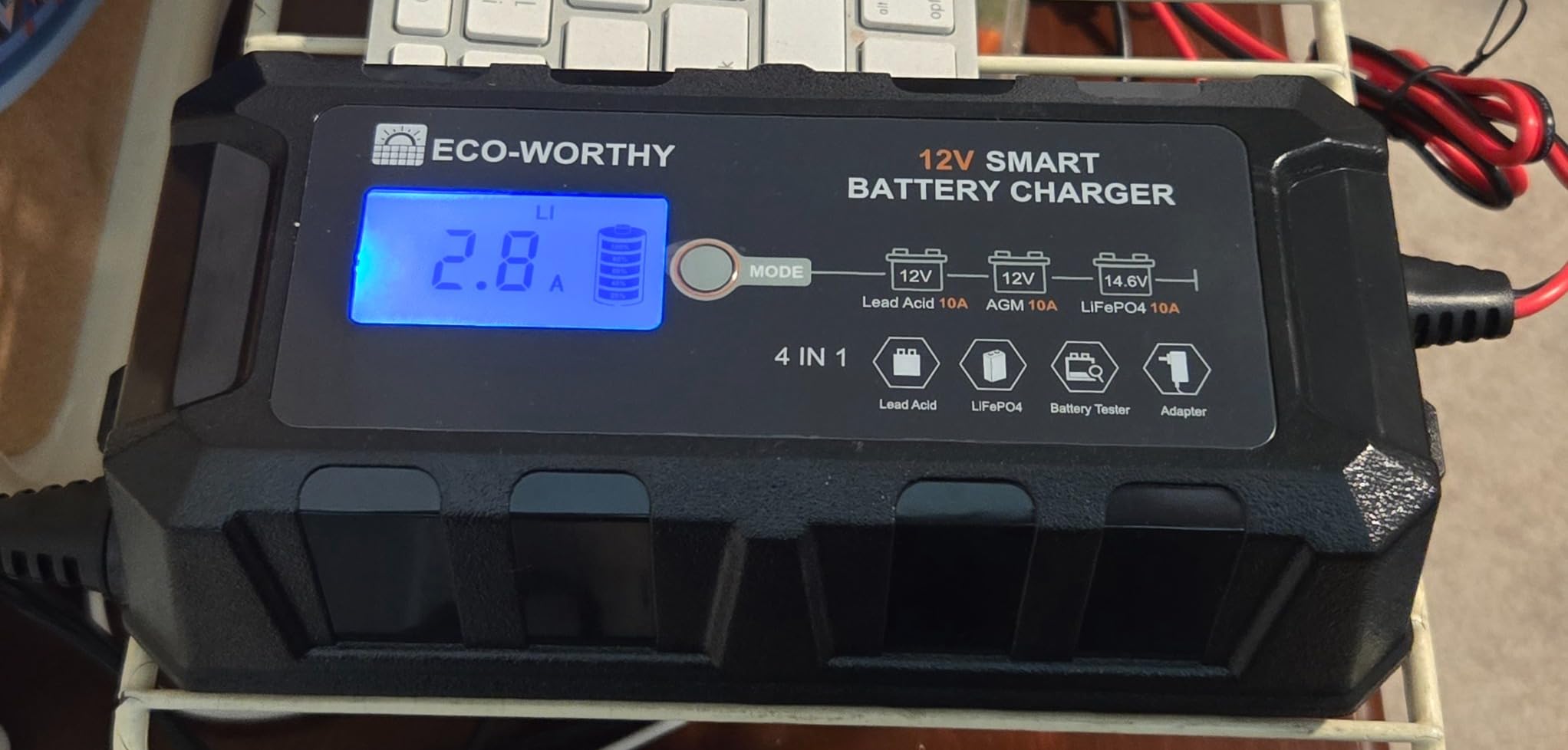
Spare parts are committed for only one year, which matters less for a sealed consumer charger but is worth noting if you plan to keep one running for a decade. For a straightforward dual-chemistry maintainer, this does the job at a modest cost.
8. RCGCBC P25 – Adjustable Current From 0 to 25 Amps
Battery Charger 0-25A,12V&24V LiFePO4 Battery Charger for Lithium,Lead Acid,AGM,RV,Marine,Boat, and Deep Cycle Batteries,9 Stage with Pulse Repair,Smart Car Trickle Charger & Maintainer
0-25A adjustable output
12V and 24V auto-detect
LCD with temperature and charge percentage
Settings memory
Pros
- Up to 25A output with adjustable current levels
- Single unit handles 12V and 24V lithium
- LiFePO4
- AGM
- gel and SLA packs
- Large LCD shows voltage
- current
- mode
- temperature and charge percentage
- Automatic 12V/24V detection with a forced-charge button for under-detected 24V batteries
- Memory function recalls settings between charges
- Flame-retardant ABS shell with reverse polarity
- overcharge
- overvoltage and overtemperature protection
Cons
- Minimum 2V required
- so it cannot recover a fully lost battery
- One verified review reports the supplied power lead is a European two-pin plug with no US adapter
- Fan noise is noticeable in quiet rooms
The distinguishing feature here is control. Most chargers give you one fixed current and let the algorithm manage it, while the P25 lets you dial the output from 0 to 25 amps in three gears. That is useful when you are charging a small 20Ah pack with a charger that could push far more current into it than the pack is designed to absorb.
Buyers like the adjustable current, the clear LCD and the ability to run multiple chemistries from one box for RV, boat and daily-driver batteries. Reported real-world output on a 100Ah LiFePO4 is around 15 to 20 amps with the cooling fan running, and the settings are remembered between charges.
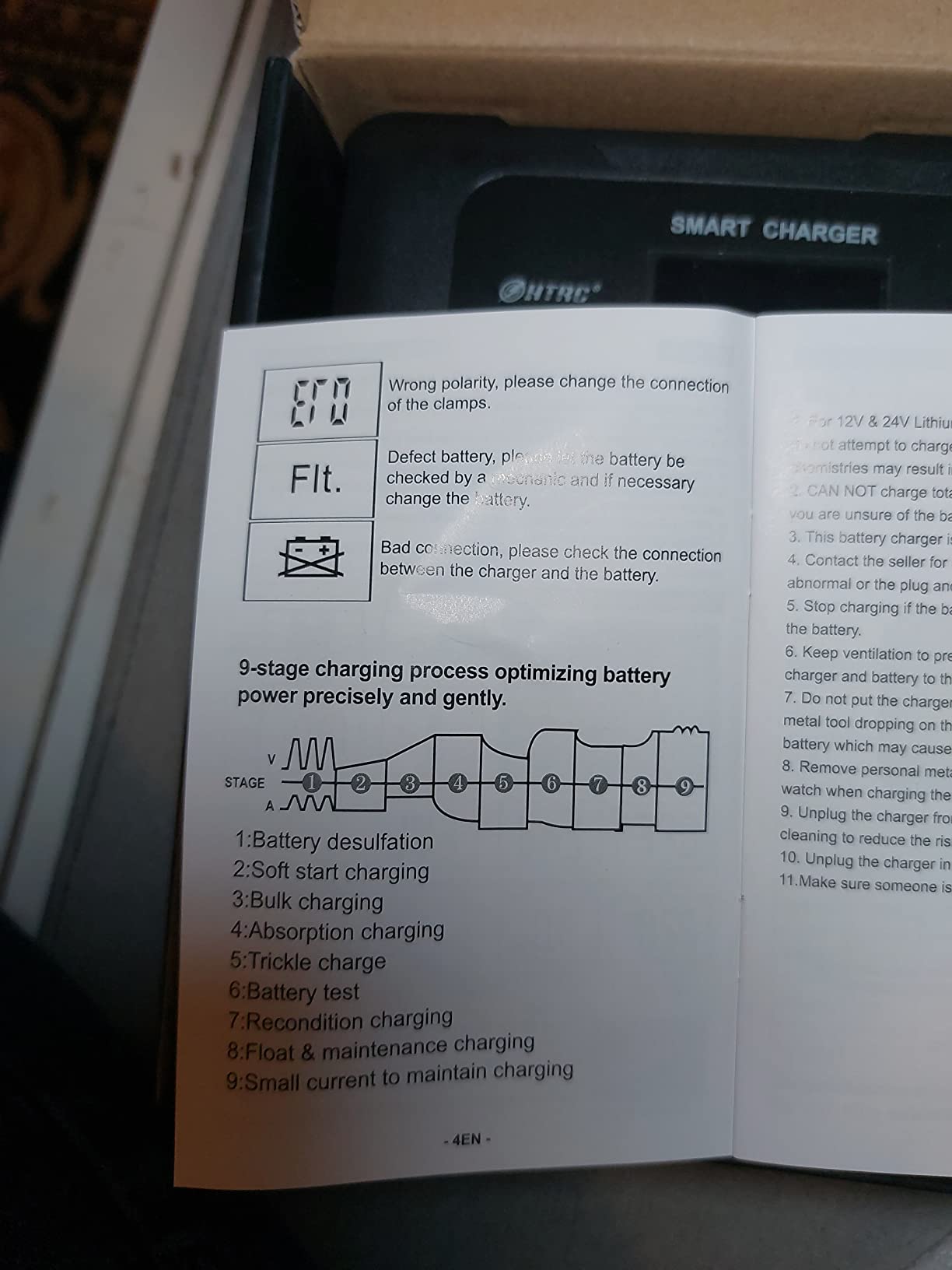
Three Gears of Current Control
Choosing the gear matters more than the headline 25A number. A deep cycle pack will accept a high gear, a small motorcycle battery will not, and a lithium bank that has been sitting at low charge benefits from a gentler initial push before the algorithm takes over.
The charging current adjusts automatically and intelligently, running harder in winter and tapering in summer. That seasonal behavior is a reasonable stand-in for temperature compensation, though it is driven by the mode you select rather than by a probe on the battery.
Display, Modes and Memory
The large LCD reports charging voltage, current, mode, temperature in both scales, percentage and summer or winter mode. Three gears adjust both charging current and battery type, and the memory function recalls your settings so you are not re-selecting the chemistry every session.
One-touch pulse repair detects sulfation and acid stratification and attempts to restore lost performance. There is a one-button repair function and a maintenance mode that activates the battery protection routine automatically.
Two Practical Problems Worth Knowing
There is a documented shipping issue: at least one verified review reports the supplied power lead being a European two-pin plug with no US adapter in the box. Check what arrives before you plan an install, and keep a spare cord in mind.
The minimum recoverable battery voltage is 2V, so a pack sitting at BMS-protected sleep is out of reach. The cooling fan is also noticeable in a quiet room, and the flame-retardant ABS shell is not sealed, so this belongs in a garage or cabin rather than a wet console.
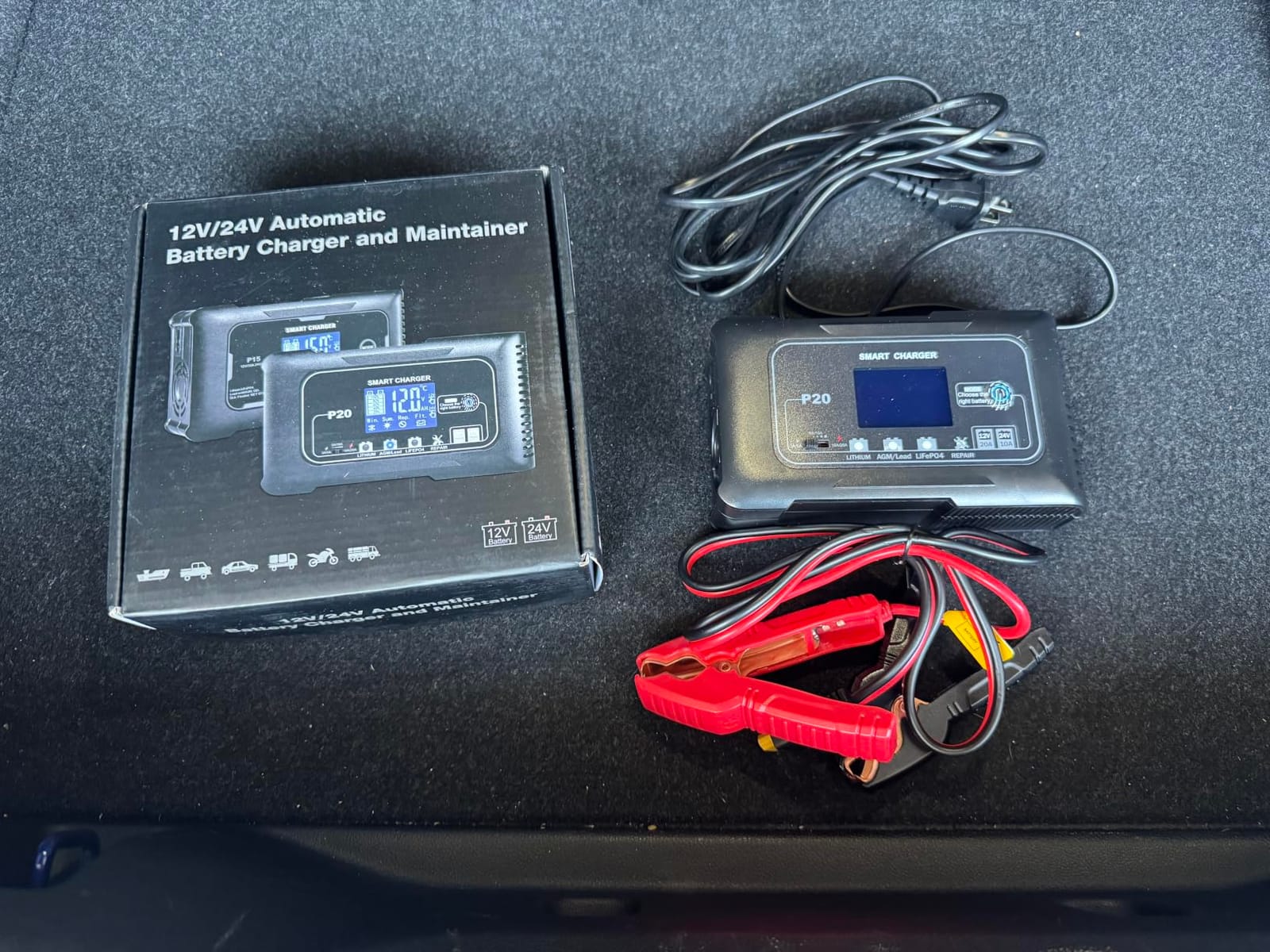
It lists a 10-year warranty period on service, which is generous on paper, and the protection suite includes reverse polarity, overcharge, overvoltage and overtemperature handling. For a mixed RV and boat fleet that values tuning over raw waterproofing, it is a distinctive pick.
9. SOARFLY 3-Bank 30A – Three Batteries Charging at Once in a Sealed Case
3 Bank Marine Battery Charger, 12V 30A (10A/Bank) Smart Waterproof Onboard Boat Battery Charger, Battery Maintainer & Desulfator for SLA/AGM/Lithium (LiFePO4), Calcium and Deep-Cycle Batteries
3 banks at 10A each
IP68 sealed onboard housing
Li-ion, AGM and calcium modes
Force mode below 1V
Pros
- Three independently controlled banks at 10A each
- charge three batteries simultaneously
- IP68 sealed design survived a full night of submersion in one owner's flooded compartment
- Selectable modes for 12V SLA/AGM
- 12V Li-ion and 12V calcium chemistries
- Force/repair mode recovers batteries below 1V
- Integrated thermal sensor adjusts charging to ambient temperature
- Per-bank charge progress lights and included post clamps
Cons
- Charges post clamps only
- ring and eyelet terminals for permanent installation are not included
- 12V only
- a separate 24V bank needs its own charger
- Large footprint requires confirming installation clearance before purchase
- One verified owner reports a bank failed within about 15 months with no usable seller support
Most tournament boats carry more than two batteries, and this is the only unit here that charges three simultaneously at a useful 10 amps per bank. It is a 12V-only, 30-amp total onboard charger with an IP68 sealed body, and it sits at number 21 in Boat Battery Chargers with a growing owner base in saltwater rigs.
Boat owners switching to LiFePO4 say this replaces more expensive multi-bank units while charging and maintaining three 12V packs as advertised. The waterproofing is the standout story: one unit was submerged in a flooded compartment overnight and kept working.
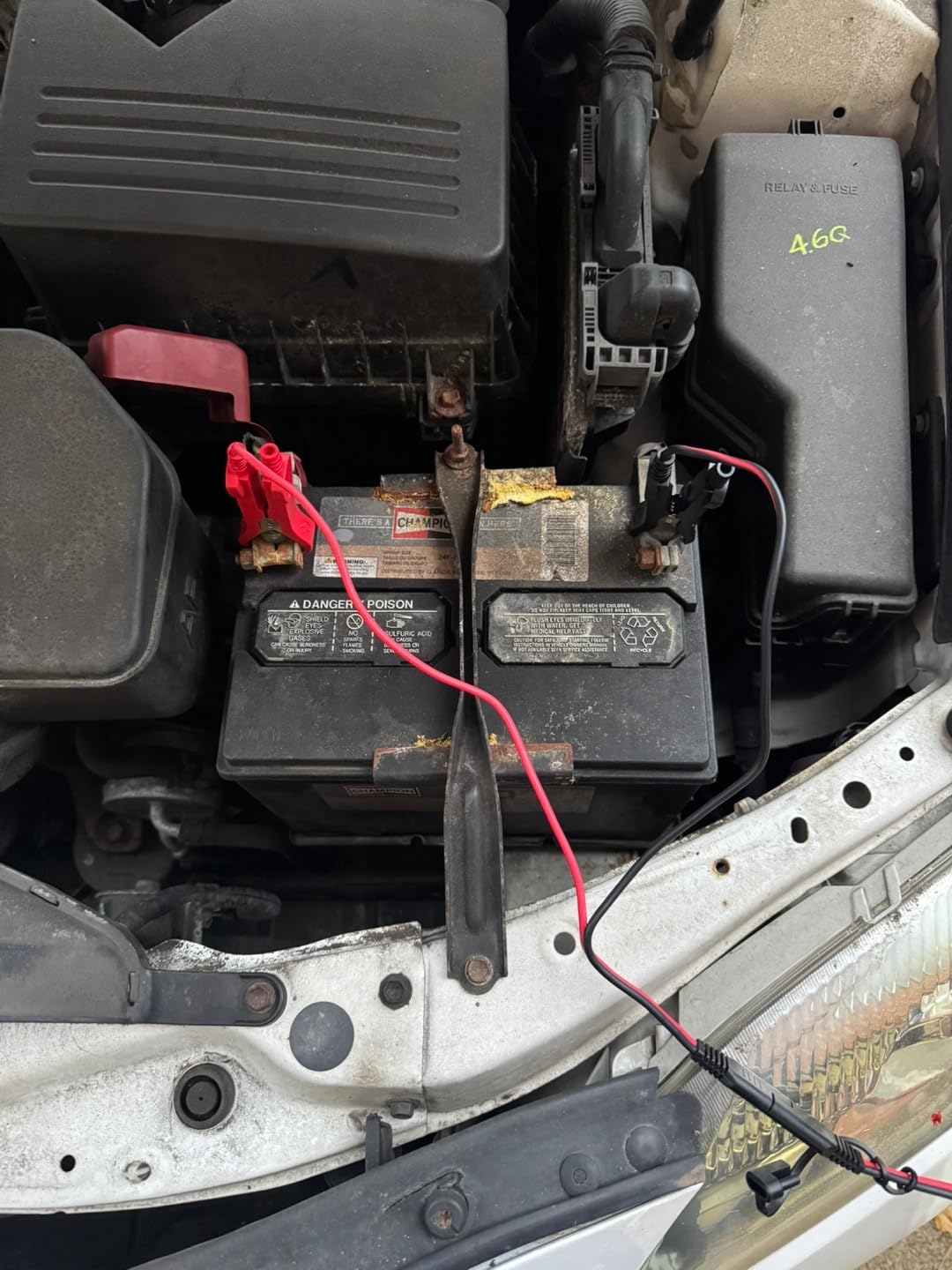
Three Independent Banks With Per-Bank Selection
Each of the three banks is rated at 10 amps and can be charged and controlled independently, or all three can charge at once. Modes cover 12V SLA and AGM, 12V Li-ion and 12V calcium chemistries, selected with a mode button.
That per-bank independence is what owners of multi-battery boats value most, because a typical setup mixes a flooded start battery with two lithium house banks. Charging them as one string would mean accepting the weakest chemistry’s profile for all three.
Sealing, Thermal Control and Recovery
The IP68 housing went through extended underwater lifecycle testing, and the real-world story of a flooded compartment surviving an overnight submersion is the strongest waterproofing evidence in this roundup. An integrated thermal sensor adjusts charge to ambient temperature to limit overcharge in hot climates and undercharge in cold ones.
Force mode handles batteries that have dropped below 1V, and the indicator light illuminates when a pack needs repair. Diagnostics cover overvoltage, battery damage, overheating and reverse connection, and per-bank progress lights let you see which bank is doing what.
Measure Before You Order
The charger measures 10.9 by 10.23 by 1.77 inches, and the manufacturer asks buyers to confirm installation clearance before purchasing. In a small console that is a real constraint, and it is the most common reason a return happens.
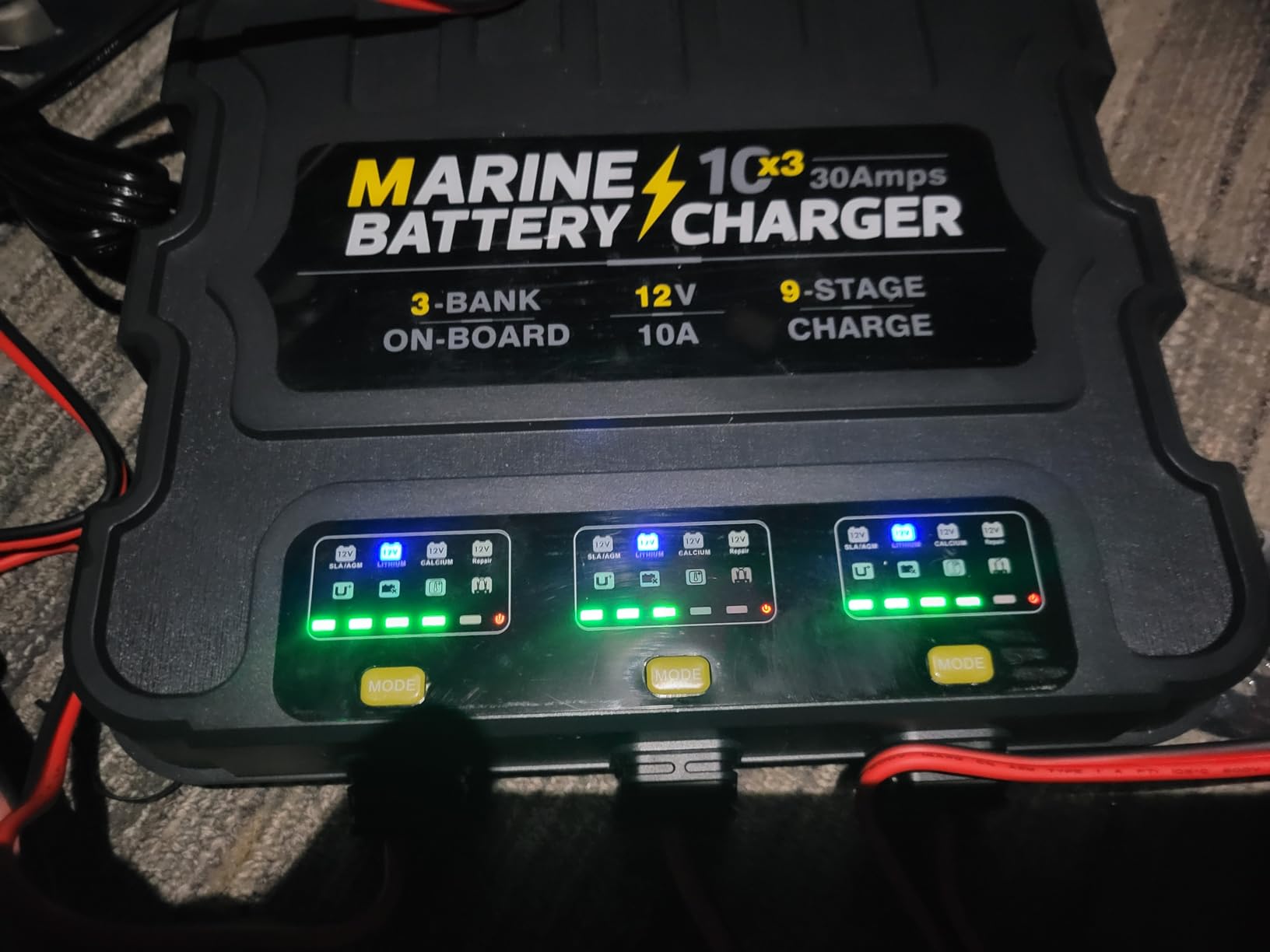
It ships with post clamps rather than ring or eyelet terminals, so a permanent install means sourcing your own hardware. It is 12V only, so a 24V bank needs its own charger, and the 2-year manufacturer warranty is thinner than the NOCO units here. One verified owner also reports a bank failing at around 15 months with no usable seller support, so pair it with a good installation and fused leads.
10. NOCO GENIUS2D – A Lead-Acid Maintainer Worth Keeping on a Mixed Boat
NOCO GENIUS2D 2A 12V Onboard Battery Charger, Trickle Charger & Maintainer
2A direct-mount output
Thermal sensor compensation
Force mode down to zero volts
Lead-acid profile only
Pros
- Direct-mount bracket plus a Velcro strap keeps it from shaking loose on the road
- Integrated thermal sensor adjusts charging to ambient temperature
- Charges from 1V and Force Mode handles batteries down to zero volts
- Precision pulse charging reverses sulfation and acid stratification
- Can be left connected indefinitely without overcharging
- Very small and light
- so it fits tight engine bays and storage spaces
Cons
- Only 2A
- so a full car battery charge is listed around 40-60 hours
- 24-inch leads and a short AC cord are tight if the battery sits far from the outlet
- No printed documentation explaining the indicator light states
- Lead-acid only
- there is no lithium or LiFePO4 charge mode on this model
This one is here for a specific reason: it is the most-reviewed unit in the roundup and it does not charge lithium at all. If your boat still runs an AGM or flooded start bank, or you want a bulletproof storage maintainer for a house battery, it is hard to argue with a 4.6 rating across 11k-plus reviews and a 3-year warranty.
Owners in cold climates report it holding cars, trucks and vans through deep winter and reviving batteries that had gone flat from onboard electronics. The recurring gripes are the slow 2A charge rate, short cabling, undocumented indicator lights and the absence of a lithium mode.
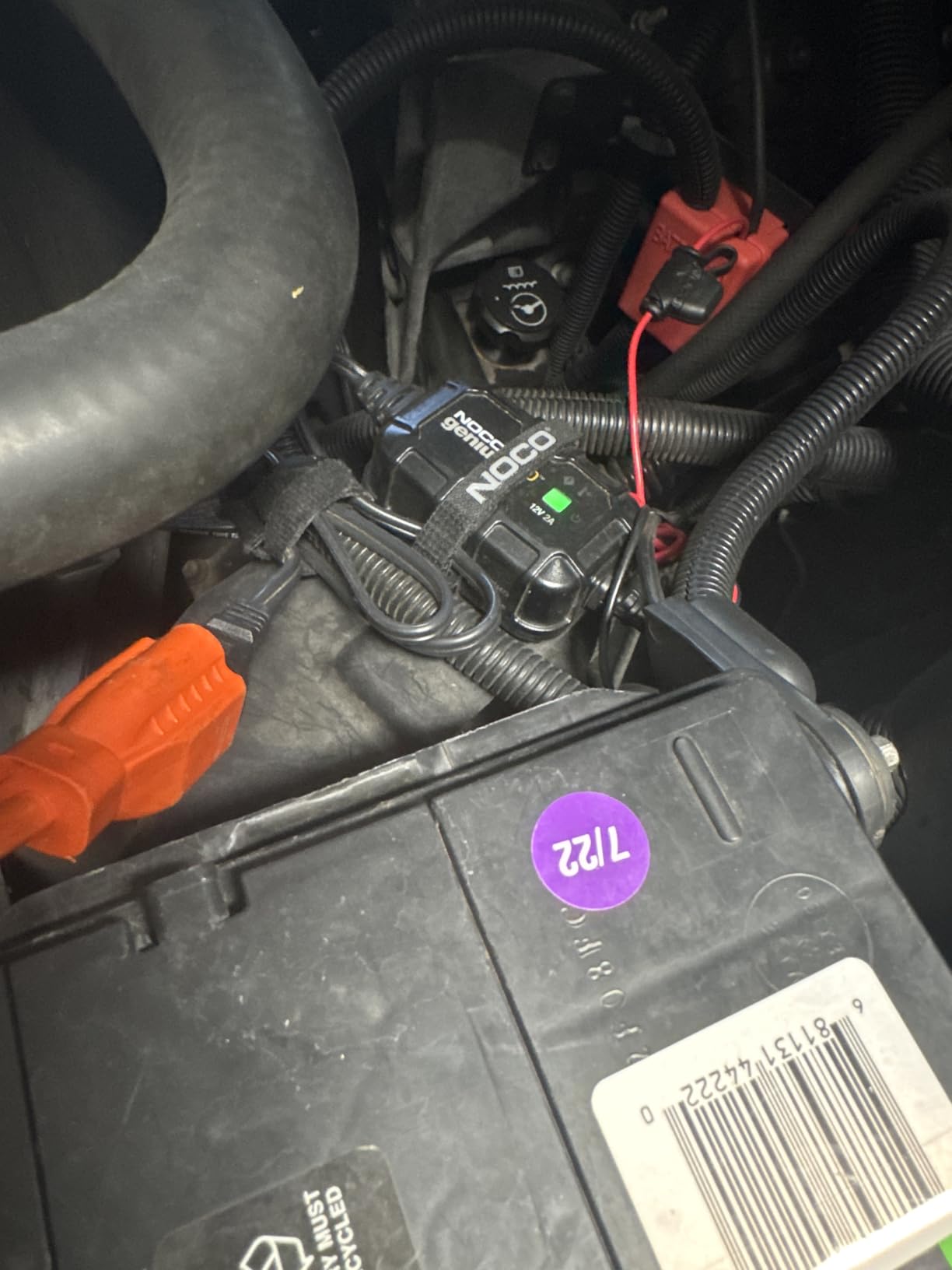
Direct Mounting Survives a Boat Hitting a Wake
The snap-fit mounting bracket with truss-head self-tapping screws, plus a Velcro strap option, keeps the unit from shaking loose in transit. On a trailer or in a console subject to constant vibration, that mechanical security matters as much as the charge algorithm.
At 3.47 by 3.43 by 6.5 inches and under 12 ounces, it fits into the tight spaces a full-size charger cannot, which is often the deciding factor in a small boat layout.
Temperature Compensation and Recovery
The integrated thermal sensor adjusts the charge based on ambient temperature, which is exactly what keeps a pack from overcharging in a hot engine bay or undercharging on a cold start. Precision pulse charging reverses sulfation and acid stratification, useful on lead-acid packs that have sat.
Charging starts from 1V and Force Mode handles batteries down to zero volts. The charger can be left connected indefinitely without overcharging, which is what makes it a set-and-forget maintainer rather than a supervised charger.
Why It Is Not a Lithium Pick
The specification is explicit: this is designed for 12V lead-acid chemistries including AGM, gel, SLA and VRLA, with no lithium mode. Running a LiFePO4 pack on it means the charge never reaches the 14.4V to 14.6V the chemistry needs, so the pack stays chronically undercharged.
What to Watch For
At 2A, the listing cites a full car battery charge in the region of 40 to 60 hours, so it is a maintainer. The 24-inch leads and short AC cord are tight if the battery sits far from the outlet, there is no printed documentation for the indicator light states, and the inline fuse sits close to the eyelet, making connections awkward in confined spaces.
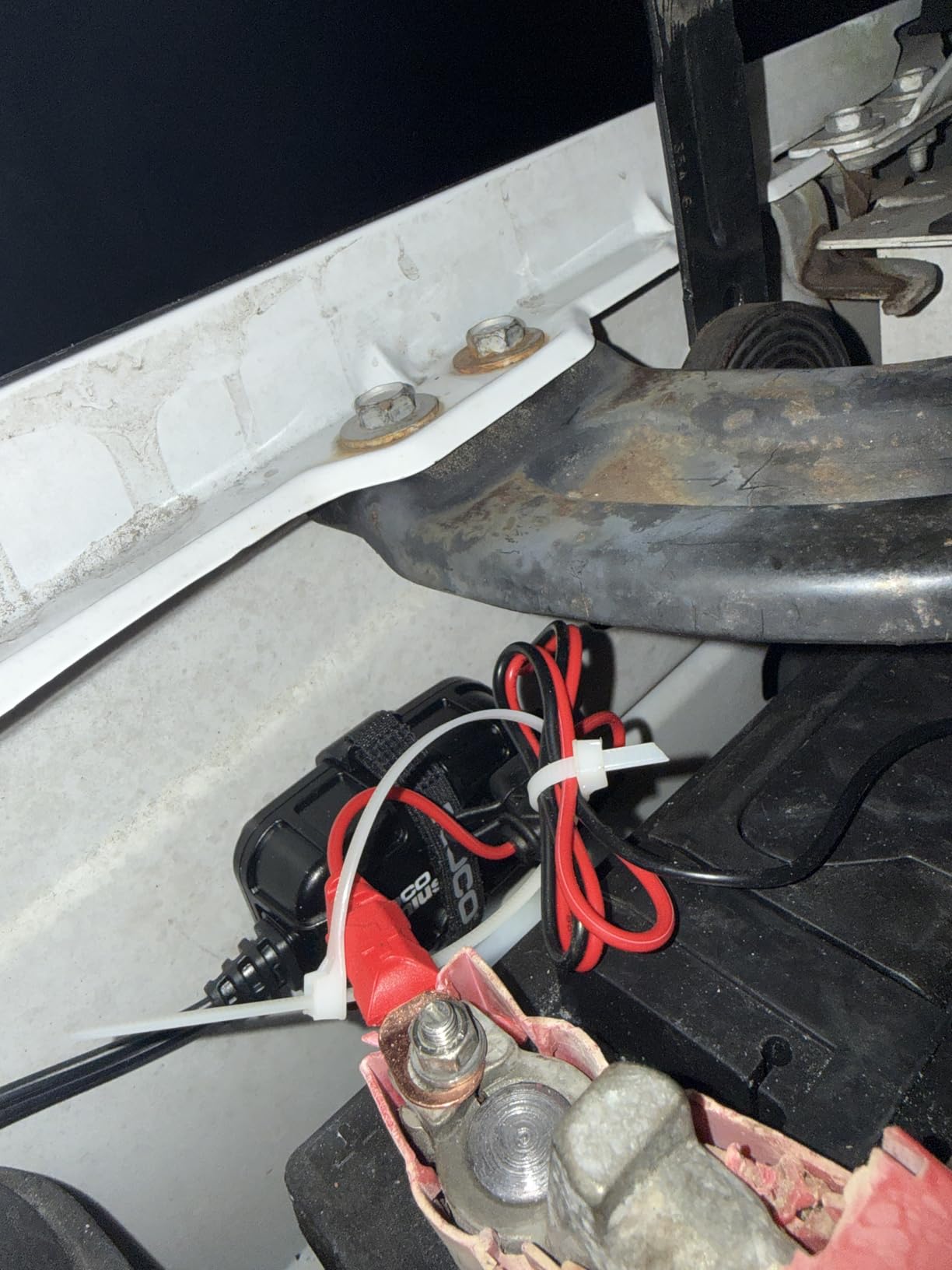
Used within its design, though, it is a well-proven storage maintainer that can live on a boat year-round. Just keep it wired to the lead-acid bank.
How to Choose a Lithium Trolling Motor Battery Charger
Confirm a Real LiFePO4 Profile Before Anything Else
Read the charge voltage, not the compatibility claim. A genuine lithium profile runs an absorption stage around 14.4V to 14.6V and then drops to float. A charger advertising lithium support that tops out near 14.2V is a lead-acid charger with a lithium label, and your pack will sit undercharged indefinitely.
Watch for units where the lithium voltage cannot be lowered. Some BMS units cap the charge ceiling below 14.6V, and a fixed-output charger that ignores that limit will trip protection or shut down mid-charge. Chargers with a selectable lithium voltage or a documented BMS-aware mode handle this better.
Size Output Amps Against Amp-Hour Capacity
Charge time in hours is approximately amp-hour capacity divided by charger output amps, adjusted for the taper at the end of the absorption stage. A 100Ah lithium bank on a 10A charger is roughly 10 to 12 hours; the same bank on a 20A charger lands around 5 to 6 hours, and the LiTime in this roundup is listed at about 5 hours for a 100Ah pack.
The community rule of thumb is a 10A minimum for every 50Ah of capacity, and 20A for 50Ah and up if you want the pack back overnight. Going far beyond that is not useful either. A 2A charger on a 200Ah bank is a 100-hour project, which is exactly the under-charging complaint that shows up repeatedly on fishing forums.
Count the Banks Your Boat Actually Needs
One bank charges one battery. Two banks cover a start battery plus a trolling pack, which is the most common layout. Three banks handle a house bank, a start bank and a trolling bank, and is what tournament rigs with livewells and electronics usually end up needing.
The critical detail is whether each bank selects its own chemistry. Boats almost always mix a flooded or AGM start battery with lithium house banks, and a charger that applies one profile to all banks will undercharge one of them. Per-bank independent profiles are the feature owners on the bbcboards thread single out first.
Do You Need Onboard, Portable or DC-DC Charging?
Onboard means permanently mounted, sealed and AC-powered from the dock. It is the right answer for a boat that spends nights on a trailer at a marina. Portable means a unit you carry to the battery, which suits garage charging, travel and mixed fleets, but none of the portable units here are sealed for a wet compartment.
DC-DC is the category almost no roundup covers, and it is the one anglers ask about most. Instead of drawing from shore power, a DC-DC charger runs off the starting battery and transfers energy to the trolling bank, so a long day on the water is backed by the alternator the same way a car battery is. The trade-off is that output is tied to what the starting battery can spare, and it is a different purchase entirely from an AC onboard unit.
Treat Waterproofing and Cold Weather as Requirements, Not Extras
Look for a stated IP rating on the enclosure, not a vague claim of water resistance. IP68 appears on the NOCO GENPRO10X2 and the SOARFLY three-bank unit in this roundup, and both are designed to be mounted in a compartment. Everything else on this list is an indoor or sheltered-space charger, and several manufacturers state outright that they are not suitable for marine environments.
Temperature compensation is the other one. It adjusts the charge curve to ambient temperature so the pack is not overcharged in a hot console or undercharged on a cold morning. Packs stored in an unheated garage over winter benefit even more, since the ambient swing is larger.
Never Charge LiFePO4 Below Freezing
Charging a lithium pack below freezing plates lithium inside the cells, and that damage is permanent. The BMS on most quality packs will refuse to accept charge in that condition, which is the system doing its job, but that protection depends on the BMS and its sensor being healthy.
So bring a pack above freezing before you connect any charger, and treat a charger that powers up happily on a below-freezing pack as a warning sign rather than a convenience. Warm storage, a heated garage or a maintenance charger used only in temperate conditions is the safer pattern for winter lay-up.
What About 36V and 24V Trolling Motor Systems?
A 24V or 36V system is not a single battery. It is two or three 12V lithium packs in series, and each one needs to reach the same 14.4V to 14.6V absorption point or the weakest cell dictates how far the whole string gets. That is the argument for a true multi-bank charger, where every pack gets its own regulated channel.
For charging on shore, use a dedicated charger for that system voltage rather than a 12V unit in series. The Haisito and RCGCBC units here handle 12V and 24V automatically, and the SOARFLY three-bank unit is 12V only, so a 36V rig needs three 12V channels handled at 14.6V each.
Frequently Asked Questions
What is the best battery charger for a lithium battery?
The best charger for a LiFePO4 battery is one with a dedicated lithium profile that reaches roughly 14.4V to 14.6V in the absorption stage, per-bank control if you run more than one battery, and an IP-rated housing for marine use. For a typical two-battery boat the NOCO GENPRO10X2 is the strongest all-round pick, while a simple 2A or 800mA unit is enough for storage maintenance between trips.
Will a Minn Kota charger work on lithium batteries?
It depends entirely on whether the unit has a selectable LiFePO4 profile. A charger that tops out near 14.2V for lead-acid will leave a lithium pack chronically undercharged, because LiFePO4 needs roughly 14.4V to 14.6V to fill. If the charger offers a lithium or lithium-ion mode and reaches that voltage, it is fine. If it is lead-acid only, replace it for anything other than your start bank.
Do lithium batteries damage trolling motors?
Usually not. A 12V LiFePO4 pack is a drop-in replacement for a 12V lead-acid bank and delivers the voltage a 12V trolling motor expects. The real issues are electrical, not mechanical: check the motor handles the voltage range a lithium pack can present, keep the BMS healthy, and match the charger to the chemistry. Mixing a lithium pack with a lead-acid-only charger is far more likely to cause trouble than the battery itself.
How long will a 100Ah lithium battery run a trolling motor?
Divide the pack capacity by the motor draw for a theoretical figure. A 100Ah lithium bank on a motor pulling 30 amps is about 3 hours of hard running, and on a 10-amp draw it is around 10 hours. Real runtime is lower because voltage falls under load and wind and current cost you range, so plan on roughly 80 percent of the calculated figure for sustained fishing.
Is it safe to charge LiFePO4 batteries in freezing weather?
No. Charging a lithium pack below freezing plates lithium inside the cells and the damage is permanent. Most quality BMS units refuse to accept charge in that state, which is a protective feature, but do not rely on it alone. Warm the pack above freezing before connecting any charger, and store winter-laid-up batteries in a heated space or on a maintenance cycle in temperate conditions.
Our Picks for the Best Trolling Motor Battery Chargers for Lithium in 2026
If you want one charger for a two-battery boat and you are installing it in a live console, take the NOCO GENPRO10X2. Its 20 amps across two independent banks, its IP68 sealing and its dedicated lithium mode cover everything a saltwater conversion actually asks for, and the 3-year warranty is the longest among the marine-rated options here.
If your lithium bank lives in a garage rather than a boat, the LiTime 20A unit gives you the fastest real charge in the group and honest 14.6V absorption, with 0V activation to wake a sleeping pack. Just keep it out of the weather, because the manufacturer states plainly that it is not a marine charger.
If three batteries means three profiles, the SOARFLY three-bank unit is the only sealed multi-bank option here that will do it in one box. Measure the compartment first, and plan to buy your own eyelet terminals. For storage between trips on a single small bank, the Mroinge MBC022 or the Battery Tender Junior will keep a pack topped up for years, and the Battery Tender wins on rating, warranty and cold-weather track record.
Whichever you pick, check the charge voltage before anything else, size the output at 10 amps per 50Ah of capacity, and never connect a lithium pack below freezing. If you are still working out the chemistry, start with our rechargeable battery charger guide, then come back and size it to your bank. Our AA battery charger picks cover the small stuff in the tackle box, but the trolling bank has its own rules.