
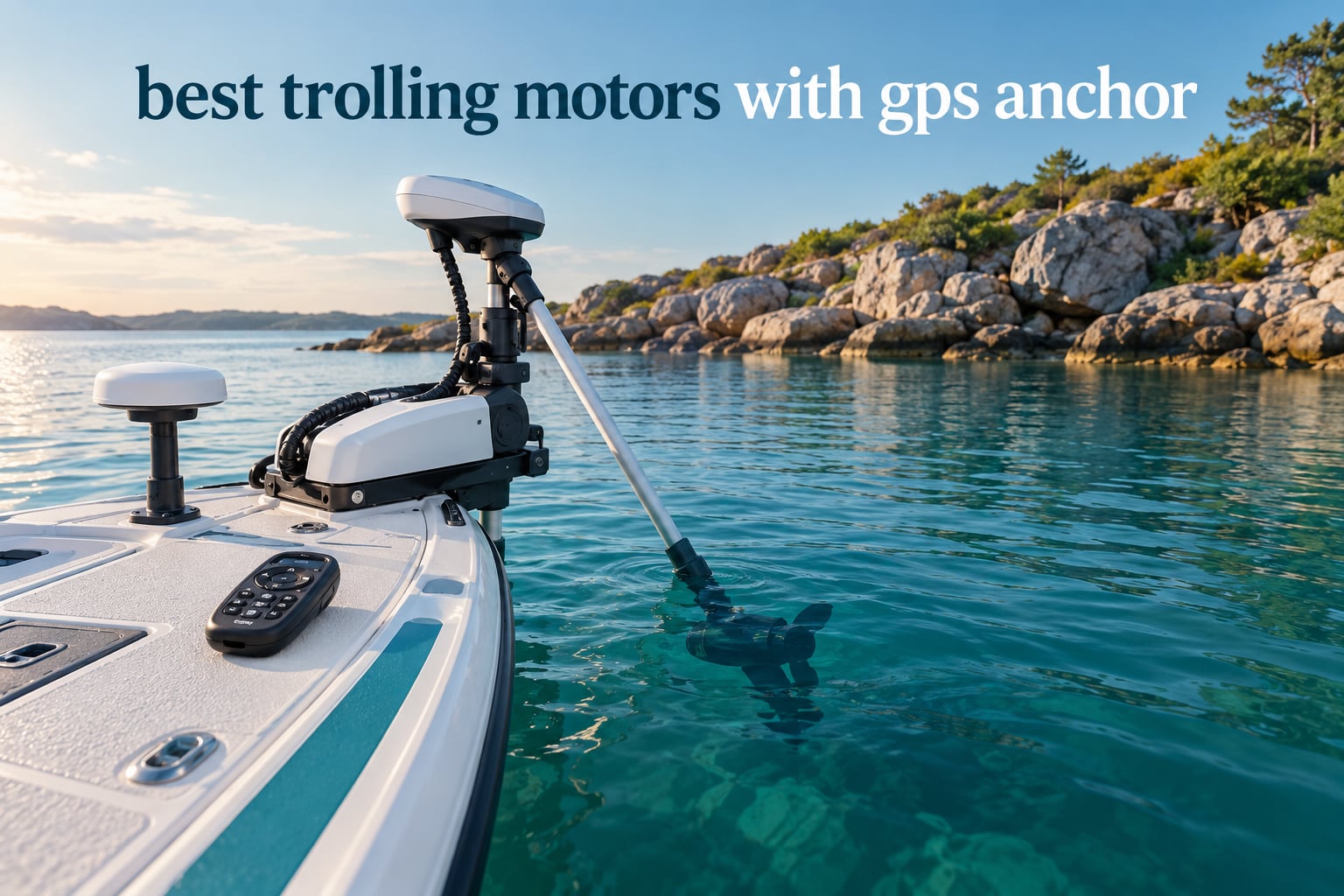
A GPS anchor trolling motor is a bow- or transom-mounted electric motor that uses a built-in GPS receiver to hold your boat on one coordinate without you touching the controls. Minn Kota calls the feature Spot-Lock, MotorGuide and Lowrance call it Anchor Mode, and Garmin calls it Anchor Lock — they all mean the same thing. Pick the right one and you stop fighting wind and current with a paddle and instead hold a weed edge, a reef or a drop-off for hours while you fish.
We spent weeks comparing twelve of these motors side by side, reading owner reviews, and mapping which ones actually integrate with the fish finder already in your boat. Every motor below has real GPS anchoring. We excluded the cable-steer and tiller-only models that several competing roundups include, because holding a position is the whole reason for this roundup. Updated for October 2026.
Our Top 3 GPS Anchor Trolling Motors in 2026

Minn Kota Riptide Terrova 80
- Spot-Lock and Jog
- 24V with 80 lb thrust
- 60 in saltwater shaft
- Wireless remote with LCD

Lowrance Ghost
- Silent brushless motor
- 97/120 lb thrust
- Spot Lock with heading hold
- HDI nosecone included

Minn Kota Terrova 80
- Built-in Dual Spectrum CHIRP
- Advanced GPS with Spot-Lock
- 24V and 80 lb thrust
- Weedless Wedge 2 prop
These three cover the situations we see most: a saltwater bay or flats boat, a large boat that already runs Lowrance displays, and a big-lake angler who wants sonar built into the shaft.
Quick Overview: Every GPS Anchor Motor in This Guide
| Product | Specs | Action |
|---|---|---|
| Minn Kota Riptide Terrova 80 |
|
Check Latest Price |
| Minn Kota Terrova 80 |
|
Check Latest Price |
 Minn Kota Riptide PowerDrive 55 Minn Kota Riptide PowerDrive 55 |
|
Check Latest Price |
 Lowrance Recon Freshwater 60 Lowrance Recon Freshwater 60 |
|
Check Latest Price |
 Lowrance Recon Saltwater 72 Lowrance Recon Saltwater 72 |
|
Check Latest Price |
 Garmin Force Current Kayak Garmin Force Current Kayak |
|
Check Latest Price |
 Garmin Force Kraken 63 Garmin Force Kraken 63 |
|
Check Latest Price |
 Garmin Force Pro 50 Garmin Force Pro 50 |
|
Check Latest Price |
| Lowrance Ghost |
|
Check Latest Price |
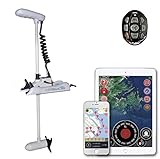 PARKHO HASWING Cayman GPS PARKHO HASWING Cayman GPS |
|
Check Latest Price |
 AQUOS GPS Bow Mount AQUOS GPS Bow Mount |
|
Check Latest Price |
 VEVOR 12V GPS Motor VEVOR 12V GPS Motor |
|
Check Latest Price |
Spot-Lock vs Anchor Mode: What the Names Actually Mean
These four brands sell the same underlying behaviour under four different labels, and most buyer confusion starts there.
Spot-Lock is the Minn Kota term. The motor records your GPS coordinate when you press the button, then applies short corrective thrust pulses to hold it. Anchor Mode is MotorGuide and Lowrance vocabulary for the identical function. Anchor Lock is Garmin’s label. AutoPilot and i-Pilot are not anchoring features at all — they are heading-hold modes that steer the boat along a bearing you set.
Two more terms show up constantly. Jog shifts the stored anchor point in five-foot increments so you can nudge along a drop-off without standing up. Follow the contour traces a depth line you recorded on the way out and then drives you back along it, which is where forward-facing sonar integration pays off.
If you are cross-shopping, our guide to handheld GPS units for geocaching covers the receiver side of the same idea, and it is worth understanding how position accuracy behaves before you judge a motor’s holding precision. Receiver quality also shapes track accuracy on GPS running watches, the same principle applied to a moving body. Multi-band receivers, the kind now standard in GPS watches built for triathlon, resolve position on two frequency bands at once — which is exactly why the Garmin motors below hold tighter than single-band units.
1. Minn Kota Riptide Terrova 80 – Saltwater Spot-Lock Built Around Spot Holding
Minn Kota Riptide Terrova Bow-Mount Electric Trolling Motor with GPS, Spot-Lock – 80 Lb. Thrust, 60 In. Shaft, Saltwater
24V brushless system
80 lb thrust
60 in shaft
Saltwater rated
Wireless remote
Pros
- Spot-Lock holds like a physical anchor with no anchor line needed
- 80 lb thrust moves an 18 ft Bayliner or 21LS skiff easily
- One-touch deploy and stow lever
- Wireless remote with LCD and four One-Boat Network buttons
- Digital Maximizer stretches runtime on lithium packs
Cons
- Some examples arrived with bracket hardware mismatched to the thrust rating
- Occasional GPS lock loss spins the head and circles the boat
- Remote connection dropouts reported at full speed
This is the motor we keep coming back to for anyone fishing brackish or salt water on a mid-size boat. Owners repeatedly describe Spot-Lock doing the job of a drift cork or a claw anchor, which means you stop worrying about an anchor line tangling your rods.
The heading sensor in the box matters more than most buyers realise. Combined with the precision GPS, it lets the motor hold a heading independently of the compass, which is what keeps the boat pointed into current instead of slowly rotating off your spot.
Thrust And Voltage Class
At 80 lb of thrust on a 24V system, this sits in the middle of the range. Owners report it moving an 18 ft Bayliner and a Carolina Skiff 21LS without strain, and the family extends to 55 lb, 80 lb and 112 lb models on 45, 54 and 60 inch shafts.
Corrosion Protection And Mounting
The housing is grit-blasted, aluminium-coated and powder-coated, which is the corrosion package saltwater demands. The one-touch deploy and stow lever with fall-away ramps means one person can raise the shaft from the deck.
Remote Or Foot Pedal Control
The full wireless remote carries an LCD readout plus four One-Boat Network buttons, which is what lets you pair the motor with a second unit or a compatible fish finder. If you would rather steer by feel, the heel-and-toe foot pedal gives faster response when you are moving between spots.
2. Minn Kota Terrova 80 – Freshwater All-Rounder With Sonar In The Shaft
Minn Kota Terrova Bow-Mount Electric Trolling Motor with GPS, Spot-Lock, Dual Spectrum CHIRP Sonar – 80 Lb. Thrust, 60 In. Shaft, Freshwater
24V system
80 lb thrust
60 in shaft
Dual Spectrum CHIRP sonar in shaft
Pros
- Built-in CHIRP sonar removes a separate transducer install
- Spot-Lock keeps you on a school without dropping an anchor
- Fast recharge on 24V lithium packs
- Easy install and easy to learn
- Phone app control well liked
Cons
- Can lose GPS signal in some locations and wander erratically
- Erratic movement is a hazard with multiple rods out or boats nearby
This freshwater sibling draws 58 reviews at a 4.7 average, and the reason is the transducer. It lives inside the shaft as Dual Spectrum CHIRP, so there is no separate hull install and no cable run to the bow.
Control is generous for the money class here: you get a wireless remote and a corded foot pedal with heel-and-toe steering plus dedicated Spot-Lock and AutoPilot buttons. If you run multiple rods, the weedless Wedge 2 prop keeps you moving through vegetation without cutting your line.
Built-In Sonar Versus A Separate Transducer
If your boat already has a working transducer, this feature matters less. If you are starting from scratch, it removes the single most tedious part of installing a bow mount: routing and sealing a cable through the deck.
GPS Behaviour In Real Conditions
The one consistent complaint is GPS signal loss in certain locations, which makes the head spin and can send the boat off in an unexpected direction. That is genuinely hazardous with rods out or another boat nearby, so treat the spot-lock button as a tool rather than a parking brake.
Who This Sits Ahead Of
Compared with the saltwater Riptide Terrova it trades corrosion hardware for a sonar package, which is the right swap on an inland lake. Compared with the 55 lb PowerDrive it gives you double the thrust class and a 24V system, so measure your battery bank before committing.
3. Minn Kota Riptide PowerDrive 55 – 12V Spot-Lock For Smaller Boats
Minn Kota Riptide PowerDrive Bow-Mount Electric Trolling Motor with Mircro Remote – 55 Lb. Thrust, 54 In. Shaft, Saltwater
12V system
55 lb thrust
54 in shaft
Saltwater corrosion protection
Bluetooth micro remote
Pros
- Spot-Lock holding is dependable in a compact 12V package
- Micro remote keeps deck clutter to a minimum
- Saltwater-rated corrosion protection
- Push-to-test battery meter on the motor
Cons
- 55 lb thrust and a 54 in shaft suit smaller boats and shallower water than 80 lb models
- Micro remote gives fewer options than the full wireless remote
This is the pick when a 12V system is a hard requirement — an aluminium jon boat, a small pontoon or a shallow creek boat with limited battery capacity. Spot-Lock still works, and the control set matches the bigger Minn Kota motors in this guide.
The micro remote is a palm-sized Bluetooth puck rather than a full handset. It saves space and it disappears with one hand, but you give up the LCD screen and the programmable One-Boat Network buttons.
Where 55 lb Of Thrust Runs Out
Plan roughly 2 lb of thrust per 100 lb of boat weight as a floor, and remember that wind doubles the effective load on the water. At 55 lb this handles a light boat in calm conditions and starts to labour when you add passengers or face a stiff breeze.
Shaft Length Limits
A 54 inch shaft suits boats where the bow mounting plate sits roughly 30 inches or less above the waterline. If yours sits higher, the prop will break the surface and you lose both efficiency and quiet operation.
Battery Life On A Single Bank
Running on 12V means one bank of batteries instead of two, which is the entire point of this class. The trade is lower reserve: at trolling speed you will be watching the push-to-test meter more often than you would on a 24V setup.
4. Lowrance Recon Freshwater 60 – Joystick Control With An Upgradeable Nosecone
Lowrance Recon Freshwater 60-inch Trolling Motor with FreeSteer Joystick Remote, Wireless Foot Pedal, HDI Nosecone, 000-16174-001
Carbon-fiber shaft with lifetime warranty
Brushless motor
60 in shaft
FreeSteer joystick
Pros
- FreeSteer joystick gives hands-free intuitive steering
- GPS anchor holds through wind and current
- Quiet brushless motor avoids spooking fish
- Nosecone upgrades support several Lowrance sonar packages
- Carbon-fiber shaft carries a lifetime warranty
Cons
- Only two owner reviews
- so long-term field feedback is limited
- At 71.3 lb the motor is heavy to handle on a mount alone
The Recon is built for someone who already runs Lowrance displays. The FreeSteer joystick lets you steer, set an anchor point and jog without touching the helm, and the head unit mirrors the control on compatible screens.
The nosecone ships as HDI and upgrades to Active Imaging 3-in-1 plus ActiveTarget 2 and 2 XL brackets. That means you can upgrade sonar over time instead of replacing the whole motor, which a plastic-nosed 12V motor forces you to do.
Joystick Versus Foot Pedal
A foot pedal gives faster helm response when you are moving at speed. A joystick gives finer, slower input, which is what you want at 1.5 mph hovering over a mark. This unit comes with both controls, so you can decide in the first season.
Weight And Handling
At 71.3 lb the shaft assembly is a two-hand job on a bow mount. Budget for a second person at the transom or a lift strap, especially if you plan to move the motor between boats.
Ecosystem Lock-In
This is the motor to buy if your helm is already Lowrance and you intend to keep it. Pairing it with anything else gives you a joystick, but you lose the on-screen control and the upgrade path that makes the nosecone worth paying for.
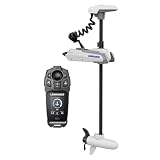
5. Lowrance Recon Saltwater 72 – The Long Shaft Option For Bigger Boats
Lowrance Recon Saltwater 72-inch Trolling Motor with FreeSteer Joystick Remote, 000-16181-001
72 in shaft
Saltwater configuration
FreeSteer joystick
Brushless motor
Pros
- Joystick steering with full display integration
- GPS anchor hold works in changing wind and water
- 72 in shaft suits larger offshore boats
- Brushless motor is quiet and sonar-ready
Cons
- Only two owner reviews
- both 5-star
- so no critical feedback exists
- At 70.8 lb the motor is heavy to deploy on a bow mount
A 72 inch shaft exists because big boats sit high. This variant is the right answer when your bow plate is 48 inches or more above the waterline, where a 60 inch motor would simply run out of shaft.
The joystick still runs the motor from a compatible Lowrance display, so the anchor function lives on the same screen as your chart and sonar. Saltwater configurations carry corrosion hardware, and a prop shaft anode is included.
When You Actually Need 72 Inches
Measure from the bow mounting plate to the waterline and add 24 inches. Anything above roughly 48 inches of mount height needs the longer shaft, and it is the one measurement you cannot change later.
Sonar-Ready Nosecone
Supports HDI and Active Imaging 3-in-1 nosecones plus ActiveTarget 2 and 2 XL brackets. Pairing sonar with a joystick-controlled motor keeps the entire helm on one display, which is the main reason this platform appeals to offshore captains.
Owner Feedback Is Thin
Only two Amazon reviews carry this listing, both five stars, which tells you very little. Treat the specification sheet as the evidence here and look for field reports from owners of the same shaft length before committing to an offshore fit-out.
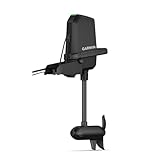
6. Garmin Force Current – Multi-Band Anchor Lock On A Kayak
Garmin Force® Current Kayak Trolling Motor
12V system
39.8 lb build
Transom mount
Anchor lock with multi-band GPS
Pros
- Anchor lock and heading hold are repeatedly praised as very accurate
- Multi-band GPS gives tighter positioning than single-band units
- Wireless remote works well enough to skip the optional foot pedals
- Quiet efficient power that pushes a kayak with little effort
- Light enough to install and remove without help
Cons
- Stow system does not secure the motor for car transport so it may need removing
- No kayak mounting plate hardware supplied so a plate must be built
- Can be jumpy on large steering corrections even at low sensitivity
Kayak owners rate this motor’s anchor lock and heading hold very highly, and multi-band GPS is why. It uses two frequency bands to resolve position, which cuts the error that makes single-band motors drift before correcting.
Control options are unusually broad for a kayak unit: wireless foot pedals, a handheld remote with point-and-go gesture steering, and smartwatch control from the wrist. A wireless man-overboard tag is included in the box.
Mounting Reality On A Kayak
No kayak mounting plate hardware is included, so plan on fabricating or sourcing a flat plate. The motor also will not stay secured in its stow position for transport, which means removing it for car trips.
Steering Sensitivity
Owners report it can feel jumpy during large speed or steering corrections even at low sensitivity settings. If you fish structure at 1 mph, that sharpness takes a few sessions to tune out.
Why Multi-Band Matters Here
A kayak sits low and drifts slowly, so the motor spends most of its life making small corrections. Multi-band positioning resolves those corrections faster, which is why owners single out the anchor lock as the standout feature on a platform this small.
7. Garmin Force Kraken 63 – 36V Anchor Lock On A Carbon Shaft
Garmin Force Kraken Trolling Motor – 63″ – White [010-02574-00]
36V electrical system
63 in shaft
Anchor lock positioning
Carbon fiber shaft
Pros
- Anchor lock positioning is consistently rated as holding well
- Carbon fiber construction keeps weight down for a 63 in bow-mount unit
- Remote high efficiency prop and mounting hardware all included
Cons
- Listing is sparse on thrust class and control details
- Only seven reviews so owner feedback is thin
The Kraken is the Garmin answer for a saltwater bow mount where you want anchor lock and a 36V system on a carbon composite shaft. The 63 inch length covers mid-height bow plates without going to a full 72 inch shaft.
At a 4.8 average with no rating below four stars from seven reviews, the sentiment is strongly positive but statistically thin. The package includes the remote, the high efficiency propeller and mounting hardware.
Carbon Composite Shafts
Carbon fibre composite resists corrosion better than aluminium and does not pit in salt spray. It also transmits noticeably less vibration, which matters when you are trying to hear a quiet prop over a fish that will not come close.
What The Listing Leaves Out
Thrust class and full control options are not spelled out in the product detail, so confirm the rated thrust with the manufacturer before sizing it to your hull. We would not fit a bow mount on a boat without knowing those numbers.
Where A 36V System Pays Off
Thirty-six volts halves the current draw for the same thrust, which is the argument for it on a large hull with a heavy battery bank. If your boat is 16 to 20 feet, 24V is the cheaper and simpler route to the same result.
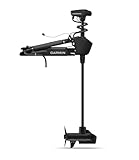
8. Garmin Force Pro 50 – Built-In UHD Sonar And A Scissor Mount
Garmin Force® Pro Trolling Motor Black 50″ Trolling Motor with Built-In GT56UHD-TR Transducer
50 in shaft
Built-in GT56UHD-TR transducer
Scissor gas-spring mount
Multi-band GPS
Pros
- Multi-band GPS improves anchor lock and heading hold accuracy
- Built-in GT56UHD transducer removes the need for a separate sonar install
- Scissor mount with gas springs makes deploy and stow easy
- Very quiet operation reduces noise for wary fish
Cons
- Only two owner reviews on Amazon
- both 5-star
- At 91.2 lb it is the heaviest motor here and needs a sturdy deck
This is the motor to buy if your helm is already Garmin. The integrated GT56UHD-TR transducer provides UHD scanning sonar from the motor itself, and chartplotter integration covers routes, thrust and anchor lock control over the wireless network.
The scissor-style mount uses a pull cable and dual gas springs, so deploy and stow are one-handed. High efficiency and weedless props are both included, along with a remote and foot pedal.
Built-In Sonar Versus a Separate Transducer
The built-in GT56UHD-TR gives you a clean install with one cable run. The tradeoff is the weight: at 91.2 lb this is the heaviest motor in the group, and it needs a reinforced deck plate.
Mounting Height Matters More Than Power
A 50 inch shaft is for boats with a lower bow plate. The same family is offered in 57 inch, so measure before you commit to a length.
Garmin Network Integration
Route follow, heading hold and anchor lock all resolve on a compatible chartplotter over the wireless network. That is the reason to buy this motor inside the Garmin ecosystem rather than against it, even at this weight.
9. Lowrance Ghost – Quiet Brushless Power And A Deep Owner Record
Lowrance Ghost Freshwater Trolling Motor, 47-inch Shaft, Bow Mount, 97/120 lbs Thrust with Configurable Foot Pedal, HDI Sonar, 000-14937-001
97/120 lb thrust
Brushless motor
47 in shaft with 60 in option
HDI nosecone included
Pros
- Spot Lock holds reliably including wind chop and 20 mph conditions
- Silent brushless motor with zero electromagnetic interference for sonar clarity
- Plug-and-play HDI nosecone works with existing Lowrance displays
- Install holes line up with major competitor mounts so no drilling
- Long runtime on lithium at 24V
Cons
- Direction indicator arrow stays inaccurate even after installation
- Calibration is required or Spot Lock positioning drifts
- Lowrance support was slow to resolve the indicator issue
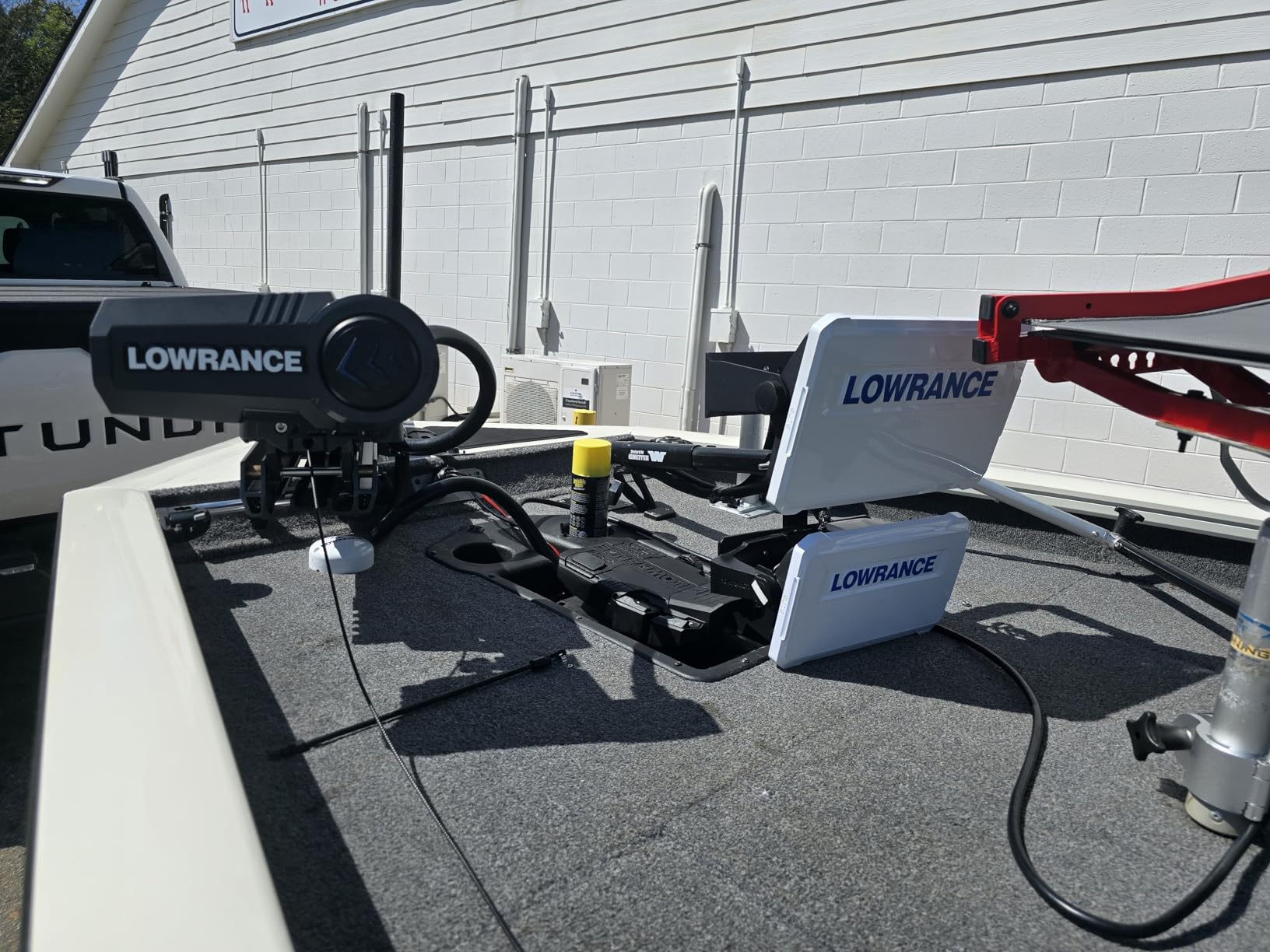
With 63 reviews the Ghost has the second-largest owner base in this roundup, and the pattern is consistent: owners hold a position through wind and chop that would push a cable-steer motor off its mark. Zero electromagnetic interference keeps sonar displays clean, which is a real advantage when forward-looking sonar is your whole game.
Install holes line up with major competitor mounts, so swapping from a different brand often means no drilling at all. The foot pedal feels cable-drive solid rather than plastic, and it is configurable with programmable shortcut keys.
Brushless Versus Brushed Motors
The brushless motor here was validated through four years and 10000 testing hours. It runs quieter, draws less current at the same thrust, and needs no commutator replacement — which is why the runtime figures on lithium packs are as good as they are.
The Calibration Step People Skip
If you skip the documented calibration, Spot Lock positioning drifts. The recurring negative is an inaccurate direction indicator arrow, and owners report slow brand support on that specific issue.
Sonar And Shallow Water
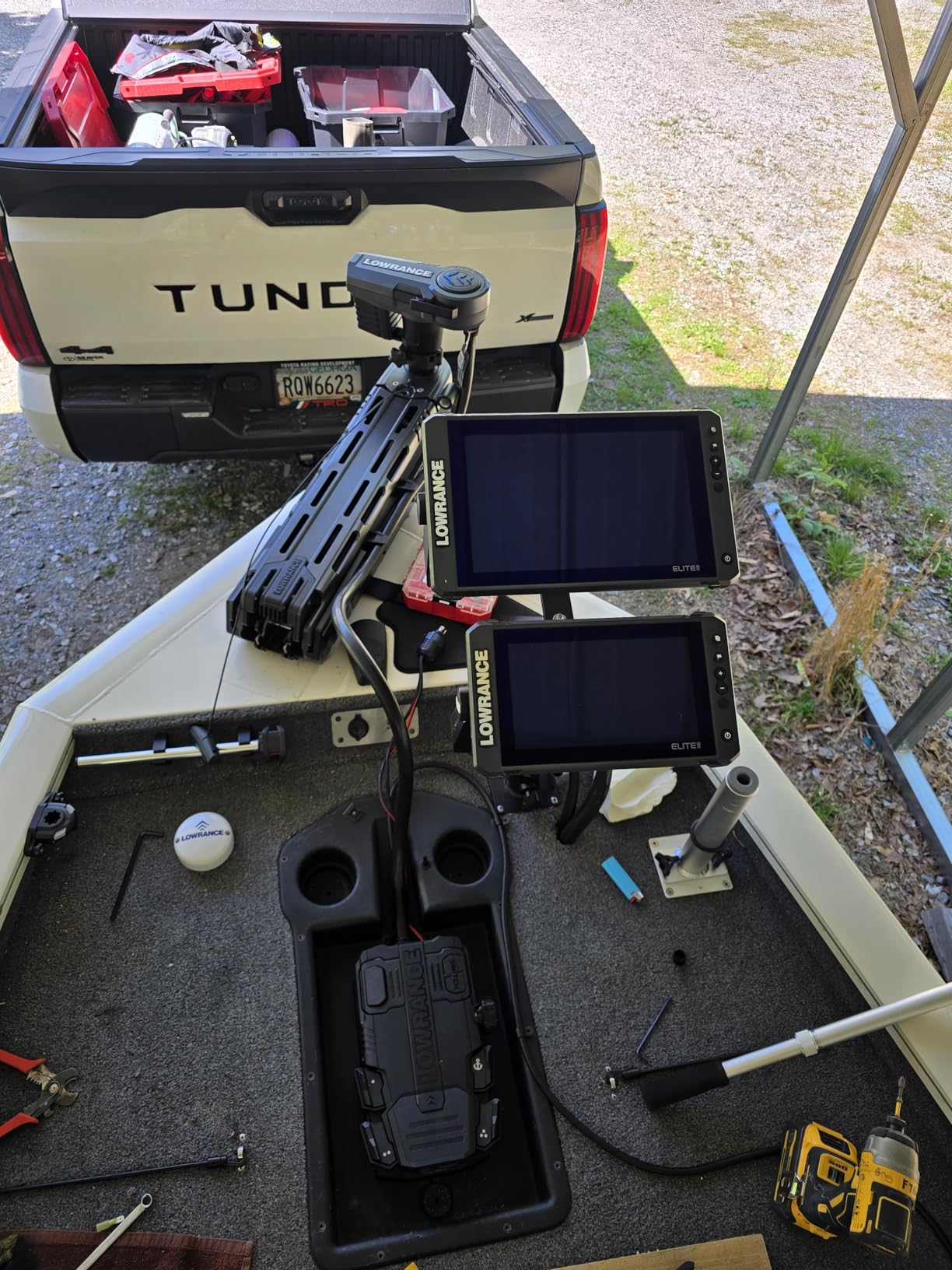
The included HDI nosecone with CHIRP and DownScan Imaging plugs into existing Lowrance HDS Live and gen 3 units without upgrading electronics, and it is upgradable to Active Imaging 3-in-1. It also works with Power-Pole shallow-water anchor control.
Thrust Class And Shaft Options
Two thrust classes at 97 and 120 lb cover everything from a 16 ft skiff to a full-size offshore hull, with 47 and 60 inch shafts to match mount height. That spread is why this motor turns up as the recommendation more often than any other in this guide.
10. PARKHO HASWING Cayman GPS – Phone-Driven Anchor Control For Less
PARKHO HASWING Boat Electric Trolling Motor – 12V 54″ 55lbs Cayman GPS Anchor Control Shaft Bow Mount Portable Fishing Boat Saltwater Freshwater with Wireless Remote Control
12V system
55 lb thrust
54 in shaft
Helmsman app with route recording
Pros
- App-based anchor control re-holds position if the boat drifts past about 6 feet
- Works without the phone thanks to the included wireless remote
- Route saving and shoreline auto-navigation add value beyond basic anchoring
- Emergency disconnect buckle provides a quick kill switch
Cons
- Only two Amazon reviews so reliability data is thin
- Warranty excludes saltwater corrosion and commercial or tournament use
- 12V 55 lb thrust class is limited on larger or windier boats
Most budget anchor motors need a phone. This one comes with a handheld wireless remote, so a flat battery or a dead phone does not leave you adrift at 1 mph.
The Helmsman app handles live maps, route recording and cruise control on iOS and Android. The anchor function re-engages when the boat drifts more than about 6 feet from the set point, and an emergency safety buckle on the charging cable cuts power instantly.
Read The Warranty Before You Fish Salt Water
The limited warranty explicitly excludes saltwater corrosion degradation, commercial use and tournament use. On a coastal boat that is a real limitation, so treat this as a freshwater and sheltered-water motor.
Phone Dependency In Practice
The app is a genuine advantage for route work and a genuine weakness when signal or battery is the problem. The included remote is the reason this motor ranks as the budget pick rather than a gimmick.
Where It Fits In The Line-Up
Pair it against the Lowrance Ghost and the Minn Kota PowerDrive for a smaller boat: you trade owner review depth for an app-driven anchor and route recorder at a fraction of the outlay. On a boat that already has a solid 12V bank, that trade usually makes sense.
11. AQUOS GPS Bow Mount – Quick Release Bracket And App Waypoints
AQUOS GPS Bow Mount Trolling Motor 12V 55LBS 54in & Remote, Quick Release
12V system
55 lb thrust
54 in shaft
Anchor lock radius of about 4.9 ft
Pros
- One-touch GPS anchor lock holds within roughly 4.9 ft and corrects drift automatically
- 164 ft wireless remote range covers the whole boat
- Quick-release bracket makes the motor easy to move between boats
- App route management and waypoint sharing work on iOS and Android
- Two-year warranty on the motor itself
Cons
- Only four reviews with a 29 percent three-star share showing some dissatisfaction
- Accessories including the remote carry only a three-month warranty
- Requires a flat 13.7 by 8 in mounting surface so some small boats need fabrication
The quick release bracket is the reason to look at this motor. If you run one boat in spring and another in autumn, you carry the motor in the truck and swap it in a couple of minutes rather than re-wiring a fixed mount.
Holding precision is published rather than vague: the anchor lock maintains a positioning radius of roughly 4.9 ft. The wireless remote reaches up to 164 ft, which covers a full-size boat from the bow seat.
Published Accuracy Versus Premium Claims
Knowing the actual radius lets you judge the feature. Anything that holds within about 5 ft is fine for fishing a weed edge, and no consumer motor holds a boat dead still in current.
Mounting Surface And Warranty Split
The motor needs a flat 13.7 by 8 in area, which rules out some narrow gunwales. The motor carries a two-year warranty while accessories including the remote carry only three months, so register the motor and keep the remote out of saltwater spray.
Review Signal To Weigh
Four reviews is a small sample, and roughly a third of them land at three stars. The bracket and published accuracy are the parts we would trust; the electronics consistency is where those middling ratings point.
12. VEVOR 12V GPS Motor – An Entry Anchor With An LCD Remote
VEVOR Electric Trolling Motor, 12V 55lbs Thrust with GPS, 10-Speed Bow Mounted Saltwater Outboard Boat Motor with Remote Control & LCD Battery Indicator, for Kayaks, Fishing Boats, 54-Inch Shaft
12V system
55 lb thrust
54 in shaft
GPS anchor at 2 meter accuracy
Pros
- GPS anchor with auto-reset keeps the boat at the drop point
- LCD screen on the remote shows routes and recorded tracks
- 3-blade prop delivers low-speed torque without tangling
- Quick-release bracket simplifies installation and removal
Cons
- Lowest average rating in this group at 3.5 with a 37 percent one-star share
- 2 meter positioning accuracy is looser than premium brands
- Only three reviews so the quality signal is weak
The feature list looks competitive on paper: GPS navigation with route recording, anchoring and cruise control, ten speed levels and an LCD remote that displays your recorded track. The execution is what separates it from the other picks.
With a 3.5 average across three reviews and a 37 percent one-star share, the results are inconsistent. Treat it as a way to try GPS anchoring cheaply rather than as a boat-wide investment.
What Two Meter Accuracy Means
Two meter positioning accuracy is about 6.5 ft, which is looser than the roughly 4.9 ft radius the AQUOS claims and looser still than multi-band GPS. Fine for finding a drop-off, coarse for working a specific weed edge.
When It Still Makes Sense
It sits on a 12V 55 lb thrust class with a 54 inch shaft and a quick-release bow bracket, and it handles kayaks and small fishing boats. At that size, the inconsistency matters less than the low entry cost.
Who Should Skip It
If you fish a single structure for eight hours a day, a drifting anchor position will cost you more in missed fish than the saving buys back. This motor makes sense as a backup unit or on a boat you fish casually.
How to Choose a GPS Anchor Trolling Motor
Match Your Fish Finder Brand First
This is the decision most buyers get wrong, and it is the one anglers argue about most on forums like tidalfish and bassresource. Minn Kota motors talk freely to Minn Kota and Humminbird displays. MotorGuide and Lowrance work together, and Lowrance motors suit Lowrance units. Garmin motors integrate with Garmin chartplotters. Pair a Minn Kota motor with a Lowrance screen and you keep basic anchor functions but lose follow-the-contour, shared heading data and forward-facing sonar overlays.
Decide your screen brand first, then shop within it. On tidalfish, an owner picked the MotorGuide Xi5 specifically because MotorGuide links to Lowrance electronics, and that ecosystem fit outweighed thrust in the decision. Bassresource runs a long-running consensus that names the Xi5 with a Lowrance HDS Touch as the strongest GPS motor and electronics pairing, with anchor mode as the deciding feature.
Size Thrust To Boat Weight And Wind
Use 2 lb of thrust per 100 lb of boat weight as a starting figure, then add for conditions. A loaded boat in a stiff breeze can demand double the calm-water figure, because you are pushing the whole hull rather than just moving it. Working the ratio through, our 80 lb picks suit hulls up to roughly 4000 lb once you allow for passengers and gear; the 55 lb class suits jon boats and small pontoons.
Measure Mount Height Before Shaft Length
Measure from the bow mounting plate down to the waterline and add 24 inches. A shaft that is too short brings the prop into the air and costs you both thrust and quietness. This is also why a 72 inch shaft exists for high-transom boats.
Decide Between Freshwater And Saltwater Builds
Saltwater-rated motors carry coated, sealed housings and corrosion-resistant hardware. For brackish and open salt water, look for an explicitly saltwater-rated model such as the Riptide Terrova 80, the Riptide PowerDrive or the Recon Saltwater 72. Freshwater-only models are fine on lakes. If you want the most capability per dollar, check where the owner feedback is deepest before you pick on thrust numbers alone: the Lowrance Ghost here carries 63 reviews and the Riptide Terrova 80 carries 67, far more field history than any other anchor motor in this roundup.
Choose Remote, Foot Pedal Or Both
Foot pedals give faster response at speed; handheld remotes and joysticks give finer low-speed control. The foot pedal is what you use when moving between spots, and the remote is what you hold while stationary. Several of the motors in this roundup include both, so you can settle the question in your first season.
Battery Chemistry Decides Your Runtime
Digital Maximizer systems claim up to 5x runtime at trolling speed, and that claim holds up best on 24V lithium packs because voltage stays high as the pack drains. Lead-acid packs sag under load, so the motor spends more of your day running at a lower effective output. For a full day on anchor, budget deep-cycle lithium in a bank with a proper fusing and charging setup.
Know The Failure Modes Before You Need Them
Owners on 2CoolFishing report anchor mode stopping mid-session, and a MotorGuide owner on the Pensacola Fishing Forum reported spot lock working but the head slowly turning on its own in no wind. In most cases the fixes are unglamorous: run the documented calibration, keep the heading sensor clean and dry, and confirm the remote batteries. Other owners report wireless foot pedal dropouts, so keep the tiller handle reachable.
Frequently Asked Questions
What is the best GPS trolling motor for the money?
For most anglers the Lowrance Ghost offers the best balance of quiet brushless power, 97/120 lb thrust and a deep owner review base. Buy the Minn Kota Riptide Terrova 80 instead for salt water, or the Minn Kota Terrova 80 when built-in sonar is the priority.
Are Garmin or Minn Kota trolling motors better?
Both hold position well. Minn Kota has a deeper freshwater and saltwater line-up with Spot-Lock and more shaft options, while Garmin uses multi-band GPS for tighter positioning and integrates cleanly with Garmin chartplotters. Choose based on the fish finder brand already in your boat.
Is spot lock worth the money?
Yes if you fish structure, hold a channel or work weed edges, because it replaces anchoring and paddling and lets you work a spot quietly. If you only run along open water at trolling speed, the money is better spent on thrust and a lithium bank.
What are the common problems with spot lock trolling motors?
The recurring complaints are loss of GPS signal in poor locations, spot lock stopping mid-session, an inaccurate heading indicator, and wireless foot pedal dropouts. Most are fixed by running the documented calibration, keeping the heading sensor clean and checking remote batteries.
Do I need 24V or 36V for a trolling motor?
24V suits most 16 to 20 ft boats and needs only two batteries, while 36V suits larger hulls and heavy loads where a single motor would draw too much current. Lithium packs at either voltage hold voltage better under load than lead-acid, which extends the day.
Can I upgrade my trolling motor to spot lock?
Not on a manual motor. GPS anchoring needs a GPS receiver, a heading sensor and a drive system built around it, so the upgrade is a new motor. A few i-Pilot remote upgrades exist for existing Minn Kota models without GPS, but they add control rather than anchoring.
The Bottom Line
If you fish salt water on a bay or flats boat, the Minn Kota Riptide Terrova 80 is our pick: 67 owner reviews of real anchoring behaviour, Spot-Lock that replaces an anchor, and corrosion hardware built for the job. If you want the most capability for the money and already run Lowrance displays, the Lowrance Ghost is hard to argue with.
For a big freshwater boat with sonar wanted inside the shaft, choose the Minn Kota Terrova 80. Offshore captains on high bow plates want the Lowrance Recon Saltwater 72, kayak anglers get multi-band accuracy from the Garmin Force Current, and a Garmin helm belongs on the Garmin Force Pro 50.
Whichever you pick, check the ecosystem first, measure your mount height, and size thrust to a loaded boat in wind rather than an empty one on a calm day. Start with a correct pairing rather than the strongest motor on the page — buyers who match their screen brand first are the ones who stay happy past the first season.