

If you are on a well, the phrase water softener and filter combo already tells you the single most important thing about the category: one box rarely fixes one problem. Households searching for the best water softener and filter combos for well water in 2026 usually discover this after a first purchase, when the shower is soft and pleasant but the toilet bowl still wears a rust ring, or when the water goes clear and the kettle still furs up. A softener addresses hardness. It does not address iron, manganese, hydrogen sulfide, sediment, tannins or microbes, and on well water those contaminants are almost always present at the same time.
We spent several weeks reading lab reports, control-valve manuals, owner threads and warranty terms for the eight systems below, and compared them on the four things that actually decide whether a combo works on a private well: contaminant coverage, sizing headroom, pressure drop, and the ongoing cost of media, salt and service. Nothing here is sponsored, and no brand paid for placement.
One framing point before the picks. A whole-house treatment train is a sequence, not a product. Filtering first protects everything downstream; softening second keeps scale out of your water heater, dishwasher and washing machine; disinfection third; and a drinking-water tap last. Get the order wrong and you will buy the same media twice. That is why the numbered sequence below comes before the reviews, and why our top pick leads with a control valve and a resin bed sized for iron rather than a marketing headline.
Pressure is the quiet concern underneath almost every forum question in this niche. Households worry about losing shower flow, and they are right to ask. If you want an early warning on pressure or leaks around the treatment area, our picks for water leak detectors for basements and water leak detectors with smart alerts pair well with an installed train, since a brine line or drain line is exactly the kind of component you do not want to discover is failing at 2 a.m.
Our Top 3 Water Softener and Filter Combos for Well Water in 2026
The three systems below are the ones we would put in a real house. Each covers a different water problem, and each earns its place on something measurable rather than on brand reputation.

AFWFilters Iron Pro 2 64,00…
- Single tank handles hardness and iron together
- Fleck 5600SXT digital metered valve
- Iron up to 6 ppm
- 5-year warranty

Aquasure 64,000 Grain Plus…
- Metered softener with carbon filtration
- 75 GPD reverse osmosis drinking unit
- Aquatrol digital control head
- 4-6 or more bathrooms
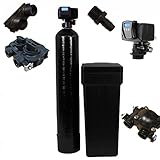
DuraWater Fleck 5600 SXT…
- 48000 grain softener and iron filter
- 14 gpm rated maximum flow
- Fine mesh iron-removal resin
- 3/4 inch bypass
Comparing 8 Well Water Softener and Filter Combos in 2026
Every system below is a whole-house train, so all of them sit on the main line after your pressure tank and before the branch to your fixtures. Read the table as a screening tool, then use the individual reviews for the sizing detail.
| Product | Specs | Action |
|---|---|---|
| AFWFilters Iron Pro 2 Combination Softener and Iron Filter 64,000 Grain |
|
Check Latest Price |
| Aquasure 64,000 Grain Whole House Bundle with 75 GPD Reverse Osmosis |
|
Check Latest Price |
| DuraWater Fleck 5600 SXT 48,000 Grain Water Softener and Iron Filter |
|
Check Latest Price |
 Kind Water Systems E-3000UV Salt-Free Softener and Filter Combo with UV Kind Water Systems E-3000UV Salt-Free Softener and Filter Combo with UV |
|
Check Latest Price |
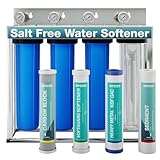 NU Aqua 4-Stage Salt Free Water Softener Whole House Filter System NU Aqua 4-Stage Salt Free Water Softener Whole House Filter System |
|
Check Latest Price |
 EcoPure EPH130 Whole House Water Softener and Filtration System EcoPure EPH130 Whole House Water Softener and Filtration System |
|
Check Latest Price |
 AFWFilters Fleck 64,000 Grain Softener and Carbon Pre-Filter Combo AFWFilters Fleck 64,000 Grain Softener and Carbon Pre-Filter Combo |
|
Check Latest Price |
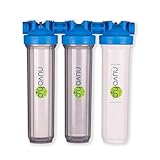 NuvoH2O Whole Home Trio 3-Stage Salt-Free Filter and Softener System NuvoH2O Whole Home Trio 3-Stage Salt-Free Filter and Softener System |
|
Check Latest Price |
The Correct Order for Water Treatment on Well Water
This is the sequence that decides whether a system keeps working, and it is the single most-skipped step in this category. Vendor pages bury it in a paragraph; here it is as a bare list so you can use it directly.
Sediment pre-filter goes first, always.
Iron and sulfur oxidation filter goes second.
KDF or catalytic carbon strips residual iron and chlorine.
Water softener or salt-free conditioner follows pretreatment.
UV disinfection handles remaining microbes, whole-house.
Point-of-use reverse osmosis polishes drinking water last.
Step four is the one people get wrong in both directions. A softener placed before iron removal gets its resin bed fouled, and even a small iron load shortens resin life sharply. A softener placed too late means your iron filter is softening, which exhausts media far faster than expected.
1. AFWFilters Iron Pro 2 Combination Softener and Iron Filter – Our Pick for High-Iron Wells
AFWFilters Iron Pro 2 Combination Water Softener Iron Filter Fleck 5600SXT Digital Metered Valve 64,000 Grain – High Flow for Whole House Use – Removes Hardness, Iron, Manganese, Sediment, Rust
64,000 grain capacity
Fleck 5600SXT metered valve
Iron to 6 ppm, manganese to 6 ppm
5-year warranty
Pros
- Handles hardness and iron in one tank
- Reported very high iron reduced to 0 ppm on a test check
- Cleared rotten-egg odor and red staining
- Fleck 5600SXT valve is well documented
Cons
- Programming and discharge setup instructions are thin
- 119.2 pound resin tank is awkward to move
- One reviewer saw no TDS drop after install
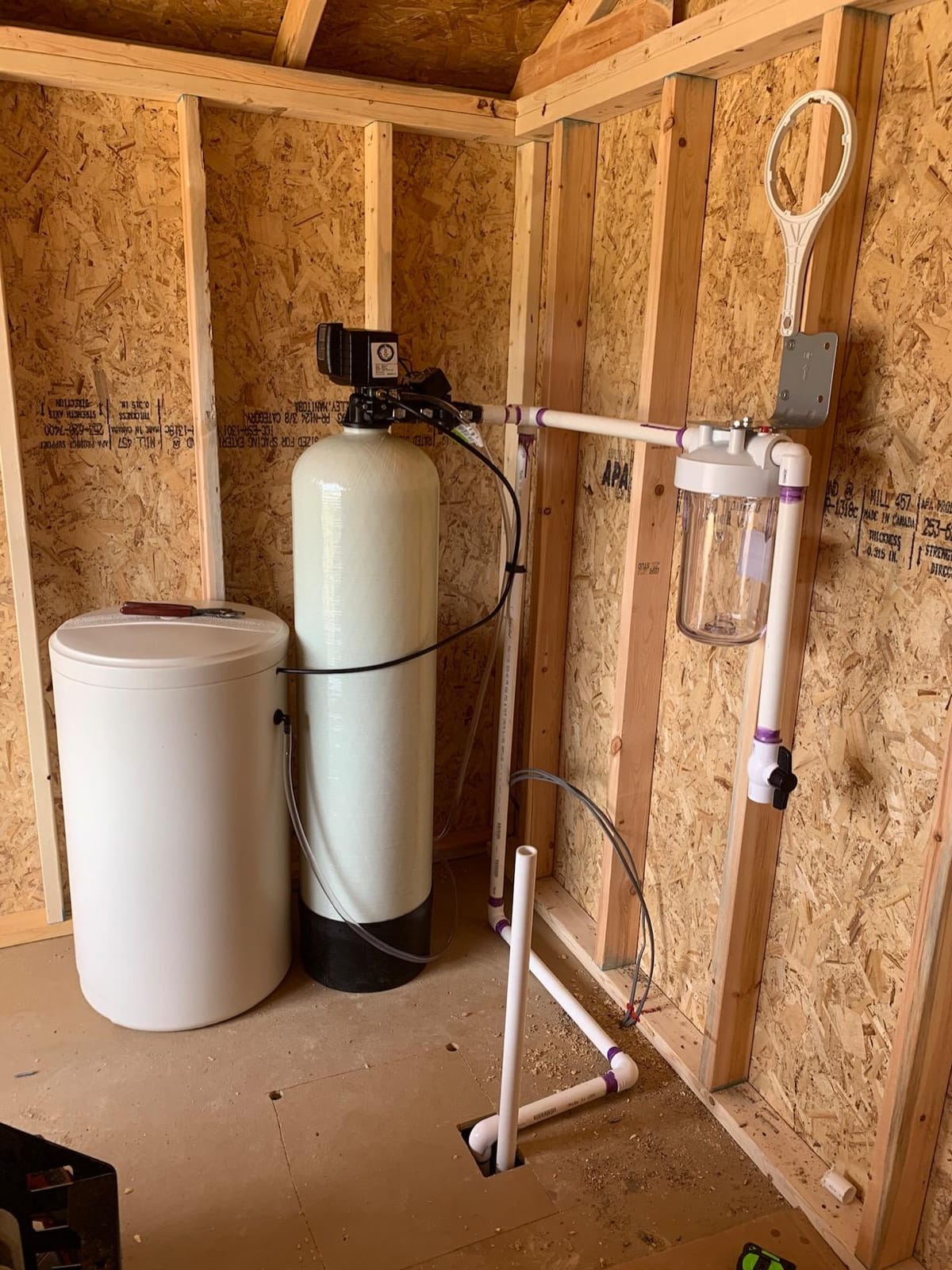
The Iron Pro 2 is the most thoroughly documented system in this group, and 483 reviews at a 4.4 average is the largest verified owner base we found. It is a single tank that does two jobs: an ion exchange bed sized at 64,000 grains, paired with an iron-removal capability rated to 6 ppm iron and 6 ppm manganese. For a well that runs hard and rusty at the same time, that is the most efficient use of floor space you can buy.
Owners on high-iron wells consistently describe the same result: water clears within days, the rotten-egg smell disappears, and rust stains on fixtures stop coming back. One reviewer reported taking very high iron readings down to 0 ppm on a test check, which is the outcome that matters if you have staining on toilets and tubs.
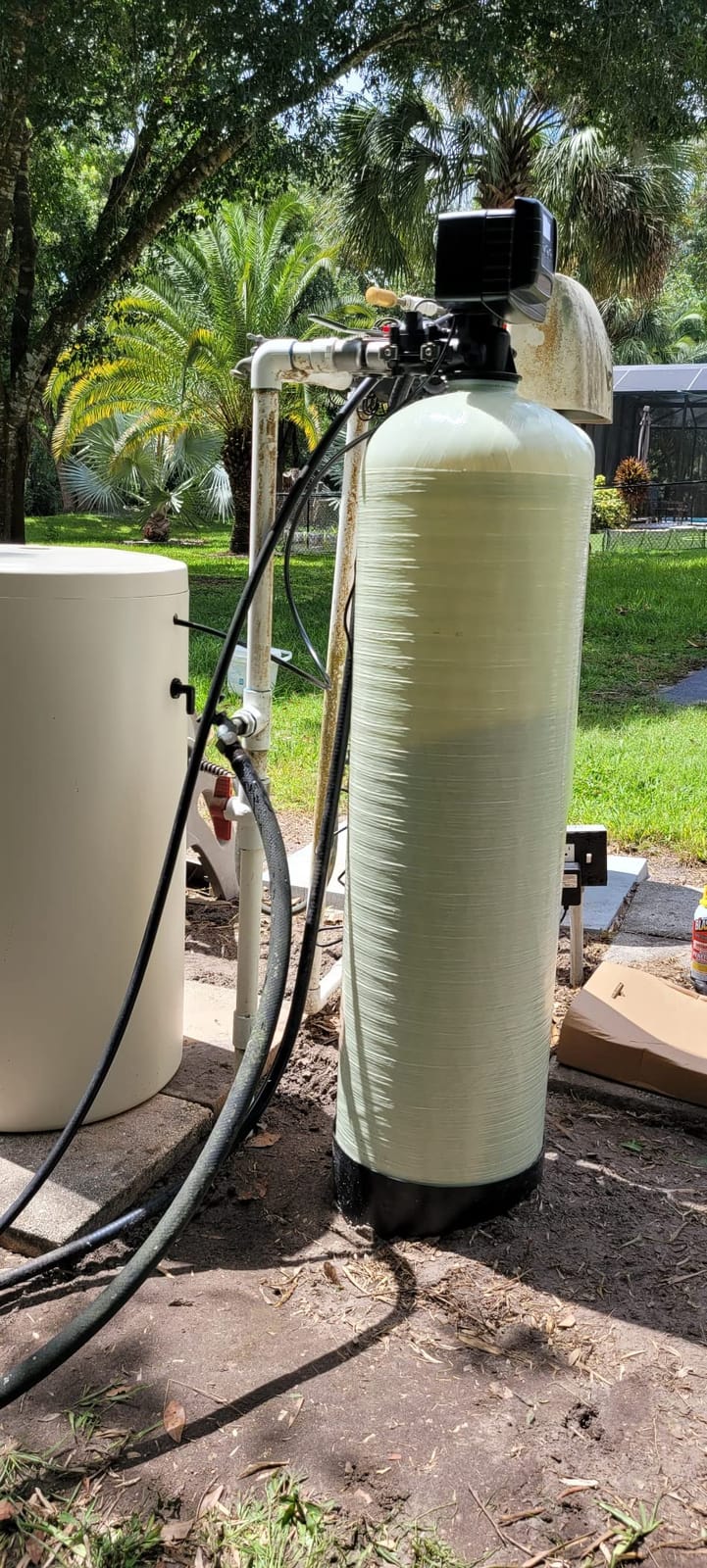
The Fleck 5600SXT digital metered control valve is the reason we trust this one. It regenerates on measured usage rather than a clock, which on a well with an unpredictable occupancy pattern saves both salt and resin. Regeneration every two to seven days keeps the bed from going stagnant, which matters more on well water than on municipal lines.
Where it falls short is documentation. The most cited friction among owners is not treatment performance but programming and discharge setup, and the resin tank at 119.2 pounds is genuinely awkward to get through a basement stairwell. If you are not comfortable with plumbing, budget for a plumber to set the valve; the physical work is not the hard part.
What It Removes and What It Cannot
This tank addresses hardness, iron, manganese, rust and sediment in one pass, which is unusual at this capacity. It does not disinfect. If your well has any history of coliform or surface-water influence, a UV stage downstream is still required, and no amount of softening substitutes for it.
Sizing and Flow for Well Water
64,000 grains is the sweet spot for a household of four to six on water in the 15 to 25 GPG range, and it leaves headroom for a family that hosts visitors. The listed dimensions are 14 by 7 by 21 inches for the tank assembly, and the model has been available since 2011, which means parts and valve service knowledge are both abundant.
Who Should Buy and Who Should Skip
Buy it if your lab report shows iron above 0.3 ppm and hardness above about 10 GPG, and you want one tank rather than a stack. Skip it if your well is soft but has sediment and odor problems only, because a carbon and sediment pair will serve you better and you will not be paying for resin capacity you do not need.
2. Aquasure 64,000 Grain Bundle with 75 GPD Reverse Osmosis – Best Value for Complete Treatment
Aquasure 64,000 Grains Whole House Water Filter Bundle with Automatic Digital Metered Control Softener and 75 GPD RO Reverse Osmosis Drinking System | Removes Hardness | Ideal for 4-6+ bathrooms
64,000 grain metered softener
75 GPD reverse osmosis drinking unit
Whole-house carbon filtration
Aquatrol digital metered head
Pros
- Three-part train in one purchase
- Removes well-water odor and rust while softening
- Hardness drop confirmed by before and after testing
- Several DIY installers succeeded without a plumber
Cons
- RO line installation instructions are unclear
- One reviewer reported the softener stopped using salt
- Softening and RO are separate installs
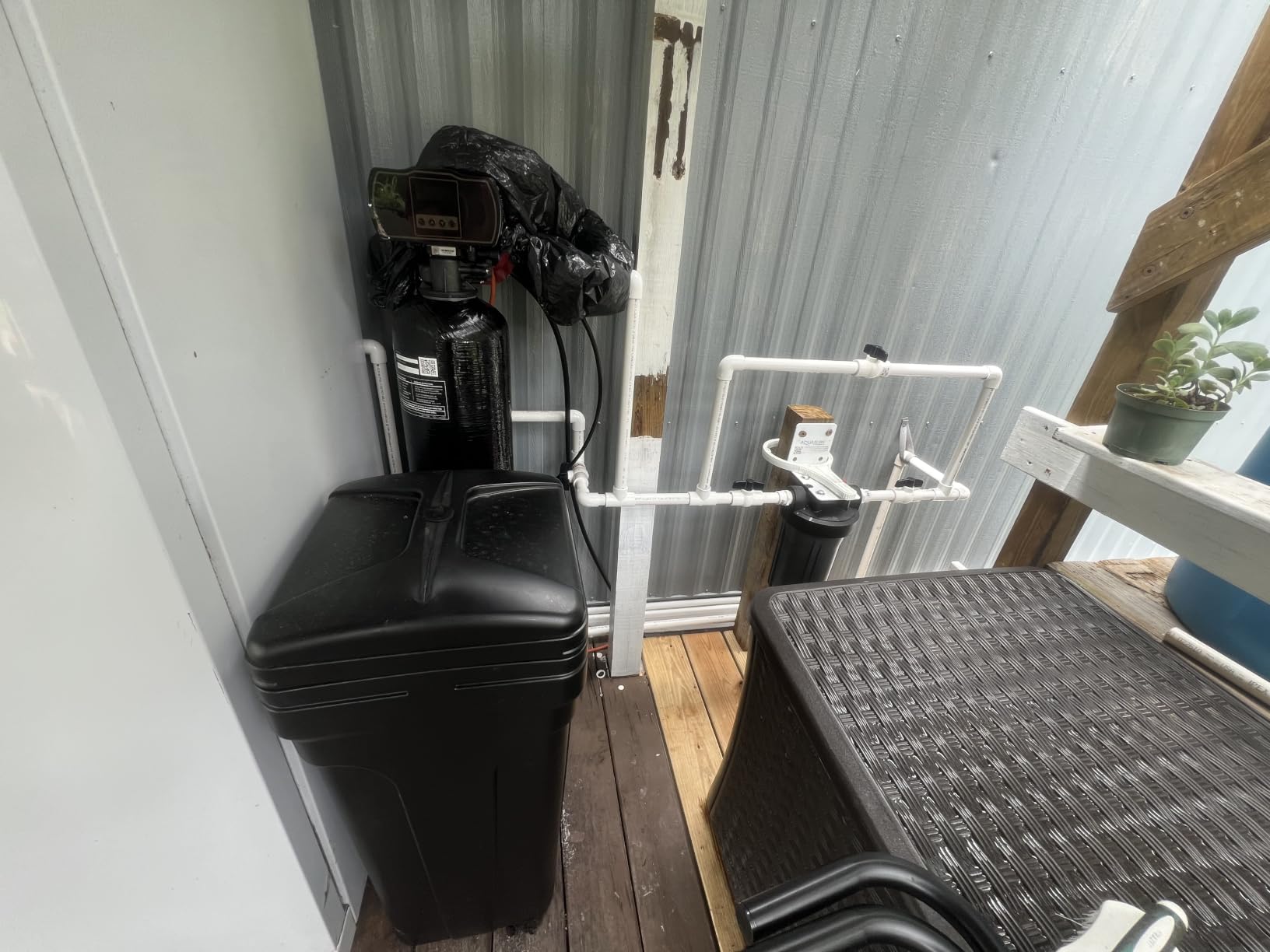
The Aquasure bundle is the only system here that ships a complete drinking-water solution alongside the whole-house train, and that changes the economics for many households. You get a 64,000 grain metered softener, a whole-house carbon filtration stage and a 75 gallons per day reverse osmosis unit with faucet in a single order. Buyers consistently frame it as replacing bottled water and rust-stained fixtures in one project.
The Aquatrol digital metered control head handles regeneration on measured usage, and the manufacturer lists 32,000, 48,000 and 64,000 grain variants so you can size down without leaving the family. The listed footprint is 13 by 13 by 64 inches, and the system handles a maximum supported TDS level of 2000 ppm, the highest ceiling among the units in this roundup.
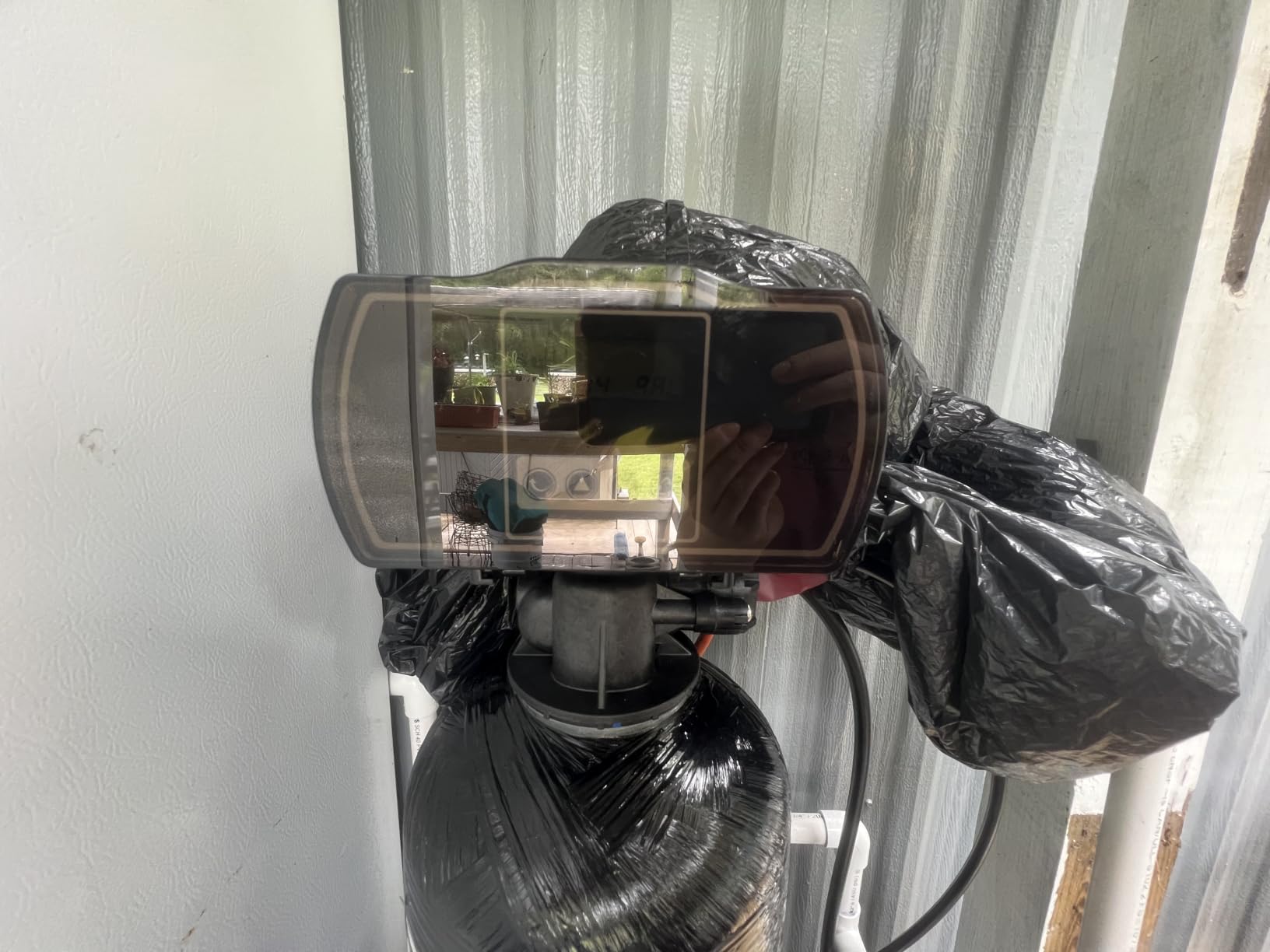
Two practical notes. The RO unit has a maximum flow rate of 1.33 gpm and runs on water pressure rather than electricity, which is fine for a drinking tap but will never serve a whole house. And the softening train and the RO install are physically separate jobs, so plan the plumbing layout before the tank arrives rather than after.
Owner feedback on the treatment results is strong, with confirmed hardness drops and cleared well odor. The recurring negative theme is after-sales support: one reviewer reported the softener stopped using salt and found support unresponsive, which is a single report in 323 reviews but worth knowing if you are not near a dealer.
Best Fit and Sizing
This is the pick for a home with four to six bathrooms, or a family that has been buying drinking water delivery. The 75 GPD capacity comfortably covers drinking and cooking for a large household, and the 64,000 grain softener side handles the whole house.
Installation Notes and Ongoing Cost
The manufacturer lists 5-year spare part availability, which is a meaningful support signal for a system with an RO membrane and several tank fittings. Filter media and the RO membrane are consumables, so build a replacement line into your budget from year one rather than treating it as a one-time purchase.
Who Should Skip It
Pass if you are on a tight budget for a small household, or if you have no interest in maintaining an RO membrane. A two-tank salt-based combo does the same whole-house work for less money, and you can always add a drinking tap later.
3. DuraWater Fleck 5600 SXT 48,000 Grain – Most Versatile for Hardness Plus Light Iron
DuraWater Fleck 5600 SXT 48K Water Softener/Iron Filter, 3/4″ Bypass, Black
48,000 grain softener and iron filter
14 gpm maximum flow rate
Fine mesh iron-removal resin
3/4 inch bypass
Pros
- Single tank handles hardness and iron
- Large improvement in soap lather and laundry whiteness
- Rust stains stopped and had not returned
- Metered regeneration uses less salt than timer units
Cons
- Instructions are photocopies with poor photo detail
- Discharge hose and clamp not included
- Iron-colored water for about an hour after regeneration
This DuraWater system pairs a 48,000 grain ion exchange bed with fine mesh resin in a single tank, and it holds the highest verified rating average among the well-proven picks here at 4.5. The 14 gpm maximum flow rate is the highest rated flow in this group, which matters if you have several fixtures running at once or a well pump that spikes demand.
Owners replacing failed or aging units describe dramatic changes in water clarity, soap lather and laundry whiteness, and they frequently note paying well below a contractor quote. The Fleck 5600SXT metered valve is the same platform used across this category, which means any installer has likely worked on it before.
Sizing and Household Match
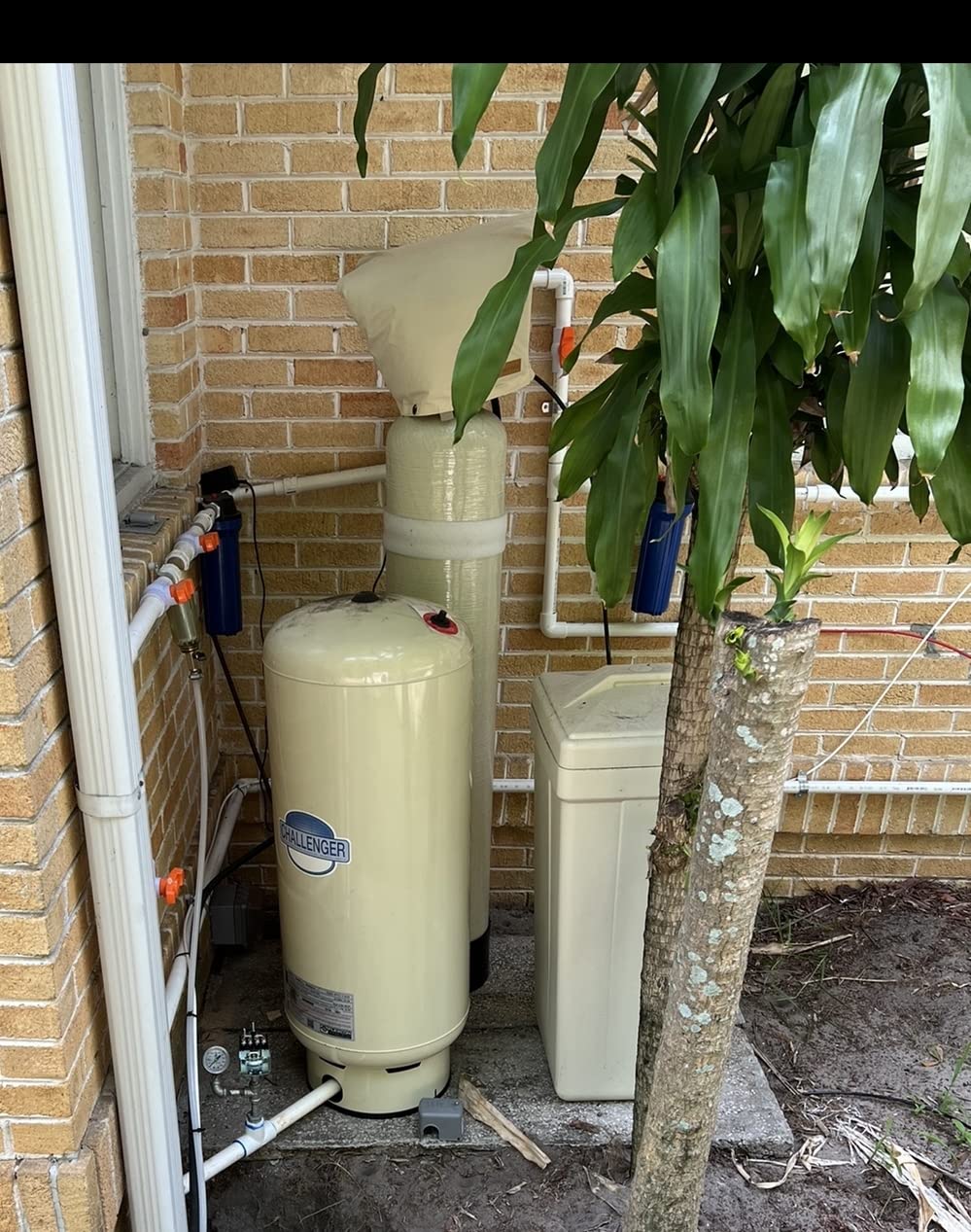
The manufacturer sizes this for homes with 2 to 5 people and 2 to 3 bathrooms, and that guidance is worth following rather than oversizing. The tank holds 1.5 cubic feet of resin at a listed 48,000 grain capacity, with dimensions of 25 by 15 by 62 inches. A 1 inch bypass variant is offered alongside the standard 3/4 inch version, and moving up is cheap insurance if your well pressure is marginal.
What It Removes and What It Cannot
Hardness and light iron are handled together in one bed, which is the efficient choice when iron sits below the level that would need a dedicated oxidation stage. It will not remove hydrogen sulfide odor, and it does not treat bacteria. Fine mesh resin also backpressures slightly more than standard mesh, so pair it with adequate pre-filtration if your well carries sediment.
One recurring complaint deserves naming: some owners report iron-colored water for roughly an hour after a regeneration cycle as fines flush out. It is transient rather than a fault, but the first time you see it, it is alarming unless you expect it.
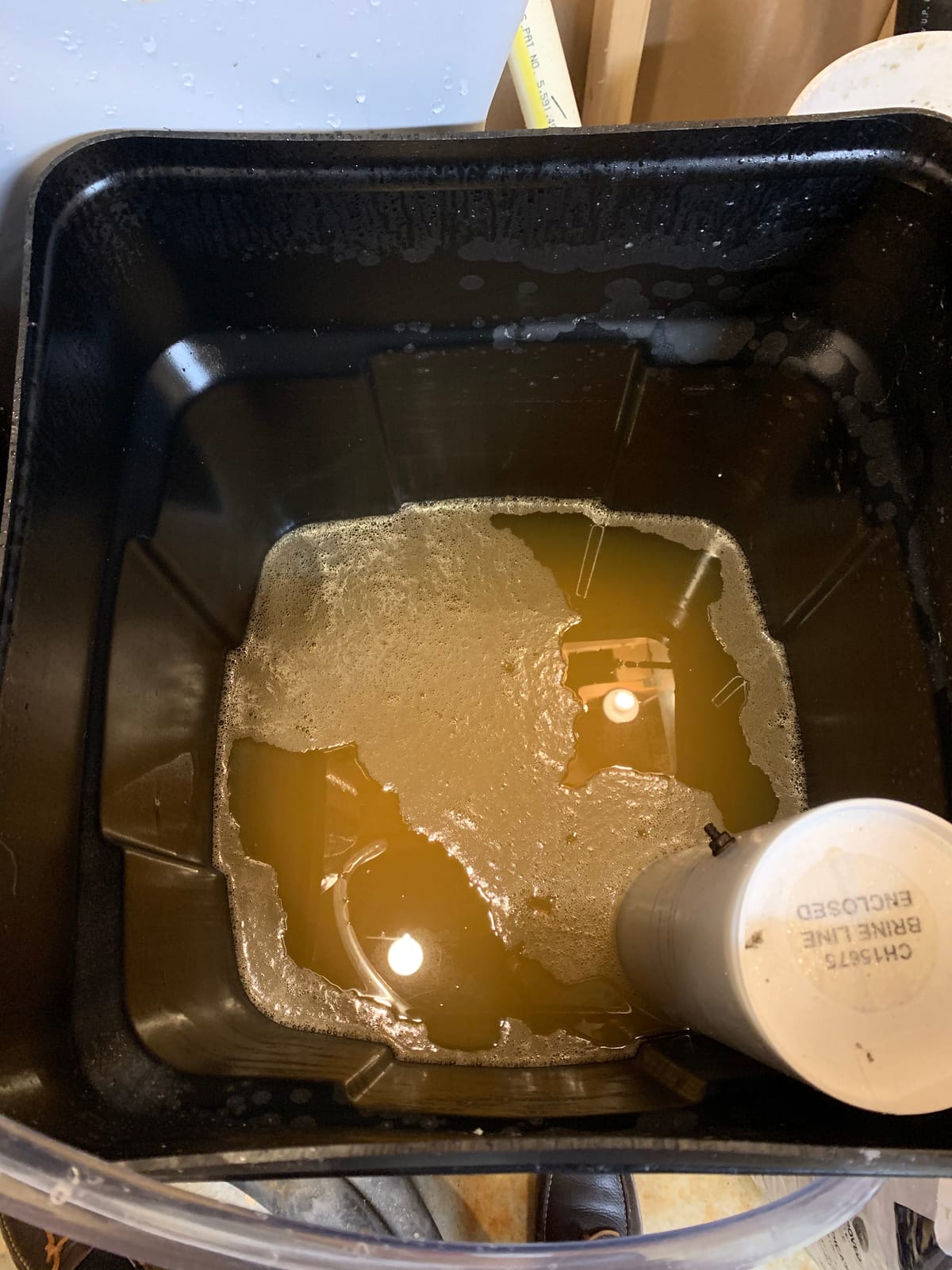
Documentation and Install Reality
The weakest part of this package is paperwork. Owners describe photocopied instructions with poor photo detail and no printed manual, and several note that the discharge hose and clamp were not included despite the complete-sounding description. Budget a hardware store run before you start, and consider paying a plumber to set the valve.
Verdict
Choose this if your hardness is the dominant problem, your iron is present but modest, and you want proven valve hardware without the footprint of a filtration stack. Look elsewhere if odor or sediment is your primary complaint, because neither is addressed here.
4. Kind Water Systems E-3000UV – Best for Salt-Free Treatment with UV
Kind Water Systems E-3000UV Whole House Salt-Free Water Softener & Filter Combo with UV
Sediment plus carbon block filtration
Salt-free crystallization softening
UV disinfection stage
No salt and no brine and no power
Pros
- Only combo here combining sediment carbon salt-free softening and UV
- One owner reported bacteria testing negative within 72 hours
- No salt and no brine discharge and no electricity
- Noticeable chlorine taste and odor reduction
Cons
- Not the easiest DIY install
- UV sleeve and O-ring handling are easy to get wrong
- Canister gaskets did not seat for one reviewer
The E-3000UV is the most complete salt-free system in this group and the only one that pairs salt-free conditioning with a UV disinfection stage in a single housing. There is no brine tank, no drain line, no salt to refill and no electrical outlet required, which makes it attractive for wells near a discharge-sensitive property line or in areas where brine discharge is restricted.
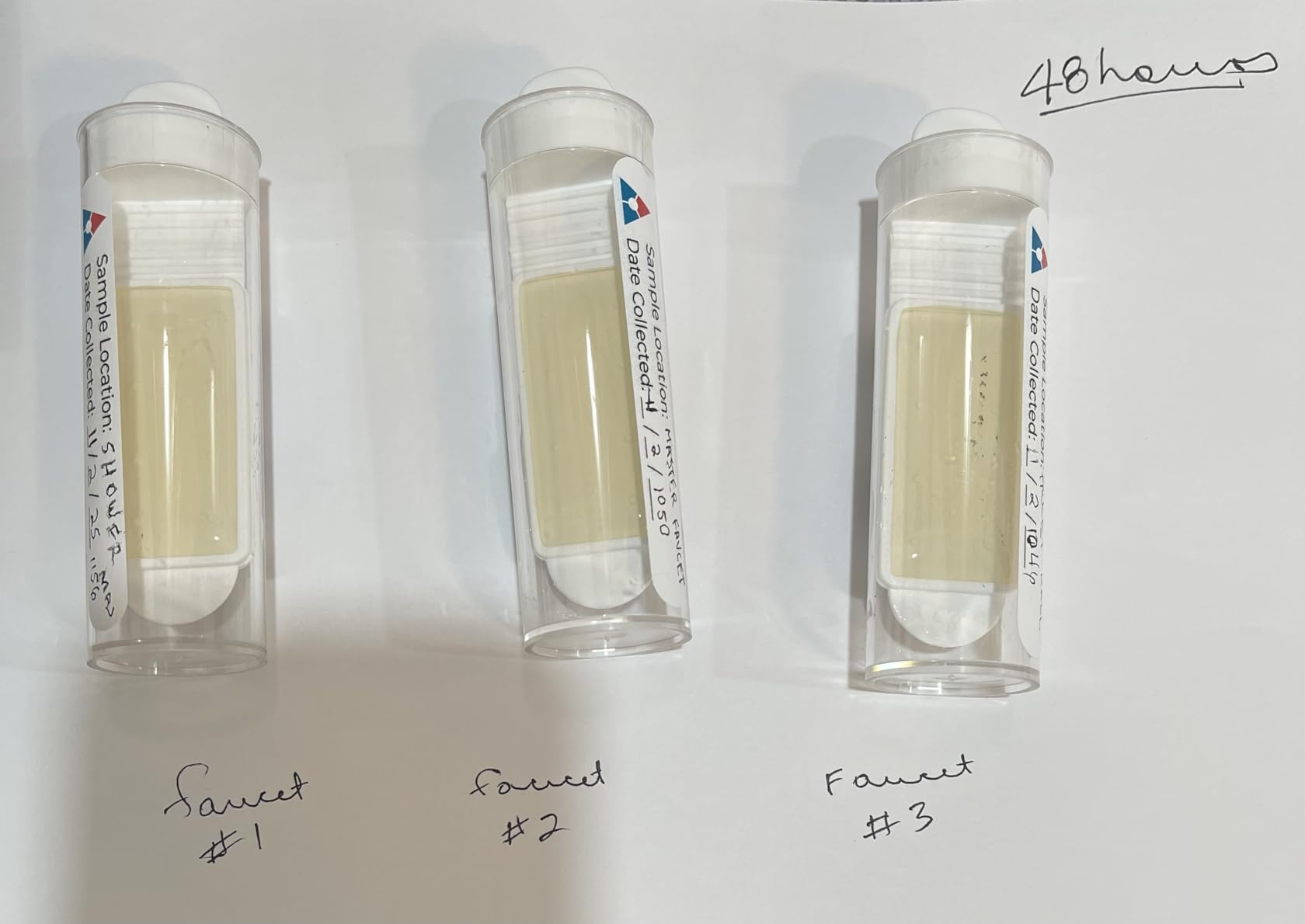
The rating average of 4.6 is high, but you should read the 15 reviews for what they are: a small, strongly positive base. The most compelling report is from an owner who tested bacteria and saw a negative result within 72 hours of installation. Negative feedback clusters around assembly rather than treatment, with UV sleeve handling and canister gaskets the recurring themes.
What Salt-Free Softening Actually Does
Template-assisted crystallization does not remove calcium and magnesium. It restructures scale-forming minerals into crystals that stay suspended rather than adhere, so soap lather improves and scale growth slows, but the mineral content of your water is unchanged. If your goal is measured hardness reduction on a test report, this technology will not deliver it.
On a moderately hard well where the priority is protecting fixtures and avoiding salt, that trade is often worth making. On a very hard well above about 20 GPG, it is not, and an ion exchange softener is the correct answer.
Filtration Depth and the UV Stage
The filtration side is a sediment stage plus a carbon block, which handles chlorine, odors and taste before the UV chamber. The listed maximum supported TDS is 1282 ppm, comfortably above typical well readings, and the whole assembly measures 29 by 23.25 by 29 inches at 25.36 kilograms, so plan utility-room space carefully.
Verdict and Who Should Buy
Buy it if you refuse salt on principle, need disinfection, and your hardness is moderate. Skip it if you have hard water and want it measurably reduced, or if you are not prepared to handle UV bulb and sleeve replacement on a schedule. A 120-day satisfaction guarantee is included, which is a meaningful offset given the limited long-term review history.
5. NU Aqua 4-Stage Salt Free System – Best for Filtration Depth Without Salt
NU Aqua 4-Stage Salt Free Water Softener Whole House Water Filter System
Sediment and KDF and GAC stages
Salt-free softening stage
Carbon block for chlorine and VOCs
No electricity and no backflush
Pros
- Four stages give more filtration depth than two-stage stacks
- No salt and no brine and no electricity and no backflush
- Point-of-entry install covers every tap
- Reduces lead mercury and arsenic while retaining minerals
Cons
- Maximum supported TDS listed at 300 ppm
- Wall-mounted footprint needs pipe clearance planning
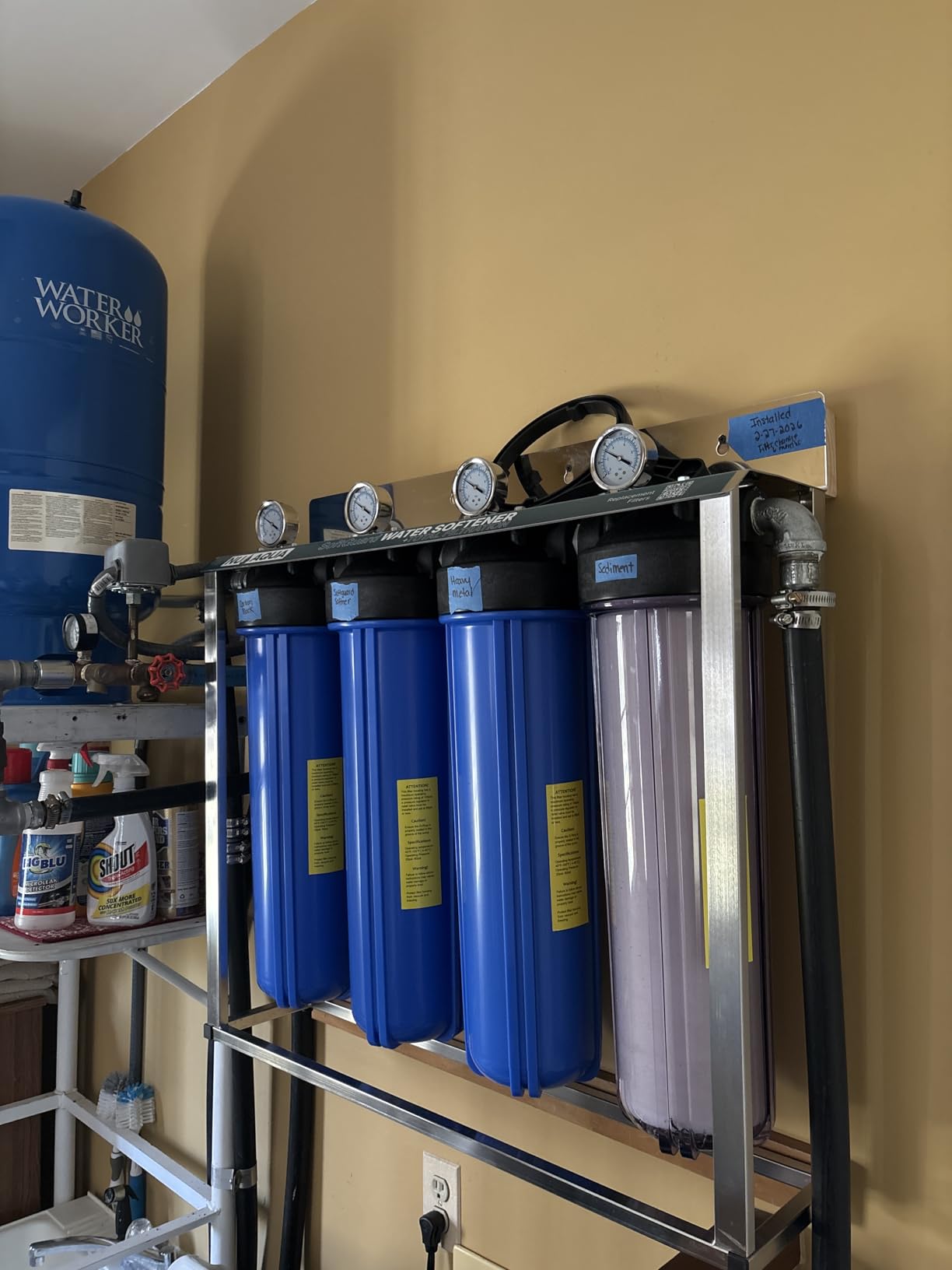
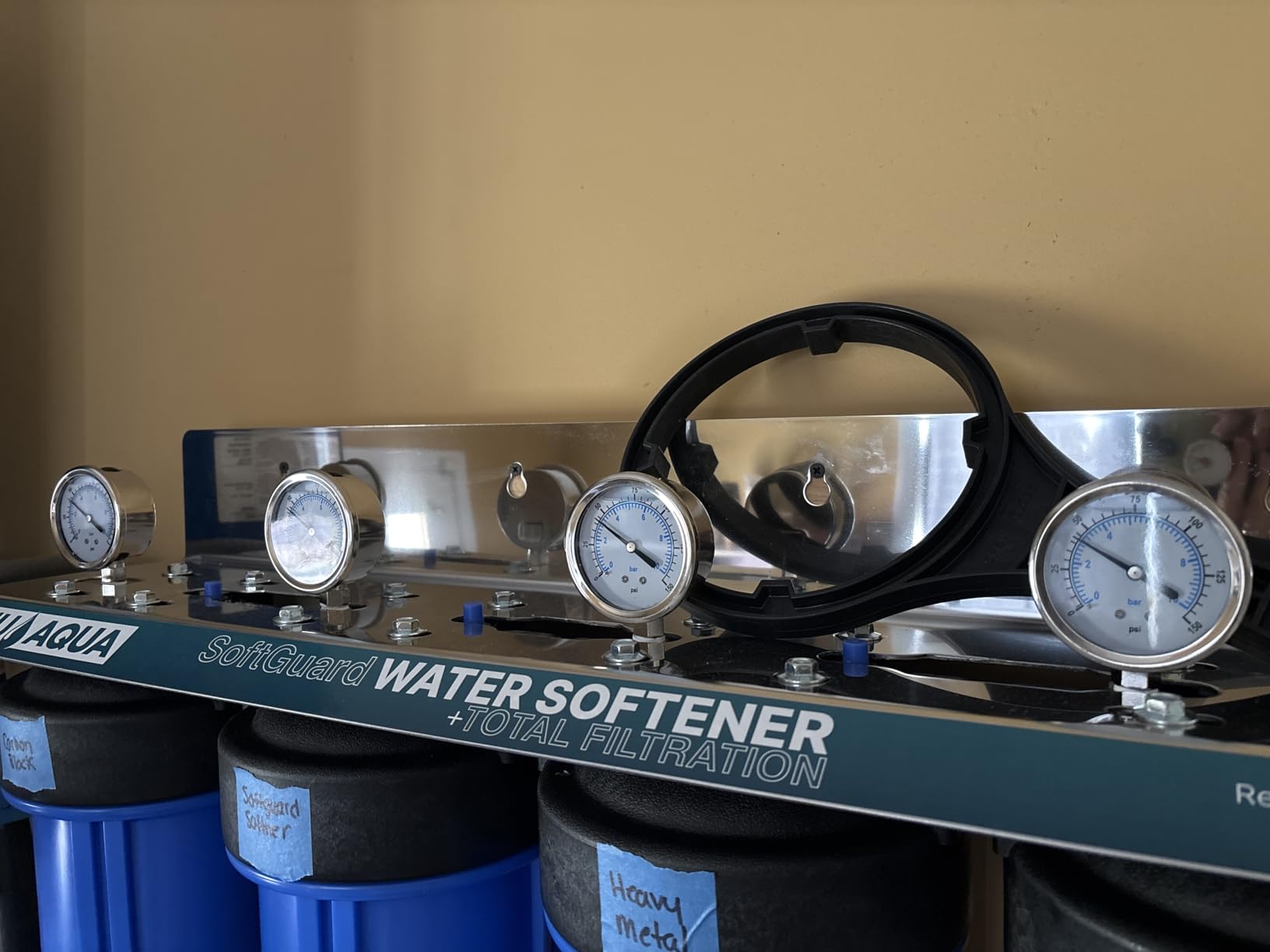
Where the Kind system leans on UV, the NU Aqua leans on media count. It is a four-stage train built around a 20 inch by 4.5 inch sediment element, a KDF and granular activated carbon stage, a salt-free softening stage and a final carbon block. For a well that carries sediment plus metals plus taste and odor problems, that sequencing is the selling point.
Owners cite the absence of any consumable complexity as the main advantage: no salt, no brine, no electricity and no backflush cycles. The listed footprint is 31 by 31 by 7 inches at 53 pounds, mounted as an aluminum wall unit, so the plumbing clearance matters more than the floor space.
The TDS Ceiling Is the Catch
The maximum supported TDS level is listed at 300 ppm, the lowest ceiling among the systems here and a real constraint. Wells that run heavily mineralized, or homes on an aquifer with high total dissolved solids, can exceed that, and the manufacturer does not rate this unit for it. Check your lab TDS reading before committing.
The other limitation is operational rather than chemical. A salt-free conditioning stage preserves calcium and magnesium, so it improves soap performance and scale behavior without reducing hardness, and there is no measured hardness drop to verify on a test report.
Who It Fits Best
This is the pick for a well owner whose priority list reads sediment, metals, taste and odor, with hardness at the bottom. It also suits anyone who has been asked to limit brine discharge and wants zero ongoing chemical cost. If your main problem is hard water protecting a water heater, choose an ion exchange unit instead.
Maintenance Reality
There is no salt and no backwash water, which removes the two largest ongoing costs in this category. What you do have is cartridge replacement on a schedule, and that interval is the number to confirm with the manufacturer before you buy, because it drives the ten-year cost more than the purchase itself.
6. EcoPure EPH130 2-in-1 System – Best for Small Footprints
EcoPure EPH130 Whole House Water Softener & Filtration System – 2-in-1 Design for Soft & Better-Tasting Drinking Water, AutoSense AI Technology
2-in-1 softening and filtration head
AutoSense AI usage-based regeneration
Up to 40 percent salt reduction
Rated for up to 5 people
Pros
- Integrated head instead of two tanks plumbed in series
- AutoSense AI reported to cut salt use by up to 40 percent
- Soft water and better-tasting tap water from one unit
- Test strips confirmed soft water after install
Cons
- Cabinet still needs good utility-room clearance
- Salt replenishment and routine maintenance still required
- Only a one-year parts and labor warranty
The EPH130 solves a problem the tank-based systems in this roundup cannot: how to get softening and filtration performance from one integrated head instead of two large vessels plumbed in series. Owners who installed it report soft water on test strips within days and a noticeable improvement in taste, and the small, uniformly positive review set describes easy installation without drama.
Its distinguishing feature is AutoSense AI technology, which adapts regeneration to measured usage rather than a fixed schedule. The manufacturer claims up to 40 percent salt reduction compared with fixed-schedule systems. In a home where occupancy swings week to week, which is the norm for many well households, that is the feature that actually lowers running cost.
Sizing and Warranty Reality
This unit is rated for households up to 5 people with multiple bathrooms, and the listed dimensions are 20.63 by 17.25 by 42.75 inches. The warranty is 1 year parts and labor, which is the shortest in this group and the most important spec to weigh, since every other system here carries a longer commitment.
What It Does Not Cover
This is an ion exchange softener with an integrated head, not an iron or sulfur treatment system. If your lab report shows iron above 0.3 ppm or hydrogen sulfide odor, you need pretreatment ahead of it, and no integration in the head changes that. Buyers on high-iron wells will still end up adding a filter ahead of this unit.
Who Should Buy and Who Should Skip
Buy it if space is genuinely tight, your hardness is the main problem, and you are comfortable servicing it yourself. Skip it if you want a long warranty, if you cannot lift and rotate a resin tank, or if iron is part of your contaminant profile. The 10 reviews behind the 4.6 average are a good sign but a thin base, and the short warranty compounds that.
7. AFWFilters Fleck 64,000 Grain with Carbon Pre-Filter – Best for High-Flow Plumbing
Combo System Fleck Whole House 64k Water Softener Upgraded 10% Resin, 5600sxt Metered, 1″ Bypass and Brine Tank, 64,000 Grains and Carbon Pre-Filter
64,000 grain softener with upgraded resin
Fleck Pentair 5600SXT metered valve
1 inch bypass and brine tank
Radial flow carbon pre-filter
Pros
- Complete two-tank train with 1 inch plumbing
- Preloaded resin tank reduces setup work
- Radial flow carbon design keeps pressure drop low at high flow
Cons
- Only a single review and no long-term history
- Site-specific plumbing fittings not included
This two-tank configuration is the answer for homes with high peak demand and marginal well pressure. Where most systems in this category plumb a 3/4 inch bypass, this one ships a 1 inch bypass and brine tank, and its radial flow carbon pre-filter is engineered specifically to hold pressure drop low at higher flow rates.
Be clear-eyed about the evidence. The 5.0 rating average here comes from a single review, so there is no long-term performance history and no pattern of owner reports to draw from. Our assessment rests entirely on the published specification set, which is coherent: a Fleck Pentair 5600SXT metered valve, a 2 cubic foot resin tank with upgraded 10 percent resin, and a preloaded tank that cuts setup work.
What the 10 Percent Resin Upgrade Changes
More resin in the same tank volume means more working capacity between regenerations, which translates to a longer interval and slightly better performance on hard water. The 64,000 grain rating already implies a generous bed, and the upgrade adds margin rather than transforming the sizing.
Pressure Drop and Plumbing Notes
Radial flow housings are the detail to understand here. Water flows through the carbon media along a radial path rather than straight down an axial cartridge, which preserves flow rate as the media loads. The listed dimensions are 12 by 12 by 48 inches and the assembly weighs 140 pounds, so plan the install location accordingly. Site-specific plumbing fittings are not included.
Verdict
Pick it if your pressure concerns are the dominant factor and you are comfortable being an early adopter of a lightly reviewed configuration. Pass if buying decisions need to rest on long-term owner data, in which case the Iron Pro 2 in this same guide is the better-supported choice at the same grain capacity.
8. NuvoH2O Whole Home Trio 3-Stage System – Best for Cartridge Convenience
NuvoH2O Advanced 3-Stage Citrus-Based, Salt-Free Water Filter System + Water Softener with Carbon and Sediment Filtration – Healthy & Pure Water – Removes Scale (Whole Home Trio System)
CitraCharge salt-free citrus softening
3-stage carbon chlorine and sediment filtration
Quick-connect 6-month cartridges
Zero electricity and no brine discharge
Pros
- Three-stage salt-free train with carbon and sediment stages
- No salt and no brine discharge
- Quick-connect cartridges make replacement fast
- Zero electricity required
Cons
- Only a handful of reviews and unproven long-term durability
- Cartridge replacement every 6 months adds ongoing cost
The Trio takes the salt-free approach and distinguishes itself with a citrus-based conditioning technology called CitraCharge, paired with 3-stage carbon, chlorine, sediment and heavy metal filtration. It is the simplest system in this guide to service: quick-connect self-contained cartridges rated at up to 6 months, replaced without tools, with zero electricity and no brine discharge.
That simplicity is the whole argument. In a category where owners report fighting brine lines, drain clogs and brine-tank salt bridges, a system with no moving water path and no electrical requirement removes an entire category of maintenance. The listed maximum supported TDS is 428 ppm, and the inline footprint is 22.72 by 22.72 by 24.85 inches at 26.76 kilograms.
Conditioning Versus Removal
As with other salt-free systems here, this one conditions scale-forming minerals rather than removing them. That is the right trade if you want to protect a water heater and dishwasher and refuse salt, and the wrong trade if you want a measurable hardness reduction. Keep that distinction in mind when you read any salt-free claim in this category.
The Six-Month Cartridge Clock
Replaceable cartridges on a 6-month cycle are straightforward to plan for, and the manufacturer lists a capacity figure of 50k gallons for the system. But this is also the system’s main ongoing cost, and it is the reason the review base is thin at 3. Buyers are largely relying on the feature set rather than on long-term durability reports.
Verdict
Choose it if you want zero salt, zero power and near-zero maintenance complexity, and your well has moderate hardness. Skip it if you have heavy iron, if measured hardness reduction is your goal, or if you are uneasy buying on a very small review base. A 6-month cartridge habit is a fair trade for most households that have been put off by brine systems.
How to Choose a Well Water Softener and Filter Combo
Everything below matters more than brand. A correctly sized generic system will outperform a premium system chosen from a generic list, and the reverse is also true often enough to keep you reading.
Test Your Water Before You Buy Anything
Get a certified lab panel test before you purchase, through National Testing Laboratories or your county extension office. Home hardness strips and store test kits will not tell you your iron, manganese, hydrogen sulfide, TDS or bacterial status, and the entire media decision hinges on those numbers. Buyers on r/WaterTreatment describe losing real money when they bought a generic media stack that could not address the contaminant actually in their water.
Salt-Based Ion Exchange vs Salt-Free TAC Conditioning
These are different technologies with different outcomes, and the distinction matters more than any brand claim. Ion exchange resin swaps calcium and magnesium for sodium and genuinely reduces hardness, requiring salt and producing brine discharge. Template-assisted crystallization conditions minerals so they will not adhere, leaving hardness in the water, and uses no salt.
Choose ion exchange if your water is above about 10 GPG and you want fixtures and appliances protected from scale. Choose salt-free if hardness is moderate, you are on a restricted discharge property, or you refuse salt on health or environmental grounds.
Sizing Grain Capacity With a Safety Factor
Multiply grains per gallon by average daily gallons, then add a 20 to 25 percent safety factor. Budget 75 to 100 gallons per person per day. A family of four at 500 gallons per day on 20 GPG water needs 10,000 grains of capacity per day, so a 48,000 grain tank regenerates roughly every five days, comfortably inside the two to seven day window that keeps resin from stagnating.
Match Flow Rate to Household Size
As a rule of thumb, allow about 9 GPM for 1 to 3 bathrooms, 12 GPM for 4 to 6, and 17 to 20 GPM for 7 or more. Among the systems in this guide, the DuraWater Fleck 48,000 grain unit carries the highest rated maximum flow at 14 gpm, and the 1 inch bypass configuration in the AFWFilters Fleck combo serves the same goal for high-demand homes.
The 0.3 ppm Iron Threshold Changes the Build
Above 0.3 ppm dissolved iron, an iron filter or oxidation stage must sit ahead of the softener, because iron fouls resin and shortens its life. Iron bacteria are a different problem again, and they need shock treatment rather than a filter swap. A top-ranking r/WaterTreatment commenter recommended pairing a pyrolox filter for iron and sulfur with activated carbon for residual chlorine, a simple two-tank answer that works for a lot of wells.
What a Well Water Combo Will Not Fix
Arsenic, nitrates, PFAS, coliform and radium sit outside a standard softener and carbon train. Arsenic, nitrate and PFAS require specialty media such as activated alumina or anion exchange resin, and coliform requires disinfection rather than filtration. The hardest one to plan for is tannins, which show up as a brown tint in bathtub water and are not addressed by any of the eight systems here.
Pressure Drop and Total Cost of Ownership
Every stage you add costs pressure, so budget across the whole train rather than per component. A homeowner with three bathrooms, 5 GPG hardness and suspected tannins told us on r/WaterTreatment that a slight, almost unnoticeable decrease would be fine, but a moderate noticeable drop would not be worth the tradeoff. That is the right frame: measure your pressure before installation and again after, so you know what you gained.
Over ten years, ion exchange units cost salt and brine water while salt-free units cost cartridge media on a schedule. Neither is free, and the honest comparison is salt per year against cartridge cost per year for your own usage. If your treatment area is below grade or in a finished utility room, add leak monitoring to the budget, and our guide to water leak detectors for Alexa covers the options that work well with app-based systems.
Frequently Asked Questions
What is the best whole house water softener and filtration system for well water?
The best system depends on your lab results, not on brand. For wells with iron above 0.3 ppm and moderate hardness, a single-tank combo like the AFWFilters Iron Pro 2 at 64,000 grains handles hardness and iron in one vessel. Wells that also need drinking water should add a reverse osmosis unit, and wells with odor or microbes need a sulfur stage and UV.
What type of water softener is best for well water?
A metered, demand-initiated ion exchange softener with fine mesh resin is the standard choice for well water, because it regenerates on measured usage and handles light iron loads. Salt-free template-assisted crystallization is better for moderately hard water when you want to avoid salt and brine discharge entirely. Very hard well water above 20 GPG needs ion exchange to reduce hardness measurably.
Is there a water filter and water softener combo?
Yes. A combo is a single whole-house treatment train that pairs a softening stage with one or more filtration stages, usually a sediment filter plus a KDF or catalytic carbon tank, sold and warranted as one system. Bundles like the Aquasure 64,000 grain model extend this further by adding a reverse osmosis drinking unit, giving you softening, whole-house filtration and a drinking tap in one order.
Do you put a whole house filter before or after water softener?
Put filtration before the softener. A sediment and iron or carbon stage goes upstream so the resin bed is not fouled by sediment or dissolved iron, which dramatically shortens resin life. The correct order is sediment pre-filter, iron and sulfur oxidation, KDF or catalytic carbon, softener, then UV disinfection, with a point-of-use reverse osmosis tap last.
How much water pressure does a water softener reduce?
Each stage in a multi-stage train contributes its own pressure loss, and a 3/4 inch bypass typically costs more than a 1 inch one at the same flow. This is why high-flow homes benefit from 1 inch plumbing and radial flow carbon housings, which are engineered to hold flow rate as media loads. Measure pressure before and after installation so you know exactly what your train costs you.
Which Well Water Combo Should You Buy in 2026?
If your well runs hard and rusty, start with the AFWFilters Iron Pro 2. It has the deepest owner history in this guide, handles hardness and iron in a single tank, and carries a 5-year warranty. If you also want bottled water eliminated, the Aquasure 64,000 grain bundle adds a 75 GPD reverse osmosis drinking system in the same order.
If hardness is your dominant problem and your flow demands are modest, the DuraWater Fleck 5600 SXT 48,000 grain unit is the strongest all-round buy, with the highest rated maximum flow in the group at 14 gpm. If you refuse salt or brine discharge, the Kind Water Systems E-3000UV adds UV disinfection to a salt-free train, and the NU Aqua 4-Stage system goes deeper on media count. For tight spaces, the EcoPure EPH130 integrates everything into one head.
Whatever you choose, get the lab panel first, follow the six-step order above, and measure your pressure before and after. Check current pricing on each system, and start with the one that matches your test results rather than the one with the longest feature list.