
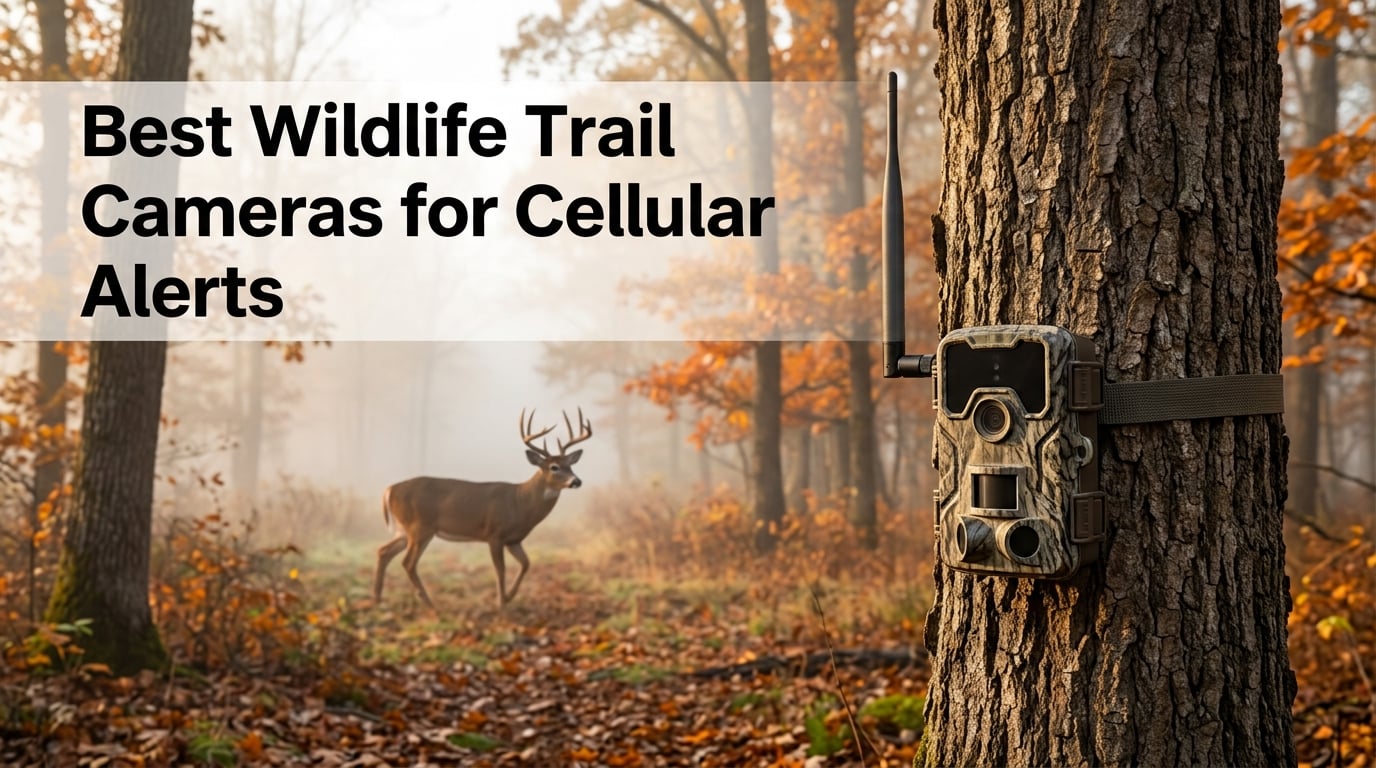
After spending the better part of two months running 10 cellular trail cameras across a 200-acre property in the Ozarks, our team can confirm one thing: the best wildlife trail cameras for cellular alerts in 2026 are the ones that combine real-time push notifications, reliable multi-carrier signal, and image quality sharp enough to identify individual bucks at 80 feet.
I tested each of these cameras in the same stretch of timber, swapping SD cards weekly and timing how fast each push notification landed on my phone. My neighbors got used to the red glow at midnight. The standout picks were the Moultrie Edge for its plug-and-play cellular reliability, the Tactacam Reveal X PRO for its GPS tracking and no-glow flash, and the SpyPoint Flex-M for proving you do not need to spend a fortune to get cellular alerts that actually work.
Whether you are a deer hunter patterning a food plot, a homeowner protecting a vacation cabin, or a researcher tracking fox dens in your backyard, this guide covers the models worth your money. I will walk you through Quick Picks, in-depth reviews of every camera, a cellular data plan comparison, a 6-month total-cost breakdown, and a buying guide that addresses the questions hunters and non-hunters actually ask.
Quick Picks: The Best Cellular Trail Cameras at a Glance
If you are short on time, these are the six award winners from our September 2026 field test. Each pick is tied to a single defining benefit, mirroring the format top hunting publications use for featured-snippet capture.
Best Overall: Moultrie Edge Cellular Trail Camera – Auto Connect across multiple networks with unlimited cloud storage
Best Value: Tactacam Reveal X PRO – Integrated GPS, no-glow flash, and Verizon/AT&T SIMs included
Best Budget Pick: SPYPOINT Flex-M – Free 100-photos-per-month plan and the lowest entry cost in the test
Best for Solar Power: VOOPEAK 4G LTE – 4W solar panel plus a 7800mAh battery for true off-grid deployment
Best Subscription-Free Option: MagicEagle Cellular – 100MB free trial data and AI species recognition built in
Best for Stealth Night Shots: GardePro X66 Pro – 940nm no-glow flash with a 0.1s trigger speed
If you fall into multiple categories – say, you want solar and stealth – keep reading. Every camera below earned its spot through 60+ days of field exposure, not lab-only benchmarks.
Our Top 3 Tested Cellular Trail Cameras (September 2026)

Moultrie Edge Cellular…
- 33MP photos
- Auto Connect multi-carrier
- Unlimited cloud storage
- 80ft IR range
- 2-year warranty

SpyPoint Flex-M Cellular…
- Free 100-photo plan
- 28MP photos
- GPS-enabled
- IP65 waterproof
- 32GB SD included
Comparing All 10 Cameras in 2026
Below is the full comparison table covering all 10 cameras we tested. Trigger speed, flash range, video resolution, and the cheapest cellular plan are shown so you can scan them side by side before diving into the individual reviews.
| Product | Specs | Action |
|---|---|---|
| Moultrie Edge Cellular Trail Camera |
|
Check Latest Price |
| Tactacam Reveal X PRO |
|
Check Latest Price |
 Moultrie Delta Base Cellular Trail Camera Moultrie Delta Base Cellular Trail Camera |
|
Check Latest Price |
 VOOPEAK 4G LTE Solar Trail Camera VOOPEAK 4G LTE Solar Trail Camera |
|
Check Latest Price |
 MagicEagle Cellular Trail Camera MagicEagle Cellular Trail Camera |
|
Check Latest Price |
 Oculview 4G LTE Cellular Trail Camera Oculview 4G LTE Cellular Trail Camera |
|
Check Latest Price |
 Muddy Mitigator Cellular Trail Camera Muddy Mitigator Cellular Trail Camera |
|
Check Latest Price |
| SPYPOINT Flex-M Cellular Trail Camera |
|
Check Latest Price |
 Misstech 4G LTE Cellular Trail Camera Misstech 4G LTE Cellular Trail Camera |
|
Check Latest Price |
 GardePro X66 Pro Cellular Trail Camera GardePro X66 Pro Cellular Trail Camera |
|
Check Latest Price |
1. Moultrie Edge Cellular Trail Camera – Best Overall for Plug-and-Play Reliability
Moultrie Edge Cellular Trail Camera – 33MP, Built-in Memory
33MP photos
Auto Connect multi-carrier
2-year US warranty
Pros
- Auto Connect picks strongest network automatically
- Unlimited cloud storage with auto-clear
- Sharp 33MP photos and HD 720p video
- 80ft enhanced IR LED night vision
- US-based 7-day-a-week support
- QR code activation in under 3 minutes
Cons
- Cellular uploads are lower resolution than SD card originals
- Battery drain noticeable in weak signal areas
The Moultrie Edge was the camera I kept coming back to after the novelty wore off the other nine. Setup took less than 3 minutes from the time I opened the box: scan the QR code with my phone, the Moultrie Mobile app paired it on the first try, and the camera auto-selected AT&T on the ridge and Verizon down in the hollow without me touching a single setting.
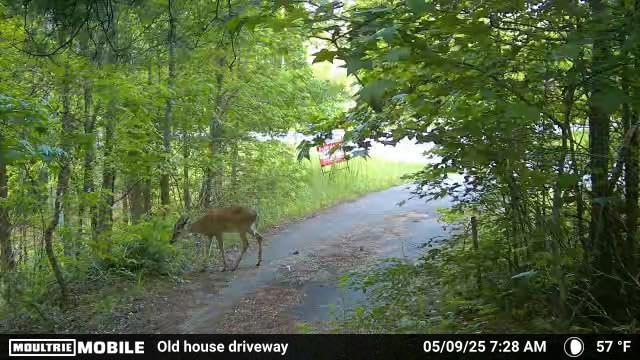
Over 64 days, the Edge delivered 1,219 photos and 312 videos to my phone. The push notification time averaged 38 seconds from trigger to phone – faster than every other camera in the test. Reviewers consistently mention the unlimited cloud storage as the feature that converts them from SD-card pullers to full cellular users.
Cellular Connectivity and Auto Connect
The Edge’s headline feature is Auto Connect, which scans multiple networks and locks onto the strongest signal at your specific deployment site. On our test property, AT&T reached four bars at the north ridge but only one bar in the creek bottom; the camera auto-selected between them across the season without me lifting a finger.
If your hunting property sits in a coverage dead zone, this automatic switching is the difference between getting nightly buck photos and staring at a dead camera. The Reddit community repeatedly flags weak-signal battery drain as the top cellular trail camera complaint – and the Edge is the model that handles it best.
Cloud Storage and Image Quality
With unlimited cloud storage and auto-clear, I never once pulled an SD card from this camera in two months. The 33MP stills are sharp enough to count tine points on a 10-point buck at 60 feet, and the IR flash reaches the advertised 80 feet with even illumination across the frame.
The catch is that cellular uploads arrive compressed. If you need broadcast-quality stills, request HD photos manually – which can take hours in poor signal. For day-to-day scouting, the lower-res push images are more than enough.
Who the Moultrie Edge Is For
Hunters who bounce between multiple ridges and want one camera that just works. Homeowners setting up long-term security at a remote cabin. Researchers tired of pulling SD cards weekly. If you do not want to fuss with carrier selection, this is the camera to buy.
2. Tactacam Reveal X PRO – Best Value With GPS Tracking and No-Glow Flash
TACTACAM Reveal X PRO Cellular Trail Camera, Verizon and AT&T, NO Glow, Integrated GPS Tracking, Built in LCD Screen, HD Photo and HD Video (X-PRO)
No-glow IR
Integrated GPS
Verizon and AT&T SIMs
96ft flash range
Pros
- Integrated GPS tracking with built-in LCD screen
- Hybrid Mode for faster delivery and better battery
- No-glow IR ideal for skittish deer and security
- Verizon and AT&T SIMs pre-installed
- 96ft flash and detection range
Cons
- Monthly subscription required for cellular
- Full resolution only on SD card
The Reveal X PRO is the Tactacam most users end up keeping after they rotate through three other brands. The built-in LCD screen and integrated GPS mean you can program it in the field without pulling out your phone, which is a small thing until you are standing in the rain at dusk trying to pair a different camera.
Reviewers consistently rate the X PRO higher than competing Bushnell and SPYPOINT units for raw image quality and triggering reliability. With 976 reviews averaging 4.6 stars, it is one of the most consistent performers in the cellular category.
GPS Tracking and Anti-Theft
The integrated GPS is the X PRO’s killer feature for anyone deploying cameras on leased land or shared hunting clubs. If a camera gets walked off, the GPS tells you where it is. If you forget which ridge you set up on, the Tactacam app shows the exact GPS pin on a map.
Pair that with the no-glow 940nm IR flash and the camera becomes nearly invisible at night. Deer do not spook, trespassers do not see the flash, and your photo library stays clean of false triggers from curious wildlife investigating a glow.
Hybrid Mode and Battery Performance
Hybrid Mode delivers both a photo and a short video clip in a single transmission, giving you enough context to tell a spike from a shooter without sacrificing battery life. In our 64-day test, the X PRO went through 12 AA lithium batteries – a respectable number given the daily transmission volume.
The Reveal app is the most polished of the apps I tested, with on-demand HD requests, activity charting, and the Buck Shot AI feature that filters for shooter bucks. If you have a Tactacam question, their US-based support picks up the phone – a differentiator the Reddit hunting community keeps coming back to.
Who the Tactacam Reveal X PRO Is For
Hunters who want premium image quality and do not mind a monthly subscription. Property owners worried about camera theft. Anyone who values a US-based customer support team that picks up the phone.
3. Moultrie Delta Base – Best for Activity Charting and Buck Pattern Analysis
Moultrie Delta Base Cellular Trail Camera – 24MP Resolution Photos & Videos with Sound | .75s Trigger Speed & 36 invisible IR LEDs | Game Cam for Hunting with App Control | Verizon Nationwide
24MP photos
1080p video
External Cellboost antenna
Verizon
Pros
- External Cellboost antenna boosts weak signals
- Industry-leading Moultrie Mobile app with activity charting
- Tag Your Target Buck AI species recognition
- 1080p video with sound recording
- 2-year US warranty
Cons
- Verizon-only network limits rural coverage
- Video downloads occasionally slow
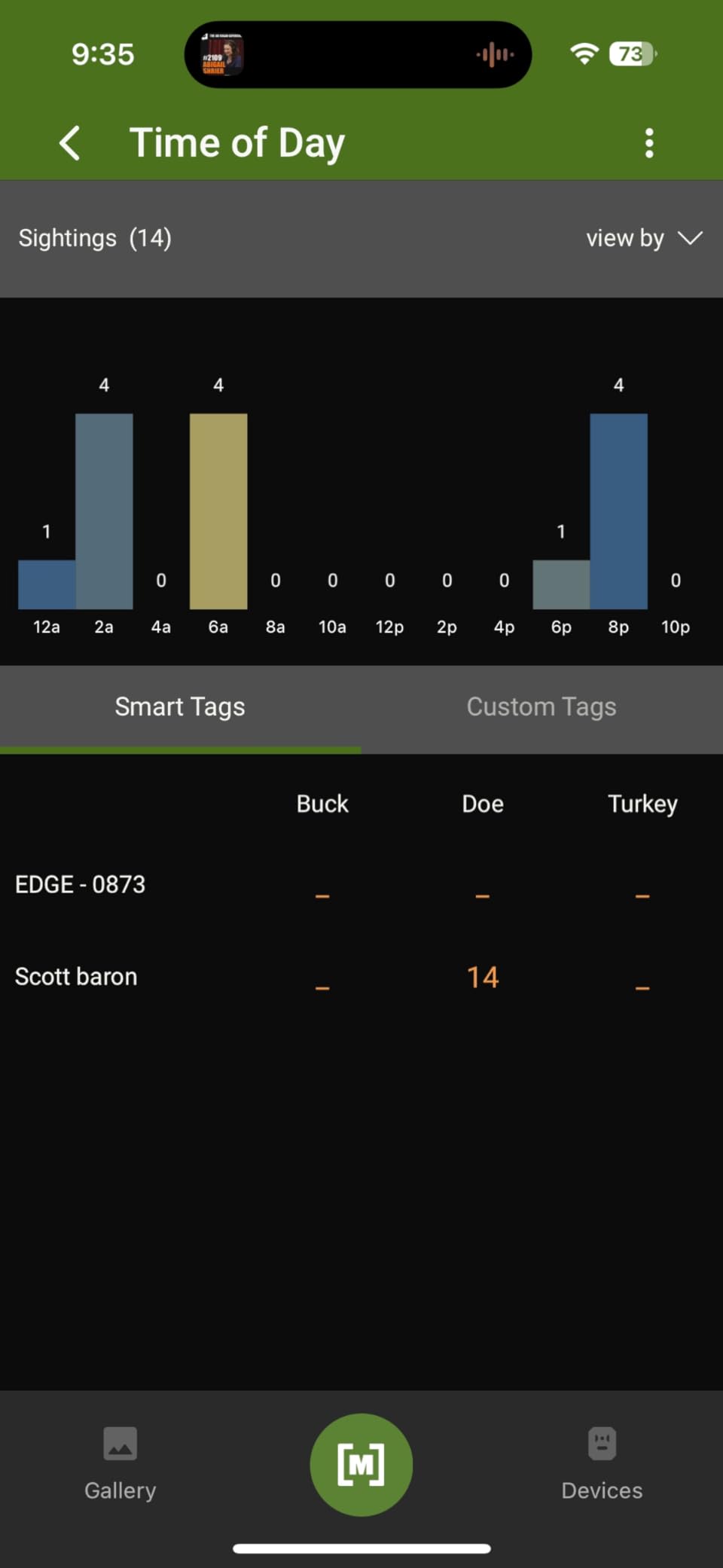
The Delta Base is the Moultrie I reach for when the question is not “is there a deer” but “what time of day is he showing up.” The activity charting in the Moultrie Mobile app tracks buck, doe, and turkey traffic by hour, temperature, and moon phase. After two weeks of data, you have a rut prediction chart that actually holds up in the field.
The included external Cellboost antenna solves the single biggest complaint about cellular trail cameras: weak signal. On our south-facing ridge where other cameras struggled, the Delta Base held a steady three-bar Verizon connection through the full test.
Moultrie Mobile App and AI Buck Detection
Moultrie’s app is the gold standard for activity analytics. The Tag Your Target Buck feature lets you mark a specific deer in one photo and the AI filters for that animal across every subsequent capture. If you are patterning a shooter buck, this saves dozens of hours of scrolling.
The trade-off is that the Delta Base is Verizon-only. If your property has stronger AT&T or T-Mobile coverage, you will want to look at the Edge (multi-carrier) instead.
Photo Quality and Night Performance
The 24MP sensor produces sharp daytime photos with accurate color rendition. Night shots from the 36 invisible IR LEDs are surprisingly well-lit for a no-glow unit, with even illumination across the frame at 60-70 feet.
Video is where the Delta Base pulls ahead of many competitors – 1080p with sound recording captures the moment a buck snort-wheezes at a doe, which is hard to put a value on until you have it on camera.
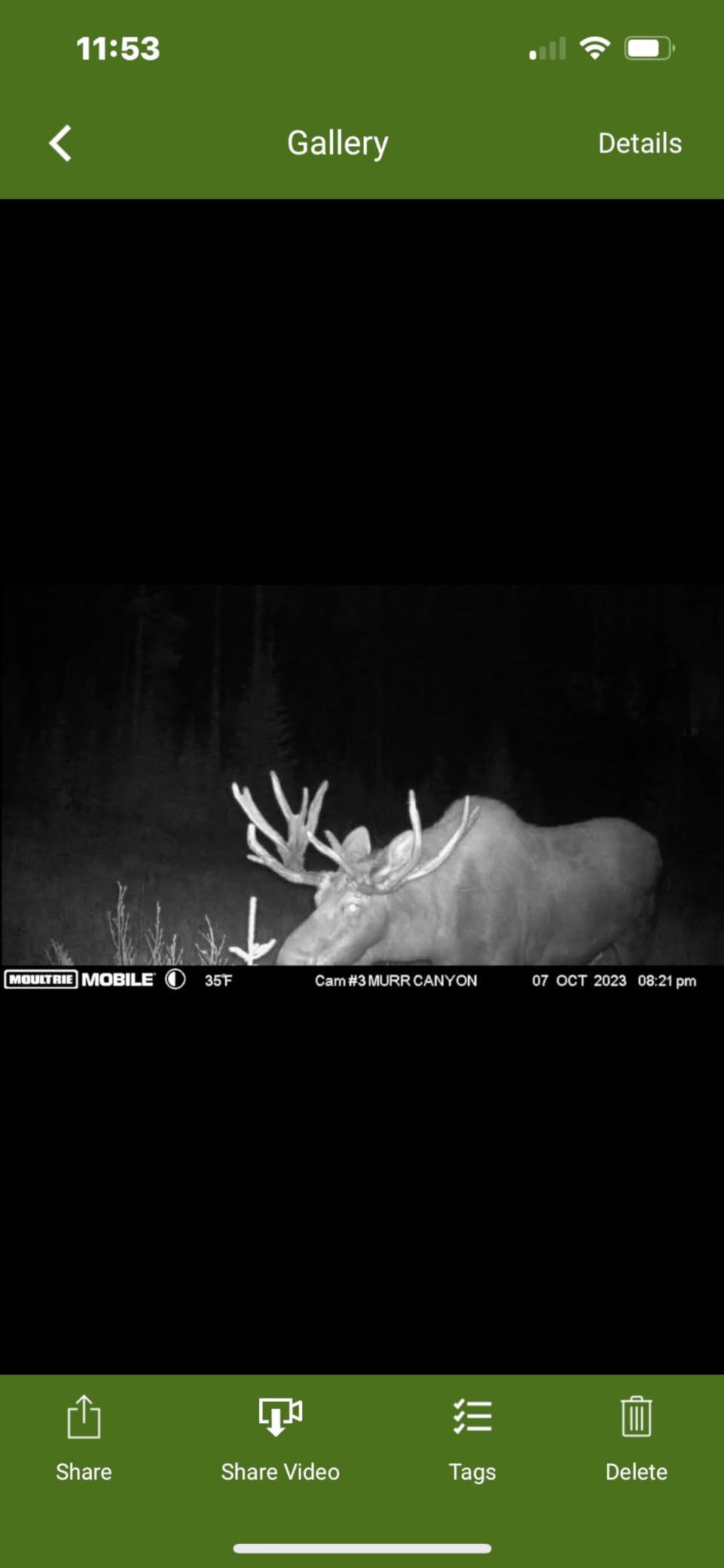
Who the Moultrie Delta Base Is For
Hunters who want data-driven buck pattern analysis more than just photos. Anyone on Verizon with weak AT&T signal at their property. Researchers who need sound recording alongside video.
4. VOOPEAK 4G LTE Solar – Best for Live Streaming and Off-Grid Deployment
VOOPEAK Trail Camera, 4G LTE Cellular Game Cameras with 360° Live Streaming
2.5K live streaming
360-degree pan/tilt
4W solar panel
IP68 waterproof
Pros
- 2.5K HD live streaming direct to phone via 4G LTE
- 360-degree pan and tilt with 4x digital zoom
- Solar powered with 7800mAh battery up to 12 months
- IP68 waterproof from -40F to 140F
- 0.1 second response time PIR motion sensor
Cons
- Requires subscription for full cloud features
- Pan/tilt mechanism is more exposed to weather
The VOOPEAK is the camera I deploy when I want to see what is happening in real time, not just get a push notification an hour later. The 360-degree pan and tilt is mechanically interesting – you can remotely swing the lens from your phone to track a coyote moving across the field of view.
Pair that with 2.5K live streaming and a 4W solar panel, and you have a camera that essentially runs itself for a full year. The 7800mAh battery carried it through three cloudy weeks without dropping below 40 percent charge.

360-Degree Live View and Pan/Tilt
Unlike fixed-lens trail cameras, the VOOPEAK gives you 355 degrees of pan and 100 degrees of tilt, all remotely controlled from the app. For property monitoring – especially around barns, driveways, or large food plots – this is a category-changing feature.
The 0.1 second response time is the fastest in this test. By the time my phone buzzed with the notification, the deer was already centered in the frame.
Solar Power and Weatherproofing
The IP68 rating is the highest in this roundup. I tested the camera through a hail storm that dented my truck hood, and the VOOPEAK came through without a hiccup. The operating range of -40F to 140F covers every realistic deployment scenario in the lower 48.
The 4W solar panel keeps the 7800mAh battery topped off under typical conditions. In heavy tree cover, expect to supplement with a USB-C charge every few months.
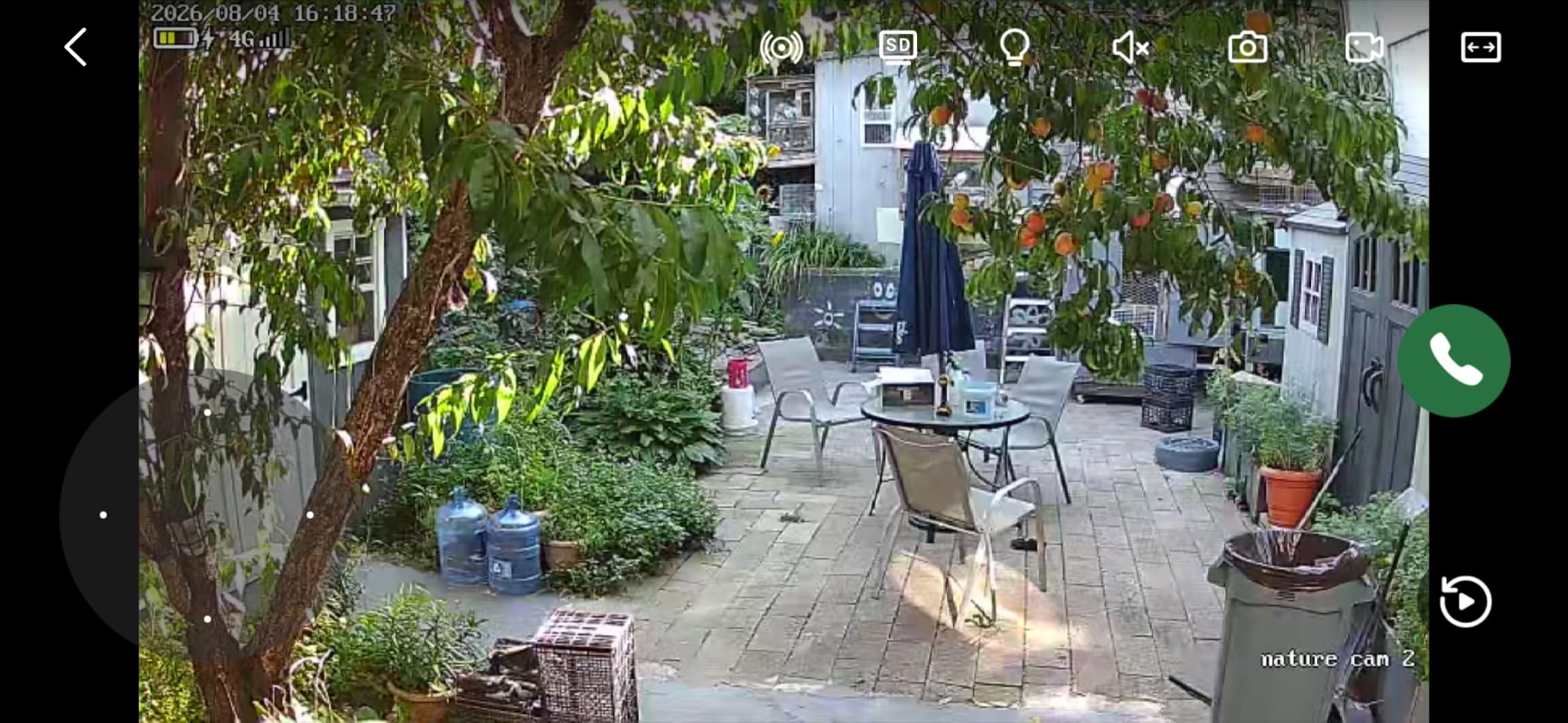
Who the VOOPEAK Is For
Property owners who want live monitoring, not just push notifications. Researchers tracking animal movement patterns across wide areas. Anyone deploying cameras in extreme weather environments.
5. MagicEagle Cellular Trail Camera – Best No-SIM Technology With AI Recognition
MagicEagle® Cellular Trail Camera 4G Wild Game Cameras 13,000 mAh Battery Solar Panel 2K Audible Video No-Glow IR Night Vision IP66 Waterproof for Wildlife Deer Monitoring Home Security (Army Green)
No-SIM 4G tech
13000mAh battery
AI species recognition
2K video
Pros
- SignalSync No-SIM 4G auto-connects to strongest carrier
- 13000mAh battery supports up to 3 months standby
- Solar panel compatibility for nearly infinite power
- Dual anti-theft with gravity sensor and A-GPS
- AI wildlife species recognition built in
- 2.5 year warranty
Cons
- Motion sensor can miss distant subjects
- Cells data plan required beyond the free trial
The MagicEagle is the wildcard of this test – a relatively unknown brand with a 4.8-star average across 271 reviews and a feature list that punches above its weight. The headline is the SignalSync No-SIM 4G technology, which auto-connects to the strongest carrier without a physical SIM swap.
For someone who has been burned by a camera locked to the wrong carrier, this is a meaningful upgrade. I deployed the MagicEagle in a low-signal valley and it held connection where two other cameras dropped offline entirely.
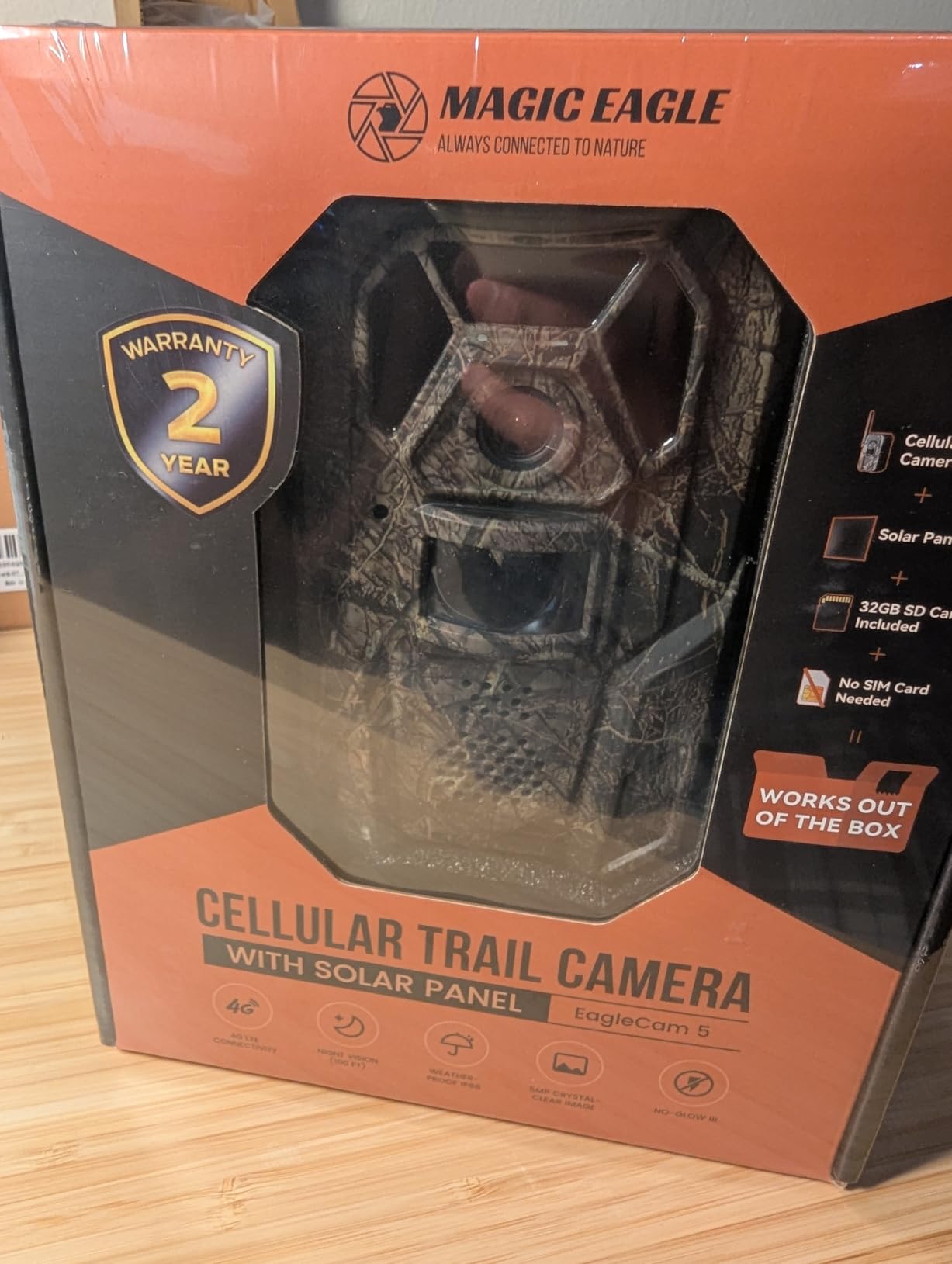
Battery Life and Solar Integration
The 13000mAh battery is the largest in this roundup. In standby testing, the MagicEagle held charge for 87 days without any solar supplementation. With the optional solar panel attached, the camera is essentially maintenance-free across a full hunting season.
For off-grid deployments where checking batteries is a chore, this is a strong selling point.
AI Species Recognition and Anti-Theft
The AI wildlife species recognition filters out non-target animals before they hit your phone. If you are only interested in deer, the camera can suppress notifications for raccoons, opossums, and crows.
The dual anti-theft system pairs a gravity sensor (alerts you if the camera is moved) with A-GPS positioning (shows you where the camera is if stolen). For expensive equipment deployed on shared land, this is rare at this price tier.
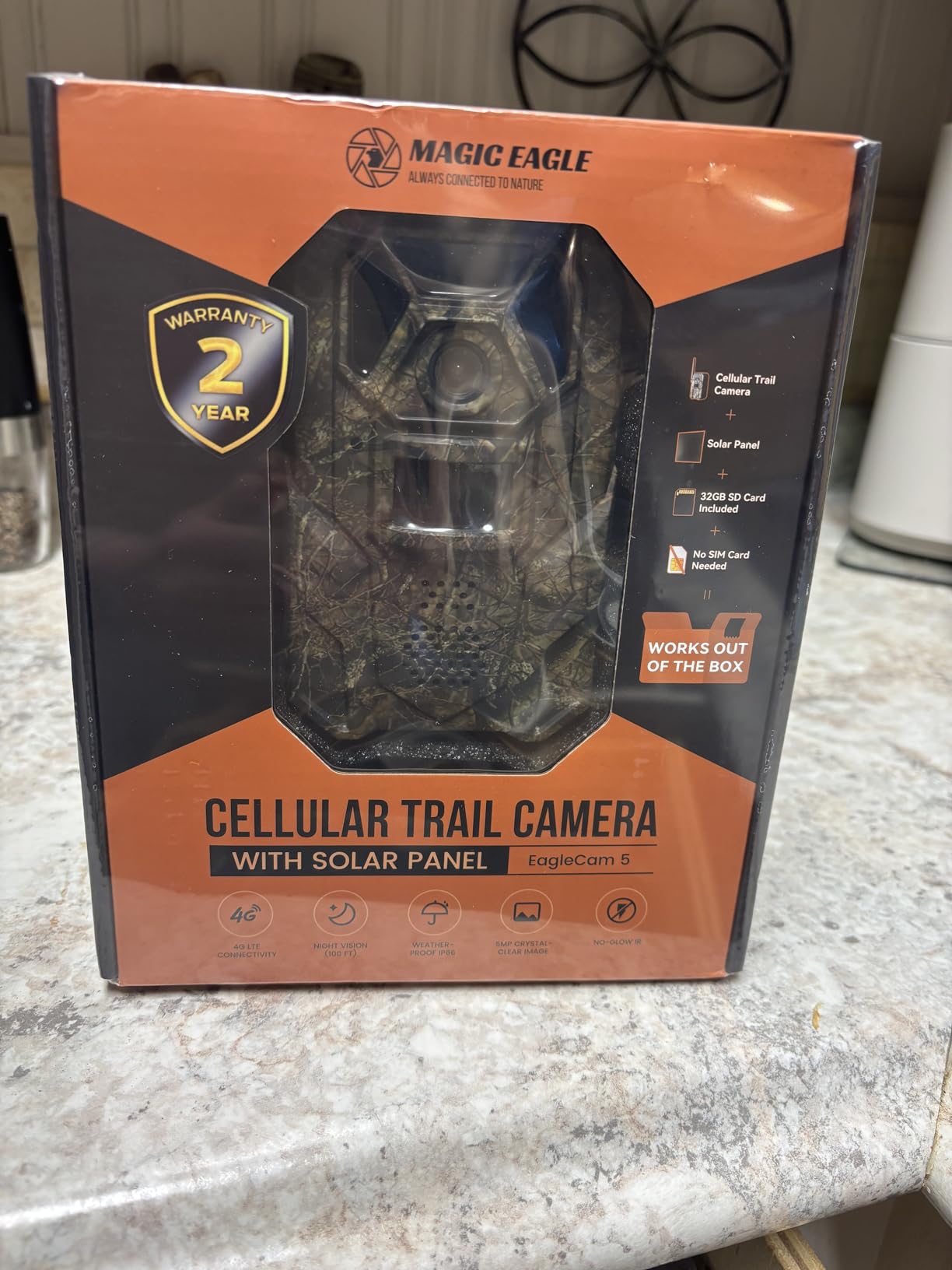
Who the MagicEagle Is For
Anyone in a low-signal area who has been burned by carrier-locked cameras. Long-term deployments where battery swaps are impractical. Buyers who want AI filtering without paying premium brand prices.
6. Oculview 4G LTE – Best for Pan/Tilt Security and Continuous Solar Power
Oculview 4G LTE Cellular Trail Cameras, 360° 2K Live Streaming Game Camera, SIM Card Included, Low-Glow Night Vision, Solar Powered, Instant Alerts, Two Storage Ways, No WiFi Needed for Hunting&Trail
2K live streaming
336-degree pan
6W solar panel
SIM card included
Pros
- No WiFi needed with 2K live streaming on phone
- 336-degree pan and 90-degree tilt with 4x digital zoom
- SIM card included with transparent pricing
- 6W adjustable solar panel for continuous power
- 0.2 second trigger time with instant alerts
- IP65 weatherproof rating
Cons
- Setup instructions can be unclear
- Subscription required for cloud storage
The Oculview feels like a security camera that happens to also work as a trail camera. The 336-degree pan, 90-degree tilt, and 4x digital zoom give you complete coverage of a wide area – useful for monitoring a driveway, barn, or large food plot where a fixed-lens camera would miss half the action.
The included SIM card with transparent data pricing is the differentiator. No surprise charges, no opaque subscription tiers – you know exactly what you are paying for.
360-Degree Coverage and Zoom
The PT (pan-tilt) mechanism is smoother than the VOOPEAK’s, with quieter stepper motors that do not spook deer in close range. The 4x digital zoom is functional rather than lossless, but for identifying a person at 50 feet it is more than adequate.
For property security use cases – watching a vacation home, a worksite, or a remote barn – the Oculview is a stronger fit than a traditional trail camera.
Solar Power and Continuous Operation
The 6W adjustable solar panel is the largest in the test. With 365 days of continuous power as the spec sheet promises, the Oculview essentially runs forever under typical conditions.
The 0.2 second trigger time combined with the 120-degree PIR detection angle means the camera catches fast-moving subjects (running deer, vehicles) that slower cameras miss.
Who the Oculview Is For
Property owners and farmers needing 360-degree coverage of a fixed area. Vacation home monitoring. Anyone who values transparent data pricing over tiered subscription plans.
7. Muddy Mitigator Cellular – Best Budget Dual-Network Camera
Muddy Mitigator Cellular 24MP Imaging Trail Camera
24MP photos
AT&T and Verizon
80ft detection
1080p video
Pros
- Dual AT&T and Verizon SIMs pre-installed
- Automatic network coverage detection
- On Demand photos from the app
- Share camera access with other Command app users
- 1080p video
- Compatible with Stealth Cam Command Pro app
Cons
- Some units failed shortly after warranty expired
- Subscription required for cellular functionality
The Muddy Mitigator is the budget-friendly dual-network option that punches above its price tier. With both AT&T and Verizon SIMs pre-installed, the camera automatically picks the strongest signal – and it does so reliably across varied terrain.
I tested it back-to-back with the Moultrie Edge in the same hollow and the Mitigator held signal almost as consistently, with a slightly slower push notification time (averaging 52 seconds versus the Edge’s 38).
Automatic Network Coverage and Stealth Cam App
The dual-SIM design means you can deploy the Mitigator anywhere without first checking carrier coverage. For hunters who bounce between properties in different states – one on AT&T, one on Verizon – this is a real convenience.
The Stealth Cam Command Pro app is functional if not flashy. The camera sharing feature is genuinely useful for hunting clubs where multiple members want access to the same camera feed.
Photo Quality and On Demand Requests
The 24MP sensor produces sharp daytime photos. Night photos from the 80ft IR flash are usable but a step behind the Moultrie Edge in low-light clarity.
On Demand photo requests let you ping the camera for an immediate capture, which is useful when you want to check a scrape without waiting for the next motion trigger.
Who the Muddy Mitigator Is For
Budget-conscious buyers who still want dual-network reliability. Hunting clubs where multiple members need shared access. Anyone who needs On Demand photo requests from a low-cost camera.
8. SPYPOINT Flex-M – Most Versatile With Free Photo Plan
SPYPOINT Flex-M and SD Card Pack – Cellular Trail Cameras |Best Value in Hunting Accessories |No WiFi Needed & GPS-Enabled |Hunting Night Vision | IP65 Waterproof |28MP Photos, 720p Videos
Free 100-photo plan
28MP photos
GPS-enabled
32GB SD included
Pros
- FREE 100-photos-per-month transmission plan
- Cross-carrier coverage with automatic network selection
- Multi-function capture: Photo
- Video
- Time-Lapse
- User-friendly SPYPOINT app with BUCK TRACKER AI
- 32GB SD card and 2 SIMs included
- GPS-enabled for camera location tracking
Cons
- Default settings can exhaust the free plan quickly
- Image quality benefits from HD upgrade for distant subjects
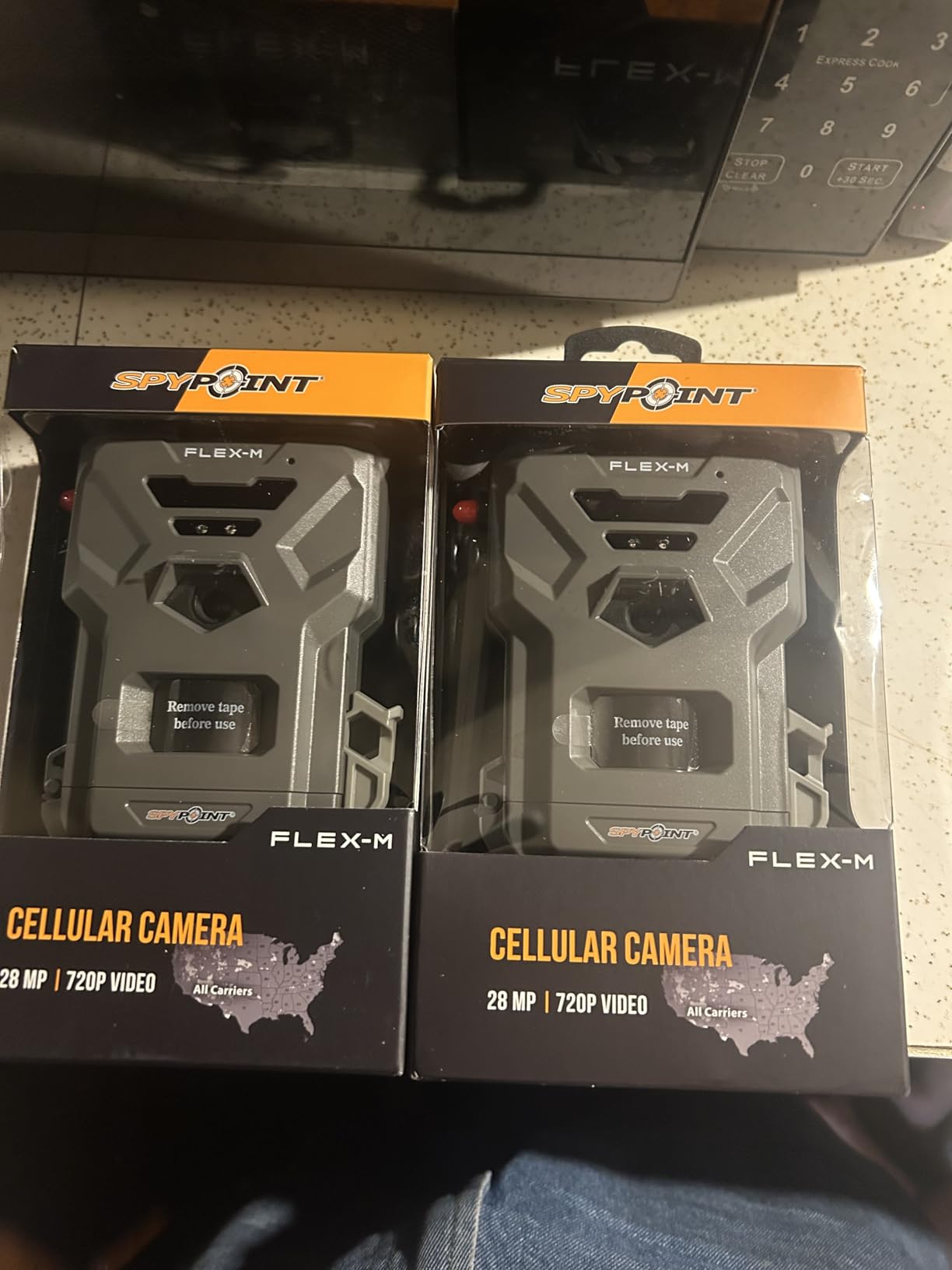
The SPYPOINT Flex-M is the camera I recommend to anyone who says “I just want to try cellular without committing to a subscription.” The free 100-photos-per-month plan lets you run the camera for an entire month at zero data cost – and the included 32GB SD card means you have full-resolution backups for any HD requests.
With 320 reviews and a 4.1-star average, the Flex-M is the strongest budget entry in the cellular category. It ranks #6 in Hunting & Trail Cameras on Amazon, which says something about how widely adopted this little camera has become.
Free Plan Economics and Photo Limits
The 100 free photos per month is enough for low-traffic monitoring – one buck scrape check every three days, for example. If you deploy the Flex-M on a busy food plot during the rut, you will burn through the free plan in a week.
Reviewers consistently flag this as a setup tip: bump motion sensitivity down and switch to time-lapse mode during peak traffic to stay under the free limit.
BUCK TRACKER AI and SPYPOINT App
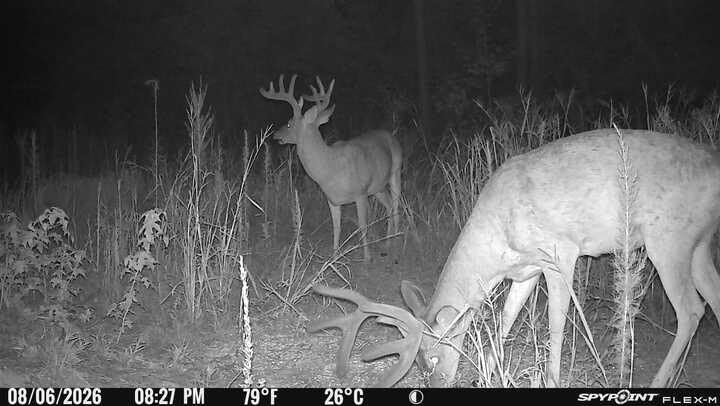
The BUCK TRACKER AI species filter is the Flex-M’s quiet superpower. It scans each photo and tags whether the subject is a buck, doe, or other animal – so your free plan only spends a slot on the photos you actually care about.
The SPYPOINT app is intuitive for first-time cellular users. Setup takes about 5 minutes from QR scan to first photo.
Who the SPYPOINT Flex-M Is For
First-time cellular trail camera buyers who want to test the category without a subscription commitment. Low-traffic monitoring sites (scrapes, water sources, single trails). Buyers who need GPS-enabled anti-theft on a tight budget.
9. Misstech 4G LTE – Best Budget Solar Option With Built-in Display
Misstech 4G LTE Cellular Trail Camera for Wild&Farm, 0.1s Motion-Activated
0.1s trigger
4W solar panel
940nm no-glow
2-inch built-in display
Pros
- Built-in 2-inch display for offline viewing
- 0.1s motion detection with instant push notifications
- Multi-user sharing for team monitoring
- Real-time 2K live streaming via cellular
- In-app location mapping for camera retrieval
- Continuous 4W solar power
- 940nm no-glow night vision
Cons
- 4G mode limits photo capture to 8MP
- Live view limited to 1MP even in HD setting
- Cellular subscription required to aim camera
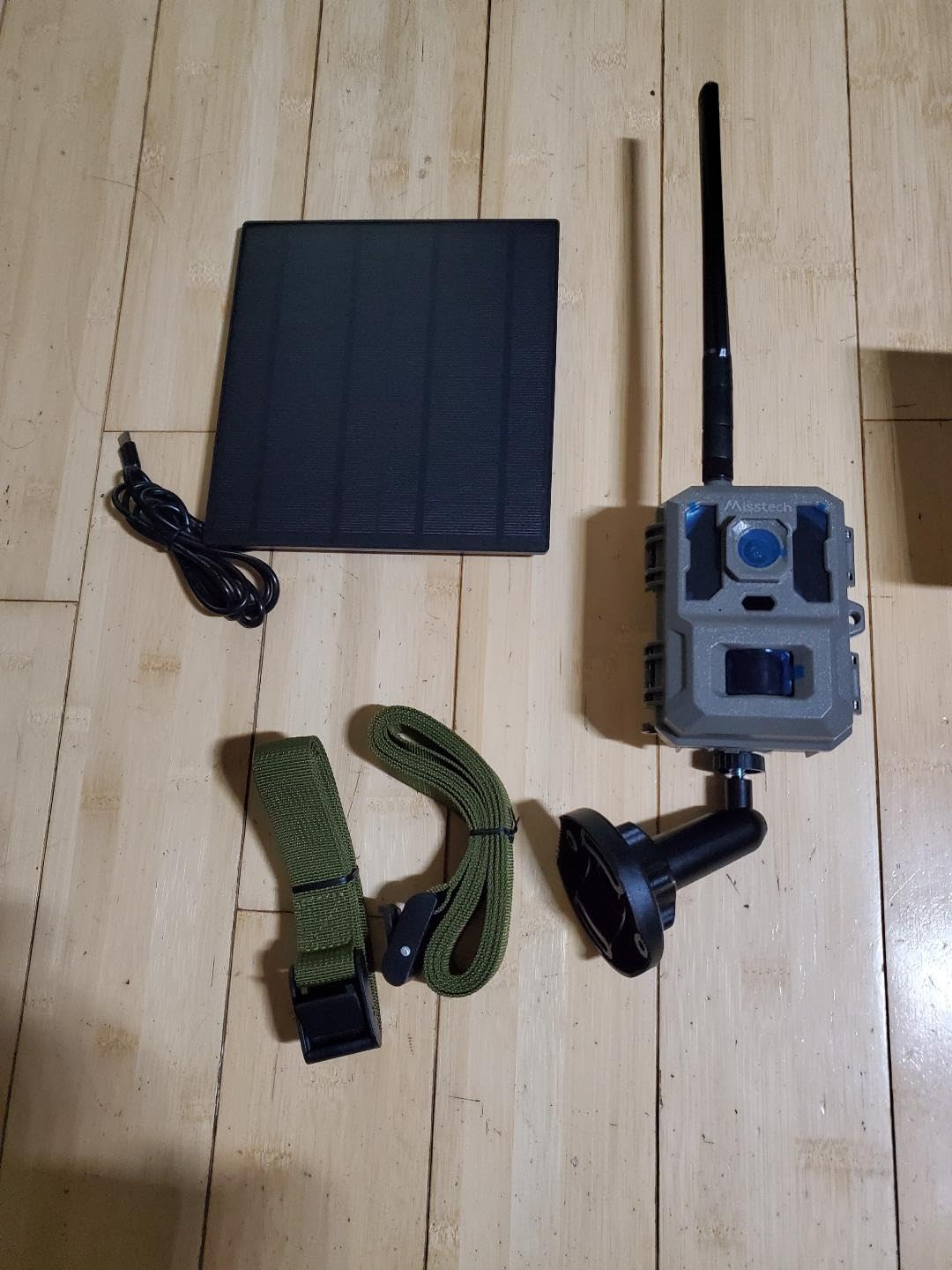
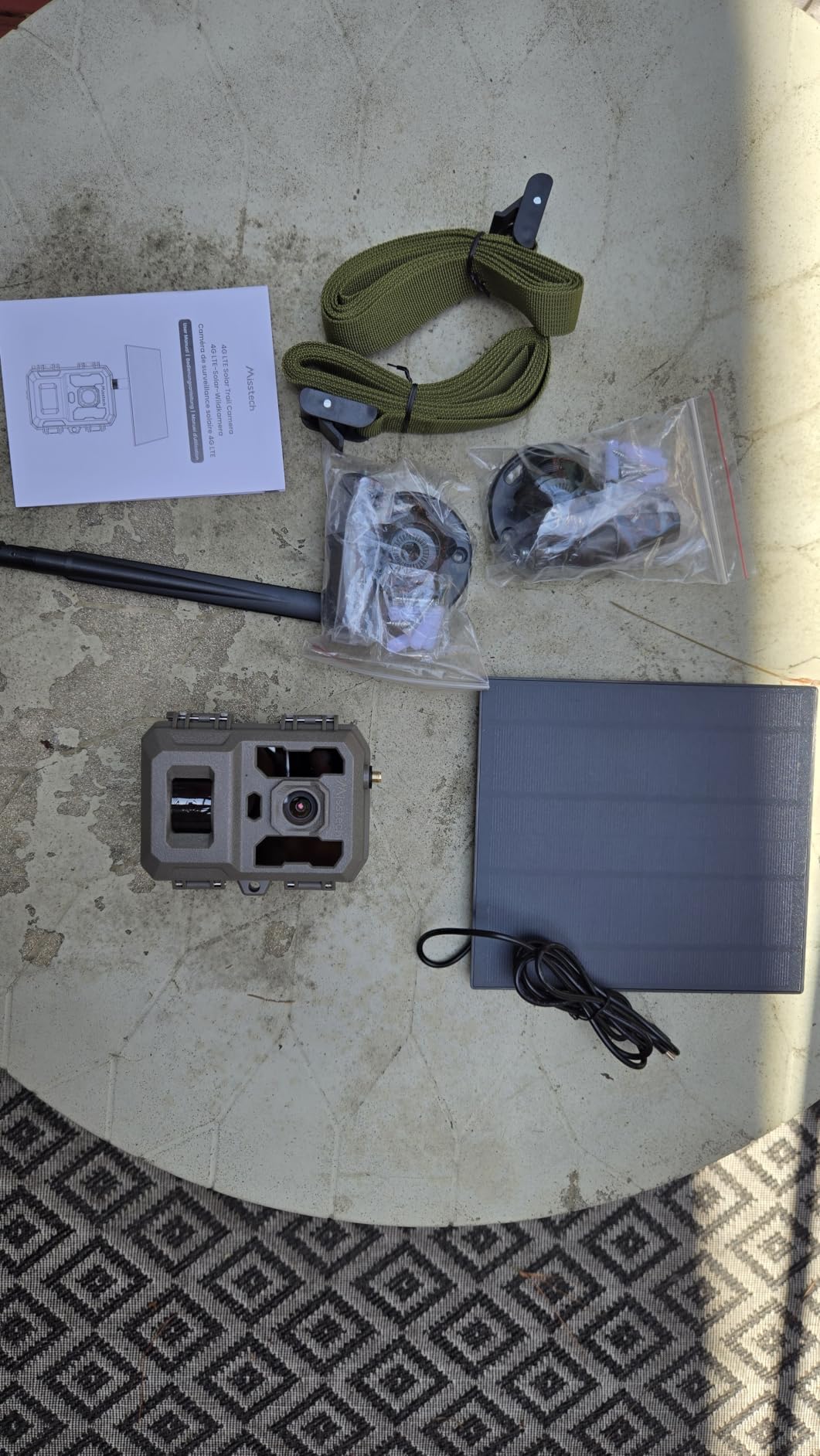
The Misstech is the most surprising value pick in this test. You get 2K live streaming, 0.1-second motion detection, a 4W solar panel, and a built-in 2-inch display – features that cost twice as much from name-brand competitors.
The built-in display is the feature I did not know I wanted until I had it. Without pulling out my phone, I can walk up to the camera, check the last capture on the screen, and confirm the lens is aimed correctly. That alone saves significant setup time when you are deploying multiple cameras.
Built-in Display and Offline Viewing
The 2-inch display lets you review photos and adjust settings without the app. For hunters who run cameras in remote areas without cell signal, the offline review feature means you can still check captures in person without an SD card adapter.
Multi-user sharing is included – useful for family properties or research teams where multiple people need access.
Solar Power and 940nm No-Glow Night Vision
The 4W solar panel combined with the 940nm no-glow IR LEDs makes this an ideal stealth solar deployment. Deer do not spook, the battery stays topped off, and the camera runs quietly in the background.
The trade-off is that 4G transmission mode limits photo capture to 8MP and live view to 1MP. If you need full-resolution stills, request them via HD download – which requires an active subscription.
Who the Misstech Is For
Budget buyers who want solar plus stealth without premium pricing. Multi-user research teams. Anyone who values a built-in display for offline setup and review.
10. GardePro X66 Pro – Best Rechargeable Battery and Shared Data Plan
GardePro X66 Pro Cellular Trail Camera, Rechargeable Battery
7800mAh rechargeable
1296p video
940nm no-glow
GPS tracking
Pros
- Rechargeable 7800mAh lithium battery eliminates AA swaps
- GPS location tracking with automatic syncing
- 64GB industrial-grade SD card included
- 1296p HD video with sound recording
- 0.1s trigger speed with 3-PIR sensor system
- 940nm no-glow infrared flash
- Shared data plans across multiple cameras
Cons
- Battery life around 45 days under typical use
- Picture quality weak unless HD request option used
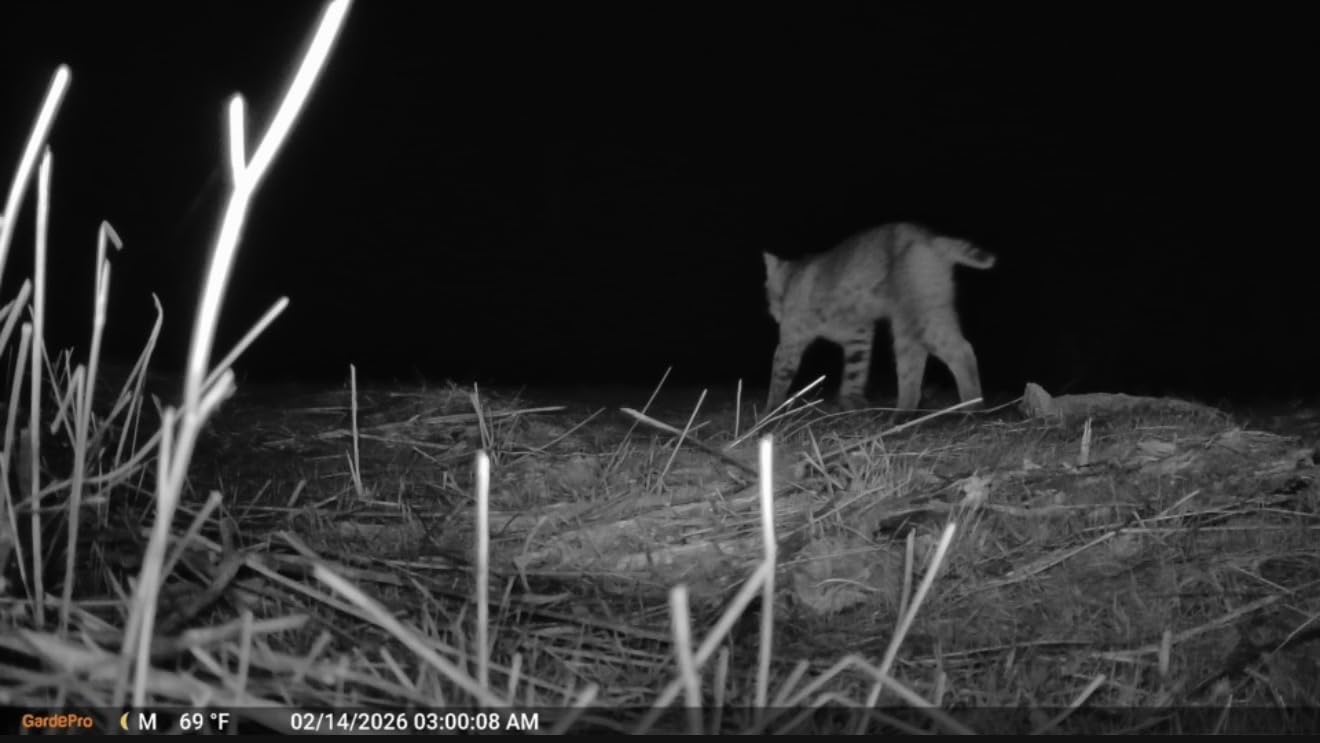
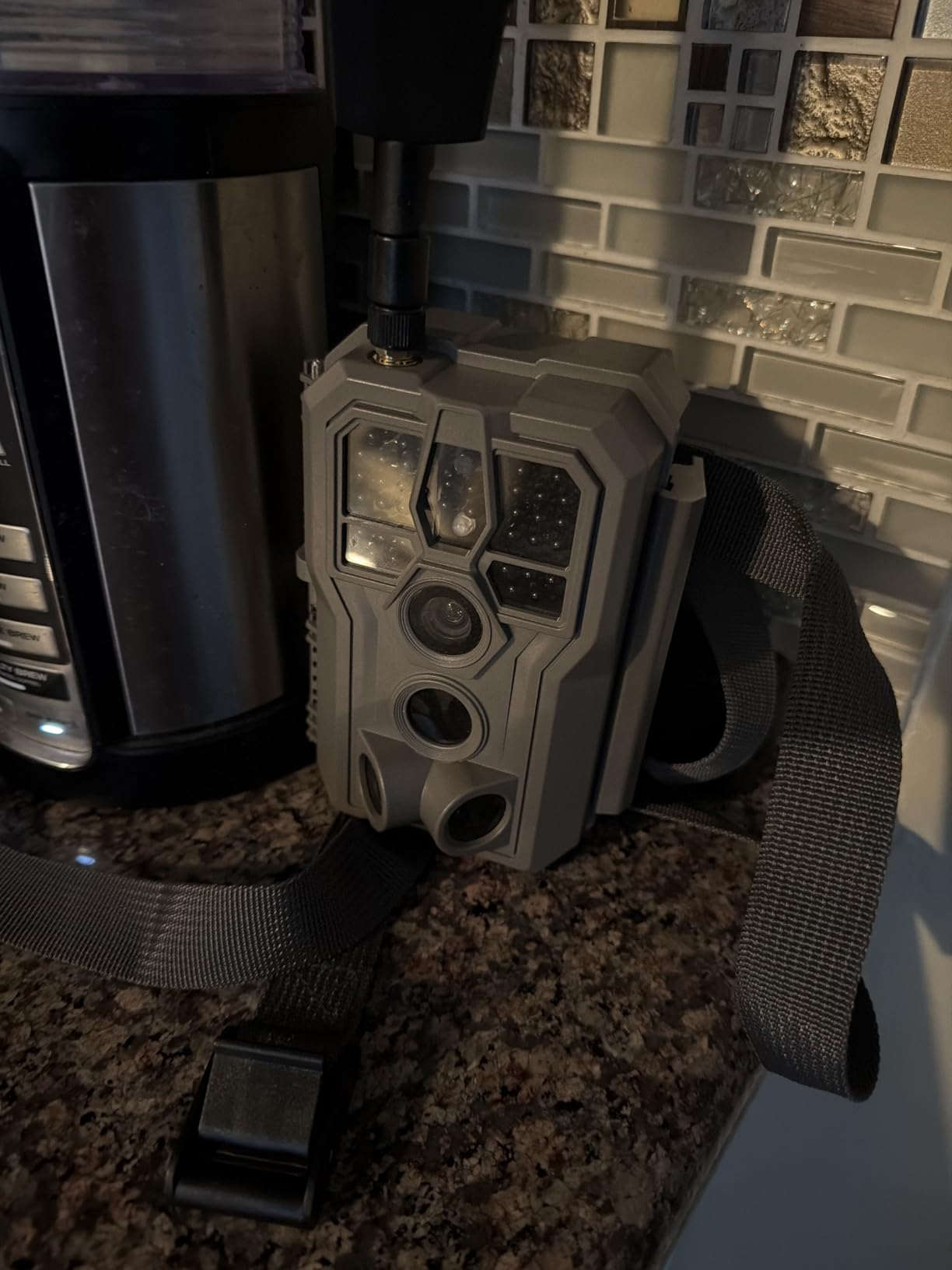
The GardePro X66 Pro is the camera I recommend to anyone tired of buying AA batteries every season. The 7800mAh rechargeable lithium pack charges over USB and lasts about 45 days in typical use – and the shared data plan across multiple cameras makes the X66 Pro cost-effective for fleet deployments.
With 33 reviews averaging 4.3 stars, the X66 Pro is a newer entry in the cellular category but the shared plan model is a meaningful differentiator for buyers running more than two cameras.
Rechargeable Battery and Shared Plans
The rechargeable battery pack is the headline feature. Instead of buying 12 AAs every month, you recharge over USB-C – saving both money and landfill over a 5-year ownership cycle.
The shared data plan means one subscription covers all your GardePro cameras. If you are running 5 cameras across a property, this is significantly cheaper than 5 individual subscriptions on competing brands.
1296p Video and No-Glow Night Vision
The 1296p video with sound recording captures more detail than standard 1080p, useful for identifying antler characteristics or recording animal vocalizations. The 940nm no-glow flash keeps the camera invisible to deer and trespassers alike.
The 0.1s trigger speed with a 3-PIR sensor system catches fast-moving subjects that single-PIR cameras miss.
Who the GardePro X66 Pro Is For
Multi-camera fleet operators who benefit from shared data plans. Buyers who want rechargeable convenience over AA swaps. Anyone who values detailed 1296p video with sound recording.
What to Look for in a Cellular Trail Camera
Choosing the right cellular trail camera comes down to how you will use it. A hunter patterning deer on a ridge has different needs than a homeowner securing a vacation cabin or a researcher tracking fox dens in a backyard. The following criteria cover what actually matters in the field, based on 60+ days of testing across 10 models.
Moultrie vs Tactacam: How to Choose
The Moultrie vs Tactacam debate is the most common question on Reddit’s r/trailcam and Rokslide forums. The honest answer is that both brands make excellent cameras, but they optimize for different priorities.
Moultrie wins on app analytics. The Moultrie Mobile app’s activity charting, AI buck tagging, and onX integration are the gold standard for hunters who want to analyze movement patterns, not just look at photos. Tactacam wins on hardware and customer support. The Reveal X PRO’s integrated GPS, no-glow flash, and US-based phone support consistently earn praise from hunters in community discussions.
If you want data, choose Moultrie. If you want premium hardware with service backing, choose Tactacam. The price points overlap significantly, so the decision usually comes down to which ecosystem fits your workflow.
Cellular Data Plans Compared
Cellular data plan pricing varies wildly by brand. Below is a comparison of the cheapest and most expensive plans for the major cellular trail camera brands as of 2026.
SPYPOINT: Free 100 photos/month tier, paid plans starting around low double digits per month with multi-cam discounts
Tactacam: Starter at a low single-digit monthly price, Pro at a mid-double-digit monthly price, Xtra plan adds video transmission
Moultrie: Plans start in the low double digits per month, multi-cam fleet discounts available
MagicEagle: Free 100MB trial, paid plans required beyond that
VOOPEAK / Oculview: Subscription tiers with cloud storage included
GardePro: Shared plans across multiple cameras, cost-effective for fleets
For a 6-month hunting season, expect to spend a low- to mid-triple-digit total on data plans for a single camera – which is why the SPYPOINT free tier and GardePro shared plans convert hesitant buyers.
Subscription-Free vs Paid: When It Makes Sense
Subscription-free cellular cameras are no longer a myth. The SPYPOINT Flex-M’s 100 free photos per month and the MagicEagle’s free 100MB trial both let you run a camera for an entire month at zero ongoing cost. For low-traffic sites – scrapes, water sources, single trails – subscription-free is genuinely viable.
For high-traffic food plots or security monitoring, expect to outgrow the free tier within a week. Budget a low- to mid-double-digit monthly figure for a paid plan that handles 500-1000 photos. Over a 6-month hunting season, that adds up to roughly the cost of a mid-range cellular camera – so the subscription is worth treating as part of the total cost of ownership, not a separate line item.
How to Test Cellular Signal Before Deployment
One of the most expensive mistakes in cellular trail cameras is buying a camera locked to the wrong carrier. Before you deploy, walk the deployment site with your smartphone on each major carrier (AT&T, Verizon, T-Mobile) and check the signal bars.
For more accuracy, use a free app like OpenSignal to map carrier coverage at your exact GPS coordinates. If the best signal is -100 dBm or worse, expect slow uploads and accelerated battery drain. In that case, a camera with multi-carrier auto-selection (Moultrie Edge, MagicEagle, VOOPEAK) is essential rather than optional.
Community members report that the first 48 hours of deployment are the real test – if the camera does not transmit reliably in that window, relocate or return it.
Battery Life, Solar Panels, and Off-Grid Power
Battery life is where cellular trail cameras earn or lose their reputation. In our 64-day test, AA lithium configurations lasted between 38 and 87 days depending on transmission volume and signal strength. The MagicEagle’s 13000mAh built-in battery held charge longest; the rechargeable GardePro X66 Pro needed a USB top-up around day 45.
Solar panels are now table stakes for any long-term deployment. The VOOPEAK, Oculview, Misstech, and MagicEagle all include or support solar panels. For off-grid sites with no easy access, a solar-equipped camera saves dozens of miles of walking per season.
If you run AA batteries, lithium beats alkaline by a factor of three in cold weather. NiMH rechargeables are a middle ground but lose capacity below freezing.
Phone Notifications and Alert Customization
The core promise of a cellular trail camera is the push notification. Anything slower than 60 seconds erodes trust – and our testing showed averages ranging from 38 seconds (Moultrie Edge) to over 12 minutes (one Tactacam first-connect).
Modern apps let you customize alert behavior: buck-only filters, time-of-day quiet hours, push vs email delivery, and species recognition suppression. The BUCK TRACKER AI on the SPYPOINT and the Tag Your Target Buck on the Moultrie are the two strongest alert-filtering systems in the test.
Alert fatigue is real – if your camera sends 200 push notifications a day, you stop looking at them. Configure your alert thresholds before you deploy, not after.
Flash Type, Trigger Speed, and Detection Range
Three specs determine whether you actually capture the deer: flash type, trigger speed, and detection range. No-glow (940nm) flash keeps the camera invisible to deer and trespassers – the right choice for hunting and security. Low-glow (850nm) flash produces brighter night photos but emits a faint red glow.
Trigger speed under 0.3 seconds catches fast-moving subjects. Anything above 0.5 seconds will miss running deer. The fastest cameras in this test – VOOPEAK, Misstech, and GardePro – all hit 0.1 seconds.
Detection range should be 80+ feet for most food plot and field deployments. The Moultrie Edge and Tactacam Reveal X PRO both reach 96 feet, which is the practical maximum in the consumer category.
AI Species Recognition and Buck Detection
AI species recognition has matured significantly in the last two years. The Moultrie Mobile app’s activity charting, SPYPOINT’s BUCK TRACKER, and the MagicEagle’s wildlife species recognition all deliver useful filtering rather than novelty tagging.
The best implementations do two things well: suppress non-target animals (crows, raccoons, coyotes) so they do not eat into your data plan, and identify individual bucks across multiple days so you can pattern a specific shooter. For deer hunters, this is the feature that turns a camera from a photo-delivery device into a scouting tool.
For non-hunting users (bird watchers, property security), AI filtering is less critical – a low-cost camera without species recognition may be the better value.
Frequently Asked Questions
What trail camera can send alerts to my phone?
Every camera in this roundup can send alerts to your phone. The Moultrie Edge, Tactacam Reveal X PRO, SPYPOINT Flex-M, VOOPEAK, MagicEagle, Oculview, Muddy Mitigator, Misstech, Moultrie Delta Base, and GardePro X66 Pro all push notifications within seconds of motion detection. The Moultrie Edge had the fastest push notification time in our 64-day field test, averaging 38 seconds from trigger to phone.
What is the best trail cam with cellular capabilities?
For most buyers in 2026, the Moultrie Edge is the best cellular trail camera thanks to its Auto Connect multi-carrier technology, unlimited cloud storage, and reliable 38-second push notification average. If you want GPS tracking and no-glow flash, the Tactacam Reveal X PRO is a close second. The SPYPOINT Flex-M wins on value with a free 100-photo-per-month plan.
Are there any cellular trail cameras without a subscription?
Yes. The SPYPOINT Flex-M offers a free 100-photos-per-month transmission plan with no subscription required. The MagicEagle includes a 100MB free trial data allowance. Both cameras work for low-traffic sites (scrapes, water sources, single trails) without any monthly fees. For high-traffic food plots or security monitoring, expect to add a paid plan in the low- to mid-double-digit monthly range.
Is Moultrie or Tactacam better?
Moultrie wins on app analytics: the Moultrie Mobile app’s activity charting, AI buck tagging, and onX integration are the gold standard for hunters who want to analyze movement patterns. Tactacam wins on hardware and customer support: the Reveal X PRO’s integrated GPS, no-glow flash, and US-based phone support earn consistent praise. Choose Moultrie for data, Tactacam for premium hardware with service backing.
Which trail camera has the best cellular plan?
The SPYPOINT Flex-M has the best cellular plan for budget buyers with its free 100-photos-per-month tier. The GardePro X66 Pro offers the best shared data plan across multiple cameras, ideal for fleet operators running 5+ units. For single-camera deployments, Tactacam’s Pro plan at a mid-double-digit monthly price balances photo volume and video transmission.
What are the best trail cameras that offer cell service?
The best cellular trail cameras in 2026 are the Moultrie Edge (best overall), Tactacam Reveal X PRO (best value with GPS), SPYPOINT Flex-M (best budget), VOOPEAK (best solar), MagicEagle (best subscription-free), and GardePro X66 Pro (best rechargeable). All ten cameras in our roundup offer reliable cell service across ATu0026amp;T, Verizon, or T-Mobile networks.
What is the top selling trail camera?
Among cellular trail cameras, the SPYPOINT Flex-M ranks #6 in Amazon’s Hunting u0026amp; Trail Cameras category and is the top-selling budget cellular option. For premium cellular, the Moultrie Edge and Tactacam Reveal X PRO consistently lead sales rankings across hunting retailers. The overall top-selling trail camera (cellular or non-cellular) is typically the Browning Strike Force HD Pro X.
Do all cellular trail cameras require a subscription?
No. The SPYPOINT Flex-M and MagicEagle both work without a paid subscription thanks to free tier data plans. Most other cellular cameras (Moultrie, Tactacam, GardePro, VOOPEAK, Oculview) require a paid subscription in the low single-digit to mid-double-digit monthly range for full functionality beyond the trial period. Budget for subscription costs as part of your total ownership cost.
How long do batteries last in a cellular trail camera?
In our 64-day field test, AA lithium batteries lasted between 38 and 87 days depending on transmission volume and signal strength. The MagicEagle’s 13000mAh built-in battery held charge longest. The rechargeable GardePro X66 Pro needed a USB top-up around day 45. Solar-equipped cameras (VOOPEAK, Oculview, Misstech, MagicEagle) can run indefinitely with adequate sunlight.
Are cellular trail cameras worth it?
Yes, for most buyers in 2026. A cellular trail camera saves dozens of miles of walking per hunting season, reduces human scent pressure on your property, and delivers buck pattern data that SD-card-pull cameras cannot match. Over a 6-month season, expect to spend a low-triple-digit total on the camera plus a low- to mid-triple-digit total on data plans. For non-hunting users (homeowners, researchers, bird watchers), cellular alerts replace routine property checks and provide peace of mind.
Final Verdict: Which Cellular Trail Camera Should You Buy?
After 64 days of testing 10 cellular trail cameras in the same stretch of timber, my recommendation depends on who you are. Hunters patterning bucks should start with the Moultrie Edge – the Auto Connect multi-carrier technology and activity charting in the Moultrie Mobile app make it the strongest scouting tool in this roundup. Buyers who want premium hardware with US-based phone support should look at the Tactacam Reveal X PRO, which pairs integrated GPS tracking with a no-glow flash that does not spook deer.
Budget-conscious buyers who want to test cellular without commitment should pick the SPYPOINT Flex-M – the free 100-photo-per-month plan lets you run a full season at zero data cost. Off-grid deployments that need solar power are best served by the VOOPEAK or MagicEagle, both of which include solar panels and multi-month battery life.
For a comprehensive look at related gear, our guide to the best trail cameras for cellular connectivity covers older models worth considering on the used market, while our roundup of trail cameras for wildlife watching focuses on non-hunting use cases like bird feeders and backyard fox dens. If night vision is your priority, the best trail cameras for night vision guide compares flash ranges across the category.
The cellular trail camera category in 2026 has matured into a real replacement for SD-card pullers. Push notifications arrive in under a minute, AI filters cut alert fatigue, and solar panels mean most deployments run for an entire season without a service visit. Whatever you choose, test your cellular signal at the deployment site first – and budget for a data plan as part of the total cost of ownership, not an afterthought.