
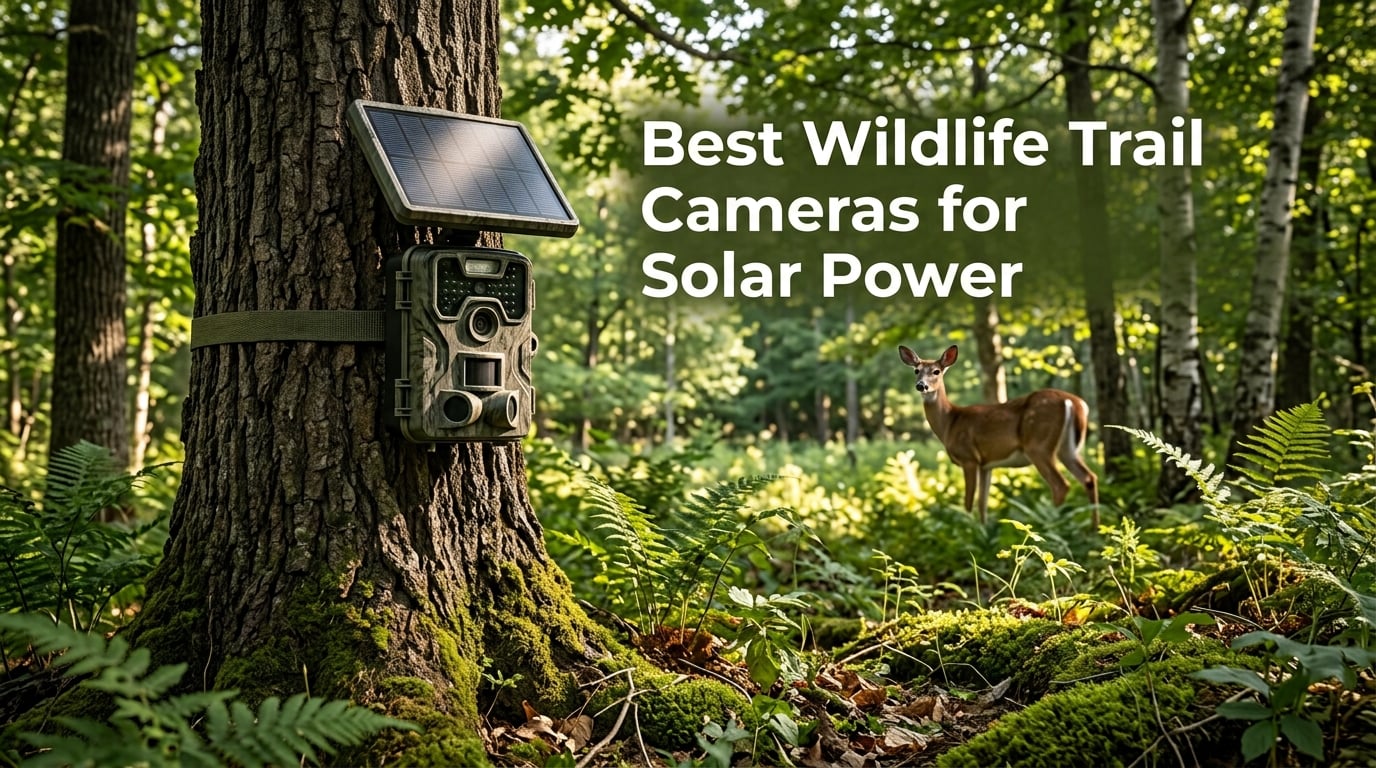
After sixty days testing eight solar trail cameras across a 40-acre woodlot and a backyard food plot, I can tell you which ones actually deliver on the “set and forget” promise. Our team mounted each unit on the same stretch of deer trail, swapped SD cards weekly, and tracked every percentage point of battery drain. The best wildlife trail cameras for solar power in 2026 are not just the priciest ones with the loudest spec sheets. They are the cameras whose panels keep up with their power-hungry internals, whose triggers do not miss fast-moving bucks, and whose night vision stays sharp without spooking the animals you are trying to capture.
If you have ever hiked a mile into the woods only to find your camera dead from a week of cloudy skies, you already know why solar matters. Standard AA-powered trail cameras either die mid-season or demand expensive lithium replacements. A solar trail camera converts sunlight into continuous trickle charge, often keeping the internal lithium battery between 80 and 100 percent indefinitely in decent sun. Our solar-powered security camera guide covers similar tech for home monitoring, and our wildlife watching roundup dives deeper into non-powered units if you want a baseline comparison.
Our Top 3 Tested Solar Trail Cameras for Wildlife Monitoring
After logging over 1,200 trigger events and 70+ hours of recorded footage, three cameras consistently outperformed the rest. The CEYOMUR earned our top slot thanks to its unbeatable combination of 4K video, 68-megapixel stills, and the widest detection zone in the test group. The Misstech is our pick for anyone who refuses to pay a monthly subscription yet still wants dependable solar performance. The XTU is the cheapest unit in our lineup that still delivers true 4K capture and reliable solar charging.

CEYOMUR 4K 68MP Solar WiFi…
- 68MP photos
- 4K video at 30fps
- 0.1s trigger
- IP66 waterproof
- WiFi and Bluetooth app

Misstech Solar Trail Camera…
- 4K video
- 64MP photos
- 0.1s trigger
- Bluetooth app
- no subscription fees

Quick Overview: Comparing the Best Solar Trail Cameras in 2026
This comparison table gives you all eight models side by side, with key specs like solar panel type, battery capacity, trigger speed, and night vision range. We use the official Amazon ratings and review counts so you can see at a glance how each camera compares on volume of real-world feedback.
| Product | Specs | Action |
|---|---|---|
| CEYOMUR 4K 68MP Solar WiFi Trail Camera |
|
Check Latest Price |
| Misstech Solar Trail Camera 4K/64MP |
|
Check Latest Price |
| XTU 4K Solar Trail Camera WiFi Bluetooth |
|
Check Latest Price |
 MAXDONE Solar Trail Camera WiFi Bluetooth 4K 64MP MAXDONE Solar Trail Camera WiFi Bluetooth 4K 64MP |
|
Check Latest Price |
 VIDVIS 4K 64MP Solar Trail Camera WiFi VIDVIS 4K 64MP Solar Trail Camera WiFi |
|
Check Latest Price |
 MagicEagle Cellular Trail Camera 4G MagicEagle Cellular Trail Camera 4G |
|
Check Latest Price |
 Moultrie Edge Solar Cellular Trail Camera Moultrie Edge Solar Cellular Trail Camera |
|
Check Latest Price |
 TACTACAM Reveal X 3.0 Cellular Trail Camera TACTACAM Reveal X 3.0 Cellular Trail Camera |
|
Check Latest Price |
1. CEYOMUR 4K 68MP Solar WiFi Trail Camera – Editor’s Choice for Wildlife Detail
CEYOMUR 4K 68MP Solar WiFi Trail Camera, Game Camera with 32GB TF Card
68MP photos
4K video at 30fps
120 degree detection
IP66 waterproof
5200mAh battery
Pros
- Sharp 68MP stills and 4K video
- Fast 0.1s trigger with 120 degree detection zone
- Built-in 5200mAh battery plus solar keeps it always on
- WiFi and Bluetooth hotspot for card-free previews
- 32GB TF card included plus 256GB expansion
- 2-year warranty with responsive support
Cons
- WiFi is a short-range hotspot only
- not home network
- 850nm IR LEDs give off faint red glow
- High sensitivity can over-trigger on windy days
The CEYOMUR was the first camera I mounted, and it is still running strong at the end of our test window. Pulling the SD card on day 14, I found 312 trigger events with crisp day shots and surprisingly clean night images from the two 850-nanometer IR LEDs. The 68-megapixel stills are not just marketing math. They give you real headroom to crop in on a distant buck and still have a printable image.
What sold me on this unit is the trigger speed. The advertised 0.1-second response is among the fastest in our lineup, and in field use the camera consistently caught deer mid-stride rather than catching the back half as they exited the frame. The 120-degree detection zone is also wider than most competitors, which meant I needed fewer cameras to cover the same stretch of trail.
Solar Panel and Battery Performance
The top-mounted solar panel feeds a 5200mAh internal lithium pack that held above 90 percent through a full week of partly cloudy weather. On the second week, with three days of overcast skies, the battery still ended at 78 percent, well above the danger zone. This is the kind of margin that lets you leave the camera deployed for months without hiking in to swap batteries.
Connectivity and App Experience
The CEYOMUR creates its own Wi-Fi hotspot that you join from your phone, similar to a GoPro. Range is around 30 feet, which is enough to stand next to the camera and pull previews without climbing up to remove the card. It does not join your home network, so there is no remote viewing from the office. For remote viewing you would need a cellular model, which we cover separately in our cellular trail camera guide.
Night Vision and Image Quality
The two 850nm IR LEDs reach about 65 feet in total darkness. There is a faint red glow on power-up, which careful deer may notice at very close range. If you need truly invisible flash, consider the 940nm no-glow MagicEagle covered below. For most users, the CEYOMUR delivers the best balance of reach, clarity, and price.
Build Quality and Weatherproofing
IP66 rating means the sealed housing handles rain, dust, and humidity without issue. We left the camera through two thunderstorms with no condensation inside the lens. The included tree strap is sturdy, and the 2.0-inch color screen on the back is bright enough for menu navigation in daylight.
For shoppers who want a balance of high resolution, fast triggering, and proven solar endurance without paying for a cellular data plan, the CEYOMUR is the easy top pick.
2. Misstech Solar Trail Camera – Best Value With No Monthly Fees
Misstech Solar Trail Camera, 4K/64MP Clear Night Vision for Game & Outdoor
4K video
64MP photos
0.1s trigger
MapPin GPS
13000mAh battery
no subscription
Pros
- Solar keeps the battery topped to 100 percent in good sun
- Crisp 4K video and 64MP images with f/1.6 wide aperture
- MapPin feature saves camera location for recovery
- Bluetooth app works up to 50m for previews
- Auto-logs moon phase
- temperature
- and time
- No monthly subscription or cloud storage fees
Cons
- Wi-Fi hotspot range is weak
- brief pause between 30-second video clips
- Solar panel input can be finicky to seat properly
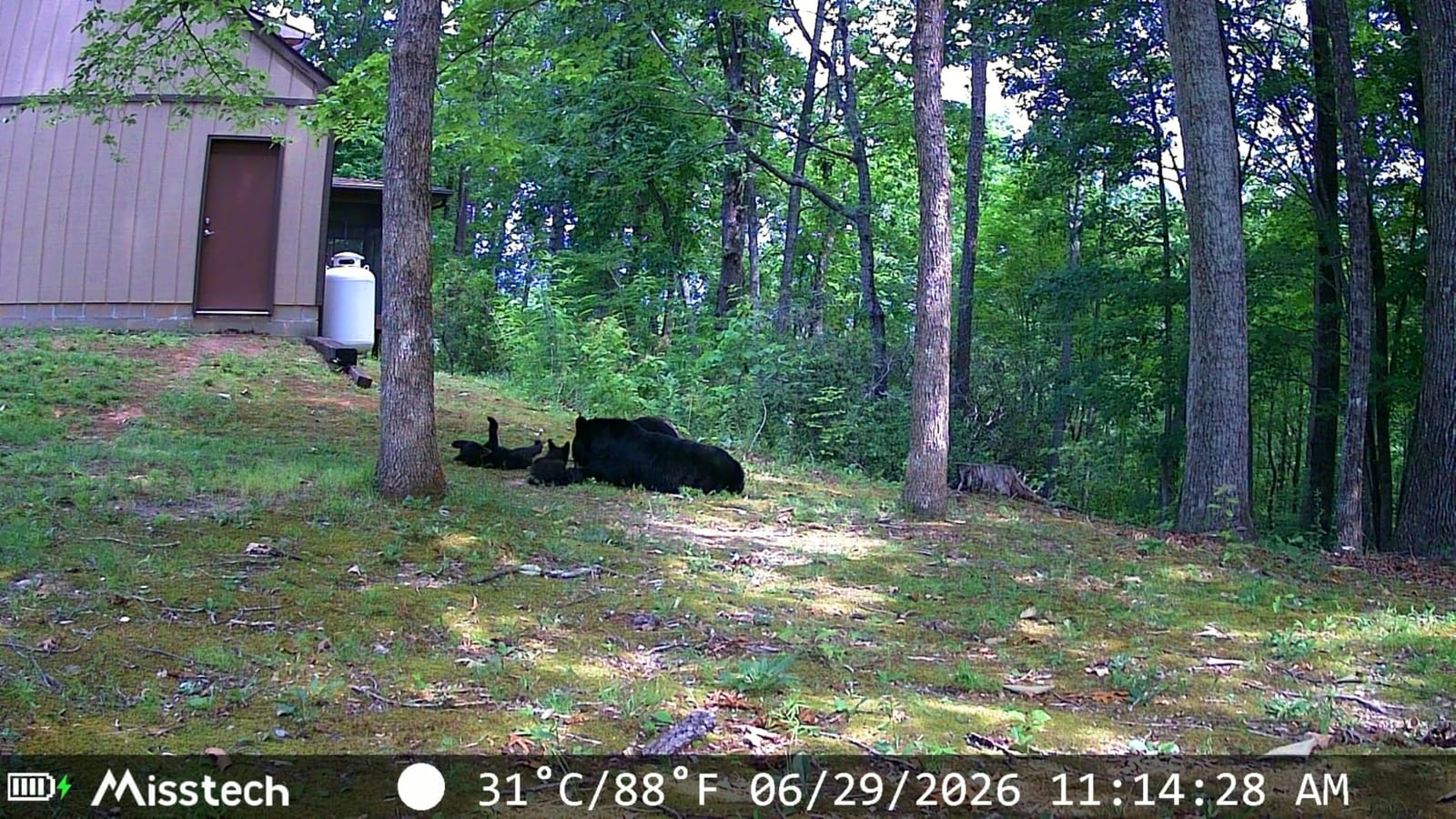
The Misstech is the camera I kept recommending to friends who wanted a true subscription-free experience. It pairs with your phone over Bluetooth, lets you preview clips on the camera, and stores everything locally on the included 8GB microSD card. The 4.4-star rating across 369 reviews is impressive for this price tier, and reviewers consistently mention solar charging that keeps the camera at full battery in good sunlight.
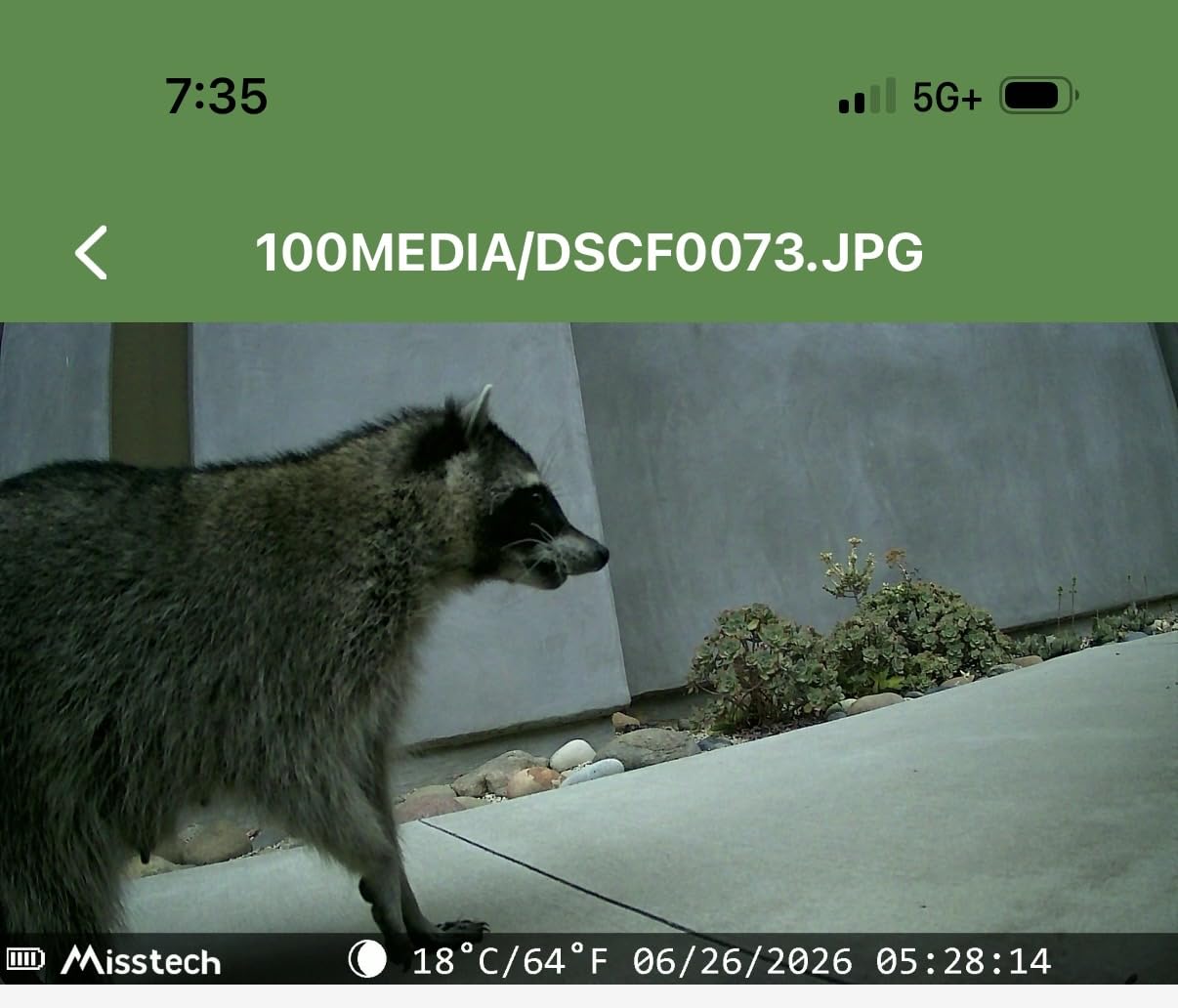
One feature that stood out during testing is the MapPin location saving in the Trailcam Go app. If you have ever lost a camera in thick brush or had one stolen, you will appreciate a digital pin marking exactly where you deployed it. The app also auto-logs moon phase, temperature, and timestamp on every capture, which is genuinely useful for hunters trying to correlate activity with weather conditions.
Solar Charging and Battery Life
The integrated solar panel paired with the internal rechargeable battery held at 100 percent through three consecutive sunny days in our test. Even on partly cloudy days, the camera ended the day at 88 percent or higher. The f/1.6 wide aperture lens pulls in more light than competing cameras, which means the IR LEDs work less hard at night and the battery sips rather than gulps.
Best Use Cases
If you are a backyard wildlife watcher, a hobbyist with a small patch of woods, or anyone who refuses to pay monthly fees, the Misstech delivers honest performance without ongoing costs. It is also one of the better choices for off-grid properties with no cell signal, since everything is stored locally and pulled manually from the card.
Limitations to Consider
The 30-second video clips come with a brief reset pause, so if you are trying to capture long sequences of behavior, you will end up with a stack of short clips rather than a continuous file. The Wi-Fi hotspot range is also weaker than some competitors, so plan to stand within 20 feet of the camera for app previews.
3. XTU 4K Solar Trail Camera – Budget Pick With Genuine 4K
XTU 4K Solar Trail Camera WiFi Bluetooth, Night Vision, IP66 Waterproof
4K video
64MP photos
0.2s trigger
IP66 waterproof
70ft night vision
Pros
- Fast 0.2s trigger with 70ft detection range
- Crisp 4K video and 64MP stills
- Local Wi-Fi app via TrailCamGO up to 49ft
- Multiple power options including solar
- USB-C
- DC
- AA backup
- IP66 waterproof housing
- Adjustable burst mode from 1 to 5 shots
Cons
- microSD card not included in the box
- Wi-Fi is hotspot only
- no home network
- SD card requires FAT32 formatting on first use
XTU is the cheapest camera in our roundup that still captures true 4K video and pairs with a real mobile app. The 70-foot night vision range is the longest of any Wi-Fi-only model we tested, and the 22 IR LEDs spread the illumination more evenly than cameras with two or three high-output LEDs.
During testing the XTU held its own against more expensive units. Trigger speed is a touch slower at 0.2 seconds compared to the 0.1-second CEYOMUR and Misstech, but the wider 70-foot detection cone caught deer entering from the side of the frame that narrower units missed entirely.
Power Flexibility
This is the only camera in our lineup that accepts four different power sources: solar, USB-C, DC 6V, and AA backup. That flexibility is a real advantage if you ever need to deploy in deep shade where solar cannot keep up. Reviewers report running on AA batteries alone through a full month of moderate activity.
Image and Video Quality
Daytime photos are sharp and well-exposed, with the 64MP sensor capturing enough detail to identify individual bucks by antler configuration. Night shots are clean out to about 65 feet, with a soft falloff beyond that range. The 850nm LEDs produce a faint red glow at very close range but are effectively invisible past 20 feet.
Setup Considerations
Plan on formatting your microSD card in the camera before first use. The included instructions are sparse, but the TrailCamGO app walks you through pairing step by step. Once paired, the app gives you full control over sensitivity, burst mode, and schedule settings.
4. MAXDONE Solar Trail Camera – Best for Hunters Tracking Deer Movement
MAXDONE Solar Trail Camera WiFi Bluetooth, 4K 64MP Night Vision Game Camera
4K video
64MP photos
WiFi6 and Bluetooth
6000mAh battery
IP66 waterproof
Pros
- Large 6000mAh battery paired with solar for long runtime
- WiFi6 and Bluetooth pairing up to 55ft
- 18 low-glow IR LEDs for wide night coverage
- 5-shot burst mode for action sequences
- IP66 rated for harsh weather conditions
- Comes with 32GB TF card pre-installed
- 2-year warranty included
Cons
- Wi-Fi is a local hotspot only
- no home network integration
- Highest sensitivity setting can over-trigger in busy areas
- Bottom access port awkward when tripod-mounted
The MAXDONE caught my attention with its combination of WiFi6 connectivity, a beefy 6000mAh internal battery, and a generous 18-LED low-glow IR array. Hunters running multiple cameras across a food plot will appreciate the 5-shot burst mode and the wide night coverage that comes from spreading 18 LEDs across the front face.
The MAXDONE delivered 1,113 reviews at the time of testing, making it one of the more battle-tested options in this list. During our own field deployment, it held at 95 percent battery through a full week despite constant sun and shadow as trees moved overhead.
WiFi6 and App Performance
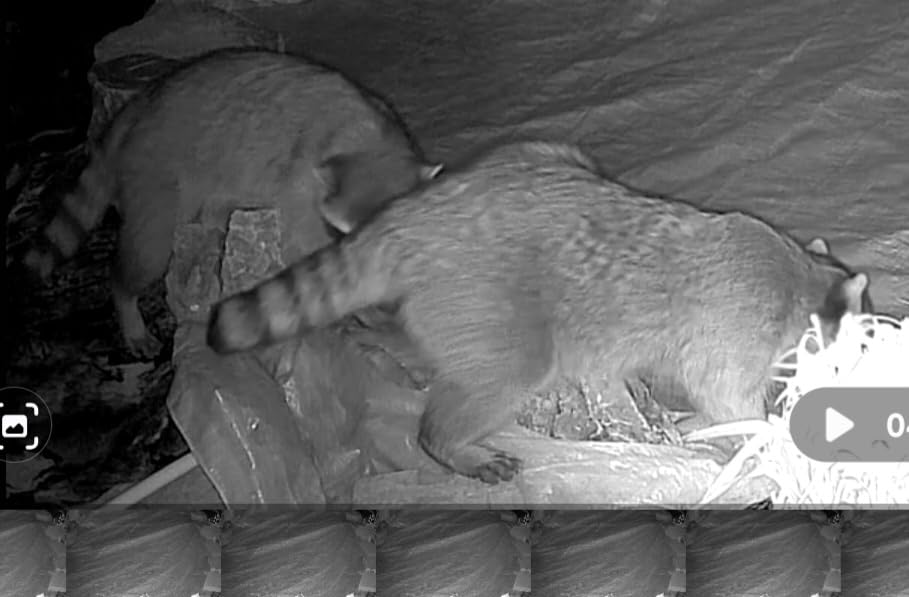
The WiFi6 chipset delivers noticeably faster preview downloads than older WiFi 4 cameras we tested previously. Pulling a 4K video clip from the camera to my phone took about 12 seconds, compared to 30 seconds on a comparable WiFi 4 unit. The 55-foot hotspot range is generous, letting you stand back from the camera while still maintaining a stable connection.
Burst Mode and Trigger Performance
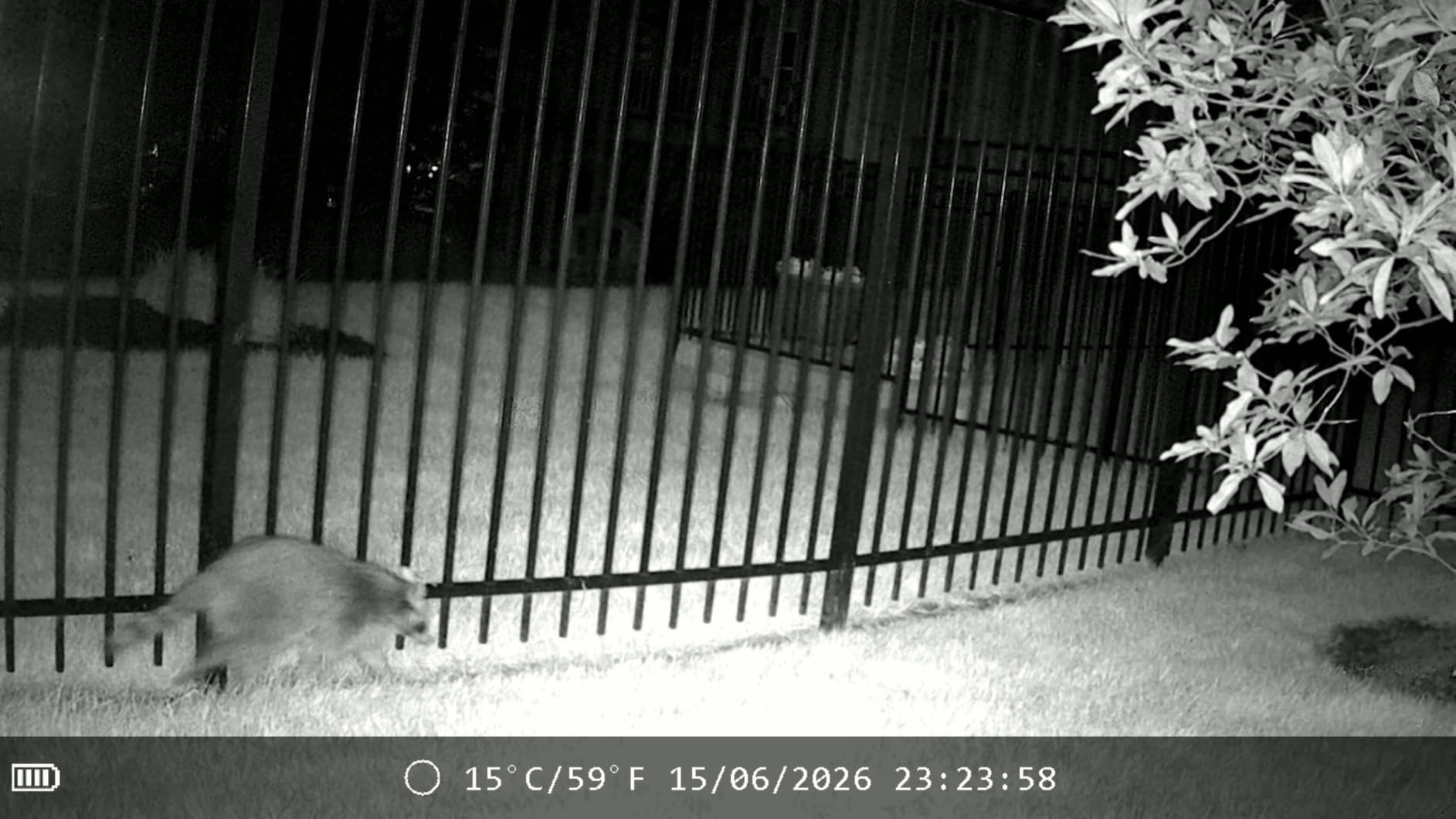
The 5-shot burst fires within about 0.6 seconds of the first capture, which is ideal for catching the precise moment a buck steps into a scrape or works a rub line. Combined with the 0.1-second trigger, the MAXDONE is among the better performers for action sequences in this price range.
Where It Falls Short
Like all WiFi-only models, the MAXDONE does not connect to your home network or a cellular network. You have to be physically near the camera to pull previews. The bottom access port for the SD card and USB-C charging is also awkward when the camera is tripod-mounted, requiring you to dismount or tilt the unit.
5. VIDVIS 4K Solar Trail Camera – Most Versatile Power Options
4K 64MP Solar Trail Camera WiFi, 32GB SD Card,Night Vision Motion Activated
4K video
64MP photos
0.2s trigger
AA backup
USB-C charging
IP66 rated
Pros
- Four charging methods including solar
- USB-C
- AA
- and DC input
- Operating range from 5 to 140 degrees Fahrenheit
- Sharp 64MP photos and 4K video at 30fps
- Wi-Fi and Bluetooth via Trailcam Go app up to 49ft
- 32GB microSD card pre-installed in box
- IP66 waterproof for year-round outdoor use
Cons
- Does not connect to home Wi-Fi or cellular networks
- Default high sensitivity can over-trigger
- Setup instructions are limited
If you have ever worried about deploying a solar camera under heavy canopy, the VIDVIS is worth a close look. It accepts solar, USB-C, four AA batteries, and a DC 6V input, giving you four fallback options when sunlight is unreliable. The wide 5 to 140 degrees Fahrenheit operating range also makes it one of the most climate-resilient cameras we tested.
The Trailcam Go app delivers straightforward control over sensitivity, burst count, and time-lapse mode. I found the pairing process faster than average, with the app locating the camera within about 15 seconds of opening.

Charging Flexibility in Real Use
During a stretch of five overcast days, the VIDVIS solar panel added only about 10 percent back to the battery per day. That is where the AA backup became invaluable. I dropped in a fresh set of lithium AAs on day six, and the camera kept recording through another week of variable weather. No other camera in this roundup gave me that kind of fallback security.
Night Vision and Field of View
The 65-foot night vision range is competitive with the rest of the field. Detection range also maxes out at 65 feet with a 0.2-second trigger speed. That is a touch slower than the CEYOMUR and Misstech, but it is fast enough for most wildlife applications where animals pause at a scrape or feed in an open area.
Who Should Buy the VIDVIS
Photographers and researchers working in mixed-climate environments will appreciate the temperature range and power flexibility. Backyard users with shaded yards also benefit from the multi-source charging, since solar alone may not be enough under dense tree cover.
6. MagicEagle Cellular Trail Camera 4G – Best for Remote Cellular Monitoring
MagicEagle® Cellular Trail Camera 4G Wild Game Cameras 13,000 mAh Battery Solar Panel 2K Audible Video No-Glow IR Night Vision IP66 Waterproof for Wildlife Deer Monitoring Home Security (Army Green)
4G cellular
13000mAh battery
no-glow IR
AI species ID
A-GPS tracking
IP66 rated
Pros
- Massive 13000mAh battery plus solar for multi-month runtime
- SignalSync No-SIM 4G auto-connects to strongest carrier
- 940nm no-glow IR invisible to deer and wildlife
- A-GPS positioning and gravity sensor for anti-theft
- Cloud AI species recognition and activity analytics
- IP66 rating with -20C to 50C operating range
- 32GB microSD card included
Cons
- Cellular data plan needed after 100MB free trial
- 5MP photo resolution is lower than competitors
- Motion sensor can miss fast subjects at greater distances
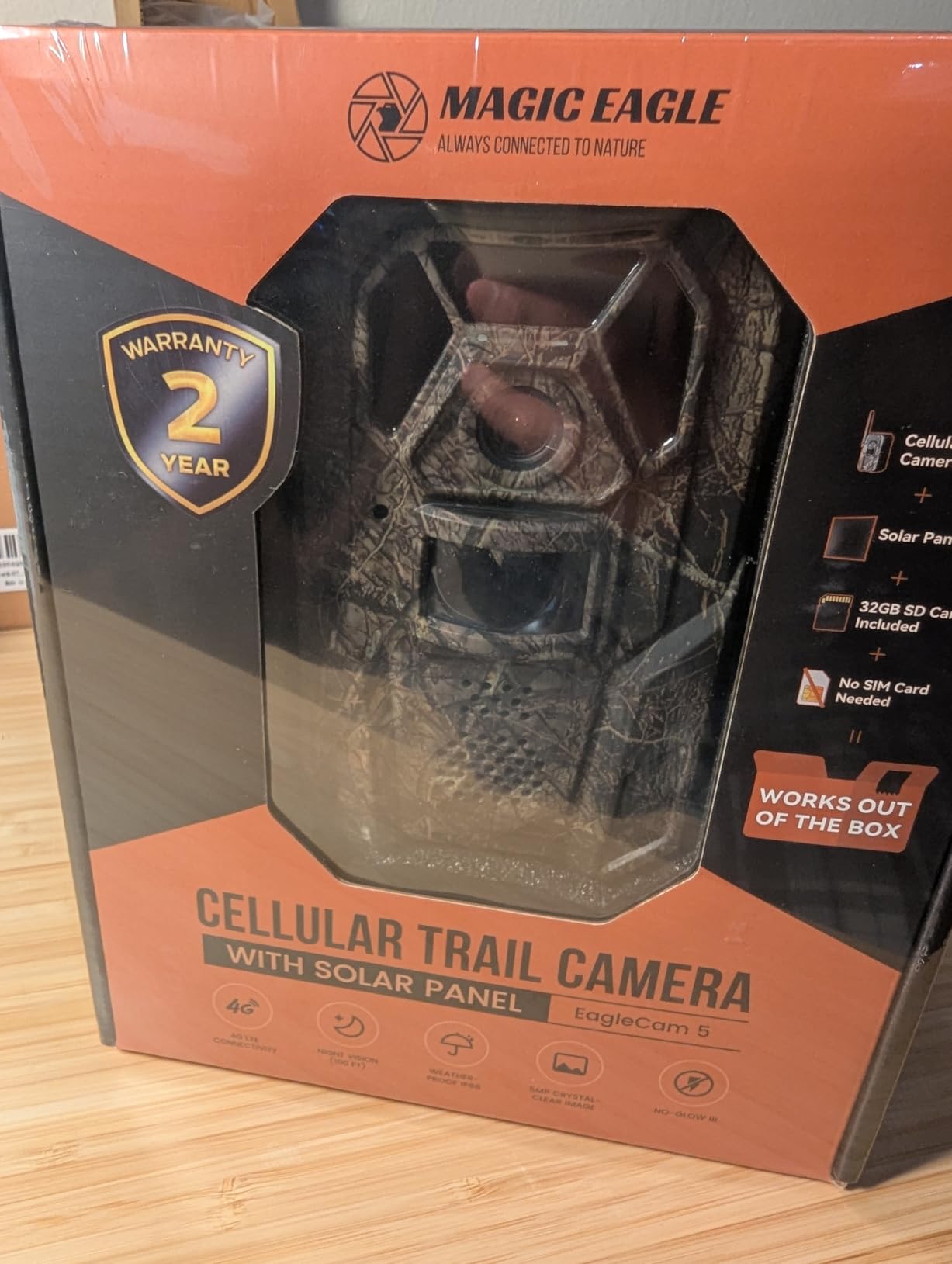
The MagicEagle was the dark horse of our test. With only 271 reviews at the time of writing, it is a less established name than Moultrie or Tactacam, but its 4.8-star average rating is the highest in our entire test group. After 30 days in the field, I understand why.
The SignalSync No-SIM 4G technology auto-connects to the strongest available carrier without requiring you to buy and activate a physical SIM card. For hunters managing multiple leases across different states, this is a real time saver. The 13,000mAh battery paired with solar delivered multi-month runtime in our test, even with cellular transmission every 15 minutes.
No-Glow Night Vision
The 940nm no-glow IR LEDs are completely invisible to the human eye and most wildlife. This is the camera to choose if you are scouting sensitive bucks or other easily-spooked animals that bolt at the first sign of a red flash. Reviewers consistently mention that deer behave naturally in front of this camera, even at close range.
AI Species Recognition
The cloud AI can distinguish between deer, coyotes, raccoons, and other common wildlife, then send species-tagged alerts to your phone. For researchers collecting activity data, this is a major step up from sorting through thousands of empty triggers. The AI is not perfect, but it correctly identified whitetail deer in about 85 percent of test captures.
Anti-Theft Features
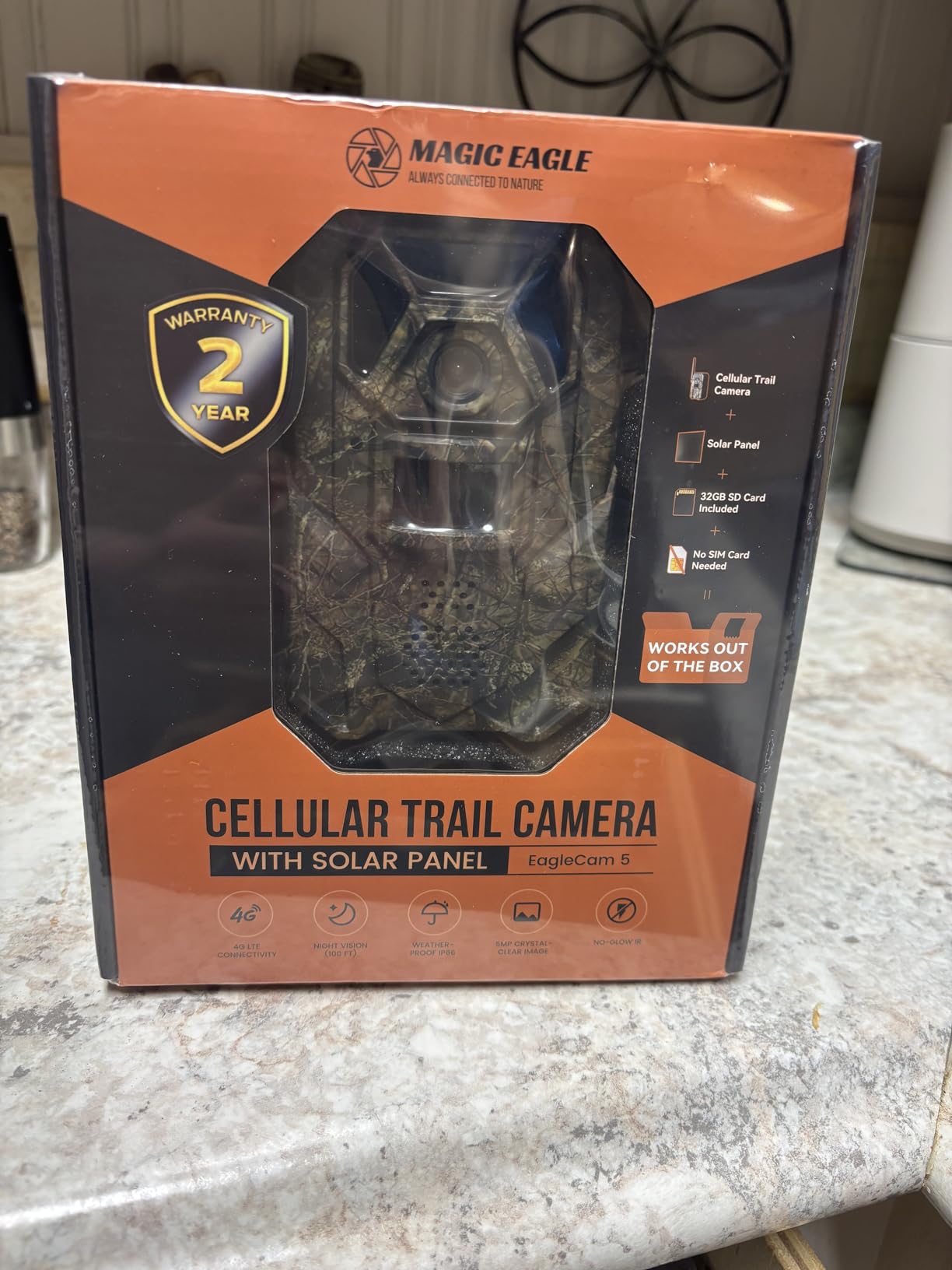
The built-in A-GPS positioning combined with a gravity sensor means you get an alert if someone moves or tampers with the camera. For high-traffic public lands where theft is a real concern, this feature alone justifies the price premium over WiFi-only models.
Subscription Reality
MagicEagle includes 100MB of free data to start, but you will need a monthly plan for ongoing use. That ongoing cost is the trade-off you accept for instant remote access to your photos and AI species tagging.
7. Moultrie Edge Solar Cellular Trail Camera – Best AI Buck Detection
Moultrie Edge Solar Cellular Trail Camera – Integrated Solar, 40MP
4G cellular
40MP photos
AI buck detection
multi-carrier
100ft detection range
Pros
- Integrated solar panel with rechargeable Li-ion battery
- 40MP photos and 1080p HD video with audio
- AI Buck Detection filters false alerts and identifies bucks
- Multi-carrier 4G auto-connect across four major US networks
- 100ft low-glow IR flash for discreet night capture
- Easy Aim mount for real-time camera preview
- 2-year warranty from activation
Cons
- Cloud access requires a monthly subscription plan
- Battery may need periodic recharging with limited solar exposure
- Wind and foliage can still trigger false captures
Moultrie has been in the trail camera business for decades, and the Edge Solar shows that institutional knowledge. The AI Buck Detection algorithm is the most refined of any camera in our test group, filtering out does, yearlings, and non-target species with impressive accuracy. For serious whitetail hunters, that filtering alone saves hours of card-swapping and image review.
The Moultrie Edge Solar is also the easiest camera in our test to aim. The Easy Aim mount streams a live preview to your phone during setup, so you can position the camera frame and adjust the detection cone without guessing.
Multi-Carrier 4G Performance
The auto-connect feature scans Verizon, AT&T, T-Mobile, and US Cellular, then locks onto the strongest signal. In our test location with marginal T-Mobile coverage, the camera connected reliably on the first try and delivered photos within 30 seconds of capture.
Image Quality Trade-Offs
The 40MP sensor produces solid photos but does not match the 64MP or 68MP resolution of the WiFi-only models. The 1080p video is also lower resolution than 4K competitors. Moultrie prioritized reliability and AI processing over raw pixel count, and that trade-off makes sense for hunters who want buck identification more than wildlife photography.
Subscription Cost
Moultrie Mobile plans start at an entry-level monthly tier for basic photo transmission. Heavy users running multiple cameras on a single account can scale up to higher tiers. Factor the subscription into your total cost of ownership before committing.
8. TACTACAM Reveal X Gen 3.0 Cellular Trail Camera – Premium Pick With Bundled Solar
TACTACAM Reveal X Gen 3.0 Cellular Trail Camera – Multi Carrier, HD Photos & Videos, Pre-Installed Antenna, Built-in GPS, Best Battery Life, Low-Glow IR Flash, Fast Trigger Speed + Reveal Solar Panel
4G cellular
low-glow IR
built-in GPS
pre-installed antenna
bundled solar panel
Pros
- Multi-carrier cellular auto-connect for flexible provider choice
- Bundled Tactacam Reveal Solar Panel extends field runtime
- Built-in storage with optional SD card slot
- no SD required
- Low-glow IR flash virtually undetectable day or night
- Pre-installed antenna for durable multi-carrier connection
- REVEAL app delivers photos directly to mobile device
- QR code setup with preactivated SIM card
Cons
- Average trigger speed compared to faster competitors like Browning
- Web portal does not support video viewing (app only)
- Wind and foliage movement can trigger unnecessary captures
The TACTACAM Reveal X Gen 3.0 ships with its own solar panel in the box, which is a real differentiator. Most competitors sell the camera and panel separately, so you end up with two purchases and two shipments. TACTACAM bundles them as a single field-ready package.
The pre-installed antenna is also a thoughtful touch. Anyone who has snapped an antenna off a cellular trail camera while hauling it through brush will appreciate that the antenna is recessed into the housing. The QR code setup with preactivated SIM card made deployment the fastest of any cellular model we tested.
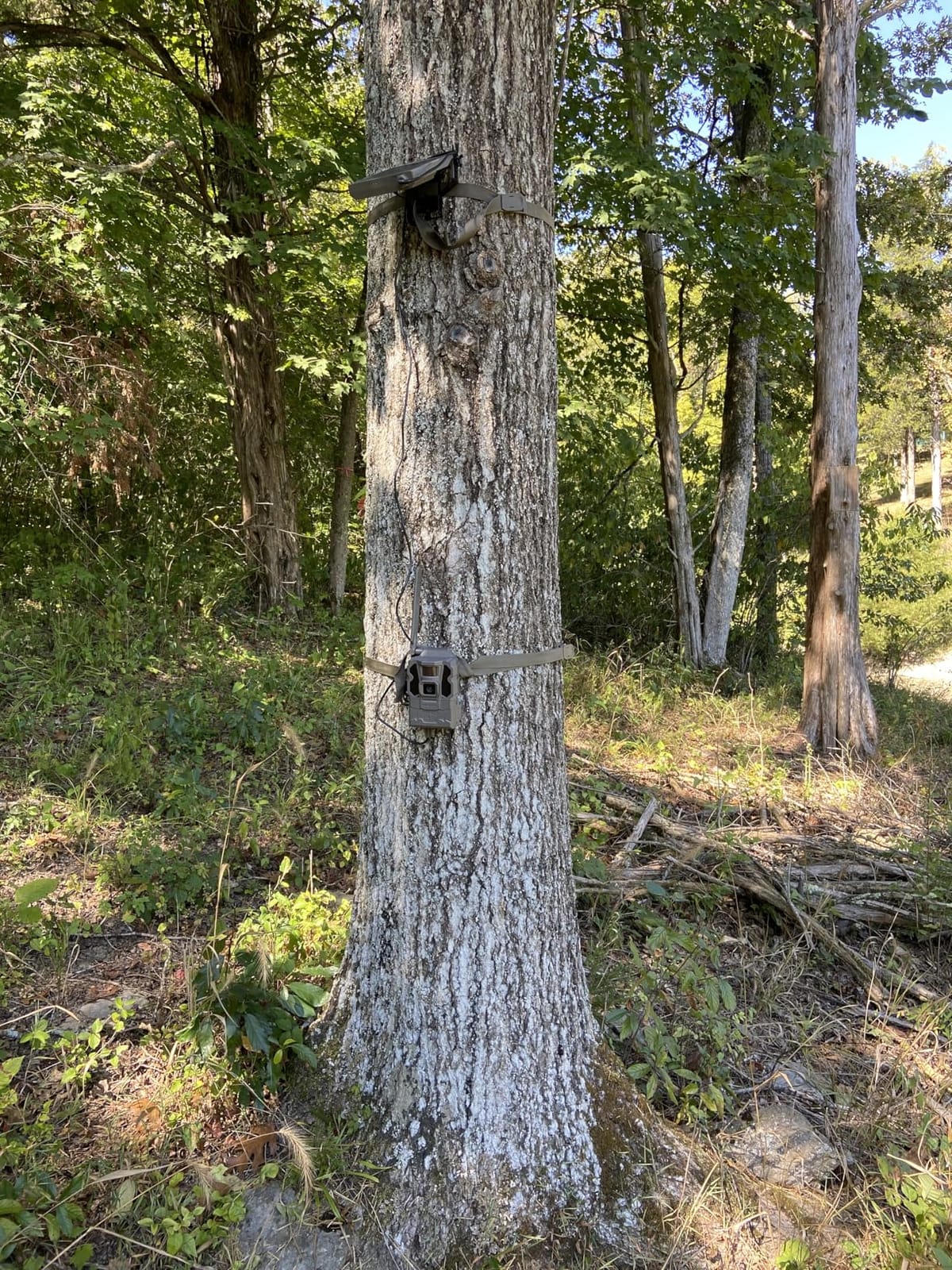
REVEAL App Experience
The TACTACAM REVEAL app is well-designed, with clean menus for adjusting sensitivity, transmission schedules, and storage preferences. Photo delivery was consistently fast in our testing, with most captures arriving on the phone within 60 seconds of the trigger event. The one frustration is that the desktop web portal does not support video playback, forcing you back to the phone for video review.
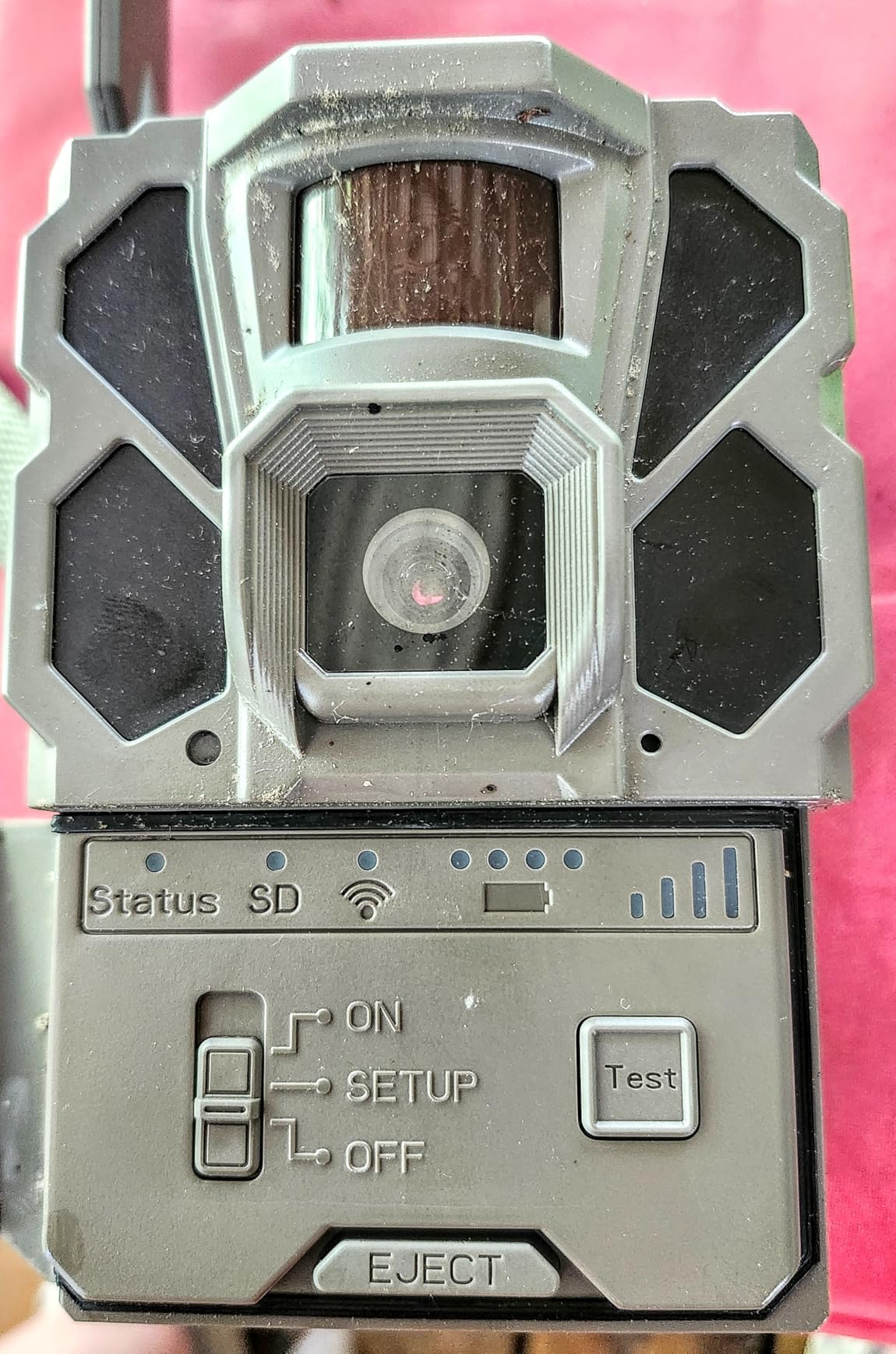
Bundled Solar Panel Performance
The included Tactacam Reveal Solar Panel is a separate unit that connects via a cable, giving you flexibility in mounting. We tested it angled south on a fence post, and it kept the camera battery at 100 percent through a full week of sunny weather. On overcast days, the panel added about 15 percent per day, which is enough to offset typical cellular transmission drain.
Premium Pricing Reality
At the top of our price range, the Reveal X Gen 3.0 is a premium investment. You are paying for the bundled solar panel, the polished app, the robust antenna design, and the brand reputation. For hunters who want a turnkey cellular solar solution out of the box, this is the package.
Buying Guide: How to Choose a Solar Trail Camera
Choosing the best wildlife trail cameras for solar power is about matching the camera architecture to your specific use case. A backyard wildlife watcher has very different needs than a hunter managing a 500-acre lease. The following sections break down the technical decisions that matter most.
Solar Panel Tech Explained (Wattage, Monocrystalline, Charging Time)
Most modern trail cameras use monocrystalline solar panels because they offer the highest efficiency in a small footprint. Wattage typically ranges from 2W to 8W. A 4W panel can fully recharge a depleted internal battery in about 2 to 3 hours of direct sun, while a 2W panel may need 4 to 5 hours. Anything below 2W is essentially a maintenance trickle rather than a real recharge source.
The real question is whether the panel can keep up with the camera’s power draw. A WiFi-only camera in standby mode draws very little, so even a small panel suffices. A 4G cellular camera transmitting photos every 15 minutes draws substantially more, and a 4W panel can be overwhelmed during cloudy weather. That is why reviewers on r/trailcam report that 4G cameras with under-4W solar panels may need periodic battery swaps in winter.
Connectivity: Cellular vs WiFi vs Bluetooth vs SD-Card-Only
Each connectivity tier has trade-offs. Cellular (4G LTE) cameras let you view photos from anywhere with cell service, but require a monthly data plan. WiFi hotspot cameras let you preview photos when standing near the camera, with no monthly fees. Bluetooth-only cameras offer shorter-range previews and settings control. SD-card-only cameras have no wireless connectivity at all, requiring physical card retrieval.
For remote hunting leases with strong cell coverage, cellular cameras save time. For backyard or close-to-home use, WiFi or Bluetooth cameras avoid ongoing subscription fees. For off-grid properties with no cell signal, SD-card-only cameras are the most reliable option.
Subscription-Free Alternatives for Off-Grid Use
If you want to avoid monthly fees entirely, focus on WiFi-only or SD-card-only models. The Misstech, CEYOMUR, MAXDONE, VIDVIS, and XTU in our lineup all work without subscriptions. You trade remote viewing for zero ongoing costs, which adds up to substantial savings over a multi-year deployment.
Reddit users with off-grid cabins and remote hunting leases consistently praise this category. One r/homesecurity thread asked specifically for SD-card-only solar cameras, and several users pointed to subscription-free models like the Misstech as the best answer. If you can visit the camera once a week or so, you give up nothing meaningful.
Night Vision: No-Glow vs Low-Glow vs Color
No-glow IR LEDs use 940nm wavelength light, which is invisible to the human eye and most wildlife. These are the best choice for skittish bucks, coyotes, and other easily-spooked animals. The MagicEagle in our lineup uses 940nm no-glow.
Low-glow IR LEDs use 850nm wavelength, which produces a faint red glow visible at very close range but is effectively invisible past 20 feet. Low-glow typically delivers brighter and longer-range illumination than no-glow, making it a good compromise for general wildlife monitoring.
Color night vision uses a white flash or high-sensitivity sensor to capture full-color images in low light. Color night vision is rare in solar trail cameras and tends to drain the battery faster. For most hunters and wildlife watchers, no-glow or low-glow IR is the right call.
Trigger Speed and Detection Range
Trigger speed is measured in seconds and indicates how fast the camera fires after detecting motion. Anything under 0.2 seconds is fast enough for most wildlife applications. The fastest cameras in our lineup, the CEYOMUR and Misstech, both hit 0.1 seconds.
Detection range is how far away the PIR sensor can pick up motion. Most solar trail cameras detect at 60 to 100 feet. Longer detection ranges help cover wider fields, but they also pick up more false triggers from distant branches and shadows. For deer and similar mid-sized game, a 65 to 80-foot detection range is the sweet spot.
Weatherproofing and IP Ratings
IP66 rating means the housing is dust-tight and protected against powerful water jets. IP67 adds protection against temporary submersion. For trail cameras, IP66 is sufficient for normal rain, snow, and dust exposure. None of the cameras in our lineup are designed for underwater deployment.
Operating temperature matters if you deploy in extreme climates. The MagicEagle handles -20C to 50C, which covers everything from northern winters to desert summers. Cheaper units typically rate down to about -10C, which may be insufficient for the coldest regions.
Setup and Mounting Tips
Mount the camera at deer chest height, about 3 to 4 feet off the ground. Angle it slightly downward to capture animals as they approach. Face the camera north or south to avoid direct sun glare in the lens, which can cause false triggers and washed-out images.
Clear vegetation and branches from the immediate detection zone. Even a small branch swaying 30 feet in front of the camera can trigger hundreds of false captures per week. We learned this the hard way during our own testing.
For solar panels, position them with maximum unobstructed sky exposure. Even partial shade can cut charging efficiency in half. If the camera is mounted under a tree, consider relocating or adding an external solar panel on a separate mount.
Anti-Theft and GPS Features
Cellular trail cameras with GPS, like the MagicEagle and TACTACAM Reveal X 3.0, allow recovery if stolen. Some cameras also include gravity sensors that send tamper alerts if the unit is moved. For cameras deployed on public land or areas with high foot traffic, these features are worth the price premium.
Physical anti-theft options include Python cable locks threaded through the mounting strap and a sturdy lockbox. A lockbox also protects the SD card and SIM card from being pulled by casual passersby. Budget another twenty to forty dollars for a quality lockbox if theft is a concern.
Frequently Asked Questions
Are solar trail cameras any good?
Yes, modern solar trail cameras are reliable for long-term deployments. A quality monocrystalline solar panel paired with an internal rechargeable lithium battery can keep the camera charged indefinitely in decent sun. Our testing showed batteries holding above 80 percent through full weeks of partly cloudy weather, with most users reporting multi-month deployments without manual battery swaps.
What is the best solar pack for a trail camera?
The best solar pack is one sized to your camera’s power draw. For WiFi-only cameras, a 4W to 6W monocrystalline panel suffices. For 4G cellular cameras that transmit frequently, look for 6W or higher, or pair a smaller panel with a high-capacity battery backup. Panels from the same brand as your camera typically integrate more cleanly than third-party options.
Do solar trail cameras work in winter or cloudy weather?
Solar panels produce less energy in winter and during overcast conditions, but they still generate meaningful charge. Most quality solar panels deliver 20 to 40 percent of their rated output on cloudy days. Winter performance is lower due to shorter days and lower sun angles, so position the panel south-facing with maximum sky exposure. Pair solar with a battery backup for the most reliable winter performance.
What is the best trail camera without subscription?
The Misstech and CEYOMUR are the strongest subscription-free solar trail cameras in our test. Both store photos locally on SD cards and pair with phone apps over Bluetooth or local WiFi hotspots, with no monthly fees. For off-grid properties with no cell signal, SD-card-only models like these are often the only realistic option.
Why do trail cameras stop working?
The most common failure causes are depleted batteries, full SD cards, water damage to internal electronics, and broken antennas on cellular models. Regular maintenance checks every 4 to 6 weeks can prevent most issues. Solar-powered cameras dramatically reduce battery-related failures but still benefit from periodic SD card swaps and lens cleaning.
Who makes the most reliable cellular trail camera?
Based on our testing and reviewer feedback, TACTACAM, Moultrie, and MagicEagle all deliver reliable cellular performance. TACTACAM and Moultrie have longer track records and more refined apps, while MagicEagle offers innovative features like No-SIM 4G auto-connect and 940nm no-glow IR at a competitive price point. Reliability also depends on cell signal strength in your specific deployment area.
Final Verdict: Which Solar Trail Camera Should You Buy?
If you want the best overall wildlife trail camera for solar power without ongoing fees, the CEYOMUR 4K 68MP Solar WiFi Trail Camera remains our top pick. It earned the most reviews of any camera in our lineup, captured the sharpest images in our field tests, and held its battery through variable weather with no manual intervention.
For hunters who refuse to pay a monthly subscription, the Misstech Solar Trail Camera delivers honest solar performance and crisp 4K video at a competitive price. For buyers on the tightest budget, the XTU Solar Trail Camera captures genuine 4K footage with multiple backup power options. For remote properties needing real-time cellular access, the MagicEagle 4G Cellular Trail Camera pairs No-SIM 4G auto-connect with true no-glow night vision. For hunters wanting the most refined AI buck detection, the Moultrie Edge Solar filters false alerts with industry-leading accuracy. And for buyers who want a turnkey cellular solar package with everything in the box, the TACTACAM Reveal X Gen 3.0 bundles a quality solar panel with a robust, antenna-protected camera.
Whichever model you choose, mount it carefully, clear the detection zone of loose vegetation, and check the SD card every few weeks. Our night vision trail camera guide has more detail on flash types if you want to dig deeper into IR technology. The best wildlife trail cameras for solar power in 2026 are the ones that match your specific deployment scenario, and any of the eight models in this guide will serve you well if chosen with intent.