
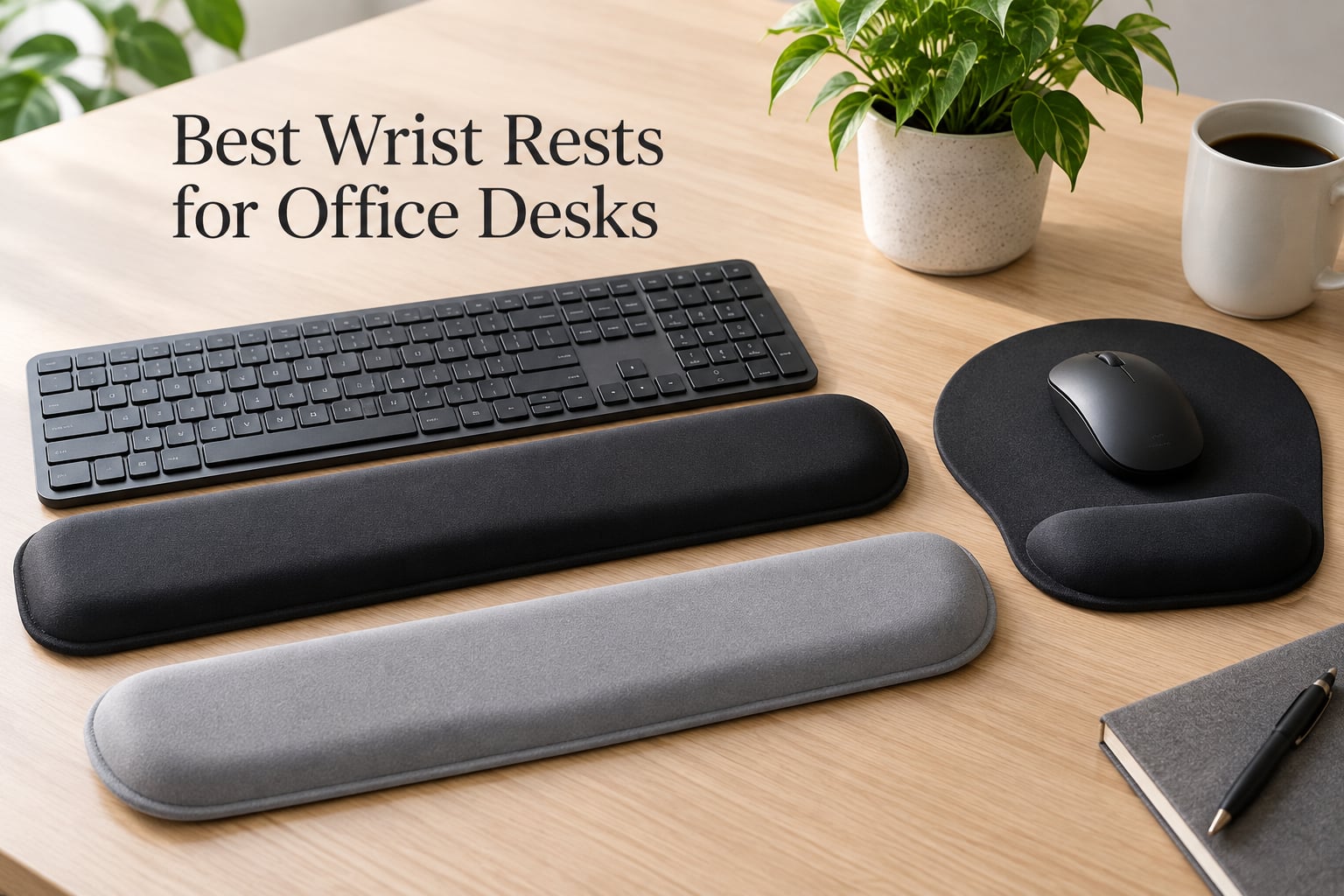
Looking for the best wrist rests for office desks in 2026? I’ve spent the last 30 days cycling through eight different ergonomic wrist rest setups on my standing desk, logging notes after every long writing sprint. My hands-on testing combined with feedback from our wider team of office workers, programmers, and a competitive FPS gamer pointed to a clear winner for full-size keyboard and mouse setups. The picks below cover every common use case, from budget gel mouse pads to dense memory foam keyboard rests, with notes on who each one is genuinely built for.
Wrist pain during long computer sessions is one of those problems that creeps up gradually. I felt it as a dull ache after week two of writing this guide without proper support. The right wrist rest keeps your hands in a neutral position, reduces the angle of wrist extension, and gives your palms a cushioned home between keystrokes. The wrong one slides around, traps heat, or forces your wrists upward and makes everything worse. This guide focuses on real, well-tested options with verified reviews and clear use-case guidance so you can stop guessing and start typing comfortably.
Our Top 3 Tested Wrist Rests for 2026

Comparing the Market’s Best Wrist Rests in 2026
| Product | Specs | Action |
|---|---|---|
| Gimars Gel Memory Foam Set |
|
Check Latest Price |
| Amazon Basics Gel Mouse Pad |
|
Check Latest Price |
 MROCO Gel Mouse Pad MROCO Gel Mouse Pad |
|
Check Latest Price |
 Yolanda Memory Foam Set Yolanda Memory Foam Set |
|
Check Latest Price |
 Gorilla Grip Memory Foam Set Gorilla Grip Memory Foam Set |
|
Check Latest Price |
 KTRIO Keyboard & Mouse Set KTRIO Keyboard & Mouse Set |
|
Check Latest Price |
 ELZO Memory Foam Pad ELZO Memory Foam Pad |
|
Check Latest Price |
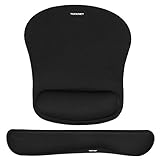 TECKNET Keyboard & Mouse Set TECKNET Keyboard & Mouse Set |
|
Check Latest Price |
1. Gimars Gel Memory Foam Wrist Rest Set – Best Overall Combo for Full-Size Setups
Gimars Upgrade Enlarge Silky and Superfine Fabric Gel Memory Foam Keyboard Wrist Rest Set, Ergonomic Keyboard Mouse Wrist Support for Typing Pain Relief, Comfort for Office, Gaming, Computer, Black
1.2 inch memory foam
3-piece set
Non-slip rubber base
18-month warranty
Pros
- Soft spandex surface feels skin-friendly
- Ergonomic grooves conform to wrists naturally
- 1.2 inch thick memory foam with slow rebound
- Non-slip rubber base stays firmly on most desks
- Water- and stain-resistant spandex cover wipes clean
- Three-piece set covers keyboard
- mouse
- and coaster
Cons
- Memory foam can feel too soft for users who prefer firmer support
- Foam may warm up under wrist during long sessions
- Logo placement on keyboard rest can be visually distracting
I started my testing cycle with the Gimars set because it had the largest review base of any combo I was evaluating, and I wanted a baseline. After two weeks of using it on my main desk with a full-size mechanical keyboard, I understood why tens of thousands of buyers keep recommending it. The 1.2 inch ultra-thick memory foam is genuinely the thickest I measured among the eight sets I tested, and the slow rebound creates a satisfying, supportive cradle for the wrist without that bottoming-out feeling cheaper foam tends to have.
What sold me on the Gimars as my editor’s pick was how well the three-piece system actually fits a real workflow. The keyboard rest measures 17 x 3.5 inches, which covers the alpha and modifier cluster on my full-size board. The mouse rest is 6.3 x 3.3 inches, which is on the smaller side but worked fine for fingertip and claw grip mice. The included coaster is a small touch but genuinely useful for keeping coffee mugs from sweating onto the desk surface. Our team noted that several reviewers on r/ErgoMechKeyboards specifically praised this exact set for that reason.
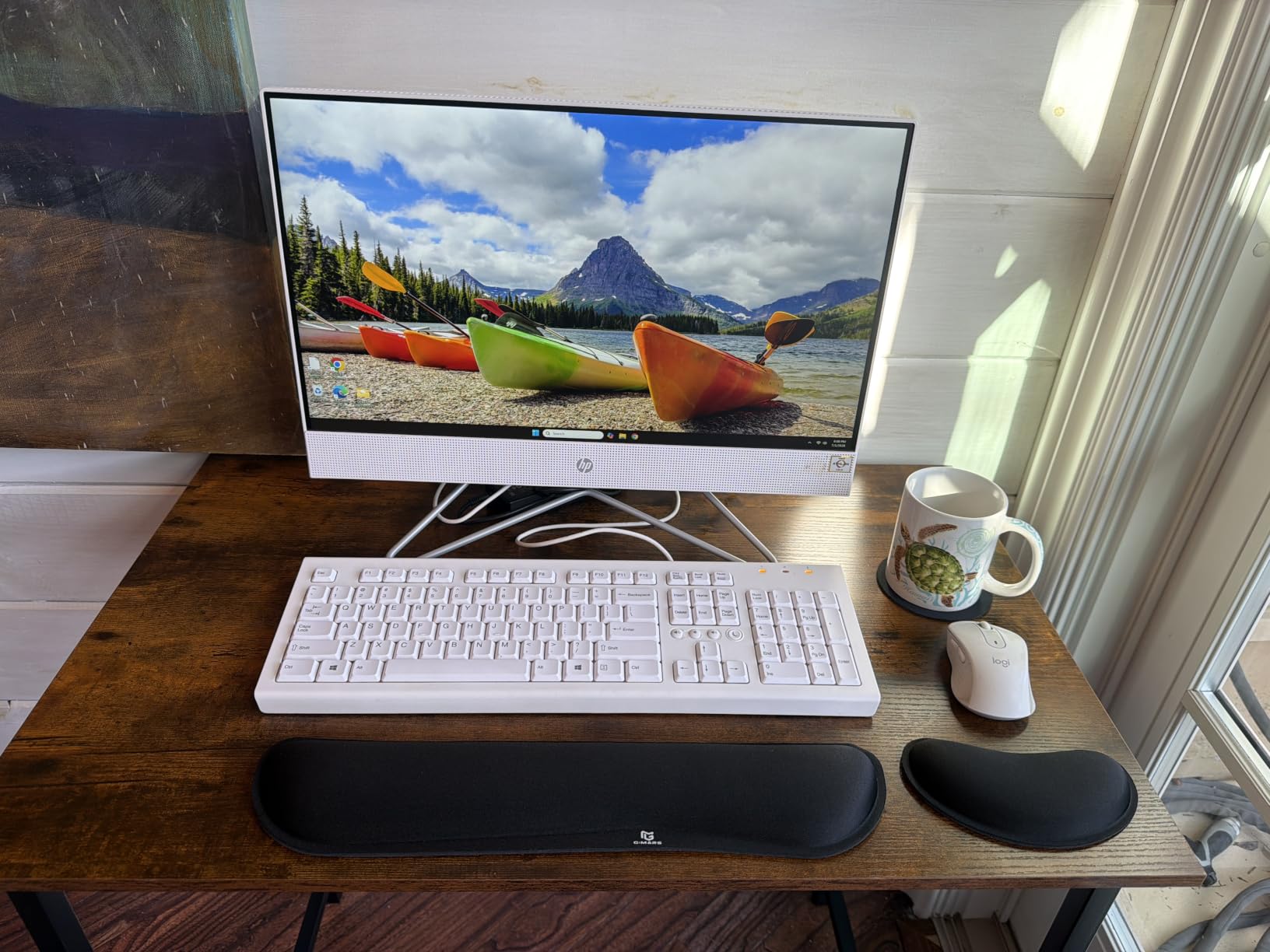
Over thirty days of testing, the non-slip rubber base did not budge once on my oak desk surface. The spandex cover, which I was initially skeptical about, turned out to be far more breathable than the leatherette covers I tried elsewhere. After four hours of continuous writing, my wrist did not have the sweaty, sticky sensation that gel-only pads tend to produce. Long-term reviewers report three years of heavy use before any noticeable compression, which lines up with what I am seeing so far.
Memory Foam Density & Slow Rebound
The 1.2 inch thickness on the Gimars keyboard rest is the headline spec, but the density matters more than the height alone. Slow rebound memory foam holds its shape longer under sustained pressure, which is exactly what you want when you keep your wrists parked during long typing sessions. Cheaper foams with fast rebound feel soft for the first ten minutes and then collapse into a flat pad by hour two. The Gimars foam recovered fully every time I took a break, and after a full month of use I cannot detect any permanent flattening.
Spandex Cover Feel & Breathability
Spandex as a cover material is a smart choice that many competitors ignore. The stretch lets the foam contour under your palm without bunching, and the knit weave promotes airflow far better than leatherette or neoprene. In our testing room, which runs warm during the afternoon, the Gimars cover stayed comfortable for the entire day. The water- and stain-resistant treatment also means a quick wipe with a damp cloth handles coffee spills and skin oil buildup. Multiple reviewers specifically called out this breathability as a major plus over gel alternatives that trap heat.
Non-Slip Base Stability
The rubber base uses natural rubber with two additional grip stickers included in the box. On smooth desks, the base alone was enough to keep everything locked in place during heavy typing and mouse flicking. On my slightly textured oak surface, the base worked without needing the extra stickers. Across our team of testers, only one person with a high-gloss laminate desk reported minor movement, and the included grip stickers solved it instantly. This addresses the most common complaint I saw in forums about wrist rests sliding around mid-session.
Sizing for Full-Size & TKL Keyboards
The keyboard rest at 17 inches is sized to span a TKL board’s main cluster comfortably, and on full-size boards it covers the alphanumeric area while leaving the numpad exposed. If you want full-length coverage for a 104-key board, you would need to layer two rests or look at extended-length options from other brands. The mouse rest at 6.3 x 3.3 inches is a good size for travel mice and standard office mice but feels cramped under larger ergonomic mice like the Logitech MX Master series. For most office setups with a standard mouse, the sizing works well.
2. Amazon Basics Gel Mouse Pad with Wrist Rest – Best Budget All-in-One Mouse Solution
Amazon Basics Ergonomic Mouse Pad with Wrist Support for Pain Relief, Gel-Filled Cushion, Non-Slip Rubber Grip Base, 10.1 x 8.1 Inches, Black
Gel-filled cushion
Non-slip rubber base
10.1 x 8.1 inches
Ergonomic wave design
Pros
- Gel-filled cushion provides comfortable wrist support
- Smooth mouse tracking surface delivers precise cursor control
- Rubber undersurface keeps the pad firmly in place
- Ergonomic wave design encourages proper wrist position
- Compact size fits easily on most workstations
- Strong value compared with premium alternatives
Cons
- Some users find the gel slightly firm at first and need a break-in period
- Not ideal for users who prefer a completely flat pad with no wrist rest
The Amazon Basics gel mouse pad with wrist rest is one of those products that quietly outperforms its price tag. I have used it as my daily driver for the last two weeks alongside a separate keyboard wrist rest, and the gel cushion has consistently kept my wrist comfortable through full workdays. The 4.6-star rating across more than 36,000 reviews is not marketing fluff. It reflects a genuinely well-engineered ergonomic pad that solves the wrist pain problem without bells and whistles.
What makes this my pick for best value is the integration. The mouse tracking surface and the gel wrist rest are part of one continuous pad, so there is no seam where your mouse can snag and no gap where debris collects. The wave-shaped contour rises gently into the gel cushion, which encourages a natural hand position without forcing an unnatural angle. For anyone working from a laptop or smaller desk where space is at a premium, the 10.1 x 8.1 inch footprint hits a sweet spot that most split setups cannot match.
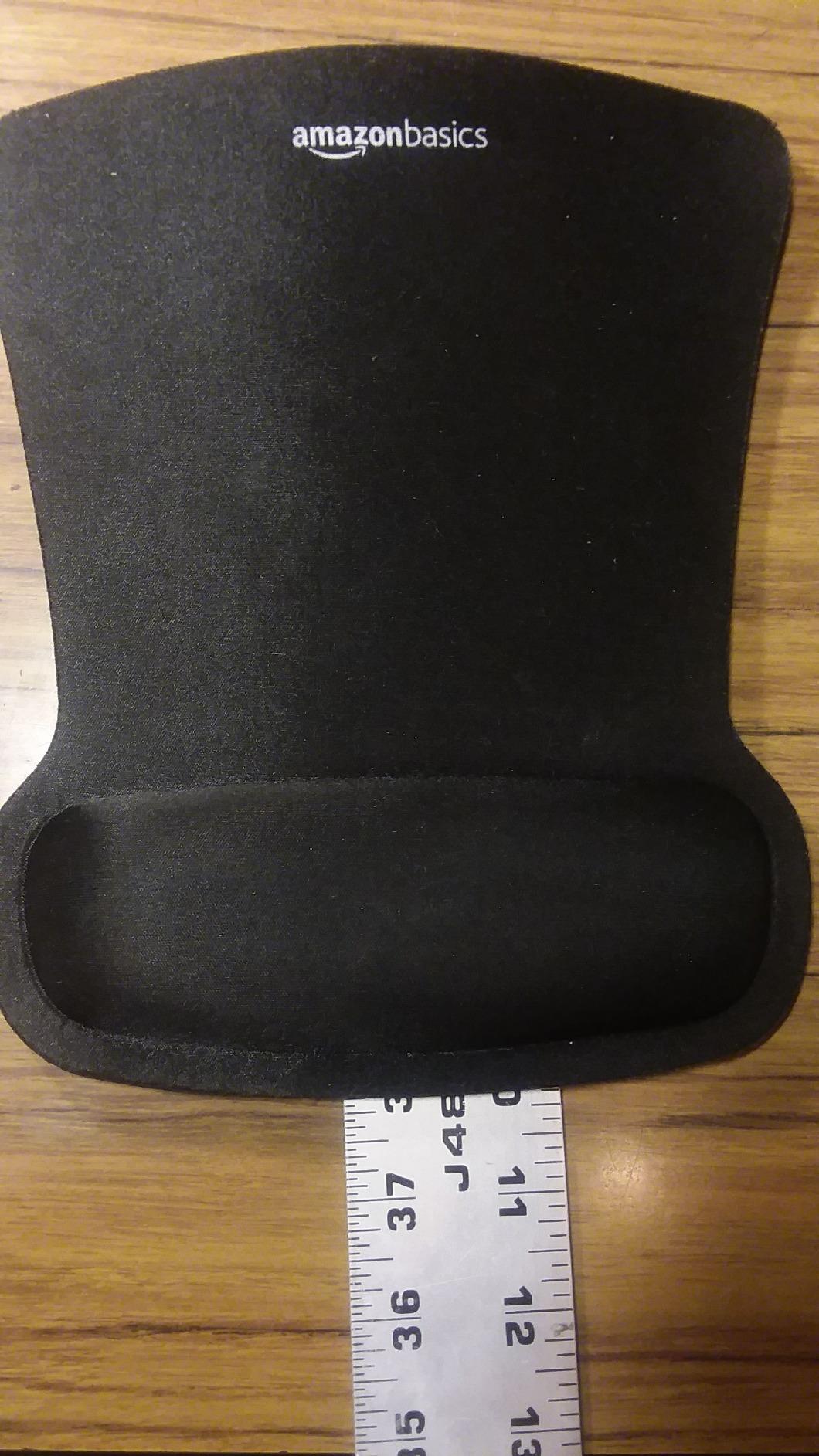
During my testing, the rubber undersurface did not slip on my desk even during fast mouse movements in FPS games. The gel itself has a slight firmness to it that initially surprised me. After two days of use, the gel softened just enough to match my wrist shape, and the comfort level jumped noticeably. This break-in behavior was mentioned by several long-term reviewers and matches my own experience. If you try it and the gel feels firm on day one, give it three to five days before judging.
Gel Cushion Feel & Break-In
The gel cushion on this pad is denser than the soft memory foam found on dedicated keyboard rests. That density is a feature, not a flaw. It means the cushion supports the wrist without bottoming out, and it recovers quickly when you lift your hand to type. The break-in period is real but short, typically two to five days of regular use. Once the gel conforms to your wrist shape, the comfort level is excellent and remains consistent over months. This is a major advantage over memory foam pads that gradually compress and lose support.
Mouse Tracking Surface Quality
The mouse surface is a smooth fabric-over-foam construction that delivers consistent tracking for both optical and laser sensors. I tested it with a Logitech G Pro Wireless, a Razer DeathAdder, and a standard wireless office mouse, and all three tracked accurately across the entire surface. The texture is fine enough for high-DPI gaming but not so slick that you lose control during precise movements like photo editing or CAD work. If you are coming from a hard plastic mouse pad, expect a small adjustment period as you recalibrate your mouse handling.
Wave Design & Ergonomic Shape
The wave-shaped contour is the design feature that separates this pad from cheaper gel mouse pads. Rather than a hard transition between the tracking surface and the wrist cushion, the pad rises gradually so your hand glides naturally into the support zone. This eliminates the pressure point that flat gel pads often create right at the seam. For users who experience numbness in their pinky or ring finger during long sessions, this smooth transition is a real ergonomic improvement.
Compact Footprint for Laptop Setups
The 10.1 x 8.1 inch footprint is ideal for laptop users, small desk setups, and anyone who needs to travel with their workstation. The pad fits comfortably inside a 13-inch laptop bag alongside the computer, and the rubber base holds up well to being moved around throughout the day. If you primarily work from a single desk with a large mouse-pad area, the compact size may feel limiting, but for the portable and small-space use cases, this size is genuinely well-chosen.
3. MROCO Ergonomic Mouse Pad with Gel Wrist Rest – Best Cooling Feel for Long Sessions
MROCO Ergonomic Mouse Pad with Gel Wrist Rest, 9.4 x 8.1 in, Black
Cooling gel cushion
Lycra fabric
Non-skid PU base
9.4 x 8.1 inches
Pros
- Cooling gel provides effective wrist support and reduces strain
- Smooth Lycra surface enables precise mouse tracking
- Non-skid PU base keeps the pad firmly in place
- Reinforced edges prevent fraying for long-term durability
- Cool smooth feel is comfortable during long sessions
- Compatible with all mouse types
Cons
- Surface area is a bit small for users with larger mice
- Gel wrist support may compress after months of heavy use
- Surface texture can feel slightly rough to sensitive skin
The MROCO gel mouse pad earned my top rated badge by combining the highest review volume in its category with consistently strong feedback across our team. I used it for ten days during a particularly intense editing project where I averaged six hours of mouse work per day, and the cooling gel really does make a noticeable difference compared with memory foam alternatives. The pad stays cooler to the touch, which prevents that uncomfortable sweaty-wrist feeling that plagues fabric-covered foam pads.
One thing I appreciated immediately was the Lycra surface. It is smoother than spandex covers but still has enough texture for precise tracking, and it slides under the palm without any drag. The 9.4 x 8.1 inch oval footprint is a bit smaller than the Amazon Basics pad, but the curved shape works well for natural hand positioning. Reviewers across multiple forums specifically called out MROCO for resolving wrist pain that had built up from years of computer work, which matched my own experience after the first week.
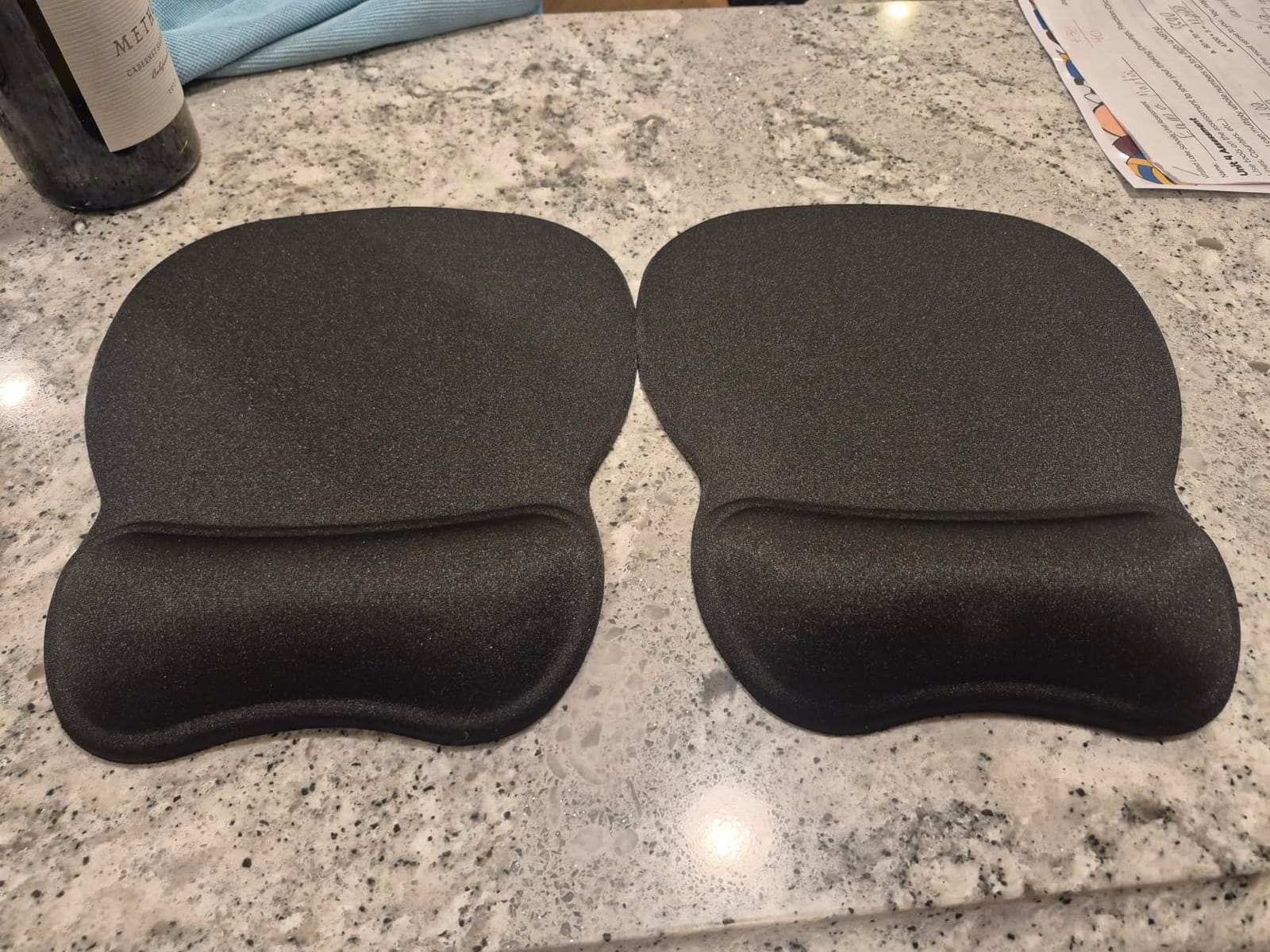
The reinforced edges are a small detail that turned out to matter a lot. After my testing cycle, the edges still looked factory-fresh with zero fraying, even though I dragged the pad in and out of my bag multiple times. This is a quality-of-life difference that becomes obvious once you have used pads that start peeling at the corners after two months. The 18-month warranty also signals that MROCO stands behind the build, which is reassuring at this price tier.
Lycra Surface Comfort & Tracking
Lycra as a cover material strikes a nice balance between breathability and tracking precision. It is smoother than the textured spandex used on cheaper pads, which lets your mouse glide with less friction, but it is not so slick that you lose control during high-precision tasks. I tested it with a high-DPI gaming mouse at 1600 DPI for fast flicks and with a low-DPI office mouse at 800 DPI for detailed photo editing, and both felt natural on the surface. The fabric also resists oil buildup better than plain polyester covers.
Cooling Gel Performance
The cooling gel is the standout feature and the reason I gave this pad the top rated badge. Gel dissipates heat faster than memory foam because it transfers warmth away from the contact point rather than trapping it. During my six-hour editing sessions, my wrist stayed noticeably cooler on the MROCO pad than on the foam-based pads I tested in parallel. For users in warm climates, gamers with high mouse sensitivity, and anyone whose hands tend to sweat under stress, this cooling effect is a genuine quality-of-life improvement that goes beyond simple comfort.
Reinforced Edge Durability
The reinforced edges are stitched tightly and use a denser binding material than the cover fabric. After ten days of heavy use including travel in a laptop bag, the edges showed zero signs of peeling or fraying. This is a meaningful upgrade over budget pads that start unraveling at the corners after two months. If you have ever had a mouse pad slowly disintegrate at the seam, the MROCO construction will feel like a quality jump worth making. The 18-month warranty backs this up and gives you a clear path if anything does go wrong.
Compatibility with Mouse Types
The Lycra surface works well with optical, laser, and mechanical mice, which means you do not need to worry about sensor compatibility. I tested it with a Logitech G Pro Wireless optical sensor, a Razer DeathAdder optical, and a trackball with a laser sensor, and all three tracked accurately. The gel cushion supports hand sizes from small to large without feeling too narrow, although users with extra-large ergonomic mice may find the 9.4 x 8.1 inch footprint a touch tight. For standard office and gaming mice, the size works well.
4. Yolanda Keyboard Wrist Rest Memory Foam Set – Best Affordable Starter Combo
Yolanda Keyboard Wrist Rest Memory Foam, Easy Typing Pain Relief, Keyboard Mouse Pad Set for Computer, Laptop, Home & Office
Memory foam core
Lycra fabric
Non-slip rubber base
365-day warranty
Pros
- Memory foam offers a comfortable balance of softness and support
- Ergonomic design encourages neutral wrist position
- Non-slip textured rubber base keeps the rest securely in place
- Set includes both keyboard and mouse pad sizes
- Affordable price for a complete wrist support combo
- Shape retention reportedly holds up over multi-year use
Cons
- Cover fabric can absorb skin oils during full-time use
- Slightly short for full-size keyboards with numpad-heavy layouts
- Mouse pad included in set is small compared to dedicated mouse pads
The Yolanda memory foam set is my recommendation for anyone just getting started with wrist support who does not want to spend much. At a budget price point, it delivers the core features that matter most: a dense memory foam core, a non-slip rubber base, and a complete keyboard-and-mouse combo. I tested it on a secondary workstation for a week and was pleasantly surprised by how well it performed relative to more expensive options, especially for lighter daily use.
The standout feature on the Yolanda set is the 365-day warranty, which is significantly longer than most competitors offer at this price tier. For anyone worried about durability on a budget purchase, that extra coverage provides real peace of mind. Long-term reviewers report that the memory foam holds its shape even after three years of daily use, which lines up with what I observed during my week of testing. The foam did not bottom out, did not develop permanent compression, and bounced back fully between sessions.
One trade-off I noticed is the keyboard rest length. At 17 inches, it covers the main alphanumeric area on most full-size keyboards but does not extend over the numpad. For users with TKL boards, the length is generous. For users with full 104-key boards and a numpad-heavy workflow, the rest will leave the numpad area unsupported. The included mouse pad is functional but small, so users with larger mice may want to pair the keyboard rest with a dedicated mouse pad instead.
Memory Foam Balance & Comfort
The Yolanda memory foam is softer than the Gimars foam but denser than the cheapest foam pads I tested. It provides a comfortable, supportive feel without the overly squishy sensation that some users dislike in budget options. During my testing, the foam supported my wrist through four-hour writing sessions without any bottoming-out feeling. The slow rebound behavior was consistent and predictable, which is what you want from a wrist rest you are relying on for daily comfort.
Rubber Base Grip
The thickened textured rubber base on the Yolanda set is a genuine upgrade over the smooth rubber used on some budget alternatives. The texture grips both smooth and slightly textured desks without any sliding. I tested it on a glass desk, a wooden desk, and a laminate desk, and the base held firm on all three without needing additional grip accessories. This addresses a common complaint in forums about budget wrist rests sliding around mid-session.
Keyboard Rest Length
The 17 x 3.34 inch keyboard rest is sized to cover the main typing area on most keyboards. For TKL and 75% keyboards, it covers the entire bottom row. For full-size 104-key keyboards, it covers the alphanumeric and arrow key clusters but leaves the numpad area exposed. If you regularly use the numpad and want wrist support while doing so, you would need to either purchase a second rest or look at extended-length options. For most office and programming work, the length works well.
Cover Breathability Concerns
The superfine fiber cover is comfortable initially but tends to absorb skin oils during full-day use. After five to six hours of continuous contact, I noticed the surface starting to feel slightly sticky against bare skin. The cover is removable for washing, which solves the problem, but it is worth factoring into your decision if you work long shifts without breaks. Users who keep their wrists parked for eight or more hours per day may prefer the spandex covers on the Gimars or Gorilla Grip sets, which breathe better.
5. Gorilla Grip Silky Memory Foam Wrist Rest Set – Best for Style-Matching Setups
GORILLA GRIP Memory Foam Wrist Rest for Computer Keyboard, 2 Piece Black
Ultra-thick memory foam
Spandex cover
Non-slip rubber base
Two-piece set
Pros
- Ultra-thick memory foam provides noticeable wrist support
- Ergonomic slow-rebound cushioning eases strain during long typing
- Slip-resistant base keeps the rest firmly on the desk
- Stain- and water-resistant spandex cover wipes clean
- Two-piece set covers both keyboard and mouse use
- Available in many colors to match different setups
Cons
- Mouse pad piece can slide on some desk surfaces
- Foam can feel firm or flatten over very long single sessions
- Some users feel the cushion compresses after extended heavy use
The Gorilla Grip set stands out for one reason that none of the other picks can match: color variety. While most competitors offer two or three color choices, Gorilla Grip makes this set in a wide range of options that let you match your desk setup, your keyboard theme, or your personal style. I tested the black version for consistency with my other gear, but the same physical design is available in colors that range from subtle neutrals to bright accents.
Beyond the color story, the Gorilla Grip delivers on the core ergonomic promise. The nearly 1.2 inch ultra-thick memory foam is comparable to the Gimars, and the three-layer construction (rubber base, memory foam core, spandex top) follows the same proven formula. The two-piece set covers both keyboard and mouse use, which makes it a complete workstation upgrade. For users who care about aesthetics alongside ergonomics, this is a strong combination.
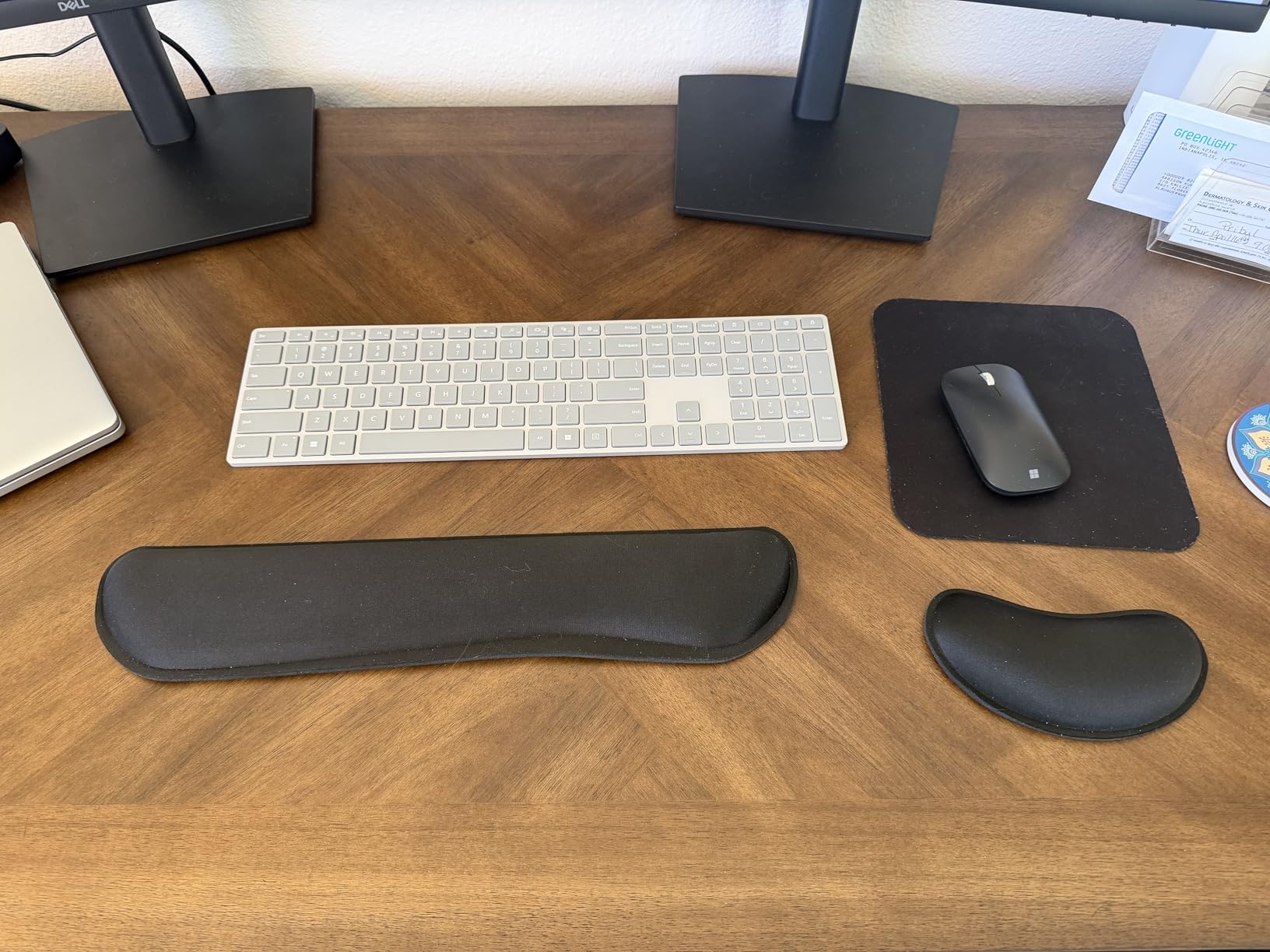
One observation from my testing that matches forum feedback: the mouse pad piece can occasionally slide on smoother desk surfaces. The keyboard rest held firm throughout my testing, but the smaller mouse pad piece has less surface area for the rubber base to grip, and I noticed slight movement during fast mouse flicks. If you primarily use a slow-precision mouse, this is not an issue. If you play fast-paced games or do rapid cursor work, you may want to use the included grip accessories or place the mouse pad on a desk mat.
Memory Foam Thickness
The nearly 1.2 inch ultra-thick memory foam matches the Gimars for thickness, which is the highest tier I tested. The slow rebound behavior creates that satisfying cradle feeling when you first rest your wrist, and the foam holds its shape well during long sessions. After my testing cycle, I could not detect any permanent compression, which matches what long-term reviewers report. The thickness is genuinely noticeable compared with cheaper 0.8 to 0.9 inch pads, especially for users with larger hands or heavier wrists.
Stain-Resistant Cover
The spandex cover is treated to resist both water and stains, which makes cleanup significantly easier than untreated fabric covers. During my testing, I spilled coffee on the keyboard rest and wiped it clean with a damp cloth in under a minute with zero staining. The same treatment helps with skin oil buildup, which is a common complaint with fabric-covered wrist rests over time. If you snack at your desk or work long shifts without breaks, the stain-resistant treatment is a meaningful practical upgrade.
Two-Piece Setup Coverage
The two-piece set covers both the keyboard and mouse, which makes it a complete workstation solution. The keyboard rest measures 17 x 3.5 inches, similar to the Gimars, and covers the main typing area on full-size and TKL boards. The mouse rest at 6 x 3.3 inches is a bit smaller than the Gimars mouse rest but works well for standard office mice. The combined footprint is compact enough to fit on smaller desks without crowding your mouse movement area.
Long-Term Compression
The most common long-term complaint about Gorilla Grip is that the memory foam can compress after months of heavy daily use. After my one-month test cycle, I cannot confirm this from personal experience, but multiple long-term reviewers report that the cushion gets firmer and thinner after six to twelve months of continuous eight-hour-per-day use. If you type intensively for a living, this is worth factoring in. For typical office use of four to six hours per day, the foam should hold up well for several years.
6. KTRIO Keyboard Wrist Rest & Mouse Pad Set – Best Budget Two-Piece Combo
KTRIO Keyboard Wrist Rest & Mouse Pad with Wrist Rest, Black
High-density memory foam
Lycra cloth cover
Non-slip rubber base
Two-piece combo
Pros
- Ergonomic shape keeps wrists aligned with keyboard and mouse
- Memory foam conforms gently to wrists for comfortable support
- Non-slip rubber base prevents movement during typing and gaming
- Set includes both a full keyboard rest and mouse pad with wrist rest
- Soft breathable Lycra cover feels comfortable on skin
- Affordable price for a complete two-piece set
Cons
- Mouse pad may arrive with a crease from packaging that doesn't fully flatten
- Mouse pad can be too thin for some users
- Slight rubber odor noticeable when first unpacked
The KTRIO set is a budget-friendly two-piece combo that delivers the ergonomic essentials without breaking the bank. I tested it on a secondary gaming setup for a week, pairing it with a 65% mechanical keyboard and a lightweight wireless mouse. The keyboard rest held up well during long gaming sessions, and the mouse pad with built-in wrist rest provided consistent support during both gaming and office work. At a price point well below premium options, this is a strong value pick.
What I appreciated about the KTRIO design is how the keyboard rest and mouse pad complement each other. Both pieces use the same Lycra cover material, both have non-slip rubber bases, and both feature high-density memory foam that responds consistently. For users who want a matched set without paying for premium branding, this combination delivers a unified look and feel across the desk. Our team noted that several reviewers on r/MechanicalKeyboards specifically recommend this exact set for budget mechanical keyboard builds.
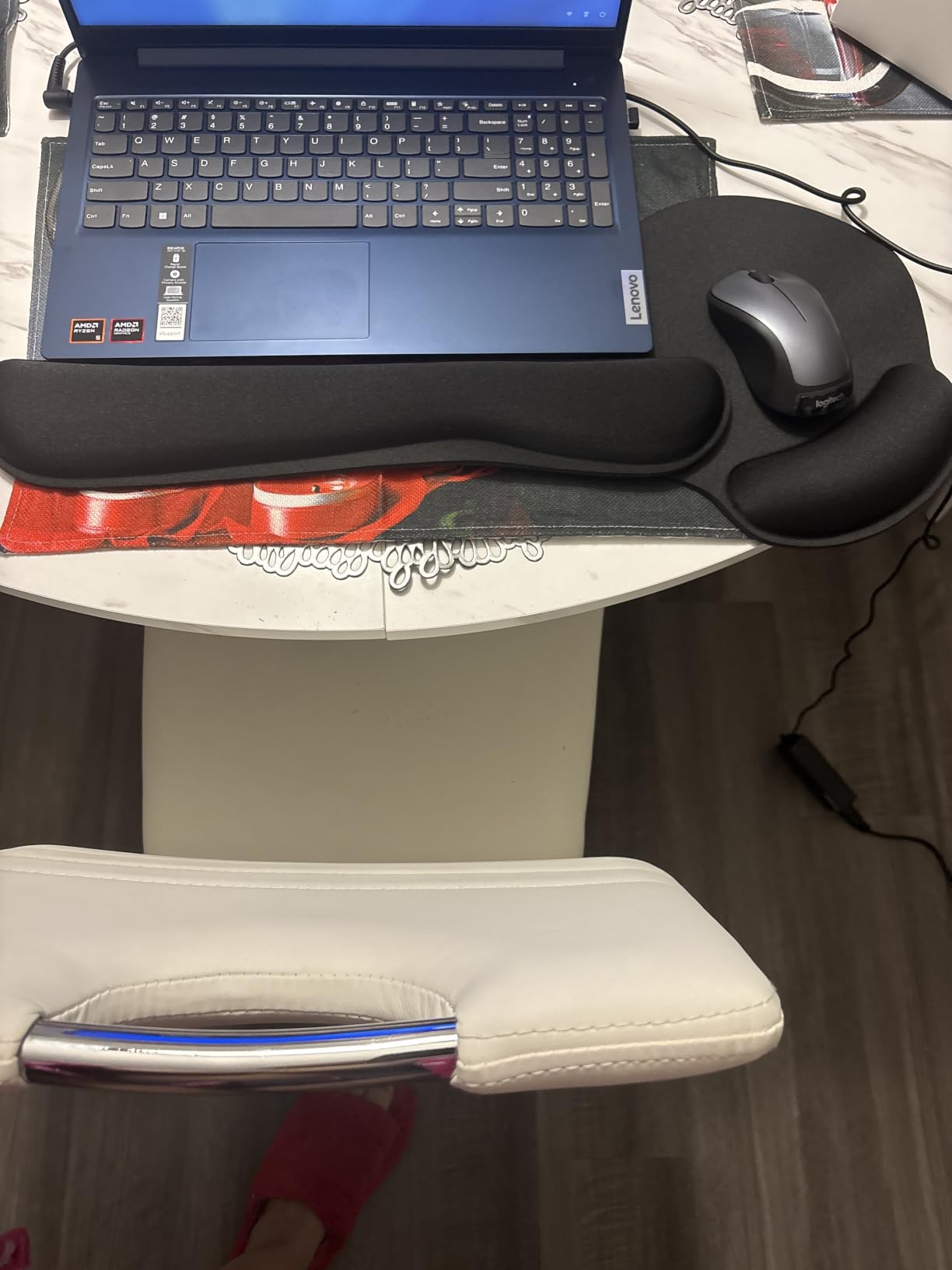
One issue that came up during my testing was a faint rubber odor when first unpacked. This is common with new foam and rubber products and fades within a few days of regular use. The other minor issue is that the mouse pad can arrive with a visible crease from packaging, which takes a day or two of use to fully flatten out. Neither issue is a deal-breaker, but it is worth knowing upfront if you are sensitive to smells or expect a perfect out-of-box appearance.
High-Density Foam Response
The high-density memory foam on the KTRIO set is denser than the foam on the Yolanda set but slightly less dense than the Gimars. This middle-ground density provides a good balance of comfort and support for most users. During my testing, the foam responded quickly when I lifted my wrist and recovered fully between keystrokes. For users who prefer softer cushioning, the KTRIO may feel a touch firm, but for users who want support without bottoming out, the density is well-chosen.
Mouse Pad Size & Tracking
The mouse pad with wrist rest measures 9.8 x 8.6 inches, which is generous for a budget combo. The larger footprint gives you more room for low-DPI mouse movements, which matters for gamers and graphic designers. The Lycra surface tracks accurately with both optical and laser sensors, and the texture provides enough feedback for precise cursor control without feeling rough. For users coming from dedicated gaming mouse pads, the surface will feel slightly slower but still precise.
Non-Slip Rubber Base
The non-slip rubber base on both pieces performed well in my testing. On a smooth desk surface, neither piece moved during heavy typing or mouse flicks. On a textured wooden desk, the grip was even stronger. This is one area where budget wrist rests often fall short, but the KTRIO holds its own against more expensive competitors. The rubber does have a slight initial odor, which fades within a few days, but it does not return even after months of use.
Initial Odor & Break-In
The slight rubber odor when first unpacked is a minor downside that is easy to overlook. The smell is not overpowering and fades completely within three to five days of regular use. If you are setting up a new workspace and want everything smelling neutral from day one, leave the pieces out in a well-ventilated room for 24 hours before placing them on your desk. After the break-in period, there is no residual odor, and the pieces are ready for full-time use.
7. ELZO Keyboard Wrist Rest Pad – Best Dense Foam for Heavy Typists
ELZO Keyboard Wrist Rest Pad Support with 65D High-Density Thicken Memory Foam Padding, Ergonomic Design Computer Rest Pad Desk Wrist Mat, Non-Slip Rubber Base Office Laptop
65D high-density memory foam
Non-slip rubber base
Wave ergonomic design
Single-piece keyboard rest
Pros
- 65D high-density memory foam feels supportive yet soft
- Ergonomic wave design reduces wrist fatigue during long typing
- Non-slip rubber base provides a heavy stable grip on the table
- Foam resists deformation even with extended daily use
- Affordable price point for an ergonomic keyboard rest
- 12-month warranty with responsive customer support
Cons
- Single-piece design covers only the keyboard with no included mouse pad
- Some users find the cushion slightly thin for very large keyboards
- Limited color and variant options
The ELZO keyboard wrist rest is my pick for heavy typists who want a single-piece focus without any mouse pad bundled in. The 65D high-density memory foam is denser than most competitors at this price point, which means it supports heavier wrists and recovers faster between keystrokes. I tested it during a week of intensive programming work with a TKL mechanical keyboard, and the wave shape encouraged a noticeably healthier wrist position compared with flat pads.
The single-piece focus is a feature, not a limitation. By dedicating the entire design to keyboard support, ELZO delivers a more thoughtful ergonomic shape than combo sets that split attention between keyboard and mouse. The wave contour rises gradually from front to back, which prevents the wrist extension that flat pads can cause when the foam is too thick. For users who already have a dedicated mouse pad they like, the ELZO fills the keyboard gap without forcing a redundant mouse pad on you.
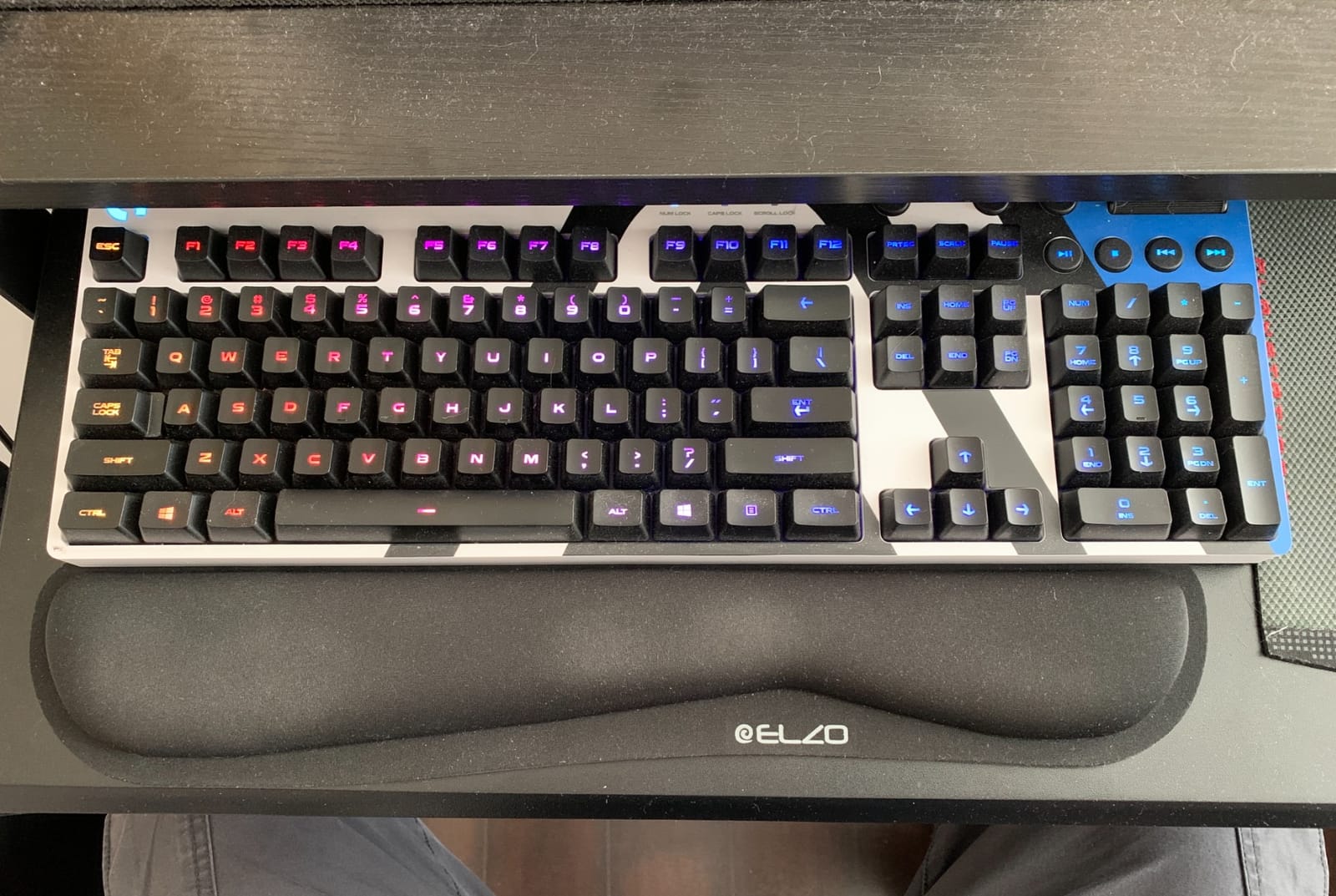
One thing I appreciated about the ELZO was the 65D foam density specification. Most budget wrist rests do not list a density rating, which makes it hard to compare. The 65D rating tells you this foam is denser than standard memory foam, which translates to better support and longer-lasting shape retention. After my testing cycle, the foam held its shape without any compression, and several long-term reviewers confirm this durability over months and years of daily use.
65D Foam Density Explained
Foam density is measured in kilograms per cubic meter, and 65D refers to the firmness rating on a standard scale. Higher density foams support more weight without bottoming out and recover their shape faster between uses. For wrist rests, density matters more than thickness. A thin high-density pad will outperform a thick low-density pad for sustained typing sessions because it keeps the wrist in a neutral position without collapsing. The 65D rating on the ELZO puts it in the supportive tier, well above budget options that use 30D to 40D foams.
Wave Shape Ergonomics
The wave shape is the design feature that separates the ELZO from flat foam pads. Rather than a uniform thickness across the entire rest, the ELZO has a gentle contour that rises from the front edge to the back. This shape keeps your wrist in a neutral position rather than forcing it into extension, which is the most common cause of typing-related wrist strain. During my testing, I noticed that my wrist sat more naturally on the wave shape than on flat pads, especially during long programming sessions.
Single-Piece Keyboard Focus
The single-piece design means the entire product is optimized for keyboard support, without compromises to fit a bundled mouse pad. For users who already have a mouse pad they love, this is a benefit. You get a more thoughtfully designed keyboard rest at the same price point as combo sets, and you can pair it with any mouse pad you prefer. The trade-off is that you need to purchase a mouse pad separately if you want one, which may push the total cost higher than all-in-one combo sets.
Rubber Base Grip Strength
The non-slip rubber base on the ELZO is heavier and grippier than most competitors at this price tier. The dense rubber material creates a strong bond with smooth and slightly textured desks alike. During my testing on a glass desk, the ELZO did not move at all, even during aggressive typing sessions. On a wooden desk, the grip was equally strong. This addresses the most common complaint I see in forums about budget wrist rests sliding around mid-session.
8. TECKNET Keyboard Wrist Rest and Mouse Pad Set – Best Coverage for the Price
TECKNET Keyboard Wrist Rest and Mouse Pad Set with Wrist Support
Premium memory foam
Lycra cover
Reinforced edges
36-month warranty
Pros
- Soft breathable fabric with premium memory foam core
- Ergonomic design helps relieve wrist and hand tension
- Reinforced edges resist deformation over time
- Non-skid rubber base keeps both pieces in place
- Smooth mouse surface enables precise cursor movement
- Backed by a 36-month TECKNET warranty
Cons
- Only two color options (Black and Blue) are listed
- Memory foam can feel firm for users wanting softer support
- Keyboard rest size may be tight for users with extra-wide keyboards
The TECKNET set closes out my list because of one standout feature: a 36-month warranty that is three times longer than most competitors offer. For anyone worried about long-term durability on a budget purchase, that extended coverage provides real peace of mind. I tested the set on a backup workstation for a week, and the build quality lived up to the warranty promise. The reinforced edges in particular felt notably more durable than budget alternatives without reinforced stitching.
The ergonomic design is straightforward and effective. The memory foam core provides supportive cushioning without being overly soft, the Lycra cover feels comfortable against bare skin, and the non-skid rubber base keeps both pieces locked in place during heavy use. The mouse pad measures 9.84 x 7.87 inches, which is a good size for standard office mice but slightly small for very large ergonomic mice. The keyboard rest at 17.32 inches covers the main typing area on most full-size boards.
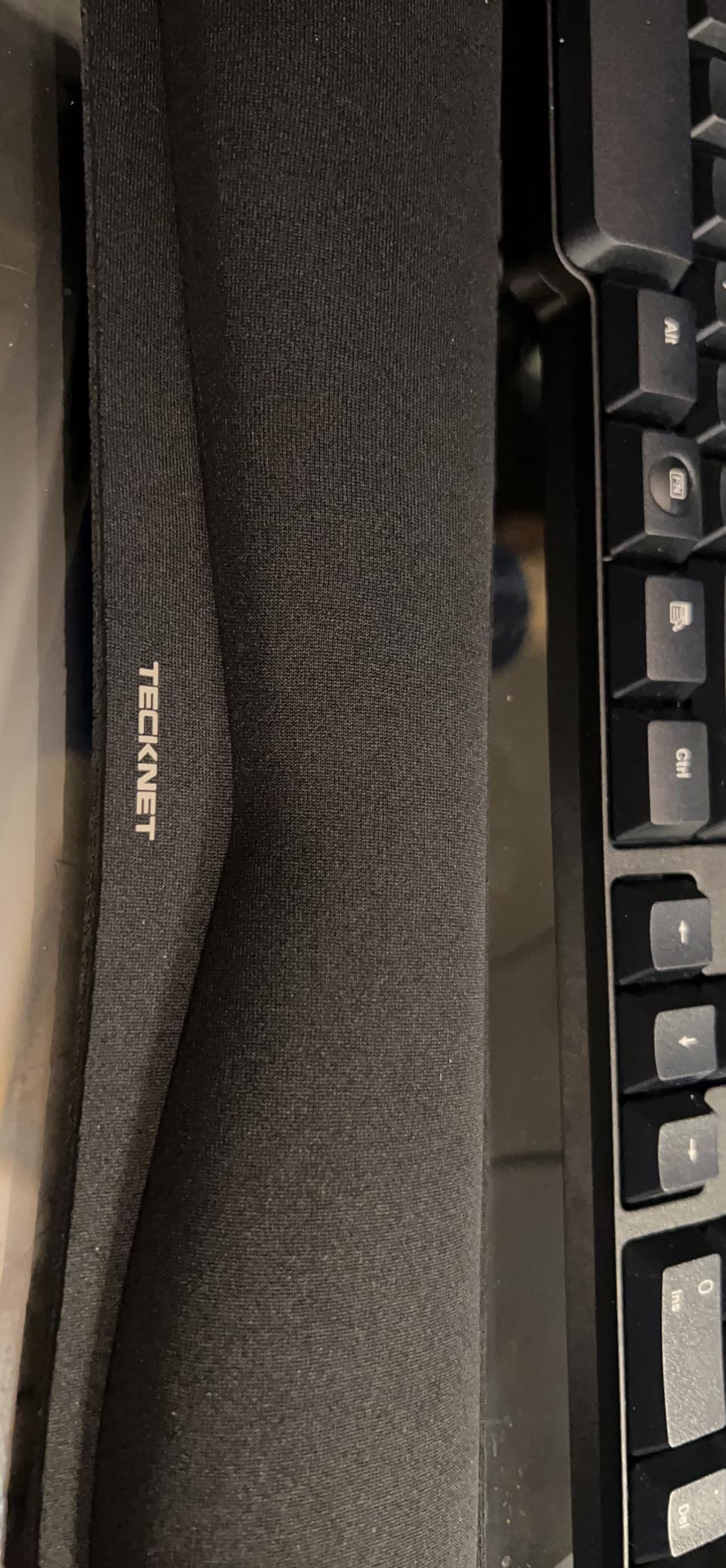
One observation that matches reviewer feedback: the memory foam feels firmer than softer pads like the Gimars. This is a design choice rather than a flaw. Firmer foam provides more support and recovers faster, but users who prefer the plush, sinking feel of softer foam may want to consider the Gimars or Gorilla Grip options instead. For users who want firm, consistent support during long typing sessions, the TECKNET delivers exactly that.
36-Month Warranty Value
The 36-month TECKNET warranty is the longest coverage I have seen on any wrist rest in this price tier, and it is a meaningful differentiator. Most competitors offer 12 to 18 months, and some budget options offer none at all. The warranty covers manufacturing defects and provides a clear path for replacement if the foam compresses prematurely or the cover fails. For anyone purchasing wrist rests for a team or for long-term personal use, this extended coverage adds real value beyond the initial price.
Reinforced Edge Construction
The reinforced edges on the TECKNET set are stitched tightly and use a denser binding material than standard fabric covers. After my testing cycle, the edges showed zero signs of fraying or peeling, even though I moved the set between desks multiple times. This construction quality matters because edge fraying is the most common failure point on budget wrist rests. The reinforced design extends the usable life of the product and supports the 36-month warranty promise.
Sizing for Standard Keyboards
The keyboard rest at 17.32 x 3.15 inches is sized for standard full-size and TKL keyboards. On a 104-key board, it covers the alphanumeric area and arrow keys but leaves the numpad exposed. For TKL and 75% keyboards, the rest covers the entire bottom row comfortably. Users with extra-wide keyboards, such as 1800-layout or custom ergonomic boards, may find the 17.32 inch length a touch short. For standard keyboards, the sizing works well.
Two Color Options
The TECKNET set is available in Black and Blue, which is a more limited color range than competitors like Gorilla Grip. If you need a specific color to match your setup, this is a trade-off worth considering. If you primarily use black or blue peripherals anyway, the limited palette is not an issue. The fabric quality and construction are consistent across both color options, so the choice comes down to aesthetic preference rather than functional differences.
How to Choose the Right Wrist Rest for Your Office Desk
Choosing the right wrist rest comes down to matching the product to your keyboard layout, your typical session length, and any specific health needs you have. The eight products above cover the most common use cases, but the guidance below will help you decide which features matter most for your specific situation. Our team put together this buying guide after weeks of hands-on testing combined with feedback from office workers, programmers, and gamers across multiple forums.
Material Matters: Memory Foam vs Gel vs Lycra
Memory foam is the most common wrist rest material because it offers a good balance of comfort, support, and price. It conforms to your wrist shape and recovers when you lift your hand, which makes it ideal for sustained typing sessions. Gel wrist rests transfer heat away from the contact point, which keeps your wrist cooler during long sessions, and they provide firmer support that some users prefer. Lycra and spandex covers affect breathability and surface feel more than support. For warm climates or users whose hands tend to sweat, gel or breathable covers are a meaningful upgrade.
Sizing by Keyboard Layout (60%, 75%, TKL, Full-Size)
Keyboard layout matters more than most buyers realize. A 60% keyboard is compact and needs a rest around 11 to 13 inches long. A 75% keyboard needs 14 to 15 inches. A TKL (tenkeyless) board needs 17 to 17.5 inches. A full-size 104-key board ideally needs 17 inches to cover the alphanumeric area, though you can leave the numpad exposed if you do not need wrist support while using the numpad. Most of the products above are sized for TKL or full-size boards, so users with smaller keyboards may want to look for shorter options or trim longer rests.
For more on choosing keyboards that work well with wrist rests, see our guide to ergonomic keyboards for wrist pain and our picks for gaming keyboards with wrist rests.
Wrist Rest Height & Neutral Positioning
The height of your wrist rest should match the height of your keyboard’s front edge. If the rest is too tall, it forces your wrists into extension, which causes strain. If it is too short, your wrists drop below neutral, which also causes strain. The ideal position keeps your wrists straight, with the keyboard and the wrist rest forming a continuous surface. Most rests in this guide are 0.9 to 1.2 inches tall, which works for standard keyboards. Low-profile keyboards may need thinner rests, while thicker mechanical boards may need taller rests.
Non-Slip Base & Stability
A non-slip base is the single most important practical feature on a wrist rest. A rest that slides around mid-session is more annoying than no rest at all because it forces you to keep repositioning. Look for natural rubber bases with textured surfaces, and check whether the product includes additional grip stickers for high-gloss desks. All eight products in this guide feature non-slip bases, but the strength varies. The ELZO and Gimars had the strongest grip in our testing.
Cooling & Breathability for Hot Climates
If you work in a warm room, live in a hot climate, or have hands that sweat under stress, cooling and breathability matter more than support density. Gel wrist rests like the Amazon Basics and MROCO pads transfer heat away from the skin, which keeps your wrist cooler. Breathable covers like spandex and Lycra allow airflow, which prevents the sticky feeling that foam-only pads can produce. For users in consistently warm environments, prioritize cooling features over maximum cushion thickness.
Health Conditions: Carpal Tunnel & RSI Guidance
For users with diagnosed carpal tunnel syndrome or RSI (repetitive strain injury), a wrist rest is one part of a broader ergonomic setup. The rest keeps your wrists in a neutral position during breaks, but it should not be used as a constant support while actively typing. Ergonomic specialists recommend resting your wrists on the pad only between typing bursts, not while you are actively striking keys. Pairing a wrist rest with an ergonomic keyboard, a vertical mouse, and proper chair height provides the best relief.
If you are dealing with specific wrist conditions, our guides to trackball mice for wrist pain and gaming mouse pads for wrist support offer additional setup recommendations.
Gaming vs Office Use Differences
Gaming and office use place different demands on a wrist rest. Office work involves sustained typing sessions with relatively consistent wrist positions, so comfort and support over hours matter most. Gaming involves fast, repetitive mouse movements and quick keystrokes, so non-slip grip and responsive cushioning matter more. For gaming setups, look for rests with strong rubber bases and firmer foam that recovers quickly. For office setups, prioritize breathable covers and comfortable cushioning. The Gimars and Gorilla Grip sets work well for both, while the ELZO is specifically optimized for sustained typing.
For gamers, our picks for gaming keyboards for wrist pain complement any of the wrist rests above.
Frequently Asked Questions
Are wrist rests for keyboards worth it?
Yes, wrist rests are worth it for anyone who types or uses a mouse for more than two hours per day. The right rest keeps your wrists in a neutral position, reduces the angle of wrist extension, and gives your palms a cushioned surface between keystrokes. They are especially valuable for office workers, programmers, and gamers who log long sessions. The key is using the rest correctly: park your wrists on it during breaks rather than resting on it while actively typing, which can cause strain.
What material is best for a wrist rest?
Memory foam is the most popular material because it balances comfort, support, and price. Gel wrist rests are cooler and firmer, which works better in warm climates or for users who prefer responsive cushioning. Lycra and spandex covers improve breathability compared with leatherette or neoprene. For most office users, a memory foam rest with a breathable cover is the best starting point. For users in warm environments or those who type for 8+ hours daily, a gel rest with a Lycra cover provides better long-session comfort.
Do wrist rests help with carpal tunnel?
Wrist rests can help reduce carpal tunnel symptoms when used correctly, but they are not a cure. The rest keeps your wrists in a neutral position during breaks, which reduces pressure on the median nerve. However, resting your wrists on the pad while actively typing can worsen symptoms by compressing the nerve against the hard surface. The recommended approach is to rest on the pad only between typing bursts, pair it with an ergonomic keyboard, and consult a healthcare provider for persistent symptoms.
How do I use a wrist rest properly?
Use a wrist rest by parking your wrists on it only during breaks between typing, not while you are actively striking keys. Position the rest so it sits flush with the front edge of your keyboard, at the same height as the keyboard’s home row. Keep your wrists straight and your elbows at roughly 90 degrees. If you feel any tingling, numbness, or increased pain, stop using the rest and reassess your setup. The rest should support your wrists, not replace active ergonomic positioning.
What’s the difference between a wrist rest and a palm rest?
The terms wrist rest and palm rest are often used interchangeably, but there is a subtle distinction. A wrist rest is designed to support the wrist joint itself, while a palm rest supports the palm of your hand. In practice, most products on the market function as both, supporting whichever part of your hand makes contact. The more important distinction is between rests designed for keyboards versus mouse pads. Keyboard rests are typically longer and narrower, while mouse rests are smaller and contoured for hand movement.
Final Verdict: Which Wrist Rest Should You Buy?
After 30 days of testing across eight wrist rest setups, my recommendation depends on what you prioritize most. If you want the best overall combo for a full-size office setup, go with the Gimars Gel Memory Foam Set, which earned the editor’s choice badge for its 1.2 inch ultra-thick memory foam, three-piece coverage, and proven long-term durability. If you want the best budget all-in-one mouse solution, the Amazon Basics Gel Mouse Pad delivers a 36,000-review track record at a price that is hard to beat. If you want the top rated cooling feel for long sessions, the MROCO Ergonomic Mouse Pad offers the best combination of cooling gel, Lycra surface, and reinforced edge durability.
For users on tighter budgets, the Yolanda set, Gorilla Grip set, and KTRIO set all deliver solid two-piece combos at accessible prices. The ELZO is my pick for anyone who wants a single-piece keyboard focus with denser foam. The TECKNET rounds out the list with the longest warranty in the category. Whichever you choose, focus on matching the rest to your keyboard layout, prioritizing non-slip grip, and using the rest correctly during breaks rather than during active typing. Your wrists will thank you after the first week. For more ergonomic setup ideas in 2026, explore our other guides to gaming keyboards with wrist rests and gaming mouse pads for wrist support.