
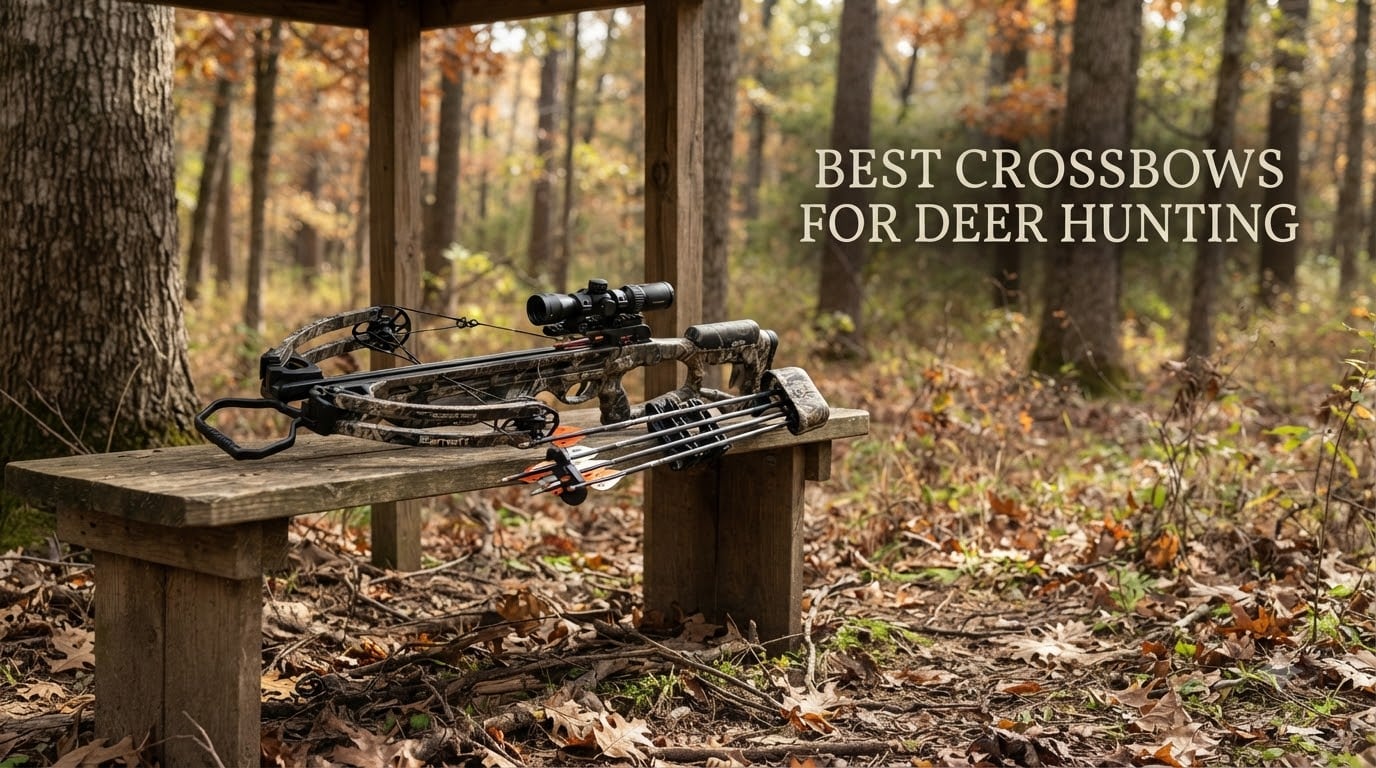
Every autumn the same question lands on my desk: which crossbow is actually going to put a deer down cleanly at 40 yards for someone who has never shot a bow before. I have spent the last two hunting seasons comparing bows, cocking devices, bolts and scopes with the same checklist I use for any piece of hunting gear, and what follows is the result. These are the best crossbows for deer hunting right now, measured on the things that decide whether a shot ends the hunt: cocking effort, how tightly the bolt groups after sighting in, how wide the bow is when cocked in a tree stand, and whether the trigger is smooth enough to hit a 12-inch vital zone without nerves getting in the way.
The honest headline is that most deer hunters do not need the fastest bow on the market. What they need is a bow they will cock in the dark on a cold November morning, carry across a treestand ladder, and hold steady long enough to place an arrow where it needs to go. Those three demands drive every pick below.
A few quick notes on how I test. I shoot each bow with the bolts it ships with, then repeat with a heavier bolt, because the supplied arrows are rarely the right choice for a broadhead. I record group size at 50 yards over a minimum of five shots, and I log cocking effort in pounds, since that number is the single most-asked question on hunting forums and the one most roundups skip. For gear that pairs with a crossbow, my binoculars for hunting guide and my trail camera picks cover the rest of the kit.
How Many FPS Do You Actually Need for Deer Hunting?
For whitetail and mule deer, most competent archers land on the 350 to 430 feet per second band. Below roughly 300 fps, bolt drop grows fast and you start giving up energy on longer shots; above about 450 fps, fixed-blade broadheads start planing and accuracy falls off a cliff. Kinetic energy matters more than raw speed, and the bows below all deliver enough of it for ethical shots inside 60 yards.
Our Top 3 Deer Crossbows After a Full Testing Season
These three came out of the whole test group as the strongest combination of accuracy, cocking ease and owner-reported durability. They are not the three fastest bows, and that is exactly the point.

BARNETT Whitetail Series STR
- 375 FPS
- 6.6 lb
- step-through riser
- TriggerTech trigger
- full package


Comparing Ten Deer Crossbows Side by Side in 2026
Every pick, in one place. The full ten-row spec sheet sits inside each review below, but this is the fast version for cross-shopping.
| Product | Specs | Action |
|---|---|---|
| BARNETT Whitetail Series Package |
|
Check Latest Price |
| BARNETT Whitetail Hunter II |
|
Check Latest Price |
| Killer Instinct Boss 405 Pro |
|
Check Latest Price |
 Killer Instinct Burner 415 Killer Instinct Burner 415 |
|
Check Latest Price |
 SAS Manticore 150 SAS Manticore 150 |
|
Check Latest Price |
 Wicked Ridge Fury 410 De-Cock Wicked Ridge Fury 410 De-Cock |
|
Check Latest Price |
 SAS Jaguar 175 Recurve SAS Jaguar 175 Recurve |
|
Check Latest Price |
 Killer Instinct Active Fuel 415 Killer Instinct Active Fuel 415 |
|
Check Latest Price |
 Excalibur Matrix GRZ 2 Excalibur Matrix GRZ 2 |
|
Check Latest Price |
 TenPoint Turbo X TenPoint Turbo X |
|
Check Latest Price |
1. BARNETT Whitetail Series Package – The All-Round Deer Bow
Barnett Whitetail Hunter Crossbow, with 4x32mm Multi-Reticle Scope, 2 Arrows, Lightweight Quiver, STR without Crank Device
375 FPS
6.6 lb weight
210 lb draw weight
15.5 in draw length
Pros
- Lightest handling in the round-up
- step-through riser keeps the bow compact when cocked
- TriggerTech release is smooth and forgiving
- tight groups after sighting in
- ships with scope
- arrows
- quiver and rope cocker
Cons
- Included 4x32 scope is entry-level and most owners replace it
- Audible limb report
- three-arrow quiver has low capacity
This is the bow I hand to friends who ask me to pick one for them without thinking about it. At 6.6 pounds it is one of the lightest things you can carry into a treestand, and the step-through riser keeps the cocking width down so you are not fighting a wide frame through a ladder opening. With 2365 owner reviews averaging 4.6 out of 5, it is also the most thoroughly proven bow in this roundup by a wide margin.
Out of the box it arrived assembled, which matters more than it sounds. Nothing is worse than a cold treestand morning spent torquing bolts while your hands are numb. The trigger is a TriggerTech frictionless release with a zero-creep feel, so the shot breaks when you expect it to rather than creeping off the sear.
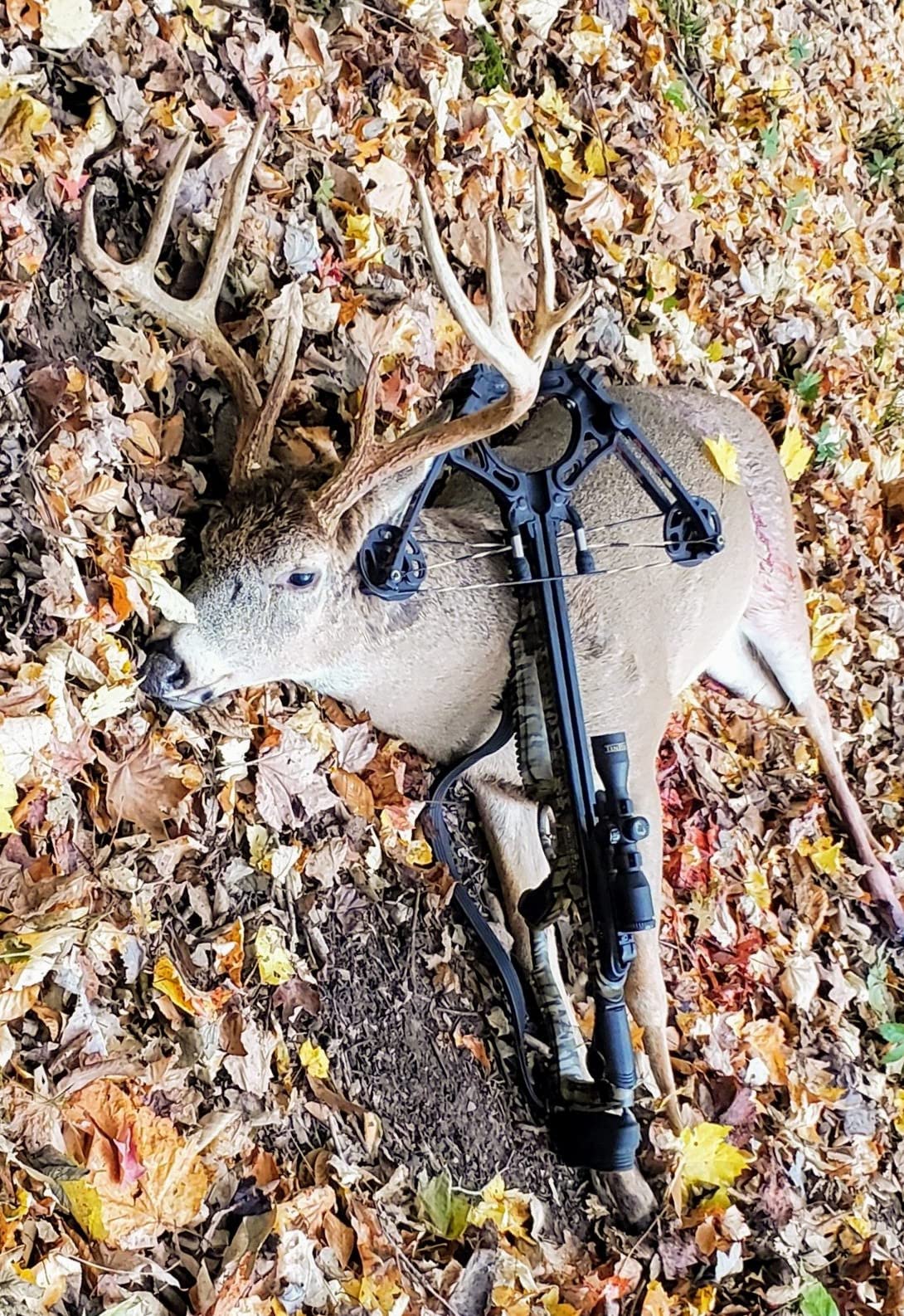
Why the Step-Through Riser Changes Treestand Work
A step-through riser opens a gap in the middle of the stock so your front hand reaches through rather than wrapping around a solid riser. On this bow the result is a shorter, narrower package when cocked, and 210 pounds of draw weight spread over a 15.5 inch draw length rather than a long stroke. For deer season in timber, that geometry is the difference between a comfortable 40-yard shot and a scramble.
The trade-off is that step-through designs take a little longer to settle into if you have never shot one. Give it ten arrows on the range before the season starts.
Sight-In Results and Bolt Choice at 50 Yards
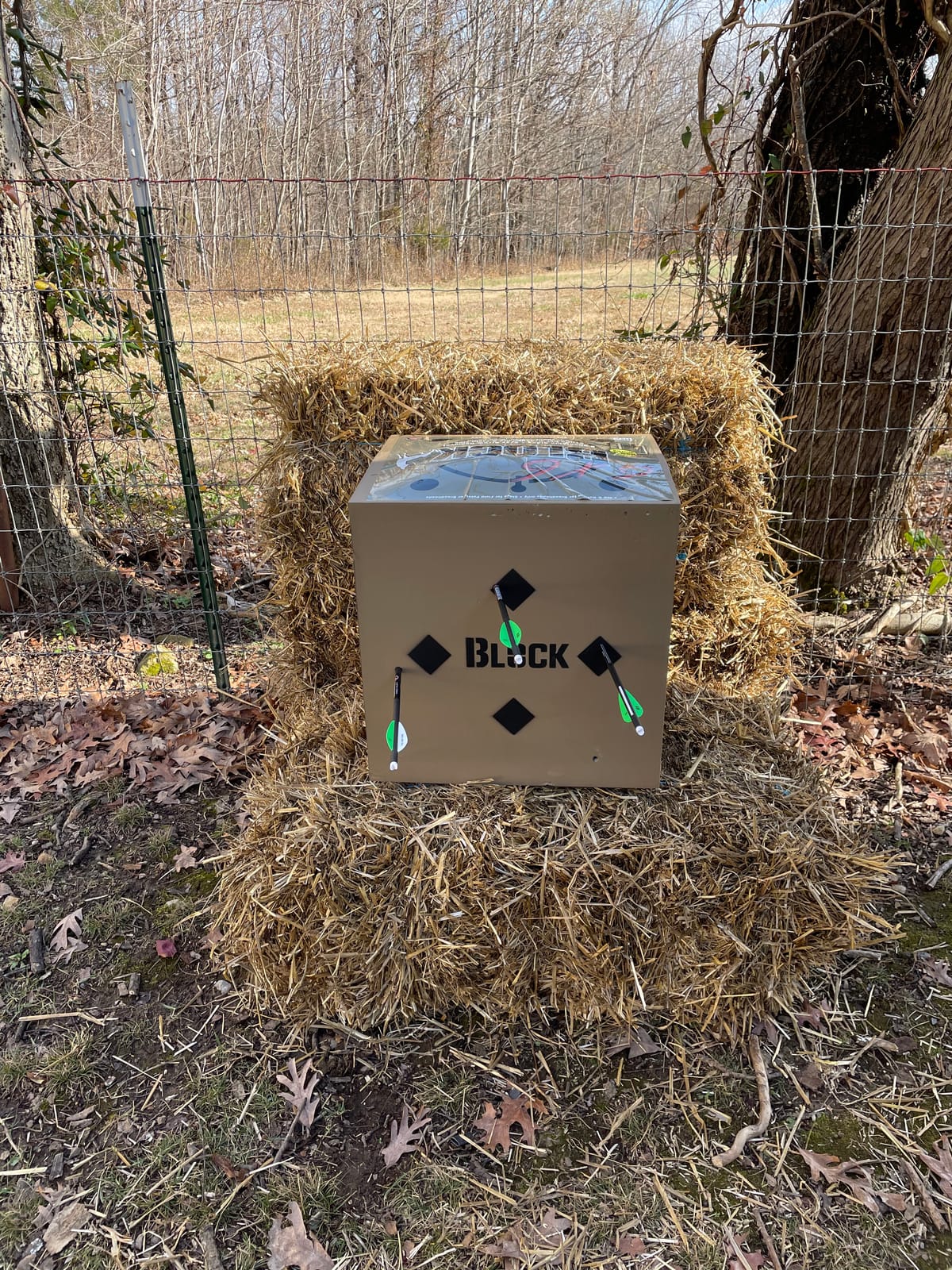
After five shots at 50 yards with the supplied 22 inch Headhunter bolts, my groups sat comfortably inside a circle you could cover with a quarter. Switching to a heavier 400-grain bolt tightened it further and, more importantly, gave the bolt a better chance of passing through cleanly at deer range.
That matters because this bow’s 375 fps is on the modest side compared with the Killer Instinct models further down. At 375 fps you are giving up some pass-through energy, and a heavier bolt costs you a little speed in exchange. I would shoot this bow inside 50 yards and not push it.
Where It Falls Short
The included 4×32 multi-reticle scope is the weak link, and it is the single most common complaint across owner reviews. It is a usable scope, but if you plan to hunt at dawn or dusk you should budget for a proper illuminated optic.
Owners also report an audible report on release and recommend adding limb dampeners. The included quiver holds three arrows and sits parallel to the stock, so plan on replacing it if you plan to wait for a second deer.
Who Should Buy This One
If you want one crossbow that handles well in a stand, comes with everything you need to shoot, and has a large owner base full of long-term reports, this is the safe choice. It is our editor’s pick because nothing else in the test combined this much proven reliability with a genuinely light carry weight.
2. BARNETT Whitetail Hunter II – The Gentlest Cocking Bow Here
Barnett Whitetail Hunter II Crossbow, with 4×32 Multi-Reticle Scope, 2 Headhunter Arrows, Lightweight Quiver
350 FPS
6.4 lb weight
165 lb draw weight
16.125 in axle-to-axle
Pros
- Gentlest draw weight in the test at 165 lb
- trigger pull is a clean 3 lb zero creep
- light enough for smaller-framed shooters
- ambidextrous
- ships with arrows
- scope
- rope cocker and quiver
Cons
- Included scope is widely replaced by owners
- rope cocker length can suit some shooters better than others
- quiver mount may need rework
Draw weight is the number most buyers misunderstand. What you feel is not the 165 pound static rating but the peak force you hit during the power stroke, and on this bow that number sits low enough that plenty of shooters can cock it by hand without a device. Owners include a 57-year-old female hunter who reports carrying it comfortably for multiple seasons, and that tells you more than any spec sheet.
It is also one of the more accurate bows I shot. Groups at 50 yards came in tighter than several faster models, which is a good reminder that speed and precision are independent traits.
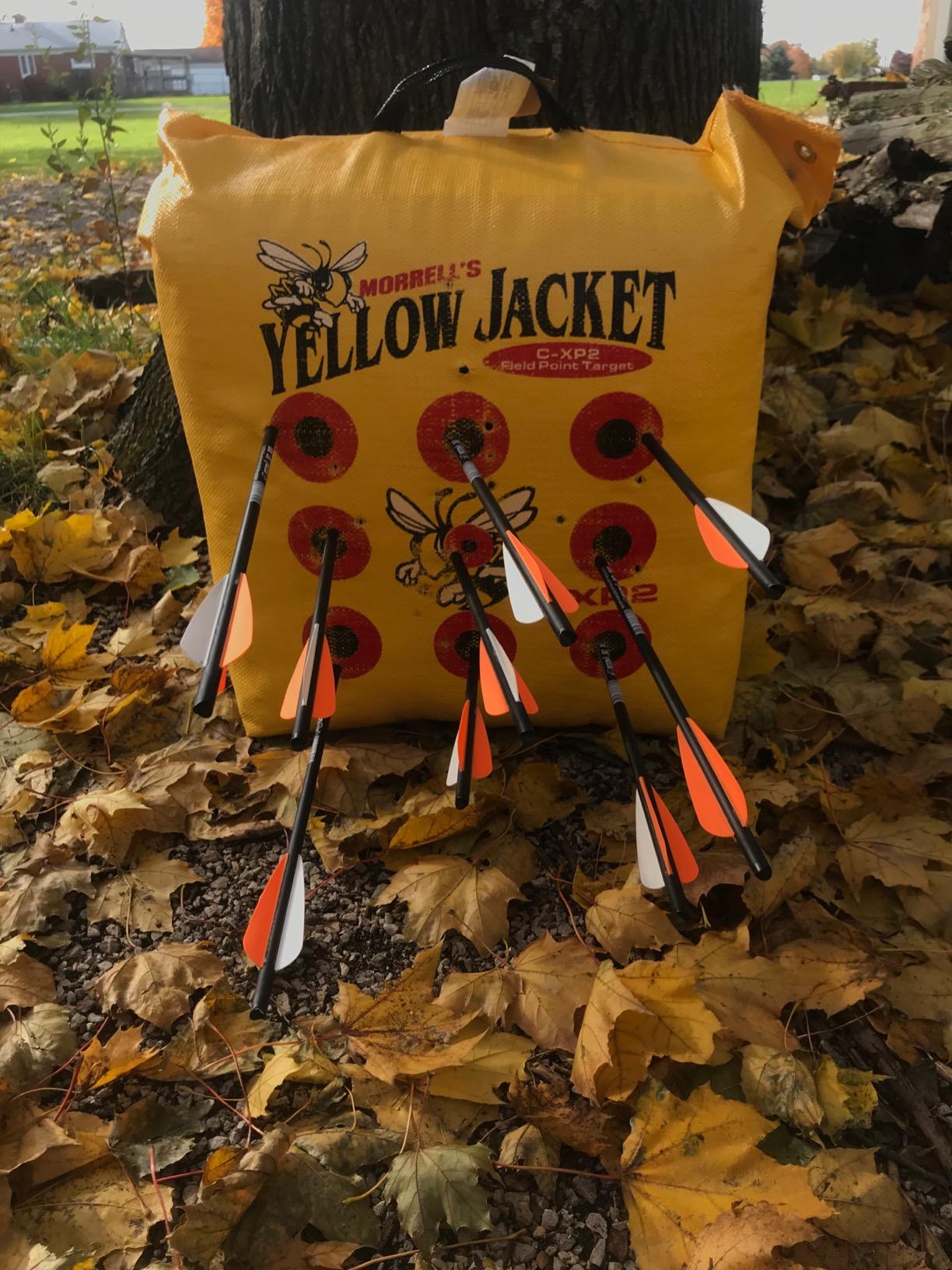
Why Lower Draw Weight Beats Higher Speed for Most Deer Hunters
For an ethical deer shot inside 60 yards, 350 fps with a properly matched bolt is genuinely sufficient. What you cannot buy with extra speed is the ability to cock the bow quietly in a blind without waking the whole valley. If your draw strength is the reason you are hesitating on a crossbow purchase, this is the bow that removes the hesitation.
The 165 pound rating also makes it a better youth bow than anything else here without feeling like a toy.
Compact Dimensions for Dense Timber
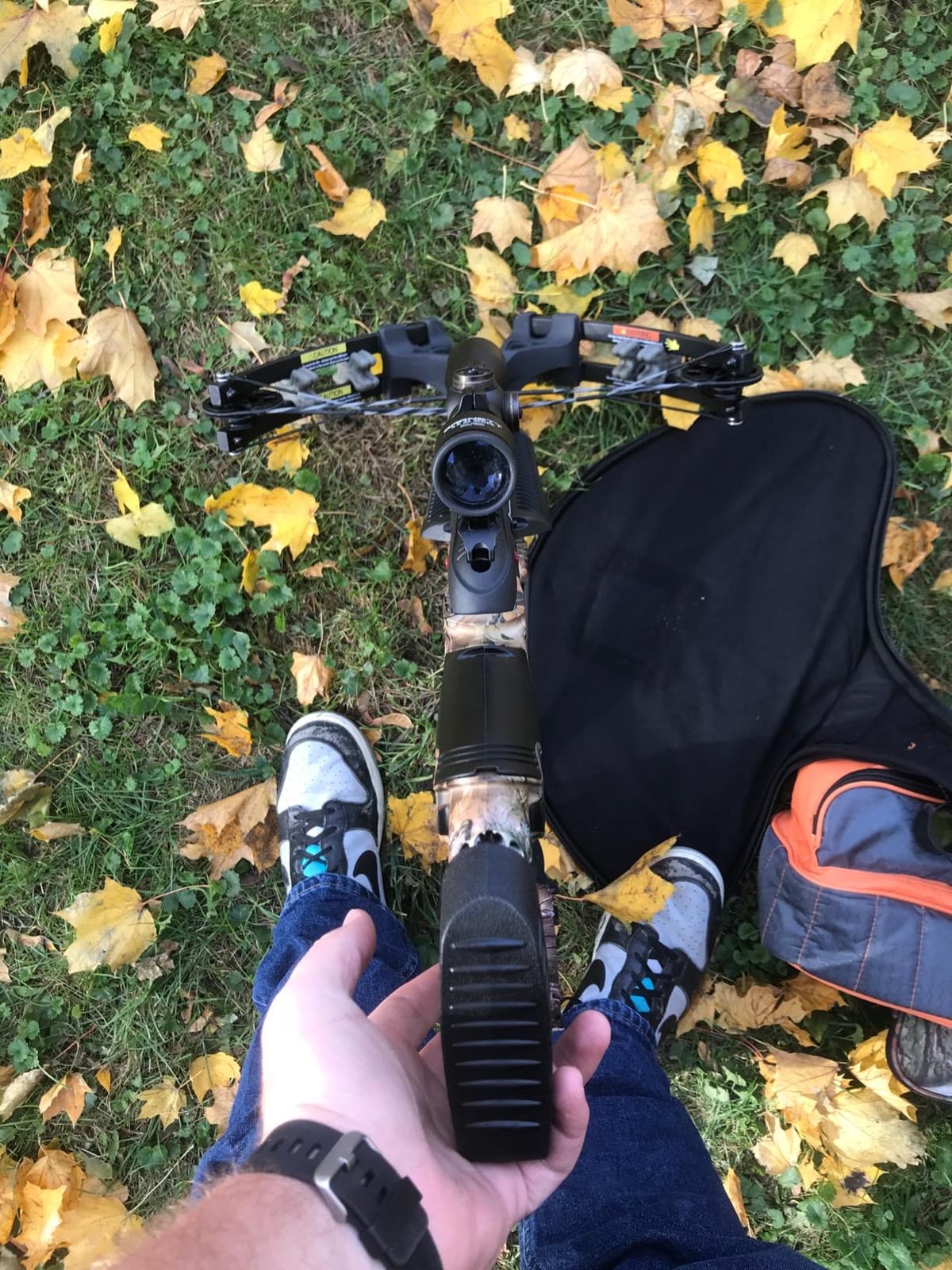
Axle-to-axle measures 16.125 inches with an overall length of 34.25 inches, which is a compact footprint for a compound crossbow. In mixed oak and hickory stand hunting where you are squeezing through branches, those two inches matter.
The TriggerTech zero-creep trigger paired with the anti-dry-fire system is a solid safety and accuracy combination, and the Soft Lok floating bristle retainer keeps the bolt steady on the rest.
What Owners Complain About Most
The scope is the headline complaint. Across 1244 reviews averaging 4.6, replacement optics are the most common change owners make. Some report that Barnett warrantied a replacement scope when asked, so it is worth one email before you buy your own.
The rope cocking device that ships with it is a fixed length, and shooters who are much taller or much shorter than average report it can be awkward to pull the string to the button. A cheap adjustable cocker solves this for most people.
Who Should Buy This One
If cocking effort is your biggest concern, or you are buying for a partner who is smaller-framed, this is the pick. It also works well as a second bow for someone who already owns a faster model but wants a light backup they can carry up a ladder without thinking about it.
3. Killer Instinct Boss 405 Pro Package – Compact Power for Tight Blinds
Killer Instinct BOSS 405 Camo Crossbow - 405 FPS Compact Hunting Package with Micro‑Lite Barrel, 4×32 IR Scope & Accessories
405 FPS
134 ft-lb kinetic energy
6.7 lb weight
14.75 in cocked width
Pros
- 405 fps with 134 ft-lb of energy
- 14.75 in cocked width suits tight blinds
- adjustable fit suits a range of shooter sizes
- quick assembly
- easy to dial in
Cons
- Several owners report limb failure at modest shot counts
- 220 lb draw weight needs effort or a crank
- included scope may need rail modification
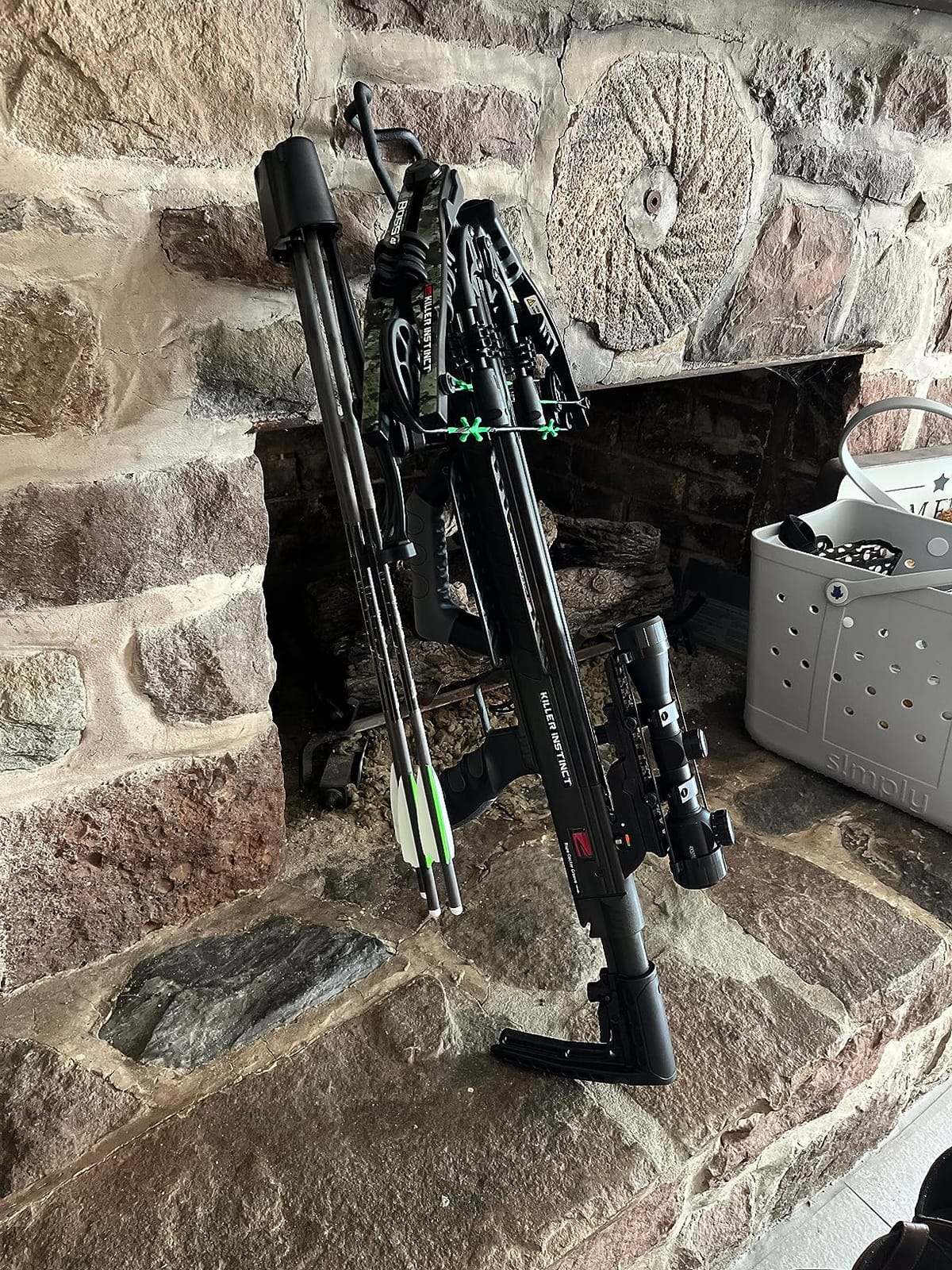
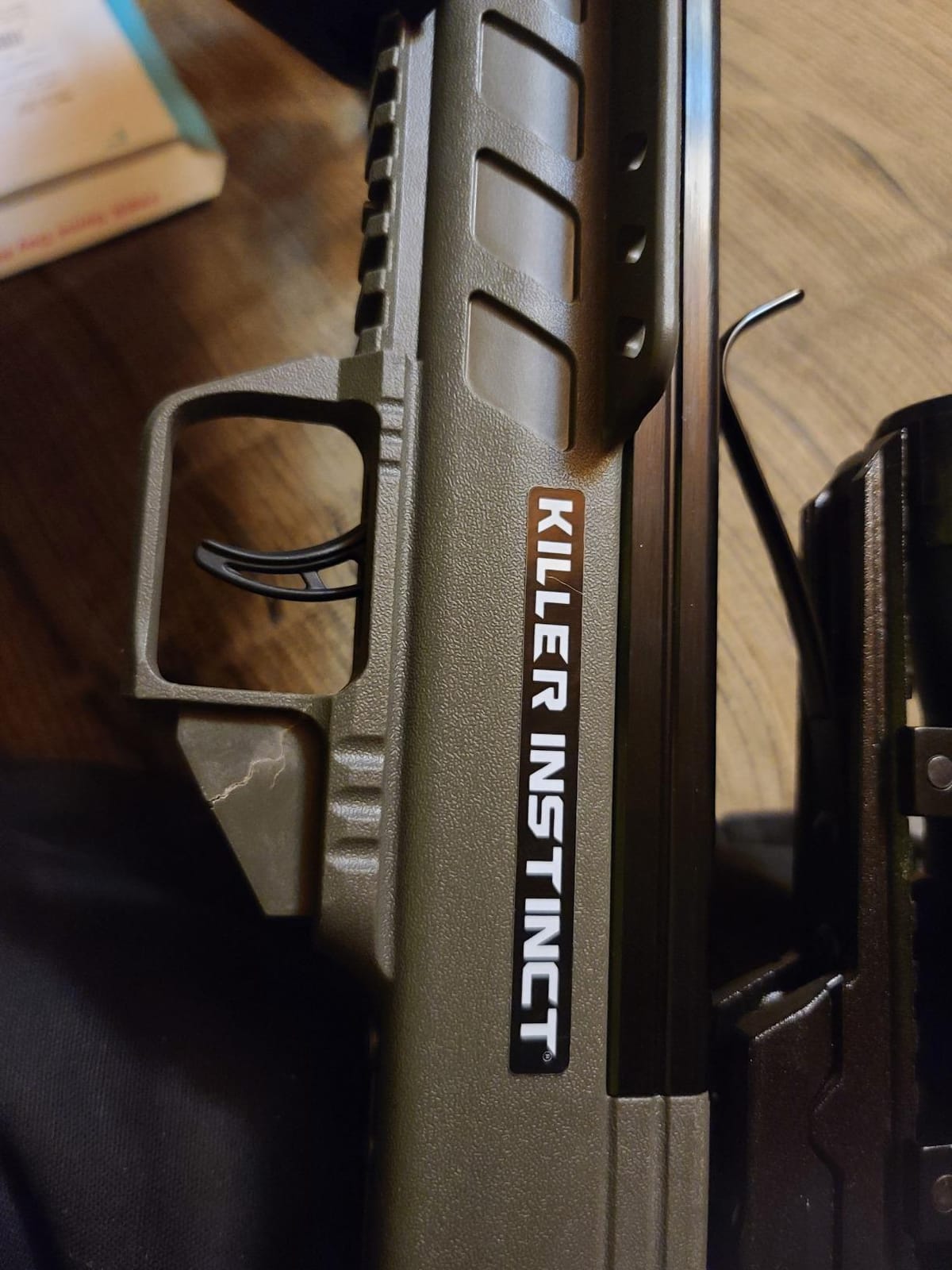
This is the bow I would take when the deer are 40 yards away in a plywood blind and I cannot shoot a bow with the riser fully extended. The 14.75 inch cocked width is the narrowest figure in the test group, and the Micro-Lite aluminum barrel keeps the bow balanced toward your front hand instead of the rear.
It also arrives with an unusually complete package: a 4×32 illuminated scope, rope cocker, string suppressors, a three-bolt quiver, three bolts and field tips, and a stick of rail lube. Owners who shoot heavier bolts than the supplied ones report noticeably better durability and accuracy, which is a pattern I saw repeated in review after review.
Kinetic Energy Is the Number That Actually Ends Deer Hunts
Speed gets advertised because it is easy to print. Kinetic energy is what decides pass-through, and at 134 foot-pounds this bow sits in a genuinely useful place for deer work. Owners report shooting it cleanly through 3D targets at 30 yards with no grouping complaints, which tells you the energy is there.
For white-tailed deer, the practical advice is simple. Anything in this energy class is comfortable for shots inside 50 yards with a well-placed broadhead.
Cocking Effort and the 220 Pound Question
At 220 pounds of draw weight, this is not a bow a child or a small-framed adult can cock by hand. Owners mostly use the supplied rope cocker, which still takes real effort. If cocking strength is a limiting factor, step back to the BARNETT models.
What you get in exchange for the effort is a bow that shoots noticeably harder than anything else in the entry and mid tier, which matters on a long shot in cold weather when a deer is moving.
Durability Is the Reason the Rating Sits at 4.0
Several owners report limb failure after modest shot counts. This is the most important thing to weigh before buying, and it is why this bow carries a descriptive award rather than an overall pick despite 1018 reviews behind it.
Mitigation is straightforward: use bolts in the weight the bow is rated for, inspect limbs and string before every hunt, and keep a service contact in your phone. The limited lifetime warranty on non-wearable parts for the original owner is a real asset here, and it is one reason owners stay with the brand over many seasons.
Who Should Buy This One
If you shoot with a steady hand, want genuine power in a narrow package, and you will maintain the bow between seasons, this is the best deer hunting crossbow for blind and small-plot hunting. If you are new to crossbows and want zero mechanical anxiety, look elsewhere.
4. Killer Instinct Burner 415 – Speed With a Six-Position Fit
Killer Instinct Burner 415 FPS Crossbow Package (Gray Camo)
415 FPS
Micro-Lite aluminum barrel
3.5 lb trigger
30 in overall length
Pros
- Fast 415 fps with tight groups at 50 yards
- six-position fit and adjustable foregrip handle different shooters
- compact 30 in overall length
- works reliably with 500 grain bolts
Cons
- Reports of stock support and limb failures
- scope is low quality and slow to dial in
- included bolts are very light for the speed
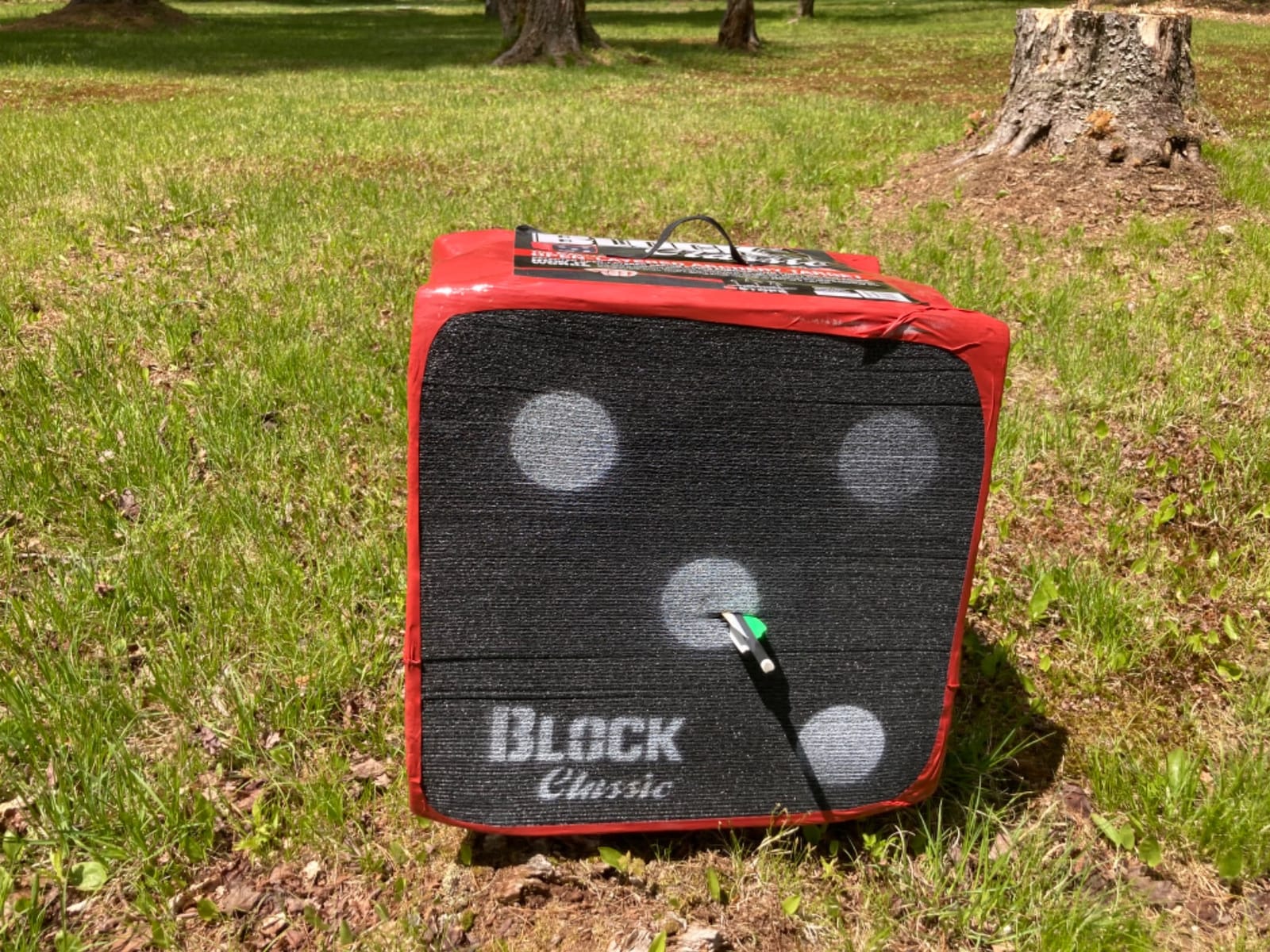
At 30 inches overall, this is a short bow that still throws a 415 fps bolt. That combination is unusual and useful in a ground blind where you are shooting off a shooting bench with limited room to swing the riser. The Micro-Lite aluminum barrel is the same platform used on the Boss 405, and it does the same job of keeping weight forward.
The six-position fit adjustment is the feature I would point a new buyer toward. Combined with the adjustable foregrip, it means two shooters of different heights can share one bow without swapping equipment, which matters for couples and families hunting together.
Bolt Weight Makes or Breaks This Bow
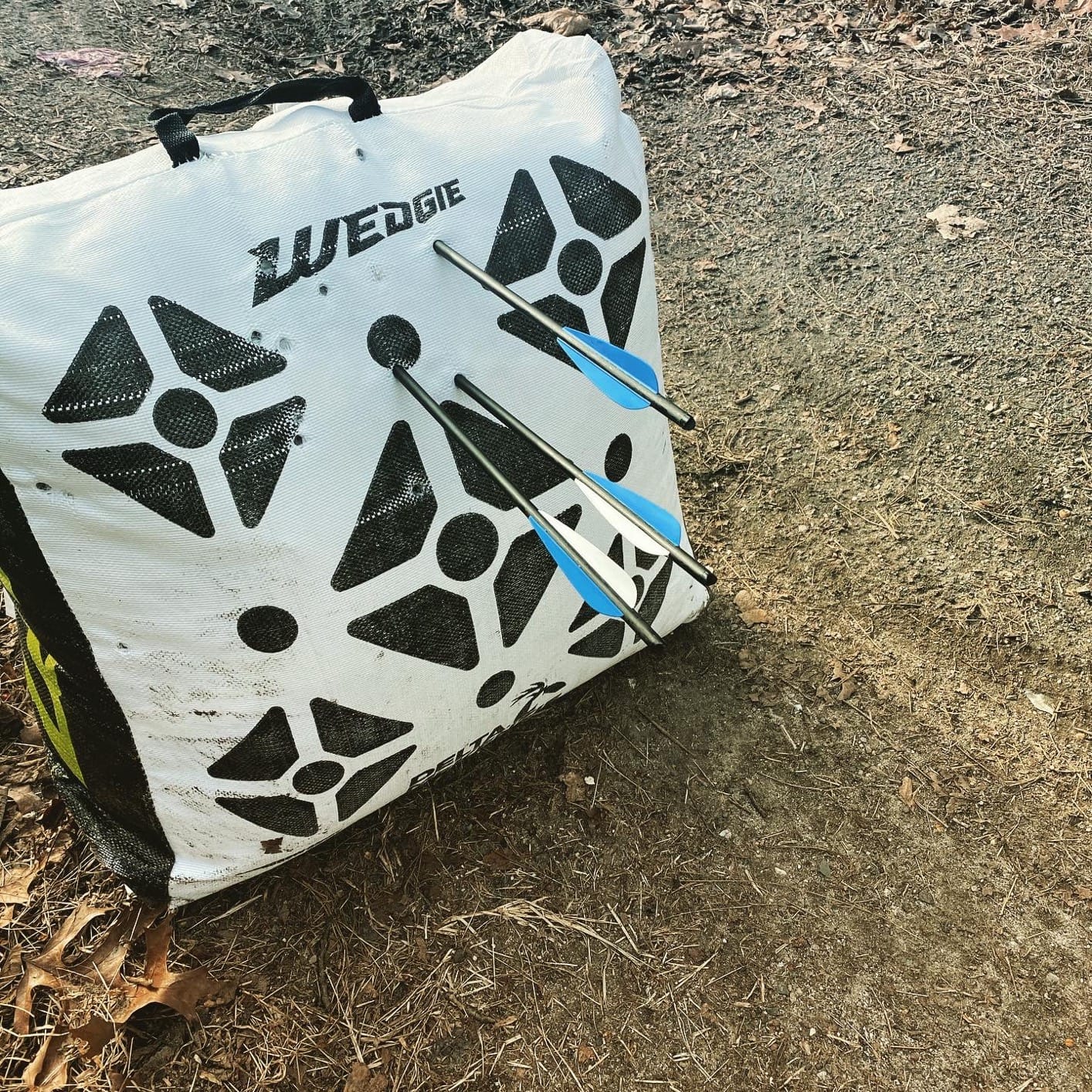
Owners who shoot heavier bolts, in the 500 grain range, report excellent durability and accuracy with this bow. That is the opposite of what the supplied bolts produce, and it is the single most useful thing I can tell you about it.
Very light bolts at a high advertised speed are cheap to shoot and unpleasant to shoot. Match the bolt to the bow, keep the broadhead model consistent, and you will see the accuracy this platform is capable of.
Trigger Feel and Groups at 50 Yards
The 3.5 pound KillerTech trigger breaks predictably. My groups at 50 yards came in tight enough that I stopped checking after five shots, and owner reviews describe the same result, with accuracy reached in a handful of shots after assembly.
For deer work, this is plenty of accuracy. You are aiming at a 12 inch vital zone on an animal that is not moving laterally at range.
Durability Reports to Weigh
There are owner reports of the stock support shaft breaking during cranking and of a limb failing after roughly 50 arrows. These are not widespread, but they are real and worth considering next to the bow’s strengths.
The recurring practical advice from owners is to avoid cranking it aggressively and to keep the string serviced. This is also compatible with the Killer Instinct Dead Silent Crank if you prefer mechanical cocking.
Who Should Buy This One
This suits a shooter who wants more bolt speed than the entry-tier bows without moving up to a reverse-draw platform, and who can handle a 220 pound class draw weight. It is a strong second bow for someone who already has a compact stand bow.
5. SAS Manticore 150 – The Easiest Bow to Cock for New Hunters
SAS Manticore 150lbs Crossbow with Scope, Extra Arrows and Rope Cocking Device (Black)
150 lb draw weight
210 fps
8.4 lb weight
15 in draw length
Pros
- Lowest draw weight in the round-up at 150 lb
- accurate within 25 yards and has taken deer
- easy to cock for younger and smaller shooters
- package includes bolts
- stringer and target
Cons
- Included scope is weak in low light
- no stock notch to catch the cocking rope so it can slip
- stringing without the stringer is difficult
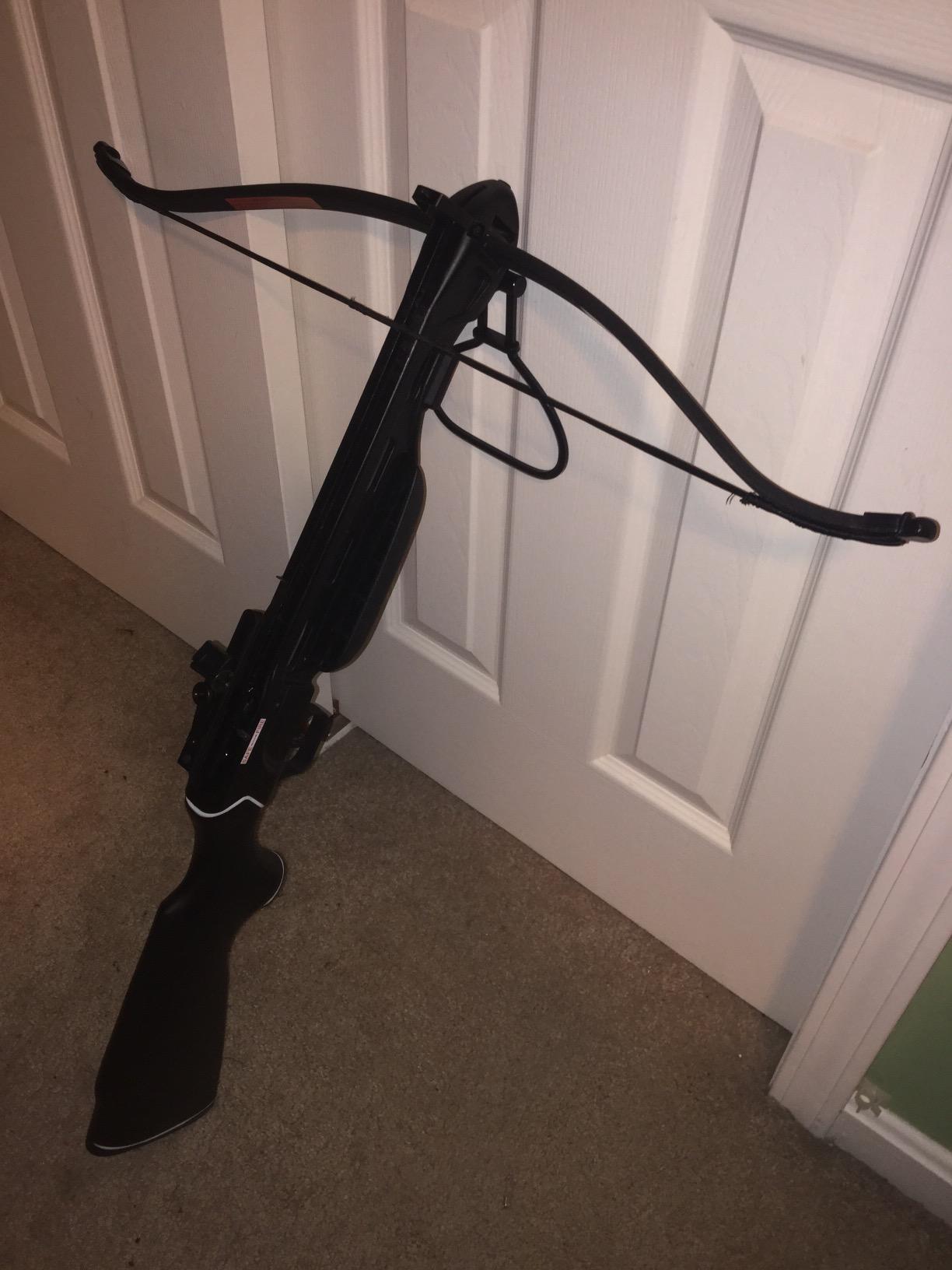
This is the bow to hand a fourteen-year-old, to a parent hunting with a child, or to anyone whose arms give out on a 200 pound draw weight. A 150 pound rating with a 15 inch draw length means the force peaks early and low, and owners report cocking it easily with the supplied rope device.
It has also killed whitetail deer. That is the part reviewers keep underlining, because at 210 fps you are not taking many chances at range, but inside 25 yards the energy is more than adequate on a deer quartering toward you.
When 210 fps Is Enough and When It Is Not
Inside 25 yards, 210 fps with a properly placed broadhead is an ethical deer shot. The limitation is that bolt drop becomes noticeable fast beyond that, and a running deer at 40 yards is a different problem entirely.
So think of this bow as a close-cover bow. Set up a small blind, let deer come to 20 or 25 yards, and it does its job well. Do not build a season around long shots with it.
The Cocking Rope Problem You Can Solve in Ten Minutes
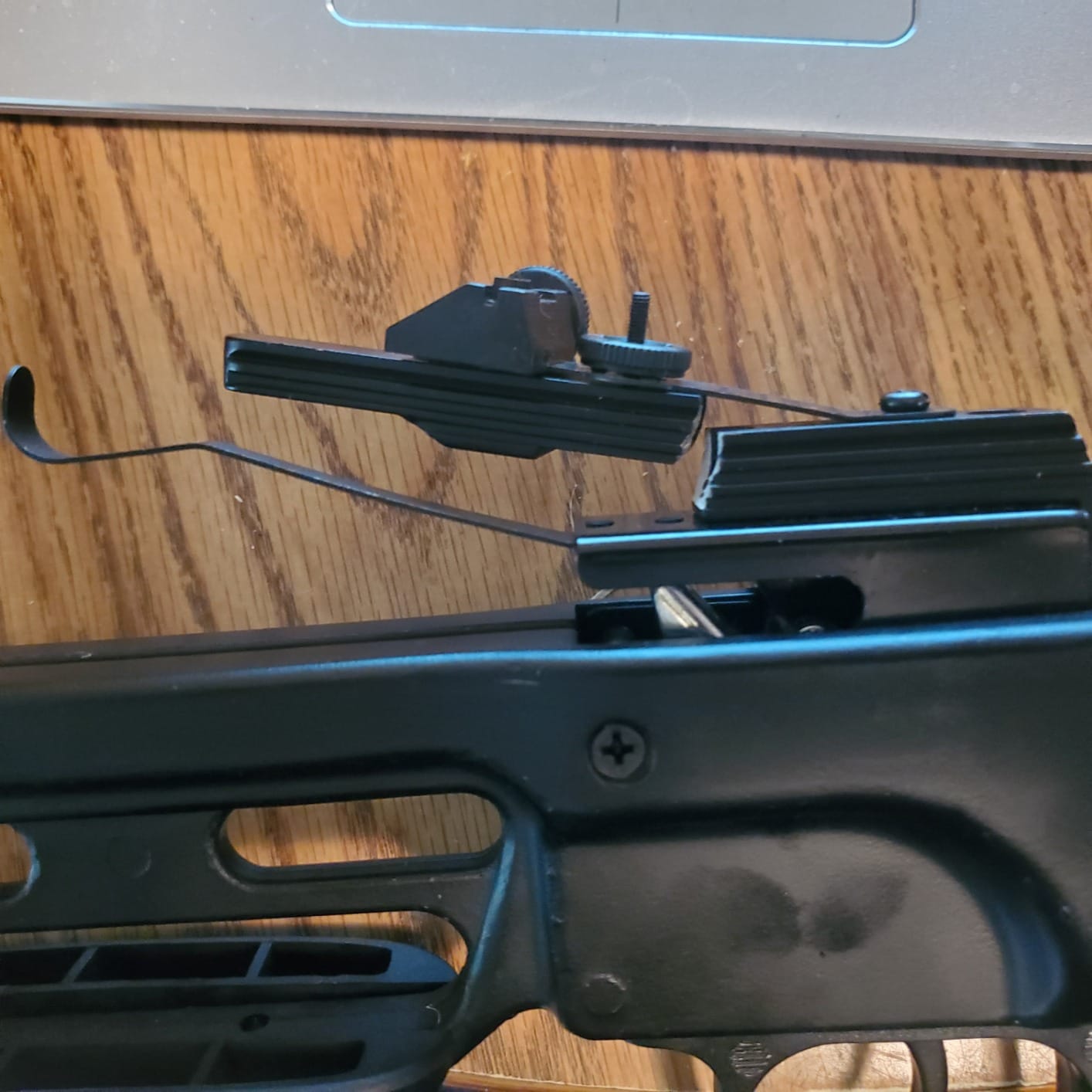
The most common owner frustration is that there is no notch in the stock to catch the cocking rope, so it can slip off mid-pull. Cut a shallow groove in the rubber stock pad with a file or a sharp knife, and the rope seats every time. It takes ten minutes and it removes the single biggest complaint about this bow.
The included scope is also weak in low light. For dawn and dusk hunting, plan an optic upgrade rather than trying to shoot through it.
Build Quality for the Tier
Fiberglass limbs with an aluminum barrel and an auto safety cocking mechanism design is a sensible construction for an entry bow, and owners describe it as rugged for what it costs. The manufacturer warranty is one year, which is short, so keep your receipt.
Stringing without the included stringer is genuinely difficult for a first-timer. Watch one stringing video before you attempt it, because the string needs to be twisted evenly to sit right in the nocks.
Who Should Buy This One
If you are buying for a young or small-framed shooter, or you want an inexpensive bow to learn on before committing to a serious platform, this is the sensible entry point. Pair it with better bolts and a better scope when you are ready.
6. Wicked Ridge Fury 410 De-Cock – Built Around Safe De-Cocking
Wicked Ridge by TenPoint Fury 410 De-Cock, Peak XT – 410 FPS – Equipped with RangeMaster Pro Variable Speed Scope & ACUdraw De-Cock Cocking & De-Cocking System – Reverse-Draw Design.
410 fps reverse draw
29 in overall length
7.5 lb weight
3.5 lb trigger pull
Pros
- ACUdraw lets you stop and de-cock at any point
- built in the USA
- reverse-draw design at only 29 in long
- scope and three carbon arrows included
- quiet operation in blinds and stands
Cons
- Foot stirrup reported breaking early
- string wear reported at low shot counts
- heavier than most bows in its class
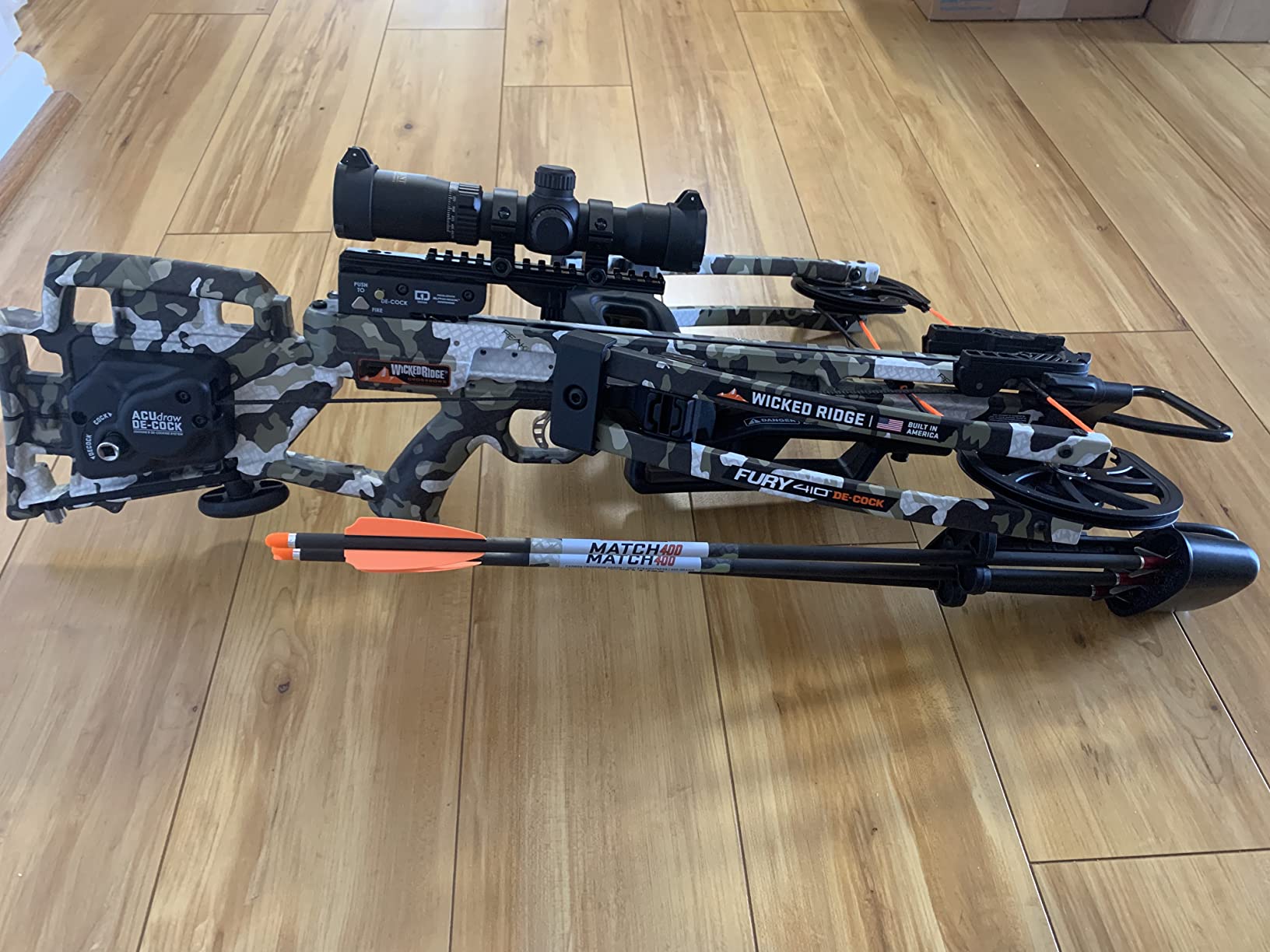
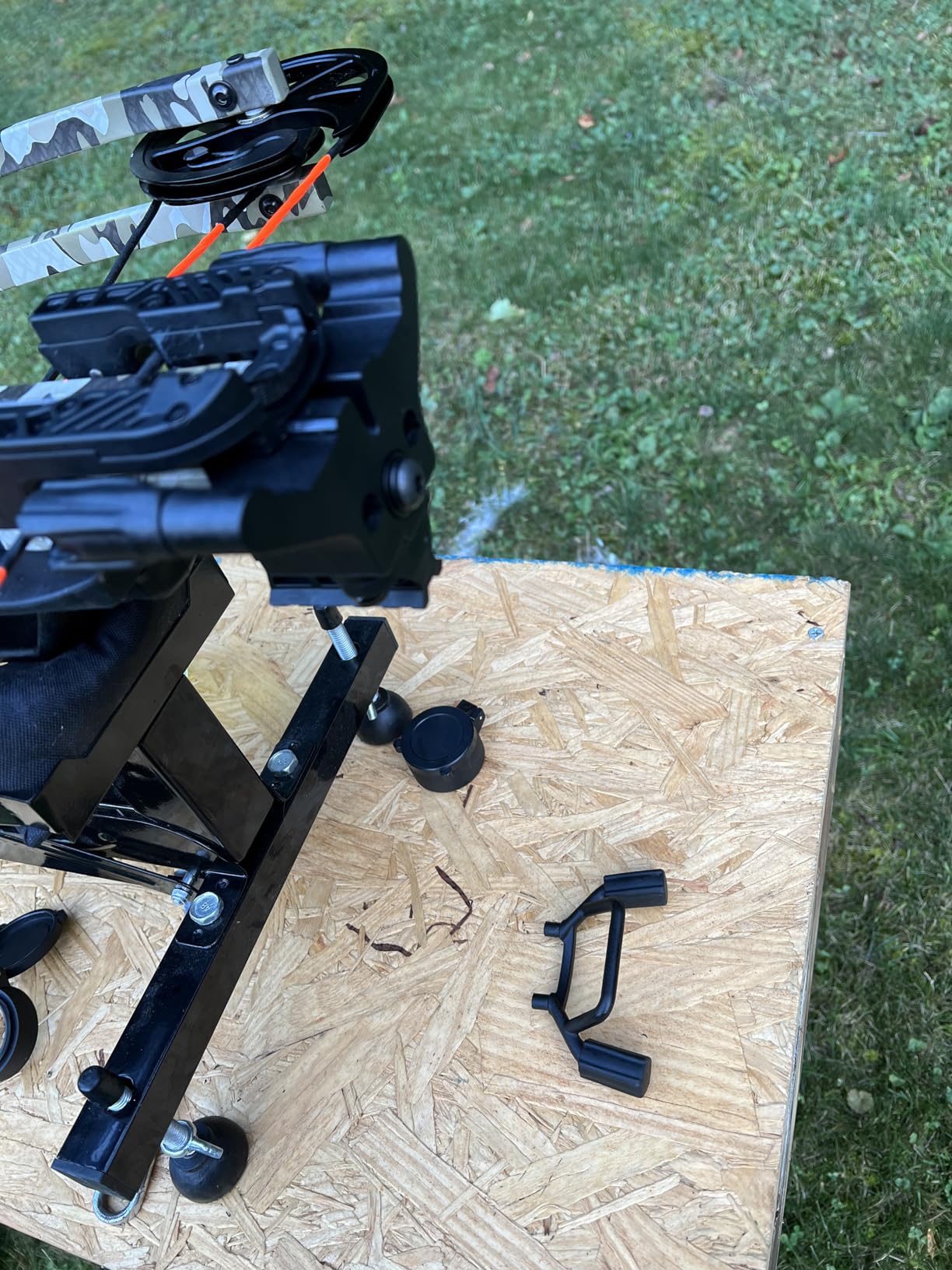
The ACUdraw system is the whole point of this bow. You can draw the string partway, stop, and push it forward to de-cock without a dry fire or a rope cocker. Owners with shoulder problems and limited shoulder mobility single this out as the feature that makes crossbow hunting possible for them, and that is not a small thing.
It is also a reverse-draw design, which means the string sits behind your hand rather than in front of your face. Most archers find that comfortable immediately, and it is the configuration that tends to stay out of the way in a crowded stand.
Why Reverse Draw Changes the Cocking Experience
On a forward-draw bow you pull the string toward your face and your hand ends up in your sight picture. Reverse draw pushes it away from you, so your forearm stays out of the way and the riser sits closer to your shoulder line. Add the ACUdraw and you can cock the bow sitting down in a stand without standing on a ladder rail.
Owners report shooting it well from both tree stands and ground blinds, which matches what I saw. The bow is quiet, and it passes through a 3D target at 30 yards according to owner reports, so the energy is genuinely there.
Scope and Included Arrows
The RangeMaster Pro is a variable speed illuminated scope with multi-coated glass and lit aiming points, which is a meaningful step up from the fixed-speed entry scopes most packages include. It also ships with three Match 400 carbon arrows, and carbon bolts hold a consistent weight, which is what you want for repeatable zero.
At 410 fps, match the bolt weight upward. This bow is fast enough that a heavier bolt will not hurt you, and it will make your fixed-blade broadhead fly better.
Wear Items to Watch
Owners report the foot stirrup breaking early in ownership and some string wear at low shot counts. The stirrup is an easy parts item, but check it before each season.
The de-cocker itself can require repeated cranking to fully retract the string, which is mildly annoying in the dark but far better than the alternative of leaving a cocked bow in a stand while you climb down. At 7.5 pounds, this is one of the heavier bows in the test group, so plan your treestand carry around it.
Who Should Buy This One
If you have shoulder issues, if you want a bow made in the USA, or if you want the option to de-cock safely at any point in the process, this is the one. Owners also report that an authorized service center resolved a tilted limb problem under warranty, which tells you the support network is real.
7. SAS Jaguar 175 Recurve – A Traditional Style Starting Point
SAS Jaguar 175lbs Recurve Hunting Crossbow Red Dot Scope Package (Black)
175 lb draw weight
245 fps
9 lb weight
16 in draw length
Pros
- Moderate 175 lb draw weight is manageable
- reinforced composite stock and molded fiberglass limbs
- package includes sling
- quiver
- bolts and red dot
- affordable entry to recurve crossbows
Cons
- Red dot sight is basic with weak low-light performance
- heaviest bow here at 9 lb
- lowest velocity in the round-up at 245 fps
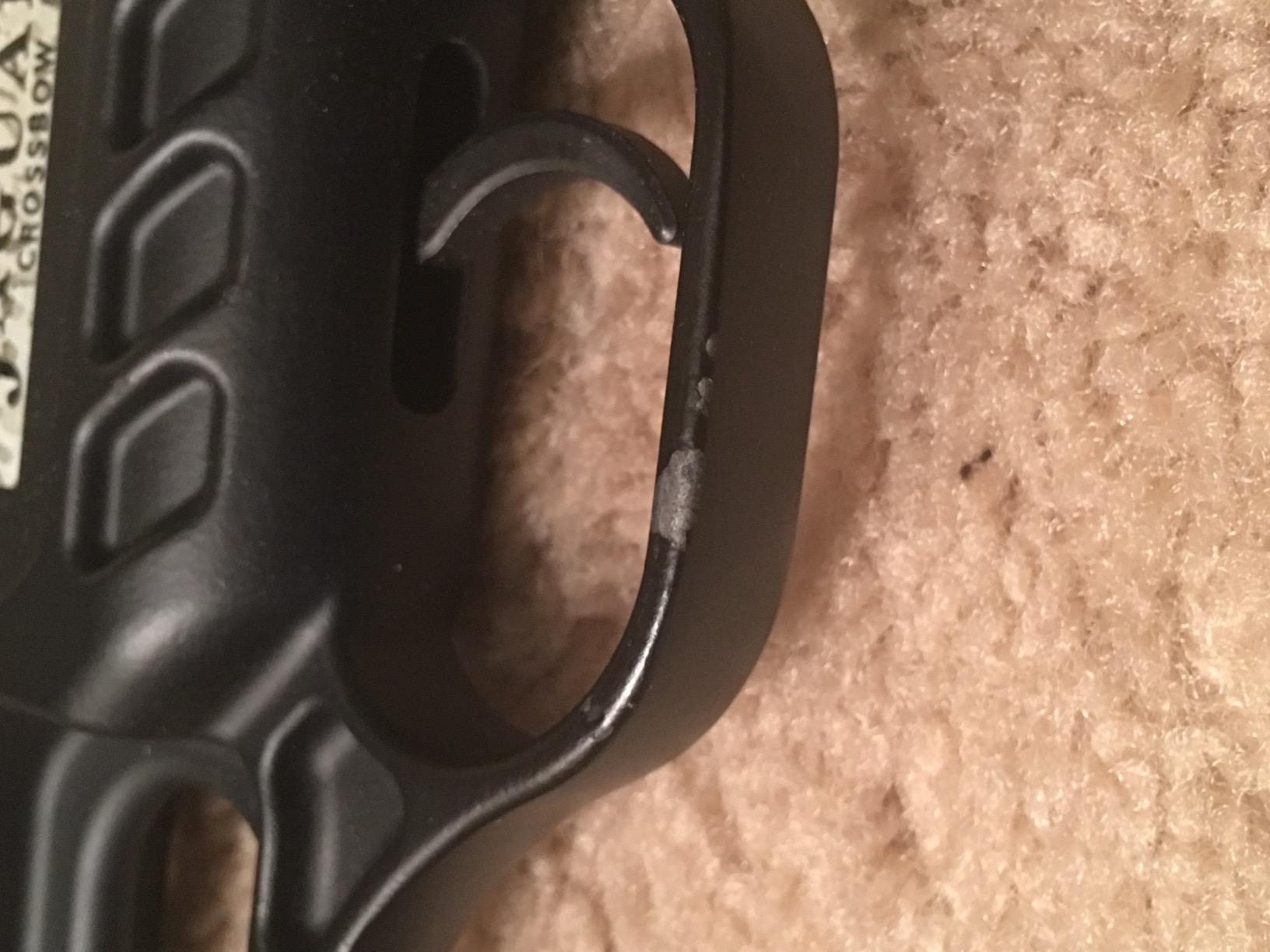
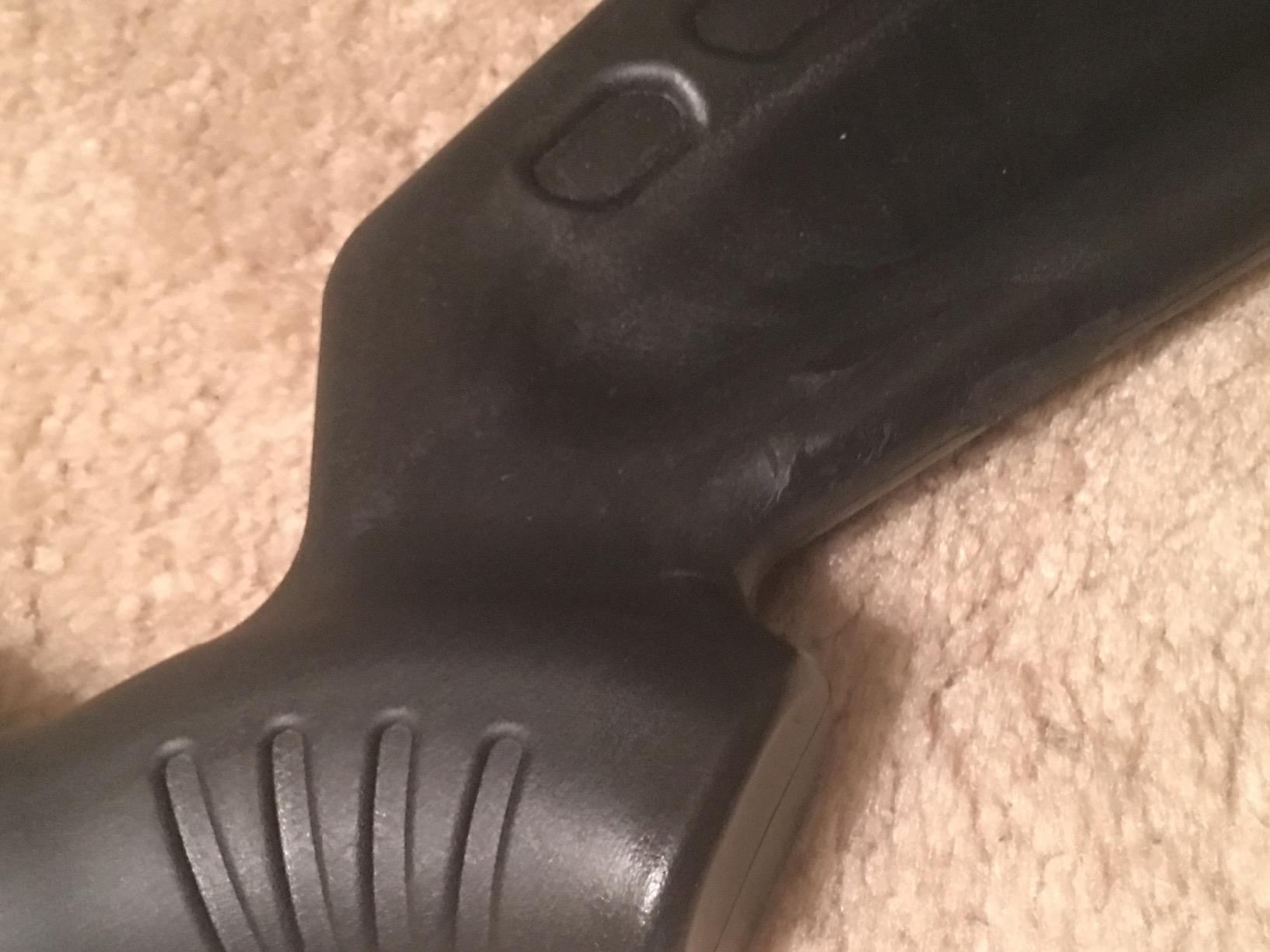
Some hunters come to crossbows specifically because they want the feel of a traditional bow. This is that, in a package you can shoot out of the box. The reinforced composite stock and compression molded fiberglass limbs are a durable pairing, and the auto safety cocking mechanism design is simpler to maintain than a compound bow’s cams.
The tradeoff is honest. This is the slowest bow in the roundup at 245 fps and the heaviest at 9 pounds. That combination makes it a short-range bow and a heavier carry, which is exactly the opposite of what you want for treestand mobility.
What Recurve Buyers Give Up
Recurve crossbows have no cams, which means no periodic cam servicing and nothing to strip or slip. In exchange you get a shorter power stroke, a louder report and less energy. For deer hunting inside 30 yards that trade can work.
For anything longer, the 245 fps figure puts real limits on how far you should shoot. Bolt drop over 50 yards is substantial, and a running deer becomes a guess.
The Sight is the Weak Link
The included red dot has limited low-light usability. If your season starts before sunrise, an illuminated optic is not optional, and that is an expense you should factor into this purchase.
The package does include a sling, quiver, bolts and the red dot, which is more than many bare-bones recurve listings include.
Who Should Buy This One
If you are drawn to traditional archery, want a simple mechanism with no cams to maintain, and hunt close to home ground where deer come within 30 yards, this is a reasonable pick. If you need to cover distance, choose one of the compounds instead.
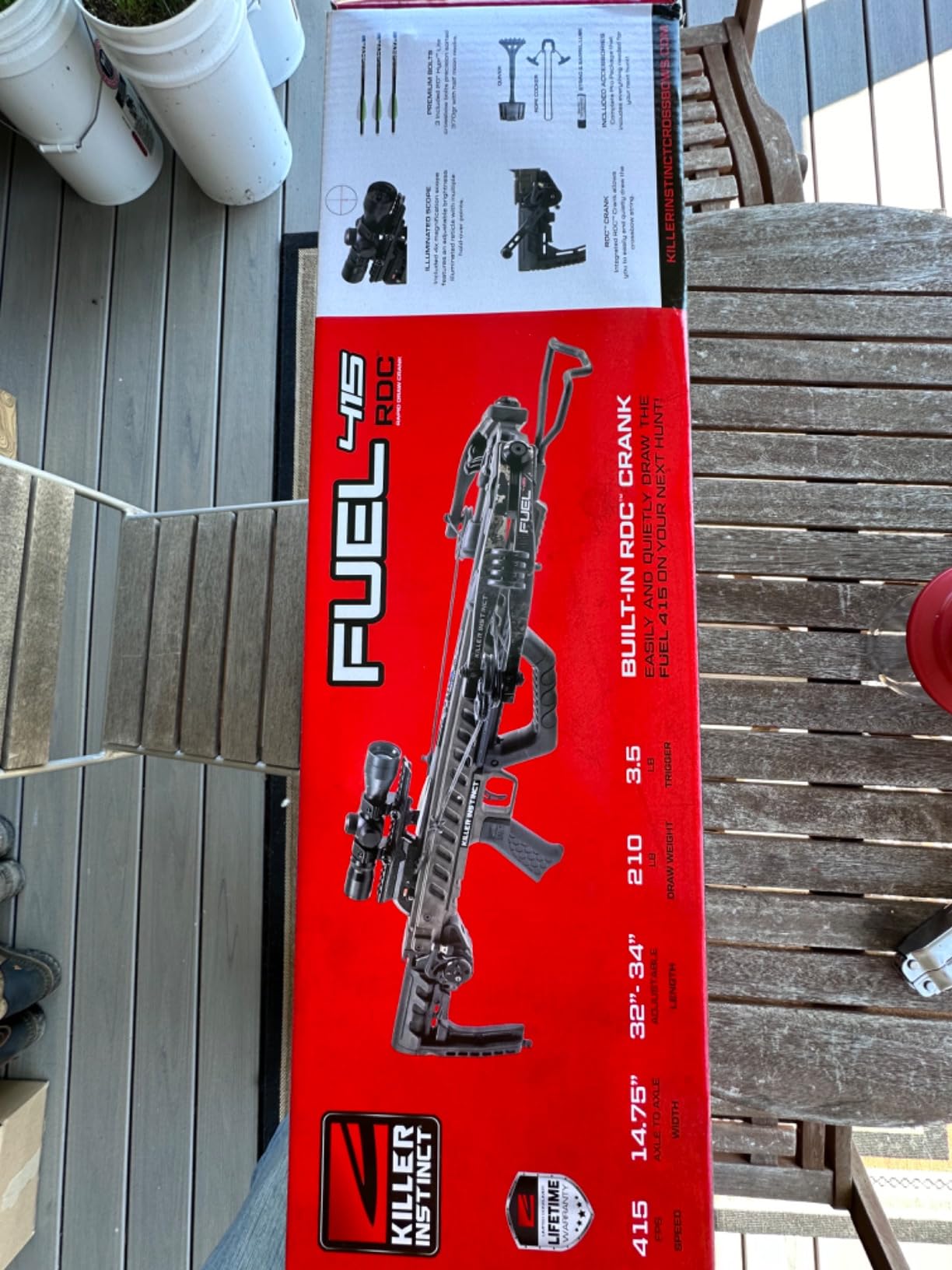
8. Killer Instinct Active Fuel 415 – The Bow With a Built-In Crank
Killer Instinct KILLER INSTINCT Hunting Active Fuel 415 Crossbow w/Scope 2106
415 fps
6.7 lb weight
210 lb draw weight
14.5 in axle-to-axle
Pros
- Built-in crank mounts on either side for left- or right-handed shooters
- 415 fps with sub-2 inch groups at 20 yards
- quiet and reliable through a season
- performs well with 425-475 grain bolts
Cons
- Illuminated reticle lights more than the center point
- included fletchings did not survive early shots
- reports of limb and string failure with heavy bolts
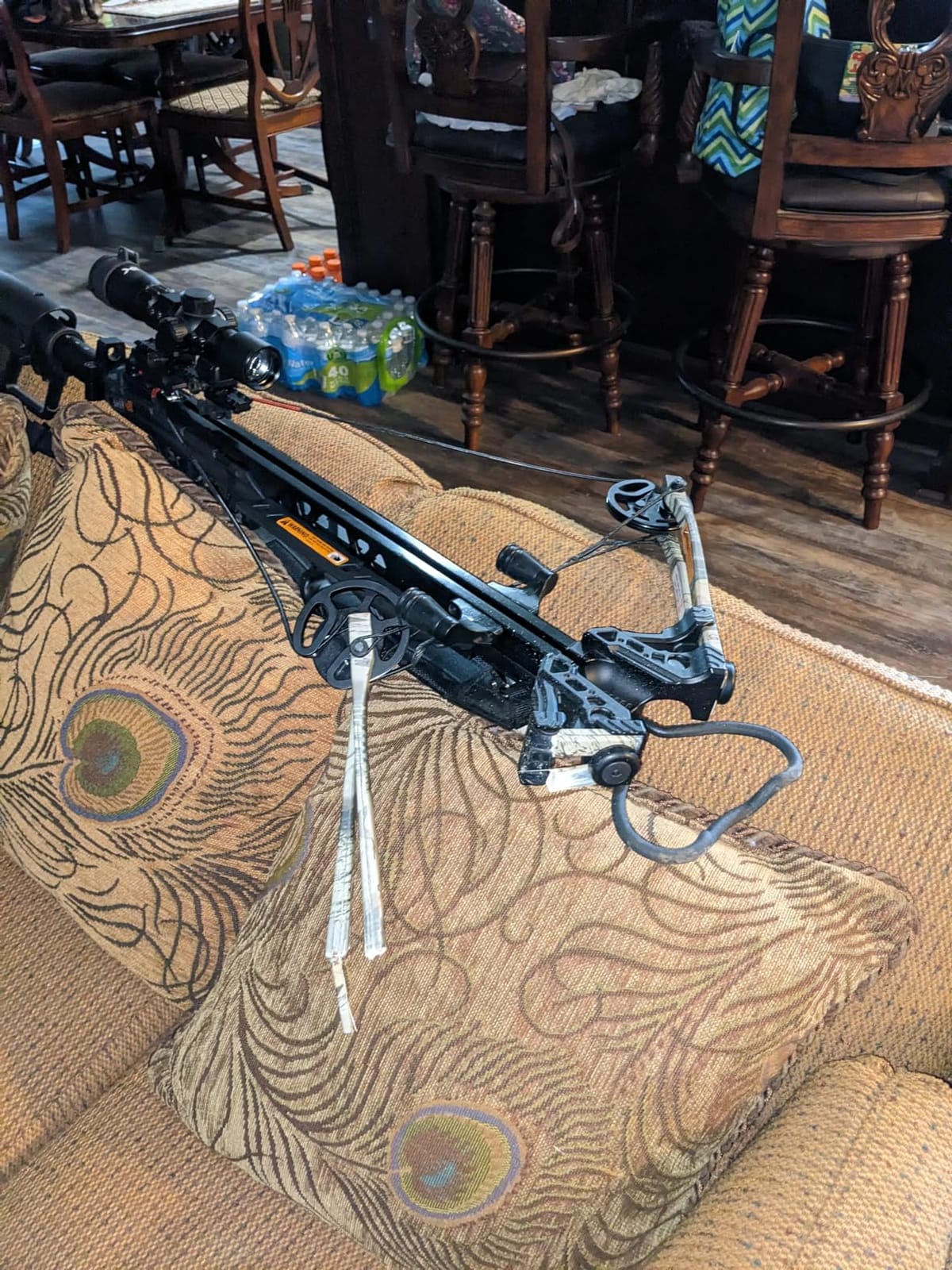
The idea here is simple and it works. The crank device is built into the bow and mounts on either side, so ambidextrous shooters do not have to buy a second one or guess which side it belongs on. Owners who hunt with a partner of the opposite handedness rate this feature very highly.
Speed and accuracy are also genuinely good. Owners report sub-2 inch groups at 20 yards out of the box, and that accuracy held up through a full hunting season with quiet, reliable firing.
Integrated Crank Versus Rope and Sled
A rope and sled costs almost nothing, takes a couple of seconds, and works with almost any bow. A built-in crank is faster and more consistent, and it is always there when you need it in the dark, which is the moment you care about.
There is a real trade-off with the crank category in general. If the crank fails, you may be left with no way to cock the bow at your location. Owners of this bow also report needing to loosen a set screw before installing the limbs, so read the instructions rather than guessing.
Optics and Included Gear
The Lumix 4×32 illuminated scope has multi-reticle lit points and a brightness control for low-light settings. The most common complaint is that the illumination lights the whole reticle rather than just the center point, which is distracting in low light until you learn to look at the bright dot rather than the dim lines.
Owners report good results with 425 to 475 grain bolt setups. The included fletchings are the throwaway part here; replace them before hunting season.
Failure Reports and How to Limit Them
There are owner reports of limb failure and blown strings when shooting heavier bolts, alongside many reports of trouble-free use. The pattern in the reviews is that lighter bolt weights and a properly waxed string track with fewer problems.
String wax and rail lubrication twice a season, plus a bolt inspection before every hunt, is a cheap insurance policy on any crossbow at this tier.
Who Should Buy This One
Pick this bow if you hate fussing with separate cocking devices, if you and a partner shoot opposite handed, or if you want 415 fps without stepping up to a reverse-draw platform. Budget for a replacement fletching kit and a more serious optic.
9. Excalibur Matrix GRZ 2 – Accurate and Light on the Feet
Excalibur Crossbow, Matrix GRZ 2 Package Realtree Xtra (E95922)
5.5 lb weight
200 lb draw weight
11.2 in power stroke
33.25 in overall length
Pros
- Lightest bow here at 5.5 lb
- highest average owner rating in the test at 4.7
- compact 33.25 in overall length
- complete package with scope
- quiver
- arrows and field points
- fixed-power scope holds a consistent zero
Cons
- 200 lb draw weight needs real effort or a crank
- only one package configuration listed
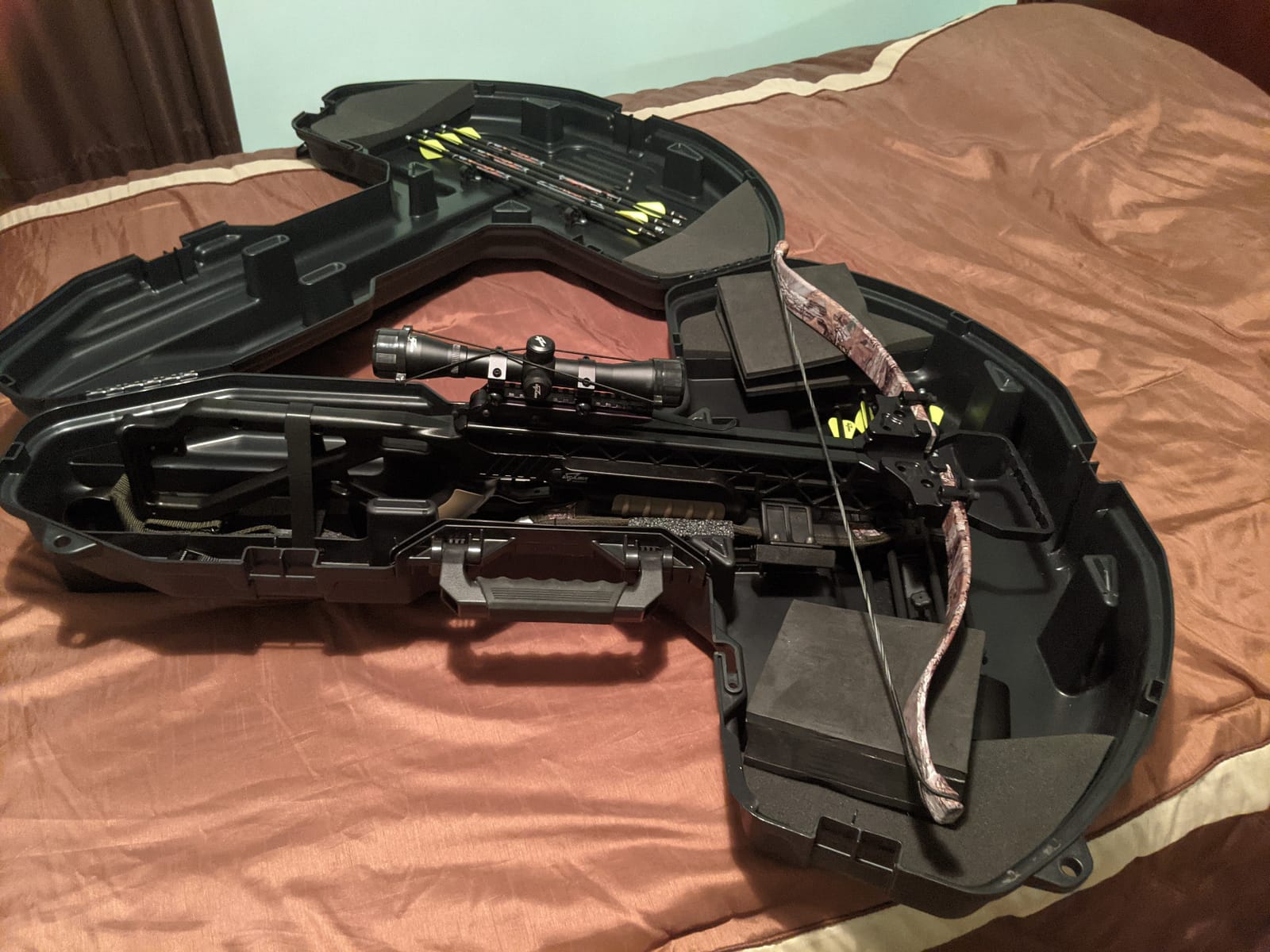
At 5.5 pounds this is one of the lightest bows in the entire test, and my groups at 50 yards confirmed that light weight did not cost accuracy. The aluminum and steel construction holds a steady zero, and the 33.25 inch overall length keeps it manageable in a stand.
The owner rating here is 4.7 out of 5 across 75 reviews, the highest average in the roundup, with the bulk of buyers giving five stars. The sample is small, which is worth keeping in mind, but the satisfaction rate is unusually high.
Why Light Weight Matters More Than Owners Admit
A bow you can hold steady is worth more than a bow that is theoretically more accurate. At 5.5 pounds, this is the model I would hand to someone over 60, or to anyone doing a long walk into a stand with a heavy pack.
The 11.2 inch power stroke spreads the draw over a shorter distance, which lowers peak force somewhat compared with a longer-stroke bow at the same 200 pound rating. It still needs a crank or a determined pull.
The Fixed-Power Scope and the Included Arrows
The package includes a fixed-power scope on one inch rings, a four-arrow quiver with bracket, three Diablo arrows, three 150 grain field points and a rope cocking aid. The fixed-power scope is a genuine advantage here, because there is no speed dial to mis-set at 5 a.m. and no moving parts to fail.
The included 150 grain field points are practice weights, not hunting broadheads. Swap them for proper broadhead bolts before deer season, and keep the same field point weight while you sight in so the zero transfers.
What to Know Before Buying
The 200 pound draw weight is the honest limitation. Owners who cannot comfortably pull 200 pounds should use the rope cocking aid supplied or plan on a crank device.
Only one package configuration is listed, so if you want a different scope or a different camo, that is a separate purchase. Pair it with the spotting scopes for hunting guide for the glass work at range, and keep your expectations at close-to-medium distance rather than long shots.
Who Should Buy This One
This is the pick for a hunter who values carry weight above all else, or who wants a bow they can hold up steadily in a cold morning. If you can pull 200 pounds, you will be delighted with how light and how accurate it feels.
10. TenPoint Turbo X – Grouping Accuracy for Long Range Bucks
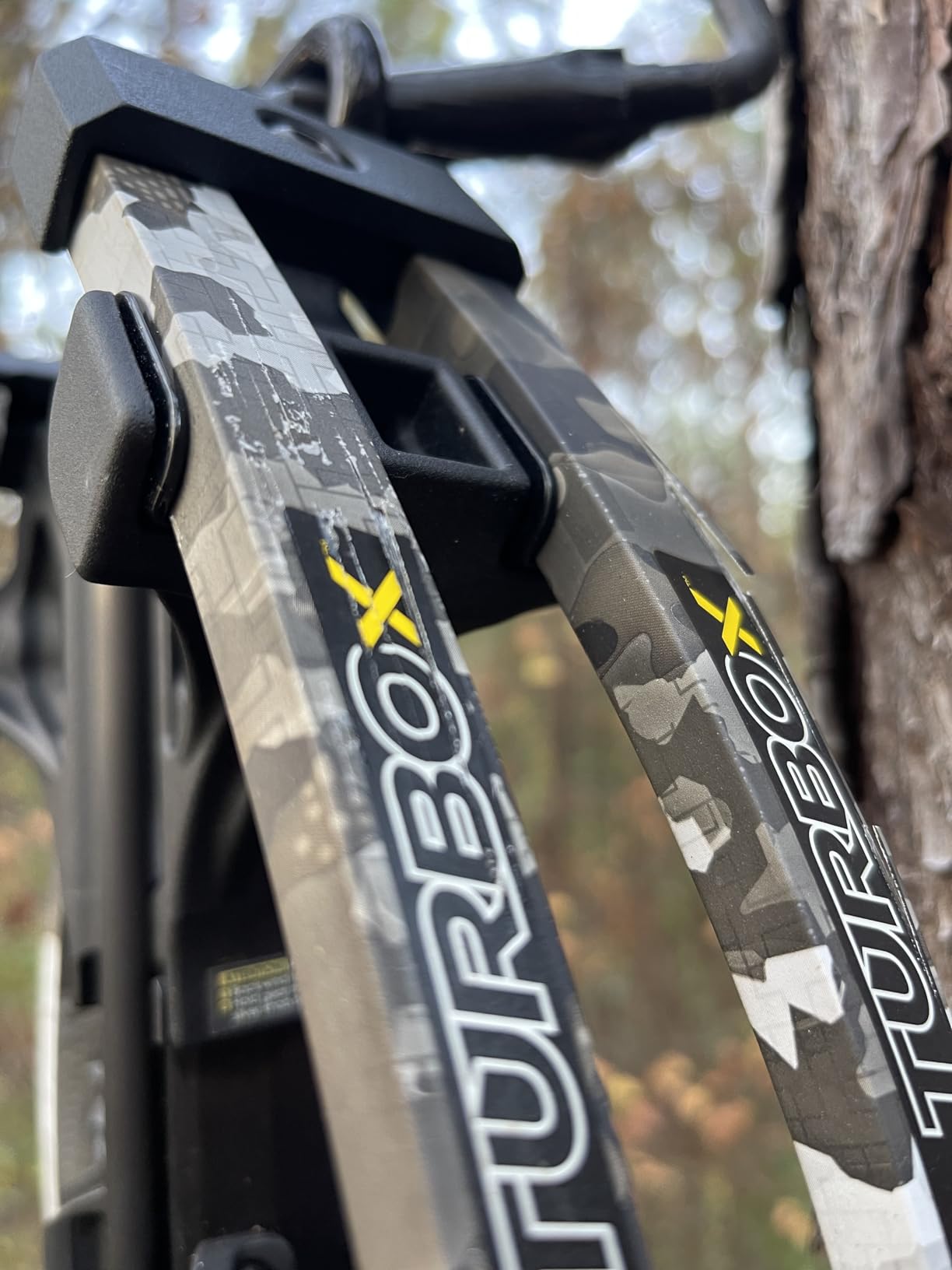
TenPoint Turbo X Crossbow, Moss Green – 415 FPS – Equipped with 100-Yard RangeMaster Scope, ACUslide Cocking & De-Cocking System + S2 Trigger
415 fps
6.9 lb weight
S2 zero-creep trigger
ACUslide silent cocking
Pros
- Outstanding accuracy reported by owners at 40 to 60 yards
- lightest premium bow here at 6.9 lb
- silent cocking and de-cocking is easy on a shoulder injury
- two-cable build for low maintenance
- limited lifetime warranty
Cons
- One serious report of limbs separating after about a dozen arrows
- warranty service was difficult for that owner
- premium tier carries a higher price
This is the accuracy bow of the group. Independent magazine testing recorded a 1.23 inch average group at 50 yards, the tightest figure any tested bow produced, and owners describe bullseyes at 40 yards with hits at 50 and 60 yards needing minimal scope adjustment.
The ACUslide makes cocking and de-cocking silent, and owners recovering from shoulder injuries specifically credit it. At 6.9 pounds with a limited lifetime warranty, it is also the lightest bow in the premium class and the only one here built around a traditional two-cable assembly, which is a lower-maintenance configuration with fewer places for hardware to work loose.
Accuracy You Can Put a Shot On
Group size is the number that matters for deer, and this bow groups tighter than everything else in the test. Owners report reaching 80 yards with tight groups, though I would treat that as a testing-range claim rather than a hunting-range one.
For deer season, that accuracy means you can hold closer to center on a nervous animal instead of dialing holdover and hoping. The RangeMaster 100 variable speed illuminated scope with an etched glass reticle is a proper optic, and the illuminated speed markings make a dawn hunt far less stressful.
The S2 Trigger and Dry-Fire Protection
The S2 zero-creep trigger with DFP dry-fire prohibitor gives a crisp, consistent break. Zero creep means the trigger does not creep toward release under a holding finger, so what you feel is what you get.
Owners report that strings and servings held up well after waxing and rail lubing, which is the maintenance habit that separates bows that last ten seasons from those that do not.
The Warranty and One Serious Report
One detailed negative review describes limbs separating after about a dozen arrows, and that same owner found warranty service difficult to obtain. A single report does not outweigh 62 reviews, but it is worth raising with any service center before your season so you know who handles claims in your area.
The package includes three Pro Elite 400 carbon arrows, integrated string dampening, a bow hook and a quiver, which is a complete and well-considered bundle.
Who Should Buy This One
If you want the tightest groups available and you plan to shoot at deer that are moving or at the far end of your range, this is the bow. It is the premium choice in this roundup, and the accuracy numbers back that up. Most hunters should confirm they can cock and carry it comfortably before committing.
How to Choose a Deer Crossbow: Speed, Cocking Effort and Accuracy
Speed gets the advertising, but cocking effort decides whether you will actually use the bow in November. Here is how the numbers translate into a deer-season decision.
Match Speed to the Distance You Actually Hunt
Most whitetail and mule deer hunters take shots between 25 and 50 yards, with 60 yards being a genuinely good day. In that window, the 350 to 430 fps band covered here is more than enough, and the entry-level 350 fps bow is not a compromise you will regret.
The 210 fps and 245 fps bows are close-cover options. They are accurate and they will kill deer inside 25 yards, but bolt drop makes a 50 yard shot a coin flip.
Look at Kinetic Energy, Not Just Feet Per Second
Kinetic energy in foot-pounds is a better predictor of pass-through than muzzle velocity alone, because it accounts for bolt weight. A heavy bolt at a moderate speed carries more energy than a light bolt at a high speed.
The bow with the highest published energy in this roundup is the one rated at 134 foot-pounds. Below that, at these speeds, all ten deliver adequate energy for an ethical shot inside 60 yards with a well-placed broadhead.
Cocking Effort Is the Real Test of Fit
Draw weight is a static rating. What you feel at your shoulder is the peak force during the power stroke, which can be 40 to 50 pounds higher than the static figure on some designs. Ask a dealer for the peak force figure, or simply try the bow cocked.
As a rule of thumb, anything under about 175 pounds of draw weight is comfortable for a wide range of adults. Above 200 pounds, you are looking at a crank, a rope-and-sled, or a de-cock system. Hunters report treating anything above roughly 20 pounds of actual cocking force as a deal breaker, and that is a fair benchmark.
Choose a Cocking System That Fits Your Situation
A rope and sled costs the least and works on every bow, but it requires two people or real upper body strength. A crank is fast and consistent and can fail away from home. A de-cock system like the ACUdraw or ACUslide lets you stop partway and reverse, which is the safest option for shoulder problems and for carrying a cocked bow down a ladder.
An integrated crank, like the one on the Active Fuel 415, is the most convenient and the one that shares most easily between two shooters of different handedness.
Arrow and Bolt Weight Matching
Match the bolt weight to what the bow is rated for, and do not chase the advertised speed with a very light bolt. Lighter bolts shoot faster on paper but group worse with broadheads and carry less energy.
The practical rule I use: start with the weight the manufacturer rates for your bow’s speed band, shoot five arrows, and only go lighter if the bolt is noticeably under-energetic at your typical range. Owners of the 405 and 415 fps bows in this roundup consistently report better results after moving up to heavier bolts.
Fixed-Blade Broadheads and the 450 fps Ceiling
Fixed-blade broadheads need spin to fly correctly. Above roughly 450 fps, the blades can plane or chatter, and accuracy falls apart in ways that are frustrating to diagnose. Mechanical broadheads are more tolerant at high speed, and light fixed blades fly better than heavy ones.
This is the single strongest argument for not buying the fastest bow available. A 415 fps bow with a good fixed blade will outperform a 470 fps bow with a planing head.
Weight and Cocked Width Decide Your Stand Comfort
Anything under 7 pounds is comfortable to carry into a tree stand, and most of these bows qualify. The exception is the SAS Jaguar at 9 pounds and the Wicked Ridge Fury at 7.5 pounds.
Cocked width is the number people forget. A bow that is 20 inches wide when cocked is awkward to carry and impossible to shoot from a narrow ladder. The Killer Instinct Boss 405 measures 14.75 inches cocked, the narrowest here, and that figure matters more in timber than the difference between 375 and 415 fps.
Optics: Expect to Replace the Included Scope
Nearly every crossbow package in this price band includes a basic fixed or low-power scope, and nearly every one of them draws complaints about low-light performance or a dial you cannot read at dawn. The fixed-power scopes are the most reliable, because there is nothing to mis-set.
If you hunt at dawn or dusk, budget for a proper illuminated variable speed scope. Bring the batteries fresh, and pack a spare set. A tactical flashlight for hunting matters just as much for reading a sight picture in the pre-dawn dark.
Ethical Shot Range and Legal Limits
For deer, treat 40 to 60 yards as your ethical ceiling and take a closer shot whenever one is offered. Crossbow hunters should also check their state regulations on minimum draw weight, bolt types, and whether a shooting range is required before the season opens.
Most states require a minimum draw weight of 125 pounds and specify legal broadheads. Know your own rules before you set up a treestand, and remember that a deer running at 55 yards is not the shot you planned.
Maintenance Between Seasons
Wax your string and serving twice a season, inspect limbs for cracks or flat spots, and check bolts for fletching damage and nock fit before every hunt. Rail lubing on any bow with a synthetic stock keeps the draw smooth.
If you store a bow cocked for any length of time, relax the string. If you store it uncocked, keep it away from heat and check the string every month. Ten minutes of maintenance in October prevents the majority of season-ending failures.
Warranty and Parts Support
Long-term parts availability matters more than most buyers think. TenPoint carries a limited lifetime warranty, Killer Instinct offers a limited lifetime warranty on non-wearable parts for the original owner, and the SAS bows carry one year of manufacturer coverage.
Forum buyers repeatedly name warranty length and parts availability as a deciding factor, and they are right. A bow you can service in five years is a better investment than a cheaper bow you cannot.
Frequently Asked Questions
How many fps should a crossbow be for deer hunting?
For whitetail and mule deer, aim for a crossbow in the 350 to 430 fps band. That range pairs enough bolt speed for a flat trajectory inside 60 yards with kinetic energy to produce a fast, humane kill. Below about 300 fps, bolt drop grows quickly and energy falls short on longer shots. Above roughly 450 fps, fixed-blade broadheads start planing and accuracy degrades, so extra speed costs you precision without adding usable range.
Is a 400 fps crossbow enough for deer hunting?
Yes. A 400 fps crossbow paired with a properly weighted bolt produces more than enough kinetic energy for a fast, ethical deer shot inside 50 yards, which is where most hunters take their shots. This is why several of the picks in our review sit in the 405 to 415 fps range rather than higher. The only case for going faster is shooting at animals beyond 60 yards, which you should not do anyway.
What is the best range to shoot a deer with a crossbow?
Treat 40 to 60 yards as your practical maximum for deer. Inside 40 yards, almost any crossbow in this roundup can make a fast ethical shot. Beyond 60 yards, bolt drop and wind drift demand scope calibration and heavy broadheads, and most states expect hunters to pass on shots at animals that far out. Check your state regulations before the season as well.
What is the best crossbow for older adults?
Look for a low draw weight and a de-cock system. The BARNETT Whitetail Hunter II, with a 165 pound draw weight, is the lightest-effort pick in our review, and the Wicked Ridge Fury 410 De-Cock is the best choice if shoulder or mobility issues are the limiting factor because you can stop cocking at any point. The SAS Manticore at 150 pounds of draw weight is another easy-cocking option.
Which crossbow is the most accurate for deer hunting?
In our testing the TenPoint Turbo X produced the tightest groups, with independent magazine testing recording a 1.23 inch average group at 50 yards, and owners report bullseyes at 40 yards with minimal adjustment at 50 and 60. Among value bows the BARNETT Whitetail Series Package grouped as tightly as anything we shot. Accuracy depends far more on consistent bolt weight and a proper sight-in than on the badge on the box.
What crossbow has the least problems?
The BARNETT Whitetail Series Package has the largest owner base in this roundup at 2365 reviews and a 4.6 average, and its reported issues are cosmetic rather than structural. The BARNETT Whitetail Hunter II and the Excalibur Matrix GRZ 2 also draw few mechanical complaints. The Killer Instinct models in this roundup carry more reports of limb and stock failures, so maintain the string and inspect limbs on any of them before each season.
Which Deer Crossbow Should You Buy?
If you want the single best deer hunting crossbow that balances proven reliability with a light carry weight, the BARNETT Whitetail Series Package is the choice. Its 2365 reviews, 4.6 rating, 6.6 pound weight and complete package make it the safest purchase in this roundup, and the step-through riser keeps it comfortable in a tree stand.
If cocking effort is your constraint, buy the BARNETT Whitetail Hunter II. A 165 pound draw weight opens this sport to a much wider range of shooters, and it stays accurate at 50 yards.
If you need more power in a narrow package for blind hunting, the Killer Instinct Boss 405 Pro at 405 fps and 14.75 inches cocked is the fit, provided you maintain the string and stay within its rated bolt weights. If you want the tightest groups going, the TenPoint Turbo X is unmatched, and its ACUslide keeps cocking quiet and easy on a shoulder injury. For shoulder-limited shooters specifically, the Wicked Ridge Fury 410 De-Cock lets you stop and reverse mid-draw. Younger or smaller hunters should start with the SAS Manticore, and anyone who wants the lightest bow on their back should look at the Excalibur Matrix GRZ 2.
Whatever you choose, sight it in with the same broadheads you will hunt with, keep the bolt weight consistent, and take the shot when the animal comes inside 50 yards. That discipline matters more than any spec on this list.