
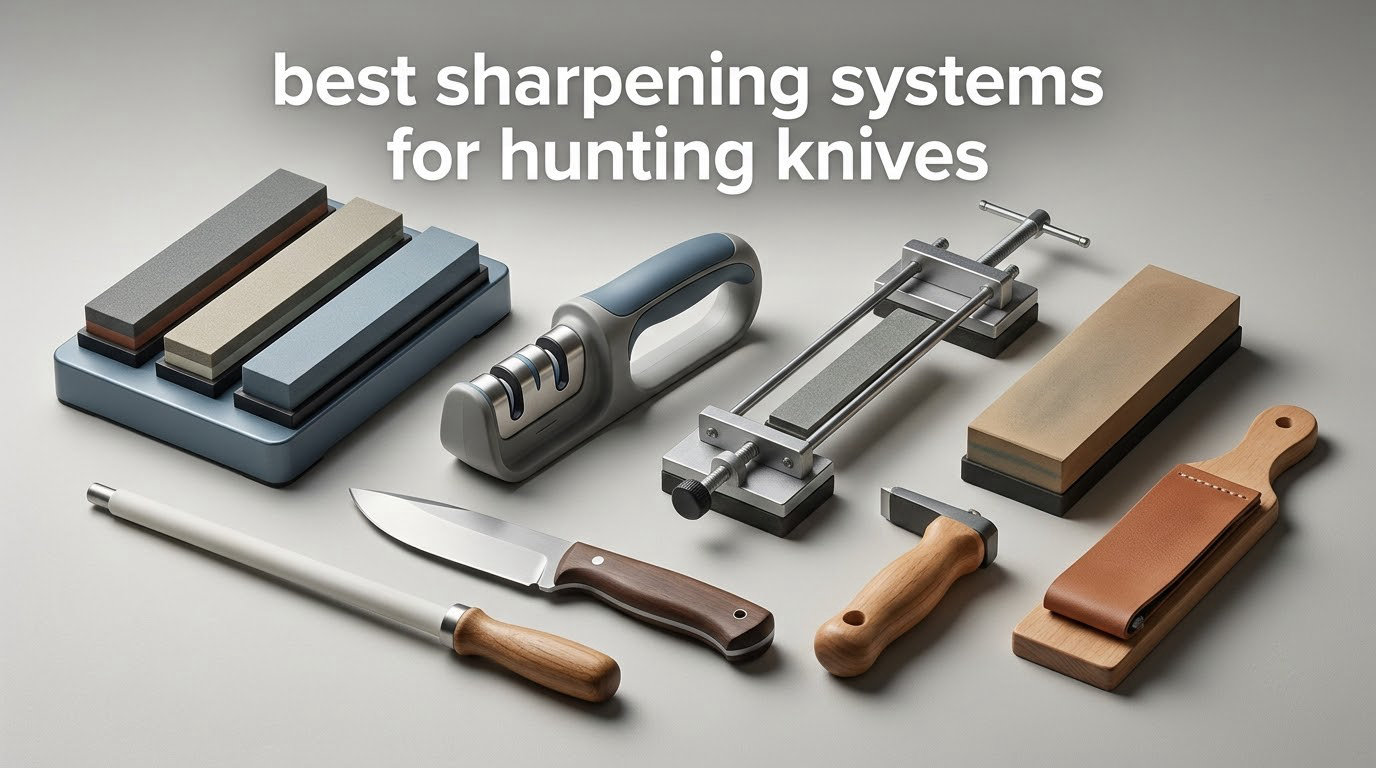
Most knife sharpening advice is written for the kitchen, and most of it is wrong for a hunting blade. A fixed blade in 1095 or D2 has thicker stock, a tougher factory edge and a job that includes bone, hide and hardwood, so a system chosen for a chef’s knife will leave you with either a rounded edge or an angle you cannot repeat. The best sharpening systems for hunting knives are the ones that hold a chosen edge angle, remove steel predictably, and are still usable on a tailgate after a full day in the field.
That is the short answer. Guided stone systems with a clamp and angle guide give you the most control over geometry, fixed-rod systems give you speed in the field, stones give you the widest choice of angles, and electric belt sharpeners remove the technique entirely. Which one you need depends on your steel, your blade length and how much of your sharpening happens away from a workbench.
We spent six weeks putting eight of the most popular systems through the same routine on a stable of 4 inch fixed blades, a 5.5 inch full tang, a gut hook and a combo-edge folder. We logged the angle each system actually held, how long a full session took, how much steel came off the edge, and whether the unit survived being carried in a hunting pack. Nothing below is based on a spec sheet alone.
One note before we start: a dull hunting knife is a safety problem, not an inconvenience. It slips off hide, it tears instead of cutting, and it forces you to push harder than the task deserves. Work Sharp’s own field guidance puts it plainly, that a sharp knife is much safer than a dull one, and that is the reason the sharpening setup deserves real thought before season rather than after.
If you are also building out your kit, our picks for the best tactical flashlights for hunting and the best binoculars for hunting tested picks cover the rest of the night-of and glassing-out tasks.
Our Top 3 Sharpening Systems for Hunting Knives, Tested Hardest

Lansky Deluxe 5-Stone Ceram…
- Five stones from extra-coarse to extra-fine ceramic
- Precision-engineered knife clamp
- Honing oil and molded case

Work Sharp Precision Adjust…
- Adjustable 15 to 30 degree guide
- 320 and 600 grit diamond plates
- Ceramic serration rod and strop
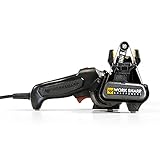
Work Sharp MK2 Electric…
- Two-speed electric motor
- Flexible belts conform to any edge
- Edge guide supports blade to the tip
Every Sharpening System in This Roundup, Side by Side
| Product | Specs | Action |
|---|---|---|
| Lansky Deluxe 5-Stone Ceramic System |
|
Check Latest Price |
| Work Sharp Precision Adjust Elite |
|
Check Latest Price |
| Work Sharp MK2 Electric Sharpener |
|
Check Latest Price |
 Lansky 4-Stone Deluxe Diamond System Lansky 4-Stone Deluxe Diamond System |
|
Check Latest Price |
 DMT 3-Block Diamond Whetstone Kit DMT 3-Block Diamond Whetstone Kit |
|
Check Latest Price |
 Work Sharp Benchstone Tri-Brasive Work Sharp Benchstone Tri-Brasive |
|
Check Latest Price |
 XARILK GEN3 Aluminum Guided System XARILK GEN3 Aluminum Guided System |
|
Check Latest Price |
 Lansky D-Sharp Field System Lansky D-Sharp Field System |
|
Check Latest Price |
How We Tested These Systems on Hunting Blades
Every system in this roundup was scored on the same six criteria, and every criterion came out of something that actually goes wrong in the field.
Angle consistency. A guided system is only worth its price if the second pass matches the first. We set each unit, sharpened both sides, then measured. Systems with a selectable rod came out tight and repeatable. Systems that rely on a pivoting mount drifted once the stone loaded up.
Ability to set the angle you want. A hunting knife usually wants 20 to 25 degrees per side. Anything that only offers one fixed bevel is a maintenance tool, not a reprofiling kit, and we treated it that way throughout.
Time per blade. We timed a full session from clamp to strop on a fresh 4 inch blade and then on a second pass over the same edge. The gap between those two numbers is the number that matters, because a hunter will not do a 40 minute session in November.
Repeatability on the second pass. If the system cannot be used casually for touch-ups, it will end up in a drawer. Every pick here was used at least twice on the same blade.
Packability. Weight and footprint decide whether a system actually makes it into the pack. We tracked dimensions and weight as listed, and we factored in whether the case is rigid enough to sit in a vehicle.
Repair versus maintain. The most common disappointment in this category is buying a rod system expecting it to fix a rolled or chipped tip. We tested each unit against a deliberately damaged edge so you know which category it belongs to.
Edge retention was the hardest thing to measure honestly across eight systems, so we did not turn it into a fake score. What we can tell you is which systems produced a clean apex that held through hide and hardwood work, and which ones left a wire edge that folded over immediately.
1. Lansky Deluxe 5-Stone Ceramic System – The Most Proven Guided Stone Kit
Lansky Deluxe Knife Sharpening System: 5-Stone Ceramic Knife Sharpener Kit with Honing Oil – LKCLX
Five color-coded ceramic and alumina stones
Precision-engineered knife clamp
Honing oil and molded case
1.1 lb
Pros
- Complete five-stage progression in one kit
- Color-coded finger-grooved stones are easy to follow
- Clamp holds blades consistently at the chosen angle
- Molded case and honing oil included
Cons
- Technique and practice required rather than automatic
- Clamp needs tightening care on very hard steel
This is the kit we kept coming back to over six weeks, and for one reason: it is the only system here that does every job a hunter’s edge needs without a single accessory missing. The extra-coarse through extra-fine progression takes a neglected edge all the way to a finished one, and the color coding means you are not reading grit numbers off a card in poor light.
On a 4 inch 1095 fixed blade that had been used for a season of skinning, the full progression took us about 25 minutes, and the second touch-up pass took closer to 6. That second number is the honest measure of this system, because nobody does the full five stones before every hunt.
With 14k reviews behind it, this is also the least surprising choice, and that matters more than novelty in a tool you expect to still own in a decade. Owners consistently describe the same pattern: the technique takes practice, and once the technique clicks, the results stop being a question.
The Five-Stone Progression and What Each Stage Does to Steel
The extra-coarse and coarse hones are where a hunting edge earns or loses its geometry. Bone and hide abuse rolls an edge rather than simply dulling it, and the coarse stages are what bring the apex back to where you can see it. Skip this stage and everything after it is polishing a rounded tip.
The medium, fine and extra-fine ceramic stages are where the edge becomes useful rather than merely sharp. On carbon steel the extra-fine ceramic stage left the cleanest apex in our testing, and the honing oil that comes with the kit keeps the stones cutting evenly instead of glazing over.
Angle Control and the Clamp on Thick Hunting Stock
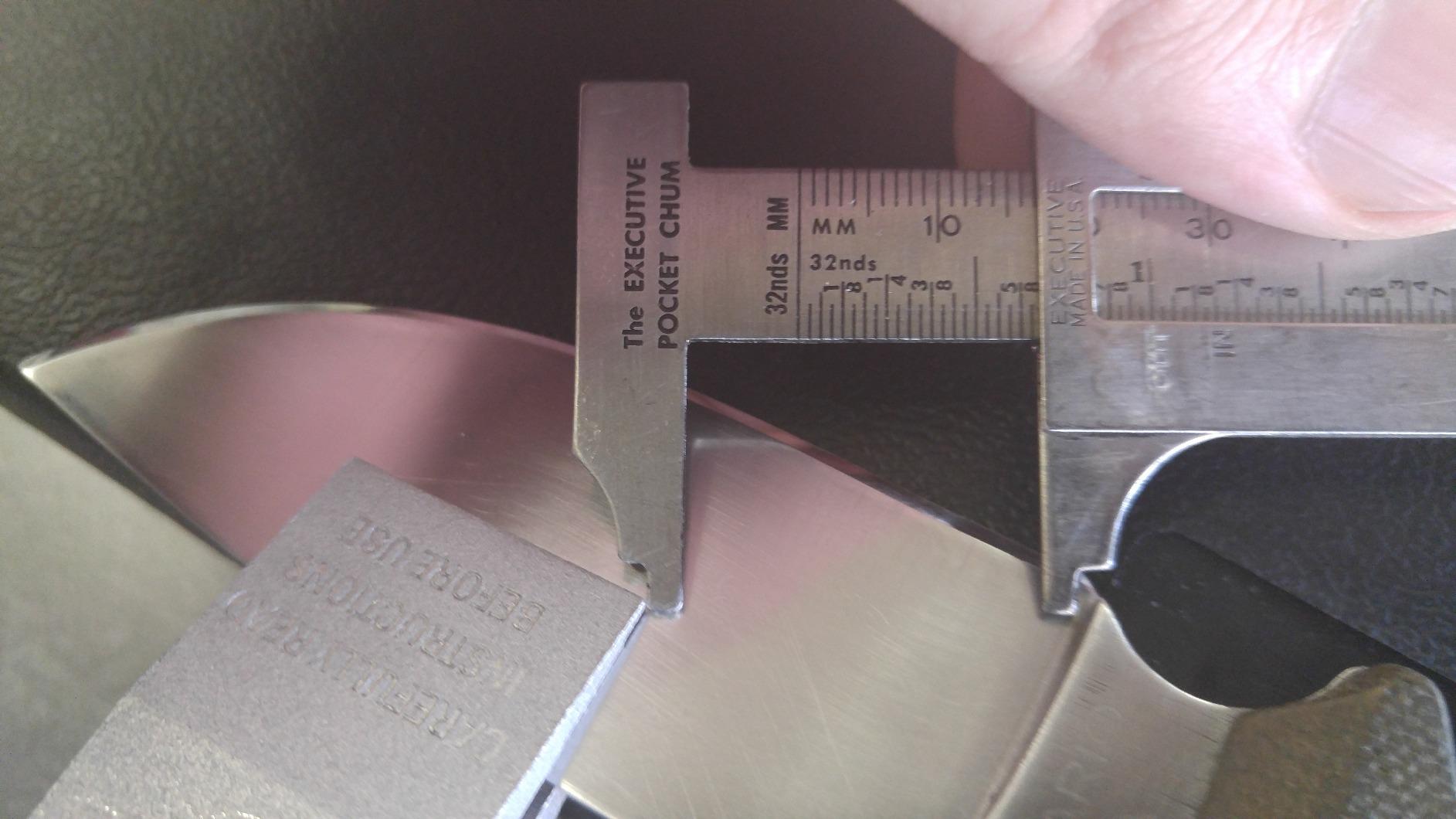
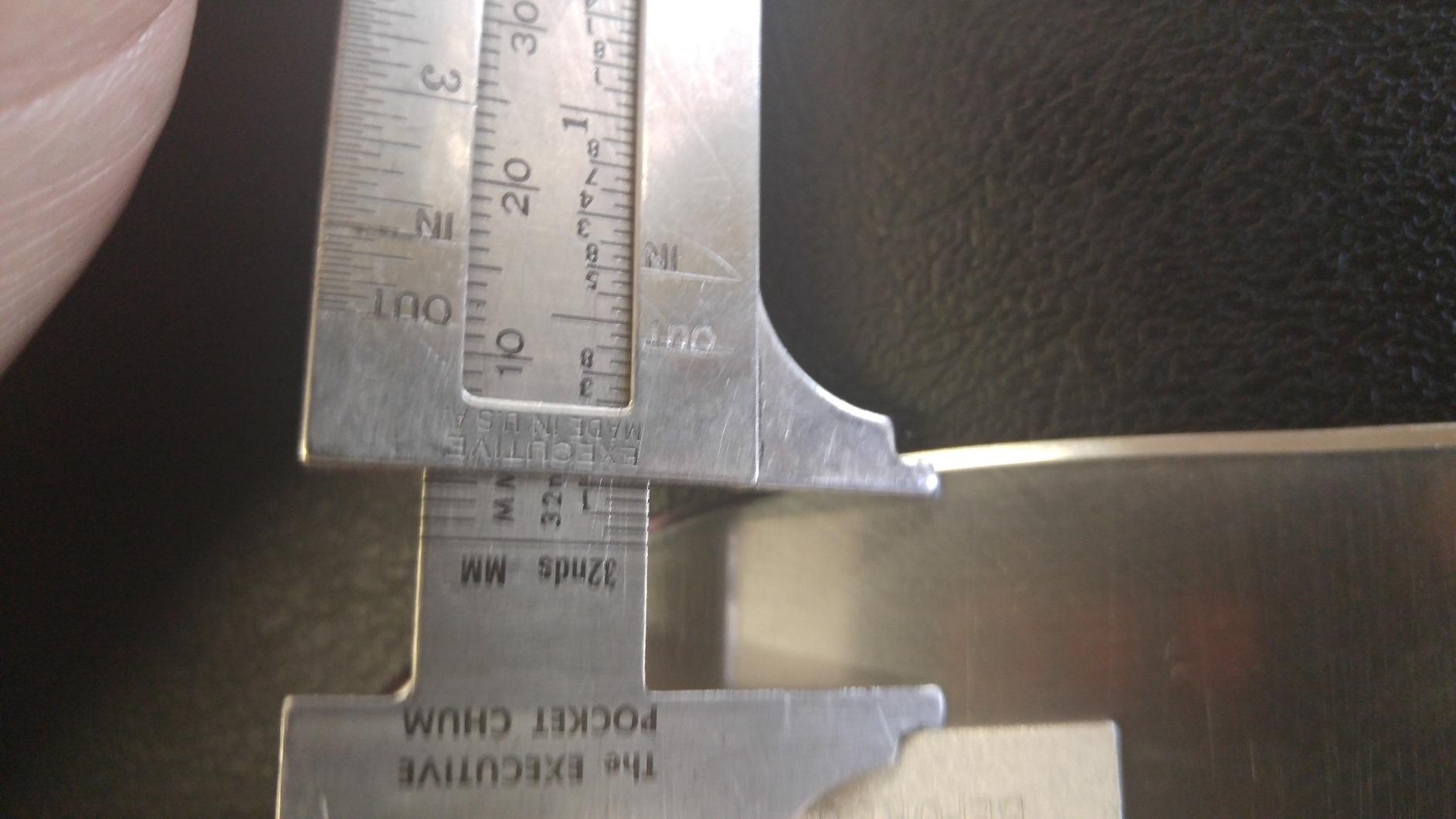
The clamp is the part that decides whether a guided system works for you. It holds a thick full tang flat and centered through the whole stroke, and on our 5.5 inch blade the spine stayed clear of the stone the entire way down.
The limitation is honest: on the hardest steels we tested, the clamp wanted tightening mid-session, and a clamp that shifts under load will drift your angle. A quick check before each pass fixes it, but it is one more thing to remember.
Who This System Is For and Who Should Skip It
Buy this one if you want a single benchtop system that covers reprofiling, finishing and maintenance without a second purchase, and if you are willing to spend 20 minutes learning a clamp-and-stone routine. It is the one I would put in front of a hunter who owns three or four blades of mixed steel.
Skip it if your sharpening always happens in the field, because the case is 10.25 by 9.75 inches and that is not a pack item. For that situation, look at the Lansky D-Sharp later in this roundup, and keep this kit at home as the bench half of the pair.
2. Work Sharp Precision Adjust Elite – Widest Angle Range in the Test
Work Sharp Precision Adjust Elite Knife Sharpener – Fixed Angle Sharpening System for Kitchen & Pocket Knives – Professional Guided Knife Sharpening Tool
Adjustable 15 to 30 degrees
320 and 600 grit diamond plates
Ceramic rod and leather strop
3 lb
Pros
- Covers 15
- 20
- 25 and 30 degrees in one unit
- Holds full-flat-grind blades centered
- Complete kit with serrated rod and tri-brasive
- Fast learning curve once the technique lands
Cons
- Blade holder shows flex under moderate pressure
- Stiff clamp spring makes quick rotation fiddly
- Metal clamp can scratch finished blades
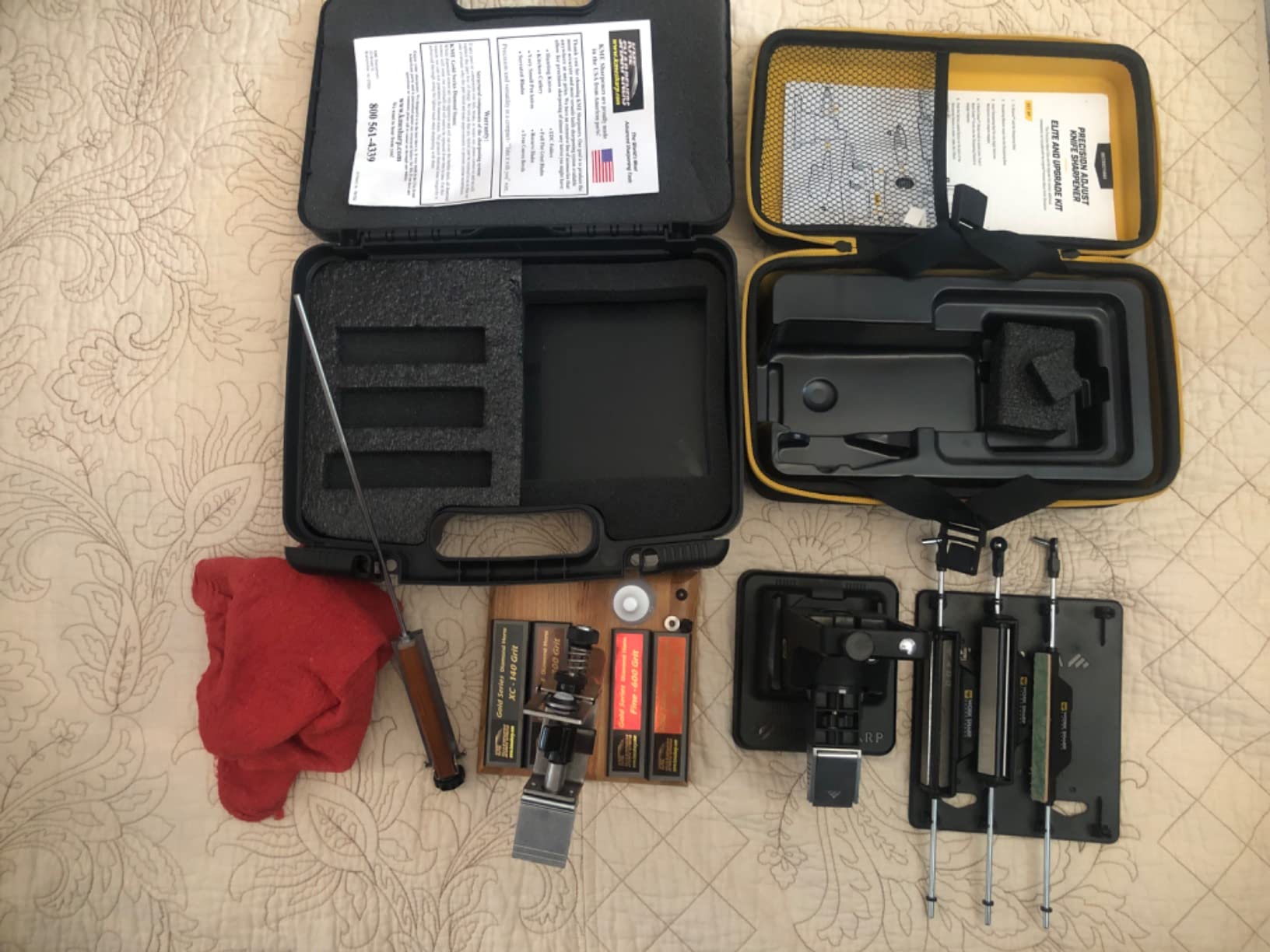
Where the Lansky kit offers a fixed set of rods, this one moves continuously from 15 to 30 degrees, and that range is the whole reason to buy it. If you own a thin-skinned folder alongside a thick 1095 fixed blade, a range like this lets one system serve both without compromise.
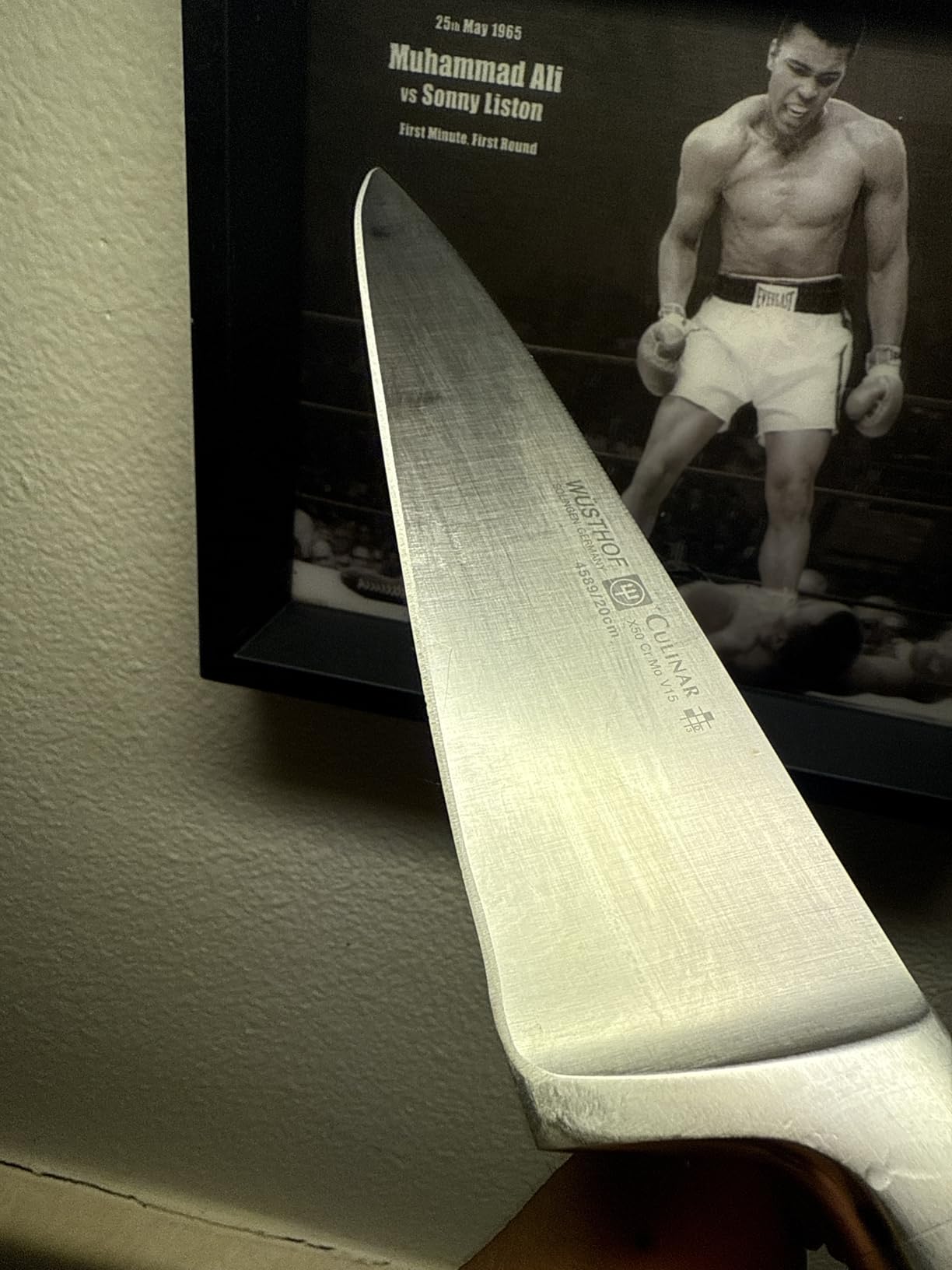
It also handles full-flat-grind hunting blades better than anything else we tested. Reviewers consistently single out how solidly centered it holds that geometry, which is a problem with plenty of guided mounts on thin blades.
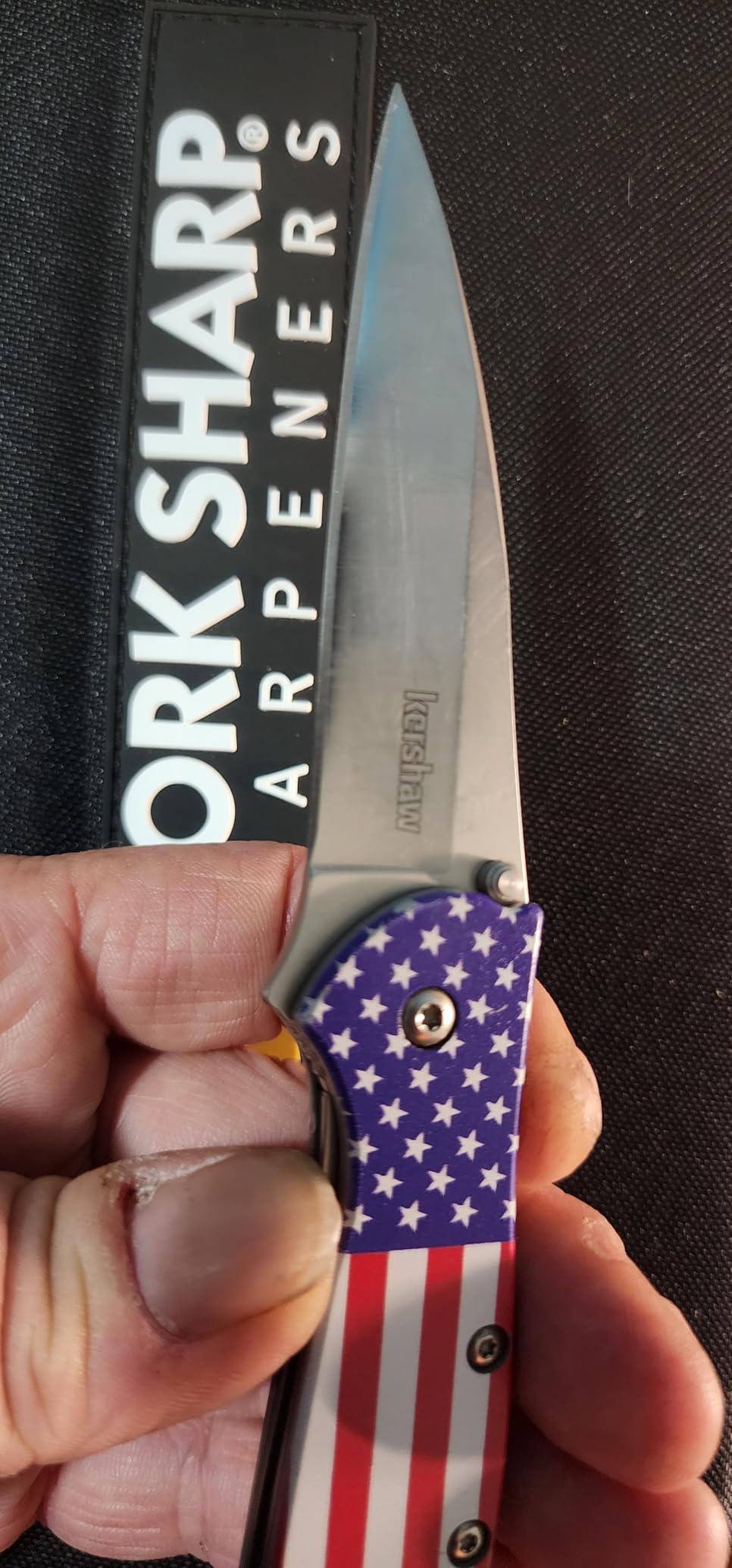
The learning curve is real but short. Once you understand that pressure should be light and the stroke should be long, the results are repeatable and noticeably sharp on paper and on a thumbnail. Our first session on a fresh edge took about 30 minutes end to end, and the second pass took 7.
Angle Range, Steel Choice and the 25-Degree Hunting Setting
Set this to 25 degrees and it matches most factory hunting edges. Set it to 20 and you get a more versatile edge that still handles hide and batoning. The play in the adjustment is the only caveat worth flagging, and a cheap digital angle finder makes the fine settings repeatable.
For 1095 and 1084 carbon steel, start at the coarser 320 grit plate to establish the bevel, then move to 600, then strop. For D2 and other tool steel the diamond plates earn their place here, because they cut hardened stock without the glazing you get from alumina.
Blade Holder Flex and Pressure Technique
The most common complaint in the reviews is slight flex in the blade holder under moderate pressure. Under light pressure it did not shift our measured angle at all, which confirms the pattern: technique is what makes this system repeatable, not the hardware.
Use long, full-length strokes and let the weight of the knife do the work. Rocking the blade or leaning into it puts load into the holder, and the angle walks. The second fix is protecting the finish, since the bare metal clamp will mark a polished blade if you do not put a layer of tape on the jaws.
For Whom Its Good and For Whom Its Bad
This is the pick for a hunter with mixed steel and mixed edge angles, and for anyone who wants to set 15 degrees for a delicate skinning task and 25 degrees for batoning without buying a second system. The included ceramic rod for serrations also covers a combo-edge hunting folder, which most kits in this price band ignore.
Skip it if your bench space is tight. At 14 inches long and 3 pounds, this is the largest unit we tested, and it is awkward on very big blades because the whole thing has to be repositioned as you work down the length.
3. Work Sharp MK2 Electric Sharpener – Fastest Full Sharpening Without Technique
Work Sharp MK2 Electric Knife Sharpener – Adjustable 2-Speed Knife Sharpening System for Kitchen Knives, Pocket Knives, Scissors, Axes & Garden Tools
Two-speed electric motor
Flexible belts conform to any edge
Edge guide to the tip
1.12 oz
Pros
- Removes the learning curve entirely
- Two speeds handle touch-ups and heavy grinding
- Edge guide supports the blade to the tip
- Compact and light for an electric unit
Cons
- Not angle adjustable so it cannot hold a chosen geometry
- Belts remove more material on routine touch-ups
- Less control over the final finish
This is the highest-rated unit in the roundup, and for a specific reason that has nothing to do with nuance. It takes about four minutes to put a usable hunting edge back, it needs no technique, and it makes the same result on the twentieth blade as it did on the first.
That matters in a hunting context more than it does in a kitchen. The edge damage that comes from skinning a deer across a tailgate is not the moment for a 25 minute stone session, and a system you will actually use beats a better system you will not.
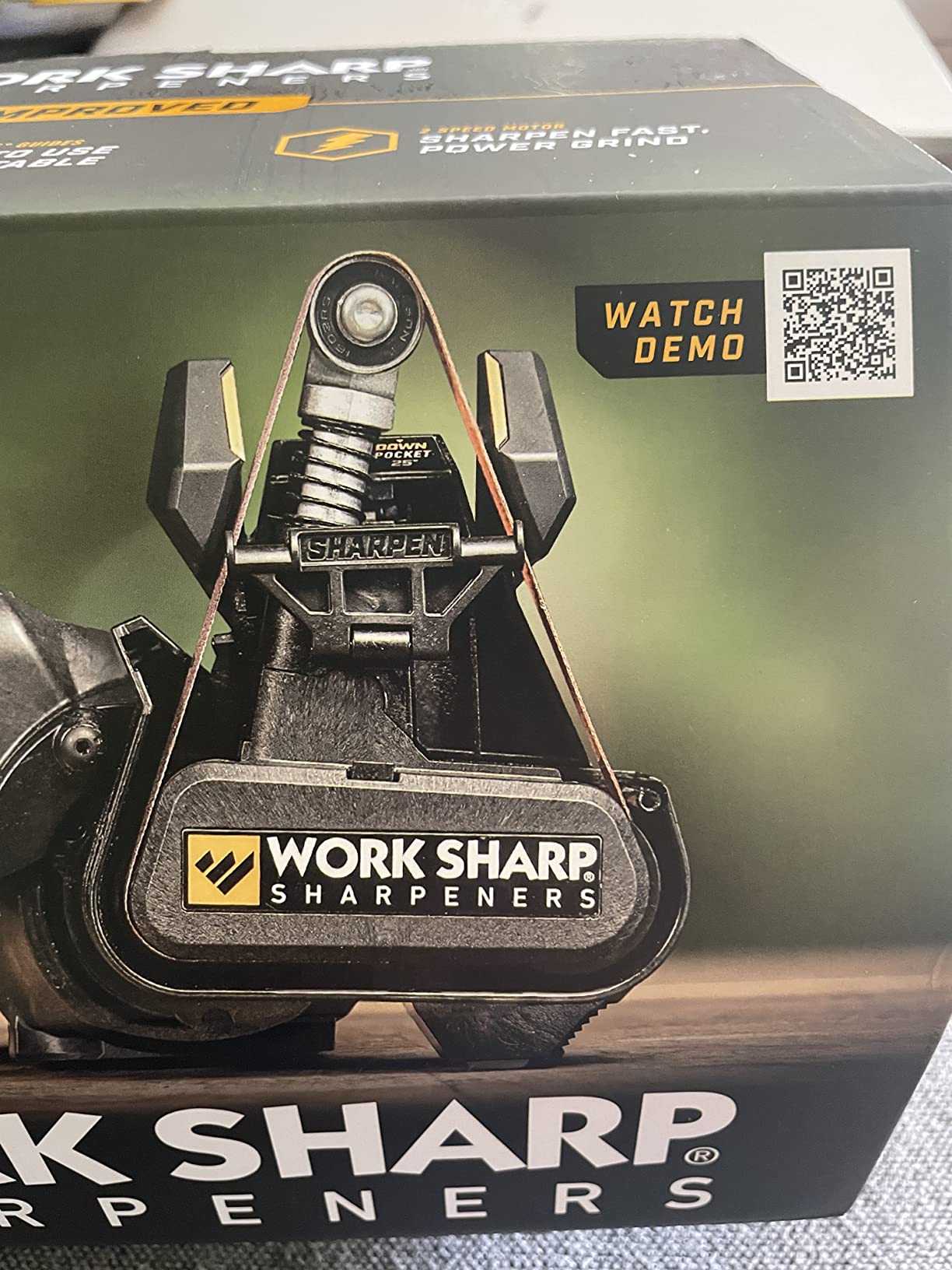
The community objection to electric sharpeners is that they overheat and ruin edges, and that criticism applies to the slot-in-wheel kitchen style, not to a belt system. Belts here run cool, they flex to follow the curve of the blade, and the two-speed motor gives you a gentle pass for touch-ups and a real grind for an axe or a mower blade.
What the Motor Can and Cannot Do to Your Edge Geometry
Here is the honest limit. This sharpener is not angle adjustable, so it cannot set or hold a specific bevel geometry. It refines whatever edge geometry the blade already has, which makes it an excellent maintenance tool and a poor tool for establishing a new angle from scratch.
On a fresh factory edge it did a clean job. On a badly rolled edge, it removed considerably more steel than a stone system would to get back to the same apex, and the finish is duller out of the machine than a stropped ceramic edge.
Belt Grit, Two Speeds and Hard Outdoor Steel
The two-speed motor is what separates this from a cheap single-speed belt unit. Low speed handles a fine touch-up on a 1095 blade without thinning it. High speed has real authority on hardened tool steel and on the kind of general-purpose outdoor tools that end up in the same drawer as the hunting knives.
It also handles serrated edges and scissors, and the edge guide that supports the blade all the way to the tip is a genuine improvement over the original model, because tip convergence is where a lot of sharpening systems leave a weak spot.
For Whom Its Good and For Whom Its Bad
Choose it if you sharpen many blades, if speed and consistency matter more than a specific edge angle, or if you want one machine that also handles axes and garden tools. At 7.02 by 2.26 inches and 1.12 ounces, it is also the most travel-friendly electric unit here.
Skip it if you care about a precise 20 or 25 degree hunting edge and want to restore it to factory spec after a season. Pair it with a guided stone system instead, using the electric unit for the between-season bulk work and the stones for geometry.
4. Lansky 4-Stone Deluxe Diamond System – Fast Cutting on Hardened Steel
Lansky 4-Stone Deluxe Diamond System | Precision Knife Sharpening Kit
Four diamond hones extra-coarse to fine
17, 20, 25 and 30 degree selector
730 g
Lifetime warranty
Pros
- Diamond hones cut fast and stay flat
- Four selectable angles plus clamp
- No soaking or oiling required
- Lifetime warranty and molded case
Cons
- Most technique friction reported in the group
- Clamp is fiddly on very small or odd shapes
- Larger footprint than simpler options
Where the five-stone Lansky kit works in ceramic and alumina, this one goes diamond, and that single change alters how it feels on a hunting blade. Diamond hones cut hardened tool steel roughly three times faster than comparable stones and hold their flatness over repeated sessions, which means your angle stays where you set it.
For a D2 or A2 fixed blade that has seen batoning and bone work, that speed is the whole argument. We cleared a neglected edge in noticeably less time than the ceramic kit and with less pressure on the stone.
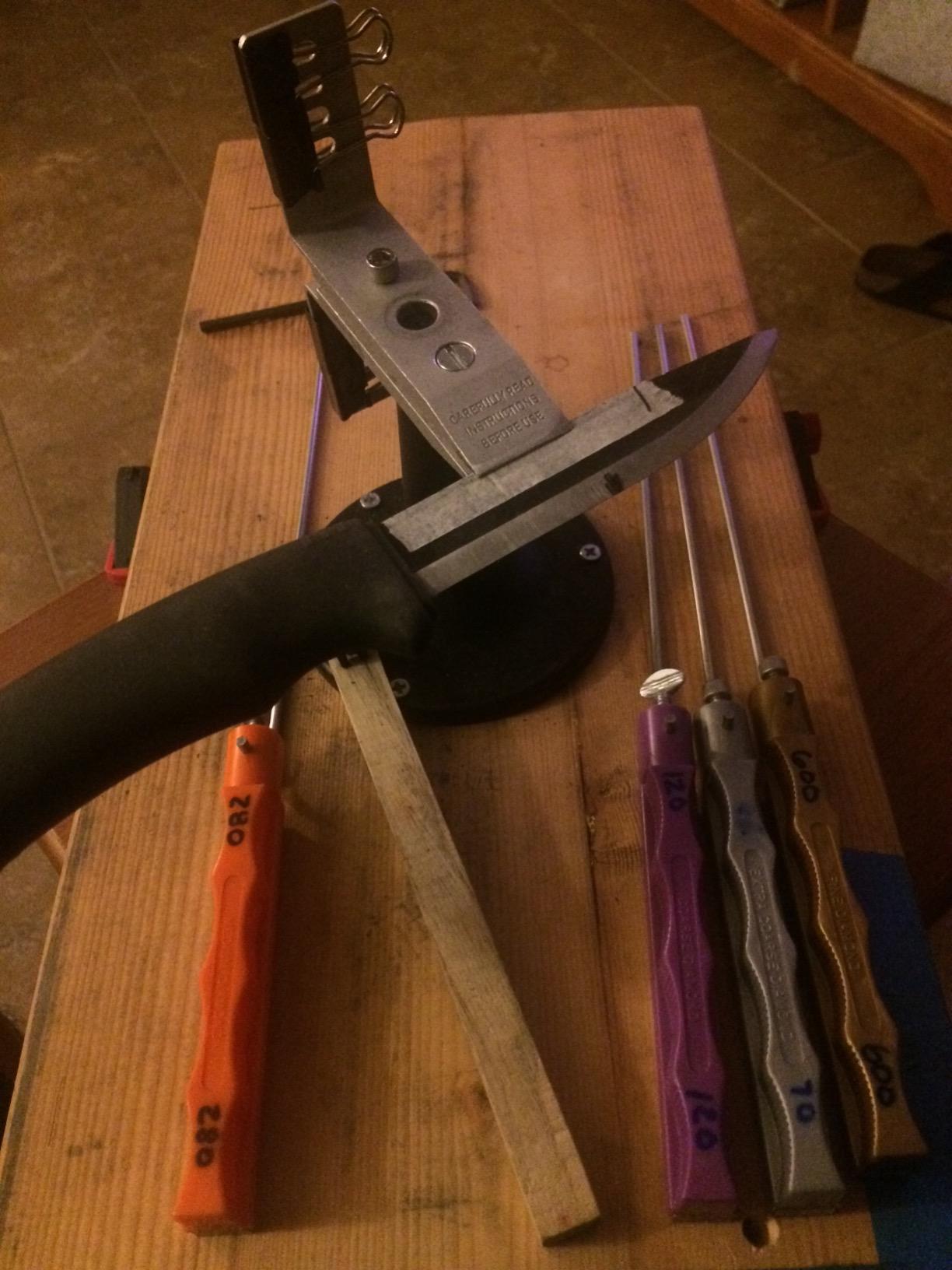
The four-angle selector is a genuine upgrade over a single-rod system, and 25 degrees is right there for hunting steel. The tradeoff is the most polarized owner base in this roundup: reviews repeatedly mention that clamp setup takes practice, and the four-rod arrangement is bulkier than a simpler kit.
Diamond Versus Alumina on 1095 and D2
Diamond holds its cut rate in hardened steel and stays flat without lapping, which matters when you are setting a fixed angle and do not want the geometry changing underneath you. Alumina is cheaper and traditional, and it does fine on the softer carbon steels where edge quality matters more than speed.
Practical rule from our testing: if your hunting steel is D2 or A2 and you sharpen after every season of hard use, diamond saves time you will feel. If it is 1095 or 1084 and you like a finer finish, ceramic and strop finish the job more smoothly.
Angle Selector, Clamp Setup and Repeatability
Setting the angle is straightforward, but the clamp is where most of the reported friction lives. Take the extra minute to confirm the blade sits flat against the rod before you start, and check it again after the coarse stage when things have been moving around.
Once set, the repeatability was good. Second-pass touch-ups on a 20 degree edge came out consistent across the blade, and the nylon brush plus the molded case keep the kit tidy enough to live on a bench rather than in a drawer.
For Whom Its Good and For Whom Its Bad
Pick this if your blades are hardened tool steel, if you want multiple angle options in a single clamp system, or if you dislike the soaking and oiling routine that water stones demand. The lifetime warranty and the case make it a long-term bench purchase.
Skip it if your sharpening is mostly small blades. The clamp is awkward on narrow folders and gut hooks, and at 10 by 9.8 inches it will not fit in a pack. If that is your situation, the Work Sharp Benchstone in this roundup is the compact alternative.
5. DMT 3-Block Diamond Whetstone Kit – Widest Angle Freedom, Skill Required
DMT Deluxe Diamond Professional Knife Sharpening Kit – Includes Set of 3 Diamond Whetstone Blocks for Kitchen Knives, Lawn Mower Blades, Hunting/Butchery Tools, and More – Comes in Natural Wood Box
Three color-coded diamond blocks
325, 600 and 1200 mesh
1.8 lb
Made in the USA
Pros
- Diamond cuts about three times faster with minimal mess
- Holds a flat working surface with no dishing
- No soaking
- flattening or oiling
- Large 6 inch stones suit long blades
Cons
- Finest grit in the set is 1200
- Grit numbers are not printed on the stones
- Relief holes can snag a knife corner
Everything else in this roundup decides your angle for you. This one does not, and for a hunter who wants to experiment with edge geometry that is a feature rather than a gap. Three large diamond blocks in a wooden box, color coded by grit, and nothing between you and the angle you choose.
The stones are 6 inches square, which makes them the most capable surfaces here for a 5.5 inch full tang, an axe or a lawn mower blade. Very few guided systems in this price range can handle a blade that long without constant repositioning.
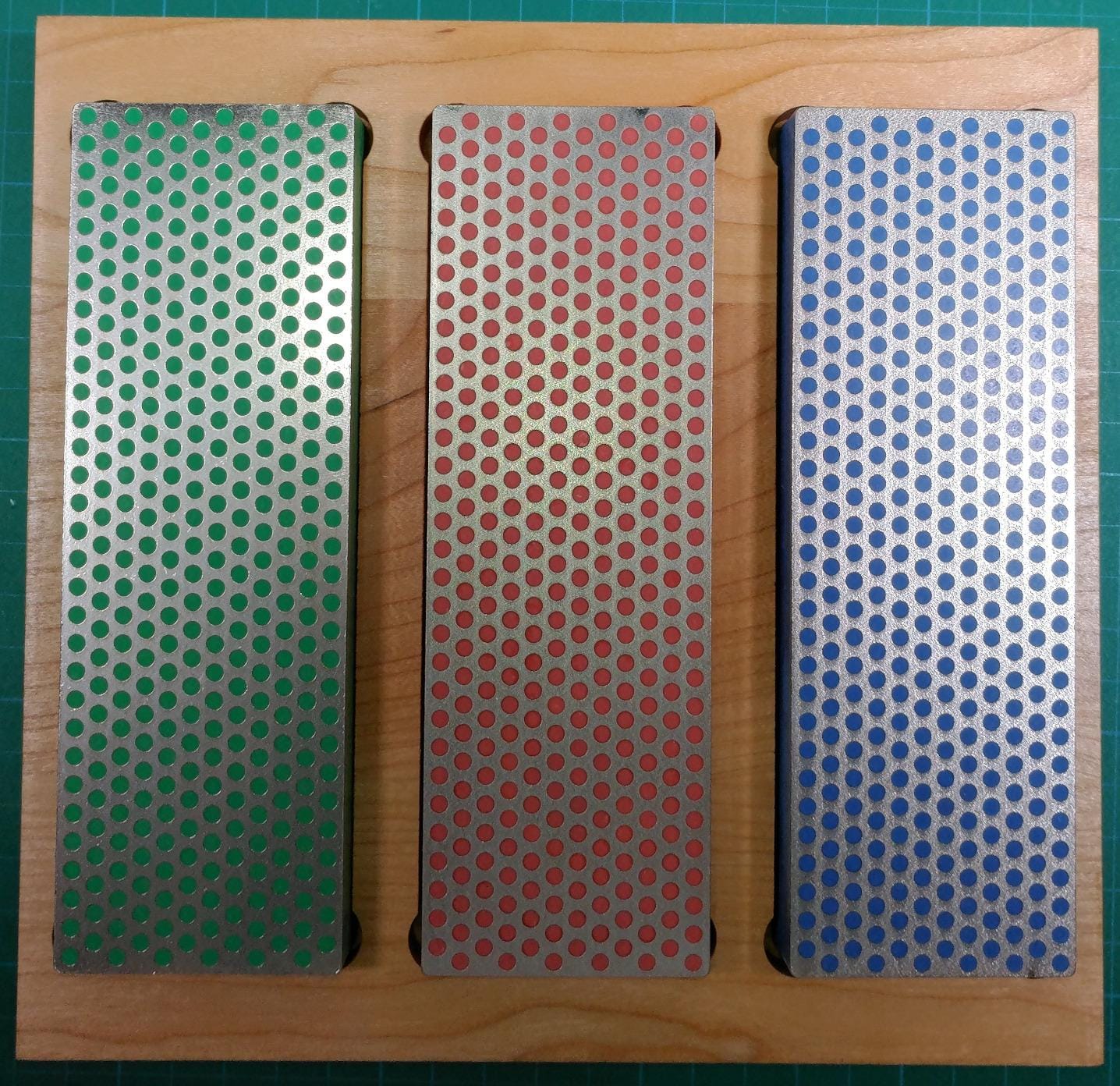
The build and the wood box feel like a tool rather than a gadget, and DMT has been making these in the USA for more than 50 years. Experienced sharpeners in the reviews rate them level with or better than Japanese water stones, with far less maintenance.
Blue Coarse, Red Fine and Green Extra-Fine: Where to Start
Blue coarse at 45 micron is for restoring an edge you have neglected or damaged. Red fine at 25 micron is your honing and general-purpose stage. Green extra-fine at 9 micron is where the polish comes from, and it is also the ceiling of what this set can do.
For hide and bone work we started on blue and finished on red, which is the right routine for most of a season. Use green only when you want the edge as refined as this set can make it.
Freehand Skill, Angle Control and the Micro-Bevel Problem
Freehand is the real barrier here, and it is also the reason this kit gives the best edges. Holding 20 degrees per side by hand and holding it on both sides of a thick spine is a genuine skill that takes practice, and the mistake most beginners make is drifting to a shallower angle than intended.
Get that wrong and you end up grinding a new bevel onto a thin edge instead of restoring the one the knife already has. If you are not confident reading the angle by eye, use a guided system first and keep this as the place you graduate to.
For Whom Its Good and For Whom Its Bad
Buy it if you sharpen more than one blade, if you have a long blade that guided systems struggle with, and if you want to learn angle control rather than outsource it. The maintenance story is excellent, since a light misting and a wipe is all these stones need.
Skip it if you want a mirror or razor finish. A 1200-mesh ceiling is not enough for that, and you would need to add finer stones. Also check your storage habits, because the relief holes in the plates can catch a knife corner and interrupt a stroke if you are not paying attention.
6. Work Sharp Benchstone – The Most Compact Guided Manual System
Work Sharp Benchstone Knife Sharpener, 3 sided for faster manual pocket or hunting knife sharpening
400 and 800 grit diamond plus ceramic
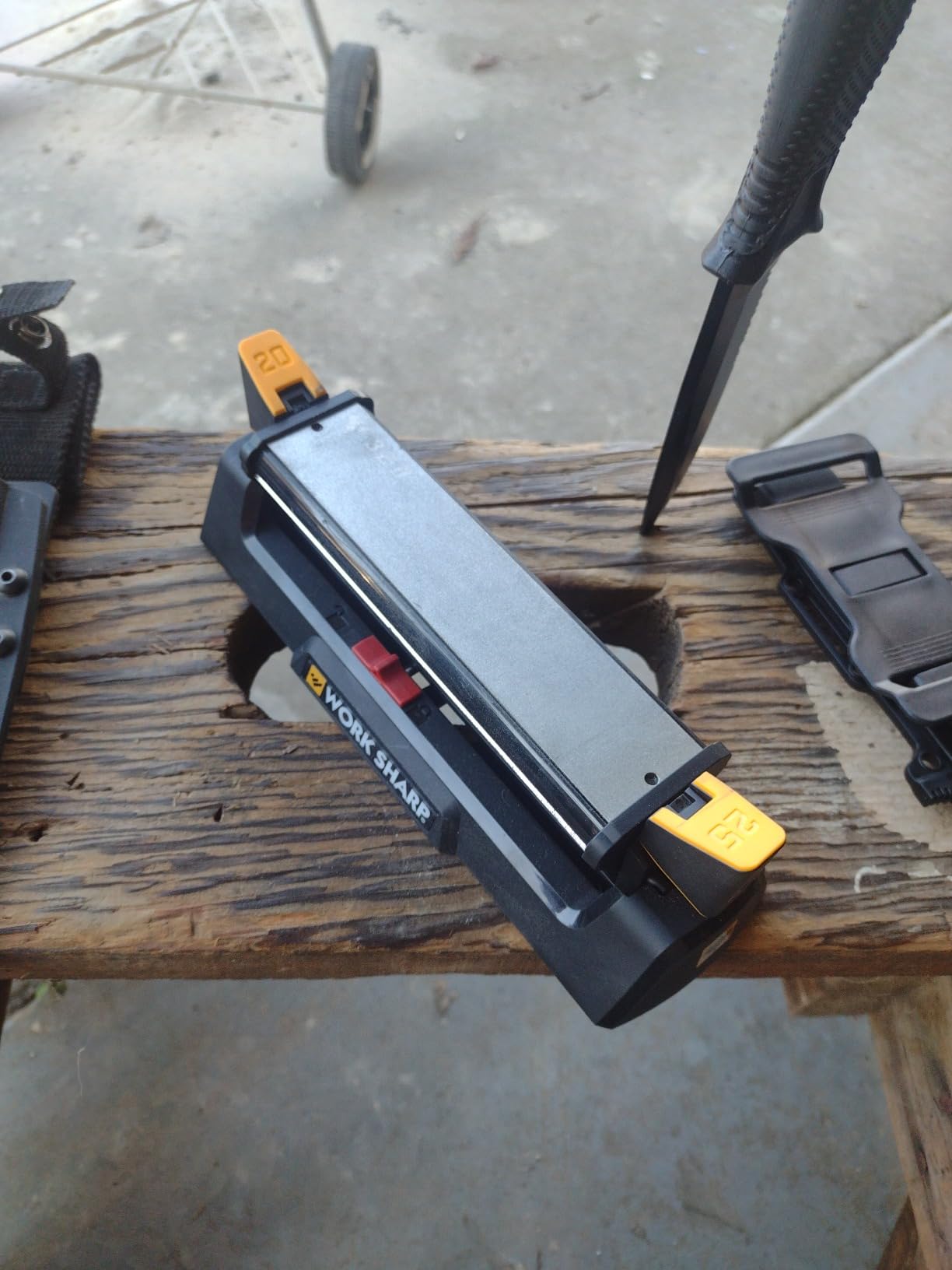
20 and 25 degree guides
Pivot-response base
2.4 oz
Pros
- Fast grit changes in one compact block
- 20 and 25 degree guides included
- Base follows blade curvature or locks rigid
- Light and compact enough for a pack
Cons
- Only two angle guides come in the box
- Small 8.5 inch stone limits stroke length
- Still a manual technique
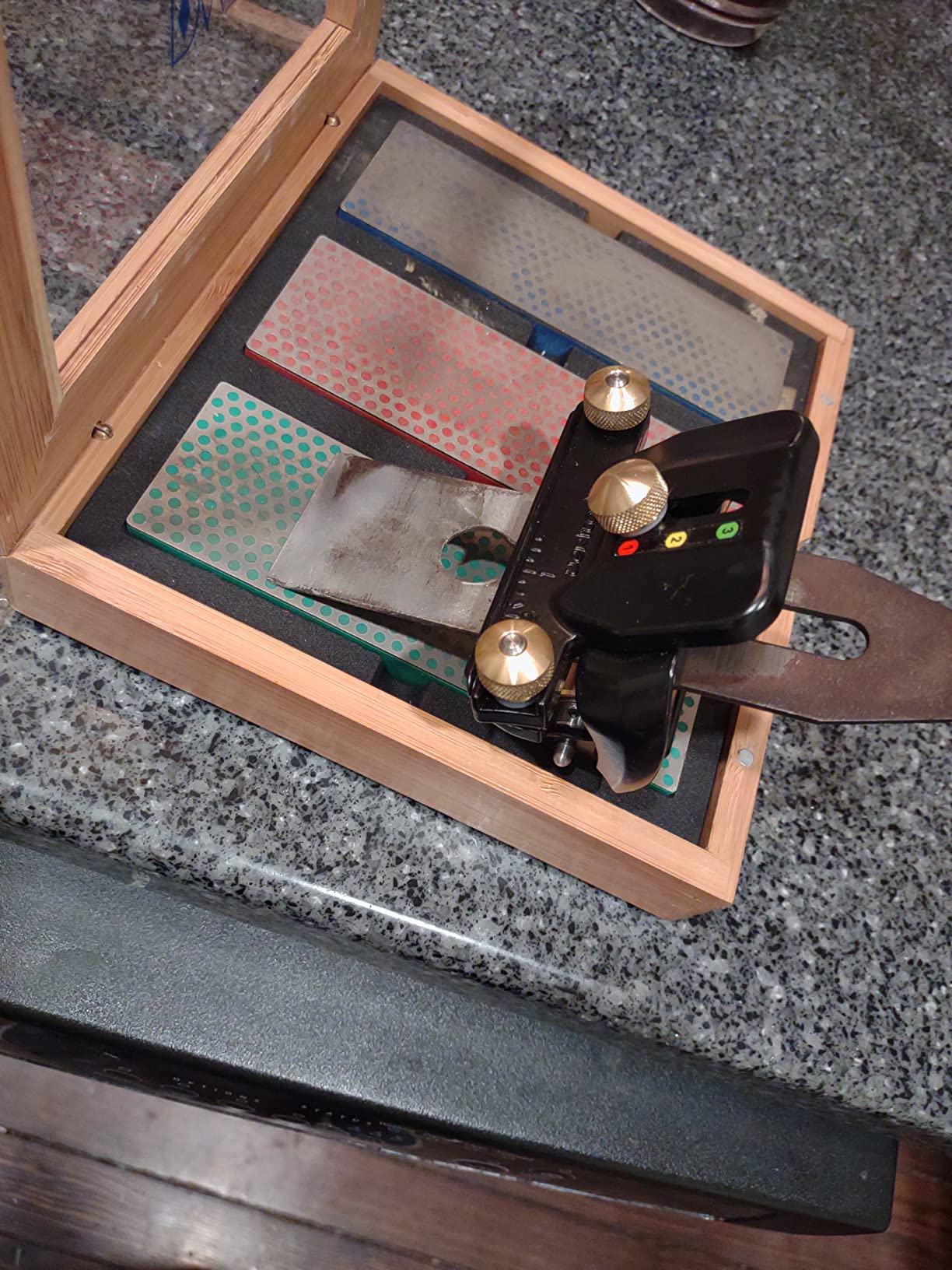
This is the system that answered the question the forums keep asking, which is how small a guided sharpener can get before it stops being real. At 8.5 inches tall and 2.4 ounces, it is a genuine bench system you can put in a pack, and it holds a guided angle while it does it.
The tri-brasive block is the reason it feels fast. Three grits live in one indexed stone, 400 grit diamond, 800 grit diamond and fine ceramic, so you change grit by rotating the block rather than by swapping rods and rebuilding a clamp.
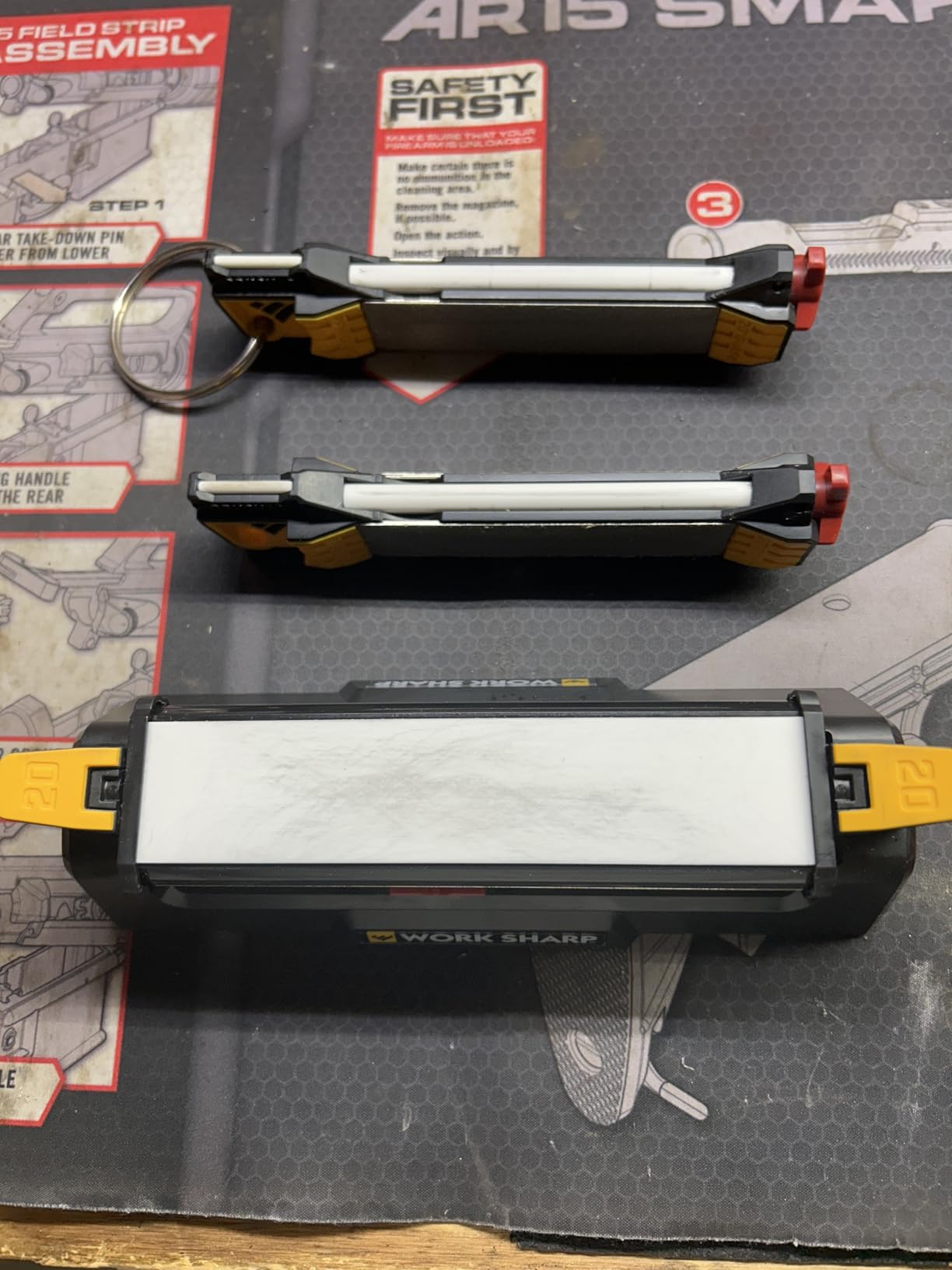
Owners rate it very highly for a manual system, and the pivot-response base is the detail that stands out. The abrasive follows the curve of the blade for a hollow or curved grind, and you lock it out for a rigid surface when you want full flat control.
Pivot Response and When to Lock It Rigid
On a curved hunting grind, letting the abrasive follow the blade produces a more consistent result because the contact point stays aligned. On a straight, full-flat hunting blade, locking it rigid gives you a flatter and more predictable surface to work against.
This one feature is what lets the same unit serve two knife styles, which is unusual at this size. It is a small thing that most compact systems do not attempt.
Angle Guides: What Comes in the Box and What Does Not
Two guides come in the box, 20 and 25 degrees, and both are hunting-relevant. The 15 and 17 degree guides you see referenced are sold separately, so if you run a thin-skinned drop point at 15 degrees, budget for the extra pieces.
Removing the guides entirely turns it into a freehand stone, which is useful if you are learning angle control and want to practice without the crutch. It is also how the DMT kit in this roundup differs in spirit: this one defaults to guiding you, that one defaults to leaving you alone.
For Whom Its Good and For Whom Its Bad
This is our pick for the hunter who wants one system for both the bench and the pack. It is light, it is compact, it has a real guided angle, and it covers the 20 and 25 degree settings that hunting steel actually needs.
Skip it for very long blades. An 8.5 inch stone shortens the stroke on a 5.5 inch full tang, and you will be repositioning more than you would with a 6 inch block. For a gut hook or a small skinning knife it is ideal.
7. XARILK GEN3 Aluminum Guided System – Built for Big Blades and Upgradable Stones
XARILK GEN3 Guided Knife Sharpening System, Aluminum Alloy
Aluminum alloy body
320, 800 and 2000 grit plates
4 lb
Infinitely adjustable angle
Pros
- All-metal construction outlasts plastic bodies
- Accepts standard 1 by 6 inch stones from any maker
- Handles chef
- filet and cleaver sized blades
- Infinitely adjustable angle with a lock
Cons
- Supplied wrench puts fingers near the edge
- Rod gimbal on some systems drags and darkens
- Angle lock can creep without a digital finder
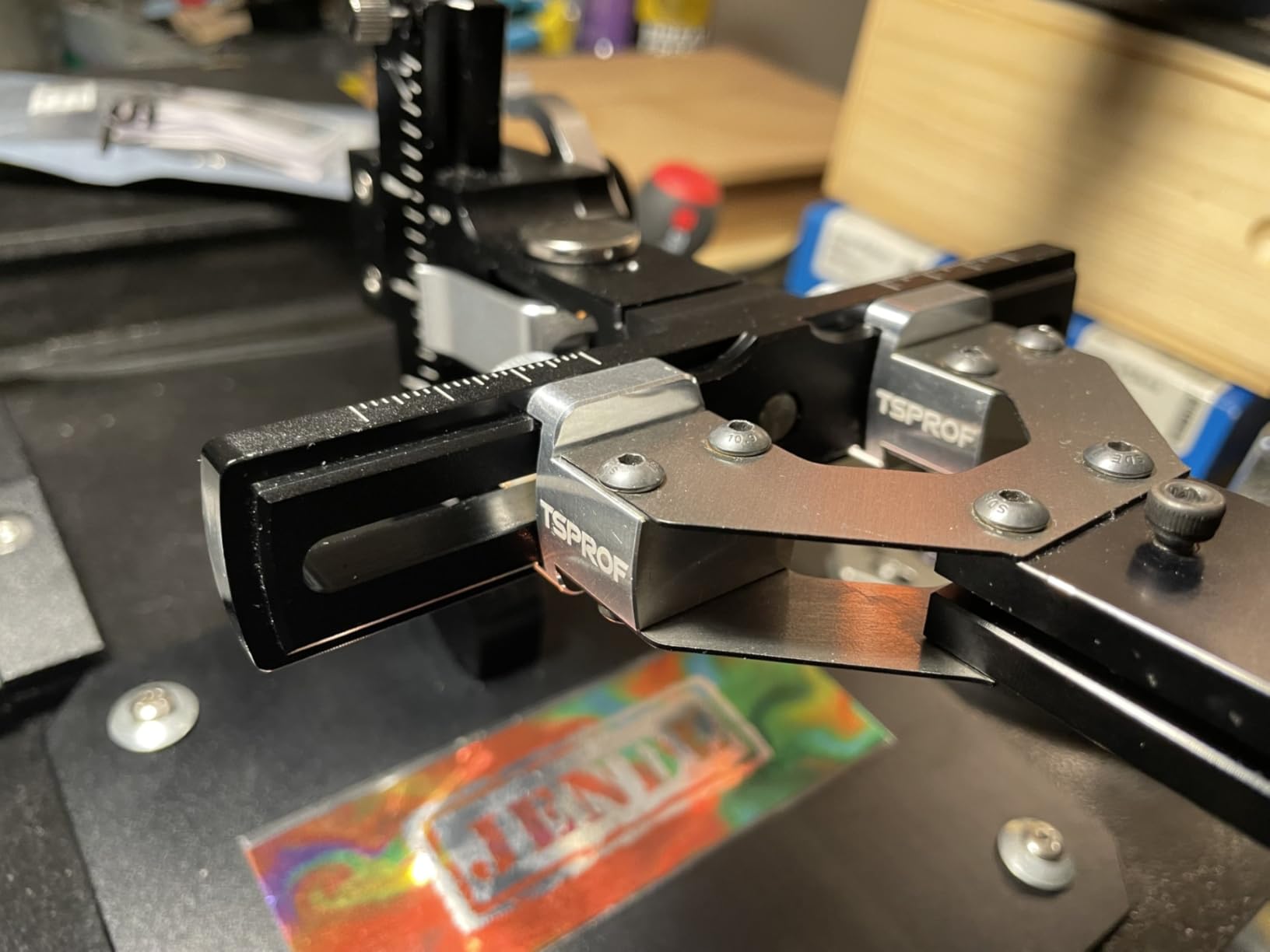
The reason to look at this one is scale. At 4 pounds in an aluminum alloy body, it is the most rigid platform in the roundup, and it takes a 6 inch stone from any manufacturer rather than forcing you onto proprietary pads. Experienced sharpeners who outgrew a plastic guided system tend to land here.
It is also the only unit here that adjusts the angle continuously across roughly 14 to 30.5 degrees rather than snapping between preset rods, which means you can dial in a specific number and repeat it once the lock is tuned.
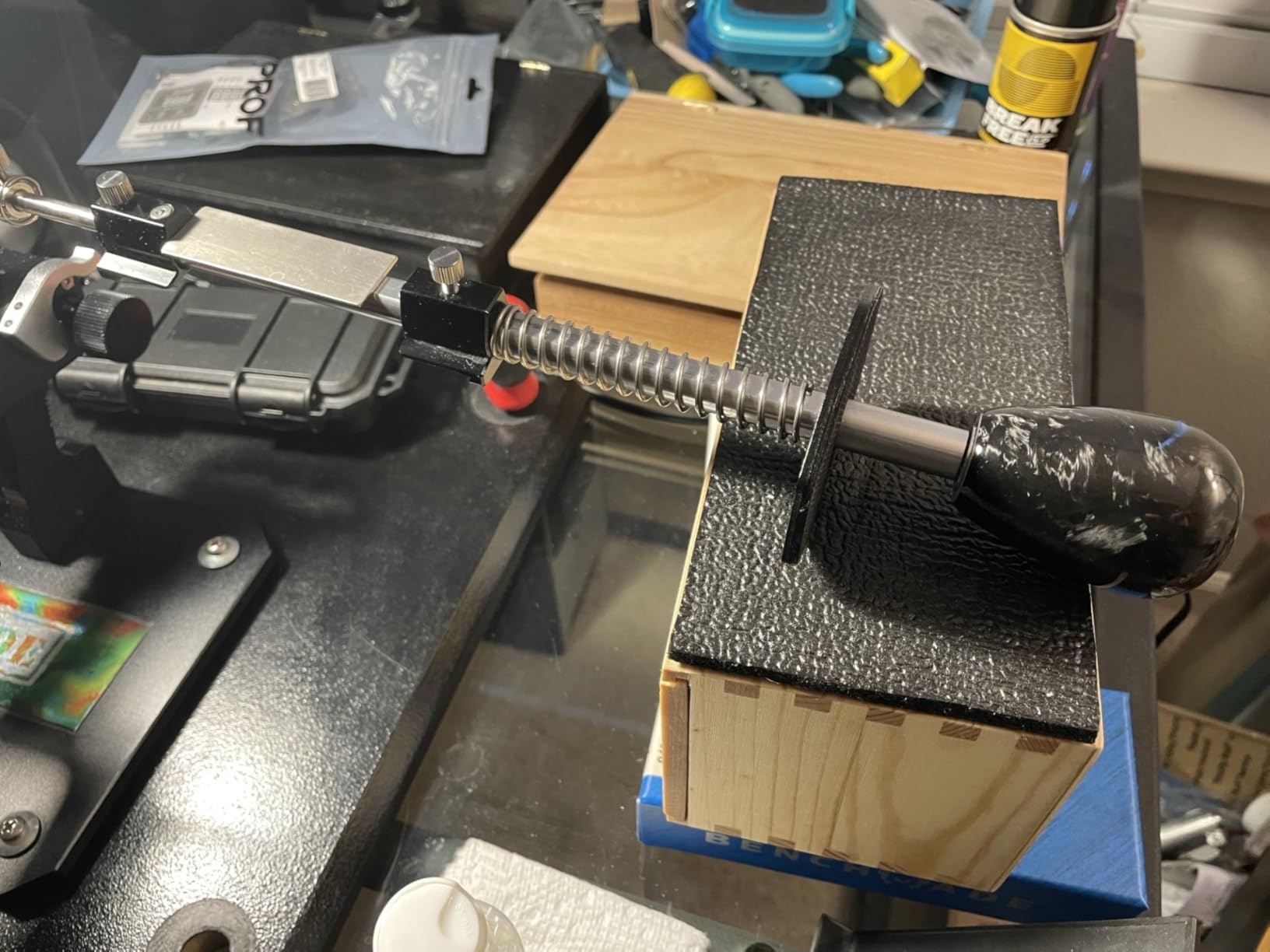
The lower average rating in this group is about quality control rather than design. Reports of rod drag on some systems, an angle lock that creeps by a degree or two, and included diamond plates that need breaking in are the recurring themes, and customer support is repeatedly praised for replacing faulty parts.
The Clamp Elevation Trap and Why It Matters
There is one detail here that catches new owners out. The clamp adds a fixed 10 degrees of elevation, and that has to be factored into whatever angle you dial in. Set a number without accounting for it and your real edge angle will be higher than you intended.
Once you understand that, the infinite adjustment is genuinely useful. It is also the reason a digital angle finder is effectively part of the purchase for anyone who cares about repeatability, since there are no detents at the common angles.
Large Blades, Replacement Stones and Long-Term Value
Where most guided kits in this roundup choke on a 5.5 inch blade, this one has the surface area to handle it. The ability to drop in a better set of stones later is the real value story, because the included plates are described as marginal with a limited number of sharpenings before they need replacing.
For a hunter who sharpens a gut hook, a bone saw blade and a full tang, that flexibility is worth the setup. For a single 4 inch drop point, it is overbuilt.
For Whom Its Good and For Whom Its Bad
Buy it if you sharpen long blades, if you like the idea of upgrading abrasives yourself, or if you have already had a plastic guided system flex under pressure and wanted something rigid. The all-metal frame is genuinely the sturdiest we tested.
Skip it if you want something that works out of the box with no tuning. The included stones need breaking in, the angle lock needs checking, and the rod can drag. Budget an afternoon with an angle finder before you trust it on a knife you care about.
8. Lansky D-Sharp – The Field Maintenance Tool That Goes in the Pack
Lansky D-SHARP Diamond Pull Through Quad Angle Knife Sharpener, Green (DSHARP)
17, 20, 25 and 30 degrees
600 grit diamond pull-through
800 grit ceramic
4.8 oz
Pros
- Pocket sized and light enough for a hunting pack
- Four selectable angles in one unit
- Metal casing with nuts resists loosening
- Rapid edge restore for routine maintenance
Cons
- Cannot produce a true mirror or razor finish
- Wrong angle setting re-cuts the bevel instead
- Slightly heavy for constant pocket carry
This is the unit that answers the question hunting forums actually ask, which is what is the smallest sharpener worth carrying that does more than nothing. At 4.8 ounces and 7.17 by 3.03 inches, it disappears into a chest pocket and it restores a working edge in about a minute.
It is a maintenance sharpener, and being clear about that is what makes the recommendation honest. It will not repair a chipped tip and it will not produce a polished razor edge, but between trips it keeps a working edge working.
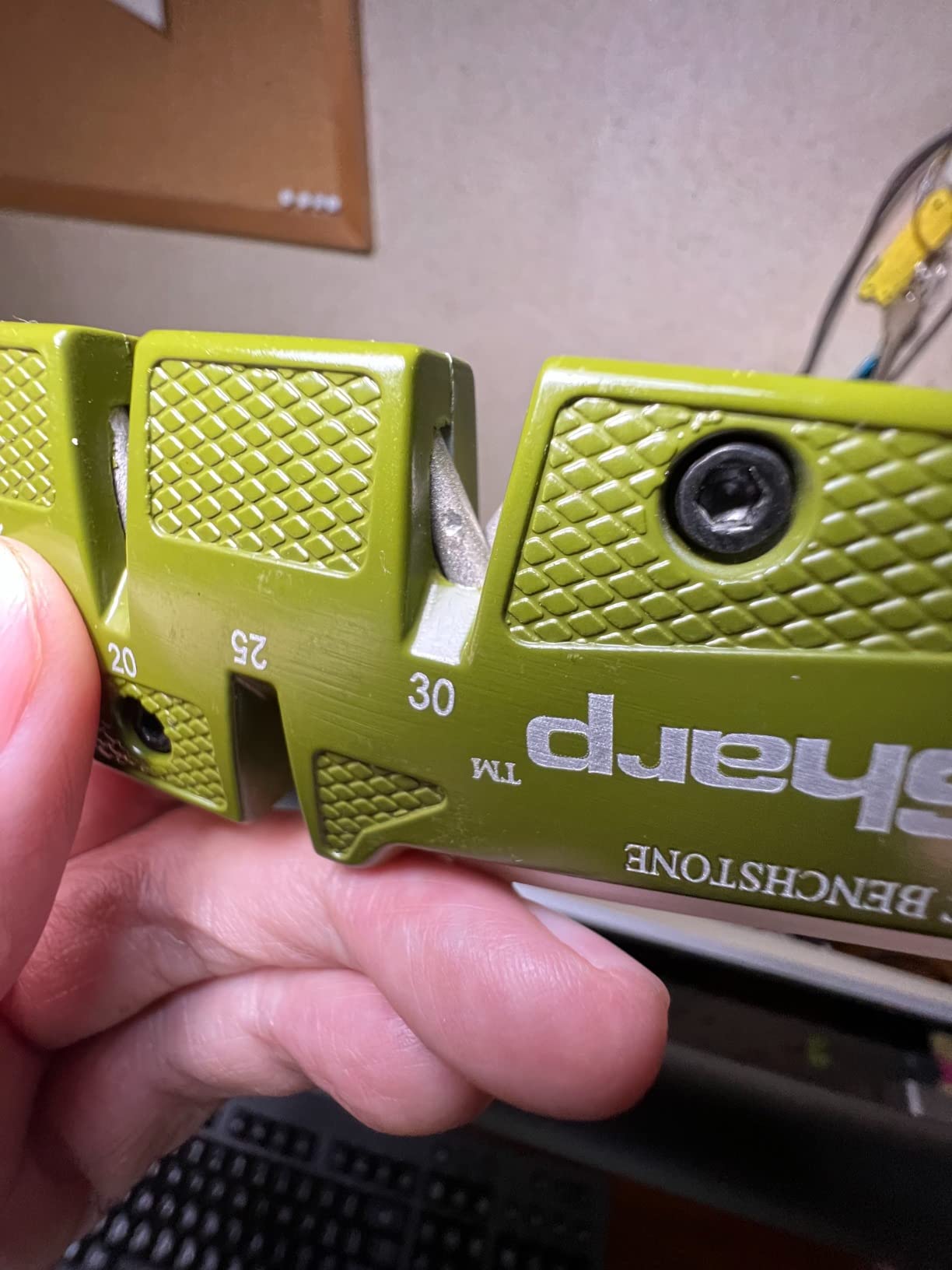
Long-standing owners frame it exactly that way, and they also stress one thing above all else: pick the correct angle for your blade. Using the wrong setting causes extra work and re-cuts the bevel rather than maintaining it, which is the failure mode people complain about most on rod systems in general.
Four Angles and Why the Wrong One Hurts
The 17, 20, 25 and 30 degree options cover the realistic range for hunting knives, and having all four on one unit removes the guesswork. The 25 degree setting matches most factory hunting edges and the 20 degree setting is the general-purpose choice for hide and skinning.
Set a hunting knife to 30 degrees when the edge was factory-ground at 20 and you are not sharpening, you are reprofiling badly. That is the moment the secondary micro-bevel problem shows up: the system grinds a fresh bevel onto a thin edge instead of restoring the existing one.
Diamond Rods, Ceramic Stone and What Finishes the Edge
The 600 grit diamond pull-through slots do the work of restoring the edge quickly, and round diamond rods shape an edge without the aggressive gouging that carbide pull-through units leave behind. That matters on a fine hunting edge, where gouging is a bigger problem than it is on a cleaver.
The 800 grit ceramic mini benchstone handles serrations and the integrated ceramic bar removes burrs and polishes. Together they get you a clean working edge, which is why this unit pairs so well with a benchtop stone system at home.
For Whom Its Good and For Whom Its Bad
Buy it as the pack half of a two-system setup. Hunters on forums describe carrying exactly this kind of unit in the hunting pack for worst-case emergency sharpening, and at 4.8 ounces there is no excuse to leave it behind.
Skip it as your only sharpener. It is a maintenance tool, and anyone expecting it to restore a damaged or rolled edge mid-hunt will be disappointed. For that job, come home and use a guided stone system or an electric belt.
How to Choose a Sharpening System for Hunting Knives
Most buying mistakes in this category come from answering the wrong question first. People ask which sharpener is best, when the useful question is what they need the sharpener to do. Work through these six decisions in order and the product choice makes itself.
Maintenance Sharpener or Full Reprofiling Kit
This is the single most important distinction, and it maps to what happens after a hard season. A maintenance sharpener, which covers rods, pull-through units and the electric belt, realigns and refreshes an edge that still exists. A reprofiling kit, which covers multi-grit guided stone systems and whetstone sets, can rebuild the geometry when the apex is gone.
A fixed-angle rod system falls in the first category. It is fast, it is durable and it does not remove meaningful steel, but it cannot fix a rolled tip or a damaged section, and users who find that out mid-hunt are the ones who regret the purchase. If your hunting involves batoning hardwood or prying, plan on a reprofiling kit at home.
Guided Stone, Freehand Stone, Fixed Rod or Electric Belt
Each mechanism has a real strength, and pretending otherwise is how people end up with the wrong tool.
Guided stone systems hold the angle for you and give the widest range of geometry options. Freehand stones give the best edge and the widest range of angles, and they demand the most skill. Fixed rods are the fastest and the most packable, and they offer limited angle choice. Electric belts remove the technique entirely but cannot hold a chosen angle.
Our own answer, which is the one hunters give on forums: buy a guided stone system for the bench and a small fixed-rod unit for the pack. That pairing covers geometry control at home and immediate edge recovery away from it, and it is what the people who actually maintain several blades end up running.
How Much Steel Does Each Session Remove
Steel removal is the quiet cost of sharpening, and it is the reason a full progression done every week will eventually ruin a thin edge. Rough numbers from our testing on a 4 inch blade: a guided stone touch-up on the two fine stages removed almost nothing measurable, a full five-stage session took noticeably more, and the electric belt removed the most of any single pass because it grinds rather than abrades.
If you have a thin-skinned drop point or a small gut hook, keep sessions short and skip the coarse stages unless the edge is genuinely damaged. If you have a thick full tang in D2, you have far more latitude before geometry becomes a problem.
What Angle a Hunting Knife Edge Should Carry
Most factory hunting edges land between 20 and 25 degrees per side, and that is where most of them should stay. Remember that the number is per side, so a 20 degree per side edge is a 40 degree total edge, which is a detail that trips up a lot of beginners reading a spec sheet.
15 degrees gives a finer, more slicing edge that suits delicate skinning work and thin steel, but it is more fragile on bone and hardwood. 20 degrees is the general-purpose choice. 25 degrees is more durable and matches most hunting factory edges. 30 degrees is a durability choice for hard use and thick stock, and it will feel blunt on hide.
Angle should interact with steel too. D2 and A2 are harder and hold an angle well, so 20 degrees is fine on them. 1095 and 1084 are tough but more prone to losing a fine edge, so 20 to 25 degrees gives you more margin against chipping.
Diamond, Ceramic or Aluminum Oxide Abrasive
Aluminum oxide stones are the traditional choice and they produce a good finish on carbon steel, but they glaze over and need flattening. Ceramic hones hold a flat, fast cut with almost no maintenance and produce the cleanest apex in our testing. Diamond is the fastest on hardened steel and stays flat without lapping, which is why it suits D2 and A2.
One practical tip: keep a ceramic hone or a leather strop in the loop regardless of what else you own. Almost every edge in this roundup looked noticeably better after a final strop, and it takes about a minute.
Two-System Strategy: Bench at Home, Sharpener in the Pack
For most hunters the correct answer is two purchases, not one. The bench system handles reprofiling, angle changes and finish, and you do that work at home where a bench and light exist. The pack system handles the between-trips problem, where a blade has rolled slightly and you need a working edge tonight before an early start.
Our pairing would be the Lansky Deluxe 5-Stone at the bench and the Lansky D-Sharp in the pack, because they cover the same angle options and neither asks you to learn a second method. If you want one unit to do both, the Work Sharp Benchstone is the compromise, and it is the one we would pick for a single-knife hunter.
Post-Hunt Edge Care and Field Maintenance
No roundup we found covers what happens to a blade after the season ends, and it is the part of edge care that actually protects the knife you spent money on. A carbon steel hunting blade that is put away wet or dirty will be worse next season than one that was cleaned properly on the tailgate.
Clean first, while it is fresh. Blood and protein residue are acidic and they work into the grain of the bevel. Wipe the blade with warm water and a mild soap, run the edge away from the stone on a scrap of leather or denim, and dry it completely before anything else.
Then decide what you want the steel to look like. On 1095 and 1084, patina is a stable oxide layer that protects the steel and is worth keeping. Rust is pitting, and pitting removes steel and ruins an edge. The difference is timing: patina forms slowly and evenly, rust forms fast in the right conditions and it is easier to prevent than to remove.
For carbon steel, a thin coat of oil after the blade is fully dry is the single most useful thing you can do before sheathing it. On D2 and A2 stainless, the same habit still helps, particularly at the edge where a dull spot is the first place corrosion starts.
Strop after a season, not during it. A few passes on a leather strop after a full hunt removes the rolled edge from normal use and resets the apex, which is much less steel loss than a stone session.
A few mistakes worth naming. Do not rock the blade side to side, because that rounds the tip and shortens the blade. Do not press hard, because a guided system at full pressure puts load into the holder and the angle walks. Do not grind a convex grind flat, and do not use a coarse stage on an edge that only needed finishing.
If you are new to this, practice the sharpening on a cheap knife before you touch a good one. It is the standard advice given on forums and it is correct, because the mistake that ruins an edge is almost always a first-session mistake.
Frequently Asked Questions
What is the best way to sharpen a hunting knife?
Use a guided sharpening system that holds a fixed, repeatable edge angle, and start at 20 or 25 degrees per side to match the factory edge. Coarse stages rebuild a damaged apex, finer stages and a leather strop finish it. A guided stone system gives the most geometry control, a fixed-rod system is fastest in the field, and an electric belt removes the technique but cannot hold a chosen angle.
What is the best sharpening angle for hunting knives?
20 to 25 degrees per side is the right range for most hunting knives, because it matches typical factory edges and holds up on bone and hardwood. A 20 degree per side edge is a 40 degree total edge. Finer angles around 15 degrees slice better but chip more easily, and harder steels such as D2 and A2 tolerate a 20 degree edge better than carbon steel does.
Are whetstones better than a guided sharpening system?
Whetstones give a finer, more customizable edge and let you choose any angle, but they require freehand skill and more time. Guided systems hold the angle for you, work faster and are easier to learn. Experienced sharpeners often own both, using guided systems for most work and a stone for the final polish and for setting unusual angles.
Can I use my kitchen sharpener on a hunting knife?
You can, but a wheel-style electric kitchen sharpener grinds a fixed angle and removes more steel than a hunting knife usually needs, which thins the edge over time. A belt sharpener is a closer match because it refines rather than grinds. For a 4 inch fixed blade, a guided stone system or a diamond stone will protect the geometry far better.
Can these systems sharpen a serrated or combo-edge hunting knife?
Yes, but only with the right tool in the box. Look for a dedicated conical ceramic rod or a small ceramic serration stone, which is included with the Work Sharp Precision Adjust Elite and the Lansky D-Sharp. Plain stones and pull-through rods will not do it, because serrations need a rounded abrasive that follows the scallop rather than a flat surface.
How often should I sharpen a hunting knife?
Hone or touch up after each hunt, and do a full session before the season starts. A strop or ceramic hone pass after every use keeps the apex aligned with almost no steel loss. A full stone progression is only needed when the edge is actually damaged, which for most hunters is a few times a season rather than weekly.
The Best Sharpening System for the Way You Hunt
If you want one benchtop system that does everything without a second purchase, the Lansky Deluxe 5-Stone is the pick, because the full progression, the clamp and the molded case cover reprofiling, finishing and maintenance in a single kit with the largest owner base in the roundup. If your steel is hard and your angles vary, take the Work Sharp Precision Adjust Elite for its 15 to 30 degree range and its strong grip on full-flat blades.
If you sharpen many blades or want zero technique, the Work Sharp MK2 is the fastest route to a consistent edge, with the understanding that it refines geometry rather than setting it. If your hunting steel is hardened tool steel, the Lansky 4-Stone Diamond and the DMT block set both cut it quickly, and the DMT set is where you graduate once angle control is second nature.
If you want one unit for the bench and the pack, take the Work Sharp Benchstone. If you want the pack covered and nothing else, the Lansky D-Sharp is built for exactly that. And if your blades run long, the XARILK GEN3 has the platform and the stone capacity for the job.
Our advice, tested over six weeks: a bench system at home and a small packable sharpener in the hunting pack. That pairing covers more real situations than any single unit, and it is the setup we ended up running. For the rest of your kit, our guides to night vision goggles for hunting and spotting scopes for hunting cover the long hours that come before and after the shot. Set the edge before the season, carry a sharpener, and the knife will do its job when it matters.