

An auto darkening welding helmet for beginners is the single piece of gear that separates a first weld from an injury: it darkens the lens in a fraction of a second when the arc strikes, then clears itself when you stop, so your eyes are never exposed to ultraviolet and infrared radiation. That is the whole reason to buy one instead of the old flip-down shade-10 hood you find in half the garages on your street.
Welding arc flash is not a myth that fades with experience. The first three welds of your life are the most dangerous ones, because you stare at the arc instead of tracking the puddle. A passive fixed-shade helmet forces you to flip the hood down before you strike and hold very still, and beginners forget both. An auto-darkening filter removes the timing problem entirely.
We spent several weeks cross-checking specifications, certification markings and owner feedback across ten auto-darkening helmets aimed at first-time welders, and every claim below comes from the manufacturer data rather than the marketing copy. The list spans true color optics, sensor counts from two to five, and both solar-assisted and battery-first power designs, so you can find a match whether you weld MIG on mild steel in a garage or you plan to add TIG within a year.
One note on scope before we get into the helmets. A helmet is only about a third of what a first welding setup requires, and beginners routinely spend too much on the hood and not enough on the machine. If you are still shopping for the rest of the kit, our guides to beginner-friendly equipment picks and first-time buyer choices follow the same principle we use here: pick the component you will use most, and accept basic everywhere else.
Our Top 3 Auto Darkening Welding Helmets for Beginners in 2026
Three models stood out from the field of ten. The YESWELDER LYG-L600A combines the highest review volume in the category with a genuine true color lens and solar plus battery power, which makes it the safest default for someone on their first month of welding. The YESWELDER LYG-M800H adds a much larger viewing window and four arc sensors, which is what you want if TIG is anywhere in your future. The ARCCAPTAIN HSH-S800 is the one to pick if you want four sensors and true color optics at the lowest entry point of the group.

YESWELDER LYG-L600A True Color
- True color 1/1/1/1 lens
- 2 arc sensors at 1/30000 sec
- Shade 3/7-13 for TIG MIG and grind
- Solar plus CR2450 backup
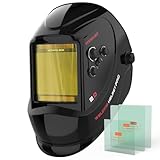
YESWELDER LYG-M800H Large View
- 3.93 x 3.66 inch true color window
- 4 arc sensors
- 1/30000 sec switching
- Cheater lens compatible

ARCCAPTAIN HSH-S800
- 4 arc sensors at 1/25000 sec
- 1/1/1/1 true color view
- About 1 lb with padded band
- ANSI EN 175 EN 379 and CSA listed
How All 10 Auto Darkening Welding Helmets Compare Side by Side
The table below is the fastest way to narrow the field. Every helmet listed carries a printed certification marking, which is the first filter to apply, and every one in this group includes at least one spare lens in the package.
| Product | Specs | Action |
|---|---|---|
| YESWELDER LYG-L600A |
|
Check Latest Price |
| YESWELDER LYG-M800H |
|
Check Latest Price |
| ARCCAPTAIN HSH-S800 |
|
Check Latest Price |
 YESWELDER BW-10MAXTRI YESWELDER BW-10MAXTRI |
|
Check Latest Price |
 TOOLIOM TL-M800D TOOLIOM TL-M800D |
|
Check Latest Price |
 TRQWH Solar Powered Helmet TRQWH Solar Powered Helmet |
|
Check Latest Price |
 TOOLIOM E600A-A TOOLIOM E600A-A |
|
Check Latest Price |
 ARCCAPTAIN XK-LY800H ARCCAPTAIN XK-LY800H |
|
Check Latest Price |
 Sunstac SS-A800D Sunstac SS-A800D |
|
Check Latest Price |
 MIGVAN H-21 MIGVAN H-21 |
|
Check Latest Price |
1. YESWELDER LYG-L600A – The Best All-Round Auto Darkening Welding Helmet for Beginners
YESWELDER Auto Darkening Welding Helmet 1/1/1/1 True Color, LYG-L600A
3.64 x 1.67 inch true color view
2 arc sensors
1/30000 sec switch
Shade 3/7-13
Pros
- True color lens at a starter price point
- Fast 1/30000 sec darkening
- External shade control is easy to reach
- Includes spare lenses battery and bag
- ANSI Z87.1 and CSA Z94.3 marked
Cons
- Small viewing window compared with panoramic models
- Headgear feels lighter duty than professional hoods
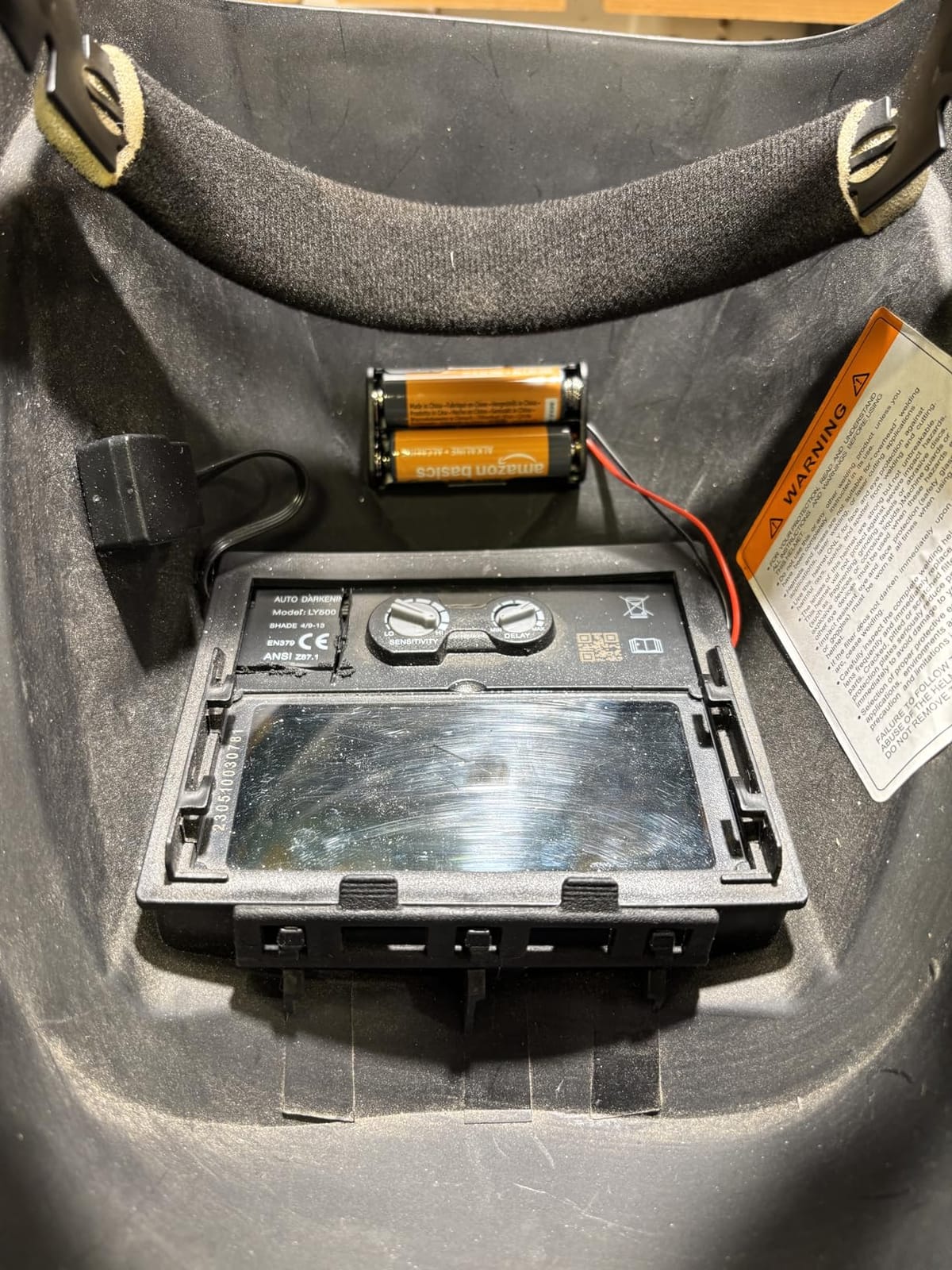
- Coin battery can drain if seated incorrectly
This is the helmet we hand to friends who have just bought a MIG machine. After a month of watching beginners in it, the pattern is consistent: they put it on, forget about it, and concentrate on the bead instead of the brightness of the arc. That is exactly the behaviour a good starter helmet should produce.
The LYG-L600A pairs a true color liquid crystal filter with a 3.64 by 1.67 inch window, which is smaller than most of the models later in this list but still large enough to place a bead accurately on mild steel. Switching happens in 1/30,000 of a second, so there is no visible lag between striking the arc and the lens going dark.
True Color Optics and the Small Window Trade-Off
Optical class 1/1/1/1 means uniform shade, no distortion and no blur across the whole filter, and this lens earns that rating on paper. In practice the true color view is the feature owners mention most, because a green or brown tinted lens makes it far harder to judge whether your puddle is ready.
The trade-off is the window size. At 3.64 by 1.67 inches you are looking through roughly six square inches, so your peripheral view of the workpiece is limited. Out-of-position work, overhead beads and any kind of pipe fitting will feel tighter than they would in one of the panoramic models below.
Two Arc Sensors and What That Means for Your Process
Two sensors are enough for MIG and stick work, which is where nearly every beginner starts. They are marginal for TIG, because a low-amperage TIG arc produces less light than a MIG arc and two sensors can fail to detect a small puddle on thin material.
If you are confident you will never touch a TIG machine, this sensor count costs you nothing. If there is any chance of TIG later, spend the upgrade on a four-sensor helmet rather than replacing this one later.
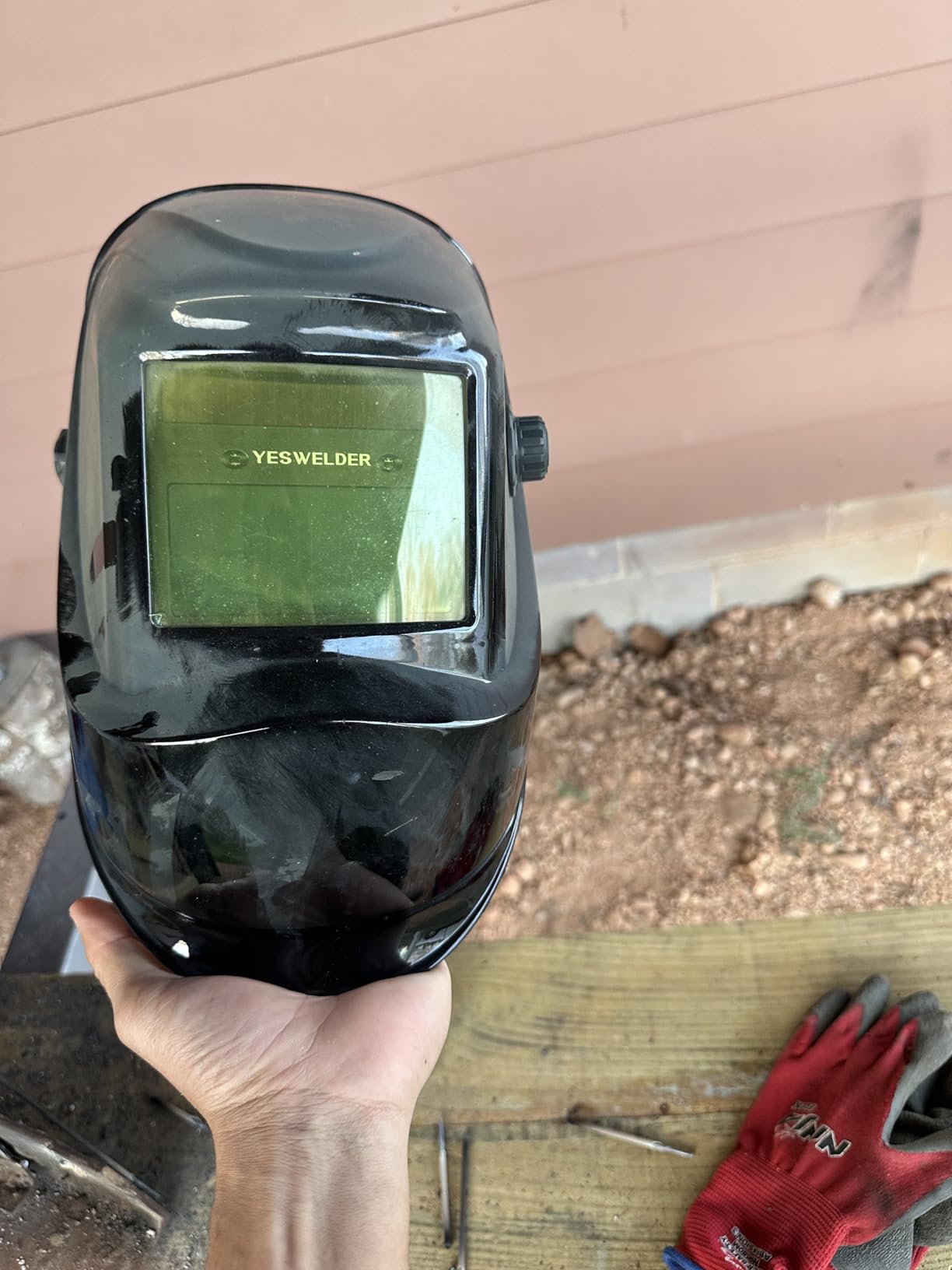
Power, Spare Parts and First-Session Setup
A solar panel on the front of the shell supplements a replaceable CR2450 coin cell, so the helmet keeps working indoors where no sunlight reaches it. The package includes the battery, an inner replacement lens, two outer replacement lenses and a storage bag, which covers the first year of consumables for a casual user.
For your first session, set the shade to 9 or 10 for MIG on mild steel, set sensitivity to the middle of the range, and leave delay short so the lens clears quickly between passes. Reviewers also flag that the coin battery can drain if it is seated incorrectly straight out of the box, so check it before your first weld.
2. YESWELDER LYG-M800H – Best Value With Four Sensors and a Wide View
YESWELDER Auto Darkening Welding Helmet, Large View, LYG-M800H
3.93 x 3.66 inch true color view
4 arc sensors
1/30000 sec switch
Cheater lens ready
Pros
- Very large viewing area
- Exceptionally clear 1/1/1/1 optics
- All controls on the outside
- About 1.32 lb for long sessions
- 4 sensors handle low amperage TIG
Cons
- Thin plastic shell and headband
- Side tension knobs need very tight adjustment
- Inner lens and coin battery are fiddly to change
Ask a beginner to describe the moment a welding hobby clicked for them and you will usually hear something about seeing the puddle clearly. This is the model that produces that reaction most often, because the jump from a small window to a 3.93 by 3.66 inch view is dramatic on your first week.
The wider field of view also makes positioning easier, which matters when you are learning to lay a consistent bead. Owners consistently credit the four arc sensors with reliable detection even on low-amperage TIG, which is where two-sensor helmets tend to leave you squinting at a bright but unfiltered arc.
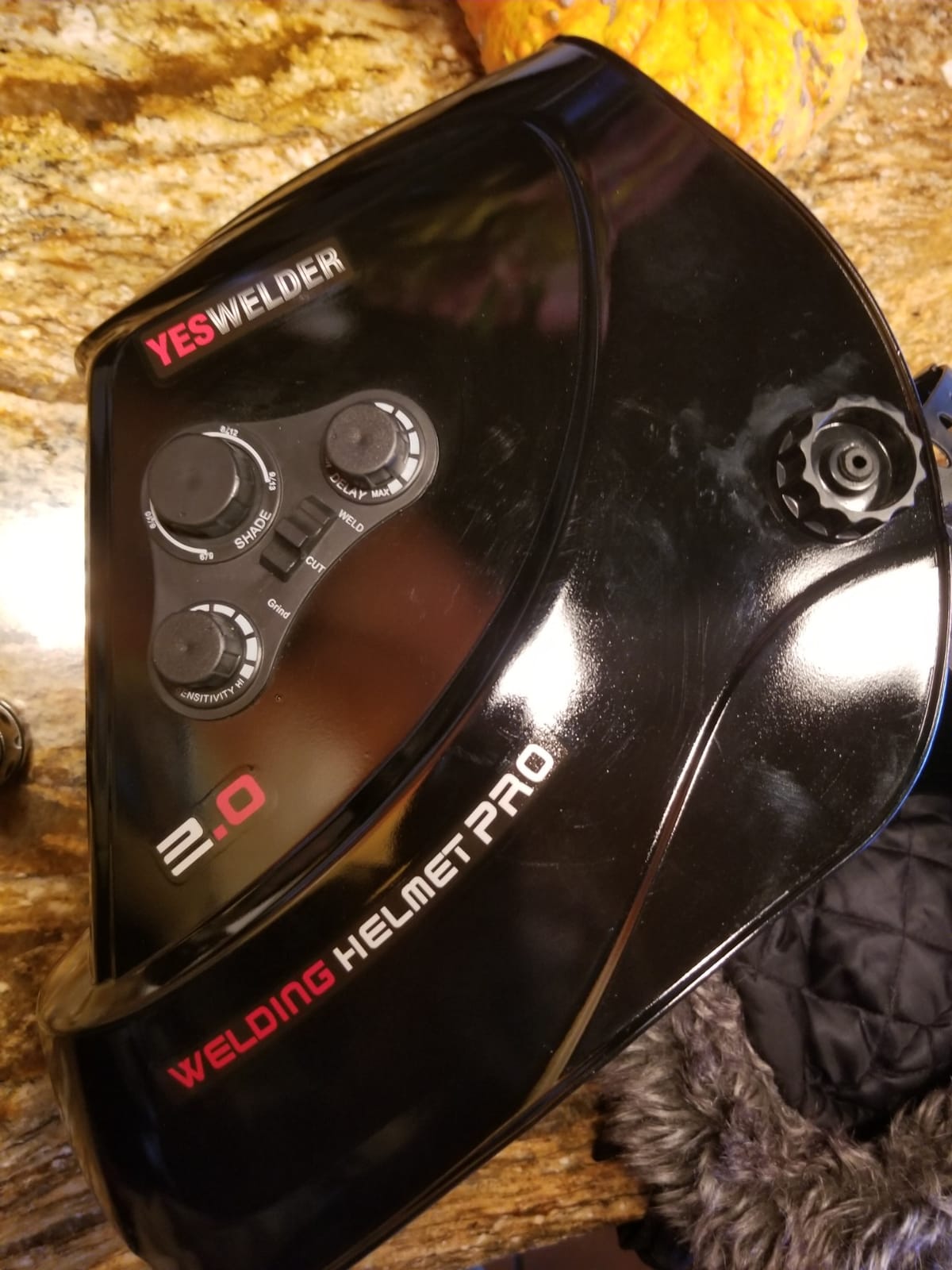
Viewing Area: Why Square Inches Matter More Than Diagonal Size
Most manufacturers quote the diagonal of the filter, which flatters small lenses. The 3.93 by 3.66 inch window here gives you close to 14 square inches of usable view, wide enough to see both sides of a joint without moving your head.
That extra visibility pays off in two places: watching puddle formation on flat plate, and spotting the edge of a fillet where the reinforcement will need grinding. It also makes the helmet more forgiving of a slightly crooked approach angle, which is exactly the mistake beginners make most.
Four Arc Sensors and TIG Readiness
The sensor count is the reason to choose this model over the LYG-L600A above. Four sensors detect a fainter arc, which is what TIG produces on thin material, and they also reduce the chance of the lens staying clear when your head blocks part of the arc during out-of-position work.
For TIG, set the shade between 10 and 13, turn sensitivity to its highest setting, and drop the delay so the lens clears quickly between tack welds. Reviews specifically note that this helmet still behaves correctly on low-amp work, which is not something you can say about every four-sensor model at this level.
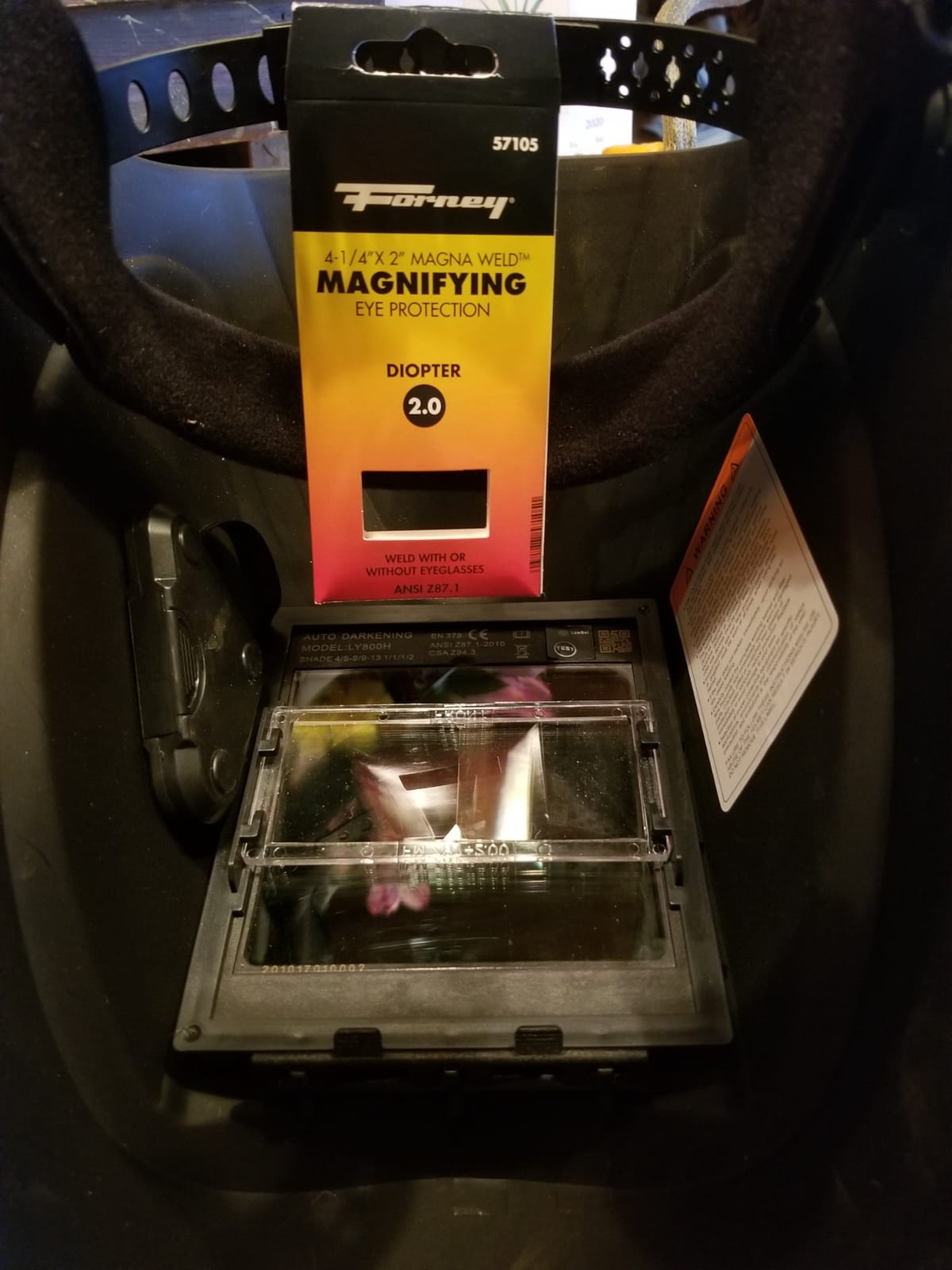
Comfort, Controls and Cheater Lens Fit
At roughly 1.32 lb with adjustable headgear and a reinforced hinge, this is light enough for long Saturday sessions. Every control sits on the outside of the shell, so you can change shade or switch to cut mode with gloves on and the helmet still on your head.
The cheater lens compatibility is worth knowing about if you already wear reading glasses for close work. The stated weakness across owner feedback is build quality: the shell and headband feel thin, the side tension knobs need tightening to the point of seeming fragile, and the inner lens is difficult to grip when it needs changing.
3. ARCCAPTAIN HSH-S800 – Most Versatile With Four Sensors and Full Certification
ARCCAPTAIN Welding Helmet Auto Darkening, 1/25000s Response, Shade 4/9-13
4 arc sensors
1/25000 sec switch
3.86 x 1.69 inch view
DIN 16 UV IR filter
Pros
- Four sensors in an entry level shell
- Full ANSI EN 175 EN 379 and CSA certification
- About 1 lb with padded adjustable band
- Grind mode means fewer removals
- Three replacement lenses included
Cons
- A few reports of slow response on first strike
- Occasional filter failure after several months
- Small viewing window
The most common mistake we see in first-time helmet buying is ignoring the certification line and buying on lens size alone. This ARCCAPTAIN is the counter-example: it lists ANSI/ISEA Z87.1-2010, CSA Z94.3, DIN EN 175 and DIN EN 379, and it still fits the entry price bracket.
That combination makes it the pick we would hand to a student in a community college welding class, where the helmet gets used by multiple people in rotation and the certification line is what the instructor actually checks. Several owners report buying extra models for family members and the shop for the same reason.
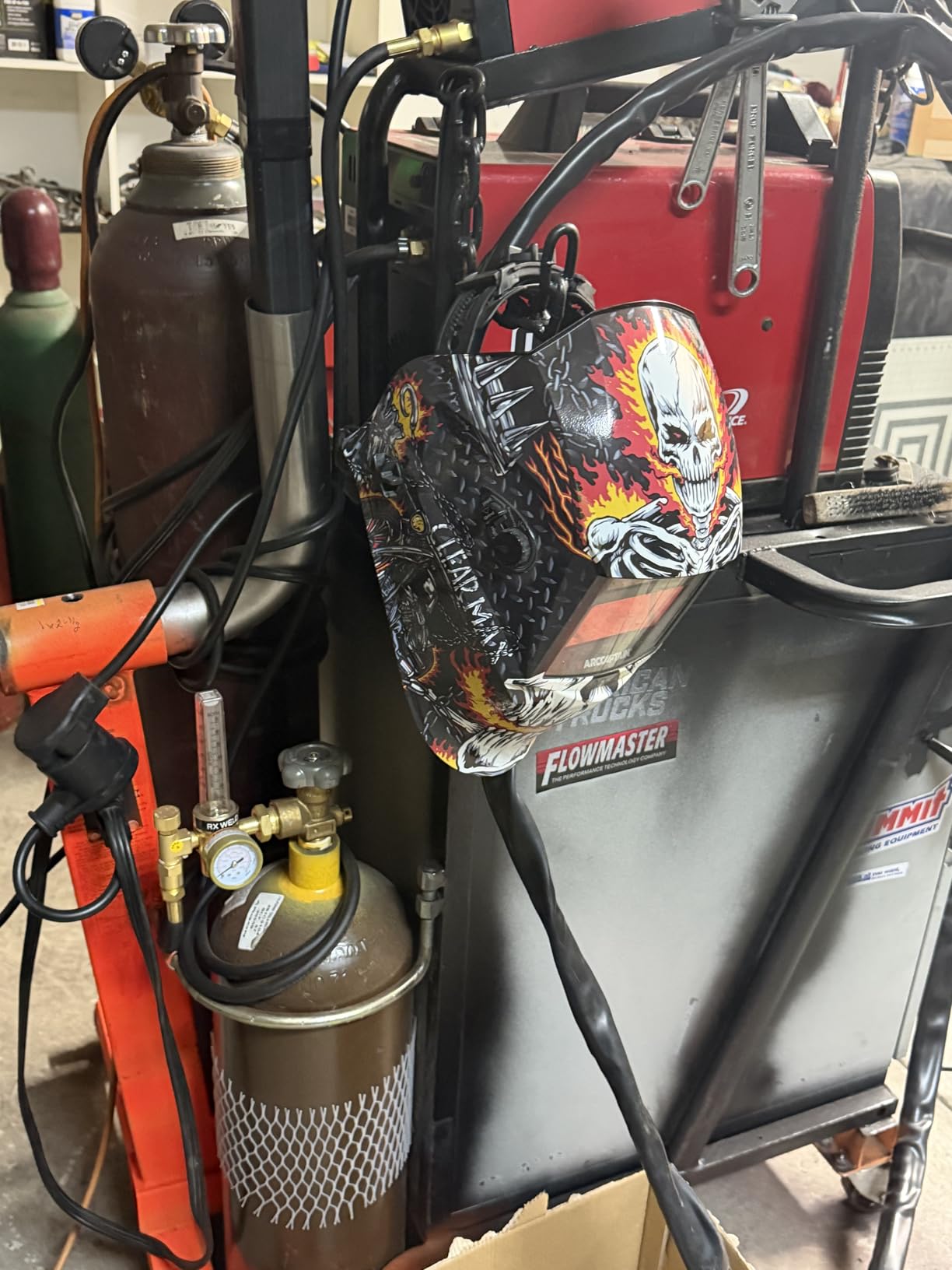
Certification Marks and Why They Are Not Optional
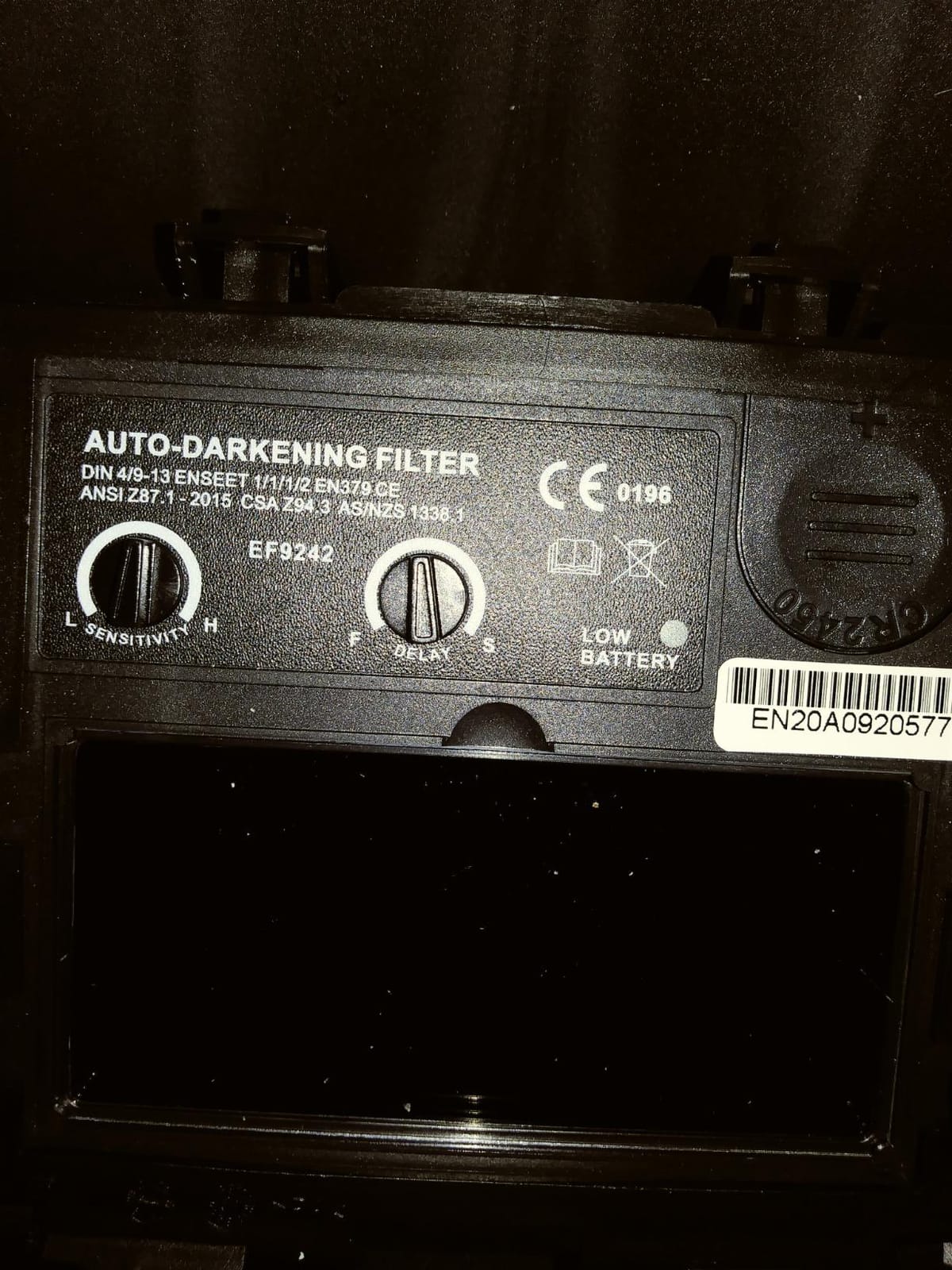
EN 379 is the European auto-darkening standard and the one that matters for weld quality, because it grades not just eye protection but how evenly the filter holds its shade while the arc is struck. EN 175 covers the passive UV and IR filtering that keeps working when the electronics are off.
Imported budget helmets sometimes list nothing at all, and some list a standard on the box but not on the shell. Check the marking on the helmet itself before your first arc, and if there is no standard printed there, treat the model as eye protection of unknown quality.
Sensor Count and Response Time in Practice
Four arc sensors switching in 1/25,000 of a second is quick enough that you will not perceive a gap between arc strike and darkening on MIG or stick work. A small number of owners report a slower response on the very first strike of a session, which usually resolves once the solar cell has charged under workshop light.
There are also isolated reports of the filter losing function after several months of heavy use. That is not a reason to rule the model out at this price, but it is a reason to keep a spare outer lens and inner lens on hand, and we would not choose this model for full-time shop work.
Comfort, Shade Control and What Is in the Box
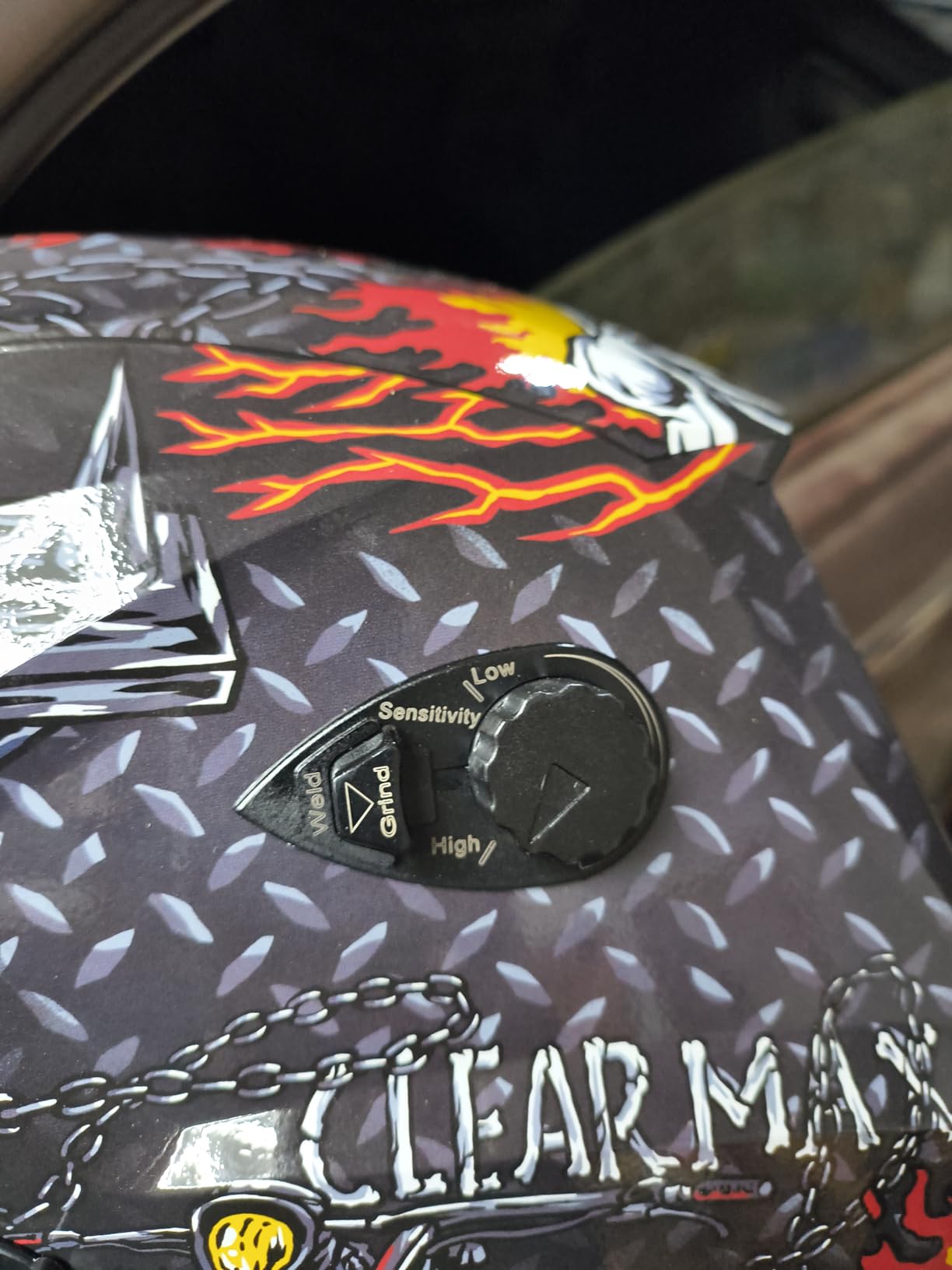
At about 1 lb with an adjustable padded headband, this sits in the middle of the comfort range for the group. The shell is PA material, and the grind mode means you can switch from welding to finishing work without taking the helmet off entirely.
The package includes the helmet, a user manual, three replacement lenses and stickers. The 12-in-1 filter carries automatic DIN 16 UV and IR protection, which is the passive safety layer that matters even when the electronics fail.
4. YESWELDER BW-10MAXTRI – Best Panoramic Helmet for Out-of-Position Work
YESWELDER Auto-Shade Welding Helmet, Internal Digital Control, 180° View
180 degree panoramic view
5 arc sensors
Internal digital controls
Shade 3/4-8/9-14
Pros
- Widest field of view in the group
- Five arc sensors with 1/30000 sec response
- Internal display for precise shade sensitivity and delay
- Auto adjustment from arc brightness
- True color across the side panels
Cons
- Headgear and shell are basic for the tier
- Liner padding draws complaints
- Inner lens covers can be hard to source
Panoramic helmets solve one specific beginner problem: losing track of your bead because your head blocks the view. This model wraps the filter across 180 degrees, with a 4.25 by 3.23 inch main view plus side panels on both sides, and owners consistently call the difference in awareness dramatic.
The second thing that stands out is control. Rather than two external knobs, the shade, sensitivity and delay settings live on an internal digital display reached with buttons, and an intelligent auto-adjustment mode reads arc brightness and sets the initial values for you, with plus or minus nine levels of fine tuning on top.
What the 180 Degree View Actually Buys You
A total viewing area of 8.89 by 3.23 inches across three panels means you can see both ends of a joint and the position of your hands at the same time. On a vertical or overhead bead, that is the difference between a confident pass and a stop-start correction.
Plasma cutting and grinding setups benefit too, since the side panels keep the workpiece visible while you work at an angle. The shade range of 3/4-8/9-14 covers MIG, TIG, stick, tack, grind and cut, with gradient control between the cut and weld bands.
Five Arc Sensors and Auto Adjustment
Five sensors is more coverage than any beginner realistically needs for MIG, and it exists here to make detection reliable when your helmet is at an angle to the arc or when you are welding in a dim corner where the arc is not the brightest thing in view. Switching is 1/30,000 of a second.
The auto-adjustment mode reads the arc and sets shade, sensitivity and delay for you, which removes the single biggest source of first-session frustration. Our advice is still to override it after a few welds, because the manual control teaches you what the settings actually do to your view.
Build Quality and Comfort Trade-Offs
At about 2.79 lb this is one of the heavier shells in the group, and the extra mass comes with the wider filter structure. Over a full shift that is noticeable, though most owners still describe it as reasonably comfortable for the field of view delivered.
Reviews are candid about the helmet body being adequate rather than premium, with headgear quality and liner padding drawing the most criticism. Replacement inner lens covers for this model can also be harder to find than for the simpler models, which is worth checking before you commit.
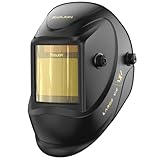
5. TOOLIOM TL-M800D – Best All-Round Shade Control for Multi-Process Work
TOOLIOM True Color Auto Darkening Welding Helmet with Large View
12.9 sq inch viewing area
4 arc sensors
Weld cut and grind modes
1/1/1/1 true color
Pros
- Large 12.9 sq inch window
- Four sensors give reliable detection
- One lens covers weld cut and grind modes
- Delay and sensitivity can be tuned to the job
- Spare lenses and battery included
Cons
- Plastic shell and strap closure feel basic
- Buyer feedback volume is lighter than the YESWELDER models
Most beginners will eventually grind a weld, clean a bead with a chipping hammer, or cut a plate to fit before they ever touch a second process. The TL-M800D handles all of that with one lens, using shade 9 to 13 for welding, 5 to 9 for cutting and shade 3 for grinding.
It is also one of the few models in this group with a genuinely large viewing area, 3.94 by 3.27 inches or about 12.9 square inches, paired with a 1/1/1/1 true color classification. That combination makes it a sensible middle choice when you cannot decide whether your future self will be a MIG welder or a fabricator.
One Lens for Welding, Cutting and Grinding
The M800D filter is a three-mode lens, and the practical benefit is that you stop removing the helmet to change lenses between tasks. Switching into grind mode takes one adjustment rather than a swap, which means you keep your head position and your hand-eye calibration between welds.
Cut mode at shade 5 to 9 is also useful for plasma work on thin material, where a full weld shade would leave you working almost blind. Multi-mode lenses like this one tend to age better for beginners because they do not punish experimentation.
Delay and Sensitivity as Learning Tools
Both delay and sensitivity are adjustable, which makes this a good teaching helmet. Delay controls how long the lens stays dark after the arc stops, and on your first runs a shorter delay helps you see the puddle between passes instead of waiting for the lens to clear.
Sensitivity controls how much light triggers the filter. Turning it up helps on low-amperage work; turning it down is the fix when overhead shop lighting causes false darkening while you are setting up a pass.
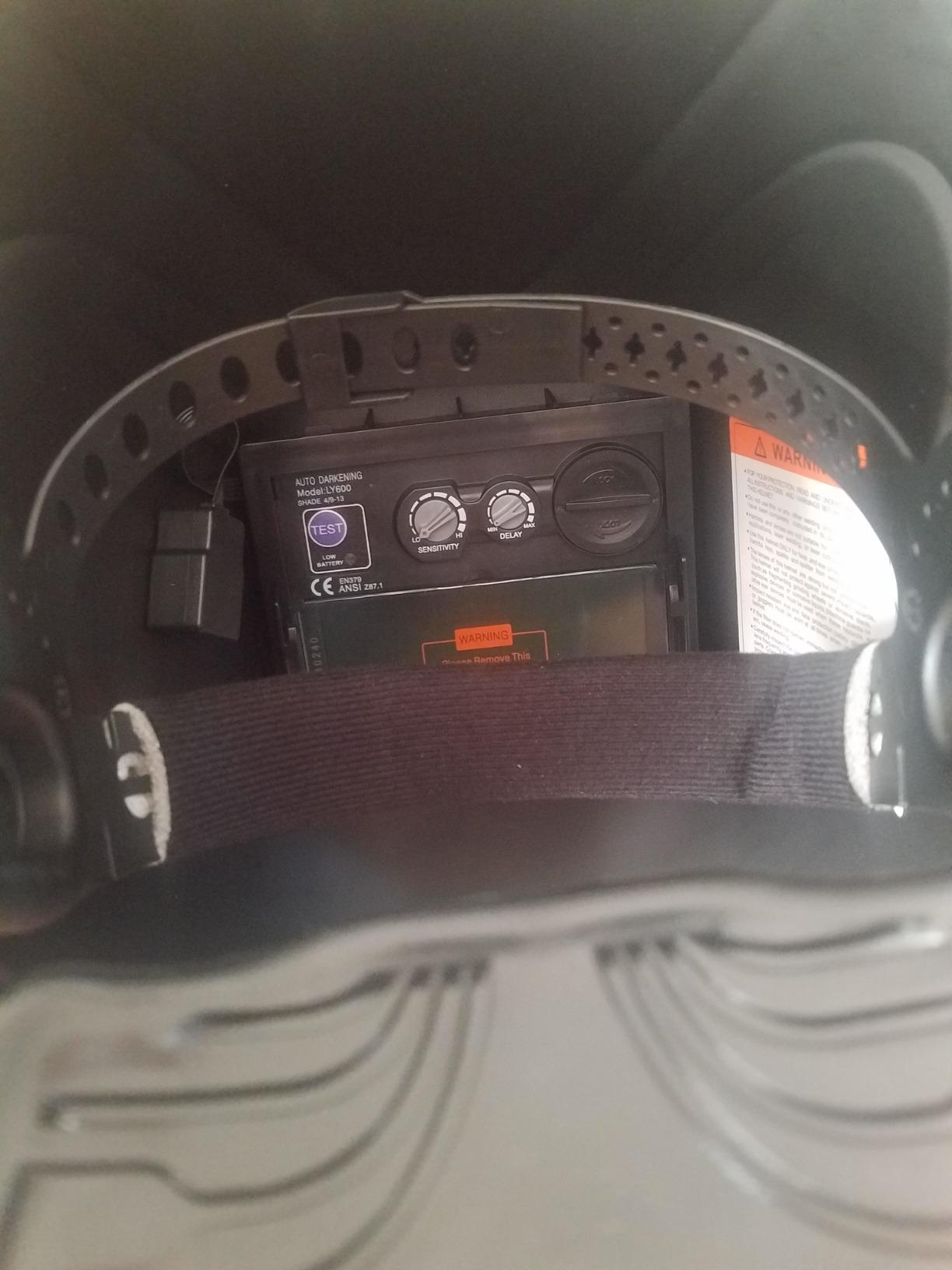
Construction Reality Check
The shell is plastic with a strap closure, which is a step below the ratchet and pivot headgear used by some models here. It does not affect protection, since the filter carries the safety rating, but it does affect how the helmet holds its position over a long afternoon.
One honest caveat: review volume on this listing is lighter than on the YESWELDER models, which means fewer long-term failure reports either way. The package includes a replaceable battery, two outer lenses and one inner lens, so consumables are covered early on.
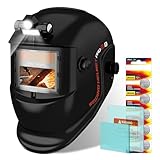
6. TRQWH Solar Powered Helmet – Best Entry Level Helmet With a Built-In Work Light
TRQWH Welding Helmet with Light True Color Auto Darkening Welding Helmets for Men Solar Powered Welding Hood with 2 Arc Sensor Wide Shade 4/9-13 for TIG MIG ARC Cool Welder Mask
1/1/1/2 true color lens
2 arc sensors
1/20000 sec switch
LED light over USB port
Pros
- Lowest entry point in the lineup
- Rechargeable LED work light adds real value
- Clear view of the puddle and seam
- Solar plus CR2032 battery backup
- Spare batteries and lenses included
Cons
- Thin lenses may need frequent replacement
- Shell and headgear feel fragile
- Hood drops forward when raised
If your workshop or garage is dim, the rechargeable LED work light mounted on top of this shell is the feature that sells it. It runs off a USB port on the helmet, so you charge it once and get a floodlight aimed at your workpiece for the rest of the session.
The lens is 1/1/1/2 true color rather than full 1/1/1/1, which is a small step down in shade evenness, and there are two arc sensors switching in 1/20,000 of a second. That is enough for MIG and stick work, and marginal for low-amperage TIG.
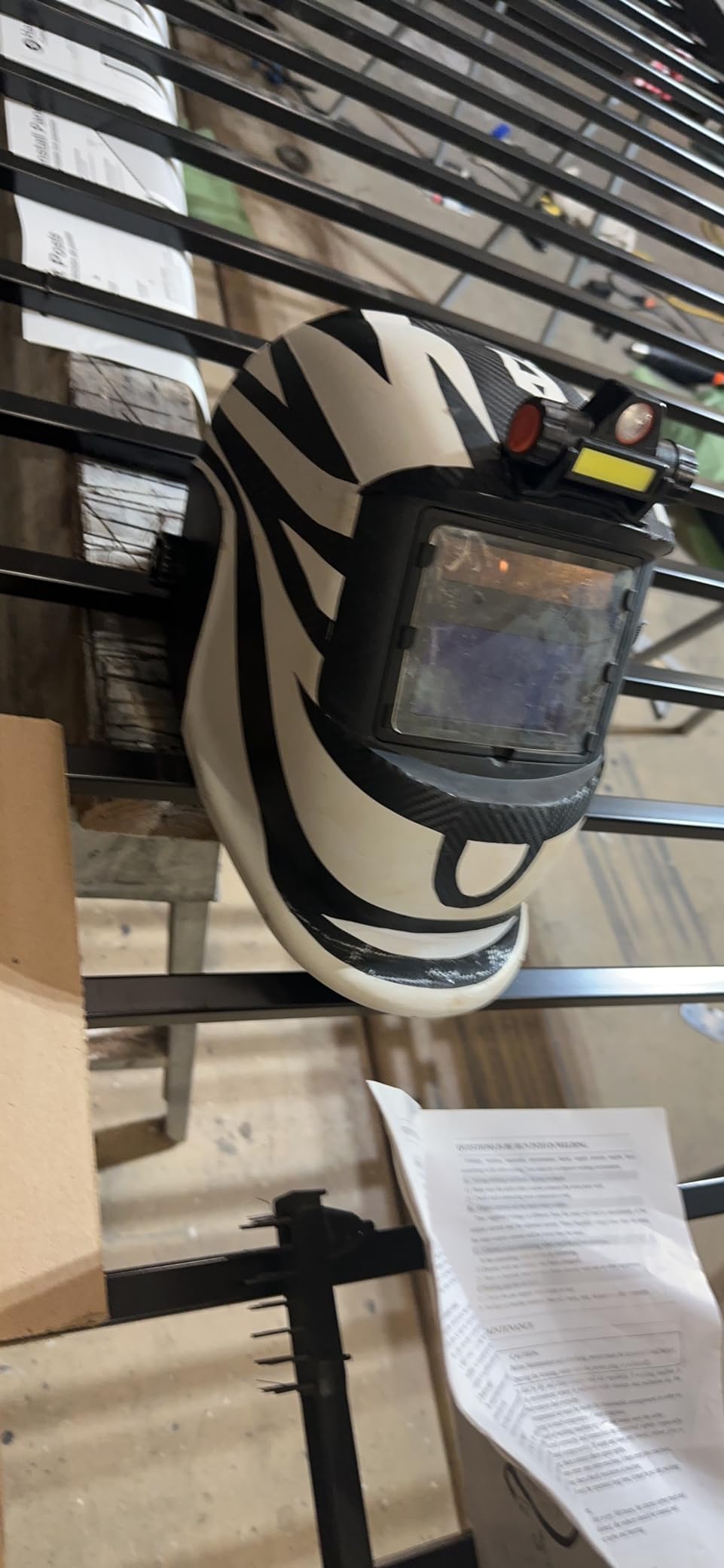
Solar Plus Coin Cell Power and First-Use Charging
Solar cells sit alongside two replaceable CR2032 lithium batteries, which is a sensible redundancy: the batteries carry you through a whole session, and the solar cell tops them up when you are welding near a window or outside. Leave the solar panel in daylight for a full day before your first use so the cell arrives charged.
The solar-only trap shows up when a helmet has no battery fitted and arrives flat. It is worth noting because a helmet that will not darken on your first arc is the most demoralizing first-day experience we can imagine.
Build Quality and Known Weak Spots
Shell and headgear feel fragile, and one owner reports the unit falling apart after light use. The hood also tends to drop forward when raised and will not lock open, which is annoying if you flip the helmet up to talk to someone or check a print drawing.
Supplied lenses are thin and may need replacing sooner in a spatter-heavy shop, and a few owners report flickering or inconsistent sensitivity triggering. For a first helmet on a strict budget, those are acceptable; for regular shop work, they are not.
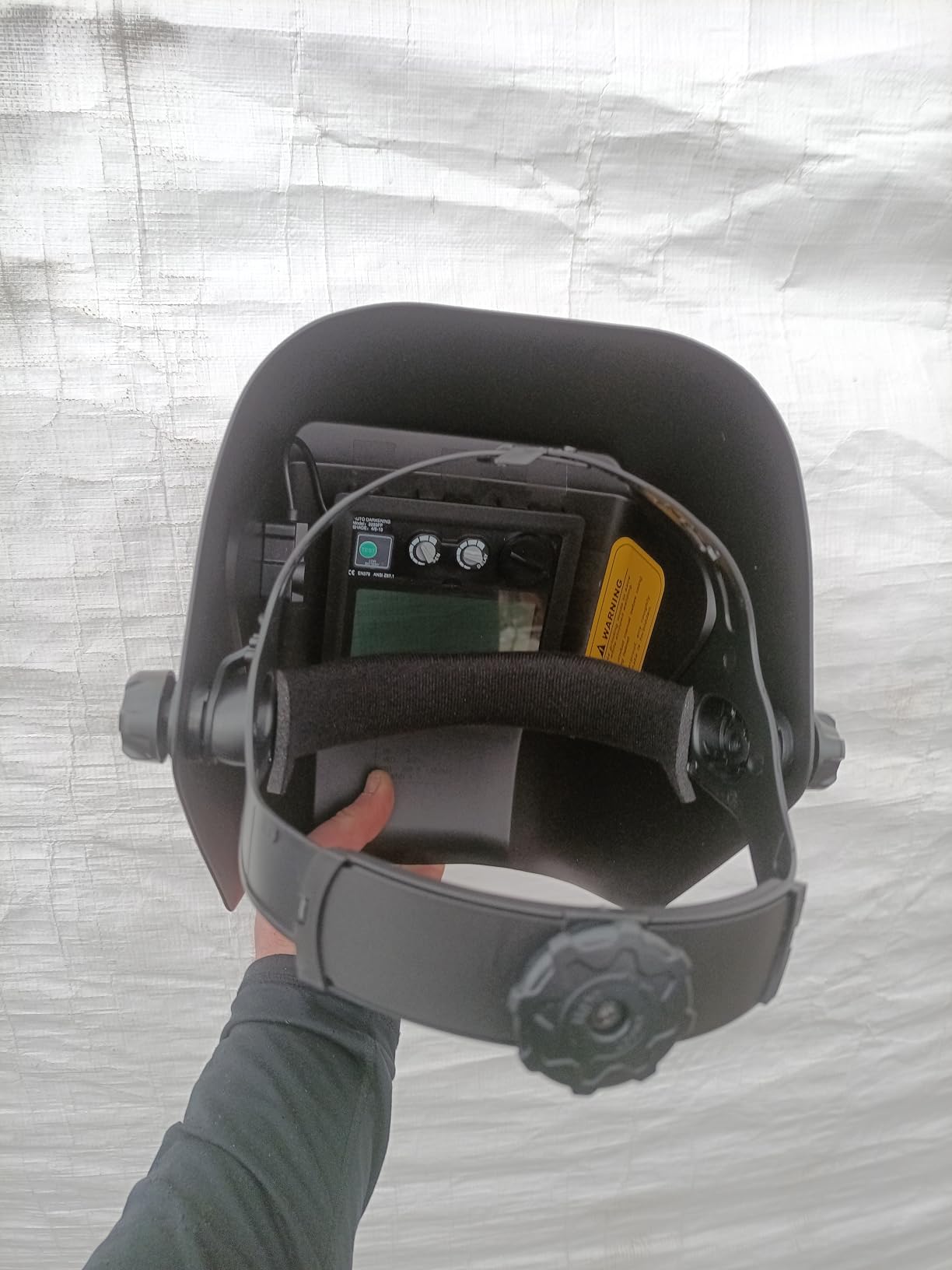
Certification and Process Coverage
The helmet lists ANSI Z87.1, EN 379 CE and CSA Z94.3, which places it on the same standards footing as pricier models in this group. The filter resists 99 percent of harmful light, and the light state sits at DIN 4 with a dark state of DIN 9 to 13.
Manufacturer claims cover plasma cutting, grinding, DC and AC TIG, MIG and MAG, and MMA stick work. Treat the TIG claim cautiously with only two sensors, since low-amperage TIG is exactly where sensor count decides whether the lens darkens reliably.
7. TOOLIOM E600A-A – Best Blue Light Filtering Helmet for Long Shifts
TOOLIOM Auto Darkening Solar Powered Welding Helmet for TIG MIG ARC with Light
Blue light blocking outer lens
1.14 lb body
1/25000 sec detection
External grind knob
Pros
- Blue light blocking outer lens for long shifts
- Very light at about 1.14 lbs
- 1/25000 sec arc detection with low battery indicator
- Headgear holds firm in awkward positions
- External grind mode control
Cons
- Small viewing window that dirties quickly
- Cheater lens holder slightly too small
- Unpadded rear band presses at the back
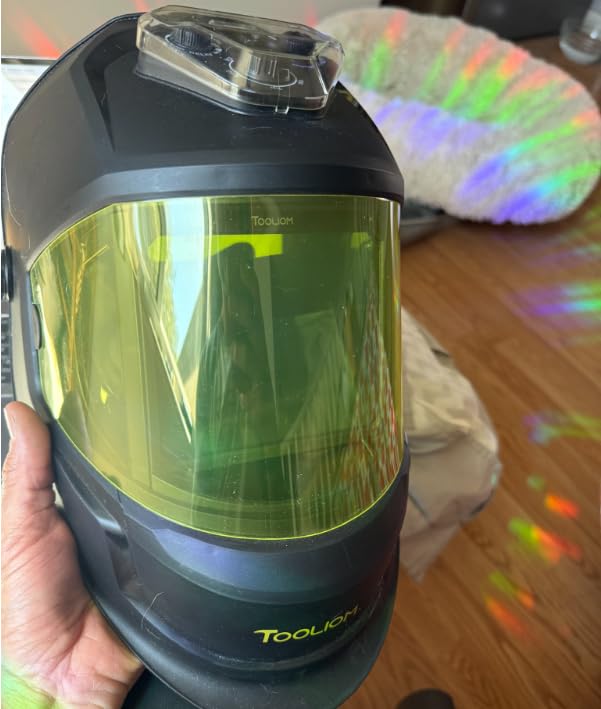
This is the model we recommend for anyone whose welding stretches across a full day, because the 1.14 lb shell barely registers on your neck and the blue light blocking outer lens reduces the high-energy light exposure that causes end-of-day eye strain.
Its trade-off is the window. At 3.64 by 1.67 inches it is one of the smaller viewing areas here, so bead placement takes more concentration than on the large-view models. If you are doing long flat-plate MIG, that is a fair exchange for not fighting a heavy helmet at hour four.
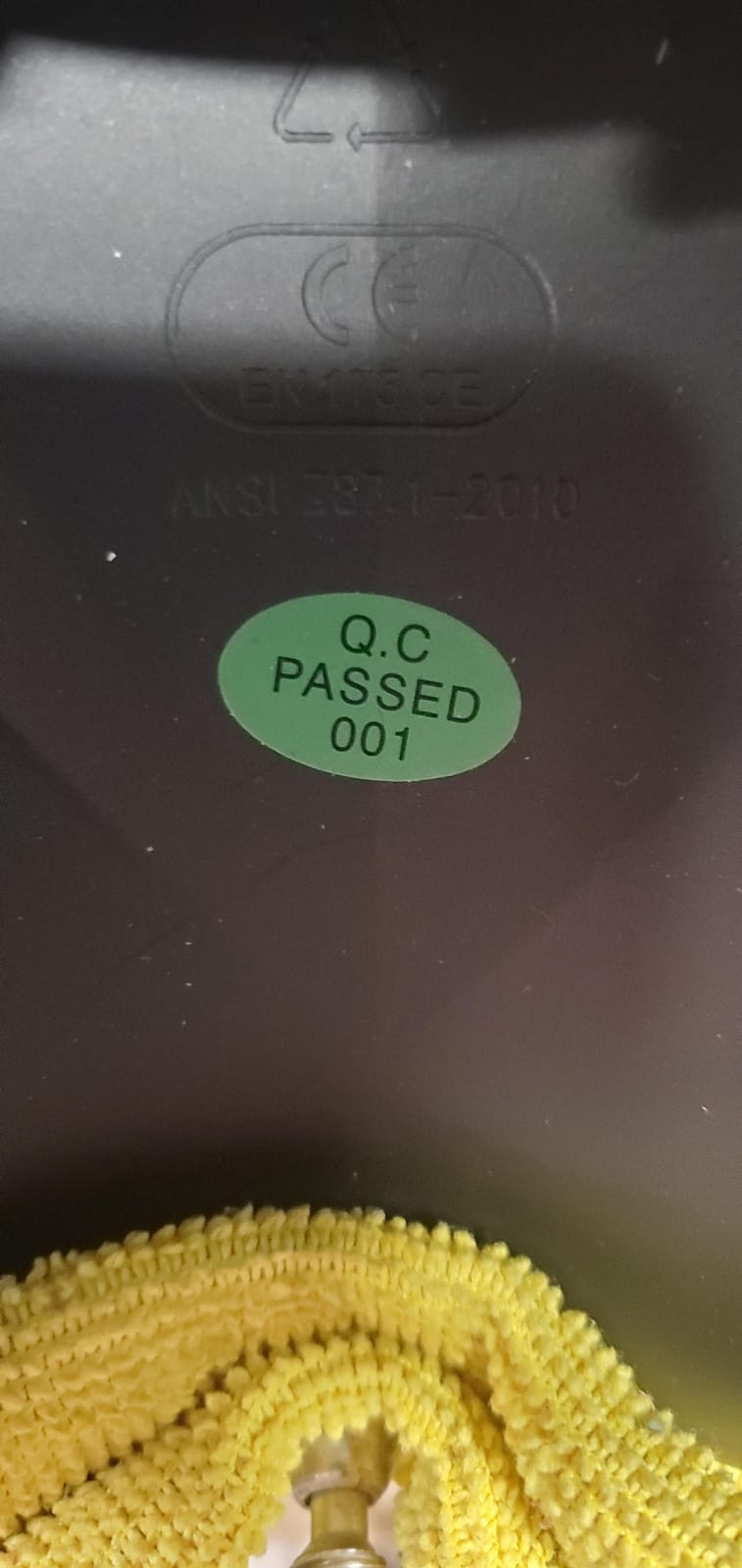
Weight, Fit and Position Overhead
At 1.14 lb with adjustable PE headgear and a breathable sweatband, this is one of the lighter shells in the group, and owners report that the headgear holds firm even in awkward positions. Light weight matters more than beginners expect, because neck fatigue is what actually ends a session early.
The complaint on comfort is the unpadded rear band, which can press uncomfortably at the back of the head over long shifts. A thin wrap or a replacement headband pad solves it in a minute, and it is the first modification we would make to this helmet.
Blue Light Filtering and Why It Matters for Fatigue
Beyond the UV and IR protection every welding lens provides, a blue light blocking outer lens filters part of the visible spectrum that contributes to eye strain. The practical effect reported by owners is less end-of-day fatigue when welding in bright spaces with overhead lighting.
Keep in mind that outer lenses are consumables. This one takes the hits from spatter and grinding dust, and once it pits badly your view degrades regardless of the electronics behind it.
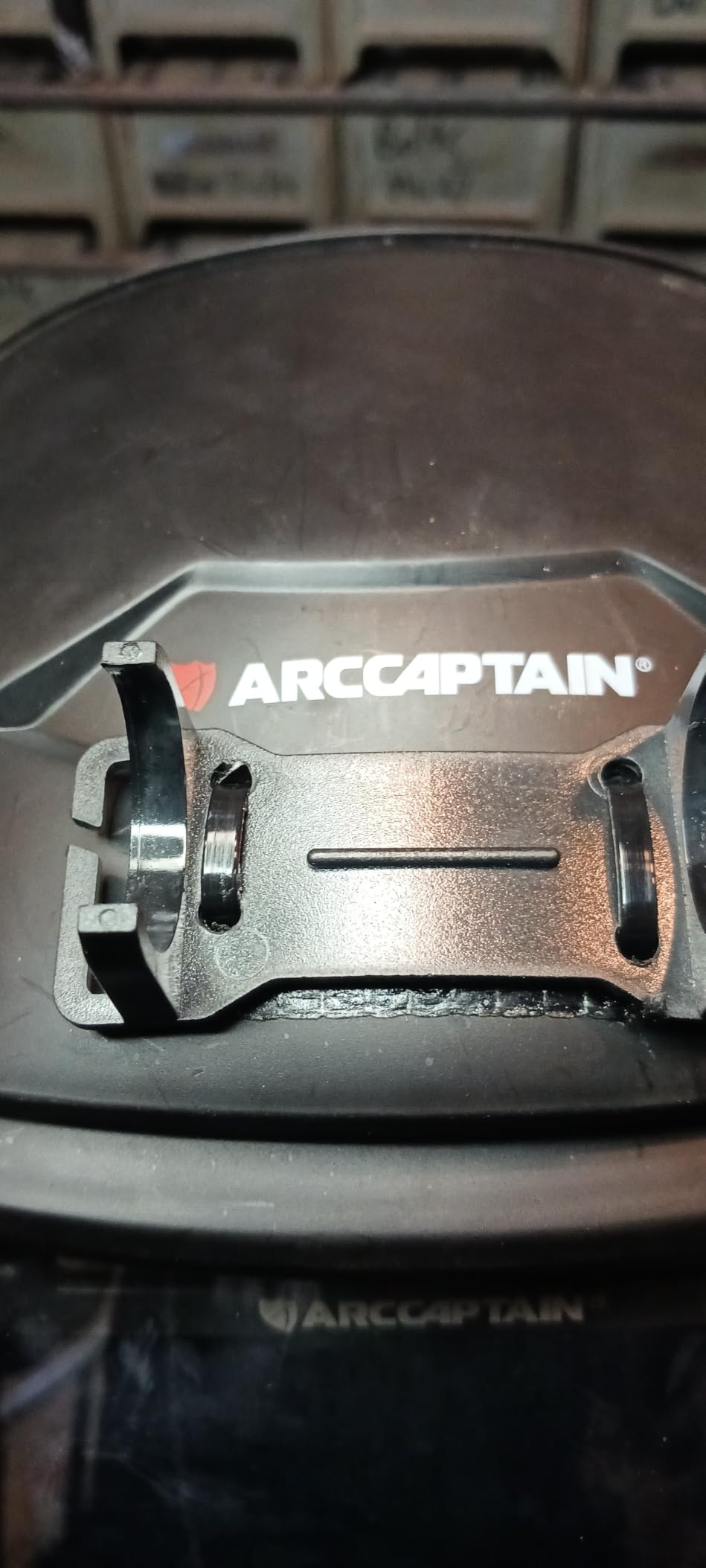
Controls, Shade Range and the Cheater Lens Catch
The external grind mode control knob means you can switch to grinding mode without taking the helmet off, and the shade range covers DIN 3.5 and 9 to 13 for TIG, MIG, MMA and plasma cutting. Sensitivity and delay sit on internal knobs, with a low battery indicator as a useful early warning.
The specific fit issue to know about: the cheater lens holder is slightly too small for standard 4.25 inch magnifiers. If you wear glasses and plan to use a cheater lens, check that measurement before ordering.
8. ARCCAPTAIN XK-LY800H – Best Helmet for Dim Garages With a Large View
ARCCAPTAIN Auto Darkening Welding Helmet with Light, 3.94″X3.66″ Large View
3.94 x 3.66 inch true color view
4 arc sensors
USB LED light
About 1 lb shell
Pros
- Very large true color viewing area
- 1/25000 sec response keeps up with the arc
- LED work light for dim spaces
- Lightweight with padded headgear
- Shades 4/5-8/9-13 cover every process
Cons
- LED light needs attaching before use
- PP shell is thin and flexible
- Fit tension varies between models
The pairing of a large window and a work light is what makes this a garage specialist. A dim home workshop is where a welder can afford a helmet with a big viewing area, because nothing in the room competes with the arc for attention and the auto-darkening filter has a clean signal to read.
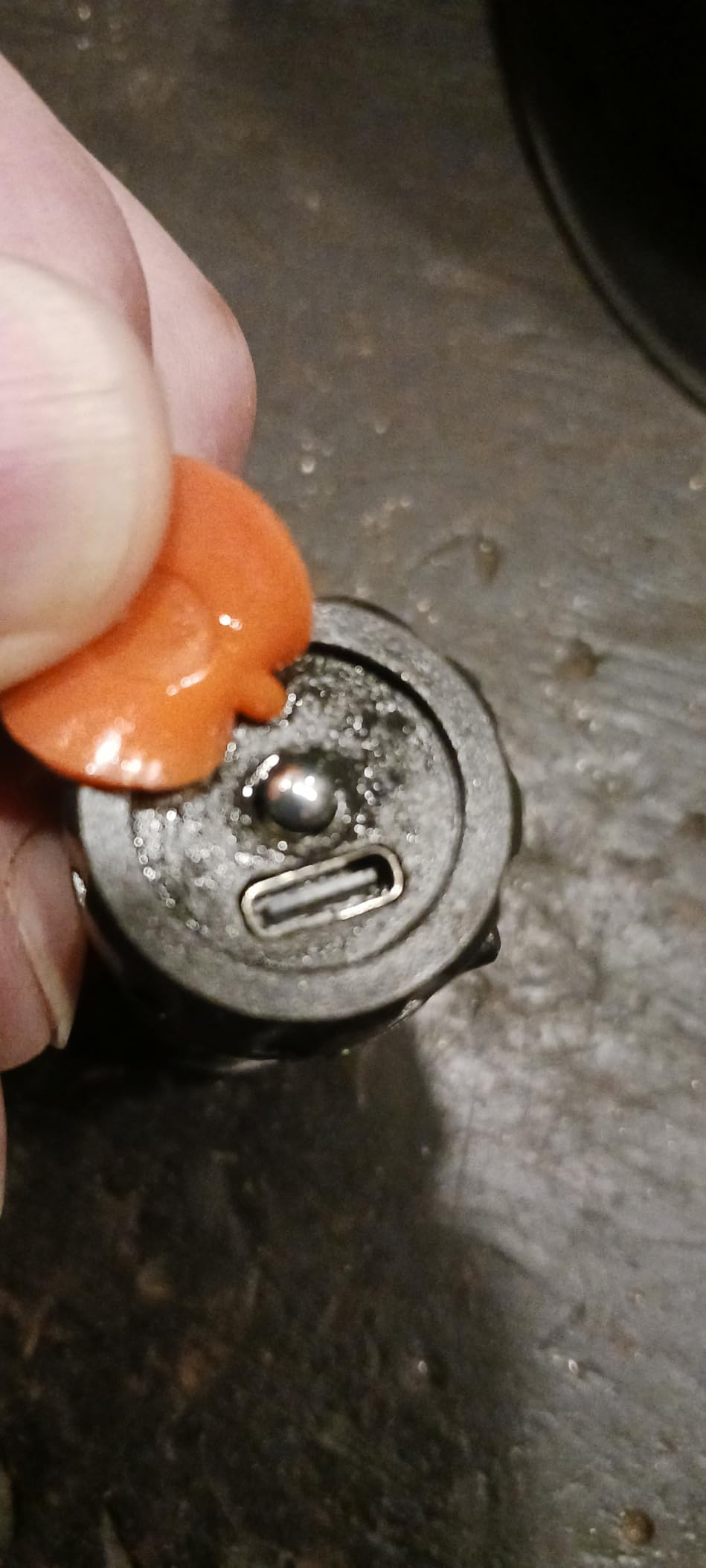
Add the USB-powered LED light on top with two brightness levels and you can set up joint prep and grinder cleanup without a separate headlamp clamping onto the headgear. The LED light needs attaching before use, so plan five minutes with a screwdriver ahead of your first session.
Large View at a Mid-Range Weight
The 3.94 by 3.66 inch window sits at the wide end of rectangular filters without stepping up to a panoramic wraparound design, and at about 1 lb the shell stays light enough for long hobby sessions. For a beginner practicing flat-plate MIG, this is the easiest filter to learn on.
Four premium arc sensors switch in 1/25,000 of a second, and the dark state shades of 4, 5 to 8 and 9 to 13 cover stick, MIG, TIG, grinding and cutting from the same lens.
Power: Dual Solar Panels and a Rear Battery
Two front solar panels plus a rear CR2450 lithium battery give you a genuine dual supply. The battery carries a full session indoors, and the solar panels keep it topped up near a window or during outdoor work, which removes the dead-on-arrival problem entirely.
The 12-in-1 smart filter carries automatic DIN 16 UV and IR protection, so passive protection continues even when the electronics are not active.
Fit Variability and Thin Shell Reality
Owners report some variability in fit and adjustment tension between examples, so expect to spend a few minutes dialing the headgear before the first weld. The ergonomic headgear does include breathable padding at the contact points.
The shell is PP and reviewers describe it as thin and flexible. That is a materials point rather than a safety point, since the shell is not what protects your eyes, but it is the part you feel when you set the helmet down, so expect a different feel from a professional fibreglass hood.
9. Sunstac SS-A800D – Best Helmet With an Adjustable Swivel Work Light
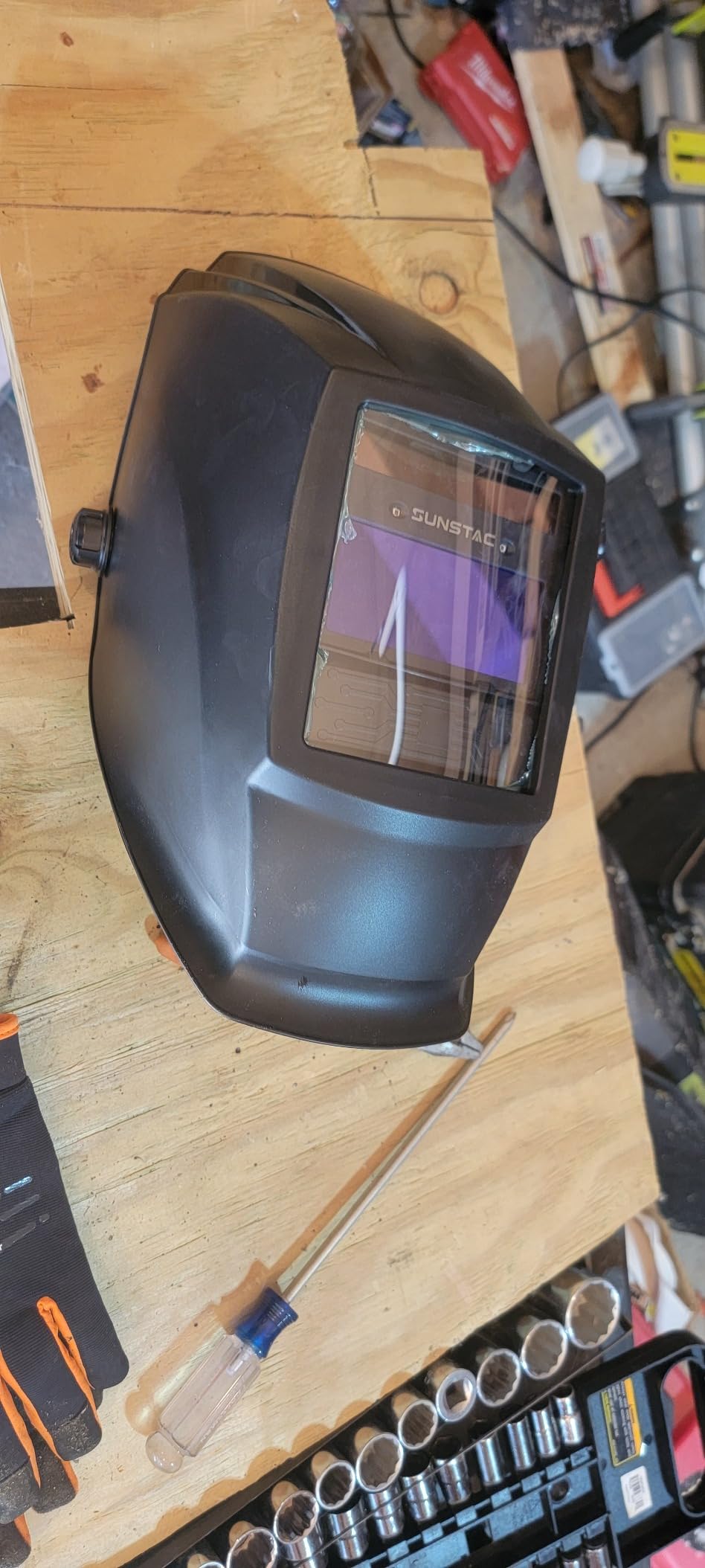
Sunstac Auto-Darkening Welding Helmet 3.94 x 3.27″ View with Light
3.94 x 3.27 inch viewing area
4 arc sensors
1/30000 sec switch
Dual battery or solar
Pros
- Large viewing area with no perceived lag
- True color view without adjustment
- Fully adjustable padded headband
- Swivel work light in two modes
- Spare lenses and an extra battery included
Cons
- Filter takes a moment to engage on the first arc
- Battery compartment is awkward to reach
- Side tension buttons feel delicate
The work light on this helmet swivels, which is a small design decision with an outsized effect in practice. Instead of pointing the light straight down, you angle it at the joint you are fitting, which is what you need when you are welding in a corner with one free hand on the torch.
Underneath that, the SS-A800D delivers a 3.94 by 3.27 inch 1/1/1/1 true color view with four arc sensors and 1/30,000 second switching, plus dual power from a lithium battery or solar cells. Owners rate it as a large step up from budget self-darkening hoods, largely because of the lag-free view.
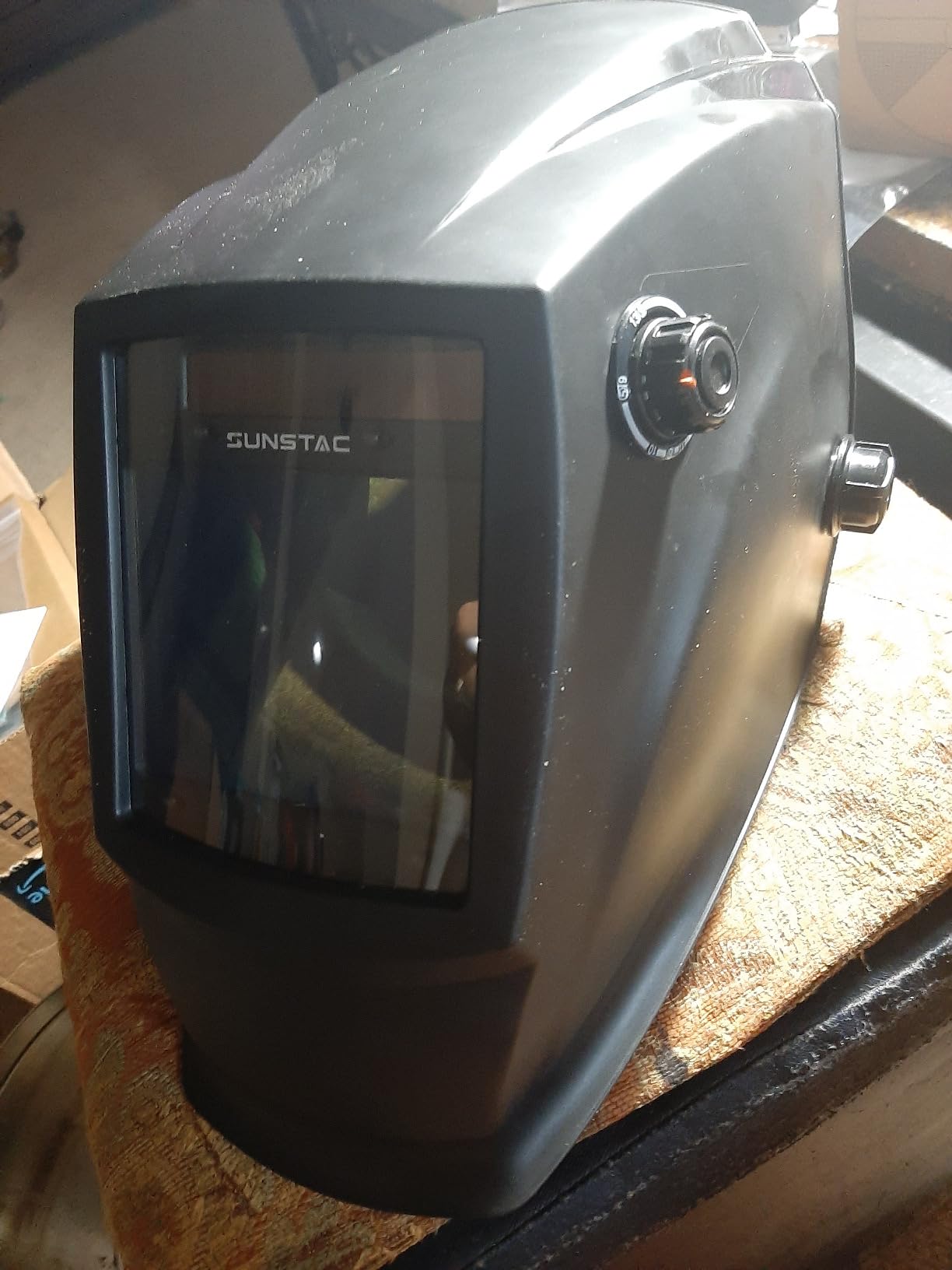
First-Strike Delay and What It Means for New Welders
The most common observation across reviews is a short delay before the filter engages on the very first arc of a session, with no noticeable lag afterwards. In practice this matters most on the first weld of the day, when the electronics are cold and you are least able to predict what the lens will do.
Warming the helmet under shop lighting before you strike your first arc avoids the issue entirely, and it is the reason solar-assisted models are less likely to show it.
Multi-Process Coverage and Power Options
Wide shade 4, 5 to 9 and 9 to 13 covers stick, TIG, MIG, cut, MMA and plasma work, with a grinding mode on the same lens. Cheater lens compatibility is supported, though the magnifier is not included.
Dual power means you can run on the rechargeable lithium battery indoors or lean on solar cells when working outdoors, which is useful for gate and fence work away from a bench supply.
Fit, Glasses and Adjustment Points
Multi-point adjustment and internal padding make this adjustable across head sizes, but the shell is deep and some reviewers found it crowded their glasses on smaller heads. If you wear prescription eyewear, this is the specification to check before you order.
The side tension buttons feel delicate and the hood can flop down, and the battery compartment is awkward to access. Owners also note that a spare battery and spare lenses are included, which softens the second complaint considerably.
10. MIGVAN H-21 – Best True Color Filter That Reduces Distortion
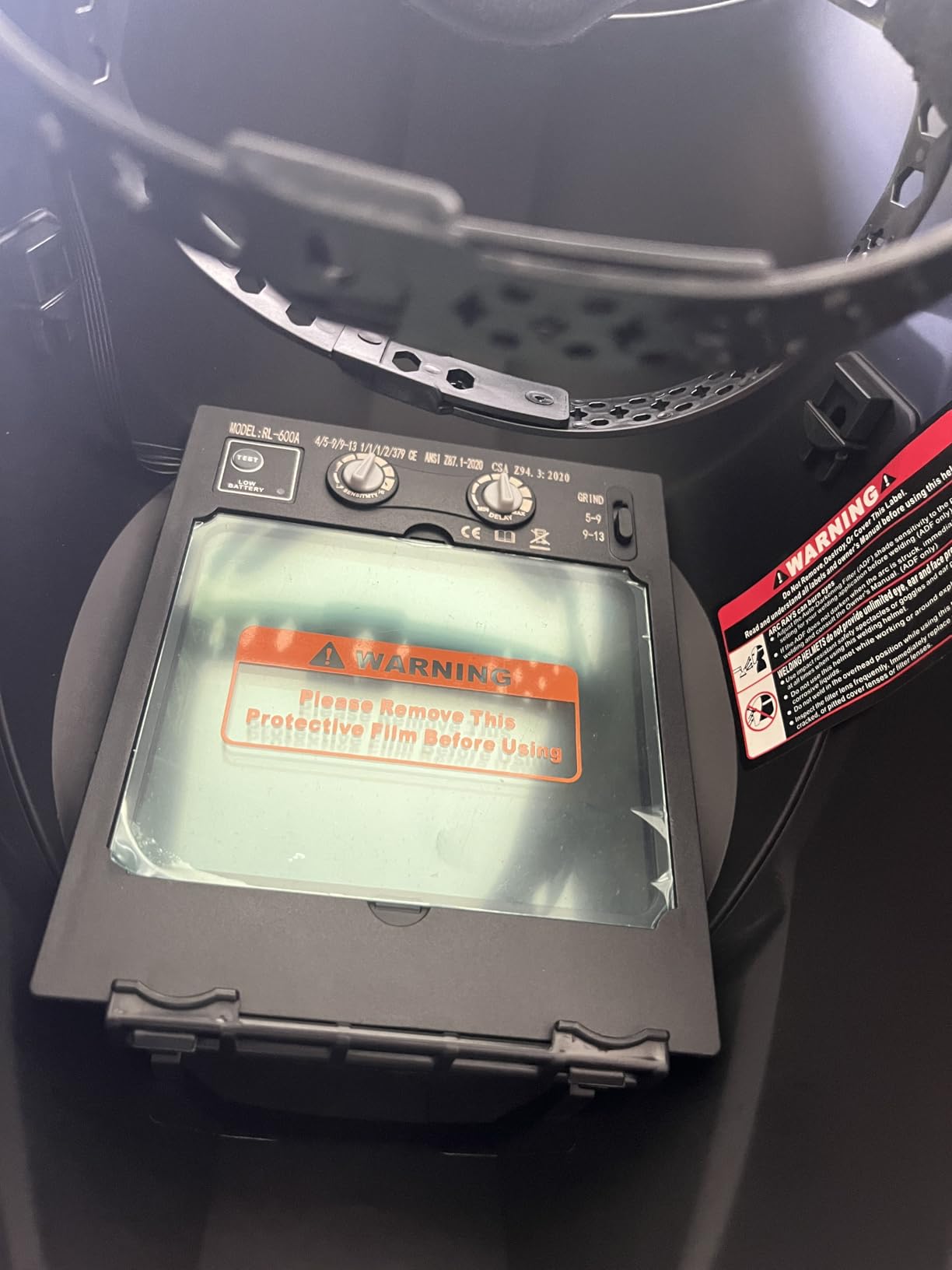
MIGVAN Welding Helmet Auto Darkening True Color Large Viewing, Welding Hood Solar/Replaceable Battery Powered, Wide Shade 4/5-13 with 4 Arc Sensor, Optical Clarity Welding Mask for TIG MIG ARC Grind
Golden true color filter
4 arc sensors
Solar plus CR2450 power
Large viewing screen
Pros
- Golden filter cuts distortion and color saturation
- Large viewing screen aids bead placement
- Dual solar and battery power
- Lightweight pivoting headgear
- Spare lenses and a storage bag included
Cons
- 1/10000 sec switching is slower than the leaders
- Plastic shell feels basic beside the feature list
The differentiator here is the golden filter. Where most true color lenses simply remove the green tint, this one is marketed as reducing distortion and color saturation as well, and owners describe the view of the pool as noticeably more natural than green-tinted budget hoods.
It also sits in the upper part of this roundup’s range, and the trade-off is a slower 1/10,000 second switching time against the 1/25,000 and 1/30,000 second figures the leaders advertise. On MIG and stick work that gap is hard to notice; it becomes more relevant on fast tacks.
Response Time and What 1/10000 Second Means for You
Switching speed is the gap between the arc striking and the filter reaching full shade. At 1/10,000 of a second this is still fast enough that most beginners report no visible flash, which is the outcome that actually matters for eye safety.
Where you might notice it is on rapid-fire short tacks and on out-of-position work where you flick the torch around quickly. If your planned work is mostly continuous beads on flat plate, the slower figure costs you almost nothing.
Golden Filter, Shade Steps and Lens States
The filter moves from a DIN 4 light state to DIN 5 to 9 and DIN 9 to 13 dark states, giving you fine control across welding and cutting. The advanced outer yellow filter lens handles instant UV and IR protection, and replaceable outer and inner lenses keep the consumable chain intact.
Owners specifically credit the color rendering for spotting scale, slag and clean weld transitions, which is a genuine advantage when you are learning to read your own work.
Package, Comfort and Build Reality
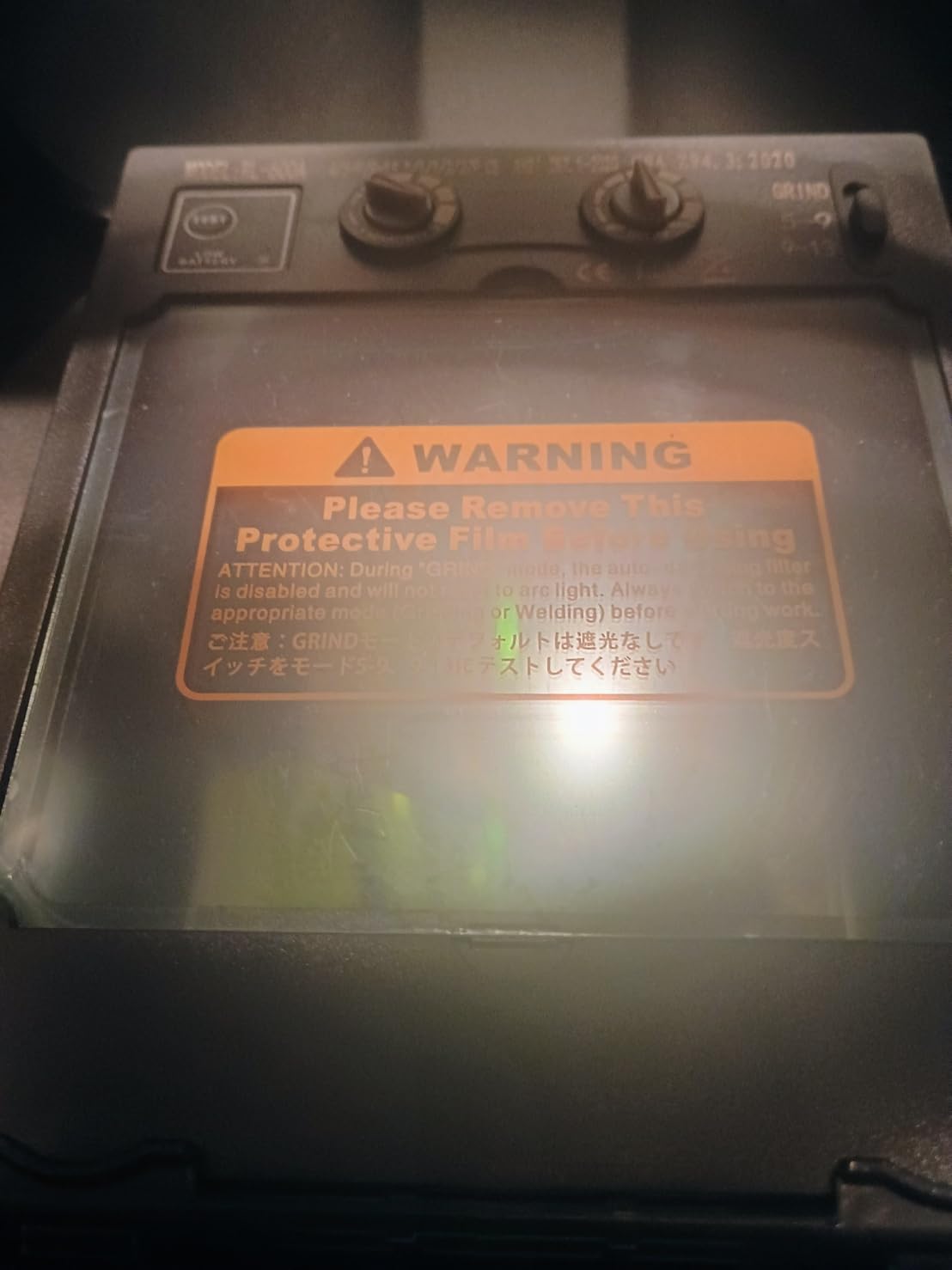
The package is generous: two inner lenses, two outer lenses, a user manual and a heavy-duty storage bag. The pivoting headgear with breathable padding keeps weight down at roughly 1.09 kg, and dual solar plus CR2450 power handles long sessions.
The honest criticism is that the build is basic plastic, which means you are paying for the filter quality rather than the helmet body. If the golden view matters to you, that is a defensible trade. If it does not, a large-view four-sensor model darkens faster.
How to Choose an Auto Darkening Welding Helmet: 7 Features That Matter
Most beginner buying guides stop at viewing area and optical clarity, which are real but not decisive. The seven criteria below are the ones that determine whether a helmet works for the process you will actually run, and they are ordered by how often they cause problems in the first year.
1. Arc Sensors: Two for MIG, Four for TIG
Arc sensors are photocells that detect the arc and trigger the filter. Two sensors detect a bright MIG or stick arc reliably. Four or more sensors detect the much fainter arc produced by low-amperage TIG on thin material, and they also darken correctly when your head partially blocks the arc during out-of-position work.
The practical rule: if you are only welding MIG or stick, two sensors are fine and four are a bonus. If TIG is on your list, do not go below four. Forum consensus in welding communities points the same way, with regulars describing two-sensor helmets as unusable for TIG.
2. Shade Numbers by Process and Amperage
Shade runs from 1 to 13 on the same scale as sunglasses, where a higher number means less light. The numbers you actually need are far narrower than the scale suggests. For MIG on thin and medium mild steel, start at shade 9 and work between 8 and 10. For stick, use 10 to 12.
For TIG, use 10 to 13 because the arc is bright and the workpiece detail still matters. Plasma cutting wants shade 5 to 8, and grinding wants shade 3 or 4. There is no argument for shade 11 over shade 10 as a universal answer, because the right number is set by your process and amperage, and most helmets in this group give you 9 to 13 coverage with a grind mode below.
3. Optical Class 1/1/1/1 and True Color
The four digits grade the filter on four attributes, and in practice all three leading digits being 1 means no blur, no distortion and even shade across the whole window. A model rated 1/1/1/2 gives up a little shade evenness, which you may notice as a subtle brightness gradient at the edge of the filter.
True color lenses remove the green or brown cast of a standard filter. That is not just cosmetic: judging whether a puddle is ready depends on seeing colour change in the slag and the arc itself, so true color speeds up learning.
4. Viewing Area Measured in Square Inches
Ignore the diagonal size quoted on the box and multiply the stated width by the height. A 3.64 by 1.67 inch filter gives about six square inches; a 3.94 by 3.66 inch filter gives close to 14. The larger window means less head movement to find your joint, and much better awareness when you are overhead or out of position.
Panoramic wraparound designs add side panels and push the usable field even wider. They also add weight, so the trade is comfort against awareness, and it is worth trying both before deciding.
5. Switching Speed Versus Switching Delay
These are two different numbers and beginners routinely confuse them. Switching speed is how fast the filter darkens, measured as a fraction of a second, where lower is faster and 1/25,000 second is excellent. Switching delay is how long the filter stays dark after the arc stops, and it is adjustable on most models here.
On your first sessions, set delay to the middle or low position. Too long a delay and you work half the weld through an unnecessarily dark lens, which slows bead placement.
6. Power Source and the Solar Pre-Charge Trap
Solar-assisted helmets with a coin cell or rechargeable battery backup are the safest choice for beginners, because a solar-only lens can arrive flat and fail to darken on your first arc. If you choose solar, leave the helmet in daylight for a full day before you need it, and check that a battery is actually seated inside.
Battery-first designs are better if you work outdoors or in a shaded space, because sunlight is not always available to keep the cell topped up.
7. Certification Marks Printed on the Helmet
Look for ANSI Z87.1, and ideally EN 379 and CSA Z94.3 as well. EN 379 grades the auto-darkening performance of the filter, and EN 175 covers the passive UV and IR filtering that works with the electronics switched off. If a model lists no standard at all, treat it as eye protection of unknown quality regardless of the price.
The marking should be printed on the shell itself, not just on the packaging, since the packaging is the part most likely to be generic.
Failure Modes Worth Knowing Before They Happen
Flickering under bright shop lighting is a sensor sensitivity problem, and the fix is to turn sensitivity down rather than to replace the helmet. False darkening while setting up usually means the opposite, so turn it up. Cleaning the sensor windows with a dry cloth resolves a surprising share of “faulty” lenses.
Riding the delay setting too high leaves the filter dark between tacks, which looks like a fault but is a setting. A dead coin cell usually means the battery was seated incorrectly; a faded view means the outer lens needs replacing rather than the whole helmet.
If You Wear Glasses
Check three things: whether the shell is deep enough to clear your frames, whether the filter sits far enough from your eyes, and whether the cheater lens holder accepts a standard 4.25 inch magnifier. Reviews flag the holder as slightly narrow on some models in this group, so measuring before you order saves a return.
Frequently Asked Questions
What is the best welding helmet for a beginner?
The best welding helmet for a beginner is one with a printed ANSI Z87.1 mark, at least two arc sensors, a 1/1/1/1 true color lens and solar plus battery power. In our testing the YESWELDER LYG-L600A is the strongest default because it combines all four, ships with spare lenses and carries the largest review base in the group. If you plan to weld TIG, move up to a four-sensor model such as the YESWELDER LYG-M800H.
What is the best welding helmet for value for money?
The best value is usually a four-sensor model with a large viewing area and true color optics, because sensors and window size are where cheap helmets fall short. The ARCCAPTAIN HSH-S800 is the strongest value pick here, listing ANSI Z87.1, EN 175, EN 379 and CSA Z94.3 with four sensors and 1/1/1/1 optics. Avoid the lowest-cost models if you will do any TIG or any out-of-position work.
Is shade 10 or 11 better for welding?
Neither is universally better, because the right shade depends on process and amperage. MIG on mild steel sits between shade 8 and 10, stick between 10 and 12, TIG between 10 and 13, plasma cutting between 5 and 8, and grinding at 3 or 4. Start at shade 9 for your first MIG run and adjust from there based on how much detail you can see in the puddle.
How many arc sensors do I need?
Two arc sensors are enough for MIG and stick welding, which is where most beginners start. Four or more sensors are needed for reliable low-amperage TIG on thin material and for out-of-position work where your head partially blocks the arc. A useful rule is to buy four sensors if there is any chance of TIG in your future, because a two-sensor helmet will not detect a faint TIG arc reliably.
Are cheap welding helmets safe?
Cheap welding helmets can be safe, provided the certification mark is printed on the shell itself. Look for ANSI Z87.1, and ideally EN 379 and CSA Z94.3. Models listing no standard at all should be treated as eye protection of unknown quality. In this group even the entry-level options carry printed marks, so price alone does not determine safety.
What is the rule of 33 in TIG welding?
The rule of 33 is a starting-point formula for TIG amperage: multiply the material thickness in millimetres by 33 to get an approximate amperage. It applies mainly to steel and gives a quick setting before you fine tune with the machine controls. Remember that TIG needs a helmet with at least four arc sensors, because low-amperage arcs are faint and two-sensor lenses often fail to darken.
Final Verdict: Which Auto Darkening Welding Helmet Should You Buy First
If you want one helmet and no further decisions, buy the YESWELDER LYG-L600A. It is the model in this group with the deepest owner feedback, a true color lens, a printed ANSI Z87.1 and CSA Z94.3 marking, and spare lenses in the box, which makes it the safest possible first auto darkening welding helmet for beginners.
If TIG is in your plans within the next year, step up to the YESWELDER LYG-M800H for four sensors and a much larger window. If your budget is the deciding factor, the ARCCAPTAIN HSH-S800 gives you four sensors and full EN 175 and EN 379 certification at the lowest entry point. For overhead and out-of-position work, take the panoramic YESWELDER BW-10MAXTRI, and for all-day comfort pick a light shell such as the TOOLIOM E600A-A.
Whatever you choose, check the certification mark on the shell, set your shade to 9 for your first MIG run, and treat a helmet as gear you will keep for years rather than a disposable purchase. That decision will pay off well beyond your first project in 2026.