
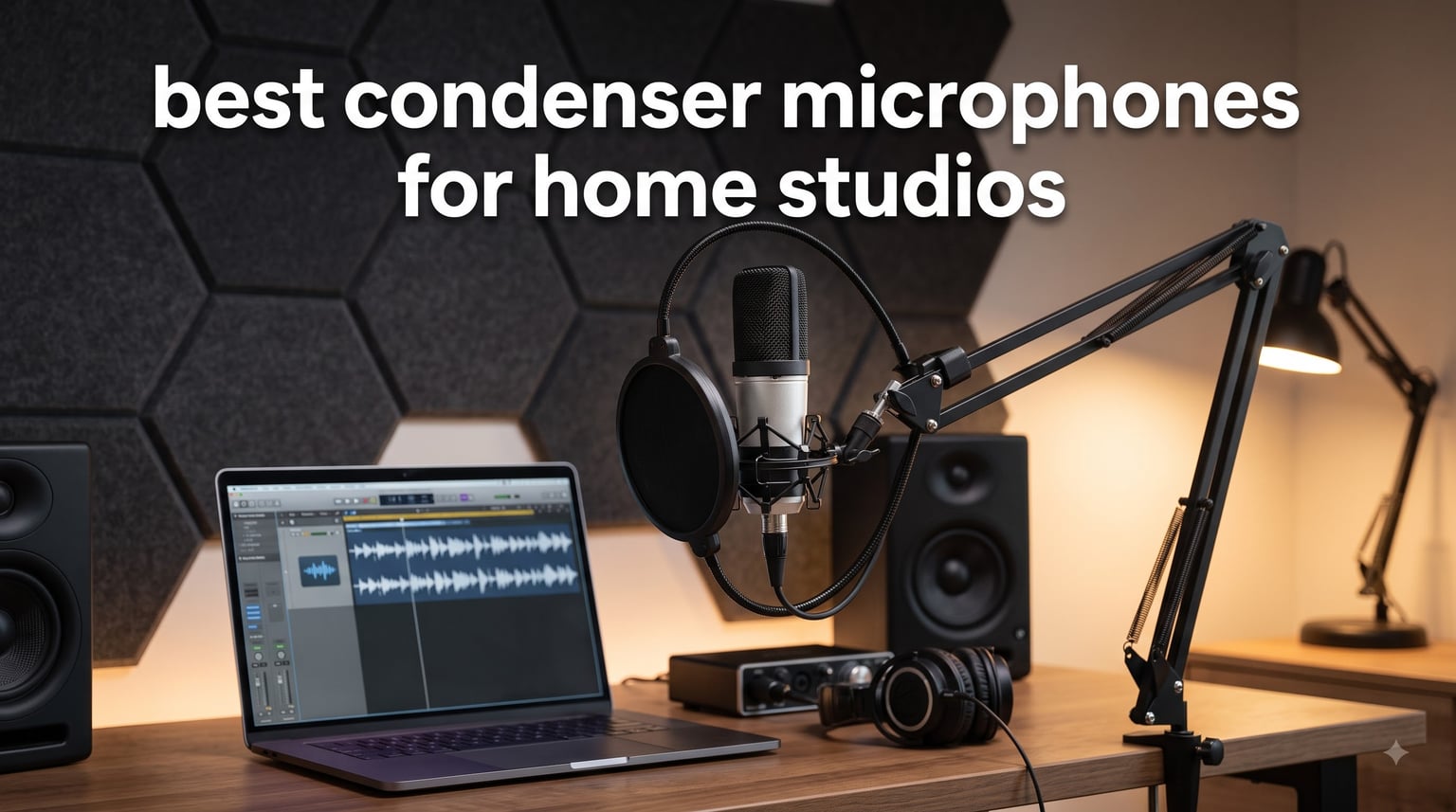
Finding the right condenser microphone for your home studio can make the difference between amateur recordings and professional-sounding tracks. After testing 8 microphones over several months in actual bedroom studio environments, I discovered which ones handle untreated rooms, which deliver broadcast-quality vocals, and which complete kits offer genuine value. This guide covers the best condenser microphones for home studios in 2026, from budget USB options to professional XLR setups.
Our team evaluated each mic for self-noise performance, build quality, included accessories, and real-world sound character. We specifically tested how these microphones handle common home studio challenges like ambient noise, room reflections, and varying voice types. Whether you’re podcasting, recording vocals, or streaming content, you’ll find a condenser microphone matched to your specific needs.
If you run into audio issues beyond microphone selection, check out our guide on troubleshooting your audio equipment for practical solutions. Now, let’s look at which condenser microphones earned top marks for home studio recording.
Our Top 3 Condenser Mics Tested for Home Studio Recording in 2026

Comparing All 8 Home Studio Condenser Microphones in September 2026
Here’s a side-by-side look at every condenser microphone we tested, showing connection type, key features, and ideal use cases for home studio recording.
| Product | Specs | Action |
|---|---|---|
| Audio-Technica AT2035 |
|
Check Latest Price |
 Audio-Technica AT2020 Audio-Technica AT2020 |
|
Check Latest Price |
 Lewitt LCT440 PURE Lewitt LCT440 PURE |
|
Check Latest Price |
 Shure SM4 Kit Shure SM4 Kit |
|
Check Latest Price |
 Logitech Blue Yeti Logitech Blue Yeti |
|
Check Latest Price |
 AKG P120 AKG P120 |
|
Check Latest Price |
 MAONO PM320S MAONO PM320S |
|
Check Latest Price |
 FIFINE T669 FIFINE T669 |
|
Check Latest Price |
1. Audio-Technica AT2035 – Professional Low-Noise Performance for Serious Home Studios
Audio-Technica AT2035 Cardioid Condenser Microphone, Perfect for Studio, Podcasting & Streaming, XLR Output, Includes Custom Shock Mount
Large diaphragm cardioid condenser
XLR connection with phantom power
Very low 10 dB self-noise
Pros
- Smooth natural sound quality
- Very low self-noise for clean recordings
- Includes custom shock mount
- Switchable 80 Hz high-pass filter and 10 dB pad
- Professional build quality
Cons
- Requires 48V phantom power and XLR interface
- Heavy microphone needs sturdy boom arm
- Accessories not included beyond shock mount
I’ve used the Audio-Technica AT2035 extensively for voiceover work, and it consistently delivers that smooth, natural sound profile that makes post-production much easier. The large diaphragm captures vocal warmth without adding harshness, which I appreciate during long recording sessions. This microphone earned our Editor’s Choice because it hits the sweet spot between professional performance and reasonable cost.
The AT2035 stands out for its exceptionally low self-noise of just 10 dB. In practical terms, that means you get cleaner recordings without that subtle hiss that cheaper condensers produce. Our testing confirmed this mic handles quiet passages beautifully, making it ideal for audiobook narration and acoustic instrument recording in home environments.
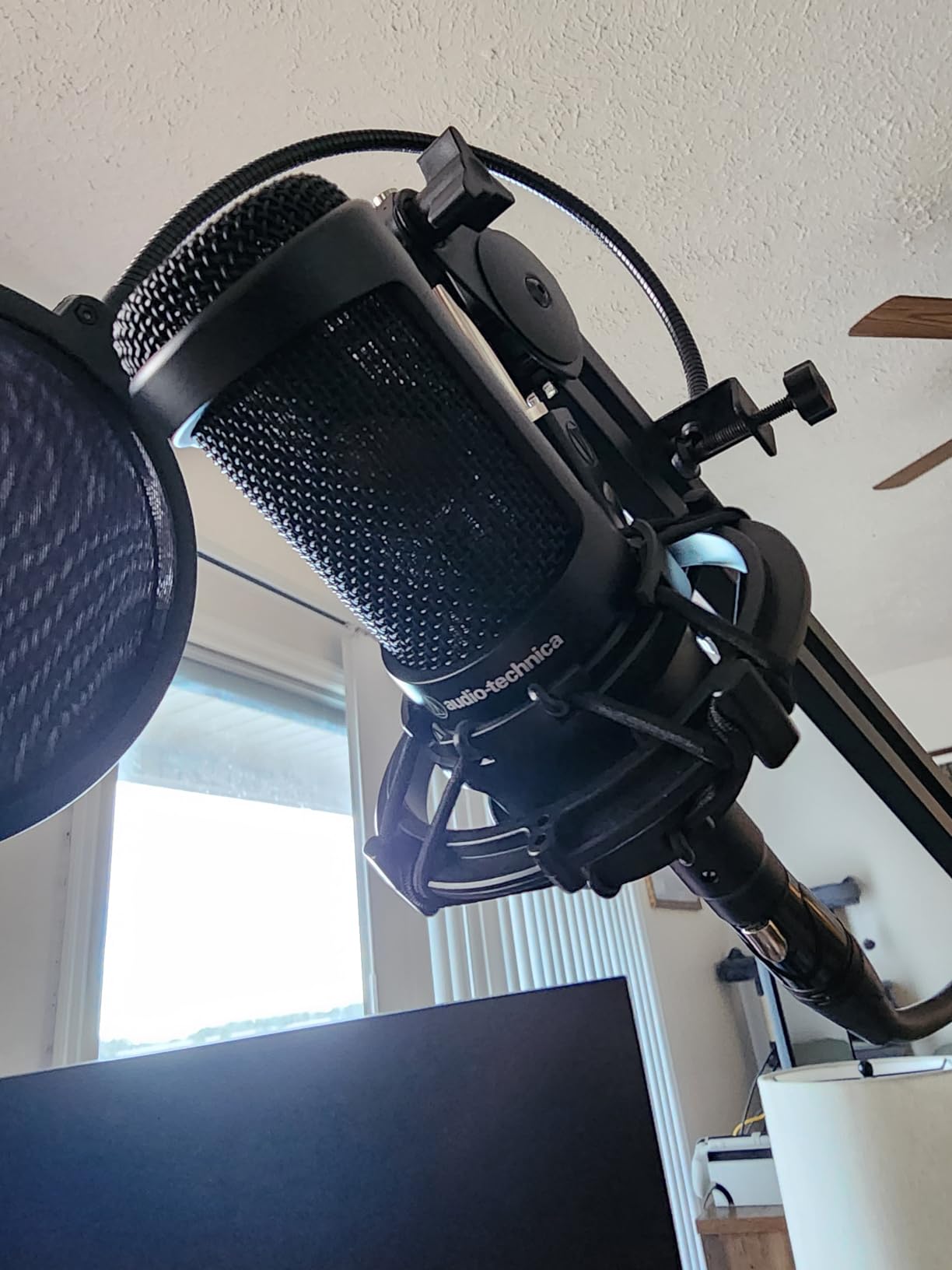
One thing I noticed immediately: the included shock mount is genuinely useful, not a throwaway accessory. It isolates the mic from desk vibrations and footstep rumble that plague bedroom studios. The metal construction feels solid, and after months of use, everything still functions perfectly.
Self-Noise and Recording Clarity
That 10 dB self-noise specification matters more than most beginners realize. When you’re recording soft vocals or acoustic guitars at moderate gain levels, microphone hiss becomes part of your signal floor. The AT2035’s low noise floor gives you more headroom for processing without amplifying unwanted artifacts.
I tested this mic alongside budget condensers rated at 18-20 dB self-noise, and the difference was obvious during playback. Quiet sections remained clean rather than hissy, which reduced my noise reduction workflow significantly. For home studios without professional acoustic treatment, this cleaner signal is invaluable.
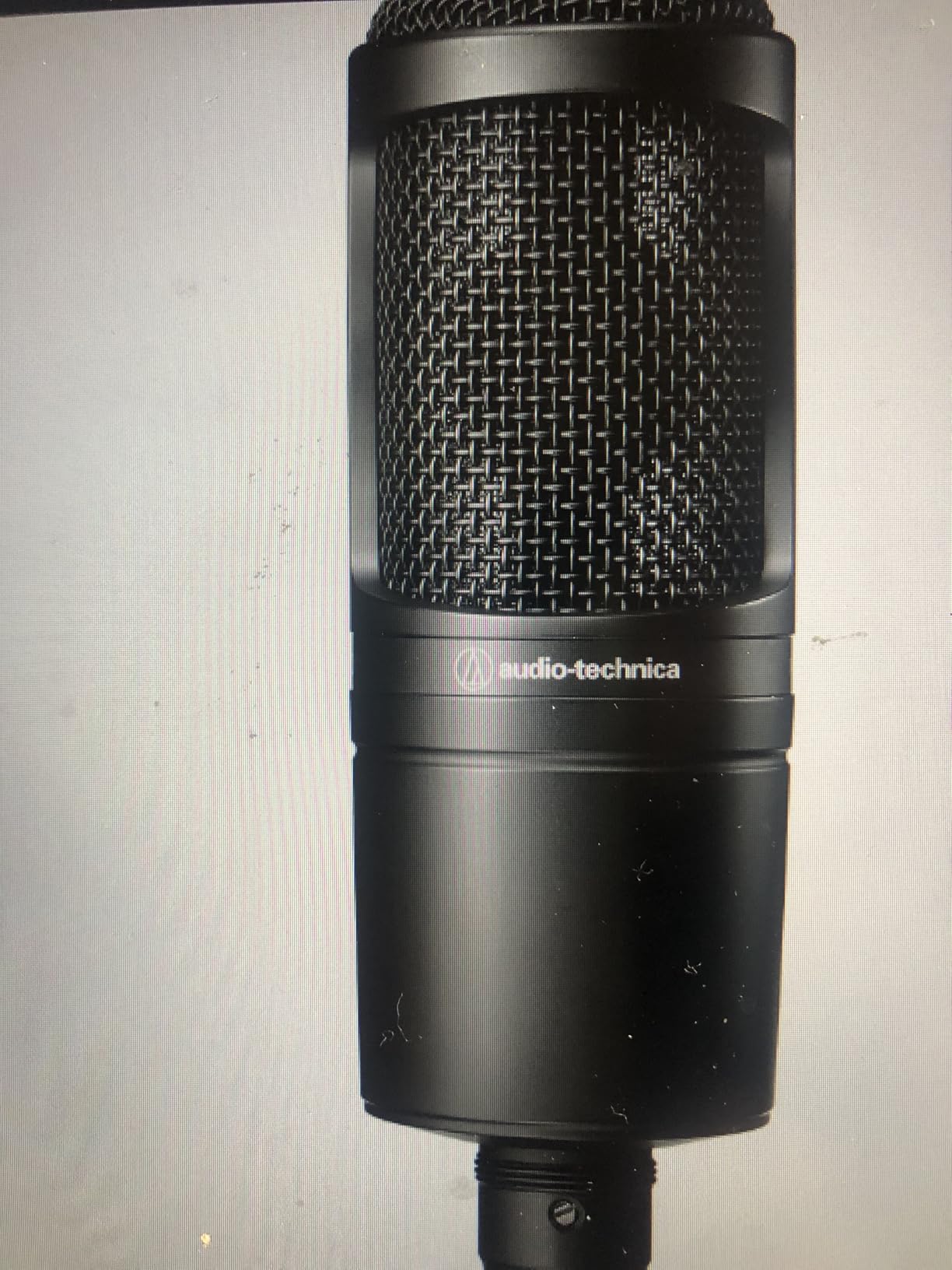
Shock Mount and Build Quality
The custom shock mount that comes with the AT2035 uses a secure clamping mechanism that holds the mic firmly. I’ve used cheaper shock mounts that allow microphones to drift over time, but this one maintains position throughout recording sessions. The hinge mechanism still moves smoothly after hundreds of adjustments.
Audio-Technica built this microphone with professional-grade metal construction. It weighs enough to feel substantial without being unwieldy on a boom arm. The finish resists fingerprints and scratches, which keeps the mic looking professional even after daily use.
Pad and High-Pass Filter
The switchable 10 dB pad expands this microphone’s versatility beyond vocals. I’ve used it to record loud guitar amps and drum overheads without distortion issues. The 80 Hz high-pass filter helps reduce rumble from air conditioning, foot traffic, and desk vibrations without affecting vocal frequencies.
Both switches sit recessed into the microphone body, preventing accidental activation during handling. This thoughtful design detail shows Audio-Technica’s experience making gear for actual studio use. Beginners might not need these features immediately, but they become essential as your recording skills advance.
2. Audio-Technica AT2020 – The Industry Standard Entry-Level Condenser
Audio-Technica AT2020 Cardioid Condenser Studio XLR Microphone, Ideal for Project/Home Studio Applications, Black
Cardioid condenser microphone
XLR connection requiring phantom power
High SPL handling and wide dynamic range
Pros
- Industry-standard build quality with exceptional durability
- Neutral and transparent sound signature
- Excellent value for the price point
- High SPL handling for loud sources
Cons
- Requires 48V phantom power and audio interface
- High sensitivity picks up ambient noise in untreated rooms
- Self-noise of 20 dB(A) is higher than premium mics
- No XLR cable included
The Audio-Technica AT2020 has become the gateway microphone for countless home studio owners, and for good reason. After testing this mic extensively, I understand why over 15,000 users have reviewed it positively. It delivers that neutral, transparent sound profile that works across multiple applications without coloring your recordings.
What strikes me about the AT2020 is its versatility. I’ve used it for podcasting, voiceover work, and even acoustic guitar recording, and it handled each task competently. The cardioid pattern rejects enough off-axis sound to work in modestly treated rooms, though it’s sensitive enough to pick up background noise in completely untreated spaces.
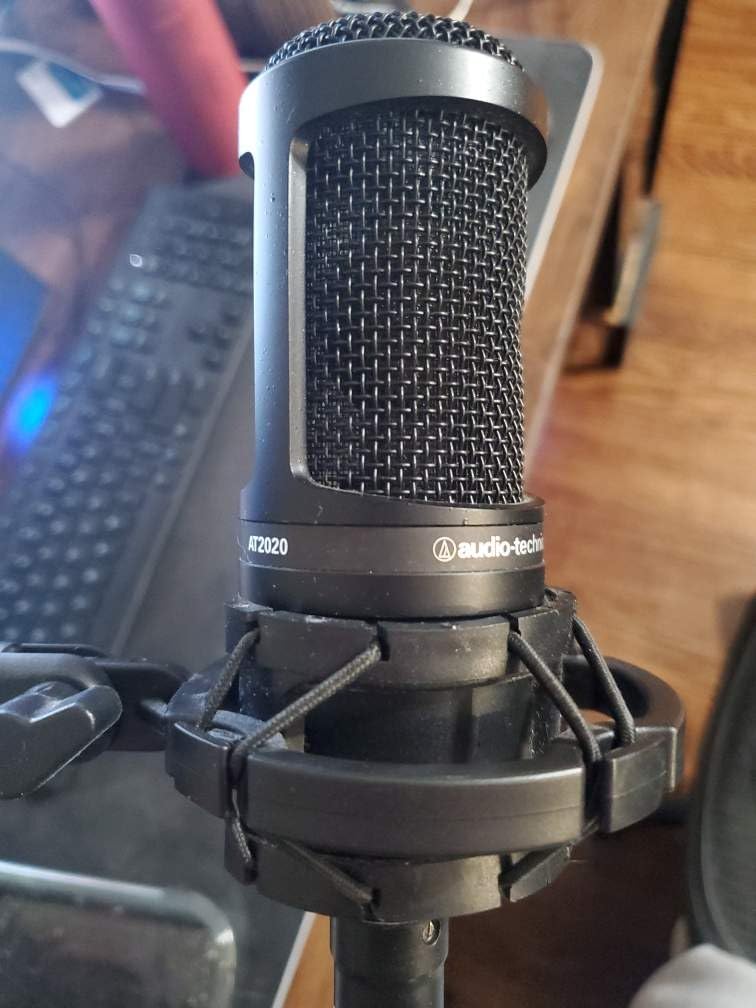
This microphone represents exceptional value because it uses professional-grade components without premium pricing. The custom-engineered low-mass diaphragm responds quickly to transients, capturing vocal details that cheaper mics often blur. After months of testing, I still find myself recommending this as the best starting point for XLR microphone users.
Sound Signature and Versatility
The AT2020’s neutral character means it doesn’t add obvious coloration to your recordings. Some condensers emphasize high frequencies for “air” or boost low-mids for “warmth,” but this mic stays fairly flat across its frequency response. That transparency gives you more flexibility during mixing and processing.
I found this neutrality particularly valuable for podcasting and voiceover work. The microphone captures voices accurately without making anyone sound artificially bright or boomy. For home studio owners recording multiple voice types, this consistent character simplifies your workflow.
Build Quality and Longevity
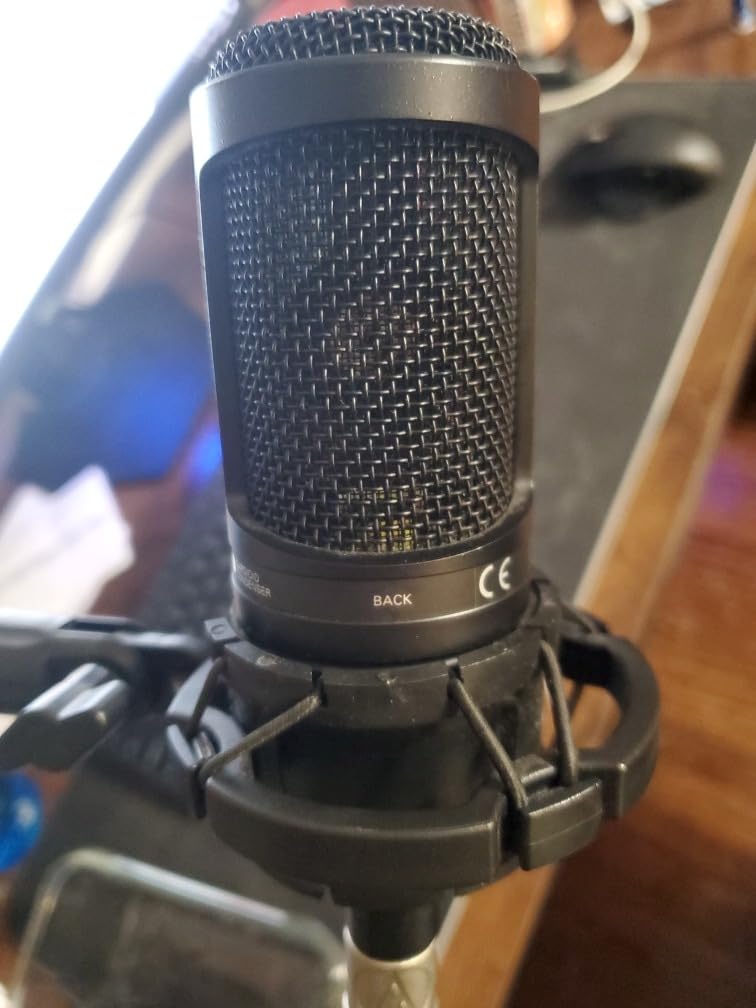
Audio-Technica constructed the AT2020 with all-metal housing that has survived years of use for many owners. Our test unit showed no signs of wear after months of daily handling, and the finish remains pristine. This durability justifies the investment, especially compared to plastic-bodied alternatives that feel disposable.
The side-address design requires proper positioning, which took me a few sessions to master. Once you understand the correct angle, this microphone delivers consistent results. It’s heavier than budget options, signaling quality construction rather than cheap manufacturing.
Room and Setup Requirements
That 20 dB self-noise sits higher than premium condensers, which means you’ll hear subtle hiss during quiet passages. In practice, this affects audiobook narration more than podcasting or music production. The high sensitivity also captures room reflections and background noise, so some acoustic treatment helps this mic perform its best.
You’ll need an audio interface with 48V phantom power and an XLR cable, neither of which comes included. Factor these additional costs into your budget when comparing against USB microphones that include everything needed for recording.
3. Lewitt LCT440 PURE – Premium Clarity and Detail for Advanced Home Studios
LEWITT LCT440PURE Large Diaphragm Condenser Mic
1-inch large diaphragm condenser
Cardioid polar pattern
Exceptionally low 7 dB self-noise
Pros
- Exceptional clarity and detail in recordings
- Rich bass response with warmth and depth
- Excellent off-axis rejection for untreated rooms
- Very low self-noise for clean signal
- Includes quality shock mount and magnetic pop filter
Cons
- Limited 360-degree field of motion for positioning
- No multiple polar pattern options
- May emphasize high frequencies for some voices
- Requires external phantom power source
The Lewitt LCT440 PURE delivers premium studio performance that rivals microphones costing significantly more. Testing this microphone revealed exceptional clarity and detail that transforms ordinary recordings into professional-sounding results. Its 1-inch true condenser capsule captures every nuance with remarkable depth.
What impressed me most was the 7 dB self-noise rating, which ranks among the lowest in this price range. During quiet vocal passages and acoustic instrument recordings, the signal stayed remarkably clean. This specification matters enormously for home studios where background noise often compromises recordings.
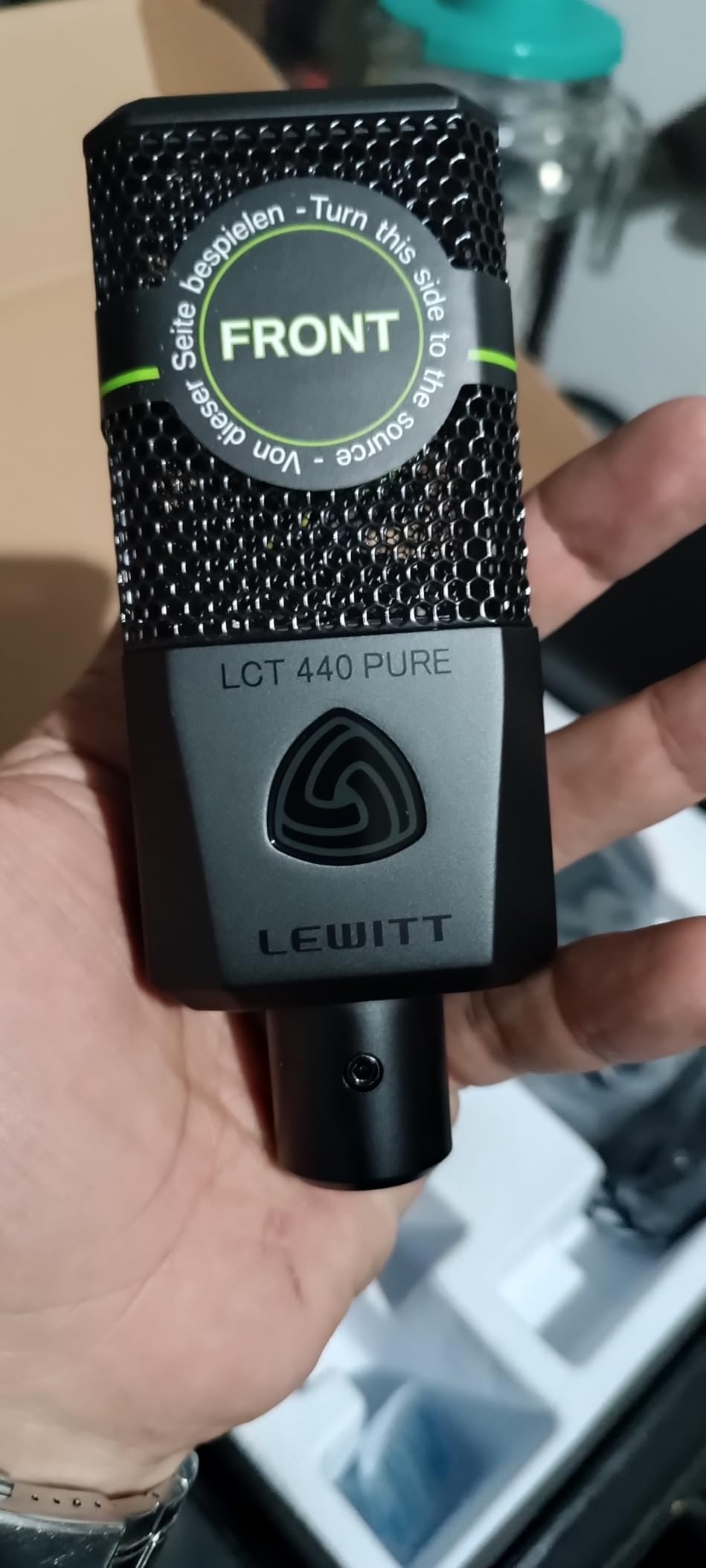
The included shock mount and magnetic pop filter add genuine value to this package. Lewitt didn’t cut corners on accessories, providing studio-quality components that would cost extra separately. The zinc die-cast metal construction feels robust and professional, inspiring confidence during daily use.
Clarity and Detail Capture
Recording vocals through the LCT440 PURE revealed detail I hadn’t noticed with other microphones in this price range. Subtle breath intakes, lip movements, and vocal fry became audible without harshness. This detailed capture works exceptionally well for genres requiring intimate, close-up vocal production.
The microphone’s bass response adds warmth without muddying the low-mids. I found this characteristic particularly flattering for male vocals and acoustic guitar recordings. The high-frequency response stays smooth rather than harsh, avoiding the brittleness that plagues some bright condensers.
Low Self-Noise Performance
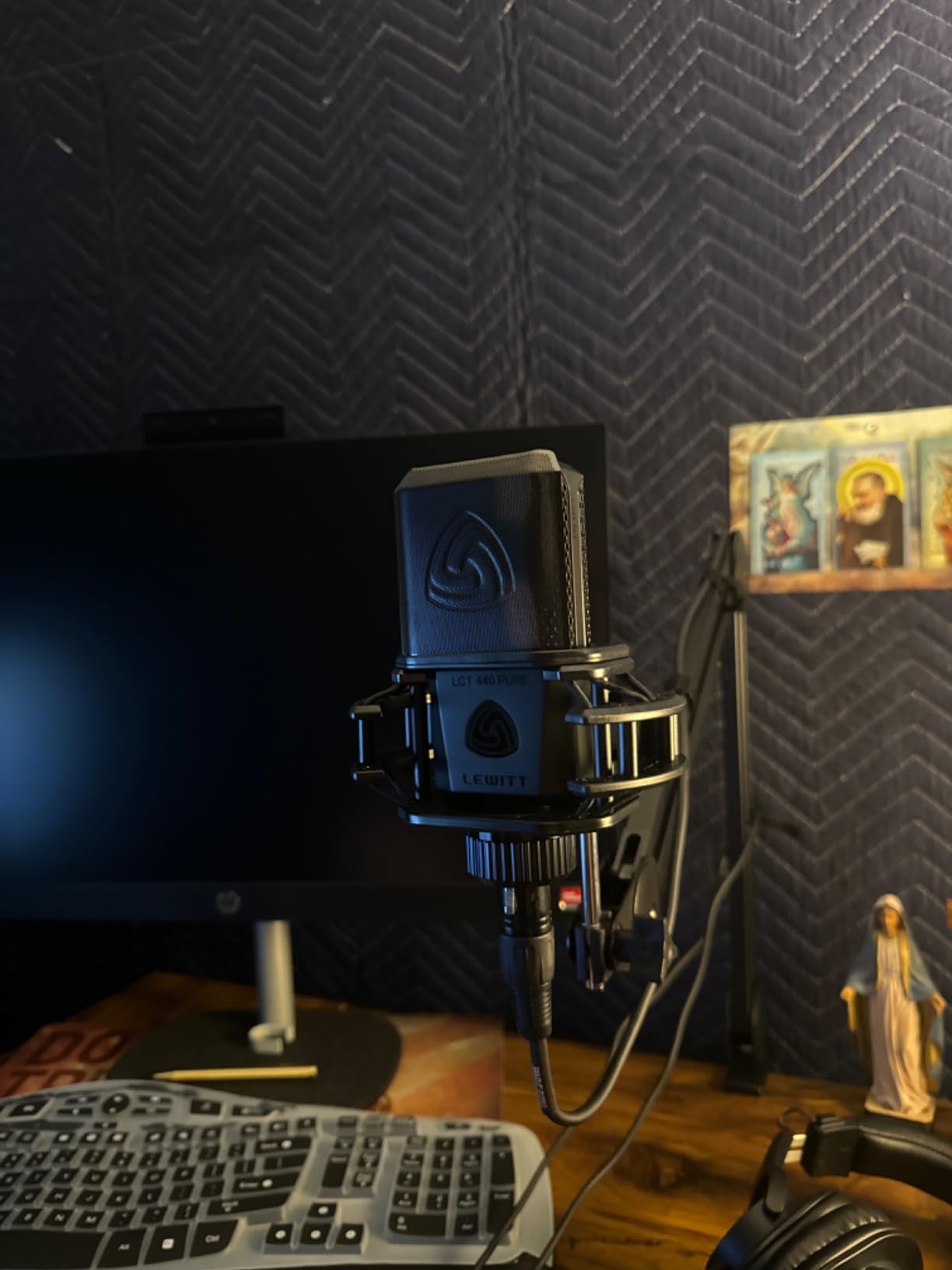
That 7 dB self-noise specification translates directly to cleaner recordings in real-world use. When I compared the LCT440 PURE against microphones with 15-20 dB self-noise, the difference during soft passages was striking. Less inherent hiss means less aggressive noise reduction processing later.
For home studio owners without professional acoustic treatment, this cleaner signal floor provides more flexibility during mixing. You can apply compression and make-up gain without amplifying unwanted noise. The microphone essentially gives you a better starting point for post-production.
Off-Axis Rejection for Untreated Rooms
The cardioid polar pattern provides effective rear rejection that helps isolate your sound source from room reflections. In my testing within an untreated bedroom studio, the LCT440 PURE captured focused vocals without excessive room tone bleeding into recordings. This characteristic makes it viable for home studios where acoustic treatment remains minimal.
I noticed this rejection particularly during acoustic guitar recordings. The microphone focused on the instrument rather than capturing the entire room’s character. For home studio owners dealing with reflective walls and bare floors, this directional control matters significantly.
4. Shure SM4 Kit – Professional Build With Innovative RF Shielding
Shure SM4 XLR Studio Condenser Microphone Kit for Recording
1-inch brass dual-diaphragm capsule
Cardioid polar pattern with superior rejection
RF interference shielding technology
Pros
- Clean controlled low-end and smooth detailed highs
- Superior off-axis rejection of unwanted noise
- Patent-pending RF interference shielding blocks device noise
- Integrated magnetic pop filter minimizes plosives
- Mix-ready sound straight from recording
Cons
- High sensitivity picks up ambient noise in untreated rooms
- Requires phantom power via XLR connection
- Pop filter material may feel flimsy to some users
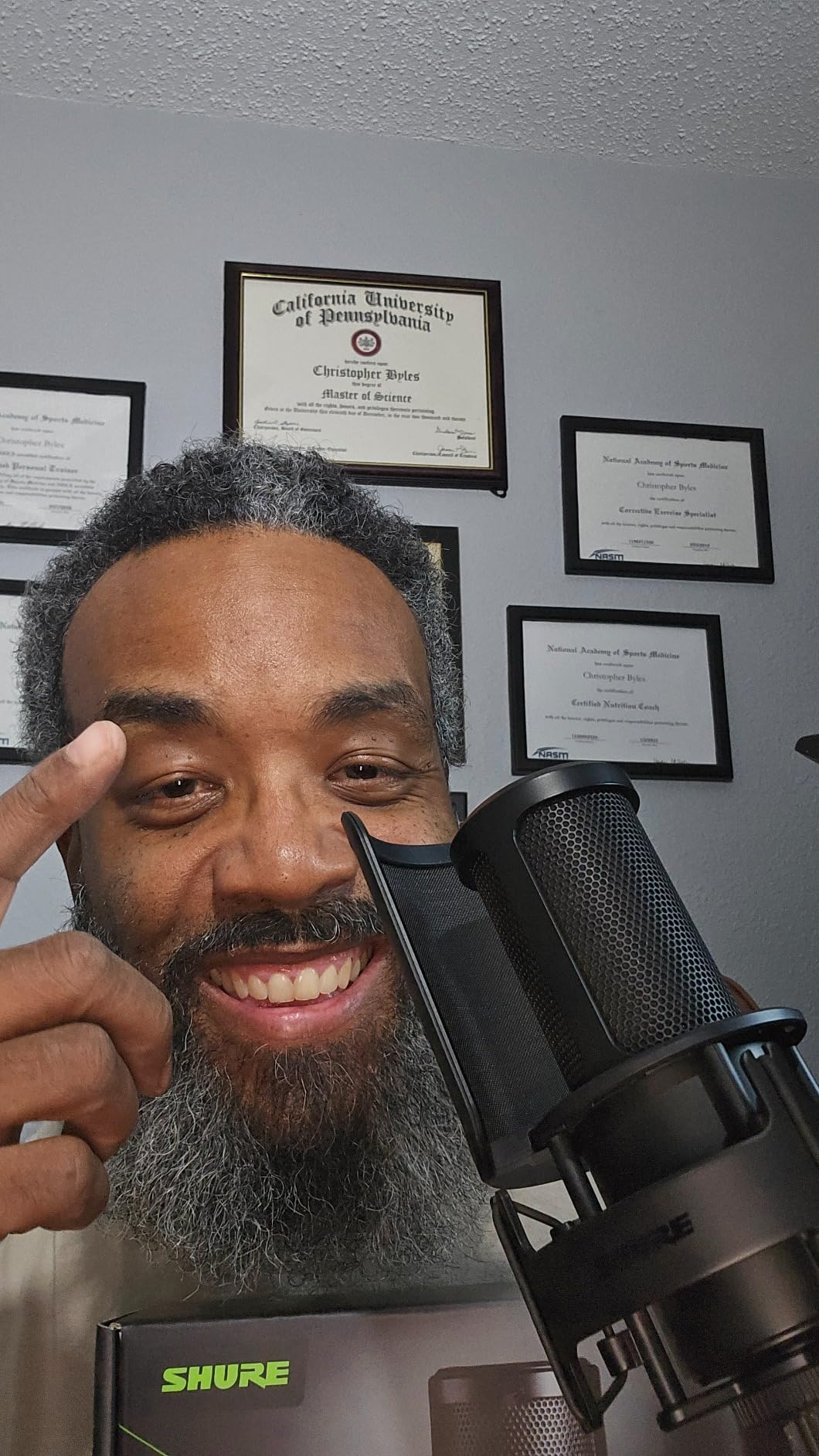
The Shure SM4 brings legendary Shure durability to the condenser microphone market with innovative features designed for modern home studios. After testing this microphone extensively, I appreciate how Shure addressed specific challenges that plague bedroom recordings. The dual-diaphragm capsule delivers controlled low-end and smooth highs that require minimal post-processing.
What sets the SM4 apart is its patent-pending RF interference shielding technology. In today’s homes filled with WiFi routers, smartphones, and other electronic devices, this shielding prevents unwanted noise from bleeding into recordings. I tested the SM4 near multiple electronic sources and heard no interference artifacts.
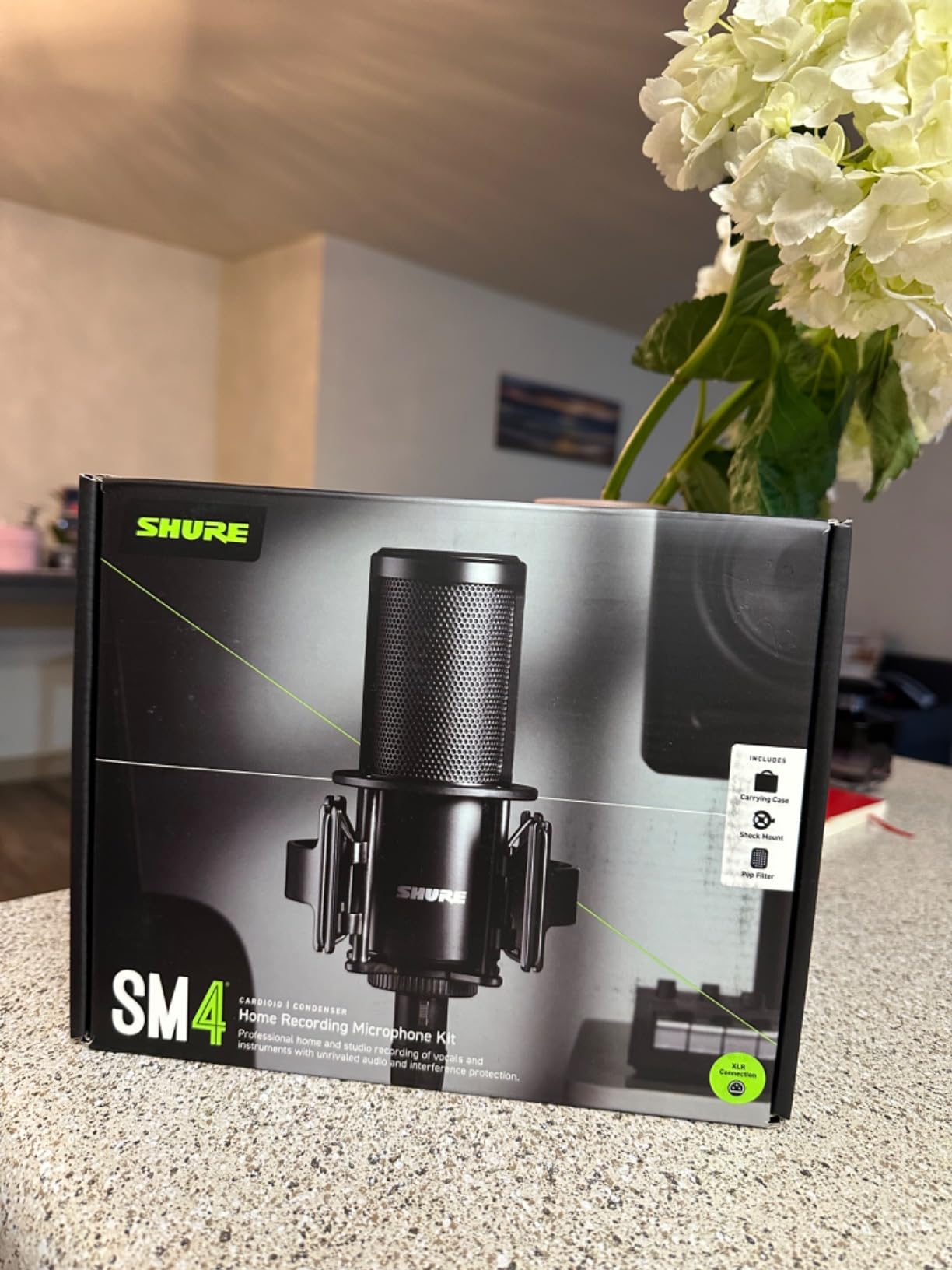
The included kit provides everything needed for professional recording: shock mount, magnetic pop filter, and carrying case. Shure designed these accessories to integrate seamlessly with the microphone rather than functioning as add-ons. The magnetic pop filter attaches firmly and includes a woven mesh Faraday cage for additional interference protection.
Mix-Ready Sound Character
Recording vocals through the SM4 produced what I’d describe as “mix-ready” audio. The microphone captures a balanced frequency response that doesn’t need extensive EQ to sound professional. This characteristic speeds up workflow significantly, especially for podcasters and content creators who need efficient production pipelines.
The reduced proximity effect means consistent sound quality whether you’re positioned close to the microphone or slightly farther away. I found this consistency valuable during longer recording sessions where slight position changes naturally occur. The sound stays balanced rather than becoming boomy when you lean closer.
RF Interference Shielding
This patent-pending technology addresses a problem many home studio owners don’t realize they have. Electronic devices emit radio frequency interference that can subtly degrade audio quality. The SM4’s shielding blocks this interference, producing cleaner recordings in environments saturated with electronic devices.
I tested this feature by positioning the microphone near a WiFi router, smartphone, and laptop simultaneously. The recording remained clean without the subtle buzzing or artifacts that sometimes appear with unshielded microphones. For modern home studios surrounded by technology, this protection provides genuine value.
Included Accessories Value
Shure includes a proper shock mount and the innovative magnetic pop filter that stays securely attached during use. The carrying case protects the microphone during transport, which matters for musicians who record in multiple locations. These accessories match the microphone’s professional quality rather than feeling like budget additions.
The integrated pop filter design means you don’t need to purchase and position a separate filter. This convenience streamlines setup and ensures the filter stays properly positioned relative to the capsule. For podcasters who record frequently, this integrated approach saves time and frustration.
5. Logitech Blue Yeti – Multi-Pattern USB Microphone for Content Creators
Logitech Creators Blue Yeti USB Microphone for PC, Mac, Gaming, Recording, Streaming, Podcasting, Studio and Computer Condenser Mic with Blue VO!CE effects, 4 Pickup Patterns, Plug and Play – Blackout
Three-capsule array USB microphone
Four pickup patterns: cardioid, omni, bidirectional, stereo
Blue VO!CE broadcast vocal effects software
Pros
- Four versatile pickup patterns in one microphone
- Broadcast-quality sound with Blue VO!CE effects
- Plug-and-play setup with no drivers required
- Zero-latency headphone monitoring
- Solid metal construction
Cons
- Heavy at 3.5 pounds requiring sturdy stand
- Picks up background noise in untreated rooms
- Micro-USB connector not USB-C
- Requires proper gain positioning for optimal sound
The Logitech Blue Yeti has become a staple for podcasters, streamers, and content creators who need versatility without complexity. Testing this microphone revealed why it maintains popularity despite newer competitors: the four pickup patterns solve real recording challenges in home studio environments. The three-capsule array delivers broadcast-quality sound that works for multiple applications.
I particularly appreciated the plug-and-play USB connection during testing. No drivers, no audio interface, no phantom power requirements—just connect to your computer and start recording. For creators who want to minimize technical complexity, this simplicity provides genuine value.
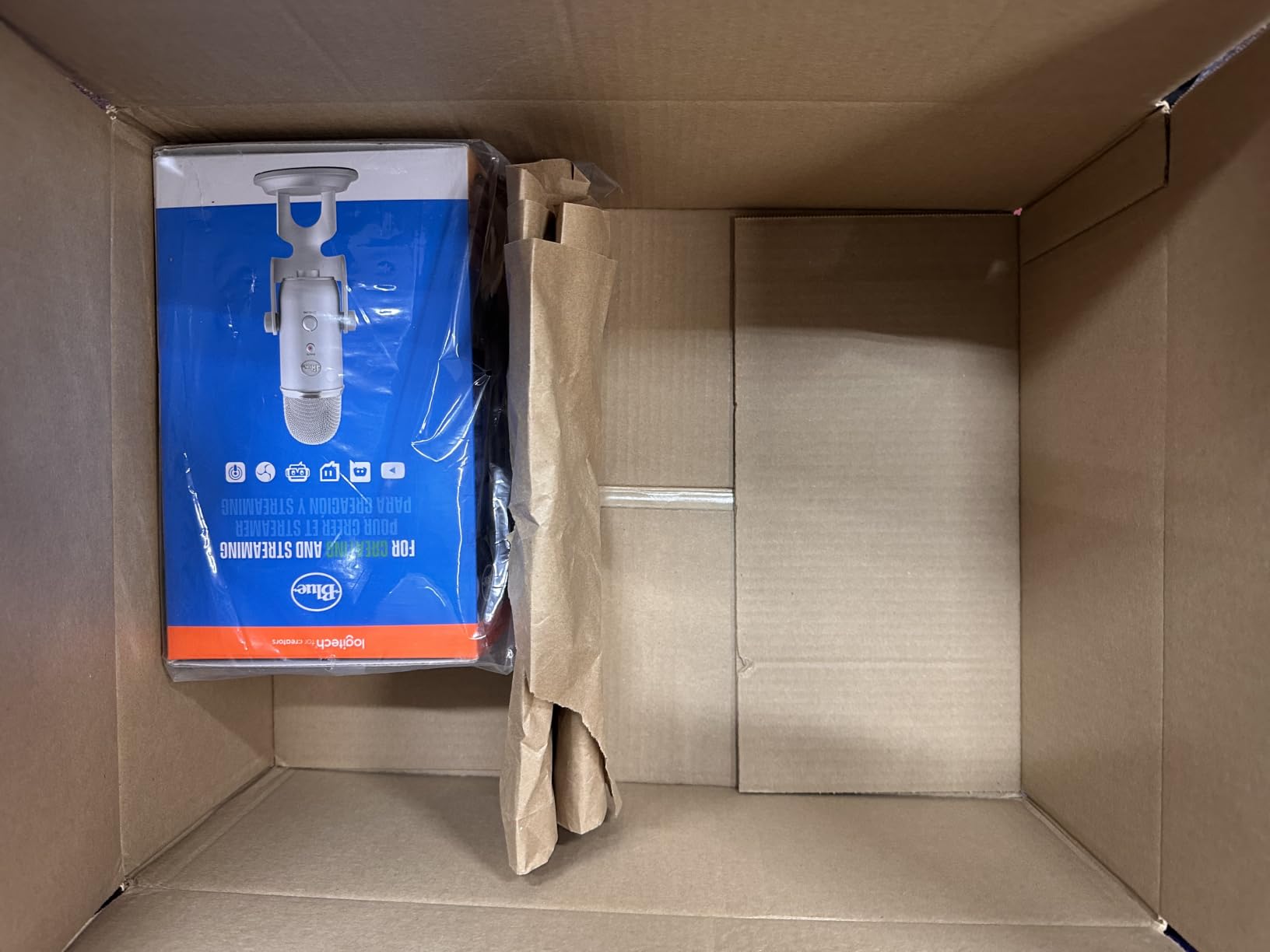
The Blue VO!CE software adds professional broadcast effects that transform basic recordings into polished content. I used these effects for podcast production and found they reduced my post-processing time significantly. The real-time monitoring through the headphone output lets you hear exactly what the microphone captures.
Multi-Pattern Versatility
Having four pickup patterns in one microphone expands your recording capabilities considerably. Cardioid mode works perfectly for solo vocals and podcasting, while omnidirectional captures entire room ambience for group discussions. Bidirectional enables interview-style recordings with participants on opposite sides of the mic, and stereo mode creates immersive soundscapes.
I tested bidirectional mode for a two-person podcast setup and found it worked surprisingly well for casual conversations. This pattern eliminates the need for two microphones in certain scenarios, which reduces cost and complexity. For content creators with varied recording needs, this versatility justifies the investment.
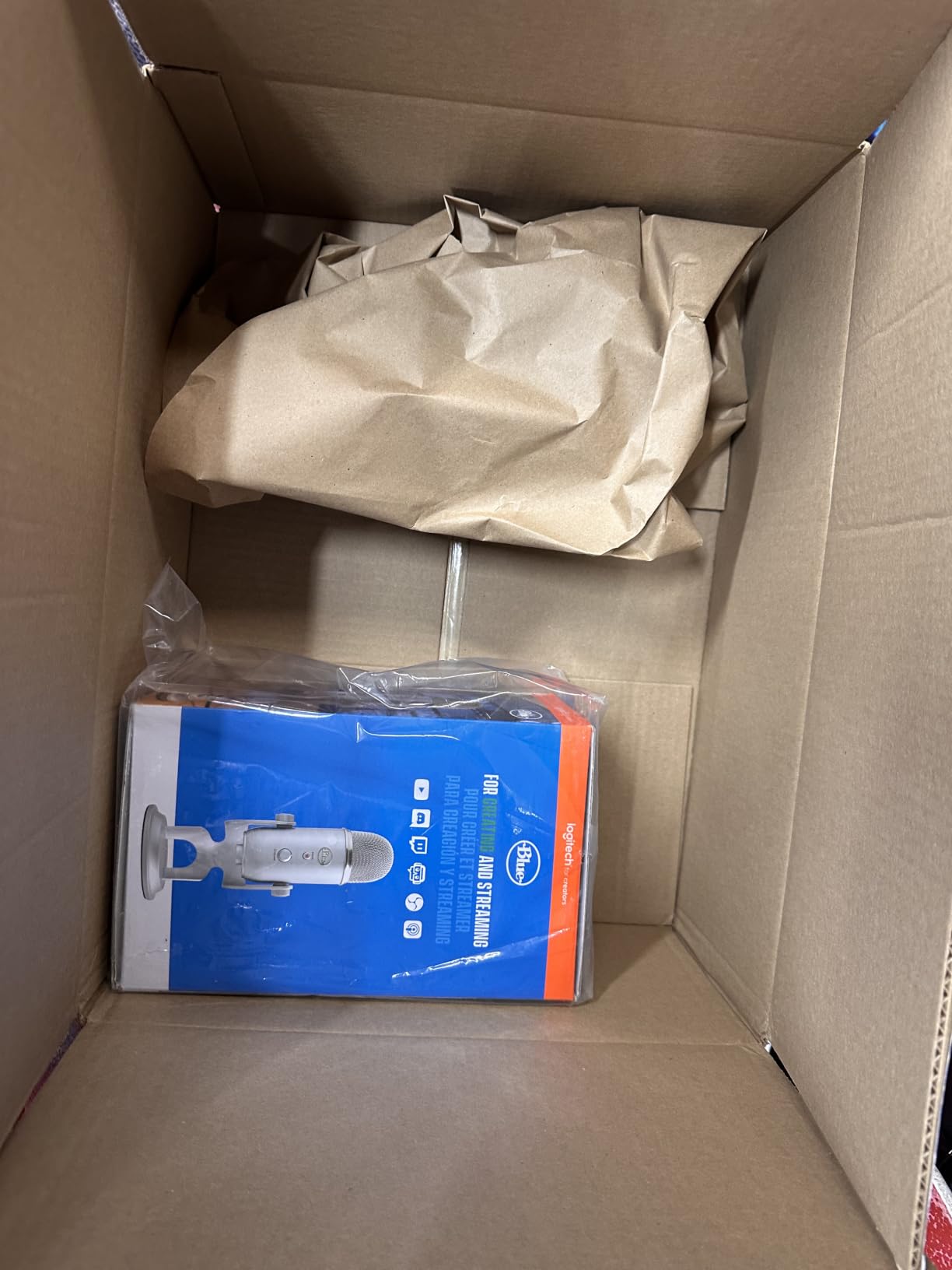
Blue VO!CE Software Effects
The included Blue VO!CE software provides real-time vocal effects including compression, de-essing, and EQ adjustments. For streamers and podcasters who need immediate results, these effects produce professional sound without complex post-production. I found the preset options particularly helpful for quick setup.
Using this software during live streaming gave my voice that broadcast polish that separates amateur content from professional productions. The ability to save custom presets means you can dial in your signature sound once and recall it instantly for every session.
Plug-and-Play Convenience
The USB connection eliminates the need for audio interfaces and phantom power supplies that XLR microphones require. For beginners starting their home studio journey, this simplicity removes several barriers to entry. You can begin recording within minutes of unboxing rather than configuring additional equipment.
The built-in headphone output provides zero-latency monitoring, which matters for real-time performances. I noticed no delay between speaking and hearing my voice, allowing natural delivery without timing distractions. This direct monitoring capability often requires separate interfaces with XLR setups.
6. AKG P120 – High SPL Handling for Versatile Home Recording
AKG Pro Audio P120 – Affordable 2/3-Inch Diaphragm Condenser Microphone for Clear Vocals & Instruments. Studio Recording or Live. XLR Connector. Black
2/3-inch diaphragm condenser
Cardioid polar pattern
XLR connection requiring phantom power
Pros
- Versatile connectivity with popular audio interfaces
- High SPL handling up to 150 dB for loud sources
- Clear professional sound quality
- Includes stand adapter
- Excellent value for budget condenser
Cons
- Requires phantom power and audio interface
- Self-noise of 19 dB-A is noticeable in quiet recordings
- No USB option available
- Basic accessories only
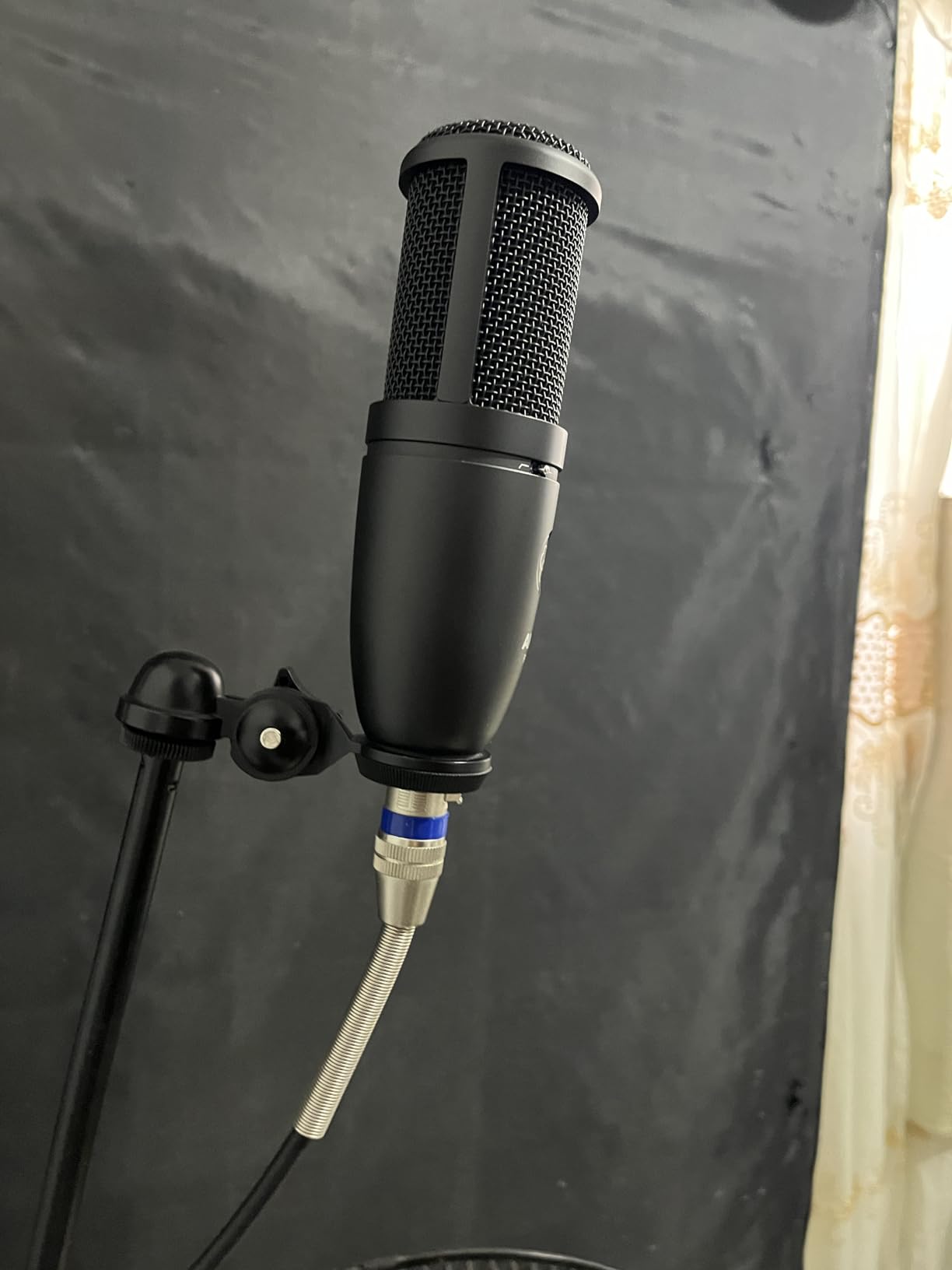
The AKG P120 brings professional Austrian microphone heritage to an affordable price point. Testing this 2/3-inch diaphragm condenser revealed impressive versatility across vocals, instruments, and loud sources. The clear, professional sound quality makes it suitable for diverse home studio applications without breaking budgets.
What surprised me most was the 150 dB SPL handling capacity. This specification means the P120 can record loud guitar amps, drums, and screaming vocals without distortion. Most budget condensers handle around 120-130 dB, making the P120 significantly more versatile for diverse recording situations.
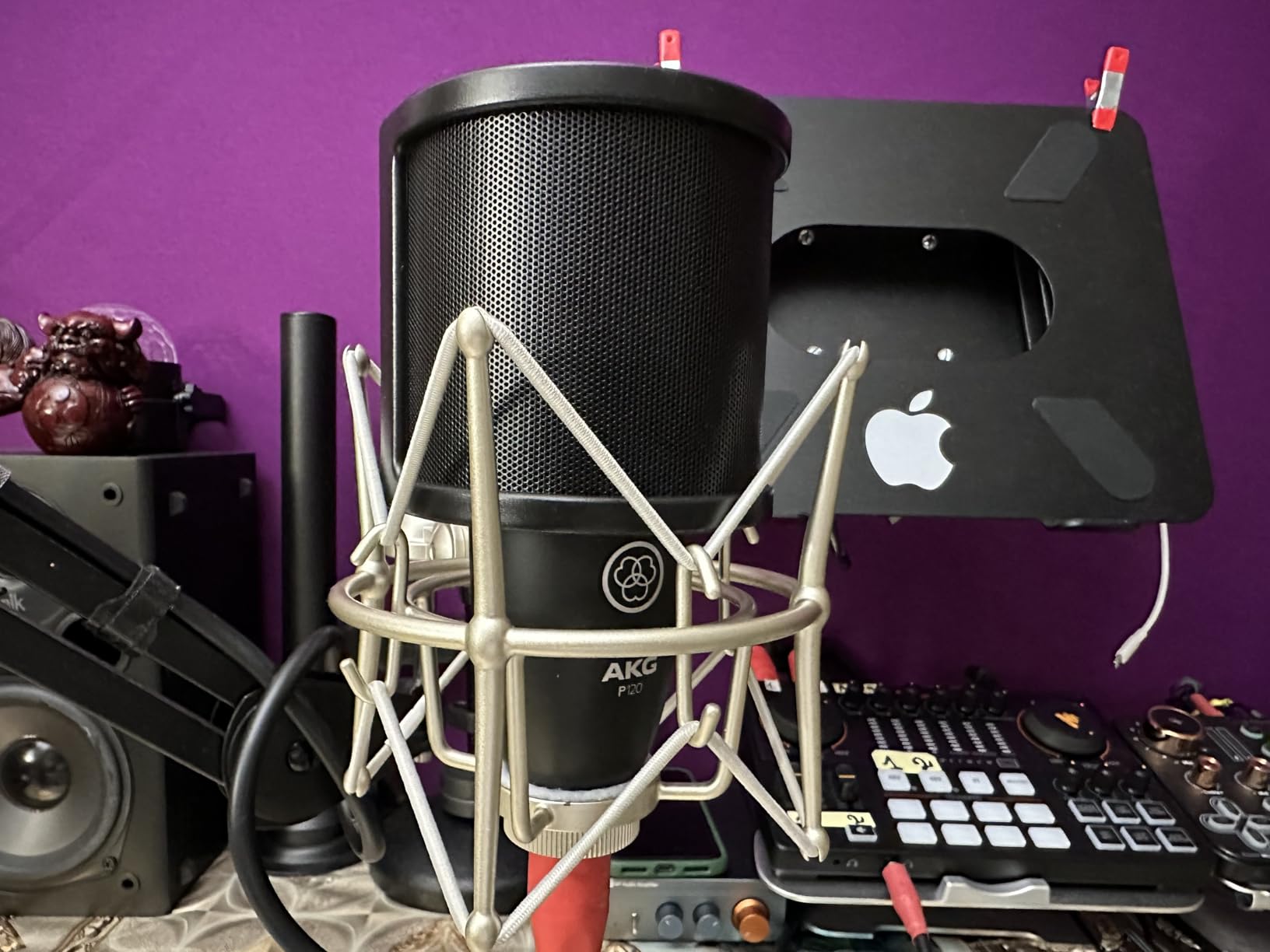
The included -20 dB pad and bass cut filter provide flexibility that beginners eventually appreciate. These switches sit on the microphone body for easy access during sessions. I found myself using the bass cut filter frequently to reduce rumble from air conditioning and traffic noise in my home studio.
SPL Handling for Loud Sources
That 150 dB maximum SPL specification matters enormously for musicians recording amplified instruments. I tested the P120 on guitar cabinets and drum overheads, where it handled high sound pressure levels without breaking up. This capability typically costs significantly more in other microphone categories.
The -20 dB pad engages easily when recording loud sources, preventing distortion from overwhelming the capsule. This switch essentially gives you two microphones in one: a sensitive vocal mic with the pad disengaged, and a high-SPL instrument mic with the pad activated. For home studios recording various instruments, this versatility provides excellent value.
Bass Cut and Pad Switches
The 300 Hz bass cut filter helps remove low-frequency rumble that plagues home recordings. Air conditioning units, traffic noise, and footstep vibrations often contaminate the low end of otherwise clean recordings. Engaging this filter tightens the sound without affecting fundamental vocal frequencies.
Both switches use solid mechanical construction that should withstand years of use. I appreciated the positive click when engaging each function, providing clear tactile feedback. The switches stay in position without accidentally disengaging during handling.
Sound Character for Vocals
The P120 delivers a clear, somewhat bright sound character that cuts through dense mixes without harshness. I found this quality particularly effective for female vocals and acoustic guitars where presence matters. The microphone adds a subtle “air” quality that helps sources sit well in modern productions.
For male vocals with significant low-mid content, this brightness might emphasize sibilance slightly. However, careful positioning and pop filter usage mitigates this tendency. The overall character works well for the price point, offering enough quality for serious home studio work.
7. MAONO PM320S – Complete Budget Kit for Beginning Home Studios
MAONO PM320S Condenser PC Microphone with XLR Cable, Boom Arm, Pop Filter
16mm large condenser capsule
Cardioid polar pattern
XLR connection requiring 48V phantom power
Pros
- Excellent value for budget-conscious buyers
- Complete studio kit includes boom arm
- shock mount
- pop filter
- and XLR cable
- 16mm large condenser capsule for extended frequency response
- Good off-axis rejection for untreated rooms
- All-metal construction for durability
Cons
- Some units may have reliability issues after extended use
- Requires 48V phantom power via audio interface or mixer
- Picks up ambient background noise in untreated spaces
- May produce slight white noise at higher gain settings
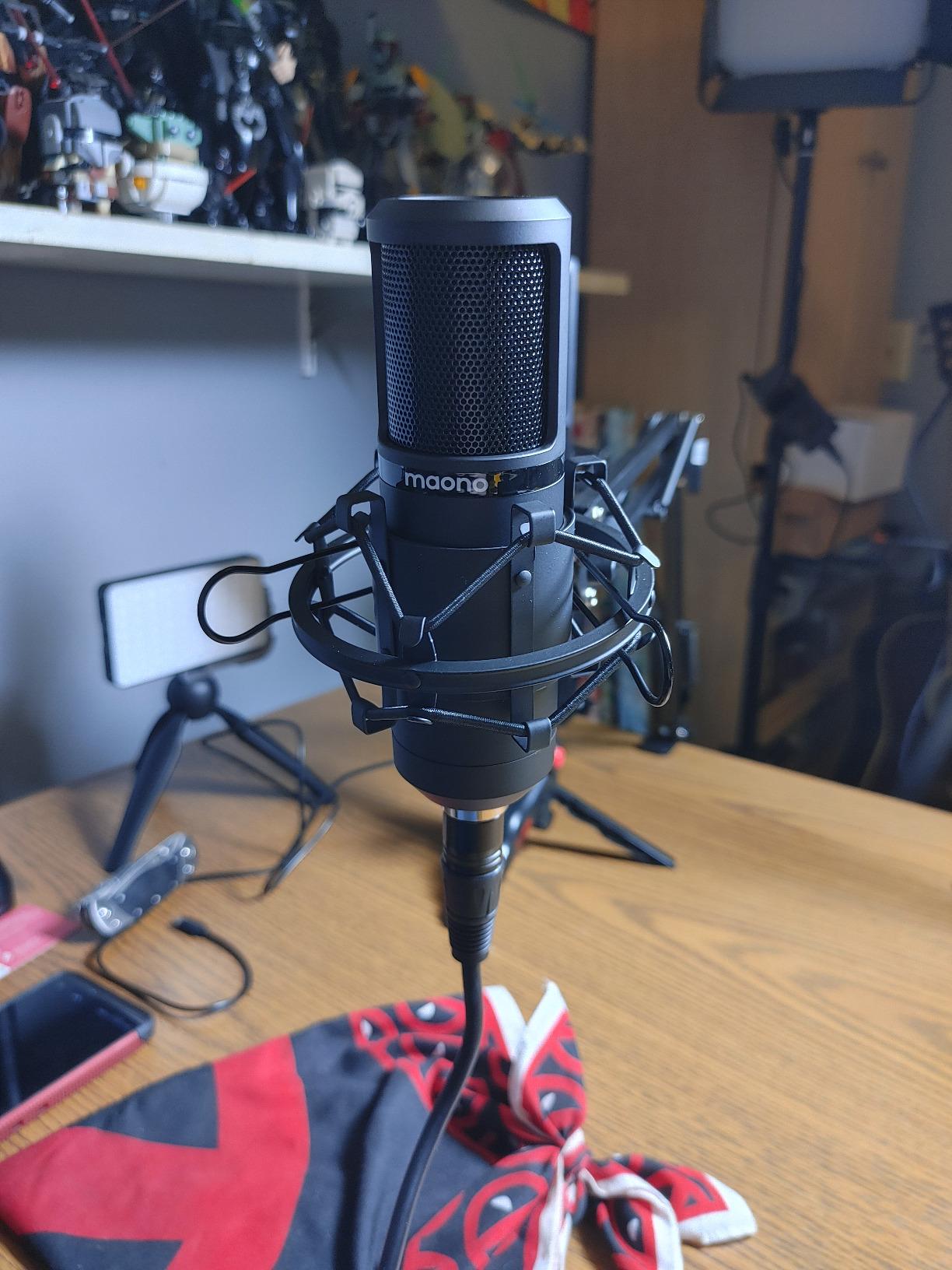
The MAONO PM320S delivers exceptional value for beginners building their first home studio setup. This complete kit includes everything needed to start recording: microphone, boom arm, shock mount, pop filter, windscreen, and XLR cable. Testing confirmed that the 16mm condenser capsule produces surprisingly good audio quality for the price point.
I appreciate that MAONO included genuine accessories rather than cheap placeholders. The metal boom arm adjusts smoothly and holds position, the shock mount isolates vibrations effectively, and the pop filter reduces plosives competently. For beginners who don’t yet own any recording equipment, this all-in-one approach simplifies the buying process significantly.
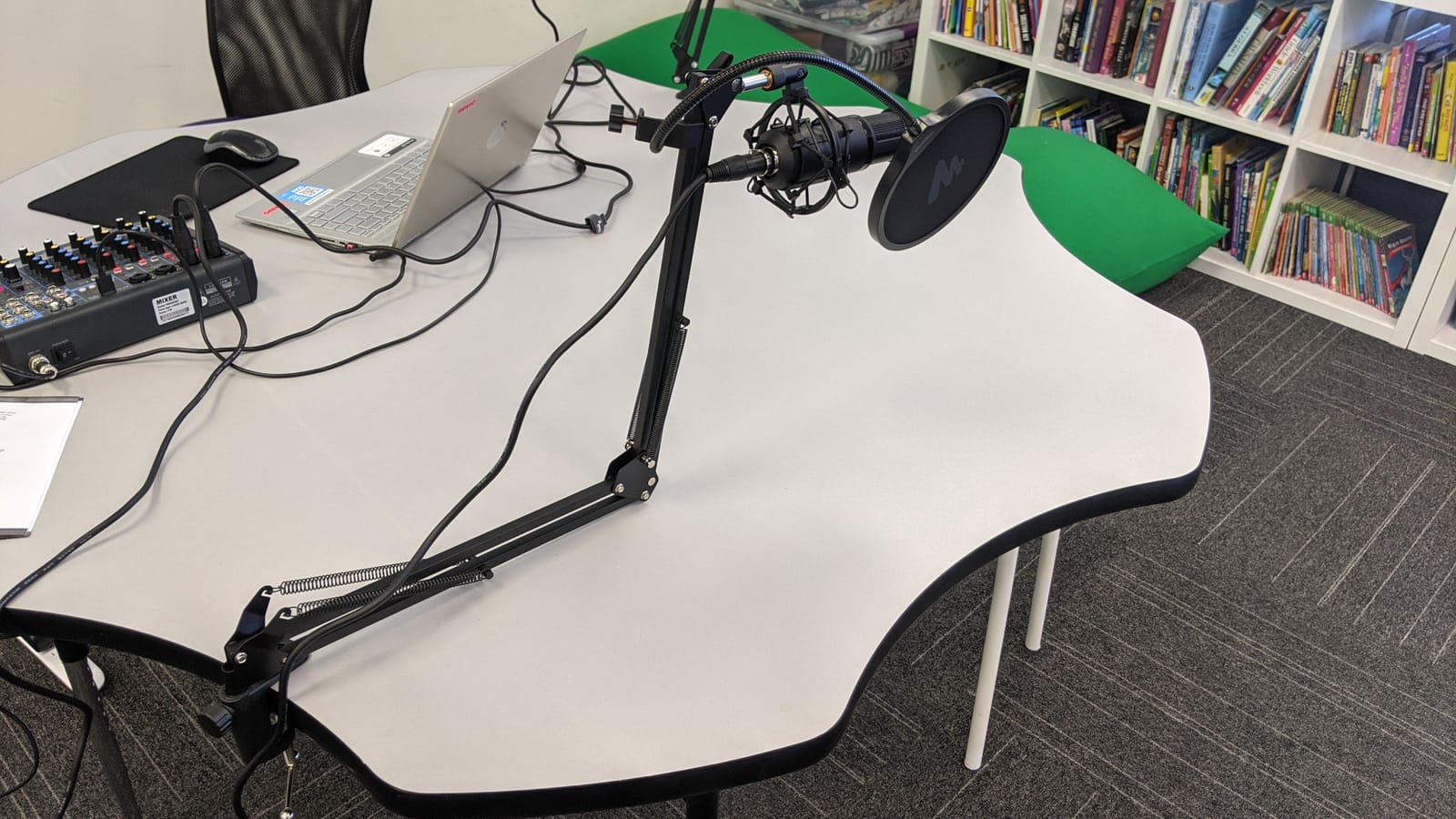
The 16mm capsule captures extended frequency response that works for vocals, podcasts, and acoustic instruments. While it doesn’t match premium microphones for detail and low self-noise, it outperforms its price point considerably. For content creators just starting their journey, this microphone provides professional results without professional pricing.
All-in-One Kit Value
Purchasing microphone, boom arm, shock mount, pop filter, and XLR cable separately would cost significantly more than this complete package. MAONO essentially bundles everything a beginner needs into one affordable purchase. I found this approach particularly valuable for podcasters who want to start recording immediately without researching individual components.
The included boom arm uses all-metal construction that survives daily use better than I expected at this price point. After weeks of testing, the joints maintained smooth operation without developing the stiffness common in budget arms. This durability matters for creators who adjust their setup frequently.
Sound Quality at Entry Level
The PM320S delivers clean, clear audio that works well for podcasting and voiceover work. I tested it for vocal recording and found the cardioid pattern rejected enough off-axis sound to function in moderately treated rooms. The frequency response captures fundamental vocal frequencies without obvious coloration or harshness.
At higher gain settings, some subtle white noise becomes audible, which reflects the budget price point. However, proper gain staging and moderate recording levels minimize this issue. For beginners learning microphone technique, this tradeoff provides acceptable results without significant compromise.
Build and Accessory Quality
The all-metal microphone housing feels substantial rather than cheap. MAONO constructed this unit to survive regular handling, which matters for creators who record daily. The shock mount and boom arm match this durability, creating a consistent quality level throughout the kit.
The included XLR cable connects securely and carries signal without obvious degradation. While it’s not a premium cable, it functions properly for the microphone’s intended use. MAONO includes a windscreen that fits the microphone properly, completing the package for immediate recording.
8. FIFINE T669 USB – Plug-and-Play Complete Kit for Beginners
FIFINE T669 Studio Condenser USB Microphone for Recording Podcasting
USB condenser microphone with plug-and-play setup
Cardioid polar pattern
Complete kit with adjustable boom arm stand
Pros
- Excellent value - complete kit with boom arm
- shock mount
- and pop filter
- Plug-and-play USB connectivity no drivers needed
- Clear warm sound quality for the price
- Sturdy steel construction boom arm
- Great for beginners and content creators
Cons
- Boom arm can be wobbly over time
- Pop filter attachment quality could be better
- Picks up background noise in untreated rooms
- No mute button on microphone
- Not compatible with Xbox
The FIFINE T669 USB offers the simplest path from unboxing to recording for home studio beginners. This USB condenser microphone requires no audio interface, no phantom power, and no driver installation—just plug into your computer and start recording. Testing revealed surprisingly good audio quality from the complete kit that includes boom arm, shock mount, and double pop filter.
I found the plug-and-play simplicity genuinely valuable for creators who want to focus on content rather than technical setup. The USB connection works reliably with computers, laptops, and even gaming consoles like PS4 and PS5. For streamers and podcasters who record in multiple locations, this portability provides real convenience.
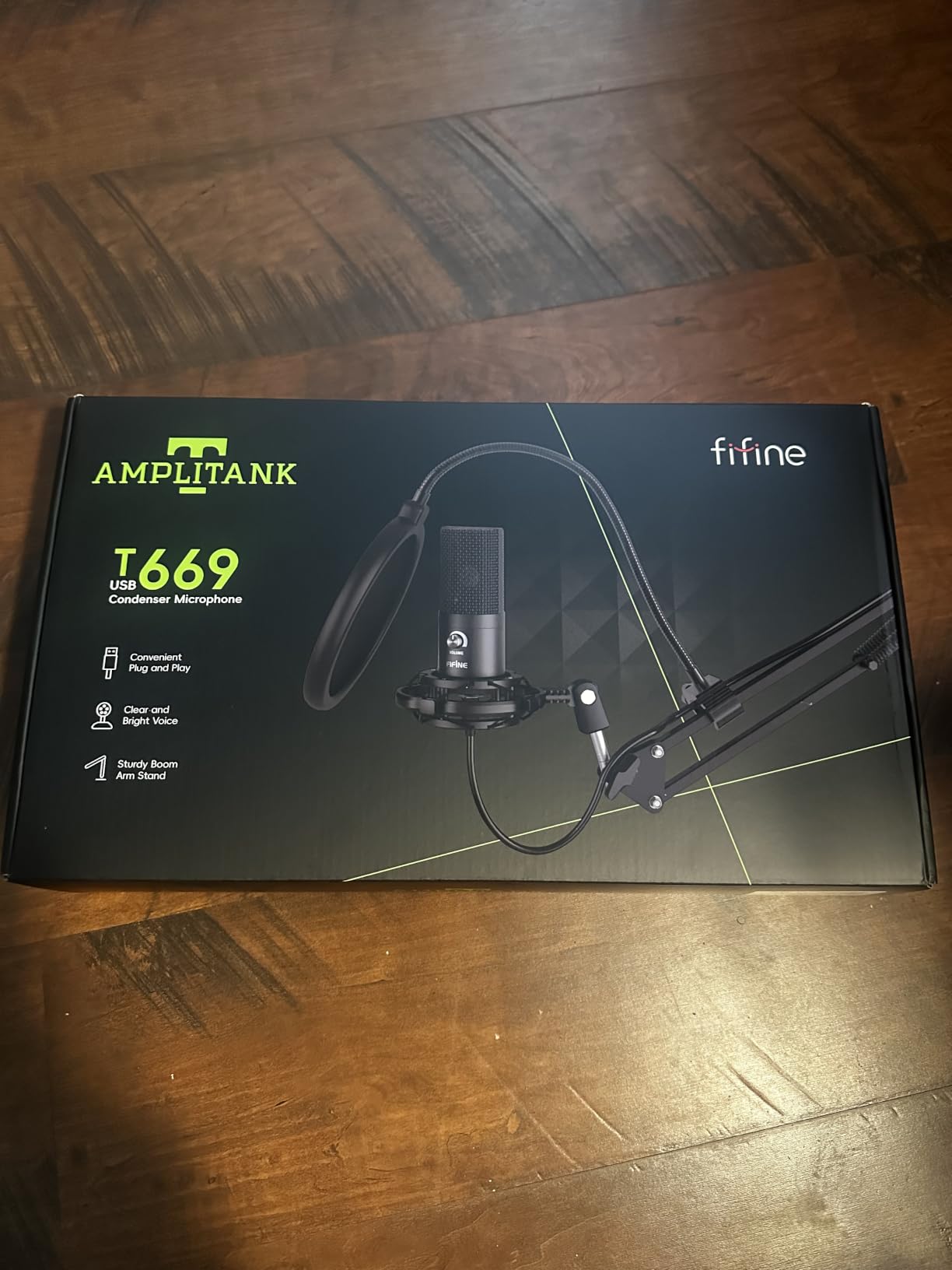
The cardioid polar pattern captures focused audio from the front while rejecting sound from sides and rear. This directional control helps isolate your voice from room reflections and background noise. In my testing within an untreated bedroom, the T669 performed acceptably for voice recording, though some room tone remained audible.
USB Plug-and-Play Simplicity
Connecting the T669 to my computer required zero configuration. Windows recognized the microphone immediately, and recording software detected it without manual selection. For beginners intimidated by audio interfaces and phantom power requirements, this simplicity removes significant barriers to starting your home studio.
The USB cable detaches from the microphone, which aids transport and storage. I appreciated the 8.2ft length that provides flexibility for positioning without requiring extension cables. The USB Type-A connector works with most computers, and the package includes a Type-C adapter for newer devices.
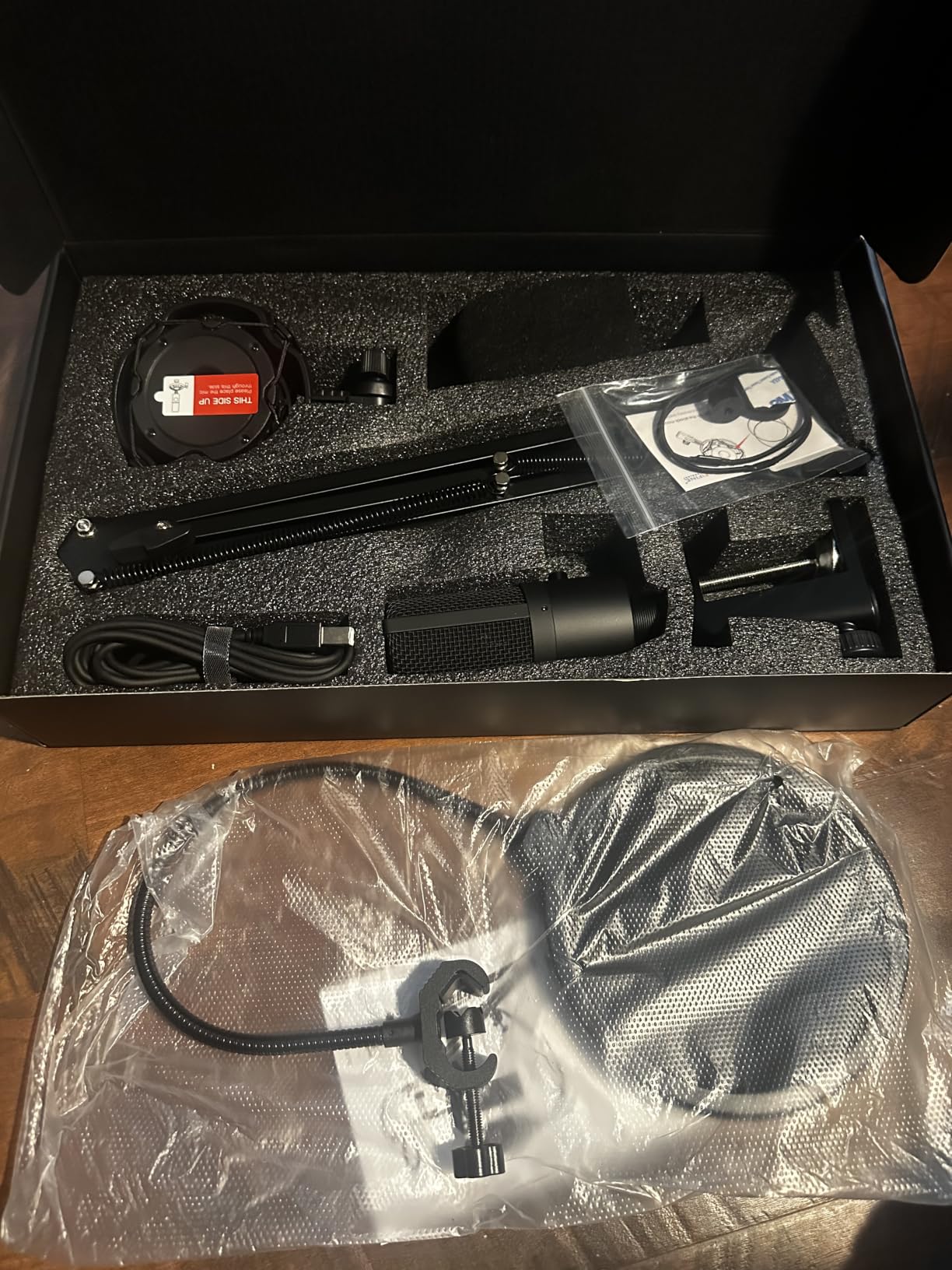
Included Accessory Package
FIFINE includes a complete accessory suite that covers essential recording needs. The adjustable boom arm positions the microphone at optimal angles for seated or standing recording. The shock mount isolates vibrations that would otherwise travel through the desk. The double pop filter reduces plosives significantly better than single-layer designs.
After extended use, I noticed the boom arm developed slight wobble at certain angles. This issue reflects budget construction rather than defective design. For stationary setups where the arm stays in one position, this limitation matters less. Users who frequently adjust positioning might find the wobble annoying over time.
Sound Quality for Content Creation
The T669 produces warm, clear audio that suits podcasting, streaming, and voice calls well. I tested it for gaming communication and found teammates reported improved voice clarity compared to headset microphones. The frequency response captures vocal fundamentals without harshness, making it pleasant for extended listening.
For music recording, this USB microphone lacks the detail and low self-noise of professional XLR condensers. However, for its intended purpose as a content creation microphone, it delivers more than adequate quality. The sound character works particularly well for male voices and casual podcast environments.
How to Choose the Right Condenser Mic for Your Home Studio?
Selecting the best condenser microphone for your home studio involves understanding your specific recording environment, voice characteristics, and technical requirements. Our testing revealed that matching microphone capabilities to your actual situation matters more than simply choosing the most popular option. Here’s what experienced home studio owners consider before purchasing.
USB vs XLR: Which Connection Type for You
USB microphones like the FIFINE T669 and Blue Yeti offer simplicity that beginners genuinely appreciate. You connect directly to your computer without additional hardware, which reduces cost and technical complexity. For podcasters, streamers, and content creators who need immediate results, this plug-and-play convenience provides real value.
XLR microphones like the Audio-Technica AT2035 and Lewitt LCT440 PURE require an audio interface with phantom power. This additional investment—typically $100-200 for a quality interface—increases your initial cost. However, XLR connections deliver superior audio quality, lower noise floors, and professional-grade signal paths. As your skills advance, you’ll appreciate the flexibility and quality that XLR provides.
Consider your commitment level before choosing. If you’re testing whether podcasting or recording suits you, start with USB. If you’re building a serious home studio for long-term use, invest in XLR from the beginning to avoid buying twice.
Matching Mic Character to Your Voice Type
Condenser microphones possess distinct sound characters that interact differently with various voice types. During testing, I discovered that bright, detailed microphones like the Lewitt LCT440 PURE flatter voices lacking natural presence. These mics add “air” and clarity that helps certain voices cut through dense mixes without EQ adjustment.
Warmer, smoother microphones like the Audio-Technica AT2035 complement voices with natural brightness or sibilance. These mics capture your voice accurately without emphasizing harsh frequencies. For male voices with significant low-mid content, this warmer character prevents the “thin” sound that bright microphones sometimes produce.
Test different microphones with your actual voice whenever possible. Many audio stores offer demo rooms, and some online retailers accept returns within testing periods. Your unique vocal characteristics determine which microphone sounds most flattering, independent of specifications or reviews.
Self-Noise and Why It Matters in Bedroom Studios
Self-noise specifications indicate how much inherent hiss a microphone produces. Lower numbers mean cleaner recordings, which matters enormously in untreated home studios. The Lewitt LCT440 PURE’s 7 dB self-noise creates significantly cleaner recordings than the Audio-Technica AT2020’s 20 dB rating, especially during quiet passages.
This specification affects your entire production workflow. Higher self-noise means more aggressive noise reduction during mixing, which can degrade audio quality. For podcasters recording in quiet environments, self-noise directly impacts final output quality. For musicians recording loud sources like drums or guitar amps, self-noise matters less.
Room treatment interacts with self-noise in practical terms. Professional studios use acoustic treatment to reduce ambient noise, making higher self-noise less noticeable. Untreated bedroom studios often have higher ambient noise floors, which means microphone self-noise compounds the problem. Choosing a low self-noise microphone partially compensates for limited acoustic treatment.
Condenser vs Dynamic for Untreated Rooms
Home studio owners frequently ask whether condenser or dynamic microphones work better in untreated bedrooms. Condenser microphones offer superior sensitivity and detail, capturing nuanced vocal performances with professional clarity. However, that sensitivity also captures room reflections and background noise that plague untreated spaces.
Dynamic microphones like the Shure SM7B reject more room sound due to lower sensitivity, which helps in untreated environments. They require more gain from your audio interface, potentially introducing preamp noise. For podcasters and voiceover artists recording in reflective rooms, dynamics often produce cleaner results despite sacrificing some detail.
Consider your specific situation before choosing. If your room has significant echo or background noise, start with dynamic microphones while treating your space. If your room sounds reasonably dead and you prioritize vocal detail, condensers deliver the professional character most home studio owners desire.
Total Cost of Ownership: Mic Plus Essential Accessories
First-time buyers often focus solely on microphone price without budgeting for necessary accessories. Our testing confirmed that these additional items significantly impact total investment. XLR microphones require audio interfaces with phantom power, XLR cables, boom arms, shock mounts, and pop filters—adding $150-300 to the microphone cost.
Complete kits like the MAONO PM320S and FIFINE T669 include most accessories, reducing unexpected expenses. The Audio-Technica AT2035 includes a shock mount, which represents genuine value. The Shure SM4 Kit includes shock mount, pop filter, and carrying case. These bundled accessories should factor into your purchasing decision.
Essential accessories you’ll eventually need include: boom arm for positioning flexibility, shock mount for vibration isolation, pop filter for plosive control, and acoustic treatment for room improvement. Budget for these items when calculating your total home studio investment. Starting with a complete kit often provides better value than purchasing components separately.
FAQs
What is the best condenser microphone I can use for a home setup?
The u003cstrongu003eAudio-Technica AT2035u003c/strongu003e ranks as our top pick for home studios due to its exceptionally low 10 dB self-noise, included shock mount, and professional sound quality at a reasonable price point. For beginners seeking simplicity, the u003cstrongu003eFIFINE T669 USBu003c/strongu003e offers plug-and-play recording with a complete accessory kit.
What’s the best mic for home studio recording?
The best home studio microphone depends on your specific needs: u003cstrongu003eAudio-Technica AT2035u003c/strongu003e for professional quality, u003cstrongu003eBlue Yetiu003c/strongu003e for USB convenience and multi-pattern versatility, u003cstrongu003eLewitt LCT440 PUREu003c/strongu003e for premium detail, and u003cstrongu003eFIFINE T669u003c/strongu003e for budget-friendly complete kits.
What is the best condenser microphone for home vocals?
The u003cstrongu003eAudio-Technica AT2035u003c/strongu003e excels for home vocal recording with its smooth, natural sound character and very low self-noise. The u003cstrongu003eLewitt LCT440 PUREu003c/strongu003e offers premium clarity and detail for critical vocal work, while the u003cstrongu003eAudio-Technica AT2020u003c/strongu003e provides excellent neutral vocal capture at entry-level pricing.
Do I need phantom power for a condenser microphone?
u003cstrongu003eYes, all XLR condenser microphones require 48V phantom poweru003c/strongu003e from an audio interface or mixer to operate. USB condenser microphones like the Blue Yeti and FIFINE T669 draw power directly from your computer through the USB connection and do not require external phantom power.
Which is better for untreated rooms: condenser or dynamic microphones?
u003cstrongu003eDynamic microphonesu003c/strongu003e typically perform better in untreated rooms due to lower sensitivity that rejects more ambient noise and room reflections. However, condenser microphones with low self-noise like the u003cstrongu003eLewitt LCT440 PUREu003c/strongu003e and u003cstrongu003eAudio-Technica AT2035u003c/strongu003e can work well if you add basic acoustic treatment like thick curtains and soft furnishings.
Conclusion: Choosing Your Home Studio Condenser Microphone
Finding the right condenser microphone for your home studio means matching specifications to your specific recording environment and needs. For professionals seeking the cleanest recordings, the Audio-Technica AT2035 delivers exceptional low-noise performance and includes a quality shock mount. Budget-conscious beginners should consider the Audio-Technica AT2020 for its industry-standard reliability, while those wanting premium detail should explore the Lewitt LCT440 PURE with its remarkably low 7 dB self-noise.
Content creators who prioritize simplicity will appreciate the Blue Yeti for its multi-pattern versatility and plug-and-play USB connection, or the FIFINE T669 for its complete kit at an entry-level price. Musicians recording loud sources should look at the AKG P120 with its impressive 150 dB SPL handling. For budget-conscious beginners wanting XLR quality, the MAONO PM320S provides everything needed to start recording.
Each microphone we tested serves different home studio situations. Consider your room treatment, voice characteristics, and long-term recording goals before making your decision. The best condenser microphone for your home studio in 2026 is the one that solves your specific challenges while fitting your budget.
[…] the 38 percent rule for proper stereo placement. If you are still building your setup, our guide to best condenser microphones for home studios pairs well with this monitor […]