
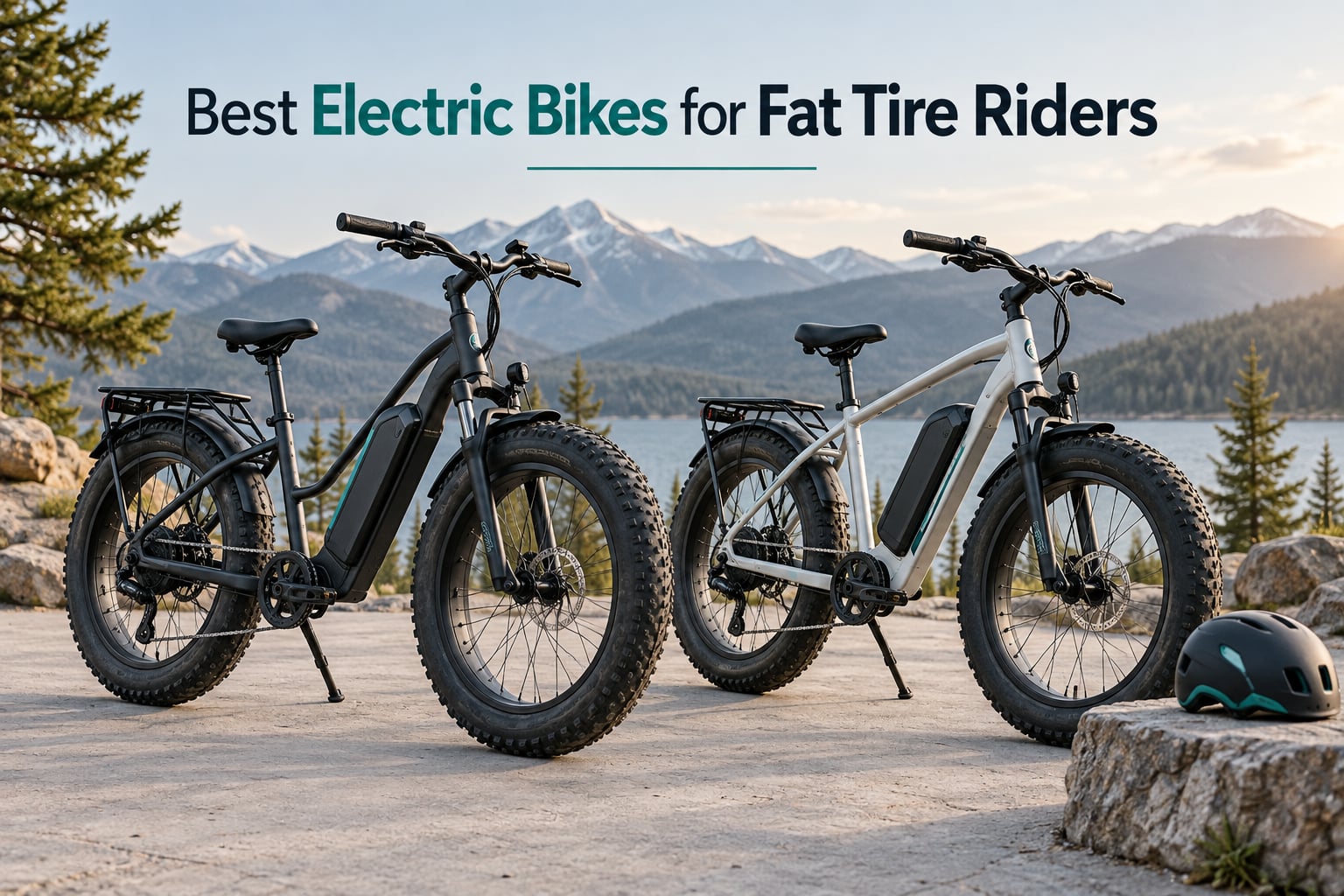
The best electric bike with fat tires for most riders is the Aipas M1 Pro, a full-suspension 26-inch machine rated to 500 lb total load, with 110 Nm of torque and a removable 48V 17.5Ah battery. If you need a smaller frame and a UL 2849 certified commuter with a rear rack, the Funhang EB-S1 is the runner-up.
That answer only holds for a certain kind of rider, though. Fat tire e-bikes are not one category but four overlapping ones: 26-inch full-size trail machines, 20-inch folders that fit in an apartment closet, high-torque bikes built for loaded hills, and moped-style bikes that top out well above 20 mph. Ranking them on wattage alone, as most roundups do, buries the one number that actually decides whether a bike fits you.
So we ranked on total payload first. Every number here is the maker’s stated rating, and every one of them includes the rider plus cargo, plus bags, plus anything on the rack. That last point is the mistake we see most often. Subtract 30 to 50 lb from the published figure and compare what is left to your own body weight, and you will immediately disqualify half the market.
Our method: we read the published specifications for ten fat tire e-bikes, cross-checked each against the customer review record, and scored them on payload, brake type, torque, battery capacity in watt-hours, frame material, and whether the battery carries a UL 2849 or UL 2271 certification. We did not ride them ourselves, and we say so plainly — everything below comes from maker-stated specs and owner feedback, with the two kept separate.
Last verified October 2026. Ten bikes, ten ASINs, no paid placements, and no bike on this list appears twice.
Our Top 3 Fat Tire E-Bikes After Comparing 10 Models
Quick Overview: Every Fat Tire E-Bike in This Roundup
| Product | Specs | Action |
|---|---|---|
 Aipas M1 Pro 26×4 Aipas M1 Pro 26×4 |
|
Check Latest Price |
| Funhang EB-S1 26×4 |
|
Check Latest Price |
 Jasion RetroVolt Pro 20×4 Jasion RetroVolt Pro 20×4 |
|
Check Latest Price |
 TST R004 20×4 TST R004 20×4 |
|
Check Latest Price |
 Vivi ACE01 26×4 Vivi ACE01 26×4 |
|
Check Latest Price |
 Jasion Thunder 26×4 Jasion Thunder 26×4 |
|
Check Latest Price |
 INVANTI EB16 20×4 INVANTI EB16 20×4 |
|
Check Latest Price |
 EOEOTWO E01 26×4 EOEOTWO E01 26×4 |
|
Check Latest Price |
 Wooken 20×4 Folding Wooken 20×4 Folding |
|
Check Latest Price |
 URLIFE T5 20×4 Folding URLIFE T5 20×4 Folding |
|
Check Latest Price |
The 10 Best Fat Tire Electric Bikes in Detail
1. Aipas M1 Pro – The 500 LB Full-Suspension Fat Tire E-Bike
Aipas M1 Pro Electric Bike for Adults, 26 x 4 Fat Tires, 48V 17.5Ah Battery
26x4 tires
500 lb max load
1800W peak, 110Nm
48V 17.5Ah
88 lb bike
Pros
- Highest stated payload in the group at 500 lb
- 110 Nm of torque for loaded hills
- Removable battery plus step-through frame
- Full suspension with adjustable 100mm fork
Cons
- 88 lb is the heaviest bike here
- Mechanical discs need more lever pressure
- Some reports of fork binding and oil leaks
Start with the number that closes most fat tire shortlists. The Aipas M1 Pro carries a stated 500 lb maximum load, the highest we found across ten bikes, which leaves real headroom once you subtract your own body weight and any cargo. Owners riding at the heavier end of that band consistently mention the step-through frame as the reason the bike stayed usable for them.
Underneath, it is a 26-inch full-suspension bike with a 1800W peak rear-hub motor producing 110 Nm. That torque figure is the one to care about on a grade, because torque is what gets weight moving at low speed rather than what wins a top-speed headline. The removable 48V 17.5Ah battery is charged in 4 to 6 hours, and five assist levels plus a throttle give you control over how much of the 85-mile pedal-assist claim you actually use.
Where the 110 Nm Matters Most
Riders on the Electric Bike Review forums asking about heavy bikes consistently converge on the same three things: a frame built for the load, wheels that will not dish, and brakes that do not fade. The M1 Pro addresses two of those directly. A 26-inch wheel with a 4-inch casing spreads load differently than a 20-inch wheel, and 7-speed gearing with a thumb shifter is simple to service when something does give.
It is not perfect. The 180 mm rotors are mechanical rather than hydraulic, which means more hand pressure on the lever and more modulation work on steep descents. Owners running this bike in wet snow report exactly that. We would treat the brakes as the first thing to upgrade if you ride in that environment.
Weight, Certification and the 88 lb Problem
At 88 lb, this is the heaviest bike in the roundup, and that is not a spec-sheet detail. It is a two-person lift, and for anyone in an apartment or an RV it is the difference between a purchase and a non-purchase. Owners describe it as manageable off-road and genuinely awkward on tight trails where you have to hold the bike sideways.
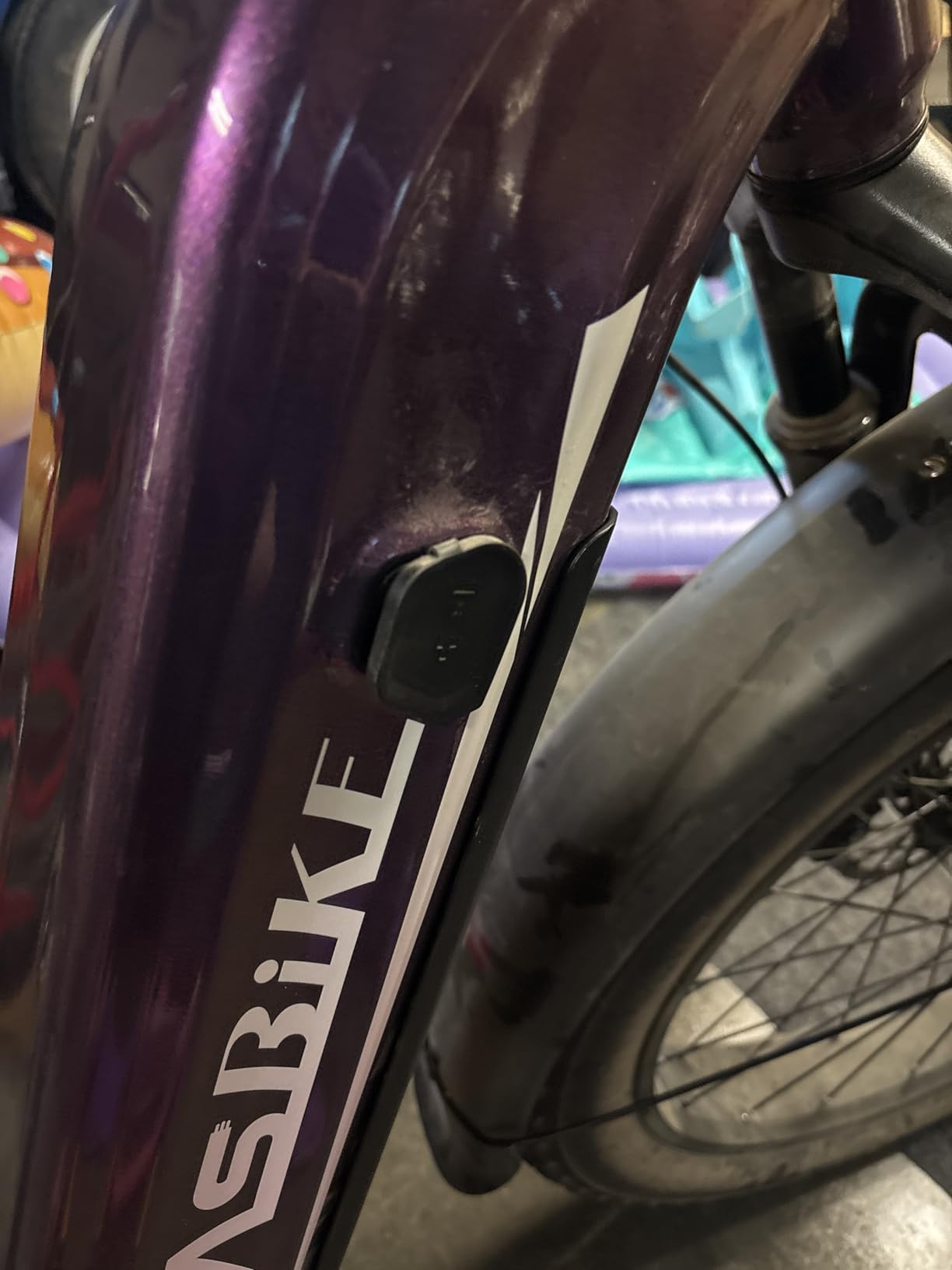
On the positive side, the battery carries an SGS certification to ANSI/CAN/UL 2271, the cell-level standard, and the bike ships with a 1-year limited warranty. A handful of owners report front suspension binding and oil leaks out of the box, plus a flimsy plastic cover over the power button that shifts when the battery is removed. Those are quality-control issues, not design flaws, but budget time for them.
Who This Bike Is For
Choose the M1 Pro if your body weight plus your typical cargo approaches 400 lb, if you ride grades regularly, and if you have a ground-floor space or a vehicle with a ramp. Skip it if you need to carry the bike up stairs alone, or if mechanical brake feel is a dealbreaker for you. Full-suspension comfort does not offset a bike you cannot move.
2. Funhang EB-S1 – The UL 2849 Certified Commuter With a Rack and Lighting
Funhang Electric Bike for Adults, 1000W Peak Ebike, 20MPH 60Miles Electric Mountain Bike, 26″ Fat Tire Electric Bicycle with 48V 13AH Battery, Front Suspension,7 Speed, Rear Rack, UL 2849 Certified
26x4 tires
330 lb max load
500W rated, 1000W peak
UL 2849 and UL 2271
Rear rack to 60 lb
Pros
- Dual safety certifications rare at this tier
- Turn signals and horn work well at night
- Rear rack rated to 60 lb
- Easy assembly with a clear video
Cons
- 70 lb is heavy for a commuter
- Stock saddle uncomfortable on long rides
- Top gear too high for real pedaling in assist 1
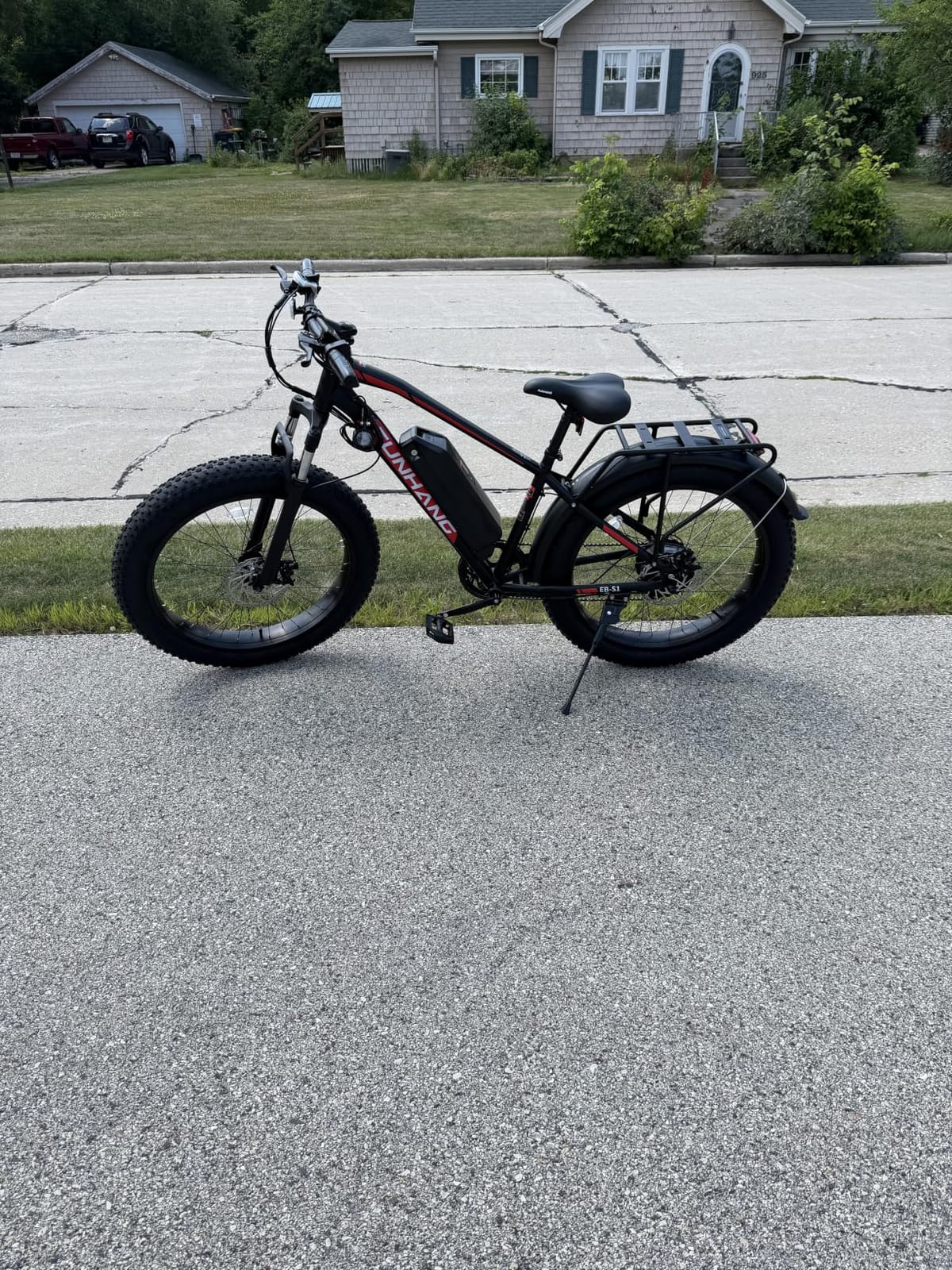
Most riders who search for a fat tire e-bike are not looking for a trail machine. They are looking for something that survives November, carries groceries, and is still there in February. The Funhang EB-S1 is built for that person, and it carries both a cell-level and a whole-bike safety certification, UL 2271 and UL 2849, tested by SGS and TUV.
Certification has become a real filter. After a series of consumer-product battery stop-use notices, a growing number of buyers will not take a fat tire bike without one, and this is one of only two here that clears the bar on both standards, the other being the Vivi ACE01. The 48V 13Ah battery is removable and IPX5 sealed, and the rear rack is rated to 60 lb, which turns this from a toy into an errand bike.
Lighting, Turn Signals and Daily Usability
Owners single out the lighting package more than almost anything else: a headlight, a taillight with working turn signals, a horn, and an LCD display that shows speed, mileage, and battery level. Five riding modes and five assist levels give finer control than the three-mode bikes in this group, and reviewers note the unlocked speed reaches 25 mph in full electric mode on flat ground.
That last detail matters legally, so we cover it later. For daily use, the practical upside is simpler. Wide tires roll easily over grass, pond edges, and packed gravel paths, and reviewers report the bike handles steep hills without the motor straining.
What Owners Complain About
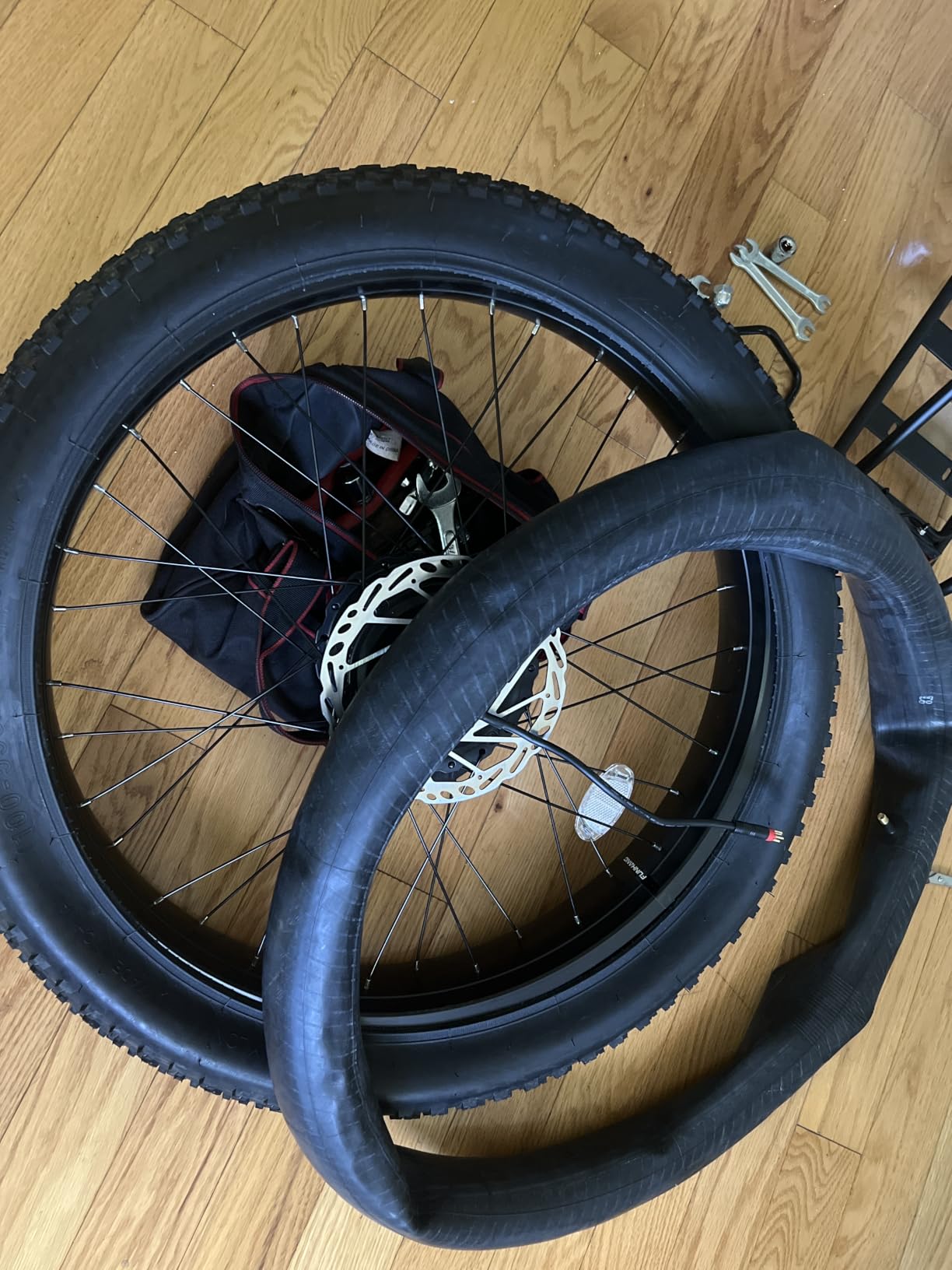
Three issues recur. The bike weighs 70 lb, which is a two-person lift. The supplied saddle is uncomfortable past an hour, a common complaint in this category and an easy fix with an aftermarket wide saddle. And the gearing is not low enough for meaningful pedaling in assist level 1, so if you want the bike to feel like exercise rather than a motorbike, budget for a lower gear.
One more practical note: tires frequently arrive under-inflated, around 12 to 18 psi when the manufacturer recommends 20. Check pressure before the first ride, and pick up a pump rated for low psi.
Who This Bike Is For
The EB-S1 suits a rider near the published 330 lb total load who wants a certified, light-equipped commuter with a rack. It is also the pick if certification is a hard requirement in your buying decision. It is not the right bike for technical trail work, since it has a front fork only and no rear shock.
3. Jasion RetroVolt Pro – Hydraulic Brakes and a 52V 20Ah Pack on a Moped Bench
Jasion RetroVolt Pro Electric Bike,52v 20Ah,90-Mile Range,38MPH,Fat Tire
20x4 tires
330 lb payload
2000W peak, 120Nm, 38 mph
52V 20Ah
Dual hydraulic brakes
Pros
- Highest torque figure in the roundup at 120 Nm
- Dual hydraulic brakes on both wheels
- 52V 20Ah pack is the largest here
- Full front and rear suspension
Cons
- Bench seat is hard to size for shorter riders
- Launched in early 2026 so long-term data is thin
- 38 mph top speed puts it off-road by most rules
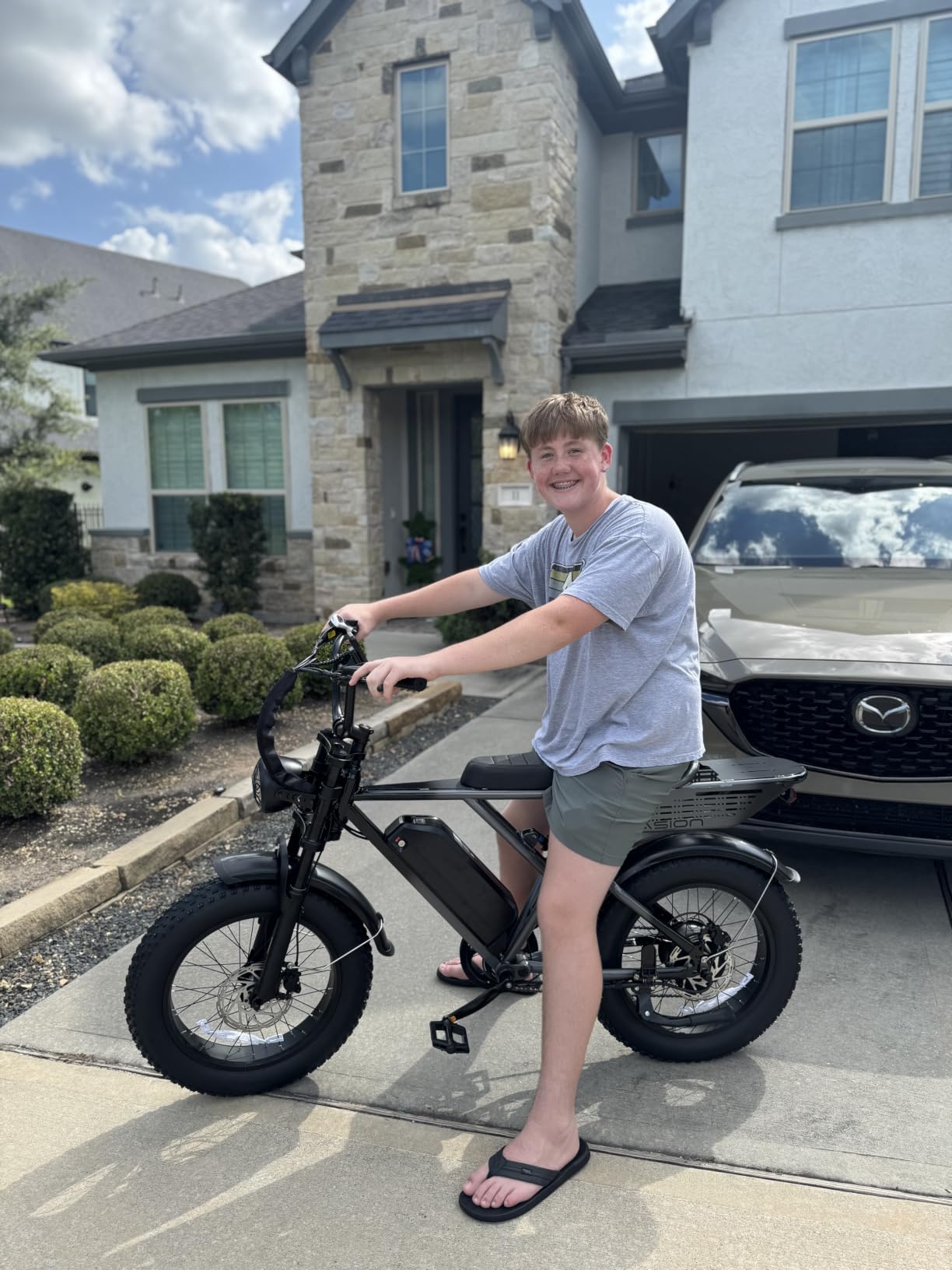
The RetroVolt Pro is the bike that makes the rest of this list look cautious. It carries 2000W of peak power, 120 Nm of torque, a 52V 20Ah battery with a claimed 90-mile range, and a pair of dual hydraulic brakes. In a category where most sub-1000-dollar bikes run mechanical discs, hydraulic brakes at both ends is the single most meaningful upgrade here.
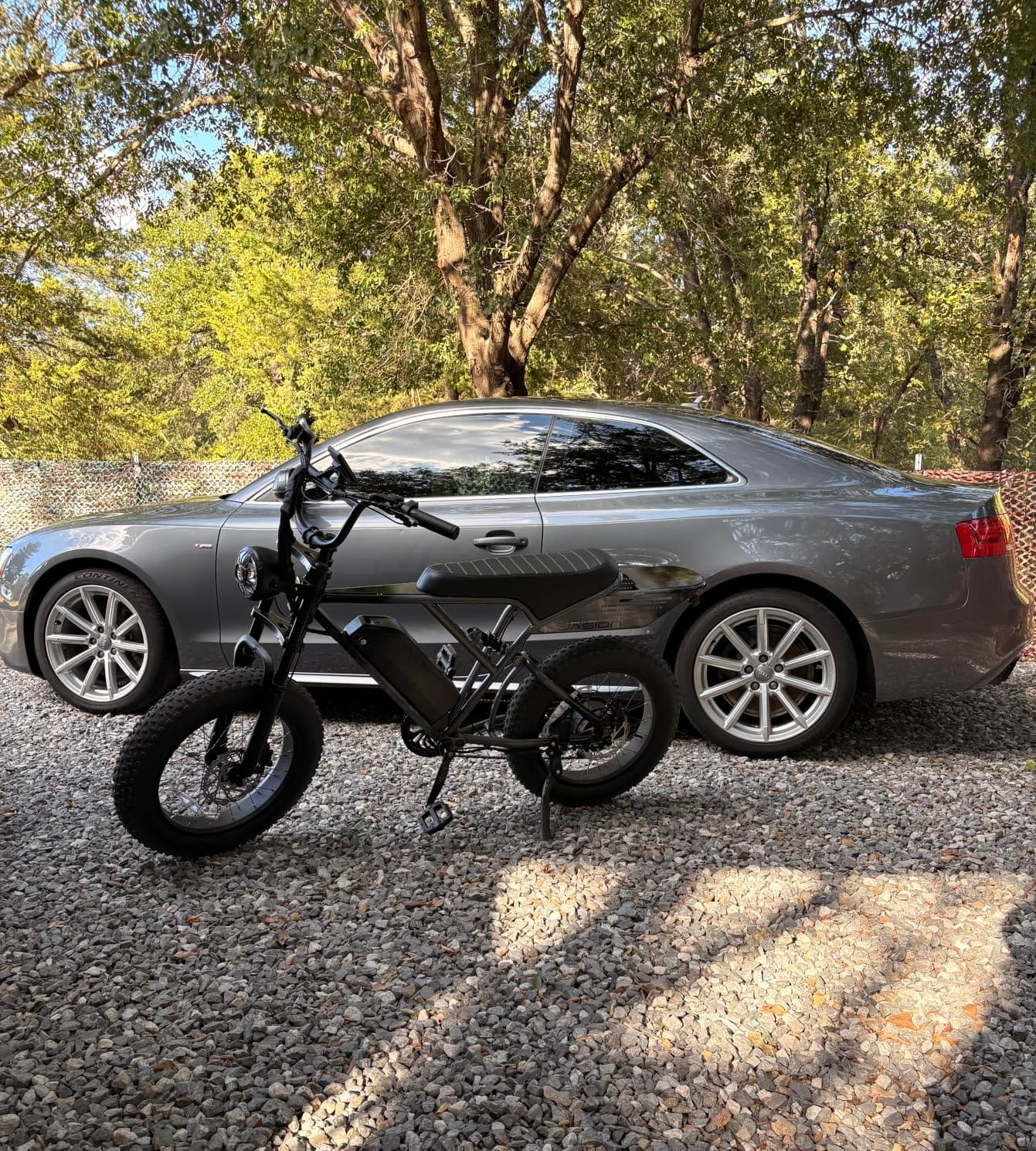
It is styled as a moped, with a long bench seat, a retro headlight, and a high-carbon steel frame on 20 x 4 inch fat tires with full front and rear suspension. Five riding modes cover throttle, assist, and cruise. Owners rate it highly for range and speed, and the braking feel is the part reviewers single out most.
What 52V 20Ah Actually Buys You
Most bikes here run 48V, so a 52V pack is a meaningful step up in energy storage rather than marketing. A 20Ah pack at 52V is one of the largest batteries in the group, and it is the reason the range claim tops every other bike here. Treat that claim as a ceiling rather than a plan, though. Wide tires at low pressure cost real energy per mile, and the real-world figure lands well below the brochure number.
Because it is a moped-style bike with a top speed approaching 38 mph, this is not a machine for public roads under US rules. It works on private land, trails, and beach terrain. We get into the legal detail further down.
Fit Is the Real Weak Point
The bench seat suits taller riders and relaxed cruising, and it is the reason many owners buy this bike. It is also the reason shorter riders struggle: a long bench offers far less adjustment than a conventional saddle on a seatpost. The stated payload is 330 lb, which is the joint-lowest figure in this roundup, so heavy riders should look elsewhere.
One caveat we want to be honest about. This listing launched in early 2026, so the review history covers months rather than the multi-year records we have for the longer-established bikes. Long-term durability feedback is genuinely limited right now, and that is a reason to hold a little money back.
Who This Bike Is For
Pick the RetroVolt Pro if you ride private land or sand, want hydraulic braking, and prefer one large battery to two smaller ones. Pass on it if you need a street-legal bike, if you are shorter than the bench seat accommodates, or if you weigh close to the 330 lb total load limit.
4. TST R004 – 450 LB of Rated Load on a 66 LB Bike
TST Electric Bike for Adults, 48V 15Ah Battery for Urban Cycling, Fat Tire
20x4 tires
450 lb max load
750W, 1500W peak
48V 15Ah
66 lb bike
Pros
- Best payload-to-weight ratio here
- Lightest bike in the roundup at 66 lb
- Full front and rear suspension
- Puncture-resistant snow tires
Cons
- 180-day warranty is the shortest here
- Only three riding modes
- Mechanical rather than hydraulic brakes
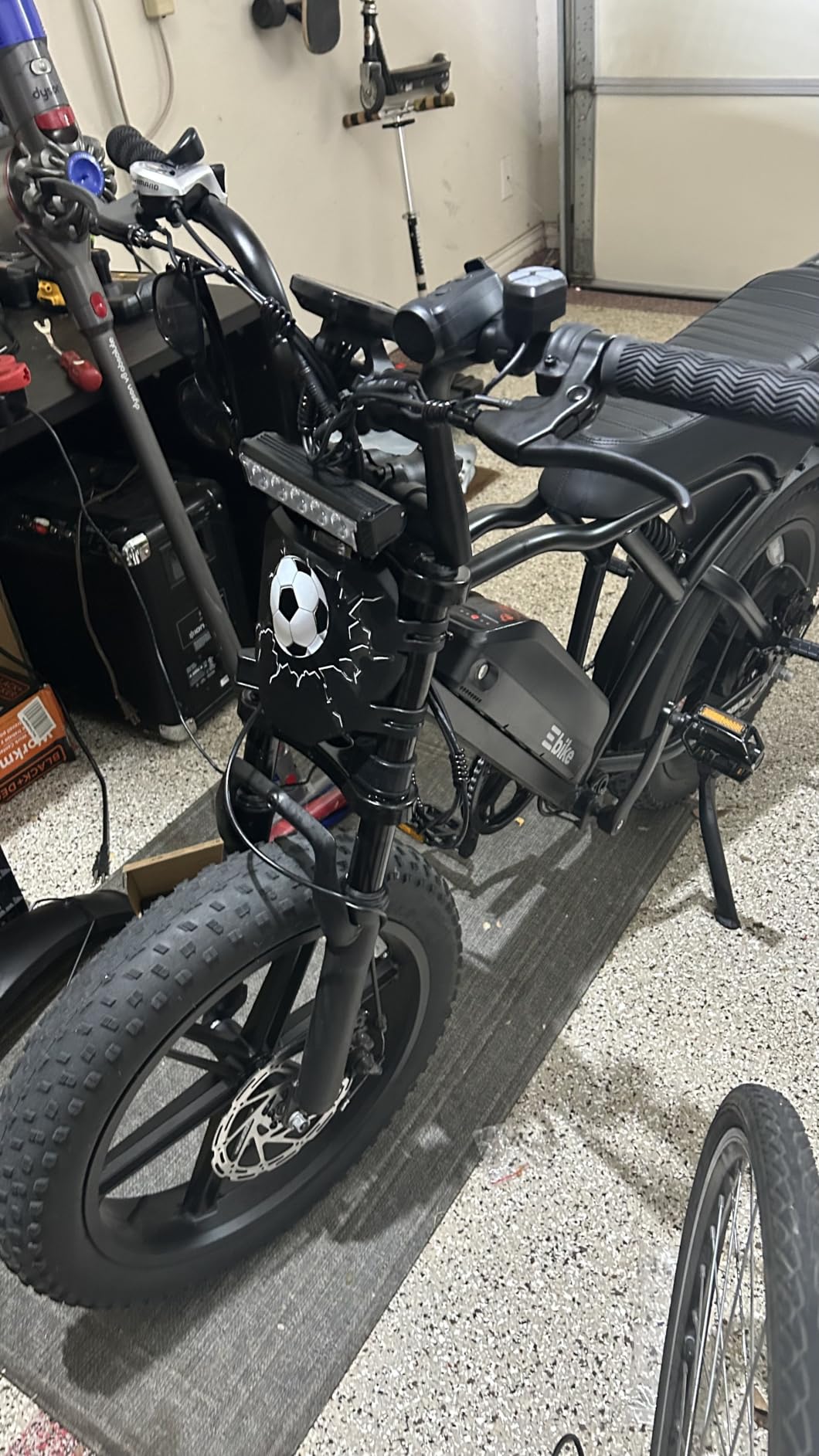
The R004 does something no other bike here manages: it carries a stated 450 lb maximum load on a frame weighing 66 lb. That ratio matters more than it sounds. Payload is the number buyers should be chasing, and payload is a function of how much bike you have to move. A lighter bike with the same rating is a lighter bike to lift, push, and carry up a trail.
The motor is 750W with a 1500W peak figure, driving 20 x 4 inch puncture-resistant snow tires through 7-speed gearing and a front and rear suspension system. The 48V 15Ah removable battery charges in 6 to 7 hours, with a claimed 40 miles on throttle and 50 to 60 on pedal assist. Owners report the motor handles commuting and light off-road work without complaint.
Why Weight Matters More Than Wattage Here
Fat tire e-bikes are heavy, full stop, and the forum complaint we hear most often is about getting one into a car or up a flight of stairs. At 66 lb this is the lightest bike in the roundup, and for a rider buying for a fifth floor walkup that single figure can be the deciding one. Our guide to electric bikes for folding storage covers the alternatives if weight is your main constraint.
Full suspension at this weight is unusual and welcome. The tradeoff is a simpler feature set: three riding modes against five on most competitors, mechanical discs, and a linear-pull brake style rather than a fully integrated hydraulic system.
The Warranty Is the Weak Spot
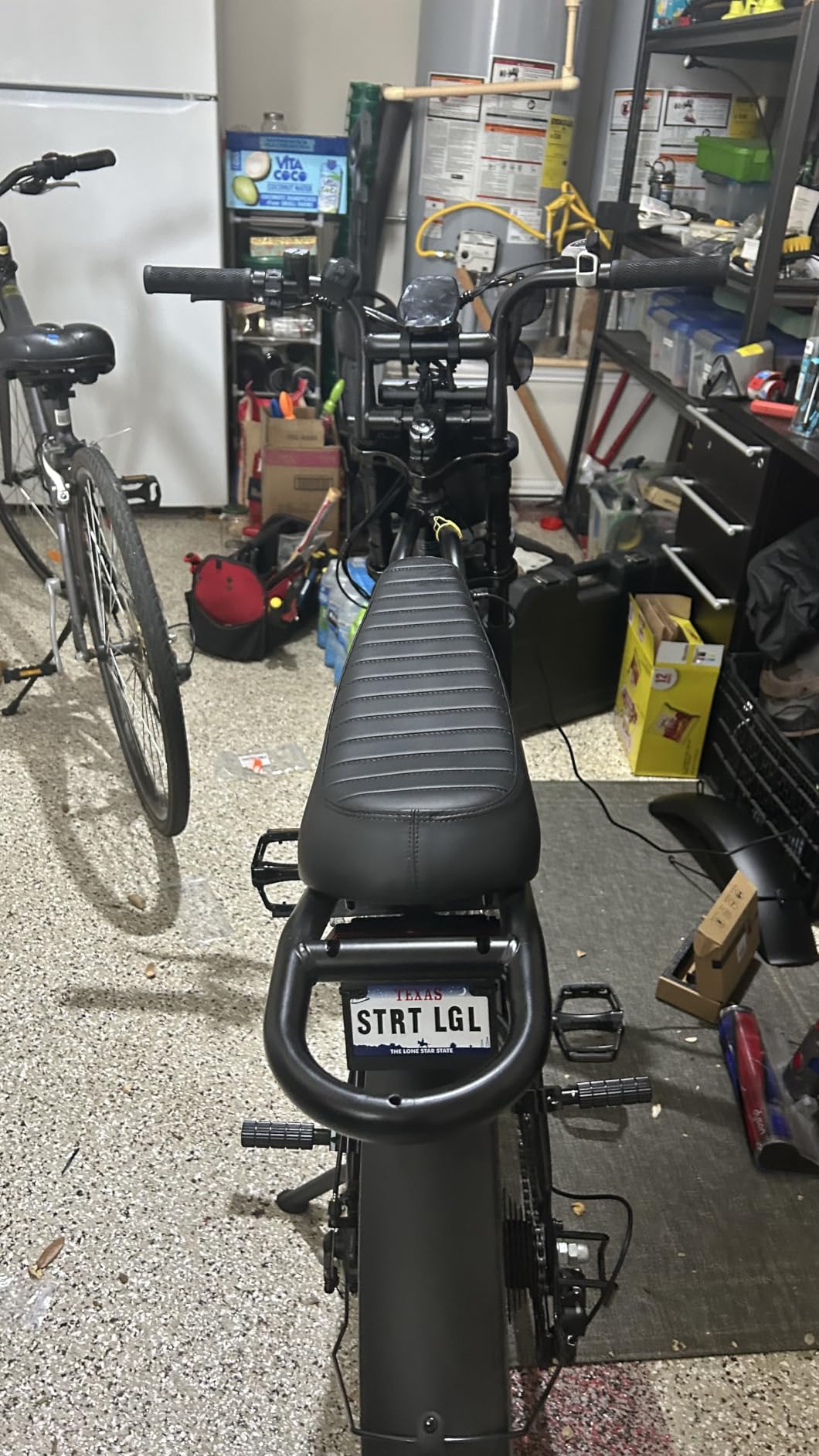
At 180 days, this is the shortest warranty in the roundup by a wide margin, against 1-year coverage on most of the list. On a bike with a 15Ah battery pack, that difference is more than paperwork. A pack failure six months in, at day 200, is a real financial event, and we would weigh that against the payload advantage carefully.
The upside is the LCD display showing speed, distance, and battery level, high-brightness lights front and rear, and 90 percent pre-assembly so the build takes an evening rather than a weekend. Owners also note that at 66 lb the bike is genuinely manageable off-road for its class.
Who This Bike Is For
The R004 fits a heavier rider who wants as much load capacity as possible without moving up to a 26-inch frame, and who can live with mechanical braking. It is a poor match for a rider near 300 lb and above who spends time on steep descents, where hydraulic brakes are worth the extra cost.
5. Vivi ACE01 – Torque-Sensing Assist on an Aluminum Frame
Vivi ACE01 Electric Bike for Adults,26″ x 4.0 Fat Tire Ebike,1500W Peak Motor Torque Sensor Electric Mountain Bike,20MPH Electric Bicycle with 48V 15AH Battery,Hydraulic Brake,Certified to UL2849
26x4 tires
330 lb capacity
750W rated, 90Nm
720 Wh 21700 battery
Torque sensor
Pros
- Torque sensor gives more natural assist than cadence sensing
- Dual hydraulic brakes with an aluminum frame
- 21700 cells charge in 4-6 hours
- Charge on or off the bike
Cons
- 330 lb capacity is the lowest tied figure
- 72 lb weight
- Front suspension only
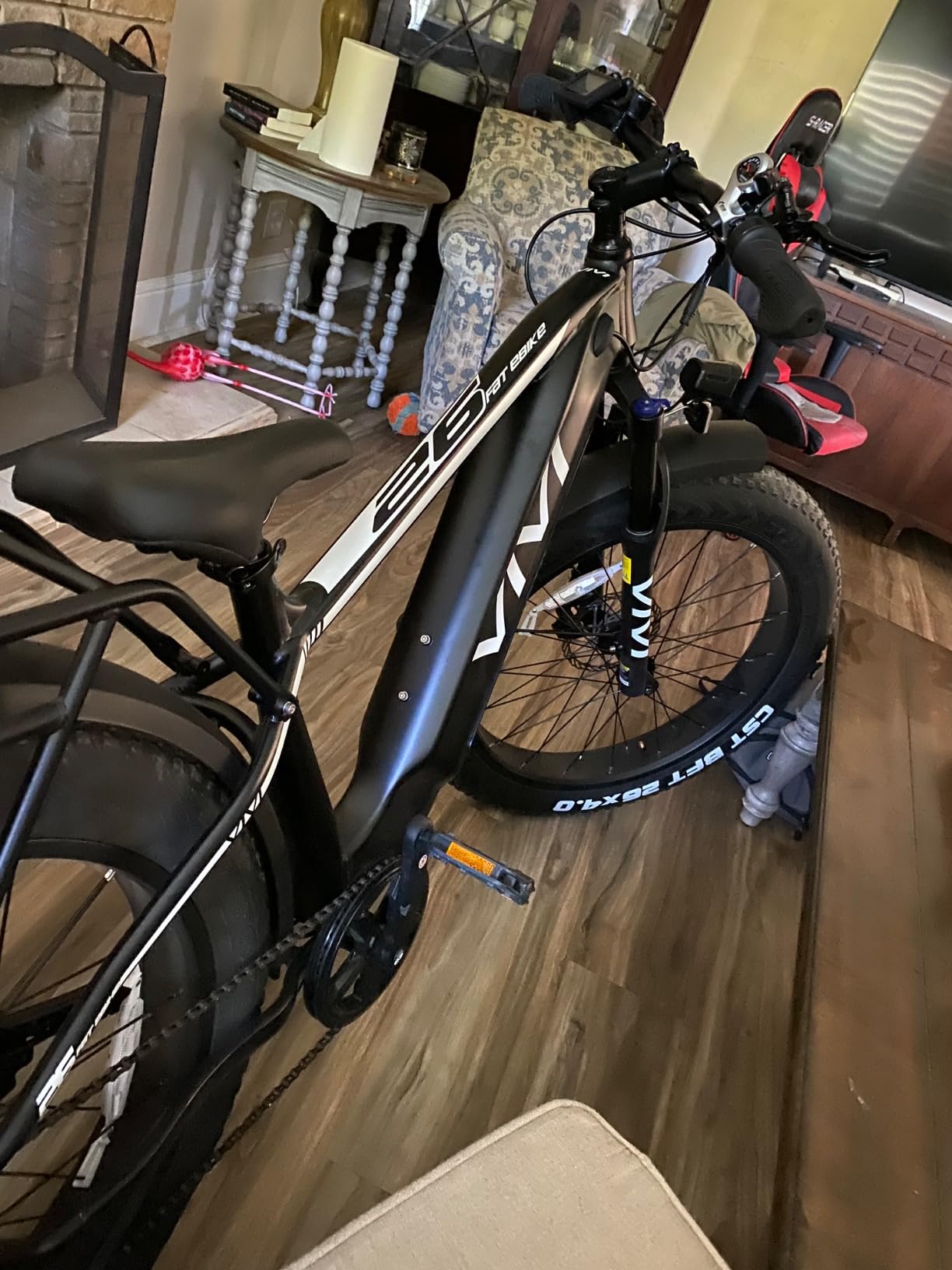
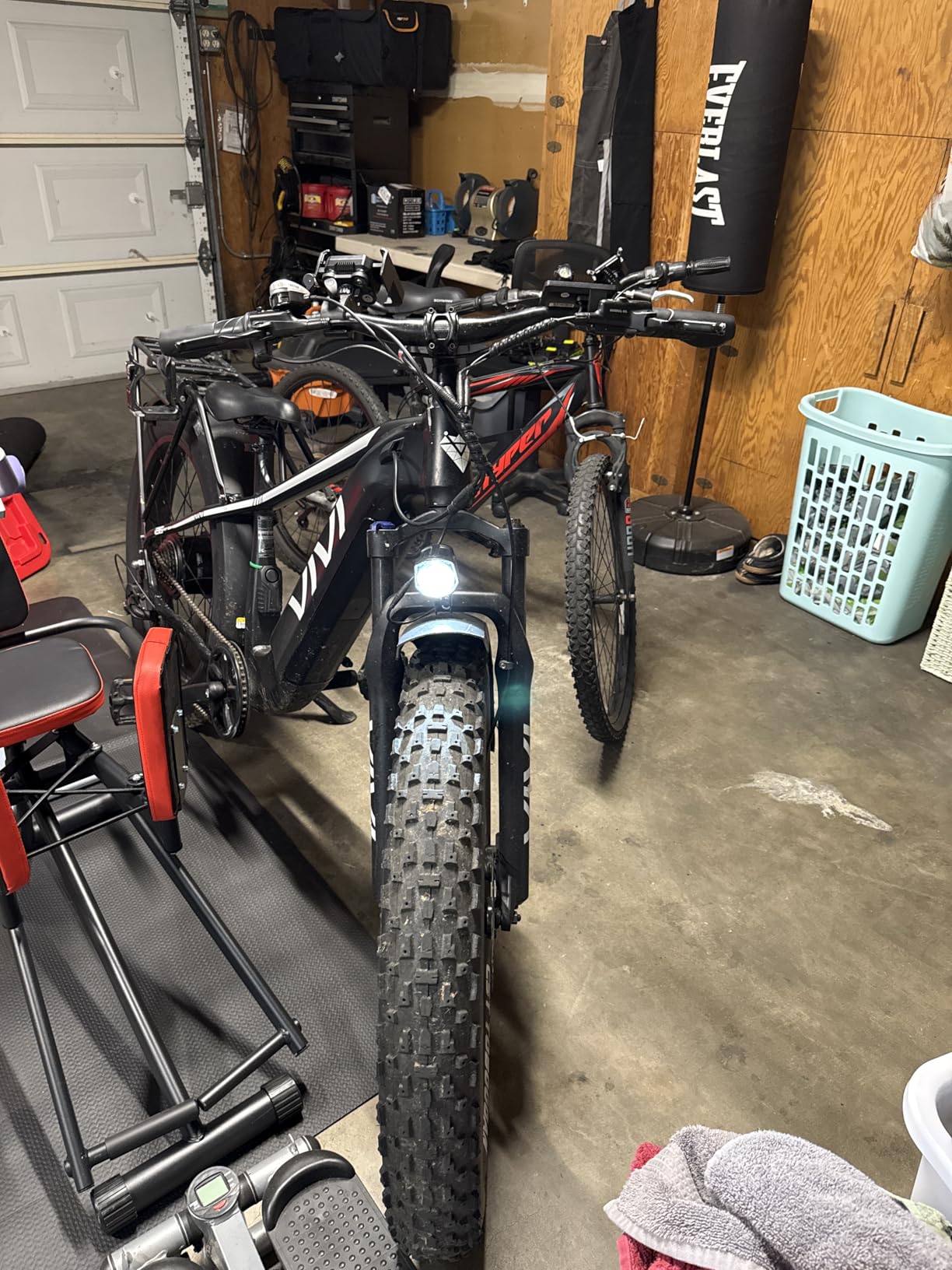
The Vivi ACE01 is the specification standout at the middle of this list, and the reason is the torque sensor. Most budget fat tire bikes use a cadence sensor, which delivers power in fixed steps regardless of how hard you press. A torque sensor reads your actual pedal force and scales the assist proportionally, which owners describe as a noticeably smoother and more natural ride.
That is why the Vivi ACE01 pairs an aluminum alloy frame with dual hydraulic brakes at 26 inches and 4.0 inches of width, a combination the TST R004 also uses. The 750W rated motor with a 1500W peak and 90 Nm is strong enough for grades without being excessive, and the 90 Nm figure sits comfortably in the useful range for a loaded bike.
Battery Details That Stand Out
The 48V 15Ah pack uses 21700 lithium cells for 720 Wh, which is a more durable cell format than the pouch cells common in this price band. A 3A charger brings it from empty to full in 4 to 6 hours, and because the pack is removable you can charge it indoors. That single feature is why a lot of apartment riders buy this category at all, and our tire inflator picks cover the other half of the setup problem.
The claimed range is 40 to 60 miles per charge. With 26 x 4.0 casings run at low pressure, plan on the lower half of that figure in mixed terrain.
Sizing and Load Limits
The ACE01 is rated to 330 lb total load and fits riders from 5 feet 3 inches to 6 feet 5 inches, which is a useful range to see published. At 72 lb it sits in the middle of this roundup for weight, heavier than the 20-inch folders and lighter than the 88 lb Aipas. It arrives 85 percent assembled with a 1-year service period, and it is certified to both UL 2849 and UL 2271 by SGS.
Five pedal assist levels and five working modes give it more adjustability than most of the cheaper bikes here. The front fork is lockable and adjustable, which matters more than it sounds on pavement, where a fat tire bike benefits from being firmer. There is no rear shock, so this is a trail-tough bike, not a comfort-first one.
Who This Bike Is For
Choose the Vivi ACE01 if you ride mixed pavement and dirt at a body weight comfortably under 250 lb and want assist that feels natural rather than stepwise. It is a strong pick for a rider who cares about battery cell quality and safety certification. Heavier riders should note the 330 lb cap before anything else.
6. Jasion Thunder – 400 LB Rated With 1040 Wh and Hydraulic Brakes
Jasion Thunder Electric Bike for Adults,1800W Peak,26”x 4”Fat Tire E Bikes,80 Miles with 864Wh Removable Battery Ebike, 30+MPH Max Speed Bicycles,Hydraulic Brakes,Front Suspension,Patent
26x4 tires
400 lb capacity
1800W peak, 85Nm
48V 18Ah, 1040 Wh
Dual hydraulic discs
Pros
- 400 lb load capacity on a full-size frame
- 1040 Wh is the largest battery here
- Dual hydraulic brakes
- Shimano 7-speed drivetrain and app with remote lock
Cons
- Front suspension only on a 400 lb-rated bike
- Higher price tier than most of the list
- 30+ mph assist is off-road territory
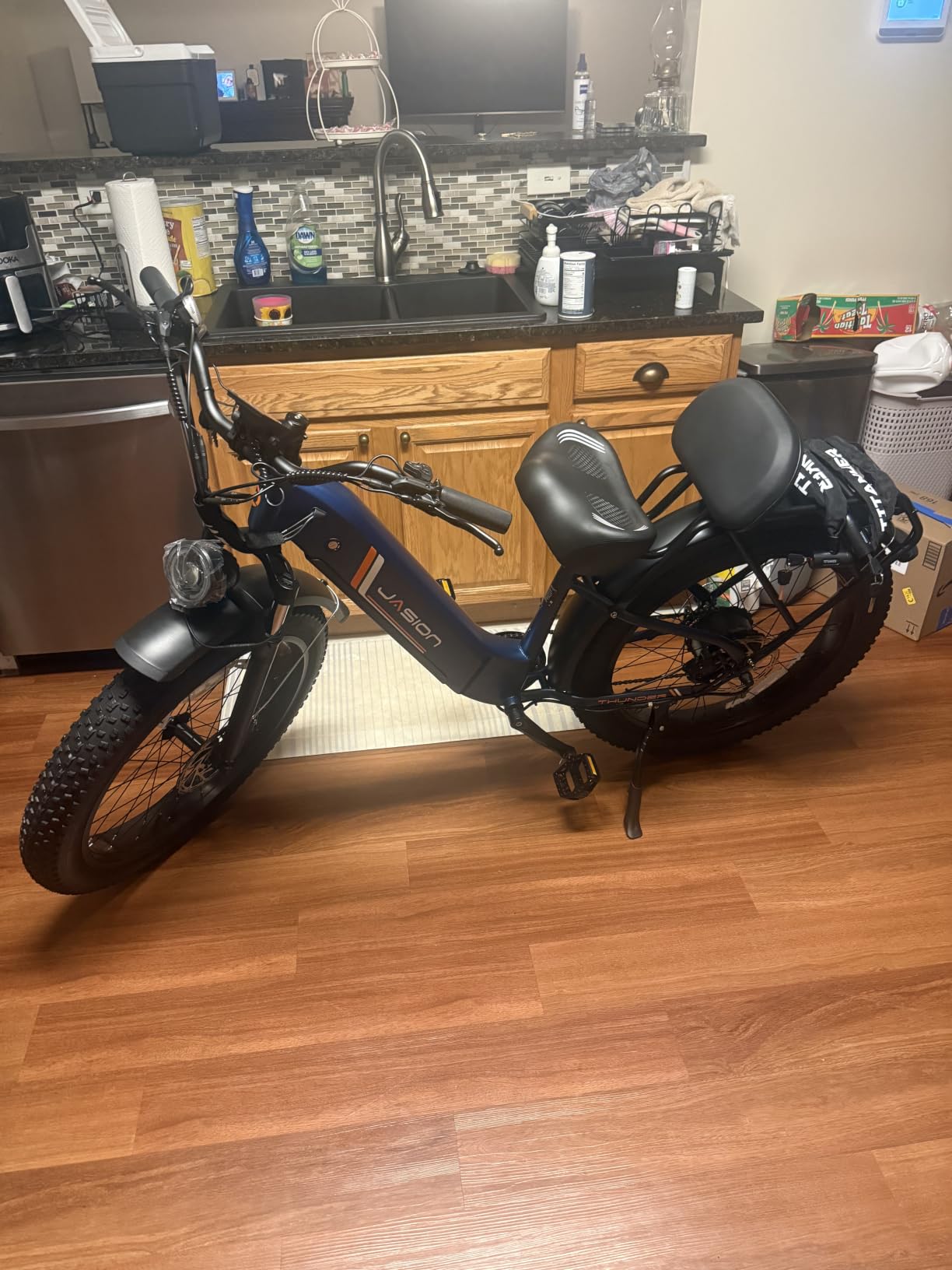
For riders in the 300 to 350 lb band who still want a full-size 26-inch wheel, the Jasion Thunder is the most capable option here. It is rated to 400 lb of total load, which after the 30 to 50 lb subtraction leaves meaningful room, and it pairs that capacity with the largest battery and the strongest braking spec in the roundup.
The 48V 18Ah pack works out to 1040 Wh, and the motor is 1800W peak with 85 Nm. Dual hydraulic disc brakes with a claimed 2-second stopping time sit behind a 7-speed Shimano drivetrain, and five assist levels run from 10 to 28 mph. A cargo rack, fenders, a headlight, a brake light, and turn signals are all included, plus app monitoring and a remote security lock.
The Brakes Are the Reason to Look Here
For a bike rated to 400 lb, brake choice is not an accessory decision. Cable-actuated mechanical discs on a bike carrying that much mass, descending wet gravel, ask for far more hand pressure than a rider can comfortably supply. The dual hydraulic setup here is the single most important spec on this bike for a heavier rider, and it is a good reason not to stop at wattage.
Riders asking on the Electric Bike Review forums what a heavy bike needs hear the same answer repeatedly: purpose-rated frames, strong wheels, and brakes first. The Thunder answers the third of those better than anything else in this roundup.
Where It Falls Short
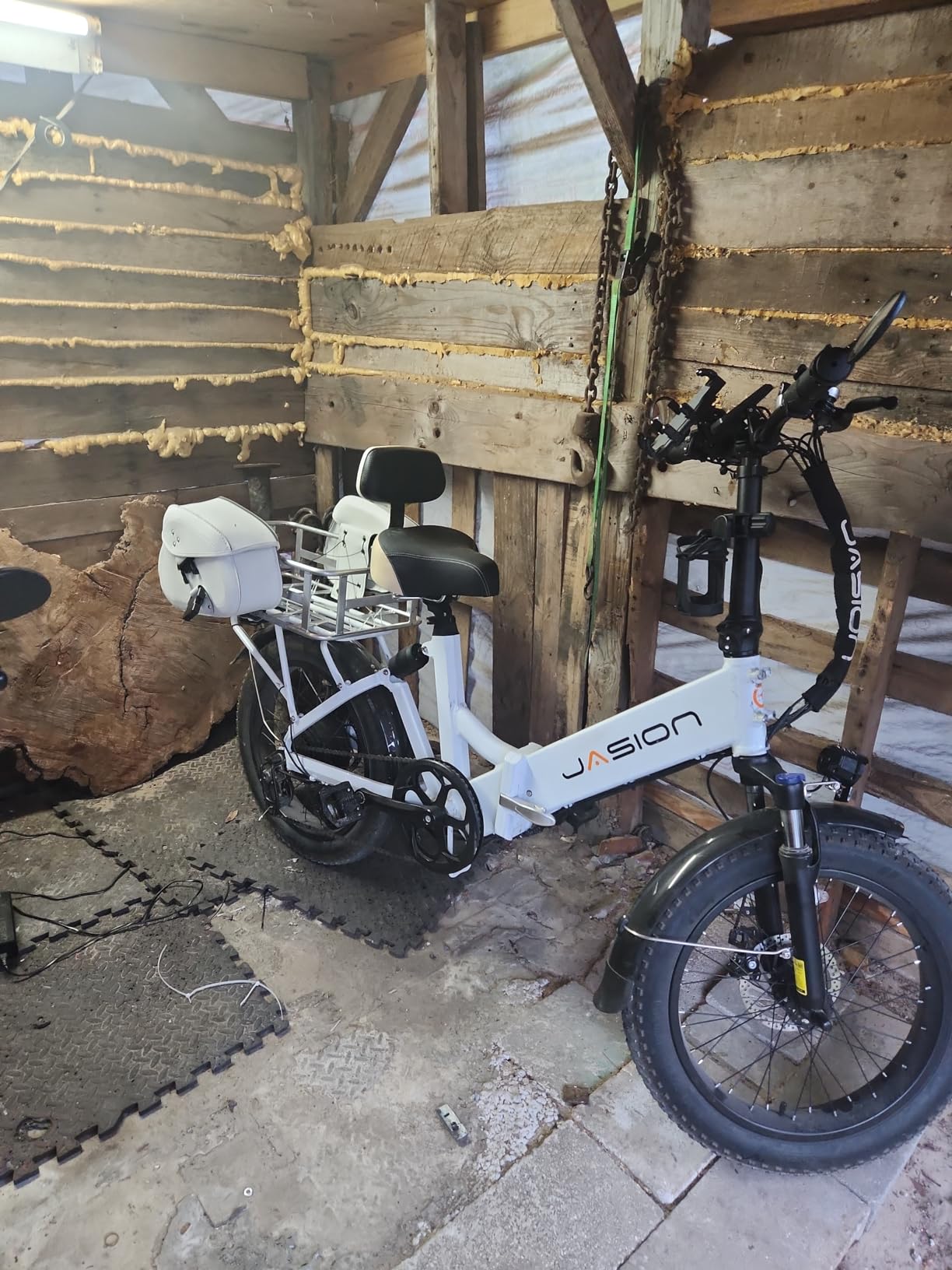
It has front suspension only, on a bike rated for 400 lb. Owners note the absence of rear suspension as the main drawback, and it is a fair criticism: without a rear shock, a heavy rider on rough ground feels every impact through the saddle and the arms. The 30+ mph assisted speed also puts it firmly in off-road-only territory under US rules. And it sits in the upper price tier of this list.
What you get for that is a full accessory package, a Shimano drivetrain rather than an unbranded one, and UL 2849 certification.
Who This Bike Is For
The Thunder is built for a heavier rider on trails and rough back roads who will not compromise on brakes or battery. Skip it if you ride mostly smooth pavement, if you need street legality, or if rear suspension comfort is your top priority. Our guide to electric bikes for heavy riders covers the alternatives in more depth.
7. INVANTI EB16 – The Longest Pedal-Assist Claim in the Roundup
INVANTI Electric Bike for Adults, Electric Dirt Bike 750W Motor,20MPH 70 Miles E-Bike with 48V 15.6AH Removable Battery, 20″ All-Terrain Fat Tire EBike 7 Speeds Full Suspension
20x4 tires
750W motor, 35 degree slopes
48V 15.6Ah
75 miles PAS claim
UL 2849 SGS
Pros
- Largest battery in the 20-inch class at 15.6Ah
- UL 2849 certified by SGS
- Front and rear suspension standard
- 90 percent pre-assembled with video guides
Cons
- Mechanical brakes need more lever force
- 750W and 20 mph is modest
- Lower review count than most rivals here
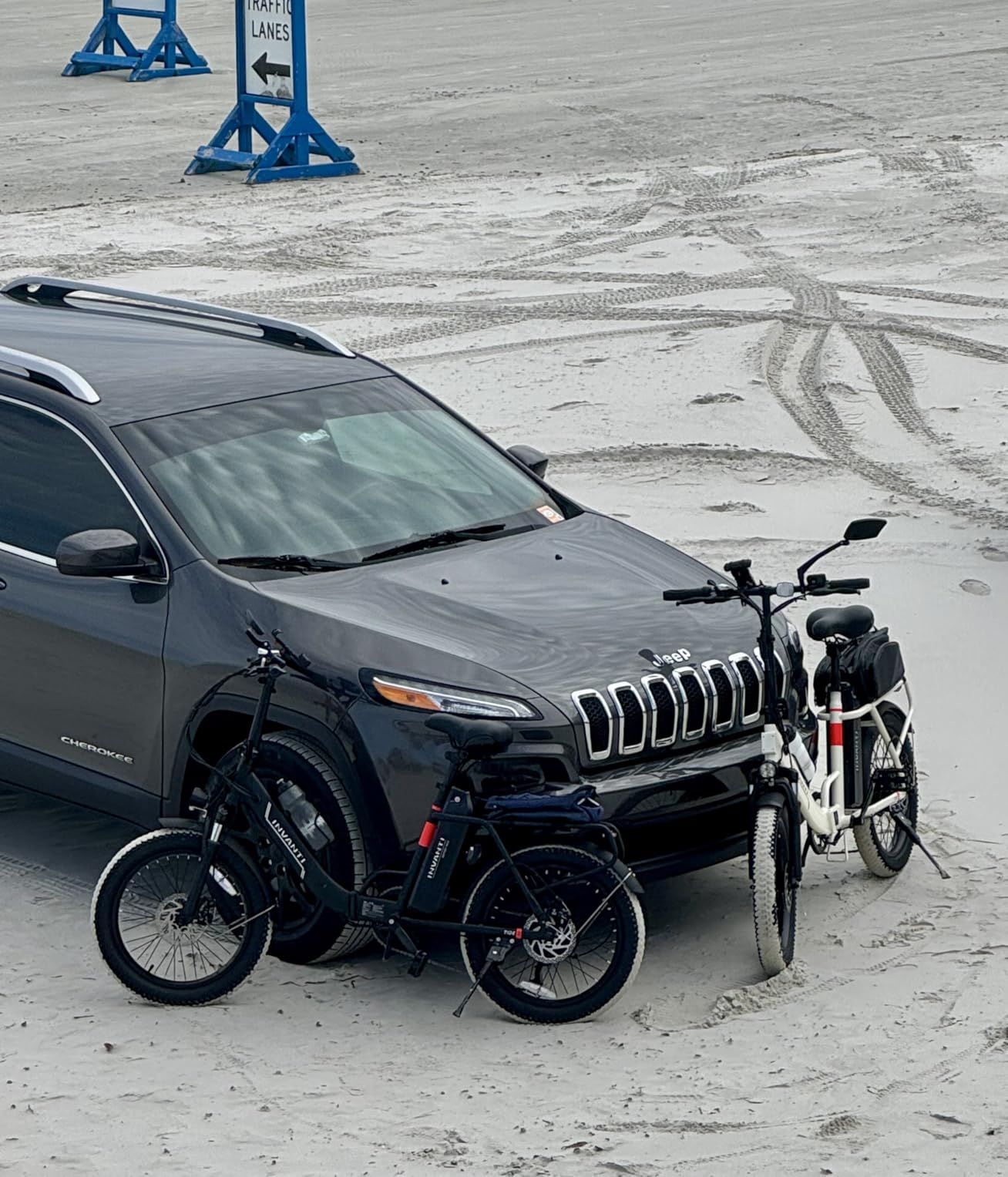
The INVANTI EB16 exists to answer one question: how far can a fat tire bike go on a charge. It carries a 48V 15.6Ah removable IP54 battery with a BMS, and the maker claims up to 40 miles on throttle and 75 miles on pedal assist, the longest assist claim among the bikes in this roundup. On a 20-inch frame with a 750W brushless motor rated for 35 degree slopes, that is a lot of range for a bike this size.
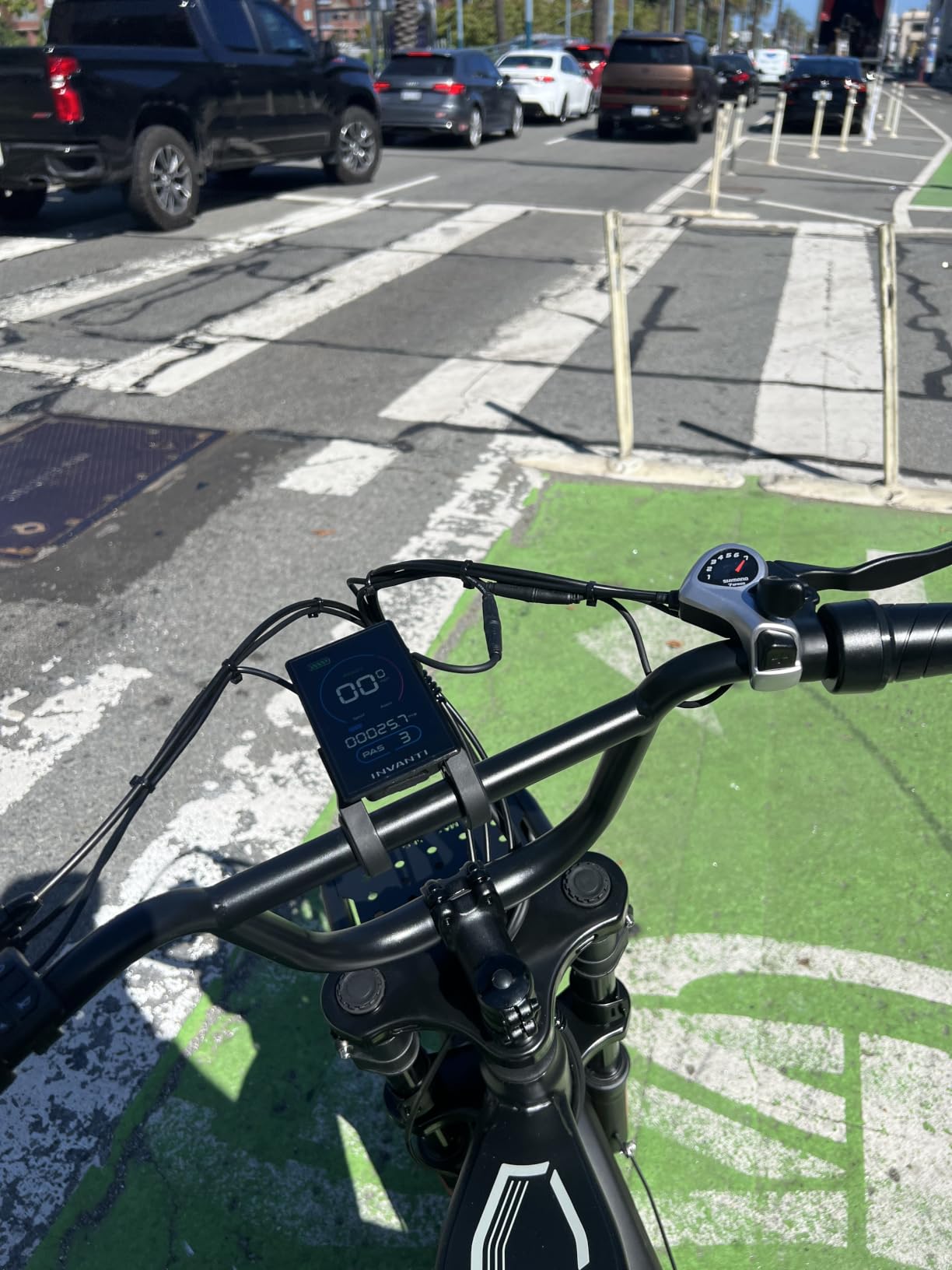
It is also UL 2849 certified by SGS, with a 1-year warranty on motor, battery, and charger. Full front and rear suspension, 7-speed gearing, and a color LED display showing speed, battery level, and assist level are all standard.
Why Range Claims Deserve Suspicion
Brochure range is measured on a light rider, on flat pavement, at a low assist level, and with the tires pumped hard. Do all four things differently and the same bike delivers a fraction of that. The 75-mile figure assumes you are pedaling rather than riding throttle, and a 4-inch casing at low pressure costs substantially more energy per mile than a street tire. Plan for the 40-mile throttle number as your realistic ceiling on mixed terrain.
That caveat applies to every range claim in this roundup, and it is why we list battery capacity in watt-hours rather than miles.
What Owners Say About It
Owners highlight the large battery, the smoothness of the dual suspension on rough ground, and the SGS certification as the reasons to buy. The reservations are consistent too: mechanical disc brakes demand more lever force than hydraulic units, and a 750W motor with a 20 mph ceiling is modest for riders who like to keep pace with traffic on a longer road.
The 144-review record is smaller than most of the bikes here, which means less long-term data. It arrives 90 percent assembled with instructions and assembly videos, which shortens the first build considerably.
Who This Bike Is For
The EB16 fits a rider on long trail or gravel routes who wants maximum distance per charge and values the UL 2849 certification. It is not the right choice for a heavier rider above roughly 250 lb, since the brakes are mechanical, or for anyone wanting more than 20 mph.
8. EOEOTWO E01 – Fast, Accessory-Complete, and Cheerfully Unfussy
EOEOTWO Electric Bike for Adults, 26″ Fat Tire Ebikes, 48V 15Ah
26x4 tires
330 lb load
1500W peak
48V 15Ah, 60 mile PAS
UL 2849 SGS
Pros
- Owners report 32-36 mph on flat ground
- Rear rack and fenders included
- Key lock for both bike and battery
- Easy assembly and simple programming
Cons
- Front suspension only
- Included rubber tires feel cheap
- Some reports of battery and charger failures
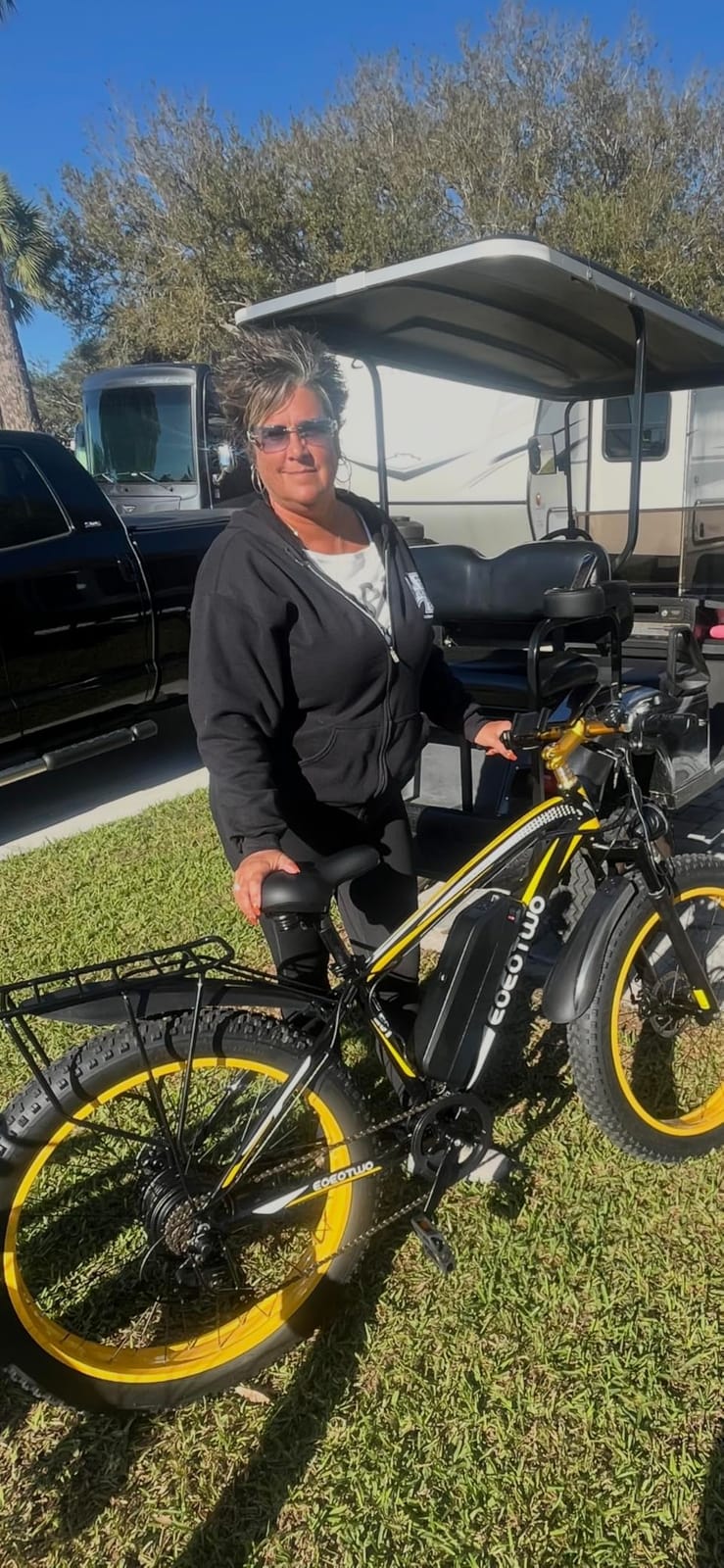
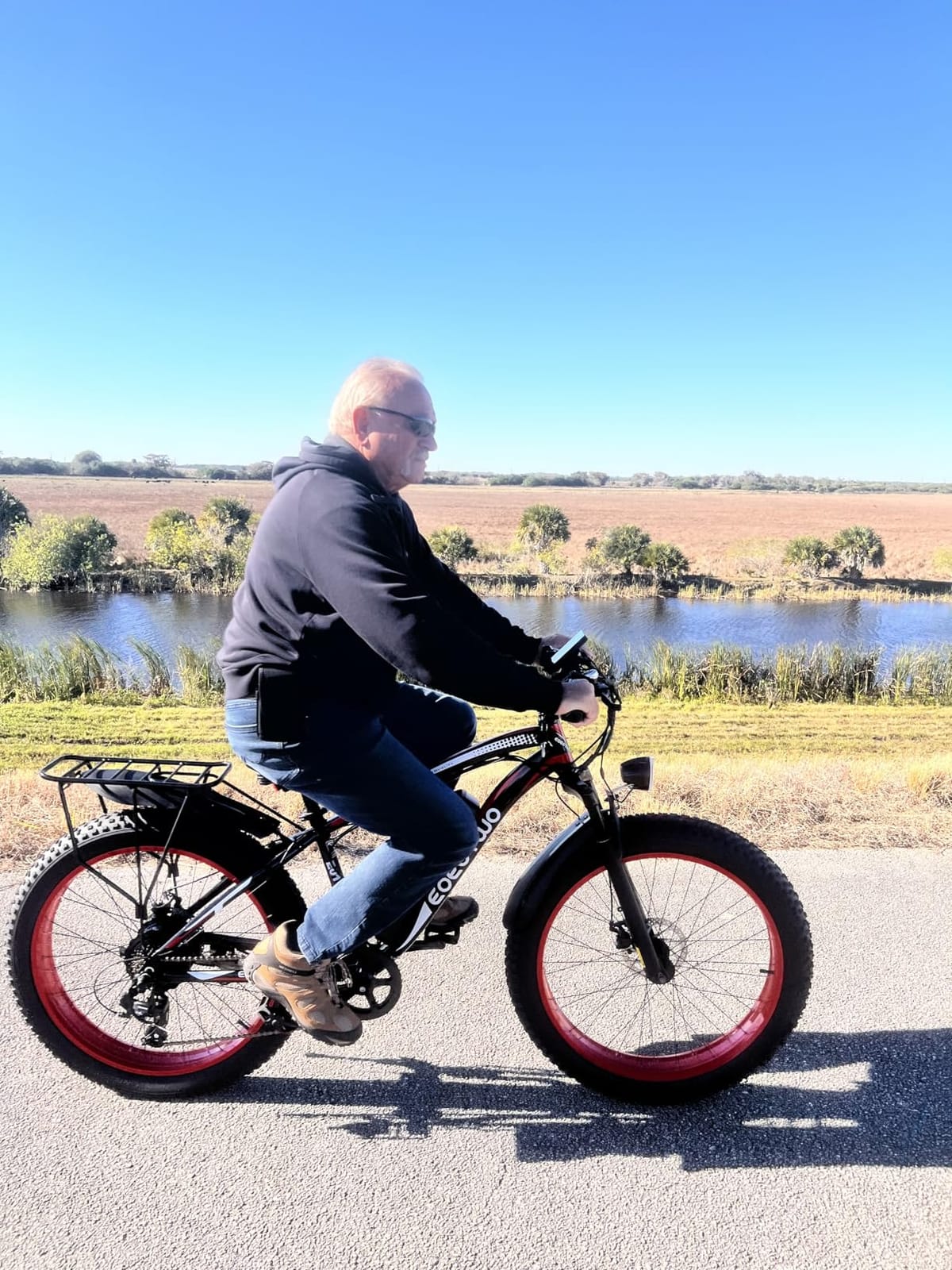
The E01 is the value speed pick of this roundup. Owners report 32 to 36 mph in full electric mode on flat ground, which puts it in the fastest group alongside the two Jasion machines. The motor is rated at 1500W peak, and the 48V 15Ah battery is removable and lockable, with a 20Ah version available if you want more range.
It is also the most complete bike for errands. The aluminum alloy frame arrives with a heavy-duty rear rack, front and rear fenders, an LED headlight, and an LCD display, plus five riding modes covering throttle, five levels of pedal assist, walk assist, cruise control, and plain bicycle. That walk-assist mode at low speed matters in a way that sounds trivial until you have carried a loaded bike down a set of stairs.
What the Speed Figure Means for You
A bike that runs past 28 mph with assist is off-road only under US rules, and the same holds for any bike marketed as street legal above 20 mph. That is a hard filter, not a technicality, and it applies to this bike, the RetroVolt Pro, and the Thunder. If your riding is entirely on private land, the E01’s motor is a genuine advantage on loose ground.
The 26 x 4.0 tires handle soft sand well and shift smoothly under pedaling, both of which owners praise. The stated 330 lb load capacity and a 5.52 ft minimum rider height are worth noting for fit.
The Complaints Worth Heeding
Three recur. The bike has front suspension only, and owners wish the newer models added a rear shock. The included rubber tires are described as cheap-feeling and an obvious upgrade, which is common in this category. And there are at least a few reports of battery and charger failures alongside frustration resolving the return, so we would test the pack early and keep the paperwork.
On the other hand, the electrical system is UL 2849 certified and SGS tested, and the 1-year warranty covers motor, battery, controller, and charger. It arrives 90 percent assembled with tools included.
Who This Bike Is For
Choose the E01 for private-land riding where speed matters, for a rider who wants fenders and a rack from the box, and for anyone under roughly 250 lb who does not need rear suspension. Look elsewhere if you plan to ride on public roads or value long-term service over outright performance.
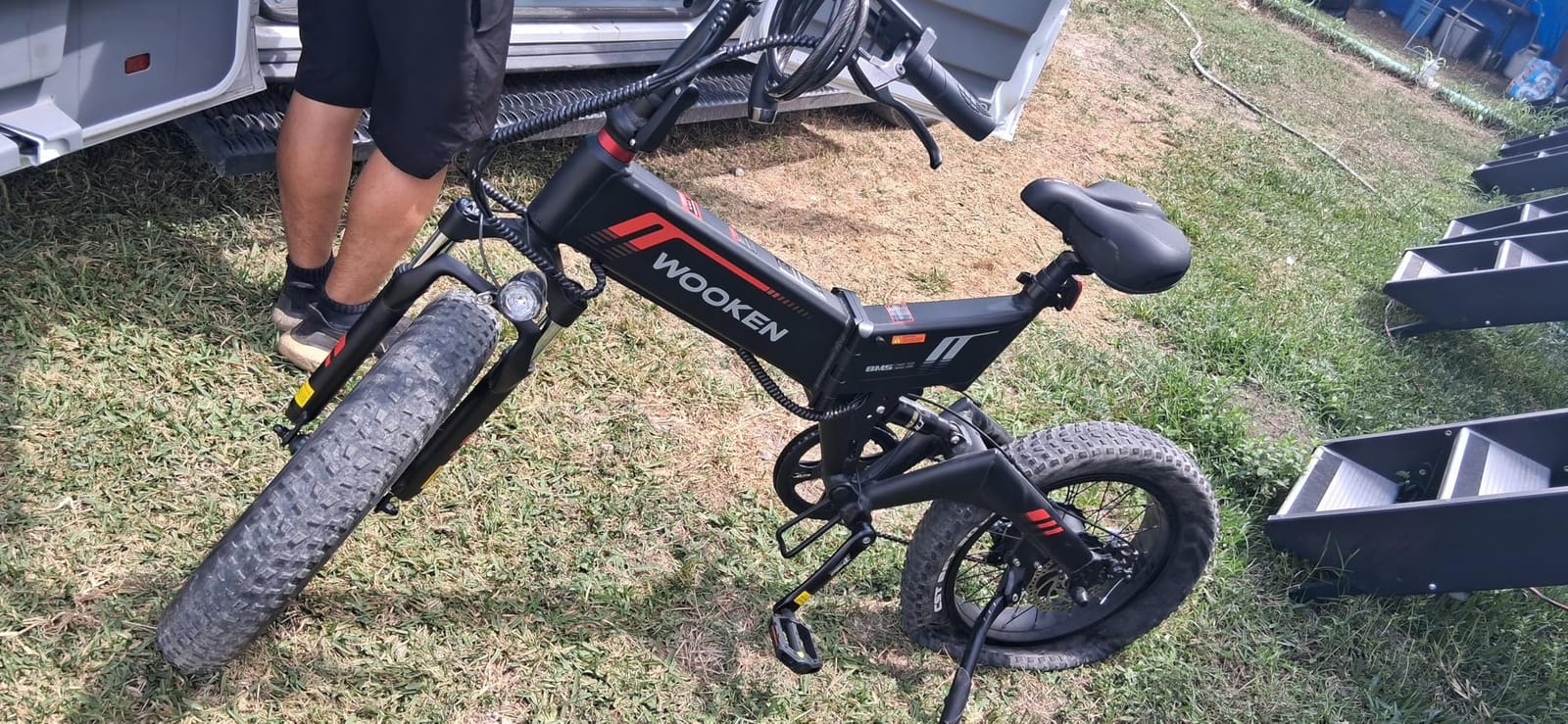
9. Wooken 20×4.0 Folding – Fat Tires in a Closet-Sized Package
Wooken Electric Bike, 20”X4.0 Fat Tire Electric Bike for Adults
20x4.0 tires
500W motor, 750W peak
48V 480Wh IPX5
19.8 mph in mode 3
Folding aluminum frame
Pros
- Folds down for apartment or RV storage
- Removable IPX5 battery charges off the bike
- Four riding modes including a walk booster
- Anti-skid 4.0 inch tires for snow and sand
Cons
- Tied lowest average rating in the group at 4.1
- 500W motor caps speed near 20 mph
- Rear shock is a seatpost-style unit
The Wooken is the folding entry point in this roundup, and the folding frame is the reason to consider it at all. A 20 x 4.0 fat tire bike that fits in a closet or the back of a hatchback solves a problem no full-size fat tire bike solves, which is why folding fat tire models keep appearing despite the added weight of the hinge points.
It is an aluminum frame with a 500W motor rated to a 750W peak and a top speed around 19.8 mph in mode 3. The 48V 480Wh removable battery is IPX5 waterproof, and the claimed range is 25 to 30 miles on pure electric or 50 to 60 on pedal assist. Four modes cover electric, assist, conventional pedaling, and a 3.73 mph booster for walking the bike.
What a 500W Motor Means in Practice
For short trips, errands, and riding a few miles to the beach, a 500W motor is adequate. For long climbs with a heavier rider or a loaded rack, it is the limiting factor, and it is why this bike shares the lowest average rating in the group at 4.1, alongside the URLIFE folder. Owners like the foldability, the grip, and the value; the feedback on power and build quality is mixed.
The suspension is a dual shock absorber setup with a lockable adjustable front fork. Note that the rear unit is a seatpost-style shock rather than a frame-mounted one, which is lighter and cheaper but gives less travel. Dual disc brakes and 20 x 4.0 anti-skid tires round out the package, and the bike suits riders from about 63 inches up.
Pick the Wooken if storage is your binding constraint and your riding is local. It suits riders near 5 feet 3 inches who find a 26-inch frame too tall, and anyone moving between an apartment, an office, and a vehicle. Pass if you plan long climbs, if you are a heavier rider, or if you need speed above 20 mph.
10. URLIFE T5 – Folding Full Suspension With Turn Signals
URLIFE Folding Electric Bike for Adults, 1500W Peak Motor Ebike, 60-80 Miles, 20”x4” Fat Tires with Quad-Link Full Suspension, 7-Speed & LED Display, UL 2849 Certified
20x4 tires
1500W peak, 80Nm
48V 13Ah
60-80 mile claim
Folding full suspension
Pros
- Folding frame that keeps full suspension and fat tires
- Turn signals and integrated lights are rare at this price
- Oversized 400 x 190 mm rear rack
- Quad-link rear suspension design
Cons
- Rating distribution is the most polarized in the group
- High carbon steel frame is heavier than aluminum
- Folder joints feel less planted on rough trails
- No published total load rating
The T5 answers a specific question: can you have a folding frame and still keep fat tires and full suspension. The quad-link rear suspension design on this folder is unusual, and combined with 20 x 4 inch puncture-resistant tires and a 1500W peak motor producing 80 Nm, it is a genuinely capable package for the footprint.
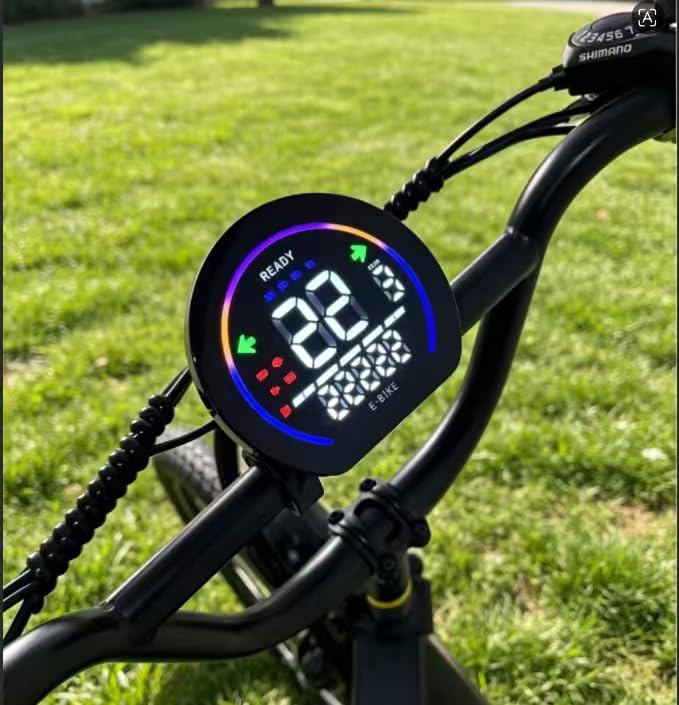
The 48V 13Ah removable battery carries a claimed 60 to 80 miles, the motor is rated for 30 degree slopes, and the LED display shows speed, battery level, and mileage. Integrated front and rear lights with turn signals on both sides are a rarity at this level, as is the oversized rear rack at 400 x 190 mm for errands and cargo. The bike is UL 2849 certified with a 1-year warranty.
Where the Folder Compromise Shows
Every folding bike trades something for the hinge. On the T5 it is weight and planted feel. The high carbon steel frame is heavier than the aluminum alternatives in this roundup, and owners report that the folding joints feel less settled on rough trails. The rating distribution is the most polarized of any bike here, with 11 percent three-star and 8 percent one-star reviews, which usually means some riders love it and others find the folded package disappointing.
What is genuinely well executed is the electrical package: lights and turn signals are wired in rather than bolted on, the display is legible, and the battery is removable so you are not carrying a full pack upstairs.
Who This Bike Is For
Choose the T5 if you need fat tires and full suspension in a package that folds, and if errand capacity matters. It is a good fit for short-to-medium commutes on gravel or packed paths. Skip it if you ride technical singletrack, if weight is your primary concern, or if you need a total load rating near 330 lb — the maker does not state one for this listing, and an unstated payload is a reason to move on.
Fat Tire Width: 20×4.0 vs 26×4.0 and Who Each One Fits
Five of the bikes here run 20 x 4.0 tires and five run 26 x 4.0, and that split is the first real decision. The 26-inch wheel rolls over obstacles more easily, holds a line better on loose ground, and spreads load across a larger contact patch, which is why every heavy-rated bike in this roundup except the TST R004 uses it. The 20-inch wheel is more compact, folds, and fits shorter riders, at the cost of more chop and less stability under load.
If you are under about 5 feet 3 inches, the 20-inch bikes in this list are built for you. The Vivi ACE01 publishes a 5 feet 3 inches to 6 feet 5 inches fit range and the Wooken fits riders from 63 inches. If you are taller and want stability at speed or on sand, 26 inches is the better answer. Width itself does not change much between the two groups; almost everything here runs 4.0 inch casings.
Standover height is the practical check. Sit on the bike and confirm you can put both feet flat with clearance, and that the frame does not interfere with your knees at the top of the stroke. On a step-through frame like the Aipas, this is rarely a problem, which is a large part of why that bike gets recommended to larger riders.
Real-World Range vs Brochure Range on Fat Tires
Every range number in a fat tire listing is measured under conditions almost no buyer will replicate. A light rider, flat pavement, low assist level, and hard-inflated tires. The same bike with a 4.0 inch casing at low pressure, a 250 lb rider, and mixed terrain delivers considerably less.
The reason is rolling resistance. A wide casing at low pressure deforms more with every rotation, and the energy lost to that deformation is charged to the battery. On a category-leading analysis of fat tire energy use, a 4-inch casing at a 300 lb load was measured costing roughly 69 percent more watt-hours per mile than a street tire. That is the single most useful number in this article for anyone comparing range claims across bike types.
What you can control: use pedal assist rather than throttle for distance, keep tires inflated to the upper end of the range in the pressure section below, and buy the largest pack your budget allows. On the 1040 Wh Thunder, that difference matters more than on a 480 Wh pack, because the bigger pack has more energy to give back. Treat every claim in this roundup as a ceiling and the throttle number as the floor.
How to Choose a Fat Tire E-Bike: 7 Things That Matter
1. Total payload, not rider weight. Every published rating includes the rider plus cargo. Subtract 30 to 50 lb before comparing to your body weight. If a maker does not publish a number at all, treat that as a warning, not a pass.
2. Brakes, and what kind. Above roughly 280 lb of total load, hydraulic discs are not a luxury. Two bikes in this roundup run dual hydraulics on a full-size frame, and both are the ones rated 400 lb and above. Below that weight, mechanical discs work if you accept more lever pressure and less modulation on wet descents.
3. Torque over watts. Headline wattage is a peak number measured under ideal conditions. Torque in Nm is what moves a loaded bike up a grade at walking pace. The useful range for this category is 65 Nm upward, and the best bikes here run 80 to 120 Nm.
4. Frame material and suspension. Aluminum frames weigh less and resist corrosion. Steel frames are cheaper and absorb impacts better. On suspension, a lockable front fork is essential if you ride mixed pavement, and rear suspension is worth the weight for anyone above 250 lb or riding rough ground daily. Our torque-tested picks for hills go deeper on grade performance.
5. Battery in watt-hours. Volts times amp-hours is the number that predicts range. A 48V 20Ah pack is 960 Wh; a 48V 13Ah pack is 624 Wh. That is the difference between the RetroVolt Pro and the Funhang, and it is the comparison listings rarely make. Prefer removable so you can charge indoors.
6. Certification. UL 2849 covers the whole electrical system and UL 2271 covers the cells. Four bikes here carry one or both, tested by SGS or TUV. If a listing says nothing, ask before you buy.
7. Warranty length and parts. The range here runs from 180 days to a full year, and the difference matters on a 15Ah pack. Named drivetrain components are serviceable; anonymous hub motors are not. Check that the seller handles warranty claims in your country.
Tire Pressure for Snow, Sand and Mud Without Pinching Flats
Fat tires run low for a reason, but the pressure that works in sand will pinch a sidewall in snow. Use these as starting points and adjust by rider weight, then check for cuts on the sidewalls after every ride.
Deep sand: 6 to 10 psi, or the lowest pressure before you feel the rim strike. Lower pressure widens the contact patch and stops the front wheel from digging in.
Snow and packed ice: 12 to 18 psi. The surface is firm enough to hold the tire up, and going lower risks a pinch flat, which is the single most repeated owner complaint in this category.
Mud and wet trail: 14 to 20 psi, since mud offers more resistance than dry sand and the risk of a cut outweighs the extra float.
Gravel and hardpack trail: 20 to 25 psi. This is the range most manufacturers print, and it is the right default for mixed riding.
Pavement: 25 to 30 psi, or whatever the sidewall maximum allows. Firm tires roll better, extend range, and give more predictable handling, and locking the fork on a suspension bike helps at the same time. A pump rated for low pressure with a gauge is the one accessory worth owning, alongside a plug kit, because low pressure plus a sharp edge is a puncture.
Street-Legal vs Off-Road-Only Fat Tire E-Bikes
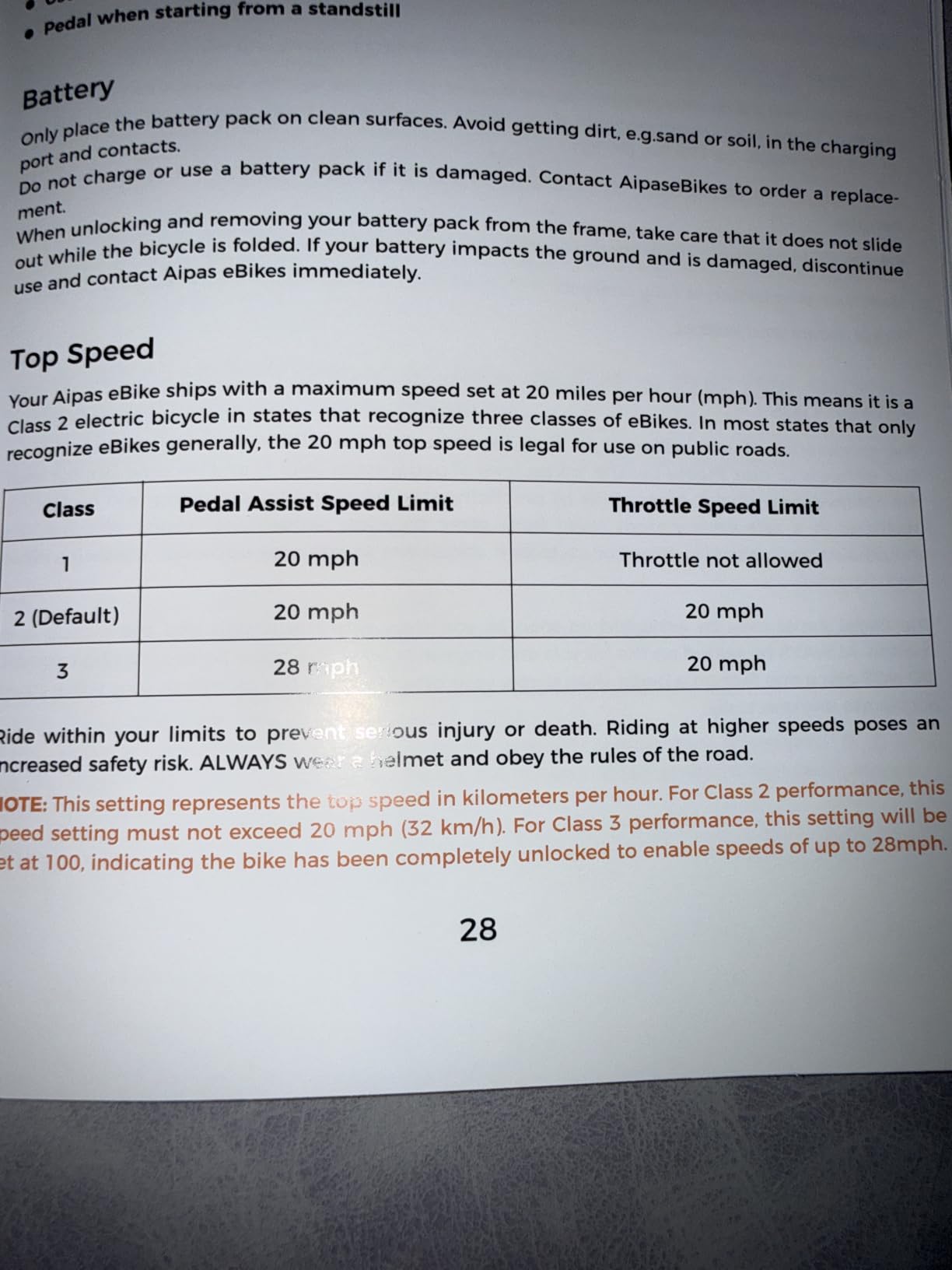
The federal definition in the US treats a bike as a pedal-assist bicycle if it has pedals, a motor rated under 750W, and assistance that cuts off at 20 mph. Class 1 assists to 20 mph. Class 2 adds a throttle to 20 mph. Class 3 assists to 28 mph and is restricted on some paths. State and city rules add their own limits, so check locally.
Three bikes here are off-road only on their numbers alone. The Jasion RetroVolt Pro is quoted up to 38 mph, the Jasion Thunder runs over 30 mph, and the EOEOTWO E01’s owners report 32 to 36 mph on flat ground. All three exceed 20 mph with assist, and the RetroVolt and E01 have no published 20 mph cap. A bike sold as street legal while assisting above 20 mph is a warning sign, not a feature.
For most buyers this is not a problem, because the reason people want fat tires is snow, sand, and private land. But if your commute is on public roads, a 20 mph cap is a hard requirement, and the Funhang, TST, and Vivi bikes are the ones that state one clearly.
What to Avoid When Buying a Fat Tire E-Bike
We named failure modes rather than brands, because anyone can publish a spec sheet and only a few publish consistently.
Unstated payload. If a listing does not give a number, skip it. The URLIFE T5 is the clearest example in this roundup: a capable folding bike that we still qualified because no total load rating is published for it.
Mechanical disc brakes on a heavy bike. Above roughly 280 lb of total load, cable-actuated rotors ask too much of your hands on a descent. Spend on hydraulics and save on accessories.
No battery certification. A pack with no UL 2271 or UL 2849 testing is a fire risk you carry into your house, and it is increasingly the first question riders ask. Three bikes in this roundup publish no certification at all.
Unbranded components with no torque figure. Peak watts without a published torque number tells you nothing about hill ability. Ask for Nm.
Coil suspension on trail work. A coil fork bobs under load instead of damping it, which is unpleasant on exactly the rough ground that made you want fat tires.
A warranty of six months or less. The TST R004 is 180 days. On a large battery pack, a failure just after that window is expensive, and the shorter warranty is usually a sign the maker expects component problems.
Frequently Asked Questions
What is the best electric bike with fat tires?
The best electric bike with fat tires for most riders is the Aipas M1 Pro, a full-suspension 26-inch machine rated to 500 lb total load with 110 Nm of torque and a removable 48V 17.5Ah battery. For a smaller-frame UL 2849 certified commuter with a rear rack, the Funhang EB-S1 is the runner-up.
How much weight can a fat tire bike handle?
The bikes in this roundup carry stated maximum loads from 330 lb to 500 lb total. The critical detail is that the number includes the rider plus all cargo, so subtract 30 to 50 lb before comparing it to your own body weight. A bike rated 400 lb means roughly 350 to 370 lb of usable rider weight.
Which electric bike is best for heavy weight riders?
For riders near 300 lb, the Jasion Thunder pairs a 400 lb load rating with dual hydraulic brakes and a 1040 Wh battery, and the Aipas M1 Pro goes further with a 500 lb rating. Both use 26-inch fat tires, which spread load better than 20-inch wheels. Avoid mechanical disc brakes at these weights.
What brand is the best for fat tire ebikes?
Rather than crown one winner, look at published standards. Brands that state a total payload, publish torque in Nm, and certify batteries to UL 2849 or UL 2271 give you verifiable data. In this roundup the Aipas, Vivi, INVANTI, and Funhang bikes meet all three tests. The TST R004 publishes a 450 lb rating but ships a 180-day warranty.
What are the disadvantages of fat tire e-bikes?
Weight runs 66 to 88 lb for the bikes here, which is often a two-person lift. Wide low-pressure casings cost roughly 69 percent more energy per mile than street tires, so real range falls short of brochure claims. Flats are common at low pressure. They also deflect rather than follow ruts on pavement and are slower to accelerate than narrow-tire bikes.
Are fat tire ebikes street legal?
In the US, a bike is a pedal-assist bicycle if it has pedals, a motor rated under 750W, and assist that stops at 20 mph. Class 2 adds a throttle to 20 mph, and Class 3 assists to 28 mph. Anything assisting above 20 mph is generally not street legal, which rules out the three fastest bikes in this roundup.
What e-bikes to stay away from?
Look for failure patterns rather than brands: unstated payload, mechanical disc brakes on a bike meant to carry more than 280 lb, batteries with no UL 2271 or UL 2849 certification, unbranded motors with no published torque figure, coil forks on trail bikes, and warranties of six months or less. Each of these is a documented cost later.
Which Fat Tire E-Bike Should You Buy?
Match the bike to your total load, not to your body weight alone, and match your terrain to the wheel size. If you are a heavier rider or carry a lot, start with the Aipas M1 Pro for its 500 lb rating and full suspension, or the Jasion Thunder if hydraulic brakes and battery capacity matter more than rear suspension. If storage is the constraint, the URLIFE T5 and Wooken are the two folders, and the Wooken only if your trips are short.
If you ride year-round on roads and paths rather than trails, the Funhang EB-S1 is the one I would buy: UL 2849 and UL 2271 certified, a 60 lb rack, working turn signals, and a clear 20 mph figure. For anyone under 250 lb who wants smoother assist and an aluminum frame with hydraulics, the Vivi ACE01 is the more refined package. Read the pressure section, check your tires before the first ride, and skip any bike that will not tell you its payload.