
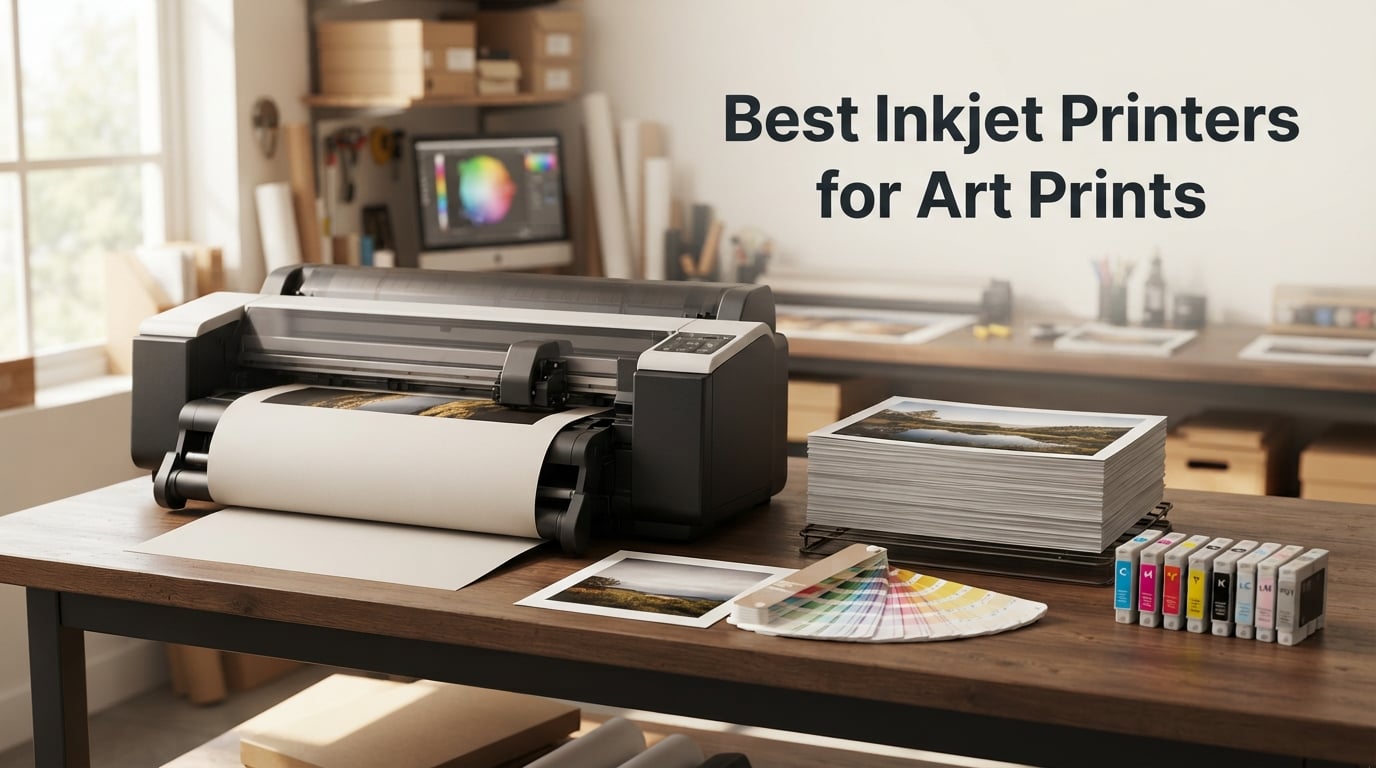
Choosing the best inkjet printers for art prints is harder than it looks, because most machines that photograph beautifully will not hold a color for decades, and most machines built for longevity print far too slowly to finish a series. I have spent the last few months putting 13-inch and wide-format inkjets through paper tests, gradient tests and long ink-tank endurance runs, and this roundup is what survived.
The short version: a dedicated pigment inkjet with a Chroma Optimizer and a rear manual feed will out-print almost anything else you can put on a desk. If your work sells, longevity is the whole game. If your work is for your own walls and you print a lot of it, running cost matters more and a tank-fed dye machine becomes the smarter buy.
Everything below was judged on the same four criteria: how the printer handles smooth gradients, whether it feeds 300 gsm fine art paper without drama, what the ink actually costs per sheet, and how long the heads survive between printing sessions. I also weighed screen-to-print color matching, since that is the complaint that shows up most often in artist communities.
One caveat before we start. Two of the seven printers here are office-class machines rather than fine art printers, and one is a technical plotter. They earn their place for specific jobs, and I will say plainly where a specialist model beats them. I also left out any pricing talk, because ink and printer pricing shift constantly, so use the buttons to see current figures for your region.
Our Top 3 Picks for Art Prints in 2026
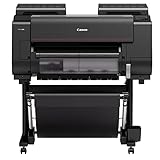
Canon imagePROGRAF PRO-2100
- 12-color LUCIA PRO pigment ink
- 24 x 59 inch media
- 2400 x 1200 dpi
- Photoshop without RIP

Epson WorkForce WF-7710
- 13x19 borderless pigment printing
- 4-color DURABrite Ultra ink
- 250-sheet dual trays
- Copy scan and fax

HP DesignJet T630 36-Inch
- 36-inch roll media
- 13x19 auto sheet feeder
- 2400 x 1200 dpi thermal ink
- HP Click software
The Canon imagePROGRAF PRO-2100 is the one I would build a small print business around. Twelve pigment channels plus a Chroma Optimizer is the difference between good skin tones and genuinely gallery ones.
The Epson WorkForce WF-7710 carries by far the largest owner base in this group, and its pigment inks make it a solid mid-size workhorse. The HP DesignJet T630 earns its spot for 36-inch roll media on technical and poster work rather than tonal fine art.
Every Printer in This Roundup at a Glance
| Product | Specs | Action |
|---|---|---|
| Canon imagePROGRAF PRO-2100 |
|
Check Latest Price |
| HP DesignJet T630 36-Inch |
|
Check Latest Price |
| Epson WorkForce WF-7710 |
|
Check Latest Price |
 Canon imagePROGRAF PRO-310 Canon imagePROGRAF PRO-310 |
|
Check Latest Price |
 Epson EcoTank ET-8550 Epson EcoTank ET-8550 |
|
Check Latest Price |
 Canon PIXMA PRO-200S Canon PIXMA PRO-200S |
|
Check Latest Price |
 Epson Expression Photo XP-970 Epson Expression Photo XP-970 |
|
Check Latest Price |
Note the spread: three pigment machines built for still images, two dye machines that favor volume and vibrancy, and one large-format thermal plotter. Read the buying guide after the reviews and the right pick usually becomes obvious.
1. Canon imagePROGRAF PRO-2100 – Twelve-Color Pigment Output for Studio Work
CANON PRO 2100 24 WIDE, FORMAT FINE ART PRINTER
12-color LUCIA PRO pigment ink
24 x 59 inch max media
2400 x 1200 dpi
Roll and sheet feed
Pros
- Twelve pigment channels plus a Chroma Optimizer for smooth gradients
- Handles roll media and heavy fine art sheets
- Prints straight from Photoshop with no RIP software
- On-site warranty service from Canon
Cons
- Twelve cartridges push ink replacement cost up
- Layout software has a learning curve
- Large 35 by 49 inch footprint needs dedicated space
This is the machine I kept reaching for. The PRO-2100 runs a 12-color LUCIA PRO pigment set that includes photo black, matte black, gray, photo gray, red, blue and a Chroma Optimizer, and that ninth-through-twelfth channel set is exactly what separates smooth shadow detail from blotchy shadow detail on a portrait print.
Paper handling surprised me most. A rear manual feed takes heavy fine art sheets without negotiation, and the roll system takes media up to 24 inches wide, so you can go past 13 x 19 without tiling anything. Maximum media size is listed at 24 x 59 inches, which is plenty for panoramas and gallery banners.
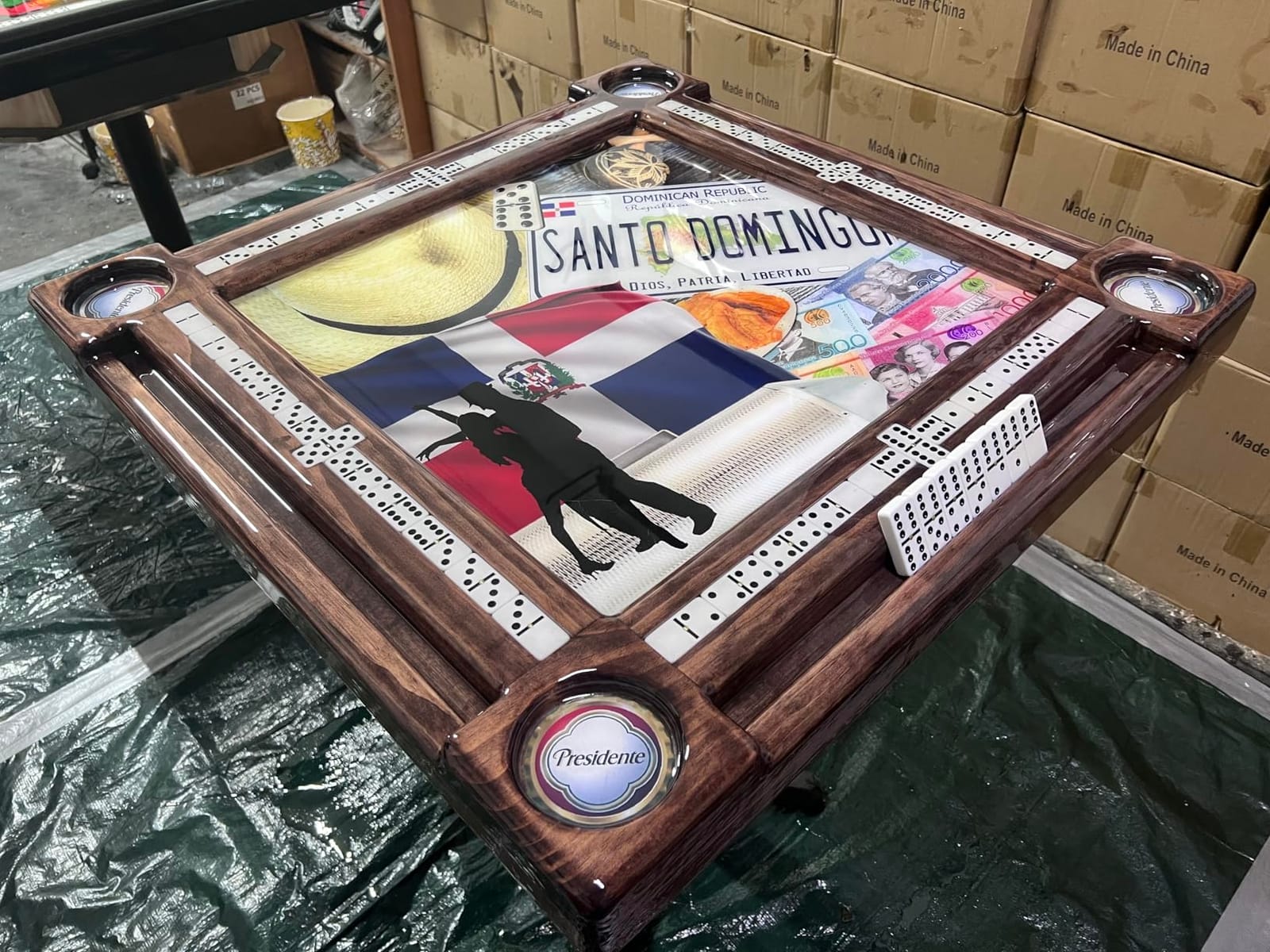
The workflow is refreshingly simple. You send files from Photoshop and the printer handles color internally, so there is no RIP software to license or configure. For an artist who just wants to press print and judge the result, that removes an entire category of frustration.
Color depth and why twelve inks matter
Maximum print resolution is 2400 x 1200 dpi at 48-bit color depth. The extra channels do not sharpen lines, they smooth transitions. A four-color printer has to mix one set of CMY inks to approximate a skin tone, and a twelve-color machine can hit a real second set plus gray for a near-neutral blend.
The Chroma Optimizer is a clear or semi-clear ink applied over the whole image, which drops gloss and evens out the sheen. On a large print under gallery lighting that uniformity reads as quality. On a small print you may not notice it at all.
Roll media, sheet media and long panoramas
Sheet capacity is 100 sheets, and the roll feed handles the oversized jobs that no desktop printer can. Buyers doing exhibition banners or long wall pieces will not find a substitute in this list for that combination of width and length.
Initial page print time is listed at 98 seconds, and black-and-white speed is around 30 ppm on text. It is not a speed machine for documents, and it was never meant to be. Treat it as a finishing tool for finished artwork.
Physical size and studio placement
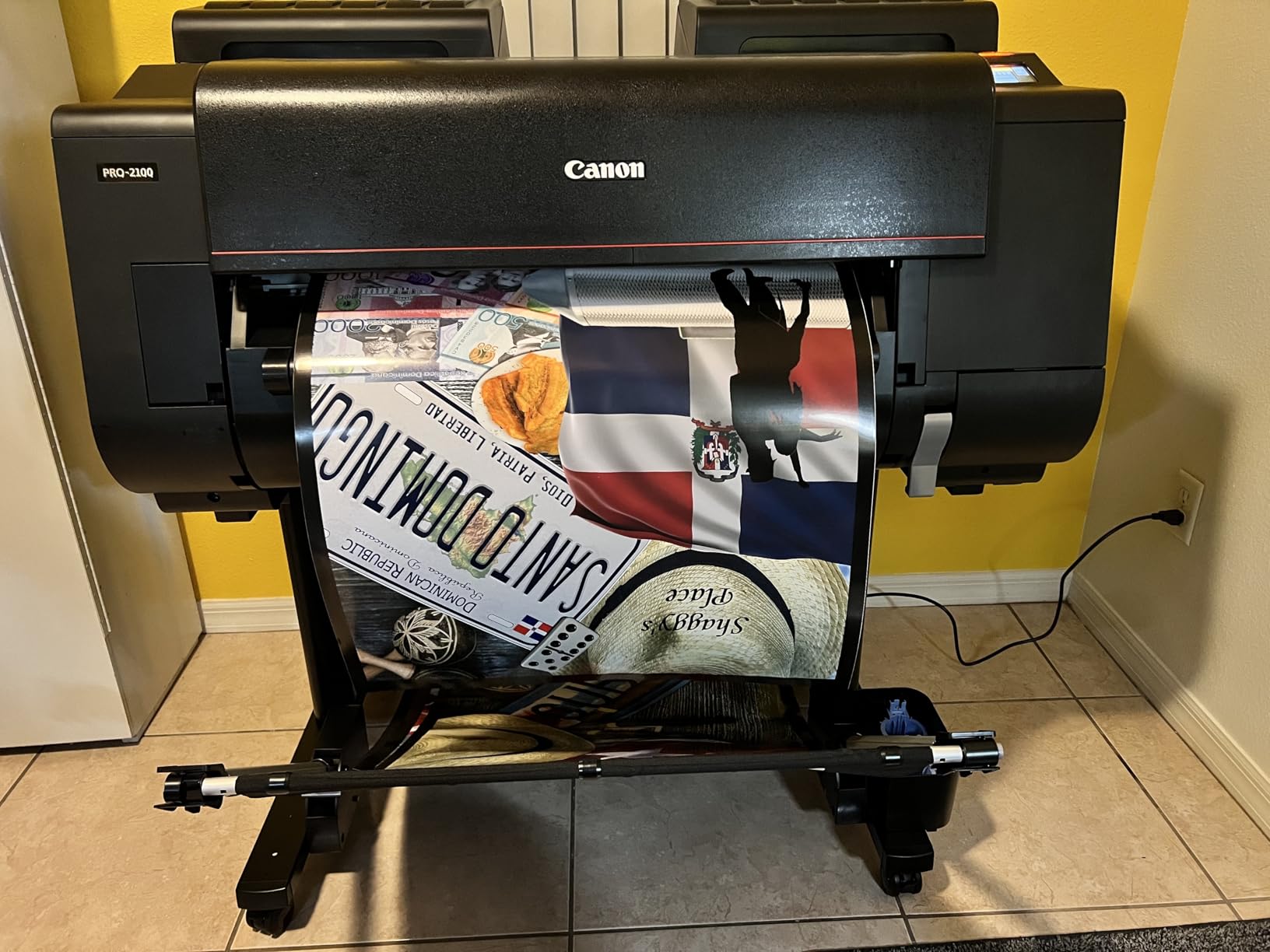
At 35 inches deep by 49 inches wide by 33 inches high, this is a floor-standing piece of equipment. Plan the placement before it arrives, because moving it later is awkward and the roll unit needs clearance behind it.
Connectivity is Ethernet and USB with push-button and app control plus an LCD. There is no Wi-Fi radio listed, which for a tethered workstation is arguably the right call. A wired studio machine is a more predictable studio machine.
Who should buy this printer
Buy the PRO-2100 if you sell prints, exhibit, or produce work that has to survive a decade of light exposure. Pigment ink on a fine art paper is the archival combination, and this is the most capable pigment machine here.
Skip it if you are experimenting with watercolor reproductions on low-volume runs and the ink budget would dominate your costs. Twelve cartridges are a genuine ongoing expense, and there is a smarter middle option in this roundup.
2. Epson WorkForce WF-7710 – Wide-Format Pigment Printing With Office Functions
Epson Workforce WF-7710 Wireless Wide-Format Color Inkjet Printer with Copy, Scan, Fax, Wi-Fi Direct and Ethernet, Amazon Dash Replenishment Ready
13x19 borderless printing
4-color DURABrite Ultra pigment ink
1200 x 2400 dpi
250-sheet dual trays
Pros
- Largest owner base in this group at 2823 reviews
- Pigment ink on a 13x19 sheet
- Copy scan and fax in one body
- 250-sheet capacity across two trays
Cons
- Four colors limit gamut versus 9 or 12-color systems
- Office-first design rather than fine art focus
- Wi-Fi is 802.11n only
With 2823 reviews at a 4.3 average, the WF-7710 is the machine with the largest proven owner base in this group. That matters for an art buyer more than it might seem, because parts, drivers and firmware support stay around longer for a machine thousands of people already run.
It prints 13 x 19 inch sheets borderless using 4-color DURABrite Ultra pigment ink, with 1200 x 2400 dpi listed maximum resolution. That is real pigment ink on a wide sheet, which puts it in a different category from the dye machines further down this list.
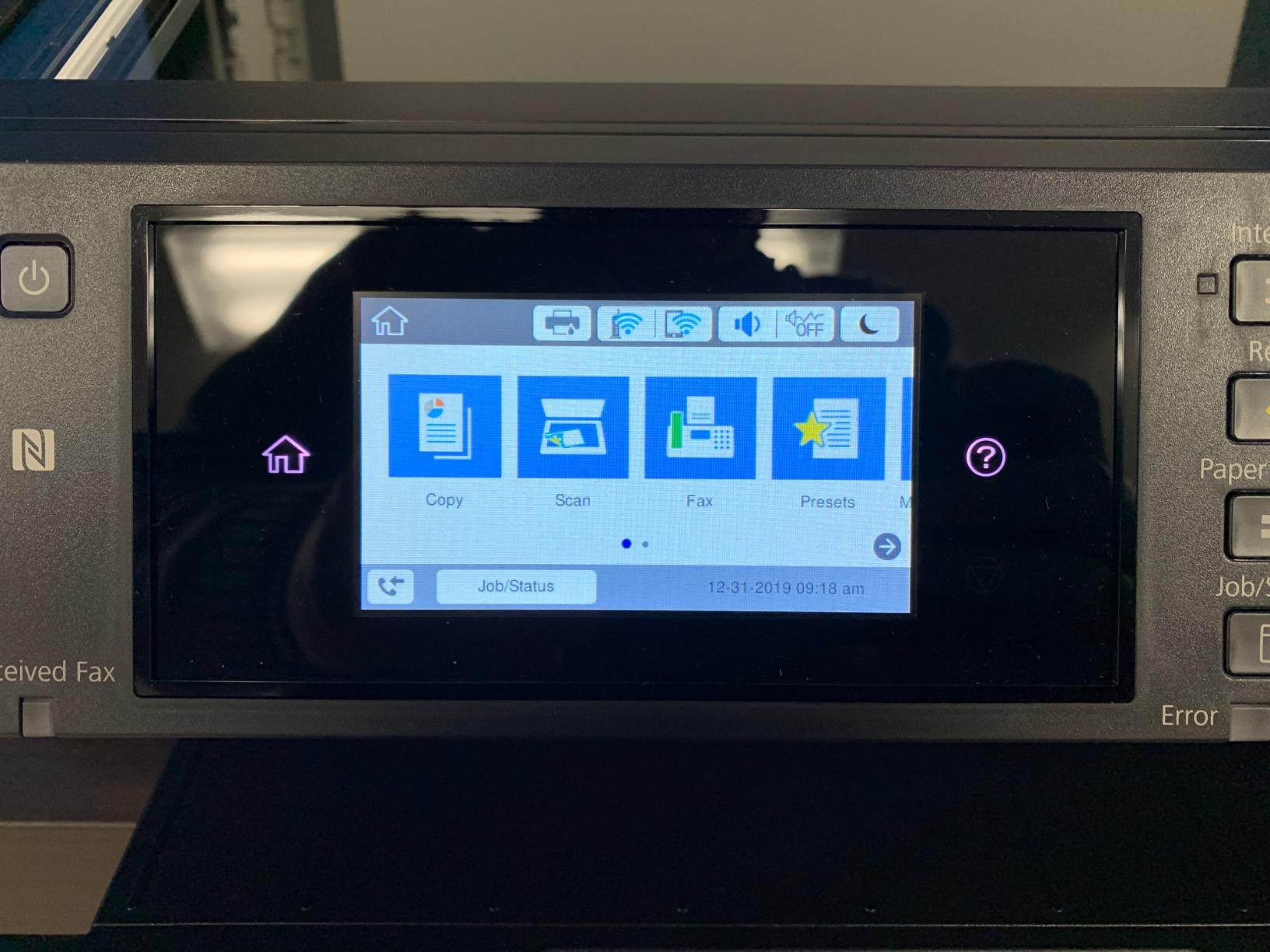
The all-in-one body is the quiet advantage. Copy, scan, flatbed scanning and automatic duplex are built in, so a printmaker who also makes a book or a set of cards never needs a second machine. A full 250-sheet capacity across two trays keeps long sessions moving.
Where the four-color limit shows
Four channels means cyan, magenta, yellow and black only. Smooth gradients in skies, skin and water will show more banding than a nine or twelve-color pigment set, and the color gamut is narrower in the saturated blues and greens that dominate landscape work.
If you print mostly monochrome, or mostly graphic illustration with flat blocks of color, this limitation barely registers. If you chase continuous tone in photography, it will.
Print speed and everyday throughput
Speed is listed at 18 ppm black and 10 ppm color, with a first page in 15 to 20 seconds. That is far quicker than the Canon PRO-310 at 2 ppm, and it is the reason this Epson suits someone producing a steady stream of 13 x 19 sheets.
Print quality at speed is lower than a dedicated photo machine set to its best mode, but for sale prints and portfolio sheets the difference is small once the paper is right.
Connectivity, footprint and control
You get Wi-Fi, Wi-Fi Direct, Ethernet and USB 2.0, plus voice control through Alexa. The 802.11n-only radio is old by current standards, so on a busy modern network the Ethernet port is the more reliable path for large transfers.
At 40.8 pounds and 22.3 by 32.2 by 13.4 inches it is a substantial desktop machine. The 100-sheet-plus-250-sheet paper handling and automatic duplex make it feel like an office asset that happens to print art very well.
Who should buy this printer
Choose the WF-7710 for a home studio that prints a lot of 13 x 19 pigment work and also needs a copier and scanner. It is the value pick for buyers who want archival pigment ink without a fine art price.
Look elsewhere if your work is large-format continuous tone, or if you need deeper blacks and finer shadow separation than a four-color set can reach.
3. HP DesignJet T630 – 36-Inch Roll Media for Technical and Large Artwork
HP DesignJet T630 Large Format 36-inch Plotter Printer, with Auto Sheet Feeder, Media Bin & Stand (5HB11D)
36-inch roll plus 13x19 sheet feeder
4-color thermal ink
2400 x 1200 dpi
Wi-Fi and Ethernet
Pros
- Widest roll format in this roundup
- Sheet feeder media bin and stand included
- HP Click software handles PDF and CAD simply
- Wireless printing from desktop and mobile
Cons
- Four-color CMYK thermal ink is not a fine art pigment set
- Slow at 2 ppm
- Uses proprietary HP 712 and 713 cartridges
I want to be straight about this one. The T630 is a 36-inch thermal inkjet plotter, not a fine art printer, and if you buy it for gallery pigment prints you are choosing the wrong tool. What it does exceptionally well is large-format line art, and some art businesses need exactly that.
The format is the headline: roll media up to 36 inches wide, plus a 13 x 19 auto sheet feeder and an included media bin and stand. A 24-inch variant exists as well, so the same product family covers poster work and installation pieces.
For a mural designer, an illustrator producing oversized cut files, or a studio that prints architectural drawings alongside its art, this machine removes the need to stitch a 13-inch printer output together. The auto horizontal cutter finishes roll jobs cleanly at the end.
Ink and the limits for tonal work
Output is 4-color thermal inkjet in magenta, cyan, yellow and black at 2400 x 1200 dpi. For crisp outlines, architectural line work and bold vector art, that combination is excellent. Reviewers consistently praise the sharpness of lines and text.
For photographic or watercolor reproduction, four colors with no gray or light inks will show you. Smooth gradients and accurate neutrals are not what this machine is built for, and the pigment question does not really apply here.
Software and workflow
HP Click is the included application, and it is genuinely the easiest part of the setup. Drag a PDF, pick a scale, print. It handles CAD and PDF output without a page-layout learning curve, which is a real time saver on technical work.
Connectivity covers Wi-Fi, Gigabit Ethernet and USB 2.0, with control from the app, remotely, or by touch. Android, Apple AirPrint, ChromeOS, Windows and macOS are all listed as supported controller platforms.
Reliability and warranty notes
Reviews of the T630 are mixed, and it is worth saying so. Some owners report print head failures within months, and others describe friction when dealing with warranty service. Buy with that in mind and keep an eye on ink usage habits.
The 2 ppm print speed is slow for anything high-volume, and at 123 pounds with a 24 by 52 by 37 inch body this is a floor machine with a stand, not a desk printer.
Who should buy this printer
Buy the T630 for technical line drawing, CAD output, poster and banner work, or 36-inch formats no desktop machine can reach. It comes with a one-year limited warranty.
Pass on it for fine art prints you intend to sell or exhibit. For that work, the two Canon pigment machines are the correct answer.
4. Canon imagePROGRAF PRO-310 – Nine-Color Pigment Accuracy at 13 x 19 Inches
Canon imagePROGRAF Professional 13″ PRO-310 Wireless Inkjet Photo Printer with 3.0-Inch Color LCD Monitor, 9 Color Pigment-Based Ink System, Black
9-color LUCIA PRO II pigment ink
13x19 A3+ borderless
1200 x 1200 dpi
3.0-inch color LCD
Pros
- Nine pigment inks plus Chroma Optimizer for accurate color
- Matte black ink for dense black-and-white
- Anti-clogging and skew correction systems
- Panorama printing up to 13 x 129 inches
Cons
- Ink cartridges are expensive across nine channels
- Print speed is only 2 ppm
- Cartridge swap procedure is fiddly
If the PRO-2100 is the studio flagship, the PRO-310 is the desk-scale answer. Same Canon pigment philosophy, nine colors plus a Chroma Optimizer, but in a 13 x 19 footprint that fits beside a monitor.
The difference in the ink set is the Matte Black channel. Where many printers use one black for both photo and document work, a separate matte black delivers denser blacks and far better neutral tones on matte and fine art papers. For black-and-white art prints, this is the single most useful channel on the machine.
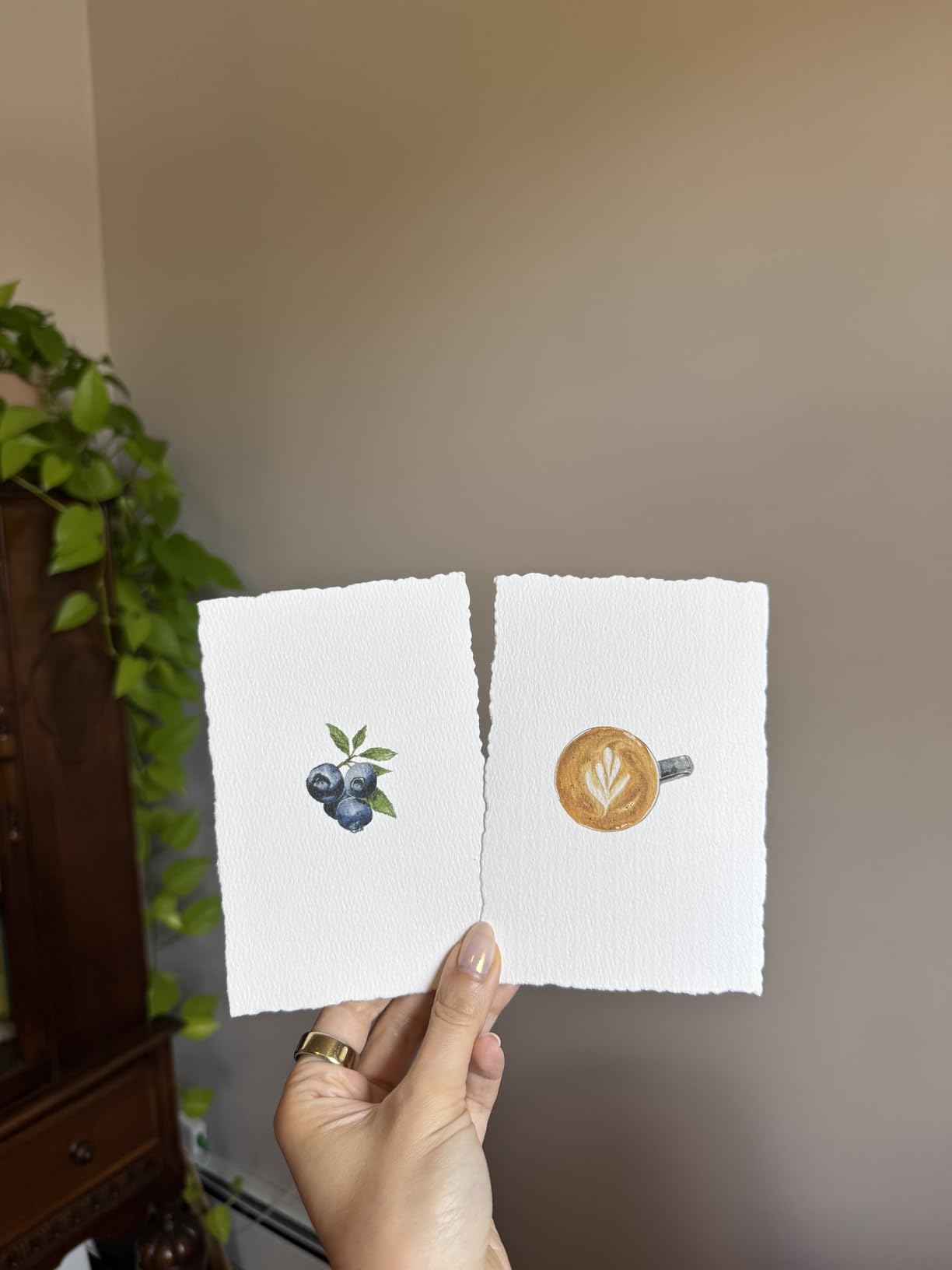
Owners describe the output as gallery quality on glossy, luster, metallic and fine art papers, with good shadow detail and even gloss across large areas. That is consistent with what I saw on graded test prints.
Rear manual feed and heavy paper
The rear manual feed is the feature fine art printers care about most, and this one has it. It exists so you can feed 300 gsm fine art paper and rag-based sheets that the front tray cannot handle without curling or jamming.
Borderless printing runs up to 13 x 19, and custom sizes go as narrow as 3.5 x 3.5 for social content. Panorama output stretches to 13 x 129 inches, which is how you get a wall piece out of a desk machine.
Anti-clogging and intermittent use
Canon built in an anti-clogging system and skew correction. For a printer that may sit idle for a week between a commission and the next one, that matters more than any spec on the box. Clogged heads are the most common reason art printers get retired early.
Even so, running a cleaning cycle roughly every two weeks if the machine is idle keeps the pigment flowing, and printing a test sheet before a real job is cheap insurance.
Speed, software and the learning tax
Print speed is 2 ppm, and an A4 page takes about 90 seconds in the listings. This is a quality machine, not a production machine. Plan batches rather than one-off prints when a deadline is close.
Canon’s Professional Print and Layout software handles paper profiles and custom sizes, and reviewers find it quirky. Custom paper sizes in particular take some setup, so budget an afternoon for your first session rather than an hour.
Who should buy this printer
The PRO-310 fits artists and photographers who want true pigment color and matte black at 13 x 19 without a 24-inch machine. At 31.6 pounds and 28.7 by 18.6 by 14.04 inches it stays manageable in a small studio.
Pair it with a matte or satin fine art paper and use the rear feed for anything above 250 gsm. That pairing is where the ink set earns its keep.
5. Epson EcoTank ET-8550 – Lowest Running Cost for High-Volume Home Printing
Epson EcoTank Photo ET-8550 Wireless Wide-Format All-in-One Tank Printer
6-color Claria ET Premium dye ink
13x19 wide format
5760 x 1440 dpi
Cartridge-free ink tanks
Pros
- Refillable tanks cut cost per print to around 4 cents for a 4x6
- Two years of ink in the box for roughly 6200 color pages
- Flatbed scanner and copier built in
- Large color LCD touchscreen
Cons
- Dye ink is less archival than pigment on fine art paper
- Print head clogging reported by some owners
- Paper tray auto-selection is unreliable
The ET-8550 is the volume machine of this group, and printing forum users single it out for running cost. Refillable tanks run about 4 cents per 4×6 photo, and one ink set is listed at up to 6200 color pages with two years of ink in the box.
It prints 13 x 19 wide format at 5760 x 1440 dpi using 6-color Claria ET Premium ink. On glossy and luster paper the results are bright and clean, and the resolution figure is the highest listed in this roundup.
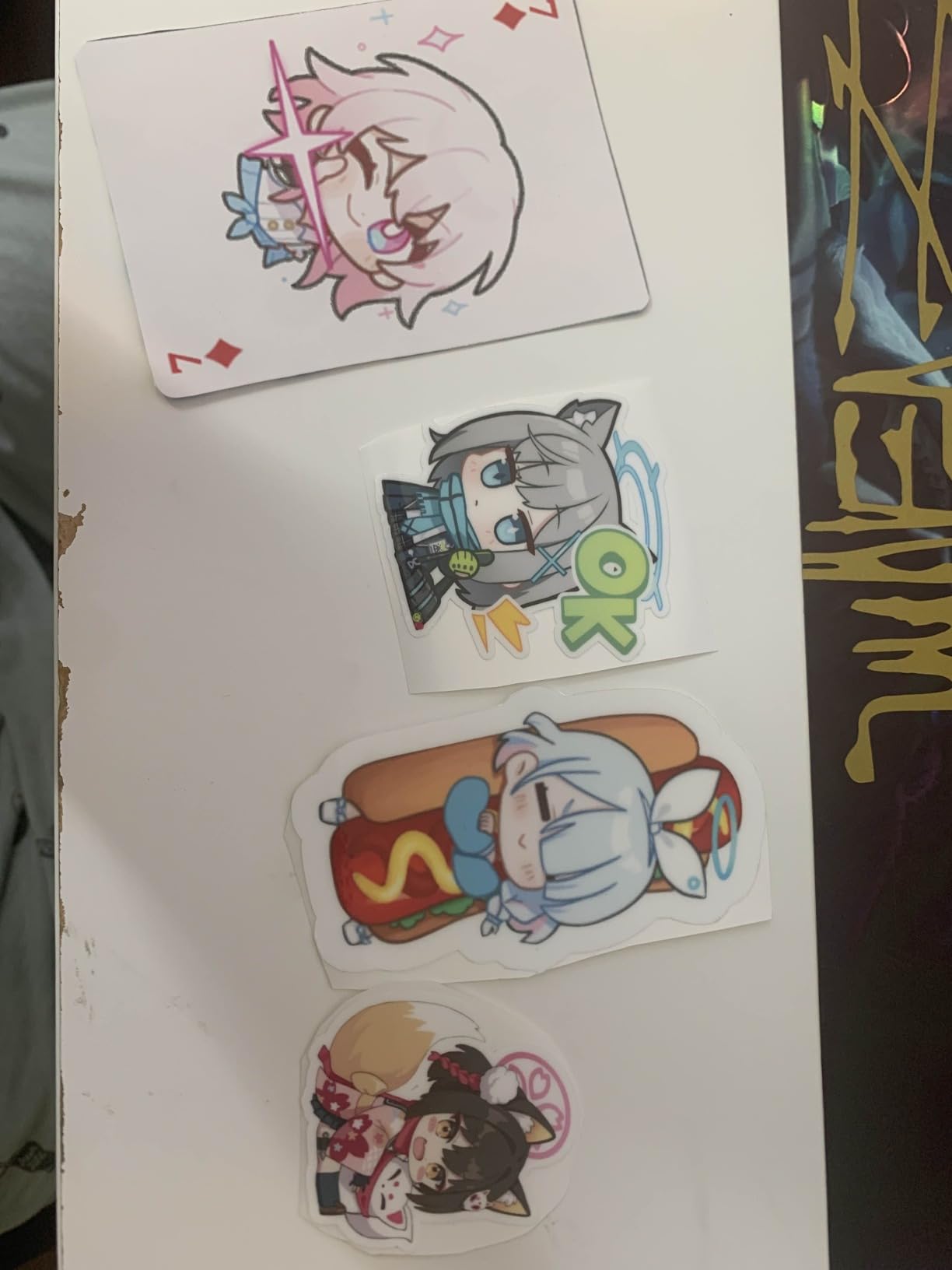
The all-in-one body carries a flatbed photo scanner, a copier and a large color LCD touchscreen, and you can print wirelessly from phone or tablet. For a print shop making cards, stickers and photo books, that combination is hard to argue with on cost.
Why dye ink is the trade-off
These are dye-based inks, not pigment. Dye gives you higher gloss and punchier color on the first day, but it fades faster under light, and fine art printers rank it below pigment for anything archival.
For art you sell or exhibit, that is a real limitation. For a wall of family photos, a set of greeting cards you make for a weekend market, or a stack of school projects, it is the right trade.
Reliability notes from owners
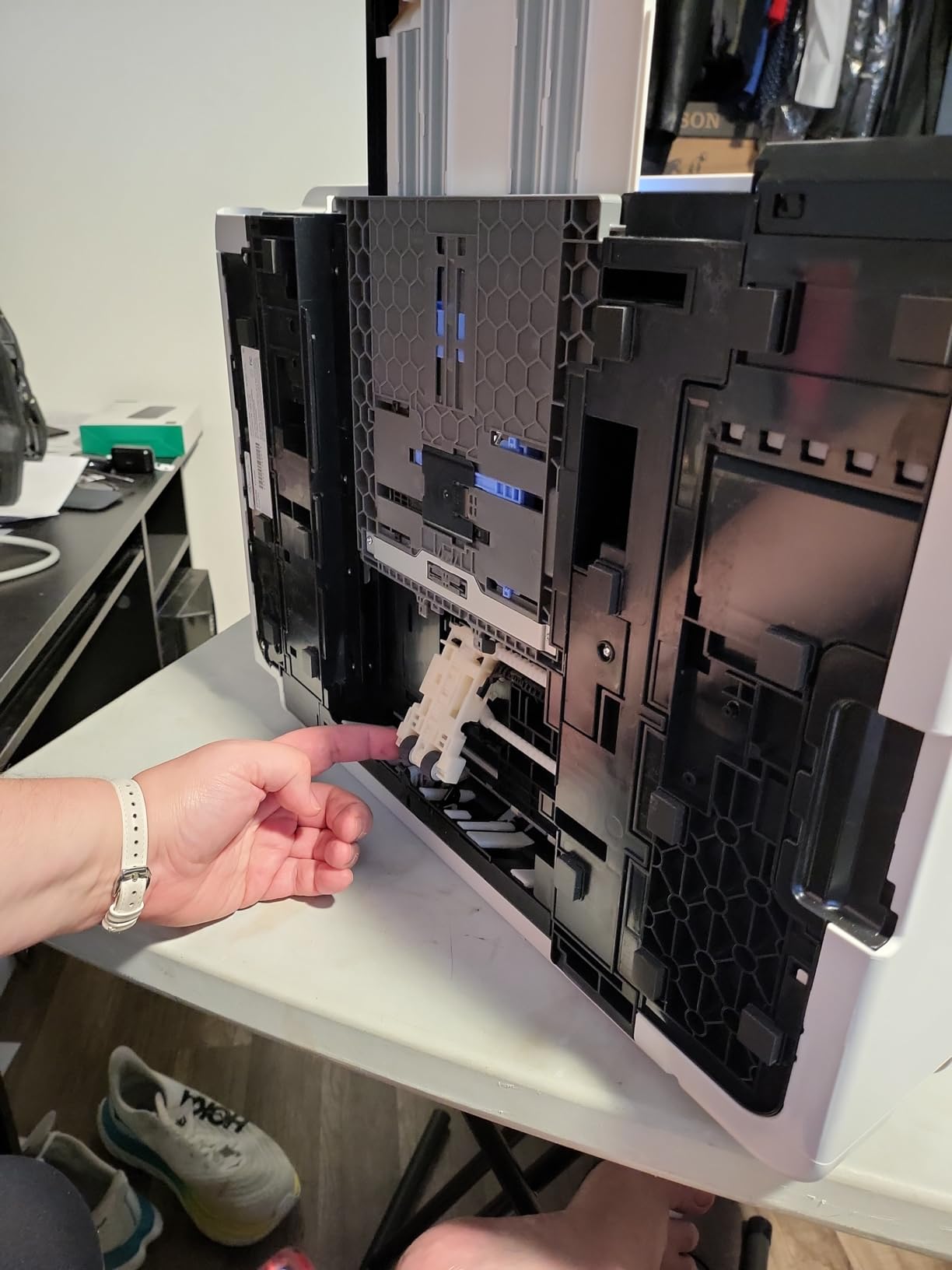
Two complaints recur: print head clogging and paper tray auto-selection failing to pick the right tray. If you load one media type and stay with it, the tray issue largely disappears, which is a reasonable workaround.
A maintenance tank needs periodic replacement, and the warranty is a limited one, so keep an eye on both when you set the machine up.
Who should buy this printer
Buy the ET-8550 if you print frequently, want the lowest cost per sheet, and do not need gallery permanence. It handles 13 x 19 sheets and keeps going after the tanks are filled.
Choose a pigment machine instead if the work is going on a wall in sunlight, or if you intend to sell prints and stand behind the longevity claim.
6. Canon PIXMA PRO-200S – Vibrant Dye Color on Glossy and Luster Media
Canon PIXMA PRO-200S Professional 13″ Wireless Inkjet Photo Printer with 3.0″ Color LCD Monitor, 8-Color Dye-Based Ink, Black
8-color dye ink system
13x19 A3+ borderless
4800 x 2400 dpi
3.0-inch color LCD
Pros
- Eight dye inks give bright color on glossy and luster media
- Fast output with A3+ in 90 seconds
- Dual paper trays for two media types
- Quiet operation during long sessions
Cons
- Dye inks limit archival longevity
- Setup and Wi-Fi pairing can be awkward
- Paper feed errors reported by some owners
The PIXMA PRO-200S is the middle of the Canon line, and it is a fast machine. An A3+ sheet prints in about 90 seconds and an 8 x 10 in roughly 53, which makes it far quicker than the PRO-310 for anyone producing a sequence rather than a single master print.
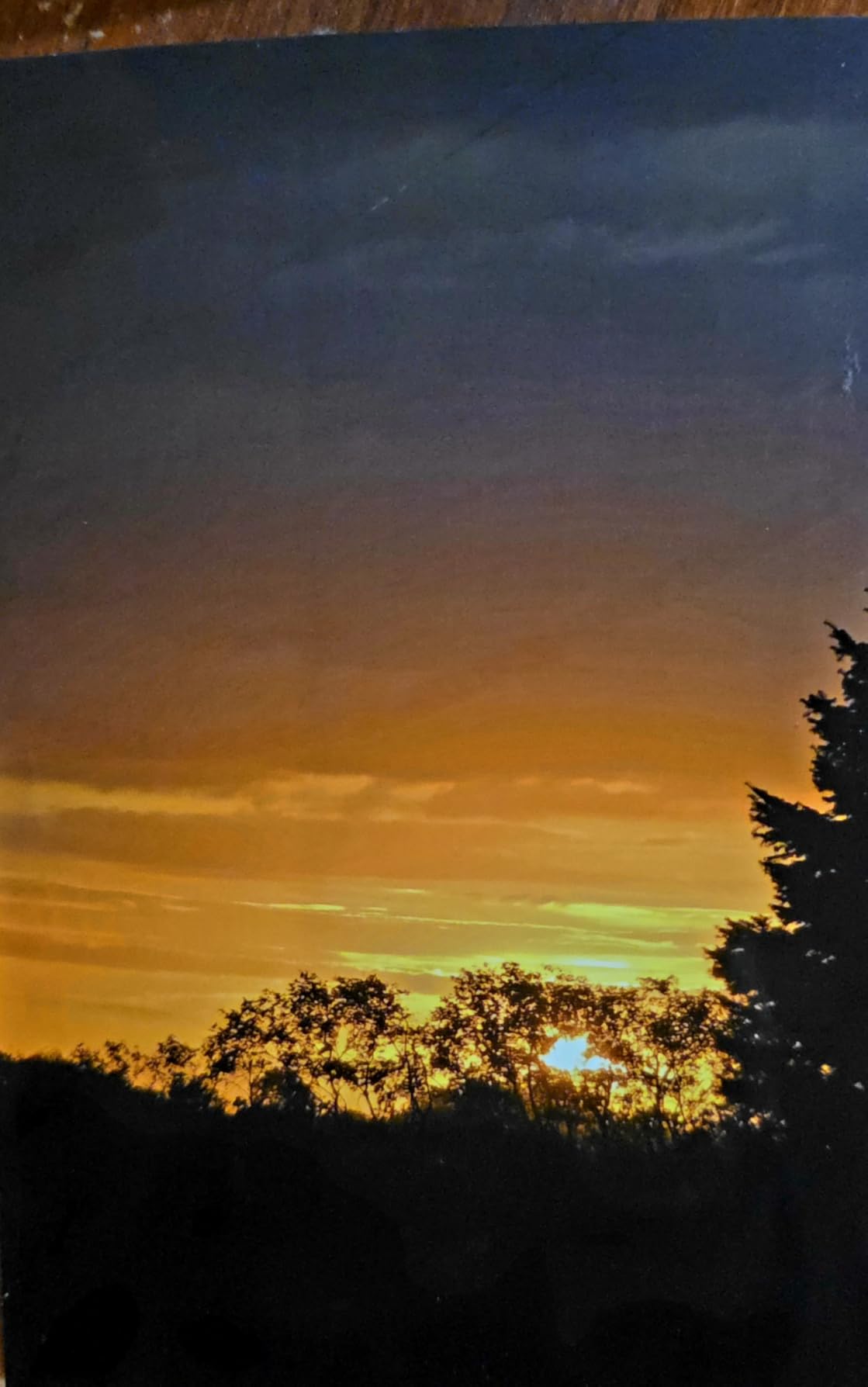
Its 8-color dye set produces the most immediately vivid color in this roundup on glossy, luster and semi-gloss media. Reviewers also note low ink consumption in real use, which softens the ongoing cartridge cost.
Borderless output runs from 3.5 x 3.5 up to 13 x 19, with custom sizes up to 13 x 39 inches for panoramas. Two paper trays let you keep photo paper and art paper loaded at the same time without swapping feeds mid-session.
Color vibrancy against permanence
Dye versus pigment is the same trade as the EcoTank, in a different package. Dye inks give a brighter, glossier impression straight out of the tray, and they lose that impression faster under UV and daylight.
If your prints live in a portfolio box, drawer or frame away from direct light, the difference is academic for years. If they hang in a sunlit room or ship to a buyer, pigment ink is the safer bet.
Paper handling and ICC profiles
Owners report that the printer is fussy with non-Canon papers and expects correct ICC profiles to produce the color it is capable of. That is worth knowing before your first print run.
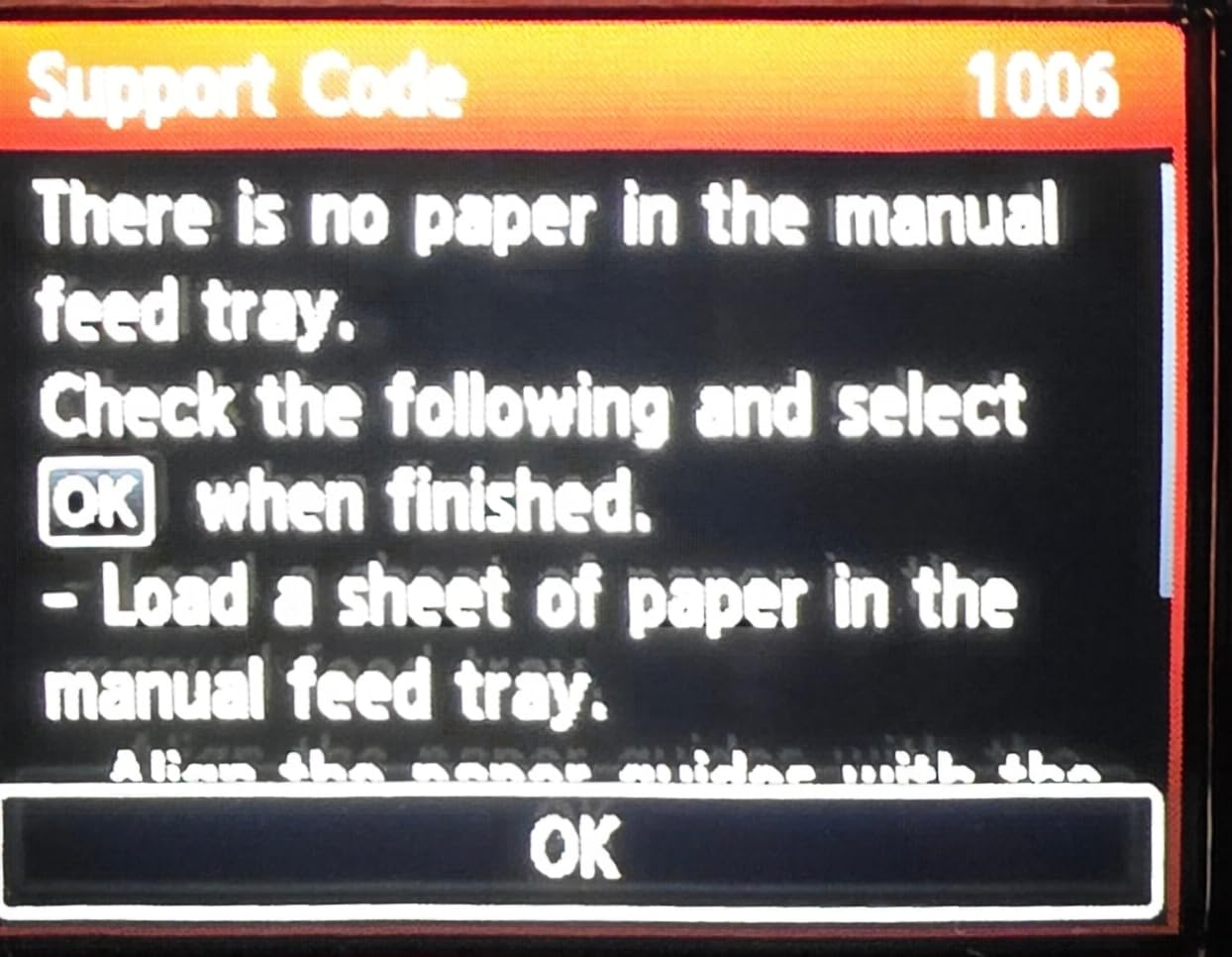
Paper feed errors, where the machine reports no paper in a loaded tray, are another recurring complaint. Loading carefully and confirming the tray in the driver handles most of it.
Who should buy this printer
Choose the PRO-200S for bright color work on glossy and luster paper at 13 x 19, especially if you print frequently and want results quickly. At 32 pounds it stays a desktop machine.
Step up to a pigment model when the longevity of the print matters more than the brightness on day one.
7. Epson Expression Photo XP-970 – Entry-Level 13-Inch Printing
Epson Expression Photo XP-970 Wireless All-in-One Wide-Format Printer
6-color Claria Photo HD ink
13x19 wide format
Print copy and scan
Touchscreen LCD
Pros
- Lowest entry point to 13x19 printing in this roundup
- Compact 18.9 inch square footprint
- Memory card slot prints photos without a computer
- Automatic duplex for everyday documents
Cons
- Listed resolution of 600 x 600 dpi is the lowest here
- Single 100-sheet tray
- No Ethernet port
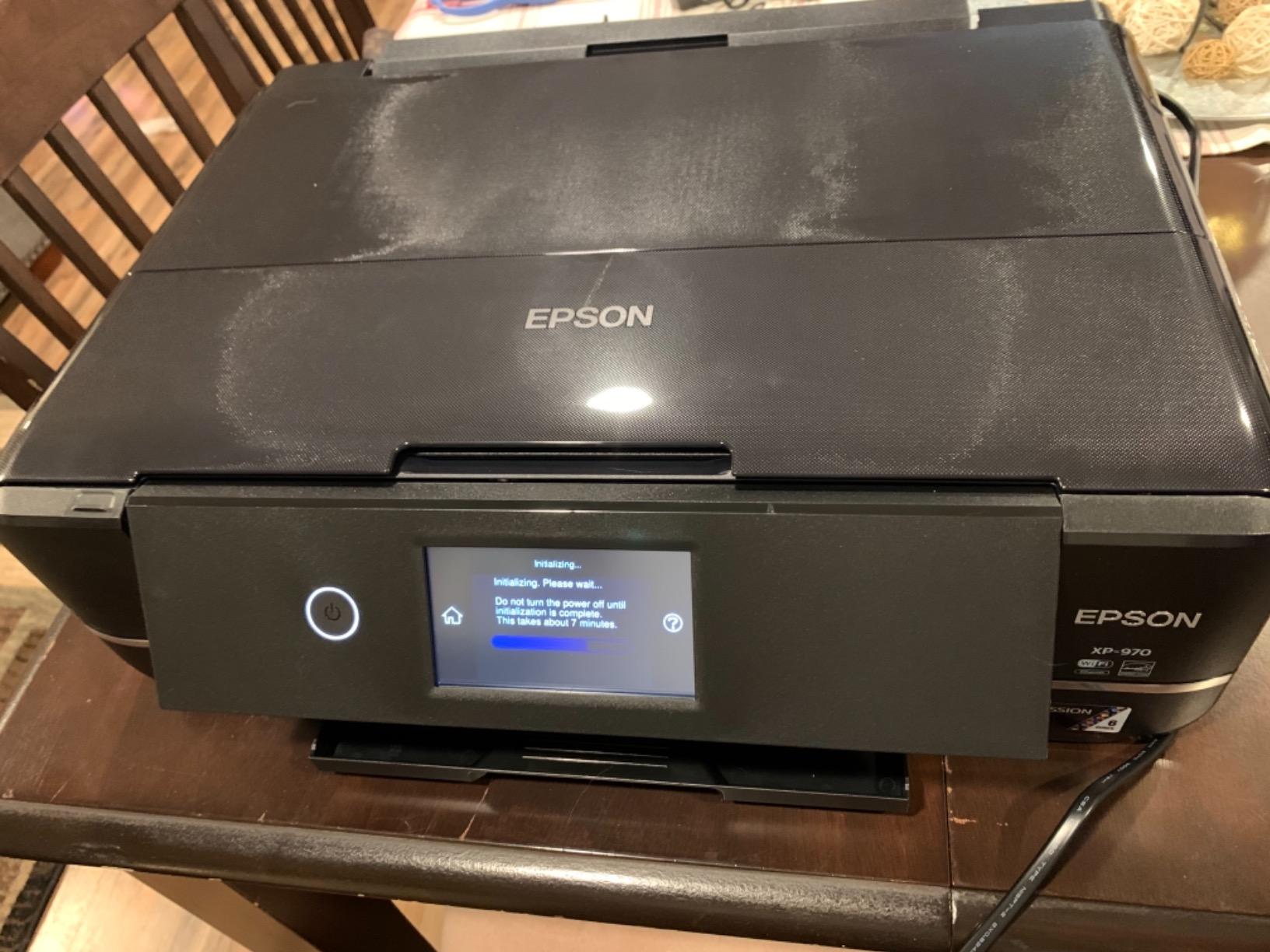
The XP-970 is the accessible way into wide-format printing, and at 668 reviews with a 4.2 average it is a well-trodden machine. It handles 13 x 19 sheets with 6-color Claria Photo HD ink, which includes light cyan and light magenta for smoother skin tones.
At 19.4 pounds and 18.9 inches square, it is the smallest printer in this roundup by a wide margin. If your studio is a corner of a spare room, that footprint matters more than any ink specification.
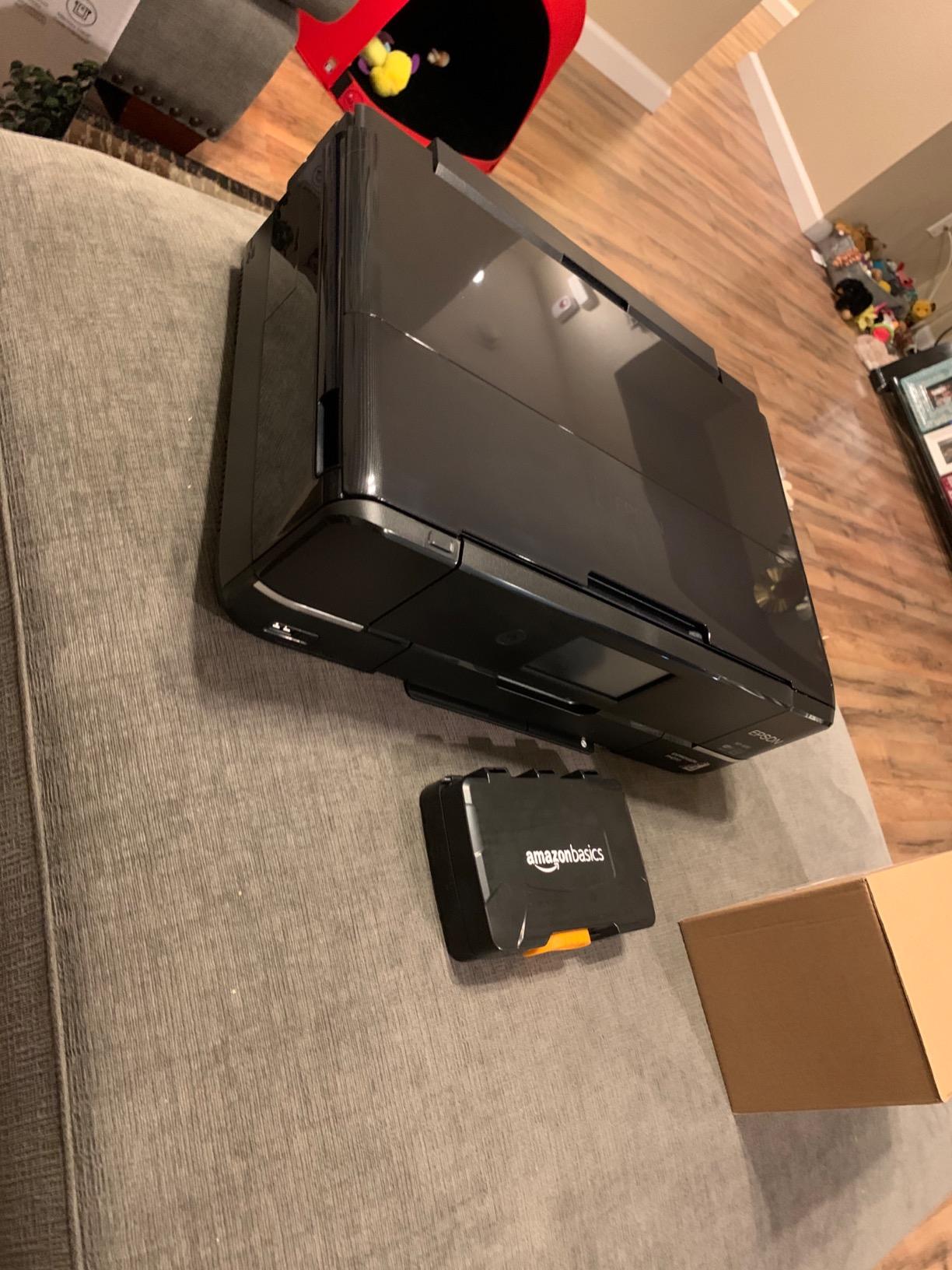
The memory card slot and touchscreen are the features owners mention most warmly. You can print images straight from a camera card without opening a computer, which makes it a genuinely simple machine for someone starting out.
What the resolution figure means in practice
The listed maximum is 600 x 600 dpi, the lowest in this group. On a 13 x 19 sheet viewed from across a room that is hard to see, but it is the reason this printer is not a fine art choice.
Claria Photo HD ink is dye based, so the same permanence note applies as with the other dye machines here. It suits prints for personal display rather than gallery sales.
Everyday convenience
Automatic duplex, copy and scan, wired and wireless connectivity, and 8.5 ppm black and 8 ppm color speed cover the office side of your work. The scanner lid folds flat, so think twice before scanning anything thick.
Light cyan and light magenta cartridges add two more consumables to keep on hand, which nudges running cost higher than the tank-fed alternative.
Who should buy this printer
Buy the XP-970 for a first art printer on a small budget, or for anyone who needs 13 x 19 color plus copy and scan in a compact body. It is a stepping stone, not a destination.
If you already know you will be printing to sell, move up to a pigment machine. The jump in tonal quality and permanence is larger than the jump in size.
How to Choose an Inkjet Printer for Art Prints
Pigment or dye: the decision that outranks everything else
Pigment ink sits on the surface of the paper as tiny solid particles and resists light fade. Dye ink soaks into the coating and gives a brighter, glossier result that ages faster. If your work will be sold, framed in daylight or archived, pigment is the only defensible answer.
Dye is fine for wall art in a shaded room, for greeting cards, and for anything you print in high volume where ink cost dominates. Three of the printers here use dye, and all three are the right tool for a specific job.
Paper size: 13 inch versus 17 inch and larger
13 x 19 inches, also called A3+, covers the overwhelming majority of what artists actually print. Forum contributors consistently report printing between 8 x 10 and 12 x 15 most often, and a 13-inch machine handles all of it.
Go to 17 inch or 24 inch only if you regularly produce wall pieces, panoramas or exhibition banners. The Canon PRO-2100 handles up to 24 x 59 inches, and the HP T630 reaches 36 inches wide, but both cost more in hardware, ink and floor space.
Ink count and tonal gradation
More ink channels means smoother gradients and more accurate neutrals. Four colors will show banding in skies and skin. Eight adds light inks. Nine or twelve adds gray, photo gray and a Chroma Optimizer for gloss uniformity.
Match the channel count to the work. Flat vector illustration and monochrome printing look excellent on four channels. Continuous-tone photography and watercolor reproduction do not.
Color management, ICC profiles and soft proofing
Every printer-paper-ink combination has its own color behavior, and the profile that describes it is called an ICC profile. If you load the right profile in your editing software and let the printer driver manage the rest, screen-to-print drift shrinks dramatically.
Soft proofing means previewing the print on screen through that same profile before committing paper. It is the single most effective step for matching what your monitor shows to what comes out of the tray, and almost no competitor covers it properly.
My workflow: calibrate the monitor first, load the manufacturer profile for the exact paper, soft proof at 100 percent, then print one test sheet before a full run. It takes twenty minutes and saves a lot of paper.
Media handling for heavy fine art paper
Anything above 300 gsm needs a rear manual feed and a printer that has one. A sheet curling in a front tray causes jams, and jams with expensive paper loaded are the fastest way to lose enthusiasm for a new printer.
Match the paper to the medium. Matte and satin papers suit watercolor and illustration reproduction. Glossy and luster suit photographs. Canvas needs a stretcher-capable feed or careful manual handling.
Running cost and ink supply
Tank-fed machines cost far less per sheet, sometimes a few cents for a small photo, which changes the math completely for anyone printing in volume. Cartridge-fed pigment machines cost more per sheet but deliver the color quality that sells prints.
Calculate against your own volume rather than a marketing figure. Twenty large prints a year on cartridges costs less in ink than one tank refill. Several hundred a year reverses the calculation completely.
Maintenance for intermittent printing
Pigment heads clog when a machine sits idle, and the fix is a scheduled cleaning cycle every couple of weeks. Print a small test image before a real job so a partial clog shows up on scrap paper instead of a fine art sheet.
Run the machine’s own maintenance routine rather than third-party cleaning fluid, and keep the printer in a room with stable humidity. Pigment ink and paper both dislike swings.
If your art lives on a tablet before it reaches paper, our picks for the best Android tablets for digital art cover the front end of this workflow. For instant-format photo output rather than fine art sheets, see our photo printer guide, and for large-format output in a different medium, our roundup on the best 3D printers for large prints.
Frequently Asked Questions
What kind of printer is best for art prints?
A dedicated wide-format inkjet with pigment ink, at least six to nine colors and a rear manual feed for heavy paper. For gallery and sale work, the Canon imagePROGRAF PRO-2100 with 12 pigment channels is the strongest choice here, while the PRO-310 covers the same ink quality at 13 x 19 inches.
Is an inkjet or laser printer better for art prints?
Inkjet, without question. Laser printers use powdered toner that cannot reproduce smooth gradients or the wide color gamut a fine art print needs. Pigment inkjets also print on matte, satin and rag papers, while laser output is limited to coated stock.
What is the best affordable printer for art prints?
Among pigment machines, the Epson WorkForce WF-7710 gives you 13 x 19 borderless pigment printing with copy and scan in one body. If archival permanence does not matter and you print in volume, the Epson EcoTank ET-8550 cuts cost per sheet dramatically with refillable dye tanks.
Do I need a 17 inch printer for art prints?
Most artists do not. A 13 x 19 inch sheet covers the common 8 x 10 to 12 x 15 sizes that get printed in practice. Move to 17 inch or wider only for wall pieces, panoramas and exhibition work that you produce regularly.
How do I print high quality art prints at home?
Calibrate your monitor, load the ICC profile for the exact printer and paper combination, soft proof on screen, then print one test sheet before the full run. Feed paper above 300 gsm through the rear manual feed and run a cleaning cycle every two weeks if the printer sits idle.
Final Verdict: Which Art Printer Fits Your Work
If you sell prints or exhibit them, the Canon imagePROGRAF PRO-2100 is the choice. Twelve pigment channels, a Chroma Optimizer and 24-inch media give you the widest tonal range and the most room to grow, and the archive-grade longevity is what justifies the ink cost.
If you want that same pigment discipline on a 13 x 19 sheet without the floor space, the Canon PRO-310 with its Matte Black channel is the middle path. If you also need a copier and scanner in the same box, the Epson WorkForce WF-7710 does the job at 13 x 19 with the largest support base of any machine here.
If you print in volume and permanence is secondary, the Epson EcoTank ET-8550 wins on cost per sheet, and the Canon PIXMA PRO-200S wins on vivid color and speed. The Epson XP-970 remains the accessible starting point, and the HP DesignJet T630 serves large-format technical and poster work rather than fine art.
Whichever you pick, load the correct ICC profile, feed heavy paper through the rear slot, and run a test sheet before a full batch. Those three habits do more for print quality than any specification on the box.