
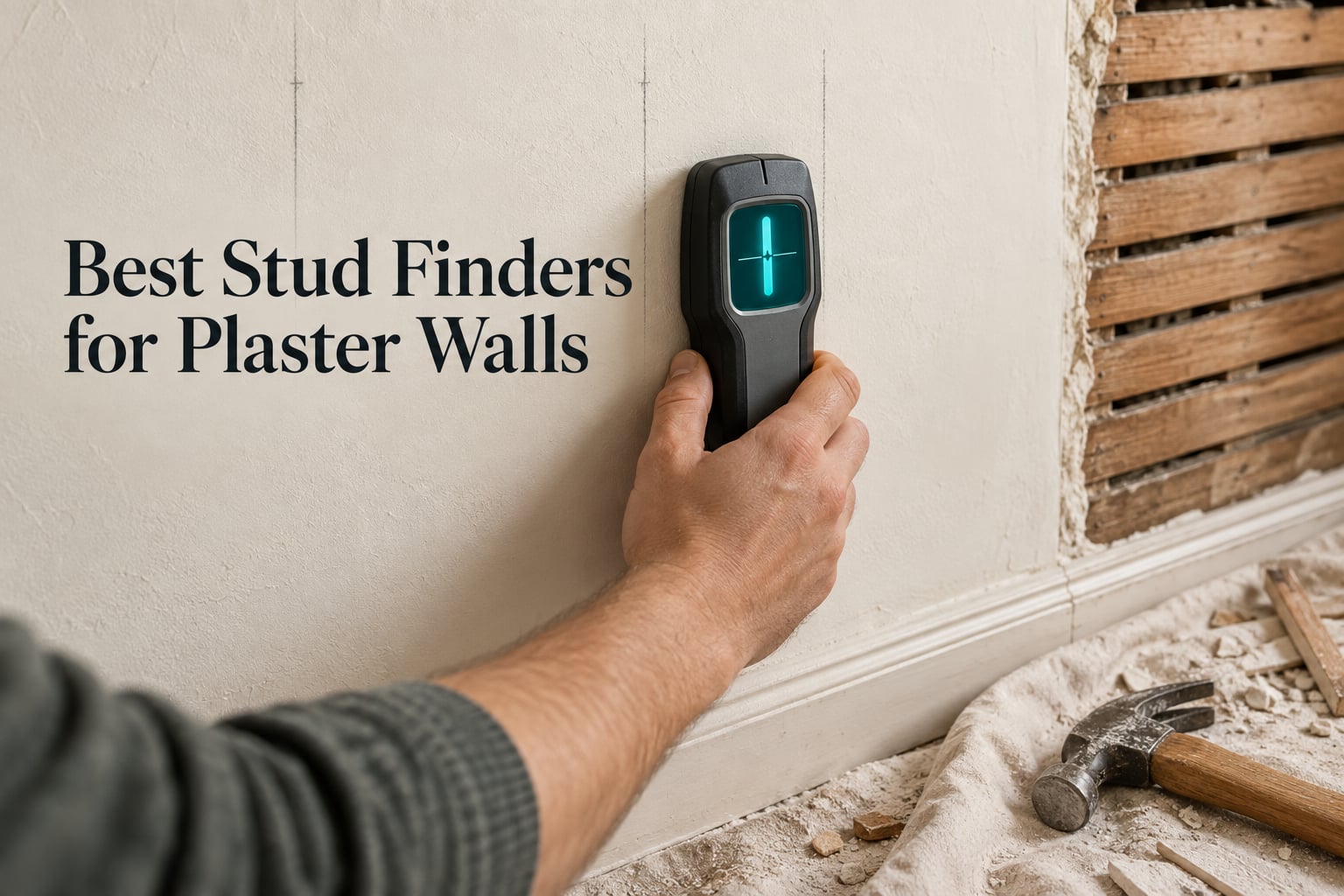
If you have ever drilled into a plaster wall and hit nothing but air, you already know why the best stud finder for plaster walls is a different tool from the one hanging on your drywall jobsite. We spent weeks comparing multi-sensor scanners, deep-scan units, magnetic finders and radar tools on old plaster-over-lath walls, and this is what actually held up.
The short version: a multi-sensor electronic scanner with deep-scan mode and live-wire detection is the right primary tool, and a rare-earth magnet is the confirmation tool you keep in your back pocket. Everything else is situational.
Here is our shortlist of the options at a glance, by type:
- Multi-sensor electronic — 9 to 13 sensors, no calibration, the most consistent readings on lath.
- Deep-scan electronic — 1.5 inch to 2.5 inch reach, needed when the plaster is thick or doubled.
- Budget five-mode scanner — stud, AC wire and metal modes for occasional use.
- Magnetic finder — tracks lath nails directly, ignores signal entirely, confirms a reading in seconds.
- Radar or imaging scanner — shows pipes and wires as a visual map, but most makers restrict it to drywall and plywood.
- Rechargeable multi-mode — six detection modes with a USB-style charging cycle and no 9V swaps.
Our number one pick, the Franklin Sensors ProSensor M210, stays locked onto a stud through a full sweep of plaster and lath, needs no calibration step, and carries live-wire detection. Keep reading for the picks that suit thinner budgets, lighter hands, and older houses with metal lath.
One safety note before we start. If your home predates 1960, assume buried wiring exists in the walls, and treat any live-wire alert as a warning rather than a guarantee. Our approach of scanning, then verifying with a small bit, kept us out of trouble on every wall we opened.
Our Top 3 Stud Finder Picks for Plaster and Lath

Franklin ProSensor M210
- 13-sensor array
- No calibration
- 1.7 inch deep scan
- Live wire detection

Comparing All 10 Stud Finders Side by Side in 2026
| Product | Specs | Action |
|---|---|---|
| Franklin Sensors ProSensor M210 |
|
Check Latest Price |
 HANMATEK Stud Finder 5 in 1 SF1 HANMATEK Stud Finder 5 in 1 SF1 |
|
Check Latest Price |
| Mecurate 5-in-1 Stud Finder MSF60A |
|
Check Latest Price |
 Franklin Sensors ProSensor M150 Franklin Sensors ProSensor M150 |
|
Check Latest Price |
 Franklin Sensors ProSensor MAX 13-Sensor Franklin Sensors ProSensor MAX 13-Sensor |
|
Check Latest Price |
 Povlen Wall Scanner TH570 Povlen Wall Scanner TH570 |
|
Check Latest Price |
 Zircon MultiScanner A200 Zircon MultiScanner A200 |
|
Check Latest Price |
 FNIRSI WD-01 6 in 1 Scanner FNIRSI WD-01 6 in 1 Scanner |
|
Check Latest Price |
 Walabot DIY 2 Visual Stud Finder Walabot DIY 2 Visual Stud Finder |
|
Check Latest Price |
 Bosch D-tect 120 Wallscanner Bosch D-tect 120 Wallscanner |
|
Check Latest Price |
1. Franklin Sensors ProSensor M210 – The Most Reliable Read on Plaster and Lath
Franklin Sensors ProSensor M210 13-Sensor Stud Finder, Live Wire Detection
13-sensor array
No calibration
1.7 inch deep scan
Live wire and level
Pros
- No calibration step so scanning can start anywhere
- 13 sensors show the full stud width and centre
- Always-on deep scan reaches about 1.7 inches
- Live wire detection before you drill
- Built-in bubble level and pencil caddy
Cons
- 1.7 inch depth is shallower than the deepest multi-layer scanners
- Two AA batteries required and not included
The M210 is the finder we kept reaching for. On plaster-over-lath walls it produced the same wide, solid bar every time we passed over a stud, where lighter scanners gave us a flickering blip that moved between passes.
What separates it is the 13-sensor array. Conventional units carry one or two sensors and catch a stud edge. Thirteen sensors span roughly the full 1.5 inch width of framing, so the tool shows you a complete stud and a green centre indicator rather than guessing.
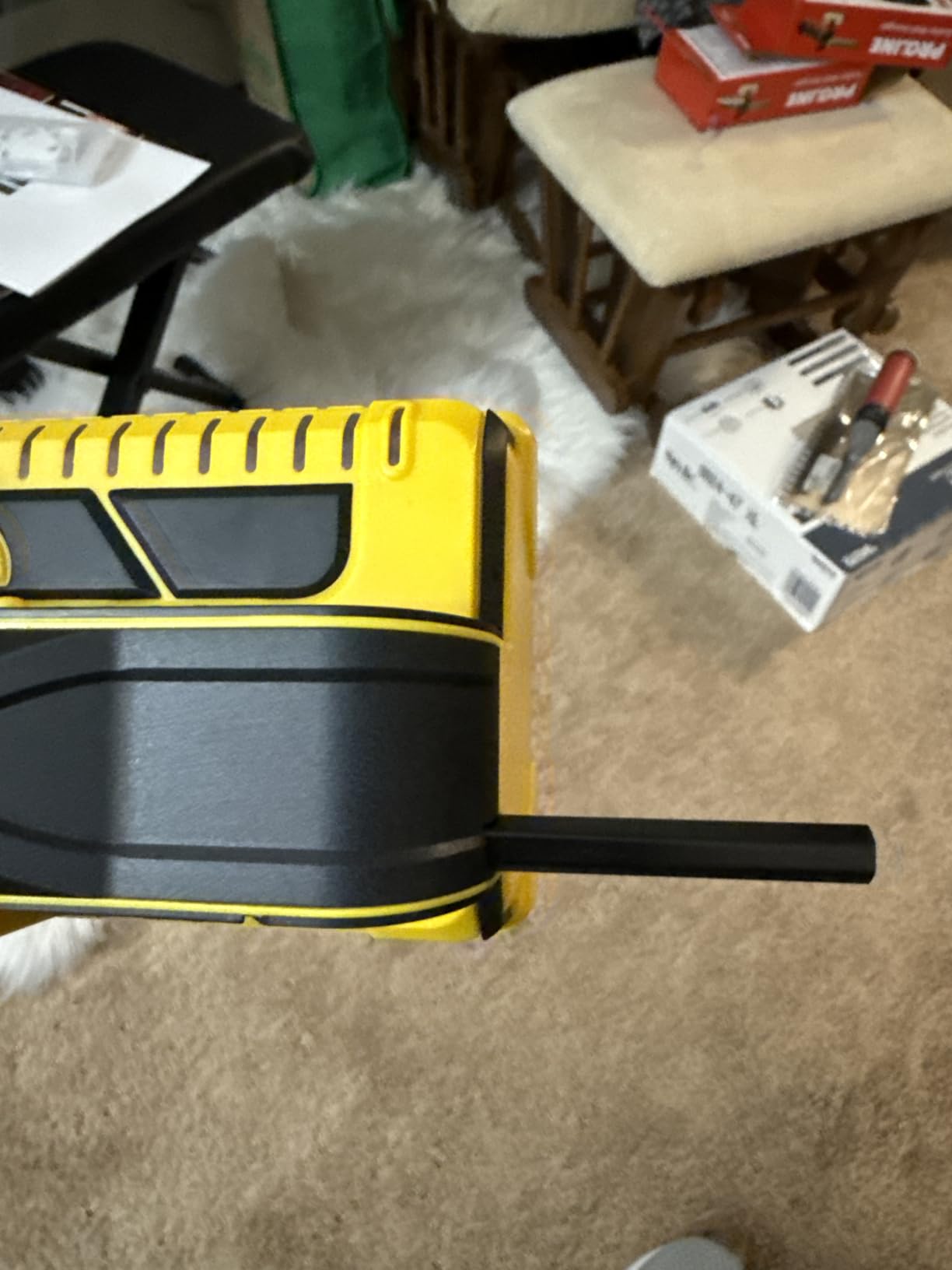
Owners in r/woodworking rate the Franklin Sensors line as accurate in lath and plaster homes specifically, which matches what we saw. There is no calibration step at all: press the button and scan, even if you start directly over framing.
Depth That Clears Plaster Without a Setting
Detection runs to about 1.7 inches with no mode switch. A typical 1910s wall is plaster, lath and sometimes a furring strip, so you are usually measuring well inside that ceiling. The limit does show up on doubled plaster or thick plaster over heavy lath.
Its live-wire detection is the reason it earned the top spot for old houses. It will not tell you a wire is safe to drill, but it narrows the search and pairs naturally with a pilot hole.
Built for Long Ceiling Jobs
The bubble level and pencil caddy are small touches that matter when you are working above shoulder height with one hand. At 11.36 ounces it stays comfortable through a long afternoon of scanning.
Who It Is For
Choose the M210 if you own an old house, plan more than one mounting job, or hand tools to other people. The missing batteries are a one-time annoyance, not a design flaw.
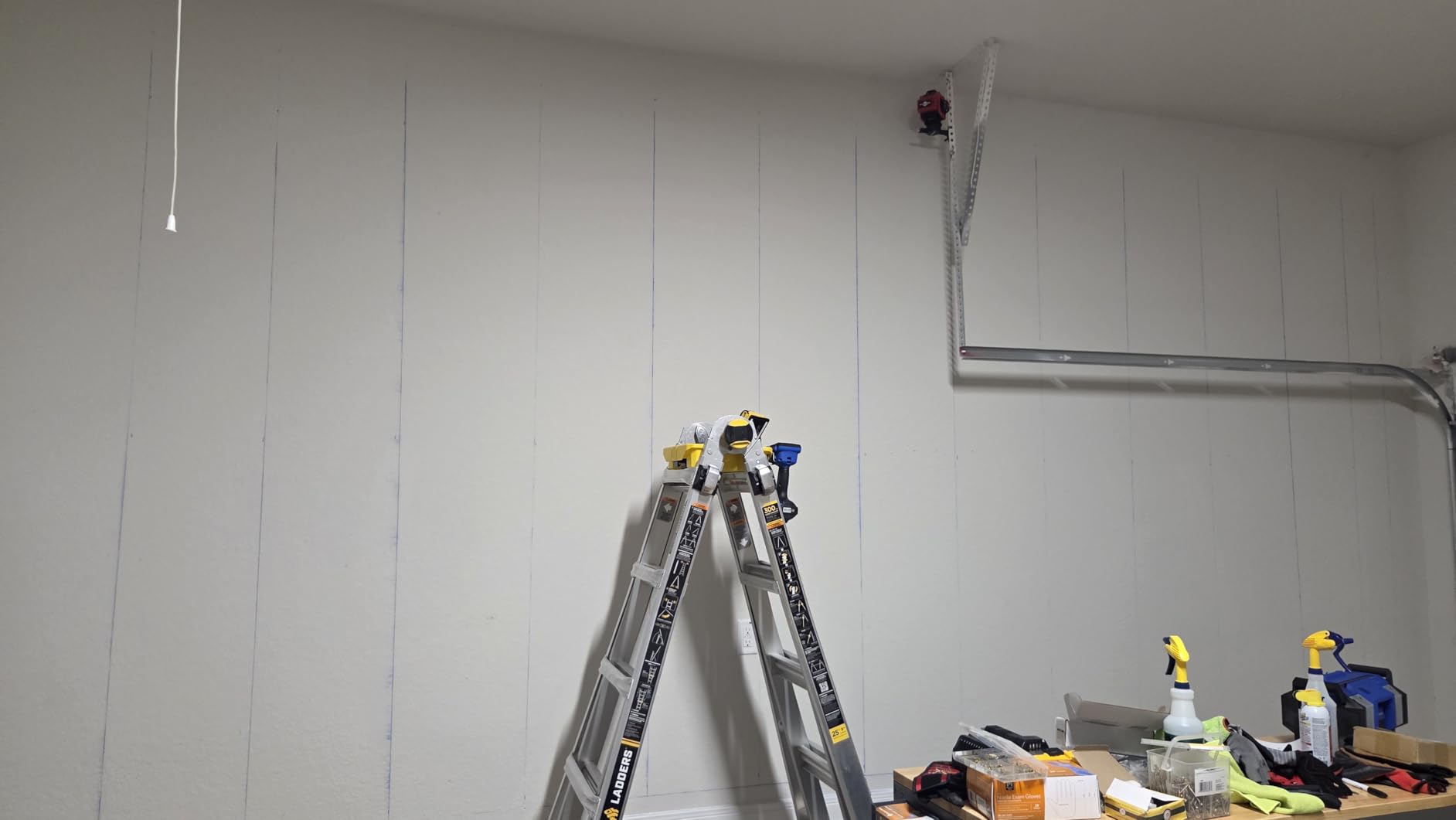
2. HANMATEK SF1 – Five Scan Modes and the Clearest LCD in the Class
HANMATEK Stud Finder Wall Scanner Detector with Pro Smart Sensor,Audio Alarm and HD LCD Display,5 in 1 Upgrade Wood Exact Mode Stud Finder Tool for The Center Edge of Metal,Studs,AC Wire,Pipe
Five scan modes
1.5 inch deep wood
2 inch AC wire
200 g body
Pros
- Five modes covering wood AC wire ferrous and non-ferrous metal
- HD LCD shows depth signal strength and stud centre
- Automatic calibration
- Audible alarm with mute and three colour indicators
- Rubber backing that protects the wall finish
Cons
- Auto-calibration must run on a clear patch or readings drift
- Wood depth is shallower than the headline metal figures
The HANMATEK SF1 carries the largest review count in this group and packs the most detection modes into one body. It is the one we would hand to someone who mounts TVs and cabinets and never opens a wiring manual.
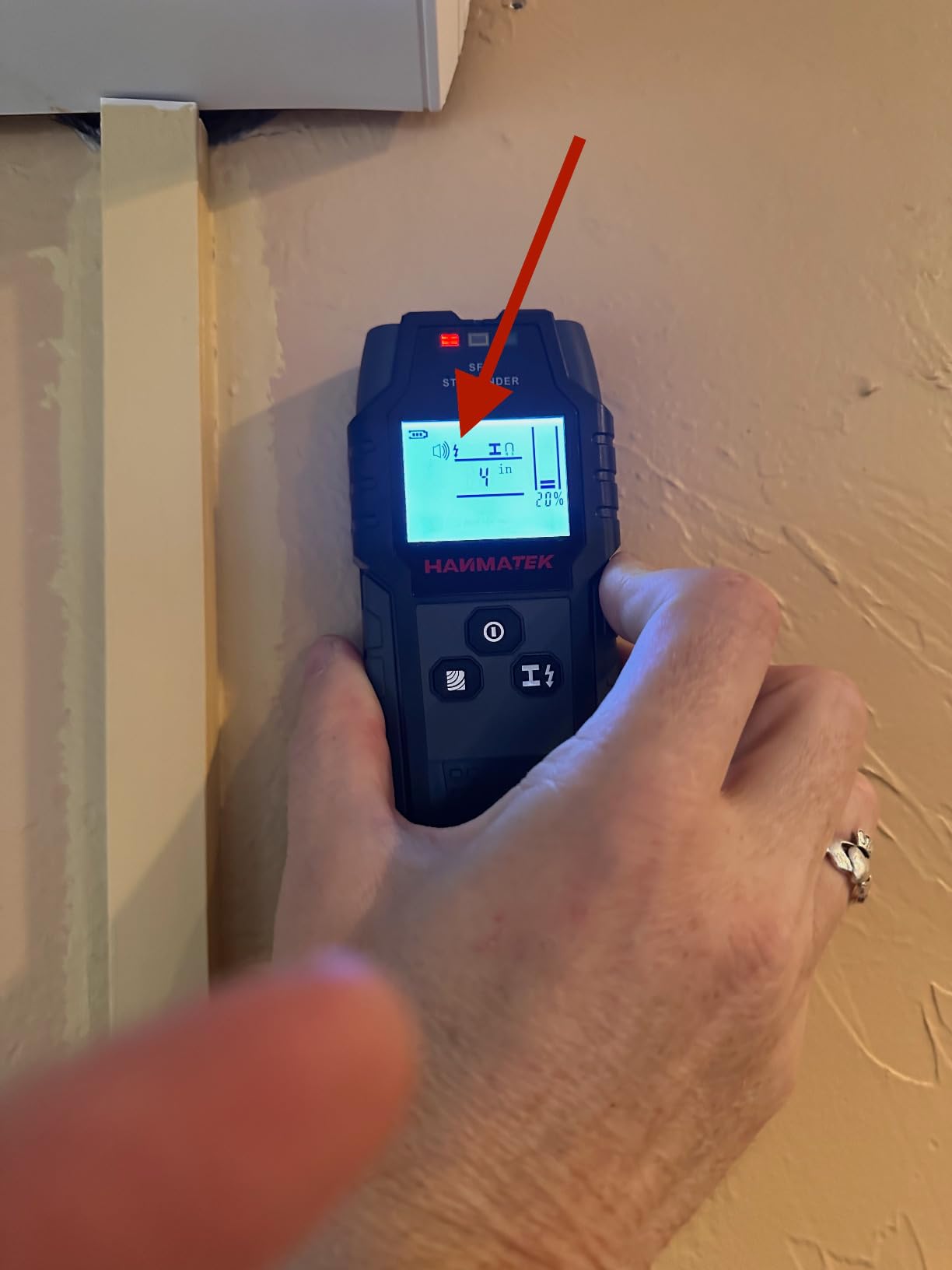
The screen does more work than a bare LED bar here. It reports detection depth, signal strength and a battery indicator, which turns a guess into a reading you can compare across two passes.
Reading Depth Honestly
Here is the number that matters on plaster: wood exact mode reaches 0.8 inch and wood deep mode reaches 1.5 inch. The larger figures, 2 inch for AC wire and 4.7 inch for ferrous metal, apply to metal objects, not to framing behind plaster.
Many owners hang shelving and cabinets with this unit and report the centre marking helps. The recurring caution in reviews is the same one we hit: calibrate on a blank patch of wall, every time.
Comfort on Long Passes
At 200 grams with a rubber-backed shell, it never scuffed a fragile plaster finish during our testing. The three-colour indicator and switchable audio let you scan without staring at the display.
Who It Is For
This is the pick for homeowners who want wire warning and metal detection in one tool without moving to a pro price band. If you need deeper than 1.5 inch through framing, look at the ProSensor MAX instead.
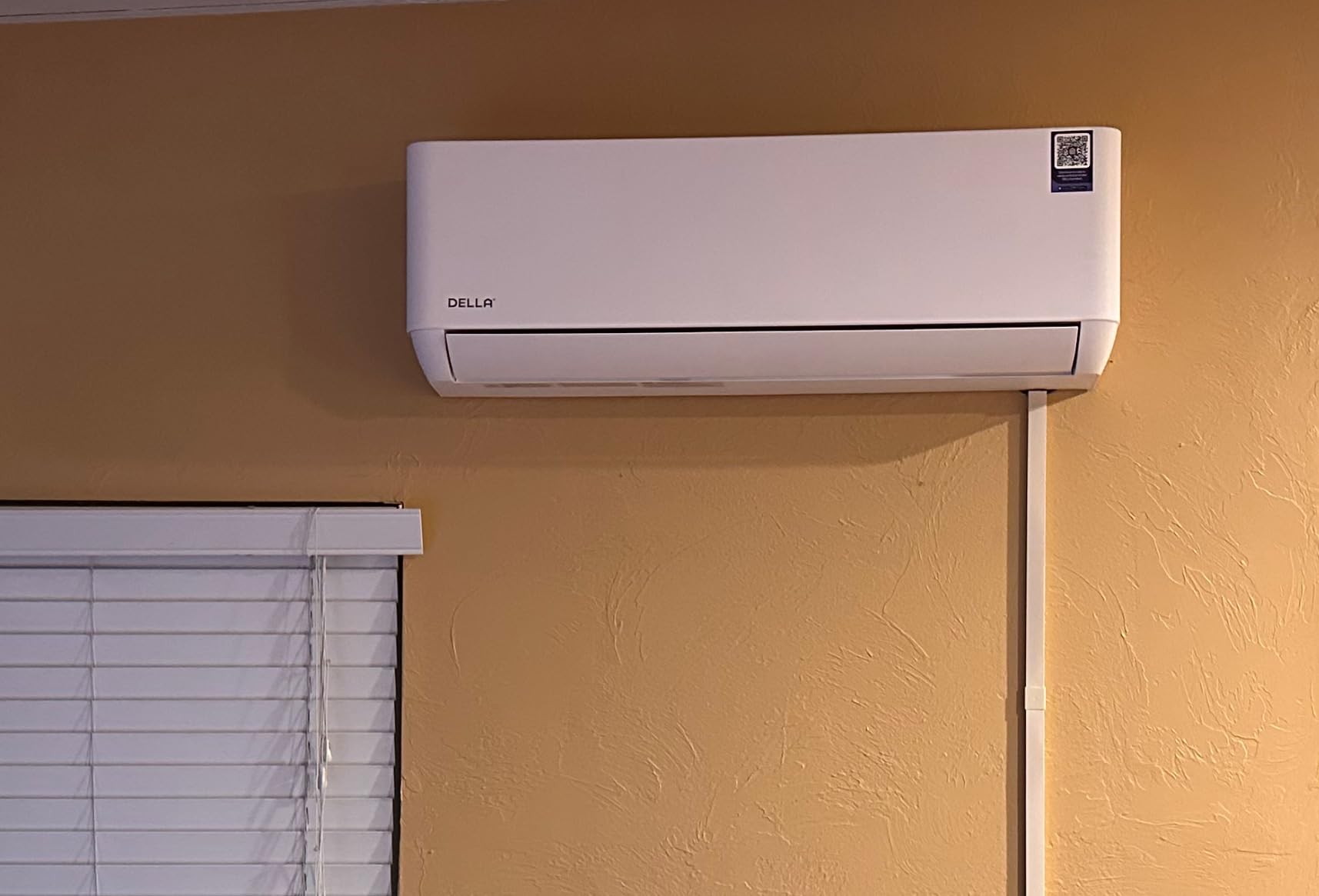
3. Mecurate MSF60A – The Budget Deep-Scan Pick That Needs Re-Zeroing
Mecurate 5-in-1 Stud Finder Wall Scanner for Studs, Metal & Live AC Wires
Standard 3/4 inch
Deep 1-1/2 inch
Metal 2-3/8 inch
AC 2 inch
Pros
- Five scan modes with clear LCD graphics
- Audio alerts let you scan without watching the screen
- Live wire warning adds drilling safety
- 9V battery and carrying pouch included
- Consistent stud centre reads on standard drywall
Cons
- Needs calibrating against the wall before each use
- Maker limits best performance to single-layer drywall
- Some repeat scans disagree
The Mecurate is the value entry point here, and a five-mode unit with a live-wire alert is a sensible way to start on a plaster wall. Four scan depths, an LCD and a live-wire mode in a straightforward body.
Owners rate it well for hanging TVs, cabinets and shelves on drywall. On plaster and lath, the reviews are more measured, which is exactly what we found.
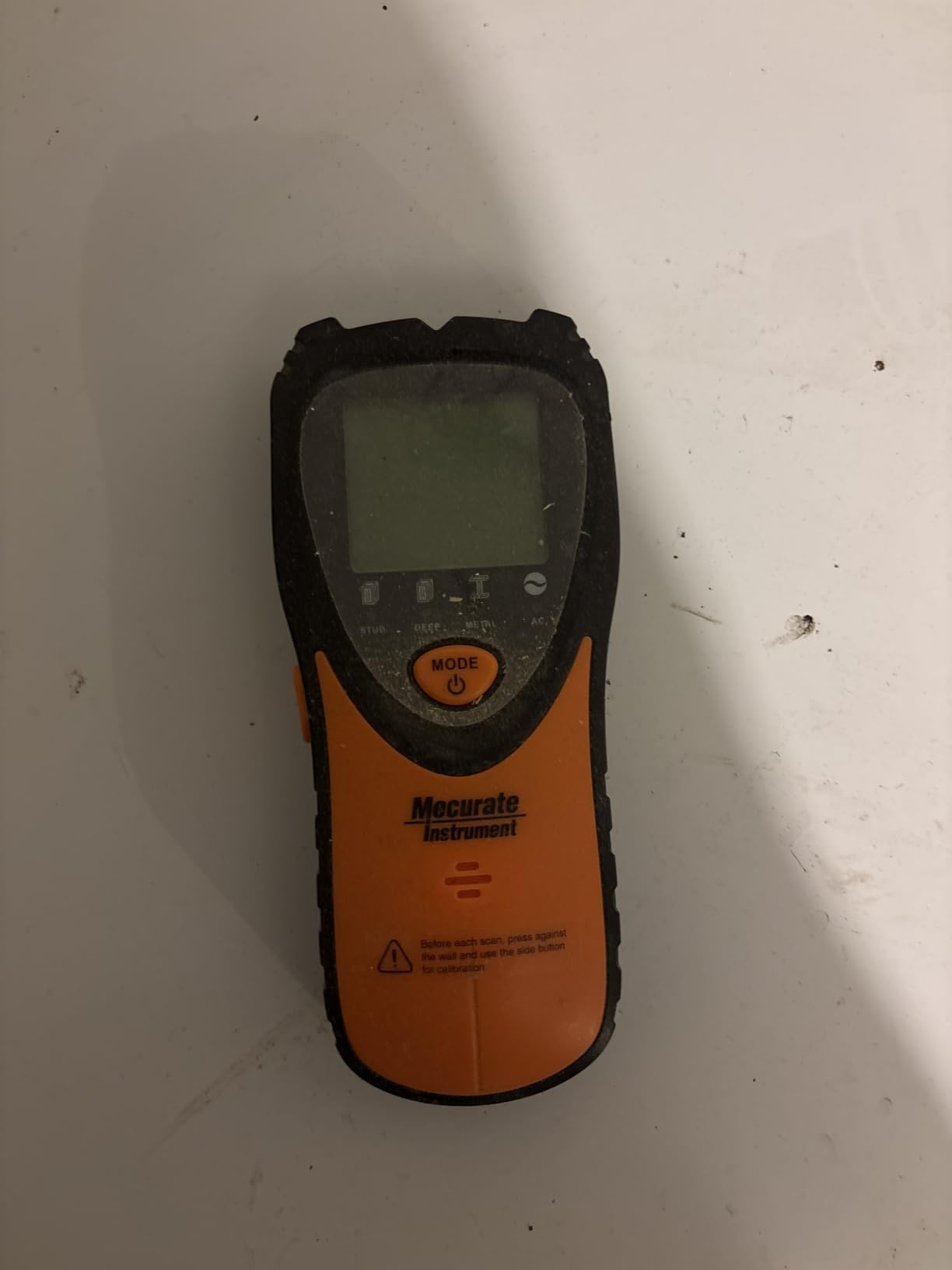
The Calibration Habit Is Mandatory
This unit re-zeros against the wall before scanning. Hold it on a blank section, press to calibrate, then scan. Skip that step on a wall with a stud nearby and the depth setting drifts.
The maker states best performance on single-layer drywall and advises against concrete, brick and tile. Treat that as a guideline for thick plaster as well: the 1-1/2 inch deep mode works, but expect more re-scanning than a no-calibration sensor array gives you.
Included Battery and Pouch
The 9V battery is included in the box, which removes the most common complaint in this category. Audio alerts in all modes mean you can watch the wall edge instead of the screen.
Who It Is For
Pick this if your plaster is a single moderate layer and you want a wire warning for occasional mounting jobs. Anyone with heavy lath should step up to a 9 or 13-sensor array.
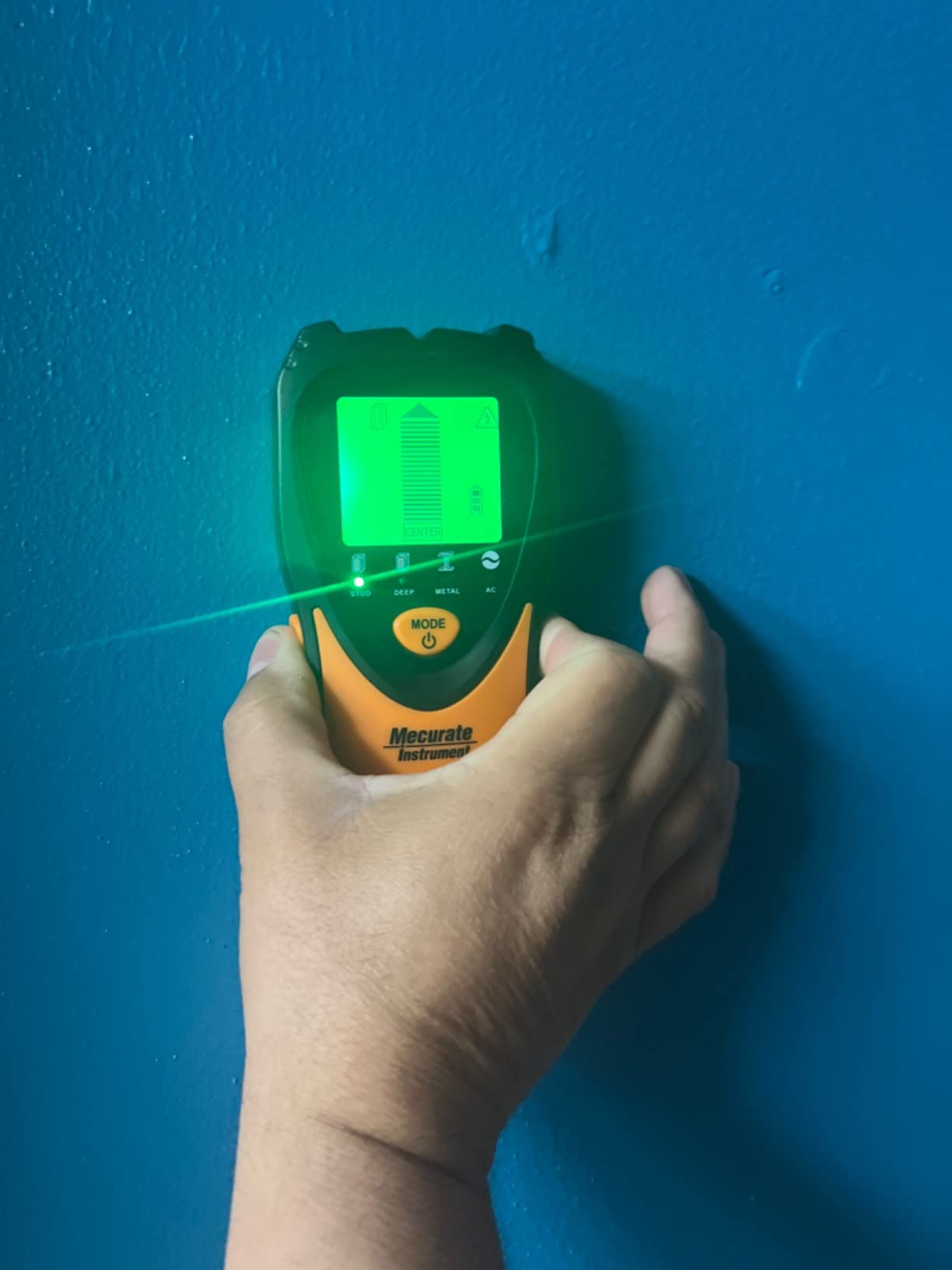
4. Franklin Sensors ProSensor M150 – Nine Sensors and a 5-Ounce Body
Franklin Sensors ProSensor M150/X990 9-Sensor Stud Finder, AC Wire Warning
9-sensor array
No calibration
1.5 inch deep scan
AC wire warning
Pros
- No calibration so scanning begins anywhere
- Shows full stud width and flags double studs
- Always-on 1.5 inch deep scan handles thicker plaster
- Lightweight 5.12 ounce body
- Live wire warning before drilling
Cons
- 9-sensor array is less precise than the 13-sensor models
- Two AAA batteries not included and rechargeables unsupported
The M150 is the M210 in a smaller package, and for many people it is the more sensible buy. Same no-calibration start-up, same full-width display, one less sensor row of resolution.
At 5.12 ounces it is the lightest scanner we tested, which matters on a ladder or above a mantel. The LED bar still shows the whole stud rather than only screw heads.
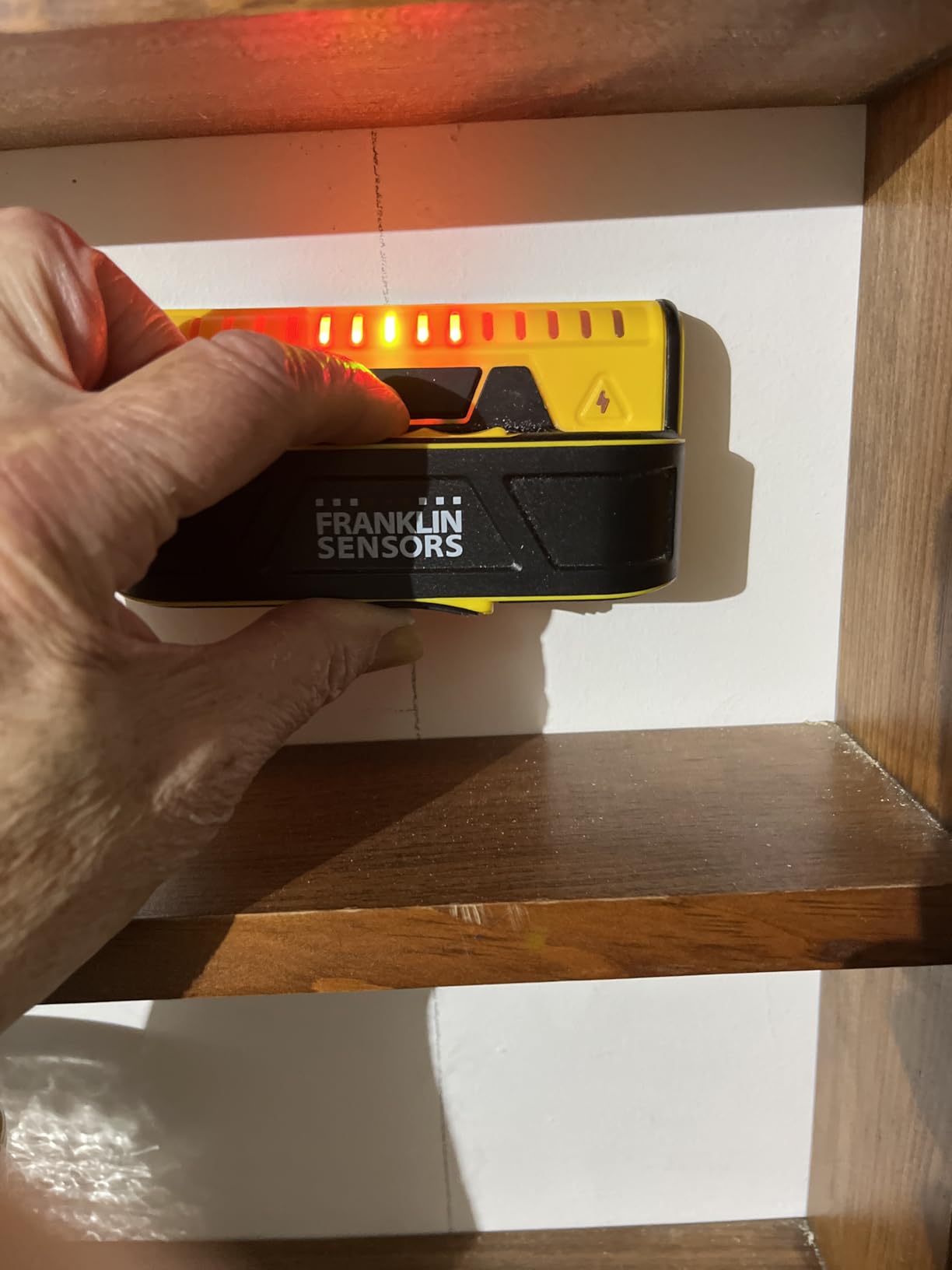
Depth Limits on Heavy Plaster
Always-on deep scan reaches 1.5 inches. That is enough for standard plaster and lath, and thin for doubled plaster. Check your wall thickness before committing.
Live-wire detection covers the safety concern that matters most in an older house, and it is the feature that separates this unit from single-sensor budget models.
Battery Details Nobody Mentions
It takes two AAA cells and they are not in the box, and this model does not accept rechargeables. That is the practical reason to keep a spare pair with the tool.
Who It Is For
Choose the M150 for a single-property owner with normal plaster and lath. If you need the extra sensor resolution or the bubble level, step up one model.
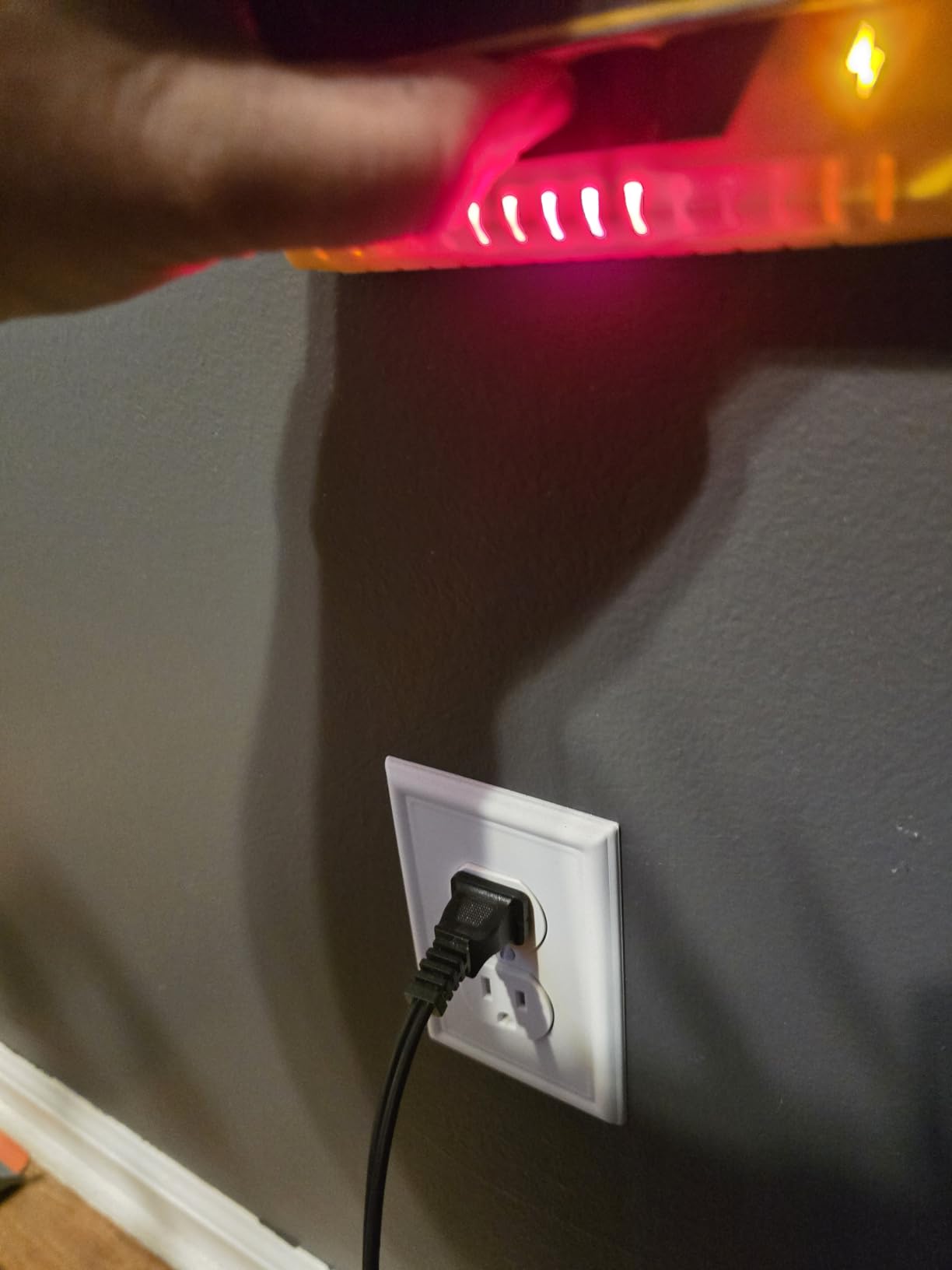
5. Franklin Sensors ProSensor MAX – 2.5 Inches of Reach for Thick Plaster
Franklin Sensors ProSensor MAX 13-Sensor Stud Finder, 2.5-in Deep Detection
2.5 inch max depth
13 larger sensors
Two detection modes
No calibration
Pros
- 2.5 inch depth is the deepest on any no-calibration finder here
- Manufacturer explicitly names plaster among the build-ups it scans through
- 13 larger sensors give a wider smoother signal
- No calibration so scanning starts anywhere
- Full stud width display with green centre indicator
Cons
- Heaviest and bulkiest at 1.1 pounds
- Smallest review count of the three Franklin models
- No live wire detection
The MAX exists for one reason: walls that the 1.5 inch models cannot reach. It scans through two or more drywall layers, plaster, OSB, plywood, MDF and large tile, with a 2.5 inch maximum.
Owners who live in heavy plaster or multi-layer walls are the ones leaving the highest marks, and the manufacturer names plaster directly in the stated build-ups.
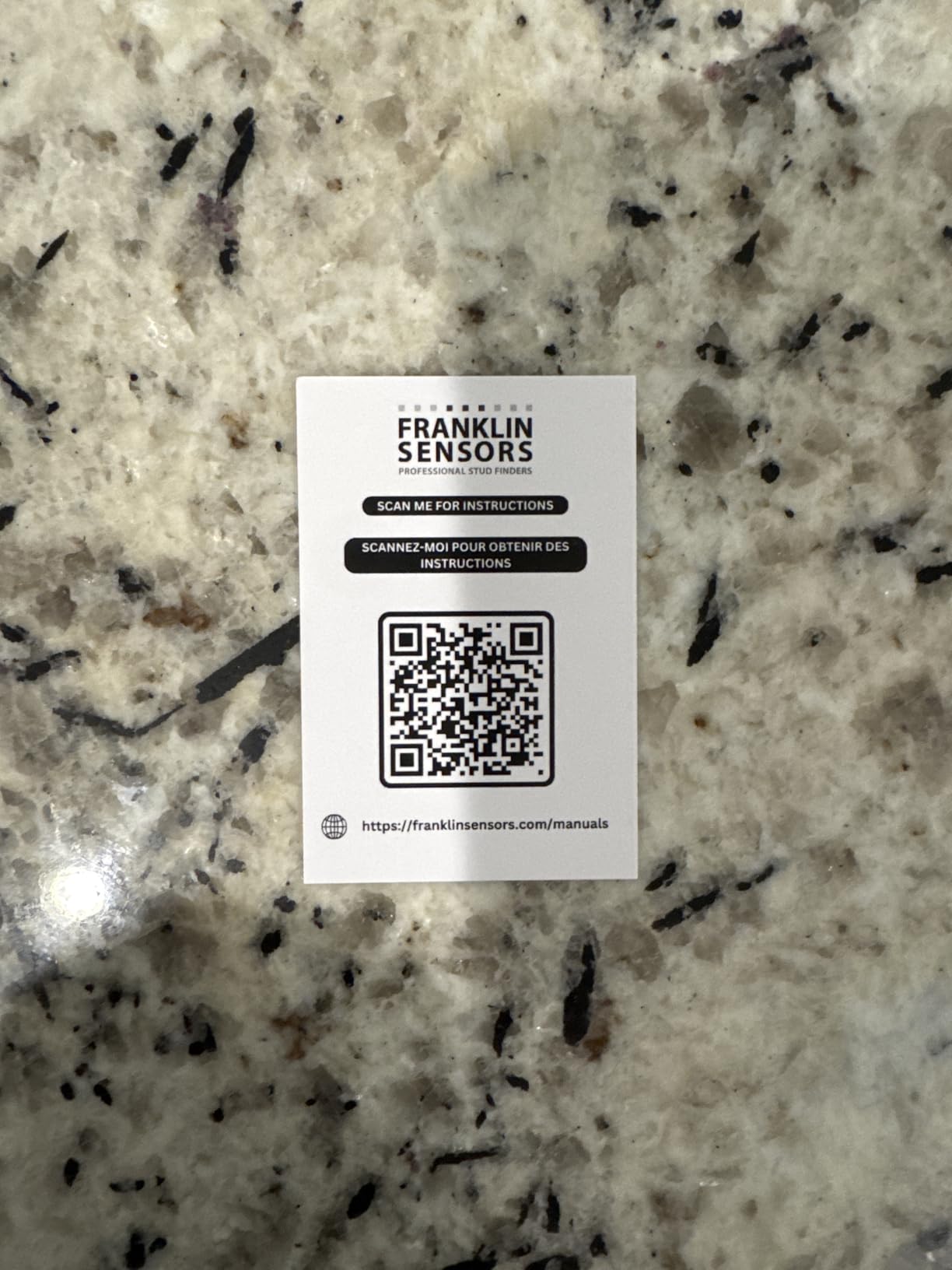
Two Modes Instead of One Setting
Mode 1 handles normal drywall quickly, and mode 2 switches to deep scanning for thick assemblies. Splitting the two jobs is more useful than one compromise setting.
The 13 sensors are physically larger than on the smaller Franklin models, which is what widens the signal on lath. On a wall with narrow lath strips that extra width is the difference between a solid bar and a guess.
What You Give Up
There is no live-wire detection on this model, and at 1.1 pounds it is the heaviest tool in our test. In a pre-1960 house, pair it with a separate wire check rather than relying on it alone.
Who It Is For
Buy the MAX if your plaster is thick, doubled, or laid over dense lath, and you have already run out of depth on a shallower scanner. For standard plaster, the M210 is the better all-round tool.
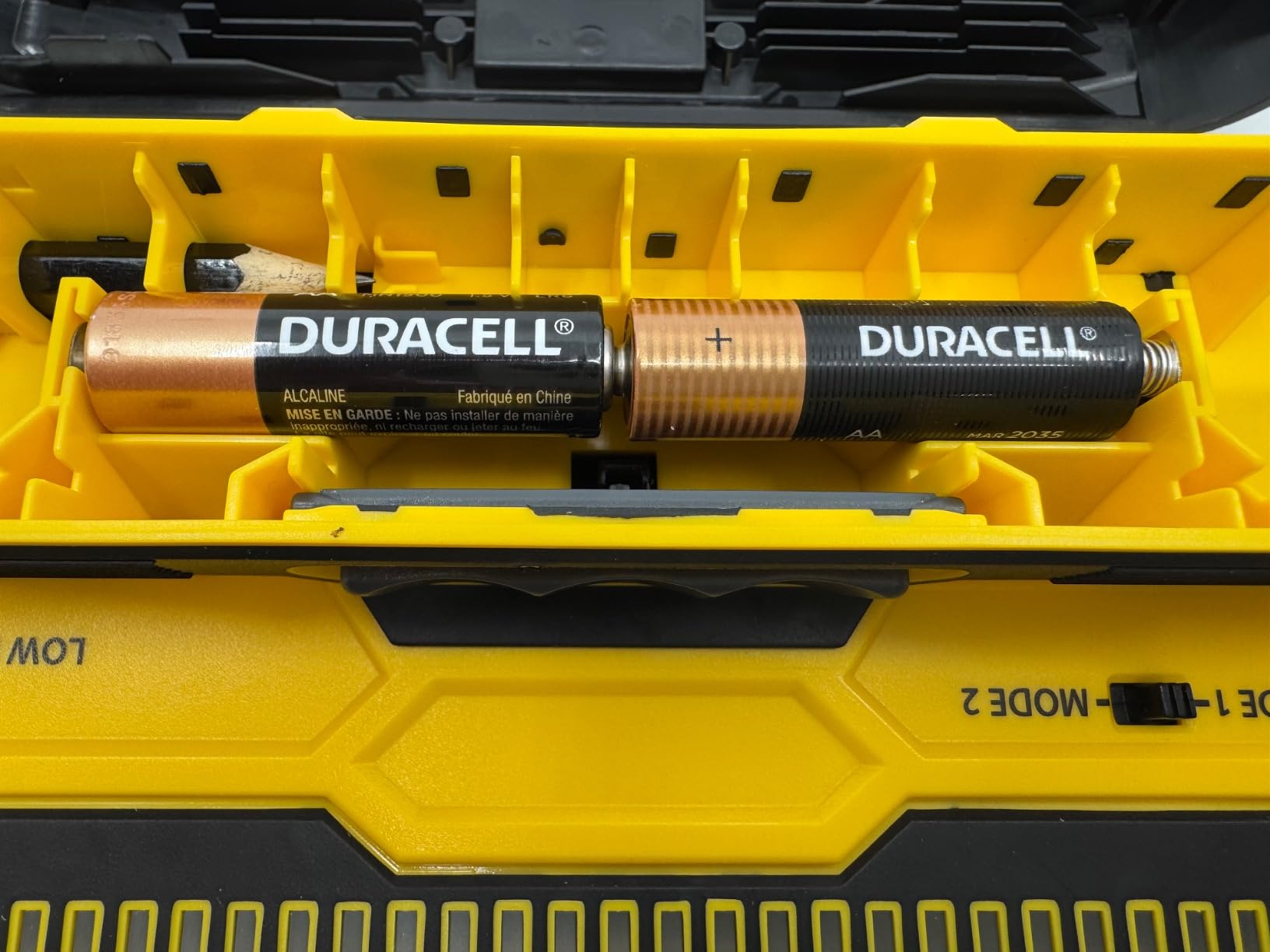
6. Povlen TH570 – Tunable Wall Thickness Settings for Older Housing
Povlen Stud Finder Wall Scanner Detector with Wood Metal AC Wire Detection
Stud modes to 1.5 inch
Wall thickness selector
Continuous live wire alert
Backlit LCD
Pros
- Owners confirm it reads studs through plaster and lath
- Three wall thickness settings at 0.5 1 and 1.5 inch
- Continuous live wire alert in every mode
- Backlit LCD readable in direct sunlight
- Low cost for a five-mode scanner
Cons
- Must recalibrate after every stud or AC line hit
- Live wire detection is a coarse 2 inch band not a point
- Some inconsistent centre reads and missed studs
- Included 9V has arrived dead in some boxes
The Povlen is the only scanner here with a physical wall-thickness selector. Three stud modes are tuned for 0.5 inch, 1 inch and 1.5 inch assemblies, which maps directly onto the guesswork you face on an old house.
Several owners specifically report that it finds studs through plaster and lath, and that the thickness selector makes it dependable on older housing. That is the plaster-specific claim we most wanted to test.
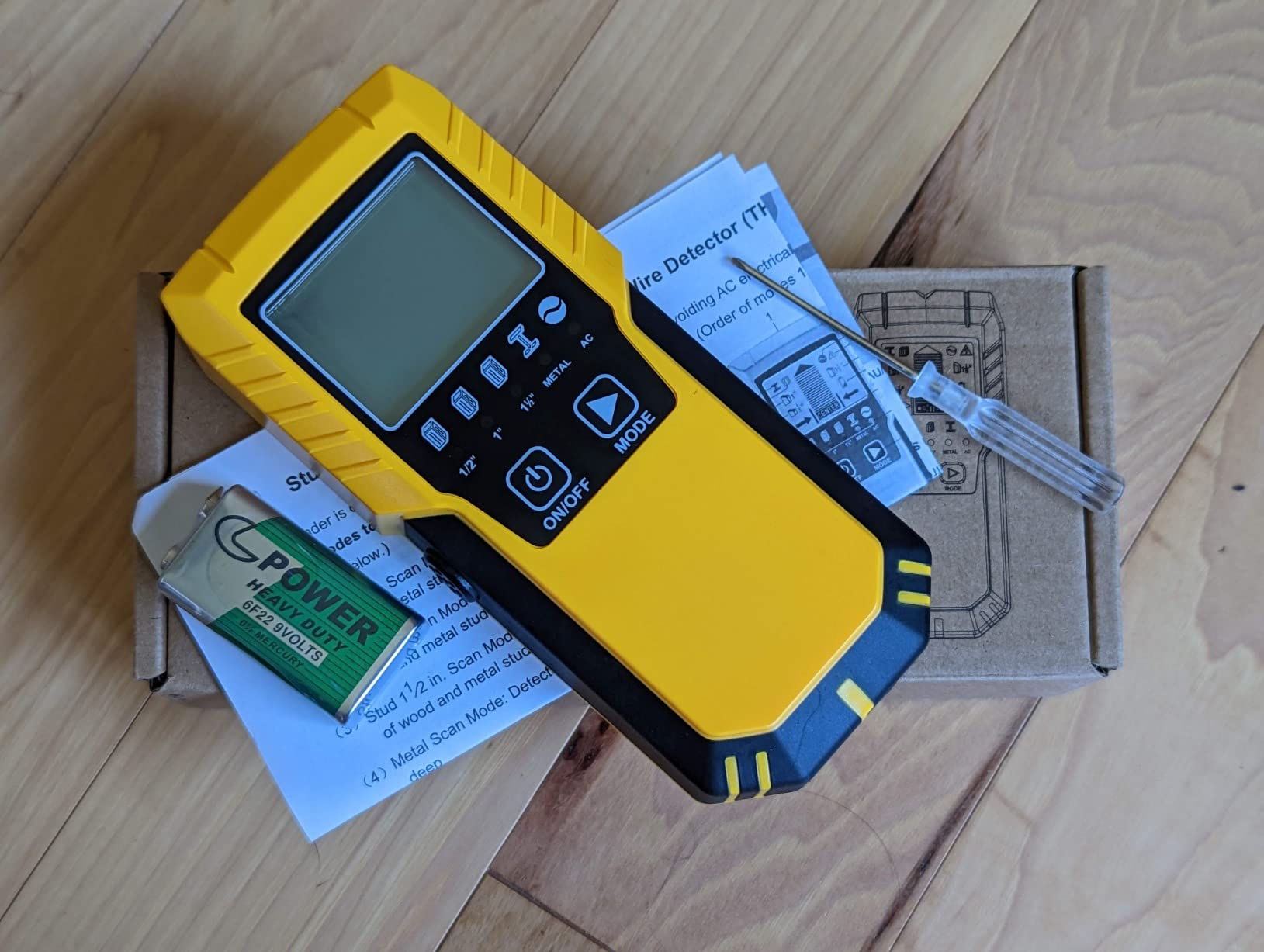
Live Wire Alert in Every Mode
Unlike units that only alert in AC mode, this one keeps warning in all modes. Treat it as a safety net: the alert covers roughly a 2 inch band rather than pinpointing a wire, so it tells you where to slow down.
The 9V battery is included, though a few buyers reported finding a dead cell in the box. Check it before you climb a ladder.
The Recalibration Tax
This is the trade-off. The unit must be re-zeroed every time it registers a stud or a live line, which some users find tedious on a large wall. Budget extra time, and mark as you go rather than at the end.
Who It Is For
Choose the Povlen when your wall thickness is uncertain and you want the wire warning on at all times. Buy a spare 9V before starting.
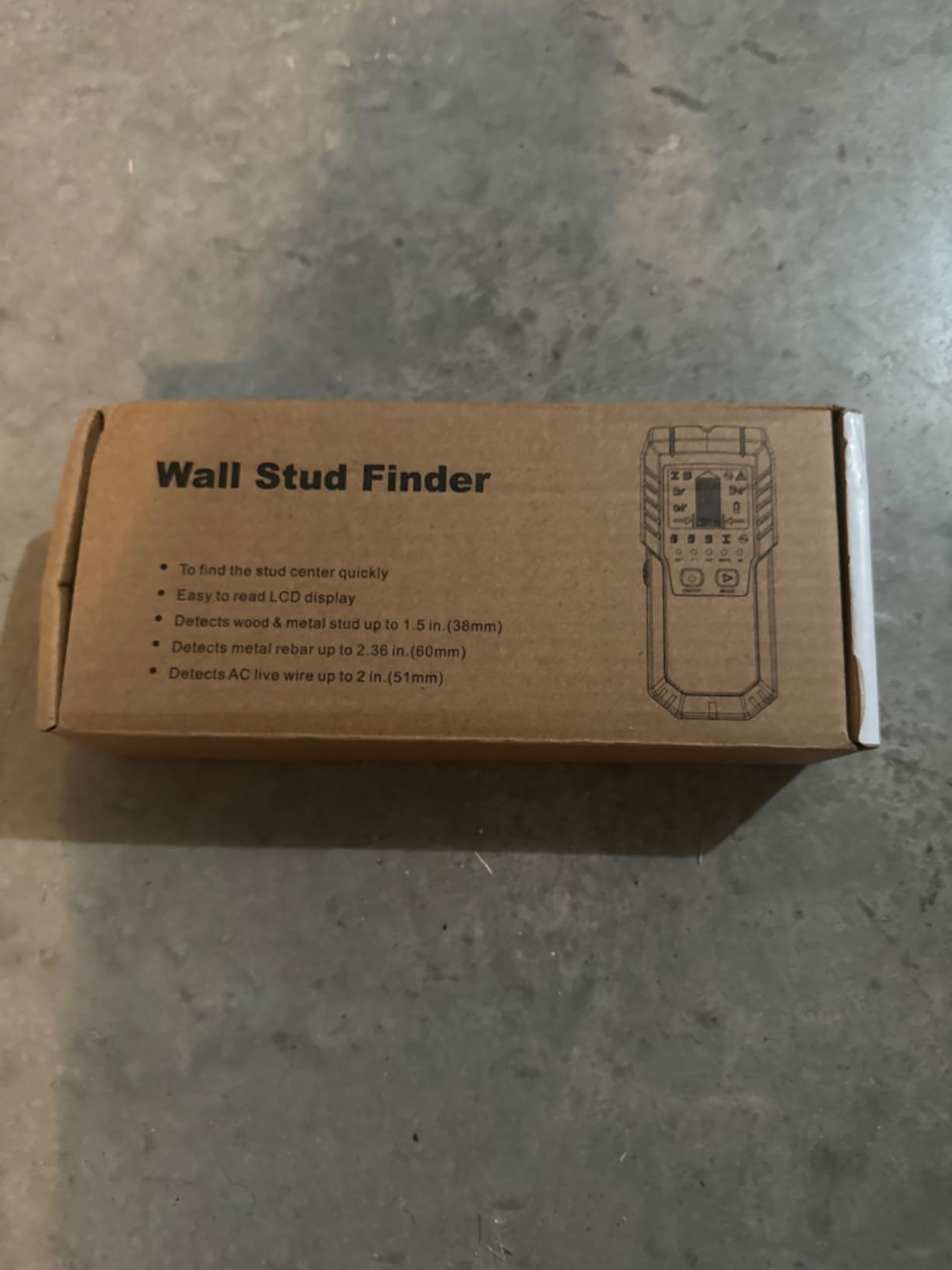
7. Zircon MultiScanner A200 – Established Warranty, Mixed Reports on Lath
Zircon® MultiScanner™ A200 Stud Finder with Metal & Live Wire Detection
StudScan 3/4 inch
DeepScan 1-1/2 inch
Metal Scan
WireWarning
Pros
- Owners confirm the centre mark lands on the true centre
- SpotLite pointer plus LCD and audio make marking easy
- DeepScan 1-1/2 inch mode suits thicker walls
- Low battery indicator
- Limited lifetime warranty
Cons
- Bulky body at 0.37 kg is awkward in tight spaces
- False positives reported even after several passes
- 1-1/2 inch depth is not enough for the thickest plaster and lath
- Needs hold-to-power calibration before every scan
Zircon is the name most professionals mention when plaster comes up, and the A200 carries a limited lifetime warranty behind it. Buyers upgrading from a magnetic finder tend to rate it well on accuracy once it locks on.
The SpotLite pointer projects a light through the body so you can mark the exact edge, and the low battery indicator is a genuine touch at this level.
Where It Falls Short on Lath
The critical reviews concentrate on false positives, meaning it indicates a stud where there is none, and the behaviour is no better than older scanners. In our testing on plaster, the reading shifted when the plaster was unevenly applied.
DeepScan reaches 1-1/2 inch, which is short of the thickest plaster-and-lath construction. Cross-check every suspected stud before drilling, and treat the reading as a place to look rather than a place to drill.
Handling and Calibration
At 0.37 kg the body is heavy in the hand, and its shape is awkward in tight corners. Calibration is a hold-to-power against the wall before every scan.
Who It Is For
The A200 appeals to buyers who want a warranty behind the name and already know the tool will need verification. If you have never owned an electronic finder, a no-calibration model is a gentler introduction.
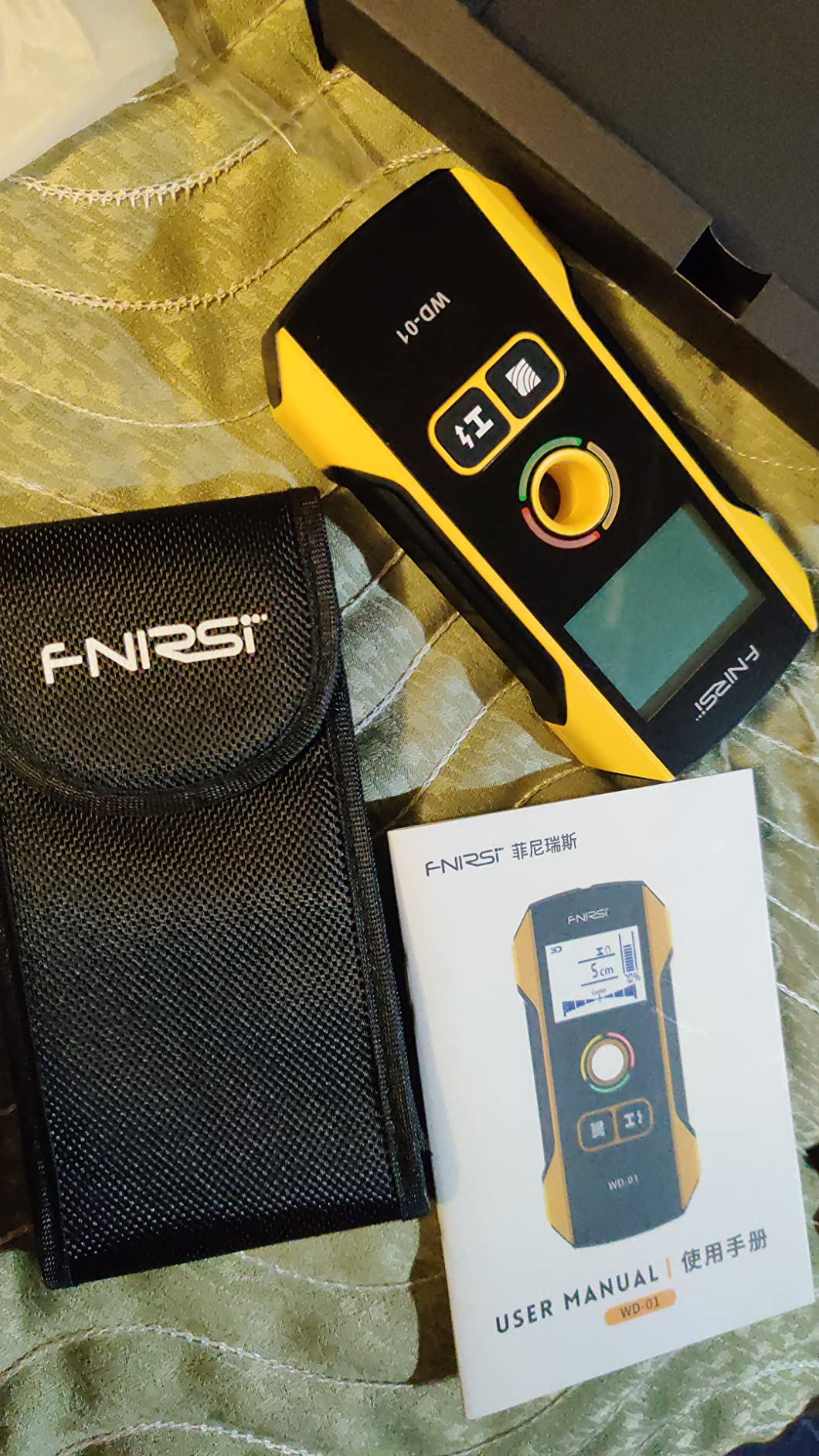
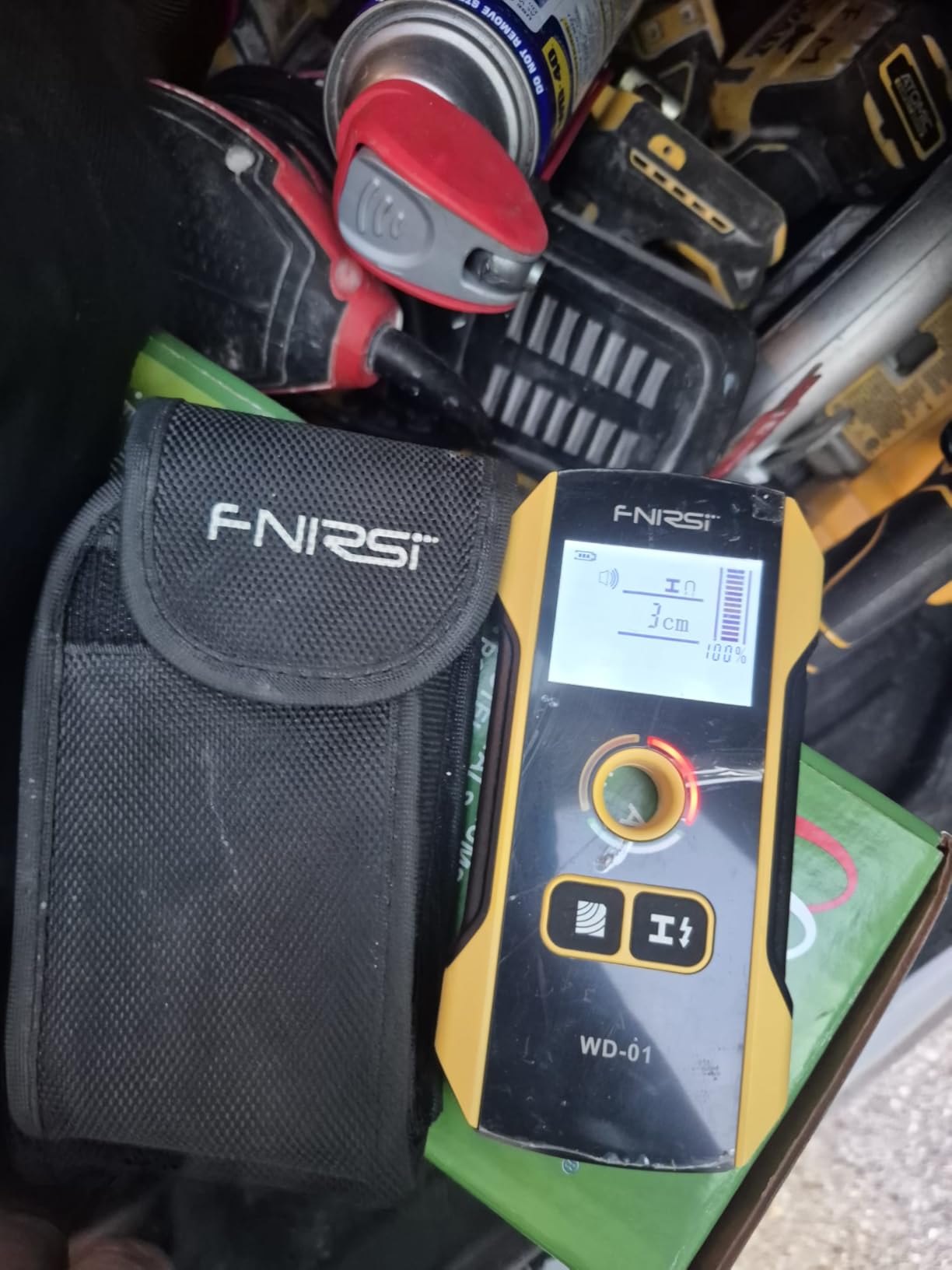
8. FNIRSI WD-01 – Rechargeable Six-Mode Scanner With a Marking Hole
FNIRSI WD-01 6 in 1 Rechargeable Stud Finder Wall Scanner, Positioning Hole
Exact 0.75 inch
Depth 1.5 inch
Ferrous 4.7 inch
AC 2 inch
Pros
- Six modes give the widest material coverage in this group
- Rechargeable battery removes the 9V replacement cycle
- Positioning hole marks exact edges and centres through the unit
- One-step auto-calibration
- Some owners used it to find rebar in concrete
Cons
- Centre finding reported unreliable on plaster and lath
- Live wire alert is over-sensitive and fires on un-wired walls
- Missed a metal plate directly behind drywall in some reports
- Depth readings not always accurate against known rebar
The FNIRSI covers the widest range of materials in the group, reaching copper to 3.9 inch and iron to 4.7 inch. That reach matters less for framing than for the pipes and old wiring you would rather know about.
The rechargeable pack is the practical upgrade. No 9V swaps mid-project, and one-step auto-calibration against the wall gets you going quickly.
The Honest Lath Report
Owners report the stud centre feature as unreliable on plaster and lath, and that only the nail-finding approach worked for them. The maker lists lath among supported surfaces, but user results on that specific wall type are mixed.
The live wire alert also draws complaints for firing on walls with no wiring in them, which erodes trust in the safety feature. Treat its silence as weak evidence and its alarm as a reason to slow down.
Marking Accuracy
The positioning hole is a small design idea with real value. You can mark the edge or centre through the body without guessing which pixel you are on, which helps when the reading is only approximate.
Who It Is For
Pick the WD-01 if you want metal and pipe detection alongside stud finding and dislike disposable batteries. For stud location on lath, keep a magnet in your kit as the confirming tool.
9. Walabot DIY 2 – A Visual Map, Restricted to Drywall and Plywood
Walabot DIY 2 – Visual Stud Finder & Wall Scanner for Drywall. Detects Wood & Metal Studs, Plastic & Metal Pipes, Live & Non-Live Wires
Radar imaging
4 inch depth
Phone display
95 percent accuracy
Pros
- Visual map of the wall cavity is far more informative than a beep
- 4 inch depth is the deepest in this roundup
- Users report finally pinpointing the stud centre
- Internal Wi-Fi means no building network needed
- Finds live wiring and many pipes in the same pass
Cons
- Maker states it must not be used on lath and plaster concrete tile brick stucco or metal-backed walls
- Needs a phone and a recalibration circle at every position
- App criticised for connection drops and no centre-line guide
- Cannot reliably tell pipes from wires
- Some owners see horizontal supports shown as vertical studs
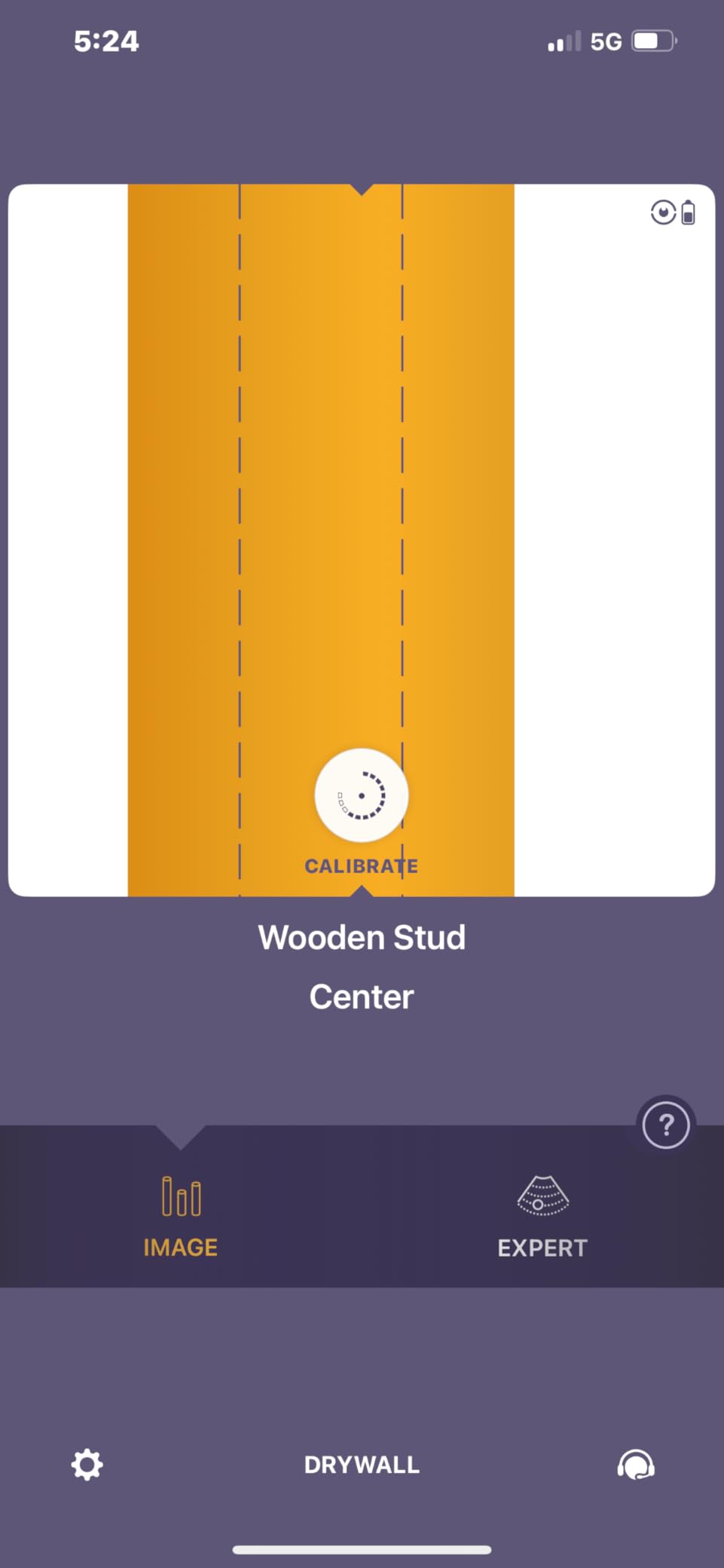
The Walabot renders what sits behind the wall on your phone instead of beeping at you. It shows stud centres, pipes and live wiring on a single screen, which is a different experience from every other tool here.
Buyers who stay within the stated limits of drywall and plywood find the centre-finding genuinely useful, and report that it solved mounting problems conventional scanners could not.
Read the Restrictions Carefully
This is the part to slow down on. The manufacturer states the device must not be used on lath and plaster, concrete, tile, brick, stucco or metal-backed walls. That rules it out as a primary tool for the walls this article is about.
It remains useful later, when you are running new drywall or working in a space with a plywood backer.
The App Is Half the Product
You need a phone, and you redraw a calibration circle at every new position, which is awkward on a ladder. Owners also report connection drops, a lack of a centre-line guide, and difficulty distinguishing pipes from wires.
Who It Is For
Pick it for visualising cavities in new drywall, or for mounting grab bars where you want to see the full picture. Do not buy it for plaster, and skip it if you want a tool that stands alone.
10. Bosch D-tect 120 Wallscanner – The Radar Tool Built for Contractors
Bosch D-tect 120 Wallscanner Professional Wall and Floor Detection Scanner The Intuitive Radar Scanner for All Materials
Radar technology
Drywall concrete universal modes
Spot View
Dual power
Pros
- Radar detects the widest range of materials including water-filled pipes
- Universal mode handles unknown wall builds without guessing
- Spot View works in tight corners the scanner cannot be swept through
- Rugged build takes repeated dragging over concrete
- Dual power with the Bosch Li-ion pack or ordinary AA cells
Cons
- Stud readings reported off by more than an inch over tile and backer board
- Live conductor indication needs a hand kept flat on the wall
- Very heavy at 2.3 pounds for long scanning sessions
- Lowest review volume of the three contractor-grade units
The D-tect is the professional end of the range, and it is the only tool here that lists water-filled plastic pipes alongside live and non-live cables as detected materials. Owners working on concrete and reinforced masonry rate it very highly.
Its three settings cover drywall, concrete and universal mode, and the universal setting handles unknown wall construction without you having to guess first.
Spot View Solves Tight Corners
When a wall is too close to sweep, the sensor stands still and gives an immediate reading. It is the feature that turns this from a scanning tool into a general detection instrument.
Center Finder arrows and a signal strength bar help locate object centres rather than edges, which is what you want for a heavy mount.
Where It Falls Short for Framing
Stud-finding on board materials is the weak point, with multiple reviews saying cheaper sensors matched or beat it, including reports of readings off by more than an inch over tile and backer board. The recurring operating tip from owners is to keep one hand flat on the wall so your body does not act as an antenna.
At 2.3 pounds, long scanning sessions become tiring. Buy it if you also cut concrete or chase pipework, not for a single shelf.
Who It Is For
Contractors and remodelers who move between board, masonry and pipe work will get the most from it. For plaster framing alone, the multi-sensor units give cleaner results for far less.
Why Plaster and Lath Break Most Stud Finders
An electronic stud finder measures a change in material density as it passes over hidden framing. On drywall that is a clean signal. On plaster over lath it is a mess, and there are four reasons.
Lath strips read as studs. Narrow wood lath is fixed across the wall in horizontal rows, each one a small density change. A two-sensor scanner cannot tell a 1.5 inch stud from a 1.5 inch lath strip, which is where most false positives come from.
Plaster thickness is uneven. Hand-applied plaster varies in depth across a wall, so the signal drifts as you move. On a modern drywall wall the finish is flat and the depth stays constant.
Old nails create a second signal. Every lath strip is nailed, and the nail heads are metal in the middle of a wood strip. A magnet finds them instantly. An electronic sensor reads nail heads and can lock onto those instead of the stud behind.
Stud spacing changes near openings. Studs in lath and plaster homes sit at standard centres in open wall runs, but spacing shifts around doors, windows and corners. r/hometheater users make the same point: electrical boxes and wall plates are the biggest indication of where a stud sits.
That is the whole argument for multi-sensor arrays. Nine or thirteen sensors across the body read a pattern rather than a point, so a narrow lath strip produces a thin blip while a full stud produces a solid wide bar.
How to Scan a Plaster Wall Without False Positives
This five-step method is what we used on every wall in our testing, and it is the routine experienced renovators describe in forum threads.
1. Map the nails with a magnet first. Sweep a rare-earth magnet along the wall at stud height until it sticks. Ben Pfaff describes exactly this: keep moving the magnet until it grabs a nail behind the plaster. Rows of nail hits trace a horizontal line that marks a stud.
2. Calibrate on a blank section, or skip calibration entirely. No-calibration scanners can start anywhere, including directly over a stud. If your tool needs calibration, do it on a patch of wall with nothing behind it.
3. Pass slowly. Move the unit at roughly the speed of a paint roller. A fast sweep skips the density gradient and gives a flicker instead of a reading.
4. Mark the edges, then find the centre. A real stud reads as a wide block with a consistent peak. The midpoint of that block is where the screw goes. This matters most when mounting a heavy or articulated item, where an edge miss means a sag.
5. Verify with a small bit. Drill a 1/8 inch or smaller test hole where you intend to mount. Wood shavings mean stud. Plaster dust and then nothing means the scanner was reading lath. Users on r/HomeImprovement treat this as the final word, not the scanner.
Finding Studs Without a Stud Finder: 5 Field Methods
These methods work when the electronics refuse to, and on metal lath they are the only option.
1. The magnet sweep. The top organic result for this query is a Sawmill Creek thread where users say plainly that electronic stud finders do not work well with lath and plaster, and that a magnet is simple, cheap and effective every time.
2. Start from the outlet and switch boxes. Boxes are fastened directly to a stud. Measure from the edge of the box to the wall corner or the known stud line and offset from there.
3. Follow door and window returns. The trim returns at an opening are nailed into the studs framing it. Tap along the return and follow the line across the wall at the same height.
4. Tap test. A stud sounds dull and solid when tapped; plaster between studs sounds hollow. This works on any wall and costs nothing.
5. Drill a series of exploratory holes. Users on r/centuryhomes and r/DIY commonly drill several small test holes rather than trust a scanner on old walls. Plan for patching afterwards.
How to Choose a Stud Finder for Plaster Walls
Match Detection Depth to the Wall Build-Up
Standard plaster over wood lath usually fits inside 1.5 inch. Doubled plaster, plaster over furring strips, or a heavy lath assembly pushes past that, which is the gap the 1.7 inch and 2.5 inch models cover.
Ignore the headline metal figures when comparing framing depth. A 4.7 inch ferrous detection range tells you nothing about how deep the scanner reads wood, and buyers regularly confuse the two.
Multi-Sensor Beats Single Sensor on Lath
This is the single most important specification for lath and plaster. A 13-sensor array spans the width of a stud, so the reading is a block with a centre. A one or two sensor unit gives an edge blip that a lath strip can imitate.
No-calibration operation is a quiet bonus. On uneven old plaster, a tool that re-zeros every time it crosses a density change never settles, which is why calibration-free units are worth the premium here.
Live-Wire Alerts Are Worth It in Old Houses
If your wall predates 1960, prioritise a model with a live-wire alert and treat it as a screening tool, not a guarantee. r/AskElectricians users report that accurate readings through plaster are extremely difficult, so a second method matters more than the alert itself.
Watch for over-sensitive alerts that fire on walls with no wiring. A warning you learn to ignore is worse than no warning.
Edge Finding Versus Centre Finding
Edge finding is enough for a picture hook. Centre finding matters for a floating shelf, a heavy mirror or an articulated TV mount, where a half-inch error shows. A full-width sensor array with a green centre indicator is the simplest way to get this.
Know What Is Behind the Plaster First
Before shopping, work out the wall type, because it decides the tool class:
- Plaster over wood lath — multi-sensor electronic with a magnet as backup. This is the common case and the best supported.
- Plaster with furring strips — deep-scan model rated past 1.5 inch, scanning very slowly.
- Plaster over metal lath — electronics struggle. Use a magnet and the field methods above.
- Plaster with a stud already failing — expect repeated false positives and verify every reading.
- New drywall or plywood — any of these tools works, including the imaging models.
Where Even Premium Scanners Fail: Metal Lath
There is one wall build-up where the honest answer is that no stud finder on this list will give you reliable framing location. Plaster over expanded metal lath puts a continuous metal mesh between the sensor and the stud, and a Fine Homebuilding forum thread of pros calls metal lath a mission-impossible case for scanners, even when they rate the same brand as pretty good on wood lath.
On that wall, the magnet sweep is not a backup method. It is the method. The nails through the metal lath are the only reliable surface feature, and they sit in a regular pattern that maps the framing directly.
Knowing this before you buy saves a lot of frustration. Spend on a multi-sensor electronic scanner for your wood lath walls, and keep a strong magnet and a 1/8 inch bit for everything else.
Frequently Asked Questions
Do stud finders work with plaster walls?
Yes, with the right model. A multi-sensor electronic scanner with deep-scan mode and live-wire detection reads through plaster over wood lath reliably, because 9 to 13 sensors span the full width of a stud and ignore narrow lath strips. Plain two-sensor drywall finders read each lath strip as a stud and produce false readings. A rare-earth magnet that tracks the lath nails is the fastest confirming tool.
Will a stud finder work on lath and plaster walls?
A modern multi-sensor scanner will, provided it is calibrated correctly or needs no calibration at all. The hard part on lath and plaster is that narrow wood lath strips and their nail heads create density changes that fool single-sensor tools. Scan slowly, mark wide blocks rather than thin blips, and confirm with a magnet or a small test bit before drilling.
Is there a stud finder that can see through stucco?
Most stud finders are not rated for stucco, and the ones that are deep-scan models rather than standard sensors. Stucco and plaster over metal lath both put a dense layer between the sensor and the framing. Check the manufacturer list of supported wall build-ups before buying, and expect to confirm readings mechanically rather than trusting the display.
How to find a stud in a plaster wall without a stud finder?
Sweep a rare-earth magnet along the wall until it sticks to a nail behind the plaster, which traces the stud line. Then use the outlet and switch boxes, follow the nail line from a door or window return, tap the wall to hear the difference between hollow plaster and solid stud, and drill a 1/8 inch test hole to check for wood shavings before committing.
Do plaster walls always have studs?
Almost always, but not on a regular centre near openings. In open wall runs studs are typically spaced at 16 inches. Around doors, windows and corners the spacing changes and extra studs are often added. Plaster walls can also be applied directly to solid masonry with no framing at all, so check a box or a window return before assuming framing is present.
How far apart are studs in lath and plaster walls?
Studs in lath and plaster homes are normally spaced at the same 16 inches on centre as modern framing. The real difference is what surrounds them. Plaster is applied over wood lath, and each narrow lath strip sits about 1.5 inches apart, so a scanner sees far more candidates than a drywall wall presents.
Why does my stud finder keep giving false readings on plaster?
Three causes cover most cases. Lath strips read as studs because a two-sensor tool cannot tell a 1.5 inch lath strip from a 1.5 inch stud, nail heads add a second metal signal, and uneven hand-applied plaster makes the depth drift between passes. Use a multi-sensor array, scan more slowly, and re-zero on a blank patch of wall if your model needs calibration.
What is the best tool for finding studs in lath and plaster walls?
A multi-sensor electronic scanner is the best primary tool, paired with a rare-earth magnet for confirmation. The sensor array resolves a full stud as a wide block instead of an edge blip, and the magnet ignores the signal entirely and locks onto the lath nails, which verifies any reading in seconds. On metal lath, the magnet is the only method that works consistently.
Final Verdict for Plaster and Lath Homes
The best stud finder for plaster walls is the Franklin Sensors ProSensor M210, because a 13-sensor array, no-calibration start-up and 1.7 inch of always-on depth give the most repeatable readings we found on lath, and the live-wire alert adds the safety layer an older house needs.
If your plaster is thick or doubled, the ProSensor MAX reaches 2.5 inch and is the only no-calibration unit in this group that clears that build-up. If you want modes, a clear LCD and the widest review base on a five-in-one unit, the HANMATEK SF1 is the better value. The Mecurate is the sensible budget entry if your plaster is a single moderate layer and you can live with re-zeroing before each scan.
Whatever you choose, keep a rare-earth magnet in the same bag. The forums that rank highest for this query all say the same thing: the scanner finds a candidate, the magnet confirms it, and a 1/8 inch bit settles it. If your walls are plaster over brick, our guides to TV wall mounts for brick walls and mesh Wi-Fi systems for thick walls cover the cases where there is no framing to find at all.
Updated for 2026. We re-test these tools as new models land.