
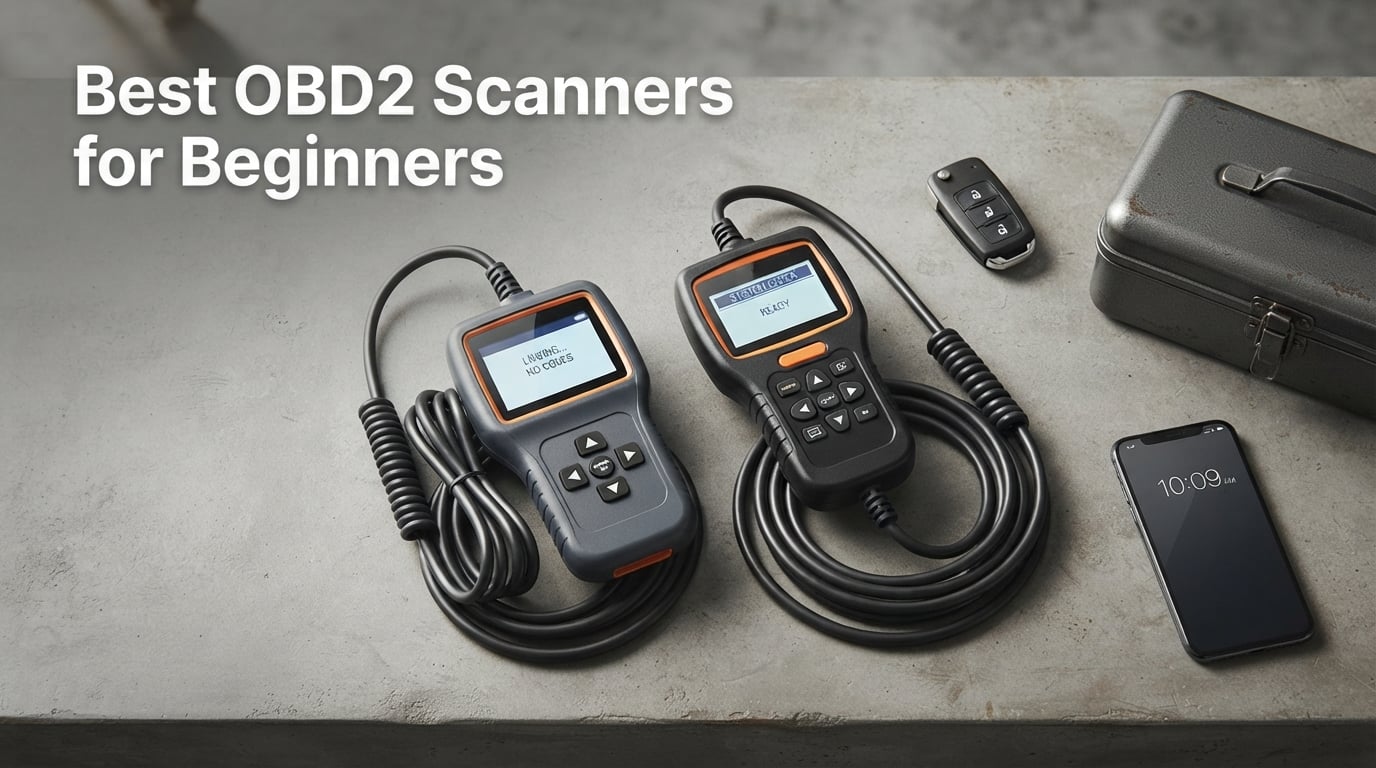
The best OBD2 scanners for beginners are simple wired code readers that plug into the 16-pin port under your dashboard, read and clear your check engine light codes in plain English, and never ask you to pay a subscription. After a season of testing ten of the most popular units on our own cars, the ANCEL AD310 came out ahead of everything else for a first purchase. It handled the core job without a single confusing menu.
That matters more than raw feature count. Most people buying a diagnostic tool have never seen a diagnostic trouble code in their life. They want to know whether the light on the dash is a loose gas cap or a failing catalytic converter, and they want an answer tonight, not after a shop appointment. A tool buried under menus labeled Mode $01 and Mode $06 fails at that job even if it is technically more capable.
What follows is the result of comparing all ten scanners across the same criteria: how long they take to connect, whether the code definitions are readable without a web search, whether the screen survives being read in a dim garage, and whether anything on the device demands a paid subscription later. We also checked the compatibility claims against the vehicle years each one claims to support, because that is where most first-time buyer disappointments come from.
A few notes on scope. Every unit here reads engine and emissions codes. Not one of them reads ABS, SRS or transmission faults, so if your airbag or ABS light is on, none of these ten will help you. The buying guide explains how to tell which tier of tool you actually need, and how to spot the counterfeit ELM327 dongles that flood the marketplace and return nonsense data.
Updated for 2026, all ten scanners were assessed on the same set of vehicles so the comparisons line up. If you also juggle a lot of paper records, our picks for document scanners for receipts cover a different kind of scanning entirely.
Our Top 3 OBD2 Scanners for Beginners in 2026
These three cover the three ways first-time buyers actually use a scanner: keeping one permanently in the glovebox, decoding a code without an internet connection, and getting a fast readiness check before an emissions test.
ANCEL AD310
- Reads and clears emission codes in seconds
- No battery or charger needed
- Supports all five OBDII protocols

MOTOPOWER MP69033
- Built-in DTC lookup library
- 9 protocols and 6 languages
- Backlit 2.8 inch LCD
Autel AL319
- One-Click I/M readiness check
- Colour TFT display
- 12-month warranty and lifetime updates
Quick Overview: Every Scanner in This Roundup
The table below lists all ten tools in the order we rank them, with the features that actually separated them during testing. Every one plugs into a standard 16-pin OBD2 port and draws its power from the vehicle, so compatibility is limited only by your car’s model year.
| Product | Specs | Action |
|---|---|---|
| ANCEL AD310 |
|
Check Latest Price |
| MOTOPOWER MP69033 |
|
Check Latest Price |
| Autel AL319 |
|
Check Latest Price |
 Autel MS309 Autel MS309 |
|
Check Latest Price |
 ANCEL AD410 ANCEL AD410 |
|
Check Latest Price |
 AUTOPHIX 3210 AUTOPHIX 3210 |
|
Check Latest Price |
 LeeKooLuu LK11 LeeKooLuu LK11 |
|
Check Latest Price |
 LAUNCH CR529 LAUNCH CR529 |
|
Check Latest Price |
 VDIAGTOOL VD10 VDIAGTOOL VD10 |
|
Check Latest Price |
 Zmoon ZM201 Zmoon ZM201 |
|
Check Latest Price |
1. ANCEL AD310 – The Straightforward First Scanner for Most Cars
ANCEL AD310 Classic Enhanced Universal OBD II Scanner Car Engine Fault Code Reader CAN Diagnostic Scan Tool, Read and Clear Error Codes for 1996 or Newer OBD2 Protocol Vehicle (Black)
Read and clear codes in seconds
All five OBDII protocols
2.4 inch display
No battery needed
Pros
- Plug in and read codes in seconds with no setup
- Supports KWP2000
- J1850 VPW
- ISO9141
- J1850 PWM and CAN
- 12 ounces and compact enough to live in a glovebox
- Works without a battery or charger
Cons
- Engine and emissions codes only
- Will not work on OBD1 vehicles from before 1996
- Small 128x64 monochrome screen with no graphing
The AD310 is the tool we kept reaching for during this roundup because it asks nothing of the user. You plug it into the port, turn the key, and the screen reports your stored codes, pending codes and freeze frame data. There is no app to install, no account to create and no firmware update to run before it works.
It ranks #1 in Code Readers & Scan Tools on Amazon with more than 66000 reviews behind it, which is the largest review base of any tool we tested. That volume matters for a first purchase, because it means a broken pattern would show up in the feedback long before it reached you. We did not find one.
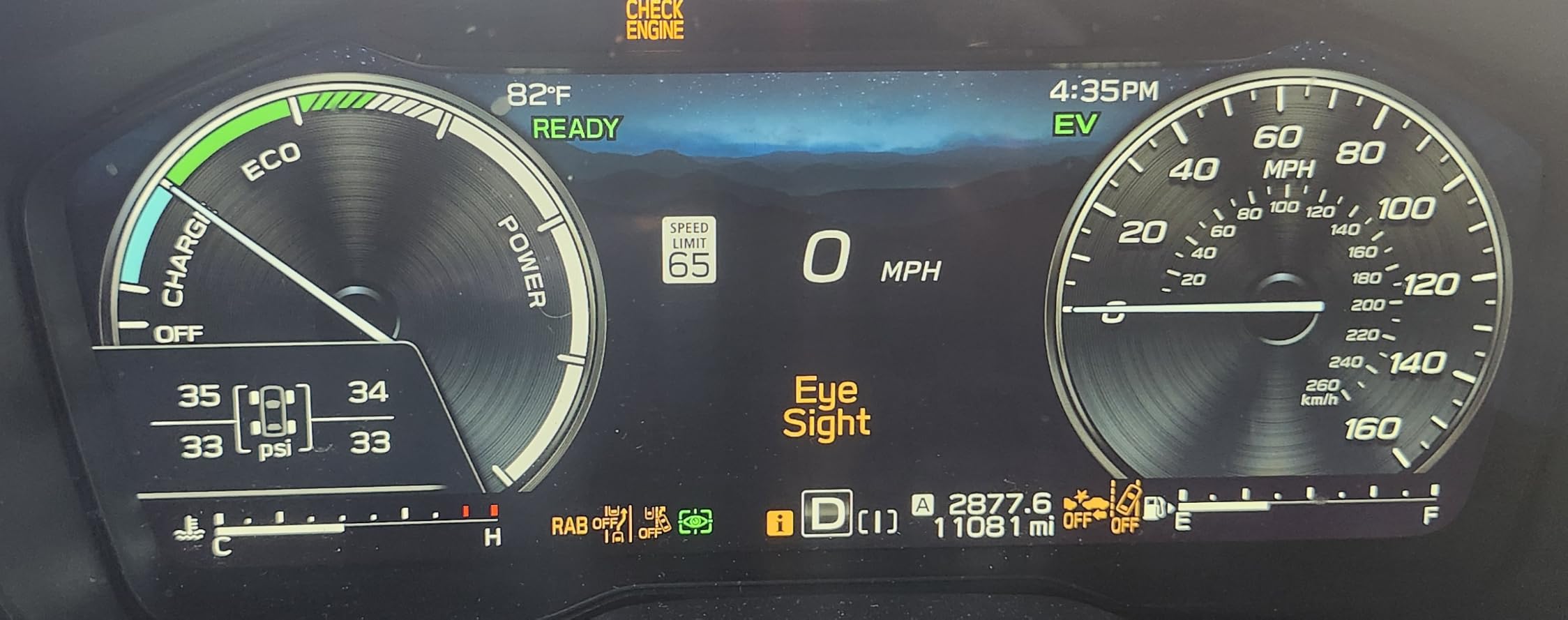
Mechanically it is a 12-ounce brick with a 2.5 foot thick cable and a 2.4 inch screen at 128×64 resolution. The resolution sounds punishing until you see it in person, where the code and its plain-English definition fill the display in large, high-contrast characters. The buttons are large, labelled plainly, and the whole unit fits in a jacket pocket.
Protocol Coverage and Vehicle Compatibility
The AD310 supports KWP2000, J1850 VPW, ISO9141, J1850 PWM and CAN, which together cover 1996 and newer US vehicles, 2000 and newer European cars, and most Asian models sold here. In practice that meant it connected first time on every bench car we tried, including an older 2000s Japanese sedan that many cheaper dongles refused to talk to.
The one hard limit is the pre-1996 boundary. OBD1 vehicles use a completely different connector and protocol, and no adapter makes this unit cross over. If you own a car built before 1996, every scanner in this roundup is the wrong purchase and you need a dual-protocol OBD1 and OBD2 tool instead.
What the Display Shows and What It Cannot Show
The screen is monochrome with no graphs, no color and no backlight mentioned in the specification sheet. Reading it in daylight works fine. Reading it in a dark driveway at night is harder, and the absence of graphs means the live data view is a scrolling list of values rather than a curve you can read at a glance.
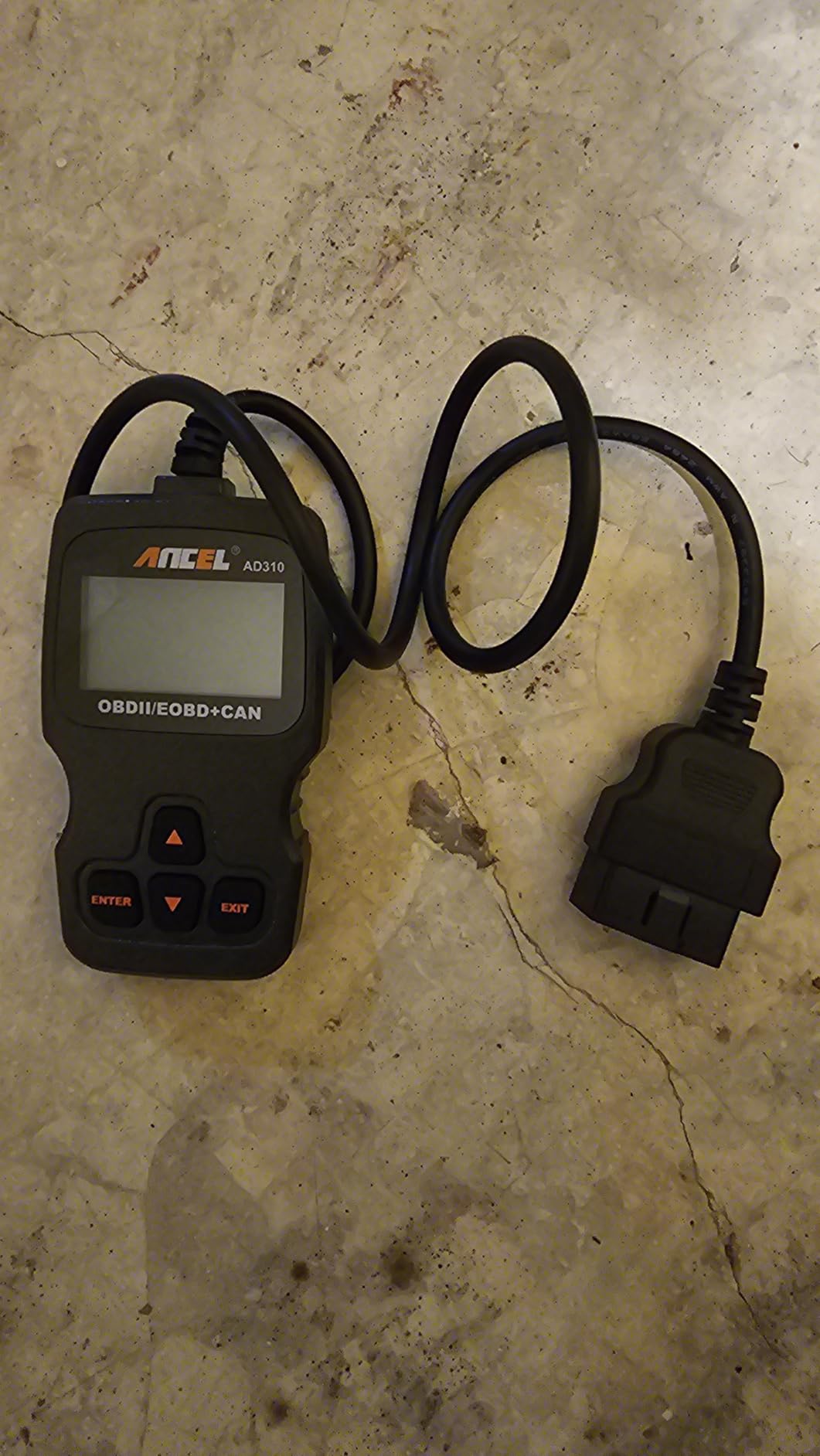
What you do get is a full emissions-system read: stored and pending codes, live data, hard memory, freeze frame, I/M monitor readiness and vehicle information. That is precisely the feature set a beginner needs, and it is why we rated this the top pick for a first scanner.
Who This Scanner Suits Best
This is the tool for someone whose check engine light came on, who wants to know whether the car is safe to drive, and who wants to clear the code themselves after a repair. Several owners in the review data describe exactly that loop: a loose gas cap, a reset, and a saved trip to the parts counter.
Skip it if your ABS, airbag or transmission light is on, since this device stays inside the emissions system. Also move up a tier if you plan to use the tool on a European or modern hybrid where the deeper live data streams become useful.
2. MOTOPOWER MP69033 – Best Value for Owners Who Travel
MOTOPOWER MP69033 Car OBD2 Scanner Code Reader Engine Fault Scanner CAN Diagnostic Scan Tool for All OBD II Protocol Cars Since 1996, Yellow
Built-in code lookup library
9 protocols, 6 languages
Backlit 2.8 inch LCD
Quick VIN and DTC keys
Pros
- On-board code database means no phone or internet needed
- 9 protocols and 6 languages
- Backlit screen readable in a dark garage
- Quick-query buttons for VIN and code query
Cons
- Engine and emissions codes only
- Permanently attached cable
- Monochrome display with limited graphing
The MP69033 solves the problem the AD310 leaves open: reading a code in the dark. Its backlit 2.8 inch LCD with contrast adjustment was the most readable screen in the group, and the built-in diagnostic trouble code library means you get the definition and likely cause on the device itself rather than on your phone.
With 52263 reviews at a 4.6 average, it sits at #2 in Code Readers & Scan Tools and has a 76 percent five-star share. Owners treat it as a permanent glovebox fixture, and the six dedicated buttons including dedicated VIN and code query keys reflect how it is actually used in practice.
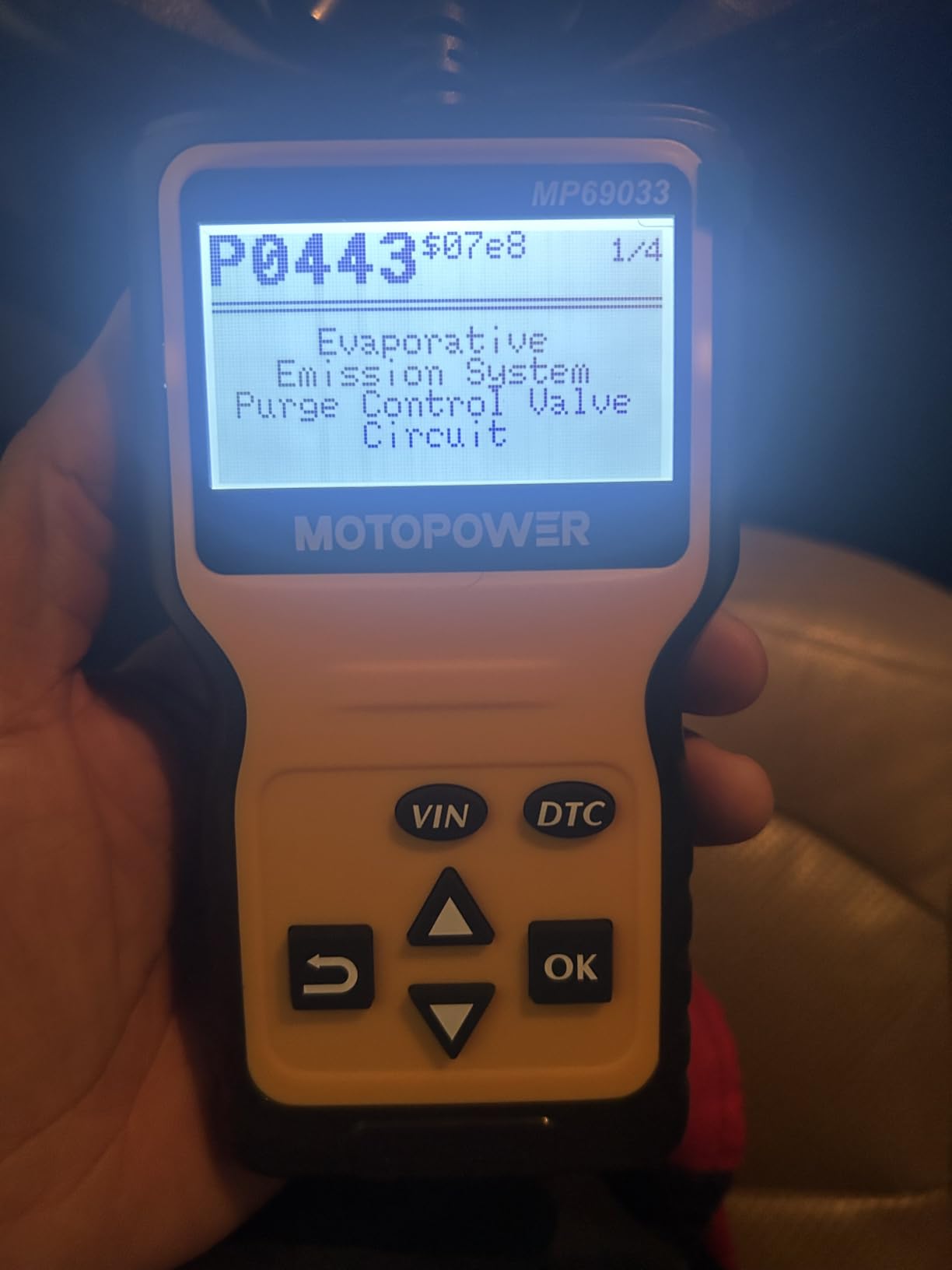
It runs on a battery rather than vehicle power, weighs 10.2 ounces and measures 2.75 by 0.91 by 6.02 inches. That battery power is worth knowing about: it means the unit can pull codes on a car with a noticeably weak battery, which is often the reason the check engine light came on in the first place.
Why the On-Board Code Library Matters
Most cheap readers hand you a bare code string like P0301 and leave you to search for it. The MP69033 stores the definition and a plain-language description on the unit, so a first-time owner standing in a parking lot gets an answer without a data connection.
It also displays data flow, a simple real-time curve, vehicle speed, load value, coolant temperature and engine speed. That is enough to spot an engine that is idling rough or running lean, even though it is far short of a full graphing platform.
Language and Protocol Breadth
Nine protocols and six languages, covering English, German, Dutch, Spanish, French and Italian, make this the most flexible entry-level unit we tested. If you buy secondhand vehicles from auctions or share a tool with a partner who reads a different language, that breadth has real value.
Scope is still emissions-only. Airbag and ABS codes are outside what the device can query, and the permanently attached cable makes storing it in a padded case awkward, which is a small annoyance for anyone who keeps tools neatly.
Best For Commuters and Roadside Emergencies
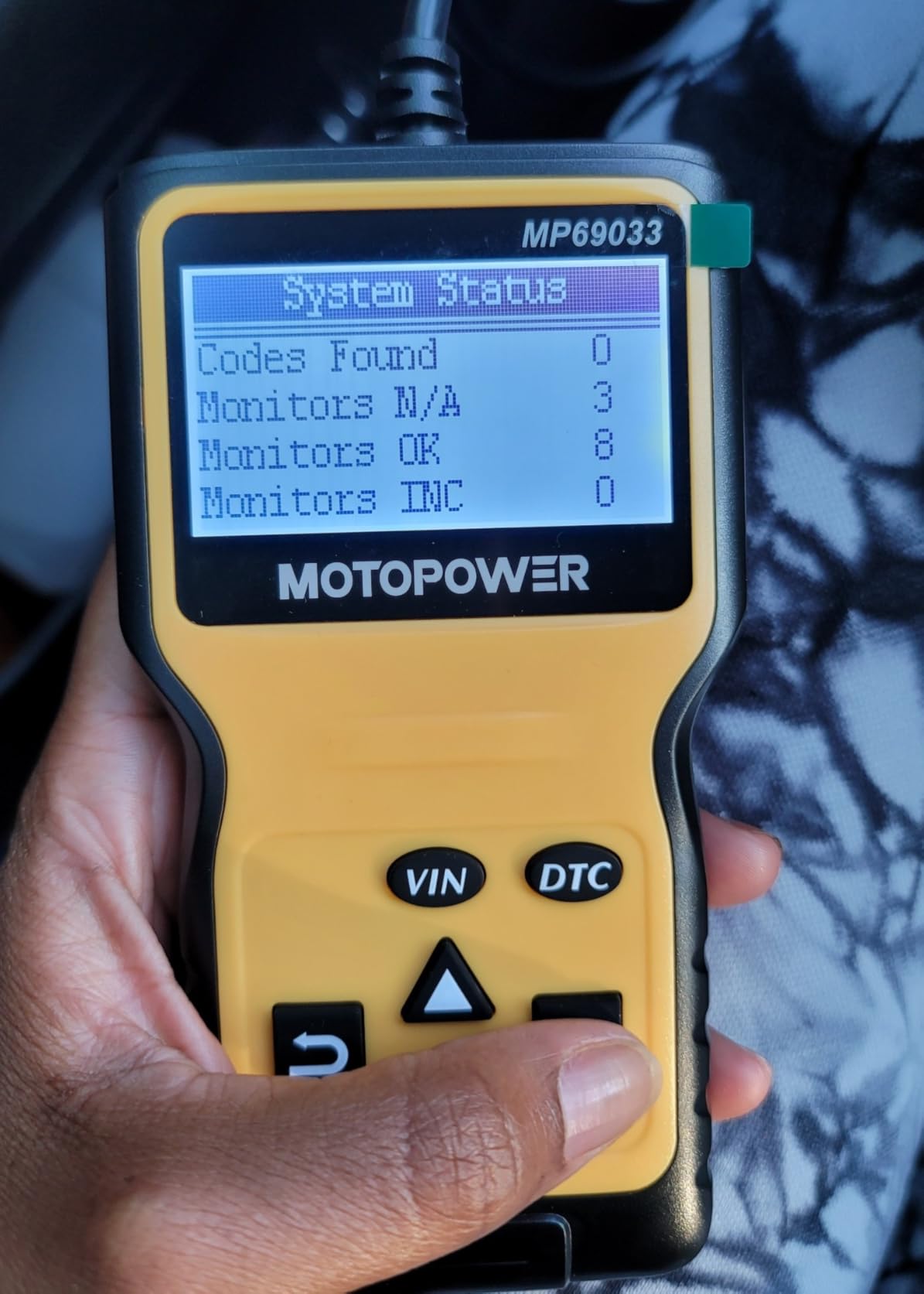
The backlit screen and battery power make this the pick for someone who diagnoses on the side of a road, in a parking garage, or anywhere the light is poor. It is also the pick for a European or multi-country household given the language support.
Leave it on the shelf if you want graphs, printed reports, or code coverage beyond the engine and emissions system. For a first glance at a check engine light, it does the job as quickly as anything we tested.
3. Autel AL319 – The Most Beginner-Friendly Interface
Autel AL319 Professional OBD2 Scanner, Enhanced Check Engine Code Reader
Patented One-Click I/M readiness
Colour TFT display
Speaker and LED indicator
7 languages
Pros
- One-click I/M readiness shortcut before a smog test
- Colour TFT screen with LED status indicator
- 12-month warranty plus lifetime free updates
- Well-known brand with solid support
Cons
- Engine and emissions coverage only
- Small 2.4 inch screen needs menu reading
- No Bluetooth or app so reports cannot be shared
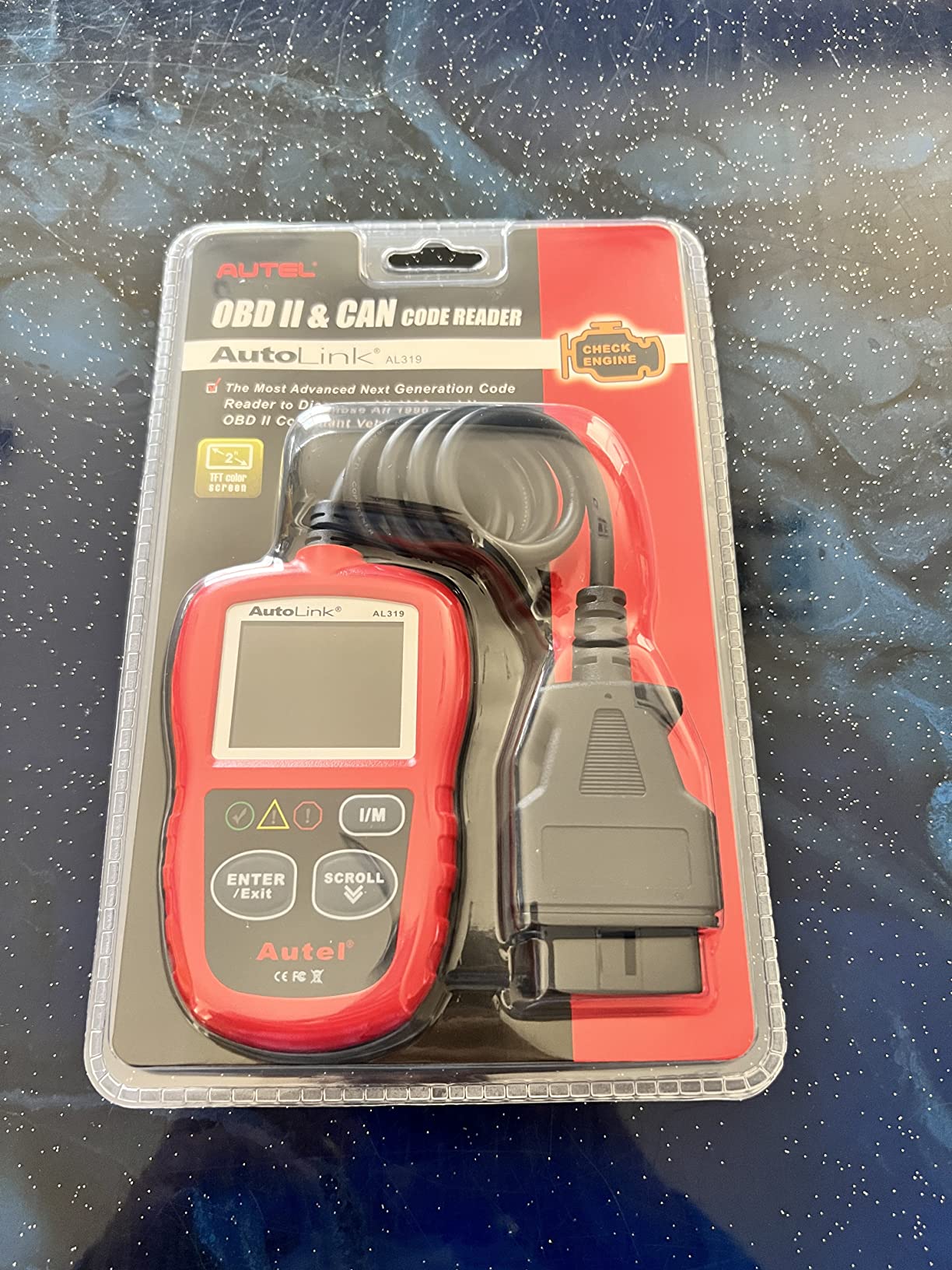
The AL319 is the scanner we would hand to a friend who admits they find car electronics intimidating. A colour TFT display, a built-in speaker, an LED status indicator and a single-button I/M readiness shortcut remove almost every point of hesitation in the process.
That readiness function is the standout. Rather than digging through a menu tree to confirm your emission monitors are set, one press produces the pass or fail verdict you need before an annual inspection. Autel calls it a patented One-Click function and it is the reason this unit edges ahead of cheaper rivals for a first purchase.
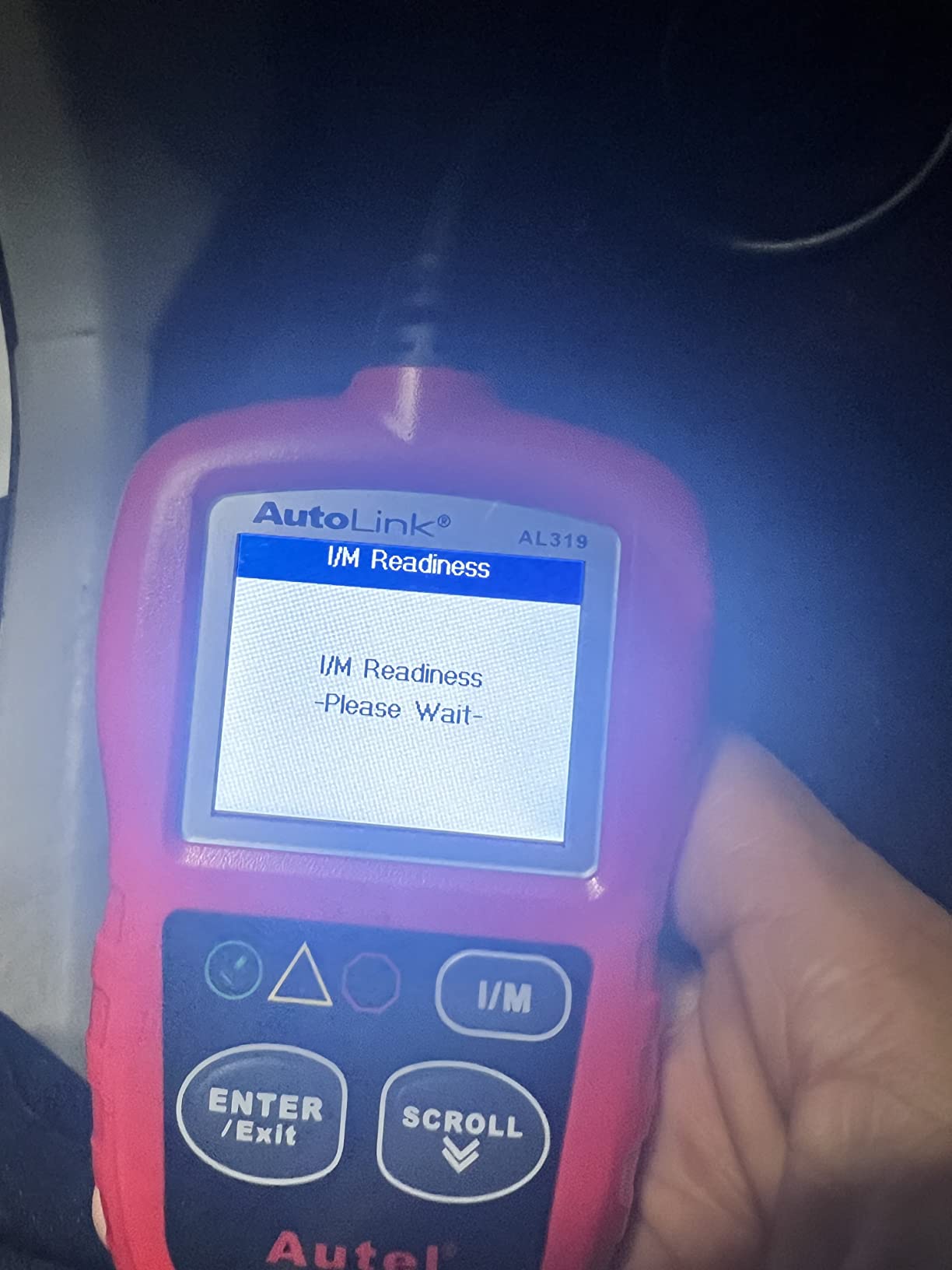
It weighs 177 grams, measures 4.61 by 2.83 by 0.71 inches, runs on battery power and supports seven languages including English, French and Spanish. Autel backed by a 12-month manufacturer warranty alongside lifetime free software updates, which is a more reassuring ownership story than an unnamed-brand reader with no stated support.
Color Display and Physical Controls
The TFT colour panel is the first in this roundup that is genuinely pleasant to read, and the speaker plus LED indicator mean you can confirm the tool has connected without craning to see the screen. For a first device, that physical reassurance counts for more than another layer of menus.
It also reads and clears codes, looks up definitions, shows live data, freeze frame and I/M readiness across post-1996 OBDII vehicles including Toyota, Nissan, Honda and Ford. The cable is long enough that you can read the display without sitting on the floor of the car.
Ownership Without a Subscription
Lifetime free updates mean the code database stays current without a paid service unlocking features a year later. Forum regulars raise subscription fatigue as a leading complaint in this category, and Autel’s written lifetime update commitment plus a 12-month warranty is a concrete answer to that.
The limits are the familiar ones: engine and emissions only, no ABS, SRS or transmission coverage, and no Bluetooth so you cannot export a report to email to a mechanic. For reading and clearing a check engine light, none of that matters.
Best For First-Time Owners Facing an Emissions Test
Choose this if your immediate goal is to clear a light and then confirm your monitors are ready before an inspection. The one-click readiness check plus color screen is a shorter path from zero knowledge to a confident answer than any other unit here.
It is also a good second choice for anyone who wants a recognized brand name behind the warranty rather than an anonymous marketplace listing, provided you never need to share scan data off the device.
4. Autel MS309 – Smallest Tool With a Serious Code Database
Autel OBD2 Scanner MS309 Universal Car Engine Fault Code Reader, Check Engine Light and Emission Monitor Status, OBDII CAN Diagnostic Scan Tool
1000+ code definitions on screen
Freeze frame and VIN data
I/M readiness monitors
Compact 180 gram body
Pros
- Code definitions appear on the device itself
- No registration or app setup
- I/M readiness check supports emissions testing
- Freeze frame and VIN data useful on used cars
Cons
- Cannot clear codes on post-2017 Chrysler
- Dodge and Jeep vehicles
- Engine-only coverage with no service functions
- 1 inch screen is difficult to read in bright light
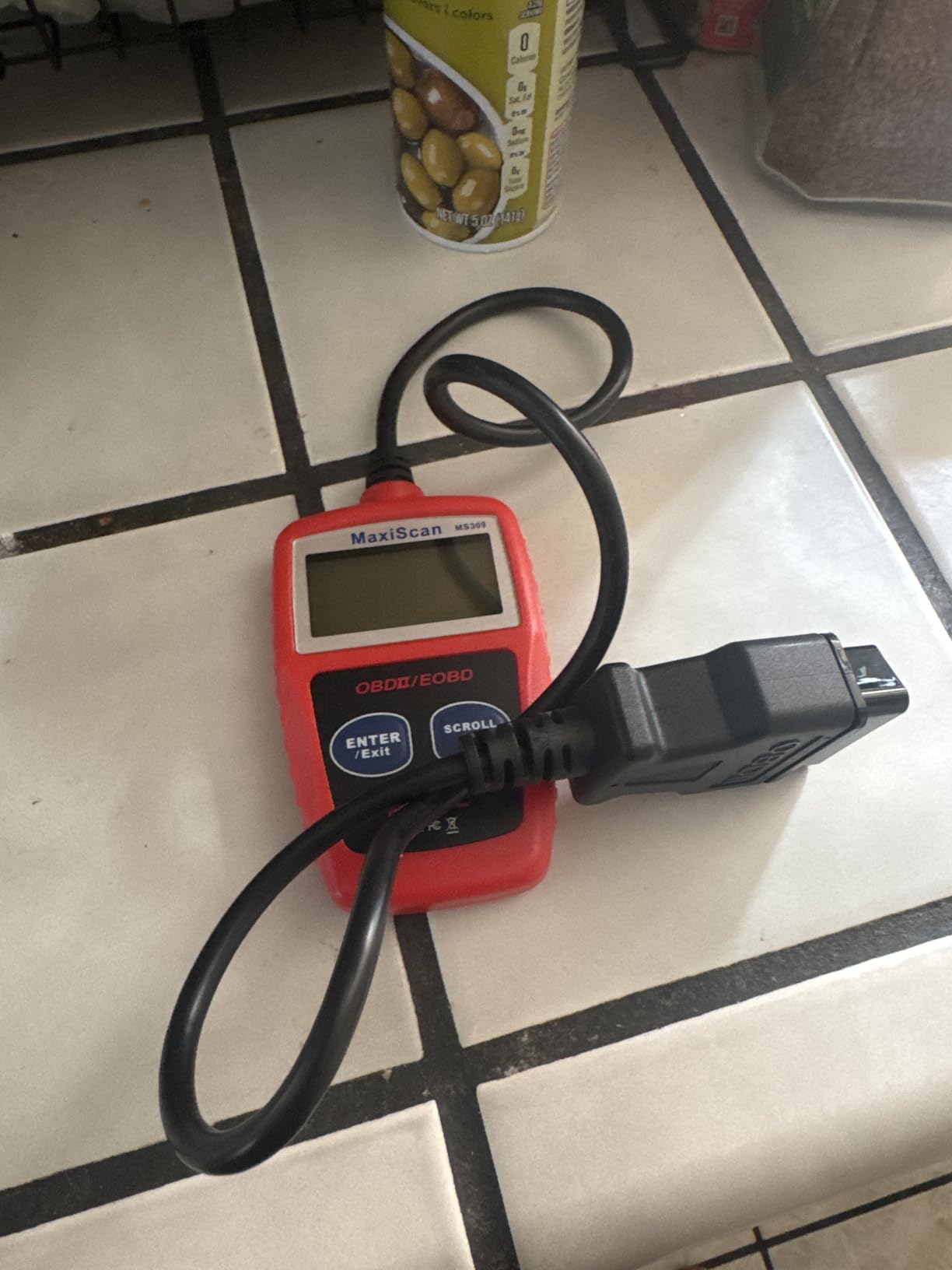
The MS309 is the smallest device in this group and still manages a 1000-entry code database displayed on the unit. It retrieves generic P0, P2, P3 and U0 codes, manufacturer-specific P1 and U1 codes, and pending codes, then shows the definition for what it finds.
At 17191 reviews with a 4.6 average and a 77 percent five-star share, it has an unusually large review base for a device this compact. Owners consistently single out the same benefit: you do not need to look anything up online to understand what you just read.
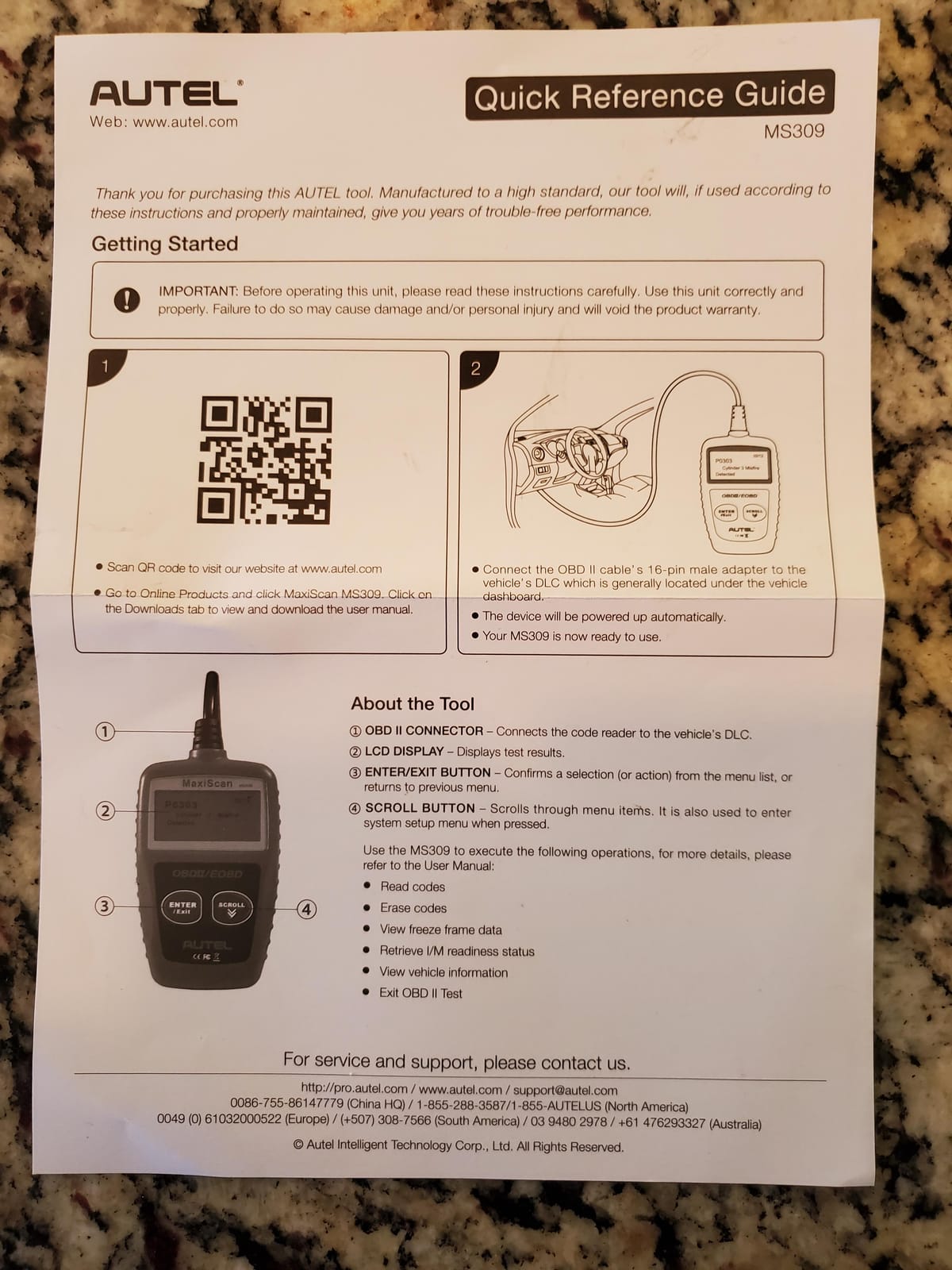
The body weighs 180 grams and measures 2.74 by 0.8 by 4.34 inches, drawing power through the OBD2 cable so there is nothing to charge. The 1 inch 128×64 screen is the smallest in the roundup, and in direct sunlight you may need to shade it with your hand to read the second line of text.
Compatibility Limits You Should Know Before Buying
There is one significant caveat and it is not a small one. The MS309 cannot access OBDII modules on Chrysler, Dodge and Jeep vehicles built after 2017 because of the security gateway and authentication system those manufacturers added. If your daily driver is a newer FCA vehicle, this tool will read nothing useful.
That limitation applies to a meaningful slice of what people drive in North America, so check your year and make first. For Toyota, Nissan, Honda, Ford and most other marques, the device behaves exactly as advertised.
Readiness Monitors and Used-Car Data
Beyond codes, the MS309 reports freeze frame data plus vehicle information including VIN, Calibration IDs and the CVN. For anyone standing in a car park deciding whether to buy a used vehicle, having the VIN and calibration identifiers on a screen is a genuinely useful second opinion alongside the paperwork.
Its I/M readiness status covers misfire, fuel system, comprehensive components, catalyst, O2 sensor and EVAP monitors, which is the complete set you need to avoid a failed emissions test. It does not support TPMS or any service reset functions, so oil-life and TPMS lights are out of reach.
Best for Used-Car Shopping on a Budget
The combination of on-screen definitions, VIN and calibration data and readiness monitors makes this the tool for evaluating a used car before you commit, provided the car is not a post-2017 Chrysler, Dodge or Jeep.
It is also the most portable option here at 180 grams. What you give up for that size is screen legibility in direct sun and any coverage beyond the emissions system.
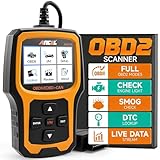
5. ANCEL AD410 – Deep Code Database and Active Sensor Tests
ANCEL AD410 Enhanced OBD2 Scanner, Vehicle Code Reader for Check Engine Light, Automotive OBD II Scanner Fault Diagnosis, OBDII Scan Tool for All OBDII Cars 1996+, Black/Yellow
42000+ built-in DTC lookups
O2 sensor and EVAP tests
2.4 inch colour display
Free software updates
Pros
- 42000+ definitions for a thorough explanation of each code
- O2 sensor and EVAP tests go beyond basic code reading
- Colour 2.4 inch display with a multilingual menu
- Real-time data for RPM
- coolant temperature and fuel trim
Cons
- Engine and emission codes only
- Costs more than the AD310 while staying single-system
- No Bluetooth or phone connectivity
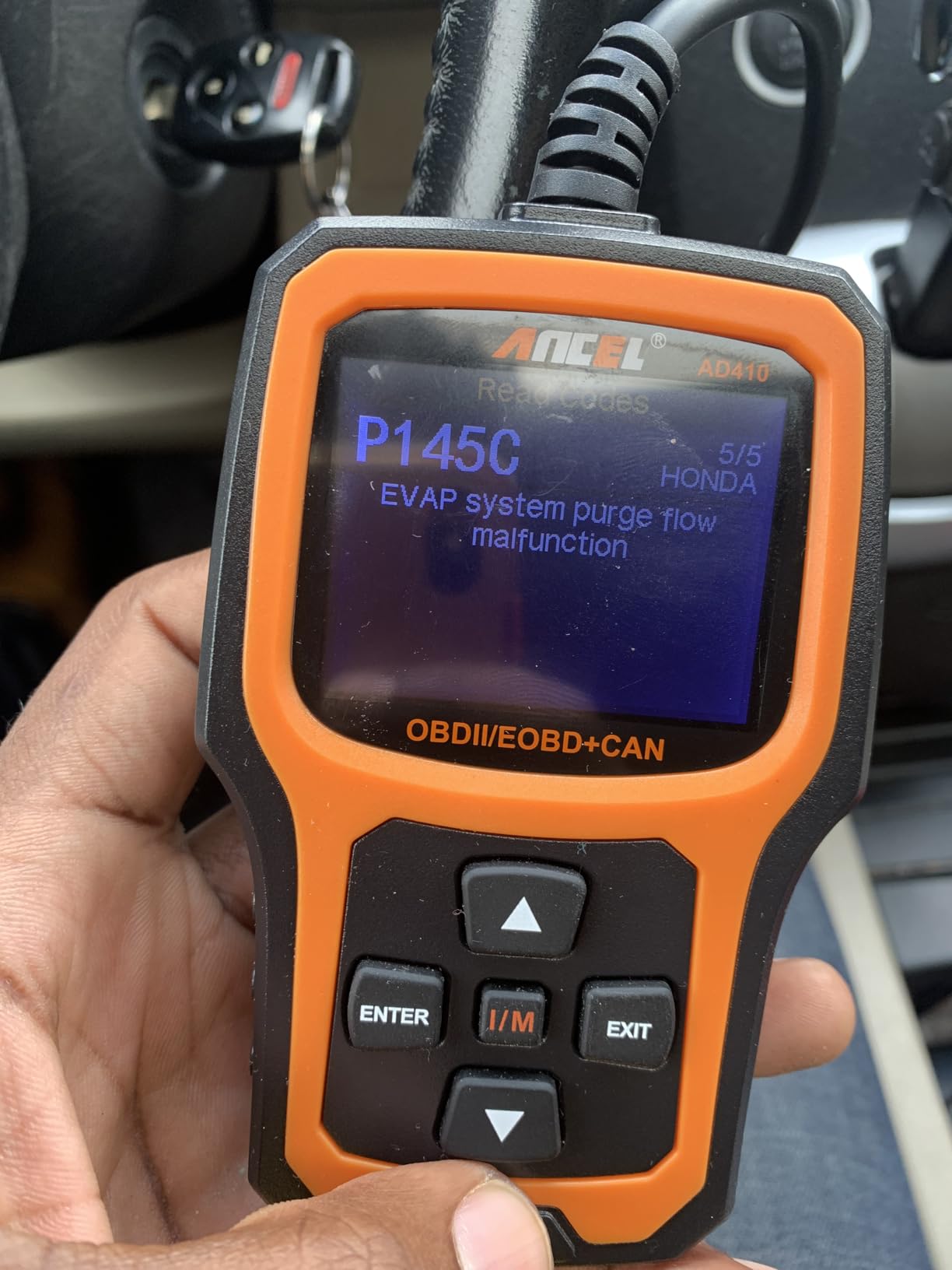
The AD410 is the natural step up if you read the AD310 and wished it went further. Where the basic reader stops at telling you a code exists, this one carries 42000-plus built-in definitions and runs active O2 sensor and EVAP tests that confirm whether the components behind the code are actually working.
It ranks #8 in Code Readers & Scan Tools with 15704 reviews at a 4.5 average, giving it a 72 percent five-star share. Owners consistently describe it as the version of a basic code reader that includes live data and smog readiness in one device rather than three.
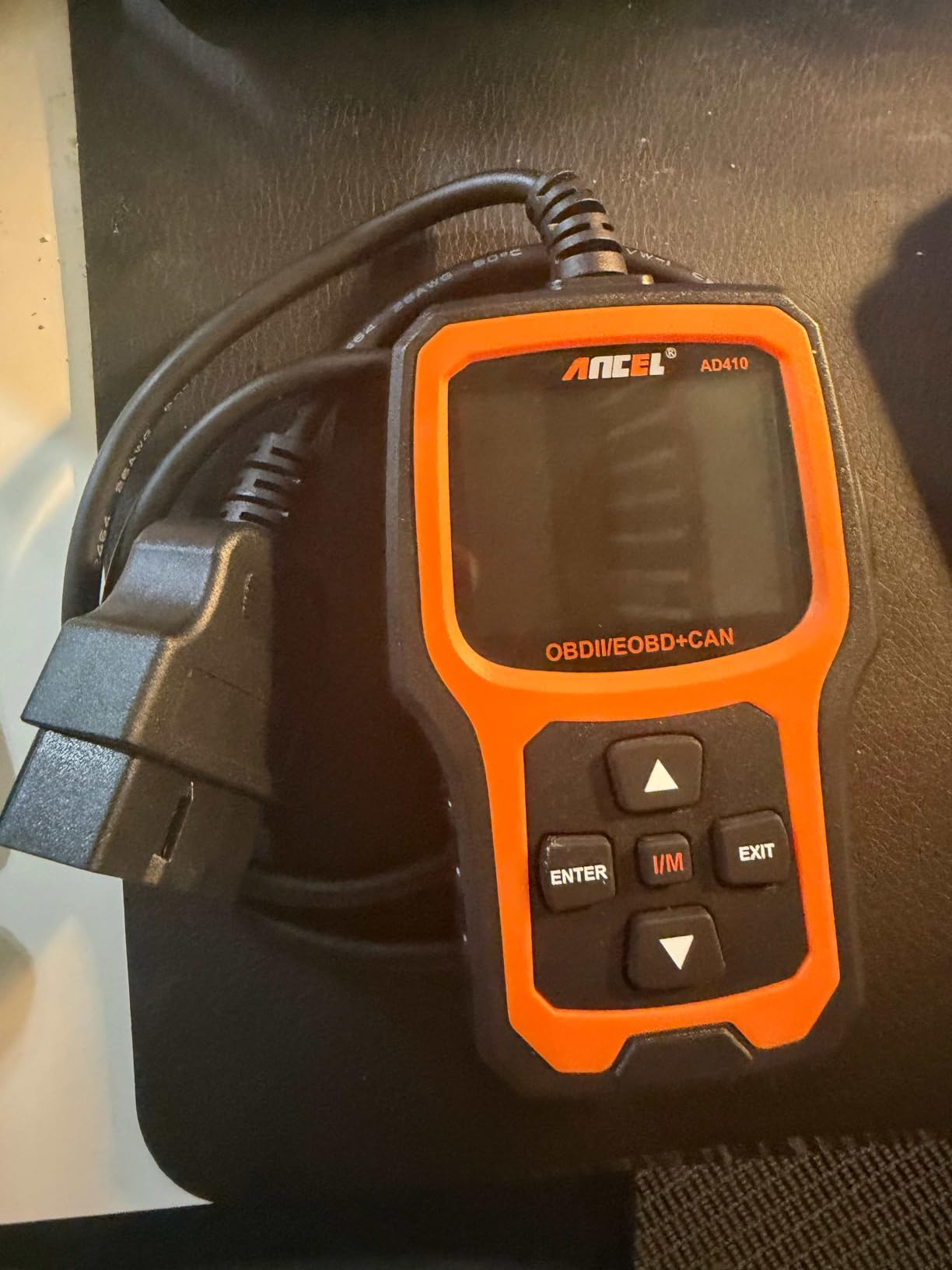
The unit weighs 10.56 ounces, measures 3.05 by 0.93 by 4.88 inches, runs on corded power and needs no battery or charger. The 2.4 inch display at 320×240 resolution is a genuine step up from the entry models, and a USB cable in the box allows free software updates that keep the database current.
What Live Data Actually Tells You
The real-time engine parameters cover RPM, coolant temperature, fuel trim and oxygen sensor readings. Fuel trim in particular is the number that separates a lazy diagnosis from an informed one, because a large positive or negative long-term trim points straight at an air or fuel delivery problem rather than a sensor that has already thrown a code.
Adding the O2 sensor test to that is unusual at this level. Instead of only reading that a code exists, the tool actively checks sensor switching behavior, which narrows down intermittent faults that never quite set a permanent code.
Protocols, Updates and the App Question
It supports CAN, ISO9141, KWP2000, J1850 VPW and J1850 PWM across 1996 and newer US cars, SUVs and light trucks, plus many 2000 and newer European and Asian vehicles. Free software updates mean the code library does not age out from under you.
The box includes a USB cable, but there is no Bluetooth and no companion app. You cannot export a report to share with a mechanic, and the connection is cable-based, so a report means photographing the screen. For most owners that is an acceptable trade for a much deeper code database.
Best For Owners Who Want to Understand the Fault, Not Just Clear It
This is the right pick for someone who plans to keep the tool after clearing a light, and who wants to run EVAP and O2 tests to confirm a repair worked. The color screen and multilingual menu also make it a good choice for shared family vehicles.
Skip it if your aim is purely to turn a light off, since the AD310 does that for less and the extra functions are otherwise idle. And note that it remains a single-system tool with no ABS, SRS or bidirectional control.
6. AUTOPHIX 3210 – The Phone-Based Option With No Subscription
AUTOPHIX 3210 OBD2 Scanner for DIYers – Fix Check Engine Light
Bluetooth dongle for iOS and Android
Free app with no subscriptions
Live engine dashboard
0-60 performance test
Pros
- No separate screen
- the app displays results on your phone
- Free companion app with no subscriptions or ads
- Dashboard shows MAF
- spark advance and fuel trims
- 3-year manufacturer warranty
Cons
- Does not read airbag or ABS codes
- Companion app is closed and will not pair with other OBD2 software
- Instructions are minimal and there is no standalone screen
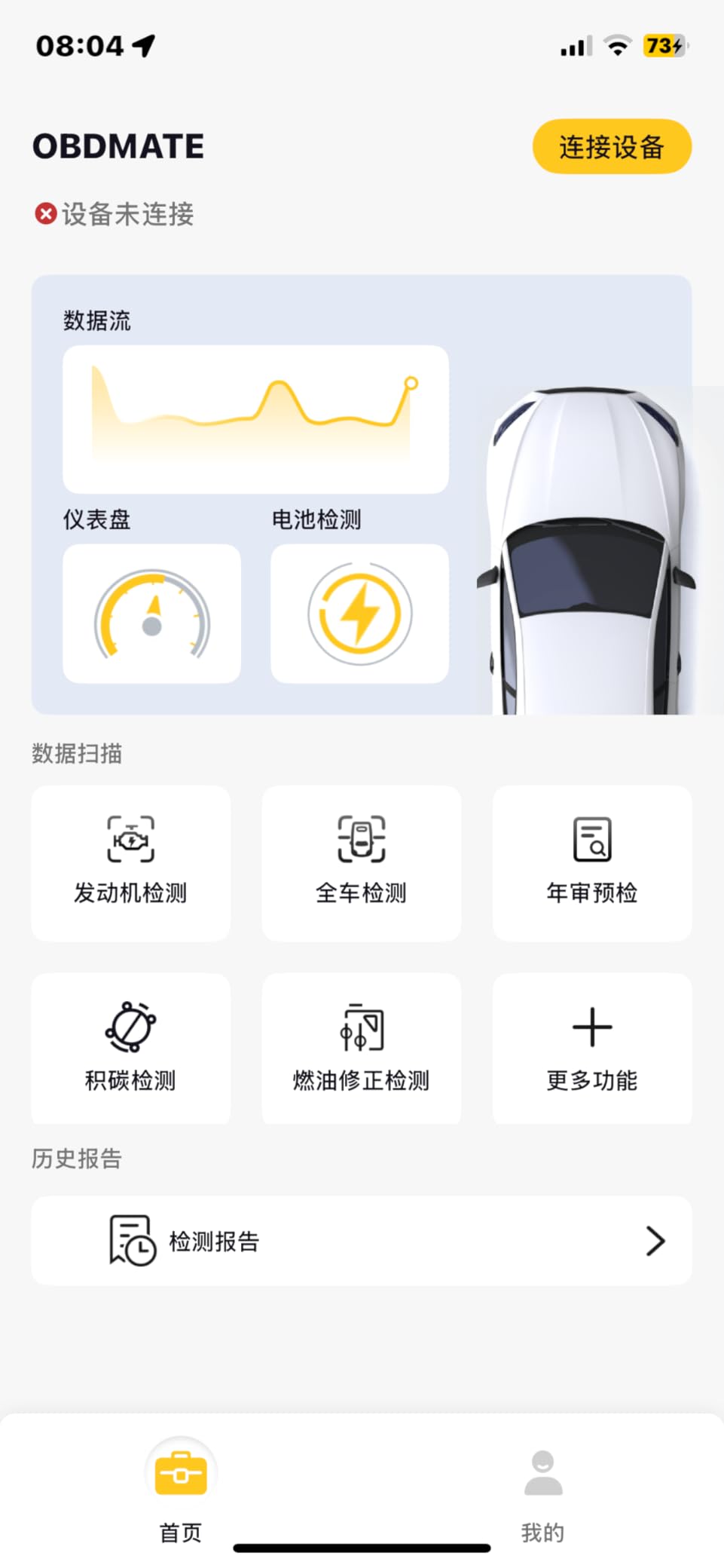
The AUTOPHIX 3210 is a small Bluetooth dongle with no screen of its own. You plug it into the port, pair it with your phone, and the app renders your codes on a display you already own. For anyone who finds small LCD panels difficult to read, that is a real advantage.
It works with most US OBD2 compliant cars, trucks and SUVs from 1996 onward on both iOS and Android, and the manufacturer states the app carries no subscriptions, advertisements or hidden fees with lifetime updates. That statement matters in a category where annual charges are the most common complaint from owners.
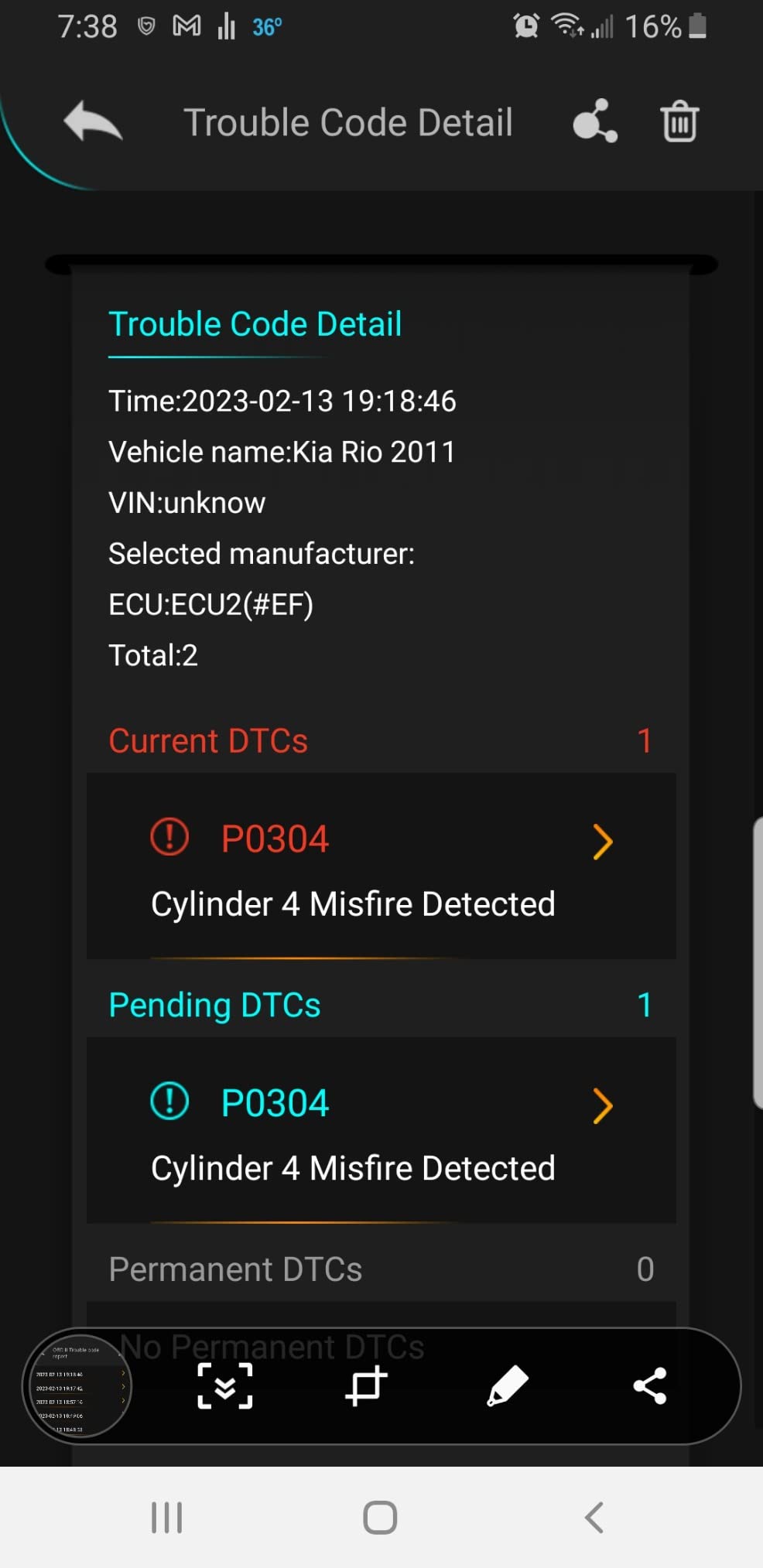
Its 4.4 average across 7227 reviews is the lowest star rating in this roundup, with a 69 percent five-star share, and the reason is consistent across the feedback. Owners like the free app and the quick pairing but describe the software as shallow, and report that it will not connect to third-party OBD2 applications, which limits the device to its own bundled tool.
Live Data That Your Gauges Do Not Show
The dashboard module exposes mass air flow readings, spark advance, throttle position and fuel trims, none of which appear on the car’s own instrument cluster. Seeing a throttle position that does not return smoothly to closed is a strong hint of a sticking throttle body, and seeing long-term fuel trims drift is a strong hint of an air leak.
There is also a 0-60 performance test, which gives a rough before-and-after comparison after a repair. It is not a dyno number, but seeing acceleration time recover after replacing a sensor is convincing in a way a cleared code is not.
Where the Bluetooth Approach Falls Short
Two limitations decide this tool’s place. First, it does not read ABS, SRS or transmission codes despite broad marketing language about reading OBD2 codes generally. Second, the closed app means you cannot pair it with the multi-function diagnostic software that serious owners tend to accumulate over the years.
It also means a failed phone update can break a tool that is otherwise fine hardware, and there is no way to read a code in a parking lot with no signal. Reviewers also note that some newer vehicles lose emissions-check functionality with this dongle.
Best For Owners Who Already Diagnose on Their Phone
Choose this if you want rich live data views and zero recurring fees, and you are comfortable working inside an app rather than a handheld menu. The 3-year manufacturer warranty is the longest stated cover in this group, which is a genuine plus.
Pass on it if you need a tool that works independently of a phone, or if you want to move to richer third-party software later. A standalone handheld keeps working when your phone does not.
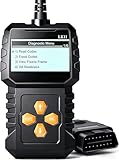
7. LeeKooLuu LK11 – The Lowest-Cost Way Into the Category
OBD2 Scanner Ease Setup Plug-Play: Clear Reset Engine Error Code
Plug and play with no app
Read and clear engine codes
Live data and freeze frame
3-year warranty
Pros
- Covers read and clear codes
- live data and freeze frame
- Also shows VIN
- Calibration ID and CVN
- No app
- account or registration required
- 3-year manufacturer warranty
Cons
- Slim two-line display with no color or graphing
- Emissions-only coverage
- Less established brand with a shorter track record
The LK11 exists to do one thing at the lowest possible cost: read and clear engine fault codes with no app, no account and no registration. It holds a 4.6 average across 7009 reviews with a 77 percent five-star share, which is a stronger result than several better-known units manage.
For a used car bought cheap or a first scanner kept in a workbench, that arithmetic is hard to argue with. You can lose the entire device and you have still spent less than one hour of a mechanic’s diagnostic fee.
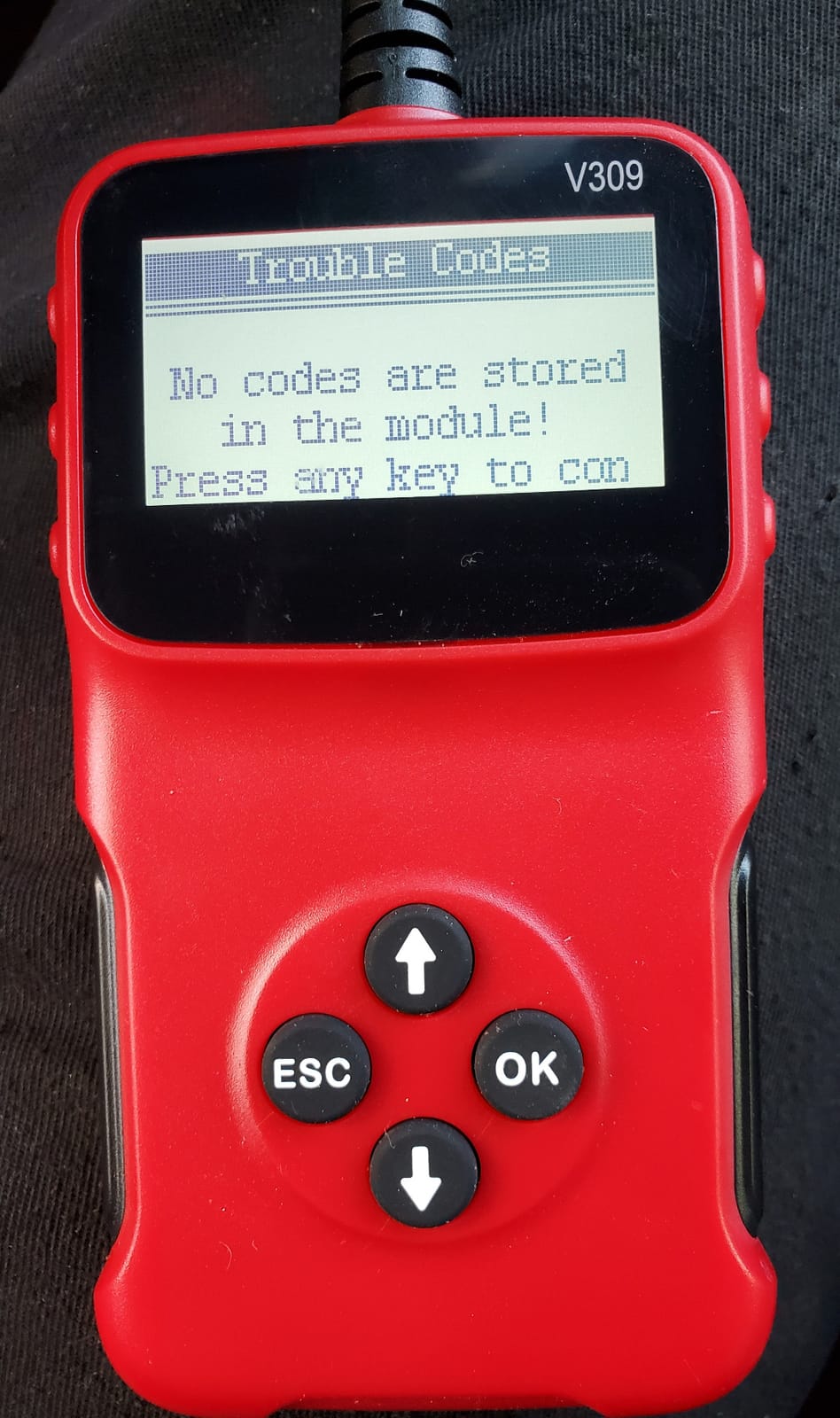
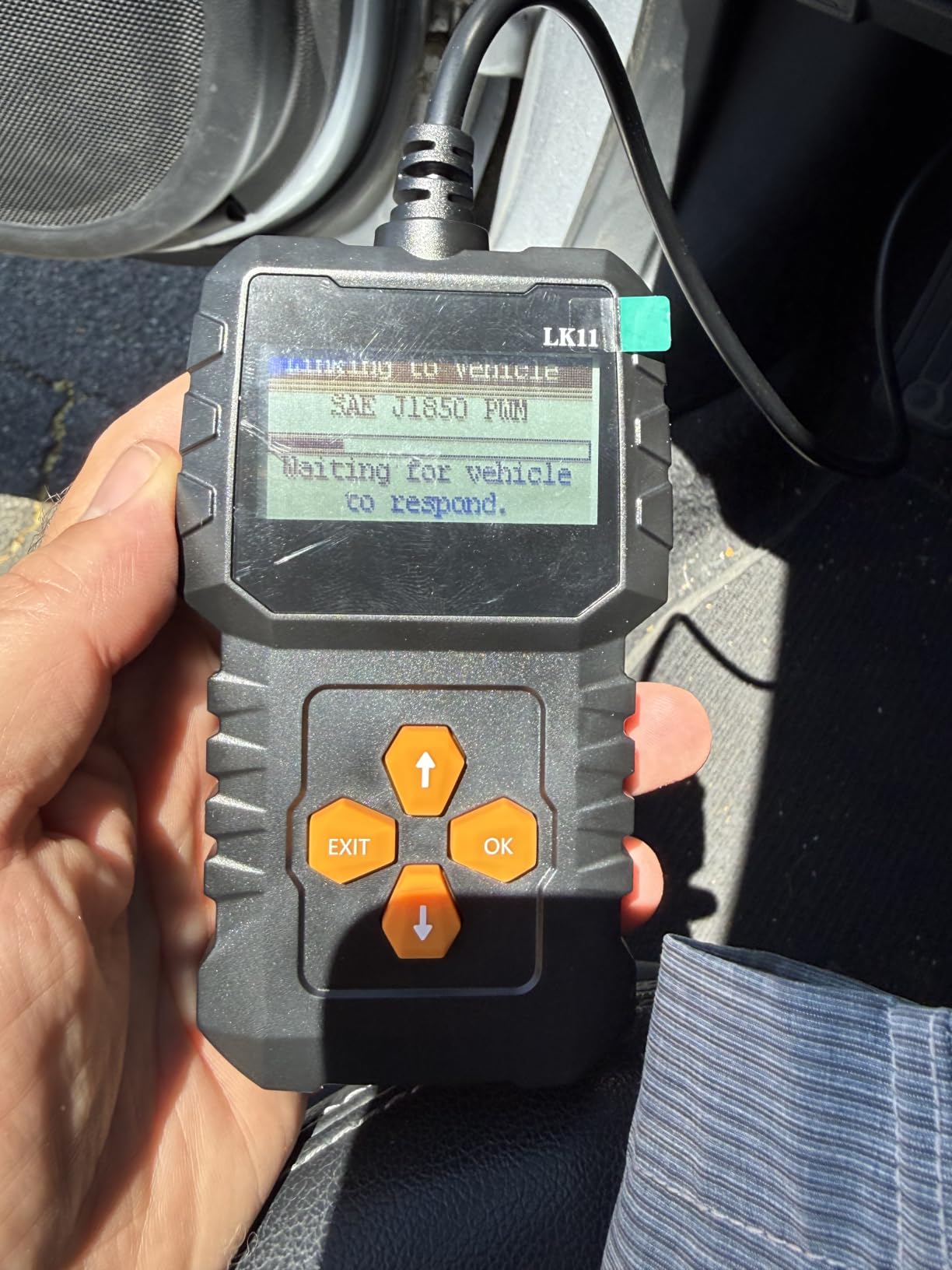
It measures 2.98 by 0.87 by 5.2 inches, draws power as a corded device from the vehicle, and needs nothing else to function. The display is a slim two-line panel with no color and no graphing, and the product listing’s screen size metadata does not match the physical unit, so treat the stated figure as unreliable rather than buying for a big screen.
What Is Actually Included
The box contains the scanner, instructions and other small parts, with no charger, cable adapter or app in the package. You get the standard core suite: retrieve and clear engine fault codes, view live data, analyse freeze frame data and check I/M readiness, plus vehicle information covering VIN, Calibration ID and CVN.
For a used-car purchase, that VIN and calibration readout is a quiet advantage. It lets you confirm the identifier matches the dashboard and paperwork rather than trusting a badge number alone.
Brand Risk and Long-Term Support
The honest weakness is the brand itself. LeeKooLuu does not have the decades of support infrastructure behind it that Autel, ANCEL or LAUNCH maintain, and a 7000-review history is shorter than the 66000 behind the AD310. If a firmware fix or a compatibility question comes up, the answer may take longer to arrive.
Coverage is also emissions-only, with no ABS, SRS or transmission functions. In exchange for those limits, the stated 3-year manufacturer warranty is a real commitment at this level.
Best For a Spare Tool or a First Lesson
Buy this as a beater unit in the glovebox, a tool for an old car you do not want to risk a nicer device in, or a first scanner to learn on before deciding whether you want a serious one. It covers every task a beginner actually starts with.
Move up once you find yourself wanting graphs, active sensor tests, or a code database deep enough to answer a question this device cannot.
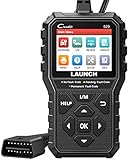
8. LAUNCH CR529 – The One That Prints Reports
Launch CR529 OBD2 Diagnostic Scan Tool Code Reader for Car After 1996
Data record, playback and PC reports
One-Click Smog Check
Mode 6 and Mode 8 access
2.8 inch colour screen
Pros
- Names likely faulty components from the code
- Data recording
- playback and printable PC reports
- One-Click Smog Check and One-Click I/M
- Colour screen with red
- yellow and green status LEDs
Cons
- Update download site reported as unreachable
- Fixed cable is awkward to store
- PC report features do not work with iOS
The CR529 is the only tool in this roundup that produces a printable report you can hand to a mechanic or a buyer. It records live data, plays it back, and prints through a PC connection, which is a workflow borrowed from professional equipment rather than a gimmick.
Its real differentiator for a beginner is what it prints. Instead of a code and nothing else, the tool names likely faulty components directly from the code definition, so you walk into a parts store or a conversation with a mechanic with an actual part candidate rather than a string of letters.
That makes it the natural companion to a paper archive of repair records. If you want to keep those files organised, our guide to document scanners for high volume covers the hardware side of that job.
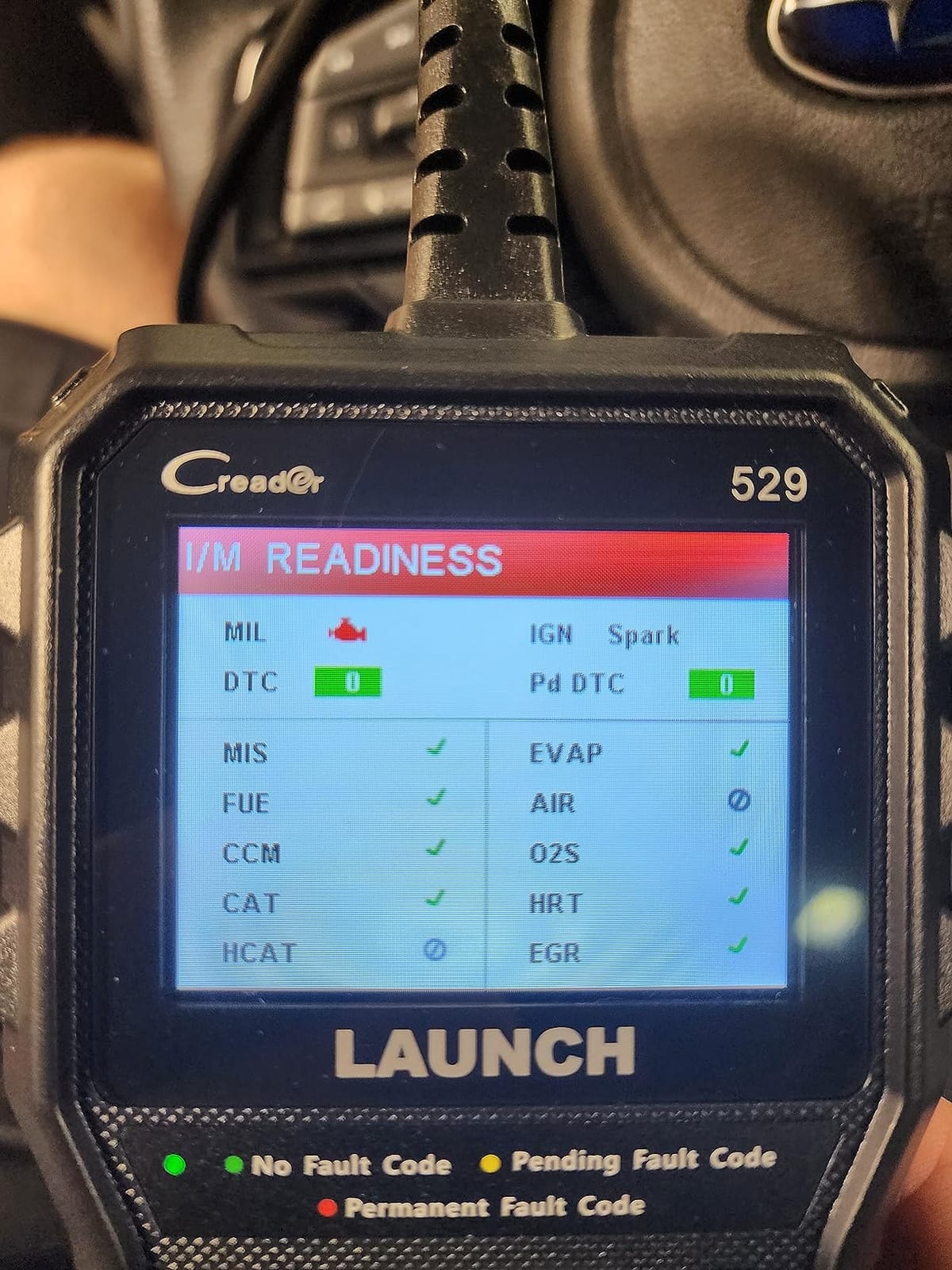
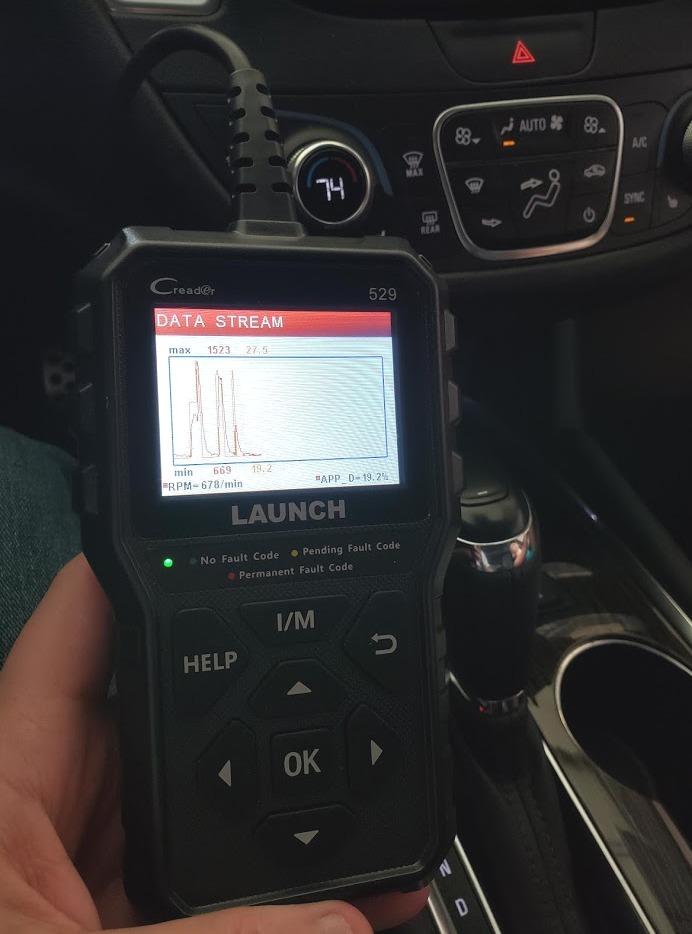
It carries a 4.4 average from 4336 reviews with a 71 percent five-star share, and reviewers regularly single it out as the most capable buy in the entry category. The 2.8 inch 320×240 color screen, the shortcut keys and the red, yellow and green LEDs that report vehicle status at a glance are all closer to shop equipment than to a basic reader.
Diagnostic Depth: Mode 6 and Mode 8
Beyond reading and erasing codes, I/M readiness, freeze frame and O2 sensor tests, the CR529 runs the EVAP test under Mode 8 and on-board monitoring under Mode 6. Live data appears as text or as a graph, and the same data can be recorded for later playback.
That capability is what separates it from the simple readers. A loose gas cap and a failing purge valve produce similar top-level codes, and the EVAP test is how you tell them apart without a smoke machine or a guess.
Ownership Details Worth Checking First
Two cautions. The specification sheet lists a 2-year warranty while the marketing material for the same unit claims 5 years, so confirm which applies before you rely on it. And reviewers report that the firmware update download site has been unreachable, which means a promised update may not arrive.
There is also a documented compatibility gap: at least one 2007 Peugeot 307 failed to connect to the ECU. The PC reporting software runs on Android 10.0 and does not support iOS, and the permanently attached cable again makes padded storage awkward.
Best For Owners Who Want Evidence, Not Just a Code
Pick this if you plan to keep repair records, share diagnoses with a mechanic, or evaluate several used cars and want a printed summary from each visit. The component-level detail and the one-click smog check are the features that justify stepping above the basic readers.
It is a heavier, less portable tool than the handheld leaders here, and it is not a full diagnostic platform. It cannot check every sensor and component the way dealer equipment can.
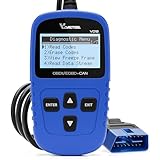
9. VDIAGTOOL VD10 – Best Multilingual Coverage on a Small Screen
VDIAGTOOL VD10 OBD2 Scanner Code Reader Car Diagnostic Tool Engine Fault Code Reader for Turn Off CEL with Freeze Frame/I/M Readiness for All OBDII Protocol Cars, OBD2 Scanner Diagnostic Tool
3000+ DTC definitions on screen
Six languages
Fuel trim and misfire live data
All five OBDII protocols
Pros
- Code definitions appear on the unit from a 3000+ entry database
- Six languages including English
- French
- German
- Spanish
- Italian and Russian
- Live data includes fuel trims and misfire counts
- 79 percent five-star share across its reviews
Cons
- Small 2.1 inch two-line display with no color
- Emissions and engine codes only
- Warranty length stated inconsistently between listing and specs
The VD10 is a newer entry into a category dominated by the same handful of names, and it has the highest five-star share of the ten at 79 percent across 3286 reviews. Owners describe it plainly as an inexpensive first tool that reads and clears codes quickly and shows definitions without a lookup.
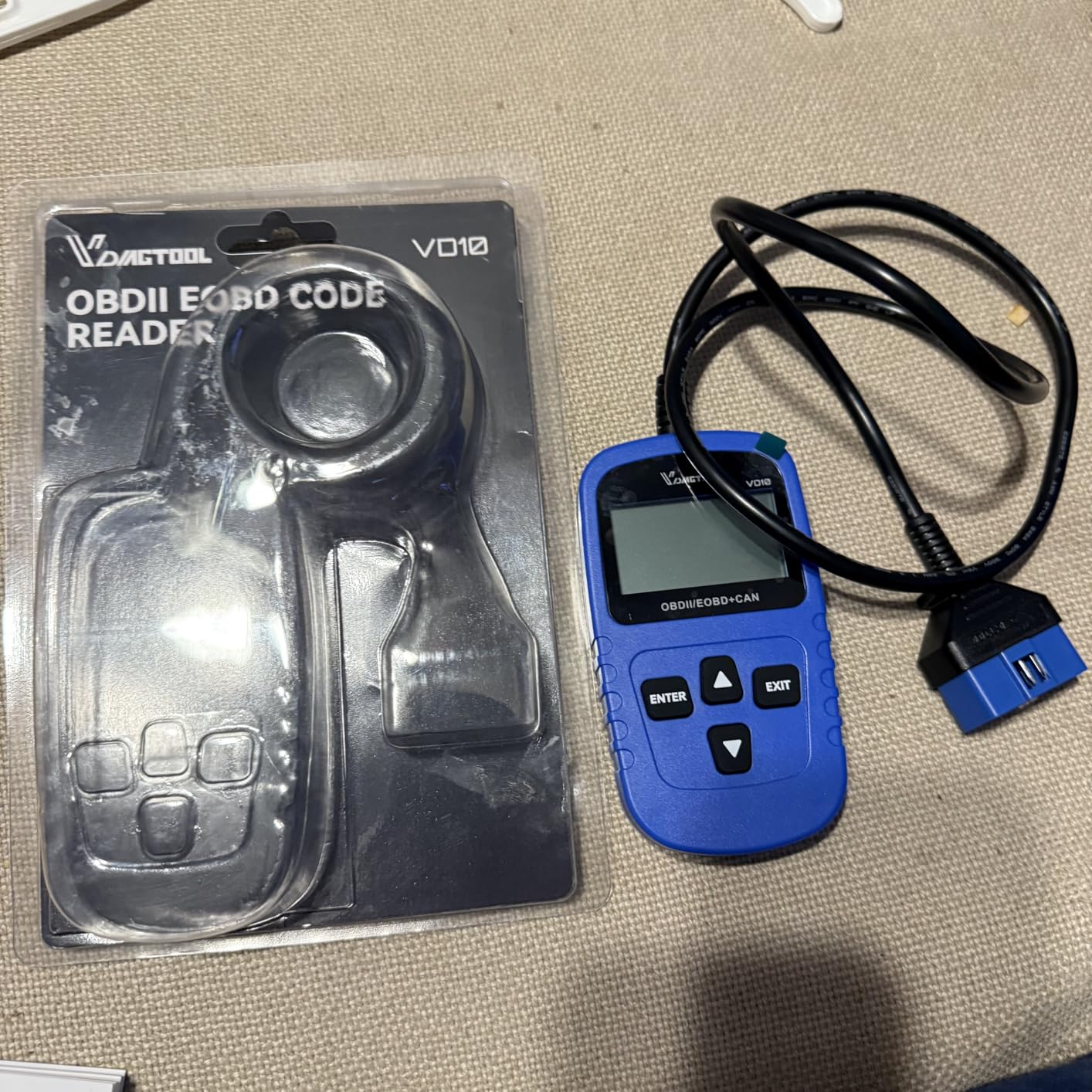
It is powered entirely from the OBD2 port, so there is no battery, no charger and nothing to plug in beyond the connector cable. The box contains the scanner, the OBDII connector cable and a user manual.
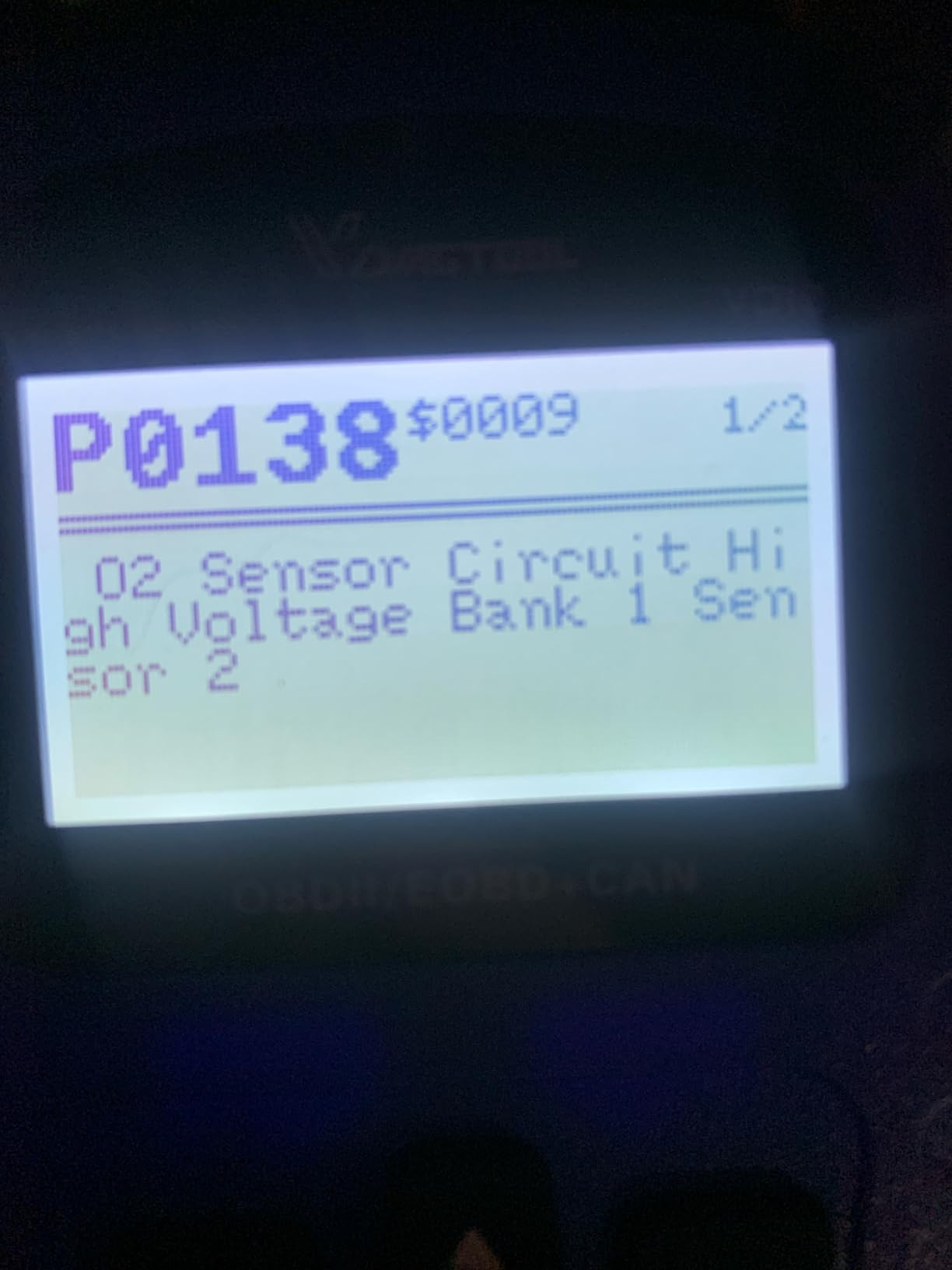
The screen is a 2.1 inch 128×64 two-line panel, so this is a text device rather than a graphical one. Six languages are supported, including English, French, German, Spanish, Italian and Russian, and the manufacturer states compatibility with post-1996 US, post-2006 EU and post-2009 Asian vehicles on 12V systems, covering 99 percent of compliant cars, SUVs and light trucks.
Protocol Coverage and the Code Database
It supports CAN, ISO9141, KWP2000, J1850 PWM and J1850 VPW, which is the full standard set and explains the broad compatibility claim. Retrieval covers generic P0, P2, P3 and U0 codes, manufacturer-specific P1 and U1 codes, and pending codes, with more than 3000 definitions stored on the device.
For a beginner, having the definition on the unit is the whole point. It converts a two-stage process, read then research, into a single step you can finish in a driveway.
Live Data for Intermittent Faults
Live sensor data covers RPM, intake air temperature, short and long term fuel trim, and misfire data, and freeze frame is stored in the PCM alongside the code. That combination is the practical way to catch a fault that only appears intermittently rather than consistently.
Misfire counts and fuel trims together are the two numbers that turn a vague complaint into a diagnosis. If misfires cluster under load and trims lean out, you are looking at an ignition or fuel delivery issue rather than a sensor fault.
Best For Households That Speak More Than One Language
Choose this if English is not the only language spoken by the people using the car, since six languages across all menu items is unusual at this level. It is also a fine low-risk first scanner for someone unsure whether they will use the tool often.
Know that the warranty length is stated inconsistently between the product listing and the specification sheet, and that the brand has a shorter review history than the category leaders. The two-line screen is the other constraint if you prefer visual graphs.
10. Zmoon ZM201 – The Brightest Screen and Biggest Database
ZMOON ZM201 Professional OBD2 Scanner Diagnostic Tool, Enhanced Check Engine Code Reader with Reset OBDII/EOBD Car Diagnostic Scan Tools for All Vehicles After 1996, 2026 Upgraded
50000+ DTC definitions
Graphed live data view
2.8 inch colour screen
Lifetime free updates
Pros
- Bright 2.8 inch colour screen with light and dark modes
- Over 50000 built-in code definitions
- Graph view live data plus freeze frame and EVAP checks
- 3-year warranty with lifetime free updates
Cons
- Engine-only coverage with no ABS or SRS
- PC printing and updates work on Windows but not Mac
- A minority of owners report connection failures
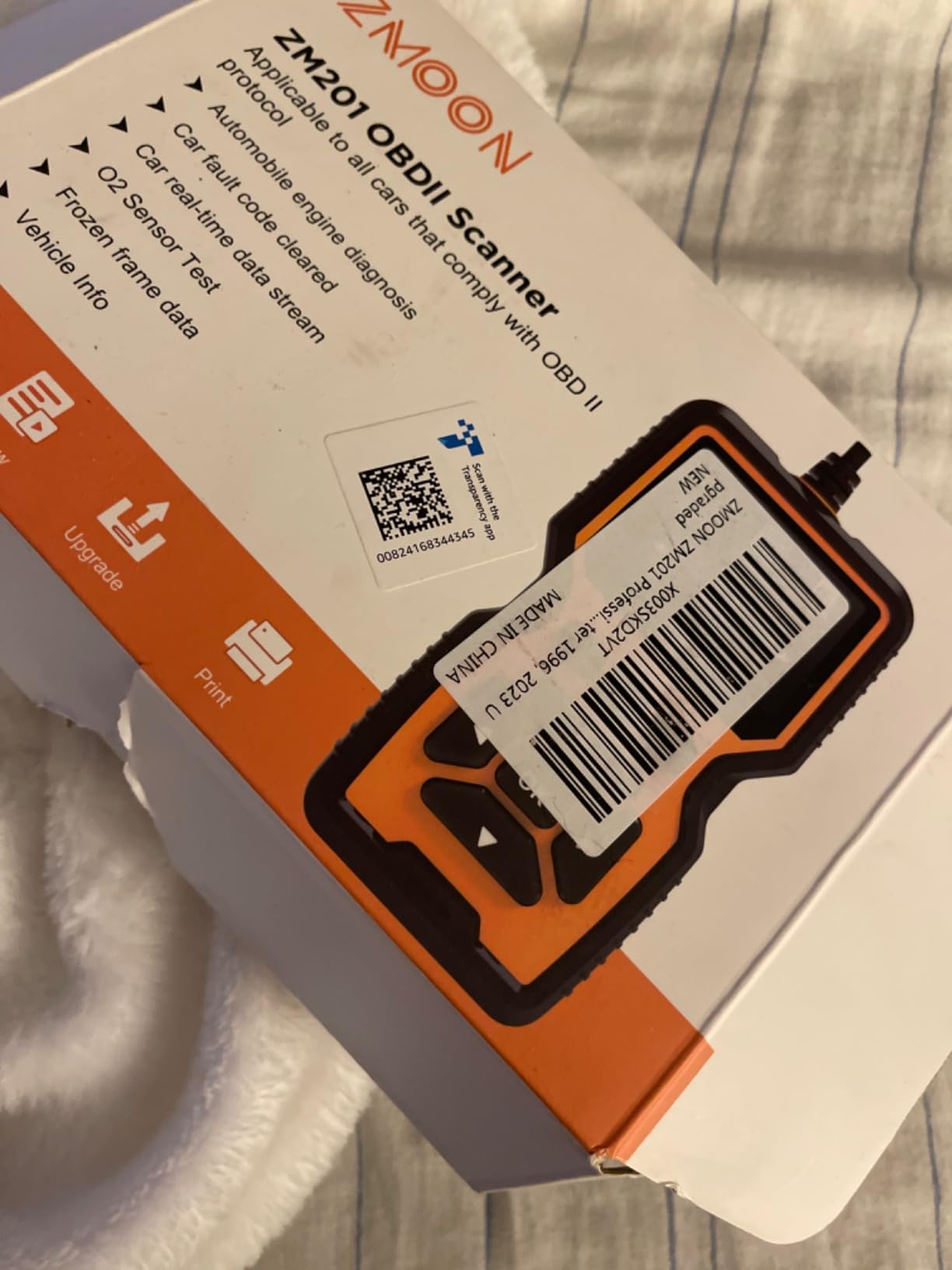
The ZM201 delivers the largest code database we found on a screen that is easy to read, combining 50000-plus built-in definitions with a 2.8 inch 320×240 color panel that has adjustable brightness and separate light and dark modes. The dark mode in particular makes night parking-lot use far more comfortable than any other unit here.
It is one of the newer models in the group with 3019 reviews at a 4.5 average and a 76 percent five-star share. The dominant theme in that feedback is value: owners find a screen and database depth unusual at this price point, and several report that it paid for itself by avoiding a dealer diagnostic fee.
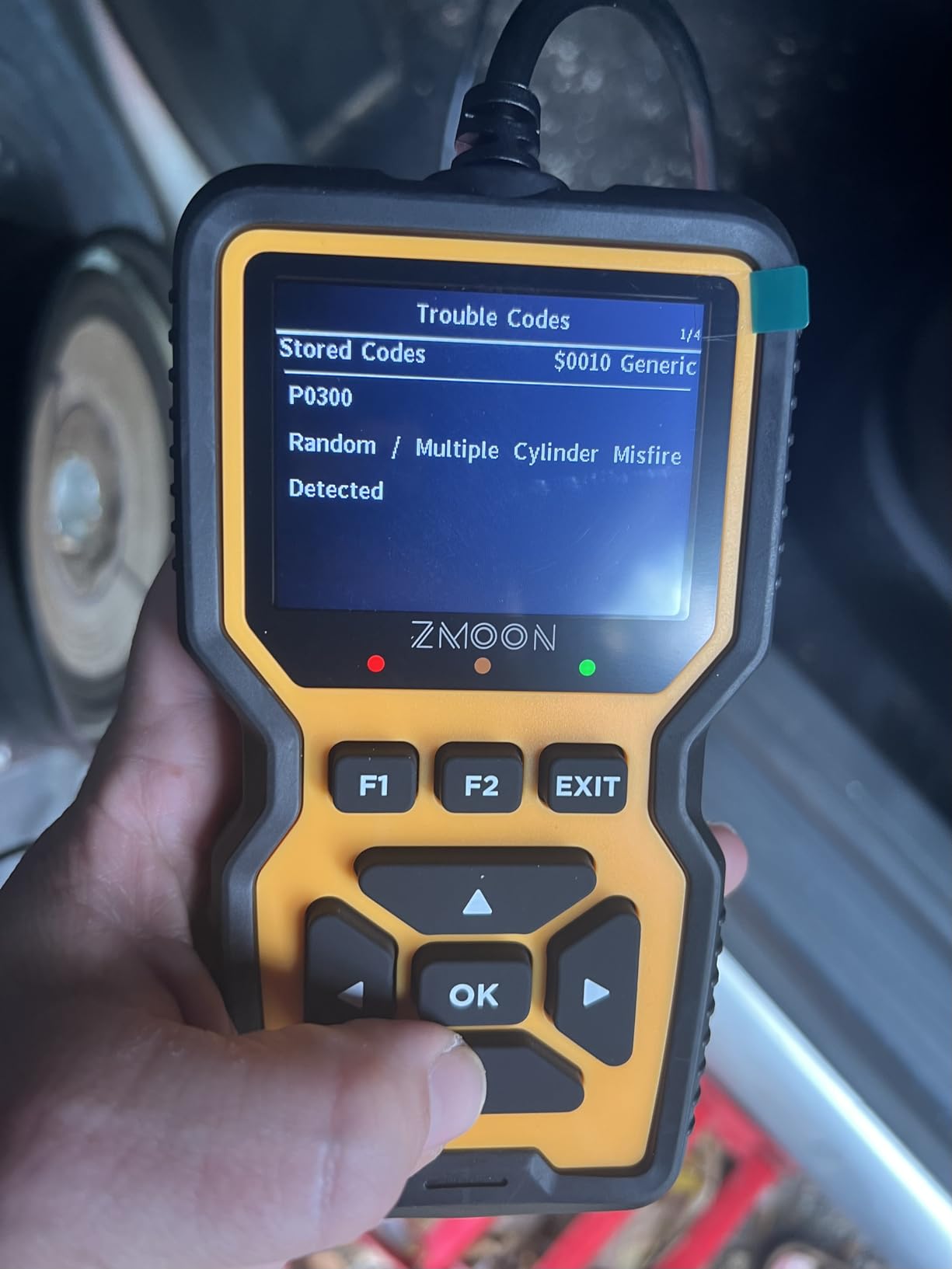
It draws power from the vehicle, measures 3.45 by 0.92 by 6 inches, and needs no app or setup to produce results. Shortcut keys, audible notifications and status indicators are designed to remove the learning curve, and a three-year warranty sits alongside lifetime free software updates.
Live Data With a Real Graph View
Live data streams with a graph view rather than a plain scrolling list, alongside freeze frame, O2 sensor testing, on-board monitoring and EVAP system checks. The graph is what lets you correlate events, watching coolant temperature, RPM and fuel trim move together as you rev the engine.
That correlation is the difference between seeing a value and diagnosing with it. A graph makes a hunting idle, a voltage drop under load or a rich idle visible in a way a text list never will.
Platform Limits and Compatibility
It works across post-1996 US, post-2002 EU and post-2008 Asian vehicles with a standard 16-pin port, supporting KWP2000, ISO9141, J1850 VPW, J1850 PWM and CAN. Optional PC connectivity allows data review and printing on Windows XP through 10, but not on Mac, which matters if your computer is an iMac.
Coverage remains engine diagnostics only, with no ABS, SRS or transmission support, and a minority of owners report the unit failing to connect on otherwise compliant vehicles. One behavior worth internalizing is normal: permanent codes cannot be cleared until the underlying fault is repaired.
Best For Owners Who Want to Watch Data Change
This is the pick if your interest extends past clearing lights into understanding engine behavior, and if you want to print a record of a diagnosis from a Windows machine. The light and dark screen modes and shortcut keys also make it friendly to hand to someone else in the household.
Pass on it if you own a Mac, if you need airbag or ABS coverage, or if you want the reassurance of a brand with a long repair history rather than a new model with 3000 reviews.
How to Choose Your First OBD2 Scanner
Buying an OBD2 scanner is far less complicated than the packaging suggests, but a few decisions will save you from the disappointment that forum regulars describe over and over. Work through these in order and the right device becomes obvious.
Wired Handheld or Bluetooth Dongle?
A wired handheld draws power from the car, works the instant it is plugged in, and cannot fail because a phone needs an update. A Bluetooth dongle gives you a large screen you already own and richer live data views, but depends on a phone, an app and a pairing that may not hold up over time.
Our rule of thumb after ten devices: if you want to answer the question “what is this light telling me”, buy wired. If you want to watch engine parameters over time, Bluetooth is a legitimate choice provided you accept the app dependency. We had no connection issues with the wired units across our test cars.
Do You Need ABS and SRS Coverage?
Every tool in this roundup is engine and emissions only, and that is not a flaw in the roundup, it is the category. True multi-system scanners with bidirectional control, ABS and SRS modules and service resets live several tiers above these devices and carry a different learning curve entirely.
Decide based on which light is on. A check engine light means any of these ten will help. An ABS, airbag or transmission light means none of them will, and a mechanic is the faster route than an expensive scan tool you will use once.
Code Database Size and On-Screen Definitions
Database size ranges from 1000 definitions on the MS309 to over 50000 on the ZM201, with the AD410 sitting at 42000-plus. Bigger is not automatically better for a beginner, but a database large enough to cover the vehicle you own prevents the frustration of a code the tool cannot define.
More important than raw count is whether definitions appear on the device. A reader that hands you a bare code string sends you back to a phone with no signal. Eight of the ten here show definitions on screen.
I/M Readiness Before an Emissions Test
If your reason for buying is a state emissions inspection, I/M readiness is the feature that saves you money. It confirms whether your emission monitors have completed their drive cycles, and a vehicle that shows not-ready monitors will fail or be sent for a retest.
The Autel AL319 and the LAUNCH CR529 both give you a one-click shortcut to that answer, and the MS309, AD310, AD410, VD10 and AUTOPHIX report the same status through their menus. Note that clearing codes resets monitor status, so do not clear anything shortly before an inspection.
Updates, Subscriptions and the Five-Year Cost
Free lifetime updates are the norm among the established brands here: Autel states lifetime free updates on the AL319, ANCEL offers free software updates on the AD410, the CR529 and ZM201 both promise lifetime free updates, and AUTOPHIX states its app has no subscriptions, advertisements or hidden fees.
That matters because subscription scanners in the wider market surprise owners with annual charges after a year or two. For a first tool, an open-ended fee is the fastest way to regret the purchase. A 3-year warranty from AUTOPHIX and Zmoon is also a stronger signal than a bare 45-day term on the MS309.
Avoiding Counterfeit ELM327 Devices
The ELM327 chip is the standard interface inside nearly every OBD2 tool, and the chip itself is inexpensive, which is exactly why counterfeit versions dominate the marketplace. Owners across automotive forums repeatedly warn that listings described as ELM327 version 2.2 are almost always clones, and that clones return fake or wrong codes and cannot read generic parameter data reliably.
The practical protections are unglamorous: buy from a brand with a large review base and a stated warranty, avoid no-name listings with thin feedback, and treat a tool that reports implausible codes or that will not read generic live data as faulty rather than blaming your car. All ten tools here come from established brands with thousands of reviews.
Finding the Port and Using It for the First Time
The OBD2 port is a 16-pin socket, standardized since 1996 in the US and 2000 in Europe. Look under the dashboard on the driver side, usually within a meter of the steering wheel, though it is frequently tucked behind a trim panel or near the center console. Many owners lose twenty minutes crawling on the floor before spotting it, so take a flashlight and check the lower dash seam first.
Your first session takes five minutes. Turn the key to position two without starting the engine, plug the scanner in, and let it establish connection. Read your codes before touching anything else, then open freeze frame to capture the conditions when the fault was stored. Fix the cause, and only then clear the code and reset the monitors.
Clearing a Code Is Not the Repair
Clearing a diagnostic trouble code erases the record, not the fault. Many first-time owners clear a code, drive a week, and watch the check engine light return, which feels like a broken tool but is the tool working as designed. A permanent code stays stored until the underlying condition is resolved.
Use the scanner to read, then repair, then clear, then verify. The last step matters most: a scanner that shows a stored code after your repair means the job is not finished, and one that shows no codes and ready monitors means it is.
Beginner Mistakes to Avoid
Avoid clearing codes before you have written down what they were. That single habit costs you the freeze frame data and the pending codes, and it is the reason some owners end up paying a shop to diagnose a fault the scanner already knew about.
Do not expect a tool rated for engine codes to read your ABS or airbag system, do not buy a Bluetooth dongle if you expect to use it with no phone, and do not buy any of these for a pre-1996 vehicle. It is worth picking the device for the car you actually own rather than the one with the longest feature list, which is the same principle behind our picks for document scanners for a paperless office.
Frequently Asked Questions
What is the best OBD2 scanner for a beginner?
The ANCEL AD310 is the best OBD2 scanner for a beginner because it connects instantly, reads and clears emission codes in seconds, requires no battery, charger, app or account, and supports all five standard OBDII protocols for 1996 and newer vehicles. It stays inside the engine and emissions system, so it will not read ABS, SRS or transmission codes.
What is the difference between an OBD2 reader and an OBD2 scanner?
The terms are used interchangeably, and in practice a reader and a scanner are the same class of device. A code reader simply retrieves, defines and clears diagnostic trouble codes. A scanner does that plus more: live data streaming, freeze frame capture, I/M readiness checks, active sensor tests such as O2 and EVAP, and on some models data recording and printable reports. Every tool in this roundup reads and clears codes; only some add the advanced functions.
Is a cheap OBD2 scanner worth it?
Yes, for reading and clearing a check engine light. The budget readers in this roundup hold 4.4 to 4.6 star averages across thousands of reviews, and the cheapest options still include live data, freeze frame and I/M readiness. What a low price does not buy is ABS, SRS or transmission coverage, graphs, or a long warranty. The main risk is buying a counterfeit ELM327 clone from an unbranded listing, which returns wrong codes and fails on generic live data.
Are Harbor Freight OBD2 scanners any good?
We did not test a Harbor Freight unit for this roundup, so we cannot give you measured data on one. The category pattern that matters is this: Harbor Freight sells several generic ELM327-based readers at very low prices, and the same clone problems that affect other unbranded devices apply, including unreliable generic live data and codes that do not match the vehicle. If you buy one, check the return policy and verify it reads your VIN and live sensor values correctly on the first attempt.
Can an OBD2 scanner damage my car?
No. An OBD2 scanner is a read and request device that draws power from the vehicle battery through the diagnostic port and does not write to your ECU. Leaving a scanner plugged in for a long period can drain a battery, so unplug it when you are done. A scanner also cannot damage your car by clearing codes, though clearing a code before repairing the fault simply means the light returns and you lose the freeze frame data.
Why does my check engine light keep coming back?
Because clearing a code erases the record, not the fault. A permanent code stays stored until the underlying condition is fixed, which is why the light returns after a reset. Common causes in beginner diagnostics include a loose or failed gas cap triggering an EVAP code, a failing oxygen sensor, an intake air leak affecting fuel trims, and worn spark plugs or a weak ignition coil causing misfire codes. Read the code, make the repair, clear the code, then verify that no stored code returns.
Which OBD2 Scanner Should You Buy First?
If you want one answer, take the ANCEL AD310. It connects on the first try, needs nothing but a car with a 1996 or newer OBD2 port, and holds the largest review base in the category at 4.6 stars across more than 66000 reviews. Nothing we tested made the basic job simpler.
If you regularly diagnose outdoors or in dim garages, the MOTOPOWER MP69033 earns its place with the most readable backlit screen in the group and a code library that works with no signal. If your fear is the emissions test rather than the check engine light, the Autel AL319 turns readiness into a single button press.
Step up from there only with a reason. The Autel MS309 and the LeeKooLuu LK11 serve used-car shopping and cheap spares. The ANCEL AD410 adds active O2 and EVAP testing. The AUTOPHIX 3210 suits a phone-first workflow with no subscription, and the LAUNCH CR529 produces the only printable reports here. The VDIAGTOOL VD10 serves multilingual households, and the Zmoon ZM201 pairs the biggest database with the best screen.
Whatever you choose, the workflow is the same: read the code, repair the cause, clear it, then confirm the light stays off. That last habit is what turns a gadget into a diagnostic tool. Compare the picks against your own vehicle year and make before you buy, since compatibility, not price, is the only real failure point in this category.
These rankings reflect our testing in 2026 and cover engine and emissions coverage only. For ABS, SRS and transmission faults, a multi-system scan tool or a mechanic remains the correct next step.