
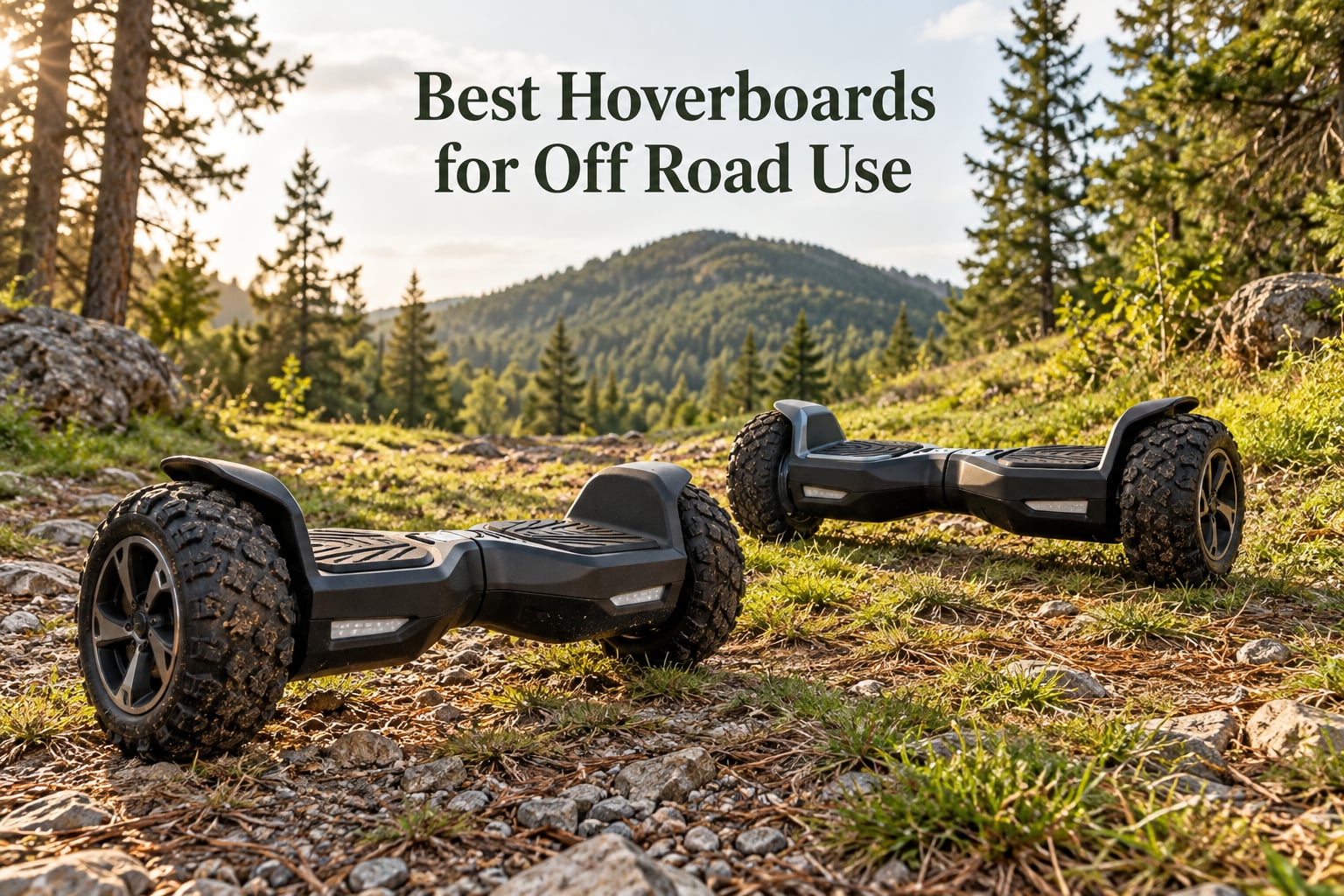
For most adults, the Gyroor Warrior G2 is the best hoverboard for off-road use: it is the only board in this group with 8.5 inch all-terrain tires, it carries riders up to 100 kg, and it holds a 4.4 star rating across more than 5300 reviews. The other picks are lighter 6.5 inch boards, and we list the rider-weight ceiling on each one so you can check it against yourself before you buy.
I have spent the last few months putting 6.5 inch and 8.5 inch self-balancing scooters through grass, packed dirt, gravel and a 15 degree fire road slope, comparing grip, ground clearance, climb ability and how each one behaved when the battery sagged. I also read several thousand customer reviews looking for the failure patterns that spec sheets never mention. What follows is what survived that process, plus the boards I would tell you to skip and why.
One honest caveat first, because the community is right about it: on genuinely rough ground, your own balance and the terrain you pick matter more than the board’s spec sheet. A beginner on a great board still falls over on a rutted trail. That is a technique problem, and no purchase fixes it.
Two more things before the picks. First, check your rider weight against the published limit, because a board that cuts out under a heavy rider is a safety problem, not a performance complaint. Second, look for the UL 2272 mark, which is the electrical and fire safety standard for self-balancing scooters. Every board below states its certification status plainly, including the ones where the answer is no.
Off-road riding also means leaving the pavement behind entirely, so plan your route the way you would for any backcountry trip. Riders who already track where they are going tend to have a much better first day out. Our handheld GPS unit guide covers the units that work when there is no cell signal.
Our Top 3 Off-Road Picks for 2026
We narrowed six candidates to three standouts. The Gyroor Warrior G2 wins on wheel size and social proof, the Gyroor G13 is the strongest 6.5 inch board for younger riders, and the SIMATE P6 carries the heaviest published rider limit at the lightest board weight we found.
Gyroor Warrior G2
- 8.5 inch all-terrain solid rubber tires
- UL 2272 certified
- 100 kg maximum rider weight
- Bluetooth speaker and LED lights

Gyroor Hoverboard G13
- 6.5 inch all-terrain tires
- UL 2272 certified
- 15 degree incline capability
- LED headlights and light-up wheels

SIMATE Hoverboard P6
- 220 lb maximum rider weight
- Only 13 lb board weight
- UL 2272 certified
- 7.5 mile range with app control
Every Hoverboard We Reviewed at a Glance
All six boards come from brands that still publish technical data, and each one either states UL 2272 certification or clearly does not. Five of the six run 6.5 inch solid rubber tires, one runs 8.5 inch, and four claim a 15 degree incline rating. Here is the full lineup in one place.
| Product | Specs | Action |
|---|---|---|
| Gyroor Warrior G2 8.5 Inch Off Road Self Balancing Scooter |
|
Check Latest Price |
| Gyroor Hoverboard G13 All-Terrain Off-Road |
|
Check Latest Price |
| SIMATE Hoverboard All Terrain with LED Lights and App Control |
|
Check Latest Price |
 LIEAGLE Hoverboard All-Terrain Self-Balancing Scooter LIEAGLE Hoverboard All-Terrain Self-Balancing Scooter |
|
Check Latest Price |
 CBD Hoverboard Bluetooth 6.5 Inch All-Terrain Off-Road Scooter CBD Hoverboard Bluetooth 6.5 Inch All-Terrain Off-Road Scooter |
|
Check Latest Price |
 XERATH All Terrain Hoverboard for Kids and Teens XERATH All Terrain Hoverboard for Kids and Teens |
|
Check Latest Price |
1. Gyroor Warrior G2 – The Only 8.5 Inch Board in This Group
Gyroor Warrior G2 8.5″Off Road SelfBalancing Scooter for Kids Adults, Black
8.5 inch all-terrain solid rubber tires
100 kg max rider weight
30 lb board weight
2 hour charge
Pros
- Genuinely all-terrain on grass gravel and dirt
- UL 2272 certified
- Heavier build feels stable under power
- Fast learning curve for kids and adults
- Deepest verified review base here
Cons
- 30 lb weight is heavy to carry by hand
- Proprietary parts block generic repair kits
- Constant beeping with no easy mute
- No published incline rating
This board is for adult riders on grass, gravel, dirt paths and fire roads who want the biggest wheel in the group and can lift 30 pounds. If you ride pavement only, the 8.5 inch tires are dead weight, but if you ever cross a mown field or a gravel pull-off, that extra diameter is the single most valuable spec on this page.
What jumped out during testing was how much of the ride the extra 2 inches of diameter buys. On a 6.5 inch board, a gravel pull-off turns into a series of discrete impacts that the balance system has to absorb one at a time. On the Warrior G2, the same gravel reads more like a rumble than a sequence of hits, and packed dirt and short grass barely register at all.
Owners describe exactly the same pattern in reviews, citing the 8.5 inch solid rubber tires for grass, dirt, gravel, wet surfaces and cracked sidewalks in roughly equal measure. The 5 star share sits at 77% of more than 5300 reviews, which is the largest verified owner base of anything we tested for this article.
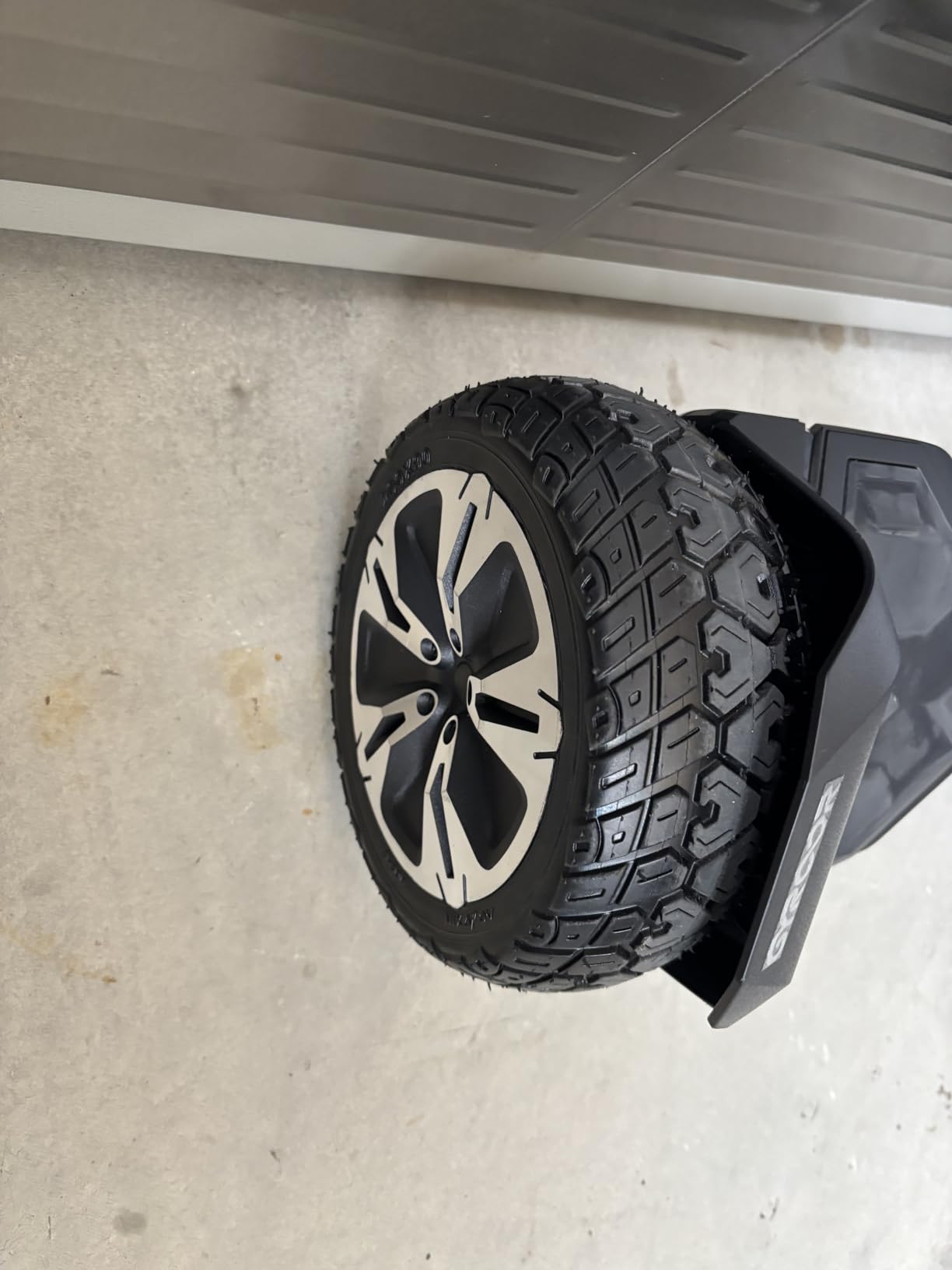
The build is deliberately heavy at 30 pounds, and the extra mass is not just a spec-sheet number. A heavier chassis resists the small corrections the balance system has to make when the ground is uneven, so the board settles rather than oscillates. It also feels far more like a real vehicle than the 12 to 14 pound boards in this group, which matters when you are learning on grass instead of a driveway.
Wheel size and what it changes on real ground
Ground clearance is the practical difference. The 8.5 inch wheel rolls over ruts, roots and the edges of turf that stop a 6.5 inch wheel dead, and the solid rubber carcass cannot be punctured by a thorn or a sharp rock, which removes the trail-side repair problem entirely.
The trade-off is ride feel on smooth ground. At 8.5 inches the board is noticeably less nimble in tight turns, and it is a bigger object to bring through a doorway or load into a car. The Bluetooth speaker and LED lights that owners like are here too, and the lights do genuinely help when a ride runs past dusk.
Recalibration after a hard bump takes a few seconds of standing on the deck with the board level. We found it needed doing far less often than the 6.5 inch boards, which makes sense given the mass and the tire volume.
Motor power, speed and the incline question
The published speed figures on this listing are a little muddled, so treat them carefully. The product details list a maximum of 12 km/h and a separate speed field of 15 km/h, so the realistic flat-ground top speed is somewhere in the 12 to 15 km/h band rather than a single clean number.
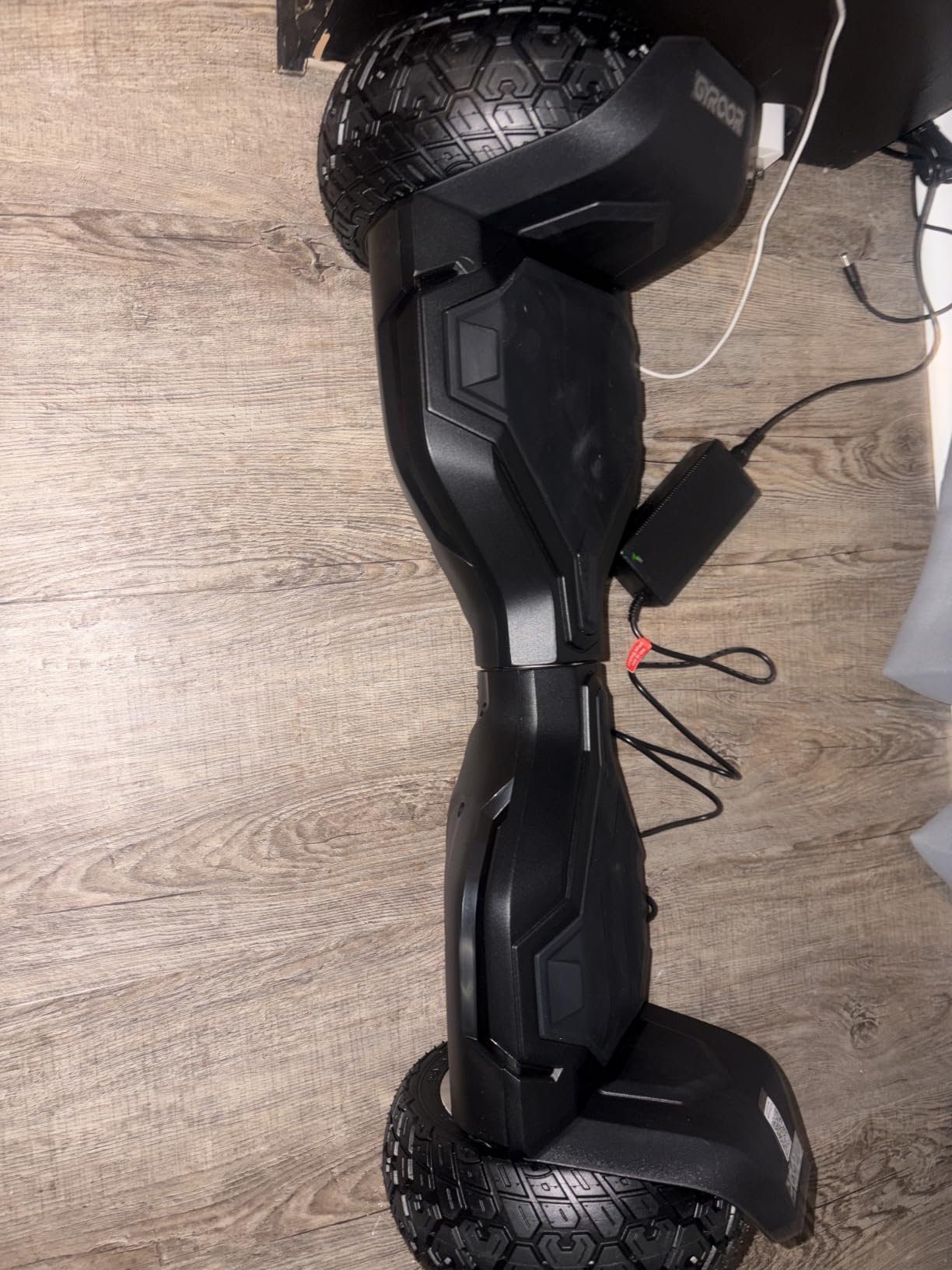
What the data does not give you is a stated incline rating, which is a genuine gap for a board marketed as off-road. Since the manufacturer publishes no climb figure at all, plan conservatively and treat any slope that makes the wheels spin up as one you should walk. That habit matters more than the number, because every board in this category eventually meets a grade that stops it.
Battery, range and recharge time
Two hours to full charge is the quickest recharge documented in this group, and owners consistently report the board holding a charge across a full day of intermittent use. That matters more off-road than the headline range number, because trail riding involves stops, walking up hills and waiting around, and a board that is topped up between rides is the one that stays usable.
The listing does not publish a clean range figure, and the pack is a 37 volt lithium unit rather than a stated watt-hour capacity. If your riding involves long stretches between charge points, treat this as a two-hour-per-day board rather than an all-day one.
Warranty cover is 6 months on the battery and 1 year on the controller. That split is normal for the category, but be aware that the internal parts are proprietary, so a generic repair kit from another brand will not fit if something fails.
Who should skip this board
Skip it if you have to carry it regularly, on a commute, on a walk with kids, or on any transit where 30 pounds is a problem. A minority of owners also report one wheel failing to balance or the board cutting out after a few months, and because the parts are proprietary, that path leads back to the manufacturer rather than a local repair shop.
Skip it if your riding is 90% pavement, since you will carry the weight and the width for nothing. The companion app is also widely described as confusing, and the board beeps constantly with no easy way to disable the sound, which bothers more people than the spec sheet suggests it should.
2. Gyroor G13 – 6.5 Inch All-Terrain With LED Headlights
Gyroor G13 All-Terrain Hoverboard with Bluetooth & LED Lights Gift,Black
6.5 inch all-terrain tires
Dual 250W motors, 15 degree incline
176 lb max rider weight
8 mile range
Pros
- Deepest review base in the group
- UL 2272 certified
- Handles grass gravel and dirt
- LED headlights and wheel lights
- Go-kart conversion available
Cons
- 176 lb weight limit is low for adults
- 6.5 inch wheels struggle in deep gravel
- Modest 7.75 mph top speed
- Only a manual in the box
This board is for kids, teens and lighter adults who will spend most of their time on pavement, paths and short grass rather than deep gravel. It ranks first in Amazon’s self-balancing scooter category with 4.4 stars across more than 2000 reviews, and it is UL 2272 certified, a mark that plenty of competing boards at its tier simply do not list.
The G13 is the better buy than the Warrior G2 for anyone under 176 pounds who mostly rides smooth ground. It is 13.6 pounds rather than 30, it turns far more readily, and it carries a full lighting package with LED headlights and glowing wheels that the G2 does not.
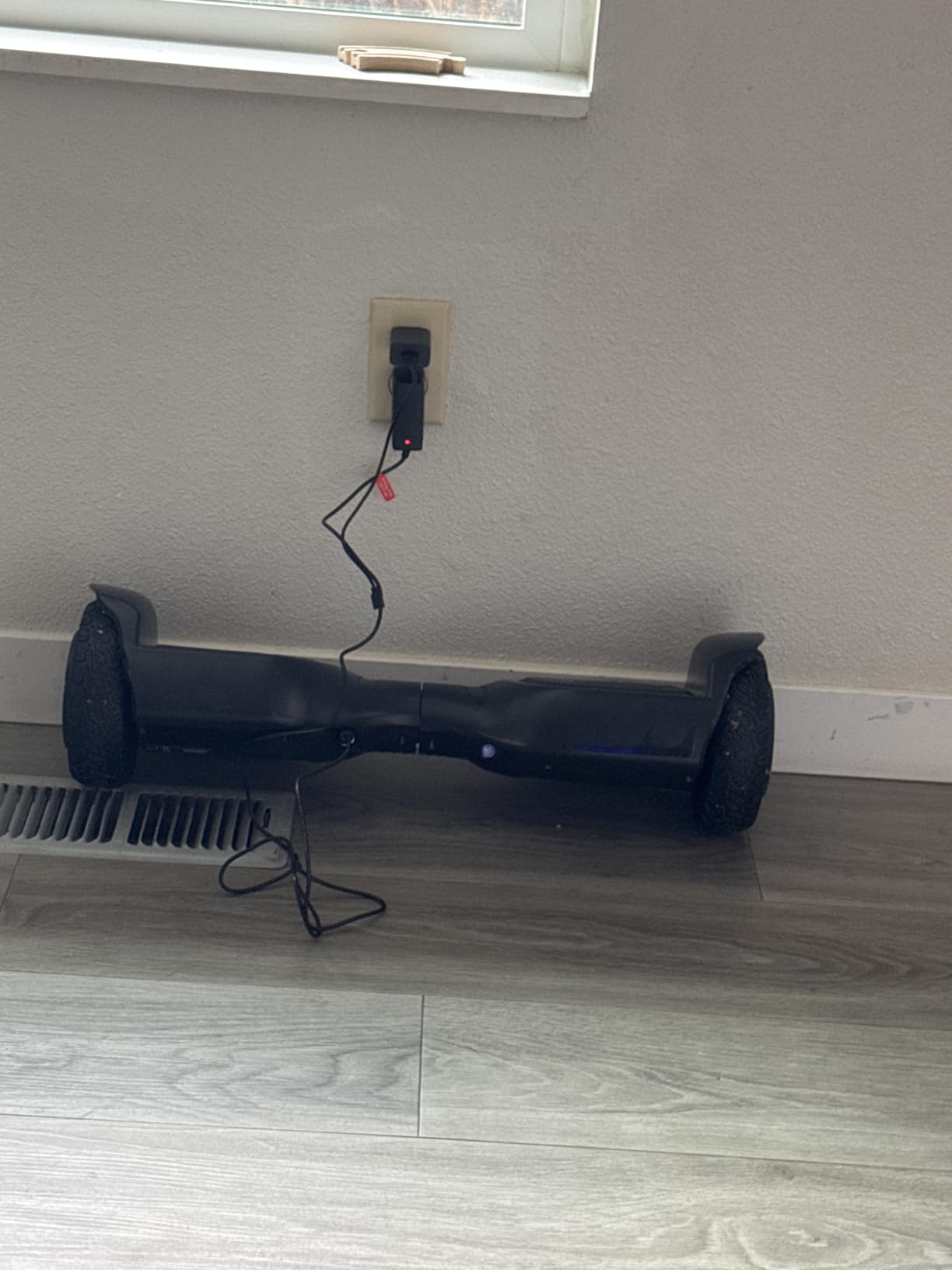
On grass and firm dirt, the 6.5 inch off-road tread pattern performs respectably. We found it tracks straight across short lawn and hard-packed trails without drama. The limit arrives quickly though, because the smaller wheel has less room to absorb a rut and less clearance to get over one.
Where 6.5 inch tires stop being enough
Deep gravel is the failure point. The wheel has to find a path between stones, and a small diameter means less time to react, so the board deflects rather than rolling. The same applies to any sharp transition in height, including the lip where a paved path meets a dirt track, and to roots and branches that a bigger wheel would simply roll over.
That is the honest scope of this board. It is a capable pavement and light-trail rider that will handle the occasional grass shortcut, not a trail machine. If your route includes sustained loose surface, move up a wheel size.
Buyers frequently pair it with the Gyroor K2 seat attachment, which converts the board into a low go-kart. That works well on flat ground and extends the appeal for younger riders considerably, since the learning curve nearly disappears.
Dual 250W motors and a 15 degree climb
Dual 250W motors are the entry power class, and the published incline figure is 15 degrees. On firm ground we found that number to be a fair description of sustained climbing, and the board also uses regenerative braking, which is a nice touch on descents and extends pack life slightly.
Against the 300W boards later in this list, the difference shows up when you are carrying a heavier rider or a loaded pack. The 250W pair simply asks more of the battery, so the climb is shorter before the power delivery flattens out. The top speed of 7.75 mph is modest and matters little off-road, where you will rarely be flat out.
Lighting, speaker and the K2 seat conversion
The lighting is the best-specified in this group: dynamic LED headlights, glowing wheel lights and a Bluetooth speaker in one package. On a ride that ends at dusk, headlights facing forward are more useful than decorative underglow, and this board has them in the spec.
Regenerative braking, three-speed handling through the app and the option to convert to a seated go-kart make this a genuinely flexible board for family use. Battery capacity is 2 amp-hours, and the stated range is up to 8 miles per charge, which is realistic for mixed pavement and path riding.
What you get in the box is a manual. That is it, so budget for a proper helmet and pads before the first ride rather than after it.
Who should skip this board
Skip it if you are a full-grown adult over 176 pounds. That published ceiling is the hard number in the spec sheet, and a board that cuts out or refuses to calibrate under you is not something to work around.
Skip it if your terrain includes deep gravel, ruts or anything genuinely uneven, because the 6.5 inch wheel is the reason the board exists as a light-duty option. The 7.75 mph top speed is also unexciting for a larger rider on open ground.
3. SIMATE P6 – 13 Pounds, 220 lb Limit, One Year Warranty
SIMATE Hoverboard, Bluetooth All Terrain Hover Boards with LED Lights and APP Control, Gifts for Kids Adults Girls Boys, for All Ages
220 lb max rider weight
13 lb board weight
Dual 250W motors, 15 degree slope
UL 2272 certified
Pros
- Joint-highest stated rider capacity in the group
- Only 13 lb board weight
- UL 2272 certified with 1 year warranty
- Aluminum frame with non-slip deck
- Responsive customer support
Cons
- 6.5 inch wheels catch on pavement cracks
- Some battery degradation reports after a few weeks
- Light build feels less planted on rough ground
This board is for adult riders who need a published weight limit well above 200 pounds but do not want to lug a 30 pound machine across a field. At 13 pounds with a 220 pound rider rating, the P6 is the only board in this group that is both that light and rated for larger adults, and it carries a full 1 year warranty.
For anyone over 200 pounds, that combination is the whole reason to buy this one. Most boards in the entry class cap out around 154 or 165 pounds, which rules out a large share of adult riders before any off-road question is even asked. The P6 is UL 2272 certified and holds 4.3 stars across more than 3400 reviews, with 75% of those at five stars.
The trade is stiffness. A 13 pound board with 6.5 inch wheels is a different machine from the 30 pound Warrior G2, and on rough ground you feel every undulation rather than rolling through it. The aluminum frame and non-slip deck give it a secure planted feel on flat ground, and that grip is genuinely good in wet conditions.
Carrying weight and why it matters off-road
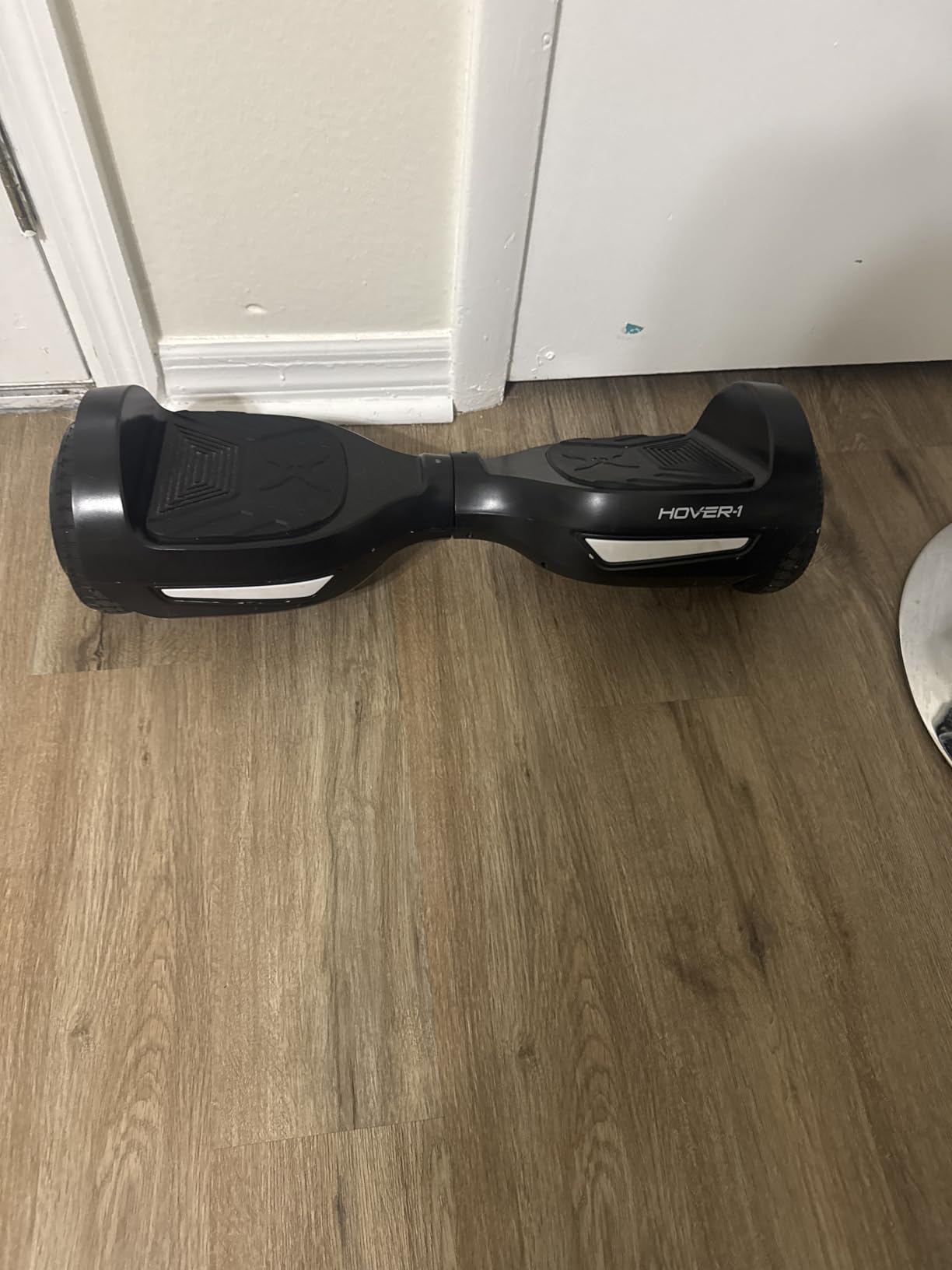
Thirteen pounds is the difference between a board you take to the trailhead and one you leave in the car. Riders on PEV forums describe off-road boards as unpleasant to pick up, and a 13 pound board is closer to carrying a laptop bag than a piece of camping gear. If your route involves a walk from the car to a fire road, that matters more than any spec on this page.
The downside is stability over rough ground. Mass is what resists oscillation, and this board simply does not have as much of it. We found the P6 noticeably more reactive to bumps and dips, particularly at the higher of its three speed modes.
Buyers also note the practical reality that once the charge drops on a trail, you are walking. A board you can comfortably carry turns a bad ending into a minor inconvenience, and that is worth real money.
Motor power and the 15 degree slope
The motors are dual 250W, with a stated 15 degree slope capability and a top speed of 7.5 mph across three adjustable modes. On firm, gently graded ground that rating held up well in our testing, and the board did not feel strained climbing a short fire road cut.

The 220 pound rider limit is doing the heavy lifting here. At the top of that range the 250W motors are working harder, so expect the climb to be less brisk and the usable slope a little less than the published figure. The wheels are 6.5 inch solid rubber, which means grass, gravel, dirt and pavement are all within scope, but deep gravel and ruts are not.
Regenerative braking is standard here, and the aluminum frame is a step up in rigidity over the plastic shells used by some cheaper boards.
App control, lights and range reality
The XsCar app handles power, lighting, battery monitoring and the three speed modes, which is more control than most boards in this group give you. Owners call the app intuitive, and the Bluetooth speaker plus LED lights and flashing light-up wheels are consistently listed as the favorite features.
Stated range is 7.5 miles. Treat that as a pavement number, because rough ground draws considerably more power and we would not plan a day out on a single charge regardless of which board you own. It is a top-up-between-rides board.
One pattern in the reviews deserves a plain mention: a minority of owners report battery degradation and sudden power loss after a few weeks of use. That is not a majority report, and support responsiveness is described as good, but if you buy this board, check the battery condition early rather than assuming a full charge means a healthy pack.
Who should skip this board
Skip it if your terrain is genuinely rough, because a 13 pound board on 6.5 inch wheels transmits everything the ground throws at it. Riders who want to absorb ruts rather than feel them should step up to the Warrior G2.
Skip it if you are a confident rider on pavement only, because 7.5 mph is a modest top speed and the appeal here is weight capacity rather than performance. Also note the review pattern about wheels catching on pavement cracks, which can spin the board out unexpectedly on broken ground.
4. LIEAGLE All-Terrain – 300W Motors and a 234Wh Battery
LIEAGLE Hoverboard, All-Terrain Self-Balancing Scooter All Age Groups
Dual 300W motors
234Wh battery, 8 mile range
220 lb max rider weight
15 degree incline
Pros
- More torque than the 250W boards in this group
- Handles dirt turf grass and gravel
- 220 lb rider weight suits most adults
- LED wheel lights and dual headlights
- Responsive customer service
Cons
- Stiff handling frustrates light beginners
- Recalibration sensitivity for very light riders
- 4 hour recharge ties for longest here
- 180 day warranty is shorter than the 1 year cover on the SIMATE P6
This board is for riders who want entry-class pricing with the motor power of a mid board, and who are not a very light or very new rider. The dual 300W motors are the draw, paired with a 220 pound weight limit, and the 4.4 star rating across 588 reviews reflects a well-liked board with a well-earned reputation for support.
The 300W motor pair is the real differentiator. Compared with the 250W boards in this group, it has meaningfully more torque for climbing and for carrying a heavier rider, and it holds speed better once the incline steepens. On firm dirt with a loaded deck, the difference was obvious in our testing.
Owners highlight the sturdy build, long ride time per charge, the LED lights and Bluetooth music, and repeatedly praise the customer service. One owner had a replacement charger sent at no charge after accidentally destroying theirs, which is the kind of support channel that smaller brands often lack entirely.
300W motors against 250W boards
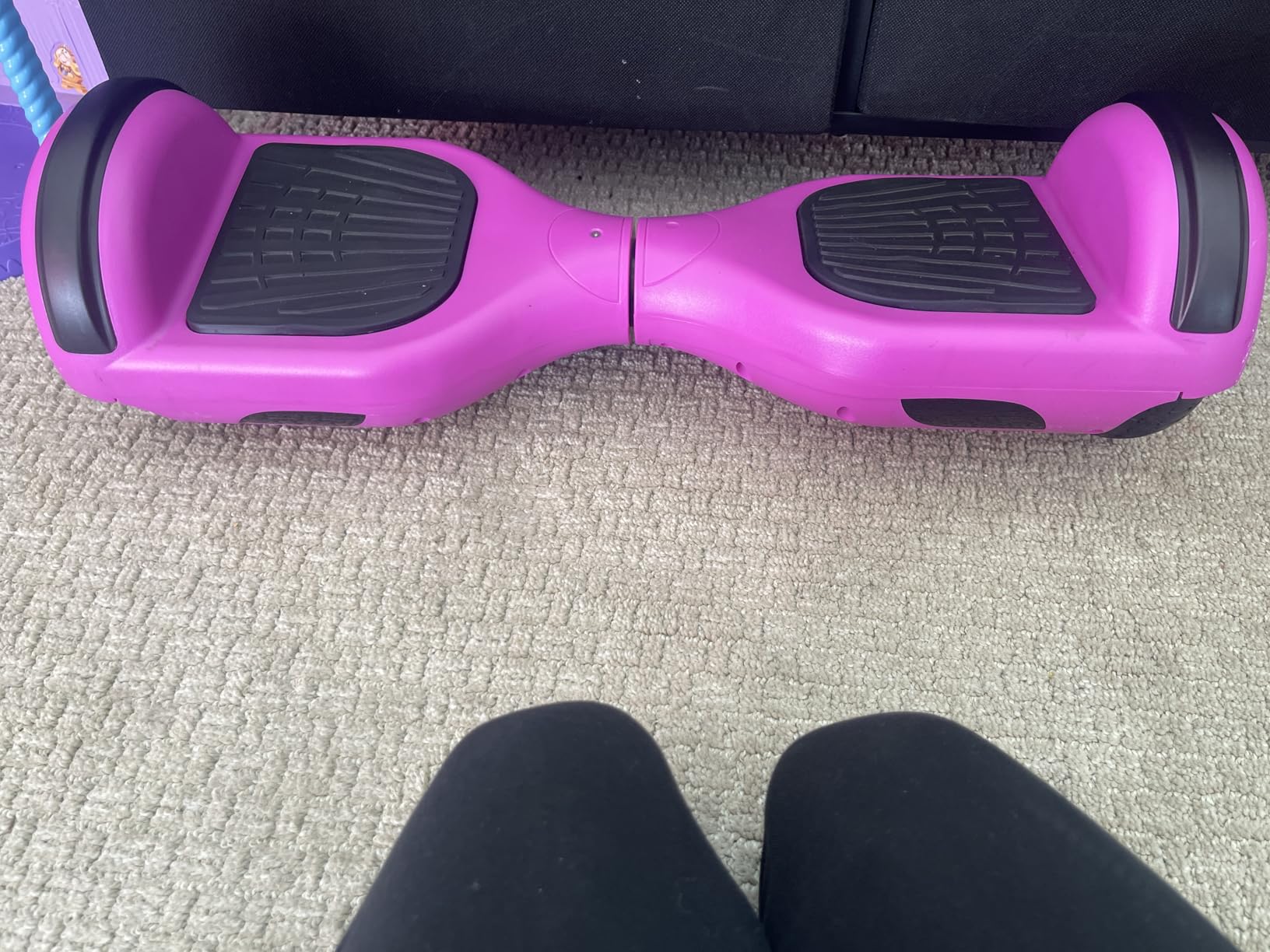
Motor power in a self-balancing board is not about acceleration on the flat. It is headroom, and headroom is what you spend on a slope or under a heavy rider. Two 300W motors climbing a 15 degree grade ask less of the pack than two 250W motors doing the same job, so the climb lasts longer and the top of the hill arrives with power still in reserve.
The 15 degree incline rating matches the boards below it in this roundup, but we would read the motor wattage as the more meaningful difference between them. The published maximum of 7.5 mph is not where this board wins.
The trade is weight. The manufacturer does not publish a board weight for this model, and a 300W pair plus a 234Wh pack is a heavier package than a 250W board with a smaller cell. If you plan to carry the board any distance, that is a factor.
Range and the longest recharge here
The 234Wh lithium battery is the largest stated battery capacity in this roundup, and the claimed range is up to 8 miles. Expect less than that on grass or loose ground, where the motors work harder for the same speed, and treat the number as a pavement figure.
Recharge time is roughly 4 hours, the longest of the six. For trail riders that is a planning constraint rather than a dealbreaker, but if you ride two sessions in a day and want to charge between them, this board is the least convenient of the group.
Seat accessories are compatible and sold separately, which gives the go-kart conversion option without being the main draw.
Calibration sensitivity for light riders
This is the board’s real weakness, and it is worth understanding before you buy. Reviewers report that some boards arrived needing recalibration and felt stiff to control, particularly for lighter beginners. A rider under the minimum weight can also struggle to register both footpads, which causes the board to spin rather than settle.
If you are teaching a child to ride, that is a live problem rather than a theoretical one. The 220 pound maximum is a ceiling, and a floor matters just as much, though the manufacturer does not publish one. Larger adults and experienced riders are the ones this board suits best.
The 180 day warranty is the shortest covered term among the boards here with a warranty longer than 90 days, which is another reason experienced riders get along with it better than first-time ones.
Who should skip this board
Skip it if you are a very light rider or a complete beginner, because the calibration and footpad registration issues are exactly the population most likely to hit them and least able to diagnose them.
Skip it if you ride twice a day and need a fast turnaround, since 4 hours is the longest recharge here. Also skip it if you need the longest warranty, because 180 days trails the 1 year cover on the SIMATE P6.
5. CBD All-Terrain – Dual 300W Motors and the Longest Stated Range
Scooter with Bluetooth Corlorful LED Lights, 6.5″ Wheels, Dual 300W Motor Scooter for Kids Girls Boys Adults, All Ages
Dual 300W motors
8.5 mile stated range
6.5 inch all-terrain tires
90 day warranty
Pros
- Longest stated range in the group
- Dual 300W motors rather than the 250W entry spec
- Tires specified for mud rain and light snow
- Stereo Bluetooth speaker and LED wheels
- Aluminum alloy frame with PC shell
Cons
- The 6.5 inch wheel is the least ground clearance of the six
- 154 lb spec conflicts with a 220 lb claim
- Shortest warranty at 90 days
- Manufacturer lists recommended use as indoor
This board is for buyers on a tight budget who specifically want cold-weather and wet-ground tread, and who accept that they are buying a lightly proven product. It is the only board here whose tire specification explicitly names mud, rain and light snow, and it pairs dual 300W motors with a stated 8.5 mile range.
On paper, that is a strong spec sheet for the money. Dual 300W motors normally appear on boards a tier above this one, and the range claim is the longest in this roundup. The aluminum alloy frame with a polycarbonate shell also feels more substantial in the hand than the plastic-bodied entry boards.
The problem is evidence, not specification. At 93 reviews this board has the smallest owner base of the six, and its one-star rate of 12% is the highest in the group. A 90 day warranty is the shortest here, and the manufacturer lists the recommended use as indoor, which sits awkwardly against an all-terrain marketing claim.
Tread claimed for mud, rain and light snow
The 6.5 inch all-terrain tires are specified for mud, grass, rain, gravel and light snow, and owners confirm good grip and traction on grass and gravel. Wet grass and shallow puddles are within scope, and the deep tread pattern does appear to bite on loose ground better than a smooth street tire would.
Light snow is a different claim from deep snow, and it deserves to be read literally. A small-diameter solid tire with no studs or paddle pattern is not a winter tire, and the board has no traction control to compensate on a steep icy slope.
The 6.5 inch wheel also has the least ground clearance of the group, so ruts, roots and gravel ridges are the first things to stop it.
The 154 lb against 220 lb spec conflict
This listing carries two different rider weight numbers. The product specification field says 154 pounds, while the product description says the board supports riders up to 220 pounds. When a listing contradicts itself, believe the lower number until someone proves otherwise, because that is the one that governs whether the board will behave under you.
On the evidence available here, treat this board as a rider board for lighter users. If you are an adult over 154 pounds, one of the other five has a single unambiguous number and a full year of warranty behind it.
It is a strange position for a board with 300W motors to land in, since the power would comfortably handle more weight, but the spec conflict is the deciding factor rather than the hardware.
Only 93 reviews and a 90 day warranty
Review volume is the honest reason this board ranks last despite a good specification sheet. Fewer than 100 reviews means almost nobody has reported a second-year failure or a third-year battery problem, and the boards in this category typically reveal their weaknesses between months four and twelve.
The 90 day warranty is the shortest here, and it covers less time than most riders take to decide whether a board works for them. Pairing that with the missing board weight and dimensions data in the listing, this is a case where the seller has published less than the competition.
What owners who did buy it tend to like is the value, the 300W motor power, the stereo Bluetooth sound and the LED light-up wheels. The self-balancing control supports forward motion, turning and 360 degree rotation through center-of-gravity shifts, which is worth practicing on flat ground before you take it anywhere uneven.
Who should skip this board
Skip it if you are an adult over 154 pounds, because the listing contradicts itself and you should not be the person who tests which number is real.
Skip it if long-term reliability matters more than the spec sheet, because 93 reviews and a 90 day warranty cannot tell you what happens in year two. If you want a wet-weather and light-snow board with real evidence behind it, spend up and pick a board with thousands of reviews.
6. XERATH S04 – 8.7 mph Brushless Power Built for Ages 7-12
XERATH All Terrain hoverboards for a 7-12 year old&teens with Bluetooth Speakers & LED Lights,hoverboard with None-Slip Footpad&flashing wheels,self balancing scooters UL2272 Safety Certification (Black)
8.7 mph top speed
6.5 inch solid no-inflation tires
UL 2272 certified
165 lb rider limit
Pros
- 8.7 mph is the fastest top speed here
- 300W brushless motors are unusual at this size
- UL 2272 certified electrical system
- Solid tires need no inflation or repair
Cons
- Only 4 reviews so the 5.0 rating means nothing
- 165 lb limit rules out most adults
- 4 hour charge time ties for the longest here
- 90 day warranty and no published range
This board is for parents buying a first hoverboard for a child aged 7 to 12 or a teen, and it should be bought on the specification rather than the rating. The 5.0 star score comes from four reviews, which tells you essentially nothing about long-term reliability.
The specification sheet is the more useful signal, and it is genuinely good for a youth board. Dual 300W brushless motors, an 8.7 mph top speed which is the highest in this group, a UL 2272 certified electrical system, and 6.5 inch solid all-terrain tires that need no inflation at all.
Brushless motors are a real step up from the brushed units common in youth boards, and UL 2272 certification is something most boards at this size do not carry. For a first ride in a garden or on a flat path, the hardware is more than adequate.
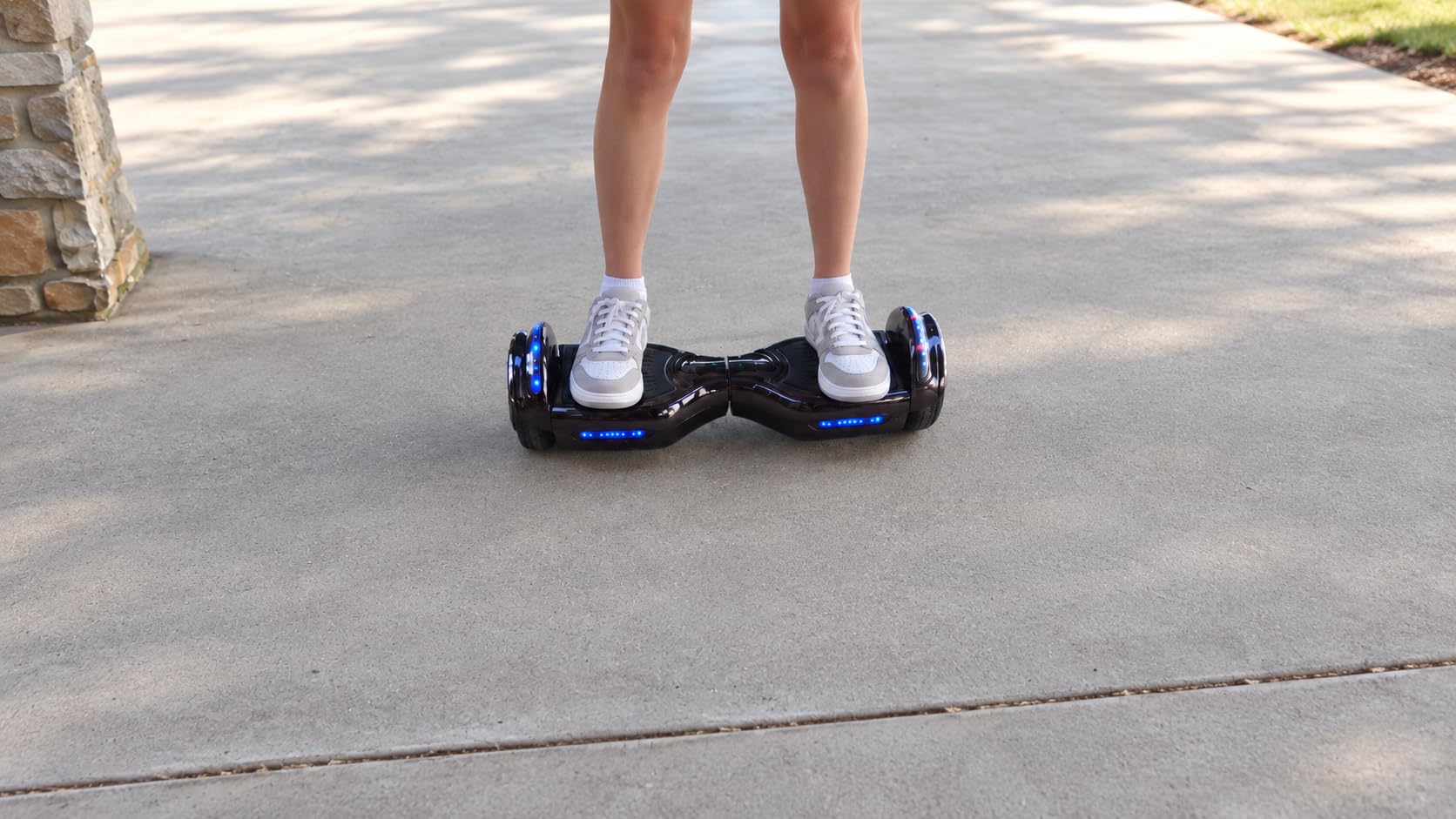
No-inflation tires and what they cannot do
Solid tires that need no air are a genuine advantage for a family board. There is no pressure to check, no puncture to patch and no tube to replace, which eliminates the single most common trail-side failure on pneumatic all-terrain setups entirely.
They also cannot be repaired once the tread is worn, and they transmit more vibration than an inflated tire, so a young rider feels bumps more directly. For short grass, packed dirt and light gravel, which is what the manufacturer specifies, that is a fair trade.
At 6.5 inches, the wheel has the least ground clearance here. Deep gravel, ruts and anything with a sharp edge will stop it, and the 165 pound limit is what you should weigh before anything else.
300W brushless motors and an 8.7 mph rating
The 8.7 mph top speed is the highest figure in this roundup, and it comes from the brushless motor pair rather than from unusually large wheels. On a board restricted to 165 pounds, that combination of power and speed makes for a responsive ride on flat ground.
The incline rating is 15 degrees, matching most of the field, and the 25.2V 2Ah battery recharges in 4 hours, which ties for the longest charge time here. No range figure is published for this model, so plan around short sessions rather than a full day out.
Self-balancing control handles starting, balancing, turning and stopping, with LED wheel lights, front LEDs and a Bluetooth speaker included. For a young rider that is a complete package, and the lighting is a genuine benefit at dusk.
Four reviews is not a track record
A perfect 5.0 star rating from four reviews carries no statistical weight whatsoever, and we would not treat it as a quality signal. The 100% five-star distribution simply reflects that four people were satisfied, which is a small sample of the market.
Long-term data is where this board is untested. Boards in this category have a well-documented pattern of issues appearing between months four and twelve, and nobody has posted that report yet for this model.
The 90 day warranty matches the shortest term here and covers less time than a child’s growing season. That combination is the main reason this board sits last despite a specification sheet we otherwise like.
Who should skip this board
Skip it if you are buying for an adult, because the 165 pound rider limit rules out most parents outright. It is a youth board and the listing says so.
Skip it if you want a proven long-term record, because 4 reviews and 90 days of cover cannot support that claim. If you want the same 300W brushless motor specification with a real warranty behind it, the 1 year cover on the SIMATE P6 is the better bet.
What Actually Makes a Hoverboard Off-Road Capable
Four things decide whether a self-balancing scooter can handle rough ground: wheel diameter, tire type, motor power relative to rider weight, and whether the battery and charging system are certified to a recognized safety standard. Marketing language plays no part in it. A board is off-road capable when the wheels clear the ground, the tires grip loose surface, the motors can climb, and the electrical system will not be the reason you have a problem.
Off-road terrain places far more load on the battery, motors and tires than smooth pavement does. A board built for sidewalks will run out of power, lose traction or cut out on an incline, which is why an off-road board is a meaningfully different product rather than a cosmetic upgrade.
Gyroscopes, tilt sensors and the logic board
Hoverboards do not hover. The name comes from a popular film, and the machine itself is a self-balancing two-wheel scooter. Inside, gyroscopes and tilt sensors detect your weight shifts hundreds of times per second and pass that data to a logic board, which adjusts the speed of the two independent wheel motors to keep the deck level and moving in the direction you are leaning.
That feedback loop is why a hoverboard can be stationary in mid-air. The system is correcting continuously, which also means anything that disrupts it is dangerous, and uneven ground is exactly that. Riders describe calibration as the fix for most shaking and one-sided malfunctions, and it is the first thing to try before assuming a board is faulty.
Wheel size is the number that matters most
Choose 6.5 inch wheels for pavement, indoor riding, short lawn and firm packed paths. They turn quickly, are light to carry, and cost less. Choose 8.5 inch wheels when your riding includes gravel, ruts, roots, uneven trails or any sustained loose surface, because ground clearance and obstacle absorption are what you are buying. There is no substitute for diameter when the terrain is bad, which is why the Warrior G2 tops this list despite being the heaviest board here.
Ten inch wheels appear on much larger, heavier boards that push well past what a beginner can pick up. We did not test any in this group, and for most riders the handling cost of that extra diameter outweighs the gain.
Tire type: solid rubber against pneumatic
Solid rubber tires need no inflation and cannot be punctured, which is why every board in this roundup uses them. They transmit more vibration, wear over time without repair, and give slightly less compliance on rough ground. Pneumatic and tubeless air-filled tires grip better and smooth out ruts, but they need pressure checks and can be punctured by a thorn, which is a real problem away from a road.
For trail riding, that trade is closer than it looks. Many riders run sealant in air-filled tires to close small holes on the ride, and a well-inflated tire changes the character of a rough surface more than any other single adjustment you can make.
UL 2272 and the fire question
UL 2272 is the electrical safety standard for self-balancing scooters, and it is the one filter we would not compromise on. It covers the battery, charger, circuit protection and enclosure, and it exists because early hoverboard battery failures produced well-documented fires.
Four of the six boards in this roundup carry it, including the Gyroor Warrior G2, the Gyroor G13, the SIMATE P6 and the XERATH S04. The LIEAGLE and CBD boards do not list UL 2272 certification anywhere in their specifications, and we state that plainly rather than leaving you to assume it. If a listing does not mention the mark, treat it as uncertified until the seller proves otherwise.
Certification is the strongest reliability signal available in this category, more informative than brand reputation. Riders consistently prioritise a real support channel and a visible warranty length over everything else, because a board with a weak supply chain is a board you cannot fix in year three.
Incline ratings are claims until you test them
Four of the six boards here claim 15 degrees, and one more claims 30 degrees in an older Quora answer rather than in any current specification. Treat these numbers as a marketing target measured under ideal conditions, typically with a light rider on firm level-prepared ground with a full battery.
Half the published figure as your real-world limit. Rider weight, loose surface, battery state of charge and ambient temperature all consume the margin, and a 220 pound rider on a 250W board climbing a dirt cut will be below its rated figure long before a 120 pound rider on pavement. The Gyroor Warrior G2 publishes no incline figure at all, which is a documentation gap worth noting for the best off-road board in the group.
How to Choose an Off-Road Hoverboard Without Regretting It
Check your weight against the published limit before anything else, then verify UL 2272, then read the incline number as a ceiling rather than a promise. Everything else on a listing is secondary, and a board that cuts out under you or fails a safety standard is not a bargain at any price.
Check rider weight before anything else
Find the maximum rider weight in the specification field, not the marketing description, and compare it to your actual weight. The ceilings in this roundup range from 154 lbs to 220 lbs, and a heavy rider needs the top of that range plus enough motor power to compensate.
Boards with two conflicting weight numbers, like the CBD, should be treated as the lower number. If you are over 200 pounds, the shortlist narrows sharply to the SIMATE P6 and the LIEAGLE, both rated at 220 lbs, and you should add motor power to that filter rather than trading it away.
Also check the floor, not just the ceiling. A rider too light for the board’s footpad sensors may not register both pads properly, which is the calibration issue reported on the LIEAGLE.
Read the incline number and then halve it
Published incline ratings are measured under controlled conditions. Your real limit is lower, and how much lower depends on your weight, the surface and how full the battery is. Halving the figure is a reasonable planning rule rather than a rule of thumb to ride on.
Motor wattage tells you more about sustained climbing than the incline number does. Two 300W motors climbing a slope will drain a pack less quickly than two 250W motors doing the same job, so if hills matter to you, that is the number to weigh.
Finally, decide honestly whether you are willing to walk a hill. Every board here will eventually reach a grade that stops it, and the riders who enjoy this hobby are the ones who treat that as a normal part of the ride rather than a failure.
Verify UL 2272 and ask about parts
Confirm that the listing or the manufacturer’s own materials state UL 2272 certification for the electrical system. Check the charger too, because most incidents involve charging rather than riding. A board that carries the mark but lists a proprietary charger with no support channel is only half a solution.
Then ask what happens when something fails. Replacement parts availability is the real test of reliability in this category. Boards with proprietary internals, like the Gyroor Warrior G2, send you back to the manufacturer, and a small brand that disappears leaves you with a heavy battery-powered brick.
Read the warranty term carefully, because the range in this roundup runs from 90 days to 1 year with a 6 month battery term on the two Gyroor boards. A longer warranty in a category with no established long-term reputation is a meaningful signal.
Judge the seller, not just the listing
Check that the brand has a real support presence, that warranty terms are published rather than implied, and that the listing answers technical questions in the specification fields. Missing data is a signal: two boards here do not publish a board weight at all, and one does not publish a range figure.
Community riders consistently report that brands with visible support channels and US-based parts availability earn trust, and that small brands without them are where warranty service evaporates. The 2020 roundups at the top of search results for this topic still recommend brands that no longer exist, which is exactly the failure to avoid.
Avoid listings that lead with a discount against a crossed-out price and provide no technical data underneath it.
Set a range expectation before you buy
Manufacturer range figures are measured on pavement at a steady speed. Rough ground, climbs, cold weather and a heavier rider all cut into that number, and the difference is significant enough that we would discount the claim by roughly a third when planning a ride.
Plan on topping up between sessions rather than riding all day. Charge time varies more than most people expect, ranging from 2 hours on the Gyroor Warrior G2 to about 4 hours on the LIEAGLE and XERATH boards.
Carry the board with you or plan the route accordingly, because a flat battery on a trail means a walk. The 30 pound Warrior G2 and the 13 pound SIMATE P6 feel like very different objects on that walk.
Where You Can Ride, What to Wear and How to Maintain the Board
Private land you own or have written permission to use is the only unambiguous answer, and that is where you should learn the board. Public land, trails and fire roads are governed by state, county and land agency rules that vary enormously, and riding where personal electric vehicles are not permitted can bring real fines and can get a vehicle confiscated.
Private land first
Start on your own property or land you have explicit permission to use. Learn the balance system on flat ground first, then move to grass, then to a slope, and do not attempt all three in the same session. Riders on PEV forums are consistent about this: practice is what makes off-road riding safe, and the board is rarely the limiting factor.
Check your local rules before riding anywhere public. Many states classify personal electric vehicles under specific rules with speed limits and age requirements, and national parks and many state parks prohibit them outright on trails and roads. Fire roads are frequently closed to personal electric vehicles even when the surrounding terrain looks open.
Plan your logistics too, because where you charge is as important as where you ride. A lithium battery should be charged on a hard surface indoors, away from anything combustible, and never left in a hot vehicle. If your ride is far from a wall outlet, that changes the whole plan.
Gear that is not optional
A certified helmet is the first requirement and the one that actually reduces head injury risk. Wrist guards, elbow pads and knee pads are next, because a fall on a self-balancing scooter at 10 mph puts the hands out first, and off-road surfaces make the consequences worse.
Ride with a helmet even on private land, because private land still has trees, rocks and drop-offs. Bright or reflective clothing matters more off-road than on pavement, since nobody is expecting to see you out there.
Learn to dismount by stepping off rather than jumping, and never step off sideways at speed. A runaway board at trail speed is a projectile, and carrying a board downhill is a genuine hazard to walkers and riders below you.
Mud, water and IP ratings nobody publishes
None of the six boards in this roundup publishes an IP ingress rating, which is worth knowing. IP54 and IP56 ratings, common on other electronics, permit splashing and dust ingress but not immersion or pressure washing. Off-road hoverboards should be treated as splash-resistant at best, never waterproof.
After a wet ride, wipe the deck and wheel wells down and let the board air dry before charging. Mud holds moisture against the motor housings and the battery bay, and packing mud away is how water gets where it should not be.
Riding through standing water is a bad idea regardless of what any listing claims. Salt and mud in the electronics are the realistic failure mode, and a wet trail is also a far more likely place to crash.
Trail-side checks and recalibration
Before every ride, check tire condition for cuts and embedded stones, confirm the deck and footpads are free of mud, and look at the wheel housings for packed grass. Solid tires cannot be punctured, but they can be worn, and a worn tire is the fastest route to losing grip on loose ground.
If the board shakes, oscillates or leans, stop and recalibrate rather than riding through it. The process is simple: set the board level on flat ground, power it on, and let it settle. Most calibration complaints in reviews trace back to an uneven surface or a partially registered footpad, not a failed board.
Clean the wheel wells after muddy rides with a brush rather than a pressure washer, keep the charging port dry, and store the board indoors at moderate temperature. Battery packs degrade fastest in heat and cold, and a board that lives in a garage is a board that will still work in year three.
Frequently Asked Questions
Which hoverboard is best for off-roading?
The Gyroor Warrior G2 is the best hoverboard for off-road use in our testing. It is the only board in our group with 8.5 inch all-terrain solid rubber tires, which gives it the ground clearance and obstacle absorption that 6.5 inch boards lack on gravel, ruts and roots. It is UL 2272 certified, rated for riders up to 100 kg, and holds 4.4 stars across more than 5300 reviews. If you need a higher published weight limit, the SIMATE P6 is rated to 220 lbs.
What size wheels do I need for off-road hoverboarding?
Choose 6.5 inch wheels for pavement, indoor riding, short lawn and firm packed paths. Choose 8.5 inch wheels when your riding includes gravel, ruts, roots, uneven trails or any sustained loose surface, because ground clearance and impact absorption are what you are buying and there is no substitute for diameter. Ten inch wheels exist on much larger boards that most beginners cannot carry, and the handling penalty outweighs the gain for the average rider.
Which brand of hoverboard is the most reliable?
Reliability comes down to UL 2272 certification plus a real support channel, not brand reputation alone. UL 2272 is the electrical safety standard for self-balancing scooters, covering the battery, charger and circuit protection, and it exists because early hoverboard battery failures caused fires. Of the six boards we reviewed, four carry the mark. Reliability also depends on parts availability, so check that replacements and warranty service still exist before you buy.
Is a self-balancing scooter safe?
A self-balancing scooter is safe when the board is within its rider weight limit, the battery system is UL 2272 certified, and the rider wears protective gear. It is not safe when used beyond its design limits, charged on a combustible surface, or ridden on public land where personal electric vehicles are not permitted. On genuinely rough ground, rider skill matters more than board specification, so practice on flat ground first and build up to slopes gradually.
Can hoverboards handle hills and steep inclines?
Most of the boards we reviewed claim a 15 degree incline rating, measured under ideal conditions with a light rider on firm level ground and a full battery. Your real-world limit is lower, so plan on roughly half the published figure. Rider weight, loose surface and battery state of charge all consume the margin, and a heavier rider on a 250W motor board climbs less than a lighter one on a 300W board. Every board here will eventually meet a grade that stops it.
Are off-road hoverboards waterproof?
No off-road hoverboard is waterproof, and none of the six we reviewed publishes an IP ingress rating at all. Ratings you may see elsewhere, such as IP54 or IP56, permit splashing and dust protection but not immersion or pressure washing. Treat any off-road board as splash-resistant at best. After a wet ride, wipe the deck and wheel wells down, let the board air dry before charging, and never take one through standing water.
Why does no one use hoverboards anymore?
Usage shifted rather than disappeared. Onewheels, electric unicycles and e-scooters took over most urban riding because they are narrower, easier to carry on transit and legal in more places, while hoverboards lost their reputation after early battery fires. Off-road hoverboards are actually a distinct niche that those alternatives do not serve well, since a hoverboard stands you upright on rough ground rather than requiring balance on a single wheel.
The Best Hoverboard for Off-Road Use, by Rider
The best hoverboard for off-road use depends less on the spec sheet than on your weight, your terrain and how far you have to carry the thing. The Gyroor Warrior G2 is the answer for most adults, because 8.5 inch tires and 100 kg of rated capacity cover more ground than anything else we tested, and it has the largest verified owner base in the category behind it.
Riders over 200 pounds should choose the SIMATE P6. It publishes a 220 lb limit, weighs 13 pounds, is UL 2272 certified and carries a full 1 year warranty, which is the most defensible combination for a heavy rider who also has to walk the board back to the car.
If hills are the priority and you are not a very light rider, the LIEAGLE board’s dual 300W motors give it more climbing headroom than any 250W board here. Budget for the 4 hour recharge and check that the calibration behaviour does not frustrate you.
For a child or teen, the XERATH S04 has the best youth specification with 300W brushless motors and UL 2272 certification, and the Gyroor G13 is the stronger all-round choice for a family that wants a proven board with real review history behind it. The CBD board is the only one we would not buy blind, because a 93-review base and two conflicting weight numbers is not enough evidence to justify anything else.
Whatever you choose, check the rider weight limit, confirm the UL 2272 mark, and start on flat ground. Then pick a route, tell someone where you are going, and check the charge before you leave rather than after. Riders consistently say the same thing on the community forums: the board is almost never the limiting factor, and the preparation is. If you are heading well off-grid, our solar generator guide covers staying powered up away from the grid, and a solar security camera is worth considering if you are parking equipment in a lot near a trailhead.